AB 1133: School-based early mental health intervention and prevention services support program.
- Session Year: 2015-2016
- House: Assembly
- Latest Version Date: 2015-04-15
Existing law, the School-based Early Mental Health Intervention and Prevention Services for Children Act of 1991, authorizes the Director of Health Care Services, in consultation with the Superintendent of Public Instruction, to provide matching grants to local educational agencies to pay the state share of the costs of providing school-based early mental health intervention and prevention services to eligible pupils at schoolsites of eligible pupils, subject to the availability of funding each year. Existing law defines eligible pupil for this purpose as a pupil who attends a publicly funded elementary school and who is in kindergarten or grades 1 to 3, inclusive. Existing law also defines local educational agency as a school district or county office of education or a state special school.
This bill would expand the definition of an eligible pupil to include a pupil who attends a state preschool program at a publicly funded elementary school and a pupil who is in transitional kindergarten, thereby extending the application of the act to those persons. The bill would also include charter schools in the definition of local educational agency, thereby extending the application of the act to those entities. The bill would require the State Public Health Officer, in consultation with the Superintendent of Public Schools and the Director of Health Care Services, to establish a 4-year pilot program, the School-Based Early Mental Health Intervention and Prevention Services Support Program, to provide outreach, free regional training, and technical assistance for local educational agencies in providing mental health services at schoolsites. The bill would require the State Department of Public Health to submit specified reports after 2 and 4 years. The bill would repeal these provisions as of January 1, 2021.
Existing law, the School-based Early Mental Health Intervention and Prevention Services for Children Act of 1991, authorizes the Director of Health Care Services, in consultation with the Superintendent of Public Instruction, to provide matching grants to local educational agencies to pay the state share of the costs of providing school-based early mental health intervention and prevention services to eligible pupils at schoolsites of eligible pupils, subject to the availability of funding each year. Existing law defines eligible pupil for this purpose as a pupil who attends a publicly funded elementary school and who is in kindergarten or grades 1 to 3, inclusive. Existing law also defines local educational agency as a school district or county office of education or a state special school.
This bill would make technical, nonsubstantive changes to those provisions. expand the definition of an eligible pupil to include a pupil who attends a state preschool program at a publicly funded elementary school and a pupil who is in transitional kindergarten, thereby extending the application of the act to those persons. The bill would also include charter schools in the definition of local educational agency, thereby extending the application of the act to those entities. The bill would require the State Public Health Officer, in consultation with the Superintendent of Public Schools and the Director of Health Care Services, to establish a 4-year pilot program, the School-Based Early Mental Health Intervention and Prevention Services Support Program, to provide outreach, free regional training, and technical assistance for local educational agencies in providing mental health services at schoolsites. The bill would require the State Department of Public Health to submit specified reports after 2 and 4 years. The bill would repeal these provisions as of January 1, 2021.
Existing law authorizes the Director of Health Care Services, in consultation with the Superintendent of Public Instruction, to provide matching grants to local educational agencies to pay the state share of the costs of providing school-based early mental health intervention and prevention services to eligible pupils at schoolsites of eligible pupils, subject to the availability of funding each year.
This bill would make technical, nonsubstantive changes to those provisions.
The Legislature finds and declares all of the following:
(a)The State of California has long recognized the mental health needs of Californias children and the value of addressing these needs by supporting the provision of evidence-based mental health services in publicly funded preschools and elementary schools, as evidenced by the creation in 1981 of the Primary Prevention Project, now named the Primary Intervention Program, and the creation in 1991 of the School-based Early Mental Health Intervention and Prevention Services for Children Program, known as the Early Mental Health Initiative (EMHI).
(b)From the 199293 fiscal year to the 201112 fiscal year, the State Department of Mental Health awarded funds each year in matching grants to local education agencies to fund prevention and early intervention programs, including the Primary Intervention Program, for students experiencing mild to moderate school adjustment difficulty through the EMHI. In the 201112 fiscal year, the EMHI received $15 million in state funds.
(c)Authorizing legislation specified that the EMHI would be deemed successful if at least 75 percent of the children who complete the program show an improvement in at least one of the following four areas: learning behaviors, attendance, school adjustment, and school-related competencies.
(d)The EMHI succeeded in meeting these legislative requirements. According to the 2010/2011 Early Mental Health Initiative Statewide Evaluation Report, of the 15,823 students located in 424 elementary schools across 66 school districts participating in EMHI-funded services during the 201011 school year, 79 percent exhibited positive social competence and school adjustment behaviors more frequently after completing services. Furthermore, the magnitude of the improvements was exceptional in comparison to evaluations of other programs, especially given the short-term and cost-effective nature of the intervention.
(e)The 2010/2011 Early Mental Health Initiative Statewide Evaluation Report described an unmet demand for EMHI-funded services at participating schoolsites, as only 37 percent of the students that scored in the mild to moderate school adjustment difficulty range were served with EMHI-funded services due to program capacity and funding constraints. Based on demographic considerations, similar demand would be expected at schools that did not receive EMHI grants.
(f)The Governors realignment for the 201112 fiscal year renamed the State Department of Mental Health as the State Department of State Hospitals and limited that departments mission.
(g)The Budget Act of 2012 disbursed Proposition 98 funds, which had been used to fund the EMHI, directly to local education agencies in order to provide local schools with enhanced flexibility to manage their finances and give greater control of local decisions.
(h)It is in the interest of Californias children, families, schools, and communities that the State of California support local decisions to provide funding for evidence-based services to address the mental health needs of children in publicly funded preschools and elementary schools.
(i)Multitiered systems and supports have been developed as model framework within which to implement these services. Pilot programs in the Counties of San Bernardino and Alameda are demonstrating that implementing these services as part of a multitiered system is cost effective, because the cost of the services is more than fully offset by the reduction in the need for high-cost nonpublic school placements.
SEC. 2.Section 4372 of the Welfare and Institutions Code is amended to read:4372.For the purposes of this part, the following definitions shall apply:
(a)Cooperating entity means any federal, state, or local, public or private nonprofit agency providing school-based early mental health intervention and prevention services that agrees to offer services at a schoolsite through a program assisted under this part.
(b)Eligible pupil means a pupil who attends a preschool program at a publicly funded elementary school, or who attends a publicly funded elementary school and who is in kindergarten, transitional kindergarten, or grades 1 to 3, inclusive.
(c)Local educational agency means any school district or county office of education, state special school, or charter school.
(d)Department means the State Department of Public Health.
(e)Director means the State Director of Mental Health.
(f)Supportive service means a service that will enhance the mental health and social development of children.
SEC. 3.Chapter 4 (commencing with Section 4391) is added to Part 4 of Division 4 of the Welfare and Institutions Code, to read:4.School-Based Early Mental Health Intervention and Prevention Services Support Program4391.(a)The State Public Health Officer shall establish a four-year pilot program, in consultation with the Superintendent of Public Instruction and the Director of Health Care Services, to encourage and support local decisions to provide funding for the eligible support services as provided in this section.
(b)The department shall provide outreach to local education agencies and county mental health agencies to inform individuals responsible for local funding decisions of the program established pursuant to this section.
(c)The department shall provide free regional training on all of the following:
(1)Eligible support services, which may include any or all of the following:
(A)Individual and group intervention and prevention services.
(B)Parent involvement through conference or training, or both.
(C)Teacher and staff conferences and training related to meeting project goals.
(D)Referral to outside resources when eligible pupils require additional services.
(E)Use of paraprofessional staff, who are trained and supervised by credentialed school psychologists, school counselors, or school social workers, to meet with pupils on a short-term weekly basis, in a one-on-one setting as in the primary intervention program established pursuant to Chapter 4 (commencing with Section 4343) of Part 3.
(F)Any other service or activity that will improve the mental health of eligible pupils.
(2)The potential for the eligible support services defined in this section to help fulfill state priorities described by the local control funding formula and local goals described by local control and accountability plans.
(3)How educational, mental health, and other funds subject to local control can be used to finance the eligible support services defined in this section.
(4)External resources available to support the eligible support services defined in this section, which may include workshops, training, conferences, and peer learning networks.
(5)State resources available to support student mental health and positive learning environments, which may include any of the following:
(A)Foundational aspects of learning, mental health, toxic stress, childhood trauma, and adverse childhood experiences.
(B)Inclusive multitiered systems of behavioral and academic supports, Schoolwide Positive Behavior Interventions and Supports, restorative justice or restorative practices, trauma-informed practices, social and emotional learning, and bullying prevention.
(d)The department shall provide technical assistance to local education agencies that provide or seek to provide eligible services defined in this section. Technical assistance shall include assistance in any of the following:
(1)Designing programs.
(2)Training program staff in intervention skills.
(3)Conducting local evaluations.
(4)Leveraging educational, mental health, and other funds that are subject to local control and assisting in budget development.
(e)In providing outreach pursuant to subdivision (b), training pursuant to subdivision (c), and technical assistance pursuant to subdivision (d), the department shall select and support schoolsites as follows:
(1)During the first 18 months of the program, the department shall support, strengthen, and expand the provision of eligible services at 30 schoolsites that previously received funding pursuant to the School-Based Early Mental Health Intervention and Prevention Services Matching Grant Program (Chapter 2 (commencing with Section 4380)) and have continued to provide eligible support services. In working with these selected schoolsites, the department shall develop methods and standards for providing services and practices to new schoolsites.
(2)During the subsequent 18 months of the program, the department shall select 30 new schoolsites that are not providing eligible support services but that demonstrate the willingness and capacity to participate in the program. The department shall work with these schoolsites to deliver eligible support services.
(3)In selecting schoolsites and providing support, the department shall prioritize geographic diversity, program effectiveness, program efficiency, and long-term program sustainability.
(f)The department shall submit, in compliance with Section 9795 of the Government Code, an interim report to the Legislature at the end of the second year of the pilot program that details the departments work to support the schoolsites selected pursuant to paragraph (1) of subdivision (e) and includes an assessment of the demand and impact of funding for the School-Based Early Mental Health Intervention and Prevention Services Matching Grant Program established pursuant to Chapter 3 (commencing with Section 4390). The department shall make the report available to the public and shall post it on the departments Internet Web site.
(g)The department shall develop an evaluation plan to assess the impact of the pilot program. The department, in compliance with Section 9795 of the Government Code, shall submit a report to the Legislature at the end of the four-year period evaluating the impact of the pilot program and providing recommendations for further implementation. The department shall make the report available to the public and shall post it on the departments Internet Web site.
4392.This chapter shall remain in effect only until January 1, 2021, and as of that date is repealed, unless a later enacted statute, that is enacted before January 1, 2021, deletes or extends that date.
The Legislature finds and declares all of the following:
(a)The State of California has long recognized the mental health needs of Californias children and the value of addressing these needs by supporting the provision of evidence-based mental health services in publicly funded preschools and elementary schools, as evidenced by the creation in 1981 of the Primary Prevention Project, now named the Primary Intervention Program, and the creation in 1991 of the School-based Early Mental Health Intervention and Prevention Services for Children Program, known as the Early Mental Health Initiative (EMHI).
(b)From the 199293 fiscal year to the 201112 fiscal year, the State Department of Mental Health awarded funds each year in matching grants to local education agencies to fund prevention and early intervention programs, including the Primary Intervention Program, for students experiencing mild to moderate school adjustment difficulty through the EMHI. In the 201112 fiscal year, the EMHI received $15 million in state funds.
(c)Authorizing legislation specified that the EMHI would be deemed successful if at least 75 percent of the children who complete the program show an improvement in at least one of the following four areas: learning behaviors, attendance, school adjustment, and school-related competencies.
(d)The EMHI succeeded in meeting these legislative requirements. According to the 2010/2011 Early Mental Health Initiative Statewide Evaluation Report, of the 15,823 students located in 424 elementary schools across 66 school districts participating in EMHI-funded services during the 201011 school year, 79 percent exhibited positive social competence and school adjustment behaviors more frequently after completing services. Furthermore, the magnitude of the improvements was exceptional in comparison to evaluations of other programs, especially given the short-term and cost-effective nature of the intervention.
(e)The 2010/2011 Early Mental Health Initiative Statewide Evaluation Report described an unmet demand for EMHI-funded services at participating schoolsites, as only 37 percent of the students that scored in the mild to moderate school adjustment difficulty range were served with EMHI-funded services due to program capacity and funding constraints. Based on demographic considerations, similar demand would be expected at schools that did not receive EMHI grants.
(f)The Governors realignment for the 201112 fiscal year renamed the State Department of Mental Health as the State Department of State Hospitals and limited that departments mission.
(g)The Budget Act of 2012 disbursed Proposition 98 funds, which had been used to fund the EMHI, directly to local education agencies in order to provide local schools with enhanced flexibility to manage their finances and give greater control of local decisions.
(h)It is in the interest of Californias children, families, schools, and communities that the State of California support local decisions to provide funding for evidence-based services to address the mental health needs of children in publicly funded preschools and elementary schools.
SEC. 2.Section 4372 of the Welfare and Institutions Code is amended to read:4372.For the purposes of this part, the following definitions shall apply:
(a)Cooperating entity means any federal, state, or local, public or private nonprofit agency providing school-based early mental health intervention and prevention services that agrees to offer services at a schoolsite through a program assisted under this part.
(b)Eligible pupil means a pupil who attends a preschool program at a publicly funded elementary school, or who attends a publicly funded elementary school and who is in kindergarten, transitional kindergarten, or grades 1 to 3, inclusive.
(c)Local educational agency means any school district or county office of education, or state special school, or charter school.
(d)Department means the State Department of Public Health.
(d)
(e)Director means the State Director of Mental Health.
(e)
(f)Supportive service means a service that will enhance the mental health and social development of children.
SEC. 3.Chapter 4 (commencing with Section 4391) is added to Part 4 of Division 4 of the Welfare and Institutions Code, to read:4.School-Based Early Mental Health Intervention and Prevention Services Support Program4391.(a)The State Public Health Officer shall establish a four-year pilot program, in consultation with the Superintendent of Public Instruction and the Director of Health Care Services, to encourage and support local decisions to provide funding for the eligible support services as provided in this section.
(b)The department shall provide outreach to local education agencies and county mental health agencies to inform individuals responsible for local funding decisions of the program established pursuant to this section.
(c)The department shall provide free regional training on all of the following:
(1)Eligible support services, which may include any or all of the following:
(A)Individual and group intervention and prevention services.
(B)Parent involvement through conference or training, or both.
(C)Teacher and staff conferences and training related to meeting project goals.
(D)Referral to outside resources when eligible pupils require additional services.
(E)Use of paraprofessional staff, who are trained and supervised by credentialed school psychologists, school counselors, or school social workers, to meet with pupils on a short-term weekly basis, in a one-on-one setting as in the primary intervention program established pursuant to Chapter 4 (commencing with Section 4343) of Part 3.
(F)Any other service or activity that will improve the mental health of eligible pupils.
(2)The potential for the eligible support services defined in this section to help fulfill state priorities described by the local control funding formula and local goals described by local control and accountability plans.
(3)How educational, mental health, and other funds subject to local control can be used to finance the eligible support services defined in this section.
(4)External resources available to support the eligible support services defined in this section, which may include workshops, training, conferences, and peer learning networks.
(5)State resources available to support student mental health and positive learning environments, which may include any of the following:
(A)Foundational aspects of learning, mental health, toxic stress, childhood trauma, and adverse childhood experiences.
(B)Inclusive multitiered systems of behavioral and academic supports, Schoolwide Positive Behavior Interventions and Supports, restorative justice or restorative practices, trauma-informed practices, social and emotional learning, and bullying prevention.
(d)The department shall provide technical assistance to local education agencies that provide or seek to provide eligible services defined in this section. Technical assistance shall include assistance in any of the following:
(1)Designing programs.
(2)Training program staff in intervention skills.
(3)Conducting local evaluations.
(4)Leveraging educational, mental health, and other funds that are subject to local control and assisting in budget development.
(e)In providing outreach pursuant to subdivision (b), training pursuant to subdivision (c), and technical assistance pursuant to subdivision (d), the department shall select and support schoolsites as follows:
(1)During the first 18 months of the program, the department shall support, strengthen, and expand the provision of eligible services at 30 schoolsites that previously received funding pursuant to the School-Based Early Mental Health Intervention and Prevention Services Matching Grant Program (Chapter 2 (commencing with Section 4380)) and have continued to provide eligible support services. In working with these selected schoolsites, the department shall develop methods and standards for providing services and practices to new schoolsites.
(2)During the subsequent 18 months of the program, the department shall select 30 new schoolsites that are not providing eligible support services but that demonstrate the willingness and capacity to participate in the program. The department shall work with these schoolsites to deliver eligible support services.
(3)In selecting schoolsites and providing support, the department shall prioritize geographic diversity, program effectiveness, program efficiency, and long-term program sustainability.
(f)The department shall submit, in compliance with Section 9795 of the Government Code, an interim report to the Legislature at the end of the second year of the pilot program that details the departments work to support the schoolsites selected pursuant to paragraph (1) of subdivision (e) and includes an assessment of the demand and impact of funding for the School-Based Early Mental Health Intervention and Prevention Services Matching Grant Program established pursuant to Chapter 3 (commencing with Section 4390). The department shall make the report available to the public and shall post it on the departments Internet Web site.
(g)The department shall develop an evaluation plan to assess the impact of the pilot program. The department, in compliance with Section 9795 of the Government Code, shall submit a report to the Legislature at the end of the four-year period evaluating the impact of the pilot program and providing recommendations for further implementation. The department shall make the report available to the public and shall post it on the departments Internet Web site.
4392.This chapter shall remain in effect only until January 1, 2021, and as of that date is repealed, unless a later enacted statute, that is enacted before January 1, 2021, deletes or extends that date.
SECTION 1.Section 4380 of the Welfare and Institutions Code is amended to read:4380.Subject to the availability of funding each year, the Legislature authorizes the director, in consultation with the Superintendent of Public Instruction, to award matching grants to local educational agencies to pay the state share of the costs of providing programs that provide school-based early mental health intervention and prevention services to eligible pupils at schoolsites of eligible pupils, as follows:
(a)The director shall award matching grants pursuant to this chapter to local educational agencies throughout the state.
(b)Matching grants awarded under this part shall be awarded for a period of not more than three years. No single schoolsite shall be awarded more than one grant, except for a schoolsite that received a grant prior to July 1, 1992.
(c)The director shall pay to each local educational agency that has an application approved pursuant to requirements of this part the state share of the cost of the activities described in the application.
(d)Commencing July 1, 1993, the state share of matching grants shall be a maximum of 50 percent in each of the three years.
(e)Commencing July 1, 1993, the local share of matching grants shall be at least 50 percent, from a combination of school district and cooperating entity funds.
(f)The local share of the matching grant may be in cash or payment in-kind.
(g)Priority shall be given to those applicants that demonstrate the following:
(1)The local educational agency will serve the greatest number of eligible pupils from low-income families.
(2)The local educational agency will provide a strong parental involvement component.
(3)The local educational agency will provide supportive services with one or more cooperating entities.
(4)The local educational agency will provide services at a low cost per child served in the project.
(5)The local educational agency will provide programs and services that are based on adoption or modification, or both, of existing programs that have been shown to be effective. No more than 20 percent of the grants awarded by the director may be utilized for new models.
(6)The local educational agency will provide services to children who are in out-of-home placement or who are at risk of being in out-of-home placement.
(h)Eligible supportive services may include the following:
(1)Individual and group intervention and prevention services.
(2)Parent involvement through conferences or training, or both.
(3)Teacher and staff conferences and training related to meeting project goals.
(4)Referral to outside resources when eligible pupils require additional services.
(5)Use of paraprofessional staff, who are trained and supervised by credentialed school psychologists, school counselors, or school social workers, to meet with pupils on a short-term weekly basis, in a one-on-one setting as in the primary intervention program established pursuant to Chapter 4 (commencing with Section 4343) of Part 3. A minimum of 80 percent of the grants awarded by the director shall include the basic components of the primary intervention program.
(6)Any other service or activity that will improve the mental health of eligible pupils.
Prior to participation by an eligible pupil in either individual or group services, consent of a parent or guardian shall be obtained.
(i)Each local educational agency seeking a grant under this chapter shall submit an application to the director at the time, in a manner, and accompanied by any information the director may reasonably require.
(j)Each matching grant application submitted shall include all of the following:
(1)Documentation of need for the school-based early mental health intervention and prevention services.
(2)A description of the school-based early mental health intervention and prevention services expected to be provided at the schoolsite.
(3)A statement of program goals.
(4)A list of cooperating entities that will participate in the provision of services. A letter from each cooperating entity confirming its participation in the provision of services shall be included with the list. At least one letter shall be from a cooperating entity confirming that it will agree to screen referrals of low-income children the program has determined may be in need of mental health treatment services and that, if the cooperating entity determines that the child is in need of those services and if the cooperating entity determines that according to its priority process the child is eligible to be served by it, the cooperating entity will agree to provide those mental health treatment services.
(5)A detailed budget and budget narrative.
(6)A description of the proposed plan for parent involvement in the program.
(7)A description of the population anticipated to be served, including number of pupils to be served and socioeconomic indicators of sites to receive funds.
(8)A description of the matching funds from a combination of local education agencies and cooperating entities.
(9)A plan describing how the proposed school-based early mental health intervention and prevention services program will be continued after the matching grant has expired.
(10)Assurance that grants would supplement and not supplant existing local resources provided for early mental health intervention and prevention services.
(11)A description of an evaluation plan that includes quantitative and qualitative measures of school and pupil characteristics, and a comparison of childrens adjustment to school.
(k)Matching grants awarded pursuant to this article may be used for salaries of staff responsible for implementing the school-based early mental health intervention and prevention services program, equipment and supplies, training, and insurance.
(l)Salaries of administrative staff and other administrative costs associated with providing services shall be limited to 5 percent of the state share of assistance provided under this section.
(m)No more than 10 percent of each matching grant awarded pursuant to this article may be used for matching grant evaluation.
(n)(1)No more than 10 percent of the moneys allocated to the director pursuant to this chapter may be utilized for program administration and evaluation.
(2)Program administration shall include both state staff and field staff who are familiar with and have successfully implemented school-based early mental health intervention and prevention services. Field staff may be contracted with by local school districts or community mental health programs. Field staff shall provide support in the timely and effective implementation of school-based early mental health intervention and prevention services. Reviews of each project shall be conducted at least once during the first year of funding.
(o)Subject to the approval of the director, at the end of the fiscal year, a school district may apply unexpended funds to the budget for the subsequent funding year.
(p)Contracts for the program and administration, or ancillary services in support of the program, shall be exempt from the requirements of the Public Contract Code and the State Administrative Manual, and from approval by the Department of General Services.
Subject to the availability of funding each year, the Legislature authorizes the director, in consultation with the Superintendent of Public Instruction, to award matching grants to local educational agencies to pay the state share of the costs of providing programs that provide school-based early mental health intervention and prevention services to eligible pupils at schoolsites of eligible pupils, as follows:
(a)The director shall award matching grants pursuant to this chapter to local educational agencies throughout the state.
(b)Matching grants awarded under this part shall be awarded for a period of not more than three years and no years. No single schoolsite shall be awarded more than one grant, except for a schoolsite that received a grant prior to July 1, 1992.
(c)The director shall pay to each local educational agency having that has an application approved pursuant to requirements in of this part the state share of the cost of the activities described in the application.
(d)Commencing July 1, 1993, the state share of matching grants shall be a maximum of 50 percent in each of the three years.
(e)Commencing July 1, 1993, the local share of matching grants shall be at least 50 percent, from a combination of school district and cooperating entity funds.
(f)The local share of the matching grant may be in cash or payment in-kind.
(g)Priority shall be given to those applicants that demonstrate the following:
(1)The local educational agency will serve the greatest number of eligible pupils from low-income families.
(2)The local educational agency will provide a strong parental involvement component.
(3)The local educational agency will provide supportive services with one or more cooperating entities.
(4)The local educational agency will provide services at a low cost per child served in the project.
(5)The local educational agency will provide programs and services that are based on adoption or modification, or both, of existing programs that have been shown to be effective. No more than 20 percent of the grants awarded by the director may be utilized for new models.
(6)The local educational agency will provide services to children who are in out-of-home placement or who are at risk of being in out-of-home placement.
(h)Eligible supportive services may include the following:
(1)Individual and group intervention and prevention services.
(2)Parent involvement through conferences or training, or both.
(3)Teacher and staff conferences and training related to meeting project goals.
(4)Referral to outside resources when eligible pupils require additional services.
(5)Use of paraprofessional staff, who are trained and supervised by credentialed school psychologists, school counselors, or school social workers, to meet with pupils on a short-term weekly basis, in a one-on-one setting as in the primary intervention program established pursuant to Chapter 4 (commencing with Section 4343) of Part 3. A minimum of 80 percent of the grants awarded by the director shall include the basic components of the primary intervention program.
(6)Any other service or activity that will improve the mental health of eligible pupils.
Prior to participation by an eligible pupil in either individual or group services, consent of a parent or guardian shall be obtained.
(i)Each local educational agency seeking a grant under this chapter shall submit an application to the director at the time, in a manner, and accompanied by any information the director may reasonably require.
(j)Each matching grant application submitted shall include all of the following:
(1)Documentation of need for the school-based early mental health intervention and prevention services.
(2)A description of the school-based early mental health intervention and prevention services expected to be provided at the schoolsite.
(3)A statement of program goals.
(4)A list of cooperating entities that will participate in the provision of services. A letter from each cooperating entity confirming its participation in the provision of services shall be included with the list. At least one letter shall be from a cooperating entity confirming that it will agree to screen referrals of low-income children the program has determined may be in need of mental health treatment services and that, if the cooperating entity determines that the child is in need of those services and if the cooperating entity determines that according to its priority process the child is eligible to be served by it, the cooperating entity will agree to provide those mental health treatment services.
(5)A detailed budget and budget narrative.
(6)A description of the proposed plan for parent involvement in the program.
(7)A description of the population anticipated to be served, including number of pupils to be served and socioeconomic indicators of sites to receive funds.
(8)A description of the matching funds from a combination of local education agencies and cooperating entities.
(9)A plan describing how the proposed school-based early mental health intervention and prevention services program will be continued after the matching grant has expired.
(10)Assurance that grants would supplement and not supplant existing local resources provided for early mental health intervention and prevention services.
(11)A description of an evaluation plan that includes quantitative and qualitative measures of school and pupil characteristics, and a comparison of childrens adjustment to school.
(k)Matching grants awarded pursuant to this article may be used for salaries of staff responsible for implementing the school-based early mental health intervention and prevention services program, equipment and supplies, training, and insurance.
(l)Salaries of administrative staff and other administrative costs associated with providing services shall be limited to 5 percent of the state share of assistance provided under this section.
(m)No more than 10 percent of each matching grant awarded pursuant to this article may be used for matching grant evaluation.
(n)(1)No more than 10 percent of the moneys allocated to the director pursuant to this chapter may be utilized for program administration and evaluation.
Program
(2)Program administration shall include both state staff and field staff who are familiar with and have successfully implemented school-based early mental health intervention and prevention services. Field staff may be contracted with by local school districts or community mental health programs. Field staff shall provide support in the timely and effective implementation of school-based early mental health intervention and prevention services. Reviews of each project shall be conducted at least once during the first year of funding.
(o)Subject to the approval of the director, at the end of the fiscal year, a school district may apply unexpended funds to the budget for the subsequent funding year.
(p)Contracts for the program and administration, or ancillary services in support of the program, shall be exempt from the requirements of the Public Contract Code and the State Administrative Manual, and from approval by the Department of General Services.
|
Date
|
Status
|
|---|---|
| Feb 1, 2016 | From committee: Filed with the Chief Clerk pursuant to Joint Rule 56. |
| Jan 31, 2016 | Died pursuant to Article IV, Sec. 10(c) of the Constitution. |
| May 28, 2015 | In committee: Held under submission. |
| Apr 29, 2015 | In committee: Set, first hearing. Referred to APPR. suspense file. |
| Apr 22, 2015 | From committee: Do pass and re-refer to Com. on APPR. (Ayes 18. Noes 0.) (April 21). Re-referred to Com. on APPR. |
| Apr 16, 2015 | Re-referred to Com. on HEALTH. |
| Apr 15, 2015 | From committee chair, with author's amendments: Amend, and re-refer to Com. on HEALTH. Read second time and amended. |
| Apr 9, 2015 | From committee: Do pass and re-refer to Com. on HEALTH. (Ayes 7. Noes 0.) (April 8). Re-referred to Com. on HEALTH. |
| Apr 6, 2015 | Re-referred to Com. on ED. |
| Mar 26, 2015 | From committee chair, with author's amendments: Amend, and re-refer to Com. on ED. Read second time and amended. |
| Mar 26, 2015 | Referred to Coms. on ED. and HEALTH. |
| Mar 2, 2015 | Read first time. |
| Mar 1, 2015 | From printer. May be heard in committee March 31. |
| Feb 27, 2015 | Introduced. To print. |
|
Date
|
Description
|
Location
|
Votes
|
|
|---|---|---|---|---|
| Apr 21, 2015 | Do pass and be re-referred to the Committee on [Appropriations] | Assembly Standing Committee on Health |
Passed |
|
| Apr 8, 2015 | Do pass and be re-referred to the Committee on [Health] | Assembly Standing Committee on Education |
Passed |
This list shows positions taken on this bill by organizations on the date displayed, which is linked to the original source.
Positions by individuals are not included.
AB 1133
Page 3
Date of Hearing:
ASSEMBLY COMMITTEE ON APPROPRIATIONS
Jimmy Gomez, Chair
AB 1133
(Achadjian) – As Amended April 15, 2015
Policy Committee: |
Education |
Vote: |
7 - 0 |
|
|
|
|
|
|
|
|
Urgency: No State Mandated Local Program: No Reimbursable: No
SUMMARY:
This bill establishes a four year pilot program, the School-Based Early Mental Health Intervention and Prevention Services Support Program (EMHI Support Program), to provide outreach, free regional training, and technical assistance for local educational agencies in providing mental health services at school sites. Specifically, this bill:
Requires the State Public Health Officer, in consultation with the Superintendent of Public Instruction (SPI) and the Director of the Department of Health Care Services (DHCS), to establish a four-year pilot program to encourage and support local decisions to provide funding for the eligible support services.
Requires the Department of Public Health (DPH) to provide outreach to local education agencies (LEAs) and county mental health agencies to inform them of the program.
Requires DPH to provide free regional training on eligible support services, including intervention and prevention services, parent involvement, teacher and staff conferences and training, referral to outside resources, and use of paraprofessional staff, counselors, and social workers.
Requires DPH to also provide free regional training on how the support services can help fulfill state priorities described by the local control funding formula and local control and accountability plans and how educational, mental health, and other funds subject to local control can be used to finance the eligible support services, as specified.
Requires DPH to provide technical assistance to LEAs that provide or seek to provide eligible services. Technical assistance includes assistance in designing programs, training staff, conducting evaluations, and leveraging funds that are subject to local control.
Requires the DPH to select and support school sites as follows:
Requires, during the first 18 months of the program, DPH to support, strengthen, and expand the provision of eligible services at 30 school sites that received funding pursuant to the previously established School-Based EMHI and Prevention Services Matching Grant Program and have continued to provide eligible support services: and,
Requires the department, during the second 18 months of the program, to select 30 new school sites that are not providing eligible support services but that demonstrate the willingness and capacity to participate in the program. Requires DPH to work with these school sites to deliver eligible support services. Requires the DPH to prioritize geographic diversity, program effectiveness, program efficiency, and long-term program sustainability.
Requires the DPH to submit an interim report to the Legislature at the end of the second year of the pilot program and to complete an evaluation at the end of the four year pilot and submit it to the Legislature.
Expands the definition of eligible students to include students who attend a preschool program at a publicly funded elementary school or who attends a publicly funded elementary school and who is in kindergarten, transitional kindergarten, or in grades one through three.
Sunsets the program on January 1, 2021.
FISCAL EFFECT:
General Fund administrative costs to the Department of Public Health (DPH) of at least $315,000 to establish the EMHI Support Program and provide outreach, free regional training, and technical assistance to 60 school sites over four years. DPH would also incur costs related to interim reporting requirements and final evaluation of the pilot project.
COMMENTS:
Background. Between 1991 and 2011, the state Department of Mental Health (DMH) operated the Early Mental Health Initiative (EMHI). Beginning with the 1997-98 fiscal year, the state provided $15 million (Proposition 98/GF) in matching grant funds to approximately 150 programs. Funds were primarily used to hire trained paraprofessionals (aides) to meet with children identified as needing support services. Aides generally meet with each child, or group of children, for 30 to 40 minutes, once a week to play games, draw or talk. Small group settings also allow children to develop skills such as making friends and resolving conflicts.
In 2012, DMH was eliminated and programs under the department's jurisdiction were transferred to the Department of Health Care Services. In the same year, the governor redirected Proposition 98 funds to local education agencies. The following year the state created the Local Control Funding Formula (LCFF) and eliminated approximately three quarters of all K-12 categorical programs, representing a significant shift away from state control and toward local decision-making.
Purpose. According to the author, this bill would help LEAs maximize the use of funds that are under local control for EMHI programs. The author states that the earlier these children are connected to services, the more successful they might become later in life.
The Steinberg Institute and Autism Deserves Equal Coverage support this prevention and early intervention pilot program which seeks to help students from preschool to third grade through the delivery of EMHI services, which have proven successful over the years.
Analysis Prepared by: Misty Feusahrens / APPR. / (916) 319-2081
AB 1133
Page 5
Date of Hearing: April 21, 2015
ASSEMBLY COMMITTEE ON HEALTH
Rob Bonta, Chair
AB 1133
Achadjian – As Amended April 15, 2015
SUBJECT: School-based early mental health intervention and prevention services support program.
SUMMARY: Establishes a four year pilot program, the School-Based Early Mental Health Intervention and Prevention Services Support Program (EMHI Support Program), to provide outreach, free regional training, and technical assistance for local educational agencies in providing mental health services at school sites. Specifically, this bill:
Makes findings and recommendations relative to the importance of mental health services for students and to the funding history of the EMHI Support Program.
Requires the State Public Health Officer, in consultation with the Superintendent of Public Instruction (SPI) and the Director of the Department of Health Care Services (DHCS), to establish a four-year pilot program to encourage and support local decisions to provide funding for the eligible support services.
Requires the Department of Public Health (DPH) to provide outreach to local education agencies (LEAs) and county mental health agencies to inform them of the program.
Requires DPH to provide free regional training on eligible support services, including intervention and prevention services, parent involvement, teacher and staff conferences and training, referral to outside resources, and use of paraprofessional staff, counselors, and social workers.
Requires DPH to also provide free regional training on how the support services can help fulfill state priorities described by the local control funding formula and local control and accountability plans and how educational, mental health, and other funds subject to local control can be used to finance the eligible support services, as specified.
Requires the department to provide technical assistance to LEAs that provide or seek to provide eligible services defined in this section. Technical assistance includes assistance in designing programs, training staff, conducting evaluations, and leveraging funds that are subject to local control.
Requires the DPH to select and support school sites as follows:
Requires, during the first 18 months of the program, DPH to support, strengthen, and expand the provision of eligible services at 30 school sites that received funding pursuant to the previously established School-Based EMHI and Prevention Services Matching Grant Program and have continued to provide eligible support services: and,
Requires the department, during the second 18 months of the program, to select 30 new school sites that are not providing eligible support services but that demonstrate the willingness and capacity to participate in the program. Requires DPH to work with these school sites to deliver eligible support services.
Requires the DPH to prioritize geographic diversity, program effectiveness, program efficiency, and long-term program sustainability.
Requires the DPH to submit an interim report to the Legislature at the end of the second year of the pilot program and to complete an evaluation at the end of the four year pilot and submit it to the Legislature.
Expands the definition of eligible students to include students who attend a preschool program at a publicly funded elementary school or who attends a publicly funded elementary school and who is in kindergarten, transitional kindergarten, or in grades one through three.
Sunsets the program on January 1, 2021.
EXISTING LAW:
Establishes the School-based EMHI Services for Children Act of 1991, and authorizes DHCS, in consultation with the SPI, to provide matching grants to LEAs to pay the state share of the costs of providing school-based EMHI services to eligible students, subject to the availability of funding each year.
Provides for the Medi-Cal program, administered by DHCS, under which eligible low-income individuals receive health care services subject to state and federal laws and funding.
Establishes the Medi-Cal Early and Periodic Screening, Diagnostic and Treatment (EPSDT) program for eligible individuals up to age 21 pursuant to state and federal law.
Defines a LEA as a school district, a county office of education, a nonprofit charter school participating as a member of a special education local plan area, or a special education local plan area and allows LEAs to provide and bill for Medi-Cal services provided to students receiving special education services on Medi-Cal (generally, special education students).
FISCAL EFFECT: This bill has not yet been analyzed by a fiscal committee.
COMMENTS:
PURPOSE OF THIS BILL. According to the author, this bill would authorize the provision of non-financial supports to help LEAs maximize the use of funds that are under local control for EMHI programs. The new school financing formula permitting local school entities more discretion in how they spend their funds, known as the Local Control Funding permits LEAs to divert funds into early mental health programs for students. The pilot program established by this bill would be one option for LEAs to use to provide health services to pupils. These supports would include outreach to local decision-makers; free regional trainings on eligible services to fulfill state and locally defined educational priorities, available funding sources and relevant state and local non-financial resources; and technical assistance to LEAs that provide or seek eligible services. The author states that the earlier these children are connected to services, the more successful they might become later in life.
BACKGROUND. There are a number of different funding mechanisms currently available for school districts and LEAs to provide health care services to pupils, as discussed in more detail below. Between 1991 and 2011, the state Department of Mental Health (DMH) also operated a previous version of the Early Mental Health Initiative, which provided schools with approximately $15 million annually to serve children in kindergarten through third grade with mild and moderate mental health problems. With the transfer of responsibilities from the DMH to DHCS in 2012, this program was shifted to local education departments. Many counties also fund on-campus mental health services to non–special education students through EPSDT and Mental Health Services Act-funded early prevention programs.
School-Based Mental Health Services. Schools are a main provider of mental health services for children in California. The federal Individuals with Disabilities Education Act (IDEA) was adopted in 1975 to guarantee children with disabilities a right to public education in the least restrictive setting. In California, the federal IDEA mandate to provide special education services is administered by local school districts and local education agencies. Special education students may be eligible for health care services, including mental health services, in specific IDEA disability categories. Mental health services provided to special education students include counseling and guidance, psychological services, parental counseling and training, and residential placement, among others.
County Mental Health Plans (MHPs). Prior to 2011, special education students who had a severe emotional disturbance condition documented in their individual education plans (IEPs) were referred by their schools to county mental health agencies for treatment. In 2011, the Legislature repealed the state mandate on county mental health agencies to provide IDEA-related mental health services and shifted this financial responsibility to the California Department of Education. LEAs and local county MHPs were required to develop new agreements defining agency responsibilities that reflected the changes in state law. MHPs remain responsible for providing EPSDT services for students who are Medi-Cal beneficiaries with IDEA-related individualized education, if they meet medical necessity criteria.
School Billing for Medicaid Administrative Activities (SMAA). The SMAA program reimburses school districts for the federal share (50%) of the certain costs for administering the Medi-Cal program. Those activities include: outreach and referral; facilitating the Medi-Cal application; arranging non-emergency/non-medical transportation; program planning and policy development; and, claims coordination. SMAA funds were typically reimbursed directly to school districts for services already provided. Approximately half a billion dollars in reimbursable funds has not been paid to California school districts in the last five years. This funding would have gone towards the administration of and claiming of similar services that the School-Based EMHI Support Program seeks to provide. Materials provided by the supporters of this bill state that in the past school districts have relied on a combination of Medical Administrative Activities (MAA) funding and LEA funding to provide health services to students.
EPSDT. EPSDT is a federally mandated Medi-Cal benefit for individuals up to the age of 21 who have full-scope Medi-Cal eligibility. This benefit allows for periodic screenings to determine health care needs and based upon the identified health care need and diagnosis, treatment services are provided. EPSDT services include all services otherwise covered by Medi-Cal and EPSDT beneficiaries can receive additional medically necessary services. EPSDT mental health services are Medi-Cal services that correct or improve mental health problems that have been determined by a physician, psychologist, counselor, social worker,or other health or social services provider. EPSDT provides eligible children access to a range of mental health services that include, but are not limited to:
Mental health assessment;
Collateral contracts;
Therapy;
Rehabilitation;
Mental health services;
Medication support services;
Day rehabilitation; day treatment intensive;
Crisis intervention/stabilization;
Targeted case management; and,
Therapeutic behavioral services.
SUPPORT. Children Now and Time for Kids, sponsors of this bill, state that state that the rationale for creating the EMHI program in 1991 still resonates today: “It is in California’s best interest, both in economic and human terms, to identify and treat minor difficulties that our children are experiencing before those difficulties become major barriers to later success.” For 20 years, the EMHI Matching Grant Program was the solution: a highly successful program that provided matching grants to LEAs to provide school-based mental health supports to young pupils experiencing mild to moderate school adjustment difficulties such as isolation, anxiety, and bullying.
The California Medical Association and others state in support that this bill would build on the success of the EMHI program by authorizing the provision of non-financial supports to help LEAs maximize the use of funds that are under local control for EMHI programs. These supports would include: a) outreach to local decision-makers; b) free regional trainings on eligible services, the potential for these services to fulfill state and locally-defined educational priorities, available funding sources, and relevant state and local non-financial resources; and, c) technical assistance to LEAs. The proposed program would benefit young children from preschool through third grade with evidence-based and developmentally appropriate services and be both cost effective and consistent with the principles of local control.
Supporters of the bill including the Steinberg Institute and Autism Deserves Equal Coverage, write in support, state that it would create a prevention and early intervention pilot program to help students from preschool to third grade through the delivery of EMHI services, which have a long track record of success in California.
RELATED LEGISLATION. AB 1025 (Thurmond) requires CDE to establish a three-year pilot program to encourage inclusive practices that integrate mental health, special education, and school climate interventions following a multitiered framework. AB 1025 is pending in the Assembly Education Committee.
REGISTERED SUPPORT / OPPOSITION:
Support
Children Now (sponsor)
Time for Kids, Inc. (sponsor)
Abriendo Puertas/Opening Doors
Autism Deserves
Equal Coverage
Benicia Unified School District
Brighter Beginnings
California Alliance
of Child and Family Services
California Association of School
Psychologists
California Coverage and Health Initiatives
California Black Health Network
California Medical Association
Center Joint Unified School District
Chico Unified School District
Children’s Defense Fund, California
Committee for
Children
Compton Unified School District
Discovery Counseling Center
Early Edge California
Epilepsy California
Evergreen Elementary School
Family Voices of California
Half Moon Bay Brewing
Julian Pathways
Center for Family, Schools, and Community Partnerships
Lucile
Packard Children’s Hospital Stanford
Magnolia School District
Rowland Unified School District Family Resource Center
Sanger Unified School District
San Leandro Unified School District
Steinberg Institute
United Ways of California
Several individuals
Opposition
California Right to Life Committee, Inc..
Analysis Prepared by: Paula Villescaz / HEALTH / (916) 319-2097
AB 1133
Page 4
Date of Hearing: April 8, 2015
ASSEMBLY COMMITTEE ON EDUCATION
Patrick O'Donnell, Chair
AB 1133
(Achadjian) – As Amended March 26, 2015
[Note: This bill is doubled referred to the Assembly Health Committee and will be heard by that Committee as it relates to issues under its jurisdiction.]
SUBJECT: School-based early mental health intervention and prevention services support program
SUMMARY: Establishes a 4-year pilot program, the School-Based Early Mental Health Intervention and Prevention Services Support Program, to provide outreach, free regional training, and technical assistance for local educational agencies in providing mental health services at schoolsites. Specifically, this bill:
Makes findings and recommendations relative to the importance of mental health services for students and to the funding history of the Early Mental Health Initiative.
Requires the State Public Health Officer, in consultation with the Superintendent of Public Instruction (SPI) and the Director of Health Care Services, to establish a four-year pilot program to encourage and support local decisions to provide funding for the eligible support services.
Requires the Department of Public Health (DPH) to provide outreach to local education agencies (LEAs) and county mental health agencies to inform them of the program.
Requires the DPH to provide free regional training on eligible support services, including intervention and prevention services, parent involvement, teacher and staff conferences and training, referral to outside resources, and use of paraprofessional staff, counselors, and social workers.
Requires the DPH to also provide free regional training on:
the potential for the support services to help fulfill state priorities described by the local control funding formula (LCFF) and local control and accountability plans (LCAPs)
how educational, mental health, and other funds subject to local control can be used to finance the eligible support services defined in this section
external resources available to support the eligible support services defined in this section, which may include workshops, training, conferences, and peer learning networks
state resources available to support student mental health and positive learning environments, which may include any of the following
foundational aspects of learning, mental health, toxic stress, childhood trauma, and adverse childhood experiences
inclusive multitiered systems of behavioral and academic supports, Schoolwide Positive Behavior Interventions and Supports, restorative justice or restorative practices, trauma-informed practices, social and emotional learning, and bullying prevention
Requires the department to provide technical assistance to local education agencies that provide or seek to provide eligible services defined in this section. Technical assistance includes assistance in designing programs, training staff, conducting evaluations, and leveraging funds that are subject to local control.
Requires the DPH to select and support schoolsites as follows:
Requires, during the first 18 months of the program, the department to support, strengthen, and expand the provision of eligible services at 30 schoolsites that previously received funding pursuant to the School-Based Early Mental Health Intervention and Prevention Services Matching Grant Program and have continued to provide eligible support services. Also requires the department, in working with selected schoolsites, to develop methods and standards for providing services and practices to new schoolsites.
Requires the department, during the second 18 months of the program, to select 30 new schoolsites that are not providing eligible support services but that demonstrate the willingness and capacity to participate in the program. Requires the department to work with these schoolsites to deliver eligible support services.
Requires the DPH to prioritize geographic diversity, program effectiveness, program efficiency, and long-term program sustainability.
Requires the DPH to submit an interim report to the Legislature at the end of the second year of the pilot program, and to complete an evaluation at the end of the four year pilot and submit it to the Legislature.
Expands the definition of eligible students to include students at state preschool programs, students who attend transitional kindergarten, and students who attend charter schools.
Sunsets the program on January 1, 2021.
EXISTING LAW:
Establishes the School-based Early Mental Health Intervention and Prevention Services for Children Act of 1991, and authorizes the Director of Health Care Services, in consultation with the SPI, to provide matching grants to LEAs to pay the state share of the costs of providing school-based early mental health intervention and prevention services to eligible students, subject to the availability of funding each year.
Defines “eligible pupil” for this purpose as a student who attends a publicly funded elementary school and who is in kindergarten or grades 1 to 3, inclusive. Existing law also defines “local educational agency” as a school district, county office of education, or a state special school.
FISCAL EFFECT: Unknown
COMMENTS:
Need for the bill. The author’s office states, “For 20 years, EMHI Matching Grant Program was a highly successful state program that provided matching grants to Local Education Agencies to provide school-based mental health supports to young pupils experiencing mild to moderate school adjustment difficulties. Despite its success and the demand for its services, the program was defunded in 2012, and has lacked administration since the Department of Mental Health was eliminated in fiscal year 2011-12.
AB 1133 would create a four-year prevention and early intervention pilot program to help students from preschool to 3rd grade experiencing school adjustment problems, by 1) supporting, strengthening, and expanding on early mental health services that have continued to produce results despite the cancellation of Early Mental Health Initiative state matching grants, and 2) supporting new schools that choose to provide these services.
AB 1133 would authorize the provision of non-financial supports to help LEAs maximize the use of funds that are under local control for EMHI programs. These supports would include outreach to local decision-makers; free regional trainings on eligible services, the potential for eligible services to fulfill state and locally-defined educational priorities, available funding sources and relevant state and local non-financial resources; and technical assistance to LEAs that provide or seek to provide eligible services.”
Program history. According to materials provided by the author, in 1981 the Legislature created the Primary Prevention Project, now named the Primary Intervention Program, and in 1991 created the School-based Early Mental Health Intervention and Prevention Services for Children Program, known as the Early Mental Health Initiative (EMHI).
From 1992-93 to 2011-12, the Department of Mental Health awarded funds each year as matching grants to LEAs to fund prevention and early intervention programs, including the Primary Intervention Program, for students experiencing mild to moderate school adjustment difficulty through the EMHI. In the 2011–12 fiscal year, the EMHI received $15 million in state funds, and there was significant unmet demand for services. At its peak, there were 15,823 students receiving EMHI-funded services.
Funding for the program was eliminated in 2012. It is now a local decision whether to continue this program without state matching grant support.
Program outcomes. According to the author, the legislation authorizing this program set a target of at least 75 percent of the participating children showing an improvement in at least one of the following four areas: learning behaviors, attendance, school adjustment, and school-related competencies. A 2010-11 evaluation showed that 79 percent met that target.
How many programs remain? When state funding for this program was eliminated, LEAs could continue the program using local resources. It is not known how many LEAs chose to maintain their programs. According to the sponsor, an independent evaluation is planned to answer this and other questions.
State promotion and support of a categorical program in the era of local control. The Local Control Funding Formula (Chapter 47, Statutes of 2013) eliminated approximately three quarters of all K-12 categorical programs, and represented a significant shift away from state control and toward local decision-making.
This bill does not aim to re-create a state program, but instead to encourage and support LEAs in administering the program if they determine, through local decision-making, that the program is a priority for the use of their resources. The Committee may wish to consider whether state promotion and support of a program is contrary to the principle of local control, or whether such support is necessary to assist LEAs in successfully initiating and maintaining complex programs, such as ones which require inter-agency collaboration. Significant lessons were learned in the design and operation of some categorical programs, and the Committee may further wish to consider the future role of state leadership in assisting LEAs in effectively administering programs which they have determined to be local priorities, even in the absence of targeted state funding.
Related legislation. AB 1025 (Thurmond), which is pending in this Committee, would require the CDE to establish a 3-year pilot program to encourage inclusive practices that integrate mental health, special education, and school climate interventions following a multitiered framework, in 3 schools in 10 school districts. AB 580 (O’Donnell), which is pending in this Committee, requires that teachers and classified staff receive in-service training on the early identification of mental health issues, including referral protocols.
REGISTERED SUPPORT / OPPOSITION:
Support
Children Now (sponsor)
Time for Kids (sponsor)
Abriendo Puertas/Opening Doors
Arcata Elementary School District
Autism Deserves Equal Coverage
California Alliance of Child and Family Services
California Black Health Network
California Coverage and Health Initiatives
Chico Unified School District
Children Now
Children’s Defense Fund, California
Committee for
Children
Center for Youth Wellness
Discovery Counseling Center
Early Edge California
Family Voices of California
Half Moon Bay Brewing Company
Oakland Public Education Fund
Rowland Unified School District Family Resource Center
San Leandro Unified School District
Steinberg Institute
Several individuals
Opposition
California Right to Life Committee
Analysis Prepared by: Tanya Lieberman / ED. / (916) 319-2087
Discussed in Hearing
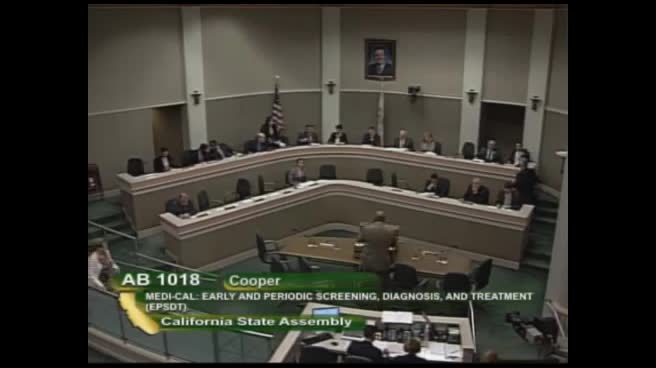 2MIN
Assembly Standing Committee on Health
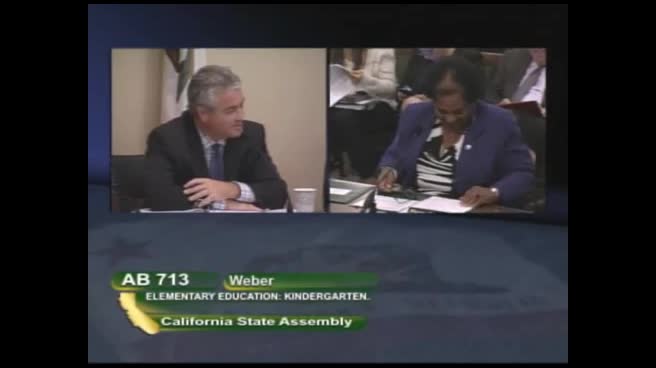 8MIN
Assembly Standing Committee on Education
Bill Author
Bill Co-Author(s):