AB 236: Weighmasters: exemptions: pawnbrokers and secondhand dealers.
- Session Year: 2015-2016
- House: Assembly
- Latest Version Date: 2015-07-15
Existing law requires a person who weighs, measures, or counts a commodity and issues a statement or memorandum of the weight, measure, or count that is used as the basis for either the purchase or sale of that commodity or charge for service, to obtain a license as a weighmaster from the Department of Food and Agriculture, and imposes a license fee and various other requirements on weighmasters. Existing law exempts specified persons from those provisions by establishing a list of persons who are not weighmasters. Existing law, until January 1, 2019, requires the department to require a recycler or junk dealer who is an applicant for a new weighmaster license or a renewal of a weighmaster license to furnish specified additional information on the application.
This bill would add licensed pawnbrokers and secondhand dealers to the list of persons who are not weighmasters and would specify that pawnbrokers and secondhand dealers are exempt from the above-described provision applicable to a junk dealer or recycler who is an applicant for a weighmaster license.
Existing law requires a person who weighs, measures, or counts a commodity and issues a statement or memorandum of the weight, measure, or count that is used as the basis for either the purchase or sale of that commodity or charge for service, to obtain a license as a weighmaster from the Department of Food and Agriculture, and imposes a license fee and various other requirements on weighmasters. Existing law exempts specified persons from those provisions by establishing a list of persons who are not weighmasters. Existing law, until January 1, 2019, requires the department to require a recycler or junk dealer who is an applicant for a new weighmaster license or a renewal of a weighmaster license to furnish specified additional information on the application.
This bill would add licensed pawnbrokers and secondhand dealers to the list of persons who are not weighmasters. weighmasters and would specify that pawnbrokers and secondhand dealers are exempt from the above-described provision applicable to a junk dealer or recycler who is an applicant for a weighmaster license.
Existing law requires a person who weighs, measures, or counts a commodity and issues a statement or memorandum of the weight, measure, or count that is used as the basis for either the purchase or sale of that commodity or charge for service, to obtain a license as a weighmaster from the Department of Food and Agriculture, and imposes a license fee and various other requirements on weighmasters. Existing law exempts specified persons from those provisions by establishing a list of persons who are not weighmasters.
This bill would add licensed pawnbrokers and secondhand dealers to the list of persons who are not weighmasters.
(a)The intent of the Legislature in enacting this measure is to clarify that licensed pawnbrokers and secondhand dealers are not weighmasters.
(b)The Legislature finds and declares that this clarification is necessary following the enactment of Senate Bill 485 of the 201314 Regular Session of the Legislature, and the Department of Food and Agricultures subsequent administrative interpretation that pawnbrokers and secondhand dealers are subject to the provisions regulating weighmasters.
SEC. 2.Section 12701 of the Business and Professions Code, as amended by Section 1 of Chapter 693 of the Statutes of 2012, is amended to read:12701.The following persons are not weighmasters:
(a)Retailers weighing, measuring, or counting commodities for sale by them in retail stores in the presence of, and directly to, consumers.
(b)Except for persons subject to Section 12730, producers of agricultural commodities or livestock, who weigh commodities produced or purchased by them or by their producer neighbors, when no charge is made for the weighing, or when no signed or initialed statement or memorandum is issued of the weight upon which a purchase or sale of the commodity is based.
(c)Common carriers issuing bills of lading on which are recorded, for the purpose of computing transportation charges, the weights of commodities offered for transportation, including carriers of household goods when transporting shipments weighing less than 1,000 pounds.
(d)Milk samplers and weighers licensed pursuant to Article 8 (commencing with Section 35161) of Chapter 12 of Part 1 of Division 15 of the Food and Agricultural Code, when performing the duties for which they are licensed.
(e)Persons who measure the amount of oil, gas, or other fuels for purposes of royalty computation and payment, or other operations of fuel and oil companies and their retail outlets.
(f)Newspaper publishers weighing or counting newspapers for sale to dealers or distributors.
(g)Textile maintenance establishments weighing, counting, or measuring any articles in connection with the business of those establishments.
(h)County sanitation districts operating pursuant to Chapter 3 (commencing with Section 4700) of Part 3 of Division 5 of the Health and Safety Code, garbage and refuse disposal districts operating pursuant to Chapter 2 (commencing with Section 49100) of Part 8 of Division 30 of the Public Resources Code, and solid waste facilities, as defined in Section 40194 of the Public Resources Code.
(i)Facilities that handle medical waste and that report net weights, and not estimates, to the generator of the medical waste and the Department of Public Health in accordance with the provisions of the Medical Waste Management Act (Part 14 (commencing with Section 117600) of Division 104 of the Health and Safety Code).
(j)Persons who purchase scrap metal or salvage materials pursuant to a nonprofit recycling program, or recycling centers certified pursuant to Division 12.1 (commencing with Section 14500) of the Public Resources Code that purchase empty beverage containers from the public for recycling.
(k)Pest control operators licensed pursuant to Chapter 4 (commencing with Section 11701) of Division 6 of the Food and Agricultural Code.
(l)Retailers or recycling centers established solely for the redemption of empty beverage containers, as that phrase is defined in Section 14512 of the Public Resources Code, who are weighing, measuring, or counting salvage or returnable materials for purchase or redemption by them in retail stores, or, in the case of recycling centers, on the retail store premises or on a parking lot immediately adjacent to a retail store that is used for the purpose of parking by the store customers, directly from and in the presence of the seller. Retailer means an entity that derives 90 percent or more of its income from the sale of small quantities of food or nonfood items, or both, directly to consumers. Salvage materials means used paper products and used containers made of aluminum, tin, glass, or plastic.
(m)Any log scaler who performs log scaling functions, except weighing, as defined in the United States Forest Service Handbook, Supplement No. 4 of March 1987.
(n)Pawnbrokers licensed pursuant to Chapter 3 (commencing with Section 21300) of Division 8 of the Financial Code, and secondhand dealers licensed pursuant to Article 4 (commencing with Section 21625) of Chapter 9 of Division 8, when the pawnbroker or secondhand dealer weighs property that it acquires and reports the acquisition of the property pursuant to Section 21208 of the Financial Code or Article 4 (commencing with Section 21625) of Chapter 9 of Division 8, respectively.
(o)This section shall remain in effect only until January 1, 2017, and as of that date is repealed, unless a later enacted statute, that is enacted before January 1, 2017, deletes or extends that date.
SEC. 3.Section 12701 of the Business and Professions Code, as added by Section 2 of Chapter 693 of the Statutes of 2012, is amended to read:12701.The following persons are not weighmasters:
(a)Retailers weighing, measuring, or counting commodities for sale by them in retail stores in the presence of, and directly to, consumers.
(b)Except for persons subject to Section 12730, producers of agricultural commodities or livestock, who weigh commodities produced or purchased by them or by their producer neighbors, when no charge is made for the weighing, or when no signed or initialed statement or memorandum is issued of the weight upon which a purchase or sale of the commodity is based.
(c)Common carriers issuing bills of lading on which are recorded, for the purpose of computing transportation charges, the weights of commodities offered for transportation, including carriers of household goods when transporting shipments weighing less than 1,000 pounds.
(d)Milk samplers and weighers licensed pursuant to Article 8 (commencing with Section 35161) of Chapter 12 of Part 1 of Division 15 of the Food and Agricultural Code, when performing the duties for which they are licensed.
(e)Persons who measure the amount of oil, gas, or other fuels for purposes of royalty computation and payment, or other operations of fuel and oil companies and their retail outlets.
(f)Newspaper publishers weighing or counting newspapers for sale to dealers or distributors.
(g)Textile maintenance establishments weighing, counting, or measuring any articles in connection with the business of those establishments.
(h)County sanitation districts operating pursuant to Chapter 3 (commencing with Section 4700) of Part 3 of Division 5 of the Health and Safety Code, garbage and refuse disposal districts operating pursuant to Chapter 2 (commencing with Section 49100) of Part 8 of Division 30 of the Public Resources Code, and solid waste facilities, as defined in Section 40194 of the Public Resources Code.
(i)Persons who purchase scrap metal or salvage materials pursuant to a nonprofit recycling program, or recycling centers certified pursuant to Division 12.1 (commencing with Section 14500) of the Public Resources Code that purchase empty beverage containers from the public for recycling.
(j)Pest control operators licensed pursuant to Chapter 4 (commencing with Section 11701) of Division 6 of the Food and Agricultural Code.
(k)Retailers, or recycling centers established solely for the redemption of empty beverage containers, as that phrase is defined in Section 14512 of the Public Resources Code, who are weighing, measuring, or counting salvage or returnable materials for purchase or redemption by them in retail stores, or, in the case of recycling centers, on the retail store premises or on a parking lot immediately adjacent to a retail store that is used for the purpose of parking by the store customers, directly from and in the presence of the seller. Retailer means an entity that derives 90 percent or more of its income from the sale of small quantities of food or nonfood items, or both, directly to consumers. Salvage materials means used paper products and used containers made of aluminum, tin, glass, or plastic.
(l)Any log scaler who performs log scaling functions, except weighing, as defined in the United States Forest Service Handbook, Supplement No. 4 of March 1987.
(m)Pawnbrokers licensed pursuant to Chapter 3 (commencing with Section 21300) of Division 8 of the Financial Code, and secondhand dealers licensed pursuant to Article 4 (commencing with Section 21625) of Chapter 9 of Division 8, when the pawnbroker or secondhand dealer weighs property that it acquires and reports the acquisition of the property pursuant to Section 21208 of the Financial Code or Article 4 (commencing with Section 21625) of Chapter 9 of Division 8, respectively.
(n)This section shall become operative on January 1, 2017.
SEC. 4.Section 12703.1 of the Business and Professions Code is amended to read:12703.1.(a)In addition to any other requirements for issuance of a license pursuant to this chapter, if the applicant is a recycler or junk dealer as defined in Section 21601, the department shall require the applicant to furnish all of the following information accurately on any application for a new license or the renewal of a license issued pursuant to this chapter:
(1)A copy of the applicants current business license.
(2)A statement indicating that the applicant has either filed an application for a stormwater permit or is not required to obtain a stormwater permit.
(3)A statement indicating that the applicant has the equipment necessary to comply with the photographic and thumbprinting requirements for the purchase and sale of nonferrous materials pursuant to Section 21608.5 or a statement indicating that the applicant will not be purchasing or selling nonferrous materials and is not required to comply with Section 21608.5.
(4)A statement indicating that the applicant has requested to receive theft alert notifications pursuant to subdivision (a) of Section 21608.7, unless that requirement does not apply pursuant to subdivision (b) of that section.
(5)The name or names of any deputy weighmasters.
(b)The department shall issue a license to a junk dealer or recycler upon receipt of an application for a new license or renewal of a license that contains the information required by subdivision (a) and that is accompanied by the appropriate fee.
(c)(1)On or before December 31, 2014, upon issuance of a license to a junk dealer or recycler, or renewal of such a license, the department shall make a thorough investigation of all of the information contained in the application within 90 days. If the license is issued or renewed on or after January 1, 2015, the department shall make a thorough investigation of all the information contained in the application within 90 days for a new license, and within one calendar year for a renewal of a license.
(2)Notwithstanding Section 12708, if the department determines that the information submitted pursuant to subdivision (a) is materially inaccurate, the department shall revoke the license issued to a junk dealer or recycler unless the junk dealer or recycler complies with the requirements of subdivision (a) within 14 days of notice from the department of a proposed revocation pursuant to this subdivision.
(3)A junk dealer or recycler whose license has been revoked pursuant to this subdivision is entitled to a hearing conducted pursuant to Chapter 5 (commencing with Section 11500) of Part 1 of Division 3 of Title 2 of the Government Code.
(d)The secretary may enter into a cooperative agreement with any county sealer to carry out the provisions of this section.
(e)This section shall not apply to a pawnbroker licensed pursuant to Chapter 3 (commencing with Section 21300) of Division 8 of the Financial Code and a secondhand dealer licensed pursuant to Article 4 (commencing with Section 21625) of Chapter 9 of Division 8.
(f)This section shall remain in effect only until January 1, 2019, and as of that date is repealed, unless a later enacted statute, that is enacted before January 1, 2019, deletes or extends that date.
(a)The intent of the Legislature in enacting this measure is to clarify that licensed pawnbrokers and secondhand dealers are not weighmasters.
(b)The Legislature finds and declares that this clarification is necessary following the enactment of Senate Bill 485 of the 201314 Regular Session of the Legislature, and the Department of Food and Agricultures subsequent administrative interpretation that pawnbrokers and secondhand dealers are subject to the provisions regulating weighmasters.
SEC. 2.Section 12701 of the Business and Professions Code, as amended by Section 1 of Chapter 693 of the Statutes of 2012, is amended to read:12701.The following persons are not weighmasters:
(a)Retailers weighing, measuring, or counting commodities for sale by them in retail stores in the presence of, and directly to, consumers.
(b)Except for persons subject to Section 12730, producers of agricultural commodities or livestock, who weigh commodities produced or purchased by them or by their producer neighbors, when no charge is made for the weighing, or when no signed or initialed statement or memorandum is issued of the weight upon which a purchase or sale of the commodity is based.
(c)Common carriers issuing bills of lading on which are recorded, for the purpose of computing transportation charges, the weights of commodities offered for transportation, including carriers of household goods when transporting shipments weighing less than 1,000 pounds.
(d)Milk samplers and weighers licensed pursuant to Article 8 (commencing with Section 35161) of Chapter 12 of Part 1 of Division 15 of the Food and Agricultural Code, when performing the duties for which they are licensed.
(e)Persons who measure the amount of oil, gas, or other fuels for purposes of royalty computation and payment, or other operations of fuel and oil companies and their retail outlets.
(f)Newspaper publishers weighing or counting newspapers for sale to dealers or distributors.
(g)Textile maintenance establishments weighing, counting, or measuring any articles in connection with the business of those establishments.
(h)County sanitation districts operating pursuant to Chapter 3 (commencing with Section 4700) of Part 3 of Division 5 of the Health and Safety Code, garbage and refuse disposal districts operating pursuant to Chapter 2 (commencing with Section 49100) of Part 8 of Division 30 of the Public Resources Code, and solid waste facilities, as defined in Section 40194 of the Public Resources Code.
(i)Facilities that handle medical waste and that report net weights, and not estimates, to the generator of the medical waste and the Department of Public Health in accordance with the provisions of the Medical Waste Management Act (Part 14 (commencing with Section 117600) of Division 104 of the Health and Safety Code).
(j)Persons who purchase scrap metal or salvage materials pursuant to a nonprofit recycling program, or recycling centers certified pursuant to Division 12.1 (commencing with Section 14500) of the Public Resources Code that purchase empty beverage containers from the public for recycling.
(k)Pest control operators licensed pursuant to Chapter 4 (commencing with Section 11701) of Division 6 of the Food and Agricultural Code.
(l)Retailers or recycling centers established solely for the redemption of empty beverage containers, as that phrase is defined in Section 14512 of the Public Resources Code, who are weighing, measuring, or counting salvage or returnable materials for purchase or redemption by them in retail stores, or, in the case of recycling centers, on the retail store premises or on a parking lot immediately adjacent to a retail store that is used for the purpose of parking by the store customers, directly from and in the presence of the seller. Retailer means an entity that derives 90 percent or more of its income from the sale of small quantities of food or nonfood items, or both, directly to consumers. Salvage materials means used paper products and used containers made of aluminum, tin, glass, or plastic.
(m)Any log scaler who performs log scaling functions, except weighing, as defined in the United States Forest Service Handbook, Supplement No. 4 of March 1987.
(n)Pawnbrokers licensed pursuant to Chapter 3 (commencing with Section 21300) of Division 8 of the Financial Code, and secondhand dealers licensed pursuant to Article 4 (commencing with Section 21625) of Chapter 9 of Division 8, when performing the duties for which they are licensed. the pawnbroker or secondhand dealer weighs property that it acquires and reports the acquisition of the property pursuant to Section 21208 of the Financial Code or Article 4 (commencing with Section 21625) of Chapter 9 of Division 8, respectively.
(o)This section shall remain in effect only until January 1, 2017, and as of that date is repealed, unless a later enacted statute, that is enacted before January 1, 2017, deletes or extends that date.
SEC. 3.Section 12701 of the Business and Professions Code, as added by Section 2 of Chapter 693 of the Statutes of 2012, is amended to read:12701.The following persons are not weighmasters:
(a)Retailers weighing, measuring, or counting commodities for sale by them in retail stores in the presence of, and directly to, consumers.
(b)Except for persons subject to Section 12730, producers of agricultural commodities or livestock, who weigh commodities produced or purchased by them or by their producer neighbors, when no charge is made for the weighing, or when no signed or initialed statement or memorandum is issued of the weight upon which a purchase or sale of the commodity is based.
(c)Common carriers issuing bills of lading on which are recorded, for the purpose of computing transportation charges, the weights of commodities offered for transportation, including carriers of household goods when transporting shipments weighing less than 1,000 pounds.
(d)Milk samplers and weighers licensed pursuant to Article 8 (commencing with Section 35161) of Chapter 12 of Part 1 of Division 15 of the Food and Agricultural Code, when performing the duties for which they are licensed.
(e)Persons who measure the amount of oil, gas, or other fuels for purposes of royalty computation and payment, or other operations of fuel and oil companies and their retail outlets.
(f)Newspaper publishers weighing or counting newspapers for sale to dealers or distributors.
(g)Textile maintenance establishments weighing, counting, or measuring any articles in connection with the business of those establishments.
(h)County sanitation districts operating pursuant to Chapter 3 (commencing with Section 4700) of Part 3 of Division 5 of the Health and Safety Code, garbage and refuse disposal districts operating pursuant to Chapter 2 (commencing with Section 49100) of Part 8 of Division 30 of the Public Resources Code, and solid waste facilities, as defined in Section 40194 of the Public Resources Code.
(i)Persons who purchase scrap metal or salvage materials pursuant to a nonprofit recycling program, or recycling centers certified pursuant to Division 12.1 (commencing with Section 14500) of the Public Resources Code that purchase empty beverage containers from the public for recycling.
(j)Pest control operators licensed pursuant to Chapter 4 (commencing with Section 11701) of Division 6 of the Food and Agricultural Code.
(k)Retailers, or recycling centers established solely for the redemption of empty beverage containers, as that phrase is defined in Section 14512 of the Public Resources Code, who are weighing, measuring, or counting salvage or returnable materials for purchase or redemption by them in retail stores, or, in the case of recycling centers, on the retail store premises or on a parking lot immediately adjacent to a retail store that is used for the purpose of parking by the store customers, directly from and in the presence of the seller. Retailer means an entity that derives 90 percent or more of its income from the sale of small quantities of food or nonfood items, or both, directly to consumers. Salvage materials means used paper products and used containers made of aluminum, tin, glass, or plastic.
(l)Any log scaler who performs log scaling functions, except weighing, as defined in the United States Forest Service Handbook, Supplement No. 4 of March 1987.
(m)Pawnbrokers licensed pursuant to Chapter 3 (commencing with Section 21300) of Division 8 of the Financial Code, and secondhand dealers licensed pursuant to Article 4 (commencing with Section 21625) of Chapter 9 of Division 8, when performing the duties for which they are licensed. the pawnbroker or secondhand dealer weighs property that it acquires and reports the acquisition of the property pursuant to Section 21208 of the Financial Code or Article 4 (commencing with Section 21625) of Chapter 9 of Division 8, respectively.
(n)This section shall become operative on January 1, 2017.
SEC. 4.Section 12703.1 of the Business and Professions Code is amended to read:12703.1.(a)In addition to any other requirements for issuance of a license pursuant to this chapter, if the applicant is a recycler or junk dealer as defined in Section 21601, the department shall require the applicant to furnish all of the following information accurately on any application for a new license or the renewal of a license issued pursuant to this chapter:
(1)A copy of the applicants current business license.
(2)A statement indicating that the applicant has either filed an application for a stormwater permit or is not required to obtain a stormwater permit.
(3)A statement indicating that the applicant has the equipment necessary to comply with the photographic and thumbprinting requirements for the purchase and sale of nonferrous materials pursuant to Section 21608.5 or a statement indicating that the applicant will not be purchasing or selling nonferrous materials and is not required to comply with Section 21608.5.
(4)A statement indicating that the applicant has requested to receive theft alert notifications pursuant to subdivision (a) of Section 21608.7, unless that requirement does not apply pursuant to subdivision (b) of that section.
(5)The name or names of any deputy weighmasters.
(b)The department shall issue a license to a junk dealer or recycler upon receipt of an application for a new license or renewal of a license that contains the information required by subdivision (a) and that is accompanied by the appropriate fee.
(c)(1)On or before December 31, 2014, upon issuance of a license to a junk dealer or recycler, or renewal of such a license, the department shall make a thorough investigation of all of the information contained in the application within 90 days. If the license is issued or renewed on or after January 1, 2015, the department shall make a thorough investigation of all the information contained in the application within 90 days for a new license, and within one calendar year for a renewal of a license.
(2)Notwithstanding Section 12708, if the department determines that the information submitted pursuant to subdivision (a) is materially inaccurate, the department shall revoke the license issued to a junk dealer or recycler unless the junk dealer or recycler complies with the requirements of subdivision (a) within 14 days of notice from the department of a proposed revocation pursuant to this subdivision.
(3)A junk dealer or recycler whose license has been revoked pursuant to this subdivision is entitled to a hearing conducted pursuant to Chapter 5 (commencing with Section 11500) of Part 1 of Division 3 of Title 2 of the Government Code.
(d)The secretary may enter into a cooperative agreement with any county sealer to carry out the provisions of this section.
(e)This section shall not apply to a pawnbroker licensed pursuant to Chapter 3 (commencing with Section 21300) of Division 8 of the Financial Code and a secondhand dealer licensed pursuant to Article 4 (commencing with Section 21625) of Chapter 9 of Division 8.
(e)
(f)This section shall remain in effect only until January 1, 2019, and as of that date is repealed, unless a later enacted statute, that is enacted before January 1, 2019, deletes or extends that date.
(a)The intent of the Legislature in enacting this measure is to clarify that licensed pawnbrokers and secondhand dealers are not weighmasters.
(b)The Legislature finds and declares that this clarification is necessary following the enactment of Senate Bill 485 of the 201314 Regular Session of the Legislature, and the Department of Food and Agricultures subsequent administrative interpretation that pawnbrokers and secondhand dealers are subject to the provisions regulating weighmasters.
SEC. 2.Section 12701 of the Business and Professions Code, as amended by Section 1 of Chapter 693 of the Statutes of 2012, is amended to read:12701.The following persons are not weighmasters:
(a)Retailers weighing, measuring, or counting commodities for sale by them in retail stores in the presence of, and directly to, consumers.
(b)Except for persons subject to Section 12730, producers of agricultural commodities or livestock, who weigh commodities produced or purchased by them or by their producer neighbors, when no charge is made for the weighing, or when no signed or initialed statement or memorandum is issued of the weight upon which a purchase or sale of the commodity is based.
(c)Common carriers issuing bills of lading on which are recorded, for the purpose of computing transportation charges, the weights of commodities offered for transportation, including carriers of household goods when transporting shipments weighing less than 1,000 pounds.
(d)Milk samplers and weighers licensed pursuant to Article 8 (commencing with Section 35161) of Chapter 12 of Part 1 of Division 15 of the Food and Agricultural Code, when performing the duties for which they are licensed.
(e)Persons who measure the amount of oil, gas, or other fuels for purposes of royalty computation and payment, or other operations of fuel and oil companies and their retail outlets.
(f)Newspaper publishers weighing or counting newspapers for sale to dealers or distributors.
(g)Textile maintenance establishments weighing, counting, or measuring any articles in connection with the business of those establishments.
(h)County sanitation districts operating pursuant to Chapter 3 (commencing with Section 4700) of Part 3 of Division 5 of the Health and Safety Code, garbage and refuse disposal districts operating pursuant to Chapter 2 (commencing with Section 49100) of Part 8 of Division 30 of the Public Resources Code, and solid waste facilities, as defined in Section 40194 of the Public Resources Code.
(i)Facilities that handle medical waste and that report net weights, and not estimates, to the generator of the medical waste and the Department of Public Health in accordance with the provisions of the Medical Waste Management Act (Part 14 (commencing with Section 117600) of Division 104 of the Health and Safety Code).
(j)Persons who purchase scrap metal or salvage materials pursuant to a nonprofit recycling program, or recycling centers certified pursuant to Division 12.1 (commencing with Section 14500) of the Public Resources Code that purchase empty beverage containers from the public for recycling.
(k)Pest control operators licensed pursuant to Chapter 4 (commencing with Section 11701) of Division 6 of the Food and Agricultural Code.
(l)Retailers or recycling centers established solely for the redemption of empty beverage containers, as that phrase is defined in Section 14512 of the Public Resources Code, who are weighing, measuring, or counting salvage or returnable materials for purchase or redemption by them in retail stores, or, in the case of recycling centers, on the retail store premises or on a parking lot immediately adjacent to a retail store which that is used for the purpose of parking by the store customers, directly from and in the presence of the seller. Retailer means an entity which that derives 90 percent or more of its income from the sale of small quantities of food or nonfood items, or both, directly to consumers. Salvage materials means used paper products and used containers made of aluminum, tin, glass, or plastic.
(m)Any log scaler who performs log scaling functions, except weighing, as defined in the United States Forest Service Handbook, Supplement No. 4 of March 1987.
(n)Pawnbrokers licensed pursuant to Chapter 3 (commencing with Section 21300) of Division 8 of the Financial Code, and secondhand dealers licensed pursuant to Article 4 (commencing with Section 21625) of Chapter 9 of Division 8, when performing the duties for which they are licensed.
(n)
(o)This section shall remain in effect only until January 1, 2017, and as of that date is repealed, unless a later enacted statute, that is enacted before January 1, 2017, deletes or extends that date.
SEC. 3.Section 12701 of the Business and Professions Code, as added by Section 2 of Chapter 693 of the Statutes of 2012, is amended to read:12701.The following persons are not weighmasters:
(a)Retailers weighing, measuring, or counting commodities for sale by them in retail stores in the presence of, and directly to, consumers.
(b)Except for persons subject to Section 12730, producers of agricultural commodities or livestock, who weigh commodities produced or purchased by them or by their producer neighbors, when no charge is made for the weighing, or when no signed or initialed statement or memorandum is issued of the weight upon which a purchase or sale of the commodity is based.
(c)Common carriers issuing bills of lading on which are recorded, for the purpose of computing transportation charges, the weights of commodities offered for transportation, including carriers of household goods when transporting shipments weighing less than 1,000 pounds.
(d)Milk samplers and weighers licensed pursuant to Article 8 (commencing with Section 35161) of Chapter 12 of Part 1 of Division 15 of the Food and Agricultural Code, when performing the duties for which they are licensed.
(e)Persons who measure the amount of oil, gas, or other fuels for purposes of royalty computation and payment, or other operations of fuel and oil companies and their retail outlets.
(f)Newspaper publishers weighing or counting newspapers for sale to dealers or distributors.
(g)Textile maintenance establishments weighing, counting, or measuring any articles in connection with the business of those establishments.
(h)County sanitation districts operating pursuant to Chapter 3 (commencing with Section 4700) of Part 3 of Division 5 of the Health and Safety Code, garbage and refuse disposal districts operating pursuant to Chapter 2 (commencing with Section 49100) of Part 8 of Division 30 of the Public Resources Code, and solid waste facilities, as defined in Section 40194 of the Public Resources Code.
(i)Persons who purchase scrap metal or salvage materials pursuant to a nonprofit recycling program, or recycling centers certified pursuant to Division 12.1 (commencing with Section 14500) of the Public Resources Code that purchase empty beverage containers from the public for recycling.
(j)Pest control operators licensed pursuant to Chapter 4 (commencing with Section 11701) of Division 6 of the Food and Agricultural Code.
(k)Retailers, or recycling centers established solely for the redemption of empty beverage containers, as that phrase is defined in Section 14512 of the Public Resources Code, who are weighing, measuring, or counting salvage or returnable materials for purchase or redemption by them in retail stores, or, in the case of recycling centers, on the retail store premises or on a parking lot immediately adjacent to a retail store which that is used for the purpose of parking by the store customers, directly from and in the presence of the seller. Retailer means an entity which that derives 90 percent or more of its income from the sale of small quantities of food or nonfood items, or both, directly to consumers. Salvage materials means used paper products and used containers made of aluminum, tin, glass, or plastic.
(l)Any log scaler who performs log scaling functions, except weighing, as defined in the United States Forest Service Handbook, Supplement No. 4 of March 1987.
(m)Pawnbrokers licensed pursuant to Chapter 3 (commencing with Section 21300) of Division 8 of the Financial Code, and secondhand dealers licensed pursuant to Article 4 (commencing with Section 21625) of Chapter 9 of Division 8, when performing the duties for which they are licensed.
(m)
(n)This section shall become operative on January 1, 2017.
|
Date
|
Status
|
|---|---|
| Jul 15, 2015 | Chaptered by Secretary of State - Chapter 103, Statutes of 2015. |
| Jul 15, 2015 | Approved by the Governor. |
| Jul 9, 2015 | Enrolled and presented to the Governor at 2 p.m. |
| Jul 2, 2015 | In Assembly. Ordered to Engrossing and Enrolling. |
| Jul 2, 2015 | Read third time. Passed. Ordered to the Assembly. (Ayes 38. Noes 0. Page 1755.). |
| Jul 2, 2015 | Read third time. Passed. Ordered to the Assembly. |
| Jun 30, 2015 | Read second time. Ordered to Consent Calendar. |
| Jun 29, 2015 | From committee: Be placed on second reading file pursuant to Senate Rule 28.8 and ordered to consent calendar. |
| Jun 15, 2015 | From committee: Do pass and re-refer to Com. on APPR. with recommendation: To Consent Calendar. (Ayes 9. Noes 0.) (June 15). Re-referred to Com. on APPR. |
| May 28, 2015 | Referred to Com. on B., P. & E.D. |
| May 14, 2015 | In Senate. Read first time. To Com. on RLS. for assignment. |
| May 14, 2015 | Read third time. Passed. Ordered to the Senate. (Ayes 78. Noes 0. Page 1447.) |
| May 14, 2015 | Read third time. Passed. Ordered to the Senate. |
| May 7, 2015 | Read second time. Ordered to Consent Calendar. |
| May 6, 2015 | From committee: Do pass. To Consent Calendar. (Ayes 17. Noes 0.) (May 6). |
| Apr 21, 2015 | From committee: Do pass and re-refer to Com. on APPR. (Ayes 14. Noes 0.) (April 21). Re-referred to Com. on APPR. |
| Apr 16, 2015 | Re-referred to Com. on B. & P. |
| Apr 15, 2015 | From committee chair, with author's amendments: Amend, and re-refer to Com. on B. & P. Read second time and amended. |
| Feb 17, 2015 | Referred to Com. on B. & P. |
| Feb 6, 2015 | From printer. May be heard in committee March 8. |
| Feb 5, 2015 | Read first time. To print. |
|
Date
|
Description
|
Location
|
Votes
|
|
|---|---|---|---|---|
| Jul 2, 2015 | Consent Calendar 2nd AB236 Lackey | Senate Floor |
Passed |
|
| Jun 15, 2015 | Do pass, but first be re-referred to the Committee on [Appropriations] with the recommendation: To Consent Calendar | Senate Standing Committee on Business, Professions and Economic Development |
Passed |
|
| May 14, 2015 | AB 236 LACKEY Consent Calendar Second Day Regular Session | Assembly Floor |
Passed |
|
| May 6, 2015 | Do pass. To Consent Calendar. | Assembly Standing Committee on Appropriations |
Passed |
|
| Apr 21, 2015 | Do pass and be re-referred to the Committee on [Appropriations] | Assembly Standing Committee on Business and Professions |
Passed |
This list shows positions taken on this bill by organizations on the date displayed, which is linked to the original source.
Positions by individuals are not included.
AB 236
Page 6
|
Office of Senate Floor Analyses (916) 651-1520 Fax: (916) 327-4478 |
CONSENT
Bill No: AB 236
Amended: 4/15/15 in Assembly
SENATE BUS, PROF. & ECON. DEV. COMMITTEE: 9-0, 6/15/15
AYES: Hill, Bates, Berryhill, Block, Galgiani, Hernandez, Jackson, Mendoza, Wieckowski
SENATE APPROPRIATIONS COMMITTEE: Senate Rule 28.8
ASSEMBLY FLOOR: 78-0, 5/14/15 (Consent) - See last page for vote
SUBJECT: Weighmasters: exemptions: pawnbrokers and secondhand dealers
SOURCE: California Pawnbroker’s Association
DIGEST: This bill adds pawnbrokers and secondhand dealers to the list of persons who are not weighmasters and makes other technical changes.
Existing law:
Defines a “weighmaster” to mean any person who, for hire or otherwise, weighs, measures, or counts any commodity and issues a statement or memorandum of the weight, measure or count which is used as the basis for either the purchase or sale of that commodity or charge for service.
(Business and Professions Code (BPC) BPC § 12700)
Specifies that the following persons are not weighmasters: (BPC § 12701)
Retailers weighing, measuring or counting commodities for sale by them in retail stores directly to consumers;
Producers of agriculture commodities or livestock, as specified, when no charge is made for the weighing, or when no signed or initiated statement or memorandum is issued of the weight upon which a purchase or sale of the commodity is based;
Common carriers issuing bills of lading, as specified;
Milk samplers and weighers, as specified;
Persons who measure the amount of oil, gas, or other fuels for purposes of royalty computation and payment, or other operations of fuel and oil companies and their retail outlets;
Newspaper publishers weighing or counting newspapers for sale to dealers or distributors;
Textile maintenance establishments, as specified;
County sanitation districts; as specified;
Facilities that handle medical waste, as specified;
Persons who purchase scrap metal or salvage materials pursuant to a nonprofit recycling program, as specified;
Licensed pest control operators;
Retailers or recycling centers established solely for the redemption of empty beverage containers; as defined in the Public Resources Code, as specified; and,
Any log scaler who performs log scaling functions, as specified.
Requires an applicant for a weighmaster’s license, who is a recycler or junk dealer, as specified, or performing services on behalf of a recycler or junk dealer, to pay additional licensing fees to the California Department of Food and Agriculture (CDFA), as specified. (BPC § 12704)
Defines a “secondhand dealer” to mean “any person, co-partnership, firm, or corporation whose business includes buying, selling, trading, taking in pawn, accepting for sale on consignment, accepting for auctioning, or auctioning secondhand tangible personal property,” and specifies that a “secondhand dealer” does not include a coin dealer or participant at gun shows or events, as specified. (BPC § 21626 (a))
Specifies that “secondhand dealers” are not persons who perform the services of an auctioneer for a fee or salary, or persons whose business is limited to the reconditioning and selling of major household appliances, as long as specified conditions are met. (BPC § 21626.5)
Provides that “tangible personal property” includes, but is not limited to, all secondhand tangible personal property which bears a serial number or personalized initials or inscription or which, at the time it is acquired by the secondhand dealer, bears evidence of having had a serial number or personalized initials or inscription. (BPC § 21627(a)).
Defines a pawnbroker as “every person engaged in the business of receiving goods, including motor vehicles, in pledge as security for a loan.” (Financial Code § 21000).
This
bill:
Specifies that a pawnbroker or secondhand dealer, who is weighing property that is acquired and reports the acquisition of the property as specified, is not a weighmaster.
Clarifies that the weighmaster’s requirements for junk dealers and recyclers do not apply to pawnbrokers.
States the intent of the Legislature is to clarify that licensed pawnbrokers and secondhand dealers are not weighmasters and declares that the clarification is necessary based on the CDFA’s administrative interpretation of SB 485 (Calderon, Chapter 518, Statutes of 2013), placing pawnbrokers and secondhand dealers within the meaning of weighmasters.
Background
Pawnbrokers and secondhand dealers. A secondhand dealer includes a person, business or corporation whose main purpose is to buy, sell, trade, take in pawn, accept for sale on consignment, or accept for auction, secondhand tangible personal property. Existing law specifically exempts certain individuals from the definition of a secondhand dealer, including coin dealers, certain auctioneers and certain appliance repair persons. According to the National Pawnbrokers Association, the core of a pawn store’s business is making collateral loans by securing something of value. The pawn store may have other business elements such as retail sales. However, pawnbrokers focus on lending money. Customers bring in an item of value, and the pawnbroker offers a loan based on a percentage of the item’s estimated value. The pawnbroker then keeps the item until the customer repays the loan with interest and any additional fees that may apply. Pawn stores are regulated on a federal, state, and local level. On average, customers receive only a portion of the item’s retail value. The average loan amount nationally is $150. The sponsor of this bill contends that pawnbrokers typically value the item based on several factors and not weight alone.
Pawn broker and secondhand dealer transactions. Traditional pawn and secondhand dealer transactions typically take place through face-to-face encounters where applicable state and local laws can apply, such as California’s 30-day hold requirement. In 2012, AB 391 (Pan, Chapter 172, Statutes of 2012) was enacted and established a new requirement that secondhand dealers and pawnbrokers electronically report to the Department of Justice all secondhand tangible property which has been purchased, taken in trade, taken in pawn, accepted for sale on consignment or accepted for auctioning. The new electronic database is in the process of development.
Weighmasters. Enforcement of California’s weights and measures laws and regulations is the responsibility of the Division of Measurement Standards (DMS) under the CDFA. Weights and measures officials have the authority to issue citations for misdemeanor and infraction violations involving weights and measures laws. The CDFA is authorized to inspect all weighmasters, including those of junk dealers and recyclers, to ensure compliance with recordkeeping and reporting requirements with relation to the issuance of weighmaster certificates. According to the CDFA, most pawnbrokers are not required to obtain a weighmaster’s certificate unless they are conducting business services which require a weighmaster’s license. The sponsor notes that the majority of pawnbroking businesses do not overlap with the requirements that would trigger a weighmaster’s license.
In 2013, SB 485 increased the amount of information that must be provided by a junk dealer or recycler on an application for a new weighmaster’s license or renewal in order to provide both the CDFA and the county sealers with better information to determine if a junk dealer or recycler business is operating a legitimate business.
The current license fee a weighmaster is required to pay to the CDFA for each license year, depending on location, is: $75 for a weighmaster operating at a fixed location; $30 for each additional fixed location; and $200 if the weighmaster is operating at other than a fixed location. SB 485 enhanced that fee by requiring a junk dealer or recycler to pay an additional $500 fee for each fixed location or other location where it operates to cover costs associated with the investigative work performed by the DMS to review the additional material submitted on the application for a weighmaster’s license or renewal.
The author and sponsor explain that the pawnbrokers and secondhand dealers are being required to pay the additional $500 fee which was established for junk dealers. BPC Section 21603 explicitly states that pawnbrokers are not junk dealers. This bill explicitly exempts pawnbrokers from the additional $500 fee – which was specifically required for junk dealers and recyclers.
FISCAL EFFECT: Appropriation: No Fiscal Com.: Yes Local: No
California Pawnbroker’s Association (source)
West Coast Chapter of the Institute of Scrap Recycling Industries, Inc.
None received
ARGUMENTS IN SUPPORT: The California Pawnbroker’s Association is the sponsor of this bill and writes that “pawnbrokers are not commodity dealers, recyclers, or junk dealers; we loan money on a multitude of factors other than metal weights and we already report to DOJ all reportable transactions and pay a large biannual fee to do so.”
West Coast Chapter of the Institute of Scrap Recycling Industries, Inc. argues that “SB 485 [Calderon, 2013] was never intended to encompass secondhand dealers or pawn brokers as it is being interpreted by the Department of Food and Agriculture. AB 236 clarifies this misinterpretation of the law.”
ASSEMBLY FLOOR: 78-0, 5/14/15
AYES: Achadjian, Alejo, Travis Allen, Baker, Bigelow, Bloom, Bonilla, Bonta, Brough, Brown, Burke, Calderon, Campos, Chang, Chau, Chávez, Chiu, Chu, Cooley, Cooper, Dababneh, Dahle, Daly, Dodd, Eggman, Frazier, Beth Gaines, Gallagher, Cristina Garcia, Eduardo Garcia, Gatto, Gipson, Gomez, Gonzalez, Gordon, Gray, Grove, Hadley, Harper, Roger Hernández, Holden, Irwin, Jones, Jones-Sawyer, Kim, Lackey, Levine, Lopez, Low, Maienschein, Mathis, Mayes, McCarty, Melendez, Mullin, Nazarian, Obernolte, O’Donnell, Olsen, Patterson, Perea, Quirk, Rendon, Ridley-Thomas, Rodriguez, Salas, Santiago, Steinorth, Mark Stone, Thurmond, Ting, Wagner, Waldron, Weber, Wilk, Williams, Wood, Atkins
NO VOTE RECORDED: Linder, Medina
Prepared by: Mark Mendoza / B., P. & E.D. / (916) 651-4104
7/1/15 16:33:35
**** END ****
AB 236 (Lackey) Page 7 of 7
SENATE COMMITTEE ON
BUSINESS, PROFESSIONS AND ECONOMIC DEVELOPMENT
Senator Jerry Hill, Chair
2015 - 2016 Regular
Bill No: AB 236 Hearing Date: June 15, 2015
Author: |
Lackey |
||
Version: |
April 15, 2015 |
||
Urgency: |
No |
Fiscal: |
Yes |
Consultant: |
Mark Mendoza |
||
Subject: Weighmasters: exemptions: pawnbrokers and secondhand dealers.
SUMMARY:
Adds pawnbrokers and secondhand dealers to the list of persons who are not weighmasters and makes other technical changes.
Existing law:
Defines a "weighmaster" to mean any person who, for hire or otherwise, weighs, measures, or counts any commodity and issues a statement or memorandum of the weight, measure or count which is used as the basis for either the purchase or sale of that commodity or charge for service. (Business and Professions Code (BPC) BPC § 12700)
Specifies that the following persons are not weighmasters: (BPC § 12701)
Retailers weighing, measuring or counting commodities for sale by them in retail stores directly to consumers;
Producers of agriculture commodities or livestock, as specified, when no charge is made for the weighing, or when no signed or initiated statement or memorandum is issued of the weight upon which a purchase or sale of the commodity is based;
Common carriers issuing bills of lading, as specified;
Milk samplers and weighers, as specified;
Persons who measure the amount of oil, gas, or other fuels for purposes of royalty computation and payment, or other operations of fuel and oil companies and their retail outlets;
Newspaper publishers weighing or counting newspapers for sale to dealers or distributors;
Textile maintenance establishments, as specified;
County sanitation districts; as specified;
Facilities that handle medical waste, as specified;
Persons who purchase scrap metal or salvage materials pursuant to a nonprofit recycling program, as specified;
Licensed pest control operators;
Retailers or recycling centers established solely for the redemption of empty beverage containers; as defined in the Public Resources Code, as specified; and,
Any log scaler who performs log scaling functions, as specified.
Requires an applicant for a weighmaster's license, who is a recycler or junk dealer, as specified, or performing services on behalf of a recycler or junk dealer, to pay additional licensing fees to the California Department of Food and Agriculture (CDFA), as specified. (BPC § 12704)
Defines a "secondhand dealer" to mean "any person, co-partnership, firm, or corporation whose business includes buying, selling, trading, taking in pawn, accepting for sale on consignment, accepting for auctioning, or auctioning secondhand tangible personal property," and specifies that a "secondhand dealer" does not include a coin dealer or participant at gun shows or events, as specified. (BPC § 21626 (a))
Specifies that "secondhand dealers" are not persons who perform the services of an auctioneer for a fee or salary, or persons whose business is limited to the reconditioning and selling of major household appliances, as long as specified conditions are met. (BPC § 21626.5)
Provides that “tangible personal property” includes, but is not limited to, all secondhand tangible personal property which bears a serial number or personalized initials or inscription or which, at the time it is acquired by the secondhand dealer, bears evidence of having had a serial number or personalized initials or inscription. (BPC § 21627(a)).
Defines a pawnbroker as “every person engaged in the business of receiving goods, including motor vehicles, in pledge as security for a loan.” (Financial Code § 21000).
This
bill:
Specifies that a pawnbroker or secondhand dealer, who is weighing property that is acquired and reports the acquisition of the property as specified, is not a weighmaster.
Clarifies that the weighmaster's requirements for junk dealers and recyclers do not apply to pawnbrokers.
States the intent of the Legislature is to clarify that licensed pawnbrokers and secondhand dealers are not weighmasters and declares that the clarification is necessary based on the California Department of Food and Agriculture’s (CDFA) administrative interpretation of SB 485 (Calderon, Chapter 518, Statutes of 2013), placing pawnbrokers and secondhand dealers within the meaning of weighmasters.
FISCAL EFFECT:
This bill is keyed “fiscal” by Legislative Counsel. According to the Assembly Appropriations Committee:
Minor and absorbable costs to the CDFA.
COMMENTS:
Purpose. This bill is sponsored by the California Pawnbroker's Association. According to the Author, this bill "simply clarifies that the fee created by SB 485 (Calderon, Chapter 518 Statutes of 2013) does not apply to pawnbrokers. SB 485 was passed in 2013 as a measure to help increase compliance with metal theft laws. Scrap metal recyclers agreed to assess a new $500 fee on their weighmaster permit in order to improve enforcement. In 2014, several pawnbrokers in the Los Angeles area were told that they must become weighmasters and pay the fee despite SB 485’s intent being clear that it only applied to scrap metal dealers. [This bill] explicitly exempts pawnbrokers from being considered a weighmaster. This is appropriate because pawnbrokers do not deal with commodities exclusively priced by weight. Instead the value of products they purchase is based on a variety of factors. This bill prevents pawnbrokers around California from unnecessarily being charged a $500 fee to fund improved compliance with metal theft laws—something that could violate Prop 26’s provisions because pawnbrokers have nothing to do with metal theft."
Background. According to the sponsor, those individuals involved in pawnbroking or secondhand dealing typically do not conduct transactions which require the use of a scale; yet, the Author and sponsor state that recently pawnbrokers have been required by the CDFA to obtain a weighmaster's license. The sponsor contends that pawnbrokers loan money on an item based on several criteria and not solely on the factor of the weight alone. Further, to clarify that if a pawnbroker were using a scale for the valuation of commodities and needed an additional weighmasters license, he or she would not be required to pay the additional fee which is currently required for junk dealers and recyclers under BPC § 12704(b), as a result of
SB 485.
BPC § 21625 specifies the intent of the Legislature in establishing the provisions for secondhand dealers was to help curtail the dissemination of stolen property and help facilitate the recovery of stolen property through a statewide, uniform reporting system. Every secondhand dealer, including pawnbrokers, are required to report daily or on the first working day after the purchase of property to the Department of Justice (DOJ). The reporting helps law enforcement track and monitor items of high crimes as determined by the DOJ in an effort to prevent stolen property from being sold between secondhand dealers or taken in pawn.
The regulation of weighmasters is found in a separate section of the BPC. Weighmasters weigh, measure, or count any commodity and issue a statement or memorandum of the weight, measure or count which is used as the basis for either the purchase or sale of that commodity or charge for service. Weighmasters, include those individuals who are junk dealers and recyclers who typically buy recycled "junk" including all ferrous and nonferrous scrap materials.
Unlike pawnbrokers and secondhand dealers, junk dealers typically base the value of their items on the weight of the commodity and are therefore subject to the provisions requiring a weighmaster's license. Under current law, pawnbrokers are specifically exempt from the laws regulating junk dealers and recyclers, however, they are not exempt from the weighmasters law. This bill seeks to clarify that pawnbrokers and secondhand dealers, while conducting transactions with a scale and holding and reporting property as required, are not required to obtain a weighmaster's license when performing those duties for which they are licensed.
Pawnbrokers and Secondhand Dealers. A secondhand dealer includes a person, business or corporation whose main purpose is to buy, sell, trade, take in pawn, accept for sale on consignment, or accept for auction, secondhand tangible personal property. Current law specifically exempts certain individuals from the definition of a secondhand dealer, including coin dealers, certain auctioneers and certain appliance repair persons. According to the National Pawnbrokers Association, the core of a pawn store’s business is making collateral loans by securing something of value. The pawn store may have other business elements such as retail sales. However, pawnbrokers focus on lending money. Customers bring in an item of value, and the pawnbroker offers a loan based on a percentage of the item’s estimated value. The pawnbroker then keeps the item until the customer repays the loan with interest and any additional fees that may apply. Pawn stores are regulated on a federal, state, and local level. On average, customers receive only a portion of the item’s retail value. The average loan amount nationally is $150. The sponsors of this bill contend that pawnbrokers typically value the item based on several factors and not weight alone.
Pawn Broker and Secondhand Dealer Transactions. Traditional pawn and secondhand dealer transactions typically take place through face-to-face encounters where applicable state and local laws can apply, such as California's 30-day hold requirement. In 2012, AB 391 (Pan, Chapter 172, Statutes of 2012), was enacted and established a new requirement that secondhand dealers and pawnbrokers electronically report to the DOJ all secondhand tangible property which has been purchased, taken in trade, taken in pawn, accepted for sale on consignment or accepted for auctioning. The new electronic database is in the process of development.
Weighmasters. Enforcement of California's weights and measures laws and regulations is the responsibility of the Division of Measurement Standards (DMS) under the CDFA. Weights and measures officials have the authority to issue citations for misdemeanor and infraction violations involving weights and measures laws. The CDFA is authorized to inspect all weighmasters, including those of junk dealers and recyclers, to ensure compliance with recordkeeping and reporting requirements with relation to the issuance of weighmaster certificates. According to the CDFA, most pawnbrokers are not required to obtain a weighmaster's certificate unless they are conducting business services which require a weighmaster's license. The sponsor notes that the majority of pawnbroking businesses do not overlap with the requirements that would trigger a weighmaster's license.
In 2013, SB 485 increased the amount of information that must be provided by a junk dealer or recycler on an application for a new weighmaster's license or renewal in order to provide both the CDFA and the county sealers with better information to determine if a junk dealer or recycler business is operating a legitimate business.
The current license fee a weighmaster is required to pay to the CDFA for each license year, depending on location, is: $75 for a weighmaster operating at a fixed location; $30 for each additional fixed location; and $200 if the weighmaster is operating at other than a fixed location. SB 485 enhanced that fee by requiring a junk dealer or recycler to pay an additional $500 fee for each fixed location or other location where it operates to cover costs associated with the investigative work performed by the DMS to review the additional material submitted on the application for a weighmaster's license or renewal.
The Author and sponsor explain that the pawnbrokers and secondhand dealers are being required to pay the additional $500 fee which was established for junk dealers. BPC § 21603 explicitly states that pawnbrokers are not junk dealers. This bill would explicitly exempt pawnbrokers from the additional $500 fee – which was specifically required for junk dealers and recyclers.
Related Legislation. AB 632 (Eggman) of the current legislative session, permits a secondhand dealer or pawnbroker to submit the International Mobile Station Equipment Identity (IMEI) or the mobile equipment identifier (MEID) or other unique number assigned to a handheld electronic device in lieu of the serial number for reporting purposes and defines a "handheld electronic device". (Status: This bill is currently referred to the Senate Committee on Business, Professions and Economic Development).
ACR 101 (Jones-Sawyer, Chapter 154, Statutes of 2014), requested the DOJ convene stakeholder meetings in 2014 with representatives from law enforcement, prosecutors, the secondhand dealer and pawnbroker industry, and interested members of the public to identify changes in current law which would allow secondhand dealers and pawnbrokers to conduct Internet-based business.
SB 485 (Calderon, Chapter 518, Statutes of 2013), required a junk dealer or recycler to submit additional information regarding its junk dealer business to the CDFA when applying for a weighmaster's license or a renewal license; required the CDFA to complete an investigation of the information on the application or renewal within a specified period of time and revoke the license if the information submitted in the application or renewal is materially inaccurate; increases the fees that junk dealers or recyclers pay for each fixed location; and sunsets these provisions on January 1, 2019.
SB 757 (Berryhill) of 2013, would have made conforming changes to authorize a junk dealer or recycler buying newspaper or California Redemption Value (CRV) containers, as specified, to accept as valid seller identification a passport from any country or a Matricula Consular issued by Mexico. It also specified that the term “secondhand dealer” did not include a junk dealer. (Status: This bill was amended to address an unrelated issue: Groundwater management).
AB 909 (Gray) of 2013, would have required the Board of State and Community Corrections to establish the Metal Theft Task Force Program to provide, evaluate and monitor grants disbursed to enhance the capacity of local law enforcement and prosecutors to deter, investigate, and prosecute metal theft and related metal theft crimes. (Status: This bill was vetoed by Governor Brown).
AB 841 (Torres) of 2013, would have required junk dealers and recyclers to provide payment to sellers of nonferrous material by mailed check only, as specified. (Status: This bill was vetoed by Governor Brown. In the Governor's veto message he stated that "he signed four bills last year to prevent more theft…What's really missing today is robust enforcement of our laws.")
AB 316 (Carter, Chapter 317, Statutes of 2011), provided that every person who steals, takes, or carries away copper materials which are of a value exceeding $950 is guilty of grand theft, punishable by a fine not exceeding $2,500, imprisonment in a county jail not exceeding one year, or by both that fine and imprisonment, or by imprisonment in a county jail or the state prison not exceeding 16 months, or 2 or 3 years and a fine not to exceed $10,000, as specified.
AB 1778 (Ma, Chapter 733, Statutes of 2009), required recyclers to obtain identifying information of individuals who bring in more than $50 worth of CRV recyclables and newspapers. AB 1778 also required that payments of $50 or more be made by check.
SB 447 (Maldonado, Chapter 732, Statutes of 2008), required scrap metal dealers and recyclers to report what materials are being scraped at their facilities and by whom on a daily basis.
AB 844 (Berryhill, Chapter 731, Statutes of 2008), required recyclers to hold payment for three days, check a photo ID, and take a thumbprint of anyone selling scrap metals. Also required any person convicted of metal theft to pay restitution for the materials stolen and for any collateral damage caused during the theft.
SB 691 (Calderon, Chapter 730, Statutes of 2008), required junk dealers and recyclers to take thumbprints of individuals selling copper, copper alloys, aluminum, and stainless steel. The bill also required sellers to show a government identification (ID) and proof of their current address. Recyclers who violated the law faced suspension or revocation of their business license and increased fines and jail time.
Arguments in Support. The California Pawnbroker’s Association is the sponsor of this measure and writes that “pawnbrokers are not commodity dealers, recyclers, or junk dealers; we loan money on a multitude of factors other than metal weights and we already report to DOJ all reportable transactions and pay a large biannual fee to do so.”
West Coast Chapter of the Institute of Scrap Recycling Industries, Inc. argues that “SB 485 [Calderon, 2013] was never intended to encompass secondhand dealers or pawn brokers as it is being interpreted by the Department of Food and Agriculture. AB 236 clarifies this misinterpretation of the law.”
SUPPORT AND OPPOSITION:
Support:
California Pawnbroker’s Association (Sponsor)
West Coast Chapter of the Institute of Scrap Recycling Industries, Inc.
Opposition:
None
on file as of June 9, 2015.
-- END --
AB 236
Page 2
Date of Hearing: May 6, 2015
ASSEMBLY COMMITTEE ON APPROPRIATIONS
Jimmy Gomez, Chair
AB 236
(Lackey) – As Amended April 15, 2015
Policy Committee: |
Business and Professions |
Vote: |
14 - 0 |
|
|
|
|
|
|
|
|
Urgency: No State Mandated Local Program: No Reimbursable: No
SUMMARY:
This bill adds pawnbrokers and secondhand dealers to the list of persons who are not weighmasters. Specifically, this bill:
Specifies that a pawnbroker or secondhand dealer, who is weighing property that is acquired and reports the acquisition of the property as specified, is not a weighmaster.
Clarifies that the weighmaster requirements for junk dealers and recyclers do not apply to pawnbrokers and secondhand dealers.
FISCAL EFFECT:
Minor and absorbable costs to the Department of Food and Agriculture (CDFA).
COMMENTS:
Purpose. According to the author, "[this bill] simply clarifies that the fee created by SB 485 (Calderon), Chapter 518 Statutes of 2013, does not apply to pawnbrokers. SB 485 was passed in 2013 as a measure to help increase compliance with metal theft laws. Scrap metal recyclers agreed to assess a new $500 fee on their weighmaster permit in order to improve enforcement. In 2014 several pawnbrokers in the Los Angeles area were told that they must become weigh masters and pay the fee despite SB 485’s intent being clear that it only applied to scrap metal dealers. [This bill] explicitly exempts pawnbrokers from being considered a weighmaster."
Background. California's weights and measures laws and regulations are enforced by the Division of Measurement Standards (DMS) under the CDFA. Weights and measures officials are authorized to inspect all weighmasters, including those of junk dealers and recyclers, to ensure compliance with weighmaster recordkeeping and reporting requirements. In addition, they have the authority to issue citations for misdemeanor and infraction violations.
According to the CDFA, most pawnbrokers and secondhand dealers are not required to obtain a weighmaster certificate when they only engage in the respective businesses for which they are licensed. However, if they conduct additional business services which explicitly require a weighmaster's license, they are required to have one. The current annual license fee is $75 for a weighmaster operating at a fixed location plus $30 for each additional fixed location, or $200 for a weighmaster operating at other than a fixed location.
SB 485 (Calderon) Chapter 518, Statutes of 2013, was designed to increase compliance with metal theft laws. As part of that effort, scrap metal recyclers agreed to assess a new $500 fee on their weighmaster permit (in addition to the existing fees) in order to improve enforcement. The author and sponsor explain that some pawnbrokers and secondhand dealers are being required to pay the additional $500 fee which was established for junk dealers. This bill seeks to address this issue.
Prior Legislation.
ACR 101 (Jones-Sawyer), Chapter 154, Statutes of 2014, requested the DOJ convene stakeholder meetings in 2014 with representatives from law enforcement, prosecutors, the secondhand dealer and pawnbroker industry, and interested members of the public to identify changes in current law which would allow secondhand dealers and pawnbrokers to conduct Internet-based business.
SB 485 (Calderon), Chapter 518, Statutes of 2013, required a junk dealer or recycler to submit additional information regarding its junk dealer business to the CDFA when applying for a weighmaster's license or a renewal license, and required the CDFA to complete an investigation of the information on the application or renewal and revoke the license if the information submitted in the application or renewal is materially inaccurate; increases the fees that junk dealers or recyclers pay for each fixed location; and sunsets these provisions on January 1, 2019.
Analysis Prepared by: Jennifer Swenson / APPR. / (916) 319-2081
AB 236
Page 6
Date of Hearing: April 21, 2015
ASSEMBLY COMMITTEE ON BUSINESS AND PROFESSIONS
Susan Bonilla, Chair
AB 236
Lackey – As Amended April 15, 2015
SUBJECT: Weighmasters: exemptions: pawnbrokers and secondhand dealers.
SUMMARY: Adds pawnbrokers and secondhand dealers to the list of persons who are not weighmasters and makes other technical changes.
EXISTING LAW:
Defines a "secondhand dealer" to mean "any person, co-partnership, firm, or corporation whose business includes buying, selling, trading, taking in pawn, accepting for sale on consignment, accepting for auctioning, or auctioning secondhand tangible personal property," and specifies that a "secondhand dealer" does not include a coin dealer or participant at gun shows or events, as specified. (Business and Professions Code (BPC) Section 21626 (a))
Specifies that "secondhand dealers" are not persons who perform the services of an auctioneer for a fee or salary, or persons whose business is limited to the reconditioning and selling of major household appliances, as long as specified conditions are met. (BPC Section 21626.5)
Defines a "weighmaster" to mean any person who, for hire or otherwise, weighs, measures, or counts any commodity and issues a statement or memorandum of the weight, measure or count which is used as the basis for either the purchase or sale of that commodity or charge for service. (BPC Section 12700)
Specifies that the following persons are not weighmasters: (BPC Section 12701)
Retailers weighing, measuring or counting commodities for sale by them in retail stores directly to consumers;
Producers of agriculture commodities or livestock, as specified, when no charge is made for the weighing, or when no signed or initiated statement or memorandum is issued of the weight upon which a purchase or sale of the commodity is based;
Common carriers issuing bills of lading, as specified;
Milk samplers and weighers, as specified;
Persons who measure the amount of oil, gas, or other fuels for purposes of royalty computation and payment, or other operations of fuel and oil companies and their retail outlets;
Newspaper publishers weighing or counting newspapers for sale to dealers or distributors;
Textile maintenance establishments, as specified;
County sanitation districts; as specified;
Facilities that handle medical waste, as specified;
Persons who purchase scrap metal or salvage materials pursuant to a nonprofit recycling program, as specified;
Licensed pest control operators;
Retailers or recycling centers established solely for the redemption of empty beverage containers; as defined in the Public Resources Code, as specified; and,
Any log scaler who performs log scaling functions, as specified.
Requires an applicant for a weighmaster's license, who is a recycler or junk dealer, as specified, or performing services on behalf of a recycler or junk dealer, to pay additional licensing fees to the California Department of Food and Agriculture (CDFA), as specified. (BPC Section 12704)
THIS BILL:
Specifies that a pawnbroker or secondhand dealer, who is weighing property that is acquired and reports the acquisition of the property as specified, is not a weighmaster.
Clarifies that the weighmaster's requirements for junk dealers and recyclers do not apply to pawnbrokers.
States the intent of the Legislature is to clarify that licensed pawnbrokers and secondhand dealers are not weighmasters and declares that the clarification is necessary based on the CDFA's administrative interpretation of SB 485 (Calderon), Chapter 518, Statutes of 2013 placing pawnbrokers and secondhand dealers within the meaning of weighmasters.
FISCAL EFFECT: Unknown. This bill is keyed fiscal by the Legislative Counsel.
COMMENTS:
Purpose. This bill is sponsored by the California Pawnbroker's Association. According to the author, "[this bill] simply clarifies that the fee created by SB 485 (Calderon), Chapter 518 Statutes of 2013, does not apply to pawnbrokers. SB 485 was passed in 2013 as a measure to help increase compliance with metal theft laws. Scrap metal recyclers agreed to assess a new $500 fee on their weighmaster permit in order to improve enforcement. In 2014 several pawnbrokers in the Los Angeles area were told that they must become weighmasters and pay the fee despite SB 485’s intent being clear that it only applied to scrap metal dealers. [This bill] explicitly exempts pawnbrokers from being considered a weighmaster. This is appropriate because pawnbrokers do not deal with commodities exclusively priced by weight. Instead the value of products they purchase is based on a variety of factors. [This bill] prevents pawnbrokers around California from unnecessarily being charged a $500 fee to fund improved compliance with metal theft laws—something that could violate Prop 26’s provisions because pawnbrokers have nothing to do with metal theft."
Background. According to the sponsor, those individuals involved in pawnbroking or secondhand dealing typically do not conduct transactions which require the use of a scale; yet, the author and sponsor state that recently pawnbrokers have been required by the CDFA to obtain a weighmaster's license. The sponsor contends that pawnbrokers loan money on an item based on several criteria and not solely on the factor of the weight alone. Further, to clarify that if a pawnbroker were using a scale for the valuation of commodities and needed an additional weighmasters license, he or she would not be required to pay the additional fee which is currently required for junk dealers and recyclers under BPC Section 12704(b), as a result of SB 485 (Calderon), Chapter 518, Statutes of 2013.
BPC Section 21625 specifies the intent of the Legislature in establishing the provisions for secondhand dealers was to help curtail the dissemination of stolen property and help facilitate the recovery of stolen property through a statewide, uniform reporting system. Every secondhand dealer, including pawnbrokers, are required to report daily or on the first working day after the purchase of property to the Department of Justice (DOJ). The reporting helps law enforcement track and monitor items of high crimes as determined by the DOJ in an effort to prevent stolen property from being sold between secondhand dealers or taken in pawn.
The regulation of weighmasters is found in a separate section of the BPC. Weighmasters weigh, measure, or count any commodity and issue a statement or memorandum of the weight, measure or count which is used as the basis for either the purchase or sale of that commodity or charge for service. Weighmasters, include those individuals who are junk dealers and recyclers who typically buy recycled "junk" including all ferrous and nonferrous scrap materials.
Unlike pawnbrokers and secondhand dealers, junk dealers typically base the value of their items on the weight of the commodity and are therefore subject to the provisions requiring a weighmaster's license. Under current law, pawnbrokers are specifically exempt from the laws regulating junk dealers and recyclers however; they are not exempt from the weighmasters law. This bill seeks to clarify that pawnbrokers and secondhand dealers, while conducting transactions with a scale and holding and reporting property as required, are not required to obtain a weighmaster's license when performing those duties for which they are licensed.
Pawnbrokers and Secondhand Dealers. A secondhand dealer includes a person, business or corporation whose main purpose is to buy, sell, trade, take in pawn, accept for sale on consignment, or accept for auction, secondhand tangible personal property. Current law specifically exempts certain individuals from the definition of a secondhand dealer, including coin dealers, certain auctioneers and certain appliance repair persons. According to the National Pawnbrokers Association, the core of a pawn store’s business is making collateral loans by securing something of value. The pawn store may have other business elements such as retail sales. However, pawnbrokers focus on lending money. Customers bring in an item of value, and the pawnbroker offers a loan based on a percentage of the item’s estimated value. The pawnbroker then keeps the item until the customer repays the loan with interest and any additional fees that may apply. Pawn stores are regulated on a federal, state, and local level. On average, customers receive only a portion of the item’s retail value. The average loan amount nationally is $150. The sponsors of this bill contend that pawnbrokers typically value the item based on several factors and not weight alone.
Pawn Broker and Secondhand Dealer Transactions. Traditional
pawn and secondhand dealer transactions typically take place through
face-to-face encounters where applicable state and local laws can
apply, such as California's 30-day hold requirement. In 2012, AB 391
(Pan) Chapter, Statutes of 2012, was enacted and established a new
requirement that secondhand dealers and pawnbrokers electronically
report to the DOJ all secondhand tangible property which has been
purchased, taken in trade, taken in pawn, accepted for sale on
consignment or accepted for auctioning, the new electronic database
is in the process of development.
Weighmasters. Enforcement of California's weights and measures laws and regulations is the responsibility of the Division of Measurement Standards (DMS) under the CDFA. Weights and measures officials have the authority to issue citations for misdemeanor and infraction violations involving weights and measures laws. The CDFA is authorized to inspect all weighmasters, including those of junk dealers and recyclers, to ensure compliance with recordkeeping and reporting requirements with relation to the issuance of weighmaster certificates. According to the CDFA, most pawnbrokers are not required to obtain a weighmaster's certificate unless they are conducting business services which require a weighmaster's license. The sponsor notes that the majority of pawnbroking businesses do not overlap with the requirements that would trigger a weighmaster's license.
In 2013, SB 485 (Calderon) Chapter 518, Statutes of 2013, increased
the amount of information that must be provided by a junk dealer or
recycler on an application for a new weighmaster's license or renewal
in order to provide both the CDFA and the county sealers with better
information to determine if a junk dealer or recycler business is
operating a legitimate business.
The current license fee
a weighmaster is required to pay to the CDFA for each license year,
depending on location, is: $75 for a weighmaster operating at a fixed
location; $30 for each additional fixed location; and $200 if the
weighmaster is operating at other than a fixed location. SB 485
enhanced that fee by requiring a junk dealer or recycler to pay an
additional $500 fee for each fixed location or other location where
it operates to cover costs associated with the investigative work
performed by the DMS to review the additional material submitted on
the application for a weighmaster's license or renewal.
The author and sponsor explain that the pawnbrokers and secondhand dealers are being required to pay the additional $500 fee which was established for junk dealers. BPC Section 21603 explicitly states that pawnbrokers are not junk dealers. In the event that a pawnbroker is providing a separate service that would require a weighmaster's license. This bill would exempt pawnbrokers, who may also need to obtain a weighmaster's licenses, from the additional $500 fee which was specifically required for junk dealers and recyclers.
Prior Related Legislation. ACR 101
(Jones-Sawyer), Chapter 154, Statutes of 2014, requested the DOJ
convene stakeholder meetings in 2014 with representatives from law
enforcement, prosecutors, the secondhand dealer and pawnbroker
industry, and interested members of the public to identify changes in
current law which would allow secondhand dealers and pawnbrokers to
conduct Internet-based business.
SB 485 (Calderon), Chapter 518, Statutes of 2013, required a junk dealer or recycler to submit additional information regarding its junk dealer business to the CDFA when applying for a weighmaster's license or a renewal license; required the CDFA to complete an investigation of the information on the application or renewal within a specified period of time and revoke the license if the information submitted in the application or renewal is materially inaccurate; increases the fees that junk dealers or recyclers pay for each fixed location; and sunsets these provisions on January 1, 2019.
SB 757 (Berryhill) of 2013, would have made conforming changes to
authorize a junk dealer or recycler buying newspaper or California
Redemption Value (CRV) containers, as specified, to accept as valid
seller identification a passport from any country or a Matricula
Consular issued by Mexico. It also specified that the term
“secondhand dealer” did not include a junk dealer. NOTE: This
bill was amended to address an unrelated issue: Groundwater
management.
AB 909 (Gray) of 2013, would have
required the Board of State and Community Corrections to establish
the Metal Theft Task Force Program to provide, evaluate and monitor
grants disbursed to enhance the capacity of local law enforcement and
prosecutors to deter, investigate, and prosecute metal theft and
related metal theft crimes. NOTE: This bill was vetoed by
Governor Brown.
AB 841 (Torres) of 2013, would have
required junk dealers and recyclers to provide payment to sellers of
nonferrous material by mailed check only, as specified. NOTE:
This bill was vetoed by Governor Brown. In the Governor's veto
message he stated that "he signed four bills last year to
prevent more theft" ….What's really missing today is robust
enforcement of our laws."
AB 316 (Carter), Chapter 317, Statutes of 2011, provided that every
person who steals, takes, or carries away copper materials which are
of a value exceeding $950 is guilty of grand theft, punishable by a
fine not exceeding $2,500, imprisonment in a county jail not
exceeding one year, or by both that fine and imprisonment, or by
imprisonment in a county jail or the state prison not exceeding 16
months, or 2 or 3 years and a fine not to exceed $10,000, as
specified.
AB 1778 (Ma), Chapter 733, Statutes of 2009,
required recyclers to obtain identifying information of individuals
who bring in more than $50 worth of CRV recyclables and newspapers.
AB 1778 also required that payments of $50 or more be made by
check.
SB 447 (Maldonado), Chapter 732, Statutes of 2008,
required scrap metal dealers and recyclers to report what materials
are being scraped at their facilities and by whom on a daily
basis.
AB 844 (Berryhill), Chapter 731, Statutes of 2008,
required recyclers to hold payment for three days, check a photo ID,
and take a thumbprint of anyone selling scrap metals. Also required
any person convicted of metal theft to pay restitution for the
materials stolen and for any collateral damage caused during the
theft.
SB 691 (Calderon), Chapter 730, Statutes of 2008,
required junk dealers and recyclers to take thumbprints of
individuals selling copper, copper alloys, aluminum, and stainless
steel. Also, required sellers to show a government identification
(ID) and proof of their current address. Recyclers who violated the
law faced suspension or revocation of their business license and
increased fines and jail time.
ARGUMENTS IN SUPPORT:
The California Pawnbroker's Association writes in support, "Pawnbrokers are not commodity dealers, recyclers, or junk dealers; we loan money on a multitude of factors other than metal weight and we already report to DOJ all reportable transactions and pay a large biannual fee to do so. With understandable zeal, the [CDFA] has attempted to interpret 2013's SB 485 (Calderon) as classifying pawnbrokers as recyclers or junk dealers for purposes of imposing the fee authorized in that legislation."
ARGUMENTS IN OPPOSITION:
None on file.
POLICY ISSUES FOR CONSIDERATION:
It is currently unclear how many pawnbrokers or secondhand dealers may be conducting transactions that would also require them to obtain a weighmaster's license. While this bill seeks to clarify that pawnbrokers, who conduct transactions of a pawn-broking nature, should not be required to obtain a weighmaster's license, it may be necessary for pawnbrokers who also provide services such as buying or selling scrap metals and salvage materials based on weights or measures, to obtain a weighmaster's license for their additional business transactions.
REGISTERED SUPPORT:
California Pawnbroker's Association (sponsor)
West Coast Chapter of the Institute of Scrap Recycling Industries, Inc.
REGISTERED OPPOSITION:
None of file.
Analysis Prepared by: Elissa Silva / B. & P. / (916) 319-3301
Discussed in Hearing
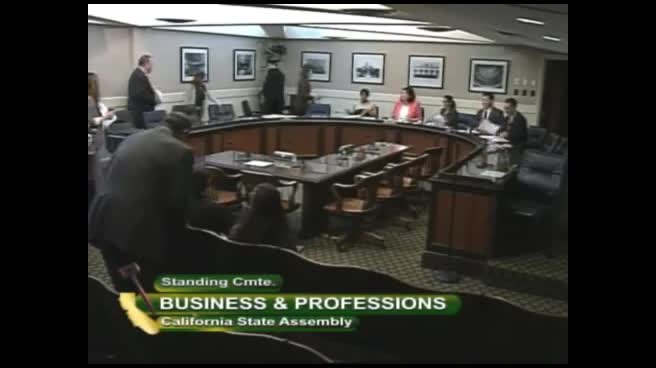 2MIN
Assembly Standing Committee on Business and Professions
Bill Author

Bill Co-Author(s):