HR 77
- Session Year: 2019-2020
- House: Assembly
- Latest Version Date: 2020-02-14
|
Date
|
Status
|
|---|---|
| Feb 20, 2020 | Coauthors revised. |
| Feb 14, 2020 | Amended. Ordered to third reading. |
| Feb 11, 2020 | Amended. Ordered to third reading. |
| Feb 10, 2020 | From committee: Amend, and be adopted as amended. (Ayes 10. Noes 0.) (February 6). |
| Jan 30, 2020 | Referred to Com. on JUD. |
| Jan 28, 2020 | Introduced. |
|
Date
|
Description
|
Location
|
Votes
|
|
|---|---|---|---|---|
| Feb 6, 2020 | Be adopted as amended. | Assembly Standing Committee on Judiciary |
Passed |
This list shows positions taken on this bill by organizations on the date displayed, which is linked to the original source.
Positions by individuals are not included.
Date of Hearing: February 6, 2020
ASSEMBLY COMMITTEE ON JUDICIARY
Mark Stone, Chair
ABPCA Bill Id:HR 77
Author:(Muratsuchi, Rendon, and Waldron) – As Introduced Ver:January 28, 2020
As Proposed to be Amended
SUBJECT: World War II Japanese American Concentration Camps
KEY ISSUE: should the california Assembly apologize for its contribution to the forced relocation, racial discrimination, and other injustices committed against japanese americans during world War II?
SYNOPSIS
While the federal government’s internment of Japanese Americans during World War II is well-known and has been regularly memorialized by this Legislature, this resolution focuses on California’s role in inviting, facilitating, and adding to the tragedy of internment. Moreover, this resolution does not merely acknowledge and memorialize those state actions; it offers a formal apology for the state’s role. This is not the first time that the Legislature has acknowledged the state’s role and taken remedial action. As early as 1983, AB 2710 offered reparations of up to $5,000 for each person of Japanese ancestry whose state employment was terminated by the State Personnel Board in 1942. However, while AB 2710 offered reparations, it did not offer an apology. In a belated effort to correct this, ACR 19 (2013) offered a formal apology to Japanese Americans who lost their state jobs. The resolution now before the Committee offers a formal apology for several discriminatory actions taken by the state during the war, not just the actions of the State Personnel Board. Those other actions included, among other things, strengthening the state’s discriminatory Alien Land Act and calling for federal measures that would pressure Japanese Americans to renounce their U.S. citizenship. In short, while the Japanese American internment was primarily the doing of the federal government, this resolution acknowledges, and apologizes for, California’s willing culpability in an egregious mass violation of civil rights and civil liberties. There is no known opposition to this resolution.
SUMMARY: Apologizes for the California Assembly’s past actions in supporting the unjust exclusion, removal, and incarceration of Japanese Americans during World War II and for its failure to support and defend the civil rights and civil liberties of Japanese Americans during this period. Specifically, this resolution:
- Finds that WHEREAS:
- The California Legislature passed the California Alien Land Law of 1913 followed by a more stringent 1920 law that prohibited people of Japanese ancestry and from other parts of Asia from purchasing agricultural land, and in 1945, the Legislature approved a $200,000 grant to the Attorney General’s office to investigate and prosecute land law cases against Japanese Americans, many of whom were incarcerated and unable to defend themselves.
- On February 19, 1942, President Franklin Delano Roosevelt signed Executive Order 9066, under which more than 120,000 people of Japanese ancestry were incarcerated in 10 concentration camps scattered throughout western states and the State of Arkansas during World War II.
- Executive Order 9066 deferred the American dream for more than 120,000 Americans and residents of Japanese ancestry by inflicting a great human cost of abandoned homes, businesses, farms, careers, professional advancements, disruption to family life, and public humiliation.
- Governor Culbert Olson and members of the Assembly met with United States Army General John L. DeWitt, the head of the Western Defense Command, in the weeks after the Empire of Japan’s attack on Pearl Harbor on December 7, 1941.
- General DeWitt told the Governor and the legislators that the United States Army was not prepared to defend California, at that time, against a Japanese invasion if the Empire of Japan shifted its Navy from the Philippines to the West Coast of the United States.
- General DeWitt also alleged that, while the majority of people of Japanese ancestry living in California were loyal to the United States, many were spies for the Empire of Japan. General DeWitt said that “the Japanese in this country have more [arms and ammunition] in their possession than our own armed forces.” General DeWitt informed the Governor and the legislators, before President Roosevelt signed Executive Order 9066, of the plan to intern all people of Japanese ancestry on the West Coast.
- The Assembly had previously approved legislation against Japanese Americans and, shortly after Pearl Harbor, had approved Senate Concurrent Resolution 15 (1942), questioning the loyalty of Japanese Americans and those holding dual citizenship. Senate Concurrent Resolution 15 requested that the State Personnel Board dismiss state employees who “may be proved to be disloyal to the United States of America in this present war.”
- The State Personnel Board fired Mitsuye Endo from the Department of Motor Vehicles and other Japanese Americans working for the state government by the spring of 1942. Mitsuye Endo filed suit against the State of California, but she was removed and incarcerated while the case was pending and she was living outside of California by the time California Attorney General agreed to reinstate wrongfully terminated employees after the war. Endo also filed a suit challenging her removal and continued incarceration, and the Supreme Court of the United States unanimously ordered her release from the concentration camp in December 1944, after the government conceded her loyalty to the United States.
- General DeWitt urged state legislators to stop any further anti-Japanese bills, in order to prevent “stirring up” the Japanese in California or giving the Empire of Japan a reason to protect its nationals and invade before the United States Army was prepared to defend California.
- General DeWitt’s briefing created fear of an immediate invasion by the Empire of Japan and fear of Japanese Americans. The Assembly members returned to the Legislature in early 1942 to defeat anti-Japanese legislation and eliminate the State Guard created by Governor Olson.
- During the next legislative session in 1943, the Assembly approved Senate Joint Resolution 3, on a 60-5 vote, urging Congress to determine the identity of those holding dual citizenship in the United States and Japan and to forfeit their citizenship and prevent them from becoming American citizens.
- The Assembly approved Senate Joint Resolution 21 (1943) on a 52-0 vote, urging Congress to release “implements and commodities” owned by incarcerated Japanese Americans for use by other Americans during World War II.
- Nearly 40 years after the United States Supreme Court decisions upholding the convictions of Fred Korematsu, Min Yasui, and Gordon Hirabayashi for violations of Civilian Exclusion Order No. 34, in the case of Korematsu, and curfew in the cases of Yasui and Hirabayashi, all authorized pursuant to EO9066, it was discovered that officials from the United States Department of War and the United States Department of Justice had altered, destroyed, and withheld information that testified to the loyalty of the people of Japanese ancestry from the United States Supreme Court.
- On May 24, 2011, Acting Solicitor General Neal Katyal said World War II Solicitor General Charles Fahy, who represented the United States Department of Justice in the Korematsu, Yasui, and Hirabayashi cases, “acted dishonorably” by withholding relevant information.
- Many attorneys and interns contributed innumerable hours to win a reversal of the original convictions of Korematsu, Yasui, and Hirabayashi in 1983 by filing a petition for writ of error coram nobis on the grounds that fundamental errors and injustice occurred.
- In 1980, the United States Congress created the Commission on Wartime Relocation and Internment of Civilians to examine the actions and impact of Executive Order 9066. The commission held 20 days of public hearings, conducted 18 months of thorough investigation, and published its findings in 1983, which concluded that Executive Order 9066 was not justified by “military necessity” but was due to “racial prejudice, wartime hysteria, and a failure of political leadership.”
- On August 10, 1988, President Ronald Wilson Reagan signed into law the federal Civil Liberties Act of 1988, finding that Executive Order 9066 was not justified by military necessity and, instead, was caused by “racial prejudice, wartime hysteria, and a failure of political leadership.”
- The federal Civil Liberties Act of 1988 apologized on behalf of the people of the United States for the forced exclusion, mass removal, and incarceration of Americans and permanent residents of Japanese ancestry during World War II. The act also provided for restitution to those individuals of Japanese ancestry who were incarcerated.
- Given recent national events, it is all the more important to learn from the mistakes of the past and to ensure that such an assault on freedom will never again happen to any community in the United States.
- The year 2020 marks the 76th anniversary of the Supreme Court of the United States’ decisions in the Japanese American incarceration cases. While the Supreme Court ordered Mitsuye Endo released from incarceration, it denied, in Korematsu v. United States, that Executive Order 9066 reflected racial prejudice and upheld Executive Order 9066 in light of the “strategic imperative” to keep the west coast secure from invasion.
- RESOLVES, in light of the above, that the Assembly apologizes to all Americans of Japanese ancestry for its past actions in support of the unjust exclusion, removal, and incarceration of Japanese Americans during World War II, and for its failure to support and defend the civil rights and civil liberties of Japanese Americans during this period.
EXISTING LAW: Not relevant.
COMMENTS: While the federal government’s internment of persons of Japanese descent during World War II is well-known and has been regularly memorialized by this Legislature, this resolution focuses on California’s role in inviting, facilitating, and adding to the tragedy of internment. Moreover, this resolution does not merely acknowledge and memorialize those state actions; it offers a formal apology for the state’s role in general, and the Assembly’s role in particular. Although most of its findings and declarations detail actions taken by the federal government, the resolution nonetheless cites a number of acts taken by California lawmakers and officials that heaped additional harms, burdens, and indignities upon Japanese Americans.
Background: In the aftermath of Japan’s attack on Pearl Harbor on December 7, 1941, Japanese American communities in the western United States became the targets of unfounded suspicions of disloyalty and sabotage. For example, newspapers claimed that if Japan were to invade California, the Japanese would rise up as a “fifth column” and join the invading force. The same message appeared in the editorial cartoons of Theodore Geisel (later known as Dr. Seuss), who lent his identifiable drawing style to questioning the loyalty of Japanese Americans before turning his attention to children’s literature. Notwithstanding an FBI investigation and report (the Munson Report) in 1941 that found no evidence of sabotage or disloyalty, the exaggerated stories and fears persisted. On February 19, 1942 – a little over two months after the attack on Pearl Harbor – President Franklin D. Roosevelt issued Executive Order 9066, which authorized the U.S. War Department to declare certain areas in the West as sensitive “military zones” and authorized the removal of suspect persons from those zones. Later executive orders and federal legislation created the War Relocation Authority and empowered it to carry out the removal and incarceration of all persons of Japanese descent, including American citizens.
Executive Order 9066 never used the words “Japanese” or “Japanese Americans,” but subsequent orders by the Secretary of War and General John DeWitt, head of the Western Defense Command, required all persons of Japanese ancestry to report to “assembly centers.” From these centers, Japanese Americans were removed to isolated internment camps in the interior. Of the approximately 120,000 persons evacuated from the West Coast and incarcerated in internment camps, about 93,000 were from California. About two-thirds of the evacuees were American-born citizens (Nisei), while the other third were first-generation Japanese immigrants (Issei) who, as “aliens ineligible for citizenship,” were deemed ineligible to partake of the naturalization process. In short, all of those interned were either American citizens by birth or persons who most likely would have become naturalized citizens if they had been allowed to do so.
In theory, persons would be held in the camps until their loyalty could be ascertained; in fact, most internees spent the duration of the war imprisoned against their will, regardless of their loyalty. Several persons subject to the exclusion and internment, including Fred Korematsu, challenged their incarceration in court. Unfortunately, in Korematsu v. United States 323 U.S. 214 (1944), the United States Supreme Court upheld the constitutionality of the removal and incarceration on grounds of “military necessity.” In the same term, the Court found in Ex Parte Endo 323 U.S. 283 (194) that the government could not continue to incarcerate Japanese American aliens or citizens without evidence of disloyalty. Although this decision required the release of most, if not all internees, the Court did not go so far as to overturn Korematsu. Rather, the Court continued to hold that internment was constitutionally justified as a “military necessity.” In anticipation of this ruling, President Roosevelt ordered the release of loyal persons the day before the Korematsu decision. While some were released immediately, others remained in the camps until August of 1945.
Although courts questioned the reasoning in the Korematsu ruling in subsequent years, the U.S. Supreme Court did not formally repudiate Korematsu until 2018. Ironically, the Court did so in a decision upholding President Trump’s executive order banning citizens of eight Muslim-majority nations from entering the United States. (Trump v. Hawaii (2018) 138 S. Ct. 2392; the dissenting opinion also advocated overturning Korematsu, but the dissenters would have struck down the President’s travel ban because it suffered from the same constitutional infirmities as Executive Order 9066.)
California’s Culpability: Although Executive Order 9066 was initiated and carried out by federal authorities, the California Legislature and California officials made a substantial contribution to the tragedy. To begin with, California contributed mightily to the racism, fear, and hysteria that preceded federal action. From the anti-Chinese movements of the 19th century to the Progressive Era Alien Land Act that prevented Japanese immigrants from owning or renting agricultural lands, California had a long history of discrimination and violence against Asians and Asian-Americans. In light of this long history, it is perhaps not surprising that in the wake of the Pearl Harbor attack, the Los Angeles Times called California a “zone of danger.” While it conceded that “some, perhaps many” persons of Japanese descent were “good Americans . . . we cannot take a chance in light of yesterday’s demonstration [the Pearl Harbor attack] that treachery and double-dealing are major Japanese weapons.” The California Legislature, Governor Culbert Olsen, and Attorney General Earl Warren all contributed to the hysteria by suggesting that persons of Japanese descent, including native-born citizens, would not be loyal to the United States if Japan invaded California. (See e.g. Cherny, et.al. Competing Visions: A History of California (2014); Los Angeles Times quoted at p. 282.)
Beyond contributing to racist fears and rhetoric, the California Legislature enacted statutes and adopted resolutions that unfairly and baselessly targeted Japanese Americans. These actions can be classified in four general areas, discussed in turn below: investigating and terminating Japanese Americans holding state employment; strengthening and more vigorously enforcing the state’s discriminatory Alien Land Law; making available to civilians the stored personal property of internees; and encouraging Japanese Americans to renounce their U.S. citizenship.
Terminating State Employees. In January of 1942, a month before Executive Order 9066, the California Senate adopted Senate Resolution 29, calling for an investigation to identify persons of Japanese descent who worked for the state. At about the same time, Senator John Swan, a Democrat representing Sacramento, introduced Senate Concurrent Resolution 15, which called upon the State Personnel Board to identify and dismiss any employee who held “dual citizenship” or who was otherwise “not loyal to the United States.” (SCR 15, Chapter 51, Stats. 1920.) Although SCR 15 passed unanimously in the Senate, some Assembly Members attempted to table the resolution when it came up for a vote in the Assembly. Assembly Member Lee Bashore, a Republican from Los Angeles who moved to table the resolution, explained the vote as follows: “We voted against this resolution, as we are emphatically opposed to intolerance of any form. It is our fear that legislation of this character will lead to intolerance. Further . . . we have full confidence in the F.B.I. having the situation under complete control.”
Notwithstanding Bashore’s argument, the Assembly adopted SCR 15 on a 41-22 vote. (Assembly Journal, January 18, 1942, p. 319-320.) In response, the State Personnel Board dismissed about 300 Japanese Americans from state employment. However, that was only the beginning. Once removal and internment had been ordered by federal authorities, state agencies terminated all persons of Japanese descent, including American-born citizens. (On the actions of the State Personnel Board see Assembly Third Reading Analysis of AB 2710, May 27, 1982; Assembly Judiciary Committee Analysis of ACR 19, May 21, 2013. AB 2710 provided reparation payments to persons who had been terminated; ACR 19 offered a formal apology for those terminations.) In addition to resulting in termination, this action reinforced the perception that Japanese Americans were somehow inherently disloyal. Such perceptions, in turn, paved the way for the rationalizations for internment.
Strengthening the State’s Alien Land Law. Anti-Asian movements were a part of California’s history almost from the moment of statehood. The 1851 Foreign Miner’s Tax, which imposed a tax of $20 per month on mining claims held by non-citizens, was quickly repealed due to the opposition of merchants in the gold mining regions. However, it was replaced by the 1852 Foreign Miners Tax, which only applied to Chinese immigrants. Beginning in the 1870s, the California Legislature repeatedly urged Congress to block any further immigration from China, pleas that finally bore fruit with the 1882 Chinese Exclusion Act.
Having achieved Chinese exclusion, nativist groups and organized labor then formed the “Asiatic Exclusion League” in an effort to extend the Exclusion Act to immigration from Japan and Korea. Although these efforts failed initially, the California Legislature sought to discourage immigration by enacting onerous and discriminatory laws that made immigration less attractive. Most notably, in 1913 California enacted the Alien Land Law. This measure prohibited “aliens ineligible for citizenship” from owning agricultural land or renting it for longer than three months. (The law only applied to agricultural land because the right of Japanese immigrants to hold residential and commercial property was protected by a treaty.) In 1920, the Legislature attempted to close “loopholes” in the law that allowed Japanese immigrants to place land and farming operations in the names of their children or in corporations formed by Japanese immigrants. The 1920 law did not entirely eliminate the possibility of placing farms in the names of American-born children, but it did specify that this could only be done for the “sole” benefit of the child’s estate – presumably meaning that the immigrant parent could not claim any income from the property. The 1920 law also required the immigrant guardian of such an estate to file regular reports, and made failure to do so grounds for escheatment to the state.
Although many Japanese American families still found creative ways to circumvent the Alien Land Law, the law was rarely enforced between 1924, when Congress effectively extended the Chinese Exclusion Act by banning all immigration of any “aliens ineligible for citizenship,” a term that applied only to Asian immigrants, and the 1940s. The fear and hysteria generated during World War II, however, prompted the Legislature to strengthen the law and its enforcement. In January of 1942, Senate Resolution 30 established a committee to investigate violations of the Alien Land Law. A 1943 amendment to the Alien Land Law added new reporting requirements and strengthened an existing provision by creating a rebuttable presumption that any transfer of property from a Japanese “alien” to a Japanese-American citizen was done to evade the law. In 1945, the Legislature appropriated an additional $200,000 to the Attorney General to investigate and enforce the law. These renewed enforcement efforts were significant, for if the Attorney General could prove a violation, even a minor reporting violation, the property would escheat to the state. The Alien Land Law did not survive long after the war. In 1948, the United States Supreme Court, without finding the law unconstitutional on its face, nonetheless weakened the law by finding that it was unconstitutional as applied when it deprived an American-born citizen of their property. In 1952, the California Supreme Court declared the law unconstitutional on equal protection grounds. Even if the court had not reached this conclusion, that same year Congress reformed federal immigration and naturalization law to eliminate the concept of “aliens ineligible for citizenship,” the key distinction upon which the Alien Land Law was premised.
Sale of Internee-owned Stored Property. As detailed in Jeanne Wakatsuki Houston’s classic memoir, Farewell to Manzanar, the forced removal process happened so quickly that the Wakatsuki family, like many others, had to leave their belongings behind, entrust them to neighbors, or store them in farm buildings or storage facilities. In one memorable passage of Farewell to Manzanar, Wakatsuki describes her family’s efforts to sell goods that they could not carry with them. Having little choice but to sell or abandon their belongings, she explains how her mother smashed the family’s best china rather than let it go for the shamefully low prices offered. This form of taking was mirrored by the California Legislature which, in 1943, approved Senate Joint Resolution (SJR) 21, urging Congress to enact laws that would make available to citizens any of the personal property that internees had stored or left behind. Rather disingenuously, SJR 21 linked the proposal to patriotic support of the war effort with findings about the nation’s dire need for metal, tires, and other scrap materials. (Chapter 114, Stats. 1943.) There is no evidence that Congress honored this request, though many internees found their personal property to be stolen or destroyed upon their return. (See e.g. Wakatsuki-Houston, Farewell to Manzanar, whose father never recovered a fishing boat that had been left in storage.)
Renunciation of Citizenship. Finally, the California Legislature adopted a resolution calling upon Congress to prohibit dual citizenship or otherwise encourage Japanese American citizens to renounce their citizenship. (See e.g. Senate Joint Resolution 3, Chapter 113, Stats. 1943.) While Congress apparently never acted on this request, the following year it enacted H.R. 4103, the Denaturalization Act of 1944. (Public Law 78-805.) While this law did not strip anyone of citizenship, it changed the law to allow Japanese Americans in the internment camps to renounce their U.S. citizenship. (Prior to this change, U.S. citizenship could only be renounced on foreign soil at a U.S. Embassy or consulate.) Many internees, whether voluntarily or under duress, renounced their citizenship while in the internment camps. In some cases, the pressure to do so may have come from camp officials who knew that persons who renounced their citizenship would become “enemy aliens” and subject to deportation. In other cases, the pressure seems to have come from a handful of Japanese nationalists who pressured other internees to renounce their citizenship. In any event, after the war many of these individuals attempted to reinstate their citizenship, arguing that their earlier decisions had been made under duress. In 1949, the Ninth Circuit U.S. Court of Appeals agreed, unanimously reinstating the citizenship of three women held at Tule Lake. The Court concluded that, in light of the overall conditions of the Tule Lake camp, the renunciations had been the result of “mental fear, intimidation, and coercion.” Two years later, the Ninth Circuit heard a class action suit involving 4,315 plaintiffs and concluded that all citizens held at Tule Lake faced the same circumstances and therefore all persons who sought to restore their citizenships were entitled to a rebuttable presumption that renunciation was not voluntary. [Acheson v. Murakami (1949) 176 F.2d 953, 959; McGrath v. Abo (1951) 186 F.2d 766; see also John Carazogian and Donald Warner, “When Japanese Americans Were Pressured to Renounce Their U.S. Citizenship,” California Supreme Court Historical Quarterly Review (Fall/Winter 2019), pp. 2-5.]
Prior Resolutions, Apologies, and Reparations. This is not the first time that the Legislature has recognized the injustice of the internment and related assaults on the civil rights and civil liberties of Japanese Americans. For several years, the Legislature has adopted near annual resolutions remembering the internment and generally calling for vigilance to ensure that such egregious violations of civil rights and civil liberties do not occur again. Moreover, the Legislature has previously recognized California’s role in perpetuating the injustice. Most notably, in 1982, AB 2710 acknowledged the injustice of SCR 15 and the resulting terminations by the State Personnel Board and other state agencies. That measure went beyond a resolution of acknowledge to enact legislation that provided up to $5,000 in reparation payments to persons who unjustly lost state employment during the war. However, AB 2710 never formally apologized for the terminations. AJR 19 (2013) belatedly offered that formal apology. The resolution now before the Committee offers an apology for all of the actions taken by the California Legislature that targeted Japanese Americans and questioned their loyalty.
Are Apologies Enough (or Perhaps Even Counterproductive)? Although this analysis does not necessarily endorse such a position, some scholars and activists have questioned whether apologies for discriminatory government acts are a sufficient way for the government to acknowledge its wrongful conduct. Indeed, some even argue that apologies do more harm than good by offering a balm for national guilt, while simultaneously weakening calls for more meaningful remedies. In a provocatively titled article – “Racial Reconciliation or Retreat? How Legislative Resolutions Apologizing for Slavery Promulgate White Supremacy” – Angelique Davis questions both the motives and consequences of a recent trend of legislatures making apologies by resolution. Professor Davis, the Director of Global African Studies at Seattle University, argues that “although these apologies appear to promote racial healing and reconciliation they actually promulgate white supremacy.” She contends that such apologies covertly thwart calls for reparations and other racial justice efforts by creating “the illusion of substantive racial reconciliation and progress.” (Angelique M. Davis, “Racial Reconciliation or Retreat? How Legislative Resolutions Apologizing for Slavery Promulgate White Supremacy,” 42 Black Scholar (2012), 37-48.) Presumably the authors of this resolution would not agree with Davis’ analysis, or they do not believe that that her analysis applies to Japanese internment in the same way that it might apply to slavery. Furthermore, as explained above, the Legislature has done more than merely apologize for its mistreatment of Japanese Americans. Nevertheless, this thought-provoking theory is an idea worth considering.
Proposed Author Amendments. The author wishes to take the following amendments in this Committee.
- On page 2, line 18 change “1941” to “1942.”
- On page 3, line 26 delete “Dale Minami, Peggy Nagae, Kathryn Bannai, Dennis Hayashi, Rod Kawakami, and”
- On page 2, amend lines 24-30 as follows: “The State Personnel Board fired Mitsuye Endo from the Department of Motor Vehicles and other Japanese Americans working for the state government by the spring of 1942. Mitsuye Endo filed suit against the State of California, but she was removed and incarcerated while the case was pending and she was living outside of California by the time California Attorney General agreed to reinstate wrongfully terminated employees after the war. Endo also filed a suit challenging her removal and continued incarceration, and the Supreme Court of the United States unanimously ordered her release from the concentration camp in December 1944, after the government conceded her loyalty to the United States.
REGISTERED SUPPORT / OPPOSITION:
Support
None on file
Opposition
None on file
Analysis Prepared by: Thomas Clark / JUD. / (916) 319-2334
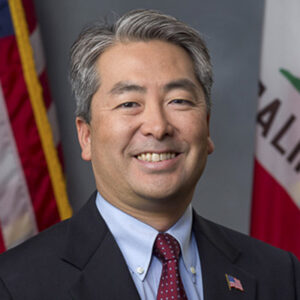


Bill Co-Author(s):