AB 1136: Reusable grocery bag and recycled paper bag: fee: exemptions.
- Session Year: 2015-2016
- House: Assembly
- Latest Version Date: 2015-02-27
Existing law, inoperative due to a pending referendum petition, would, as of July 1, 2015, prohibit stores that have a specified amount of sales in dollars or retail floor space from providing a single-use carryout bag to a customer and would prohibit those stores from selling or distributing a reusable grocery bag or a recycled paper bag at the point of sale unless the store makes that bag available for purchase for not less than $0.10. This same law would, on and after July 1, 2016, impose these prohibitions and requirements on convenience food stores, foodmarts, and other specified entities. This inoperative law would require these stores to provide to certain customers a reusable grocery bag or recycled paper bag at no cost at the point of sale.
Subject to the referendum petition, this bill would expand the group of customers who would be provided a reusable grocery bag or a recycled paper bag at no cost at the point of sale to include a customer who is 65 years of age or older and a customer who provides proof of current attendance at a California college or university.
(a)Except as provided in subdivision (e), on and after July 1, 2015, a store, as defined in paragraph (1) or (2) of subdivision (g) of Section 42280, shall not provide a single-use carryout bag to a customer at the point of sale.
(b)(1)On and after July 1, 2015, a store, as defined in paragraph (1) or (2) of subdivision (g) of Section 42280, shall not sell or distribute a reusable grocery bag at the point of sale except as provided in this subdivision.
(2)On and after July 1, 2015, a store, as defined in paragraph (1) or (2) of subdivision (g) of Section 42280, may make available for purchase at the point of sale a reusable grocery bag that meets the requirements of Section 42281.
(3)On and after July 1, 2015, a store, as defined in paragraph (1) or (2) of subdivision (g) of Section 42280, that makes reusable grocery bags available for purchase pursuant to paragraph (2) shall not sell the reusable grocery bag for less than ten cents ($0.10) in order to ensure that the cost of providing a reusable grocery bag is not subsidized by a customer who does not require that bag.
(c)(1)On and after July 1, 2015, a store, as defined in paragraph (1) or (2) of subdivision (g) of Section 42280, shall not sell or distribute a recycled paper bag except as provided in this subdivision.
(2)A store, as defined in paragraph (1) or (2) of subdivision (g) of Section 42280, may make available for purchase a recycled paper bag. On and after July 1, 2015, the store shall not sell a recycled paper bag for less than ten cents ($0.10) in order to ensure that the cost of providing a recycled paper bag is not subsidized by a consumer who does not require that bag.
(d)Notwithstanding any other law, on and after July 1, 2015, a store, as defined in paragraph (1) or (2) of subdivision (g) of Section 42280, that makes reusable grocery bags or recycled paper bags available for purchase at the point of sale shall provide a reusable grocery bag or a recycled paper bag at no cost at the point of sale to a any of the following: a
(1)A customer using a payment card or voucher issued by the California Special Supplemental Food Program for Women, Infants, and Children pursuant to Article 2 (commencing with Section 123275) of Chapter 1 of Part 2 of Division 106 of the Health and Safety Code or an Code.
(2)A customer using an electronic benefit transfer card issued pursuant to Section 10072 of the Welfare and Institutions Code.
(3)A customer who is 65 years of age or older.
(4)A customer who provides proof of current attendance at a California college or university.
(e)On and after July 1, 2015, a store, as defined in paragraph (1) or (2) of subdivision (g) of Section 42280, may distribute a compostable bag at the point of sale, if the compostable bag is provided to the consumer at the cost specified pursuant to paragraph (2), the compostable bag, at a minimum, meets the American Society for Testing and Materials (ASTM) International Standard Specification for Compostable Plastics D6400, as updated, and in the jurisdiction where the compostable bag is sold and in the jurisdiction where the store is located, both of the following requirements are met:
(1)A majority of the residential households in the jurisdiction have access to curbside collection of foodwaste for composting.
(2)The governing authority for the jurisdiction has voted to allow stores in the jurisdiction to sell to consumers at the point of sale a compostable bag at a cost not less than the actual cost of the bag, which the Legislature hereby finds to be not less than ten cents ($0.10) per bag.
(f)A store, as defined in paragraph (1) or (2) of subdivision (g) of Section 42280, shall not require a customer to use, purchase, or accept a single-use carryout bag, recycled paper bag, compostable bag, or reusable grocery bag as a condition of sale of any product.
|
Date
|
Status
|
|---|---|
| Feb 1, 2016 | From committee: Filed with the Chief Clerk pursuant to Joint Rule 56. |
| Jan 31, 2016 | Died pursuant to Article IV, Sec. 10(c) of the Constitution. |
| May 11, 2015 | In committee: Set, first hearing. Hearing canceled at the request of author. |
| May 6, 2015 | From committee: Do pass and re-refer to Com. on NAT. RES. (Ayes 6. Noes 1.) (May 5). Re-referred to Com. on NAT. RES. |
| Mar 19, 2015 | Referred to Coms. on AGING & L.T.C. and NAT. RES. |
| Mar 2, 2015 | Read first time. |
| Mar 1, 2015 | From printer. May be heard in committee March 31. |
| Feb 27, 2015 | Introduced. To print. |
|
Date
|
Description
|
Location
|
Votes
|
|
|---|---|---|---|---|
| May 5, 2015 | Do pass and be re-referred to the Committee on [Natural Resources] | Assembly Standing Committee on Aging and Long-Term Care |
Passed |
This list shows positions taken on this bill by organizations on the date displayed, which is linked to the original source.
Positions by individuals are not included.
AB 1136
Page 5
Date of Hearing: May 11, 2015
ASSEMBLY COMMITTEE ON NATURAL RESOURCES
Das Williams, Chair
AB 1136
(Steinorth) – As Introduced February 27, 2015
SUBJECT: Reusable grocery bag and recycled paper bag: fee: exemptions
SUMMARY: Requires stores subject to California's single-use plastic bag ban to give customers over the age of 65 and students at a California college or university recycled paper or reusable bags at no charge.
EXISTING LAW: Establishes various requirements relating to the distribution of carryout bags, but is currently inoperative pending the outcome of the referendum to repeal the state's ban on single-use plastic bags.
Establishes various definitions relating to carryout bags, including:
“Recycled paper bag” as a paper carryout bag provided by a store to a customer at the point of sale that contains a minimum of 40% postconsumer recycled materials. For a bag with the capacity to hold eight pounds or less, the bag must contain at least 20% postconsumer recycled materials. A recycled paper bag must be accepted for recycling in a majority of households in curbside recycling programs in the state, as well as have specified information printed on the bag.
“Reusable grocery bag” as a bag that can be used a minimum of 125 times, as specified; can be cleaned; has specified information visible on the bag; cannot contain lead, cadmium, or any other toxic material that may pose a threat to public health; and, must be consistent with federal regulations related to recyclable claims if the bag producer claims the bag is recyclable
“Single-use carryout bag” as a bag made of plastic, paper, or other material that is provided by a store to a customer at the point of sale. Exempts from this definition specified bags, including a bag provided by a pharmacy for a prescription purchase, a non-handled bag used to protect an item from damaging or contaminating other items when placed in a recycled paper bag or reusable grocery bag, and a dry-cleaning or garment bag.
“Store” as a full-line self-service retail store with gross annual sales of at least $2 million that sells a line of dry grocery, canned goods, or nonfood items and some perishables (a typical grocery store); has at least 10,000 square feet of retail space and a pharmacy; or, a convenience food store or foodmart. Includes in the definition of store any other retail establishment that voluntarily agrees to comply with the requirements of this bill.
Prohibits stores from making single-use carryout bags available at the point of sale on the following timeline:
On and after January 1, 2015, at either a grocery store or retailer with at least 10,000 square feet of retail space and a pharmacy.
On and after July 1, 2016, at a convenience food store and foodmart.
Authorizes a store to make available a reusable grocery bag or recycled paper bag at the point of sale. Requires that these bags may not be sold to a consumer for less than $0.10.
Requires that all monies collected by stores pursuant to this law be retained at the store and be used for costs associated with complying with the law; actual costs of providing recycled paper bags and reusable grocery bags; and costs associated with a store’s educational materials or educational campaign encouraging the use of reusable bags.
Requires a store to provide a reusable bag or recycled paper bag at no charge to any customer using California Special Supplemental Food Program for Women, Infants and Children benefits, CalFresh benefits [federally known as Supplemental Nutrition Assistance Program (SNAP) benefits], California Food Assistance Program benefits, or cash aid benefits.
Preempts local ordinances adopted on or after September 1, 2014, relating to reusable grocery bags, single-use carryout bags, or recycled paper bags.
THIS BILL: Expands the scope of individuals to whom stores are required to provide recycled paper and reusable bags at no charge to include:
A customer who is 65 years of age or older; and,
A customer who provides proof of current attendance at a California college or university.
FISCAL EFFECT: Non-fiscal
COMMENTS:
This bill. This bill requires stores to give free reusable or paper bags to anyone over the age of 65 or who attends a California college or university. According to the author:
AB 1136 attempts to solve the problem of placing a punitive, regressive paper bag fee upon the financially challenged populations of seniors and students. While existing law exempts WIC customers and those using electronic benefit transfer cards from the paper bag fee, other financially challenged groups are not included in this exemption as they ought to be.
Background on plastic. Plastic bags and plastic film together represent just over two percent of the waste stream, and every year California taxpayers spend $25 million disposing of the 14 billion plastic bags used annually. Although plastic represents a relatively small fraction of the overall waste stream in California by weight, plastic waste is the predominate form of marine debris. Plastics are estimated to comprise 60-80 percent of all marine debris and 90 percent of all floating debris. According to the California Coastal Commission, the primary source of marine debris is urban runoff, of which lightweight plastic bags and plastic film are particularly susceptible. Unlike most forms of plastic, lightweight single-use bags pose a litter threat even when properly disposed of by consumers; they are prone to blowing off the working surface of landfills and off of trucks during transport.
Most plastic marine debris exists as small plastic particles due to excessive UV radiation exposure and subsequent photo-degradation. These plastic pieces are confused with small fish, plankton, or krill and ingested by aquatic organisms. Over 600 marine animal species have been negatively affected by ingesting plastic worldwide. In addition, hydrophobic chemicals present in the ocean in trace amounts (e.g., from contaminated runoff and oil and chemical spills) have an affinity for, and can bind to, plastic particles and may also enter and accumulate in the food chain through the same mechanism.
Local action. Over 100 cities and counties throughout California have adopted ordinances banning plastic bags, including San Francisco, San Jose, Long Beach, Los Angeles County, Santa Clara County, and Alameda County. Many of these local governments also require stores to charge a fee for a paper carryout bag, and a few have banned both single-use plastic and paper carryout bags.
Why ten cents? Under California's plastic bag law, stores can only distribute recycled paper bags or reusable bags at the point of sale. The state law mirrors the majority of local ordinances, which based the amount on the average cost of a paper bag. The primary reason for the minimum charge is to encourage consumers to use reusable bags rather than simply switching to paper bags. In 2007, a peer-reviewed assessment, the Life Cycle Assessment for Three Types of Grocery Bags – Recyclable Plastic; Compostable, Biodegradable Plastic; and, Recycled, Recyclable Paper, was prepared for the Progressive Bag Alliance to compare the environmental impacts of different types of single-use bags. The assessment identified environmental impacts for all types of single-use bags. While paper bags do not have the marine impacts of plastic bags, the production of recycled paper bags does have more significant impacts associated with energy, water, and greenhouse gas emissions.
Without the charge, paper bag use appears to increase dramatically. For example, in Portland, Oregon, which does not charge for paper bags, paper bag use went up 491% one year after a ban on plastic bags. In comparison, the use of paper bags decreased nearly 24% in San Jose, which adopted the charge on paper bags.
When the charge is collected, it is retained by the store and can be used by the store to cover the costs of providing recycled paper bags and reusable grocery bags and costs associated with a store’s educational materials or educational campaign encouraging the use of reusable bags. In Los Angeles County, for example, stores have reported that approximately half of the paper bags they distribute are to consumers exempt from the charge. The funds collected by the charge are used to cover the costs of providing these bags.
Any consumer can avoid the charge by bringing their own bags.
Seniors and college students. California has one of the highest poverty rates amongst people over the age of 65 in the nation. Nearly one in 10 Californians over age 65 now lives in poverty. One in 20 has poor diet quality due, in part, to limited funds to buy food. Over 20% of low-income Californians over the age of 65 could not afford to put food on the table or had to forego other basic needs in order to eat during 2009.
According to information provided by the author, college students also endure some of the highest rates of poverty with estimates placing at least 47% of California college students living below the official poverty line. Recent data estimates that about 2.4 million people are currently enrolled in one of California’s three statewide higher educational systems; California Community Colleges, California State Universities, or the University of California.
The referendum. The Referendum to Overturn Ban on Single-Use Plastic Bags was certified by the California Secretary of State on February 24, 2015 after receiving a total of 809,810 signatures, 598,684 of which were projected to be valid. The measure will be on the November 8, 2016 ballot. The American Progressive Bag Alliance is the main proponent for the repeal; other supporters include the City of Laguna Niguel, 7 other organizations, and 11 businesses. The campaign to support SB 270 and oppose the referendum is led by California vs. Big Plastic, and includes 7 state officials, 21 municipalities, over 60 organizations, and 6 businesses. As of February 2, 2015, referendum proponents had raised over $6.6 million, nearly all of that from the plastic industry. SB 270 supporters have raised just under $100,000 from environmental organizations and reusable bag manufacturers.
A poll conducted by the University of Southern California and the Los Angeles Times in November 2014 found that 59% of California voters would vote in support of the ban; 34% indicated that they would vote for repeal.
Related legislation.
AB 190 (Harper) repeals California's plastic bag law. This bill was held in this committee on April 13th with a vote of 2-7.
AB 191 (Haper) repeals the 10 cent charge on recycled paper and reusable bags. This bill was held in this committee on April 13th with a vote of 3-6.
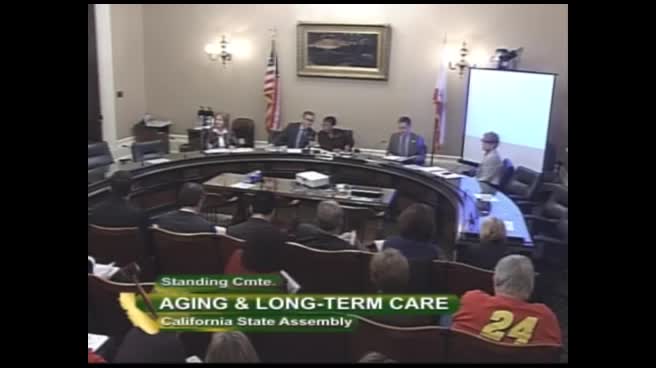
Double referral. This bill passed the Assembly Aging and Long-Term Care Committee on May 5th with a vote of 6-1.
REGISTERED SUPPORT / OPPOSITION:
Support
None on file
Opposition
AZUL
Chico Bag Company
Clean Water Action
Environmental Action Committee of West Marin
Environment California
Global Green USA
Green Sangha
Heal the Bay
Los
Angeles City Council Member Paul Koretz
Natural Resources Defense Council
Plastic Bag Laws.org
Plastic Pollution Coalition
Seventh Generation Advisors
Surfrider Foundation
Team Marin
The Story of Stuff Project
The 5 Gyres Institute
Wildcoast
2 individuals
Analysis Prepared by: Elizabeth MacMillan / NAT. RES. / (916) 319-2092
AB 1136
Page 5
Date of Hearing: May 5, 2015
ASSEMBLY COMMITTEE ON AGING AND LONG-TERM CARE
Cheryl Brown, Chair
AB 1136
(Steinorth) – As Introduced February 27, 2015
SUBJECT: Reusable grocery bag and recycled paper bag: fee: exemptions.
SUMMARY: Exempts seniors and post-secondary students from fees required for reusable bags. Specifically, this bill: expands eligibility for receipt of a no-cost reusable grocery bag or a recycled paper bag at the point of sale to:
A customer who is 65 years of age or older; and,
A customer who can demonstrate proof of current attendance at a California college or university.
EXISTING LAW (Suspended pursuant to submission of a referendum petition, though becomes effective if the referendum measure is approved at the November 8, 2016 election.):
Establishes Chapter 5.3 of the Public Resources Code regulating single-use carryout bags which defines:
“Recycled paper bag” as a paper carryout bag provided by a store to a customer at the point of sale and contains a minimum of 40% postconsumer recycled materials. For a bag with the capacity to hold eight pounds or less, the bag must contain at least 20% postconsumer recycled materials. A recycled paper bag must be accepted for recycling in a majority of households in curbside recycling programs in the state, as well as have specified information printed on the bag.
“Reusable grocery bag” as bag with a handle that is designed for at least 125 uses, has a volume capacity of at least 15 liters, is machine washable or made from a material that can be cleaned and disinfected, is labeled with the name of the manufacturer, country of origin, and states that it is reusable.
“Single-use carryout bag” as a bag made of plastic, paper, or other material that is provided by a store to a customer at the point of sale. Exempts from this definition: a bag provided by a pharmacy for a prescription purchase; a non-handled bag used to protect an item from damaging or contaminating other items when placed in a recycled paper bag or reusable grocery bag; and, dry-cleaning or garment bags.
“Store” as a retail establishment that is:
a full-line, self-service retail establishment with gross annual sales of at least $2,000,000 that sells a line of dry groceries, canned goods, or nonfood items, and some perishable items; or,
has at least 10,000 square feet of retail space that generates sales or use tax pursuant to the Bradley-Burns Uniform Local Sales and Use Tax Law and has a pharmacy; or,
is a convenience food store, food-mart, or other entity that is engaged in the retail sale of a limited line of goods, generally including milk, bread, soda, and snack foods, and that holds a Type 20 or Type 21 license issued by the Department of Alcoholic Beverage Control; or,
is a convenience food store, food-mart, or other entity that is engaged in the retail sale of goods intended to be consumed off the premises, and that holds a Type 20 or
Type 21 license issued by the Department of Alcoholic Beverage Control.
Prohibits stores from making single-use carryout bags available at the point of sale on and after January 1, 2015 at stores defined in Section d. i and ii above, or on and after
July 1, 2016 for stores described in Section d. iii and iv above.
Authorizes a store to make a reusable or recycled paper bag available at the point of sale for no less than ten cents.
Allows compostable bags to be distributed for no less than ten cents in jurisdictions which have authorized their use, and provide curbside collection of food-waste for composting.
Requires a store to provide a reusable bag or recycled paper bag at no charge to any customer using California Special Supplemental Food Program for Women, Infants and Children (WIC) benefit program, CalFresh benefits, California Food Assistance Program benefits, or cash aid benefits.
FISCAL EFFECT: Unknown.
COMMENTS:
Author’s Statement: “Senior citizens and college students are two of the most financially-vulnerable populations in California. According to United States Census Bureau statistics, those over the age of 65 and college students living off-campus face poverty rates as high as 20% and 47%, respectively. They are especially affected by regressive taxes and fees, whose costs hurt low income earners most. Last year’s plastic bag ban recognized the need to protect low income groups from the mandatory paper bag fee, and exempted customers using WIC vouchers or Electronic Benefit Transfer (EBT) cards from the paper bag fee.
“AB 1136 will help protect students and seniors by expanding the fee exemption to include seniors and postsecondary students. According to Census Bureau statistics, those over the age of 65 and college students living off-campus face high rates of poverty. The poverty status of many seniors is compounded by the fact that many live off of a fixed-income, supported heavily by Social Security.
“For students, the costs of tuition, housing, and impending student debt further complicate their economic situation. While the Legislature is contemplating ways to make higher education more affordable, especially for lower-middle class students, an exemption from this fee is movement in the right direction.
“Including seniors and students will relieve them of the regressive cost they would face when electing to use the environmentally conscious option of a paper bag.”
Current status of the plastic bag ban in California: Implementation of the plastic bag ban is currently “on hold.” SB 270 was signed by Governor Brown on September 30, 2014. Immediately afterward, opponents of the law launched an effort to overturn the measure. Corporations from South Carolina, Texas and New Jersey contributed to an effort to collect signatures to place the matter on the November, 2016 General Election Ballot. In order to qualify for the ballot, the ban on single-use plastic bags referendum needed 504,760 valid petition signatures, equal to five% of the total votes cast for governor in the November 2010 gubernatorial election. A referendum can qualify via random sampling of petition signatures if the sampling projects a number of valid signatures greater than 110 percent of the required number. The plastic bag ban referendum needed at least 555,236 projected valid signatures to qualify by random sampling, and it exceeded that threshold in an announcement from the Secretary of State on February 24th this year. Therefore, at this time, the provisions of law addressed by AB 1136 have been suspended, and will not go into effect unless the referendum in November of 2016 passes. AB 1136 amends codes currently suspended at least through November 8th of 2016.
Discussion: AB 1136 proposes to include seniors and college students in the exemptions to mandatory point-of-sale fees for grocery bags distributed at grocery, and other stores. Last year, SB 270 (Padilla, Chapter 850, Statutes of 2014) was passed to curb the state’s reliance upon single-use plastic bags which have become a ubiquitous reminder of our collective grocery shopping and other consumerism as an estimated 14 billion bags a year - only 5% of which are recycled, become litter, or jam machinery at recycling centers, costing California more than $25 million annually.
SB 270 prohibits stores from making single-use carryout bags available at the point of sale, authorizes a store to make a reusable grocery bag or recycled paper bag available at the point of sale, but requires that these bags may not be sold to a consumer for less than $0.10.
SB 270 provided an exemption for people using California Special Supplemental Food Program for Women, Infants and Children benefits, CalFresh benefits (federally known as Supplemental Nutrition Assistance Program [SNAP] benefits), California Food Assistance Program benefits, or cash aid benefits. There were no exemptions drafted into the initiative for people on limited, or fixed incomes beyond those expressed above.
Seniors and poverty: Depending upon the way poverty is measured, California has one of, if not the highest poverty rate amongst people over the age of 65 in the nation. Nearly one in 10 Californians over age 65 now lives in poverty. One in 20 has poor diet quality due, in part, to limited funds to buy food. Over 20 percent of low-income Californians over the age of 65 could not afford to put food on the table or had to forego other basic needs in order to eat during 2009.
It is well documented that the effects of the nation’s recent economic difficulties have been devastating for seniors who tend only to be capable of deploying limited coping strategies during periods of economic downturns. The rapid expansion of this population and the corresponding increase in vulnerabilities within it, demands ongoing scrutiny as statewide policies evolve, as public policies can both alleviate and exacerbate poverty.
Poverty rates are especially high among racial and ethnic minorities. About 20%t of black and Hispanic older adults were poor, compared to 7.6% of whites. Older adults with lower levels of education are also more likely than those with more education to live in poor families; 19.3% of elderly individuals who did not complete high school lived in poverty in 2008, compared to just 4.4% of four-year college graduates.
According to information provided by the author, college students also endure some of the highest rates of poverty with estimates placing at least 47% of California college students living below the official poverty line. Recent data estimates that about 2.4 million people are currently enrolled in one of California’s three statewide higher educational systems; California Community Colleges, California State Universities, or the University of California.
Coping Strategies: A person’s choice of coping strategies with regard to poverty strongly depends on age. Younger people are more likely to choose an active strategy, such as finding a supplementary job - one that hopefully doesn’t interfere with studies. Older people who are less likely to obtain employment, are more likely to experience social isolation. Economizing or reducing fixed, repetitive costs such as utilities provides some relief. Using smaller refrigerators, limiting cooling/heating, limiting transportation, and recycling are part of well-documented comprehensive strategies. However, those strategies may unwittingly expose modest consumers to other emerging expenses. Take for instance, a smaller refrigerator popular with older people and students. Less storage requires more frequent shopping. More frequent shopping coupled with limited public transportation rides could easily conspire to create an increased exposure to the ten cent fee demanded by the plastic bag ban. As Californians adapt to the plastic bag ban, many will become accustomed to carrying our own reusable bags. Some will choose to simply pay the fee at the point of sale. For those impoverished or living on limited fixed incomes, these additional fees can become an annoying foil to the coping strategies currently used by California’s vast populations of older, or enrolled, higher-education seeking people.
Previous Legislation
SB 405 (Padilla) from the 2013-14 Legislative Session was substantially similar to SB 270. Generally, SB 405 prohibited grocery stores from providing single-use plastic bags to consumers and required stores to make reusable bags available for purchase by customers. SB 405 died on the Senate Floor.
SB 700 (Wolk) from the 2013-14 Legislative Session would have required retail establishments, as defined, to collect a fee of 5 cents for every single-use carryout bag provided to a customer. The bill required that the fees be available for grants to cities and counties for local parks and local programs that reduce and cleanup litter. This bill was held in the Senate Appropriations Committee.
AB 158 (Levine) also from the 2013-14 Legislative Session, in general, prohibited grocery stores from providing single-use plastic bags to customers and required stores to make reusable bags available for purchase by customers. AB 158 did not contain a minimum fee for reusable bags. This bill was moved to the Assembly inactive file by the author.
SB 1219 (Wolk), Chapter 384, Statutes of 2012, extended the sunset of the At-Store Recycling Program requirements from January 1, 2013 to January 1, 2020 and repealed the provisions preempting local regulatory action related to the at-store recycling program requirements.
Conflict: The committee has received notification from the Legislative Counsel of California that AB 1136 conflicts with AB 190 and AB 191 by Assemblymember Harper. Conflicts are typically addressed before reporting a bill out of the second house, and the author is advised to work with Assemblymember Harper to avoid chaptering conflicts.
REGISTERED SUPPORT / OPPOSITION:
Support
None on file.
Opposition
None on file.
Analysis Prepared by: Robert MacLaughlin / AGING & L.T.C. / (916) 319-3990
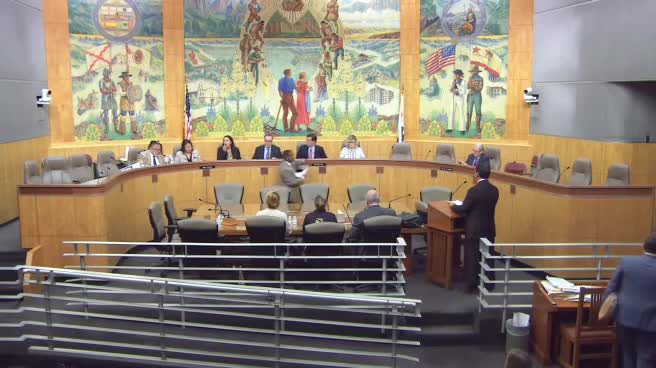
Discussed in Hearing
 7MIN
Senate Standing Committee on Health
 3MIN
Assembly Standing Committee on Aging and Long-Term Care
Bill Author

Bill Co-Author(s):