SB 1168: State agencies: licensing services.
- Session Year: 2019-2020
- House: Senate
- Latest Version Date: 2020-05-13
|
Date
|
Status
|
|---|---|
| Jun 18, 2020 | June 18 hearing: Held in committee and under submission. |
| Jun 11, 2020 | Set for hearing June 18. |
| Jun 9, 2020 | June 9 hearing: Placed on APPR. suspense file. |
| Jun 3, 2020 | Set for hearing June 9. |
| Jun 2, 2020 | Hearing rescheduled due to Capitol closure. |
| May 26, 2020 | Set for hearing June 1. |
| May 13, 2020 | Read second time and amended. Re-referred to Com. on APPR. |
| May 12, 2020 | Referral to Com. on B., P. & E.D. rescinded due to the shortened 2020 Legislative Calendar. |
| May 12, 2020 | From committee: Do pass as amended and re-refer to Com. on APPR. (Ayes 14. Noes 0. Page 3525.) (May 12). |
| May 8, 2020 | Set for hearing May 12. |
| Apr 17, 2020 | From committee with author's amendments. Read second time and amended. Re-referred to Com. on G.O. |
| Mar 25, 2020 | From committee with author's amendments. Read second time and amended. Re-referred to Com. on G.O. |
| Mar 20, 2020 | March 24 hearing postponed by committee. |
| Mar 6, 2020 | Set for hearing March 24. |
| Mar 5, 2020 | Referred to Coms. on G.O. and B., P. & E.D. |
| Feb 21, 2020 | From printer. May be acted upon on or after March 22. |
| Feb 20, 2020 | Introduced. Read first time. To Com. on RLS. for assignment. To print. |
|
Date
|
Description
|
Location
|
Votes
|
|
|---|---|---|---|---|
| Jun 9, 2020 | Placed on suspense file | Senate Standing Committee on Appropriations |
Passed |
|
| May 12, 2020 | Do pass as amended, but first amend, and re-refer to the Committee on [Appropriations] | Senate Standing Committee on Governmental Organization |
Passed |
This list shows positions taken on this bill by organizations on the date displayed, which is linked to the original source.
Positions by individuals are not included.
SENATE COMMITTEE ON
Senator Anthony Portantino, Chair
2019 - 2020 Regular Session
SB 1168 (Morrell) - State agencies: licensing services
Version: | Policy Vote: |
Urgency: | Mandate: |
Hearing Date: | Consultant: |
Bill Summary:
SB 1168 requires a state agency that issues any business license to establish a process for a person or business that is experiencing economic hardship as a result of an emergency caused by a virus to submit an application to defer fees, as specified. The bill also requires a state agency that issues any business license to establish a process to expedite licensing services for persons who have been displaced or are experiencing economic hardship directly resulting from an emergency proclaimed or declared within 365 days of the request for licensing services.
Fiscal Impact:
Unknown, potentially significant but variable cost pressures across state agencies. For example:
The Department of General Services (DGS) reports:
- The Division of the State Architect (DSA) currently has three programs that may fall under the scope of this bill: the Certified Access Specialist Program, the Project Inspector Program, and the Laboratory Evaluation and Acceptance Program. In order to establish and implement an expedited process for these programs and notify all stakeholders, initial implementation costs are estimated to be approximately $21,321 in 2020-21.
- In addition to the initial implementation costs, DGS will require up to 0.5 Associate Governmental Program Analyst positions at $88,000 per year to conduct expedited in-person examinations for certification and recertification, as well as process all applications for expedited certification. This cost will likely fluctuate based upon the number of applications received and the number of applications approved for the expedited process by the DSA.
The Department of Consumer Affairs reports:
- Minor and absorbable revenue loss for the boards and bureaus under its purview. Additionally, the workload to set up the provisions of this bill would be absorbable.
- Likely information technology impacts will be unique to each program. It is anticipated this work can be done by redirecting existing maintenance resources, and may require up to one year for to implementation if all programs request changes.
To the extent that state agencies are not able to recover their administrative costs as a result of reduced fee revenue, this bill may result in an unknown cost pressure to these programs.
Background:
California Government Code Section 8558 establishes three conditions or degrees of emergency:
- “State of war emergency” - exists immediately, with or without a proclamation by the Governor, whenever an enemy of the United States attacks the state or nation.
- “State of emergency” - the duly proclaimed existence of disaster or extreme peril to the safety of persons and property within the state.
- “Local emergency” - the duly proclaimed existence of disaster or extreme peril to the safety of persons and property within the territorial limits of a local government including a county, city, or city and county.
On March 4, 2020 Governor Newsom declared a state of emergency in response to the Covid-19 pandemic and directed state agencies to, among other things:
- Use and employ state personnel, equipment, and facilities or perform any and all activities consistent with the direction of the Office of Emergency Services (OES) and the State Emergency Plan, Department of Public Health, and Emergency Medical Services Authority.
- Enter into contracts to arrange for the procurement of materials, goods, and services needed to assist in preparing for, containing, responding to, mitigating the effects of, and recovering from the spread of COVID-19.
- Prohibit price gouging as it relates to emergency and medical supplies, effective through September 4, 2020.
- Require OES to provide assistance to local governments that have demonstrated extraordinary or disproportionate impacts from COVID-19.
A declared emergency can also include a number of remedies to help the affected area recover from the disaster. For example, in 2018, former Governor Brown declared a state of emergency in Colusa County due to the effects of the Mendocino Complex Fire. As part of that proclamation, the former Governor suspended a number of fees related to the replacement of driver’s identification cards, vehicle registration certificates, and certifications of title, by any individual who lost such records because of the disaster. Additionally, in response to the COVID-19 pandemic, Governor Newsom issued Executive Order N-40-20 to provide tax, regulatory, and licensing extensions for businesses. These types of suspensions and extensions are common when declaring a state of emergency.
Proposed Law:
This bill:
- Requires a state agency that issues any business license to establish a process for a person or business that is experiencing economic hardship as a result of an emergency caused by a virus to submit an application for deferral of any fees required to obtain specified licensing services.
- Requires a state agency that issues any business license to establish a process to expedite licensing services for a person or business that has been displaced or is experiencing economic hardship directly resulting from an emergency proclaimed or declared within 365 days of the request for licensing services.
- Defines “licensing services” to include but not be limited to, replacing a physical copy of a license that is required to be displayed or carried, applying for or renewing a licensing, and applying for a waiver or reduction of licensing fees.
Related Legislation:
SB 1457 (Borgeas, 2020) would require a state agency to assist with small businesses in complying with all statutes and regulations administered by the state agency and in any enforcement action by the state agency; and, requires a state agency to establish a policy that provides for the reduction or waiver of civil penalties for violations or regulatory or statutory requirements by a small business under appropriate circumstances, as specified. (Pending in this committee)
SB 601 (Morrell, Chapter 854, Statutes of 2019) authorized any state agency that issues any business license to establish a process for a person or business that has been displaced or is experiencing economic hardship as a result of an emergency to submit an application for reduction or waiver of fees required by the agency to obtain a license, renew or activate a license, or replace a physical license for display.
-- END --
SENATE COMMITTEE ON GOVERNMENTAL ORGANIZATION
Senator Bill Dodd
Chair
2019 - 2020 Regular
Bill No: 1168 Hearing Date: 5/12/2020
Author: | |||
Version: | 4/17/2020 Amended | ||
Urgency: | No | Fiscal: | Yes |
Consultant: | Felipe Lopez | ||
Due to the COVID-19 Pandemic and the unprecedented nature of the 2020 Legislative Session, all Senate Policy Committees are working under a compressed timeline. This timeline does not allow this bill to be referred and heard by more than one committee as a typical timeline would allow. In order to fully vet the contents of this measure for the benefit of Senators and the public, this analysis includes information from the Senate Business, Professions, and Economic Development Committee.
SUBJECT: State agencies: licensing services
DIGEST: This bill requires a state agency that issues a business license to establish a process to expedite licensing services for a person or business that meets specified criteria, including that the person or business has been displaced by an emergency proclaimed or declared within 365 days of the request for licensing services. Additionally, the bill would require a state agency that issues any business license to establish a process for a business that is experiencing economic hardship as a result of an emergency caused by a virus to submit an application for deferral of fees, as specified.
ANALYSIS:
Existing law:
- Requires various licenses to be obtained by a person before engaging in certain professions or vocations or business activities.
- Specifies those events constituting a “state of war emergency,” a “state of emergency,” or a “local emergency,” for purposes of the California Emergency Services Act (Act) and provides for specified activities in preparation for, or response to, those events.
- Provides that a local emergency may be called by the governing body of a city, county, or city and county, or by an official designated by ordinance adopted by that governing body.
- Authorizes state agencies to provide mutual aid, including personnel, equipment, and or available resources, to assist political subdivisions during a local emergency or in accordance with mutual aid agreements or at the direction of the Governor.
- Provides the Governor, during a state of emergency, to have complete authority over all agencies of the state government and the right to exercise within the area designated all police power vested in the state by the Constitution and laws of the State of California in order to effectuate the purposes of the Act.
- Authorizes the Governor, during a state of emergency, to direct all agencies of the state government to utilize and employ state personnel, equipment, and facilities for the performance of any and all activities designed to prevent or alleviate actual and threatened damage due to the agency; and allows the Governor to direct such agencies to provide supplemental services and equipment to political subdivisions to restore any services which must be restored in order to provide for the health and safety of the citizens of the affected area.
- Authorizes any state agency that issues a business license to establish a process for a person or business that has been displaced or is experiencing economic hardship as a result of an emergency to submit an application for reduction or waiver of fees required by the agency to obtain a license, renew or activate a license, or replace a physical license for display.
This bill:
- Requires a state agency that issues a business license to establish a process to expedite licensing services for a person or business that meets any of the following criteria:
- The person or business has been displaced by an emergency proclaimed or declared within 365 days of the request of licensing services.
- The person or business is experiencing economic hardship directly resulting from an emergency proclaimed or declared within 365 days of the request for licensing services.
- Defines “licensing services” to include, but not be limited to, replacing a physical copy of a license that is required to be displayed or carried, applying for or renewing a license, and applying for a waiver or reduction of licensing fees.
- Requires a state agency that issues any business license to establish a process for a person or business that is experiencing economic hardship as a result of an emergency caused by a virus to submit an application, that the agency shall grant, for a deferral of any fees required by the agency to obtain a license, renew, renew or activate a license, or replace a physical license for display.
- The deferral period granted pursuant to this paragraph shall end 60 days following the end of the emergency.
Background
Purpose of the bill. According to the author’s office, “in recent years, California has seen several of the most damaging and costly natural disasters in history. Among these were the Tubbs Fire, the Southern California mud and debris flows, and the Camp Fire. These disasters have decimated local economies and businesses, affecting an estimated 381,784 businesses identified by FEMA across nine counties.”
The author’s office further argues that, “disasters can cause those affected to become severely economically disadvantaged. In the aftermath, expenses pile up as victims must replace important documents and possessions, including licensing documents. These documents are integral in getting businesses up and running and helping employees go back to work and on the path to economic recovery. SB 1168 would be an important step in giving these individuals a leg up in getting back on their feet as quickly as possible after an emergency.”
Declared emergencies. Federally declared emergencies and those emergencies that are referenced in California Government Code Section 8558 - state of war emergency, state of emergency, and local emergency.
State of war emergency exists immediately, with or without a proclamation by the Governor, whenever the state or nation is attacked by an enemy of the United States. A state of emergency is the duly proclaimed existence of disaster or extreme peril to the safety and property within the state. A local emergency is similar to a state of emergency but limited to the territorial limits of a county, city and county, or city. Unlike a state of emergency, a local emergency may be called by the governing body of a city, county, or city and county, or by an official designated by ordinance adopted by that governing body.
Currently when an emergency is declared, it can include a number of remedies to help the affected area recover from the disaster. For example, in 2018, former Governor Brown declared a state of emergency in Colusa County due to the effects of the Mendocino Complex Fire. As part of that proclamation, the Governor suspended a number of fees related to the replacement of driver’s identification cards, vehicle registration certificates, and certifications of title, by any individual who lost such records because of the disaster. These types of suspensions are quite common when declaring a state of emergency.
Author amendments. The author will be taking the following amendments in committee beginning on page 2, line 26:
(2) (A) A state agency that issues any business license shall establish a process for a person or business that is experiencing economic hardship as a result of an emergency caused by a virus to submit an application, that the agency shall may grant, for a deferral of any fees required by the agency to obtain a license, renew or activate a license, or replace a physical license for display.
(B) The deferral period granted pursuant to this paragraph shall end 60 days following the end of the emergency.
These amendments will no longer require state agencies to defer any fees required by the agency and instead simply authorize state agencies to defer such fees. In addition, the amendments eliminate the requirement that the deferral period end after 60 days.
Prior/Related Legislation
SB 1457 (Borgeas, 2020) would require a state agency to assist with small businesses in complying with all statues and regulations administered by the state agency and in any enforcement action by the state agency; and, requires a state agency to establish a policy that provides for the reduction or waiver of civil penalties for violations or regulatory or statutory requirements by a small business under appropriate circumstances, as specified. (Pending in the Senate Governmental Organization Committee)
SB 601 (Morrell, Chapter 854, Statures of 2019) authorized any state agency that issues any business license to establish a process for a person or business that has been displaced or is experiencing economic hardship as a result of an emergency to submit an application for reduction or waiver fees required by the agency to obtain a license, renew or activate a license, or replace a physical license for display.
FISCAL EFFECT: Appropriation: Fiscal Com.: Local:
SUPPORT:
California Professional Association of Specialty Contractors
OPPOSITION:
None received
xSENATE COMMITTEE ON GOVERNMENTAL ORGANIZATION
Senator Bill Dodd
Chair
2019 - 2020 Regular
Bill No: SB Hearing Date: 5/12/2020
Author: | Morrell | ||
Version: | Amended | ||
Urgency: | Fiscal: | ||
Consultant: | |||
Due to the COVID-19 Pandemic and the unprecedented nature of the 2020 Legislative Session, all Senate Policy Committees are working under a compressed timeline. This timeline does not allow this bill to be referred and heard by more than one committee as a typical timeline would allow. In order to fully vet the contents of this measure for the benefit of Senators and the public, this analysis includes information from the Senate Business, Professions, and Economic Development Committee.
SUBJECT:
DIGEST: This bill requires a state agency that issues a business license to establish a process to expedite licensing services for a person or business that meets specified criteria, including that the person or business has been displaced by an emergency proclaimed or declared within 365 days of the request for licensing services. Additionally, the bill would require a state agency that issues any business license to establish a process for a business that is experiencing economic hardship as a result of an emergency caused by a virus to submit an application for deferral of fees, as specified.
ANALYSIS:
Existing law:
- Requires various licenses to be obtained by a person before engaging in certain professions or vocations or business activities.
- Specifies those events constituting a “state of war emergency,” a “state of emergency,” or a “local emergency,” for purposes of the California Emergency Services Act (Act) and provides for specified activities in preparation for, or response to, those events.
- Provides that a local emergency may be called by the governing body of a city, county, or city and county, or by an official designated by ordinance adopted by that governing body.
- Authorizes state agencies to provide mutual aid, including personnel, equipment, and or available resources, to assist political subdivisions during a local emergency or in accordance with mutual aid agreements or at the direction of the Governor.
- Provides the Governor, during a state of emergency, to have complete authority over all agencies of the state government and the right to exercise within the area designated all police power vested in the state by the Constitution and laws of the State of California in order to effectuate the purposes of the Act.
- Authorizes the Governor, during a state of emergency, to direct all agencies of the state government to utilize and employ state personnel, equipment, and facilities for the performance of any and all activities designed to prevent or alleviate actual and threatened damage due to the agency; and allows the Governor to direct such agencies to provide supplemental services and equipment to political subdivisions to restore any services which must be restored in order to provide for the health and safety of the citizens of the affected area.
- Authorizes any state agency that issues a business license to establish a process for a person or business that has been displaced or is experiencing economic hardship as a result of an emergency to submit an application for reduction or waiver of fees required by the agency to obtain a license, renew or activate a license, or replace a physical license for display.
This bill:
- Requires a state agency that issues a business license to establish a process to expedite licensing services for a person or business that meets any of the following criteria:
- The person or business has been displaced by an emergency proclaimed or declared within 365 days of the request of licensing services.
- The person or business is experiencing economic hardship directly resulting from an emergency proclaimed or declared within 365 days of the request for licensing services.
- Defines “licensing services” to include, but not be limited to, replacing a physical copy of a license that is required to be displayed or carried, applying for or renewing a license, and applying for a waiver or reduction of licensing fees.
- Requires a state agency that issues any business license to establish a process for a person or business that is experiencing economic hardship as a result of an emergency caused by a virus to submit an application, that the agency shall grant, for a deferral of any fees required by the agency to obtain a license, renew, renew or activate a license, or replace a physical license for display.
- The deferral period granted pursuant to this paragraph shall end 60 days following the end of the emergency.
Background
Purpose of the bill. According to the author’s office, “in recent years, California has seen several of the most damaging and costly natural disasters in history. Among these were the Tubbs Fire, the Southern California mud and debris flows, and the Camp Fire. These disasters have decimated local economies and businesses, affecting an estimated 381,784 businesses identified by FEMA across nine counties.”
The author’s office further argues that, “disasters can cause those affected to become severely economically disadvantaged. In the aftermath, expenses pile up as victims must replace important documents and possessions, including licensing documents. These documents are integral in getting businesses up and running and helping employees go back to work and on the path to economic recovery. SB 1168 would be an important step in giving these individuals a leg up in getting back on their feet as quickly as possible after an emergency.”
Declared emergencies. Federally declared emergencies and those emergencies that are referenced in California Government Code Section 8558 - state of war emergency, state of emergency, and local emergency.
State of war emergency exists immediately, with or without a proclamation by the Governor, whenever the state or nation is attacked by an enemy of the United States. A state of emergency is the duly proclaimed existence of disaster or extreme peril to the safety and property within the state. A local emergency is similar to a state of emergency but limited to the territorial limits of a county, city and county, or city. Unlike a state of emergency, a local emergency may be called by the governing body of a city, county, or city and county, or by an official designated by ordinance adopted by that governing body.
Currently when an emergency is declared, it can include a number of remedies to help the affected area recover from the disaster. For example, in 2018, former Governor Brown declared a state of emergency in Colusa County due to the effects of the Mendocino Complex Fire. As part of that proclamation, the Governor suspended a number of fees related to the replacement of driver’s identification cards, vehicle registration certificates, and certifications of title, by any individual who lost such records because of the disaster. These types of suspensions are quite common when declaring a state of emergency.
Author amendments. The author will be taking the following amendments in committee beginning on page 2, line 26:
(2) (A) A state agency that issues any business license shall establish a process for a person or business that is experiencing economic hardship as a result of an emergency caused by a virus to submit an application, that the agency shall may grant, for a deferral of any fees required by the agency to obtain a license, renew or activate a license, or replace a physical license for display.
(B) The deferral period granted pursuant to this paragraph shall end 60 days following the end of the emergency.
These amendments will no longer require state agencies to defer any fees required by the agency and instead simply authorize state agencies to defer such fees. In addition, the amendments eliminate the requirement that the deferral period end after 60 days.
Prior/Related Legislation
SB 1457 (Borgeas, 2020) would require a state agency to assist with small businesses in complying with all statues and regulations administered by the state agency and in any enforcement action by the state agency; and, requires a state agency to establish a policy that provides for the reduction or waiver of civil penalties for violations or regulatory or statutory requirements by a small business under appropriate circumstances, as specified. (Pending in the Senate Governmental Organization Committee)
SB 601 (Morrell, Chapter 854, Statures of 2019) authorized any state agency that issues any business license to establish a process for a person or business that has been displaced or is experiencing economic hardship as a result of an emergency to submit an application for reduction or waiver fees required by the agency to obtain a license, renew or activate a license, or replace a physical license for display.
FISCAL EFFECT: Appropriation: No Fiscal Com.: Yes Local: No
SUPPORT:
California Professional Association of Specialty Contractors
OPPOSITION:
None received
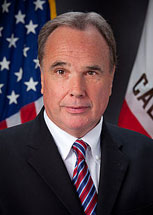
Bill Author
Bill Co-Author(s):