AB 2395: Telecommunications: replacement of public switched telephone network.
- Session Year: 2015-2016
- House: Assembly
- Latest Version Date: 2016-05-16
Under existing law, the Public Utilities Commission has regulatory authority over public utilities, including telephone corporations. Existing law, until January 1, 2020, prohibits the commission from regulating Voice over Internet Protocol and Internet Protocol enabled service (IP enabled service), as defined, except as required or delegated by federal law or expressly provided otherwise in statute.
This bill would require a telephone corporation that is transitioning to IP enabled services and networks to complete a customer education and outreach program before seeking to withdraw traditional circuit-switched and other legacy telephone services. The education and outreach program would be required to explain the transition from legacy public switched telephone network services regulated by the commission to IP enabled services, the benefits and advantages of IP enabled services, a description of the advanced services available to consumers, and information regarding the projected timeframes for the transition, including that withdrawal of any voice grade single-line telephone service will not take place prior to January 1, 2020. The bill would prohibit a telephone corporation from withdrawing any voice grade single-line circuit-switched legacy telephone services without first giving prior notice notice, as specified, to any customer that would be affected by the planned discontinuance. The bill would require the telephone corporation, upon giving the required notice to customers, to give notice to the commission certifying (1) that the telephone corporation has completed the education and outreach program, and (2) that an alternative voice service is available for the affected customers in the affected area. The bill would require the commission to confirm that the replacement service has specified elements. Upon completion of these steps, but no sooner than January 1, 2020, the bill would authorize a telephone corporation to elect to discontinue legacy telephone service upon providing not less than 90-days notice to the affected customers and to the commission, as specified. The bill would authorize a customer of the telephone corporation, within 30 60 days after receipt of the notice of withdrawal of legacy voice service service, to request in writing that the commission review the availability of the alternative service at the customers location. The bill would require the commission to review and resolve the customers request within 60 days of receipt of the request. The bill would authorize the commission, if it determines after investigation that no alternative service is available to that customer at the customers location, to order the withdrawing telephone corporation to provide voice service to the customer for a period no longer than 12 months after withdrawal. If an order to continue to provide voice service to a customer is issued, the bill would require the commission to evaluate whether an alternative service has become available for the customer during the period the order is in effect and if an alternative service meeting specified requirements does not become available, would authorize require the commission to order the withdrawing telephone corporation to continue to provide voice service to the affected customer until an alternative service is available at the customers location.
Under existing law, a violation of the Public Utilities Act or any order, decision, rule, direction, demand, or requirement of the commission is a crime.
Because the provisions of this bill are within the act and require action by the commission to implement its requirements, a violation of these provisions would impose a state-mandated local program by creating a new crime.
The California Constitution requires the state to reimburse local agencies and school districts for certain costs mandated by the state. Statutory provisions establish procedures for making that reimbursement.
This bill would provide that no reimbursement is required by this act for a specified reason.
Under existing law, the Public Utilities Commission has regulatory authority over public utilities, including telephone corporations. Existing law, until January 1, 2020, prohibits the commission from regulating Voice over Internet Protocol and Internet Protocol enabled service (IP enabled service), as defined, except as required or delegated by federal law or expressly provided otherwise in statute.
This bill would require a telephone corporation that is transitioning to IP enabled services and networks to complete a customer education and outreach program explaining before seeking to withdraw traditional circuit-switched and other legacy telephone services. The education and outreach program would be required to explain the transition from legacy public switched telephone network services regulated by the commission to IP enabled services, the benefits and advantages of IP enabled services, a description of the advanced services available to consumers, and information regarding the projected timeframes for the transition, including that withdrawal of any voice grade single-line telephone service will not take place prior to January 1, 2020. The bill would prohibit a telephone corporation from withdrawing any voice grade single-line circuit-switched legacy telephone services without first giving prior notice to the commission certifying (1) that the telephone corporation has completed the education and outreach program, and (2) that an alternative voice service is available for the affected customers in the affected area. The bill would require the commission to conduct a technical review to confirm that the replacement service has specified elements. Upon completion of these steps, but no sooner than January 1, 2020, the bill would authorize a telephone corporation to elect to discontinue legacy telephone service upon providing not less than 90-days notice to the affected customers and to the commission, as specified. The bill would authorize a customer of the telephone corporation, within 30 days after receipt of the notice of withdrawal of legacy voice service to petition the commission to request in writing that the commission review the availability of the alternative service at the customers location. The bill would require the commission to issue an order disposing of the petition not later than 60 days after its filing. review and resolve the customers request within 60 days of receipt of the request. The bill would authorize the commission, if it determines after investigation that no alternative service is available to that customer at the customers location, to attempt to identify a willing provider of voice service to serve the customer, and if no willing provider is identified, to order the withdrawing telephone corporation to provide voice service to the customer for a period no longer than 12 months after withdrawal. The bill would require the commission to establish a universal connectivity program by September 1, 2019, to ensure that those customers for whom the commission has ordered the withdrawing telephone corporation to provide voice services for the 12-month period will continue to have voice service available after that period. If an order to continue to provide voice service to a customer is issued, the bill would require the commission to evaluate whether an alternative service has become available for the customer during the period the order is in effect and if an alternative service meeting specified requirements does not become available, would authorize the commission to order the withdrawing telephone corporation to continue to provide voice service to the affected customer until an alternative service is available at the customers location.
Under existing law, a violation of the Public Utilities Act or any order, decision, rule, direction, demand, or requirement of the commission is a crime.
Because the provisions of this bill are within the act and require action by the commission to implement its requirements, a violation of these provisions would impose a state-mandated local program by creating a new crime.
The California Constitution requires the state to reimburse local agencies and school districts for certain costs mandated by the state. Statutory provisions establish procedures for making that reimbursement.
This bill would provide that no reimbursement is required by this act for a specified reason.
Under existing law, the Public Utilities Commission has regulatory authority over public utilities, including telephone corporations. Existing law, until January 1, 2020, prohibits the commission from regulating Voice over Internet Protocol and Internet Protocol enabled service (IP enabled service), as defined, except as required or delegated by federal law or expressly provided otherwise in statute.
This bill would require a telephone corporation that is transitioning to IP enabled services and networks to complete a customer education and outreach program explaining the transition from legacy public switched telephone network services regulated by the commission to IP enabled services, the benefits and advantages of IP enabled services, a description of the advanced services available to consumers, and information regarding the projected timeframes for the transition, including that withdrawal of any voice grade single-line telephone service will not take place prior to January 1, 2020. The bill would prohibit a telephone corporation from withdrawing any voice grade single-line telephone services without first giving prior notice to the commission certifying (1) that the telephone corporation has completed the education and outreach program, and (2) that an alternative voice service is available for the affected customers in the affected area. The bill would require the commission to conduct a technical review to confirm that the replacement service has specified elements. Upon completion of these steps, but no sooner than January 1, 2020, the bill would authorize a telephone corporation to elect to discontinue legacy telephone service upon providing not less than 90-days notice to the affected customers and to the commission, as specified. The bill would authorize a customer of the telephone corporation, within 30 days after receipt of the notice of withdrawal of legacy voice service to petition the commission to review the availability of the alternative service at the customers location. The bill would require the commission to issue an order disposing of the petition not later than 60 days after its filing. The bill would authorize the commission, if it determines after investigation that no alternative service is available to that customer at the customers location, to attempt to identify a willing provider of voice service to serve the customer, and if no willing provider is identified, to order the withdrawing telephone corporation to provide voice service to the customer for a period no longer than 12 months after withdrawal. The bill would require the commission to establish a universal connectivity program by September 1, 2019, to ensure that those customers for whom the commission has ordered the withdrawing telephone corporation to provide voice services for the 12-month period will continue to have voice service available after that period.
Under existing law, a violation of the Public Utilities Act or any order, decision, rule, direction, demand, or requirement of the commission is a crime.
Because the provisions of this bill are within the act and require action by the commission to implement its requirements, a violation of these provisions would impose a state-mandated local program by creating a new crime.
The California Constitution requires the state to reimburse local agencies and school districts for certain costs mandated by the state. Statutory provisions establish procedures for making that reimbursement.
This bill would provide that no reimbursement is required by this act for a specified reason.
Under existing law, the Public Utilities Commission has regulatory authority over public utilities, including electrical corporations. Provisions of the Public Utilities Act restructuring the electrical services industry state the policy of the state to encourage and support the development of cogeneration as an efficient, environmentally beneficial, competitive energy resource that will enhance the reliability of local generation supply, and promote local business growth.
This bill would make nonsubstantive changes to the policy of the state relative to cogeneration.
The Legislature finds and declares all of the following:
(a)California continues to be the worlds advanced technology leader, the center of the innovation economy, and a pioneer in clean and sustainable technology. The state must adopt a strategy to build our digital infrastructure while retiring outdated technology. The transition from 20th century traditional circuit-switched and other legacy telephone services to 21st century next-generation Internet Protocol (IP) networks and services is taking place at an extraordinary pace. A significant majority of Californians have already transitioned to upgraded communications services such as high-speed Internet, Voice over Internet Protocol (VoIP), and mobile telephony services.
(b)Between 1999 and 2015, California witnessed an estimated 85 percent decline in landlines providing legacy telephone services and relying on dated technology. At the same time, consumer adoption of advanced services over IP-based networks has continued to grow. Californians have quickly adopted new technologies to communicate. More than 9 out of 10 Californians use a smartphone or other mobile devices, 86 percent use the Internet, and there are over 5.7 million VoIP subscriptions. As of 2014, approximately 6 percent of Californians resided in households with only a landline, a 44 percent decline from 2010.
(c)So many California consumers have made this transition so quickly because IP-based services offer greater functionality than legacy phone service. The gap will only widen with the continuing integration of IP networks with cloud computing and the Internet of Things. The policy of the state is to help all Californians transition to advanced technologies and services so that everyone, including low-income, senior, and rural communities, can benefit from and participate fully in 21st century modern life.
(d)The legacy telephone network is underutilized.
(e)(1)This act will establish state policy for a clearly communicated, planned, and orderly transition to advanced technologies, so that continuity of service for consumers and businesses is ensured, while maintaining safeguards to preserve universal connectivity.
(2)This act will ensure that the alternative services replacing legacy services provide quality voice service and access to emergency communications as part of a 21st century policy framework.
(3)This act will ensure that alternative services are available to replace legacy services before the transition, so that all Californians are able to benefit from the opportunities presented by advanced technologies and services.
SEC. 2.Section 711 is added to the Public Utilities Code, to read:711.(a)Before seeking to withdraw traditional circuit-switched and other legacy telephone services pursuant to this section, a telephone corporation transitioning to IP-enabled services and networks shall complete a customer education and outreach program explaining the IP transition, its benefits and advantages, which may include environmental benefits and advantages, and a description of the advanced services available to consumers. The customer education and outreach program shall also include information regarding the projected timeframes for the transition, including the fact that the withdrawal of any voice grade single-line telephone service will not take place prior to January 1, 2020.
(b)A telephone corporation planning to discontinue any voice grade single-line circuit-switched legacy telephone service shall first give prior notice to any customer that would be affected by the planned discontinuance. The notice to the customer shall include information regarding the projected timeframe for the discontinuance of legacy voice service and specify the alternative service or services that will be available to the customer after the withdrawal. The notice to the customer shall also state that, pursuant to subdivision (e), the telephone corporation will provide 90-days prior notice before legacy voice service is withdrawn and, if applicable, that legacy voice service will not be withdrawn sooner than January 1, 2020. Upon giving notice to customers, the telephone corporation shall provide notice to the commission certifying both of the following:
(1)The telephone corporation has completed the education and outreach program prescribed in subdivision (a).
(2)An alternative voice service is available for the affected customers in the affected area.
(c)Upon receipt of the notice to withdraw, the commission shall confirm that the alternative service has all of the following elements:
(1)Voice grade access to the public switched telephone network or its successor.
(2)Real-time, two-way voice communications.
(3)Access for end users of those services to the local emergency telephone systems described in the Warren-911-Emergency Assistance Act (Article 6 (commencing with Section 53100) of Chapter 1 of Part 1 of Division 2 of Title 5 of the Government Code), and where available, enhanced 911 access.
(4)Alternative services requiring a residential power supply to operate are in compliance with the backup-battery capability standards established by the Federal Communications Commission.
(d)The commissions confirmation process shall be limited to the determination of whether the alternative service has the elements set forth in subdivision (c) and shall be completed within 120 days from receipt of notice from the telephone corporation pursuant to subdivision (b). If the commission fails to complete its technical review within 120 days from receipt of notice, the telephone corporation will be conclusively presumed to have complied with the requirements of subdivisions (b) and (c).
(e)Upon completion of the requirements of subdivisions (b), (c), and (d) for voice grade single-line circuit-switched legacy telephone services, but no sooner than January 1, 2020, a telephone corporation may elect to discontinue any legacy telephone service, upon giving no less than 90-days prior notice to the affected customers and to the commission. If the discontinuance of legacy telephone service includes voice grade single-line services, the notice shall include information regarding the availability of an alternative service as confirmed by the commission and how to seek commission review if the customer believes the alternative service is not available at the customers location. During the notice period, the telephone corporation shall continue to provide the legacy telephone service to the affected customers, except a customer that disconnects or changes the features of the service, but shall have no obligation to provide the legacy telephone service to any new customers in the affected area.
(f)Within 30 60 days after receipt of a telephone corporations notice of withdrawal of legacy voice service, a customer may request in writing that the commission review the availability of the alternative service at the customers location. The commission shall review and resolve the customers request within 60 days of receipt of the request. The commissions review shall be limited to determining whether an alternative service that has the elements set forth in subdivision (c) is available to the customer at that customers location. If the commission determines that an alternative service is not available to the customer at the customers location, the commission may shall order the withdrawing telephone corporation to provide voice service to the customer at the customers location for a period no longer than 12 months after withdrawal. The withdrawing telephone corporation may utilize any technology or service arrangement to provide the voice services as long as it meets the requirements of subdivision (c).
(g)If an order to continue to provide voice service to a customer is issued pursuant to subdivision (f), during the period in which the withdrawing telephone corporation is required to provide voice service, the commission shall evaluate whether an alternative service has become available for the customer that is the subject of the order. If an alternative service meeting the elements of subdivision (c) does not become available during the period of the order, the commission may shall order the withdrawing telephone corporation to continue to provide voice service to the affected customer until an alternative service is available at the customers location. The withdrawing telephone corporation may utilize any technology or service arrangement to provide the voice service as long as it meets the requirements of subdivision (c).
(h)Nothing in this section grants the commission jurisdiction or control over an alternative service except as specifically set forth in this section.
(h)The commissions duty to conduct a confirmation process pursuant to subdivision (c) and respond to a customer inquiry pursuant to subdivision (f) is pursuant to its jurisdiction over legacy service and does not grant the commission jurisdiction or control over an alternative service.
(i)Nothing in this section affects a telephone corporations ability to withdraw services under any other law.
(j)Nothing in this section affects or changes the commissions authority to implement and enforce Sections 251 and 252 of the federal Communications Act of 1934, as amended (47 U.S.C. Secs. 251 and 252), including, but not limited to, the authority to arbitrate and enforce interconnection agreements pursuant to Section 252(b).
(k)Nothing in this section affects or changes the obligations of an incumbent local exchange carrier pursuant to Sections 251 and 252 of the federal Communications Act of 1934, as amended (47 U.S.C. Secs. 251 and 252). For these purposes, incumbent local exchange carrier is defined as in subsection (h) of Section 251 of Title 47 of the United States Code.
SEC. 3.No reimbursement is required by this act pursuant to Section 6 of Article XIIIB of the California Constitution because the only costs that may be incurred by a local agency or school district will be incurred because this act creates a new crime or infraction, eliminates a crime or infraction, or changes the penalty for a crime or infraction, within the meaning of Section 17556 of the Government Code, or changes the definition of a crime within the meaning of Section 6 of Article XIIIB of the California Constitution.
The Legislature finds and declares all of the following:
(a)California continues to be the worlds advanced technology leader, the center of the innovation economy, and a pioneer in clean and sustainable technology. The state must adopt a strategy to build our digital infrastructure while retiring outdated technology. The transition from 20th century traditional circuit-switched and other legacy telephone services to 21st century next-generation Internet Protocol (IP) networks and services is taking place at an extraordinary pace. A significant majority of Californians have already transitioned to upgraded communications services such as high-speed Internet, Voice over Internet Protocol (VoIP), and mobile telephony services.
(b)Between 1999 and 2015, California witnessed an estimated 85 percent decline in landlines providing legacy telephone services and relying on dated technology. At the same time, consumer adoption of advanced services over IP-based networks has continued to grow. Californians have quickly adopted new technologies to communicate. More than 9 out of 10 Californians use a smartphone or other mobile devices, 86 percent use the Internet, and there are over 5.7 million VoIP subscriptions. As of 2014, approximately 6 percent of Californians resided in households with only a landline, a 44 percent decline from 2010.
(c)So many California consumers have made this transition so quickly because IP-based services offer greater functionality than legacy phone service. The gap will only widen with the continuing integration of IP networks with cloud computing and the Internet of Things. The policy of the state is to help all Californians transition to advanced and clean technologies and services so that everyone, including low-income, senior, and rural communities, can benefit from and participate fully in 21st century modern life.
(d)The legacy telephone network is outdated, underutilized, and carbon-unfriendly when compared to the IP network. Vital economic, educational, health, and civic opportunities, including online learning, telemedicine, remote working, e-government services, and public safety, are not optimized on the outdated network. The transition from older, dated technologies to newer, more advanced technologies is nearly complete, and at some point in the not-too-distant future it will no longer be economically viable or environmentally sound to maintain legacy networks and services. The consumer demand will not be there, the economics will not support it, and the associated environmental burden will be disproportionate to its long past benefits. underutilized.
(e)Recent studies show that transitioning from a legacy switched network to an all IP network can reduce energy costs by as much as 70 percent, reduce water use for cooling by as much as 70 percent, and reduce emissions of greenhouse gases by as much as 40 percent. IP services themselves provide even further benefits, including reduced fuel and electricity use through smart logistics and telematics for efficient traffic and route management, and automated monitoring of energy use related to lighting and climate control. IP-based technologies, including remote water leakage detection and control and smart irrigation solutions for agriculture, may also serve to enable efficient use of water by consumers.
(f)(1)This act will provide a path for the telecommunications industry to make significant contributions toward the states goals for energy use and emissions of greenhouse gases, as set forth in the California Global Warming Solutions Act of 2006 (Division 25.5 (commencing with Section 38500) of the Health and Safety Code) and the Clean Energy and Pollution Reduction Act of 2015 (Chapter 547 of the Statutes of 2015).
(2)
(e)(1)This act will establish state policy for a clearly communicated, planned, and orderly transition from outdated technology to cleaner to advanced technologies, so that continuity of service for consumers and businesses is ensured, while maintaining safeguards to preserve universal connectivity.
(3)
(2)This act will ensure that the advanced alternative services replacing legacy services provide quality voice service and access to emergency communications as part of a 21st century policy framework.
(4)
(3)This act will ensure that advanced alternative services are available to replace legacy services before the transition, so that all Californians are able to benefit from the opportunities presented by advanced technologies and services.
SEC. 2.Section 711 is added to the Public Utilities Code, to read:711.(a)A Before seeking to withdraw traditional circuit-switched and other legacy telephone services pursuant to this section, a telephone corporation transitioning to IP-enabled services and networks shall complete a customer education and outreach program explaining the IP transition, its benefits and advantages, including the which may include environmental benefits and advantages, and a description of the advanced services available to consumers. The customer education and outreach program shall also include information regarding the projected timeframes for the transition, including the fact that the withdrawal of any voice grade single-line telephone service will not take place prior to January 1, 2020.
(b)A telephone corporation planning to discontinue any voice grade single-line circuit-switched legacy telephone service shall first give prior notice to the commission certifying both of the following:
(1)The telephone corporation has completed the education and outreach program prescribed in subdivision (a).
(2)An alternative voice service is available for the affected customers in the affected area.
(c)Upon receipt of the notice to withdraw, the commission shall conduct a technical review to confirm that the alternative service has all of the following elements:
(1)Voice grade access to the public switched telephone network or its successor.
(2)Real-time, two-way voice communications.
(3)Access for end users of those services to the local emergency telephone systems described in the Warren-911-Emergency Assistance Act (Article 6 (commencing with Section 53100) of Chapter 1 of Part 1 of Division 2 of Title 5 of the Government Code), and where available, enhanced 911 access.
(4)Alternative services that require requiring a residential power supply to operate shall also provide backup-battery capability consistent with the standard are in compliance with the backup-battery capability standards established by the Federal Communications Commission.
(d)The commissions technical review confirmation process shall be limited to the determination of whether the alternative service has the elements set forth in subdivision (c) and shall be completed within 120 days from receipt of notice from the telephone corporation pursuant to subdivision (b). If the commission fails to complete its technical review within 120 days from receipt of notice, the telephone corporation will be conclusively presumed to have complied with the requirements of subdivisions (b) and (c).
(e)Upon completion of the requirements of subdivisions (b), (c), and (d) for voice grade single-line circuit-switched legacy telephone services, but no sooner than January 1, 2020, a telephone corporation may elect to discontinue any legacy telephone service, upon giving no less than 90-days prior notice to the affected customers and to the commission. If the discontinuance of legacy telephone service includes voice grade single-line services, the notice shall include information regarding the availability of an alternative service as verified confirmed by the commission in the technical review, how to petition the commission for review of the availability of the alternative service at the customers location, and any environmental benefit that will come with the discontinuance of legacy services and the migration to alternative services. and how to seek commission review if the customer believes the alternative service is not available at the customers location. During the notice period, the telephone corporation shall continue to provide the legacy telephone service to the affected customers, except a customer that disconnects or changes the features of the service, but shall have no obligation to provide the legacy telephone service to any new customers in the affected area.
(f)Notwithstanding Section 710, within Within 30 days after receipt of a telephone corporations notice of withdrawal of legacy voice service, a customer may petition request in writing that the commission to review the availability of the alternative service at the customers location. The commission shall issue an order disposing of the petition not later than 60 days after the filing of the petition. review and resolve the customers request within 60 days of receipt of the request. The commissions review shall be limited to determining whether an alternative service that has the elements set forth in subdivision (c) is available to the customer at that customers location. If the commission determines after an investigation that no that an alternative service is not available to the customer at the customers location, the commission shall attempt to identify a willing provider of voice service to serve the customer. If no willing provider is identified, the commission may order the withdrawing telephone corporation to provide voice service to the customer at the customers location for a period no longer than 12 months after withdrawal. The willing provider or the withdrawing telephone corporation may utilize any technology or service arrangement to provide the voice services as long as it meets the requirements of subdivision (c).
(g)By September 1, 2019, the commission shall establish a universal connectivity program to ensure that those customers for whom the commission has ordered the withdrawing telephone corporation to provide voice services for the 12-month period in subdivision (f) will continue to receive voice service.
(g)If an order to continue to provide voice service to a customer is issued pursuant to subdivision (f), during the period in which the withdrawing telephone corporation is required to provide voice service, the commission shall evaluate whether an alternative service has become available for the customer that is the subject of the order. If an alternative service meeting the elements of subdivision (c) does not become available during the period of the order, the commission may order the withdrawing telephone corporation to continue to provide voice service to the affected customer until an alternative service is available at the customers location. The withdrawing telephone corporation may utilize any technology or service arrangement to provide the voice service as long as it meets the requirements of subdivision (c).
(h)Nothing in this section grants the commission jurisdiction or control over an alternative service except as specifically set forth in this section.
(i)Nothing in this section affects a telephone corporations ability to withdraw services under any other law.
(j)Nothing in this section affects or changes the commissions authority to implement and enforce Sections 251 and 252 of the federal Communications Act of 1934, as amended (47 U.S.C. Secs. 251 and 252), including, but not limited to, the authority to arbitrate and enforce interconnection agreements pursuant to Section 252(b).
(k)Nothing in this section affects or changes the obligations of an incumbent local exchange carrier pursuant to Sections 251 and 252 of the federal Communications Act of 1934, as amended (47 U.S.C. Secs. 251 and 252). For these purposes, incumbent local exchange carrier is defined as in subsection (h) of Section 251 of Title 47 of the United States Code.
SEC. 3.No reimbursement is required by this act pursuant to Section 6 of Article XIIIB of the California Constitution because the only costs that may be incurred by a local agency or school district will be incurred because this act creates a new crime or infraction, eliminates a crime or infraction, or changes the penalty for a crime or infraction, within the meaning of Section 17556 of the Government Code, or changes the definition of a crime within the meaning of Section 6 of Article XIIIB of the California Constitution.
The Legislature finds and declares all of the following:
(a)California continues to be the worlds advanced technology leader, the center of the innovation economy, and a pioneer in clean and sustainable technology. The state must adopt a strategy to build our digital infrastructure while retiring outdated technology. The transition from 20th century traditional circuit-switched and other legacy telephone services to 21st century next-generation Internet Protocol (IP) networks and services is taking place at an extraordinary pace. A significant majority of Californians have already transitioned to upgraded communications services such as high-speed Internet, Voice over Internet Protocol (VoIP), and mobile telephony services.
(b)Between 1999 and 2015, California witnessed an estimated 85 percent decline in landlines providing legacy telephone services and relying on dated technology. At the same time, consumer adoption of advanced services over IP-based networks has continued to grow. Californians have quickly adopted new technologies to communicate. More than 9 out of 10 Californians use a smartphone or other mobile devices, 86 percent use the Internet, and there are over 5.7 million VoIP subscriptions. As of 2014, approximately 6 percent of Californians resided in households with only a landline, a 44 percent decline from 2010.
(c)So many California consumers have made this transition so quickly because IP-based services offer greater functionality than legacy phone service. The gap will only widen with the continuing integration of IP networks with cloud computing and the Internet of Things. The policy of the state is to help all Californians transition to advanced and clean technologies and services so that everyone, including low-income, senior, and rural communities, can benefit from and participate fully in 21st century modern life.
(d)The legacy telephone network is outdated, underutilized, and carbon-unfriendly when compared to the IP network. Vital economic, educational, health, and civic opportunities, including online learning, telemedicine, remote working, e-government services, and public safety, are not optimized on the outdated network. The transition from older, dated technologies to newer, more advanced technologies is nearly complete, and at some point in the not-too-distant future it will no longer be economically viable or environmentally sound to maintain legacy networks and services. The consumer demand will not be there, the economics will not support it, and the associated environmental burden will be disproportionate to its long past benefits.
(e)Recent studies show that transitioning from a legacy switched network to an all IP network can reduce energy costs by as much as 70 percent, reduce water use for cooling by as much as 70 percent, and reduce emissions of greenhouse gases by as much as 40 percent. IP services themselves provide even further benefits, including reduced fuel and electricity use through smart logistics and telematics for efficient traffic and route management, and automated monitoring of energy use related to lighting and climate control. IP-based technologies, including remote water leakage detection and control and smart irrigation solutions for agriculture, may also serve to enable efficient use of water by consumers.
(f)(1)This act will provide a path for the telecommunications industry to make significant contributions toward the states goals for energy use and emissions of greenhouse gases, as set forth in the California Global Warming Solutions Act of 2006 (Division 25.5 (commencing with Section 38500) of the Health and Safety Code) and the Clean Energy and Pollution Reduction Act of 2015 (Chapter 547 of the Statutes of 2015).
(2)This act will establish state policy for a clearly communicated, planned, and orderly transition from outdated technology to cleaner advanced technologies, so that continuity of service for consumers and businesses is ensured, while maintaining safeguards to preserve universal connectivity.
(3)This act will ensure that the advanced services replacing legacy services provide quality voice service and access to emergency communications as part of a 21st century policy framework.
(4)This act will ensure that advanced services are available to replace legacy services before the transition, so that all Californians are able to benefit from the opportunities presented by advanced technologies and services.
SEC. 2.Section 711 is added to the Public Utilities Code, to read:711.(a)A telephone corporation transitioning to IP-enabled services and networks shall complete a customer education and outreach program explaining the IP transition, its benefits and advantages, including the environmental benefits and advantages, and a description of the advanced services available to consumers. The customer education and outreach program shall also include information regarding the projected timeframes for the transition, including the fact that the withdrawal of any voice grade single-line telephone service will not take place prior to January 1, 2020.
(b)A telephone corporation planning to discontinue any voice grade single-line telephone service shall first give prior notice to the commission certifying both of the following:
(1)The telephone corporation has completed the education and outreach program prescribed in subdivision (a).
(2)An alternative voice service is available for the affected customers in the affected area.
(c)Upon receipt of the notice to withdraw, the commission shall conduct a technical review to confirm that the alternative service has all of the following elements:
(1)Voice grade access to the public switched telephone network or its successor.
(2)Real-time, two-way voice communications.
(3)Access for end users of those services to the local emergency telephone systems described in the Warren-911-Emergency Assistance Act (Article 6 (commencing with Section 53100) of Chapter 1 of Part 1 of Division 2 of Title 5 of the Government Code), and where available, enhanced 911 access.
(4)Alternative services that require a residential power supply to operate shall also provide backup-battery capability consistent with the standard established by the Federal Communications Commission.
(d)The commissions technical review shall be limited to the determination of whether the alternative service has the elements set forth in subdivision (c) and shall be completed within 120 days from receipt of notice from the telephone corporation pursuant to subdivision (b). If the commission fails to complete its technical review within 120 days from receipt of notice, the telephone corporation will be conclusively presumed to have complied with the requirements of subdivisions (b) and (c).
(e)Upon completion of the requirements of subdivisions (b), (c), and (d) for voice grade single-line services, but no sooner than January 1, 2020, a telephone corporation may elect to discontinue any legacy telephone service, upon giving no less than 90-days prior notice to the affected customers and to the commission. If the discontinuance of legacy telephone service includes voice grade single-line services, the notice shall include information regarding the availability of an alternative service as verified by the commission in the technical review, how to petition the commission for review of the availability of the alternative service at the customers location, and any environmental benefit that will come with the discontinuance of legacy services and the migration to alternative services. During the notice period, the telephone corporation shall continue to provide the legacy telephone service to the affected customers, except a customer that disconnects or changes the features of the service, but shall have no obligation to provide the legacy telephone service to any new customers in the affected area.
(f)Notwithstanding Section 710, within 30 days after receipt of a telephone corporations notice of withdrawal of legacy voice service, a customer may petition the commission to review the availability of the alternative service at the customers location. The commission shall issue an order disposing of the petition not later than 60 days after the filing of the petition. If the commission determines after an investigation that no alternative service is available to the customer at the customers location, the commission shall attempt to identify a willing provider of voice service to serve the customer. If no willing provider is identified, the commission may order the withdrawing telephone corporation to provide voice service to the customer at the customers location for a period no longer than 12 months after withdrawal. The willing provider or the withdrawing telephone corporation may utilize any technology or service arrangement to provide the voice services as long as it meets the requirements of subdivision (c).
(g)By September 1, 2019, the commission shall establish a universal connectivity program to ensure that those customers for whom the commission has ordered the withdrawing telephone corporation to provide voice services for the 12-month period in subdivision (f) will continue to receive voice service.
(h)Nothing in this section grants the commission jurisdiction or control over an alternative service except as specifically set forth in this section.
(i)Nothing in this section affects a telephone corporations ability to withdraw services under any other law.
SEC. 3.No reimbursement is required by this act pursuant to Section 6 of Article XIIIB of the California Constitution because the only costs that may be incurred by a local agency or school district will be incurred because this act creates a new crime or infraction, eliminates a crime or infraction, or changes the penalty for a crime or infraction, within the meaning of Section 17556 of the Government Code, or changes the definition of a crime within the meaning of Section 6 of Article XIIIB of the California Constitution.
SECTION 1.Section 372 of the Public Utilities Code is amended to read:372.(a)It is the policy of the state to encourage and support the development of cogeneration as an efficient, environmentally beneficial, competitive energy resource that will enhance the reliability of local generation supply, and promote local business growth. Subject to the specific conditions provided in this section, the commission shall determine the applicability to customers of uneconomic costs as specified in Sections 367, 368, 375, and 376. Consistent with this state policy, the commission shall provide that these costs shall not apply to any of the following:
(1)To load served onsite or under an over-the-fence arrangement by a nonmobile self-cogeneration or cogeneration facility that was operational on or before December 20, 1995, or by increases in the capacity of a facility to the extent that the increased capacity was constructed by an entity holding an ownership interest in or operating the facility and does not exceed 120 percent of the installed capacity as of December 20, 1995, provided that before June 30, 2000, the costs shall apply to over-the-fence arrangements entered into after December 20, 1995, between unaffiliated parties. For the purposes of this subdivision, affiliated means a person or entity that directly, or indirectly through one or more intermediaries, controls, is controlled by, or is under common control with another specified entity. Control means either of the following:
(A)The possession, directly or indirectly, of the power to direct or to cause the direction of the management or policies of a person or entity, whether through an ownership, beneficial, contractual, or equitable interest.
(B)Direct or indirect ownership of at least 25 percent of an entity, whether through an ownership, beneficial, or equitable interest.
(2)To load served by onsite or under an over-the-fence arrangement by a nonmobile self-cogeneration or cogeneration facility for which the customer was committed to construction as of December 20, 1995, provided that the facility was substantially operational on or before January 1, 1998, or by increases in the capacity of a facility to the extent that the increased capacity was constructed by an entity holding an ownership interest in or operating the facility and does not exceed 120 percent of the installed capacity as of January 1, 1998, provided that before June 30, 2000, the costs shall apply to over-the-fence arrangements entered into after December 20, 1995, between unaffiliated parties.
(3)To load served by existing, new, or portable emergency generation equipment used to serve the customers load requirements during periods when utility service is unavailable, provided the emergency generation is not operated in parallel with the integrated electric grid, except on a momentary parallel basis.
(4)After June 30, 2000, to a load served onsite or under an over-the-fence arrangement by a nonmobile self-cogeneration or cogeneration facility.
(b)Further, consistent with state policy, with respect to self-cogeneration or cogeneration deferral agreements, the commission shall do the following:
(1)Provide that a utility shall execute a final self-cogeneration or cogeneration deferral agreement with a customer that, on or before December 20, 1995, had executed a letter of intent (or similar documentation) to enter into the agreement with the utility, provided that the final agreement shall be consistent with the terms and conditions set forth in the letter of intent and the commission shall review and approve the final agreement.
(2)Provide that a customer that holds a self-cogeneration or cogeneration deferral agreement that was in place on or before December 20, 1995, or that was executed pursuant to paragraph (1) in the event the agreement expires, or is terminated, may do any of the following:
(A)Continue through December 31, 2001, to receive utility service at the rate and under terms and conditions applicable to the customer under the deferral agreement that, as executed, includes an allocation of uneconomic costs consistent with subdivision (e) of Section 367.
(B)Engage in a direct transaction for the purchase of electricity and pay uneconomic costs consistent with Sections 367, 368, 375, and 376.
(C)Construct a self-cogeneration or cogeneration facility of approximately the same capacity as the facility previously deferred, provided that the costs provided in Sections 367, 368, 375, and 376 shall apply consistent with subdivision (e) of Section 367, unless otherwise authorized by the commission pursuant to subdivision (c).
(3)Subject to the firewall described in subdivision (e) of Section 367, provide that the ratemaking treatment for self-cogeneration or cogeneration deferral agreements executed before December 20, 1995, or executed pursuant to paragraph (1) shall be consistent with the ratemaking treatment for the contracts approved before January 1995.
(c)The commission shall authorize, within 60 days of the receipt of a joint application from the serving utility and one or more interested parties, applicability conditions as follows:
(1)The costs identified in Sections 367, 368, 375, and 376 shall not, before June 30, 2000, apply to load served onsite by a nonmobile self-cogeneration or cogeneration facility that became operational on or after December 20, 1995.
(2)The costs identified in Sections 367, 368, 375, and 376 shall not, before June 30, 2000, apply to a load served under over-the-fence arrangements entered into after December 20, 1995, between unaffiliated entities.
(d)For the purposes of this subdivision, all onsite or over-the-fence arrangements shall be consistent with Section 218 as it existed on December 20, 1995.
(e)To facilitate the development of new microcogeneration applications, electrical corporations may apply to the commission for a financing order to finance the transition costs to be recovered from customers employing the applications.
(f)To encourage the continued development, installation, and interconnection of clean and efficient self-generation and cogeneration resources, to improve system reliability for consumers by retaining existing generation and encouraging new generation to connect to the electric grid, and to increase self-sufficiency of consumers of electricity through the deployment of self-generation and cogeneration, both of the following shall occur:
(1)The commission and the Electricity Oversight Board shall determine if a policy or action undertaken by the Independent System Operator, directly or indirectly, unreasonably discourages the connection of existing self-generation or cogeneration or new self-generation or cogeneration to the grid.
(2)If the commission and the Electricity Oversight Board find that a policy or action of the Independent System Operator unreasonably discourages the connection of existing self-generation or cogeneration or new self-generation or cogeneration to the grid, the commission and the Electricity Oversight Board shall undertake all necessary efforts to revise, mitigate, or eliminate that policy or action of the Independent System Operator.
(a)It is the policy of the state to encourage and support the development of cogeneration as an efficient, environmentally beneficial, competitive energy resource that will enhance the reliability of local generation supply, and promote local business growth. Subject to the specific conditions provided in this section, the commission shall determine the applicability to customers of uneconomic costs as specified in Sections 367, 368, 375, and 376. Consistent with this state policy, the commission shall provide that these costs shall not apply to any of the following:
(1)To load served onsite or under an over the fence over-the-fence arrangement by a nonmobile self-cogeneration or cogeneration facility that was operational on or before December 20, 1995, or by increases in the capacity of a facility to the extent that the increased capacity was constructed by an entity holding an ownership interest in or operating the facility and does not exceed 120 percent of the installed capacity as of December 20, 1995, provided that prior to before June 30, 2000, the costs shall apply to over the fence over-the-fence arrangements entered into after December 20, 1995, between unaffiliated parties. For the purposes of this subdivision, affiliated means any a person or entity that directly, or indirectly through one or more intermediaries, controls, is controlled by, or is under common control with another specified entity. Control means either of the following:
(A)The possession, directly or indirectly, of the power to direct or to cause the direction of the management or policies of a person or entity, whether through an ownership, beneficial, contractual, or equitable interest.
(B)Direct or indirect ownership of at least 25 percent of an entity, whether through an ownership, beneficial, or equitable interest.
(2)To load served by onsite or under an over the fence over-the-fence arrangement by a nonmobile self-cogeneration or cogeneration facility for which the customer was committed to construction as of December 20, 1995, provided that the facility was substantially operational on or before January 1, 1998, or by increases in the capacity of a facility to the extent that the increased capacity was constructed by an entity holding an ownership interest in or operating the facility and does not exceed 120 percent of the installed capacity as of January 1, 1998, provided that prior to before June 30, 2000, the costs shall apply to over the fence over-the-fence arrangements entered into after December 20, 1995, between unaffiliated parties.
(3)To load served by existing, new, or portable emergency generation equipment used to serve the customers load requirements during periods when utility service is unavailable, provided the emergency generation is not operated in parallel with the integrated electric grid, except on a momentary parallel basis.
(4)After June 30, 2000, to any a load served onsite or under an over the fence over-the-fence arrangement by any a nonmobile self-cogeneration or cogeneration facility.
(b)Further, consistent with state policy, with respect to self-cogeneration or cogeneration deferral agreements, the commission shall do the following:
(1)Provide that a utility shall execute a final self-cogeneration or cogeneration deferral agreement with any a customer that, on or before December 20, 1995, had executed a letter of intent (or similar documentation) to enter into the agreement with the utility, provided that the final agreement shall be consistent with the terms and conditions set forth in the letter of intent and the commission shall review and approve the final agreement.
(2)Provide that a customer that holds a self-cogeneration or cogeneration deferral agreement that was in place on or before December 20, 1995, or that was executed pursuant to paragraph (1) in the event the agreement expires, or is terminated, may do any of the following:
(A)Continue through December 31, 2001, to receive utility service at the rate and under terms and conditions applicable to the customer under the deferral agreement that, as executed, includes an allocation of uneconomic costs consistent with subdivision (e) of Section 367.
(B)Engage in a direct transaction for the purchase of electricity and pay uneconomic costs consistent with Sections 367, 368, 375, and 376.
(C)Construct a self-cogeneration or cogeneration facility of approximately the same capacity as the facility previously deferred, provided that the costs provided in Sections 367, 368, 375, and 376 shall apply consistent with subdivision (e) of Section 367, unless otherwise authorized by the commission pursuant to subdivision (c).
(3)Subject to the firewall described in subdivision (e) of Section 367, provide that the ratemaking treatment for self-cogeneration or cogeneration deferral agreements executed prior to before December 20, 1995, or executed pursuant to paragraph (1) shall be consistent with the ratemaking treatment for the contracts approved before January 1995.
(c)The commission shall authorize, within 60 days of the receipt of a joint application from the serving utility and one or more interested parties, applicability conditions as follows:
(1)The costs identified in Sections 367, 368, 375, and 376 shall not, prior to before June 30, 2000, apply to load served onsite by a nonmobile self-cogeneration or cogeneration facility that became operational on or after December 20, 1995.
(2)The costs identified in Sections 367, 368, 375, and 376 shall not, prior to before June 30, 2000, apply to any a load served under over the fence over-the-fence arrangements entered into after December 20, 1995, between unaffiliated entities.
(d)For the purposes of this subdivision, all onsite or over the fence over-the-fence arrangements shall be consistent with Section 218 as it existed on December 20, 1995.
(e)To facilitate the development of new microcogeneration applications, electrical corporations may apply to the commission for a financing order to finance the transition costs to be recovered from customers employing the applications.
(f)To encourage the continued development, installation, and interconnection of clean and efficient self-generation and cogeneration resources, to improve system reliability for consumers by retaining existing generation and encouraging new generation to connect to the electric grid, and to increase self-sufficiency of consumers of electricity through the deployment of self-generation and cogeneration, both of the following shall occur:
(1)The commission and the Electricity Oversight Board shall determine if any a policy or action undertaken by the Independent System Operator, directly or indirectly, unreasonably discourages the connection of existing self-generation or cogeneration or new self-generation or cogeneration to the grid.
(2)If the commission and the Electricity Oversight Board find that any a policy or action of the Independent System Operator unreasonably discourages the connection of existing self-generation or cogeneration or new self-generation or cogeneration to the grid, the commission and the Electricity Oversight Board shall undertake all necessary efforts to revise, mitigate, or eliminate that policy or action of the Independent System Operator.
|
Date
|
Status
|
|---|---|
| May 27, 2016 | Joint Rule 62(a), file notice suspended. (Page 4943.) |
| May 27, 2016 | In committee: Held under submission. |
| May 27, 2016 | Joint Rule 62(a), file notice suspended. |
| May 25, 2016 | In committee: Set, first hearing. Referred to APPR. suspense file. |
| May 17, 2016 | Re-referred to Com. on APPR. |
| May 16, 2016 | From committee chair, with author's amendments: Amend, and re-refer to Com. on APPR. Read second time and amended. |
| Apr 21, 2016 | Re-referred to Com. on APPR. |
| Apr 20, 2016 | Read second time and amended. |
| Apr 19, 2016 | From committee: Amend, and do pass as amended and re-refer to Com. on APPR. (Ayes 10. Noes 3.) (April 13). |
| Mar 28, 2016 | Re-referred to Com. on U. & C. |
| Mar 17, 2016 | From committee chair, with author's amendments: Amend, and re-refer to Com. on U. & C. Read second time and amended. |
| Mar 17, 2016 | Referred to Com. on U. & C. |
| Feb 19, 2016 | From printer. May be heard in committee March 20. |
| Feb 18, 2016 | Read first time. To print. |
|
Date
|
Description
|
Location
|
Votes
|
|
|---|---|---|---|---|
| Apr 13, 2016 | Do pass as amended and be re-referred to the Committee on [Appropriations] | Assembly Standing Committee on Utilities and Commerce |
Passed |
This list shows positions taken on this bill by organizations on the date displayed, which is linked to the original source.
Positions by individuals are not included.
Date of Hearing: May 25, 2016
ASSEMBLY COMMITTEE ON APPROPRIATIONS
Lorena Gonzalez, Chair
ABPCA Bill Id:AB 2395
Author:(Low) – As Amended Ver:May 16, 2016
Policy Committee: | Utilities and Commerce | Vote: | 10 - 3 |
Urgency: No State Mandated Local Program: Yes Reimbursable: No
SUMMARY:
This bill establishes a process for a telephone corporation to withdraw legacy public switched telephone network services and transition to Internet Protocol (IP) enabled services and networks, beginning January 1, 2020. Specifically, this bill:
- Requires a telephone corporation to complete a customer education and outreach program explaining the IP transition, its benefits and advantages, and a description of the alternative services available to consumers. Requires the outreach to include information regarding timeframes and notices of discontinuance of service.
- Requires a telephone corporation planning to discontinue any voice grade single-line telephone service to give notice to the California Public Utilities Commission (PUC) certifying both following:
- The telephone corporation has completed the education and outreach program, and
- An alternative voice service is available and includes specified elements (The PUC's decision to confirm is limited to the consideration of only the specified elements.)
- Presumes the telephone corporation has completed the requirements to withdraw if the PUC fails to complete its technical review within 120 days.
- Authorizes a telephone corporation to discontinue any legacy telephone service, beginning January 1, 2020, upon completion of specified requirements or the failure of the PUC to complete its technical review.
- Requires a telephone corporation to give 90 days prior notice to affected customers and to the PUC including specified information.
- Requires the telephone corporation to continue providing the legacy telephone service in the affected area during the notice period, except to new customers and customers who disconnect or change the features of the service
- Authorizes a customer to petition the PUC, within 60 days after the receipt of a notice of withdrawal, to request a review of the availability of the alternative service at the customer’s location. Limits the review to specified elements. Requires the PUC to issue an order disposing of the petition no later than 60 days after its filing.
- Requires the PUC, if it determines after an investigation that no alternative service is available to the customers at the customer's location, to order the telephone corporation to continue providing service for no longer than 12 months after withdrawal. If the time period in the order expires and there still is no alternative provider, requires the PUC to order the telephone corporation to continue providing service until an alternative is available.
FISCAL EFFECT:
- From 2017 and 2020, the PUC estimates annual costs of $2 million for 14 permanent PY and one limited-term PY across four divisions to hold a proceeding and an additional $2.7 million for IT contracts and preliminary outreach efforts.
- Beginning 2019, the PUC estimates annual costs of $730,000 for 7 limited-term PY to address public comment over a two-year period.
- Beginning in 2020, unknown significant additional staffing requirements to be determined by the process that is adopted and the number of affected customers.
- Additional unknown fiscal impacts on subsidy, public purpose and high-cost programs, licensing of alternative providers, impacts on other utilities, and legal conflicts.
COMMENTS:
- Purpose. According to the author, since 1999, Plain Old Telephone Service (POTS) has declined by 85% in the state. As of 2014, approximately 6% of Californians live in households with only a landline (which includes POTS and VOIP), a 44 percent decline from 2010. This bill modernizes our state’s telecommunications regulations to ensure California is the world leader in telecomm innovation.
- Background. In the 1980s, Congress broke up AT&T into seven smaller local companies. In 1996, the Telecommunications Act of 1996 (The Act) was enacted to force local companies to open up their networks to outside competition. As a result, The Act distinguished two types of telephone service providers, Incumbent Local Exchange Carriers (ILECs) and Competitive Local Exchange Carriers (CLECs). ILECs are telephone companies that provided local services prior to The Act, and own most of the infrastructure and facilities in a service area. CLECs are companies established by The Act that build and operate communication networks in existing ILEC service areas, and provide customers with an alternative to ILEC services. The Act was intended to promote competition between telephone service providers.
- Carriers of Last Resort. Carriers of Last Resort (COLR) are carriers that are required to serve, upon request, all customers within their service area. This includes services that are provided by the public purpose programs such as the Universal Lifeline Telephone Service, the Deaf and Disabled Telecommunications Program, and the California TeleConnect Fund, as well as providing basic service.
California has about 25 COLRs which generally include all the ILECs, such as AT&T, Verizon, Frontier, and SureWest. Most ILECs were designated COLRs after The Act.
Carriers who wish to become COLRs must obtain PUC approval. COLRs benefit by having access to high-cost fund subsidies that provide subsidies to small and large carriers for providing landline telephone services to residential customers in high cost areas.
The PUC has mandated basic service elements for voice services for all COLRs. These services include: a) voice grade access to the public switched telephone network or successor network; b) real time two way communication; c) access to 911 services; d) access to residential backup power; e) access to directory services; f) billing protections; g) access to toll-free numbers; h) telephone relay services for deaf and disabled consumers; i) equal access to interexchange carriers; j) conditions of service notifications to consumers.
- Opting Out. According to the PUC, California has rules for service withdrawal and the provision of basic service that are technology neutral. Any COLR can provide basic service using any technology that meets the requirements, and carriers should be able to comply with these rules without regard to technology or the digital format of the telecommunications
Analysis Prepared by: Jennifer Galehouse / APPR. / (916) 319-2081
Date of Hearing: April 13, 2016
ASSEMBLY COMMITTEE ON UTILITIES AND COMMERCE
Mike Gatto, Chair
ABPCA Bill Id:AB 2395 (
Author:Low) – As Amended Ver:March 17, 2016
SUBJECT: Telecommunications: replacement of public switched telephone network
SUMMARY: Proposes a process for a telephone corporation to transition from legacy public switched telephone network services to Internet Protocol (IP) enabled services and networks. Specifically, this bill:
- Requires a telephone corporation transitioning to IP-enabled services and networks to complete a customer education and outreach program explaining the IP transition, its benefits and advantages, including the environmental benefits and advantages, and a description of the advanced services available to consumers.
- Requires the customer education and outreach program to include information regarding the projected timeframes for the transition, including the fact that the withdrawal of any voice grade single-line telephone service will not take place prior to January 1, 2020.
- Requires a telephone corporation planning to discontinue any voice grade single-line telephone service to first give prior notice to the California Public Utilities Commission (CPUC) certifying the following:
- The telephone corporation has completed the education and outreach program, as specified.
- An alternative voice service is available for the affected customers in the affected area.
- Requires, upon receipt of the notice to withdraw, the CPUC to conduct a technical review to confirm that the alternative service has the following elements:
- Voice grade access to the public switched telephone network or its successor;
- Real time, two-way voice communications;
- Access for end users of those service to local emergency telephone system, as specified, including enhanced 911 access, where available; and
- Provide backup battery capability, as specified, for alternative services that require a residential power supply to operate.
- Requires the CPUC technical review to be completed within 120 days from receipt of notice from the telephone corporation.
- Specifies that if the CPUC fails to complete its technical review within 120 days that the telephone corporation will be conclusively presumed to have completed the specified requirements to withdraw.
- Authorizes a telephone corporation, upon completion of specified requirements, to discontinue any legacy telephone service, no sooner than January 1, 2020.
- Requires a telephone corporation to give no less than 90 days prior notice to affected customers and to the CPUC.
- Requires, if the discontinuance of legacy telephone service includes voice grade single-line services, the notice to include specified information.
- Requires, during the notice period, the telephone corporation to continue to provide the legacy telephone service to the affected customers, except to a customer that disconnects or changes the features of the service, but shall have no obligation to provide the legacy telephone service to any new customers in the affected area.
- Authorizes, within 30 days after receipt of a telephone corporation's notice of withdrawal, of legacy voice service, a customer to petition the CPUC to review the availability of the alternative service at the customer’s location.
- Requires the CPUC to issue an order disposing of the petition no later than 60 days after the filing of the petition.
- Requires the CPUC, if it determines after an investigation that no alternative service is available to the customers at the customer's location, to attempt to identify a willing provider of voice service to serve the customer.
- Authorizes the CPUC to order the withdrawing telephone corporation to provide voice service to the customer at the customer's location for a period no longer than 12 months after withdrawal, if no willing provider is identified.
- Requires the CPUC to establish a universal connectivity program to ensure that customers of the withdrawing telephone corporation will continue to receive voice service after 12 months.
EXISTING LAW:
- Defines "telephone line" to include all conduits, ducts, poles, wires, cables, instruments, and appliances, and all other real estate, fixtures, and personal property owned, controlled, operated, or managed in connection with or to facilitate communication by telephone, whether such communication is had with or without the use of transmission wires. (Public Utilities Code Section 233)
- Defines "telephone corporation" to include every corporation or person owning, controlling, operating, or managing any telephone line for compensation within this state. (Public Utilities Code Section 234)
- Defines "service area" for purposes of the operations of a telephone corporation, to mean a local access and transport area as defined and approved by the United States District Court for the District of Columbia circuit in the case of the United States v. Western Electric Co., Inc., and American Telephone and Telegraph Co., CA 82-0192, April 20, and July 8, 1983, and in a Memorandum and Order of August 5, 1983. (Public Utilities Code Section 230.3)
- Requires a telephone corporation, before it exits the business of providing interexchange services to all of its customers or to an entire class of its customers, to provide those affected customers with a written notice at least 30 days prior to the proposed transfer of those customers to another telephone corporation, as specified. (Public Utilities Code Section 2889.3)
- Establishes the California High Cost Funds (CHCF) A, CHCF B, Universal Lifeline Telephone Service Trust, the Deaf and Disabled Telecommunications Program, and the California TeleConnect Fund. (Public Utilities Code Sections 270 to 281)
- Requires the CPUC to require every telephone corporation providing telephone service within a service area to file a schedule of rates and charges providing a class of lifeline telephone service. (Public Utilities Code Section 876)
- Requires every telephone corporation providing service within a service area to inform all eligible subscribers of the availability of lifeline telephone service, and how they may qualify for and obtain service, and shall accept applications for lifeline telephone service according to procedures specified by the CPUC. (Public Utilities Code Section 876)
- Authorizes the CPUC to annually determine user fees to be paid by every electrical, gas, telephone, telegraph, water, sewer system, and heat corporation and every other public utility providing service directly to customers or subscribers and subject to the jurisdiction of the commission, as specified. (Public Utilities Code Sections 431 to 435)
- Declares that the policies for telecommunications in California are as follows:
- To continue our universal service commitment by assuring the continued affordability and widespread availability of high-quality telecommunications services to all Californians.
- To focus efforts on providing educational institutions, health care institutions, community-based organizations, and governmental institutions with access to advanced telecommunications services in recognition of their economic and societal impact.
- To encourage the development and deployment of new technologies and the equitable provision of services in a way that efficiently meets consumer need and encourages the ubiquitous availability of a wide choice of state-of-the-art services.
- To assist in bridging the "digital divide" by encouraging expanded access to state-of-the-art technologies for rural, inner-city, low-income, and disabled Californians.
- To promote economic growth, job creation, and the substantial social benefits that will result from the rapid implementation of advanced information and communications technologies by adequate long-term investment in the necessary infrastructure.
- To promote lower prices, broader consumer choice, and avoidance of anticompetitive conduct.
- To remove the barriers to open and competitive markets and promote fair product and price competition in a way that encourages greater efficiency, lower prices, and more consumer choice.
- To encourage fair treatment of consumers through provision of sufficient information for making informed choices, establishment of reasonable service quality standards, and establishment of processes for equitable resolution of billing and service problems. (Public Utilities Code Section 709)
FISCAL EFFECT: Unknown.
COMMENTS:
- Author's Statement: "AB 2395 embraces the telecommunications changes already taking place in the marketplace. Since 1999, Plain Old Telephone Service (POTS) has declined by 85 percent in the state. As of 2014, approximately 6 percent of Californians lived in households with only a landline (which includes POTS and VOIP), a 44 percent decline from 2010. Yet our state’s telecomm law doesn’t reflect the fast-changing marketplace of today. AB 2395 also will help achieve the 2020 statewide limit on greenhouse gas emissions. Transitioning from the [POTS] network to modern [IP] networks reduces communications facilities power and cooling by 90 percent. Each year, the POTS network in the U.S. consumes power equivalent to roughly 1 million homes and emits [carbon dioxide] emissions equal to that of more than 2 million cars. Finally, AB 2395 modernizes our state’s telecomm regulations to ensure California is the world leader in telecomm innovation."
- Background: As more consumers shift away from plain old telephone services (POTS) to newer IP based services, providers are beginning to transition away from providing POTS to newer alternative services. From 1999 to 2015, the number of residents with POTS has declined an estimated 85%. By 2014, approximately 6% of Californians still lived in households that only have landline services. Currently, there is an estimated 16.5 million landlines in California. As the percentage of wireless only households continues to increase and landline only households continues to decrease, providers must continue to maintain a communication infrastructure that they argue is outdated, energy inefficient, and economically burdensome, while also investing billions in expanding IP service networks.
- Incumbent Local Exchange Carriers and Competitive Local Exchange Carriers: In the 1980s, Congress broke up AT&T into seven smaller local companies, subsequently in 1996, it passed the Telecommunications Act of 1996 (The Act) which forced these local companies to open up their networks to outside competition. As a result, The Act distinguished two types of telephone service providers, Incumbent Local Exchange Carriers (ILECs) and Competitive Local Exchange Carriers (CLECs). ILECs are telephone companies that provided local services prior to The Act, and own most of the infrastructure and facilities in a service area. CLECs are companies established by The Act that build and operate communication networks in existing ILEC service areas, and provide customers with an alternative to ILEC services. The Act was intended to promote competition between telephone service providers.
The Act allowed ILECs to offer new services such as long–distance and internet along with local telephone services. In exchange, ILECs would share their networks with new competition, allowing CLECs to rent network space and provide alternative services in ILEC service areas. The Act, however, only required ILECs to share traditional copper phone lines with CLECs. As ILECs transition away from copper phone line services and lay more fiber-optic cables to provide newer IP services, CLECs are still depending on the existing copper infrastructure to provide their current services.
The author may wish to consider an amendment to clarify that nothing in this bill modifies the obligations of ILECs to comply with the requirements to provide CLECs with non-discriminatory access to ILEC networks. The author may also wish to consider an amendment clarifying that nothing in this bill modifies the CPUC’s obligations to regulate the wholesale market, including the authority to arbitrate and enforce interconnection agreements.
- Carrier of Last Resort: Carriers of Last Resort (COLR) are carriers that are required to serve, upon request, all customers within their service area. This includes services that are provided by the public purpose programs such as the Universal Lifeline Telephone Service, the Deaf and Disabled Telecommunications Program, and the California TeleConnect Fund, as well as providing basic service. California has about 25 COLRs which generally include all the ILECs, such as AT&T, Verizon, Frontier, and SureWest. Most ILECs were designated COLRs after The Act. Carriers who wish to become COLRs must obtain CPUC approval. COLRs benefit by having access to high-cost fund subsidies such as the CHCF A and CHCF B which provide subsidies to small and large carriers for providing landline telephone services to residential customers in high cost areas. The CHCF A and CHCF B are funded through a surcharge on telecommunication customers.
The CPUC has mandated basic service elements for voice services for all COLRs. These services include: a) voice grade access to the public switched telephone network or successor network; b) real time two way communication; c) access to 911 services; d) access to residential backup power; e) access to directory services; f) billing protections; g) access to toll-free numbers; h) telephone relay services for deaf and disabled consumers; i) equal access to interexchange carriers; j) conditions of service notifications to consumers.
If a COLR wishes to opt out of its obligation to serve as a COLR, it must obtain approval from the CPUC through an advice letter, if there is an alternative provider in the service area, or an application, where there is not. Currently, only two providers, AT&T and Cox Communications, are designated COLRs and provide services in overlapping service areas in parts of Orange and San Diego County. Should a provider withdraw as a COLR, and decide to sell its existing copper infrastructure, one should question who would benefit from such a transaction, the shareholders, or the customers that have paid to subsidize the creation and maintenance of the copper infrastructure.
- Education and Outreach: This bill proposes an alternative process for a telephone corporation transitioning to IP-enabled services and networks to discontinue providing POTS. This bill requires a telephone corporation seeking to discontinue POTS to complete a customer education and outreach program. The education and outreach program must include information relating to the environmental benefits, a description of the advanced services available to consumers, the projected timeframe for the transition, including the fact that the withdrawal cannot take place prior to January 1, 2020.
Arguably, such an education and outreach program should be similar to the public education program conducted by AT&T when an area code changes, which includes for example, newspaper and radio ads, television commercials, press releases, specialized letters to public safety agencies, alarm companies, etc., and provided in different languages considerate of cultures and languages reflective of the demographics of an area. Such an education and outreach program should also include information related to if a customer can keep their existing phone number should their POTS be discontinued.
The author may wish to consider an amendment to clarify that this process is voluntary and only applicable for telephone corporations seeking to withdraw legacy services. The author may also wish to consider an amendment to clarify that this bill applies to circuit switched legacy services provided by traditional telephone companies and not to other advanced services.
- CPUC Review: This bill requires the telephone corporation to provide the CPUC with notice certifying that the education and outreach program has been completed, and an alternative voice service is available for the affected customers in the affected service area. Upon notice from the telephone corporation, the CPUC shall conduct a technical review to confirm that the alternative service has: a) voice grade access to the public switched telephone network or its successor; b) real time, two way voice communications; c) access to 911 services; d) backup battery capabilities consistent with Federal Communication Commission (FCC) standards. This bill requires the CPUC to complete its technical review within 120 days. If the CPUC fails to complete its review within 120 days, the telephone corporation will be presumed to have met the requirements to discontinue POTS. It is unclear how a telephone corporation would be withdrawing service; by specific service area or by its entire service area. Hence, it is unclear if the 120 days CPUC review period begins once a telephone corporation submits a notice to withdraw from a specific area or from the entire service area of the telephone corporation.
Furthermore, it is unclear what impact this bill will have on consumers, should a telephone corporation complete an education and outreach program, but the CPUC later determines that an alternative service is unavailable during its technical review. In addition, because the CPUC currently only has jurisdiction over landline services, it is unclear whether or not the CPUC has the necessary data and/or personnel to conduct an accurate review of all the alternative services.
The author may wish to consider an amendment to clarify the CPUC's review process.
- Alternative Services: Upon receipt of a notice to withdraw, this bill requires the CPUC to conduct a technical review to confirm that the alternative service has: a) voice grade access to the public switched telephone network or its successor; b) real-time, two-way voice communications; c) access to 911 services; and d) backup battery capabilities. Although this bill does not specifically define what an alternative service is, arguably an alternative service must be comparable to the existing service in terms of reliability, price, and access to public safety.
For example, if a telephone corporation removes POTS but the alternative service available is a wireless option, but the customer's service area has bad wireless reception, arguably this is not an alternative service option. In addition, if the alternative service option available is a service that is bundled with additional features at a cost much higher than the stand alone POTS cost, it is arguable that is also not an alternative service option.
The author may wish to consider an amendment to better align the battery backup requirements with federal law.
- Discontinuance of Service: Once the CPUC has completed its technical review, but no sooner than January 1, 2020, this bill allows a telephone corporation to discontinue POTS, upon giving at least 90 days prior notice to affected customers and to the CPUC. If the discontinuance of POTS includes voice grade single line services, the notice shall include information regarding the availability of alternative services, how to petition the CPUC for review of the alternative service availability, and any environmental benefit information. This bill requires the telephone corporation to continue providing POTS during the notice period to the affected customer, except to customers that disconnect or change the features of the service.
Within 30 days after receipt of a notice to withdraw, a customer may petition the CPUC to review the availability of the alternative service at the customer's location. If the CPUC determines that no alternative service is available to the customer, the CPUC shall attempt to identify a willing provider to the customer. If no willing provider is identified, the CPUC may order the withdrawing telephone corporation to continue to provide voice service to the customer for 12 months.
The author may wish to consider an amendment to simplify the process for notifying a customer on how to seek CPUC review of the availability of an alternative service.
The author may also wish to consider an amendment to simplify the CPUCs customer review process.
- Universal Connectivity Program: This bill requires the CPUC to establish a universal connectivity program by September 1, 2019, to ensure that customers of telephone corporations for whom the CPUC has ordered to continue providing voice services for 12 months, continue to receive voice services during that period. It is unclear how such a program would be funded or administered by the CPUC.
The author may wish to consider an amendment striking this program from the bill and requiring the telephone corporation to continue to provide voice services to a customer until an alternative service is available after the 12 month period.
- Environmental Benefit? According to the author, this bill will help achieve the 2020 statewide limit on greenhouse gas emissions by reducing communications facilities power and cooling by 90%. The author argues that each year, the POTS network in the United States consumes power equivalent to roughly 1 million homes and emits carbon dioxide emissions equal to that of more than 2 million cars. Although newer technologies are generally more energy efficient, it is difficult to quantify the environmental benefits or impacts of closing down POTS networks as such benefits might be offset by increased usage and demand on the newer technologies infrastructure.
The author may wish to consider an amendment striking language related to the environmental benefits and advantages associated with a transition to IP networks.
- FCC Proceedings: In November 2014, the FCC initiated a rulemaking to "help guide and accelerate the technological revolutions there are underway involving the transitions from networks based on TDM circuit-switched voice services running on copper loops to all-IP multi-media networks using copper, co-axial cable, wireless, and fiber as physical infrastructure." Furthermore, the FCC is also currently evaluating the IP transition in several dockets, based on various aspects of the transition. It is unclear how the results of these FCC proceedings will impact California and the objectives proposed under this bill.
- Arguments in Support: According to AT&T, the source of this bill, "If you are using an iPhone, have abandoned your land line, have adopted VoIP or text your family and friends, you know first-hand that the way you communicate has changed radically in the last decade. Yet our states – and the [CPUC] – are married to an outdated network with a heavy carbon footprint that is diverting investment into technologies whose time has passed. California's failure to keep pace with changes being embraced in the marketplace by consumers and business threatens our state’s leadership in technology and climate action […] This legislation will help California reduce its carbon emissions by establishing a thoughtful and orderly transition from networks providing what’s known as [POTS] to more modern and environmentally-efficient networks and services while protecting the remaining customers with POTS services."
- Arguments in Opposition: According to The Utility Reform Network (TURN), "Masked as an environmental bill, the real intent and effect of the legislation would be to allow telephone companies to abandon basic landline telephone service and force customers to subscribe to services that may not be affordable, offer reliable service, or function during power outages. The bill would leave millions of residential and small business customers without the safety net of a [COLR] for essential telecommunications services and jeopardize the public health and safety of Californians. This bill will impact both rural and urban areas, place seniors and the disabled at risk, and harm everyone who depends on reliable telephone service […] AB 2395 is a money and power grab by AT&T and other large companies. The bill allows these companies to abandon their [COLR] obligations and abandon customers regardless of the status of competition. It is vague and over-broad, emasculating the CPUC from doing its job to protect California consumers.”
- Prior Legislation:
SB 1375 (Price), Chapter 332, Statutes of 2010: Allows a local telephone corporation to provide access to 911 emergency services after disconnection of residential basic phone service for nonpayment of any delinquent account, as specified. In addition, allows a telephone corporation to disconnect any line in existence on January 1, 2011, that provides access to 911 emergency services with no customer account attached for that line, if a 90-day notice is provided that contains specified information.
- Suggested Amendments:
SECTION 1. The Legislature finds and declares all of the following:
(a) California continues to be the world’s advanced technology leader, the center of the innovation economy, and a pioneer in clean and sustainable technology. The state must adopt a strategy to build our digital infrastructure while retiring outdated technology. The transition from 20th century traditional circuit-switched and other legacy telephone services to 21st century next-generation Internet Protocol (IP) networks and services is taking place at an extraordinary pace. A significant majority of Californians have already transitioned to upgraded communications services such as high-speed Internet, Voice over Internet Protocol (VoIP), and mobile telephony services.
(b) Between 1999 and 2015, California witnessed an estimated 85 percent decline in landlines providing legacy telephone services and relying on dated technology. At the same time, consumer adoption of advanced services over IP-based networks has continued to grow. Californians have quickly adopted new technologies to communicate. More than 9 out of 10 Californians use a smartphone or other mobile devices, 86 percent use the Internet, and there are over 5.7 million VoIP subscriptions. As of 2014, approximately 6 percent of Californians resided in households with only a landline, a 44 percent decline from 2010.
(c) So many California consumers have made this transition so quickly because IP-based services offer greater functionality than legacy phone service. The gap will only widen with the continuing integration of IP networks with cloud computing and the Internet of Things. The policy of the state is to help all Californians transition to advanced and clean technologies and services so that everyone, including low-income, senior, and rural communities, can benefit from and participate fully in 21st century modern life.
(d) The legacy telephone network is outdated, underutilized. and carbon-unfriendly when compared to the IP network. Vital economic, educational, health, and civic opportunities, including online learning, telemedicine, remote working, e-government services, and public safety, are not optimized on the outdated network. The transition from older, dated technologies to newer, more advanced technologies is nearly complete, and at some point in the not-too-distant future it will no longer be economically viable or environmentally sound to maintain legacy networks and services. The consumer demand will not be there, the economics will not support it, and the associated environmental burden will be disproportionate to its long past benefits.
(e) Recent studies show that transitioning from a legacy switched network to an all IP network can reduce energy costs by as much as 70 percent, reduce water use for cooling by as much as 70 percent, and reduce emissions of greenhouse gases by as much as 40 percent. IP services themselves provide even further benefits, including reduced fuel and electricity use through smart logistics and telematics for efficient traffic and route management, and automated monitoring of energy use related to lighting and climate control. IP-based technologies, including remote water leakage detection and control and smart irrigation solutions for agriculture, may also serve to enable efficient use of water by consumers.
(f) (1) This act will provide a path for the telecommunications industry to make significant contributions toward the state’s goals for energy use and emissions of greenhouse gases, as set forth in the California Global Warming Solutions Act of 2006 (Division 25.5 (commencing with Section 38500) of the Health and Safety Code) and the Clean Energy and Pollution Reduction Act of 2015 (Chapter 547 of the Statutes of 2015).
(2) This act will establish state policy for a clearly communicated, planned, and orderly transition from outdated technology to cleaner advanced technologies, so that continuity of service for consumers and businesses is ensured, while maintaining safeguards to preserve universal connectivity.
(3) This act will ensure that the advanced alternative services replacing legacy services provide quality voice service and access to emergency communications as part of a 21st century policy framework.
(4) This act will ensure that advanced alternative services are available to replace legacy services before the transition, so that all Californians are able to benefit from the opportunities presented by advanced technologies and services.
SEC. 2. Section 711 is added to the Public Utilities Code, to read:
711. (a) Before seeking to withdraw traditional circuit-switched and other legacy telephone services under this section Aa telephone corporation transitioning to IP-enabled services and networks shall complete a customer education and outreach program explaining the IP transition, its benefits and advantages, which may includeing the environmental benefits and advantages, and a description of the advanced services available to consumers. The customer education and outreach program shall also include information regarding the projected timeframes for the transition, including the fact that the withdrawal of any voice grade single-line telephone service will not take place prior to January 1, 2020.
(b) A telephone corporation planning to discontinue any voice grade single-line circuit switched legacy telephone service shall first give prior notice to the commission certifying both of the following:
(1) The telephone corporation has completed the education and outreach program prescribed in subdivision (a).
(2) An alternative voice service is available for the affected customers in the affected area.
(c) Upon receipt of the notice to withdraw, the commission shall conduct a technical review to confirm that the alternative service has all of the following elements:
(1) Voice grade access to the public switched telephone network or its successor.
(2) Real-time, two-way voice communications.
(3) Access for end users of those services to the local emergency telephone systems described in the Warren-911-Emergency Assistance Act (Article 6 (commencing with Section 53100) of Chapter 1 of Part 1 of Division 2 of Title 5 of the Government Code), and where available, enhanced 911 access.
(4) That Aalternative services requiring that require a residential power supply to operate are in compliance with the shall also provide backup-battery capability consistent with the standards established by the Federal Communications Commission.
(d) The commission’s confirmation process technical review shall be limited to the determination of whether the alternative service has the elements set forth in subdivision (c) and shall be completed within 120 days from receipt of notice from the telephone corporation pursuant to subdivision (b). If the commission fails to complete its technical review within 120 days from receipt of notice, the telephone corporation will be conclusively presumed to have complied with the requirements of subdivisions (b) and (c).
(e) Upon completion of the requirements of subdivisions (b), (c), and (d) for voice grade single-line circuit-switched legacy telephone services, but no sooner than January 1, 2020, a telephone corporation may elect to discontinue any legacy telephone service, upon giving no less than 90-days’ prior notice to the affected customers and to the commission. If the discontinuance of legacy telephone service includes voice grade single-line services, the notice shall include information regarding the availability of an alternative service as confirmed verified by the commission in the technical review, and how to seek petition the commission for review if the customer believes of the availability of the alternative service is not available at the customer’s location, and any environmental benefit that will come with the discontinuance of legacy services and the migration to alternative services. During the notice period, the telephone corporation shall continue to provide the legacy telephone service to the affected customers, except a customer that disconnects or changes the features of the service, but shall have no obligation to provide the legacy telephone service to any new customers in the affected area.
(f) Notwithstanding Section 710, wWithin 30 days after receipt of a telephone corporation’s notice of withdrawal of legacy voice service, a customer may ask petition the commission in writing to review the availability of the alternative service at the customer’s location. The commission shall review and resolve the customer’s inquiry within issue an order disposing of the petition not later than 60 days of the customer’s request after the filing of the petition. The commission’s review shall be limited to determining whether an alternative service, which has the elements set forth in (c), is available to the customer at the customer’s location. If the commission determines after an investigation that an no alternative service is not available to the customer at the customer’s location, the commission shall attempt to identify a willing provider of voice service to serve the customer. If no willing provider is identified, the commission may order the withdrawing telephone corporation to provide voice service to the customer at the customer’s location for a period no longer than 12 months after withdrawal. The willing provider or tThe withdrawing telephone corporation may utilize any technology or service arrangement to provide the voice services as long as it meets the requirements of subdivision (c).
(g) If an order is issued under subsection (f), the commission shall evaluate, during the twelve-month period in which the order is effective, whether an alternative service has become available for the affected customer. If an alternative service is not available, the commission may order the withdrawing telephone corporation to continue to provide voice service to the affected customer until such time as an alternative service is available at the customer’s location. The withdrawing telephone company may use any technology or service arrangement to provide voice service as long as it meets the requirements in paragraph (c).
(g) By September 1, 2019, the commission shall establish a universal connectivity program to ensure that those customers for whom the commission has ordered the withdrawing telephone corporation to provide voice services for the 12-month period in subdivision (f) will continue to receive voice service.
(h) Nothing in this section grants the commission jurisdiction or control over an alternative service except as specifically set forth in this section.
(i) Nothing in this section affects a telephone corporation’s ability to withdraw services under any other law.
(j) Nothing in this section affects or changes the commission’s authority to implement and enforce Sections 251 and 252 of the federal Communications Act of 1934, as amended (47 U.S.C. Secs. 251 and 252), including but not limited to the authority to arbitrate and enforce interconnection agreements pursuant to Section 252(b).
(k) Nothing in this section affects or changes the obligations of an incumbent local exchange carrier pursuant to Sections 251 and 252 of the federal Communications Act of 1934, as amended (47 U.S.C. Secs. 251 and 252). As used in this section, “incumbent local exchange carrier” means that term as defined in 47 U.S. Code Section 251(h).
REGISTERED SUPPORT / OPPOSITION:
Support
Asian Pacific American Community Center
Asian Pacific Islander American Public Affairs Association
Asian Resources Inc.
AT&T
Bay Area Council
Black Business Association
Boys & Girls Club El Dorado County Western Slope
CALinnovates
California Black Chamber of Commerce
California Chamber of Commerce
California Conservation Corps Foundation
California Hispanic Chambers of Commerce
California Manufacturers & Technology Association
California Rangeland Trust
California Retailers Association
California Urban Partnership
Carlsbad Chamber of Commerce
Concerned Citizens Community Involvement
Congress of California Seniors
Do-It-Yourself Girls
Eskaton Foundation
Fresno Area Hispanic Foundation
Fresno Center for New Americans
Greater Los Angeles African American Chamber of Commerce
Greater Sacramento Urban League
Greater Riverside Chambers of Commerce
Jobs and Housing Coalition
Kern County Black Chamber of Commerce
Lassen Senior Services
Modesto Chamber of Commerce
Monterey County Business Council
The Latino Council
Los Angeles Brotherhood Crusade
National Association of Advancement of Colored People – Los Angeles
National Latina Business Women Association - Inland Empire
Organization of Chinese Americans – Sacramento
Pacific Grove Chamber of Commerce
Sacramento Regional Conservation Corps
San Diego North Economic Development Council
San Joaquin County Hispanic Chamber of Commerce
San Jose Police Officers’ Association
Silicon Valley Leadership Group
Southern California Latino Policy Center
TechNet
TELACU Education Foundation
United Women’s Organization
Women’s Intercultural Network
Opposition
Access Humboldt
Broadband Alliance of Mendocino County
BullsEye Telecom
California Alliance for Retired Americans
California Association of Competitive Telecommunications Companies
California Brain Tumor Association
California Labor Federation
California Public Utilities Commission
Centro La Familia Advocacy Services
Communication Workers of America – District 9
ConnectTo Communications, Inc.
County of Mendocino
The Greenlining Institute
Hunter Communications
Impulse Advanced Communications, LLC
Institute of Popular Education of Southern California
Media Alliance
National Consumer Law Center
National Hispanic Media Coalition
North Bay / North Coast Broadband Consortium
Public Citizen, Inc.
RingPlanet
San Diego Area Congregations for Change
Small Business California
Utility Consumers’ Action Network
TelePacific Communications
The Utility Reform Network
Numerous Individuals
Analysis Prepared by: Edmond Cheung / U. & C. / (916) 319-2083
Discussed in Hearing
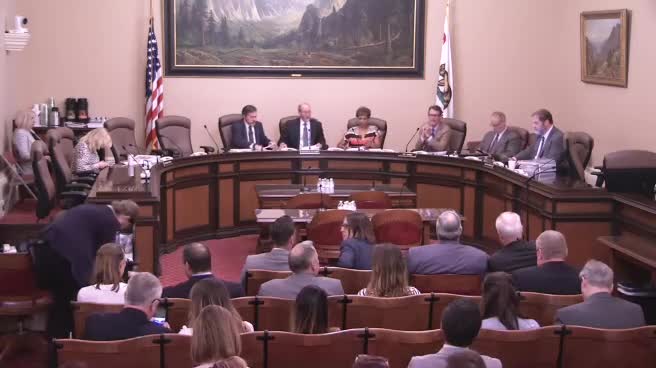 2MIN
Senate Standing Committee on Insurance
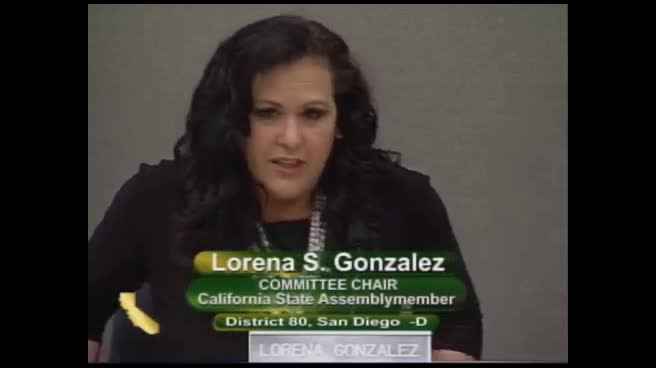 16MIN
Assembly Standing Committee on Appropriations
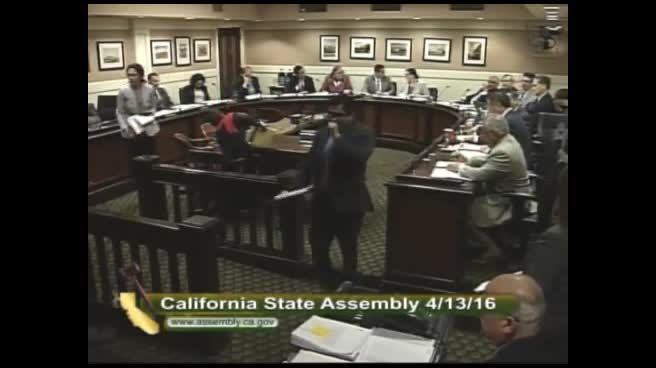 1H
Assembly Standing Committee on Utilities and Commerce
Bill Author

Bill Co-Author(s):