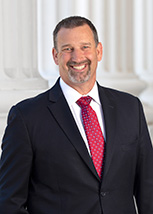
SB 1285: Navigable waters: hazardous, medical, or human waste.
- Session Year: 2019-2020
- House: Senate
- Latest Version Date: 2020-07-27
|
Date
|
Status
|
|---|---|
| Aug 4, 2020 | August 4 set for first hearing canceled at the request of author. |
| Jul 27, 2020 | From committee with author's amendments. Read second time and amended. Re-referred to Com. on HEALTH. |
| Jun 18, 2020 | Referred to Com. on HEALTH. |
| Jun 11, 2020 | In Assembly. Read first time. Held at Desk. |
| Jun 11, 2020 | Read third time. Passed. (Ayes 39. Noes 0. Page 3680.) Ordered to the Assembly. |
| May 19, 2020 | Read second time. Ordered to consent calendar. |
| May 18, 2020 | From committee: Do pass. Ordered to consent calendar. (Ayes 9. Noes 0. Page 3534.) (May 13). |
| May 11, 2020 | Re-referred to Com. on HEALTH. |
| May 11, 2020 | Set for hearing May 13 in HEALTH pending receipt. |
| Mar 26, 2020 | From committee with author's amendments. Read second time and amended. Re-referred to Com. on RLS. |
| Mar 5, 2020 | Referred to Com. on RLS. |
| Feb 24, 2020 | From printer. May be acted upon on or after March 25. |
| Feb 21, 2020 | Introduced. To Com. on RLS. for assignment. To print. |
|
Date
|
Description
|
Location
|
Votes
|
|
|---|---|---|---|---|
| Jun 11, 2020 | Consent Calendar SB1285 | Senate Floor |
Passed |
|
| May 13, 2020 | Do pass and be ordered to the Consent Calendar | Senate Standing Committee on Health |
Passed |
This list shows positions taken on this bill by organizations on the date displayed, which is linked to the original source.
Positions by individuals are not included.
Date of Hearing: August 4, 2020
ASSEMBLY COMMITTEE ON HEALTH
Jim Wood, Chair
SBPCA Bill Id:SB 1285
Author:(Nielsen) – As Amended Ver:July 27, 2020
SENATE VOTE: 39-0
SUBJECT: Navigable waters: hazardous, medical, or human waste.
SUMMARY: Makes it a misdemeanor for a person to place, deposit, or dump hazardous, medical or human waste in or upon the navigable waters or to place or deposit or load these items upon a vessel, with the intent to dump or deposit in or upon the navigable waters of this state or at any point in the ocean within 20 miles of any coastline. Permits a local health officer (LHO) to declare a public health emergency if the garbage or hazardous, medical, or human waste constitutes a threat to the public health.
EXISTING LAW:
- Requires Department of Public Health (DPH) to examine the causes of communicable diseases in man and domestic animals occurring or likely to occur in this state. Gives the State Public Health Officer (PHO), as the Director of DPH, broad authority to detect, monitor, and prevent the spread of communicable disease in the state.
- Makes it a misdemeanor for a person to place, deposit, or dump any garbage in or upon the navigable waters of this state, or to place, deposit, or load garbage upon any vessel, with intent that it shall be dumped or deposited in or upon the navigable waters of this state, or at any point in the ocean within 20 miles of any point on the coast line of the state.
- Defines “garbage” for purposes of 2) above to include any or all of the following:
a) garbage; b) swill; c) refuse; d) cans; e) bottles; f) paper; g) vegetable matter; h) carcass of any dead animal; i) offal from any slaughter pen or butcher shop; j) trash; k) rubbish; l) radioactive waste material; and/or, m) discarded, nonbiodegradable materials including plastics or damaged or broken marine equipment.
- Permits the PHO or LHO to declare a health emergency whenever a release, spill, escape, or entry of waste occurs and the DPH Director or the LHO reasonably determines that the waste is a hazardous waste or medical waste, or that it may become a hazardous waste or medical waste because of a combination or reaction with other substances or materials, and the PHO or LHO reasonably determines that the release or escape is an immediate threat to the public health, or whenever there is an imminent and proximate threat of the introduction of any contagious, infectious, or communicable disease, chemical agent, noncommunicable biologic agent, toxin, or radioactive agent. Prohibits such a local health emergency from remaining in effect for more than seven days unless it has been ratified by the board of supervisors or city council.
- Defines “waste” for purposes of 4) above to mean either of the following:
- Any material for which no use or reuse is intended and that is to be discarded.
- Any material that spills, escapes, or is released from any manufacturing, industrial, commercial, or other plant, facility, or process, or that escapes or is released during the transporting or transferring from one place to another, or during the pumping, processing, storing, or packaging of any material in, to, or from such a plant, facility, or process, or that enters or may enter an uncontained air space or a surface water course that is not totally contained on the contiguous property of the plant, facility, or process, or which enters, or may enter, the groundwater underlying such plant, facility, or process.
- Defines “hazardous waste” for purposes of 4) above to mean a waste, or combination of wastes, that because of its quantity, concentration, or physical, chemical, or infectious characteristics may do any of the following:
- Cause, or significantly contribute to an increase in mortality or an increase in serious irreversible, or incapacitating reversible, illness; or,
- Pose a substantial present or potential hazard to human health or environment when improperly treated, stored, transported, or disposed of, or otherwise managed.
FISCAL EFFECT: This bill, as amended on July 27, 2020, has not yet been analyzed by a fiscal committee.
COMMENTS:
- PURPOSE OF THIS BILL. According to the author, illegal camping along state’s gorgeous parks and waterways has been steadily increasing over the last several years – providing individuals at these sites access to clean water suitable for drinking, bathing, and meeting their other needs. However, these encampments have also used the nearby waterways for the purpose of dumping garbage and human waste, making these areas not only highly dangerous for local residents to use for their own recreational purposes but as a threat to public health. The author notes that the COVID-19 pandemic has meant that these populations also serve as a potential hotspot for vector-borne and human-borne diseases.
The author points out that providing LHOs with the explicit ability to declare a public health emergency along these waterways would allow counties to take decisive action to remediate such pollution and make broad regulatory action to halt that pollution’s source. This role for LHOs has been seen with the response to COVID-19 pandemic, and has shown that a local emergency provides many more tools to local government to respond in a timely fashion. - BACKGROUND. Current law permits LHOs to declare a local health emergency whenever there is a release, spill, escape or entry of waste and it is determined that the waste may become a hazardous waste or medical waste is an immediate threat to the public health. Currently, it is a misdemeanor to place, deposit or dump garbage in or upon navigable waters or at any point in the ocean within 20 miles of the coastline of the state. This bill would expand the definition of what activity constitutes a misdemeanor to include dumping of hazardous, medical or human waste into these navigable waters.
Existing law also gives local health departments (LHDs) broad mandate to take measures necessary to preserve and protect public health. While LHDs administer many of the programs identified under DPH, LHDs have a fundamental role as the front line for delivery of public health services to California’s communities. Existing law also authorizes the appointment of LHOs in each county and city. There are 61 LHOs in California, one from each of the 58 counties and the three cities of Berkeley, Long Beach and Pasadena. LHOs are required to observe and enforce: a) local orders and ordinances pertaining to the public health; b) orders prescribed by DPH; and, c) statutes relating to the public health. LHOs may also take any preventive measure necessary to protect and preserve the public health from any public health hazard during any state of war emergency, state of emergency, or local emergency. - SUPPORT. According to the Northern California Water Association (NCWA), in recent years, increases in the number of individuals experiencing homelessness has resulted in large concentrations of individuals camping directly alongside navigable waterways and other infrastructure including levees, bypasses, and channels, in both urban and rural areas of the state. The proximity of these encampments to water ways has resulted in the introduction of waste, debris, and biological contaminants into source waters. NCWA believes this bill would provide an important tool for LHOs as they seek to address sources of water quality impairment and related threats to public health in their jurisdictions.
- RELATED LEGISLATION. AB 3224 (Rodriguez) requires DPH to contract with an entity to conduct an evaluation of the adequacy of LHD infrastructure and make recommendations on workforce needs, including adequate staffing of LHDs, an evaluation of the state's public health laboratory capacity and make recommendations for laboratories to better meet the needs of LHDs; and, other resources. Requires DPH to convene an advisory group, made up of specific members, aimed at addressing health disparities in California. AB 3224 is pending in Senate Health Committee.
- POLICY COMMENTS.
- Enforcement Issue or Penalty Authority Lacking. The author states that his intent in introducing this bill is due to increasing illegal camping and these encampments have also used the nearby waterways for the purpose of dumping garbage and human waste, making these areas not only highly dangerous for local residents to use for their own recreational purposes but as a threat to public health. However, current law already gives LHOs authority to declare an emergency, including when there is a release of hazardous or medical waste and the release is a threat to public health or whenever there is an imminent and proximate threat of the introduction of any contagious, infectious, or communicable disease, chemical agent, noncommunicable biologic agent, toxin, or radioactive agent. It is unclear if the problem this bill is trying to address is due to the lack of a misdemeanor penalty for disposing human waste near navigable waters, as opposed to an enforcement issue that competes with other public health issues that LHDs have jurisdiction.
- Impact on homeless population. This bill makes it a misdemeanor to deposit human waste in navigable waters. Many homeless individuals have set up camps near parks close to navigable waters. The author states that this bill is also intended to encourage local governments to provide lavatories for the homeless. However, this bill could be construed to regulate encampments by creating a criminal penalty for dumping human waste in navigable waters. Last year, the Ninth Circuit Court of Appeals in the Martin v. City of Boise (Martin) case ruled that it was “cruel and unusual punishment to enforce rules that stop homeless people from camping in public places when they have no place to go.” At issue in Martin was a law banning sleeping and camping on public property. The Ninth Circuit stated in Martin: “just as the state may not criminalize the state of being homeless in public places, the state may not criminalize conduct that is an unavoidable consequence of being homeless - namely sitting, lying, or sleeping on the streets.” Although this bill does not ban sleeping or camping on public property, it may have the unintended effect of banning homeless individuals from parks near navigable waters who are cited for dumping human waste in these waters. The Committee may wish to explore whether imposing a misdemeanor for dumping human waste in navigable waters potentially contradicts the Ninth Circuit’s decision in Martin.
- Medical Waste and Human Remains. This bill would make it a misdemeanor to place or dump medical waste in navigable waters or at any point in the ocean within 20 miles of any coastline. Scattering of a family member or loved one’s ashes in the ocean is allowed not off the coast of California and businesses provide this form of a service. It is unclear if this bill would make it a misdemeanor to spread ashes in the ocean as part of a burial service. The Committee may wish to exclude scattering of human ashes from this bill.
- Human Waste Definition. As specified above, existing law makes is a misdemeanor to place or dump garbage, as defined on navigable waters. This bill expands what constitutes a misdemeanor to include the dumping of hazardous, medical or human waste. The Medical Waste Management Act includes a definition of hazardous and medical waste that could be used for purposes of this bill but does not contain a definition of human waste. The Committee may wish to ask the author whether the human waste as used in this bill should be defined.
REGISTERED SUPPORT / OPPOSITION:
Support
Northern California Water Association
Opposition
None on file.
Analysis Prepared by: Rosielyn Pulmano / HEALTH / (916) 319-2097
SENATE RULES COMMITTEE Office of Senate Floor Analyses (916) 651-1520 Fax: (916) 327-4478 | SB 1285 |
CONSENT
Bill No: SB 1285
Author: Nielsen (R), et al.
Amended: 3/26/20
Vote: 21
SENATE HEALTH COMMITTEE: 9-0, 5/13/20
AYES: Pan, Nielsen, Lena Gonzalez, Grove, Hurtado, Leyva, Mitchell, Monning, Rubio
SUBJECT: Local health emergencies: navigable waters
SOURCE: Author
DIGEST:
This bill permits a local health officer to declare a local health emergency in the jurisdiction whenever he or she determines that there is an immediate threat to the public health due to the presence of waste within the navigable waters of the state.
ANALYSIS:
Existing law:
- Requires the Department of Public Health (DPH) to examine the causes of communicable disease in man and domestic animals occurring or likely to occur in this state. Gives the State Public Health Officer (PHO), as the director of DPH, broad authority to detect, monitor, and prevent the spread of communicable disease in the state. [HSC §120125 and 120130, et seq.]
- Permits the PHO or local health officer (LHO) to declare a health emergency whenever a release, spill, escape, or entry of waste occurs and the DPH director or the LHO reasonably determines that the waste is a hazardous waste or medical waste, or that it may become a hazardous waste or medical waste because of a combination or reaction with other substances or materials, and the PHO or LHO reasonably determines that the release or escape is an immediate threat to the public health, or whenever there is an imminent and proximate threat of the introduction of any contagious, infectious, or communicable disease, chemical agent, noncommunicable biologic agent, toxin, or radioactive agent. Prohibits such a local health emergency from remaining in effect for more than seven days unless it has been ratified by the board of supervisors or city council. [HSC §101080]
- Permits LHOs to issue, and first responders to execute, an order for immediate isolation of exposed individuals that may have been exposed to biological, chemical, toxic, or radiological agents that may spread to others. Prohibits such an order from being in effect for more than two hours and can only be issued if the means are both necessary and the least restrictive possible to prevent human exposure. [HSC §101080.2]
This bill permits LHOs to declare a local health emergency in the jurisdiction whenever he or she determines that there is an immediate threat to the public health due to the presence of waste within the navigable waters of the state.
Comments
- Author’s statement. According to the author, illegal camping along the state’s gorgeous parks and waterways has been steadily increasing over the last several years – providing individuals at these sites access to clean water suitable for drinking, bathing, and meeting their other needs. However, these encampments have also used the nearby waterways for the purpose of dumping garbage and human waste, making these areas not only highly dangerous for local residents to use for their own recreational purposes, but as a threat to public health. The COVID-19 pandemic has meant that these populations also serve as a potential hotspot for vector-borne and human-borne diseases. Providing LHOs with the explicit ability to declare a public health emergency along these waterways would allow counties to take decisive action to remediate such pollution and make broad regulatory action to halt that pollution’s source. This role for LHOs has been seen with the response to COVID-19 pandemic, and has shown that a local emergency provides many more tools to local government to respond in a timely fashion.
- Homeless encampments and water pollution. In September 2019, federal Environmental Protection Agency Administrator Andrew Wheeler sent a letter to Governor Gavin Newsom expressing concern that he is failing to enforce the Clean Water Act. The letter stated that California is not acting with enough urgency to address environmental problems related to homelessness. According to a January 6, 2020 article in the California Healthline, some of California’s most prized rivers, beaches and streams are contaminated with levels of fecal bacteria that exceed state limits. This is usually the result of problems with sewer systems and septic tanks. But water quality officials agree that the source of at least some of the fecal bacteria is California’s growing homeless population, most of whom don’t have reliable access to toilets. Human fecal contamination is particularly dangerous because it can transmit diseases that affect people, including hepatitis A and cholera. The article states that most people are not at risk of getting sick unless they drink the water, or if pathogens enter open cuts or sores. Homeless people face the highest risk because they are more likely to wash or wade in the water and have less access to toilets and showers.
- California’s public health system. In California, DPH is charged with protecting the health of the state’s residents. DPH is comprised of more than 200 programs, which are responsible for a wide range of functions, including: enforcing California’s tobacco control law; assisting in the response to local emergencies; administering federal HIV funds; conducting newborn screening; licensing and certification for health facilities, labs, and certain health care professionals; maintaining vital records for California’s 38 million residents; and, conducting surveillance and research of chronic disease. In addition, DPH is the entity responsible for ensuring the tracking and control of communicable disease for the state. According to DPH’s Web site, its Division of Communicable Disease Control works to promptly identify, prevent and control infectious diseases that pose a threat to public health, and works with LHOs to implement infectious disease control at the local level through the 61 legally-appointed physician LHOs in California (one from each of the 58 counties and three cities of Berkeley, Long Beach, and Pasadena).
- LHOs. LHOs have a broad mandate to take measures necessary to preserve and protect public health. While LHOs administer many of the programs identified under DPH, LHOs have a fundamental role as the front line for delivery of public health services to California’s communities. The structure and size of LHOs vary by jurisdiction, and some include operations such as public hospitals, primary care clinics, and animal control services. Select core functions include:
- Infectious disease control. LHOs prevent and control the spread of infectious diseases through immunizations, epidemiologic surveillance, disease investigation, laboratory testing and response activities.
- Emergency preparedness and response. LHOs work to ensure communities are informed, supplies and medications are accessible, and that there is capacity to expand medical services in large events. In addition, LHOs utilize public health labs to investigate and identify potential bioterrorism threats. In the event of a disaster, LHOs may staff shelters, screen for infectious diseases, and address the needs for medically fragile residents.
- Maternal, child, and adolescent health. LHOs work to identify, disseminate, and promote emerging and evidence-based information about early interventions in prenatal and early childhood periods that promote lifelong health, positive social-emotional development, and reduce health disparities.
- Policy comment. Existing law already permits the PHO or LHOs to declare a public health emergency whenever a release, spill, escape, or entry of waste occurs. It does not appear that this bill is providing LHOs with any new authority that they do not already possess. As a result, it is unclear what the effect of this bill will be, other than possibly placing more emphasis on this authority and thereby encouraging more action by LHOs.
FISCAL EFFECT: Appropriation: No Fiscal Com.: No Local: No
SUPPORT: (Verified 5/14/20)
Northern California Water Association
OPPOSITION: (Verified 5/14/20)
None received
Prepared by: Melanie Moreno / HEALTH / (916) 651-4111
5/20/20 8:38:15
**** END ****
SENATE COMMITTEE ON HEALTH
Senator Dr. Richard Pan, Chair
BILL NO: SB 1285
AUTHOR: | Nielsen | ||
VERSION: | March 26, 2020 | ||
HEARING DATE: | May 13, 2020 | ||
CONSULTANT: | Melanie Moreno | ||
SUBJECT: Local health emergencies: navigable waters
SUMMARY:
Permits a local health officer to declare a local health emergency in the jurisdiction whenever he or she determines that there is an immediate threat to the public health due to the presence of waste within the navigable waters of the state.
Existing law:
- Requires Department of Public Health (DPH) to examine the causes of communicable disease in man and domestic animals occurring or likely to occur in this state. Gives the State Public Health Officer (PHO), as the director of DPH, broad authority to detect, monitor, and prevent the spread of communicable disease in the state. [HSC §120125 and 120130, et seq.]
- Permits the PHO or local health officer (LHO) to declare a health emergency whenever a release, spill, escape, or entry of waste occurs and the DPH director or the LHO reasonably determines that the waste is a hazardous waste or medical waste, or that it may become a hazardous waste or medical waste because of a combination or reaction with other substances or materials, and the PHO or LHO reasonably determines that the release or escape is an immediate threat to the public health, or whenever there is an imminent and proximate threat of the introduction of any contagious, infectious, or communicable disease, chemical agent, noncommunicable biologic agent, toxin, or radioactive agent. Prohibits such a local health emergency from remaining in effect for more than seven days unless it has been ratified by the board of supervisors or city council. [HSC §101080]
- Permits LHOs to issue, and first responders to execute, an order for immediate isolation of exposed individuals that may have been exposed to biological, chemical, toxic, or radiological agents that may spread to others. Prohibits such an order from being in effect for more than two hours and can only be issued if the means are both necessary and the least restrictive possible to prevent human exposure. [HSC §101080.2]
This bill: Permits LHOs to declare a local health emergency in the jurisdiction whenever he or she determines that there is an immediate threat to the public health due to the presence of waste within the navigable waters of the state.
FISCAL EFFECT:
This bill is keyed non-fiscal.
COMMENTS:
- Author’s statement. According to the author, illegal camping along the state’s gorgeous parks and waterways has been steadily increasing over the last several years – providing individuals at these sites access to clean water suitable for drinking, bathing, and meeting their other needs. However, these encampments have also used the nearby waterways for the purpose of dumping garbage and human waste, making these areas not only highly dangerous for local residents to use for their own recreational purposes, but as a threat to public health. The COVID-19 pandemic has meant that these populations also serve as a potential hotspot for vector-borne and human-borne diseases. Providing LHOs with the explicit ability to declare a public health emergency along these waterways would allow counties to take decisive action to remediate such pollution and make broad regulatory action to halt that pollution’s source. This role for LHOs has been seen with the response to COVID-19 pandemic, and has shown that a local emergency provides many more tools to local government to respond in a timely fashion.
- Homeless encampments and water pollution. In September 2019, the federal Environmental Protection Agency (EPA) Administrator Andrew Wheeler sent a letter to Governor Gavin Newsom expressing concern that he is failing to enforce the Clean Water Act. The letter stated that California is not acting with enough urgency to address environmental problems related to homelessness. According to a January 6, 2020 article in the California Healthline, some of California’s most prized rivers, beaches and streams are contaminated with levels of fecal bacteria that exceed state limits. This is usually the result of problems with sewer systems and septic tanks. But water quality officials agree that the source of at least some of the fecal bacteria is California’s growing homeless population, most of whom don’t have reliable access to toilets. Human fecal contamination is particularly dangerous because it can transmit diseases that affect people, including hepatitis A and cholera. The article states that most people are not at risk of getting sick unless they drink the water, or if pathogens enter open cuts or sores. Homeless people face the highest risk because they are more likely to wash or wade in the water and have less access to toilets and showers.
- California’s public health system. In California, DPH is charged with protecting the health of the state’s residents. DPH is comprised of more than 200 programs, which are responsible for a wide range of functions, including: enforcing California’s tobacco control law; assisting in the response to local emergencies; administering federal HIV funds; conducting newborn screening; licensing and certification for health facilities, labs, and certain health care professionals; maintaining vital records for California’s 38 million residents; and, conducting surveillance and research of chronic disease. In addition, DPH is the entity responsible for ensuring the tracking and control of communicable disease for the state. According to DPH’s website, its Division of Communicable Disease Control works to promptly identify, prevent and control infectious diseases that pose a threat to public health, and works with LHOs to implement infectious disease control at the local level through the 61 legally-appointed physician LHOs in California (one from each of the 58 counties and three cities of Berkeley, Long Beach, and Pasadena).
- LHOs. LHOs have a broad mandate to take measures necessary to preserve and protect public health. While LHOs administer many of the programs identified under DPH, LHOs have a fundamental role as the front line for delivery of public health services to California’s communities. The structure and size of LHOs vary by jurisdiction, and some include operations such as public hospitals, primary care clinics, and animal control services. Select core functions include:
- Infectious disease control. LHOs prevent and control the spread of infectious diseases through immunizations, epidemiologic surveillance, disease investigation, laboratory testing and response activities.
- Emergency preparedness and response. LHOs work to ensure communities are informed, supplies and medications are accessible, and that there is capacity to expand medical services in large events. In addition, LHOs utilize public health labs to investigate and identify potential bioterrorism threats. In the event of a disaster, LHOs may staff shelters and screen for infectious diseases and address the needs for medically fragile residents.
- Maternal, child, and adolescent health. LHOs work to identify, disseminate, and promote emerging and evidence-based information about early interventions in prenatal and early childhood periods that promote lifelong health, positive social-emotional development, and reduce health disparities.
- Policy comment. Existing law already permits the PHO or LHOs to declare a public health emergency whenever a release, spill, escape, or entry of waste occurs. It does not appear that this bill is providing LHOs with any new authority that they don't already possess. As a result, it is unclear what the effect of this bill will be, other than possibly placing more emphasis on this authority and thereby encouraging more action by LHOs.
SUPPORT AND OPPOSITION:
Support: None received
Oppose: None received
-- END --
Bill Author

Bill Co-Author(s):