SB 129: Health care coverage reporting.
- Session Year: 2019-2020
- House: Senate
- Latest Version Date: 2019-09-05
Existing law, the Knox-Keene Health Care Service Plan Act of 1975, provides for the licensure and regulation of health care service plans by the Department of Managed Health Care, and makes a willful violation of the act a crime. Existing law provides for the regulation of health insurers by the Department of Insurance. Existing law requires a health care service plan or health insurer that covers individuals, small groups, large groups, or administrative services only business lines to report the number of covered lives by product type to the Department of Managed Health Care or the Department of Insurance. Existing law requires the Department of Managed Health Care and the Department of Insurance to publicly report that data, including posting that data on each departments internet website.
This bill would expand those health care service plan and health insurer reporting requirements to include any other business lines. The bill would also require a multiple employer welfare arrangement or a plan or insurer that provides coverage through a multiple employer welfare arrangement to report specified data to the Department of Managed Health Care or the Department of Insurance, as appropriate, beginning March 1, 2020, and at least annually thereafter. The bill would require the Department of Managed Health Care and the Department of Insurance to make the reported data for the previous year available no later than April 15 of each year. Because a willful violation of the bills requirements relative to health care service plans would be a crime, the bill would impose a state-mandated local program.
The California Constitution requires the state to reimburse local agencies and school districts for certain costs mandated by the state. Statutory provisions establish procedures for making that reimbursement.
This bill would provide that no reimbursement is required by this act for a specified reason.
(a)Commencing March 1, 2013, and at least annually thereafter, a health care service plan, not including a health care service plan offering specialized health care service plan contracts, shall provide to the department, in a form and manner determined by the department in consultation with the Department of Insurance, the number of enrollees, by product type, as of December 31 of the prior year, that receive health care coverage under a health care service plan contract that covers individuals and small groups inside and outside of the California Health Benefit Exchange, large groups, administrative services only business lines, and any other business lines. Health care service plans shall include the enrollment data in specific product types as determined by the department, including, but not limited to, HMO, point-of-service, PPO, grandfathered, and Medi-Cal managed care. Data reported pursuant to this subdivision shall specify the covered persons that are being reported pursuant to subdivision (b).
(b)Commencing March 1, 2020, and at least annually thereafter, a health care service plan that provides coverage through a multiple employee welfare arrangement (MEWA) that is not subject to Article 4.7 (commencing with Section 742.20) of Chapter 1 of Part 2 of Division 1 of the Insurance Code shall provide to the department, in a form and manner determined by the department in consultation with the Department of Insurance, the name of each MEWA and the number of covered persons in each MEWA as of December 31 of the prior year, divided by market segment and product type. Data reported pursuant to this subdivision shall be identified and separately reported under subdivision (a).
(c)The department shall publicly report the data provided by each health care service plan pursuant to this section, including, but not limited to, posting the data on the departments internet website. The department shall consult with the Department of Insurance to ensure that the data reported is comparable and consistent, does not duplicate existing reporting requirements, and utilizes existing reporting formats. The data for the previous calendar year shall be made available no later than April 15 of each calendar year.
SEC. 2.Section 10127.19 of the Insurance Code is amended to read:10127.19.(a)Commencing March 1, 2013, and at least annually thereafter, a health insurer, not including a health insurer offering specialized health insurance policies, shall provide to the department, in a form and manner determined by the department in consultation with the Department of Managed Health Care, the number of covered lives, by product type, as of December 31 of the prior year, that receive health care coverage under a health insurance policy that covers individuals and small groups inside and outside of the California Health Benefit Exchange, large groups, administrative services only business lines, and any other business lines. Health insurers shall include the unduplicated enrollment data in specific product types as determined by the department, including, but not limited to, HMO, point-of-service, PPO, grandfathered, and Medi-Cal managed care. Data reported pursuant to this subdivision shall specify the covered persons that are being reported pursuant to subdivision (b).
(b)Commencing March 1, 2020, and at least annually thereafter, information specific to a multiple employee welfare arrangement (MEWA) shall be provided to the department, in a form and manner determined by the department in consultation with the Department of Managed Health Care, as follows:
(1)A health insurer that provides coverage through a MEWA that is not subject to Article 4.7 (commencing with Section 742.20) of Chapter 1 of Part 2 of Division 1 shall provide the name of each MEWA and the number of covered persons in each MEWA as of December 31 of the prior year, divided by market segment and product type. Data reported pursuant to this subdivision shall be identified and separately reported under subdivision (a).
(2)A MEWA that is subject to Article 4.7 (commencing with Section 742.20) of Chapter 1 of Part 2 of Division 1 shall provide the number of covered persons in the MEWA as of December 31 of the prior year, divided by product type. Compliance with a data call issued pursuant to this section satisfies the requirements of this subdivision.
(c)The department shall publicly report the data provided by each health insurer and MEWA pursuant to this section, including, but not limited to, posting the data on the departments internet website. The department shall consult with the Department of Managed Health Care to ensure that the data reported is comparable and consistent, does not duplicate existing reporting requirements, and utilizes existing reporting formats. The data for the previous calendar year shall be made available no later than April 15 of each calendar year.
SEC. 3.No reimbursement is required by this act pursuant to Section 6 of Article XIIIB of the California Constitution because the only costs that may be incurred by a local agency or school district will be incurred because this act creates a new crime or infraction, eliminates a crime or infraction, or changes the penalty for a crime or infraction, within the meaning of Section 17556 of the Government Code, or changes the definition of a crime within the meaning of Section 6 of Article XIIIB of the California Constitution.
|
Date
|
Status
|
|---|---|
| Sep 5, 2019 | Chaptered by Secretary of State. Chapter 241, Statutes of 2019. |
| Sep 5, 2019 | Approved by the Governor. |
| Aug 27, 2019 | Enrolled and presented to the Governor at 3 p.m. |
| Aug 22, 2019 | Assembly amendments concurred in. (Ayes 38. Noes 0.) Ordered to engrossing and enrolling. |
| Aug 19, 2019 | Ordered to special consent calendar. |
| Aug 15, 2019 | In Senate. Concurrence in Assembly amendments pending. |
| Aug 15, 2019 | Read third time. Passed. Ordered to the Senate. |
| Jul 11, 2019 | Read second time. Ordered to consent calendar. |
| Jul 10, 2019 | From committee: Do pass. Ordered to consent calendar. (Ayes 16. Noes 0.) (July 10). |
| Jun 26, 2019 | From committee: Do pass and re-refer to Com. on APPR. with recommendation: To consent calendar. (Ayes 15. Noes 0.) (June 25). Re-referred to Com. on APPR. |
| Jun 12, 2019 | From committee with author's amendments. Read second time and amended. Re-referred to Com. on HEALTH. |
| May 6, 2019 | Referred to Com. on HEALTH. |
| Apr 22, 2019 | In Assembly. Read first time. Held at Desk. |
| Apr 22, 2019 | Read third time. Passed. (Ayes 38. Noes 0. Page 746.) Ordered to the Assembly. |
| Apr 9, 2019 | Read second time. Ordered to consent calendar. |
| Apr 8, 2019 | From committee: Be ordered to second reading pursuant to Senate Rule 28.8 and ordered to consent calendar. |
| Mar 29, 2019 | Set for hearing April 8. |
| Mar 20, 2019 | From committee: Do pass and re-refer to Com. on APPR. with recommendation: To consent calendar. (Ayes 8. Noes 0.) (March 20). Re-referred to Com. on APPR. |
| Feb 26, 2019 | From committee with author's amendments. Read second time and amended. Re-referred to Com. on HEALTH. |
| Feb 21, 2019 | Set for hearing March 20. |
| Jan 24, 2019 | Referred to Com. on HEALTH. |
| Jan 11, 2019 | From printer. May be acted upon on or after February 10. |
| Jan 10, 2019 | Introduced. Read first time. To Com. on RLS. for assignment. To print. |
|
Date
|
Description
|
Location
|
Votes
|
|
|---|---|---|---|---|
| Aug 22, 2019 | Special Consent SB129 | Senate Floor |
Passed |
|
| Aug 15, 2019 | SB 129 Pan Consent Calendar Second Day Regular Session | Assembly Floor |
Passed |
|
| Jul 10, 2019 | Do pass. To Consent Calendar. | Assembly Standing Committee on Appropriations |
Passed |
|
| Jun 25, 2019 | Do pass and be re-referred to the Committee on [Appropriations] with recommendation: To Consent Calendar | Assembly Standing Committee on Health |
Passed |
|
| Apr 22, 2019 | Consent Calendar SB129 | Senate Floor |
Passed |
|
| Mar 20, 2019 | Do pass, but first be re-referred to the Committee on [Appropriations] with the recommendation: To Consent Calendar | Senate Standing Committee on Health |
Passed |
This list shows positions taken on this bill by organizations on the date displayed, which is linked to the original source.
Positions by individuals are not included.
Office of Senate Floor Analyses (916) 651-1520 Fax: (916) 327-4478 | SB 129 |
UNFINISHED BUSINESS
Bill No: SB 129
Amended: 6/12/19
SENATE HEALTH COMMITTEE: 8-0, 3/20/19
AYES: Pan, Stone, Durazo, Hurtado, Leyva, Mitchell, Monning, Rubio
NO VOTE RECORDED: Grove
SENATE APPROPRIATIONS COMMITTEE: Senate Rule 28.8
SENATE FLOOR: 38-0, 4/22/19 (Consent)
AYES: Allen, Archuleta, Atkins, Bates, Beall, Borgeas, Bradford, Caballero, Chang, Dodd, Durazo, Galgiani, Glazer, Grove, Hertzberg, Hill, Hueso, Hurtado, Jackson, Jones, Leyva, McGuire, Mitchell, Monning, Moorlach, Morrell, Nielsen, Pan, Portantino, Roth, Rubio, Skinner, Stern, Stone, Umberg, Wieckowski, Wiener, Wilk
ASSEMBLY FLOOR: 76-0, 8/15/19 (Consent) - See last page for vote
SUBJECT: Health care coverage reporting
DIGEST:
This bill requires annual health plan and insurer enrollment reporting to include enrollment data for products sold inside and outside of Covered California, any other business lines, and multiple employer welfare arrangements; and requires the California Department of Insurance (CDI) and the Department of Managed Health Care (DMHC) to publicly report annual enrollment data no later than April 15th of each year.
Assembly Amendments
clarify that specified data reported pursuant to this bill shall be identified and separately reported and that compliance with a CDI data call satisfies specified requirements of this bill.
Existing law:
- Establishes the DMHC to regulate health plans and CDI to regulate health insurance. [HSC §1340 et seq. and INS §106 et seq.]
- Establishes requirements for self-funded and partially self-funded multiple employer welfare arrangements (MEWAs) to obtain a certificate of compliance to do business in California including be organized and maintained in good faith with at least 2,000 employees and 50 paid employer members, operated actively for a continuous period of five years, and have filed an application with CDI no later November 30, 1995. [INS §742.24]
- Requires a health plan and health insurer to annually provide to DMHC and CDI the number of enrollees, by product type, as of December 31 of the prior year, that receive health care coverage under a health plan contract or health insurance policy that covers individuals, small groups, large groups, or administrative services only (ASO) business lines. Requires the inclusion of enrollment in specific product types including, but not limited to, Health Maintenance Organization (HMO), point-of-services, Preferred Provider Organization, grandfathered and Medi-Cal Managed Care. [HSC §1348.95 and INS §10127.19]
- Requires DMHC and CDI to publicly report the data including posting on each department’s Web site. Requires the DMHC and CDI to consult with each other to ensure that the data reported is comparable and consistent, does not duplicate existing reporting requirements, and utilizes existing reporting formats. [HSC §1348.95 and INS §10127.19]
This bill:
- Requires health plan and insurer enrollment reporting to include enrollment data for products sold inside and outside of Covered California and any other business lines.
- Requires, commencing March 1, 2020, and at least annually thereafter, a health plan or health insurer that provides coverage through a MEWA that is not subject to existing requirements, as specified to provide to DMHC and CDI the name of each MEWA and the number of covered persons in each MEWA as of December 31, of the prior year, divided by market segment and product type.
- Requires a MEWA that is subject to existing requirements, as specified to provide CDI the number of covered persons in each MEWA as of December 31 of the prior year, divided by product type. Requires data reported pursuant to this provision and 2) above to be identified and separately reported from the data reported under 1) above. States that compliance with a CDI data call, as specified satisfies the requirements of this provision.
- Requires DMHC and CDI to make available the publicly reported data no later than April 15 of each calendar year.
Comments
- Author’s statement. According to the author, since the enactment of the Affordable Care Act, the health care coverage market has undergone major transformation. California’s uninsured rate has been dramatically reduced as millions have gained coverage in Medi-Cal, and the individual and small group markets. Policy shifts, litigation, industry innovations, the economy and other factors can have positive or negative impacts on enrollment trends. Beginning in 2013, California has tracked enrollment in different types of health care coverage products and business lines. This information has helped policymakers and others monitor trends over time. This bill is necessary to update the annual health plan and insurer enrollment reporting requirement to capture additional business lines and ensure the data is available from DMHC and CDI by a time certain every year.
- Enrollment reporting. Information from the existing reporting requirement is used to track health plan and health insurance enrollment and industry trends in California. For example, according to a California Healthcare Foundation blog released in 2018, California health insurance enrollment grew modestly in most categories in 2017, according to DMHC and CDI. Public coverage through Medicare and Medi-Cal, California’s Medicaid program, grew by 4.6% and 2.3% respectively. Overall commercial enrollment was flat, with losses in the individual market (-3.8%) offset by membership gains in the small-group (1.8%) and large-group (0.6%) markets. Enrollment in ASO arrangements provided to self-insured employers grew 1.1%. Medi-Cal managed care was the largest sector of the health insurance market at 10.7 million enrollees, followed by the 9.6 million members of large-group commercial plans. Total enrollment in the individual market in 2017 declined by more than 87,000 enrollees (3.8%) from the year before, marking a second straight year of losses. In 2016, individual enrollment fell 1.7%. In each year, losses were driven primarily by shrinking numbers of people purchasing coverage directly from insurers (off-exchange) instead of through Covered California, which provides premium assistance to financially eligible individuals. In 2017, off-exchange individual enrollment fell by 72,813, or 7%. Covered California posted an enrollment decline of 14,710, or 1%. In 2017, strong employment growth contributed to rising enrollment in the group and ASO markets. California’s employed population rose 1.9%, or about 350,000 jobs. On a combined basis, group and ASO enrollment rose by more than 150,000, or 0.9%, to 17.6 million. Enrollment in group plans increased by 94,516, or 0.8%, to 11.9 million. This included growth of 41,414, or 1.8%, in small groups and 53,102, or 0.6%, in large groups.
- MEWAs. According to CDI, MEWAs can be self-funded, partially self-funded, or fully insured. CDI’s authority over MEWAs differs based upon the category under which the MEWA falls. A self-funded or partially self-funded MEWA must acquire a certificate of compliance by CDI in order to avoid being considered an unauthorized insurer. No new certificates of compliance can be acquired. DMHC does not have authority to regulate self-funded and partially self-funded MEWAs. Therefore, the only self-funded and partially self-funded MEWAs that are allowed to do business in California are regulated by CDI. Existing law has barred the formation of any self-funded or partially self-funded MEWAs since 1995.
Fully insured MEWAs are not regulated by California law due to an exception in the law. However, fully insured MEWAs purchase insurance coverage from licensed health insurers or health plans. There are no prohibitions against insurers or health plans offering coverage to MEWAs that are fully-insured. When acting as a fully-insured MEWA, the MEWA acts as any other purchaser of group insurance. CDI and DMHC regulate the insurer and health plan whose product the MEWA purchases, but not the fully-insured MEWA itself. A fully-insured MEWA cannot be used as a way to sell large group coverage to small employers: California’s look-through rule, codified in SB 1375 (Hernandez, Chapter 700, Statutes of 2018) requires insurers to offer coverage through these plans based on the size of each employer, even if coverage is offered through a fully-insured MEWA.
- Association Health Plans (AHPs). AHPs are a type of MEWA. A recent federal U.S. Department of Labor’s (DOL) rule broadened the permitted scope of the “commonality of interest” required for the employer members of AHPs. However, this federal rule did not create a new type of employer coverage; instead, AHP’s are a subtype of MEWA. According to a recent issue blog by the Georgetown Center on Health Insurance Reforms, on March 28, 2019, the Federal District Court for the District of Columbia invalidated the DOL AHP rule. The Court found that DOL had exceeded its authority under the Employee Retirement Income Security Act (ERISA) specifically, the Court took issue with the provision that allows AHPs to be formed solely on the basis of geography or for the purpose of selling insurance. Further, the Court found that Congress did not intend for self-employed individuals (“working owners”) without employees to be considered employers under ERISA. The administration may either now appeal the ruling or revise its AHP regulation.
FISCAL EFFECT: Appropriation: No Fiscal Com.: Yes Local: Yes
According to the Assembly Appropriations Committee:
- Minor and absorbable costs to CDI (Insurance Fund).
- One-time costs of $140,000 to DMHC to make information technology changes to collect data and to modify the public Web site accordingly (Managed Care Fund).
California Department of Insurance Commissioner Ricardo Lara
California Academy Of Family Physicians
California Chronic Care Coalition
Health Access California
OPPOSITION: (Verified 8/15/19)
None received
ARGUMENTS IN SUPPORT: Health Access California writes that this bill would improve upon existing California law with regards to annual and public reporting of health care coverage enrollment by health plans and insurers. This bill is important not only for public knowledge, but also for the state’s regulators that oversee health plans and insurers. State regulators will be better positioned to track and analyze trends in the coverage types and insurance markets in order to better ensure the appropriate and timely provision of health care services to consumers.
ASSEMBLY FLOOR: 76-0, 8/15/19
AYES: Aguiar-Curry, Arambula, Bauer-Kahan, Berman, Bigelow, Bloom, Boerner Horvath, Bonta, Brough, Burke, Calderon, Carrillo, Cervantes, Chau, Chen, Chiu, Choi, Chu, Cooley, Cooper, Cunningham, Daly, Diep, Eggman, Flora, Fong, Friedman, Gabriel, Gallagher, Cristina Garcia, Gipson, Gloria, Gonzalez, Gray, Grayson, Holden, Irwin, Kalra, Kamlager-Dove, Kiley, Lackey, Levine, Limón, Low, Maienschein, Mathis, Mayes, McCarty, Medina, Melendez, Mullin, Muratsuchi, Nazarian, Obernolte, O'Donnell, Patterson, Petrie-Norris, Quirk, Quirk-Silva, Ramos, Reyes, Luz Rivas, Robert Rivas, Rodriguez, Blanca Rubio, Salas, Santiago, Smith, Mark Stone, Ting, Voepel, Waldron, Weber, Wicks, Wood, Rendon
NO VOTE RECORDED: Frazier, Eduardo Garcia, Jones-Sawyer
Prepared by: Teri Boughton / HEALTH / (916) 651-4111
8/16/19 13:35:43
**** END ****
Date of Hearing: July 10, 2019
ASSEMBLY COMMITTEE ON APPROPRIATIONS
Lorena Gonzalez, Chair
SBPCA Bill Id:SB 129
Author:(Pan) – As Amended Ver:June 12, 2019
Policy Committee: | Health | Vote: | 15 - 0 |
Urgency: No State Mandated Local Program: Yes Reimbursable: No
SUMMARY:
This bill expands data reporting to the Department of Managed Health Care (DMHC) and the California Department of Insurance (CDI) and specifies an annual deadline for public reporting of the data. Specifically, this bill:
- Requires health plans and insurers to include in their reports to DMHC and CDI the number of enrollees or covered lines for products sold inside and outside of Covered California, and any other business lines.
- Requires a health plan or insurer that provides coverage through a multiple employer welfare arrangement (MEWA) to annually report to DMHC and CDI specified information about enrollment.
FISCAL EFFECT:
- Minor and absorbable costs to CDI (Insurance Fund).
- One-time costs of $140,000 to DMHC to make information technology changes to collect data and to modify the public website accordingly (Managed Care Fund).
COMMENTS:
- Purpose. According to the author, this bill is necessary to update the annual health plan and insurer enrollment reporting requirement to capture additional business lines and ensure the data is available from DMHC and CDI by a certain time every year.
- Background. MEWAs are a type of health insurance purchasing arrangement whereby multiple employers join an association to pool risk and purchase benefits on a group basis. In the mid-1990s California prohibited the creation of any new self-funded MEWAs (which take on risk and operate like insurance plans), but some were grandfathered and are currently operational. Fully insured MEWAs are not regulated by California law, but act as purchasing pools for health plan and insurance products that are regulated by DMHC or CDI, respectively. Including MEWA enrollment in health plan reporting is intended to provide a fuller picture of health insurance enrollment.
Analysis Prepared by: Lisa Murawski / APPR. / (916) 319-2081
Date of Hearing: June 25, 2019
ASSEMBLY COMMITTEE ON HEALTH
Jim Wood, Chair
SBPCA Bill Id:SB 129
Author:(Pan) – As Amended Ver:June 12, 2019
SENATE VOTE: 38-0
SUBJECT: Health care coverage reporting.
SUMMARY: Expands annual health care service plans (health plans) and health insurers reporting requirements to include products sold inside and outside of the California Health Benefit Exchange (the Exchange or Covered California) and any other business lines. Requires a multiple employer welfare arrangement (MEWA) or a health plan or insurer that provides coverage through a MEWA to report specified data to the Department of Managed Health Care (DMHC) or the California Department of Insurance (CDI). Specifically, this bill:
- Requires health plans and insurers to include the number of enrollees or covered lines for products in the individual and small group market sold inside and outside of the California, and any other business lines.
- Requires, beginning March 1, 2020, and at least annually thereafter, a health plan or health insurer that provides coverage through a MEWA that is not subject to existing requirements, as specified, to provide to the DMHC and CDI, in a form and manner determined by the DMHC in consultation with CDI, the name of each MEWA and the number of covered persons in each MEWA as of December 31, of the prior year, divided by market segment and product type. Specifies that this data be identified and reported separately under 1) above.
- Requires a MEWA that is subject to existing requirements, as specified, to provide CDI the number of covered persons in each MEWA as of December 31 of the prior year, divided by product type.
- Requires DMHC and CDI to make available the publicly reported data no later than April 15 of each calendar year. Requires DMHC to consult with the CDI to ensure that the data reported is comparable and consistent, as specified.
EXISTING LAW:
- Establishes the federal Patient Protection and Affordable Care Act (ACA), which enacts various health care coverage market reforms.
- Establishes, in state government, the Exchange, referred to as Covered California, as an independent public entity not affiliated with an agency or department, and requires Covered California to compare and make available through selective contracting health insurance for individuals and small business purchasers as authorized under the ACA.
- Establishes the DMHC to regulate health plans and the CDI to regulate health insurance.
- Establishes requirements for self-funded and partially self-funded MEWAs to obtain a certificate of compliance to do business in California including to be organized and maintained in good faith with at least 2,000 employees, 50 paid employer members, operated actively for a continuous period of five years, and have filed an application with CDI no later November 30, 1995.
- Requires a health plan and health insurer to annually provide to DMHC and CDI the number of enrollees, by product type, as of December 31 of the prior year, that receive health care coverage under a health plan contract or health insurance policy that covers individuals, small groups, large groups, or administrative services only (ASO) business lines. Requires the inclusion of enrollment in specific product types including, but not limited to: health maintenance organization, point-of-services, preferred provider organization, grandfathered and Medi-Cal managed care.
- Requires DMHC and CDI to publicly report the data including posting on each department’s web site. Requires the DMHC and CDI to consult with each other to ensure that the data reported is comparable and consistent, does not duplicate existing reporting requirements, and utilizes existing reporting formats.
FISCAL EFFECT: According to the Senate Appropriations Committee, pursuant to Senate Rule 28.8, negligible state costs.
COMMENTS:
- PURPOSE OF THIS BILL. According to the author, since the enactment of the ACA, the health care coverage market has undergone major transformation. California’s uninsured rate has been dramatically reduced as millions have gained coverage in Medi-Cal, and the individual and small group markets. Policy shifts, litigation, industry innovations, the economy and other factors can have positive or negative impacts on enrollment trends. Beginning in 2013, California has tracked enrollment in different types of health care coverage products and business lines. This information has helped policymakers and others monitor trends over time. This bill is necessary to update the annual health plan and insurer enrollment reporting requirement to capture additional business lines and ensure the data is available from DMHC and CDI by a certain time every year.
- BACKGROUND.
- Data collection. The accurate collection of enrollment data is helpful to understand California’s health insurance coverage landscape and changing trends in health insurance markets. The University of California San Francisco report, “A Path to Universal Coverage and Unified Health Care Financing in California,” to the Assembly Select Committee on Health Care Delivery Systems and Universal Coverage stated that California experienced dramatic expansions of coverage under the ACA. Prior to the ACA, the number of uninsured residents approached 7 million, or about 17% of the non-elderly population; post-ACA, it has fallen to around to 3 million (about 7%). California embraced the Medicaid expansion available under the ACA. In addition, in 2016, California expanded Medi-Cal to all children, regardless of immigration status, using state funds. As a result of these and other policy and administrative actions, Medi-Cal enrollment is now approaching 14 million. Coverage through employment continues to be the dominant source of coverage for Californians, accounting for about 17.5 million people. About 6 million Californians with employer-sponsored coverage are in self-insured arrangements subject to the federal Employee Retirement Income Security Act of 1974 (ERISA) and over which the state has limited regulatory oversight. This bill expands existing health plan and insurer reporting requirements to include information specific to MEWAs.
- MEWA’s. A January 2004 report prepared for the California Health Care Foundation on Association Health Plans (AHPs) describes the history of MEWAs/AHPs. MEWAs are based on a premise that larger groups can negotiate better rates through their purchasing power and economies of scale, and save on administrative costs. However, over several decades, many MEWAs, particularly those that self-insured had become insolvent, leaving thousands of Americans with millions of dollars in unpaid medical bills. In response, Congress in 1982 amended ERISA to clarify that states can regulate MEWAs. California passed a law requiring existing self-insured, multiple-employer purchasing groups to be licensed by the state. These MEWAs were exempted from premium taxes and were subject to solvency rules less stringent than those for insurers but they were not exempted from small group market rules, and California law does not allow any new MEWAs to be licensed. Effective November 30, 1995, the state of California has prohibited the creation of any new self-funded MEWAs.
According to CDI, MEWAs can be self-funded, partially self-funded, or fully insured. CDI’s authority over MEWAs differs based upon the category under which the MEWA falls. A self-funded or partially self-funded MEWA must acquire a certificate of compliance from CDI in order to avoid being considered an unauthorized insurer. No new certificates of compliance can be acquired. DMHC does not have authority to regulate self-funded and partially self-funded MEWAs. Therefore, the only self-funded and partially self-funded MEWAs that are allowed to do business in California are regulated by CDI.
Fully insured MEWAs are not regulated by California law due to an exception in the law. However, fully insured MEWAs purchase insurance coverage from licensed health insurers or health plans. There are no prohibitions against insurers or health plans offering coverage to MEWAs that are fully-insured. When acting as a fully-insured MEWA, the MEWA acts as any other purchaser of group insurance. CDI and DMHC regulate the insurer and health plan whose product the MEWA purchases, but not the fully-insured MEWA itself. A fully-insured MEWA cannot be used as a way to sell large group coverage to small employers, as codified in SB 1375 (Hernandez), Chapter 700, Statutes of 2018, which requires insurers to offer coverage through these plans based on the size of each employer, even if coverage is offered through a fully-insured MEWA. AHPs are a type of MEWA, an ERISA entity established across two or more employers.
- SUPPORT. Health Access California writes that this bill is important not only for public knowledge, but also for the state’s regulators that oversee health plans and insurers. State regulators will be better positioned to track and analyze trends in the coverage types and insurance markets in order to better ensure the appropriate and timely provision of health care services to consumers.
- RELATED LEGISLATION. AB 929 (Rivas) requires the Covered California board, if it requires or has previously required a qualified health plan to report on cost reduction efforts, quality improvements, or disparity reductions, to make public plan-specific data on cost reduction efforts, quality improvements, and disparity reductions. AB 929 is pending in Senate Health Committee.
- PREVIOUS LEGISLATION.
- SB 1375 (Hernandez), Chapter 700, Statutes of 2018, prohibits employer group health benefit plans from being issued, marketed, or sold to a sole proprietorship or partnership without employees, and requires only individual health benefit plans to be sold to any entity without employees.
- AB 1083 (Monning), Chapter 852, Statutes of 2012, requires a health plan, regulated by DMHC, and health insurer, regulated by CDI, that cover individual, small groups, large groups, or ASO business lines to report the number of covered lives by product type to their regulators.
REGISTERED SUPPORT / OPPOSITION:
Support
California Academy Of Family Physicians
California Chronic Care Coalition
Health Access California
Opposition
None on file.
Analysis Prepared by: Kristene Mapile / HEALTH / (916) 319-2097
Office of Senate Floor Analyses (916) 651-1520 Fax: (916) 327-4478 | SB 129 |
CONSENT
Bill No: SB 129
Amended: 2/26/19
SENATE HEALTH COMMITTEE: 8-0, 3/20/19
AYES: Pan, Stone, Durazo, Hurtado, Leyva, Mitchell, Monning, Rubio
NO VOTE RECORDED: Grove
SENATE APPROPRIATIONS COMMITTEE: Senate Rule 28.8
SUBJECT: Health care coverage reporting
DIGEST:
This bill requires annual health plan and insurer enrollment reporting to include enrollment data for products sold inside and outside of Covered California, any other business lines, and multiple employer welfare arrangements; and requires the California Department of Insurance and the Department of Managed Health Care to publicly report annual enrollment data no later than April 15 of each year.
Existing law:
- Establishes the Department of Managed Health Care (DMHC) to regulate health plans and California Department of Insurance (CDI) to regulate health insurance. [HSC §1340 et seq. and INS §106 et seq.]
- Establishes requirements for self-funded and partially self-funded multiple employer welfare arrangements (MEWAs) to obtain a certificate of compliance to do business in California including be organized and maintained in good faith with at least 2,000 employees and 50 paid employer members, operated actively for a continuous period of five years, and have filed an application with CDI no later November 30, 1995. [INS §742.24]
- Requires a health plan and health insurer to annually provide to DMHC and CDI the number of enrollees, by product type, as of December 31 of the prior year, that receive health care coverage under a health plan contract or health insurance policy that covers individuals, small groups, large groups, or administrative services only (ASO) business lines. Requires the inclusion of enrollment in specific product types including, but not limited to, Health Maintenance Organization, point-of-services, Preferred Provider Organization, grandfathered and Medi-Cal Managed Care. [HSC §1348.95 and INS §10127.19]
- Requires DMHC and CDI to publicly report the data including posting on each department’s Web site. Requires the DMHC and CDI to consult with each other to ensure that the data reported is comparable and consistent, does not duplicate existing reporting requirements, and utilizes existing reporting formats. [HSC §1348.95 and INS §10127.19]
This bill:
- Requires health plan and insurer enrollment reporting to include enrollment data for products sold inside and outside of Covered California and any other business lines.
- Requires, commencing March 1, 2020, and at least annually thereafter, a health plan or health insurer that provides coverage through a MEWA that is not subject to existing requirements, as specified to provide to DMHC and CDI the name of each MEWA and the number of covered persons in each MEWA as of December 31, of the prior year, divided by market segment and product type. Requires a MEWA that is subject to existing requirements, as specified to provide CDI the number of covered persons in each MEWA as of December 31 of the prior year, divided by product type.
- Requires DMHC and CDI to make available the publicly reported data no later than April 15 of each calendar year.
Comments
- Author’s statement. According to the author, since the enactment of the Affordable Care Act, the health care coverage market has undergone major transformation. California’s uninsured rate has been dramatically reduced as millions have gained coverage in Medi-Cal, and the individual and small group markets. Policy shifts, litigation, industry innovations, the economy and other factors can have positive or negative impacts on enrollment trends. Beginning in 2013, California has tracked enrollment in different types of health care coverage products and business lines. This information has helped policymakers and others monitor trends over time. This bill is necessary to update the annual health plan and insurer enrollment reporting requirement to capture additional business lines and ensure the data is available from DMHC and CDI by a time certain every year.
- Enrollment reporting. Information from the existing reporting requirement is used to track health plan and health insurance enrollment and industry trends in California. For example, according to a California Healthcare Foundation blog released in 2018, California health insurance enrollment grew modestly in most categories in 2017, according to DMHC and CDI. Public coverage through Medicare and Medi-Cal, California’s Medicaid program, grew by 4.6% and 2.3% respectively. Overall commercial enrollment was flat, with losses in the individual market (-3.8%) offset by membership gains in the small-group (1.8%) and large-group (0.6%) markets. Enrollment in ASO arrangements provided to self-insured employers grew 1.1%. Medi-Cal managed care was the largest sector of the health insurance market at 10.7 million enrollees, followed by the 9.6 million members of large-group commercial plans. Total enrollment in the individual market in 2017 declined by more than 87,000 enrollees (3.8%) from the year before, marking a second straight year of losses. In 2016, individual enrollment fell 1.7%. In each year, losses were driven primarily by shrinking numbers of people purchasing coverage directly from insurers (off-exchange) instead of through Covered California, which provides premium assistance to financially eligible individuals. In 2017, off-exchange individual enrollment fell by 72,813, or 7%. Covered California posted an enrollment decline of 14,710, or 1%. In 2017, strong employment growth contributed to rising enrollment in the group and ASO markets. California’s employed population rose 1.9%, or about 350,000 jobs. On a combined basis, group and ASO enrollment rose by more than 150,000, or 0.9%, to 17.6 million. Enrollment in group plans increased by 94,516, or 0.8%, to 11.9 million. This included growth of 41,414, or 1.8%, in small groups and 53,102, or 0.6%, in large groups.
- MEWAs. According to CDI, MEWAs can be self-funded, partially self-funded, or fully insured. CDI’s authority over MEWAs differs based upon the category under which the MEWA falls. A self-funded or partially self-funded MEWA must acquire a certificate of compliance by CDI in order to avoid being considered an unauthorized insurer. No new certificates of compliance can be acquired. DMHC does not have authority to regulate self-funded and partially self-funded MEWAs. Therefore, the only self-funded and partially self-funded MEWAs that are allowed to do business in California are regulated by CDI. Existing law has barred the formation of any self-funded or partially self-funded MEWAs since 1995.
Fully insured MEWAs are not regulated by California law due to an exception in the law. However, fully insured MEWAs purchase insurance coverage from licensed health insurers or health plans. There are no prohibitions against insurers or health plans offering coverage to MEWAs that are fully-insured. When acting as a fully-insured MEWA, the MEWA acts as any other purchaser of group insurance. CDI and DMHC regulate the insurer and health plan whose product the MEWA purchases, but not the fully-insured MEWA itself. A fully-insured MEWA cannot be used as a way to sell large group coverage to small employers: California’s look-through rule, codified in SB 1375 (Hernandez, Chapter 700, Statutes of 2018) requires insurers to offer coverage through these plans based on the size of each employer, even if coverage is offered through a fully-insured MEWA.
- Association Health Plans (AHPs). AHPs are a type of MEWA. A recent federal U.S. Department of Labor’s (DOL) rule broadened the permitted scope of the “commonality of interest” required for the employer members of AHPs. However, this federal rule did not create a new type of employer coverage; instead, AHP’s are a subtype of MEWA. According to a recent issue blog by the Georgetown Center on Health Insurance Reforms, on March 28, 2019, the Federal District Court for the District of Columbia invalidated the DOL AHP rule. The Court found that DOL had exceeded its authority under the Employee Retirement Income Security Act (ERISA) specifically, the Court took issue with the provision that allows AHPs to be formed solely on the basis of geography or for the purpose of selling insurance. Further, the Court found that Congress did not intend for self-employed individuals (“working owners”) without employees to be considered employers under ERISA. The administration may either now appeal the ruling or revise its AHP regulation.
FISCAL EFFECT: Appropriation: No Fiscal Com.: Yes Local: Yes
Health Access California
None received
ARGUMENTS IN SUPPORT: Health Access California writes that this bill would improve upon existing California law with regards to annual and public reporting of health care coverage enrollment by health plans and insurers. This bill is important not only for public knowledge, but also for the state’s regulators that oversee health plans and insurers. State regulators will be better positioned to track and analyze trends in the coverage types and insurance markets in order to better ensure the appropriate and timely provision of health care services to consumers.
Prepared by: Teri Boughton / HEALTH / (916) 651-4111
4/10/19 14:26:40
**** END ****
SENATE COMMITTEE ON HEALTH
Senator Dr. Richard Pan, Chair
BILL NO: SB 129
AUTHOR: | Pan | ||
VERSION: | February 26, 2019 | ||
HEARING DATE: | March 20, 2019 | ||
CONSULTANT: | Teri Boughton | ||
SUBJECT: Health care coverage reporting
SUMMARY:
- Requires annual health plan and insurer enrollment reporting to include enrollment data for products sold inside and outside of Covered California, any other business lines, and multiple employer welfare arrangements. Requires the California Department of Insurance and the Department of Managed Health Care to publicly report annual enrollment data no later than April 15th of each year.
Existing law:
- Establishes Department of Managed Health Care [DMHC] to regulate health plans and California Department of Insurance [CDI] to regulate health insurance. [HSC §1340 et seq. and INS §106 et seq.]
- Establishes requirements for self-funded and partially self-funded multiple employer welfare arrangements [MEWAs] to obtain a certificate of compliance to do business in California including be organized and maintained in good faith with at least 2,000 employees and 50 paid employer members, operated actively for a continuous period of five years, and have filed an application with CDI no later November 30, 1995. [INS §742.24]
- Requires a health plan and health insurer to annually provide to DMHC and CDI the number of enrollees, by product type, as of December 31 of the prior year, that receive health care coverage under a health plan contract or health insurance policy that covers individuals, small groups, large groups, or administrative services only (ASO) business lines. Requires the inclusion of enrollment in specific product types including, but not limited to, Health Maintenance Organization (HMO), point-of-services, Preferred Provider Organization (PPO), grandfathered and Medi-Cal Managed Care. [HSC §1348.95 and INS §10127.19]
- Requires DMHC and CDI to publicly report the data including posting on each department’s Website. Requires the DMHC and CDI to consult with each other to ensure that the data reported is comparable and consistent, does not duplicate existing reporting requirements, and utilizes existing reporting formats. [HSC §1348.95 and INS §10127.19]
This bill:
- Requires health plan and insurer enrollment reporting to include enrollment data for products sold inside and outside of Covered California and any other business lines.
- Requires, commencing March 1, 2020, and at least annually thereafter, a health plan or health insurer that provides coverage through a MEWA that is not subject to existing requirements, as specified to provide to DMHC and CDI the name of each MEWA and the number of covered persons in each MEWA as of December 31, of the prior year, divided by market segment and product type. Requires a MEWA that is subject to existing requirements, as specified to provide CDI the number of covered persons in each MEWA as of December 31 of the prior year, divided by product type.
- Requires DMHC and CDI to make available the publicly reported data no later than April 15 of each calendar year.
FISCAL EFFECT:
This bill has not been analyzed by a fiscal committee.
COMMENTS:
- Author’s statement. According to the author, since the enactment of the Affordable Care Act (ACA), the health care coverage market has undergone major transformation. California’s uninsured rate has been dramatically reduced as millions have gained coverage in Medi-Cal, and the individual and small group markets. Policy shifts, litigation, industry innovations, the economy and other factors can have positive or negative impacts on enrollment trends. Beginning in 2013, California has tracked enrollment in different types of health care coverage products and business lines. This information has helped policymakers and others monitor trends over time. This bill is necessary to update the annual health plan and insurer enrollment reporting requirement to capture additional business lines and ensure the data is available from DMHC and CDI by a time certain every year.
- Enrollment reporting. Information from the existing reporting requirement is used to track health plan and health insurance enrollment and industry trends in California. For example, according to a California Healthcare Foundation blog released in 2018, California health insurance enrollment grew modestly in most categories in 2017, according to DMHC and CDI. Public coverage through Medicare and Medi-Cal, California’s Medicaid program, grew by 4.6% and 2.3% respectively. Overall commercial enrollment was flat, with losses in the individual market (-3.8%) offset by membership gains in the small-group (1.8%) and large-group (0.6%) markets. Enrollment in ASO arrangements provided to self-insured employers grew 1.1%. Medi-Cal managed care was the largest sector of the health insurance market at 10.7 million enrollees, followed by the 9.6 million members of large-group commercial plans. Total enrollment in the individual market in 2017 declined by more than 87,000 enrollees (3.8%) from the year before, marking a second straight year of losses. In 2016, individual enrollment fell 1.7%. In each year, losses were driven primarily by shrinking numbers of people purchasing coverage directly from insurers (off-exchange) instead of through Covered California, which provides premium assistance to financially eligible individuals. In 2017, off-exchange individual enrollment fell by 72,813, or 7%. Covered California posted an enrollment decline of 14,710, or 1%. In 2017, strong employment growth contributed to rising enrollment in the group and ASO markets. California’s employed population rose 1.9%, or about 350,000 jobs. On a combined basis, group and ASO enrollment rose by more than 150,000, or 0.9%, to 17.6 million. Enrollment in group plans increased by 94,516, or 0.8%, to 11.9 million. This included growth of 41,414, or 1.8%, in small groups and 53,102, or 0.6%, in large groups.
- MEWAs. According to CDI, MEWAs can be self-funded, partially self-funded, or fully insured. CDI’s authority over MEWAs differs based upon the category under which the MEWA falls. A self-funded or partially self-funded MEWA must acquire a certificate of compliance by CDI in order to avoid being considered an unauthorized insurer. No new certificates of compliance can be acquired. DMHC does not have authority to regulate self-funded and partially self-funded MEWAs. Therefore, the only self-funded and partially self-funded MEWAs that are allowed to do business in California are regulated by CDI. Existing law has barred the formation of any self-funded or partially self-funded MEWAs since 1995.
Fully insured MEWAs are not regulated by California law due to an exception in the law. However, fully insured MEWAs purchase insurance coverage from licensed health insurers or health plans. There are no prohibitions against insurers or health plans offering coverage to MEWAs that are fully-insured. When acting as a fully-insured MEWA, the MEWA acts as any other purchaser of group insurance. CDI and DMHC regulate the insurer and health plan whose product the MEWA purchases, but not the fully-insured MEWA itself. A fully-insured MEWA cannot be used as a way to sell large group coverage to small employers: California’s look-through rule, codified in SB 1375 (Hernandez, Chapter 700, Statutes of 2018) requires insurers to offer coverage through these plans based on the size of each employer, even if coverage is offered through a fully-insured MEWA.
- Association Health Plans (AHPs). AHPs are a type of MEWA. A recent federal rule broadened the permitted scope of the “commonality of interest” required for the employer members of AHPs. However, this federal rule did not create a new type of employer coverage; instead, AHP’s are a subtype of MEWA.
- Prior legislation. SB 1375 prohibits employer group health benefit plans from being issued, marketed, or sold to a sole proprietorship or partnership without employees, and requires only individual health benefit plans to be sold to any entity without employees.
AB 1083 (Monning, Chapter 852, Statutes of 2012, §1 and §9), requires a health plan, regulated by DMHC, and health insurer, regulated by CDI, that cover individual, small groups, large groups, or ASO business lines to report the number of covered lives by product type to their regulators. Existing law requires the regulators to publicly report that data, including posting on their Websites.
- Support. Health Access California writes that this bill would improve upon existing California law with regards to annual and public reporting of health care coverage enrollment by health plans and insurers. This bill is important not only for public knowledge, but also for the state’s regulators that oversee health plans and insurers. State regulators will be better positioned to track and analyze trends in the coverage types and insurance markets in order to better ensure the appropriate and timely provision of health care services to consumers.
SUPPORT AND OPPOSITION:
Support: Health Access California
Oppose: None received
-- END --
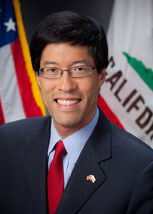
Bill Author
Bill Co-Author(s):