SB 341: Public employment and retirement.
- Session Year: 2019-2020
- House: Senate
- Latest Version Date: 2019-02-19
|
Date
|
Status
|
|---|---|
| Feb 4, 2020 | Returned to Secretary of Senate pursuant to Joint Rule 56. |
| Mar 27, 2019 | March 27 set for first hearing. Failed passage in committee. (Ayes 1. Noes 3.) Reconsideration granted. |
| Mar 14, 2019 | Set for hearing March 27. |
| Feb 28, 2019 | Referred to Com. on L., P.E. & R. |
| Feb 20, 2019 | From printer. May be acted upon on or after March 22. |
| Feb 19, 2019 | Introduced. Read first time. To Com. on RLS. for assignment. To print. |
|
Date
|
Description
|
Location
|
Votes
|
|
|---|---|---|---|---|
| Mar 27, 2019 | [First] hearing set for [03-27-2019]: Failed passage in Committee. Reconsideration granted | Senate Standing Committee on Labor, Public Employment and Retirement |
Passed |
|
| Mar 27, 2019 | Do pass, but first be re-referred to the Committee on [Appropriations] | Senate Standing Committee on Labor, Public Employment and Retirement |
Failed |
This list shows positions taken on this bill by organizations on the date displayed, which is linked to the original source.
Positions by individuals are not included.
SENATE COMMITTEE ON LABOR, PUBLIC EMPLOYMENT AND RETIREMENT
Senator Jerry Hill, Chair
2019 - 2020 Regular
Bill No: SB 341 Hearing Date: March 27, 2019
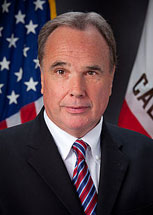
Author: | Morrell | ||
Version: | February 19, 2019 | ||
Urgency: | No | Fiscal: | Yes |
Consultant: | Glenn Miles | ||
Subject: Public employment and retirement
KEY ISSUE
Should the Legislature place additional reporting requirements on certain public pension funds related to pension plan liability calculations; eliminate automatic employee participation in the CalSAVERS program; require the State Government to pay state employees twice monthly; appropriate $2 billion to CalSTRS; and require the Governor to form a working group to propose long-term funding solutions to CalSTRS’ defined benefit program?
ANALYSIS
Existing law:
- Requires the California State Teachers’ Retirement System (CalSTRS) and the California Public Employees’ Retirement System (CalPERS) to file annual financial reports providing specified information to the Governor and Legislature. Additionally, CalSTRS, CalPERS, and the University of California Retirement System (UCRS) adhere to standards and guidance provided by the Governmental Accounting Standards Board (GASB) for best practices in developing public entity financial statements, including guidance on how to report unfunded pension liabilities (Education Code 22324; Government Code 20229; GASB Statement 67).
- Establishes the CalSavers Retirement Savings Program, a retirement savings program offered by the California Secure Choice Retirement Savings Trust for specified eligible employees. A key element of the CalSavers program, relying on principles of behavior economics, provides that employers automatically enroll eligible employees in the program but employees may elect not to participate by affirmatively opting out of the program (GC 100000 et seq.).
- Mandates that employers pay employee wages twice during each calendar month, on days designated in advance by the employer as regular paydays but exempts employers of specified employees including those directly employed by the State of California (Labor Code 204 and 220)
- Provides a funding plan to address CalSTRS unfunded actuarial liability by 2046 through statutorily required increases in contribution rates that recognize the share responsibility of the state, school employer, and school employees (Chapter 47, Statutes of 2014).
This bill:
- Requires CalSTRS to provide a description of the discount rate utilized for reporting plan liabilities; a calculation of those liabilities based upon a discount rate that is 2 percent below CalSTRS long-term assumed rate of return; and a calculation based upon a discount rate equal to the 10-year U.S. Treasury note yield in the year prior to the report.
- Requests, through a statement of legislative intent, that the UC Regents provide an annual written report of UCRS’ annual return on investments for the past 20 years with specified information regarding UCRS’ rate of return by asset type. The report would also include a calculation of UCRS’ plan liabilities based upon a discount rate 2 percent below UCRS’ long-term assumed rate of return as well as a calculation UCRS’ plan liabilities based upon a discount rate equal to the 10-year United States Treasury note yield in the year prior to the report.
- Requires CalPERS to include in its annual report a calculation of its plan liabilities based upon a discount rate equal to the 10-year United States Treasury note yield in the year prior to the report.
- Eliminates the automatic enrollment of eligible employees into the CalSavers Retirement Savings Plan with the ability to opt out and instead requires eligible employees to opt in to the program. The bill makes conforming changes to the CalSavers program to reflect the change from an automatic enrollment to an opt in plan.
- Requires the State of California to pay its employees twice each calendar month, on days designated in advance by the State as regular paydays. Currently, the State is included in certain exempt employees from this requirement.
- Appropriates two billion dollars from the General Fund to the State Controller for transfer to the Teachers’ Retirement Fund to reduce the CalSTRS Defined Benefit Program’s unfunded liability. However, half this amount would only be available if the Legislative Analyst determines in the 2019-20 Budget’s May Revision that the state has collected more than one billion dollars in unanticipated General Fund revenue.
- Mandates the Governor to form a working group to propose long-term funding solutions for the CalSTRS Defined Benefit Program’s unfunded liability as specified. The bill requires the working group to submit a report to the Legislature on or before January 1, 2020, so that solutions could be included in the 2020-2021 Budget. However, the bill would not become effective until January 1, 2020.
BACKGROUND
This bill is a recapitulation of several unsuccessful bills from past legislative sessions that would present the unfunded actuarial liabilities (UAL) for CalPERS, CalSTRS, and UCRS in significantly greater amounts by requiring that the pension systems report their UAL using a much lower discount rate. The bill also repeats prior efforts to require the State to pay its employees twice month and to weaken the new CalSavers Retirement Savings Program.
Additional Reporting Requirement/ Discount Rate
A pension system’s discount rate, also known as the assumed rate of return on investments, is one factor in determining the contributions necessary to fund a pension system. A higher discount rate means the system anticipates greater investment returns and needs fewer contributions to fund the system’s expected liabilities. A lower discount rate means the system anticipates less investment return and the plan sponsor and beneficiaries must increase their contributions to fund the expected liabilities.
Public pension funds typically base their investment return assumption on a thorough market analysis applied to the specific characteristics of a broadly diversified investment portfolio. The 10-year United States Treasury note yield does not accurately represent the expected investment return on a large portfolio of diversified assets. In fact, unless the fund only held 10-year Treasuries, its use would cause the pension system’s unfunded liabilities to appear much greater than they actually are. Additionally, CalPERS, CalSTRS, and UCRS already report their liabilities as calculated using a range of discount rates in addition to their respective adopted discount rates. Thus, this bill’s reporting requirements are unnecessary, administratively burdensome, and provide no additional useful data.
Opt In Requirement for CalSavers
This bill’s provisions revising the automatic enrollment provisions of the CalSavers’ program for an opt-in program would significantly undermine the program’s policy objectives of providing for retirement security for employees of small employers. The Legislature specifically designed the program to remove barriers to saving and investing for employees who currently have little access to retirement savings accounts and to make retirement savings plans for those employees efficient, inexpensive, and easy to use.
Twice Monthly Pay Requirement for State Employees
The State is exempt from Labor Code provisions requiring employers to pay employees twice monthly for several reasons. The State’s pay periods are subject to collective bargaining. The State Controller’s payroll system is predicated on complicated control processes designed, among other things, to protect public funds. The Labor Code provision at issue protects employees from wage theft or from the risk of an employer’s default or insolvency. Those risks are substantially less from the State, a permanent entity with substantial oversight systems, than from private sector employers subject to market competition. Also, changing to a twice-monthly state employee payroll would likely create substantial costs associated with acquiring and implementing modern information technology products or designing a custom system.
Two Billion Dollar Appropriation for CalSTRS
The Legislature and Governor have already developed and passed a long-term funding plan to address CalSTRS’ unfunded actuarial liability. A report on the status of the plan is due from CalSTRS later this year. This provision is premature. Additionally, the Legislature can better address the need, if any, to provide additional funding through the state budget process.
Mandate on Governor to form a CalSTRS Working Group
This bill’s provisions requiring the Governor to form a CalSTRS working group are unnecessary and potentially encroach on the executive branch’s power. First, CalSTRS is already implementing the AB 1469 full funding plan passed and signed in 2014 by the Legislature and the Governor respectively. Second, the Governor can form such a group without a Legislative mandate. Third, the Legislature, through this policy committee, the relevant legislative fiscal committees, and through the Legislative Analyst’s Office can request any additional information from CalSTRS regarding possible funding options for the system’s unfunded liability.
Also, this bill requires the Governor’s working group to submit a report to the Legislature on or before January 1, 2020, so that its solutions could be included in the 2020-2021 Budget. However, the bill would not become effective until January 1, 2020. It is unclear how the required work group could meet, develop solutions, and report before the bill becomes effective.
COMMENTS
- Need for this bill?
The author states the following:
California’s public pensions plans do not report their financial positions to the same standards set by federal law and imposed on private pension plans. CalPERS reports the status of their liabilities at a 7 percent, which is significantly higher than what is required of private pensions, which is around 2.5 percent.
CalSavers currently requires eligible employees to automatically enroll in the program, and force them to opt-out if they don’t want the program. This is problematic because they most opt-out every two years or they are automatically re-enrolled in the program against their wishes. The program should be based on active enrollment for participation, to ensure nobody is enrolled against their will.
California overlooks federal labor codes by only paying their employees once per month. If California were required to follow the regulations imposed on private business, the state would be less inclined to impose more.
- Proponent Arguments
According to the author,
SB 341 would pay down unfunded liabilities towards teachers’ retirement and require accurate reporting of all state retirement plans. This bill would also ensure that workers are not being enrolled in retirement plans against their will. Finally, SB 341 will require the state of California to pay its employees twice per month, as required by federal labor laws.”
- Opponent Arguments:
According to the CTA,
By requiring artificially low calculations of liabilities for both CalPERS and CalSTRS based upon United States Treasury notes, which are a small share of the overall investment mechanisms used by each system, this measure seeks to manipulate the overall pension liabilities at a significantly higher level than either system has set. Both systems have extensive systems in place to determine a rate of return that exemplifies the actual asset allocations and the long-term investment horizons needed to maximize returns based on actual experience and assets.
This measure also seeks to eliminate the automatic participation of the California Secure Choice Retirement Savings Trust, which was created to provide secure retirement options for Californian’s that do not have access through an employer provided plan. By minimizing participation, this measure would eliminate options for providing retirement security to Californian’s that need this the most.
- Prior Legislation:
SB 1234 (Vidak, 2019), which died in the Senate Public Employment and Retirement Committee, would have required on January 1, 2020, that the State of California pay all directly employed employees twice each calendar month, on days designated in advance by the employer as regular paydays.
SB 601 (Morrell, 2017), which died in the Senate Public Employment and Retirement Committee, would have required CalPERS and CalSTRS to include a calculation of the systems’ respective liabilities based upon a lower discount rate than currently reported in their respective annual reports to the Legislature. The bill also expressed the Legislature’s intent that the Regents of the University of California provide a similar report.
SB 820 (Walters, 2011), which died in the Senate Public Employment and Retirement Committee, would have required the CalPERS board to include in the annual asset and liability report to the Legislature a calculation of liabilities based upon a discount rate equal to the average rate of investment return since the establishment of the fund, as well as a calculation of those liabilities based on a discount rate equal to an average rate of investment return since January 1, 1984.
SUPPORT
None received.
OPPOSITION
California Retired Teachers Association
California Teachers Association
Professional Engineers in California Government
-- END –
Bill Author
Bill Co-Author(s):