AB 2444: California Parks, Water, Climate, and Coastal Protection and Outdoor Access For All Act of 2018.
- Session Year: 2015-2016
- House: Assembly
- Latest Version Date: 2016-08-19
Under existing law, programs have been established pursuant to bond acts for, among other things, the development and enhancement of state and local parks and recreational facilities.
This bill would enact the California Parks, Water, Climate, and Coastal Protection and Outdoor Access For All Act of 2016, 2018, which, if approved by the voters, would authorize the issuance of bonds in an amount of $2,000,000,000 $3,497,500,000 pursuant to the State General Obligation Bond Law to finance a parks, water, climate, and coastal protection and outdoor access for all program.
The bill would provide for the submission of these provisions to the voters at the November 8, 2016, June 5, 2018, statewide general primary direct election.
This bill would declare that it is to take effect immediately as an urgency statute.
Under existing law, programs have been established pursuant to bond acts for, among other things, the development and enhancement of state and local parks and recreational facilities.
This bill would enact the California Parks, Water, Climate, and Coastal Protection and Outdoor Access For All Act of 2016, which, if approved by the voters, would authorize the issuance of bonds in an unspecified amount of $2,000,000,000 pursuant to the State General Obligation Bond Law to finance a parks, water, climate, and coastal protection and outdoor access for all program.
The bill would provide for the submission of these provisions to the voters at the November 8, 2016, statewide general election.
This bill would declare that it is to take effect immediately as an urgency statute.
Under existing law, programs have been established pursuant to bond acts for, among other things, the development and enhancement of state and local parks and recreational facilities.
This bill would enact the California Parks, Water, Climate, and Coastal Protection and Outdoor Access For All Act of 2016, which, if approved by the voters, would authorize the issuance of bonds in the an unspecified amount of $3,120,000,000 pursuant to the State General Obligation Bond Law to finance a parks, water, climate, and coastal protection and outdoor access for all program.
The bill would provide for the submission of these provisions to the voters at the November 8, 2016, statewide general election.
This bill would declare that it is to take effect immediately as an urgency statute.
Under existing law, programs have been established pursuant to bond acts for, among other things, the development and enhancement of state and local parks and recreational facilities.
This bill would enact the California Parks, Water, Climate, and Coastal Protection and Outdoor Access For All Act of 2016, which, if approved by the voters, would authorize the issuance of bonds in the amount of $2,985,000,000 $3,120,000,000 pursuant to the State General Obligation Bond Law to finance a parks, water, climate, and coastal protection and outdoor access for all program.
The bill would provide for the submission of these provisions to the voters at the November 8, 2016, statewide general election.
This bill would declare that it is to take effect immediately as an urgency statute.
Under existing law, programs have been established pursuant to bond acts for, among other things, the development and enhancement of state and local parks and recreational facilities.
This bill would enact the California Parks, Water, Climate, and Coastal Protection and Outdoor Access For All Act of 2016, which, if approved by the voters, would authorize the issuance of bonds in the amount of $2,985,000,000 pursuant to the State General Obligation Bond Law to finance a parks, water, climate, and coastal protection and outdoor access for all program.
The bill would provide for the submission of these provisions to the voters at the November 8, 2016, statewide general election.
This bill would declare that it is to take effect immediately as an urgency statute.
Under existing law, programs have been established pursuant to bond acts for, among other things, the development and enhancement of state and local parks and recreational facilities.
This bill would enact the California Parks, Water, Climate, and Coastal Protection and Outdoor Access For All Act of 2016, which, if approved by the voters, would authorize the issuance of bonds in an unspecified the amount of $2,985,000,000 pursuant to the State General Obligation Bond Law to finance a parks, water, climate, and coastal protection and outdoor access for all program.
The bill would provide for the submission of these provisions to the voters at the November 8, 2016, statewide general election.
Under existing law, programs have been established pursuant to bond acts for, among other things, the development and enhancement of state and local parks and recreational facilities.
This bill would enact the California Parks, Water, Climate, and Coastal Protection and Outdoor Access For All Act of 2016, which, if approved by the voters, would authorize the issuance of bonds in an unspecified amount pursuant to the State General Obligation Bond Law to finance a parks, water, climate, and coastal protection and outdoor access for all program.
The bill would provide for the submission of these provisions to the voters at the November 8, 2016, statewide general election.
Under existing law, programs have been established pursuant to bond acts for, among other things, the development and enhancement of state and local parks and recreational facilities.
This bill would enact the California Water, Climate, and Coastal Protection and Outdoor Access For All Act of 2016, which, if approved by the voters, would authorize the issuance of bonds in an unspecified amount pursuant to the State General Obligation Bond Law to finance a water, climate, and coastal protection and outdoor access for all program.
The bill would provide for the submission of these provisions to the voters at the November 8, 2016, statewide general election.
Existing law declares that parks, wildlife habitat, beaches, and open-space lands are vital to maintaining the quality of life in California. Under existing law, programs have been established pursuant to bond acts for, among other things, the development and enhancement of state and local parks and recreational facilities.
This bill would declare the intent of the Legislature to enact the California Water Quality, Coastal Protection, and Outdoor Access Improvement Act of 2016, which would authorize the issuance of bonds to finance a water quality, coastal protection, and outdoor access improvement program.
(a)The people of California find and declare all of the following:
(1)From Californias beautiful rivers, streams, coastal shorelines, and other waterways, to our federal, state, local, and regional parks and outdoor settings, to our vast network of trails connecting people with natural landscapes, Californians value the rich diversity of outdoor experiences afforded to this state and its citizens.
(2)Demand for local parks has exceeded available funding by a factor of 8 to 1, with particularly high demand in urban, disadvantaged communities.
(3)Many Californians across the state lack access to safe parks, trails, and recreation areas, which limits their ability to experience the outdoors, improve their physical and emotional health, exercise, and connect with their communities.
(4)Investments to create and improve parks and recreation areas, and to create trail networks that provide access from neighborhoods to parks and recreational opportunities, will help ensure all Californians have access to safe places to exercise and enjoy recreational activities.
(5)The California Center for Public Health Advocacy estimates that inactivity and obesity cost California over forty billion dollars ($40,000,000,000) annually, through increased health care costs and lost productivity due to obesity-related illnesses, and that even modest increases in physical activity would result in significant savings. Investments in infrastructure improvements such as biking and walking trails and pathways, whether in urban or natural areas, are cost-effective ways to promote physical activity.
(6)Continued investments in the states parks, trails, and natural resources, and greening urban areas will help mitigate the effects of climate change, making cities more livable, and will protect Californias natural resources for future generations.
(7)Californias outdoor recreation economy represents an eighty-seven-billion-dollar ($87,000,000,000) industry, providing over 700,000 jobs and billions of dollars in local and state revenues.
(8)Californias state, local, and regional park system infrastructure and national park system infrastructure is aging and a significant infusion of capital is required to protect this investment.
(9)There has been a historic underinvestment in parks, trails, and outdoor infrastructure in disadvantaged areas and many communities throughout California.
(10)Tourism is a growing industry in California and remains an economic driver for the more rural parts of the state.
(b)It is the intent of the people of California that all of the following shall occur in the implementation of this chapter:
(1)The investment of public funds pursuant to this chapter will result in public benefits that address the most critical statewide needs and priorities for public funding.
(2)In the appropriation and expenditure of funding authorized by this chapter, priority will be given to projects that leverage private, federal, or local funding or produce the greatest public benefit.
(3)To the extent practicable, a project that receives moneys pursuant to this chapter will include signage informing the public that the project received funds from the California Parks, Water, Climate, and Coastal Protection and Outdoor Access For All Act of 2016.
(4)To the extent practicable, when developing program guidelines for urban recreation projects and habitat protection or restoration projects, administering entities are encouraged to give favorable consideration to projects that provide urban recreation and protect or restore natural resources. Additionally, the entities may pool funding for these projects.
5880.01.The following definitions govern the construction of this chapter:
(a)Committee means the California Parks, Water, Climate, Coastal Protection, and Outdoor Access For All Finance Committee created by Section 5889.02. 5890.02.
(b)Conservation actions on private lands means projects with willing landowners that involve the adaptive flexible management of natural resources in response to changing conditions and threats to habitat and wildlife. These projects result in habitat conditions on private lands that, when managed dynamically over time, contribute to the long-term health and resiliency of vital ecosystems and enhance wildlife populations.
(b)
(c)Department means the Department of Parks and Recreation.
(c)
(d)Disadvantaged community has the same meaning set forth in subdivision (g) of Section 75005.
(d)
(e)Fund means the California Parks, Water, Climate, and Coastal Protection and Outdoor Access For All Fund, created by Section 5880.08. 5880.085.
(f)Heavily urbanized city means a city with a population of 300,000 or more.
(g)Heavily urbanized county means a county with a population of 3,000,000 or more.
(e)
(h)Interpretation includes, but is not limited to, a visitor-serving amenity that enhances the ability to understand and appreciate the significance and value of natural, historical, and cultural resources and that may utilize educational materials in multiple languages, digital information, and the expertise of a naturalist or other skilled specialist.
(i)Nonprofit organization means a nonprofit corporation qualified to do business in California and qualified under Section 501(c)(3) of the Internal Revenue Code.
(f)
(j)Preservation means rehabilitation, stabilization, restoration, development, and reconstruction, or any combination of those activities.
(g)
(k)Protection means those actions necessary to prevent harm or damage to persons, property, or natural, cultural, and historic resources, actions to improve access to public open-space areas, or actions to allow the continued use and enjoyment of property or natural, cultural, and historic resources, and includes acquisition, development, restoration, preservation, and interpretation.
(h)
(l)Restoration means the improvement of physical structures or facilities and, in the case of natural systems and landscape features, includes, but is not limited to, projects for the control of erosion, the control and elimination of exotic species, removal of waste and debris, prescribed burning, fuel hazard reduction, fencing out threats to existing or restored natural resources, road elimination, and other plant and wildlife habitat improvement to increase the natural system value of the property. Restoration projects shall include the planning, monitoring, and reporting necessary to ensure successful implementation of the project objectives.
(i)
(m)Severely disadvantaged community has the same meaning set forth in subdivision (g) of Section 75005. means a community with a median household income less than 60 percent of the statewide average.
5880.02.An amount that equals not more than 5 percent of the funds allocated for a grant program pursuant to this chapter may be used to pay the administrative costs of that program.
5880.03.(a)Except as provided in subdivision (b), up to 10 percent of funds allocated for each program funded by this chapter may be expended for planning and monitoring necessary for the successful design, selection, and implementation of the projects authorized under that program. This section shall not otherwise restrict funds ordinarily used by an agency for preliminary plans, working drawings, and construction as defined in the annual Budget Act for a capital outlay project or grant project. Planning may include feasibility studies for environmental site cleanup that would further the purpose of a project that is eligible for funding under this chapter.
(b)Funds used for planning projects that benefit disadvantaged communities may exceed 10 percent of the funds allocated if the state agency administering the moneys determines that there is a need for the additional funding.
5880.04.(a)At (1)Except as provided in paragraph (2), at least 20 percent of the funds available pursuant to each article of this chapter shall be allocated for projects serving severely disadvantaged communities.
(2)At least 15 percent of the funds available pursuant to Article 8 (commencing with Section 5888) and Article 9 (commencing with Section 5889) shall be allocated for projects serving severely disadvantaged communities.
(b)Except as provided in subdivision (c), up to 10 percent of the funds available pursuant to each article of this chapter may be allocated for technical assistance to disadvantaged communities. The agency administering the moneys shall operate a multidisciplinary technical assistance program for disadvantaged communities.
(c)Funds used for providing technical assistance to disadvantaged communities may exceed 10 percent of the funds allocated if the state agency administering the moneys determines that there is a need for the additional funding.
5880.05.Before disbursing grants pursuant to this chapter, each state agency that receives funding to administer a competitive grant program under this chapter shall do the following:
(a)(1)Develop and adopt project solicitation and evaluation guidelines. The guidelines shall include monitoring and reporting requirements and may include a limitation on the dollar amount of grants to be awarded. If the state agency has previously developed and adopted project solicitation and evaluation guidelines that comply with the requirements of this subdivision, it may use those guidelines.
(2)Guidelines adopted pursuant to this subdivision shall encourage, where feasible, inclusion of the following project components:
(A)Efficient use and conservation of water supplies.
(B)Use of recycled water.
(C)The capture of stormwater to reduce stormwater runoff, reduce water pollution, or recharge groundwater supplies, or a combination thereof.
(D)Provision of safe and reliable drinking water supplies to park and open-space visitors.
(b)Conduct three public meetings to consider public comments before finalizing the guidelines. The state agency shall publish the draft solicitation and evaluation guidelines on its Internet Web site at least 30 days before the public meetings. One meeting shall be conducted at a location in northern California, one meeting shall be conducted at a location in the central valley of California, and one meeting shall be conducted at a location in southern California.
(c)Submit the guidelines to the Secretary of the Natural Resources Agency. The Secretary of the Natural Resources Agency shall verify that the guidelines are consistent with applicable statutes and for all the purposes enumerated in this chapter. The Secretary of the Natural Resources Agency shall post an electronic form of the guidelines submitted by state agencies and the subsequent verifications on the Natural Resources Agencys Internet Web site.
(d)Upon adoption, transmit copies of the guidelines to the fiscal committees and the appropriate policy committees of the Legislature.
5880.06.(a)The Department of Finance shall provide for an independent audit of expenditures pursuant to this chapter. The Secretary of the Natural Resources Agency shall publish a list of all program and project expenditures pursuant to this chapter not less than annually, in written form, and shall post an electronic form of the list on the agencys Internet Web site. site in a downloadable spreadsheet format. The spreadsheet shall include information about the location and footprint of each funded project, the projects objectives, the status of the project, anticipated outcomes, any matching moneys provided for the project by the grant recipient, and the applicable article of this chapter pursuant to which the grant recipient received moneys.
(b)If an audit, required by statute, of any entity that receives funding authorized by this chapter is conducted pursuant to state law and reveals any impropriety, the California State Auditor or the Controller may conduct a full audit of any or all of the activities of that entity.
(c)The state agency issuing any grant with funding authorized by this chapter shall require adequate reporting of the expenditures of the funding from the grant.
5880.065.If any moneys allocated pursuant to this chapter are not encumbered or expended by the recipient entity within the time period specified by the administering agency, the unexpended moneys shall revert to the administering entity for allocation consistent with the applicable article.
5880.07.To the extent feasible, a project whose application includes the use of services of the California Conservation Corps, certified community conservation corps, as defined in Section 14507.5, or other nonprofit entities that provide job training and education opportunities for veterans, foster care recipients, farmworkers, or local youth in conservation or restoration projects shall be given preference for receipt of a grant under this chapter.
5880.075.To the extent feasible, a project that includes water efficiencies, stormwater capture, or carbon sequestration features in the project design may be given priority for grant funding under this chapter.
5880.076.Moneys allocated pursuant to this chapter shall not be used to fulfill any mitigation requirements imposed by law.
5880.077.(a)To the extent feasible in implementing this chapter and except as provided in subdivision (b), a state agency receiving funding under this chapter shall seek to achieve wildlife conservation objectives through projects on public lands or voluntary projects on private lands. Funds may be used for payments for the creation of measurable habitat improvements or other improvements to the condition of endangered or threatened species, including through the development and implementation of habitat credit exchanges.
(b)This section shall not apply to Article 2 (commencing with Section 5881). 5881), Article 3 (commencing with Section 5882), Article 5 (commencing with Section 5884), or Article 6 (commencing with Section 5885).
5880.078.A state agency that receives funding to administer a grant program under this chapter shall report to the Legislature by January 1, 2027, on its expenditures pursuant to this chapter and the public benefits received from those expenditures.
5880.080.A state conservancy receiving funding pursuant to this article shall endeavor to allocate funds that are complimentary, but not duplicative, of authorized expenditures made pursuant to Chapter 188 of the Statutes of 2014.
5880.082.Funding pursuant to this chapter may be used for grants and loans to nonprofit organizations to repay financing described in Section 22064 of the Financial Code for projects that are consistent with the purposes of this chapter.
5880.084.For grants awarded for projects that serve a disadvantaged community, the administering entity shall provide advanced payments in the amount of 25 percent of the grant award to the recipient to initiate the project in a timely manner. The administering entity may adopt additional requirements for the recipient of the grant regarding the use of the advanced payments to ensure that the moneys are used properly.
5880.08. 5880.085.The proceeds of bonds issued and sold pursuant to this chapter shall be deposited in the California Parks, Water, Climate, and Coastal Protection and Outdoor Access For All Fund, which is hereby created in the State Treasury.
5880.09.The Legislature may enact legislation necessary to implement programs funded by this chapter.
2.Investments in Environmental and Social Equity, Enhancing Californias Disadvantaged Communities5881.(a)The sum of ____ nine hundred ninety-five million dollars ($____) ($995,000,000) shall be available to the department, upon appropriation by the Legislature, for the creation and expansion of safe neighborhood parks in park-poor neighborhoods in accordance with the Statewide Park Development and Community Revitalization Act of 2008s competitive grant program described in Chapter 3.3 (commencing with Section 5640).
(b)When developing or revising criteria or guidelines for the grant program, the department may consider the population densities of an applicant in relation to countywide populations, comparative income levels, and other poverty-related factors that are relative to regionwide statistics. give additional consideration to projects that incorporate stormwater capture and storage or otherwise reduce stormwater pollution. The department shall perform its due diligence by conducting a rigorous prequalification process to determine the fiscal and operational capacity and ability of a potential grant recipient to do both of the following:
(1)Manage a project to maximize public benefit in perpetuity.
(2)Implement the project in a timely manner.
(c)For grants awarded for projects that serve a disadvantaged community, the administering entity shall provide advanced payments in the amount of 25 percent of the grant award to the recipient to initiate the project in a timely manner. The administering entity may adopt additional requirements for the recipient of the grant regarding the use of the advanced payments to ensure that the moneys are used properly.
5881.01.Of the amount available pursuant to subdivision (a) of Section 5881, not less than 20 percent shall be available for the rehabilitation, repurposing, or substantial improvement of existing park infrastructure in communities of the state that will lead to increased use and enhanced user experiences, consistent with the Statewide Park Development and Community Revitalization Act of 2008 (Chapter 3.3 (commencing with Section 5640)).
5881.02.Of the amount available pursuant to subdivision (a) of Section 5881, to correct historic underinvestments in the central valley, Inland Empire, gateway, and desert communities, the sum of forty-eight million dollars ($48,000,000) shall be available for local park improvement grants to the communities identified by the department as park deficient within those areas for active recreational projects, including aquatic centers, to encourage youth health, fitness, and recreational pursuits. Projects that include the donation of land, materials, or volunteer services and that demonstrate collaborations of multiple entities and the leveraging of scarce resources may be given consideration. Entities that receive a grant under this section may also be eligible to receive a grant under subdivision (a) of Section 5881.
3.Investments in Protecting, Enhancing, and Accessing Californias Local and Regional Outdoor Spaces5882.For purposes of this article, district means any regional park district, regional park and open-space district, or regional open-space district formed pursuant to Article 3 (commencing with Section 5500) of Chapter 3, any recreation and park district formed pursuant to Chapter 4 (commencing with Section 5780), or any authority formed pursuant to Division 26 (commencing with Section 35100). With respect to any community or unincorporated region that is not included within a district, and in which no city or county provides parks or recreational areas or facilities, district also means any other entity, including, but not limited to, a district operating multiple-use park lands parklands pursuant to Division 20 (commencing with Section 71660) 71000) of the Water Code, that is authorized by statute to operate and manage parks or recreational areas or facilities, employs a full-time park and recreation director, offers year-round park and recreation services on land and facilities owned by the entity, and allocates a substantial portion of its annual operating budget to parks or recreation areas or facilities.
5882.01.(a)The sum of ____ four hundred fifty million dollars ($____) ($450,000,000) shall be available to the department, upon appropriation by the Legislature, for local park rehabilitation and improvement grants to local governments on a per capita basis. Grant recipients shall be encouraged to utilize awards to rehabilitate existing infrastructure and to address deficiencies in neighborhoods lacking access to the outdoors.
(b)Pursuant to Section 5880.08, the The sum of ____ forty million dollars ($____) ($40,000,000) shall be available to the department, upon appropriation by the Legislature, for grants to cities and districts in urbanized counties providing park and recreation services within jurisdictions of 200,000 or less in population. For purposes of this subdivision, urbanized county means a county with a population for of 500,000 or greater. more. An entity eligible to receive funds under this subdivision shall also be eligible to receive funds available under subdivision (a).
(c)Unless the entity has been identified as a disadvantaged community, an entity that receives an award pursuant to this section shall be required to provide a match of 20 percent as a local share.
5882.02.(a)(1)The department shall allocate 60 percent of the funds available pursuant to subdivision each of subdivisions (a) and (b) of Section 5882.01 to cities and districts, other than a regional park district, regional park and open-space district, open-space authority, or regional open-space district. Each citys and districts allocation shall be in the same ratio as the citys or districts population is to the combined total of the states population that is included in incorporated and unincorporated areas within the county, except that each city or district shall be entitled to a minimum allocation of ____ two hundred fifty thousand dollars ($____). ($250,000). If the boundary of a city overlaps the boundary of a district, the population in the overlapping area shall be attributed to each jurisdiction in proportion to the extent to which each operates and manages parks and recreational areas and facilities for that population. If the boundary of a city overlaps the boundary of a district, and in the area of overlap the city does not operate and manage parks and recreational areas and facilities, all grant funds for that area shall be allocated to the district.
(2)On or before April 1, 2018, 2020, a city and a district that are subject to paragraph (1), and whose boundaries overlap, shall collaboratively develop and submit to the department a specific plan for allocating the grant funds in accordance with the formula specified in paragraph (1). If, by that date, the plan has not been developed and submitted to the department, the director shall determine the allocation of the grant funds between the affected jurisdiction.
(b)(1)The department shall allocate 40 percent of the funds available pursuant to subdivision each of subdivisions (a) and (b) of Section 5882.01 to counties and regional park districts, regional park and open-space districts, open-space authorities formed pursuant to Division 26 (commencing with Section 35100), and regional open-space districts formed pursuant to Article 3 (commencing with Section 5500) of Chapter 3.
(2)Each countys allocation under paragraph (1) shall be in the same ratio that the countys population is to the total state population, except that each county shall be entitled to a minimum allocation of ____ five hundred thousand dollars ($____). ($500,000).
(3)In any county that embraces all or part of the territory of a regional park district, regional park and open-space district, open-space authority, or regional open-space district, and whose board of directors is not the county board of supervisors, the amount allocated to the county shall be apportioned between that district and the county in proportion to the population of the county that is included within the territory of the district and the population of the county that is outside the territory of the district.
(c)For the purpose of making the calculations required by this section, population shall be determined by the department, in cooperation with the Department of Finance, on the basis of the most recent verifiable census data and other verifiable population data that the department may require to be furnished by the applicant city, county, or district.
(d)The Legislature intends all recipients of funds pursuant to subdivision (a) or (b) of Section 5882.01 to use those funds to supplement local revenues in existence on the effective date of the act adding this chapter. To receive an allocation pursuant to subdivision (a) or (b) of Section 5882.01, the recipient shall not reduce the amount of funding otherwise available to be spent on parks or other projects eligible for funds under this chapter in its jurisdiction. A one-time allocation of other funding that has been expended for parks or other projects, but which is not available on an ongoing basis, shall not be considered when calculating a recipients annual expenditures. For purposes of this subdivision, the Controller may request fiscal data from recipients for the preceding three fiscal years. Each recipient shall furnish the data to the Controller no later than 120 days after receiving the request from the Controller.
5882.04.(a)The director of the department shall prepare and adopt criteria and procedures for evaluating applications for grants allocated pursuant to subdivision (a) or (b) of Section 5882.01. The application shall be accompanied by certification that the project is consistent with the park and recreation element of the applicable city or county general plan or the district park recreation plan, as the case may be.
(b)To utilize available grant funds as effectively as possible, overlapping and adjoining jurisdictions and applicants with similar objectives are encouraged to combine projects and submit a joint application. A recipient may allocate all or a portion of its per capita share for a regional or state project.
5882.05.(a)The director of the department shall annually forward a statement of the total amount to be appropriated each fiscal year for projects approved for grants pursuant to this article to the Director of Finance for inclusion in the annual Budget Act. A list of eligible jurisdictions and the amount of grant funds to be allocated to each jurisdiction shall also be made available by the department.
(b)Funds appropriated pursuant to this article shall be encumbered by the recipient within three years from the date the appropriation is effective. Regardless of the date of encumbrance of the granted funds, the recipient is expected to complete all funded projects within eight years of the effective date of the appropriation.
5882.06.(a)The sum of ____ one hundred twenty million dollars ($____) ($120,000,000) shall be available to the department, upon appropriation by the Legislature, for grants to regional park districts, counties, regional open-space districts, open-space authorities formed pursuant to Division 26 (commencing with Section 35100), and eligible nonprofit organizations on a competitive grant basis to develop, expand, improve, rehabilitate, or restore parks and park facilities, including including, but not limited to, trails, that facilitate new or enhanced use and enhanced user experiences. regional trail networks, regional sports complexes, low-cost accommodations in park facilities, and visitor, outdoor, and interpretative facilities serving youth and communities of color.
(b)In awarding moneys, the department shall encourage applicants seeking funds for acquisition projects to perform projects in conjunction with new or enhanced public-use and public-access opportunities.
(c)Preference may be given to multiuse trail projects over single-use trail projects.
(d)Of the amount available pursuant to this section, up to 5 percent may be available to provide a one-to-one match for nonprofit organizations that offer recreational facilities to the public free of charge and whose approved grant projects promote outdoor and wilderness experiences for youth of low-income households, who lack access to green-space opportunities, through recreational programming, transportation, enhanced public access, and outdoor educational programs.
3.5.Urban Recreation, Watershed, and Stormwater Cobenefit Program5882.50.The sum of one hundred eighty-seven million five hundred thousand dollars ($187,500,000) shall be available, upon appropriation by the Legislature, to promote and enhance multibenefit greening projects in urbanized settings as follows:
(a)The sum of one hundred fifteen million dollars ($115,000,000) shall be available to the Natural Resources Agency for project grants for the protection and enhancement of an urban creek, as defined in subdivision (e) of Section 7048 of the Water Code, and its tributaries, pursuant to Division 22.8 (commencing with Section 32600) and Division 23 (commencing with Section 33000) of this code and Section 79508 of the Water Code. Money available pursuant to this subdivision shall be equally divided between projects in areas described in Division 22.8 (commencing with Section 32600) and projects in areas described in Division 23 (commencing with Section 33000). Projects serving disadvantaged communities shall have priority for funding under this subdivision.
(b)The sum of twelve million five hundred thousand dollars ($12,500,000) shall be available to the Santa Ana River Conservancy Program pursuant to Chapter 4.6 (commencing with Section 31170) of Division 21. To correct historic underinvestments in park and green-space development, not less than 50 percent of this amount shall be available to the State Coastal Conservancy for grants to enhance park and recreational infrastructure within the most park-deficient areas along the lower river in heavily urbanized communities.
(c)(1)The sum of sixty million dollars ($60,000,000) shall be available to the Strategic Growth Council for competitive grants to cities, counties, regional park districts, park districts, regional open-space districts, open-space authorities, conservation-based nonprofit organizations, and joint powers authorities for stormwater capture projects that lead to improved or enhanced park, parkway, open-space, greenways, or green infrastructure and provide for at least two of the following benefits:
(A)Reduce flooding.
(B)Reduce water pollution.
(C)Facilitate increased recharge of groundwater or otherwise store water for reuse.
(D)Increase or otherwise enhance habitat for fish and wildlife.
(E)Promote adaptation and protect against sea level rise.
(F)Reduce heat island effects.
(2)In implementing this subdivision, the Strategic Growth Council may draw from existing guidelines and provisions pursuant to the urban greening program, as described by Chapter 729 of the Statutes of 2008, or other program.
(3)If a countywide parcel tax measure for park-related improvements is approved by the voters in a heavily urbanized county at the November 6, 2016, general election, of the amount available pursuant to this subdivision, the Legislature may appropriate at least ten million dollars ($10,000,000) to the heavily urbanized county as a block grant award to allocate funds within that county to maximize recreation, greening, watershed, and stormwater benefits consistent with park improvements identified in that measure. For the purpose of maximizing the objectives of this subdivision, a heavily urbanized county may award moneys to water districts that administer river corridor projects. Agencies eligible under this paragraph shall also be eligible for other grants under this subdivision.
4.Restoring Californias Natural, Historic, and Cultural Legacy5883.(a)The sum of ____ three hundred seventy million dollars ($____) ($370,000,000) shall be available to the department, upon appropriation by the Legislature, for restoration and preservation of existing state park facilities and units units, to promote greater access to those units through the provision of low-cost overnight accommodations in ways that enhance access and recreational opportunities for disadvantaged communities, to preserve and increase public access to those facilities and units and to protect the natural, cultural, and historic resources of those facilities and units. Not less than 80 percent of these funds shall be available for capital improvements that address the departments backlog of deferred maintenance or that enhance park access and user experiences.
(b)Of the total amount available pursuant to this section, the sum of ____ twenty million dollars ($____) ($20,000,000) shall be available for enterprise projects that facilitate new or enhanced park use and user experiences and increase revenue generation to support operations of the department.
(c)Of the total amount available pursuant to this section, the sum of ____ twenty million dollars ($____) ($20,000,000) shall be available to the department for grants to local agencies that operate a unit of the state park system to address an urgent need for the restoration of aging infrastructure that, without restoration, would compromise the continued operation of the unit. Unless a local agency has been identified as a disadvantaged community, a local agency that receives a grant pursuant to this subdivision shall be required to provide a match of not less than 25 percent.
(d)Of the total amount available pursuant to this section, the sum of twelve million five hundred thousand dollars ($12,500,000) shall be available for projects in units of the state park system that are managed by nonprofit organizations that have entered into operating agreements with the department. Of this amount, not less than five million dollars ($5,000,000) shall be available to nonprofit organizations that operate a unit in the Inland Empire State Park Program. An award recipient receiving funds pursuant to this subdivision shall provide a match of 20 percent.
(d)
(e)Of the total amount available pursuant to this section, the sum of ____ seventy million dollars ($____) ($70,000,000) shall be available to the department according to the following schedule and subject to Section 5883.02 to address major infrastructure rehabilitation to improve tourism and visitor experiences and to promote the health and safety of units within the state park system:
(1)The sum of ____ ten million dollars ($____) ($10,000,000) to implement a Central Valley State Park Program. In order to be eligible under this paragraph, a park shall be located in a county within the central valley from the County of Sacramento south to the base of the Tehachapi Mountain Range.
(2)The sum of ____ ten million dollars ($____) ($10,000,000) to implement a Central Coast State Park Program. In order to be eligible under this paragraph, a park shall be located in the County of Ventura.
(3)The sum of ____ fifteen million dollars ($____) ($15,000,000) to implement an East Bay State Park Program.
(4)The sum of ____ ten million dollars ($____) ($10,000,000) to implement a High Desert-Coachella Valley State Park Program.
(5)The sum of ____ ten million dollars ($____) ($10,000,000) to implement an Inland Empire State Park Program.
(6)The sum of ____ fifteen million dollars ($____) ($15,000,000) to implement a San Diego State Park Program. Priority may be given to projects bordering a national estuary.
(e)
(f)Of the total amount available pursuant to this section, the sum of ____ fifty million dollars ($____) ($50,000,000) shall be available to the department for direct distribution to the twelve 12 districts within the department to address historic underinvestments in units of the state park system.
5883.01.The department, in expending the funding available under this article, shall endeavor, where practical, to partner with cities, counties, nonprofit organizations, and nongovernmental organizations to maximize leveraging opportunities to enhance tourism, visitation, and visitor experiences.
5883.02.The funding available pursuant to subdivision (d) (e) of Section 5883 shall be allocated based on regional populations and the demand for infrastructure repair and improvements.
5.Trails and Waterfront Greenway Investment5884.(a)The sum of ____ fifty million dollars ($____) ($50,000,000) shall be available to the Natural Resources Agency, working in cooperation with the department, upon appropriation by the Legislature, for competitive grants to local agencies, state conservancies, federally recognized Native American tribes, nonfederally recognized California Native American tribes listed on the California Tribal Consultation List maintained by the Native American Heritage Commission, and nonprofit organizations to provide nonmotorized infrastructure development and enhancements that promote new or alternate access to parks, waterways, outdoor recreational pursuits, and forested or other natural environments to encourage health-related commuting and opportunities for Californians to reconnect with nature.
(b)Of the amount made available pursuant to this section, up to 25 percent may be made available to communities for innovative transportation programs that provide new and expanded outdoor experiences to disadvantaged youth.
(c)Alignment, development, and improvement of nonmotorized infrastructure and trails that lead to safer interconnectivity between parks, waterways, and natural areas may be encouraged.
(d)The Natural Resources Agency is encouraged, when designing guidelines, guidelines for grants awarded under this article, to utilize existing program guidelines including, if applicable, guidelines that have been established for the California Recreational Trails Act (Article 6 (commencing with Section 5070) of Chapter 1). 1) and, to the extent possible, to design guidelines that are consistent with the California Recreational Trails Plan, as described in Article 6 (commencing with Section 5070) of Chapter 1.
5884.01.Unless the entity has been identified as a disadvantaged community, an entity that receives an award under this article shall be required to provide a match of 20 percent.
6.Rural Recreation, Tourism, and Economic Enrichment Investment5885.(a)The sum of ____ forty-five million dollars ($____) ($45,000,000) shall be available to the department, upon appropriation by the Legislature, to administer a competitive grant program for cities, counties, and districts in nonurbanized areas, that are eligible for a grant under the Roberti-Zberg-Harris Urban Open-Space and Recreation Program Act (Chapter 3.2 (commencing with Section 5620)). Notwithstanding subdivisions (c) and (e) of Section 5621 and for the purposes of this section, the definition of nonurbanized area shall be updated by the department to reflect current population levels. A nonurbanized area shall include counties with populations of less than 500,000 people and low population densities per square mile, as determined by the department. In awarding the grants, the department may consider the following factors:
(1)Whether the project would provide new recreational opportunities in rural communities that have demonstrated deficiencies and lack of outdoor infrastructure in support of economic and health-related goals.
(2)Whether the project proposes to acquire and develop lands to enhance residential recreation while promoting the quality of tourism experiences and the economic vitality of the community. These enhancements may include accessibility for individuals with disabilities, trails, bikeways, regional or destination-oriented recreational amenities, and visitor centers.
(3)Whether the project includes collaboration between public and nonprofit organizations, including, but not limited to, nonprofit land trusts, to facilitate public access to privately-owned lands for regional trail development for wildlife viewing, recreation, or outdoor experiences for youth.
(b)Unless the entity has been identified as a disadvantaged community, an entity that receives an award under this article shall be required to provide a match of 20 percent.
(c)In addition to entities described in subdivision (a), an irrigation district exercising powers authorized under Section 22185 of the Water Code is eligible for a grant under this article.
7.California Clean Water, Coastal, and Watershed Cobenefit River Recreation, Creek, and Waterway Improvements Program5886.(a)The sum of ____ one hundred fifteen million dollars ($____) ($115,000,000) shall be available to the Natural Resources Agency, upon appropriation by the Legislature, for grants pursuant to the California River Parkway Act of 2004 (Chapter 3.8 (commencing with Section 5750)) and the Urban Streams Restoration Program pursuant to Section 7048 of the Water Code. Eligible projects shall include, but are not limited to, projects that protect and enhance urban creeks.
(b)Unless the entity has been identified as a disadvantaged community, an entity that receives an award under this article shall be required to provide a match of 20 percent.
(c)To maximize cooperation and leverage resources, the Natural Resources Agency may give priority to projects that include partnerships among federal, state, and local agencies and to projects proposed by nonprofit organizations, including, but not limited to, nonprofit land trusts.
(d)Nothwithstanding any other provision of this division, 60 percent of the funds appropriated pursuant to this section shall be expended for project grants in the area described in the watershed of the Los Angeles River upstream of the northernmost boundary of the City of Vernon, and 40 percent of the funds shall be expended for project grants in the remainder of the Los Angeles River area.
(e)Of the amount made available pursuant to subdivision (a), ____ dollars ($____) shall be available for purposes of the Lower American River Conservancy Program or the American River Parkway Plan, as defined in Section 5841.
(f)Not less than ____ percent of the amount made available pursuant to this section shall be allocated to the Santa Ana River Program pursuant to Chapter 4.6 (commencing with Section 31170) of Division 21.
(d)Of the amount made available pursuant to subdivision (a), not less than seven million five hundred thousand dollars ($7,500,000) shall be available for the Lower American River Conservancy Program, if that program is created.
(e)Of the amount made available pursuant to subdivision (a), not less than ten million dollars ($10,000,000) shall be available for improvements in and along the Guadalupe River and its headwaters or contributing tributaries, including Los Gatos Creek, upon the enactment of subsequent legislation that demonstrates a comprehensive local and regional approach to restoration, public recreation, and management of the river corridor.
(f)Of the amount made available pursuant to subdivision (a), not less than fifteen million dollars ($15,000,000) shall be available to implement the Urban Streams Restoration Program, established pursuant to Section 7048 of the Water Code.
5886.02.____ dollars ($____) shall be available, upon appropriation by the Legislature, to implement the Urban Streams Restoration Program for streams not otherwise eligible for funding pursuant to this article.
5886.04.____ dollars ($____) shall be available to the Natural Resources Agency, upon appropriation by the Legislature, for existing multi-benefit urban streams projects that are not otherwise eligible for funding pursuant to this article.
5886.04.The sum of thirty-seven million five hundred thousand dollars ($37,500,000) shall be available to the Salton Sea Authority, upon appropriation by the Legislature, for capital outlay projects that provide air quality and habitat benefits and that implement the Natural Resource Agencys Salton Sea Management Program. Of this amount, not less than ten million dollars ($10,000,000) shall be available for purposes consistent with the New River Water Quality, Public Health, and River Parkway Development Program, as described in Section 71103.6.
5886.06.The To the maximum extent feasible, the Natural Resources Agency is encouraged, when developing guidelines for grants awarded under this article, to utilize existing programs, programs through which communities enter into partnerships with state agencies for multibenefit projects to enhance and restore waterways, including, but not limited to, the urban streams program through which communities enter into partnerships with state agencies for multibenefit projects to enhance and restore waterways. Riverine Stewardship Technical Assistance program.
7.5.State Conservancy Funding5887.The sum of ____ one hundred sixty-five million dollars ($____) ($165,000,000) shall be available, upon appropriation by the Legislature, in accordance with the following schedule, to fulfill the purposes of the specified entity:
(a)Baldwin Hills Conservancy, ____ five million dollars ($____). ($5,000,000).
(b)California Tahoe Conservancy, ____ twenty million dollars ($____). ($20,000,000).
(c)Coachella Mountains Conservancy, ____ ten million dollars ($____). ($10,000,000).
(d)Sacramento-San Joaquin Delta Conservancy, ____ fifteen million dollars ($____). ($15,000,000).
(e)Salton Sea Authority, ____ dollars ($____). These moneys shall be for capital outlay projects that provide air quality and habitat benefits and that implement the Natural Resources Agencys Salton Sea Management Program.
(f)
(e)San Diego River Conservancy, ____ fifteen million dollars ($____). ($15,000,000).
(g)
(f)San Gabriel and Lower Los Angeles Rivers and Mountains Conservancy, ____ thirty million dollars ($____). ($30,000,000). Of this amount, not less than two million five hundred thousand dollars ($2,500,000) shall be allocated as a cost share to match United States Forest Service funds for resource management purposes of upper watershed lands. Not less than twenty-two million five hundred thousand dollars ($22,500,000) shall be made available for improvements in and along the San Gabriel River from moneys made available from this subdivision and subdivision (a) of Section 5882.50.
(h)
(g)San Joaquin River Conservancy, ____ ten million dollars ($____). ($10,000,000).
(i)
(h)Santa Monica Mountains Conservancy, ____ thirty million dollars ($____). ($30,000,000).
(j)
(i)Sierra Nevada Conservancy, ____ thirty million dollars ($____). ($30,000,000).
(k)State Coastal Conservancy, ____ dollars ($____). Of this amount, not less than 40 percent shall go toward the San Francisco Bay Area Conservancy Program (Chapter 4.5 (commencing with Section 31160) of Division 21).
5887.01.The Legislature shall strive to consider population size, land mass, and natural resource significance as factors when determining the amount of any other funds to be made available to an entity listed in Section 5887.
5887.02.A receiving entity in Section 5887 shall develop and adopt a strategic master plan that identifies priorities and specific criteria for selecting projects for funding. The strategic plan shall include strategies for providing public access to conserved lands wherever feasible and be consistent with project goals and objectives.
5887.03.Conservancies, in expending the funding available under this article, shall endeavor, where practical, to partner with cities, counties, nonprofit organizations, and nongovernmental organizations to acquire open space and create urban greenway corridors.
8.Ocean, Bay, and Coastal Protection5888.The sum of two hundred million dollars ($200,000,000) shall be available, upon appropriation by the Legislature, to fund projects that enhance and protect coastal and ocean resources in the state as follows:
(a)The sum of fifty-five million dollars ($55,000,000) shall be available for deposit into the California Ocean Protection Trust Fund for grants consistent with Section 35650. Priority shall be given to projects that conserve, protect, and restore marine wildlife and healthy ocean and coastal ecosystems with a focus on the states system of marine protected areas and sustainable fisheries.
(b)The sum of fifty million dollars ($50,000,000) shall be available to the San Francisco Bay Area Conservancy Program (Chapter 4.5 (commencing with Section 31160) of Division 21).
(c)The sum of ninety-five million dollars ($95,000,000) shall be available to the State Coastal Conservancy for the protection of beaches, bays, and coastal watershed resources, including the protection of coastal agricultural resources pursuant to Section 31150 and projects to complete the California Coastal Trail pursuant to Section 31408.
5888.02.In implementing Section 5888, the administering entity may give special consideration to the acquisition of lands that are in deferred certification areas of county local coastal plans.
8.9.Climate Preparedness and Preparedness, Habitat Resiliency Resiliency, Resource Enhancement, and Innovation5888. 5889.The sum of ____ seven hundred twenty-two million five hundred thousand dollars ($____) ($722,500,000) shall be available, upon appropriation by the Legislature, to plan, develop, and implement climate adaptation and resiliency projects that improve a communitys ability to adapt to the unavoidable impacts of climate change. Projects shall improve and protect coastal and rural economies, agricultural viability, wildlife corridors, or habitat, develop future recreational opportunities, or enhance drought tolerance and water retention, in accordance with the following schedule:
(a)(1) ___ Four hundred twenty-seven million five hundred thousand dollars ($____) ($427,500,000) shall be available to the Wildlife Conservation Board for grants for any of the following:
(A)Projects for the acquisition, development, rehabilitation, restoration, protection, and expansion of wildlife corridors and open space, including projects to improve connectivity and reduce barriers between habitat areas. In awarding grants pursuant to this subparagraph, special consideration priority may be given to projects that protect state-designated wildlife corridors and wildlife corridors threatened by urban development.
(B)Projects for the acquisition, development, rehabilitation, restoration, protection, and expansion of habitat that promote the recovery of threatened and endangered species.
(C)Projects to improve climate adaptation and resilience of natural systems.
(D)Projects to protect and improve existing open-space corridors and trail linkages related to utility or transportation infrastructure that provide habitat connectivity and public access or trails.
(E)Projects to restore rivers and streams in support of fisheries and wildlife, including, but not limited to, reconnecting rivers with their floodplains, riparian and side-channel habitat restoration, and restoration and protection of upper watershed forests and meadow systems that are important for fish and wildlife resources and that are consistent with the purposes of subdivision (f) of Section 79738 of the Water Code. Priority shall be given to projects supported by multistakeholder public and private partnerships using a science-based approach and measurable objectives to guide identification, design, and implementation of regional actions to benefit salmon and steelhead.
(F)In implementing this subdivision, the Wildlife Conservation Board may provide matching grants for incentives to landowners for conservation actions on private lands or use of voluntary habitat credit exchange mechanisms. The matching grant shall not exceed 50 percent of the total cost of the incentive program.
(2)Applications submitted pursuant to this subdivision that promote projects seeking to preserve the working character of lands, including uninterrupted agricultural and rangeland practices, through conservation easements, may be given additional consideration.
(3)Of the amount subject to this subdivision, ____ seventy million dollars ($____) ($70,000,000) shall be available for the acquisition, development, rehabilitation, restoration, protection, and expansion of habitat that furthers the implementation of adopted natural community conservation plans, as set forth in plans adopted pursuant to the Natural Community Conservation Planning Act (Chapter 10 (commencing with Section 2800) of Division 3 of the Fish and Game Code), to help resolve resource conflicts by balancing communitywide conservation, planning, and economic activities. Funding pursuant to this paragraph shall not be used to offset mitigation obligations otherwise required.
(4)Of the amount subject to this subdivision, ____ ten million dollars ($____) ($10,000,000) shall be administered through the Department of Fish and Wildlife for competitive grants to wildlife rehabilitation facilities operated by nongovernmental entities.
(5)Of the amount subject to this subdivision, not less than forty million dollars ($40,000,000) shall be available for the acquisition, development, rehabilitation, restoration, protection, and expansion of wildlife corridors and open space to improve connectivity and reduce barriers between habitat areas and to protect and restore habitat associated with the Pacific Flyway. In awarding grants pursuant to this paragraph, priority may be given to projects that protect state-designated wildlife corridors. Of the amount described in this paragraph, seven million five hundred thousand dollars ($7,500,000) shall be available for the California Waterfowl Habitat Program.
(6)The Wildlife Conservation Board shall develop or update a strategic master plan that identifies priorities and specific criteria for selecting projects pursuant to paragraph (1).
(7)Activities funded pursuant to this subdivision shall be consistent with the states climate adaptation strategy, as provided by Section 71153, and the statewide objectives provided in Section 71154.
(b)The sum of ____ forty million dollars ($____) ($40,000,000) shall be available for deposit into the California Climate Resilience Account, established pursuant to Section 31012, for projects that assist coastal communities, including those reliant on commercial fisheries, with adaptation to climate change, including projects that address ocean acidification, sea level rise, or the protection of habitat associated with the Pacific Flyway.
(c)The sum of ____ fifteen million dollars ($____) ($15,000,000) shall be available for projects that improve agricultural and open-space soil health, to improve carbon soil sequestration, erosion control, water quality, and water retention, which may in part be allocated to the Department of Conservation for watershed restoration and conservation projects on agricultural lands pursuant to Section 9084.
(d)(1)The sum of ____ eighty million dollars ($____) ($80,000,000) shall be available for projects that reduce fire risk, improve forest health, and provide feedstock for compost, energy, or alternative fuels facilities. Projects may include, but are not limited to, forest restoration projects that include hazardous fuel reduction, post-fire watershed rehabilitation, and forest management practices that promote forest resilience to wildfire, climate change, and other disturbances. Unless otherwise specified by the Legislature, project funds shall be equally administered by the Department of Forestry and Fire Protection and by the Sierra Nevada Conservancy.
(2)Of the amount subject available pursuant to this subdivision, up to ____ five million dollars ($____) ($5,000,000) shall be available from the Department of Forestry and Fire Protection to the California Tahoe Conservancy for projects consistent with this subdivision.
(e)____ dollars ($____)
(3)Of the amount available to the Department of Forestry and Fire Protection pursuant to this subdivision, not less than seven million five hundred thousand ($7,500,000) dollars shall be available to the Department of Forestry and Fire Protection for existing urban forestry programs and priority shall be given to local governments that with an emphasis on projects in geographic areas that have not previously been awarded a grant under an existing urban forestry program.
(f)
(e)The sum of ____ fifty million dollars ($____) ($50,000,000) shall be available to the California Conservation Corps for projects to rehabilitate or improve parks and restore watersheds, including regional and community fuel load reduction projects on public lands, and stream and river restoration projects. Not less than 50 percent of these funds shall be in the form of grants to certified local community conservation corps, as defined in Section 14507.5, including local community conservation corps that have secured certification within the last three to five years prior to the grant application date.
(g)
(f)(1)The sum of ____ one hundred ten million dollars ($____) ($110,000,000) shall be available to the Natural Resources Agency, upon appropriation by the Legislature, Agency to award funding to projects identified by local agencies, nonprofit organizations, nongovernmental land conservation organizations, federally recognized Native American tribes, or nonfederally recognized California Native American tribes listed on the California Tribal Consultation list maintained by the Native American Heritage Commission for any of the following: Commission, as follows:
(A)Projects that involve the restoration, protection, and acquisition of natural, cultural, and historic resources within the state.
(B)Projects that convert and repurpose properties formerly operating as fossil fuel power plants to create permanently protected open space, tourism, and park opportunities through fee title and conservation easements.
(C)Projects that enhance water and natural resource values or promote economic activity through improved recreation, tourism, and natural resource investment in those areas of the state not within the jurisdiction of a state conservancy.
(A)Not more than ten million dollars ($10,000,000) shall be available for projects that involve the restoration, protection, and acquisition of Native American, natural, cultural, and historic resources within the state.
(B)Not less than thirty million dollars ($30,000,000) shall be available for projects that convert and repurpose properties or parts of properties formerly operating as fossil fuel power plants on the effective date of this chapter to create permanently protected open space, tourism, and park opportunities through fee title or conservation easements.
(C)Not less than fifteen million dollars ($15,000,000) shall be available for projects that enhance park, water, and natural resource values through improved recreation, tourism, and natural resource investments in those areas of the state not within the jurisdiction of a state conservancy. Of this amount, not less than 10 percent shall be available for allocation to water districts operating regional recreation facilities within recreation preserves or recreation reserves that promote tourism visitations.
(D)Not less than thirty-five million dollars ($35,000,000) shall be available for projects that enhance visitor experiences through development, expansion, and improvement of science centers operated by foundations or other nonprofit organizations in heavily urbanized communities. Of this amount, not less than 50 percent shall be available for accredited science centers operated by foundations in heavily urbanized counties.
(E)Not more than ten million dollars ($10,000,000) shall be available for projects that promote, develop, and improve any of the following:
(i)Community, civic, or athletic venues.
(ii)Cultural or visitor centers that recognize the contributions of Californias ethnic communities or celebrate the unique traditions of these communities, including those of Asian and Hispanic descent.
(iii)Visitor centers that educate the public about natural landscapes, aquatic species, or wildlife migratory patterns.
(2)Before a grant is awarded pursuant to this subdivision, a project applicant shall demonstrate availability to the applicant of a minimum 20 percent 20-percent match from other funds. Project applicants shall be encouraged to leverage all available local, federal, and nongovernmental sources to maximize funding distribution.
(h)____ dollars ($____) shall be available to the Ocean Protection Council for purposes of carrying out its duties.
5889.02.In implementing Section 5889, the administering entity may give special consideration to the acquisition of lands that are in deferred certification areas of county local coastal plans.
8.5.10.Advance Payment for Water Projects5888.5.5890.(a)Within 90 days of notice that a grant under this division chapter for projects included and implemented in an integrated regional water management plan has been awarded, the regional water management group shall provide the department with a list of projects to be funded with the grant funds where the project proponent is a nonprofit organization or a disadvantaged community, or the project benefits a disadvantaged community. The list shall specify how the projects are consistent with the adopted integrated regional water management plan and shall include all of the following information:
(1)Descriptive information concerning each project identified.
(2)The names of the entities that will receive the funding for each project, including, but not limited to, an identification as to whether the project proponent or proponents are nonprofit organizations or a disadvantaged community.
(3)The budget of each project.
(4)The anticipated schedule for each project.
(b)Within 60 days of receiving the project information pursuant to subdivision (a), the department shall provide advance payment of 50 percent of the grant award for those projects that satisfy both of the following criteria:
(1)The project proponent is a nonprofit organization or a disadvantaged community, or the project benefits a disadvantaged community.
(2)The grant award for the project is less than one million dollars ($1,000,000).
(c)Funds advanced pursuant to subdivision (b) shall comply with the following requirements:
(1)The recipient shall place the funds in a noninterest-bearing account until expended.
(2)The funds shall be spent within six months of the date of receipt, unless the department waives this requirement.
(3)The recipient shall, on a quarterly basis, provide an accountability report to the department regarding the expenditure and use of any advance grant funds that provides, at a minimum, the following information:
(A)An itemization as to how advance payment funds provided under this section have been expended.
(B)A project itemization as to how any remaining advance payment funds provided under this section will be expended over the period specified in paragraph (2).
(C)A description of whether the funds are placed in a noninterest-bearing account, and if so, the date that occurred and the dates of withdrawals of funds from that account, if applicable.
(4)If funds are not expended, the unused portion of the grant shall be returned to the department within 60 days after project completion or the end of the grant performance period, whichever is earlier.
(5)The department may adopt additional requirements for the recipient regarding the use of the advance payment to ensure that the funds are used properly.
(d)As used in this section:
(1)Disadvantaged community has the same meaning as defined in subdivision (c) of Section 5880.01.
(2)Nonprofit organization has the same meaning as defined in subdivision (k) of Section 75005.
9.11.Fiscal Provisions5889.5891.(a)Bonds in the total amount of two billion dollars ($2,000,000,000), three billion four hundred ninety-seven million five hundred thousand dollars ($3,497,500,000), not including the amount of any refunding bonds issued in accordance with Section 5889.12, 5891.12, may be issued and sold to provide a fund to be used for carrying out the purposes expressed in this chapter and to reimburse the General Obligation Bond Expense Revolving Fund pursuant to Section 16724.5 of the Government Code. The bonds, when sold, shall be and constitute a valid and binding obligation of the State of California, and the full faith and credit of the State of California is hereby pledged for the punctual payment of both the principal of, and interest on, the bonds as the principal and interest become due and payable.
(b)The Treasurer shall sell the bonds authorized by the committee pursuant to this section. The bonds shall be sold upon the terms and conditions specified in a resolution to be adopted by the committee pursuant to Section 16731 of the Government Code.
5889.01. 5891.01.The bonds authorized by this chapter shall be prepared, executed, issued, sold, paid, and redeemed as provided in the State General Obligation Bond Law (Chapter 4 (commencing with Section 16720) of Part 3 of Division 4 of Title 2 of the Government Code), and all of the provisions of that law apply to the bonds and to this chapter.
5889.02. 5891.02.(a)Solely for the purpose of authorizing the issuance and sale, pursuant to the State General Obligation Bond Law (Chapter 4 (commencing with Section 16720) of Part 3 of Division 4 of Title 2 of the Government Code), of the bonds authorized by this chapter, the California Parks, Water, Climate, and Coastal Protection and Outdoor Access For All Finance Committee is hereby created. For purposes of this chapter, the California Parks, Water, Climate, and Coastal Protection and Outdoor Access For All Finance Committee is the committee as that term is used in the State General Obligation Bond Law.
(b)The committee consists of the Director of Finance, the Treasurer, and the Controller. Notwithstanding any other provision of law, any member may designate a representative to act as that member in his or her place for all purposes, as though the member were personally present.
(c)The Treasurer shall serve as the chair of the committee.
(d)A majority of the committee may act for the committee.
5889.03. 5891.03.The committee shall determine whether or not it is necessary or desirable to issue bonds authorized by this chapter in order to carry out the actions specified in this chapter and, if so, the amount of bonds to be issued and sold. Successive issues of bonds may be authorized and sold to carry out those actions progressively, and it is not necessary that all of the bonds authorized to be issued be sold at any one time.
5889.04. 5891.04.For purposes of the State General Obligation Bond Law, board, as defined in Section 16722 of the Government Code, means the Secretary of the Natural Resources Agency.
5889.05. 5891.05.There shall be collected each year and in the same manner and at the same time as other state revenue is collected, in addition to the ordinary revenues of the state, a sum in an amount required to pay the principal of, and interest on, the bonds each year. It is the duty of all officers charged by law with any duty in regard to the collection of the revenue to do and perform each and every act that is necessary to collect that additional sum.
5889.06. 5891.06.Notwithstanding Section 13340 of the Government Code, there is hereby appropriated from the General Fund in the State Treasury, for the purposes of this chapter, an amount that will equal the total of the following:
(a)The sum annually necessary to pay the principal of, and interest on, bonds issued and sold pursuant to this chapter, as the principal and interest become due and payable.
(b)The sum that is necessary to carry out the provisions of Section 5889.09, 5891.09, appropriated without regard to fiscal years.
5889.07. 5891.07.The board may request the Pooled Money Investment Board to make a loan from the Pooled Money Investment Account in accordance with Section 16312 of the Government Code for the purpose of carrying out this chapter less any amount withdrawn pursuant to Section 5889.09. 5891.09. The amount of the request shall not exceed the amount of the unsold bonds that the committee has, by resolution, authorized to be sold for the purpose of carrying out this chapter. The board shall execute those documents required by the Pooled Money Investment Board to obtain and repay the loan. Any amounts loaned shall be deposited in the fund to be allocated in accordance with this chapter.
5889.08. 5891.08.Notwithstanding any other provision of this chapter, or of the State General Obligation Bond Law, if the Treasurer sells bonds that include a bond counsel opinion to the effect that the interest on the bonds is excluded from gross income for federal tax purposes under designated conditions or is otherwise entitled to any federal tax advantage, the Treasurer may maintain separate accounts for the bond proceeds invested and for the investment earnings on those proceeds, and may use or direct the use of those proceeds or earnings to pay any rebate, penalty, or other payment required under federal law or take any other action with respect to the investment and use of those bond proceeds, as may be required or desirable under federal law in order to maintain the tax-exempt status of those bonds and to obtain any other advantage under federal law on behalf of the funds of this state.
5889.09. 5891.09.For the purposes of carrying out this chapter, the Director of Finance may authorize the withdrawal from the General Fund of an amount or amounts not to exceed the amount of the unsold bonds that have been authorized by the committee to be sold for the purpose of carrying out this chapter less any amount borrowed pursuant to Section 5889.09. 5891.07. Any amounts withdrawn shall be deposited in the fund. Any moneys made available under this section shall be returned to the General Fund, with interest at the rate earned by the moneys in the Pooled Money Investment Account, from proceeds received from the sale of bonds for the purpose of carrying out this chapter.
5889.10. 5891.10.All moneys deposited in the fund that are derived from premium and accrued interest on bonds sold pursuant to this chapter shall be reserved in the fund and shall be available for transfer to the General Fund as a credit to expenditures for bond interest, except that amounts derived from premiums may be reserved and used to pay the cost of bond issuance prior to any transfer to the General Fund.
5889.11. 5891.11.Pursuant to Chapter 4 (commencing with Section 16720) of Part 3 of Division 4 of Title 2 of the Government Code, the cost of bond issuance shall be paid out of the bond proceeds, including premiums, if any. To the extent the cost of bond issuance is not paid from premiums received from the sale of bonds, these costs shall be shared proportionately by each program funded through this chapter by the applicable bond sale.
5889.12. 5891.12.The bonds issued and sold pursuant to this chapter may be refunded in accordance with Article 6 (commencing with Section 16780) of Chapter 4 of Part 3 of Division 4 of Title 2 of the Government Code, which is a part of the State General Obligation Bond Law. Approval by the voters of the state for the issuance of the bonds under this chapter shall include approval of the issuance of any bonds issued to refund any bonds originally issued under this chapter or any previously issued refunding bonds.
5889.13. 5891.13.The proceeds from the sale of bonds authorized by this chapter are not proceeds of taxes as that term is used in Article XIIIB of the California Constitution, and the disbursement of these proceeds is not subject to the limitations imposed by that article.
SEC. 2.(a)Notwithstanding the requirements of Sections 9040, 9043, 9044, 9061, and 9082 of the Elections Code, or any other law, the The Secretary of State shall submit this act to the voters at the November 8, 2016, June 5, 2018, statewide general direct primary election.
(b)The Secretary of State shall include in the ballot pamphlets mailed pursuant to Section 9094 of the Elections Code the information specified in Section 9084 of the Elections Code regarding the bond act contained in this act. If that inclusion is not possible, the Secretary of State shall publish a supplemental ballot pamphlet regarding this act to be mailed with the ballot pamphlet. If the supplemental ballot pamphlet cannot be mailed with the ballot pamphlet, the supplemental ballot pamphlet shall be mailed separately.
(c)Notwithstanding Section 9054 of the Elections Code or any other law, the translations of the ballot title and the condensed statement of the ballot title required pursuant to Section 9054 of the Elections Code may be made available for public examination at a later date than the start of the public examination period for the ballot pamphlet, provided that the translations of the ballot title and the condensed statement of the ballot title must remain available for public examination for eight days.
(d)Notwithstanding Section 13282 of the Elections Code or any other law, the public shall be permitted to examine the condensed statement of the ballot title for not more than eight days. Any voter may seek a writ of mandate for the purpose of requiring the condensed statement of the ballot title, or portion thereof, to be amended or deleted only within that eight-day period.
SEC. 3.This act shall take effect upon approval by the voters of the California Parks, Water, Climate, and Coastal Protection and Outdoor Access For All Act, Act of 2018, as set forth in Section 1 of this act.
SEC. 4.This act is an urgency statute necessary for the immediate preservation of the public peace, health, or safety within the meaning of Article IV of the Constitution and shall go into immediate effect. The facts constituting the necessity are:
In order to fund a California parks, water, climate, and coastal protection and outdoor access for all program at the earliest possible date, it is necessary that this act take effect immediately.
(a)The people of California find and declare all of the following:
(1)From Californias beautiful rivers, streams, coastal shorelines, and other waterways, to our federal, state, local, and regional parks and outdoor settings, to our vast network of trails connecting people with natural landscapes, Californians value the rich diversity of outdoor experiences afforded to this state and its citizens.
(2)Demand for local parks has exceeded available funding by a factor of 8 to 1, with particularly high demand in urban, disadvantaged communities.
(3)Many Californians across the state lack access to safe parks, trails, and recreation areas, which limits their ability to experience the outdoors, improve their physical and emotional health, exercise, and connect with their communities.
(4)Investments to create and improve parks and recreation areas, and to create trail networks that provide access from neighborhoods to parks and recreational opportunities, will help ensure all Californians have access to safe places to exercise and enjoy recreational activities.
(5)The California Center for Public Health Advocacy estimates that inactivity and obesity cost California over forty billion dollars ($40,000,000,000) annually, through increased health care costs and lost productivity due to obesity-related illnesses, and that even modest increases in physical activity would result in significant savings. Investments in infrastructure improvements such as biking and walking trails and pathways, whether in urban or natural areas, are cost-effective ways to promote physical activity.
(6)Continued investments in the states parks, trails, and natural resources, and greening urban areas will help mitigate the effects of climate change, making cities more livable, and will protect Californias natural resources for future generations.
(7)Californias outdoor recreation economy represents an eighty-seven-billion-dollar ($87,000,000,000) industry, providing over 700,000 jobs and billions of dollars in local and state revenues.
(8)Californias state, local, and regional park system infrastructure and national park system infrastructure is aging and a significant infusion of capital is required to protect this investment.
(9)There has been a historic underinvestment in parks, trails, and outdoor infrastructure in disadvantaged areas and many communities throughout California.
(10)Tourism is a growing industry in California and remains an economic driver for the more rural parts of the state.
(b)It is the intent of the people of California that all of the following shall occur in the implementation of this chapter:
(1)The investment of public funds pursuant to this chapter will result in public benefits that address the most critical statewide needs and priorities for public funding.
(2)In the appropriation and expenditure of funding authorized by this chapter, priority will be given to projects that leverage private, federal, or local funding or produce the greatest public benefit.
(3)To the extent practicable, a project that receives moneys pursuant to this chapter will include signage informing the public that the project received funds from the California Parks, Water, Climate, and Coastal Protection and Outdoor Access For All Act of 2016.
(4)To the extent practicable, when developing program guidelines for urban recreation projects and habitat protection or restoration projects, administering entities are encouraged to give favorable consideration to projects that provide urban recreation and protect or restore natural resources. Additionally, the entities may pool funding for these projects.
5880.01.The following definitions govern the construction of this chapter:
(a)Committee means the California Parks, Water, Climate, Coastal Protection, and Outdoor Access For All Finance Committee created by Section 5889.02.
(b)Department means the Department of Parks and Recreation.
(c)Disadvantaged community has the same meaning set forth in subdivision (g) of Section 75005.
(d)Fund means the California Parks, Water, Climate, and Coastal Protection and Outdoor Access For All Fund, created by Section 5880.08.
(e)Interpretation includes, but is not limited to, a visitor-serving amenity that enhances the ability to understand and appreciate the significance and value of natural, historical, and cultural resources and that may utilize educational materials in multiple languages, digital information, and the expertise of a naturalist or other skilled specialist.
(f)Preservation means rehabilitation, stabilization, restoration, development, and reconstruction, or any combination of those activities.
(g)Protection means those actions necessary to prevent harm or damage to persons, property, or natural, cultural, and historic resources, actions to improve access to public open-space areas, or actions to allow the continued use and enjoyment of property or natural, cultural, and historic resources, and includes acquisition, development, restoration, preservation, and interpretation.
(h)Restoration means the improvement of physical structures or facilities and, in the case of natural systems and landscape features, includes, but is not limited to, projects for the control of erosion, the control and elimination of exotic species, removal of waste and debris, prescribed burning, fuel hazard reduction, fencing out threats to existing or restored natural resources, road elimination, and other plant and wildlife habitat improvement to increase the natural system value of the property. Restoration projects shall include the planning, monitoring, and reporting necessary to ensure successful implementation of the project objectives.
(i)Severely disadvantaged community has the same meaning set forth in subdivision (g) of Section 75005.
5880.02.An amount that equals not more than 5 percent of the funds allocated for a grant program pursuant to this chapter may be used to pay the administrative costs of that program.
5880.03.(a)Except as provided in subdivision (b), up to 10 percent of funds allocated for each program funded by this chapter may be expended for planning and monitoring necessary for the successful design, selection, and implementation of the projects authorized under that program. This section shall not otherwise restrict funds ordinarily used by an agency for preliminary plans, working drawings, and construction as defined in the annual Budget Act for a capital outlay project or grant project. Planning may include feasibility studies for environmental site cleanup that would further the purpose of a project that is eligible for funding under this chapter.
(b)Funds used for planning projects that benefit disadvantaged communities may exceed 10 percent of the funds allocated if the state agency administering the moneys determines that there is a need for the additional funding.
5880.04.(a)At least 20 percent of the funds available pursuant to each article of this chapter shall be allocated for projects serving severely disadvantaged communities.
(b)Except as provided in subdivision (c), up to 10 percent of the funds available pursuant to each article of this chapter may be allocated for technical assistance to disadvantaged communities. The agency administering the moneys shall operate a multidisciplinary technical assistance program for disadvantaged communities.
(c)Funds used for providing technical assistance to disadvantaged communities may exceed 10 percent of the funds allocated if the state agency administering the moneys determines that there is a need for the additional funding.
5880.05.Before disbursing grants pursuant to this chapter, each state agency that receives funding to administer a competitive grant program under this chapter shall do the following:
(a)Develop and adopt project solicitation and evaluation guidelines. The guidelines shall include monitoring and reporting requirements and may include a limitation on the dollar amount of grants to be awarded. If the state agency has previously developed and adopted project solicitation and evaluation guidelines that comply with the requirements of this subdivision, it may use those guidelines.
(b)Conduct three public meetings to consider public comments before finalizing the guidelines. The state agency shall publish the draft solicitation and evaluation guidelines on its Internet Web site at least 30 days before the public meetings. One meeting shall be conducted at a location in northern California, one meeting shall be conducted at a location in the central valley of California, and one meeting shall be conducted at a location in southern California.
(c)Submit the guidelines to the Secretary of the Natural Resources Agency. The Secretary of the Natural Resources Agency shall verify that the guidelines are consistent with applicable statutes and for all the purposes enumerated in this chapter. The Secretary of the Natural Resources Agency shall post an electronic form of the guidelines submitted by state agencies and the subsequent verifications on the Natural Resources Agencys Internet Web site.
(d)Upon adoption, transmit copies of the guidelines to the fiscal committees and the appropriate policy committees of the Legislature.
5880.06.(a)The Department of Finance shall provide for an independent audit of expenditures pursuant to this chapter. The Secretary of the Natural Resources Agency shall publish a list of all program and project expenditures pursuant to this chapter not less than annually, in written form, and shall post an electronic form of the list on the agencys Internet Web site.
(b)If an audit, required by statute, of any entity that receives funding authorized by this chapter is conducted pursuant to state law and reveals any impropriety, the California State Auditor or the Controller may conduct a full audit of any or all of the activities of that entity.
(c)The state agency issuing any grant with funding authorized by this chapter shall require adequate reporting of the expenditures of the funding from the grant.
5880.07.To the extent feasible, a project whose application includes the use of services of the California Conservation Corps, certified community conservation corps, as defined in Section 14507.5, or other nonprofit entities that provide job training and education opportunities for veterans, foster care recipients, farmworkers, or local youth in conservation or restoration projects shall be given preference for receipt of a grant under this chapter.
5880.075.To the extent feasible, a project that includes water efficiencies, stormwater capture, or carbon sequestration features in the project design may be given priority for grant funding under this chapter.
5880.076.Moneys allocated pursuant to this chapter shall not be used to fulfill any mitigation requirements imposed by law.
5880.077.(a)To the extent feasible in implementing this chapter and except as provided in subdivision (b), a state agency receiving funding under this chapter shall seek to achieve wildlife conservation objectives through projects on public lands or voluntary projects on private lands. Funds may be used for payments for the creation of measurable habitat improvements or other improvements to the condition of endangered or threatened species, including through the development and implementation of habitat credit exchanges.
(b)This section shall not apply to Article 2 (commencing with Section 5881).
5880.08.The proceeds of bonds issued and sold pursuant to this chapter shall be deposited in the California Parks, Water, Climate, and Coastal Protection and Outdoor Access For All Fund, which is hereby created in the State Treasury.
5880.09.The Legislature may enact legislation necessary to implement programs funded by this chapter.
2.Investments in Environmental and Social Equity, Enhancing Californias Disadvantaged Communities5881.(a)The sum of nine hundred ninety-five million dollars ($995,000,000) ____ dollars ($____) shall be available to the department, upon appropriation by the Legislature, for the creation and expansion of safe neighborhood parks in park-poor neighborhoods in accordance with the Statewide Park Development and Community Revitalization Act of 2008s competitive grant program described in Chapter 3.3 (commencing with Section 5640).
(b)When developing or revising criteria or guidelines for the grant program, the department may consider the population densities of an applicant in relation to countywide populations, comparative income levels, and other poverty-related factors that are relative to regionwide statistics.
3.Investments in Protecting, Enhancing, and Accessing Californias Local and Regional Outdoor Spaces5882.For purposes of this article, district means any regional park district, regional park and open-space district, or regional open-space district formed pursuant to Article 3 (commencing with Section 5500) of Chapter 3, any recreation and park district formed pursuant to Chapter 4 (commencing with Section 5780), or any authority formed pursuant to Division 26 (commencing with Section 35100). With respect to any community or unincorporated region that is not included within a district, and in which no city or county provides parks or recreational areas or facilities, district also means any other entity, including, but not limited to, a district operating multiple-use park lands pursuant to Division 20 (commencing with Section 71660) of the Water Code, that is authorized by statute to operate and manage parks or recreational areas or facilities, employs a full-time park and recreation director, offers year-round park and recreation services on land and facilities owned by the entity, and allocates a substantial portion of its annual operating budget to parks or recreation areas or facilities.
5882.01.(a)The sum of four hundred fifty million dollars ($450,000,000) ____ dollars ($____) shall be available to the department, upon appropriation by the Legislature, for local park rehabilitation and improvement grants to local governments on a per capita basis. Grant recipients shall be encouraged to utilize awards to rehabilitate existing infrastructure and to address deficiencies in neighborhoods lacking access to the outdoors.
(b)Pursuant to Section 5880.08, the sum of thirty-five million dollars ($35,000,000) ____ dollars ($____) shall be available to the department, upon appropriation by the Legislature, for grants to cities and districts in urbanized counties providing park and recreation services within jurisdictions of 200,000 or less in population. For purposes of this subdivision, urbanized county means a county with a population for 500,000 or greater. An entity eligible to receive funds under this subdivision shall also be eligible to receive funds available under subdivision (a).
(c)Unless the entity has been identified as a disadvantaged community, an entity that receives an award pursuant to this section shall be required to provide a match of 20 percent as a local share.
5882.02.(a)(1)The department shall allocate 60 percent of the funds available pursuant to subdivision (a) of Section 5882.01 to cities and districts, other than a regional park district, regional park and open-space district, open-space authority, or regional open-space district. Each citys and districts allocation shall be in the same ratio as the citys or districts population is to the combined total of the states population that is included in incorporated and unincorporated areas within the county, except that each city or district shall be entitled to a minimum allocation of two hundred fifty thousand dollars ($250,000). ____ dollars ($____). If the boundary of a city overlaps the boundary of a district, the population in the overlapping area shall be attributed to each jurisdiction in proportion to the extent to which each operates and manages parks and recreational areas and facilities for that population. If the boundary of a city overlaps the boundary of a district, and in the area of overlap the city does not operate and manage parks and recreational areas and facilities, all grant funds for that area shall be allocated to the district.
(2)On or before April 1, 2018, a city and a district that are subject to paragraph (1), and whose boundaries overlap, shall collaboratively develop and submit to the department a specific plan for allocating the grant funds in accordance with the formula specified in paragraph (1). If, by that date, the plan has not been developed and submitted to the department, the director shall determine the allocation of the grant funds between the affected jurisdiction.
(b)(1)The department shall allocate 40 percent of the funds available pursuant to subdivision (a) of Section 5882.01 to counties and regional park districts, regional park and open-space districts, open-space authorities formed pursuant to Division 26 (commencing with Section 35100), and regional open-space districts formed pursuant to Article 3 (commencing with Section 5500) of Chapter 3.
(2)Each countys allocation under paragraph (1) shall be in the same ratio that the countys population is to the total state population, except that each county shall be entitled to a minimum allocation of five hundred thousand dollars ($500,000). ____ dollars ($____).
(3)In any county that embraces all or part of the territory of a regional park district, regional park and open-space district, open-space authority, or regional open-space district, and whose board of directors is not the county board of supervisors, the amount allocated to the county shall be apportioned between that district and the county in proportion to the population of the county that is included within the territory of the district and the population of the county that is outside the territory of the district.
(c)For the purpose of making the calculations required by this section, population shall be determined by the department, in cooperation with the Department of Finance, on the basis of the most recent verifiable census data and other verifiable population data that the department may require to be furnished by the applicant city, county, or district.
(d)The Legislature intends all recipients of funds pursuant to subdivision (a) of Section 5882.01 to use those funds to supplement local revenues in existence on the effective date of the act adding this chapter. To receive an allocation pursuant to subdivision (a) of Section 5882.01, the recipient shall not reduce the amount of funding otherwise available to be spent on parks or other projects eligible for funds under this chapter in its jurisdiction. A one-time allocation of other funding that has been expended for parks or other projects, but which is not available on an ongoing basis, shall not be considered when calculating a recipients annual expenditures. For purposes of this subdivision, the Controller may request fiscal data from recipients for the preceding three fiscal years. Each recipient shall furnish the data to the Controller no later than 120 days after receiving the request from the Controller.
5882.04.(a)The director of the department shall prepare and adopt criteria and procedures for evaluating applications for grants allocated pursuant to subdivision (a) of Section 5882.01. The application shall be accompanied by certification that the project is consistent with the park and recreation element of the applicable city or county general plan or the district park recreation plan, as the case may be.
(b)To utilize available grant funds as effectively as possible, overlapping and adjoining jurisdictions and applicants with similar objectives are encouraged to combine projects and submit a joint application. A recipient may allocate all or a portion of its per capita share for a regional or state project.
5882.05.(a)The director of the department shall annually forward a statement of the total amount to be appropriated each fiscal year for projects approved for grants pursuant to this article to the Director of Finance for inclusion in the annual Budget Act. A list of eligible jurisdictions and the amount of grant funds to be allocated to each jurisdiction shall also be made available by the department.
(b)Funds appropriated pursuant to this article shall be encumbered by the recipient within three years from the date the appropriation is effective. Regardless of the date of encumbrance of the granted funds, the recipient is expected to complete all funded projects within eight years of the effective date of the appropriation.
5882.06.The sum of one hundred twenty million dollars ($120,000,000) ____ dollars ($____) shall be available to the department, upon appropriation by the Legislature, for grants to regional park districts, counties, regional open-space districts, open-space authorities formed pursuant to Division 26 (commencing with Section 35100), and eligible nonprofit organizations on a competitive grant basis to expand, rehabilitate, or restore parks and park facilities, including trails, that facilitate new or enhanced use and enhanced user experiences.
4.Restoring Californias Natural, Historic, and Cultural Legacy5883.(a)The sum of three hundred fifty million dollars ($350,000,000) ____ dollars ($____) shall be available to the department, upon appropriation by the Legislature, for restoration and preservation of existing state park facilities and units to preserve and increase public access to those facilities and units and to protect the natural, cultural, and historic resources of those facilities and units. Not less than 80 percent of these funds shall be available for capital improvements that address the departments backlog of deferred maintenance or that enhance park access and user experiences.
(b)Of the total amount available pursuant to this section, the sum of twenty million dollars ($20,000,000) ____ dollars ($____) shall be available for enterprise projects that facilitate new or enhanced park use and user experiences and increase revenue generation to support operations of the department.
(c)Of the total amount available pursuant to this section, the sum of twenty million dollars ($20,000,000) ____ dollars ($____) shall be available to the department for grants to local agencies that operate a unit of the state park system to address an urgent need for the restoration of aging infrastructure that, without restoration, would compromise the continued operation of the unit. Unless a local agency has been identified as a disadvantaged community, a local agency that receives a grant pursuant to this subdivision shall be required to provide a match of not less than 25 percent.
(d)Of the total amount available pursuant to this section, the sum of seventy million dollars ($70,000,000) ____ dollars ($____) shall be available to the department according to the following schedule and subject to Section 5883.02 to address major infrastructure rehabilitation to improve tourism and visitor experiences and to promote the health and safety of units within the state park system:
(1)Ten million dollars ($10,000,000) The sum of ____ dollars ($____) to implement a Central Valley State Park Program. In order to be eligible under this paragraph, a park shall be located in a county within the central valley from the County of Sacramento south to the base of the Tehachapi Mountain Range.
(2)Ten million dollars ($10,000,000) The sum of ____ dollars ($____) to implement a Central Coast State Park Program. In order to be eligible under this paragraph, a park shall be located in the County of Ventura.
(3)Fifteen million dollars ($15,000,000) The sum of ____ dollars ($____) to implement an East Bay State Park Program.
(4)Ten million dollars ($10,000,000) The sum of ____ dollars ($____) to implement a High Desert-Coachella Valley State Park Program.
(5)Ten million dollars ($10,000,000) The sum of ____ dollars ($____) to implement an Inland Empire State Park Program.
(6)Fifteen million dollars ($15,000,000) The sum of ____ dollars ($____) to implement a San Diego State Park Program. Priority may be given to projects bordering a national estuary.
(e)Of the total amount available pursuant to this section, the sum of fifty million dollars ($50,000,000) ____ dollars ($____) shall be available to the department for direct distribution to the twelve districts within the department to address historic underinvestments in units of the state park system.
5883.01.The department, in expending the funding available under this article, shall endeavor, where practical, to partner with cities, counties, nonprofit organizations, and nongovernmental organizations to maximize leveraging opportunities to enhance tourism, visitation, and visitor experiences.
5883.02.The funding available pursuant to subdivision (d) of Section 5883 shall be allocated based on regional populations and the demand for infrastructure repair and improvements.
5.Trails and Waterfront Greenway Investment5884.(a)The sum of fifty million dollars ($50,000,000) ____ dollars ($____) shall be available to the Natural Resources Agency, upon appropriation by the Legislature, for competitive grants to local agencies, state conservancies, federally recognized Native American tribes, nonfederally recognized California Native American tribes listed on the California Tribal Consultation List maintained by the Native American Heritage Commission, and nonprofit organizations to provide nonmotorized infrastructure development and enhancements that promote new or alternate access to parks, waterways, outdoor recreational pursuits, and forested or other natural environments to encourage health-related commuting and opportunities for Californians to reconnect with nature.
(b)Of the amount made available pursuant to this section, up to 25 percent may be made available to communities for innovative transportation programs that provide new and expanded outdoor experiences to disadvantaged youth.
(c)Alignment, development, and improvement of nonmotorized infrastructure and trails that lead to safer interconnectivity between parks, waterways, and natural areas may be encouraged.
(d)The Natural Resources Agency is encouraged, when designing guidelines, for grants awarded under this article, to utilize existing program guidelines including, if applicable, guidelines that have been established for the California Recreational Trails Act (Article 6 (commencing with Section 5070) of Chapter 1).
5884.01.Unless the entity has been identified as a disadvantaged community, an entity that receives an award under this article shall be required to provide a match of 20 percent.
6.Rural Recreation, Tourism, and Economic Enrichment Investment5885.(a)The sum of fifty million dollars ($50,000,000) ____ dollars ($____) shall be available to the department, upon appropriation by the Legislature, to administer a competitive grant program for cities, counties, and districts in nonurbanized areas, that are eligible for a grant under the Roberti-Zberg-Harris Urban Open-Space and Recreation Program Act (Chapter 3.2 (commencing with Section 5620)). Notwithstanding subdivisions (c) and (e) of Section 5621 and for the purposes of this section, the definition of nonurbanized area shall be updated by the department to reflect current population levels. A nonurbanized area shall include counties with populations of less than 500,000 people and low population densities per square mile, as determined by the department. In awarding the grants, the department may consider the following factors:
(1)Whether the project would provide new recreational opportunities in rural communities that have demonstrated deficiencies and lack of outdoor infrastructure in support of economic and health-related goals.
(2)Whether the project proposes to acquire and develop lands to enhance residential recreation while promoting the quality of tourism experiences and the economic vitality of the community. These enhancements may include accessibility for individuals with disabilities, trails, bikeways, regional or destination-oriented recreational amenities, and visitor centers.
(3)Whether the project includes collaboration between public and nonprofit organizations, including, but not limited to, nonprofit land trusts, to facilitate public access to privately-owned lands for regional trail development for wildlife viewing, recreation, or outdoor experiences for youth.
(b)Unless the entity has been identified as a disadvantaged community, an entity that receives an award under this article shall be required to provide a match of 20 percent.
(c)In addition to entities described in subdivision (a), an irrigation district exercising powers authorized under Section 22185 of the Water Code is eligible for a grant under this article.
7.California Clean Water, Coastal, and Watershed Cobenefit Program5886.(a)The sum of two hundred ten million dollars ($210,000,000) ____ dollars ($____) shall be available to the Natural Resources Agency, upon appropriation by the Legislature, for grants pursuant to the California River Parkway Act of 2004 (Chapter 3.8 (commencing with Section 5750)) and the Urban Streams Restoration Program pursuant to Section 7048 of the Water Code. Eligible projects shall include, but are not limited to, projects that protect and enhance urban creeks.
(b)Unless the entity has been identified as a disadvantaged community, an entity that receives an award under this article shall be required to provide a match of 20 percent.
(c)To maximize cooperation and leverage resources, the Natural Resources Agency may give priority to projects that include partnerships among federal, state, and local agencies and to projects proposed by nonprofit organizations, including, but not limited to, nonprofit land trusts.
(d)Notwithstanding any other provision of this division, not less than 50 percent of the amount appropriated by the Legislature pursuant to this section shall be for project grants for the protection and enhancement of an urban creek, as defined in subdivision (e) of Section 7048 of the Water Code, and its tributaries, and expended pursuant to Division 22.8 (commencing with Section 32600), Division 23 (commencing with Section 33000), and Section 79508 of the Water Code. Money appropriated pursuant to this subdivision shall be equally divided between projects in areas described in Division 22.8 (commencing with Section 32600) and projects in areas described in Division 23 (commencing with Section 33000). Projects serving disadvantaged communities shall have priority for funding under this subdivision.
(d)Nothwithstanding any other provision of this division, 60 percent of the funds appropriated pursuant to this section shall be expended for project grants in the area described in the watershed of the Los Angeles River upstream of the northernmost boundary of the City of Vernon, and 40 percent of the funds shall be expended for project grants in the remainder of the Los Angeles River area.
(e)Of the amount made available pursuant to subdivision (a), ____ dollars ($____) shall be available for purposes of the Lower American River Conservancy Program or the American River Parkway Plan, as defined in Section 5841.
(f)Not less than ____ percent of the amount made available pursuant to this section shall be allocated to the Santa Ana River Program pursuant to Chapter 4.6 (commencing with Section 31170) of Division 21.
5886.02.____ dollars ($____) shall be available, upon appropriation by the Legislature, to implement the Urban Streams Restoration Program for streams not otherwise eligible for funding pursuant to this article.
5886.04.____ dollars ($____) shall be available to the Natural Resources Agency, upon appropriation by the Legislature, for existing multi-benefit urban streams projects that are not otherwise eligible for funding pursuant to this article.
5886.06.The Natural Resources Agency is encouraged, when developing guidelines for grants awarded under this article, to utilize existing programs, including, but not limited to, the urban streams program through which communities enter into partnerships with state agencies for multibenefit projects to enhance and restore waterways.
7.5.State Conservancy Funding5887.The sum of ____ dollars ($____) shall be available, upon appropriation by the Legislature, in accordance with the following schedule, to fulfill the purposes of the specified entity:
(a)Baldwin Hills Conservancy, five million dollars ($5,000,000). ____ dollars ($____).
(b)California Tahoe Conservancy, seventeen million fivehundred thousand dollars ($17,500,000). ____ dollars ($____).
(c)Coachella Mountains Conservancy, ten million dollars ($10,000,000). ____ dollars ($____).
(d)Sacramento-San Joaquin Delta Conservancy, fifteen million dollars ($15,000,000). ____ dollars ($____).
(e)Salton Sea Authority, twenty-five million dollars ($25,000,000). ____ dollars ($____). These moneys shall be for capital outlay projects that provide air quality and habitat benefits and that implement the Natural Resources Agencys Salton Sea Management Program.
(f)San Diego River Conservancy, fifteen million dollars ($15,000,000). ____ dollars ($____).
(g)San Gabriel and Lower Los Angeles Rivers and Mountains Conservancy, twenty-five million dollars ($25,000,000). ____ dollars ($____).
(h)San Joaquin River Conservancy, ten million dollars ($10,000,000). ____ dollars ($____).
(i)Santa Monica Mountains Conservancy, twenty-five million dollars ($25,000,000). ____ dollars ($____).
(j)Sierra Nevada Conservancy, twenty-two million five hundred thousand dollars ($22,500,000). ____ dollars ($____).
(k)State Coastal Conservancy, eighty million dollars ($80,000,000). ____ dollars ($____). Of this amount, not less than 40 percent shall go toward the San Francisco Bay Area Conservancy Program (Chapter 4.5 (commencing with Section 31160) of Division 21).
5887.01.It is the intent of the Legislature to increase the funding specified in Section 5887 to an amount above two hundred fifty million dollars ($250,000,000).
5887.02.5887.01.The Legislature shall strive to consider population size, land mass, and natural resource significance as factors when determining the amount of any other funds to be made available to an entity listed in Section 5887.
5887.03.5887.02.A receiving entity in Section 5887 shall develop and adopt a strategic master plan that identifies priorities and specific criteria for selecting projects for funding. The strategic plan shall include strategies for providing public access to conserved lands wherever feasible and be consistent with project goals and objectives.
5887.04.5887.03.Conservancies, in expending the funding available under this article, shall endeavor, where practical, to partner with cities, counties, nonprofit organizations, and nongovernmental organizations to acquire open space and create urban greenway corridors.
8.Climate Preparedness and Habitat Resiliency5888.The sum of ____ dollars ($____) shall be available, upon appropriation by the Legislature, to plan, develop, and implement climate adaptation and resiliency projects that improve a communitys ability to adapt to the unavoidable impacts of climate change. Projects shall improve and protect coastal and rural economies, agricultural viability, wildlife corridors, or habitat, develop future recreational opportunities, or enhance drought tolerance and water retention, in accordance with the following schedule:
(a)(1) ___ dollars ($____) shall be available to the Wildlife Conservation Board for grants for any of the following:
(A)Projects for the acquisition, development, rehabilitation, restoration, protection, and expansion of wildlife corridors and open space, including projects to improve connectivity and reduce barriers between habitat areas. In awarding grants pursuant to this subparagraph, special consideration may be given to projects that protect state-designated wildlife corridors and wildlife corridors threatened by urban development.
(B)Projects for the acquisition, development, rehabilitation, restoration, protection, and expansion of habitat that promote the recovery of threatened and endangered species.
(C)Projects to improve climate adaptation and resilience of natural systems.
(D)Projects to protect and improve existing open-space corridors and trail linkages related to utility or transportation infrastructure that provide habitat connectivity and public access or trails.
(2)Applications submitted pursuant to this subdivision that promote projects seeking to preserve the working character of lands, including uninterrupted agricultural and rangeland practices, through conservation easements, may be given additional consideration.
(3)Of the amount subject to this subdivision, ____ dollars ($____) shall be available for the acquisition, development, rehabilitation, restoration, protection, and expansion of habitat that furthers the implementation of adopted natural community conservation plans, as set forth in the Natural Community Conservation Planning Act (Chapter 10 (commencing with Section 2800) of Division 3 of the Fish and Game Code), to help resolve resource conflicts by balancing communitywide conservation, planning, and economic activities. It is the intent of the Legislature to increase the funding specified in this paragraph to an amount above fifty-five million dollars ($55,000,000).
(4)Of the amount subject to this subdivision, ten million dollars ($10,000,000) ____ dollars ($____) shall be administered through the Department of Fish and Wildlife for competitive grants to wildlife rehabilitation facilities operated by nongovernmental entities.
(5)It is the intent of the Legislature to increase the funding specified in paragraph (1) to an amount above three hundred forty million dollars ($340,000,000).
(b)Eighty million dollars ($80,000,000) The sum of ____ dollars ($____) shall be available for deposit into the California Climate Resilience Account, established pursuant to Section 31012, for projects that assist coastal communities, including those reliant on commercial fisheries, with adaptation to climate change, including projects that address ocean acidification, sea level rise, or the protection of habitat associated with the Pacific Flyway.
(c)Fifteen million dollars ($15,000,000) The sum of ____ dollars ($____) shall be available for projects that improve agricultural and open-space soil health, to improve carbon soil sequestration, erosion control, water quality, and water retention, which may in part be allocated to the Department of Conservation for watershed restoration and conservation projects on agricultural lands pursuant to Section 9084.
(d)(1)Sixty million dollars ($60,000,000) The sum of ____ dollars ($____) shall be available for projects that reduce fire risk, improve forest health, and provide feedstock for compost, energy, or alternative fuels facilities. Projects may include, but are not limited to, forest restoration projects that include hazardous fuel reduction, post-fire watershed rehabilitation, and forest management practices that promote forest resilience to wildfire, climate change, and other disturbances. Unless otherwise specified by the Legislature, project funds shall be equally administered by the Department of Forestry and Fire Protection and by the Sierra Nevada Conservancy.
(2)Of the amount subject to this subdivision, up to five million dollars ($5,000,000) ____ dollars ($____) shall be available from the Department of Forestry and Fire Protection to the California Tahoe Conservancy for projects consistent with this subdivision.
(e)____ dollars ($____) shall be available to the Department of Forestry and Fire Protection for existing urban forestry programs and priority shall be given to local governments that have not previously been awarded a grant under an existing urban forestry program.
(f)Forty million dollars ($40,000,000) The sum of ____ dollars ($____) shall be available to the California Conservation Corps for projects to rehabilitate or improve parks and restore watersheds, including regional and community fuel load reduction projects on public lands, and stream and river restoration projects. Not less than 50 percent of these funds shall be in the form of grants to certified local community conservation corps, as defined in Section 14507.5, including local community conservation corps that have secured certification within the last three to five years prior to the grant application date.
(g)(1)Eighty million dollars ($80,000,000) The sum of ____ dollars ($____) shall be available to the Natural Resources Agency, upon appropriation by the Legislature, to award funding to projects identified by local agencies, nongovernmental land conservation organizations, federally recognized Native American tribes, or nonfederally recognized California Native American tribes listed on the California Tribal Consultation list maintained by the Native American Heritage Commission for any of the following:
(A)Projects that involve the restoration, protection, and acquisition of natural, cultural, and historic resources within the state.
(B)Projects that convert and repurpose properties formerly operating as fossil fuel power plants to create permanently protected open space, tourism, and park opportunities through fee title and conservation easements.
(C)Projects that enhance water and natural resource values or promote economic activity through improved recreation, tourism, and natural resource investment in those areas of the state not within the jurisdiction of a state conservancy.
(2)Before a grant is awarded pursuant to this subdivision, a project applicant shall demonstrate availability to the applicant of a minimum 20 percent match from other funds. Project applicants shall be encouraged to leverage all available local, federal, and nongovernmental sources to maximize funding distribution.
(h)____ dollars ($____) shall be available to the Ocean Protection Council for purposes of carrying out its duties.
8.5.Advance Payment for Water Projects5888.5.(a)Within 90 days of notice that a grant under this division for projects included and implemented in an integrated regional water management plan has been awarded, the regional water management group shall provide the department with a list of projects to be funded with the grant funds where the project proponent is a nonprofit organization or a disadvantaged community, or the project benefits a disadvantaged community. The list shall specify how the projects are consistent with the adopted integrated regional water management plan and shall include all of the following information:
(1)Descriptive information concerning each project identified.
(2)The names of the entities that will receive the funding for each project, including, but not limited to, an identification as to whether the project proponent or proponents are nonprofit organizations or a disadvantaged community.
(3)The budget of each project.
(4)The anticipated schedule for each project.
(b)Within 60 days of receiving the project information pursuant to subdivision (a), the department shall provide advance payment of 50 percent of the grant award for those projects that satisfy both of the following criteria:
(1)The project proponent is a nonprofit organization or a disadvantaged community, or the project benefits a disadvantaged community.
(2)The grant award for the project is less than one million dollars ($1,000,000).
(c)Funds advanced pursuant to subdivision (b) shall comply with the following requirements:
(1)The recipient shall place the funds in a noninterest-bearing account until expended.
(2)The funds shall be spent within six months of the date of receipt, unless the department waives this requirement.
(3)The recipient shall, on a quarterly basis, provide an accountability report to the department regarding the expenditure and use of any advance grant funds that provides, at a minimum, the following information:
(A)An itemization as to how advance payment funds provided under this section have been expended.
(B)A project itemization as to how any remaining advance payment funds provided under this section will be expended over the period specified in paragraph (2).
(C)A description of whether the funds are placed in a noninterest-bearing account, and if so, the date that occurred and the dates of withdrawals of funds from that account, if applicable.
(4)If funds are not expended, the unused portion of the grant shall be returned to the department within 60 days after project completion or the end of the grant performance period, whichever is earlier.
(5)The department may adopt additional requirements for the recipient regarding the use of the advance payment to ensure that the funds are used properly.
(d)As used in this section:
(1)Disadvantaged community has the same meaning as defined in subdivision (c) of Section 5880.01.
(2)Nonprofit organization has the same meaning as defined in subdivision (k) of Section 75005.
9.Fiscal Provisions5889.(a)Bonds in the total amount of ____ dollars ($____), two billion dollars ($2,000,000,000), not including the amount of any refunding bonds issued in accordance with Section 5889.12, may be issued and sold to provide a fund to be used for carrying out the purposes expressed in this chapter and to reimburse the General Obligation Bond Expense Revolving Fund pursuant to Section 16724.5 of the Government Code. The bonds, when sold, shall be and constitute a valid and binding obligation of the State of California, and the full faith and credit of the State of California is hereby pledged for the punctual payment of both the principal of, and interest on, the bonds as the principal and interest become due and payable.
(b)The Treasurer shall sell the bonds authorized by the committee pursuant to this section. The bonds shall be sold upon the terms and conditions specified in a resolution to be adopted by the committee pursuant to Section 16731 of the Government Code.
5889.01.The bonds authorized by this chapter shall be prepared, executed, issued, sold, paid, and redeemed as provided in the State General Obligation Bond Law (Chapter 4 (commencing with Section 16720) of Part 3 of Division 4 of Title 2 of the Government Code), and all of the provisions of that law apply to the bonds and to this chapter.
5889.02.(a)Solely for the purpose of authorizing the issuance and sale, pursuant to the State General Obligation Bond Law (Chapter 4 (commencing with Section 16720) of Part 3 of Division 4 of Title 2 of the Government Code), of the bonds authorized by this chapter, the California Parks, Water, Climate, and Coastal Protection and Outdoor Access For All Finance Committee is hereby created. For purposes of this chapter, the California Parks, Water, Climate, and Coastal Protection and Outdoor Access For All Finance Committee is the committee as that term is used in the State General Obligation Bond Law.
(b)The committee consists of the Director of Finance, the Treasurer, and the Controller. Notwithstanding any other provision of law, any member may designate a representative to act as that member in his or her place for all purposes, as though the member were personally present.
(c)The Treasurer shall serve as the chair of the committee.
(d)A majority of the committee may act for the committee.
5889.03.The committee shall determine whether or not it is necessary or desirable to issue bonds authorized by this chapter in order to carry out the actions specified in this chapter and, if so, the amount of bonds to be issued and sold. Successive issues of bonds may be authorized and sold to carry out those actions progressively, and it is not necessary that all of the bonds authorized to be issued be sold at any one time.
5889.04.For purposes of the State General Obligation Bond Law, board, as defined in Section 16722 of the Government Code, means the Secretary of the Natural Resources Agency.
5889.05.There shall be collected each year and in the same manner and at the same time as other state revenue is collected, in addition to the ordinary revenues of the state, a sum in an amount required to pay the principal of, and interest on, the bonds each year. It is the duty of all officers charged by law with any duty in regard to the collection of the revenue to do and perform each and every act that is necessary to collect that additional sum.
5889.06.Notwithstanding Section 13340 of the Government Code, there is hereby appropriated from the General Fund in the State Treasury, for the purposes of this chapter, an amount that will equal the total of the following:
(a)The sum annually necessary to pay the principal of, and interest on, bonds issued and sold pursuant to this chapter, as the principal and interest become due and payable.
(b)The sum that is necessary to carry out the provisions of Section 5889.09, appropriated without regard to fiscal years.
5889.07.The board may request the Pooled Money Investment Board to make a loan from the Pooled Money Investment Account in accordance with Section 16312 of the Government Code for the purpose of carrying out this chapter less any amount withdrawn pursuant to Section 5889.09. The amount of the request shall not exceed the amount of the unsold bonds that the committee has, by resolution, authorized to be sold for the purpose of carrying out this chapter. The board shall execute those documents required by the Pooled Money Investment Board to obtain and repay the loan. Any amounts loaned shall be deposited in the fund to be allocated in accordance with this chapter.
5889.08.Notwithstanding any other provision of this chapter, or of the State General Obligation Bond Law, if the Treasurer sells bonds that include a bond counsel opinion to the effect that the interest on the bonds is excluded from gross income for federal tax purposes under designated conditions or is otherwise entitled to any federal tax advantage, the Treasurer may maintain separate accounts for the bond proceeds invested and for the investment earnings on those proceeds, and may use or direct the use of those proceeds or earnings to pay any rebate, penalty, or other payment required under federal law or take any other action with respect to the investment and use of those bond proceeds, as may be required or desirable under federal law in order to maintain the tax-exempt status of those bonds and to obtain any other advantage under federal law on behalf of the funds of this state.
5889.09.For the purposes of carrying out this chapter, the Director of Finance may authorize the withdrawal from the General Fund of an amount or amounts not to exceed the amount of the unsold bonds that have been authorized by the committee to be sold for the purpose of carrying out this chapter less any amount borrowed pursuant to Section 5889.09. Any amounts withdrawn shall be deposited in the fund. Any moneys made available under this section shall be returned to the General Fund, with interest at the rate earned by the moneys in the Pooled Money Investment Account, from proceeds received from the sale of bonds for the purpose of carrying out this chapter.
5889.10.All moneys deposited in the fund that are derived from premium and accrued interest on bonds sold pursuant to this chapter shall be reserved in the fund and shall be available for transfer to the General Fund as a credit to expenditures for bond interest, except that amounts derived from premiums may be reserved and used to pay the cost of bond issuance prior to any transfer to the General Fund.
5889.11.Pursuant to Chapter 4 (commencing with Section 16720) of Part 3 of Division 4 of Title 2 of the Government Code, the cost of bond issuance shall be paid out of the bond proceeds, including premiums, if any. To the extent the cost of bond issuance is not paid from premiums received from the sale of bonds, these costs shall be shared proportionately by each program funded through this chapter by the applicable bond sale.
5889.12.The bonds issued and sold pursuant to this chapter may be refunded in accordance with Article 6 (commencing with Section 16780) of Chapter 4 of Part 3 of Division 4 of Title 2 of the Government Code, which is a part of the State General Obligation Bond Law. Approval by the voters of the state for the issuance of the bonds under this chapter shall include approval of the issuance of any bonds issued to refund any bonds originally issued under this chapter or any previously issued refunding bonds.
5889.13.The proceeds from the sale of bonds authorized by this chapter are not proceeds of taxes as that term is used in Article XIIIB of the California Constitution, and the disbursement of these proceeds is not subject to the limitations imposed by that article.
SEC. 2.(a)Notwithstanding the requirements of Sections 9040, 9043, 9044, 9061, and 9082 of the Elections Code, or any other law, the Secretary of State shall submit this act to the voters at the November 8, 2016, statewide general election.
(b)The Secretary of State shall include in the ballot pamphlets mailed pursuant to Section 9094 of the Elections Code the information specified in Section 9084 of the Elections Code regarding the bond act contained in this act. If that inclusion is not possible, the Secretary of State shall publish a supplemental ballot pamphlet regarding this act to be mailed with the ballot pamphlet. If the supplemental ballot pamphlet cannot be mailed with the ballot pamphlet, the supplemental ballot pamphlet shall be mailed separately.
(c)Notwithstanding Section 9054 of the Elections Code or any other law, the translations of the ballot title and the condensed statement of the ballot title required pursuant to Section 9054 of the Elections Code may be made available for public examination at a later date than the start of the public examination period for the ballot pamphlet, provided that the translations of the ballot title and the condensed statement of the ballot title must remain available for public examination for eight days.
(d)Notwithstanding Section 13282 of the Elections Code or any other law, the public shall be permitted to examine the condensed statement of the ballot title for not more than eight days. Any voter may seek a writ of mandate for the purpose of requiring the condensed statement of the ballot title, or portion thereof, to be amended or deleted only within that eight-day period.
SEC. 3.This act shall take effect upon approval by the voters of the California Parks, Water, Climate, and Coastal Protection and Outdoor Access For All Act, as set forth in Section 1 of this act.
SEC. 4.This act is an urgency statute necessary for the immediate preservation of the public peace, health, or safety within the meaning of Article IV of the Constitution and shall go into immediate effect. The facts constituting the necessity are:
In order to fund a California parks, water, climate, and coastal protection and outdoor access for all program at the earliest possible date, it is necessary that this act take effect immediately.
(a)The people of California find and declare all of the following:
(1)From Californias beautiful rivers, streams, coastal shorelines, and other waterways, to our federal, state, local, and regional parks and outdoor settings, to our vast network of trails connecting people with natural landscapes, Californians value the rich diversity of outdoor experiences afforded to this state and its citizens.
(2)Demand for local parks has exceeded available funding by a factor of 8 to 1, with particularly high demand in urban, disadvantaged communities.
(3)Many Californians across the state lack access to safe parks, trails, and recreation areas, which limits their ability to experience the outdoors, improve their physical and emotional health, exercise, and connect with their communities.
(4)Investments to create and improve parks and recreation areas, and to create trail networks that provide access from neighborhoods to parks and recreational opportunities, will help ensure all Californians have access to safe places to exercise and enjoy recreational activities.
(5)The California Center for Public Health Advocacy estimates that inactivity and obesity cost California over forty billion dollars ($40,000,000,000) annually, through increased health care costs and lost productivity due to obesity-related illnesses, and that even modest increases in physical activity would result in significant savings. Investments in infrastructure improvements such as biking and walking trails and pathways, whether in urban or natural areas, are cost-effective ways to promote physical activity.
(6)Continued investments in the states parks, trails, and natural resources, and greening urban areas will help mitigate the effects of climate change, making cities more livable, and will protect Californias natural resources for future generations.
(7)Californias outdoor recreation economy represents an eighty-seven-billion-dollar ($87,000,000,000) industry, providing over 700,000 jobs and billions of dollars in local and state revenues.
(8)Californias state, local, and regional park system infrastructure and national park system infrastructure is aging and a significant infusion of capital is required to protect this investment.
(9)There has been a historic underinvestment in parks, trails, and outdoor infrastructure in disadvantaged areas and many communities throughout California.
(10)Tourism is a growing industry in California and remains an economic driver for the more rural parts of the state.
(b)It is the intent of the people of California that all of the following shall occur in the implementation of this chapter:
(1)The investment of public funds pursuant to this chapter will result in public benefits that address the most critical statewide needs and priorities for public funding.
(2)In the appropriation and expenditure of funding authorized by this chapter, priority will be given to projects that leverage private, federal, or local funding or produce the greatest public benefit.
(3)To the extent practicable, a project that receives moneys pursuant to this chapter will include signage informing the public that the project received funds from the California Parks, Water, Climate, and Coastal Protection and Outdoor Access For All Act of 2016.
(4)To the extent practicable, when developing program guidelines for urban recreation projects and habitat protection or restoration projects, administering entities are encouraged to give favorable consideration to projects that provide urban recreation and protect or restore natural resources. Additionally, the entities may pool funding for these projects.
5880.01.The following definitions govern the construction of this chapter:
(a)Committee means the California Parks, Water, Climate, Coastal Protection, and Outdoor Access For All Finance Committee created by Section 5889.02.
(b)Department means the Department of Parks and Recreation.
(c)Disadvantaged community has the same meaning set forth in subdivision (g) of Section 75005.
(d)Fund means the California Parks, Water, Climate, and Coastal Protection and Outdoor Access For All Fund, created by Section 5880.08.
(e)Interpretation includes, but is not limited to, a visitor-serving amenity that enhances the ability to understand and appreciate the significance and value of natural, historical, and cultural resources and that may utilize educational materials in multiple languages, digital information, and the expertise of a naturalist or other skilled specialist.
(f)Preservation means rehabilitation, stabilization, restoration, development, and reconstruction, or any combination of those activities.
(g)Protection means those actions necessary to prevent harm or damage to persons, property, or natural, cultural, and historic resources, actions to improve access to public open-space areas, or actions to allow the continued use and enjoyment of property or natural, cultural, and historic resources, and includes acquisition, development, restoration, preservation, and interpretation.
(h)Restoration means the improvement of physical structures or facilities and, in the case of natural systems and landscape features, includes, but is not limited to, projects for the control of erosion, the control and elimination of exotic species, removal of waste and debris, prescribed burning, fuel hazard reduction, fencing out threats to existing or restored natural resources, road elimination, and other plant and wildlife habitat improvement to increase the natural system value of the property. Restoration projects shall include the planning, monitoring, and reporting necessary to ensure successful implementation of the project objectives.
(i)Severely disadvantaged community has the same meaning set forth in subdivision (g) of Section 75005.
5880.02.An amount that equals not more than 5 percent of the funds allocated for a grant program pursuant to this chapter may be used to pay the administrative costs of that program.
5880.03.(a)Except as provided in subdivision (b), up to 10 percent of funds allocated for each program funded by this chapter may be expended for planning and monitoring necessary for the successful design, selection, and implementation of the projects authorized under that program. This section shall not otherwise restrict funds ordinarily used by an agency for preliminary plans, working drawings, and construction as defined in the annual Budget Act for a capital outlay project or grant project. Planning may include feasibility studies for environmental site cleanup that would further the purpose of a project that is eligible for funding under this chapter.
(b)Funds used for planning projects that benefit disadvantaged communities may exceed 10 percent of the funds allocated if the state agency administering the moneys determines that there is a need for the additional funding.
5880.04.(a)At least 20 percent of the funds available pursuant to each article of this chapter shall be allocated for projects serving severely disadvantaged communities.
(b)Except as provided in subdivision (c), up to 10 percent of the funds available pursuant to each article of this chapter may be allocated for technical assistance to disadvantaged communities. The agency administering the moneys shall operate a multidisciplinary technical assistance program for disadvantaged communities.
(c)Funds used for providing technical assistance to disadvantaged communities may exceed 10 percent of the funds allocated if the state agency administering the moneys determines that there is a need for the additional funding.
5880.05.Before disbursing grants pursuant to this chapter, each state agency that receives funding to administer a competitive grant program under this chapter shall do the following:
(a)Develop and adopt project solicitation and evaluation guidelines. The guidelines shall include monitoring and reporting requirements and may include a limitation on the dollar amount of grants to be awarded. If the state agency has previously developed and adopted project solicitation and evaluation guidelines that comply with the requirements of this subdivision, it may use those guidelines.
(b)Conduct three public meetings to consider public comments before finalizing the guidelines. The state agency shall publish the draft solicitation and evaluation guidelines on its Internet Web site at least 30 days before the public meetings. One meeting shall be conducted at a location in northern California, one meeting shall be conducted at a location in the central valley of California, and one meeting shall be conducted at a location in southern California.
(c)Submit the guidelines to the Secretary of the Natural Resources Agency. The Secretary of the Natural Resources Agency shall verify that the guidelines are consistent with applicable statutes and for all the purposes enumerated in this chapter. The Secretary of the Natural Resources Agency shall post an electronic form of the guidelines submitted by state agencies and the subsequent verifications on the Natural Resources Agencys Internet Web site.
(d)Upon adoption, transmit copies of the guidelines to the fiscal committees and the appropriate policy committees of the Legislature.
5880.06.(a)The Department of Finance shall provide for an independent audit of expenditures pursuant to this chapter. The Secretary of the Natural Resources Agency shall publish a list of all program and project expenditures pursuant to this chapter not less than annually, in written form, and shall post an electronic form of the list on the agencys Internet Web site.
(b)If an audit, required by statute, of any entity that receives funding authorized by this chapter is conducted pursuant to state law and reveals any impropriety, the California State Auditor or the Controller may conduct a full audit of any or all of the activities of that entity.
(c)The state agency issuing any grant with funding authorized by this chapter shall require adequate reporting of the expenditures of the funding from the grant.
5880.07.A To the extent feasible, a project whose application includes the use of services of the California Conservation Corps or Corps, certified community conservation corps, as defined in Section 14507.5, or other nonprofit entities that provide job training and education opportunities for veterans, foster care recipients, farmworkers, or local youth in conservation or restoration projects shall be given preference for receipt of a grant under this chapter whenever feasible. chapter.
5880.075.A To the extent feasible, a project that includes water efficiencies, stormwater capture, or carbon sequestration features in the project design may be given priority for grant funding under this chapter whenever feasible. chapter.
5880.076.Moneys allocated pursuant to this chapter shall not be used to fulfill any mitigation requirements imposed by law.
5880.077.(a)To the extent feasible in implementing this chapter and except as provided in subdivision (b), a state agency receiving funding under this chapter shall seek to achieve wildlife conservation objectives through projects on public lands or voluntary projects on private lands. Funds may be used for payments for the creation of measurable habitat improvements or other improvements to the condition of endangered or threatened species, including through the development and implementation of habitat credit exchanges.
(b)This section shall not apply to Article 2 (commencing with Section 5881).
5880.08.(a)The proceeds of bonds issued and sold pursuant to this chapter shall be deposited in the California Parks, Water, Climate, and Coastal Protection and Outdoor Access For All Fund, which is hereby created in the State Treasury.
(b)Proceeds of bonds issued and sold pursuant to this chapter shall be allocated according to the following schedule:
(1)Nine hundred ninety-five million dollars ($995,000,000) for purposes of Article 2 (commencing with Section 5881).
(2)One billion fifty-five million dollars ($1,055,000,000) for purposes of Article 3 (commencing with Section 5882), Article 4 (commencing with Section 5883), Article 5 (commencing with Section 5884), and Article 6 (commencing with Section 5885).
(3)One billion seventy million dollars ($1,070,000,000) for purposes of Article 7 (commencing with Section 5886), Article 7.5 (commencing with Section 5887), and Article 8 (commencing with Section 5888).
5880.09.The Legislature may enact legislation necessary to implement programs funded by this chapter.
2.Investments in Environmental and Social Equity, Enhancing Californias Disadvantaged Communities5881.(a)Pursuant to Section 5880.08, the The sum of nine hundred ninety-five million dollars ($995,000,000) shall be available to the department, upon appropriation by the Legislature, for the creation and expansion of safe neighborhood parks in park-poor neighborhoods in accordance with the Statewide Park Development and Community Revitalization Act of 2008s competitive grant program described in Chapter 3.3 (commencing with Section 5640).
(b)When developing or revising criteria or guidelines for the grant program, the department may consider the population densities of an applicant in relation to countywide populations, comparative income levels, and other poverty-related factors that are relative to regionwide statistics.
3.Investments in Protecting, Enhancing, and Accessing Californias Local and Regional Outdoor Spaces5882.For purposes of this article, district means any regional park district, regional park and open-space district, or regional open-space district formed pursuant to Article 3 (commencing with Section 5500) of Chapter 3, any recreation and park district formed pursuant to Chapter 4 (commencing with Section 5780), or any authority formed pursuant to Division 26 (commencing with Section 35100). With respect to any community or unincorporated region that is not included within a district, and in which no city or county provides parks or recreational areas or facilities, district also means any other entity, including, but not limited to, a district operating multiple-use park lands pursuant to Division 20 (commencing with Section 71660) of the Water Code, that is authorized by statute to operate and manage parks or recreational areas or facilities, employs a full-time park and recreation director, offers year-round park and recreation services on land and facilities owned by the entity, and allocates a substantial portion of its annual operating budget to parks or recreation areas or facilities.
5882.01.(a)Pursuant to Section 5880.08, the The sum of four hundred fifty million dollars ($450,000,000) shall be available to the department, upon appropriation by the Legislature, for local park rehabilitation and improvement grants to local governments on a per capita basis. Grant recipients shall be encouraged to utilize awards to rehabilitate existing infrastructure and to address deficiencies in neighborhoods lacking access to the outdoors.
(b)Pursuant to Section 5880.08, the sum of thirty-five million dollars ($35,000,000) shall be available to the department, upon appropriation by the Legislature, for grants to cities and districts in urbanized counties providing park and recreation services within jurisdictions of 200,000 or less in population. For purposes of this subdivision, urbanized county means a county with a population for 500,000 or greater. An entity eligible to receive funds under this subdivision shall also be eligible to receive funds available under subdivision (a).
(c)Unless the entity has been identified as a disadvantaged community, an entity that receives an award pursuant to this section shall be required to provide a match of 20 percent as a local share.
5882.02.(a)(1)The department shall allocate 60 percent of the funds available pursuant to subdivision (a) of Section 5882.01 to cities and districts, other than a regional park district, regional park and open-space district, open-space authority, or regional open-space district. Each citys and districts allocation shall be in the same ratio as the citys or districts population is to the combined total of the states population that is included in incorporated and unincorporated areas within the county, except that each city or district shall be entitled to a minimum allocation of two hundred fifty thousand dollars ($250,000). If the boundary of a city overlaps the boundary of a district, the population in the overlapping area shall be attributed to each jurisdiction in proportion to the extent to which each operates and manages parks and recreational areas and facilities for that population. If the boundary of a city overlaps the boundary of a district, and in the area of overlap the city does not operate and manage parks and recreational areas and facilities, all grant funds for that area shall be allocated to the district.
(2)On or before April 1, 2018, a city and a district that are subject to paragraph (1), and whose boundaries overlap, shall collaboratively develop and submit to the department a specific plan for allocating the grant funds in accordance with the formula specified in paragraph (1). If, by that date, the plan has not been developed and submitted to the department, the director shall determine the allocation of the grant funds between the affected jurisdiction.
(b)(1)The department shall allocate 40 percent of the funds available pursuant to subdivision (a) of Section 5882.01 to counties and regional park districts, regional park and open-space districts, open-space authorities formed pursuant to Division 26 (commencing with Section 35100), and regional open-space districts formed pursuant to Article 3 (commencing with Section 5500) of Chapter 3.
(2)Each countys allocation under paragraph (1) shall be in the same ratio that the countys population is to the total state population, except that each county shall be entitled to a minimum allocation of five hundred thousand dollars ($500,000).
(3)In any county that embraces all or part of the territory of a regional park district, regional park and open-space district, open-space authority, or regional open-space district, and whose board of directors is not the county board of supervisors, the amount allocated to the county shall be apportioned between that district and the county in proportion to the population of the county that is included within the territory of the district and the population of the county that is outside the territory of the district.
(c)For the purpose of making the calculations required by this section, population shall be determined by the department, in cooperation with the Department of Finance, on the basis of the most recent verifiable census data and other verifiable population data that the department may require to be furnished by the applicant city, county, or district.
(d)The Legislature intends all recipients of funds pursuant to subdivision (a) of Section 5882.01 to use those funds to supplement local revenues in existence on the effective date of the act adding this chapter. To receive an allocation pursuant to subdivision (a) of Section 5882.01, the recipient shall not reduce the amount of funding otherwise available to be spent on parks or other projects eligible for funds under this chapter in its jurisdiction. A one-time allocation of other funding that has been expended for parks or other projects, but which is not available on an ongoing basis, shall not be considered when calculating a recipients annual expenditures. For purposes of this subdivision, the Controller may request fiscal data from recipients for the preceding three fiscal years. Each recipient shall furnish the data to the Controller no later than 120 days after receiving the request from the Controller.
5882.04.(a)The director of the department shall prepare and adopt criteria and procedures for evaluating applications for grants allocated pursuant to subdivision (a) of Section 5882.01. The application shall be accompanied by certification that the project is consistent with the park and recreation element of the applicable city or county general plan or the district park recreation plan, as the case may be.
(b)To utilize available grant funds as effectively as possible, overlapping and adjoining jurisdictions and applicants with similar objectives are encouraged to combine projects and submit a joint application. A recipient may allocate all or a portion of its per capita share for a regional or state project.
5882.05.(a)The director of the department shall annually forward a statement of the total amount to be appropriated each fiscal year for projects approved for grants pursuant to this article to the Director of Finance for inclusion in the annual Budget Act. A list of eligible jurisdictions and the amount of grant funds to be allocated to each jurisdiction shall also be made available by the department.
(b)Funds appropriated pursuant to this article shall be encumbered by the recipient within three years from the date the appropriation is effective. Regardless of the date of encumbrance of the granted funds, the recipient is expected to complete all funded projects within eight years of the effective date of the appropriation.
5882.06.Pursuant to Section 5880.08, the The sum of one hundred twenty million dollars ($120,000,000) shall be available to the department, upon appropriation by the Legislature, for grants to regional park districts, counties, regional open-space districts, open-space authorities formed pursuant to Division 26 (commencing with Section 35100), and eligible nonprofit organizations on a competitive grant basis to expand, rehabilitate, or restore parks and park facilities, including trails, that facilitate new or enhanced use and enhanced user experiences.
4.Restoring Californias Natural, Historic, and Cultural Legacy5883.(a)Pursuant to Section 5880.08, the The sum of three hundred fifty million dollars ($350,000,000) shall be available to the department, upon appropriation by the Legislature, for restoration and preservation of existing state park facilities and units to preserve and increase public access to those facilities and units and to protect the natural, cultural, and historic resources of those facilities and units. Not less than 80 percent of these funds shall be available for capital improvements that address the departments backlog of deferred maintenance or that enhance park access and user experiences.
(b)Of the total amount available pursuant to this section, the sum of twenty million dollars ($20,000,000) shall be available for enterprise projects that facilitate new or enhanced park use and user experiences and increase revenue generation to support operations of the department.
(c)Of the total amount available pursuant to this section, the sum of twenty million dollars ($20,000,000) shall be available to the department for grants to local agencies that operate a unit of the state park system to address an urgent need for the restoration of aging infrastructure that, without restoration, would compromise the continued operation of the unit. Unless a local agency has been identified as a disadvantaged community, a local agency that receives a grant pursuant to this subdivision shall be required to provide a match of not less than 25 percent.
(d)Of the total amount available pursuant to this section, the sum of seventy million dollars ($70,000,000) shall be available to the department according to the following schedule and subject to Section 5883.02 to address major infrastructure rehabilitation to improve tourism and visitor experiences and to promote the health and safety of units within the state park system:
(1)Ten million dollars ($10,000,000) to implement a Central Valley State Park Program. In order to be eligible under this paragraph, a park shall be located in a county within the central valley from the County of Sacramento south to the base of the Tehachapi Mountain Range.
(2)Ten million dollars ($10,000,000) to implement a Central Coast State Park Program. In order to be eligible under this paragraph, a park shall be located in the County of Ventura.
(3)Fifteen million dollars ($15,000,000) to implement an East Bay State Park Program.
(4)Ten million dollars ($10,000,000) to implement a High Desert-Coachella Valley State Park Program.
(5)Ten million dollars ($10,000,000) to implement an Inland Empire State Park Program.
(6)Fifteen million dollars ($15,000,000) to implement a San Diego State Park Program. Priority may be given to projects bordering a national estuary.
(e)Of the total amount available pursuant to this section, the sum of fifty million dollars ($50,000,000) shall be available to the department for direct distribution to the twelve districts within the department to address historic underinvestments in units of the state park system.
5883.01.The department, in expending the funding available under this article, shall endeavor, where practical, to partner with cities, counties, nonprofit organizations, and nongovernmental organizations to maximize leveraging opportunities to enhance tourism, visitation, and visitor experiences.
5883.02.The funding available pursuant to subdivision (d) of Section 5883 shall be allocated based on regional populations and the demand for infrastructure repair and improvements.
5.Trails and Waterfront Greenway Investment5884.(a)Pursuant to Section 5880.08, the The sum of fifty million dollars ($50,000,000) shall be available to the Natural Resources Agency, upon appropriation by the Legislature, for competitive grants to local agencies, state conservancies, federally recognized Native American tribes, nonfederally recognized California Native American tribes listed on the California Tribal Consultation List maintained by the Native American Heritage Commission, and nonprofit organizations to provide nonmotorized infrastructure development and enhancements that promote new or alternate access to parks, waterways, outdoor recreational pursuits, and forested or other natural environments to encourage health-related commuting and opportunities for Californians to reconnect with nature.
(b)Of the amount made available pursuant to this section, up to 25 percent may be made available to communities for innovative transportation programs that provide new and expanded outdoor experiences to disadvantaged youth.
(c)Alignment, development, and improvement of nonmotorized infrastructure and trails that lead to safer interconnectivity between parks, waterways, and natural areas may be encouraged.
(d)The Natural Resources Agency is encouraged, when designing guidelines, for grants awarded under this article, to utilize existing program guidelines including, if applicable, guidelines that have been established for the California Recreational Trails Act (Article 6 (commencing with Section 5070) of Chapter 1).
5884.01.Unless the entity has been identified as a disadvantaged community, an entity that receives an award under this article shall be required to provide a match of 20 percent.
6.Rural Recreation, Tourism, and Economic Enrichment Investment5885.(a)Pursuant to Section 5880.08, the The sum of fifty million dollars ($50,000,000) shall be available to the department, upon appropriation by the Legislature, to administer a competitive grant program for cities, counties, and districts in nonurbanized areas, that are eligible for a grant under the Roberti-Zberg-Harris Urban Open-Space and Recreation Program Act (Chapter 3.2 (commencing with Section 5620)). Notwithstanding subdivisions (c) and (e) of Section 5621 and for the purposes of this section, the definition of nonurbanized area shall be updated by the department to reflect current population levels. A nonurbanized area shall include counties with populations of less than 500,000 people and low population densities per square mile, as determined by the department. In awarding the grants, the department may consider the following factors:
(1)Whether the project would provide new recreational opportunities in rural communities that have demonstrated deficiencies and lack of outdoor infrastructure in support of economic and health-related goals.
(2)Whether the project proposes to acquire and develop lands to enhance residential recreation while promoting the quality of tourism experiences and the economic vitality of the community. These enhancements may include accessibility for individuals with disabilities, trails, bikeways, regional or destination-oriented recreational amenities, and visitor centers.
(3)Whether the project includes collaboration between public and nonprofit organizations, including, but not limited to, nonprofit land trusts, to facilitate public access to privately-owned lands for regional trail development for wildlife viewing, recreation, or outdoor experiences for youth.
(b)Unless the entity has been identified as a disadvantaged community, an entity that receives an award under this article shall be required to provide a match of 20 percent.
(c)In addition to entities described in subdivision (a), an irrigation district exercising powers authorized under Section 22185 of the Water Code is eligible for a grant under this article.
7.California Clean Water, Coastal, and Watershed Cobenefit Program5886.(a)Pursuant to Section 5880.08, the The sum of two hundred ten million dollars ($210,000,000) shall be available to the Natural Resources Agency, upon appropriation by the Legislature, for grants pursuant to the California River Parkway Act of 2004 (Chapter 3.8 (commencing with Section 5750)). 5750)) and the Urban Streams Restoration Program pursuant to Section 7048 of the Water Code. Eligible projects shall include, but are not limited to, projects that protect and enhance urban creeks.
(b)Unless the entity has been identified as a disadvantaged community, an entity that receives an award under this article shall be required to provide a match of 20 percent.
(c)To maximize cooperation and leverage resources, the Natural Resources Agency may give priority to projects that include partnerships among federal, state, and local agencies and to projects proposed by nonprofit organizations, including, but not limited to, nonprofit land trusts.
(d)Not Notwithstanding any other provision of this division, not less than 50 percent of the amount made available appropriated by the Legislature pursuant to this section shall be allocated for project grants to protect and enhance for the protection and enhancement of an urban creek, as defined in subdivision (e) of Section 7048 of the Water Code, and its tributaries, and expended pursuant to Division 22.8 (commencing with Section 32600), Division 23 (commencing with Section 33000), and Section 79508 of the Water Code. Money allocated appropriated pursuant to this subdivision shall be equally divided between projects in areas described in Division 22.8 (commencing with Section 32600) and projects in areas described in Division 23 (commencing with Section 33000). Projects serving disadvantaged communities shall have priority for funding under this subdivision.
(e)Of the amount made available pursuant to subdivision (a), ____ dollars ($____) shall be available for purposes of the Lower American River Conservancy Program or the American River Parkway Plan, as defined in Section 5841.
(e)
(f)Not less than 5 ____ percent of the amount made available pursuant to this section shall be allocated to the Santa Ana River Program pursuant to Chapter 4.6 (commencing with Section 31170) of Division 21.
5886.02.____ dollars ($____) shall be available, upon appropriation by the Legislature, to implement the Urban Streams Restoration Program for streams not otherwise eligible for funding pursuant to this article.
5886.04.____ dollars ($____) shall be available to the Natural Resources Agency, upon appropriation by the Legislature, for existing multi-benefit urban streams projects that are not otherwise eligible for funding pursuant to this article.
5886.06.The Natural Resources Agency is encouraged, when developing guidelines for grants awarded under this article, to utilize existing programs, including, but not limited to, the urban streams program through which communities enter into partnerships with state agencies for multibenefit projects to enhance and restore waterways.
7.5.State Conservancy Funding5887.Pursuant to Section 5880.08, the The sum of two hundred forty-five million ____ dollars ($245,000,000) ($____) shall be available, upon appropriation by the Legislature, in accordance with the following schedule, to fulfill the purposes of the specified entity:
(a)Baldwin Hills Conservancy, five million dollars ($5,000,000).
(b)California Tahoe Conservancy, seventeen million five hundred thousand dollars ($17,500,000).
(c)Coachella Mountains Conservancy, ten million dollars ($10,000,000).
(d)Sacramento-San Joaquin Delta Conservancy, fifteen million dollars ($15,000,000).
(e)Salton Sea Authority, twenty-five million dollars ($25,000,000). These moneys shall be for capital outlay projects that provide air quality and habitat benefits and that implement the Natural Resources Agencys Salton Sea Management Program.
(f)San Diego River Conservancy, fifteen million dollars ($15,000,000).
(g)San Gabriel and Lower Los Angeles Rivers and Mountains Conservancy, twenty-five million dollars ($25,000,000).
(h)San Joaquin River Conservancy, ten million dollars ($10,000,000).
(i)Santa Monica Mountains Conservancy, twenty twenty-five million dollars ($20,000,000). ($25,000,000).
(j)Sierra Nevada Conservancy, twenty-two million five hundred thousand dollars ($22,500,000).
(k)State Coastal Conservancy, eighty million dollars ($80,000,000). Of this amount, not less than 40 percent shall go toward the San Francisco Bay Area Conservancy Program (Chapter 4.5 (commencing with Section 31160) of Division 21).
5887.01.It is the intent of the Legislature to increase the funding specified in Section 5887 to an amount above two hundred fifty million dollars ($250,000,000).
5887.02.The Legislature shall strive to consider population size, land mass, and natural resource significance as factors when determining the amount of any other funds to be made available to an entity listed in Section 5887.
5887.03.A receiving entity in Section 5887 shall develop and adopt a strategic master plan that identifies priorities and specific criteria for selecting projects for funding. The strategic plan shall include strategies for providing public access to conserved lands wherever feasible and be consistent with project goals and objectives.
5887.04.Conservancies, in expending the funding available under this article, shall endeavor, where practical, to partner with cities, counties, nonprofit organizations, and nongovernmental organizations to acquire open space and create urban greenway corridors.
8.Climate Preparedness and Habitat Resiliency5888.Pursuant to Section 5880.08, the The sum of six hundred fifteen million ____ dollars ($615,000,000) ($____) shall be available, upon appropriation by the Legislature, to plan, develop, and implement climate adaptation and resiliency projects that improve a communitys ability to adapt to the unavoidable impacts of climate change. Projects shall improve and protect coastal and rural economies, agricultural viability, wildlife corridors, or habitat, develop future recreational opportunities, or enhance drought tolerance and water retention, in accordance with the following schedule:
(a)(1)Three hundred forty million ___ dollars ($340,000,000) ($____) shall be available to the Wildlife Conservation Board for grants for any of the following:
(A)Projects for the acquisition, development, rehabilitation, restoration, protection, and expansion of wildlife corridors and open space, including projects to improve connectivity and reduce barriers between habitat areas. In awarding grants pursuant to this subparagraph, special consideration may be given to projects that protect state-designated wildlife corridors. corridors and wildlife corridors threatened by urban development.
(B)Projects for the acquisition, development, rehabilitation, restoration, protection, and expansion of habitat that promote the recovery of threatened and endangered species.
(C)Projects to improve climate adaptation and resilience of natural systems.
(D)Projects to protect and improve existing open-space corridors and trail linkages related to utility or transportation infrastructure that provide habitat connectivity and public access or trails.
(2)Applications submitted pursuant to this subdivision that promote projects seeking to preserve the working character of lands, including uninterrupted agricultural and rangeland practices, through conservation easements, may be given additional consideration.
(3)Of the amount subject to this subdivision, fifty-five million ____ dollars ($55,000,000) ($____) shall be available for the acquisition, development, rehabilitation, restoration, protection, and expansion of habitat that furthers the implementation of adopted natural community conservation plans plans, as set forth in the Natural Community Conservation Planning Act (Chapter 10 (commencing with Section 2800) of Division 3 of the Fish and Game Code), to help resolve resource conflicts by balancing communitywide conservation, planning, and economic activities. It is the intent of the Legislature to increase the funding specified in this paragraph to an amount above fifty-five million dollars ($55,000,000).
(4)Of the amount subject to this subdivision, ten million dollars ($10,000,000) shall be administered through the Department of Fish and Wildlife for competitive grants to wildlife rehabilitation facilities operated by nongovernmental entities.
(5)It is the intent of the Legislature to increase the funding specified in paragraph (1) to an amount above three hundred forty million dollars ($340,000,000).
(b)Eighty million dollars ($80,000,000) shall be available for deposit into the California Climate Resilience Account, established pursuant to Section 31012, for projects that assist coastal communities, including those reliant on commercial fisheries, with adaptation to climate change, including projects that address ocean acidification, sea level rise, or the protection of habitat associated with the Pacific Flyway.
(c)Fifteen million dollars ($15,000,000) shall be available for projects that improve agricultural and open-space soil health, to improve carbon soil sequestration, erosion control, water quality, and water retention. retention, which may in part be allocated to the Department of Conservation for watershed restoration and conservation projects on agricultural lands pursuant to Section 9084.
(d)(1)Sixty million dollars ($60,000,000) shall be available for projects that reduce fire risk, improve forest health, and provide feedstock for compost, energy, or alternative fuels facilities. Projects may include, but are not limited to, forest restoration projects that include hazardous fuel reduction, post-fire watershed rehabilitation, and forest management practices that promote forest resilience to wildfire, climate change, and other disturbances. Unless otherwise specified by the Legislature, project funds shall be equally administered by the Department of Forestry and Fire Protection and by the Sierra Nevada Conservancy.
(2)Of the amount subject to this subdivision, up to five million dollars ($5,000,000) shall be available from the Department of Forestry and Fire Protection to the California Tahoe Conservancy for projects consistent with this subdivision.
(e)____ dollars ($____) shall be available to the Department of Forestry and Fire Protection for existing urban forestry programs and priority shall be given to local governments that have not previously been awarded a grant under an existing urban forestry program.
(e)
(f)Forty million dollars ($40,000,000) shall be available to the California Conservation Corps for projects to rehabilitate or improve parks and restore watersheds, including regional and community fuel load reduction projects on public lands, and stream and river restoration projects. Not less than 50 percent of these funds shall be in the form of grants to certified local community conservation corps, as defined in Section 14507.5, including local community conservation corps that have secured certification within the last three to five years prior to the grant application date.
(f)
(g)(1)Eighty million dollars ($80,000,000) shall be available to the Natural Resources Agency, upon appropriation by the Legislature, to award funding to projects identified by local agencies, nongovernmental land conservation organizations, federally recognized Native American tribes, or nonfederally recognized California Native American tribes listed on the California Tribal Consultation list maintained by the Native American Heritage Commission for any of the following:
(A)Projects that involve the restoration, protection, and acquisition of natural, cultural, and historic resources within the state.
(B)Projects that convert and repurpose properties formerly operating as fossil fuel power plants to create permanently protected open space, tourism, and park opportunities through fee title and conservation easements.
(C)Projects that enhance water and natural resource values or promote economic activity through improved recreation, tourism, and natural resource investment in those areas of the state not within the jurisdiction of a state conservancy.
(2)Before a grant is awarded pursuant to this subdivision, a project applicant shall demonstrate availability to the applicant of a minimum 20 percent match from other funds. Project applicants shall be encouraged to leverage all available local, federal, and nongovernmental sources to maximize funding distribution.
(h)____ dollars ($____) shall be available to the Ocean Protection Council for purposes of carrying out its duties.
9.Fiscal Provisions5889.(a)Bonds in the total amount of three billion one hundred twenty million ____ dollars ($3,120,000,000), ($____), not including the amount of any refunding bonds issued in accordance with Section 5889.12, may be issued and sold to provide a fund to be used for carrying out the purposes expressed in this chapter and to reimburse the General Obligation Bond Expense Revolving Fund pursuant to Section 16724.5 of the Government Code. The bonds, when sold, shall be and constitute a valid and binding obligation of the State of California, and the full faith and credit of the State of California is hereby pledged for the punctual payment of both the principal of, and interest on, the bonds as the principal and interest become due and payable.
(b)The Treasurer shall sell the bonds authorized by the committee pursuant to this section. The bonds shall be sold upon the terms and conditions specified in a resolution to be adopted by the committee pursuant to Section 16731 of the Government Code.
5889.01.The bonds authorized by this chapter shall be prepared, executed, issued, sold, paid, and redeemed as provided in the State General Obligation Bond Law (Chapter 4 (commencing with Section 16720) of Part 3 of Division 4 of Title 2 of the Government Code), and all of the provisions of that law apply to the bonds and to this chapter.
5889.02.(a)Solely for the purpose of authorizing the issuance and sale, pursuant to the State General Obligation Bond Law (Chapter 4 (commencing with Section 16720) of Part 3 of Division 4 of Title 2 of the Government Code), of the bonds authorized by this chapter, the California Parks, Water, Climate, and Coastal Protection and Outdoor Access For All Finance Committee is hereby created. For purposes of this chapter, the California Parks, Water, Climate, and Coastal Protection and Outdoor Access For All Finance Committee is the committee as that term is used in the State General Obligation Bond Law.
(b)The committee consists of the Director of Finance, the Treasurer, and the Controller. Notwithstanding any other provision of law, any member may designate a representative to act as that member in his or her place for all purposes, as though the member were personally present.
(c)The Treasurer shall serve as the chair of the committee.
(d)A majority of the committee may act for the committee.
5889.03.The committee shall determine whether or not it is necessary or desirable to issue bonds authorized by this chapter in order to carry out the actions specified in this chapter and, if so, the amount of bonds to be issued and sold. Successive issues of bonds may be authorized and sold to carry out those actions progressively, and it is not necessary that all of the bonds authorized to be issued be sold at any one time.
5889.04.For purposes of the State General Obligation Bond Law, board, as defined in Section 16722 of the Government Code, means the Secretary of the Natural Resources Agency.
5889.05.There shall be collected each year and in the same manner and at the same time as other state revenue is collected, in addition to the ordinary revenues of the state, a sum in an amount required to pay the principal of, and interest on, the bonds each year. It is the duty of all officers charged by law with any duty in regard to the collection of the revenue to do and perform each and every act that is necessary to collect that additional sum.
5889.06.Notwithstanding Section 13340 of the Government Code, there is hereby appropriated from the General Fund in the State Treasury, for the purposes of this chapter, an amount that will equal the total of the following:
(a)The sum annually necessary to pay the principal of, and interest on, bonds issued and sold pursuant to this chapter, as the principal and interest become due and payable.
(b)The sum that is necessary to carry out the provisions of Section 5889.09, appropriated without regard to fiscal years.
5889.07.The board may request the Pooled Money Investment Board to make a loan from the Pooled Money Investment Account in accordance with Section 16312 of the Government Code for the purpose of carrying out this chapter less any amount withdrawn pursuant to Section 5889.09. The amount of the request shall not exceed the amount of the unsold bonds that the committee has, by resolution, authorized to be sold for the purpose of carrying out this chapter. The board shall execute those documents required by the Pooled Money Investment Board to obtain and repay the loan. Any amounts loaned shall be deposited in the fund to be allocated in accordance with this chapter.
5889.08.Notwithstanding any other provision of this chapter, or of the State General Obligation Bond Law, if the Treasurer sells bonds that include a bond counsel opinion to the effect that the interest on the bonds is excluded from gross income for federal tax purposes under designated conditions or is otherwise entitled to any federal tax advantage, the Treasurer may maintain separate accounts for the bond proceeds invested and for the investment earnings on those proceeds, and may use or direct the use of those proceeds or earnings to pay any rebate, penalty, or other payment required under federal law or take any other action with respect to the investment and use of those bond proceeds, as may be required or desirable under federal law in order to maintain the tax-exempt status of those bonds and to obtain any other advantage under federal law on behalf of the funds of this state.
5889.09.For the purposes of carrying out this chapter, the Director of Finance may authorize the withdrawal from the General Fund of an amount or amounts not to exceed the amount of the unsold bonds that have been authorized by the committee to be sold for the purpose of carrying out this chapter less any amount borrowed pursuant to Section 5889.09. Any amounts withdrawn shall be deposited in the fund. Any moneys made available under this section shall be returned to the General Fund, with interest at the rate earned by the moneys in the Pooled Money Investment Account, from proceeds received from the sale of bonds for the purpose of carrying out this chapter.
5889.10.All moneys deposited in the fund that are derived from premium and accrued interest on bonds sold pursuant to this chapter shall be reserved in the fund and shall be available for transfer to the General Fund as a credit to expenditures for bond interest, except that amounts derived from premiums may be reserved and used to pay the cost of bond issuance prior to any transfer to the General Fund.
5889.11.Pursuant to Chapter 4 (commencing with Section 16720) of Part 3 of Division 4 of Title 2 of the Government Code, the cost of bond issuance shall be paid out of the bond proceeds, including premiums, if any. To the extent the cost of bond issuance is not paid from premiums received from the sale of bonds, these costs shall be shared proportionately by each program funded through this chapter by the applicable bond sale.
5889.12.The bonds issued and sold pursuant to this chapter may be refunded in accordance with Article 6 (commencing with Section 16780) of Chapter 4 of Part 3 of Division 4 of Title 2 of the Government Code, which is a part of the State General Obligation Bond Law. Approval by the voters of the state for the issuance of the bonds under this chapter shall include approval of the issuance of any bonds issued to refund any bonds originally issued under this chapter or any previously issued refunding bonds.
5889.13.The proceeds from the sale of bonds authorized by this chapter are not proceeds of taxes as that term is used in Article XIIIB of the California Constitution, and the disbursement of these proceeds is not subject to the limitations imposed by that article.
SEC. 2.(a)Notwithstanding the requirements of Sections 9040, 9043, 9044, 9061, and 9082 of the Elections Code, or any other law, the Secretary of State shall submit this act to the voters at the November 8, 2016, statewide general election.
(b)The Secretary of State shall include in the ballot pamphlets mailed pursuant to Section 9094 of the Elections Code the information specified in Section 9084 of the Elections Code regarding the bond act contained in this act. If that inclusion is not possible, the Secretary of State shall publish a supplemental ballot pamphlet regarding this act to be mailed with the ballot pamphlet. If the supplemental ballot pamphlet cannot be mailed with the ballot pamphlet, the supplemental ballot pamphlet shall be mailed separately.
(c)Notwithstanding Section 9054 of the Elections Code or any other law, the translations of the ballot title and the condensed statement of the ballot title required pursuant to Section 9054 of the Elections Code may be made available for public examination at a later date than the start of the public examination period for the ballot pamphlet, provided that the translations of the ballot title and the condensed statement of the ballot title must remain available for public examination for eight days.
(d)Notwithstanding Section 13282 of the Elections Code or any other law, the public shall be permitted to examine the condensed statement of the ballot title for not more than eight days. Any voter may seek a writ of mandate for the purpose of requiring the condensed statement of the ballot title, or portion thereof, to be amended or deleted only within that eight-day period.
SEC. 3.This act shall take effect upon approval by the voters of the California Parks, Water, Climate, and Coastal Protection and Outdoor Access For All Act, as set forth in Section 1 of this act.
SEC. 4.This act is an urgency statute necessary for the immediate preservation of the public peace, health, or safety within the meaning of Article IV of the Constitution and shall go into immediate effect. The facts constituting the necessity are:
In order to fund a California parks, water, climate, and coastal protection and outdoor access for all program at the earliest possible date, it is necessary that this act take effect immediately.
(a)The people of California find and declare all of the following:
(1)From Californias beautiful rivers, streams, coastal shorelines, and other waterways, to our federal, state, local, and regional parks and outdoor settings, to our vast network of trails connecting people with natural landscapes, Californians value the rich diversity of outdoor experiences afforded to this state and its citizens.
(2)Demand for local parks has exceeded available funding by a factor of 8 to 1, with particularly high demand in urban, disadvantaged communities.
(3)Many Californians across the state lack access to safe parks, trails, and recreation areas, which limits their ability to experience the outdoors, improve their physical and emotional health, exercise, and connect with their communities.
(4)Investments to create and improve parks and recreation areas, and to create trail networks that provide access from neighborhoods to parks and recreational opportunities, will help ensure all Californians have access to safe places to exercise and enjoy recreational activities.
(5)The California Center for Public Health Advocacy estimates that inactivity and obesity cost California over forty billion dollars ($40,000,000,000) annually, through increased health care costs and lost productivity due to obesity-related illnesses, and that even modest increases in physical activity would result in significant savings. Investments in infrastructure improvements such as biking and walking trails and pathways, whether in urban or natural areas, are cost-effective ways to promote physical activity.
(6)Continued investments in the states parks, trails, and natural resources, and greening urban areas will help mitigate the effects of climate change, making cities more livable, and will protect Californias natural resources for future generations.
(7)Californias outdoor recreation economy represents an eighty-seven-billion-dollar ($87,000,000,000) industry, providing over 700,000 jobs and billions of dollars in local and state revenues.
(8)Californias state, local, and regional park system infrastructure and national park system infrastructure is aging and a significant infusion of capital is required to protect this investment.
(9)There has been a historic underinvestment in parks, trails, and outdoor infrastructure in disadvantaged areas and many communities throughout California.
(10)Tourism is a growing industry in California and remains an economic driver for the more rural parts of the state.
(b)It is the intent of the people of California that all of the following shall occur in the implementation of this chapter:
(1)The investment of public funds pursuant to this chapter will result in public benefits that address the most critical statewide needs and priorities for public funding.
(2)In the appropriation and expenditure of funding authorized by this chapter, priority will be given to projects that leverage private, federal, or local funding or produce the greatest public benefit.
(3)To the extent practicable, a project that receives moneys pursuant to this chapter will include signage informing the public that the project received funds from the California Parks, Water, Climate, and Coastal Protection and Outdoor Access For All Act of 2016.
(4)To the extent practicable, when developing program guidelines for urban recreation projects and habitat protection or restoration projects, administering entities are encouraged to give favorable consideration to projects that provide urban recreation and protect or restore natural resources. Additionally, the entities may pool funding for these projects.
5880.01.The following definitions govern the construction of this chapter:
(a)Committee means the California Parks, Water, Climate, Coastal Protection, and Outdoor Access For All Finance Committee created by Section 5889.02.
(b)Department means the Department of Parks and Recreation.
(c)Disadvantaged community has the same meaning set forth in subdivision (g) of Section 75005.
(d)Fund means the California Parks, Water, Climate, and Coastal Protection and Outdoor Access For All Fund, created by Section 5880.08.
(e)Interpretation includes, but is not limited to, a visitor-serving amenity that enhances the ability to understand and appreciate the significance and value of natural, historical, and cultural resources and that may utilize educational materials in multiple languages, digital information, and the expertise of a naturalist or other skilled specialist.
(f)Preservation means rehabilitation, stabilization, restoration, development, and reconstruction, or any combination of those activities.
(g)Protection means those actions necessary to prevent harm or damage to persons, property, or natural, cultural, and historic resources, actions to improve access to public open-space areas, or actions to allow the continued use and enjoyment of property or natural, cultural, and historic resources, and includes acquisition, development, restoration, preservation, and interpretation.
(h)Restoration means the improvement of physical structures or facilities and, in the case of natural systems and landscape features, includes, but is not limited to, projects for the control of erosion, the control and elimination of exotic species, removal of waste and debris, prescribed burning, fuel hazard reduction, fencing out threats to existing or restored natural resources, road elimination, and other plant and wildlife habitat improvement to increase the natural system value of the property. Restoration projects shall include the planning, monitoring, and reporting necessary to ensure successful implementation of the project objectives.
(i)Severely disadvantaged community has the same meaning set forth in subdivision (g) of Section 75005.
5880.02.An amount that equals not more than 5 percent of the funds allocated for a grant program pursuant to this chapter may be used to pay the administrative costs of that program.
5880.03.(a)Except as provided in subdivision (b), up to 10 percent of funds allocated for each program funded by this chapter may be expended for planning and monitoring necessary for the successful design, selection, and implementation of the projects authorized under that program. This section shall not otherwise restrict funds ordinarily used by an agency for preliminary plans, working drawings, and construction as defined in the annual Budget Act for a capital outlay project or grant project. Planning may include feasibility studies for environmental site cleanup that would further the purpose of a project that is eligible for funding under this chapter.
(b)Funds used for planning projects that benefit disadvantaged communities may exceed 10 percent of the funds allocated if the state agency administering the moneys determines that there is a need for the additional funding.
5880.04.(a)At least 10 20 percent of the funds available pursuant to each article of this chapter shall be allocated for projects serving severely disadvantaged communities.
(b)Except as provided in subdivision (c), up to 10 percent of the funds available pursuant to each article of this chapter may be allocated for technical assistance to disadvantaged communities. The agency administering the moneys shall operate a multidisciplinary technical assistance program for small disadvantaged communities.
(c)Funds used for providing technical assistance to disadvantaged communities may exceed 10 percent of the funds allocated if the state agency administering the moneys determines that there is a need for the additional funding.
5880.05.Before disbursing grants pursuant to this chapter, each state agency that receives funding to administer a competitive grant program under this chapter shall do the following:
(a)Develop and adopt project solicitation and evaluation guidelines. The guidelines shall include monitoring and reporting requirements and may include a limitation on the dollar amount of grants to be awarded. If the state agency has previously developed and adopted project solicitation and evaluation guidelines that comply with the requirements of this subdivision, it may use those guidelines.
(b)Conduct three public meetings to consider public comments before finalizing the guidelines. The state agency shall publish the draft solicitation and evaluation guidelines on its Internet Web site at least 30 days before the public meetings. One meeting shall be conducted at a location in northern California, one meeting shall be conducted at a location in the central valley of California, and one meeting shall be conducted at a location in southern California.
(c)Submit the guidelines to the Secretary of the Natural Resources Agency. The Secretary of the Natural Resources Agency shall verify that the guidelines are consistent with applicable statutes and for all the purposes enumerated in this chapter. The Secretary of the Natural Resources Agency shall post an electronic form of the guidelines submitted by state agencies and the subsequent verifications on the Natural Resources Agencys Internet Web site.
(d)Upon adoption, transmit copies of the guidelines to the fiscal committees and the appropriate policy committees of the Legislature.
5880.06.(a)The Department of Finance shall provide for an independent audit of expenditures pursuant to this chapter. The Secretary of the Natural Resources Agency shall publish a list of all program and project expenditures pursuant to this chapter not less than annually, in written form, and shall post an electronic form of the list on the agencys Internet Web site.
(b)If an audit, required by statute, of any entity that receives funding authorized by this chapter is conducted pursuant to state law and reveals any impropriety, the California State Auditor or the Controller may conduct a full audit of any or all of the activities of that entity.
(c)The state agency issuing any grant with funding authorized by this chapter shall require adequate reporting of the expenditures of the funding from the grant.
5880.07.A project whose application includes the use of services of the California Conservation Corps or certified community conservation corps, as defined in Section 14507.5, shall be given preference for receipt of a grant under this chapter whenever feasible.
5880.075.A project that includes water efficiencies, stormwater capture, or carbon sequestration features in the project design may be given priority for grant funding under this chapter. chapter whenever feasible.
5880.08.(a)The proceeds of bonds issued and sold pursuant to this chapter shall be deposited in the California Parks, Water, Climate, and Coastal Protection and Outdoor Access For All Fund, which is hereby created in the State Treasury.
(b)Proceeds of bonds issued and sold pursuant to this chapter shall be allocated according to the following schedule:
(1)Nine hundred ninety-five million dollars ($995,000,000) for purposes of Article 2 (commencing with Section 5881).
(2)Nine hundred ninety-five million dollars ($995,000,000) One billion fifty-five million dollars ($1,055,000,000) for purposes of Article 3 (commencing with Section 5882), Article 4 (commencing with Section 5883), Article 5 (commencing with Section 5884), and Article 6 (commencing with Section 5885).
(3)Nine hundred ninety-five million dollars ($995,000,000) One billion seventy million dollars ($1,070,000,000) for purposes of Article 7 (commencing with Section 5886), Article 7.5 (commencing with Section 5887), and Article 8 (commencing with Section 5888).
5880.09.The Legislature may enact legislation necessary to implement programs funded by this chapter.
2.Investments in Environmental and Social Equity, Enhancing Californias Disadvantaged Communities5881.(a)Pursuant to Section 5880.08, the sum of nine hundred ninety-five million dollars ($995,000,000) shall be available to the department, upon appropriation by the Legislature, for the creation and expansion of safe neighborhood parks in park-poor neighborhoods in accordance with the Statewide Park Development and Community Revitalization Act of 2008s competitive grant program described in Chapter 3.3 (commencing with Section 5640).
(b)When developing or revising criteria or guidelines for the grant program, the department may consider the population densities of an applicant in relation to countywide populations, comparative income levels, and other poverty-related factors that are relative to regionwide statistics.
3.Investments in Protecting, Enhancing, and Accessing Californias Local and Regional Outdoor Spaces5882.For purposes of this article, district means any regional park district, regional park and open-space district, or regional open-space district formed pursuant to Article 3 (commencing with Section 5500) of Chapter 3, any recreation and park district formed pursuant to Chapter 4 (commencing with Section 5780), or any authority formed pursuant to Division 26 (commencing with Section 35100). With respect to any community or unincorporated region that is not included within a district, and in which no city or county provides parks or recreational areas or facilities, district also means any other entity entity, including, but not limited to, a district operating multiple-use park lands pursuant to Division 20 (commencing with Section 71660) of the Water Code, that is authorized by statute to operate and manage parks or recreational areas or facilities, employs a full-time park and recreation director, offers year-round park and recreation services on land and facilities owned by the entity, and allocates a substantial portion of its annual operating budget to parks or recreation areas or facilities.
5882.01.(a)Pursuant to Section 5880.08, the sum of four hundred fifty million dollars ($450,000,000) shall be available to the department, upon appropriation by the Legislature, for local park rehabilitation and improvement grants to local governments on a per capita basis. Grant recipients shall be encouraged to utilize awards to rehabilitate existing infrastructure and to address deficiencies in neighborhoods lacking access to the outdoors.
(b)Pursuant to Section 5880.08, the sum of thirty-five million dollars ($35,000,000) shall be available to the department, upon appropriation by the Legislature, for grants to cities and districts in urbanized counties providing park and recreation services within jurisdictions of 200,000 or less in population. For purposes of this subdivision, urbanized county means a county with a population for 500,000 or greater. An entity eligible to receive funds under this subdivision shall also be eligible to receive funds available under subdivision (a).
(b)
(c)Unless the entity has been identified as a disadvantaged community, an entity that receives an award pursuant to this section shall be required to provide a match of 20 percent as a local share.
5882.02.(a)(1)The department shall allocate 60 percent of the funds available pursuant to subdivision (a) of Section 5882.01 to cities and districts, other than a regional park district, regional park and open-space district, open-space authority, or regional open-space district. Each citys and districts allocation shall be in the same ratio as the citys or districts population is to the combined total of the states population that is included in incorporated and unincorporated areas within the county, except that each city or district shall be entitled to a minimum allocation of two hundred fifty thousand dollars ($250,000). If the boundary of a city overlaps the boundary of a district, the population in the overlapping area shall be attributed to each jurisdiction in proportion to the extent to which each operates and manages parks and recreational areas and facilities for that population. If the boundary of a city overlaps the boundary of a district, and in the area of overlap the city does not operate and manage parks and recreational areas and facilities, all grant funds for that area shall be allocated to the district.
(2)On or before April 1, 2018, a city and a district that are subject to paragraph (1), and whose boundaries overlap, shall collaboratively develop and submit to the department a specific plan for allocating the grant funds in accordance with the formula specified in paragraph (1). If, by that date, the plan has not been developed and submitted to the department, the director shall determine the allocation of the grant funds between the affected jurisdiction.
(b)(1)The department shall allocate 40 percent of the funds available pursuant to subdivision (a) of Section 5882.01 to counties and regional park districts, regional park and open-space districts, open-space authorities formed pursuant to Division 26 (commencing with Section 35100), and regional open-space districts formed pursuant to Article 3 (commencing with Section 5500) of Chapter 3.
(2)Each countys allocation under paragraph (1) shall be in the same ratio that the countys population is to the total state population, except that each county shall be entitled to a minimum allocation of five hundred thousand dollars ($500,000).
(3)In any county that embraces all or part of the territory of a regional park district, regional park and open-space district, open-space authority, or regional open-space district, and whose board of directors is not the county board of supervisors, the amount allocated to the county shall be apportioned between that district and the county in proportion to the population of the county that is included within the territory of the district and the population of the county that is outside the territory of the district.
(c)For the purpose of making the calculations required by this section, population shall be determined by the department, in cooperation with the Department of Finance, on the basis of the most recent verifiable census data and other verifiable population data that the department may require to be furnished by the applicant city, county, or district.
(d)The Legislature intends all recipients of funds pursuant to subdivision (a) of Section 5882.01 to use those funds to supplement local revenues in existence on the effective date of the act adding this chapter. To receive an allocation pursuant to subdivision (a) of Section 5882.01, the recipient shall not reduce the amount of funding otherwise available to be spent on parks or other projects eligible for funds under this chapter in its jurisdiction. A one-time allocation of other funding that has been expended for parks or other projects, but which is not available on an ongoing basis, shall not be considered when calculating a recipients annual expenditures. For purposes of this subdivision, the Controller may request fiscal data from recipients for the preceding three fiscal years. Each recipient shall furnish the data to the Controller no later than 120 days after receiving the request from the Controller.
5882.04.(a)The director of the department shall prepare and adopt criteria and procedures for evaluating applications for grants allocated pursuant to subdivision (a) of Section 5882.01. The application shall be accompanied by certification that the project is consistent with the park and recreation element of the applicable city or county general plan or the district park recreation plan, as the case may be.
(b)To utilize available grant funds as effectively as possible, overlapping and adjoining jurisdictions and applicants with similar objectives are encouraged to combine projects and submit a joint application. A recipient may allocate all or a portion of its per capita share for a regional or state project.
(c)
5882.05.(a)The director of the department shall annually forward a statement of the total amount to be appropriated each fiscal year for projects approved for grants pursuant to this article to the Director of Finance for inclusion in the annual Budget Act. A list of eligible jurisdictions and the amount of grant funds to be allocated to each jurisdiction shall also be made available by the department.
(d)
(b)Funds appropriated pursuant to this article shall be encumbered by the recipient within three years from the date the appropriation is effective. Regardless of the date of encumbrance of the granted funds, the recipient is expected to complete all funded projects within eight years of the effective date of the appropriation.
5882.06.Pursuant to Section 5880.08, the sum of one hundred twenty million dollars ($120,000,000) shall be available to the department, upon appropriation by the Legislature, for grants to regional park districts, counties, regional open-space districts, open-space authorities formed pursuant to Division 26 (commencing with Section 35100), and eligible nonprofit organizations on a competitive grant basis to expand, rehabilitate, or restore parks and park facilities, including trails, that facilitate new or enhanced use and enhanced user experiences.
4.Restoring Californias Natural, Historic, and Cultural Legacy5883.(a)Pursuant to Section 5880.08, the sum of three hundred twenty-five fifty million dollars ($325,000,000) ($350,000,000) shall be available to the department, upon appropriation by the Legislature, for restoration and preservation of existing state park facilities and units to preserve and increase public access to those facilities and units and to protect the natural, cultural, and historic resources of those facilities and units as follows: units. Not less than 80 percent of these funds shall be available for capital improvements that address the departments backlog of deferred maintenance or that enhance park access and user experiences.
(a)Not less than 80 percent shall be available for capital improvements that address the departments backlog of deferred maintenance or that enhance park access and user experiences.
(b)The Of the total amount available pursuant to this section, the sum of twenty million dollars ($20,000,000) shall be available for enterprise projects that facilitate new or enhanced park use and user experiences and increase revenue generation to support operations of the department.
(c)The Of the total amount available pursuant to this section, the sum of twenty million dollars ($20,000,000) shall be available to the department for grants to local agencies that operate a unit of the state park system. system to address an urgent need for the restoration of aging infrastructure that, without restoration, would compromise the continued operation of the unit. Unless a local agency has been identified as a disadvantaged community, a local agency that receives a grant pursuant to this subdivision shall be required to provide a match of not less than 25 percent.
(d)The sum of five million dollars ($5,000,000) shall be available for the planning, development, and implementation of climate adaptation projects within units of the state park system. Priority shall be given to projects that use natural systems and landscape features.
(d)Of the total amount available pursuant to this section, the sum of seventy million dollars ($70,000,000) shall be available to the department according to the following schedule and subject to Section 5883.02 to address major infrastructure rehabilitation to improve tourism and visitor experiences and to promote the health and safety of units within the state park system:
(1)Ten million dollars ($10,000,000) to implement a Central Valley State Park Program. In order to be eligible under this paragraph, a park shall be located in a county within the central valley from the County of Sacramento south to the base of the Tehachapi Mountain Range.
(2)Ten million dollars ($10,000,000) to implement a Central Coast State Park Program. In order to be eligible under this paragraph, a park shall be located in the County of Ventura.
(3)Fifteen million dollars ($15,000,000) to implement an East Bay State Park Program.
(4)Ten million dollars ($10,000,000) to implement a High Desert-Coachella Valley State Park Program.
(5)Ten million dollars ($10,000,000) to implement an Inland Empire State Park Program.
(6)Fifteen million dollars ($15,000,000) to implement a San Diego State Park Program. Priority may be given to projects bordering a national estuary.
(e)Of the total amount available pursuant to this section, the sum of fifty million dollars ($50,000,000) shall be available to the department for direct distribution to the twelve districts within the department to address historic underinvestments in units of the state park system.
5883.01.The department, in expending the funding available under this article, shall endeavor, where practical, to partner with cities, counties, nonprofit organizations, and nongovernmental organizations to maximize leveraging opportunities to enhance tourism, visitation, and visitor experiences.
5883.02.The funding available pursuant to subdivision (d) of Section 5883 shall be allocated based on regional populations and the demand for infrastructure repair and improvements.
5.Trails and Waterfront Greenway Investment5884.(a)Pursuant to Section 5880.08, the sum of fifty million dollars ($50,000,000) shall be available to the Natural Resources Agency, upon appropriation by the Legislature, for competitive grants to local agencies, state conservancies, federally recognized Native American tribes, nonfederally recognized California Native American tribes listed on the California Tribal Consultation List maintained by the Native American Heritage Commission, and nonprofit organizations to provide nonmotorized infrastructure development and enhancements that promote new or alternate access to parks, waterways, outdoor recreational pursuits, and forested or other natural environments to encourage health-related commuting and opportunities for Californians to reconnect with nature.
(b)Of the amount made available pursuant to this section, up to 25 percent may be made available to communities for innovative transportation programs that provide new and expanded outdoor experiences to disadvantaged youth.
(c)Alignment, development, and improvement of nonmotorized infrastructure and trails that lead to safer interconnectivity between parks, waterways, and natural areas may be encouraged.
(d)The Natural Resources Agency is encouraged, when designing guidelines, for grants awarded under this article, to utilize existing program guidelines including, if applicable, guidelines that have been established for the California Recreational Trails Act (Article 6 (commencing with Section 5070) of Chapter 1) and the Active Transportation Program (Chapter 8 (commencing with Section 2380) of Division 3 of the Streets and Highway Code). Chapter 1).
5884.01.Unless the entity has been identified as a disadvantaged community, an entity that receives an award under this article shall be required to provide a match of 20 percent.
6.Rural Recreation, Tourism, and Economic Enrichment Investment5885.(a)Pursuant to Section 5880.08, the sum of fifty million dollars ($50,000,000) shall be available to the department, upon appropriation by the Legislature, to administer a competitive grant program for cities, counties, and districts in nonurbanized areas, that are eligible for a grant under the Roberti-Zberg-Harris Urban Open-Space and Recreation Program Act (Chapter 3.2 (commencing with Section 5620)). Notwithstanding subdivisions (c) and (e) of Section 5621 and for the purposes of this section, the definition of nonurbanized area shall be updated by the department to reflect current population levels. A nonurbanized area shall include counties with populations of less than 500,000 people and low population densities per square mile, as determined by the department. In awarding the grants, the department may consider the following factors:
(1)Whether the project would provide new recreational opportunities in rural communities that have demonstrated deficiencies and lack of outdoor infrastructure in support of economic and health-related goals.
(2)Whether the project proposes to acquire and develop lands to enhance residential recreation while promoting the quality of tourism experiences and the economic vitality of the community. These enhancements may include accessibility for individuals with disabilities, trails, bikeways, regional or destination-oriented recreational amenities, and visitor centers.
(3)Whether the project includes collaboration between public and nonprofit organizations, including, but not limited to, nonprofit land trusts, to facilitate public access to privately-owned lands for regional trail development for wildlife viewing, recreation, or outdoor experiences for youth.
(b)Unless the entity has been identified as a disadvantaged community, an entity that receives an award under this article shall be required to provide a match of 20 percent.
(c)In addition to entities described in subdivision (a), an irrigation district exercising powers authorized under Section 22185 of the Water Code is eligible for a grant under this article.
7.California Clean Water, Coastal, and Watershed Cobenefit Program5886.(a)Pursuant to Section 5880.08, the sum of two hundred ten million dollars ($200,000,000) ($210,000,000) shall be available to the Natural Resources Agency, upon appropriation by the Legislature, for grants pursuant to the California River Parkway Act of 2004 (Chapter 3.8 (commencing with Section 5750)). Eligible projects shall include, but are not limited to, projects that protect and enhance urban creeks.
(b)Unless the entity has been identified as a disadvantaged community, an entity that receives an award under this article shall be required to provide a match of 20 percent.
(c)To maximize cooperation and leverage resources, the Natural Resources Agency may give priority to projects that include partnerships among federal, state, and local agencies and to projects proposed by nonprofit organizations, including, but not limited to, nonprofit land trusts.
(d)Not less than 50 percent of the amount made available pursuant to this section shall be allocated for project grants to protect and enhance an urban creek, as defined in subdivision (e) of Section 7048 of the Water Code, and its tributaries, pursuant to Division 22.8 (commencing with Section 32600), Division 23 (commencing with Section 33000), and Section 79508 of the Water Code. Money allocated pursuant to this subdivision shall be equally divided between projects in areas described in Division 22.8 (commencing with Section 32600) and projects in areas described in Division 23 (commencing with Section 33000).
(e)Not less than 5 percent of the amount made available pursuant to this section shall be allocated to the Santa Ana River Program pursuant to Chapter 4.6 (commencing with Section 31170) of Division 21.
7.5.State Conservancy Funding5887.Pursuant to Section 5880.08, the sum of two hundred fifty forty-five million dollars ($250,000,000) ($245,000,000) shall be available, upon appropriation by the Legislature, in accordance with the following schedule, to fulfill the purposes of the specified entity:
(a)Baldwin Hills Conservancy, five million dollars ($5,000,000).
(b)California Tahoe Conservancy, twenty seventeen million five hundred thousand dollars ($20,000,000). ($17,500,000).
(c)Coachella Mountains Conservancy, ten million dollars ($10,000,000).
(d)Sacramento-San Joaquin Delta Conservancy, fifteen million dollars ($15,000,000).
(e)Salton Sea Authority, twenty-five million dollars ($25,000,000).
(f)San Diego River Conservancy, fifteen million dollars ($15,000,000).
(g)San Gabriel and Lower Los Angeles Rivers and Mountains Conservancy, twenty twenty-five million dollars ($20,000,000). ($25,000,000).
(h)San Joaquin River Conservancy, fifteen ten million dollars ($15,000,000). ($10,000,000).
(i)Santa Monica Mountains Conservancy, twenty million dollars ($20,000,000).
(j)Sierra Nevada Conservancy, twenty-five twenty-two million five hundred thousand dollars ($25,000,000). ($22,500,000).
(k)State Coastal Conservancy, eighty million dollars ($80,000,000). Of this amount, not less than 40 percent shall go toward the San Francisco Bay Area Conservancy Program (Chapter 4.5 (commencing with Section 31160) of Division 21).
5887.02.The Legislature shall strive to consider population size, land mass, and natural resource significance as factors when determining the amount of any other funds to be made available to an entity listed in Section 5887.
5887.03.A receiving entity in Section 5887 shall develop and adopt a strategic master plan that identifies priorities and specific criteria for selecting projects for funding. The strategic plan shall include strategies for providing public access to conserved lands wherever feasible and be consistent with project goals and objectives.
5887.04.Conservancies, in expending the funding available under this article, shall endeavor, where practical, to partner with cities, counties, nonprofit organizations, and nongovernmental organizations to acquire open space and create urban greenway corridors.
8.Climate Preparedness and Habitat Resiliency5888.Pursuant to Section 5880.08, the sum of five hundred forty-five million dollars ($545,000,000) six hundred fifteen million dollars ($615,000,000) shall be available available, upon appropriation by the Legislature, to plan, develop, and implement climate adaptation and resiliency projects that improve a communitys ability to adapt to the unavoidable impacts of climate change. Projects shall improve and protect coastal and rural economies, agricultural viability, wildlife corridors, or habitat, develop future recreational opportunities, or enhance drought tolerance and water retention, in accordance with the following schedule:
(a)(1)Three hundred forty million dollars ($300,000,000) ($340,000,000) shall be available to the Wildlife Conservation Board for grants for any of the following:
(1)
(A)Projects for the acquisition, development, rehabilitation, restoration, protection, and expansion of wildlife corridors and open space, including projects to improve connectivity and reduce barriers between habitat areas. In awarding grants pursuant to this subparagraph, special consideration may be given to projects that protect state-designated wildlife corridors.
(2)
(B)Projects for the acquisition, development, rehabilitation, restoration, protection, and expansion of habitat that promote the recovery of threatened and endangered species.
(3)
(C)Projects to improve climate adaptation and resilience of natural systems.
(4)
(D)Projects to protect and improve existing open-space corridors and trail linkages related to utility or transportation infrastructure that provide habitat connectivity and public access or trails.
(2)Applications submitted pursuant to this subdivision that promote projects seeking to preserve the working character of lands, including uninterrupted agricultural and rangeland practices, through conservation easements, may be given additional consideration.
(3)Of the amount subject to this subdivision, fifty-five million dollars ($55,000,000) shall be available for the acquisition, development, rehabilitation, restoration, protection, and expansion of habitat that furthers the implementation of adopted natural community conservation plans to help resolve resource conflicts by balancing communitywide conservation, planning, and economic activities.
(4)Of the amount subject to this subdivision, ten million dollars ($10,000,000) shall be administered through the Department of Fish and Wildlife for competitive grants to wildlife rehabilitation facilities operated by nongovernmental entities.
(b)One hundred million dollars ($100,000,000) Eighty million dollars ($80,000,000) shall be available for deposit into the California Climate Resilience Account, established pursuant to Section 31012, for projects that assist coastal communities, including those reliant on commercial fisheries, with adaptation to climate change, including projects that address ocean acidification, sea level rise, or the protection of habitat associated with the Pacific Flyway.
(c)Twenty-five million dollars ($25,000,000) Fifteen million dollars ($15,000,000) shall be available for projects that improve agricultural and open-space soil health, to improve carbon soil sequestration, erosion control, water quality, and water retention.
(d)Fifty (1)Sixty million dollars ($50,000,000) ($60,000,000) shall be available for projects that reduce fire risk, improve forest health, and provide feedstock for compost, energy, or alternative fuels facilities. Projects may include, but are not limited to, forest restoration projects that include hazardous fuel reduction, post-fire watershed rehabilitation, and forest management practices that promote forest resilience to wildfire, climate change, and other disturbances. Unless otherwise specified by the Legislature, project funds shall be equally administered by the Department of Forestry and Fire Protection and by the Sierra Nevada Conservancy.
(2)Of the amount subject to this subdivision, up to five million dollars ($5,000,000) shall be available from the Department of Forestry and Fire Protection to the California Tahoe Conservancy for projects consistent with this subdivision.
(e)Thirty Forty million dollars ($30,000,000) ($40,000,000) shall be available to the California Conservation Corps for projects to rehabilitate or improve parks and restore watersheds, including regional and community fuel load reduction projects on public lands, and stream and river restoration projects. Not less than 50 percent of these funds shall be in the form of grants to certified local community conservation corps, as defined in Section 14507.5. 14507.5, including local community conservation corps that have secured certification within the last three to five years prior to the grant application date.
(f)Forty (1)Eighty million dollars ($40,000,000) ($80,000,000) shall be available to the Natural Resources Agency, upon appropriation by the Legislation, Legislature, to award funding to projects identified by local agencies, nongovernmental land conservation organizations, federally recognized Native American tribes, or nonfederally recognized California Native American tribes listed on the California Tribal Consultation list maintained by the Native American Heritage Commission for any of the following:
(1)
(A)Projects that involve the restoration, protection, and acquisition of natural, cultural, and historic resources within the state.
(2)
(B)Projects that promote carbon sequestration through conversion of blighted or industrial properties to green spaces within the coastal zone. convert and repurpose properties formerly operating as fossil fuel power plants to create permanently protected open space, tourism, and park opportunities through fee title and conservation easements.
(3)
(C)Projects that enhance water and natural resource values or promote economic activity through improved recreation, tourism, and natural resource investment in those areas of the state not within the jurisdiction of a state conservancy.
(2)Before a grant is awarded pursuant to this subdivision, a project applicant shall demonstrate availability to the applicant of a minimum 20 percent match from other funds. Project applicants shall be encouraged to leverage all available local, federal, and nongovernmental sources to maximize funding distribution.
9.Fiscal Provisions5889.(a)Bonds in the total amount of two three billion nine one hundred eighty-five twenty million dollars ($2,985,000,000), ($3,120,000,000), not including the amount of any refunding bonds issued in accordance with Section 5889.12, may be issued and sold to provide a fund to be used for carrying out the purposes expressed in this chapter and to reimburse the General Obligation Bond Expense Revolving Fund pursuant to Section 16724.5 of the Government Code. The bonds, when sold, shall be and constitute a valid and binding obligation of the State of California, and the full faith and credit of the State of California is hereby pledged for the punctual payment of both the principal of, and interest on, the bonds as the principal and interest become due and payable.
(b)The Treasurer shall sell the bonds authorized by the committee pursuant to this section. The bonds shall be sold upon the terms and conditions specified in a resolution to be adopted by the committee pursuant to Section 16731 of the Government Code.
5889.01.The bonds authorized by this chapter shall be prepared, executed, issued, sold, paid, and redeemed as provided in the State General Obligation Bond Law (Chapter 4 (commencing with Section 16720) of Part 3 of Division 4 of Title 2 of the Government Code), and all of the provisions of that law apply to the bonds and to this chapter.
5889.02.(a)Solely for the purpose of authorizing the issuance and sale, pursuant to the State General Obligation Bond Law (Chapter 4 (commencing with Section 16720) of Part 3 of Division 4 of Title 2 of the Government Code), of the bonds authorized by this chapter, the California Parks, Water, Climate, and Coastal Protection and Outdoor Access For All Finance Committee is hereby created. For purposes of this chapter, the California Parks, Water, Climate, and Coastal Protection and Outdoor Access For All Finance Committee is the committee as that term is used in the State General Obligation Bond Law.
(b)The committee consists of the Director of Finance, the Treasurer, and the Controller. Notwithstanding any other provision of law, any member may designate a representative to act as that member in his or her place for all purposes, as though the member were personally present.
(c)The Treasurer shall serve as the chair of the committee.
(d)A majority of the committee may act for the committee.
5889.03.The committee shall determine whether or not it is necessary or desirable to issue bonds authorized by this chapter in order to carry out the actions specified in this chapter and, if so, the amount of bonds to be issued and sold. Successive issues of bonds may be authorized and sold to carry out those actions progressively, and it is not necessary that all of the bonds authorized to be issued be sold at any one time.
5889.04.For purposes of the State General Obligation Bond Law, board, as defined in Section 16722 of the Government Code, means the Secretary of the Natural Resources Agency.
5889.05.There shall be collected each year and in the same manner and at the same time as other state revenue is collected, in addition to the ordinary revenues of the state, a sum in an amount required to pay the principal of, and interest on, the bonds each year. It is the duty of all officers charged by law with any duty in regard to the collection of the revenue to do and perform each and every act that is necessary to collect that additional sum.
5889.06.Notwithstanding Section 13340 of the Government Code, there is hereby appropriated from the General Fund in the State Treasury, for the purposes of this chapter, an amount that will equal the total of the following:
(a)The sum annually necessary to pay the principal of, and interest on, bonds issued and sold pursuant to this chapter, as the principal and interest become due and payable.
(b)The sum that is necessary to carry out the provisions of Section 5889.09, appropriated without regard to fiscal years.
5889.07.The board may request the Pooled Money Investment Board to make a loan from the Pooled Money Investment Account in accordance with Section 16312 of the Government Code for the purpose of carrying out this chapter less any amount withdrawn pursuant to Section 5889.09. The amount of the request shall not exceed the amount of the unsold bonds that the committee has, by resolution, authorized to be sold for the purpose of carrying out this chapter. The board shall execute those documents required by the Pooled Money Investment Board to obtain and repay the loan. Any amounts loaned shall be deposited in the fund to be allocated in accordance with this chapter.
5889.08.Notwithstanding any other provision of this chapter, or of the State General Obligation Bond Law, if the Treasurer sells bonds that include a bond counsel opinion to the effect that the interest on the bonds is excluded from gross income for federal tax purposes under designated conditions or is otherwise entitled to any federal tax advantage, the Treasurer may maintain separate accounts for the bond proceeds invested and for the investment earnings on those proceeds, and may use or direct the use of those proceeds or earnings to pay any rebate, penalty, or other payment required under federal law or take any other action with respect to the investment and use of those bond proceeds, as may be required or desirable under federal law in order to maintain the tax-exempt status of those bonds and to obtain any other advantage under federal law on behalf of the funds of this state.
5889.09.For the purposes of carrying out this chapter, the Director of Finance may authorize the withdrawal from the General Fund of an amount or amounts not to exceed the amount of the unsold bonds that have been authorized by the committee to be sold for the purpose of carrying out this chapter less any amount borrowed pursuant to Section 5889.09. Any amounts withdrawn shall be deposited in the fund. Any moneys made available under this section shall be returned to the General Fund, with interest at the rate earned by the moneys in the Pooled Money Investment Account, from proceeds received from the sale of bonds for the purpose of carrying out this chapter.
5889.10.All moneys deposited in the fund that are derived from premium and accrued interest on bonds sold pursuant to this chapter shall be reserved in the fund and shall be available for transfer to the General Fund as a credit to expenditures for bond interest, except that amounts derived from premiums may be reserved and used to pay the cost of bond issuance prior to any transfer to the General Fund.
5889.11.Pursuant to Chapter 4 (commencing with Section 16720) of Part 3 of Division 4 of Title 2 of the Government Code, the cost of bond issuance shall be paid out of the bond proceeds, including premiums, if any. To the extent the cost of bond issuance is not paid from premiums received from the sale of bonds, these costs shall be shared proportionately by each program funded through this chapter by the applicable bond sale.
5889.12.The bonds issued and sold pursuant to this chapter may be refunded in accordance with Article 6 (commencing with Section 16780) of Chapter 4 of Part 3 of Division 4 of Title 2 of the Government Code, which is a part of the State General Obligation Bond Law. Approval by the voters of the state for the issuance of the bonds under this chapter shall include approval of the issuance of any bonds issued to refund any bonds originally issued under this chapter or any previously issued refunding bonds.
5889.13.The proceeds from the sale of bonds authorized by this chapter are not proceeds of taxes as that term is used in Article XIIIB of the California Constitution, and the disbursement of these proceeds is not subject to the limitations imposed by that article.
SEC. 2.(a)Notwithstanding the requirements of Sections 9040, 9043, 9044, 9061, and 9082 of the Elections Code, or any other law, the Secretary of State shall submit this act to the voters at the November 8, 2016, statewide general election.
(b)The Secretary of State shall include in the ballot pamphlets mailed pursuant to Section 9094 of the Elections Code the information specified in Section 9084 of the Elections Code regarding the bond act contained in this act. If that inclusion is not possible, the Secretary of State shall publish a supplemental ballot pamphlet regarding this act to be mailed with the ballot pamphlet. If the supplemental ballot pamphlet cannot be mailed with the ballot pamphlet, the supplemental ballot pamphlet shall be mailed separately.
(c)Notwithstanding Section 9054 of the Elections Code or any other law, the translations of the ballot title and the condensed statement of the ballot title required pursuant to Section 9054 of the Elections Code may be made available for public examination at a later date than the start of the public examination period for the ballot pamphlet, provided that the translations of the ballot title and the condensed statement of the ballot title must remain available for public examination for eight days.
(d)Notwithstanding Section 13282 of the Elections Code or any other law, the public shall be permitted to examine the condensed statement of the ballot title for not more than eight days. Any voter may seek a writ of mandate for the purpose of requiring the condensed statement of the ballot title, or portion thereof, to be amended or deleted only within that eight-day period.
SEC. 3.This act shall take effect upon approval by the voters of the California Parks, Water, Climate, and Coastal Protection and Outdoor Access For All Act, as set forth in Section 1 of this act.
SEC. 4.This act is an urgency statute necessary for the immediate preservation of the public peace, health, or safety within the meaning of Article IV of the Constitution and shall go into immediate effect. The facts constituting the necessity are:
In order to fund a California parks, water, climate, and coastal protection and outdoor access for all program at the earliest possible date, it is necessary that this act take effect immediately.
(a)The people of California find and declare all of the following:
(1)From Californias beautiful rivers, streams, coastal shorelines, and other waterways, to our federal, state, local, and regional parks and outdoor settings, to our vast network of trails connecting people with natural landscapes, Californians value the rich diversity of outdoor experiences afforded to this state and its citizens.
(2)There has not been a true park and outdoors bond approved by the voters of this state since 2002.
(3)
(2)Demand for local parks has exceeded available funding by a factor of 8 to 1, with particularly high demand in urban, disadvantaged communities.
(4)
(3)Many Californians across the state lack access to safe parks, trails, and recreation areas, which limits their ability to experience the outdoors, improve their physical and emotional health, exercise, and connect with their communities.
(5)
(4)Investments to create and improve parks and recreation areas, and to create trail networks that provide access from neighborhoods to parks and recreational opportunities, will help ensure all Californians have access to safe places to exercise and enjoy recreational activities.
(6)
(5)The California Center for Public Health Advocacy estimates that inactivity and obesity cost California over forty billion dollars ($40,000,000,000) annually, through increased health care costs and lost productivity due to obesity-related illnesses, and that even modest increases in physical activity would result in significant savings. Investments in infrastructure improvements such as biking and walking trails and pathways, whether in urban or natural areas, are cost-effective ways to promote physical activity.
(7)
(6)Continued investments in the states parks, trails, and natural resources, and greening urban areas will help mitigate the effects of climate change, making cities more livable, and will protect Californias natural resources for future generations.
(8)
(7)Californias outdoor recreation economy represents an eighty-seven-billion-dollar ($87,000,000,000) industry, providing over 700,000 jobs and billions of dollars in local and state revenues.
(9)
(8)Californias state, local, and regional park system infrastructure and national park system infrastructure is aging out and a significant infusion of capital is required to protect this investment.
(10)
(9)There has been a historic underinvestment in parks, trails, and outdoor infrastructure in disadvantaged areas and many communities throughout California.
(11)
(10)Tourism is a growing industry in California and remains an economic driver for the more rural parts of the state.
(b)It is the intent of the people of California that all of the following shall occur in the implementation of this chapter:
(1)The investment of public funds pursuant to this chapter will result in public benefits that address the most critical statewide needs and priorities for public funding.
(2)In the appropriation and expenditure of funding authorized by this chapter, priority will be given to projects that leverage private, federal, or local funding or produce the greatest public benefit.
(3)The funding authorized by this chapter will support implementation of the recommendations contained in the Parks Forward Commission Plan released in February 2015.
(4)
(3)To the extent practicable, a project that receives moneys pursuant to this chapter will include signage informing the public that the project received funds from the California Parks, Water, Climate, and Coastal Protection and Outdoor Access For All Act of 2016.
(5)
(4)To the extent practicable, when developing program guidelines for urban recreation projects and habitat protection or restoration projects, administering entities are encouraged to give favorable consideration to projects that provide urban recreation and protect or restore natural resources. Additionally, the entities may pool funding for these projects.
5880.01.The following definitions govern the construction of this chapter:
(a)Committee means the California Parks, Water, Climate, Coastal Protection, and Outdoor Access For All Finance Committee created by Section 5889.02.
(b)Department means the Department of Parks and Recreation.
(c)Disadvantaged community has the same meaning set forth in subdivision (g) of Section 75005.
(d)District means any regional park district, regional park and open-space district, or regional open-space district formed pursuant to Article 3 (commencing with Section 5500) of Chapter 3, any recreation and park district formed pursuant to Chapter 4 (commencing with Section 5780), or an authority formed pursuant to Division 26 (commencing with Section 35100). With respect to any community or unincorporated region that is not included within a district, and in which no city or county provides parks or recreational areas or facilities, district also means any other entity that is authorized by statute to operate and manage parks or recreational areas or facilities, employs a full-time park and recreation director, offers year-round park and recreation services on land and facilities owned by the entity, and allocates a substantial portion of its annual operating budget to parks or recreation areas or facilities.
(e)
(d)Fund means the California Parks, Water, Climate, and Coastal Protection and Outdoor Access For All Fund, created by Section 5880.08.
(e)Interpretation includes, but is not limited to, a visitor-serving amenity that enhances the ability to understand and appreciate the significance and value of natural, historical, and cultural resources and that may utilize educational materials in multiple languages, digital information, and the expertise of a naturalist or other skilled specialist.
(f)Preservation means rehabilitation, stabilization, restoration, development, and reconstruction, or any combination of those activities.
(g)Protection means those actions necessary to prevent harm or damage to persons, property, or natural, cultural, and historic resources, actions to improve access to public open-space areas, or actions to allow the continued use and enjoyment of property or natural, cultural, and historic resources, and includes acquisition, development, restoration, preservation, and interpretation.
(h)Restoration means the improvement of physical structures or facilities and, in the case of natural systems and landscape features, includes, but is not limited to, projects for the control of erosion, the control and elimination of exotic species, removal of waste and debris, prescribed burning, fuel hazard reduction, fencing out threats to existing or restored natural resources, road elimination, and other plant and wildlife habitat improvement to increase the natural system value of the property. Restoration projects shall include the planning, monitoring, and reporting necessary to ensure successful implementation of the project objectives.
(f)
(i)Severely disadvantaged community has the same meaning set forth in subdivision (g) of Section 75005.
5880.02.An amount that equals not more than 5 percent of the funds allocated for a grant program pursuant to this chapter may be used to pay the administrative costs of that program.
5880.03.(a)Except as provided in subdivision (b), up to 10 percent of funds allocated for each program funded by this chapter may be expended for planning and monitoring necessary for the successful design, selection, and implementation of the projects authorized under that program. This section shall not otherwise restrict funds ordinarily used by an agency for preliminary plans, working drawings, and construction as defined in the annual Budget Act for a capital outlay project or grant project. Planning may include feasibility studies for environmental site cleanup that would further the purpose of a project that is eligible for funding under this chapter.
(b)Funds used for planning projects that benefit disadvantaged communities may exceed 10 percent of the funds allocated if the state agency administering the moneys determines that there is a need for the additional funding.
5880.04.(a)At least 10 percent of the funds available pursuant to each article of this chapter shall be allocated for projects serving severely disadvantaged communities.
(b)Except as provided in subdivision (c), up to 10 percent of the funds available pursuant to each article of this chapter may be allocated for technical assistance to disadvantaged communities. The agency administering the moneys shall operate a multidisciplinary technical assistance program for small disadvantaged communities.
(c)Funds used for providing technical assistance to disadvantaged communities may exceed 10 percent of the funds allocated if the state agency administering the moneys determines that there is a need for the additional funding.
5880.05.Before disbursing grants pursuant to this chapter, each state agency that receives funding to administer a competitive grant program under this chapter shall do the following:
(a)Develop and adopt project solicitation and evaluation guidelines. The guidelines shall include monitoring and reporting requirements and may include a limitation on the dollar amount of grants to be awarded. If the state agency has previously developed and adopted project solicitation and evaluation guidelines that comply with the requirements of this subdivision, it may use those guidelines.
(b)Conduct three public meetings to consider public comments before finalizing the guidelines. The state agency shall publish the draft solicitation and evaluation guidelines on its Internet Web site at least 30 days before the public meetings. One meeting shall be conducted at a location in northern California, one meeting shall be conducted at a location in the central valley of California, and one meeting shall be conducted at a location in southern California.
(c)Submit the guidelines to the Secretary of the Natural Resources Agency. The Secretary of the Natural Resources Agency shall verify that the guidelines are consistent with applicable statutes and for all the purposes enumerated in this chapter. The Secretary of the Natural Resources Agency shall post an electronic form of the guidelines submitted by state agencies and the subsequent verifications on the Natural Resources Agencys Internet Web site.
(d)Upon adoption, transmit copies of the guidelines to the fiscal committees and the appropriate policy committees of the Legislature.
5880.06.(a)The Department of Finance shall provide for an independent audit of expenditures pursuant to this chapter. The Secretary of the Natural Resources Agency shall publish a list of all program and project expenditures pursuant to this chapter not less than annually, in written form, and shall post an electronic form of the list on the agencys Internet Web site.
(b)If an audit, required by statute, of any entity that receives funding authorized by this chapter is conducted pursuant to state law and reveals any impropriety, the California State Auditor or the Controller may conduct a full audit of any or all of the activities of that entity.
(c)The state agency issuing any grant with funding authorized by this chapter shall require adequate reporting of the expenditures of the funding from the grant.
5880.07.A project whose application includes the use of services of the California Conservation Corps or certified community conservation corps, as defined in Section 14507.5, shall be given preference for receipt of a grant under this chapter. chapter whenever feasible.
5880.075.A project that includes water efficiencies, stormwater capture, or carbon sequestration features in the project design may be given priority for grant funding under this chapter.
5880.08.(a)The proceeds of bonds issued and sold pursuant to this chapter shall be deposited in the California Parks, Water, Climate, and Coastal Protection and Outdoor Access For All Fund, which is hereby created in the State Treasury.
(b)Proceeds of bonds issued and sold pursuant to this chapter shall be allocated according to the following schedule:
(1)Nine hundred ninety-five million dollars ($995,000,000) for purposes of Article 2 (commencing with Section 5881).
(2)Nine hundred ninety-five million dollars ($995,000,000) for purposes of Article 3 (commencing with Section 5882), Article 4 (commencing with Section 5883), Article 5 (commencing with Section 5884), and Article 6 (commencing with Section 5885).
(3)Nine hundred ninety-five million dollars ($995,000,000) for purposes of Article 7 (commencing with Section 5886), Article 7.5 (commencing with Section 5887), and Article 8 (commencing with Section 5888).
5880.09.The Legislature may enact legislation necessary to implement programs funded by this chapter.
2.Investments in Environmental and Social Equity, Enhancing Californias Disadvantaged Communities5881.(a)Pursuant to Section 5880.08, the sum of nine hundred ninety-five million dollars ($995,000,000) shall be available to the department, upon appropriation by the Legislature, for the creation and expansion of safe neighborhood parks in park-poor neighborhoods in accordance with the Statewide Park Development and Community Revitalization Act of 2008s competitive grant program described in Chapter 3.3 (commencing with Section 5640).
(b)When developing or revising criteria or guidelines for the grant program, the department may consider the population densities of an applicant in relation to countywide populations, comparative income levels, and other poverty-related factors that are relative to regionwide statistics.
3.Investments in Protecting, Enhancing, and Accessing Californias Local and Regional Outdoor Spaces5882.For purposes of this article, district means any regional park district, regional park and open-space district, or regional open-space district formed pursuant to Article 3 (commencing with Section 5500) of Chapter 3, any recreation and park district formed pursuant to Chapter 4 (commencing with Section 5780), or any authority formed pursuant to Division 26 (commencing with Section 35100). With respect to any community or unincorporated region that is not included within a district, and in which no city or county provides parks or recreational areas or facilities, district also means any other entity that is authorized by statute to operate and manage parks or recreational areas or facilities, employs a full-time park and recreation director, offers year-round park and recreation services on land and facilities owned by the entity, and allocates a substantial portion of its annual operating budget to parks or recreation areas or facilities.
5882. 5882.01.(a)Pursuant to Section 5880.08, the sum of _____ four hundred fifty million dollars ($_____) ($450,000,000) shall be available to the department, upon appropriation by the Legislature, for local park rehabilitation and improvement grants to local governments on a per capita basis. Grant recipients shall be encouraged to utilize awards to rehabilitate existing infrastructure and to address deficiencies in neighborhoods lacking access to the outdoors.
(b)Unless the entity has been identified as a disadvantaged community, an entity that receives an award pursuant to this section shall be required to provide a match of 20 percent as a local share.
5882.02.(a)(1)The department shall allocate 60 percent of the funds available pursuant to subdivision (a) of Section 5882 5882.01 to cities and districts, other than a regional park district, regional park and open-space district, open-space authority, or regional open-space district. Each citys and districts allocation shall be in the same ratio as the citys or districts population is to the combined total of the states population that is included in incorporated areas and unincorporated areas within the district, county, except that each city or district shall be entitled to a minimum allocation of _____ two hundred fifty thousand dollars ($_____). ($250,000). If the boundary of a city overlaps the boundary of a district, the population in the overlapping area shall be attributed to each jurisdiction in proportion to the extent to which each operates and manages parks and recreational areas and facilities for that population. If the boundary of a city overlaps the boundary of a district, and in the area of overlap the city does not operate and manage parks and recreational areas and facilities, all grant funds for that area shall be allocated to the district.
(2)On or before April 1, 2018, a city and a district that are subject to paragraph (1), and whose boundaries overlap, shall collaboratively develop and submit to the department a specific plan for allocating the grant funds in accordance with the formula specified in paragraph (1). If, by that date, the plan has not been developed and submitted to the department, the director shall determine the allocation of the grant funds between the affected jurisdiction.
(b)(1)The department shall allocate 40 percent of the funds available pursuant to subdivision (a) of Section 5882 5882.01 to counties and regional park districts, regional park and open-space districts, open-space authorities formed pursuant to Division 26 (commencing with Section 35100), and regional open-space districts formed pursuant to Article 3 (commencing with Section 5500) of Chapter 3.
(2)Each countys allocation under paragraph (1) shall be in the same ratio that the countys population is to the total state population, except that each county shall be entitled to a minimum allocation of ____ five hundred thousand dollars ($____). ($500,000).
(3)In any county that embraces all or part of the territory of a regional park district, regional park and open-space district, open-space authority, or regional open-space district, and whose board of directors is not the county board of supervisors, the amount allocated to the county shall be apportioned between that district and the county in proportion to the population of the county that is included within the territory of the district and the population of the county that is outside the territory of the district.
(c)For the purpose of making the calculations required by this section, population shall be determined by the department, in cooperation with the Department of Finance, on the basis of the most recent verifiable census data and other verifiable population data that the department may require to be furnished by the applicant city, county, or district.
(d)The Legislature intends all recipients of funds pursuant to subdivision (a) of Section 5882 5882.01 to use those funds to supplement local revenues in existence on the effective date of the act adding this chapter. To receive an allocation pursuant to subdivision (a) of Section 5882, 5882.01, the recipient shall not reduce the amount of funding otherwise available to be spent on parks or other projects eligible for funds under this chapter in its jurisdiction. A one-time allocation of other funding that has been expended for parks or other projects, but which is not available on an ongoing basis, shall not be considered when calculating a recipients annual expenditures. For purposes of this subdivision, the Controller may request fiscal data from recipients for the preceding three fiscal years. Each recipient shall furnish the data to the Controller no later than 120 days after receiving the request from the Controller.
5882.04.(a)The director of the department shall prepare and adopt criteria and procedures for evaluating applications for grants allocated pursuant to subdivision (a) of Section 5882. 5882.01. The application shall be accompanied by certification that the project is consistent with the park and recreation element of the applicable city or county general plan or the district park recreation plan, as the case may be.
(b)To utilize available grant funds as effectively as possible, overlapping and adjoining jurisdictions and applicants with similar objectives are encouraged to combine projects and submit a joint application. A recipient may allocate all or a portion of its per capita share for a regional or state project.
(c)The director of the department shall annually forward a statement of the total amount to be appropriated each fiscal year for projects approved for grants pursuant to this article to the Director of Finance for inclusion in the annual Budget Act. A list of eligible jurisdictions and the amount of grant funds to be allocated to each jurisdiction shall also be made available by the department.
(d)Funds appropriated pursuant to this article shall be encumbered by the recipient within three years from the date the appropriation is effective. Regardless of the date of encumbrance of the granted funds, the recipient is expected to complete all funded projects within eight years of the effective date of the appropriation.
5882.06.Pursuant to Section 5880.08, the sum of _____ one hundred twenty million dollars ($_____) ($120,000,000) shall be available to the department, upon appropriation by the Legislature, for grants to regional park districts, counties, regional open-space districts, open-space authorities, authorities formed pursuant to Division 26 (commencing with Section 35100), and eligible nonprofit organizations on a competitive grant basis to expand, rehabilitate, or restore parks and park facilities, including trails, that facilitate new or enhanced use and enhanced user experiences.
4.Restoring Californias Natural, Historic, and Cultural Legacy5883.(a)Pursuant to Section 5880.08, the sum of _____ three hundred twenty-five million dollars ($_____) ($325,000,000) shall be available to the department, upon appropriation by the Legislature, for restoration and preservation of existing state park facilities and units to preserve and increase public access to those facilities and units and to protect the natural, cultural, and historic resources of those facilities and units. units as follows:
(b)Of the amount made available pursuant to this section, not
(a)Not less than 80 percent shall be available for capital improvements that address the departments backlog of deferred maintenance. maintenance or that enhance park access and user experiences.
(c)The amount made available pursuant to subdivision (a), less the amount made available for capital improvements pursuant to subdivision (b), shall be allocated as follows:
(1)
(b)The sum of ____ twenty million dollars ($____) ($20,000,000) shall be available to the department for enterprise projects that facilitate new or enhanced park use and user experiences and increase revenue generation to support operations of the department.
(2)
(c)The sum of ___ twenty million dollars ($____) ($20,000,000) shall be available to the department for grants to local agencies that operate a unit of the state park system.
(d)The sum of five million dollars ($5,000,000) shall be available for the planning, development, and implementation of climate adaptation projects within units of the state park system. Priority shall be given to projects that use natural systems and landscape features.
5.Trails and Waterfront Greenway Investment5884.(a)Pursuant to Section 5880.08, the sum of _____ fifty million dollars ($_____) ($50,000,000) shall be available to the Natural Resources Agency, upon appropriation by the Legislature, for competitive grants to local agencies, state conservancies, federally recognized Native American tribes, nonfederally recognized California Native American tribes listed on the California Tribal Consultation List maintained by the Native American Heritage Commission, and nonprofit organizations to provide nonmotorized infrastructure development and enhancements that promote new or alternate access to parks, waterways, outdoor recreational pursuits, and forested or other natural environments to encourage health-related commuting and opportunities for Californians to reconnect with nature.
(b)Of the amount made available pursuant to this section, up to 25 percent may be made available to communities for innovative transportation programs that provide new and expanded outdoor experiences to disadvantaged youth.
(c)Alignment, development, and improvement of nonmotorized infrastructure and trails that lead to safer interconnectivity between parks, waterways, and natural areas may be encouraged.
(d)The Natural Resources Agency is encouraged, when designing guidelines, for grants awarded under this article, to utilize existing program guidelines including, if applicable, guidelines that have been established for the California Recreational Trails Act (Article 6 (commencing with Section 5070) of Chapter 1) and the Active Transportation Program (Chapter 8 (commencing with Section 2380) of Division 3 of the Streets and Highway Code).
6.Rural Recreation, Tourism, and Economic Enrichment Investment5885.(a)Pursuant to Section 5880.08, the sum of _____ fifty million dollars ($_____) ($50,000,000) shall be available to the department, upon appropriation by the Legislature, to administer a competitive grant program for cities, counties, and districts in nonurbanized areas, as defined in subdivision (e) of Section 5621, that are eligible for a grant under the Roberti-Zberg-Harris Urban Open-Space and Recreation Program Act (Chapter 3.2 (commencing with Section 5620)). Notwithstanding subdivisions (c) and (e) of Section 5621 and for the purposes of this section, the definition of nonurbanized area shall be updated by the department to reflect current population levels. A nonurbanized area shall include counties with populations of less than 500,000 people and low population densities per square mile, as determined by the department. In awarding the grants, the department may consider the following factors:
(1)Whether the project would provide new recreational opportunities in rural communities that have demonstrated deficiencies and lack of outdoor infrastructure in support of economic and health-related goals.
(2)Whether the project proposes to acquire and develop lands to enhance residential recreation while promoting the quality of tourism experiences and the economic vitality of the community. These enhancements may include accessibility for individuals with disabilities, trails, bikeways, regional or destination-oriented recreational amenities, and visitor centers.
(3)Whether the project includes collaboration between public and nonprofit organizations, including, but not limited to, nonprofit land trusts, to facilitate public access to privately-owned lands for regional trail development for wildlife viewing, recreation, or outdoor experiences for youth.
(b)Unless the entity has been identified as a disadvantaged community, an entity that receives an award under this article shall be required to provide a match of 20 percent.
(c)In addition to entities described in subdivision (a), an irrigation district exercising powers authorized under Section 22185 of the Water Code is eligible for a grant under this article.
7.California Clean Water, Coastal, and Watershed Cobenefit Program5886.(a)Pursuant to Section 5880.08, the sum of _____ two hundred million dollars ($_____) ($200,000,000) shall be available to the Natural Resources Agency, upon appropriation by the Legislature, for grants pursuant to the California River Parkway Act of 2004 (Chapter 3.8 (commencing with Section 5750)). Eligible projects shall include, but are not limited to, projects that protect and enhance urban creeks.
(b)Unless the entity has been identified as a disadvantaged community, an entity that receives an award under this article shall be required to provide a match of 20 percent.
(c)To maximize cooperation and leverage resources, the Natural Resources Agency may give priority to projects that include partnerships among federal, state, and local agencies and to projects proposed by nonprofit organizations, including, but not limited to, nonprofit land trusts.
(d)Not less than __ 50 percent of the amount made available pursuant to this section shall be allocated for project grants to protect and enhance an urban creek, as defined in subdivision (e) of Section 7048 of the Water Code, and its tributaries, pursuant to Division 22.8 (commencing with Section 32600), Division 23 (commencing with Section 33000), and Section 79508 of the Water Code. Money allocated pursuant to this subdivision shall be equally divided between projects in areas described in Division 22.8 (commencing with Section 32600) and projects in areas described in Division 23 (commencing with Section 33000).
7.5.State Conservancy Funding5887.Pursuant to Section 5880.08, the sum of _____ two hundred fifty million dollars ($_____) ($250,000,000) shall be available, upon appropriation by the Legislature, in accordance with the following schedule, to fulfill the purposes of the specified entity:
(a)Baldwin Hills Conservancy, _____ five million dollars ($_____). ($5,000,000).
(b)California Tahoe Conservancy, _____ twenty million dollars ($_____). ($20,000,000).
(c)Coachella Mountains Conservancy, _____ ten million dollars ($_____). ($10,000,000).
(d)Sacramento-San Joaquin Delta Conservancy, _____ fifteen million dollars ($_____). ($15,000,000).
(e)Salton Sea Authority, _____ twenty-five million dollars ($_____). ($25,000,000).
(f)San Diego River Conservancy, _____ fifteen million dollars ($_____). ($15,000,000).
(g)San Gabriel and Lower Los Angeles Rivers and Mountains Conservancy, _____ twenty million dollars ($_____). ($20,000,000).
(h)San Joaquin River Conservancy, _____ fifteen million dollars ($_____). ($15,000,000).
(i)Santa Monica Mountains Conservancy, _____ twenty million dollars ($_____). ($20,000,000).
(j)Sierra Nevada Conservancy, _____ twenty-five million dollars ($_____). ($25,000,000).
(k)State Coastal Conservancy, _____ eighty million dollars ($_____). ($80,000,000). Of this amount, not less than 40 percent shall go toward the San Francisco Bay Area Conservancy Program (Chapter 4.5 (commencing with Section 31160) of Division 21).
5887.02.The Legislature shall strive to consider population size, land mass, and natural resource significance as factors when determining the amount of any other funds to be given made available to an entity described listed in Section 5887.
5887.03.A receiving entity in Section 5887 shall develop and adopt a strategic master plan that identifies priorities and specific criteria for selecting projects for funding. The strategic plan shall include strategies for providing public access to conserved lands wherever feasible and be consistent with project goals and objectives.
8.Climate Preparedness and Habitat Resiliency5888.Pursuant to Section 5880.08, the sum of _____ five hundred forty-five million dollars ($_____) ($545,000,000) shall be available to plan, develop, and implement climate adaptation and resiliency projects that improve a communitys ability to adapt to the unavoidable impacts of climate change. Projects shall improve and protect coastal and rural economies, agricultural viability, wildlife corridors, or habitat, develop future recreational opportunities, or enhance drought tolerance and water retention, in accordance with the following schedule:
(a)____ Three hundred million dollars ($____) ($300,000,000) shall be available to the Wildlife Conservation Board for grants for any of the following: the
(1)Projects for the acquisition, development, rehabilitation, restoration, protection protection, and expansion of wildlife corridors, corridors and open space, including projects to improve connectivity and reduce barriers between habitat areas, for projects areas.
(2)Projects for the acquisition, development, rehabilitation, restoration, protection, and expansion of habitat that promote the recovery of threatened and endangered species.
(3)Projects to improve climate adaptation and resilience of natural systems, and for projects systems.
(4)Projects to protect and improve existing open-space corridors and trail linkages related to utility or transportation infrastructure that provide habitat connectivity and public access or trails.
(b)___ One hundred million dollars ($____) ($100,000,000) shall be available for deposit into the California Climate Resilience Account, established pursuant to Section 31012, for projects that assist coastal communities, especially including those reliant on commercial fisheries, with adaptation to climate change, including projects that address ocean acidification, sea level rise, or the protection of habitat associated with the Pacific Flyway.
(c)____ Twenty-five million dollars ($____) ($25,000,000) shall be available for projects that improve agricultural and open-space soil health, to improve carbon soil sequestration, erosion control, water quality, and water retention, or projects that replace inefficient groundwater pumps. retention.
(d)____ Fifty million dollars ($____) ($50,000,000) shall be available for projects that reduce fire risk, improve forest health, and provide feedstock for compost, energy, or alternative fuels facilities. Projects may include, but are not limited to, forest restoration projects that include hazardous fuel reduction, post-fire watershed rehabilitation, and forest management practices that promote forest resilience to wildfire, climate change, and other disturbances. Unless otherwise specified by the Legislature, project funds shall be equally administered by the Department of Forestry and Fire Protection and by the Sierra Nevada Conservancy.
(e)_____ Thirty million dollars ($_____) ($30,000,000) shall be available to the California Conservation Corps for projects to rehabilitate or improve parks and restore watersheds, including regional and community fuel load reduction projects on public lands, and stream and river restoration projects. Not less than 50 percent of these funds shall be in the form of grants to certified local community conservation corps, as defined in Section 14507.5.
(f)Forty million dollars ($40,000,000) shall be available to the Natural Resources Agency, upon appropriation by the Legislation, to award funding to projects identified by local agencies, nongovernmental land conservation organizations, federally recognized Native American tribes, or nonfederally recognized California Native American tribes listed on the California Tribal Consultation list maintained by the Native American Heritage Commission for any of the following:
(1)Projects that involve the restoration, protection, and acquisition of natural, cultural, and historic resources within the state.
(2)Projects that promote carbon sequestration through conversion of blighted or industrial properties to green spaces within the coastal zone.
(3)Projects that enhance water and natural resource values or promote economic activity through improved recreation, tourism, and natural resource investment in those areas of the state not within the jurisdiction of a state conservancy.
9.Fiscal Provisions5889.(a)Bonds in the total amount of two billion nine hundred eighty-five million dollars ($2,985,000,000), not including the amount of any refunding bonds issued in accordance with Section 5889.12, may be issued and sold to provide a fund to be used for carrying out the purposes expressed in this chapter and to reimburse the General Obligation Bond Expense Revolving Fund pursuant to Section 16724.5 of the Government Code. The bonds, when sold, shall be and constitute a valid and binding obligation of the State of California, and the full faith and credit of the State of California is hereby pledged for the punctual payment of both the principal of, and interest on, the bonds as the principal and interest become due and payable.
(b)The Treasurer shall sell the bonds authorized by the committee pursuant to this section. The bonds shall be sold upon the terms and conditions specified in a resolution to be adopted by the committee pursuant to Section 16731 of the Government Code.
5889.01.The bonds authorized by this chapter shall be prepared, executed, issued, sold, paid, and redeemed as provided in the State General Obligation Bond Law (Chapter 4 (commencing with Section 16720) of Part 3 of Division 4 of Title 2 of the Government Code), and all of the provisions of that law apply to the bonds and to this chapter.
5889.02.(a)Solely for the purpose of authorizing the issuance and sale, pursuant to the State General Obligation Bond Law (Chapter 4 (commencing with Section 16720) of Part 3 of Division 4 of Title 2 of the Government Code), of the bonds authorized by this chapter, the California Parks, Water, Climate, and Coastal Protection and Outdoor Access For All Finance Committee is hereby created. For purposes of this chapter, the California Parks, Water, Climate, and Coastal Protection and Outdoor Access For All Finance Committee is the committee as that term is used in the State General Obligation Bond Law.
(b)The committee consists of the Director of Finance, the Treasurer, and the Controller. Notwithstanding any other provision of law, any member may designate a representative to act as that member in his or her place for all purposes, as though the member were personally present.
(c)The Treasurer shall serve as the chair of the committee.
(d)A majority of the committee may act for the committee.
5889.03.The committee shall determine whether or not it is necessary or desirable to issue bonds authorized by this chapter in order to carry out the actions specified in this chapter and, if so, the amount of bonds to be issued and sold. Successive issues of bonds may be authorized and sold to carry out those actions progressively, and it is not necessary that all of the bonds authorized to be issued be sold at any one time.
5889.04.For purposes of the State General Obligation Bond Law, board, as defined in Section 16722 of the Government Code, means the Secretary of the Natural Resources Agency.
5889.05.There shall be collected each year and in the same manner and at the same time as other state revenue is collected, in addition to the ordinary revenues of the state, a sum in an amount required to pay the principal of, and interest on, the bonds each year. It is the duty of all officers charged by law with any duty in regard to the collection of the revenue to do and perform each and every act that is necessary to collect that additional sum.
5889.06.Notwithstanding Section 13340 of the Government Code, there is hereby appropriated from the General Fund in the State Treasury, for the purposes of this chapter, an amount that will equal the total of the following:
(a)The sum annually necessary to pay the principal of, and interest on, bonds issued and sold pursuant to this chapter, as the principal and interest become due and payable.
(b)The sum that is necessary to carry out the provisions of Section 5889.09, appropriated without regard to fiscal years.
5889.07.The board may request the Pooled Money Investment Board to make a loan from the Pooled Money Investment Account in accordance with Section 16312 of the Government Code for the purpose of carrying out this chapter less any amount withdrawn pursuant to Section 5889.09. The amount of the request shall not exceed the amount of the unsold bonds that the committee has, by resolution, authorized to be sold for the purpose of carrying out this chapter. The board shall execute those documents required by the Pooled Money Investment Board to obtain and repay the loan. Any amounts loaned shall be deposited in the fund to be allocated in accordance with this chapter.
5889.08.Notwithstanding any other provision of this chapter, or of the State General Obligation Bond Law, if the Treasurer sells bonds that include a bond counsel opinion to the effect that the interest on the bonds is excluded from gross income for federal tax purposes under designated conditions or is otherwise entitled to any federal tax advantage, the Treasurer may maintain separate accounts for the bond proceeds invested and for the investment earnings on those proceeds, and may use or direct the use of those proceeds or earnings to pay any rebate, penalty, or other payment required under federal law or take any other action with respect to the investment and use of those bond proceeds, as may be required or desirable under federal law in order to maintain the tax-exempt status of those bonds and to obtain any other advantage under federal law on behalf of the funds of this state.
5889.09.For the purposes of carrying out this chapter, the Director of Finance may authorize the withdrawal from the General Fund of an amount or amounts not to exceed the amount of the unsold bonds that have been authorized by the committee to be sold for the purpose of carrying out this chapter less any amount borrowed pursuant to Section 5889.09. Any amounts withdrawn shall be deposited in the fund. Any moneys made available under this section shall be returned to the General Fund, with interest at the rate earned by the moneys in the Pooled Money Investment Account, from proceeds received from the sale of bonds for the purpose of carrying out this chapter.
5889.10.All moneys deposited in the fund that are derived from premium and accrued interest on bonds sold pursuant to this chapter shall be reserved in the fund and shall be available for transfer to the General Fund as a credit to expenditures for bond interest, except that amounts derived from premiums may be reserved and used to pay the cost of bond issuance prior to any transfer to the General Fund.
5889.11.Pursuant to Chapter 4 (commencing with Section 16720) of Part 3 of Division 4 of Title 2 of the Government Code, the cost of bond issuance shall be paid out of the bond proceeds, including premiums, if any. To the extent the cost of bond issuance is not paid from premiums received from the sale of bonds, these costs shall be shared proportionately by each program funded through this chapter by the applicable bond sale.
5889.12.The bonds issued and sold pursuant to this chapter may be refunded in accordance with Article 6 (commencing with Section 16780) of Chapter 4 of Part 3 of Division 4 of Title 2 of the Government Code, which is a part of the State General Obligation Bond Law. Approval by the voters of the state for the issuance of the bonds under this chapter shall include approval of the issuance of any bonds issued to refund any bonds originally issued under this chapter or any previously issued refunding bonds.
5889.13.The proceeds from the sale of bonds authorized by this chapter are not proceeds of taxes as that term is used in Article XIIIB of the California Constitution, and the disbursement of these proceeds is not subject to the limitations imposed by that article.
SEC. 2.(a)Notwithstanding the requirements of Sections 9040, 9043, 9044, 9061, and 9082 of the Elections Code, or any other law, the Secretary of State shall submit this act to the voters at the November 8, 2016, statewide general election.
(b)The Secretary of State shall include in the ballot pamphlets mailed pursuant to Section 9094 of the Elections Code the information specified in Section 9084 of the Elections Code regarding the bond act contained in this act. If that inclusion is not possible, the Secretary of State shall publish a supplemental ballot pamphlet regarding this act to be mailed with the ballot pamphlet. If the supplemental ballot pamphlet cannot be mailed with the ballot pamphlet, the supplemental ballot pamphlet shall be mailed separately.
(c)Notwithstanding Section 9054 of the Elections Code or any other law, the translations of the ballot title and the condensed statement of the ballot title required pursuant to Section 9054 of the Elections Code may be made available for public examination at a later date than the start of the public examination period for the ballot pamphlet, provided that the translations of the ballot title and the condensed statement of the ballot title must remain available for public examination for eight days.
(d)Notwithstanding Section 13282 of the Elections Code or any other law, the public shall be permitted to examine the condensed statement of the ballot title for not more than eight days. Any voter may seek a writ of mandate for the purpose of requiring the condensed statement of the ballot title, or portion thereof, to be amended or deleted only within that eight-day period.
SEC. 3.This act shall take effect upon approval by the voters of the California Parks, Water, Climate, and Coastal Protection and Outdoor Access For All Act, as set forth in Section 1 of this act.
SEC. 4.This act is an urgency statute necessary for the immediate preservation of the public peace, health, or safety within the meaning of Article IV of the Constitution and shall go into immediate effect. The facts constituting the necessity are:
In order to fund a California parks, water, climate, and coastal protection and outdoor access for all program at the earliest possible date, it is necessary that this act take effect immediately.
(a)The people of California find and declare all of the following:
(1)From Californias beautiful rivers, streams, coastal shorelines, and other waterways, to our federal, state, local, and regional parks and outdoor settings, to our vast network of trails connecting people with natural landscapes, Californians value the rich diversity of outdoor experiences afforded to this state and its citizens.
(2)There has not been a true park and outdoors bond approved by the voters of this state since 2002.
(3)Demand for local parks has exceeded available funding by a factor of 8 to 1, with particularly high demand in urban, disadvantaged communities.
(4)Many Californians across the state lack access to safe parks, trails, and recreation areas, which limits their ability to experience the outdoors, improve their physical and emotional health, exercise, and connect with their communities.
(5)Investments to create and improve parks and recreation areas, and to create trail networks that provide access from neighborhoods to parks and recreational opportunities, will help ensure all Californians have access to safe places to exercise and enjoy recreational activities.
(6)The California Center for Public Health Advocacy estimates that inactivity and obesity cost California over forty billion dollars ($40,000,000,000) annually, through increased health care costs and lost productivity due to obesity-related illnesses, and that even modest increases in physical activity would result in significant savings. Investments in infrastructure improvements such as biking and walking trails and pathways, whether in urban or natural areas, are cost-effective ways to promote physical activity.
(7)Continued investments in the states parks, trails, and natural resources, and greening urban areas will mitigate the effects of climate change, making cities more livable, and will protect Californias natural resources for future generations.
(8)Californias outdoor recreation economy represents an eighty-seven-billion-dollar ($87,000,000,000) industry, providing over 700,000 jobs and billions of dollars in local and state revenues.
(9)Californias state, local, and regional park system infrastructure and national park system infrastructure is aging out and a significant infusion of capital is required to protect this investment.
(10)There has been a historic underinvestment in parks, trails, and outdoor infrastructure in disadvantaged areas and many communities throughout California.
(11)Tourism is a growing industry in California and remains an economic driver for the more rural parts of the state.
(b)It is the intent of the people of California that all of the following shall occur in the implementation of this chapter:
(1)The investment of public funds pursuant to this chapter will result in public benefits that address the most critical statewide needs and priorities for public funding.
(2)In the appropriation and expenditure of funding authorized by this chapter, priority will be given to projects that leverage private, federal, or local funding or produce the greatest public benefit.
(3)The funding authorized by this chapter will support implementation of the recommendations contained in the Parks Forward Commission Plan released in February 2015.
(4)To the extent practicable, a project that receives moneys pursuant to this chapter will include signage informing the public that the project received funds from the California Parks, Water, Climate, and Coastal Protection and Outdoor Access For All Act of 2016.
(5)To the extent practicable, when developing program guidelines for urban recreation projects and habitat protection or restoration projects, administering entities are encouraged to give favorable consideration to projects that provide urban recreation and protect or restore natural resources. Additionally, the entities may pool funding for these projects.
5880.01.The following definitions govern the construction of this chapter:
(a)Committee means the California Parks, Water, Climate, Coastal Protection, and Outdoor Access For All Finance Committee created by Section 5889.02.
(b)Department means the Department of Parks and Recreation.
(c)Disadvantaged community has the same meaning set forth in subdivision (g) of Section 75005.
(d)District means any regional park district, regional park and open-space district, or regional open-space district formed pursuant to Article 3 (commencing with Section 5500) of Chapter 3, any recreation and park district formed pursuant to Chapter 4 (commencing with Section 5780), or an authority formed pursuant to Division 26 (commencing with Section 35100). With respect to any community or unincorporated region that is not included within a district, and in which no city or county provides parks or recreational areas or facilities, district also means any other entity that is authorized by statute to operate and manage parks or recreational areas or facilities, employs a full-time park and recreation director, offers year-round park and recreation services on land and facilities owned by the entity, and allocates a substantial portion of its annual operating budget to parks or recreation areas or facilities.
(e)Fund means the California Parks, Water, Climate, and Coastal Protection and Outdoor Access For All Fund, created by Section 5880.08.
(f)Severely disadvantaged community has the same meaning set forth in subdivision (g) of Section 75005.
5880.02.An amount that equals not more than 5 percent of the funds allocated for a grant program pursuant to this chapter may be used to pay the administrative costs of that program.
5880.03.(a)Except as provided in subdivision (b), up to 10 percent of funds allocated for each program funded by this chapter may be expended for planning and monitoring necessary for the successful design, selection, and implementation of the projects authorized under that program. This section shall not otherwise restrict funds ordinarily used by an agency for preliminary plans, working drawings, and construction as defined in the annual Budget Act for a capital outlay project or grant project. Planning may include feasibility studies for environmental site cleanup that would further the purpose of a project that is eligible for funding under this chapter.
(b)Funds used for planning projects that benefit disadvantaged communities may exceed 10 percent of the funds allocated if the state agency administering the moneys determines that there is a need for the additional funding.
5880.04.(a)At least 10 percent of the funds available pursuant to each article of this chapter shall be allocated for projects serving severely disadvantaged communities.
(b)Except as provided in subdivision (c), up to 10 percent of the funds available pursuant to each article of this chapter may be allocated for technical assistance to disadvantaged communities. The agency administering the moneys shall operate a multidisciplinary technical assistance program for small disadvantaged communities.
(c)Funds used for providing technical assistance to disadvantaged communities may exceed 10 percent of the funds allocated if the state agency administering the moneys determines that there is a need for the additional funding.
5880.05.Before disbursing grants pursuant to this chapter, each state agency that receives funding to administer a competitive grant program under this chapter shall do the following:
(a)Develop and adopt project solicitation and evaluation guidelines. The guidelines shall include monitoring and reporting requirements and may include a limitation on the dollar amount of grants to be awarded. If the state agency has previously developed and adopted project solicitation and evaluation guidelines that comply with the requirements of this subdivision, it may use those guidelines.
(b)Conduct three public meetings to consider public comments before finalizing the guidelines. The state agency shall publish the draft solicitation and evaluation guidelines on its Internet Web site at least 30 days before the public meetings. One meeting shall be conducted at a location in northern California, one meeting shall be conducted at a location in the central valley of California, and one meeting shall be conducted at a location in southern California.
(c)Submit the guidelines to the Secretary of the Natural Resources Agency. The Secretary of the Natural Resources Agency shall verify that the guidelines are consistent with applicable statutes and for all the purposes enumerated in this chapter. The Secretary of the Natural Resources Agency shall post an electronic form of the guidelines submitted by state agencies and the subsequent verifications on the Natural Resources Agencys Internet Web site.
(d)Upon adoption, transmit copies of the guidelines to the fiscal committees and the appropriate policy committees of the Legislature.
5880.06.(a)The Department of Finance shall provide for an independent audit of expenditures pursuant to this chapter. The Secretary of the Natural Resources Agency shall publish a list of all program and project expenditures pursuant to this chapter not less than annually, in written form, and shall post an electronic form of the list on the agencys Internet Web site.
(b)If an audit, required by statute, of any entity that receives funding authorized by this chapter is conducted pursuant to state law and reveals any impropriety, the California State Auditor or the Controller may conduct a full audit of any or all of the activities of that entity.
(c)The state agency issuing any grant with funding authorized by this chapter shall require adequate reporting of the expenditures of the funding from the grant.
5880.07.A project whose application includes the use of services of the California Conservation Corps or certified community conservation corps, as defined in Section 14507.5, shall be given preference for receipt of a grant under this chapter.
5880.075.A project that includes water efficiencies, stormwater capture, or carbon sequestration features in the project design may be given priority for grant funding under this chapter.
5880.08.(a)The proceeds of bonds issued and sold pursuant to this chapter shall be deposited in the California Parks, Water, Climate, and Coastal Protection and Outdoor Access For All Fund, which is hereby created in the State Treasury.
(b)Proceeds of bonds issued and sold pursuant to this chapter shall be allocated according to the following schedule:
(1)Nine hundred ninety-five million dollars ($995,000,000) for purposes of Article 2 (commencing with Section 5881).
(2)Nine hundred ninety-five million dollars ($995,000,000) for purposes of Article 3 (commencing with Section 5882), Article 4 (commencing with Section 5883), Article 5 (commencing with Section 5884), and Article 6 (commencing with Section 5885).
(3)Nine hundred ninety-five million dollars ($995,000,000) for purposes of Article 7 (commencing with Section 5886), Article 7.5 (commencing with Section 5887), and Article 8 (commencing with Section 5888).
5880.09.The Legislature may enact legislation necessary to implement programs funded by this chapter.
2.Investments in Environmental and Social Equity, Enhancing Californias Disadvantaged Communities5881.(a)The Pursuant to Section 5880.08, the sum of _____ nine hundred ninety-five million dollars ($_____) ($995,000,000) shall be available to the department, upon appropriation by the Legislature, for the creation and expansion of safe neighborhood parks in park-poor neighborhoods in accordance with the Statewide Park Development and Community Revitalization Act of 2008s competitive grant program described in Chapter 3.3 (commencing with Section 5640).
(b)When developing or revising criteria or guidelines for the grant program, the department may consider the population densities of an applicant in relation to countywide populations, comparative income levels, and other poverty-related factors that are relative to regionwide statistics.
3.Investments in Protecting, Enhancing, and Accessing Californias Local and Regional Outdoor Spaces5882.(a)The Pursuant to Section 5880.08, the sum of _____ dollars ($_____) shall be available to the department, upon appropriation by the Legislature, for local park rehabilitation and improvement grants to local governments on a per capita basis. Grant recipients shall be encouraged to utilize awards to rehabilitate existing infrastructure and to address deficiencies in neighborhoods lacking access to the outdoors.
(b)Unless the entity has been identified as a disadvantaged community, an entity that receives an award pursuant to this section shall be required to provide a match of 20 percent as a local share.
5882.02.(a)(1)The department shall allocate 60 percent of the funds available pursuant to subdivision (a) of Section 5882 to cities and districts, other than a regional park district, regional park and open-space district, or regional open-space district. Each citys and districts allocation shall be in the same ratio as the citys or districts population is to the combined total of the states population that is included in incorporated areas and unincorporated areas within the district, except that each city or district shall be entitled to a minimum allocation of _____ dollars ($_____). If the boundary of a city overlaps the boundary of a district, the population in the overlapping area shall be attributed to each jurisdiction in proportion to the extent to which each operates and manages parks and recreational areas and facilities for that population. If the boundary of a city overlaps the boundary of a district, and in the area of overlap the city does not operate and manage parks and recreational areas and facilities, all grant funds for that area shall be allocated to the district.
(2)On or before April 1, 2018, a city and a district that are subject to paragraph (1), and whose boundaries overlap, shall collaboratively develop and submit to the department a specific plan for allocating the grant funds in accordance with the formula specified in paragraph (1). If, by that date, the plan has not been developed and submitted to the department, the director shall determine the allocation of the grant funds between the affected jurisdiction.
(b)(1)The department shall allocate 40 percent of the funds available pursuant to subdivision (a) of Section 5882 to counties and regional park districts, regional park and open-space districts, and regional open-space districts formed pursuant to Article 3 (commencing with Section 5500) of Chapter 3.
(2)Each countys allocation under paragraph (1) shall be in the same ratio that the countys population is to the total state population, except that each county shall be entitled to a minimum allocation of ____ dollars ($____).
(3)In any county that embraces all or part of the territory of a regional park district, regional park and open-space district, or regional open-space district, and whose board of directors is not the county board of supervisors, the amount allocated to the county shall be apportioned between that district and the county in proportion to the population of the county that is included within the territory of the district and the population of the county that is outside the territory of the district.
(c)For the purpose of making the calculations required by this section, population shall be determined by the department, in cooperation with the Department of Finance, on the basis of the most recent verifiable census data and other verifiable population data that the department may require to be furnished by the applicant city, county, or district.
(d)The Legislature intends all recipients of funds pursuant to subdivision (a) of Section 5882 to use those funds to supplement local revenues in existence on the effective date of the act adding this chapter. To receive an allocation pursuant to subdivision (a) of Section 5882, the recipient shall not reduce the amount of funding otherwise available to be spent on parks or other projects eligible for funds under this chapter in its jurisdiction. A one-time allocation of other funding that has been expended for parks or other projects, but which is not available on an ongoing basis, shall not be considered when calculating a recipients annual expenditures. For purposes of this subdivision, the Controller may request fiscal data from recipients for the preceding three fiscal years. Each recipient shall furnish the data to the Controller no later than 120 days after receiving the request from the Controller.
5882.04.(a)The director of the department shall prepare and adopt criteria and procedures for evaluating applications for grants allocated pursuant to subdivision (a) of Section 5882. The application shall be accompanied by certification that the project is consistent with the park and recreation element of the applicable city or county general plan or the district park recreation plan, as the case may be.
(b)To utilize available grant funds as effectively as possible, overlapping and adjoining jurisdictions and applicants with similar objectives are encouraged to combine projects and submit a joint application. A recipient may allocate all or a portion of its per capita share for a regional or state project.
(c)The director of the department shall annually forward a statement of the total amount to be appropriated each fiscal year for projects approved for grants pursuant to this article to the Director of Finance for inclusion in the annual Budget Act. A list of eligible jurisdictions and the amount of grant funds to be allocated to each jurisdiction shall also be made available by the department.
(d)Funds appropriated pursuant to this article shall be encumbered by the recipient within three years from the date the appropriation is effective. Regardless of the date of encumbrance of the granted funds, the recipient is expected to complete all funded projects within eight years of the effective date of the appropriation.
5882.06.The Pursuant to Section 5880.08, the sum of _____ dollars ($_____) shall be available to the department, upon appropriation by the Legislature, for grants to regional park districts, counties, open-space districts, open-space authorities, and eligible nonprofit organizations on a competitive grant basis to expand, rehabilitate, or restore parks and park facilities, including trails, that facilitate new or enhanced use and enhanced user experiences.
4.Restoring Californias Natural, Historic, and Cultural Legacy5883.(a)The Pursuant to Section 5880.08, the sum of _____ dollars ($_____) shall be available to the department, upon appropriation by the Legislature, for restoration and preservation of existing state park facilities and units to preserve and increase public access to those facilities and units and to protect the natural, cultural, and historic resources of those facilities and units.
(b)Of the amount made available pursuant to this section, not less than 80 percent shall be available for capital improvements that address the departments backlog of deferred maintenance.
(c)The amount made available pursuant to subdivision (a), less the amount made available for capital improvements pursuant to subdivision (b), shall be allocated as follows:
(1)The sum of ____ dollars ($____) shall be available to the department for enterprise projects that facilitate new or enhanced park use and user experiences and increase revenue generation to support operations of the department.
(2)The sum of ___ dollars ($____) shall be available to the department for grants to local agencies that operate a unit of the state park system.
5.Trails and Waterfront Greenway Investment5884.(a)The Pursuant to Section 5880.08, the sum of _____ dollars ($_____) shall be available to the Natural Resources Agency, upon appropriation by the Legislature, for competitive grants to local agencies, state conservancies, federally recognized Native American tribes, nonfederally recognized California Native American tribes listed on the California Tribal Consultation List maintained by the Native American Heritage Commission, and nonprofit organizations to provide nonmotorized infrastructure development and enhancements that promote new or alternate access to parks, waterways, outdoor recreational pursuits, and forested or other natural environments to encourage health-related commuting and opportunities for Californians to reconnect with nature.
(b)Of the amount made available pursuant to this section, up to 25 percent may be made available to communities for innovative transportation programs that provide new and expanded outdoor experiences to disadvantaged youth.
(c)Alignment, development, and improvement of nonmotorized infrastructure and trails that lead to safer interconnectivity between parks, waterways, and natural areas may be encouraged.
(d)The Natural Resources Agency is encouraged, when designing guidelines, for grants awarded under this article, to utilize existing program guidelines including, if applicable, guidelines that have been established for the California Recreational Trails Act (Article 6 (commencing with Section 5070) of Chapter 1) and the Active Transportation Program (Chapter 8 (commencing with Section 2380) of Division 3 of the Streets and Highway Code).
6.Rural Recreation, Tourism, and Economic Enrichment Investment5885.(a)The Pursuant to Section 5880.08, the sum of _____ dollars ($_____) shall be available to the department, upon appropriation by the Legislature, to administer a competitive grant program for cities, counties, and districts in nonurbanized areas, as defined in subdivision (e) of Section 5621, that are eligible for a grant under the Roberti-Zberg-Harris Urban Open-Space and Recreation Program Act (Chapter 3.2 (commencing with Section 5620)). In awarding the grants, the department may consider the following factors:
(1)Whether the project would provide new recreational opportunities in rural communities that have demonstrated deficiencies and lack of outdoor infrastructure in support of economic and health-related goals.
(2)Whether the project proposes to acquire and develop lands to enhance residential recreation while promoting the quality of tourism experiences and the economic vitality of the community. These enhancements may include trails, bikeways, regional or destination-oriented recreational amenities, and visitor centers.
(3)Whether the project includes collaboration between public and nonprofit organizations, including, but not limited to, nonprofit land trusts, to facilitate public access to privately-owned lands for regional trail development for wildlife viewing, recreation, or outdoor experiences for youth.
(b)Unless the entity has been identified as a disadvantaged community, an entity that receives an award under this article shall be required to provide a match of 20 percent.
7.California Clean Water, Coastal, and Watershed Cobenefit Program5886.(a)The Pursuant to Section 5880.08, the sum of _____ dollars ($_____) shall be available to the Natural Resources Agency, upon appropriation by the Legislature, for grants pursuant to the California River Parkway Act of 2004 (Chapter 3.8 (commencing with Section 5750)).
(b)Unless the entity has been identified as a disadvantaged community, an entity that receives an award under this article shall be required to provide a match of 20 percent.
(c)To maximize cooperation and leverage resources, the Natural Resources Agency may give priority to projects that include partnerships among federal, state, and local agencies and to projects proposed by nonprofit organizations, including, but not limited to, nonprofit land trusts.
(d)Not less than __ percent of the amount made available pursuant to this section shall be allocated for project grants to protect and enhance an urban creek, as defined in subdivision (e) of Section 7048 of the Water Code, and its tributaries, pursuant to Division 22.8 (commencing with Section 32600), Division 23 (commencing with Section 33000), and Section 79508 of the Water Code. Money allocated pursuant to this subdivision shall be equally divided between projects in areas described in Division 22.8 (commencing with Section 32600) and projects in areas described in Division 23 (commencing with Section 33000).
7.5.State Conservancy Funding5887.The Pursuant to Section 5880.08, the sum of _____ dollars ($_____) shall be available, upon appropriation by the Legislature, in accordance with the following schedule, to fulfill the purposes of the specified entity:
(a)Baldwin Hills Conservancy, _____ dollars ($_____).
(b)California Tahoe Conservancy, _____ dollars ($_____).
(c)Coachella Mountains Conservancy, _____ dollars ($_____).
(d)Sacramento-San Joaquin Delta Conservancy, _____ dollars ($_____).
(e)Salton Sea Authority, _____ dollars ($_____).
(f)San Diego River Conservancy, _____ dollars ($_____).
(g)San Gabriel and Lower Los Angeles Rivers and Mountains Conservancy, _____ dollars ($_____).
(h)San Joaquin River Conservancy, _____ dollars ($_____).
(i)Santa Monica Mountains Conservancy, _____ dollars ($_____).
(j)Sierra Nevada Conservancy, _____ dollars ($_____).
(k)State Coastal Conservancy, _____ dollars ($_____). Of this amount, not less than 40 percent shall go toward the San Francisco Bay Area Conservancy Program (Chapter 4.5 (commencing with Section 31160) of Division 21).
5887.02.The Legislature shall strive to consider population size, land mass, and natural resource significance as factors when determining the amount of any other funds to be given to an entity described in Section 5887.
8.Climate Preparedness and Habitat Resiliency5888.The Pursuant to Section 5880.08, the sum of _____ dollars ($_____) shall be available to plan, develop, and implement climate adaptation and resiliency projects that improve a communitys ability to adapt to the unavoidable impacts of climate change. Projects shall improve and protect coastal and rural economies, agricultural viability, wildlife corridors, or habitat, develop future recreational opportunities, or enhance drought tolerance and water retention, in accordance with the following schedule:
(a)____ dollars ($____) shall be available to the Wildlife Conservation Board for grants for the protection and expansion of wildlife corridors, including projects to improve connectivity between habitat areas, for projects to improve climate adaptation and resilience of natural systems, and for projects to protect and improve existing open-space corridors and trail linkages related to utility or transportation infrastructure that provide habitat connectivity and public access or trails.
(b)___ dollars ($____) shall be available for deposit into the California Climate Resilience Account, established pursuant to Section 31012, for projects that assist coastal communities, especially those reliant on commercial fisheries, with adaptation to climate change, including projects that address ocean acidification, sea level rise, or the protection of habitat associated with the Pacific Flyway.
(c)____ dollars ($____) shall be available for projects that improve agricultural and open-space soil health, to improve carbon soil sequestration, water quality, and water retention, or projects that replace inefficient groundwater pumps.
(d)____ dollars ($____) shall be available for projects that reduce fire risk, improve forest health, and provide feedstock for compost, energy, or alternative fuels facilities.
(e)_____ dollars ($_____) shall be available to the California Conservation Corps for projects to rehabilitate or improve parks and restore watersheds, including regional and community fuel load reduction projects on public lands, and stream and river restoration projects. Not less than 50 percent of these funds shall be in the form of grants to certified local community conservation corps, as defined in Section 14507.5.
9.Fiscal Provisions5889.(a)Bonds in the total amount of _____ two billion nine hundred eighty-five million dollars ($_____), ($2,985,000,000), not including the amount of any refunding bonds issued in accordance with Section 5889.12, may be issued and sold to provide a fund to be used for carrying out the purposes expressed in this chapter and to reimburse the General Obligation Bond Expense Revolving Fund pursuant to Section 16724.5 of the Government Code. The bonds, when sold, shall be and constitute a valid and binding obligation of the State of California, and the full faith and credit of the State of California is hereby pledged for the punctual payment of both the principal of, and interest on, the bonds as the principal and interest become due and payable.
(b)The Treasurer shall sell the bonds authorized by the committee pursuant to this section. The bonds shall be sold upon the terms and conditions specified in a resolution to be adopted by the committee pursuant to Section 16731 of the Government Code.
5889.01.The bonds authorized by this chapter shall be prepared, executed, issued, sold, paid, and redeemed as provided in the State General Obligation Bond Law (Chapter 4 (commencing with Section 16720) of Part 3 of Division 4 of Title 2 of the Government Code), and all of the provisions of that law apply to the bonds and to this chapter.
5889.02.(a)Solely for the purpose of authorizing the issuance and sale, pursuant to the State General Obligation Bond Law (Chapter 4 (commencing with Section 16720) of Part 3 of Division 4 of Title 2 of the Government Code), of the bonds authorized by this chapter, the California Parks, Water, Climate, and Coastal Protection and Outdoor Access For All Finance Committee is hereby created. For purposes of this chapter, the California Parks, Water, Climate, and Coastal Protection and Outdoor Access For All Finance Committee is the committee as that term is used in the State General Obligation Bond Law.
(b)The committee consists of the Director of Finance, the Treasurer, and the Controller. Notwithstanding any other provision of law, any member may designate a representative to act as that member in his or her place for all purposes, as though the member were personally present.
(c)The Treasurer shall serve as the chair of the committee.
(d)A majority of the committee may act for the committee.
5889.03.The committee shall determine whether or not it is necessary or desirable to issue bonds authorized by this chapter in order to carry out the actions specified in this chapter and, if so, the amount of bonds to be issued and sold. Successive issues of bonds may be authorized and sold to carry out those actions progressively, and it is not necessary that all of the bonds authorized to be issued be sold at any one time.
5889.04.For purposes of the State General Obligation Bond Law, board, as defined in Section 16722 of the Government Code, means the Secretary of the Natural Resources Agency.
5889.05.There shall be collected each year and in the same manner and at the same time as other state revenue is collected, in addition to the ordinary revenues of the state, a sum in an amount required to pay the principal of, and interest on, the bonds each year. It is the duty of all officers charged by law with any duty in regard to the collection of the revenue to do and perform each and every act that is necessary to collect that additional sum.
5889.06.Notwithstanding Section 13340 of the Government Code, there is hereby appropriated from the General Fund in the State Treasury, for the purposes of this chapter, an amount that will equal the total of the following:
(a)The sum annually necessary to pay the principal of, and interest on, bonds issued and sold pursuant to this chapter, as the principal and interest become due and payable.
(b)The sum that is necessary to carry out the provisions of Section 5889.09, appropriated without regard to fiscal years.
5889.07.The board may request the Pooled Money Investment Board to make a loan from the Pooled Money Investment Account in accordance with Section 16312 of the Government Code for the purpose of carrying out this chapter less any amount withdrawn pursuant to Section 5889.09. The amount of the request shall not exceed the amount of the unsold bonds that the committee has, by resolution, authorized to be sold for the purpose of carrying out this chapter. The board shall execute those documents required by the Pooled Money Investment Board to obtain and repay the loan. Any amounts loaned shall be deposited in the fund to be allocated in accordance with this chapter.
5889.08.Notwithstanding any other provision of this chapter, or of the State General Obligation Bond Law, if the Treasurer sells bonds that include a bond counsel opinion to the effect that the interest on the bonds is excluded from gross income for federal tax purposes under designated conditions or is otherwise entitled to any federal tax advantage, the Treasurer may maintain separate accounts for the bond proceeds invested and for the investment earnings on those proceeds, and may use or direct the use of those proceeds or earnings to pay any rebate, penalty, or other payment required under federal law or take any other action with respect to the investment and use of those bond proceeds, as may be required or desirable under federal law in order to maintain the tax-exempt status of those bonds and to obtain any other advantage under federal law on behalf of the funds of this state.
5889.09.For the purposes of carrying out this chapter, the Director of Finance may authorize the withdrawal from the General Fund of an amount or amounts not to exceed the amount of the unsold bonds that have been authorized by the committee to be sold for the purpose of carrying out this chapter less any amount borrowed pursuant to Section 5889.09. Any amounts withdrawn shall be deposited in the fund. Any moneys made available under this section shall be returned to the General Fund, with interest at the rate earned by the moneys in the Pooled Money Investment Account, from proceeds received from the sale of bonds for the purpose of carrying out this chapter.
5889.10.All moneys deposited in the fund that are derived from premium and accrued interest on bonds sold pursuant to this chapter shall be reserved in the fund and shall be available for transfer to the General Fund as a credit to expenditures for bond interest, except that amounts derived from premiums may be reserved and used to pay the cost of bond issuance prior to any transfer to the General Fund.
5889.11.Pursuant to Chapter 4 (commencing with Section 16720) of Part 3 of Division 4 of Title 2 of the Government Code, the cost of bond issuance shall be paid out of the bond proceeds, including premiums, if any. To the extent the cost of bond issuance is not paid from premiums received from the sale of bonds, these costs shall be shared proportionately by each program funded through this chapter by the applicable bond sale.
5889.12.The bonds issued and sold pursuant to this chapter may be refunded in accordance with Article 6 (commencing with Section 16780) of Chapter 4 of Part 3 of Division 4 of Title 2 of the Government Code, which is a part of the State General Obligation Bond Law. Approval by the voters of the state for the issuance of the bonds under this chapter shall include approval of the issuance of any bonds issued to refund any bonds originally issued under this chapter or any previously issued refunding bonds.
5889.13.The proceeds from the sale of bonds authorized by this chapter are not proceeds of taxes as that term is used in Article XIIIB of the California Constitution, and the disbursement of these proceeds is not subject to the limitations imposed by that article.
SEC. 2.(a)Notwithstanding the requirements of Sections 9040, 9043, 9044, 9061, and 9082 of the Elections Code, or any other law, the Secretary of State shall submit this act to the voters at the November 8, 2016, statewide general election.
(b)The Secretary of State shall include in the ballot pamphlets mailed pursuant to Section 9094 of the Elections Code the information specified in Section 9084 of the Elections Code regarding the bond act contained in this act. If that inclusion is not possible, the Secretary of State shall publish a supplemental ballot pamphlet regarding this act to be mailed with the ballot pamphlet. If the supplemental ballot pamphlet cannot be mailed with the ballot pamphlet, the supplemental ballot pamphlet shall be mailed separately.
(c)Notwithstanding Section 9054 of the Elections Code or any other law, the translations of the ballot title and the condensed statement of the ballot title required pursuant to Section 9054 of the Elections Code may be made available for public examination at a later date than the start of the public examination period for the ballot pamphlet, provided that the translations of the ballot title and the condensed statement of the ballot title must remain available for public examination for eight days.
(d)Notwithstanding Section 13282 of the Elections Code or any other law, the public shall be permitted to examine the condensed statement of the ballot title for not more than eight days. Any voter may seek a writ of mandate for the purpose of requiring the condensed statement of the ballot title, or portion thereof, to be amended or deleted only within that eight-day period.
SEC. 3.This act shall take effect upon approval by the voters of the California Parks, Water, Climate, and Coastal Protection and Outdoor Access For All Act, as set forth in Section 1 of this act.
(a)The people of California find and declare all of the following:
(1)From Californias beautiful rivers, streams, coastal shorelines, and other waterways, to our federal, state, local, and regional parks and outdoor settings, to our vast network of trails connecting people with natural landscapes, Californians value the rich diversity of outdoor experiences afforded to this state and its citizens.
(2)There has not been a true park and outdoors bond approved by the voters of this state since 2002.
(3)Demand for local parks has exceeded available funding by a factor of 8 to 1, with particularly high demand in urban, disadvantaged communities.
(4)Many Californians across the state lack access to safe parks, trails, and recreation areas, which limits their ability to experience the outdoors, improve their physical and emotional health, exercise, and connect with their communities.
(5)Investments to create and improve parks and recreation areas, and to create trail networks that provide access from neighborhoods to parks and recreational opportunities, will help ensure all Californians have access to safe places to exercise and enjoy recreational activities.(6)The California Center for Public Health Advocacy estimates that inactivity and obesity cost California over forty billion dollars ($40,000,000,000) annually, through increased health care costs and lost productivity due to obesity-related illnesses, and that even modest increases in physical activity would result in significant savings. Investments in infrastructure improvements such as biking and walking trails and pathways, whether in urban or natural areas, are cost-effective ways to promote physical activity.(7)Continued investments in the states parks, trails, and natural resources, and greening urban areas will mitigate the effects of climate change, making cities more livable, and will protect Californias natural resources for future generations.(8)Californias outdoor recreation economy represents an eighty-seven-billion-dollar ($87,000,000,000) industry, providing over 700,000 jobs and billions of dollars in local and state revenues.(9)Californias state, local, and regional park system infrastructure and national park system infrastructure is aging out and a significant infusion of capital is required to protect this investment.(10)There has been a historic underinvestment in parks, trails, and outdoor infrastructure in disadvantaged areas and many communities throughout California.(11)Tourism is a growing industry in California and remains an economic driver for the more rural parts of the state.(b)It is the intent of the people of California that all of the following shall occur in the implementation of this chapter:
(1)The investment of public funds pursuant to this chapter will result in public benefits that address the most critical statewide needs and priorities for public funding.
(2)In the appropriation and expenditure of funding authorized by this chapter, priority will be given to projects that leverage private, federal, or local funding or produce the greatest public benefit.
(3)The funding authorized by this chapter will support implementation of the recommendations contained in the Parks Forward Commission Plan released in February 2015.
(4)To the extent practicable, a project that receives moneys pursuant to this chapter will include signage informing the public that the project received funds from the California Parks, Water, Climate, and Coastal Protection and Outdoor Access For All Act of 2016.
(5)To the extent practicable, when developing program guidelines for urban recreation projects and habitat protection or restoration projects, administering entities are encouraged to give favorable consideration to projects that provide urban recreation and protect or restore natural resources. Additionally, the entities may pool funding for these projects.
5880.01.The following definitions govern the construction of this chapter:
(a)Committee means the California Parks, Water, Climate, Coastal Protection, and Outdoor Access For All Finance Committee created by Section 5887.02. 5889.02.
(b)Department means the Department of Parks and Recreation.
(c)Disadvantaged community has the same meaning set forth in subdivision (g) of Section 75005.
(d)District means any regional park district, regional park and open-space district, or regional open-space district formed pursuant to Article 3 (commencing with Section 5500) of Chapter 3, any recreation and park district formed pursuant to Chapter 4 (commencing with Section 5780), or an authority formed pursuant to Division 26 (commencing with Section 35100). With respect to any community or unincorporated region that is not included within a district, and in which no city or county provides parks or recreational areas or facilities, district also means any other entity that is authorized by statute to operate and manage parks or recreational areas or facilities, employs a full-time park and recreation director, offers year-round park and recreation services on land and facilities owned by the entity, and allocates a substantial portion of its annual operating budget to parks or recreation areas or facilities.
(d)
(e)Fund means the California Parks, Water, Climate, and Coastal Protection and Outdoor Access For All Fund, created by Section 5880.08.
(e)
(f)Severely disadvantaged community has the same meaning set forth in subdivision (g) of Section 75005.
5880.02.An amount that equals not more than 5 percent of the funds allocated for a grant program pursuant to this chapter may be used to pay the administrative costs of that program.
5880.03.(a)Except as provided in subdivision (b), up to 10 percent of funds allocated for each program funded by this chapter may be expended for planning and monitoring necessary for the successful design, selection, and implementation of the projects authorized under that program. This section shall not otherwise restrict funds ordinarily used by an agency for preliminary plans, working drawings, and construction as defined in the annual Budget Act for a capital outlay project or grant project. Planning may include feasibility studies for environmental site cleanup that would further the purpose of a project that is eligible for funding under this chapter.
(b)Funds used for planning projects that benefit disadvantaged communities may exceed 10 percent of the funds allocated if the state agency administering the moneys determines that there is a need for the additional funding.
5880.04.(a)At least 10 percent of the funds available pursuant to each article of this chapter shall be allocated for projects serving severely disadvantaged communities.
(b)Except as provided in subdivision (c), up to 10 percent of the funds available pursuant to each article of this chapter may be allocated for technical assistance to disadvantaged communities. The agency administering the moneys shall operate a multidisciplinary technical assistance program for small disadvantaged communities.
(c)Funds used for providing technical assistance to disadvantaged communities may exceed 10 percent of the funds allocated if the state agency administering the moneys determines that there is a need for the additional funding.
5880.05.Before disbursing grants pursuant to this chapter, each state agency that receives funding to administer a competitive grant program under this chapter shall do the following:
(a)Develop and adopt project solicitation and evaluation guidelines. The guidelines shall include monitoring and reporting requirements and may include a limitation on the dollar amount of grants to be awarded. If the state agency has previously developed and adopted project solicitation and evaluation guidelines that comply with the requirements of this subdivision, it may use those guidelines.
(b)Conduct three public meetings to consider public comments before finalizing the guidelines. The state agency shall publish the draft solicitation and evaluation guidelines on its Internet Web site at least 30 days before the public meetings. One meeting shall be conducted at a location in northern California, one meeting shall be conducted at a location in the central valley of California, and one meeting shall be conducted at a location in southern California.
(c)Submit the guidelines to the Secretary of the Natural Resources Agency. The Secretary of the Natural Resources Agency shall verify that the guidelines are consistent with applicable statutes and for all the purposes enumerated in this chapter. The Secretary of the Natural Resources Agency shall post an electronic form of the guidelines submitted by state agencies and the subsequent verifications on the Natural Resources Agencys Internet Web site.
(d)Upon adoption, transmit copies of the guidelines to the fiscal committees and the appropriate policy committees of the Legislature.
5880.06.(a)The Department of Finance shall provide for an independent audit of expenditures pursuant to this chapter. The Secretary of the Natural Resources Agency shall publish a list of all program and project expenditures pursuant to this chapter not less than annually, in written form, and shall post an electronic form of the list on the agencys Internet Web site.
(b)If an audit, required by statute, of any entity that receives funding authorized by this chapter is conducted pursuant to state law and reveals any impropriety, the California State Auditor or the Controller may conduct a full audit of any or all of the activities of that entity.
(c)The state agency issuing any grant with funding authorized by this chapter shall require adequate reporting of the expenditures of the funding from the grant.
5880.07.A project whose application includes the use of services of the California Conservation Corps or certified community conservation corps, as defined in Section 14507.5, may shall be given preference for receipt of a grant under this chapter.
5880.075.A project that includes water efficiencies, stormwater capture, or carbon sequestration features in the project design may be given priority for grant funding under this chapter.
5880.08.The proceeds of bonds issued and sold pursuant to this chapter shall be deposited in the California Parks, Water, Climate, and Coastal Protection and Outdoor Access For All Fund, which is hereby created in the State Treasury.
5880.09.The Legislature may enact legislation necessary to implement programs funded by this chapter.
2.Investments in Environmental and Social Equity, Enhancing Californias Disadvantaged Communities5881.(a)The sum of _____ dollars ($_____) shall be available to the department, upon appropriation by the Legislature, for the creation and expansion of safe neighborhood parks in park-poor neighborhoods in accordance with the Statewide Park Development and Community Revitalization Act of 2008s competitive grant program described in Chapter 3.3 (commencing with Section 5640).
(b)When developing or revising criteria or guidelines for the grant program, the department may consider the population densities of an applicant in relation to countywide populations, comparative income levels, and other poverty-related factors that are relative to regionwide statistics.
3.Investments in Protecting, Enhancing, and Accessing Californias Local and Regional Outdoor Spaces5882.(a)The sum of _____ dollars ($_____) shall be available to the department, upon appropriation by the Legislature, for local park rehabilitation and improvement grants to local governments on a per capita basis. Grant recipients shall be encouraged to utilize awards to rehabilitate existing infrastructure and to address deficiencies in neighborhoods lacking access to the outdoors.
(b)Unless the entity has been identified as a disadvantaged community, an entity that receives an award pursuant to this section shall be required to provide a match of 20 percent as a local share.
(c)Grants available to cities and special districts other than regional park districts shall be in an amount not less than _____ dollars ($_____) per grant. Grants available to counties and regional park districts shall be in an amount not less than _____ dollars ($_____) per grant.
5882.02.(a)(1)The department shall allocate 60 percent of the funds available pursuant to subdivision (a) of Section 5882 to cities and districts, other than a regional park district, regional park and open-space district, or regional open-space district. Each citys and districts allocation shall be in the same ratio as the citys or districts population is to the combined total of the states population that is included in incorporated areas and unincorporated areas within the district, except that each city or district shall be entitled to a minimum allocation of _____ dollars ($_____). If the boundary of a city overlaps the boundary of a district, the population in the overlapping area shall be attributed to each jurisdiction in proportion to the extent to which each operates and manages parks and recreational areas and facilities for that population. If the boundary of a city overlaps the boundary of a district, and in the area of overlap the city does not operate and manage parks and recreational areas and facilities, all grant funds for that area shall be allocated to the district.
(2)On or before April 1, 2018, a city and a district that are subject to paragraph (1), and whose boundaries overlap, shall collaboratively develop and submit to the department a specific plan for allocating the grant funds in accordance with the formula specified in paragraph (1). If, by that date, the plan has not been developed and submitted to the department, the director shall determine the allocation of the grant funds between the affected jurisdiction.
(b)(1)The department shall allocate 40 percent of the funds available pursuant to subdivision (a) of Section 5882 to counties and regional park districts, regional park and open-space districts, and regional open-space districts formed pursuant to Article 3 (commencing with Section 5500) of Chapter 3.
(2)Each countys allocation under paragraph (1) shall be in the same ratio that the countys population is to the total state population, except that each county shall be entitled to a minimum allocation of ____ dollars ($____).
(3)In any county that embraces all or part of the territory of a regional park district, regional park and open-space district, or regional open-space district, and whose board of directors is not the county board of supervisors, the amount allocated to the county shall be apportioned between that district and the county in proportion to the population of the county that is included within the territory of the district and the population of the county that is outside the territory of the district.
(c)For the purpose of making the calculations required by this section, population shall be determined by the department, in cooperation with the Department of Finance, on the basis of the most recent verifiable census data and other verifiable population data that the department may require to be furnished by the applicant city, county, or district.
(d)The Legislature intends all recipients of funds pursuant to subdivision (a) of Section 5882 to use those funds to supplement local revenues in existence on the effective date of the act adding this chapter. To receive an allocation pursuant to subdivision (a) of Section 5882, the recipient shall not reduce the amount of funding otherwise available to be spent on parks or other projects eligible for funds under this chapter in its jurisdiction. A one-time allocation of other funding that has been expended for parks or other projects, but which is not available on an ongoing basis, shall not be considered when calculating a recipients annual expenditures. For purposes of this subdivision, the Controller may request fiscal data from recipients for the preceding three fiscal years. Each recipient shall furnish the data to the Controller no later than 120 days after receiving the request from the Controller.
5882.04.(a)The director of the department shall prepare and adopt criteria and procedures for evaluating applications for grants allocated pursuant to subdivision (a) of Section 5882. The application shall be accompanied by certification that the project is consistent with the park and recreation element of the applicable city or county general plan or the district park recreation plan, as the case may be.
(b)To utilize available grant funds as effectively as possible, overlapping and adjoining jurisdictions and applicants with similar objectives are encouraged to combine projects and submit a joint application. A recipient may allocate all or a portion of its per capita share for a regional or state project.
(c)The director of the department shall annually forward a statement of the total amount to be appropriated each fiscal year for projects approved for grants pursuant to this article to the Director of Finance for inclusion in the annual Budget Act. A list of eligible jurisdictions and the amount of grant funds to be allocated to each jurisdiction shall also be made available by the department.
(d)Funds appropriated pursuant to this article shall be encumbered by the recipient within three years from the date the appropriation is effective. Regardless of the date of encumbrance of the granted funds, the recipient is expected to complete all funded projects within eight years of the effective date of the appropriation.
5882.02. 5882.06.The sum of _____ dollars ($_____) shall be available to the department, upon appropriation by the Legislature, for grants to regional park districts, counties, open-space districts, open-space authorities, and eligible nonprofit organizations on a competitive grant basis to expand, rehabilitate, and or restore parks and park facilities, including trails, that facilitate new or enhanced use and enhanced user experiences.
4.Restoring Californias Natural, Historic, and Cultural Legacy5883.(a)The sum of _____ dollars ($_____) shall be available to the department, upon appropriation by the Legislature, for restoration and preservation of existing state park facilities and units to preserve and increase public access to those facilities and units and to protect the natural, cultural, and historic resources of those facilities and units.
(b)Of the amount made available pursuant to this section, not less than 80 percent shall be available for capital improvements that address the departments backlog of deferred maintenance.
(c)The amount made available pursuant to subdivision (a), less the amount made available for capital improvements pursuant to subdivision (b), shall be allocated as follows:
(1)The sum of ____ dollars ($____) shall be available to the department for enterprise projects that facilitate new or enhanced park use and user experiences and increase revenue generation to support operations of the department.
(2)The sum of ___ dollars ($____) shall be available to the department for grants to local agencies that operate a unit of the state park system.
5.Trails and Waterfront Greenway Investment5884.(a)The sum of _____ dollars ($_____) shall be available to the Natural Resources Agency, upon appropriation by the Legislature, for competitive grants to local agencies, state conservancies, federally recognized Native American tribes, nonfederally recognized California Native American tribes listed on the California Tribal Consultation List maintained by the Native American Heritage Commission, and nonprofit organizations to provide nonmotorized infrastructure development and enhancements that promote new or alternate access to parks, waterways, outdoor recreational pursuits, and forested or other natural environments to encourage health-related commuting and opportunities for Californians to reconnect with nature.
(b)Of the amount made available pursuant to this section, up to 25 percent may be made available to communities for innovative transportation programs that provide new and expanded outdoor experiences to disadvantaged youth.
(c)Alignment, development, and improvement of nonmotorized infrastructure and trails that lead to safer interconnectivity between parks, waterways, and natural areas shall may be encouraged.
(d)The Natural Resources Agency is encouraged, when designing guidelines, for grants awarded under this article, to utilize existing program guidelines including, if applicable, guidelines that have been established for the California Recreational Trails Act (Article 6 (commencing with Section 5070) of Chapter 1), the California River Parkways Act of 2004 (Chapter 3.8 (commencing with Section 5750)), Chapter 1) and the Active Transportation Program (Chapter 8 (commencing with Section 2380) of Division 3 of the Streets and Highway Code).
6.Rural Recreation, Tourism, and Economic Enrichment Investment5885.(a)The sum of _____ dollars ($_____) shall be available to the department, upon appropriation by the Legislature, to administer a competitive grant program for cities, counties, and districts in nonurbanized areas, as defined in subdivision (e) of Section 5621, that are eligible for a grant under the Roberti-Zberg-Harris Urban Open-Space and Recreation Program Act (Chapter 3.2 (commencing with Section 5620)). In awarding the grants, the department may consider the following factors:
(1)Whether the project proposes to acquire and develop lands to enhance residential recreation while promoting the quality of tourism experiences and the economic vitality of the community. These enhancements may include trails, bikeways, regional or destination-oriented recreational amenities, and visitor centers.
(2)
(1)Whether the project would provide new recreational opportunities in rural communities that have demonstrated deficiencies and lack of outdoor infrastructure in support of economic and health-related goals.
(2)Whether the project proposes to acquire and develop lands to enhance residential recreation while promoting the quality of tourism experiences and the economic vitality of the community. These enhancements may include trails, bikeways, regional or destination-oriented recreational amenities, and visitor centers.
(3)Whether the project includes collaboration between public and nonprofit organizations, including, but not limited to, nonprofit land trusts, to facilitate public access to privately-owned lands for regional trail development for wildlife viewing, recreation, or outdoor experiences for youth.
(b)Unless the entity has been identified as a disadvantaged community, an entity that receives an award under this article shall be required to provide a match of 20 percent.
7.California Clean Water, Coastal, and Watershed Cobenefit Program5886.(a)The sum of one hundred _____ dollars ($_____) shall be available to the Natural Resources Agency, upon appropriation by the Legislature, for grants pursuant to the California River Parkway Act of 2004 (Chapter 3.8 (commencing with Section 5750)).
(b)Unless the entity has been identified as a disadvantaged community, an entity that receives an award under this article shall be required to provide a match of 20 percent.
(c)To maximize cooperation and leverage resources, the Natural Resources Agency may give priority to projects that include partnerships among federal, state, and local agencies and to projects proposed by nonprofit organizations within the local land trust communities. organizations, including, but not limited to, nonprofit land trusts.
(d)Not less than __ percent of the amount made available pursuant to this section shall be allocated for project grants to protect and enhance an urban creek, as defined in subdivision (e) of Section 7048 of the Water Code, and its tributaries, pursuant to Division 22.8 (commencing with Section 32600), Division 23 (commencing with Section 33000), and Section 79508 of the Water Code.
7.5.State Conservancy Funding5886.02. 5887.The sum of _____ dollars ($_____) shall be available, upon appropriation by the Legislature, in accordance with the following schedule, to fulfill the purposes of the specified entity:
(a)Baldwin Hills Conservancy, _____ dollars ($_____).
(b)California Tahoe Conservancy, _____ dollars ($_____).
(c)Coachella Mountains Conservancy, _____ dollars ($_____).
(d)Sacramento-San Joaquin Delta Conservancy, _____ dollars ($_____).
(e)Salton Sea Authority, _____ dollars ($_____).
(f)San Diego River Conservancy, _____ dollars ($_____).
(g)San Gabriel and Lower Los Angeles Rivers and Mountains Conservancy, _____ dollars ($_____).
(h)San Joaquin River Conservancy, _____ dollars ($_____).
(i)Santa Monica Mountains Conservancy, _____ dollars ($_____).
(j)Sierra Nevada Conservancy, _____ dollars ($_____).
(k)State Coastal Conservancy, _____ dollars ($_____). Of this amount, not less than 40 percent shall go toward the San Francisco Bay Area Conservancy Program (Chapter 4.5 (commencing with Section 31160) of Division 21).
5886.04. 5887.02.The Legislature shall strive to consider population size, land mass, and natural resource significance as factors when determining the amount of any other funds to be given to an entity described in Section 5886.02. 5887.
8.Climate Preparedness and Habitat Resiliency5886.5. 5888.The sum of _____ dollars ($_____) shall be available to plan, develop, and implement climate adaptation and resiliency projects that improve a communitys ability to adapt to the unavoidable impacts of climate change. Projects shall improve and protect coastal and rural economies, agricultural viability, wildlife corridors, or habitat, develop future recreational opportunities, or enhance drought tolerance and water retention, in accordance with the following schedule:
(a)____ dollars ($____) shall be available to the Wildlife Conservation Board for grants for the protection and expansion of wildlife corridors, including projects to improve connectivity between habitat areas, for projects to improve climate adaptation and resilience of natural systems, and for projects to protect and improve existing open space open-space corridors and trail linkages related to utility or transportation infrastructure that provide habitat connectivity and public access or trails.
(b)___ dollars ($____) shall be available for deposit into the California Climate Resilience Account, established pursuant to Section 31012, for projects that assist coastal communities, especially those reliant on commercial fisheries, with adaptation to climate change, including projects that address ocean acidification, sea level rise, or the protection of habitat associated with the Pacific Flyway.
(c)____ dollars ($____) shall be available for projects that improve agricultural and open-space soil health, to improve carbon soil sequestration, water quality, and water retention, or projects that replace inefficient groundwater pumps.
(d)____ dollars ($____) shall be available for projects that reduce fire risk, improve forest health, and provide feedstock for compost, energy, or alternative fuels facilities.
9.Fiscal Provisions5887. 5889.(a)Bonds in the total amount of _____ dollars ($_____), not including the amount of any refunding bonds issued in accordance with Section 5887.12, 5889.12, may be issued and sold to provide a fund to be used for carrying out the purposes expressed in this chapter and to reimburse the General Obligation Bond Expense Revolving Fund pursuant to Section 16724.5 of the Government Code. The bonds, when sold, shall be and constitute a valid and binding obligation of the State of California, and the full faith and credit of the State of California is hereby pledged for the punctual payment of both the principal of, and interest on, the bonds as the principal and interest become due and payable.
(b)The Treasurer shall sell the bonds authorized by the committee pursuant to this section. The bonds shall be sold upon the terms and conditions specified in a resolution to be adopted by the committee pursuant to Section 16731 of the Government Code.
5887.01. 5889.01.The bonds authorized by this chapter shall be prepared, executed, issued, sold, paid, and redeemed as provided in the State General Obligation Bond Law (Chapter 4 (commencing with Section 16720) of Part 3 of Division 4 of Title 2 of the Government Code), and all of the provisions of that law apply to the bonds and to this chapter.
5887.02. 5889.02.(a)Solely for the purpose of authorizing the issuance and sale, pursuant to the State General Obligation Bond Law (Chapter 4 (commencing with Section 16720) of Part 3 of Division 4 of Title 2 of the Government Code), of the bonds authorized by this chapter, the California Parks, Water, Climate, and Coastal Protection and Outdoor Access For All Finance Committee is hereby created. For purposes of this chapter, the California Parks, Water, Climate, and Coastal Protection and Outdoor Access For All Finance Committee is the committee as that term is used in the State General Obligation Bond Law.
(b)The committee consists of the Director of Finance, the Treasurer, and the Controller. Notwithstanding any other provision of law, any member may designate a representative to act as that member in his or her place for all purposes, as though the member were personally present.
(c)The Treasurer shall serve as the chair of the committee.
(d)A majority of the committee may act for the committee.
5887.03. 5889.03.The committee shall determine whether or not it is necessary or desirable to issue bonds authorized by this chapter in order to carry out the actions specified in this chapter and, if so, the amount of bonds to be issued and sold. Successive issues of bonds may be authorized and sold to carry out those actions progressively, and it is not necessary that all of the bonds authorized to be issued be sold at any one time.
5887.04. 5889.04.For purposes of the State General Obligation Bond Law, board, as defined in Section 16722 of the Government Code, means the Secretary of the Natural Resources Agency.
5887.05. 5889.05.There shall be collected each year and in the same manner and at the same time as other state revenue is collected, in addition to the ordinary revenues of the state, a sum in an amount required to pay the principal of, and interest on, the bonds each year. It is the duty of all officers charged by law with any duty in regard to the collection of the revenue to do and perform each and every act that is necessary to collect that additional sum.
5887.06. 5889.06.Notwithstanding Section 13340 of the Government Code, there is hereby appropriated from the General Fund in the State Treasury, for the purposes of this chapter, an amount that will equal the total of the following:
(a)The sum annually necessary to pay the principal of, and interest on, bonds issued and sold pursuant to this chapter, as the principal and interest become due and payable.
(b)The sum that is necessary to carry out the provisions of Section 5887.09, 5889.09, appropriated without regard to fiscal years.
5887.07. 5889.07.The board may request the Pooled Money Investment Board to make a loan from the Pooled Money Investment Account in accordance with Section 16312 of the Government Code for the purpose of carrying out this chapter less any amount withdrawn pursuant to Section 5887.09. 5889.09. The amount of the request shall not exceed the amount of the unsold bonds that the committee has, by resolution, authorized to be sold for the purpose of carrying out this chapter. The board shall execute those documents required by the Pooled Money Investment Board to obtain and repay the loan. Any amounts loaned shall be deposited in the fund to be allocated in accordance with this chapter.
5887.08. 5889.08.Notwithstanding any other provision of this chapter, or of the State General Obligation Bond Law, if the Treasurer sells bonds that include a bond counsel opinion to the effect that the interest on the bonds is excluded from gross income for federal tax purposes under designated conditions or is otherwise entitled to any federal tax advantage, the Treasurer may maintain separate accounts for the bond proceeds invested and for the investment earnings on those proceeds, and may use or direct the use of those proceeds or earnings to pay any rebate, penalty, or other payment required under federal law or take any other action with respect to the investment and use of those bond proceeds, as may be required or desirable under federal law in order to maintain the tax-exempt status of those bonds and to obtain any other advantage under federal law on behalf of the funds of this state.
5887.09. 5889.09.For the purposes of carrying out this chapter, the Director of Finance may authorize the withdrawal from the General Fund of an amount or amounts not to exceed the amount of the unsold bonds that have been authorized by the committee to be sold for the purpose of carrying out this chapter less any amount borrowed pursuant to Section 5887.07. 5889.09. Any amounts withdrawn shall be deposited in the fund. Any moneys made available under this section shall be returned to the General Fund, with interest at the rate earned by the moneys in the Pooled Money Investment Account, from proceeds received from the sale of bonds for the purpose of carrying out this chapter.
5887.10. 5889.10.All moneys deposited in the fund that are derived from premium and accrued interest on bonds sold pursuant to this chapter shall be reserved in the fund and shall be available for transfer to the General Fund as a credit to expenditures for bond interest, except that amounts derived from premiums may be reserved and used to pay the cost of bond issuance prior to any transfer to the General Fund.
5887.11. 5889.11.Pursuant to Chapter 4 (commencing with Section 16720) of Part 3 of Division 4 of Title 2 of the Government Code, the cost of bond issuance shall be paid out of the bond proceeds, including premiums, if any. To the extent the cost of bond issuance is not paid from premiums received from the sale of bonds, these costs shall be shared proportionately by each program funded through this chapter by the applicable bond sale.
5887.12. 5889.12.The bonds issued and sold pursuant to this chapter may be refunded in accordance with Article 6 (commencing with Section 16780) of Chapter 4 of Part 3 of Division 4 of Title 2 of the Government Code, which is a part of the State General Obligation Bond Law. Approval by the voters of the state for the issuance of the bonds under this chapter shall include approval of the issuance of any bonds issued to refund any bonds originally issued under this chapter or any previously issued refunding bonds.
5887.13. 5889.13.The proceeds from the sale of bonds authorized by this chapter are not proceeds of taxes as that term is used in Article XIIIB of the California Constitution, and the disbursement of these proceeds is not subject to the limitations imposed by that article.
SEC. 2.(a)Notwithstanding the requirements of Sections 9040, 9043, 9044, 9061, and 9082 of the Elections Code, or any other law, the Secretary of State shall submit this act to the voters at the November 8, 2016, statewide general election.
(b)The Secretary of State shall include in the ballot pamphlets mailed pursuant to Section 9094 of the Elections Code the information specified in Section 9084 of the Elections Code regarding the bond act contained in this act. If that inclusion is not possible, the Secretary of State shall publish a supplemental ballot pamphlet regarding this act to be mailed with the ballot pamphlet. If the supplemental ballot pamphlet cannot be mailed with the ballot pamphlet, the supplemental ballot pamphlet shall be mailed separately.
(c)Notwithstanding Section 9054 of the Elections Code or any other law, the translations of the ballot title and the condensed statement of the ballot title required pursuant to Section 9054 of the Elections Code may be made available for public examination at a later date than the start of the public examination period for the ballot pamphlet, provided that the translations of the ballot title and the condensed statement of the ballot title must remain available for public examination for eight days.
(d)Notwithstanding Section 13282 of the Elections Code or any other law, the public shall be permitted to examine the condensed statement of the ballot title for not more than eight days. Any voter may seek a writ of mandate for the purpose of requiring the condensed statement of the ballot title, or portion thereof, to be amended or deleted only within that eight-day period.
SEC. 3.This act shall take effect upon approval by the voters of the California Parks, Water, Climate, and Coastal Protection and Outdoor Access For All Act, as set forth in Section 1 of this act.
(a)The people of California find and declare all of the following:
(1)From Californias beautiful rivers, streams, coastal shorelines, and other waterways, to our federal, state, local, and regional parks and outdoor settings, to our vast network of trails connecting people with natural landscapes, Californians value the rich diversity of outdoor experiences afforded to this state and its citizens.
(2)There has not been a true park and outdoors bond approved by the voters of this state since 2002.
(3)Demand for local parks has exceeded available funding by a factor of 8 to 1, with particularly high demand in urban, disadvantaged communities.
(4)Many Californians across the state lack access to safe parks, trails, and recreation areas, which limits their ability to experience the outdoors, improve their physical and emotional health, exercise, and connect with their communities.
(5)Investments to create and improve parks and recreation areas, and to create trail networks that provide access from neighborhoods to parks and recreational opportunities, will help ensure all Californians have access to safe places to exercise and enjoy recreational activities.
(6)The California Center for Public Health Advocacy estimates that inactivity and obesity cost California over forty billion dollars ($40,000,000,000) annually, through increased health care costs and lost productivity due to obesity-related illnesses, and that even modest increases in physical activity would result in significant savings. Investments in infrastructure improvements such as biking and walking trails and pathways, whether in urban or natural areas, are cost-effective ways to promote physical activity.
(7)Continued investments in the states parks, trails, and natural resources, and greening urban areas will mitigate the effects of climate change, making cities more livable, and will protect Californias natural resources for future generations.
(8)Californias outdoor recreation economy represents an eighty-seven-billion-dollar ($87,000,000,000) industry, providing over 700,000 jobs and billions of dollars in local and state revenues.
(9)Californias state, local, and regional park system infrastructure and national park system infrastructure is aging out and a significant infusion of capital is required to protect this investment.
(10)There has been a historic underinvestment in parks, trails, and outdoor infrastructure in disadvantaged areas and many communities throughout California.
(11)Tourism is a growing industry in California and remains an economic driver for the more rural parts of the state.
(b)It is the intent of the people of California that all of the following shall occur in the implementation of this chapter:
(1)The investment of public funds pursuant to this chapter will result in public benefits that address the most critical statewide needs and priorities for public funding.
(2)In the appropriation and expenditure of funding authorized by this chapter, priority will be given to projects that leverage private, federal, or local funding or produce the greatest public benefit.
(3)The funding authorized by this chapter will support implementation of the recommendations contained in the Parks Forward Commission Plan released in February 2015.
(4)To the extent practicable, a project that receives moneys pursuant to this chapter will include signage informing the public that the project received funds from the California Water, Climate, and Coastal Protection and Outdoor Access For All Act of 2016.
5880.01.The following definitions govern the construction of this chapter:
(a)Committee means the California Water, Climate, Coastal Protection, and Outdoor Access For All Finance Committee created by Section 5887.02.
(b)Department means the Department of Parks and Recreation.
(c)Disadvantaged community has the same meaning set forth in subdivision (g) of Section 75005.
(d)Fund means the California Water, Climate, and Coastal Protection and Outdoor Access For All Fund, created by Section 5880.08.
(e)Severely disadvantaged community has the same meaning set forth in subdivision (g) of Section 75005.
5880.02.An amount that equals not more than 5 percent of the funds allocated for a grant program pursuant to this chapter may be used to pay the administrative costs of that program.
5880.03.(a)Except as provided in subdivision (b), up to 10 percent of funds allocated for each program funded by this chapter may be expended for planning and monitoring necessary for the successful design, selection, and implementation of the projects authorized under that program. This section shall not otherwise restrict funds ordinarily used by an agency for preliminary plans, working drawings, and construction as defined in the annual Budget Act for a capital outlay project or grant project.
(b)Funds used for planning projects that benefit disadvantaged communities may exceed 10 percent of the funds allocated if the state agency administering the moneys determines that there is a need for the additional funding.
5880.04.(a)At least 10 percent of the funds available pursuant to each article of this chapter shall be allocated for projects serving severely disadvantaged communities.
(b)Except as provided in subdivision (c), up to 10 percent of the funds available pursuant to each article of this chapter may be allocated for technical assistance to disadvantaged communities. The agency administering the moneys shall operate a multidisciplinary technical assistance program for small disadvantaged communities.
(c)Funds used for providing technical assistance to disadvantaged communities may exceed 10 percent of the funds allocated if the state agency administering the moneys determines that there is a need for the additional funding.
5880.05.Before disbursing grants pursuant to this chapter, each state agency that receives funding to administer a competitive grant program under this chapter shall do the following:
(a)Develop and adopt project solicitation and evaluation guidelines. The guidelines shall include monitoring and reporting requirements and may include a limitation on the dollar amount of grants to be awarded. If the state agency has previously developed and adopted project solicitation and evaluation guidelines that comply with the requirements of this subdivision, it may use those guidelines.
(b)Conduct three public meetings to consider public comments before finalizing the guidelines. The state agency shall publish the draft solicitation and evaluation guidelines on its Internet Web site at least 30 days before the public meetings. One meeting shall be conducted at a location in northern California, one meeting shall be conducted at a location in the central valley of California, and one meeting shall be conducted at a location in southern California.
(c)Submit the guidelines to the Secretary of the Natural Resources Agency. The Secretary of the Natural Resources Agency shall verify that the guidelines are consistent with applicable statutes and for all the purposes enumerated in this chapter. The Secretary of the Natural Resources Agency shall post an electronic form of the guidelines submitted by state agencies and the subsequent verifications on the Natural Resources Agencys Internet Web site.
(d)Upon adoption, transmit copies of the guidelines to the fiscal committees and the appropriate policy committees of the Legislature.
5880.06.(a)The Department of Finance shall provide for an independent audit of expenditures pursuant to this chapter. The Secretary of the Natural Resources Agency shall publish a list of all program and project expenditures pursuant to this chapter not less than annually, in written form, and shall post an electronic form of the list on the agencys Internet Web site.
(b)If an audit, required by statute, of any entity that receives funding authorized by this chapter is conducted pursuant to state law and reveals any impropriety, the California State Auditor or the Controller may conduct a full audit of any or all of the activities of that entity.
(c)The state agency issuing any grant with funding authorized by this chapter shall require adequate reporting of the expenditures of the funding from the grant.
5880.07.A project whose application includes the use of services of the California Conservation Corps or certified community conservation corps, as defined in Section 14507.5, may be given preference for receipt of a grant under this chapter.
5880.08.The proceeds of bonds issued and sold pursuant to this chapter shall be deposited in the California Water, Climate, and Coastal Protection and Outdoor Access For All Fund, which is hereby created in the State Treasury.
5880.09.The Legislature may enact legislation necessary to implement programs funded by this chapter.
2.Investments in Environmental and Social Equity, Enhancing Californias Disadvantaged Communities5881.(a)The sum of _____ dollars ($_____) shall be available to the department, upon appropriation by the Legislature, for the creation and expansion of safe neighborhood parks in park-poor neighborhoods in accordance with the Statewide Park Development and Community Revitalization Act of 2008s competitive grant program described in Chapter 3.3 (commencing with Section 5640).
(b)When developing or revising criteria or guidelines for the grant program, the department may consider the population densities of an applicant in relation to countywide populations, comparative income levels, and other poverty-related factors that are relative to regionwide statistics.
3.Investments in Protecting, Enhancing, and Accessing Californias Local and Regional Outdoor Spaces5882.(a)The sum of _____ dollars ($_____) shall be available to the department, upon appropriation by the Legislature, for local park rehabilitation and improvement grants to local governments on a per capita basis. Grant recipients shall be encouraged to utilize awards to rehabilitate existing infrastructure and to address deficiencies in neighborhoods lacking access to the outdoors.
(b)Unless the entity has been identified as a disadvantaged community, an entity that receives an award pursuant to this section shall be required to provide a match of 20 percent as a local share.
(c)Grants available to cities and special districts other than regional park districts shall be in an amount not less than _____ dollars ($_____) per grant. Grants available to counties and regional park districts shall be in an amount not less than _____ dollars ($_____) per grant.
5882.02.The sum of _____ dollars ($_____) shall be available to the department, upon appropriation by the Legislature, for grants to regional park districts, counties, open-space districts, open-space authorities, and eligible nonprofit organizations on a competitive grant basis to expand, rehabilitate, and restore facilities, including trails, that facilitate new or enhanced use and enhanced user experiences.
4.Restoring Californias Natural, Historic, and Cultural Legacy5883.(a)The sum of _____ dollars ($_____) shall be available to the department, upon appropriation by the Legislature, for restoration and preservation of existing state park facilities and units to preserve and increase public access to those facilities and units and to protect the natural, cultural, and historic resources of those facilities and units.
(b)Of the amount made available pursuant to this section, not less than 80 percent shall be available for capital improvements that address the departments backlog of deferred maintenance.
5.Trails and Waterfront Greenway Investment5884.(a)The sum of _____ dollars ($_____) shall be available to the Natural Resources Agency, upon appropriation by the Legislature, for competitive grants to local agencies, state conservancies, federally recognized Native American tribes, nonfederally recognized California Native American tribes listed on the California Tribal Consultation List maintained by the Native American Heritage Commission, and nonprofit organizations to provide nonmotorized infrastructure development and enhancements that promote new or alternate access to waterways, outdoor recreational pursuits, and forested or other natural environments to encourage health-related commuting and opportunities for Californians to reconnect with nature.
(b)Of the amount made available pursuant to this section, up to 25 percent may be made available to communities for innovative transportation programs that provide new and expanded outdoor experiences to disadvantaged youth.
(c)Alignment, development, and improvement of nonmotorized infrastructure and trails that lead to safer interconnectivity between parks, waterways, and natural areas shall be encouraged.
(d)The Natural Resources Agency is encouraged, when designing guidelines, for grants awarded under this article, to utilize existing program guidelines including, if applicable, guidelines that have been established for the California Recreational Trails Act (Article 6 (commencing with Section 5070) of Chapter 1), the California River Parkways Act of 2004 (Chapter 3.8 (commencing with Section 5750)), and the Active Transportation Program (Chapter 8 (commencing with Section 2380) of Division 3 of the Streets and Highway Code).
6.Rural Recreation, Tourism, and Economic Enrichment Investment5885.(a)The sum of _____ dollars ($_____) shall be available to the department, upon appropriation by the Legislature, to administer a competitive grant program for cities, counties, and districts in nonurbanized areas, as defined in subdivision (e) of Section 5621, that are eligible for a grant under the Roberti-Zberg-Harris Urban Open-Space and Recreation Program Act (Chapter 3.2 (commencing with Section 5620)). In awarding the grants, the department may consider the following factors:
(1)Whether the project proposes to acquire and develop lands to enhance residential recreation while promoting the quality of tourism experiences and the economic vitality of the community. These enhancements may include trails, bikeways, regional or destination-oriented recreational amenities, and visitor centers.
(2)Whether the project would provide new recreational opportunities in rural communities that have demonstrated deficiencies and lack of outdoor infrastructure in support of economic and health-related goals.
(b)Unless the entity has been identified as a disadvantaged community, an entity that receives an award under this article shall be required to provide a match of 20 percent.
7.California Clean Water, Coastal, and Watershed Cobenefit Program5886.(a)The sum of one hundred _____ dollars ($_____) shall be available to the Natural Resources Agency, upon appropriation by the Legislature, for grants pursuant to the California River Parkway Act of 2004 (Chapter 3.8 (commencing with Section 5750)).
(b)Unless the entity has been identified as a disadvantaged community, an entity that receives an award under this article shall be required to provide a match of 20 percent.
(c)To maximize cooperation and leverage resources, the Natural Resources Agency may give priority to projects that include partnerships among federal, state, and local agencies and to projects proposed by nonprofit organizations within the local land trust communities.
7.5.State Conservancy Funding5886.02.The sum of _____ dollars ($_____) shall be available, upon appropriation by the Legislature, in accordance with the following schedule, to fulfill the purposes of the specified entity:
(a)Baldwin Hills Conservancy, _____ dollars ($_____).
(b)California Tahoe Conservancy, _____ dollars ($_____).
(c)Coachella Mountains Conservancy, _____ dollars ($_____).
(d)Sacramento-San Joaquin Delta Conservancy, _____ dollars ($_____).
(e)Salton Sea Authority, _____ dollars ($_____).
(f)San Diego River Conservancy, _____ dollars ($_____).
(g)San Gabriel and Lower Los Angeles Rivers and Mountains Conservancy, _____ dollars ($_____).
(h)San Joaquin River Conservancy, _____ dollars ($_____).
(i)Santa Monica Mountains Conservancy, _____ dollars ($_____).
(j)Sierra Nevada Conservancy, _____ dollars ($_____).
(k)State Coastal Conservancy, _____ dollars ($_____). Of this amount, not less than 40 percent shall go toward the San Francisco Bay Area Conservancy Program (Chapter 4.5 (commencing with Section 31160) of Division 21).
5886.04.The Legislature shall strive to consider population size, land mass, and natural resource significance as factors when determining the amount of any other funds to be given to an entity described in Section 5886.02.
8.Climate and Habitat Resiliency5886.5.The sum of _____ dollars ($_____) shall be available to the Wildlife Conservation Board for grants for the protection and expansion of wildlife corridors, including projects to improve connectivity between habitat areas, for projects to improve climate adaptation and resilience of natural systems, and for projects to protect and improve existing open space corridors and trail linkages related to utility or transportation infrastructure that provide habitat connectivity and public access or trails.
9.Fiscal Provisions5887.(a)Bonds in the total amount of _____ dollars ($_____), not including the amount of any refunding bonds issued in accordance with Section 5887.12, may be issued and sold to provide a fund to be used for carrying out the purposes expressed in this chapter and to reimburse the General Obligation Bond Expense Revolving Fund pursuant to Section 16724.5 of the Government Code. The bonds, when sold, shall be and constitute a valid and binding obligation of the State of California, and the full faith and credit of the State of California is hereby pledged for the punctual payment of both the principal of, and interest on, the bonds as the principal and interest become due and payable.
(b)The Treasurer shall sell the bonds authorized by the committee pursuant to this section. The bonds shall be sold upon the terms and conditions specified in a resolution to be adopted by the committee pursuant to Section 16731 of the Government Code.
5887.01.The bonds authorized by this chapter shall be prepared, executed, issued, sold, paid, and redeemed as provided in the State General Obligation Bond Law (Chapter 4 (commencing with Section 16720) of Part 3 of Division 4 of Title 2 of the Government Code), and all of the provisions of that law apply to the bonds and to this chapter.
5887.02.(a)Solely for the purpose of authorizing the issuance and sale, pursuant to the State General Obligation Bond Law (Chapter 4 (commencing with Section 16720) of Part 3 of Division 4 of Title 2 of the Government Code), of the bonds authorized by this chapter, the California Water, Climate, and Coastal Protection and Outdoor Access For All Finance Committee is hereby created. For purposes of this chapter, the California Water, Climate, and Coastal Protection and Outdoor Access For All Finance Committee is the committee as that term is used in the State General Obligation Bond Law.
(b)The committee consists of the Director of Finance, the Treasurer, and the Controller. Notwithstanding any other provision of law, any member may designate a representative to act as that member in his or her place for all purposes, as though the member were personally present.
(c)The Treasurer shall serve as the chair of the committee.
(d)A majority of the committee may act for the committee.
5887.03.The committee shall determine whether or not it is necessary or desirable to issue bonds authorized by this chapter in order to carry out the actions specified in this chapter and, if so, the amount of bonds to be issued and sold. Successive issues of bonds may be authorized and sold to carry out those actions progressively, and it is not necessary that all of the bonds authorized to be issued be sold at any one time.
5887.04.For purposes of the State General Obligation Bond Law, board, as defined in Section 16722 of the Government Code, means the Secretary of the Natural Resources Agency.
5887.05.There shall be collected each year and in the same manner and at the same time as other state revenue is collected, in addition to the ordinary revenues of the state, a sum in an amount required to pay the principal of, and interest on, the bonds each year. It is the duty of all officers charged by law with any duty in regard to the collection of the revenue to do and perform each and every act that is necessary to collect that additional sum.
5887.06.Notwithstanding Section 13340 of the Government Code, there is hereby appropriated from the General Fund in the State Treasury, for the purposes of this chapter, an amount that will equal the total of the following:
(a)The sum annually necessary to pay the principal of, and interest on, bonds issued and sold pursuant to this chapter, as the principal and interest become due and payable.
(b)The sum that is necessary to carry out the provisions of Section 5887.09, appropriated without regard to fiscal years.
5887.07.The board may request the Pooled Money Investment Board to make a loan from the Pooled Money Investment Account in accordance with Section 16312 of the Government Code for the purpose of carrying out this chapter less any amount withdrawn pursuant to Section 5887.09. The amount of the request shall not exceed the amount of the unsold bonds that the committee has, by resolution, authorized to be sold for the purpose of carrying out this chapter. The board shall execute those documents required by the Pooled Money Investment Board to obtain and repay the loan. Any amounts loaned shall be deposited in the fund to be allocated in accordance with this chapter.
5887.08.Notwithstanding any other provision of this chapter, or of the State General Obligation Bond Law, if the Treasurer sells bonds that include a bond counsel opinion to the effect that the interest on the bonds is excluded from gross income for federal tax purposes under designated conditions or is otherwise entitled to any federal tax advantage, the Treasurer may maintain separate accounts for the bond proceeds invested and for the investment earnings on those proceeds, and may use or direct the use of those proceeds or earnings to pay any rebate, penalty, or other payment required under federal law or take any other action with respect to the investment and use of those bond proceeds, as may be required or desirable under federal law in order to maintain the tax-exempt status of those bonds and to obtain any other advantage under federal law on behalf of the funds of this state.
5887.09.For the purposes of carrying out this chapter, the Director of Finance may authorize the withdrawal from the General Fund of an amount or amounts not to exceed the amount of the unsold bonds that have been authorized by the committee to be sold for the purpose of carrying out this chapter less any amount borrowed pursuant to Section 5887.07. Any amounts withdrawn shall be deposited in the fund. Any moneys made available under this section shall be returned to the General Fund, with interest at the rate earned by the moneys in the Pooled Money Investment Account, from proceeds received from the sale of bonds for the purpose of carrying out this chapter.
5887.10.All moneys deposited in the fund that are derived from premium and accrued interest on bonds sold pursuant to this chapter shall be reserved in the fund and shall be available for transfer to the General Fund as a credit to expenditures for bond interest, except that amounts derived from premiums may be reserved and used to pay the cost of bond issuance prior to any transfer to the General Fund.
5887.11.Pursuant to Chapter 4 (commencing with Section 16720) of Part 3 of Division 4 of Title 2 of the Government Code, the cost of bond issuance shall be paid out of the bond proceeds, including premiums, if any. To the extent the cost of bond issuance is not paid from premiums received from the sale of bonds, these costs shall be shared proportionately by each program funded through this chapter by the applicable bond sale.
5887.12.The bonds issued and sold pursuant to this chapter may be refunded in accordance with Article 6 (commencing with Section 16780) of Chapter 4 of Part 3 of Division 4 of Title 2 of the Government Code, which is a part of the State General Obligation Bond Law. Approval by the voters of the state for the issuance of the bonds under this chapter shall include approval of the issuance of any bonds issued to refund any bonds originally issued under this chapter or any previously issued refunding bonds.
5887.13.The proceeds from the sale of bonds authorized by this chapter are not proceeds of taxes as that term is used in Article XIIIB of the California Constitution, and the disbursement of these proceeds is not subject to the limitations imposed by that article.
SEC. 2.(a)Notwithstanding the requirements of Sections 9040, 9043, 9044, 9061, and 9082 of the Elections Code, or any other law, the Secretary of State shall submit this act to the voters at the November 8, 2016, statewide general election.
(b)The Secretary of State shall include in the ballot pamphlets mailed pursuant to Section 9094 of the Elections Code the information specified in Section 9084 of the Elections Code regarding the bond act contained in this act. If that inclusion is not possible, the Secretary of State shall publish a supplemental ballot pamphlet regarding this act to be mailed with the ballot pamphlet. If the supplemental ballot pamphlet cannot be mailed with the ballot pamphlet, the supplemental ballot pamphlet shall be mailed separately.
(c)Notwithstanding Section 9054 of the Elections Code or any other law, the translations of the ballot title and the condensed statement of the ballot title required pursuant to Section 9054 of the Elections Code may be made available for public examination at a later date than the start of the public examination period for the ballot pamphlet, provided that the translations of the ballot title and the condensed statement of the ballot title must remain available for public examination for eight days.
(d)Notwithstanding Section 13282 of the Elections Code or any other law, the public shall be permitted to examine the condensed statement of the ballot title for not more than eight days. Any voter may seek a writ of mandate for the purpose of requiring the condensed statement of the ballot title, or portion thereof, to be amended or deleted only within that eight-day period.
SEC. 3.This act shall take effect upon approval by the voters of the California Water, Climate, and Coastal Protection and Outdoor Access For All Act, as set forth in Section 1 of this act.
SECTION 1.It is the intent of the Legislature to enact the California Water Quality, Coastal Protection, and Outdoor Access Improvement Act of 2016, which would authorize the issuance of bonds to finance a water quality, coastal protection, and outdoor access improvement program.
It is the intent of the Legislature to enact the California Water Quality, Coastal Protection, and Outdoor Access Improvement Act of 2016, which would authorize the issuance of bonds to finance a water quality, coastal protection, and outdoor access improvement program.
|
Date
|
Status
|
|---|---|
| Aug 22, 2016 | Re-referred to Com. on RLS. |
| Aug 22, 2016 | Read second time. Ordered to third reading. |
| Aug 19, 2016 | Read third time and amended. Ordered to second reading. |
| Aug 16, 2016 | Read second time and amended. Ordered to third reading. |
| Aug 15, 2016 | From committee: Amend, and do pass as amended. (Ayes 5. Noes 2.) (August 11). |
| Aug 1, 2016 | In committee: Referred to APPR. suspense file. |
| Aug 1, 2016 | From committee chair, with author's amendments: Amend, and re-refer to committee. Read second time, amended, and re-referred to Com. on APPR. |
| Jun 29, 2016 | From committee: Do pass and re-refer to Com. on APPR. (Ayes 4. Noes 1.) (June 29). Re-referred to Com. on APPR. |
| Jun 29, 2016 | From committee: Do pass and re-refer to Com. on GOV. & F. (Ayes 6. Noes 2.) (June 28). Re-referred to Com. on GOV. & F. |
| Jun 27, 2016 | Referred to Coms. on N.R. & W. and GOV. & F. |
| Jun 27, 2016 | In Senate. Read first time. To Com. on RLS. for assignment. |
| Jun 23, 2016 | Read third time. Urgency clause adopted. Passed. Ordered to the Senate. (Ayes 56. Noes 18. Page 5479.). |
| Jun 23, 2016 | Assembly Rule 63 suspended. (Ayes 52. Noes 27. Page 5479.) |
| Jun 23, 2016 | Assembly Rule 69 suspended. (Ayes 52. Noes 27. Page 5479.) |
| Jun 23, 2016 | Read third time and amended. Ordered to third reading. (Page 5478.) |
| Jun 23, 2016 | Read third time. Urgency clause adopted. Passed. Ordered to the Senate. |
| Jun 23, 2016 | Assembly Rule 63 suspended. |
| Jun 23, 2016 | Assembly Rule 69 suspended. |
| Jun 23, 2016 | Read third time and amended. Ordered to third reading. |
| Jun 2, 2016 | Assembly Rule 63 suspended. (Page 5166.) |
| Jun 2, 2016 | Assembly Rule 63 suspended. |
| Jun 2, 2016 | Read second time. Ordered to third reading. |
| Jun 1, 2016 | Read second time and amended. Ordered returned to second reading. |
| May 31, 2016 | From committee: Amend, and do pass as amended. (Ayes 14. Noes 2.) (May 27). |
| May 18, 2016 | In committee: Set, first hearing. Referred to APPR. suspense file. |
| Apr 27, 2016 | Re-referred to Com. on APPR. |
| Apr 26, 2016 | Read second time and amended. |
| Apr 25, 2016 | From committee: Amend, and do pass as amended and re-refer to Com. on APPR. (Ayes 11. Noes 1.) (April 19). |
| Apr 14, 2016 | Re-referred to Com. on W., P., & W. |
| Apr 13, 2016 | From committee chair, with author's amendments: Amend, and re-refer to Com. on W., P., & W. Read second time and amended. |
| Apr 7, 2016 | In committee: Hearing postponed by committee. |
| Mar 28, 2016 | Re-referred to Com. on W., P., & W. |
| Mar 17, 2016 | From committee chair, with author's amendments: Amend, and re-refer to Com. on W., P., & W. Read second time and amended. |
| Mar 17, 2016 | Referred to Com. on W., P., & W. |
| Feb 22, 2016 | Read first time. |
| Feb 21, 2016 | From printer. May be heard in committee March 22. |
| Feb 19, 2016 | Introduced. To print. |
|
Date
|
Description
|
Location
|
Votes
|
|
|---|---|---|---|---|
| Aug 11, 2016 | Do pass as amended | Senate Standing Committee on Appropriations |
Passed |
|
| Aug 1, 2016 | Placed on suspense file | Senate Standing Committee on Appropriations |
Passed |
|
| Jun 29, 2016 | Do pass, but first be re-referred to the Committee on [Appropriations] | Senate Standing Committee on Governance and Finance |
Passed |
|
| Jun 28, 2016 | Do pass, but first be re-referred to the Committee on [Governance and Finance] | Senate Standing Committee on Natural Resources and Water |
Passed |
|
| Jun 23, 2016 | AB 2444 GARCIA, E. Third Reading Urgency | Assembly Floor |
Passed |
|
| May 27, 2016 | Do pass as amended. | Assembly Standing Committee on Appropriations |
Passed |
|
| Apr 19, 2016 | Do pass as amended and be re-referred to the Committee on [Appropriations] | Assembly Standing Committee on Water, Parks, and Wildlife |
Passed |
This list shows positions taken on this bill by organizations on the date displayed, which is linked to the original source.
Positions by individuals are not included.
Office of Senate Floor Analyses (916) 651-1520 Fax: (916) 327-4478 | AB |
THIRD READING
Bill No: AB 2444
: in Senate
SENATE NATURAL RES. & WATER COMMITTEE: 6-2, 6/28/16
AYES: Pavley, Allen, Hertzberg, Hueso, Jackson, Monning
NOES: Stone, Vidak
NO VOTE RECORDED: Wolk
SENATE GOVERNANCE & FIN. COMMITTEE: 4-1, 6/29/16
AYES: Hertzberg, Beall, Hernandez, Lara
NOES: Moorlach
NO VOTE RECORDED: Nguyen, Pavley
SENATE APPROPRIATIONS COMMITTEE: 5-2, 8/11/16
AYES: Lara, Beall, Hill, McGuire, Mendoza
NOES: Bates, Nielsen
ASSEMBLY FLOOR: 56-18, 6/23/16 - See last page for vote
DIGEST: This bill enacts the California Parks, Water, Climate, and Coastal Protection and Outdoor Access For All Act of 2018, which, if approved by the voters at the June 5, 2018 statewide primary election, authorizes issuance of $3.497 billion in State General Obligation bonds to finance parks, water, climate adaptation, coastal protection, and outdoor access programs.
Senate Floor Amendments of 8/19/16 reflect discussions by the author, sponsor, and various stakeholders to propose a $3.497 billion parks bond across various categories including per capita funding to local governments, park-poor communities, state parks and conservancies, rivers and streams, and ocean and coastal protection, among others.
Existing law:
- Authorizes the Legislature to pass legislation, by a 2/3 vote, to place a proposed general obligation bond measure before the voters on the statewide ballot, to authorize the sale of bonds to finance various state purposes. General obligation bonds have been one of the primary methods voters have used to fund the acquisition and improvement of park lands, open space, and wildlife areas; water conservation and infrastructure projects, and related purposes.
- Enacts, by a vote of the people, The California Clean Water, Clean Air, Safe Neighborhood Parks and Coastal Protection Act of 2002 (Proposition 40), a legislative ballot measure approved in 2002, which authorized $2.6 billion in bond expenditures for parks and other resource related purposes, which was the last parks-only bond measure.
- Enacts, by a vote of the people, The Safe Drinking Water, Water Quality and Supply, Flood Control, River and Coastal Protection Act of 2006 (Proposition 84), an initiative measure approved by in 2006, that authorized bond expenditures of $5.4 billion, of which approximately $875 million was for parks.
- Authorizes general obligation bonds which state pays out of general revenues and that are guaranteed by the state’s full faith and credit.
This bill:
- States legislative findings and declarations regarding California's parks, natural resources and outdoor opportunities, and the scale of unmet need and demand for, and lack of equal access to, those resources and activities. It contains findings and declarations regarding the benefits of investments for these purposes to public health, and to state and local economies.
- States that it is the intent of the people of the state that:
- Public investments authorized by this bill provide public benefits and address the most critical statewide needs and priorities;
- Priority is given to projects that leverage other funding sources;
- Projects receiving funding include signage informing the public of the bond investments;
- Administering entities be encouraged when developing program guidelines for urban recreation and habitat projects, to give favorable consideration to projects that both provide urban recreation and protect or restore natural resources, to the extent practicable, and authorizes entities to pool funding for such purposes.
- Includes a number of general provisions and definitions that apply to all of the articles included in the Act, including:
- Allows up to 10% of funds in each category to be used for planning and monitoring. Planning funds for projects in disadvantaged communities can exceed the 10% if needed.
- Requires at least 20% of funds in each article to be allocated to severely disadvantaged communities.
- Allows up to 10% of funds to go toward technical assistance. Technical assistance may exceed 10% for disadvantaged communities if needed.
- Requires 15% of Articles 8 and 9 to be allocated for projects in severely disadvantaged communities. (Ocean, Bay, and Coastal Protection and Climate Preparedness chapters.)
- Requires agencies administering the bond to develop project solicitation and evaluation guidelines, to conduct 3 public meetings, and to publish draft guidelines on the Internet. These guidelines, where feasible, shall encourage, where feasible, efficient use of water, use of recycled water, and capture of storm water, and provision of drinking water to parks and open-space.
- Requires the Department of Finance to provide for an independent audit of expenditures.
- Reverts unexpended funds to the administering entity.
- Requires projects that use California Conservation Corps services or certified community conservation corps to be given preference for grants where feasible.
- Prohibits bond funds from fulfilling mitigation responsibilities.
- Authorizes projects that include water efficiencies, storm water capture, or carbon sequestration features in the project design to be given priority for grant funding.
- Exempts the provisions regarding wildlife conservation from the provisions regarding disadvantaged communities, regional and local parks, and trails.
- Requires conservancies to endeavor to fund projects that are complementary and not duplicative of authorized expenditures pursuant to the 2014 water bond.
- Authorizes the Legislature to enact legislation necessary to implement programs funded by the bond.
- Authorizes funds to be used by nonprofits to repay financing costs that are consistent with this chapter and allows 25% percent of grant awards as advance payments.
- Creates the California Parks, Water, Climate, and Coastal Protection and Outdoor Access for All Fund.
- Proposes $995 million in Article 2 for creation and expansion of safe neighborhood parks pursuant to the Statewide Park Development and Community Revitalization Act of 2008. Additional consideration may be given to projects that incorporate stormwater capture and storage. The department must work with applicants to ensure that projects maximize public benefits in perpetuity, and that the project is implemented in a timely manner. Advance payment of 25% is authorized so that the grant recipient implements the project in a timely manner. Not less than 20% shall be available to rehabilitate or improve existing park infrastructure. Of the $995 million, $48 million is available in the Central Valley, Inland Empire, Gateway, and Desert communities identified as park deficient.
- Proposes $490 million for local and regional outdoor spaces in Article 3. $450 million is for per capital grants to local governments. $40 million is available to the department upon appropriation for grants to cities and districts of less than 200,000 population. A 20% cost share is required by this article except for grants to disadvantaged communities.
Provides in Article 3 provisions establishing a minimum of $250,000 per each local government and the formula for allocations to regional park districts. Provides that local governments may not reduce their parks budgets below that that existed on the effective date of this act. There are also provisions related to reporting of grants, and the expectation that recipients complete their projects within 8 years.
Allocates, of the amount in Article 3, $120 million for competitive grants to regional park districts, counties, and special districts for regional trails, regional sports complexes, low-cost accommodations in park facilities, and interpretative facilities that serve youth and communities of color.
- Proposes, in Article 3.5, that $187,500,000 be allocated to multi-benefit urban greening projects. $115 million would be available for grants from the Natural Resources Agency for the Los Angeles and San Gabriel Rivers, to be divided equally. $12.5 million would be available to the Santa Ana River Program of the Coastal Conservancy with a provision that half the funding go to the most park-deficient communities. $60 million would be available to the Strategic Growth Council for competitive grants to public entities and nonprofits for storm water capture projects or green infrastructure projects that provide for at least two of the following: flood control, reduce water pollution, increase wildlife habitat, promote adaptation to sea level rise, or reduce heat island effects. In the event that Los Angeles County’s local parks measure passes in November, $10 million from this article may be appropriated to it as a block grant.
- Proposes in Article 4, that $370 million be available to various purposes at California state parks. $20 million would be available for enterprise projects, $20 million to local agencies that operate units of state parks, and $12.5 million to nonprofits that operate units of state parks pursuant to operating agreements. Of this latter amount, $5 million shall be available to a nonprofit operating a state park in the Inland Empire. In addition, Article 4 proposes that major infrastructure deficiencies be addresses on a regional basis, with $50 million to be allocated among the regions by the department and each region getting an allocation of either $10 or $15 million.
- Proposes, in Article 5, the expenditure of $50 million to the Natural Resources Agency for competitive grants to public, tribal, and nonprofit agencies to provide non-motorized infrastructure improvements. Up to 25% may be used for innovative transportation projects to bring disadvantaged youth to the outdoors. Matching funds of 20% are required except for disadvantaged communities.
- Proposes, in Article 6, that $45 million go to competitive grants to rural cities and counties and districts in non-urbanized areas. A 20% match is required except for disadvantaged communities. Non-urbanized areas are counties of less than 500,000 people.
- Proposes in Article 7, $115 million to the California Natural Resources Agency, subject to appropriation, for river parkways and urban streams. A 20% match is required except in disadvantaged communities. Not less than $7.5 million shall be available for the Lower American River Conservancy Program if that program is created. Not less than $10million shall be available to the Guadalupe River upon enactment of subsequent legislation that demonstrates a comprehensive restoration approach. $37.5 million would go to the Salton Sea Authority for projects that provide air quality and habitat benefits and $10 million would go to projects that benefit the New River.
- Proposes $165 million for state conservancies, as follows:
- Baldwin Hills, $5 million.
- California Tahoe Conservancy, $20 million.
- Coachella Mountains Conservancy, $10 million.
- Sacramento-San Joaquin Delta Conservancy, $15 million.
- San Diego River Conservancy, $15 million.
- San Gabriel and Lower Los Angeles Rivers and Mountains, $30 million with the provision that $2.5 million match US Forest Service upper watershed activities and that $22.5 million be made available for improvements along the San Gabriel River.
- San Joaquin River Conservancy, $10 million.
- Santa Monica Mountains Conservancy, $30 million
- Sierra Nevada Conservancy, $30 million.
The conservancies must all develop a strategic master plan.
- Proposes in Article 8, that $200 million be available upon appropriation for coastal and ocean resources. $55 million to the Ocean Protection Council, $50 million to the San Francisco Bay Conservancy Program, and $95 million to the Coastal Conservancy for protection of beaches, bays, and coastal watershed and ag resources, including projects that may complete the California Coastal Trail.
- Proposes in Article 9, that $722,500,000 be available upon appropriation for climate change adaptation and resiliency projects. Of this, $427.5 million would go to the Wildlife Conservation Board for wildlife corridors and open space, habitat acquisitions that would benefit wildlife and endangered species, projects that would provide habitat connectivity and public access.
Of the funds in Article 9, $70 million would go to the existing natural community conservation planning programs across the state. $10 million would go to wildlife rehab centers based on competitive grants by the Department of Fish and Wildlife. No less than $40 million would go to wildlife corridors and habitat for the Pacific Flyway and the California Waterfowl Habitat Program. $40 million would go to projects that assist coastal communities, including commercial fisheries, to adapt to climate change, including projects that address ocean acidification, sea level rise, or habitat. $80 million would go to forest projects that help reduce fuel risk, adapt forests to climate change, and other disturbances. These funds would be administered equally by the Sierra Nevada Conservancy and the Department of Forestry with $7.5 million of the Department’s funds going to is urban forestry program.
Of the funds in Article 9, $50 million would go to the state conservation corps for watershed, parks, and fuel reduction projects, with ½ the funds going to local community conservation corps. $110 million shall be available to the Natural Resources Agency for various categories of projects including protection of Native American cultural sites and resources, repurposing fossil fuel plants to create open space, grants to areas not within the boundaries of state conservancies, science centers, community athletic sites, centers that recognize the contributions of California’s diverse ethnic communities, and visitor centers to provide education about natural landscapes, aquatic species, or wildlife migratory patterns.
- Proposes in Article 10 for the advance payment for water projects under specified conditions including completion of integrated regional water management plans where the project proponent is a nonprofit or a disadvantaged community.
- Proposes, in Article 11, the usual fiscal provisions that accompany a general obligation bond.
- Provides for the submission of these provisions to the voters at the June 5, 2018, statewide primary direct election.
Comments
Senate Appropriations amendments limited the bond to $2 billion and had a 60-40% split of the funds going to the Upper and Lower Los Angeles River, respectively. Both amendments are changed by the current version of the bill.
FISCAL EFFECT: Appropriation: No Fiscal Com.: Yes Local: No
Association of California Water Agencies
Audubon California
Azul
Bay Area Open Space Council
Big Sur Land Trust
Bolsa Chica Land Trust
Bronzan Consulting
Calcoast
California Association of Local Conservation Corps
California Association of Museums
California Association of Park & Recreation Commissioners & Board Members
California Association of Park Districts
California Association of Recreation and Park Districts
California Council of Land Trusts
California Center for Public Health Advocacy
California Coastal Protection Network
California League of Conservation Voters
California Native Plant Society
California Park & Recreation Society
California ReLeaf
California Special Districts Association
California State Parks Foundation
California Tahoe Alliance
California Urban Streams Partnership
California Wilderness Coalition
Carmichael Recreation and Park District
City of American Canyon Parks and Recreation Department
City of Chino
City of Dublin
City of Fountain Valley
City of Imperial
City of Morgan Hill
City of Poway
City of Torrance
City of Tustin Parks & Recreation Department
City of Lafayette
City of Milpitas
City of Montebello
City of Portola
City of Selma
City of Westminster
City of Victorville
Children’s Defense Fund
County of Placer
Consumnes Community Services District Park & Recreation Department
Defenders of Wildlife
Desert Recreation District
Desert Valley Builders Association
East Bay Regional Park District
El Cerrito Recreation
El Dorado Irrigation District
Fathers & Families of San Joaquin
Friends of Harbors, Beaches, and parks
Fulton-El Camino Recreation & Park District
Golden Gate National parks Conservancy
Greater Vallejo Recreation District
Hesperia Recreation & Park District
Hetch Hetchy Regional Water System
Hills for Everyone
John Muir Land Trust
Laguna Greenbelt, Inc
Land Paths
Land Trust of Santa Cruz County
Latino Outdoors
Livermore Area Recreation and Park District
Mammoth Lakes California
Marin Agricultural Land Trust
Marin County Parks
Midpeninsula Regional Open Space District
Mono Lake Community
Napa County Regional Park and Open Space District
Sierra Business Council
Orangevale Recreation & Park District
Outdoors Access for All
Pacific Forest Trust
Paradise Recreation & Park District
Pathways for Wildlife
Peninsula Open Space Trust
Pleasant Hill Recreation and Park District
Policy Link
Rails to Trails Conservancy
Rancho Simi Recreation and Park District
San Francisco Parks Alliance
Santa Clara County Board of Supervisors
Santa Clara Valley Open Space Authority
Save Mount Diablo
Save the Redwoods League
Sierra Business Council
Sierra Club California
Sierra Institute for Community and Environment
Sierra Nevada Alliance
Sierra Water Workgroup
Solano Land Trust
Sonoma County Agricultural Preservation and Open Space District
Sonoma County Regional Parks
Sonoma County Water Agency
Sonoma Land Trust
State Park Partners Coalition
Tahoe Mountain Sports
The City Project
The Greenlining Institute
The Nature Conservancy
The Trust for Public Land
TODEC Legal Center
TreePeople
United Ways of California
Watershed Conservation Authority
OPPOSITION: (Verified 8/20/16)
Howard Jarvis Association
ARGUMENTS IN SUPPORT: The author notes that to maintain a high quality of life for California’s growing population the state requires a continuing investment in parks, recreation facilities, and protection of the state’s natural and historical resources. It has been 14 years since California last approved a “true park bond.” The 2008 economic downturn had a disproportionate impact on local, regional and state park infrastructure. There is a high unmet demand for park investment, as witnessed by the 8-1 ratio of grant application requests vs. available grant dollars for park grants awarded under the AB 31 Statewide Parks Program. Demand has been particularly high in both urban and rural disadvantaged communities where many still lack access to safe parks, trails, and recreation areas. The author notes that according to the Statewide Comprehensive Outdoor Plan of 2015 (SCORP), 38% of Californians still live in areas with less than 3 acres of parkland per 1,000 population, a recognized standard for adequate parks, and 9 million people do not have a park within a half mile of their home. The SCORP action plan highlights the need for increasing park access to residents in underserved communities by encouraging park development within a half mile of park deficient neighborhoods, creating new trails and greenways to provide active transportation corridors for commuting, and expanding transportation opportunities to larger parks. The author also notes the findings of the Parks Forward Commission which highlighted the need to prioritize protection of natural and cultural resources for future generations, expand access to parks for underserved communities and younger generations, and to address state park deferred maintenance. Investing in parks and trails will help ensure all Californians have access to safe places to exercise and recreate. Additionally, continued investment in the state’s natural resources and greening of urban areas will help mitigate the impacts of climate change and provide access to natural resources for future generations. The author also emphasizes that a priority throughout the bond will be to address the needs of park-poor and severely disadvantaged communities.
There is a huge list of supporters of this measure. The general theme is to support public investment in local and state parks and resource protection that has not been able to be achieved because of the recession and because earlier bond funds have largely been depleted. There is also widespread support for the emphasis on increasing access to parks by disadvantaged communities and especially disadvantaged youth.
ARGUMENTS IN OPPOSITION: The Howard Jarvis Taxpayers Association opposes increasing the state’s indebtedness and questions whether improvements in parks will endure for the life of the bond.
ASSEMBLY FLOOR: 56-18, 6/23/16
AYES: Alejo, Arambula, Atkins, Baker, Bloom, Bonilla, Bonta, Brown, Burke, Calderon, Campos, Chau, Chiu, Chu, Cooley, Cooper, Dababneh, Daly, Dodd, Eggman, Frazier, Cristina Garcia, Eduardo Garcia, Gatto, Gipson, Gomez, Gonzalez, Gordon, Gray, Hadley, Roger Hernández, Holden, Irwin, Jones-Sawyer, Lackey, Levine, Lopez, Low, Maienschein, McCarty, Medina, Mullin, O'Donnell, Quirk, Ridley-Thomas, Rodriguez, Salas, Santiago, Mark Stone, Thurmond, Ting, Weber, Wilk, Williams, Wood, Rendon
NOES: Travis Allen, Bigelow, Brough, Dahle, Beth Gaines, Grove, Harper, Jones, Kim, Linder, Mathis, Mayes, Melendez, Obernolte, Patterson, Steinorth, Wagner, Waldron
NO VOTE RECORDED: Achadjian, Chang, Chávez, Gallagher, Nazarian, Olsen
8/22/16 21:33:53
**** END ****
Office of Senate Floor Analyses (916) 651-1520 Fax: (916) 327-4478 | AB |
THIRD READING
Bill No: AB 2444
:
SENATE NATURAL RES. & WATER COMMITTEE: 6-2, 6/28/16
AYES: Pavley, Allen, Hertzberg, Hueso, Jackson, Monning
NOES: Stone, Vidak
NO VOTE RECORDED: Wolk
SENATE GOVERNANCE & FIN. COMMITTEE: 4-1, 6/29/16
AYES: Hertzberg, Beall, Hernandez, Lara
NOES: Moorlach
NO VOTE RECORDED: Nguyen, Pavley
SENATE APPROPRIATIONS COMMITTEE: 5-2, 8/11/16
AYES: Lara, Beall, Hill, McGuire, Mendoza
NOES: Bates, Nielsen
ASSEMBLY FLOOR: 56-18, 6/23/16 - See last page for vote
This bill enacts the California Parks, Water, Climate, and Coastal Protection and Outdoor Access For All Act of 2016, which, if approved by the voters, authorizes issuance of $2 billion in State General Obligation bonds to finance parks, water, climate adaptation, coastal protection, and outdoor access programs.
Existing law:
- Authorizes the Legislature to pass legislation, by a 2/3 vote, to place a proposed general obligation bond measure before the voters on the statewide ballot, to authorize the sale of bonds to finance various state purposes. General obligation bonds have been one of the primary methods voters have used to fund the acquisition and improvement of park lands, open space, and wildlife areas; water conservation and infrastructure projects, and related purposes.
- Ratified, by a vote of the people, The California Clean Water, Clean Air, Safe Neighborhood Parks and Coastal Protection Act of 2002 (Proposition 40), a legislative ballot measure approved in 2002, which authorized $2.6 billion in bond expenditures for parks and other resource related purposes, which was the last parks-only bond measure.
- Ratified, by a vote of the people, The Safe Drinking Water, Water Quality and Supply, Flood Control, River and Coastal Protection Act of 2006 (Proposition 84), an initiative measure approved by in 2006, that authorized bond expenditures of $5.4 billion, of which approximately $875 million was for parks.
- Authorizes general obligation bonds which the public agency pays out of general revenues and are guaranteed by its full faith and credit.
This bill:
- States legislative findings and declarations regarding California's parks, natural resources and outdoor opportunities, and the scale of unmet need and demand for, and lack of equal access to, those resources and activities. It contains findings and declarations regarding the benefits of investments for these purposes to public health, and to state and local economies.
- States that it is the intent of the people of the state that:
- Public investments authorized by this bill provide public benefits and address the most critical statewide needs and priorities;
- Priority is given to projects that leverage other funding sources;
- Projects receiving funding include signage informing the public of the bond investments;
- Administering entities be encouraged when developing program guidelines for urban recreation and habitat projects, to give favorable consideration to projects that both provide urban recreation and protect or restore natural resources, to the extent practicable, and authorizes entities to pool funding for such purposes.
- Includes a number of general provisions that apply to all of the articles included in the Act, including:
- Allows up to 10% of funds in each category to be used for planning and monitoring. Planning funds for projects in disadvantaged communities can exceed the 10% if needed.
- Requires at least 20% of funds in each article to be allocated to severely disadvantaged communities.
- Allows up to 10% of funds to go toward technical assistance. Technical assistance may exceed 10% for disadvantaged communities if needed.
- Requires agencies administering the bond to develop project solicitation and evaluation guidelines, to conduct 3 public meetings, and to publish draft guidelines on the Internet.
- Requires the Department of Finance to provide for an independent audit of expenditures.
- Requires projects that use California Conservation Corps services or certified community conservation corps to be given preference for grants where feasible.
- Authorizes projects that include water efficiencies, stormwater capture, or carbon sequestration features in the project design to be given priority for grant funding.
- Authorizes the Legislature to enact legislation necessary to implement programs funded by the bond.
- Makes available in Article 2 an unspecified amount for creation and expansion of safe neighborhood parks in park-poor communities, in accordance with the Statewide Park Development and Community Revitalization Act of 2008 competitive grant program [AB 31, De León, Chapter 623, Statutes of 2008].
- Makes available in Article 3 an unspecified amount for local and regional outdoor spaces as follows:
- An unspecified amount for local park rehabilitation and improvement grants to local governments on a per capita basis. Requires a 20% local match unless the entity is a disadvantaged community. Describes the formula to be used to allocate the per capita funds between cities, districts, counties, and regional park districts, based on population.
- An unspecified amount for grants to cities and districts of less than 200,000 population in urbanized counties of less than 500,000 total population. A 20% match is required except for disadvantaged communities.
- An unspecified amount is to go to cities and districts that are not regional park districts on a per capita basis except each jurisdiction receives a minimum of an unspecified amount.
- 40% of the unspecified amount in this article is to go to counties and regional park districts on a per capita basis.
- Makes available in Article 4 an unspecified amount in funding for state parks, as follows:
- An unspecified amount for enterprise projects for new user experiences and revenue generation projects.
- An unspecified amount for grants to local agencies that operate state parks for deferred maintenance. A 25% match is required except for disadvantaged communities.
- An unspecified amount for infrastructure repairs at state parks through new regional programs at state parks with unspecified amounts in the Central Valley, Central Coast in Ventura County, East Bay, Inland Empire, and San Diego.
- An unspecified amount for direct distribution by the department to its existing 12 districts to address historic underinvestment.
- Makes available in Article 5 an unspecified amount for the California Natural Resources Agency for Trails and Waterfront Greenway investments. These funds would be for competitive grants to local agencies, conservancies, tribes, and nonprofit organizations for trails and non-motorized access to parks, waterways, or other natural environments, to encourage health-related commuting. Authorizes 25% of the total for this program to be made available for innovative transportation programs for disadvantaged youth.
- Makes available in Article 6 an unspecified amount for competitive grants for rural recreation and tourism to rural entities eligible for under criteria established in the Roberti, Z-Berg, Harris grants program.
- Makes available in Article 7 an unspecified amount for clean water and coastal programs including urban creeks and requires 60% of the funds to be expended in the area of the Los Angeles River upstream of the northernmost boundary of the City of Vernon, and 40% of the funds expended for project grants in the remainder of the Los Angeles River area.
- Designates in Article 7 unspecified amounts to the following:
- The Lower American River Conservancy Program or the American River Parkway Plan;
- The Santa Ana River program of the Coastal Conservancy; and
- The Urban Streams Restoration program.
The bill specifies that projects serving disadvantaged communities must be given funding priority.
- Makes available in Article 7.5 unspecified proposed funding for state conservancies, including the Baldwin Hills Conservancy, the Tahoe Conservancy, the Coachella Conservancy, the Sacramento-San Joaquin Delta Conservancy, the Salton Sea Authority, the San Diego River Conservancy, the San Gabriel and Lower Los Angeles Rivers and Mountains Conservancy, the San Joaquin River Conservancy, the Santa Monica Mountains Conservancy, the Sierra Nevada Conservancy, and the State Coastal Conservancy of which an unspecified amount would be allocated to the Bay Area program. There is a declaration of legislative intent to increase funding for conservancies by an unspecified amount.
- Makes available in Article 8 unspecified expenditures for climate preparedness and habitat resiliency including:
- An unspecified amount for climate adaptation and resiliency projects that improve a community's ability to adapt to climate change, including projects to improve and protect coastal and rural economies, agricultural viability, wildlife corridors or habitat, recreational opportunities, or drought tolerance and water retention.
- An unspecified amount to the Wildlife Conservation Board (WCB) for wildlife corridors and open space, for climate change adaptation, for species habitat, and for existing open space corridors and trail linkages of which an unspecified amount above would go to the implementation of natural community conservation plans and $10 million would go to nonprofit wildlife rehabilitation facilities.
- An unspecified amount to the Climate Resilience Account to assist local communities and commercial fisheries adapt to climate change, address ocean acidification, sea level rise, or habitat protection along the Pacific flyway.
- An unspecified amount for projects that improve agricultural and open-space soil health, to improve carbon soil sequestration, erosion control, water quality, and water retention.
- An unspecified amount for forest projects to reduce fuel loading, and to invest in forest management practices that increase the resilience of forests to wildlife and climate change. These funds would be administered jointly by the Department of Forestry and the Sierra Nevada Conservancy, with an unspecified amount available to the Tahoe Conservancy.
- An unspecified amount to the Department of Fire and Forestry for existing urban forestry programs.
- An unspecified amount to the California Conservation Corps, with half of that available as grants to local conservation corps, for projects in parks, forests, and stream and river restoration.
- An unspecified amount to the California Natural Resources Agency for grants to local agencies, tribes, and others for restoration protection and acquisition of natural, cultural, and historic sites. Also eligible are projects to repurpose former fossil fuel power plants as permanent open space and projects that enhance natural resource protections in those areas of the state not within the jurisdiction of a state conservancy. A match of 20 percent is required.
- An unspecified amount to the Ocean Protection Council.
- States legislative intent to increase funding for article by an unspecified amount.
- Adds Article 8.5 regarding advance payments for water projects for nonprofit organizations or disadvantaged communities.
- Includes related fiscal provisions regarding sales of bonds and implementation of the Act pursuant to the State General Obligation Bond Law. Establishes a finance committee for the bond composed of the Director of Finance, the Treasurer, and the Controller.
- Requires the Secretary of State to submit the bond act to the voters at the November 2016 statewide general election, and includes related instructions regarding preparing ballot pamphlets and statements. Provides that this act shall take effect upon approval by the voters.
- Includes an urgency clause providing that it is necessary that this bill take effect immediately in order to fund a California parks, water, climate, and coastal protection and outdoor access for all programs at the earliest possible date.
FISCAL EFFECT: Appropriation: Fiscal Com.: Local:
According to Senate Appropriations Committee:
- Unknown significant costs, in the low billions of dollars. A total of approximately $735,000,000 in interest per billion in bonds issued, assuming 30-year maturity at 4 percent interest rate. (General Fund)
- Unknown, but potentially significant, costs to the State Treasurers Office and administering agencies (bond funds). Nearly $3 million (General Fund) to the Secretary of State for printing and postage for a supplemental ballot in the 2016 election. This bill missed the deadline for printing for this election.
Association of California Water Agencies
Audubon California
Azul
Bay Area Open Space Council
Big Sur Land Trust
Bolsa Chica Land Trust
Bronzan Consulting
Calcoast
California Association of Local Conservation Corps
California Association of Museums
California Association of Park & Recreation Commissioners & Board Members
California Association of Park Districts
California Association of Recreation and Park Districts
California Council of Land Trusts
California Center for Public Health Advocacy
California Coastal Protection Network
California League of Conservation Voters
California Native Plant Society
California Park & Recreation Society
California ReLeaf
California Special Districts Association
California State Parks Foundation
California Tahoe Alliance
California Urban Streams Partnership
California Wilderness Coalition
Carmichael Recreation and Park District
City of American Canyon Parks and Recreation Department
City of Chino
City of Dublin
City of Fountain Valley
City of Imperial
City of Morgan Hill
City of Poway
City of Torrance
City of Tustin Parks & Recreation Department
City of Lafayette
City of Milpitas
City of Montebello
City of Portola
City of Selma
City of Westminster
City of Victorville
Children’s Defense Fund
County of Placer
Consumnes Community Services District Park & Recreation Department
Defenders of Wildlife
Desert Recreation District
Desert Valley Builders Association
East Bay Regional Park District
El Cerrito Recreation
El Dorado Irrigation District
Fathers & Families of San Joaquin
Friends of Harbors, Beaches, and parks
Fulton-El Camino Recreation & Park District
Golden Gate National parks Conservancy
Greater Vallejo Recreation District
Hesperia Recreation & Park District
Hetch Hetchy Regional Water System
Hills for Everyone
John Muir Land Trust
Laguna Greenbelt, Inc
Land Paths
Land Trust of Santa Cruz County
Latino Outdoors
Livermore Area Recreation and Park District
Mammoth Lakes California
Marin Agricultural Land Trust
Marin County Parks
Midpeninsula Regional Open Space District
Mono Lake Community
Napa County Regional Park and Open Space District
Sierra Business Council
Orangevale Recreation & Park District
Outdoors Access for All
Pacific Forest Trust
Paradise Recreation & Park District
Pathways for Wildlife
Peninsula Open Space Trust
Pleasant Hill Recreation and Park District
Policy Link
Rails to Trails Conservancy
Rancho Simi Recreation and Park District
San Francisco Parks Alliance
Santa Clara County Board of Supervisors
Santa Clara Valley Open Space Authority
Save Mount Diablo
Save the Redwoods League
Sierra Business Council
Sierra Club California
Sierra Institute for Community and Environment
Sierra Nevada Alliance
Sierra Water Workgroup
Solano Land Trust
Sonoma County Agricultural Preservation and Open Space District
Sonoma County Regional Parks
Sonoma County Water Agency
Sonoma Land Trust
State Park Partners Coalition
Tahoe Mountain Sports
The City Project
The Greenlining Institute
The Nature Conservancy
The Trust for Public Land
TODEC Legal Center
TreePeople
United Ways of California
Watershed Conservation Authority
OPPOSITION: (Verified 8/16/16)
Howard Jarvis Taxpayers Association
ARGUMENTS IN SUPPORT: The author notes that to maintain a high quality of life for California’s growing population the state requires a continuing investment in parks, recreation facilities, and protection of the state’s natural and historical resources. It has been 14 years since California last approved a “true park bond.” The 2008 economic downturn had a disproportionate impact on local, regional and state park infrastructure. There is a high unmet demand for park investment, as witnessed by the 8-1 ratio of grant application requests vs. available grant dollars for park grants awarded under the AB 31 Statewide Parks Program. Demand has been particularly high in both urban and rural disadvantaged communities where many still lack access to safe parks, trails, and recreation areas. The author notes that according to the Statewide Comprehensive Outdoor Plan of 2015 (SCORP), 38% of Californians still live in areas with less than 3 acres of parkland per 1,000 population, a recognized standard for adequate parks, and 9 million people do not have a park within a half mile of their home. The SCORP action plan highlights the need for increasing park access to residents in underserved communities by encouraging park development within a half mile of park deficient neighborhoods, creating new trails and greenways to provide active transportation corridors for commuting, and expanding transportation opportunities to larger parks. The author also notes the findings of the Parks Forward Commission which highlighted the need to prioritize protection of natural and cultural resources for future generations, expand access to parks for underserved communities and younger generations, and to address state park deferred maintenance. Investing in parks and trails will help ensure all Californians have access to safe places to exercise and recreate. Additionally, continued investment in the state’s natural resources and greening of urban areas will help mitigate the impacts of climate change and provide access to natural resources for future generations. The author also emphasizes that a priority throughout the bond will be to address the needs of park-poor and severely disadvantaged communities.
There is a huge list of supporters of this measure. The general theme is to support public investment in local and state parks and resource protection that has not been able to be achieved because of the recession and because earlier bond funds have largely been depleted. There is also widespread support for the emphasis on increasing access to parks by disadvantaged communities and especially disadvantaged youth.
ARGUMENTS IN OPPOSITION: The Howard Jarvis Taxpayers Association opposes increasing the state’s indebtedness and questions whether improvements in parks will endure for the life of the bond.
ASSEMBLY FLOOR: 56-18, 6/23/16
AYES: Alejo, Arambula, Atkins, Baker, Bloom, Bonilla, Bonta, Brown, Burke, Calderon, Campos, Chau, Chiu, Chu, Cooley, Cooper, Dababneh, Daly, Dodd, Eggman, Frazier, Cristina Garcia, Eduardo Garcia, Gatto, Gipson, Gomez, Gonzalez, Gordon, Gray, Hadley, Roger Hernández, Holden, Irwin, Jones-Sawyer, Lackey, Levine, Lopez, Low, Maienschein, McCarty, Medina, Mullin, O'Donnell, Quirk, Ridley-Thomas, Rodriguez, Salas, Santiago, Mark Stone, Thurmond, Ting, Weber, Wilk, Williams, Wood, Rendon
NOES: Travis Allen, Bigelow, Brough, Dahle, Beth Gaines, Grove, Harper, Jones, Kim, Linder, Mathis, Mayes, Melendez, Obernolte, Patterson, Steinorth, Wagner, Waldron
NO VOTE RECORDED: Achadjian, Chang, Chávez, Gallagher, Nazarian, Olsen
8/17/16 9:25:14
**** END ****
SENATE COMMITTEE ON APPROPRIATIONS
Senator Ricardo Lara, Chair
2015 - 2016 Regular Session
AB 2444 (Eduardo Garcia) - California Parks, Water, Climate, and Coastal Protection and Outdoor Access For All Act of 2016
Version: August 1, 2016 | Policy Vote: N.R. & W. 6 - 2, GOV. & F. 4 - 1 |
Urgency: Yes | Mandate: No |
Hearing Date: August 1, 2016 | Consultant: Narisha Bonakdar |
This bill meets the criteria for referral to the Suspense File.
Bill Summary:
AB 2444 enacts the California Parks, Water, Climate, and Coastal Protection and Outdoor Access For All Act of 2016, which, if approved by the voters, would authorize issuance of an unspecified amount in State General Obligation bonds to finance parks, water, climate adaptation, coastal protection, and outdoor access programs.
Fiscal Impact:
Unknown significant costs, in the low billions of dollars.
- A total of approximately $735,000,000 in interest per billion in bonds issued, assuming 30-year maturity at 4 percent interest rate. (General Fund)
- Unknown, but potentially significant, costs to the State Treasurers Office and administering agencies (bond funds).
- Nearly $3 million (General Fund) to the Secretary of State for printing and postage for a supplemental ballot in the 2016 election. This bill missed the deadline for printing for this election.
Background:
Existing law authorizes the Legislature to pass legislation, by a 2/3 vote, to place a proposed general obligation bond measure before the voters on the statewide ballot, to authorize the sale of bonds to finance various state purposes. General obligation bonds have been one of the primary methods voters have used to fund the acquisition and improvement of park lands, open space, and wildlife areas; water conservation and infrastructure projects, and related purposes.
The California Clean Water, Clean Air, Safe Neighborhood Parks and Coastal Protection Act of 2002 (Proposition 40), a legislative ballot measure approved by the voters in 2002, authorized $2.6 billion in bond expenditures for parks and other resource related purposes.
The Safe Drinking Water, Water Quality and Supply, Flood Control, River and Coastal Protection Act of 2006 (Proposition 84), an initiative measure approved by the voters in 2006, authorized bond expenditures of $5.4 billion, of which approximately $875 million was for parks.
When public agencies issue bonds, they essentially borrow money from investors, who provide cash in exchange for the agencies’ commitment to repay the principal amount of the bond plus interest. Bonds are usually either revenue bonds, which repay investors out of revenue generated from the project the agency buys with bond proceeds, or general obligation bonds, which the public agency pays out of general revenues and are guaranteed by its full faith and credit.
Proposed Law:
This bill enacts the California Parks, Water, Climate, and Coastal Protection and Outdoor Access For All Act of 2016, which, if approved by the voters, would authorize issuance of $3.12 billion in State General Obligation bonds to finance parks, water, climate adaptation, coastal protection, and outdoor access programs.
Specifically, this bill:
1) States legislative findings and declarations regarding California's parks, natural resources and outdoor opportunities, and the scale of unmet need and demand for, and lack of equal access to, those resources and activities. It contains findings and declarations regarding the benefits of investments for these purposes to public health, and to state and local economies.
2) States that it is the intent of the people of the state that:
a) Public investments authorized by this bill provide public benefits and address the most critical statewide needs and priorities;
b) Priority is given to projects that leverage other funding sources;
c) Projects receiving funding include signage informing the public of the bond investments;
d) Administering entities be encouraged when developing program guidelines for urban recreation and habitat projects, to give favorable consideration to projects that both provide urban recreation and protect or restore natural resources, to the extent practicable, and authorizes entities to pool funding for such purposes.
3) Includes a number of general provisions that apply to all of the articles included in the Act, including:
a) Allows up to 10% of funds in each category to be used for planning and monitoring. Planning funds for projects in disadvantaged communities can exceed the 10% if needed.
b) Requires at least 20% of funds in each article to be allocated to severely disadvantaged communities.
c) Allows up to 10% of funds to go toward technical assistance. Technical assistance may exceed 10% for disadvantaged communities if needed.
d) Requires agencies administering the bond to develop project solicitation and evaluation guidelines, to conduct 3 public meetings, and to publish draft guidelines on the Internet.
e) Requires the Department of Finance to provide for an independent audit of expenditures.
f) Requires projects that use California Conservation Corps services or certified community conservation corps to be given preference for grants where feasible.
g) Authorizes projects that include water efficiencies, stormwater capture, or carbon sequestration features in the project design to be given priority for grant funding.
h) Authorizes the Legislature to enact legislation necessary to implement programs funded by the bond.
4) Authorizes funds to be available, upon appropriation of the Legislature, for all of the following programs and purpose as identified in each article of the bill:
a) Article 2 which would make available $995 million for creation and expansion of safe neighborhood parks in park-poor communities, in accordance with the Statewide Park Development and Community Revitalization Act of 2008 competitive grant program [AB 31 (De León), Chapter 623, Statutes of 2008].
b) Article 3 would provide $1.070 billion for local and regional outdoor spaces as follows:
i) $450 million for local park rehabilitation and improvement grants to local governments on a per capita basis. Requires a 20% local match unless the entity is a disadvantaged community. Describes the formula to be used to allocate the per capita funds between cities, districts, counties, and regional park districts, based on population.
ii) $35 million for grants to cities and districts of less than 200,000 population in urbanized counties of less than 500,000 total population. A 20% match is required except for disadvantaged communities.
iii) 60% of the $450 million is to go to cities and districts that are not regional park districts on a per capita basis except each jurisdiction receives a minimum of $250,000.
iv) 40% of the $450 million is to go to counties and regional park districts on a per capita basis.
There is a prohibition on recipients reducing their local expenditures after receiving bond funding. Grants must be consistent with local general plans or parks plans. There is a three year provision on encumbering a grant.
c) Article 4 contains $350 million in funding for state parks, as follows:
i) These funds are limited to existing parks for restoration and preservation, and to increase public access. No less than 80% of these funds must be directed to capital improvements that address deferred maintenance.
ii) $20 million for enterprise projects for new user experiences and revenue generation projects.
iii) $20 million for grants to local agencies that operate state parks for deferred maintenance. A 25% match is required except for disadvantaged communities.
iv) $70 million for infrastructure repairs at state parks through new regional programs at state parks with $10 million in the Central Valley, $10 million on the Central Coast in Ventura County, $15 million in the East Bay, $10 for the Inland Empire, and $15 million for San Diego.
v) $50 million for direct distribution by the department to its existing 12 districts to address historic underinvestment.
d) Article 5 contains $50 million for the California Natural Resources Agency for Trails and Waterfront Greenway investments. These funds would be for competitive grants to local agencies, conservancies, tribes, and nonprofit organizations for trails and non-motorized access to parks, waterways, or other natural environments, to encourage health-related commuting. Authorizes 25% of the total for this program to be made available for innovative transportation programs for disadvantaged youth.
e) Article 6 contains $50 million for competitive grants for rural recreation and tourism to rural entities eligible for under criteria established in the Roberti, Z-Berg, Harris grants program.
f) Article 7 contains $210 million for clean water and coastal programs including urban creeks. Designates unspecified amounts to the following: the Lower American River Conservancy Program or the American River Parkway Plan; the Santa Ana River program of the Coastal Conservancy; and the Urban Streams Restoration program. The bill specifies that projects serving disadvantaged communities must be given funding priority.
g) Article 7.5 contains proposed funding for state conservancies, as follows:
i) Baldwin Hills Conservancy, $5 million
ii) California Tahoe Conservancy, $17.5 million
ii) Coachella Conservancy, $10 million
iv) Sacramento-San Joaquin Delta Conservancy, $15 million
v) Salton Sea Authority, $25 million. These moneys must be used for capital outlay projects that provide air quality and habitat benefits that implement Natural resources Agency projects
vi) San Diego River Conservancy, $15 million
vii) San Gabriel and Lower Los Angeles Rivers and Mountains Conservancy, $25 million
viii) San Joaquin River Conservancy, $10 million
ix) Santa Monica Mountains Conservancy, $25 million
x) Sierra Nevada Conservancy, $22.5 million
xi) State Coastal Conservancy, $80 million of which 40% of this amount would be allocated to the Bay Area program.
xii) States legislative intent to increase funding for this purpose to above $250,000,000.
(h) Article 8 contains proposed expenditures for climate preparedness and habitat resiliency, as follows:
i) An unspecified amount for climate adaptation and resiliency projects that improve a community's ability to adapt to climate change, including projects to improve and protect coastal and rural economies, agricultural viability, wildlife corridors or habitat, recreational opportunities, or drought tolerance and water retention, as follows:
ii) An unspecified amount to the Wildlife Conservation Board (WCB) for wildlife corridors and open space, for climate change adaptation, for species habitat, and for existing open space corridors and trail linkages of which an unspecified amount above would go to the implementation of natural community conservation plans and $10 million would go to nonprofit wildlife rehabilitation facilities.
iii) $80 million would go to the Climate Resilience Account to assist local communities and commercial fisheries adapt to climate change, address ocean acidification, sea level rise, or habitat protection along the Pacific flyway.
iv) $15 million for projects that improve agricultural and open-space soil health, to improve carbon soil sequestration, erosion control, water quality, and water retention.
v) $60 million for forest projects to reduce fuel loading, and to invest in forest management practices that increase the resilience of forests to wildlife and climate change. These funds would be administered jointly by the Department of Forestry and the Sierra Nevada Conservancy, with $5 million available to the Tahoe Conservancy.
vi) An unspecified amount to the Department of Fire and Forestry for existing urban forestry programs
vii) $40 million would be available to the California Conservation Corps, with half of that available as grants to local conservation corps, for projects in parks, forests, and stream and river restoration.
viii) $80 million would be available to the California Natural Resources Agency for grants to local agencies, tribes, and others for restoration protection and acquisition of natural, cultural, and historic sites. Also eligible are projects to repurpose former fossil fuel power plants as permanent open space and projects that enhance natural resource protections in those areas of the state not within the jurisdiction of a state conservancy. A match of 20 percent is required.
ix) An unspecified amount to the Ocean Protection Council.
x) States legislative intent to increase funding for this purpose to above $340,000,000.
5) Includes related fiscal provisions regarding sales of bonds and implementation of the Act pursuant to the State General Obligation Bond Law. Establishes a finance committee for the bond composed of the Director of Finance, the Treasurer, and the Controller.
6) Requires the Secretary of State to submit the bond act to the voters at the November 2016 statewide general election, and includes related instructions regarding preparing ballot pamphlets and statements. Provides that this act shall take effect upon approval by the voters.
7) Includes an urgency clause providing that it is necessary that this bill take effect immediately in order to fund a California parks, water, climate, and coastal protection and outdoor access for all program at the earliest possible date.
Staff Comments:
This bill is a work in progress. The current version does not include the allocation amounts necessary to analyze fiscal impacts of the bill.
Staff notes that ballot costs are significantly higher when a supplemental ballot is required. If this bond measure were placed on the 2018, or subsequent, ballot, costs associated with placing the bond on the ballot would reduce to approximately $500,000.
-- END --
SENATE COMMITTEE ON GOVERNANCE AND FINANCE
Senator Robert M. Hertzberg, Chair
2015 - 2016 Regular
Bill No: | AB 2444 | Hearing Date: | 6/29/16 |
Author: | Eduardo Garcia | Tax Levy: | No |
Version: | 6/23/16 | Fiscal: | Yes |
Consultant: | Grinnell | ||
California Parks, Water, Climate, and Coastal Protection and Outdoor Access For All Act of 2016 (Urgency)
Enacts the California Parks, Water, Climate, and Coastal Protection and Outdoor Access for All Act of 2016, which places a $3.12 billion bond before voters at the November, 2016 election.
Background
When public agencies issue bonds, they essentially borrow money from investors, who provide cash in exchange for the agencies’ commitment to repay the principal amount of the bond plus interest. Bonds are usually either revenue bonds, which repay investors out of revenue generated from the project the agency buys with bond proceeds, or general obligation bonds, which the public agency pays out of general revenues and are guaranteed by its full faith and credit.
Section One of Article XVI of the California Constitution and the state’s General Obligation Bond Law guide the issuance of the state’s general obligation debt. The Constitution allows the Legislature to place general obligation bonds on the ballot for specific purposes with a two-thirds vote of the Assembly and Senate. Voters also can place bonds on the ballot by initiative, as they have for parks, water projects, high-speed rail, and stem cell research, among others. Either way, general obligation bonds must be ratified by majority vote of the state’s electorate. Unlike local general obligation bonds, the state’s electorate doesn’t automatically trigger an increased tax to repay the bonds when they approve a state general obligation bond. Article XVI of the California Constitution commits the state to repay investors from general revenues above all other claims, except payments to public education. California voters approved $38.4 billion of general obligation bonds between 1974 and 1999, but approximately $95 billion since 2000. Additionally, the Legislature enacted and voters approved Proposition 1, which authorized $7.1 billion in bonds for water quality and supply infrastructure (AB 1471, Rendon, 2014).
Bond acts have standard provisions that authorize the Treasurer to sell a specified amount of bonds, and generally include several uniform provisions that:
- Establish the state’s obligation to repay them, and pledge its full faith and credit to repayment,
- Set forth issuance procedures, and link the bond act to the state’s General Obligation Bond Law,
- Create a finance committee with specified membership, chaired by the State Treasurer,
- Charge the committee to determine whether it is “necessary or desirable” to issue the bonds,
- Add other mechanisms necessary for the Treasurer and the Department of Finance to implement the bond act, including allowing the board to request a loan from the Pooled Money Investment Board to advance funds for bond-funded programs prior to the bond sale, among others.
In bond acts, the Legislature generally:
- Sets forth categories of projects eligible for bond funds, such as library construction or school facility modernization,
- Chooses an administrative agency to award the funds, such as the State Librarian or the State Allocation Board,
- Details the criteria to guide the administrative agency’s funding in each category,
- Enacts enforcement and audit provisions, and
- Provides for an election to approve the bond act.
Should the voters approve the bond act, the Legislature then appropriates funds to the chosen agencies to fund projects consistent with the criteria, generally as part of the Budget Act. The Department of Finance then surveys agencies to determine need for bond funds based on a project’s readiness, and then asks the Treasurer to sell bonds in a specified amount. After the bond sale, the Department of Finance determines which bond acts and agencies receive bond proceeds.
In recent years, the Legislature has enacted, and voters approved the following bonds for parks:
- Safe Neighborhood Parks, Clean Water, Clean Air, and Coastal Protection Act of 2000 of $2.1 billion (AB 18, Villaraigosa), and
- California Clean Water, Clean air, Safe neighborhood parks, and Coastal Protection Act of 2002 of $2.6 billion (AB 1602, Keeley).
The following bond act was placed on the ballot by initiative:
- The Safe Drinking Water, Water Quality and Supply, Flood Control, River and Coastal Protection Bond Act of 2006 of $5.4 billion (Proposition 84).
Proposed Law
Assembly Bill 2444 enacts the California Parks, Water, Climate, and Coastal Protection and Outdoor Access for All Act of 2016, which places a $3.12 billion bond on the November, 2016, ballot. After bonds are issued and sold, the measure allows the Legislature to appropriate funds according to the following schedule
- $995 million to the Department of Parks and Recreation (DPR) to create and expand safe neighborhood parks in park-poor communities, in accordance with the competitive grant program in the Statewide Park Development and Community Revitalization Act of 2008 (AB 31, De León, 2008).
- $1.055 billion for other park purposes, upon appropriation by the Legislature, as follows:
- $450 million to DPR for local park rehabilitation and improvement grants to local governments on a per capita basis. 60% of this allocation goes to cities and park districts using a formula provided in the bill, while 40% flows to counties, regional park and open space districts, open space districts or authorities, and regional open space districts, pursuant to a formula set in the bill. The Director of DPR must prepare and adopt criteria and procedures for evaluating applications, which must contain a certification stating that the grant-funded project is consistent with the park and recreation element of the applicable city or county general plan.
- $35 million for grants to cities and districts providing park and recreation services with populations of 200,000 or less, but in a county with a population of 500,000 or more. Requires a 20% local match unless the entity is a disadvantaged community.
- $120 million for competitive grants to regional park districts, counties, open space districts, open space authorities, and nonprofit organizations to expand, rehabilitate, or restore parks and park facilities, including trails, that facilitate new or enhanced use.
- $50 million to the Natural Resources Agency for competitive grants to local agencies, conservancies, tribes, and nonprofit organizations to promote new or alternate access to parks, waterways, outdoor recreational pursuits, and forested or other natural environments to encourage health-related commuting and opportunities for Californians to reconnect with nature. Authorizes up to 25% of funds for innovative transportation programs for disadvantaged youth. Requires a 20% match unless the entity is a disadvantaged community.
- $50 million for competitive grants to cities, counties and districts in non-urbanized areas, as defined, and subject to specified criteria. Requires a 20% local share match, unless the entity is a disadvantaged community.
- $350 million to DPR to restore of existing state park facilities to preserve and increase public access, and to protect natural, cultural and historic resources in the parks. At least 80% of the amount allocated must be used for capital improvements to address the DPR's deferred maintenance backlog. Further requires that of this total amount:
- $20 million for enterprise projects that facilitate new or enhanced park use and user experiences that generate revenue.
- $20 million for grants to local agencies that manage state parks to address urgent infrastructure needs. A 25% local match is required unless the local entity is a disadvantaged community.
- $50 million for direct distribution to the 12 districts within the DPR to address historic underinvestment in state park units.
- $70 million to address major infrastructure rehabilitation, improve tourism and visitor experiences, and promote health and safety in state parks, according to the following schedule:
- $10 million to implement a Central Valley State Park program, only for eligible parks in counties within the central valley from Sacramento County south to the Tehachapi Mountain Range.
- $10 million to implement a Central Coast State Park Program, with parks limited to those in Ventura County.
- $15 million to implement an East Bay State Park Program.
- $10 million to implement a High Desert-Coachella Valley State Park Program.
- $10 million to implement an Inland Empire State Park Program.
- $15 million to implement a San Diego State Park Program.
- $1.070 billion for water, land conservation, climate preparedness and habitat resilience, upon appropriation by the Legislature, as follows:
- $210 million to the Natural Resources Agency for grants for river parkways and urban creeks. Requires a 20% match unless the entity is a disadvantaged community, that 50% of the amount made available for projects to protect and enhance the upper and lower Los Angeles River and its tributaries, and not less than 5% of funds for the Santa Ana River program of the State Coastal Conservancy.
- $245 million in the following amounts to:
- Baldwin Hills Conservancy: $5 million
- California Tahoe Conservancy: $17.5 million
- Coachella Conservancy: $10 million
- Sacramento-San Joaquin Delta Conservancy: $15 million
- Salton Sea Authority: $25 million
- San Diego River Conservancy: $15 million
- San Gabriel and Lower Los Angeles Rivers and Mountains Conservancy: $25 million
- San Joaquin River Conservancy: $10 million
- Santa Monica Mountains Conservancy: $20 million
- Sierra Nevada Conservancy: $22.5 million
- State Coastal Conservancy: $80 million, of which 40% must be allocated to the San Francisco Bay Area program.
- $615 million for climate adaptation and resiliency projects to improve a community's ability to adapt to climate change, including projects to improve and protect coastal and rural economies, agricultural viability, wildlife corridors or habitat, recreational opportunities, or drought tolerance and water retention, as follows:
- $340 million to the Wildlife Conservation Board (WCB) for wildlife corridors and open space, for climate change adaptation, for species habitat, and for existing open space corridors and trail linkages. Of this amount, $55 million must be available for implementation of Natural Community Conservation Plans, and $10 million to the Department of Fish and Wildlife for competitive grants for wildlife and animal rehabilitation facilities operated by nongovernmental entities.
- $80 million to the California Climate Resilience Account, for projects to assist coastal communities with climate change adaptation, including sea level rise and ocean acidification, and the Pacific Flyway.
- $15 million for projects that improve agricultural and open-space soil health, improve carbon soil sequestration, erosion control, water quality, and water retention.
- $60 million for projects that reduce fire risk, improve forest health, and provide feedstock for compost, energy, or alternative fuels facilities, of which $5 million must be allocated from the Department of Forestry and Fire Protection to the California Tahoe Conservancy.
- $40 million to the California Conservation Corps for park and watershed projects, of which 50% must be allocated to local certified conservation corps.
- $80 million to the Natural Resources Agency for projects identified by local agencies, nongovernmental land conservation organizations, and tribes for:
- Projects for restoration, protection and acquisition of natural, cultural, and historic resources.
- Projects that convert or repurpose coastal zone properties formerly operating as fossil fuel power plants to permanently protected open space and parks.
- Projects that enhance water and natural resources or promote economic activity through improved recreation, tourism, or natural resource investment in areas of the state not within the jurisdiction of a state conservancy. Requires project applicants to provide a 20% match and to seek to leverage other available local, federal and nongovernmental fund sources.
Wherever feasible, the bill grants a preference for grant projects whose application includes the use of the California Conservation Corps, and a priority to projects that include water efficiencies, stormwater capture, or carbon sequestration features.
The bill allows 5% of grant funds to be spent on administration, and up to 10% for planning and monitoring necessary for the successful design, selection, and implementation of a project, but does not restrict funds ordinarily used by an agency for preliminary plans, working drawings, and construction as defined in the annual Budget Act for a capital outlay project or grant project. Planning may include feasibility studies for environmental site cleanup that would further the purpose of a project.
The measure requires at least 20% of bond funds to be allocated for projects in severely disadvantaged communities, and allows up to 10% of funds of each funding category to be allocated for technical assistance to disadvantaged communities. Agencies must operate a multidisciplinary technical assistance program for disadvantaged communities. Funds used for planning projects or technical assistance to disadvantaged communities may exceed the 10% cap if the state agency administering the programs demonstrates a need for the additional funding. AB 2444 defines a “disadvantaged community” as a community with median household income of 80% statewide average, and a “severely disadvantaged” as one with 60%, using the same definitions from Proposition 84.
Each state agency receiving funding from the Bond must:
- Develop and adopt project solicitation and evaluation guidelines, which include monitoring and reporting requirements, unless they’ve previously developed and adopted them,
- Conduct three public meetings, one each in Northern, Central, and Southern California, to consider public comments before finalizing the guidelines. The agency must publish the draft solicitation and evaluation guidelines on its Internet Web site at least 30 days before the public meetings.
- Submit the guidelines to the Secretary of the Natural Resources Agency,
The Secretary must verify that the guidelines are consistent with applicable statutes and purposes enumerated in this bill, and post an electronic form of the guidelines submitted by state agencies and the subsequent verifications on the Natural Resources Agency’s Internet Web site. Upon adoption, the bill requires the Secretary to transmit copies of the guidelines to the fiscal committees and the appropriate policy committees of the Legislature. The Secretary must also publish a list of all bond-funded program and project expenditures pursuant at least annually, in written form, and electronically on the agency’s Internet Web site.
Additionally, the measure requires the Department of Finance to provide for an independent audit of bond expenditures. The California State Auditor or the Controller may conduct a full audit of any or all of the activities of that entity if an audit required above reveals any impropriety. Any state agency issuing a bond-funded grant must require adequate reporting of the expenditures of the funding from the grant.
The measure incorporates standard provisions in general obligation bond law either explicitly or by reference, including charging the finance committee with determining whether it’s necessary and desirable to issue the bonds. The bill creates the California Parks, Water, Climate, and Coastal Protection and Outdoor Access for All Act Finance Committee, comprised of the Director of Finance, the Controller, and the Treasurer, who serves as Chair.
Additionally, AB 2444 directs the Secretary of State to submit the Act to voters at the November 8, 2016, general election notwithstanding several sections of the Elections Code. The measure makes legislative findings and declarations supporting its provisions, and defines many of its terms.
State Revenue Impact
No estimate.
Comments
1. Purpose of the bill. According to the author, “Investments to improve and to further create parks and recreation areas, as well as to create trail networks that provide access from neighborhoods to parks and recreational opportunities, will help ensure all Californians have access to safe places to exercise and enjoy recreational activities. Not only do parks and natural spaces provide a memorable outdoor experience, they also have numerous public safety, educational, and health benefits. Additionally, continued investment in the state’s parks, trails, natural resources, and greening our urban areas will mitigate the effects of climate change, providing California access to its bountiful natural resources for future generations to come”
2. Sixteen tons. Debt is an essential part of almost every government, business, and personal balance sheet, as borrowers seek funds from lenders in exchange for a future commitment to repay them. However, evaluating the State’s general obligation debt is difficult; both the State Treasurer and the Legislative Analyst’s Office suggest there’s no correct amount. Instead, experts suggest that states should look at three criteria: affordability, comparability, and optimality:[1]
California currently has $75 billion of general obligation and $9.8 billion of lease revenue debt outstanding, which is affordable. The Governor’s 2016 Five-Year Infrastructure Plan states that the General Fund spent $5.2 billion on debt service in 2014-15, which the plan estimates will grow to $5.6 billion by 2019-20, not including special funds. The Plan calculates the Debt Service Ratio, or the ratio between debt service and general fund revenues, as 4.69% in 2014-15, which falls slightly to 4.3% in 2019-2020. These totals increase to $7.2 billion in 2014-15 and $8.5 billion in 2019-20 when non-General Fund debt service is included, but the ratio doesn’t change significantly, as the Plan estimates General Fund revenues to grow, and assumes no new general obligation bond authorizations. The State Treasurer calculates a debt service ratio of 6.84% in 2014-15, and 6.79% in 2015-16; the percentages differ because the Treasurer does not reflect offsets of federal government subsidies or transfers from special funds. While debt service percentages are reasonable, every dollar spent on debt service reduces the funding that is available for other priorities, and debt service is one of the fastest growing state costs in recent years, according to the Governor’s Five-Year Infrastructure Plan. The Plan proposes only $350 million in new general obligation bonds.
California’s comparability to other states is less favorable, but improving. The State Treasurer’s 2015 Debt Affordability Report, issued last October, contains the following chart:
Debt Ratios Of 10 Most Populous States, Ranked By Ratio Of Debt To Personal Income | ||||
State | Moody’s/ S&P/ | Debt to personal income(b) | Debt per capita(b) | Debt as a % |
Texas | Aaa/AAA/AAA | 1.0% | $406 | .71% |
North Carolina | Aaa/AAA/AAA | 1.9% | $739 | 1.56% |
Michigan | Aa2/AA-/AA | 1.9% | $758 | 1.74% |
Florida | Aa1/AAA/AAA | 2.4% | $973 | 2.42% |
Pennsylvania | Aa3/AA-/AA- | 2.4% | $1,117 | 2.21% |
Ohio | Aa1/AA+/AA+ | 2.7% | $1,109 | 2.27% |
Georgia | Aaa/AAA/AAA | 2.8% | $1,043 | 2.32% |
California | Aa3/AA-/A+ | 5.1% | $2,407 | 4.24% |
New York | Aa1/AA+/AA+ | 5.7% | $3,092 | 4.66% |
Illinois | A3/A-/A- | 5.7% | $2,681 | 4.79% |
Moody’s Median All States | 2.5% | $1,012 | 2.21% | |
Median For The 10 Most Populous States | 2.55% | $1,076 | 2.3% | |
(a) Moody’s, Standard & Poor’s, and Fitch Ratings as of September, 2015. (b) Figures as reported by Moody’s in its 2015 State Debt Medians Report released June 2015. As of calendar year end 2013. (c) State GDP numbers have a one-year lag. | ||||
Determining optimality or whether government is investing in the quantity and quality of public capital desired by residents, and financing the appropriate share with debt, is more difficult. LAO recommends that the Legislature consider the Five-Year Infrastructure Plan as a starting point to developing a coordinated approach to infrastructure funding, and establish a committee to focus on statewide infrastructure.
3. The good news. Investors ultimately determine the interest rate paid on a bond when they buy one. However, ratings issued from the three major credit ratings agencies often inform investors and the public regarding the state’s creditworthiness, and assess any investment risk from investing in California general obligation bonds. These ratings change over time in response to a state’s fiscal situation and economy, among other factors. In 2014, ratings agencies Standard and Poor’s and Moody’s both raised their ratings on California bonds, and ratings agency Fitch has increased the state’s rating twice between 2012 and 2014. Agencies identified improving revenues and fiscal discipline when making the upgrade. Additionally, California sold $2.95 billion in general obligation bonds in March, about which the Treasurer cited “extremely high demand” with “the lowest borrowing costs on 30-year bonds in the last three decades.” The Treasurer added:
“The spread between the state’s new general obligation bonds and a widely used municipal bond market benchmark was the most favorable since 2005, and these low yields allowed the state to refinance $1.96 billion in higher-interest-paying bonds, saving California taxpayers $398.5 million over the remaining life of the bonds. Both retail and institutional investors showed extremely strong interest in the bond offerings. Retail investors placed $1.3 billion in orders, the most retail orders in a single offering since 2010. Overall demand was so positive that the Treasurer’s Office increased the amount of refunding bonds by more than $500 million. Yields on the bonds ranged from 2.17% for 10-year maturities to 3.05% for the longest maturity, in 2045.”
4. The bad news. California has a distinct problem: of the $135 billion that voters have authorized, almost $27 billion hasn’t been issued yet. The state hasn’t yet sold several billion in transportation and resources bonds and almost $9 billion in high speed rail bonds, plus $7.5 billion from the recently enacted water bond. While the state has made progress reducing the amount of unaissued bonds in recent years, many bond-funded projects have not yet received required approvals. The Treasurer generally sells about $1 billion in new money bonds twice per year, so even if the Legislature enacts and the voters approve this measure, many of its purposes may have to wait several years for funding as projects funded by previously authorized bonds get up and running.
5. Related legislation. Last year, the Committee approved SB 317 (De León), which enacted the Safe Neighborhood Parks, Rivers, and Coastal Protection Bond Act of 2016, which placed a $2.45 billion bond on the November, 2016, ballot. However, the measure did not advance from the Senate Floor before the Constitutional deadline.
6. Incoming! On Tuesday, June 28th, the Committee on Natural Resources and Wildlife approved AB 2444. This Committee is hearing the measure as the Committee of second reference.
7. Urgency. To enable a housing bond appearing on the November, 2016, ballot, AB 2444 contains an urgency clause providing that its provisions take effect immediately upon enactment.
Assembly Actions
Assembly Water, Parks and Wildlife 11-1
Assembly Appropriations 14-2
Assembly Floor 56-18
Support and Opposition
(6/28/16)
Support: Association of California Water Agencies; Audubon California; Azul; Bay Area Open Space Council; Big Sur Land Trust; Bolsa Chica Land Trust; Bronzan Consulting; Calcoast; California Association of Local Conservation Corps; California Association of Museum; California Association of Park & Recreation Commissioners & Board Membersl California Association of Recreation and Park Districts; California Council of Land Trusts; California Center for Public Health Advocacy; California Coastal Protection Network; California League of Conservation Voters; California Native Plant Society; California Park & Recreation Society; California ReLeaf; California Special Districts Association; California State Parks Foundation; California Tahoe Alliance; California Urban Streams Partnership; California Wilderness Coalition; Carmichael Recreation and Park District; City of American Canyon Parks and Recreation Department; Children’s Defense Fund; City of Chino; Consumnes Community Services District Park & Recreation Department; Defenders of Wildlife; Desert Recreation District; Desert Valley Builders Association; City of Dublin, East Bay Regional Park District; El Cerrito Recreation; El Dorado Irrigation District; Fathers & Families of San Joaquin; City of Fountain Valley; Friends of Harbors, Beaches, and Parks; Fulton-El Camino Recreation & Park District; Golden Gate National Parks Conservancy; Greater Vallejo Recreation District; The Greenlining Institute; Hesperia Recreation & Park District; Hetch Hetchy Regional Water System; Hills for Everyone; City of Imperial, John Muir Land Trust; City of Lafayette; Laguna Greenbelt, Inc; Land Paths; Land Trust of Santa Cruz County; Latino Outdoors; Livermore Area Recreation and Park District; Mammoth Lakes California; Marin Agricultural Land Trust; Marin County Parks; Midpeninsula Regional Open Space District; City of Milpitas; Mono Lake Community; City of Montebello; City of Morgan Hill, Napa County Regional Park and Open Space District; The Nature Conservancy; Orangevale Recreation & Park District; Pacific Forest Trust; Paradise Recreation & Park District; Pathways for Wildlife., Peninsula Open Space Trust, Placer County; Pleasant Hill Recreation and Park District; Policy Link; City of Portola; City of Poway, Rails to Trails Conservancy; Rancho Simi Recreation and Park District; San Francisco Parks Alliance; Santa Clara County Board of Supervisors; Santa Clara Valley Open Space Authority; Save Mount Diablo; Save the Redwoods League; City of Selma; Sierra Business Council; Sierra Club California; Sierra Institute for Community and Environment; Sierra Nevada Alliance; Sierra Water Workgroup; Solano Land Trust; Sonoma County Agricultural Preservation and Open Space District; Sonoma County Regional Parks; Sonoma County Water Agency; Sonoma Land Trust; State Park Partners Coalition; Tahoe Mountain Sports ; City of Torrance; The Trust for Public Land; TODEC Legal Center; TreePeople; City of Tustin Parks & Recreation Department; United Ways of California; City of Victorville; Watershed Conservation Authority; City of Westminster.
Opposition: Howard Jarvis TRa
-- END --
Robert Wassmer and Ronald Fisher “Debt Burdens of California State and Local Governments: Past, Present and Future.” As requested and supported by the California Debt and Investment Advisory Commission. July 2011. ↑
SENATE COMMITTEE ON NATURAL RESOURCES AND WATER
Senator Fran Pavley, Chair
2015 - 2016 Regular
Bill No: AB 2444 Hearing Date: June 28, 2016
Author: | |||
Version: | Amended | ||
Urgency: | Fiscal: | ||
Consultant: | |||
Subject: California Parks, Water, Climate, and Coastal Protection and Outdoor Access For All Act of 2016
BACKGROUND AND EXISTING LAW
1) Authorizes the Legislature to pass legislation, by a 2/3 vote, to place a proposed general obligation bond measure before the voters on the statewide ballot, to authorize the sale of bonds to finance various state purposes. General obligation bonds have been one of the primary methods voters have used to fund the acquisition and improvement of park lands, open space, and wildlife areas; water conservation and infrastructure projects, and related purposes.
2) The California Clean Water, Clean Air, Safe Neighborhood Parks and Coastal Protection Act of 2002 (Proposition 40), a legislative ballot measure approved by the voters in 2002, authorized $2.6 billion in bond expenditures for parks and other resource related purposes.
3) The Safe Drinking Water, Water Quality and Supply, Flood Control, River and Coastal Protection Act of 2006 (Proposition 84), an initiative measure approved by the voters in 2006, authorized bond expenditures of $5.4 billion, of which approximately $875 million was for parks.
PROPOSED LAW
This bill would enact the California Parks, Water, Climate, and Coastal Protection and Outdoor Access For All Act of 2016, which, if approved by the voters, would authorize issuance of $3.12 billion in State General Obligation bonds to finance parks, water, climate adaptation, coastal protection, and outdoor access programs.
Specifically, this bill:
1) States legislative findings and declarations regarding California's parks, natural resources and outdoor opportunities, and the scale of unmet need and demand for, and lack of equal access to, those resources and activities. It contains findings and declarations regarding the benefits of investments for these purposes to public health, and to state and local economies.
2) States that it is the intent of the people of the state that:
a) Public investments authorized by this bill provide public benefits and address the most critical statewide needs and priorities;
b) Priority be given to projects that leverage other funding sources;
c) Projects receiving funding include signage informing the public of the bond investments;
d) Administering entities be encouraged when developing program guidelines for urban recreation and habitat projects, to give favorable consideration to projects that both provide urban recreation and protect or restore natural resources, to the extent practicable, and authorizes entities to pool funding for such purposes.
3) Includes a number of general provisions that apply to all of the articles included in the Act, including:
a) Allows up to 10% of funds in each category to be used for planning and monitoring. Planning funds for projects in disadvantaged communities can exceed the 10% if needed.
b) Requires at least 20% of funds in each article to be allocated to severely disadvantaged communities.
c) Allows up to 10% of funds to go toward technical assistance. Technical assistance may exceed 10% for disadvantaged communities if needed.
d) Requires agencies administering the bond to develop project solicitation and evaluation guidelines, to conduct 3 public meetings, and to publish draft guidelines on the Internet.
e) Requires the Department of Finance to provide for an independent audit of expenditures.
f) Requires projects that use California Conservation Corps services or certified community conservation corps to be given preference for grants where feasible.
g) Authorizes projects that include water efficiencies, stormwater capture, or carbon sequestration features in the project design to be given priority for grant funding.
h) Authorizes the Legislature to enact legislation necessary to implement programs funded by the bond.
4) Authorizes funds to be available, upon appropriation of the Legislature, for all of the following programs and purpose as identified in each article of the bill:
a) Article 2 which would make available $995 million for creation and expansion of safe neighborhood parks in park-poor communities, in accordance with the Statewide Park Development and Community Revitalization Act of 2008 competitive grant program [AB 31 (De León), Chapter 623, Statutes of 2008].
b) Article 3 would provide $1.070 billion for local and regional outdoor spaces as follows:
i) $450 million for local park rehabilitation and improvement grants to local governments on a per capita basis. Requires a 20% local match unless the entity is a disadvantaged community. Describes the formula to be used to allocate the per capita funds between cities, districts, counties, and regional park districts, based on population.
ii) $35 million for grants to cities and districts of less than 200,000 population in urbanized counties of less than 500,000 total population. A 20% match is required except for disadvantaged communities.
iii) 60% of the $450 million is to go to cities and districts that are not regional park districts on a per capita basis except each jurisdiction receives a minimum of $250,000.
iv) 40% of the $450 million is to go to counties and regional park districts on a per capita basis.
There is a prohibition on recipients reducing their local expenditures after receiving bond funding. Grants must be consistent with local general plans or parks plans. There is a three year provision on encumbering a grant.
c) Article 4 contains $350 million in funding for state parks, as follows:
i) These funds are limited to existing parks for restoration and preservation, and to increase public access. No less than 80% of these funds must be directed to capital improvements that address deferred maintenance.
ii) $20 million for enterprise projects for new user experiences and revenue generation projects.
iii) $20million for grants to local agencies that operate state parks for deferred maintenance. A 25% match is required except for disadvantaged communities.
iv) $70 million for infrastructure repairs at state parks through new regional programs at state parks with $10 million in the Central Valley, $10 million on the Central Coast in Ventura County, $15 million in the East Bay, $10 for the Inland Empire, and $15 million for San Diego.
v) $50 million for direct distribution by the department to its existing 12 districts to address historic underinvestment.
d) Article 5 contains $50 million for the California Natural Resources Agency for Trails and Waterfront Greenway investments. These funds would be for competitive grants to local agencies, conservancies, tribes, and nonprofit organizations for trails and non-motorized access to parks, waterways, or other natural environments, to encourage health-related commuting. Authorizes 25% of the total for this program to be made available for innovative transportation programs for disadvantaged youth.
e) Article 6 contains $50 million for competitive grants for rural recreation and tourism to rural entities eligible for under criteria established in the Roberti, Z-Berg, Harris grants program.
f) Article 7 contains $210 million for clean water and coastal programs including urban creeks of which a minimum of 5% ($10.5 million) goes to the Santa Ana River program of the Coastal Conservancy. The remainder is equally divided between the Rivers and Mountains Conservancy and the Santa Monica Mountains Conservancy.
g) Article 7.5 contains proposed funding for state conservancies, as follows:
i) Baldwin Hills Conservancy, $5 million
ii) California Tahoe Conservancy, $17.5 million
ii) Coachella Conservancy, $10 million
iv) Sacramento-San Joaquin Delta Conservancy, $15 million
v) Salton Sea Authority, $25 million
vi) San Diego River Conservancy, $15 million
vii) San Gabriel and Lower Los Angeles Rivers and Mountains Conservancy, $25 million
viii) San Joaquin River Conservancy, $10 million
ix) Santa Monica Mountains Conservancy, $20 million
x) Sierra Nevada Conservancy, $22.5 million
xi) State Coastal Conservancy, $80 million of which 40% of this amount would be allocated to the Bay Area program.
(h) Article 8 contains proposed expenditures for climate preparedness and habitat resiliency, as follows:
i) $615 million for climate adaptation and resiliency projects that improve a community's ability to adapt to climate change, including projects to improve and protect coastal and rural economies, agricultural viability, wildlife corridors or habitat, recreational opportunities, or drought tolerance and water retention, as follows:
ii) $340 million to the Wildlife Conservation Board (WCB) for wildlife corridors and open space, for climate change adaptation, for species habitat, and for existing open space corridors and trail linkages of which $55 million would go to the implementation of natural community conservation plans and $10 million would go to nonprofit wildlife rehabilitation facilities.
iii) $80 million would go to the Climate Resilience Account to assist local communities and commercial fisheries adapt to climate change, address ocean acidification, sea level rise, or habitat protection along the Pacific flyway.
iv) $15 million for projects that improve agricultural and open-space soil health, to improve carbon soil sequestration, erosion control, water quality, and water retention.
v) $60 million for forest projects to reduce fuel loading, and to invest in forest management practices that increase the resilience of forests to wildlife and climate change. These funds would be administered jointly by the Department of Forestry and the Sierra Nevada Conservancy, with $5 million available to the Tahoe Conservancy.
vi) $40 million would be available to the California Conservation Corps, with half of that available as grants to local conservation corps, for projects in parks, forests, and stream and river restoration.
vii) $80 million would be available to the California Natural Resources Agency for grants to local agencies, tribes, and others for restoration protection and acquisition of natural, cultural, and historic sites. Also eligible are projects to repurpose former fossil fuel power plants as permanent open space and projects that enhance natural resource protections in those areas of the state not within the jurisdiction of a state conservancy. A match of 20 percent is required.
5) Includes related fiscal provisions regarding sales of bonds and implementation of the Act pursuant to the State General Obligation Bond Law. Establishes a finance committee for the bond composed of the Director of Finance, the Treasurer, and the Controller.
6) Requires the Secretary of State to submit the bond act to the voters at the November 2016 statewide general election, and includes related instructions regarding preparing ballot pamphlets and statements. Provides that this act shall take effect upon approval by the voters.
7) Includes an urgency clause providing that it is necessary that this bill take effect immediately in order to fund a California parks, water, climate, and coastal protection and outdoor access for all program at the earliest possible date.
ARGUMENTS IN SUPPORT
The author notes, to maintain a high quality of life for California’s growing population requires a continuing investment in parks, recreation facilities, and protection of the state’s natural and historical resources. It has been 14 years since California last approved a “true park bond.” The 2008 economic downturn had a disproportionate impact on local, regional and state park infrastructure. There is a high unmet demand for park investment, as witnessed by the 8-1 ratio of grant application requests vs. available grant dollars for park grants awarded under the AB 31 Statewide Parks Program. Demand has been particularly high in both urban and rural disadvantaged communities where many still lack access to safe parks, trails, and recreation areas. The author notes that according to the Statewide Comprehensive Outdoor Plan of 2015 (SCORP), 38% of Californians still live in areas with less than 3 acres of parkland per 1,000 population, a recognized standard for adequate parks, and 9 million people do not have a park within a half mile of their home. The SCORP action plan highlights the need for increasing park access to residents in underserved communities by encouraging park development within a half mile of park deficient neighborhoods, creating new trails and greenways to provide active transportation corridors for commuting, and expanding transportation opportunities to larger parks. The author also notes the findings of the Parks Forward Commission which highlighted the need to prioritize protection of natural and cultural resources for future generations, expand access to parks for underserved communities and younger generations, and to address state park deferred maintenance. Investing in parks and trails will help ensure all Californians have access to safe places to exercise and recreate. Additionally, continued investment in the state’s natural resources and greening of urban areas will help mitigate the impacts of climate change and provide access to natural resources for future generations. The author also emphasizes that a priority throughout the bond will be to address the needs of park-poor and severely disadvantaged communities.
There is a huge list of supporters of this measure. The general theme is to support public investment in local and state parks and resource protection that has not been able to be achieved because of the recession and because earlier bond funds have largely been depleted. There is also widespread support for the emphasis on increasing access to parks by disadvantaged communities and especially disadvantaged youth.
ARGUMENTS IN OPPOSITION
The Howard Jarvis Taxpayers Association opposes increasing the state’s indebtedness and questions whether improvements in parks will endure for the life of the bond.
COMMENTS
- This is an important measure that arrived in the Senate on Thursday, June 23, and, despite this hearing, has not been fully considered by members of this Committee or the Senate as a whole. While staff is recommending amendments below, it seems clear that the Committee will ask the author to agree to a subsequent hearing after the July recess if the measure is still pending.
- The author wishes to add as co-authors: Assemblymembers Kevin McCarty, Lorena Gonzalez, Luis Alejo (Principal), Susan Eggman, and Marc Levine(Principal).
The following are recommended Committee amendments:
- There should be an additional general provision added in Section 5880.080 (taken from the parks bond proposal of Senator De Leon) that directs the use of conservation easements and voluntary landowner participation including but not limited to the use of easements pursuant to Division 10.2(commencing with Section 10200) and Division 10.4 (commencing with Section 10330) of the Public Resources Code and voluntary habitat credit exchange mechanisms.
- Section 5880.07 should be broadened to include other youth conservation organizations that serve at-risk youth.
- Section 5880.075 should delete the term “whenever feasible.”
- Section 5884 should include as an eligible recipient the DWR Riverine Stewardship Program that enters into partnerships with local communities to enhance and restore waterways.
- Section 5886 should include an allocation for the American River Program of the Wildlife Conservation Board, provided that AB 1716 (McCarty) becomes law.
- This same section is intended to allocate 5% of $210,000,000 to the Santa Ana River and also to equally divide the balance between the Santa Monica Mountains Conservancy and the San Gabriel and Lower Los Angeles Rivers and Mountains Conservancy for their work on the rivers in the Los Angeles region. An amendment is necessary to fulfill the author’s intent as well as to provide funding for the American River Program. Staff recommends a $5 million increase in this category and a provision that the American River Program (if it becomes law) and the Santa Ana River Program each receive 4% of the total. If the American River Program is not created, the Santa Ana Program would be allocated $6 million and the remainder divided as proposed by the author.
- Existing allocations in this section would not provide any funding for other urban stream projects in other parts of the state. Staff recommends $15 million for competitive grants for multi-benefit urban stream projects not otherwise funded.
- Section 5887 allocates funding to conservancies and contains an odd $5 million discrepancy that disfavors the Santa Monica Mountains Conservancy ($20 million) in comparison to the San Gabriel and Lower LA Rivers and Mountains Conservancy ($25 million). Both should be treated equally under the current or a future conservancy funding proposal.
- Overall conservancy funding should be increased proportionally by the sum of $100 million.
- This same section proposes $25 million to the Salton Sea Authority. While not a conservancy, the Salton Sea Authority does play a leadership role in fulfilling the conservation and restoration work required by state law in that region. Staff recommends that funding should specify that it is for capital outlay projects that (1) provide air quality and habitat benefits and (2) implement the California Natural Resources Agency's Salton Sea Management Program.
- Section 5888 should increase proposed funding to the WCB by $60 million.
- Section 5888 should cross-reference the Natural Community Conservation Planning Act’s citation at Section 2800 of the Fish and Game Code. It should also prohibit, as have previous bonds, the use of NCCP funding to offset mitigation obligations so that the funding is entirely used for the implementation of NCCPs. Because the unmet needs of existing NCCPs are so extensive, staff recommends an increase in this category of $20 million so that the category would contain $75 million.
- That same section should clarify that the wildlife corridor funding shall provide a priority to wildlife corridors threatened by urban development.
- Also in this section should be an additional urban forestry category (taken directly from SB 317 of Senator DeLeon) of $30 million.
- This section should also contain funding for the Department of Conservation to continue its funding of watershed restoration and conservation projects on agricultural lands pursuant to section 9084 of the Public Resources Code. Staff recommends $10 million for this purpose.
- The Ocean Protection Council should receive an allocation of $40 million to be expended in a manner consistent with the California Ocean Protection Act and other state laws the direct the work of the Council.
These amendments add a total of $290 million to the proposal.
SUGGESTED AMENDMENTS
AMENDMENTS
Comments 2-17are recommended Committee and author amendments that will be processed after the hearing in Governance and Finance Committee.
SUPPORT
Association of California Water Agencies
Audubon California
Azul
Bay Area Open Space Council
Big Sur Land Trust
Bolsa Chica Land Trust
Bronzan Consulting
Calcoast
California Association of Local Conservation Corps
California Association of Museums
California Association of Park & Recreation Commissioners & Board Members
California Association of Park Districts (in concept)
California Association of Recreation and Park Districts
California Council of Land Trusts
California Center for Public Health Advocacy
California Coastal Protection Network
California League of Conservation Voters
California Native Plant Society
California Park & Recreation Society
California ReLeaf
California Special Districts Association
California State Parks Foundation
California Tahoe Alliance
California Urban Streams Partnership
California Wilderness Coalition
Carmichael Recreation and Park District
City of American Canyon Parks and Recreation Department
City of Chino
City of Dublin
City of Fountain Valley
City of Imperial
City of Morgan Hill
City of Poway
City of Torrance
City of Tustin Parks & Recreation Department
City of Lafayette
City of Milpitas
City of Montebello
City of Portola
City of Selma
City of Westminster
City of Victorville
Children’s Defense Fund
County of Placer
Consumnes Community Services District Park & Recreation Department
Defenders of Wildlife
Desert Recreation District |
Desert Valley Builders Association
East Bay Regional Park District
El Cerrito Recreation
El Dorado Irrigation District
Fathers & Families of San Joaquin
Friends of Harbors, Beaches, and parks
Fulton-El Camino Recreation & Park District
Golden Gate National parks Conservancy
Greater Vallejo Recreation District
Hesperia Recreation & Park District
Hetch Hetchy Regional Water System
Hills for Everyone
John Muir Land Trust
Laguna Greenbelt, Inc
Land Paths
Land Trust of Santa Cruz County
Latino Outdoors
Livermore Area Recreation and Park District
Mammoth Lakes California
Marin Agricultural Land Trust
Marin County Parks
Midpeninsula Regional Open Space District
Mono Lake Community
Napa County Regional Park and Open Space District
Sierra Business Council
Orangevale Recreation & Park District
Outdoors Access for All(With Revisions)
Pacific Forest Trust
Paradise Recreation & Park District
Pathways for Wildlife
Peninsula Open Space Trust****
Pleasant Hill Recreation and Park District
Policy Link
Rails to Trails Conservancy
Rancho Simi Recreation and Park District
San Diego County Water Authority(Support if Amended)
San Francisco Parks Alliance
Santa Clara County Board of Supervisors
Santa Clara Valley Open Space Authority
Save Mount Diablo
Save the Redwoods League
Sierra Business Council
Sierra Club California
Sierra Institute for Community and Environment
Sierra Nevada Alliance
Sierra Water Workgroup
Solano Land Trust
Sonoma County Agricultural Preservation and Open Space District
Sonoma County Regional Parks
Sonoma County Water Agency
Sonoma Land Trust
State Park Partners Coalition
Tahoe Mountain Sports
The City Project(With Revisions)
The Greenlining Institute
The Nature Conservancy
The Trust for Public Land
TODEC Legal Center
TreePeople
United Ways of California
Watershed Conservation Authority
OPPOSITION
Howard Jarvis Taxpayers
-- END --
(Without Reference to File)
ASSEMBLY THIRD READING
ATR Bill Id:AB 2444
Author:(Eduardo Garcia)
As Amended Ver:June 23, 2016
2/3 vote. Urgency
Committee | Votes | Ayes | Noes |
Water | 11-1 | Levine, Dodd, Eggman, Cristina Garcia, Eduardo Garcia, Gomez, Lopez, Medina, Olsen, Salas, Williams | Harper |
Appropriations | 14-2 | Gonzalez, Bloom, Bonilla, Bonta, Calderon, Daly, Eggman, Eduardo Garcia, Roger Hernández, Holden, Quirk, Santiago, Weber, Wood | Chang, Obernolte |
SUMMARY: Enacts the California Parks, Water, Climate, and Coastal Protection and Outdoor Access For All Act of 2016, which, if approved by the voters, would authorize issuance of $3.120 billion in State General Obligation bonds to finance parks, water, climate adaptation, coastal protection, and outdoor access programs. Specifically, this bill:
- States legislative findings and declarations regarding California's parks, natural resources and outdoor opportunities, and the scale of unmet need and demand for, and lack of equal access to, those resources and activities. States findings and declarations regarding the benefits of investments for these purposes to public health, and to state and local economies.
- States that it is the intent of the people of the state that:
- Public investments authorized by this bill provide public benefits and address the most critical statewide needs and priorities;
- Priority be given to projects that leverage other funding sources;
- Projects receiving funding include signage informing the public of the bond investments;
- Administering entities be encouraged when developing program guidelines for urban recreation and habitat projects, to give favorable consideration to projects that both provide urban recreation and protect or restore natural resources, to the extent practicable, and authorizes entities to pool funding for such purposes.
- Includes a number of general provisions that apply to all of the articles included in the Act, including:
- Allows up to 10% of funds in each category to be used for planning and monitoring. Planning funds for projects in disadvantaged communities can exceed the 10% if needed.
- Requires at least 20% of funds in each article to be allocated to severely disadvantaged communities.
- Allows up to 10% of funds to go toward technical assistance. Technical assistance may exceed 10% for disadvantaged communities if needed.
- Requires agencies administering the bond to develop project solicitation and evaluation guidelines, to conduct 3 public meetings, and to publish draft guidelines on the Internet.
- Requires the Department of Finance to provide for an independent audit of expenditures.
- Requires projects that use California Conservation Corps services or certified community conservation corps to be given preference for grants where feasible.
- Authorizes projects that include water efficiencies, stormwater capture, or carbon sequestration features in the project design to be given priority for grant funding where feasible.
- Authorizes the Legislature to enact legislation necessary to implement programs funded by the bond.
- Authorizes funds to be available, upon appropriation of the Legislature, for all of the following programs and purposes:
- $995 million for creation and expansion of safe neighborhood parks in park-poor communities, in accordance with the Statewide Park Development and Community Revitalization Act of 2008 competitive grant program [AB 31 (De León), Chapter 623, Statutes of 2008].
- $1.055 billion for other park purposes as follows:
- $450 million for local park rehabilitation and improvement grants to local governments on a per capita basis. Requires a 20% local match unless the entity is a disadvantaged community. Describes the formula to be used to allocate the per capita funds between cities, districts, counties, and regional park districts, based on population. Of this amount, $40 million shall be available for grants to cities and districts in urbanized counties providing park and recreation services within jurisdictions of 200,000 or less in population. Defines an urbanized county as a county with a population of 500,000 or more.
- $120 million for grants to regional park districts, counties, open space districts, open space authorities, and nonprofit organizations on a competitive basis to expand, rehabilitate, or restore parks and park facilities, including trails, that facilitate new or enhanced use.
- $350 million to the Department of Parks & Recreation (DPR) for restoration and preservation of existing state park facilities and units, to preserve and increase public access, and to protect natural, cultural and historic resources in the parks. Requires that at least 80% of the amount allocated under this article be used for capital improvements to address the DPR's deferred maintenance backlog. Further requires that of this total amount:
- $20 million shall be available for state park enterprise projects that generate revenue.
- $20 million shall be available for grants to local agencies that manage state parks to address urgent infrastructure needs. A 25% local match is required unless the local entity is a disadvantaged community.
- $70 million shall be available to address major infrastructure rehabilitation, improve tourism and visitor experiences, and promote health and safety in state parks, according to the following schedule:
- $10 million to implement a Central Valley State Park program, with eligible parks limited to those in counties within the central valley from Sacramento County south to the base of the Tehachapi Mountain Range.
- $10 million to implement a Central Coast State Park Program, with parks limited to those in Ventura County.
- $15 million to implement an East Bay State Park Program.
- $10 million to implement a High Desert-Coachella Valley State Park Program.
- $10 million to implement an Inland Empire State Park Program.
- $15 million to implement a San Diego State Park Program.
- $50 million shall be available for direct distribution to the 12 districts within the DPR to address historic underinvestment in state park units.
- $50 million to the Natural Resources Agency for competitive grants to local agencies, conservancies, tribes, and nonprofit organizations for trails and non-motorized access to parks, waterways, or other natural environments, to encourage health-related commuting. Authorizes 25% of the total for this program to be made available for innovative transportation programs for disadvantaged youth. Requires a 20% match unless the entity is a disadvantaged community.
- $50 million for competitive grants to cities, counties and districts in non-urbanized areas, subject to specified considerations. Requires a 20% local share match, unless the entity is a disadvantaged community.
- $1.070 billion for water, land conservation, climate preparedness and habitat resilience as follows:
- $210 million to the Natural Resources Agency for grants for river parkways and urban creeks. Requires a 20% match unless the entity is a disadvantaged community. Requires that 50% of the amount made available under this article shall be allocated for projects to protect and enhance the upper and lower Los Angeles River and its tributaries. Requires that not less than 5% shall be available for the Santa Ana River program of the State Coastal Conservancy.
- $245 million to the following state entities:
- Baldwin Hills Conservancy, $5 million
- California Tahoe Conservancy, $17.5 million
- Coachella Conservancy, $10 million
- Sacramento-San Joaquin Delta Conservancy, $15 million
- Salton Sea Authority, $25 million
- San Diego River Conservancy, $15 million
- San Gabriel and Lower Los Angeles Rivers and Mountains Conservancy, $25 million
- San Joaquin River Conservancy, $10 million
- Santa Monica Mountains Conservancy, $20 million
- Sierra Nevada Conservancy, $22.5 million
- State Coastal Conservancy, $80 million. Requires that 40% of this amount be allocated to the San Francisco Bay Area program.
- $615 million for climate adaptation and resiliency projects that improve a community's ability to adapt to climate change, including projects to improve and protect coastal and rural economies, agricultural viability, wildlife corridors or habitat, recreational opportunities, or drought tolerance and water retention, as follows:
- $340 million to the Wildlife Conservation Board (WCB) for wildlife corridors and open space, for climate change adaptation, for species habitat, and for existing open space corridors and trail linkages. Of this amount, $55 million shall be available for implementation of Natural Community Conservation Plans, and $10 million shall be administered through the Department of Fish and Wildlife for competitive grants for wildlife and animal rehabilitation facilities operated by nongovernmental entities.
- $80 million to the California Climate Resilience Account, for projects to assist coastal communities with climate change adaptation, including sea level rise and ocean acidification, and the Pacific Flyway.
- $15 million for projects that improve agricultural and open-space soil health, improve carbon soil sequestration, erosion control, water quality, and water retention.
- $60 million for projects that reduce fire risk, improve forest health, and provide feedstock for compost, energy, or alternative fuels facilities.
- $40 million for park and watershed projects of the California Conservation Corps, with 50% of that amount allocated to local certified conservation corps.
- $80 million to the Natural Resources Agency for projects identified by local agencies, nongovernmental land conservation organizations, and Native American tribes for any of the following:
- Projects for restoration, protection and acquisition of natural, cultural and historic resources.
- Projects that convert or repurpose coastal zone properties formerly operating as fossil fuel power plants to permanently protected open space and parks.
- Projects that enhance water and natural resources or promote economic activity through improved recreation, tourism, or natural resource investment in areas of the state not within the jurisdiction of a state conservancy. Requires project applicants to provide a 20% match and to seek to leverage other available local, federal and nongovernmental fund sources.
- Includes related fiscal provisions regarding sales of bonds and implementation of the Act pursuant to the State General Obligation Bond Law. Establishes a finance committee for the bond composed of the Director of Finance, the Treasurer, and the Controller.
- Requires the Secretary of State to submit the bond act to the voters at the November 2016 statewide general election, and includes related instructions regarding preparing ballot pamphlets and statements. Provides that this act shall take effect upon approval by the voters.
- Includes an urgency clause providing that it is necessary that this bill take effect immediately in order to fund a California parks, water, climate, and coastal protection and outdoor access for all program at the earliest possible date.
EXISTING LAW:
- Authorizes the Legislature to pass legislation, by a 2/3 vote, to place a general obligation bond measure before the voters on the statewide ballot, to authorize the sale of bonds to finance various state purposes. General obligation bonds have been one of the primary methods voters have used to fund the acquisition and improvement of park lands, open space, and wildlife areas; water conservation and infrastructure projects; and related purposes.
- The California Clean Water, Clean Air, Safe Neighborhood Parks and Coastal Protection Act of 2002 (Proposition 40), a legislative ballot measure approved by the voters in 2002, authorized $2.6 billion in bond expenditures for parks and other resource related purposes.
- The Safe Drinking Water, Water Quality and Supply, Flood Control, River and Coastal Protection Act of 2006 (Proposition 84), an initiative measure approved by the voters in 2006, authorized bond expenditures of $5.4 billion, of which approximately $875 million was for parks.
FISCAL EFFECT: According to the Assembly Appropriations Committee:
- Annual General Fund (GF) principal and interest payments of approximately $194 million. The state pays principal and interest during the repayment period. Cost will depend on factors such as the actual interest rate paid, the timing of the bond sales (bonds are often sold over a number of years), and the time period over which the bonds are repaid. Assuming a 5% flat interest rate with a 30-year repayment period, the state would pay about $65 million annually in principal and interest costs for each $1 billion borrowed.
- One-time GF costs of around $220,000 to include the text and analysis of the proposal and arguments for and against the measure in the statewide voter information guide.
COMMENTS: This bill proposes to place a park bond on the November 2016 statewide ballot, to fund parks, other outdoor open spaces, waterways, wildlife corridors, climate change adaptation, and other natural resource projects. A major priority focus of this bill is addressing the needs of park-poor and disadvantaged communities. The main categories of funding proposed in the bond are: 1) safe neighborhood parks in park-poor communities; 2) local and regional parks, with funds to be distributed both on a per capita basis (statewide, based on population ratios) and competitively; 3) state parks, with a focus on deferred maintenance in existing parks; 4) trails and waterfront access; 5) rural community recreational needs; 6) river parkways; 7) state conservancies and regions not covered by conservancies; and 8) habitat needs, including wildlife corridors, climate change adaptation, and healthy soils and forests.
The author notes that to maintain a high quality of life for California's growing population requires a continuing investment in parks, recreation facilities, and protection of the state's natural and historical resources. According to the author, it has been 14 years since California last approved a true park bond. The 2008 economic downturn had a disproportionate impact on local, regional and state park infrastructure. There is a high unmet demand for park investment, as evidenced by the 8-1 ratio of grant application requests vs. available grant dollars for park grants awarded under the AB 31 (De León) Statewide Parks Program. Demand has been particularly high in both urban and rural disadvantaged communities where many still lack access to safe parks, trails, and recreation areas.
The author also notes the findings of the Parks Forward Commission which highlighted the need to prioritize protection of natural and cultural resources for future generations, expand access to parks for underserved communities and younger generations, and to address state park deferred maintenance. Investing in parks and trails will help ensure all Californians have access to safe places to exercise and recreate. Additionally, continued investment in the state's natural resources and greening of urban areas will help mitigate the impacts of climate change and provide access to natural resources for future generations. The author also emphasizes that a priority throughout the bond will be to address the needs of park-poor and severely disadvantaged communities.
Park and water bonds have been a primary source of state funding for the acquisition and improvement of parks, open space, and wildlife areas in California; and for many water conservation, water recycling, flood management, and water supply needs. Past bond acts have funded a variety of state, regional, and local parks, recreation, conservation, and water-related projects. Bond acts have included funding for support of California's 280 unit state park system, for local and regional parks, for projects to provide public access to the coast and other public lands, and to fund wildlife habitat conservation needs. Bonds have also provided funding for state conservancies and for river restoration projects.
Since 2000, California voters have approved six park and/or water bonds. The last legislatively crafted park bond was Proposition 40, the California Clean Water, Clean Air, Safe Neighborhood Parks, and Coastal Protection Act which was approved by the voters fourteen years ago in 2002. Proposition 40 provided a total of $2.6 billion, including $964 million for local and regional parks through both block grants and competitive grant awards, and $250 million for state park deferred maintenance and acquisition.
Proposition 84, the Safe Drinking Water, Water Quality and Supply, Flood Control, River and Coastal Protection Bond Act, was a voter approved initiative that provided a total of $5.4 billion, including $457 million for safe neighborhood parks in park-poor and disadvantaged communities and nature centers, and $400 million for state park deferred maintenance and acquisition. Proposition 84 was primarily a water and flood control bond, but also included funding for watershed and ecosystem restoration, and for habitat conservation. DPR awarded $360 million in competitive grants for safe neighborhood parks in park-poor communities through Proposition 84 and the AB 31 (De León) Statewide Park Program. DPR reported that they received applications for over $3 billion in funds for the program.
Most recently the Legislature passed and the voters approved Proposition 1, the Water Quality, Supply, and Infrastructure Improvement Act of 2014. Proposition 1 authorized a total of $7.12 billion but was primarily a water bond and did not include funding for parks, though it did include some funding for watersheds and ecosystem restoration.
The total estimate of unfunded park and natural resource needs in California is significant and in the billions of dollars. Recent estimates of the unmet need for parks alone, not including other natural resource conservation needs, is close to $5 billion. Please see the Assembly Water, Parks & Wildlife Committee policy analysis for further details on estimates of investment needs for various categories of funding included in this measure.
SB 317 (De León) of 2015 proposed to authorize $2.45 billion in bond expenditures, including $1.45 billion for parks. SB 317 failed passage on the Senate floor.
Supporters assert that this bill will provide an important opportunity for California to invest in critically needed park and open space programs while providing climate and habitat resiliency for natural systems. This bill provides a framework to infuse much needed financial resources into all neighborhood, regional and state parks. Supporters, in general, support the overall framework of the bond, and emphasize support for particular components. Some supporters highlight support for funding of local parks and recreation, including funding for both park-poor communities and per capita funding. Several supporters express support for funding of wildlife corridors, coastal and sierra resources, state park deferred maintenance, and for the WCB.
There is no formal opposition to this bill.
Analysis Prepared by: Diane Colborn / W., P., & W. / (916) 319-2096 FN: 0003510
ASSEMBLY THIRD READING
ATR Bill Id:AB 2444
Author:(Eduardo Garcia)
As Amended Ver:June 1, 2016
2/3 vote. Urgency
Committee | Votes | Ayes | Noes |
Water | 11-1 | Levine, Dodd, Eggman, Cristina Garcia, Eduardo Garcia, Gomez, Lopez, Medina, Olsen, Salas, Williams | Harper |
Appropriations | 14-2 | Gonzalez, Bloom, Bonilla, Bonta, Calderon, Daly, Eggman, Eduardo Garcia, Roger Hernández, Holden, Quirk, Santiago, Weber, Wood | Chang, Obernolte |
SUMMARY: Enacts the California Parks, Water, Climate, and Coastal Protection and Outdoor Access For All Act of 2016, which, if approved by the voters, would authorize issuance of $2.985 billion in State General Obligation bonds to finance parks, water, climate adaptation, coastal protection, and outdoor access programs. Specifically, this bill:
- States legislative findings and declarations regarding California's parks, natural resources and outdoor opportunities, and the scale of unmet need and demand for, and lack of equal access to, those resources and activities. States findings and declarations regarding the benefits of investments for these purposes to public health, and to state and local economies.
- States that it is the intent of the people of the state that:
- Public investments authorized by this bill provide public benefits and address the most critical statewide needs and priorities;
- Priority be given to projects that leverage other funding sources;
- Projects receiving funding include signage informing the public of the bond investments;
- Administering entities be encouraged when developing program guidelines for urban recreation and habitat projects, to give favorable consideration to projects that both provide urban recreation and protect or restore natural resources, to the extent practicable, and authorizes entities to pool funding for such purposes.
- Includes a number of general provisions that apply to all of the articles included in the Act, including:
- Allows up to 10% of funds in each category to be used for planning and monitoring. Planning funds for projects in disadvantaged communities can exceed the 10% if needed.
- Requires at least 10% of funds in each article to be allocated to severely disadvantaged communities.
- Allows up to 10% of funds to go toward technical assistance. Technical assistance may exceed 10% for disadvantaged communities if needed.
- Requires agencies administering the bond to develop project solicitation and evaluation guidelines, to conduct 3 public meetings, and to publish draft guidelines on the Internet.
- Requires the Department of Finance to provide for an independent audit of expenditures.
- Requires projects that use California Conservation Corps services or certified community conservation corps to be given preference for grants where feasible.
- Authorizes projects that include water efficiencies, stormwater capture, or carbon sequestration features in the project design to be given priority for grant funding.
- Authorizes the Legislature to enact legislation necessary to implement programs funded by the bond.
- Authorizes funds to be available, upon appropriation of the Legislature, for all of the following programs and purposes:
- $995 million for creation and expansion of safe neighborhood parks in park-poor communities, in accordance with the Statewide Park Development and Community Revitalization Act of 2008 competitive grant program [AB 31 (De León), Chapter 623, Statutes of 2008].
- $995 million for other park purposes as follows:
- $570 million for local park rehabilitation and improvement grants to local governments on a per capita basis. Requires a 20% local match unless the entity is a disadvantaged community. Describes the formula to be used to allocate the per capita funds between cities, districts, counties, and regional park districts, based on population.
- $120 million for grants to regional park districts, counties, open space districts, open space authorities, and nonprofit organizations on a competitive basis to expand, rehabilitate, or restore parks and park facilities, including trails, that facilitate new or enhanced use.
- $325 million to the Department of Parks & Recreation (DPR) for restoration and preservation of existing state park facilities and units, to preserve and increase public access, and to protect natural, cultural and historic resources in the parks. Requires that at least 80% of the amount allocated under this article be used for capital improvements to address DPR's deferred maintenance backlog. Requires that $20 million shall be available for state parks managed by local agencies, $20 million for state park enterprise projects that generate revenue, and $5 million for climate change adaptation projects in state parks.
- $50 million to the Natural Resources Agency for competitive grants to local agencies, conservancies, tribes, and nonprofit organizations for trails and non-motorized access to parks, waterways, or other natural environments, to encourage health-related commuting. Authorizes 25% of the total for this program to be made available for innovative transportation programs for disadvantaged youth.
- $50 million for competitive grants to cities, counties and districts in non-urbanized areas, subject to specified considerations. Requires a 20% local share match, unless the entity is a disadvantaged community.
- $995 million for water, land conservation, climate preparedness and habitat resilience as follows:
- $200 million to the Natural Resources Agency for grants for river parkways and urban creeks. Requires a 20% match unless the entity is a disadvantaged community. Requires that 50% of the amount made available under this article shall be allocated for projects to protect and enhance the upper and lower Los Angeles River and its tributaries.
- $250 million to the following state entities:
- Baldwin Hills Conservancy, $5 million
- California Tahoe Conservancy, $20 million
- Coachella Conservancy, $10 million
- Sacramento-San Joaquin Delta Conservancy, $15 million
- Salton Sea Authority, $25 million
- San Diego River Conservancy, $15 million
- San Gabriel and Lower Los Angeles Rivers and Mountains Conservancy, $20 million
- San Joaquin River Conservancy, $15 million
- Santa Monica Mountains Conservancy, $20 million
- State Coastal Conservancy, $80 million. Requires that 40% of this amount be allocated to the Bay Area program.
- $545 million for climate adaptation and resiliency projects that improve a community's ability to adapt to climate change, including projects to improve and protect coastal and rural economies, agricultural viability, wildlife corridors or habitat, recreational opportunities, or drought tolerance and water retention, as follows:
- $300 million to the Wildlife Conservation Board (WCB) for wildlife corridors and open space, for climate change adaptation, for species habitat, and for existing open space corridors and trail linkages.
- $100 million to the California Climate Resilience Account, for projects to assist coastal communities with climate change adaptation, including sea level rise and ocean acidification, and the Pacific Flyway.
- $25 million for projects that improve agricultural and open-space soil health, improve carbon soil sequestration, erosion control, water quality, and water retention.
- $50 million for projects that reduce fire risk, improve forest health, and provide feedstock for compost, energy, or alternative fuels facilities.
- $30 million for park and watershed projects of the California Conservation Corps, with 50% of that amount allocated to local certified conservation corps.
- $40 million to the Natural Resources Agency for tribal cultural resources, conversion of blighted properties in coastal areas, and resource conservation projects in areas of the state not covered by conservancies.
- Includes related fiscal provisions regarding sales of bonds and implementation of the Act pursuant to the State General Obligation Bond Law. Establishes a finance committee for the bond composed of the Director of Finance, the Treasurer, and the Controller.
- Requires the Secretary of State to submit the bond act to the voters at the November 2016 statewide general election, and includes related instructions regarding preparing ballot pamphlets and statements. Provides that this act shall take effect upon approval by the voters.
- Includes an urgency clause providing that it is necessary that this bill take effect immediately in order to fund a California parks, water, climate, and coastal protection and outdoor access for all program at the earliest possible date.
EXISTING LAW:
- Authorizes the Legislature to pass legislation, by a 2/3 vote, to place a proposed general obligation bond measure before the voters on the statewide ballot, to authorize the sale of bonds to finance various state purposes. General obligation bonds have been one of the primary methods voters have used to fund the acquisition and improvement of park lands, open space, and wildlife areas; water conservation and infrastructure projects; and related purposes.
- The California Clean Water, Clean Air, Safe Neighborhood Parks and Coastal Protection Act of 2002 (Proposition 40), a legislative ballot measure approved by the voters in 2002, authorized $2.6 billion in bond expenditures for parks and other resource related purposes.
- The Safe Drinking Water, Water Quality and Supply, Flood Control, River and Coastal Protection Act of 2006 (Proposition 84), an initiative measure approved by the voters in 2006, authorized bond expenditures of $5.4 billion, of which approximately $875 million was for parks.
FISCAL EFFECT: According to the Assembly Appropriations Committee analysis:
- Annual General Fund (GF) principal and interest payments of approximately $194 million. The state pays principal and interest during the repayment period. Cost will depend on factors such as the actual interest rate paid, the timing of the bond sales (bonds are often sold over a number of years), and the time period over which the bonds are repaid. Assuming a 5% flat interest rate with a 30-year repayment period, the state would pay about $65 million annually in principal and interest costs for each $1 billion borrowed.
- One-time GF costs of around $220,000 to include the text and analysis of the proposal and arguments for and against the measure in the statewide voter information guide.
COMMENTS: This bill proposes to place a park bond on the November 2016 statewide ballot, to fund parks, other outdoor open spaces, waterways, wildlife corridors, climate change adaptation, and other natural resource projects. A major priority focus of this bill is addressing the needs of park-poor and disadvantaged communities. The main categories of funding proposed in the bond are: 1) safe neighborhood parks in park-poor communities; 2) local and regional parks, with funds to be distributed both on a per capita basis (statewide, based on population ratios) and competitively; 3) state parks, with a focus on deferred maintenance in existing parks; 4) trails and waterfront access; 5) rural community recreational needs; 6) river parkways; 7) state conservancies and regions not covered by conservancies; and 8) habitat needs, including wildlife corridors, climate change adaptation, and healthy soils and forests.
The author notes that to maintain a high quality of life for California's growing population requires a continuing investment in parks, recreation facilities, and protection of the state's natural and historical resources. According to the author, it has been 14 years since California last approved a true park bond. The 2008 economic downturn had a disproportionate impact on local, regional and state park infrastructure. There is a high unmet demand for park investment, as evidenced by the 8-1 ratio of grant application requests vs. available grant dollars for park grants awarded under the AB 31 (De León) Statewide Parks Program. Demand has been particularly high in both urban and rural disadvantaged communities where many still lack access to safe parks, trails, and recreation areas.
The author also notes the findings of the Parks Forward Commission which highlighted the need to prioritize protection of natural and cultural resources for future generations, expand access to parks for underserved communities and younger generations, and to address state park deferred maintenance. Investing in parks and trails will help ensure all Californians have access to safe places to exercise and recreate. Additionally, continued investment in the state's natural resources and greening of urban areas will help mitigate the impacts of climate change and provide access to natural resources for future generations. The author also emphasizes that a priority throughout the bond will be to address the needs of park-poor and severely disadvantaged communities.
Park and water bonds have been a primary source of state funding for the acquisition and improvement of parks, open space, and wildlife areas in California; and for many water conservation, water recycling, flood management, and water supply needs. Past bond acts have funded a variety of state, regional, and local parks, recreation, conservation, and water-related projects. Bond acts have included funding for support of California's 280 unit state park system, for local and regional parks, for projects to provide public access to the coast and other public lands, and to fund wildlife habitat conservation needs. Bonds have also provided funding for state conservancies and for river restoration projects.
Since 2000, California voters have approved six park and/or water bonds. The last legislatively crafted park bond was Proposition 40, the California Clean Water, Clean Air, Safe Neighborhood Parks, and Coastal Protection Act which was approved by the voters fourteen years ago in 2002. Proposition 40 provided a total of $2.6 billion, including $964 million for local and regional parks through both block grants and competitive grant awards, and $250 million for state park deferred maintenance and acquisition.
Proposition 84, the Safe Drinking Water, Water Quality and Supply, Flood Control, River and Coastal Protection Bond Act, was a voter approved initiative that provided a total of $5.4 billion, including $457 million for safe neighborhood parks in park-poor and disadvantaged communities and nature centers, and $400 million for state park deferred maintenance and acquisition. Proposition 84 was primarily a water and flood control bond, but also included funding for watershed and ecosystem restoration, and for habitat conservation. DPR awarded $360 million in competitive grants for safe neighborhood parks in park-poor communities through Proposition 84 and the AB 31 (De León) Statewide Park Program. DPR reported that they received applications for over $3 billion in funds for the program.
Most recently the Legislature passed and the voters approved Proposition 1, the Water Quality, Supply, and Infrastructure Improvement Act of 2014. Proposition 1 authorized a total of $7.12 billion but was primarily a water bond and did not include funding for parks, though it did include some funding for watersheds and ecosystem restoration.
The total estimate of unfunded park and natural resource needs in California is significant and in the billions of dollars. Recent estimates of the unmet need for parks alone, not including other natural resource conservation needs, is close to $5 billion. Please see the Assembly Water, Parks & Wildlife Committee policy analysis for further details on estimates of investment needs for various categories of funding included in this measure.
SB 317 (De León) of 2015 proposed to authorize $2.45 billion in bond expenditures, including $1.45 billion for parks. SB 317 failed passage on the Senate floor.
Supporters assert that this bill will provide an important opportunity for California to invest in critically needed park and open space programs while providing climate and habitat resiliency for natural systems. This bill provides a framework to infuse much needed financial resources into all neighborhood, regional and state parks. Supporters, in general, support the overall framework of the bond, and emphasize support for particular components. Some supporters highlight support for funding of local parks and recreation, including funding for both park-poor communities and per capita funding. Several supporters express support for funding of wildlife corridors, coastal and sierra resources, state park deferred maintenance, and for the WCB.
There is no formal opposition to this bill.
Analysis Prepared by: Diane Colborn / W., P., & W. / (916) 319-2096 FN: 0003358
Date of Hearing: May 18, 2016
ASSEMBLY COMMITTEE ON APPROPRIATIONS
Lorena Gonzalez, Chair
ABPCA Bill Id:AB 2444
Author:(Eduardo Garcia) – As Amended Ver:April 26, 2016
Policy Committee: | Water, Parks and Wildlife | Vote: | 11 - 1 |
|
| ||
|
|
Urgency: No State Mandated Local Program: No Reimbursable: No
SUMMARY:
This bill places the California Parks, Water, Climate, and Coastal Protection and Outdoor Access For All Act on the November 8, 2016 ballot, which, if approved by the voters, would authorize issuance of $2.985 billion in General Obligation (G.O.) bonds to finance parks, water, climate adaptation, coastal protection, and outdoor access programs. Specifically, this bill:
- Provides $995 million to the Department of Parks and Recreation (DPR) for safe neighborhood parks in accordance with the Statewide Park Development and Community Revitalization Act, as specified.
- Provides $995 million for local parks distributed on a per capita basis, the restoration of existing state park facilities, trails and waterfront greenways, and rural recreation, tourism and economic enhancement, as specified.
- Provides $995 million for clean water, coastal and watershed co-benefits, state Conservancies, and climate preparedness and habitat resiliency, as specified.
- Limits the administrative costs of grants to 5%.
- Authorizes up to 10% of funds allocated for each program to be used for planning and monitoring. Allows planning funds to exceed 10% for projects that benefit disadvantaged communities.
- Provides 10% or more, as specified, of available funds for technical assistance to disadvantaged communities.
FISCAL EFFECT:
- Annual GF principal and interest payments of approximately $194 million.
The state pays principal and interest during the repayment period. Cost will depend on factors such as the actual interest rate paid, the timing of the bond sales (bonds are often sold over a number of years), and the time period over which the bonds are repaid.
Assuming a 5% flat interest rate with a 30-year repayment period, the state would pay about $65 million annually in principal and interest costs for each $1 billion borrowed.
- One-time General Fund costs of around $220,000 to include the text and analysis of the constitutional and arguments for and against the measure in the statewide voter information guide.
COMMENTS:
- Purpose. According to the author, to maintain a high quality of life for California’s growing population requires the continuing investment in parks, recreation facilities, and the protection of the state’s natural and historical resources.
This bill places a park bond on the November 2016 statewide ballot, to fund parks, outdoor open spaces, waterways, wildlife corridors, climate change adaptation, and other natural resource projects. A major priority focus of this bill is addressing the needs of park-poor and disadvantaged communities.
- Background. Resources G.O. bonds have been the primary source of state funding for the acquisition and improvement of parks, open space, and wildlife, as well as for water conservation, water recycling, flood management, and water supply needs.
Past bond acts have funded a variety of state, regional, and local parks, recreation, conservation, and water-related projects. Bond acts have included funding for support of California’s 280 unit state park system, for local and regional parks, for projects to provide public access to the coast and other public lands, and to fund wildlife habitat conservation needs. Bonds have also provided funding for state conservancies and for river restoration projects. Since 2000, the voters have approved $22.59 billion in water, parks and related resource bonds.
- Ongoing discussions. This bill contains numerous categories with unspecified funding amounts. The author continues to work with stakeholders and others to determine appropriate funding levels.
- Prior Legislation. SB 317 (De León) of 2015 proposed to authorize $2.45 billion in bond expenditures, including $1.45 billion for parks. This bill failed passage on the Senate floor.
Analysis Prepared by: Jennifer Galehouse / APPR. / (916) 319-2081
Date of Hearing: April 19, 2016
ASSEMBLY COMMITTEE ON WATER, PARKS, AND WILDLIFE
Marc Levine, Chair
ABPCA Bill Id:AB 2444 (
Author:Eduardo Garcia) – As Amended Ver:April 13, 2016
SUBJECT: California Parks, Water, Climate, and Coastal Protection and Outdoor Access For All Act of 2016
SUMMARY: Enacts the California Parks, Water, Climate, and Coastal Protection and Outdoor Access For All Act of 2016, which, if approved by the voters, would authorize issuance of State General Obligation bonds, in an unspecified amount, to finance parks, water, climate adaptation, coastal protection, and outdoor access programs. Specifically, this bill:
- States legislative findings and declarations regarding California’s parks, natural resources and outdoor opportunities, and the scale of unmet need and demand for, and lack of equal access to, those resources and activities. States findings and declarations regarding the benefits of investments for these purposes to public health, and to state and local economies.
- States that it is the intent of the people of the state that:
- Public investments authorized by this bill provide public benefits and address the most critical statewide needs and priorities;
- Priority be given to projects that leverage other funding sources;
- The funding support implementation of recommendations of the Parks Forward Commission;
- Projects receiving funding include signage informing the public of the bond investments.
- Includes a number of general provisions that apply to all of the articles included in the Act, including:
- Allows up to 10% of funds in each category to be used for planning and monitoring. Planning funds for projects in disadvantaged communities can exceed the 10% if needed.
- Requires at least 10% of funds in each article to be allocated to severely disadvantaged communities.
- Allows up to 10% of funds to go toward technical assistance. Technical assistance may exceed 10% for disadvantaged communities if needed.
- Requires agencies administering the bond to develop project solicitation and evaluation guidelines, to conduct 3 public meetings, and to publish draft guidelines on the Internet.
- Requires the Department of Finance to provide for an independent audit of expenditures.
- Allows projects that use California Conservation Corps services or certified community conservation corps to be given preference for grants.
- Encourages administering entities when developing program guidelines for urban recreation and habitat projects, to give favorable consideration to projects that both provide urban recreation and protect or restore natural resources, to the extent practicable, and authorizes entities to pool funding for such purposes.
- Authorizes projects that include water efficiencies, stormwater capture, or carbon sequestration features in the project design to be given priority for grant funding.
- Authorizes the Legislature to enact legislation necessary to implement programs funded by the bond.
- Authorizes funds to be available, in as yet unspecified amounts, and upon appropriation of the Legislature, for all of the following programs and purposes:
- Article 2. Safe Neighborhood Parks in Park-Poor Communities. For creation and expansion of safe neighborhood parks in park-poor communities, in accordance with the Statewide Park Development and Community Revitalization Act of 2008 competitive grant program [AB 31 (De León), Chapter 623, Statutes of 2008].
- Article 3. Local & Regional Parks, Per Capita and Competitive programs.
- For local park rehabilitation and improvement grants to local governments on a per capita basis. Requires a 20% local match unless the entity is a disadvantaged community. Describes the formula to be used to allocate the per capita funds between cities, districts, counties, and regional park districts, based on population.
- For grants to regional park districts, counties, open space districts, open space authorities, and nonprofit organizations on a competitive basis to expand, rehabilitate, or restore parks and park facilities, including trails, that facilitate new or enhanced use.
- Article 4. State Parks. To the Department of Parks & Recreation (DPR) for restoration and preservation of existing state park facilities and units, to preserve and increase public access, and to protect natural, cultural and historic resources in the parks. Requires that at least 80% of the amount allocated under this article be used for capital improvements to address DPR’s deferred maintenance backlog. Further specifies that a portion of the remaining 20% of funds in this article shall be available to DPR for enterprise projects to increase revenue generation, and a portion shall be available to DPR for grants to local agencies that operate state park units.
d) Article 5. Trails and Waterfront Greenway Access. To the Natural Resources Agency for
competitive grants to local agencies, conservancies, tribes, and nonprofit organizations
for non-motorized access to parks, waterways, or other natural environments, to
encourage health-related commuting. Authorizes 25% of the total for this program to be
made available for innovative transportation programs for disadvantaged youth.
- Article 6. Rural Parks and Recreation. For competitive grants to cities, counties and districts in non-urbanized areas, subject to specified considerations. Requires a 20% local share match, unless the entity is a disadvantaged community.
- Article 7. California Clean Water, Coastal and Watersheds. To the Natural Resource Agency for River Parkway grants. Requires a 20% match unless the entity is a disadvantaged community. Further requires that a specified percentage of the amount made available under this article shall be allocated for projects to protect and enhance the upper and lower Los Angeles River and its tributaries.
- Article 7.5. State Conservancies. To the following state conservancies and entities:
- Baldwin Hills Conservancy
- California Tahoe Conservancy
- Coachella Conservancy
- Sacramento-San Joaquin Delta Conservancy
- Salton Sea Authority
- San Diego River Conservancy
- San Gabriel and Lower Los Angeles Rivers and Mountains Conservancy
- San Joaquin River Conservancy
- Santa Monica Mountains Conservancy
- State Coastal Conservancy
States that the Legislature shall consider population size, land mass and natural resource significance as factors in determining the amount of funds to be given to these entities.
- Article 8. Climate Preparedness and Habitat Resiliency. For climate adaptation and resiliency projects that improve a community's ability to adapt to climate change, including projects to improve and protect coastal and rural economies, agricultural viability, wildlife corridors, or habitat, develop recreational opportunities, or enhance drought tolerance and water retention, including the following:
- To the Wildlife Conservation Board (WCB) for wildlife corridors, to improve climate change adaptation, and for existing open space corridors and trail linkages.
- To the California Climate Resilience Account, for projects to assist coastal communities with climate change adaptation, including sea level rise and ocean acidification, and the Pacific Flyway.
- For projects that improve agricultural and open-space soil health, improve carbon soil sequestration, water quality, and water retention, or to replace inefficient groundwater pumps.
- For projects that reduce fire risk, improve forest health, and provide feedstock for compost, energy, or alternative fuels facilities.
- Includes related fiscal provisions regarding sales of bonds and implementation of the Act pursuant to the State General Obligation Bond Law. Establishes a finance committee for the bond composed of the Director of Finance, the Treasurer, and the Controller
- Requires the Secretary of State to submit the bond act to the voters at the November 2016 statewide general election, and includes related instructions regarding preparing ballot pamphlets and statements. Provides that this act shall take effect upon approval by the voters.
EXISTING LAW:
- Authorizes the Legislature to pass legislation, by a 2/3rds vote, to place a proposed general obligation bond measure before the voters on the statewide ballot, to authorize the sale of bonds to finance various state purposes. General obligation bonds have been one of the primary methods voters have used to fund the acquisition and improvement of parklands, open space, and wildlife areas; water conservation, recycling and infrastructure projects; and related purposes.
- The California Clean Water, Clean Air, Safe Neighborhood Parks and Coastal Protection Act of 2002 (Proposition 40), a legislative ballot measure approved by the voters in 2002, authorized $2.6 billion in bond expenditures for parks and other resource related purposes.
- The Safe Neighborhood Parks, Clean Water, Clean Air, and Coastal Protection Bond Act of 2000 (Proposition 12), a legislative ballot measure approved by the voters in 2000, authorized expenditures of $2.1 billion for parks and other resource related purposes.
- The Safe Drinking Water, Water Quality and Supply, Flood Control, River and Coastal Protection Act of 2006 (Proposition 84), an initiative measure approved by the voters in 2006, authorized bond expenditures of $5.4 billion, of which approximately $875 million was for parks.
FISCAL EFFECT: Unknown
COMMENTS: This bill proposes to place a park bond on the November 2016 statewide ballot, to fund parks, other outdoor open spaces, waterways, wildlife corridors, climate change adaptation, and other natural resource projects. A major priority focus of this bill is addressing the needs of park-poor and disadvantaged communities. The main categories of funding proposed in the bond are: 1) safe neighborhood parks in park-poor communities; 2) local and regional parks, with funds to be distributed both on a per capita basis (statewide, based on population ratios) and competitively; 3) state parks, with a focus on deferred maintenance in existing parks; 4) trails and waterfront access; 5) rural community recreational needs; 6) river parkways; 7) state conservancies; and 8) wildlife habitat needs, including wildlife corridors and climate change adaptation.
- Author’s Statement: The author notes, to maintain a high quality of life for California’s growing population requires a continuing investment in parks, recreation facilities, and protection of the state’s natural and historical resources. It has been 14 years since California last approved a “true park bond". The 2008 economic downturn had a disproportionate impact on local, regional and state park infrastructure. There is a high unmet demand for park investment, as witnessed by the 8-1 ratio of grant application requests vs. available grant dollars for park grants awarded under the AB 31 Statewide Parks Program. Demand has been particularly high in both urban and rural disadvantaged communities where many still lack access to safe parks, trails, and recreation areas.
The author notes that according to the Statewide Comprehensive Outdoor Plan of 2015 (SCORP), 38% of Californians still live in areas with less than 3 acres of parkland per 1,000 population, a recognized standard for adequate parks, and 9 million people do not have a park within a half mile of their home. The SCORP action plan highlights the need for increasing park access to residents in underserved communities by encouraging park development within a half mile of park deficient neighborhoods, creating new trails and greenways to provide active transportation corridors for commuting, and expanding transportation opportunities to larger parks.
The author also notes the findings of the Parks Forward Commission which highlighted the need to prioritize protection of natural and cultural resources for future generations, expand access to parks for underserved communities and younger generations, and to address state park deferred maintenance. Investing in parks and trails will help ensure all Californians have access to safe places to exercise and recreate. Additionally, continued investment in the state’s natural resources and greening of urban areas will help mitigate the impacts of climate change and provide access to natural resources for future generations. The author also emphasizes that a priority throughout the bond will be to address the needs of park-poor and severely disadvantaged communities. - Background: Park and water bonds have been a primary source of state funding for the acquisition and improvement of parks, open space, and wildlife areas in California; and for many water conservation, water recycling, flood management, and water supply needs. Past bond acts have funded a variety of state, regional, and local parks, recreation, conservation, and water-related projects. Bond acts have included funding for support of California’s 280 unit state park system, for local and regional parks, for projects to provide public access to the coast and other public lands, and to fund wildlife habitat conservation needs. Bonds have also provided funding for state conservancies and for river restoration projects.
a) Prior Bond Act history: Since 2000, California voters have approved three park bonds. The last legislatively crafted park bond was Proposition 40, which was approved by the voters fourteen years ago in 2002. The six park and/or water-related bonds approved by the voters since 2000 are:
Proposition 12 (2000-Legislative) Safe Neighborhood Parks, Clean Water, Clean Air and Coastal Protection Act. Total $2.1 billion, including $780 million for local, regional parks primarily through block grants, and $400 million for state parks deferred maintenance and acquisition.
Proposition 13 (2000-Legislative) Safe Drinking Water, Clean Water, Watershed Protection, and Flood Protection Act. Total $1.97 billion. Prop. 13 was primarily a water bond.
Proposition 40 (2002-Legislative) California Clean Water, Clean Air, Safe Neighborhood Parks, and Coastal Protection Act. Total $2.6 billion, including $964 million for local, regional parks through both block grants and competitive grant awards, and $250 million for state parks deferred maintenance and acquisition.
Proposition 50 (2002-Initiative) Water Quality, Supply, and Safe Drinking Water Projects Act. Total, $3.4 billion. Proposition 50 was primarily a water bond.
Proposition 84 (2006-Initiative) Safe Drinking Water, Water Quality and Supply, Flood Control, River and Coastal Protection Bond Act. Total, $5.4 billion, including $457 million for safe neighborhood parks in park-poor and disadvantaged communities and nature centers, and $400 million for state park deferred maintenance and acquisition. Proposition 84 was primarily a water and flood control bond, but also included funding for watershed and ecosystem restoration, and for habitat conservation.
Proposition 1 (2014-Legislative) Water Quality, Supply, and Infrastructure Improvement Act. Total, $7.12 billion. Proposition 1 was primarily a water bond but also included funding for watersheds and ecosystem restoration.
b) Assessing Unmet Needs for park and natural resource investments: To measure the national need for public outdoor recreation facilities and parkland acquisitions at the state and local level, the National Park Service annually, as part of the Land and Water Conservation Fund program, requests each state partner to estimate the total cost of desired outdoor recreation facility development and parklands acquisition projects that cannot be met with available levels of funding. The 2012 report found there was a $3.6 billion total in unmet needs for state and local parks in California in 2011, and $4.85 billion in 2012.
State Parks: DPR has estimated the state’s backlog of deferred maintenance at state parks alone is over $1.2 billion. The Governor’s proposed budget for 2016/17 would appropriate $60 million for state park deferred maintenance.
Local and Regional Parks: The California Park & Recreation Society conducted a survey of local and regional park districts to assess unmet need. 45 out of 500 agencies responded to the survey (a 15 to 20% sampling) and estimated a total unmet need of $1.826 billion for local parks.
Park-Poor and Disadvantaged Communities: DPR awarded $360 million in competitive grants for safe neighborhood parks in park-poor communities through Proposition 84 and the AB 31 (De León) Statewide Park Program. DPR reported that they received applications for over $3 billion in funds for the program.
Rural Communities: While many park poor communities are located in heavily populated urban areas, many rural communities also are park-poor and economically disadvantaged. As an example, DPR in 2009 released a report called the Central Valley Vision, which assessed unmet park and recreation needs in the Central Valley. The report found that compared to other California regions, the Central Valley lacks parks for residents and visitors. Major trends, including population growth projected for the region, pointed to the need for significant investment in improving park and recreation access. Projected costs to implement the Central Valley Vision plan were $272 million over 20 years.
River Parkways, Trails and Active Transportation: The River Parkways Program, including Proposition 50 and Proposition 84 dollars combined, received applications totaling over $700 million for $151 million in awarded funds, a 5 to 1 ratio. The Recreation Trails Program in 2015 was able to fund $8.4 million out of $60 million requested. The Active Transportation Program received grant requests totaling over $1 billion for their first two rounds of funding, of which $300 million in available funding was awarded.
State Conservancies, Wildlife Corridors, Climate Change Adaptation, and other Natural Resource Needs: The total needs for wildlife habitat conservation, climate change adaptation, and other natural resource needs is unknown. Restoration of the Los Angeles River alone is anticipated to be in the billions of dollars. Proposition 1 provided $100 million for this purpose. The WCB receives a significant portion of its funding from state bond funds, in addition to the Habitat Conservation Fund and the Wildlife Restoration Fund. The Habitat Conservation Fund is set to expire in 2020 unless extended. The WCB’s strategic plan indicates that available state bond funds for wildlife habitat from prior bonds are dwindling, and that future bond funds will be needed. Existing bond funds will likely be exhausted by the 2019/20 fiscal year. The WCB estimates the state’s five year unmet and unfunded need for prioritized wildlife habitat conservation for the WCB alone at about $864 million. Proposition 1 provided some funding for watershed and ecosystem restoration, both within and outside the Delta. The climate change adaptation needs identified in this bill, such as sea level rise and ocean acidification, are unknown but also significant.
The funding in Proposition 1 for state conservancies was limited to water related needs. Other areas of the state not covered by conservancies also have natural resource conservation needs. For example, the Cascade Mountains, including Mount Shasta and Mount Lassen, are not covered by a conservancy. Another example of such an area is the Salton Sea, which is facing significant challenges in the very near future for habitat restoration needs as the Sea recedes. Estimated costs for restoration at the Salton Sea have ranged from $2 billion to $8 billion. Forest management needs throughout the state to reduce wild fire risk and for watershed restoration and maintenance are also significant.
c) Issues for Consideration:
i. What should the overall dollar amount of this bond be? As currently drafted, this bill does not specify the total amount of funding that would be authorized, or how those funds would be allocated among the various park and resource needs identified in the bond. The author has indicated his desire to gather input from the committee, legislative colleagues, stakeholders, and the administration to help inform what those dollar levels should be. As the estimates cited above indicate, the unmet need far exceeds the amount of funding that can be provided in a single bond measure, particularly in light of the state’s other funding needs and debt obligations.
Suggested Amendment:
While this bill is clearly a work in progress and will be further fleshed out as it moves through the legislative process, the committee may wish to consider amending this bill at this time to identify the total dollar amount for the bond, and perhaps how those funds would be allocated between the three major categories of the bond. Most proposals for a statewide 2016 park bond fall in the $2.4 to $3 billion range. As one option, the committee might consider amending this bill to provide a total dollar amount of $2.985 billion in authorized bond funding. In order to implement the author’s and the Legislature’s intent in prioritizing the bond funding, the $2.985 billion could be further allocated between three major categories in the bond as follows:
1. Park-poor and disadvantaged community parks (Article 2): $995 million
2. Other state, local, regional, and rural parks, and trails (Articles 3-6): $995 million
3. River Parkways, conservancies, wildlife, climate, resources (Articles 7- 8): $995 million
Total: $2.985 billion
ii. What types of expenditures should be prioritized in this bond?
Acquisitions vs. enhancement and maintenance of existing lands and facilities: Recent bonds have committed substantial funding to new land acquisition, while existing parks continue to deteriorate. As stated above, DPR has estimated the total deferred maintenance backlog at state parks at over $1.2 billion. According to the Statewide Comprehensive Outdoor Plan of 2015, in a survey of 300 local and regional park directors, 55% cited rehabilitation of existing parks as the highest priority, versus 19% for new park development, and 17% for new facilities in existing parks. For these reasons, the Legislature may want to consider prioritizing deferred maintenance and rehabilitation or enhancement of existing parks over new acquisitions in this bond.
Disadvantaged communities vs. per capita or block grants: The author of this bill has identified addressing the park, recreation and open space needs of park-poor urban and rural disadvantaged communities as a high priority in this bond. The Parks Forward Commission also recommended expanding park access for California’s underserved communities and urban populations, and engaging California’s younger generations. However, local and regional parks throughout the state have also identified significant unmet park and recreation investment needs. While this bill includes provisions for funding both purposes, the relative dollar amounts allocated to each have not been determined. The Legislature will need to decide how best to balance the needs of underserved communities with statewide needs in prioritizing and allocating funding in this proposal.
California Conservation Corps and Local Conservation Corps: Prior bonds have included funding for projects of the California Conservation Corps (CCC) and local conservation corps. This bill allows but does not require preference to be given in awarding grants to projects that utilize the services of the CCC or certified community corps.
Suggested Amendment: The committee and author may wish to consider an amendment specifically allocating funding to the CCC and local conservation corps as follows:
"The sum of ________ shall be available to the California Conservation Corps for projects to rehabilitate or improve parks and restore watersheds, including regional and community fuel load reduction projects on public lands, and stream and river restoration projects. Not less than 50% of these funds shall be in the form of grants to local conservation corps."
iii. River parkways: This bill includes a category for funding of river parkways, and specifies that a portion of the funding allocated for this purpose shall be allocated to restoration efforts on the upper and lower Los Angeles River. Proposition 1 allocated $100 million for this purpose. How to allocate appropriation of these funds is an issue that is currently before the Assembly Budget Subcommittee #3 on Resources. The Legislative Analyst's Office (LAO), in its review of the Governor's budget proposal observed that the overall plan for the Los Angeles River lacked some detail. The LAO recommended that the Legislature develop a multiyear plan for allocating funding for Los Angeles River restoration efforts. The Assembly Budget Subcommittee in materials prepared for subcommittee hearings this month agrees with the LAO and recommends that budget trailer bill language be considered specifying that the Proposition 1 funding for the Los Angeles River be equally divided between the upper and lower river and the two conservancies.
Suggested Amendment: In light of the proposed Budget Committee action regarding the Proposition 1 funding, the committee and author might wish to consider a similar amendment to the funding proposed in this bill for the Los Angeles River, to specify that the grant funds shall be equally divided between projects in the upper river and lower river regions.
- Prior and Related Legislation: SB 317 (De León) of 2015 proposed to authorize $2.45 billion in bond expenditures, including $1.45 billion for parks. The $1.45 billion was further divided to provide $800 million for safe neighborhood parks in park-poor communities, $200 million for local park rehabilitation, $200 million for regional parks, $200 million for state parks, and $50 million to DPR for revenue generation activities. SB 317 also proposed $370 million for rivers, lakes and streams; $350 million for coastal and ocean protection; and $280 million for climate resilience. SB 317 also included funding for the Coastal Conservancy, Santa Monica Mountains Conservancy, and the California Tahoe Conservancy, but not for the other conservancies or for the Salton Sea. SB 317 failed passage on the Senate floor.
- Support Arguments: Supporters assert that this bill will provide an important opportunity for California to invest in critically needed park and open space programs while providing climate and habitat resiliency in our natural systems. This bill provides a framework to infuse much needed financial resources into all neighborhood, regional and state parks. Supporters, in general, support the overall framework of the bond, and emphasize support for particular components. Some supporters highlight support for funding of local parks and recreation, including funding for both park-poor communities, and per capita funding. Several supporters express support for funding of wildlife corridors, coastal and sierra resources, state park deferred maintenance, and for the WCB. With regard to conservancies, some entities support this bill in concept, but point out large portions of the state fall outside of the boundaries of the existing state conservancies, and urge that an allocation be added to the WCB to be used for projects outside the boundaries of the named conservancies. Others urge inclusion of a specific funding allocation for services performed by the California Conservation Corps (CCC) and local conservation corps.
- Opposition Arguments: None received.
REGISTERED SUPPORT / OPPOSITION:
Support
Audubon California
Big Sur Land Trust
Bolsa Chica Land Trust
California Association of Park & Recreation Commissioners & Board Members
California Association of Park Districts (in concept)
California Association of Recreation and Park Districts
California Council of Land Trusts
California Park & Recreation Society
East Bay Regional Park District
El Dorado Irrigation District
Land Trust of Santa Cruz County
Latino Outdoors
Midpeninsula Regional Open Space District
Napa County Regional Park and Open Space District
Pacific Forest Trust (in concept)
Peninsula Open Space Trust
Rails to Trails Conservancy
San Francisco Parks Alliance
Santa Clara Valley Open Space Authority
Save the Redwoods League
Sonoma County Agricultural Preservation and Open Space District
Sonoma County Regional Parks
Sonoma County Water Agency
State Park Partners Coalition
The Nature Conservancy
Watershed Conservation Authority
Opposition
None on file
Analysis Prepared by: Diane Colborn / W., P., & W. / (916) 319-2096
Date of Hearing: April 19, 2016
ASSEMBLY COMMITTEE ON WATER, PARKS, AND WILDLIFE
Marc Levine, Chair
ABPCA Bill Id:AB 2444 (
Author:Eduardo Garcia) – As Amended Ver:April 13, 2016
SUBJECT: California Parks, Water, Climate, and Coastal Protection and Outdoor Access For All Act of 2016
SUMMARY: Enacts the California Parks, Water, Climate, and Coastal Protection and Outdoor Access For All Act of 2016, which, if approved by the voters, would authorize issuance of State General Obligation bonds, in an unspecified amount, to finance parks, water, climate adaptation, coastal protection, and outdoor access programs. Specifically, this bill:
- States legislative findings and declarations regarding California’s parks, natural resources and outdoor opportunities, and the scale of unmet need and demand for, and lack of equal access to, those resources and activities. States findings and declarations regarding the benefits of investments for these purposes to public health, and to state and local economies.
- States that it is the intent of the people of the state that:
- Public investments authorized by this bill provide public benefits and address the most critical statewide needs and priorities;
- Priority be given to projects that leverage other funding sources;
- The funding support implementation of recommendations of the Parks Forward Commission;
- Projects receiving funding include signage informing the public of the bond investments.
- Includes a number of general provisions that apply to all of the articles included in the Act, including:
- Allows up to 10% of funds in each category to be used for planning and monitoring. Planning funds for projects in disadvantaged communities can exceed the 10% if needed.
- Requires at least 10% of funds in each article to be allocated to severely disadvantaged communities.
- Allows up to 10% of funds to go toward technical assistance. Technical assistance may exceed 10% for disadvantaged communities if needed.
- Requires agencies administering the bond to develop project solicitation and evaluation guidelines, to conduct 3 public meetings, and to publish draft guidelines on the Internet.
- Requires the Department of Finance to provide for an independent audit of expenditures.
- Allows projects that use California Conservation Corps services or certified community conservation corps to be given preference for grants.
- Encourages administering entities when developing program guidelines for urban recreation and habitat projects, to give favorable consideration to projects that both provide urban recreation and protect or restore natural resources, to the extent practicable, and authorizes entities to pool funding for such purposes.
- Authorizes projects that include water efficiencies, stormwater capture, or carbon sequestration features in the project design to be given priority for grant funding.
- Authorizes the Legislature to enact legislation necessary to implement programs funded by the bond.
- Authorizes funds to be available, in as yet unspecified amounts, and upon appropriation of the Legislature, for all of the following programs and purposes:
- Article 2. Safe Neighborhood Parks in Park-Poor Communities. For creation and expansion of safe neighborhood parks in park-poor communities, in accordance with the Statewide Park Development and Community Revitalization Act of 2008 competitive grant program [AB 31 (De León), Chapter 623, Statutes of 2008].
- Article 3. Local & Regional Parks, Per Capita and Competitive programs.
- For local park rehabilitation and improvement grants to local governments on a per capita basis. Requires a 20% local match unless the entity is a disadvantaged community. Describes the formula to be used to allocate the per capita funds between cities, districts, counties, and regional park districts, based on population.
- For grants to regional park districts, counties, open space districts, open space authorities, and nonprofit organizations on a competitive basis to expand, rehabilitate, or restore parks and park facilities, including trails, that facilitate new or enhanced use.
- Article 4. State Parks. To the Department of Parks & Recreation (DPR) for restoration and preservation of existing state park facilities and units, to preserve and increase public access, and to protect natural, cultural and historic resources in the parks. Requires that at least 80% of the amount allocated under this article be used for capital improvements to address DPR’s deferred maintenance backlog. Further specifies that a portion of the remaining 20% of funds in this article shall be available to DPR for enterprise projects to increase revenue generation, and a portion shall be available to DPR for grants to local agencies that operate state park units.
d) Article 5. Trails and Waterfront Greenway Access. To the Natural Resources Agency for
competitive grants to local agencies, conservancies, tribes, and nonprofit organizations
for non-motorized access to parks, waterways, or other natural environments, to
encourage health-related commuting. Authorizes 25% of the total for this program to be
made available for innovative transportation programs for disadvantaged youth.
- Article 6. Rural Parks and Recreation. For competitive grants to cities, counties and districts in non-urbanized areas, subject to specified considerations. Requires a 20% local share match, unless the entity is a disadvantaged community. Further requires that a specified percentage of the amount made available under this article shall be allocated for projects to protect and enhance the upper and lower Los Angeles River and its tributaries.
- Article 7. California Clean Water, Coastal and Watersheds. To the Natural Resource Agency for River Parkway grants. Requires a 20% match unless the entity is a disadvantaged community.
- Article 7.5. State Conservancies. To the following state conservancies and entities:
- Baldwin Hills Conservancy
- California Tahoe Conservancy
- Coachella Conservancy
- Sacramento-San Joaquin Delta Conservancy
- Salton Sea Authority
- San Diego River Conservancy
- San Gabriel and Lower Los Angeles Rivers and Mountains Conservancy
- San Joaquin River Conservancy
- Santa Monica Mountains Conservancy
- State Coastal Conservancy
States that the Legislature shall consider population size, land mass and natural resource significance as factors in determining the amount of funds to be given to these entities.
- Article 8. Climate Preparedness and Habitat Resiliency. For climate adaptation and resiliency projects that improve a community's ability to adapt to climate change, including projects to improve and protect coastal and rural economies, agricultural viability, wildlife corridors, or habitat, develop recreational opportunities, or enhance drought tolerance and water retention, including the following:
- To the Wildlife Conservation Board (WCB) for wildlife corridors, to improve climate change adaptation, and for existing open space corridors and trail linkages.
- To the California Climate Resilience Account, for projects to assist coastal communities with climate change adaptation, including sea level rise and ocean acidification, and the Pacific Flyway.
- For projects that improve agricultural and open-space soil health, improve carbon soil sequestration, water quality, and water retention, or to replace inefficient groundwater pumps.
- For projects that reduce fire risk, improve forest health, and provide feedstock for compost, energy, or alternative fuels facilities.
- Includes related fiscal provisions regarding sales of bonds and implementation of the Act pursuant to the State General Obligation Bond Law. Establishes a finance committee for the bond composed of the Director of Finance, the Treasurer, and the Controller
- Requires the Secretary of State to submit the bond act to the voters at the November 2016 statewide general election, and includes related instructions regarding preparing ballot pamphlets and statements. Provides that this act shall take effect upon approval by the voters.
EXISTING LAW:
- Authorizes the Legislature to pass legislation, by a 2/3rds vote, to place a proposed general obligation bond measure before the voters on the statewide ballot, to authorize the sale of bonds to finance various state purposes. General obligation bonds have been one of the primary methods voters have used to fund the acquisition and improvement of parklands, open space, and wildlife areas; water conservation, recycling and infrastructure projects; and related purposes.
- The California Clean Water, Clean Air, Safe Neighborhood Parks and Coastal Protection Act of 2002 (Proposition 40), a legislative ballot measure approved by the voters in 2002, authorized $2.6 billion in bond expenditures for parks and other resource related purposes.
- The Safe Neighborhood Parks, Clean Water, Clean Air, and Coastal Protection Bond Act of 2000 (Proposition 12), a legislative ballot measure approved by the voters in 2000, authorized expenditures of $2.1 billion for parks and other resource related purposes.
- The Safe Drinking Water, Water Quality and Supply, Flood Control, River and Coastal Protection Act of 2006 (Proposition 84), an initiative measure approved by the voters in 2006, authorized bond expenditures of $5.4 billion, of which approximately $875 million was for parks.
FISCAL EFFECT: Unknown
COMMENTS: This bill proposes to place a park bond on the November 2016 statewide ballot, to fund parks, other outdoor open spaces, waterways, wildlife corridors, climate change adaptation, and other natural resource projects. A major priority focus of this bill is addressing the needs of park-poor and disadvantaged communities. The main categories of funding proposed in the bond are: 1) safe neighborhood parks in park-poor communities; 2) local and regional parks, with funds to be distributed both on a per capita basis (statewide, based on population ratios) and competitively; 3) state parks, with a focus on deferred maintenance in existing parks; 4) trails and waterfront access; 5) rural community recreational needs; 6) river parkways; 7) state conservancies; and 8) wildlife habitat needs, including wildlife corridors and climate change adaptation.
- Author’s Statement: The author notes, to maintain a high quality of life for California’s growing population requires a continuing investment in parks, recreation facilities, and protection of the state’s natural and historical resources. It has been 14 years since California last approved a “true park bond". The 2008 economic downturn had a disproportionate impact on local, regional and state park infrastructure. There is a high unmet demand for park investment, as witnessed by the 8-1 ratio of grant application requests vs. available grant dollars for park grants awarded under the AB 31 Statewide Parks Program. Demand has been particularly high in both urban and rural disadvantaged communities where many still lack access to safe parks, trails, and recreation areas.
The author notes that according to the Statewide Comprehensive Outdoor Plan of 2015 (SCORP), 38% of Californians still live in areas with less than 3 acres of parkland per 1,000 population, a recognized standard for adequate parks, and 9 million people do not have a park within a half mile of their home. The SCORP action plan highlights the need for increasing park access to residents in underserved communities by encouraging park development within a half mile of park deficient neighborhoods, creating new trails and greenways to provide active transportation corridors for commuting, and expanding transportation opportunities to larger parks.
The author also notes the findings of the Parks Forward Commission which highlighted the need to prioritize protection of natural and cultural resources for future generations, expand access to parks for underserved communities and younger generations, and to address state park deferred maintenance. Investing in parks and trails will help ensure all Californians have access to safe places to exercise and recreate. Additionally, continued investment in the state’s natural resources and greening of urban areas will help mitigate the impacts of climate change and provide access to natural resources for future generations. The author also emphasizes that a priority throughout the bond will be to address the needs of park-poor and severely disadvantaged communities. - Background: Park and water bonds have been a primary source of state funding for the acquisition and improvement of parks, open space, and wildlife areas in California; and for many water conservation, water recycling, flood management, and water supply needs. Past bond acts have funded a variety of state, regional, and local parks, recreation, conservation, and water-related projects. Bond acts have included funding for support of California’s 280 unit state park system, for local and regional parks, for projects to provide public access to the coast and other public lands, and to fund wildlife habitat conservation needs. Bonds have also provided funding for state conservancies and for river restoration projects.
a) Prior Bond Act history: Since 2000, California voters have approved three park bonds. The last legislatively crafted park bond was Proposition 40, which was approved by the voters fourteen years ago in 2002. The six park and/or water-related bonds approved by the voters since 2000 are:
Proposition 12 (2000-Legislative) Safe Neighborhood Parks, Clean Water, Clean Air and Coastal Protection Act. Total $2.1 billion, including $780 million for local, regional parks primarily through block grants, and $400 million for state parks deferred maintenance and acquisition.
Proposition 13 (2000-Legislative) Safe Drinking Water, Clean Water, Watershed Protection, and Flood Protection Act. Total $1.97 billion. Prop. 13 was primarily a water bond.
Proposition 40 (2002-Legislative) California Clean Water, Clean Air, Safe Neighborhood Parks, and Coastal Protection Act. Total $2.6 billion, including $964 million for local, regional parks through both block grants and competitive grant awards, and $250 million for state parks deferred maintenance and acquisition.
Proposition 50 (2002-Initiative) Water Quality, Supply, and Safe Drinking Water Projects Act. Total, $3.4 billion. Proposition 50 was primarily a water bond.
Proposition 84 (2006-Initiative) Safe Drinking Water, Water Quality and Supply, Flood Control, River and Coastal Protection Bond Act. Total, $5.4 billion, including $457 million for safe neighborhood parks in park-poor and disadvantaged communities and nature centers, and $400 million for state park deferred maintenance and acquisition. Proposition 84 was primarily a water and flood control bond, but also included funding for watershed and ecosystem restoration, and for habitat conservation.
Proposition 1 (2014-Legislative) Water Quality, Supply, and Infrastructure Improvement Act. Total, $7.12 billion. Proposition 1 was primarily a water bond but also included funding for watersheds and ecosystem restoration.
b) Assessing Unmet Needs for park and natural resource investments: To measure the national need for public outdoor recreation facilities and parkland acquisitions at the state and local level, the National Park Service annually, as part of the Land and Water Conservation Fund program, requests each state partner to estimate the total cost of desired outdoor recreation facility development and parklands acquisition projects that cannot be met with available levels of funding. The 2012 report found there was a $3.6 billion total in unmet needs for state and local parks in California in 2011, and $4.85 billion in 2012.
State Parks: DPR has estimated the state’s backlog of deferred maintenance at state parks alone is over $1.2 billion. The Governor’s proposed budget for 2016/17 would appropriate $60 million for state park deferred maintenance.
Local and Regional Parks: The California Park & Recreation Society conducted a survey of local and regional park districts to assess unmet need. 45 out of 500 agencies responded to the survey (a 15 to 20% sampling) and estimated a total unmet need of $1.826 billion for local parks.
Park-Poor and Disadvantaged Communities: DPR awarded $360 million in competitive grants for safe neighborhood parks in park-poor communities through Proposition 84 and the AB 31 (De León) Statewide Park Program. DPR reported that they received applications for over $3 billion in funds for the program.
Rural Communities: While many park poor communities are located in heavily populated urban areas, many rural communities also are park-poor and economically disadvantaged. As an example, DPR in 2009 released a report called the Central Valley Vision, which assessed unmet park and recreation needs in the Central Valley. The report found that compared to other California regions, the Central Valley lacks parks for residents and visitors. Major trends, including population growth projected for the region, pointed to the need for significant investment in improving park and recreation access. Projected costs to implement the Central Valley Vision plan were $272 million over 20 years.
River Parkways, Trails and Active Transportation: The River Parkways Program, including Proposition 50 and Proposition 84 dollars combined, received applications totaling over $700 million for $151 million in awarded funds, a 5 to 1 ratio. The Recreation Trails Program in 2015 was able to fund $8.4 million out of $60 million requested. The Active Transportation Program received grant requests totaling over $1 billion for their first two rounds of funding, of which $300 million in available funding was awarded.
State Conservancies, Wildlife Corridors, Climate Change Adaptation, and other Natural Resource Needs: The total needs for wildlife habitat conservation, climate change adaptation, and other natural resource needs is unknown. Restoration of the Los Angeles River alone is anticipated to be in the billions of dollars. Proposition 1 provided $100 million for this purpose. The WCB receives a significant portion of its funding from state bond funds, in addition to the Habitat Conservation Fund and the Wildlife Restoration Fund. The Habitat Conservation Fund is set to expire in 2020 unless extended. The WCB’s strategic plan indicates that available state bond funds for wildlife habitat from prior bonds are dwindling, and that future bond funds will be needed. Existing bond funds will likely be exhausted by the 2019/20 fiscal year. The WCB estimates the state’s five year unmet and unfunded need for prioritized wildlife habitat conservation for the WCB alone at about $864 million. Proposition 1 provided some funding for watershed and ecosystem restoration, both within and outside the Delta. The climate change adaptation needs identified in this bill, such as sea level rise and ocean acidification, are unknown but also significant.
The funding in Proposition 1 for state conservancies was limited to water related needs. Other areas of the state not covered by conservancies also have natural resource conservation needs. For example, the Cascade Mountains, including Mount Shasta and Mount Lassen, are not covered by a conservancy. Another example of such an area is the Salton Sea, which is facing significant challenges in the very near future for habitat restoration needs as the Sea recedes. Estimated costs for restoration at the Salton Sea have ranged from $2 billion to $8 billion. Forest management needs throughout the state to reduce wild fire risk and for watershed restoration and maintenance are also significant.
c) Issues for Consideration:
i. What should the overall dollar amount of this bond be? As currently drafted, this bill does not specify the total amount of funding that would be authorized, or how those funds would be allocated among the various park and resource needs identified in the bond. The author has indicated his desire to gather input from the committee, legislative colleagues, stakeholders, and the administration to help inform what those dollar levels should be. As the estimates cited above indicate, the unmet need far exceeds the amount of funding that can be provided in a single bond measure, particularly in light of the state’s other funding needs and debt obligations.
Suggested Amendment:
While this bill is clearly a work in progress and will be further fleshed out as it moves through the legislative process, the committee may wish to consider amending this bill at this time to identify the total dollar amount for the bond, and perhaps how those funds would be allocated between the three major categories of the bond. Most proposals for a statewide 2016 park bond fall in the $2.4 to $3 billion range. As one option, the committee might consider amending this bill to provide a total dollar amount of $2.985 billion in authorized bond funding. In order to implement the author’s and the Legislature’s intent in prioritizing the bond funding, the $2.985 billion could be further allocated between three major categories in the bond as follows:
1. Park-poor and disadvantaged community parks (Article 2): $995 million
2. Other state, local, regional, and rural parks, and trails (Articles 3-6): $995 million
3. River Parkways, conservancies, wildlife, climate, resources (Articles 7- 8): $995 million
Total: $2.985 billion
ii. What types of expenditures should be prioritized in this bond?
Acquisitions vs. enhancement and maintenance of existing lands and facilities: Recent bonds have committed substantial funding to new land acquisition, while existing parks continue to deteriorate. As stated above, DPR has estimated the total deferred maintenance backlog at state parks at over $1.2 billion. According to the Statewide Comprehensive Outdoor Plan of 2015, in a survey of 300 local and regional park directors, 55% cited rehabilitation of existing parks as the highest priority, versus 19% for new park development, and 17% for new facilities in existing parks. For these reasons, the Legislature may want to consider prioritizing deferred maintenance and rehabilitation or enhancement of existing parks over new acquisitions in this bond.
Disadvantaged communities vs. per capita or block grants: The author of this bill has identified addressing the park, recreation and open space needs of park-poor urban and rural disadvantaged communities as a high priority in this bond. The Parks Forward Commission also recommended expanding park access for California’s underserved communities and urban populations, and engaging California’s younger generations. However, local and regional parks throughout the state have also identified significant unmet park and recreation investment needs. While this bill includes provisions for funding both purposes, the relative dollar amounts allocated to each have not been determined. The Legislature will need to decide how best to balance the needs of underserved communities with statewide needs in prioritizing and allocating funding in this proposal.
California Conservation Corps and Local Conservation Corps: Prior bonds have included funding for projects of the California Conservation Corps (CCC) and local conservation corps. This bill allows but does not require preference to be given in awarding grants to projects that utilize the services of the CCC or certified community corps.
Suggested Amendment: The committee and author may wish to consider an amendment specifically allocating funding to the CCC and local conservation corps as follows:
"The sum of ________ shall be available to the California Conservation Corps for projects to rehabilitate or improve parks and restore watersheds, including regional and community fuel load reduction projects on public lands, and stream and river restoration projects. Not less than 50% of these funds shall be in the form of grants to local conservation corps."
iii. River parkways: This bill includes a category for funding of river parkways, and specifies that a portion of the funding allocated for this purpose shall be allocated to restoration efforts on the upper and lower Los Angeles River. Proposition 1 allocated $100 million for this purpose. How to allocate appropriation of these funds is an issue that is currently before the Assembly Budget Subcommittee #3 on Resources. The Legislative Analyst's Office (LAO), in its review of the Governor's budget proposal observed that the overall plan for the Los Angeles River lacked some detail. The LAO recommended that the Legislature develop a multiyear plan for allocating funding for Los Angeles River restoration efforts. The Assembly Budget Subcommittee in materials prepared for subcommittee hearings this month agrees with the LAO and recommends that budget trailer bill language be considered specifying that the Proposition 1 funding for the Los Angeles River be equally divided between the upper and lower river and the two conservancies.
Suggested Amendment: In light of the proposed Budget Committee action regarding the Proposition 1 funding, the committee and author might wish to consider a similar amendment to the funding proposed in this bill for the Los Angeles River, to specify that the grant funds shall be equally divided between projects in the upper river and lower river regions.
- Prior and Related Legislation: SB 317 (De León) of 2015 proposed to authorize $2.45 billion in bond expenditures, including $1.45 billion for parks. The $1.45 billion was further divided to provide $800 million for safe neighborhood parks in park-poor communities, $200 million for local park rehabilitation, $200 million for regional parks, $200 million for state parks, and $50 million to DPR for revenue generation activities. SB 317 also proposed $370 million for rivers, lakes and streams; $350 million for coastal and ocean protection; and $280 million for climate resilience. SB 317 also included funding for the Coastal Conservancy, Santa Monica Mountains Conservancy, and the California Tahoe Conservancy, but not for the other conservancies or for the Salton Sea. SB 317 failed passage on the Senate floor.
- Support Arguments: Supporters assert that this bill will provide an important opportunity for California to invest in critically needed park and open space programs while providing climate and habitat resiliency in our natural systems. This bill provides a framework to infuse much needed financial resources into all neighborhood, regional and state parks. Supporters, in general, support the overall framework of the bond, and emphasize support for particular components. Some supporters highlight support for funding of local parks and recreation, including funding for both park-poor communities, and per capita funding. Several supporters express support for funding of wildlife corridors, coastal and sierra resources, state park deferred maintenance, and for the WCB. With regard to conservancies, some entities support this bill in concept, but point out large portions of the state fall outside of the boundaries of the existing state conservancies, and urge that an allocation be added to the WCB to be used for projects outside the boundaries of the named conservancies. Others urge inclusion of a specific funding allocation for services performed by the California Conservation Corps (CCC) and local conservation corps.
- Opposition Arguments: None received.
REGISTERED SUPPORT / OPPOSITION:
Support
Audubon California
Big Sur Land Trust
Bolsa Chica Land Trust
California Association of Park & Recreation Commissioners & Board Members
California Association of Park Districts (in concept)
California Association of Recreation and Park Districts
California Council of Land Trusts
California Park & Recreation Society
East Bay Regional Park District
El Dorado Irrigation District
Land Trust of Santa Cruz County
Latino Outdoors
Midpeninsula Regional Open Space District
Napa County Regional Park and Open Space District
Pacific Forest Trust (in concept)
Peninsula Open Space Trust
Rails to Trails Conservancy
San Francisco Parks Alliance
Santa Clara Valley Open Space Authority
Save the Redwoods League
Sonoma County Agricultural Preservation and Open Space District
Sonoma County Regional Parks
Sonoma County Water Agency
State Park Partners Coalition
The Nature Conservancy
Watershed Conservation Authority
Opposition
None on file
Analysis Prepared by: Diane Colborn / W., P., & W. / (916) 319-2096
Discussed in Hearing
 19MIN
Senate Standing Committee on Governance and Finance
 35MIN
Assembly Floor
 6MIN
Assembly Standing Committee on Appropriations
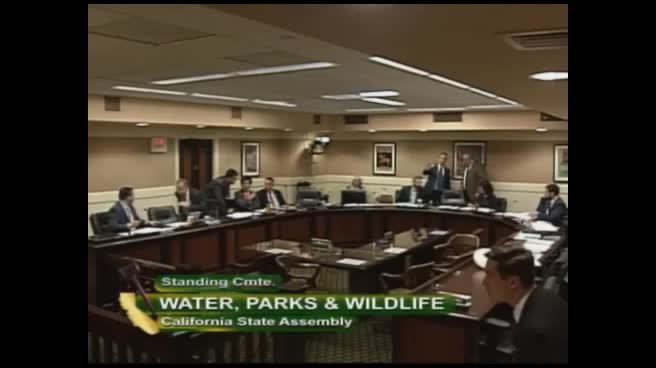 13MIN
Assembly Standing Committee on Water, Parks, and Wildlife
Bill Author