SB 556: Professional land surveyors and engineers.
- Session Year: 2019-2020
- House: Senate
- Latest Version Date: 2019-05-21
|
Date
|
Status
|
|---|---|
| Jun 6, 2019 | Referred to Com. on B. & P. |
| May 28, 2019 | In Assembly. Read first time. Held at Desk. |
| May 28, 2019 | Read third time. Passed. (Ayes 34. Noes 1.) Ordered to the Assembly. |
| May 21, 2019 | Read second time and amended. Ordered to third reading. |
| May 20, 2019 | From committee: Do pass as amended. (Ayes 5. Noes 0.) (May 16). |
| May 14, 2019 | Set for hearing May 16. |
| May 13, 2019 | May 13 hearing: Placed on APPR. suspense file. |
| May 3, 2019 | Set for hearing May 13. |
| Apr 29, 2019 | Read second time and amended. Re-referred to Com. on APPR. |
| Apr 25, 2019 | From committee: Do pass as amended and re-refer to Com. on APPR. (Ayes 9. Noes 0.) (April 22). |
| Apr 11, 2019 | From committee with author's amendments. Read second time and amended. Re-referred to Com. on B., P. & E.D. |
| Apr 4, 2019 | Set for hearing April 22. |
| Apr 3, 2019 | April 8 set for first hearing canceled at the request of author. |
| Mar 19, 2019 | Set for hearing April 8. |
| Mar 7, 2019 | Referred to Com. on B., P. & E.D. |
| Feb 25, 2019 | Read first time. |
| Feb 25, 2019 | From printer. May be acted upon on or after March 27. |
| Feb 22, 2019 | Introduced. To Com. on RLS. for assignment. To print. |
|
Date
|
Description
|
Location
|
Votes
|
|
|---|---|---|---|---|
| May 28, 2019 | Senate 3rd Reading SB556 Pan et al. | Senate Floor |
Passed |
|
| May 16, 2019 | Do pass as amended | Senate Standing Committee on Appropriations |
Passed |
|
| May 13, 2019 | Placed on suspense file | Senate Standing Committee on Appropriations |
Passed |
|
| Apr 22, 2019 | Do pass as amended, but first amend, and re-refer to the Committee on [Appropriations] | Senate Standing Committee on Business, Professions and Economic Development |
Passed |
This list shows positions taken on this bill by organizations on the date displayed, which is linked to the original source.
Positions by individuals are not included.
Office of Senate Floor Analyses (916) 651-1520 Fax: (916) 327-4478 | SB 556 |
THIRD READING
Bill No: SB 556
Amended: 5/21/19
SENATE BUS., PROF. & ECON. DEV. COMMITTEE: 9-0, 4/22/19
AYES: Glazer, Chang, Archuleta, Dodd, Galgiani, Hill, Leyva, Pan, Wilk
SENATE APPROPRIATIONS COMMITTEE: 5-0, 5/16/19
AYES: Portantino, Bradford, Hill, Jones, Wieckowski
NO VOTE RECORDED: Bates
SUBJECT: Professional land surveyors and engineers
SOURCE: California & Nevada Civil Engineers and Land Surveyors
Association
International Union of Operating Engineers
DIGEST:
This bill establishes a certification process for a business practicing land surveying under the jurisdiction of the Board of Professional Engineers, Land Surveyors, and Geologists (Board) beginning January 1, 2022.
- Establishes the Board within the Department of Consumers Affairs to license and regulate engineers, geologists, and land surveyors. (BPC § 8710)
- States that in order to safeguard property and public welfare, no person may practice land surveying unless appropriately licensed or specifically exempted from licensure requirements, and only persons licensed may use the titles “licensed land surveyor” or “land surveyor” or “professional land surveyor.” Requires any person practicing or offering to practice land surveying to submit evidence that he or she is qualified and licensed to practice. (BPC § § 8708 and 8725)
- Defines the practice of land surveying as “a person, including a person employed by a city, county, or city and county, who either in a private or public capacity does or offers to do any one or more of the following”:
- Locates, relocates, establishes, reestablishes or retraces the alignment or elevation for any of the fixed works embraced within the practice of civil engineering;
- Determines the configuration or contour of the earth’s surface, or the position of fixed objects above, on, or below the surface of the earth by applying the principles of mathematics or photogrammetry;
- Locates, relocates, establishes, or reestablishes any property line or boundary of any parcel of land, right of way, easement, or alignment of those lines or boundaries;
- Makes any survey for the subdivision or re-subdivision of any tract of land;
- By use of the principals of land surveying, determines the position for any monument or reference point which marks a property line, boundary line or corner, or sets, resets, replaces any monument or reference point;
- Geodetic or cadasteral surveying, as defined;
- Determines the information shown or to be shown on any map or document prepared or furnished in connection with any one or more of the function described in a)-f) above;
- Indicates in any capacity or in any manner, by the use of the title “land surveyor” that he or she practices land surveying;
- Procures or offers to procure land surveying work;
- Manages any place of business from which land surveying work is solicited or performed;
- Coordinates the work of professional, technical, or special consultants in connection with land surveying;
- Determines the information shown within the description of any deed, trust deed, or other title document prepared for the purpose of describing the limit of real property in connection with a)-f) above;
- Creates or modifies electronic or computerized data in the performance of specified activities; or,
- Renders a statement regarding the accuracy of maps or measured survey data. (BPC § 8726)
- Locates, relocates, establishes, reestablishes or retraces the alignment or elevation for any of the fixed works embraced within the practice of civil engineering;
- Authorizes one or more licensed land surveyors or civil engineers licensed prior to 1982 to practice, or offer to practice, land surveying as a sole proprietorship, partnership, limited liability partnership (LLP), firm, or corporation according to certain conditions. (BPC § 8729(a))
This bill:
- Prohibits all businesses from engaging in the practice of, or offering services for, land surveying, as defined, unless the business obtains a certificate from the Board.
- Requires the Board to create a process to certify a business practicing land surveying, as specified, and requires a business to apply for a certificate to practice land surveying by submitting an application to the Board, beginning January 1, 2022.
- Authorizes the Board to develop the rules and regulations governing the conditions under which a certificate is granted, including, but not limited to, taking into consideration whether the business has submitted a complete application that includes the following:
- The name and address of the business applying for the certification;
- The name and current state license number of the professional land surveyor or civil engineer who will be the responsible charge of work of the business;
- The name of the partners in a partnership, general partnership, or LLP, or the names of the majority stockholders of a corporation; and,
- The signature and title of an agent authorized by the partnership, general partnership, LLP, or corporation to submit the application.
- The name and address of the business applying for the certification;
- Authorizes the Board to charge an application fee.
- Permits the Board to develop rules and regulations governing the circumstances when the Board may require a business to seek renewal of a certificate and the circumstances when the Board may revoke a certificate.
- Prohibits a business that is organized or incorporated in a state or territory outside of California from offering land surveying services in California unless that business obtains a certificate.
Background
Board and Land Surveying Business Operations. According to the Board, it is charged with “safeguarding life, health, property, and public welfare by regulating the practices of professional engineering, land surveying, geology, and geophysics. The Board provides this public service by qualifying and licensing individuals, establishing regulations, and enforcing laws and regulations. The regulation of engineers, land surveyors, geologists, and geophysicists is intended to protect the public from incompetent, negligent, and/or unscrupulous individuals who would offer such services without having to demonstrate they are properly qualified.” Currently, the Board licenses individuals to practice land surveying in California. Additionally, certain businesses are authorized to offer land surveying services as long as there is a responsible licensee in charge. Businesses can be sole proprietorships, partnerships or corporations. In partnerships, one partner must be a licensee and corporations must have an officer as a licensee. Further, land surveying businesses are permitted to organize as LLPs as long as they meet specified insurance requirements.
Under current law, a land surveying business entity must file an Organization Record (OR) form with the Board. The information that must be provided on the OR form includes the name of the business; the addresses of the primary and branch offices; the types of professional services provided through the business; the names of all of the owners, partners, or officers (both licensed and unlicensed); and the names of all of the licensed land surveyors who are in responsible charge of the professional services provided. A new OR form must be filed whenever the information changes. Additionally, if a licensee leaves a business and was the responsible in charge of the professional services, they are required to file a Disassociation Record form.
As currently drafted, this bill additionally requires a business to apply to the Board for a certificate to practice land surveying in California. Likely, much of the information that will be required on the application is what is currently required in an OR. Businesses that are a sole proprietorship would not need to obtain a separate certificate n from the Board. This bill specifically prohibits a business from providing land surveying services unless they have obtained the certificate from the Board.
This bill requires the Board to develop the rules and regulations governing the conditions under which the certificate should be granted including the information required on an application. The Board will determine the fee, establish the requirements for issuing certificates and renewals and the circumstances for revocation. This bill will not change existing licensing laws for professional land surveyors or alter the Board’s current requirement for businesses to file an OR with the Board.
Other States. According to information provided by the sponsors, there are a number of other states that require businesses, including corporations, limited liability companies, and LLPs to register as a land surveying business with their respective state’s regulatory entity responsible for land surveyors. Similar to California, a number of these states have boards with combined regulatory authority for engineers and land surveyors. Alaska, Florida, Kentucky, Missouri, Nevada and New York all require some form of registration of a business in order for the business to offer land surveying services. This bill would provide a similar requirement in that only businesses which obtain a certificate from the Board would be able to offer land surveying services unless they were a sole proprietorship. While the bill provides recommendations for the Board to consider in issuing registrations to businesses, ultimately, the bill tasks the Board with determining the appropriate information that should be considered in establishing a such registration program. This bill delays the implementation of the business registration program by two years, in order to allow the Board to establish the rules and regulations for a business registration program.
FISCAL EFFECT: Appropriation: Yes Fiscal Com.: Yes Local: Yes
According to the Senate Appropriations Committee, staff estimates unknown, potentially low hundreds of thousands (special fund) for the Board to create a process to certify a business for land surveying, including developing an application form; to promulgate regulations promulgation; and for possible enforcement costs. In addition, staff estimates possible IT costs to create a new certificate and enforcement code. Resources could include an Associate Governmental Program Analyst, Program Technician, and costs for the Office of Administrative Hearings.
California & Nevada Civil Engineers and Land Surveyors Association (co-source)
International Union of Operating Engineers (co-source)
California-Nevada Conference of Operating Engineers
Foundation for Fair Contracting
State Building and Construction Trades Council of California
OPPOSITION: (Verified 5/16/19)
Board for Professional Engineers, Land Surveyors, and Geologists
ARGUMENTS IN SUPPORT: Supporters note that this bill clarifies and modernizes the professional land surveyor’s act to protect public health and better identify when a licensed land surveyor is required on a project.
ARGUMENTS IN OPPOSITION: The Board for Professional Engineers, Land Surveyors, and Geologists writes in opposition, “The Board is concerned with the overall concept of the creation of a certification program for land surveying businesses. Aside from the technical aspects of implementing such a program, the Board does not believe the concept has been sufficiently studied and considered to determine if requiring businesses through which its licensees offer their professional services to obtain a certification is necessary to better protect the public. Existing law already indicates what requirements must be met in order for licensees to offer their services through a business entity.”
Prepared by: Elissa Silva / B., P. & E.D. / 916-651-4104
5/21/19 17:52:40
**** END ****
SENATE COMMITTEE ON APPROPRIATIONS
Senator Anthony Portantino, Chair
2019 - 2020 Regular Session
SB 556 (Pan) - Professional land surveyors and engineers
Version: April 29, 2019 | Policy Vote: B., P. & E.D. 9 - 0 |
Urgency: No | Mandate: Yes |
Hearing Date: May 16, 2019 | Consultant: Samantha Lui |
Bill Summary:
Senate Bill 556 would make a number of technical, clarifying, and modernizing changes to the Professional Land Surveyors’ Act.
*********** ANALYSIS ADDENDUM – SUSPENSE FILE ***********
The following information is revised to reflect amendments
adopted by the committee on May 16, 2019
Fiscal Impact:
Staff estimates unknown, potentially low hundreds of thousands (special fund) for the Board to create a process to certify a business for land surveying, including developing an application form; to promulgate regulations promulgation; and for possible enforcement costs. In addition, staff estimates possible IT costs to create a new certificate and enforcement code. Resources could include an Associate Governmental Program Analyst, Program Technician, and costs for the Office of Administrative Hearings.
Committee Amendments:
The committee amendments remove provisions of the bill that would revise the practice of land surveying and civil engineering, and that would require the board to send a copy of the valid complaint, as defined, to specified boards.
-- END --
SENATE COMMITTEE ON APPROPRIATIONS
Senator Anthony Portantino, Chair
2019 - 2020 Regular Session
SB 556 (Pan) - Professional land surveyors and engineers
Version: April 29, 2019 | Policy Vote: B., P. & E.D. 9 - 0 |
Urgency: No | Mandate: Yes |
Hearing Date: May 13, 2019 | Consultant: Samantha Lui |
Bill Summary:
Senate Bill 556 would make a number of technical, clarifying, and modernizing changes to the Professional Land Surveyors’ Act.
Fiscal Impact:
The Board of Professional Engineers, Land Surveyors, and Geologists (Board) identified a fiscal impact of $860,000 for licensing, renewal, and enforcement of new applicants for business certificates and licenses. The resources include:
- $400,000, ongoing, for 2.0 Associate Governmental Program Analysts and 1.0 Program Technician;
- $350,000, ongoing, for Attorney General/Office of Administrative Hearings/Evidence/Witness Fees; and,
- $110,000 for an occupational analysis and creation of two examinations.
In addition, $70,000 (special fund) to be funded within existing maintenance resources to create a new license type, class codes, enforcement codes, and other qualifiers. This will take 6-9 months beyond approved regulations to implement the provisions in this bill which would delay full implementation of this bill.
Background:
The Board regulates the practices of professional engineering, land surveying, geology, and geophysics. Under current law, a land surveying business entity must file an Organization Record (OR) form with the Board. As currently drafted, this bill would additionally require a business to apply to the Board for a certificate to practice land surveying in California. Likely, much of the information that will be required on the application is what is currently required in an OR. Businesses that are a sole proprietorship would not need to obtain a separate registration from the Board. This bill specifically prohibits a business from providing land surveying services unless they have obtained a registration from the Board.
Some civil engineers are authorized to provide land surveying within the scope of their license; however, the number of licensees who can perform these services are limited. Only civil engineers licensed prior to January 1, 1982 are permitted to practice all land surveying. Because civil engineers (although a limited number) are permitted to provide land surveying services, the definition of land surveying under both engineer and land surveyor practice acts must be consistent at this time. This bill revises and potentially expands the definitions of land surveying.
Proposed Law:
This bill would revise and expand the definition of “land surveying”; effective January 1, 2022, and would require the Board to establish a certification process for a business practicing land surveying under the jurisdiction of the (Board). The bill also would require the Board to provide a copy of a “valid complaint” to other state boards that regulate the health and safety of persons working on construction, building, or infrastructure projects.
Related Legislation:
AB 1522 (Committee on Business and Professions) would extend the sunset date of the Board from January 1, 2020 to January 1, 2024. The bill is on the Assembly Appropriations Committee suspense file.
SB 1099 (Canella, 2016) would have expanded the definitions of civil engineering and land surveying to include laying out through the use of mathematics or geometric measurements the alignment or elevation for specified items, determining the configuration or contour of the benthic surface below water bodies or the measuring for volumetric calculations of earthwork, as specified, and making specified determinations by applying the principles of remote sensing. This bill died in the Senate Committee on Business, Professions and Economic Development.
Staff Comments:
The Senate Business, Profession and Economic Development and Assembly Business and Professions Committee held its joint sunset hearing on March 5, 2019 for the Board. The background paper discussed several issues, including the fund condition, staffing needs, and the impact of the Dynamex Operations West Inc. v. Superior Court, and increasing enforcement timeframes. With respect to the fund condition:
As of July 31, 2018, the reserve fund of the Board was projected to be 6.8 months, though expenditures exceeded revenues by $2.0 million by FY 17-18. If the fiscal structure remains unchanged, the Board anticipates a deficit in FY 20-21 and a regulatory fee increase will be required in FY 19-20. The Board is researching a fee change based on an evaluation of costs that redistributes fees across all licensing disciplines while maintaining responsible reserve levels.
-- END --
SENATE COMMITTEE ON
BUSINESS, PROFESSIONS AND ECONOMIC DEVELOPMENT
Senator Steven Glazer, Chair
2019 - 2020 Regular
Bill No: SB 556 Hearing Date: April 22, 2019
Author: | Pan | ||
Version: | April 11, 2019 | ||
Urgency: | No | Fiscal: | Yes |
Consultant: | Elissa Silva | ||
Subject: Professional land surveyors and engineers.
SUMMARY:
Revises and expands the definition of “land surveying”; establishes a certification process for a business practicing land surveying under the jurisdiction of the Board of Professional Engineers, Land Surveyors, and Geologists (Board); and requires the Board to provide a copy of a “valid complaint” to other state boards that regulate the health and safety of persons working on construction, building, or infrastructure projects.
Existing law:
- Establishes the Board within the Department of Consumers Affairs to license and regulate engineers, geologists, and land surveyors. (BPC § 8710)
- States that in order to safeguard property and public welfare, no person may practice land surveying unless appropriately licensed or specifically exempted from licensure requirements, and only persons licensed may use the titles “licensed land surveyor” or “land surveyor” or “professional land surveyor.” Requires any person practicing or offering to practice land surveying to submit evidence that he or she is qualified and licensed to practice. (BPC § § 8708 and 8725)
- Defines the practice of land surveying as “a person, including a person employed by a city, county, or city and county, who either in a private or public capacity does or offers to do any one or more of the following”:
- Locates, relocates, establishes, reestablishes or retraces the alignment or elevation for any of the fixed works embraced within the practice of civil engineering;
- Determines the configuration or contour of the earth’s surface, or the position of fixed objects above, on, or below the surface of the earth by applying the principles of mathematics or photogrammetry;
- Locates, relocates, establishes, or reestablishes any property line or boundary of any parcel of land, right of way, easement, or alignment of those lines or boundaries;
- Makes any survey for the subdivision or re-subdivision of any tract of land;
- By use of the principals of land surveying, determines the position for any monument or reference point which marks a property line, boundary line or corner, or sets, resets, replaces any monument or reference point;
- Geodetic or cadasteral surveying, as defined;
- Determines the information shown or to be shown on any map or document prepared or furnished in connection with any one or more of the function described in (a-f) above;
- Indicates in any capacity or in any manner, by the use of the title “land surveyor” that he or she practices land surveying;
- Procures or offers to procure land surveying work;
- Manages any place of business from which land surveying work is solicited or performed;
- Coordinates the work of professional, technical, or special consultants in connection with land surveying;
- Determines the information shown within the description of any deed, trust deed, or other title document prepared for the purpose of describing the limit of real property in connection with (a-f) above;
- Creates or modifies electronic or computerized data in the performance of specified activities; or,
- Renders a statement regarding the accuracy of maps or measured survey data. (BPC § 8726)
- Locates, relocates, establishes, reestablishes or retraces the alignment or elevation for any of the fixed works embraced within the practice of civil engineering;
- Authorizes any licensed land surveyor to practice, procure, and offer to procure civil engineering work incidental to land surveying work, provided all work is performed under the direction of a civil engineer, as specified. (BPC § 8726.1)
- Authorizes one or more licensed land surveyors or civil engineers licensed prior to 1982 to practice, or offer to practice, land surveying as a sole proprietorship, partnership, limited liability partnership (LLP), firm, or corporation according to certain conditions. (BPC § 8729(a))
- Excludes surveys made exclusively for geological or landscaping purposes, which do not involve the determination of any property line, from the practice of land surveying. (BPC § 8727)
- Authorizes one or more natural persons, partnerships, associations or corporations, domestic or foreign, to form a corporation, as specified, by executing and filing articles of incorporation, as specified. (Corporations Code § 200).
This bill:
- Revises the definition of the practice of engineering to include laying out through the use of mathematics or geometric measurements.
- States that the practice of engineering and land surveying does not prohibit a licensed contractor, while engaged in the business of contracting for the installation or layout of electrical or mechanical systems or facilities, from designing those systems or facilities in accordance with the applicable building codes and standards for work to be performed and supervised by that contractor within the classification for which their license is issued, or from preparing electrical or mechanical shop or field drawings for work which the contractor has contracted to perform.
- Defines “buildings” under the practice of engineering and land surveying to mean the exterior location of the building or building control lines and does not limit building contractors or others from layout of items based on the grid lines or building corners set by a licensed surveyor.
- Defines “remote sensing” under the practice of engineering and land surveying to mean “the detecting, collection, processing and analysis of physical objects regarding the location or dimensions of a location or object, or otherwise using various acquisition methods intended to or resulting in the determination of the configuration or contour of the earth’s surface or the position of fixed objects above, on or below the surface of the earth.
- Revises the definition of the practice of land surveying to include laying out through the use of mathematics or geometric measurements, including specified items defined within the practice of electrical engineering or mechanical engineering, as specified.
- Updates the definition of geodetic surveying.
- States that nothing requires the use of a licensed land surveyor for underground utility locating and subsurface imaging that is not required under the Land Surveyor Act (Act) as it read on January 1, 2018.
- Specifies that the definition of a business includes a partnership, general partnership, LLP or corporation; but does not include a sole proprietorship or a limited liability company (LLC).
- States that this bill does not require a certificate for any form of corporation or partnership otherwise prohibited under the Act, from offering or providing land surveying services.
- Prohibits all businesses from engaging in the practice of, or offering services for, land surveying, as defined, unless the business obtains a certificate from the Board.
- Requires the Board to create a process to certify a business practicing land surveying, as specified, and requires a business to apply for a certificate to practice land surveying by submitting an application form to the Board.
- Authorizes the Board to develop the rules and regulations governing the conditions under which a certificate is granted, including, but not limited to, taking into consideration whether the business has submitted a complete application that included the following:
- The name and address of the business applying for the certification;
- The name and current state license number of the professional land surveyor or civil engineer who will be the responsible charge of work of the business;
- The name of the partners in a partnership, general partnership, or LLP, or the names of the majority stockholders of a corporation; and,
- The signature and title of an agent authorized by the partnership, general partnership, LLP, or corporation to submit the application.
- The name and address of the business applying for the certification;
- Authorizes the Board to charge an application fee.
- Permits the Board to develop rules and regulations governing both of the following:
- The circumstances when the Board may require a business to seek renewal of an existing certificate, including, but not limited to consideration of a business’s change of ownership; and,
- The circumstances when the Board may revoke an existing certificate.
- The circumstances when the Board may require a business to seek renewal of an existing certificate, including, but not limited to consideration of a business’s change of ownership; and,
- Prohibits a business that is organized or incorporated in a state or territory outside of California from offering land surveying services in California unless that business obtains a certificate.
- Deletes the current authorization for an individual or business engaged in any line of endeavor other than land surveying from employing or contracting with a licensed land surveyor or civil engineer to perform the land surveying services and instead authorizes a business that does not have a license or a certificate to practice land surveying, to employ or contract with an individual or business that has a license or business that has a certificate to practice land surveying.
- Requires the Board, upon receipt of a valid complaint, to send a copy of the complaint to the following state boards:
- Boards that regulate the health and safety of persons working on construction, building or infrastructure projects; and,
- Boards that regulate the wages and other labor requirements related to persons working on construction, building, or infrastructure projects.
- Boards that regulate the health and safety of persons working on construction, building or infrastructure projects; and,
- Defines a “valid complaint”, for item 17) above to mean one for which the Board determines that a violation of the land surveyor act may have or is likely to have occurred.
- States that it is the intent of the Legislature in enacting the requirements in item 17) above to ensure that these state boards are made aware of the possible need to further investigate and regulate the cited business, as specified.
- Authorizes the Board to impose fines on a business for operating without a certificate, as specified.
FISCAL EFFECT:
Unknown. This bill is keyed fiscal by Legislative Counsel.
COMMENTS:
- Purpose. This bill is sponsored by the International Union of Operating Engineers and the California & Nevada Civil Engineers and Land Surveyors Association. According to the Author, “Professionals in the land surveying industry have recently noted increasing evidence of unlicensed and unqualified individuals providing unregulated services that would typically fall under the statutes pertaining to land survey work.
“Given the technical nature of land survey work, the terminology and direction contained in the Professional Land Surveyors’ act is extremely complex, and typically not understandable to the untrained observer or even to trained participants (but unlicensed land surveyors) in the construction industry.
“Additionally, with the rapid production of new and improving GPS and radar technology, the ability for unlicensed individuals to attempt to perform land survey work is becoming easier and easier. In a recent oversight hearing of the Board for Professional Engineers, Land Surveyors and Geologists, the Board’s staff acknowledged observing an increase in unlicensed activity due to the advancement of electronic technology.
“Taking into consideration the vital importance of land survey work to construction projects, new and improving GPS, and radar and technology which allows untrained individuals to act as land surveyors, and the Bard’s acknowledgement of a rise in unlicensed activity due to technology, legislation is needed to ensure it’s clear when and where a licensed land surveyor is required.
“In an effort to bring clarity and ensure that the Board for Professional Engineers, Land Surveyors, and Geologists has all the tools it needs to mitigate unlicensed land survey activity, SB 556 would clarify and modernize the Professional Land Surveyors’ Act in order to account for new technology, and establish a clear line as to when a licensed professional land surveyor is required on a project.” - Background.
Board and Land Surveying Business Operations. According to the Board, it is charged with “safeguarding life, health, property, and public welfare by regulating the practices of professional engineering, land surveying, geology, and geophysics. The Board provides this public service by qualifying and licensing individuals, establishing regulations, and enforcing laws and regulations. The regulation of engineers, land surveyors, geologists, and geophysicists is intended to protect the public from incompetent, negligent, and/or unscrupulous individuals who would offer such services without having to demonstrate they are properly qualified.” Currently, the Board licenses individuals to practice land surveying in California. Additionally, certain businesses are authorized to offer land surveying services as long as there is a responsible licensee in charge. Businesses can be sole proprietorships, partnerships or corporations. In partnerships, one partner must be a licensee and corporations must have an officer as a licensee. Further, land surveying businesses are permitted to organize as LLPs as long as they meet specified insurance requirements.
Under current law, a land surveying business entity must file an Organization Record (OR) form with the Board. The information that must be provided on the OR form includes the name of the business; the addresses of the primary and branch offices; the types of professional services provided through the business; the names of all of the owners, partners, or officers (both licensed and unlicensed); and the names of all of the licensed land surveyors who are in responsible charge of the professional services provided. A new OR form must be filed whenever the information changes. Additionally, if a licensee leaves a business and was the responsible in charge of the professional services, they are required to file a Disassociation Record form.
As currently drafted, this bill would additionally require a business to apply to the Board for a certificate to practice land surveying in California. Likely, much of the information that will be required on the application is what is currently required in an OR. Businesses that are a sole proprietorship would not need to obtain a separate registration from the Board. This bill specifically prohibits a business from providing land surveying services unless they have obtained a registration from the Board.
This bill requires the Board to develop the rules and regulations governing the conditions under which the certificate should be granted including the information required on an application. The Board will determine the fee, establish the requirements for issuing certificates and renewals and the circumstances for revocation. However, this bill proposes several areas for the Board to consider in the application process, including the business’s previous five years of land surveying experience and copies of resolutions identifying and acknowledging the responsible licensee in charge of land surveying practices. Further, this bill would strictly prohibit businesses organized or incorporated outside of California from offering land surveying services in California unless they have a certificate issued by the Board. This bill would not change existing licensing laws for professional land surveyors or alter the Board’s current requirement for businesses to file an OR with the Board.
Land Surveying. The definition of “land surveying” is defined in BPC § 8726. Licensed land surveyors can provide the following services:
- Prepare legal descriptions and maps for subdividing property.
- Perform boundary line adjustments.
- Replace lost or obliterated property corners.
- Set boundary markers or property corners, also known as monuments.
- Retrace boundaries for fences and other purposes.
- Locate, relocate, establish, reestablish, or retrace any property line or boundary of any parcel of land, right-of-way, easement, or alignment of those lines or boundaries.
- Prepare legal descriptions and information shown with the description of any deed or other title document.
- Prepare maps or plats for plot plans.
- Stake the location of fixed engineering works for construction purposes.
- Determine boundary discrepancies.
- Locate, relocate, establish, reestablish, or retrace the alignment or elevation for any of the fixed works embraced within the practice of civil engineering.
- Determine contours of the earth’s surface for topographic maps.
- Photogrammetric surveying or aerial topographic mapping.
- A survey that does not determine property lines, but is made only for geological or landscaping purposes, does not require a licensed land surveyor.
Civil Engineers and the Practice of Land Surveying. Some civil engineers are authorized to provide land surveying within the scope of their license; however, the number of licensees who can perform these services are limited. Only civil engineers licensed prior to January 1, 1982 are permitted to practice all land surveying. Because civil engineers (although a limited number) are permitted to provide land surveying services, the definition of land surveying under both engineer and land surveyor practice acts must be consistent at this time. This bill revises and potentially expands the definitions of land surveying. As noted by the Author and Sponsors, the revised definitions aim to bring clarity and modernization to the land surveyors’ practice act in order to account for newer technology and to better identify when the services of land surveying are required. The definitions pertaining to the practice of land surveying have not been updated since the mid 1990’s with only modest changes in the early 2000s.
Business Requirements. As noted earlier, businesses are allowed to offer land surveying services as part of a corporation, firm, or LLP as long as a licensed land surveyor is an owner, partner, or officer in charge of the land surveying business. However, current law, BPC 8729(e), authorizes a business or an individual engaged in any line of endeavor, other than the practice of land surveying, to employ or contract with a licensed land surveyor to perform those services. This bill aims to revise the business owner requirements, by permitting businesses that need land surveying services which are incidental to their business to hire or contract with a registered land surveyor business or a licensed land surveyor without first obtaining a registration from the Board.
Unlicensed Activity. Consistent with other regulatory entities within the DCA, the Board is part of the Senate Committee on Business, Professions and Economic Development and the Assembly Committee on Business and Professions’ (Committees) annual sunset review oversight. The 2018 background paper prepared by Committee staff raised an issue related to unlicensed activity. As noted in that report, “over the last several years, the Board has increasingly observed the proliferation of unlicensed activity. This increase in activity coincides with the advancement of electronic technology, especially Global Positioning System (GPS) and Ground Penetrating Radar (GPR) technology and particularly as the use of that equipment or tools related to the practices of land surveying and geophysical studies. The Board has consistently stated that unlicensed activity is more about the practice of the activity and actions than it is about the use of technology or tools. However, despite this, the Board has observed that GPS and other widely available technologies are being utilized by unlicensed laypersons. The evolution of GPS technology and decreased cost of equipment have made the acquisition and use of that equipment or tools more easily accessible to many others outside of the traditional land surveying industry. The Board notes that GPS equipment is not a perfect tool and just like any other highly sophisticated tools, can produce inconsistent or incorrect results if not used properly.”
In the Board’s subsequent response to the Committees regarding the issues raised during sunset review oversight, it noted that “Unlicensed activity is of great concern to the Board, particularly with the rapid growth of technology, ranging from wide-spread use of the internet to conduct business to the actual tools used to perform professional engineering, land surveying, geology, and geophysics. Companies not properly overseen by licensees are conducting businesses through web sites and communicating via cell phone and electronic communication…One of the most common forms of unlicensed activity that is brought to the Board’s attention involves licensed contractors who may be unknowingly exceeding their license authority by performing professional engineering, land surveying, geological, and geophysical services on projects, particularly in the use of technologically advanced tools.
The Board has worked with the Contractors State License Board in the past to publicize the limitations of licensed contractors and offer education regarding the restrictions of the use of particular tools, such as GPS, drones, and GPR equipment, and the limitations of exemptions provided by the Board’s laws.” As problems of unlicensed activity and other professionals providing services that may be unknowingly outside of their scope of practice, the aim of this bill is to modernize the land surveyors practice act to ensure that the definitions of current practice and technology match what the work of what land surveying is and more clearly identify when a licensed land surveyor is required.
Enforcement and Complaints. The Board is charged with enforcing violations of the practice act for engineers, land surveyors, and geologists. As noted by the Board in its 2018 sunset review oversight report:
“Complaints are investigated against both licensed and unlicensed individuals and are typically submitted by consumers, other licensees, and public agencies. Complaints range from unlicensed practice of professional services to failure by licensees to meet the standard of care. The Board does not operate within a statute of limitations; therefore, complaints regarding projects that occurred many years ago can be investigated. With the professions regulated by the Board, it can often be years before issues with the work come to light. For example, a land surveyor may perform a survey and fail to comply with the laws by not filing the appropriate maps with the proper jurisdiction, but this failure is not discovered until many years later when a neighboring property owner has a survey done. Since the Board does not have a statute of limitations for investigating complaints, cases are typically investigated on a first-in basis, with the exception of cases that involve allegations that may present potential imminent threats to public safety…The majority of cases against licensees involve allegations of negligence and/or incompetence in their professional practice.”
As currently drafted, this bill would require the Board to forward “valid complaints” to other regulatory state boards that regulate the health and safety of persons working on construction or building projects and boards that regulate wage and labor requirements. This bill further defines a “valid complaint” as one that the Board determines is “likely” to have occurred. In 2018, the Board received a little over 400 complaints. Of those 400 complaints, approximately 340 were referred for further investigations.
Other States. According to information provided by the Sponsors, there are a number of other states that require businesses, including corporations, LLCs, and LLPs to register as a land surveying business with their respective state’s regulatory entity responsible for land surveyors. Similar to California, a number of these states have boards with combined regulatory authority for engineers and land surveyors. Alaska, Florida, Kentucky, Missouri, Nevada and New York all require some form of registration of a business in order for the business to offer land surveying services. This bill would provide a similar requirement in that only businesses which obtain a certificate from the Board would be able to offer land surveying services unless they were a sole proprietorship. While the bill provides recommendations for the Board to consider in issuing registrations to businesses, ultimately, the bill tasks the Board with determining the appropriate information that should be considered in establishing a such registration program.
- Arguments in Support. The California & Nevada Civil Engineers and Land Surveyors Association, the International Union of Operating Engineers, and the State Building and Construction Trades Council writes in support and note that this bill would clarify and modernize the professional land surveyor’s act to protect public health and better identify when a licensed land surveyor is required on a project.
- Current Related Legislation. SB 339 (Jones) prohibits a licensee who is retained as an expert from entering into a non-disclosure agreement or similar agreement if it prohibits the licensee from reporting the occurrence specified events to the Board. (Status: This bill is currently pending in the Senate Committee on Business, Professions and Economic Development)
AB 1522 (Committee on Business and Professions) extends the sunset date of the Board. By four years, until January 1, 2024. (Status: This bill is currently pending in the Assembly Committee on Business and Professions.)
- Prior Related Legislation. SB 1099 (Canella) would have expanded the definitions of civil engineering and land surveying to include laying out through the use of mathematics or geometric measurements the alignment or elevation for specified items, determining the configuration or contour of the benthic surface below water bodies or the measuring for volumetric calculations of earthwork, as specified, and making specified determinations by applying the principles of remote sensing. (Status: This bill died in the Senate Committee on Business, Professions and Economic Development.)
- Policy Considerations.
Are the definitions contained in this measure too broad? The Author notes that one of the main goals of this bill is to address potential unlicensed activity of land surveying practices by revising the definitions of land surveying (including changing the definition of land surveying for those civil engineers who are currently authorized to provide land surveying services). However, as currently drafted, the question arises as to whether or not the revised definitions are too broad? Do they expand the practice of land surveying beyond what they currently do? The Author should continue to work with stakeholders to ensure that any definitional changes do not expand the scope of a land surveyor beyond what is their current scope of practice.
Is the review of a business’s five years of land surveying services relevant? This bill requires the Board to establish a business certificate program (or registration) for businesses that offer land surveying services. The bill provides the Board with broad discretion in establishing the registration program; however, it provides a list of “potential” prerequisites for the Board to consider when developing the requirements for business registration. One recommendation is for the Board review the land surveying experience for the last five years preceding the date of the application. Given that a licensee may practice as soon as a licensed is issued, the length of time a business has been operating should not be relevant. The Author should consider deleting this requirement.
Organizational Record. Under current law (BPC § 8729) businesses providing land surveying services are required to have an owner, partner, or officer in charge be a licensee. The law further requires businesses rendering professional land surveying services to file and OR with the Board. This bill would require a new board-issued certificate to practice land surveying on top of the current requirement for an OR to be filed with the Board for certain businesses. Instead of requiring a new business registration should the current requirements for an OR be updated or revised? Or, if a business is required to obtain a certificate to practice land surveying from the Board, will the current requirements for an OR no longer be relevant? The Author should continue to work with the Board and stakeholders to evaluate the OR and a business certificate to avoid any potential redundancy.
Section 8729(e). Are changes to this section necessary? This bill will revise existing law regarding the current authorization for businesses that provide services incidental to their business to employ or contract with a licensed land surveyor or engineer to perform the land surveying services. Presumably, businesses needing land surveying work incidental to their current services would not meet the current licensing requirements for a business to offer land surveying services. As proposed in this bill, the current authorization would be deleted and replaced with an authorization for a business who does not have a certificate from the Board to practice land surveying, to offer those services so long as it is incidental to the business, and a licensed land surveyor is performing the work.
Implementation. As currently drafted, this bill would require the Board to establish regulations and begin issuing certificates on January 1, 2020. The Board would not have the appropriate amount of time to establish a regulatory program prior to implementing a new business regulation. While the Board can begin the process of establishing rules and regulations, the issuance of certificates may need to begin once the Board has established a formal registration process. The Author may wish to consider delaying the implementation to provide the Board with sufficient time to establish a business certification program.
Sharing Complaints. This bill would require the Board to share “valid complaints” with other state boards that regulate wages and the health and safety of persons working on construction, building and infrastructure projects. This bill further defines a “valid complaint” as one that the Board determines is “likely” to have occurred. In 2018, the Board received a little over 400 complaints. And, of those 400 complaints, approximately 340 were referred to investigation. Although a formal investigation has not occurred, the Board has referred the complaint for further evaluation. The Board could potentially refer hundreds of complaints to other state boards without a formal investigation being concluded. What would these other boards do with the information? Given that, according to the Board, the majority of complaints pertain to negligence or incompetence in professional practice, will the information be helpful to other boards, especially in light of the fact that the complaints are not allegations and no formal discipline has been issued? Also, given that the Board is not bound by statute of limitations, it may forward complaints from events that occurred many years ago, it is unclear how this information may be beneficial. The Author should continue to work with the Board and other state boards to determine what should be considered a valid complaint and what would be appropriate to share prior to formal disciplinary action or closing a reviewed complaint without formal action.
- Suggested Amendments.
To address a few of the policy considerations identified above, the Author may wish to consider amending the bill to:
- Add a delayed implementation date: “On or before, January 1, 2022.”
- Delete the recommendation for the Board to review the previous five-year service history of land surveying businesses.
- Strike the changes to 8729(e)
- Add a delayed implementation date: “On or before, January 1, 2022.”
SUPPORT AND OPPOSITION:
Support:
International Union of Operating Engineers (Co-Sponsor)
California & Nevada Civil Engineers and Land Surveyors Association
(March 26th version) (Co-Sponsor)
State Building and Construction Trades Council (March 26th version)
Opposition:
None on file as of April 17, 2019.
-- END --
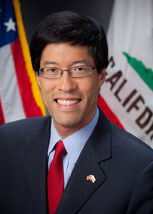
Bill Author
Bill Co-Author(s):