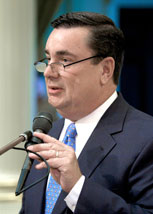
AB 2461: Labor Code Private Attorneys General Act of 2004.
- Session Year: 2015-2016
- House: Assembly
- Latest Version Date: 2016-04-27
The Labor Code Private Attorneys General Act of 2004 authorizes an aggrieved employee to bring a civil action to recover specified civil penalties that would otherwise be assessed and collected by the Labor and Workforce Development Agency on behalf of the employee and other current or former employees for the violation of certain provisions affecting employees. The act requires the employee to follow specified procedures before bringing an action.
This bill would limit the violations for which an aggrieved employee is authorized to bring a civil action under the act and would require the employee to follow specified procedures before bringing an action.
(a)Notwithstanding any other provision of law, any provision of this code that provides for a civil penalty to be assessed and collected by the Labor and Workforce Development Agency or any of its departments, divisions, commissions, boards, agencies, or employees, for a violation of provisions specified in subdivision (b) of Section 2699.3 may, as an alternative, be recovered through a civil action brought by an aggrieved employee on behalf of himself or herself and other current or former employees pursuant to the procedures specified in Section 2699.3.
(b)For purposes of this part, person has the same meaning as defined in Section 18.
(c)For purposes of this part, aggrieved employee means any person who was employed by the alleged violator and against whom one or more of the alleged violations was committed.
(d)For purposes of this part, whenever the Labor and Workforce Development Agency, or any of its departments, divisions, commissions, boards, agencies, or employees, has discretion to assess a civil penalty, a court is authorized to exercise the same discretion, subject to the same limitations and conditions, to assess a civil penalty.
(e)In any action by an aggrieved employee seeking recovery of a civil penalty available under subdivision (a) or (f), a court may award a lesser amount than the maximum civil penalty amount specified by this part if, based on the facts and circumstances of the particular case, to do otherwise would result in an award that is unjust, arbitrary and oppressive, or confiscatory.
(f)For provisions specified in subdivision (b) of Section 2699.3 except those for which a civil penalty is specifically provided, there is established a civil penalty for a violation of these provisions, as follows:
(1)If, at the time of the alleged violation, the person does not employ one or more employees, the civil penalty is five hundred dollars ($500).
(2)If, at the time of the alleged violation, the person employs one or more employees, the civil penalty is one hundred dollars ($100) for each aggrieved employee per pay period for the initial violation and two hundred dollars ($200) for each aggrieved employee per pay period for each subsequent violation.
(3)If the alleged violation is a failure to act by the Labor and Workplace Development Agency, or any of its departments, divisions, commissions, boards, agencies, or employees, there shall be no civil penalty.
(g)An aggrieved employee may recover the civil penalty described in subdivision (f) in a civil action pursuant to the procedures specified in Section 2699.3 filed on behalf of himself or herself and other current or former employees against whom one or more of the alleged violations was committed. Any employee who prevails in any action shall be entitled to an award of reasonable attorneys fees and costs. Nothing in this part shall operate to limit an employees right to pursue or recover other remedies available under state or federal law, either separately or concurrently with an action taken under this part.
(h)No action may be brought under this section by an aggrieved employee if the agency or any of its departments, divisions, commissions, boards, agencies, or employees, on the same facts and theories, cites a person within the timeframes set forth in Section 2699.3 for a violation of the same section or sections of the Labor Code under which the aggrieved employee is attempting to recover a civil penalty on behalf of himself or herself or others or initiates a proceeding pursuant to Section 98.3.
(i)Except as provided in subdivision (j), civil penalties recovered by aggrieved employees shall be distributed as follows: 75 percent to the Labor and Workforce Development Agency for enforcement of labor laws and education of employers and employees about their rights and responsibilities under this code, to be continuously appropriated to supplement and not supplant the funding to the agency for those purposes; and 25 percent to the aggrieved employees.
(j)Civil penalties recovered under paragraph (1) of subdivision (f) shall be distributed to the Labor and Workforce Development Agency for enforcement of labor laws and education of employers and employees about their rights and responsibilities under this code, to be continuously appropriated to supplement and not supplant the funding to the agency for those purposes.
(k)Nothing contained in this part is intended to alter or otherwise affect the exclusive remedy provided by the workers compensation provisions of this code for liability against an employer for the compensation for any injury to or death of an employee arising out of and in the course of employment.
(l)The superior court shall review and approve any penalties sought as part of a proposed settlement agreement pursuant to this part.
(m)This section shall not apply to the recovery of administrative and civil penalties in connection with the workers compensation law as contained in Division 1 (commencing with Section 50) and Division 4 (commencing with Section 3200), including, but not limited to, Sections 129.5 and 132a.
(n)The agency or any of its departments, divisions, commissions, boards, or agencies may promulgate regulations to implement the provisions of this part.
SEC. 2.Section 2699.3 of the Labor Code is amended to read:2699.3.(a)A civil action by an aggrieved employee pursuant to subdivision (a) or (f) of Section 2699 alleging a violation of any provision listed in subdivision (b) shall commence only after the following requirements have been met:
(1)The aggrieved employee or representative shall give written notice by certified mail to the Labor and Workforce Development Agency and the employer of the specific provisions of this code alleged to have been violated, including the facts and theories to support the alleged violation.
(2)(A)The agency shall notify the employer and the aggrieved employee or representative by certified mail that it does not intend to investigate the alleged violation within 30 calendar days of the postmark date of the notice received pursuant to paragraph (1). Upon receipt of that notice or if no notice is provided within 33 calendar days of the postmark date of the notice given pursuant to paragraph (1), the aggrieved employee may commence a civil action pursuant to Section 2699.
(B)If the agency intends to investigate the alleged violation, it shall notify the employer and the aggrieved employee or representative by certified mail of its decision within 33 calendar days of the postmark date of the notice received pursuant to paragraph (1). Within 120 calendar days of that decision, the agency may investigate the alleged violation and issue any appropriate citation. If the agency determines that no citation will be issued, it shall notify the employer and aggrieved employee of that decision within five business days thereof by certified mail. Upon receipt of that notice or if no citation is issued by the agency within that 158-day period prescribed by this subparagraph or if the agency fails to provide timely or any notification, the aggrieved employee may commence a civil action pursuant to Section 2699.
(C)Notwithstanding any other provision of law, a plaintiff may as a matter of right amend an existing complaint to add a cause of action arising under this part at any time within 60 days of the time periods specified in this part.
(b)The provisions of subdivision (a) apply to any alleged violation of the following provisions: Sections 226, 226.7, 510, and 512.
(c)The periods specified in this section are not counted as part of the time limited for the commencement of the civil action to recover penalties under this part.
SEC. 3.Section 2699.5 of the Labor Code is repealed.(a)Notwithstanding any other provision of law, any provision of this code that provides for a civil penalty to be assessed and collected by the Labor and Workforce Development Agency or any of its departments, divisions, commissions, boards, agencies, or employees, for a violation of this code, provisions specified in subdivision (b) of Section 2699.3 may, as an alternative, be recovered through a civil action brought by an aggrieved employee on behalf of himself or herself and other current or former employees pursuant to the procedures specified in Section 2699.3.
(b)For purposes of this part, person has the same meaning as defined in Section 18.
(c)For purposes of this part, aggrieved employee means any person who was employed by the alleged violator and against whom one or more of the alleged violations was committed.
(d)For purposes of this part, cure means that the employer abates each violation alleged by any aggrieved employee, the employer is in compliance with the underlying statutes as specified in the notice required by this part, and any aggrieved employee is made whole. A violation of paragraph (6) or (8) of subdivision (a) of Section 226 shall only be considered cured upon a showing that the employer has provided a fully compliant, itemized wage statement to each aggrieved employee for each pay period for the three-year period prior to the date of the written notice sent pursuant to paragraph (1) of subdivision (c) of Section 2699.3.
(e)
(d)(1)For purposes of this part, whenever the Labor and Workforce Development Agency, or any of its departments, divisions, commissions, boards, agencies, or employees, has discretion to assess a civil penalty, a court is authorized to exercise the same discretion, subject to the same limitations and conditions, to assess a civil penalty.
(2)
(e)In any action by an aggrieved employee seeking recovery of a civil penalty available under subdivision (a) or (f), a court may award a lesser amount than the maximum civil penalty amount specified by this part if, based on the facts and circumstances of the particular case, to do otherwise would result in an award that is unjust, arbitrary and oppressive, or confiscatory.
(f)For all provisions of this code provisions specified in subdivision (b) of Section 2699.3 except those for which a civil penalty is specifically provided, there is established a civil penalty for a violation of these provisions, as follows:
(1)If, at the time of the alleged violation, the person does not employ one or more employees, the civil penalty is five hundred dollars ($500).
(2)If, at the time of the alleged violation, the person employs one or more employees, the civil penalty is one hundred dollars ($100) for each aggrieved employee per pay period for the initial violation and two hundred dollars ($200) for each aggrieved employee per pay period for each subsequent violation.
(3)If the alleged violation is a failure to act by the Labor and Workplace Development Agency, or any of its departments, divisions, commissions, boards, agencies, or employees, there shall be no civil penalty.
(g)(1)Except as provided in paragraph (2), an An aggrieved employee may recover the civil penalty described in subdivision (f) in a civil action pursuant to the procedures specified in Section 2699.3 filed on behalf of himself or herself and other current or former employees against whom one or more of the alleged violations was committed. Any employee who prevails in any action shall be entitled to an award of reasonable attorneys fees and costs. Nothing in this part shall operate to limit an employees right to pursue or recover other remedies available under state or federal law, either separately or concurrently with an action taken under this part.
(2)No action shall be brought under this part for any violation of a posting, notice, agency reporting, or filing requirement of this code, except where the filing or reporting requirement involves mandatory payroll or workplace injury reporting.
(h)No action may be brought under this section by an aggrieved employee if the agency or any of its departments, divisions, commissions, boards, agencies, or employees, on the same facts and theories, cites a person within the timeframes set forth in Section 2699.3 for a violation of the same section or sections of the Labor Code under which the aggrieved employee is attempting to recover a civil penalty on behalf of himself or herself or others or initiates a proceeding pursuant to Section 98.3.
(i)Except as provided in subdivision (j), civil penalties recovered by aggrieved employees shall be distributed as follows: 75 percent to the Labor and Workforce Development Agency for enforcement of labor laws and education of employers and employees about their rights and responsibilities under this code, to be continuously appropriated to supplement and not supplant the funding to the agency for those purposes; and 25 percent to the aggrieved employees.
(j)Civil penalties recovered under paragraph (1) of subdivision (f) shall be distributed to the Labor and Workforce Development Agency for enforcement of labor laws and education of employers and employees about their rights and responsibilities under this code, to be continuously appropriated to supplement and not supplant the funding to the agency for those purposes.
(k)Nothing contained in this part is intended to alter or otherwise affect the exclusive remedy provided by the workers compensation provisions of this code for liability against an employer for the compensation for any injury to or death of an employee arising out of and in the course of employment.
(l)The superior court shall review and approve any penalties sought as part of a proposed settlement agreement pursuant to this part.
(m)This section shall not apply to the recovery of administrative and civil penalties in connection with the workers compensation law as contained in Division 1 (commencing with Section 50) and Division 4 (commencing with Section 3200), including, but not limited to, Sections 129.5 and 132a.
(n)The agency or any of its departments, divisions, commissions, boards, or agencies may promulgate regulations to implement the provisions of this part.
SEC. 2.Section 2699.3 of the Labor Code is amended to read:2699.3.(a)A civil action by an aggrieved employee pursuant to subdivision (a) or (f) of Section 2699 alleging a violation of any provision listed in Section 2699.5 subdivision (b) shall commence only after the following requirements have been met:
(1)The aggrieved employee or representative shall give written notice by certified mail to the Labor and Workforce Development Agency and the employer of the specific provisions of this code alleged to have been violated, including the facts and theories to support the alleged violation.
(2)(A)The agency shall notify the employer and the aggrieved employee or representative by certified mail that it does not intend to investigate the alleged violation within 30 calendar days of the postmark date of the notice received pursuant to paragraph (1). Upon receipt of that notice or if no notice is provided within 33 calendar days of the postmark date of the notice given pursuant to paragraph (1), the aggrieved employee may commence a civil action pursuant to Section 2699.
(B)If the agency intends to investigate the alleged violation, it shall notify the employer and the aggrieved employee or representative by certified mail of its decision within 33 calendar days of the postmark date of the notice received pursuant to paragraph (1). Within 120 calendar days of that decision, the agency may investigate the alleged violation and issue any appropriate citation. If the agency determines that no citation will be issued, it shall notify the employer and aggrieved employee of that decision within five business days thereof by certified mail. Upon receipt of that notice or if no citation is issued by the agency within the that 158-day period prescribed by subparagraph (A) and this subparagraph or if the agency fails to provide timely or any notification, the aggrieved employee may commence a civil action pursuant to Section 2699.
(C)Notwithstanding any other provision of law, a plaintiff may as a matter of right amend an existing complaint to add a cause of action arising under this part at any time within 60 days of the time periods specified in this part.
(b)A civil action by an aggrieved employee pursuant to subdivision (a) or (f) of Section 2699 alleging a violation of any provision of Division 5 (commencing with Section 6300) other than those listed in Section 2699.5 shall commence only after the following requirements have been met:
(1)The aggrieved employee or representative shall give notice by certified mail to the Division of Occupational Safety and Health and the employer, with a copy to the Labor and Workforce Development Agency, of the specific provisions of Division 5 (commencing with Section 6300) alleged to have been violated, including the facts and theories to support the alleged violation.
(2)(A)The division shall inspect or investigate the alleged violation pursuant to the procedures specified in Division 5 (commencing with Section 6300).
(i)If the division issues a citation, the employee may not commence an action pursuant to Section 2699. The division shall notify the aggrieved employee and employer in writing within 14 calendar days of certifying that the employer has corrected the violation.
(ii)If by the end of the period for inspection or investigation provided for in Section 6317, the division fails to issue a citation and the aggrieved employee disputes that decision, the employee may challenge that decision in the superior court. In such an action, the superior court shall follow precedents of the Occupational Safety and Health Appeals Board. If the court finds that the division should have issued a citation and orders the division to issue a citation, then the aggrieved employee may not commence a civil action pursuant to Section 2699.
(iii)A complaint in superior court alleging a violation of Division 5 (commencing with Section 6300) other than those listed in Section 2699.5 shall include therewith a copy of the notice of violation provided to the division and employer pursuant to paragraph (1).
(iv)The superior court shall not dismiss the action for nonmaterial differences in facts or theories between those contained in the notice of violation provided to the division and employer pursuant to paragraph (1) and the complaint filed with the court.
(B)If the division fails to inspect or investigate the alleged violation as provided by Section 6309, the provisions of subdivision (c) shall apply to the determination of the alleged violation.
(3)(A)Nothing in this subdivision shall be construed to alter the authority of the division to permit long-term abatement periods or to enter into memoranda of understanding or joint agreements with employers in the case of long-term abatement issues.
(B)Nothing in this subdivision shall be construed to authorize an employee to file a notice or to commence a civil action pursuant to Section 2699 during the period that an employer has voluntarily entered into consultation with the division to ameliorate a condition in that particular worksite.
(C)An employer who has been provided notice pursuant to this section may not then enter into consultation with the division in order to avoid an action under this section.
(4)The superior court shall review and approve any proposed settlement of alleged violations of the provisions of Division 5 (commencing with Section 6300) to ensure that the settlement provisions are at least as effective as the protections or remedies provided by state and federal law or regulation for the alleged violation. The provisions of the settlement relating to health and safety laws shall be submitted to the division at the same time that they are submitted to the court. This requirement shall be construed to authorize and permit the division to comment on those settlement provisions, and the court shall grant the divisions commentary the appropriate weight.
(c)A civil action by an aggrieved employee pursuant to subdivision (a) or (f) of Section 2699 alleging a violation of any provision other than those listed in Section 2699.5 or Division 5 (commencing with Section 6300) shall commence only after the following requirements have been met:
(1)The aggrieved employee or representative shall give written notice by certified mail to the Labor and Workforce Development Agency and the employer of the specific provisions of this code alleged to have been violated, including the facts and theories to support the alleged violation.
(2)(A)The employer may cure the alleged violation within 33 calendar days of the postmark date of the notice. The employer shall give written notice by certified mail within that period of time to the aggrieved employee or representative and the agency if the alleged violation is cured, including a description of actions taken, and no civil action pursuant to Section 2699 may commence. If the alleged violation is not cured within the 33-day period, the employee may commence a civil action pursuant to Section 2699.
(B)(i)Subject to the limitation in clause (ii), no employer may avail himself or herself of the notice and cure provisions of this subdivision more than three times in a 12-month period for the same violation or violations contained in the notice, regardless of the location of the worksite.
(ii)No employer may avail himself or herself of the notice and cure provisions of this subdivision with respect to alleged violations of paragraph (6) or (8) of subdivision (a) of Section 226 more than once in a 12-month period for the same violation or violations contained in the notice, regardless of the location of the worksite.
(3)If the aggrieved employee disputes that the alleged violation has been cured, the aggrieved employee or representative shall provide written notice by certified mail, including specified grounds to support that dispute, to the employer and the agency. Within 17 calendar days of the postmark date of that notice, the agency shall review the actions taken by the employer to cure the alleged violation, and provide written notice of its decision by certified mail to the aggrieved employee and the employer. The agency may grant the employer three additional business days to cure the alleged violation. If the agency determines that the alleged violation has not been cured or if the agency fails to provide timely or any notification, the employee may proceed with the civil action pursuant to Section 2699. If the agency determines that the alleged violation has been cured, but the employee still disagrees, the employee may appeal that determination to the superior court.
(b)The provisions of subdivision (a) apply to any alleged violation of the following provisions: Sections 226, 226.7, 510, and 512.
(d)
(c)The periods specified in this section are not counted as part of the time limited for the commencement of the civil action to recover penalties under this part.
SEC. 3.Section 2699.5 of the Labor Code is repealed.2699.5.The provisions of subdivision (a) of Section 2699.3 apply to any alleged violation of the following provisions: subdivision (k) of Section 96, Sections 98.6, 201, 201.3, 201.5, 201.7, 202, 203, 203.1, 203.5, 204, 204a, 204b, 204.1, 204.2, 205, 205.5, 206, 206.5, 208, 209, and 212, subdivision (d) of Section 213, Sections 221, 222, 222.5, 223, and 224, paragraphs (1) to (5), inclusive, (7), and (9) of subdivision (a) of Section 226, Sections 226.7, 227, 227.3, 230, 230.1, 230.2, 230.3, 230.4, 230.7, 230.8, and 231, subdivision (c) of Section 232, subdivision (c) of Section 232.5, Sections 233, 234, 351, 353, and 403, subdivision (b) of Section 404, Sections 432.2, 432.5, 432.7, 435, 450, 510, 511, 512, 513, 551, 552, 601, 602, 603, 604, 750, 751.8, 800, 850, 851, 851.5, 852, 921, 922, 923, 970, 973, 976, 1021, 1021.5, 1025, 1026, 1101, 1102, 1102.5, and 1153, subdivisions (c) and (d) of Section 1174, Sections 1194, 1197, 1197.1, 1197.5, and 1198, subdivision (b) of Section 1198.3, Sections 1199, 1199.5, 1290, 1292, 1293, 1293.1, 1294, 1294.1, 1294.5, 1296, 1297, 1298, 1301, 1308, 1308.1, 1308.7, 1309, 1309.5, 1391, 1391.1, 1391.2, 1392, 1683, and 1695, subdivision (a) of Section 1695.5, Sections 1695.55, 1695.6, 1695.7, 1695.8, 1695.9, 1696, 1696.5, 1696.6, 1697.1, 1700.25, 1700.26, 1700.31, 1700.32, 1700.40, and 1700.47, Sections 1735, 1771, 1774, 1776, 1777.5, 1811, 1815, 2651, and 2673, subdivision (a) of Section 2673.1, Sections 2695.2, 2800, 2801, 2802, 2806, and 2810, subdivision (b) of Section 2929, and Sections 3095, 6310, 6311, and 6399.7.
|
Date
|
Status
|
|---|---|
| May 4, 2016 | In committee: Set, first hearing. Hearing canceled at the request of author. |
| Apr 28, 2016 | Re-referred to Com. on L. & E. |
| Apr 27, 2016 | From committee chair, with author's amendments: Amend, and re-refer to Com. on L. & E. Read second time and amended. |
| Mar 8, 2016 | Referred to Coms. on L. & E. and JUD. |
| Feb 22, 2016 | Read first time. |
| Feb 21, 2016 | From printer. May be heard in committee March 22. |
| Feb 19, 2016 | Introduced. To print. |
This list shows positions taken on this bill by organizations on the date displayed, which is linked to the original source.
Positions by individuals are not included.
Date of Hearing: May 4, 2016
ASSEMBLY COMMITTEE ON LABOR AND EMPLOYMENT
Roger Hernández, Chair
ABPCA Bill Id:AB 2461 (
Author:Grove) – As Amended Ver:April 27, 2016
SUBJECT: Labor Code Private Attorneys General Act of 2004
SUMMARY: Limits the violations for which an aggrieved employee is authorized to bring a civil action under the Labor Code Private Attorneys General Act of 2004 (PAGA) and requires the employee to follow specified procedures before bringing an action. Specifically, this bill:
- Limits application of PAGA to alleged violations of the following provisions of existing law:
- Labor Code Section 226 (related to an employer's obligation to provide accurate itemized wage statements).
- Labor Code Section 226.7 (related to an employer's provision of meal, rest or recovery periods).
- Labor Code Section 510 (related to overtime compensation).
- Labor Code Section 512 (related to meal periods).
- Provides that a civil action under PAGA for the aforementioned violations shall commence only after specified procedural requirements of existing law are met, including written notice to the employer and the Labor and Workforce Development Agency (LWDA) and an opportunity for LWDA to investigate the alleged violation.
- Deletes remaining provisions of PAGA.
FISCAL EFFECT: Unknown
COMMENTS:
Background on the Labor Code Private Attorneys General Act of 2004 (PAGA)
The Labor Code Private Attorneys General Act (PAGA) was enacted pursuant to SB 796 (Dunn), Chapter # 906, Statutes of 2003, and went into effect on January 1, 2004.
The Legislative findings accompanying the enactment of SB 796 stated the following:
"Adequate financing of essential labor law enforcement functions is necessary to achieve maximum compliance with state labor laws in the underground economy and to ensure an effective disincentive for employers to engage in unlawful and anticompetitive business practices.
Although innovative labor law education programs and self-policing efforts by industry watchdog groups may have some success in educating some employers about their obligations under state labor laws, in other cases the only meaningful deterrent to unlawful conduct is the vigorous assessment and collection of civil penalties as provided in the Labor Code.
Staffing levels for state labor law enforcement agencies have, in general, declined over the last decade and are likely to fail to keep up with the growth of the labor market in the future.
It is therefore in the public interest to provide that civil penalties for violations of the Labor Code may also be assessed and collected by aggrieved employees acting as private attorneys general, while also ensuring that state labor law enforcement agencies’ enforcement actions have primacy over any private enforcement efforts undertaken pursuant to this act."
The co-sponsors of SB 796, the California Labor Federation, AFL-CIO and the California Rural Legal Assistance Foundation, argued that the bill would address inadequacies in labor law enforcement in two major ways. First, the bill assigned civil fine amounts to the large number of Labor Code provisions, which previously carried prohibitions or criminal fines, but not civil penalties. Second, it authorized the filing of civil actions to recover existing and new civil penalties by aggrieved workers acting as private attorneys general.
The PAGA was significantly amended by SB 1809 (Dunn), Chapter # 221, Statutes of 2004.
SB 1809 significantly amended the provisions of the PAGA by enacting specified procedural and administrative requirements that must be met prior to bringing a private action to recover civil penalties. Moreover, SB 1809 provided that no action shall be brought for a posting, notice, agency reporting, or filing requirement, except as specified.
The provisions of SB 1809 also expanded judicial review of PAGA claims by requiring courts to review and approve any penalties sought as part of a proposed settlement agreement, and those portions of settlements concerning violations of health and safety laws. In addition, courts were authorized to award a lesser amount if to do so otherwise would result in an award that is unjust, arbitrary and oppressive, or confiscatory.
Finally, SB 1809 appropriated $150,000 from the General Fund to the LWDA for the purposes of implementing its provisions, and changed the prior penalty formula to provide that 75 percent of most civil penalties recovered pursuant to PAGA shall go to the LWDA for labor law enforcement and education.
Existing Procedural Requirements Under PAGA
As discussed above, SB 1809 significantly amended the provisions of the PAGA by enacting specified procedural and administrative requirements that must be met prior to bringing a private action to recover civil penalties. SB 1809 essentially enacted three different procedural requirements depending on the type of violation.
"Serious" Labor Code Violations
SB 1809 established a new procedure that an aggrieved employee must follow prior to bringing a civil action to recover penalties for enumerated, serious Labor Code violations (including, but not limited to, violations of wage and hour, overtime, child labor, agricultural, entertainment and garment industry labor laws, and public works laws).
First, the aggrieved employee must provide written notice of the violation to the LWDA and to the employer. The LWDA has 30 days to decide if it will investigate the violation. If the LWDA decides to investigate the alleged violation, it must notify the employer and the aggrieved employee within 33 days. Within 120 days of that decision, the Labor Agency may investigate the alleged violation and issue any appropriate citation. If the LWDA fails to act, the aggrieved employee may pursue a civil action under PAGA.
Notice and Cure Provisions for Other Labor Code Violations
SB 1809 also established specified "notice and cure" provisions for those Labor Code violations not enumerated as "serious" above, nor subject to the Cal-OSHA provisions specified below.
For these violations, the following procedural requirements apply:
First, the aggrieved employee must give written notice to the LWDA and the employer of the alleged violation. The employer may cure the alleged violation within 33 days and give written notice to the employee and the LWDA if the alleged violation is cured.
If the alleged violation is cured, no civil action pursuant to PAGA may commence.
If the alleged violation is not cured within the 33-day period, the aggrieved employee may commence a civil action pursuant to PAGA. For the aggrieved employee to dispute that the alleged violation has been cured, the employee must provide written notice to the employer and the LWDA. Within 17 days the LWDA must review the actions of the employer and provide written notice of whether the alleged violation has been cured.
If the LWDA determines that the alleged violation has not been cured or if the agency fails to provide timely or any notification, the aggrieved employee may proceed with a civil action pursuant to PAGA. If the agency has determined that the alleged violation has been cured, but the employee still disagrees, the employee may appeal that determination to the superior court.
No employer may avail himself or herself of the "notice and cure" provisions more than three times in a 12-month period for the same violation or violations contained in the notice, regardless of the location of the worksite.
Cal-OSHA Violations
SB 1809 also established a new procedure that an aggrieved employee must follow prior to initiating a civil action to recover penalties for violations of Labor Code provisions pertaining to occupational safety and health (Cal-OSHA), as follows:
- The aggrieved employee must give written notice to the Division of Occupational Safety and Health (DOSH) within the Department of Industrial Relations (DIR) and the employer of the alleged violation.
- DOSH must inspect or investigate the alleged violation pursuant to existing provisions of law.
- If DOSH issues a citation, no civil action pursuant to PAGA may commence.
- If, by the end of the period for inspection or investigation, DOSH fails to issue a citation and the employee disputes that decision, the employee may challenge the decision in the superior court. If the court finds that DOSH should have issued a citation and orders DOSH to issue a citation, then no civil action pursuant to PAGA may commence.
- If DOSH fails to inspect or investigate the alleged violation within the period specified in existing law, the notice and cure provisions outlined above apply to the determination of the alleged violation.
- The superior court shall review any proposed settlement of alleged safety in employment violations to ensure that they are at least as effective as the protections or remedies provided in federal and state law.
Governor's Proposed Budget Changes to PAGA
The Governor's proposed budget released in January contains additional budget resources for the handling of PAGA cases, and also proposed a number of significant policy and procedural changes to the PAGA statute itself.
With respect to resources, the Governor's proposed budget change proposal (BCP) states the following:
"This proposal requests 1.0 position for the Labor and Workforce Development Agency (LWDA), 9.0 positions for the Department of Industrial Relations (DIR), and $1.6 million in the Labor and Workforce Development Fund (LWDF) for the 2016/17 fiscal year ($1.5 million ongoing) to stabilize and improve the handling of Private Attorneys General Act cases, largely to the benefit of workers, employers, and the state."
Further explaining the rationale for increased resources, the BCP states the following:
"As indicated in the Resource History and Workload History charts above, historically, the LWDA and DIR have not been staffed to perform the review and oversight functions contemplated by the Labor Code Sections 2698 - 2699.5 (PAGA). This has contributed to a range of concerns about the PAGA statute itself, Including that employers are being sued and incurring substantial costs defending against technical or frivolous claims, and that workers and the state often end up being shortchanged when these cases are settled. Employers are also concerned about potential exposure to large back pay and penalty claims, often pursued through PAGA actions, when courts make new precedential determinations in wage and hour cases. This proposal would address these by concerns by providing DIR with the staffing needed to effectively oversee and, when appropriate, step in to handle PAGA cases."
The BCP also proposes a number of significant policy and procedural changes (through proposed budget trailer bill language) to PAGA statute itself. The BCP describes these proposed statutory changes as follows:
"This proposal will also make a number of modest revisions to the PAGA statute to improve the state's oversight of PAGA cases and better insure that they are pursued in the public's interest and not just for private purposes. Proposed revisions would provide for the following:
- Require more detail in the PAGA claim notices filed with the LWDA and require that claims for ten or more employees be verified and accompanied by a copy of the proposed complaint.
- Extend the LWDA's time to review PAGA notices from 30 to 60 days, and specify that employers may submit a request for the LWDA to Investigate a PAGA claim.
- Require PAGA notices and employer responses to be submitted online and accompanied by a filing fee.
- Extend the time for the LWDA to investigate an accepted claim from 120 to 180 days.
- Require the Director of Industrial Relations to be served with a copy of the complaint when a PAGA case is filed.
- Require court approval of all PAGA case settlements, and require that the Director of DIR be provided with notice and an opportunity to object before the court determines whether to approve a settlement.
- Create a separate procedure through which interested parties may ask the Director of DIR to establish a temporary amnesty and safe harbor program to provide expedited back wage payments to employees and penalty relief to employers following the invalidation of a widespread industry practice (similar to Assembly Bill 1513, Chapter 754, Statutes of 2015)."
Recent LAO Analysis of Governor's Budget Proposal
On March 25, 2016, the LAO released an analysis of the PAGA proposals contained in the Governor's proposed budget. With respect to proposals related to proving more information to the LWDA, LAO stated:
"We think the Governor’s proposed amendments to PAGA requiring more information be provided to LWDA—specifically, more detail in the initial PAGA notice and that a copy of the PAGA complaint and any settlement be provided to LWDA—are a reasonable extension of LWDA’s oversight of the PAGA process that would make it possible to better assess the nature and extent of the undesirable outcomes highlighted in the Governor’s proposal. Information obtained about the disposition of PAGA claims could play an important role in future consideration of other potential proposals to modify the PAGA process."
However, with respect to some of the other proposals, LAO expressed concern that they should be addressed through policy, rather than the budget, process:
"In our view, the remaining proposed amendments to the PAGA process differ from those discussed immediately above in that they raise more significant policy issues that are more central to the Legislature’s intent for PAGA. For example, the remaining proposed changes touch on questions of employee access to the PAGA process, how long employees should wait for LWDA to conduct an investigation before the claim may proceed, and whether LWDA should be able to influence the outcome of a PAGA claim once it has decided not to investigate or issue a citation. While the proposed changes may have merit, such fundamental changes to PAGA, in our view, would be more appropriately considered in the legislative policy process rather than the state budget process. This policy deliberation also may be more productive once LWDA has more complete information about the outcomes of PAGA claims—as proposed by the Governor."
Related Legislation
AB 2898 (Labor Committee) makes changes to some of the administrative timelines under PAGA. AB 2898 is intended to serve as a potential policy vehicle for potential policy changes to PAGA as the year continues and depending on the outcome of the budget discussions around PAGA mentioned above.
AB 2462 (Grove) would provide an employer with the right to cure any violation of the Labor Code before an aggrieved employee may bring a civil action under PAGA. AB 2462 is currently pending before this committee.
AB 2463 (Grove) would establish a cap on specified penalties under PAGA of $1,000 for each aggrieved employee. AB 2463 is currently pending before this committee.
AB 2464 (Grove) would authorize a court to dismiss an action as to an aggrieved employee seeking recovery of a civil penalty under PAGA, if, after notice and hearing, the court finds that the aggrieved employee suffered no appreciable physical or economic harm. AB 2464 is currently pending before this committee.
AB 2465 (Grove) would provide that, upon receipt of a notice by an aggrieved employee alleging specified violations of the Labor Code pursuant to PAGA, the LWDA shall investigate the alleged violation and determine if there is a "reasonable basis" for a civil action within 120 calendar days. AB 2465 failed passage in this committee.
Prior Related Legislation
In response to concerns about PAGA claims being filed for alleged technical violations of an employer's obligation to provide accurate wage statements, AB 1506 (Roger Hernández) of 2015 was enacted to amend PAGA to provide an employer with the right to cure a violation of failing to provide its employees with a wage statement containing the inclusive dates of the pay period and the name and address of the legal entity that is the employer. AB 1506 was enacted as an urgency statute and went into effect on October 2, 2015.
Arguments in Support
According to the author:
"The intent of PAGA was simple: give employees the ability to enforce state labor laws if the state agency did not have the time or ability to investigate violations because of a lack of resources.
However, over the years PAGA has increasingly been abused. As an unintended consequence, attorneys are using PAGA to file multi-million dollar lawsuits against small business owners over frivolous and non-harmful labor code violations. Companies are then forced into settlement agreements with most of the money going to pay attorney fees. It is a modern day shakedown on California employers. Over 30,000 PAGA lawsuits have been filed over the last five years.
We should be enabling employers to thrive, not forcing them out of business. PAGA does not require that an employee suffer any actual harm prior to filing a lawsuit against their employer.
PAGA created a formula for awarding civil penalties. If an employee or group of employees is successful in their suit, they receive 25 percent of the total amount of PAGA penalties paid by their employer, and the remaining 75% goes to the LWDA. However, since companies often settle out of court, attorneys bypass these statutory financial obligations by reducing the PAGA penalties to a much lower amount. Then the majority of the settlement goes to attorney fees…
…It is clear that PAGA reform is necessary. The Labor Code plays a vital role in protecting California’s workforce. The intent of this PAGA reform is to prevent lawsuit abuse; if this bill becomes law, employers will still be required to follow the Labor Code."
Therefore, the author states that this bill would amend PAGA to limit its application to Labor Code sections 226, 226.7, 510, and 512, rather than the entire Labor Code. The author states that, under this bill, employees can still bring civil actions against their employer for Labor Code violations; they could not however sue for PAGA penalties on top of penalties and unpaid wages that would be already be due under the Labor Code.
The Civil Justice Association of California (CJAC) supports this bill, arguing that under this bill, employees could sue under PAGA for alleged violations relating to pay statements, accurate employer recording keeping, employee ability to review employer records, payment of overtime wages, and meal, rest and recovery periods. Employees who are actually harmed by alleged violations of other Labor Code sections could still sue outside of PAGA and its statutory minimum damages and attorneys’ fees.
CJAC goes on to state that the broad mandate of PAGA, along with high statutory damages and the availability of attorneys’ fees, has led to numerous abusive lawsuits. Plaintiffs in PAGA suits have more leverage than plaintiffs in traditional lawsuits. A plaintiff may bring a PAGA claim as a representative of other employees (thereby increasing plaintiff’s bargaining power), but the plaintiff doesn’t have to meet the requirements of class certification that a traditional class action plaintiff would. With the threat that PAGA lawsuits pose, many businesses settle the claims rather than defend themselves, even if the claims have little or no merit. Potential penalties can quickly add up, even if violations alleged were minor or technical, and employees suffered no actual harm.
Arguments in Opposition
Opponents state that PAGA is important to preserving workers' rights for a number of reasons. First, California has a significant low-wage and immigrant workforce. These workers are incredibly susceptible to wage theft, unsafe working conditions and other abuses and must have access to meaningful enforcement. Second, the Labor Commissioner’s office lacks the resources to protect workers from workplace abuse. Workers must have the ability to privately enforce these rights or employers will have no financial incentive to follow the law. Third, nearly half of all private sector workers are forced to sign arbitration agreements that waive their right to file a claim with the Labor Commissioner and to participate in a class action. That means PAGA is often the only effective remedy available.
Opponents also argue that this bill is unnecessary and unwarranted, particularly in light of the on-going discussions about the Administration’s 2016/2017 PAGA BCP and trailer bill. Their involvement in these discussions leads them to believe that the Legislature is likely to shortly adopt amendments to PAGA that would give the agency additional resources and authority to address some of the issues raised inferentially by this bill, but without the adverse effects this bill would have on legitimate PAGA actions brought on behalf of low-wage workers.
Opponents argue that this bill would dramatically limit what violations could be enforced in a PAGA action to just four provisions of the Labor Code. This would render much of the state labor protections unenforceable.
REGISTERED SUPPORT / OPPOSITION:
Support
Bakersfield Pipe & Supply
Button Transportation, Inc.
California Apartment Association
Civil Justice Association of California
General Production Service, Inc.
KS Industries, LP
Rival Well Services
Weststar
Zim Industries, Inc.
Opposition
AFSCME, Local 685
American Federation of State, County and Municipal Employees
Association for Los Angeles Deputy Sheriffs
Association of Deputy District Attorneys
CA Conference Board of the Amalgamated Transit Union
CA Conference of Machinists
California Employment Lawyers Association
California Labor Federation, AFL-CIO
California Rural Legal Assistance Foundation
California Teachers Association
California Teamsters Public Affairs Council
Consumer Attorneys of California
Engineer & Scientists of CA, Local 20
International Longshore and Warehouse Union
Los Angeles County Professional Peace Officers Association
Los Angeles Police Protective League
Organization of SMUD Employees
Professional & Technical Engineers, Local 21
Riverside Sheriffs' Association
San Diego County Court Employees Association
San Luis Obispo County Employees Association
SEIU, Local 1000
UNITE-HERE
Utilities Workers Union of America, Local 132
Analysis Prepared by: Ben Ebbink / L. & E. / (916) 319-2091
Discussed in Hearing
 3MIN
Senate Standing Committee on Public Safety
Bill Author

Bill Co-Author(s):