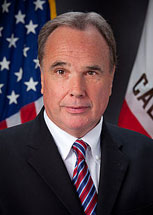
SB 601: State agencies: licenses: fee waiver.
- Session Year: 2019-2020
- House: Senate
- Latest Version Date: 2019-10-12
Existing law requires various licenses to be obtained by a person before engaging in certain professions or vocations or business activities, including licensure as a healing arts professional by various boards within the Department of Consumer Affairs.
This bill would authorize any state agency that issues any business license to establish a process for a person or business that has been displaced or is experiencing economic hardship as a result of an emergency, as defined, to submit an application for reduction or waiver of fees required by the agency to obtain a license, renew or activate a license, or replace a physical license for display.
(a)For purposes of this section:
(1)Displaced means a condition in which the person or business is unable to return to the address of record or other address associated with the license before experiencing economic hardship.
(2)Economic hardship means the inability to pay living or business expenses, unless otherwise defined by a state agency pursuant to subdivision (c).
(3)Emergency means an emergency as defined in Section 8558 or a declared federal emergency.
(4)License includes, but is not limited to, a certificate, registration, or other required document to engage in business.
(b)Notwithstanding any other law, a state agency that issues any business license may establish a process for a person or business that has been displaced or is experiencing economic hardship as a result of an emergency to submit an application, that the agency may grant, for a reduction or waiver of any fees required by the agency to obtain a license, renew or activate a license, or replace a physical license for display.
(c)A fee or waiver process established pursuant to subdivision (b) shall specify, at a minimum, all of the following:
(1)The methodology used by the agency for determining whether a person, as a result of an emergency, has been displaced or is experiencing economic hardship.
(2)The procedure for applying for a reduction or fee waiver.
(3)That the application shall be made within one year of the date on which the emergency was proclaimed or declared.
|
Date
|
Status
|
|---|---|
| Oct 12, 2019 | Chaptered by Secretary of State. Chapter 854, Statutes of 2019. |
| Oct 12, 2019 | Approved by the Governor. |
| Sep 10, 2019 | Enrolled and presented to the Governor at 4 p.m. |
| Sep 4, 2019 | Assembly amendments concurred in. (Ayes 40. Noes 0.) Ordered to engrossing and enrolling. |
| Sep 4, 2019 | Ordered to special consent calendar. |
| Aug 30, 2019 | In Senate. Concurrence in Assembly amendments pending. |
| Aug 30, 2019 | Read third time. Passed. Ordered to the Senate. |
| Aug 22, 2019 | Read second time. Ordered to consent calendar. |
| Aug 21, 2019 | From committee: Do pass. Ordered to consent calendar. (Ayes 17. Noes 0.) (August 21). |
| Jul 11, 2019 | From committee: Do pass and re-refer to Com. on APPR. with recommendation: To consent calendar. (Ayes 19. Noes 0.) (July 10). Re-referred to Com. on APPR. |
| Jun 27, 2019 | Read second time and amended. Re-referred to Com. on G.O. |
| Jun 26, 2019 | From committee: Do pass as amended and re-refer to Com. on G.O. (Ayes 19. Noes 0.) (June 25). |
| Jun 3, 2019 | Referred to Coms. on B. & P. and G.O. |
| May 16, 2019 | In Assembly. Read first time. Held at Desk. |
| May 16, 2019 | Read third time. Passed. (Ayes 37. Noes 0.) Ordered to the Assembly. |
| May 14, 2019 | Read second time. Ordered to consent calendar. |
| May 13, 2019 | From committee: Be ordered to second reading pursuant to Senate Rule 28.8 and ordered to consent calendar. |
| May 3, 2019 | Set for hearing May 13. |
| Apr 23, 2019 | From committee: Do pass and re-refer to Com. on APPR. with recommendation: To consent calendar. (Ayes 9. Noes 0.) (April 22). Re-referred to Com. on APPR. |
| Apr 11, 2019 | Set for hearing April 22. |
| Apr 9, 2019 | From committee: Do pass and re-refer to Com. on B., P. & E.D. with recommendation: To consent calendar. (Ayes 16. Noes 0.) (April 9). Re-referred to Com. on B., P. & E.D. |
| Mar 28, 2019 | From committee with author's amendments. Read second time and amended. Re-referred to Com. on G.O. |
| Mar 22, 2019 | Set for hearing April 9. |
| Mar 14, 2019 | Referred to Coms. on G.O. and B., P. & E.D. |
| Feb 25, 2019 | Read first time. |
| Feb 25, 2019 | From printer. May be acted upon on or after March 27. |
| Feb 22, 2019 | Introduced. To Com. on RLS. for assignment. To print. |
|
Date
|
Description
|
Location
|
Votes
|
|
|---|---|---|---|---|
| Sep 4, 2019 | Unfinished Business SB601 Morrell et al. Concurrence | Senate Floor |
Passed |
|
| Aug 30, 2019 | SB 601 Morrell Consent Calendar Second Day Regular Session | Assembly Floor |
Passed |
|
| Aug 21, 2019 | Do pass. To Consent Calendar. | Assembly Standing Committee on Appropriations |
Passed |
|
| Jul 10, 2019 | Do pass and be re-referred to the Committee on [Appropriations] with recommendation: To Consent Calendar | Assembly Standing Committee on Governmental Organization |
Passed |
|
| Jun 25, 2019 | Do pass as amended and be re-referred to the Committee on [Governmental Organization] | Assembly Standing Committee on Business and Professions |
Passed |
|
| May 16, 2019 | Consent Calendar SB601 | Senate Floor |
Passed |
|
| Apr 22, 2019 | Do pass, but first be re-referred to the Committee on [Appropriations] with the recommendation: To Consent Calendar | Senate Standing Committee on Business, Professions and Economic Development |
Passed |
|
| Apr 9, 2019 | Do pass, but first be re-referred to the Committee on [Business, Professions and Economic Development] with the recommendation: To Consent Calendar | Senate Standing Committee on Governmental Organization |
Passed |
This list shows positions taken on this bill by organizations on the date displayed, which is linked to the original source.
Positions by individuals are not included.
Office of Senate Floor Analyses (916) 651-1520 Fax: (916) 327-4478 | SB 601 |
UNFINISHED BUSINESS
Bill No: SB 601
Amended: 6/27/19
SENATE GOVERNMENTAL ORG. COMMITTEE: 16-0, 4/9/19
AYES: Dodd, Wilk, Allen, Archuleta, Borgeas, Bradford, Chang, Galgiani, Glazer, Hill, Hueso, Jones, Nielsen, Portantino, Rubio, Wiener
SENATE BUS., PROF. & ECON. DEV. COMMITTEE: 9-0, 4/22/19
AYES: Glazer, Chang, Archuleta, Dodd, Galgiani, Hill, Leyva, Pan, Wilk
SENATE APPROPRIATIONS COMMITTEE: Senate Rule 28.8
SENATE FLOOR: 37-0, 5/16/19 (Consent)
AYES: Allen, Archuleta, Atkins, Bates, Beall, Bradford, Caballero, Chang, Dodd, Durazo, Galgiani, Glazer, Grove, Hertzberg, Hill, Hueso, Hurtado, Jackson, Jones, Leyva, McGuire, Mitchell, Monning, Moorlach, Morrell, Nielsen, Pan, Portantino, Roth, Rubio, Skinner, Stern, Stone, Umberg, Wieckowski, Wiener, Wilk
NO VOTE RECORDED: Borgeas
ASSEMBLY FLOOR: 67-0, 8/30/19 (Consent) - See last page for vote
SUBJECT: State agencies: licenses: fee waiver
DIGEST: This bill authorizes any state agency that issues any business license to establish a process for a person or business that has been displaced or is experiencing economic hardship as a result of an emergency, as defined, to submit an application for reduction or waiver fees required by the agency to obtain a license, renew or activate a license, or replace a physical license for display.
Assembly Amendments
authorize any state agency that issues any business license to establish a process for a person or business that has been displaced or is experiencing economic hardships as a result of an emergency, as specified. Previously the bill simply authorized these state agencies to reduce or waive similar licenses.
ANALYSIS:
Existing law:
- Requires various licenses to be obtained by a person before engaging in certain professions or vocations or business activities.
- Specifies those events constituting a “state of war emergency,” a “state of emergency,” or a “local emergency,” for purposes of the California Emergency Services Act (Act) and provides for specified activities in preparation for, or response to, those events.
- Provides that a local emergency may be called by the governing body of a city, county, or city and county, or by an official designated by ordinance adopted by that governing body.
- Authorizes state agencies to provide mutual aid, including personnel, equipment, and or available resources, to assist political subdivisions during a local emergency or in accordance with mutual aid agreements or at the direction of the Governor.
- Provides the Governor, during a state of emergency, to have complete authority over all agencies of the state government and the right to exercise within the area designated all police power vested in the state by the Constitution and laws of the State of California in order to effectuate the purposes of the Act.
- Authorizes the Governor, during a state of emergency, to direct all agencies of the state government to utilize and employ state personnel, equipment, and facilities for the performance of any and all activities designed to prevent or alleviate actual and threatened damage due to the agency; and allows the Governor to direct such agencies to provide supplemental services and equipment to political subdivisions to restore any services which must be restored in order to provide for the health and safety of the citizens of the affected area.
This bill:
- Authorizes a state agency that issues any business license to establish a process for a person or business that has been displace or is experiencing economic hardship as a result of an emergency, as defined, to submit an application for reduction or waiver fees required by the agency to obtain a license, renew or activate a license, or replace a physical license for display.
- Provides that a fee or waiver process established under this bill shall specify, at a minimum, all of the following:
- The methodology used by the agency for determining whether a person, as a result of an emergency, has been displaced or is experiencing economic hardship.
- The procedure for applying for a reduction or fee waiver.
- That the application shall be made within one year of the date on which the emergency was proclaimed or declared.
Comments
Purpose of the bill. According to the author’s office, “as evidenced by the recent fires that wreaked havoc throughout the state, Californians affected by disasters are severely economically disadvantaged. In the aftermath, expenses pile up as victims must replace important documents and possessions, including licensing documents. This bill will help streamline the process of helping victims get back to work and on the path to economic recovery.”
Declared emergencies. This bill specifically references both federally declared emergencies and those emergencies that are referenced in California Government Code Section 8558 - state of war emergency, state of emergency, and local emergency.
State of war emergency exists immediately, with or without a proclamation by the Governor, whenever the state or nation is attacked by an enemy of the United States. A state of emergency is the duly proclaimed existence of disaster or extreme peril to the safety and property within the state. A local emergency is similar to a state of emergency but limited to the territorial limits of a county, city and county, or city. Unlike a state of emergency, a local emergency may be called by the governing body of a city, county, or city and county, or by an official designated by ordinance adopted by that governing body.
Currently when an emergency is declared, it can include a number of remedies to help the affected area recover from the disaster. This sometimes includes the reduction or waiver of certain fees similar to what this bill is seeking to do. For example, late last year, former Governor Brown declared a state of emergency in Colusa County due to the effects of the Mendocino Complex Fire. As part of that proclamation, the Governor suspended a number of fees related to the replacement of driver’s identification cards, vehicle registration certificates, and certifications of title, by any individual who lost such records because of the disaster. These types of suspensions are quite common when declaring a state of emergency.
Related/Prior Legislation
SB 532 (Dodd, Chapter 557, Statutes of 2018) added “cyberterrorism” to the list of conditions that are named in the Act that may be cited to support the proclamation of a state of emergency or local emergency.
SB 531 (Galgiani, 2017) would have authorized a port district established under the Harbors and Navigation Code to declare a local emergency on the same basis as a city, county, or city and county. (Vetoed by Governor Brown)
AB 220 (Ridley-Thomas, 2017) would have added “acute homelessness” to the list of conditions constituting a state of emergency and a local emergency. (Never heard in the Assembly Governmental Organization Committee)
FISCAL EFFECT: Appropriation: No Fiscal Com.: Yes Local: No
According to the Assembly Appropriations Committee:
- The Department of Consumer Affairs (DCA) anticipates minor and absorbable revenue loss (various special funds) to affected programs for a localized emergency. In the event of a large-scale emergency, DCA assumes each program would use discretion when determining if a fee waiver or fee reduction would be possible while maintaining fiscal solvency.
- DCA anticipates a medium to medium-high level information technology (IT) effort for program implementation related to the application process. DCA indicates this work can be done by redirecting existing maintenance resources and may require up to one year for IT implementation if all programs participate.
R Street Institute (source)
Board of Behavioral Sciences
California Board of Accountancy
California Chamber of Commerce
California Dental Association
Rebuild Paradise Foundation
Southwest California Legislative Council
OPPOSITION: (Verified 8/29/19)
None received
ARGUMENTS IN SUPPORT: According to the R Street Institute, the relief that could be provided by this bill “encourages people to play by the rules. The devastation in the Paradise area, for instance, has increased demand for all types of building contractors. We all want the people who do this work to be licensed and insured. Making it less costly for people who live in those areas is a win for everybody.”
ASSEMBLY FLOOR: 67-0, 8/30/19
AYES: Aguiar-Curry, Arambula, Bauer-Kahan, Berman, Bigelow, Bloom, Boerner Horvath, Bonta, Brough, Burke, Calderon, Carrillo, Chau, Chiu, Choi, Cooley, Cooper, Cunningham, Diep, Eggman, Flora, Fong, Frazier, Friedman, Gabriel, Gallagher, Eduardo Garcia, Gipson, Gloria, Gonzalez, Gray, Grayson, Holden, Irwin, Kalra, Kiley, Lackey, Levine, Low, Maienschein, Mathis, Mayes, McCarty, Medina, Melendez, Mullin, Muratsuchi, Obernolte, Patterson, Petrie-Norris, Quirk, Quirk-Silva, Ramos, Reyes, Luz Rivas, Robert Rivas, Rodriguez, Blanca Rubio, Salas, Smith, Mark Stone, Voepel, Waldron, Weber, Wicks, Wood, Rendon
NO VOTE RECORDED: Cervantes, Chen, Chu, Daly, Cristina Garcia, Jones-Sawyer, Kamlager-Dove, Limón, Nazarian, O'Donnell, Santiago, Ting
Prepared by: Felipe Lopez / G.O. / (916) 651-1530
9/1/19 10:57:50
**** END ****
Date of Hearing: August 21, 2019
ASSEMBLY COMMITTEE ON APPROPRIATIONS
Lorena Gonzalez, Chair
SBPCA Bill Id:SB 601
Author:(Morrell) – As Amended Ver:June 27, 2019
Policy Committee: | Business and Professions | Vote: | 19 - 0 |
Governmental Organization | 19 - 0 | ||
|
|
Urgency: No State Mandated Local Program: No Reimbursable: No
SUMMARY:
This bill authorizes a state agency that issues any business license to establish a process for a person or business displaced or experiencing economic hardship as a result of a local, state or federal emergency to apply, within one year of the declared emergency, for a reduction or waiver of any required fees for licensure, renewal or the replacement of a physical license for display.
FISCAL EFFECT:
- The Department of Consumer Affairs (DCA) anticipates minor and absorbable revenue loss (various special funds) to affected programs for a localized emergency. In the event of a large-scale emergency, DCA assumes each program would use discretion when determining if a fee waiver or fee reduction would be possible while maintaining fiscal solvency.
- DCA anticipates a medium to medium-high level information technology (IT) effort for program implementation related to the application process. DCA indicates this work can be done by redirecting existing maintenance resources and may require up to one year for IT implementation if all programs participate.
COMMENTS:
Purpose. This bill seeks to expedite economic recovery efforts in areas impacted by disasters. According to the author:
[This bill] would authorize any state agency that issues a business or occupational license to reduce or waive fees for licensure, renewal of licensure, or replacement of a physical license for display, if a person or business has been displaced by a state or federally declared emergency within one year of the incident. This will help streamline the process of helping victims get back to work and on the path to economic recovery.
Background. The National Interagency Coordination Center’s annual Wildland Fire Summary reports over 1.8 million acres burned in California last year. Fifteen of the 20 most destructive wildfires in the state’s history have occurred in the last three years. Last year was California's deadliest year for fires, with more than 100 fatalities. The Camp Fire, which burned through the town of Paradise, killed 85 people and burned 153,000 acres.
According to the author’s office, “these disasters have affected an estimated 381,784 businesses identified by Federal Emergency Management Agency (FEMA) across nine counties: Butte, Lake, Mendocino, Napa, Nevada, Orange, Solano, Sonoma, and Yuba.”
Under existing law, when a state emergency is declared, the Governor can suspend any statute or regulation pertaining to state business if compliance would make it more difficult to help the affected area recover from the disaster. In late 2018, Governor Brown declared a state of emergency in Colusa County due to the effects of the Mendocino Complex Fire. As part of that proclamation, the Governor suspended fees related to the replacement of driver’s identification cards, vehicle registration certificates and certifications of title, by any individual who lost related records because of the emergency. These types of fee suspensions are commonly included in the Governor’s state of emergency proclamations. Separately, existing law allows the Board of Optometry to reduce or waive fees for a person who is displaced by a disaster to expedite their return to the workplace.
This bill seeks to additionally allow state agencies to reduce or waive any required fees for licensure or renewal within one year of when any emergency has been declared to assist victims and businesses who have been displaced or affected by an emergency.
Analysis Prepared by: Jennifer Swenson / APPR. / (916) 319-2081
Date of Hearing: July 10, 2019
ASSEMBLY COMMITTEE ON GOVERNMENTAL ORGANIZATION
Adam Gray, Chair
SBPCA Bill Id:SB 601
Author:(Morrell) – As Amended Ver:June 27, 2019
SENATE VOTE: 37-0
SUBJECT: State agencies: licenses: fee waiver
SUMMARY: Authorizes any state agency that issues any license, as specified, to reduce or waive licensure and renewal fees, or license replacement fees, within one year of the proclamation of a declared local, state or federal emergency. Specifically, this bill:
1) Authorizes any state agency that issues any business license to establish a process to reduce or waive any required fees for licensure, renewal, or licensure, or the replacement of physical license for display for individuals or businesses that have been displaced or suffer economic hardship as a result of a local, state or federal disaster.
2) Defines “displaced” as a condition in which the person or business is unable to return to the address of record or other address associated with the license before experiencing economic hardship.
3) Defines “economic hardship” as the inability to pay living or business expenses, unless otherwise defined by a state agency.
4) Defines “license” to include, but is not limited to, a certificate, registration, or other required document to engage in business.
EXISTING LAW:
- Creates, within the office of the Governor, the California Office of Emergency Services (Cal OES), which is responsible for addressing natural, technological, or manmade disasters and emergencies, including responsibility for activities necessary to prevent, respond to, recover from, and mitigate the effects of emergencies and disasters to people and property.
- Defines three conditions or degrees of emergencies in California, which include a state of war emergency, a state of emergency, or a local emergency.
- State of war emergency: The condition that exists immediately, with or without a proclamation thereof by the Governor, whenever this state or nation is attacked by an enemy of the United States, or upon receipt by the state of a warning from the federal government indicating that such an enemy attack is probable or imminent.
- State of emergency: The duly proclaimed existence of conditions of disaster or of extreme peril to the safety of persons and property within the state caused by conditions such as air pollution, fire, flood, storm, epidemic, riot, drought, cyberterrorism, sudden and severe energy shortage, plant or animal infestation or disease, the Governor’s warning of an earthquake or volcanic prediction, or an earthquake, or other conditions, other than conditions resulting from a labor controversy or conditions causing a “state of war emergency,” which, by reason of their magnitude, are or are likely to be beyond the control of the services, personnel, equipment, and facilities of any single county, city and county, or city and require the combined forces of a mutual aid region or regions to combat, or with respect to regulated energy utilities, a sudden and severe energy shortage requires extraordinary measures beyond the authority vested in the California Public Utilities Commission.
c) Local emergency: The duly proclaimed existence of conditions of disaster or of extreme peril to the safety of persons and property within the territorial limits of a county, city and county, or city, caused by conditions which are or are likely to be beyond the control of the services, personnel, equipment, and facilities of that political subdivision.
3) The Federal Robert T. Stafford Disaster Relief and Emergency Assistance Act (Public Law 100-707) authorizes the Federal Emergency Management Agency (FEMA) to provide emergency assistance to states and local entities impacted by disasters. In any emergency, the President may, among other things, authorize public assistance programs aimed at providing essential emergency assistance, repairing and restoring damaged public facilities and removing debris.
4) The California Disaster Assistance Act (CDAA) authorizes Cal OES to administer a disaster assistance program that provides financial assistance for the costs incurred by local governments as a result of a disaster.
5) Authorizes the Board of Optometry to reduce or waive licensure fees for out-of-state applicants, in cases where the person establishes to the board’s satisfaction that they have been displaced by a federally declared emergency and cannot relocate to their state of practice within a reasonable time without economic hardship.
6) Authorizes the State Bar Board of Trustees to waive an annual license fee on the ground of licensee financial hardship.
FISCAL EFFECT: Unknown.
COMMENTS:
Purpose of the bill: According to the author, “SB 601 would authorize any state agency that issues a business or occupational license to reduce or waive fees for licensure, renewal of licensure, or replacement of a physical license for display, if a person or business has been displaced by a state or federally declared emergency within one year of the incident. This will help streamline the process of helping victims get back to work and on the path to economic recovery.”
Wildfires: California continues to suffer from unprecedented wildfires. According to the National Interagency Coordination Center’s annual Wildland Fire Summary report, over 1.8 million acres burned in California last year. Fifteen of the 20 most destructive wildfires in the State’s history have occurred in the last three years. Last year was California's deadliest year for fires, with more than 100 fatalities. The Camp Fire in the fall, which burned through the town of Paradise, killed 85 people and burned 153,000 acres. This deadly blaze is California’s most destructive and deadliest wildfire.
The author’s staff notes, “these disasters have decimated local economies and businesses, affecting an estimated 381,784 businesses identified by FEMA across nine counties: Butte, Lake, Mendocino, Napa, Nevada, Orange, Solano, Sonoma, and Yuba.”
Background: This bill is an effort to streamline economic recovery efforts in areas impacted by disasters. According to the Institute for Justice, the average amount spent on licensing fees in California is $486 and many occupations require a physically displayed license in the workplace. The author’s staff notes this bill is consistent with the existing law allowing the Board of Optometry to reduce or waive fees for a person who is displaced by a disaster to expedite their return to the workplace.
This bill is also consistent with the practice of the Governor suspending fees related to the replacement of driver’s identification cards, vehicle registration certificates, and certifications of title, by any individual who lost related records due to an emergency. These types of fee suspensions are commonly included in the Governor’s state of emergency proclamation.
Arguments in support: The National Association of Social Workers write in support, “These disasters, while they wreak havoc on the entire state, affect low-income Californians to far greater degree. Many go into serious debt attempting to rebuild their lives. SB 601 would provide some much needed financial assistance to these individuals in their time of need.”
The California Chamber of Commerce adds, “In rebuilding their homes and businesses, citizens require professional licenses from our state in order to work. This bill’s provisions will help California’s citizens and businesses replace important licenses they need to get back on their feet.”
REGISTERED SUPPORT / OPPOSITION:
Support
R Street Institute (sponsor)
Rebuild Paradise Foundation
California Board of Accountancy
California Chamber of Commerce
Southwest California Legislative Council
California Dental Association
Board of Behavioral Sciences
California State Board of Pharmacy
San Gabriel Valley Economic Partnership
Contractors State License Board
National Association of Social Workers
Professional Fiduciary Association of California
Opposition
None on file.
Analysis Prepared by: Mike Dayton / G.O. / (916) 319-2531
Date of Hearing: June 25, 2019
ASSEMBLY COMMITTEE ON BUSINESS AND PROFESSIONS
Evan Low, Chair
SBPCA Bill Id:SB 601
Author:(Morrell) – As Amended Ver:March 28, 2019
NOTE: This bill is double referred, and if passed by this Committee, it will be referred to the Assembly Committee on Governmental Organization.
SENATE VOTE: 37-0
SUBJECT: State agencies: licenses: fee waiver
SUMMARY: Authorizes any state agency that issues any license, as specified, to reduce or waive licensure and renewal fees, or license replacement fees, within one year of the proclamation of an emergency or a declared federal emergency, if a person or business establishes that they were displaced or affected by the proclaimed or declared emergency.
EXISTING LAW:
- Establishes a system to mitigate the effects of natural, manmade, or war-caused emergencies that result in conditions of disaster or in extreme peril to life, property, and the resources of the state, and generally to protect the health and safety and preserve the lives and property of the people of the state under the California Emergency Services Act. (Government Code (GOV) §§ 8550-8668)
- Defines “state of war emergency” as the condition that exists immediately, with or without a proclamation thereof by the Governor, whenever this state or nation is attacked by an enemy of the United States, or upon receipt by the state of a warning from the federal government indicating that such an enemy attack is probable or imminent. (GOV § 8558(a))
- Defines “state of emergency” as the duly proclaimed existence of conditions of disaster or of extreme peril to the safety of persons and property within the state caused by conditions such as air pollution, fire, flood, storm, epidemic, riot, drought, cyberterrorism, sudden and severe energy shortage, plant or animal infestation or disease, the Governor’s warning of an earthquake or volcanic prediction, or an earthquake, or other conditions, other than conditions resulting from a labor controversy or conditions causing a “state of war emergency,” which, by reason of their magnitude, are or are likely to be beyond the control of the services, personnel, equipment, and facilities of any single county, city and county, or city and require the combined forces of a mutual aid region or regions to combat, or with respect to regulated energy utilities, a sudden and severe energy shortage requires extraordinary measures beyond the authority vested in the California Public Utilities Commission. (GOV § 8558(b))
- Defines “local emergency” as the duly proclaimed existence of conditions of disaster or of extreme peril to the safety of persons and property within the territorial limits of a county, city and county, or city, caused by conditions such as air pollution, fire, flood, storm, epidemic, riot, drought, cyberterrorism, sudden and severe energy shortage, plant or animal infestation or disease, the Governor’s warning of an earthquake or volcanic prediction, or an earthquake, or other conditions, other than conditions resulting from a labor controversy, which are or are likely to be beyond the control of the services, personnel, equipment, and facilities of that political subdivision and require the combined forces of other political subdivisions to combat, or with respect to regulated energy utilities, a sudden and severe energy shortage requires extraordinary measures beyond the authority vested in the California Public Utilities Commission. (GOV § 8558(c))
- Authorizes, during a state of war emergency or a state of emergency, the Governor to suspend any regulatory statute, or statute prescribing the procedure for conduct of state business, or the orders, rules, or regulations of any state agency, where the Governor determines and declares that strict compliance with any statute, order, rule, or regulation would in any way prevent, hinder, or delay the mitigation of the effects of the emergency. (GOV § 8571)
- Defines “state agency” as including every state office, officer, department, division, bureau, board, and commission, except the California State University, as specified. (GOV § 11000).
- Authorizes the Board of Optometry to reduce or waive licensure fees for out-of-state applicants, in cases where the person establishes to the board’s satisfaction that they have been displaced by a federally declared emergency and cannot relocate to their state of practice within a reasonable time without economic hardship. (Business and Professions Code (BPC) § 3057)
- Authorizes the State Bar Board of Trustees to waive an annual license fee on the ground of licensee financial hardship. (BPC § 6141.1)
THIS BILL:
- Authorizes any state agency that issues any business license to reduce or waive any required fees for licensure, renewal, or licensure, or the replacement of physical license for display if a person or business establishes to the satisfaction of the state agency that the person or business has been displaced or affected by a declared federal emergency or proclaimed state emergency, as defined.
- Specifies that a declared emergency includes a “state of emergency,” a “state of emergency,” or a “local emergency.”
- Defines “license” to include, but is not limited to, a certificate, registration, or other required document to engage in business.
FISCAL EFFECT: According to the Senate Appropriations Committee, pursuant to Senate Rule 28.8, no significant state costs anticipated.
COMMENTS:
Purpose. This bill is sponsored by R Street Institute. According to the author, this bill “would authorize any state agency that issues a business or occupational license to reduce or waive fees for licensure, renewal of licensure, or replacement of a physical license for display, if a person or business has been displaced by a state or federally declared emergency within one year of the incident. This will help streamline the process of helping victims get back to work and on the path to economic recovery.”
Background. This bill would allow state agencies to waive or reduce licensing fees in cases when a declared emergency has been proclaimed. The bill specifically references “state of war emergency,” “state of emergency,” and “local emergency,” as defined under the California Emergency Services Act, and federal emergencies.
State of war emergency exists immediately, with or without a proclamation by the Governor, whenever the state or nation is attacked by an enemy of the United States. A state of emergency is the duly proclaimed existence of disaster or extreme peril to the safety and property within the state. A local emergency is similar to a state of emergency but limited to the territorial limits of a county, city and county, or city. Unlike a state of emergency, a local emergency may be called by the governing body of a city, county, or city and county, or by an official designated by ordinance adopted by that governing body.
When a state of war emergency or a state of emergency is declared, the Governor is already authorized to suspend any statute or regulation pertaining to state business if compliance would make it more difficult to help the affected area recover from the disaster. This sometimes includes the reduction or waiver of fees. For example, late last year, former Governor Brown declared a state of emergency in Colusa County due to the effects of the Mendocino Complex Fire. As part of that proclamation, the Governor suspended fees related to the replacement of driver’s identification cards, vehicle registration certificates, and certifications of title, by any individual who lost related records because of the emergency. These types of suspensions are common during a state of emergency.
This bill seeks to additionally allow state agencies to reduce or waive any required fees for licensure or renewal within one year of when any emergency has been declared, including federal and local emergencies, to assist victims and businesses who have been “displaced” or “affected” by an emergency.
POLICY ISSUES:
- Overbroad Legislative Delegation. When agencies are granted the broad authority to decide who, when, and how someone qualifies or does not qualify for a program, it could lead to discrimination or preferentialism. Further, it may place pressure on an agency to offer waivers even when it is unadvised, such as when the agency’s budget cannot handle it.
- Lack of Definitions. The terms “displaced” and “affected” are not defined. It is unclear what the threshold for “affected” is or should be. Many licensees face hardships that are out of their control. While disaster assistance is important and necessary, the bill lacks guidance as to how affected one must be.
IMPLEMENTATION ISSUES:
- Inconsistent Implementation. The bill does not provide direction to agencies on to determine how fees should be waived or how to demonstrate that a victim is “displaced” or “affected by an emergency.
AMENDMENTS:
- To ensure that agencies establish a uniform process for the reduction or waiver for victims of a state emergency, the author should amend the bill as follows:
Page 2, lines 1-9:
11009.5. (a) Notwithstanding any other law, a state agency that issues any business license may, may establish a process for a person or business that has been displaced or is experiencing economic hardship as the result of an emergency, as defined in Section 8558, or a declared federal emergency to apply for a reduction or waiver of any fees required by the agency to obtain a license, renew or activate a license, or replace a physical license for display. within one year of the proclamation of an emergency as defined in Section 8558 or a declared federal emergency, reduce or waive any required fees for licensure, renewal of licensure, or the replacement of a physical license for display if a person or business establishes to the satisfaction of the state agency that the person or business has been displaced or affected by the proclaimed or declared emergency.
- To ensure agencies disclose the process used to determine whether an applicant qualifies for a fee reduction or waiver, the author should amend the bill as follows:
Page 2, line 10, after (b), insert:
(b) A fee reduction or waiver process established pursuant to subdivision (a) shall specify, at a minimum, the following:
(1) The methodology for determining displacement or economic hardship and whether the displacement or economic hardship is the result of the emergency.
(2) The procedure for applying for the reduction or waiver.
(3) That the application must be made within one year of the proclamation of the emergency.
- To provide definitions for the conditions that may qualify under the fee reduction or waiver process, the author should amend the bill as follows:
Page 2, line 10, after the above provision:
(c) For purposes of this section, “license” the following definitions apply:
(1) “Economic hardship” means the inability to pay living or business expenses, unless otherwise defined by a state agency pursuant to this section.
(2) “Displaced” means the person or business is unable to return to the address of record or other address associated with the license before experiencing economic hardship.
(3) “License” includes, but is not limited to, a certificate, registration, or other required document to engage in business.
REGISTERED SUPPORT:
R Street Institute (sponsor)
Board of Behavioral Sciences
California Chamber of Commerce
California Dental Association
California State Board of Pharmacy
Contractors State License Board
National Association of Social Workers, California Chapter
Rebuild Paradise Foundation
San Gabriel Valley Economic Partnership
Southwest California Legislative Council
REGISTERED OPPOSITION:
None on file
Analysis Prepared by: Vincent Chee / B. & P. / (916) 319-3301
Office of Senate Floor Analyses (916) 651-1520 Fax: (916) 327-4478 | SB 601 |
CONSENT
Bill No: SB 601
Amended: 3/28/19
SENATE GOVERNMENTAL ORG. COMMITTEE: 16-0, 4/9/19
AYES: Dodd, Wilk, Allen, Archuleta, Borgeas, Bradford, Chang, Galgiani, Glazer, Hill, Hueso, Jones, Nielsen, Portantino, Rubio, Wiener
SENATE BUS., PROF. & ECON. DEV. COMMITTEE: 9-0, 4/22/19
AYES: Glazer, Chang, Archuleta, Dodd, Galgiani, Hill, Leyva, Pan, Wilk
SENATE APPROPRIATIONS COMMITTEE: Senate Rule 28.8
SUBJECT: State agencies: licenses: fee waiver
DIGEST: This bill authorizes any state agency that issues any business license to reduce or waive any required fees for licensure, renewal of licensure, or the replacement of a physical license if a person or business establishes to the satisfaction of the state agency that the person or business has been displaced or affected by a declared federal emergency or proclaimed state emergency.
ANALYSIS:
Existing law:
- Requires various licenses to be obtained by a person before engaging in certain professions or vocations or business activities.
- Specifies those events constituting a “state of war emergency,” a “state of emergency,” or a “local emergency,” for purposes of the California Emergency Services Act (Act) and provides for specified activities in preparation for, or response to, those events.
- Provides that a local emergency may be called by the governing body of a city, county, or city and county, or by an official designated by ordinance adopted by that governing body.
- Authorizes state agencies to provide mutual aid, including personnel, equipment, and or available resources, to assist political subdivisions during a local emergency or in accordance with mutual aid agreements or at the direction of the Governor.
- Provides the Governor, during a state of emergency, to have complete authority over all agencies of the state government and the right to exercise within the area designated all police power vested in the state by the Constitution and laws of the State of California in order to effectuate the purposes of the Act.
- Authorizes the Governor, during a state of emergency, to direct all agencies of the state government to utilize and employ state personnel, equipment, and facilities for the performance of any and all activities designed to prevent or alleviate actual and threatened damage due to the agency; and allows the Governor to direct such agencies to provide supplemental services and equipment to political subdivisions to restore any services which must be restored in order to provide for the health and safety of the citizens of the affected area.
This bill:
- Authorizes any state agency that issues any business license to reduce or waive any required fees for licensure, renewal, or licensure, or the replacement of physical license for display if a person or business establishes to the satisfaction of the state agency that the person or business has been displaced or affected by a declared federal emergency or proclaimed state emergency, as defined.
- Specifies that a declared emergency includes a “state of emergency,” a “state of emergency,” or a “local emergency.”
- Defines “license” to include, but is not limited to, a certificate, registration, or other required document to engage in business.
Comments
Purpose of the bill. According to the author’s office, “as evidenced by the recent fires that wreaked havoc throughout the state, Californians affected by disasters are severely economically disadvantaged. In the aftermath, expenses pile up as victims must replace important documents and possessions, including licensing documents.”
The author’s office states that, “SB 601 would authorize any state agency that issues a business or occupational license to reduce or waive fees for licensure, renewal of licensure, or replacement of a physical license for display, if a person or business has been displaced by a state or federally declared emergency within one year of the incident. This bill will help streamline the process of helping victims get back to work and on the path to economic recovery.”
Declared emergencies. This bill allows state agencies to waive or reduce licensing fees in those cases when a declared emergency has been proclaimed. This bill specifically references both federally declared emergencies and those emergencies that are referenced in California Government Code Section 8558 -state of war emergency, state of emergency, and local emergency.
State of war emergency exists immediately, with or without a proclamation by the Governor, whenever the state or nation is attacked by an enemy of the United States. A state of emergency is the duly proclaimed existence of disaster or extreme peril to the safety and property within the state. A local emergency is similar to a state of emergency but limited to the territorial limits of a county, city and county, or city. Unlike a state of emergency, a local emergency may be called by the governing body of a city, county, or city and county, or by an official designated by ordinance adopted by that governing body.
Currently when an emergency is declared, it can include a number of remedies to help the affected area recover from the disaster. This sometimes includes the reduction or waiver of certain fees similar to what this bill is seeking to do. For example, late last year, former Governor Brown declared a state of emergency in Colusa County due to the effects of the Mendocino Complex Fire. As part of that proclamation, the Governor suspended a number of fees related to the replacement of driver’s identification cards, vehicle registration certificates, and certifications of title, by any individual who lost such records because of the disaster. These types of suspensions are quite common when declaring a state of emergency.
This bill seeks to provide similar relief by allowing state agencies to reduce or waive any required fees for licensure or renewal when an emergency has been declared. It should be noted that this bill simply authorizes a state agency to reduce or waive fees and does not require any agency to waive or reduce any fees.
Related/Prior Legislation
SB 532 (Dodd, Chapter 557, Statutes of 2018) added “cyberterrorism” to the list of conditions that are named in the Act that may be cited to support the proclamation of a state of emergency or local emergency.
SB 531 (Galgiani, 2017) would have authorized a port district established under the Harbors and Navigation Code to declare a local emergency on the same basis as a city, county, or city and county. (Vetoed by Governor Brown)
AB 220 (Ridley-Thomas, 2017) would have added “acute homelessness” to the list of conditions constituting a state of emergency and a local emergency. (Never heard in the Assembly Governmental Organization Committee)
FISCAL EFFECT: Appropriation: No Fiscal Com.: Yes Local: No
R Street Institute (source)
Board of Behavioral Sciences
California Board of Accountancy
California Chamber of Commerce
California Dental Association
Rebuild Paradise Foundation
Southwest California Legislative Council
OPPOSITION: (Verified 5/14/19)
None received
ARGUMENTS IN SUPPORT: According to the R Street Institute, the relief that could be provided by this bill “encourages people to play by the rules. The devastation in the Paradise area, for instance, has increased demand for all types of building contractors. We all want the people who do this work to be licensed and insured. Making it less costly for people who live in those areas is a win for everybody.”
Prepared by: Felipe Lopez / G.O. / (916) 651-1530
5/14/19 16:22:45
**** END ****
SENATE COMMITTEE ON
BUSINESS, PROFESSIONS AND ECONOMIC DEVELOPMENT
Senator Steven Glazer, Chair
2019 - 2020 Regular
Bill No: SB 601 Hearing Date: April 22, 2019
Author: | Morrell | ||
Version: | March 28, 2019 | ||
Urgency: | No | Fiscal: | Yes |
Consultant: | Sarah Mason | ||
Subject: State agencies: licenses: fee waiver
SUMMARY: Authorizes any state agency that issues any business license (including but not limited to a certificate, registration, or other document required to engage in business) to reduce or waive any licensure or renewal fees, or license replacement fees, within one year of the proclamation of an emergency or a declared federal emergency, if a person or business establishes that they were displaced or affected by the proclaimed or declared emergency.
NOTE: This measure was heard in the Senate Committee on Governmental Organization on April 9, 2019 and passed with a vote of 16-0.
Existing law provides for the licensure, registration, certification, and regulation of various professions by a number of state agencies, including the Department of Consumer Affairs (DCA).
This bill authorizes any state agency that issues any business license (including but not limited to a certificate, registration, or other document required to engage in business) to reduce or waive any licensure or renewal fees, or license replacement fees, within one year of the proclamation of an emergency or a declared federal emergency, if a person or business establishes to the satisfaction of the state agency that the person or business has been displaced or affected by the proclaimed or declared emergency.
FISCAL EFFECT: Unknown. This bill is keyed fiscal by Legislative Counsel.
COMMENTS:
- Purpose. This bill is sponsored by the R Street Institute. According to the Author, “In recent years, California has seen several of the most damaging and costly natural disasters in history. Among these were the Tubbs Fire which destroyed at least 8,400 structures and cost more than $1 billion in insurance liability, the Southern California mud and debris flows which claimed 21 lives and damaged well over 400 structures, and the Camp Fire which claimed 85 lives and destroyed more than 18,800 structures. These disasters have decimated local economies and businesses, affecting an estimated 381,784 businesses identified by FEMA across nine counties: Butte, Lake, Mendocino, Napa, Nevada, Orange, Solano, Sonoma, and Yuba.”
The Author states that “As evidenced by the recent fires that wreaked havoc throughout the state, Californians affected by disasters are severely economically disadvantaged. In the aftermath, expenses pile up as victims must replace important documents and possessions, including licensing documents. Many of them lose everything and struggle to rebuild their lives and businesses. Anything the state can do to relieve pressure on those affected and ease their transition back to normalcy ought to be of the highest priority.”
The Author also notes that “According to the Institute for Justice, the average amount spent on licensing fees in California is $486 and many occupations require a physically displayed license in the workplace. California is among the most onerously regulated economies in the nation and disaster victims often have neither the time nor resources to navigate the necessary steps to get back to work. They have already gone through the regulatory process to initially become licensed and whatever can be done to streamline the process of helping them get back to work will benefit the state’s economy as it recovers from emergencies.”
- Background. A number of provisions authorize licensure and renewal fee waivers, including but not limited to:
- Business and Professions Code (BPC §114.3) requires every board within DCA to waive the renewal fees, continuing education requirements, and other renewal requirements for any licensee or registrant called to active duty as a member of the United States Armed Forces or the California National Guard if certain specified requirements are met.
- BPC §§ 2083 and 2442 waives the licensure and renewal fee for a physician and surgeon who certifies to the Medical Board of California that the issuance of the license is for the sole purpose of providing voluntary, unpaid service.
- BPC § 2441 authorizes the Medical Board of California, BPC § 2499.8 authorizes the Board of Podiatric Medicine, and BPC § 2648.3 authorizes the Physical Therapy Board of California to waive a license renewal fee for licensees who demonstrate to the satisfaction of the board that they are unable to practice due to a disability.
- BPC § 3057 authorizes the Board of Optometry to reduce or waive licensure fees for out-of-state applicants, in cases where the person establishes to the board’s satisfaction that they have been displaced by a federally declared emergency and cannot relocate to their state of practice within a reasonable time without economic hardship.
- BPC § 6141.1 authorizes the State Bar Board of Trustees to waive an annual license fee on the ground of licensee financial hardship.
- Arguments in Support. The California Chamber of Commerce supports this measure which would provide flexible discretion to state agencies to help businesses and individuals affected by disasters with state licensing costs”, noting that “In rebuilding their homes and businesses, citizens require professional licenses from our state in order to work. SB 601’s provisions will help California’s citizens and business replace the licenses they need to get back on their feet.”
According to the California Dental Association, by empowering state licensing boards to reduce or waive licensure fees, members of the dental team and all licensed health care professionals can more easily return to work and are alieved of some of the financial pressures victims of natural disasters experience.
- Implementation Considerations. While this bill no doubt has the potential to alleviate some of the financial and logistical burdens faced by licensed professionals and businesses affected by emergencies and devastating natural disasters, the impact of this measure on regulatory agencies throughout state government is not known. What will be the standard for justification that agencies will require? Will all agencies support the same documentation? Is the goal to provide these state agencies broad discretion to determine who should receive a waiver? In order to avoid having DCA entities and others promulgate regulations to define the materials or situations necessary for justification in order to obtain the fee waiver, which could potentially add a significant delay in individuals actually receiving fee waivers, the Author may wish to statutorily specify how consideration for these fee waivers should be made.
It is also unclear how Californians will know about the options provided by this measure. Are state agencies required to make the information available? The Author may wish to require state agencies to inform licensees of this option in order for it to truly be impactful.
SUPPORT AND OPPOSITION:
Support:
R Street Institute (Sponsor)
California Board of Accountancy
California Chamber of Commerce
California Dental Association
Rebuild Paradise Foundation
Southwest California Legislative Council
Opposition:
None on file as of April 17, 2019.
-- END --
SENATE COMMITTEE ON GOVERNMENTAL ORGANIZATION
Senator Bill Dodd
Chair
2019 - 2020 Regular
Bill No: SB 601 Hearing Date: 4/9/2019
Author: | Morrell, et al. | ||
Version: | 3/28/2019 Amended | ||
Urgency: | No | Fiscal: | Yes |
Consultant: | Felipe Lopez | ||
SUBJECT: State agencies: licenses: fee waiver
DIGEST: This bill authorizes any state agency that issues any business license to reduce or waive any required fees for licensure, renewal of licensure, or the replacement of a physical license if a person or business establishes to the satisfaction of the state agency that the person or business has been displaced or affected by a declared federal emergency or proclaimed state emergency.
ANALYSIS:
Existing law:
- Requires various licenses to be obtained by a person before engaging in certain professions or vocations or business activities.
- Specifies those events constituting a “state of war emergency,” a “state of emergency,” or a “local emergency,” for purposes of the California Emergency Services Act (Act) and provides for specified activities in preparation for, or response to, those events.
- Provides that a local emergency may be called by the governing body of a city, county, or city and county, or by an official designated by ordinance adopted by that governing body.
- Authorizes state agencies to provide mutual aid, including personnel, equipment, and or available resources, to assist political subdivisions during a local emergency or in accordance with mutual aid agreements or at the direction of the Governor.
- Provides the Governor, during a state of emergency, to have complete authority over all agencies of the state government and the right to exercise within the area designated all police power vested in the state by the Constitution and laws of the State of California in order to effectuate the purposes of the Act.
- Authorizes the Governor, during a state of emergency, to direct all agencies of the state government to utilize and employ state personnel, equipment, and facilities for the performance of any and all activities designed to prevent or alleviate actual and threatened damage due to the agency; and allows the Governor to direct such agencies to provide supplemental services and equipment to political subdivisions to restore any services which must be restored in order to provide for the health and safety of the citizens of the affected area.
This bill:
- Authorizes any state agency that issues any business license to reduce or waive any required fees for licensure, renewal, or licensure, or the replacement of physical license for display if a person or business establishes to the satisfaction of the state agency that the person or business has been displaced or affected by a declared federal emergency or proclaimed state emergency, as defined.
- Specifies that a declared emergency includes a “state of emergency,” a “state of emergency,” or a “local emergency.”
- Defines “license” to include, but is not limited to, a certificate, registration, or other required document to engage in business.
Background
Purpose of the bill. According to the author’s office, “as evidenced by the recent fires that wreaked havoc throughout the state, Californians affected by disasters are severely economically disadvantaged. In the aftermath, expenses pile up as victims must replace important documents and possessions, including licensing documents.”
The author’s office states that, “SB 601 would authorize any state agency that issues a business or occupational license to reduce or waive fees for licensure, renewal of licensure, or replacement of a physical license for display, if a person or business has been displaced by a state or federally declared emergency within one year of the incident. This bill will help streamline the process of helping victims get back to work and on the path to economic recovery.”
Declared emergencies. This bill would allow state agencies to waive or reduce licensing fees in those cases when a declared emergency has been proclaimed. The bill specifically references both federally declared emergencies and those emergencies that are referenced in California Government Code Section 8558 -state of war emergency, state of emergency, and local emergency.
State of war emergency exists immediately, with or without a proclamation by the Governor, whenever the state or nation is attacked by an enemy of the United States. A state of emergency is the duly proclaimed existence of disaster or extreme peril to the safety and property within the state. A local emergency is similar to a state of emergency but limited to the territorial limits of a county, city and county, or city. Unlike a state of emergency, a local emergency may be called by the governing body of a city, county, or city and county, or by an official designated by ordinance adopted by that governing body.
Currently when an emergency is declared, it can include a number of remedies to help the affected area recover from the disaster. This sometimes includes the reduction or waiver of certain fees similar to what this bill is seeking to do. For example, late last year, former Governor Brown declared a state of emergency in Colusa County due to the effects of the Mendocino Complex Fire. As part of that proclamation, the Governor suspended a number of fees related to the replacement of driver’s identification cards, vehicle registration certificates, and certifications of title, by any individual who lost such records because of the disaster. These types of suspensions are quite common when declaring a state of emergency.
This bill seeks to provide similar relief by allowing state agencies to reduce or waive any required fees for licensure or renewal when an emergency has been declared. It should be noted that the bill simply authorizes a state agency to reduce or waive fees and does not require any agency to waive or reduce any fees.
Recent wildfires. Climate change, increasing number of people living in combustible places, and more fuel for fires to burn are all contributing to more severe wildfires and volatile costs. The state’s two most recent wildfire seasons were unprecedented, both in terms of scope and destruction, with insurance losses totaling more than $25 billion.
The Camp Fire in November of 2018 was the deadliest and most destructive ever in California, resulting in 85 deaths and nearly 19,000 structures destroyed. In June of 2018, the Mendocino Complex Fire became the state’s largest in history, burning nearly 460,000 acres, and in August of 2018, California was battling 17 large fires simultaneously. Although there were fewer fires in total in 2018 than in 2017, the number of acres burned was 73 percent greater. In 2017, an intense series of fires in the North Bay area of the state destroyed more than 200,000 acres and killed 44 people.
Prior/Related Legislation
SB 231 (Galgiani, 2019) would authorize a port district established under the Harbors and Navigation Code to declare a local emergency on the same basis as a city, county, or city and county. (Pending in the Senate Governmental Organization Committee)
SB 532 (Dodd, Chapter 557, Statutes of 2018) added “cyberterrorism” to the list of conditions that are named in the California Emergency Services Act that may be cited to support the proclamation of a state of emergency or local emergency.
SB 531 (Galgiani, 2017) would have authorized a port district established under the Harbors and Navigation Code to declare a local emergency on the same basis as a city, county, or city and county. (Vetoed by Governor Brown)
AB 220 (Ridley-Thomas, 2017) would have added “acute homelessness” to the list of conditions constituting a state of emergency and a local emergency. (Never heard in the Assembly Governmental Organization Committee)
FISCAL EFFECT: Appropriation: No Fiscal Com.: Yes Local: No
SUPPORT:
R Street Institute (Source)
California Chamber of Commerce
OPPOSITION:
None received
ARGUMENTS IN SUPPORT: According to the R Street Institute, the relief that could be provided by this bill “encourages people to play by the rules. The devastation in the Paradise area, for instance, has increased demand for all types of building contractors. We all want the people who do this work to be licensed and insured. Making it less costly for people who live in those areas is a win for everybody.
DUAL REFERRAL: Senate Governmental Organization Committee & Senate Business, Professions and Economic Development Committee.
Bill Author