SB 612: Health care: data reporting.
- Session Year: 2019-2020
- House: Senate
- Latest Version Date: 2019-02-22
|
Date
|
Status
|
|---|---|
| Feb 3, 2020 | Returned to Secretary of Senate pursuant to Joint Rule 56. |
| May 16, 2019 | May 16 hearing: Held in committee and under submission. |
| May 10, 2019 | Set for hearing May 16. |
| Apr 29, 2019 | April 29 hearing: Placed on APPR. suspense file. |
| Apr 18, 2019 | Set for hearing April 29. |
| Apr 11, 2019 | From committee: Do pass and re-refer to Com. on APPR. (Ayes 7. Noes 0.) (April 10). Re-referred to Com. on APPR. |
| Mar 28, 2019 | Set for hearing April 10. |
| Mar 27, 2019 | April 3 set for first hearing canceled at the request of author. |
| Mar 19, 2019 | Set for hearing April 3. |
| Mar 14, 2019 | Referred to Com. on HEALTH. |
| Feb 25, 2019 | Read first time. |
| Feb 25, 2019 | From printer. May be acted upon on or after March 27. |
| Feb 22, 2019 | Introduced. To Com. on RLS. for assignment. To print. |
|
Date
|
Description
|
Location
|
Votes
|
|
|---|---|---|---|---|
| Apr 29, 2019 | Placed on suspense file | Senate Standing Committee on Appropriations |
Passed |
|
| Apr 10, 2019 | Do pass, but first be re-referred to the Committee on [Appropriations] | Senate Standing Committee on Health |
Passed |
This list shows positions taken on this bill by organizations on the date displayed, which is linked to the original source.
Positions by individuals are not included.
SENATE COMMITTEE ON APPROPRIATIONS
Senator Anthony Portantino, Chair
2019 - 2020 Regular Session
SB 612 (Pan) - Health care: data reporting
Version: February 22, 2019 | Policy Vote: HEALTH 7 - 0 |
Urgency: No | Mandate: Yes |
Hearing Date: April 29, 2019 | Consultant: Samantha Lui |
Bill Summary:
Senate Bill 612 would require, on or before January 1, 2021, and on or before January 1 annually thereafter, a healthcare service plan, including a Medi-Cal managed care plan, or a medical group, and a health insurer to report on its participation in specified collaboratives and activities to the Office of Statewide Health Planning and Development (OSHPD). The bill would require OSHPD to compile the aggregate information received from the collaborative group and publish the information on its website, on or before April 1, 2021, and on or before April 1 annually thereafter.
Fiscal Impact:
According to the OSHPD:
- $1.32 million (Health Data and Planning Fund) in FY 2020-21 for 1.0 Staff Services Manager I, 2.0 Associate Governmental Program Analysts to onboard data submitters and draft regulations, and 1.0 Information Specialist I to manage system changes. Of the $1.32 million, $750,000 would include two contracts: $250,000 business analysis contract for identifying programmatic needs and translating those into system requirements and one $500,000 contract for system design, software development, and engineering.
- $1.02 million (Health Data and Planning Fund) in FY 2021-22 for administrative cost of the 4.0 positions and $500,000 to continue system design and software development.
- $524,000 (Health Data and Planning Fun) in FY 2022-23, and ongoing, for the administrative cost of the 4.0 positions.
According to the Department of Insurance, CDI would need $3,000 in FY 2019-20; $15,000 in FY 2020-21 and $6,000 in ongoing costs, to assist OSPHD for enforcement activities if an insurer fails to comply with the reporting requirements.
Background:
- Existing law empowers the OSHPD to serve as the state repository for health data, including health facility utilization, financial reports, and prescription drug pricing. In a movement towards increased transparency and care coordination, a number of entities work to align health quality initiatives with incentives in the commercial and public marketplace. A few examples:
- Covered California’s model contract requires QHPs to agree to actively promote the development and use of care models that focus on access, care coordination, and early identification of at-risk enrollees and consideration of total cost of care, including ensuring that all enrollees have a primary care clinician. QHPs must implement value-based reimbursement methodologies, which are tied to quality metrics, performance, costs, and value measures, to providers within networks contracted to serve Covered California.
- Medi-Cal’s Global Payment Program (GPP), which seeks to improve the health of the uninsured through care coordination and encourages public hospital systems to provide greater primary and preventive services and emphasizes the value of coordinated care.
- California’s Public Hospital Redesign and Incentives in Medi-Cal (PRIME) Program is a five-year, $3.7 billion federally funded initiative under the Medi-Cal 2020 section 1115 waiver, which seeks to improve California’s safety net hospital care delivery by moving toward alternative payment models. PRIME includes three “Domains” that consist of 18 clinical project areas that are tied to a required set of reporting and performance metrics, including complex care management for individuals with chronic conditions. The hospitals’ ability to meet the performance metrics determines the amount of PRIME funding they will receive.
- The Whole-Person Care Pilot, which is a five-year, up to $1.5 billion federally funded pilot program to test county-based initiatives that coordinate health, behavioral health, and social services for vulnerable Medi-Cal beneficiaries who are high users of multiple systems and have poor outcomes. Each pilot designs and implement specific strategies, which may include increasing care coordination for the most vulnerable beneficiaries, ongoing case management for patients, setting and achieving target quality and administrative improvements, and improving the health outcomes for their WPC population.
Proposed Law:
This bill requires, on or before January 1, 2021, and on or before January 1 annually thereafter, a health plan, including a Medi-Cal managed care plan, or a medical group, and a health insurer to report on its participation in specified collaboratives and activities to the Office of Statewide Health Planning and Development (OSHPD). Specified collaboratives, include, but are not limited to:
- A program in which an enrollee has a consistent and stable relationship with a care team that is responsible for comprehensive care management and service delivery.
- A program in which the supportive and therapeutic needs of an enrollee are addressed in a holistic fashion, using models, including medical homes, medical neighborhoods, accountable care organizations, or other models that support patient-centered primary care and behavioral health care.
- A program in which an enrollee receives comprehensive transitional care, including appropriate follow up, when entering and leaving an acute care facility or long-term care setting.
- A program in which an enrollee receives assistance in navigating the health care delivery system and in accessing community and social support services and statewide resources.
- Services and supports that are geographically located as close as possible to where an enrollee resides and are, if available, offered in nontraditional settings, including through telehealth.
- Use of health information technology to link services and care providers across the continuum of care to the greatest extent practicable.
- Activities that prioritize working with enrollees who have high-risk conditions and that involve those enrollees to access and manage appropriate preventative, health, remedial, and supportive care and services.
- Providing incentive payments and resources to physicians and other providers for achieving clinical integration and collaboration necessary to reduce the total cost of care and improve population health.
- Integration of behavioral or oral health services with medical services.
- Programs that include, but are not limited to:
- The federal Centers for Medicare and Medicaid Services (CMS) Innovation Center Transforming Clinical Practice Initiative.
- The CMS Partnership for Patients.
- The Public Hospital Redesign and Incentives in Medi-Cal program.
- A payment reform program sponsored by the Integrated Healthcare Association or CMS Innovation Center.
- A CMS Innovation Center accountable care organization (ACO) program, including the Pioneer ACO Model, the Medicare Shared Savings Program, the Next Generation ACO Model, and other models.
- The California Quality Collaborative.
- A diabetes prevention program recognized by the federal Centers for Disease Control and Prevention.
- Other similar activities.
The bill also requires the reported data to include all of the following information for each collaborative or activity:
- A detailed description, including the number of participating enrollees.
- The demographic profile of participating enrollees.
- The number and type of participating providers.
- The length of participation of enrollees.
- The length of carrier participation.
- Performance measures and outcomes.
The bill requires the OSHPD on or before April 1, 2021, and on or before April 1 annually thereafter, to compile and publish the aggregate information received pursuant to this section on its internet website.
The bill provides no reimbursement is necessary, as the only costs that may be incurred by a local agency will be incurred
Staff Comments:
The Governor’s January 2019 Budget includes $360 million ($180 million Proposition 56 funds and $180 million federal funds) to establish a Value-Based Payment Program through Medi-Cal managed care plans that will provide incentive payments to providers for meeting specific measures aimed at improving care for certain high-cost or high-need populations.
-- END --
SENATE COMMITTEE ON HEALTH
Senator Dr. Richard Pan, Chair
BILL NO: SB 612
AUTHOR: | Pan | ||
VERSION: | February 22, 2019 | ||
HEARING DATE: | April 3, 2019 | ||
CONSULTANT: | Melanie Moreno | ||
SUBJECT: Health care: data reporting
SUMMARY:
Requires health plans, health insurers, and medical groups to report its participation in specified health care delivery and management collaboratives and activities to the Office of Statewide Health Planning and Development, as specified.
Existing law:
- Establishes Department of Managed Health Care [DMHC] to regulate health plans and California Department of Insurance [CDI] to regulate health insurance. [HSC §1340, et seq. and INS §106, et seq.]
- Establishes the Office of Statewide Health Planning and Development (OSHPD) and charges it with duties relating to health planning and research development, including as the state agency designated to collect data for use by all state agencies, including health facility utilization and financial reports, and data related to prescription drug pricing. [HSC § 127000, et seq., 128730, 127679, and 127681]
This bill:
- Requires health plans, health insurers, and medical groups, on or before January 1, 2021, and on or before January 1 annually thereafter, to report to OSHPD its participation in any of the following collaboratives and activities:
- A program in which an enrollee has a consistent and stable relationship with a care team that is responsible for comprehensive care management and service delivery, including advanced models of primary care, National Committee for Quality Assurance patient-centered medical homes, or Joint Commission Primary Care Medical home certified organizations;
- A program in which the supportive and therapeutic needs of an enrollee are addressed in a holistic fashion, using models, including medical homes, medical neighborhoods, accountable care organizations (ACOs), or other models that support patient-centered primary care and behavioral health care, backed by a team of physician specialists, and individualized care plans to the extent feasible;
- A program in which an enrollee receives comprehensive transitional care, including appropriate follow up, when entering and leaving an acute care facility or long-term care setting;
- A program in which an enrollee receives assistance in navigating the health care delivery system and in accessing community and social support services and statewide resources;
- Services and supports that are geographically located as close as possible to where an enrollee resides and are, if available, offered in nontraditional settings, including through telehealth, that are accessible to families, diverse communities, and underserved populations;
- Use of health information technology to link services and care providers across the continuum of care to the greatest extent practicable;
- Activities that prioritize working with enrollees who have high-risk conditions, as defined, and that involve those enrollees to access and manage appropriate preventative, health, remedial, and supportive care and services;
- Providing incentive payments, as defined, and resources to physicians and other providers for achieving clinical integration and collaboration necessary to reduce the total cost of care and improve population health;
- Integration of behavioral or oral health services with medical services;
- Programs that include, but are not limited to:
- The federal Centers for Medicare and Medicaid Services (CMS) Innovation Center Transforming Clinical Practice Initiative;
- The CMS Partnership for Patients;
- The Public Hospital Redesign and Incentives in Medi-Cal program;
- A payment reform program sponsored by the Integrated Healthcare Association or CMS Innovation Center;
- A CMS Innovation Center ACO program, including the Pioneer ACO Model, the Medicare Shared Savings Program, the Next Generation ACO Model, and other models;
- The California Quality Collaborative; and,
- A diabetes prevention program recognized by the federal Centers for Disease Control and Prevention (CDC).
- Other similar activities.
- Requires data reported by the entities in 1) above to include, for each collaborative or activity:
- A detailed description, including the number of participating enrollees;
- The demographic profile of participating enrollees;
- The number and type of participating providers;
- The length of participation of enrollees;
- The length of carrier participation; and,
- Performance measures and outcomes.
- Requires OSHPD, on or before April 1, 2021, and on or before April 1 annually thereafter, to compile and publish the aggregate information received pursuant to this bill, organized by health plan, insurance company, and medical group, on its website.
FISCAL EFFECT:
This bill has not been analyzed by a fiscal committee.
COMMENTS:
- Author’s statement. According to the author, while it is encouraging that entities in the health care system are undertaking activities and strategies with the objective of improving the delivery of care for patients, there is little coordination system-wide to share information about best outcomes, improved efficiencies, and better patient care. In fact, there is not even a comprehensive list of current efforts. More information is needed so that the state, health insurers, and providers can work to align incentives to reward excellence in patient health outcomes, meet the needs of patients across socioeconomic, age, and insurance status, and bring projects with high quality outcomes to scale statewide. This bill provides baseline data to policymakers, purchasers, and the public on the extent to which health plans, health insurers, and medical groups are participating in activities that provide high quality care and improve outcomes for Californians with chronic disease.
- Chronic conditions. Chronic conditions are the leading cause of death and disability in the U.S., and the biggest contributor to health care costs. However, there is wide variation in their incidence, with major differences depending on age, income, race and ethnicity, and insurance status. According to a 2015 report from the California Health Care Foundation (CHCF), about 40% of California adults reported having at least one of the following five chronic conditions: asthma, diabetes, heart disease, high blood pressure, and serious psychological distress. Seventy-one percent of adults on Medicare and 44% of adults on Medi-Cal or other public insurance had at least one chronic condition. Adults with public insurance are more likely to have one or more chronic condition compared to those on private coverage or the uninsured. They are also more likely to face additional socioeconomic challenges that further complicate caring for those conditions. Moreover, where patients reside impacts how they receive care, the cost of that care and even their likely health outcomes as a result of care.
- Senate Health Committee hearing. On February 27, 2019, this Committee convened experts and stakeholders to examine strategies across purchasers and programs that have the objective of improving the care delivered to people with chronic conditions. The testimony focused on aligning incentives to reward excellence in patient health outcomes, meeting the needs of patients across socioeconomic, age, and insurance status, and bringing projects with high quality outcomes to scale statewide. Specifically, testimony was offered to illustrate how purchasers in the private insurance market and Medi-Cal programs are moving toward better value and improving care for patients with chronic conditions. Some of the key takeaways from the hearing include that there is wide variation in quality and cost in California that has persistent over time regardless of health plan product or provider delivery model and that integrated networks and risk sharing arrangements show superior cost and quality overall and much lower patient cost sharing. Patients in private insurance may have different socioeconomic challenges than patients in Medi-Cal. Medi-Cal strategies and programs include specific goals directed at reaching underserved populations, like patients with multiple chronic conditions or individuals with unstable housing. Successful programs for private insurance patients may not necessarily be appropriate for patients in Medi-Cal and vice versa. Therefore, efforts to support or incentivize programs should take into consideration these population differences and their respective needs, when appropriate. Policies to incentivize better care for patients with chronic conditions may wish to evaluate how best to account for patient experience of care. Financial incentives may have limited impact without data helping to inform where incentives should go and compare outcomes. Additional staff and resources may be required to identify gaps in care and perform patient outreach, especially for patients with multiple chronic conditions. Finally, data and care coordination should be appropriately shared and aligned. A proliferation of care coordination programs can be unproductive if a patient is receiving multiple or conflicting care plans.
- Existing initiatives. A number of entities in California have been working towards improving care and aligning incentives in both the commercial and public insurance markets through various activities, including:
- Covered California model contract. The model contract requires QHPs to agree to actively promote the development and use of care models that focus on access, care coordination, and early identification of at-risk enrollees and consideration of total cost of care, including ensuring that all enrollees have a primary care clinician. These models should include patient-centered medical home, integrated healthcare models (a system of population-based care coordinated across the continuum including multi-discipline physician practices, hospitals and ancillary providers), or ACOs. QHPs are required to report annually for the percent of enrollees obtaining primary care in a patient centered medical home based on national benchmarks. QHPs are also required to implement value-based reimbursement methodologies to providers within networks contracted to serve Covered California. Value-based reimbursement methodologies must include payments to hospitals and physicians that are linked to quality metrics, performance, costs and value measures and must include the health plans or insurers entire book of business with the provider.
- CalPERS. In June 2016, the board adopted “diabetes prevention” as one of five benefit changes for the 2017 health plan year. The board required all CalPERS contracted health plans to implement diabetes prevention programs that meet the Centers for Disease Control and Prevention “Diabetes Prevention Recognition Program Standards and Operating Procedures,” at no additional cost to members. This benefit is designed to reach pre-diabetic plan members to prevent or reduce the onset of Type 2 diabetes. Beginning in 2019, a new value-based insurance design option is available for those enrolled in the PERS Select Basic plan. This plan provides members and their families a lower-cost option and encourage enrollees to be more engaged in their health care.
- Medi-Cal.
- Global Payment Program (GPP): GPP is part of the Medi-Cal 2020 section 1115 waiver. It establishes a statewide pool of funding for the remaining uninsured by combining federal Disproportionate Share Hospital (DSH) and uncompensated care funding. The program seeks to improve the health of the uninsured through care coordination. It encourages public hospital systems to provide greater primary and preventive services and emphasizes the value of coordinated care.
- California Public Hospital Redesign and Incentives in Medi-Cal (PRIME) Program: PRIME is a five-year, $3.7 billion federally funded initiative under the Medi-Cal 2020 section 1115 waiver that aims to improve the way care is delivered through California’s safety net hospital system by maximizing health care value and moving toward alternative payment models (APMs), such as capitation and other risk-sharing arrangements. PRIME includes three “Domains” that consist of 18 clinical project areas that are tied to a required set of reporting and performance metrics, including complex care management for individuals with chronic conditions. The hospitals’ ability to meet the performance metrics determines the amount of PRIME funding they will receive.
- Whole Person Care Pilots (WPC): WPC is a five-year, up to $1.5 billion federally funded pilot program to test county-based initiatives that coordinate health, behavioral health, and social services for vulnerable Medi-Cal beneficiaries who are high users of multiple systems and have poor outcomes. The Medi-Cal 2020 Section 1115 waiver also authorized the creation of WPC pilots. The program allows each county initiative to identify the specific characteristics of their target population. Many programs include individuals with repeated incidents of avoidable emergency use and individuals with two or more chronic conditions. Each pilot designs and implement specific strategies, which may include increasing care coordination for the most vulnerable beneficiaries, ongoing case management for patients, setting and achieving target quality and administrative improvements, and improving the health outcomes for their WPC population.
- Health Homes Program (HHP): HHP is an ongoing initiative to develop a network of providers that will integrate and coordinate primary, acute, and behavioral health services for the highest risk Medi-Cal enrollees. The program is designed to serve eligible Medi-Cal beneficiaries with complex medical needs and chronic conditions who may benefit from enhanced care management and coordination. Enhanced federal matching funds of 90% are available for first two years the HHP, with the 10% non-federal share funded by The California Endowment. After two years, the federal match will be reduced to 50%. The ACA established a new optional Medicaid state plan benefit covering health home services for beneficiaries with chronic conditions. AB 361 (Mitchell, Chapter 642, Statutes of 2013) authorized DHCS to submit a State Plan Amendment to establish the HHP. The Department of Health Care Services (DHCS) launched implementation of HHP on July 1, 2018.
- Proposition 56 – Value-Based Payment Program (Proposed): The Governor’s Proposed 2019-20 Budget includes a proposal to implement a Value-Based Payment Program (VBM). VBM strategies incentivize health care providers to improve their performance on predetermined measures or meet targets that focus on quality and efficiency of care. DHCS proposes to create a set of VBP programs that managed care plan will be required to participate in through directed payment programs approved by CMS. DHCS will develop specific measures and targets to determine the amount of the incentive payments. This incentive program is targeted at providers that meet specific achievements on certain metrics.
- Related legislation. SB 361 (Mitchell) requires DHCS to require Medi-Cal managed care plans administering HHP to take specific steps to reaching the goal of one-third of program participants are individuals who experience chronic homelessness, as specified. Deletes existing law that prohibits using General Fund money to fund implementation of HHP. Deletes DHCS’s existing authority to terminate or revise HHP after the first eight quarters.
- Prior legislation. AB 2895 (Arambula of 2018) would have established the Primary Care Spending Transparency Act, and would have required health plans and health insurer to annually report its total primary care expenditures and other specified information to regulators. AB 2895 was held on the Assembly Appropriations suspense file.
SB 435 (Pan of 2015) would have required the Secretary of the Health and Human Services Agency to convene a working group to identify appropriate payment methods to align incentives in support of patient centered medical homes. SB 435 was amended to deal with another subject.
AB 361 (Mitchell, Chapter 642, Statutes of 2013) permits DHCS to establish HHP to provide health home services to Medi-Cal beneficiaries and Section 1115 waiver demonstration populations with chronic conditions.
SB 393 (Hernandez of 2012) would have established the Patient-Centered Medical Home Act of 2012 and defined patient-centered medical home. SB 393 was vetoed by Governor Brown.
- Support. Health Access California writes that this bill would complement what Covered California has already undertaken through its Attachment 7 health plan contract provision. Through Attachment 7, Covered California health plans report and provide data on cost, quality, and health disparities, as well as their participation in collaborative quality initiatives. Under these efforts and with the necessary data, California can better work towards improving and aligning incentives in both the commercial and public insurance markets to reward those that achieve positive population and patient health outcomes, especially for patients with multiple chronic diseases, socioeconomic backgrounds, and other factors.
- Support if amended. America’s Physician Groups (APG) states that there are significant areas where data capture could be optimized under this bill, and suggests that the author add additional provider groups (such as Federally Qualified Health Centers and Public Hospital Systems) that have undertaken important work and are participating in several initiatives which would fall under the ambit of this proposed legislation. APG also states that there is no reference to the use of population health management and predictive modeling systems, which is an important data element to the determination of whether a plan or provider has an organizational culture that identifies patient subpopulations for the five chronic conditions. APG states that existing pathways for reporting, such as an Integrated Healthcare Association program which already collects data from 200 capitated physician organizations across California, should be explored as a method for reporting under this bill. Finally, APG states that the definition of “medical groups” in the bill is problematic. APG states that it would be simpler and more effective to follow the route taken by Covered California in its model contract with QHPs and start first by collecting such information from health plans and insurers.
SUPPORT AND OPPOSITION:
Support: California Medical Association
Health Access California
Oppose: California Association of Health Plans
-- END --
Bill Author
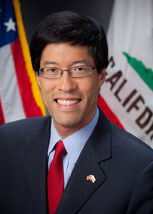
Bill Co-Author(s):