AB 2466: Voting: felons.
- Session Year: 2015-2016
- House: Assembly
- Latest Version Date: 2016-09-28
The California Constitution requires the Legislature to provide for the disqualification of electors while mentally incompetent or imprisoned or on parole for the conviction of a felony. Existing law provides that a person is entitled to register to vote if he or she is a United States citizen, a resident of California, not imprisoned or on parole for the conviction of a felony, and at least 18 years of age at the time of the next election.
This bill, for purposes of determining who is entitled to register to vote, would define imprisoned as currently serving a state or federal prison sentence and would define parole as a term of supervision by the Department of Corrections and Rehabilitation. The bill would clarify that conviction does not include a juvenile adjudication.
Existing law requires any program adopted by a county pursuant to certain provisions that is designed to encourage the registration of electors, with respect to any printed literature or media announcements made in connection with the program, to contain a statement that a person entitled to register to vote must be a United States citizen, a California resident, not in prison or on parole for conviction of a felony, and at least 18 years of age at the time of the election.
This bill would instead require that the statement, as described above, state that a person entitled to register to vote must be a United States citizen, a California resident, not currently in state or federal prison or on state parole for the conviction of a felony, and at least 18 years of age at the time of the election. By requiring a county to change the statement included as part of its voter registration program, as described above, the bill would impose a state-mandated local program.
Existing law requires the clerk of the superior court of each county, on the basis of the records of the court, to furnish to the chief elections official of the county, at least on April 1 and September 1 of each year, a statement showing the names, addresses, and dates of birth of all persons who have been convicted of felonies since the clerks last report. Existing law requires the elections official to cancel the affidavits of registration of those persons who are currently imprisoned or on parole for the conviction of a felony.
This bill would instead require that the statement furnished by the clerk of the superior court of each county to the county elections official show the names, addresses, and dates of birth of all persons who have been committed to state prison as the result of the conviction of a felony since the clerks last report.
The California Constitution requires the state to reimburse local agencies and school districts for certain costs mandated by the state. Statutory provisions establish procedures for making that reimbursement.
This bill would provide that, if the Commission on State Mandates determines that the bill contains costs mandated by the state, reimbursement for those costs shall be made pursuant to these statutory provisions.
The California Constitution requires the Legislature to provide for the disqualification of electors while mentally incompetent or imprisoned or on parole for the conviction of a felony. Existing law provides that a person is entitled to register to vote if he or she is a United States citizen, a resident of California, not imprisoned or on parole for the conviction of a felony, and at least 18 years of age at the time of the next election.
This bill, for purposes of determining who is entitled to register to vote, would define imprisoned as currently serving a state or federal prison sentence and would define parole as a term of supervision by the Department of Corrections and Rehabilitation. The bill would clarify that conviction does not include a juvenile adjudication.
Existing law requires any program adopted by a county pursuant to certain provisions, that is designed to encourage the registration of electors, with respect to any printed literature or media announcements made in connection with the program to contain a statement that a person entitled to register to vote must be a United States citizen, a California resident, not in prison or on parole for conviction of a felony, and at least 18 years of age at the time of the election.
This bill would instead require that the statement, as described above, state that a person entitled to register to vote must be a United States citizen, a California resident, not currently in state or federal prison or on state parole for the conviction of a felony, and at least 18 years of age at the time of the election. By requiring a county to change the statement included as part of its voter registration program, as described above, the bill would impose a state-mandated local program.
Existing law requires the clerk of the superior court of each county, on the basis of the records of the court, to furnish to the chief elections official of the county, at least on April 1 and September 1 of each year, a statement showing the names, addresses, and dates of birth of all persons who have been convicted of felonies since the clerks last report. Existing law requires the elections official to cancel the affidavits of registration of those persons who are currently imprisoned or on parole for the conviction of a felony.
This bill would instead require that the statement furnished by the clerk of the superior court of each county to the county elections official show the names, addresses, and dates of birth of all persons who have been committed to state prison as the result of the conviction of a felony since the clerks last report.
The California Constitution requires the state to reimburse local agencies and school districts for certain costs mandated by the state. Statutory provisions establish procedures for making that reimbursement.
This bill would provide that, if the Commission on State Mandates determines that the bill contains costs mandated by the state, reimbursement for those costs shall be made pursuant to these statutory provisions.
The California Constitution requires the Legislature to provide for the disqualification of electors while mentally incompetent or imprisoned or on parole for the conviction of a felony. Existing law provides that a person is entitled to register to vote if he or she is a United States citizens, citizen, a resident of California, not imprisoned or on parole for the conviction of a felony, and at least 18 years of age at the time of the next election.
This bill, for purposes of determining who is entitled to register to vote, would define imprisoned as currently serving a state or federal prison sentence and would define parole as a term of supervision by the Department of Corrections and Rehabilitation. The bill would clarify that conviction does not include a juvenile adjudication.
Existing law requires any program adopted by a county pursuant to certain provisions, that is designed to encourage the registration of electors, with respect to any printed literature or media announcements made in connection with the program to contain a statement that a person entitled to register to vote must be a United States citizen, a California resident, not in prison or on parole for conviction of a felony, and at least 18 years of age at the time of the election.
This bill would instead require that the statement, as described above, state that a person entitled to register to vote must be a United States citizen, a California resident, not currently in state or federal prison or on state parole for the conviction of a felony, and at least 18 years of age at the time of the election. By requiring a county to change the statement included as part of its voter registration program, as described above, the bill would impose a state-mandated local program.
Existing law requires the clerk of the superior court of each county, on the basis of the records of the court, to furnish to the chief elections official of the county, at least on April 1 and September 1 of each year, a statement showing the names, addresses, and dates of birth of all persons who have been convicted of felonies since the clerks last report. Existing law requires the elections official to cancel the affidavits of registration of those persons who are currently imprisoned or on parole for the conviction of a felony.
This bill would instead require that the statement furnished by the clerk of the superior court of each county to the county elections official show the names, addresses, and dates of birth of all person persons who have been committed to state prison as the result of the conviction of a felony since the clerks last report.
The California Constitution requires the state to reimburse local agencies and school districts for certain costs mandated by the state. Statutory provisions establish procedures for making that reimbursement.
This bill would provide that, if the Commission on State Mandates determines that the bill contains costs mandated by the state, reimbursement for those costs shall be made pursuant to these statutory provisions.
The California Constitution requires the Legislature to provide for the disqualification of electors while mentally incompetent or imprisoned or on parole for the conviction of a felony. Existing law provides that a person is entitled to register to vote if he or she is a United States citizens, a resident of California, not imprisoned or on parole for the conviction of a felony, and at least 18 years of age at the time of the next election.
This bill, for purposes of determining who is entitled to register to vote, would define imprisoned as currently serving a state or federal prison sentence and would define parole as a term of supervision by the Department of Corrections and Rehabilitation. The bill would clarify that conviction does not include a juvenile adjudication.
Existing law requires any program adopted by a county pursuant to certain provisions, that is designed to encourage the registration of electors, with respect to any printed literature or media announcements made in connection with the program to contain a statement that a person entitled to register to vote must be a United States citizen, a California resident, not in prison or on parole for conviction of a felony, and at least 18 years of age at the time of the election.
This bill would instead require that the statement, as described above, state that a person entitled to register to vote must be a United States citizen, a California resident, not currently in state or federal prison or on state parole for the conviction of a felony, and at least 18 years of age at the time of the election. By requiring a county to change the statement included as part of its voter registration program, as described above, the bill would impose a state-mandated local program.
Existing law requires the clerk of the superior court of each county, on the basis of the records of the court, to furnish to the chief elections official of the county, at least on April 1 and September 1 of each year, a statement showing the names, addresses, and dates of birth of all persons who have been convicted of felonies since the clerks last report. Existing law requires the elections official to cancel the affidavits of registration of those persons who are currently imprisoned or on parole for the conviction of a felony.
This bill would instead require that the statement furnished by the clerk of the superior court of each county to the county elections official show the names, addresses, and dates of birth of all person who have been committed to state prison as the result of the conviction of a felony since the clerks last report.
The California Constitution requires the state to reimburse local agencies and school districts for certain costs mandated by the state. Statutory provisions establish procedures for making that reimbursement.
This bill would provide that, if the Commission on State Mandates determines that the bill contains costs mandated by the state, reimbursement for those costs shall be made pursuant to these statutory provisions.
(a)A person entitled to register to vote shall be a United States citizen, a resident of California, not imprisoned or on parole for the conviction of a felony, and at least 18 years of age at the time of the next election.
(b)For purposes of this section, the following definitions apply:
(1)Imprisoned means currently serving a state or federal prison sentence.
(2)Parole means a term of supervision by the Department of Corrections and Rehabilitation.
(3)Conviction does not include a juvenile adjudication made pursuant to Section 203 of the Welfare and Institutions Code.
SEC. 2.Section 2101 of the Elections Code, as amended by Section 2 of Chapter 728 of the Statutes of 2015, is amended to read:2101.(a)A person entitled to register to vote shall be a United States citizen, a resident of California, not imprisoned or on parole for the conviction of a felony, and at least 18 years of age at the time of the next election.
(b)A person entitled to preregister to vote in an election shall be a United States citizen, a resident of California, not imprisoned or on parole for the conviction of a felony, and at least 16 years of age.
(c)For purposes of this section, the following definitions apply:
(1)Imprisoned means currently serving a state or federal prison sentence.
(2)Parole means a term of supervision by the Department of Corrections and Rehabilitation.
(3)Conviction does not include a juvenile adjudication made pursuant to Section 203 of the Welfare and Institutions Code.
SEC. 3.Section 2106 of the Elections Code, as enacted by Section 2 of Chapter 920 of the Statutes of 1994, is amended to read:2106.A program adopted by a county pursuant to Section 2103 or 2105, that is designed to encourage the registration of electors, shall contain the following statement in any printed literature or media announcements made in connection with the program: A person entitled to register to vote must be a United States citizen, a resident of California, not currently in state or federal prison or on state parole for the conviction of a felony, and at least 18 years of age at the time of the election.
SEC. 4.Section 2106 of the Elections Code, as amended by Section 2 of Chapter 619 of the Statutes of 2014, is amended to read:2106.A program adopted by a county pursuant to Section 2103 or 2105, that is designed to encourage the registration of electors, shall contain the following statement in printed literature or media announcements made in connection with the program: A person entitled to register to vote must be a United States citizen, a resident of California, not currently in state or federal prison or on state parole for the conviction of a felony, and at least 18 years of age at the time of the election. A person may preregister to vote if he or she is a United States citizen, a resident of California, not currently in state or federal prison or on state parole for the conviction of a felony, and at least 16 years of age. A county elections official may continue to use existing materials before printing new or revised materials required by any changes to this section.
SEC. 5.Section 2106 of the Elections Code, as amended by Section 5 of Chapter 728 of the Statutes of 2015, is amended to read:2106.A program adopted by a county pursuant to Section 2103 or 2105, that is designed to encourage the registration of electors, shall contain the following statement in printed literature or media announcements made in connection with the program: A person entitled to register to vote must be a United States citizen, a resident of California, not currently imprisoned in a state or federal prison or on state parole for the conviction of a felony, and at least 18 years of age at the time of the election. A person may preregister to vote if he or she is a United States citizen, a resident of California, not currently imprisoned in a state or federal prison or on state parole for the conviction of a felony, and at least 16 years of age. A county elections official may continue to use existing materials before printing new or revised materials required by any changes to this section.
SEC. 6.Section 2106 of the Elections Code, as amended by Section 6 of Chapter 728 of the Statutes of 2015, is amended to read:2106.A program adopted by a county pursuant to Section 2103 or 2105, that is designed to encourage the registration of electors, shall contain the following statement in any printed literature or media announcements made in connection with the program: A person entitled to register to vote must be a United States citizen, a resident of California, not currently imprisoned in a state or federal prison or on state parole for the conviction of a felony, and at least 18 years of age at the time of the election.
SEC. 7.Section 2212 of the Elections Code, as amended by Section 95 of Chapter 784 of the Statutes of 2002, is amended to read:2212.The clerk of the superior court of each county, on the basis of the records of the court, shall furnish to the county elections official, not less frequently than the first day of April and the first day of September of each year, a statement showing the names, addresses, and dates of birth of all persons who have been committed to state prison as the result of a felony conviction since the clerks last report. The elections official shall, during the first week of April and the first week of September in each year, cancel the affidavits of registration of those persons who are currently imprisoned or on parole for the conviction of a felony. The clerk shall certify the statement under the seal of the court.
SEC. 8.Section 2212 of the Elections Code, as amended by Section 65 of Chapter 728 of the Statutes of 2015, is amended to read:2212.The clerk of the superior court of each county, on the basis of the records of the court, shall furnish to the Secretary of State and the county elections official in the format prescribed by the Secretary of State, not less frequently than the first day of every month, a statement showing the names, addresses, and dates of birth of all persons who have been committed to state prison as the result of a felony conviction since the clerks last report. The Secretary of State or county elections official shall cancel the affidavits of registration of those persons who are currently imprisoned or on parole for the conviction of a felony. The clerk shall certify the statement under the seal of the court.
SEC. 9.If the Commission on State Mandates determines that this act contains costs mandated by the state, reimbursement to local agencies and school districts for those costs shall be made pursuant to Part 7 (commencing with Section 17500) of Division 4 of Title 2 of the Government Code.
(a)A person entitled to register to vote shall be a United States citizen, a resident of California, not imprisoned or on parole for the conviction of a felony, and at least 18 years of age at the time of the next election.
(b)For purposes of this section section, the following definitions apply:
(1)Imprisoned means currently serving a state or federal prison sentence.
(2)Parole means a term of supervision by the Department of Corrections and Rehabilitation.
(3)Conviction does not include a juvenile adjudication made pursuant to Section 203 of the Welfare and Institutions Code.
SEC. 2.Section 2101 of the Elections Code, as amended by Section 2 of Chapter 728 of the Statutes of 2015, is amended to read:2101.(a)A person entitled to register to vote shall be a United States citizen, a resident of California, not imprisoned or on parole for the conviction of a felony, and at least 18 years of age at the time of the next election.
(b)A person entitled to preregister to vote in an election shall be a United States citizen, a resident of California, not imprisoned or on parole for the conviction of a felony, and at least 16 years of age.
(c)For purposes of this section section, the following definitions apply:
(1)Imprisoned means currently serving a state or federal prison sentence.
(2)Parole means a term of supervision by the Department of Corrections and Rehabilitation.
(3)Conviction does not include a juvenile adjudication made pursuant to Section 203 of the Welfare and Institutions Code.
SEC. 3.Section 2106 of the Elections Code, as enacted by Section 2 of Chapter 920 of the Statutes of 1994, is amended to read:2106.A program adopted by a county pursuant to Section 2103 or 2105, that is designed to encourage the registration of electors, shall contain the following statement in any printed literature or media announcements made in connection with the program: A person entitled to register to vote must be a United States citizen, a resident of California, not currently in state or federal prison or on state parole for the conviction of a felony, and at least 18 years of age at the time of the election.
SEC. 4.Section 2106 of the Elections Code, as amended by Section 2 of Chapter 619 of the Statutes of 2014, is amended to read:2106.A program adopted by a county pursuant to Section 2103 or 2105, that is designed to encourage the registration of electors, shall contain the following statement in printed literature or media announcements made in connection with the program: A person entitled to register to vote must be a United States citizen, a resident of California, not currently in state or federal prison or on state parole for the conviction of a felony, and at least 18 years of age at the time of the election. A person may preregister to vote if he or she is a United States citizen, a resident of California, not currently in state or federal prison or on state parole for the conviction of a felony, and at least 16 years of age. A county elections official may continue to use existing materials before printing new or revised materials required by any changes to this section.
SEC. 5.Section 2106 of the Elections Code, as amended by Section 5 of Chapter 728 of the Statutes of 2015, is amended to read:2106.A program adopted by a county pursuant to Section 2103 or 2105, that is designed to encourage the registration of electors, shall contain the following statement in printed literature or media announcements made in connection with the program: A person entitled to register to vote must be a United States citizen, a resident of California, not currently imprisoned in a state or federal prison or on state parole for the conviction of a felony, and at least 18 years of age at the time of the election. A person may preregister to vote if he or she is a United States citizen, a resident of California, not currently imprisoned in a state or federal prison or on state parole for the conviction of a felony, and at least 16 years of age. A county elections official may continue to use existing materials before printing new or revised materials required by any changes to this section.
SEC. 6.Section 2106 of the Elections Code, as amended by Section 6 of Chapter 728 of the Statutes of 2015, is amended to read:2106.A program adopted by a county pursuant to Section 2103 or 2105, that is designed to encourage the registration of electors, shall contain the following statement in any printed literature or media announcements made in connection with the program: A person entitled to register to vote must be a United States citizen, a resident of California, not currently imprisoned in a state or federal prison or on state parole for the conviction of a felony, and at least 18 years of age at the time of the election.
SEC. 7.Section 2212 of the Elections Code, as amended by Section 95 of Chapter 784 of the Statutes of 2002, is amended to read:2212.The clerk of the superior court of each county, on the basis of the records of the court, shall furnish to the county elections official, not less frequently than the first day of April and the first day of September of each year, a statement showing the names, addresses, and dates of birth of all persons who have been committed to state prison as the result of a felony conviction since the clerks last report. The elections official shall, during the first week of April and the first week of September in each year, cancel the affidavits of registration of those persons who are currently imprisoned or on parole for the conviction of a felony. The clerk shall certify the statement under the seal of the court.
SEC. 8.Section 2212 of the Elections Code, as amended by Section 65 of Chapter 728 of the Statutes of 2015, is amended to read:2212.The clerk of the superior court of each county, on the basis of the records of the court, shall furnish to the Secretary of State and the county elections official in the format prescribed by the Secretary of State, not less frequently than the first day of every month, a statement showing the names, addresses, and dates of birth of all persons who have been committed to state prison as the result of a felony conviction since the clerks last report. The Secretary of State or county elections official shall cancel the affidavits of registration of those persons who are currently imprisoned or on parole for the conviction of a felony. The clerk shall certify the statement under the seal of the court.
SEC. 9.If the Commission on State Mandates determines that this act contains costs mandated by the state, reimbursement to local agencies and school districts for those costs shall be made pursuant to Part 7 (commencing with Section 17500) of Division 4 of Title 2 of the Government Code.
(a)A person entitled to register to vote shall be a United States citizen, a resident of California, not imprisoned or on parole for the conviction of a felony, and at least 18 years of age at the time of the next election.
(b)(1)For purposes of this section the following definitions apply:
(A)
(1)Imprisoned means currently serving a state or federal prison sentence.
(B)
(2)Parole means a term of supervision by the Department of Corrections and Rehabilitation.
(2)For purposes of this section, conviction does not include a juvenile adjudication.
(3)Conviction does not include a juvenile adjudication made pursuant to Section 203 of the Welfare and Institutions Code.
SEC. 2.Section 2101 of the Elections Code, as amended by Section 2 of Chapter 728 of the Statutes of 2015, is amended to read:2101.(a)A person entitled to register to vote shall be a United States citizen, a resident of California, not imprisoned or on parole for the conviction of a felony, and at least 18 years of age at the time of the next election.
(b)A person entitled to preregister to vote in an election shall be a United States citizen, a resident of California, not imprisoned or on parole for the conviction of a felony, and at least 16 years of age.
(c)(1)For purposes of this section the following definitions apply:
(A)
(1)Imprisoned means currently serving a state or federal prison sentence.
(B)
(2)Parole means a term of supervision by the Department of Corrections and Rehabilitation.
(2)For purposes of this section, conviction does not include a juvenile adjudication.
(3)Conviction does not include a juvenile adjudication made pursuant to Section 203 of the Welfare and Institutions Code.
SEC. 3.Section 2106 of the Elections Code, as enacted by Section 2 of Chapter 920 of the Statutes of 1994, is amended to read:2106.A program adopted by a county pursuant to Section 2103 or 2105, that is designed to encourage the registration of electors, shall contain the following statement in any printed literature or media announcements made in connection with the program: A person entitled to register to vote must be a United States citizen, a resident of California, not currently in state or federal prison or on state parole for the conviction of a felony, and at least 18 years of age at the time of the election.
SEC. 4.Section 2106 of the Elections Code, as amended by Section 2 of Chapter 619 of the Statutes of 2014, is amended to read:2106.A program adopted by a county pursuant to Section 2103 or 2105, that is designed to encourage the registration of electors, shall contain the following statement in printed literature or media announcements made in connection with the program: A person entitled to register to vote must be a United States citizen, a resident of California, not currently in state or federal prison or on state parole for the conviction of a felony, and at least 18 years of age at the time of the election. A person may preregister to vote if he or she is a United States citizen, a resident of California, not currently in state or federal prison or on state parole for the conviction of a felony, and at least 16 years of age. A county elections official may continue to use existing materials before printing new or revised materials required by any changes to this section.
SEC. 5.Section 2106 of the Elections Code, as amended by Section 5 of Chapter 728 of the Statutes of 2015, is amended to read:2106.A program adopted by a county pursuant to Section 2103 or 2105, that is designed to encourage the registration of electors, shall contain the following statement in printed literature or media announcements made in connection with the program: A person entitled to register to vote must be a United States citizen, a resident of California, not currently imprisoned in a state or federal prison or on state parole for the conviction of a felony, and at least 18 years of age at the time of the election. A person may preregister to vote if he or she is a United States citizen, a resident of California, not currently imprisoned in a state or federal prison or on state parole for the conviction of a felony, and at least 16 years of age. A county elections official may continue to use existing materials before printing new or revised materials required by any changes to this section.
SEC. 6.Section 2106 of the Elections Code, as amended by Section 6 of Chapter 728 of the Statutes of 2015, is amended to read:2106.A program adopted by a county pursuant to Section 2103 or 2105, that is designed to encourage the registration of electors, shall contain the following statement in any printed literature or media announcements made in connection with the program: A person entitled to register to vote must be a United States citizen, a resident of California, not currently imprisoned in a state or federal prison or on state parole for the conviction of a felony, and at least 18 years of age at the time of the election.
SEC. 7.Section 2212 of the Elections Code, as amended by Section 95 of Chapter 784 of the Statutes of 2002, is amended to read:2212.The clerk of the superior court of each county, on the basis of the records of the court, shall furnish to the county elections official, not less frequently than the first day of April and the first day of September of each year, a statement showing the names, addresses, and dates of birth of all persons who have been committed to state prison as the result of a felony conviction since the clerks last report. The elections official shall, during the first week of April and the first week of September in each year, cancel the affidavits of registration of those persons who are currently imprisoned or on parole for the conviction of a felony. The clerk shall certify the statement under the seal of the court.
SEC. 8.Section 2212 of the Elections Code, as amended by Section 65 of Chapter 728 of the Statutes of 2015, is amended to read:2212.The clerk of the superior court of each county, on the basis of the records of the court, shall furnish to the Secretary of State and the county elections official in the format prescribed by the Secretary of State, not less frequently than the first day of every month, a statement showing the names, addresses, and dates of birth of all persons who have been committed to state prison as the result of a felony conviction since the clerks last report. The Secretary of State or county elections official shall cancel the affidavits of registration of those persons who are currently imprisoned or on parole for the conviction of a felony. The clerk shall certify the statement under the seal of the court.
SEC. 9.If the Commission on State Mandates determines that this act contains costs mandated by the state, reimbursement to local agencies and school districts for those costs shall be made pursuant to Part 7 (commencing with Section 17500) of Division 4 of Title 2 of the Government Code.
(a)A person entitled to register to vote shall be a United States citizen, a resident of California, not in prison imprisoned or on parole for the conviction of a felony, and at least 18 years of age at the time of the next election.
(b)(1)For purposes of this section the following definitions apply:
(A)Imprisoned means currently serving a state or federal prison sentence.
(B)Parole means a term of supervision by the Department of Corrections and Rehabilitation.
(2)For purposes of this section, conviction does not include a juvenile adjudication.
SEC. 2.Section 2101 of the Elections Code, as amended by Section 2 of Chapter 728 of the Statutes of 2015, is amended to read:2101.(a)A person entitled to register to vote shall be a United States citizen, a resident of California, not imprisoned or on parole for the conviction of a felony, and at least 18 years of age at the time of the next election.
(b)A person entitled to preregister to vote in an election shall be a United States citizen, a resident of California, not imprisoned or on parole for the conviction of a felony, and at least 16 years of age.
(c)(1)For purposes of this section the following definitions apply:
(A)Imprisoned means currently serving a state or federal prison sentence.
(B)Parole means a term of supervision by the Department of Corrections and Rehabilitation.
(2)For purposes of this section, conviction does not include a juvenile adjudication.
SEC. 3.Section 2106 of the Elections Code, as enacted by Section 2 of Chapter 920 of the Statutes of 1994, is amended to read:2106.Any A program adopted by a county pursuant to Section 2103 or 2105, that is designed to encourage the registration of electors, shall, with respect to shall contain the following statement in any printed literature or media announcements made in connection with these programs, contain this statement: the program: A person entitled to register to vote must be a United States citizen, a resident of California, not currently in state or federal prison or on state parole for the conviction of a felony, and at least 18 years of age at the time of the election.
SEC. 4.Section 2106 of the Elections Code, as amended by Section 2 of Chapter 619 of the Statutes of 2014, is amended to read:2106.A program adopted by a county pursuant to Section 2103 or 2105, that is designed to encourage the registration of electors, shall, with respect to a shall contain the following statement in printed literature or media announcement announcements made in connection with these programs, contain this statement: the program: A person entitled to register to vote must be a United States citizen, a resident of California, not currently in state or federal prison or on state parole for the conviction of a felony, and at least 18 years of age at the time of the election. A person may preregister to vote if he or she is a United States citizen, a resident of California, not currently in state or federal prison or on state parole for the conviction of a felony, and at least 16 years of age. A county elections official may continue to use existing materials before printing new or revised materials required by any changes to this section.
SEC. 5.Section 2106 of the Elections Code, as amended by Section 5 of Chapter 728 of the Statutes of 2015, is amended to read:2106.A program adopted by a county pursuant to Section 2103 or 2105, that is designed to encourage the registration of electors, shall, with respect to a shall contain the following statement in printed literature or media announcement announcements made in connection with these programs, contain this statement: the program: A person entitled to register to vote must be a United States citizen, a resident of California, not currently imprisoned in a state or federal prison or on state parole for the conviction of a felony, and at least 18 years of age at the time of the election. A person may preregister to vote if he or she is a United States citizen, a resident of California, not currently imprisoned in a state or federal prison or on state parole for the conviction of a felony, and at least 16 years of age. A county elections official may continue to use existing materials before printing new or revised materials required by any changes to this section.
SEC. 6.Section 2106 of the Elections Code, as amended by Section 6 of Chapter 728 of the Statutes of 2015, is amended to read:2106.Any A program adopted by a county pursuant to Section 2103 or 2105, that is designed to encourage the registration of electors, shall, with respect to shall contain the following statement in any printed literature or media announcements made in connection with these programs, contain this statement: the program: A person entitled to register to vote must be a United States citizen, a resident of California, not currently imprisoned in a state or federal prison or on state parole for the conviction of a felony, and at least 18 years of age at the time of the election.
SEC. 7.Section 2212 of the Elections Code, as amended by Section 95 of Chapter 784 of the Statutes of 2002, is amended to read:2212.The clerk of the superior court of each county, on the basis of the records of the court, shall furnish to the chief county elections official of the county, official, not less frequently than the first day of April and the first day of September of each year, a statement showing the names, addresses, and dates of birth of all persons who have been convicted of felonies committed to state prison as the result of a felony conviction since the clerks last report. The elections official shall, during the first week of April and the first week of September in each year, cancel the affidavits of registration of those persons who are currently imprisoned or on parole for the conviction of a felony. The clerk shall certify the statement under the seal of the court.
SEC. 8.Section 2212 of the Elections Code, as amended by Section 65 of Chapter 728 of the Statutes of 2015, is amended to read:2212.The clerk of the superior court of each county, on the basis of the records of the court, shall furnish to the Secretary of State and the county elections official in the format prescribed by the Secretary of State, not less frequently than the first day of every month, a statement showing the names, addresses, and dates of birth of all persons who have been convicted of felonies committed to state prison as the result of a felony conviction since the clerks last report. The Secretary of State or county elections official shall cancel the affidavits of registration of those persons who are currently imprisoned or on parole for the conviction of a felony. The clerk shall certify the statement under the seal of the court.
SEC. 9.If the Commission on State Mandates determines that this act contains costs mandated by the state, reimbursement to local agencies and school districts for those costs shall be made pursuant to Part 7 (commencing with Section 17500) of Division 4 of Title 2 of the Government Code.
|
Date
|
Status
|
|---|---|
| Aug 23, 2016 | Enrolled and presented to the Governor at 2 p.m. |
| Aug 16, 2016 | Read third time. Passed. Ordered to the Assembly. (Ayes 23. Noes 13. Page 5012.). |
| Aug 16, 2016 | Read third time. Passed. Ordered to the Assembly. (Ayes 23. Noes 13.). |
| Aug 16, 2016 | In Assembly. Ordered to Engrossing and Enrolling. |
| Aug 16, 2016 | Read third time. Passed. Ordered to the Assembly. |
| Aug 2, 2016 | Read second time. Ordered to third reading. |
| Aug 1, 2016 | From committee: Be placed on second reading file pursuant to Senate Rule 28.8. |
| Jun 22, 2016 | From committee: Do pass and re-refer to Com. on APPR. (Ayes 4. Noes 1.) (June 21). Re-referred to Com. on APPR. |
| Jun 9, 2016 | Referred to Com. on E. & C.A. |
| Jun 1, 2016 | In Senate. Read first time. To Com. on RLS. for assignment. |
| May 31, 2016 | Read third time. Passed. Ordered to the Senate. (Ayes 41. Noes 37. Page 5009.) |
| May 31, 2016 | Read third time. Passed. Ordered to the Senate. (Ayes 41. Noes 37.) |
| May 31, 2016 | Read third time. Passed. Ordered to the Senate. |
| May 4, 2016 | Read second time. Ordered to third reading. |
| May 3, 2016 | Read second time and amended. Ordered returned to second reading. |
| May 2, 2016 | From committee: Amend, and do pass as amended. (Ayes 13. Noes 6.) (April 27). |
| Apr 13, 2016 | From committee: Do pass and re-refer to Com. on APPR. (Ayes 5. Noes 2.) (April 13). Re-referred to Com. on APPR. |
| Apr 7, 2016 | Re-referred to Com. on E. & R. |
| Apr 6, 2016 | From committee chair, with author's amendments: Amend, and re-refer to Com. on E. & R. Read second time and amended. |
| Mar 8, 2016 | Referred to Com. on E. & R. |
| Feb 22, 2016 | Read first time. |
| Feb 21, 2016 | From printer. May be heard in committee March 22. |
| Feb 19, 2016 | Introduced. To print. |
|
Date
|
Description
|
Location
|
Votes
|
|
|---|---|---|---|---|
| Aug 16, 2016 | Assembly 3rd Reading AB2466 Weber By Hertzberg | Senate Floor |
Passed |
|
| Jun 21, 2016 | Do pass, but first be re-referred to the Committee on [Appropriations] | Senate Standing Committee on Elections and Constitutional Amendments |
Passed |
|
| May 31, 2016 | AB 2466 WEBER Assembly Third Reading | Assembly Floor |
Passed |
|
| Apr 27, 2016 | Do pass as amended. | Assembly Standing Committee on Appropriations |
Passed |
|
| Apr 13, 2016 | Do pass and be re-referred to the Committee on [Appropriations] | Assembly Standing Committee on Elections and Redistricting |
Passed |
This list shows positions taken on this bill by organizations on the date displayed, which is linked to the original source.
Positions by individuals are not included.
Office of Senate Floor Analyses (916) 651-1520 Fax: (916) 327-4478 | AB |
THIRD READING
Bill No: AB 2466
:
SENATE ELECTIONS & C.A. COMMITTEE: 4-1, 6/21/16
AYES: Allen, Hancock, Hertzberg, Liu
NOES: Anderson
SENATE APPROPRIATIONS COMMITTEE: Senate Rule 28.8
ASSEMBLY FLOOR: 41-37, 5/31/16 - See last page for vote
American Civil Liberties Union of California
Asian Americans Advancing Justice- California
League of Women Voters of California
Legal Services for Prisoners with Children
Lawyers’ Committee for Civil Rights of the San Francisco Bay Area
Mexican American Legal Defense and Educational Fund
DIGEST: This bill conforms state law to a recent Superior Court ruling in Scott v. Bowen, in which the court found that individuals on post-release community supervision (PRCS) and mandatory supervision are eligible to vote under Section 2, Article II of the California Constitution, as specified and makes other significant changes to voter eligibility provisions of law, as specified.
- Permits a person who is a United States citizen, a resident of California, not in prison or on parole for the conviction of a felony, and at least 18 years of age at the time of the next election, to register to vote.
- Requires the county elections official to cancel the affidavits of registration of those persons who are imprisoned or on parole for the conviction of a felony.
- Pursuant to the California Constitution, requires the Legislature to provide for the disqualification of electors while imprisoned or on parole for the conviction of a felony.
- Requires the clerk of the superior court in each county to furnish the chief elections official of the county, not less frequently than the first day of April and the first day of September of each year, with a statement showing the names, addresses, and dates of birth of all persons who have been convicted of felonies since the clerk's last report.
- Requires a program adopted by a county that is designed to encourage the registration of electors to print literature and media announcements made in connection with these programs that contain the following statement, "A person entitled to register to vote must be a United States citizen, a California resident, not in prison or on parole for the conviction of a felony, and at least 18 years of age at the time of the election." Permits a county elections official to continue to use existing materials before printing new or revised materials required by any changes to these provisions.
This bill:
- Provides that a person who is not imprisoned or on parole for the conviction of a felony, instead of a person who is not in prison or on parole for the conviction of a felony, is eligible to register to vote, as specified. Provides that the following definitions apply to these provisions:
- Defines "imprisoned" to mean currently serving a state or federal prison sentence.
- Defines "parole" to mean a term of supervision by the Department of Corrections and Rehabilitation (CDCR).
- Provides that "conviction" does not include a juvenile adjudication made pursuant to existing law.
- Makes changes to statements required to be included in printed literature and media announcements used in county programs designed to encourage registration of electors and requires the statements to state that a person entitled to register to vote must be a United States citizen, a California resident, at least 18 years of age at the time of the election, and not currently in state or federal prison or on state parole for the conviction of a felony, instead of not in prison or on parole for the conviction of a felony.
- Makes changes to statements required to be sent to county elections officials, on the basis of records from the courts, that shows the names, addresses, and dates of birth of all persons who have been convicted of felonies since the clerk's last report, and instead requires the statement to show the names, addresses, and dates of birth of all persons who have been committed to state prison as a result of the conviction of a felony since the clerk's last report.
Background
California Disenfranchisement Laws: Under existing law, any person who is imprisoned or on parole for the conviction of a felony is prohibited from voting and elections officials are required to cancel the voter registrations of such individuals. However, a person who is on probation for conviction of a felony is permitted to vote. While it would seem that the determination of whether an individual is eligible to vote is fairly straightforward, there has been a great deal of confusion about what constitutes being "imprisoned" for the conviction of a felony.
For instance, it is not uncommon for a person who has been convicted of a felony to be ordered to serve time in county jail as a condition of probation. To the extent that a person is serving time in county jail as a condition of probation, that person is not considered to be "imprisoned" for the conviction of a felony under California law, and thus, that person remains eligible to vote, even while he or she is in the county jail.
On the other hand, due to a variety of reasons, a person who has been convicted of a felony and sentenced to serve time in state prison may nonetheless serve part or all of his or her sentence in a county or city jail due to a contractual agreement with the state. In such a circumstance, that person is not eligible to vote, and the elections official should cancel that person's registration, since he or she is not on probation – but rather has been convicted of a felony and was sentenced to state prison. The fact that the individual is serving that prison time in a local jail under a contractual arrangement is not relevant in determining whether that person has the ability to register to vote, or to vote.
These interpretations of California's disenfranchisement laws were affirmed by the Court of Appeal for the State of California, First Appellate District, Division One, in League of Women Voters of California, v. McPherson (2006), 145 Cal.App.4th 1469. In that case, the court noted that "where a probationer is ordered to serve time in a local facility because either imposition or execution of sentence has been suspended, he or she has not been imprisoned for the conviction of a felony, but has been confined as a condition of probation."
Criminal Justice Realignment & Inmate Voting Eligibility: In 2011, California passed a series of bills known as the California Justice Realignment Act (CJRA) of 2011. Although prior to realignment, some felony sentences were served in county or city jails, most felony sentences were served in state prison. Under realignment, certain lower-level felony offenders, who would have been sentenced to state prison, are now sentenced to serve their time in custody in county jail. Additionally, after release from custody and depending on the offense and sentence, realignment changed the state's parole system and created the option for an inmate to be released to a term of "post-release community supervision (PRCS)" (under the control of the local probation department) or mandatory supervision. Thus, the enactment of the CJRA has caused an even greater deal of confusion and raised questions about the eligibility to vote for convicted felons sentenced to these new programs. Specifically, the question arose as to whether individuals on PRCS and mandatory supervision were considered "on parole" and whether a person serving a felony sentence in county jail were "imprisoned" for the purposes of Section 4, Article II of the California Constitution and Section 2101 of the Elections Code.
According to court documents, the Secretary of State's (SOS) office, at the request of county elections officials, issued a memorandum on December 5, 2011 which analyzed CJRA and its effect on voter eligibility. The SOS’s office concluded that realignment "does not change the voting status of offenders convicted of CJRA-defined low-level felonies, either because they serve their felony sentences in county jail instead of state prison or because the mandatory supervision that is a condition of their release from prison is labeled something other than 'parole.' Offenders convicted of CJRA-defined low-level felonies continue to be disqualified from voting while serving a felony sentence in county jail, while at the discretion of the court serving a concluding portion of that term on county-supervised probation, or while they remain under mandatory 'post release community supervision' after release from state prison."
Voting rights groups filed a lawsuit against the SOS arguing that realigned individuals have a right to vote. In March of 2012, a lawsuit was filed in the First District Court of Appeal to clarify that people who have been sentenced for low-level, non-violent offenses under the CJRA are entitled to vote in the 2012 elections and beyond (All of Us or None et al. v. Bowen et al. (2012) No. A134775). On May 17, 2012, the First District Court of Appeal summarily denied the petition, meaning that it refused to hear the case or issue an opinion. In response, petitioners filed another lawsuit in the California Supreme Court to review the case and decide the case on an expedited basis (All of Us or None v. Bowen (2012) No. S202885). The Supreme Court, which has the discretion to either hear the case, order the Court of Appeal to decide it, or deny review, denied review on July 25, 2012. In February of 2014, a lawsuit was filed in the Alameda Superior Court challenging the SOS's memorandum, claiming that individuals on PRCS and mandatory supervision are eligible to vote under Article II, Section 4 of the California Constitution (Scott et al. v. Bowen (2014) No. RG14-712570).
In May of 2014, the Superior Court issued a final judgment rejecting the interpretation of Realignment in the SOS’s memorandum. The Superior Court held “as a matter of law that California Constitution Article II, Section 2 and Elections Code 2101, require the State of California to provide all otherwise eligible persons on [mandatory supervision and PRCS] the same right to register to vote and to vote as all otherwise eligible persons.” The court concluded that restoring voting rights of persons under PRCS and or mandatory supervision is consistent with the Realignment policy goal to promote reintegration of low-level offenders back into the community. In addition, the court relied upon the long-held principle in California law requiring courts “to give every reasonable presumption in favor of the right of people to vote” and to “not engage in any construction of an election law that would disenfranchise any voter if the law is reasonably susceptible of any other meaning.” The Superior Court decision, however, did not address the conclusion in the SOS's memorandum that persons convicted of a felony and serving time in county jail under Realignment are ineligible to vote.
Updated Secretary of State Memorandum: In June of 2014, the Superior Court issued a writ of mandate ordering the SOS to withdraw the previous memorandum concerning voting rights of persons subject to sentencing under the CJRA and to notify elections officials that it had been withdrawn.
In August of 2015, Secretary of State Alex Padilla announced an end to the appeal of Scott v Bowen and complied with the Superior Court decision pursuant to a settlement of the case with the plaintiffs. In accordance with the writ of mandate, the SOS sent out a new memorandum, which served as notification to elections officials that the previous memorandum had been withdrawn. Additionally, according to the new memorandum, the SOS also prepared new language for the paper and online affidavit of voter registration and updated the language contained in other voting materials and voter education materials consistent with the Superior Court ruling and settlement. The revised voter materials specify the voting rights of persons subject to two categories of probation supervision enacted by Realignment as follows:
Post Release Community Supervision (PRCS): A person released from prison on or after October 1, 2011, for a conviction of a crime defined by Realignment as a low-level felony, and who is released from state prison to county-supervised PRCS, is eligible to register and vote.
Mandatory Supervision: At the time a judge sentences a person for a specified low-level felony, Realignment authorizes a judge to order that the person be released and supervised by a probation officer for a specified, concluding portion of the term.
Following release from county jail and during the period of supervision, this person is eligible to register and vote.
Comments
According to the author, “The Criminal Justice Realignment Act of 2011 (CJRA) created three new categories of sentencing for people convicted of low-level felonies: mandatory supervision, post-release community supervision, and a term in county jail. These new categories caused confusion for local elections officials and voters. Last year, in Scott v. Bowen, the issue of the voting rights of people sentenced under the first two categories of local supervision was finalized, and with the support of the Secretary of State, more than 50,000 people under mandatory and post-release community supervision had their voting rights restored. AB 2466 amends the Elections Code to reflect the decision in Scott v. Bowen and clarifies that the third category of CJRA sentencing – a term in county jail – likewise does not strip people of their constitutional right to vote. This clarification completes the restoration of the law prior to the CJRA: only those serving a state-prison sentence or on parole and under CDCR supervision lose the right to vote. Finally, civic participation can be a critical component of re-entry and has been linked to reduced recidivism. No eligible voter should be kept from fulfilling their responsibility and civic duty due to ambiguity in the law.
FISCAL EFFECT: Appropriation: Fiscal Com.: Local:
Alex Padilla, Secretary of State
Kamala Harris, Attorney General
Tom Butt, Mayor, City of Richmond
Jeff Adachi, Public Defender of the City and County of San Francisco
A New PATH
Alliance of Californians for Community Empowerment
Alliance San Diego
Anti-Defamation League
Anti-Recidivism Coalition
Black Women Organized for Political Action
Brennan Center for Justice
California Association of Clerks and Election Officials
California Association of Nonprofits
California Attorneys for Criminal Justice
California Calls
California Catholic Conference, Inc.
California Coalition for Women Prisoners
California Common Cause
California Immigrant Policy Center
California Public Defenders Association
California State Conference of the National Association for the
Advancement of Colored People
Californians for Safety and Justice
Californians United for a Responsible Budget
Center on Juvenile and Criminal Justice
Chinese for Affirmative Action
Contra Costa County Public Defender Association
Demos
Drug Policy Alliance
Ella Baker Center for Human Rights
Friends Committee on Legislation of California
Further the Work
Homeboy Industries
Justice Not Jails
LatinoJustice PRLDEF
Law Foundation of Silicon Valley
Los Angeles Metropolitan Churches
Mi Familia Vota
NAACP Legal Defense and Educational Fund, Inc.
NAACP of San Diego
National Association of Social Workers, California Chapter
National Council of La Raza
Office of the Sheriff City and County of San Francisco
Orange County Re-Entry Partnership
PICO California
Pillars of the Community
Project Vote
Reentry Success Center
Rock the Vote
Root & Rebound
Rubicon Programs
San Diego Immigrant Rights Consortium
San Diego La Raza Lawyers Association
Service Employees International Union
Voto Latino
Youth Law Center
Association of Deputy District Attorneys
Association for Los Angeles Deputy Sheriffs
California Correctional Supervisors Organization
California Narcotic Officers Association
California Police Chiefs Association
California State Sheriffs’ Association
Los Angeles County Probation Officers Union, AFSCME, Local 685
Los Angeles Professional Peace Officers Association
Los Angeles Police Protective League
Riverside Sheriffs’ Association
ASSEMBLY FLOOR: 41-37, 5/31/16
AYES: Alejo, Atkins, Bloom, Bonilla, Bonta, Brown, Burke, Calderon, Campos, Chau, Chiu, Chu, Eggman, Cristina Garcia, Eduardo Garcia, Gipson, Gomez, Gonzalez, Gordon, Roger Hernández, Holden, Jones-Sawyer, Levine, Lopez, Low, McCarty, Medina, Mullin, Nazarian, O'Donnell, Quirk, Ridley-Thomas, Rodriguez, Santiago, Mark Stone, Thurmond, Ting, Weber, Williams, Wood, Rendon
NOES: Achadjian, Travis Allen, Arambula, Baker, Bigelow, Brough, Chang, Chávez, Cooley, Dababneh, Dahle, Dodd, Frazier, Beth Gaines, Gallagher, Gatto, Gray, Grove, Hadley, Harper, Irwin, Jones, Kim, Lackey, Linder, Maienschein, Mathis, Mayes, Melendez, Obernolte, Olsen, Patterson, Salas, Steinorth, Wagner, Waldron, Wilk
NO VOTE RECORDED: Cooper, Daly
8/3/16 18:31:57
**** END ****
SENATE COMMITTEE ON
ELECTIONS AND CONSTITUTIONAL AMENDMENTS
Senator Ben Allen, Chair
2015 - 2016 Regular
Bill No: 2466 Hearing Date: 6/21/16
Author: | Weber | ||
Version: |
| ||
Urgency: | Fiscal: | ||
Consultant: | |||
Subject: .
DIGEST
This bill conforms state law to a recent Superior Court ruling in Scott v. Bowen, in which the court found that individuals on post-release community supervision (PRCS) and mandatory supervision are eligible to vote under Section 2, Article II of the California Constitution, as specified and makes other significant changes to voter eligibility provisions of law, as specified.
ANALYSIS
Existing law:
- Permits a person who is a United States citizen, a resident of California, not in prison or on parole for the conviction of a felony, and at least 18 years of age at the time of the next election, to register to vote.
- Requires the county elections official to cancel the affidavits of registration of those persons who are imprisoned or on parole for the conviction of a felony.
- Pursuant to the California Constitution, requires the Legislature to provide for the disqualification of electors while imprisoned or on parole for the conviction of a felony.
- Requires the clerk of the superior court in each county to furnish the chief elections official of the county, not less frequently than the first day of April and the first day of September of each year, with a statement showing the names, addresses, and dates of birth of all persons who have been convicted of felonies since the clerk's last report.
- Requires a program adopted by a county that is designed to encourage the registration of electors to print literature and media announcements made in connection with these programs that contain the following statement, "A person entitled to register to vote must be a United States citizen, a California resident, not in prison or on parole for the conviction of a felony, and at least 18 years of age at the time of the election." Permits a county elections official to continue to use existing materials before printing new or revised materials required by any changes to these provisions.
This bill:
- Provides that a person who is not imprisoned or on parole for the conviction of a felony, instead of a person who is not in prison or on parole for the conviction of a felony, is eligible to register to vote, as specified. Provides that the following definitions apply to these provisions:
- Defines "imprisoned" to mean currently serving a state or federal prison sentence.
- Defines "parole" to mean a term of supervision by the Department of Corrections and Rehabilitation (CDCR).
- Provides that "conviction" does not include a juvenile adjudication made pursuant to existing law.
- Makes changes to statements required to be included in printed literature and media announcements used in county programs designed to encourage registration of electors and requires the statements to state that a person entitled to register to vote must be a United States citizen, a California resident, at least 18 years of age at the time of the election, and not currently in state or federal prison or on state parole for the conviction of a felony, instead of not in prison or on parole for the conviction of a felony.
- Makes changes to statements required to be sent to county elections officials, on the basis of records from the courts, that shows the names, addresses, and dates of birth of all persons who have been convicted of felonies since the clerk's last report, and instead requires the statement to show the names, addresses, and dates of birth of all persons who have been committed to state prison as a result of the conviction of a felony since the clerk's last report.
BACKGROUND
California Disenfranchisement Laws: Under existing law, any person who is imprisoned or on parole for the conviction of a felony is prohibited from voting and elections officials are required to cancel the voter registrations of such individuals. However, a person who is on probation for conviction of a felony is permitted to vote. While it would seem that the determination of whether an individual is eligible to vote is fairly straightforward, there has been a great deal of confusion about what constitutes being "imprisoned" for the conviction of a felony.
For instance, it is not uncommon for a person who has been convicted of a felony to be ordered to serve time in county jail as a condition of probation. To the extent that a person is serving time in county jail as a condition of probation, that person is not considered to be "imprisoned" for the conviction of a felony under California law, and thus, that person remains eligible to vote, even while he or she is in the county jail.
On the other hand, due to a variety of reasons, a person who has been convicted of a felony and sentenced to serve time in state prison may nonetheless serve part or all of his or her sentence in a county or city jail due to a contractual agreement with the state. In such a circumstance, that person is not eligible to vote, and the elections official should cancel that person's registration, since he or she is not on probation – but rather has been convicted of a felony and was sentenced to state prison. The fact that the individual is serving that prison time in a local jail under a contractual arrangement is not relevant in determining whether that person has the ability to register to vote, or to vote.
These interpretations of California's disenfranchisement laws were affirmed by the Court of Appeal for the State of California, First Appellate District, Division One, in League of Women Voters of California, v. McPherson (2006), 145 Cal.App.4th 1469. In that case, the court noted that "where a probationer is ordered to serve time in a local facility because either imposition or execution of sentence has been suspended, he or she has not been imprisoned for the conviction of a felony, but has been confined as a condition of probation."
Criminal Justice Realignment & Inmate Voting Eligibility: In 2011, California passed a series of bills known as the California Justice Realignment Act (CJRA) of 2011. Although prior to realignment, some felony sentences were served in county or city jails, most felony sentences were served in state prison. Under realignment, certain lower-level felony offenders, who would have been sentenced to state prison, are now sentenced to serve their time in custody in county jail. Additionally, after release from custody and depending on the offense and sentence, realignment changed the state's parole system and created the option for an inmate to be released to a term of "post-release community supervision (PRCS)" (under the control of the local probation department) or mandatory supervision. Thus, the enactment of the CJRA has caused an even greater deal of confusion and raised questions about the eligibility to vote for convicted felons sentenced to these new programs. Specifically, the question arose as to whether individuals on PRCS and mandatory supervision were considered "on parole" and whether a person serving a felony sentence in county jail were "imprisoned" for the purposes of Section 4, Article II of the California Constitution and Section 2101 of the Elections Code.
According to court documents, the Secretary of State's (SOS) office, at the request of county elections officials, issued a memorandum on December 5, 2011 which analyzed CJRA and its effect on voter eligibility. The SOS’s office concluded that realignment "does not change the voting status of offenders convicted of CJRA-defined low-level felonies, either because they serve their felony sentences in county jail instead of state prison or because the mandatory supervision that is a condition of their release from prison is labeled something other than 'parole.' Offenders convicted of CJRA-defined low-level felonies continue to be disqualified from voting while serving a felony sentence in county jail, while at the discretion of the court serving a concluding portion of that term on county-supervised probation, or while they remain under mandatory 'post release community supervision' after release from state prison."
Voting rights groups filed a lawsuit against the SOS arguing that realigned individuals have a right to vote. In March of 2012, a lawsuit was filed in the First District Court of Appeal to clarify that people who have been sentenced for low-level, non-violent offenses under the CJRA are entitled to vote in the 2012 elections and beyond (All of Us or None et al. v. Bowen et al. (2012) No. A134775). On May 17, 2012, the First District Court of Appeal summarily denied the petition, meaning that it refused to hear the case or issue an opinion. In response, petitioners filed another lawsuit in the California Supreme Court to review the case and decide the case on an expedited basis (All of Us or None v. Bowen (2012) No. S202885). The Supreme Court, which has the discretion to either hear the case, order the Court of Appeal to decide it, or deny review, denied review on July 25, 2012.
In February of 2014, a lawsuit was filed in the Alameda Superior Court challenging the SOS's memorandum, claiming that individuals on PRCS and mandatory supervision are eligible to vote under Article II, Section 4 of the California Constitution (Scott et al. v. Bowen (2014) No. RG14-712570).
In May of 2014, the Superior Court issued a final judgment rejecting the interpretation of Realignment in the SOS’s memorandum. The Superior Court held “as a matter of law that California Constitution Article II, Section 2 and Elections Code 2101, require the State of California to provide all otherwise eligible persons on [mandatory supervision and PRCS] the same right to register to vote and to vote as all otherwise eligible persons.” The court concluded that restoring voting rights of persons under PRCS and or mandatory supervision is consistent with the Realignment policy goal to promote reintegration of low-level offenders back into the community. In addition, the court relied upon the long-held principle in California law requiring courts “to give every reasonable presumption in favor of the right of people to vote” and to “not engage in any construction of an election law that would disenfranchise any voter if the law is reasonably susceptible of any other meaning.” The Superior Court decision, however, did not address the conclusion in the SOS's memorandum that persons convicted of a felony and serving time in county jail under Realignment are ineligible to vote.
Updated Secretary of State Memorandum: In June of 2014, the Superior Court issued a writ of mandate ordering the SOS to withdraw the previous memorandum concerning voting rights of persons subject to sentencing under the CJRA and to notify elections officials that it had been withdrawn.
In August of 2015, Secretary of State Alex Padilla announced an end to the appeal of Scott v Bowen and complied with the Superior Court decision pursuant to a settlement of the case with the plaintiffs. In accordance with the writ of mandate, the SOS sent out a new memorandum, which served as notification to elections officials that the previous memorandum had been withdrawn. Additionally, according to the new memorandum, the SOS also prepared new language for the paper and online affidavit of voter registration and updated the language contained in other voting materials and voter education materials consistent with the Superior Court ruling and settlement. The revised voter materials specify the voting rights of persons subject to two categories of probation supervision enacted by Realignment as follows:
Post Release Community Supervision (PRCS): A person released from prison on or after October 1, 2011, for a conviction of a crime defined by Realignment as a low-level felony, and who is released from state prison to county-supervised PRCS, is eligible to register and vote.
Mandatory Supervision: At the time a judge sentences a person for a specified low-level felony, Realignment authorizes a judge to order that the person be released and supervised by a probation officer for a specified, concluding portion of the term.
Following release from county jail and during the period of supervision, this person is eligible to register and vote.
COMMENTS
According to the author, “The Criminal Justice Realignment Act of 2011 (CJRA) created three new categories of sentencing for people convicted of low-level felonies: mandatory supervision, post-release community supervision, and a term in county jail. These new categories caused confusion for local elections officials and voters. Last year, in Scott v. Bowen, the issue of the voting rights of people sentenced under the first two categories of local supervision was finalized, and with the support of the Secretary of State, more than 50,000 people under mandatory and post-release community supervision had their voting rights restored.
AB 2466 amends the Elections Code to reflect the decision in Scott v. Bowen and clarifies that the third category of CJRA sentencing – a term in county jail – likewise does not strip people of their constitutional right to vote. This clarification completes the restoration of the law prior to the CJRA: only those serving a state-prison sentence or on parole and under CDCR supervision lose the right to vote.
Finally, civic participation can be a critical component of re-entry and has been linked to reduced recidivism. No eligible voter should be kept from fulfilling their responsibility and civic duty due to ambiguity in the law.
RELATED/PRIOR LEGISLATION
AB 938 (Weber) as amended on 4/22/13 would have provided that a person loses his or her eligibility to register to vote as the result of being in prison for the conviction of a felony only if the prison where the person is housed is a state or federal prison. Before being heard by this Committee, the bill was completely gutted and used as a vehicle for another purpose.
AB 742 (Saldana of 2009) would have required the clerk of the superior court in each county, when furnishing the elections official with a list of persons who have been convicted of felonies, to include only persons who have been sentenced to state prison, instead of including all persons who were convicted of felonies, whether they were sentenced to prison or not. AB 742 was vetoed by Governor Schwarzenegger.
PRIOR ACTION
Assembly Floor: | 41 - 37 |
Assembly Appropriations Committee: | 13 - 6 |
Assembly Committee: | 5 - 2 |
POSITIONS
Sponsor: All of Us or None
American Civil Liberties Union of California
Asian Americans Advancing Justice- California
League of Women Voters of California
Legal Services for Prisoners with Children
Lawyers’ Committee for Civil Rights of the San Francisco Bay Area
Mexican American Legal Defense and Educational Fund
Support: Alex Padilla, Secretary of State
Tom Butt, Mayor, City of Richmond
Jeff Adachi, Public Defender of the City and County of San Francisco
A New PATH
Alliance of Californians for Community Empowerment
Alliance San Diego
Anti-Defamation League
Anti-Recidivism Coalition
Black Women Organized for Political Action
Brennan Center for Justice
California Association of Clerks and Election Officials
California Association of Nonprofits
California Attorneys for Criminal Justice
California Calls
California Catholic Conference, Inc.
California Coalition for Women Prisoners
California Immigrant Policy Center
California Public Defenders Association
California State Conference of the National Association for the
Advancement of Colored People
Californians for Safety and Justice
Californians United for a Responsible Budget
Center on Juvenile and Criminal Justice
Chinese for Affirmative Action
Contra Costa County Public Defender Association
Demos
Drug Policy Alliance
Ella Baker Center for Human Rights
Friends Committee on Legislation of California
Further the Work
Homeboy Industries
Justice Not Jails
LatinoJustice PRLDEF
Law Foundation of Silicon Valley
Los Angeles Metropolitan Churches
Mi Familia Vota
NAACP Legal Defense and Educational Fund, Inc.
NAACP of San Diego
National Association of Social Workers, California Chapter
National Council of La Raza
Orange County Re-Entry Partnership
PICO California
Pillars of the Community
Project Vote
Reentry Success Center
Rock the Vote
Root & Rebound
Rubicon Programs
San Diego Immigrant Rights Consortium
San Diego La Raza Lawyers Association
Service Employees International Union
Voto Latino
Youth Law Center
Oppose: Association of Deputy District Attorneys
Association for Los Angeles Deputy Sheriffs
California Correctional Supervisors Organization
California Narcotic Officers Association
California Police Chiefs Association
California State Sheriffs’ Association
Los Angeles County Probation Officers Union, AFSCME, Local 685
Los Angeles Professional Peace Officers Association
Los Angeles Police Protective League
Riverside Sheriffs’ Association
-- END --
ASSEMBLY THIRD READING
ATR Bill Id:AB 2466
Author:(Weber)
As Amended Ver:May 3, 2016
Majority vote
Committee | Votes | Ayes | Noes |
Elections | 5-2 | Weber, Gordon, Low, Mullin, Nazarian | Harper, Travis Allen |
Appropriations | 13-6 | Gonzalez, Bloom, Bonilla, Bonta, Calderon, Daly, Eggman, Eduardo Garcia, Holden, Quirk, Santiago, Weber, Wood | Bigelow, Chang, Gallagher, Jones, Obernolte, Wagner |
SUMMARY: Conforms state law to a recent Superior Court ruling in Scott v. Bowen, in which the court found that individuals on post-release community supervision (PRCS) and mandatory supervision are eligible to vote under California Constitution Article II, Section 2, as specified. Makes other significant changes to voter eligibility provisions of law, as specified. Specifically, this bill:
- Provides that a person who is not imprisoned or on parole for the conviction of a felony, instead of a person who is not in prison or on parole for the conviction of a felony, is eligible to register to vote, as specified. Provides that the following definitions apply to these provisions:
- Defines "imprisoned" to mean currently serving a state or federal prison sentence.
- Defines "parole" to mean a term of supervision by the Department of Corrections and Rehabilitation (CDCR).
- Provides that "conviction" does not include a juvenile adjudication made pursuant existing law.
- Makes changes to statements required to be included in printed literature and media announcements used in county programs designed to encourage registration of electors, as specified.
- Makes changes to statements required to be sent from the clerk of the county superior court to the county elections officials, that show the names, addresses, and dates of birth of all persons who have been convicted of felonies, as specified.
FISCAL EFFECT: According to the Assembly Appropriations Committee, any costs to the courts and county elections officials to modify existing reporting and notification requirements will be minor and absorbable.
COMMENTS: According to the author, "The Criminal Justice Realignment Act of 2011 (CJRA) created three new categories of sentencing for people convicted of low-level felonies: mandatory supervision, [PRCS], and a term in county jail. These new categories caused confusion for local elections officials and voters. Last year, in Scott v. Bowen, the issue of the voting rights of people sentenced under the first two categories of local supervision was finalized, and with the support of the Secretary of State, more than 50,000 people under mandatory and post-release community supervision had their voting rights restored.
"AB 2466 amends the Elections Code to reflect the decision in Scott v. Bowen and clarifies that the third category of CJRA sentencing – a term in county jail – likewise does not strip people of their constitutional right to vote. This clarification completes the restoration of the law prior to the CJRA: only those serving a state-prison sentence or on parole and under CDCR supervision lose the right to vote…"
The Secretary of State's (SOS) office, at the request of county elections officials, issued a memorandum on December 5, 2011 which analyzed CJRA and its effect on voter eligibility. The SOS's office concluded that realignment "does not change the voting status of offenders convicted of CJRA-defined low-level felonies, either because they serve their felony sentences in county jail instead of state prison or because the mandatory supervision that is a condition of their release from prison is labeled something other than 'parole.' Offenders convicted of CJRA-defined low-level felonies continue to be disqualified from voting while serving a felony sentence in county jail, while at the discretion of the court serving a concluding portion of that term on county-supervised probation, or while they remain under mandatory 'post release community supervision' after release from state prison."
In February of 2014, a lawsuit was filed in the Alameda Superior Court challenging the SOS's memorandum, claiming that individuals on PRCS and mandatory supervision are eligible to vote under California Constitution Article II, Section 4 (Scott et al. v. Bowen (2014) No. RG14-712570).
In May of 2014, the Superior Court issued a final judgment rejecting the interpretation of Realignment in SOS's memorandum. The Superior Court held "as a matter of law that California Constitution Article II, Section 2 and Elections Code [Section] 2101, require the State of California to provide all otherwise eligible persons on [mandatory supervision and PRCS] the same right to register to vote and to vote as all otherwise eligible persons." The court concluded that restoring voting rights of persons under PRCS and or mandatory supervision is consistent with the Realignment policy goal to promote reintegration of low-level offenders back into the community. In addition, the court relied upon the long-held principle in California law requiring courts "to give every reasonable presumption in favor of the right of people to vote" and to "not engage in any construction of an election law that would disenfranchise any voter if the law is reasonably susceptible of any other meaning." The Superior Court decision, however, did not address the conclusion in SOS's memorandum that persons convicted of a felony and serving time in county jail under Realignment are ineligible to vote.
Please see the policy committee analysis for a full discussion on this bill.
Analysis Prepared by: Nichole Becker / E. & R. / (916) 319-2094 FN: 0002868
Date of Hearing: April 27, 2016
ASSEMBLY COMMITTEE ON APPROPRIATIONS
Lorena Gonzalez, Chair
ABPCA Bill Id:AB 2466
Author:(Weber) – As Amended Ver:April 6, 2016
Policy Committee: | Elections and Redistricting | Vote: | 5 - 2 |
|
|
Urgency: No State Mandated Local Program: Yes Reimbursable: Yes
SUMMARY:
This bill makes changes to voter eligibility provisions with regard to means of incarceration. Specifically, this bill:
- Conforms state law to a recent Superior Court ruling in Scott v. Bowen, in which the court found that individuals on post-release community supervision (PRCS) and mandatory supervision are eligible to vote under Section 2, Article II of the California Constitution.
- Changes statements required to be included in printed materials and media announcements for county programs to encourage registration of electors, specifically stating that a person not in state or federal prison or on state parole for the conviction of a felony, instead of not in prison or on parole for the conviction of a felony, is eligible to vote if they also meet all the other qualifications for voter registration at the time of the election.
- Changes statements required to be sent to county elections officials, on the basis of records from the superior courts, showing the names, addresses, and dates of birth of all persons who have been convicted of felonies since the clerk's last report, and instead requires the statement to show the names, addresses, and dates of birth of all persons who have been committed to state prison as a result of the conviction of a felony since the clerk's last report.
FISCAL EFFECT:
Any costs to the courts and county elections officials to modify existing reporting and notification requirements will be minor and absorbable.
COMMENTS:
- Background and Purpose. Article II, Section 4 of the California Constitution states that "[the] Legislature shall prohibit improper practices that affect elections and shall provide for the disqualification of electors while mentally incompetent or imprisoned or on parole for the conviction of a felony." Elections Code Section 2101 implements this article, stating "[a] person entitled to register to vote shall be a United States citizen, a resident of California, not in prison or on parole for the conviction of a felony, and at least 18 years of age at the time of the next election."
Under realignment, certain lower-level felony offenders, who would have been sentenced to state prison, are now sentenced to serve their time in custody in county jail. Additionally, after release from custody and depending on the offense and sentence, realignment changed the state's parole system and created the option for an inmate to be released to a term of "post-release community supervision (PRCS)," i.e under the control of the local probation department, or mandatory supervision. The question arose, however, as to whether individuals on PRCS and mandatory supervision were considered "on parole" and whether person serving a felony sentence in county jail were "imprisoned" for the purposes of Section 4, Article II.
The Secretary of State's (SOS) office, at the request of county elections officials, issued a memorandum on December 5, 2011 which analyzed CJRA and its effect on voter eligibility. The SOS’s office concluded that realignment "does not change the voting status of offenders convicted of CJRA-defined low-level felonies, either because they serve their felony sentences in county jail instead of state prison or because the mandatory supervision that is a condition of their release from prison is labeled something other than 'parole.'
Voting rights groups filed a lawsuit against the SOS arguing that realigned individuals have a right to vote. Both the appellate court and the California Supreme Court denied hearing this case. In February of 2014, a lawsuit was filed in the Alameda Superior Court challenging the SOS's memorandum. In May of 2014, the Superior Court issued a final judgment rejecting the interpretation of Realignment in SOS's memorandum. The Superior Court held “as a matter of law that California Constitution Article II, Section 2 and Elections Code 2101, require the State of California to provide all otherwise eligible persons on [mandatory supervision and PRCS] the same right to register to vote and to vote as all otherwise eligible persons.” In August of 2015, Secretary of State Alex Padilla announced an end to the appeal of Scott v Bowen and complied with the Superior Court decision pursuant to a settlement of the case with the plaintiffs.
The Superior Court decision, however, did not address the conclusion in SOS's memorandum that persons convicted of a felony and serving time in county jail under Realignment are ineligible to vote. This bill conforms state law to the Superior Court ruling and makes other changes to voter eligibility provisions of law related to means of incarceration.
- In support, the American Civil Liberties Union states, "While courts have consistently interpreted the constitutional provision in favor of the enfranchisement of voters, California’s voter eligibility laws cannot be subject to change, litigation, and clarification every time a sentencing reform is enacted. Elections officials and the Secretary of State need guidance and clarity in order to ensure consistent application of voter eligibility law and accurate maintenance of the voter file… AB 2466 would thus amend the Elections Code to codify the recent decision in Scott v. Bowen, ensuring that more than 50,000 people under mandatory and post-release community supervision can vote."
- Opposition. The California State Sheriff's Association argues, "When Realignment altered where thousands of felons would be housed, it did not change the felony status of their crimes. A felony is still a felony regardless of where the felon is housed. As such, to allow the restoration of a convicted felon's voting rights based on his or her custodial location is not only inconsistent but insulting to law-abiding citizens."
Analysis Prepared by: Chuck Nicol / APPR. / (916) 319-2081
Date of Hearing: April 13, 2016
ASSEMBLY COMMITTEE ON ELECTIONS AND REDISTRICTING
Shirley Weber, Chair
ABPCA Bill Id:AB 2466 (
Author:Weber) – As Amended Ver:April 6, 2016
SUBJECT: Voting: felons.
SUMMARY: Conforms state law to a recent Superior Court ruling in Scott v. Bowen, in which the court found that individuals on post-release community supervision (PRCS) and mandatory supervision are eligible to vote under Section 2, Article II of the California Constitution, as specified. Makes other significant changes to voter eligibility provisions of law, as specified. Specifically, this bill:
- Provides that a person who is not imprisoned or on parole for the conviction of a felony, instead of a person who is not in prison or on parole for the conviction of a felony, is eligible to register to vote, as specified. Provides that the following definitions apply to these provisions:
- Defines "imprisoned" to mean currently serving a state or federal prison sentence.
- Defines "parole" to mean a term of supervision by the Department of Corrections and Rehabilitation (CDCR).
- Provides that "conviction" does not include a juvenile adjudication made pursuant existing law.
- Makes changes to statements required to be included in printed literature and media announcements used in county programs designed to encourage registration of electors and requires the statements to state that a person entitled to register to vote must be a United States citizen, a California resident, at least 18 years of age at the time of the election, and not currently in state or federal prison or on state parole for the conviction of a felony, instead of not in prison or on parole for the conviction of a felony,
- Makes changes to statements required to be sent to county elections officials, on the basis of records from the courts, that shows the names, addresses, and dates of birth of all persons who have been convicted of felonies since the clerk's last report, and instead requires the statement to show the names, addresses, and dates of birth of all persons who have been committed to state prison as a result of the conviction of a felony since the clerk's last report.
EXISTING LAW:
- Permits a person who is a United States citizen, a resident of California, not in prison or on parole for the conviction of a felony, and at least 18 years of age at the time of the next election, to register to vote.
- Requires the county elections official to cancel the affidavits of registration of those persons who are imprisoned or on parole for the conviction of a felony.
- Requires the Legislature to provide for the disqualification of electors while imprisoned or on parole for the conviction of a felony.
- Requires the clerk of the superior court in each county to furnish the chief elections official of the county, not less frequently than the first day of April and the first day of September of each year, with a statement showing the names, addresses, and dates of birth of all persons who have been convicted of felonies since the clerk's last report.
- Requires a program adopted by a county that is designed to encourage the registration of electors to print literature and media announcements made in connection with these programs that contain the following statement, "A person entitled to register to vote must be a United States citizen, a California resident, not in prison or on parole for the conviction of a felony, and at least 18 years of age at the time of the election." Permits a county elections official to continue to use existing materials before printing new or revised materials required by any changes to these provisions.
FISCAL EFFECT: Unknown. State-mandated local program: contains reimbursement direction.
COMMENTS:
- Purpose of the Bill: According to the author:
The Criminal Justice Realignment Act of 2011 (CJRA) created three new categories of sentencing for people convicted of low-level felonies: mandatory supervision, post-release community supervision, and a term in county jail. These new categories caused confusion for local elections officials and voters. Last year, in Scott v. Bowen, the issue of the voting rights of people sentenced under the first two categories of local supervision was finalized, and with the support of the Secretary of State, more than 50,000 people under mandatory and post-release community supervision had their voting rights restored.
AB 2466 amends the Elections Code to reflect the decision in Scott v. Bowen and clarifies that the third category of CJRA sentencing – a term in county jail – likewise does not strip people of their constitutional right to vote. This clarification completes the restoration of the law prior to the CJRA: only those serving a state-prison sentence or on parole and under CDCR supervision lose the right to vote.
Finally, civic participation can be a critical component of re-entry and has been linked to reduced recidivism. No eligible voter should be kept from fulfilling their responsibility and civic duty due to ambiguity in the law.
- California Disenfranchisement Laws: Article II, Section 4 of the California Constitution states that "[the] Legislature shall prohibit improper practices that affect elections and shall provide for the disqualification of electors while mentally incompetent or imprisoned or on parole for the conviction of a felony." Elections Code Section 2101 is the statute that implements Article II, Section 4 of the California Constitution. Section 2101 states that "[a] person entitled to register to vote shall be a United States citizen, a resident of California, not in prison or on parole for the conviction of a felony, and at least 18 years of age at the time of the next election." Moreover, under California law, any person who is imprisoned or on parole for the conviction of a felony is prohibited from voting and elections officials are required to cancel the voter registrations of such individuals. However, a person who is on probation for conviction of a felony is permitted to vote. While it would seem that the determination of whether an individual is eligible to vote is fairly straightforward, there has been a great deal of confusion about what constitutes being "imprisoned" for the conviction of a felony.
For instance, it is not uncommon for a person who has been convicted of a felony to be ordered to serve time in county jail as a condition of probation. To the extent that a person is serving time in county jail as a condition of probation, that person is not considered to be "imprisoned" for the conviction of a felony under California law, and thus, that person remains eligible to vote, even while he or she is in the county jail.
On the other hand, due to a variety of reasons, a person who has been convicted of a felony and sentenced to serve time in state prison may nonetheless serve part or all of his or her sentence in a county or city jail due to a contractual agreement with the state. In such a circumstance, that person is not eligible to vote, and the elections official should cancel that person's registration, since he or she is not on probation – but rather has been convicted of a felony and was sentenced to state prison. The fact that the individual is serving that prison time in a local jail under a contractual arrangement is not relevant in determining whether that person has the ability to register to vote or to vote.
These interpretations of California's disenfranchisement laws were affirmed by the Court of Appeal for the State of California, First Appellate District, Division One, in League of Women Voters of California v. McPherson (2006), 145 Cal.App.4th 1469. In that case, the court noted that "where a probationer is ordered to serve time in a local facility because either imposition or execution of sentence has been suspended, he or she has not been imprisoned for the conviction of a felony, but has been confined as a condition of probation." - Criminal Justice Realignment & Inmate Voting Eligibility: In 2011, California passed a series of bills known as the CJRA. Although prior to realignment, some felony sentences were served in county or city jails, most felony sentences were served in state prison. Under realignment, certain lower-level felony offenders, who would have been sentenced to state prison, are now sentenced to serve their time in custody in county jail. Additionally, after release from custody and depending on the offense and sentence, realignment changed the state's parole system and created the option for an inmate to be released to a term of "post-release community supervision (PRCS)" (under the control of the local probation department) or mandatory supervision. Thus, the enactment of the CJRA has caused an even greater deal of confusion and raised questions about the eligibility to vote for convicted felons sentenced to these new programs. Specifically, the question arose as to whether individuals on PRCS and mandatory supervision were considered "on parole" and whether person serving a felony sentence in county jail were "imprisoned" for the purposes of Section 4, Article II of the California Constitution and Section 2101 of the Elections Code.
According to court documents, the Secretary of State's (SOS) office, at the request of county elections officials, issued a memorandum on December 5, 2011 which analyzed CJRA and its effect on voter eligibility. The SOS’s office concluded that realignment "does not change the voting status of offenders convicted of CJRA-defined low-level felonies, either because they serve their felony sentences in county jail instead of state prison or because the mandatory supervision that is a condition of their release from prison is labeled something other than 'parole.' Offenders convicted of CJRA-defined low-level felonies continue to be disqualified from voting while serving a felony sentence in county jail, while at the discretion of the court serving a concluding portion of that term on county-supervised probation, or while they remain under mandatory 'post release community supervision' after release from state prison."
Voting rights groups filed a lawsuit against the SOS arguing that realigned individuals have a right to vote. In March of 2012, a lawsuit was filed in the First District Court of Appeal to clarify that people who have been sentenced for low-level, non-violent offenses under the CJRA are entitled to vote in the 2012 elections and beyond (All of Us or None et al. v. Bowen et al. (2012) No. A134775). On May 17, 2012, the First District Court of Appeal summarily denied the petition, meaning that it refused to hear the case or issue an opinion. In response, petitioners filed another lawsuit in the California Supreme Court to review the case and decide the case on an expedited basis (All of Us or None v. Bowen (2012) No. S202885). The Supreme Court, which has the discretion to either hear the case, order the Court of Appeal to decide it, or deny review, denied review on July 25, 2012.
In February of 2014, a lawsuit was filed in the Alameda Superior Court challenging the SOS's memorandum, claiming that individuals on PRCS and mandatory supervision are eligible to vote under Article II, Section 4 of the California Constitution (Scott et al. v. Bowen (2014) No. RG14-712570).
In May of 2014, the Superior Court issued a final judgment rejecting the interpretation of Realignment in SOS's memorandum. The Superior Court held “as a matter of law that California Constitution Article II, Section 2 and Elections Code 2101, require the State of California to provide all otherwise eligible persons on [mandatory supervision and PRCS] the same right to register to vote and to vote as all otherwise eligible persons.” The court concluded that restoring voting rights of persons under PRCS and or mandatory supervision is consistent with the Realignment policy goal to promote reintegration of low-level offenders back into the community. In addition, the court relied upon the long-held principle in California law requiring courts “to give every reasonable presumption in favor of the right of people to vote” and to “not engage in any construction of an election law that would disenfranchise any voter if the law is reasonably susceptible of any other meaning.” The Superior Court decision, however, did not address the conclusion in SOS's memorandum that persons convicted of a felony and serving time in county jail under Realignment are ineligible to vote.
This bill conforms state law to the Superior Court ruling and makes other significant changes to voter eligibility provisions of law. First, this bill codifies the meaning of the term parole as determined by the Superior Court ruling. Specifically, this bill defines "parole" to mean a term of supervision by the Department of Corrections and Rehabilitation.
Secondly, this bill makes changes to Elections Code Section 2101, the implementing statute for Article II, Section 4 of the California Constitution that states "[the] Legislature shall prohibit improper practices that affect elections and shall provide for the disqualification of electors while mentally incompetent or imprisoned or on parole for the conviction of a felony." Specifically, this bill permits a person who is a United States citizen, a resident of California, at least 18 years of age at the time of the next election, and not imprisoned, instead of in prison, or on parole for the conviction of a felony, to register to vote. This bill defines the term "imprisoned" to mean currently serving in a state or federal prison sentence and provides that the term "conviction" does not include a juvenile adjudication made pursuant existing law. These changes to voter eligibility provisions of law seek to address the questions not discussed in the court ruling of whether a person serving a felony sentence in county jail were "imprisoned" for purposes of Section 4, Article II of the California Constitution and Section 2101 of the Elections Code and persons convicted of a felony and serving time in county jail under Realignment are ineligible to vote.
- Updated Secretary of State Memorandum: In June of 2014, the Superior Court issued a writ of mandate ordering the SOS to withdraw the previous memorandum concerning voting rights of persons subject to sentencing under the CJRA and to notify elections officials that it had been withdrawn.
In August of 2015, Secretary of State Alex Padilla announced an end to the appeal of Scott v Bowen and complied with the Superior Court decision pursuant to a settlement of the case with the plaintiffs. In accordance with the writ of mandate, the SOS sent out a new memorandum, which served as notification to elections officials that the previous memorandum had been withdrawn. Additionally, according to the new memorandum, the SOS also prepared new language for the paper and online affidavit of voter registration and updated the language contained in other voting materials and voter education materials consistent with the Superior Court ruling and settlement. The revised voter materials specify the voting rights of persons subject to two categories of county-supervised non-custodial post-imprisonment release programs under Realignment as follows:
Post Release Community Supervision (PRCS): A person released from prison on or after October 1, 2011, for a conviction of a crime defined by Realignment as a low-level felony, and who is released from state prison to county-supervised PRCS, is eligible to register and vote.
Mandatory Supervision: At the time a judge sentences a person to county jail for the conviction of a specified low-level felony, Realignment authorizes a judge to order that the person be released and supervised by a probation officer for a specified, concluding portion of the term. Following release from county jail and during the period of supervision, this person is eligible to register and vote.
- Changes to Printed Materials: Current law requires a program adopted by a county that is designed to encourage the registration of electors to print literature and media announcements made in connection with these programs that contain the following statement, "A person entitled to register to vote must be a United States citizen, a California resident, not in prison or on parole for the conviction of a felony, and at least 18 years of age at the time of the election." County elections officials are permitted to continue to use existing materials before printing new or revised materials required by any changes to these provisions.
Existing law also requires the clerk of the superior court in each county to furnish the chief elections official of the county, not less frequently than the first day of April and the first day of September of each year, with a statement showing the names, addresses, and dates of birth of all persons who have been convicted of felonies since the clerk's last report.
This bill makes changes to these materials. Specifically, this bill requires the statements included in printed literature and media announcements used in county programs designed to encourage registration of electors to state that a person entitled to register to vote must be a United States citizen, a California resident, not currently in state or federal prison or on state parole for the conviction of a felony, instead of not in prison or on parole for the conviction of a felony, and at least 18 years of age at the time of the election. Additionally, this bill requires statements sent to county elections officials from the clerk of the superior court to show the names, addresses, and dates of birth of all persons who have been committed to state prison as a result of the conviction of a felony since the clerk's last report instead of showing the names, addresses, and dates of birth of all persons who have been convicted of felonies since the clerk's last report.
- Arguments in Support: One of the sponsors of this bill, American Civil Liberties Union of California, writes:
The meaning of the terms “imprisoned” and “parole,” however, has been the subject of ongoing litigation and confusion, particularly as criminal justice reforms and sentencing laws have evolved. Most recently, voter eligibility was the subject of litigation following the passage of the Criminal Justice Realignment Act of 2011 (CJRA), which created three new categories of sentencing for people convicted of low-level felonies: mandatory supervision, post-release community supervision, and a term in county jail.
While courts have consistently interpreted the constitutional provision in favor of the enfranchisement of voters, California’s voter eligibility laws cannot be subject to change, litigation, and clarification every time a sentencing reform is enacted. Elections officials and the Secretary of State need guidance and clarity in order to ensure consistent application of voter eligibility law and accurate maintenance of the voter file. Without clarification, the state is left with the potential for county-by-county interpretations, widespread confusion, and the actual and de facto disenfranchisement of voters.
AB 2466 would thus amend the Elections Code to codify the recent decision in Scott v. Bowen, ensuring that more than 50,000 people under mandatory and post-release community supervision can vote. AB 2466 also clarifies that the third category of CJRA sentencing – a term in county jail – likewise does not strip people of their right to vote. Finally, AB 2466 would clarify the information courts provide to elections officials.
- Arguments in Opposition: In opposition, the California State Sheriff's Association writes:
Longstanding California law has provided that imprisoned felons are excluded from voting. The people have consistently determined that by virtue of a felon's crime he or she is temporarily denied the right to participate in elections. The notion that felons have shown a disregard for the laws and their disobedience should exclude them from political decision-making.
Unfortunately, AB 2466 disregards this thought process and allows certain incarcerated felons to vote. This bill "restores" a convicted felon's voting rights if he or she happens to be serving time in a county jail. When Realignment altered where thousands of felons would be housed, it did not change the felony status of their crimes. A felony is still a felony regardless of where the felon is housed. As such, to allow the restoration of a convicted felon's voting rights based on his or her custodial location is not only inconsistent but insulting to law-abiding citizens.
- Previous Legislation: AB 938 (Weber) from 2014, was amended after passing out of Assembly Elections Committee to address a different issue.
REGISTERED SUPPORT / OPPOSITION:
Support
All of Us or None (co-sponsor)
American Civil Liberties Union of California (co-sponsor)
Asian Americans Advancing Justice – California (co-sponsor)
Lawyers' Committee for Civil Rights of the San Francisco Bay Area (co-sponsor)
Legal Services for Prisoners with Children (co-sponsor)
League of Women Voters of California (co-sponsor)
Mexican American Legal Defense and Educational Fund (co-sponsor)
Alliance of Californians for Community Empowerment
Anti-Defamation League
Brennan Center for Justice
California Association of Nonprofits
California Calls
California Catholic Conference of Bishops
California Coalition for Women Prisoners
California Immigrant Policy Center
California Public Defenders Association
Californians for Safety and Justice
Californians United for a Responsible Budget
Center on Juvenile and Criminal Justice
Chinese for Affirmative Action
Friends Committee on Legislation of California
Further The Work
Homeboy Industries
Justice Not Jails
Law Foundation of Silicon Valley
Mi Familia Vota
NAACP Legal Defense and Educational Fund, Inc.
National Council of La Raza
A New PATH
PICO California
Pillars of the Community
Project Vote
Public Defender of the City and County of San Francisco Jeff Adachi
Rock the Vote
Root & Rebound
Rubicon Programs
San Diego La Raza Lawyers Association
Voto Latino
Youth Law Center
Opposition
California State Sheriff's Association
Analysis Prepared by: Nichole Becker / E. & R. / (916) 319-2094
Discussed in Hearing
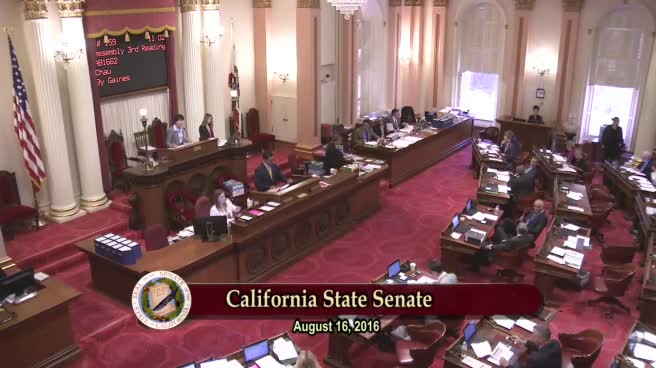 25MIN
Senate Floor
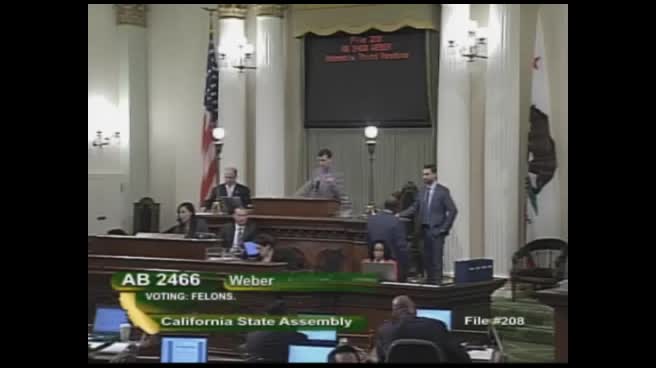 10MIN
Assembly Floor
 1MIN
Assembly Standing Committee on Appropriations
Bill Author