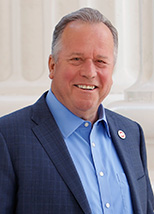
SB 632: California Environmental Quality Act: State Board of Forestry and Fire Protection: vegetation treatment program: final program environmental impact report.
- Session Year: 2019-2020
- House: Senate
- Latest Version Date: 2019-10-02
The California Environmental Quality Act (CEQA) requires a lead agency, as defined, to prepare, or cause to be prepared, and certify the completion of an environmental impact report on a project that it proposes to carry out or approve that may have a significant effect on the environment or to adopt a negative declaration if it finds that the project will not have that effect. CEQA also requires a lead agency to prepare a mitigated negative declaration for a project that may have a significant effect on the environment if revisions in the project would avoid or mitigate that effect and there is no substantial evidence that the project, as revised, would have a significant effect on the environment.
Existing law establishes the State Board of Forestry and Fire Protection and vests the board with authority over wildland forest resources.
This bill would require the board, as soon as practicably feasible, but by no later than February 1, 2020, to complete its environmental review under CEQA and certify a specific final program environmental impact report for a vegetation treatment program. The bill would repeal these provisions on January 1, 2021.
(a)The Legislature finds and declares that many of the most destructive and deadliest wildfires recorded in Californias history have occurred in the last two years, and the proposed program environmental impact report for a vegetation treatment program serves as an important public safety component to reduce the risk of loss of life and property from high-intensity wildfires.
(b)The Legislature therefore intends that the State Board of Forestry and Fire Protection complete the proposed program environmental impact report for the vegetation treatment program as soon as practicably feasible and that the report be used to complete priority fuel reduction projects to protect communities vulnerable to wildfires.
SEC. 2.Section 746 is added to the Public Resources Code, to read:746.(a)As soon as practicably feasible, but by no later than February 1, 2020, the board shall complete its review, pursuant to the California Environmental Quality Act (Division 13 (commencing with Section 21000)), of the vegetation treatment program pursuant to a notice of preparation, State Clearinghouse Number 2019012052, filed by the board with the State Clearinghouse on January 30, 2019, and certify a final program environmental impact report pursuant to the California Environmental Quality Act.
(b)This section shall remain in effect only until January 1, 2021, and as of that date is repealed.
|
Date
|
Status
|
|---|---|
| Oct 2, 2019 | Chaptered by Secretary of State. Chapter 411, Statutes of 2019. |
| Oct 2, 2019 | Approved by the Governor. |
| Sep 10, 2019 | Enrolled and presented to the Governor at 4 p.m. |
| Sep 4, 2019 | Assembly amendments concurred in. (Ayes 39. Noes 0.) Ordered to engrossing and enrolling. |
| Sep 3, 2019 | In Senate. Concurrence in Assembly amendments pending. |
| Sep 3, 2019 | Read third time. Passed. Ordered to the Senate. |
| Aug 15, 2019 | Read second time. Ordered to third reading. |
| Aug 14, 2019 | From committee: Do pass. (Ayes 18. Noes 0.) (August 14). |
| Jul 11, 2019 | Read second time and amended. Re-referred to Com. on APPR. |
| Jul 10, 2019 | From committee: Do pass as amended and re-refer to Com. on APPR. (Ayes 11. Noes 0.) (July 8). |
| May 30, 2019 | Referred to Com. on NAT. RES. |
| May 21, 2019 | In Assembly. Read first time. Held at Desk. |
| May 20, 2019 | In Assembly. Read first time. Held at Desk. |
| May 20, 2019 | Read third time. Passed. (Ayes 37. Noes 1.) Ordered to the Assembly. |
| May 14, 2019 | Read second time. Ordered to third reading. |
| May 13, 2019 | From committee: Be ordered to second reading pursuant to Senate Rule 28.8. |
| May 3, 2019 | Set for hearing May 13. |
| Apr 30, 2019 | Withdrawn from committee. |
| Apr 29, 2019 | Read second time and amended. Re-referred to Com. on RLS. |
| Apr 25, 2019 | From committee: Do pass as amended and re-refer to Com. on RLS. (Ayes 7. Noes 0.) (April 24). |
| Apr 12, 2019 | Set for hearing April 24. |
| Apr 10, 2019 | From committee with author's amendments. Read second time and amended. Re-referred to Com. on EQ. |
| Apr 8, 2019 | April 10 set for first hearing canceled at the request of author. |
| Mar 15, 2019 | Set for hearing April 10. |
| Mar 14, 2019 | Referred to Com. on EQ. |
| Feb 25, 2019 | Read first time. |
| Feb 25, 2019 | From printer. May be acted upon on or after March 27. |
| Feb 22, 2019 | Introduced. To Com. on RLS. for assignment. To print. |
|
Date
|
Description
|
Location
|
Votes
|
|
|---|---|---|---|---|
| Sep 4, 2019 | Unfinished Business SB632 Galgiani et al. Concurrence | Senate Floor |
Passed |
|
| Sep 3, 2019 | SB 632 Galgiani Senate Third Reading By Gallagher | Assembly Floor |
Passed |
|
| Aug 14, 2019 | Do pass. | Assembly Standing Committee on Appropriations |
Passed |
|
| Jul 8, 2019 | Do pass as amended and be re-referred to the Committee on [Appropriations] | Assembly Standing Committee on Natural Resources |
Passed |
|
| May 20, 2019 | Senate 3rd Reading SB632 Galgiani et al. | Senate Floor |
Passed |
|
| Apr 24, 2019 | Do pass as amended, but first amend, and re-refer to the Committee on [Rules] | Senate Standing Committee on Environmental Quality |
Passed |
This list shows positions taken on this bill by organizations on the date displayed, which is linked to the original source.
Positions by individuals are not included.
Office of Senate Floor Analyses (916) 651-1520 Fax: (916) 327-4478 | SB 632 |
UNFINISHED BUSINESS
Bill No: SB 632
Amended: 7/11/19
SENATE ENVIRONMENTAL QUALITY COMMITTEE: 7-0, 4/24/19
AYES: Allen, Bates, Hill, Skinner, Stern, Stone, Wieckowski
SENATE APPROPRIATIONS COMMITTEE: Senate Rule 28.8
SENATE FLOOR: 37-1, 5/20/19
AYES: Allen, Archuleta, Atkins, Bates, Beall, Borgeas, Bradford, Caballero, Chang, Dodd, Durazo, Galgiani, Glazer, Grove, Hertzberg, Hill, Hueso, Hurtado, Jackson, Jones, Leyva, McGuire, Mitchell, Monning, Moorlach, Morrell, Nielsen, Pan, Portantino, Roth, Rubio, Stern, Stone, Umberg, Wieckowski, Wiener, Wilk
NOES: Skinner
ASSEMBLY FLOOR: 76-0, 9/3/19 - See last page for vote
SUBJECT: California Environmental Quality Act: injunction: vegetation treatment projects
SOURCE: California Forestry Association
DIGEST:
This bill requires the State Board of Forestry and Fire Protection (Board), as soon as practicably feasible, but no later February 1, 2020, to complete its environmental review under the California Environmental Quality Act (CEQA) and certify a specific final program environmental impact report (EIR) for a vegetation treatment program.
Assembly Amendments
move the date by which the Board is required to complete the environmental review from June 30, 2020, to February 1, 2020, and require the Board to certify the final program EIR instead of the draft program EIR.
Existing law, under CEQA:
- Requires lead agencies with the principal responsibility for carrying out or approving a proposed discretionary project to prepare a negative declaration, mitigated negative declaration, or EIR for this action, unless the project is exempt from CEQA (CEQA includes various statutory exemptions, as well as categorical exemptions in the CEQA guidelines). (Public Resources Code §21000 et seq.). If there is substantial evidence, in light of the whole record before a lead agency, that a project may have a significant effect on the environment, the lead agency must prepare a draft EIR. (CEQA Guidelines §15064(a)(1), (f)(1)).
- Sets requirements relating to the preparation, review, comment, approval and certification of environmental documents, as well as procedures relating to an action or proceeding to attack, review, set aside, void, or annul various actions of a public agency on the grounds of noncompliance with CEQA.
This bill requires the Board, by February 1, 2020, to complete its environmental review under CEQA and certify a specific final program EIR for a vegetation treatment program.
Background
- CEQA
- Overview of CEQA Process. CEQA provides a process for evaluating the environmental effects of a project, and includes statutory exemptions, as well as categorical exemptions in the CEQA guidelines. If a project is not exempt from CEQA, an initial study is prepared to determine whether a project may have a significant effect on the environment. If the initial study shows that there would not be a significant effect on the environment, the lead agency must prepare a negative declaration. If the initial study shows that the project may have a significant effect on the environment, the lead agency must prepare an EIR.
- Overview of CEQA Process. CEQA provides a process for evaluating the environmental effects of a project, and includes statutory exemptions, as well as categorical exemptions in the CEQA guidelines. If a project is not exempt from CEQA, an initial study is prepared to determine whether a project may have a significant effect on the environment. If the initial study shows that there would not be a significant effect on the environment, the lead agency must prepare a negative declaration. If the initial study shows that the project may have a significant effect on the environment, the lead agency must prepare an EIR.
Generally, an EIR must accurately describe the proposed project, identify and analyze each significant environmental impact expected to result from the proposed project, identify mitigation measures to reduce those impacts to the extent feasible, and evaluate a range of reasonable alternatives to the proposed project. Prior to approving any project that has received environmental review, an agency must make certain findings. If mitigation measures are required or incorporated into a project, the agency must adopt a reporting or monitoring program to ensure compliance with those measures.
- What is analyzed in an environmental review? An environmental review analyzes the significant direct and indirect environmental impacts of a proposed project and may include water quality, surface and subsurface hydrology, land use and agricultural resources, transportation and circulation, air quality and greenhouse gas emissions, terrestrial and aquatic biological resources, aesthetics, geology and soils, recreation, public services and utilities such as water supply and wastewater disposal, and cultural resources. The analysis must also evaluate the cumulative impacts of any past, present, and reasonably foreseeable projects/activities within study areas that are applicable to the resources being evaluated. A study area for a proposed project must not be limited to the footprint of the project because many environmental impacts of a development extend beyond the identified project boundary. Also, CEQA stipulates that the environmental impacts must be measured against existing physical conditions within the project area, not future, allowable conditions.
- CEQA provides a hub for multi-disciplinary regulatory process. CEQA assists in moving a project through the multi-disciplinary, regulatory process because responsible agencies rely on the lead agency’s environmental documentation in acting on the aspect of the project that requires its approval and must prepare its own findings regarding the project. A variety of issues, many of which involve permitting and/or regulatory program requirements, should be coordinated and analyzed together as a whole. CEQA provides a comprehensive analysis of a project’s impacts in those subject areas.
- Program EIRs. Under CEQA Guidelines Sec. 15168(a), a program EIR is an EIR prepared for a series of actions that can be characterized as one large project and that is related, among other ways, as logical parts in the chain of contemplated actions and as individual activities carried out under the same authorizing authority and having generally similar environmental effects that can be mitigated in similar ways. A program EIR can be used for a variety of purposes including avoiding multiple EIRs, simplifying later environmental review for activities within the program, and consideration of broad programmatic issues. A program EIR, like a regular EIR, must provide decisionmakers with sufficient analysis to intelligently consider the environmental consequences of a project.
- What is analyzed in an environmental review? An environmental review analyzes the significant direct and indirect environmental impacts of a proposed project and may include water quality, surface and subsurface hydrology, land use and agricultural resources, transportation and circulation, air quality and greenhouse gas emissions, terrestrial and aquatic biological resources, aesthetics, geology and soils, recreation, public services and utilities such as water supply and wastewater disposal, and cultural resources. The analysis must also evaluate the cumulative impacts of any past, present, and reasonably foreseeable projects/activities within study areas that are applicable to the resources being evaluated. A study area for a proposed project must not be limited to the footprint of the project because many environmental impacts of a development extend beyond the identified project boundary. Also, CEQA stipulates that the environmental impacts must be measured against existing physical conditions within the project area, not future, allowable conditions.
- Increasing Threat of Wildfires. Wildfires are a significant threat in California, particularly in recent years as the landscape responds to climate change and decades of fire suppression. Over 75 percent of forested areas and other woody vegetation types are burning less frequently than historic averages, and fire sizes have increased significantly over the last 17 years. Drought conditions, low snow pack accumulation, and extreme temperature highs have also been prevalent in the last decade and are expected to worsen as climate change continues to alter landscapes and local climates.
These conditions have resulted in the largest, most destructive, and deadliest wildfires on record in California history, all occurring in 2018. Fifteen of the state’s 20 largest wildfires have occurred since 2002. The 2018 Mendocino Complex, the state’s largest wildfire, burned 1.5 times as many acres as the next largest fire. Fourteen of the state’s 20 most destructive wildfires have occurred since 2003; the 2018 Camp Fire destroyed more than three times as many structures as the next most destructive fire. Ten of the state’s 20 deadliest wildfires have occurred since 2003, and the 2018 Camp Fire resulted in more than twice as many deaths as the next deadliest fire.
Historically, California’s wildfires were less severe, burning fewer acres and destroying fewer structures by factors of two and three, respectively, when compared with modern fire statistics. Additionally, fire seasons have been extending further into the winter months since 2000. The fire sieges in October and December of 2017 serve as prime examples of the expanding fire season. As environmental conditions become more conducive to larger and more severe wildfires, development in the wildland-urban interface (WUI) is also on the rise. A 2018 study indicates that the number of houses in the WUI increased nationwide by 41 percent between 1990 and 2010.
In response to these changing environmental conditions and the increased risk to California’s citizens, former Governor Brown issued Executive Order B-52-18, which mandates an increase in the pace and scale of fire fuel treatment programs to reduce wildfire risk. On March 22, 2019, Governor Newsom proclaimed a state of emergency throughout California ahead of the coming fire season. The Governor directed his administration to immediately expedite forest management projects to protect 200 of California’s most wildfire-vulnerable communities.
The emergency proclamation provides the Secretary of Natural Resources and the Secretary of the California Environmental Protection Agency discretion to suspend state environmental permitting requirements on a case-by-case basis in order to allow projects to get underway immediately, including suspending requirements to prepare CEQA documents. For each project, the California Department of Forestry and Fire Protection (CAL FIRE) will follow Best Management Practices to avoid impacting any environmentally and culturally sensitive areas within these project areas, including identifying and avoiding sensitive areas.
- Vegetation Treatment Program. The Board is mandated to regulate forestry activities throughout the state and to develop policies and regulations that contribute to fire prevention and recovery efforts. The Board is also charged with identifying State Responsibility Area land and developing rules and regulations that enable CAL FIRE to prevent, respond to, and control fire events in those regions.
The Board has been working on a statewide Vegetation Treatment Program (VTP) Program EIR for over a decade. However, in January 2019, to address public concerns expressed over the potential impacts, changes in environmental conditions that the Program EIR was intended to analyze (e.g., increases in wildfire size and intensity), and CEQA processes, the Board pulled back the draft Program EIR that was issued in November 2017 and announced it would be preparing a new draft Program EIR, dubbed CalVTP, which is slated to be completed by the end of the year.
Under CalVTP, CAL FIRE would implement vegetation treatments to reduce wildfire risks and avoid or diminish the harmful effects of wildfire on the people, property, and natural resources in the State of California. To counteract decades of fire suppression, vegetation treatment activities would be designed to reduce fire fuels, improve protection from wildfire through strategically located fuel breaks, and mimic a natural fire regime using prescribed burning. In addition, ecosystem restoration activities would be designed to approximate natural habitat conditions, processes, and values to those occurring prior to the period of fire suppression. The new Program EIR will be prepared for the proposed CalVTP.
According to the Board, “Since a previous draft [Program EIR] for the Vegetation Treatment Program (VTP) was released in 2017, substantial increases in wildfire size, intensity, and destructiveness to California’s residents have occurred and are projected to continue to occur. As a result, the description and magnitude of treatment activities in the 2017 VTP have been modified and expanded to meet the worsening wildfire conditions being experienced.”
FISCAL EFFECT: Appropriation: No Fiscal Com.: Yes Local: No
According to the Assembly Appropriations Committee, there are no additional state costs. According to CAL FIRE, the Board is trying to get the VTP approved as soon as possible. Public comment on the EIR closed on August 9, 2019.
California Forestry Association (source)
Associated California Loggers
California Building Industry
California Chamber of Commerce
California Farm Bureau Federation
California Licensed Foresters Association
Forest Landowners of California
Forest Products Industry National Labor Management Committee
Personal Insurance Federation of California
Rural County Representatives of California
San Diego Gas and Electric
San Gabriel Valley Economic Partnership
Sempra Energy
Southern California Edison
Stronger California
None received
ASSEMBLY FLOOR: 76-0, 9/3/19
AYES: Aguiar-Curry, Arambula, Bauer-Kahan, Berman, Bigelow, Bloom, Boerner Horvath, Bonta, Brough, Burke, Calderon, Carrillo, Cervantes, Chau, Chen, Chiu, Choi, Chu, Cooley, Cooper, Cunningham, Daly, Diep, Eggman, Flora, Fong, Friedman, Gabriel, Gallagher, Gipson, Gloria, Gonzalez, Gray, Grayson, Holden, Irwin, Jones-Sawyer, Kalra, Kamlager-Dove, Kiley, Lackey, Levine, Limón, Low, Maienschein, Mathis, Mayes, McCarty, Medina, Melendez, Mullin, Muratsuchi, Nazarian, Obernolte, O'Donnell, Patterson, Petrie-Norris, Quirk, Quirk-Silva, Ramos, Reyes, Luz Rivas, Robert Rivas, Rodriguez, Blanca Rubio, Salas, Santiago, Smith, Mark Stone, Ting, Voepel, Waldron, Weber, Wicks, Wood, Rendon
NO VOTE RECORDED: Frazier, Cristina Garcia, Eduardo Garcia
Prepared by: Genevieve M. Wong / E.Q. / (916) 651-4108
9/3/19 18:18:29
**** END ****
SENATE THIRD READING
STR Bill Id:SB 632
Author:(Galgiani)
As Amended Ver:July 11, 2019
Majority vote
SUMMARY:
Requires the Board of Forestry (Board) to complete its review, pursuant to the California Environmental Quality Act, of the vegetation treatment program (VTP) as soon as practicably feasible, but by no later than February 1, 2020.
Major Provisions
- Declares the proposed program environmental impact report (PEIR) for the VTP serves as an important public safety component to reduce the risk of loss of life and property from high-intensity wildfires.
- Requires the Board to complete its review, pursuant to the California Environmental Quality Act, of the VTP as soon as practicably feasible, but by no later than February 1, 2020.
COMMENTS:
The VTP directs the management of the wildland landscape within the Department of Forestry and Fire Protection's (CAL FIRE) State Responsibility Area (SRA), an area comprised of over 31 million acres of private land. The VTP is the main program that will be used to meet CAL FIRE's treatment goals. The VTP consists of a strategy that would implement vegetation treatment activities for the purpose of altering landscape fuels to reduce the size, number, or frequency of damaging fires and reduce losses to life, property, and natural resources. The process would generally involve the survey and monitoring of site conditions before, during, and after treatment to determine if objectives are being met and if program methods need to be revised. The VTP consists of specific vegetation treatment activities: prescribed fire, manual activities, mechanical activities, prescribed herbivory (beneficial grazing), and targeted ground application of herbicides. CAL FIRE has grouped the areas where vegetation treatment activities would occur by the following program treatment types: wildland-urban interface, fuel break, and ecological restoration.
The Board has been working on a VTP PEIR for over a decade. The most recent draft was released on June 24, 2019, and is currently in its 45-day public review and comment period. If the VTP PEIR is certified CAL FIRE and local, regional, state agencies with land ownership or land management responsibilities in the SRA could implement proposed VTP vegetation treatments and use this PEIR for California Environmental Quality Act (CEQA) compliance. This would greatly assist in doing additional fire breaks and prescribed fire projects to reduce high fuel loads to protect communities and natural resources. The majority of the vegetation treatment conducted under the VTP PEIR will be prescribed fire. The VTP PEIR would provide a streamlined review for the projects, while maintaining compliance with CEQA. According to the June 24, 2019 draft of the VTP PEIR, "The proposed CalVTP directs implementation of vegetation treatment within the SRA to serve as one component of the state's range of action to reduce risk of loss of lives and property, reduce fire suppression costs, and protect natural resources from wildfire." According to a National Public Radio story, during the Camp Fire, a fuel break slowed down the fire to allow firefighters to safety stage and make a stand against the fire, protecting a nearby community. Having a VTP PEIR in place would also reduce the justification for exempting projects through emergency proclamation and could lead to more environmental review for emergency projects to protect vulnerable communities.
According to the Author:
Wildfires are a major threat in California, particularly in recent years as the landscape responds to climate change. While fire is a natural occurrence, fire suppression and land use conversions have increased ignitions and fire frequency. Given these dangers, California needs to study the changes to our environment to become more informed and better prepared for future wildfires. This bill helps California plan for the future by requiring the State Board of Forestry and Fire Protection to complete and certify a specific environmental impact report for a vegetation treatment program by no later than February 1, 2020. By documenting the changes in California's landscape, this bill will help prevent future catastrophic wildfires by creating a clear plan for smart vegetation management.
Arguments in Support:
The California Forestry Association, in support of the bill, states today, with year after year of record-breaking wildfires in terms of deaths, acres burned, structurers destroyed; numerous states of emergencies announced relating to wildfire, Emergency Proclamations issues; as well as the creation of Task Forces and Commissions, the need for this PEIR have never been greater.
Arguments in Opposition:
None received
FISCAL COMMENTS:
According to the Assembly Appropriations Committee, no additional state costs. According to CAL FIRE, the Board is trying to get the VTP approved as soon as possible. Public comment on the PEIR closed on August 9, 2019.
VOTES:
SENATE FLOOR: 37-1-0
YES: Allen, Archuleta, Atkins, Bates, Beall, Borgeas, Bradford, Caballero, Chang, Dodd, Durazo, Galgiani, Glazer, Grove, Hertzberg, Hill, Hueso, Hurtado, Jackson, Jones, Leyva, McGuire, Mitchell, Monning, Moorlach, Morrell, Nielsen, Pan, Portantino, Roth, Rubio, Stern, Stone, Umberg, Wieckowski, Wiener, Wilk
NO: Skinner
ASM NATURAL RESOURCES: 11-0-0
YES: Friedman, Flora, Chau, Eggman, Cristina Garcia, Limón, Mathis, McCarty, Fong, Muratsuchi, Mark Stone
ASM APPROPRIATIONS: 18-0-0
YES: Gonzalez, Bigelow, Bloom, Bonta, Brough, Calderon, Carrillo, Chau, Diep, Eggman, Fong, Gabriel, Eduardo Garcia, Maienschein, Obernolte, Petrie-Norris, Quirk, Robert Rivas
UPDATED:
VERSION: July 11, 2019
CONSULTANT: Michael Jarred / NAT. RES. / (916) 319-2092 FN: 0001402
Date of Hearing: August 14, 2019
ASSEMBLY COMMITTEE ON APPROPRIATIONS
Lorena Gonzalez, Chair
SBPCA Bill Id:SB 632
Author:(Galgiani) – As Amended Ver:July 11, 2019
Policy Committee: | Natural Resources | Vote: | 11 - 0 |
|
| ||
|
|
Urgency: No State Mandated Local Program: No Reimbursable: No
SUMMARY:
This bill requires the Board of Forestry and Fire Protection (Board) to complete its California Environmental Quality Act (CEQA) review of a specified vegetation treatment program (VTP) and certify the final environmental impact report (EIR) as soon as is practicably feasible, but no later than February 1, 2020. This bill sunsets on January 1, 2021.
FISCAL EFFECT:
No additional state costs. According to CalFire, the Board is trying to get the VTP approved as soon as possible. Public comment on the EIR closed on August 9, 2019.
COMMENTS:
- Purpose. According to the author:
SB 632 helps California plan for the future by requiring the State Board of Forestry and Fire Protection to complete and certify a specific environmental impact report for a vegetation treatment program by no later than June 30, 2020. By documenting the changes in California’s landscape, this bill will help prevent future catastrophic wildfires by creating a clear plan for smart vegetation management.
- Background. The VTP directs the management of the wildland landscape within CalFire’s State Responsibility Area (SRA), an area comprised of over 31 million acres of private land.
The Board has been working on a VTP programmatic EIR for over a decade. The most recent draft was released on June 24, 2019, and is currently in its 45-day public review and comment period. When the EIR is certified CalFire and local, regional and state agencies with land ownership or land management responsibilities in the SRA could implement proposed VTP vegetation treatments and use the EIR for CEQA compliance. The majority of the vegetation treatment conducted under the EIR will be prescribed fire.
- Prior Legislation. SB 1260 (Jackson), Chapter 624, Statutes of 2018, was an omnibus fire prevention and forestry management bill that, among other things, placed specified requirements on the Board related to the VTP PEIR
Analysis Prepared by: Jennifer Galehouse / APPR. / (916) 319-2081
Date of Hearing: July 8, 2019
ASSEMBLY COMMITTEE ON NATURAL RESOURCES
Laura Friedman, Chair
SBPCA Bill Id:SB 632
Author:(Galgiani) – As Amended Ver:April 29, 2019
SENATE VOTE: 37-1
SUBJECT: California Environmental Quality Act: injunction: vegetation treatment projects
SUMMARY: Requires, on or before June 30, 2020, the Board of Forestry and Fire Protection (Board) to complete its review, pursuant to the California Environmental Quality Act (CEQA) of the draft program environmental impact report for a vegetation treatment program (VTP) and certify that draft program environmental impact report.
EXISTING LAW:
- CEQA requires lead agencies with the principal responsibility for carrying out or approving a proposed project to prepare a negative declaration, mitigated negative declaration, or environmental impact report for this action, unless the project is exempt from CEQA (CEQA includes various statutory exemptions, as well as categorical exemptions in the CEQA guidelines).
- Establishes Board in the Department of Forestry and Fire Protection (CAL FIRE) the Board consisting of nine members appointed by the Governor and confirmed by the Senate. Requires Board members to be selected and approved for appointment on the basis of their educational and professional qualifications and their general knowledge and experience of various topics related to forest management.
- Requires the Board to make and enforce regulations that are necessary and proper for the organization, maintenance, government, and direction of the fire protective system for the prevention and suppression of forest fires.
- Requires the Board to classify all lands within the state for the purpose of determining areas in which the financial responsibility of preventing and suppressing fires is primarily the responsibility of the state (known as the SRA).
- Defines “fire prevention activities” as those lawful activities that reduce the risk of wildfire in California, including, but not limited to, mechanical vegetation management, grazing, prescribed burns, creation of defensible space, and retrofitting of structures to increase fire resistance.
- Authorizes CAL FIRE, for the prevention and suppression of forest fires, to enter into cooperative agreements with any person, firm, association, or corporation to that owns or controls any forest, brush, grass, or grain lands, under such terms as CAL FIRE deems advisable, and may renew, revise, or terminate these agreements.
- Requires, to the extent feasible and only in some or certain portions of the state, the Board's VTP programmatic environmental impact report (VTP PEIR), when certified, to serve as the programmatic environmental document for persons conducting prescribed fires with a CAL FIRE burn permit.
- Authorizes prescribed burning, mastication, herbicide application, mechanical thinning, or other vegetative treatments of chaparral or sage scrub to only occur if CAL FIRE finds that the activity will not cause "type conversion" away from the chaparral and coastal sage scrub currently on site.
FISCAL EFFECT: According to the Senate Appropriations Committee, pursuant to Senate Rule 28.8, negligible state costs.
COMMENTS:
- Author’s statement:
Wildfires are a major threat in California, particularly in recent years as the landscape responds to climate change. While fire is a natural occurrence, fire suppression and land use conversions have increased ignitions and fire frequency. Given these dangers, California needs to study the changes to our environment to become more informed and better prepared for future wildfires. SB 632 helps California plan for the future by requiring the State Board of Forestry and Fire Protection to complete and certify a specific environmental impact report for a vegetation treatment program by no later than June 30, 2020. By documenting the changes in California’s landscape, this bill will help prevent future catastrophic wildfires by creating a clear plan for smart vegetation management.
- Background. In 2017, over 1.3 million acres burned in high-severity wildfires and over 10,000 structures were destroyed. In 2018, over 1.8 million acres burned and over 22,700 structures were destroyed. Over one hundred Californians have died from wildfires over the last two years. CAL FIRE keeps records of the largest and most destructive wildfires in the state’s history. Each year those records continue to be broken. Six of the 20 deadliest wildfires in California history happened in the last 2 years.
Fire has always been present in California landscapes either occurring by lightning strikes or used by Native American tribes to preserve certain useful plants and prevent larger fires. Low-intensity fires have clear ecological benefits, such as creating habitat and assisting in the regeneration of certain species of plants and trees. Low-intensity fire also reduces surface fuel, which decreases future wildfire intensity.
A century of suppressing low intensity fires, logging of older growth and more fire-resistant trees, and a significant five-year drought has increased the size and severity of California’s fires. Climate change has also contributed to wildfire risk by reducing humidity and precipitation and increasing temperatures.
California’s forests have become overstocked and unhealthy. In the Stanislaus National Forest, a team of UC Berkeley researchers found a density of 400 trees per acre in 2013, compared with 60-90 trees per acre found in historical reports from 1911. In addition, the researchers found more undergrowth species, and a smaller average tree size than in 1911. From 2014 to 2018 over 147 million trees have died due to a combination of drought and bark beetles. New research by UC Berkeley states “these dead trees have created unprecedented levels of fuel, which could create dangerous wildfires in the near future that are beyond the predictive capacity of current fire models.”
The use of targeted mechanical vegetation management, prescribed fire, and managed wildfire reduces the accumulated high fuel loads, promoting healthier, more resilient forests, reducing the risk of high-severity wildfires.
SB 901 (Dodd), Chapter 626, Statutes of 2018, committed $1 billion for CAL FIRE’s Forest Health Grant Program and fire prevention grant program and dedicated fuel reduction crews over the next five years. The funds will be used to do significant fuel reduction work near communities and in forested watersheds, and many projects will include a biomass utilization component.
On March 5, 2019, CAL FIRE released a 45-day report to Governor Newsom. According to CAL FIRE the report systematically identified high priority fuel reduction projects and other measures to immediately begin to protect over 200 of California’s most wildfire-vulnerable communities and put the state on a path toward long-term wildfire prevention and forest health. CAL FIRE’s report identified more than 35 strategically defined local projects that can be completed in partnership with communities. Examples include removal of hazardous dead trees, vegetation clearing, creation of fuel breaks and community defensible spaces, and creation of ingress and egress corridors. On March 22, 2019, Governor Newsom issued a proclamation of a state of emergency exempting the 35 projects from CEQA and developing an alternative environmental review by the California Environmental Protection Agency (CAL EPA) and the Natural Resources Agency (NRA). The proclamation was done to prevent devastating wildfires in the imminent future including to protect communities vulnerable to wildfire.
- Prescribed burns. Prescribed and managed burns (also known as prescribed fire or managed fire) are a type of vegetation management where low-intensity fires are either intentionally lit or allowed to burn in specified weather conditions and in a way that is consistent with a preapproved plan (known as a burn plan) to treat a specified area. The prescribed or managed burn eliminates hazardous surface fuels and achieves other important ecological outcomes. Prescribed and managed burns increase short-term air pollution and GHG emissions in order to mitigate the risk of larger fires with significantly higher air and GHG emissions in the future. For example, recent research has shown that had the land associated with the Rim Fire, a >250,000-acre fire in the Sierra Nevada in 2013, been intentionally managed for resource objectives, the impact could have been five times less.
For Fiscal Year 2016-17, CAL FIRE’s goal was to complete 20,000 acres of prescribed burns. CAL FIRE was only able to reach 70% of that goal. CAL FIRE plans to meet the goal this year and ramp up to 60,000 acres per year by 2030. However, 60,000 acres is far short of what is truly needed to improve forest health. Private prescribed burns and prescribed burns done with partnerships between CAL FIRE and other groups are also needed to dramatically increase the pace and scale of treated acres. Many barriers exist to doing more private and cooperative burns. They include a lack of experienced practitioners, ability to get permits, enough burn windows, and liability concerns.
There are many places where prescribed fire is not used due to fear that it might escape and cause damage to life or property. Fire escapes are rare. According to the Little Hoover Commission, between 1996 and 2004, there were only 30 escaped fires or near misses on national forest lands. Another study looked at 16,626 prescribed fires occurring nationwide, which treated 1,971,823 acres. The study only found 14 escaped fires. Experts believe training and adhering to best practices are the best way to prevent escapes.
- Vegetation Treatment Program. The VTP directs the management of the wildland landscape within CAL FIRE’s SRA, an area comprised of over 31 million acres of private land. The VTP is the main program that will be used to meet CAL FIRE’s treatment goals. The VTP consists of a strategy that would implement vegetation treatment activities for the purpose of altering landscape fuels to reduce the size, number, or frequency of damaging fires and reduce losses to life, property, and natural resources. The process would generally involve the survey and monitoring of site conditions before, during, and after treatment to determine if objectives are being met and if program methods need to be revised. The VTP consists of specific vegetation treatment activities: prescribed fire, manual activities, mechanical activities, prescribed herbivory (beneficial grazing), and targeted ground application of herbicides. CAL FIRE has grouped the areas where vegetation treatment activities would occur by the following program treatment types: wildland-urban interface, fuel break, and ecological restoration.
The Board has been working on a VTP PEIR for over a decade. The most recent draft was released on June 24, 2019, and is currently in its 45-day public review and comment period. If the VTP PEIR is certified CAL FIRE and local, regional, state agencies with land ownership or land management responsibilities in the SRA could implement proposed VTP vegetation treatments and use this PEIR for CEQA compliance. This would greatly assist in doing additional fire breaks and prescribed fire projects to reduce high fuel loads to protect communities and natural resources. The majority of the vegetation treatment conducted under the VTP PEIR will be prescribed fire. The VTP PEIR would provide a streamlined review for the projects, while maintaining compliance with CEQA. According to the June 24, 2019 draft of the VTP PEIR, “The proposed CalVTP directs implementation of vegetation treatment within the SRA to serve as one component of the state’s range of action to reduce risk of loss of lives and property, reduce fire suppression costs, and protect natural resources from wildfire.” According to a National Public Radio story, during the Camp Fire, a fuel break slowed down the fire to allow firefighters to safety stage and make a stand against the fire, protecting a nearby community. Having a VTP PEIR in place would also reduce the justification for exempting projects through emergency proclamation and could lead to more environmental review for emergency projects to protect vulnerable communities.
- Amendments. As noted above, the Board has released a new draft VTP PEIR and could have that draft certified before this bill takes effect. This bill is still important to put pressure on the Board to finish the VTP PEIR as soon as possible and to express the Legislature’s support for the goals of the VTP PEIR. The author and committee may wish to consider amending the bill to insert a finding declaring why the document should be done as soon as possible and move up the date required.
- Previous legislation.
SB 1260 (Jackson), Chapter 624, Statutes of 2018, was an omnibus fire prevention and forestry management bill promoting long-term forest health and wildfire resiliency, including increasing the use of prescribed fire. It makes various changes related to local fire planning, prescribed fire requirements, and broader fire prevention efforts. This bill also placed specified requirements on the Board related to the VTP PEIR.
REGISTERED SUPPORT / OPPOSITION:
Support
Associated California Loggers
California Building Industry Association
California Chamber Of Commerce
California Farm Bureau Federation
California Forestry Association
California Licensed Foresters Association
Forest Landowners of California
Forest Products Industry National Labor Management Committee
Personal Insurance Federation of California
Rural County Representatives of California
San Diego Gas & Electric Company
San Gabriel Valley Economic Partnership
Sempra Energy
Southern California Edison
Stronger California
Opposition
None on file
Analysis Prepared by: Michael Jarred / NAT. RES. /
Office of Senate Floor Analyses (916) 651-1520 Fax: (916) 327-4478 | SB 632 |
THIRD READING
Bill No: SB 632
Amended: 4/29/19
SENATE ENVIRONMENTAL QUALITY COMMITTEE: 7-0, 4/24/19
AYES: Allen, Bates, Hill, Skinner, Stern, Stone, Wieckowski
SENATE APPROPRIATIONS COMMITTEE: Senate Rule 28.8
SUBJECT: California Environmental Quality Act: injunction: vegetation treatment projects
SOURCE: California Forestry Association
DIGEST:
This bill requires the State Board of Forestry and Fire Protection (Board), by June 30, 2020, to complete its environmental review under the California Environmental Quality Act (CEQA) and certify a specific draft program environmental impact report (EIR) for a vegetation treatment program.
Existing law, under CEQA:
- Requires lead agencies with the principal responsibility for carrying out or approving a proposed discretionary project to prepare a negative declaration, mitigated negative declaration, or EIR for this action, unless the project is exempt from CEQA (CEQA includes various statutory exemptions, as well as categorical exemptions in the CEQA guidelines). (Public Resources Code §21000 et seq.). If there is substantial evidence, in light of the whole record before a lead agency, that a project may have a significant effect on the environment, the lead agency must prepare a draft EIR. (CEQA Guidelines §15064(a)(1), (f)(1)).
- Sets requirements relating to the preparation, review, comment, approval and certification of environmental documents, as well as procedures relating to an action or proceeding to attack, review, set aside, void, or annul various actions of a public agency on the grounds of noncompliance with CEQA.
This bill requires the Board, by June 30, 2020, to complete its environmental review under CEQA and certify a specific draft program EIR for a vegetation treatment program.
Background
- CEQA.
- Overview of CEQA Process. CEQA provides a process for evaluating the environmental effects of a project, and includes statutory exemptions, as well as categorical exemptions in the CEQA guidelines. If a project is not exempt from CEQA, an initial study is prepared to determine whether a project may have a significant effect on the environment. If the initial study shows that there would not be a significant effect on the environment, the lead agency must prepare a negative declaration. If the initial study shows that the project may have a significant effect on the environment, the lead agency must prepare an EIR.
- Overview of CEQA Process. CEQA provides a process for evaluating the environmental effects of a project, and includes statutory exemptions, as well as categorical exemptions in the CEQA guidelines. If a project is not exempt from CEQA, an initial study is prepared to determine whether a project may have a significant effect on the environment. If the initial study shows that there would not be a significant effect on the environment, the lead agency must prepare a negative declaration. If the initial study shows that the project may have a significant effect on the environment, the lead agency must prepare an EIR.
Generally, an EIR must accurately describe the proposed project, identify and analyze each significant environmental impact expected to result from the proposed project, identify mitigation measures to reduce those impacts to the extent feasible, and evaluate a range of reasonable alternatives to the proposed project. Prior to approving any project that has received environmental review, an agency must make certain findings. If mitigation measures are required or incorporated into a project, the agency must adopt a reporting or monitoring program to ensure compliance with those measures.
- What is analyzed in an environmental review? An environmental review analyzes the significant direct and indirect environmental impacts of a proposed project and may include water quality, surface and subsurface hydrology, land use and agricultural resources, transportation and circulation, air quality and greenhouse gas emissions, terrestrial and aquatic biological resources, aesthetics, geology and soils, recreation, public services and utilities such as water supply and wastewater disposal, and cultural resources. The analysis must also evaluate the cumulative impacts of any past, present, and reasonably foreseeable projects/activities within study areas that are applicable to the resources being evaluated. A study area for a proposed project must not be limited to the footprint of the project because many environmental impacts of a development extend beyond the identified project boundary. Also, CEQA stipulates that the environmental impacts must be measured against existing physical conditions within the project area, not future, allowable conditions.
- CEQA provides a hub for multi-disciplinary regulatory process. CEQA assists in moving a project through the multi-disciplinary, regulatory process because responsible agencies rely on the lead agency’s environmental documentation in acting on the aspect of the project that requires its approval and must prepare its own findings regarding the project. A variety of issues, many of which involve permitting and/or regulatory program requirements, should be coordinated and analyzed together as a whole. CEQA provides a comprehensive analysis of a project’s impacts in those subject areas.
- Program EIRs. Under CEQA Guidelines Sec. 15168(a), a program EIR is an EIR prepared for a series of actions that can be characterized as one large project and that is related, among other ways, as logical parts in the chain of contemplated actions and as individual activities carried out under the same authorizing authority and having generally similar environmental effects that can be mitigated in similar ways. A program EIR can be used for a variety of purposes including avoiding multiple EIRs, simplifying later environmental review for activities within the program, and consideration of broad programmatic issues. A program EIR, like a regular EIR, must provide decisionmakers with sufficient analysis to intelligently consider the environmental consequences of a project.
- What is analyzed in an environmental review? An environmental review analyzes the significant direct and indirect environmental impacts of a proposed project and may include water quality, surface and subsurface hydrology, land use and agricultural resources, transportation and circulation, air quality and greenhouse gas emissions, terrestrial and aquatic biological resources, aesthetics, geology and soils, recreation, public services and utilities such as water supply and wastewater disposal, and cultural resources. The analysis must also evaluate the cumulative impacts of any past, present, and reasonably foreseeable projects/activities within study areas that are applicable to the resources being evaluated. A study area for a proposed project must not be limited to the footprint of the project because many environmental impacts of a development extend beyond the identified project boundary. Also, CEQA stipulates that the environmental impacts must be measured against existing physical conditions within the project area, not future, allowable conditions.
- Increasing Threat of Wildfires. Wildfires are a significant threat in California, particularly in recent years as the landscape responds to climate change and decades of fire suppression. Over 75 percent of forested areas and other woody vegetation types are burning less frequently than historic averages, and fire sizes have increased significantly over the last 17 years. Drought conditions, low snow pack accumulation, and extreme temperature highs have also been prevalent in the last decade and are expected to worsen as climate change continues to alter landscapes and local climates.
These conditions have resulted in the largest, most destructive, and deadliest wildfires on record in California history, all occurring in 2018. Fifteen of the state’s 20 largest wildfires have occurred since 2002. The 2018 Mendocino Complex, the state’s largest wildfire, burned 1.5 times as many acres as the next largest fire. Fourteen of the state’s 20 most destructive wildfires have occurred since 2003; the 2018 Camp Fire destroyed more than three times as many structures as the next most destructive fire. Ten of the state’s 20 deadliest wildfires have occurred since 2003, and the 2018 Camp Fire resulted in more than twice as many deaths as the next deadliest fire.
Historically, California’s wildfires were less severe, burning fewer acres and destroying fewer structures by factors of two and three, respectively, when compared with modern fire statistics. Additionally, fire seasons have been extending further into the winter months since 2000. The fire sieges in October and December of 2017 serve as prime examples of the expanding fire season. As environmental conditions become more conducive to larger and more severe wildfires, development in the wildland-urban interface (WUI) is also on the rise. A 2018 study indicates that the number of houses in the WUI increased nationwide by 41 percent between 1990 and 2010.
In response to these changing environmental conditions and the increased risk to California’s citizens, former Governor Brown issued Executive Order B-52-18, which mandates an increase in the pace and scale of fire fuel treatment programs to reduce wildfire risk. On March 22, 2019, Governor Newsom proclaimed a state of emergency throughout California ahead of the coming fire season. The Governor directed his administration to immediately expedite forest management projects to protect 200 of California’s most wildfire-vulnerable communities.
The emergency proclamation provides the Secretary of Natural Resources and the Secretary of the California Environmental Protection Agency discretion to suspend state environmental permitting requirements on a case-by-case basis in order to allow projects to get underway immediately, including suspending requirements to prepare CEQA documents. For each project, the California Department of Forestry and Fire Protection (CAL FIRE) will follow Best Management Practices to avoid impacting any environmentally and culturally sensitive areas within these project areas, including identifying and avoiding sensitive areas.
- Vegetation Treatment Program. The Board is mandated to regulate forestry activities throughout the state and to develop policies and regulations that contribute to fire prevention and recovery efforts. The Board is also charged with identifying State Responsibility Area land and developing rules and regulations that enable CAL FIRE to prevent, respond to, and control fire events in those regions.
The Board has been working on a statewide Vegetation Treatment Program (VTP) Program EIR for over a decade. However, in January 2019, to address public concerns expressed over the potential impacts, changes in environmental conditions that the Program EIR was intended to analyze (e.g., increases in wildfire size and intensity), and CEQA processes, the Board pulled back the draft Program EIR that was issued in November 2017 and announced it would be preparing a new draft Program EIR, dubbed CalVTP, which is slated to be completed by the end of the year.
Under CalVTP, CAL FIRE would implement vegetation treatments to reduce wildfire risks and avoid or diminish the harmful effects of wildfire on the people, property, and natural resources in the State of California. To counteract decades of fire suppression, vegetation treatment activities would be designed to reduce fire fuels, improve protection from wildfire through strategically located fuel breaks, and mimic a natural fire regime using prescribed burning. In addition, ecosystem restoration activities would be designed to approximate natural habitat conditions, processes, and values to those occurring prior to the period of fire suppression. The new Program EIR will be prepared for the proposed CalVTP.
Currently, the Board is circulating the Notice of Preparation for the Program EIR to seek input from responsible and trustee agencies and other interested parties regarding the scope and content of the environmental information to be included in the Program EIR. According to the Board, “Since a previous draft [Program EIR] for the Vegetation Treatment Program (VTP) was released in 2017, substantial increases in wildfire size, intensity, and destructiveness to California’s residents have occurred and are projected to continue to occur. As a result, the description and magnitude of treatment activities in the 2017 VTP have been modified and expanded to meet the worsening wildfire conditions being experienced.”
FISCAL EFFECT: Appropriation: No Fiscal Com.: Yes Local: No
California Forestry Association (source)
California Chamber of Commerce
California Farm Bureau Federation
California Licensed Foresters Association
Forest Landowners of California
Personal Insurance Federation of California
Rural County Representatives of California
San Diego Gas and Electric
Southern California Edison
OPPOSITION: (Verified 5/14/19)
None received
Prepared by: Genevieve M. Wong / E.Q. / (916) 651-4108
5/14/19 16:17:58
**** END ****
SENATE COMMITTEE ON ENVIRONMENTAL QUALITY
Senator Allen, Chair
2019 - 2020 Regular
Bill No: SB 632
Author: | Galgiani | ||
Version: | 4/10/2019 | Hearing Date: | 4/24/2019 |
Urgency: | No | Fiscal: | Yes |
Consultant: | Genevieve M. Wong | ||
SUBJECT: California Environmental Quality Act: injunction vegetation treatment projects
DIGEST: Prohibits a court from enjoining or staying a project that is consistent with a vegetation treatment program for which a program environmental impact report has been certified by the Board of Forestry and Fire Protection.
ANALYSIS:
Existing state law, the California Environmental Quality Act (CEQA):
- Requires lead agencies with the principal responsibility for carrying out or approving a proposed discretionary project to prepare a negative declaration (ND), mitigated negative declaration (MND), or environmental impact report (EIR) for this action, unless the project is exempt from CEQA (CEQA includes various statutory exemptions, as well as categorical exemptions in the CEQA guidelines). (Public Resources Code §21000 et seq.). If there is substantial evidence, in light of the whole record before a lead agency, that a project may have a significant effect on the environment, the lead agency must prepare a draft EIR. (CEQA Guidelines §15064(a)(1), (f)(1)).
- Sets requirements relating to the preparation, review, comment, approval and certification of environmental documents, as well as procedures relating to an action or proceeding to attack, review, set aside, void, or annul various actions of a public agency on the grounds of noncompliance with CEQA.
This bill:
Prohibits a court from enjoining or staying a project that is consistent with a vegetation treatment program for which a program environmental impact report has been certified by the Board of Forestry and Fire Protection.
Background
- Background on CEQA.
- Overview of CEQA Process. CEQA provides a process for evaluating the environmental effects of a project, and includes statutory exemptions, as well as categorical exemptions in the CEQA guidelines. If a project is not exempt from CEQA, an initial study is prepared to determine whether a project may have a significant effect on the environment. If the initial study shows that there would not be a significant effect on the environment, the lead agency must prepare a negative declaration. If the initial study shows that the project may have a significant effect on the environment, the lead agency must prepare an EIR.
- Overview of CEQA Process. CEQA provides a process for evaluating the environmental effects of a project, and includes statutory exemptions, as well as categorical exemptions in the CEQA guidelines. If a project is not exempt from CEQA, an initial study is prepared to determine whether a project may have a significant effect on the environment. If the initial study shows that there would not be a significant effect on the environment, the lead agency must prepare a negative declaration. If the initial study shows that the project may have a significant effect on the environment, the lead agency must prepare an EIR.
Generally, an EIR must accurately describe the proposed project, identify and analyze each significant environmental impact expected to result from the proposed project, identify mitigation measures to reduce those impacts to the extent feasible, and evaluate a range of reasonable alternatives to the proposed project. Prior to approving any project that has received environmental review, an agency must make certain findings. If mitigation measures are required or incorporated into a project, the agency must adopt a reporting or monitoring program to ensure compliance with those measures.
- What is analyzed in an environmental review? An environmental review analyzes the significant direct and indirect environmental impacts of a proposed project and may include water quality, surface and subsurface hydrology, land use and agricultural resources, transportation and circulation, air quality and greenhouse gas emissions, terrestrial and aquatic biological resources, aesthetics, geology and soils, recreation, public services and utilities such as water supply and wastewater disposal, and cultural resources. The analysis must also evaluate the cumulative impacts of any past, present, and reasonably foreseeable projects/activities within study areas that are applicable to the resources being evaluated. A study area for a proposed project must not be limited to the footprint of the project because many environmental impacts of a development extend beyond the identified project boundary. Also, CEQA stipulates that the environmental impacts must be measured against existing physical conditions within the project area, not future, allowable conditions.
- CEQA provides a hub for multi-disciplinary regulatory process. CEQA assists in moving a project through the multi-disciplinary, regulatory process because responsible agencies rely on the lead agency’s environmental documentation in acting on the aspect of the project that requires its approval and must prepare its own findings regarding the project. A variety of issues, many of which involve permitting and/or regulatory program requirements, should be coordinated and analyzed together as a whole. CEQA provides a comprehensive analysis of a project’s impacts in those subject areas.
- Program EIRs. Under CEQA Guidelines Sec. 15168(a), a program EIR is an EIR prepared for a series of actions that can be characterized as one large project and that is related, among other ways, as logical parts in the chain of contemplated actions and as individual activities carried out under the same authorizing authority and having generally similar environmental effects that can be mitigated in similar ways. A program EIR can be used for a variety of purposes including avoiding multiple EIRs, simplifying later environmental review for activities within the program, and consideration of broad programmatic issues. A program EIR, like a regular EIR, must provide decisionmakers with sufficient analysis to intelligently consider the environmental consequences of a project.
- What is analyzed in an environmental review? An environmental review analyzes the significant direct and indirect environmental impacts of a proposed project and may include water quality, surface and subsurface hydrology, land use and agricultural resources, transportation and circulation, air quality and greenhouse gas emissions, terrestrial and aquatic biological resources, aesthetics, geology and soils, recreation, public services and utilities such as water supply and wastewater disposal, and cultural resources. The analysis must also evaluate the cumulative impacts of any past, present, and reasonably foreseeable projects/activities within study areas that are applicable to the resources being evaluated. A study area for a proposed project must not be limited to the footprint of the project because many environmental impacts of a development extend beyond the identified project boundary. Also, CEQA stipulates that the environmental impacts must be measured against existing physical conditions within the project area, not future, allowable conditions.
- Increasing Threat of Wildfires. Wildfires are a significant threat in California, particularly in recent years as the landscape responds to climate change and decades of fire suppression. Over 75 percent of forested areas and other woody
vegetation types are burning less frequently than historic averages, and fire sizes have increased significantly over the last 17 years. Drought conditions, low snow pack accumulation, and extreme temperature highs have also been prevalent in the last decade and are expected to worsen as climate change continues to alter landscapes and local climates.
These conditions have resulted in the largest, most destructive, and deadliest wildfires on record in California history, all occurring in 2018. Fifteen of the state's 20 largest wildfires have occurred since 2002. The 2018 Mendocino Complex, the state's largest wildfire, burned 1.5 times as many acres as the next largest fire. Fourteen of the state's 20 most destructive wildfires have occurred since 2003; the 2018 Camp Fire destroyed more than three times as many structures as the next most destructive fire. Ten of the state's 20 deadliest wildfires have occurred since 2003, and the 2018 Camp Fire resulted in more than twice as many deaths as the next deadliest fire.
Historically, California's wildfires were less severe, burning fewer acres and destroying fewer structures by factors of two and three, respectively, when compared with modern fire statistics. Additionally, fire seasons have been extending further into the winter months since 2000. The fire sieges in October and December of 2017 serve as prime examples of the expanding fire season. As environmental conditions become more conducive to larger and more severe wildfires, development in the wildland-urban interface (WUI) is also on the rise. A 2018 study indicates that the number of houses in the WUI increased nationwide by 41 percent between 1990 and 2010.
In response to these changing environmental conditions and the increased risk to California's citizens, former Governor Brown issued EO B-52-18, which mandates an increase in the pace and scale of fire fuel treatment programs to reduce wildfire risk. On March 22, 2019, Governor Newsom proclaimed a state of emergency throughout California ahead of the coming fire season. The Governor directed his administration to immediately expedite forest management projects to protect 200 of California’s most wildfire-vulnerable communities.
The emergency proclamation provides the Secretary of Natural Resources and the Secretary of CalEPA discretion to suspend state environmental permitting requirements on a case-by-case basis in order to allow projects to get underway immediately, including suspending requirements to prepare CEQA documents. For each project, CAL FIRE will follow Best Management Practices to avoid impacting any environmentally and culturally sensitive areas within these project areas, including identifying and avoiding sensitive areas.
- Vegetation Treatment Program. The Board of Forestry and Fire Protection (Board) is mandated to regulate forestry activities throughout the state and to develop policies and regulations that contribute to fire prevention and recovery efforts. The Board is also charged with identifying State Responsibility Area (SRA) land and developing rules and regulations that enable CAL FIRE to prevent, respond to, and control fire events in those regions.
The Board has been working on a statewide Vegetation Treatment Program (VTP) Program EIR for over a decade. However, in January 2019, to address public concerns expressed over the potential impacts, changes in environmental conditions that the Program EIR was intended to analyze (e.g., increases in wildfire size and intensity), and CEQA processes, the Board pulled back the draft Program EIR that was issued in November 2017 and announced it would be preparing a new draft Program EIR, dubbed CalVTP, which is slated to be completed by the end of the year.
Under CalVTP, CAL FIRE would implement vegetation treatments to reduce wildfire risks and avoid or diminish the harmful effects of wildfire on the people, property, and natural resources in the State of California. To counteract decades of fire suppression, vegetation treatment activities would be designed to reduce fire fuels, improve protection from wildfire through strategically located fuel breaks, and mimic a natural fire regime using prescribed burning. In addition, ecosystem restoration activities would be designed to approximate natural habitat conditions, processes, and values to those occurring prior to the period of fire suppression. The new Program EIR will be prepared for the proposed CalVTP.
Currently, the Board is circulating the Notice of Preparation (NOP) for the Program EIR to seek input from responsible and trustee agencies and other interested parties regarding the scope and content of the environmental information to be included in the Program EIR. According to the Board, “Since a previous draft [Program EIR] for the Vegetation Treatment Program (VTP) was released in 2017, substantial increases in wildfire size, intensity, and destructiveness to California’s residents have occurred and are projected to continue to occur. As a result, the description and magnitude of treatment activities in the 2017 VTP have been modified and expanded to meet the worsening wildfire conditions being experienced.”
Comments
- Purpose of Bill. According to the author, “The Board of Forestry and Fire Protection proposed a Programmatic Environmental Impact Report (PEIR) for a Vegetation Treatment Program (VTP) as part of a comprehensive fire prevention strategy 12 years ago. The key objectives of the program were to prevent loss of lives and property, reduce fire suppression costs and protect natural resources from damaging wildfire through the use of appropriate vegetation treatments.
“Despite years of efforts to put forth this PEIR, threats of lawsuits and protracted litigation have prevented this PEIR from being finalized. The Board of Forestry and Fire Protection announced on January 29, 2019 that they will again try to create a sweeping environmental review to encompass projects that meet certain criteria and they hope to have it certified by the end of 2019.
“On April 12, 2019, Governor Newsom released a report on Wildfires and Climate Change: California’s Energy Future. In it, he states, ‘[T]his year has all the conditions for devastating fires, with a very wet season leading to high vegetation density. During fire season, that vegetation dries out and becomes fuel.’ SB 632 is consistent with this report expanding fire prevention activity by improving forest and vegetation management and accelerating fuel reduction projects on both public and private land.
“SB 632 provides that once this new PEIR is certified that the courts cannot stay or enjoin a project that is consistent with the vegetation treatment program.”
- Tying the hands of the courts. SB 632 limits the courts’ ability to stay or enjoin a project that is consistent with a VTP for which a PEIR has been certified by the Board. Since the Cal VTP is still being developed and going through the public participation, it is difficult to determine what types of projects this would affect.
The ability to grant injunctive relief is fundamental to the equitable nature of these court proceedings. Generally, injunctive relief is granted by a court to preserve the status quo until a determination of the merits of the CEQA challenge can be made. The ability to stay or enjoin a qualified project, whatever that project may be, during the pendency of CEQA actions or proceedings is often necessary to prevent prospective damage as well as to contain ongoing damage. Without having a better sense of what types of projects will be included in the Cal VTP and their scope, would it be prudent for the Legislature to limit the court’s ability to order injunctive relief?
The committee may wish to amend the bill to strike its contents and instead insert language directing the Cal VTP be completed and certified no later than June 30, 2020.
SOURCE:
Calforests
SUPPORT:
Associated California Loggers
Calforests
California Farm Bureau Federation
California Licensed Foresters Association
Forest Landowners of California
Northern California Power Agency
Personal Insurance Federation of California
Rural County Representatives of California
San Diego Gas and Electric
Southern California Edison (SCE)
OPPOSITION:
American Bird Conservancy
Battle Creek Alliance
California Chaparral Institute
California Native Plant Society
Center for Biological Diversity
Center for Sustainable Communities
Coast Action Group
Conservation Congress
Defiance Creek Raptor Rescue
Endangered Habitats League
Environmental Protection Information Center (EPIC)
Forest Unlimited
Forests Forever Foundation
Geos Institute
Greenpeace U.S.A.
John Muir Project
Last Tree Laws
Los Padres Forest Watch
Lost Coast League
Lost Coast Ranch
Sean and Sage Audubon Society
Sequoia ForestKeeper
Sierra Club of California
Southern Oregon Prescribed Fire Network
The Chaparral Lands Conservancy
Wild Nature Institute
1 Individual
-- END --
Bill Author