SB 65: Health care coverage: financial assistance.
- Session Year: 2019-2020
- House: Senate
- Latest Version Date: 2020-01-23
|
Date
|
Status
|
|---|---|
| Jan 23, 2020 | From committee with author's amendments. Read second time and amended. Re-referred to Com. on APPR. |
| Aug 14, 2019 | August 14 set for first hearing canceled at the request of author. |
| Jul 10, 2019 | From committee: Do pass and re-refer to Com. on APPR. with recommendation: To consent calendar. (Ayes 15. Noes 0.) (July 9). Re-referred to Com. on APPR. |
| Jul 3, 2019 | From committee with author's amendments. Read second time and amended. Re-referred to Com. on HEALTH. |
| Jun 6, 2019 | Referred to Com. on HEALTH. |
| May 28, 2019 | In Assembly. Read first time. Held at Desk. |
| May 28, 2019 | Read third time. Passed. (Ayes 30. Noes 7.) Ordered to the Assembly. |
| May 16, 2019 | From committee: Do pass. (Ayes 4. Noes 2.) (May 16). |
| May 10, 2019 | Set for hearing May 16. |
| Apr 29, 2019 | April 29 hearing: Placed on APPR. suspense file. |
| Apr 18, 2019 | Set for hearing April 29. |
| Apr 11, 2019 | From committee: Do pass and re-refer to Com. on APPR. (Ayes 8. Noes 0.) (April 10). Re-referred to Com. on APPR. |
| Apr 3, 2019 | From committee with author's amendments. Read second time and amended. Re-referred to Com. on HEALTH. |
| Mar 15, 2019 | Set for hearing April 10. |
| Jan 16, 2019 | Referred to Com. on HEALTH. |
| Jan 9, 2019 | From printer. May be acted upon on or after February 8. |
| Jan 8, 2019 | Introduced. Read first time. To Com. on RLS. for assignment. To print. |
|
Date
|
Description
|
Location
|
Votes
|
|
|---|---|---|---|---|
| Jul 9, 2019 | Do pass and be re-referred to the Committee on [Appropriations] with recommendation: To Consent Calendar | Assembly Standing Committee on Health |
Passed |
|
| May 28, 2019 | Senate 3rd Reading SB65 Pan | Senate Floor |
Passed |
|
| May 16, 2019 | Do pass | Senate Standing Committee on Appropriations |
Passed |
|
| Apr 29, 2019 | Placed on suspense file | Senate Standing Committee on Appropriations |
Passed |
|
| Apr 10, 2019 | Do pass, but first be re-referred to the Committee on [Appropriations] | Senate Standing Committee on Health |
Passed |
This list shows positions taken on this bill by organizations on the date displayed, which is linked to the original source.
Positions by individuals are not included.
Date of Hearing: August 14, 2019
ASSEMBLY COMMITTEE ON APPROPRIATIONS
Lorena Gonzalez, Chair
SBPCA Bill Id:SB 65
Author:(Pan) – As Amended Ver:July 3, 2019
Policy Committee: | Health | Vote: | 15 - 0 |
Urgency: No State Mandated Local Program: No Reimbursable: No
SUMMARY:
This bill requires Covered California to issue quarterly public reports containing information on the individual health insurance market assistance program created in the 2019-20 Budget Act.
FISCAL EFFECT:
Minor and absorbable costs to Covered California to issue a quarterly report (California Health Trust Fund).
COMMENTS:
- Purpose. This bill requires reporting that will allow the administration, Legislature and public to track program expenditures of and enrollment in the enhanced financial assistance structure recently signed into law. Health Access California, a sponsor of this bill, indicates it will provide information important to ensure transparency and accountability.
- Background. Under new affordability initiatives enacted in SB 78 (Committee on Budget and Fiscal Review), Chapter 38, Statutes of 2019, and SB 106 (Committee on Budget and Fiscal Review), Chapter 55, Statutes of 2019, California will become the first state to provide state subsidies to many middle-income consumers who had previously not qualified for financial help because they exceeded federal income requirements. The initiative will also provide lower-income consumers additional financial assistance to offset the costs of coverage.
Specifically, the 2019-20 Budget Act appropriates $428.6 million GF to provide advanceable premium assistance subsidies during the 2020 coverage year to individuals with projected and actual household incomes at or below 600% of the federal poverty level (FPL). It allocates 17% of the funds to individuals with household incomes between 200% and 400% of the federal poverty level (FPL) and the remainder to individuals with household incomes either at or below 138% of the FPL or between 400% to 600% of the FPL.
- Related Legislation. SB 78 also includes a state individual mandate to maintain health insurance coverage and a related penalty that closely mirrors the federal structure in place before the penalty was lowered to $0. The penalty is expected to raise funds of a roughly similar magnitude to the appropriation, consistent with the administration’s January budget proposal to fund increased subsidies with revenues generated by establishing a state individual mandate.
Analysis Prepared by: Lisa Murawski / APPR. / (916) 319-2081
Date of Hearing: July 9, 2019
ASSEMBLY COMMITTEE ON HEALTH
Jim Wood, Chair
SBPCA Bill Id:SB 65
Author:(Pan) – As Amended Ver:July 3, 2019
SENATE VOTE: 30-7
SUBJECT: Health care coverage: financial assistance.
SUMMARY: Requires the board of California’s Health Benefit Exchange (the Exchange or Covered California) to develop and prepare one or more reports to be issued at least quarterly and to be made publicly available within 30 days following the end of each quarter for the purpose of informing the California Health and Human Services Agency, the Legislature, and the public about the enrollment process for the individual market assistance program. Requires the reports to contain specified information, including, among other things, the number of applications received for the program, the disposition of those applications, and the total number of grievances and appeals filed by applicants and enrollees. Specifically, this bill:
- Requires Covered California to develop and prepare one or more reports to be issued at least quarterly and be made publicly available within 30 days following the end of each quarter for the purpose of informing the California Health and Human Services Agency, the Legislature, and the public about the enrollment process for the individual market assistance program, as specified.
- Requires the reports to include, but not be limited to, the following information:
- The number of applications received for the individual market assistance program;
- The number of applicants included on those applications;
- Aggregate applicant demographics, including, but not limited to, gender, age, race, ethnicity, and primary language; and,
- The disposition of applications, including all of the following:
- The number of eligibility determinations that resulted in approval for financial assistance; and,
- The program or programs for which the applicants were determined eligible.
- The number of applicants that were denied financial assistance and the reason or reasons for the denials;
- The number of program participants in the following categories:
- Between 401% and 600% federal poverty level (FPL);
- Between 139% and 400% FPL; and,
- At or below 138% FPL;
- The amount of the financial assistance provided to program participants in each of the FPLs described in f) above;
- The number of program participants subject to reconciliation in each of the FPLs described in f) above;
- The health plans selected by applicants as reported by the program;
- The total number of grievances and appeals filed by applicants and enrollees, the basis for the grievance, and the outcomes of the appeals; and,
- Any other information Covered California determines to be relevant to the individual market assistance program design.
- Sunsets this bill on January 1, 2023.
EXISTING LAW:
- Establishes the federal Patient Protection and Affordable Care Act (ACA), which enacts various health care coverage market reforms including the availability of health insurance exchanges, and federal financial assistance in the form of advanced premium tax credits or cost sharing reductions to specified eligible individuals.
- Establishes, in state government, Covered California, as an independent public entity not affiliated with an agency or department, and requires the Exchange to compare and make available through selective contracting health insurance for individual and small business purchasers as authorized under the ACA. Specifies the powers and duties of the board governing the Exchange, and requires the board to facilitate the purchase of qualified health plans though the Exchange by qualified individuals and small employers.
- Requires the board in 2) above to determine the criteria and process for eligibility, enrollment, and disenrollment of enrollees and potential enrollees in the Exchange and coordinate that process with state and local government entities administering other specified health care coverage programs, as specified.
- Describes individual market to include health benefit plans defined as any individual health care service plan contract that provides medical, hospital, and surgical benefits. Requires a health plan to fairly and affirmatively offer, market, and sell all of the health plan’s health benefit plans that are sold in the individual market for policy years on and after January 1, 2014, to all individuals and dependents in each service area in which the plan provides or arranges for the provision of health care services.
- Defines levels of coverage for the nongrandfathered individual and small group market as follows:
- Bronze level as the health care service plan (health plan) contract to provide a level of coverage that is actuarially equivalent to 60% of the full AV) of the benefits provided under the plan contract;
- Silver level to 70%, as specified;
- Gold level to 80%, as specified; and,
- Platinum level to 90%, as specified.
- Establishes the Franchise Tax Board (FTB), in the Government Operations Agency, and requires FTB among its tax collection responsibilities, upon the request of the local child support agency, provide specified information of an absent parent against whose personal income tax refund the agency has requested an offset for nonpayment of child support, if that information is required for the enforcement of a child support order.
- Permits FTB, upon request, to disclose to Covered California, the Department of Health Care Services (DHCS), the Managed Risk Medical Insurance Board, and county departments and agencies, returns or return information, as specified, through information sharing agreements or data interfaces, to verify or determine eligibility of an individual for Medi-Cal benefits, the Healthy Families Program, the Access for Infants and Mothers Program, health benefits, tax credits, health insurance subsidies, or cost-sharing reductions through Covered California.
- Establishes the Minimum Essential Coverage (MEC) Individual Mandate to require an individual who is a California resident to ensure that the individual, and any spouse or dependent of the individual, is enrolled in and maintains minimum essential coverage for each month beginning on and after January 1, 2020, except as specified.
- Establishes, until January 1, 2023, the Individual Market Assistance, to provide health care coverage financial assistance to California residents with household incomes at or below 600% FPL, including advanced premium assistance subsidies.
FISCAL EFFECT: This bill has not yet been analyzed by a fiscal committee.
COMMENTS:
- PURPOSE OF THIS BILL. According to the author, recognizing that health insurance premiums remain unaffordable for many, California has extended state subsidies to Californians with income up to 600% of the FPL or (which is $72,840 for an individual, $98,760 for a couple, or $150,600 for a family of four). In order to monitor and assess the annual program design for the next three years, it is critical that policymakers have data to determine the effectiveness of the program and where adjustments may be needed.
- BACKGROUND.
- ACA. Enacted in March 2010, the ACA provides the framework, policies, regulations and guidelines for the implementation of comprehensive health care reform by the states. The ACA expands access to quality, affordable insurance and health care. As of January 1, 2014, insurers are no longer able to deny coverage or charge higher premiums based on preexisting conditions (under rules referred to as guaranteed issue and modified community rating, respectively). These aspects of the ACA, along with tax credits for low and middle income people buying insurance on their own in new health benefit exchanges, make it easier for people with preexisting conditions to gain insurance coverage.
- Federal Individual Shared Responsibility Provision. The ACA’s individual mandate requires that individuals maintain minimum essential coverage or pay a penalty for noncompliance. Exemptions from the individual mandate are granted for a variety of reasons related to income, affordability of coverage, and federally defined hardship. The penalty for not maintaining MEC is either a flat dollar amount or a percentage of household income above the annual tax-filing threshold, whichever is greater. For example, the penalties for the 2018 tax year are $695 per adult and $347.50 per child under 18 (up to a maximum of $2,085 per family) or 2.5% of household income above the tax-filing threshold.
In late 2017, the federal Tax Cuts and Jobs Act set the penalty associated with the individual shared responsibility requirement of the ACA to zero beginning in 2019. The federal scale back of the individual mandate penalty payment is prompting some states to enact a state mandate to keep healthcare affordable. Prior to the ACA, Massachusetts enacted a mandate as part of its 2006 health reform package, and it remains in effect today. New Jersey and the District of Columbia recently enacted mandate legislation with rules closely resembling the federal rules, taking effect in 2019. Vermont has enacted a mandate effective 2020, but without an enforcement mechanism; the legislation empanels a working group to develop recommendations.
- 2019 Budget Action. This year’s budget bill appropriates $428,629,000 for plan year 2020 for state premium subsidies for consumers at or below 138% FPL and above 200 and at or below 600% FPL. The budget bill directs Covered California to allocate approximately 17% of funding to individuals above 200 and at or below 400% FPL and the remaining 83% to individuals at or below 138% FPL and above 400% and at or below 600% FPL. To receive state subsidies, individuals must purchase coverage through Covered California and otherwise meet eligibility requirements for federal premium subsidies, except for those with incomes at 400 to 600% FPL. SB 78 (Committee on Budget and Fiscal Review), Chapter 38, Statutes of 2019, also includes a state individual mandate and penalty that would closely mirror the federal structure that was in place prior to the penalty being zeroed out by Congress.
- SUPPORT. Health Access California, a sponsor of this bill, states that this bill will ensure the Legislature and the Administration have information related to applicants, demographics, eligibility determinations, approvals, denials, grievances and appeals and any other relevant information.
- RELATED LEGISLATION.
- AB 174 (Wood) is substantially similar to the provisions of this bill. AB 174 is pending in the Senate Appropriations Committee.
- AB 414 (Bonta) requires the FTB to annually report specified information about qualified individuals who paid the Individual Shared Responsibility Penalty, established in the 2019-20 Budget. AB 414 is currently pending in the Senate.
- SB 175 (Pan) requires a California resident to ensure that the resident, and any dependent of the resident, has minimum essential coverage for each month beginning on January 1, 2020; creates hardship and religious conscience exemptions, and imposes a penalty for failure to comply that is structured substantially similar to the penalty structure of the ACA, including prohibits the penalty from being imposed on specified individuals, including those who would have to pay more than 8.3% of household income on health insurance premiums; and, makes this bill operative only if SB 65 (Pan) takes effect on or after January 1, 2020. SB 175 is pending on the Senate Inactive File.
- PREVIOUS LEGISLATION.
- SB 78 (Committee on Budget and Fiscal Review), Chapter 38, Statutes of 2019, creates a MEC Individual Mandate to require an individual who is a California resident to ensure that the individual, and any spouse or dependent of the individual, is enrolled in and maintains MEC for each month beginning on and after January 1, 2020, except as specified. Requires FTB to provide specified information to the Exchange regarding individuals who do not maintain minimum essential coverage, and would require the Exchange to conduct annual outreach and enrollment efforts with those individuals. Establishes, until January 1, 2023, the Individual Market Assistance, which would be authorized to provide health care coverage financial assistance to California residents with household incomes at or below 600% of the federal poverty level, including advanced premium assistance subsidies.
- AB 1X 1 (John A. Pérez), Chapter 3, Statutes of 2013, requires specified data reporting, makes legislative findings and declarations and states it is the intent of the Legislature to ensure full implementation of the ACA, including the Medi-Cal expansion for individuals with incomes below 133% of the FPL, so that millions of uninsured Californians can receive health care coverage.
- AB 1X 2 (Pan), Chapter 1, Statutes of 2013-14 First Extraordinary Session and SB 1X 2 (Hernandez), Chapter 2, Statutes of 2013-14 First Extraordinary Session, establish health insurance market reforms contained in the ACA specific to individual purchasers, such as prohibiting insurers from denying coverage based on preexisting conditions; and, make conforming changes to small employer health insurance laws resulting from final federal regulations.
- AB 1602 (John A Pérez), Chapter 655, Statutes of 2010, and SB 900 (Alquist), Chapter 659, Statutes of 2010, establishes the Exchange in California and delineates its powers and duties.
REGISTERED SUPPORT / OPPOSITION:
Support
Health Access California (sponsor)
Alliance Of Californians For Community Empowerment Action (prior version)
Alliance Of Catholic Health Care, Inc. (prior version)
American Academy Of Pediatrics, California (prior version)
American Cancer Society Cancer Action Network Inc. (prior version)
American Diabetes Association (prior version)
American Federation Of State, County And Municipal Employees, Afl-Cio (prior version)
American Lung Association In California (prior version)
Apla Health (prior version)
Asian Americans Advancing Justice – California (prior version)
Association Of California Healthcare Districts, And Affiliated Entity Alpha Fund (prior version)
Blue Shield Of California (prior version)
Calasian Chamber Of Commerce (prior version)
California Academy Of Family Physicians (prior version)
California Black Health Network (prior version)
California Chapter Of The American College Of Emergency Physicians (prior version)
California Chronic Care Coalition (prior version)
California Coverage & Health Initiatives (prior version)
California Dental Association (prior version)
California Department Of Insurance (prior version)
California Hospital Association/California Association Of Hospitals And Health Systems (prior version)
California Immigrant Policy Center (prior version)
California Lgbtq Health And Human Services Network (prior version)
California Pan-Ethnic Health Network (prior version)
California Religious Action Center Of Reform Judaism (prior version)
California Rural Legal Assistance Foundation, Inc. (prior version)
California State Council Of Service Employees (prior version)
Californiahealth+ Advocates (prior version)
Children Now (prior version)
Children's Defense Fund-California (prior version)
County Of Santa Clara
Hispanas Organized For Political Equality (Hope) (prior version)
Kaiser Permanente (prior version)
Local Health Plans Of California (prior version)
Multi-Faith Action Coalition (prior version)
National Association Of Social Workers, California Chapter (prior version)
National Council Of Jewish Women Los Angeles (prior version)
National Multiple Sclerosis Society, Ms-Can (prior version)
Private Essential Access Community Hospitals (prior version)
Small Business Majority (prior version)
Sutter Health (prior version)
Tenet Healthcare Corporation (prior version)
The Children's Partnership (prior version)
The Leukemia & Lymphoma Society (prior version)
United Ways Of California (prior version)
Western Center On Law & Poverty, Inc. (prior version)
Opposition
None on file.
Analysis Prepared by: Kristene Mapile / HEALTH / (916) 319-2097
Office of Senate Floor Analyses (916) 651-1520 Fax: (916) 327-4478 | SB 65 |
THIRD READING
Bill No: SB 65
Amended: 4/3/19
SENATE HEALTH COMMITTEE: 8-0, 4/10/19
AYES: Pan, Stone, Durazo, Hurtado, Leyva, Mitchell, Monning, Rubio
NO VOTE RECORDED: Grove
SENATE APPROPRIATIONS COMMITTEE: 4-2, 5/16/19
AYES: Portantino, Bradford, Hill, Wieckowski
NOES: Bates, Jones
SUBJECT: Health care coverage: financial assistance
SOURCE: Health Access California
DIGEST:
This bill establishes the Affordable Care Access Plus Program to provide California residents with household incomes below 600% of the federal poverty level (which is $72,840 for an individual, $98,760 for a couple, or $150,600 for a family of four) financial assistance to afford individual health insurance coverage through Covered California.
Existing law:
- Establishes, under the federal Affordable Care Act (ACA), an advanced and refundable tax credit for qualified individuals who purchase a qualified health plan (QHP) through a health benefit exchange and cost sharing reductions for qualified individuals who choose specified plans. [26 U.S.C. 36B §1402 and 42 U.S.C. §18071]
- Authorizes the Covered California board, with respect to individual coverage made available through Covered California, to collect premiums and assist in administration of federal subsidies. [GC §100504]
This bill:
- Establishes the Affordable Care Access Plus (ACA Plus) Program to provide California residents with household incomes below 600% of the federal poverty level (FPL), financial assistance to afford individual coverage through Covered California.
- Authorizes Covered California to adopt, and amend, a program design to implement this bill by resolution of the Covered California board after a discussion during at least one properly noticed board meeting before the meeting at which the board votes on the final program design.
- Prohibits this bill from being construed to create an entitlement program of any kind.
Background
- Implementation of the ACA. Under the ACA, most people are required by law to have health insurance or pay a tax penalty. An individual is exempt from the ACA penalty if he or she lacks access to affordable coverage (defined as costing less than 8.16% of household income in 2018). In 2018, the penalty was the higher or $695/adult, $347.50/child under 18 (up to $2,085/family), or, 2.5% of annual household income over an individual’s tax filing threshold, not to exceed the national average cost of a bronze-level plan. (Bronze refers to one of four “metal tiers” of coverage from which people can choose and is the lowest premium cost option with a $6,300 deductible). The 2017 federal tax overhaul law made the tax penalty zero beginning in 2019. University of California (UC) researchers project that 150,000 to 450,000 more Californians will be uninsured in 2020 because of the penalty removal. Health Affairs reported premium increases from 4%-7% in California as a result. Other federal policy changes propose to allow less comprehensive coverage options that would not be available for all (guaranteed issue) as are current ACA policies. In total, California could see rates increase in 2019 in the range of 12% to 32%.
- Federal financial assistance. Under the ACA, qualified individuals are able to obtain financial assistance to help pay for health insurance premiums and cost-sharing if health insurance is purchased through a health benefit exchange. A person must be a citizen or lawfully present, must have qualifying income (between 138% and 400% FPL, which is approximately $34,948 and $98,400 for a family of four), and not be eligible for government programs or have affordable coverage through an employer (which is considered affordable if the premium for the employee only, not including dependents, is less than 9.5% of the employee’s household income).
There are two main types of help to pay for coverage: premium assistance and cost-sharing subsidies. Premium assistance is a tax credit (formally called the advanced premium tax credit) to reduce a person’s monthly premium cost. This subsidy works to cap the amount people pay for their premiums to an amount that can be no more than 9.56% of household income depending upon income level. The government either pays the tax credit directly to an insurance company each month, and the insurer bills the individual for the rest of the premium cost; or, an individual can choose to pay the full price of the health insurance premium each month and then receive the entire premium assistance amount in the form of a tax refund when the individual’s tax return is completed for the year. Advanced premium tax credits are fully funded by the federal government.
Cost-sharing reductions are subsidies to reduce an individual’s out-of-pocket costs (copays, coinsurance, and deductibles). An individual is eligible if he or she has an annual household income up to 250% FPL ($61,500 for a family of four) and chooses a “silver” level plan (silver refers to the actuarial value level of the plan). Cost-sharing reductions are required to be applied under the ACA and were funded by the federal government until 2018. Without the federal funding for CSRs, plans would have to make up the difference by increasing premium rates which would impact individuals who do not get premium assistance the greatest. Many states (including California) developed work-arounds that result in limited impacts on premium increases for most enrollees.
- Affordability issues. A March 2018 report from the UC Labor Center, “California Policy Options for Improving Individual Market Affordability and Enrollment,” estimates that there are at least 1.2 million Californians who remain uninsured despite being eligible to purchase insurance through Covered California, with or without subsidies. This is the second largest group of uninsured residents in the state, after undocumented residents, who are excluded from the ACA and Medicaid under federal law. From 2014 through 2016, cost was identified as the top reason for lacking insurance among uninsured citizens in California, regardless of income level according to the California Health Interview Survey. The vast majority of citizens who tried to purchase insurance through Covered California but ultimately remained uninsured said they found it difficult to find an affordable plan.
Even with ACA subsidies, for people with income under 400% FPL, combined premium and out of pocket spending in the individual market can exceed 10% of income for some Californians with median out of pocket spending, and can reach 20% to 30% of income for some with very high medical use. The vast majority of Americans eligible for ACA premium subsidies based on income do not have liquid assets sufficient to cover a $6,300 deductible for a bronze plan. Research has shown that high out of pocket costs can be a barrier to care and cause financial problems. Out of pocket costs are a major consideration in an individual’s enrollment decisions.
Many middle-class Californians with income over 400% FPL are not protected by the ACA’s cap on premium contributions because their income is above the level needed to qualify for advanced premium tax credits. Once household income exceeds 400% FPL, sometimes referred to as the “tax credit cliff,” consumers are abruptly cut off from any federal assistance. Premiums for consumers who are ineligible for tax credits are on average nearly four times the premiums of similar consumers receiving financial assistance and they are growing more rapidly.
- Governor’s proposal. Included in the 2019-20 Budget and May Revise proposed by Governor Newsom is a proposal to increase subsidies through Covered California for individuals with incomes between 200 and 400% FPL, and expand subsidies to individuals with incomes between 400% and 600% FPL to increase coverage and promote affordability through a new program called ACA Plus. The increased subsidies will be funded by revenues generated by establishing a state individual mandate, modeled on the federal requirement enacted as part of the ACA, to obtain comprehensive health care coverage or pay a penalty. The subsidies would be available beginning enrollment year 2020, end after enrollment year 2022, and would be established each year based on projected revenues from the individual mandate penalty. The Franchise Tax Board (FTB) would implement the penalty and reconcile subsidy miscalculations through the tax collection process, and Covered California would administer the subsidies.
(NOTE: The Governor’s May Revise estimates revenue from the mandate penalty would offset the requested General Fund expenditures by $317.2 million in 2020-21, $335.9 million in 2021-22, and $352.8 million in 2022-23.The Senate Budget Subcommittee on Health and Human Services approved an augmentation on May 16, 2019 of the General Fund expenditure authority requested by the Governor’s proposal by an additional $300 million in each year, for a total level of premium subsidy of $595.3 million in 2019-20, $630.4 million in 2020-21, and $679.9 million in 2021-22.)
Comments
According to the author, California has achieved significant success in lowering the rate of people without health insurance though implementation of the ACA. Currently only 6.8% of the state’s population is uninsured, or nearly three million people. However, health care coverage remains unaffordable for many, especially with the rise of premiums because of the instabilities created by recent federal policy changes. Over a million people remain uninsured in California because of an inability to afford the premiums, even some who are eligible for federal advanced premium tax credits. Health care coverage provides many benefits including improved financial security and significantly increased patient access to care, use of preventive care, primary care, chronic illness treatment, medications, and surgery. The Governor has recognized the need for the state to step in and help Californians afford their health insurance. This bill is modeled after his proposal with some adjustments to ease administrative burdens on consumers and state agencies.
(NOTE: The Governor’s May Revise estimates revenue from the mandate penalty would offset the requested General Fund expenditures by $317.2 million in 2020-21, $335.9 million in 2021-22, and $352.8 million in 2022-23.)
Related/Prior Legislation
SB 175 (Pan, 2019) requires a California resident to ensure that he or she, and any dependent, is covered under minimum essential coverage for each month beginning on January 1, 2020, or pay a penalty modeled after the federal ACA penalty formula prior to the 2017 federal tax overhaul zeroing out the penalty amounts. The bill requires FTB to collect the penalty through the tax payment process.
FISCAL EFFECT: Appropriation: No Fiscal Com.: Yes Local: No
According to the Senate Appropriations Committee:
- Covered California, $10 million for system updates. These activities would include modifying eligibility determination, creating and modifying notices, generating reports, creating and modifying interagency and carrier interfaces and generating a 1095 for state tax purposes. These costs reflect the actual mechanics of delivering the subsidy, not necessarily the costs to provide the subsidy.
AB 1810 (Committee on Budget, Chapter 34, Statutes of 2018) required Covered California, in consultation with stakeholders and the Legislature, to develop a health care affordability report by Feb. 1, 2019. The report, Options to Improve Affordability in California’s Individual Health Insurance Market, was released on February 1, 2019, and was jointly developed with economists from the UC Los Angeles, and University of Illinois, Chicago. The report includes options for providing financial assistance to help low- and middle-income Californians access health care coverage, including options to assist low-income individuals paying a significant percentage of their income on premiums.
According to the Senate Health Committee analysis, dated April 3, 2019 and heard on April 10, 2019, the “option most closely associated with the bill is Targeted Option 3,” with a cost of $765 million new state cost. Targeted Option 3 would eliminate the subsidy cliff at 400% FPL. But, if paired with the reinstatement of the individual mandate penalty (Targeted Option 4), the report estimates $891 million new state cost, with $482 million in potential offset from penalty revenue, to provide premium support to lower premium contribution caps and reinstate the individual mandate penalty.
The targeted option generally result in lower enrollment gains with most in the range of 50,000 to 125,000 new enrollees. Options with reinsurance and an individual mandate penalty could be offset by 1332 waiver funding or penalty revenue, respectively.
Health Access California (source)
Alliance of Catholic Health Care
American Cancer Society Cancer Action Network
American Diabetes Association
American Federation of State, County and Municipal Employees
American Lung Association
APLA Health
Blue Shield of California
California Asian Pacific Chamber of Commerce
California Chapter of the American College of Emergency Physicians
California Chronic Care Coalition
California Coverage & Health Initiatives
California Hospital Association
California Immigrant Policy Center
California LGBTQ Health and Human Services Network
California Pan-Ethnic Health Network
California Religious Action Center of Reform Judaism
CaliforniaHealth+ Advocates
Children Now
Children’s Defense Fund – California
County of Santa Clara
Kaiser Permanente
Local Health Plans of California
Multi-faith ACTION Coalition
National Association of Social Workers, California Chapter
National Council of Jewish Women Los Angeles
Private Essential Access Community Hospitals
SEIU California
Small Business Majority
Tenet Healthcare
The Children’s Partnership
United Ways of California
Western Center on Law and Poverty
One individual
OPPOSITION: (Verified 5/17/19)
None received
ARGUMENTS IN SUPPORT: Health Access California writes affordability of monthly premiums and out of pocket costs, like copays and deductibles, continues to be a top concern for many Californians, those with individual coverage and those without coverage. While ACA subsidies have helped over a million people afford health coverage, these subsidies may not be enough for many hundreds of thousands of consumers. Depending on their age, income and where they live, low and moderate-income consumers with individual insurance coverage through Covered California spend 9.6% or more of their incomes on premiums alone, and even more on copays and deductibles. An estimated one to 1.2 million Californians go without individual insurance because it costs too much. Of these Californians, 700,000 are uninsured and do not qualify for federal subsidies to help make coverage more affordable because they make over 400% FPL. Between 500,000 and 600,000 Californians with incomes 138%-400% FPL remain uninsured even though they are eligible for federal subsidies to help pay for premiums. While the ACA also limited how much an individual has to pay in premiums to a percent of her/his income based on a sliding scale, more help is needed in our high cost-of-living state. Consumers who make less than $48,000 (under 400% FPL) and who buy their own health insurance as individuals are able to get some federal financial assistance with premiums and out of pocket costs, but for many it’s not enough. People who make more than $48,000 (over 400% FPL) get no financial help at all and end up spending a substantial portion of their income (over 10%) on premiums for coverage with deductibles over $6,000.
Prepared by: Teri Boughton / HEALTH / (916) 651-4111
5/18/19 12:04:02
SENATE COMMITTEE ON APPROPRIATIONS
Senator Anthony Portantino, Chair
2019 - 2020 Regular Session
SB 65 (Pan) - Health care coverage: financial assistance
Version: April 3, 2019 | Policy Vote: HEALTH 8 - 0 |
Urgency: No | Mandate: No |
Hearing Date: April 29, 2019 | Consultant: Samantha Lui |
Bill Summary:
Senate Bill 65 would require Covered California to administer and establish the Affordable Care Access Plus Program, which would provide financial assistance to California residents with household incomes below 600 percent of federal poverty level (FPL) and other appropriate subsidies.
Fiscal Impact:
- According to Covered California, $10 million for system updates. These activities would include modifying eligibility determination, creating and modifying notices, generating reports, creating and modifying interagency and carrier interfaces and generating a 1095 for state tax purposes. These costs reflect the actual mechanics of delivering the subsidy, not necessarily the costs to provide the subsidy.
Assembly Bill 1810, Chapter 34, Statutes of 2018 required Covered California, in consultation with stakeholders and the Legislature, to develop a health care affordability report by Feb. 1, 2019. The report, Options to Improve Affordability in California’s Individual Health Insurance Market, was released on February 1, 2019, and was jointly developed with economists from the University of California, Los Angeles, and University of Illinois, Chicago. The report includes options for providing financial assistance to help low- and middle-income Californians access health care coverage, including options to assist low-income individuals paying a significant percentage of their income on premiums.
According to the Senate Health Committee analysis, dated April 3, 2019 and heard on April 10, 2019, the “option most closely associated with the bill is Targeted Option 3,” with a cost of $765 million new state cost. Targeted Option 3 would eliminate the subsidy cliff at 400 percent of federal poverty level (FPL). But, if paired with the reinstatement of the individual mandate penalty (Targeted Option 4), the report estimates $891 million new state cost, with $482 million in potential offset from penalty revenue, to provide premium support to lower premium contribution caps and reinstate the individual mandate penalty.
The targeted option generally result in lower enrollment gains with most in the range of 50,000 to 125,000 new enrollees. Options with reinsurance and an individual mandate penalty could be offset by 1332 waiver funding or penalty revenue, respectively.
Background:
The federal Patient Protection and Affordable Care Act Covered established Covered California, which is the state’s health benefit exchange. It is governed by a five-member board and uses a competitive process to select qualified health plans to provide health insurance for qualified individuals. The federal ACA established an advance and refundable tax credit and cost-sharing reductions for qualified individuals. According to the 2017 FPL scale, 600 percent FPL is about $72,840 for an individual; $97,440 for a family unit of two; or $122,520,600 for a family of three.
A November 2018 UC Berkeley Labor Center report, California's Health Coverage Gains to Erode Without Further State Action, found that despite over one million Californians having subsidized insurance through Covered California, around 10.4 percent of non-elderly California (those under age 65) lacked insurance in 2016, and cost was the top reason uninsured Californians with income above 400 percent FPL.
Proposed Law:
The bill includes the following provisions:
Affordable Care Access Plus Program. The bill requires California to administer a program of financial assistance, known as the Affordable Care Access Plus Program, to help low-income and middle-income Californians access affordable health care coverage with respect to individual coverage that is made available through Covered California. Specifically, the program must provide financial assistance to California residents with household incomes below 600 percent of the federal poverty level, and may provide other appropriate subsidies designed to make health care more accessible and affordable for individuals and households.
- Requires Covered California to adopt, and authorizes it to amend, a program by resolution of the board of the Exchange after a discussion by the board during at least one properly noticed board meeting before the board meeting at which the board votes on the final program design.
- Requires that a resolution must take effect after 10 days notification in writing to the Director of Finance and the Joint Legislative Budget Committee. However, these requirements may be waived by the joint written consent of the Director of Finance and the Chair of the Joint Legislative Budget Committee.
- Requires Covered California to provide stakeholder and public consultation in program design.
- Requires a premium assistance subsidy provided by ACA Plus Program to be remitted by the Exchange to a qualified health plan issuer, based on the program participant’s projected household income, household size, and other factors determined pursuant to the program design.
- Requires a premium assistance subsidy provided by the program to be provided only to a California resident who is eligible for the federal premium tax credit authorized under the Internal Revenue Code, except that a premium assistance subsidy must not be subject to the income requirements of that section.
Definitions. The bill would define the following terms, among others: “applicable dependent program participant”, “program participant”, and “qualified health plan”.
Emergency regulations. The bill would authorize the Exchange to adopt any emergency regulations until January 1, 2022, to implement the bill’s provisions.
Related Legislation:
The Legislature has deliberated several proposals that would provide financial assistance for individuals to afford specified health insurance coverage through Covered California, including:
- SB 175 (Pan) would require a California resident to ensure their coverage under minimum essential coverage for each month beginning on January 1, 2020, or pay a penalty modeled after the federal ACA penalty formula prior to the 2017 federal tax overhaul zeroing out the penalty amounts. Would require FTB to collect the penalty through the tax payment process, and would include several exemptions from the requirement including financial hardship. SB 175 is pending in this committee.
- AB 174 (Wood) would require Covered California to administer enhanced premium assistance to individuals with household incomes below 400 percent FPL, reduce premiums to zero for individuals with household incomes at or below 138 percent FPL, reduce premiums for individuals with household incomes at or between 401 percent and 800 percent FPL and who are ineligible for federal advanced premium tax credits, and administer specified additional cost-sharing financial assistance for individuals with household incomes below 400 percent FPL and who are eligible for premium tax credits. AB 174 is pending in the Assembly Appropriations Committee.
- AB 414 (Bonta) enforces the ACA penalty for not having health insurance beginning in 2020 based on the federal methodology that was in place as of December 15, 2017. AB 414 is pending in the Assembly Appropriations Committee.
- SB 1255 (Hernandez, 2018) would have directed Covered California to administer assistance in a manner that maximizes federally funded subsidies, subject to appropriation of funds by the Legislature. SB 1255 was held on the Assembly Appropriations suspense file.
- AB 2459 (Friedman, 2018) would have established a tax credit in an amount equal to the cost of health insurance premiums for the lowest cost bronze plan for the qualified individual or the qualified individual’s dependent that exceeds eight percent of the qualified individual’s modified adjusted gross income, as specified. AB 2459 was held on the Senate Appropriations Committee suspense file.
- AB 2565 (Chiu, 2018) would have required Covered California to provide enhanced premium assistance on a sliding scale basis to households with income below 400 percent FPL in addition to advanced premium tax credits provided under the ACA. AB 2565 was held in the Senate Appropriations Committee.
- AB 3148 (Arambula, 2018) would have required Covered California to offer additional cost sharing financial assistance to those who are otherwise eligible for federal premium tax credits and who have incomes determined to be below 400 percent FPL; and, individuals with incomes between 300 percent and 400 percent FPL would be offered products with an AV of 80 percent, with the benefit design consistent with that of a Gold level of coverage. AB 3148 was held on the Assembly Appropriations Committee suspense file.
Staff Comments: The report, Options to Improve Affordability in California’s Individual Health Insurance Market, found:
Many middle class Californians are not protected by the Affordable Care Act’s cap on premium contributions because their income exceeds the qualifying threshold for premium tax credits. Once household income exceeds this percentage, sometimes referred to as the “tax-credit cliff,” consumers are abruptly cut off from any federal assistance. Premiums for consumers who are ineligible for tax credits are, on average, nearly four times the premiums of similar consumers receiving financial assistance, and they are growing more rapidly. The premium tax-credit cliff disproportionately affects individuals 50 and older and individuals with income between 400 and 600 percent FPL
The Governor’s January 2019 Budget includes proposed trailer bill language to increase subsidies through Covered California for individuals with incomes between 250 and 400 percent FPL, and to expand subsidies to individuals with incomes between 400 percent and 600 percent FPL to increase coverage and promote affordability through a new program called ACA Plus. The increased subsidies will be funded by revenues generated by establishing a state individual mandate, modeled on the federal requirement enacted as part of the ACA, to obtain comprehensive health care coverage or pay a penalty. The subsidies would be available beginning enrollment year 2020, end after enrollment year 2022, and would be established each year based on projected revenues from the individual mandate penalty. The Franchise Tax Board (FTB) would implement the penalty and reconcile subsidy miscalculations through the tax collection process, and Covered California would administer the subsidies.
-- END --
SENATE COMMITTEE ON HEALTH
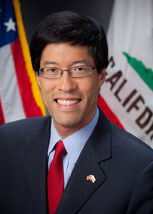
Senator Dr. Richard Pan, Chair
BILL NO: SB 65
AUTHOR: | Pan | ||
VERSION: | April 3, 2019 | ||
HEARING DATE: | April 10, 2019 | ||
CONSULTANT: | Teri Boughton | ||
SUBJECT: California Health Benefit Exchange: financial assistance
SUMMARY:
Establishes the Affordable Care Access Plus Program to provide California residents with household incomes below 600% of the federal poverty level (which is $72,840 for an individual, $98,760 for a couple, or $150,600 for a family of four) financial assistance to afford individual health insurance coverage through Covered California.
Existing law:
- Establishes, under the federal Affordable Care Act (ACA), an advanced and refundable tax credit for qualified individuals who purchase a qualified health plan (QHP) through a health benefit exchange and cost sharing reductions for qualified individuals who choose specified plans. [26 U.S.C. 36B §1402 and 42 U.S.C. §18071]
- Establishes Covered California as an independent entity in state government not affiliated with any state agency or department, governed by a five member board as California’s health benefit exchange. Requires the Covered California Executive Board (board) to establish and use a competitive process to select participating QHPs and other contractors. [GC §100500 -100522]
- Authorizes the Covered California board, with respect to individual coverage made available through Covered California, to collect premiums and assist in administration of federal subsidies. [GC §100504]
This bill:
- Establishes the Affordable Care Access Plus (ACA Plus) Program to provide California residents with household incomes below 600% of the federal poverty level (FPL), financial assistance to afford individual coverage through Covered California.
- Authorizes Covered California to adopt, and amend, a program design to implement this bill by resolution of the Covered California board after a discussion during at least one properly noticed board meeting before the meeting at which the board votes on the final program design. Requires a notice to the Department of Finance (DOF) and the Joint Legislative Budget Committee (JLBC) ten days before the resolution takes effect, which can be waived with written consent by DOF and JLBC. Exempts the program design and resolution from the Administrative Procedures Act.
- Requires a premium assistance subsidy provided by the ACA Plus program to be remitted by Covered California to a QHP, based on the program participant’s projected household income, household size, and other factors determined pursuant to the program design.
- Requires a premium assistance subsidy to be provided only to a California resident who is eligible for the federal premium tax credit except with regard to the income requirements.
- Requires Covered California to promulgate rules and regulations to implement this bill, and provides until 2022, emergency regulation authority with ability for readoption until 2027. Requires emergency regulations adopted pursuant to this bill to be discussed during at least one properly noticed board meeting, as specified.
- Requires existing Covered California regulations to apply as long as there is no conflict with the program design, this bill, and new regulations adopted by Covered California to implement this bill.
- Makes applicable the existing Covered California appeals process for the ACA Plus program.
- Prohibits this bill from being construed to create an entitlement program of any kind.
FISCAL EFFECT:
This bill has not been analyzed by a fiscal committee.
COMMENTS:
- Author’s statement. According to the author, California has achieved significant success in lowering the rate of people without health insurance though implementation of the ACA. Currently only 6.8% of the state’s population is uninsured, or nearly three million people. However, health care coverage remains unaffordable for many, especially with the rise of premiums because of the instabilities created by recent federal policy changes. Over a million people remain uninsured in California because of an inability to afford the premiums, even some who are eligible for federal advanced premium tax credits. Health care coverage provides many benefits including improved financial security and significantly increased patient access to care, use of preventive care, primary care, chronic illness treatment, medications, and surgery. The Governor has recognized the need for the state to step in and help Californians afford their health insurance. This bill is modeled after his proposal with some adjustments to ease administrative burdens on consumers and state agencies.
- Implementation of the ACA. Under the ACA, most people are required by law to have health insurance or pay a tax penalty. An individual is exempt from the ACA penalty if he or she lacks access to affordable coverage (defined as costing less than 8.16% of household income in 2018). In 2018, the penalty was the higher or $695/adult, $347.50/child under 18 (up to $2,085/family), or, 2.5% of annual household income over an individual’s tax filing threshold, not to exceed the national average cost of a bronze-level plan. (Bronze refers to one of four “metal tiers” of coverage from which people can choose and is the lowest premium cost option with a $6,300 deductible). The 2017 federal tax overhaul law made the tax penalty zero beginning in 2019. University of California (UC) researchers project that 150,000 to 450,000 more Californians will be uninsured in 2020 because of the penalty removal. Health Affairs reported premium increases from 4%-7% in California as a result. Other federal policy changes propose to allow less comprehensive coverage options that would not be available for all (guaranteed issue) as are current ACA policies. In total, California could see rates increase in 2019 in the range of 12% to 32%.
- Federal financial assistance. Under the ACA, qualified individuals are able to obtain financial assistance to help pay for health insurance premiums and cost-sharing if health insurance is purchased through a health benefit exchange. A person must be a citizen or lawfully present, must have qualifying income (between 138% and 400% FPL, which is approximately $34,948 and $98,400 for a family of four), and not be eligible for government programs or have affordable coverage through an employer (which is considered affordable if the premium for the employee only, not including dependents, is less than 9.5% of the employee’s household income).
There are two main types of help to pay for coverage: premium assistance and cost-sharing subsidies. Premium assistance is a tax credit (formally called the advanced premium tax credit) to reduce a person’s monthly premium cost. This subsidy works to cap the amount people pay for their premiums to an amount that can be no more than 9.56% of household income depending upon income level. The government either pays the tax credit directly to an insurance company each month, and the insurer bills the individual for the rest of the premium cost; or, an individual can choose to pay the full price of the health insurance premium each month and then receive the entire premium assistance amount in the form of a tax refund when the individual’s tax return is completed for the year. Advanced premium tax credits are fully funded by the federal government.
Cost-sharing reductions are subsidies to reduce an individual’s out-of-pocket costs (copays, coinsurance, and deductibles). An individual is eligible if he or she has an annual household income up to 250% FPL ($61,500 for a family of four) and chooses a “silver” level plan (silver refers to the actuarial value level of the plan). Cost-sharing reductions are required to be applied under the ACA and were funded by the federal government until 2018. Without the federal funding for CSRs, plans would have to make up the difference by increasing premium rates which would impact individuals who do not get premium assistance the greatest. Many states (including California) developed work-arounds that result in limited impacts on premium increases for most enrollees.
- Affordability issues. A March 2018 report from the UC Labor Center, “California Policy Options for Improving Individual Market Affordability and Enrollment,” estimates that there are at least 1.2 million Californians who remain uninsured despite being eligible to purchase insurance through Covered California, with or without subsidies. This is the second largest group of uninsured residents in the state, after undocumented residents, who are excluded from the ACA and Medicaid under federal law. From 2014 through 2016, cost was identified as the top reason for lacking insurance among uninsured citizens in California, regardless of income level according to the California Health Interview Survey. The vast majority of citizens who tried to purchase insurance through Covered California but ultimately remained uninsured said they found it difficult to find an affordable plan.
Even with ACA subsidies, for people with income under 400% FPL, combined premium and out of pocket spending in the individual market can exceed 10% of income for some Californians with median out of pocket spending, and can reach 20% to 30% of income for some with very high medical use. The vast majority of Americans eligible for ACA premium subsidies based on income do not have liquid assets sufficient to cover a $6,300 deductible for a bronze plan. Research has shown that high out of pocket costs can be a barrier to care and cause financial problems. Out of pocket costs are a major consideration in an individual’s enrollment decisions.
Many middle-class Californians with income over 400% FPL are not protected by the ACA’s cap on premium contributions because their income is above the level needed to qualify for advanced premium tax credits. Once household income exceeds 400% FPL, sometimes referred to as the “tax credit cliff,” consumers are abruptly cut off from any federal assistance. Premiums for consumers who are ineligible for tax credits are on average nearly four times the premiums of similar consumers receiving financial assistance and they are growing more rapidly. - Governor’s proposal. Included in the 2019-20 budget proposed by Governor Newsom is a proposal to increase subsidies through Covered California for individuals with incomes between 250 and 400% FPL, and expand subsidies to individuals with incomes between 400% and 600% FPL to increase coverage and promote affordability through a new program called ACA Plus. The increased subsidies will be funded by revenues generated by establishing a state individual mandate, modeled on the federal requirement enacted as part of the ACA, to obtain comprehensive health care coverage or pay a penalty. The subsidies would be available beginning enrollment year 2020, end after enrollment year 2022, and would be established each year based on projected revenues from the individual mandate penalty. The Franchise Tax Board (FTB) would implement the penalty and reconcile subsidy miscalculations through the tax collection process, and Covered California would administer the subsidies.
- Differences from Governor’s proposal. The major differences between this bill and the Governor’s proposal are:
Governor’s proposal SB 65
- Income eligibility 250-600% FPL Up to 600% FPL
- Annual Program Design Yes No
- Reconciliation thru Taxes Yes No
- Budget tied to penalty $ Yes No
- Program Sunset Yes No
- AB 1810 Report. AB 1810 (Committee on Budget, Chapter 34, Statutes of 2018) the Budget health trailer bill, included a requirement that Covered California, in consultation with stakeholders and the Legislature, develop options for providing financial assistance to low- and middle-income Californians to help them access health care coverage made available in Covered California. AB 1810 called for Covered California to submit these options to the Legislature, Governor, and Council on Health Care Delivery Systems (also established by AB 1810) by February 1, 2019. Covered California was directed to include options to assist individuals who pay a significant percentage of their income on premiums, even if they receive federal financial assistance, and to include individuals with an annual income of up to 600% FPL. AB 1810 requires the options to consider maximizing all available federal funding and determine whether federal financial participation for Medi-Cal would be jeopardized. On February 1, 2019, Covered California submitted its report, “Options to Improve Affordability in California’s Individual Health Insurance Market,” to the Governor and Legislature. The report presents policy options based on four elements of the ACA: a) premium subsidies; b) cost-sharing subsidies; c) individual mandate to purchase insurance or pay a penalty; and, d) reinsurance (which transfers funds to individual market insurance plans with higher-cost enrollees from all individual and group health insurance carriers and third party payers).
The option most closely associated with this bill (Targeted Option 3) causes total individual market enrollment to rise by nearly 126,000. Elimination of the subsidy cliff at 400% FPL results in much larger reductions in dollar amount of consumer premium contributions right above 400% FPL than below. Half the enrollment impact would occur among consumer between 400% and 600% FPL. This option would reduce premiums by $21 per month on average for approximately 1.3 million existing Covered California enrollees and 662,000 existing off-exchange enrollees would experience a decline in premiums of $14 per month on average due to the improved risk mix from new enrollment.
If this option were paired with a penalty for noncoverage, enrollment would increase by 478,000. Premiums would be reduced by $31 per month on average for 662,000 existing off-exchange enrollees, and an increase of $590 million in federal subsidies would be provided to Californians.
Related legislation. SB 175 (Pan) requires a California resident to ensure that he or she, and any dependent, is covered under minimum essential coverage for each month beginning on January 1, 2020, or pay a penalty modeled after the federal ACA penalty formula prior to the 2017 federal tax overhaul zeroing out the penalty amounts. Requires FTB to collect the penalty through the tax payment process. Includes several exemptions from the requirement including financial hardship. SB 175 is also set for hearing in this Committee on April 10, 2019.
AB 174 (Wood) requires Covered California to administer enhanced premium assistance to individuals with household incomes below 400% FPL, reduce premiums to zero for individuals with household incomes at or below 138% FPL, reduce premiums for individuals with household incomes at or between 401% and 800% FPL and who are ineligible for federal advanced premium tax credits so their premiums do not exceed a specified percentage of their household incomes, and administer specified additional cost-sharing financial assistance for individuals with household incomes below 400% FPL and who are eligible for premium tax credits. AB 174 is set to be heard in the Assembly Health Committee on April 9, 2019.
AB 414 (Bonta) enforces the ACA penalty for not having health insurance beginning in 2020 based on the federal methodology that was in place as of December 15, 2017. Requires Covered California to determine if a penalty is to be assessed or an exemption granted and requires the Franchise Tax Board to collect the penalty through the tax payment process. Requires penalty revenue to be used to improve the affordability of healthcare coverage for Californians. AB 414 is set to be heard in the Assembly Health Committee on April 9, 2019.
- Prior legislation. SB 1255 (Hernandez of 2018) would have required Covered California to administer financial assistance to help low-income and middle-income Californians afford health care coverage, establish priorities for income groups requiring assistance, and direct Covered California to administer assistance in a manner that maximizes federally funded subsidies, subject to appropriation of funds by the Legislature. SB 1255 was held on the Assembly Appropriations suspense file.
AB 2459 (Friedman of 2018) would have established a tax credit in an amount equal to the cost of health insurance premiums for the lowest cost bronze plan for the qualified individual or the qualified individual’s dependent that exceeds eight percent of the qualified individual’s modified adjusted gross income, as specified. AB 2459 was held in the Senate Appropriations Committee.
AB 2565 (Chiu of 2018) would have required Covered California to provide enhanced premium assistance on a sliding scale basis to households with income below 400% FPL in addition to advanced premium tax credits provided under the ACA. AB 2565 was held in the Senate Appropriations Committee.
AB 3148 (Arambula of 2018) would have required Covered California to offer additional cost sharing financial assistance to those who are otherwise eligible for federal premium tax credits and who have incomes determined to be below 400% FPL, such that individuals with incomes between 200% and 299% FPL would be offered products with an actuarial value (AV) of 87%, with the benefit design consistent with the benefit design for cost sharing reduction benefits offered to those with incomes between 150% and 200% FPL; and, individuals with incomes between 300% and 400% FPL would be offered products with an AV of 80%, with the benefit design consistent with that of a Gold level of coverage. AB 3148 was held in the Assembly Appropriations Committee.
- Support. Health Access California writes affordability of monthly premiums and out of pocket costs, like copays and deductibles, continues to be a top concern for many Californians, those with individual coverage and those without coverage. While ACA subsidies have helped over a million people afford health coverage, these subsidies may not be enough for many hundreds of thousands of consumers. Depending on their age, income and where they live, low and moderate-income consumers with individual insurance coverage through Covered California spend 9.6% or more of their incomes on premiums alone, and even more on copays and deductibles. An estimated one to 1.2 million Californians go without individual insurance because it costs too much. Of these Californians, 700,000 are uninsured and do not qualify for federal subsidies to help make coverage more affordable because they make over 400% FPL. Between 500,000 and 600,000 Californians with incomes 138%-400% FPL remain uninsured even though they are eligible for federal subsidies to help pay for premiums. While the ACA also limited how much an individual has to pay in premiums to a percent of her/his income based on a sliding scale, more help is needed in our high cost-of-living state. Consumers who make less than $48,000 (under 400% FPL) and who buy their own health insurance as individuals are able to get some federal financial assistance with premiums and out of pocket costs, but for many it’s not enough. People who make more than $48,000 (over 400% FPL) get no financial help at all and end up spending a substantial portion of their income (over 10%) on premiums for coverage with deductibles over $6,000.
SUPPORT AND OPPOSITION:
Support: Health Access California (sponsor)
Alliance of Catholic Health Care
American Cancer Society Cancer Action Network
American Federation of State, County and Municipal Employees
American Lung Association
APLA Health
California Asian Pacific Chamber of Commerce
California Chapter of the American College of Emergency Physicians
California Chronic Care Coalition
California Immigrant Policy Center
California LGBTQ Health and Human Services Network
California Coverage & Health Initiatives
California Pan-Ethnic Health Network
California Religious Action Center of Reform Judaism
CaliforniaHealth+ Advocates
Children Now
Children’s Defense Fund – California
County of Santa Clara
Kaiser Permanente
Local Health Plans of California
Multi-faith ACTION Coalition
National Association of Social Workers, California Chapter
National Council of Jewish Women Los Angeles
Private Essential Access Community Hospitals
SEIU California
Tenet Healthcare
The Children’s Partnership
United Ways of California
Western Center on Law and Poverty
Oppose: None received
-- END --
Bill Author
Bill Co-Author(s):