SB 673: Comprehensive sexual health education and human immunodeficiency virus (HIV) prevention education.
- Session Year: 2019-2020
- House: Senate
- Latest Version Date: 2019-04-01
|
Date
|
Status
|
|---|---|
| Feb 3, 2020 | Returned to Secretary of Senate pursuant to Joint Rule 62(a). |
| Jan 15, 2020 | January 15 set for final hearing. Failed passage in committee. (Ayes 2. Noes 5. Page 3098.) |
| Dec 20, 2019 | Set for hearing January 15. |
| Apr 22, 2019 | April 24 set for second hearing canceled at the request of author. |
| Apr 1, 2019 | From committee with author's amendments. Read second time and amended. Re-referred to Com. on ED. |
| Mar 27, 2019 | From committee with author's amendments. Read second time and amended. Re-referred to Com. on ED. |
| Mar 21, 2019 | Set for hearing April 24. |
| Mar 20, 2019 | April 10 set for first hearing canceled at the request of author. |
| Mar 15, 2019 | Set for hearing April 10. |
| Mar 14, 2019 | Referred to Com. on ED. |
| Feb 25, 2019 | Read first time. |
| Feb 25, 2019 | From printer. May be acted upon on or after March 27. |
| Feb 22, 2019 | Introduced. To Com. on RLS. for assignment. To print. |
|
Date
|
Description
|
Location
|
Votes
|
|
|---|---|---|---|---|
| Jan 15, 2020 | Do pass, but first be re-referred to the Committee on [Appropriations] | Senate Standing Committee on Education |
Failed |
This list shows positions taken on this bill by organizations on the date displayed, which is linked to the original source.
Positions by individuals are not included.
SENATE COMMITTEE ON EDUCATION
Senator Connie Leyva, Chair
2019 - 2020 Regular
Bill No: SB 673 Hearing Date: January 15, 2020
Author: | Morrell | ||
Version: | April 1, 2019 | ||
Urgency: | No | Fiscal: | Yes |
Consultant: | Brandon Darnell | ||
Subject: Comprehensive sexual health education and human immunodeficiency virus (HIV) prevention education.
SUMMARY
This bill amends the California Healthy Youth Act by: (1) requiring active parental consent (“opt–in”) with a signature for sexual health and HIV prevention education in grades lower than 7, (2) specifically requiring local educational agencies to make written and audio visual materials available for inspection before the date of instruction on the local educational agency’s Internet website, and (3) requiring those material to be translated.
BACKGROUND
Existing law:
- Establishes the California Healthy Youth Act (CHYA), which requires schools operated by school districts, charter schools, county boards of education, county superintendents of schools, and the California Schools for the Deaf and for the Blind, to provide comprehensive sexual health and HIV prevention instruction to all students in grades 7 to 12, at least once in middle school and once in high school. (Education Code § 51933)
- Requires that pupils in grades 7 to 12, inclusive, receive comprehensive sexual health education at least once in junior high or middle school and at least once in high school. (EC § 51934)
3) Requires that this instruction include, among other things:
a) The nature, and transmission of HIV and other sexually transmitted infections (STIs), and the risk of infection according to specific behaviors, including sexual activities and injection drug use.
b) Abstinence from sexual activity and injection drug use as the only certain way to prevent HIV and other STIs, and abstinence from sexual intercourse as the only certain way to prevent unintended pregnancy, including information about the value of delaying sexual activity while also providing medically accurate information on other methods of preventing HIV and other sexually transmitted infections and pregnancy.
c) The effectiveness of all Food and Drug Administration approved methods of preventing or reducing the risk of contracting HIV and other STIs.
d) Information about local resources, how to access local resources, and pupils’ legal rights to access local resources for sexual and reproductive health care such as testing and medical care for HIV and other sexually transmitted infections and pregnancy prevention and care, as well as local resources for assistance with sexual assault and intimate partner violence.
e) Information about the effectiveness and safety of all Federal Food and Drug Administration (FDA)-approved contraceptive methods in preventing pregnancy. Requires instruction on pregnancy to include an objective discussion of all legally available pregnancy outcomes.
f) Information on the law on surrendering physical custody of a minor child 72 hours of age or younger.
g) Information on the importance of prenatal care.
h) Information about sexual harassment, sexual assault, sexual abuse, and human trafficking.
i) Information about adolescent relationship abuse and intimate partner violence, including the early warning signs thereof. (EC § 51934)
4) Requires that this instruction, and related instructional materials:
a) Be age appropriate.
b) Medically accurate and objective.
c) Appropriate for use with pupils of all races, genders, sexual orientations, and ethnic and cultural backgrounds, pupils with disabilities, and English learners.
d) Be made available on an equal basis to a pupil who is an English learner, consistent with the existing curriculum and alternative options for an English learner pupil.
e) Accessible to pupils with disabilities.
f) Not reflect or promote bias against any person on the basis of any protected category.
g) Affirmatively recognize that people have different sexual orientations and inclusive of same-sex relationships.
h) Pupils about gender, gender expression, gender identity, and explore the harm of negative gender stereotypes.
i) Encourage a pupil to communicate with his or her parents, guardians, and other trusted adults about human sexuality and provide the knowledge and skills necessary to do so.
j) Teach the value of and prepare pupils to have and maintain committed relationships such as marriage.
k) Provide pupils with knowledge and skills they need to form healthy relationships that are based on mutual respect and affection, and are free from violence, coercion, and intimidation.
l) Pupils with knowledge and skills for making and implementing healthy decisions about sexuality, including negotiation and refusal skills to assist pupils in overcoming peer pressure and using effective decision-making skills to avoid high-risk activities.
m) Not teach or promote religious doctrine. (EC § 51934)
- Authorizes a school district to provide comprehensive sexual health education and HIV prevention education earlier than grade 7 using instructors trained in the appropriate courses and age-appropriate and medically-accurate information. (EC § 51933)
- Requires school districts to provide parents and guardians with a notice that advises them that the educational materials used in sexual health education are available for inspection. (EC § 51938)
- Provides that the parent or guardian of a pupil has the right to excuse their child from all or part of that education, including related assessments, through a passive consent (“opt-out”) process. (EC § 51938)
- Prohibits a school district from requiring active parental consent (“opt-in”) for sexual health education for pupils of any grade. (EC § 51938)
- Requires all notices, reports, statements, and records sent to the parent or guardian of any pupil by the public school or school district, if 15 percent or more of the pupils enrolled in a public school that provides instruction in kindergarten or any of grades 1 to 12, inclusive, speak a single primary language other than English, as determined from the census data submitted to the California Department of Education (CDE) in the preceding year, to be written in that primary language, in addition to English, and may be responded to either in English or the primary language. (EC § 48985)
ANALYSIS
This bill amends the California Healthy Youth Act by: (1) requiring active parental consent (“opt–in”) with a signature for sexual health and HIV prevention education in grades lower than 7, (2) specifically requiring local educational agencies to make written and audio visual materials available for inspection before the date of instruction on the local educational agency’s Internet website, and (3) requiring those material to be translated. Requires active parental consent (“opt-in”) to provide sexual health education for pupils in grades 6 and below. Specifically, this bill:
- Specifically requires school districts to notify the parents and guardians of pupils that the sexual health educational materials are available for inspection on the school districts internet website before the first date of instruction, instead of simply available for inspection.
- Requires school district to translate the written and audiovisual educational materials used in the comprehensive sexual health education if 15 percent or more of the pupils enrolled in a public school that provides instruction in kindergarten or any of grades 1 to 12, inclusive, speak a single primary language other than English, as determined from the census data submitted to the CDE in the preceding year.
- Specifies that the written and audiovisual educational materials to be made available for inspection and translated, include, but are not limited to, teacher scripts and lesson plans.
STAFF COMMENTS
- Need for the bill. According to the authors, “SB 673 is a simple change to current law that requires TK-6th grade sexual health and HIV prevention curricula to be age-appropriate and medically accurate, bringing it into conformity with existing requirements for similar curricula taught in 9th-12th grade. Additionally, this bill requires school districts to post the content of adopted curricula online to allow parents adequate opportunity to review the material, and restores a districts discretion to implement an active consent (“opt-in”) process that was eliminated by the CHYA. SB 673 makes instructional materials more transparent and accessible for parents of elementary school-aged children enrolled in public and charter schools. Given the important socio-emotional and developmental phases undergone by children in TK-6th grades, it is important that parents retain the right to actively participate in their child’s development and instruction on the subject of sexual health and HIV prevention.”
- History of the California Healthy Youth Act. The CHYA took effect in 2003 and was originally known as the Comprehensive Sexual Health and HIV/AIDS Prevention Education Act. Initially, the act authorized local educational agencies (LEAs) to provide comprehensive sexual health education in any grade, including kindergarten, so long as it consisted of age-appropriate instruction and used instructors trained in the appropriate courses. Beginning in 2016 with AB 329 (Weber, 2015) the act was renamed the CHYA and for the first time required LEAs, excluding charter schools, to provide comprehensive sexual health education and HIV prevention education to all students at least once in middle school and at least once in high school. Beginning this year, SB 2601 (Weber, 2019) requires charter schools to provide that same instruction. Throughout this time, from its inception in 2003 through today, the CHYA has always afforded parents the right to opt their child out of part, or all, of the instruction and required LEAs to notify parents and guardians of this right. Parents and guardians are able to exercise this right by informing the LEA in writing of their decision.
- Teen pregnancies are at an all-time low in California. According to data released by the California Department of Public Health (CDPH) this past fall, California’s teen birth rate for ages 15 to 19 fell from 46.7 per 1,000 births in 2000 to 13.9 per 1,000 births in 2017, the most recent year of data. Additionally, for teenagers younger than 15, the total number of births has decreased from 895 in 2000 to just 153 in 2017. These decreases are exceedingly important. According to the CDPH, “compared with births to adult women, infants born to adolescents are at greater risk for preterm birth, low birthweight, and death during infancy. Childbearing in adolescence has been associated with decreased likelihood of school completion and post-secondary education, decreased likelihood of future employment, and greater dependence on public assistance. Moreover, adolescent childbearing often leads to a cycle of disadvantage and poverty.”
- Why are teen pregnancy rates decreasing? According to the CDPH, “On a national level, evidence suggests that adolescent birth rates are declining largely because more youth are using contraception, including long-acting reversible contraception, known as LARC methods. Additionally, according to the CDPH, “youth also appear to be delaying sexual intercourse, although this accounts for much less of the decline. Public health prevention, evidence-based education and support programs, and increased outreach around youths’ rights and improved access to sexual and reproductive health clinical services have contributed to these successes. Other contributing factors include declines in fertility rates during the recession. Finally, the CDPH has specifically cited the CHYA as an example of one of California’s innovative sexual health policies that help create a multi-pronged approach for promoting adolescent sexual health and are consistent with the link between contraceptive use and reductions in early childbearing.
- Comprehensive sexual health education in lower grades. Comprehensive sexual health education in lower grades has always been, and remains, optional. Under existing law, for grades 6 and below, an LEA must “opt-in” to offer that instruction to students. The LEA is then required by law to notify parents and guardians of their right to “opt-out” their child, whether in part or completely.
This bill flips that dynamic into an “opt-in” approach for parents in lower grades and attempts to clarify a claimed ambiguity around whether comprehensive sexual health education must be age-appropriate and medically accurate. However, existing law has always required, and continues to require today, that all comprehensive sexual health education be age-appropriate, medically accurate, and objective – regardless of grade.
According to the CDE, in elementary school it is permissible to teach knowledge and skills related to comprehensive sexual health and HIV prevention education in grades kindergarten through grade six (K–6), inclusive. All instruction and materials in grades K–6 must meet the instructional criteria or baseline requirements of the CHYA and the content that is required in grades 7–12 may be also be included in an age-appropriate way in earlier grades.
Given the decreasing rates of teen pregnancies, the apparent success of the CHYA in contributing to those decreases, and the requirement that LEAs must “opt-in” to comprehensive sexual health education at lower grades, the committee may wish to consider whether it is appropriate to further require parents to opt their child into the instruction, rather than continuing to allow parents to exercise their right to opt-out.
6) Right to inspection. Existing law requires LEAs to notify parents and guardians of their right to inspect written and audiovisual materials. However, existing law does prescribe how that inspection must be implemented. This bill proposes to prescribe some parameters for inspection, including that materials be translated, available online, and before the date of instruction. Additionally, the bill specifically identifies teacher lesson plans and scripts – and not just the materials themselves – for inspection. The committee may wish to consider the appropriateness and feasibility of this requirement.
7) 2019 Revision of the Health Education Framework. On May 8, 2019, the State Board of Education (SBE) officially adopted the 2019 Health Education Curriculum Framework for California Public Schools (the Health Education Framework) after over two years of development. The Health Education Framework is aligned to the 2008 California Health Education Content Standards, which support the development of knowledge, skills, and attitudes in eight overarching standards: (1) essential health concepts; (2) analyzing health influences; (3) accessing valid health information; (4) interpersonal communication; (5) decision making; (6) goal setting; (7) practicing health-enhancing behaviors; and (8) health promotion in six content areas of health education, including sexual health. It should be noted that the Health Education Framework is a resource for teachers, not a required curriculum.
The development process for the revised framework included two public comment periods. The first 60-day public comment and review period took place from April 2018 through June 2018, and the second 60-day public comment and review period took place from November 1, 2018, through January 11, 2019. According to CDE, “the public review and comment period is an opportunity for any interested individuals or organizations to provide comments and suggested edits on the draft Health Education Framework to the Instructional Quality Commission.”
After those public comment periods, when the SBE adopted the revised the Health Education Framework, the SBE removed the following resources: My Princess Boy, Who Are You?: The Kids Guide to Gender Identity; Changing You!: A Guide to Body Changes and Sexuality; The What's Happening to My Body?: Book for Boys, The What’s Happening to My Body?: Book for Girls, and S.E.X: The All You Need to Know Sexuality Guide to Get You Through Your Teens and Twenties.
These changes will be made to the final, published version of the 2019 Health Education Framework
SUPPORT
Advocates for Faith & Freedom
California Catholic Conference
California Family Council
California Right to Life Committee, Inc.
Concerned Women for America of California
Educate. Advocate.
Emanuel Romanian Pentecostal Church
Empower Family California
Faith and Public Policy
Frederick Douglas Foundation of California
Grace International, California District
Grace Ministries International
Islamic Shura Council of Southern California
New Hope Christian Ministries
Pacific Southwest District of the Lutheran Church Missouri Synad
Real Impact
Salt & Light Council
Southern Pacific District of the Assemblies of God
The Rock
TOC Foundation
Many individuals
OPPOSITION
ACCESS Women's Health Justice
ACT for Women and Girls
AIDS Healthcare Foundation
American Academy of Pediatrics, California
American Civil Liberties Union of California
American Congress of Obstetricians & Gynecologists - District IX
APLA Health
Business And Professional Women of Nevada County
California Association for Health, Physical Education, Recreation & Dance
California Medical Association
California Partnership to End Domestic Violence
California State PTA
California Women's Law Center
Cardea Services
Citizens for Choice, Nevada County
Equality California
NARAL Pro-Choice California
National Health Law Program
Planned Parenthood Affiliates of California
-- END --
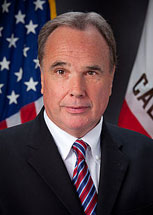
Bill Author
Bill Co-Author(s):