SB 74: Budget Act of 2020.
- Session Year: 2019-2020
- House: Senate
- Latest Version Date: 2020-06-29
|
Date
|
Status
|
|---|---|
| Jun 29, 2020 | In Senate. Consideration of Governor's item veto pending. |
| Jun 29, 2020 | Chaptered by Secretary of State. Chapter 6, Statutes of 2020. |
| Jun 29, 2020 | Approved by the Governor with item veto. |
| Jun 15, 2020 | Enrolled and presented to the Governor at 5:30 p.m. |
| Jun 15, 2020 | Consent granted to take up without reference to file. (Ayes 29. Noes 11. Page 3714.) |
| Jun 15, 2020 | In Senate. Concurrence in Assembly amendments pending. |
| Jun 15, 2020 | Read third time. Passed. (Ayes 61. Noes 15. Page 4857.) Ordered to the Senate. |
| Jun 15, 2020 | Assembly Rule 63 and 96 suspended. (Ayes 59. Noes 17. Page 4848.) |
| Jun 11, 2020 | From committee with author's amendments. Read second time and amended. Re-referred to Com. on BUDGET. |
| May 2, 2019 | Referred to Com. on BUDGET. |
| Apr 11, 2019 | In Assembly. Read first time. Held at Desk. |
| Apr 11, 2019 | Read third time. Passed. (Ayes 27. Noes 9.) Ordered to the Assembly. |
| Apr 9, 2019 | Read second time. Ordered to third reading. |
| Apr 8, 2019 | Withdrawn from committee. (Ayes 28. Noes 10.) |
| Jan 24, 2019 | Referred to Com. on B. & F.R. |
| Jan 11, 2019 | From printer. May be acted upon on or after February 10. |
| Jan 10, 2019 | Introduced. Read first time. To Com. on RLS. for assignment. To print. |
|
Date
|
Description
|
Location
|
Votes
|
|
|---|---|---|---|---|
| Jun 15, 2020 | SB 74 Mitchell Senate Third Reading By TING | Assembly Floor |
Passed |
|
| Jun 15, 2020 | W/O REF. TO FILE SB74 Mitchell | Senate Floor |
Passed |
|
| Apr 11, 2019 | Senate 3rd Reading SB74 B. & F.R. (Mitchell) | Senate Floor |
Passed |
This list shows positions taken on this bill by organizations on the date displayed, which is linked to the original source.
Positions by individuals are not included.
(Without Reference to File)
SENATE THIRD READING
STR Bill Id:SB 74
Author:(Mitchell)
As Amended Ver:June 11, 2020
Majority vote. Budget Bill Appropriation Takes Effect Immediately
SUMMARY:
This bill is the Budget Act of 2020, the main Budget Bill for the 2020 fiscal year.
Major Provisions
The bill provides $143 billion General Fund appropriations for the functioning of the state government for the forthcoming 2020-21 fiscal year.
COMMENTS:
The custom in the Assembly is to use the Assembly Budget Committee "Floor Report" to summarize the provisions and contents of the Budget Bill, with the context of the accompanying trailer bills. The Floor Report can be found on the Assembly Budget Committee's website.
According to the Author:
This is the Budget Act for the 2020-21 fiscal year.
Arguments in Support:
None on file.
Arguments in Opposition:
None on file.
FISCAL COMMENTS:
Preliminary General Fund Update scoring of this Budge Act from the Department of Finance estimates total expenditures of $142.97 billion in 2020-21, with an estimated $148.7 billion in projected total General Fund revenues. This results in a $2.58 billion Special Fund for Economic Uncertainties reserve balance after adjusting for encumbrances. In addition, the $8.4 billion for the Budget Stabilization Action would be remain as well as $900 million in the Safety Net Reserve.
VOTES:
SENATE FLOOR: 27-9-2
YES: Allen, Archuleta, Atkins, Beall, Bradford, Caballero, Dodd, Durazo, Galgiani, Glazer, Hertzberg, Hill, Hueso, Hurtado, Leyva, McGuire, Mitchell, Monning, Pan, Portantino, Roth, Rubio, Skinner, Stern, Umberg, Wieckowski, Wiener
NO: Bates, Chang, Grove, Jones, Moorlach, Morrell, Nielsen, Stone, Wilk
ABS, ABST OR NV: Borgeas, Jackson
UPDATED:
VERSION: June 11, 2020
CONSULTANT: Christian Griffith / BUDGET / (916) 319-2099 FN: 0003085
SENATE RULES COMMITTEE Office of Senate Floor Analyses (916) 651-1520 Fax: (916) 327-4478 | SB 74 |
UNFINISHED BUSINESS
Bill No: SB 74
Author: Mitchell (D)
Amended: 6/11/20
Vote: 21
PRIOR VOTES NOT RELEVANT
ASSEMBLY FLOOR: Not available
SUBJECT: Budget Act of 2020
SOURCE: Author
DIGEST:
This bill contains the 2020 Budget Act. This bill authorizes General Fund expenditures of $142.97 billion and assumes $148.7 billion in total General Fund resources. Under this budget act, there are combined total reserves in the Budget Stabilization Account (BSA), the Special Fund for Economic Uncertainties (SFEU), and the Safety Net Reserve of over $11 billion. Similar to the Governor’s May Revision, this budget assumes an additional $14 billion in federal funds and, if these federal funds do not materialize, includes a trigger mechanism that includes various budgetary solutions.
Assembly Amendments
delete the prior version of the bill and insert the current language.
ANALYSIS: Working from the general framework of the Governor’s May Revision, the Legislature incorporated very few, but significant budgetary and policy changes to the state expenditure plan. The May Revision projected a $54 billion budgetary shortfall as a result of the economic conditions created by the COVID-19 pandemic. This budget responsibly addresses the $54 billion budget shortfall by following the same reasonable framework set forth in the Governor’s May Revision, with a mix of spending reductions, temporary new revenues, borrowing/transfers/deferrals, existing federal funds, reserves, and anticipated additional federal funds/trigger solutions.
The most significant changes from the May Revision are the structure and components of the trigger. Specifically, this budget differs from the May Revision in the presumed starting point and other key details of trigger solutions.
The Governor’s May Revision proposes $14 billion in budget cuts that would take effect, but then be triggered off if Federal Funds materialize to replace the proposed cuts. SB 74 flips this presumption, and instead includes the anticipated federal funds in the budget, but then establishes trigger solutions that take effect on October 1st, should the federal funds not materialize.
This budget maximizes the use of budget reserves and makes selected payment deferrals in order to minimize cuts to important programs if the additional federal funds do not materialize. In the trigger plan, if the federal funds are not received, the following actions would occur:
- $1.8 billion more in draws from the Budget Stabilization Account.
- $900 million in draws from the Safety Net Reserve.
- $1.3 billion one-time benefit from reinstatement of a longstanding deferral of state payments to CalPERS, including from state special funds.
- $5.9 billion of increased deferrals to Proposition 98 (K-14 education) funding.
- $600 million reduction to the county realignment backfill included in this budget (leaving $400 million of county backfill remaining).
- $770 million of university reductions ($370 million for the University of California and $400 million for the California State University).
- $100 million of reductions to the judicial branch budget.
- At least $1.5 billion in state employee compensation reductions to be achieved, for represented employees, through the collective bargaining process.
- Potentially, $1.6 billion from reinstatement of the one-day June payroll deferral that was instituted during the last recession. (This change would be optional at the direction of the Director of Finance).
If trigger actions take effect, total reserves would be over $7 billion, including over $800 million in the SFEU and $6.5 billion in the rainy day fund.
This budget sets money aside to make additional emergency state expenditures related to the coronavirus. Working with the Governor, the plan anticipates a new process to enhance legislative control and oversight over up to $2.9 billion of coronavirus emergency funding proposed in the May Revision (about $700 million of which would be paid—net—from the General Fund, with the remainder coming from anticipated federal match funding).
Budget Framework:
This budget adopts the Administration’s revenue estimates for the General Fund. However it accounts for savings of approximately $3.6 billion due to lower caseload assumptions for Health and Human Services programs. The General Fund budget summary is as follows:
2020-21 Budget | ||
General Fund Summary | ||
(Dollars in Millions) | ||
2019-20 | 2020-21 | |
Prior Year Balance | $11,279.9 | $1,131.4 |
Revenues and Transfers | 138,996.6 | 139,783.4 |
Transfer to Budget Stabilization | -2,160.0 | 7,806.0 |
Account | ||
Total Resources Available | $148,116.5 | $148,720.8 |
Non-Proposition 98 Expenditures | 94,633.2 | 95,649.1 |
Proposition 98 Expenditures | 52,351.9 | 47,319.7 |
Total Expenditures | $146,985.1 | $142,968.8 |
Fund Balance | $1,131.4 | $5,752.0 |
Reserve for Liquidation of Encumbrances | $3,175.1 | $3,175.1 |
Special Fund for Economic |
-2,043.7 |
2,576.9 |
Uncertainties | ||
Safety Net Reserve | 900.0 | 900.0 |
Budget Stabilization Account | 16,156.4 | 8,350.4 |
This budget includes total General Fund expenditures of $142.97 billion for 2020-21, which is approximately $4 billion less than revised 2019-20 expenditures. The BSA is projected to have a year-end reserve of $8.4 billion, down from $16.2 billion in 2019-20. This is largely due to a withdrawal of $7.8 billion from the BSA to help address the budget shortfall. This is the first withdrawal from the BSA to address a budget emergency under the rules established by Proposition 2 of 2014.
Given the current fiscal situation, this budget aims to protect vital programs and services that California residents rely upon, particularly during economic downturns, including the following highlighted initiatives and programs:
- K-12 Education: This budget maintains Local Control Funding Formula at the 2019-20 level, plus a cost-of-living-adjustment (COLA) of 2.31 percent. Provides $645 million in ongoing Proposition 98 funds for special education. Of this, $545 million is available to increase the statewide base rate for special education funding and $100 million is to increase per pupil rates to support students with low incidence disabilities. Additionally:
- Maintains K-12 categorical programs at their 2019-20 funded levels.
- Child Care: This budget maintains the Standard Reimbursement Rate and Regional Market Reimbursement Rate for child care programs at 2019-20 levels, and includes a cost-of-living-adjustment of 2.31 percent. Additionally:
- Provides $23.3 million to eliminate a statutory negative growth adjustment to all child care programs based on a decline in the 0-4 year old population.
- Provides $47 million in new ongoing federal Child Care and Development Block Grant (CCDBG) funds to increases child care slots in Alternative Payment Programs.
- Eliminates planned expansions to the California State Preschool Program for both LEA and non-LEA based programs.
- Higher Education: This budget provides a five percent base increase of $169 million for the University of California and $199 million for the California State University. Additionally:
- Eliminates funding for CalBright College for a total of $20 million ongoing and $117 million one-time Proposition 98 General Fund.
- Provides $75 million one-time Proposition 98 General Fund for a block grant to provide professional development, information technology infrastructure and equipment, and other resources to support community college students and faculty.
- Provides $4 million General Fund one-time for UC and $ 6 million General Fund one-time for CSU to provide financial aid for eligible students enrolled in classes during the summer.
- Provides $8.9 million General Fund one-time to maintain the Cal Grant award for students attending private non-profit colleges and universities at $9,084 for the 2020-21 academic year.
- Provides $25 million ongoing General Fund to support the expanded enrollment and operational costs for the UCR School of Medicine.
- Provides $15 million ongoing to support the operational costs and expanded services of the UC San Francisco School of Medicine, Fresno Branch Campus in partnership with UC Merced.
- Labor and Employee Compensation: This budget establishes the expectation that all state employee bargaining units meet and confer in good faith with the Governor or the Governor’s representative on or before July 1, 2020, to achieve up to $2.9 billion of employee compensation reductions. Additionally:
- Provides an increase of $37.96 billion ($33.95 billion federal funds) in spending authority for Unemployment Insurance (UI) benefit payments for 2020-21 and an increase of $126.3 million and 777.1 positions in 2020-21 to reflect federal funding increases and projected workload increases for UI administration above the January budget.
- Provides up to $107 million Labor Workforce Development Fund loan to the General Fund.
- Human Services: This budget restores $665 million General Fund in 2020-21 for CalWORKs Employment Services and Child Care, based on revised assumptions for these services. Additionally:
- Restores $134 million General Fund in 2020-21 for CalWORKs Subsidized Employment.
- Includes $205 million General Fund to restore In-Home Supportive Services (IHSS) service hours by seven percent effective January 1, 2021.
- Includes $26.9 million General Fund to expand paid sick leave to IHSS providers per H.R. 6201, establish a provider back-up system for IHSS recipients whose provider is sick, and provide pay differential to back-up providers. The expanded paid sick leave benefit, provider back-up system, and pay differential are effective until January 1, 2021.
- Includes $33.6 million General Fund to reject the May Revision proposal that would have withheld and absorbed the anticipated federal January 2021 cost of living adjustment to the SSI portion of the SSI/SSP grant.
- Includes a total of $28.8 million General Fund in 2020-21 to reject the May Revision proposal to cut rates by five percent for Continuum of Care Reform (CCR) short-term residential treatment program providers and assume a suspension of the additional level of care rates 2 through 4.
- Includes $30 million General Fund in 2020-21 to reject the May Revision proposal to eliminate the Family Urgent Response System (FURS).
- Includes $13.4 million General Fund one-time for foster placements before Resource Family Approval, extending basic support that has been provided previously for placed children when a county has a delay in approval, for the 2020-21 fiscal year only.
- Includes an additional $30 million General Fund to support food bank response to COVID-19 in 2020-21.
- Developmental Services:
- Includes $10.8 million General Fund in 2020-21 to provide supplemental rate increases for Early Start Specialized Therapeutic Services, Infant Development Programs, and Independent Living services.
- Includes $31.3 million General Fund in 2020-21 to delay implementation of the uniform holiday schedule.
- Includes $237 million to provide additional supports to reflect the impacts of COVID-19 on the system. These changes reflect increased costs associated with increased utilization in the purchase of services specific to residential settings, respite, and personal attendants. These costs also reflect surge development at the developmental centers and in the community.
- Includes Budget Bill Language that would allow the Department of Developmental Services to assess the balance of funds unspent for the state minimum wage provider supplement in the spring of 2021 and pass through the one dollar provider supplement, to the extent the balance allows, to providers that were not eligible for the original supplement due to their location in areas with local minimum wage ordinances.
- Includes $8.5 million General Fund to reject the May Revision proposal to reduce funding for the Senior Nutrition program, also known as Meals on Wheels, in 2020-21.
- Includes $38.2 million General Fund in 2020-21 to reject the May Revision proposal to reduce funding levels for local child support agencies.
- Health: This budget maintains ongoing General Fund expenditure authority of $33.3 million for the Song-Brown Healthcare Workforce Training Program at the Office of Statewide Health Planning and Development. Additionally:
- Includes General Fund savings of $1.7 billion in 2020-21 in the Medi-Cal program as a result of federal approval of the tax on managed care organizations.
- Accepts the withdrawal of the Governor’s January budget proposal to provide $347.5 million for enhanced care management benefits and incentives for the provision of in-lieu-of services as part of the California Advancing and Innovating in Medi-Cal (CalAIM) initiative. The Administration indicates it intends to implement CalAIM in 2021.
- Maintains General Fund expenditure authority of $5 million to provide hearing aids and associated services to uninsured non-Medi-Cal children up to 600 percent of the federal poverty level.
- Includes $13.4 million ($8.9 million General Fund and $4.5 million federal funds) to continue the Dental Managed Care pilot projects in Sacramento and Los Angeles Counties.
- Maintains expenditure authority of $52.5 million ($26.3 million General Fund and $26.3 million federal funds) in 2020-21 and $105 million ($52.5 million General Fund and $52.5 million federal funds) annually thereafter to support the 340B Supplemental Payment Pool, which will provide supplemental payments to community clinics participating in the federal 340B program.
- Includes net General Fund savings of $74.9 million in 2020-21 for Medi-Cal Rx, which transitions pharmacy benefits from the Medi-Cal managed care delivery system to fee-for-service.
- Maintains the January budget proposal to expand full-scope Medi-Cal coverage to undocumented seniors, but delays implementation one year until January 1, 2022. The budget includes General Fund expenditure authority of $1 million in 2021-22 to prepare systems for implementation of the coverage expansion by July 1, 2021.
- Includes General Fund savings of $245 million for reductions to Medi-Cal managed care capitation payments related to reduced utilization during the pandemic, as well as other efficiency adjustments to improve quality.
- Maintains General Fund expenditure authority of $103 million in 2020-21 to continue implementation of the following Medi-Cal program and benefit expansions approved by the Legislature in the 2019 Budget Act:
- Elimination of the “senior penalty” by increasing income eligibility for the Aged and Disabled program to 138 percent of the federal poverty level.
- Disregard of Medicare Part B premium payments as income for purposes of eligibility for the Aged and Disabled program, pursuant to AB 1088 (Wood, Chapter 450, Statutes of 2019).
- Extension of pregnancy-only Medi-Cal coverage for up to 12 months after delivery for patients diagnosed with a maternal mental health condition.
- Expansion of Screening, Brief Intervention, and Referral to Treatment (SBIRT) to include screening for opioids and other drugs.
- Maintains one-time General Fund expenditure authority of $40 million to continue the following Medi-Cal programs approved by the Legislature in the 2019 Budget Act:
- Medi-Cal enrollment navigators.
- Medi-Cal interpreters pilot project.
- Behavioral health counselors in Emergency Departments.
- Maintains General Fund expenditure authority of $95.2 million to continue community-based adult services in Medi-Cal.
- Maintains General Fund expenditure authority of $54.3 million to continue offering optional benefits in Medi-Cal including:
- Full adult dental benefits
- Optometry
- Optician/optical lab
- Audiology
- Incontinence creams/washes
- Pharmacist-delivered services
- Speech therapy
- Podiatry
- Acupuncture
- Nurse anesthetists
- Occupational therapy
- Physical therapy
- Diabetes prevention program
- Maintains expenditure authority of $1.2 billion of Proposition 56 tobacco tax revenue to fund the following Medi-Cal programs:
- Supplemental payments for physicians, dentists, women’s health services, family planning, developmental screenings, community-based adult services, non-emergency medical transportation, intermediate care facilities – developmental disabilities, hospital-based pediatric physicians, adverse childhood experiences (ACEs) screening, and ACEs provider training.
- Physician and Dentist Loan Repayment Program.
- Value-Based Payments Program.
- Also maintains General Fund expenditure authority for the following programs proposed for elimination or reduction in the May Revision:
- Caregiver Resource Centers - $10 million.
- County EPSDT Case Management Allocation - $6.6 million.
- Family Mosaic Program - $1.1 million.
- Rate Carve-Outs for Community Clinics - $50 million.
- Martin Luther King Hospital Supplemental Payments - $8.2 million.
- Health Insurance Premium Program - $336,000.
- California Health Information Exchange Onboarding Program - $2.1 million.
- Freeze on County Cost-of-Doing-Business Adjustment - $11 million.
- Includes General Fund expenditure authority of $1.4 billion to repay the federal government for inappropriately claimed federal financial participation in the Medi-Cal program.
- Maintains full funding for the Black Infant Health Program and the Safe Cosmetics Program, which the Administration proposed to reduce by $4.5 million and $500,000 respectively in the May Revision.
- Includes loan authority from various special funds to the General Fund as follows:
- Hospital Building Fund (0121) - $40 million.
- Managed Care Fund (0933) - $2 million.
- AIDS Drug Assistance Program Rebate Fund (3080) - $100 million.
- Genetic Disease Testing Fund (0203) – $3 million.
- Health Statistics Special Fund (0099) - $3 million.
- Infant Botulism Treatment and Prevention Fund (0272) - $3 million.
- Transportation: This budget approves the May Revision funding estimate of a reduction in fuel tax revenues of $1.8 billion through 2024-25 (with most of the reduction in 2019-20 and 2020-21). Additionally:
- Maintains 2019-20 planning and engineering staffing levels to continue developing and designing previously programmed transportation projects.
- Approves the January budget proposal to transfer $2.5 million annually from the Local Airport Loan Account to the Aeronautics Program Airport Improvement Program Matching Grant Program to increase the amount of funding available for this program.
- Approves the May Revision proposal of net annual savings of $16.4 million and a net reduction of 18 full-time equivalent positions at the High Speed Rail Authority that would be achieved by reducing 88 consultant positions and adding 70 permanent state positions in response to the California State Auditor’s 2018 recommendations.
- Energy: This budget approves the May Revision proposal to loan $300 million from the LifeLine program to the General Fund. Adds budget bill language to ensure that if actual caseload exceeds the Administration’s anticipated caseload for 2020-21 a portion of the loan will be repaid to fund the caseload growth. Additionally:
- Modifies the January and May Revision proposals for Utility Wildfire and Safety Process Reform to implement SB 901 (Dodd, Chapter 626, Statutes of 2018), AB 1054 (Holden, Chapter 79, Statutes of 2019), and AB 111 (Committee on Budget, Chapter 81, Statutes of 2019). These requests are for $29.6 million special funds for 103 positions and contract funding. Rather than approving the entire request for positions on a permanent basis, only approves 63 permanent positions for wildfire safety, one position for Diablo Canyon related activities, and nine administrative positions. Also, approves on a three-year limited term basis 16 positions for the fair allocation of wildfire damages, 15 positions for PUC streamlining and efficiency, and $10 million per year for contracts for three years.
- Defers the January Budget proposal of $51 million one-time for EV charging infrastructure to the Cap and Trade Expenditure Plan discussion.
- Resources: This budget approves $85.6 million General Fund and 172 firefighter positions in 2020-21 ongoing for CalFire to battle wildfires. Additionally:
- Approves $4.4 million General Fund in 2020-21, $7.6 million ongoing, and 24 positions for CalFire to implement the FireSIM and FireCAST technologies.
- Provides $200,000 Cost of Implementation Account one-time to the California Air Resources Board for the purpose of conducting a rulemaking to consider improvements to the Cap-and-Trade Program.
- Housing/Homelessness: This budget approves $550 million in Coronavirus Relief Fund (CRF) resources, subject to legislation, through the Department of Housing and Community Development for acquisition or acquisition and rehabilitation of motels, hotels, or hostels; master leasing of properties; acquisition of other sites and assets; conversion of units from nonresidential to residential in a structure with a certificate of occupancy as a motel, hotel, or hostel; purchase of affordability covenants and restrictions for units; and the relocation costs for individuals who are being displaced as a result of rehabilitation of existing units. Additionally:
- Provides $500 million to cities for homelessness, public health, public safety, and other services to combat COVID-19 pandemic as follows:
- $225 million directly to cities with a population greater than 300,000 that did not receive a direct allocation from the Federal CARES Act, allocated based on the share of each city’s population relative to the total population of the cities covered by the subsection.
- $275 million to cities with a population less than 300,000, allocated based on the share of each city’s population relative to the total population of the cities covered by the section. No city shall receive less than $50,000.
- Provides $1.289 billion to counties to be used for homelessness, public health, public safety, and other services to combat COVID-19 pandemic, allocated based on the share of each county’s population relative to the total population of the state while considering prior direct allocation of funding from Federal CARES Act.
- Provides an additional $350 million for homelessness subject to legislation.
- Maintains funding to support mixed-income housing developments per AB 101 (Committee on Budget, Chapter 159, Statutes of 2019). AB 101 provided $500 million over four years to the California Housing Finance Agency for the production of low and moderate income housing, including $200 million in 2019-20 and $95 million in 2020-21.
- Maintains funding for the Infill Infrastructure Grant (IIG) Program of 2019, per AB 101 (Committee on Budget, Chapter 159, Statutes of 2019). This program is intended to support the development of additional housing by providing for the construction, rehabilitation, demolition, relocation, preservation, and acquisition of infrastructure that supports the development of housing.
- Approves trailer bill language to allocate $331 million to the National Mortgage Settlement Trust Fund for housing counseling and mortgage relief ($300 million) and tenant legal aid ($31 million).
- Allocates $500 million in new State Low Income Housing Tax Credits (LIHTC) for 2020- 21.
- General Government: This budget includes $50 million for the state and local governments to respond to power shutoff events. Additionally:
- The budget includes at least $100 million, of which $35 million is General Fund, to administer the November 2020 elections.
- The budget transfers $694 million from the State Project Infrastructure Fund to the General Fund.
- The budget includes $50 million for the California Infrastructure and Economic Development Bank, Small Business Finance Center to support its guarantee programs that provide financial assistance needed by small businesses.
- Public Safety: This budget includes total funding of $13.2 billion to the California Department of Corrections and Rehabilitation. Additionally:
- Plans to cap parole terms for most parolees at 24 months and establish earned discharge, resulting in estimated savings of $23.3 million General Fund in 2020-21, increasing to $76 million ongoing General Fund in 2023-24.
- Includes changes to good conduct credits that will be applied prospectively with estimated savings of $2.7 million General Fund in 2020-21 and significantly more in future years.
- Reduces the reception center process to 30 days instead of 90-120 days, saving $3.7 million General Fund in 2020-21 and significantly more in future years.
- Consolidates fire camps that are currently not at capacity in coordination with CAL FIRE, with estimated savings of $7.4 million General Fund in 2020-21 and $14.7 million ongoing.
- Reduces the Integrated Substance Use Disorder Program due to COVID-19 impacts by $70 million General Fund on a one-time basis.
- Eliminates the Integrated Services for Mentally Ill Parolee Program and proposes to adjust policies to connect individuals with community resources, resulting in $8.1 million General Fund savings in 2020-21 and $16.3 million General Fund.
- Preserves $3.49 million General Fund provided to the Office of Inspector General in the 2019 Budget Act to perform reviews and audits of the California Department of Corrections and Rehabilitation.
- Maintains $37 million General Fund for the Adult Reentry Grant and $18 million in critical legislative investments made in the 2019 Budget Act, including the Youth Reinvestment Fund and tribal youth diversion and the California Violence Intervention and Prevention Grant Program.
- Courts: This budget provides total funding of $4.3 billion ($2.2 billion General Fund and $2.1 billion other funds) in 2020-21 for the Judicial Branch. Of this amount, $1 billion is provided to support trial court operations. Additionally:
- Includes $50 million General Fund in 2020-21 to help trial courts address backlog of cases and resume normal operations.
- Provides $25 million General Fund in 2020-21 and 2021-22 for modernizing court operations and increasing access to court services online.
- Includes $238.5 million one-time General Fund in 2020-21 to backfill fine and fee revenue losses.
- Makes a $43.6 million General Fund reduction for Court Facilities to begin the design and construction of courthouse projects, consistent with the Judicial Council Facilities Reassessment. Finally, the budget suspends $2 billion ($505 million General Fund) over the next five years as the courts reassess how they use their facilities in the wake of the COVID-19 pandemic.
- Preserves funding for the following programs: Dependency Counsel; Court Interpreters; California Collaborative and Drug Court Projects; Court Appointed Special Advocate Program; Model Self-Help Program; Equal Access Fund; Family Law Information Centers; and Civil Case Coordination.
FISCAL EFFECT: Appropriation: Yes Fiscal Com.: Yes Local: No
SUPPORT: (Verified 6/11/20)
None received
OPPOSITION: (Verified 6/11/20)
None received
Prepared by: Joe Stephenshaw / B. & F.R. / 916-651-4103
6/15/20 14:16:39
**** END ****
Office of Senate Floor Analyses (916) 651-1520 Fax: (916) 327-4478 | SB 74 |
THIRD READING
Bill No: SB 74
Author: Committee on Budget and Fiscal Review
Introduced: 1/10/19
DIGEST:
This bill expresses the intent of the Legislature to enact statutory changes relating to the Budget Act of 2019.
ANALYSIS: The following Senate Bills are to be considered as vehicles for the 2019-20 Budget Trailer Bills:
- Senate Bills 74 through 85, inclusive;
- Senate Bills 87 through 98, inclusive;
- Senate Bills 100 through 119, inclusive; and
- Senate Bills 121 through 124, inclusive.
FISCAL EFFECT: Appropriation: No Fiscal Com.: No Local: No
None received
None received
Prepared by: Jonas Austin / SFA / (916) 651-1520
4/10/19 14:02:39
**** END ****
Bill Author
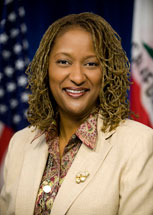
Bill Co-Author(s):