SB 805: School employees: leaves of absence: emergencies and mandatory evacuation orders.
- Session Year: 2019-2020
- House: Senate
- Latest Version Date: 2020-05-19
|
Date
|
Status
|
|---|---|
| Jun 18, 2020 | June 18 hearing: Held in committee and under submission. |
| Jun 11, 2020 | Set for hearing June 18. |
| Jun 9, 2020 | June 9 hearing: Placed on APPR. suspense file. |
| Jun 3, 2020 | Set for hearing June 9. |
| Jun 2, 2020 | Hearing rescheduled due to Capitol closure. |
| May 26, 2020 | Set for hearing June 1. |
| May 20, 2020 | Re-referred to Com. on APPR. pursuant to Joint Rule 10.5. |
| May 19, 2020 | Read second time and amended. Ordered to third reading. |
| May 18, 2020 | From committee: Do pass as amended. (Ayes 6. Noes 0. Page 3524.) (May 12). |
| May 8, 2020 | Set for hearing May 12. |
| Mar 18, 2020 | March 25 hearing postponed by committee. |
| Mar 3, 2020 | Set for hearing March 25. |
| Jan 15, 2020 | Referred to Com. on ED. |
| Jan 9, 2020 | From printer. May be acted upon on or after February 8. |
| Jan 8, 2020 | Introduced. Read first time. To Com. on RLS. for assignment. To print. |
|
Date
|
Description
|
Location
|
Votes
|
|
|---|---|---|---|---|
| Jun 9, 2020 | Placed on suspense file | Senate Standing Committee on Appropriations |
Passed |
|
| May 12, 2020 | Do pass as amended | Senate Standing Committee on Education |
Passed |
This list shows positions taken on this bill by organizations on the date displayed, which is linked to the original source.
Positions by individuals are not included.
SENATE COMMITTEE ON APPROPRIATIONS
Senator Anthony Portantino, Chair
2019 - 2020 Regular Session
SB 805 (Portantino) - School employees: leaves of absence: emergencies and mandatory evacuation orders
Version: May 19, 2020 | Policy Vote: ED. 6 - 0 |
Urgency: No | Mandate: Yes |
Hearing Date: June 9, 2020 | Consultant: Lenin Del Castillo |
Bill Summary:
This bill prohibits school districts from requiring employees to use their paid leave if they are unable to report to work because the school is forced to close as a result of a natural disaster or an evacuation order.
Fiscal Impact:
To the extent there are school districts that currently require the use of sick and vacation time if employees are unable to report to work because of a natural disaster or evacuation order, this bill could result in additional, unknown Proposition 98 General Fund costs. A precise amount would depend on the number of affected employees and the extent of any emergencies or natural disasters, and could be deemed to be a reimbursable state mandate.
Background:
Existing law requires the Superintendent of Public Instruction (SPI), for apportionment purposes, to credit to an LEA a material loss of average daily attendance (ADA) due to the following reasons, provided the loss has been established to the satisfaction of the SPI by affidavits of the members of the governing board or body of the LEA: fire, flood, impassable roads, epidemic, earthquake, the imminence of a major safety hazard as determined by the local law enforcement agency, or a strike involving transportation services to pupils provided by a non-school entity.
In the event of a state of emergency declared by the Governor in a county, existing law requires the SPI to determine the length of the period during which ADA has been reduced by the state of emergency, and prohibits the SPI from extending the period into the next fiscal year except upon a showing by a LEA, to the satisfaction of the SPI, that extending the period into the next fiscal year is essential to alleviate continued reductions in ADA attributable to the state of emergency.
Existing law entitles full-time certificated public school employees and classified public school employees to 10 days and 12 days of full-pay sick leave, respectively, each year. The sick leave shall be prorated for part-time employees and accrues from year to year with no cap. Existing law also entitles classified public school employees to full-pay vacation leave, as specified.
Proposed Law:
This bill expresses the intent of the Legislature that, in accordance with existing law, LEAs will not lose ADA credit when there is a natural disaster or an evacuation order that causes a school closure.
This bill also prohibits school districts from requiring certificated and classified employees to use their sick, vacation, or other paid leave if the school is forced to close because of a natural disaster or a mandatory evacuation order, as specified, or if the employee is unable to report to work because they reside in an area affected by a natural disaster or that is subject to an evacuation order, as specified. The bill provides that school districts shall ensure the employees are provided regular pay for any days missed. The bill also provides that the governing board of a school district shall adopt rules and regulations requiring and prescribing the manner by which employees shall prove their inability to report to work because they reside in an area that is subject to a natural disaster or mandatory evacuation order, as specified.
Staff Comments:
Existing law does not penalize school districts for losses in ADA during and immediately following an emergency. Two sections of law allow the SPI to grant normal apportionment credit to districts in emergencies—one section (Education Code Section (ECS) 41422) authorizes maintenance of apportionments in instances when schools must be closed because of "extraordinary conditions" while another section (ECS 46392) provides for the crediting of ADA whenever the average daily attendance of an LEA has been materially decreased because of fire, flood, impassable road, and other specified circumstances. Therefore, LEAs are held harmless from revenue loss that might otherwise result from the loss of ADA or instructional time during emergencies.
Full-time credentialed teachers and classified school employees are entitled to 10 days and 12 days of sick leave per school year, respectively. There are instances in which employees can miss work and not be forced to use their accumulated paid leave, such as jury duty and short-term bereavement. However, labor contracts vary in their treatment of school closures due to natural disaster or an evacuation order. Some contracts consider these non-work days, meaning employees are not required to use their sick or vacation time. Other contracts require the use of sick and vacation time, which are the subject of this measure. As previously mentioned, school districts continue to receive funding and are not penalized for attendance decreases resulting from school emergency closures.
-- END --
SENATE COMMITTEE ON EDUCATION
Senator Connie Leyva, Chair
2019 - 2020 Regular
Bill No: SB 805 Hearing Date: May 12, 2020
Author: | |||
Version: | January 8, 2020 | ||
Urgency: | No | Fiscal: | No |
Consultant: | Ian Johnson | ||
Subject: School employees: leaves of absence: natural disasters and evacuation orders
SUMMARY
This bill prohibits school districts from requiring employees to use their paid leave if they are unable to report to work because of a natural disaster or an evacuation order.
BACKGROUND
Existing law:
- Provides funding to local educational agencies (LEAs) on the basis of average daily attendance (ADA).
- Allows school districts to claim the greater of current year ADA for apportionment purposes to provide a one-year buffer against declining enrollment.
- Requires the Superintendent of Public Instruction (SPI), for apportionment purposes, to credit to a LEA a material loss of ADA due to the following reasons, provided the loss has been established to the satisfaction of the SPI by affidavits of the members of the governing board or body of the LEA:
- Fire
- Flood
- Impassable roads
- Epidemic
- Earthquake
- The imminence of a major safety hazard as determined by the local law enforcement agency.
- A strike involving transportation services to pupils provided by a non-school entity.
- In the event of a state of emergency declared by the Governor in a county, requires the SPI to determine the length of the period during which ADA has been reduced by the state of emergency, and prohibits the SPI from extending the period into the next fiscal year except upon a showing by a LEA, to the satisfaction of the SPI, that extending the period into the next fiscal year is essential to alleviate continued reductions in ADA attributable to the state of emergency.
- Requires the SPI to extend through the 2018-19 fiscal year the period during which it is essential to alleviate continued reductions in ADA attributable to a state of emergency declared by the Governor in October 2017, for a school district where no less than 5 percent of the residences within the school district or school district facilities were destroyed by the qualifying emergency.
- Requires the SPI to make specified ADA calculations for a school district or charter school physically located where no less than five percent of the residences within the school district, or the school district’s facilities, were destroyed as a result of a state of emergency that was declared by the Governor in November 2018.
- Entitles full-time certificated public school employees and classified public school employees to 10 days and 12 days of full-pay sick leave, respectively, each year. The sick leave shall be prorated for part-time employees and accrues from year to year with no cap.
- Entitles classified public school employees to full-pay vacation leave, as specified.
ANALYSIS
This bill:
- Expresses the intent of the Legislature that, in accordance with existing law, LEAs will not lose ADA credit when there is a natural disaster or an evacuation order that causes a school closure.
- Prohibits school districts from requiring certificated and classified employees to use their sick, vacation, or other paid leave if the school is forced to close because of a natural disaster or an evacuation order, or if the employee is unable to report to work because they reside in an area affected by a natural disaster or that is subject to an evacuation order.
STAFF COMMENTS
- Need for the bill. According to the author, “California has faced historic levels of fires within the past three years. In 2017, nine thousand incidents were reported with over 1.5 million acres of land burned. In 2018, there were over seven thousand incidents, leading to over 1.9 million acres of land burning. In addition, this past 2019 fire season, California saw close to eight thousand fire incidents bringing a total of 259,823 acres of land being burned.
To date, many California cities have faced the threat of wildfires and evacuations. Which prevents school district employees from making it into work because their own property faces evacuation or the natural disaster causes school closure. These natural disaster incidents and forced evacuations are not within the control of the school employees, but the only option to remain financially stable during these emergencies is forcing them to utilize their earned hours, which can lead to future financial uncertainties.”
- LEAs do not lose state revenue if schools close due to an emergency. According to data provided by the California Department of Education (CDE), there have been 2,040 school closure requests submitted by LEAs from 2014-15 to 2018-19. As shown in the table below, the total number of school closures reported increased dramatically beginning in 2016-17 due to the wildfires. The vast majority of these school closures lasted less than three days.
Emergency | 2014-15 | 2015-16 | 2016-17 | 2017-18 | 2018-19 |
Weather | 144 | 38 | 312 | 58 | 239 |
Other | 36 | 56 | 61 | 57 | 62 |
Epidemic | 1 | 1 | 3 | 8 | 4 |
Violence Threat | 7 | 28 | 8 | 24 | 7 |
Wildfire | 18 | 29 | 25 | 352 | 443 |
Power Shutoff | 0 | 0 | 0 | 0 | 19 |
TOTAL | 206 | 152 | 409 | 499 | 774 |
Because ensuring student safety is most important, existing law does not penalize school districts for losses in ADA during and immediately following an emergency. Two sections of law allow the SPI to grant normal apportionment credit to districts in emergencies—one section (Education Code Section (ECS) 41422) authorizes maintenance of apportionments in instances when schools must be closed because of "extraordinary conditions" while another section (ECS 46392) provides for the crediting of ADA whenever the average daily attendance of an LEA has been materially decreased because of fire, flood, impassable road, and other specified circumstances. Although the wording of these two code sections differ in detail, the effect is the same. All LEAs are held harmless from revenue loss that might otherwise result from the loss of ADA or instructional time in emergencies.
- Disaster preparedness in schools. Under existing law, CDE is required to electronically distribute disaster preparedness educational materials and lesson plans that are currently available to school districts and county offices of education. The CDE must (1) ensure that the disaster preparedness materials are available in at least the three most dominant primary languages spoken by English learners in California, and (2) coordinate with the Office of Emergency Services to make sure that all materials are reviewed and updated annually. Among the materials circulated to LEAs are information about teaching children proper use of 9-1-1, fire safety information, emergency preparedness, and curriculum-based programs on the emotional, social, and economic effects of natural and human-caused disasters.
Further, each school district and county office of education is responsible for the overall development of all comprehensive school safety plans for its schools operating kindergarten or any of grades 1 through 12. Charter schools must include in their petitions the procedures that the charter school will follow to ensure the health and safety of pupils and staff.
- Employee use of paid leave. Under existing law, full-time credentialed teachers and classified school employees are entitled to 10 days and 12 days of sick leave per school year, respectively. These days establish a bank of time that accumulates each year. After exhausting all of their available paid leave, school employees may qualify for up to five additional school months of extended illness leave. During the extended leave, the employee’s pay is reduced by the actual or estimated cost of their substitute, known as differential pay.
There are instances in which employees can miss work and not be forced to use their accumulated paid leave. For example, jury leave is provided for employees called to serve jury duty in any court during regularly assigned working hours and there is no limitation on the number of days paid per jury service term. Short-term bereavement leave is also typically provided in the event of the death of any member of the immediate family of an employee.
According to various school district administrators, labor contracts vary in their treatment of school closures due to natural disaster or an evacuation order. Some contracts consider these non-work days, meaning employees are not required to use their sick or vacation time. Other contracts require the use of sick and vacation time, which are the subject of this measure as stated by the author’s intent.
- What about school closures for other emergencies, such as COVID-19? On March 4, 2020, Governor Newsom declared a State of Emergency to help the state prepare for the spread of COVID-19. On March 13, 2020, the Governor issued an executive order ensuring California public school districts retain state funding even in the event of physical closure. The order directs school districts to use those state dollars to fund distance learning and high quality educational opportunities, provide school meals and, as practicable, arrange for the supervision for students during school hours.
As currently drafted, this bill would prohibit an LEA from requiring an employee to use their sick, vacation, or other paid leave if the employee is unable to report to work because they reside in an area affected by a natural disaster or that is subject to an evacuation order. However, as summarized above, LEAs are protected from revenue losses if attendance decreases due to other emergencies, including an epidemic and in the event a state of emergency is declared by the Governor.
To ensure that employees are not required to use their paid leave if they cannot report to work due to the other types of emergencies that LEAs are held harmless for, staff recommends amending the bill as follows:
“44962.5. The governing board of a school district shall not require an employee of the school district who is employed in a position requiring certification qualifications to use sick, vacation, or other paid leave if the school is forced to close because of a natural disaster or an mandatory evacuation order or any of the instances described in Section 46392, or if the employee is unable to report to work because they reside in an area affected by a natural disaster or that is subject to an mandatory evacuation order or any of the instances described in Section 46392.
45190.5. The governing board of a school district shall not require a classified employee to use sick, vacation, or other paid leave if a school is forced to close because of a natural disaster or an mandatory evacuation order or any of the instances described in Section 46392, or if the employee is unable to report to work because they reside in an area affected by a natural disaster or that is subject to an mandatory evacuation order or any of the instances described in Section 46392.”
- How would employees demonstrate they are unable to report to work under this bill? As summarized above, when LEAs are required to close schools due to an emergency, they must demonstrate that fact to the satisfaction of the SPI by affidavits of the members of the LEA’s governing board. While these requests are almost always approved, the process of verification exists as a matter of best practice. Moreover, the sections of existing law that establish paid sick leave for certificated and classified employees require school district governing boards to adopt rules and regulations requiring and prescribing the manner of proof of illness or injury.
If it is the desire of the Committee to pass this measure, staff recommends amending the bill to require school district governing boards to adopt rules and regulations requiring and prescribing the manner by which employees shall prove their inability to report to work because they reside in an area affected by a mandatory evacuation order or any of the instances described in Section 46392.
- Technical amendment. As currently drafted, it is unclear if employees not reporting to work due to natural disaster or evacuation order would still be entitled to receiving their full pay. To clarify the author’s intent for this bill, staff recommends amending the bill to clarify that employees satisfying the proof requirement referenced in the previous comment shall be entitled to their full salary for the days missed.
Further, as part of the amendments the author has requested that the following members be added as co-authors: Senators Archuleta, Stern, and Wilk, and Assemblymembers Mathis and Voepel.
- Arguments in Support. The California Teachers Association states, “This proposal will ensure employees and schools do not face financial harm when an evacuation or natural disaster occurs. CTA believes educational employees should have access to paid leave for catastrophic illnesses or events. Further, we believe that school districts should not experience a loss of ADA generated revenue during a period of school closure when the cause is related to natural disasters, medical emergencies, or other unforeseen circumstances.”
- Arguments in opposition. The California Association of School Business Officials states, “This bill does not have a mechanism for claiming state funding protection for areas impacted by natural disasters outside of the LEAs jurisdiction, where an employee may live. The bill also does not set a threshold on the number of days that can be claimed for additional leave due to circumstances outside of the employee and school district’s control.
SB 805 has the potential fiscal impact of $75 million to $124 million, as it does not 1) cap the number of days that will be compensated during a natural disaster or evacuation order, 2) cover the cost of salary and benefits provided in that timeframe, and 3) substitute coverage. In addition, local educational agencies do not have the staff capacity nor the physical capability to verify or validate if an employee’s home is genuinely impacted, as there is no state structure in place with up-to-date information for each local jurisdiction; which will impact a school district’s ability to properly serve students and maintain educational services operating properly.”
SUPPORT
California Federation of Teachers
California School Employees Association
California Teachers Association
OPPOSITION
California Association of School Business Officials
-- END --
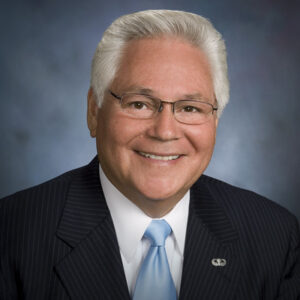
Bill Author