AB 2506: Student financial aid: Chafee grant awards.
- Session Year: 2015-2016
- House: Assembly
- Latest Version Date: 2016-09-16
Existing law establishes the Student Aid Commission as the state agency primarily responsible for the administration and coordination of student financial aid programs at California postsecondary educational institutions. Existing federal law establishes the Chafee Educational and Training Voucher program for the purposes of providing financial aid to current and former foster youth who are attending qualifying postsecondary educational institutions.
This bill, commencing with the 201718 academic year, would make a new Chafee grant award to a student only if the student attends a qualifying institution that is eligible for participation in the Cal Grant Program pursuant to a specified provision of the Cal Grant Program enabling act or if the student attends an institution that is not located in California that satisfies a specified provision of the Cal Grant Program enabling act.
Existing law establishes the Student Aid Commission as the state agency primarily responsible for the administration and coordination of student financial aid programs at California postsecondary educational institutions. Existing federal law establishes the Chafee Educational and Training Voucher program for the purposes of providing financial aid to current and former foster youth who are attending qualifying postsecondary educational institutions.
This bill would, to the extent permitted by federal law, establish the standards to be met by postsecondary educational institutions, commencing with the 201718 academic year, in order to be deemed to be qualifying institutions in this state with respect to the Chafee Educational and Training Voucher program. would make a new Chafee grant award to a student only if the student attends a qualifying institution that is eligible for participation in the Cal Grant Program pursuant to a specified provision of the Cal Grant Program enabling act or if the student attends an institution that is not located in California that satisfies a specified provision of the Cal Grant Program enabling act.
The bill would express the intent of the Legislature that the memorandum of understanding entered into between the State Department of Social Services and the Student Aid Commission for the administration of the Chafee Educational and Training Voucher program be amended to reflect the provisions of this bill. The bill would provide that, notwithstanding any of its other provisions, an individual who has received a Chafee grant award for the 201617 academic year, and is enrolled at a postsecondary educational institution in this state, would be entitled to use a Chafee grant award for as long as he or she is enrolled at that institution and is making reasonable progress toward graduation or toward otherwise completing his or her course of study at that institution.
Existing law establishes the Student Aid Commission as the state agency primarily responsible for the administration and coordination of student financial aid programs at California postsecondary educational institutions. Existing federal law establishes the Chafee Educational and Training Voucher program for the purposes of providing financial aid to current and former foster youth who are attending qualifying postsecondary educational institutions.
This bill would, to the extent permitted by federal law, establish the standards to be met by postsecondary educational institutions institutions, commencing with the 201718 academic year, in order to be deemed to be qualifying institutions in this state with respect to the Chafee Educational and Training Voucher program. The bill would provide that, commencing with the 201718 academic year, a current or former foster youth is entitled to a Chafee grant award, and would require the commission to allocate that grant award, if the student meets specified criteria.
The bill would express the intent of the Legislature that the memorandum of understanding entered into between the State Department of Social Services and the Student Aid Commission for the administration of the Chafee Educational and Training Voucher program be amended to reflect the provisions of this bill. The bill would provide that, notwithstanding any of its other provisions, an individual who has received a Chafee grant award for the 201617 academic year, and is enrolled at a postsecondary educational institution in this state, would be entitled to use a Chafee grant award for as long as he or she is enrolled at that institution and is making reasonable progress toward graduation or toward otherwise completing his or her course of study at that institution.
Existing law establishes the Student Aid Commission as the state agency primarily responsible for the administration and coordination of student financial aid programs at California postsecondary educational institutions. Existing federal law establishes the Chafee Educational and Training Voucher program for the purposes of providing financial aid to current and former foster youth who are attending qualifying postsecondary educational institutions.
This bill would, to the extent permitted by federal law, establish the standards to be met by postsecondary educational institutions in order to be deemed to be qualifying institutions in this state with respect to the Chafee Educational and Training Voucher program. The bill would provide that, commencing with the 201718 academic year, a current or former foster youth is entitled to a Chafee grant award, and would require the commission to allocate that grant award, if the student meets specified criteria.
Existing law establishes the Student Aid Commission as the state agency primarily responsible for the administration and coordination of student financial aid programs at California postsecondary educational institutions. Existing federal law establishes the Chafee Educational and Training Voucher program for the purposes of providing financial aid to current and former foster youth who are attending qualifying postsecondary educational institutions.
This bill would specify would, to the extent permitted by federal law, establish the standards to be met by postsecondary educational institutions in order to be deemed to be qualifying institutions, to the fullest extent consistent with federal law, institutions in this state with respect to the Chafee Educational and Training Voucher program. The bill would require the commission to ensure that every current and former foster youth who files a timely application and is eligible for the award of a Chafee Educational and Training Voucher be issued those funds. provide that, commencing with the 201718 academic year, a current or former foster youth is entitled to a Chafee grant award, and would require the commission to allocate that grant award, if the student meets specified criteria.
Existing law establishes the Student Aid Commission as the state agency primarily responsible for the administration and coordination of student financial aid programs at California postsecondary educational institutions. Existing federal law establishes the Chafee Educational and Training Voucher program for the purposes of providing financial aid to current and former foster youth who are attending qualifying postsecondary educational institutions.
This bill would specify the standards to be met by postsecondary educational institutions in order to be deemed to be qualifying institutions, to the fullest extent consistent with federal law, in this state with respect to the Chafee Educational and Training Voucher program. The bill would require the commission to ensure that every current and former foster youth who files a timely application and is eligible for the award of a Chafee Educational and Training Voucher be issued those funds.
(a)The commission, through an interagency agreement with the State Department of Social Services, currently operates a federally funded scholarship program that provides grant aid to provide access to Californias current and former foster youth to postsecondary education. Funds provided through an appropriation by the Legislature shall be supplemental to funds provided by the federal government, and are designated to ensure program availability in the absence of and prior to the annual receipt of federal funds for this purpose.
(b)Funds provided for this program shall be used to assist students who are current and former foster youth, for career and technical training or traditional college courses. The commission shall operate this program in accordance with the program instructions provided by the federal Department of Health and Human Services, Administration for Children and Families, and the program guidelines developed by the State Department of Social Services.
(c)The total amount of funding and the amount of individual awards shall depend upon the amount of federal funding provided in addition to state funding. The commission, in conjunction with the State Department of Social Services, shall determine the individual award amounts and total number of students awarded on an annual basis as the amount of total annual funding is determined.
(d)Commencing with the 201718 award year, the commission shall make a new Chafee grant award to a student only if the student attends either of the following:
(1)A qualifying institution that is eligible for participation in the Cal Grant Program pursuant to Section 69432.7.
(2)An institution that is not located in California that satisfies the provisions of subparagraphs (C) and (F) of paragraph (3) of subdivision (l) of Section 69432.7.
(a)The commission, through an interagency agreement with the State Department of Social Services, currently operates a federally funded scholarship program that provides grant aid to provide access to Californias current and former foster youth to postsecondary education. Funds provided through an appropriation by the Legislature shall be supplemental to funds provided by the federal government government, and are designated to ensure program availability in the absence of and prior to the annual receipt of federal funds for this purpose.
(b)Funds provided for this program shall be used to assist students who are current and former foster youth, for career and technical training or traditional college courses. The commission shall operate this program in accordance with the program instructions provided by the federal Department of Health and Human Services, Administration for Children and Families, and the program guidelines developed by the State Department of Social Services.
(c)The total amount of funding and the amount of individual awards shall depend upon the amount of federal funding provided in addition to state funding. The commission, in conjunction with the State Department of Social Services, shall determine the individual award amounts and total number of students awarded on an annual basis as the amount of total annual funding is determined.
(d)Commencing with the 201718 award year, the commission shall make a new Chafee grant award to a student only if the student attends either of the following:
(1)A qualifying institution that is eligible for participation in the Cal Grant Program pursuant to Section 69432.7.
(2)An institution that is not located in California that satisfies the provisions of subparagraphs (C) and (F) of paragraph (3) of subdivision (l) of Section 69432.7.
SECTION 1.The Legislature finds and declares all of the following:
(a)There are 66,000 children and youth in Californias foster care system who have been removed from their biological families due to maltreatment and placed into the care and custody of the State of California.
(b)(1)The Legislature recognizes the historic underrepresentation of foster youth in postsecondary programs and the need for equitable efforts that enhance the enrollment and retention of foster youth in public colleges and universities in California.
(2)Current and former foster youth who attend college experience a low rate of persistence, transfer, and degree completion. Foster youth are 85 percent less likely to successfully complete 30 units or more anytime during community college as compared to the general student population.
(c)The Legislature recognizes the importance of quality education, and has taken action in the past to ensure financial aid is directed to postsecondary institutions at which the graduation rate and cohort default rate reflect a reasonable likelihood of student graduation and success.
SEC. 2.Section 69518.5 is added to the Education Code, to read:69518.5.(a)To the extent permitted by federal law, this section establishes the standards for postsecondary educational institutions to be classified as qualifying institutions in this state for purposes of the Chafee Educational and Training Voucher program authorized by the federal Promoting Safe and Stable Families Amendments of 2001 (Public Law 107-133).
(b)In accordance with subdivision (a), for purposes of the 201718 academic year and each academic year thereafter, the following standards shall apply in determining an institutions eligibility for the use of initial and renewal Chafee grant awards by its students:
(1)An otherwise qualifying institution with a three-year cohort default rate that is equal to or greater than 15.5 percent, as certified by the commission on October 1, 2017, and on October 1 of any year thereafter, shall be ineligible for the use of initial and renewal Chafee grant awards at the institution.
(2)(A)An otherwise qualifying institution that becomes ineligible under this subdivision for initial and renewal Chafee grant awards may regain its eligibility for the academic year following an academic year in which it satisfies the requirements established in paragraph (1) or (4), as applicable.
(B)If the United States Department of Education corrects or revises an institutions three-year cohort default rate or graduation rate that originally failed to satisfy the requirements established in paragraph (1) or (4), as applicable, and the correction or revision results in the institutions three-year cohort default rate or graduation rate satisfying those requirements, that institution shall immediately regain its eligibility for the academic year to which the corrected or revised three-year cohort default rate or graduation rate would have been applied.
(3)An otherwise qualifying institution for which no three-year cohort default rate or graduation rate has been reported by the United States Department of Education shall be provisionally eligible for Chafee grant awards until a three-year cohort default rate or graduation rate has been reported for the institution by the United States Department of Education.
(4)An otherwise qualifying institution with a graduation rate of 30 percent or less for students taking 150 percent or less of the expected time to complete degree requirements, as reported by the United States Department of Education and as certified by the commission, shall be ineligible for the use of initial and renewal Chafee grant awards at the institution.
(5)Notwithstanding any other law, the requirements of this subdivision do not apply to institutions with 40 percent or less of undergraduate students borrowing federal student loans, using information reported to the United States Department of Education for the academic year two years before the year in which the commission is certifying the three-year cohort default rate or graduation rate.
(c)The commission shall do both of the following:
(1)Notify initial recipients seeking to attend, or attending, an institution that is ineligible for initial and renewal Chafee grant awards under paragraph (1) or (4) of subdivision (b) that the institution is ineligible, under state standards, for the use of initial awards for the academic year for which the student received an initial award.
(2)Notify renewal recipients attending an institution that is ineligible, under state standards, for initial and renewal Chafee grant awards at the institution under paragraph (1) or (4) of subdivision (b).
(d)It is the intent of the Legislature that the memorandum of understanding entered into between the State Department of Social Services and the Student Aid Commission for the administration of the Chafee Educational and Training Voucher program be amended to reflect the provisions of this section.
(e)Notwithstanding any other provision of this section, an individual who has (1) received a Chafee grant award for the 201617 academic year, and (2) is enrolled at a postsecondary educational institution in this state, shall be entitled to use a Chafee grant award for as long as he or she is enrolled at that institution and is making reasonable progress toward graduation or toward otherwise completing his or her course of study at that institution.
The Legislature finds and declares all of the following:
(a)There are 66,000 children and youth in Californias foster care system who have been removed from their biological families due to maltreatment and placed into the care and custody of the State of California.
(b)(1)The Legislature recognizes the historic underrepresentation of foster youth in postsecondary programs and the need for equitable efforts that enhance the enrollment and retention of foster youth in public colleges and universities in California.
(2)Current and former foster youth who attend college experience a low rate of persistence, transfer, and degree completion. Foster youth are 85 percent less likely to successfully complete 30 units or more anytime during community college as compared to the general student population.
(3)Receipt of financial aid plays an important role in persistence, transfer, and degree completion. Fifty percent of foster youth who receive the Chafee Educational and Training Voucher complete three semesters or more of community college, as compared with 34 percent of foster youth who do not receive the Chafee Educational and Training Voucher.
(4)Access to the Chafee Educational and Training Voucher is limited. One in four eligible applicants is not awarded a grant due to limited funding. Without improved access to financial aid, foster youth experience low educational attainment.
(5)Low educational attainment is a factor in the poor adult outcomes experienced by youth in foster care. Compared to their same-age counterparts, former foster youth at 26 years of age are 400 percent more likely to have been incarcerated and 300 percent more likely to be living below the federal poverty level.
(c)The Legislature recognizes its responsibility to provide and adequately fund postsecondary programs and services for students who are current and former foster youth attending public postsecondary institutions.
(d)
(c)The Legislature recognizes the importance of quality education, and has taken action in the past to ensure financial aid is directed to postsecondary institutions at which the graduation rate and cohort default rate reflect a reasonable likelihood of student graduation and success.
(e)Therefore, it is necessary and appropriate to take steps to encourage the enrollment, retention, and transfer of current and former foster youth in Californias public colleges and universities by ensuring that all foster youth who meet the eligibility criteria for the Chafee Educational and Training Voucher receive a grant. Providing academic support to current and former foster youth in the California Community Colleges serves a significant governmental and public interest, namely the reduction in poverty and criminal justice involvement among youth who have been in foster care in California.
SEC. 2.Section 69518.5 is added to the Education Code, to read:69518.5.(a)To the extent permitted by federal law, this section establishes the standards for postsecondary educational institutions to be classified as qualifying institutions in this state for purposes of the Chafee Educational and Training Voucher program authorized by the federal Promoting Safe and Stable Families Amendments of 2001 (Public Law 107-133).
(b)The commission shall certify by October 1 of each year a postsecondary educational institutions latest three-year cohort default rate and graduation rate as most recently reported by the United States Department of Education.
(c)
(b)In accordance with subdivision (a), for purposes of the 201718 academic year and each academic year thereafter, the following standards shall apply in determining an institutions eligibility for the use of initial and renewal Chafee grant awards by its students:
(1)An otherwise qualifying institution with a three-year cohort default rate that is equal to or greater than 15.5 percent, as certified by the commission on October 1, 2017, and on October 1 of any year thereafter, shall be ineligible for the use of initial and renewal Chafee grant awards at the institution.
(2)(A)An otherwise qualifying institution that becomes ineligible under this paragraph subdivision for initial and renewal Chafee grant awards may regain its eligibility for the academic year following an academic year in which it satisfies the requirements established in paragraph (1) or (4), as applicable.
(B)If the United States Department of Education corrects or revises an institutions three-year cohort default rate or graduation rate that originally failed to satisfy the requirements established in paragraph (1) or (4), as applicable, and the correction or revision results in the institutions three-year cohort default rate or graduation rate satisfying those requirements, that institution shall immediately regain its eligibility for the academic year to which the corrected or revised three-year cohort default rate or graduation rate would have been applied.
(3)An otherwise qualifying institution for which no three-year cohort default rate or graduation rate has been reported by the United States Department of Education shall be provisionally eligible for Chafee grant awards until a three-year cohort default rate or graduation rate has been reported for the institution by the United States Department of Education.
(4)For purposes of the 201718 academic year, and every academic year thereafter, an An otherwise qualifying institution with a graduation rate of 30 percent or less for students taking 150 percent or less of the expected time to complete degree requirements, as reported by the United States Department of Education and as certified by the commission, shall be ineligible for the use of initial and renewal Chafee grant awards at the institution.
(5)Notwithstanding any other law, the requirements of this subdivision do not apply to institutions with 40 percent or less of undergraduate students borrowing federal student loans, using information reported to the United States Department of Education for the academic year two years before the year in which the commission is certifying the three-year cohort default rate or graduation rate.
(6)Notwithstanding any other law, the requirements of this subdivision do not apply to institutions where an eligible Chaffee grant recipient is attending an institution outside of California.
(7)Nothing in this section shall preclude an eligible Chafee grant recipient who chooses to attend an institution outside of California from using Chafee funds at that institution.
(d)
(c)The commission shall do all both of the following:
(1)Notify initial recipients seeking to attend, or attending, an institution that is ineligible for initial and renewal Chafee grant awards under paragraph (1) or (4) of subdivision (c) (b) that the institution is ineligible, under state standards, for the use of initial awards for the academic year for which the student received an initial award.
(2)Notify renewal recipients attending an institution that is ineligible, under state standards, for initial and renewal Chafee grant awards at the institution under paragraph (1) or (4) of subdivision (c). (b).
(3)Provide initial and renewal Chafee grant recipients seeking to attend, or attending, an institution that is ineligible for initial and renewal Chafee grant awards at the institution under paragraph (1) or (4) of subdivision (c) with a complete list of all California postsecondary educational institutions at which the student would be eligible, under state standards, to receive an unreduced Chafee grant award.
(e)Commencing with the 201718 academic year, a current or former foster youth is entitled to a Chafee grant award, and the commission shall allocate that award, pursuant to the requirements of this section, if that current or former foster youth meets both of the following criteria:
(1)He or she meets the Chafee grant requirements as set forth in the John H. Chafee Foster Care Independence Program (42 U.S.C. Sec. 677(i)).
(2)He or she submits a Free Application for Federal Student Aid and a Chafee grant application between January 1 and September 2 of each calendar year for the academic year beginning in the fall of that calendar year.
(f)The amount of any individual Chafee grant award shall depend on the cost of attendance at the qualifying institution at which the student is enrolled. For each applicant, the award amount shall not exceed the amount of the calculated financial need.
(g)
(d)It is the intent of the Legislature that the memorandum of understanding entered into between the State Department of Social Services and the Student Aid Commission for the administration of the Chafee Educational and Training Voucher program be amended to reflect the provisions of this section.
(h)
(e)Notwithstanding any other provision of this section, an individual who has (1) received a Chafee grant award for the 201617 academic year, and (2) is enrolled at a postsecondary educational institution in this state, shall be entitled to use a Chafee grant award for as long as he or she is enrolled at that institution and is making reasonable progress toward graduation or toward otherwise completing his or her course of study at that institution.
The Legislature finds and declares all of the following:
(a)There are 66,000 children and youth in Californias foster care system who have been removed from their biological families due to maltreatment and placed into the care and custody of the State of California.
(b)(1)The Legislature recognizes the historic underrepresentation of foster youth in postsecondary programs and the need for equitable efforts that enhance the enrollment and retention of foster youth in public colleges and universities in California.
(2)Current and former foster youth who attend college experience a low rate of persistence, transfer, and degree completion. Foster youth are 85 percent less likely to successfully complete 30 units or more anytime during community college as compared to the general student population.
(3)Receipt of financial aid plays an important role in persistence, transfer, and degree completion. Fifty percent of foster youth who receive the Chafee Educational and Training Voucher complete three semesters or more of community college, as compared with 34 percent of foster youth who do not receive the Chafee Educational and Training Voucher.
(4)Access to the Chafee Educational and Training Voucher is limited. One in four eligible applicants is not awarded a grant due to limited funding. Without improved access to financial aid, foster youth experience low educational attainment.
(5)Low educational attainment is a factor in the poor adult outcomes experienced by youth in foster care. Compared to their same-age counterparts, former foster youth at 26 years of age are 400 percent more likely to have been incarcerated and 300 percent more likely to be living below the federal poverty level.
(c)The Legislature recognizes its responsibility to provide and adequately fund postsecondary programs and services for students who are current and former foster youth attending public postsecondary institutions.
(d)The Legislature recognizes the importance of quality education, and has taken action in the past to ensure financial aid is directed to postsecondary institutions at which the graduation rate and cohort default rate reflect a reasonable likelihood of student graduation and success.
(e)Therefore, it is necessary and appropriate to take steps to encourage the enrollment, retention, and transfer of current and former foster youth in Californias public colleges and universities by ensuring that all foster youth who meet the eligibility criteria for the Chafee Educational and Training Voucher receive a grant. Providing academic support to current and former foster youth in the California Community Colleges serves a significant governmental and public interest, namely the reduction in poverty and criminal justice involvement among youth who have been in foster care in California.
SEC. 2.Section 69518.5 is added to the Education Code, to read:69518.5.(a)To the extent permitted by federal law, this section establishes the standards for postsecondary educational institutions to be classified as qualifying institutions in this state for purposes of the Chafee Educational and Training Voucher program authorized by the federal Promoting Safe and Stable Families Amendments of 2001 (Public Law 107-133).
(b)The commission shall certify by October 1 of each year a postsecondary educational institutions latest three-year cohort default rate and graduation rate as most recently reported by the United States Department of Education.
(c)In accordance with subdivision (a), the following standards shall apply in determining an institutions eligibility for the use of initial and renewal Chafee grant awards by its students:
(1)An otherwise qualifying institution with a three-year cohort default rate that is equal to or greater than 15.5 percent, as certified by the commission on October 1, 2017, and on October 1 of any year thereafter, shall be ineligible for the use of initial and renewal Chafee grant awards at the institution.
(2)(A)An otherwise qualifying institution that becomes ineligible under this paragraph for initial and renewal Chafee grant awards may regain its eligibility for the academic year following an academic year in which it satisfies the requirements established in paragraph (1) or (4), as applicable.
(B)If the United States Department of Education corrects or revises an institutions three-year cohort default rate or graduation rate that originally failed to satisfy the requirements established in paragraph (1) or (4), as applicable, and the correction or revision results in the institutions three-year cohort default rate or graduation rate satisfying those requirements, that institution shall immediately regain its eligibility for the academic year to which the corrected or revised three-year cohort default rate or graduation rate would have been applied.
(3)An otherwise qualifying institution for which no three-year cohort default rate or graduation rate has been reported by the United States Department of Education shall be provisionally eligible for Chafee grant awards until a three-year cohort default rate or graduation rate has been reported for the institution by the United States Department of Education.
(4)For purposes of the 201718 academic year, and every academic year thereafter, an otherwise qualifying institution with a graduation rate of 30 percent or less for students taking 150 percent or less of the expected time to complete degree requirements, as reported by the United States Department of Education and as certified by the commission, shall be ineligible for the use of initial and renewal Chafee grant awards at the institution.
(5)Notwithstanding any other law, the requirements of this subdivision do not apply to institutions with 40 percent or less of undergraduate students borrowing federal student loans, using information reported to the United States Department of Education for the academic year two years before the year in which the commission is certifying the three-year cohort default rate or graduation rate.
(6)Notwithstanding any other law, the requirements of this subdivision do not apply to institutions where an eligible Chaffee grant recipient is attending an institution outside of California.
(7)Nothing in this section shall preclude an eligible Chafee grant recipient who chooses to attend an institution outside of California from using Chafee funds at that institution.
(d)The commission shall do all of the following:
(1)Notify initial recipients seeking to attend, or attending, an institution that is ineligible for initial and renewal Chafee grant awards under paragraph (1) or (4) of subdivision (c) that the institution is ineligible, under state standards, for the use of initial awards for the academic year for which the student received an initial award.
(2)Notify renewal recipients attending an institution that is ineligible, under state standards, for initial and renewal Chafee grant awards at the institution under paragraph (1) or (4) of subdivision (c).
(3)Provide initial and renewal Chafee grant recipients seeking to attend, or attending, an institution that is ineligible for initial and renewal Chafee grant awards at the institution under paragraph (1) or (4) of subdivision (c) with a complete list of all California postsecondary educational institutions at which the student would be eligible, under state standards, to receive an unreduced Chafee grant award.
(e)Commencing with the 201718 academic year, a current or former foster youth is entitled to a Chafee grant award, and the commission shall allocate that award, pursuant to the requirements of this section, if that current or former foster youth meets both of the following criteria:
(1)He or she meets the Chafee grant requirements as set forth in the John H. Chafee Foster Care Independence Program (42 U.S.C. Sec. 677(i)).
(2)He or she submits a Free Application for Federal Student Aid and a Chafee grant application between January 1 and September 2 of each calendar year for the academic year beginning in the fall of that calendar year.
(f)The amount of any individual Chafee grant award shall depend on the cost of attendance at the qualifying institution at which the student is enrolled. For each applicant, the award amount shall not exceed the amount of the calculated financial need.
(g)It is the intent of the Legislature that the memorandum of understanding entered into between the State Department of Social Services and the Student Aid Commission for the administration of the Chafee Educational and Training Voucher program be amended to reflect the provisions of this section.
(h)Notwithstanding any other provision of this section, an individual who has (1) received a Chafee grant award for the 201617 academic year, and (2) is enrolled at a postsecondary educational institution in this state, shall be entitled to use a Chafee grant award for as long as he or she is enrolled at that institution and is making reasonable progress toward graduation or toward otherwise completing his or her course of study at that institution.
The Legislature finds and declares all of the following:
(a)There are 66,000 children and youth in Californias foster care system who have been removed from their biological families due to maltreatment and placed into the care and custody of the State of California.
(b)(1)The Legislature recognizes the historic underrepresentation of foster youth in postsecondary programs and the need for equitable efforts that enhance the enrollment and retention of foster youth in public colleges and universities in California.
(2)Current and former foster youth who attend college experience a low rate of persistence, transfer, and degree completion. Foster youth are 85 percent less likely to successfully complete 30 units or more anytime during community college as compared to the general student population.
(3)Receipt of financial aid plays an important role in persistence, transfer, and degree completion. Fifty percent of foster youth who receive the Chafee Educational and Training Voucher complete three semesters or more of community college, as compared with 34 percent of foster youth who do not receive the Chafee Educational and Training Voucher.
(4)Access to the Chafee Educational and Training Voucher is limited. One in four eligible applicants is not awarded a grant due to limited funding. Without improved access to financial aid, foster youth experience low educational attainment.
(5)Low educational attainment is a factor in the poor adult outcomes experienced by youth in foster care. Compared to their same-age counterparts, former foster youth at 26 years of age are 400 percent more likely to have been incarcerated and 300 percent more likely to be living below the federal poverty level.
(c)The Legislature recognizes its responsibility to provide and adequately fund postsecondary programs and services for students who are current and former foster youth attending public postsecondary institutions.
(d)The Legislature recognizes the importance of quality education, and has taken action in the past to ensure financial aid is directed to postsecondary institutions at which the graduation rate and cohort default rate reflect a reasonable likelihood of student graduation and success.
(e)Therefore, it is necessary and appropriate to take steps to encourage the enrollment, retention, and transfer of current and former foster youth in Californias public colleges and universities by ensuring that all foster youth who meet the eligibility criteria for the Chafee Educational and Training Voucher receive a grant. Providing academic support to current and former foster youth in Californias community colleges the California Community Colleges serves a significant governmental and public interest, namely the reduction in poverty and criminal justice involvement among youth who have been in foster care in California.
SEC. 2.Section 69518.5 is added to the Education Code, to read:69518.5.(a)To the extent permitted by federal law, this section establishes the standards for postsecondary educational institutions to be classified as qualifying institutions in this state for purposes of the Chafee Educational and Training Voucher program authorized by the federal Promoting Safe and Stable Families Amendments of 2001 (Public Law 107-133).
(b)The commission shall certify by October 1 of each year a postsecondary educational institutions latest three-year cohort default rate and graduation rate as most recently reported by the United States Department of Education.
(c)In accordance with subdivision (a), the following standards shall apply in determining an institutions eligibility for the use of initial and renewal Chafee grant awards by its students:
(1)An otherwise qualifying institution with a three-year cohort default rate that is equal to or greater than 15.5 percent, as certified by the commission on October 1, 2017, and on October 1 of any year thereafter, shall be ineligible for the use of initial and renewal Chafee grant awards at the institution.
(2)(A)An otherwise qualifying institution that becomes ineligible under this paragraph for initial and renewal Chafee grant awards may regain its eligibility for the academic year following an academic year in which it satisfies the requirements established in paragraph (1) or (4), as applicable.
(B)If the United States Department of Education corrects or revises an institutions three-year cohort default rate or graduation rate that originally failed to satisfy the requirements established in paragraph (1) or (4), as applicable, and the correction or revision results in the institutions three-year cohort default rate or graduation rate satisfying those requirements, that institution shall immediately regain its eligibility for the academic year to which the corrected or revised three-year cohort default rate or graduation rate would have been applied.
(3)An otherwise qualifying institution for which no three-year cohort default rate or graduation rate has been reported by the United States Department of Education shall be provisionally eligible for Chafee grant awards until a three-year cohort default rate or graduation rate has been reported for the institution by the United States Department of Education.
(4)For purposes of the 201718 academic year, and every academic year thereafter, an otherwise qualifying institution with a graduation rate of 30 percent or less for students taking 150 percent or less of the expected time to complete degree requirements, as reported by the United States Department of Education and as certified by the commission, shall be ineligible for the use of initial and renewal Chafee grant awards at the institution.
(5)Notwithstanding any other law, the requirements of this subdivision do not apply to institutions with 40 percent or less of undergraduate students borrowing federal student loans, using information reported to the United States Department of Education for the academic year two years before the year in which the commission is certifying the three-year cohort default rate or graduation rate.
(6)Notwithstanding any other law, the requirements of this subdivision do not apply to institutions where an eligible Chaffee grant recipient is attending an institution outside of California.
(7)Nothing in this section shall preclude an eligible Chafee grant recipient who chooses to attend an institution outside of California from using Chafee funds at that institution.
(d)The commission shall do all of the following:
(1)Notify initial recipients seeking to attend, or attending, an institution that is ineligible for initial and renewal Chafee grant awards under paragraph (1) or (4) of subdivision (c) that the institution is ineligible, under state standards, for the use of initial awards for the academic year for which the student received an initial award.
(2)Notify renewal recipients attending an institution that is ineligible, under state standards, for initial and renewal Chafee grant awards at the institution under paragraph (1) or (4) of subdivision (c).
(3)Provide initial and renewal Chafee grant recipients seeking to attend, or attending, an institution that is ineligible for initial and renewal Chafee grant awards at the institution under paragraph (1) or (4) of subdivision (c) with a complete list of all California postsecondary educational institutions at which the student would be eligible, under state standards, to receive an unreduced Chafee grant award.
(e)Commencing with the 201718 academic year, a current or former foster youth is entitled to a Chafee grant award, and the commission shall allocate that award, pursuant to the requirements of this section, if that current or former foster youth meets both of the following criteria:
(1)He or she meets the Chafee grant requirements as set forth in the John H. Chafee Foster Care Independence Program (42 U.S.C. Sec. 677(i)).
(2)He or she submits a Free Application for Federal Student Aid and a Chafee grant application between January 1 and September 2 of each calendar year for the academic year beginning in the fall of that calendar year.
(f)The amount of any individual Chafee grant award shall depend on the cost of attendance at the qualifying institution at which the student is enrolled. For each applicant, the award amount shall not exceed the amount of the calculated financial need.
The Legislature finds and declares all of the following:
(a)There are 66,000 children and youth in Californias foster care system who have been removed from their biological families due to maltreatment and placed into the care and custody of the State of California.
(b)(1)The Legislature recognizes the historic underrepresentation of foster youth in postsecondary programs and the need for equitable efforts that enhance the enrollment and retention of foster youth in public colleges and universities in California.
(2)Current and former foster youth who attend college experience a low rate of persistence, transfer, and degree completion. Foster youth are 85 percent less likely to successfully complete 30 units or more anytime during community college as compared to the general student population.
(3)Receipt of financial aid plays an important role in persistence, transfer, and degree completion. Fifty percent of foster youth who receive the Chafee Educational and Training Voucher complete three semesters or more of community college, as compared with 34 percent of foster youth who do not receive the Chafee Educational and Training Voucher.
(4)Access to the Chafee Educational and Training Voucher is limited. One in four eligible applicants is not awarded a grant due to limited funding. Without improved access to financial aid, foster youth experience low educational attainment.
(5)Low educational attainment is a factor in the poor adult outcomes experienced by youth in foster care. Compared to their same-age counterparts, former foster youth at 26 years of age are 400 percent more likely to have been incarcerated and 300 percent more likely to be living below the federal poverty level.
(c)The Legislature recognizes its responsibility to provide and adequately fund postsecondary programs and services for students who are current and former foster youth attending public postsecondary institutions.
(d)The Legislature recognizes the importance of quality education, and has taken action in the past to ensure financial aid is directed to postsecondary institutions at which the graduation rate and cohort default rate reflect a reasonable likelihood of student graduation and success.
(e)Therefore, it is necessary and appropriate to take steps to encourage the enrollment, retention, and transfer of current and former foster youth in Californias public colleges and universities by ensuring that all foster youth who meet the eligibility criteria for the Chafee Educational and Training Voucher receive a grant. Providing academic support to current and former foster youth in Californias community colleges serves a significant governmental and public interest, namely the reduction in poverty and criminal justice involvement among youth who have been in foster care in California.
SEC. 2.Section 69518.5 is added to the Education Code, to read:69518.5.(a)This section applies to To the extent permitted by federal law, this section establishes the standards for postsecondary educational institutions to be classified, to the fullest extent consistent with federal law, classified as qualifying institutions in this state for the purposes of the Chafee Educational and Training Voucher program authorized by the federal Promoting Safe and Stable Families Amendments of 2001 (Public Law 107-133).
(b)The commission shall certify by October 1 of each year a postsecondary educational institutions latest three-year cohort default rate and graduation rate as most recently reported by the United States Department of Education.
(c)The In accordance with subdivision (a), the following standards shall apply in determining an institutions eligibility for the use of initial and renewal Chafee grant awards by its students, but only to the extent that these state standards are consistent with applicable federal law: students:
(1)An otherwise qualifying institution with a three-year cohort default rate that is equal to or greater than 15.5 percent, as certified by the commission on October 1, 2017, and on October 1 of any year thereafter, shall be ineligible for the use of initial and renewal Chafee grant awards at the institution.
(2)(A)An otherwise qualifying institution that becomes ineligible under this paragraph for initial and renewal Chafee grant awards may regain its eligibility for the academic year following an academic year in which it satisfies the requirements established in paragraph (1) or (4), as applicable.
(B)If the United States Department of Education corrects or revises an institutions three-year cohort default rate or graduation rate that originally failed to satisfy the requirements established in paragraph (1) or (4), as applicable, and the correction or revision results in the institutions three-year cohort default rate or graduation rate satisfying those requirements, that institution shall immediately regain its eligibility for the academic year to which the corrected or revised three-year cohort default rate or graduation rate would have been applied.
(3)An otherwise qualifying institution for which no three-year cohort default rate or graduation rate has been reported by the United States Department of Education shall be provisionally eligible for Chafee grant awards until a three-year cohort default rate or graduation rate has been reported for the institution by the United States Department of Education.
(4)For purposes of the 201718 academic year, and every academic year thereafter, an otherwise qualifying institution with a graduation rate of 30 percent or less for students taking 150 percent or less of the expected time to complete degree requirements, as reported by the United States Department of Education and as certified by the commission, shall be ineligible for the use of initial and renewal Chafee grant awards at the institution.
(5)Notwithstanding any other law, the requirements of this subdivision do not apply to institutions with 40 percent or less of undergraduate students borrowing federal student loans, using information reported to the United States Department of Education for the academic year two years before the year in which the commission is certifying the three-year cohort default rate or graduation rate.
(6)Notwithstanding any other law, the requirements of this subdivision do not apply to institutions where an eligible Chaffee grant recipient is attending an institution outside of California.
(7)Nothing in this section shall preclude an eligible Chafee grant recipient who chooses to attend an institution outside of California from using Chafee funds at that institution.
(d)The commission shall do all of the following:
(1)Notify initial recipients seeking to attend, or attending, an institution that is ineligible for initial and renewal Chafee grant awards under paragraph (1) or (4) of subdivision (c) that the institution is ineligible, under state standards, for the use of initial awards for the academic year for which the student received an initial award.
(2)Notify renewal recipients attending an institution that is ineligible, under state standards, for initial and renewal Chafee grant awards at the institution under paragraph (1) or (4) of subdivision (c).
(3)Provide initial and renewal Chafee grant recipients seeking to attend, or attending, an institution that is ineligible for initial and renewal Chafee grant awards at the institution under paragraph (1) or (4) of subdivision (c) with a complete list of all California postsecondary educational institutions at which the student would be eligible, under state standards, to receive an unreduced Chafee grant award.
(e)Notwithstanding any other law, the commission shall ensure that every current and former foster youth who files a timely application and is eligible for the award of a Chafee grant be issued those funds.
(e)Commencing with the 201718 academic year, a current or former foster youth is entitled to a Chafee grant award, and the commission shall allocate that award, pursuant to the requirements of this section, if that current or former foster youth meets both of the following criteria:
(1)He or she meets the Chafee grant requirements as set forth in the John H. Chafee Foster Care Independence Program (42 U.S.C. Sec. 677(i)).
(2)He or she submits a Free Application for Federal Student Aid and a Chafee grant application between January 1 and September 2 of each calendar year for the academic year beginning in the fall of that calendar year.
(f)The amount of any individual Chafee grant award shall depend on the cost of attendance at the qualifying institution at which the student is enrolled. For each applicant, the award amount shall not exceed the amount of the calculated financial need.
The Legislature finds and declares all of the following:
(a)There are 66,000 children and youth in Californias foster care system who have been removed from their biological families due to maltreatment and placed into the care and custody of the State of California.
(b)(1)The Legislature recognizes the historic underrepresentation of foster youth in postsecondary programs and the need for equitable efforts that enhance the enrollment and retention of foster youth in public colleges and universities in California.
(2)Current and former foster youth who attend college experience a low rate of persistence, transfer, and degree completion. Foster youth are 85 percent less likely to successfully complete 30 units or more anytime during community college as compared to the general student population.
(3)Receipt of financial aid plays an important role in persistence, transfer, and degree completion. Fifty percent of foster youth who receive the Chafee Educational and Training Voucher complete three semesters or more of community college, as compared with 34 percent of foster youth who do not receive the Chafee Educational and Training Voucher.
(4)Access to the Chafee Educational and Training Voucher is limited. One in four eligible applicants is not awarded a grant due to limited funding. Without improved access to financial aid, foster youth experience low educational attainment.
(5)Low educational attainment is a factor in the poor adult outcomes experienced by youth in foster care. Compared to their same-age counterparts, former foster youth at 26 years of age are 400 percent more likely to have been incarcerated and 300 percent more likely to be living below the federal poverty level.
(c)The Legislature recognizes its responsibility to provide and adequately fund postsecondary programs and services for students who are current and former foster youth attending public postsecondary institutions.
(d)The Legislature recognizes the importance of quality education, and has taken action in the past to ensure financial aid is directed to postsecondary institutions at which the graduation rate and cohort default rate reflect a reasonable likelihood of student graduation and success.
(e)Therefore, it is necessary and appropriate to take steps to encourage the enrollment, retention, and transfer of current and former foster youth in Californias public colleges and universities by ensuring that all foster youth who meet the eligibility criteria for the Chafee Educational and Training Voucher receive a grant. Providing academic support to current and former foster youth in Californias community colleges serves a significant governmental and public interest, namely the reduction in poverty and criminal justice involvement among youth who have been in foster care in California.
SEC. 2.Section 69518.5 is added to the Education Code, to read:69518.5.(a)This section applies to the standards for postsecondary educational institutions to be classified, to the fullest extent consistent with federal law, as qualifying institutions in this state for the purposes of the Chafee Educational and Training Voucher program authorized by the federal Promoting Safe and Stable Families Amendments of 2001 (Public Law 107-133).
(b)The commission shall certify by October 1 of each year a postsecondary educational institutions latest three-year cohort default rate and graduation rate as most recently reported by the United States Department of Education.
(c)The following standards shall apply in determining an institutions eligibility for the use of initial and renewal Chafee grant awards by its students, but only to the extent that these state standards are consistent with applicable federal law:
(1)An otherwise qualifying institution with a three-year cohort default rate that is equal to or greater than 15.5 percent, as certified by the commission on October 1, 2017, and on October 1 of any year thereafter, shall be ineligible for the use of initial and renewal Chafee grant awards at the institution.
(2)(A)An otherwise qualifying institution that becomes ineligible under this paragraph for initial and renewal Chafee grant awards may regain its eligibility for the academic year following an academic year in which it satisfies the requirements established in paragraph (1) or (4), as applicable.
(B)If the United States Department of Education corrects or revises an institutions three-year cohort default rate or graduation rate that originally failed to satisfy the requirements established in paragraph (1) or (4), as applicable, and the correction or revision results in the institutions three-year cohort default rate or graduation rate satisfying those requirements, that institution shall immediately regain its eligibility for the academic year to which the corrected or revised three-year cohort default rate or graduation rate would have been applied.
(3)An otherwise qualifying institution for which no three-year cohort default rate or graduation rate has been reported by the United States Department of Education shall be provisionally eligible for Chafee grant awards until a three-year cohort default rate or graduation rate has been reported for the institution by the United States Department of Education.
(4)For purposes of the 201718 academic year, and every academic year thereafter, an otherwise qualifying institution with a graduation rate of 30 percent or less for students taking 150 percent or less of the expected time to complete degree requirements, as reported by the United States Department of Education and as certified by the commission, shall be ineligible for the use of initial and renewal Chafee grant awards at the institution.
(5)Notwithstanding any other law, the requirements of this subdivision do not apply to institutions with 40 percent or less of undergraduate students borrowing federal student loans, using information reported to the United States Department of Education for the academic year two years before the year in which the commission is certifying the three-year cohort default rate or graduation rate.
(d)The commission shall do all of the following:
(1)Notify initial recipients seeking to attend, or attending, an institution that is ineligible for initial and renewal Chafee grant awards under paragraph (1) or (4) of subdivision (c) that the institution is ineligible, under state standards, for the use of initial awards for the academic year for which the student received an initial award.
(2)Notify renewal recipients attending an institution that is ineligible, under state standards, for initial and renewal Chafee grant awards at the institution under paragraph (1) or (4) of subdivision (c).
(3)Provide initial and renewal Chafee grant recipients seeking to attend, or attending, an institution that is ineligible for initial and renewal Chafee grant awards at the institution under paragraph (1) or (4) of subdivision (c) with a complete list of all California postsecondary educational institutions at which the student would be eligible, under state standards, to receive an unreduced Chafee grant award.
(e)Notwithstanding any other law, the commission shall ensure that every current and former foster youth who files a timely application and is eligible for the award of a Chafee grant be issued those funds.
|
Date
|
Status
|
|---|---|
| Sep 16, 2016 | Chaptered by Secretary of State - Chapter 388, Statutes of 2016. |
| Sep 16, 2016 | Approved by the Governor. |
| Sep 12, 2016 | Enrolled and presented to the Governor at 11:30 a.m. |
| Aug 31, 2016 | Senate amendments concurred in. To Engrossing and Enrolling. |
| Aug 29, 2016 | In Assembly. Concurrence in Senate amendments pending. |
| Aug 25, 2016 | Read third time. Passed. Ordered to the Assembly. (Ayes 39. Noes 0. Page 5418.). |
| Aug 25, 2016 | Read third time. Passed. Ordered to the Assembly. |
| Aug 22, 2016 | Read second time. Ordered to third reading. |
| Aug 19, 2016 | Read third time and amended. Ordered to second reading. |
| Aug 16, 2016 | Read second time and amended. Ordered to third reading. |
| Aug 15, 2016 | From committee: Amend, and do pass as amended. (Ayes 7. Noes 0.) (August 11). |
| Aug 1, 2016 | In committee: Referred to APPR. suspense file. |
| Jun 29, 2016 | Read second time and amended. Re-referred to Com. on APPR. |
| Jun 28, 2016 | From committee: Amend, and do pass as amended and re-refer to Com. on APPR. (Ayes 9. Noes 0.) (June 22). |
| Jun 9, 2016 | Referred to Com. on ED. |
| Jun 2, 2016 | In Senate. Read first time. To Com. on RLS. for assignment. |
| Jun 1, 2016 | Read third time. Passed. Ordered to the Senate. (Ayes 78. Noes 1. Page 5114.) |
| Jun 1, 2016 | Read third time. Passed. Ordered to the Senate. (Ayes 78. Noes 1.) |
| Jun 1, 2016 | Read third time. Passed. Ordered to the Senate. |
| May 31, 2016 | Read second time. Ordered to third reading. |
| May 27, 2016 | Read second time and amended. Ordered returned to second reading. |
| May 27, 2016 | From committee: Amend, and do pass as amended. (Ayes 20. Noes 0.) (May 27). |
| May 4, 2016 | In committee: Set, first hearing. Referred to APPR. suspense file. |
| Apr 13, 2016 | From committee: Do pass and re-refer to Com. on APPR. (Ayes 13. Noes 0.) (April 12). Re-referred to Com. on APPR. |
| Mar 31, 2016 | Re-referred to Com. on HIGHER ED. |
| Mar 30, 2016 | From committee chair, with author's amendments: Amend, and re-refer to Com. on HIGHER ED. Read second time and amended. |
| Mar 8, 2016 | Referred to Com. on HIGHER ED. |
| Feb 22, 2016 | Read first time. |
| Feb 21, 2016 | From printer. May be heard in committee March 22. |
| Feb 19, 2016 | Introduced. To print. |
|
Date
|
Description
|
Location
|
Votes
|
|
|---|---|---|---|---|
| Aug 31, 2016 | AB 2506 THURMOND Concurrence in Senate Amendments | Assembly Floor |
Passed |
|
| Aug 25, 2016 | Assembly 3rd Reading AB2506 Thurmond By Beall | Senate Floor |
Passed |
|
| Aug 11, 2016 | Do pass as amended | Senate Standing Committee on Appropriations |
Passed |
|
| Aug 1, 2016 | Placed on suspense file | Senate Standing Committee on Appropriations |
Passed |
|
| Jun 22, 2016 | Do pass as amended, but first amend, and re-refer to the Committee on [Appropriations] | Senate Standing Committee on Education |
Passed |
|
| Jun 1, 2016 | AB 2506 THURMOND Assembly Third Reading | Assembly Floor |
Passed |
|
| May 27, 2016 | Do pass as amended. | Assembly Standing Committee on Appropriations |
Passed |
|
| Apr 12, 2016 | Do pass and be re-referred to the Committee on [Appropriations] | Assembly Standing Committee on Higher Education |
Passed |
This list shows positions taken on this bill by organizations on the date displayed, which is linked to the original source.
Positions by individuals are not included.
CONCURRENCE IN SENATE AMENDMENTS
CSA1 Bill Id:AB 2506
Author:(Thurmond)
As Amended Ver:August 19, 2016
Majority vote
ASSEMBLY: |
| (June 1, 2016) | SENATE: | 39-0 | (August 25, 2016) |
(vote not relevant)
Original Committee Reference: HIGHER ED.
SUMMARY: Requires, commencing with the 2017-18 academic year, the California Student Aid Commission (CSAC) to ensure that postsecondary institutions meet eligibility requirements consistent with the Cal Grant Program in order to participate in the Chafee Educational and Training Voucher (Chafee) Program.
The Senate amendments delete the Assembly version of this bill, and recast the provisions related to institutional eligibility for Chafee. Specifically, the Senate amendments:
- Delete findings and declarations.
- Delete the entitlement portion of this bill, which would have required an eligible current or foster youth receive a Chafee award.
- Require out-of-state institutions to meet the same eligibility requirements as California institutions.
- Delete the requirements that CSAC provide Chafee grant recipients seeking to attend, or attending, an ineligible institution with a complete list of all California postsecondary institutions at which the student would be eligible to receive an award.
EXISTING LAW:
- Establishes the CSAC for the purpose of administering specified student financial programs. (Education Code Section 69510, et seq.)
- Establishes requirements for postsecondary education institutions to participate in the Cal Grant program, and requires, for the 2017-18 and subsequent academic years, an institution to maintain a graduation rate above 30% and a three-year cohort student loan default rate of less than 15.5%. (EC Section 69432.7)
- Establishes the federal John H. Chafee Foster Care Independence Program to provide, among other benefits, education and training vouchers to qualifying current and former foster youth. (United States Code, Title 42, Section 677)
FISCAL EFFECT: According to the Senate Appropriations Committee, CSAC indicates that verifying institutions' eligibility for the use of Chafee grant awards by its students would impose minor and absorbable costs.
COMMENTS: The federal John H. Chafee Foster Care Independence Program (CFCIP) was created in 1999 to offer assistance to current and former foster care youths in achieving self-sufficiency. Federal grants are offered to States who submit a plan to assist youth in a wide variety of areas designed to support a successful transition to adulthood. The Educational and Training Vouchers Program (ETV) for Youths Aging out of Foster Care was added to the CFCIP in 2002. ETV provides resources specifically to meet the education and training needs of youth aging out of foster care.
In California, the Chafee Grant for Foster Youth provides up to $5,000 in grants to foster youth. The budget for the program is about $11.5 million, which is evenly split between federal funds ($5.6 million) and the state General Fund. State funding for the program is accounted for in the Department of Social Services (DSS) budget, the funding is distributed to CSAC through a Memorandum of Understanding (MOU) that outlines program operations; CSAC then directs money to students pursuant to the requirements of the MOU. Current or former foster youth qualify for the Chafee if they are under age 22 and were in foster care in out-of-home placement at any time between the ages of 16 and 18. The maximum grant is $5,000 per academic year; the average awarded grant in 2014-15 was $3,251. The program serves about 2,228 students.
The 2016 Budget Act includes an additional $3 million for the Chafee ETV.
Analysis Prepared by: Laura Metune / HIGHER ED. / (916) 319-3960 FN: 0004767
Office of Senate Floor Analyses (916) 651-1520 Fax: (916) 327-4478 | AB |
THIRD READING
Bill No: AB 2506
:
SENATE EDUCATION COMMITTEE: 9-0, 6/22/16
AYES: Liu, Block, Hancock, Huff, Leyva, Mendoza, Monning, Pan, Vidak
SENATE APPROPRIATIONS COMMITTEE: 7-0, 8/11/16
AYES: Lara, Bates, Beall, Hill, McGuire, Mendoza, Nielsen
ASSEMBLY FLOOR: 78-1, 6/1/16 - See last page for vote
DIGEST: This bill requires postsecondary education institutions to meet eligibility requirements to receive Chafee funds, similar to existing provisions of the Cal Grant program.
Senate Floor Amendments of 8/19/16 strike all existing provisions of the bill, and recast provisions that require Chafee grants to be awarded to a student only if the student attends a qualifying institution that is eligible for participation in the Cal Grant program or an institution that is located outside of California (thereby shifting the administrative details from this bill to the Memorandum of Understanding between the California Student Aid Commission and the Department of Social Services).
Existing law:
- Establishes the California Student Aid Commission (CSAC) for the purpose of administering specified student financial programs. (Education Code § 69510, et seq.)
- Establishes requirements for postsecondary education institutions to participate in the Cal Grant program, and requires, for the 2012-13 and subsequent academic years, an institution to maintain a graduation rate above 30% and a three-year cohort student loan default rate of less than 15.5%. (EC § 69432.7)
- Establishes the federal John H. Chafee Foster Care Independence Program to provide, among other benefits, education and training vouchers to qualifying current and former foster youth. (United States Code, Title 42, § 677)
- Provides that CSAC, through an interagency agreement with the Department of Social Services, operates a federally funded scholarship program that provides grant aid to provide access to California’s current and former foster youth to postsecondary education. (EC § 69519)
This bill requires the CSAC, beginning with the 2017-18 award year, to make a new Chafee grant award to a student only if the student attends either of the following:
- A qualifying institution that is eligible for participation in the Cal Grant Program.
- An institution that is not located in California that satisfies the “qualifying institution” requirements of the Cal Grant Program.
Comments
Chafee eligibility requirements. To qualify for a Chafee Educational and Training Voucher (ETV), students must:
- Be a current or former foster youth, with dependency established or continued by the court between ages 16-18.
- Be under the age of 22 years as of July 1 of the award year.
Students must fill out the Free Application for Federal Student Aid, or California Dream Act Application, and the California Chafee grant application. The Chafee ETV is not an entitlement, unlike the Cal Grant program.
Qualifying institutions. The Chafee ETV may be used at any eligible California college as well as colleges in other states. In California, students may use the Chafee grant at career and technical schools, California Community Colleges, the California State University, the University of California, independent colleges, and private colleges.
Existing law requires postsecondary education institutions to maintain, in order for students to use Cal Grants to attend those institutions, a graduation rate above 30% and a three-year cohort student loan default rate of less than 15.5%. This bill requires institutions to meet the standards established in statute for participation in the Cal Grant program.
Funding. In California, the Chafee ETV provides up to $5,000 in grants to current and former foster youth. The budget for the program is approximately $11.5 million, which is evenly split between federal funds ($5.6 million) and the state General Fund. State funding for the program is accounted for in the Department of Social Services budget. The 2016 Budget Act includes an additional $3 million for the Chafee ETV.
The maximum Chafee grant is $5,000 per academic year; the average awarded grant in 2014-15 was $3,251. The program serves about 2,228 California students.
FISCAL EFFECT: Appropriation: Fiscal Com.: Local:
According to the Senate Appropriations Committee, the CSAC indicates that verifying institutions’ eligibility for the use of Chafee grant awards by its students would impose minor and absorbable costs to the CSAC.
None received
OPPOSITION: (Verified 8/19/16)
None received
ASSEMBLY FLOOR: 78-1, 6/1/16
AYES: Achadjian, Alejo, Travis Allen, Arambula, Atkins, Baker, Bigelow, Bloom, Bonilla, Bonta, Brough, Brown, Burke, Calderon, Campos, Chang, Chau, Chávez, Chiu, Chu, Cooley, Cooper, Dababneh, Dahle, Daly, Dodd, Eggman, Frazier, Gallagher, Cristina Garcia, Eduardo Garcia, Gatto, Gipson, Gomez, Gonzalez, Gordon, Gray, Grove, Hadley, Roger Hernández, Holden, Irwin, Jones, Jones-Sawyer, Kim, Lackey, Levine, Linder, Lopez, Low, Maienschein, Mathis, Mayes, McCarty, Medina, Melendez, Mullin, Nazarian, Obernolte, O'Donnell, Olsen, Patterson, Quirk, Ridley-Thomas, Rodriguez, Salas, Santiago, Steinorth, Mark Stone, Thurmond, Ting, Wagner, Waldron, Weber, Wilk, Williams, Wood, Rendon
NOES: Harper
NO VOTE RECORDED: Beth Gaines
8/22/16 23:05:44
**** END ****
Office of Senate Floor Analyses (916) 651-1520 Fax: (916) 327-4478 | AB |
THIRD READING
Bill No: AB 2506
:
SENATE EDUCATION COMMITTEE: 9-0, 6/22/16
AYES: Liu, Block, Hancock, Huff, Leyva, Mendoza, Monning, Pan, Vidak
SENATE APPROPRIATIONS COMMITTEE: 7-0, 8/11/16
AYES: Lara, Bates, Beall, Hill, McGuire, Mendoza, Nielsen
ASSEMBLY FLOOR: 78-1, 6/1/16 - See last page for vote
DIGEST: This bill requires postsecondary education institutions to meet eligibility requirements to receive Chafee funds, similar to existing provisions of the Cal Grant program.
Existing law:
- Establishes the California Student Aid Commission (CSAC) for the purpose of administering specified student financial programs. (Education Code § 69510, et seq.)
- Establishes requirements for postsecondary education institutions to participate in the Cal Grant program, and requires, for the 2012-13 and subsequent academic years, an institution to maintain a graduation rate above 30% and a three-year cohort student loan default rate of less than 15.5%. (EC § 69432.7)
- Establishes the federal John H. Chafee Foster Care Independence Program to provide, among other benefits, education and training vouchers to qualifying current and former foster youth. (United States Code, Title 42, § 677)
This bill:
- Establishes the standards for postsecondary educational institutions to be classified as qualifying institutions for the purposes of the Chafee Educational and Training Voucher (ETV) program, to the extent permitted by federal law.
- Requires the following standards to apply, beginning with the 2017-18 academic year, in determining an institution’s eligibility for the use of initial and renewal Chafee grant awards by its students:
- Provides that an otherwise qualifying institution with a three-year cohort default rate that is 15.5% or higher, as certified by the CSAC, is ineligible for the use of Chafee grant awards.
- Authorizes an otherwise qualifying institution that becomes ineligible to regain eligibility for the subsequent academic year after satisfying a) – d). This bill provides that an institution is to immediately regain its eligibility if the United States Department of Education corrects or revises the institution’s three-year cohort default rate or graduation rate such that the requirements in a) – d) are met.
- Provides that an otherwise qualifying institution for which no three-year cohort default rate or graduation rate has been reported is provisionally eligible for Chafee grant awards until a three-year cohort default rate or graduation rate has been reported for the institution by the United States Department of Education.
- An otherwise qualifying institution with a graduation rate of 30% or less for students taking 150% of less of the expected time to complete degree requirements, as reported by the United States Department of Education and certified by the CSAC, is ineligible for the use of Chafee grant awards.
- Exempts from these standards institutions with 40% or less of undergraduate students borrowing federal student loans, using information reported to the United States Department of Education for the prior two academic years.
- Entitles an individual who has received a Chafee grant for the 2016-17 academic year and who is enrolled at a postsecondary educational institution to use a Chafee grant award for as long as he or she is enrolled at that institution and is making reasonable progress toward graduation or otherwise completing the course of study.
- Requires the CSAC to notify initial or renewal recipients seeking to attend, or attending, an institution that is ineligible for Chafee grant funds that the institution is ineligible for the use of Chafee grant awards.
- States legislative intent that the memorandum of understanding between the Department of Social Services and the CSAC for the administration of the Chafee grant be amended to reflect the provisions of this bill.
- States legislative findings and declarations relative to the importance of quality education and the poor educational outcomes for foster youth.
Comments
Chafee eligibility requirements. To qualify for a Chafee ETV, students must:
- Be a current or former foster youth, with dependency established or continued by the court between ages 16-18.
- Be under the age of 22 years as of July 1 of the award year.
Students must fill out the Free Application for Federal Student Aid, or California Dream Act Application, and the California Chafee grant application. The Chafee ETV is not an entitlement, unlike the Cal Grant program.
Qualifying institutions. The Chafee ETV may be used at any eligible California college as well as colleges in other states. In California, students may use the Chafee grant at career and technical schools, California Community Colleges, the California State University, the University of California, independent colleges, and private colleges.
Existing law requires postsecondary education institutions to maintain, in order for students to use Cal Grants to attend those institutions, a graduation rate above 30% and a three-year cohort student loan default rate of less than 15.5%. This bill requires institutions to meet the standards established in statute for participation in the Cal Grant program.
Funding. In California, the Chafee ETV provides up to $5,000 in grants to current and former foster youth. The budget for the program is approximately $11.5 million, which is evenly split between federal funds ($5.6 million) and the state General Fund. State funding for the program is accounted for in the Department of Social Services budget. The 2016 Budget Act includes an additional $3 million for the Chafee ETV.
The maximum Chafee grant is $5,000 per academic year; the average awarded grant in 2014-15 was $3,251. The program serves about 2,228 California students.
FISCAL EFFECT: Appropriation: Fiscal Com.: Local:
According to the Senate Appropriations Committee, the CSAC indicates that verifying institutions’ eligibility for the use of Chafee grant awards by its students would impose minor and absorbable costs to the CSAC.
None received
OPPOSITION: (Verified 8/15/16)
None received
ASSEMBLY FLOOR: 78-1, 6/1/16
AYES: Achadjian, Alejo, Travis Allen, Arambula, Atkins, Baker, Bigelow, Bloom, Bonilla, Bonta, Brough, Brown, Burke, Calderon, Campos, Chang, Chau, Chávez, Chiu, Chu, Cooley, Cooper, Dababneh, Dahle, Daly, Dodd, Eggman, Frazier, Gallagher, Cristina Garcia, Eduardo Garcia, Gatto, Gipson, Gomez, Gonzalez, Gordon, Gray, Grove, Hadley, Roger Hernández, Holden, Irwin, Jones, Jones-Sawyer, Kim, Lackey, Levine, Linder, Lopez, Low, Maienschein, Mathis, Mayes, McCarty, Medina, Melendez, Mullin, Nazarian, Obernolte, O'Donnell, Olsen, Patterson, Quirk, Ridley-Thomas, Rodriguez, Salas, Santiago, Steinorth, Mark Stone, Thurmond, Ting, Wagner, Waldron, Weber, Wilk, Williams, Wood, Rendon
NOES: Harper
NO VOTE RECORDED: Beth Gaines
8/16/16 18:02:10
**** END ****
SENATE COMMITTEE ON APPROPRIATIONS
Senator Ricardo Lara, Chair
2015 - 2016 Regular Session
AB 2506 (Thurmond) - Student financial aid: Chafee grant awards
Version: June 29, 2016 | Policy Vote: ED. 9 - 0 |
Urgency: No | Mandate: No |
Hearing Date: August 11, 2016 | Consultant: Jillian Kissee |
*********** ANALYSIS ADDENDUM – SUSPENSE FILE ***********
The following information is revised to reflect amendments
adopted by the committee on August 11, 2016
Bill Summary:
This bill requires postsecondary education institutions to meet eligibility requirements to receive Chafee funds, similar to existing provisions of the Cal Grant program.
Fiscal Impact:
- The California Student Aid Commission (Commission) indicates that verifying institutions’ eligibility for the use of Chafee grant awards by its students would impose minor and absorbable costs to the Commission.
Author Amendments:
- Deletes the requirement that an eligible current or former foster youth is entitled to receive a Chafee grant award.
- Deletes the exemption of the institutional eligibility standards from applying to out of state institutions where an eligible Chafee grant recipient is attending.
- Deletes the requirement that the Commission provide Chafee grant recipients seeking to attend, or attending, an ineligible institution based on standards established by this bill, with a complete list of all California postsecondary institutions at which the student would be eligible to receive an award.
Committee Amendments: Makes conforming changes to Legislature findings and declarations regarding the removal of the entitlement.
-- END --
SENATE COMMITTEE ON APPROPRIATIONS
Senator Ricardo Lara, Chair
2015 - 2016 Regular Session
AB 2506 (Thurmond) - Student financial aid: Chafee grant awards
Version: June 29, 2016 | Policy Vote: ED. 9 - 0 |
Urgency: No | Mandate: No |
Hearing Date: August 1, 2016 | Consultant: Jillian Kissee |
This bill meets the criteria for referral to the Suspense File.
Bill Summary:
This bill provides that an eligible current or former foster youth is entitled to receive a Chafee grant award, and requires postsecondary education institutions to meet eligibility requirements to receive Chafee funds, similar to existing provisions of the Cal Grant program.
Fiscal Impact:
- The California Student Aid Commission (Commission) indicates that this bill would cost about $980,000 in the first year and would result in ongoing costs of about $8 million. This estimate assumes 1,230 new awards at an average amount of $3,234 and also takes into account funding provided in the Budget Act of 2016 for this program. Costs will ultimately depend upon the actual number of eligible applicants. (General Fund)
- The Commission also cites the need for two additional positions and about $135,000 General Fund to address the increase in applications and customer service related to the Chafee grants.
Background:
Existing law establishes requirements for postsecondary education institutions to participate in the Cal Grant program, including a graduation rate of above 30 percent and a three-year cohort student loan default rate of less than 15.5 percent. (Education Code Section 69432.7)
Existing law establishes the federal John H. Chafee Foster Care Independence Program to provide, among other benefits, education and training vouchers of up to $5,000 to qualifying current and former foster youth. (United States Code, Tile 42, Section 677) To qualify for a Chafee Education and Training Voucher (ETV), students must: (1) be a current or former foster youth, with dependency established or continued by the court between 16 to 18 years old, and (2) be under the age of 22.
The Commission administers the Chafee ETV, which is funded by federal and state monies, through a Memorandum of Understanding (MOU) with the California Department of Social Services. Students must fill out the FAFSA, or California Dream Act Application, and the California Chafee grant application. Currently, there is no application deadline or guarantee of funds, and applications are processed on a rolling basis until all funds are expended. This often results in students not learning whether they received a grant until well into the school term.
The Chafee ETV is not an entitlement, unlike the Cal Grant program. This bill makes the Chafee grant an entitlement in California and requires institutions to meet the standards established in statute for participation in the Cal Grant program.
Proposed Law:
This bill provides that an eligible current or former foster youth is entitled to receive a Chafee grant award, and requires postsecondary education institutions to meet eligibility requirements to receive Chafee funds, similar to existing provisions of the Cal Grant program.
Specifically, this bill:
Chafee Entitlement
- Deems a current or former foster youth to be entitled to a Chafee grant award if the student meets the federal grant requirements and submits a FAFSA and a Chafee grant application between January 1 and September 2 of each calendar year.
State Standards for Institutions
- Establishes, to the extent permitted by federal law, the state standards for postsecondary educational institutions to qualify for the Chafee Educational and Training Voucher program authorized by federal law.
- Provides that an otherwise qualifying institution that has a three-year cohort default rate that is 15.5 percent or higher or that has a graduation rate of 30 percent or less, as specified, is ineligible for the use of Chafee grant awards at the institution.
- Provides that an institution may regain its eligibility for the academic year following the year in which it satisfies the three-year cohort default rate and the graduation rate standard.
- Exempts institutions with 40 percent or less of undergraduate students borrowing federal loans from these requirements.
Commission Requirements
- Requires the Commission to certify each year a postsecondary educational institution’s latest three-year cohort default rate and graduation rate as most recently reported by the United States Department of Education.
- Requires the Commission to notify initial and renewal recipients if an institution that they are seeking to attend, or attending, is ineligible for Chafee grant awards under state standards and provide them with a list of eligible, under state standards, postsecondary education institutions in the state.
Finally, this bill provides legislative intent that the MOU entered into between the California Department of Social Services and the Commission for the administration of the Chafee ETV program be amended to reflect its provisions.
Staff Comments:
- This bill makes the Chafee grant an entitlement in California so that an eligible student would be awarded a grant, regardless of sufficient or available funding. Therefore enactment of this bill would lessen the state’s ability to control the costs of this program in the future, including in the event of another recession.
-- END --
SENATE COMMITTEE ON EDUCATION
Senator Carol Liu, Chair
2015 - 2016 Regular
Bill No:
Author: | Thurmond | ||
Version: | Hearing Date: June 22, 2016 | ||
Urgency: | Fiscal: | ||
Consultant: | |||
Subject:
SUMMARY
This bill provides that an eligible current or former foster youth is entitled to receive a Chafee grant award, and requires postsecondary education institutions to meet eligibility requirements to receive Chafee funds, similar to existing provisions of the Cal Grant program.
BACKGROUND
Existing law:
- Establishes the California Student Aid Commission for the purpose of administering specified student financial programs.
(Education Code § 69510, et seq.)
- Establishes requirements for postsecondary education institutions to participate in the Cal Grant program, and requires, for the 2012-13 and subsequent academic years, an institution to maintain a graduation rate above 30% and a three-year cohort student loan default rate of less than 15.5%. (EC § 69432.7)
- Establishes the federal John H. Chafee Foster Care Independence Program to provide, among other benefits, education and training vouchers to qualifying current and former foster youth. (United States Code, Title 42, § 677)
ANALYSIS
This bill provides that an eligible current or former foster youth is entitled to receive a Chafee grant award, and requires postsecondary education institutions to meet eligibility requirements to receive Chafee funds, similar to existing provisions of the Cal Grant program. Specifically, this bill:
Chafee grant entitlement
- Provides that, beginning with the 2017-18 academic year, a current or former foster youth is entitled to a Chafee grant award.
- Requires the California Student Aid Commission (CSAC) to allocate the Chafee award if the current or former foster youth meets both of the following criteria:
- He or she meets the existing Chafee grant requirements. (See #2 in Comments.)
- He or she submits a Free Application for Federal Student Aid and a Chafee grant application between January 1 and September 2 each year for the academic year beginning in the fall of that calendar year.
- He or she meets the existing Chafee grant requirements. (See #2 in Comments.)
- Provides that the amount of any individual Chafee grant award depends on the cost of attendance at the qualifying institution at which the student is enrolled.
- Prohibits the award amount from exceeding the amount of the calculated financial need for each student.
Standards for qualifying institutions
- Establishes the standards for postsecondary educational institutions to be classified as qualifying institutions for the purposes of the Chafee Educational and Training Voucher program, to the extent permitted by federal law.
- Requires the CSAC to certify annually by October 1 a postsecondary educational institution’s latest three-year cohort default rate and graduation rate as most recently reported by the United States Department of Education.
- Requires the following standards to apply in determining an institution’s eligibility for the use of initial and renewal Chafee grant awards by its students:
- Provides that an otherwise qualifying institution with a three-year cohort default rate that is 15.5% or higher, as certified by the CSAC, is ineligible for the use of Chafee grant awards.
- Authorizes an otherwise qualifying institution that becomes ineligible to regain eligibility for the subsequent academic year after satisfying a) – d). This bill provides that an institution is to immediately regain its eligibility if the United States Department of Education corrects or revises the institution’s three-year cohort default rate or graduation rate such that the requirements in a) – d) are met.
- Provides that an otherwise qualifying institution for which no three-year cohort default rate or graduation rate has been reported is provisionally eligible for Chafee grant awards until a three-year cohort default rate or graduation rate has been reported for the institution by the United States Department of Education.
- Provides that, beginning with the 2017-18 academic year and annually thereafter, an otherwise qualifying institution with a graduation rate of 30% or less for students taking 150% of less of the expected time to complete
- Provides that an otherwise qualifying institution with a three-year cohort default rate that is 15.5% or higher, as certified by the CSAC, is ineligible for the use of Chafee grant awards.
degree requirements, as reported by the United States Department of Education and certified by the California Student Aid Commission (CSAC), is ineligible for the use of Chafee grant awards.
- Exempts from these standards institutions:
- With 40% or less of undergraduate students borrowing federal student loans, using information reported to the United States Department of Education for the prior two academic years.
- Located outside of California.
- With 40% or less of undergraduate students borrowing federal student loans, using information reported to the United States Department of Education for the prior two academic years.
- Provides that provisions relative to the standards for qualifying institutions are not to preclude an eligible Chafee grant recipient who chooses to attend an institution outside of California from using Chafee funds at that institution.
California Student Aid Commission
- Requires the California Student Aid Commission (CSAC) to do all of the following:
- Notify initial or renewal recipients seeking to attend, or attending, an institution that is ineligible for Chafee grant funds that the institution is ineligible for the use of initial awards for the academic year for which the student received the initial award.
- Provide initial and renewal Chafee grant recipients seeking to attend, or attending, an institution that is ineligible for Chafee grant awards with a complete list of all California postsecondary educational institutions at which the student would be eligible, pursuant to state standards for qualifying institutions, to receive an unreduced Chafee grant award.
- Notify initial or renewal recipients seeking to attend, or attending, an institution that is ineligible for Chafee grant funds that the institution is ineligible for the use of initial awards for the academic year for which the student received the initial award.
Miscellaneous
- States legislative findings and declarations relative to limited access to the Chafee grant, the importance of quality education, and the poor educational outcomes for foster youth.
STAFF COMMENTS
- Need for the bill. According to the author, “AB 2506 is seeking to address the low rates of college persistence and completion among youth in foster care. There are two deficiencies in current law: the first is a lack of financial support for current and former foster youth who are attending college. Unfortunately, the funding available to the Chafee Education and Training Vouchers (ETV) is inadequate to meet the current demand. In the 2014-15 school year, 4,609 students applied for the Chafee and were determined eligible; however, 1,115 eligible applicants did not receive a grant. The second deficiency is current law is the ability to use the Chafee ETV at postsecondary institutions that do not meet baseline performance measures, including acceptable rates of graduation or loan default payment. Studies have shown that these often for-profit colleges market specifically to vulnerable student populations, including veterans and foster youth, and use their limited financial aid with little chance of earning a degree.”
- Chafee eligibility requirements. To qualify for a Chafee Education and Training Voucher (ETV), students must:
- Be a current or former foster youth, with dependency established or continued by the court between ages 16-18.
- Be under the age of 22 years as of July 1 of the award year.
- Be a current or former foster youth, with dependency established or continued by the court between ages 16-18.
Students must fill out the Free Application for Federal Student Aid, or California Dream Act Application, and the California Chafee grant application. Currently, there is no application deadline or guarantee of funds, and applications are processed on a rolling basis until all funds are expended. This often results in students not learning whether they received a grant until well into the school term.
The Chafee ETV is not an entitlement, unlike the Cal Grant program. This bill make the Chafee grant an entitlement in California; an eligible student would be awarded a grant, regardless of sufficient or available funding.
- Qualifying institutions. The Chafee ETV may be used at any eligible California college as well as colleges in other states. In California, students may use the Chafee grant at career and technical schools, California Community Colleges, the California State University, the University of California, independent colleges, and private colleges.
Existing law requires postsecondary education institutions to maintain, in order for students to use Cal Grants to attend those institutions, a graduation rate above 30% and a three-year cohort student loan default rate of less than 15.5%. This bill requires institutions to meet the standards established in statute for participation in the Cal Grant program.
The changes proposed by this bill could affect existing Chafee grant recipients if they attend an institution that does not meet the requirements for qualifying institutions. Staff recommends an amendment to add a grandfather clause, thereby allowing existing Chafee recipients to continue attending their current institution. - Administration of the Chafee. The California Student Aid Commission administers the Chafee ETV, which is funded by federal and state monies, through a Memorandum of Understanding (MOU) with the California Department of Social Services. Staff recommends an amendment to state intent that the requirements of this bill supplement the existing requirements of the MOU, thereby ensuring issues such as maximum program awards are addressed.
- Funding. In California, the Chafee ETV provides up to $5,000 in grants to current and former foster youth. The budget for the program is approximately $11.5 million, which is evenly split between federal funds ($5.6 million) and the state General Fund. State funding for the program is accounted for in the Department of Social Services budget. The 2016 Budget Act includes an additional $3 million for the Chafee ETV.
The maximum Chafee grant is $5,000 per academic year; the average awarded grant in 2014-15 was $3,251. The program serves about 2,228 California students. - Fiscal impact. According to the Assembly Appropriations Committee, this bill imposes:
- Estimated additional General Fund costs of $4 million in the first year for entitlement program awards, based on 1,230 additional awards and an average award of $3,234. There were 1,115 eligible applicants that, under the current Chaffee program, did not receive an award in 2014-15 due to insufficient resources. In addition, the California Student Aid Commission (CSAC) indicates that another 845 applicants were deemed ineligible from due to lack of a single piece of required information. CSAC expects that new administrative procedures soon to be implemented to assist such applicants will increase eligibility, which would lead to an entitlement award. Annual costs would increase to around $11 million in the third year and thereafter.
- Administrative costs (General Fund) to the CSAC of about $60,000 one-time and $270,000 ongoing for four positions to implement the entitlement program. The CSAC indicates that the Chafee program is relatively labor intensive due to the population it serves and the need to coordinate among various agencies.
- Estimated additional General Fund costs of $4 million in the first year for entitlement program awards, based on 1,230 additional awards and an average award of $3,234. There were 1,115 eligible applicants that, under the current Chaffee program, did not receive an award in 2014-15 due to insufficient resources. In addition, the California Student Aid Commission (CSAC) indicates that another 845 applicants were deemed ineligible from due to lack of a single piece of required information. CSAC expects that new administrative procedures soon to be implemented to assist such applicants will increase eligibility, which would lead to an entitlement award. Annual costs would increase to around $11 million in the third year and thereafter.
SUPPORT
Alameda County Court Appointed Special Advocates
California Alliance of Child and Family Services
California CASA
California Community Colleges Chancellor’s Office
California State Student Association
California Student Aid Commission
Casa de Amparo
First Place for Youth
Fred Finch Youth Center
iFoster
John Burton Foundation for Children Without Homes
Los Angeles Area Chamber of Commerce
Mission College, Student Enrollment & Financial Services
National Association of Social Workers, California Chapter
National Center for Youth Law
New Alternatives, Inc.
Skyline College, Financial Aid Office
University of Southern California
VOICES Youth Centers of California
Individuals
OPPOSITION
None received.
-- END --
ASSEMBLY THIRD READING
ATR Bill Id:
Author:(Thurmond)
As Amended Ver:May 27, 2016
Majority vote
Committee | Votes | Ayes | Noes |
Higher Education | 13-0 | Medina, Baker, Bloom, Chávez, Irwin, Jones-Sawyer, Levine, Linder, Low, Olsen, Santiago, Weber, Williams | |
Appropriations | 20-0 | Gonzalez, Bigelow, Bloom, Bonilla, Bonta, Calderon, Chang, Daly, Eggman, Gallagher, Eduardo Garcia, Roger Hernández, Holden, Jones, Obernolte, Quirk, Santiago, Wagner, Weber, Wood |
|
SUMMARY: Requires the California Student Aid Commission (CSAC) to provide a Chafee Educational and Training Voucher (Chafee) to qualified students attending qualifying institutions. Specifically, this bill:
- Establishes, to the extent permitted by federal law, standards for postsecondary educational institutions to be classified as Chafee qualifying institutions.
- Requires CSAC to certify by October 1 of each year a postsecondary educational institution's latest three-year cohort default rate and graduation rate as most recently reported by the United States Department of Education.
- Requires a federal Chafee participating institution to meet the following, consistent with Cal Grant institutional participation requirements:
- A three-year cohort default rate that is equal to or less than 15.5%, as certified by the commission on October 1, 2017, and on October 1 of any year thereafter.
- For purposes of the 2017–18 academic year, and every academic year thereafter, a graduation rate of 30% or greater for students taking 150% or less of the expected time to complete degree requirements.
- Provides that the aforementioned requirements do not apply to institutions with 40% or less of undergraduate students borrowing federal student loans.
- Provides that the aforementioned requirements do not apply to institutions where an eligible Chafee grant recipient is attending an institution outside of California.
- Requires CSAC to notify Chafee grant recipients regarding institutional ineligibility and to provide students with a list of eligible institutions.
- Provides that, commencing with the 2017-18 academic year, current and former foster youth are entitled to a Chafee grant award, and that CSAC shall allocate that award to foster youth that meet all of the following criteria:
- He or she meets the Chafee grant requirements as set forth in the federal John H. Chafee Foster Care Independence Program.
- He or she submits a Free Application for Federal Student Aid (FAFSA) and a Chafee grant application between January 1 and September 2 of each calendar year for the academic year beginning in the fall of that calendar year.
- Provides that the amount of any individual Chafee grant award shall depend on the cost of attendance at the qualifying institution at which the student is enrolled. For each applicant, the award amount shall not exceed the amount of the calculated financial need.
EXISTING LAW: Establishes CSAC to administer California's student financial aid programs. CSAC administers the Chafee program funded by federal and state monies provided through the California Department of Social Services. Federal law establishes the John H. Chafee Foster Care Independence Program to provide, among other benefits, education and training vouchers to qualifying current and former foster youth.
FISCAL EFFECT: According to the Assembly Appropriations Committee:
- Estimated additional General Fund costs of $4 million in the first year for entitlement program awards, based on 1,230 additional awards and an average award of $3,234. There were 1,115 eligible applicants that, under the current Chaffee program, did not receive an award in 2014-15 due to insufficient resources. In addition, CSAC indicates that another 845 applicants were deemed ineligible from due to lack of a single piece of required information. CSAC expects that new administrative procedures soon to be implemented to assist such applicants will increase eligibility, which would lead to an entitlement award. Annual costs would increase to around $11 million in the third year and thereafter.
- CSAC administrative costs (General Fund) will be about $60,000 one-time and $270,000 ongoing for four positions to implement the entitlement program. The commission indicates that the Chafee program is relatively labor intensive due to the population it serves and the need to coordinate among various agencies.
COMMENTS: Background. The federal John H. Chafee Foster Care Independence Program (CFCIP) was created in 1999 to offer assistance to current and former foster care youths in achieving self-sufficiency. Federal grants are offered to States who submit a plan to assist youth in a wide variety of areas designed to support a successful transition to adulthood. The Educational and Training Vouchers Program (ETV) for Youths Aging out of Foster Care was added to the CFCIP in 2002. ETV provides resources specifically to meet the education and training needs of youth aging out of foster care.
In California, the Chafee Grant for Foster Youth provides up to $5,000 in grants to foster youth. The budget for the program is about $11.5 million, which is evenly split between federal funds ($5.6 million) and the state General Fund. State funding for the program is accounted for in the Department of Social Services budget, the funding is distributed to CSAC through a Memorandum of Understanding (MOU) that outlines program operations; CSAC then directs money to students pursuant to the requirements of the MOU. Current or former foster youth qualify for the Chafee if they are under age 22 and were in foster care in out-of-home placement at any time between the ages of 16 and 18. The maximum grant is $5,000 per academic year; the average awarded grant in 2014-15 was $3,251. The program serves about 2,228 students.
Purpose of this bill. According to the author, this bill seeks to address the low rates of college persistence and completion among foster youth in California. There are two deficiencies in current law that AB 2506 seeks to remedy:
- Insufficient funding. The funding available to the Chafee is inadequate to meet the current demand, which has increased considerably with the expansion of foster care in 2012. In the 2014-15 school year, 4,609 students applied for the Chafee ETV and were determined to be eligible in 2014-15. However, due to insufficient funds, 1,115 eligible applicants did not receive a grant. Currently, there is no application deadline or guarantee of funds and applications are processed on a rolling basis until all funds are expended. This often results in students not learning whether they received a grant until well into the school term.
- Poor-quality institutions. Current law does not require Chafee grants to be used at postsecondary institutions that meet baseline performance measures. The Cal Grant Program requires participating institutions to meet minimum rates of graduation and loan repayment. The author notes reports of for-profit colleges marketing specifically to vulnerable student populations, including veterans and foster youth, in order to access financial aid.
Analysis Prepared by: Laura Metune / HIGHER ED. / (916) 319-3960 FN: 0003149
Date of Hearing: May 4, 2016
ASSEMBLY COMMITTEE ON APPROPRIATIONS
Lorena Gonzalez, Chair
ABPCA Bill Id:AB 2506
Author:(Thurmond) – As Amended Ver:March 30, 2016
Policy Committee: | Higher Education | Vote: | 13 - 0 |
|
| ||
|
|
Urgency: No State Mandated Local Program: No Reimbursable: No
SUMMARY:
This bill makes the Chafee Educational and Training Voucher (Chaffee grant) an entitlement for qualified current and former foster youth attending qualified postsecondary educational institutions. Specifically, this bill:
- Stipulates that, in order to be qualified for accepting Chaffee grants, an institution must meet the same qualifications - in terms of the maximum allowable cohort default rate (for federal student loans) - and the minimum allowable graduation rate as for Cal Grant institutional participation.
- Requires the California Student Aid Commission (CSAC) to provide Chafee grant recipients with a list of the institutions deemed eligible.
- Provides that, commencing with the 2017-18 academic year, current and former foster youth are entitled to a Chafee grant award, and that CSAC must allocate an award to foster youth that:
- Meet Chafee grant requirements as set forth in the federal John H. Chafee Foster Care Independence Program.
- Submit a Free Application for Federal Student Aid (FAFSA) and a Chafee grant application between January 1 and September 2 of each calendar year for the academic year beginning in the fall of that calendar year.
- Provides that the amount a Chafee grant award depends on the cost of attendance at the institution where the student is enrolled, and may not exceed the amount of the calculated financial need.
FISCAL EFFECT:
- Estimated additional General Fund costs of $6.4 million annually for entitlement program awards, based on 1,960 additional awards and an average award of $3,234. There were 1,115 eligible applicants that, under the current Chaffee program, did not receive an award in 2014-15 due to insufficient resources. In addition, CSAC indicates that another 845 applicants were deemed ineligible due to lack of a single piece of required information. CSAC expects that new administrative procedures to assist such applicants will be implemented soon and will increase eligibility, which would lead to an entitlement award.
- CSAC administrative costs (General Fund) will be about $60,000 one-time and $270,000 ongoing for four positions to implement the entitlement program. The commission indicates that the Chafee program is relatively labor intensive due to the population it serves and the need to coordinate among various agencies.
COMMENTS:
- Background. The federal John H. Chafee Foster Care Independence Program (CFCIP) was created in 1999 to offer assistance to current and former foster care youths in achieving self-sufficiency. Federal grants are offered to States who submit a plan to assist youth in a wide variety of areas designed to support a successful transition to adulthood. The Educational and Training Vouchers Program (ETV) for Youths Aging out of Foster Care was added to the CFCIP in 2002. ETV provides resources specifically to meet the education and training needs of youth aging out of foster care.
In California, the Chafee Grant for Foster Youth provides up to $5,000 in grants to foster youth. The program budget is about $11.5 million, evenly split between federal funds and the state General Fund. CSAC administers the program pursuant to an MOU with the state Department of Social Services. To qualify, current or former foster youth must be under age 22 and were in foster care in out-of-home placement at any time between the ages of 16 and 18. The maximum grant is $5,000 per academic year; and the average awarded grant in 2014-15 was $3,250. The program serves about 2,200 students.
- Purpose. According to the author, this bill seeks to help address the low rates of college persistence and completion among foster youth in California by addressing two deficiencies in the program: insufficient funding and poor-quality institutions.
Funding is inadequate to meet the current demand, which has increased considerably with the expansion of foster care in 2012. In the 2014-15, about 4,600 students were determined to be eligible for the Chafee ETV, but due to a lack of funding, almost 25% of these eligible applicants did not receive a grant. In addition, unlike the Cal Grant Program, current law does not require Chafee grants to be used at postsecondary institutions that meet baseline performance measures. The author notes reports of for-profit colleges marketing specifically to vulnerable student populations, including veterans and foster youth, in order to access financial aid.
Analysis Prepared by: Chuck Nicol / APPR. / (916) 319-2081
Date of Hearing: April 12, 2016
ASSEMBLY COMMITTEE ON HIGHER EDUCATION
Jose Medina, Chair
ABPCA Bill Id:AB 2506 (
Author:Thurmond) – As Amended Ver:March 30, 2016
SUBJECT: Student financial aid: Chafee grant awards
SUMMARY: Requires the California Student Aid Commission (CSAC) to provide a Chafee Educational and Training Voucher (Chafee) to qualified students attending qualifying institutions. Specifically, this bill:
- Makes a number of findings and declarations, including:
- Current and former foster youth who attend college experience a low rate of persistence, transfer, and degree completion.
- Receipt of financial aid plays an important role in persistence, transfer, and degree completion.
- Access to the Chafee Educational and Training Voucher (Chafee) is limited. One in four eligible applicants is not awarded a grant due to limited funding.
- Low educational attainment is a factor in the poor adult outcomes experienced by youth in foster care. Compared to their same-age counterparts, former foster youth at 26 years of age are 400 percent more likely to have been incarcerated and 300 percent more likely to be living below the federal poverty level.
- The Legislature recognizes its responsibility to provide and adequately fund postsecondary programs and services for students who are current and former foster youth attending public postsecondary institutions.
- The Legislature recognizes the importance of quality education, and has taken action in the past to ensure financial aid is directed to postsecondary institutions at which the graduation rate and cohort default rate reflect a reasonable likelihood of student graduation and success.
- It is necessary and appropriate to take steps to encourage the enrollment, retention, and transfer of current and former foster youth in California’s public colleges and universities by ensuring that all foster youth who meet the eligibility criteria for the Chafee receive a grant.
- Establishes, to the extent permitted by federal law, standards for postsecondary educational institutions to be classified as Chafee qualifying institutions.
- Requires the California Student Aid Commission (CSAC) to certify by October 1 of each year a postsecondary educational institution’s latest three-year cohort default rate and graduation rate as most recently reported by the United States Department of Education.
- Requires a federal Chafee participating institution to meet the following, consistent with Cal Grant institutional participation requirements:
- A three-year cohort default rate that is equal to or less than 15.5 percent, as certified by the commission on October 1, 2017, and on October 1 of any year thereafter.
- For purposes of the 2017–18 academic year, and every academic year thereafter, a graduation rate of 30 percent or greater for students taking 150 percent or less of the expected time to complete degree requirements.
- Provides that the aforementioned requirements do not apply to institutions with 40% or less of undergraduate students borrowing federal student loans.
- Provides that the aforementioned requirements do not apply to institutions where an eligible Chafee grant recipient is attending an institution outside of California.
- Requires CSAC to notify Chafee grant recipients regarding institutional ineligibility and to provide students with a list of eligible institutions.
- Provides that, commencing with the 2017-18 academic year, current and former foster youth are entitled to a Chafee grant award, and that CSAC shall allocate that award to foster youth that meet all of the following criteria:
- He or she meets the Chafee grant requirements as set forth in the federal John H. Chafee Foster Care Independence Program.
- He or she submits a Free Application for Federal Student Aid (FAFSA) and a Chafee grant application between January 1 and September 2 of each calendar year for the academic year beginning in the fall of that calendar year.
- Provides that the amount of any individual Chafee grant award shall depend on the cost of attendance at the qualifying institution at which the student is enrolled. For each applicant, the award amount shall not exceed the amount of the calculated financial need.
EXISTING LAW:
- Establishes CSAC to administer California's student financial aid programs. CSAC administers the Chafee program funded by federal and state monies provided through the California Department of Social Services.
- Federal law establishes the John H. Chafee Foster Care Independence Program to provide, among other benefits, education and training vouchers to qualifying current and former foster youth.
FISCAL EFFECT: Unknown.
COMMENTS: Background. The federal John H. Chafee Foster Care Independence Program (CFCIP) was created in 1999 to offer assistance to current and former foster care youths in achieving self-sufficiency. Federal grants are offered to States who submit a plan to assist youth in a wide variety of areas designed to support a successful transition to adulthood. The Educational and Training Vouchers Program (ETV) for Youths Aging out of Foster Care was added to the CFCIP in 2002. ETV provides resources specifically to meet the education and training needs of youth aging out of foster care.
In California, the Chafee Grant for Foster Youth provides up to $5,000 in grants to foster youth. The budget for the program is about $11.5 million, which is evenly split between federal funds ($5.6 million) and the state General Fund. State funding for the program is accounted for in the Department of Social Services (DSS) budget, the funding is distributed to CSAC through a Memorandum of Understanding (MOU) that outlines program operations; CSAC then directs money to students pursuant to the requirements of the MOU. Current or former foster youth qualify for the Chafee if they are under age 22 and were in foster care in out-of-home placement at any time between the ages of 16 and 18. The maximum grant is $5,000 per academic year; the average awarded grant in 2014-15 was $3,251. The program serves about 2,228 students.
Purpose of this bill. According to the author, this bill seeks to address the low rates of college persistence and completion among foster youth in California. There are two deficiencies in current law that AB 2506 seeks to remedy:
- Insufficient funding. The funding available to the Chafee is inadequate to meet the current demand, which has increased considerably with the expansion of foster care in 2012. In the 2014-15 school year, 4,609 students applied for the Chafee ETV and were determined to be eligible in 2014-15. However, due to insufficient funds, 1,115 eligible applicants did not receive a grant. Currently, there is no application deadline or guarantee of funds and applications are processed on a rolling basis until all funds are expended. This often results in students not learning whether they received a grant until well into the school term.
This bill would entitle all eligible students who apply for a Chafee by September 2nd to receive a grant. Committee staff notes there is no funding source provided in this bill. Additionally, issues such as maximum program awards are not addressed in this bill. Committee staff understands that the author's intent is for the requirements of this bill to supplement the existing requirements of the MOU; moving forward this intent should be clarified in the bill.
- Poor-quality institutions. Current law does not require Chafee grants to be used at postsecondary institutions that meet baseline performance measures. The Cal Grant Program requires participating institutions to meet minimum rates of graduation and loan repayment. The author notes reports of for-profit colleges marketing specifically to vulnerable student populations, including veterans and foster youth, in order to access financial aid.
This bill would prohibit Chafee grants from being used at California institutions that fail to meet the graduation rate and cohort default rate requirements of the Cal Grant program. This change could affect existing grant recipients; moving forward the author may wish to consider allowing existing grant recipients to continue at their current institution. Alternatively, the bill could reinstate any lost award years to allow students to transfer to, and in some cases start over at, higher-quality institutions.
REGISTERED SUPPORT / OPPOSITION:
Support
Alliance for Children's Rights
American Federation of State, County and Municipal Employees
California Alliance of Children and Family Services
California State University, San Marcos
Cerritos College
Children's Law Center of California
Children Now
First Place for Youth
Foster Youth Success Initiative at Fullerton College
Frontier High School
Guardian Scholars Program, City College of San Francisco
Junior Leagues of California
Mission College
National Association of Social Workers-California Chapter
New Alternatives, Inc.
Plumas Crisis Intervention and Resource Center
Shasta College
Skyline College
Smith Renaissance Society at the University of California, Santa Cruz
University of Southern California
Voices Youth Centers of California
Woodland Community College
Opposition
None on File
Analysis Prepared by: Laura Metune / HIGHER ED. / (916) 319-3960
Discussed in Hearing
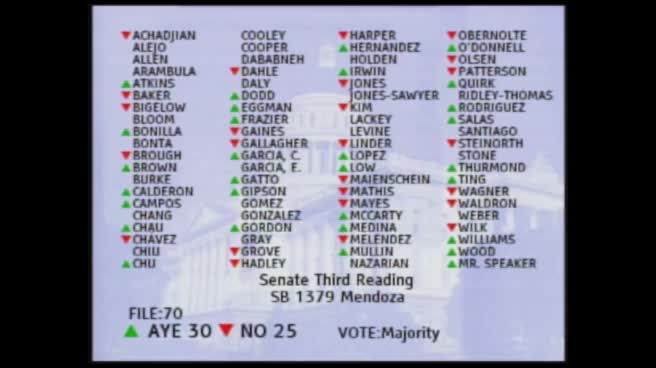 1MIN
Assembly Floor
 2MIN
Senate Floor
 9MIN
Senate Standing Committee on Education
 1MIN
Assembly Floor
Bill Author

Bill Co-Author(s):
