SR 69
- Session Year: 2019-2020
- House: Senate
- Latest Version Date: 2020-01-31
|
Date
|
Status
|
|---|---|
| Jan 30, 2020 | Read. Adopted. (Ayes 38. Noes 0. Page 3175.) |
| Jan 29, 2020 | From committee: Ordered to third reading. |
| Jan 24, 2020 | Introduced. Referred to Com. on RLS. |
|
Date
|
Description
|
Location
|
Votes
|
|
|---|---|---|---|---|
| Jan 30, 2020 | Senate 3rd Reading SR69 Pan | Senate Floor |
Passed |
This list shows positions taken on this bill by organizations on the date displayed, which is linked to the original source.
Positions by individuals are not included.
Office of Senate Floor Analyses (916) 651-1520 Fax: (916) 327-4478 | SR 69 |
THIRD READING
Bill No: SR 69
Introduced: 1/24/20
SUBJECT: Fred Korematsu Day of Civil Liberties and the Constitution
DIGEST:
This resolution designates that January 30, 2020, be observed as Fred Korematsu Day of Civil Liberties and the Constitution.
ANALYSIS: This resolution makes the following legislative findings:
- Fred Korematsu was born in Oakland, California, on January 30, 1919, to Japanese immigrant parents. Upon graduation from Castlemont High School, Mr. Korematsu was unable to serve in the United States military because his selective service classification had been changed to “Enemy Alien,” even though he was a United States citizen. Mr. Korematsu attended the Master School of Welding and worked at the docks in Oakland as a shipyard welder, quickly rising through the ranks to foreman until his union barred all people of Japanese ancestry and his employment was terminated.
- In 1942, Fred Korematsu refused to comply with Civilian Exclusion Order No. 34 which was authorized by President Franklin D. Roosevelt’s Executive Order No. 9066. It imposed strict curfew regulations and required over 100,000 United States citizens and permanent residents of Japanese ancestry to leave their homes on the West Coast and submit to imprisonment based solely on their ancestry.
- Fred Korematsu was arrested on May 30, 1942, and charged with violating the military’s exclusion order. While he spent two and one-half months in the Presidio stockade prison in San Francisco, California, the Executive Director of the American Civil Liberties Union of Northern California, Ernest Besig, offered to defend him. Fred Korematsu was tried and convicted by a federal court and taken by military authorities to the Tanforan Assembly Center in San Bruno, California. After spending several months at Tanforan, a former horse racing track, Fred Korematsu and his family were sent to the Topaz concentration camp in Utah. Believing the discriminatory conviction violated freedoms guaranteed by the Constitution, Fred Korematsu appealed his case. Though the appeal went up to the United States Supreme Court in 1944, justice was denied to Fred Korematsu when the Supreme Court upheld theconviction by a six to three vote, leaving him devastated and wondering what effect this would have on other Americans.
- In 1982, with newly discovered evidence found by Peter Irons, a legal historian and attorney, and Aiko Herzig-Yoshinaga, a researcher, Fred Korematsu made the decision to reopen his 1944 conviction by petitioning for a writ of error coram nobis to have the wrongful conviction vacated. The task of retrying a legal case based on events 40 years past was complicated and novel, but a pro bono legal team composed mostly of Sansei (third generation Japanese Americans) was determined to undo the injustice perpetrated on Fred Korematsu and their own family members who were imprisoned along with Fred Korematsu.
- After litigating for nearly a year in the United States District Court for the Northern District of California, Fred Korematsu and his legal team emerged triumphant on November 10, 1983, when Judge Marilyn Hall Patel announced from the bench her decision granting the petition for the writ of error coram nobis to overturn Fred Korematsu’s conviction. The written decision was published on April 19, 1984. The coram nobis decision in this case impaired the precedent of the original Supreme Court cases which validated the curfew and exclusion orders. In addition, the decisions influenced Congress’ passage of the Civil Liberties Act of 1988.
- The Civil Liberties Act of 1988 was signed into law by President Ronald Reagan and recognized the grave injustice that was done to United States residents and citizens of Japanese ancestry by the forced relocation and incarceration of civilians during World War II. Congress acknowledged that the incarceration of these Japanese Americans occurred because of racial prejudice, wartime hysteria, and a failure of political leadership. The apology extended on behalf of the United States was also intended to make more credible and to be consistent with any expressions of concern by the United States over violations of human rights committed by other nations.
This resolution:
- Designates that Thursday, January 30, 2020, be observed as Fred Korematsu Day of Civil Liberties and the Constitution.
- Resolves that Fred Korematsu’s life and his willingness to assert that our civil liberties are the hallmark of our great country have left an indelible mark on the history of our nation and hold a special meaning for the people of California.
- Resolves, that on Fred Korematsu Day of Civil Liberties and the Constitution, the Legislature also encourages all public schools and educational institutions to conduct exercises remembering the life of Fred Korematsu and recognizing the importance of preserving civil liberties, even in times of real or perceived crisis.
Related/Prior Legislation
SCR 10 (Pan, Resolution Chapter 11, Statutes of 2019) designated that January 30, 2019, be observed as Fred Korematsu Day of Civil Liberties and the Constitution.
ACR 13 (Chu, Resolution Chapter 5, Statutes of 2019) designated that January 30, 2019, be observed as Fred Korematsu Day of Civil Liberties and the Constitution.
FISCAL EFFECT: Appropriation: No Fiscal Com.: No Local: No
None received
OPPOSITION: (Verified 1/27/20)
None received
Prepared by: Karen Chow / SFA / (916) 651-1520
1/29/20 16:37:17
**** END ****
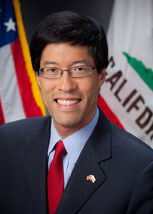
Bill Author
Bill Co-Author(s):