AB 2542: Streets and highways: reversible lanes.
- Session Year: 2015-2016
- House: Assembly
- Latest Version Date: 2016-09-23
Existing law provides that the Department of Transportation is in full possession and control of the state highway system. Existing law generally provides for the California Transportation Commission to program available funding for transportation capital projects, other than state highway rehabilitation projects, through the State Transportation Improvement Program, which includes projects recommended by regional transportation planning agencies through the adoption of a regional transportation improvement program and projects recommended by the department through the adoption of an interregional transportation improvement program, as specified.
This bill would require the department or a regional transportation planning agency, when submitting a capacity-increasing project or a major street or highway lane realignment project to the commission for approval, to demonstrate that reversible lanes were considered for the project.
Existing law authorizes the legislative body of a city to do any and all things necessary to lay out, acquire, and construct any section or portion of any street or highway within its jurisdiction as a freeway and to make any existing street or highway a freeway.
This bill would make a nonsubstantive change to this provision.
Before the commission approves a capacity-increasing project or a major street or highway lane realignment project, the department or a regional transportation planning agency submitting the project for approval shall demonstrate that reversible lanes were considered for the project.
Before the commission approves a capacity-increasing project or a major street or highway lane realignment project, the department or a regional transportation planning agency submitting the project for approval shall demonstrate that reversible lanes were considered for the project.
Before the commission approves a capacity-increasing project or a major street or highway lane realignment project, the department or a regional transportation planning agency submitting the project for approval shall demonstrate that reversible lanes were considered for the project.
SECTION 1.Section 1800 of the Streets and Highways Code is amended to read:1800.The legislative body of a city may do any and all things necessary to lay out, acquire, and construct a section or portion of a street or highway within its jurisdiction as a freeway and to make an existing street or highway a freeway.
The legislative body of any a city may do any and all things necessary to lay out, acquire, and construct any a section or portion of any a street or highway within its jurisdiction as a freeway, freeway and to make any an existing street or highway a freeway.
|
Date
|
Status
|
|---|---|
| Aug 25, 2016 | Enrolled and presented to the Governor at 5 p.m. |
| Aug 19, 2016 | In Assembly. Ordered to Engrossing and Enrolling. |
| Aug 18, 2016 | Read third time. Passed. Ordered to the Assembly. (Ayes 36. Noes 0. Page 5139.). |
| Aug 18, 2016 | Read third time. Passed. Ordered to the Assembly. (Ayes 36. Noes 0.). |
| Aug 18, 2016 | Read third time. Passed. Ordered to the Assembly. |
| Aug 11, 2016 | Ordered to special consent calendar. |
| Aug 3, 2016 | Read second time. Ordered to third reading. |
| Aug 2, 2016 | From committee: Do pass. (Ayes 7. Noes 0.) (August 1). |
| Jun 27, 2016 | In committee: Hearing postponed by committee. |
| Jun 15, 2016 | From committee: Do pass and re-refer to Com. on APPR. with recommendation: To Consent Calendar. (Ayes 11. Noes 0.) (June 14). Re-referred to Com. on APPR. |
| May 19, 2016 | Referred to Com. on T. & H. |
| May 12, 2016 | Read third time. Passed. Ordered to the Senate. (Ayes 78. Noes 0. Page 4788.) |
| May 12, 2016 | Read third time. Passed. Ordered to the Senate. (Ayes 78. Noes 0.) |
| May 12, 2016 | In Senate. Read first time. To Com. on RLS. for assignment. |
| May 12, 2016 | Read third time. Passed. Ordered to the Senate. |
| May 5, 2016 | Read second time. Ordered to Consent Calendar. |
| May 4, 2016 | From committee: Do pass. To Consent Calendar. (Ayes 20. Noes 0.) (May 4). |
| Apr 19, 2016 | From committee: Do pass and re-refer to Com. on APPR. with recommendation: To Consent Calendar. (Ayes 15. Noes 0.) (April 18). Re-referred to Com. on APPR. |
| Mar 16, 2016 | Re-referred to Com. on TRANS. |
| Mar 15, 2016 | From committee chair, with author's amendments: Amend, and re-refer to Com. on TRANS. Read second time and amended. |
| Mar 14, 2016 | Referred to Com. on TRANS. |
| Feb 22, 2016 | Read first time. |
| Feb 21, 2016 | From printer. May be heard in committee March 22. |
| Feb 19, 2016 | Introduced. To print. |
|
Date
|
Description
|
Location
|
Votes
|
|
|---|---|---|---|---|
| Aug 18, 2016 | Special Consent AB2542 Gatto By Hertzberg | Senate Floor |
Passed |
|
| Aug 1, 2016 | Do pass | Senate Standing Committee on Appropriations |
Passed |
|
| Jun 14, 2016 | Do pass, but first be re-referred to the Committee on [Appropriations] with the recommendation: To Consent Calendar | Senate Standing Committee on Transportation and Housing |
Passed |
|
| May 12, 2016 | AB 2542 GATTO Consent Calendar Second Day Regular Session | Assembly Floor |
Passed |
|
| May 4, 2016 | Do pass. To Consent Calendar. | Assembly Standing Committee on Appropriations |
Passed |
|
| Apr 18, 2016 | Do pass and be re-referred to the Committee on [Appropriations] with recommendation: To Consent Calendar | Assembly Standing Committee on Transportation |
Passed |
This list shows positions taken on this bill by organizations on the date displayed, which is linked to the original source.
Positions by individuals are not included.
Office of Senate Floor Analyses (916) 651-1520 Fax: (916) 327-4478 | AB |
THIRD READING
Bill No: AB 2542
:
SENATE TRANS. & HOUSING COMMITTEE: 11-0, 6/14/16
AYES: Beall, Cannella, Allen, Bates, Gaines, Galgiani, Leyva, McGuire, Mendoza, Roth, Wieckowski
SENATE APPROPRIATIONS COMMITTEE: 7-0, 8/1/16
AYES: Lara, Bates, Beall, Hill, McGuire, Mendoza, Nielsen
ASSEMBLY FLOOR: 78-0, 5/12/16 (Consent) - See last page for vote
DIGEST: This bill requires that, prior to the California Transportation Commission (CTC) approving a capacity-increasing project or major street or highway lane-realignment project, the California Department of Transportation (Caltrans) or a regional transportation planning agency must demonstrate that reversible lanes were considered for the project.
Existing law:
- Vests CTC with responsibility to advise and assist the Secretary of the California State Transportation Agency and the Legislature in formulating and evaluating state policies and plans for California’s transportation programs.
- Requires the CTC to, among other things, adopt the state transportation improvement program and allocate transportation capital funds to specific projects in the program, for each major phase of a project.
- Declares that it is the policy of the state that public agencies should not approve projects as proposed if there are feasible alternatives or feasible mitigation measures available which would substantially lessen the significant environmental effects of such projects.
This bill requires that, prior to the CTC approving a capacity-increasing project or major street or highway lane-realignment project, Caltrans or a regional transportation planning agency must demonstrate that reversible lanes were considered for the project.
Comments
- Purpose. The author notes, “Existing law does not prohibit the use of reversible lanes, but it also does not encourage the use of them as well. AB 2542 will encourage the use of reversible lanes when they are the best option. Reversible lanes reduce congestion and prevent unnecessary road expansions. Road expansions can exacerbate our infrastructure backlog and have detrimental effects on the environment.”
- What are reversible lanes? Reversible lanes add peak-direction capacity to a two-way road and decrease congestion by utilizing available lane capacity from the other (off-peak) direction. The lanes are particularly beneficial where the cost to increase capacity is especially expensive (e.g., bridges, dense urban areas).
- Existing practices. The introduction of reversible lanes in California occurred in 1963 when the Golden Gate Bridge established this process to reduce severe traffic during peak traffic times. Over the years, in addition to the Golden Gate Bridge, reversible lanes have been used on the San Diego-Coronado Bridge, Interstate 15 in San Diego, and, until recently, in the Caldecott Tunnel. Other states that utilize reversible lanes on their highway systems include New York, Florida, and Pennsylvania. Additionally, the use of reversible lanes is increasing, for example, during large sporting events, traffic incidents, construction, and evacuations.
While Caltrans already provides guidance regarding consideration for the use of reversible lanes, the concept is not without its critics. Reports have indicated that reversible lanes are specifically ideal only where a very strong and defined travel pattern exists. Other shortfalls include potential negative business impacts along the route and an increased potential for vehicle accidents. However, this bill merely requires Caltrans or a local agency to demonstrate they have considered reversible lanes when seeking the approval of specific projects from CTC.
FISCAL EFFECT: Appropriation: Fiscal Com.: Local:
According to the Senate Appropriations Committee:
- Minor and absorbable CTC costs to review project documents to ensure that reversible lanes were considered (State Highway Account).
- Unknown, likely minor Caltrans costs to document that reversible lanes were considered when submitting a project to the CTC. Staff notes that Caltrans currently considers where reversible lanes may be appropriate when developing proposed projects (State Highway Account).
None received
None received
ASSEMBLY FLOOR: 78-0, 5/12/16
AYES: Achadjian, Alejo, Travis Allen, Arambula, Atkins, Baker, Bigelow, Bloom, Bonilla, Bonta, Brough, Brown, Calderon, Campos, Chang, Chau, Chávez, Chiu, Chu, Cooley, Cooper, Dababneh, Dahle, Daly, Dodd, Eggman, Frazier, Beth Gaines, Gallagher, Cristina Garcia, Eduardo Garcia, Gatto, Gipson, Gomez, Gonzalez, Gordon, Gray, Grove, Hadley, Harper, Roger Hernández, Holden, Irwin, Jones, Kim, Lackey, Levine, Linder, Lopez, Low, Maienschein, Mathis, Mayes, McCarty, Medina, Melendez, Mullin, Nazarian, Obernolte, O'Donnell, Olsen, Patterson, Quirk, Ridley-Thomas, Rodriguez, Salas, Santiago, Steinorth, Mark Stone, Thurmond, Ting, Wagner, Waldron, Weber, Wilk, Williams, Wood, Rendon
NO VOTE RECORDED: Burke, Jones-Sawyer
8/3/16 19:14:33
SENATE COMMITTEE ON
Senator Ricardo Lara, Chair
2015 - 2016 Regular Session
AB 2542 (Gatto) - Streets and highways: reversible lanes
Version: | Policy Vote: |
Urgency: | Mandate: |
Hearing Date: | Consultant: |
This bill does not meet the criteria for referral to the Suspense File.
Bill Summary:
AB 2542 would require the Department of Transportation (Caltrans) and regional transportation planning agencies (RTPAs) to demonstrate to the California Transportation Commission (CTC) that reversible lanes were considered for a capacity-increasing project or a major street or highway lane realignment project.
Fiscal Impact:
- Minor and absorbable CTC costs to review project documents to ensure that reversible lanes were considered. (State Highway Account)
- Unknown, likely minor Caltrans costs to document that reversible lanes were considered when submitting a project to the CTC. Staff notes that Caltrans currently considers where reversible lanes may be appropriate when developing proposed projects. (State Highway Account)
Background:
Existing law requires the CTC to adopt the state transportation improvement program and allocate transportation capital funds for each major phase of a specific project in the program, among other things. Existing law declares that it is the policy of the state that public agencies should not approve projects as proposed if there are feasible alternatives or feasible mitigation measures available which would substantially lessen the significant environmental effects of such projects.
Reversible lanes add peak-direction capacity to a two-way road, and decrease congestion by utilizing available lane capacity from the off-peak direction. The use of reversible lanes can be beneficial if capacity-increasing costs are particularly high, such as on bridges or in dense urban areas. Reversible facilities are only feasible in specific circumstances, and in California they are currently used on the Golden Gate Bridge, the San Diego-Coronado Bridge, and I-15 in San Diego County, all of which involve movable barriers. Caltrans indicates that a reversible high-occupancy vehicle (HOV lane is under construction for Interstate 680 at the SR 24 interchange in order to reduce the costs to close a gap in carpool lanes on I-680 in Walnut Creek.
Caltrans has existing guidance regarding when it is appropriate to consider reversible lanes built into its HOV guidelines. These lanes are only workable on multi-lane roadways with predictable directional congestion patterns with an imbalance (after allowing for long-term traffic growth) of at least 65/35%. From a design perspective, the criteria suggest that reversible lanes should be barrier-separated and have limited ingress and egress, and they should only be considered when a project is severely constrained by right-of-way and environmental considerations. Operation of reversible lanes can be expensive in terms of equipment and manpower.
Proposed Law:
AB 2542 would require Caltrans and RTPAs, when submitting a capacity-increasing project or a major street or highway lane realignment project to the CTC for approval, to demonstrate that reversible lanes were considered before the CTC approves the project.
Staff Comments:
This bill does not prescribe the manner by which Caltrans or an RTPA would demonstrate that reversible lanes were considered on capacity-increasing or major realignment projects. Caltrans currently performs initial traffic analyses prior to project selection, at which time reversible lanes, HOV lanes, and other design options are considered. Absent specific direction bill, staff assumes that Caltrans would self-certify that reversible lanes were considered during project development when presenting a project to CTC.
-- END --
SENATE COMMITTEE ON TRANSPORTATION AND HOUSING
Senator Jim Beall, Chair
2015 - 2016 Regular
Bill No: AB 2542 Hearing Date: June 14, 2016
Author: | Gatto | ||
Version: | 3/15/2016 | ||
Urgency: | No | Fiscal: | Yes |
Consultant: | Manny Leon | ||
SUBJECT: Streets and highways: reversible lanes
DIGEST: This bill requires that, prior to the California Transportation Commission (CTC) approving a capacity-increasing project or major street or highway lane-realignment project, the California Department of Transportation (Caltrans) or a regional transportation planning agency must demonstrate that reversible lanes were considered for the project.
ANALYSIS:
Existing law:
- Vests CTC with responsibility to advise and assist the Secretary of the California State Transportation Agency and the Legislature in formulating and evaluating state policies and plans for California’s transportation programs.
- Requires the CTC to, among other things, adopt the state transportation improvement program and allocate transportation capital funds to specific projects in the program, for each major phase of a project.
- Declares that it is the policy of the state that public agencies should not approve projects as proposed if there are feasible alternatives or feasible mitigation measures available which would substantially lessen the significant environmental effects of such projects.
COMMENTS:
- Purpose. The author notes, “Existing law does not prohibit the use of reversible lanes, but it also does not encourage the use of them as well. AB 2542 will encourage the use of reversible lanes when they are the best option. Reversible lanes reduce congestion and prevent unnecessary road expansions. Road expansions can exacerbate our infrastructure backlog and have detrimental effects on the environment.”
- What are reversible lanes? Reversible lanes add peak-direction capacity to a two-way road and decrease congestion by utilizing available lane capacity from the other (off-peak) direction. The lanes are particularly beneficial where the cost to increase capacity is especially expensive (e.g., bridges, dense urban areas).
- Existing practices. The introduction of reversible lanes in California occurred in 1963 when the Golden Gate Bridge established this process to reduce severe traffic during peak traffic times. Over the years, in addition to the Golden Gate Bridge, reversible lanes have been used on the San Diego-Coronado Bridge, Interstate 15 in San Diego, and, until recently, in the Caldecott Tunnel. Other states that utilize reversible lanes on their highway systems include New York, Florida, and Pennsylvania. Additionally, the use of reversible lanes is increasing, for example, during large sporting events, traffic incidents, construction, and evacuations.
While Caltrans already provides guidance regarding consideration for the use of reversible lanes, the concept is not without its critics. Reports have indicated that reversible lanes are specifically ideal only where a very strong and defined travel pattern exists. Other shortfalls include potential negative business impacts along the route and an increased potential for vehicle accidents. However, this bill merely requires Caltrans or a local agency to demonstrate they have considered reversible lanes when seeking the approval of specific projects from CTC.
Assembly Votes:
Floor: 78-0
Approps: 20-0
Trans: 15-0
FISCAL EFFECT: Appropriation: Fiscal Com.: Local:
POSITIONS: (Communicated to the committee before noon on Wednesday,
June 8, 2016.)
SUPPORT:
Los Angeles County Metropolitan Transportation Authority (if amended)
OPPOSITION:
None received
-- END --
Date of Hearing: May 4, 2016
ASSEMBLY COMMITTEE ON APPROPRIATIONS
Lorena Gonzalez, Chair
ABPCA Bill Id:AB 2542
Author:(Gatto) – As Amended Ver:March 15, 2016
Policy Committee: | Transportation | Vote: | 15 - 0 |
|
|
Urgency: No State Mandated Local Program: No Reimbursable: No
SUMMARY:
This bill requires that, prior to the California Transportation Commission (CTC) approving a capacity-increasing project or a major street or highway lane realignment project, Caltrans or a regional transportation planning agency must demonstrate that reversible lanes were considered for the project.
FISCAL EFFECT:
Unknown costs to Caltrans and regional planning agencies. Costs would in part depend on the level of analysis required by the CTC to demonstrate adequate consideration of incorporating reversible lanes into any project. Assuming that instances where use of such lanes would be practical is quite limited, the costs of this bill should not be significant.
COMMENTS:
Background and Purpose. Reversible lanes add peak-direction capacity to a two-way road and decrease congestion by "borrowing" available lane capacity from the other (off-peak) direction. The lanes are particularly beneficial where the cost to increase capacity is especially expensive, like on bridges and in dense urban areas. In California, reversible lanes were first inaugurated on the Golden Gate Bridge in October 1963. Today, in addition to the Golden Gate Bridge, reversible lanes are used on the San Diego-Coronado Bridge, Interstate 15 in San Diego, and, until recently, in the Caldecott Tunnel.
According to the Texas A&M Transportation Institute (Institute), the decision to consider reversible lanes is usually based on the need to mitigate recurrent congestion. Its use is most applicable on multi-lane roadways with a directional imbalance in excess of 65/35% with a predominance of through traffic and predictable congestion patterns. Reasons agencies give for using reversible lanes include: congestion mitigation, queue length, the need to decrease travel time, and the need to improve the overall corridor level of service.
Analysis Prepared by: Chuck Nicol / APPR. / (916) 319-2081
Date of Hearing: April 18, 2016
ASSEMBLY COMMITTEE ON TRANSPORTATION
Jim Frazier, Chair
ABPCA Bill Id:AB 2542 (
Author:Gatto) – As Amended Ver:March 15, 2016
SUBJECT: Streets and highways: reversible lanes
SUMMARY: Requires that, prior to the California Transportation Commission (CTC) approving a capacity-increasing project or major street or highway lane realignment project, the California Department of Transportation (Caltrans) or a regional transportation planning agency must demonstrate that reversible lanes were considered for the project.
EXISTING LAW:
- Vests CTC with responsibility to advise and assist the Secretary of the California State Transportation Agency and the Legislature in formulating and evaluating state policies and plans for California’s transportation programs.
- Requires the CTC to, among other things, adopt the state transportation improvement program and allocate transportation capital funds to specific projects in the program, for each major phase of a project.
- Declares that it is the policy of the state that public agencies should not approve projects as proposed if there are feasible alternatives or feasible mitigation measures available which would substantially lessen the significant environmental effects of such projects.
FISCAL EFFECT: Unknown
COMMENTS: Reversible lanes add peak-direction capacity to a two-way road and decrease congestion by "borrowing" available lane capacity from the other (off-peak) direction. The lanes are particularly beneficial where the cost to increase capacity is especially expensive, like on bridges and in dense urban areas.
Reversible lanes are not new to California. In fact, reversible lanes were first inaugurated on the Golden Gate Bridge in October 1963. While they worked to reduce serve traffic in the peak direction, they were labor intensive to operate and posed serious safety problems because they led to the increase in head-on collisions. Now the lanes are adjusted with the aid of a "zipper"—a moveable barrier machine that pushes a heavy concrete and metal barrier across one lane and related labor and safety problems have been minimized.
Today, in addition to the Golden Gate Bridge, reversible lanes are used on the San Diego-Coronado Bridge, Interstate 15 in San Diego, and, until recently, in the Caldecott Tunnel. Furthermore, the use of reversible lanes is increasing, for example, during large sporting events, traffic incidents, construction, and evacuations.
According to the Texas A&M Transportation Institute (Institute), the decision to consider reversible lanes is usually based on the need to mitigate recurrent congestion. Its use is most applicable on multi-lane roadways with a directional imbalance in excess of 65/35% with a predominance of through traffic and predictable congestion patterns. Reasons agencies give for using reversible lanes include: congestion mitigation, queue length, the need to decrease travel time, and the need to improve the overall corridor level of service.
The Institute asserts that planning of specific reversible facilities does not differ substantially from conventional facilities. It also suggests that "[t]he vast majority of reversible lanes are implemented on lanes not originally planned or designed for bi-directional use. Most reversible lanes are incorporated into conventionally designed roadways that were later reconfigured for permanent or periodic flow conversions using various permanent or temporary design and control features. The exceptions to this case are applications on freeways, in particular freeway high occupancy vehicle (HOV) and transit reversible lanes, where transition termini and lane separations are planned, designed, and constructed specifically for the purpose of a reversible lane."
Caltrans already provides guidance regarding consideration for the use of reversible lanes. Consequently, AB 2542 should be relatively easy to implement. Furthermore, given the potential benefits of avoiding costly, environmentally unfriendly roadway expansion, the requirements set forth in AB 2542 to consider reversible lanes seem reasonable.
Committee comment: AB 2542 does not prescribe the manner by which Caltrans or a regional transportation planning agency would demonstrate that reversible lanes were considered. Nor does it define the process within which CTC would be approving a capacity-adding project. The author may want to work with the CTC to clarify how provisions of AB 2542 would be operationalized, for example, by requiring that a reversible lane alternative be considered in the alternative analysis portion of an environmental review document.
Previous legislation: AB 1283 (DeVore) of 2005 would have required Caltrans, prior to adding single-direction lanes, to study the feasibility of adding reversible lanes separated by barriers. AB 1283 failed passage in this committee by a vote of 6-5.
REGISTERED SUPPORT / OPPOSITION:
Support
None on file
Opposition
None on file
Analysis Prepared by: Janet Dawson / TRANS. / (916) 319-2093
Discussed in Hearing
 1MIN
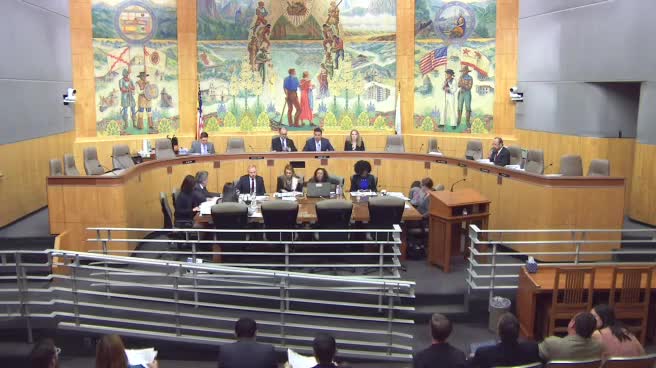
Senate Standing Committee on Appropriations
Bill Author

Bill Co-Author(s):