AB 2580: Foster care: placements.
- Session Year: 2015-2016
- House: Assembly
- Latest Version Date: 2016-06-13
Existing law finds and declares that foster parents are one of the most important sources of information about the children in their care and that courts should know, at the earliest possible date, the interest of a caretaker in providing legal permanency for a child.
Existing law authorizes the juvenile court to adjudge a minor who has been abused or neglected, or who meets other specified criteria, to be a dependent child of the court. Existing law requires the court to conduct various hearings regarding children who are, or who may become, dependent children. Existing law requires the probation officer or the social worker to provide notice of those hearings to certain persons, including parents, guardians, the child if he or she is 10 years of age or older, adult relatives under certain conditions, and attorneys for the parents or guardians, as specified.
This bill would authorize a caregiver, if a foster child is removed from his or her care in order to reunify with his or her parent or guardian, to indicate indicate, in writing, to the childs social worker that he or she is interested in providing and willing to provide care for the child in the future if the child is in need of foster care placement. placement and would require the caregiver to provide contact information, as specified. The bill would also require the probation officer or social worker to provide notice of a hearing, if the probation officer or social worker determines that the child will be retained in custody, to a caregiver who indicated that he or she was interested in providing and willing to provide care for the child in the future. By imposing new duties on probation officers and social workers, the bill would create a state-mandated local program.
The California Constitution requires the state to reimburse local agencies and school districts for certain costs mandated by the state. Statutory provisions establish procedures for making that reimbursement.
This bill would provide that no reimbursement is required by this act for a specified reason.
Existing law finds and declares that foster parents are one of the most important sources of information about the children in their care and that courts should know, at the earliest possible date, the interest of a caretaker in providing legal permanency for a child.
This bill would authorize a caregiver, if a foster child is removed from his or her care in order to reunify with his or her parent or guardian, to indicate to the childs social worker that he or she is interested in providing and willing to provide care for the child in the future if the child is in need of foster care placement.
Existing law establishes the jurisdiction of the juvenile court, which may adjudge children to be dependents of the court under certain circumstances, including when the child suffered or there is a substantial risk that the child will suffer serious physical harm, or a parent fails to provide the child with adequate food, clothing, shelter, or medical treatment. Existing law establishes the grounds for removal of a dependent child from the custody of his or her parents or guardian, and establishes procedures to determine temporary placement of a dependent child, including placement with a licensed foster family home. Existing law prescribes various hearings, including specified review hearings, and other procedures for these purposes. If the court orders the removal of a minor who is adjudged to be a dependent child of the court, existing law requires the court to order the care, custody, control, and conduct of the child to be under the supervision of a social worker who may place the child in specified settings, including a foster home in which the child has been placed before an interruption in foster care, if that placement is in the best interest of the child and space is available or with a foster family agency to be placed in a suitable licensed foster family home or certified family home.
The bill would require the social worker, at the time a child is being considered for placement in a foster home, to provide to a foster parent or foster parents of the dependent child specified information, including notification that the foster parent has the right to be present at the dispositional hearing and at any hearing thereafter at which the status of the child is at issue. By imposing additional duties on county welfare agencies, this bill would impose a state-mandated local program.
If a court orders the removal of a child from the physical custody of his or her parent, existing law generally requires the court to order the return of the child to the physical custody of his or her parent at the review hearings held 6 months, 12 months, 18 months, and 24 months, respectively, after the initial disposition hearing, unless the court finds that the return of the child would create a substantial risk of detriment, or substantial danger, to the safety, protection, or physical or emotional well-being of the child. Existing law requires the court to specify the factual basis for its conclusion that the return of the child would create a substantial risk of detriment, or substantial danger, to the safety, protection, or physical or emotional well-being of the child.
This bill would require the court to specify in writing the factual basis for its conclusions.
If the court determines, based on the assessments provided to the court, by a clear and convincing standard, that it is likely the child will be adopted, existing law requires the court to terminate parental rights and order the child placed for adoption, unless certain circumstances exist, including that the court finds a compelling reason for determining that termination would be detrimental to the child due to one or more specified circumstances. If the court finds that termination of parental rights would be detrimental to the child, existing law requires the court to state its reasons in writing or on the record. Existing law authorizes a child who has not been adopted after the passage of at least 3 years from the date the court terminated parental rights and for whom the court has determined that adoption is no longer the permanent plan to petition the juvenile court to reinstate parental rights pursuant to specified procedures. Existing law requires the court to grant the petition if it finds by clear and convincing evidence that the child is no longer likely to be adopted and that reinstatement of parental rights is in the best interests of the child. If the court reinstates parental rights over a child who is under 12 years of age, existing law requires the court to specify the factual basis for its conclusion that it is in the best interest of the child to reinstate parental rights.
The bill would instead require the court to state its reasons in writing and on the record if the court finds that termination of parental rights would be detrimental to the child, and would require the court to specify in writing the factual basis for its conclusion that it is in the best interest of the child to reinstate parental rights if the court finds by clear and convincing evidence that the child is no longer likely to be adopted.
The bill would make other technical, nonsubstantive changes.
The California Constitution requires the state to reimburse local agencies and school districts for certain costs mandated by the state. Statutory provisions establish procedures for making that reimbursement.
This bill would provide that no reimbursement is required by this act for a specified reason.
Existing law provides that a child may come within the jurisdiction of the juvenile court and become a dependent child of the court in certain cases, including when the child is abused, a parent or guardian fails to adequately supervise or protect the child, as specified, or a parent or guardian fails to provide the child with adequate food, clothing, shelter, or medical treatment.
This bill would make technical, nonsubstantive changes to those provisions.
If the probation officer or social worker determines that the child shall be retained in custody, he or she shall immediately file a petition pursuant to Section 332 with the clerk of the juvenile court, who shall set the matter for hearing on the detention hearing calendar. The probation officer or social worker shall serve notice as prescribed in this section.
(a)Notice shall be given to the following persons whose whereabouts are known or become known prior to the initial petition hearing:
(1)The mother.
(2)The father or fathers, presumed and alleged.
(3)The legal guardian or guardians.
(4)The child, if the child is 10 years of age or older.
(5)Any known sibling of the child who is the subject of the hearing if that sibling either is the subject of a dependency proceeding or has been adjudged to be a dependent child of the juvenile court. If the sibling is 10 years of age or older, the sibling, the siblings caregiver, and the siblings attorney. If the sibling is under 10 years of age, the siblings caregiver and the siblings attorney. However, notice is not required to be given to any sibling whose matter is calendared in the same court on the same day.
(6)The caregiver who cared for the child in a foster home in which a child has been placed before an interruption of the foster care placement if the caregiver indicated, to the social worker, his or her willingness to care for the child in the future pursuant to Section 16010.7.
(6)
(7)If there is no parent or guardian residing in California, or if the residence is unknown, then to any adult relative residing within the county, or, if none, the adult relative residing nearest the court.
(7)
(8)The attorney for the parent or parents, or legal guardian or guardians.
(8)
(9)The district attorney, if the district attorney has notified the clerk of the court that he or she wishes to receive the petition, containing the time, date, and place of the hearing.
(9)
(10)The probate department of the superior court that appointed the guardian, if the child is a ward of a guardian appointed pursuant to the Probate Code.
(b)No notice is required for a parent whose parental rights have been terminated.
(c)The notice shall be given as soon as possible after the filing of the petition.
(d)The notice of the initial petition hearing shall include all of the following:
(1)The date, time, and place of the hearing.
(2)The name of the child.
(3)A copy of the petition.
(e)Service of the notice shall be written or oral. If the person being served cannot read, notice shall be given orally. Except as provided in subdivisions (f), (g), and (h), written notice may be served by electronic mail if the county, or city and county, and the court choose to permit service by electronic mail and the person to be served has consented to service by electronic mail by signing Judicial Council Form EFS-005.
(f)If the probation officer or social worker knows or has reason to know that an Indian child is involved, notice shall be given in accordance with Section 224.2.
(g)Except as provided in subdivision (h), if notice is required to be provided to a child pursuant to paragraph (4) or (5) of subdivision (a), written notice may be served on the child by electronic mail only if all of the following requirements are satisfied:
(1)The county, or city and county, and the court choose to permit service by electronic mail.
(2)The child is 16 years of age or older.
(3)The child has consented to service by electronic mail by signing Judicial Council Form EFS-005.
(4)The attorney for the child has consented to service of the minor by electronic mail by signing Judicial Council Form EFS-005.
(h)If notice is required to be provided to a child pursuant to paragraph (4) or (5) of subdivision (a), written notice may be served on the child by electronic mail as well as by regular mail if all of the following requirements are satisfied:
(1)The county, or city and county, and the court choose to permit service by electronic mail.
(2)The child is 14 or 15 years of age.
(3)The child has consented to service by electronic mail by signing Judicial Council Form EFS-005.
(4)The attorney for the child has consented to service of the minor by electronic mail by signing Judicial Council Form EFS-005.
(i)This section shall remain in effect only until January 1, 2019, and as of that date is repealed, unless a later enacted statute, that is enacted before January 1, 2019, deletes or extends that date.
SEC. 2.Section 290.1 of the Welfare and Institutions Code, as added by Section 2 of Chapter 219 of the Statutes of 2015, is amended to read:290.1.If the probation officer or social worker determines that the child shall be retained in custody, he or she shall immediately file a petition pursuant to Section 332 with the clerk of the juvenile court, who shall set the matter for hearing on the detention hearing calendar. The probation officer or social worker shall serve notice as prescribed in this section.
(a)Notice shall be given to the following persons whose whereabouts are known or become known prior to the initial petition hearing:
(1)The mother.
(2)The father or fathers, presumed and alleged.
(3)The legal guardian or guardians.
(4)The child, if the child is 10 years of age or older.
(5)Any known sibling of the child who is the subject of the hearing if that sibling either is the subject of a dependency proceeding or has been adjudged to be a dependent child of the juvenile court. If the sibling is 10 years of age or older, the sibling, the siblings caregiver, and the siblings attorney. If the sibling is under 10 years of age, the siblings caregiver and the siblings attorney. However, notice is not required to be given to any sibling whose matter is calendared in the same court on the same day.
(6)The caregiver who cared for the child in a foster home in which a child has been placed before an interruption of the foster care placement if the caregiver indicated, to the social worker, his or her willingness to care for the child in the future pursuant to Section 16010.7.
(6)
(7)If there is no parent or guardian residing in California, or if the residence is unknown, then to any adult relative residing within the county, or, if none, the adult relative residing nearest the court.
(7)
(8)The attorney for the parent or parents, or legal guardian or guardians.
(8)
(9)The district attorney, if the district attorney has notified the clerk of the court that he or she wishes to receive the petition, containing the time, date, and place of the hearing.
(9)
(10)The probate department of the superior court that appointed the guardian, if the child is a ward of a guardian appointed pursuant to the Probate Code.
(b)No notice is required for a parent whose parental rights have been terminated.
(c)The notice shall be given as soon as possible after the filing of the petition.
(d)The notice of the initial petition hearing shall include all of the following:
(1)The date, time, and place of the hearing.
(2)The name of the child.
(3)A copy of the petition.
(e)Service of the notice shall be written or oral. If the person being served cannot read, notice shall be given orally.
(f)If the probation officer or social worker knows or has reason to know that an Indian child is involved, notice shall be given in accordance with Section 224.2.
(g)This section shall become operative on January 1, 2019.
SECTION 1.SEC. 3.Section 16010.7 is added to the Welfare and Institutions Code, to read:16010.7.(a)If a foster child is removed from his or her caregiver in order to reunify with his or her parent or guardian, the caregiver may indicate indicate, in writing, to the childs social worker at the time the child is removed from his or her care that the caregiver is interested in providing and willing to provide care for the child in the future if the child is removed from his or her parent or guardian and in need of foster care placement.
(b)A caregiver indicating his or her interest pursuant to subdivision (a) shall provide contact information where he or she may be reached, including, but not limited to, phone numbers and home or business addresses. The social worker shall place this information in the childs case file.
SEC. 4.To the extent that this act has an overall effect of increasing the costs already borne by a local agency for programs or levels of service mandated by the 2011 Realignment Legislation within the meaning of Section 36 of Article XIII of the California Constitution, it shall apply to local agencies only to the extent that the state provides annual funding for the cost increase. Any new program or higher level of service provided by a local agency pursuant to this act above the level for which funding has been provided shall not require a subvention of funds by the state or otherwise be subject to Section 6 of Article XIII B of the California Constitution.
If a foster child is removed from his or her caregiver in order to reunify with his or her parent or guardian, the caregiver may indicate to the childs social worker at the time the child is removed from his or her care that the caregiver is interested in providing and willing to provide care for the child in the future if the child is removed from his or her parent or guardian and in need of foster care placement.
SECTION 1.Section 366.21 of the Welfare and Institutions Code is amended to read:366.21.(a)Every hearing conducted by the juvenile court reviewing the status of a dependent child shall be placed on the appearance calendar. The court shall advise all persons present at the hearing of the date of the future hearing and of their right to be present and represented by counsel.
(b)Except as provided in Sections 294 and 295, notice of the hearing shall be provided pursuant to Section 293.
(c)At least 10 calendar days prior to the hearing, the social worker shall file a supplemental report with the court regarding the services provided or offered to the parent or legal guardian to enable him or her to assume custody and the efforts made to achieve legal permanence for the child if efforts to reunify fail, including, but not limited to, efforts to maintain relationships between a child who is 10 years of age or older and has been in out-of-home placement for six months or longer and individuals who are important to the child, consistent with the childs best interests; the progress made; and, where relevant, the prognosis for return of the child to the physical custody of his or her parent or legal guardian; and shall make his or her recommendation for disposition. If the child is a member of a sibling group described in subparagraph (C) of paragraph (1) of subdivision (a) of Section 361.5, the report and recommendation may also take into account those factors described in subdivision (e) relating to the childs sibling group. If the recommendation is not to return the child to a parent or legal guardian, the report shall specify why the return of the child would be detrimental to the child. The social worker shall provide the parent or legal guardian, counsel for the child, and any court-appointed child advocate with a copy of the report, including his or her recommendation for disposition, at least 10 calendar days prior to the hearing. In the case of a child removed from the physical custody of his or her parent or legal guardian, the social worker shall, at least 10 calendar days prior to the hearing, provide a summary of his or her recommendation for disposition to any foster parents, relative caregivers, and certified foster parents who have been approved for adoption by the State Department of Social Services when it is acting as an adoption agency or by a county adoption agency, community care facility, or foster family agency having the physical custody of the child. The social worker shall include a copy of the Judicial Council Caregiver Information Form (JV-290) with the summary of recommendations to the childs foster parents, relative caregivers, or foster parents approved for adoption, in the caregivers primary language when available, along with information on how to file the form with the court.
(d)Prior to any hearing involving a child in the physical custody of a community care facility or a foster family agency that may result in the return of the child to the physical custody of his or her parent or legal guardian, or in adoption or the creation of a legal guardianship, or in the case of an Indian child, in consultation with the childs tribe, tribal customary adoption, the facility or agency shall file with the court a report, or a Judicial Council Caregiver Information Form (JV-290), containing its recommendation for disposition. Prior to the hearing involving a child in the physical custody of a foster parent, a relative caregiver, or a certified foster parent who has been approved for adoption by the State Department of Social Services when it is acting as an adoption agency or by a county adoption agency, the foster parent, relative caregiver, or the certified foster parent who has been approved for adoption by the State Department of Social Services when it is acting as an adoption agency or by a county adoption agency, may file with the court a report containing his or her recommendation for disposition. The court shall consider the report and recommendation filed pursuant to this subdivision prior to determining any disposition.
(e)(1)At the review hearing held six months after the initial dispositional hearing, but no later than 12 months after the date the child entered foster care as determined in Section 361.49, whichever occurs earlier, after considering the admissible and relevant evidence, the court shall order the return of the child to the physical custody of his or her parent or legal guardian unless the court finds, by a preponderance of the evidence, that the return of the child to his or her parent or legal guardian would create a substantial risk of detriment to the safety, protection, or physical or emotional well-being of the child. The social worker shall have the burden of establishing that detriment. At the hearing, the court shall consider the criminal history, obtained pursuant to paragraph (1) of subdivision (f) of Section 16504.5, of the parent or legal guardian subsequent to the childs removal to the extent that the criminal record is substantially related to the welfare of the child or the parents or guardians ability to exercise custody and control regarding his or her child, provided the parent or legal guardian agreed to submit fingerprint images to obtain criminal history information as part of the case plan. The court shall also consider whether the child can be returned to the custody of his or her parent who is enrolled in a certified substance abuse treatment facility that allows a dependent child to reside with his or her parent. The fact that the parent is enrolled in a certified substance abuse treatment facility shall not be, for that reason alone, prima facie evidence of detriment. The failure of the parent or legal guardian to participate regularly and make substantive progress in court-ordered treatment programs shall be prima facie evidence that return would be detrimental. In making its determination, the court shall review and consider the social workers report and recommendations and the report and recommendations of any child advocate appointed pursuant to Section 356.5; and shall consider the efforts or progress, or both, demonstrated by the parent or legal guardian and the extent to which he or she availed himself or herself of services provided, taking into account the particular barriers to a minor parent or a nonminor dependent parent, or an incarcerated, institutionalized, detained, or deported parents or legal guardians access to those court-mandated services and ability to maintain contact with his or her child.
(2)Regardless of whether the child is returned to a parent or legal guardian, the court shall specify in writing the factual basis for its conclusion that the return would be detrimental or would not be detrimental. The court also shall make appropriate findings pursuant to subdivision (a) of Section 366; and, where relevant, shall order any additional services reasonably believed to facilitate the return of the child to the custody of his or her parent or legal guardian. The court shall also inform the parent or legal guardian that if the child cannot be returned home by the 12-month permanency hearing, a proceeding pursuant to Section 366.26 may be instituted. This section does not apply in a case where, pursuant to Section 361.5, the court has ordered that reunification services shall not be provided.
(3)If the child was under three years of age on the date of the initial removal, or is a member of a sibling group described in subparagraph (C) of paragraph (1) of subdivision (a) of Section 361.5, and the court finds by clear and convincing evidence that the parent failed to participate regularly and make substantive progress in a court-ordered treatment plan, the court may schedule a hearing pursuant to Section 366.26 within 120 days. If, however, the court finds there is a substantial probability that the child, who was under three years of age on the date of initial removal or is a member of a sibling group described in subparagraph (C) of paragraph (1) of subdivision (a) of Section 361.5, may be returned to his or her parent or legal guardian within six months or that reasonable services have not been provided, the court shall continue the case to the 12-month permanency hearing. The court shall specify in writing the factual basis for its conclusion that there is a substantial probability that the child may be returned to his or her parent or legal guardian within six months or that reasonable services have not been provided, justifying continuance to the 12-month permanency hearing.
(4)For the purpose of placing and maintaining a sibling group together in a permanent home, the court, in making its determination to schedule a hearing pursuant to Section 366.26 for some or all members of a sibling group, as described in subparagraph (C) of paragraph (1) of subdivision (a) of Section 361.5, shall review and consider the social workers report and recommendations. Factors the report shall address, and the court shall consider, may include, but need not be limited to, whether the sibling group was removed from parental care as a group, the closeness and strength of the sibling bond, the ages of the siblings, the appropriateness of maintaining the sibling group together, the detriment to the child if sibling ties are not maintained, the likelihood of finding a permanent home for the sibling group, whether the sibling group is currently placed together in a preadoptive home or has a concurrent plan goal of legal permanency in the same home, the wishes of each child whose age and physical and emotional condition permits a meaningful response, and the best interests of each child in the sibling group. The court shall specify in writing the factual basis for its finding that it is in the best interests of each child to schedule a hearing pursuant to Section 366.26 within 120 days for some or all of the members of the sibling group.
(5)If the child was removed initially under subdivision (g) of Section 300 and the court finds by clear and convincing evidence that the whereabouts of the parent are still unknown, or the parent has failed to contact and visit the child, the court may schedule a hearing pursuant to Section 366.26 within 120 days. The court shall take into account any particular barriers to a parents ability to maintain contact with his or her child due to the parents incarceration, institutionalization, detention by the United States Department of Homeland Security, or deportation. If the court finds by clear and convincing evidence that the parent has been convicted of a felony indicating parental unfitness, the court may schedule a hearing pursuant to Section 366.26 within 120 days.
(6)If the child had been placed under court supervision with a previously noncustodial parent pursuant to Section 361.2, the court shall determine whether supervision is still necessary. The court may terminate supervision and transfer permanent custody to that parent, as provided for by paragraph (1) of subdivision (b) of Section 361.2.
(7)In all other cases, the court shall direct that any reunification services previously ordered shall continue to be offered to the parent or legal guardian pursuant to the time periods set forth in subdivision (a) of Section 361.5, provided that the court may modify the terms and conditions of those services.
(8)If the child is not returned to his or her parent or legal guardian, the court shall determine whether reasonable services that were designed to aid the parent or legal guardian in overcoming the problems that led to the initial removal and the continued custody of the child have been provided or offered to the parent or legal guardian. The court shall order that those services be initiated, continued, or terminated.
(f)(1)The permanency hearing shall be held no later than 12 months after the date the child entered foster care, as that date is determined pursuant to Section 361.49. At the permanency hearing, the court shall determine the permanent plan for the child, which shall include a determination of whether the child will be returned to the childs home and, if so, when, within the time limits of subdivision (a) of Section 361.5. After considering the relevant and admissible evidence, the court shall order the return of the child to the physical custody of his or her parent or legal guardian unless the court finds, by a preponderance of the evidence, that the return of the child to his or her parent or legal guardian would create a substantial risk of detriment to the safety, protection, or physical or emotional well-being of the child. The social worker shall have the burden of establishing that detriment.
(A)At the permanency hearing, the court shall consider the criminal history, obtained pursuant to paragraph (1) of subdivision (f) of Section 16504.5, of the parent or legal guardian subsequent to the childs removal to the extent that the criminal record is substantially related to the welfare of the child or the parents or legal guardians ability to exercise custody and control regarding his or her child, provided that the parent or legal guardian agreed to submit fingerprint images to obtain criminal history information as part of the case plan. The court shall also determine whether reasonable services that were designed to aid the parent or legal guardian to overcome the problems that led to the initial removal and continued custody of the child have been provided or offered to the parent or legal guardian.
(B)The court shall also consider whether the child can be returned to the custody of his or her parent who is enrolled in a certified substance abuse treatment facility that allows a dependent child to reside with his or her parent. The fact that the parent is enrolled in a certified substance abuse treatment facility shall not be, for that reason alone, prima facie evidence of detriment. The failure of the parent or legal guardian to participate regularly and make substantive progress in court-ordered treatment programs shall be prima facie evidence that return would be detrimental.
(C)In making its determination, the court shall review and consider the social workers report and recommendations and the report and recommendations of any child advocate appointed pursuant to Section 356.5, shall consider the efforts or progress, or both, demonstrated by the parent or legal guardian and the extent to which he or she availed himself or herself of services provided, taking into account the particular barriers to a minor parent or a nonminor dependent parent, or an incarcerated, institutionalized, detained, or deported parents or legal guardians access to those court-mandated services and ability to maintain contact with his or her child, and shall make appropriate findings pursuant to subdivision (a) of Section 366.
(D)For each youth 16 years of age and older, the court shall also determine whether services have been made available to assist him or her in making the transition from foster care to successful adulthood.
(2)Regardless of whether the child is returned to his or her parent or legal guardian, the court shall specify the factual basis for its decision. If the child is not returned to a parent or legal guardian, the court shall specify in writing the factual basis for its conclusion that the return would be detrimental. The court also shall make a finding pursuant to subdivision (a) of Section 366. If the child is not returned to his or her parent or legal guardian, the court shall consider, and state for the record, in-state and out-of-state placement options. If the child is placed out of the state, the court shall make a determination whether the out-of-state placement continues to be appropriate and in the best interests of the child.
(g)If the time period in which the court-ordered services were provided has met or exceeded the time period set forth in subparagraph (A), (B), or (C) of paragraph (1) of subdivision (a) of Section 361.5, as appropriate, and a child is not returned to the custody of a parent or legal guardian at the permanency hearing held pursuant to subdivision (f), the court shall do one of the following:
(1)Continue the case for up to six months for a permanency review hearing, provided that the hearing shall occur within 18 months of the date the child was originally taken from the physical custody of his or her parent or legal guardian. The court shall continue the case only if it finds that there is a substantial probability that the child will be returned to the physical custody of his or her parent or legal guardian and safely maintained in the home within the extended period of time or that reasonable services have not been provided to the parent or legal guardian. For the purposes of this section, in order to find a substantial probability that the child will be returned to the physical custody of his or her parent or legal guardian and safely maintained in the home within the extended period of time, the court shall be required to find all of the following:
(A)That the parent or legal guardian has consistently and regularly contacted and visited with the child.
(B)That the parent or legal guardian has made significant progress in resolving problems that led to the childs removal from the home.
(C)The parent or legal guardian has demonstrated the capacity and ability both to complete the objectives of his or her treatment plan and to provide for the childs safety, protection, physical and emotional well-being, and special needs.
(i)For purposes of this subdivision, the courts decision to continue the case based on a finding or substantial probability that the child will be returned to the physical custody of his or her parent or legal guardian is a compelling reason for determining that a hearing held pursuant to Section 366.26 is not in the best interests of the child.
(ii)The court shall inform the parent or legal guardian that if the child cannot be returned home by the next permanency review hearing, a proceeding pursuant to Section 366.26 may be instituted. The court shall not order that a hearing pursuant to Section 366.26 be held unless there is clear and convincing evidence that reasonable services have been provided or offered to the parent or legal guardian.
(2)Continue the case for up to six months for a permanency review hearing, provided that the hearing shall occur within 18 months of the date the child was originally taken from the physical custody of his or her parent or legal guardian, if the parent has been arrested and issued an immigration hold, detained by the United States Department of Homeland Security, or deported to his or her country of origin, and the court determines either that there is a substantial probability that the child will be returned to the physical custody of his or her parent or legal guardian and safely maintained in the home within the extended period of time or that reasonable services have not been provided to the parent or legal guardian.
(3)For purposes of paragraph (2), in order to find a substantial probability that the child will be returned to the physical custody of his or her parent or legal guardian and safely maintained in the home within the extended period of time, the court shall find all of the following:
(A)The parent or legal guardian has consistently and regularly contacted and visited with the child, taking into account any particular barriers to a parents ability to maintain contact with his or her child due to the parents arrest and receipt of an immigration hold, detention by the United States Department of Homeland Security, or deportation.
(B)The parent or legal guardian has made significant progress in resolving the problems that led to the childs removal from the home.
(C)The parent or legal guardian has demonstrated the capacity or ability both to complete the objectives of his or her treatment plan and to provide for the childs safety, protection, physical and emotional well-being, and special needs.
(4)Order that a hearing be held within 120 days, pursuant to Section 366.26, but only if the court does not continue the case to the permanency planning review hearing and there is clear and convincing evidence that reasonable services have been provided or offered to the parents or legal guardians. On and after January 1, 2012, a hearing pursuant to Section 366.26 shall not be ordered if the child is a nonminor dependent, unless the nonminor dependent is an Indian child and tribal customary adoption is recommended as the permanent plan.
(5)Order that the child remain in foster care, but only if the court finds by clear and convincing evidence, based upon the evidence already presented to it, including a recommendation by the State Department of Social Services when it is acting as an adoption agency or by a county adoption agency, that there is a compelling reason for determining that a hearing held pursuant to Section 366.26 is not in the best interests of the child because the child is not a proper subject for adoption and has no one willing to accept legal guardianship as of the hearing date. For purposes of this section, a recommendation by the State Department of Social Services when it is acting as an adoption agency or by a county adoption agency that adoption is not in the best interests of the child shall constitute a compelling reason for the courts determination. That recommendation shall be based on the present circumstances of the child and shall not preclude a different recommendation at a later date if the childs circumstances change. On and after January 1, 2012, the nonminor dependents legal status as an adult is in and of itself a compelling reason not to hold a hearing pursuant to Section 366.26. The court may order that a nonminor dependent who otherwise is eligible pursuant to Section 11403 remain in a planned, permanent living arrangement.
(A)The court shall make factual findings identifying any barriers to achieving the permanent plan as of the hearing date. When the child is under 16 years of age, the court shall order a permanent plan of return home, adoption, tribal customary adoption in the case of an Indian child, legal guardianship, or placement with a fit and willing relative, as appropriate. When the child is 16 years of age or older, or is a nonminor dependent, and no other permanent plan is appropriate at the time of the hearing, the court may order another planned permanent living arrangement, as described in paragraph (2) of subdivision (i) of Section 16501.
(B)If the court orders that a child who is 10 years of age or older remain in foster care, the court shall determine whether the agency has made reasonable efforts to maintain the childs relationships with individuals other than the childs siblings who are important to the child, consistent with the childs best interests, and may make any appropriate order to ensure that those relationships are maintained.
(C)If the child is not returned to his or her parent or legal guardian, the court shall consider, and state for the record, in-state and out-of-state options for permanent placement. If the child is placed out of the state, the court shall make a determination whether the out-of-state placement continues to be appropriate and in the best interests of the child.
(h)In any case in which the court orders that a hearing pursuant to Section 366.26 shall be held, it shall also order the termination of reunification services to the parent or legal guardian. The court shall continue to permit the parent or legal guardian to visit the child pending the hearing unless it finds that visitation would be detrimental to the child. The court shall make any other appropriate orders to enable the child to maintain relationships with individuals, other than the childs siblings, who are important to the child, consistent with the childs best interests. When the court orders a termination of reunification services to the parent or legal guardian, it shall also order that the childs caregiver receive the childs birth certificate in accordance with Sections 16010.4 and 16010.5. Additionally, when the court orders a termination of reunification services to the parent or legal guardian, it shall order, when appropriate, that a child who is 16 years of age or older receive his or her birth certificate.
(i)(1)Whenever a court orders that a hearing pursuant to Section 366.26, including, when, in consultation with the childs tribe, tribal customary adoption is recommended, shall be held, it shall direct the agency supervising the child and the county adoption agency, or the State Department of Social Services when it is acting as an adoption agency, to prepare an assessment that shall include:
(A)Current search efforts for an absent parent or parents or legal guardians.
(B)A review of the amount of and nature of any contact between the child and his or her parents or legal guardians and other members of his or her extended family since the time of placement. Although the extended family of each child shall be reviewed on a case-by-case basis, extended family for the purpose of this subparagraph shall include, but not be limited to, the childs siblings, grandparents, aunts, and uncles.
(C)An evaluation of the childs medical, developmental, scholastic, mental, and emotional status.
(D)A preliminary assessment of the eligibility and commitment of any identified prospective adoptive parent or legal guardian, including the prospective tribal customary adoptive parent, particularly the caretaker, to include a social history including screening for criminal records and prior referrals for child abuse or neglect, the capability to meet the childs needs, and the understanding of the legal and financial rights and responsibilities of adoption and guardianship. If a proposed guardian is a relative of the minor, the assessment shall also consider, but need not be limited to, all of the factors specified in subdivision (a) of Section 361.3 and in Section 361.4.
(E)The relationship of the child to any identified prospective adoptive parent or legal guardian, the duration and character of the relationship, the degree of attachment of the child to the prospective relative guardian or adoptive parent, the relatives or adoptive parents strong commitment to caring permanently for the child, the motivation for seeking adoption or guardianship, a statement from the child concerning placement and the adoption or guardianship, and whether the child, if over 12 years of age, has been consulted about the proposed relative guardianship arrangements, unless the childs age or physical, emotional, or other condition precludes his or her meaningful response, and if so, a description of the condition.
(F)A description of efforts to be made to identify a prospective adoptive parent or legal guardian, including, but not limited to, child-specific recruitment and listing on an adoption exchange within the state or out of the state.
(G)An analysis of the likelihood that the child will be adopted if parental rights are terminated.
(H)In the case of an Indian child, in addition to subparagraphs (A) to (G), inclusive, an assessment of the likelihood that the child will be adopted, when, in consultation with the childs tribe, a tribal customary adoption, as defined in Section 366.24, is recommended. If tribal customary adoption is recommended, the assessment shall include an analysis of both of the following:
(i)Whether tribal customary adoption would or would not be detrimental to the Indian child and the reasons for reaching that conclusion.
(ii)Whether the Indian child cannot or should not be returned to the home of the Indian parent or Indian custodian and the reasons for reaching that conclusion.
(2)(A)A relative caregivers preference for legal guardianship over adoption, if it is due to circumstances that do not include an unwillingness to accept legal or financial responsibility for the child, shall not constitute the sole basis for recommending removal of the child from the relative caregiver for purposes of adoptive placement.
(B)Regardless of his or her immigration status, a relative caregiver shall be given information regarding the permanency options of guardianship and adoption, including the long-term benefits and consequences of each option, prior to establishing legal guardianship or pursuing adoption. If the proposed permanent plan is guardianship with an approved relative caregiver for a minor eligible for aid under the Kin-GAP Program, as provided for in Article 4.7 (commencing with Section 11385) of Chapter 2 of Part 3 of Division 9, the relative caregiver shall be informed about the terms and conditions of the negotiated agreement pursuant to Section 11387 and shall agree to its execution prior to the hearing held pursuant to Section 366.26. A copy of the executed negotiated agreement shall be attached to the assessment.
(j)If, at any hearing held pursuant to Section 366.26, a guardianship is established for the minor with an approved relative caregiver, and juvenile court dependency is subsequently dismissed, the minor shall be eligible for aid under the Kin-GAP Program, as provided for in Article 4.5 (commencing with Section 11360) or Article 4.7 (commencing with Section 11385), as applicable, of Chapter 2 of Part 3 of Division 9.
(k)As used in this section, relative means an adult who is related to the minor by blood, adoption, or affinity within the fifth degree of kinship, including stepparents, stepsiblings, and all relatives whose status is preceded by the words great, great-great, or grand, or the spouse of any of those persons even if the marriage was terminated by death or dissolution. If the proposed permanent plan is guardianship with an approved relative caregiver for a minor eligible for aid under the Kin-GAP Program, as provided for in Article 4.7 (commencing with Section 11385) of Chapter 2 of Part 3 of Division 9, relative as used in this section has the same meaning as relative as defined in subdivision (c) of Section 11391.
(l)For purposes of this section, evidence of any of the following circumstances shall not, in and of itself, be deemed a failure to provide or offer reasonable services:
(1)The child has been placed with a foster family that is eligible to adopt a child, or has been placed in a preadoptive home.
(2)The case plan includes services to make and finalize a permanent placement for the child if efforts to reunify fail.
(3)Services to make and finalize a permanent placement for the child, if efforts to reunify fail, are provided concurrently with services to reunify the family.
SEC. 2.Section 366.22 of the Welfare and Institutions Code is amended to read:366.22.(a)(1)If a case has been continued pursuant to paragraph (1) or (2) of subdivision (g) of Section 366.21, the permanency review hearing shall occur within 18 months after the date the child was originally removed from the physical custody of his or her parent or legal guardian. After considering the admissible and relevant evidence, the court shall order the return of the child to the physical custody of his or her parent or legal guardian unless the court finds, by a preponderance of the evidence, that the return of the child to his or her parent or legal guardian would create a substantial risk of detriment to the safety, protection, or physical or emotional well-being of the child. The social worker shall have the burden of establishing that detriment. At the permanency review hearing, the court shall consider the criminal history, obtained pursuant to paragraph (1) of subdivision (f) of Section 16504.5, of the parent or legal guardian subsequent to the childs removal, to the extent that the criminal record is substantially related to the welfare of the child or the parents or legal guardians ability to exercise custody and control regarding his or her child, provided that the parent or legal guardian agreed to submit fingerprint images to obtain criminal history information as part of the case plan. The court shall also consider whether the child can be returned to the custody of his or her parent who is enrolled in a certified substance abuse treatment facility that allows a dependent child to reside with his or her parent. The fact that the parent is enrolled in a certified substance abuse treatment facility shall not be, for that reason alone, prima facie evidence of detriment. The failure of the parent or legal guardian to participate regularly and make substantive progress in court-ordered treatment programs shall be prima facie evidence that return would be detrimental. In making its determination, the court shall review and consider the social workers report and recommendations and the report and recommendations of any child advocate appointed pursuant to Section 356.5; shall consider the efforts or progress, or both, demonstrated by the parent or legal guardian and the extent to which he or she availed himself or herself of services provided, taking into account the particular barriers of a minor parent or a nonminor dependent parent, or an incarcerated or institutionalized parents or legal guardians access to those court-mandated services and ability to maintain contact with his or her child; and shall make appropriate findings pursuant to subdivision (a) of Section 366.
(2)Whether or not the child is returned to his or her parent or legal guardian, the court shall specify in writing the factual basis for its decision. If the child is not returned to a parent or legal guardian, the court shall specify the factual basis for its conclusion that return would be detrimental. If the child is not returned to his or her parent or legal guardian, the court shall consider, and state for the record, in-state and out-of-state options for the childs permanent placement. If the child is placed out of the state, the court shall make a determination whether the out-of-state placement continues to be appropriate and in the best interests of the child.
(3)Unless the conditions in subdivision (b) are met and the child is not returned to a parent or legal guardian at the permanency review hearing, the court shall order that a hearing be held pursuant to Section 366.26 in order to determine whether adoption, or, in the case of an Indian child, in consultation with the childs tribe, tribal customary adoption, guardianship, or continued placement in foster care is the most appropriate plan for the child. On and after January 1, 2012, a hearing pursuant to Section 366.26 shall not be ordered if the child is a nonminor dependent, unless the nonminor dependent is an Indian child, and tribal customary adoption is recommended as the permanent plan. However, if the court finds by clear and convincing evidence, based on the evidence already presented to it, including a recommendation by the State Department of Social Services when it is acting as an adoption agency or by a county adoption agency, that there is a compelling reason, as described in paragraph (5) of subdivision (g) of Section 366.21, for determining that a hearing held under Section 366.26 is not in the best interests of the child because the child is not a proper subject for adoption and has no one willing to accept legal guardianship as of the hearing date, the court may, only under these circumstances, order that the child remain in foster care with a permanent plan of return home, adoption, tribal customary adoption in the case of an Indian child, legal guardianship, or placement with a fit and willing relative, as appropriate. If the child is 16 years of age or older or is a nonminor dependent, and no other permanent plan is appropriate at the time of the hearing, the court may order another planned permanent living arrangement, as described in paragraph (2) of subdivision (i) of Section 16501. The court shall make factual findings identifying any barriers to achieving the permanent plan as of the hearing date. On and after January 1, 2012, the nonminor dependents legal status as an adult is in and of itself a compelling reason not to hold a hearing pursuant to Section 366.26. The court may order that a nonminor dependent who otherwise is eligible pursuant to Section 11403 remain in a planned, permanent living arrangement. If the court orders that a child who is 10 years of age or older remain in foster care, the court shall determine whether the agency has made reasonable efforts to maintain the childs relationships with individuals other than the childs siblings who are important to the child, consistent with the childs best interests, and may make any appropriate order to ensure that those relationships are maintained. The hearing shall be held no later than 120 days from the date of the permanency review hearing. The court shall also order termination of reunification services to the parent or legal guardian. The court shall continue to permit the parent or legal guardian to visit the child unless it finds that visitation would be detrimental to the child. The court shall determine whether reasonable services have been offered or provided to the parent or legal guardian. For purposes of this subdivision, evidence of any of the following circumstances shall not, in and of themselves, be deemed a failure to provide or offer reasonable services:
(A)The child has been placed with a foster family that is eligible to adopt a child, or has been placed in a preadoptive home.
(B)The case plan includes services to make and finalize a permanent placement for the child if efforts to reunify fail.
(C)Services to make and finalize a permanent placement for the child, if efforts to reunify fail, are provided concurrently with services to reunify the family.
(b)(1)If the child is not returned to a parent or legal guardian at the permanency review hearing and the court determines by clear and convincing evidence that the best interests of the child would be met by the provision of additional reunification services to a parent or legal guardian who is making significant and consistent progress in a court-ordered residential substance abuse treatment program, a parent who was either a minor parent or a nonminor dependent parent at the time of the initial hearing making significant and consistent progress in establishing a safe home for the childs return, or a parent recently discharged from incarceration, institutionalization, or the custody of the United States Department of Homeland Security and making significant and consistent progress in establishing a safe home for the childs return, the court may continue the case for up to six months for a subsequent permanency review hearing, provided that the hearing shall occur within 24 months of the date the child was originally taken from the physical custody of his or her parent or legal guardian. The court shall continue the case only if it finds that there is a substantial probability that the child will be returned to the physical custody of his or her parent or legal guardian and safely maintained in the home within the extended period of time or that reasonable services have not been provided to the parent or legal guardian. For the purposes of this section, in order to find a substantial probability that the child will be returned to the physical custody of his or her parent or legal guardian and safely maintained in the home within the extended period of time, the court shall be required to find all of the following:
(A)That the parent or legal guardian has consistently and regularly contacted and visited with the child.
(B)That the parent or legal guardian has made significant and consistent progress in the prior 18 months in resolving problems that led to the childs removal from the home.
(C)The parent or legal guardian has demonstrated the capacity and ability both to complete the objectives of his or her substance abuse treatment plan as evidenced by reports from a substance abuse provider as applicable, or complete a treatment plan postdischarge from incarceration, institutionalization, or detention, or following deportation to his or her country of origin and his or her return to the United States, and to provide for the childs safety, protection, physical and emotional well-being, and special needs.
(2)For purposes of this subdivision, the courts decision to continue the case based on a finding or substantial probability that the child will be returned to the physical custody of his or her parent or legal guardian is a compelling reason for determining that a hearing held pursuant to Section 366.26 is not in the best interests of the child.
(3)The court shall inform the parent or legal guardian that if the child cannot be returned home by the subsequent permanency review hearing, a proceeding pursuant to Section 366.26 may be instituted. The court shall not order that a hearing pursuant to Section 366.26 be held unless there is clear and convincing evidence that reasonable services have been provided or offered to the parent or legal guardian.
(c)(1)Whenever a court orders that a hearing pursuant to Section 366.26, including when a tribal customary adoption is recommended, shall be held, it shall direct the agency supervising the child and the county adoption agency, or the State Department of Social Services when it is acting as an adoption agency, to prepare an assessment that shall include:
(A)Current search efforts for an absent parent or parents.
(B)A review of the amount of and nature of any contact between the child and his or her parents and other members of his or her extended family since the time of placement. Although the extended family of each child shall be reviewed on a case-by-case basis, extended family for the purposes of this subparagraph shall include, but not be limited to, the childs siblings, grandparents, aunts, and uncles.
(C)An evaluation of the childs medical, developmental, scholastic, mental, and emotional status.
(D) A preliminary assessment of the eligibility and commitment of any identified prospective adoptive parent or legal guardian, particularly the caretaker, to include a social history including screening for criminal records and prior referrals for child abuse or neglect, the capability to meet the childs needs, and the understanding of the legal and financial rights and responsibilities of adoption and guardianship. If a proposed legal guardian is a relative of the minor, the assessment shall also consider, but need not be limited to, all of the factors specified in subdivision (a) of Section 361.3 and Section 361.4.
(E)The relationship of the child to any identified prospective adoptive parent or legal guardian, the duration and character of the relationship, the degree of attachment of the child to the prospective relative guardian or adoptive parent, the relatives or adoptive parents strong commitment to caring permanently for the child, the motivation for seeking adoption or legal guardianship, a statement from the child concerning placement and the adoption or legal guardianship, and whether the child, if over 12 years of age, has been consulted about the proposed relative guardianship arrangements, unless the childs age or physical, emotional, or other condition precludes his or her meaningful response, and if so, a description of the condition.
(F)An analysis of the likelihood that the child will be adopted if parental rights are terminated.
(G)In the case of an Indian child, in addition to subparagraphs (A) to (F), inclusive, an assessment of the likelihood that the child will be adopted, when, in consultation with the childs tribe, a tribal customary adoption, as defined in Section 366.24, is recommended. If tribal customary adoption is recommended, the assessment shall include an analysis of both of the following:
(i)Whether tribal customary adoption would or would not be detrimental to the Indian child and the reasons for reaching that conclusion.
(ii)Whether the Indian child cannot or should not be returned to the home of the Indian parent or Indian custodian and the reasons for reaching that conclusion.
(2)(A)A relative caregivers preference for legal guardianship over adoption, if it is due to circumstances that do not include an unwillingness to accept legal or financial responsibility for the child, shall not constitute the sole basis for recommending removal of the child from the relative caregiver for purposes of adoptive placement.
(B)Regardless of his or her immigration status, a relative caregiver shall be given information regarding the permanency options of guardianship and adoption, including the long-term benefits and consequences of each option, prior to establishing legal guardianship or pursuing adoption. If the proposed permanent plan is guardianship with an approved relative caregiver for a minor eligible for aid under the Kin-GAP Program, as provided for in Article 4.7 (commencing with Section 11385) of Chapter 2 of Part 3 of Division 9, the relative caregiver shall be informed about the terms and conditions of the negotiated agreement pursuant to Section 11387 and shall agree to its execution prior to the hearing held pursuant to Section 366.26. A copy of the executed negotiated agreement shall be attached to the assessment.
(d)If at any hearing held pursuant to Section 366.26, a legal guardianship is established for the minor with an approved relative caregiver, and juvenile court dependency is subsequently dismissed, the minor shall be eligible for aid under the Kin-GAP Program, as provided for in Article 4.5 (commencing with Section 11360) or Article 4.7 (commencing with Section 11385), as applicable, of Chapter 2 of Part 3 of Division 9.
(e)As used in this section, relative means an adult who is related to the child by blood, adoption, or affinity within the fifth degree of kinship, including stepparents, stepsiblings, and all relatives whose status is preceded by the words great, great-great, or grand, or the spouse of any of those persons even if the marriage was terminated by death or dissolution. If the proposed permanent plan is guardianship with an approved relative caregiver for a minor eligible for aid under the Kin-GAP Program, as provided for in Article 4.7 (commencing with Section 11385) of Chapter 2 of Part 3 of Division 9, relative as used in this section has the same meaning as relative as defined in subdivision (c) of Section 11391.
SEC. 3.Section 366.25 of the Welfare and Institutions Code is amended to read:366.25.(a)(1)If a case has been continued pursuant to subdivision (b) of Section 366.22, the subsequent permanency review hearing shall occur within 24 months after the date the child was originally removed from the physical custody of his or her parent or legal guardian. After considering the relevant and admissible evidence, the court shall order the return of the child to the physical custody of his or her parent or legal guardian unless the court finds, by a preponderance of the evidence, that the return of the child to his or her parent or legal guardian would create a substantial risk of detriment to the safety, protection, or physical or emotional well-being of the child. The social worker shall have the burden of establishing that detriment. At the subsequent permanency review hearing, the court shall consider the criminal history, obtained pursuant to paragraph (1) of subdivision (f) of Section 16504.5, of the parent or legal guardian subsequent to the childs removal to the extent that the criminal record is substantially related to the welfare of the child or parents or legal guardians ability to exercise custody and control regarding his or her child provided that the parent or legal guardian agreed to submit fingerprint images to obtain criminal history information as part of the case plan. The court shall also consider whether the child can be returned to the custody of a parent who is enrolled in a certified substance abuse treatment facility that allows a dependent child to reside with his or her parent. The fact that the parent is enrolled in a certified substance abuse treatment facility shall not be, for that reason alone, prima facie evidence of detriment. The failure of the parent or legal guardian to participate regularly and make substantive progress in court-ordered treatment programs shall be prima facie evidence that return would be detrimental. In making its determination, the court shall review and consider the social workers report and recommendations and the report and recommendations of any child advocate appointed pursuant to Section 356.5; shall consider the efforts or progress, or both, demonstrated by the parent or legal guardian and the extent to which he or she availed himself or herself of services provided; and shall make appropriate findings pursuant to subdivision (a) of Section 366.
(2)Whether or not the child is returned to his or her parent or legal guardian, the court shall specify in writing the factual basis for its decision. If the child is not returned to a parent or legal guardian, the court shall specify the factual basis for its conclusion that return would be detrimental. If the child is not returned to his or her parent or legal guardian, the court shall consider and state for the record, in-state and out-of-state options for the childs permanent placement. If the child is placed out of the state, the court shall make a determination whether the out-of-state placement continues to be appropriate and in the best interests of the child.
(3)If the child is not returned to a parent or legal guardian at the subsequent permanency review hearing, the court shall order that a hearing be held pursuant to Section 366.26 in order to determine whether adoption, or, in the case of an Indian child, tribal customary adoption, guardianship, or, in the case of a child 16 years of age or older when no other permanent plan is appropriate, another planned permanent living arrangement is the most appropriate plan for the child. On and after January 1, 2012, a hearing pursuant to Section 366.26 shall not be ordered if the child is a nonminor dependent, unless the nonminor dependent is an Indian child and tribal customary adoption is recommended as the permanent plan. However, if the court finds by clear and convincing evidence, based on the evidence already presented to it, including a recommendation by the State Department of Social Services when it is acting as an adoption agency or by a county adoption agency, that there is a compelling reason, as described in paragraph (5) of subdivision (g) of Section 366.21, for determining that a hearing held under Section 366.26 is not in the best interest of the child because the child is not a proper subject for adoption or, in the case of an Indian child, tribal customary adoption, and has no one willing to accept legal guardianship as of the hearing date, then the court may, only under these circumstances, order that the child remain in foster care with a permanent plan of return home, adoption, tribal customary adoption in the case of an Indian child, legal guardianship, or placement with a fit and willing relative, as appropriate. If the child is 16 years of age or older or is a nonminor dependent, and no other permanent plan is appropriate at the time of the hearing, the court may order another planned permanent living arrangement, as described in paragraph (2) of subdivision (i) of Section 16501. The court shall make factual findings identifying any barriers to achieving the permanent plan as of the hearing date. On and after January 1, 2012, the nonminor dependents legal status as an adult is in and of itself a compelling reason not to hold a hearing pursuant to Section 366.26. The court may order that a nonminor dependent who otherwise is eligible pursuant to Section 11403 remain in a planned, permanent living arrangement. If the court orders that a child who is 10 years of age or older remain in foster care, the court shall determine whether the agency has made reasonable efforts to maintain the childs relationships with individuals other than the childs siblings who are important to the child, consistent with the childs best interests, and may make any appropriate order to ensure that those relationships are maintained. The hearing shall be held no later than 120 days from the date of the subsequent permanency review hearing. The court shall also order termination of reunification services to the parent or legal guardian. The court shall continue to permit the parent or legal guardian to visit the child unless it finds that visitation would be detrimental to the child. The court shall determine whether reasonable services have been offered or provided to the parent or legal guardian. For purposes of this paragraph, evidence of any of the following circumstances shall not, in and of themselves, be deemed a failure to provide or offer reasonable services:
(A)The child has been placed with a foster family that is eligible to adopt a child, or has been placed in a preadoptive home.
(B)The case plan includes services to make and finalize a permanent placement for the child if efforts to reunify fail.
(C)Services to make and finalize a permanent placement for the child, if efforts to reunify fail, are provided concurrently with services to reunify the family.
(b)(1)Whenever a court orders that a hearing pursuant to Section 366.26 shall be held, it shall direct the agency supervising the child and the county adoption agency, or the State Department of Social Services when it is acting as an adoption agency, to prepare an assessment that shall include:
(A)Current search efforts for an absent parent or parents.
(B)A review of the amount of, and nature of, any contact between the child and his or her parents and other members of his or her extended family since the time of placement. Although the extended family of each child shall be reviewed on a case-by-case basis, extended family for the purposes of this paragraph shall include, but not be limited to, the childs siblings, grandparents, aunts, and uncles.
(C)An evaluation of the childs medical, developmental, scholastic, mental, and emotional status.
(D)A preliminary assessment of the eligibility and commitment of any identified prospective adoptive parent or legal guardian, including a prospective tribal customary adoptive parent, particularly the caretaker, to include a social history including screening for criminal records and prior referrals for child abuse or neglect, the capability to meet the childs needs, and the understanding of the legal and financial rights and responsibilities of adoption and guardianship. If a proposed legal guardian is a relative of the minor, the assessment shall also consider, but need not be limited to, all of the factors specified in subdivision (a) of Section 361.3 and in Section 361.4.
(E)The relationship of the child to any identified prospective adoptive parent or legal guardian, including a prospective tribal customary adoptive parent, the duration and character of the relationship, the degree of attachment of the child to the prospective relative guardian or adoptive parent, the relatives or adoptive parents strong commitment to caring permanently for the child, the motivation for seeking adoption or legal guardianship, a statement from the child concerning placement and the adoption or legal guardianship, and whether the child, if over 12 years of age, has been consulted about the proposed relative guardianship arrangements, unless the childs age or physical, emotional, or other condition precludes his or her meaningful response, and if so, a description of the condition.
(F)An analysis of the likelihood that the child will be adopted if parental rights are terminated.
(G)In the case of an Indian child, in addition to subparagraphs (A) to (F), inclusive, an assessment of the likelihood that the child will be adopted, when, in consultation with the childs tribe, a tribal customary adoption, as defined in Section 366.24, is recommended. If tribal customary adoption is recommended, the assessment shall include an analysis of both of the following:
(i)Whether tribal customary adoption would or would not be detrimental to the Indian child and the reasons for reaching that conclusion.
(ii)Whether the Indian child cannot or should not be returned to the home of the Indian parent or Indian custodian and the reasons for reaching that conclusion.
(2)(A)A relative caregivers preference for legal guardianship over adoption, if it is due to circumstances that do not include an unwillingness to accept legal or financial responsibility for the child, shall not constitute the sole basis for recommending removal of the child from the relative caregiver for purposes of adoptive placement.
(B)Regardless of his or her immigration status, a relative caregiver shall be given information regarding the permanency options of guardianship and adoption, including the long-term benefits and consequences of each option, prior to establishing legal guardianship or pursuing adoption. If the proposed permanent plan is guardianship with an approved relative caregiver for a minor eligible for aid under the Kin-GAP Program, as provided for in Article 4.7 (commencing with Section 11385) of Chapter 2 of Part 3 of Division 9, the relative caregiver shall be informed about the terms and conditions of the negotiated agreement pursuant to Section 11387 and shall agree to its execution prior to the hearing held pursuant to Section 366.26. A copy of the executed negotiated agreement shall be attached to the assessment.
(c)If, at any hearing held pursuant to Section 366.26, a guardianship is established for the minor with an approved relative caregiver, and juvenile court dependency is subsequently dismissed, the minor shall be eligible for aid under the Kin-GAP Program, as provided for in Article 4.5 (commencing with Section 11360) or Article 4.7 (commencing with Section 11385), as applicable, of Chapter 2 of Part 3 of Division 9.
(d)As used in this section, relative means an adult who is related to the minor by blood, adoption, or affinity within the fifth degree of kinship, including stepparents, stepsiblings, and all relatives whose status is preceded by the words great, great-great, or grand, or the spouse of any of those persons even if the marriage was terminated by death or dissolution. If the proposed permanent plan is guardianship with an approved relative caregiver for a minor eligible for aid under the Kin-GAP Program, as provided in Article 4.7 (commencing with Section 11385) of Chapter 2 of Part 3 of Division 9, relative as used in this section has the same meaning as relative as defined in subdivision (c) of Section 11391.
SEC. 4.Section 366.26 of the Welfare and Institutions Code is amended to read:366.26.(a)This section applies to children who are adjudged dependent children of the juvenile court pursuant to subdivision (d) of Section 360. The procedures specified herein are the exclusive procedures for conducting these hearings; Part 2 (commencing with Section 3020) of Division 8 of the Family Code is not applicable to these proceedings. Section 8616.5 of the Family Code is applicable and available to all dependent children meeting the requirements of that section, if the postadoption contact agreement has been entered into voluntarily. For children who are adjudged dependent children of the juvenile court pursuant to subdivision (d) of Section 360, this section and Sections 8604, 8605, 8606, and 8700 of the Family Code and Chapter 5 (commencing with Section 7660) of Part 3 of Division 12 of the Family Code specify the exclusive procedures for permanently terminating parental rights with regard to, or establishing legal guardianship of, the child while the child is a dependent child of the juvenile court.
(b)At the hearing, which shall be held in juvenile court for all children who are dependents of the juvenile court, the court, in order to provide stable, permanent homes for these children, shall review the report as specified in Section 361.5, 366.21, 366.22, or 366.25, shall indicate that the court has read and considered it, shall receive other evidence that the parties may present, and then shall make findings and orders in the following order of preference:
(1)Terminate the rights of the parent or parents and order that the child be placed for adoption and, upon the filing of a petition for adoption in the juvenile court, order that a hearing be set. The court shall proceed with the adoption after the appellate rights of the natural parents have been exhausted.
(2)Order, without termination of parental rights, the plan of tribal customary adoption, as described in Section 366.24, through tribal custom, traditions, or law of the Indian childs tribe, and upon the court affording the tribal customary adoption order full faith and credit at the continued selection and implementation hearing, order that a hearing be set pursuant to paragraph (2) of subdivision (e).
(3)Appoint a relative or relatives with whom the child is currently residing as legal guardian or guardians for the child, and order that letters of guardianship issue.
(4)On making a finding under paragraph (3) of subdivision (c), identify adoption or tribal customary adoption as the permanent placement goal and order that efforts be made to locate an appropriate adoptive family for the child within a period not to exceed 180 days.
(5)Appoint a nonrelative legal guardian for the child and order that letters of guardianship issue.
(6)Order that the child be permanently placed with a fit and willing relative, subject to the periodic review of the juvenile court under Section 366.3.
(7)Order that the child remain in foster care, subject to the conditions described in paragraph (4) of subdivision (c) and the periodic review of the juvenile court under Section 366.3.
In choosing among the above alternatives the court shall proceed pursuant to subdivision (c).
(c)(1)If the court determines, based on the assessment provided as ordered under subdivision (i) of Section 366.21, subdivision (b) of Section 366.22, or subdivision (b) of Section 366.25, and any other relevant evidence, by a clear and convincing standard, that it is likely the child will be adopted, the court shall terminate parental rights and order the child placed for adoption. The fact that the child is not yet placed in a preadoptive home nor with a relative or foster family who is prepared to adopt the child, shall not constitute a basis for the court to conclude that it is not likely the child will be adopted. A finding under subdivision (b) or paragraph (1) of subdivision (e) of Section 361.5 that reunification services shall not be offered, under subdivision (e) of Section 366.21 that the whereabouts of a parent have been unknown for six months or that the parent has failed to visit or contact the child for six months, or that the parent has been convicted of a felony indicating parental unfitness, or, under Section 366.21 or 366.22, that the court has continued to remove the child from the custody of the parent or guardian and has terminated reunification services, shall constitute a sufficient basis for termination of parental rights. Under these circumstances, the court shall terminate parental rights unless either of the following applies:
(A)The child is living with a relative who is unable or unwilling to adopt the child because of circumstances that do not include an unwillingness to accept legal or financial responsibility for the child, but who is willing and capable of providing the child with a stable and permanent environment through legal guardianship, and the removal of the child from the custody of his or her relative would be detrimental to the emotional well-being of the child. For purposes of an Indian child, relative shall include an extended family member, as defined in the federal Indian Child Welfare Act of 1978 (25 U.S.C. Sec. 1903(2)).
(B)The court finds a compelling reason for determining that termination would be detrimental to the child due to one or more of the following circumstances:
(i)The parents have maintained regular visitation and contact with the child and the child would benefit from continuing the relationship.
(ii)A child 12 years of age or older objects to termination of parental rights.
(iii)The child is placed in a residential treatment facility, adoption is unlikely or undesirable, and continuation of parental rights will not prevent finding the child a permanent family placement if the parents cannot resume custody when residential care is no longer needed.
(iv)The child is living with a foster parent or Indian custodian who is unable or unwilling to adopt the child because of exceptional circumstances, that do not include an unwillingness to accept legal or financial responsibility for the child, but who is willing and capable of providing the child with a stable and permanent environment and the removal of the child from the physical custody of his or her foster parent or Indian custodian would be detrimental to the emotional well-being of the child. This clause does not apply to any child who is either (I) under six years of age or (II) a member of a sibling group where at least one child is under six years of age and the siblings are, or should be, permanently placed together.
(v)There would be substantial interference with a childs sibling relationship, taking into consideration the nature and extent of the relationship, including, but not limited to, whether the child was raised with a sibling in the same home, whether the child shared significant common experiences or has existing close and strong bonds with a sibling, and whether ongoing contact is in the childs best interest, including the childs long-term emotional interest, as compared to the benefit of legal permanence through adoption.
(vi)The child is an Indian child and there is a compelling reason for determining that termination of parental rights would not be in the best interest of the child, including, but not limited to:
(I)Termination of parental rights would substantially interfere with the childs connection to his or her tribal community or the childs tribal membership rights.
(II)The childs tribe has identified guardianship, foster care with a fit and willing relative, tribal customary adoption, or another planned permanent living arrangement for the child.
(III)The child is a nonminor dependent, and the nonminor and the nonminors tribe have identified tribal customary adoption for the nonminor.
(C)For purposes of subparagraph (B), in the case of tribal customary adoptions, Section 366.24 shall apply.
(D)If the court finds that termination of parental rights would be detrimental to the child pursuant to clause (i), (ii), (iii), (iv), (v), or (vi), it shall state its reasons in writing and on the record.
(2)The court shall not terminate parental rights if:
(A)At each hearing at which the court was required to consider reasonable efforts or services, the court has found that reasonable efforts were not made or that reasonable services were not offered or provided.
(B)In the case of an Indian child:
(i)At the hearing terminating parental rights, the court has found that active efforts were not made as required in Section 361.7.
(ii)The court does not make a determination at the hearing terminating parental rights, supported by evidence beyond a reasonable doubt, including testimony of one or more qualified expert witnesses as defined in Section 224.6, that the continued custody of the child by the parent is likely to result in serious emotional or physical damage to the child.
(iii)The court has ordered tribal customary adoption pursuant to Section 366.24.
(3)If the court finds that termination of parental rights would not be detrimental to the child pursuant to paragraph (1) and that the child has a probability for adoption but is difficult to place for adoption and there is no identified or available prospective adoptive parent, the court may identify adoption as the permanent placement goal and without terminating parental rights, order that efforts be made to locate an appropriate adoptive family for the child, within the state or out of the state, within a period not to exceed 180 days. During this 180-day period, the public agency responsible for seeking adoptive parents for each child shall, to the extent possible, ask each child who is 10 years of age or older, to identify any individuals, other than the childs siblings, who are important to the child, in order to identify potential adoptive parents. The public agency may ask any other child to provide that information, as appropriate. During the 180-day period, the public agency shall, to the extent possible, contact other private and public adoption agencies regarding the availability of the child for adoption. During the 180-day period, the public agency shall conduct the search for adoptive parents in the same manner as prescribed for children in Sections 8708 and 8709 of the Family Code. At the expiration of this period, another hearing shall be held and the court shall proceed pursuant to paragraph (1), (2), (3), (5), or (6) of subdivision (b). For purposes of this section, a child may only be found to be difficult to place for adoption if there is no identified or available prospective adoptive parent for the child because of the childs membership in a sibling group, or the presence of a diagnosed medical, physical, or mental handicap, or the child is seven years of age or more.
(4)(A)If the court finds that adoption of the child or termination of parental rights is not in the best interest of the child, because one of the conditions in clause (i), (ii), (iii), (iv), (v), or (vi) of subparagraph (B) of paragraph (1) or in paragraph (2) applies, the court shall order that the present caretakers or other appropriate persons shall become legal guardians of the child, or, in the case of an Indian child, consider a tribal customary adoption pursuant to Section 366.24. Legal guardianship shall be considered before continuing the child in foster care under any other permanent plan, if it is in the best interests of the child and if a suitable guardian can be found. If the child continues in foster care, the court shall make factual findings identifying any barriers to achieving adoption, tribal customary adoption in the case of an Indian child, legal guardianship, or placement with a fit and willing relative as of the date of the hearing. A child who is 10 years of age or older, shall be asked to identify any individuals, other than the childs siblings, who are important to the child, in order to identify potential guardians or, in the case of an Indian child, prospective tribal customary adoptive parents. The agency may ask any other child to provide that information, as appropriate.
(B)(i)If the child is living with an approved relative who is willing and capable of providing a stable and permanent environment, but not willing to become a legal guardian as of the hearing date, the court shall order a permanent plan of placement with a fit and willing relative, and the child shall not be removed from the home if the court finds the removal would be seriously detrimental to the emotional well-being of the child because the child has substantial psychological ties to the relative caretaker.
(ii)If the child is living with a nonrelative caregiver who is willing and capable of providing a stable and permanent environment, but not willing to become a legal guardian as of the hearing date, the court shall order that the child remain in foster care with a permanent plan of return home, adoption, legal guardianship, or placement with a fit and willing relative, as appropriate. If the child is 16 years of age or older, or a nonminor dependent, and no other permanent plan is appropriate at the time of the hearing, the court may order another planned permanent living arrangement, as described in paragraph (2) of subdivision (i) of Section 16501. Regardless of the age of the child, the child shall not be removed from the home if the court finds the removal would be seriously detrimental to the emotional well-being of the child because the child has substantial psychological ties to the caregiver.
(iii)If the child is living in a group home or, on or after January 1, 2017, a short-term residential treatment center, the court shall order that the child remain in foster care with a permanent plan of return home, adoption, tribal customary adoption in the case of an Indian child, legal guardianship, or placement with a fit and willing relative, as appropriate. If the child is 16 years of age or older, or a nonminor dependent, and no other permanent plan is appropriate at the time of the hearing, the court may order another planned permanent living arrangement, as described in paragraph (2) of subdivision (i) of Section 16501.
(C)The court shall also make an order for visitation with the parents or guardians unless the court finds by a preponderance of the evidence that the visitation would be detrimental to the physical or emotional well-being of the child.
(5)If the court finds that the child should not be placed for adoption, that legal guardianship shall not be established, that placement with a fit and willing relative is not appropriate as of the hearing date, and that there are no suitable foster parents except exclusive-use homes available to provide the child with a stable and permanent environment, the court may order the care, custody, and control of the child transferred from the county welfare department to a licensed foster family agency. The court shall consider the written recommendation of the county welfare director regarding the suitability of the transfer. The transfer shall be subject to further court orders.
The licensed foster family agency shall place the child in a suitable licensed or exclusive-use home that has been certified by the agency as meeting licensing standards. The licensed foster family agency shall be responsible for supporting the child and providing appropriate services to the child, including those services ordered by the court. Responsibility for the support of the child shall not, in and of itself, create liability on the part of the foster family agency to third persons injured by the child. Those children whose care, custody, and control are transferred to a foster family agency shall not be eligible for foster care maintenance payments or child welfare services, except for emergency response services pursuant to Section 16504.
(d)The proceeding for the appointment of a guardian for a child who is a dependent of the juvenile court shall be in the juvenile court. If the court finds pursuant to this section that legal guardianship is the appropriate permanent plan, it shall appoint the legal guardian and issue letters of guardianship. The assessment prepared pursuant to subdivision (g) of Section 361.5, subdivision (i) of Section 366.21, subdivision (b) of Section 366.22, and subdivision (b) of Section 366.25 shall be read and considered by the court prior to the appointment, and this shall be reflected in the minutes of the court. The person preparing the assessment may be called and examined by any party to the proceeding.
(e)(1)The proceeding for the adoption of a child who is a dependent of the juvenile court shall be in the juvenile court if the court finds pursuant to this section that adoption is the appropriate permanent plan and the petition for adoption is filed in the juvenile court. Upon the filing of a petition for adoption, the juvenile court shall order that an adoption hearing be set. The court shall proceed with the adoption after the appellate rights of the natural parents have been exhausted. The full report required by Section 8715 of the Family Code shall be read and considered by the court prior to the adoption and this shall be reflected in the minutes of the court. The person preparing the report may be called and examined by any party to the proceeding. It is the intent of the Legislature, pursuant to this subdivision, to give potential adoptive parents the option of filing in the juvenile court the petition for the adoption of a child who is a dependent of the juvenile court. Nothing in this section is intended to prevent the filing of a petition for adoption in any other court as permitted by law, instead of in the juvenile court.
(2)In the case of an Indian child, if the Indian childs tribe has elected a permanent plan of tribal customary adoption, the court, upon receiving the tribal customary adoption order will afford the tribal customary adoption order full faith and credit to the same extent that the court would afford full faith and credit to the public acts, records, judicial proceedings, and judgments of any other entity. Upon a determination that the tribal customary adoption order may be afforded full faith and credit, consistent with Section 224.5, the court shall thereafter order a hearing to finalize the adoption be set upon the filing of the adoption petition. The prospective tribal customary adoptive parents and the child who is the subject of the tribal customary adoption petition shall appear before the court for the finalization hearing. The court shall thereafter issue an order of adoption pursuant to Section 366.24.
(3)If a child who is the subject of a finalized tribal customary adoption shows evidence of a developmental disability or mental illness as a result of conditions existing before the tribal customary adoption to the extent that the child cannot be relinquished to a licensed adoption agency on the grounds that the child is considered unadoptable, and of which condition the tribal customary adoptive parent or parents had no knowledge or notice before the entry of the tribal customary adoption order, a petition setting forth those facts may be filed by the tribal customary adoptive parent or parents with the juvenile court that granted the tribal customary adoption petition. If these facts are proved to the satisfaction of the juvenile court, it may make an order setting aside the tribal customary adoption order. The set-aside petition shall be filed within five years of the issuance of the tribal customary adoption order. The court clerk shall immediately notify the childs tribe and the department in Sacramento of the petition within 60 days after the notice of filing of the petition. The department shall file a full report with the court and shall appear before the court for the purpose of representing the child. Whenever a final decree of tribal customary adoption has been vacated or set aside, the child shall be returned to the custody of the county in which the proceeding for tribal customary adoption was finalized. The biological parent or parents of the child may petition for return of custody. The disposition of the child after the court has entered an order to set aside a tribal customary adoption shall include consultation with the childs tribe.
(f)At the beginning of any proceeding pursuant to this section, if the child or the parents are not being represented by previously retained or appointed counsel, the court shall proceed as follows:
(1)In accordance with subdivision (c) of Section 317, if a child before the court is without counsel, the court shall appoint counsel unless the court finds that the child would not benefit from the appointment of counsel. The court shall state on the record its reasons for that finding.
(2)If a parent appears without counsel and is unable to afford counsel, the court shall appoint counsel for the parent, unless this representation is knowingly and intelligently waived. The same counsel shall not be appointed to represent both the child and his or her parent. The public defender or private counsel may be appointed as counsel for the parent.
(3)Private counsel appointed under this section shall receive a reasonable sum for compensation and expenses, the amount of which shall be determined by the court. The amount shall be paid by the real parties in interest, other than the child, in any proportions the court deems just. However, if the court finds that any of the real parties in interest are unable to afford counsel, the amount shall be paid out of the general fund of the county.
(g)The court may continue the proceeding for a period of time not to exceed 30 days as necessary to appoint counsel, and to enable counsel to become acquainted with the case.
(h)(1)At all proceedings under this section, the court shall consider the wishes of the child and shall act in the best interests of the child.
(2)In accordance with Section 349, the child shall be present in court if the child or the childs counsel so requests or the court so orders. If the child is 10 years of age or older and is not present at a hearing held pursuant to this section, the court shall determine whether the minor was properly notified of his or her right to attend the hearing and inquire as to the reason why the child is not present.
(3)(A)The testimony of the child may be taken in chambers and outside the presence of the childs parent or parents, if the childs parent or parents are represented by counsel, the counsel is present, and any of the following circumstances exists:
(i)The court determines that testimony in chambers is necessary to ensure truthful testimony.
(ii)The child is likely to be intimidated by a formal courtroom setting.
(iii)The child is afraid to testify in front of his or her parent or parents.
(B)After testimony in chambers, the parent or parents of the child may elect to have the court reporter read back the testimony or have the testimony summarized by counsel for the parent or parents.
(C)The testimony of a child also may be taken in chambers and outside the presence of the guardian or guardians of a child under the circumstances specified in this subdivision.
(i)(1)Any order of the court permanently terminating parental rights under this section shall be conclusive and binding upon the child, upon the parent or parents and upon all other persons who have been served with citation by publication or otherwise as provided in this chapter. After making the order, the juvenile court shall have no power to set aside, change, or modify it, except as provided in paragraph (2), but nothing in this section shall be construed to limit the right to appeal the order.
(2)A tribal customary adoption order evidencing that the Indian child has been the subject of a tribal customary adoption shall be afforded full faith and credit and shall have the same force and effect as an order of adoption authorized by this section. The rights and obligations of the parties as to the matters determined by the Indian childs tribe shall be binding on all parties. A court shall not order compliance with the order absent a finding that the party seeking the enforcement participated, or attempted to participate, in good faith, in family mediation services of the court or dispute resolution through the tribe regarding the conflict, prior to the filing of the enforcement action.
(3)A child who has not been adopted after the passage of at least three years from the date the court terminated parental rights and for whom the court has determined that adoption is no longer the permanent plan may petition the juvenile court to reinstate parental rights pursuant to the procedure prescribed by Section 388. The child may file the petition prior to the expiration of this three-year period if the State Department of Social Services, county adoption agency, or licensed adoption agency that is responsible for custody and supervision of the child as described in subdivision (j) and the child stipulate that the child is no longer likely to be adopted. A child over 12 years of age shall sign the petition in the absence of a showing of good cause as to why the child could not do so. If it appears that the best interests of the child may be promoted by reinstatement of parental rights, the court shall order that a hearing be held and shall give prior notice, or cause prior notice to be given, to the social worker or probation officer and to the childs attorney of record, or, if there is no attorney of record for the child, to the child, and the childs tribe, if applicable, by means prescribed by subdivision (c) of Section 297. The court shall order the child or the social worker or probation officer to give prior notice of the hearing to the childs former parent or parents whose parental rights were terminated in the manner prescribed by subdivision (f) of Section 294 where the recommendation is adoption. The juvenile court shall grant the petition if it finds by clear and convincing evidence that the child is no longer likely to be adopted and that reinstatement of parental rights is in the childs best interest. If the court reinstates parental rights over a child who is under 12 years of age, the court shall specify in writing the factual basis for its findings that it is in the best interest of the child to reinstate parental rights. This subdivision is intended to be retroactive and applies to any child who is under the jurisdiction of the juvenile court at the time of the hearing regardless of the date parental rights were terminated.
(j)If the court, by order or judgment, declares the child free from the custody and control of both parents, or one parent if the other does not have custody and control, or declares the child eligible for tribal customary adoption, the court shall at the same time order the child referred to the State Department of Social Services, county adoption agency, or licensed adoption agency for adoptive placement by the agency. However, except in the case of a tribal customary adoption where there is no termination of parental rights, a petition for adoption may not be granted until the appellate rights of the natural parents have been exhausted. The State Department of Social Services, county adoption agency, or licensed adoption agency shall be responsible for the custody and supervision of the child and shall be entitled to the exclusive care and control of the child at all times until a petition for adoption or tribal customary adoption is granted, except as specified in subdivision (n). With the consent of the agency, the court may appoint a guardian of the child, who shall serve until the child is adopted.
(k)Notwithstanding any other law, the application of any person who, as a relative caretaker or foster parent, has cared for a dependent child for whom the court has approved a permanent plan for adoption, or who has been freed for adoption, shall be given preference with respect to that child over all other applications for adoptive placement if the agency making the placement determines that the child has substantial emotional ties to the relative caretaker or foster parent and removal from the relative caretaker or foster parent would be seriously detrimental to the childs emotional well-being.
As used in this subdivision, preference means that the application shall be processed and, if satisfactory, the family study shall be completed before the processing of the application of any other person for the adoptive placement of the child.
(l)(1)An order by the court that a hearing pursuant to this section be held is not appealable at any time unless all of the following apply:
(A)A petition for extraordinary writ review was filed in a timely manner.
(B)The petition substantively addressed the specific issues to be challenged and supported that challenge by an adequate record.
(C)The petition for extraordinary writ review was summarily denied or otherwise not decided on the merits.
(2)Failure to file a petition for extraordinary writ review within the period specified by rule, to substantively address the specific issues challenged, or to support that challenge by an adequate record shall preclude subsequent review by appeal of the findings and orders made pursuant to this section.
(3)The Judicial Council shall adopt rules of court, effective January 1, 1995, to ensure all of the following:
(A)A trial court, after issuance of an order directing a hearing pursuant to this section be held, shall advise all parties of the requirement of filing a petition for extraordinary writ review as set forth in this subdivision in order to preserve any right to appeal in these issues. This notice shall be made orally to a party if the party is present at the time of the making of the order or by first-class mail by the clerk of the court to the last known address of a party not present at the time of the making of the order.
(B)The prompt transmittal of the records from the trial court to the appellate court.
(C)That adequate time requirements for counsel and court personnel exist to implement the objective of this subdivision.
(D)That the parent or guardian, or their trial counsel or other counsel, is charged with the responsibility of filing a petition for extraordinary writ relief pursuant to this subdivision.
(4)The intent of this subdivision is to do both of the following:
(A)Make every reasonable attempt to achieve a substantive and meritorious review by the appellate court within the time specified in Sections 366.21, 366.22, and 366.25 for holding a hearing pursuant to this section.
(B)Encourage the appellate court to determine all writ petitions filed pursuant to this subdivision on their merits.
(5)This subdivision shall only apply to cases in which an order to set a hearing pursuant to this section is issued on or after January 1, 1995.
(m)Except for subdivision (j), this section shall also apply to minors adjudged wards pursuant to Section 727.31.
(n)(1)Notwithstanding Section 8704 of the Family Code or any other law, the court, at a hearing held pursuant to this section or anytime thereafter, may designate a current caretaker as a prospective adoptive parent if the child has lived with the caretaker for at least six months, the caretaker currently expresses a commitment to adopt the child, and the caretaker has taken at least one step to facilitate the adoption process. In determining whether to make that designation, the court may take into consideration whether the caretaker is listed in the preliminary assessment prepared by the county department in accordance with subdivision (i) of Section 366.21 as an appropriate person to be considered as an adoptive parent for the child and the recommendation of the State Department of Social Services, county adoption agency, or licensed adoption agency.
(2)For purposes of this subdivision, steps to facilitate the adoption process include, but are not limited to, the following:
(A)Applying for an adoption home study.
(B)Cooperating with an adoption home study.
(C)Being designated by the court or the adoption agency as the adoptive family.
(D)Requesting de facto parent status.
(E)Signing an adoptive placement agreement.
(F)Engaging in discussions regarding a postadoption contact agreement.
(G)Working to overcome any impediments that have been identified by the State Department of Social Services, county adoption agency, or licensed adoption agency.
(H)Attending classes required of prospective adoptive parents.
(3)Prior to a change in placement and as soon as possible after a decision is made to remove a child from the home of a designated prospective adoptive parent, the agency shall notify the court, the designated prospective adoptive parent or the current caretaker, if that caretaker would have met the threshold criteria to be designated as a prospective adoptive parent pursuant to paragraph (1) on the date of service of this notice, the childs attorney, and the child, if the child is 10 years of age or older, of the proposal in the manner described in Section 16010.6.
(A)Within five court days or seven calendar days, whichever is longer, of the date of notification, the child, the childs attorney, or the designated prospective adoptive parent may file a petition with the court objecting to the proposal to remove the child, or the court, upon its own motion, may set a hearing regarding the proposal. The court may, for good cause, extend the filing period. A caretaker who would have met the threshold criteria to be designated as a prospective adoptive parent pursuant to paragraph (1) on the date of service of the notice of proposed removal of the child may file, together with the petition under this subparagraph, a petition for an order designating the caretaker as a prospective adoptive parent for purposes of this subdivision.
(B)A hearing ordered pursuant to this paragraph shall be held as soon as possible and not later than five court days after the petition is filed with the court or the court sets a hearing upon its own motion, unless the court for good cause is unable to set the matter for hearing five court days after the petition is filed, in which case the court shall set the matter for hearing as soon as possible. At the hearing, the court shall determine whether the caretaker has met the threshold criteria to be designated as a prospective adoptive parent pursuant to paragraph (1), and whether the proposed removal of the child from the home of the designated prospective adoptive parent is in the childs best interest, and the child may not be removed from the home of the designated prospective adoptive parent unless the court finds that removal is in the childs best interest. If the court determines that the caretaker did not meet the threshold criteria to be designated as a prospective adoptive parent on the date of service of the notice of proposed removal of the child, the petition objecting to the proposed removal filed by the caretaker shall be dismissed. If the caretaker was designated as a prospective adoptive parent prior to this hearing, the court shall inquire into any progress made by the caretaker towards the adoption of the child since the caretaker was designated as a prospective adoptive parent.
(C)A determination by the court that the caretaker is a designated prospective adoptive parent pursuant to paragraph (1) or subparagraph (B) does not make the caretaker a party to the dependency proceeding nor does it confer on the caretaker any standing to object to any other action of the department, county adoption agency, or licensed adoption agency, unless the caretaker has been declared a de facto parent by the court prior to the notice of removal served pursuant to paragraph (3).
(D)If a petition objecting to the proposal to remove the child is not filed, and the court, upon its own motion, does not set a hearing, the child may be removed from the home of the designated prospective adoptive parent without a hearing.
(4)Notwithstanding paragraph (3), if the State Department of Social Services, county adoption agency, or licensed adoption agency determines that the child must be removed from the home of the caretaker who is or may be a designated prospective adoptive parent immediately, due to a risk of physical or emotional harm, the agency may remove the child from that home and is not required to provide notice prior to the removal. However, as soon as possible and not longer than two court days after the removal, the agency shall notify the court, the caretaker who is or may be a designated prospective adoptive parent, the childs attorney, and the child, if the child is 10 years of age or older, of the removal. Within five court days or seven calendar days, whichever is longer, of the date of notification of the removal, the child, the childs attorney, or the caretaker who is or may be a designated prospective adoptive parent may petition for, or the court on its own motion may set, a noticed hearing pursuant to paragraph (3). The court may, for good cause, extend the filing period.
(5)Except as provided in subdivision (b) of Section 366.28, an order by the court issued after a hearing pursuant to this subdivision shall not be appealable.
(6)Nothing in this section shall preclude a county child protective services agency from fully investigating and responding to alleged abuse or neglect of a child pursuant to Section 11165.5 of the Penal Code.
(7)The Judicial Council shall prepare forms to facilitate the filing of the petitions described in this subdivision, which shall become effective on January 1, 2006.
SEC. 5.Section 398 is added to the Welfare and Institutions Code, to read:398.At the time a child is being considered for placement in a foster home, the social worker shall provide to the foster parents all of the following:
(a)Notification that he or she has the right to be present at the dispositional hearing and at any hearing thereafter at which the status of the child is at issue.
(b)Information regarding de facto parent status and the manner in which a foster parent can apply to the juvenile court to become a de facto parent.
(c)Notification that if the child reenters foster care, the foster parents of the child have the right to be provided written notice from the court if the child, after being reunified with his or her parents, is returned to the court for further dependency proceedings.
SEC. 6.To the extent that this act has an overall effect of increasing the costs already borne by a local agency for programs or levels of service mandated by the 2011 Realignment Legislation within the meaning of Section 36 of Article XIII of the California Constitution, it shall apply to local agencies only to the extent that the state provides annual funding for the cost increase. Any new program or higher level of service provided by a local agency pursuant to this act above the level for which funding has been provided shall not require a subvention of funds by the state nor otherwise be subject to Section 6 of Article XIII B of the California Constitution.
(a)Every hearing conducted by the juvenile court reviewing the status of a dependent child shall be placed on the appearance calendar. The court shall advise all persons present at the hearing of the date of the future hearing and of their right to be present and represented by counsel.
(b)Except as provided in Sections 294 and 295, notice of the hearing shall be provided pursuant to Section 293.
(c)At least 10 calendar days prior to the hearing, the social worker shall file a supplemental report with the court regarding the services provided or offered to the parent or legal guardian to enable him or her to assume custody and the efforts made to achieve legal permanence for the child if efforts to reunify fail, including, but not limited to, efforts to maintain relationships between a child who is 10 years of age or older and has been in out-of-home placement for six months or longer and individuals who are important to the child, consistent with the childs best interests; the progress made; and, where relevant, the prognosis for return of the child to the physical custody of his or her parent or legal guardian; and shall make his or her recommendation for disposition. If the child is a member of a sibling group described in subparagraph (C) of paragraph (1) of subdivision (a) of Section 361.5, the report and recommendation may also take into account those factors described in subdivision (e) relating to the childs sibling group. If the recommendation is not to return the child to a parent or legal guardian, the report shall specify why the return of the child would be detrimental to the child. The social worker shall provide the parent or legal guardian, counsel for the child, and any court-appointed child advocate with a copy of the report, including his or her recommendation for disposition, at least 10 calendar days prior to the hearing. In the case of a child removed from the physical custody of his or her parent or legal guardian, the social worker shall, at least 10 calendar days prior to the hearing, provide a summary of his or her recommendation for disposition to any foster parents, relative caregivers, and certified foster parents who have been approved for adoption by the State Department of Social Services when it is acting as an adoption agency or by a county adoption agency, community care facility, or foster family agency having the physical custody of the child. The social worker shall include a copy of the Judicial Council Caregiver Information Form (JV-290) with the summary of recommendations to the childs foster parents, relative caregivers, or foster parents approved for adoption, in the caregivers primary language when available, along with information on how to file the form with the court.
(d)Prior to any hearing involving a child in the physical custody of a community care facility or a foster family agency that may result in the return of the child to the physical custody of his or her parent or legal guardian, or in adoption or the creation of a legal guardianship, or in the case of an Indian child, in consultation with the childs tribe, tribal customary adoption, the facility or agency shall file with the court a report, or a Judicial Council Caregiver Information Form (JV-290), containing its recommendation for disposition. Prior to the hearing involving a child in the physical custody of a foster parent, a relative caregiver, or a certified foster parent who has been approved for adoption by the State Department of Social Services when it is acting as an adoption agency or by a county adoption agency, the foster parent, relative caregiver, or the certified foster parent who has been approved for adoption by the State Department of Social Services when it is acting as an adoption agency or by a county adoption agency, may file with the court a report containing his or her recommendation for disposition. The court shall consider the report and recommendation filed pursuant to this subdivision prior to determining any disposition.
(e)(1)At the review hearing held six months after the initial dispositional hearing, but no later than 12 months after the date the child entered foster care as determined in Section 361.49, whichever occurs earlier, after considering the admissible and relevant evidence, the court shall order the return of the child to the physical custody of his or her parent or legal guardian unless the court finds, by a preponderance of the evidence, that the return of the child to his or her parent or legal guardian would create a substantial risk of detriment to the safety, protection, or physical or emotional well-being of the child. The social worker shall have the burden of establishing that detriment. At the hearing, the court shall consider the criminal history, obtained pursuant to paragraph (1) of subdivision (f) of Section 16504.5, of the parent or legal guardian subsequent to the childs removal to the extent that the criminal record is substantially related to the welfare of the child or the parents or guardians ability to exercise custody and control regarding his or her child, provided the parent or legal guardian agreed to submit fingerprint images to obtain criminal history information as part of the case plan. The court shall also consider whether the child can be returned to the custody of his or her parent who is enrolled in a certified substance abuse treatment facility that allows a dependent child to reside with his or her parent. The fact that the parent is enrolled in a certified substance abuse treatment facility shall not be, for that reason alone, prima facie evidence of detriment. The failure of the parent or legal guardian to participate regularly and make substantive progress in court-ordered treatment programs shall be prima facie evidence that return would be detrimental. In making its determination, the court shall review and consider the social workers report and recommendations and the report and recommendations of any child advocate appointed pursuant to Section 356.5; and shall consider the efforts or progress, or both, demonstrated by the parent or legal guardian and the extent to which he or she availed himself or herself of services provided, taking into account the particular barriers to a minor parent or a nonminor dependent parent, or an incarcerated, institutionalized, detained, or deported parents or legal guardians access to those court-mandated services and ability to maintain contact with his or her child.
(2)Regardless of whether the child is returned to a parent or legal guardian, the court shall specify in writing the factual basis for its conclusion that the return would be detrimental or would not be detrimental. The court also shall make appropriate findings pursuant to subdivision (a) of Section 366; and, where relevant, shall order any additional services reasonably believed to facilitate the return of the child to the custody of his or her parent or legal guardian. The court shall also inform the parent or legal guardian that if the child cannot be returned home by the 12-month permanency hearing, a proceeding pursuant to Section 366.26 may be instituted. This section does not apply in a case where, pursuant to Section 361.5, the court has ordered that reunification services shall not be provided.
(3)If the child was under three years of age on the date of the initial removal, or is a member of a sibling group described in subparagraph (C) of paragraph (1) of subdivision (a) of Section 361.5, and the court finds by clear and convincing evidence that the parent failed to participate regularly and make substantive progress in a court-ordered treatment plan, the court may schedule a hearing pursuant to Section 366.26 within 120 days. If, however, the court finds there is a substantial probability that the child, who was under three years of age on the date of initial removal or is a member of a sibling group described in subparagraph (C) of paragraph (1) of subdivision (a) of Section 361.5, may be returned to his or her parent or legal guardian within six months or that reasonable services have not been provided, the court shall continue the case to the 12-month permanency hearing. The court shall specify in writing the factual basis for its conclusion that there is a substantial probability that the child may be returned to his or her parent or legal guardian within six months or that reasonable services have not been provided, justifying continuance to the 12-month permanency hearing.
(4)For the purpose of placing and maintaining a sibling group together in a permanent home, the court, in making its determination to schedule a hearing pursuant to Section 366.26 for some or all members of a sibling group, as described in subparagraph (C) of paragraph (1) of subdivision (a) of Section 361.5, shall review and consider the social workers report and recommendations. Factors the report shall address, and the court shall consider, may include, but need not be limited to, whether the sibling group was removed from parental care as a group, the closeness and strength of the sibling bond, the ages of the siblings, the appropriateness of maintaining the sibling group together, the detriment to the child if sibling ties are not maintained, the likelihood of finding a permanent home for the sibling group, whether the sibling group is currently placed together in a preadoptive home or has a concurrent plan goal of legal permanency in the same home, the wishes of each child whose age and physical and emotional condition permits a meaningful response, and the best interests of each child in the sibling group. The court shall specify in writing the factual basis for its finding that it is in the best interests of each child to schedule a hearing pursuant to Section 366.26 within 120 days for some or all of the members of the sibling group.
(5)If the child was removed initially under subdivision (g) of Section 300 and the court finds by clear and convincing evidence that the whereabouts of the parent are still unknown, or the parent has failed to contact and visit the child, the court may schedule a hearing pursuant to Section 366.26 within 120 days. The court shall take into account any particular barriers to a parents ability to maintain contact with his or her child due to the parents incarceration, institutionalization, detention by the United States Department of Homeland Security, or deportation. If the court finds by clear and convincing evidence that the parent has been convicted of a felony indicating parental unfitness, the court may schedule a hearing pursuant to Section 366.26 within 120 days.
(6)If the child had been placed under court supervision with a previously noncustodial parent pursuant to Section 361.2, the court shall determine whether supervision is still necessary. The court may terminate supervision and transfer permanent custody to that parent, as provided for by paragraph (1) of subdivision (b) of Section 361.2.
(7)In all other cases, the court shall direct that any reunification services previously ordered shall continue to be offered to the parent or legal guardian pursuant to the time periods set forth in subdivision (a) of Section 361.5, provided that the court may modify the terms and conditions of those services.
(8)If the child is not returned to his or her parent or legal guardian, the court shall determine whether reasonable services that were designed to aid the parent or legal guardian in overcoming the problems that led to the initial removal and the continued custody of the child have been provided or offered to the parent or legal guardian. The court shall order that those services be initiated, continued, or terminated.
(f)(1)The permanency hearing shall be held no later than 12 months after the date the child entered foster care, as that date is determined pursuant to Section 361.49. At the permanency hearing, the court shall determine the permanent plan for the child, which shall include a determination of whether the child will be returned to the childs home and, if so, when, within the time limits of subdivision (a) of Section 361.5. After considering the relevant and admissible evidence, the court shall order the return of the child to the physical custody of his or her parent or legal guardian unless the court finds, by a preponderance of the evidence, that the return of the child to his or her parent or legal guardian would create a substantial risk of detriment to the safety, protection, or physical or emotional well-being of the child. The social worker shall have the burden of establishing that detriment.
(A)At the permanency hearing, the court shall consider the criminal history, obtained pursuant to paragraph (1) of subdivision (f) of Section 16504.5, of the parent or legal guardian subsequent to the childs removal to the extent that the criminal record is substantially related to the welfare of the child or the parents or legal guardians ability to exercise custody and control regarding his or her child, provided that the parent or legal guardian agreed to submit fingerprint images to obtain criminal history information as part of the case plan. The court shall also determine whether reasonable services that were designed to aid the parent or legal guardian to overcome the problems that led to the initial removal and continued custody of the child have been provided or offered to the parent or legal guardian.
(B)The court shall also consider whether the child can be returned to the custody of his or her parent who is enrolled in a certified substance abuse treatment facility that allows a dependent child to reside with his or her parent. The fact that the parent is enrolled in a certified substance abuse treatment facility shall not be, for that reason alone, prima facie evidence of detriment. The failure of the parent or legal guardian to participate regularly and make substantive progress in court-ordered treatment programs shall be prima facie evidence that return would be detrimental.
(C)In making its determination, the court shall review and consider the social workers report and recommendations and the report and recommendations of any child advocate appointed pursuant to Section 356.5, shall consider the efforts or progress, or both, demonstrated by the parent or legal guardian and the extent to which he or she availed himself or herself of services provided, taking into account the particular barriers to a minor parent or a nonminor dependent parent, or an incarcerated, institutionalized, detained, or deported parents or legal guardians access to those court-mandated services and ability to maintain contact with his or her child, and shall make appropriate findings pursuant to subdivision (a) of Section 366.
(D)For each youth 16 years of age and older, the court shall also determine whether services have been made available to assist him or her in making the transition from foster care to successful adulthood.
(2)Regardless of whether the child is returned to his or her parent or legal guardian, the court shall specify the factual basis for its decision. If the child is not returned to a parent or legal guardian, the court shall specify in writing the factual basis for its conclusion that the return would be detrimental. The court also shall make a finding pursuant to subdivision (a) of Section 366. If the child is not returned to his or her parent or legal guardian, the court shall consider, and state for the record, in-state and out-of-state placement options. If the child is placed out of the state, the court shall make a determination whether the out-of-state placement continues to be appropriate and in the best interests of the child.
(g)If the time period in which the court-ordered services were provided has met or exceeded the time period set forth in subparagraph (A), (B), or (C) of paragraph (1) of subdivision (a) of Section 361.5, as appropriate, and a child is not returned to the custody of a parent or legal guardian at the permanency hearing held pursuant to subdivision (f), the court shall do one of the following:
(1)Continue the case for up to six months for a permanency review hearing, provided that the hearing shall occur within 18 months of the date the child was originally taken from the physical custody of his or her parent or legal guardian. The court shall continue the case only if it finds that there is a substantial probability that the child will be returned to the physical custody of his or her parent or legal guardian and safely maintained in the home within the extended period of time or that reasonable services have not been provided to the parent or legal guardian. For the purposes of this section, in order to find a substantial probability that the child will be returned to the physical custody of his or her parent or legal guardian and safely maintained in the home within the extended period of time, the court shall be required to find all of the following:
(A)That the parent or legal guardian has consistently and regularly contacted and visited with the child.
(B)That the parent or legal guardian has made significant progress in resolving problems that led to the childs removal from the home.
(C)The parent or legal guardian has demonstrated the capacity and ability both to complete the objectives of his or her treatment plan and to provide for the childs safety, protection, physical and emotional well-being, and special needs.
For
(i)For purposes of this subdivision, the courts decision to continue the case based on a finding or substantial probability that the child will be returned to the physical custody of his or her parent or legal guardian is a compelling reason for determining that a hearing held pursuant to Section 366.26 is not in the best interests of the child.
(ii)The court shall inform the parent or legal guardian that if the child cannot be returned home by the next permanency review hearing, a proceeding pursuant to Section 366.26 may be instituted. The court shall not order that a hearing pursuant to Section 366.26 be held unless there is clear and convincing evidence that reasonable services have been provided or offered to the parent or legal guardian.
(2)Continue the case for up to six months for a permanency review hearing, provided that the hearing shall occur within 18 months of the date the child was originally taken from the physical custody of his or her parent or legal guardian, if the parent has been arrested and issued an immigration hold, detained by the United States Department of Homeland Security, or deported to his or her country of origin, and the court determines either that there is a substantial probability that the child will be returned to the physical custody of his or her parent or legal guardian and safely maintained in the home within the extended period of time or that reasonable services have not been provided to the parent or legal guardian.
(3)For purposes of paragraph (2), in order to find a substantial probability that the child will be returned to the physical custody of his or her parent or legal guardian and safely maintained in the home within the extended period of time, the court shall find all of the following:
(A)The parent or legal guardian has consistently and regularly contacted and visited with the child, taking into account any particular barriers to a parents ability to maintain contact with his or her child due to the parents arrest and receipt of an immigration hold, detention by the United States Department of Homeland Security, or deportation.
(B)The parent or legal guardian has made significant progress in resolving the problems that led to the childs removal from the home.
(C)The parent or legal guardian has demonstrated the capacity or ability both to complete the objectives of his or her treatment plan and to provide for the childs safety, protection, physical and emotional well-being, and special needs.
(4)Order that a hearing be held within 120 days, pursuant to Section 366.26, but only if the court does not continue the case to the permanency planning review hearing and there is clear and convincing evidence that reasonable services have been provided or offered to the parents or legal guardians. On and after January 1, 2012, a hearing pursuant to Section 366.26 shall not be ordered if the child is a nonminor dependent, unless the nonminor dependent is an Indian child and tribal customary adoption is recommended as the permanent plan.
(5)Order that the child remain in foster care, but only if the court finds by clear and convincing evidence, based upon the evidence already presented to it, including a recommendation by the State Department of Social Services when it is acting as an adoption agency or by a county adoption agency, that there is a compelling reason for determining that a hearing held pursuant to Section 366.26 is not in the best interests of the child because the child is not a proper subject for adoption and has no one willing to accept legal guardianship as of the hearing date. For purposes of this section, a recommendation by the State Department of Social Services when it is acting as an adoption agency or by a county adoption agency that adoption is not in the best interests of the child shall constitute a compelling reason for the courts determination. That recommendation shall be based on the present circumstances of the child and shall not preclude a different recommendation at a later date if the childs circumstances change. On and after January 1, 2012, the nonminor dependents legal status as an adult is in and of itself a compelling reason not to hold a hearing pursuant to Section 366.26. The court may order that a nonminor dependent who otherwise is eligible pursuant to Section 11403 remain in a planned, permanent living arrangement.
(A)The court shall make factual findings identifying any barriers to achieving the permanent plan as of the hearing date. When the child is under 16 years of age, the court shall order a permanent plan of return home, adoption, tribal customary adoption in the case of an Indian child, legal guardianship, or placement with a fit and willing relative, as appropriate. When the child is 16 years of age or older, or is a nonminor dependent, and no other permanent plan is appropriate at the time of the hearing, the court may order another planned permanent living arrangement, as described in paragraph (2) of subdivision (i) of Section 16501.
(B)If the court orders that a child who is 10 years of age or older remain in foster care, the court shall determine whether the agency has made reasonable efforts to maintain the childs relationships with individuals other than the childs siblings who are important to the child, consistent with the childs best interests, and may make any appropriate order to ensure that those relationships are maintained.
(C)If the child is not returned to his or her parent or legal guardian, the court shall consider, and state for the record, in-state and out-of-state options for permanent placement. If the child is placed out of the state, the court shall make a determination whether the out-of-state placement continues to be appropriate and in the best interests of the child.
(h)In any case in which the court orders that a hearing pursuant to Section 366.26 shall be held, it shall also order the termination of reunification services to the parent or legal guardian. The court shall continue to permit the parent or legal guardian to visit the child pending the hearing unless it finds that visitation would be detrimental to the child. The court shall make any other appropriate orders to enable the child to maintain relationships with individuals, other than the childs siblings, who are important to the child, consistent with the childs best interests. When the court orders a termination of reunification services to the parent or legal guardian, it shall also order that the childs caregiver receive the childs birth certificate in accordance with Sections 16010.4 and 16010.5. Additionally, when the court orders a termination of reunification services to the parent or legal guardian, it shall order, when appropriate, that a child who is 16 years of age or older receive his or her birth certificate.
(i)(1)Whenever a court orders that a hearing pursuant to Section 366.26, including, when, in consultation with the childs tribe, tribal customary adoption is recommended, shall be held, it shall direct the agency supervising the child and the county adoption agency, or the State Department of Social Services when it is acting as an adoption agency, to prepare an assessment that shall include:
(A)Current search efforts for an absent parent or parents or legal guardians.
(B)A review of the amount of and nature of any contact between the child and his or her parents or legal guardians and other members of his or her extended family since the time of placement. Although the extended family of each child shall be reviewed on a case-by-case basis, extended family for the purpose of this subparagraph shall include, but not be limited to, the childs siblings, grandparents, aunts, and uncles.
(C)An evaluation of the childs medical, developmental, scholastic, mental, and emotional status.
(D)A preliminary assessment of the eligibility and commitment of any identified prospective adoptive parent or legal guardian, including the prospective tribal customary adoptive parent, particularly the caretaker, to include a social history including screening for criminal records and prior referrals for child abuse or neglect, the capability to meet the childs needs, and the understanding of the legal and financial rights and responsibilities of adoption and guardianship. If a proposed guardian is a relative of the minor, the assessment shall also consider, but need not be limited to, all of the factors specified in subdivision (a) of Section 361.3 and in Section 361.4.
(E)The relationship of the child to any identified prospective adoptive parent or legal guardian, the duration and character of the relationship, the degree of attachment of the child to the prospective relative guardian or adoptive parent, the relatives or adoptive parents strong commitment to caring permanently for the child, the motivation for seeking adoption or guardianship, a statement from the child concerning placement and the adoption or guardianship, and whether the child, if over 12 years of age, has been consulted about the proposed relative guardianship arrangements, unless the childs age or physical, emotional, or other condition precludes his or her meaningful response, and if so, a description of the condition.
(F)A description of efforts to be made to identify a prospective adoptive parent or legal guardian, including, but not limited to, child-specific recruitment and listing on an adoption exchange within the state or out of the state.
(G)An analysis of the likelihood that the child will be adopted if parental rights are terminated.
(H)In the case of an Indian child, in addition to subparagraphs (A) to (G), inclusive, an assessment of the likelihood that the child will be adopted, when, in consultation with the childs tribe, a tribal customary adoption, as defined in Section 366.24, is recommended. If tribal customary adoption is recommended, the assessment shall include an analysis of both of the following:
(i)Whether tribal customary adoption would or would not be detrimental to the Indian child and the reasons for reaching that conclusion.
(ii)Whether the Indian child cannot or should not be returned to the home of the Indian parent or Indian custodian and the reasons for reaching that conclusion.
(2)(A)A relative caregivers preference for legal guardianship over adoption, if it is due to circumstances that do not include an unwillingness to accept legal or financial responsibility for the child, shall not constitute the sole basis for recommending removal of the child from the relative caregiver for purposes of adoptive placement.
(B)Regardless of his or her immigration status, a relative caregiver shall be given information regarding the permanency options of guardianship and adoption, including the long-term benefits and consequences of each option, prior to establishing legal guardianship or pursuing adoption. If the proposed permanent plan is guardianship with an approved relative caregiver for a minor eligible for aid under the Kin-GAP Program, as provided for in Article 4.7 (commencing with Section 11385) of Chapter 2 of Part 3 of Division 9, the relative caregiver shall be informed about the terms and conditions of the negotiated agreement pursuant to Section 11387 and shall agree to its execution prior to the hearing held pursuant to Section 366.26. A copy of the executed negotiated agreement shall be attached to the assessment.
(j)If, at any hearing held pursuant to Section 366.26, a guardianship is established for the minor with an approved relative caregiver, and juvenile court dependency is subsequently dismissed, the minor shall be eligible for aid under the Kin-GAP Program, as provided for in Article 4.5 (commencing with Section 11360) or Article 4.7 (commencing with Section 11385), as applicable, of Chapter 2 of Part 3 of Division 9.
(k)As used in this section, relative means an adult who is related to the minor by blood, adoption, or affinity within the fifth degree of kinship, including stepparents, stepsiblings, and all relatives whose status is preceded by the words great, great-great, or grand, or the spouse of any of those persons even if the marriage was terminated by death or dissolution. If the proposed permanent plan is guardianship with an approved relative caregiver for a minor eligible for aid under the Kin-GAP Program, as provided for in Article 4.7 (commencing with Section 11385) of Chapter 2 of Part 3 of Division 9, relative as used in this section has the same meaning as relative as defined in subdivision (c) of Section 11391.
(l)For purposes of this section, evidence of any of the following circumstances shall not, in and of itself, be deemed a failure to provide or offer reasonable services:
(1)The child has been placed with a foster family that is eligible to adopt a child, or has been placed in a preadoptive home.
(2)The case plan includes services to make and finalize a permanent placement for the child if efforts to reunify fail.
(3)Services to make and finalize a permanent placement for the child, if efforts to reunify fail, are provided concurrently with services to reunify the family.
SEC. 2.Section 366.22 of the Welfare and Institutions Code is amended to read:366.22.(a)(1)When If a case has been continued pursuant to paragraph (1) or (2) of subdivision (g) of Section 366.21, the permanency review hearing shall occur within 18 months after the date the child was originally removed from the physical custody of his or her parent or legal guardian. After considering the admissible and relevant evidence, the court shall order the return of the child to the physical custody of his or her parent or legal guardian unless the court finds, by a preponderance of the evidence, that the return of the child to his or her parent or legal guardian would create a substantial risk of detriment to the safety, protection, or physical or emotional well-being of the child. The social worker shall have the burden of establishing that detriment. At the permanency review hearing, the court shall consider the criminal history, obtained pursuant to paragraph (1) of subdivision (f) of Section 16504.5, of the parent or legal guardian subsequent to the childs removal, to the extent that the criminal record is substantially related to the welfare of the child or the parents or legal guardians ability to exercise custody and control regarding his or her child, provided that the parent or legal guardian agreed to submit fingerprint images to obtain criminal history information as part of the case plan. The court shall also consider whether the child can be returned to the custody of his or her parent who is enrolled in a certified substance abuse treatment facility that allows a dependent child to reside with his or her parent. The fact that the parent is enrolled in a certified substance abuse treatment facility shall not be, for that reason alone, prima facie evidence of detriment. The failure of the parent or legal guardian to participate regularly and make substantive progress in court-ordered treatment programs shall be prima facie evidence that return would be detrimental. In making its determination, the court shall review and consider the social workers report and recommendations and the report and recommendations of any child advocate appointed pursuant to Section 356.5; shall consider the efforts or progress, or both, demonstrated by the parent or legal guardian and the extent to which he or she availed himself or herself of services provided, taking into account the particular barriers of a minor parent or a nonminor dependent parent, or an incarcerated or institutionalized parents or legal guardians access to those court-mandated services and ability to maintain contact with his or her child; and shall make appropriate findings pursuant to subdivision (a) of Section 366.
(2)Whether or not the child is returned to his or her parent or legal guardian, the court shall specify in writing the factual basis for its decision. If the child is not returned to a parent or legal guardian, the court shall specify the factual basis for its conclusion that return would be detrimental. If the child is not returned to his or her parent or legal guardian, the court shall consider, and state for the record, in-state and out-of-state options for the childs permanent placement. If the child is placed out of the state, the court shall make a determination whether the out-of-state placement continues to be appropriate and in the best interests of the child.
(3)Unless the conditions in subdivision (b) are met and the child is not returned to a parent or legal guardian at the permanency review hearing, the court shall order that a hearing be held pursuant to Section 366.26 in order to determine whether adoption, or, in the case of an Indian child, in consultation with the childs tribe, tribal customary adoption, guardianship, or continued placement in foster care is the most appropriate plan for the child. On and after January 1, 2012, a hearing pursuant to Section 366.26 shall not be ordered if the child is a nonminor dependent, unless the nonminor dependent is an Indian child, and tribal customary adoption is recommended as the permanent plan. However, if the court finds by clear and convincing evidence, based on the evidence already presented to it, including a recommendation by the State Department of Social Services when it is acting as an adoption agency or by a county adoption agency, that there is a compelling reason, as described in paragraph (5) of subdivision (g) of Section 366.21, for determining that a hearing held under Section 366.26 is not in the best interests of the child because the child is not a proper subject for adoption and has no one willing to accept legal guardianship as of the hearing date, the court may, only under these circumstances, order that the child remain in foster care with a permanent plan of return home, adoption, tribal customary adoption in the case of an Indian child, legal guardianship, or placement with a fit and willing relative, as appropriate. If the child is 16 years of age or older or is a nonminor dependent, and no other permanent plan is appropriate at the time of the hearing, the court may order another planned permanent living arrangement, as described in paragraph (2) of subdivision (i) of Section 16501. The court shall make factual findings identifying any barriers to achieving the permanent plan as of the hearing date. On and after January 1, 2012, the nonminor dependents legal status as an adult is in and of itself a compelling reason not to hold a hearing pursuant to Section 366.26. The court may order that a nonminor dependent who otherwise is eligible pursuant to Section 11403 remain in a planned, permanent living arrangement. If the court orders that a child who is 10 years of age or older remain in foster care, the court shall determine whether the agency has made reasonable efforts to maintain the childs relationships with individuals other than the childs siblings who are important to the child, consistent with the childs best interests, and may make any appropriate order to ensure that those relationships are maintained. The hearing shall be held no later than 120 days from the date of the permanency review hearing. The court shall also order termination of reunification services to the parent or legal guardian. The court shall continue to permit the parent or legal guardian to visit the child unless it finds that visitation would be detrimental to the child. The court shall determine whether reasonable services have been offered or provided to the parent or legal guardian. For purposes of this subdivision, evidence of any of the following circumstances shall not, in and of themselves, be deemed a failure to provide or offer reasonable services:
(A)The child has been placed with a foster family that is eligible to adopt a child, or has been placed in a preadoptive home.
(B)The case plan includes services to make and finalize a permanent placement for the child if efforts to reunify fail.
(C)Services to make and finalize a permanent placement for the child, if efforts to reunify fail, are provided concurrently with services to reunify the family.
(b)(1)If the child is not returned to a parent or legal guardian at the permanency review hearing and the court determines by clear and convincing evidence that the best interests of the child would be met by the provision of additional reunification services to a parent or legal guardian who is making significant and consistent progress in a court-ordered residential substance abuse treatment program, a parent who was either a minor parent or a nonminor dependent parent at the time of the initial hearing making significant and consistent progress in establishing a safe home for the childs return, or a parent recently discharged from incarceration, institutionalization, or the custody of the United States Department of Homeland Security and making significant and consistent progress in establishing a safe home for the childs return, the court may continue the case for up to six months for a subsequent permanency review hearing, provided that the hearing shall occur within 24 months of the date the child was originally taken from the physical custody of his or her parent or legal guardian. The court shall continue the case only if it finds that there is a substantial probability that the child will be returned to the physical custody of his or her parent or legal guardian and safely maintained in the home within the extended period of time or that reasonable services have not been provided to the parent or legal guardian. For the purposes of this section, in order to find a substantial probability that the child will be returned to the physical custody of his or her parent or legal guardian and safely maintained in the home within the extended period of time, the court shall be required to find all of the following:
(1)
(A)That the parent or legal guardian has consistently and regularly contacted and visited with the child.
(2)
(B)That the parent or legal guardian has made significant and consistent progress in the prior 18 months in resolving problems that led to the childs removal from the home.
(3)
(C)The parent or legal guardian has demonstrated the capacity and ability both to complete the objectives of his or her substance abuse treatment plan as evidenced by reports from a substance abuse provider as applicable, or complete a treatment plan postdischarge from incarceration, institutionalization, or detention, or following deportation to his or her country of origin and his or her return to the United States, and to provide for the childs safety, protection, physical and emotional well-being, and special needs.
For
(2)For purposes of this subdivision, the courts decision to continue the case based on a finding or substantial probability that the child will be returned to the physical custody of his or her parent or legal guardian is a compelling reason for determining that a hearing held pursuant to Section 366.26 is not in the best interests of the child.
The
(3)The court shall inform the parent or legal guardian that if the child cannot be returned home by the subsequent permanency review hearing, a proceeding pursuant to Section 366.26 may be instituted. The court shall not order that a hearing pursuant to Section 366.26 be held unless there is clear and convincing evidence that reasonable services have been provided or offered to the parent or legal guardian.
(c)(1)Whenever a court orders that a hearing pursuant to Section 366.26, including when a tribal customary adoption is recommended, shall be held, it shall direct the agency supervising the child and the county adoption agency, or the State Department of Social Services when it is acting as an adoption agency, to prepare an assessment that shall include:
(A)Current search efforts for an absent parent or parents.
(B)A review of the amount of and nature of any contact between the child and his or her parents and other members of his or her extended family since the time of placement. Although the extended family of each child shall be reviewed on a case-by-case basis, extended family for the purposes of this subparagraph shall include, but not be limited to, the childs siblings, grandparents, aunts, and uncles.
(C)An evaluation of the childs medical, developmental, scholastic, mental, and emotional status.
(D) A preliminary assessment of the eligibility and commitment of any identified prospective adoptive parent or legal guardian, particularly the caretaker, to include a social history including screening for criminal records and prior referrals for child abuse or neglect, the capability to meet the childs needs, and the understanding of the legal and financial rights and responsibilities of adoption and guardianship. If a proposed legal guardian is a relative of the minor, the assessment shall also consider, but need not be limited to, all of the factors specified in subdivision (a) of Section 361.3 and Section 361.4.
(E)The relationship of the child to any identified prospective adoptive parent or legal guardian, the duration and character of the relationship, the degree of attachment of the child to the prospective relative guardian or adoptive parent, the relatives or adoptive parents strong commitment to caring permanently for the child, the motivation for seeking adoption or legal guardianship, a statement from the child concerning placement and the adoption or legal guardianship, and whether the child, if over 12 years of age, has been consulted about the proposed relative guardianship arrangements, unless the childs age or physical, emotional, or other condition precludes his or her meaningful response, and if so, a description of the condition.
(F)An analysis of the likelihood that the child will be adopted if parental rights are terminated.
(G)In the case of an Indian child, in addition to subparagraphs (A) to (F), inclusive, an assessment of the likelihood that the child will be adopted, when, in consultation with the childs tribe, a tribal customary adoption, as defined in Section 366.24, is recommended. If tribal customary adoption is recommended, the assessment shall include an analysis of both of the following:
(i)Whether tribal customary adoption would or would not be detrimental to the Indian child and the reasons for reaching that conclusion.
(ii)Whether the Indian child cannot or should not be returned to the home of the Indian parent or Indian custodian and the reasons for reaching that conclusion.
(2)(A)A relative caregivers preference for legal guardianship over adoption, if it is due to circumstances that do not include an unwillingness to accept legal or financial responsibility for the child, shall not constitute the sole basis for recommending removal of the child from the relative caregiver for purposes of adoptive placement.
(B)Regardless of his or her immigration status, a relative caregiver shall be given information regarding the permanency options of guardianship and adoption, including the long-term benefits and consequences of each option, prior to establishing legal guardianship or pursuing adoption. If the proposed permanent plan is guardianship with an approved relative caregiver for a minor eligible for aid under the Kin-GAP Program, as provided for in Article 4.7 (commencing with Section 11385) of Chapter 2 of Part 3 of Division 9, the relative caregiver shall be informed about the terms and conditions of the negotiated agreement pursuant to Section 11387 and shall agree to its execution prior to the hearing held pursuant to Section 366.26. A copy of the executed negotiated agreement shall be attached to the assessment.
(d)This section shall become operative January 1, 1999. If at any hearing held pursuant to Section 366.26, a legal guardianship is established for the minor with an approved relative caregiver, and juvenile court dependency is subsequently dismissed, the minor shall be eligible for aid under the Kin-GAP Program, as provided for in Article 4.5 (commencing with Section 11360) or Article 4.7 (commencing with Section 11385), as applicable, of Chapter 2 of Part 3 of Division 9.
(e)As used in this section, relative means an adult who is related to the child by blood, adoption, or affinity within the fifth degree of kinship, including stepparents, stepsiblings, and all relatives whose status is preceded by the words great, great-great, or grand, or the spouse of any of those persons even if the marriage was terminated by death or dissolution. If the proposed permanent plan is guardianship with an approved relative caregiver for a minor eligible for aid under the Kin-GAP Program, as provided for in Article 4.7 (commencing with Section 11385) of Chapter 2 of Part 3 of Division 9, relative as used in this section has the same meaning as relative as defined in subdivision (c) of Section 11391.
SEC. 3.Section 366.25 of the Welfare and Institutions Code is amended to read:366.25.(a)(1)When If a case has been continued pursuant to subdivision (b) of Section 366.22, the subsequent permanency review hearing shall occur within 24 months after the date the child was originally removed from the physical custody of his or her parent or legal guardian. After considering the relevant and admissible evidence, the court shall order the return of the child to the physical custody of his or her parent or legal guardian unless the court finds, by a preponderance of the evidence, that the return of the child to his or her parent or legal guardian would create a substantial risk of detriment to the safety, protection, or physical or emotional well-being of the child. The social worker shall have the burden of establishing that detriment. At the subsequent permanency review hearing, the court shall consider the criminal history, obtained pursuant to paragraph (1) of subdivision (f) of Section 16504.5, of the parent or legal guardian subsequent to the childs removal to the extent that the criminal record is substantially related to the welfare of the child or parents or legal guardians ability to exercise custody and control regarding his or her child provided that the parent or legal guardian agreed to submit fingerprint images to obtain criminal history information as part of the case plan. The court shall also consider whether the child can be returned to the custody of a parent who is enrolled in a certified substance abuse treatment facility that allows a dependent child to reside with his or her parent. The fact that the parent is enrolled in a certified substance abuse treatment facility shall not be, for that reason alone, prima facie evidence of detriment. The failure of the parent or legal guardian to participate regularly and make substantive progress in court-ordered treatment programs shall be prima facie evidence that return would be detrimental. In making its determination, the court shall review and consider the social workers report and recommendations and the report and recommendations of any child advocate appointed pursuant to Section 356.5; shall consider the efforts or progress, or both, demonstrated by the parent or legal guardian and the extent to which he or she availed himself or herself of services provided; and shall make appropriate findings pursuant to subdivision (a) of Section 366.
(2)Whether or not the child is returned to his or her parent or legal guardian, the court shall specify in writing the factual basis for its decision. If the child is not returned to a parent or legal guardian, the court shall specify the factual basis for its conclusion that return would be detrimental. If the child is not returned to his or her parent or legal guardian, the court shall consider and state for the record, in-state and out-of-state options for the childs permanent placement. If the child is placed out of the state, the court shall make a determination whether the out-of-state placement continues to be appropriate and in the best interests of the child.
(3)If the child is not returned to a parent or legal guardian at the subsequent permanency review hearing, the court shall order that a hearing be held pursuant to Section 366.26 in order to determine whether adoption, or, in the case of an Indian child, tribal customary adoption, guardianship, or, in the case of a child 16 years of age or older when no other permanent plan is appropriate, another planned permanent living arrangement is the most appropriate plan for the child. On and after January 1, 2012, a hearing pursuant to Section 366.26 shall not be ordered if the child is a nonminor dependent, unless the nonminor dependent is an Indian child and tribal customary adoption is recommended as the permanent plan. However, if the court finds by clear and convincing evidence, based on the evidence already presented to it, including a recommendation by the State Department of Social Services when it is acting as an adoption agency or by a county adoption agency, that there is a compelling reason, as described in paragraph (5) of subdivision (g) of Section 366.21, for determining that a hearing held under Section 366.26 is not in the best interest of the child because the child is not a proper subject for adoption or, in the case of an Indian child, tribal customary adoption, and has no one willing to accept legal guardianship as of the hearing date, then the court may, only under these circumstances, order that the child remain in foster care with a permanent plan of return home, adoption, tribal customary adoption in the case of an Indian child, legal guardianship, or placement with a fit and willing relative, as appropriate. If the child is 16 years of age or older or is a nonminor dependent, and no other permanent plan is appropriate at the time of the hearing, the court may order another planned permanent living arrangement, as described in paragraph (2) of subdivision (i) of Section 16501. The court shall make factual findings identifying any barriers to achieving the permanent plan as of the hearing date. On and after January 1, 2012, the nonminor dependents legal status as an adult is in and of itself a compelling reason not to hold a hearing pursuant to Section 366.26. The court may order that a nonminor dependent who otherwise is eligible pursuant to Section 11403 remain in a planned, permanent living arrangement. If the court orders that a child who is 10 years of age or older remain in foster care, the court shall determine whether the agency has made reasonable efforts to maintain the childs relationships with individuals other than the childs siblings who are important to the child, consistent with the childs best interests, and may make any appropriate order to ensure that those relationships are maintained. The hearing shall be held no later than 120 days from the date of the subsequent permanency review hearing. The court shall also order termination of reunification services to the parent or legal guardian. The court shall continue to permit the parent or legal guardian to visit the child unless it finds that visitation would be detrimental to the child. The court shall determine whether reasonable services have been offered or provided to the parent or legal guardian. For purposes of this paragraph, evidence of any of the following circumstances shall not, in and of themselves, be deemed a failure to provide or offer reasonable services:
(A)The child has been placed with a foster family that is eligible to adopt a child, or has been placed in a preadoptive home.
(B)The case plan includes services to make and finalize a permanent placement for the child if efforts to reunify fail.
(C)Services to make and finalize a permanent placement for the child, if efforts to reunify fail, are provided concurrently with services to reunify the family.
(b)(1)Whenever a court orders that a hearing pursuant to Section 366.26 shall be held, it shall direct the agency supervising the child and the county adoption agency, or the State Department of Social Services when it is acting as an adoption agency, to prepare an assessment that shall include:
(A)Current search efforts for an absent parent or parents.
(B)A review of the amount of, and nature of, any contact between the child and his or her parents and other members of his or her extended family since the time of placement. Although the extended family of each child shall be reviewed on a case-by-case basis, extended family for the purposes of this paragraph shall include, but not be limited to, the childs siblings, grandparents, aunts, and uncles.
(C)An evaluation of the childs medical, developmental, scholastic, mental, and emotional status.
(D)A preliminary assessment of the eligibility and commitment of any identified prospective adoptive parent or legal guardian, including a prospective tribal customary adoptive parent, particularly the caretaker, to include a social history including screening for criminal records and prior referrals for child abuse or neglect, the capability to meet the childs needs, and the understanding of the legal and financial rights and responsibilities of adoption and guardianship. If a proposed legal guardian is a relative of the minor, the assessment shall also consider, but need not be limited to, all of the factors specified in subdivision (a) of Section 361.3 and in Section 361.4.
(E)The relationship of the child to any identified prospective adoptive parent or legal guardian, including a prospective tribal customary adoptive parent, the duration and character of the relationship, the degree of attachment of the child to the prospective relative guardian or adoptive parent, the relatives or adoptive parents strong commitment to caring permanently for the child, the motivation for seeking adoption or legal guardianship, a statement from the child concerning placement and the adoption or legal guardianship, and whether the child, if over 12 years of age, has been consulted about the proposed relative guardianship arrangements, unless the childs age or physical, emotional, or other condition precludes his or her meaningful response, and if so, a description of the condition.
(F)An analysis of the likelihood that the child will be adopted if parental rights are terminated.
(G)In the case of an Indian child, in addition to subparagraphs (A) to (F), inclusive, an assessment of the likelihood that the child will be adopted, when, in consultation with the childs tribe, a tribal customary adoption, as defined in Section 366.24, is recommended. If tribal customary adoption is recommended, the assessment shall include an analysis of both of the following:
(i)Whether tribal customary adoption would or would not be detrimental to the Indian child and the reasons for reaching that conclusion.
(ii)Whether the Indian child cannot or should not be returned to the home of the Indian parent or Indian custodian and the reasons for reaching that conclusion.
(2)(A)A relative caregivers preference for legal guardianship over adoption, if it is due to circumstances that do not include an unwillingness to accept legal or financial responsibility for the child, shall not constitute the sole basis for recommending removal of the child from the relative caregiver for purposes of adoptive placement.
(B)Regardless of his or her immigration status, a relative caregiver shall be given information regarding the permanency options of guardianship and adoption, including the long-term benefits and consequences of each option, prior to establishing legal guardianship or pursuing adoption. If the proposed permanent plan is guardianship with an approved relative caregiver for a minor eligible for aid under the Kin-GAP Program, as provided for in Article 4.7 (commencing with Section 11385) of Chapter 2 of Part 3 of Division 9, the relative caregiver shall be informed about the terms and conditions of the negotiated agreement pursuant to Section 11387 and shall agree to its execution prior to the hearing held pursuant to Section 366.26. A copy of the executed negotiated agreement shall be attached to the assessment.
(c)If, at any hearing held pursuant to Section 366.26, a guardianship is established for the minor with an approved relative caregiver, and juvenile court dependency is subsequently dismissed, the minor shall be eligible for aid under the Kin-GAP Program, as provided for in Article 4.5 (commencing with Section 11360) or Article 4.7 (commencing with Section 11385), as applicable, of Chapter 2 of Part 3 of Division 9.
(d)As used in this section, relative means an adult who is related to the minor by blood, adoption, or affinity within the fifth degree of kinship, including stepparents, stepsiblings, and all relatives whose status is preceded by the words great, great-great, or grand, or the spouse of any of those persons even if the marriage was terminated by death or dissolution. If the proposed permanent plan is guardianship with an approved relative caregiver for a minor eligible for aid under the Kin-GAP Program, as provided in Article 4.7 (commencing with Section 11385) of Chapter 2 of Part 3 of Division 9, relative as used in this section has the same meaning as relative as defined in subdivision (c) of Section 11391.
SEC. 4.Section 366.26 of the Welfare and Institutions Code is amended to read:366.26.(a)This section applies to children who are adjudged dependent children of the juvenile court pursuant to subdivision (d) of Section 360. The procedures specified herein are the exclusive procedures for conducting these hearings; Part 2 (commencing with Section 3020) of Division 8 of the Family Code is not applicable to these proceedings. Section 8616.5 of the Family Code is applicable and available to all dependent children meeting the requirements of that section, if the postadoption contact agreement has been entered into voluntarily. For children who are adjudged dependent children of the juvenile court pursuant to subdivision (d) of Section 360, this section and Sections 8604, 8605, 8606, and 8700 of the Family Code and Chapter 5 (commencing with Section 7660) of Part 3 of Division 12 of the Family Code specify the exclusive procedures for permanently terminating parental rights with regard to, or establishing legal guardianship of, the child while the child is a dependent child of the juvenile court.
(b)At the hearing, which shall be held in juvenile court for all children who are dependents of the juvenile court, the court, in order to provide stable, permanent homes for these children, shall review the report as specified in Section 361.5, 366.21, 366.22, or 366.25, shall indicate that the court has read and considered it, shall receive other evidence that the parties may present, and then shall make findings and orders in the following order of preference:
(1)Terminate the rights of the parent or parents and order that the child be placed for adoption and, upon the filing of a petition for adoption in the juvenile court, order that a hearing be set. The court shall proceed with the adoption after the appellate rights of the natural parents have been exhausted.
(2)Order, without termination of parental rights, the plan of tribal customary adoption, as described in Section 366.24, through tribal custom, traditions, or law of the Indian childs tribe, and upon the court affording the tribal customary adoption order full faith and credit at the continued selection and implementation hearing, order that a hearing be set pursuant to paragraph (2) of subdivision (e).
(3)Appoint a relative or relatives with whom the child is currently residing as legal guardian or guardians for the child, and order that letters of guardianship issue.
(4)On making a finding under paragraph (3) of subdivision (c), identify adoption or tribal customary adoption as the permanent placement goal and order that efforts be made to locate an appropriate adoptive family for the child within a period not to exceed 180 days.
(5)Appoint a nonrelative legal guardian for the child and order that letters of guardianship issue.
(6)Order that the child be permanently placed with a fit and willing relative, subject to the periodic review of the juvenile court under Section 366.3.
(7)Order that the child remain in foster care, subject to the conditions described in paragraph (4) of subdivision (c) and the periodic review of the juvenile court under Section 366.3.
In choosing among the above alternatives the court shall proceed pursuant to subdivision (c).
(c)(1)If the court determines, based on the assessment provided as ordered under subdivision (i) of Section 366.21, subdivision (b) of Section 366.22, or subdivision (b) of Section 366.25, and any other relevant evidence, by a clear and convincing standard, that it is likely the child will be adopted, the court shall terminate parental rights and order the child placed for adoption. The fact that the child is not yet placed in a preadoptive home nor with a relative or foster family who is prepared to adopt the child, shall not constitute a basis for the court to conclude that it is not likely the child will be adopted. A finding under subdivision (b) or paragraph (1) of subdivision (e) of Section 361.5 that reunification services shall not be offered, under subdivision (e) of Section 366.21 that the whereabouts of a parent have been unknown for six months or that the parent has failed to visit or contact the child for six months, or that the parent has been convicted of a felony indicating parental unfitness, or, under Section 366.21 or 366.22, that the court has continued to remove the child from the custody of the parent or guardian and has terminated reunification services, shall constitute a sufficient basis for termination of parental rights. Under these circumstances, the court shall terminate parental rights unless either of the following applies:
(A)The child is living with a relative who is unable or unwilling to adopt the child because of circumstances that do not include an unwillingness to accept legal or financial responsibility for the child, but who is willing and capable of providing the child with a stable and permanent environment through legal guardianship, and the removal of the child from the custody of his or her relative would be detrimental to the emotional well-being of the child. For purposes of an Indian child, relative shall include an extended family member, as defined in the federal Indian Child Welfare Act of 1978 (25 U.S.C. Sec. 1903(2)).
(B)The court finds a compelling reason for determining that termination would be detrimental to the child due to one or more of the following circumstances:
(i)The parents have maintained regular visitation and contact with the child and the child would benefit from continuing the relationship.
(ii)A child 12 years of age or older objects to termination of parental rights.
(iii)The child is placed in a residential treatment facility, adoption is unlikely or undesirable, and continuation of parental rights will not prevent finding the child a permanent family placement if the parents cannot resume custody when residential care is no longer needed.
(iv)The child is living with a foster parent or Indian custodian who is unable or unwilling to adopt the child because of exceptional circumstances, that do not include an unwillingness to accept legal or financial responsibility for the child, but who is willing and capable of providing the child with a stable and permanent environment and the removal of the child from the physical custody of his or her foster parent or Indian custodian would be detrimental to the emotional well-being of the child. This clause does not apply to any child who is either (I) under six years of age or (II) a member of a sibling group where at least one child is under six years of age and the siblings are, or should be, permanently placed together.
(v)There would be substantial interference with a childs sibling relationship, taking into consideration the nature and extent of the relationship, including, but not limited to, whether the child was raised with a sibling in the same home, whether the child shared significant common experiences or has existing close and strong bonds with a sibling, and whether ongoing contact is in the childs best interest, including the childs long-term emotional interest, as compared to the benefit of legal permanence through adoption.
(vi)The child is an Indian child and there is a compelling reason for determining that termination of parental rights would not be in the best interest of the child, including, but not limited to:
(I)Termination of parental rights would substantially interfere with the childs connection to his or her tribal community or the childs tribal membership rights.
(II)The childs tribe has identified guardianship, foster care with a fit and willing relative, tribal customary adoption, or another planned permanent living arrangement for the child.
(III)The child is a nonminor dependent, and the nonminor and the nonminors tribe have identified tribal customary adoption for the nonminor.
(C)For purposes of subparagraph (B), in the case of tribal customary adoptions, Section 366.24 shall apply.
(D)If the court finds that termination of parental rights would be detrimental to the child pursuant to clause (i), (ii), (iii), (iv), (v), or (vi), it shall state its reasons in writing or and on the record.
(2)The court shall not terminate parental rights if:
(A)At each hearing at which the court was required to consider reasonable efforts or services, the court has found that reasonable efforts were not made or that reasonable services were not offered or provided.
(B)In the case of an Indian child:
(i)At the hearing terminating parental rights, the court has found that active efforts were not made as required in Section 361.7.
(ii)The court does not make a determination at the hearing terminating parental rights, supported by evidence beyond a reasonable doubt, including testimony of one or more qualified expert witnesses as defined in Section 224.6, that the continued custody of the child by the parent is likely to result in serious emotional or physical damage to the child.
(iii)The court has ordered tribal customary adoption pursuant to Section 366.24.
(3)If the court finds that termination of parental rights would not be detrimental to the child pursuant to paragraph (1) and that the child has a probability for adoption but is difficult to place for adoption and there is no identified or available prospective adoptive parent, the court may identify adoption as the permanent placement goal and without terminating parental rights, order that efforts be made to locate an appropriate adoptive family for the child, within the state or out of the state, within a period not to exceed 180 days. During this 180-day period, the public agency responsible for seeking adoptive parents for each child shall, to the extent possible, ask each child who is 10 years of age or older, to identify any individuals, other than the childs siblings, who are important to the child, in order to identify potential adoptive parents. The public agency may ask any other child to provide that information, as appropriate. During the 180-day period, the public agency shall, to the extent possible, contact other private and public adoption agencies regarding the availability of the child for adoption. During the 180-day period, the public agency shall conduct the search for adoptive parents in the same manner as prescribed for children in Sections 8708 and 8709 of the Family Code. At the expiration of this period, another hearing shall be held and the court shall proceed pursuant to paragraph (1), (2), (3), (5), or (6) of subdivision (b). For purposes of this section, a child may only be found to be difficult to place for adoption if there is no identified or available prospective adoptive parent for the child because of the childs membership in a sibling group, or the presence of a diagnosed medical, physical, or mental handicap, or the child is seven years of age or more.
(4)(A)If the court finds that adoption of the child or termination of parental rights is not in the best interest of the child, because one of the conditions in clause (i), (ii), (iii), (iv), (v), or (vi) of subparagraph (B) of paragraph (1) or in paragraph (2) applies, the court shall order that the present caretakers or other appropriate persons shall become legal guardians of the child, or, in the case of an Indian child, consider a tribal customary adoption pursuant to Section 366.24. Legal guardianship shall be considered before continuing the child in foster care under any other permanent plan, if it is in the best interests of the child and if a suitable guardian can be found. If the child continues in foster care, the court shall make factual findings identifying any barriers to achieving adoption, tribal customary adoption in the case of an Indian child, legal guardianship, or placement with a fit and willing relative as of the date of the hearing. A child who is 10 years of age or older, shall be asked to identify any individuals, other than the childs siblings, who are important to the child, in order to identify potential guardians or, in the case of an Indian child, prospective tribal customary adoptive parents. The agency may ask any other child to provide that information, as appropriate.
(B)(i)If the child is living with an approved relative who is willing and capable of providing a stable and permanent environment, but not willing to become a legal guardian as of the hearing date, the court shall order a permanent plan of placement with a fit and willing relative, and the child shall not be removed from the home if the court finds the removal would be seriously detrimental to the emotional well-being of the child because the child has substantial psychological ties to the relative caretaker.
(ii)If the child is living with a nonrelative caregiver who is willing and capable of providing a stable and permanent environment, but not willing to become a legal guardian as of the hearing date, the court shall order that the child remain in foster care with a permanent plan of return home, adoption, legal guardianship, or placement with a fit and willing relative, as appropriate. If the child is 16 years of age or older, or a nonminor dependent, and no other permanent plan is appropriate at the time of the hearing, the court may order another planned permanent living arrangement, as described in paragraph (2) of subdivision (i) of Section 16501. Regardless of the age of the child, the child shall not be removed from the home if the court finds the removal would be seriously detrimental to the emotional well-being of the child because the child has substantial psychological ties to the caregiver.
(iii)If the child is living in a group home or, on or after January 1, 2017, a short-term residential treatment center, the court shall order that the child remain in foster care with a permanent plan of return home, adoption, tribal customary adoption in the case of an Indian child, legal guardianship, or placement with a fit and willing relative, as appropriate. If the child is 16 years of age or older, or a nonminor dependent, and no other permanent plan is appropriate at the time of the hearing, the court may order another planned permanent living arrangement, as described in paragraph (2) of subdivision (i) of Section 16501.
(C)The court shall also make an order for visitation with the parents or guardians unless the court finds by a preponderance of the evidence that the visitation would be detrimental to the physical or emotional well-being of the child.
(5)If the court finds that the child should not be placed for adoption, that legal guardianship shall not be established, that placement with a fit and willing relative is not appropriate as of the hearing date, and that there are no suitable foster parents except exclusive-use homes available to provide the child with a stable and permanent environment, the court may order the care, custody, and control of the child transferred from the county welfare department to a licensed foster family agency. The court shall consider the written recommendation of the county welfare director regarding the suitability of the transfer. The transfer shall be subject to further court orders.
The licensed foster family agency shall place the child in a suitable licensed or exclusive-use home that has been certified by the agency as meeting licensing standards. The licensed foster family agency shall be responsible for supporting the child and providing appropriate services to the child, including those services ordered by the court. Responsibility for the support of the child shall not, in and of itself, create liability on the part of the foster family agency to third persons injured by the child. Those children whose care, custody, and control are transferred to a foster family agency shall not be eligible for foster care maintenance payments or child welfare services, except for emergency response services pursuant to Section 16504.
(d)The proceeding for the appointment of a guardian for a child who is a dependent of the juvenile court shall be in the juvenile court. If the court finds pursuant to this section that legal guardianship is the appropriate permanent plan, it shall appoint the legal guardian and issue letters of guardianship. The assessment prepared pursuant to subdivision (g) of Section 361.5, subdivision (i) of Section 366.21, subdivision (b) of Section 366.22, and subdivision (b) of Section 366.25 shall be read and considered by the court prior to the appointment, and this shall be reflected in the minutes of the court. The person preparing the assessment may be called and examined by any party to the proceeding.
(e)(1)The proceeding for the adoption of a child who is a dependent of the juvenile court shall be in the juvenile court if the court finds pursuant to this section that adoption is the appropriate permanent plan and the petition for adoption is filed in the juvenile court. Upon the filing of a petition for adoption, the juvenile court shall order that an adoption hearing be set. The court shall proceed with the adoption after the appellate rights of the natural parents have been exhausted. The full report required by Section 8715 of the Family Code shall be read and considered by the court prior to the adoption and this shall be reflected in the minutes of the court. The person preparing the report may be called and examined by any party to the proceeding. It is the intent of the Legislature, pursuant to this subdivision, to give potential adoptive parents the option of filing in the juvenile court the petition for the adoption of a child who is a dependent of the juvenile court. Nothing in this section is intended to prevent the filing of a petition for adoption in any other court as permitted by law, instead of in the juvenile court.
(2)In the case of an Indian child, if the Indian childs tribe has elected a permanent plan of tribal customary adoption, the court, upon receiving the tribal customary adoption order will afford the tribal customary adoption order full faith and credit to the same extent that the court would afford full faith and credit to the public acts, records, judicial proceedings, and judgments of any other entity. Upon a determination that the tribal customary adoption order may be afforded full faith and credit, consistent with Section 224.5, the court shall thereafter order a hearing to finalize the adoption be set upon the filing of the adoption petition. The prospective tribal customary adoptive parents and the child who is the subject of the tribal customary adoption petition shall appear before the court for the finalization hearing. The court shall thereafter issue an order of adoption pursuant to Section 366.24.
(3)If a child who is the subject of a finalized tribal customary adoption shows evidence of a developmental disability or mental illness as a result of conditions existing before the tribal customary adoption to the extent that the child cannot be relinquished to a licensed adoption agency on the grounds that the child is considered unadoptable, and of which condition the tribal customary adoptive parent or parents had no knowledge or notice before the entry of the tribal customary adoption order, a petition setting forth those facts may be filed by the tribal customary adoptive parent or parents with the juvenile court that granted the tribal customary adoption petition. If these facts are proved to the satisfaction of the juvenile court, it may make an order setting aside the tribal customary adoption order. The set-aside petition shall be filed within five years of the issuance of the tribal customary adoption order. The court clerk shall immediately notify the childs tribe and the department in Sacramento of the petition within 60 days after the notice of filing of the petition. The department shall file a full report with the court and shall appear before the court for the purpose of representing the child. Whenever a final decree of tribal customary adoption has been vacated or set aside, the child shall be returned to the custody of the county in which the proceeding for tribal customary adoption was finalized. The biological parent or parents of the child may petition for return of custody. The disposition of the child after the court has entered an order to set aside a tribal customary adoption shall include consultation with the childs tribe.
(f)At the beginning of any proceeding pursuant to this section, if the child or the parents are not being represented by previously retained or appointed counsel, the court shall proceed as follows:
(1)In accordance with subdivision (c) of Section 317, if a child before the court is without counsel, the court shall appoint counsel unless the court finds that the child would not benefit from the appointment of counsel. The court shall state on the record its reasons for that finding.
(2)If a parent appears without counsel and is unable to afford counsel, the court shall appoint counsel for the parent, unless this representation is knowingly and intelligently waived. The same counsel shall not be appointed to represent both the child and his or her parent. The public defender or private counsel may be appointed as counsel for the parent.
(3)Private counsel appointed under this section shall receive a reasonable sum for compensation and expenses, the amount of which shall be determined by the court. The amount shall be paid by the real parties in interest, other than the child, in any proportions the court deems just. However, if the court finds that any of the real parties in interest are unable to afford counsel, the amount shall be paid out of the general fund of the county.
(g)The court may continue the proceeding for a period of time not to exceed 30 days as necessary to appoint counsel, and to enable counsel to become acquainted with the case.
(h)(1)At all proceedings under this section, the court shall consider the wishes of the child and shall act in the best interests of the child.
(2)In accordance with Section 349, the child shall be present in court if the child or the childs counsel so requests or the court so orders. If the child is 10 years of age or older and is not present at a hearing held pursuant to this section, the court shall determine whether the minor was properly notified of his or her right to attend the hearing and inquire as to the reason why the child is not present.
(3)(A)The testimony of the child may be taken in chambers and outside the presence of the childs parent or parents, if the childs parent or parents are represented by counsel, the counsel is present, and any of the following circumstances exists:
(i)The court determines that testimony in chambers is necessary to ensure truthful testimony.
(ii)The child is likely to be intimidated by a formal courtroom setting.
(iii)The child is afraid to testify in front of his or her parent or parents.
(B)After testimony in chambers, the parent or parents of the child may elect to have the court reporter read back the testimony or have the testimony summarized by counsel for the parent or parents.
(C)The testimony of a child also may be taken in chambers and outside the presence of the guardian or guardians of a child under the circumstances specified in this subdivision.
(i)(1)Any order of the court permanently terminating parental rights under this section shall be conclusive and binding upon the child, upon the parent or parents and upon all other persons who have been served with citation by publication or otherwise as provided in this chapter. After making the order, the juvenile court shall have no power to set aside, change, or modify it, except as provided in paragraph (2), but nothing in this section shall be construed to limit the right to appeal the order.
(2)A tribal customary adoption order evidencing that the Indian child has been the subject of a tribal customary adoption shall be afforded full faith and credit and shall have the same force and effect as an order of adoption authorized by this section. The rights and obligations of the parties as to the matters determined by the Indian childs tribe shall be binding on all parties. A court shall not order compliance with the order absent a finding that the party seeking the enforcement participated, or attempted to participate, in good faith, in family mediation services of the court or dispute resolution through the tribe regarding the conflict, prior to the filing of the enforcement action.
(3)A child who has not been adopted after the passage of at least three years from the date the court terminated parental rights and for whom the court has determined that adoption is no longer the permanent plan may petition the juvenile court to reinstate parental rights pursuant to the procedure prescribed by Section 388. The child may file the petition prior to the expiration of this three-year period if the State Department of Social Services, county adoption agency, or licensed adoption agency that is responsible for custody and supervision of the child as described in subdivision (j) and the child stipulate that the child is no longer likely to be adopted. A child over 12 years of age shall sign the petition in the absence of a showing of good cause as to why the child could not do so. If it appears that the best interests of the child may be promoted by reinstatement of parental rights, the court shall order that a hearing be held and shall give prior notice, or cause prior notice to be given, to the social worker or probation officer and to the childs attorney of record, or, if there is no attorney of record for the child, to the child, and the childs tribe, if applicable, by means prescribed by subdivision (c) of Section 297. The court shall order the child or the social worker or probation officer to give prior notice of the hearing to the childs former parent or parents whose parental rights were terminated in the manner prescribed by subdivision (f) of Section 294 where the recommendation is adoption. The juvenile court shall grant the petition if it finds by clear and convincing evidence that the child is no longer likely to be adopted and that reinstatement of parental rights is in the childs best interest. If the court reinstates parental rights over a child who is under 12 years of age and for whom the new permanent plan will not be reunification with a parent or legal guardian, age, the court shall specify in writing the factual basis for its findings that it is in the best interest of the child to reinstate parental rights. This subdivision is intended to be retroactive and applies to any child who is under the jurisdiction of the juvenile court at the time of the hearing regardless of the date parental rights were terminated.
(j)If the court, by order or judgment, declares the child free from the custody and control of both parents, or one parent if the other does not have custody and control, or declares the child eligible for tribal customary adoption, the court shall at the same time order the child referred to the State Department of Social Services, county adoption agency, or licensed adoption agency for adoptive placement by the agency. However, except in the case of a tribal customary adoption where there is no termination of parental rights, a petition for adoption may not be granted until the appellate rights of the natural parents have been exhausted. The State Department of Social Services, county adoption agency, or licensed adoption agency shall be responsible for the custody and supervision of the child and shall be entitled to the exclusive care and control of the child at all times until a petition for adoption or tribal customary adoption is granted, except as specified in subdivision (n). With the consent of the agency, the court may appoint a guardian of the child, who shall serve until the child is adopted.
(k)Notwithstanding any other law, the application of any person who, as a relative caretaker or foster parent, has cared for a dependent child for whom the court has approved a permanent plan for adoption, or who has been freed for adoption, shall be given preference with respect to that child over all other applications for adoptive placement if the agency making the placement determines that the child has substantial emotional ties to the relative caretaker or foster parent and removal from the relative caretaker or foster parent would be seriously detrimental to the childs emotional well-being.
As used in this subdivision, preference means that the application shall be processed and, if satisfactory, the family study shall be completed before the processing of the application of any other person for the adoptive placement of the child.
(l)(1)An order by the court that a hearing pursuant to this section be held is not appealable at any time unless all of the following apply:
(A)A petition for extraordinary writ review was filed in a timely manner.
(B)The petition substantively addressed the specific issues to be challenged and supported that challenge by an adequate record.
(C)The petition for extraordinary writ review was summarily denied or otherwise not decided on the merits.
(2)Failure to file a petition for extraordinary writ review within the period specified by rule, to substantively address the specific issues challenged, or to support that challenge by an adequate record shall preclude subsequent review by appeal of the findings and orders made pursuant to this section.
(3)The Judicial Council shall adopt rules of court, effective January 1, 1995, to ensure all of the following:
(A)A trial court, after issuance of an order directing a hearing pursuant to this section be held, shall advise all parties of the requirement of filing a petition for extraordinary writ review as set forth in this subdivision in order to preserve any right to appeal in these issues. This notice shall be made orally to a party if the party is present at the time of the making of the order or by first-class mail by the clerk of the court to the last known address of a party not present at the time of the making of the order.
(B)The prompt transmittal of the records from the trial court to the appellate court.
(C)That adequate time requirements for counsel and court personnel exist to implement the objective of this subdivision.
(D)That the parent or guardian, or their trial counsel or other counsel, is charged with the responsibility of filing a petition for extraordinary writ relief pursuant to this subdivision.
(4)The intent of this subdivision is to do both of the following:
(A)Make every reasonable attempt to achieve a substantive and meritorious review by the appellate court within the time specified in Sections 366.21, 366.22, and 366.25 for holding a hearing pursuant to this section.
(B)Encourage the appellate court to determine all writ petitions filed pursuant to this subdivision on their merits.
(5)This subdivision shall only apply to cases in which an order to set a hearing pursuant to this section is issued on or after January 1, 1995.
(m)Except for subdivision (j), this section shall also apply to minors adjudged wards pursuant to Section 727.31.
(n)(1)Notwithstanding Section 8704 of the Family Code or any other law, the court, at a hearing held pursuant to this section or anytime thereafter, may designate a current caretaker as a prospective adoptive parent if the child has lived with the caretaker for at least six months, the caretaker currently expresses a commitment to adopt the child, and the caretaker has taken at least one step to facilitate the adoption process. In determining whether to make that designation, the court may take into consideration whether the caretaker is listed in the preliminary assessment prepared by the county department in accordance with subdivision (i) of Section 366.21 as an appropriate person to be considered as an adoptive parent for the child and the recommendation of the State Department of Social Services, county adoption agency, or licensed adoption agency.
(2)For purposes of this subdivision, steps to facilitate the adoption process include, but are not limited to, the following:
(A)Applying for an adoption home study.
(B)Cooperating with an adoption home study.
(C)Being designated by the court or the adoption agency as the adoptive family.
(D)Requesting de facto parent status.
(E)Signing an adoptive placement agreement.
(F)Engaging in discussions regarding a postadoption contact agreement.
(G)Working to overcome any impediments that have been identified by the State Department of Social Services, county adoption agency, or licensed adoption agency.
(H)Attending classes required of prospective adoptive parents.
(3)Prior to a change in placement and as soon as possible after a decision is made to remove a child from the home of a designated prospective adoptive parent, the agency shall notify the court, the designated prospective adoptive parent or the current caretaker, if that caretaker would have met the threshold criteria to be designated as a prospective adoptive parent pursuant to paragraph (1) on the date of service of this notice, the childs attorney, and the child, if the child is 10 years of age or older, of the proposal in the manner described in Section 16010.6.
(A)Within five court days or seven calendar days, whichever is longer, of the date of notification, the child, the childs attorney, or the designated prospective adoptive parent may file a petition with the court objecting to the proposal to remove the child, or the court, upon its own motion, may set a hearing regarding the proposal. The court may, for good cause, extend the filing period. A caretaker who would have met the threshold criteria to be designated as a prospective adoptive parent pursuant to paragraph (1) on the date of service of the notice of proposed removal of the child may file, together with the petition under this subparagraph, a petition for an order designating the caretaker as a prospective adoptive parent for purposes of this subdivision.
(B)A hearing ordered pursuant to this paragraph shall be held as soon as possible and not later than five court days after the petition is filed with the court or the court sets a hearing upon its own motion, unless the court for good cause is unable to set the matter for hearing five court days after the petition is filed, in which case the court shall set the matter for hearing as soon as possible. At the hearing, the court shall determine whether the caretaker has met the threshold criteria to be designated as a prospective adoptive parent pursuant to paragraph (1), and whether the proposed removal of the child from the home of the designated prospective adoptive parent is in the childs best interest, and the child may not be removed from the home of the designated prospective adoptive parent unless the court finds that removal is in the childs best interest. If the court determines that the caretaker did not meet the threshold criteria to be designated as a prospective adoptive parent on the date of service of the notice of proposed removal of the child, the petition objecting to the proposed removal filed by the caretaker shall be dismissed. If the caretaker was designated as a prospective adoptive parent prior to this hearing, the court shall inquire into any progress made by the caretaker towards the adoption of the child since the caretaker was designated as a prospective adoptive parent.
(C)A determination by the court that the caretaker is a designated prospective adoptive parent pursuant to paragraph (1) or subparagraph (B) does not make the caretaker a party to the dependency proceeding nor does it confer on the caretaker any standing to object to any other action of the department, county adoption agency, or licensed adoption agency, unless the caretaker has been declared a de facto parent by the court prior to the notice of removal served pursuant to paragraph (3).
(D)If a petition objecting to the proposal to remove the child is not filed, and the court, upon its own motion, does not set a hearing, the child may be removed from the home of the designated prospective adoptive parent without a hearing.
(4)Notwithstanding paragraph (3), if the State Department of Social Services, county adoption agency, or licensed adoption agency determines that the child must be removed from the home of the caretaker who is or may be a designated prospective adoptive parent immediately, due to a risk of physical or emotional harm, the agency may remove the child from that home and is not required to provide notice prior to the removal. However, as soon as possible and not longer than two court days after the removal, the agency shall notify the court, the caretaker who is or may be a designated prospective adoptive parent, the childs attorney, and the child, if the child is 10 years of age or older, of the removal. Within five court days or seven calendar days, whichever is longer, of the date of notification of the removal, the child, the childs attorney, or the caretaker who is or may be a designated prospective adoptive parent may petition for, or the court on its own motion may set, a noticed hearing pursuant to paragraph (3). The court may, for good cause, extend the filing period.
(5)Except as provided in subdivision (b) of Section 366.28, an order by the court issued after a hearing pursuant to this subdivision shall not be appealable.
(6)Nothing in this section shall preclude a county child protective services agency from fully investigating and responding to alleged abuse or neglect of a child pursuant to Section 11165.5 of the Penal Code.
(7)The Judicial Council shall prepare forms to facilitate the filing of the petitions described in this subdivision, which shall become effective on January 1, 2006.
SEC. 5.Section 398 is added to the Welfare and Institutions Code, to read:398.At the time a child is being considered for placement in a foster home, the social worker shall provide to the foster parents all of the following:
(a)Notification that he or she has the right to be present at the dispositional hearing and at any hearing thereafter at which the status of the child is at issue.
(b)Information regarding de facto parent status and the manner in which a foster parent can apply to the juvenile court to become a de facto parent.
(c)Notification that if the child reenters foster care, the foster parents of the child have the right to be provided written notice from the court if the child, after being reunified with his or her parents, is returned to the court for further dependency proceedings.
SEC. 6.To the extent that this act has an overall effect of increasing the costs already borne by a local agency for programs or levels of service mandated by the 2011 Realignment Legislation within the meaning of Section 36 of Article XIII of the California Constitution, it shall apply to local agencies only to the extent that the state provides annual funding for the cost increase. Any new program or higher level of service provided by a local agency pursuant to this act above the level for which funding has been provided shall not require a subvention of funds by the state nor otherwise be subject to Section 6 of Article XIII B of the California Constitution.
SECTION 1.Section 300 of the Welfare and Institutions Code is amended to read:300.A child who comes within any of the following descriptions is within the jurisdiction of the juvenile court which may adjudge that person to be a dependent child of the court:
(a)The child has suffered, or there is a substantial risk that the child will suffer, serious physical harm inflicted nonaccidentally upon the child by the childs parent or guardian. For purposes of this subdivision, a court may find there is a substantial risk of serious future injury based on the manner in which a less serious injury was inflicted, a history of repeated inflictions of injuries on the child or the childs siblings, or a combination of these and other actions by the parent or guardian that indicate the child is at risk of serious physical harm. For purposes of this subdivision, serious physical harm does not include reasonable and age-appropriate spanking to the buttocks if there is no evidence of serious physical injury.
(b)(1)The child has suffered, or there is a substantial risk that the child will suffer, serious physical harm or illness, as a result of the failure or inability of his or her parent or guardian to adequately supervise or protect the child, or the willful or negligent failure of the childs parent or guardian to adequately supervise or protect the child from the conduct of the custodian with whom the child has been left, or by the willful or negligent failure of the parent or guardian to provide the child with adequate food, clothing, shelter, or medical treatment, or by the inability of the parent or guardian to provide regular care for the child due to the parents or guardians mental illness, developmental disability, or substance abuse. A child shall not be found to be a person described by this subdivision solely due to the lack of an emergency shelter for the family. Whenever it is alleged that a child comes within the jurisdiction of the court on the basis of the parents or guardians willful failure to provide adequate medical treatment or specific decision to provide spiritual treatment through prayer, the court shall give deference to the parents or guardians medical treatment, nontreatment, or spiritual treatment through prayer alone in accordance with the tenets and practices of a recognized church or religious denomination, by an accredited practitioner thereof, and shall not assume jurisdiction unless necessary to protect the child from suffering serious physical harm or illness. In making its determination, the court shall consider (1) the nature of the treatment proposed by the parent or guardian, (2) the risks to the child posed by the course of treatment or nontreatment proposed by the parent or guardian, (3) the risk, if any, of the course of treatment being proposed by the petitioning agency, and (4) the likely success of the courses of treatment or nontreatment proposed by the parent or guardian and agency. The child shall continue to be a dependent child pursuant to this subdivision only so long as is necessary to protect the child from risk of suffering serious physical harm or illness.
(2)The Legislature finds and declares that a child who is sexually trafficked, as described in Section 236.1 of the Penal Code, or who receives food or shelter in exchange for, or who is paid to perform, sexual acts described in Section 236.1 or 11165.1 of the Penal Code, and whose parent or guardian failed to, or was unable to, protect the child, is within the description of this subdivision, and that this finding is declaratory of existing law. These children shall be known as commercially sexually exploited children.
(c)The child is suffering serious emotional damage, or is at substantial risk of suffering serious emotional damage, evidenced by severe anxiety, depression, withdrawal, or untoward aggressive behavior toward self or others, as a result of the conduct of the parent or guardian or who has no parent or guardian capable of providing appropriate care. A child shall not be found to be a person described by this subdivision if the willful failure of the parent or guardian to provide adequate mental health treatment is based on a sincerely held religious belief and if a less intrusive judicial intervention is available.
(d)The child has been sexually abused, or there is a substantial risk that the child will be sexually abused, as defined in Section 11165.1 of the Penal Code, by his or her parent or guardian or a member of his or her household, or the parent or guardian has failed to adequately protect the child from sexual abuse when the parent or guardian knew or reasonably should have known that the child was in danger of sexual abuse.
(e)(1)The child is under the age of five years and has suffered severe physical abuse by a parent, or by a person known by the parent, if the parent knew or reasonably should have known that the person was physically abusing the child. For the purposes of this subdivision, severe physical abuse means any of the following:
(A)A single act of abuse which causes physical trauma of sufficient severity that, if left untreated, would cause permanent physical disfigurement, permanent physical disability, or death.
(B)A single act of sexual abuse which causes significant bleeding, deep bruising, or significant external or internal swelling.
(C)More than one act of physical abuse, each of which causes bleeding, deep bruising, significant external or internal swelling, bone fracture, or unconsciousness.
(D)The willful, prolonged failure to provide adequate food.
(2)A child shall not be removed from the physical custody of his or her parent or guardian on the basis of a finding of severe physical abuse unless the social worker has made an allegation of severe physical abuse pursuant to Section 332.
(f)The childs parent or guardian caused the death of another child through abuse or neglect.
(g)The child has been left without any provision for support; physical custody of the child has been voluntarily surrendered pursuant to Section 1255.7 of the Health and Safety Code and the child has not been reclaimed within the 14-day period specified in subdivision (g) of that section; the childs parent has been incarcerated or institutionalized and cannot arrange for the care of the child; or a relative or other adult custodian with whom the child resides or has been left is unwilling or unable to provide care or support for the child, the whereabouts of the parent are unknown, and reasonable efforts to locate the parent have been unsuccessful.
(h)The child has been freed for adoption by one or both parents for 12 months by either relinquishment or termination of parental rights or an adoption petition has not been granted.
(i)The child has been subjected to an act or acts of cruelty by the parent or guardian or a member of his or her household, or the parent or guardian has failed to adequately protect the child from an act or acts of cruelty when the parent or guardian knew or reasonably should have known that the child was in danger of being subjected to an act or acts of cruelty.
(j)The childs sibling has been abused or neglected, as defined in subdivision (a), (b), (d), (e), or (i), and there is a substantial risk that the child will be abused or neglected, as defined in those subdivisions. The court shall consider the circumstances surrounding the abuse or neglect of the sibling, the age and gender of each child, the nature of the abuse or neglect of the sibling, the mental condition of the parent or guardian, and any other factors the court considers probative in determining whether there is a substantial risk to the child.
It is the intent of the Legislature that this section not disrupt the family unnecessarily or intrude inappropriately into family life, prohibit the use of reasonable methods of parental discipline, or prescribe a particular method of parenting. Further, this section is not intended to limit the offering of voluntary services to those families in need of assistance but who do not come within the descriptions of this section. To the extent that savings accrue to the state from child welfare services funding obtained as a result of the enactment of the act that enacted this section, those savings shall be used to promote services which support family maintenance and family reunification plans, such as client transportation, out-of-home respite care, parenting training, and the provision of temporary or emergency in-home caretakers and persons teaching and demonstrating homemaking skills. The Legislature further declares that a physical disability, such as blindness or deafness, is no bar to the raising of happy and well-adjusted children and that a courts determination pursuant to this section shall center upon whether a parents disability prevents him or her from exercising care and control. The Legislature further declares that a child whose parent has been adjudged a dependent child of the court pursuant to this section shall not be considered to be at risk of abuse or neglect solely because of the age, dependent status, or foster care status of the parent.
As used in this section, guardian means the legal guardian of the child.
A child who comes within any of the following descriptions is within the jurisdiction of the juvenile court which may adjudge that person to be a dependent child of the court:
(a)The child has suffered, or there is a substantial risk that the child will suffer, serious physical harm inflicted nonaccidentally upon the child by the childs parent or guardian. For purposes of this subdivision, a court may find there is a substantial risk of serious future injury based on the manner in which a less serious injury was inflicted, a history of repeated inflictions of injuries on the child or the childs siblings, or a combination of these and other actions by the parent or guardian that indicate the child is at risk of serious physical harm. For purposes of this subdivision, serious physical harm does not include reasonable and age-appropriate spanking to the buttocks if there is no evidence of serious physical injury.
(b)(1)The child has suffered, or there is a substantial risk that the child will suffer, serious physical harm or illness, as a result of the failure or inability of his or her parent or guardian to adequately supervise or protect the child, or the willful or negligent failure of the childs parent or guardian to adequately supervise or protect the child from the conduct of the custodian with whom the child has been left, or by the willful or negligent failure of the parent or guardian to provide the child with adequate food, clothing, shelter, or medical treatment, or by the inability of the parent or guardian to provide regular care for the child due to the parents or guardians mental illness, developmental disability, or substance abuse. A child shall not be found to be a person described by this subdivision solely due to the lack of an emergency shelter for the family. Whenever it is alleged that a child comes within the jurisdiction of the court on the basis of the parents or guardians willful failure to provide adequate medical treatment or specific decision to provide spiritual treatment through prayer, the court shall give deference to the parents or guardians medical treatment, nontreatment, or spiritual treatment through prayer alone in accordance with the tenets and practices of a recognized church or religious denomination, by an accredited practitioner thereof, and shall not assume jurisdiction unless necessary to protect the child from suffering serious physical harm or illness. In making its determination, the court shall consider (1) the nature of the treatment proposed by the parent or guardian, (2) the risks to the child posed by the course of treatment or nontreatment proposed by the parent or guardian, (3) the risk, if any, of the course of treatment being proposed by the petitioning agency, and (4) the likely success of the courses of treatment or nontreatment proposed by the parent or guardian and agency. The child shall continue to be a dependent child pursuant to this subdivision only so long as is necessary to protect the child from risk of suffering serious physical harm or illness.
(2)The Legislature finds and declares that a child who is sexually trafficked, as described in Section 236.1 of the Penal Code, or who receives food or shelter in exchange for, or who is paid to perform, sexual acts described in Section 236.1 or 11165.1 of the Penal Code, and whose parent or guardian failed to, or was unable to, protect the child, is within the description of this subdivision, and that this finding is declaratory of existing law. These children shall be known as commercially sexually exploited children.
(c)The child is suffering serious emotional damage, or is at substantial risk of suffering serious emotional damage, evidenced by severe anxiety, depression, withdrawal, or untoward aggressive behavior toward self or others, as a result of the conduct of the parent or guardian or who has no parent or guardian capable of providing appropriate care. A child shall not be found to be a person described by this subdivision if the willful failure of the parent or guardian to provide adequate mental health treatment is based on a sincerely held religious belief and if a less intrusive judicial intervention is available.
(d)The child has been sexually abused, or there is a substantial risk that the child will be sexually abused, as defined in Section 11165.1 of the Penal Code, by his or her parent or guardian or a member of his or her household, or the parent or guardian has failed to adequately protect the child from sexual abuse when the parent or guardian knew or reasonably should have known that the child was in danger of sexual abuse.
(e)(1)The child is under the age of five years and has suffered severe physical abuse by a parent, or by any a person known by the parent, if the parent knew or reasonably should have known that the person was physically abusing the child. For the purposes of this subdivision, severe physical abuse means any of the following: any
(A)A single act of abuse which causes physical trauma of sufficient severity that, if left untreated, would cause permanent physical disfigurement, permanent physical disability, or death; any death.
(B)A single act of sexual abuse which causes significant bleeding, deep bruising, or significant external or internal swelling; or more swelling.
(C)More than one act of physical abuse, each of which causes bleeding, deep bruising, significant external or internal swelling, bone fracture, or unconsciousness; or the. unconsciousness.
(D)The willful, prolonged failure to provide adequate food. A
(2)A child shall not be removed from the physical custody of his or her parent or guardian on the basis of a finding of severe physical abuse unless the social worker has made an allegation of severe physical abuse pursuant to Section 332.
(f)The childs parent or guardian caused the death of another child through abuse or neglect.
(g)The child has been left without any provision for support; physical custody of the child has been voluntarily surrendered pursuant to Section 1255.7 of the Health and Safety Code and the child has not been reclaimed within the 14-day period specified in subdivision (g) of that section; the childs parent has been incarcerated or institutionalized and cannot arrange for the care of the child; or a relative or other adult custodian with whom the child resides or has been left is unwilling or unable to provide care or support for the child, the whereabouts of the parent are unknown, and reasonable efforts to locate the parent have been unsuccessful.
(h)The child has been freed for adoption by one or both parents for 12 months by either relinquishment or termination of parental rights or an adoption petition has not been granted.
(i)The child has been subjected to an act or acts of cruelty by the parent or guardian or a member of his or her household, or the parent or guardian has failed to adequately protect the child from an act or acts of cruelty when the parent or guardian knew or reasonably should have known that the child was in danger of being subjected to an act or acts of cruelty.
(j)The childs sibling has been abused or neglected, as defined in subdivision (a), (b), (d), (e), or (i), and there is a substantial risk that the child will be abused or neglected, as defined in those subdivisions. The court shall consider the circumstances surrounding the abuse or neglect of the sibling, the age and gender of each child, the nature of the abuse or neglect of the sibling, the mental condition of the parent or guardian, and any other factors the court considers probative in determining whether there is a substantial risk to the child.
It is the intent of the Legislature that this section not disrupt the family unnecessarily or intrude inappropriately into family life, prohibit the use of reasonable methods of parental discipline, or prescribe a particular method of parenting. Further, this section is not intended to limit the offering of voluntary services to those families in need of assistance but who do not come within the descriptions of this section. To the extent that savings accrue to the state from child welfare services funding obtained as a result of the enactment of the act that enacted this section, those savings shall be used to promote services which support family maintenance and family reunification plans, such as client transportation, out-of-home respite care, parenting training, and the provision of temporary or emergency in-home caretakers and persons teaching and demonstrating homemaking skills. The Legislature further declares that a physical disability, such as blindness or deafness, is no bar to the raising of happy and well-adjusted children and that a courts determination pursuant to this section shall center upon whether a parents disability prevents him or her from exercising care and control. The Legislature further declares that a child whose parent has been adjudged a dependent child of the court pursuant to this section shall not be considered to be at risk of abuse or neglect solely because of the age, dependent status, or foster care status of the parent.
As used in this section, guardian means the legal guardian of the child.
|
Date
|
Status
|
|---|---|
| Jun 28, 2016 | In committee: Hearing postponed by committee. |
| Jun 27, 2016 | Re-referred to Com. on RLS. |
| Jun 27, 2016 | Withdrawn from committee. |
| Jun 15, 2016 | Re-referred to Com. on HUMAN S. |
| Jun 13, 2016 | From committee chair, with author's amendments: Amend, and re-refer to committee. Read second time, amended, and re-referred to Com. on RLS. |
| Jun 9, 2016 | Referred to Com. on RLS. |
| May 23, 2016 | Read third time. Passed. Ordered to the Senate. (Ayes 77. Noes 0. Page 4889.) |
| May 23, 2016 | Read third time. Passed. Ordered to the Senate. (Ayes 77. Noes 0.) |
| May 23, 2016 | In Senate. Read first time. To Com. on RLS. for assignment. |
| May 23, 2016 | Read third time. Passed. Ordered to the Senate. |
| Apr 26, 2016 | Read second time. Ordered to third reading. |
| Apr 25, 2016 | Ordered to second reading. |
| Apr 25, 2016 | Withdrawn from committee. |
| Apr 18, 2016 | Re-referred to Com. on APPR. pursuant to Assembly Rule 96. |
| Apr 18, 2016 | Re-referred to Com. on JUD. |
| Apr 18, 2016 | Read second time and amended. |
| Apr 14, 2016 | From committee: Amend, and do pass as amended and re-refer to Com. on JUD. (Ayes 7. Noes 0.) (April 12). |
| Mar 31, 2016 | Re-referred to Coms. on HUM. S. and JUD. pursuant to Assembly Rule 96. |
| Mar 29, 2016 | In committee: Set, first hearing. Hearing canceled at the request of author. |
| Mar 28, 2016 | Re-referred to Com. on JUD. |
| Mar 18, 2016 | From committee chair, with author's amendments: Amend, and re-refer to Com. on JUD. Read second time and amended. |
| Mar 17, 2016 | Referred to Coms. on JUD. and HUM. S. |
| Feb 22, 2016 | Read first time. |
| Feb 21, 2016 | From printer. May be heard in committee March 22. |
| Feb 19, 2016 | Introduced. To print. |
|
Date
|
Description
|
Location
|
Votes
|
|
|---|---|---|---|---|
| May 23, 2016 | AB 2580 OLSEN Assembly Third Reading | Assembly Floor |
Passed |
|
| Apr 12, 2016 | Do pass as amended and be re-referred to the Committee on [Judiciary] | Assembly Standing Committee on Human Services |
Passed |
This list shows positions taken on this bill by organizations on the date displayed, which is linked to the original source.
Positions by individuals are not included.
ASSEMBLY THIRD READING
ATR Bill Id:AB 2580
Author:(Olsen)
As Amended Ver:April 18, 2016
Majority vote
Committee | Votes | Ayes | Noes |
Human Services | 7-0 | Bonilla, Grove, Calderon, Lopez, Maienschein, Mark Stone, Thurmond |
SUMMARY: Permits a caregiver to indicate to a foster child's social worker, at the time the child is removed from the caregiver's care in order for the child to be reunified with the child's parent or guardian, that the caregiver is interested in providing and willing to provide care for the child in the future if the child is removed from his or her parent or guardian and in need of foster care placement.
EXISTING LAW:
- Permits the juvenile court to adjudge a child a dependent of the court for specified reasons, including, but not limited to, if a child has suffered or is at substantial risk of suffering serious physical harm, emotional damage, or sexual abuse, as specified. (Welfare and Institutions Code (WIC) Section 300)
- States that the purpose of foster care law is to provide maximum safety and protection for children who are currently being physically, sexually, or emotionally abused, neglected, or exploited, and to ensure the safety, protection, and physical and emotional well-being of children who are at risk of harm. (WIC Section 300.2)
- Declares the intent of the Legislature to, whenever possible, preserve and strengthen a child's family ties and, when a child must be removed from the physical custody of his or her parents, to give preferential consideration to placement with relatives. States the intent of the Legislature to reaffirm its commitment to children who are in out-of-home placement to live in the least restrictive family setting and as close to the child's family as possible, as specified. Further states the intent of the Legislature that all children live with a committed, permanent, nurturing family and states that services and supports should be tailored to meet the specific needs of the individual child and family being served, as specified. (WIC Section 16000)
- Requires out-of-home placement of a child in foster care to be based upon selection of a safe setting that is the least restrictive family setting that promotes normal childhood experiences and the most appropriate setting that meets the child's individual needs, as specified. Further requires the selection of placement to consider, in order of priority, placement with: relatives, nonrelated extended family members, and tribal members; foster family homes, resource families, and nontreatment certified homes of foster family agencies; followed by treatment and intensive treatment certified homes of foster family agencies or multidimensional treatment foster care homes or therapeutic foster care homes; group care placements in the order of short-term residential treatment centers, group homes, community treatment facilities, and out-of-state residential treatment, as specified. (WIC Section 16501.1(d)(1))
- Establishes requirements and processes for the court, and further provides for various hearings to review the status of the dependent child during which certain case information regarding the child must be provided and reviewed. (WIC Section 360-370)
FISCAL EFFECT: Unknown. This bill is keyed non-fiscal by the Legislative Counsel.
COMMENTS:
Child Welfare Services: The purpose of California's Child Welfare Services (CWS) system is to protect children from abuse and neglect and provide for their health and safety. When children are identified as being at risk of abuse, neglect or abandonment, county juvenile courts hold legal jurisdiction and children are served by the CWS system through the appointment of a social worker. Through this system, there are multiple opportunities for the custody of the child, or his or her placement outside of the home, to be evaluated, reviewed and determined by the judicial system, in consultation with the child's social worker, to help provide the best possible services to the child. The CWS system seeks to help children who have been removed from their homes reunify with their parents or guardians, whenever appropriate, or unite them with other individuals they consider to be family.
As of October 1, 2015, there were 62,605 children in California's child welfare system. Of those, 9,079 had been in foster care for five years or more; 37% of those in foster care five years or more were between the ages of 18 and 20, 22% between the ages of 16 and 17, 29% between the ages of 11 and 15, and 11% between the ages of 3 and 5.
Need for this bill: According to the author,
California has more children in foster care than any other state in the nation, with over 60,000 children placed in our state's foster care system. Foster parents provide a supportive and stable family for children who cannot live with their parents. They develop close bonds with the children they welcome into their home, and are active participants in major decisions for the children. Too often, however, this bond is needlessly broken to the detriment of the child. Numerous cases have seen children being removed from their foster homes without any indication that reunification will be in their best interest.
Analysis Prepared by: Daphne Hunt / HUM. S. / (916) 319-2089 FN: 0002794
Date of Hearing: April 12, 2016
ASSEMBLY COMMITTEE ON HUMAN SERVICES
Susan Bonilla, Chair
ABPCA Bill Id:AB 2580 (
Author:Olsen) – As Amended Ver:March 18, 2016
SUBJECT: Dependency proceedings
SUMMARY: Requires the juvenile court to provide in writing the factual bases for certain conclusions regarding a child’s case and requires a social worker to provide foster parents with specified information.
Specifically, this bill:
- Requires the court, at various dependency review and permanency hearings, to specify in writing the factual bases for the following conclusions:
- That returning a child to his or her parent or legal guardian would be or would not be detrimental;
- That there is substantial probability that a child who was under three years of age when first removed or who is a member of a sibling group, as specified, may be returned to his or her parent or legal guardian within six months, or that reasonable services have not been provided, justifying continuance to the 12-month permanency hearing;
- That it is in the best interest of each child in a sibling group to schedule a hearing to determine a permanent plan for some or all members of the sibling group, as specified; and
- That, for a child who has not been adopted and who has had three or more years pass since termination of parental rights, as specified, it is in the best interest of that child to reinstate parental rights.
- Requires a social worker to, at the time a child is being considered for placement in a foster home, provide foster parents with all of the following:
- Notification that he or she has the right to be present at the dispositional hearing and at any hearing thereafter at which the status of the child is at issue;
- Information regarding de facto parent status and the manner in which a foster parent can apply to the juvenile court to become a de facto parent; and
- Notification that if the child reenters foster care, the foster parents of the child have the right to be provided written notice from the court if the child, after being reunified with his or her parents, is returned to the court for further dependency proceedings.
- Makes technical changes.
EXISTING LAW:
- Permits the juvenile court to adjudge a child a dependent of the court for specified reasons, including, but not limited to, if a child has suffered or is at substantial risk of suffering serious physical harm, emotional damage, or sexual abuse, as specified. (WIC 300)
- States that the purpose of foster care law is to provide maximum safety and protection for children who are currently being physically, sexually, or emotionally abused, neglected, or exploited, and to ensure the safety, protection, and physical and emotional well-being of children who are at risk of harm. (WIC 300.2)
- Declares the intent of the Legislature to, whenever possible, preserve and strengthen a child’s family ties and, when a child must be removed from the physical custody of his or her parents, to give preferential consideration to placement with relatives. States the intent of the Legislature to reaffirm its commitment to children who are in out-of-home placement to live in the least restrictive family setting and as close to the child’s family as possible, as specified. Further states the intent of the Legislature that all children live with a committed, permanent, nurturing family and states that services and supports should be tailored to meet the specific needs of the individual child and family being served, as specified. (WIC 16000)
- Requires out-of-home placement of a child in foster care to be based upon selection of a safe setting that is the least restrictive family setting that promotes normal childhood experiences and the most appropriate setting that meets the child’s individual needs, as specified. Further requires the selection of placement to consider, in order of priority, placement with: relatives, nonrelated extended family members, and tribal members; foster family homes, resource families, and nontreatment certified homes of foster family agencies; followed by treatment and intensive treatment certified homes of foster family agencies or multidimensional treatment foster care homes or therapeutic foster care homes; group care placements in the order of short-term residential treatment centers, group homes, community treatment facilities, and out-of-state residential treatment, as specified. (WIC 16501.1(d)(1))
- Establishes requirements and processes for the court, and further provides for various hearings to review the status of the dependent child during which certain case information regarding the child must be provided and reviewed. (WIC 360-370)
FISCAL EFFECT: Unknown.
COMMENTS:
Child Welfare Services: The purpose of California's Child Welfare Services (CWS) system is to protect children from abuse and neglect and provide for their health and safety. When children are identified as being at risk of abuse, neglect or abandonment, county juvenile courts hold legal jurisdiction and children are served by the CWS system through the appointment of a social worker. Through this system, there are multiple opportunities for the custody of the child, or his or her placement outside of the home, to be evaluated, reviewed and determined by the judicial system, in consultation with the child's social worker, to help provide the best possible services to the child. The CWS system seeks to help children who have been removed from their homes reunify with their parents or guardians, whenever appropriate, or unite them with other individuals they consider to be family.
As of October 1, 2015, there were 62,605 children in California’s child welfare system. Of those, 9,079 had been in foster care for five years or more; 37% of those in foster care five years or more were between the ages of 18 and 20, 22% between the ages of 16 and 17, 29% between the ages of 11 and 15, and 11% between the ages of 3 and 5.
Need for this bill: According to the author,
“California has more children in foster care than any other state in the nation, with over 60,000 children placed in our state’s foster care system. Foster parents provide a supportive and stable family for children who cannot live with their parents. They develop close bonds with the children they welcome into their home, and are active participants in major decisions for the children.
Too often, however, this bond is needlessly broken to the detriment of the child. Numerous cases have seen children being removed from their foster homes without any indication that
reunification will be in their best interest. In one recent case, a decision was made to reunify a disabled toddler with her father who was recovering from drug addiction and living in a transitional home. Sadly, the child was found dead shortly after being reunified with her father. It is difficult to measure the extent of the problem because the process is mostly confidential. This makes it difficult for foster parents and other stakeholders to really know whether decisions are made in the child’s best interest.
Current law does not provide a method for informing foster parents of de facto parent status, nor does it inform a foster parent when a child they have cared for previously returns to the dependency court system after being reunified with their biological/legal parent. This leaves foster parents without any way of knowing how to protect their rights to continue to care for a child when a social worker or the court determines that reunification should occur in the absence of concrete evidence showing that this would be in the child’s best interest. Courts are also not required to put into writing their decision(s) when reunification should occur. This bill would provide a method to correct these deficiencies.”
The Yolo County Board of Supervisors, writing in support of this bill, states that, “[This bill] will protect the best interests of foster children by ensuring that foster parents have access to the information they need to empower them to protect the rights of the children they care for.”
Opposition: Writing in opposition to this bill, the Juvenile Court Judges of California state that:
“…sections of the bill pose undue burden on the courts. In counties where judges handle 1,000-3,000 cases (children) each, this could amount to approximately 25-40 hearings per week for which judges would then have to produce additional written findings, or order attorney to draft proposed factual findings after the hearing. Judges are already required to make factual findings on the record, and juvenile dependency courts are courts of record with transcript ability. Many juvenile courts are already impacted, and this will cause further continuances and delay in placement, return, or permanence, and more work for already overburdened dependency counsel.”
The Children’s Law Center of California, also writing in opposition, similarly argues that this bill will “impose incredibly burdensome requirements on an already overburdened system, which will jeopardize the court’s ability to adhere to the strict dependency court timelines and will cause children to unnecessarily languish in foster care.” They also go on to raise issues with some of the bill’s requirements of social workers to provide certain information, including that, “of additional concern in [this bill] is the requirement that all foster parents be provided of notice of their ‘right’ to attend all court hearings, which is not an accurate statement of current law,” and that some of the requirements will burden county welfare agencies and, in all, that the bill will have a “chilling effect on reunification efforts.”
Staff comments: As currently written, this bill could have the effect of hampering reunification efforts and delaying and truncating dependency hearings, as courts take on the burdensome task of documenting findings and factual bases in writing – a task that is duplicative, given that these findings are already required to be on the record, and transcripts may be obtained.
Additionally, the additional requirements this bill places on social workers, and the “rights” it affords foster parents raise a number of concerns and questions. The “right” this bill affords a foster parent to be notified when youth for whom they previously provided care re-enters foster care is quite broad and open-ended: it has no time limit, meaning a child could re-enter the system a decade after placement with that foster parent, and that parent would still be notified; additionally, issues of privacy are not addressed, and these provisions leave no room for youth choice or voice in whether they want a former foster parent notified of their re-entry into foster care. The requirement that social workers provide information regarding de facto parent status and how to apply for it may leave social workers open to claims that they are giving legal advice. And some of the bill’s requirements are also duplicative of current law; Welfare and Institutions Code Section 16010.4 already states that caregivers should have knowledge of the right to receive notice of all review and permanency hearings concerning the child during placement, and their right to attend those hearings or submit information they deem relevant to the court in writing.
Suggested amendments: In order to address the concerns raised above, committee staff recommends deleting this bill’s requirements that courts provide information in writing, and narrowing and revising the requirements it places on social workers to provide certain information. Therefore, committee staff recommends the following amendments:
- Strike lines 1 through 12 on page 3, and pages 4 through 47 of the bill.
- Make the following amendments to Welfare and Institutions Code Section 16010.4:
WIC 16010.4.
The Legislature finds and declares all of the following:
(a) The State of California is guardian to more than 90,000 children in foster care, more than any other state in the nation. As of 2002, California has a disproportionately high number of children in foster care. While the state is home to 12 percent of the nation’s population, it guards over 20 percent of the nation’s children in its foster care system. Thirty-five percent of foster children live with relatives.
(b) Foster parents are one of the most important sources of information about the children in their care. Courts, lawyers, and social workers should have the benefit of caregivers’ perceptions. Both federal and state law recognize the importance of foster parents’ participation in juvenile court proceedings. Federal law requires that foster parents and other caregivers receive expanded opportunities for notice, the right to participate in dependency court review and permanency hearings, and the right to communicate concerns to the courts. State law similarly provides that caregivers may submit their concerns to courts in writing.
(c) It is in the children’s best interests that their caregivers are privy to important information about them. This information is necessary to obtain social and health services for children, enroll children in school and extracurricular activities, and update social workers and court personnel about important developments affecting foster children.
(d) Most school districts and extracurricular organizations require proof of age before enrolling a child in their programs. Moreover, caregivers are required to obtain a medical appointment for their foster children within the first month of receiving the children into their homes. It would therefore be in both the children’s and the caregivers’ best interests to be provided with any available medical information, medications and instructions for use, and identifying information about the children upon receiving the children into their homes.
(e) Caregivers should have certain basic information in order to provide for the needs of children placed in their care, including all of the following:
(1) The name, mailing address, telephone number, and facsimile number of the child’s social worker and the social worker’s supervisor.
(2) The name, mailing address, telephone number, and facsimile number of the child’s attorney and court-appointed special advocate (CASA), if any.
(3) The name, address, and department number of the juvenile court in which the child’s juvenile court case is pending.
(4) The case number assigned to the child’s juvenile court case.
(5) A copy of the child’s birth certificate, passport, or other identifying documentation of age as may be required for enrollment in school and extracurricular activities.
(6) The child’s State Department of Social Services identification number.
(7) The child’s Medi-Cal identification number or group health insurance plan number.
(8) Medications or treatments in effect for the child at the time of placement, and instructions for their use.
(9) A plan outlining the child’s needs and services, including information on family and sibling visitation.
(f) Caregivers should have knowledge of all of the following:
(1) Their right to receive notice of all review and permanency hearings concerning the child during the placement.
(2) Their right to attend those hearings or submit information they deem relevant to the court in writing.
(3) The “Caregiver Information Form” (Judicial Council Form JV-290), which allows the caregiver to provide information directly to the court.
(4) Information about and referrals to any existing services, including transportation, translation, training, forms, and other available services.
(5) The caregiver’s obligation to cooperate with any reunification, concurrent, or permanent planning for the child.
(6) Any known siblings or half-siblings of the child, whether the child has, expects, or desires to have contact or visitation with any or all siblings, and how and when caregivers facilitate the contact or visitation.
(g) Courts should know, at the earliest possible date, the interest of the caretaker in providing legal permanency for the child.
(h) If a foster child is removed from the caregiver in order to reunify with his or her parent or guardian, the caregiver may indicate to the child’s social worker at the time of removal that the caregiver is interested in and willing to provide care for the child should that child be removed from his or her parent or guardian and in need of foster care placement.
DOUBLE REFERRAL. This bill has been double-referred. Should this bill pass out of this committee, it will be referred to the Assembly Judiciary Committee.
REGISTERED SUPPORT / OPPOSITION:
Support
County of Yolo Board of Supervisors
Opposition
Children’s Law Center of California (CLC)
Juvenile Court Judges of California
Analysis Prepared by: Daphne Hunt / HUM. S. / (916) 319-2089
Discussed in Hearing
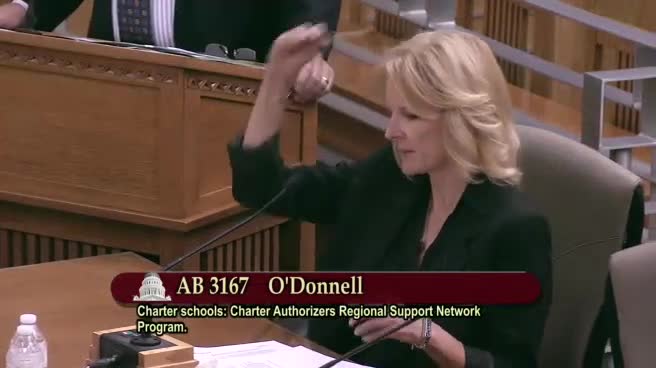 2MIN
Senate Standing Committee on Education
 1MIN
Assembly Floor
 14MIN
Assembly Standing Committee on Human Services
Bill Author