AB 2585: California Global Warming Solutions Act of 2006: market-based compliance mechanisms.
- Session Year: 2015-2016
- House: Assembly
- Latest Version Date: 2016-03-15
The California Global Warming Solutions Act of 2006 establishes the State Air Resources Board as the state agency responsible for monitoring and regulating sources emitting greenhouse gases. Existing law requires the state board to complete a comprehensive strategy to reduce emissions of short-lived climate pollutants, as defined, in the state. The act authorizes the state board to include the use of market-based compliance mechanisms.
This bill would state the intent of the Legislature to enact legislation that would encourage the production and use of biomethane to meet the goals established in the act. require the state board, no later than July 1, 2018, to review any regulation adopted as part of a market-based compliance mechanism to consider the intended purpose and consistency of requirements aimed to prevent resource shuffling, as defined, among all fuels subject to that regulation.
The California Global Warming Solutions Act of 2006 establishes the State Air Resources Board as the state agency responsible for monitoring and regulating sources emitting greenhouse gases. Existing law requires the state board to complete a comprehensive strategy to reduce emissions of short-lived climate pollutants, as defined, in the state.
This bill would state the intent of the Legislature to enact legislation that would encourage the production and use of biomethane to meet the goals established in the act.
(a)For purposes of this section, resource shuffling means any plan, scheme, or artifice undertaken by a fuels provider to substitute fuels deliveries from sources with relatively lower emissions for fuels deliveries from sources with relatively higher emissions to reduce the fuels providers emissions compliance obligation.
(b)No later than July 1, 2018, the state board shall review any regulation adopted pursuant to this part to consider the intended purpose and consistency of requirements aimed to prevent resource shuffling among all fuels subject to that regulation.
SECTION 1.The Legislature finds and declares that biomethane can provide the lowest-carbon fuel of any kind while helping to meet the states goals relating to short-lived climate pollutants, landfill diversion, and wildfire reduction.
SEC. 2.It is the intent of the Legislature to enact legislation that would encourage the production and use of biomethane to meet the goals established in the California Global Warming Solutions Act of 2006 (Division 25.5 (commencing with Section 38500) of the Health and Safety Code).
The Legislature finds and declares that biomethane can provide the lowest-carbon fuel of any kind while helping to meet the states goals relating to short-lived climate pollutants, landfill diversion, and wildfire reduction.
SEC. 2.It is the intent of the Legislature to enact legislation that would encourage the production and use of biomethane to meet the goals established in the California Global Warming Solutions Act of 2006 (Division 25.5 (commencing with Section 38500) of the Health and Safety Code).
|
Date
|
Status
|
|---|---|
| May 27, 2016 | In committee: Held under submission. |
| May 18, 2016 | In committee: Set, first hearing. Referred to APPR. suspense file. |
| Apr 19, 2016 | From committee: Do pass and re-refer to Com. on APPR. (Ayes 8. Noes 0.) (April 18). Re-referred to Com. on APPR. |
| Mar 16, 2016 | Re-referred to Com. on NAT. RES. |
| Mar 15, 2016 | From committee chair, with author's amendments: Amend, and re-refer to Com. on NAT. RES. Read second time and amended. |
| Mar 14, 2016 | Referred to Com. on NAT. RES. |
| Feb 22, 2016 | Read first time. |
| Feb 21, 2016 | From printer. May be heard in committee March 22. |
| Feb 19, 2016 | Introduced. To print. |
|
Date
|
Description
|
Location
|
Votes
|
|
|---|---|---|---|---|
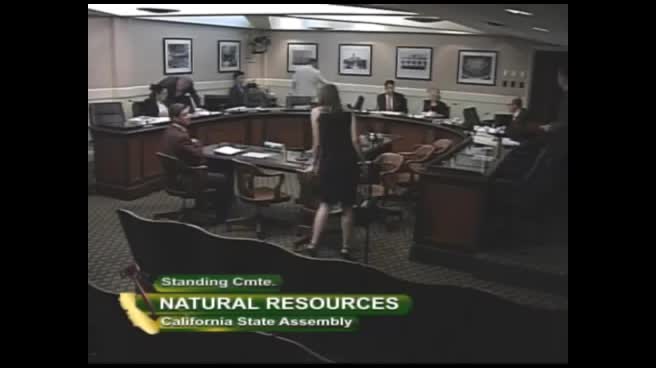
| Apr 18, 2016 | Do pass and be re-referred to the Committee on [Appropriations] | Assembly Standing Committee on Natural Resources |
Passed |
This list shows positions taken on this bill by organizations on the date displayed, which is linked to the original source.
Positions by individuals are not included.
Date of Hearing: May 18, 2016
ASSEMBLY COMMITTEE ON APPROPRIATIONS
Lorena Gonzalez, Chair
ABPCA Bill Id:AB 2585
Author:(Williams) – As Amended Ver:March 15, 2016
Policy Committee: | Natural Resources | Vote: | 8 - 0 |
Urgency: No State Mandated Local Program: No Reimbursable: No
SUMMARY:
This bill requires the California Air Resources Board (ARB) to review any AB 32 market-based compliance (cap-and-trade) regulation to consider the intended purpose and consistency of requirements aimed to prevent resource shuffling, among all fuels subject to that regulation. Specifically, this bill:
- Requires ARB to complete the review no later than July 1, 2018.
- Defines resource shuffling as any plan, scheme, or artifice undertaken by a fuels provider to substitute fuels deliveries from sources with relatively lower emissions for fuels deliveries from sources with relatively higher emissions to reduce the fuels provider’s emissions compliance obligation.
FISCAL EFFECT:
- Potential first year increased costs for ARB of $154,000 for staff and $250,000 in contracts (Cost of Implementation Fund) if amendments to the cap-and-trade regulation are pursued after the consideration of existing anti-shuffling provisions for fuels across all sectors, compared with the requirements of the bill.
- Ongoing staff costs of between $230,000 and $300,000 (Cost of Implementation Fund) for years two and three.
The potential amendments to the cap-and-trade regulation would include removing all anti-shuffling provisions and resetting the annual caps to be lower, based on an estimate of the potential shuffling that may occur. To understand how much to lower the caps, ARB would need to understand the potential amount of existing low carbon fuels that could be delivered to California. This also requires ARB to understand if low carbon fuels are shuffled to California, what fuels would be used to meet those pre-existing demands where low carbon fuel is no longer available. The caps in the regulation are meant to limit the amount of greenhouse gases emitted to the atmosphere, regardless of location.
Based on a recent contract that evaluated market conditions for industry emissions leakage to outside of California, ARB staff estimates a contract of $250,000 over a year and a half to survey the sources and existing uses of low carbon fuels outside of California that would be diverted to California.
COMMENTS:
- Rationale. Biomass derived fuels used for transportation are generally exempt from the AB 32 cap-and-trade regulation.
According to the author, unlike most biomass derived fuels, biomethane is subject to additional eligibility requirements in order to claim an AB 32 exemption. The additional requirements are designed to prevent a fuel provider from substituting fuel deliveries from sources with lower emissions with higher emission deliveries as a means of reducing the AB 32 compliance obligation (resource shuffling).
According to the author, as a result of uneven regulatory treatment, biomethane fuel purchasers are paying compliance costs under AB 32 even though it has lowest carbon intensity of any commercially available fuel under the State’s Low Carbon Fuel Standard (LCFS). This bill adds a statutory definition for resource shuffling and requires ARB to review AB 32 cap-and-trade regulations for consistency.
- Biogas. Biogas is produced from various sources, like dairies, landfills and wastewater treatment plants, and municipal and commercial green and food waste. It is comprised primarily of ethane, with significant quantities of carbon dioxide and trace amounts of other gasses including hydrogen, carbon monoxide, nitrogen, oxygen, and hydrogen sulfide.
Biogas can be processed further to produce high purity, or “pipeline” quality methane, and is termed “biomethane” to differentiate it from natural gas. Biomethane is carbon neutral or even carbon negative, in contrast to extracted natural gas, since the carbon in biomethane was recently removed from the atmosphere and because it is used to offset fossil fuel use.
There appear to be legitimate reasons for treating biomethane different from other biomass-derived fuels. Biofuels such as ethanol, biodiesel and renewable diesel typically are delivered to an in-state destination via tanker (ship, rail and/or truck). In contrast, the delivery of pipeline biomethane is similar to electricity, where a volume of gas injected into a pipeline is fungible and is not physically delivered to any particular destination.
In order to confirm that biofuel produces a GHG reduction benefit, ARB must confirm that it displaces fossil fuel and that it is additional. While resource shuffling should not be an issue with biofuels that are physically delivered, it is may be an issue with pipeline biomethane, particularly from out-of-state sources.
- The California Global Warming Solutions Act of 2006 (AB 32). AB 32 requires ARB to adopt a statewide greenhouse gas (GHG) emissions limit equivalent to 1990 levels by 2020 and to adopt rules and regulations to achieve maximum technologically feasible and cost-effective GHG emission reductions. AB 32 authorizes ARB to permit the use of market-based compliance mechanisms to comply with GHG reduction regulations and emission caps.
ARB has adopted a cap-and-trade regulation which applies to entities responsible for emitting more than 25,000 metric tons of CO2 equivalent per year, including large industrial facilities, electricity generators, electricity importers, and distributors of transportation fuels, including gasoline, diesel, and natural gas.
The cap-and-trade regulation generally prohibits and defines resource shuffling as any plan, scheme, or artifice undertaken by a "First Deliverer of Electricity" (in-state generators and importers of electricity) to substitute electricity deliveries from sources with relatively lower emissions for electricity deliveries from sources with relatively higher emissions to reduce its emissions compliance obligation.
This bill establishes a definition of resource shuffling that applies to a "fuels provider." This term is not defined in this bill or the AB 32 regulation. The author may wish to define the term "fuels provider" to clarify the intent of the bill.
Analysis Prepared by: Jennifer Galehouse / APPR. / (916) 319-2081
Date of Hearing: April 18, 2016
ASSEMBLY COMMITTEE ON NATURAL RESOURCES
Das Williams, Chair
ABPCA Bill Id:AB 2585 (
Author:Williams) – As Amended Ver:March 15, 2016
SUBJECT: California Global Warming Solutions Act of 2006: market-based compliance mechanisms
SUMMARY: Requires the Air Resources Board (ARB) to review any market-based compliance regulation to consider the intended purpose and consistency of requirements aimed to prevent "resource shuffling," as defined, among all fuels subject to that regulation.
EXISTING LAW, pursuant to the California Global Warming Solutions Act (AB 32):
- Requires ARB to adopt a statewide greenhouse gas (GHG) emissions limit equivalent to 1990 levels by 2020 and to adopt rules and regulations to achieve maximum technologically feasible and cost-effective GHG emission reductions.
- Authorizes ARB to permit the use of market-based compliance mechanisms to comply with GHG reduction regulations, once specified conditions are met. ARB has adopted a cap-and-trade regulation which applies to entities responsible for emitting more than 25,000 metric tons of CO2 equivalent per year, including large industrial facilities, electricity generators, electricity importers, and distributors of transportation fuels, including gasoline, diesel, and natural gas. The cap-and-trade regulation generally prohibits "resource shuffling," which the regulation defines as any plan, scheme, or artifice undertaken by a "First Deliverer of Electricity" (in-state generators and importers of electricity) to substitute electricity deliveries from sources with relatively lower emissions for electricity deliveries from sources with relatively higher emissions to reduce its emissions compliance obligation.
THIS BILL:
- Requires ARB, no later than July 1, 2018, to review any market-based compliance regulation to consider the intended purpose and consistency of requirements aimed to prevent resource shuffling among all fuels subject to that regulation.
- Defines “resource shuffling” as any plan, scheme, or artifice undertaken by a fuels provider to substitute fuels deliveries from sources with relatively lower emissions for fuels deliveries from sources with relatively higher emissions to reduce the fuels provider’s emissions compliance obligation.
FISCAL EFFECT: Unknown
COMMENTS:
- Author's statement:
Biomethane, a carbon neutral fuel, is treated differently under the carbon cap than other biomass derived fuels and is assessed compliance costs that act as a disincentive for fuel purchasers.
“Biogas” which can be produced from various sources, like dairies, landfills and wastewater treatment plants, and municipal and commercial green and food waste, is made up primarily of methane, with significant quantities of carbon dioxide and trace amounts of other gasses including hydrogen, carbon monoxide, nitrogen, oxygen, and hydrogen sulfide. Biogas can be processed further to produce high purity, or “pipeline” quality methane, and is termed “biomethane” to differentiate it from natural gas. Biomethane is carbon neutral or even carbon negative, in contrast to extracted natural gas, since the carbon in biomethane was recently removed from the atmosphere and because it is used to offset fossil fuel use.
“Biomass Derived Fuels” are generally exempt under AB 32 when used in transportation. However, biomethane is uniquely subject to additional eligibility requirements in order to claim an exemption. These requirements are intended to prevent “resource shuffling.” Anti-resource shuffling regulations prevent a fuel provider from substituting fuel deliveries from sources with lower emissions with deliveries with relatively higher emissions in order to meet the fuel provider’s compliance obligation. As such, biomethane vehicle fuel providers must provide historical records for each production facility. No other biomass derived fuel (such as corn ethanol, biodiesel or renewable diesel) is required to meet anti-resource shuffling requirements, though those fuels are sold in much larger quantities in California. As a result of uneven regulatory treatment, biomethane fuel purchasers are paying compliance costs under AB 32 even though it has lowest carbon intensity of any commercially available fuel under the State’s Low Carbon Fuel Standard (LCFS).
- First deliverer of electricity vs. fuels provider? The resource shuffling rules in the cap-and-trade regulation apply to "first deliverers of electricity," which are in-state generators and importers of electricity. This bill establishes a definition of resource shuffling that applies to a "fuels provider," a term which is not defined in the bill or the regulation. This discrepancy may lead to questions about the intent and meaning of the bill.
- There appear to be legitimate reasons for treating biomethane different from other biomass-derived fuels. Biofuels such as ethanol, biodiesel and renewable diesel typically are delivered to an in-state destination via tanker (ship, rail and/or truck). In contrast, "delivery" of pipeline biomethane is much more akin to electricity, where a volume of gas injected into a pipeline is fungible and is not physically delivered to any particular destination. In order to confirm that biofuel produces a GHG benefit, ARB must confirm that it displaces fossil fuel and that it is additional. While resource shuffling should not be an issue with biofuels that are physically delivered, it is an issue with pipeline biomethane, particularly from out-of-state sources.
REGISTERED SUPPORT / OPPOSITION:
Support
Bioenergy Association of California
Opposition
None on file
Analysis Prepared by: Lawrence Lingbloom / NAT. RES. / (916) 319-2092
Discussed in Hearing
 2MIN
Assembly Standing Committee on Natural Resources
Bill Author

Bill Co-Author(s):