AB 259: Personal information: privacy.
- Session Year: 2015-2016
- House: Assembly
- Latest Version Date: 2015-02-09
Existing law requires an agency that owns or licenses computerized data that includes personal information, as defined, to provide notification of any breach in the security of that data to any California resident whose personal information may have been compromised by the breach, as specified. Existing law requires the notification to be written in plain language and contain specified information, including, but not limited to, the agencys contact information and a list of the types of personal information that were or are reasonably believed to have been the subject of the breach.
This bill would additionally require an agency, if the agency was the source of the breach and the breach compromised a persons social security number, drivers license number, or California identification card number, to offer to provide the person with identity theft prevention and mitigation services at no cost for not less than 12 months, as specified.
(a)Any An agency that owns or licenses computerized data that includes personal information shall disclose any a breach of the security of the system following discovery or notification of the breach in the security of the data to any a resident of California whose unencrypted personal information was, or is reasonably believed to have been, acquired by an unauthorized person. The disclosure shall be made in the most expedient time possible and without unreasonable delay, consistent with the legitimate needs of law enforcement, as provided in subdivision (c), or any measures necessary to determine the scope of the breach and restore the reasonable integrity of the data system.
(b)Any An agency that maintains computerized data that includes personal information that the agency does not own shall notify the owner or licensee of the information of any the breach of the security of the data immediately following discovery, if the personal information was, or is reasonably believed to have been, acquired by an unauthorized person.
(c)The notification required by this section may be delayed if a law enforcement agency determines that the notification will impede a criminal investigation. The notification required by this section shall be made promptly after the law enforcement agency determines that it will not compromise the investigation.
(d)Any An agency that is required to issue a security breach notification pursuant to this section shall meet all of the following requirements:
(1)The security breach notification shall be written in plain language.
(2)The security breach notification shall include, at a minimum, the following information:
(A)The name and contact information of the reporting agency subject to this section.
(B)A list of the types of personal information that were or are reasonably believed to have been the subject of a breach.
(C)If the information is possible to determine at the time the notice is provided, then any of the following: (i) the date of the breach, (ii) the estimated date of the breach, or (iii) the date range within which the breach occurred. The notification shall also include the date of the notice.
(D)Whether the notification was delayed as a result of a law enforcement investigation, if that information is possible to determine at the time the notice is provided.
(E)A general description of the breach incident, if that information is possible to determine at the time the notice is provided.
(F)The toll-free telephone numbers and addresses of the major credit reporting agencies, if the breach exposed a social security number or a drivers license or California identification card number.
(G)If the agency providing the notification was the source of the breach, an offer to provide appropriate identity theft prevention and mitigation services, if any, shall be provided at no cost to the affected person for not less than 12 months, along with all information necessary to take advantage of the offer to any person whose information was or may have been breached if the breach exposed or may have exposed personal information defined in subparagraphs (A) and (B) of paragraph (1) of subdivision (g).
(3)At the discretion of the agency, the security breach notification may also include any of the following:
(A)Information about what the agency has done to protect individuals whose information has been breached.
(B)Advice on steps that the person whose information has been breached may take to protect himself or herself.
(4)In the case of a breach of the security of the system involving personal information defined in paragraph (2) of subdivision (g) for an online account, and no other personal information defined in paragraph (1) of subdivision (g), the agency may comply with this section by providing the security breach notification in electronic or other form that directs the person whose personal information has been breached to promptly change his or her password and security question or answer, as applicable, or to take other steps appropriate to protect the online account with the agency and all other online accounts for which the person uses the same user name or email address and password or security question or answer.
(5)In the case of a breach of the security of the system involving personal information defined in paragraph (2) of subdivision (g) for login credentials of an email account furnished by the agency, the agency shall not comply with this section by providing the security breach notification to that email address, but may, instead, comply with this section by providing notice by another method described in subdivision (i) or by clear and conspicuous notice delivered to the resident online when the resident is connected to the online account from an Internet Protocol address or online location from which the agency knows the resident customarily accesses the account.
(e)Any An agency that is required to issue a security breach notification pursuant to this section to more than 500 California residents as a result of a single breach of the security system shall electronically submit a single sample copy of that security breach notification, excluding any personally identifiable information, to the Attorney General. A single sample copy of a security breach notification shall not be deemed to be within subdivision (f) of Section 6254 of the Government Code.
(f)For purposes of this section, breach of the security of the system means unauthorized acquisition of computerized data that compromises the security, confidentiality, or integrity of personal information maintained by the agency. Good faith acquisition of personal information by an employee or agent of the agency for the purposes of the agency is not a breach of the security of the system, provided that the personal information is not used or subject to further unauthorized disclosure.
(g)For purposes of this section, personal information means either of the following:
(1)An individuals first name or first initial and last name in combination with any one or more of the following data elements, when either the name or the data elements are not encrypted:
(A)Social security number.
(B)Drivers license number or California identification card number.
(C)Account number, credit or debit card number, in combination with any required security code, access code, or password that would permit access to an individuals financial account.
(D)Medical information.
(E)Health insurance information.
(2)A user name or email address, in combination with a password or security question and answer that would permit access to an online account.
(h)(1)For purposes of this section, personal information does not include publicly available information that is lawfully made available to the general public from federal, state, or local government records.
(2)For purposes of this section, medical information means any information regarding an individuals medical history, mental or physical condition, or medical treatment or diagnosis by a health care professional.
(3)For purposes of this section, health insurance information means an individuals health insurance policy number or subscriber identification number, any unique identifier used by a health insurer to identify the individual, or any information in an individuals application and claims history, including any appeals records.
(i)For purposes of this section, notice may be provided by one of the following methods:
(1)Written notice.
(2)Electronic notice, if the notice provided is consistent with the provisions regarding electronic records and signatures set forth in Section 7001 of Title 15 of the United States Code.
(3)Substitute notice, if the agency demonstrates that the cost of providing notice would exceed two hundred fifty thousand dollars ($250,000), or that the affected class of subject persons to be notified exceeds 500,000, or the agency does not have sufficient contact information. Substitute notice shall consist of all of the following:
(A)Email notice when the agency has an email address for the subject persons.
(B)Conspicuous posting of the notice on the agencys Internet Web site page, if the agency maintains one.
(C)Notification to major statewide media and the Office of Information Security within the Department of Technology.
(j)Notwithstanding subdivision (i), an agency that maintains its own notification procedures as part of an information security policy for the treatment of personal information and is otherwise consistent with the timing requirements of this part shall be deemed to be in compliance with the notification requirements of this section if it notifies subject persons in accordance with its policies in the event of a breach of security of the system.
(k)Notwithstanding the exception specified in paragraph (4) of subdivision (b) of Section 1798.3, for purposes of this section, agency includes a local agency, as defined in subdivision (a) of Section 6252 of the Government Code.
|
Date
|
Status
|
|---|---|
| Aug 27, 2015 | In committee: Held under submission. |
| Aug 17, 2015 | In committee: Referred to APPR. suspense file. |
| Jul 15, 2015 | From committee: Do pass and re-refer to Com. on APPR. (Ayes 6. Noes 0.) (July 14). Re-referred to Com. on APPR. |
| Jun 29, 2015 | Referred to Com. on JUD. |
| Jun 1, 2015 | In Senate. Read first time. To Com. on RLS. for assignment. |
| Jun 1, 2015 | Read third time. Passed. Ordered to the Senate. (Ayes 80. Noes 0. Page 1706.) |
| Jun 1, 2015 | Read third time. Passed. Ordered to the Senate. |
| May 28, 2015 | Read second time. Ordered to third reading. |
| May 28, 2015 | From committee: Do pass. (Ayes 17. Noes 0.) (May 28). |
| Mar 25, 2015 | In committee: Set, first hearing. Referred to suspense file. |
| Mar 18, 2015 | From committee: Do pass and re-refer to Com. on APPR. (Ayes 11. Noes 0.) (March 17). Re-referred to Com. on APPR. |
| Feb 17, 2015 | Referred to Com. on P. & C.P. |
| Feb 10, 2015 | From printer. May be heard in committee March 12. |
| Feb 9, 2015 | Read first time. To print. |
|
Date
|
Description
|
Location
|
Votes
|
|
|---|---|---|---|---|
| Aug 17, 2015 | Placed on suspense file | Senate Standing Committee on Appropriations |
Passed |
|
| Jul 14, 2015 | Do pass, but first be re-referred to the Committee on [Appropriations] | Senate Standing Committee on Judiciary |
Passed |
|
| Jun 1, 2015 | AB 259 DABABNEH Assembly Third Reading | Assembly Floor |
Passed |
|
| May 28, 2015 | Do pass. | Assembly Standing Committee on Appropriations |
Passed |
|
| Mar 17, 2015 | Do pass and be re-referred to the Committee on [Appropriations] | Assembly Standing Committee on Privacy and Consumer Protection |
Passed |
This list shows positions taken on this bill by organizations on the date displayed, which is linked to the original source.
Positions by individuals are not included.
AB 259 (Dababneh) Page 3 of 3
SENATE COMMITTEE ON APPROPRIATIONS
Senator Ricardo Lara, Chair
2015 - 2016 Regular Session
AB 259 (Dababneh) - Personal information: privacy
|
|
Version: February 9, 2015 |
Policy Vote: JUD. 6 - 0 |
Urgency: No |
Mandate: No |
Hearing Date: August 17, 2015 |
Consultant: Jolie Onodera |
This bill meets the criteria for referral to the Suspense File.
Bill Summary:
AB 259 would require a state or local agency, if the agency was the source of a data breach that compromised specified personal information of a person, to offer to provide appropriate identity theft prevention and mitigation services at no cost to the affected person for not less than 12 months, as specified.
Fiscal Impact:
Potential major costs in the tens to hundreds of millions of dollars (General Fund), depending on the scope of a data breach to any of various state agencies, including but not limited to the Department of Motor Vehicles (DMV), Employment Development Department (EDD), and the Department of Consumer Affairs (DCA), for the provision of credit monitoring services in the event of a data breach. Even one event affecting 100,000 individuals could result in potential costs of $12 million to $36 million (General Fund) to provide credit monitoring services for one year. For context, the DMV has indicated custody of over 27 million records containing personal identifying information.
Potential major non-reimbursable costs in the tens of millions of dollars (Local Funds) to local agencies to provide credit monitoring services to individuals impacted by data breaches. Costs would be dependent on the frequency of data breaches, the number of individuals impacted, and the time period for which services are provided.
Background:
Under existing law, any state or local agency, person, or business that conducts business in the state, and that owns, licenses, or maintains computerized data that includes personal information, is required to disclose any breach of the security of the system following discovery or notification of the breach in the security to any resident of California whose unencrypted personal information was, or is reasonably believed to have been, acquired by an unauthorized person. Existing law specifies the timing and manner in which the disclosure is required to be made, as well as the specific information to be included in the security breach notification.
Under recently enacted legislation, AB 1710 (Dickinson) Chapter 855/2014, upon a data breach that compromises a person’s first name or first initial and last name, along with his or her social security number, driver’s license number, or California identification card number, a person or business is required to offer to provide appropriate identity theft prevention and mitigation services to an affected person at no cost for at least 12 months if the person or business was the source of the data breach.
This bill seeks to extend the same requirement on state and local agencies that are the source of a data breach.
Proposed Law:
This bill would require a state or local agency that was the source of a data breach to offer to provide appropriate identity theft prevention and mitigation services, if any, to be provided at no cost to the affected person for not less than 12 months, along with all information necessary to take advantage of the offer to any person whose information was or may have been breached if the breach exposed an individual’s first name or first initial and last name along with their social security number, driver’s license number, or California identification card number, to offer to provide appropriate identity theft prevention and mitigation services at no cost to the affected person for not less than 12 months, as specified
Related Legislation:
AB 1710 (Dickinson) Chapter 855/2014 requires a person or business to offer appropriate identity theft prevention and mitigation services to an affected person at no cost for not less than 12 months if the person or business was the source of the data breach, as specified.
Staff Comments:
To the extent a data breach of specified personal information occurs, the provisions of this bill could result in substantial costs to various state and local agencies that retain the specified personal data of individuals potentially subject to data breach notification and the provision of identity theft prevention services as required.
Based on information surveyed from credit monitoring services, bulk enrollment costs for credit monitoring services in which the vendor is provided with a complete list of individuals at once from the breached entity generally range from $10 to $30 per month per person ($120 to $360 per year per person), depending on the type of monitoring package offered by the vendor.
For context, numerous state departments retain personal information potentially subject to the provisions of this bill including, but not limited to the Department of Motor Vehicles (27 million records), the Employment Development Department (14 million records), the Department of Veterans Affairs (over 1.6 million records), and the Department of Consumer Affairs (over 3 million records). The number of individuals potentially impacted by this bill is in excess of the tens of millions. To the extent even one data breach occurs, significant costs would likely be incurred by these agencies, the magnitude of which would be dependent on the number of records impacted, the number of individuals affected who accept the offered services, and the duration of services provided.
For every 100,000 individuals whose personal data is compromised, annual costs could range from $12 million to $36 million (General Fund) to provide services for 12 months. Moreover, in order to coordinate the administration of the provisions of this bill would likely require additional resources for development of an implementation plan and guidelines, as well as ongoing workload to respond to inquiries.
-- END --
AB 259 (Dababneh)
Page 8 of 8
Senator Hannah-Beth Jackson, Chair
2015-2016 Regular Session
AB 259 (Dababneh)
Version: February 9, 2015
Hearing Date: July 14, 2015
Fiscal: Yes
Urgency: No
TH
SUBJECT
Personal Information: Privacy
DESCRIPTION
Existing law requires California agencies that own or license computerized data that includes personal information to provide affected individuals with notice of breaches that may have compromised the security of that data. In addition to notification, this bill would require an agency, if it was the source of the breach and if the breach compromised a person’s social security number, driver’s license number, or California identification card number, to provide the person with identity theft prevention and mitigation services at no cost for at least 12 months.
BACKGROUND
In 2003, California’s first-in-the-nation security breach notification law went into effect. (See Civ. Code Secs. 1798.29(a), 1798.82(a).) Since that time, all but three states have enacted similar security breach notification laws, and governments around the world have or are considering enacting such laws. California’s breach notification statute requires state agencies, local agencies, and businesses to notify residents when the security of their personal information is breached. This notification requirement ensures that residents are made aware of a breach, thus allowing them to take appropriate action to mitigate or prevent potential financial losses due to fraudulent activity.
Last year, the Legislature passed AB 1710 (Dickinson, Ch. 855, Stats. 2014) which amended California’s data breach notification law to require a person or business to offer appropriate identity theft prevention and mitigation services to an affected person at no cost for not less than 12 months if the person or business was the source of a data breach. AB 1710 required such services to be offered only if the breach compromised an individual’s first name or first initial and last name along with their social security number, driver’s license number, or California identification card number. AB 1710 did not impose a parallel requirement on state and local agencies that are the source of a data breach.
This bill would extend to state and local agencies the requirement to offer identity theft prevention and mitigation services to individuals affected by a data breach when the agency is the source of the breach. Like persons and businesses that are required to offer these services under existing law, the services must be offered at no cost for at least 12 months, and only need be provided if the breach compromised a person’s social security number, driver’s license number, or California identification card number.
CHANGES TO EXISTING LAW
Existing law requires any agency, person, or business that owns or licenses computerized data that includes personal information to disclose a breach of the security of the system to any California resident whose unencrypted personal information was, or is reasonably believed to have been, acquired by an unauthorized person. The disclosure must be made in the most expedient time possible and without unreasonable delay, consistent with the legitimate needs of law enforcement, as specified. (Civ. Code Secs. 1798.29(a), (c) and 1798.82(a), (c).)
Existing law requires any agency, person, or business that maintains computerized data that includes personal information that the agency, person, or business does not own to notify the owner or licensee of the information of any security breach immediately following discovery if the personal information was, or is reasonably believed to have been, acquired by an unauthorized person. (Civ. Code Secs. 1798.29(b), 1798.82(b).)
Existing law defines “personal information,” for purposes of the breach notification statute, to include either a user name or email address, in combination with a password or security question and answer that would permit access to an online account, or the individual’s first name or first initial and last name in combination with one or more of the following data elements, when either the name or the data elements are not encrypted: social security number; driver’s license number or California identification card number; account number, credit or debit card number, in combination with any required security code, access code, or password that would permit access to an individual’s financial account; medical information; or health insurance information. “Personal information” does not include publicly available information that is lawfully made available to the general public from federal, state, or local government records. (Civ. Code Secs. 1798.29(g) and (h); 1798.82(h) and (i).)
Existing law states that if the person or business providing the notification was the source of the breach, an offer to provide appropriate identity theft prevention and mitigation services, if any, shall be provided at no cost to the affected person for not less than 12 months, along with all information necessary to take advantage of the offer to any person whose information was or may have been breached if the breach exposed or may have exposed an individual’s first name or first initial and last name along with their social security number, driver’s license number, or California identification card number. (Civ. Code Sec. 1798.82(d).)
This bill would provide that if the agency providing the notification was the source of the breach, an offer to provide appropriate identity theft prevention and mitigation services, if any, shall be provided at no cost to the affected person for not less than 12 months, along with all information necessary to take advantage of the offer to any person whose information was or may have been breached if the breach exposed an individual’s first name or first initial and last name along with their social security number, driver’s license number, or California identification card number.
This bill would make other technical and conforming changes to existing law.
COMMENT
Stated need for the bill
The author writes:
California has two data breach notification laws, one applying to businesses and the other to public agencies. Existing law requires any person or business responsible for a breach to offer identity theft . . . prevention [and] mitigation services at no cost to the affected parties for no less than 12 months if [social security numbers] or driver license numbers are compromised. Currently, if a state or local agency suffered a data breach that included [social security numbers] or driver’s license numbers, consumers would not be provided identity theft prevention services. A breach resulting in the release of social security or driver license numbers can lead to identity theft, forcing consumers to monitor their personal information for years to come. Whether a data breach occurs at a state agency or a business, the same standards should be in place to protect consumers.
AB 259 will require public agencies who suffer a breach to offer identity theft prevention or mitigation services at no cost to the affected person for no less than 12 months if personal information breached includes social security or driver’s license numbers.
Right to Privacy and Agency Breaches
California recognizes that the right to privacy is a fundamental right, and has enshrined that right along with other fundamental rights in article I, section 1 of the California Constitution. The harm that can result from the theft of personal information via a data breach threatens to undermine that fundamental right. Unfortunately, because of the size of its economy and the number of consumers, the data held by California businesses and government agencies is frequently targeted by cyber criminals. The Attorney General’s 2014 California Data Breach Report found that, in 2012, “17 percent of the data breaches recorded in the United States took place in California – more than any other state” and that “the number of reported breaches in California increased by 28 percent in 2013.” (California Department of Justice, California Data Breach Report (Oct. 2014) <https://oag.ca.gov/sites/all/files/agweb/pdfs/privacy/ 2014data_breach_rpt.pdf> [as of Jul. 2, 2015].) The frequency of data breaches in California and the threat that such breaches pose to California residents makes timely and effective notification of a breach, and the ability to mitigate potential damages resulting from the breach, matters of critical importance.
Recent data breaches show that government agencies are just as vulnerable as businesses and individuals to breaches that expose the personal information of California residents. In March of last year, for example, the California Department of Motor Vehicles reported that its system for processing online credit card transactions may have been breached, potentially compromising millions of credit card numbers, expiration dates and credit card security codes. (See Kate Mather and Carla Rivera, California DMV Probing Possible Breach of Customer Credit Cards, Los Angeles Times (Mar. 22, 2014) <http://articles.latimes.com/2014/mar/22/local/la-me-0323-dmv-breach-20140323> [as of Jul. 2, 2015].) More recently, the federal Office of Personnel Management suffered a massive data breach that revealed the personal information of an estimated 4 to 18 million federal workers, including many with secret-level security clearances. (See Adam Elkus, The Devastating Breach of US Government Data Highlights an Illusory Cybersecurity Paradox, Business Insider (Jun. 18, 2015) <http://www.businessinsider.com/the-opm-breachs-cybersecurity-paradox-2015-6> [as of Jul. 2, 2015].)
When breaches do occur, “it has become increasingly common for entities experiencing a data breach to offer victims a mitigation service, such as credit monitoring or a security freeze.” (California Department of Justice, California Data Breach Report (Oct. 2014) <https://oag.ca.gov/ sites/all/files/agweb/pdfs/privacy/ 2014data_breach_rpt.pdf> [as of Jul. 2, 2015].) “Such services can be helpful in cases where social security numbers or driver’s license numbers are compromised, as they give early notice to individuals when criminals use their information to open new accounts in their name.” (Id.) Despite the utility of these mitigation services, the Attorney General’s 2014 California Data Breach Report found that, for the 157 reported breaches involving social security numbers or driver’s license numbers that occurred in 2012 and 2013, “a mitigation service was offered in just 112 of them (71 percent).” The report noted that “[i]n 45 of such breaches (29 percent), no service was offered,” and that there was “no meaningful change from 2012, when no mitigation service was offered in 29 percent of breaches where it would have been helpful, to 2013, when no such product was offered in 28 percent of appropriate breaches.” (Id.)
This bill would expand the offering of breach mitigation services by mandating that state and local agencies offer affected individuals no less than 12 months of an appropriate identity theft prevention and mitigation service at no cost when the agency is the source of a data breach involving both the individual’s first name or first initial and last name and their social security number, driver’s license number, or California identification card number. Writing in support, the California School Employees Association, AFL-CIO, states:
Identity theft is becoming a very big problem that has a huge impact on the lives of those who are victims. Once you are a victim of identity theft, it is very difficult to resolve these issues and quite costly and time consuming. AB 259 is an important step in helping the victims of identity theft to repair their credit and get their financial lives back in order . . . Those who are responsible for information breaches should be required to provide the victims with free identity theft prevention and mitigation services for, at the very least, one year. The victim should not have to spend their own resources, which can be very expensive, to deal with a problem they did not create.
Opposition Concerns
The California Association of Joint Powers Authorities (CAJPA), writing in opposition, states that AB 259 would impose “unknown but substantial new costs on local public entities when the local agency is the source of a data breach.” They state:
CAJPA believes AB 259 contains worthwhile goals, but is impractical from [a] public entity’s fiscal viewpoint. Annual credit monitoring per person costs well over $100 per person per year depending on the company used. Local government budgets must already stretch to cover needed, vital services. CAJPA believes that unless AB 259 is amended to provide the start up and necessary on-going funding to establish and maintain such a unit in every local public entity office in the future, plus cover the costs of providing the credit monitoring reports, the mandates of this bill cannot be met.
Support: American Federation of State, County, and Municipal Employees, AFL-CIO; Association of California Life & Health Insurance Companies; California Association of Collectors; California Bankers Association; California Business Properties Association; California Chamber of Commerce; California Credit Union League; California Grocers Association; California Land Title Association; California Realtors Association; California School Employees Association, AFL-CIO; Direct Marketing Association; Retail Industry Leaders Association
Opposition: California Association of Joint Powers Authorities
HISTORY
Source: Author
Related Pending Legislation:
SB 570 (Jackson, 2015) would require entities that must provide affected individuals with notice of a data breach to provide that notice in a specified format. Specifically, this bill would require these entities to provide a one-page notice, if written, entitled “Notice of Data Breach,” in which the content required by the Data Breach Notification Law is presented under the following headings: “What Happened,” “What Information Was Involved,” “What We Are Doing,” “What You Can Do,” and “For More Information.” This bill would state that additional information may be provided as a supplement to the notice, would clarify the requirements for providing substitute notice of a data breach, and would make other technical and clarifying changes. This bill is pending in the Assembly Privacy and Consumer Protection Committee.
AB 964 (Chau) would define “encrypted” as used in California’s data breach notification law to mean rendered unusable, unreadable, or indecipherable to an unauthorized person through a security technology or methodology generally accepted in the field of information security.
Prior Legislation:
AB 1710 (Dickinson, Ch. 855, Stats. 2014) amended California’s Data Breach Notification Law to require a person or business to offer appropriate identity theft prevention and mitigation services to an affected person at no cost for not less than 12 months if the person or business was the source of a data breach. This bill also prohibited the sale, advertisement for sale, or offer to sell an individual’s social security number.
SB 46 (Corbett, Ch. 396, Stats. 2013) revised the data elements included within the definition of personal information under California’s Data Breach Notification Law by adding certain information that would permit access to an online account, and imposed additional requirements on the disclosure of a breach of the security of the system or data in situations where the breach involves personal information that would permit access to an online or email account.
AB 1149 (Campos, Ch. 395, Stats. 2013) expanded existing disclosure requirements concerning breaches of computerized data owned or licensed by state agencies to “local agencies” as defined by Government Code Section 6252(a). This bill also made certain technical corrections to the security breach notification law.
SB 24 (Simitian, Ch. 197, Stats. 2011) required any agency, person, or business that is required to issue a security breach notification pursuant to existing law to fulfill certain additional requirements pertaining to the security breach notification, and required any agency, person, or business that is required to issue a security breach notification to more than 500 California residents to electronically submit a single sample copy of that security breach notification to the Attorney General.
AB 1298 (Jones, Ch. 699, Stats. 2007), among other things, added medical information and health insurance information to the data elements that, when combined with the individual’s name, would constitute personal information requiring disclosure when acquired, or believed to be acquired, by an unauthorized person due to a security breach.
AB 1950 (Wiggins, Ch. 877, Stats. 2004) required a business that owns or licenses personal information about a California resident to implement and maintain reasonable security procedures and practices to protect personal information from unauthorized access, destruction, use, modification, or disclosure. AB 1950 also required a business that discloses personal information to a nonaffiliated third party to require by contract that those entities maintain reasonable security procedures.
SB 1386 (Peace, Ch. 915, Stats. 2002) enacted California’s Data Breach Notification Law and required a state agency, or a person or business that conducts business in California, that owns or licenses computerized data that includes personal information to disclose any breach of the security of the data to California’s residents whose unencrypted personal information was, or is reasonably believed to have been, acquired by an unauthorized person. SB 1386 permitted notifications to be delayed if a law enforcement agency determines that it would impede a criminal investigation, and required an agency, person, or business that maintains computerized data that includes personal information owned by another to notify the owner or licensee of the information of any breach of security of the data.
Prior Vote:
Assembly Floor (Ayes 80, Noes 0)
Assembly Appropriations Committee (Ayes 17, Noes 0)
Assembly Privacy and Consumer Protection Committee (Ayes 11, Noes 0)
**************
AB 259
Page 2
ASSEMBLY THIRD READING
AB 259
(Dababneh)
As Introduced February 9, 2015
Majority vote
Committee |
Votes |
Ayes |
Noes |
Privacy |
11-0 |
Gatto, Wilk, Baker, Calderon, Chang, Chau, Cooper, Dababneh, Dahle, Gordon, Low |
|
Appropriations |
17-0 |
Gomez, Bigelow, Bonta, Calderon, Chang, Daly, Eggman, Gallagher, Eduardo Garcia, Gordon, Holden, Jones, Quirk, Rendon, Wagner, Weber, Wood |
|
SUMMARY:
Requires a public agency that is the source of a data breach to offer at least 12 months of identity theft prevention and mitigation services at no cost to affected consumers. Specifically, this bill:
Requires a public agency that is the source of a data breach and is required to provide affected persons with notice of the breach to provide at least 12 months of appropriate identity theft prevention and mitigation services at no cost to the affected persons.
Requires a public agency to give affected persons all information necessary to take advantage of the offer for identity theft prevention and mitigation services.
Requires a public agency to offer identity theft prevention and mitigation services only if the breach exposed, or may have exposed, a person’s name in combination with a Social Security number or a driver's license number.
Requires a public agency that delays the specified notification at the direction of law enforcement to make the notification promptly after a law enforcement agency determines that notification will not compromise any criminal investigation.
Makes other technical and nonsubstantive amendments.
FISCAL EFFECT: According to the Assembly Appropriations Committee, potentially significant, unabsorbable General Fund costs, likely in the millions of dollars, if a security breach of sufficient magnitude were to occur at an agency that holds substantial personal data
COMMENTS:
Purpose of this bill. This bill is intended to provide individuals affected by a state or local agency data breach with at least 12 months of identity theft protection for free. While existing law already requires any private business responsible for a significant breach to offer at least 12 months of identity theft prevention mitigation services, no such requirement exists for public agencies. This bill would extend these protections to include state and local agencies. This measure is author-sponsored.
Author’s statement. According to the author's office, "Whether a data breach occurs at a state agency or a business, the same standards should be in place to protect consumers. A breach resulting in the release of Social Security or driver license numbers can lead to identity theft, forcing consumers to monitor their personal information for years to come."
Recent data breaches. More than 80 million people in the United States were impacted by the February 2015 data breach at health insurer Anthem. Information stolen in the breach included current and former customers’ names, birth dates, medical identification numbers, Social Security numbers, home addresses, email addresses, and employment and income data.
During 2012 to 2014, the following California public agencies reported breaches: California State University, Department of Corrections and Rehabilitation, Department of Public Health, Department of State Hospitals, Correctional Health Care Services, Department of Social Services, Department of Justice, Department of Child Support Services, Employment Development Department, and the Department of Motor Vehicles.
Analysis Prepared by: Jennie Bretschneider / P. & C.P. / (916) 319-2200 FN: 0000586
AB 259
Page 2
Date of Hearing: March 25, 2015
ASSEMBLY COMMITTEE ON APPROPRIATIONS
Jimmy Gomez, Chair
AB 259
(Dababneh) – As Introduced February 9, 2015
Policy Committee: |
Privacy and Consumer Protection |
Vote: |
11-0 |
Urgency: No State Mandated Local Program: No Reimbursable: No
SUMMARY:
This bill requires a public agency that is the source of a data breach and is required to give affected persons notice of the breach to offer to provide at least 12 months of appropriate identity theft prevention and mitigation services at no cost to the affected persons if the breach exposed unencrypted social security, driver's license, or California identification card numbers.
FISCAL EFFECT:
Potentially significant, unabsorbable General Fund costs (in excess of $150,000) if a security breach of sufficient magnitude were to occur at an agency that holds substantial personal data.
COMMENTS:
1) Purpose. According to the author, this bill is intended to provide persons affected by a state or local agency data breach with at least 12 months of free identity theft protection and mitigation services. Nearly identical identity theft protection and mitigation service standards were enacted last year in AB 1710 (Dickinson) with respect to private businesses. The author contends extending those standards to cover data breaches from state and local agencies would enhance consumer protections.
2) Background. There have been several high-profile data breaches in recent years, including several breaches at major retailers, and more recently the February 2015 breach at health insurer Anthem. These data breaches are increasing both in frequency and scope, with the California Attorney General reporting a record number of incidents in 2014, and the Anthem breach alone having compromised 80 million records.
Several state and local agencies also suffered data breaches in recent years, including at least 10 significant incidents of data breach among state agencies during 2012-2014. AB 259 is intended to extend the identity theft protection and mitigation service requirements currently in place for private businesses to data breaches by state and local agencies.
3) Appropriate services, if any. The operative requirement in AB 259 has been duplicated from AB 1710, which requires an offending agency to "…offer to provide appropriate identity theft prevention and mitigation services, if any…" Following the passage of AB 1710, this language gave rise to the following questions of interpretation: (i) must an offer always be made, and (ii) what constitutes "appropriate" identity theft prevention and mitigation services?
The first question stems from whether the qualification "if any" is intended to modify the services being offered, or qualify whether an offer must be made in every circumstance. Presumably, the intent behind AB 1710 was that an offer must be made to provide appropriate remedial services if any such services exist. Some legal commentators have suggested, however, that the "if any" addition could be read to qualify the offer requirement, meaning an offending business would have discretion in deciding whether to offer remedial services following a breach.
The second question relates to the undefined standard of "appropriate" remedial services, and what type or amount of services would be deemed appropriate in different circumstances. Services offered voluntarily by private businesses often include credit report monitoring services, "freezing" a person's credit report to prevent unauthorized credit applications, and identity theft insurance. However, it remains unresolved whether these measures are always appropriate under the new legal requirement, whether they would be appropriate in every circumstance, and, in this case, whether they would be appropriate for a government agency.
Though these are open questions, there remains some value in patterning in AB 259 after AB 1710, as the two provisions will hopefully be resolved together. However, it seems likely the first major breach for which enforcement is sought under either provision will require a court to settle the above questions of statutory interpretation.
Analysis Prepared by: Joel Tashjian / APPR. / (916) 319-2081
AB 259
Page 6
Date of Hearing: March 17, 2015
ASSEMBLY COMMITTEE ON PRIVACY AND CONSUMER PROTECTION
Gatto, Chair
AB 259
(Dababneh) – As Introduced February 9, 2015
SUBJECT:
Personal information: privacy
SUMMARY:
Requires a public agency that is the source of a data breach to offer at least 12 months of identity theft prevention and mitigation services at no cost to affected consumers. Specifically, this bill:
Requires a public agency that is the source of a data breach and is required to provide affected persons with notice of the breach to provide at least 12 months of appropriate identity theft prevention and mitigation services at no cost to the affected persons.
Requires a public agency to give affected persons all information necessary to take advantage of the offer for identity theft prevention and mitigation services.
Requires a public agency to offer identity theft prevention and mitigation services only if the breach exposed, or may have exposed, a person’s name in combination with a Social Security number or a driver's license number.
Requires a public agency that delays the specified notification at the direction of law enforcement to make the notification promptly after a law enforcement agency determines that notification will not compromise any criminal investigation.
Makes other technical and nonsubstantive amendments.
EXISTING LAW:
Requires a public agency, person, or business that owns or licenses computerized data that includes personal information to notify any California resident whose unencrypted personal information was acquired, or reasonably believed to have been acquired, by an unauthorized person. The notice must be made in the most expedient time possible and without unreasonable delay, consistent with the legitimate needs of law enforcement, as specified. Note that this requirement does not apply to the Judiciary, the Legislature, or the University of California. (Civil Code (Civ. Code) Sections 1798.29(a), (c); 1798.82(a), (c))
Requires a person or business that is the source of a breach of Social Security numbers or driver’s license numbers, and is required to provide notice of the breach, to offer an identity theft protection or mitigation service to affected individuals at no cost, for no less than 12 months. (Civ. Code 1798.82 (d)(2)(G))
Requires a public agency, person, or business that maintains computerized data that includes personal information that the agency, person, or business does not own to notify the owner or licensee of the information of any security breach immediately following discovery if the personal information was, or is reasonably believed to have been, acquired by an unauthorized person. (Civ. Code 1798.29(b), 1798.82(b))
Defines “personal information,” for purposes of the breach notification statute, to include the individual’s first name or first initial and last name in combination with one or more of the following data elements, when either the name or the data elements are not encrypted: Social Security number; driver’s license number or California Identification Card number; account number, credit or debit card number, in combination with any required security code, access code, or password that would permit access to an individual’s financial account; medical information; or health insurance information. “Personal information” does not include publicly available information that is lawfully made available to the general public from federal, state, or local government records. (Civ. Code 1798.29(g), (h), 1798.82(h), (i))
FISCAL EFFECT:
Unknown
COMMENTS:
Purpose of this bill. This bill is intended to provide individuals affected by a state or local agency data breach with at least 12 months of identity theft protection for free. While existing law already requires any private business responsible for a significant breach to offer at least 12 months of identity theft prevention mitigation services, no such requirement exists for public agencies. AB 259 would extend these protections to include state and local agencies. This measure is author-sponsored.
Author’s statement. According to the author's office, "Whether a data breach occurs at a state agency or a business, the same standards should be in place to protect consumers A breach resulting in the release of Social Security or driver license numbers can lead to identity theft, forcing consumers to monitor their personal information for years to come.”
Recent data breaches. More than 80 million people in the United States were impacted by the February 2015 data breach at health insurer Anthem. Information stolen in the breach included current and former customers’ names, birth dates, medical identification numbers, Social Security numbers, home addresses, email addresses, and employment and income data.
In fact, the Anthem breach was just the latest in a string of high profile data breaches;
2014 was a record-setting year in terms of the number of security breaches reported. According to a January 2015 report by the California Attorney General’s Office, 187 breaches were reported to the California Department of Justice in 2014, compared to 167 in 2013 and 131 in 2012. According to a national database of breaches maintained by the Privacy Rights Clearinghouse, more than 815 million records have been compromised in more than 4,489 publicly acknowledged data breaches since 2005.
Unfortunately, state and local agencies are not immune to data breaches. During 2012-2014, the following California public agencies reported breaches: California State University, Department of Corrections and Rehabilitation, Department of Public Health, Department of State Hospitals, Correctional Health Care Services, Department of Social Services, Department of Justice, Department of Child Support Services, Employment Development Department, and the Department of Motor Vehicles.
California's Data Breach Notification Law. In 2003, California became the first state in the nation to require businesses and government agencies to notify California residents of security breaches if unencrypted personal information was, or was reasonably believed to have been, stolen. (SB 1936 (Peace), Chapter 915, Statutes of 2002)
The notification law does not apply to
"encrypted" information, which creates an incentive for
businesses and government agencies to encrypt personal data and
thereby avoid the notice requirement. Also, notice is not required
unless the data breach involved "personal information"
relating to a California resident. "Personal information"
means a person’s first name or first initial and last name in
combination with one or more of the following data elements:
Social Security number;
Driver’s license number or California identification card number;
Account number, credit or debit card number, in combination with any required security code, access code, or password;
Medical information; health insurance information; or
A user name or email address in combination with a password or security question and answer that would permit access to an online account.
"Personal information" does not
include publicly available information that is lawfully made
available to the general public from federal, state, or local
government records.
The Data Breach Notification Law has
two distinct parts: one part that applies to state and local
agencies, which is located in the Information Practices Act of 1977
(Civ Code 1798.29), and one part that applies to businesses (Civ.
Code 1798.82). Both parts began as mirror images of each other.
Over the years, however, as the Legislature has refined and updated
the Data Breach Notification Law, the language of the two parts has
not always been kept consistent.
Most recently, the
Legislature passed and the Governor signed AB 1710 (Dickinson), which
required an affected business to offer appropriate identity theft
prevention and mitigation services for at least 12 months at no cost
to people affected by the breach, in cases where a breach involved
Social Security or driver’s license numbers. AB 259 would extend
these same protections to persons affected by a state or local
agency data breach.
The benefits of identity theft prevention and mitigation services. According to the author, the term “identity theft prevention and mitigation services” includes credit report monitoring services, which help prevent fraud and identity theft by giving consumers ongoing information about credit card account balance increases and new loans and credit cards opened in the consumer’s name. Identity theft prevention and mitigation services may also include security freeze services offered by credit reporting agencies, which stop identity thieves from opening up new accounts in a victim’s name by “freezing” the victim’s credit report, so that lending institutions cannot check a credit report or credit score to approve new loans or credit cards.
Questions about the “if any,” clause. There has been some discussion within the legal community as to whether or not the phrasing of the existing statute as it applies to businesses – which is mirrored in this bill for public agencies – is open to more than one interpretation. As passed by the Legislature and signed by the Governor, AB 1710 (Dickinson), requires a business that issues a breach notification to offer “appropriate identity theft prevention and mitigation services, if any” to affected individuals at no cost. However, the question has been raised as to whether or not the offer of services itself is required or discretionary.
Read plainly, the “if any” clause (Civ Code 1798.29 (d)(2)(G)) would presumably modify the preceding phrase “appropriate identity theft prevention and mitigation services” – i.e., if there are no prevention or mitigation services that are appropriate for a consumer after a particular breach, then the business is not required to offer services. For example, a retail breach involving the theft of credit card numbers might be appropriately mitigated by re-issuing cards with new card numbers rather than setting up credit reporting monitoring services for a year, since theft of a credit card number is not enough information for criminals to open up new accounts in the cardholder’s name. However, the presumption is in favor of the provision of services unless it is obvious that no service is appropriate.
Conversely, the law firm Morrison & Foerster suggested in an online Client Alert on October 9, 2014, that the “if any” clause could be interpreted to modify the “offer” of services itself to make it voluntary. Under this reading, a business would simply be permitted by statute – not required – to offer identity theft prevention and mitigation services after a breach.
The question is pertinent to this bill because AB 259's language mirrors the existing language in question from AB 1710 in applying the requirement to public agencies. While perhaps it would be ideal to clarify the matter in statute, the author's office has stated to Committee staff that it is the intent of this bill to require – not simply authorize – public agencies to provide affected consumers with identity theft prevention and mitigation services for a minimum of 12 months.
The author's stated intent would appear to be in line with the intent
of AB 1710 (Dickinson) as well. The June 24, 2014, Senate Judiciary
Committee analysis of AB 1710 (Dickinson) describes that bill as
imposing a requirement, not a discretionary authorization: “This
bill would also require the person or business providing notification
that was the source of the breach to provide to affected consumers
with identity theft prevention and mitigation services for a minimum
of 12 months.”
As such, it is the understanding of
Committee staff that the language of this bill requires an offer of
identity theft prevention and mitigation services, except in those
cases where no such service would be appropriate.
Arguments in support. According to the California School Employees Association: “Once you are a victim of identity theft, it is very difficult to resolve these issues and quite costly and time consuming. AB 259 is an important step in helping the victims of identity theft to repair their credit and get their financial lives back in order.”
Related legislation. SB 34 (Hill) amends the Data Breach Notification Law to add to the definition of “personal information” any information or data collected through the use or operation of an automated license plate recognition system. SB 34 is currently pending in the Senate Transportation and Housing Committee.
Prior Legislation. AB 1710 (Dickinson and Wieckowski), Chapter 855, Statutes of 2014, required a person or business that is the source of a breach of Social Security numbers or driver’s license numbers to offer an identity theft protection or mitigation service to affected individuals at no cost, for no less than 12 months. It expands the information security law to require businesses that maintain, own or license the personal information of California residents to use reasonable and appropriate security measures to protect the information. It also prohibits the sale or marketing of Social Security numbers, with certain exceptions.
SB 46 (Corbett), Chapter 396, Statutes of 2013, revised certain data elements included within the definition of personal information under California’s Data Breach Notification Law, by adding certain information that would permit access to an online account and imposed additional requirements on the disclosure of a breach of the security of the system or data in situations where the breach involves personal information that would permit access to an online or email account.
SB 24 (Simitian), Chapter 197, Statutes of 2011, required any agency, person, or business that is required to issue a security breach notification pursuant to existing law to fulfill certain additional requirements pertaining to the security breach notification, and required any agency, person, or business that is required to issue a security breach notification to more than 500 California residents to electronically submit a single sample copy of that security breach notification to the Attorney General.
AB 1298 (Jones), Chapter 699, Statutes of 2007, among other things, added medical information and health insurance information to the data elements that, when combined with the individual’s name, would constitute personal information requiring disclosure when acquired, or believed to be acquired, by an unauthorized person due to a security breach.
AB 1950 (Wiggins),Chapter 877, Statutes of 2004, required a business that owns or licenses personal information about a California resident to implement and maintain reasonable security procedures and practices to protect personal information from unauthorized access, destruction, use, modification, or disclosure. AB 1950 also required a business that discloses personal information to a nonaffiliated third party to require by contract that those entities maintain reasonable security procedures.
SB 1936 (Peace), Chapter 915, Statutes of 2002, enacted California’s Data Breach Notification Law and required a public agency, or a person or business that conducts business in California, that owns or licenses computerized data that includes personal information to disclose any breach of the security of the data to California’s residents whose unencrypted personal information was, or is reasonably believed to have been, acquired by an unauthorized person. SB 1936 permitted notifications to be delayed if a law enforcement agency determines that it would impede a criminal investigation, and required an agency, person, or business that maintains computerized data that includes personal information owned by another to notify the owner or licensee of the information of any breach of security of the data.
REGISTERED SUPPORT / OPPOSITION:
Support
Association of California Life and Health Insurance Companies
California Bankers Association
California Business Properties Association
California Chamber of Commerce
California Credit Union League
California Grocers Association
California Land Title Association
California Retailers Association
California School Employees Association
Direct Marketing Association
Retail Industry Leaders Association
Opposition
No opposition on file.
Analysis Prepared by:
Jennie Bretschneider/P. & C.P./(916) 319-2200
Discussed in Hearing
 18SEC
Senate Standing Committee on Appropriations
 11MIN
Senate Standing Committee on Judiciary
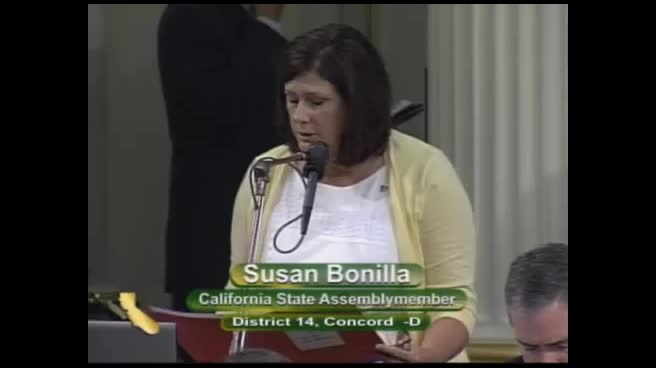 1MIN
Assembly Floor
Bill Author

Bill Co-Author(s):