AB 2623: State information security costs: annual report.
- Session Year: 2015-2016
- House: Assembly
- Latest Version Date: 2016-09-16
Existing law requires each state agency and certain designated state entities to annually report to the Department of Technology a summary of its actual and projected information technology and telecommunications costs, as specified.
This bill would additionally require these state agencies and entities to annually report to the department, beginning on or before January 1, 2018, a summary of its actual and projected information security costs, as specified.
Existing law requires each state agency and certain designated state entities to annually report to the Department of Technology a summary of its actual and projected information technology and telecommunications costs, as specified.
This bill would additionally require these state agencies and entities to annually report to the department, beginning on or before February 1, 2017, January 1, 2018, a summary of there its actual and projected information security costs, as specified.
Existing law requires each state agency and certain designated state entities to annually report to the Department of Technology a summary of its actual and projected information technology and telecommunications costs, as specified.
This bill would additionally require these state agencies and entities to annually report to the department, beginning on or before February 1, 2017, a summary of there actual and projected information security costs, as specified.
Existing law requires an operator, as defined, of a commercial Web site or online service that collects personally identifiable information through the Internet about individual consumers residing in California who use or visit the commercial Web site or online service to conspicuously post, or make available, its privacy policy, as specified. Under existing law, an operator is in violation if the operator fails to post its policy within 30 days after being notified of noncompliance or if the operators failure to comply with the requirements, or with the provisions of its posted policy, is knowing and willful or negligent and material.
This bill would additionally require the operator to provide a short form of the privacy policy to a consumer at the beginning of the privacy policy and, if the commercial Internet Web site or online service provides the consumer with a user licensing agreement or terms of service, above the agreement or terms, as specified. The bill would provide that an operator is in violation of this requirement only if the operator knowingly and willfully fails to comply with the requirement or if the operator fails to post its privacy policy short form within 30 days after being notified of noncompliance.
The Political Reform Act of 1974 defines various terms for purposes of the reporting and disclosure requirements of the act. The act defines a controlled committee as a committee that is controlled directly or indirectly by a candidate or state measure proponent or that acts jointly with a candidate, controlled committee, or state measure proponent in connection with the making of expenditures. The act provides that a candidate or state measure proponent controls a committee if he or she, or his or her agent, or any other committee he or she controls has a significant influence on the actions or decisions of the committee.
This bill would establish a presumption that a committee is significantly influenced by a candidate for purposes of these provisions if any of several specified factors are satisfied. The bill would also make technical, nonsubstantive changes to that provision.
The Political Reform Act of 1974, an initiative measure, provides that the Legislature may amend the act to further the acts purposes upon a 2/3 vote of each house and compliance with specified procedural requirements.
This bill would declare that it furthers the purposes of the act.
(a)On or before February 1 of every year, each state agency and state entity subject to Section 11546.1, shall submit, as instructed by the Department of Technology, a summary of its actual and projected information technology and telecommunications costs, including, but not limited to, personnel, for the immediately preceding fiscal year and current fiscal year, showing current expenses and projected expenses for the current fiscal year, in a format prescribed by the Department of Technology in order to capture statewide information technology expenditures.
(b)On or before January 1, 2018, and annually thereafter, each state agency and state entity subject to Section 11546.1 shall submit, as instructed and in a format prescribed by the Department of Technology, a summary of its actual and projected information security costs, including, but not limited to, personnel, for the immediately preceding fiscal year and current fiscal year, showing current expenses and projected expenses for the current fiscal year, in order to capture statewide information security expenditures, including the expenditure of federal grant funds for information security purposes.
(a)On or before February 1 of every year, each state agency and state entity subject to Section 11546.1, shall submit, as instructed by the Department of Technology, a summary of its actual and projected information technology and telecommunications costs, including, but not limited to, personnel, for the immediately preceding fiscal year and current fiscal year, showing current expenses and projected expenses for the current fiscal year, in a format prescribed by the Department of Technology in order to capture statewide information technology expenditures.
(b)On or before February 1, 2017, January 1, 2018, and annually thereafter, each state agency and state entity subject to Section 11546.1 shall submit, as instructed and in a format prescribed by the Department of Technology, a summary of its actual and projected information security costs, including, but not limited to, personnel, for the immediately preceding fiscal year and current fiscal year, showing current expenses and projected expenses for the current fiscal year, in a format prescribed by the Department of Technology in order to capture statewide information security expenditures, including the expenditure of federal grant funds for information security purposes.
(a)On or before February 1, 2011, and annually thereafter, 1 of every year, each state agency and state entity subject to Section 11546.1, shall submit, as instructed by the Department of Technology, a summary of its actual and projected information technology and telecommunications costs, including including, but not limited to, personnel, for the immediately preceding fiscal year and current fiscal year, showing current expenses and projected expenses for the current fiscal year, in a format prescribed by the Department of Technology in order to capture statewide information technology expenditures.
(b)On or before February 1, 2017, and annually thereafter, each state agency and state entity subject to Section 11546.1 shall submit, as instructed by the Department of Technology, a summary of its actual and projected information security costs, including, but not limited to, personnel, for the immediately preceding fiscal year and current fiscal year, showing current expenses and projected expenses for the current fiscal year, in a format prescribed by the Department of Technology in order to capture statewide information security expenditures, including the expenditure of federal grant funds for information security purposes.
SECTION 1.Section 22575.5 is added to the Business and Professions Code, to read:22575.5.(a)An operator of a commercial Internet Web site or online service that is required to post or make available its privacy policy pursuant to Section 22575 shall provide a short form of the privacy policy to a consumer at the beginning of the privacy policy and, if the commercial Internet Web site or online service provides the consumer with a user licensing agreement or terms of service, at the beginning of the agreement or terms.
(b)The short form required by subdivision (a) shall do all of the following:
(1)List the categories of personally identifiable information identified in the privacy policy pursuant to paragraph (1) of subdivision (b) of Section 22575, using the following specific descriptions:
(A)For information described in paragraphs (1) to (6), inclusive, of subdivision (a) of Section 22577, the descriptions used in those paragraphs.
(B)For information described in paragraph (7) of subdivision (a) of Section 22577, the following descriptions:
(i)Browser history.
(ii)Phone or text logs.
(iii)Contact lists.
(iv)Biometrics.
(v)Financial information.
(vi)Health, medical, or therapeutic information.
(vii)Location.
(viii)User files.
(2)(A)List the categories of third-party persons or entities identified in the privacy policy pursuant to paragraph (1) of subdivision (b) of Section 22575, using the following specific descriptions:
(i)Advertising networks.
(ii)Telecommunication carriers.
(iii)Commercial data resellers.
(iv)Data analytics providers.
(v)Operating systems and platforms.
(vi)Social networks.
(B)Compliance with subparagraph (A) is not required when a contract between the commercial Internet Web site or online service and the third party explicitly does both of the following:
(i)Limits the uses of the information provided by the commercial Internet Web site or online service to the third party solely to provide a service to, or on behalf of, the commercial Internet Web site or online service.
(ii)Prohibits the sharing of the consumer information by that third party with subsequent third parties.
(3)State whether or not the operator maintains a process that, if maintained, would be required to be described by the privacy policy pursuant to paragraph (2) of subdivision (b) of Section 22575.
(4)If the operator satisfies the requirements of paragraph (5) of subdivision (b) of Section 22575 by providing a hyperlink pursuant to paragraph (7) of subdivision (b) of Section 22575, include a hyperlink to the same online location.
(c)An operator shall be in violation of this section only if the operator knowingly and willfully fails to comply with this section or if the operator fails to post its privacy policy short form within 30 days after being notified of noncompliance.
(a)An operator of a commercial Internet Web site or online service that is required to post or make available its privacy policy pursuant to Section 22575 shall provide a short form of the privacy policy to a consumer at the beginning of the privacy policy and, if the commercial Internet Web site or online service provides the consumer with a user licensing agreement or terms of service, at the beginning of the agreement or terms.
(b)The short form required by subdivision (a) shall do all of the following:
(1)List the categories of personally identifiable information identified in the privacy policy pursuant to paragraph (1) of subdivision (b) of Section 22575, using the following specific descriptions:
(A)For information described in paragraphs (1) to (6), inclusive, of subdivision (a) of Section 22577, the descriptions used in those paragraphs.
(B)For information described in paragraph (7) of subdivision (a) of Section 22577, the following descriptions:
(i)Browser history.
(ii)Phone or text logs.
(iii)Contact lists.
(iv)Biometrics.
(v)Financial information.
(vi)Health, medical, or therapeutic information.
(vii)Location.
(viii)User files.
(2)(A)List the categories of third-party persons or entities identified in the privacy policy pursuant to paragraph (1) of subdivision (b) of Section 22575, using the following specific descriptions:
(i)Advertising networks.
(ii)Telecommunication carriers.
(iii)Commercial data resellers.
(iv)Data analytics providers.
(v)Operating systems and platforms.
(vi)Social networks.
(B)Compliance with subparagraph (A) is not required when a contract between the commercial Internet Web site or online service and the third party explicitly does both of the following:
(i)Limits the uses of the information provided by the commercial Internet Web site or online service to the third party solely to provide a service to, or on behalf of, the commercial Internet Web site or online service.
(ii)Prohibits the sharing of the consumer information by that third party with subsequent third parties.
(3)State whether or not the operator maintains a process that, if maintained, would be required to be described by the privacy policy pursuant to paragraph (2) of subdivision (b) of Section 22575.
(4)If the operator satisfies the requirements of paragraph (5) of subdivision (b) of Section 22575 by providing a hyperlink pursuant to paragraph (7) of subdivision (b) of Section 22575, include a hyperlink to the same online location.
(c)An operator shall be in violation of this section only if the operator knowingly and willfully fails to comply with this section or if the operator fails to post its privacy policy short form within 30 days after being notified of noncompliance.
SECTION 1.Section 82016 of the Government Code is amended to read:82016.(a)Controlled committee means a committee that is controlled, directly or indirectly, by a candidate or state measure proponent or that acts jointly with a candidate, controlled committee, or state measure proponent in connection with the making of expenditures. A candidate or state measure proponent controls a committee if he or she, his or her agent, or any other committee he or she controls has a significant influence on the actions or decisions of the committee.
(b)Notwithstanding subdivision (a), a political party committee, as defined in Section 85205, is not a controlled committee.
(c)For purposes of subdivision (a), a committee is presumed to be significantly influenced by a candidate, his or her agent, or another committee he or she controls if any of the following are satisfied:
(1)The candidate, or his or her agent, is a voting member of the committees governing body.
(2)The candidate, or his or her agent, is involved in the decisionmaking of the committee, or the development or implementation of the committees campaign strategy.
(3)The candidate, or his or her agent, is substantially involved in directing the day-to-day operations of the committee.
SEC. 2.The Legislature finds and declares that this bill furthers the purposes of the Political Reform Act of 1974 within the meaning of subdivision (a) of Section 81012 of the Government Code.
(a)Controlled committee means a committee that is controlled controlled, directly or indirectly indirectly, by a candidate or state measure proponent or that acts jointly with a candidate, controlled committee, or state measure proponent in connection with the making of expenditures. A candidate or state measure proponent controls a committee if he or she, his or her agent, or any other committee he or she controls has a significant influence on the actions or decisions of the committee.
(b)Notwithstanding subdivision (a), a political party committee, as defined in Section 85205, is not a controlled committee.
(c)For purposes of subdivision (a), a committee is presumed to be significantly influenced by a candidate, his or her agent, or another committee he or she controls if any of the following are satisfied:
(1)The candidate, or his or her agent, is a voting member of the committees governing body.
(2)The candidate, or his or her agent, is involved in the decisionmaking of the committee, or the development or implementation of the committees campaign strategy.
(3)The candidate, or his or her agent, is substantially involved in directing the day-to-day operations of the committee.
SEC. 2.The Legislature finds and declares that this bill furthers the purposes of the Political Reform Act of 1974 within the meaning of subdivision (a) of Section 81012 of the Government Code.
|
Date
|
Status
|
|---|---|
| Sep 16, 2016 | Chaptered by Secretary of State - Chapter 389, Statutes of 2016. |
| Sep 16, 2016 | Approved by the Governor. |
| Sep 2, 2016 | Enrolled and presented to the Governor at 12 p.m. |
| Aug 24, 2016 | Senate amendments concurred in. To Engrossing and Enrolling. (Ayes 79. Noes 0. Page 6198.). |
| Aug 24, 2016 | Senate amendments concurred in. To Engrossing and Enrolling. |
| Aug 19, 2016 | In Assembly. Concurrence in Senate amendments pending. May be considered on or after August 21 pursuant to Assembly Rule 77. |
| Aug 18, 2016 | Read third time. Passed. Ordered to the Assembly. (Ayes 38. Noes 0. Page 5122.). |
| Aug 18, 2016 | Read third time. Passed. Ordered to the Assembly. (Ayes 38. Noes 0.). |
| Aug 18, 2016 | Read third time. Passed. Ordered to the Assembly. |
| Aug 16, 2016 | Read second time. Ordered to third reading. |
| Aug 15, 2016 | Read third time and amended. Ordered to second reading. |
| Aug 3, 2016 | Read second time. Ordered to third reading. |
| Aug 2, 2016 | From committee: Do pass. (Ayes 7. Noes 0.) (August 1). |
| Jun 28, 2016 | From committee: Do pass and re-refer to Com. on APPR. (Ayes 13. Noes 0.) (June 28). Re-referred to Com. on APPR. |
| Jun 9, 2016 | Referred to Com. on G.O. |
| Jun 1, 2016 | In Senate. Read first time. To Com. on RLS. for assignment. |
| May 31, 2016 | Read third time. Passed. Ordered to the Senate. (Ayes 77. Noes 2. Page 5040.) |
| May 31, 2016 | Read third time. Passed. Ordered to the Senate. (Ayes 77. Noes 2.) |
| May 31, 2016 | Read third time. Passed. Ordered to the Senate. |
| May 27, 2016 | Read second time. Ordered to third reading. |
| May 27, 2016 | From committee: Do pass. (Ayes 20. Noes 0.) (May 27). |
| May 18, 2016 | In committee: Set, first hearing. Referred to APPR. suspense file. |
| May 4, 2016 | From committee: Do pass and re-refer to Com. on APPR. (Ayes 11. Noes 0.) (May 3). Re-referred to Com. on APPR. |
| May 2, 2016 | Re-referred to Com. on P. & C.P. |
| Apr 28, 2016 | From committee chair, with author's amendments: Amend, and re-refer to Com. on P. & C.P. Read second time and amended. |
| Mar 31, 2016 | From committee: Be re-referred to Com. on P. & C.P. Re-referred. (Ayes 8. Noes 0.) (March 31). Re-referred to Com. on P. & C.P. |
| Mar 28, 2016 | Re-referred to Com. on RLS. pursuant to Assembly Rule 96. |
| Mar 28, 2016 | Re-referred to Com. on E. & R. |
| Mar 18, 2016 | From committee chair, with author's amendments: Amend, and re-refer to Com. on E. & R. Read second time and amended. |
| Mar 10, 2016 | Referred to Com. on E. & R. |
| Feb 22, 2016 | Read first time. |
| Feb 21, 2016 | From printer. May be heard in committee March 22. |
| Feb 19, 2016 | Introduced. To print. |
|
Date
|
Description
|
Location
|
Votes
|
|
|---|---|---|---|---|
| Aug 24, 2016 | AB 2623 GORDON Concurrence in Senate Amendments | Assembly Floor |
Passed |
|
| Aug 18, 2016 | Assembly 3rd Reading AB2623 Gordon By Galgiani | Senate Floor |
Passed |
|
| Aug 1, 2016 | Do pass | Senate Standing Committee on Appropriations |
Passed |
|
| Jun 28, 2016 | Do pass, but first be re-referred to the Committee on [Appropriations] | Senate Standing Committee on Governmental Organization |
Passed |
|
| May 31, 2016 | AB 2623 GORDON Assembly Third Reading | Assembly Floor |
Passed |
|
| May 27, 2016 | Do pass. | Assembly Standing Committee on Appropriations |
Passed |
|
| May 3, 2016 | Do pass and be re-referred to the Committee on [Appropriations] | Assembly Standing Committee on Privacy and Consumer Protection |
Passed |
|
| Mar 31, 2016 | Be re-referred to the Committee on [Privacy and Consumer Protection] | Assembly Standing Committee on Rules |
Passed |
This list shows positions taken on this bill by organizations on the date displayed, which is linked to the original source.
Positions by individuals are not included.
CONCURRENCE IN SENATE AMENDMENTS
CSA1 Bill Id:AB 2623
Author:(Gordon and Irwin)
As Amended Ver:August 15, 2016
Majority vote
ASSEMBLY: | 77-2 | (May 31, 2016) | SENATE: | 38-0 | (August 18, 2016) |
Original Committee Reference: P. & C.P.
SUMMARY: Requires state agencies and entities, starting January 1, 2018, to report their information security expenditures on an annual basis to the California Department of Technology (CDT).
The Senate amendments extend the initial reporting date out to January 1, 2018.
EXISTING LAW:
- Establishes CDT within the Government Operations Agency, under the supervision of the Director of Technology, also known as the State Chief Information Officer. (Government Code Section (GC) 11545(a))
- Requires the Director to, among other things, advise the Governor on the strategic management and direction of the state's information technology resources and provide technology direction to agency and department chief information officers to ensure the integration of statewide technology initiatives. (GC 11545(b))
- Requires the Director to produce an annual information technology performance report that assesses and measures the state's progress toward specified goals. (GC 11545(d))
- Requires specified state agencies and state entities to submit annually, as instructed by CDT, a summary of their actual and projected information technology and telecommunications costs, including personnel, for the immediate preceding fiscal year and current fiscal year, showing current expenses and projected expenses for the current fiscal year, in a format prescribed by CDT. (GC 11546.2)
- Defines a state agency, for purposes of the annual cost report, to mean "the Transportation Agency, Department of Corrections and Rehabilitation, Department of Veterans Affairs, Business, Consumer Services, and Housing Agency, Natural Resources Agency, California Health and Human Services Agency, California Environmental Protection Agency, Labor and Workforce Development Agency, and Department of Food and Agriculture," as well as any "entity within the executive branch that is under the direct authority of the Governor, including, but not limited to, all departments, boards, bureaus, commissions, councils, and offices" that are not directly defined as a state agency. (GC 11546.1(e))
FISCAL EFFECT: According to the Senate Appropriations Committee:
- Minor and absorbable CDT costs to develop reporting criteria. (General Fund)
- Likely absorbable costs for individual state agencies to segregate information security costs from overall information technology (IT) expenditures and annually report to CDT. (General Fund / various special funds)
COMMENTS: This bill is intended to increase state government transparency in cybersecurity spending by requiring annual expenditures to be tallied and reported so that CDT, the Governor's Office and the Legislature can better measure agency performance and resource allocation for cybersecurity.
The summary would cover actual and projected information security costs, including personnel, for the immediately preceding fiscal year and current fiscal year, in order to capture statewide information security expenditures, including the expenditure of federal grant funds for information security purposes.
CDT would be responsible for developing instructions and a format for those reports, and would have the flexibility to determine the accounting methodology used to collect the data. This bill is author-sponsored.
Analysis Prepared by: Hank Dempsey / P. & C.P. / (916) 319-2200 FN: 0004395
Office of Senate Floor Analyses (916) 651-1520 Fax: (916) 327-4478 | AB |
THIRD READING
Bill No: AB 2623
: in Senate
SENATE GOVERNMENTAL ORG. COMMITTEE: 13-0, 6/28/16
AYES: Hall, Berryhill, Bates, Block, Gaines, Galgiani, Glazer, Hernandez, Hill, Hueso, Lara, McGuire, Vidak
SENATE APPROPRIATIONS COMMITTEE: 7-0, 8/1/16
AYES: Lara, Bates, Beall, Hill, McGuire, Mendoza, Nielsen
ASSEMBLY FLOOR: 77-2, 5/31/16 - See last page for vote
DIGEST: This bill requires state agencies to report their information security expenditures on an annual basis to the California Department of Technology (CDT) beginning on January 1, 2018.
Senate Floor Amendments of 8/15/16 delay the requirement that each state agency submit a summary of their information security costs to CDT, from February 1, 2017, to January 1, 2018.
ANALYSIS:
Existing law:
- Establishes CDT within the Government Operations Agency, under the supervision of the Director of Technology.
- Requires specified state agencies and state entities to submit annually, as instructed by CDT, a summary of their actual and projected information technology and telecommunications costs, including personnel, for the immediate preceding fiscal year and current fiscal year, showing current expenses and projected expenses for the current fiscal year, in a format prescribed by CDT.
- Defines a state agency, for purposes of the annual cost report, to mean the Transportation Agency, Department of Corrections and Rehabilitation, Department of Veterans Affairs, Business, Consumer Services, and Housing Agency, Natural Resources Agency, California Health and Human Services Agency, California Environmental Protection Agency, Labor and Workforce Development Agency, and Department of Food and Agriculture, as well as any entity within the executive branch that is under the direct authority of the Governor, including but not limited to, all departments, boards, bureaus, commissions, councils, and offices that are not directly defined as a state agency.
- Requires the Director of CDT to advise the Governor on the strategic management and direction of the state’s information technology resources and provide technology direction to state agencies and departments to ensure the integration of statewide technologies initiatives.
- Provides that the Office of Information Security may conduct, or require to be conducted, an independent security assessment of every state agency, department, or office.
This bill:
- Requires, on or before January 1, 2018, and annually thereafter, specified state agencies and state entities to submit a summary of their actual and projected information security costs, including personnel, for the immediately preceding fiscal year and current fiscal year, showing current expenses and projected expenses for the current fiscal year in order to capture statewide information security expenditures, including the expenditure of federal grant funds for information security purposes.
- Makes other technical and nonsubstantive changes.
Background
Purpose of the bill. According to the author, “a critical part of our ability to organize and develop cybersecurity capabilities is knowledge of what we are spending and where. Without having oversight over whether state agencies are under or over investing in cybersecurity, it makes it difficult to prioritize spending, compare state spending with industry, and ensure that state dollars are being used as effectively as possible to bolster our cyber defenses. AB 2623 would include a requirement for state agencies to report their annual spending on cybersecurity. This knowledge will ensure that our state leaders have strong understanding of how agencies are responding to this new risk and mitigating appropriately.
This bill mirrors an existing requirement for state agencies to annually report their information technology and telecommunications to CDT, by requiring a similar annual report for spending on information security costs.
Current spending. On February 24, 2016, the Assembly Privacy and Consumer Protection Committee and the Select Committee on Cybersecurity held a joint oversight hearing on California's cybersecurity strategies. Part of that hearing examined the findings of a 2015 California State Auditor (Auditor) report entitled "High Risk Update – Information Security." The Auditor found that "many state entities have weaknesses in their controls over information security. These weaknesses leave some of the State's sensitive data vulnerable to unauthorized use, disclosure, or disruption."
The Auditor explained that “ CDT is responsible for ensuring that state entities that are under the direct authority of the governor maintain the confidentiality, integrity, and availability of their information systems and protect the privacy of the State's information." However, when the Chief Information Security Officer (CISO) within CDT was asked during the hearing to explain how much state agencies were actually spending on cybersecurity, the CISO revealed that her office did not know or track this information.
Prior/Related Legislation
AB 1841 (Irwin, 2016) requires CDT to on or before July 1, 2018, in conjunction with the Office of Emergency Services, to update the Technology Recovery Plan of the State Administrative Manual to ensure the inclusion of cybersecurity strategy incident response standards for each state agency to secure its critical infrastructure controls and critical infrastructure information . (Pending on the Senate Floor)
SB 949 (Jackson, 2016) authorizes the Governor to require owners and operators of critical infrastructure, as defined, to submit critical infrastructure information to OES. (Never heard in Senate Governmental Organization Committee)
AB 2595 (Linder, 2016) establishes in statute the California Cybersecurity Integration Center within OES to develop a cybersecurity strategy for California in coordination with the Cybersecurity Task Force. (Held in Assembly Appropriations Committee)
FISCAL EFFECT: Appropriation: Fiscal Com.: Local:
According to the Senate Appropriations Committee, minor and absorbable CDT costs to develop reporting criteria. In addition, likely absorbable costs for individual state agencies to segregate information security costs from overall information technology expenditures and annually report to CDT.
None received
OPPOSITION: (Verified 8/15/16)
None received
ASSEMBLY FLOOR: 77-2, 5/31/16
AYES: Achadjian, Alejo, Travis Allen, Arambula, Atkins, Baker, Bigelow, Bloom, Bonilla, Bonta, Brough, Brown, Burke, Calderon, Campos, Chang, Chau, Chávez, Chiu, Chu, Cooley, Cooper, Dababneh, Dahle, Daly, Dodd, Eggman, Frazier, Beth Gaines, Gallagher, Cristina Garcia, Eduardo Garcia, Gatto, Gipson, Gomez, Gonzalez, Gordon, Gray, Grove, Hadley, Harper, Roger Hernández, Irwin, Jones, Jones-Sawyer, Kim, Lackey, Levine, Linder, Lopez, Low, Maienschein, Mathis, Mayes, McCarty, Medina, Mullin, Nazarian, Obernolte, O'Donnell, Olsen, Patterson, Quirk, Ridley-Thomas, Rodriguez, Salas, Santiago, Steinorth, Mark Stone, Thurmond, Ting, Wagner, Weber, Wilk, Williams, Wood, Rendon
NOES: Melendez, Waldron
NO VOTE RECORDED: Holden
8/16/16 17:38:41
Office of Senate Floor Analyses (916) 651-1520 Fax: (916) 327-4478 | AB |
THIRD READING
Bill No: AB 2623
:
SENATE GOVERNMENTAL ORG. COMMITTEE: 13-0, 6/28/16
AYES: Hall, Berryhill, Bates, Block, Gaines, Galgiani, Glazer, Hernandez, Hill, Hueso, Lara, McGuire, Vidak
SENATE APPROPRIATIONS COMMITTEE: 7-0, 8/1/16
AYES: Lara, Bates, Beall, Hill, McGuire, Mendoza, Nielsen
ASSEMBLY FLOOR: 77-2, 5/31/16 - See last page for vote
DIGEST: This bill requires state agencies to report their information security expenditures on an annual basis to the California Department of Technology (CDT).
ANALYSIS:
Existing law:
- Establishes CDT within the Government Operations Agency, under the supervision of the Director of Technology.
- Requires specified state agencies and state entities to submit annually, as instructed by CDT, a summary of their actual and projected information technology and telecommunications costs, including personnel, for the immediate preceding fiscal year and current fiscal year, showing current expenses and projected expenses for the current fiscal year, in a format prescribed by CDT.
- Defines a state agency, for purposes of the annual cost report, to mean the Transportation Agency, Department of Corrections and Rehabilitation, Department of Veterans Affairs, Business, Consumer Services, and Housing Agency, Natural Resources Agency, California Health and Human Services Agency, California Environmental Protection Agency, Labor and Workforce Development Agency, and Department of Food and Agriculture, as well as any entity within the executive branch that is under the direct authority of the Governor, including but not limited to, all departments, boards, bureaus, commissions, councils, and offices that are not directly defined as a state agency.
- Requires the Director of CDT to advise the Governor on the strategic management and direction of the state’s information technology resources and provide technology direction to state agencies and departments to ensure the integration of statewide technologies initiatives.
- Provides that the Office of Information Security may conduct, or require to be conducted, an independent security assessment of every state agency, department, or office.
This bill:
- Requires, on or before February 1, 2017, and annually thereafter, specified state agencies and state entities to submit a summary of their actual and projected information security costs, including personnel, for the immediately preceding fiscal year and current fiscal year, showing current expenses and projected expenses for the current fiscal year, in a format prescribed by CDT, in order to capture statewide information security expenditures, including the expenditure of federal grant funds for information security purposes.
- Makes other technical and nonsubstantive amendments.
Background
Purpose of the bill. According to the author, “a critical part of our ability to organize and develop cybersecurity capabilities is knowledge of what we are spending and where. Without having oversight over whether state agencies are under or over investing in cybersecurity, it makes it difficult to prioritize spending, compare state spending with industry, and ensure that state dollars are being used as effectively as possible to bolster our cyber defenses. AB 2623 would include a requirement for state agencies to report their annual spending on cybersecurity. This knowledge will ensure that our state leaders have strong understanding of how agencies are responding to this new risk and mitigating appropriately.
This bill mirrors an existing requirement for state agencies to annually report their information technology and telecommunications to CDT, by requiring a similar annual report for spending on information security costs.
Current spending. On February 24, 2016, the Assembly Privacy and Consumer Protection Committee and the Select Committee on Cybersecurity held a joint oversight hearing on California's cybersecurity strategies. Part of that hearing examined the findings of a 2015 California State Auditor (Auditor) report entitled "High Risk Update – Information Security." The Auditor found that "many state entities have weaknesses in their controls over information security. These weaknesses leave some of the State's sensitive data vulnerable to unauthorized use, disclosure, or disruption."
The Auditor explained that “ CDT is responsible for ensuring that state entities that are under the direct authority of the governor maintain the confidentiality, integrity, and availability of their information systems and protect the privacy of the State's information." However, when the Chief Information Security Officer (CISO) within CDT was asked during the hearing to explain how much state agencies were actually spending on cybersecurity, the CISO revealed that her office did not know or track this information.
Prior/Related Legislation
AB 1841 (Irwin, 2016) requires the Office of Emergency Services in conjunction with CDT to transmit to the Legislature, by July 1, 2017, a statewide emergency services response plan for cybersecurity, and further requires OES and CDT to develop a comprehensive cybersecurity strategy against critical infrastructure by January 1, 2018. (Pending on the Senate Floor)
SB 949 (Jackson, 2016) authorizes the Governor to require owners and operators of critical infrastructure, as defined, to submit critical infrastructure information to OES. (Never heard in Senate Governmental Organization Committee)
AB 2595 (Linder, 2016) establishes in statute the California Cybersecurity Integration Center within OES to develop a cybersecurity strategy for California in coordination with the Cybersecurity Task Force. (Held in Assembly Appropriations Committee)
AB 670 (Irwin, Chapter 518, Statutes of 2015) required CDT to conduct, or require to be conducted, no fewer than 35 independent security assessments of state agencies, departments, or offices annually.
FISCAL EFFECT: Appropriation: Fiscal Com.: Local:
According to the Senate Appropriations Committee, minor and absorbable CDT costs to develop reporting criteria. In addition, likely absorbable costs for individual state agencies to segregate information security costs from overall information technology expenditures and annually report to CDT.
None received
None received
ASSEMBLY FLOOR: 77-2, 5/31/16
AYES: Achadjian, Alejo, Travis Allen, Arambula, Atkins, Baker, Bigelow, Bloom, Bonilla, Bonta, Brough, Brown, Burke, Calderon, Campos, Chang, Chau, Chávez, Chiu, Chu, Cooley, Cooper, Dababneh, Dahle, Daly, Dodd, Eggman, Frazier, Beth Gaines, Gallagher, Cristina Garcia, Eduardo Garcia, Gatto, Gipson, Gomez, Gonzalez, Gordon, Gray, Grove, Hadley, Harper, Roger Hernández, Irwin, Jones, Jones-Sawyer, Kim, Lackey, Levine, Linder, Lopez, Low, Maienschein, Mathis, Mayes, McCarty, Medina, Mullin, Nazarian, Obernolte, O'Donnell, Olsen, Patterson, Quirk, Ridley-Thomas, Rodriguez, Salas, Santiago, Steinorth, Mark Stone, Thurmond, Ting, Wagner, Weber, Wilk, Williams, Wood, Rendon
NOES: Melendez, Waldron
NO VOTE RECORDED: Holden
8/3/16 18:31:59
**** END ****
SENATE COMMITTEE ON APPROPRIATIONS
Senator Ricardo Lara, Chair
2015 - 2016 Regular Session
AB 2623 (Gordon) - State information security costs: annual report
Version: April 28, 2016 | Policy Vote: G.O. 13 - 0 |
Urgency: No | Mandate: No |
Hearing Date: August 1, 2016 | Consultant: Mark McKenzie |
This bill does not meet the criteria for referral to the Suspense File.
Bill Summary:
AB 2623 would require state entities to annually report specified information on actual and projected information security expenditures to the Department of Technology (CDT), as specified.
Fiscal Impact:
- Minor and absorbable CDT costs to develop reporting criteria. (General Fund)
- Likely absorbable costs for individual state agencies to segregate information security costs from overall information technology (IT) expenditures and annually report to CDT. (General Fund / various special funds)
Background:
Existing law provides that the CDT is generally responsible for the approval and oversight of state IT projects. The Office of Information Security (OIS) within the CDT is responsible for ensuring the confidentiality and integrity of state data systems, and establishing policies, standards, and procedures for state agencies to manage security and risk. Existing law authorizes the OIS and the Military Department to conduct independent security assessments of any state agency, department, or office, and requires the state entity whose systems are being assessed to pay for the security assessment. In addition to those discretionary assessments, OIS is required to conduct, or cause to be conducted, an independent security assessment of at least 35 state agencies each year. Existing state policy outlined in the State Administrative Manual requires each state agency to conduct a comprehensive IT risk assessment once every two years and document the results in a risk assessment report.
Existing law requires specified state agencies and entities to annually submit a summary of actual and projected IT and telecommunications costs to CDT, including personnel, for the immediate preceding fiscal year and current fiscal year, showing current and projected expenses, as specified. The report is due by February 1 of each year.
Proposed Law:
AB 2623 would require state entities to submit a summary of actual and projected information security costs, including personnel, for the immediately preceding fiscal year and current fiscal year, showing current and projected expenses, in a format prescribed by CDT in order to capture statewide expenditures, including the expenditure of federal grant funds for information security purposes. The information must be submitted to CDT by February 1, 2017 and annually thereafter.
Related Legislation:
AB 1841 (Irwin), which is pending in this Committee, would require the Governor’s Office of Emergency Services (OES) and the CDT to transmit a statewide cybersecurity incident response plan to the Legislature by July 1, 2017. That bill would also require OES and CDT to develop cybersecurity incident response standards for state agencies to prepare for possible interference, compromise, or incapacitation, of critical infrastructure.
Staff Comments:
This bill would require numerous state entities to determine the level of current and projected resources dedicated to information security. The CDT indicates that it would incur absorbable costs to develop guidance for how those entities should report the information. State entities will likely incur minor one-time administrative costs to implement procedures that allow for separate and accurate accounting of relevant expenditures. Annual costs to report segregated information security cost data to CDT would also be minor.
-- END --
SENATE COMMITTEE ON GOVERNMENTAL ORGANIZATION
Senator Isadore Hall, III
Chair
2015 - 2016 Regular
Bill No: AB Hearing Date: 6/28/2016
Author: | Gordon | ||
Version: | Amended | ||
Urgency: | Fiscal: | ||
Consultant: | |||
SUBJECT:
DIGEST: This bill requires state agencies to report their information security expenditures on an annual basis to the California Department of Technology (CDT).
ANALYSIS:
Existing law:
- Establishes CDT within the Government Operations Agency, under the supervision of the Director of Technology.
- Requires specified state agencies and state entities to submit annually, as instructed by CDT, a summary of their actual and projected information technology and telecommunications costs, including personnel, for the immediate preceding fiscal year and current fiscal year, showing current expenses and projected expenses for the current fiscal year, in a format prescribed by CDT.
- Defines a state agency, for purposes of the annual cost report, to mean the Transportation Agency, Department of Corrections and Rehabilitation, Department of Veterans Affairs, Business, Consumer Services, and Housing Agency, Natural Resources Agency, California Health and Human Services Agency, California Environmental Protection Agency, Labor and Workforce Development Agency, and Department of Food and Agriculture, as well as any entity within the executive branch that is under the direct authority of the Governor, including but not limited to, all departments, boards, bureaus, commissions, councils, and offices that are not directly defined as a state agency.
- Requires the Director of CDT to advise the Governor on the strategic management and direction of the state’s information technology resources and provide technology direction to state agencies and departments to ensure the integration of statewide technologies initiatives.
- Provides that the Office of Information Security may conduct, or require to be conducted, an independent security assessment of every state agency, department, or office.
This bill:
- Requires, on or before February 1, 2017, and annually thereafter, specified state agencies and state entities to submit a summary of their actual and projected information security costs, including personnel, for the immediately preceding fiscal year and current fiscal year, showing current expenses and projected expenses for the current fiscal year, in a format prescribed by CDT, in order to capture statewide information security expenditures, including the expenditure of federal grant funds for information security purposes.
- Makes other technical and nonsubstantive amendments.
Background
Purpose of the bill. According to the author, “a critical part of our ability to organize and develop cybersecurity capabilities is knowledge of what we are spending and where. Without having oversight over whether state agencies are under or over investing in cybersecurity, it makes it difficult to prioritize spending, compare state spending with industry, and ensure that state dollars are being used as effectively as possible to bolster our cyber defenses. AB 2623 would include a requirement for state agencies to report their annual spending on cybersecurity. This knowledge will ensure that our state leaders have strong understanding of how agencies are responding to this new risk and mitigating appropriately.
This bill would mirror an existing requirement for state agencies to annually report their information technology and telecommunications to CDT, by requiring a similar annual report for spending on information security costs.
Current spending. On February 24, 2016, the Assembly Privacy and Consumer Protection Committee and the Select Committee on Cybersecurity held a joint oversight hearing on California's cybersecurity strategies. Part of that hearing examined the findings of a 2015 California State Auditor (Auditor) report entitled "High Risk Update – Information Security." The Auditor found that "many state entities have weaknesses in their controls over information security. These weaknesses leave some of the State's sensitive data vulnerable to unauthorized use, disclosure, or disruption."
The Auditor explained that “ CDT is responsible for ensuring that state entities that are under the direct authority of the governor maintain the confidentiality, integrity, and availability of their information systems and protect the privacy of the State's information." However, when the Chief Information Security Officer (CISO) within CDT was asked during the hearing to explain how much state agencies were actually spending on cybersecurity, the CISO revealed that her office did not know or track this information.
Cyber Threats in California. According to the California Military Department (CMD), California's size and importance makes it vulnerable to cyber incidents that disrupt business, shutdown critical infrastructure, and compromise intellectual property or national security.
CMD calls cybercrime "a growth industry" causing $400 billion in negative impacts annually on the global economy. Thirty percent of all cyber-attacks and other malicious activity are targeted at the government, making these networks and systems the most vulnerable target of cybercrime.
According to CMD, the threat to government networks has never been higher. “Hacktivists”, nation states, cyber criminals and other threat groups are attacking government networks to steal sensitive information and make a political/economic statement. It is not known how many attacks, whether successful or unsuccessful, have been made against state agency computers over the past year.
Prior/Related Legislation
AB 1841 (Irwin, 2016) requires the Office of Emergency Services in conjunction with CDT to transmit to the Legislature, by July 1, 2017, a statewide emergency services response plan for cybersecurity, and further requires OES and CDT to develop a comprehensive cybersecurity strategy against critical infrastructure by January 1, 2018. (Pending in Senate Appropriations Committee)
SB 949 (Jackson, 2016) authorizes the Governor to require owners and operators of critical infrastructure, as defined, to submit critical infrastructure information to OES. (Never heard in Senate Governmental Organization Committee)
AB 1346 (Gray, 2016) requires OES to update the State Emergency Plan on or before January 1, 2018, and every 5 years thereafter, and would require the plan to be consistent with specified state climate adaptation strategies. (Pending in Senate Appropriations Committee).
AB 2595 (Linder, 2016) establishes in statute the California Cybersecurity Integration Center within OES to develop a cybersecurity strategy for California in coordination with the Cybersecurity Task Force. (Held in Assembly Appropriations Committee)
AB 670 (Irwin, Chapter 518, Statutes of 2015) required CDT to conduct, or require to be conducted, no fewer than 35 independent security assessments of state agencies, departments, or offices annually.
AB 739 (Irwin, 2015) provides legal immunity for civil or criminal liability for private entities that communicate anonymized cyber security threat information and meet specified requirements, until January 1, 2020. (Held in Assembly Judiciary Committee)
AB 1172 (Chau, 2015) continues in existence the California Cybersecurity Task Force, created in 2013 by OES and CDT. (Senate Inactive File)
FISCAL EFFECT: Appropriation: No Fiscal Com.: Yes Local: No
SUPPORT:
None received
OPPOSITION:
None received
ASSEMBLY THIRD READING
ATR Bill Id:AB 2623
Author:(Gordon and Irwin)
As Amended Ver:April 28, 2016
Majority vote
Committee | Votes | Ayes | Noes |
Privacy | 11-0 | Chau, Wilk, Baker, Calderon, Chang, Cooper, Dababneh, Gatto, Gordon, Low, Olsen | |
Appropriations | 20-0 | Gonzalez, Bigelow, Bloom, Bonilla, Bonta, Calderon, Chang, Daly, Eggman, Gallagher, Eduardo Garcia, Roger Hernández, Holden, Jones, Obernolte, Quirk, Santiago, Wagner, Weber, Wood |
SUMMARY: Requires state agencies and entities to report their information security expenditures on an annual basis to the California Department of Technology (CDT). Specifically, this bill:
- Requires, on or before February 1, 2017, and annually thereafter, specified state agencies and entities to submit a summary of their actual and projected information security costs, including personnel, for the immediately preceding fiscal year and current fiscal year, showing current expenses and projected expenses for the current fiscal year in order to capture statewide information security expenditures, including the expenditure of federal grant funds for information security purposes.
- Requires CDT to develop and provide instructions and a format for state agencies and entities to report their information security costs.
- Makes other technical and nonsubstantive amendments.
FISCAL EFFECT: According to the Assembly Appropriations Committee:
- Ongoing costs (General Fund/SF/FF) to various state agencies, likely minor, to annually submit a summary report of information security costs, including expenditures of federal grant funds. The affected agencies currently submit similar reports on other topics.
- One-time minor costs to CDT (General Fund) to develop the reporting instructions and format to be used by state agencies.
COMMENTS:
- Purpose of this bill. This bill is intended to increase state government transparency in information security spending so that CDT, the Governor's Office and the Legislature can better manage agency performance and resource allocation for cybersecurity. This bill is author-sponsored.
- Questions regarding state oversight of cybersecurity. On February 24, 2016, the Assembly Privacy and Consumer Protection Committee and the Select Committee on Cybersecurity held a joint oversight hearing on California's Cybersecurity Strategy. Part of that hearing examined the findings of a 2015 California State Auditor (Auditor) report entitled "High Risk Update – Information Security" (Report 2015-611). The Auditor found that "many state entities have weaknesses in their controls over information security. These weaknesses leave some of the State's sensitive data vulnerable to unauthorized use, disclosure, or disruption."
The Auditor explained that "[CDT] is responsible for ensuring that state entities that are under the direct authority of the governor maintain the confidentiality, integrity, and availability of their information systems and protect the privacy of the State's information." However, when the Chief Information Security Officer (CISO) within CDT was asked during the hearing to explain how much state agencies were actually spending on cybersecurity, the CISO revealed that her office did not know or track this information.
This information is important to effective oversight and management of cybersecurity, as well as benchmarking against other agencies and states. A July 2015 article in Government Technology magazine entitled "4 Critical Challenges to State and Local Government Cybersecurity Efforts (Industry Perspective)," notes that cybersecurity has become the number one strategic information technology priority for state and local government agencies. The article also noted that: "The typical state or local government agency spends less than 5% of its IT [information technology] budget on cybersecurity, compared to over 10% in the typical commercial enterprise."
- Questions regarding the use of homeland security funds. Tracking state spending on cybersecurity is complicated by the fact that some of the expended funds come to the state in the form of federal grants. According to the government information Web site Allgov.com, "California has been the recipient of at least $1.9 billion worth of major anti-terrorism grants from Washington, D.C. since the September 11, 2001, attacks, and a succession of reports by the federal government indicate the money hasn't always been spent wisely. While a U.S. [United States] Department of Homeland Security report released in February 2011 found the state generally 'did an efficient and effective job of administering the program requirements, distributing grant funds, and ensuring that all of the available funds were used,' its inspector general also listed a series of costly missteps." This bill would require federal funds used for information security purposes to be included in the annual report to CDT.
- This bill in practice. This bill would mirror an existing requirement for state agencies to annually report their information technology and telecommunications costs to CDT, by requiring a similar annual report for spending on information security costs. CDT would be responsible for developing instructions and a format for those reports, and would have the flexibility to determine the accounting methodology used to collect the data.
Analysis Prepared by: Hank Dempsey / P. & C.P. / (916) 319-2200 FN: 0003234
Date of Hearing: May 18, 2016
ASSEMBLY COMMITTEE ON APPROPRIATIONS
Lorena Gonzalez, Chair
ABPCA Bill Id:AB 2623
Author:(Gordon) – As Amended Ver:April 28, 2016
Policy Committee: | Privacy and Consumer Protection | Vote: | 11 - 0 |
|
|
Urgency: No State Mandated Local Program: No Reimbursable: No
SUMMARY: This bill requires state agencies and entities to annually report their information security expenditures to the California Department of Technology (CDT). Specifically, this bill:
- Requires, on or before February 1, 2017, and annually thereafter, specified state agencies and state entities to submit a summary of their actual and projected information security costs, including the expenditure of federal grant funds for information security purposes.
- Requires CDT to develop and provide instructions and a format for state agencies and entities to report their information security costs.
FISCAL EFFECT:
- Ongoing costs (GF/SF/FF) to various state agencies, likely minor, to annually submit a summary report of information security costs, including expenditures of federal grant funds. The affected agencies currently submit similar reports on other topics.
- One-time minor costs to CDT (GF) to develop the reporting instructions and format to be used by state agencies.
COMMENTS:
- Purpose. This bill is intended to increase state government transparency in information security spending so that CDT can better manage agency performance and resource allocation for cybersecurity. Existing law requires state agencies to annually report their information technology and telecommunications costs to CDT. This bill requires a similar annual report for spending on information security costs. The standardized reporting created by this bill would give CDT a valuable data set to better manage state agencies' spending on cybersecurity, including the ability to make spending comparisons between agencies and facilitate benchmarking with other states, so that they can identify state entities that may be over or under-resourcing cybersecurity efforts or misspending available funds.
- Oversight Hearing. On February 24, 2016, the Assembly Committee on Privacy and Consumer Protection held an oversight hearing on California's Cybersecurity Strategy. Part of that hearing examined the findings of a 2015 California State Auditor (Auditor) report entitled "High Risk Update – Information Security." The Auditor found that "many state entities have weaknesses in their controls over information security. These weaknesses leave some of the State’s sensitive data vulnerable to unauthorized use, disclosure, or disruption."
The Auditor explained that "CDT is responsible for ensuring that state entities that are under the direct authority of the governor maintain the confidentiality, integrity, and availability of their information systems and protect the privacy of the State’s information." However, it was revealed during the hearing that the state's Office of Information Security within CDT does not track information on how much state agencies were actually spending on cybersecurity.
This bill is intended to increase state government transparency in information security spending so that CDT can better manage agency performance and resource allocation for cybersecurity.
- Related legislation. This is one of five cybersecurity-related bills before this Committee today:
- AB 1841 (Irwin) requires the state OES in conjunction with the CDT to develop, by July 1, 2017, a statewide emergency services response plan for cybersecurity attacks against critical infrastructure (EF 18), and would require OES and CDT to develop a comprehensive cybersecurity strategy by January 1, 2018, with which all state agencies must report compliance by January 1, 2019.
- AB 1881 (Chang) requires the Director of CDT to develop and update mandatory baseline security controls for state networks based industry and national standards, and annually measure the state's progress towards compliance.
- AB 2595 (Linder) establishes the California Cybersecurity Integration Center within the Office of Emergency Services to develop a cybersecurity strategy for California, and authorizes the administration of federal homeland security grant funding by OES.
- AB 2720 (Chau) authorizes the creation of a Cybersecurity Vulnerability Reporting Reward Program that would provide a monetary reward to eligible individuals who identify and report previously unknown vulnerabilities in state computer networks.
- Previous Legislation. AB 670 (Irwin), Chapter 518, Statutes of 2015, required CDT to conduct, or require to be conducted, no fewer than 35 independent security assessments of state agencies, departments or offices annually.
Analysis Prepared by: Jennifer Swenson / APPR. / (916) 319-2081
Date of Hearing: May 3, 2016
ASSEMBLY COMMITTEE ON PRIVACY AND CONSUMER PROTECTION
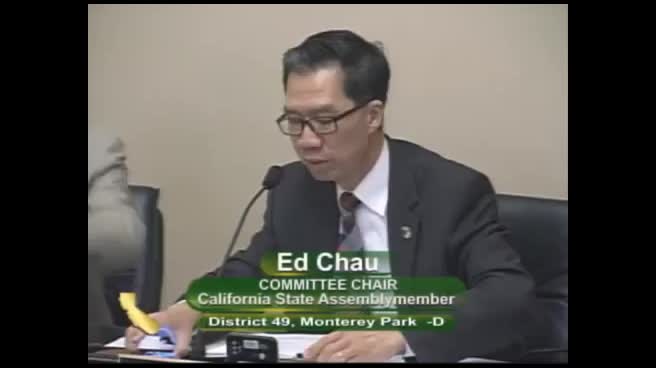
Ed Chau, Chair
ABPCA Bill Id:AB 2623 (
Author:Gordon and Irwin) – As Amended Ver:April 28, 2016
SUBJECT: State information security costs: annual report
SUMMARY: Requires state agencies and entities to report their information security expenditures on an annual basis to the California Department of Technology (CDT). Specifically, this bill:
- Requires, on or before February 1, 2017, and annually thereafter, specified state agencies and state entities to submit a summary of their actual and projected information security costs, including personnel, for the immediately preceding fiscal year and current fiscal year, showing current expenses and projected expenses for the current fiscal year in order to capture statewide information security expenditures, including the expenditure of federal grant funds for information security purposes.
- Requires CDT to develop and provide instructions and a format for state agencies and entities to report their information security costs.
- Makes other technical and nonsubstantive amendments.
EXISTING LAW:
- Establishes the California Department of Technology (CDT) within the Government Operations Agency, under the supervision of the Director of Technology, also known as the State Chief Information Officer. (Government Code Section (GC) 11545(a))
- Requires the Director to, among other things, advise the Governor on the strategic management and direction of the state’s information technology resources and provide technology direction to agency and department chief information officers to ensure the integration of statewide technology initiatives. (GC 11545(b))
- Requires the Director to produce an annual information technology performance report that assesses and measures the state’s progress toward specified goals. (GC 11545(d))
- Requires specified state agencies and state entities to submit annually, as instructed by CDT, a summary of their actual and projected information technology and telecommunications costs, including personnel, for the immediate preceding fiscal year and current fiscal year, showing current expenses and projected expenses for the current fiscal year, in a format prescribed by CDT. (GC 11546.2)
- Defines a state agency, for purposes of the annual cost report, to mean "the Transportation Agency, Department of Corrections and Rehabilitation, Department of Veterans Affairs, Business, Consumer Services, and Housing Agency, Natural Resources Agency, California Health and Human Services Agency, California Environmental Protection Agency, Labor and Workforce Development Agency, and Department of Food and Agriculture," as well as any "entity within the executive branch that is under the direct authority of the Governor, including, but not limited to, all departments, boards, bureaus, commissions, councils, and offices" that are not directly defined as a state agency. (GC 11546.1(e))
FISCAL EFFECT: Unknown
COMMENTS:
- Purpose of this bill. This bill is intended to increase state government transparency in information security spending so that CDT can better manage agency performance and resource allocation for cybersecurity. This bill is author-sponsored.
- Author's statement. According to the author, "Our state has many valuable resources, which makes it a prime target for cyberattacks of ever-increasing sophistication and impact. This year, the California State Auditor’s report High Risk Update – Information Security stated that cybersecurity 'weaknesses leave some of the State’s sensitive data vulnerable to unauthorized use, disclosure, or disruption.' This Assembly Committee on Privacy and Consumer Protection held oversight hearings to delve into the issue deeper, and identified several opportunities for improved cybersecurity for California. The Committee also identified several key shortfalls, including a lack of knowledge of how much money state departments spend on cybersecurity. Understanding our spending patterns on cybersecurity can help us identify where departments might be overspending, where additional resources might be needed, and how our investment as a state compares to large companies or other states. The task of defending California from organized criminals, homegrown hackers, and foreign cyberattacks is as difficult as it is important, and a key first step will be ensuring that we can account for the investments we make in this critical fight."
- Questions regarding state oversight of cybersecurity. On February 24, 2016, this Committee held an oversight hearing on California's Cybersecurity Strategy. Part of that hearing examined the findings of a 2015 California State Auditor (Auditor) report entitled "High Risk Update – Information Security" (Report 2015-611). The Auditor found that "many state entities have weaknesses in their controls over information security. These weaknesses leave some of the State’s sensitive data vulnerable to unauthorized use, disclosure, or disruption."
The Auditor explained that "The California Department of Technology (technology department) is responsible for ensuring that state entities that are under the direct authority of the governor (reporting entities) maintain the confidentiality, integrity, and availability of their information systems and protect the privacy of the State’s information." However, when the Chief Information Security Officer (CISO) overseeing the state's Office of Information Security within CDT was asked during the hearing to explain how much state agencies were actually spending on cybersecurity, the CISO revealed that her office did not know or track this information.
State spending on cybersecurity is a topic of immediate importance. A July 2015 article in Government Technology magazine entitled “4 Critical Challenges to State and Local Government Cybersecurity Efforts (Industry Perspective),” notes that cybersecurity has become the number one strategic priority for state and local government agencies: "A constant stream of high-profile attacks by organized crime, hacktivists and state-sponsored agents against both commercial and government entities has raised awareness and created a heightened sense of urgency. Organizations of all types and sizes are deeply concerned about data breaches by politically motivated bad actors and the all-too-real potential for highly sophisticated state-sponsored or terrorist attacks on critical public infrastructure and services."
Information about cybersecurity spending is an important part of managing and overseeing progress in the area, especially if certain agencies are underfunding the effort. The Government Technology article notes that: "The typical state or local government agency spends less than 5 percent of its IT budget on cybersecurity, compared to over 10 percent in the typical commercial enterprise. If we bear in mind that some of the world’s most prominent enterprises have been successfully hacked, and that government agencies are faced with precisely the same security challenges as their commercial brethren, it is alarmingly clear that state and local agencies’ cybersecurity efforts are woefully underfunded."
- Questions regarding the use of homeland security funds. Tracking state spending on cybersecurity is complicated by the fact that some of the expended funds come to the state in the form of federal grants. According to the government information website Allgov.com, "California has been the recipient of at least $1.9 billion worth of major anti-terrorism grants from Washington, D.C. since the September 11, 2001, attacks, and a succession of reports by the federal government indicate the money hasn’t always been spent wisely."
"While a U.S. Department of Homeland Security report released in February 2011 found the state generally 'did an efficient and effective job of administering the program requirements, distributing grant funds, and ensuring that all of the available funds were used,' its inspector general listed a series of costly missteps. The report, which looked at Urban Areas Security Initiative Grants awarded from 2006-2008, did not identify the particular localities within the state that obtained the grants, which generally have three years to spend their money.
"California has established half a dozen 'fusion centers' around the state to bring state, local and federal law enforcement personnel and systems together to deal with terrorism prevention, as well as cross-border crime, gangs and drug trafficking. The report cited one unidentified center as wasting $700,000 on software that didn’t work before spending another $1.25 million to replace it. Another center bought 55 large-screen digital televisions for $74,394 but hadn’t purchased the training system they were meant to implement. On the day federal inspectors visited the site, all the TVs were turned to a single station."
- This bill in practice. AB 2623 would mirror an existing requirement for state agencies to annually report their information technology and telecommunications costs to CDT, by requiring a similar annual report for spending on information security costs. CDT would be responsible for developing instructions and a format for those reports, and would have the flexibility to determine the accounting methodology used to collect the data.
The standardized reporting created by this bill would give CDT a valuable data set to better manage state agencies' spending on cybersecurity, including the ability to make spending comparisons between agencies and facilitate benchmarking with other states, so that they can identify state entities that may be over or under-resourcing cybersecurity efforts or misspending available funds. - Related legislation. AB 1841 (Irwin) would require the state Office of Emergency Services (OES) to develop, by July 1, 2017, a statewide emergency services response plan for cybersecurity attacks against critical infrastructure, and further requires OES to develop a comprehensive cybersecurity strategy by July 1, 2018, with which all state agencies must report compliance by January 1, 2019. AB 1841 passed this Committee on April 5, 2016, on an 11-0 vote and is currently pending in the Assembly Appropriations Committee.
AB 1881 (Chang) would require the Director of CDT to develop and update mandatory baseline security controls for state networks based on industry and national standards, and annually measure the state's progress towards compliance. AB 1881 is currently pending in the Assembly Appropriations Committee.
AB 2595 (Linder) would establish the California Cybersecurity Integration Center, require it to develop a cybersecurity strategy for California, and authorize the administration of federal homeland security grant funding by the Office of Emergency Services. AB 2595 is currently pending in the Assembly Appropriations Committee.
SB 949 (Jackson) would authorize the Governor to require owners and operators of critical infrastructure to submit critical infrastructure information to OES or any other designee for the purposes of gathering, analyzing, communicating, or disclosing critical infrastructure information. SB 949 is currently pending in the Senate Governmental Organization Committee.
- Prior versions of this bill. This bill was gutted and amended on April 28, 2016, to change the bill from a revision of requirements for Internet privacy policies to its current form. As a result, support and opposition for the prior versions of this bill are not addressed here.
- Previous legislation. AB 670 (Irwin), Chapter 518, Statutes of 2015, requires CDT to conduct, or require to be conducted, no fewer than 35 independent security assessments of state agencies, departments or offices annually.
REGISTERED SUPPORT / OPPOSITION:
Support
None on file.
Opposition
None on file.
Analysis Prepared by: Hank Dempsey / P. & C.P. / (916) 319-2200



Bill Co-Author(s):