AB 1162: Medi-Cal: tobacco cessation.
- Session Year: 2015-2016
- House: Assembly
- Latest Version Date: 2015-09-14
Existing law provides for the Medi-Cal program, administered by the State Department of Health Care Services, under which basic health care services are provided to qualified low-income persons. The Medi-Cal program is, in part, governed and funded by federal Medicaid provisions. Existing law provides for a schedule of benefits under the Medi-Cal program. Existing law requires that preventive services assigned a grade of A or B by the United States Preventive Services Task Force be provided to Medi-Cal beneficiaries without any cost sharing by the beneficiary in order for the state to receive increased federal contributions for those services, as specified.
This bill would provide that, only to the extent that federal financial participation is available and not otherwise jeopardized, and any necessary federal approvals have been obtained, tobacco cessation services are covered benefits, subject to utilization controls, under the Medi-Cal program, and would require those services to include all intervention recommendations, as periodically updated, assigned a grade A or B by the United States Preventive Services Task Force, and, at a minimum, 4 quit attempts per year. The bill would also require, only to the extent consistent with the recommendations of the United States Preventive Services Task Force, tobacco cessation services to include at least 4 counseling sessions per quit attempt and a 12-week treatment regimen of any medication approved by the federal Food and Drug Administration for tobacco cessation. The bill would require the department to seek any federal approvals necessary to implement those provisions.
Existing law provides for the Medi-Cal program, administered by the State Department of Health Care Services, under which basic health care services are provided to qualified low-income persons. The Medi-Cal program is, in part, governed and funded by federal Medicaid provisions. Existing law provides for a schedule of benefits under the Medi-Cal program. Existing law requires that preventive services assigned a grade of A or B by the United States Preventive Services Task Force be provided to Medi-Cal beneficiaries without any cost sharing by the beneficiary in order for the state to receive increased federal contributions for those services, as specified.
This bill would provide that, only to the extent that federal financial participation is available and not otherwise jeopardized, and any necessary federal approvals have been obtained, tobacco cessation services are covered benefits, subject to utilization controls, under the Medi-Cal program, and would require those services to include all intervention recommendations, as periodically updated, assigned a grade A or B by the United States Preventive Services Task Force, and, at a minimum, 4 quit attempts per year. The bill would also require, only to the extent consistent with the recommendations of the United States Preventive Services Task Force, tobacco cessation services to include at least 4 counseling sessions per quit attempt and a 12-week treatment regimen of any medication approved by the federal Food and Drug Administration for tobacco cessation. The bill would require the department to seek any federal approvals necessary to implement those provisions.
Existing law provides for the Medi-Cal program, administered by the State Department of Health Care Services, under which basic health care services are provided to qualified low-income persons. The Medi-Cal program is, in part, governed and funded by federal Medicaid provisions. Existing law provides for a schedule of benefits under the Medi-Cal program. Existing law requires that preventive services assigned a grade of A or B by the United States Preventive Services Task Force be provided to Medi-Cal beneficiaries without any cost sharing by the beneficiary in order for the state to receive increased federal contributions for those services, as specified.
This bill would provide that that, only to the extent that federal financial participation is available and any necessary federal approvals have been obtained, tobacco cessation services are covered benefits benefits, subject to utilization controls, under the Medi-Cal program, and would require that those services include, to include all intervention recommendations, as periodically updated, assigned a grade A or B by the United States Preventive Services Task Force, and, at a minimum, 4 quit attempts per year, and would year. The bill would also require require, only to the extent consistent with the recommendations of the United States Preventive Services Task Force, tobacco cessation services to include at least 4 counseling sessions per quit attempt and a 90-day 12-week treatment regimen of any medication approved by the federal Food and Drug Administration for tobacco cessation that is covered under the Medi-Cal program as of January 1, 2015. cessation. The bill would require the department to seek any federal approvals necessary to implement those provisions.
Existing law provides for the Medi-Cal program, administered by the State Department of Health Care Services, under which basic health care services are provided to qualified low-income persons. The Medi-Cal program is, in part, governed and funded by federal Medicaid provisions. Existing law provides for a schedule of benefits under the Medi-Cal program. Existing law requires that preventive services assigned a grade of A or B by the United States Preventive Services Task Force be provided to Medi-Cal beneficiaries without any cost sharing by the beneficiary in order for the state to receive increased federal contributions for those services, as specified.
This bill would provide that tobacco cessation services are covered benefits under the Medi-Cal program and program, would require that those services include, at a minimum, unlimited 4 quit attempts, attempts per year, and would also require tobacco cessation services to include at least 4 counseling sessions per quit attempt and a 90-day treatment regimen of any medication approved by the federal Food and Drug Administration for tobacco cessation that is covered under the Medi-Cal program as of January 1, 2015.
Existing law provides for the Medi-Cal program, administered by the State Department of Health Care Services, under which basic health care services are provided to qualified low-income persons. The Medi-Cal program is, in part, governed and funded by federal Medicaid provisions. Existing law provides for a schedule of benefits under the Medi-Cal program. Existing law requires that preventive services assigned a grade of A or B by the United States Preventive Services Task Force be provided to Medi-Cal beneficiaries without any cost sharing by the beneficiary in order for the state to receive increased federal contributions for those services, as specified.
This bill would provide that tobacco cessation services are covered benefits under the Medi-Cal program and would require that those services include, at a minimum, unlimited quit attempts, which would be defined to include attempts, and would also require tobacco cessation services to include at least 4 counseling sessions per quit attempt and a 90-day treatment regimen of any medication approved by the federal Food and Drug Administration for tobacco cessation. cessation that is covered under the Medi-Cal program as of January 1, 2015.
Existing law provides for the Medi-Cal program, administered by the State Department of Health Care Services, under which basic health care services are provided to qualified low-income persons. The Medi-Cal program is, in part, governed and funded by federal Medicaid provisions. Existing law provides for a schedule of benefits under the Medi-Cal program. Existing law requires that preventive services assigned a grade of A or B by the United States Preventive Services Task Force be provided to Medi-Cal beneficiaries without any cost sharing by the beneficiary in order for the state to receive increased federal contributions for those services, as specified.
This bill would provide that tobacco cessation services are covered benefits under the Medi-Cal program and would require that those services include, at a minimum, unlimited quit attempts, which would be defined to include at least 4 counseling sessions and a 90-day treatment regimen of any medication approved by the federal Food and Drug Administration for tobacco cessation.
Existing law provides for the Medi-Cal program, administered by the State Department of Health Care Services, under which basic health care services are provided to qualified low-income persons. The Medi-Cal program is, in part, governed and funded by federal Medicaid provisions. Existing law provides for a schedule of benefits under the Medi-Cal program. Existing law requires that preventive services assigned a grade of A or B by the United States Preventive Services Task Force be provided to Medi-Cal beneficiaries without any cost sharing by the beneficiary in order for the state to receive increased federal contributions for those services, as specified.
This bill would provide that tobacco cessation services are covered benefits under the Medi-Cal program and would require that those services include, at a minimum, unlimited quit attempts, which would be defined to include at least 4 counseling sessions and a 90-day treatment regimen of any medication approved by the federal Food and Drug Administration for tobacco cessation.
(a)Tobacco cessation services are covered benefits under the Medi-Cal program, subject to utilization controls. Tobacco cessation services shall include all intervention recommendations, as periodically updated, assigned a grade A or B by the United States Preventive Services Task Force. In addition, tobacco cessation services shall include a minimum of four quit attempts per year, with no required break between attempts, for all beneficiaries 18 years of age and older who use tobacco. For beneficiaries under 18 years of age, tobacco cessation services shall be provided in accordance with the American Academy of Pediatrics guidelines and the intervention recommendations, as periodically updated, assigned a grade A or B by the United States Preventive Services Task Force.
(b)For purposes of this section, in addition to the services described in subdivision (a) and only to the extent consistent with the intervention recommendations, as periodically updated, assigned a grade A or B by the United States Preventive Services Task Force, tobacco cessation services shall include:
(1)At least four tobacco cessation counseling sessions per quit attempt, which may be conducted in person or by telephone and individually or as part of a group, at the beneficiarys option.
(2)(A)A 12-week treatment regimen of any medication approved by the federal Food and Drug Administration for tobacco cessation, including prescription and over-the-counter medications.
(B)At least one prescription medication and all over-the-counter medications shall be available without prior authorization.
(C)A prescription from a provider with authority to prescribe and proof of Medi-Cal coverage shall be sufficient documentation to fill a prescription for over-the-counter tobacco cessation medications.
(c)Beneficiaries who are covered under this section shall not be required to receive a particular form of tobacco cessation service as a condition of receiving any other form of tobacco cessation service.
(d)Effective January 1, 2016, the department shall seek any federal approvals necessary to implement this section that the department determines are necessary to implement this section.
(e)This section shall be implemented only to the extent that federal financial participation is available and not otherwise jeopardized, and any necessary federal approvals have been obtained.
(a)Tobacco cessation services are covered benefits under the Medi-Cal program, subject to utilization controls. Tobacco cessation services shall include all intervention recommendations, as periodically updated, assigned a grade A or B by the United States Preventive Services Task Force. In addition, tobacco cessation services shall include a minimum of four quit attempts per year, with no required break between attempts, for all beneficiaries 18 years of age and older who use tobacco. For beneficiaries under 18 years of age, tobacco cessation services shall be provided in accordance with the American Academy of Pediatrics guidelines and the intervention recommendations, as periodically updated, assigned a grade A or B by the United States Preventive Services Task Force.
(b)For purposes of this section, in addition to the services described in subdivision (a) and only to the extent consistent with the intervention recommendations, as periodically updated, assigned a grade A or B by the United States Preventive Services Task Force, tobacco cessation services shall include:
(1)At least four tobacco cessation counseling sessions per quit attempt, which may be conducted in person or by telephone and individually or as part of a group, at the beneficiarys option.
(2)(A)A 12-week treatment regimen of any medication approved by the federal Food and Drug Administration for tobacco cessation, including prescription and over-the-counter medications.
(B)At least one prescription medication and all over-the-counter medications shall be available without prior authorization.
(C)A prescription from a provider with authority to prescribe and proof of Medi-Cal coverage shall be sufficient documentation to fill a prescription for over-the-counter tobacco cessation medications.
(c)Beneficiaries who are covered under this section shall not be required to receive a particular form of tobacco cessation service as a condition of receiving any other form of tobacco cessation service.
(d)Effective January 1, 2016, the department shall seek any federal approvals necessary to implement this section that the department determines are necessary to implement this section.
(e)This section shall be implemented only to the extent that federal financial participation is available, available and not otherwise jeopardized, and any necessary federal approvals have been obtained.
(a)Tobacco cessation services are covered benefits under the Medi-Cal program and shall, at a minimum, include program, subject to utilization controls. Tobacco cessation services shall include all intervention recommendations, as periodically updated, assigned a grade A or B by the United States Preventive Services Task Force. In addition, tobacco cessation services shall include a minimum of four quit attempts per year, with no required break between attempts, for all beneficiaries of any age 18 years of age and older who use tobacco. For beneficiaries under 18 years of age, tobacco cessation services shall be provided in accordance with the American Academy of Pediatrics guidelines and the intervention recommendations, as periodically updated, assigned a grade A or B by the United States Preventive Services Task Force.
(b)For purposes of this section, in addition to the services described in subdivision (a) and only to the extent consistent with the intervention recommendations, as periodically updated, assigned a grade A or B by the United States Preventive Services Task Force, tobacco cessation services shall include:
(1)At least four tobacco cessation counseling sessions per quit attempt, which may be conducted in person or by telephone and individually or as part of a group, at the beneficiarys option.
(2)(A)A 90-day 12-week treatment regimen of any medication approved by the federal Food and Drug Administration for tobacco cessation, including prescription and over-the-counter medications.
(B)At least one prescription medication and all over-the-counter medications shall be available without prior authorization.
(C)A prescription from a provider with authority to prescribe and proof of Medi-Cal coverage shall be sufficient documentation to fill a prescription for over-the-counter tobacco cessation medications.
(D)Except as provided in subparagraph (B), coverage described in this paragraph shall not be subject to any barriers, requirements, or restrictions.
(E)This paragraph shall apply to medications approved by the federal Food and Drug Administration and that are covered under the Medi-Cal program as of January 1, 2015.
(c)Beneficiaries who are covered under this section shall not be required to receive a particular form of tobacco cessation service as a condition of receiving any other form of tobacco cessation service.
(d)Effective January 1, 2016, the department shall seek any federal approvals necessary to implement this section that the department determines are necessary to implement this section.
(e)This section shall be implemented only to the extent that federal financial participation is available, and any necessary federal approvals have been obtained.
(a)Tobacco cessation services are covered benefits under the Medi-Cal program and shall, at a minimum, include unlimited four quit attempts, attempts per year, with no required break between attempts, for beneficiaries of any age who use tobacco.
(b)For purposes of this section, tobacco cessation services shall include:
(1)At least four tobacco cessation counseling sessions per quit attempt, which may be conducted in person or by telephone and individually or as part of a group, at the beneficiarys option.
(2)(A)A 90-day treatment regimen of any medication approved by the federal Food and Drug Administration for tobacco cessation, including prescription and over-the-counter medications. A
(B)At least one prescription medication and all over-the-counter medications shall be available without prior authorization.
(C)A prescription from a provider with authority to prescribe and proof of Medi-Cal coverage shall be sufficient documentation to fill a prescription for over-the-counter tobacco cessation medications. The
(D)Except as provided in subparagraph (B), coverage described in this paragraph shall not be subject to any barriers, requirements, or restrictions, including, but not limited to, prior authorization. This restrictions.
(E)This paragraph shall apply to medications approved by the federal Food and Drug Administration and that are covered under the Medi-Cal program as of January 1, 2015.
(c)Beneficiaries who are covered under this section shall not be required to receive a particular form of tobacco cessation service as a condition of receiving any other form of tobacco cessation service.
(a)Tobacco cessation services are covered benefits under the Medi-Cal program and shall, at a minimum, include unlimited quit attempts, with no required break between attempts, for beneficiaries of any age who use tobacco.
(b)For purposes of this section, a quit attempt tobacco cessation services shall be defined to consist of the following: include:
(1)At least four tobacco cessation counseling sessions, sessions per quit attempt, which may be conducted in person or by telephone and individually or as part of a group, at the beneficiarys option.
(2)A 90-day treatment regimen of any medication approved by the federal Food and Drug Administration for tobacco cessation, including prescription and over-the-counter medications. A prescription from a provider with authority to prescribe and proof of Medi-Cal coverage shall be sufficient documentation to fill a prescription for over-the-counter tobacco cessation medications. The coverage described in this paragraph shall not be subject to any barriers, requirements, or restrictions, including, but not limited to, prior authorization. This paragraph shall apply to medications approved by the federal Food and Drug Administration and that are covered under the Medi-Cal program as of January 1, 2015.
(c)Beneficiaries who are covered under this section shall not be required to receive a particular form of tobacco cessation service as a condition of receiving any other form of tobacco cessation service.
(a)Tobacco cessation services are covered benefits under the Medi-Cal program and shall, at a minimum, include unlimited quit attempts, with no required break between attempts, for beneficiaries of any age who use tobacco.
(b)For purposes of this section, a quit attempt shall be defined to consist of the following:
(1)At least four tobacco cessation counseling sessions, which may be conducted in person or by telephone and individually or as part of a group, at the beneficiarys option.
(2)A 90-day treatment regimen of any medication approved by the federal Food and Drug Administration for tobacco cessation, including prescription and over-the-counter medications. A prescription from a provider with authority to prescribe and proof of Medi-Cal coverage shall be sufficient documentation to fill a prescription for over-the-counter tobacco cessation medications. The coverage described in this paragraph shall not be subject to any barriers, requirements, or restrictions, including, but not limited to, prior authorization.
(c)The receipt of covered services Beneficiaries who are covered under this section shall not be a precondition for the use of one form of treatment in order to receive any other form of treatment. required to receive a particular form of tobacco cessation service as a condition of receiving any other form of tobacco cessation service.
(a)Tobacco cessation services are covered benefits under the Medi-Cal program and shall, at a minimum, include unlimited quit attempts, with no required break between attempts, for beneficiaries of any age who use tobacco.
(b)For purposes of this section, a quit attempt shall be defined to consist of the following:
(1)At least four tobacco cessation counseling sessions, which may be conducted in person or by telephone and individually or as part of a group, at the beneficiarys option.
(2)A 90-day treatment regimen of any medication approved by the federal Food and Drug Administration for tobacco cessation, including prescription and over-the-counter medications. A prescription from a provider with authority to prescribe and proof of Medi-Cal coverage shall be sufficient documentation to fill a prescription for over-the-counter tobacco cessation medications. The coverage described in this paragraph shall not be subject to any barriers, requirements, or restrictions, including, but not limited to, prior authorization.
(c)The receipt of covered services under this section shall not be a precondition for the use of one form of treatment in order to receive any other form of treatment.
|
Date
|
Status
|
|---|---|
| Jan 15, 2016 | Consideration of Governor's veto stricken from file. |
| Oct 10, 2015 | Vetoed by Governor. |
| Sep 18, 2015 | Enrolled and presented to the Governor at 4 p.m. |
| Sep 10, 2015 | Senate amendments concurred in. To Engrossing and Enrolling. (Ayes 67. Noes 12. Page 3080.). |
| Sep 10, 2015 | Senate amendments concurred in. To Engrossing and Enrolling. (Ayes 67. Noes 12.). |
| Sep 10, 2015 | Senate amendments concurred in. To Engrossing and Enrolling. |
| Sep 9, 2015 | Read third time. Passed. Ordered to the Assembly. (Ayes 30. Noes 10. Page 2621.). |
| Sep 9, 2015 | In Assembly. Concurrence in Senate amendments pending. |
| Sep 9, 2015 | Read third time. Passed. Ordered to the Assembly. |
| Sep 8, 2015 | Read second time. Ordered to third reading. |
| Sep 4, 2015 | Read third time and amended. Ordered to second reading. |
| Aug 31, 2015 | Read second time and amended. Ordered to third reading. |
| Aug 27, 2015 | From committee: Amend, and do pass as amended. (Ayes 6. Noes 1.) (August 27). |
| Aug 17, 2015 | In committee: Referred to APPR. suspense file. |
| Jul 14, 2015 | Read second time and amended. Re-referred to Com. on APPR. |
| Jul 13, 2015 | From committee: Amend, and do pass as amended and re-refer to Com. on APPR. (Ayes 8. Noes 0.) (July 8). |
| Jun 18, 2015 | Referred to Com. on HEALTH. |
| Jun 3, 2015 | In Senate. Read first time. To Com. on RLS. for assignment. |
| Jun 3, 2015 | Read third time. Passed. Ordered to the Senate. (Ayes 67. Noes 12. Page 1876.) |
| Jun 3, 2015 | Read third time. Passed. Ordered to the Senate. |
| Jun 2, 2015 | Read second time. Ordered to third reading. |
| Jun 1, 2015 | Read second time and amended. Ordered returned to second reading. |
| May 28, 2015 | From committee: Amend, and do pass as amended. (Ayes 12. Noes 5.) (May 28). |
| May 13, 2015 | In committee: Set, first hearing. Referred to APPR. suspense file. |
| Apr 27, 2015 | Re-referred to Com. on APPR. |
| Apr 23, 2015 | Read second time and amended. |
| Apr 22, 2015 | From committee: Amend, and do pass as amended and re-refer to Com. on APPR. (Ayes 18. Noes 0.) (April 21). |
| Mar 23, 2015 | Referred to Com. on HEALTH. |
| Mar 2, 2015 | Read first time. |
| Mar 1, 2015 | From printer. May be heard in committee March 31. |
| Feb 27, 2015 | Introduced. To print. |
|
Date
|
Description
|
Location
|
Votes
|
|
|---|---|---|---|---|
| Sep 10, 2015 | AB 1162 HOLDEN Concurrence in Senate Amendments | Assembly Floor |
Passed |
|
| Sep 9, 2015 | Assembly 3rd Reading AB1162 Holden By Pan | Senate Floor |
Passed |
|
| Aug 27, 2015 | Do pass as amended | Senate Standing Committee on Appropriations |
Passed |
|
| Aug 17, 2015 | Placed on suspense file | Senate Standing Committee on Appropriations |
Passed |
|
| Jul 8, 2015 | Do pass as amended, but first amend, and re-refer to the Committee on [Appropriations] | Senate Standing Committee on Health |
Passed |
|
| Jun 3, 2015 | AB 1162 HOLDEN Assembly Third Reading | Assembly Floor |
Passed |
|
| May 28, 2015 | Do pass as amended. | Assembly Standing Committee on Appropriations |
Passed |
|
| Apr 21, 2015 | Do pass as amended and be re-referred to the Committee on [Appropriations] | Assembly Standing Committee on Health |
Passed |
This list shows positions taken on this bill by organizations on the date displayed, which is linked to the original source.
Positions by individuals are not included.
GOVERNOR'S VETO
AB 1162
(Holden)
As Enrolled September 14, 2015
2/3 vote
ASSEMBLY: |
67-12 |
(June 3, 2015) |
SENATE: |
30-10 |
(September 9, 2015) |
ASSEMBLY: |
67-12 |
(September 10, 2015) |
|
|
|
Original Committee Reference: HEALTH
SUMMARY: Requires tobacco cessation services to be a covered benefit under the Medi-Cal program, as specified.
The Senate amendments:
Require that the tobacco cessation services covered benefit under the Medi-Cal program be subject to utilization controls.
Require tobacco cessation services to include all intervention recommendations assigned a grade A or B by the United States Preventive Services Task Force (USPSTF).
Strikes the inclusion of an unlimited number of quit attempts per year for all Medi-Cal beneficiaries for tobacco cessation services, and instead limits services to include a minimum of four quit attempt per year for beneficiaries 18 years of age and older. For beneficiaries less than 18 years of age, requires tobacco cessation services to be provided in accordance with the American Academy of Pediatrics guidelines and intervention recommendations assigned a grade A or B by the USPSTF.
Requires the definition of tobacco cessation services to be consistent with the intervention recommendations assigned a grade A or B by the USPSTF.
Expands the definition of tobacco cessation services to include a 12-week treatment regimen of any medication approved by the federal Food and Drug Administration (FDA) for tobacco cessation, including prescription and over-the-counter medications, and requires at least one prescription medication and all over-the-counter medications to be available without prior authorization.
Strikes from the definition of tobacco cessation services a 90-day treatment regimen of any medication approved by the federal FDA for tobacco cessation, including prescription and over-the-counter medications.
Requires the Department of Health Care Services (DHCS) to seek any federal approvals necessary, and that DHCS determines are necessary, to implement this bill. Requires this bill to only be implemented to the extent that federal financial participation is available and not otherwise jeopardized, and any necessary federal approvals have been obtained.
FISCAL EFFECT: According to the Senate Appropriations Committee:
Minor administrative costs to update existing Medi-Cal policies for the provision of smoking cessation services (General Fund (GF) and federal funds).
Unknown costs due to increased utilization of smoking cessation services. Under current practice, about 30,000 Medi-Cal beneficiaries access smoking cessation services at a total annual cost of about $4 million per year. Assuming that the expanded benefits required in the bill result in increased demand for smoking cessation services of 10% to 20%, the bill would result in increased costs of $400,000 to $800,000 per year (GF and federal funds).
Unknown short term cost savings due to reduced smoking-related health care costs for Medi-Cal beneficiaries. A review of a new smoking cessation benefit in the Massachusetts Medicaid program indicates that reducing smoking by beneficiaries led to a net reduction in health care costs of about $2 for each $1 spent on the program. Using the assumptions for utilization increase above, potential cost savings of $800,000 to $1.7 million per year. The long-term health care spending impacts of reduced tobacco use are less clear, because reduced health care spending on smoking-related conditions will be offset by increased longevity.
COMMENTS: According to the author, tobacco use is the leading preventable cause of death in the U.S. and, though the dangers of smoking are better understood now than fifty years ago, smoking rates in the Medi-Cal population are still too high. The author states the low success rate of quitting is due to the fact that smokers often try quit without help, which is typically ineffective. The author asserts that FDA-approved tobacco cessation medications and counseling are very effective methods of having smokers quit, yet maintains that access to these services is sometimes difficult for Medi-Cal recipients due to the many barriers to access including requiring prior-authorization and step therapy. The author concludes that these barriers, along with the inherent difficulty of quitting, lead many to give up before they even get started.
On a previous version of this bill, the American Heart Association/American Stroke Association, the American Lung Association, and the American Cancer Society Cancer Action Network, the sponsors of this bill, stated that the success rate of smokers quitting their addiction to tobacco is still very low, due in part because many smokers try to quit without the assistance of tobacco cessation services. The sponsors noted that although the Patient Protection and Affordable Care Act has made tobacco cessation treatments more accessible, current guidelines as to how to implement these treatments are unclear, thereby resulting in differences in coverage between health plans. In addition, the sponsors stated that Medi-Cal patients face barriers to treatment services due to prior authorization and step therapy treatment requirements. Supporters stated this bill provides needed clarity for Medi-Cal participants on tobacco cessation services and ensures access to comprehensive insurance coverage for these services.
On a previous version of this bill, the California Association of Health Plans stated the bill will increase costs to the state by requiring Medi-Cal managed care plans to pay for tobacco cessation drugs in a manner that is inconsistent with policies of both DHCS and sound medical management. The association also stated MCPs already comply with the requirements of the DHCS Policy letter. Opposition also asserted that removing all prior authorization protocols and requiring plans to cover all specific medications would create a new benefit mandate, which would result in higher state costs in Medi-Cal reimbursement rates to plans in order to reflect the benefit expansion.
I am returning the following six bills without my signature;
Assembly Bill 50
Assembly Bill 858
Assembly Bill 1162
Assembly Bill 1231
Assembly Bill 1261
Senate Bill 610
These bills unnecessarily codify certain existing health care benefits or require the expansion or development of new benefits and procedures in the Medi-Cal program.
Taken together, these bills would require new spending at a time when there is considerable uncertainty in the funding of this program. Until the fiscal outlook for Medi-Cal is stabilized, I cannot support any of these measures.
Analysis Prepared by: An-Chi Tsou / HEALTH / (916) 319-2097 FN: 0002508
AB 1162
Page 7
|
Office of Senate Floor Analyses (916) 651-1520 Fax: (916) 327-4478 |
THIRD READING
Bill No: AB 1162
Amended: 9/4/15 in Senate
SENATE HEALTH COMMITTEE: 8-0, 7/8/15
AYES: Hernandez, Nguyen, Hall, Monning, Nielsen, Pan, Roth, Wolk
NO VOTE RECORDED: Mitchell
SENATE APPROPRIATIONS COMMITTEE: 6-1, 8/27/15
AYES: Lara, Beall, Hill, Leyva, Mendoza, Nielsen
NOES: Bates
ASSEMBLY FLOOR: 67-12, 6/3/15 - See last page for vote
SUBJECT: Medi-Cal: tobacco cessation
SOURCE: American Cancer Society Cancer Action Network
American Heart Association/American Stroke Association
American Lung Association in California
DIGEST: This bill requires tobacco cessation services to be a covered benefit under the Medi-Cal program, and requires tobacco cessation services to include all intervention recommendations, as periodically updated, assigned a grade A or B by the United States Preventive Services Task Force (USPSTF).
Senate Floor Amendments of 9/4/15 implement this bill only to the extent that federal financial participation is not jeopardized.
Existing law:
Establishes the Medi-Cal program, administered by the Department of Health Care Services (DHCS), under which basic health care services are provided to qualified low-income persons.
Establishes a schedule of benefits under the Medi-Cal program, which includes the purchase of prescribed drugs, subject to the Medi-Cal List of Contract Drugs and utilization controls.
Requires that preventive services assigned a grade of A or B by the U.S. Preventive Services Task Force be provided to Medi-Cal beneficiaries without any cost sharing by the beneficiary in order for the state to receive increased federal contributions for those services, as specified.
This bill:
Requires tobacco cessation services to be covered benefits under the Medi-Cal program, subject to utilization controls.
Requires tobacco cessation services to include all intervention recommendations, as periodically updated, that are assigned a grade A or B by the USPSTF.
Requires, in addition to 2) above, tobacco cessation services to include a minimum of four quit attempts per year, with no required break between attempts, for all beneficiaries 18 year of age and older who use tobacco.
Requires, for beneficiaries under 18 years of age, tobacco cessation services to be provided in accordance with the American Academy of Pediatrics guidelines and the intervention recommendations, as periodically updated, assigned a grade A or B by the USPSTF.
Requires, in addition to the services described above, and only to the extent consistent with the intervention recommendations, as periodically updated, assigned a grade A or B by the USPSTF, tobacco cessation services to include:
At least four tobacco cessation counseling sessions per quit attempt, which may be conducted in person or by telephone and individually or as part of a group, at the beneficiary’s option.
A 12-week treatment regimen of any medication approved by the federal Food and Drug Administration (FDA) for tobacco cessation, including prescription and over-the-counter medications.
Requires at least one prescription medication and all over-the-counter medications (OTC) to be available without prior authorization.
Requires a prescription from a provider with authority to prescribe and proof of Medi-Cal coverage to be sufficient documentation to fill a prescription for OTC tobacco cessation medications.
Requires DHCS, effective January 1, 2016, to seek any federal approvals necessary to implement this bill that DHCS determines are necessary to implement its provisions.
Requires this bill to be implemented only to the extent that federal financial participation is available and not jeopardized, and any necessary federal approvals have been obtained.
Comments
Author’s statement. According to the author, quitting tobacco products is a difficult feat that many attempt every year but few accomplish. It can cause cancer, respiratory and heart diseases, birth defects and is still the leading preventable cause of death in the United States. Though the dangers of smoking are better understood now than 50 years ago, cigarettes are more addictive than ever and smoking rates in the Medi-Cal population are still too high. In addition to efforts to discourage people from smoking, this bill fights against tobacco dependence by giving smokers the tools to fight the addiction. The coverage mandated by this bill ensures that Medi-Cal patients have access to clinically proven treatments like counseling, medication, and nicotine replacement treatments. Studies have shown that the comprehensive coverage of these treatments has led to decreases in the smoking population. Tobacco companies make it hard enough for smokers to quit, as a state we must remove all barriers to treatments that make quitting possible.
Background on tobacco. According to the Centers for Disease Control and Prevention, tobacco use is the leading preventable cause of death in the United States. Every year, smoking kills 480,000 Americans and costs the nation at least $130 billion in medical care costs for adults and more than $150 billion in lost productivity, imposing a heavy economic burden on private employers, private health plans, and federal, state, and local governments. The cost of tobacco use to California is estimated to be $18.1 billion annually. According to data from 2001 to 2010 published by the Centers for Disease Control and Prevention in 2011, most smokers want to quit smoking (69%), and over half (52%) tried to quit in the previous year, but only 6% were successful.
Affordable Care Act Changes to Tobacco Cessation Coverage. Section 2502 of the Patient Protection and Affordable Care Act (ACA) prohibited drugs used to promote smoking cessation, including agents approved by the FDA for over-the-counter for purposes of promoting tobacco cessation, from being excluded from Medicaid coverage. In addition, Section 4107 of the ACA required Medicaid coverage of tobacco cessation counseling and pharmacotherapy (FDA-approved OTC and prescription drugs) for pregnant women, and prohibited cost-sharing for these services.
The seven FDA-approved medications include five forms of nicotine replacement therapy (NRT): the patch, gum, inhaler, nasal spray, and lozenge, as well as two non-NRT medications, bupropion SR (brand name Zyban if used for tobacco cessation and Wellbutrin if used as an antidepressant), and varenicline (brand name Chantix). Three forms of NRT - the patch, gum, and the lozenge - are available OTC. The other two forms of NRT (the inhaler and the nasal spray), as well as the two non-NRT medications, are available by prescription. The patch is available by prescription as well as OTC.
Tobacco use prevalence and current Medi-Cal coverage of tobacco cessation. Medi-Cal beneficiaries have a higher prevalence of tobacco use than the general California population. In the 2011-12 California Health Interview Survey, 16.1% of adult and teen Medi-Cal beneficiaries were current smokers, as compared to 12.1% of adults and teens not covered by Medi-Cal. DHCS indicates expenditures on smoking deterrents in 2014 was $1 million in FFS and $3.1 million in managed care. Coverage of tobacco cessation medication varies, depending upon whether the beneficiary is in FFS Medi-Cal or Medi-Cal managed care plan, and the particular Medi-Cal managed care plan the beneficiary is enrolled in. In 2015-16, Medi-Cal is projected to enroll 12.4 million individuals, of whom 76.6% (9.5 million people) are projected to be in managed care plans. For FFS Medi-Cal, DHCS is required to use the following criteria when adding a drug to the Medi-Cal contract drug list: (a) the safety of the drug; (b) the effectiveness of the drug; (c) the essential need for the drug; (d) the potential for misuse of the drug; and, (e) the cost of the drug.
In September 2014, DHCS released Policy Letter 14-006 to provide Medi-Cal managed care health plans with minimum requirements for comprehensive tobacco cessation services. The main differences between current DHCS policy and this bill is this requires coverage for more quit attempts (4 quit attempts per years vs. 2 per year in DHCS policy) and has broader coverage of FDA-approved OTC products without prior authorization (this bill requires coverage for all OTC products without prior authorization, while DHCS policy requires coverage of at least one OTC).
FISCAL EFFECT: Appropriation: No Fiscal Com.: Yes Local: No
According to the Senate Appropriations Committee:
Minor administrative costs to update existing Medi-Cal policies for the provision of smoking cessation services (General Fund and federal funds).
Unknown costs due to increased utilization of smoking cessation services. Under current practice, about 30,000 Medi-Cal beneficiaries access smoking cessation services at a total annual cost of about $4 million per year. Assuming that the expanded benefits required in the bill result in increased demand for smoking cessation services of 10% to 20%, the bill would result in increased costs of $400,000 to $800,000 per year (General Fund and federal funds).
Unknown short term cost savings due to reduced smoking-related health care costs for Medi-Cal beneficiaries. A review of a new smoking cessation benefit in the Massachusetts Medicaid program indicates that reducing smoking by beneficiaries led to a net reduction in health care costs of about $2 for each $1 spent on the program. Using the assumptions for utilization increase above, potential cost savings of $800,000 to $1.7 million per year. The long-term health care spending impacts of reduced tobacco use are less clear, because reduced health care spending on smoking-related conditions will be offset by increased longevity.
American Cancer Society Cancer Action Network (co-source)
American Heart Association/American Stroke Association (co-source)
American Lung Association in California (co-source)
Association of California Healthcare Districts
Association of Northern California Oncologists
Biocom
California Academy of Physician Assistants
California Academy of Preventative Medicine
California Black Health Network
California Chapter of the American College of Emergency Physicians
California Chronic Care Coalition
California Dental Association
California Healthcare Institute
California Life Sciences Association
California Medical Association
California Pan-Ethnic Health Network
California Society of Addiction Medicine
Community Clinic Association of Los Angeles County
County Health Executives Association of California
First 5 California
Health Officers Association of California
March of Dimes California Chapter
Medical Oncology Association of Southern California
Tobacco Education and Research Oversight Committee
Western Center on Law and Poverty
California Association of Health Plans
ARGUMENTS IN SUPPORT: This bill is jointly sponsored by the American Heart Association/American Stroke Association, the American Lung Association, and the American Cancer Society Cancer Action Network to ensure all Medi-Cal patients are able to access tobacco cessation treatments. The sponsors argue that the success rate of smokers quitting their addiction to tobacco is still very low, due in part because many smokers try to quit without the assistance of tobacco cessation services. The sponsors noted that although the ACA has made tobacco cessation treatments more accessible, current guidelines as to how to implement these treatments are unclear, thereby resulting in differences in coverage between health plans. In addition, the sponsors stated that Medi-Cal patients face barriers to treatment services due to prior authorization and step therapy treatment requirements. Supporters argue this bill provides needed clarity for Medi-Cal participants on tobacco cessation services and ensures access to comprehensive insurance coverage for these services. Supporters conclude that increased access to smoking cessation treatments and eliminating barriers will reduce the incidence of tobacco-related diseases and will lower health care costs.
ARGUMENTS IN OPPOSITION: The California Association of Health Plans (CAHP) writes in opposition that this bill will increase costs to the state by requiring Medi-Cal managed care plans to pay for tobacco cessation drugs in a manner that is inconsistent with policies of DHCS. CAHP argues Medi-Cal managed care plans already comply with the requirements of the DHCS policy letter, and this bill will result in higher state costs in Medi-Cal reimbursement rates to plans in order to reflect the benefit expansion.
ASSEMBLY FLOOR: 67-12, 6/3/15
AYES: Achadjian, Alejo, Baker, Bloom, Bonilla, Bonta, Brown, Burke, Calderon, Campos, Chau, Chávez, Chiu, Chu, Cooley, Cooper, Dababneh, Dahle, Daly, Dodd, Eggman, Frazier, Gallagher, Cristina Garcia, Eduardo Garcia, Gatto, Gipson, Gomez, Gonzalez, Gordon, Gray, Hadley, Harper, Roger Hernández, Holden, Irwin, Jones-Sawyer, Lackey, Levine, Linder, Lopez, Low, Maienschein, Mathis, McCarty, Medina, Melendez, Mullin, Nazarian, O'Donnell, Olsen, Perea, Quirk, Rendon, Ridley-Thomas, Rodriguez, Salas, Santiago, Steinorth, Mark Stone, Ting, Waldron, Weber, Wilk, Williams, Wood, Atkins
NOES: Travis Allen, Bigelow, Brough, Chang, Beth Gaines, Grove, Jones, Kim, Mayes, Obernolte, Patterson, Wagner
NO VOTE RECORDED: Thurmond
Prepared by: Scott Bain / HEALTH /
9/9/15 9:26:56
**** END ****
AB 1162
Page 2
CONCURRENCE IN SENATE AMENDMENTS
AB 1162
(Holden)
As Amended September 4, 2015
Majority vote
ASSEMBLY: |
67-12 |
(June 3, 2015) |
SENATE: |
30-10 |
(September 9, 2015) |
Original Committee Reference: HEALTH
SUMMARY: Requires tobacco cessation services to be a covered benefit under the Medi-Cal program, as specified.
The Senate amendments:
Require that the tobacco cessation services covered benefit under the Medi-Cal program be subject to utilization controls.
Require tobacco cessation services to include all intervention recommendations assigned a grade A or B by the United States Preventive Services Task Force (USPSTF).
Strikes the inclusion of an unlimited number of quit attempts per year for all Medi-Cal beneficiaries for tobacco cessation services, and instead limits services to include a minimum of four quit attempt per year for beneficiaries 18 years of age and older. For beneficiaries less than 18 years of age, requires tobacco cessation services to be provided in accordance with the American Academy of Pediatrics guidelines and intervention recommendations assigned a grade A or B by the USPSTF.
Requires the definition of tobacco cessation services to be consistent with the intervention recommendations assigned a grade A or B by the USPSTF.
Expands the definition of tobacco cessation services to include a 12-week treatment regimen of any medication approved by the federal Food and Drug Administration (FDA) for tobacco cessation, including prescription and over-the-counter medications, and requires at least one prescription medication and all over-the-counter medications to be available without prior authorization.
Strikes from the definition of tobacco cessation services a 90-day treatment regimen of any medication approved by the federal FDA for tobacco cessation, including prescription and over-the-counter medications.
Requires the Department of Health Care Services (DHCS) to seek any federal approvals necessary, and that DHCS determines are necessary, to implement this bill. Requires this bill to only be implemented to the extent that federal financial participation is available and not otherwise jeopardized, and any necessary federal approvals have been obtained.
FISCAL EFFECT: According to the Senate Appropriations Committee:
Minor administrative costs to update existing Medi-Cal policies for the provision of smoking cessation services (General Fund (GF) and federal funds).
Unknown costs due to increased utilization of smoking cessation services. Under current practice, about 30,000 Medi-Cal beneficiaries access smoking cessation services at a total annual cost of about $4 million per year. Assuming that the expanded benefits required in the bill result in increased demand for smoking cessation services of 10% to 20%, the bill would result in increased costs of $400,000 to $800,000 per year (GF and federal funds).
Unknown short term cost savings due to reduced smoking-related health care costs for Medi-Cal beneficiaries. A review of a new smoking cessation benefit in the Massachusetts Medicaid program indicates that reducing smoking by beneficiaries led to a net reduction in health care costs of about $2 for each $1 spent on the program. Using the assumptions for utilization increase above, potential cost savings of $800,000 to $1.7 million per year. The long-term health care spending impacts of reduced tobacco use are less clear, because reduced health care spending on smoking-related conditions will be offset by increased longevity.
COMMENTS: According to the author, tobacco use is the leading preventable cause of death in the United States and, though the dangers of smoking are better understood now than 50 years ago, smoking rates in the Medi-Cal population are still too high. The author states the low success rate of quitting is due to the fact that smokers often try quit without help, which is typically ineffective. The author asserts that FDA-approved tobacco cessation medications and counseling are very effective methods of having smokers quit, yet maintains that access to these services is sometimes difficult for Medi-Cal recipients due to the many barriers to access including requiring prior-authorization and step therapy. The author concludes that these barriers, along with the inherent difficulty of quitting, lead many to give up before they even get started.
On a previous version of this bill, the American Heart Association/American Stroke Association, the American Lung Association, and the American Cancer Society Cancer Action Network, the sponsors of this bill, stated that the success rate of smokers quitting their addiction to tobacco is still very low, due in part because many smokers try to quit without the assistance of tobacco cessation services. The sponsors noted that although the Patient Protection and Affordable Care Act has made tobacco cessation treatments more accessible, current guidelines as to how to implement these treatments are unclear, thereby resulting in differences in coverage between health plans. In addition, the sponsors stated that Medi-Cal patients face barriers to treatment services due to prior authorization and step therapy treatment requirements. Supporters stated this bill provides needed clarity for Medi-Cal participants on tobacco cessation services and ensures access to comprehensive insurance coverage for these services.
On a previous version of this bill, the California Association of Health Plans stated this bill will increase costs to the state by requiring Medi-Cal managed care plans to pay for tobacco cessation drugs in a manner that is inconsistent with policies of both DHCS and sound medical management. The association also stated MCPs already comply with the requirements of the DHCS Policy letter. Opposition also asserted that removing all prior authorization protocols and requiring plans to cover all specific medications would create a new benefit mandate, which would result in higher state costs in Medi-Cal reimbursement rates to plans in order to reflect the benefit expansion.
Analysis Prepared by: An-Chi Tsou / HEALTH / (916) 319-2097 FN: 0002302
AB 1162
Page 7
|
Office of Senate Floor Analyses (916) 651-1520 Fax: (916) 327-4478 |
THIRD READING
Bill No: AB 1162
Amended: 8/31/15 in Senate
SENATE HEALTH COMMITTEE: 8-0, 7/8/15
AYES: Hernandez, Nguyen, Hall, Monning, Nielsen, Pan, Roth, Wolk
NO VOTE RECORDED: Mitchell
SENATE APPROPRIATIONS COMMITTEE: 6-1, 8/27/15
AYES:
Lara, Beall, Hill, Leyva, Mendoza, Nielsen
NOES: Bates
ASSEMBLY FLOOR: 67-12, 6/3/15 - See last page for vote
SUBJECT: Medi-Cal: tobacco cessation
SOURCE: American Cancer Society Cancer Action Network
American Heart Association/American Stroke Association
American Lung Association in California
DIGEST: This bill requires tobacco cessation services to be a covered benefit under the Medi-Cal program, and requires tobacco cessation services to include all intervention recommendations, as periodically updated, assigned a grade A or B by the United States Preventive Services Task Force (USPSTF).
Existing law:
Establishes the Medi-Cal program, administered by the Department of Health Care Services (DHCS), under which basic health care services are provided to qualified low-income persons.
Establishes a schedule of benefits under the Medi-Cal program, which includes the purchase of prescribed drugs, subject to the Medi-Cal List of Contract Drugs and utilization controls.
Requires that preventive services assigned a grade of A or B by the U.S. Preventive Services Task Force be provided to Medi-Cal beneficiaries without any cost sharing by the beneficiary in order for the state to receive increased federal contributions for those services, as specified.
This bill:
Requires tobacco cessation services to be covered benefits under the Medi-Cal program, subject to utilization controls.
Requires tobacco cessation services to include all intervention recommendations, as periodically updated, that are assigned a grade A or B by the USPSTF.
Requires, in addition to 2) above, tobacco cessation services to include a minimum of four quit attempts per year, with no required break between attempts, for all beneficiaries 18 year of age and older who use tobacco.

Requires, for beneficiaries under 18 years of age, tobacco cessation services to be provided in accordance with the American Academy of Pediatrics guidelines and the intervention recommendations, as periodically updated, assigned a grade A or B by the USPSTF.
Requires, in addition to the services described above, and only to the extent consistent with the intervention recommendations, as periodically updated, assigned a grade A or B by the USPSTF, tobacco cessation services to include:
At least four tobacco cessation counseling sessions per quit attempt, which may be conducted in person or by telephone and individually or as part of a group, at the beneficiary’s option.
A 12-week treatment regimen of any medication approved by the federal Food and Drug Administration (FDA) for tobacco cessation, including prescription and over-the-counter medications.
Requires at least one prescription medication and all over-the-counter medications (OTC) to be available without prior authorization.
Requires a prescription from a provider with authority to prescribe and proof of Medi-Cal coverage to be sufficient documentation to fill a prescription for OTC tobacco cessation medications.
Requires DHCS, effective January 1, 2016, to seek any federal approvals necessary to implement this bill that DHCS determines are necessary to implement its provisions.
Requires this bill to be implemented only to the extent that federal financial participation is available, and any necessary federal approvals have been obtained.
Comments
Author’s statement. According to the author, quitting tobacco products is a difficult feat that many attempt every year but few accomplish. It can cause cancer, respiratory and heart diseases, birth defects and is still the leading preventable cause of death in the United States. Though the dangers of smoking are better understood now than 50 years ago, cigarettes are more addictive than ever and smoking rates in the Medi-Cal population are still too high. In addition to efforts to discourage people from smoking, this bill fights against tobacco dependence by giving smokers the tools to fight the addiction. The coverage mandated by this bill ensures that Medi-Cal patients have access to clinically proven treatments like counseling, medication, and nicotine replacement treatments. Studies have shown that the comprehensive coverage of these treatments has led to decreases in the smoking population. Tobacco companies make it hard enough for smokers to quit, as a state we must remove all barriers to treatments that make quitting possible.
Background on tobacco. According to the Centers for Disease Control and Prevention, tobacco use is the leading preventable cause of death in the United States. Every year, smoking kills 480,000 Americans and costs the nation at least $130 billion in medical care costs for adults and more than $150 billion in lost productivity, imposing a heavy economic burden on private employers, private health plans, and federal, state, and local governments. The cost of tobacco use to California is estimated to be $18.1 billion annually. According to data from 2001 to 2010 published by the Centers for Disease Control and Prevention in 2011, most smokers want to quit smoking (69%), and over half (52%) tried to quit in the previous year, but only 6% were successful.
Affordable Care Act Changes to Tobacco Cessation Coverage. Section 2502 of the Patient Protection and Affordable Care Act (ACA) prohibited drugs used to promote smoking cessation, including agents approved by the FDA for over-the-counter for purposes of promoting tobacco cessation, from being excluded from Medicaid coverage. In addition, Section 4107 of the ACA required Medicaid coverage of tobacco cessation counseling and pharmacotherapy (FDA-approved OTC and prescription drugs) for pregnant women, and prohibited cost-sharing for these services.
The seven FDA-approved medications include five forms of nicotine replacement therapy (NRT): the patch, gum, inhaler, nasal spray, and lozenge, as well as two non-NRT medications, bupropion SR (brand name Zyban if used for tobacco cessation and Wellbutrin if used as an antidepressant), and varenicline (brand name Chantix). Three forms of NRT - the patch, gum, and the lozenge - are available OTC. The other two forms of NRT (the inhaler and the nasal spray), as well as the two non-NRT medications, are available by prescription. The patch is available by prescription as well as OTC.
Tobacco use prevalence and current Medi-Cal coverage of tobacco cessation. Medi-Cal beneficiaries have a higher prevalence of tobacco use than the general California population. In the 2011-12 California Health Interview Survey, 16.1% of adult and teen Medi-Cal beneficiaries were current smokers, as compared to 12.1% of adults and teens not covered by Medi-Cal. DHCS indicates expenditures on smoking deterrents in 2014 was $1 million in FFS and $3.1 million in managed care. Coverage of tobacco cessation medication varies, depending upon whether the beneficiary is in FFS Medi-Cal or Medi-Cal managed care plan, and the particular Medi-Cal managed care plan the beneficiary is enrolled in. In 2015-16, Medi-Cal is projected to enroll 12.4 million individuals, of whom 76.6% (9.5 million people) are projected to be in managed care plans. For FFS Medi-Cal, DHCS is required to use the following criteria when adding a drug to the Medi-Cal contract drug list: (a) the safety of the drug; (b) the effectiveness of the drug; (c) the essential need for the drug; (d) the potential for misuse of the drug; and, (e) the cost of the drug.
In September 2014, DHCS released Policy Letter 14-006 to provide Medi-Cal managed care health plans with minimum requirements for comprehensive tobacco cessation services. The main differences between current DHCS policy and this bill is this requires coverage for more quit attempts (4 quit attempts per years vs. 2 per year in DHCS policy) and has broader coverage of FDA-approved OTC products without prior authorization (this bill requires coverage for all OTC products without prior authorization, while DHCS policy requires coverage of at least one OTC).
FISCAL EFFECT: Appropriation: No Fiscal Com.: Yes Local: No
According to the Senate Appropriations Committee:
Minor administrative costs to update existing Medi-Cal policies for the provision of smoking cessation services (General Fund and federal funds).
Unknown costs due to increased utilization of smoking cessation services. Under current practice, about 30,000 Medi-Cal beneficiaries access smoking cessation services at a total annual cost of about $4 million per year. Assuming that the expanded benefits required in the bill result in increased demand for smoking cessation services of 10% to 20%, the bill would result in increased costs of $400,000 to $800,000 per year (General Fund and federal funds).
Unknown short term cost savings due to reduced smoking-related health care costs for Medi-Cal beneficiaries. A review of a new smoking cessation benefit in the Massachusetts Medicaid program indicates that reducing smoking by beneficiaries led to a net reduction in health care costs of about $2 for each $1 spent on the program. Using the assumptions for utilization increase above, potential cost savings of $800,000 to $1.7 million per year. The long-term health care spending impacts of reduced tobacco use are less clear, because reduced health care spending on smoking-related conditions will be offset by increased longevity.
American Cancer Society Cancer Action Network (co-source)
American Heart Association/American Stroke Association (co-source)
American Lung Association in California (co-source)
Association of California Healthcare Districts
Association of Northern California Oncologists
Biocom
California Academy of Physician Assistants
California Academy of Preventative Medicine
California Black Health Network
California Chapter of the American College of Emergency Physicians
California Chronic Care Coalition
California Dental Association
California Healthcare Institute
California Life Sciences Association
California Medical Association
California Pan-Ethnic Health Network
California Society of Addiction Medicine
Community Clinic Association of Los Angeles County
County Health Executives Association of California
First 5 California
Health Officers Association of California
March of Dimes California Chapter
Medical Oncology Association of Southern California
Tobacco Education and Research Oversight Committee
Western Center on Law and Poverty
OPPOSITION: (Verified 8/28/15)
California Association of Health Plans
ARGUMENTS IN SUPPORT: This bill is jointly sponsored by the American Heart Association/American Stroke Association, the American Lung Association, and the American Cancer Society Cancer Action Network to ensure all Medi-Cal patients are able to access tobacco cessation treatments. The sponsors argue that the success rate of smokers quitting their addiction to tobacco is still very low, due in part because many smokers try to quit without the assistance of tobacco cessation services. The sponsors noted that although the ACA has made tobacco cessation treatments more accessible, current guidelines as to how to implement these treatments are unclear, thereby resulting in differences in coverage between health plans. In addition, the sponsors stated that Medi-Cal patients face barriers to treatment services due to prior authorization and step therapy treatment requirements. Supporters argue this bill provides needed clarity for Medi-Cal participants on tobacco cessation services and ensures access to comprehensive insurance coverage for these services. Supporters conclude that increased access to smoking cessation treatments and eliminating barriers will reduce the incidence of tobacco-related diseases and will lower health care costs.
ARGUMENTS IN OPPOSITION: The California Association of Health Plans (CAHP) writes in opposition that this bill will increase costs to the state by requiring Medi-Cal managed care plans to pay for tobacco cessation drugs in a manner that is inconsistent with policies of DHCS. CAHP argues Medi-Cal managed care plans already comply with the requirements of the DHCS policy letter, and this bill will result in higher state costs in Medi-Cal reimbursement rates to plans in order to reflect the benefit expansion.
ASSEMBLY FLOOR: 67-12, 6/3/15
AYES: Achadjian, Alejo, Baker, Bloom, Bonilla, Bonta, Brown, Burke, Calderon, Campos, Chau, Chávez, Chiu, Chu, Cooley, Cooper, Dababneh, Dahle, Daly, Dodd, Eggman, Frazier, Gallagher, Cristina Garcia, Eduardo Garcia, Gatto, Gipson, Gomez, Gonzalez, Gordon, Gray, Hadley, Harper, Roger Hernández, Holden, Irwin, Jones-Sawyer, Lackey, Levine, Linder, Lopez, Low, Maienschein, Mathis, McCarty, Medina, Melendez, Mullin, Nazarian, O'Donnell, Olsen, Perea, Quirk, Rendon, Ridley-Thomas, Rodriguez, Salas, Santiago, Steinorth, Mark Stone, Ting, Waldron, Weber, Wilk, Williams, Wood, Atkins
NOES: Travis Allen, Bigelow, Brough, Chang, Beth Gaines, Grove, Jones, Kim, Mayes, Obernolte, Patterson, Wagner
NO VOTE RECORDED: Thurmond
Prepared by: Scott Bain / HEALTH /
8/31/15 16:46:54
**** END ****
AB 1162 (Holden) Page 0 of 1
SENATE COMMITTEE ON APPROPRIATIONS
Senator Ricardo Lara, Chair
2015 - 2016 Regular Session
AB 1162 (Holden) - Medi-Cal: tobacco cessation
|
|
Version: July 14, 2015 |
Policy Vote: HEALTH 8 - 0 |
Urgency: No |
Mandate: No |
Hearing Date: August 27, 2015 |
Consultant: Brendan McCarthy |
*********** ANALYSIS ADDENDUM – SUSPENSE FILE ***********
The following information is revised to reflect amendments
adopted by the committee on August 27, 2015
Bill Summary:
AB 1162 would require tobacco cessation services to be a covered benefit in the Medi-Cal program with specified requirements for benefits.
Fiscal Impact:
Minor administrative costs to update existing Medi-Cal policies for the provision of smoking cessation services (General Fund and federal funds).
Unknown costs due to increased utilization of smoking cessation services. Under current practice, about 30,000 Medi-Cal beneficiaries access smoking cessation services at a total annual cost of about $4 million per year. Assuming that the expanded benefits required in the bill result in increased demand for smoking cessation services of 10% to 20%, the bill would result in increased costs of $400,000 to $800,000 per year (General Fund and federal funds).
Unknown short term cost savings due to reduced smoking-related health care costs for Medi-Cal beneficiaries. A review of a new smoking cessation benefit in the Massachusetts Medicaid program indicates that reducing smoking by beneficiaries led to a net reduction in health care costs of about $2 for each $1 spent on the program. Using the assumptions for utilization increase above, potential cost savings of $800,000 to $1.7 million per year. The long-term health care spending impacts of reduced tobacco use are less clear, because reduced health care spending on smoking-related conditions will be offset by increased longevity.
Author Amendments:
Allow utilization controls to be used for smoking cessation services, require tobacco cessation services to include all A and B recommendations by the United State Preventative Services Task Force, and make other clarifying changes.
-- END --
AB 1162 (Holden) Page 3 of 3
SENATE COMMITTEE ON APPROPRIATIONS
Senator Ricardo Lara, Chair
2015 - 2016 Regular Session
AB 1162 (Holden) - Medi-Cal: tobacco cessation
|
|
Version: July 14, 2015 |
Policy Vote: HEALTH 8 - 0 |
Urgency: No |
Mandate: No |
Hearing Date: August 17, 2015 |
Consultant: Brendan McCarthy |
This bill meets the criteria for referral to the Suspense File.
Bill Summary:
AB 1162 would require tobacco cessation services to be a covered benefit in the Medi-Cal program with specified requirements for benefits.
Fiscal Impact:
Minor administrative costs to update existing Medi-Cal policies for the provision of smoking cessation services (General Fund and federal funds).
Unknown costs due to increased utilization of smoking cessation services. Under current practice, about 30,000 Medi-Cal beneficiaries access smoking cessation services at a total annual cost of about $4 million per year. Assuming that the expanded benefits required in the bill result in increased demand for smoking cessation services of 10% to 20%, the bill would result in increased costs of $400,000 to $800,000 per year (General Fund and federal funds).
Unknown cost from increased drug prices (General Fund and federal funds). Under current practice, the Department of Health Care Services and Medi-Cal managed care plans negotiate with drug companies over the cost of prescription drugs. The Department and the managed care plans use requirements such as prior authorization to encourage beneficiaries to utilize less costly drugs before trying more costly drugs. This system gives the Department and managed care plans some leverage when negotiating prices with drug companies. The bill is unclear as to whether it would allow utilization controls for covered drugs. To the extent that it was interpreted to limit or prohibit utilization controls, the bill could limit the Department and managed care plans’ ability to negotiate drug prices with manufactures, increasing costs.
Unknown short term cost savings due to reduced smoking-related health care costs for Medi-Cal beneficiaries. A review of a new smoking cessation benefit in the Massachusetts Medicaid program indicates that reducing smoking by beneficiaries led to a net reduction in health care costs of about $2 for each $1 spent on the program. Using the assumptions for utilization increase above, potential cost savings of $800,000 to $1.7 million per year. The long-term health care spending impacts of reduced tobacco use are less clear, because reduced health care spending on smoking-related conditions will be offset by increased longevity.
Background:
Under state and federal law, the Department of Health Care Services operates the Medi-Cal program, which provides health care coverage to low income individuals, families, and children. Medi-Cal provides coverage to childless adults and parents with household incomes up to 138% of the federal poverty level and to children with household incomes up to 266% of the federal poverty level. The federal government provides matching funds that vary from 50% to 90% of expenditures depending on the category of beneficiary.
Smoking cessation services are not specifically mandated as a benefit in the Medi-Cal program. However, current state and federal law require Medi-Cal to provide coverage for medically necessary, FDA approved drugs. In addition, state and federal law require coverage for preventative services assigned a grade of A or B by the United States Preventative Services Task Force. The Task Force had proposed, but not adopted, a grade of A for all FDA approved drugs or behavioral interventions for smoking cessation.
In September 2014, the Department of Health Care Services updated its policy for coverage of smoking cessation services. Current policy requires coverage of at least two quit attempts per year, at least four counselling sessions, and seven FDA-approved drugs (with at least one available without prior authorization).
Proposed Law:
AB 1162 would require tobacco cessation services to be a covered benefit in the Medi-Cal program with specified requirements for benefits.
Specific provisions of the bill would:
Require tobacco cessation services to be covered benefits in the Medi-Cal program;
Include at least four quit attempts per year;
Include at least four counselling sessions per quit attempt, in person, on the telephone, or as part of a group, at the beneficiary’s option;
Include a 90-day treatment regimen of any drug approved by the FDA for smoking cessation;
Require at least one prescription and all over the counter medications to be available without prior authorization;
Apply the requirements of the bill to medications approved by the FDA and covered by Medi-Cal as of January 1, 2015;
Prohibit a requirement that a beneficiary receive any form of service (e.g. counselling) as a condition of receiving another form of service (e.g. drugs).
Related Legislation:
SB 220 (Yee, 2010) would have required health plans and health insurers to cover certain smoking cessation services. That bill was vetoed by Governor Schwarzenegger.
AB 2662 (Dymally, 2007) would have prohibited receiving one form of smoking cessation services from being a condition of receiving another form of service. That bill was held on this committee’s Suspense File.
SB 576 (Ortiz, 2005) would have required health plans and health insurers to cover certain smoking cessation services. That bill was vetoed by Governor Schwarzenegger.
Staff Comments:
As noted above, the Department of Health Care Services revised its policy on coverage of smoking cessation services in September 2014. The requirements of this bill are similar to those requirements, but this bill expands certain requirements. For example, this bill increases the number of quit attempts per year from two to four. In addition, the Department policy requires coverage for seven specific FDA approved tobacco cessation medications, whereas this bill would require coverage for any FDA approved drug for smoking cessation that was covered by Medi-Cal on January 1, 2015.
As drafted, the bill prohibits coverage of smoking cessation services with any barriers, requirements or restrictions, except that at least one prescription medication and all over-the-counter medications shall be available without prior authorization. These two provisions of the bill, in combination, may have the effect of actually prohibiting any utilization control for smoking cessation services.
Recommended Amendments:
Staff recommends the bill be clarified to allow for utilization controls, as long as at least one prescription medication and all over-the-counter medications are available without prior authorization.
-- END --
AB 1162 (Holden) Page 8 of 8
SENATE COMMITTEE ON HEALTH
Senator Ed Hernandez, O.D., Chair
BILL NO: AB 1162
AUTHOR: |
Holden |
||
VERSION: |
June 1, 2015 |
||
HEARING DATE: |
July 8, 2015 |
|
|
CONSULTANT: |
Scott Bain |
||
SUBJECT: Medi-Cal: tobacco cessation.
SUMMARY:
Requires tobacco cessation services to be a covered benefit under the Medi-Cal program. Requires the benefit to include unlimited quit attempts with no required break between attempts, at least four tobacco cessation counseling sessions per quit attempt, and a 90-day treatment regimen of any prescription or over-the-counter medication approved by the federal Food and Drug Administration for tobacco cessation that was covered under the Medi-Cal program as of January 1, 2015. Prohibits tobacco cessation medication coverage for drugs covered under Medi-Cal as of January 1, 2015, from being subject to any barriers, requirements, or restrictions, including, but not limited to, prior authorization.
Existing law:
Establishes the Medi-Cal program, administered by the Department of Health Care Services (DHCS), under which basic health care services are provided to qualified low-income persons.
Establishes a schedule of benefits under the Medi-Cal program, which includes the purchase of prescribed drugs, subject to the Medi-Cal List of Contract Drugs and utilization controls.
Requires that preventive services assigned a grade of A or B by the U.S. Preventive Services Task Force be provided to Medi-Cal beneficiaries without any cost sharing by the beneficiary in order for the state to receive increased federal contributions for those services, as specified.
This bill:
Requires tobacco cessation services to be a covered benefit under the Medi-Cal program. Requires the tobacco cessation services to include, at minimum, unlimited quit attempts, with no required break between attempts, for beneficiaries of any age who use tobacco.
Requires tobacco cessation services to include:
At least four tobacco cessation counseling sessions per quit attempt, which may be conducted in person or by telephone and individually or as part of a group, at the beneficiary’s option.
A 90-day treatment regimen of any medication approved by the federal Food and Drug Administration (FDA) for tobacco cessation, including prescription and over-the-counter (OTC) medications approved by the FDA that were covered under the Medi-Cal program as of January 1, 2015.
Requires that a prescription from a provider with authority to prescribe and proof of Medi-Cal coverage to be sufficient documentation to fill a prescription for OTC tobacco cessation medications.
Prohibits tobacco cessation medication coverage described in b) from being subject to any barriers, requirements, or restrictions, including, but not limited to, prior authorization.
Prohibits Medi-Cal beneficiaries from being required to receive a particular form of tobacco cessation service as a condition of receiving any other form of tobacco cessation service.
FISCAL EFFECT:
According to the Assembly
Appropriations Committee:
Costs in the range of $650,000 (General Fund/federal funds) to Medi-Cal annually, based on an approximate 10% increase in utilization of tobacco cessation services. A California Health Benefits Review Program analysis is not available, but certain assumptions from prior analysis were used to construct this estimate. The utilization estimate is subject to significant uncertainty. We estimate 2,500 individuals will attempt to quit and 100 will successfully quit based on the increased utilization of services.
Potential additional increased costs in the same $650,000 range, or greater, due to increased drug prices. This bill would reduce the ability of DHCS to negotiate supplemental rebates with manufacturers of tobacco cessation products since all tobacco cessation products would automatically be included in the fee-for-service (FFS) formulary, and a similar dynamic would exist for Medi-Cal managed care.
Potential short-term (one to three year) reductions in health care costs associated with Medi-Cal enrollees who successfully quit. A 2012 study of the Massachusetts Medicaid program found each $1 spent on medications, counseling, and promotion and outreach for Medicaid smokers was associated with a reduction of $3.12 (range $3.00 to $3.25) in Medicaid expenditures for cardiovascular hospital admissions, resulting in net savings between $2.00 and $2.25. Long-term cost savings are also possible, but are subject to significant uncertainty. Potential long-term savings are also offset by increased longevity.
PRIOR VOTES:
Assembly Floor: |
67 - 12 |
Assembly Appropriations Committee: |
12 - 5 |
Assembly Health Committee: |
18 - 0 |
COMMENTS:
Author’s statement. According to the author, quitting tobacco products is a difficult feat that many attempt every year but few accomplish. It can cause cancer, respiratory and heart diseases, birth defects and is still the leading preventable cause of death in the United States. Though the dangers of smoking are better understood now than 50 years ago, cigarettes are more addictive than ever and smoking rates in the Medi-Cal population are still too high. In addition to efforts to discourage people from smoking, this bill fights against tobacco dependence by giving smokers the tools to fight the addiction. The coverage mandated by this bill ensures that Medi-Cal patients have access to clinically proven treatments like counseling, medication, and nicotine replacement treatments. Studies have shown that the comprehensive coverage of these treatments has led to decreases in the smoking population. Tobacco companies make it hard enough for smokers to quit, as a state we must remove all barriers to treatments that make quitting possible.
Background. According to the Centers for Disease Control and Prevention, tobacco use is the leading preventable cause of death in the United States. Every year, smoking kills 480,000 Americans and costs the nation at least $130 billion in medical care costs for adults and more than $150 billion in lost productivity, imposing a heavy economic burden on private employers, private health plans, and federal, state, and local governments. The cost of tobacco use to California is estimated to be $18.1 billion annually. According to data from 2001 to 2010 published by the Centers for Disease Control and Prevention in 2011, most smokers want to quit smoking (69%), and over half (52%) tried to quit in the previous year, but only 6% were successful.
The U.S. Preventive Services Task Force (USPSFT) reviewed new evidence in the U.S. Public Health Service’s 2008 clinical practice guideline and determined that the net benefits of tobacco cessation interventions in adults and pregnant remain well established. The USPSTF found convincing evidence that smoking cessation interventions, including brief behavioral counseling sessions and pharmacotherapy delivered in primary care settings are effective in increasing the proportion of smokers who successfully quit and remain abstinent for one year. The USPSTF concluded that there is high certainty that the net benefit of tobacco cessation interventions in adults is substantial, and there is high certainty that the net benefit of augmented, pregnancy-tailored counseling in pregnant women is substantial.
Affordable Care Act Changes to Tobacco Cessation Coverage. Section 2502 of the Patient Protection and Affordable Care Act (ACA) prohibited drugs used to promote smoking cessation, including agents approved by the FDA for over-the-counter for purposes of promoting tobacco cessation, from being excluded from Medicaid coverage. In addition, Section 4107 of the ACA required Medicaid coverage of tobacco cessation counseling and pharmacotherapy (FDA-approved OTC and prescription drugs) for pregnant women, and prohibited cost-sharing for these services.
The seven FDA-approved medications include five forms of nicotine replacement therapy (NRT): the patch, gum, inhaler, nasal spray, and lozenge, as well as two non-NRT medications, bupropion SR (brand name Zyban if used for tobacco cessation and Wellbutrin if used as an antidepressant), and varenicline (brand name Chantix). Three forms of NRT - the patch, gum, and the lozenge - are available OTC. The other two forms of NRT (the inhaler and the nasal spray), as well as the two non-NRT medications, are available by prescription. The patch is available by prescription as well as OTC.
Current Medi-Cal coverage of tobacco cessation. Medi-Cal beneficiaries have a higher prevalence of tobacco use than the general California population. In the 2011-12 California Health Interview Survey, 16.1% of adult and teen Medi-Cal beneficiaries were current smokers, as compared to 12.1% of adults and teens not covered by Medi-Cal. DHCS indicates expenditures on smoking deterrents in 2014 was $1 million in FFS and $3.1 million in managed care. Coverage of tobacco cessation medication varies, depending upon whether the beneficiary is in FFS Medi-Cal or Medi-Cal managed care plan, and the particular Medi-Cal managed care plan the beneficiary is enrolled in. In 2015-16, Medi-Cal is projected to enroll 12.4 million individuals, of whom 76.6% (9.5 million people) are projected to be in managed care plans. For FFS Medi-Cal, DHCS is required to use the following criteria when adding a drug to the Medi-Cal contract drug list: (a) the safety of the drug; (b) the effectiveness of the drug; (c) the essential need for the drug; (d) the potential for misuse of the drug; and, (e) the cost of the drug.
In September 2014, DHCS released Policy Letter 14-006 to provide Medi-Cal managed care health plans with minimum requirements for comprehensive tobacco cessation services. The chart below shows the differences between this bill and current DHCS policy set forth in the Policy Letter:
Tobacco Cessation Requirements |
AB 1162 |
DHCS Policy for Medi-Cal Managed Care Plans |
Number of quit attempts |
Unlimited |
At least 2 separate quit attempts per year |
Prohibition on requiring a break between quit attempts |
Yes |
Yes |
Number of tobacco cessation counseling services |
At least 4 per quit attempt. |
At least 4 of at least 10 minutes duration |
Counseling Session |
In person, telephone, individual or group, at beneficiary option |
Plans must ensure that individual, group and telephone counseling is offered. Does not specify at beneficiary option |
Tobacco cessation drug treatment regimen duration |
90 days |
90 days |
Coverage of tobacco cessation approved by the federal FDA for tobacco cessation, including prescription and OTC |
All FDA-approved prescription and OTC medications for tobacco cessation covered under Medi-Cal as of January 1, 2015 |
Must cover 7 FDA-approved tobacco cessation medications, at least one without prior authorization. Must cover additional medications once FDA-approved. |
Prohibits tobacco cessation drug coverage from being subject to barriers, requirements or restrictions, including but not limited to, utilization review |
Yes |
Must cover 7 FDA-approved tobacco cessation medications, at least one without prior authorization. Does not otherwise prohibit utilization review. |
Prohibition on receiving one form of tobacco cessation as a condition of receiving any form of tobacco cessation |
Yes |
Prohibits plans from requiring beneficiaries to attend classes or counseling sessions prior to receiving a prescription for an FDA-approved tobacco cessation medication. |
2006 Massachusetts Law. In April 2006, the Massachusetts legislature passed Chapter 58 of the Acts of 2006 (‘‘An Act Providing Access to Affordable, Quality, Accountable Health Care’’) requiring all individuals in Massachusetts to have health insurance. In an effort to reduce smoking prevalence in the Medicaid population, the law mandated coverage for two types of tobacco cessation treatment: behavioral counseling and all Food and Drug Administration (FDA)-approved medications.
A 2010 study of Medicaid coverage for tobacco cessation in Massachusetts stated that, prior to 2006, MassHealth (the Massachusetts Medicaid program) did not provide tobacco cessation benefits. With the implementation of this benefit, MassHealth subscribers are allowed two 90-day courses per year of FDA-approved medications for smoking cessation, including OTC medications like nicotine replacement therapy, and up to 16 individual or group counseling sessions. Medications require written prescriptions following an office visit. Prior authorization is not required to prescribe the nicotine patch, gum, lozenge, Chantix, or bupropion/Wellbutrin. With prior authorization, the nicotine inhaler and nasal spray may also be covered. The co-payment is minimal at $1 or $3. The 2010 study found the smoking rate in the pre-benefit period decreased from 38.3% to 28.3% in the post-benefit period, representing a decline of 26%. The study concluded that these findings suggest that a tobacco cessation benefit that includes coverage for medication and behavioral treatments, has few barriers to access, and involves broad promotion can significantly reduce smoking prevlence.Prior legislation. SB 220 (Yee, 2010) would have required a health plans and insurers to cover over a minimum of two courses of treatment in a 12-month period for all smoking cessation treatments rated "A" or "B" by the United States Preventive Services Task Force, which shall include counseling and over-the-counter medication and prescription pharmacotherapy approved by the FDA. SB 220 also requested the California Health Benefits Review Program to prepare an analysis of the state cost savings as a result of the bill provisions. SB 220 was vetoed by the Governor.
AB 2662 (Dymally, 2007) would have prohibited the provision of one form of Medi-Cal covered tobacco cessation service (either pharmacotherapy or counseling) as a condition of receiving the other service. AB 2662 was held on the Senate Appropriations Committee suspense file.
SB 576 (Ortiz, 2005) would have required health plans and insurers to provide coverage for two courses of tobacco cessation treatments per year, including counseling and prescription and over-the-counter medications, and prohibited plans and insurers from applying deductibles but allowed specific co-payments for those benefits. SB 576 was vetoed by the Governor.
Related legislation. AB 73 (Waldron) would have required a drug from one of four classes of drugs to be covered by Medi-Cal if the treating provider demonstrates, that in his or her reasonable, professional judgment, the drug is medically necessary and consistent with the FDA’s labeling and use rules and regulations, and the drug is not on the formulary for the Medi-Cal managed care plan. AB 73 was held on the Assembly Appropriations Committee Suspense File.
AB 68 (Waldron) requires, if any drug used in the treatment of seizures and epilepsy is prescribed by a Medi-Cal beneficiary’s treating provider for the treatment of seizures and epilepsy, and coverage for that prescribed drug is denied by a Medi-Cal managed care plan, that denial to be subject to the automatic urgent appeal process in which the plan immediately notifies DHCS of the denial of coverage, and the beneficiary is not required to take any further action. AB 68 requires the automatic urgent appeal to be resolved within 48 hours after denial by the plan. AB 68 is scheduled for hearing on July 15, 2015 in the Senate Health Committee.
Support. This bill is jointly sponsored by the American Heart Association/American Stroke Association, the American Lung Association, and the American Cancer Society Cancer Action Network to ensure all Medi-Cal patients are able to access tobacco cessation treatments. The sponsors argue that the success rate of smokers quitting their addiction to tobacco is still very low, due in part because many smokers try to quit without the assistance of tobacco cessation services. The sponsors noted that although the ACA has made tobacco cessation treatments more accessible, current guidelines as to how to implement these treatments are unclear, thereby resulting in differences in coverage between health plans. In addition, the sponsors stated that Medi-Cal patients face barriers to treatment services due to prior authorization and step therapy treatment requirements. Supporters argue this bill provides needed clarity for Medi-Cal participants on tobacco cessation services and ensures access to comprehensive insurance coverage for these services. Supporters conclude that increased access to smoking cessation treatments and eliminating barriers will reduce the incidence of tobacco-related diseases and will lower health care costs.
Opposition. The California Association of Health Plans (CAHP) writes in opposition that this bill will increase costs to the state by requiring Medi-Cal managed care plans to pay for tobacco cessation drugs in a manner that is inconsistent with policies of DHCS. CAHP argues Medi-Cal managed care plans already comply with the requirements of the DHCS policy letter, and that removing all prior authorization protocols and requiring plans to cover all specific medications would create a new benefit mandate, which would result in higher state costs in Medi-Cal reimbursement rates to plans in order to reflect the benefit expansion. CAHP also argues the removing prior authorization can be risky as certain smoking cessation treatments are indicated only for limited time use, and allowing indefinite access to them with weakened oversight or approval will increase the risk of side-effects.
Policy issues.
Requirement for coverage of FDA-approved tobacco cessation drugs without prior authorization and utilization review. This bill requires Medi-Cal to provide coverage for a 90-day treatment regimen of any FDA-approved tobacco cessation medication, including prescription medication and OTC drugs that were covered under the Medi-Cal program as of January 1, 2015. In addition, this bill prohibits tobacco cessation medication coverage from being subject to any barriers, requirements, or restrictions, including, but not limited to, prior authorization.
A prohibition on utilization
review and prior authorization enables providers to prescribe and
patients to receive a greater variety of medication to treat diseases
and conditions, and ensures prompter access to prescribed medications
that might otherwise be subject to prior authorization. To the extent
that broader tobacco cessation coverage makes it easier to access
medication and results in greater success in successfully quitting
tobacco use, long-term cost savings from a reduction in
tobacco-related diseases would result.
However, when
third payors negotiate prescription drug coverage, they use prior
authorization and utilization controls as a mechanism to obtain price
discounts from drug manufacturers and to ensure appropriate use of
the medication. For example, when DHCS establishes its contract drug
list in FFS Medi-Cal, it uses its ability to put drugs on prior
authorization (through a Treatment Authorization Request or “TAR”)
to obtain rebates from drug manufacturers. For tobacco cessation
drugs on the Medi-Cal contract drug list, DHCS has a limit on the
number of tablets (for example, one drug has a 60 tablet limit per
dispensing), duration limits (for example, 12 weeks) and restrictions
on dispensing within a time period (for example, one dispensing in a
25-day period and eight dispensings within a 12 month period). By
requiring coverage of FDA-approved medication and prohibiting
utilization controls, these tools would not be available by Medi-Cal
managed care plans and DHCS to obtain price concessions from drug
manufacturers or to ensure appropriate utilization.
Recent DHCS policy. DHCS policy for Medi-Cal managed care plans was released in September 2014 and has been in effect for less than a year. This bill expands the scope of that coverage in several ways. Has sufficient time elapsed to know whether the provisions of that policy are adversely affecting tobacco cessation services and should be expanded?
SUPPORT AND OPPOSITION:
Support: American Cancer Society Cancer Action Network (co-sponsor)
American Heart Association/American Stroke Association (co-sponsor)
American Lung Association in California (co-sponsor)
Association of California Healthcare Districts
Association of Northern California Oncologists
Biocom
California Academy of Physician Assistants
California Academy of Preventative Medicine
California Black Health Network
California Chapter of the American College of Emergency Physicians
California Chronic Care Coalition
California Dental Association
California Healthcare Institute
California Life Sciences Association
California Medical Association
California Pan-Ethnic Health Network
California Society of Addiction Medicine
Community Clinic Association of Los Angeles County
County Health Executives Association of California
First 5 California
Health Officers Association of California
March of Dimes California Chapter
Medical Oncology Association of Southern California
Tobacco Education and Research Oversight Committee
Western Center on Law and Poverty
Opposition: California Association of Health Plans
-- END --
AB 1162
Page 2
ASSEMBLY THIRD READING
AB 1162
(Holden)
As Amended June 1, 2015
Majority vote
Committee |
Votes |
Ayes |
Noes |
Health |
18-0 |
Bonta, Maienschein, Bonilla, Burke, Chávez, Chiu, Gomez, Gonzalez, Roger Hernández, Lackey, Patterson, Ridley-Thomas, Rodriguez, Santiago, Steinorth, Thurmond, Waldron, Wood |
|
Appropriations |
12-5 |
Gomez, Bonta, Calderon, Daly, Eggman, Eduardo Garcia, Gordon, Holden, Quirk, Rendon, Weber, Wood |
Bigelow, Chang, Gallagher, Jones, Wagner |
SUMMARY: Requires tobacco cessation services to be a covered benefit under the Medi-Cal program, as specified. Specifically, this bill:
Defines tobacco cessation services as:
At least four tobacco cessation counseling sessions per quit attempt, which may be conducted in-person or by phone, individually or as a group; or,
A 90-day treatment regimen of any medication approved by the federal Food and Drug Administration (FDA) as of January 1, 2015 for tobacco cessation, including prescription and over-the-counter medications.
Requires the Medi-Cal program to cover tobacco cessation services, including unlimited quit attempts and no requirement for a break between attempts for beneficiaries of any age.
Exempts coverage of quit attempts from being subject to requirements, including prior authorization, and requires only a prescription from an authorized provider and proof of Medi-Cal coverage as sufficient documentation to fill prescriptions.
Prohibits a beneficiary from being required to receive a specific service as a condition of receiving any other form of treatment.
FISCAL EFFECT: According to the Assembly Appropriations Committee:
Costs in the range of $650,000 (General Fund/federal funds) to Medi-Cal annually, based on an approximate 10% increase in utilization of tobacco cessation services. A California Health Benefits Review Program analysis is not available, but certain assumptions from prior analysis were used to construct this estimate. The utilization estimate is subject to significant uncertainty. We estimate 2,500 individuals will attempt to quit and 100 will successfully quit based on the increased utilization of services.
Potential additional increased costs in the same $650,000 range, or greater, due to increased drug prices. This bill would reduce the ability of the Department of Health Care Services (DHCS) to negotiate supplemental rebates with manufacturers of tobacco cessation products since all tobacco cessation products would automatically be included in the Fee-for-Service formulary, and a similar dynamic would exist for Medi-Cal managed care. In addition, new drugs would automatically be covered without restriction, leading to unknown future increased costs.
Potential short-term (one to three year) reductions in health care costs associated with Medi-Cal enrollees who successfully quit. A 2012 study of the Massachusetts Medicaid program found each $1 spent on medications, counseling, and promotion and outreach for Medicaid smokers was associated with a reduction of $3.12 (range $3.00 to $3.25) in Medicaid expenditures for cardiovascular hospital admissions, resulting in net savings between $2.00 and $2.25. Long-term cost savings are also possible, but are subject to significant uncertainty. Potential long-term savings are also offset by increased longevity.
COMMENTS: According to the author, tobacco use is the leading preventable cause of death in the United States and, though the dangers of smoking are better understood now than 50 years ago, smoking rates in the Medi-Cal population are still too high. The author states the low success rate of quitting is due to the fact that smokers often try quit without help, which is typically ineffective. The author asserts that FDA-approved tobacco cessation medications and counseling are very effective methods of having smokers quit, yet maintains that access to these services is sometimes difficult for Medi-Cal recipients due to the many barriers to access including requiring prior-authorization and step therapy. The author concludes that these barriers, along with the inherent difficulty of quitting, lead many to give up before they even get started.
On a previous version of this bill, the American Heart Association/American Stroke Association, the American Lung Association, and the American Cancer Society Cancer Action Network, the sponsors of this bill, stated that the success rate of smokers quitting their addiction to tobacco is still very low, due in part because many smokers try to quit without the assistance of tobacco cessation services. The sponsors noted that although the Affordable Care Act has made tobacco cessation treatments more accessible, current guidelines as to how to implement these treatments are unclear, thereby resulting in differences in coverage between health plans. In addition, the sponsors stated that Medi-Cal patients face barriers to treatment services due to prior authorization and step therapy treatment requirements. Supporters stated this bill provides needed clarity for Medi-Cal participants on tobacco cessation services and ensures access to comprehensive insurance coverage for these services.
On a previous version of this bill, the California Association of Health Plans stated the bill will increase costs to the state by requiring Medi-Cal managed care plans to pay for tobacco cessation drugs in a manner that is inconsistent with policies of both DHCS and sound medical management. The association also stated Medi-Cal programs already comply with the requirements of the DHCS Policy letter. Opposition also asserted that removing all prior authorization protocols and requiring plans to cover all specific medications would create a new benefit mandate, which would result in higher state costs in Medi-Cal reimbursement rates to plans in order to reflect the benefit expansion.
Analysis Prepared by: An-Chi Tsou / HEALTH / (916) 319-2097 FN: 0000846
AB 1162
Page 3
Date of Hearing: May 13, 2015
ASSEMBLY COMMITTEE ON APPROPRIATIONS
Jimmy Gomez, Chair
AB 1162
(Holden) – As Amended April 23, 2015
Policy Committee: |
Health |
Vote: |
18 - 0 |
|
|
|
|
|
|
|
|
Urgency: No State Mandated Local Program: No Reimbursable: No
SUMMARY:
This bill requires tobacco cessation services to be a covered Medi-Cal benefit, and specifies terms of coverage, including coverage of unlimited quit attempts, no age limits, and no required breaks between attempts.
This bill defines "quit attempt" as a 90-day treatment regimen of any FDA-approved tobacco cessation medication with no barriers or restrictions, as well as specified counseling sessions.
FISCAL EFFECT:
Costs in the range of $650,000 (GF/federal) to Medi-Cal annually, based on an approximate 10% increase in utilization of tobacco cessation services. A California Health Benefits Review Program (CHBRP) analysis is not available, but certain assumptions from prior analysis were used to construct this estimate. The utilization estimate is subject to significant uncertainty. We estimate 2,500 individuals will attempt to quit and 100 will successfully quit based on the increased utilization of services.
Potential additional increased costs in the same $650,000 range, or greater, due to increased drug prices. This bill would reduce the ability of the Department of Health Care Services (DHCS) to negotiate supplemental rebates with manufacturers of tobacco cessation products since all tobacco cessation products would automatically be included in the Fee-for-Service formulary, and a similar dynamic would exist for Medi-Cal managed care. In addition, new drugs would automatically be covered without restriction, leading to unknown future increased costs.
Potential short-term (1-3 year) reductions in health care costs associated with Medi-Cal enrollees who successfully quit. A 2012 study of the Massachusetts Medicaid program found each $1 spent on medications, counseling, and promotion and outreach for Medicaid smokers was associated with a reduction of $3.12 (range $3.00 to $3.25) in Medicaid expenditures for cardiovascular hospital admissions, resulting in net savings between $2.00 and $2.25. Long-term cost savings are also possible, but are subject to significant uncertainty. Potential long-term savings are also offset by increased longevity.
COMMENTS:
Purpose. The author asserts that FDA-approved tobacco cessation medications and counseling are very effective methods of having smokers quit, yet maintains that access to these services is sometimes difficult for Medi-Cal recipients due to the many barriers to access, including requiring prior-authorization and step therapy. The purpose of this bill is to remove all restrictions on tobacco cessation services, increasing their availability.
Background. According to CDC estimated that approximately 45% of California’s Medi-Cal population smoke. Section 2502 of the Patient Protection and Affordable Care Act (ACA) requires Medicaid programs to cover FDA-approved cessation medications, and further guidance specifies over-the-counter smoking cessation drugs must also be covered.
DHCS Policy on Tobacco Cessation. On September 3, 2014, DHCS released policy letter 14-006 to provide Medi-Cal managed care health plans (MCPs) with minimum requirements for comprehensive tobacco cessation services. The requirements, similar to federal guidance on the issue, include:
Coverage of all seven FDA-approved tobacco cessation medications, at least one of which must be available without prior authorization, and any additional tobacco cessation medications once approved by the FDA.
Coverage of a 90-day treatment regimen of medications without other requirements, restrictions, or barriers; and a minimum of two separate quit attempts per year, with no mandatory break required between quit attempts.
MCPs may not require members to attend counseling sessions or classes prior to receiving a prescription for an FDA-approved tobacco cessation medication.
Cessation counseling must be offered; four counseling sessions of at least ten minutes each in length for at least two separate quit attempts a year without prior authorization.
Prior CHBRP Analysis. A CHBRP analysis of a related bill, AB 1738 (Huffman) in 2012, indicated the following:
The average cost per quit attempt, including counseling and drug treatment, was around $440.
CHBRP estimated a 27.4% increase in utilization of tobacco cessation services as a result of gaining coverage for such services.
CHBRP attributed between 7 and 12.4 years of life gained for each quitter to the smoking cessation coverage mandate.
CHBRP found clear and convincing evidence that smoking cessation is a cost-effective preventive treatment that results in improvements in multiple long-term health outcomes and reduces both direct medical costs and indirect costs associated with smoking.
Staff Comments.
Cost-effectiveness. In their 2012 analysis of AB 1758, CHBRP notes: "It is generally accepted that interventions that cost less than $50,000 per Quality Adjusted Life Year, such as mammography, are viewed by society as cost effective. According to these standards, smoking cessation programs are highly cost effective in the long term, producing significant reductions in mortality and morbidity at a net cost that is well below the $50,000/QALY threshold. In addition, [..] a meta-analysis of the economic literature found that in nearly every case, smoking cessation programs are either cost saving or highly cost effective. This is borne out in the fiscal analysis above, which estimates costs in the range of low thousands of dollars per unadjusted life year gained (assuming 7 and 12.4 years of life gained for each quitter). Although not quality adjusted, this is well below the $50,000/QALY standard and indicates increased expenditures on tobacco cessation are highly cost-effective even in spite of marginally higher drug costs. However, prices of future drugs are unknown.
Potential unintended consequences. Under current law, health plans and pharmaceutical benefit managers attempt to meet patient needs for medication in a way that minimizes costs and meets clinical standards of appropriate care. Prior authorization, for example, is not only employed to contain costs, but to allow a clinical review to ensure medication is prescribed appropriately and to allow consideration of safer alternatives. Staff notes that despite cost-effectiveness of tobacco cessation spending, a complete prohibition on prior authorization may have unintended consequences that could increase costs without providing a benefit to patients. In addition, future FDA-approved medications may have unknown costs and risks to patient safety. The author may wish to closely examine the bill's total prohibition on prior authorization to ensure the design of this tobacco cessation benefit mandate does not have unintended consequences, either from a cost or patient safety perspective. If there are drugs that are significantly more expensive without commensurate clinical benefit or patient safety concerns for which prior authorization would be protective of patient safety, staff suggests allowing prior authorization or other utilization review in those cases. Staff suggests the author consider adding a sunset in order to assess, and address, any unintended consequences.
Evaluation. Furthermore, the author may wish to consider an evaluation of the impact of this bill on cessation outcomes, as well as patient safety. Such an evaluation could provide valuable data as to whether the improved outcomes the bill seeks actually occur, and could provide evidence-based best practices for the design of tobacco cessation benefits.
Does this bill accomplish the author's stated intent to allow coverage without restriction? Finally, the bill is drafted in a confusing way, specifying coverage of "quit attempts" and defining quit attempts as including medication and counseling. However, it appears the bill is intended to offer broad coverage of tobacco cessation medication and services in a "whatever it takes" manner, without conditioning the provision of one service on acceptance of another. Staff suggests the bill be re-drafted such that the products and services required to be covered are clearly listed, and parameters related to the products or services are listed separately—for example, as prohibitions on requiring prior authorization or other restrictions.
Analysis Prepared by: Lisa Murawski / APPR. / (916) 319-2081
AB 1162
Page 5
Date of Hearing: April 21, 2015
ASSEMBLY COMMITTEE ON HEALTH
Rob Bonta, Chair
AB 1162
(Holden) – As Introduced February 27, 2015
SUBJECT: Medi-Cal: tobacco cessation.
SUMMARY: Requires tobacco cessation services to be a covered benefit under the Medi-Cal program, as specified. Specifically, this bill:
Defines a quit attempt as:
At least four tobacco cessation counseling sessions, which may be conducted in-person or by phone, individually or as a group; or,
A 90-day treatment regimen of any medication approved by the federal Food and Drug Administration (FDA) for tobacco cessation, including prescription and over-the-counter medications.
Requires the Medi-Cal program to cover tobacco cessation services, including unlimited quit attempts and no requirement for a break between attempts for beneficiaries of any age.
Exempts coverage of quit attempts from being subject to requirements, including prior authorization, and requires only a prescription from an authorized provider and proof of Medi-Cal coverage as sufficient documentation to fill prescriptions.
Prohibits a beneficiary from being required to receive a specific service as a condition of receiving any other form of treatment.
EXISTING LAW:
Establishes the Medi-Cal Program under the direction of the Department of Health Care Services (DHCS), as California’s Medicaid program, to provide qualifying low-income individuals health care and a uniform schedule of benefits.
Requires prior authorization for coverage of specified Medi-Cal services.
Requires all preventive services that are assigned a grade of A or B by the United States Preventive Services Task Force to be provided without any cost sharing by Medi-Cal beneficiaries, so the state can receive an increased federal medical assistance percentage for these services.
FISCAL EFFECT: This bill has not yet been analyzed by a fiscal committee.
COMMENTS:
PURPOSE OF THIS BILL. According to the author, tobacco use is the leading preventable cause of death in the U.S. and, though the dangers of smoking are better understood now than fifty years ago, smoking rates in the Medi-Cal population are still too high. The author states the low success rate of quitting is due to the fact that smokers often try quit without help, which is typically ineffective. The author asserts that FDA-approved tobacco cessation medications and counseling are very effective methods of having smokers quit, yet maintains that access to these services is sometimes difficult for Medi-Cal recipients due to the many barriers to access including requiring prior-authorization and step therapy. The author concludes that these barriers, along with the inherent difficulty of quitting, lead many to give up before they even get started.
BACKGROUND.
Tobacco use in California and the United States. In 2011, the Centers for Disease Control and Prevention (CDC) reported that California ranked second lowest in the country in percentage of adults who currently smoke cigarettes at 13.7%. Studies by the American Lung Association have found that Medicaid enrollees have a higher prevalence of smoking than the general population. A separate study conducted in 2004 by CDC estimated that approximately 45% of California’s Medi-Cal population smoked, and that total annual Medi-Cal expenditures attributed to smoking were approximately 2.25 million dollars.
Tobacco cessation treatments and coverage in the ACA. Section 2502 of the Patient Protection and Affordable Care Act (ACA) requires that smoking cessation drugs be removed from the list of drugs that States may exclude from coverage in their Medicaid program, effective January 1, 2014. This section also explicitly prohibited State Medicaid programs from excluding FDA-approved cessation medications from coverage. The Centers for Medicare and Medicaid Services issued guidance to states, specifying that over-the-counter smoking cessation drugs are also no longer excluded from coverage or otherwise restricted under the Medicaid program.
Federal guidance in the ACA recommends the following coverage for each cessation attempt: i) four tobacco cessation counseling sessions of at least 10 minutes each (including telephone counseling, group counseling, and individual counseling) without prior authorization; and, ii) all FDA-approved tobacco cessation medications (including both prescription and over-the-counter medications) for a 90-day treatment regimen when prescribed by a health care provider without prior authorization.Drugs Approved by the FDA. There are currently a variety of FDA-approved over-the-counter nicotine replacement products, including skin patches, lozenges and chewing gum; these products are available under brand or generic names to individuals over the age of 18. The only prescription nicotine replacement product approved by the FDA is Nicotrol. The FDA has also approved two products for tobacco cessation that do not contain nicotine: Chantix, a drug aimed at reducing cravings, and Zyban, an anti-depressant focused on maintaining chemical balance as a patient receives treatment.
DHCS Policy on Tobacco Cessation. On September 3, 2014, DHCS released policy letter 14-006 to provide Medi-Cal managed care health plans (MCPs) with minimum requirements for comprehensive tobacco cessation services. The requirements, similar to federal guidance on the issue, for the following:
Coverage of all seven FDA-approved tobacco cessation medications, at least one of which must be available without prior authorization – a cost-containment procedure that requires a prescriber to obtain permission to prescribe a medication prior to prescribing it – and any additional tobacco cessation medications once approved by the FDA;
Coverage of a 90-day treatment regimen of medications with other requirements, restrictions, or barriers; and a minimum of two separate quit attempts per year, with no mandatory break required between quit attempts;
MCPs may not require members to attend counseling sessions or classes prior to receiving a prescription for an FDA-approved tobacco cessation medication;
MCPs must ensure that individual, group, and telephone counseling is offered to members who wish to quit smoking, whether or not those members opt to use tobacco cessation medications; and,
Four counseling sessions of at least ten minutes each in length for at least two separate quit attempts a year without prior authorization.
The DHCS policy letter also specified requirements for annual assessments, services for pregnant tobacco users, provider training, and referral to the California Smokers’ Helpline.
SUPPORT. The American Heart Association/American Stroke Association, the American Lung Association, and the American Cancer Society Cancer Action Network, the sponsors of this bill, state that the success rate of smokers quitting their addiction to tobacco is still very low, due in part because many smokers try to quit without the assistance of tobacco cessation services. The sponsors note that although the ACA has made tobacco cessation treatments more accessible, current guidelines as to how to implement these treatments are unclear, thereby resulting in differences in coverage between health plans. In addition, the sponsors state that Medi-Cal patients face barriers to treatment services due to prior authorization and step therapy treatment requirements. The sponsors conclude that the bill provides clarity to both Medi-Cal patients and plans on tobacco cessation coverage and brings California in compliance with federal requirements outlined in the expansion of the ACA.
Supporters of the bill argue smoking is the leading preventable cause of death in the United States and patients who attempt to quit smoking face barriers to cessation treatments. Supporters state this bill provides needed clarity for Medi-Cal participants on tobacco cessation services and ensures access to comprehensive insurance coverage for these services.OPPOSITION. The California Association of Health Plans states the bill will increase costs to the state by requiring Medi-Cal managed care plans to pay for tobacco cessation drugs in a manner that is inconsistent with policies of both DHCS and sound medical management. The association also states MCPs already comply with the requirements of the DHCS Policy letter. Opposition also asserts that removing all prior authorization protocols and requiring plans to cover all specific medications would create a new benefit mandate, which would result in higher state costs in Medi-Cal reimbursement rates to plans in order to reflect the benefit expansion.
PREVIOUS LEGISLATION.
SB 220 (Yee) of 2010 would have required a health care service plan contract or health insurance policy issued, amended, renewed or delivered after January 1, 2011, to cover specified tobacco cessation treatments and requested the California Health Benefits Review Program to prepare an analysis of the cost savings as a result of the bill provisions. This bill was vetoed by the Governor.
AB 2662 (Dymally) of 2007 would have provided that the provision of one form of Medi-Cal covered tobacco cessation services benefits, either pharmacotherapy or counseling, shall not be a precondition to receive the other. This bill was held in the Senate Appropriations Committee.
SB 576 (Ortiz) of 2005 would have required health plans and health insurers to provide coverage for two courses of tobacco cessation treatments per year, including counseling and prescription and over-the-counter medications, and prohibited plans and insurers from applying deductibles but allowed specific co-payments for those benefits. This bill was vetoed by the Governor.
POLICY CONSIDERATIONS. The bill implements coverage generally in line with federal guidance for coverage of tobacco cessation products, with the exception of the number of quit attempts allowed by the bill go beyond federal guidelines. This practice is not uncommon in California law as the Legislature often views federal guidelines and law as a minimum standard for state law.
The Committee may wish to consider whether an unlimited number of quit attempts is effective in helping beneficiaries quit smoking in the long-term, or whether a limited number of quit attempts, followed by an alternative treatment may be valuable to beneficiaries who are particularly difficult to treat.
The Committee may also wish to define the minimum length of time for each counseling session defined in the bill; as stated in a previous section, the federal guidance recommends a minimum of ten minutes per counseling session.SUGGESTED TECHNICAL AMENDMENTS. The author has stated the intent of the bill is to eliminate barriers to access for tobacco cessation services, including step therapy. The bill language, as currently written, is unclear. The committee suggests the following amendment:
Strike subdivision c of Section 14134.25 and insert:
(c) Beneficiaries covered under this section shall not be required to receive a particular form of tobacco cessation service as a condition of receiving any other form of tobacco cessation service.
REGISTERED SUPPORT / OPPOSITION:
Support
American Cancer Society Cancer Action Network (cosponsor)
American Heart Association/American Stroke Association (cosponsor)
American Lung Association in California (cosponsor)
Biocom
California Academy of Family Physicians
California American College of Emergency Physicians
California Black Health Network
California Healthcare Institute
California Medical Association
California Pan-Ethnic Health Network
California Primary Care Association
Western Center on Law and Poverty
Opposition
California Association of Health Plans
Analysis Prepared by: An-Chi Tsou / HEALTH / (916) 319-2097
Discussed in Hearing
 34SEC
Assembly Floor
 3MIN
Senate Floor
 43SEC
Senate Standing Committee on Appropriations
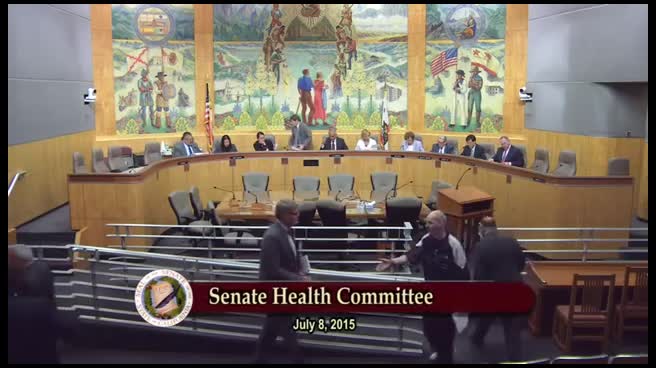 12MIN
Senate Standing Committee on Health
 1MIN
Assembly Floor
 22MIN
Assembly Standing Committee on Health
Bill Author
Bill Co-Author(s):