AB 2648: California Coastal Commission: delegation of authority.
- Session Year: 2015-2016
- House: Assembly
- Latest Version Date: 2016-03-18
Existing law, the California Coastal Act of 1976, requires any person wishing to perform or undertake any development in the coastal zone, as defined, in addition to obtaining any other permit required by law from any local government or from any state, regional, or local agency, to obtain a coastal development permit. The act further provides for the certification of local coastal programs by the California Coastal Commission. The act prohibits the commission, except with respect to appeals to the commission, from exercising its coastal development permit review authority, as specified, over any new development within the area to which the certified local coastal program, or any portion thereof, applies. The act specifies that any appealable action on a coastal development permit or claim of exemption for any development by a local government or port governing body may be appealed to the commission by an applicant, any aggrieved person, or any 2 members of the commission, except as provided.
This bill would, notwithstanding any other law, and to the extent permitted under federal law, authorize a county containing any portion of the coastal zone to petition a superior court of competent jurisdiction to obtain a writ of mandate requiring the authority of the commission over coastal permitting in the county to be delegated to the county and the county to be the exclusive agent for the purpose of enforcing state and federal coastal laws, as specified. This bill would authorize the delegation of authority to a county to be reversed by an appellate court if it finds that the county abused its discretion in exercising the authority in a manner sufficient to warrant a rescission. This bill would authorize an applicant for a coastal development permit, or any aggrieved person, as defined, to file an appeal of any appealable action on a coastal development permit or claim for exemption for any development proposed to be located in county with delegated authority or a city within a county with delegated authority directly to a superior court of competent jurisdiction, in lieu of filing an appeal with the commission.
The California Coastal Act of 1976 establishes the California Coastal Commission and prescribes the membership and functions and duties of the commission with regard to the administration and implementation of the act.
This bill would make nonsubstantive changes in those provisions prescribing the membership of the commission.
(a)Notwithstanding any other law, a county containing any portion of the coastal zone may petition a superior court of competent jurisdiction to obtain a writ of mandate requiring the authority of the commission over coastal permitting in the county to be delegated to the county and the county to be the exclusive agent for the purpose of enforcing state and federal coastal laws. To obtain the writ, the county shall prove that it has the expertise, financial capability, and experience to satisfactorily and fairly execute this authority.
(b)A delegation of authority to a county pursuant to subdivision (a) may be reversed by an appellate court if the appellate court finds that the county has abused its discretion in exercising the authority provided in subdivision (a) in a manner sufficient to warrant a rescission.
30552.(a)Notwithstanding any other law, an applicant, or any aggrieved person, as defined in Section 30801, may file an appeal of any appealable action on a coastal development permit or claim for exemption directly to a superior court of competent jurisdiction, in lieu of filing an appeal with the commission pursuant to Section 30625, for any development proposed to be located in either of the following:
(1)A county with delegated commission authority pursuant to Section 30550.
(2)A city within a county with delegated commission authority pursuant to Section 30550.
(b)Section 30802 shall not apply to an appeal filed pursuant to this section.
30554.The provisions of this chapter apply only to the extent permitted under federal law.
SECTION 1.Section 30301 of the Public Resources Code is amended to read:30301.The commission shall consist of the following 15 members:
(a)The Secretary of the Natural Resources Agency.
(b)The Secretary of Transportation.
(c)The Chairperson of the State Lands Commission.
(d)Six representatives of the public from the state at large. The Governor, the Senate Committee on Rules, and the Speaker of the Assembly shall each appoint two of these members.
(e)Six representatives selected from six coastal regions. The Governor shall select one member who is from the north coast region and one member who is from the south central coast region. The Speaker of the Assembly shall select one member who is from the central coast region and one member who is from the San Diego coast region. The Senate Committee on Rules shall select one member who is from the north central coast region and one member who is from the south coast region. For purposes of this division, these regions are defined as follows:
(1)The north coast region consists of the Counties of Del Norte, Humboldt, and Mendocino.
(2)The north central coast region consists of the Counties of Sonoma and Marin and the City and County of San Francisco.
(3)The central coast region consists of the Counties of San Mateo, Santa Cruz, and Monterey.
(4)The south central coast region consists of the Counties of San Luis Obispo, Santa Barbara, and Ventura.
(5)The south coast region consists of the Counties of Los Angeles and Orange.
(6)The San Diego coast region consists of the County of San Diego.
The commission shall consist of the following 15 members:
(a)The Secretary of the Natural Resources Agency.
(b)The Secretary of Transportation.
(c)The Chairperson of the State Lands Commission.
(d)Six representatives of the public from the state at large. The Governor, the Senate Committee on Rules, and the Speaker of the Assembly shall each appoint two of these members.
(e)Six representatives selected from six coastal regions. The Governor shall select one member who is from the north coast region and one member who is from the south central coast region. The Speaker of the Assembly shall select one member who is from the central coast region and one member who is from the San Diego coast region. The Senate Committee on Rules shall select one member who is from the north central coast region and one member who is from the south coast region. For purposes of this division, these regions are defined as follows:
(1)The north coast region consists of the Counties of Del Norte, Humboldt, and Mendocino.
(2)The north central coast region consists of the Counties of Sonoma and Marin and the City and County of San Francisco.
(3)The central coast region consists of the Counties of San Mateo, Santa Cruz, and Monterey.
(4)The south central coast region consists of the Counties of San Luis Obispo, Santa Barbara, and Ventura.
(5)The south coast region consists of the Counties of Los Angeles and Orange.
(6)The San Diego coast region consists of the County of San Diego.
|
Date
|
Status
|
|---|---|
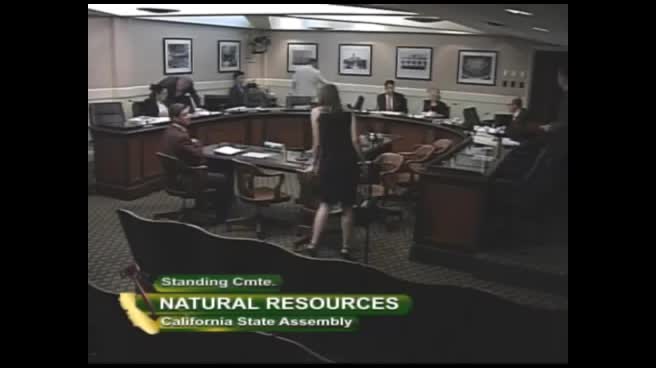
| Apr 18, 2016 | In committee: Set, first hearing. Failed passage. Reconsideration granted. |
| Mar 28, 2016 | Re-referred to Com. on NAT. RES. |
| Mar 18, 2016 | From committee chair, with author's amendments: Amend, and re-refer to Com. on NAT. RES. Read second time and amended. |
| Mar 17, 2016 | Referred to Com. on NAT. RES. |
| Feb 22, 2016 | Read first time. |
| Feb 21, 2016 | From printer. May be heard in committee March 22. |
| Feb 19, 2016 | Introduced. To print. |
|
Date
|
Description
|
Location
|
Votes
|
|
|---|---|---|---|---|
| Apr 18, 2016 | Reconsideration. | Assembly Standing Committee on Natural Resources |
Passed |
|
| Apr 18, 2016 | Do pass and be re-referred to the Committee on [Appropriations] | Assembly Standing Committee on Natural Resources |
Failed |
This list shows positions taken on this bill by organizations on the date displayed, which is linked to the original source.
Positions by individuals are not included.
Date of Hearing: April 18, 2016
ASSEMBLY COMMITTEE ON NATURAL RESOURCES
Das Williams, Chair
ABPCA Bill Id:AB 2648 (
Author:Jones) – As Amended Ver:March 18, 2016
SUBJECT: California Coastal Commission: delegation of authority
SUMMARY: Authorizes a coastal county to petition a superior court to obtain a writ of mandate requiring the Coastal Commission’s (Commission) regulatory authority to be delegated to the county. Specifies that the county would become the exclusive authority for the enforcement of state and federal coastal laws if the writ of mandate is granted. Allows an aggrieved person to file an appeal of any appealable action on a coastal development permit (CDP) directly to a superior court in lieu of filing an appeal with the Commission.
EXISTING LAW, pursuant to the Coastal Act:
- Requires a person planning to perform or undertake any development in the coastal zone to obtain a coastal development permit from the Commission or local government enforcing a Local Coastal Program (LCP).
- Defines "development" to mean, among other things, the placement or erection of any solid material or structure on land or in water. "Structure" includes, but is not limited to, any building, road, pipe, flume, conduit, siphon, aqueduct, telephone line, and electrical power transmission and distribution line.
- Defines the “coastal zone” as the land and water area of the State of California from the Oregon border to the border of the Republic of Mexico, extending seaward to the state's outer limit of jurisdiction, including all offshore islands, and extending inland generally 1,000 yards from the mean high tide line of the sea. In significant coastal estuarine, habitat, and recreational areas, the coastal zone extends inland to the first major ridgeline paralleling the sea or five miles from the mean high tide line of the sea, whichever is less. In developed urban areas, the zone generally extends inland less than 1,000 yards. The coastal zone does not include the area of jurisdiction of the San Francisco Bay Conservation and Development Commission, nor any area contiguous thereto, including any river, stream, tributary, creek, or flood control or drainage channel flowing into such area.
- Requires local governments within the coastal zone to prepare a LCP. Authorizes any local government to request the commission to prepare a LCP for the local government. Requires a LCP to contain a public access component to assure that maximum public access to the coast and public recreation areas is provided. Requires Commission approval of a local government’s LCP or any amendments to that LCP.
- Provides the right of judicial review to any aggrieved person for any decision or action of the Commission.
- Provides the right of judicial review to any person, including an applicant for a CDP or the Commission, aggrieved by the decision or action of a local government that is implementing a LCP if the decision or action is not appealable to the Commission.
- Authorizes the Commission to intervene in any such proceeding upon showing the matter involves a question of the conformity of a proposed development with a LCP or the validity of a local government action taken to implement a LCP. Allows any local government to request that the Commission intervene.
- Specifies that any appealable action on a CDP or claim of exemption for any development by a local government is appealable to the Commission by an applicant, any aggrieved person, or any two members of the Commission. Allows the Commission to approve, modify, or deny such proposed development, and if no action is taken within the specified time limit, the decision of the local government is final, unless the time limit is waived by the applicant.
FISCAL EFFECT: Unknown
COMMENTS:
- Coastal Commission. The Commission was established by voter initiative in 1972 (Proposition 20) and later made permanent by the Legislature through adoption of the California Coastal Act of 1976. In partnership with coastal cities and counties, the Commission plans and regulates the use of land and water in the coastal zone. Development activities, which are broadly defined by the Coastal Act to include construction of buildings, divisions of land, and activities that change the intensity of use of land or public access to coastal waters, generally require a CDP from either the Commission or the local government with a certified LCP.
The Commission is an independent, quasi-judicial state agency, and is composed of 12 voting members, appointed equally (4 each) by the Governor, the Senate Rules Committee, and the Speaker of the Assembly. Six of the voting commissioners are locally elected officials and six are appointed from the public at large. Three ex officio (non-voting) members represent the Natural Resources Agency, the California State Transportation Agency, and the State Lands Commission.
According to the Commission’s mission statement:
The Commission is committed to protecting and enhancing California’s coast and ocean for present and future generations. It does so through careful planning and regulation of environmentally-sustainable development, rigorous use of science, strong public participation, education, and effective intergovernmental coordination.
- This bill. This bill would allow local governments to end their relationship with the Commission subject to approval by a superior court. This bill would allow any aggrieved person to bypass the Commission and go directly to judicial review. This would eliminate the Commission’s oversight of development on the coast. The Commission was created because of concern about over-development on the Coast. Attempts to restrict public access and develop in fragile coastal ecosystems still exist today. The Commission plays a vital role as the safeguard of California’s coast. This bill would jeopardize that safeguard and undermine California’s commitment to coastal protection.
- Related legislation.
AB 2171 (Jones, 2016) authorizes any aggrieved person to file an appeal of any appealable action on a CDP or claim for exemption to a superior court instead of the Commission. This bill limits who may file an appeal to individuals living within 1000 feet of an impacted county. This bill failed passage in this Committee on April 4, 2016.
REGISTERED SUPPORT / OPPOSITION:
Support
None on file
Opposition
Amigos de los Rios
Audubon California
Azul
Black Surfers Collective
California Coastal Protection Network
California League of Conservation Voters
Committee for Green Foothills
Courage Campaign
Endangered Habitats League
Environment California
Friends of Harbor, Beaches & Parks
Greenspace – Cambria Land Trust
Humboldt Baykeeper
Los Angeles Waterkeeper
Natural Resources Defense Council
Northcoast Environmental Center
Orange County Coastkeeper
Save Our Shores
Sierra Club California
Smith River Alliance
Surfrider Foundation
The City Project
The Otter Project
The Wildlands Conservancy
Turtle Island Restoration Network
Wildcoast
5 individuals
Analysis Prepared by: Michael Jarred / NAT. RES. / (916) 319-2092
Discussed in Hearing
 20MIN
Assembly Standing Committee on Natural Resources
Bill Author

Bill Co-Author(s):