AB 1169: Economic development: Capital Access Loan Program.
- Session Year: 2015-2016
- House: Assembly
- Latest Version Date: 2016-08-09
Existing law establishes the Capital Access Loan Program to assist small businesses in financing the costs of complying with environmental mandates and the remediation of contamination on their properties, as specified. Existing law establishes within the program the California Americans with Disabilities Act Small Business Capital Access Loan Program (ADA program) to assist small businesses in financing the costs of projects that alter or retrofit existing small business facilities to comply with the federal Americans with Disabilities Act. Existing law, for the purposes of the ADA program, defines a small business as a business that has less than $1,000,000 in total gross annual income and meets other requirements and requires moneys in the ADA program fund, which is continuously appropriated, to be used for contributions in support of qualified loans, costs to educate the small business community and participating lenders about the program, and administrative expenditures, as specified. Existing law also establishes within the Capital Access Loan Program the California Seismic Safety Capital Access Loan Program to assist residential property owners and small business owners in seismically retrofitting residences and small businesses by covering losses on qualified loans for those purposes. Under existing law, the California Pollution Control Financing Authority administers all of these programs and is authorized to establish small business assistance funds for certain purposes, including, among others, funding the programs.
This bill would expand the definition of small business for the purposes of the ADA program to include businesses with less than $5,000,000 in total gross annual income. The bill would authorize moneys in the ADA program fund to be used for payments to participating financial institutions or borrowers to provide incentives to participate in the ADA program, as specified, would require the authority to adopt related regulations, and would authorize small business assistance funds to include contributions and nonreimbursable payments made directly to borrowers or participating financial institutions in furtherance of the ADA program, the Capital Access Loan Program, or other programs administered by the authority as part of the Capital Access Loan Program. By expanding the authorized uses of moneys in a continuously appropriated fund, the bill would make an appropriation.
Existing law, for the purposes of the California Seismic Safety Capital Access Loan Program, requires the authority to adopt regulations that limit the term of loss coverage for each qualified loan to no more than 10 years and that provide for recapture from the loss reserve account of the authoritys contribution for each enrolled loan upon maturation or after 10 years from the date of enrollment, whichever happens first.
This bill would shorten the 10-year period for loss coverage and recapture to 5 years.
This bill would declare that it is to take effect immediately as an urgency statute.
Existing law establishes the Strategic Growth Council in state government that consists of various heads of state agencies and certain other members. Existing law requires the council to engage in certain activities, including identifying and reviewing activities and funding programs of member state agencies that may be coordinated to improve air and water quality, improve natural resources protection, increase the availability of affordable housing, improve transportation, meet the goals of the California Global Warming Solutions Act of 2006, encourage sustainable land use planning, and revitalize urban and community centers in a sustainable manner. Existing law provides for the council to award grants and loans to support the planning and development of sustainable communities.
This bill would require recipients of state grant funding from the council or its member state agencies for certain projects to post signs acknowledging the sources of funds for the project pursuant to guidelines adopted by the council. The bill, if a project is funded from state and nonstate sources, would require the state funding sources to be listed first if state funding equals 50% or more of the total project costs.
Existing law establishes the Strategic Growth Council in state government that consists of various heads of state agencies and certain other members. Existing law requires the council to engage in certain activities, including identifying and reviewing activities and funding programs of member state agencies that may be coordinated to improve air and water quality, improve natural resources protection, increase the availability of affordable housing, improve transportation, meet the goals of the California Global Warming Solutions Act of 2006, encourage sustainable land use planning, and revitalize urban and community centers in a sustainable manner. Existing law provides for the council to award grants and loans to support the planning and development of sustainable communities.
This bill would require recipients of state grant funding from the council or its member state agencies for certain projects to post signs acknowledging the source sources of funds for the project pursuant to guidelines adopted by the council. The bill, if a project is funded from state and nonstate sources, would require the state funding source sources to be listed first if state funding equals 50% or more of the total project costs.
Existing law establishes the Strategic Growth Council in state government that consists of various heads of state agencies and certain other members. Existing law requires the council to engage in certain activities, including identifying and reviewing activities and funding programs of member state agencies that may be coordinated to improve air and water quality, improving improve natural resources protection, increasing increase the availability of affordable housing, improving improve transportation, meeting meet the goals of the California Global Warming Solutions Act of 2006, encouraging encourage sustainable land use planning, and revitalizing revitalize urban and community centers in a sustainable manner. Existing law provides for the council to award grants and loans to support the planning and development of sustainable communities.
This bill would require recipients of state grant funding from the council or its member state agencies for certain projects to post signs acknowledging the source of funds for the project pursuant to guidelines adopted by the council. The bill, if a project is funded from state and nonstate sources, would require the state funding source to be listed first if state funding equals 50% or more of total project costs.
Existing law establishes the Strategic Growth Council in state government that consists of various heads of state agencies and certain other members. Existing law requires the council to engage in certain activities, including identifying and reviewing activities and funding programs of member state agencies that may be coordinated to improve air and water quality, improving natural resources protection, increasing the availability of affordable housing, improving transportation, meeting goals of the California Global Warming Solutions Act of 2006, encouraging sustainable land use planning, and revitalizing urban and community centers in a sustainable manner. Existing law provides for the council to award grants and loans to support the planning and development of sustainable communities.
This bill would require recipients of state funding from the council or member state agencies for a project certain projects to post signs acknowledging the source of funds for the project pursuant to guidelines adopted by the council. The bill, if a project is funded from state and nonstate sources, would require the state funding source to be listed first if state funding equals 50% or more of total project costs.
Existing law establishes the Strategic Growth Council in state government that consists of various heads of state agencies and certain other members. Existing law requires the council to engage in certain activities, including identifying and reviewing activities and funding programs of member state agencies that may be coordinated to improve air and water quality, improving natural resources protection, increasing the availability of affordable housing, improving transportation, meeting goals of the California Global Warming Solutions Act of 2006, encouraging sustainable land use planning, and revitalizing urban and community centers in a sustainable manner. Existing law provides for the council to award grants and loans to support the planning and development of sustainable communities.
This bill would require recipients of state funding from the council or member state agencies for a project to post signs acknowledging the source of funds for the project pursuant to guidelines adopted by the council. The bill, if a project is funded from state and nonstate sources, would require the state funding source to be listed first if state funding equals 50% or more of total project costs.
Existing law establishes the State Lands Commission in the Natural Resources Agency and prescribes the functions and duties of the commission. If tide or submerged lands are conveyed by a legislative enactment and a prior survey has not been made and the act does not contain a description of those lands by metes and bounds, existing law requires the commission to survey, monument, and record a plat and a metes and bounds description of those lands within 2 years of the effective date of the act in the county recorders office in the county or counties where those lands are located. Upon recordation, existing law provides that the survey, monuments, plat, and description are binding upon the state, the grantee, and their successors in interest.
This bill would make nonsubstantive changes to these provisions.
(a) (1) Subject to any prior contractual obligations to any of its bondholders, the authority may establish one or more small business assistance funds in order to do any of the following:
(A) Assist small businesses to achieve financing of pollution control facilities.
(B) Assist with the financing of the costs of, among other things, assessment, remedial planning and reporting, technical assistance, cleanup, remediation, and development of brownfield sites, and with other similar or related costs, by providing loans pursuant to subdivision (h) of Section 44526.
(C) Fund a capital access program for small businesses pursuant to Article 8 (commencing with Section 44559). 44559), including contributions and nonreimbursable payments made directly to borrowers or participating financial institutions in furtherance of the program.
(2) For the purpose of establishing and maintaining small business assistance funds as it determines to be necessary or desirable to secure its bonds or any issuance thereof or for other authorized purposes, the authority, pursuant to its contracts with participating parties, may levy fees or other charges on, or require deposits from, participating parties receiving financing for a project under this division. The total amount of these fees, charges, and deposits with respect to a single issue of bonds shall not exceed 3 percent of the principal amount of that issue of bonds.
(3) Prior to levying any fees or charges or requiring deposits, the authority shall adopt regulations for the operation of the small business assistance funds, the amounts and any payment schedule for the fees, charges, or deposits, eligibility standards for small businesses desiring to use or benefit from the small business assistance funds, and any other matters the authority determines to be necessary for the establishment and maintenance of small business assistance funds. The regulations may provide for differential fees from participating parties based upon the size of a project financed by the authority or other factors determined to be relevant by the authority, and the regulations may restrict any benefits to those eligible small businesses specified in the regulations.
(4) The authority may transfer any funds available to it or set aside for its administrative expenses to any small business assistance fund established under this section.
(b) (1) The forms of financial assistance that the authority may provide under this section include, but are not limited to all of the following:
(A) Payments to reduce, but not eliminate, the interest rate on loans.
(B) Payments of part or all of the cost of acquiring letters of credit.
(C) Payments of part or all of the cost of acquiring insurance.
(D) Payments of part or all of the cost of acquiring guarantees.
(E) Payments of part or all of the cost of acquiring other forms of credit support.
(F) Payments of part or all of the authoritys expenses in issuing revenue bonds or providing other assistance.
(G)Contributions and nonreimbursable payments made directly to borrowers or participating financial institutions in furtherance of programs administered pursuant to Article 8 (commencing with Section 44559).
(2) The authority may also pledge any small business assistance fund, on an individual or pooled basis, to repay, directly or indirectly, the principal of, or interest or premium on, any issue of bonds of the authority or any loan made or acquired pursuant to this section.
(3) The authority may also use moneys in a small business assistance fund to assist in the financing of the costs of assessment of, remedial planning and reporting for, technical assistance for, and the cleanup, remediation or development of, brownfield sites, and of other similar or related costs, by providing loans, pursuant to, and under the terms permitted by, subdivision (h) of Section 44526.
(4) In addition to other purposes set forth in this section, the authority may use moneys in a small business assistance fund to make or acquire loans or guarantee commercial loans to participating parties eligible for assistance from those funds.
(5) Any moneys repaid or returned to the authority in connection with or as a result of any loan or financial assistance made pursuant to this section shall be deposited in the small business assistance fund from which the loan or assistance was originally provided.
(6) The authority may contract with qualified financial institutions, including, but not limited to, banks, investment and mortgage bankers, insurance companies, sureties, and guarantors, to provide any necessary assistance in the granting of credit for these purposes.
(c) Each small business assistance fund established pursuant to this section shall be deposited in a special account that the Controller shall create. Notwithstanding any other provision of law, and subject to any requirements of federal tax law or regulations relative to maintaining the tax-exempt status of the obligations of the authority, all interest or other gains earned by investment or deposit of money in the special account pursuant to any provision of Part 2 (commencing with Section 16300) of Division 4 of Title 2 of the Government Code or pursuant to any other provision of law shall be credited to, and deposited in, the account.
(d) In carrying out this section, the authority shall participate with the air pollution control districts and air quality management districts in providing financial assistance in its lending programs.
SEC. 2.Section 44559.13 of the Health and Safety Code is amended to read:44559.13.(a)It is the intent of the Legislature in this act to create and fund the California Americans with Disabilities Act Small Business Capital Access Loan Program to assist small businesses in complying with the Americans with Disabilities Act. It is not the intent of the Legislature to assist the physical expansion of small businesses that includes modifications that comply with the Americans with Disabilities Act. The program shall be administered by the California Pollution Control Financing Authority and follow the terms and conditions for the Capital Access Loan Program for Small Businesses in this article with the additional program requirements specified under this section.
(b)For purposes of this section, unless the context requires otherwise, the following words and terms shall have the following meanings:
(1)Americans with Disabilities Act means the federal Americans with Disabilities Act of 1990 (42 U.S.C. Sec. 12101 et seq.) and amendments thereto.
(2)California Americans with Disabilities Act Small Business Capital Access Loan Program Fund or fund means a fund established and administered by the authority pursuant to Sections 44548 and 44549 to be used for purposes of this program.
(3)Eligible cost means and includes all or any part of the price of construction, purchase price of real or personal property, the price of demolishing or removing any buildings or structures, the price of all machinery and equipment, the amount of financing charges and interest prior to, during, and for a period not to exceed the later of one year or one year following completion of construction, as determined by the authority, the price of insurance during construction, the amount of funding or financing noncapital expenses, the amount of reserves for principal and interest and for extensions, enlargements, additions, replacements, renovations, and improvements, the price of engineering, financial, and legal services and other service contracts, the price of plans, specifications, studies, surveys, estimates, administrative expenses, and any other expenses of funding or financing, that are necessary and allocable to the eligible project, and shall not include costs not directly related to physical alterations necessary for compliance with the Americans with Disabilities Act.
(4)Eligible project means the physical alterations or retrofits to an existing small business facility of less than 10,000 square feet necessary to ensure that facility is in compliance with the Americans with Disabilities Act, and the financing necessary to pay eligible costs of the project.
(5)Qualified loan means a loan or portion of a loan as defined in subdivision (j) of Section 44559.1, where the proceeds of the loan or portion of the loan are limited to the eligible costs for an eligible project under this program, and where the loan or portion of the loan does not exceed fifty thousand dollars ($50,000).
(6)Small business or qualified business means a business referred to in subdivisions (i) and (m) of Section 44559.1, that meets the following additional criteria:
(A)Fifteen or fewer full-time equivalent employees.
(B)Less than one million dollars ($1,000,000) five million dollars ($5,000,000) in total gross annual income from all sources.
(C)Does not provide overnight accommodations.
(c)(1)The California Americans with Disabilities Act Small Business Capital Access Loan Program Fund is established in the State Treasury for, and shall be administered by the authority pursuant to Sections 44548 and 44549 for, this program. Notwithstanding Section 13340 of the Government Code, all money in the fund is continuously appropriated to the authority for carrying out the purposes of this section. The authority may divide the fund into separate accounts. All moneys accruing to the authority pursuant to this section from any source shall be deposited into the fund.
(2)All moneys in the fund derived from any source shall be held in trust for the life of this program, subject to the program expenditures and costs of administering this section, as follows:
(A)Program expenditures shall include both of the following:
(i)Contributions paid by the authority in support of qualified loans.
(ii)Payments made to participating financial institutions or borrowers to provide incentives to participate in the program, to the extent that moneys other than the initial appropriation are deposited into the fund and are authorized for that use.
(ii)
(iii)Reasonable costs to educate the small business community and participating lenders about the program, including travel within the state.
(B)Administrative expenditures shall be limited to 5 percent of the initial appropriation plus 5 percent of all moneys recaptured, and shall include all of the following:
(i)Personnel costs.
(ii)Service and vending contracts necessary to carry out the program.
(iii)Other reasonable direct and indirect administrative costs.
(3)The authority may direct the Treasurer to invest moneys in the fund that are not required for its current needs in the eligible securities specified in Section 16430 of the Government Code as the authority shall designate. The authority may direct the Treasurer to deposit moneys in interest-bearing accounts in state or national banks or other financial institutions having principal offices located in the state. The authority may alternatively require the transfer of moneys in the fund to the Surplus Money Investment Fund for investment pursuant to Article 4 (commencing with Section 16470) of Chapter 3 of Part 2 of Division 4 of Title 2 of the Government Code. All interest or other increment resulting from an investment or deposit shall be deposited into the fund, notwithstanding Section 16305.7 of the Government Code. Moneys in the fund shall not be subject to transfer to any other fund pursuant to any provision of Part 2 (commencing with Section 16300) of Division 4 of Title 2 of the Government Code, excepting the Surplus Money Investment Fund.
(d)The authority shall adopt regulations pursuant to subdivision (c) of Section 44520 to implement the program, including provisions specific to this program as described in this section and further including provisions to:
(1)Establish a new loss reserve account for each participating lender enrolling loans in this program.
(2)Obtain a certification from each participating lender and small business upon enrollment of a qualified loan that the proceeds of the loan will be used for the eligible costs of an eligible project.
(3)Contribute an additional incentive from the fund for each loan enrolled for a qualified business located in a severely affected community. community, or make nonreimbursable payments from other moneys to provide direct incentives to borrowers or participating financial institutions to participate in the program.
(4)Restrict the enrollment of a qualified loan in any other Capital Access Loan Program for small business offered by the authority as long as funds are available for this program.
(5)Limit the term of loss coverage for each qualified loan to no more than five years.
(6)Recapture from the loss reserve account the authoritys contribution for each enrolled loan upon the maturation of such loan or after five years from the date of enrollment, whichever happens first, to be deposited in the fund and applied to future program and administrative expenditures.
SEC. 3.Section 44559.14 of the Health and Safety Code is amended to read:44559.14.(a)(1)It is the intent of the Legislature in enacting the act adding this section to create and fund a program to assist residential property owners and small business owners in seismically retrofitting residences and small businesses with a priority on soft-story buildings and unreinforced brick and concrete buildings. It is not the intent of the Legislature to assist the physical expansion of small businesses and residences.
(2)The Legislature hereby establishes the California Seismic Safety Capital Access Loan Program. The program shall cover losses on qualified loans by participating lenders to qualified residential property owners or qualified small businesses for eligible projects, as specified under this section. The program shall be administered by the California Pollution Control Financing Authority and follow the terms and conditions for the Capital Access Loan Program in this article with the additional program requirements specified under this section.
(b)For purposes of this section, unless the context requires otherwise, the following words and terms shall have the following meanings:
(1)Seismic retrofit construction means alteration performed on or after January 1, 2017, of a qualified building or its components to substantially mitigate seismic damage. Seismic retrofit construction includes, but is not limited to, all of the following:
(A)Anchoring the structure to the foundation.
(B)Bracing cripple walls.
(C)Bracing hot water heaters.
(D)Installing automatic gas shutoff valves.
(E)Repairing or reinforcing the foundation to improve the integrity of the foundation against seismic damage.
(F)Anchoring fuel storage.
(G)Installing an earthquake-resistant bracing system for mobilehomes that are registered with the Department of Housing and Community Development.
(2)Eligible costs means the costs paid or incurred on or after January 1, 2017, for an eligible project, including any engineering or architectural design work necessary to permit or complete the eligible project less the amount of any grant provided by a public entity for the eligible project. Eligible costs do not include costs paid or incurred for any of the following:
(A)Maintenance, including abatement of deferred or inadequate maintenance, and correction of violations unrelated to the seismic retrofit construction.
(B)Repair, including repair of earthquake damage.
(C)Seismic retrofit construction required by local building codes as a result of addition, repair, building relocation, or change of use or occupancy.
(D)Other work or improvement required by local building or planning codes as a result of the intended seismic retrofit construction.
(E)Rent reductions or other associated compensation, compliance actions, or other related coordination involving the qualified residential property owner or qualified small business and any other party, including a tenant, insurer, or lender.
(F)Replacement of existing building components, including equipment, except as needed to complete the seismic retrofit construction.
(G)Bracing or securing nonpermanent building contents.
(H)The offset of costs, reimbursements, or other costs transferred from the qualified residential property owner or qualified small business to others.
(3)Eligible project means seismic retrofit construction that is necessary to ensure that the qualified building is capable of substantially mitigating seismic damage, and the financing necessary to pay eligible costs of the project.
(4)Qualified building means a building that is certified by the appropriate local building code enforcement authority for the jurisdiction in which the building is located as hazardous and in danger of collapse in the event of a catastrophic earthquake.
(5)Qualified loan means a loan or portion of a loan as defined in subdivision (j) of Section 44559.1, where the proceeds of the loan or portion of the loan are limited to the eligible costs for an eligible project under this program, and where the loan or portion of the loan does not exceed two hundred fifty thousand dollars ($250,000).
(6)Qualified small business means a business referred to in subdivisions (i) and (m) of Section 44559.1 that owns and occupies, or intends to occupy, a qualified building for the operation of the business.
(7)Qualified residential property owner means either an owner and occupant of a residential building that is a qualified building or a qualified small business that owns one or more residential buildings, including a multiunit housing building, that is a qualified building.
(c)(1)The California Seismic Safety Capital Access Loan Program Fund is established in the State Treasury and shall be administered by the authority pursuant to Sections 44548 and 44549 for this program. For purposes of this section, the references in Sections 44548 and 44549 to small business shall include qualified residential property owner, as defined in this section. Notwithstanding Section 13340 of the Government Code, all moneys in the fund are continuously appropriated to the authority for carrying out this section. The authority may divide the fund into separate accounts. All moneys accruing to the authority pursuant to this section from any source shall be deposited into the fund.
(2)All moneys in the fund derived from any source shall be held in trust for the life of this program, for program expenditures and costs of administering this section, as follows:
(A)Program expenditures shall include both of the following:
(i)Contributions paid by the authority in support of qualified loans.
(ii)Costs for a qualified expert to validate that the proceeds of the loans are eligible costs, as defined under this section.
(iii)Reasonable costs to educate the small business community, residential property owners, and participating lenders about the program, including travel within the state.
(B)Administrative expenditures shall be limited to 5 percent of the initial appropriation plus 5 percent of all moneys recaptured, and shall include all of the following:
(i)Personnel costs.
(ii)Service and vending contracts, other than program expenditures described in subparagraph (A), that are necessary to carry out the program.
(iii)Other reasonable direct and indirect administrative costs.
(3)The authority may direct the Treasurer to invest moneys in the fund that are not required for its current needs in the eligible securities specified in Section 16430 of the Government Code as the authority shall designate. The authority may direct the Treasurer to deposit moneys in interest-bearing accounts in state or national banks or other financial institutions having principal offices located in the state. The authority may alternatively require the transfer of moneys in the fund to the Surplus Money Investment Fund for investment pursuant to Article 4 (commencing with Section 16470) of Chapter 3 of Part 2 of Division 4 of Title 2 of the Government Code. All interest or other increment resulting from an investment or deposit shall be deposited into the fund, notwithstanding Section 16305.7 of the Government Code. Moneys in the fund shall not be subject to transfer to any other fund pursuant to any provision of Part 2 (commencing with Section 16300) of Division 4 of Title 2 of the Government Code, excepting the Surplus Money Investment Fund.
(d)The authority shall adopt regulations pursuant to Section 44520 to implement the program, including, but not limited to, provisions to:
(1)Establish a new loss reserve account for each participating lender enrolling loans in this program.
(2)Obtain a certification from each participating lender and qualified small business or qualified residential property owner upon enrollment of a qualified loan that the proceeds of the loan will be used for the eligible costs of an eligible project.
(3)Contribute an additional incentive from the fund for each loan enrolled for a qualified small business or qualified residential property owner located in a severely affected community.
(4)Restrict the enrollment of a qualified loan in any other Capital Access Loan Program for a qualified small business or qualified residential property owner offered by the authority as long as funds are available for this program.
(5)Limit the term of loss coverage for each qualified loan to no more than 10 five years.
(6)Recapture from the loss reserve account the authoritys contribution for each enrolled loan upon the maturation of that loan or after 10 five years from the date of enrollment, whichever happens first, to be deposited in the fund and applied to future program and administrative expenditures.
(e)The authority may adopt regulations relating to residential property owner or small business financing as emergency regulations in accordance with Chapter 3.5 (commencing with Section 11340) of Part 1 of Division 3 of Title 2 of the Government Code. For purposes of that Chapter 3.5, including Section 11349.6 of the Government Code, the adoption of the regulations shall be considered by the Office of Administrative Law to be necessary for the immediate preservation of the public peace, health and safety, and general welfare. The regulations shall be repealed 180 days after their effective date, unless the adopting authority or agency complies with that Chapter 3.5.
SEC. 4.This act is an urgency statute necessary for the immediate preservation of the public peace, health, or safety within the meaning of Article IV of the Constitution and shall go into immediate effect. The facts constituting the necessity are:
In order to provide timely assistance to small businesses struggling to comply with the federal Americans with Disabilities Act and to preserve the ability of those small businesses to operate, it is necessary for this act to go into effect immediately.
SECTION 1.Section 12815 is added to the Government Code, to read:12815.(a)For purposes of this section, agency means the Strategic Growth Council established pursuant to Section 75121 of the Public Resources Code or any of its member agencies.
(b)An agency shall require recipients of state grant funding from the agency for a project located in a public space and that provides public benefits, as determined by the agency, to post signs acknowledging the sources of funds for the project. If the project is funded from state and nonstate sources, the state funding sources shall be listed first if the state funding equals 50 percent or more of the total project costs.
(c)The Strategic Growth Council shall develop model guidelines for the signage requirements.
(d)Each agency shall develop signage requirements for its grant programs consistent with the model guidelines developed pursuant to subdivision (c).
(a)For purposes of this section, agency means the Strategic Growth Council established pursuant to Section 75121 of the Public Resources Code or any of its member agencies.
(b)An agency shall require all recipients of state grant funding from the agency for a project located in a public space and that provides public benefits, as determined by the agency, to post signs acknowledging the sources of funds for the project. If the project is funded from state and nonstate sources, the state funding sources shall be listed first if the state funding equals 50 percent or more of the total project costs.
(c)The Strategic Growth Council shall develop model guidelines for the signage requirements.
(d)Each agency shall develop signage requirements for its grant program programs consistent with the model guidelines developed pursuant to subdivision (c).
(a)For purposes of this section, agency means the Strategic Growth Council established pursuant to Section 75121 of the Public Resources Code or any of its member agencies.
(b)An agency shall require all recipients of state grant funding from the agency for a project located in a public space and that provides public benefits, as determined by the agency, to post signs acknowledging the sources of funds for the project. If the project is funded from state and nonstate sources, the state funding sources shall be listed first if the state funding equals 50 percent or more of the total project costs.
(c)The Strategic Growth Council shall develop model guidelines for the signage requirements.
(d)Each agency shall develop signage requirements for its grant program consistent with the model guidelines developed pursuant to subdivision (c).
SECTION 1.Section 75125 of the Public Resources Code is amended to read:75125.The council shall do all of the following:
(a)(1)Identify and review activities and funding programs of member state agencies that may be coordinated to improve air and water quality, improve natural resource protection, increase the availability of affordable housing, improve transportation, meet the goals of the California Global Warming Solutions Act of 2006 (Division 25.5 (commencing with Section 38500) of the Health and Safety Code), encourage sustainable land use planning, and revitalize urban and community centers in a sustainable manner. At a minimum, the council shall review and comment on the five-year infrastructure plan developed pursuant to Article 2 (commencing with Section 13100) of Chapter 2 of Part 3 of Division 3 of the Government Code and the State Environmental Goals and Policy Report developed pursuant to Section 65041 of the Government Code.
(2)Require all recipients of state funding from the council or member state agencies for a project located in a public place and that provides public benefits as determined by the council, to post signs acknowledging the source of funds for the project, pursuant to guidelines adopted by the council. If a project is funded from state and nonstate sources, the state funding source shall be listed first if state funding equals 50 percent or more of total project costs.
(b)Recommend policies and investment strategies and priorities to the Governor, the Legislature, and to appropriate state agencies to encourage the development of sustainable communities, such as those communities that promote equity, strengthen the economy, protect the environment, and promote public health and safety, consistent with subdivisions (a) and (c) of Section 75065.
(c)Provide, fund, and distribute data and information to local governments and regional agencies that will assist in developing and planning sustainable communities.
(d)Manage and award grants and loans to support the planning and development of sustainable communities, pursuant to Sections 75127, 75128, and 75129. To implement this subdivision, the council may do all of the following:
(1)Develop guidelines for awarding financial assistance, including criteria for eligibility and additional consideration.
(2)Develop criteria for determining the amount of financial assistance to be awarded. The council shall award a revolving loan to an applicant for a planning project, unless the council determines that the applicant lacks the fiscal capacity to carry out the project without a grant. The council may establish criteria that would allow the applicant to illustrate an ongoing commitment of financial resources to ensure the completion of the proposed plan or project.
(3)Provide for payments of interest on loans made pursuant to this article. The rate of interest shall not exceed the rate earned by the Pooled Money Investment Board.
(4)Provide for the time period for repaying a loan made pursuant to this article.
(5)Provide for the recovery of funds from an applicant that fails to complete the project for which financial assistance was awarded. The council shall direct the Controller to recover funds by any available means.
(6)Provide technical assistance for application preparation.
(7)Designate a state agency or department to administer technical and financial assistance programs for the disbursing of grants and loans to support the planning and development of sustainable communities, pursuant to Sections 75127, 75128, and 75129.
(e)No later than July 1, 2010, and every year thereafter, provide a report to the Legislature that shall include, but is not limited to, all of the following:
(1)A list of applicants for financial assistance.
(2)Identification of which applications were approved.
(3)The amounts awarded for each approved application.
(4)The remaining balance of available funds.
(5)A report on the proposed or ongoing management of each funded project.
(6)Any additional minimum requirements and priorities for a project or plan proposed in a grant or loan application developed and adopted by the council pursuant to subdivision (c) of Section 75126.
The council shall do all of the following:
(a)(1)Identify and review activities and funding programs of member state agencies that may be coordinated to improve air and water quality, improve natural resource protection, increase the availability of affordable housing, improve transportation, meet the goals of the California Global Warming Solutions Act of 2006 (Division 25.5 (commencing with Section 38500) of the Health and Safety Code), encourage sustainable land use planning, and revitalize urban and community centers in a sustainable manner. At a minimum, the council shall review and comment on the five-year infrastructure plan developed pursuant to Article 2 (commencing with Section 13100) of Chapter 2 of Part 3 of Division 3 of the Government Code and the State Environmental Goals and Policy Report developed pursuant to Section 65041 of the Government Code.
(2)Require all recipients of state funding from the council or member state agencies for a project to post signs acknowledging the source of funds for the project, pursuant to guidelines adopted by the council. If a project is funded from state and nonstate sources, the state funding source shall be listed first if state funding equals 50 percent or more of total project costs.
(b)Recommend policies and investment strategies and priorities to the Governor, the Legislature, and to appropriate state agencies to encourage the development of sustainable communities, such as those communities that promote equity, strengthen the economy, protect the environment, and promote public health and safety, consistent with subdivisions (a) and (c) of Section 75065.
(c)Provide, fund, and distribute data and information to local governments and regional agencies that will assist in developing and planning sustainable communities.
(d)Manage and award grants and loans to support the planning and development of sustainable communities, pursuant to Sections 75127, 75128, and 75129. To implement this subdivision, the council may do all of the following:
(1)Develop guidelines for awarding financial assistance, including criteria for eligibility and additional consideration.
(2)Develop criteria for determining the amount of financial assistance to be awarded. The council shall award a revolving loan to an applicant for a planning project, unless the council determines that the applicant lacks the fiscal capacity to carry out the project without a grant. The council may establish criteria that would allow the applicant to illustrate an ongoing commitment of financial resources to ensure the completion of the proposed plan or project.
(3)Provide for payments of interest on loans made pursuant to this article. The rate of interest shall not exceed the rate earned by the Pooled Money Investment Board.
(4)Provide for the time period for repaying a loan made pursuant to this article.
(5)Provide for the recovery of funds from an applicant that fails to complete the project for which financial assistance was awarded. The council shall direct the Controller to recover funds by any available means.
(6)Provide technical assistance for application preparation.
(7)Designate a state agency or department to administer technical and financial assistance programs for the disbursing of grants and loans to support the planning and development of sustainable communities, pursuant to Sections 75127, 75128, and 75129.
(e)No later than July 1, 2010, and every year thereafter, provide a report to the Legislature that shall include, but is not limited to, all of the following:
(1)A list of applicants for financial assistance.
(2)Identification of which applications were approved.
(3)The amounts awarded for each approved application.
(4)The remaining balance of available funds.
(5)A report on the proposed or ongoing management of each funded project.
(6)Any additional minimum requirements and priorities for a project or plan proposed in a grant or loan application developed and adopted by the council pursuant to subdivision (c) of Section 75126.
SECTION 1.Section 6359 of the Public Resources Code is amended to read:6359.(a)Whenever by legislative enactment tide or submerged lands of the state are granted or conveyed or authorized to be granted or conveyed, or whenever a previous enactment is amended, and a prior survey has not been made, and the act does not contain a description of those lands by metes and bounds, the commission shall within two years following the effective date of the act survey, monument, and record a plat and a metes and bounds description of those lands in the office of the county recorder in the county or counties in which those lands are located. Upon recordation, the survey, monuments, plat, and description shall be binding upon the state, the grantee, and their successors in interest.
(b)A grant or conveyance, or amended grant or conveyance, shall not be effective until completion of the survey and recordation. The cost of the survey and recordation shall be paid by the person or entity to which the grant or conveyance is made.
(a)Whenever by legislative enactment tide or submerged lands of the State state are granted or conveyed or authorized to be granted or conveyed conveyed, or whenever a previous enactment is amended, and no a prior survey has not been made, and such the act does not contain a description of such those lands by metes and bounds, the commission shall within two years following the effective date of such the act survey, monument, and record a plat and a metes and bounds description of such those lands in the office of the county recorder in the county or counties in which such those lands are located. Upon recordation, the survey, monuments, plat plat, and description shall be binding upon the State, state, the grantee, and their successors in interest.
No such
(b)A grant or conveyance conveyance, or amended grant or conveyance conveyance, shall not be effective until completion of the survey and recordation. The cost of such the survey and recordation shall be paid by the person or entity to which the grant or conveyance is made.
|
Date
|
Status
|
|---|---|
| Aug 11, 2016 | Re-referred to Com. on RLS. pursuant to Senate Rule 29.10(c). |
| Aug 10, 2016 | Read second time. Ordered to third reading. |
| Aug 9, 2016 | Read second time and amended. Ordered returned to second reading. |
| Aug 9, 2016 | Ordered to second reading. |
| Aug 9, 2016 | From inactive file. |
| Sep 10, 2015 | Ordered to inactive file at the request of Senator Roth. |
| Sep 8, 2015 | Read second time. Ordered to third reading. |
| Sep 4, 2015 | Read third time and amended. Ordered to second reading. |
| Aug 25, 2015 | Read second time. Ordered to third reading. |
| Aug 24, 2015 | From committee: Be placed on second reading file pursuant to Senate Rule 28.8. |
| Aug 17, 2015 | From committee chair, with author's amendments: Amend, and re-refer to committee. Read second time, amended, and re-referred to Com. on APPR. |
| Jun 30, 2015 | In committee: Set, first hearing. Hearing canceled at the request of author. |
| Jun 24, 2015 | From committee: Do pass and re-refer to Com. on APPR. (Ayes 6. Noes 2.) (June 23). Re-referred to Com. on APPR. |
| May 28, 2015 | Referred to Com. on N.R. & W. |
| May 14, 2015 | In Senate. Read first time. To Com. on RLS. for assignment. |
| May 14, 2015 | Read third time. Passed. Ordered to the Senate. (Ayes 78. Noes 0. Page 1450.) |
| May 14, 2015 | Read third time. Passed. Ordered to the Senate. |
| May 7, 2015 | Read second time. Ordered to Consent Calendar. |
| May 6, 2015 | From committee: Do pass. To Consent Calendar. (Ayes 17. Noes 0.) (May 6). |
| Apr 28, 2015 | From committee: Do pass and re-refer to Com. on APPR. with recommendation: To Consent Calendar. (Ayes 9. Noes 0.) (April 27). Re-referred to Com. on APPR. |
| Apr 21, 2015 | Re-referred to Com. on NAT. RES. |
| Apr 20, 2015 | From committee chair, with author's amendments: Amend, and re-refer to Com. on NAT. RES. Read second time and amended. |
| Apr 6, 2015 | Re-referred to Com. on NAT. RES. |
| Mar 26, 2015 | From committee chair, with author's amendments: Amend, and re-refer to Com. on NAT. RES. Read second time and amended. |
| Mar 26, 2015 | Referred to Com. on NAT. RES. |
| Mar 2, 2015 | Read first time. |
| Mar 1, 2015 | From printer. May be heard in committee March 31. |
| Feb 27, 2015 | Introduced. To print. |
|
Date
|
Description
|
Location
|
Votes
|
|
|---|---|---|---|---|
| Jun 23, 2015 | Do pass, but first be re-referred to the Committee on [Appropriations] | Senate Standing Committee on Natural Resources and Water |
Passed |
|
| May 14, 2015 | AB 1169 GOMEZ Consent Calendar Second Day Regular Session | Assembly Floor |
Passed |
|
| May 6, 2015 | Do pass. To Consent Calendar. | Assembly Standing Committee on Appropriations |
Passed |
|
| Apr 27, 2015 | Do pass and be re-referred to the Committee on [Appropriations] with recommendation: To Consent Calendar | Assembly Standing Committee on Natural Resources |
Passed |
This list shows positions taken on this bill by organizations on the date displayed, which is linked to the original source.
Positions by individuals are not included.
AB 1169
Page 4
|
Office of Senate Floor Analyses (916) 651-1520 Fax: (916) 327-4478 |
THIRD READING
Bill No: AB 1169
Amended: 9/4/15 in Senate
SENATE NATURAL RES. & WATER COMMITTEE: 6-2, 6/23/15
AYES: Pavley, Hertzberg, Hueso, Jackson, Monning, Wolk
NOES: Stone, Vidak
NO VOTE RECORDED: Allen
SENATE APPROPRIATIONS COMMITTEE: Senate Rule 28.8
ASSEMBLY FLOOR: 78-0, 5/14/15 (Consent) - See last page for vote
SUBJECT: Strategic Growth Council: state funding signs
DIGEST: This bill requires recipients of state funding from the Strategic Growth Council (SGC) to post signs acknowledging the source of funds for the project, when those projects are located in a public place and provide public benefits.
Senate Floor Amendments of 9/4/15 provide nonsubstantive cleanup to bill language.
Existing law:
Establishes the SGC within the state government (Public Resources Code (PRC) Section 75121).
Tasks the SGC with (PRC Section 75125):
Identifying and reviewing activities and funding programs of member state agencies that may be coordinated to improve air and water quality, improve natural resource protection, increase the availability of affordable housing, improve transportation, meet the goals of the California Global Warming Solutions Act of 2006, encourage sustainable land use planning, and revitalize urban and community centers in a sustainable manner.
Recommending policies and investment strategies and priorities to the Governor, the Legislature, and to appropriate state agencies to encourage the development of sustainable communities, such as those communities that promote equity, strengthen the economy, protect the environment, and promote public health and safety.
Providing, funding, and distributing data and information to local governments and regional agencies that will assist in developing and planning sustainable communities.
Managing and awarding grants and loans to support the planning and development of sustainable communities.
Providing an annual report to the Legislature that includes projects that request funding, are granted funding, the status of funding projects, and the remaining funding.
This bill:
Requires recipients of state funding from the SGC for a project located in a public place and that provides public benefits to post signs acknowledging the source of funds for the project, pursuant to guidelines adopted by the SGC.
Specifies that if a project is funded from state and nonstate sources, the state funding source shall be listed first if state funding equals 50 percent or more of total project costs.
Directs the SGC to develop model guidelines for the signage requirements.
Requires SGC member agencies to develop signage requirements for grant programs consistent with the model guidelines developed by the SGC.
Comments
What is the Strategic Growth Council? In September 2008, SB 732 (Steinberg, Chapter 729, 2008) was signed into law, creating the SGC. The SGC is a cabinet level committee that is tasked with coordinating the activities of state agencies to:
Improve air and water quality
Protect natural resources and agriculture lands
Increase the availability of affordable housing
Promote public health
Improve transportation
Encourage greater infill and compact development
Revitalize community and urban centers
Assist state and local entities in the planning of sustainable communities and meeting AB 32 goals
Why are funding signs necessary? Currently, monies from the Greenhouse Gas Reduction Fund (GGRF) and resource bonds are used to fund public improvement projects throughout California. These monies are administered by the SGC, and contribute to cleaner air, water, and communities. However, there is often a lack of understanding about how these projects are funded, and taxpayers may not be aware of how the GGRF and the resource bonds they voted to pass are being used. AB 1169 helps educate the public about how those projects are funded.
Related Legislation
In 2000, Proposition 12, the Safe Neighborhood Parks, Clean Water, Clean Air, and Coastal Protection Bond Act, was passed by the voters. The Proposition included language amending PRC Section 5096.309 to read: “Pursuant to guidelines issued by the secretary, all recipients of funding pursuant to this chapter shall post signs acknowledging the source of the funds.”
In 2014, Proposition 1, the Water Quality, Supply, and Infrastructure Improvement Act, was passed by voters. The Proposition included language amending the Water Code (WC). Specifically, WC Section 79707 reads: “To the extent practicable, a project supported by funds made available by this division will include signage informing the public that the project received funds from the Water Quality, Supply, and Infrastructure Improvement Act of 2014.”
FISCAL EFFECT: Appropriation: No Fiscal Com.: Yes Local: No
None received
None received
AYES: Achadjian, Alejo, Travis Allen, Baker, Bigelow, Bloom, Bonilla, Bonta, Brough, Brown, Burke, Calderon, Campos, Chang, Chau, Chávez, Chiu, Chu, Cooley, Cooper, Dababneh, Dahle, Daly, Dodd, Eggman, Frazier, Beth Gaines, Gallagher, Cristina Garcia, Eduardo Garcia, Gatto, Gipson, Gomez, Gonzalez, Gordon, Gray, Grove, Hadley, Harper, Roger Hernández, Holden, Irwin, Jones, Jones-Sawyer, Kim, Lackey, Levine, Lopez, Low, Maienschein, Mathis, Mayes, McCarty, Melendez, Mullin, Nazarian, Obernolte, O'Donnell, Olsen, Patterson, Perea, Quirk, Rendon, Ridley-Thomas, Rodriguez, Salas, Santiago, Steinorth, Mark Stone, Thurmond, Ting, Wagner, Waldron, Weber, Wilk, Williams, Wood, Atkins
NO VOTE RECORDED: Linder, Medina
Prepared by: Angee Doerr / N.R. & W. / (916) 651-4116
9/8/15 21:01:56
**** END ****
AB 1169
Page 4
|
Office of Senate Floor Analyses (916) 651-1520 Fax: (916) 327-4478 |
THIRD READING
Bill No: AB 1169
Amended: 8/17/15 in Senate
SENATE NATURAL RES. & WATER COMMITTEE: 6-2, 6/23/15
AYES: Pavley, Hertzberg, Hueso, Jackson, Monning, Wolk
NOES: Stone, Vidak
NO VOTE RECORDED: Allen
SENATE APPROPRIATIONS COMMITTEE: Senate Rule 28.8
ASSEMBLY FLOOR: 78-0, 5/14/15 (Consent) - See last page for vote
SUBJECT: Strategic Growth Council: state funding signs
DIGEST: This bill requires recipients of state funding from the Strategic Growth Council (SGC) to post signs acknowledging the source of funds for the project, when those projects are located in a public place and provide public benefits.
Existing law:
Establishes the SGC within the state government (Public Resources Code (PRC) Section 75121).
Tasks the SGC with (PRC Section 75125):
Identifying and reviewing activities and funding programs of member state agencies that may be coordinated to improve air and water quality, improve natural resource protection, increase the availability of affordable housing, improve transportation, meet the goals of the California Global Warming Solutions Act of 2006, encourage sustainable land use planning, and revitalize urban and community centers in a sustainable manner.
Recommending policies and investment strategies and priorities to the Governor, the Legislature, and to appropriate state agencies to encourage the development of sustainable communities, such as those communities that promote equity, strengthen the economy, protect the environment, and promote public health and safety.
Providing, funding, and distributing data and information to local governments and regional agencies that will assist in developing and planning sustainable communities.
Managing and awarding grants and loans to support the planning and development of sustainable communities.
Providing an annual report to the Legislature that includes projects that request funding, are granted funding, the status of funding projects, and the remaining funding.
This bill:
Requires recipients of state funding from the SGC for a project located in a public place and that provides public benefits to post signs acknowledging the source of funds for the project, pursuant to guidelines adopted by the SGC.
Specifies that if a project is funded from state and nonstate sources, the state funding source shall be listed first if state funding equals 50 percent or more of total project costs.
Directs the SGC to develop model guidelines for the signage requirements.
Comments
What is the Strategic Growth Council? In September 2008, SB 732 (Steinberg, Chapter 729, 2008) was signed into law, creating the SGC. The SGC is a cabinet level committee that is tasked with coordinating the activities of state agencies to:
Improve air and water quality
Protect natural resources and agriculture lands
Increase the availability of affordable housing
Promote public health
Improve transportation
Encourage greater infill and compact development
Revitalize community and urban centers
Assist state and local entities in the planning of sustainable communities and meeting AB 32 goals
Why are funding signs necessary? Currently, monies from the Greenhouse Gas Reduction Fund (GGRF) and resource bonds are used to fund public improvement projects throughout California. These monies are administered by the SGC, and contribute to cleaner air, water, and communities. However, there is often a lack of understanding about how these projects are funded, and taxpayers may not be aware of how the GGRF and the resource bonds they voted to pass are being used. AB 1169 helps educate the public about how those projects are funded.
Related Legislation
In 2000, Proposition 12, the Safe Neighborhood Parks, Clean Water, Clean Air, and Coastal Protection Bond Act, was passed by the voters. The Proposition included language amending PRC Section 5096.309 to read: “Pursuant to guidelines issued by the secretary, all recipients of funding pursuant to this chapter shall post signs acknowledging the source of the funds.”
In 2014, Proposition 1, the Water Quality, Supply, and Infrastructure Improvement Act, was passed by voters. The Proposition included language amending the Water Code (WC). Specifically, WC Section 79707 reads: “To the extent practicable, a project supported by funds made available by this division will include signage informing the public that the project received funds from the Water Quality, Supply, and Infrastructure Improvement Act of 2014.”
FISCAL EFFECT: Appropriation: No Fiscal Com.: Yes Local: No
None received
OPPOSITION: (Verified 8/25/15)
None received
AYES: Achadjian, Alejo, Travis Allen, Baker, Bigelow, Bloom, Bonilla, Bonta, Brough, Brown, Burke, Calderon, Campos, Chang, Chau, Chávez, Chiu, Chu, Cooley, Cooper, Dababneh, Dahle, Daly, Dodd, Eggman, Frazier, Beth Gaines, Gallagher, Cristina Garcia, Eduardo Garcia, Gatto, Gipson, Gomez, Gonzalez, Gordon, Gray, Grove, Hadley, Harper, Roger Hernández, Holden, Irwin, Jones, Jones-Sawyer, Kim, Lackey, Levine, Lopez, Low, Maienschein, Mathis, Mayes, McCarty, Melendez, Mullin, Nazarian, Obernolte, O'Donnell, Olsen, Patterson, Perea, Quirk, Rendon, Ridley-Thomas, Rodriguez, Salas, Santiago, Steinorth, Mark Stone, Thurmond, Ting, Wagner, Waldron, Weber, Wilk, Williams, Wood, Atkins
NO VOTE RECORDED: Linder, Medina
Prepared by: Angee Doerr / N.R. & W. / (916) 651-4116
8/26/15 10:36:52
**** END ****
AB 1169 (Gomez) Page 2 of 2
SENATE COMMITTEE ON NATURAL RESOURCES AND WATER
Senator Fran Pavley, Chair
2015 - 2016 Regular
Bill No: AB 1169 Hearing Date: June 23, 2015
Author: |
Gomez |
|
|
Version: |
April 20, 2015 Amended |
||
Urgency: |
No |
Fiscal: |
Yes |
Consultant: |
Angee Doerr |
||
Subject: Strategic Growth Council: state funding signs.
BACKGROUND AND EXISTING LAW
Existing Law:
Establishes the Strategic Growth Council (SGC) within the state government (Public Resources Code (PRC) Section 75121).
Tasks the SGC with (PRC Section 75125):
(a) Identifying and reviewing activities and funding programs of member state agencies that may be coordinated to improve air and water quality, improve natural resource protection, increase the availability of affordable housing, improve transportation, meet the goals of the California Global Warming Solutions Act of 2006, encourage sustainable land use planning, and revitalize urban and community centers in a sustainable manner.
(b) Recommending policies and investment strategies and priorities to the Governor, the Legislature, and to appropriate state agencies to encourage the development of sustainable communities, such as those communities that promote equity, strengthen the economy, protect the environment, and promote public health and safety.
(c) Providing, funding, and distributing data and information to local governments and regional agencies that will assist in developing and planning sustainable communities.
(d) Managing and awarding grants and loans to support the planning and development of sustainable communities.
(e) Providing an annual report to the Legislature that includes projects that request funding, are granted funding, the status of funding projects, and the remaining funding.
PROPOSED LAW
This bill would:
Amend PRC Section 75125, to add subparagraph (2) to subsection (a). Specifically, this bill would:
Require recipients of state funding from the SGC or member state agencies for a project located in a public place and that provides public benefits to post signs acknowledging the source of funds for the project, pursuant to guidelines adopted by the council.
Specify that if a project is funded from state and nonstate sources, the state funding source shall be listed first if state funding equals 50 percent or more of total project costs.
ARGUMENTS IN SUPPORT
None Received
ARGUMENTS IN OPPOSITION
None Received
COMMENTS
What is the Strategic Growth Council? In September 2008 SB 732 (Steinberg, 2007) was signed into law, creating the SGC. The SGC is a cabinet level committee that is tasked with coordinating the activities of state agencies to:
(1) Improve air and water quality,
(2) Protect natural resources and agriculture lands,
(3) Increase the availability of affordable housin,g
(4) Promote public health,
(5) Improve transportation,
(6) Encourage greater infill and compact development,
(7) Revitalize community and urban centers,
(8) Assist state and local entities in the planning of sustainable communities and meeting AB 32 goals.
Why are funding signs necessary? Currently, monies from the Greenhouse Gas Reduction Fund (GGRF) and resource bonds are used to fund public improvement projects throughout California. These monies are administered by the SGC, and contribute to cleaner air, water, and communities. However, there is often a lack of understanding about how these projects are funded, and taxpayers may not be aware of how the GGRF and the resource bonds they voted to pass are being used. AB 1169 would help educate the public about how those projects are funded.
Similar Legislation:
In 2000, Proposition 12, the Safe Neighborhood Parks, Clean Water, Clean Air, and Coastal Protection Bond Act, was passed by the voters. The Proposition included language amending the PRC. Specifically, PRC Section 5096.309 reads: “Pursuant to guidelines issued by the secretary, all recipients of funding pursuant to this chapter shall post signs acknowledging the source of the funds.”
In 2014, Proposition 1, the Water Quality, Supply, and Infrastructure Improvement Act, was passed by voters. The Proposition included language amending the Water Code (WC). Specifically, WC Section 79707 reads: “To the extent practicable, a project supported by funds made available by this division will include signage informing the public that the project received funds from the Water Quality, Supply, and Infrastructure Improvement Act of 2014.”
SUPPORT
None Received
OPPOSITION
None Received
-- END --
AB 1169
Page 2
Date of Hearing: May 6, 2015
ASSEMBLY COMMITTEE ON APPROPRIATIONS
Jimmy Gomez, Chair
AB 1169
(Gomez) – As Amended April 20, 2015
Policy Committee: |
Natural Resources |
Vote: |
9 - 0 |
|
|
|
|
|
|
|
|
Urgency: No State Mandated Local Program: No Reimbursable: No
SUMMARY:
This bill requires the Strategic Growth Council (SGC) to adopt guidelines to require specified funding recipients for projects in public places to post signs acknowledging the source of funds. Specifically this bill:
Requires all recipients of state funding from the SGC or member state agencies to post signs acknowledging the source of funds for projects located in public places and provide public benefits pursuant to guidelines adopted by the SGC.
Requires the state funding source to be listed first on the sign if state funding equals 50% or more of total project costs.
FISCAL EFFECT:
Increased costs of less than $15,000 for SGC to develop the guidelines.
Absorbable costs for signage.
COMMENTS:
Purpose. According to the author, numerous general obligation bonds providing billions of dollars have been approved by the voters over the past 20 years. However, when projects are built and opened to the public, there is little recognition of the state's participation.
This bill provides a uniform statewide standard for acknowledging funding sources to better inform the public on how public funds are spent, and the local impact.
Background. The Strategic Growth Council consists of the Director of Office of Planning and Research, the Secretary of Natural Resources Agency, the Secretary for Environmental Protection, the Secretary of Transportation, the Secretary of California Health and Human Services, the Secretary of Business, Consumer Services, and Housing, the Secretary of Food and Agriculture, and one member of the public appointed by the Governor.
The SGC develops and administers the Affordable Housing and Sustainable Communities Program to reduce GHG emissions through projects that implement land use, housing, transportation, and agricultural land preservation practices to support infill and compact development, and that support other related and coordinated public policy objectives. The SGC receives an annual continuous appropriation of 20% of the proceeds AB 32 cap-and- trade revenues deposited in the Greenhouse Gas Reduction Fund (GGRF)
Similar Requirements. There have been similar requirements for signage in the Safe Neighborhood Parks, Clean Water, Clean Air, and Coastal Protection Bond Act of 2000 (Proposition 12) and Water Quality, Supply, and Infrastructure Improvement Act of 2014 (Proposition 1).
This bill applies to projects funded by AB 32 cap-and-trade revenues,
voter passed resource bonds and other state program as determined by
the Strategic Growth Council.
Analysis Prepared by: Jennifer Galehouse / APPR. / (916) 319-2081
AB 1169
Page 2
Date of Hearing: April 27, 2015
ASSEMBLY COMMITTEE ON NATURAL RESOURCES
Das Williams, Chair
AB 1169
Gomez – As Amended April 20, 2015
SUBJECT: Strategic Growth Council: state funding signs
SUMMARY: Requires all recipients of Strategic Growth Council (SGC) or member state agencies’ funding for projects in public places to post signs acknowledging the source of funds.
EXISTING LAW:
Requires, pursuant to the California Global Warming Solutions Act (AB 32), the Air Resources Board (ARB) to adopt a statewide greenhouse gas (GHG) emissions limit equivalent to 1990 levels by 2020.
Creates SGC, which consists of the Director of Office of Planning and Research, the Secretary of Natural Resources Agency, the Secretary for Environmental Protection, the Secretary of Transportation, the Secretary of California Health and Human Services, the Secretary of Business, Consumer Services, and Housing, the Secretary of Food and Agriculture, and one member of the public to be appointed by the Governor.
Requires SGC to develop and administer the Affordable Housing and Sustainable Communities Program to reduce GHG emissions through projects that implement land use, housing, transportation, and agricultural land preservation practices to support infill and compact development and that support other related and coordinated public policy objectives. Continuously appropriates to the SGC 20% of the annual proceeds of the Greenhouse Gas Reduction Fund (GGRF).
FISCAL EFFECT: Unknown
COMMENTS:
AB 1169 requires SGC to develop guidelines to require all
recipients of state funding from the council or member state agencies
for projects that benefit the public and are in public places to post
signs acknowledging the source of the funds. There have been similar
requirements for signage in the Safe Neighborhood Parks, Clean Water,
Clean Air, and Coastal Protection Bond Act of 2000 (Proposition 12)
and Water Quality, Supply, and Infrastructure Improvement Act of 2014
(Proposition 1). AB 1169 would affect many projects funded by the
GGRF and voter passed resource bonds to help educate the public about
how those projects are funded.
REGISTERED SUPPORT /
OPPOSITION:
Support
None on file
Opposition
None on file
Analysis Prepared by: Michael Jarred / NAT. RES. / (916) 319-2092
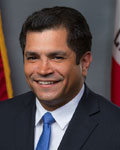
Bill Author
Bill Co-Author(s):