AB 2731: Vehicles: Terminal Island Freeway: special permits.
- Session Year: 2015-2016
- House: Assembly
- Latest Version Date: 2016-08-19
Existing law authorizes the Department of Transportation, upon adoption of an ordinance or resolution by the City of Carson, the City of Long Beach, and the City of Los Angeles, to issue a special permit to the operator of a vehicle, combination of vehicles, or mobile equipment, permitting the operation and movement of the vehicle, combination, or equipment, and its load, on specified routes in those cities if the vehicle, combination, or equipment meets specified criteria. Under existing law, those criteria include that the vehicle, combination of vehicles, or mobile equipment is used to transport intermodal cargo containers that are moving in international commerce, and that the maximum gross weight of the vehicles and loads not exceed 95,000 pounds gross vehicle weight.
This bill would require the above-mentioned ordinance or resolution to conform with the weight limits determined by the Department of Transportation. the City of Carson, the City of Long Beach, and the City of Los Angeles to use and enforce the axle and gross vehicle weight limits used by the Department of Transportation for a permitted vehicle, combination of vehicles, or mobile equipment operating or moving on the above-described routes by individual, and not combined, axle group calculations.
Existing law authorizes the Department of Transportation, upon adoption of an ordinance or resolution by the City of Carson, the City of Long Beach, and the City of Los Angeles, to issue a special permit to the operator of a vehicle, combination of vehicles, or mobile equipment, permitting the operation and movement of the vehicle, combination, or equipment, and its load, on specified routes in those cities if the vehicle, combination, or equipment meets specified criteria. Under existing law, those criteria include that the vehicle, combination of vehicles, or mobile equipment is used to transport intermodal cargo containers that are moving in international commerce, and that the maximum gross weight of the vehicles and loads not exceed 95,000 pounds gross vehicle weight.
This bill would make changes to the criteria for the issuance of a special permit under these provisions, and would instead specify that a vehicle, combination of vehicles, or mobile equipment that exceeds the general maximum gross weight limits, but does not exceed 95,000 pounds gross vehicle weight, must be measured by the departments determination of weight limits based on groups of consecutive axles, as specified.
This bill would require the above-mentioned ordinance or resolution to conform with the weight limits determined by the Department of Transportation.
Existing law authorizes the Department of Transportation, upon adoption of an ordinance or resolution by the City of Carson, the City of Long Beach, and the City of Los Angeles, to issue a special permit to the operator of a vehicle, combination of vehicles, or mobile equipment, permitting the operation and movement of the vehicle, combination, or equipment, and its load, on specified routes in those cities if the vehicle, combination, or equipment meets specified criteria. Under existing law, those criteria include that the vehicle, combination of vehicles, or mobile equipment is used to transport intermodal cargo containers that are moving in international commerce, and that the maximum gross weight of the vehicles and loads not exceed 95,000 pounds gross vehicle weight.
This bill would make changes to the criteria for the issuance of a special permit under these provisions, and would instead specify that a vehicle, combination of vehicles, or mobile equipment that exceeds the general maximum gross weight limits, but does not exceed 95,000 pounds gross vehicle weight, must be measured by the departments determination of weight limits based on groups of consecutive axles, as specified.
Existing law establishes various port districts along Californias coast and prescribes procedures for the formation and operation of those districts.
This bill would declare the intent of the Legislature to enact legislation relating to public ports in California.
Existing law establishes various port districts along Californias coast and prescribes procedures for the formation and operation of those districts.
This bill would declare the intent of the Legislature to enact legislation relating to public ports in California.
The Legislature finds and declares all of the following:
(a)Heavy container corridors connect the Ports of Los Angeles and Long Beach to warehouses and distribution centers throughout the port area.
(b)These corridors allow port customers to move certain types of heavy cargo, such as agricultural goods, and from the port complex, which enhance the competitiveness of the two ports.
(c)These specially designated corridors include streets located in the Cities of Los Angeles, Long Beach, Carson, as well as California state routes. Overweight trucks that have a gross vehicle weight in excess of 80,000 pounds, but no more than 95,000 pounds, are allowed to operate on heavy container corridors upon issuance of permits from their respective jurisdictions.
(d)The Cities of Long Beach and Carson share a common method of determining whether a truck is overweight while traversing heavy container corridors. However, the City of Los Angeles currently uses a different method of determining whether a truck is overweight.
(e)This difference causes confusion, results in users of the heavy container corridors in the City of Los Angeles to incur fines and penalties, and incentivizes noncompliance with safety measures required on the corridors.
(f)It is the intent of the Legislature in enacting this act that the Cities of Los Angeles, Carson, and Long Beach all utilize the same methodology to enforce the weight limits established by permits issued by the Department of Transportation for trucks traveling along heavy container corridors.
SECTION 1.SEC. 2.Section 35700.5 of the Vehicle Code is amended to read:35700.5.(a)The Department of Transportation, upon adoption of an ordinance or resolution that is in conformance with the provisions of this section by the City of Carson, the City of Long Beach, and the City of Los Angeles, covering designated routes, may issue a special permit to the operator of a vehicle, combination of vehicles, or mobile equipment, permitting the operation and movement of the vehicle, combination, or equipment, and its load, on the 3.66-mile portion of State Route 47 and State Route 103 known as the Terminal Island Freeway, between Willow Street in the City of Long Beach and Terminal Island in the City of Long Beach and the City of Los Angeles, and on the 2.4-mile portion of State Highway Route 1, that is between Sanford Avenue in the City of Los Angeles and Harbor Avenue in the City of Long Beach, if the vehicle, combination, or equipment meets all of the following criteria:
(1)The vehicle, combination of vehicles, or mobile equipment is used to transport intermodal cargo containers that are moving in international commerce.
(2)The vehicle, combination of vehicles, or mobile equipment, in combination with its load, has a maximum gross weight in excess of the maximum gross weight limit of vehicles and loads specified in this chapter, but does not exceed 95,000 pounds gross vehicle weight.
(3)(A)The vehicle, combination of vehicles, or mobile equipment conforms to the axle weight limits specified in Section 35550.
(B)The vehicle, combination of vehicles, or mobile equipment conforms to the axle weight limits in Section 35551, except as specified in subparagraph (C).
(C)Vehicles, combinations of vehicles, or mobile equipment that impose more than 80,000 pounds total gross weight on the highway by any group of two or more consecutive axles, exceed 60 feet in length between the extremes of any group of two or more consecutive axles, or have more than six axles shall conform to weight limits that shall be determined by the Department of Transportation.
(b)The permit issued by the Department of Transportation shall be required to authorize the operation or movement of a vehicle, combination of vehicles, or mobile equipment described in subdivision (a). The permit shall not authorize the movement of hazardous materials or hazardous wastes, as those terms are defined by local, state, and federal law. The following criteria shall be included in the application for the permit:
(1)A description of the loads and vehicles to be operated under the permit.
(2)An agreement wherein each applicant agrees to be responsible for all injuries to persons and for all damage to real or personal property of the state and others directly caused by or resulting from the operation of the applicants vehicles or combination of vehicles under the conditions of the permit. The applicant shall agree to hold harmless and indemnify the state and all its agents for all costs or claims arising out of or caused by the movement of vehicles or combination of vehicles under the conditions of the permit.
(3)The applicant shall provide proof of financial responsibility that covers the movement of the shipment as described in subdivision (a). The insurance shall meet the minimum requirements established by law.
(4)An agreement to carry a copy of the permit in the vehicle at all times and furnish the copy upon request of an employee of the Department of the California Highway Patrol or the Department of Transportation.
(5)An agreement to place an indicia, developed by the Department of Transportation, in consultation with the Department of the California Highway Patrol, upon the vehicle identifying it as a vehicle possibly operating under this section. The indicia shall be displayed in the lower right area of the front windshield of the power unit. The Department of Transportation may charge a fee to cover the cost of producing and issuing this indicia.
(c)The permit issued pursuant to subdivision (a) shall be valid for one year. The permit may be canceled by the Department of Transportation for any of the following reasons:
(1)The failure of the applicant to maintain any of the conditions required pursuant to subdivision (b).
(2)The failure of the applicant to maintain a satisfactory rating, as required by Section 34501.12.
(3)A determination by the Department of Transportation that there is sufficient cause to cancel the permit because the continued movement of the applicants vehicles under the permit would jeopardize the safety of the motorists on the roadway or result in undue damage to the highways listed in this section.
(d)This section does not authorize an applicant or holder of a special permit under subdivision (a) to operate a vehicle or combination of vehicles in excess of the maximum gross weight limit of vehicles and loads specified in this chapter outside of the designated corridors identified in subdivision (a). A violation of this subdivision shall result in the revocation of the permit.
(e)The Department of Transportation may charge a fee to cover the cost of issuing a permit pursuant to subdivision (a).
(f)Notwithstanding Section 35700 and Article 6 (commencing with Section 35780), if the City of Carson, the City of Long Beach, and the City of Los Angeles adopt an ordinance or resolution, as described in subdivision (a), the ordinance or resolution shall conform with the weight limits determined by the Department of Transportation pursuant to this section. shall use and enforce the axle and gross vehicle weight limits used by the Department of Transportation for a permitted vehicle, combination of vehicles, or mobile equipment operating or moving on a route described in subdivision (a) by individual, and not combined, axle group calculations.
(a)The Department of Transportation, upon adoption of an ordinance or resolution that is in conformance with the provisions of this section by the City of Carson, the City of Long Beach, and the City of Los Angeles, covering designated routes, may issue a special permit to the operator of a vehicle, combination of vehicles, or mobile equipment, permitting the operation and movement of the vehicle, combination, or equipment, and its load, on the 3.66-mile portion of State Route 47 and State Route 103 known as the Terminal Island Freeway, between Willow Street in the City of Long Beach and Terminal Island in the City of Long Beach and the City of Los Angeles, and on the 2.4-mile portion of State Highway Route 1, that is between Sanford Avenue in the City of Los Angeles and Harbor Avenue in the City of Long Beach, if the vehicle, combination, or equipment meets all of the following criteria:
(1)The vehicle, combination of vehicles, or mobile equipment is used to transport intermodal cargo containers that are moving in international commerce.
(2)The vehicle, combination of vehicles, or mobile equipment, in combination with its load, has a maximum gross weight in excess of the maximum gross weight limit of vehicles and loads specified in this chapter, but does not exceed 95,000 pounds gross vehicle weight, as measured by weight limits based on groups of consecutive axles, determined by the Department of Transportation pursuant to subparagraph (C) of paragraph (3). weight.
(3)(A)The vehicle, combination of vehicles, or mobile equipment conforms to the axle weight limits specified in Section 35550.
(B)The vehicle, combination of vehicles, or mobile equipment conforms to the axle weight limits in Section 35551, except as specified in subparagraph (C).
(C)Vehicles, combinations of vehicles, or mobile equipment that impose more than 80,000 pounds total gross weight on the highway by any group of two or more consecutive axles, exceed 60 feet in length between the extremes of any group of two or more consecutive axles, or have more than six axles shall conform to weight limits that shall be determined by the Department of Transportation.
(b)The permit issued by the Department of Transportation shall be required to authorize the operation or movement of a vehicle, combination of vehicles, or mobile equipment described in subdivision (a). The permit shall not authorize the movement of hazardous materials or hazardous wastes, as those terms are defined by local, state, and federal law. The following criteria shall be included in the application for the permit:
(1)A description of the loads and vehicles to be operated under the permit.
(2)An agreement wherein each applicant agrees to be responsible for all injuries to persons and for all damage to real or personal property of the state and others directly caused by or resulting from the operation of the applicants vehicles or combination of vehicles under the conditions of the permit. The applicant shall agree to hold harmless and indemnify the state and all its agents for all costs or claims arising out of or caused by the movement of vehicles or combination of vehicles under the conditions of the permit.
(3)The applicant shall provide proof of financial responsibility that covers the movement of the shipment as described in subdivision (a). The insurance shall meet the minimum requirements established by law.
(4)An agreement to carry a copy of the permit in the vehicle at all times and furnish the copy upon request of an employee of the Department of the California Highway Patrol or the Department of Transportation.
(5)An agreement to place an indicia, developed by the Department of Transportation, in consultation with the Department of the California Highway Patrol, upon the vehicle identifying it as a vehicle possibly operating under this section. The indicia shall be displayed in the lower right area of the front windshield of the power unit. The Department of Transportation may charge a fee to cover the cost of producing and issuing this indicia.
(c)The permit issued pursuant to subdivision (a) shall be valid for one year. The permit may be canceled by the Department of Transportation for any of the following reasons:
(1)The failure of the applicant to maintain any of the conditions required pursuant to subdivision (b).
(2)The failure of the applicant to maintain a satisfactory rating, as required by Section 34501.12.
(3)A determination by the Department of Transportation that there is sufficient cause to cancel the permit because the continued movement of the applicants vehicles under the permit would jeopardize the safety of the motorists on the roadway or result in undue damage to the highways listed in this section.
(d)This section does not authorize an applicant or holder of a special permit under subdivision (a) to operate a vehicle or combination of vehicles in excess of the maximum gross weight limit of vehicles and loads specified in this chapter outside of the designated corridors identified in subdivision (a). A violation of this subdivision shall result in the revocation of the permit.
(e)The Department of Transportation may charge a fee to cover the cost of issuing a permit pursuant to subdivision (a).
(f)Notwithstanding Section 35700 and Article 6 (commencing with Section 35780), if the City of Carson, the City of Long Beach, and the City of Los Angeles adopt an ordinance or resolution, as described in subdivision (a), the ordinance or resolution shall conform with the weight limits determined by the Department of Transportation pursuant to this section.
(a)The Department of Transportation, upon adoption of an ordinance or resolution that is in conformance with the provisions of this section by the City of Carson, the City of Long Beach, and the City of Los Angeles, covering designated routes, may issue a special permit to the operator of a vehicle, combination of vehicles, or mobile equipment, permitting the operation and movement of the vehicle, combination, or equipment, and its load, on the 3.66-mile portion of State Route 47 and State Route 103 known as the Terminal Island Freeway, between Willow Street in the City of Long Beach and Terminal Island in the City of Long Beach and the City of Los Angeles, and on the 2.4-mile portion of State Highway Route 1, that is between Sanford Avenue in the City of Los Angeles and Harbor Avenue in the City of Long Beach, if the vehicle, combination, or equipment meets all of the following criteria:
(1)The vehicle, combination of vehicles, or mobile equipment is used to transport intermodal cargo containers that are moving in international commerce.
(2)The vehicle, combination of vehicles, or mobile equipment, in combination with its load, has a maximum gross weight in excess of the maximum gross weight limit of vehicles and loads specified in this chapter, but does not exceed 95,000 pounds gross vehicle weight. weight, as measured by weight limits based on groups of consecutive axles, determined by the Department of Transportation pursuant to subparagraph (C) of paragraph (3).
(3)(A)The vehicle, combination of vehicles, or mobile equipment conforms to the axle weight limits specified in Section 35550.
(B)The vehicle, combination of vehicles, or mobile equipment conforms to the axle weight limits in Section 35551, except as specified in subparagraph (C).
(C)Vehicles, combinations of vehicles, or mobile equipment that impose more than 80,000 pounds total gross weight on the highway by any group of two or more consecutive axles, exceed 60 feet in length between the extremes of any group of two or more consecutive axles, or have more than six axles shall conform to weight limits that shall be determined by the Department of Transportation.
(b)The permit issued by the Department of Transportation shall be required to authorize the operation or movement of a vehicle, combination of vehicles, or mobile equipment described in subdivision (a). The permit shall not authorize the movement of hazardous materials or hazardous wastes, as those terms are defined by local, state, and federal law. The following criteria shall be included in the application for the permit:
(1)A description of the loads and vehicles to be operated under the permit.
(2)An agreement wherein each applicant agrees to be responsible for all injuries to persons and for all damage to real or personal property of the state and others directly caused by or resulting from the operation of the applicants vehicles or combination of vehicles under the conditions of the permit. The applicant shall agree to hold harmless and indemnify the state and all its agents for all costs or claims arising out of or caused by the movement of vehicles or combination of vehicles under the conditions of the permit.
(3)The applicant shall provide proof of financial responsibility that covers the movement of the shipment as described in subdivision (a). The insurance shall meet the minimum requirements established by law.
(4)An agreement to carry a copy of the permit in the vehicle at all times and furnish the copy upon request of an employee of the Department of the California Highway Patrol or the Department of Transportation.
(5)An agreement to place an indicia, developed by the Department of Transportation, in consultation with the Department of the California Highway Patrol, upon the vehicle identifying it as a vehicle possibly operating under this section. The indicia shall be displayed in the lower right area of the front windshield of the power unit. The Department of Transportation may charge a fee to cover the cost of producing and issuing this indicia.
(c)The permit issued pursuant to subdivision (a) shall be valid for one year. The permit may be canceled by the Department of Transportation for any of the following reasons:
(1)The failure of the applicant to maintain any of the conditions required pursuant to subdivision (b).
(2)The failure of the applicant to maintain a satisfactory rating, as required by Section 34501.12.
(3)A determination by the Department of Transportation that there is sufficient cause to cancel the permit because the continued movement of the applicants vehicles under the permit would jeopardize the safety of the motorists on the roadway or result in undue damage to the highways listed in this section.
(d)This section does not authorize an applicant or holder of a special permit under subdivision (a) to operate a vehicle or combination of vehicles in excess of the maximum gross weight limit of vehicles and loads specified in this chapter outside of the designated corridors identified in subdivision (a). A violation of this subdivision shall result in the revocation of the permit.
(e)The Department of Transportation may charge a fee to cover the cost of issuing a permit pursuant to subdivision (a).
SECTION 1.It is the intent of the Legislature to enact legislation relating to public ports in California.
It is the intent of the Legislature to enact legislation relating to public ports in California.
|
Date
|
Status
|
|---|---|
| Aug 30, 2016 | Ordered to inactive file at the request of Assembly Member Calderon. |
| Aug 30, 2016 | In Assembly. Concurrence in Senate amendments pending. |
| Aug 25, 2016 | Read third time. Passed. Ordered to the Assembly. (Ayes 39. Noes 0. Page 5416.). |
| Aug 25, 2016 | Read third time. Passed. Ordered to the Assembly. |
| Aug 22, 2016 | Read second time. Ordered to third reading. |
| Aug 19, 2016 | Read third time and amended. Ordered to second reading. |
| Jun 23, 2016 | Ordered to third reading. |
| Jun 23, 2016 | From Consent Calendar. |
| Jun 16, 2016 | Read second time. Ordered to Consent Calendar. |
| Jun 15, 2016 | From committee: Do pass. To Consent Calendar. (Ayes 11. Noes 0.) (June 14). |
| Jun 8, 2016 | From committee chair, with author's amendments: Amend, and re-refer to committee. Read second time, amended, and re-referred to Com. on T. & H. |
| May 19, 2016 | Referred to Com. on T. & H. |
| May 12, 2016 | Read third time. Passed. Ordered to the Senate. (Ayes 78. Noes 0. Page 4789.) |
| May 12, 2016 | Read third time. Passed. Ordered to the Senate. (Ayes 78. Noes 0.) |
| May 12, 2016 | Read third time. Passed. Ordered to the Senate. |
| May 12, 2016 | In Senate. Read first time. To Com. on RLS. for assignment. |
| May 5, 2016 | Read second time. Ordered to Consent Calendar. |
| May 4, 2016 | From committee: Do pass. To Consent Calendar. (Ayes 20. Noes 0.) (May 4). |
| Apr 19, 2016 | From committee: Do pass and re-refer to Com. on APPR. with recommendation: To Consent Calendar. (Ayes 15. Noes 0.) (April 18). Re-referred to Com. on APPR. |
| Mar 16, 2016 | Re-referred to Com. on TRANS. |
| Mar 15, 2016 | From committee chair, with author's amendments: Amend, and re-refer to Com. on TRANS. Read second time and amended. |
| Mar 14, 2016 | Referred to Com. on TRANS. |
| Feb 22, 2016 | Read first time. |
| Feb 21, 2016 | From printer. May be heard in committee March 22. |
| Feb 19, 2016 | Introduced. To print. |
|
Date
|
Description
|
Location
|
Votes
|
|
|---|---|---|---|---|
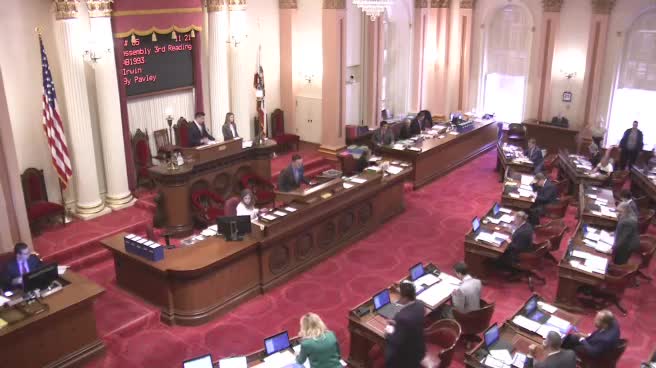
| Aug 25, 2016 | Assembly 3rd Reading AB2731 O'Donnell By Hall | Senate Floor |
Passed |
|
| Jun 14, 2016 | Do pass and be ordered to the Consent Calendar | Senate Standing Committee on Transportation and Housing |
Passed |
|
| May 12, 2016 | AB 2731 O'DONNELL Consent Calendar Second Day Regular Session | Assembly Floor |
Passed |
|
| May 4, 2016 | Do pass. To Consent Calendar. | Assembly Standing Committee on Appropriations |
Passed |
|
| Apr 18, 2016 | Do pass and be re-referred to the Committee on [Appropriations] with recommendation: To Consent Calendar | Assembly Standing Committee on Transportation |
Passed |
This list shows positions taken on this bill by organizations on the date displayed, which is linked to the original source.
Positions by individuals are not included.
(Without Reference to File)
CONCURRENCE IN SENATE AMENDMENTS
CSA1 Bill Id:AB 2731
Author:(O'Donnell)
As Amended Ver:August 19, 2016
Majority vote
ASSEMBLY: | 78-0 | (May 12, 2016) | SENATE: | 39-0 | (August 25, 2016) |
Original Committee Reference: TRANS.
SUMMARY: Prescribes the manner in which trucks are to be weighed in a designated heavy container corridor near the Ports of Los Angeles and Long Beach.
The Senate amendments:
- Make legislative findings and declarations regarding the heavy container corridor connecting the Ports of Los Angeles and Long Beach to warehouses and distribution centers throughout the port area.
- Recast provisions consistent with this bill as it was heard in the Assembly to ensure that trucks weighed in the designated heavy container corridor near the Ports of Long Beach and Los Angeles are weighed in a consistent manner.
EXISTING LAW:
- Prescribes, according to state and federal law, maximum gross weight limits for vehicles and vehicle combinations using public highways.
- Authorizes the California Department of Transportation (Caltrans) to issue overweight truck permits on the following designated roadways (heavy container corridor) to allow for the movement of shipping containers from the Ports of Long Beach and Los Angeles into the City of Carson:
- A 3.66-mile portion of State Route (SR) 47 and SR 103 known as Terminal Island Freeway, between Willow Street in the City of Long Beach and Terminal Island in the City of Long Beach and the City of Los Angeles; and,
- A 2.4-mile portion of SR 1 between Blinn Avenue in the City of Los Angeles and Harbor Avenue in the City of Long Beach.
- Conditions the issuance of overweight truck permits upon the cities of Carson, Long Beach, and Los Angeles adopting ordinances or resolutions in support of the heavy container corridor.
FISCAL EFFECT: Unknown. This bill is keyed non-fiscal by the Legislative Counsel.
COMMENTS: Existing law generally limits vehicles and vehicle combinations, such as tractor-trailer combinations, to a gross weight of no more than 80,000 pounds. Caltrans or a local authority may issue a permit to transport oversized or overweight loads on highways under its control. Existing law also authorizes Caltrans permit overweight trucks that exceed the maximum gross weight limits to travel on the heavy container corridor. Before Caltrans can issue a permit, however, the cities of Carson, Long Beach, and Los Angeles must adopt related resolutions or ordinances allowing these vehicles on specified local roads. The permitted vehicles must:
- Be used to transport intermodal cargo containers that are moving international commerce;
- Not exceed a gross weight of 95,000 pounds; and,
- Meet weight limits that Caltrans determines.
The heavy weight corridor is a relatively short segment of state highway and allows freight to be transferred between the port docks and warehousing areas immediately adjacent to the ports. The corridor runs through portions of the cities of Carson, Long Beach, and Los Angeles, which, in addition to the California Highway Patrol, have law enforcement authority in their respective jurisdictions along the corridor.
Unfortunately, according to the author, differing enforcement methods amongst the cities in the way they measure truck weights has led to confusion for users of the heavy container corridor, resulting in fines, penalties, and uneven enforcement between the jurisdictions. The author introduced this bill to eliminate this confusion by providing a consistent methodology for enforcement, thereby enhancing "the seamless movement of goods throughout the port complex."
Apparently, among the four enforcement entities, only the City of Los Angeles used a method of weighing trucks that was different from the other agencies. Last August, the Los Angeles City Council approved a motion to address this disparity by amending its ordinance to direct trucks in the overweight corridor to be weighed consistent with surrounding jurisdictions. However, according to the author's office, despite the amended ordinance, the City of Los Angeles continues to weigh truck in a manner unlike the other jurisdictions in the corridor; hence, he believes, the need for this bill.
Analysis Prepared by: Janet Dawson / TRANS. / (916) 319-2093 FN: 0004794
Office of Senate Floor Analyses (916) 651-1520 Fax: (916) 327-4478 | AB 2731 |
THIRD READING
Bill No: AB 2731
Amended: 8/19/16 in Senate
SENATE TRANS. & HOUSING COMMITTEE: 11-0, 6/14/16
AYES: Beall, Cannella, Allen, Bates, Gaines, Galgiani, Leyva, McGuire, Mendoza, Roth, Wieckowski
ASSEMBLY FLOOR: 78-0, 5/12/16 (Consent) - See last page for vote
SUBJECT: Vehicles: Terminal Island Freeway: special permits
DIGEST: This bill establishes the method for weighing trucks in a designated heavy-truck corridor near the Ports of Long Beach and Los Angeles.
Senate Floor Amendments of 8/19/16 add intent language and explicitly require the Cities of Carson, Long Beach, and Los Angeles to use and enforce specified axle and gross vehicle weight limits used by the Department of Transportation (Caltrans).
Existing law:
- Limits, generally, vehicles and vehicle combinations, such as trucks and tractor-trailers, to a gross weight of no more than 80,000 pounds. Caltrans or a local authority may, at its discretion, issue a permit to transport an oversized or overweight load on highways under its control. This exception generally does not apply to state highways.
- Authorizes Caltrans to issue a special permit to the operator of a vehicle that exceeds the maximum gross vehicle weight rating to travel on specified portions of the Terminal Island Freeway near the Ports of Long Beach and Los Angeles:
- A 3.66-mile portion of State Route (SR) 47 and SR 103 known as the Terminal Island Freeway, between Willow Street in the City of Long Beach and Terminal Island in the City of Los Angeles
- A 2.4-mile portion of SR 1 between Sanford Avenue in the City of Los Angeles and Harbor Avenue in the City of Long Beach
- Provides that in order for Caltrans to issue the permit, all of the following conditions must be met:
- The City of Carson, the City of Long Beach, and the City of Los Angeles must adopt a resolution or ordinance in support of the heavy-truck corridor.
- The vehicle, vehicle combination, or mobile equipment must be used to transport intermodal cargo containers in international commerce.
- The vehicle, vehicle combination, or mobile equipment, in combination with its load, must not exceed 95,000 pounds.
- The vehicle, vehicle combination, or mobile equipment must meet axle weight limits prescribed by Caltrans.
This bill requires the City of Carson, the City of Long Beach, and the City of Los Angeles to conform weight limits for the Terminal Island heavy-truck corridor to the weight limits determined by Caltrans.
Background
- Establishment of the heavy-truck corridor. More than 20 years ago, the ports of Long Beach and Los Angeles sought the authority to allow intermodal cargo containers to carry larger loads and thus lessen the truck traffic near the facilities. AB 2438 of 1994 (see below) authorized Caltrans to issue special permits allowing the operation of overweight vehicles on portions of the Terminal Island Freeway, upon enactment of an ordinance or resolution by the affected cities. The specially designated corridors connect both ports to warehouses and distribution centers throughout the region, allowing customers to move certain types of heavier cargo to and from the port complex.
- When is 95,000 pounds not 95,000 pounds? Existing law establishes a maximum of 95,000 pounds gross vehicle weight rating for the heavy-truck corridor. However, while the City of Long Beach and City of Carson use a common method of determining whether a truck is overweight, the City of Los Angeles uses a different method. These different approaches have led to confusion among users of the heavy-truck corridor, resulting in fines, penalties, and uneven enforcement among the three jurisdictions. To address this problem, the City of Los Angeles approved a motion in August 2015 to amend its ordinance to direct trucks in the heavy- truck corridor to be weighed consistent with surrounding jurisdictions. According to the author’s office, however, the city continues to weigh trucks in a manner unlike the other jurisdictions, despite the amended ordinance. This bill sets a uniform standard for the local enforcement of trucks allowed to exceed normal weight limits.
Comments
Purpose. The author states that the Ports of Long Beach and Los Angeles are two of the most active port facilities in the world, and together represent the busiest port complex in the U.S. Multiple studies have confirmed that the port complex produces more traffic congestion and air pollution than any other commercial facility in Southern California. The American Lung Association’s 2015 “State of the Air” report notes that the Los Angeles Basin has some of the nation’s highest ozone and fine particulate pollution, and the South Coast Air Quality Management District consistently points to the port complex as the number one polluter in Southern California. The author states that by establishing a uniform method for the localities to use to determine truck weights, this bill will help ease traffic congestion and air pollution in the port complex.
Related/Prior Legislation
AB 1128 (Furutani, Chapter 298, Statutes of 2011) extended by 0.3 miles the portion of SR 1 for which Caltrans may issue overweight permits.
SB 2072 (Karnette, Chapter 229, Statutes of 2002) deleted the sunset on the weight exemption, making the authority permanent.
SB 839 (Karnette, Chapter 358, Statutes of 1997) extended the sunset on the weight exemption for five years, from 1998 until 2003.
AB 2438 (Karnette, Chapter 1037, Statutes of 1994) authorized Caltrans to issue overweight permits for the Terminal Island Freeway, until 1998.
FISCAL EFFECT: Appropriation: No Fiscal Com.: No Local: No
California Association of Port Authorities
Mayor Eric Garcetti, City of Los Angeles
OPPOSITION: (Verified 8/21/16)
None received
ASSEMBLY FLOOR: 78-0, 5/12/16
AYES: Achadjian, Alejo, Travis Allen, Arambula, Atkins, Baker, Bigelow, Bloom, Bonilla, Bonta, Brough, Brown, Calderon, Campos, Chang, Chau, Chávez, Chiu, Chu, Cooley, Cooper, Dababneh, Dahle, Daly, Dodd, Eggman, Frazier, Beth Gaines, Gallagher, Cristina Garcia, Eduardo Garcia, Gatto, Gipson, Gomez, Gonzalez, Gordon, Gray, Grove, Hadley, Harper, Roger Hernández, Holden, Irwin, Jones, Kim, Lackey, Levine, Linder, Lopez, Low, Maienschein, Mathis, Mayes, McCarty, Medina, Melendez, Mullin, Nazarian, Obernolte, O'Donnell, Olsen, Patterson, Quirk, Ridley-Thomas, Rodriguez, Salas, Santiago, Steinorth, Mark Stone, Thurmond, Ting, Wagner, Waldron, Weber, Wilk, Williams, Wood, Rendon
NO VOTE RECORDED: Burke, Jones-Sawyer
Prepared by: Erin Riches / T. & H. / (916) 651-4121
8/22/16 22:43:25
**** END ****
Office of Senate Floor Analyses (916) 651-1520 Fax: (916) 327-4478 | AB 2731 |
THIRD READING
Bill No: AB 2731
Amended: 6/8/16 in Senate
SENATE TRANS. & HOUSING COMMITTEE: 11-0, 6/14/16
AYES: Beall, Cannella, Allen, Bates, Gaines, Galgiani, Leyva, McGuire, Mendoza, Roth, Wieckowski
ASSEMBLY FLOOR: 78-0, 5/12/16 (Consent) - See last page for vote
SUBJECT: Vehicles: Terminal Island Freeway: special permits
DIGEST: This bill establishes the method for weighing trucks in a designated heavy-truck corridor near the Ports of Long Beach and Los Angeles.
Existing law:
- Limits, generally, vehicles and vehicle combinations, such as trucks and tractor-trailers, to a gross weight of no more than 80,000 pounds. The state Department of Transportation (Caltrans) or a local authority may, at its discretion, issue a permit to transport an oversized or overweight load on highways under its control. This exception generally does not apply to state highways.
- Authorizes Caltrans to issue a special permit to the operator of a vehicle that exceeds the maximum gross vehicle weight rating to travel on specified portions of the Terminal Island Freeway near the Ports of Long Beach and Los Angeles:
- A 3.66-mile portion of State Route (SR) 47 and SR 103 known as the Terminal Island Freeway, between Willow Street in the City of Long Beach and Terminal Island in the City of Los Angeles.
- A 2.4-mile portion of SR 1 between Sanford Avenue in the City of Los Angeles and Harbor Avenue in the City of Long Beach.
- Provides that in order for Caltrans to issue the permit, all of the following conditions must be met:
- The City of Carson, the City of Long Beach, and the City of Los Angeles must adopt a resolution or ordinance in support of the heavy-truck corridor.
- The vehicle, vehicle combination, or mobile equipment must be used to transport intermodal cargo containers in international commerce.
- The vehicle, vehicle combination, or mobile equipment, in combination with its load, must not exceed 95,000 pounds.
- The vehicle, vehicle combination, or mobile equipment must meet axle weight limits prescribed by Caltrans.
This bill requires the City of Carson, the City of Long Beach, and the City of Los Angeles to conform weight limits for the Terminal Island heavy-truck corridor to the weight limits determined by Caltrans.
Background
Establishment of the heavy-truck corridor. More than 20 years ago, the Ports of Long Beach and Los Angeles sought the authority to allow intermodal cargo containers to carry larger loads and thus lessen the truck traffic near the facility. AB 2438 of 1994 (see below) authorized Caltrans to issue special permits allowing the operation of overweight vehicles on portions of the Terminal Island Freeway, upon enactment of an ordinance or resolution by the affected cities. The specially designated corridors connect both ports to warehouses and distribution centers throughout the region, allowing customers to move certain types of heavier cargo to and from the port complex.
When is 95,000 pounds not 95,000 pounds? Existing law establishes a maximum of 95,000 lbs. gross vehicle weight rating for the heavy-truck corridor. However, while the City of Long Beach and City of Carson use a common method of determining whether a truck is overweight, the City of Los Angeles uses a different method. These different approaches have led to confusion among users of the heavy-truck corridor, resulting in fines, penalties, and uneven enforcement among the three jurisdictions. To address this problem, the City of Los Angeles approved a motion in August 2015 to amend its ordinance to direct trucks in the heavy- truck corridor to be weighed consistent with surrounding jurisdictions. According to the author’s office, however, the city continues to weigh trucks in a manner unlike the other jurisdictions, despite the amended ordinance. This bill sets a uniform standard for the local enforcement of trucks allowed to exceed normal weight limits.
Comments
Purpose. The author states that the Ports of Long Beach and Los Angeles are two of the most active port facilities in the world, and together represent the busiest port complex in the U.S. Multiple studies have confirmed that the port complex produces more traffic congestion and air pollution than any other commercial facility in Southern California. The American Lung Association’s 2015 “State of the Air” report notes that the Los Angeles Basin has some of the nation’s highest ozone and fine particulate pollution, and the South Coast Air Quality Management District consistently points to the port complex as the number one polluter in Southern California. The author states that by establishing a uniform method for the localities to use to determine truck weights, this bill will help ease traffic congestion and air pollution in the port complex.
Related/Prior Legislation
AB 1128 (Furutani, Chapter 298, Statutes of 2011) extended by 0.3 miles the portion of SR 1 for which Caltrans may issue overweight permits.
SB 2072 (Karnette, Chapter 229, Statutes of 2002) deleted the sunset on the weight exemption, making the authority permanent.
SB 839 (Karnette, Chapter 358, Statutes of 1997) extended the sunset on the weight exemption for five years, from 1998 until 2003.
AB 2438 (Karnette, Chapter 1037, Statutes of 1994) authorized Caltrans to issue overweight permits for the Terminal Island Freeway, until 1998.
FISCAL EFFECT: Appropriation: No Fiscal Com.: No Local: No
California Association of Port Authorities
Mayor Eric Garcetti, City of Los Angeles
OPPOSITION: (Verified 6/16/16)
None received
ASSEMBLY FLOOR: 78-0, 5/12/16
AYES: Achadjian, Alejo, Travis Allen, Arambula, Atkins, Baker, Bigelow, Bloom, Bonilla, Bonta, Brough, Brown, Calderon, Campos, Chang, Chau, Chávez, Chiu, Chu, Cooley, Cooper, Dababneh, Dahle, Daly, Dodd, Eggman, Frazier, Beth Gaines, Gallagher, Cristina Garcia, Eduardo Garcia, Gatto, Gipson, Gomez, Gonzalez, Gordon, Gray, Grove, Hadley, Harper, Roger Hernández, Holden, Irwin, Jones, Kim, Lackey, Levine, Linder, Lopez, Low, Maienschein, Mathis, Mayes, McCarty, Medina, Melendez, Mullin, Nazarian, Obernolte, O'Donnell, Olsen, Patterson, Quirk, Ridley-Thomas, Rodriguez, Salas, Santiago, Steinorth, Mark Stone, Thurmond, Ting, Wagner, Waldron, Weber, Wilk, Williams, Wood, Rendon
NO VOTE RECORDED: Burke, Jones-Sawyer
Prepared by: Erin Riches / T. & H. / (916) 651-4121
6/24/16 14:18:32
**** END ****
Office of Senate Floor Analyses (916) 651-1520 Fax: (916) 327-4478 | AB |
CONSENT
Bill No: AB 2731
:
SENATE TRANS. & HOUSING COMMITTEE: 11-0, 6/14/16
AYES: Beall, Cannella, Allen, Bates, Gaines, Galgiani, Leyva, McGuire, Mendoza, Roth, Wieckowski
ASSEMBLY FLOOR: 78-0, 5/12/16 (Consent) - See last page for vote
DIGEST: This bill establishes the method for weighing trucks in a designated heavy-truck corridor near the Ports of Long Beach and Los Angeles.
Existing law:
- Limits, generally, vehicles and vehicle combinations, such as trucks and tractor-trailers, to a gross weight of no more than 80,000 pounds. The state Department of Transportation (Caltrans) or a local authority may, at its discretion, issue a permit to transport an oversized or overweight load on highways under its control. This exception generally does not apply to state highways.
- Authorizes Caltrans to issue a special permit to the operator of a vehicle that exceeds the maximum gross vehicle weight rating to travel on specified portions of the Terminal Island Freeway near the Ports of Long Beach and Los Angeles:
- A 3.66-mile portion of State Route (SR) 47 and SR 103 known as the Terminal Island Freeway, between Willow Street in the City of Long Beach and Terminal Island in the City of Los Angeles.
- A 2.4-mile portion of SR 1 between Sanford Avenue in the City of Los Angeles and Harbor Avenue in the City of Long Beach.
- Provides that in order for Caltrans to issue the permit, all of the following conditions must be met:
- The City of Carson, the City of Long Beach, and the City of Los Angeles must adopt a resolution or ordinance in support of the heavy-truck corridor.
- The vehicle, vehicle combination, or mobile equipment must be used to transport intermodal cargo containers in international commerce.
- The vehicle, vehicle combination, or mobile equipment, in combination with its load, must not exceed 95,000 pounds.
- The vehicle, vehicle combination, or mobile equipment must meet axle weight limits prescribed by Caltrans.
This bill requires the City of Carson, the City of Long Beach, and the City of Los Angeles to conform weight limits for the Terminal Island heavy-truck corridor to the weight limits determined by Caltrans.
Background
Establishment of the heavy-truck corridor. More than 20 years ago, the Ports of Long Beach and Los Angeles sought the authority to allow intermodal cargo containers to carry larger loads and thus lessen the truck traffic near the facility. AB 2438 of 1994 (see below) authorized Caltrans to issue special permits allowing the operation of overweight vehicles on portions of the Terminal Island Freeway, upon enactment of an ordinance or resolution by the affected cities. The specially designated corridors connect both ports to warehouses and distribution centers throughout the region, allowing customers to move certain types of heavier cargo to and from the port complex.
When is 95,000 pounds not 95,000 pounds? Existing law establishes a maximum of 95,000 lbs. gross vehicle weight rating for the heavy-truck corridor. However, while the City of Long Beach and City of Carson use a common method of determining whether a truck is overweight, the City of Los Angeles uses a different method. These different approaches have led to confusion among users of the heavy-truck corridor, resulting in fines, penalties, and uneven enforcement among the three jurisdictions. To address this problem, the City of Los Angeles approved a motion in August 2015 to amend its ordinance to direct trucks in the heavy- truck corridor to be weighed consistent with surrounding jurisdictions. According to the author’s office, however, the city continues to weigh trucks in a manner unlike the other jurisdictions, despite the amended ordinance. This bill sets a uniform standard for the local enforcement of trucks allowed to exceed normal weight limits.
Comments
Purpose. The author states that the Ports of Long Beach and Los Angeles are two of the most active port facilities in the world, and together represent the busiest port complex in the U.S. Multiple studies have confirmed that the port complex produces more traffic congestion and air pollution than any other commercial facility in Southern California. The American Lung Association’s 2015 “State of the Air” report notes that the Los Angeles Basin has some of the nation’s highest ozone and fine particulate pollution, and the South Coast Air Quality Management District consistently points to the port complex as the number one polluter in Southern California. The author states that by establishing a uniform method for the localities to use to determine truck weights, this bill will help ease traffic congestion and air pollution in the port complex.
Related/Prior Legislation
AB 1128 (Furutani, Chapter 298, Statutes of 2011) extended by 0.3 miles the portion of SR 1 for which Caltrans may issue overweight permits.
SB 2072 (Karnette, Chapter 229, Statutes of 2002) deleted the sunset on the weight exemption, making the authority permanent.
SB 839 (Karnette, Chapter 358, Statutes of 1997) extended the sunset on the weight exemption for five years, from 1998 until 2003.
AB 2438 (Karnette, Chapter 1037, Statutes of 1994) authorized Caltrans to issue overweight permits for the Terminal Island Freeway, until 1998.
FISCAL EFFECT: Appropriation: Fiscal Com.: Local:
California Association of Port Authorities
Mayor Eric Garcetti, City of Los Angeles
OPPOSITION: (Verified 6/16/16)
None received
ASSEMBLY FLOOR: 78-0, 5/12/16
AYES: Achadjian, Alejo, Travis Allen, Arambula, Atkins, Baker, Bigelow, Bloom, Bonilla, Bonta, Brough, Brown, Calderon, Campos, Chang, Chau, Chávez, Chiu, Chu, Cooley, Cooper, Dababneh, Dahle, Daly, Dodd, Eggman, Frazier, Beth Gaines, Gallagher, Cristina Garcia, Eduardo Garcia, Gatto, Gipson, Gomez, Gonzalez, Gordon, Gray, Grove, Hadley, Harper, Roger Hernández, Holden, Irwin, Jones, Kim, Lackey, Levine, Linder, Lopez, Low, Maienschein, Mathis, Mayes, McCarty, Medina, Melendez, Mullin, Nazarian, Obernolte, O'Donnell, Olsen, Patterson, Quirk, Ridley-Thomas, Rodriguez, Salas, Santiago, Steinorth, Mark Stone, Thurmond, Ting, Wagner, Waldron, Weber, Wilk, Williams, Wood, Rendon
NO VOTE RECORDED: Burke, Jones-Sawyer
6/17/16 15:03:38
**** END ****
SENATE COMMITTEE ON TRANSPORTATION AND HOUSING
Senator Jim Beall, Chair
2015 - 2016 Regular
Bill No: Hearing Date: 6/14/2016
Author: | O'Donnell | ||
Version: | 3/15/2016 | ||
Urgency: | No | Fiscal: | Yes |
Consultant: | Erin Riches | ||
SUBJECT:
DIGEST: This bill establishes the method for weighing trucks in a designated heavy-truck corridor near the Ports of Long Beach and Los Angeles.
ANALYSIS:
Existing law generally limits vehicles and vehicle combinations, such as trucks and tractor-trailers, to a gross weight of no more than 80,000 lbs. The state Department of Transportation (Caltrans) or a local authority may, at its discretion, issue a permit to transport an oversized or overweight load on highways under its control. This exception generally does not apply to state highways.
Existing law authorizes Caltrans to issue a special permit to the operator of a vehicle that exceeds the maximum gross vehicle weight rating (GWVR) to travel on specified portions of the Terminal Island Freeway near the Ports of Long Beach and Los Angeles:
- A 3.66-mile portion of State Route (SR) 47 and SR 103 known as the Terminal Island Freeway, between Willow Street in the City of Long Beach and Terminal Island in the City of Los Angeles.
- A 2.4-mile portion of SR 1 between Sanford Avenue in the City of Los Angeles and Harbor Avenue in the City of Long Beach.
In order for Caltrans to issue the permit, all of the following conditions must be met:
- The City of Carson, the City of Long Beach, and the City of Los Angeles must adopt a resolution or ordinance in support of the heavy-truck corridor.
- The vehicle, vehicle combination, or mobile equipment must be used to transport intermodal cargo containers in international commerce.
- The vehicle, vehicle combination, or mobile equipment, in combination with its load, must not exceed 95,000 lbs. GWVR.
- The vehicle, vehicle combination, or mobile equipment must meet axle weight limits prescribed by Caltrans.
This bill requires the City of Carson, the City of Long Beach, and the City of Los Angeles to conform weight limits for the Terminal Island heavy-truck corridor to the weight limits determined by Caltrans.
COMMENTS:
- Purpose. The author states that the Ports of Long Beach and Los Angeles are two of the most active port facilities in the world, and together represent the busiest port complex in the U.S. Multiple studies have confirmed that the port complex produces more traffic congestion and air pollution than any other commercial facility in Southern California. The American Lung Association’s 2015 “State of the Air” report notes that the Los Angeles Basin has some of the nation’s highest ozone and fine particulate pollution, and the South Coast Air Quality Management District consistently points to the port complex as the number one polluter in Southern California. The author states that by establishing a uniform method for the localities to use to determine truck weights, this bill will help ease traffic congestion and air pollution in the port complex.
- Background: establishment of the heavy-truck corridor. More than 20 years ago, the Ports of Long Beach and Los Angeles sought the authority to allow intermodal cargo containers to carry larger loads and thus lessen the truck traffic near the facility. AB 2438 of 1994 (see below) authorized Caltrans to issue special permits allowing the operation of overweight vehicles on portions of the Terminal Island Freeway, upon enactment of an ordinance or resolution by the affected cities. The specially designated corridors connect both ports to warehouses and distribution centers throughout the region, allowing customers to move certain types of heavier cargo to and from the port complex.
- When is 95,000 lbs, not 95,000 lbs? Existing law establishes a maximum of 95,000 lbs. GVWR for the heavy-truck corridor. However, while the City of Long Beach and City of Carson use a common method of determining whether a truck is overweight, the City of Los Angeles uses a different method. These different approaches have led to confusion among users of the heavy-truck corridor, resulting in fines, penalties, and uneven enforcement among the three jurisdictions. To address this problem, the City of Los Angeles approved a motion in August 2015 to amend its ordinance to direct trucks in the heavy- truck corridor to be weighed consistent with surrounding jurisdictions. According to the author’s office, however, the city continues to weigh trucks in a manner unlike the other jurisdictions, despite the amended ordinance. This bill would set a uniform standard for the local enforcement of trucks allowed to exceed normal weight limits.
- Amendments. The amendments of June 8 are technical and are intended to assist and clarify implementation.
Related Legislation:
AB 2438 (Karnette), Chapter 1037, Statutes of 1994 —authorized Caltrans to issue overweight permits for the Terminal Island Freeway, until 1998.
SB 839 (Karnette), Chapter 358, Statutes of 1997 — extended the sunset on the weight exemption for five years, from 1998 until 2003.
SB 2072 (Karnette), Chapter 229, Statutes of 2002 — deleted the sunset on the weight exemption, making the authority permanent.
AB 1128 (Furutani), Chapter 298, Statutes of 2011 — extended by 0.3 miles the portion of SR 1 for which Caltrans may issue overweight permits.
Assembly Votes:
Floor: 78-0
Approps: 20-0
Trans: 15-0
FISCAL EFFECT: Appropriation: No Fiscal Com.: Yes Local: No
POSITIONS: (Communicated to the committee before noon on Wednesday,
June 8, 2016.)
SUPPORT:
California Association of Port Authorities
Mayor Eric Garcetti, City of Los Angeles
OPPOSITION:
None received
-- END --
SENATE COMMITTEE ON TRANSPORTATION AND HOUSING
Senator Jim Beall, Chair
2015 - 2016 Regular
Bill No: AB 2731 Hearing Date:
Author: | O'Donnell | ||
Version: | 3/15/2016 | ||
Urgency: | No | Fiscal: | Yes |
Consultant: | Erin Riches | ||
SUBJECT: Vehicles: Terminal Island Freeway: special permits
DIGEST: This bill establishes the method for weighing trucks in a designated heavy-truck corridor near the Ports of Long Beach and Los Angeles.
ANALYSIS:
Existing law generally limits vehicles and vehicle combinations, such as trucks and tractor-trailers, to a gross weight of no more than 80,000 lbs. The state Department of Transportation (Caltrans) or a local authority may, at its discretion, issue a permit to transport an oversized or overweight load on highways under its control. This exception generally does not apply to state highways.
Existing law authorizes Caltrans to issue a special permit to the operator of a vehicle that exceeds the maximum gross vehicle weight rating (GWVR) to travel on specified portions of the Terminal Island Freeway near the Ports of Long Beach and Los Angeles:
- A 3.66-mile portion of State Route (SR) 47 and SR 103 known as the Terminal Island Freeway, between Willow Street in the City of Long Beach and Terminal Island in the City of Los Angeles.
- A 2.4-mile portion of SR 1 between Sanford Avenue in the City of Los Angeles and Harbor Avenue in the City of Long Beach.
In order for Caltrans to issue the permit, all of the following conditions must be met:
- The City of Carson, the City of Long Beach, and the City of Los Angeles must adopt a resolution or ordinance in support of the heavy-truck corridor.
- The vehicle, vehicle combination, or mobile equipment must be used to transport intermodal cargo containers in international commerce.
- The vehicle, vehicle combination, or mobile equipment, in combination with its load, must not exceed 95,000 lbs. GWVR.
- The vehicle, vehicle combination, or mobile equipment must meet axle weight limits prescribed by Caltrans.
This bill requires the City of Carson, the City of Long Beach, and the City of Los Angeles to conform weight limits for the Terminal Island heavy-truck corridor to the weight limits determined by Caltrans.
COMMENTS:
- Purpose. The author states that the Ports of Long Beach and Los Angeles are two of the most active port facilities in the world, and together represent the busiest port complex in the U.S. Multiple studies have confirmed that the port complex produces more traffic congestion and air pollution than any other commercial facility in Southern California. The American Lung Association’s 2015 “State of the Air” report notes that the Los Angeles Basin has some of the nation’s highest ozone and fine particulate pollution, and the South Coast Air Quality Management District consistently points to the port complex as the number one polluter in Southern California. The author states that by establishing a uniform method for the localities to use to determine truck weights, this bill will help ease traffic congestion and air pollution in the port complex.
- Background: establishment of the heavy-truck corridor. More than 20 years ago, the Ports of Long Beach and Los Angeles sought the authority to allow intermodal cargo containers to carry larger loads and thus lessen the truck traffic near the facility. AB 2438 of 1994 (see below) authorized Caltrans to issue special permits allowing the operation of overweight vehicles on portions of the Terminal Island Freeway, upon enactment of an ordinance or resolution by the affected cities. The specially designated corridors connect both ports to warehouses and distribution centers throughout the region, allowing customers to move certain types of heavier cargo to and from the port complex.
- When is 95,000 lbs, not 95,000 lbs? Existing law establishes a maximum of 95,000 lbs. GVWR for the heavy-truck corridor. However, while the City of Long Beach and City of Carson use a common method of determining whether a truck is overweight, the City of Los Angeles uses a different method. These different approaches have led to confusion among users of the heavy-truck corridor, resulting in fines, penalties, and uneven enforcement among the three jurisdictions. To address this problem, the City of Los Angeles approved a motion in August 2015 to amend its ordinance to direct trucks in the heavy- truck corridor to be weighed consistent with surrounding jurisdictions. According to the author’s office, however, the city continues to weigh trucks in a manner unlike the other jurisdictions, despite the amended ordinance. This bill would set a uniform standard for the local enforcement of trucks allowed to exceed normal weight limits.
- Amendments. The amendments of June XX are technical and are intended to assist and clarify implementation.
Related Legislation:
AB 2438 (Karnette), Chapter 1037, Statutes of 1994 —authorized Caltrans to issue overweight permits for the Terminal Island Freeway, until 1998.
SB 839 (Karnette), Chapter 358, Statutes of 1997 — extended the sunset on the weight exemption for five years, from 1998 until 2003.
SB 2072 (Karnette), Chapter 229, Statutes of 2002 — deleted the sunset on the weight exemption, making the authority permanent.
AB 1128 (Furutani), Chapter 298, Statutes of 2011 — extended by 0.3 miles the portion of SR 1 for which Caltrans may issue overweight permits.
Assembly Votes:
Floor: 78-0
Approps: 20-0
Trans: 15-0
FISCAL EFFECT: Appropriation: Fiscal Com.: Local:
POSITIONS: (Communicated to the committee before noon on Wednesday,
June 8, 2016.)
SUPPORT:
California Association of Port Authorities
Mayor Eric Garcetti, City of Los Angeles
OPPOSITION:
None received
-- END --
Date of Hearing: May 4, 2016
ASSEMBLY COMMITTEE ON APPROPRIATIONS
Lorena Gonzalez, Chair
ABPCA Bill Id:AB 2731
Author:(O'Donnell) – As Amended Ver:March 15, 2016
Policy Committee: | Transportation | Vote: | 15 - 0 |
|
| ||
|
|
Urgency: No State Mandated Local Program: No Reimbursable: No
SUMMARY:
This bill prescribes the manner in which trucks are to be weighed in a designated heavy container corridor near the Ports of Long Beach and Los Angeles, so that each affected jurisdiction applies uniform enforcement of weight requirements.
FISCAL EFFECT:
Negligible fiscal impact.
COMMENTS:
Background and Purpose. Current law generally limits vehicles and vehicle combinations, such as tractor-trailer combinations, to a gross weight of no more than 80,000 pounds. Caltrans or a local authority may issue a permit to transport oversized or overweight loads on highways under its control. Existing law also authorizes Caltrans to permit overweight trucks that exceed the maximum gross weight limits to travel on the heavy container corridor—a relatively short segment of state highway running through portions of the cities of Carson, Long Beach, and Los Angeles—which allows freight to be transferred between the Ports of Long Beach and Los Angeles and warehousing areas immediately adjacent to the ports. Those three cities, as well as the CHP, have law enforcement authority in their respective jurisdictions along the corridor.
Apparently, among the four enforcement entities, only the City of Los Angeles used a method of weighing trucks that was different from the others. This has led to confusion for users of the heavy container corridor, resulting in fines, penalties, and uneven enforcement. The author introduced AB 2731 to eliminate this confusion by providing a consistent methodology for enforcement, thereby enhancing "the seamless movement of goods throughout the port complex."
Analysis Prepared by: Chuck Nicol / APPR. / (916) 319-2081
Date of Hearing: April 18, 2016
ASSEMBLY COMMITTEE ON TRANSPORTATION
Jim Frazier, Chair
ABPCA Bill Id:AB 2731 (
Author:O'Donnell) – As Amended Ver:March 15, 2016
SUBJECT: Vehicles: Terminal Island Freeway: special permits
SUMMARY: Prescribes the manner in which trucks are to be weighed in a designated heavy container corridor near the Ports of Long Beach and Los Angeles.
EXISTING LAW:
- Prescribes, according to state and federal law, maximum gross weight limits for vehicles and vehicle combinations using public highways.
- Authorizes the California Department of Transportation (Caltrans) to issue overweight truck permits on the following designated roadways (heavy container corridor) to allow for the movement of shipping containers from the Ports of Long Beach and Los Angeles into the City of Carson:
- A 3.66-mile portion of State Route (SR) 47 and SR 103 known as Terminal Island Freeway, between Willow Street in the City of Long Beach and Terminal Island in the City of Long Beach and the City of Los Angeles; and,
- A 2.4-mile portion of SR 1 between Blinn Avenue in the City of Los Angeles and Harbor Avenue in the City of Long Beach.
- Conditions the issuance of overweight truck permits upon the cities of Carson, Long Beach, and Los Angeles adopting ordinances or resolutions in support of the heavy container corridor.
FISCAL EFFECT: Unknown
COMMENTS: Existing law generally limits vehicles and vehicle combinations, such as tractor-trailer combinations, to a gross weight of no more than 80,000 pounds. Caltrans or a local authority may issue a permit to transport oversized or overweight loads on highways under its control. Existing law also authorizes Caltrans permit overweight trucks that exceed the maximum gross weight limits to travel on the heavy container corridor. Before Caltrans can issue a permit, however, the cities of Carson, Long Beach, and Los Angeles must adopt related resolutions or ordinances allowing these vehicles on specified local roads. The permitted vehicles must:
- Be used to transport intermodal cargo containers that are moving international commerce;
- Not exceed a gross weight of 95,000 pounds; and,
- Meet weight limits that Caltrans determines.
The heavy weight corridor is a relatively short segment of state highway and allows freight to be transferred between the port docks and warehousing areas immediately adjacent to the ports. The corridor runs through portions of the cities of Carson, Long Beach, and Los Angeles, which, in addition to the California Highway Patrol, have law enforcement authority in their respective jurisdictions along the corridor.
Unfortunately, according to the author, differing enforcement methods amongst the cities in the way they measure truck weights has led to confusion for users of the heavy container corridor, resulting in fines, penalties, and uneven enforcement between the jurisdictions. The author introduced AB 2731 to eliminate this confusion by providing a consistent methodology for enforcement, thereby enhancing "the seamless movement of goods throughout the port complex."
Apparently, among the four enforcement entities, only the City of Los Angeles used a method of weighing trucks that was different from the other agencies. Last August, the Los Angeles City Council approved a motion to address this disparity by amending its ordinance to direct trucks in the overweight corridor to be weighed consistent with surrounding jurisdictions. However, according to the author's office, despite the amended ordinance, the City of Los Angeles continues to weighs truck in a manner unlike the other jurisdictions in the corridor; hence, he believes, the need for AB 2731.
Previous legislation: AB 2438 (Karnette), Chapter 1037, Statutes of 1994, originally authorized the issuance of overweight permits for the Terminal Island Freeway, until 1998.
SB 839 (Karnette), Chapter 358, Statutes of 1997, extended for five years, from 1998 to 2003, the authority to issue special permits for overweight vehicles on the Terminal Island Freeway.
SB 2072 (Karnette), Chapter 229, Statutes of 2002, removed the sunset date on the authority to issue overweight permits, thereby extending the authority indefinitely.
AB 1128 (Furutani), Chapter 298, Statutes of 2011, extended the roadway segment that could be used by overweight trucks.
REGISTERED SUPPORT / OPPOSITION:
Support
None on file
Opposition
None on file
Analysis Prepared by: Janet Dawson / TRANS. / (916) 319-2093
Bill Author

Bill Co-Author(s):