AB 2798: Energy conservation: power facility and site certification: notice of intention.
- Session Year: 2015-2016
- House: Assembly
- Latest Version Date: 2016-06-20
The Warren-Alquist State Energy Resources Conservation and Development Act, Act requires the State Energy Resources Conservation and Development Commission to certify sufficient sites and related facilities that are required to provide a supply of electric power sufficient to accommodate projected demand for electric power statewide, and prescribes procedures for the certification of a person proposing to construct a power facility, as specified. The act, among other things, requires each person proposing to construct a thermal powerplant or electric transmission line on a site to submit to the commission a notice of intention to file an application for the certification of the site and related facility or facilities. The act requires the notice of intention to contain specified information relating to the proposed facility. commission, in determining the appropriateness of sites and related facilities designated in the notice, to require the applicant to provide information, as specified.
This bill would require the notice of intention to include additional information, including commission to require the applicant to provide information on the extent to which the facility will increase or decrease reliance on underground natural gas storage.
The Warren-Alquist State Energy Resources Conservation and Development Act, requires the State Energy Resources Conservation and Development Commission to certify sufficient sites and related facilities that are required to provide a supply of electric power sufficient to accommodate projected demand for electric power statewide, and prescribes procedures for the certification of a person proposing to construct a power facility, as specified. The act, among other things, requires each person proposing to construct a thermal powerplant or electric transmission line on a site to submit to the commission a notice of intention to file an application for the certification of the site and related facility or facilities. The act requires the notice of intention to contain specified information relating to the proposed facility.
This bill would require the notice of intention to include additional information, including the extent to which the facility will increase or decrease reliance on underground natural gas storage.
The commission shall review the factors related to safety and reliability of the facilities at each of the alternative sites designated in the notice. In addition to other information requested of the applicant, the commission shall, in determining the appropriateness of sites and related facilities, require detailed information on proposed emergency systems and safety precautions, plans for transport, handling and storage of wastes and fuels, the extent to which the facility will increase or decrease reliance on underground natural gas storage, proposed methods to prevent illegal diversion of nuclear fuels, special design features to account for seismic and other potential hazards, proposed methods to control density of population in areas surrounding nuclear powerplants, and such other information as that the commission may determine determines to be relevant to the reliability and safety of the facility at the proposed sites. The commission shall analyze the information provided by the applicant, supplementing it, where necessary, by onsite investigations and other studies. The commission shall determine the adequacy of measures proposed by the applicant to protect public health and safety, and shall include its findings in the final report required by Section 25514.
SECTION 1.Section 25504 of the Public Resources Code is amended to read:25504.The notice of intention shall include a statement by the applicant describing the location of the proposed sites by section or sections, range and township, and county; a summary of the proposed design criteria of the facilities; the type or types of fuels to be used; the sources of the fuels to be used; the extent to which the facility will increase or decrease reliance on underground natural gas storage; the methods of construction and operation; the proposed location of facilities and structures on each site; a preliminary statement of the relative economic, technological, and environmental advantages and disadvantages of the alternative site and related facility proposals; a statement of need for the facility and information showing the compatibility of the proposals with the most recent electricity report issued pursuant to Section 25308; and any other information that an electric utility deems desirable to submit to the commission.
The notice of intention shall include a statement by the applicant describing the location of the proposed sites by section or sections, range and township, and county; a summary of the proposed design criteria of the facilities; the type or types of fuels to be used; the sources of the fuels to be used; the extent to which the facility will increase or decrease reliance on underground natural gas storage; the methods of construction and operation; the proposed location of facilities and structures on each site; a preliminary statement of the relative economic, technological, and environmental advantages and disadvantages of the alternative site and related facility proposals; a statement of need for the facility and information showing the compatibility of the proposals with the most recent electricity report issued pursuant to Section 25308; and any other information that an electric utility deems desirable to submit to the commission.
|
Date
|
Status
|
|---|---|
| Aug 30, 2016 | Ordered to inactive file pursuant to Senate Rule 29. |
| Aug 2, 2016 | Read second time. Ordered to third reading. |
| Aug 1, 2016 | From committee: Be placed on second reading file pursuant to Senate Rule 28.8. |
| Jun 20, 2016 | Read second time and amended. Re-referred to Com. on APPR. |
| Jun 16, 2016 | From committee: Amend, and do pass as amended and re-refer to Com. on APPR. (Ayes 10. Noes 1.) (June 13). |
| May 19, 2016 | Referred to Com. on E., U., & C. |
| May 12, 2016 | Read third time. Passed. Ordered to the Senate. (Ayes 78. Noes 0. Page 4789.) |
| May 12, 2016 | Read third time. Passed. Ordered to the Senate. (Ayes 78. Noes 0.) |
| May 12, 2016 | In Senate. Read first time. To Com. on RLS. for assignment. |
| May 12, 2016 | Read third time. Passed. Ordered to the Senate. |
| May 5, 2016 | Read second time. Ordered to Consent Calendar. |
| May 4, 2016 | From committee: Do pass. To Consent Calendar. (Ayes 20. Noes 0.) (May 4). |
| Apr 21, 2016 | From committee: Do pass and re-refer to Com. on APPR. with recommendation: To Consent Calendar. (Ayes 14. Noes 0.) (April 20). Re-referred to Com. on APPR. |
| Mar 14, 2016 | Referred to Com. on U. & C. |
| Feb 22, 2016 | Read first time. |
| Feb 21, 2016 | From printer. May be heard in committee March 22. |
| Feb 19, 2016 | Introduced. To print. |
|
Date
|
Description
|
Location
|
Votes
|
|
|---|---|---|---|---|
| Jun 13, 2016 | Do pass as amended, but first amend, and re-refer to the Committee on [Appropriations] | Senate Standing Committee on Energy, Utilities and Communications |
Passed |
|
| May 12, 2016 | AB 2798 GATTO Consent Calendar Second Day Regular Session | Assembly Floor |
Passed |
|
| May 4, 2016 | Do pass. To Consent Calendar. | Assembly Standing Committee on Appropriations |
Passed |
|
| Apr 20, 2016 | Do pass and be re-referred to the Committee on [Appropriations] with recommendation: To Consent Calendar | Assembly Standing Committee on Utilities and Commerce |
Passed |
This list shows positions taken on this bill by organizations on the date displayed, which is linked to the original source.
Positions by individuals are not included.
Office of Senate Floor Analyses (916) 651-1520 Fax: (916) 327-4478 | AB |
THIRD READING
Bill No: AB 2798
:
SENATE ENERGY, U. & C. COMMITTEE: 10-1, 6/13/16
AYES: Hueso, Cannella, Gaines, Hertzberg, Hill, Lara, Leyva, McGuire, Pavley, Wolk
NOES: Morrell
SENATE APPROPRIATIONS COMMITTEE: Senate Rule 28.8
ASSEMBLY FLOOR: 78-0, 5/12/16 (Consent) - See last page for vote
DIGEST: This bill specifies that the California Energy Commission (CEC), when reviewing factors related to safety and reliability of a proposed electricity generating facility, is to consider the extent to which the facility will increase or decrease reliance on underground natural gas storage.
Existing law:
- Defines a “thermal powerplant” as any stationary or floating electrical generating facility using any source of thermal energy, with a generating capacity of 50 megawatts (MW) or more. (Public Resources Code §25120)
- Requires each person proposing to construct a thermal powerplant or electric transmission line on a site shall to CEC a notice of intention (NOI) to file an application for the certification of the site and related facility or facilities. (Public Resources Code §25502)
- Requires CEC, in reviewing an NOI, to review specified factors related to safety and reliability, including handling and storage of wastes and fuels. (Public Resources Code §25511)
- Exempts from the requirement to file and NOI with CEC several types of powerplants, including a natural-gas-fired thermal powerplant. (Public Resources Code §25540.6)
- Provides CEC with exclusive power to certify all thermal powerplant sites and related facilities in the state. (Public Resources Code §25500 et seq.)
- Requires an application to CEC for certification of a thermal powerplant to include, among other things, safety and reliability information, a description of the fuel to be used by the facility and the source of fuel, as well as the information required in Public Resources Code Section 25511. (Public Resources Code §25520)
This bill specifies that the CEC, when reviewing factors related to safety and reliability of proposed electricity generating facility as part of the thermal powerplant certification process, is to consider the extent to which the facility will increase or decrease reliance on underground natural gas storage.
Background
CEC has exclusive authority to certify large, thermal powerplants and related facilities. Statute provides CEC with the exclusive authority to certify large, thermal powerplants, which statute defines as those using any source of thermal energy, with a generating capacity of 50 MW or more. This means the CEC is the state’s lead agency for certifying the construction and operation of large, thermal powerplants.
Statute prohibits the construction of a thermal powerplant or electric transmission line without site certification from CEC. Existing law (Public Resources Code §25520) requires an application for certification to include, among other things, safety and reliability information, including a description of the fuel to be used by the facility and the source of fuel, as well as the information required in Public Resources Code Section 25511. The CEC asserts that it interprets Section 25511 to require it to assess the extent to which a proposed facility will increase or decrease reliance on underground natural gas storage. However, statute does not explicitly require CEC to do so.
The author is motivated by concern over continued and increasing reliance on large, natural gas storage facilities, such as the Aliso Canyon Storage Facility, owned and operated by Southern California Gas and that leaked so spectacularly this past winter. The author contends there is value in more explicitly requiring CEC to consider the extent to which a proposed facility will increase or decrease reliance on underground natural gas storage. This bill makes such a requirement.
Prior/Related Legislation
AB 1903 (Wilk, 2016) requires the CPUC to authorize a study of the long-term health impacts associated with the natural gas leak from the Aliso Canyon facility, to be conducted by the Office of Environmental Health Hazard Assessment. The bill passed the Assembly 40-0 and is being considered by the Senate Committee on Appropriations.
SB 888 (Allen, 2016) establishes the California Office of Emergency Services as the lead agency for emergency response to a large ongoing leak or release of natural gas and associated gases from a natural gas storage facility that poses a significant present or potential hazard to the public health and safety, property, or to the environment. The bill passed the Senate 28-10 and is being considered by the Assembly Committee on Appropriations.
SB 380 (Pavley, Chapter 14, Statutes of 2016) placed a moratorium on injecting natural gas into the Aliso Canyon gas storage facility and establishes requirements for resuming natural gas injections at the facility.
FISCAL EFFECT: Appropriation: Fiscal Com.: Local:
None received
None received
ARGUMENTS IN SUPPORT: According to the author:
This bill will help the CEC determine whether or not there are sufficient quantities of natural gas storage capacity available to warrant the construction of the proposed power facility, and whether additional storage capacity is needed. This information would assist in determining whether additional pipeline capacity is necessary as well.
Further, if utilities are required to show the CEC how proposed power facilities may increase reliance on natural gas, there may be a reluctance to permit power facilitates not necessary to meet demand. This would prevent the shifting of construction and operational costs onto consumers.
ASSEMBLY FLOOR: 78-0, 5/12/16
AYES: Achadjian, Alejo, Travis Allen, Arambula, Atkins, Baker, Bigelow, Bloom, Bonilla, Bonta, Brough, Brown, Calderon, Campos, Chang, Chau, Chávez, Chiu, Chu, Cooley, Cooper, Dababneh, Dahle, Daly, Dodd, Eggman, Frazier, Beth Gaines, Gallagher, Cristina Garcia, Eduardo Garcia, Gatto, Gipson, Gomez, Gonzalez, Gordon, Gray, Grove, Hadley, Harper, Roger Hernández, Holden, Irwin, Jones, Kim, Lackey, Levine, Linder, Lopez, Low, Maienschein, Mathis, Mayes, McCarty, Medina, Melendez, Mullin, Nazarian, Obernolte, O'Donnell, Olsen, Patterson, Quirk, Ridley-Thomas, Rodriguez, Salas, Santiago, Steinorth, Mark Stone, Thurmond, Ting, Wagner, Waldron, Weber, Wilk, Williams, Wood, Rendon
NO VOTE RECORDED: Burke, Jones-Sawyer
8/3/16 19:40:18
**** END ****
SENATE COMMITTEE ON ENERGY, UTILITIES AND COMMUNICATIONS
Senator Ben Hueso, Chair
2015 - 2016 Regular
Bill No: AB 2798 Hearing Date: 6/13/2016
Author: | Gatto | ||
Version: | 2/19/2016 As Introduced | ||
Urgency: | No | Fiscal: | Yes |
Consultant: | Jay Dickenson | ||
SUBJECT: Energy conservation: power facility and site certification: notice of intention
DIGEST: This bill expands the types of information a person proposing to build a thermal powerplant must provide to the California Energy Commission (CEC) to newly include 1) the sources of the fuels to be used and 2) the extent to which the facility will increase or decrease reliance on underground natural gas storage.
ANALYSIS:
Existing law:
- Defines a “thermal powerplant” as any stationary or floating electrical generating facility using any source of thermal energy, with a generating capacity of 50 megawatts (MW) or more. (Public Resources Code §25120)
- Provides CEC with exclusive power to certify all thermal powerplant sites and related facilities in the state. (Public Resources Code §25500 et seq.)
- Requires each person proposing to construct a thermal powerplant or electric transmission line on a site shall to CEC a notice of intention (NOI) to file an application for the certification of the site and related facility or facilities. (Public Resources Code §25502)
- Requires each NOI to include a statement by the applicant describing the location of the proposed sites, which includes, among other things, a description of the type or types of fuels to be used. (Public Resources Code §25504)
- Requires CEC, in reviewing an NOI, to review specified factors related to safety and reliability, including handling and storage of wastes and fuels. (Public Resources Code §25511)
- Prohibits the construction of a thermal powerplant or electric transmission line without certification from CEC, which serves as the lead permitting agency, and authorizes CEC to require the applicant for certification to submit any information, document, or data, it determines is reasonably necessary to make any decision on the application. (Public Resources Code §§25517 and 25519).
- Requires an application for certification to include, among other things, safety and reliability information, a description of the fuel to be used by the facility and the source of fuel, as well as the information required in Public Resources Code §25511. (Public Resources Code §25520)
- Exempts from the requirement to file and NOI with CEC several types of powerplants, including a natural-gas-fired thermal powerplant. (Public Resources Code §25540.6)
This bill requires the NOI for a proposed thermal powerplant or electric transmission line to include information on the sources of the fuels to be used and the extent to which the facility will increase or decrease reliance on underground natural gas storage, in addition to the other information already required by statute.
Background
CEC has exclusive authority to certify large, thermal powerplants and related facilities. Statute provides CEC with the exclusive authority to certify large, thermal powerplants, which statute defines as those using any source of thermal energy, with a generating capacity of 50 MW or more. This means the CEC is the state’s lead agency for certifying the construction and operation of large, thermal powerplants.
Statute prohibits the construction of a thermal powerplant or electric transmission line without site certification from CEC. A person proposing to construct a large thermal powerplant or transmission line must file with CEC and NOI to file an application for the certification of the site and related facility or facilities. Statute describes the NOI as an attempt primarily to determine the suitability of the proposed sites to accommodate the facilities and to determine the general conformity of the proposed sites and related facilities with standards of the CEC and assessments of need. The NOI must include a large variety of prescribed information including a description of the type or types of fuels to be used by the facility, as well as any other information CEC deems relevant. It is this requirement the author seeks to modify by additionally requiring the NOI to include information on the sources of the fuels to be used and the extent to which the facility will increase or decrease reliance on underground natural gas storage.
The author is motivated by concern over continued of increasing reliance on large, natural gas storage facilities, such as the Aliso Canyon Storage Facility, owned and operated by Southern California Gas and that leaked so spectacularly this past winter. The author contends it is in the public’s interest that CEC consider the implications for natural gas storage when reviewing a proposed thermal powerplant’s NOI. However, this bill twice misses its mark.
First, the bill modifies the section of code – Public Resources Code §25504 – that requires an NOI to include fuel-specific information. As the author describes, that section does not require a person proposing to construct a large thermal powerplant to include in the NOI information regarding the sources of the fuels to be used and the extent to which the facility will increase or decrease reliance on underground natural gas storage. However, as subsequent code section – Public Resources Code §25511 – requires the NOI to include safety and reliability information, including information on the handling and storage of wastes and fuels. The CEC confirms that it interprets Section 25511 to require it to assess the extent to which a proposed facility will increase or decrease reliance on underground natural gas storage. Thus, statute already requires much of the substance of what the author seeks to achieve in this bill.
Moreover, statutory requirements detailing the types of information to be included in an NOI are mostly irrelevant to CEC’s certification process. This is because statute (Public Resources Code §25540.6) exempts natural-gas fired thermal powerplants from the requirement to file and NOI with CEC.
This is not to say that statutory requirements regarding NOIs have no effect on CEC’s thermal powerplant certification process. Existing law (Public Resources Code §25520) requires an application for certification to include, among other things, safety and reliability information, including a description of the fuel to be used by the facility and the source of fuel, as well as the information required in Public Resources Code §25511. Therefore, if the author nonetheless believes there is still value in more explicitly requiring CEC to consider the extent to which a proposed facility will increase or decrease reliance on underground natural gas storage, he may wish to amend the bill to remove the requirement from Public Resources Code §25504 instead to place it in Public Resources Code §25511, as follows:
Public Resources Code §25504
The notice of intention shall include a statement by the applicant describing the location of the proposed sites by section or sections, range and township, and county; a summary of the proposed design criteria of the facilities; the type or types of fuels to be used; the sources of the fuels to be used; the extent to which the facility will increase or decrease reliance on underground natural gas storage; the methods of construction and operation; the proposed location of facilities and structures on each site; a preliminary statement of the relative economic, technological, and environmental advantages and disadvantages of the alternative site and related facility proposals; a statement of need for the facility and information showing the compatibility of the proposals with the most recent electricity report issued pursuant to Section 25308; and any other information that an electric utility deems desirable to submit to the commission.
Public Resources Code §25511
The commission shall review the factors related to safety and reliability of the facilities at each of the alternative sites designated in the notice. In addition to other information requested of the applicant, the commission shall, in determining the appropriateness of sites and related facilities, require detailed information on proposed emergency systems and safety precautions, plans for transport, handling and storage of wastes and fuels, the extent to which the facility will increase or decrease reliance on underground natural gas storage, proposed methods to prevent illegal diversion of nuclear fuels, special design features to account for seismic and other potential hazards, proposed methods to control density of population in areas surrounding nuclear powerplants, and such other information as the commission may determine to be relevant to the reliability and safety of the facility at the proposed sites. The commission shall analyze the information provided by the applicant, supplementing it, where necessary, by onsite investigations and other studies. The commission shall determine the adequacy of measures proposed by the applicant to protect public health and safety, and shall include its findings in the final report required by Section 25514.
Prior/Related Legislation
SB 380 (Pavley, Chapter 14, Statutes of 2016) places a moratorium on injecting natural gas into the Aliso Canyon gas storage facility and establishes requirements for resuming natural gas injections at the facility.
AB 1903 (Wilk, 2016) requires the CPUC to authorize a study of the long-term health impacts associated with the natural gas leak from the Aliso Canyon facility (facility), to be conducted by the Office of Environmental Health Hazard Assessment (OEHHA). The bill passed the Assembly 40-0 and is pending consideration by this committee.
SB 888 (Allen, 2016) establishes the California Office of Emergency Services (Cal OES) as the lead agency for emergency response to a large ongoing leak or release of natural gas and associated gases from a natural gas storage facility that poses a significant present or potential hazard to the public health and safety, property, or to the environment. The bill passed the Senate 28-10 and is pending referral in the Assembly.
FISCAL EFFECT: Appropriation: No Fiscal Com.: Yes Local: No
SUPPORT:
None received
OPPOSITION:
None received
ARGUMENTS IN SUPPORT: According to the author:
This bill will help the CEC determine whether or not there are sufficient quantities of natural gas storage capacity available to warrant the construction of the proposed power facility, and whether additional storage capacity is needed. This information would assist in determining whether additional pipeline capacity is necessary as well.
Further, if utilities are required to show the CEC how proposed power facilities may increase reliance on natural gas, there may be a reluctance to permit power facilitates not necessary to meet demand. This would prevent the shifting of construction and operational costs onto consumers.
-- END --
Date of Hearing: May 4, 2016
ASSEMBLY COMMITTEE ON APPROPRIATIONS
Lorena Gonzalez, Chair
ABPCA Bill Id:AB 2798
Author:(Gatto) – As Introduced Ver:February 19, 2016
Policy Committee: | Utilities and Commerce | Vote: | 14 - 0 |
|
|
Urgency: No State Mandated Local Program: No Reimbursable: No
SUMMARY:
This bill requires each person filing a notice of intention to construct a thermal powerplant or electric transmission to include the extent to which the facility will increase or decrease reliance on underground natural gas storage in the notice submitted to the California Energy Commission (CEC),
FISCAL EFFECT:
No additional state costs.
COMMENTS:
- Purpose. According to the author, it is critical that power facilities are only sited and expanded when there is a true demand for additional energy. If additional facilities are needed, is important for the CEC take into account how that facility may increase reliance on natural gas storage, particularly when these storage facilities have aging infrastructure and are located so close to families and homes.
- Background. Under existing law, a person proposing to construct a thermal powerplant or electric transmission line must submit a notice of intention to file an application for the certification of the site and related facility or facilities to the CEC. The notice of intention must include:
- Information such as a description of the location of the proposed sites and the proposed location of facilities and structures on each site;
- A summary of the proposed design criteria of the facilities, and the type or types of fuels to be used;
- The methods of construction and operation;
- A preliminary statement of the relative economic, technological, and environmental advantages and disadvantages of the alternative site and related facility proposals;
- A statement of need for the facility and information showing the compatibility of the proposals with the most recent electricity report; and
- Any other information an electric utility deems desirable to submit to the CEC.
- Aliso Canyon Storage Leak. On October 23, 2015, SoCalGas detected a methane gas leak at its Aliso Canyon Gas Storage Facility at Well # SS-25. Following an initial evaluation and several attempts to stop the leak, SoCalGas began drilling a relief well in order to plug the leaking well. The initial attempts to plug the leak failed, and the leak lasted 112 days before being permanently capped on February 18, 2016.
A study in the journal Science confirmed that the methane gas leak was not only the largest in California's history, but also the second largest in the nation. According to the lead author of the study, as much as 60 metric tons of methane spewed from the leak each hour.
The leak displaced over 5,000 households, requiring families to move into temporary housing and hotels provided by SoCalGas.
Since October 25, 2016, no natural gas has been injected into the facility. However, on April 13, 2016, residents living near the natural gas storage field complained of a strong odor raising the question on whether another problem exists at the facility.
According to the author, the leak is one of the largest environmental disasters since the BP oil spill due to the large amounts of methane released into the atmosphere. This bill was introduced in response to the leak.
Analysis Prepared by: Jennifer Galehouse / APPR. / (916) 319-2081
Date of Hearing: April 20, 2016
ASSEMBLY COMMITTEE ON UTILITIES AND COMMERCE
Mike Gatto, Chair
ABPCA Bill Id:AB 2798 (
Author:Gatto) – As Introduced Ver:February 19, 2016
SUBJECT: Energy conservation: power facility and site certification: notice of intention
SUMMARY: Requires a notice of intention to construct a power facility submitted to the California Energy Commission (CEC) to include information on the extent to which the facility will increase or decrease reliance on underground natural gas storage.
EXISTING LAW:
- Requires CEC certification of sites and related facilities if they are to be used as a power facility. (Public Resources Code Section 25500)
- Requires each person proposing to construct a thermal powerplant or electric transmission line on a site to submit to the CEC a notice of intention to file an application for the certification of the site and related facility or facilities. (Public Resources Code Section 25502)
- Requires the notice of intention to include a statement by the applicant with the following information:
- A description of the location of the proposed sites;
- A summary of the proposed design criteria of the facilities;
- The type or types of fuels to be used;
- The methods of construction and operation;
- The proposed location of facilities and structures on each site;
- A preliminary statement of the relative economic, technological, and environmental advantages and disadvantages of the alternative site and related facility proposals;
- A statement of need for the facility and information showing the compatibility of the proposals with the most recent electricity; and
- Any other information that an electric utility deems desirable to submit to the CEC. (Public Resources Code Section 25504)
- Authorizes the CPUC to regulate gas corporations, including underground storage. (Public Utilities Code Sections 216(a), 221, 222, 227, and 228)
- Requires gas storage facilities to receive a Certificate of Public Convenience and Necessity (CPCN) before constructing a gas storage facility. Requires that the CPUC grant a CPCN on the grounds that the present or future public convenience and necessity requires or will require the gas storage facility. (Public Utilities Code Section 1001, et seq.)
- Requires the Department of Conservation to maintain surveillance over underground gas storage facilities to insure that the original reserves are not lost, that drilling of new wells is conducted properly, and that no damage occurs to the environment by reason of injection and withdrawal of gas. (Public Resources Code Section 3403.5)
FISCAL EFFECT: Unknown.
COMMENTS:
- Author’s Statement: "AB 2798 was introduced in response to the recent Aliso Canyon gas leak. The leak has been called the largest environmental disaster since the BP oil spill due to the large amounts of methane released into the atmosphere. Not only did this disaster significantly increase greenhouse gas emissions, it also impacted thousands of families living near the Aliso Canyon gas storage facility who were forced to evacuate their homes for up to four months until the leak was controlled. The smell of mercaptans, an odorant commonly added to natural gas for detection purposes, caused nosebleeds, headaches, and nausea for many members of the community. It is critical that power facilities are only sited and expanded when there is a true demand for additional energy. However, if additional facilities are needed, is important that the CEC take into account how that facility may increase reliance on natural gas storage, particularly when these storage facilities have aging infrastructure and are located so close to families and homes.”
- Background: A leak was discovered on October 23, 2015, at a natural gas well located at the Aliso Canyon storage facility, owned and operated by Southern California Gas Company (SoCalGas). SoCalGas made several unsuccessful well "kill" attempts. On December 4, 2015, SoCalGas began drilling a relief well to intercept and cap the leaking well near the bottom of the well. Through November and December 2015, Division of Oil, Gas & Geothermal Resources of the Department of Conservation (DOGGR) and the CPUC issued orders establish a moratorium on natural gas injection at Aliso Canyon, to provide data, retain evidence, and track costs of the effort to plug the well. The Air Resources Board began collecting and publishing data on methane emissions caused by the leak. On January 6, 2016, the Governor issued a Proclamation[1] directing various state entities to oversee SoCalGas' actions to stop the leak, protect public safety, ensure accountability and strengthen oversight of natural gas storage facilities. On February 11, 2016 SoCalGas temporarily controlled the leak by injecting mud from a relief well intersecting the bottom of the leaking well. Gaining control of the leak has drastically reduced the amount of leaking methane. DOGGR announced a permanent seal of the well on February 18, 2016.
The long-term impacts of the Aliso Canyon storage facility leak are still forthcoming. According to data published in the peer-reviewed journal Science, "at its peak, the nearly four-month leak released roughly 100,000 tons of methane—effectively doubling the methane emissions rate of the entire Los Angeles Basin." The article goes on to state that this was the largest methane leak in United States’ history. In early March, the Los Angeles Times reported that, despite the fact that the leak had been sealed three weeks earlier, authorities shut down a local park to keep the public away until SoCalGas crews could scrub away oily residues found on playground equipment. The Los Angeles Department of Public Health stated that they had received more than 700 complaints during the leak, including headaches, upset stomachs and respiratory issues, and that more than 300 people called after the leak had been sealed to report continued health problems.
- Power Facility Certification Process: According to the Public Resources Code Section 25504, a person proposing to construct a thermal powerplant or electric transmission line must submit a notice of intention to file an application for the certification of the site and related facility or facilities to the CEC. The notice of intention must include information such as a description of the location of the proposed sites; a summary of the proposed design criteria of the facilities; the type or types of fuels to be used; the methods of construction and operation; the proposed location of facilities and structures on each site; a preliminary statement of the relative economic, technological, and environmental advantages and disadvantages of the alternative site and related facility proposals; a statement of need for the facility and information showing the compatibility of the proposals with the most recent electricity. The CEC reviews this information and determines whether or not to approve the certification to build the power facility.
- Gas Storage Well Infrastructure: There are six operators of 12 storage facilities in California with 343 active wells. At Aliso Canyon there are 39 pre-1954 wells and 98 pre-2006 wells (including the pre-1954 wells). Honor Rancho storage facility has no pre-1954 wells and 41 pre-2006 wells. La Goleta storage facility has 13 pre-1954 wells and 20 pre-2006 wells (including the pre-1954 wells). Playa del Rey storage facility has 41 pre-1954 wells and 51 pre-2006 wells (including the pre-1954 wells). Data on the age of wells at other natural gas storage facilities in California was not available.
Injection of natural gas to a storage facility increases pressure on the aging infrastructure of a storage well. Existing law does not require the notice of intention to include information on the extent to which the facility to be built will increase or decrease reliance on underground natural gas storage. It could be beneficial to have this information to help the CEC determine if increased reliance on natural gas will be damaging to existing storage well infrastructure. This information could help prevent future gas leaks similar to the leak at Aliso Canyon.
- Related Legislation:
SB 380 (Pavley) 2016: Places a moratorium on injecting natural gas into the Aliso Canyon gas storage facility and establishes requirements for resuming natural gas injections at the Aliso Canyon gas storage facility, as specified. Pending in the Assembly Appropriations Committee.
AB 2788 (Gatto) 2016: Requires that emergency regulations adopted by DOGGR in response to the Aliso Canyon gas leak remain in effect until the adoption, amendment, or repeal of the regulations is verified by DOGGER. Pending in the Assembly Natural Resources Committee.
AB 2763 (Gatto) 2016: Explicitly includes language in the provisions specific to the issuance a CPCN the definition of gas plant applies to those provisions. Pending in the Assembly Utilities and Commerce Committee.
REGISTERED SUPPORT / OPPOSITION:
Support
None on file.
Opposition
None on file.
Analysis Prepared by: Darion Johnston / U. & C. / (916) 319-2083
Discussed in Hearing
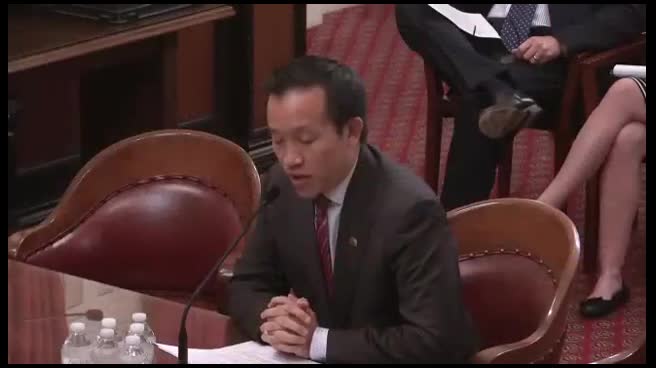 5MIN
Senate Standing Committee on Energy, Utilities and Communications
Bill Author

Bill Co-Author(s):