AB 2812: Solid waste: recycling: state agencies and large state facilities.
- Session Year: 2015-2016
- House: Assembly
- Latest Version Date: 2016-09-23
Existing law requires the Department of Resources Recycling and Recovery to develop and adopt requirements relating to adequate areas for collecting, storing, and loading recyclable materials in state buildings. Existing law requires each state agency or large state facility, when entering into a new lease, or renewing an existing lease, to ensure that adequate areas are provided for, and adequate personnel are available to oversee, the collection, storage, and loading of recyclable materials in compliance with those requirements.
This bill would require the department, on or before July 1, 2017, to develop guidance for collecting and recycling recyclable materials in office buildings of state agencies and large state facilities, except buildings and facilities of community college districts or their campuses. The bill would require that a covered state agency and large state facility, on and after July 1, 2018, provide adequate receptacles, signage, education, and staffing, and arrange for recycling services consistent with specified law, for each office building of the state agency or large state facility. The bill would require, at least once per year, a covered state agency and large state facility to review the adequacy and condition of receptacles for recyclable material and of associated signage, education, and staffing.
Existing law requires each state agency to submit an annual report to the department summarizing its progress in reducing solid waste, as specified.
This bill would require that report to include a summary of the state agencys compliance with this act.
This bill would incorporate additional changes in Section 42926 of the Public Resources Code proposed by AB 2396 that would become operative only if AB 2396 and this bill are both chaptered and become effective on or before January 1, 2017, and this bill is chaptered last.
Existing law requires the Department of Resources Recycling and Recovery to develop and adopt requirements relating to adequate areas for collecting, storing, and loading recyclable materials in state buildings. Existing law requires each state agency or large state facility, when entering into a new lease, or renewing an existing lease, to ensure that adequate areas are provided for, and adequate personnel are available to oversee, the collection, storage, and loading of recyclable materials in compliance with those requirements.
This bill would require the department, on or before July 1, 2017, to develop guidelines guidance for collecting and recycling recyclable materials in office buildings of state agencies and large state facilities, except buildings and facilities of community college districts or their campuses. The bill would require that a covered state agency and large state facility, on and after July 1, 2018, provide adequate receptacles, signage, education, and staffing, and arrange for recycling services consistent with specified law, for each office building of the state agency or large state facility. The bill would require, at least once per year, a covered state agency and large state facility to review the adequacy and condition of receptacles for recyclable material and of associated signage, education, and staffing.
Existing law requires each state agency to submit an annual report to the department summarizing its progress in reducing solid waste, as specified.
This bill would require that report to include a summary of the state agencys compliance with this act.
This bill would incorporate additional changes in Section 42926 of the Public Resources Code proposed by AB 2396 that would become operative only if AB 2396 and this bill are both chaptered and become effective on or before January 1, 2017, and this bill is chaptered last.
Existing law requires the Department of Resources Recycling and Recovery to develop and adopt requirements relating to adequate areas for collecting, storing, and loading recyclable materials in state buildings. Existing law requires each state agency or large state facility, when entering into a new lease, or renewing an existing lease, to ensure that adequate areas are provided for, and adequate personnel are available to oversee, the collection, storage, and loading of recyclable materials in compliance with those requirements. Existing law defines large state facility to include, among other entities, the campuses of the California Community Colleges.
This bill would require the department, on or before July 1, 2017, to adopt requirements for adequate receptacles and staffing develop guidelines for collecting and storing recycling recyclable materials in office buildings of state buildings agencies and large state facilities. facilities, except buildings and facilities of community college districts or their campuses. The bill would require that a covered state agency and large state facility, on or before and after July 1, 2018, consistent with those requirements, to provide receptacles for recyclable materials, provide staff, and establish a collection schedule for collecting recyclable materials. provide adequate receptacles, signage, education, and staffing, and arrange for recycling services consistent with specified law, for each office building of the state agency or large state facility. The bill would require, at least once per year, a covered state agency and large state facility to review the adequacy and condition of receptacles for recyclable material and of associated signage. Because the bill would impose new duties on community college districts, it would impose a state-mandated local program. signage, education, and staffing.
Existing law requires each state agency to submit an annual report to the department summarizing its progress in reducing solid waste, as specified.
This bill would require that report to include a summary of the state agencys compliance with this act.
The California Constitution requires the state to reimburse local agencies and school districts for certain costs mandated by the state. Statutory provisions establish procedures for making that reimbursement.
This bill would provide that, if the Commission on State Mandates determines that the bill contains costs mandated by the state, reimbursement for those costs shall be made pursuant to these statutory provisions.
Existing law requires the Department of Resources Recycling and Recovery to develop and adopt requirements relating to adequate areas for collecting, storing, and loading recyclable materials in state buildings. Existing law requires each state agency or large state facility, when entering into a new lease, or renewing an existing lease, to ensure that adequate areas are provided for, and adequate personnel are available to oversee, the collection, storage, and loading of recyclable materials in compliance with those requirements. Existing law defines large state facility to include, among other entities, the campuses of the California Community Colleges.
This bill would require the department, on or before July 1, 2017, to adopt requirements for adequate receptacles and staffing for collecting and storing recyclable materials in state buildings and large state facilities. The bill would require a state agency and large state facility, on or before July 1, 2018, consistent with those requirements, to provide receptacles for recyclable materials, provide staff, and establish a collection schedule for collecting recyclable materials. The bill would require, at least once per year, a state agency and large state facility to review the adequacy and condition of receptacles for recyclable material and of associated signage. Because the bill would impose new duties on community college districts, it would impose a state-mandated local program.
Existing law requires each state agency to submit an annual report to the department summarizing its progress in reducing solid waste, as specified.
This bill would require that report to include a summary of the state agencys compliance with this act.
The California Constitution requires the state to reimburse local agencies and school districts for certain costs mandated by the state. Statutory provisions establish procedures for making that reimbursement.
This bill would provide that, if the Commission on State Mandates determines that the bill contains costs mandated by the state, reimbursement for those costs shall be made pursuant to these statutory provisions.
(a)On or before July 1, 2017, the department shall develop guidance for collecting and recycling recyclable materials in office buildings of state agencies and large state facilities.
(b)For purposes of this section, recyclable materials shall include, but are not limited to, paper, plastic, metal, and organic waste.
(c)On and after July 1, 2018, a state agency and large state facility, for each office building of the state agency or large state facility, shall provide adequate receptacles, signage, education, and staffing, and arrange for recycling services consistent with Sections 42649.2 and 42649.81.
(d)At least once per year, a state agency and large state facility shall review the adequacy and condition of receptacles for recyclable material and of associated signage, education, and staffing.
(e)For purposes of this section, state agency and large state facility do not include buildings or facilities of community college districts or their campuses.
SEC. 2.Section 42926 of the Public Resources Code is amended to read:42926.(a)In addition to the information provided to the department pursuant to Section 12167.1 of the Public Contract Code, each state agency shall submit an annual report to the department summarizing its progress in reducing solid waste as required by Section 42921. The annual report shall be due on or before May 1 of each year. The information in this report shall encompass the previous calendar year.
(b)A state agencys annual report to the department shall, at a minimum, include all of the following:
(1)Calculations of annual disposal reduction.
(2)Information on the changes in waste generated or disposed of due to increases or decreases in employees, economics, or other factors.
(3)A summary of progress made in implementing the integrated waste management plan.
(4)The extent to which the state agency intends to utilize programs or facilities established by the local agency for the handling, diversion, and disposal of solid waste. If the state agency does not intend to utilize those established programs or facilities, the state agency shall identify sufficient disposal capacity for solid waste that is not source reduced, recycled, or composted.
(5)A summary of the state agencys compliance with the requirements specified in subdivisions (c) and (d) of Section 42924.5.
(6)Other information relevant to compliance with Section 42921.
(c)The department shall use, but is not limited to the use of, the annual report in the determination of whether the agencys integrated waste management plan needs to be revised.
(d)For purposes of this section, the meaning of state agency does not include a district agricultural association, as defined in Section 3951 of the Food and Agricultural Code.
SEC. 2.5.Section 42926 of the Public Resources Code is amended to read:42926.(a)In addition to the information provided to the department pursuant to Section 12167.1 of the Public Contract Code, each state agency shall submit an annual report to the department summarizing its progress in reducing solid waste as required by Section 42921. The annual report shall be due on or before May 1 of each year. The information in this report shall encompass the previous calendar year.
(b)A state agencys annual report to the department shall, at a minimum, include all of the following:
(1)Calculations of annual disposal reduction.
(2)Information on the changes in waste generated or disposed of due to increases or decreases in employees, economics, or other factors.
(3)A summary of progress made in implementing the integrated waste management plan.
(4)The extent to which the state agency intends to utilize programs or facilities established by the local agency for the handling, diversion, and disposal of solid waste. If the state agency does not intend to utilize those established programs or facilities, the state agency shall identify sufficient disposal capacity for solid waste that is not source reduced, recycled, or composted.
(5)A summary of the state agencys compliance with the requirements specified in subdivisions (c) and (d) of Section 42924.5.
(6)A summary of the state agencys compliance with Chapter 12.8 (commencing with Section 42649) and Chapter 12.9 (commencing with Section 42649.8), if applicable.
(7)Other information relevant to compliance with Section 42921.
(c)The department shall use, but is not limited to the use of, the annual report in the determination of whether the agencys integrated waste management plan needs to be revised.
(d)For purposes of this section, the meaning of state agency does not include a district agricultural association, as defined in Section 3951 of the Food and Agricultural Code.
SEC. 3.Section 2.5 of this bill incorporates amendments to Section 42926 of the Public Resources Code proposed by both this bill and Assembly Bill 2396. It shall only become operative if (1) both bills are enacted and become effective on or before January 1, 2017, (2) each bill amends Section 42926 of the Public Resources Code, and (3) this bill is enacted after Assembly Bill 2396, in which case Section 2 of this bill shall not become operative.
(a)On or before July 1, 2017, the department shall develop guidelines guidance for collecting and recycling recyclable materials in office buildings of state agencies and large state facilities.
(b)For purposes of this section, recyclable materials shall include, but are not limited to, paper, plastic, metal, and organic waste.
(c)On and after July 1, 2018, a state agency and large state facility, for each office building of the state agency or large state facility, shall provide adequate receptacles, signage, education, and staffing, and arrange for recycling services consistent with Sections 42649.2 and 42649.81.
(d)At least once per year, a state agency and large state facility shall review the adequacy and condition of receptacles for recyclable material and of associated signage, education, and staffing.
(e)For purposes of this section, state agency and large state facility do not include buildings or facilities of community college districts or their campuses.
SEC. 2.Section 42926 of the Public Resources Code is amended to read:42926.(a)In addition to the information provided to the department pursuant to Section 12167.1 of the Public Contract Code, each state agency shall submit an annual report to the department summarizing its progress in reducing solid waste as required by Section 42921. The annual report shall be due on or before May 1 of each year. The information in this report shall encompass the previous calendar year.
(b)A state agencys annual report to the department shall, at a minimum, include all of the following:
(1)Calculations of annual disposal reduction.
(2)Information on the changes in waste generated or disposed of due to increases or decreases in employees, economics, or other factors.
(3)A summary of progress made in implementing the integrated waste management plan.
(4)The extent to which the state agency intends to utilize programs or facilities established by the local agency for the handling, diversion, and disposal of solid waste. If the state agency does not intend to utilize those established programs or facilities, the state agency shall identify sufficient disposal capacity for solid waste that is not source reduced, recycled, or composted.
(5)A summary of the state agencys compliance with the requirements specified in subdivisions (c) and (d) of Section 42924.5.
(6)Other information relevant to compliance with Section 42921.
(c)The department shall use, but is not limited to the use of, the annual report in the determination of whether the agencys integrated waste management plan needs to be revised.
(d)For purposes of this section, the meaning of state agency does not include a district agricultural association, as defined in Section 3951 of the Food and Agricultural Code.
SEC. 2.5.Section 42926 of the Public Resources Code is amended to read:42926.(a)In addition to the information provided to the department pursuant to Section 12167.1 of the Public Contract Code, each state agency shall submit an annual report to the department summarizing its progress in reducing solid waste as required by Section 42921. The annual report shall be due on or before May 1, 2012, and on or before May 1 in each subsequent 1 of each year. The information in this report shall encompass the previous calendar year.
(b)Each A state agencys annual report to the department shall, at a minimum, include all of the following:
(1)Calculations of annual disposal reduction.
(2)Information on the changes in waste generated or disposed of due to increases or decreases in employees, economics, or other factors.
(3)A summary of progress made in implementing the integrated waste management plan.
(4)The extent to which the state agency intends to utilize programs or facilities established by the local agency for the handling, diversion, and disposal of solid waste. If the state agency does not intend to utilize those established programs or facilities, the state agency shall identify sufficient disposal capacity for solid waste that is not source reduced, recycled, or composted.
(5)A summary of the state agencys compliance with the requirements specified in subdivisions (c) and (d) of Section 42924.5.
(6)A summary of the state agencys compliance with Chapter 12.8 (commencing with Section 42649) and Chapter 12.9 (commencing with Section 42649.8), if applicable.
(5)
(7)Other information relevant to compliance with Section 42921.
(c)The department shall use, but is not limited to the use of, the annual report in the determination of whether the agencys integrated waste management plan needs to be revised.
(d)For purposes of this section, the meaning of state agency does not include a district agricultural association, as defined in Section 3951 of the Food and Agricultural Code.
SEC. 3.Section 2.5 of this bill incorporates amendments to Section 42926 of the Public Resources Code proposed by both this bill and Assembly Bill 2396. It shall only become operative if (1) both bills are enacted and become effective on or before January 1, 2017, (2) each bill amends Section 42926 of the Public Resources Code, and (3) this bill is enacted after Assembly Bill 2396, in which case Section 2 of this bill shall not become operative.
(a)On or before July 1, 2017, the department shall adopt requirements for adequate receptacles and staffing develop guidelines for collecting and storing recycling recyclable materials in office buildings of state buildings agencies and large state facilities.
(b)For purposes of this section, recyclable materials shall include all include, but are not limited to, paper, plastic, and metal products accepted by the applicable city, county, or local agency for recycling. metal, and organic waste.
(c)On or before and after July 1, 2018, a state agency and large state facility shall, consistent with the requirements adopted by the department pursuant to subdivision (a), provide receptacles for recyclable materials, provide staff, and establish a collection schedule for collecting recyclable materials. facility, for each office building of the state agency or large state facility, shall provide adequate receptacles, signage, education, and staffing, and arrange for recycling services consistent with Sections 42649.2 and 42649.81.
(d)At least once per year, a state agency and large state facility shall review the adequacy and condition of receptacles for recyclable material and of associated signage. signage, education, and staffing.
(e)For purposes of this section, state agency and large state facility do not include buildings or facilities of community college districts or their campuses.
SEC. 2.Section 42926 of the Public Resources Code is amended to read:42926.(a)In addition to the information provided to the department pursuant to Section 12167.1 of the Public Contract Code, each state agency shall submit an annual report to the department summarizing its progress in reducing solid waste as required by Section 42921. The annual report shall be due on or before May 1 of each year. The information in this report shall encompass the previous calendar year.
(b)A state agencys annual report to the department shall, at a minimum, include all of the following:
(1)Calculations of annual disposal reduction.
(2)Information on the changes in waste generated or disposed of due to increases or decreases in employees, economics, or other factors.
(3)A summary of progress made in implementing the integrated waste management plan.
(4)The extent to which the state agency intends to utilize programs or facilities established by the local agency for the handling, diversion, and disposal of solid waste. If the state agency does not intend to utilize those established programs or facilities, the state agency shall identify sufficient disposal capacity for solid waste that is not source reduced, recycled, or composted.
(5)A summary of the state agencys compliance with the requirements specified in subdivisions (c) and (d) of Section 42924.5.
(6)Other information relevant to compliance with Section 42921.
(c)The department shall use, but is not limited to the use of, the annual report in the determination of whether the agencys integrated waste management plan needs to be revised.
(d)For purposes of this section, the meaning of state agency does not include a district agricultural association, as defined in Section 3951 of the Food and Agricultural Code.
SEC. 3.If the Commission on State Mandates determines that this act contains costs mandated by the state, reimbursement to local agencies and school districts for those costs shall be made pursuant to Part 7 (commencing with Section 17500) of Division 4 of Title 2 of the Government Code.
(a)On or before July 1, 2017, the department shall adopt requirements for adequate receptacles and staffing for collecting and storing recyclable materials in state buildings and large state facilities.
(b)For purposes of this section, recyclable materials shall include all paper, plastic, and metal products accepted by the applicable city, county, or local agency for recycling.
(c)On or before July 1, 2018, a state agency and large state facility shall, consistent with the requirements adopted by the department pursuant to subdivision (a), provide receptacles for recyclable materials, provide staff, and establish a collection schedule for collecting recyclable materials.
(d)At least once per year, a state agency and large state facility shall review the adequacy and condition of receptacles for recyclable material and of associated signage.
SEC. 2.Section 42926 of the Public Resources Code is amended to read:42926.(a)In addition to the information provided to the department pursuant to Section 12167.1 of the Public Contract Code, each state agency shall submit an annual report to the department summarizing its progress in reducing solid waste as required by Section 42921. The annual report shall be due on or before May 1, 2012, and on or before May 1 in each subsequent year. 1 of each year. The information in this report shall encompass the previous calendar year.
(b)Each A state agencys annual report to the department shall, at a minimum, include all of the following:
(1)Calculations of annual disposal reduction.
(2)Information on the changes in waste generated or disposed of due to increases or decreases in employees, economics, or other factors.
(3)A summary of progress made in implementing the integrated waste management plan.
(4)The extent to which the state agency intends to utilize programs or facilities established by the local agency for the handling, diversion, and disposal of solid waste. If the state agency does not intend to utilize those established programs or facilities, the state agency shall identify sufficient disposal capacity for solid waste that is not source reduced, recycled, or composted.
(5)A summary of the state agencys compliance with the requirements specified in Section 42924.5.
(5)
(6)Other information relevant to compliance with Section 42921.
(c)The department shall use, but is not limited to the use of, the annual report in the determination of whether the agencys integrated waste management plan needs to be revised.
(d)For purposes of this section, the meaning of state agency does not include a district agricultural association, as defined in Section 3951 of the Food and Agricultural Code.
SEC. 3.If the Commission on State Mandates determines that this act contains costs mandated by the state, reimbursement to local agencies and school districts for those costs shall be made pursuant to Part 7 (commencing with Section 17500) of Division 4 of Title 2 of the Government Code.
|
Date
|
Status
|
|---|---|
| Sep 1, 2016 | Enrolled and presented to the Governor at 4:30 p.m. |
| Aug 23, 2016 | Senate amendments concurred in. To Engrossing and Enrolling. (Ayes 80. Noes 0. Page 6142.). |
| Aug 23, 2016 | Senate amendments concurred in. To Engrossing and Enrolling. |
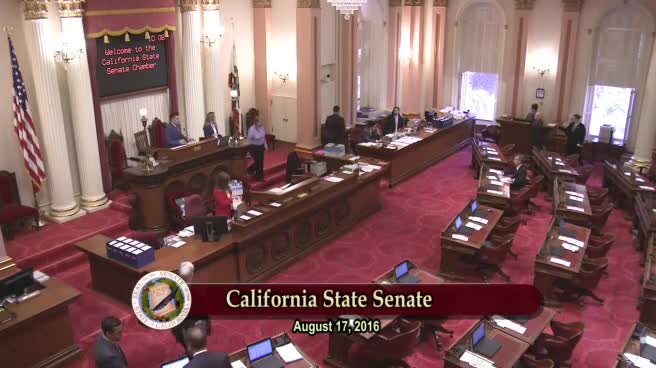
| Aug 17, 2016 | Read third time. Passed. Ordered to the Assembly. (Ayes 39. Noes 0. Page 5049.). |
| Aug 17, 2016 | Read third time. Passed. Ordered to the Assembly. (Ayes 39. Noes 0.). |
| Aug 17, 2016 | In Assembly. Concurrence in Senate amendments pending. May be considered on or after August 19 pursuant to Assembly Rule 77. |
| Aug 17, 2016 | Read third time. Passed. Ordered to the Assembly. |
| Aug 15, 2016 | Read second time and amended. Ordered to third reading. |
| Aug 11, 2016 | From committee: Amend, and do pass as amended. (Ayes 7. Noes 0.) (August 11). |
| Aug 1, 2016 | In committee: Referred to APPR. suspense file. |
| Jun 30, 2016 | From committee: Do pass and re-refer to Com. on APPR. with recommendation: To Consent Calendar. (Ayes 7. Noes 0.) (June 29). Re-referred to Com. on APPR. |
| Jun 9, 2016 | Referred to Com. on E.Q. |
| Jun 2, 2016 | In Senate. Read first time. To Com. on RLS. for assignment. |
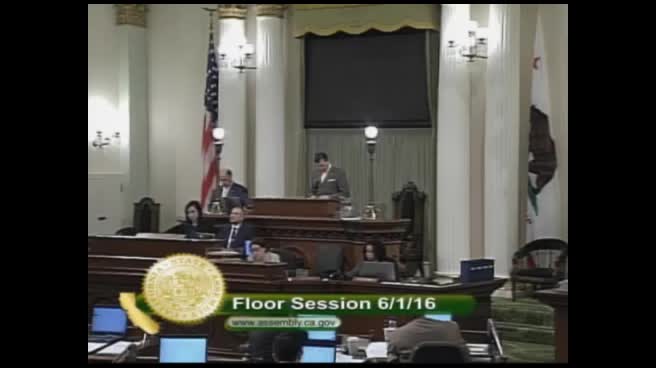
| Jun 1, 2016 | Read third time. Passed. Ordered to the Senate. (Ayes 80. Noes 0. Page 5109.) |
| Jun 1, 2016 | Read third time. Passed. Ordered to the Senate. (Ayes 80. Noes 0.) |
| Jun 1, 2016 | Read third time. Passed. Ordered to the Senate. |
| May 31, 2016 | Read second time. Ordered to third reading. |
| May 27, 2016 | Read second time and amended. Ordered returned to second reading. |
| May 27, 2016 | From committee: Amend, and do pass as amended. (Ayes 20. Noes 0.) (May 27). |
| May 11, 2016 | In committee: Set, first hearing. Referred to APPR. suspense file. |
| Apr 19, 2016 | From committee: Do pass and re-refer to Com. on APPR. with recommendation: To Consent Calendar. (Ayes 9. Noes 0.) (April 18). Re-referred to Com. on APPR. |
| Mar 14, 2016 | Referred to Com. on NAT. RES. |
| Feb 22, 2016 | Read first time. |
| Feb 21, 2016 | From printer. May be heard in committee March 22. |
| Feb 19, 2016 | Introduced. To print. |
|
Date
|
Description
|
Location
|
Votes
|
|
|---|---|---|---|---|
| Aug 23, 2016 | AB 2812 GORDON Concurrence in Senate Amendments | Assembly Floor |
Passed |
|
| Aug 17, 2016 | Assembly 3rd Reading AB2812 Gordon By Pan | Senate Floor |
Passed |
|
| Aug 11, 2016 | Do pass as amended | Senate Standing Committee on Appropriations |
Passed |
|
| Aug 1, 2016 | Placed on suspense file | Senate Standing Committee on Appropriations |
Passed |
|
| Jun 29, 2016 | Do pass, but first be re-referred to the Committee on [Appropriations] with the recommendation: To Consent Calendar | Senate Standing Committee on Environmental Quality |
Passed |
|
| Jun 1, 2016 | AB 2812 GORDON Assembly Third Reading | Assembly Floor |
Passed |
|
| May 27, 2016 | Do pass as amended. | Assembly Standing Committee on Appropriations |
Passed |
|
| Apr 18, 2016 | Do pass and be re-referred to the Committee on [Appropriations] with recommendation: To Consent Calendar | Assembly Standing Committee on Natural Resources |
Passed |
This list shows positions taken on this bill by organizations on the date displayed, which is linked to the original source.
Positions by individuals are not included.
CONCURRENCE IN SENATE AMENDMENTS
CSA1 Bill Id:AB 2812
Author:(Gordon)
As Amended Ver:August 15, 2016
Majority vote
ASSEMBLY: | 80-0 | (June 1, 2016) | SENATE: | 39-0 | (August 17, 2016) |
Original Committee Reference: NAT. RES.
SUMMARY: Requires state agencies to provide and maintain recycling receptacles in state buildings and large state facilities based on standards adopted by the Department of Resources Recycling and Recovery (CalRecycle).
The Senate amendments add language to avoid chaptering out issues with AB 2396 (McCarty) of the current legislative session, which relates to state agency commercial and organics recycling.
EXISTING LAW, pursuant to the Integrated Waste Management Act:
- Requires state agencies to develop an integrated waste management plan (plan) by 2000 to describe how the state agency or facility would divert 50% of its waste from landfill disposal by 2004.
- Requires state agencies and large state facilities (facilities), which include California state universities and community colleges, prisons, Department of Transportation facilities, and other facilities as determined by CalRecycle, to divert at least 50% of their waste from landfill disposal.
- Requires state agencies to annually report to CalRecycle on the implementation of the plan.
- Requires a commercial waste generator, including state agencies, to arrange for recycling services and requires local governments to implement commercial solid waste recycling programs designed to divert solid waste from businesses.
- Requires generators of specified amounts of organic waste (i.e., food waste and yard waste), including state agencies, to arrange for recycling services for that material.
FISCAL EFFECT: According to the Senate Appropriations Committee, this bill has minor additional state costs. State agencies are already required to report annually to CalRecycle on their waste diversion programs. This bill clarifies that mandatory commercial recycling and mandatory organics are a part of the waste diversion programs that agencies must include in their annual reports.
COMMENTS: CalRecycle is tasked with diverting at least 75% of solid waste statewide by 2020. Recycling reduces disposal costs, creates jobs, reduces greenhouse gas (GHG) emissions, and conserves resources. According to CalRecycle, this represents the next phase of waste management in California that makes current landfill diversion programs equal partners with materials management programs to achieve the highest and best use of all materials in California. These goals cannot be met without motivation and actions at multiple levels within the public and private sectors. California's state agencies play an essential role in meeting the state's waste reduction requirements.
In 2011, AB 341 (Chesbro), Chapter 476, Statutes of 2011, required businesses, including state agencies, that generate four cubic yards or more of commercial solid waste per week to arrange for recycling services.
Recycling provides significant GHG reductions over landfilling. The Air Resources Board's First Update to the Climate Change Scoping Plan identifies waste management as a key sector for GHG emissions reductions and states, "Meeting the [state's] 75% recycling goal is the best path forward to maximizing GHG emission reductions from the Waste Management Sector and putting California on the path for even greater GHG emission reductions in the future." Composting and other organics processing technologies, including anaerobic digestion, reduce GHGs by avoiding the emissions that would be generated by the material's decomposition in a landfill. Landfill gas is generated by the decomposition of organic materials such as food, paper, wood, and yard waste. Fifty percent of landfill gas is methane, a GHG that is more than 80 times more efficient at trapping heat than carbon dioxide. While most modern landfills have systems in place to capture methane, significant amounts continue to escape into the atmosphere. According to the Air Resources Board, landfills generated 20% of the state's methane emissions in 2013. Source reduction and recycling reduce GHG emissions associated with the production and transportation of products.
This bill is intended to ensure that state employees have adequate opportunity to recycle their solid waste in the workplace, which will enable the state will lead by example and play a major role in contributing to the state's ambitious diversion goals.
Analysis Prepared by: Elizabeth MacMillan / NAT. RES. / (916) 319-2092 FN: 0004340
Office of Senate Floor Analyses (916) 651-1520 Fax: (916) 327-4478 | AB |
THIRD READING
Bill No: AB 2812
: Senate
SENATE ENVIRONMENTAL QUALITY COMMITTEE: 7-0, 6/29/16
AYES: Wieckowski, Gaines, Bates, Hill, Jackson, Leno, Pavley
SENATE APPROPRIATIONS COMMITTEE: 7-0, 8/11/16
AYES: Lara, Bates, Beall, Hill, McGuire, Mendoza, Nielsen
ASSEMBLY FLOOR: 80-0, 6/1/16 - See last page for vote
DIGEST: This bill requires the Department of Resources Recycling and Recovery (CalRecycle), on or before July 1, 2017, to develop guidelines for adequate receptacles and staffing for collecting and recycling recyclable materials in state office buildings. This bill also requires state agencies, on or after July 1, 2018, to provide and maintain recycling receptacles in state buildings and large facilities based on standards adopted by CalRecycle.
ANALYSIS: Existing law, pursuant to the Integrated Waste Management Act (Public Resources Code §40000):
- Requires state agencies to develop an integrated waste management plan (plan) by 2000 to describe how the state agency or facility would divert 50% of its waste from landfill disposal by 2004.
- Requires state agencies and large state facilities (facilities), which include California state universities and community colleges, prisons, Department of Transportation facilities, and other facilities as determined by CalRecycle, to divert at least 50% of their waste from landfill disposal.
- Requires state agencies to annually report to CalRecycle on the implementation of the plan.
- Requires a commercial waste generator, including state agencies, to arrange for recycling services and requires local governments to implement commercial solid waste recycling programs designed to divert solid waste from businesses.
- Requires generators of specified amounts of organic waste (i.e., food waste and yard waste), including state agencies, to arrange for recycling services for that material.
This bill requires state agencies to provide and maintain recycling receptacles in state buildings and large facilities based on standards adopted by CalRecycle. Specifically, this bill:
- Requires, on or before July 1, 2017, CalRecycle to develop guidelines for adequate receptacles and staffing for collecting and recycling recyclable materials in state office buildings.
- Defines “recyclable materials” as including, but not limited to, paper, plastic, metal, and organic waste.
- Requires, on or after July 1, 2018, state agencies and facilities, for each office building of the state agency or large state facility, to provide adequate receptacles, signage, education, and staffing and arrange for recycling services. Exempts community colleges.
- Requires state agencies and facilities to review the adequacy and condition of receptacles for recyclable materials and associated signage at least annually.
- Requires state agencies to include a summary of the agency’s compliance with the bill’s requirements in their annual report to CalRecycle.
- Includes chaptering out language should this bill and AB 2396 both become law.
Background
- Statewide waste diversion goals. CalRecycle is tasked with diverting at least 75% of solid waste statewide by 2020. Currently, an estimated 31 million tons of waste are disposed of in California’s landfills annually, of which 37% is compostable organic materials, 20% is inert and other construction and demolition debris, and 17% is paper and paperboard, 10% plastics, 3% metal, with the remaining 12% consisting of various materials such as glass and other waste.
In addition, CalRecycle is charged with implementing Strategic Directive 6.1, which calls for reducing organic waste disposal by 50% by 2020. According to CalRecycle, significant gains in organic waste diversion (through recycling technologies or organic waste, including composting and anaerobic digestion) are necessary to meet the 75% goal and to implement Strategic Directive 6.1. - Waste reduction and GHGs. According to the California Air Resources Board (ARB), a total reduction of 80 million metric tons (MMT), or 16% compared to business as usual, is necessary to reduce statewide GHG emissions to 1990 levels by 2020. ARB intends to achieve approximately 78% of the reductions through direct regulations. ARB proposes to achieve the balance of reductions necessary to meet the 2020 limit (approximately 18 MMT) through its cap-and-trade program.
Landfill gas is generated by the anaerobic decomposition of organic materials such as food, paper, wood, and green material. 50% of landfill gas is methane, a GHG with a much shorter life (also known as a short-lived climate pollutant), but much higher global warming potential than carbon dioxide (methane is approximately 25 times more efficient at trapping heat than carbon dioxide over a 100-year time span). Depending on the types of solid waste, the chemical makeup of landfill biogas can vary greatly from the biogas produced from dairy farms, municipal solid waste, and wastewater treatment facilities. While most modern landfills have systems in place to capture methane, significant amounts continue to escape into the atmosphere. According to ARB’s GHG inventory, approximately seven million tons of carbon dioxide equivalent are released annually by landfills. That number is expected to increase to 8.5 million tons of carbon dioxide equivalent by 2020.
Comments
Purpose of Bill. According to the author, “The Integrated Waste Management Act requires that local governments divert at least 50% of solid waste from landfill disposal and establishes a statewide policy goal that 75% of solid waste generated be source-reduced, recycled, or composted by the year 2020. According to CalRecycle, in order to achieve the state’s policy goal, an additional 23 million tons will need to be recycled, reduced, or composted.
“AB 2812 would direct CalRecycle to develop requirements to ensure recycling containers are made available to employees of the state. By ensuring that state employees have adequate opportunity to recycle their solid waste in the workplace, the state will lead by example, and play a major role in contributing to the state’s ambitious diversion goals.”
FISCAL EFFECT: Appropriation: Fiscal Com.: Local:
According to the Senate Appropriations Committee:
- Increased administrative costs of approximately $145,000 per year for two years for CalRecyle to gather information, adopt requirements, conduct outreach and update the electronic annual report to reflect new reporting requirements. Ongoing absorbable costs for monitoring.
- Unknown, potentially significant state costs to provide receptacles, staff, and establish a collection schedule at each state agency and facility.
- Unknown, likely minor, state costs to incorporate the new requirement into the existing report to CalRecycle.
Californians Against Waste
Northern California Recycling Agency
Rural County Representatives of California
Solid Waste Association of North America
OPPOSITION: (Verified 8/11/16)
None received
ASSEMBLY FLOOR: 80-0, 6/1/16
AYES: Achadjian, Alejo, Travis Allen, Arambula, Atkins, Baker, Bigelow, Bloom, Bonilla, Bonta, Brough, Brown, Burke, Calderon, Campos, Chang, Chau, Chávez, Chiu, Chu, Cooley, Cooper, Dababneh, Dahle, Daly, Dodd, Eggman, Frazier, Beth Gaines, Gallagher, Cristina Garcia, Eduardo Garcia, Gatto, Gipson, Gomez, Gonzalez, Gordon, Gray, Grove, Hadley, Harper, Roger Hernández, Holden, Irwin, Jones, Jones-Sawyer, Kim, Lackey, Levine, Linder, Lopez, Low, Maienschein, Mathis, Mayes, McCarty, Medina, Melendez, Mullin, Nazarian, Obernolte, O'Donnell, Olsen, Patterson, Quirk, Ridley-Thomas, Rodriguez, Salas, Santiago, Steinorth, Mark Stone, Thurmond, Ting, Wagner, Waldron, Weber, Wilk, Williams, Wood, Rendon
8/15/16 20:22:31
**** END ****
SENATE COMMITTEE ON
Senator Ricardo Lara, Chair
2015 - 2016 Regular Session
AB 2812 (Gordon) - Solid waste: recycling: state agencies and large state facilities
Version: | Policy Vote: |
Urgency: | Mandate: |
Hearing Date: | Consultant: |
*********** ANALYSIS ADDENDUM – SUSPENSE FILE ***********
The following information is revised to reflect amendments
adopted by the committee on August 11, 2016
Bill Summary:
AB 2812 requires Department of Resources Recycling and Recovery (CalRecycle), on or before July 1, 2017, to develop guidelines for adequate receptacles and staffing for collecting and recycling recyclable materials in state office buildings. The bill also requires state agencies, on or after July 1, 2018, to provide and maintain recycling receptacles in state buildings and large facilities based on standards adopted by CalRecycle.
Fiscal Impact:
Unknown, potentially significant state costs (General Funds, various special funds) to provide receptacles, staff, and establish a collection schedule at each state agency and facility.
Unknown, likely minor, state costs to develop and provide guidance, and incorporate the new requirement into the existing report to CalRecycle.
Author Amendments:
Clarify that CalRecyle must provide guidance, not guidelines, and make other clarifying changes.
-- END --
SENATE COMMITTEE ON APPROPRIATIONS
Senator Ricardo Lara, Chair
2015 - 2016 Regular Session
AB 2812 (Gordon) - Solid waste: recycling: state agencies and large state facilities
Version: May 27, 2016 | Policy Vote: E.Q. 7 - 0 |
Urgency: No | Mandate: No |
Hearing Date: August 1, 2016 | Consultant: Narisha Bonakdar |
This bill meets the criteria for referral to the Suspense File.
Bill Summary:
AB 2812 requires Department of Resources Recycling and Recovery (CalRecycle), on or before July 1, 2017, to develop guidelines for adequate receptacles and staffing for collecting and recycling recyclable materials in state office buildings. The bill also requires state agencies, on or after July 1, 2018, to provide and maintain recycling receptacles in state buildings and large facilities based on standards adopted by CalRecycle.
Fiscal Impact:
Increased administrative costs of approximately $145,000 per year for 2 years for CalRecyle to gather information, adopt requirements, conduct outreach and update the electronic annual report to reflect new reporting requirements. Ongoing absorbable costs for monitoring.
Unknown, potentially significant state costs to provide receptacles, staff, and establish a collection schedule at each state agency and facility.
Unknown, likely minor, state costs to incorporate the new requirement into the existing report to CalRecycle.
Background:
The Integrated Waste Management Act of 1989. The Integrated Waste Management Act (Act) of 1989 establishes a statewide diversion goal of 75% by 2020. The Act also requires state agencies to develop an integrated waste management plan indicating how the state agency or facility will divert 50% of its waste from landfill disposal and to submit an annual report to CalRecycle summarizing its progress in reducing solid waste.
Local agencies are similarly required to divert, through source reduction, recycling, and composting, 50% of solid waste disposed by their jurisdictions. Local agencies must also submit a countywide siting element to CalRecycle that includes specified information regarding the transformation and disposal of solid waste.
Statewide waste diversion goals. CalRecycle is tasked with diverting at least 75% of solid waste statewide by 2020. Currently, an estimated 35 million tons of waste are disposed of in California’s landfills annually, of which 32% is compostable organic materials, 29% is construction and demolition debris, and 17% is paper. In addition, CalRecycle is charged with implementing Strategic Directive 6.1, which calls for the reduction of organic waste disposal by 50% by 2020.
Proposed Law:
This bill:
Requires, CalRecycle, on or before July 1, 2017, to develop guidelines for collecting and recycling recyclable materials in office buildings of state agencies and large state facilities.
Defines “recyclable materials” as, including, but not limited to, paper, plastic, metal, and organic waste.
Requires a state agency and large state facility, on and after July 1, 2018, to provide adequate receptacles, signage, education, and staffing, and arrange for recycling services for each office building or large state facility.
Requires each state agency and large facility, at least once per year, to review the adequacy and condition of receptacles for recyclable material and of associated signage, education, and staffing.
Specifies that a “state agency” and “large state facility” does not include buildings or facilities of community college districts or their campuses.
Requires each state agency to include a summary of the state agency’s compliance with the requirements in the bill in its current annual report to CalRecycle.
Staff Comments:
Purpose of Bill. According to the author, “The Integrated Waste Management Act requires that local governments divert at least 50% of solid waste from landfill disposal and establishes a statewide policy goal that 75% of solid waste generated be source-reduced, recycled, or composted by the year 2020. According to CalRecycle, in order to achieve the state’s policy goal, an additional 23 million tons will need to be recycled, reduced, or composted.”
“AB 2812 would direct CalRecycle to develop requirements to ensure recycling containers are made available to employees of the state. By ensuring that state employees have adequate opportunity to recycle their solid waste in the workplace, the state will lead by example, and play a major role in contributing to the state’s ambitious diversion goals.”
According to the Department of General Services, approximately 60 buildings are considered a state building or a large state facility. Per the State Administrative Manual Chapter 50, each state agency is already required to provide receptacles for recycling, signage, and education, as well as ensure sufficient staff to pick up the receptacles, review the adequacy of and condition of receptacles, and provide a summary of these activities in its annual report to CalRecycle.
It is not clear how many state agencies, if any, are not complying with the State Administrative Manual. However, to the extent that certain state agencies that are currently not complying with the State Administrative Manual comply under this bill, the state will incur potentially significant costs.
-- END --
SENATE COMMITTEE ON ENVIRONMENTAL QUALITY
Senator Wieckowski, Chair
2015 - 2016 Regular
Bill No: AB 2812
Author: | Gordon | ||
Version: | 5/27/2016 | Hearing Date: | June 29, 2016 |
Urgency: | No | Fiscal: | Yes |
Consultant: | Joanne Roy | ||
SUBJECT: Solid waste: recycling: state agencies and large state facilities.
ANALYSIS:
Existing law, pursuant to the Integrated Waste Management Act (Public Resources Code §40000):
- Requires state agencies to develop an integrated waste management plan (plan) by 2000 to describe how the state agency or facility would divert 50% of its waste from landfill disposal by 2004.
- Requires state agencies and large state facilities (facilities), which include California state universities and community colleges, prisons, Department of Transportation facilities, and other facilities as determined by the Department of Resources Recycling and Recovery (CalRecycle), to divert at least 50% of their waste from landfill disposal.
- Requires state agencies to annually report to CalRecycle on the implementation of the plan.
- Requires a commercial waste generator, including state agencies, to arrange for recycling services and requires local governments to implement commercial solid waste recycling programs designed to divert solid waste from businesses.
- Requires generators of specified amounts of organic waste (i.e., food waste and yard waste), including state agencies, to arrange for recycling services for that material.
This bill requires state agencies to provide and maintain recycling receptacles in state buildings and large facilities based on standards adopted by CalRecycle. Specifically, this bill:
- On or before July 1, 2017, requires CalRecycle to develop guidelines for adequate receptacles and staffing for collecting and recycling recyclable materials in state office buildings.
- Defines “recyclable materials” as including, but not limited to, paper, plastic, metal, and organic waste.
- On or after July 1, 2018, requires state agencies and facilities, for each office building of the state agency or large state facility, to provide adequate receptacles, signage, education, and staffing and arrange for recycling services. Exempts community colleges.
- Requires state agencies and facilities to review the adequacy and condition of receptacles for recyclable materials and associated signage at least annually.
- Requires state agencies to include a summary of the agency’s compliance with the bill’s requirements in their annual report to CalRecycle.
Background
- Statewide waste diversion goals. CalRecycle is tasked with diverting at least 75% of solid waste statewide by 2020. Currently, an estimated 31 million tons of waste are disposed of in California’s landfills annually, of which 37% is compostable organic materials, 20% is inert and other construction and demolition debris, and 17% is paper and paperboard, 10% plastics, 3% metal, with the remaining 12% consisting of various materials such as glass and other waste.
In addition, CalRecycle is charged with implementing Strategic Directive 6.1, which calls for reducing organic waste disposal by 50% by 2020. According to CalRecycle, significant gains in organic waste diversion (through recycling technologies or organic waste, including composting and anaerobic digestion) are necessary to meet the 75% goal and to implement Strategic Directive 6.1. - Waste reduction and GHGs. According to the California Air Resources Board (ARB), a total reduction of 80 million metric tons (MMT), or 16% compared to business as usual, is necessary to reduce statewide GHG emissions to 1990 levels by 2020. ARB intends to achieve approximately 78% of the reductions through direct regulations. ARB proposes to achieve the balance of reductions necessary to meet the 2020 limit (approximately 18 MMT) through its cap-and-trade program.
Landfill gas is generated by the anaerobic decomposition of organic materials such as food, paper, wood, and green material. Fifty percent of landfill gas is methane, a GHG with a much shorter life (also known as a short-lived climate pollutant), but much higher global warming potential than carbon dioxide (methane is approximately 25 times more efficient at trapping heat than carbon dioxide over a 100-year time span). Depending on the types of solid waste, the chemical makeup of landfill biogas can vary greatly from the biogas produced from dairy farms, municipal solid waste, and wastewater treatment facilities. While most modern landfills have systems in place to capture methane, significant amounts continue to escape into the atmosphere. According to ARB’s GHG inventory, approximately 7 million tons of carbon dioxide equivalent are released annually by landfills. That number is expected to increase to 8.5 million tons of carbon dioxide equivalent by 2020.
Comments
Purpose of Bill. According to the author, “The Integrated Waste Management Act requires that local governments divert at least 50% of solid waste from landfill disposal and establishes a statewide policy goal that 75% of solid waste generated be source-reduced, recycled, or composted by the year 2020. According to CalRecycle, in order to achieve the state’s policy goal, an additional 23 million tons will need to be recycled, reduced, or composted.
“AB 2812 would direct CalRecycle to develop requirements to ensure recycling containers are made available to employees of the state. By ensuring that state employees have adequate opportunity to recycle their solid waste in the workplace, the state will lead by example, and play a major role in contributing to the state’s ambitious diversion goals.”
SOURCE:
Author
SUPPORT:
Californians Against Waste
Northern California Recycling Association
Rural County Representatives of California
Solid Waste Association of North America
OPPOSITION:
None received
-- END --
ASSEMBLY THIRD READING
ATR Bill Id:AB 2812
Author:(Gordon)
As Amended Ver:May 27, 2016
Majority vote
Committee | Votes | Ayes | Noes |
Natural Resources | 9-0 | Williams, Jones, Cristina Garcia, Gomez, Hadley, Harper, McCarty, Mark Stone, Wood | |
Appropriations | 20-0 | Gonzalez, Bigelow, Bloom, Bonilla, Bonta, Calderon, Chang, Daly, Eggman, Gallagher, Eduardo Garcia, Roger Hernández, Holden, Jones, Obernolte, Quirk, Santiago, Wagner, Weber, Wood |
SUMMARY: Requires state agencies to provide and maintain recycling receptacles in state buildings and large state facilities based on standards adopted by the Department of Resources Recycling and Recovery (CalRecycle). Specifically, this bill:
- On or before July 1, 2017, requires CalRecycle to develop guidelines for adequate receptacles and staffing for collecting and recycling recyclable materials in state office buildings.
- Defines "recyclable materials" as including, but not limited to, all paper, plastic, metal, and organic waste.
- On and after July 1, 2018, requires state agencies and facilities, for each office building of the state agency or large state facility, to provide adequate receptacles, signage, education, and staffing and arrange for recycling services. Exempts community colleges.
- Requires state agencies and facilities to review the adequacy and condition of receptacles for recyclable materials and associated signage at least annually.
- Requires state agencies to include a summary of the agency's compliance with the bill's requirements in their annual report to CalRecycle.
EXISTING LAW, pursuant to the Integrated Waste Management Act:
- Requires state agencies to develop an integrated waste management plan (plan) by 2000 to describe how the state agency or facility would divert 50% of its waste from landfill disposal by 2004.
- Requires state agencies and large state facilities (facilities), which include California state universities and community colleges, prisons, Department of Transportation facilities, and other facilities as determined by CalRecycle, to divert at least 50% of their waste from landfill disposal.
- Requires state agencies to annually report to CalRecycle on the implementation of the plan.
- Requires a commercial waste generator, including state agencies, to arrange for recycling services and requires local governments to implement commercial solid waste recycling programs designed to divert solid waste from businesses.
- Requires generators of specified amounts of organic waste (i.e., food waste and yard waste), including state agencies, to arrange for recycling services for that material.
FISCAL EFFECT: According to the Assembly Appropriations Committee, this bill has the following state costs:
- Increased administrative costs of approximately $145,000 per year for two years for CalRecyle to gather information, adopt requirements, conduct outreach and update the electronic annual report to reflect new reporting requirements. Ongoing absorbable costs for monitoring.
- Unknown, potentially significant state costs to provide receptacles, staff, and establish a collection schedule at each state agency and facility.
- Unknown, potentially significant reimbursable state costs to reimburse local agencies and school districts if this bill is determined to be a reimbursable state-mandate.
COMMENTS: CalRecycle is tasked with diverting at least 75% of solid waste statewide by 2020. Recycling reduces disposal costs, creates jobs, reduces greenhouse gas (GHG) emissions, and conserves resources. According to CalRecycle, this represents the next phase of waste management in California that makes current landfill diversion programs equal partners with materials management programs to achieve the highest and best use of all materials in California. These goals cannot be met without motivation and actions at multiple levels within the public and private sectors. California's state agencies play an essential role in meeting the state's waste reduction requirements.
In 2011, AB 341 (Chesbro), Chapter 476, Statutes of 2011, required businesses, including state agencies, that generate four cubic yards or more of commercial solid waste per week to arrange for recycling services.
Recycling provides significant GHG reductions over landfilling. The Air Resources Board's First Update to the Climate Change Scoping Plan identifies waste management as a key sector for GHG emissions reductions and states, "Meeting the [state's] 75% recycling goal is the best path forward to maximizing GHG emission reductions from the Waste Management Sector and putting California on the path for even greater GHG emission reductions in the future." Composting and other organics processing technologies, including anaerobic digestion, reduce GHGs by avoiding the emissions that would be generated by the material's decomposition in a landfill. Landfill gas is generated by the decomposition of organic materials such as food, paper, wood, and yard waste. Fifty percent of landfill gas is methane, a GHG that is more than 80 times more efficient at trapping heat than carbon dioxide. While most modern landfills have systems in place to capture methane, significant amounts continue to escape into the atmosphere. According to the Air Resources Board, landfills generated 20% of the state's methane emissions in 2013. Source reduction and recycling reduce GHG emissions associated with the production and transportation of products.
This bill is intended to ensure that state employees have adequate opportunity to recycle their solid waste in the workplace, which will enable the state will lead by example and play a major role in contributing to the state's ambitious diversion goals.
Analysis Prepared by: Elizabeth MacMillan / NAT. RES. / (916) 319-2092 FN: 0003316
Date of Hearing: May 11, 2016
ASSEMBLY COMMITTEE ON APPROPRIATIONS
Lorena Gonzalez, Chair
ABPCA Bill Id:AB 2812
Author:(Gordon) – As Introduced Ver:February 19, 2016
Policy Committee: | Natural Resources | Vote: | 9 - 0 |
Urgency: No State Mandated Local Program: Yes Reimbursable: Yes
SUMMARY:
This bill requires state agencies to provide and maintain recycling receptacles in state buildings and large state facilities based on standards adopted by CalRecycle. Specifically, this bill:
- Requires CalRecycle to adopt requirements for adequate receptacles and staffing for collecting and storing recyclable materials in state buildings and facilities by July 1, 2017.
- Defines "recyclable materials" as all paper, plastic, and metal products accepted by the applicable city, county, or local agency for recycling.
- Requires state agencies and facilities to provide receptacles for recyclable materials, provide staffing, and establish a collection schedule for recyclable materials by July 1, 2018,
- Requires state agencies and facilities to review the adequacy and condition of receptacles for recyclable materials and associated signage at least annually.
- Requires state agencies to include a summary of the agency's compliance with the bill's requirements in their annual report to CalRecycle.
- Declares that if the Commission on State Mandates determines that this bill contains costs mandated by the state, reimbursement shall be made to local agencies and school districts.
FISCAL EFFECT:
- Increased administrative costs of approximately $145,000 per year for 2 years for CalRecyle to gather information, adopt requirements, conduct outreach and update the electronic annual report to reflect new reporting requirements. Ongoing absorbable costs for monitoring.
- Unknown, potentially significant state costs to provide receptacles, staff, and establish a collection schedule at each state agency and facility.
- Unknown, potentially significant reimbursable state costs to reimburse local agencies and school districts if this bill is determined to be a reimbursable state-mandate.
COMMENTS:
- Purpose. According to the author, by ensuring that state employees have adequate opportunity to recycle their solid waste in the workplace, the state will lead by example and play a major role in contributing to the state's ambitious diversion goals.
- Background. CalRecycle is tasked with diverting at least 75% of solid waste statewide by 2020. Recycling reduces disposal costs, creates jobs, reduces greenhouse gas (GHG) emissions, and conserves resources. According to CalRecycle, this represents the next phase of waste management in California that makes current landfill diversion programs equal partners with materials management programs to achieve the highest and best use of all materials in California. These goals cannot be met without motivation and actions at multiple levels within the public and private sectors. California's state agencies play an essential role in meeting the state's waste reduction requirements.
In 2011, AB 341 (Chesbro), Chapter 476, Statutes of 2011 required businesses, including state agencies, that generate four cubic yards or more of commercial solid waste per week to arrange for recycling services.
- Waste reduction and GHGs. Recycling provides significant GHG reductions over landfilling. The Air Resources Board's First Update to the Climate Change Scoping Plan identified waste management as a key sector for GHG emissions reductions and determined that meeting the state's 75% recycling goal is the best path forward to maximizing GHG emission reductions from the Waste Management Sector and puts California on the path for even greater GHG emission reductions in the future.
Analysis Prepared by: Jennifer Galehouse / APPR. / (916) 319-2081
Date of Hearing: April 18, 2016
ASSEMBLY COMMITTEE ON NATURAL RESOURCES
Das Williams, Chair
ABPCA Bill Id:AB 2812 (
Author:Gordon) – As Introduced Ver:February 19, 2016
SUBJECT: Solid waste: recycling: state agencies and large state facilities
SUMMARY: Requires state agencies to provide and maintain recycling receptacles in state buildings and large state facilities based on standards adopted by the Department of Resources Recycling and Recovery (CalRecycle).
EXISTING LAW, pursuant to the Integrated Waste Management Act:
- Requires local agencies to divert, through source reduction, recycling, and composting, 50% of solid waste disposed by their jurisdictions.
- Establishes a statewide diversion goal of 75% by 2020.
- Requires state agencies to develop an integrated waste management plan (plan) by 2000 to describe how the state agency or facility would divert 50% of its waste from landfill disposal by 2004.
- Requires state agencies and large state facilities (facilities), which includes California state universities and community colleges, prisons, Department of Transportation facilities, and other facilities as determined by CalRecycle, to divert at least 50% of their waste from landfill disposal.
- Requires state agencies to annually report to CalRecycle on the implementation of the plan.
- Requires a commercial waste generator, including state agencies, to arrange for recycling services and requires local governments to implement commercial solid waste recycling programs designed to divert solid waste from businesses.
- Requires generators of specified amounts of organic waste (i.e., food waste and yard waste), including state agencies, to arrange for recycling services for that material.
THIS BILL:
- On or before July 1, 2017, requires CalRecycle to adopt requirements for adequate receptacles and staffing for collecting and storing recyclable materials in state buildings and facilities.
- Defines "recyclable materials" as all paper, plastic, and metal products accepted by the applicable city, county, or local agency for recycling.
- On or before July 1, 2018, requires state agencies and facilities to provide receptacles for recyclable materials, provide staffing, and establish a collection schedule for recyclable materials.
- Requires state agencies and facilities to review the adequacy and condition of receptacles for recyclable materials and associated signage at least annually.
- Requires state agencies to include a summary of the agency's compliance with the bill's requirements in their annual report to CalRecycle.
- Declares that if the Commission on State Mandates determines that this bill contains costs mandated by the state, reimbursement shall be made to local agencies and school districts.
FISCAL EFFECT: Unknown
COMMENTS:
- Meeting the state’s recycling goals. CalRecycle is tasked with diverting at least 75% of solid waste statewide by 2020. Recycling reduces disposal costs, creates jobs, reduces greenhouse gas (GHG) emissions, and conserves resources. According to CalRecycle, this represents the next phase of waste management in California that makes current landfill diversion programs equal partners with materials management programs to achieve the highest and best use of all materials in California. These goals cannot be met without motivation and actions at multiple levels within the public and private sectors. California's state agencies play an essential role in meeting the state's waste reduction requirements.
In 2011, AB 341 (Chesbro), Chapter 476, Statutes of 2011 required businesses, including state agencies, that generate four cubic yards or more of commercial solid waste per week to arrange for recycling services.
- Waste reduction and GHGs. Recycling provides significant GHG reductions over landfilling. The Air Resources Board's First Update to the Climate Change Scoping Plan identifies waste management as a key sector for GHG emissions reductions and states, "Meeting the [state's] 75% recycling goal is the best path forward to maximizing GHG emission reductions from the Waste Management Sector and putting California on the path for even greater GHG emission reductions in the future." Composting and other organics processing technologies, including anaerobic digestion, reduce GHGs by avoiding the emissions that would be generated by the material’s decomposition in a landfill. Landfill gas is generated by the decomposition of organic materials such as food, paper, wood, and yard waste. Fifty percent of landfill gas is methane, a GHG that is more than 80 times more efficient at trapping heat than carbon dioxide. While most modern landfills have systems in place to capture methane, significant amounts continue to escape into the atmosphere. According to the Air Resources Board, landfills generated 20% of the state's methane emissions in 2013. Source reduction and recycling reduce GHG emissions associated with the production and transportation of products.
- Author's statement:
In order to ensure the proper disposal of solid waste in state buildings and to further California's policy goal of a 75% state recycling rate, AB 2812 would require CalRecycle to adopt requirements to ensure recycling containers are made available to employees of the state… This bill would also require that state agencies include a summary of their compliance with the requirements specified in this bill in their annual report of the progress made in reducing solid waste.
By ensuring that state employees have adequate opportunity to recycle their solid waste in the workplace, the state will lead by example and play a major role in contributing to the state's ambitious diversion goals.
REGISTERED SUPPORT / OPPOSITION:
Support
Californians Against Waste
Rural Counties Representatives of California
Solid Waste Association of North America
Opposition
None on file
Analysis Prepared by: Elizabeth MacMillan / NAT. RES. / (916) 319-2092
Discussed in Hearing
View Older Hearings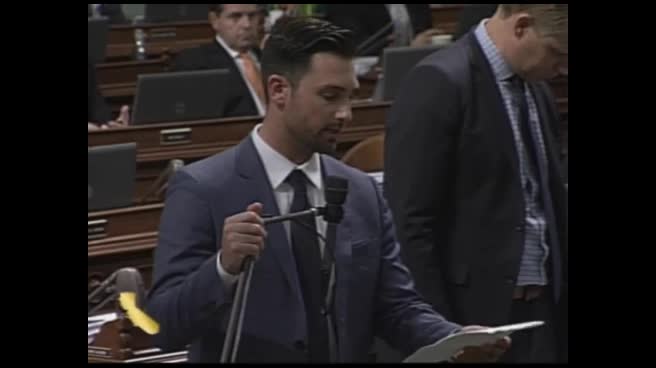
Bill Author
Bill Co-Author(s):