AB 2819: Unlawful detainer proceedings.
- Session Year: 2015-2016
- House: Assembly
- Latest Version Date: 2016-09-13
Under existing law, a tenant of real property, for a term less than life, or the executor or administrator or his or her estate, is guilty of unlawful detainer when he or she continues in possession, in person or by subtenant, of the property or any part of the property, after the expiration of the term for which it is let to him or her, except as specified. Under existing law, access to limited civil case records filed in an unlawful detainer action is restricted to (1) parties to the action, (2) certain people who provide the court clerk with specified information about the parties to the action, (3) any person by order of the court on a showing of good cause, and (4) any other person 60 days after the complaint has been filed, unless the defendant prevails in the action within 60 days after the filing of the complaint, in which case access is limited to the other parties allowed access, as described above.
This bill would instead provide that access to limited civil case records filed in an unlawful detainer action is restricted, for purposes of (4), as described above, (1) to any person by order of the court if judgment is entered for the plaintiff after trial more than 60 days since the filing of the complaint, and (2) to any other person 60 days after the complaint has been filed if the plaintiff prevails in the action within 60 days of the filing of the complaint. The bill would provide that if a default or default judgment is set aside more than 60 days after the complaint was filed, the court file access restrictions, as described above, shall apply as if the complaint had been filed on the date the default or the default judgment is set aside. The bill would authorize the court to bar access to court records in the action if the parties so stipulate.
Existing law requires a complaint filed in an unlawful detainer proceeding to include certain information and requires a defendant to answer the complaint, as specified, within 5 days of being served with a summons and the complaint, unless the court orders otherwise for good cause shown. Existing law also requires proof of service of a summons to be filed in a civil action, including in an unlawful detainer proceeding.
This bill would permit a court to dismiss an unlawful detainer proceeding without prejudice if proof of service of the summons has not been filed within 60 days of the complaints filing.
Under existing law, a tenant of real property, for a term less than life, or the executor or administrator or his or her estate, is guilty of unlawful detainer when he or she continues in possession, in person or by subtenant, of the property or any part of the property, after the expiration of the term for which it is let to him or her, except as specified. Under existing law law, access to limited civil case records filed in an unlawful detainer action is restricted to (1) parties to the action, (2) certain people who provide the court clerk with specified information about the parties to the action, (3) any person by order of the court on a showing of good cause, and (4) any other person 60 days after the complaint has been filed, unless the defendant prevails in the action within 60 days after the filing of the complaint, in which case access is limited to the other parties allowed access, as described above.
This bill would instead provide that access to limited civil case records filed in an unlawful detainer action is restricted, for purposes of (4), as described above, to any other person 60 days after the complaint has been filed if the plaintiff prevails in the action within 60 days of the filing of the complaint. The bill would provide that if a default or default judgment is set aside more than 60 days after the complaint was filed, the court file access restrictions, as described above, shall apply as if the complaint had been filed on the date the default or the default judgment is set aside. The bill would authorize the court to bar access to court records in the action if the parties so stipulate.
Existing law requires a complaint filed in an unlawful detainer proceeding to include certain information and requires a defendant to answer the complaint, as specified, within 5 days of being served with a summons and the complaint, unless the court orders otherwise for good cause shown. Existing law also requires proof of service of a summons to be filed in a civil action, including in an unlawful detainer proceeding.
This bill would permit a court to dismiss an unlawful detainer proceeding without prejudice if proof of service of the summons has not been filed within 60 days of the complaints filing.
Under existing law, a tenant of real property, for a term less than life, or the executor or administrator or his or her estate, is guilty of unlawful detainer when he or she continues in possession, in person or by subtenant, of the property or any part of the property, after the expiration of the term for which it is let to him or her, except as specified. Under existing law access to limited civil case records filed in an unlawful detainer action is restricted to (1) parties to the action, (2) certain people who provide the court clerk with specified information about the parties to the action, (3) any person by order of the court on a showing of good cause, and (4) any other person 60 days after the complaint has been filed, unless the defendant prevails in the action within 60 days after the filing of the complaint, in which case access is limited to the other parties allowed access, as described above.
This bill would instead provide that access to limited civil case records filed in an unlawful detainer action is restricted, for purposes of (4), as described above, to any other person if 60 days have elapsed since the complaint was filed and judgment against all defendants has been entered for the plaintiff based on certain occurrences, as specified. 60 days after the complaint has been filed if the plaintiff prevails in the action within 60 days of the filing of the complaint. The bill would provide that if a default or default judgment is set aside more than 60 days after the complaint was filed, the court file access restrictions, as described above, shall apply as if the complaint had been filed on the date the default or the default judgment is set aside. The bill would authorize the parties to stipulate to, and would require the court to issue, an order prohibiting the clerk from allowing access to any court records in the action, pending a further order of the court. the court to bar access to court records in the action if the parties so stipulate.
Existing law requires a summons in a unlawful detainer proceeding to be issued, served, and returned in the same manner as a summons in a civil action except that when the defendant is served, the defendants response must be filed within 5 days, instead of 30 days.
This bill would require an unlawful detainer proceeding to be dismissed without prejudice if 60 days elapse after a complaint is filed and no proof of service of the summons has been filed.
Under existing law, a tenant of real property, for a term less than life, or the executor or administrator or his or her estate, is guilty of unlawful detainer when he or she continues in possession, in person or by subtenant, of the property or any part of the property, after the expiration of the term for which it is let to him or her, except as specified. Under existing law access to limited civil case records filed in an unlawful detainer action is restricted to (1) parties to the action, (2) certain people who provide the court clerk with specified information about the parties to the action, (3) any person by order of the court on a showing of good cause, and (4) any other person 60 days after the complaint has been filed, unless the defendant prevails in the action within 60 days after the filing of the complaint, in which case access is limited to the other parties allowed access, as described above.
This bill would instead provide that access to limited civil case records filed in an unlawful detainer action is restricted, for purposes of (4), as described above, to any other person if 60 days have elapsed since the complaint was filed and judgment against all defendants has been entered for the plaintiff based on certain occurrences, as specified. The bill would provide that if a default or default judgment is set aside more than 60 days after the complaint was filed, the court file access restrictions, as described above, shall apply as if the complaint had been filed on the date the default or the default judgment is set aside. The bill would authorize the parties to stipulate to, and would require the court to issue, an order prohibiting the clerk from allowing access to any court records in the action, pending a further order of the court.
Existing law requires a summons in a unlawful detainer proceeding to be issued, served, and returned in the same manner as a summons in a civil action except that when the defendant is served, the defendants response must be filed within 5 days, instead of 30 days.
This bill would require an unlawful detainer proceeding to be dismissed without prejudice if 60 days elapse after a complaint is filed and no proof of service of the summons has been filed.
The Legislature finds and declares all of the following:
(a)It is the policy of the state to promote open access to public records. It is in the interest of the public to ensure, to the greatest extent possible, that there is open public access to court records, including civil case records.
(b)It is the policy of the state that access to public records be limited or restricted only under compelling circumstances.
(c)With the enactment of Chapter 1007 of the Statutes of 1991, the Legislature began restricting public access to civil case records in unlawful detainer proceedings. Under current law, with limited exceptions, civil case records in unlawful detainer proceedings are unavailable to the public for a period of 60 days after filing. Civil case records in unlawful detainer proceedings in which the defendant prevails within 60 days of filing are permanently unavailable to the public.
(d)The state has a housing crisis that requires revising the current restrictions on public access to civil case records in unlawful detainer proceedings. More than four decades have passed since the California Supreme Court first observed, in Green v. Superior Court (1974) 10 Cal.3d 616, 625, a scarcity of adequate low cost housing in virtually every urban setting [in California]. Yet the shortage of affordable housing for low-income tenants has only grown. Median monthly rents in the state are now approximately 50 percent higher than the national average, but high prices have failed to spur sufficient housing construction to meet demand. As a result, households in the state in the bottom quarter of the income distribution spend an average of 67 percent of their income on housing. The recent economic and foreclosure crises have only exacerbated the challenges that low-income households face in securing affordable housing.
(e)The difficulty of securing affordable housing in competitive rental markets is also worsened by the existing law governing access to civil case records in unlawful detainer proceedings. Specifically, once unlawful detainer civil case records become public, tenant screening companies and credit reporting agencies capture and publish personal identifying information regarding tenants named as defendants in those records. This information appears in published lists, known as unlawful detainer registries, and on tenants credit reports. So long as it is accurate, the fact that a tenant was once sued for unlawful detainer is publicly available for up to seven years and cannot be challenged under federal or state laws governing consumer credit reporting.
(f)The names of thousands of innocent tenants whose cases are resolved only after the 60-day deadline appear on unlawful detainer registries. Many of these tenants successfully settle, secure a dismissal, or win at trial, and would have escaped negative credit reporting if only they had prevailed before the deadline. In other instances, unlawful detainer complaints are filed against tenants but never served. Because these complaints are never dismissed, the tenants name is publicly released after 60 days and negative credit reporting ensues. Because landlords, who are attempting to decide between numerous applicants for scarce rental housing, rely on unlawful detainer registries and on credit reports, landlords often choose not to rent to tenants who appear on these registries, even if the tenants were eventually found innocent of unlawful detainer. As a result, given the statewide housing shortage, these tenants may be shut out of rental markets for up to seven years through no fault of their own.
(g)This act strikes a just balance between ensuring open access to public records and protecting the credit and reputation of innocent tenants. This act also ensures that landlords will have access to timely and more accurate information regarding prospective tenants. This act is a response to the states ongoing affordable housing crisis and is necessary to prevent tenants from being inadvertently denied an opportunity to secure housing simply as a result of being named in an unlawful detainer lawsuit.
SEC. 2.It is the intent of the Legislature to amend existing statutes regarding open access to public records by making permanently unavailable to the public civil case records in unlawful detainer proceedings in which the plaintiff does not prevail within 60 days of filing instead of unlawful detainer proceedings in which the defendant prevails within 60 days of filing.
SEC. 3.Section 1161.2 of the Code of Civil Procedure is amended to read:1161.2.(a)(1)The clerk shall allow access to limited civil case records filed under this chapter, including the court file, index, and register of actions, only as follows:
(A)To a party to the action, including a partys attorney.
(B)To a person who provides the clerk with the names of at least one plaintiff and one defendant and the address of the premises, including the apartment or unit number, if any.
(C)To a resident of the premises who provides the clerk with the name of one of the parties or the case number and shows proof of residency.
(D)To a person by order of the court, which may be granted ex parte, on a showing of good cause.
(E)To any person by order of the court if judgment is entered for the plaintiff after trial more than 60 days since the filing of the complaint. The court shall issue the order upon issuing judgment for the plaintiff.
(F)Except as provided in subparagraph (G), to any other person 60 days after the complaint has been filed if the plaintiff prevails in the action within 60 days of the filing of the complaint, in which case the clerk shall allow access to any court records in the action. If a default or default judgment is set aside more than 60 days after the complaint has been filed, this section shall apply as if the complaint had been filed on the date the default or default judgment is set aside.
(G)In the case of a complaint involving residential property based on Section 1161a as indicated in the caption of the complaint, as required in subdivision (c) of Section 1166, to any other person, if 60 days have elapsed since the complaint was filed with the court, and, as of that date, judgment against all defendants has been entered for the plaintiff, after a trial.
(2)This section shall not be construed to prohibit the court from issuing an order that bars access to the court record in an action filed under this chapter if the parties to the action so stipulate.
(b)(1)For purposes of this section, good cause includes, but is not limited to, both of the following:
(A)The gathering of newsworthy facts by a person described in Section 1070 of the Evidence Code.
(B)The gathering of evidence by a party to an unlawful detainer action solely for the purpose of making a request for judicial notice pursuant to subdivision (d) of Section 452 of the Evidence Code.
(2)It is the intent of the Legislature that a simple procedure be established to request the ex parte order described in subparagraph (D) of paragraph (1) of subdivision (a).
(c)Upon the filing of a case so restricted, the court clerk shall mail notice to each defendant named in the action. The notice shall be mailed to the address provided in the complaint. The notice shall contain a statement that an unlawful detainer complaint (eviction action) has been filed naming that party as a defendant, and that access to the court file will be delayed for 60 days except to a party, an attorney for one of the parties, or any other person who (1) provides to the clerk the names of at least one plaintiff and one defendant in the action and provides to the clerk the address, including any applicable apartment, unit, or space number, of the subject premises, or (2) provides to the clerk the name of one of the parties in the action or the case number and can establish through proper identification that he or she lives at the subject premises. The notice shall also contain a statement that access to the court index, register of actions, or other records is not permitted until 60 days after the complaint is filed, except pursuant to an order upon a showing of good cause for access. The notice shall contain on its face the following information:
(1)The name and telephone number of the county bar association.
(2)The name and telephone number of any entity that requests inclusion on the notice and demonstrates to the satisfaction of the court that it has been certified by the State Bar of California as a lawyer referral service and maintains a panel of attorneys qualified in the practice of landlord-tenant law pursuant to the minimum standards for a lawyer referral service established by the State Bar of California and Section 6155 of the Business and Professions Code.
(3)The following statement:
The State Bar of California certifies lawyer referral services in California and publishes a list of certified lawyer referral services organized by county. To locate a lawyer referral service in your county, go to the State Bars Internet Web site at www.calbar.ca.gov or call 1-866-442-2529.
(4)The name and telephone number of an office or offices funded by the federal Legal Services Corporation or qualified legal services projects that receive funds distributed pursuant to Section 6216 of the Business and Professions Code that provide legal services to low-income persons in the county in which the action is filed. The notice shall state that these telephone numbers may be called for legal advice regarding the case. The notice shall be issued between 24 and 48 hours of the filing of the complaint, excluding weekends and holidays. One copy of the notice shall be addressed to all occupants and mailed separately to the subject premises. The notice shall not constitute service of the summons and complaint.
(d)Notwithstanding any other law, the court shall charge an additional fee of fifteen dollars ($15) for filing a first appearance by the plaintiff. This fee shall be added to the uniform filing fee for actions filed under this chapter.
(e)This section does not apply to a case that seeks to terminate a mobilehome park tenancy if the statement of the character of the proceeding in the caption of the complaint clearly indicates that the complaint seeks termination of a mobilehome park tenancy.
(f)This section does not alter any provision of the Evidence Code.
SEC. 4.Section 1167.1 is added to the Code of Civil Procedure, to read:1167.1.If proof of service of the summons has not been filed within 60 days of the complaints filing, the court may dismiss the action without prejudice.
The Legislature finds and declares all of the following:
(a)It is the policy of the state to promote open access to public records. It is in the interest of the public to ensure, to the greatest extent possible, that there is open public access to court records, including civil case records.
(b)It is the policy of the state that access to public records be limited or restricted only under compelling circumstances.
(c)With the enactment of Chapter 1007 of the Statutes of 1991, the Legislature began restricting public access to civil case records in unlawful detainer proceedings. Under current law, with limited exceptions, civil case records in unlawful detainer proceedings are unavailable to the public for a period of 60 days after filing. Civil case records in unlawful detainer proceedings in which the defendant prevails within 60 days of filing are permanently unavailable to the public.
(d)The state has a housing crisis that requires revising the current restrictions on public access to civil case records in unlawful detainer proceedings. More than four decades have passed since the California Supreme Court first observed, in Green v. Superior Court (1974) 10 Cal.3d 616, 625, a scarcity of adequate low cost housing in virtually every urban setting [in California]. Yet the shortage of affordable housing for low-income tenants has only grown. Median monthly rents in the state are now approximately 50 percent higher than the national average, but high prices have failed to spur sufficient housing construction to meet demand. As a result, households in the state in the bottom quarter of the income distribution spend an average of 67 percent of their income on housing. The recent economic and foreclosure crises have only exacerbated the challenges that low-income households face in securing affordable housing.
(e)The difficulty of securing affordable housing in competitive rental markets is also worsened by the existing law governing access to civil case records in unlawful detainer proceedings. Specifically, once unlawful detainer civil case records become public, tenant screening companies and credit reporting agencies capture and publish personal identifying information regarding tenants named as defendants in those records. This information appears in published lists, known as unlawful detainer registries, and on tenants credit reports. So long as it is accurate, the fact that a tenant was once sued for unlawful detainer is publicly available for up to seven years and cannot be challenged under federal or state laws governing consumer credit reporting.
(f)The names of thousands of innocent tenants whose cases are resolved only after the 60-day deadline appear on unlawful detainer registries. Many of these tenants successfully settle, secure a dismissal, or win at trial, and would have escaped negative credit reporting if only they had prevailed before the deadline. In other instances, unlawful detainer complaints are filed against tenants but never served. Because these complaints are never dismissed, the tenants name is publicly released after 60 days and negative credit reporting ensues. Because landlords, who are attempting to decide between numerous applicants for scarce rental housing, rely on unlawful detainer registries and on credit reports, landlords often choose not to rent to tenants who appear on these registries, even if the tenants were eventually found innocent of unlawful detainer. As a result, given the statewide housing shortage, these tenants may be shut out of rental markets for up to seven years through no fault of their own.
(g)This act strikes a just balance between ensuring open access to public records and protecting the credit and reputation of innocent tenants. This act also ensures that landlords will have access to timely and more accurate information regarding prospective tenants. This act is a response to the states ongoing affordable housing crisis and is necessary to prevent tenants from being inadvertently denied an opportunity to secure housing simply as a result of being named in an unlawful detainer lawsuit.
SEC. 2.It is the intent of the Legislature to amend existing statutes regarding open access to public records by making permanently unavailable to the public civil case records in unlawful detainer proceedings in which the plaintiff does not prevail within 60 days of filing instead of unlawful detainer proceedings in which the defendant prevails within 60 days of filing.
SEC. 3.Section 1161.2 of the Code of Civil Procedure is amended to read:1161.2.(a)(1)The clerk shall allow access to limited civil case records filed under this chapter, including the court file, index, and register of actions, only as follows:
(A)To a party to the action, including a partys attorney.
(B)To a person who provides the clerk with the names of at least one plaintiff and one defendant and the address of the premises, including the apartment or unit number, if any.
(C)To a resident of the premises who provides the clerk with the name of one of the parties or the case number and shows proof of residency.
(D)To a person by order of the court, which may be granted ex parte, on a showing of good cause.
(E)To a any person by order of the court if judgment is entered for the plaintiff after trial more than 60 days since the filing of the complaint. The court shall issue the order upon issuing judgment for the plaintiff.
(F)Except as provided in subparagraph (G), to any other person 60 days after the complaint has been filed if the plaintiff prevails in the action within 60 days of the filing of the complaint, in which case the clerk shall allow access to any court records in the action. If a default or default judgment is set aside more than 60 days after the complaint has been filed, this section shall apply as if the complaint had been filed on the date the default or default judgment is set aside.
(G)In the case of a complaint involving residential property based on Section 1161a as indicated in the caption of the complaint, as required in subdivision (c) of Section 1166, to any other person, if 60 days have elapsed since the complaint was filed with the court, and, as of that date, judgment against all defendants has been entered for the plaintiff, after a trial.
(2)This section shall not be construed to prohibit the court from issuing an order that bars access to the court record in an action filed under this chapter if the parties to the action so stipulate.
(b)(1)For purposes of this section, good cause includes, but is not limited to, both of the following:
(A)The gathering of newsworthy facts by a person described in Section 1070 of the Evidence Code.
(B)The gathering of evidence by a party to an unlawful detainer action solely for the purpose of making a request for judicial notice pursuant to subdivision (d) of Section 452 of the Evidence Code.
(2)It is the intent of the Legislature that a simple procedure be established to request the ex parte order described in subparagraph (D) of paragraph (1) of subdivision (a).
(c)Upon the filing of a case so restricted, the court clerk shall mail notice to each defendant named in the action. The notice shall be mailed to the address provided in the complaint. The notice shall contain a statement that an unlawful detainer complaint (eviction action) has been filed naming that party as a defendant, and that access to the court file will be delayed for 60 days except to a party, an attorney for one of the parties, or any other person who (1) provides to the clerk the names of at least one plaintiff and one defendant in the action and provides to the clerk the address, including any applicable apartment, unit, or space number, of the subject premises, or (2) provides to the clerk the name of one of the parties in the action or the case number and can establish through proper identification that he or she lives at the subject premises. The notice shall also contain a statement that access to the court index, register of actions, or other records is not permitted until 60 days after the complaint is filed, except pursuant to an order upon a showing of good cause for access. The notice shall contain on its face the following information:
(1)The name and telephone number of the county bar association.
(2)The name and telephone number of any entity that requests inclusion on the notice and demonstrates to the satisfaction of the court that it has been certified by the State Bar of California as a lawyer referral service and maintains a panel of attorneys qualified in the practice of landlord-tenant law pursuant to the minimum standards for a lawyer referral service established by the State Bar of California and Section 6155 of the Business and Professions Code.
(3)The following statement:
The State Bar of California certifies lawyer referral services in California and publishes a list of certified lawyer referral services organized by county. To locate a lawyer referral service in your county, go to the State Bars Internet Web site at www.calbar.ca.gov or call 1-866-442-2529.
(4)The name and telephone number of an office or offices funded by the federal Legal Services Corporation or qualified legal services projects that receive funds distributed pursuant to Section 6216 of the Business and Professions Code that provide legal services to low-income persons in the county in which the action is filed. The notice shall state that these telephone numbers may be called for legal advice regarding the case. The notice shall be issued between 24 and 48 hours of the filing of the complaint, excluding weekends and holidays. One copy of the notice shall be addressed to all occupants and mailed separately to the subject premises. The notice shall not constitute service of the summons and complaint.
(d)Notwithstanding any other law, the court shall charge an additional fee of fifteen dollars ($15) for filing a first appearance by the plaintiff. This fee shall be added to the uniform filing fee for actions filed under this chapter.
(e)This section does not apply to a case that seeks to terminate a mobilehome park tenancy if the statement of the character of the proceeding in the caption of the complaint clearly indicates that the complaint seeks termination of a mobilehome park tenancy.
(f)This section does not alter any provision of the Evidence Code.
SEC. 4.Section 1167.1 is added to the Code of Civil Procedure, to read:1167.1.If proof of service of the summons has not been filed within 60 days of the complaints filing, the court may dismiss the action without prejudice.
The Legislature finds and declares all of the following:
(a)It is the policy of the state to promote open access to public records. It is in the interest of the public to ensure, to the greatest extent possible, that there is open public access to court records, including civil case records.
(b)It is the policy of the state that access to public records be limited or restricted only under compelling circumstances.
(c)With the enactment of Chapter 1007 of the Statutes of 1991, the Legislature began restricting public access to civil case records in unlawful detainer proceedings. Under current law, with limited exceptions, civil case records in unlawful detainer proceedings are unavailable to the public for a period of 60 days after filing. Civil case records in unlawful detainer proceedings in which the defendant prevails within 60 days of filing are permanently unavailable to the public.
(d)The state has a housing crisis that requires revising the current restrictions on public access to civil case records in unlawful detainer proceedings. More than four decades have passed since the California Supreme Court first observed, in Green v. Superior Court (1974) 10 Cal.3d 616, 625, a scarcity of adequate low cost housing in virtually every urban setting [in California]. Yet the shortage of affordable housing for low-income tenants has only grown. Median monthly rents in the state are now approximately 50 percent higher than the national average, but high prices have failed to spur sufficient housing construction to meet demand. As a result, households in the state in the bottom quarter of the income distribution spend an average of 67 percent of their income on housing. The recent economic and foreclosure crises have only exacerbated the challenges that low-income households face in securing affordable housing.
(e)The difficulty of securing affordable housing in competitive rental markets is also worsened by the existing law governing access to civil case records in unlawful detainer proceedings. Specifically, once unlawful detainer civil case records become public, tenant screening companies and credit reporting agencies capture and publish personal identifying information regarding tenants named as defendants in those records. This information appears in published lists, known as unlawful detainer registries, and on tenants credit reports. So long as it is accurate, the fact that a tenant was once sued for unlawful detainer is publicly available for up to seven years and cannot be challenged under federal or state laws governing consumer credit reporting.
(f)The names of thousands of innocent tenants whose cases are resolved only after the 60-day deadline appear on unlawful detainer registries. Many of these tenants successfully settle, secure a dismissal, or win at trial, and would have escaped negative credit reporting if only they had prevailed before the deadline. In other instances, unlawful detainer complaints are filed against tenants but never served. Because these complaints are never dismissed, the tenants name is publicly released after 60 days and negative credit reporting ensues. Because landlords, who are attempting to decide between numerous applicants for scarce rental housing, rely on unlawful detainer registries and on credit reports, landlords often choose not to rent to tenants who appear on these registries, even if the tenants were eventually found innocent of unlawful detainer. As a result, given the statewide housing shortage, these tenants may be shut out of rental markets for up to seven years through no fault of their own.
(g)This act strikes a just balance between ensuring open access to public records and protecting the credit and reputation of innocent tenants. This act also ensures that landlords will have access to timely and more accurate information regarding prospective tenants. This act is a response to the states ongoing affordable housing crisis and is necessary to prevent tenants from being inadvertently denied an opportunity to secure housing simply as a result of being named in an unlawful detainer lawsuit.
SEC. 2.It is the intent of the Legislature to amend existing statutes regarding open access to public records by making permanently unavailable to the public civil case records in unlawful detainer proceedings in which the plaintiff does not prevail within 60 days of filing instead of unlawful detainer proceedings in which the defendant prevails within 60 days of filing.
SEC. 3.Section 1161.2 of the Code of Civil Procedure is amended to read:1161.2.(a)(1)The clerk shall allow access to limited civil case records filed under this chapter, including the court file, index, and register of actions, only as follows:
(A)To a party to the action, including a partys attorney.
(B)To a person who provides the clerk with the names of at least one plaintiff and one defendant and the address of the premises, including the apartment or unit number, if any.
(C)To a resident of the premises who provides the clerk with the name of one of the parties or the case number and shows proof of residency.
(D)To a person by order of the court, which may be granted ex parte, on a showing of good cause.
(E)To a person by order of the court if judgment is entered for the plaintiff after trial more than 60 days since the filing of the complaint.
(E)
(F)Except as provided in subparagraph (F), (G), to any other person 60 days after the complaint has been filed if the plaintiff prevails in the action within 60 days of the filing of the complaint, in which case the clerk shall allow access to any court records in the action. If a default or default judgment is set aside more than 60 days after the complaint has been filed, this section shall apply as if the complaint had been filed on the date the default or default judgment is set aside.
(F)
(G)In the case of a complaint involving residential property based on Section 1161a as indicated in the caption of the complaint, as required in subdivision (c) of Section 1166, to any other person, if 60 days have elapsed since the complaint was filed with the court, and, as of that date, judgment against all defendants has been entered for the plaintiff, after a trial.
(2)This section shall not be construed to prohibit the court from issuing an order that bars access to the court record in an action filed under this chapter if the parties to the action so stipulate.
(b)(1)For purposes of this section, good cause includes, but is not limited to, both of the following:
(A)The gathering of newsworthy facts by a person described in Section 1070 of the Evidence Code.
(B)The gathering of evidence by a party to an unlawful detainer action solely for the purpose of making a request for judicial notice pursuant to subdivision (d) of Section 452 of the Evidence Code.
(2)It is the intent of the Legislature that a simple procedure be established to request the ex parte order described in subparagraph (D) of paragraph (1) of subdivision (a).
(c)Upon the filing of a case so restricted, the court clerk shall mail notice to each defendant named in the action. The notice shall be mailed to the address provided in the complaint. The notice shall contain a statement that an unlawful detainer complaint (eviction action) has been filed naming that party as a defendant, and that access to the court file will be delayed for 60 days except to a party, an attorney for one of the parties, or any other person who (1) provides to the clerk the names of at least one plaintiff and one defendant in the action and provides to the clerk the address, including any applicable apartment, unit, or space number, of the subject premises, or (2) provides to the clerk the name of one of the parties in the action or the case number and can establish through proper identification that he or she lives at the subject premises. The notice shall also contain a statement that access to the court index, register of actions, or other records is not permitted until 60 days after the complaint is filed, except pursuant to an order upon a showing of good cause for access. The notice shall contain on its face the following information:
(1)The name and telephone number of the county bar association.
(2)The name and telephone number of any entity that requests inclusion on the notice and demonstrates to the satisfaction of the court that it has been certified by the State Bar of California as a lawyer referral service and maintains a panel of attorneys qualified in the practice of landlord-tenant law pursuant to the minimum standards for a lawyer referral service established by the State Bar of California and Section 6155 of the Business and Professions Code.
(3)The following statement:
The State Bar of California certifies lawyer referral services in California and publishes a list of certified lawyer referral services organized by county. To locate a lawyer referral service in your county, go to the State Bars Internet Web site at www.calbar.ca.gov or call 1-866-442-2529.
(4)The name and telephone number of an office or offices funded by the federal Legal Services Corporation or qualified legal services projects that receive funds distributed pursuant to Section 6216 of the Business and Professions Code that provide legal services to low-income persons in the county in which the action is filed. The notice shall state that these telephone numbers may be called for legal advice regarding the case. The notice shall be issued between 24 and 48 hours of the filing of the complaint, excluding weekends and holidays. One copy of the notice shall be addressed to all occupants and mailed separately to the subject premises. The notice shall not constitute service of the summons and complaint.
(d)Notwithstanding any other law, the court shall charge an additional fee of fifteen dollars ($15) for filing a first appearance by the plaintiff. This fee shall be added to the uniform filing fee for actions filed under this chapter.
(e)This section does not apply to a case that seeks to terminate a mobilehome park tenancy if the statement of the character of the proceeding in the caption of the complaint clearly indicates that the complaint seeks termination of a mobilehome park tenancy.
(f)This section does not alter any provision of the Evidence Code.
SEC. 4.Section 1167.1 is added to the Code of Civil Procedure, to read:1167.1.If proof of service of the summons has not been filed within 60 days of the complaints filing, the court may dismiss the action without prejudice.
The Legislature finds and declares all of the following:
(a)It is the policy of the state to promote open access to public records. It is in the interest of the public to ensure, to the greatest extent possible, that there is open public access to court records, including civil case records.
(b)It is the policy of the state that access to public records be limited or restricted only under compelling circumstances.
(c)With the enactment of Chapter 1007 of the Statutes of 1991, the Legislature began restricting public access to civil case records in unlawful detainer proceedings. Under current law, with limited exceptions, civil case records in unlawful detainer proceedings are unavailable to the public for a period of 60 days after filing. Civil case records in unlawful detainer proceedings in which the defendant prevails within 60 days of filing are permanently unavailable to the public.
(d)The state has a housing crisis that requires revising the current restrictions on public access to civil case records in unlawful detainer proceedings. More than four decades have passed since the California Supreme Court first observed, in Green v. Superior Court (1974) 10 Cal.3d 616, 625, a scarcity of adequate low cost housing in virtually every urban setting [in California]. Yet the shortage of affordable housing for low-income tenants has only grown. Median monthly rents in the state are now approximately 50 percent higher than the national average, but high prices have failed to spur sufficient housing construction to meet demand. As a result, households in the state in the bottom quarter of the income distribution spend an average of 67 percent of their income on housing. The recent economic and foreclosure crises have only exacerbated the challenges that low-income households face in securing affordable housing.
(e)The difficulty of securing affordable housing in competitive rental markets is also worsened by the existing law governing access to civil case records in unlawful detainer proceedings. Specifically, once unlawful detainer civil case records become public, tenant screening companies and credit reporting agencies capture and publish personal identifying information regarding tenants named as defendants in those records. This information appears in published lists, known as unlawful detainer registries, and on tenants credit reports. So long as it is accurate, the fact that a tenant was once sued for unlawful detainer is publicly available for up to seven years and cannot be challenged under federal or state laws governing consumer credit reporting.
(f)The names of thousands of innocent tenants whose cases are resolved only after the 60-day deadline appear on unlawful detainer registries. Many of these tenants successfully settle, secure a dismissal, or win at trial, and would have escaped negative credit reporting if only they had prevailed before the deadline. In other instances, unlawful detainer complaints are filed against tenants but never served. Because these complaints are never dismissed, the tenants name is publicly released after 60 days and negative credit reporting ensues. Because landlords, who are attempting to decide between numerous applicants for scarce rental housing, rely on unlawful detainer registries and on credit reports, landlords often choose not to rent to tenants who appear on these registries, even if the tenants were eventually found innocent of unlawful detainer. As a result, given the statewide housing shortage, these tenants may be shut out of rental markets for up to seven years through no fault of their own.
(g)This act strikes a just balance between ensuring open access to public records and protecting the credit and reputation of innocent tenants. This act also ensures that landlords will have access to timely and more accurate information regarding prospective tenants. This act is a response to the states ongoing affordable housing crisis and is necessary to prevent tenants from being inadvertently denied an opportunity to secure housing simply as a result of being named in an unlawful detainer lawsuit.
SEC. 2.It is the intent of the Legislature to amend existing statutes regarding open access to public records by making permanently unavailable to the public civil case records in unlawful detainer proceedings in which the plaintiff does not prevail within 60 days of filing instead of unlawful detainer proceedings in which the defendant prevails within 60 days of filing.
SEC. 3.Section 1161.2 of the Code of Civil Procedure is amended to read:1161.2.(a)(1)The clerk shall allow access to limited civil case records filed under this chapter, including the court file, index, and register of actions, only as follows:
(A)To a party to the action, including a partys attorney.
(B)To a person who provides the clerk with the names of at least one plaintiff and one defendant and the address of the premises, including the apartment or unit number, if any.
(C)To a resident of the premises who provides the clerk with the name of one of the parties or the case number and shows proof of residency.
(D)To a person by order of the court, which may be granted ex parte, on a showing of good cause.
(E)Except as provided in subparagraph (F), to any other person 60 days after the complaint has been filed if the plaintiff prevails in the action within 60 days of the filing of the complaint, in which case the clerk shall allow access to any court records in the action. If a default or default judgment is set aside more than 60 days after the complaint has been filed, this section shall apply as if the complaint has had been filed on the date the default or default judgment is set aside.
(F)In the case of a complaint involving residential property based on Section 1161a as indicated in the caption of the complaint, as required in subdivision (c) of Section 1166, to any other person, if 60 days have elapsed since the complaint was filed with the court, and, as of that date, judgment against all defendants has been entered for the plaintiff, after a trial.
(2)This section shall not be construed to prohibit the court from issuing an order that bars access to the court record in an action filed under this chapter if the parties to the action so stipulate.
(b)(1)For purposes of this section, good cause includes, but is not limited to, both of the following:
(A)The gathering of newsworthy facts by a person described in Section 1070 of the Evidence Code.
(B)The gathering of evidence by a party to an unlawful detainer action solely for the purpose of making a request for judicial notice pursuant to subdivision (d) of Section 452 of the Evidence Code.
(2)It is the intent of the Legislature that a simple procedure be established to request the ex parte order described in subparagraph (D) of paragraph (1) of subdivision (a).
(c)Upon the filing of a case so restricted, the court clerk shall mail notice to each defendant named in the action. The notice shall be mailed to the address provided in the complaint. The notice shall contain a statement that an unlawful detainer complaint (eviction action) has been filed naming that party as a defendant, and that access to the court file will be delayed for 60 days except to a party, an attorney for one of the parties, or any other person who (1) provides to the clerk the names of at least one plaintiff and one defendant in the action and provides to the clerk the address, including any applicable apartment, unit, or space number, of the subject premises, or (2) provides to the clerk the name of one of the parties in the action or the case number and can establish through proper identification that he or she lives at the subject premises. The notice shall also contain a statement that access to the court index, register of actions, or other records is not permitted until 60 days after the complaint is filed, except pursuant to an order upon a showing of good cause for access. The notice shall contain on its face the following information:
(1)The name and telephone number of the county bar association.
(2)The name and telephone number of any entity that requests inclusion on the notice and demonstrates to the satisfaction of the court that it has been certified by the State Bar of California as a lawyer referral service and maintains a panel of attorneys qualified in the practice of landlord-tenant law pursuant to the minimum standards for a lawyer referral service established by the State Bar of California and Section 6155 of the Business and Professions Code.
(3)The following statement:
The State Bar of California certifies lawyer referral services in California and publishes a list of certified lawyer referral services organized by county. To locate a lawyer referral service in your county, go to the State Bars Internet Web site at www.calbar.ca.gov or call 1-866-442-2529.
(4)The name and telephone number of an office or offices funded by the federal Legal Services Corporation or qualified legal services projects that receive funds distributed pursuant to Section 6216 of the Business and Professions Code that provide legal services to low-income persons in the county in which the action is filed. The notice shall state that these telephone numbers may be called for legal advice regarding the case. The notice shall be issued between 24 and 48 hours of the filing of the complaint, excluding weekends and holidays. One copy of the notice shall be addressed to all occupants and mailed separately to the subject premises. The notice shall not constitute service of the summons and complaint.
(d)Notwithstanding any other law, the court shall charge an additional fee of fifteen dollars ($15) for filing a first appearance by the plaintiff. This fee shall be added to the uniform filing fee for actions filed under this chapter.
(e)This section does not apply to a case that seeks to terminate a mobilehome park tenancy if the statement of the character of the proceeding in the caption of the complaint clearly indicates that the complaint seeks termination of a mobilehome park tenancy.
(f)This section does not alter any provision of the Evidence Code.
SEC. 4.Section 1167.1 is added to the Code of Civil Procedure, to read:1167.1.If proof of service of the summons has not been filed within 60 days of the complaints filing, the court may dismiss the action without prejudice.
The Legislature finds and declares all of the following:
(a)It is the policy of the state to promote open access to public records. It is in the interest of the public to ensure, to the greatest extent possible, that there is open public access to court records, including civil case records.
(b)It is the policy of the state that access to public records be limited or restricted only under compelling circumstances.
(c)With the enactment of Chapter 1007 of the Statutes of 1991, the Legislature began restricting public access to civil case records in unlawful detainer proceedings. Under current law, with limited exceptions, civil case records in unlawful detainer proceedings are unavailable to the public for a period of 60 days after filing. Civil case records in unlawful detainer proceedings in which the defendant prevails within 60 days of filing are permanently unavailable to the public.
(d)The state has a housing crisis that requires revising the current restrictions on public access to civil case records in unlawful detainer proceedings. More than four decades have passed since the California Supreme Court first observed, in Green v. Superior Court (1974) 10 Cal.3d 616, 625, a scarcity of adequate low cost housing in virtually every urban setting [in California]. Yet the shortage of affordable housing for low-income tenants has only grown. Median monthly rents in the state are now approximately 50 percent higher than the national average, but high prices have failed to spur sufficient housing construction to meet demand. As a result, households in the state in the bottom quarter of the income distribution spend an average of 67 percent of their income on housing. The recent economic and foreclosure crises have only exacerbated the challenges that low-income households face in securing affordable housing.
(e)The difficulty of securing affordable housing in competitive rental markets is also worsened by the existing law governing access to civil case records in unlawful detainer proceedings. Specifically, once unlawful detainer civil case records become public, tenant screening companies and credit reporting agencies capture and publish personal identifying information regarding tenants named as defendants in those records. This information appears in published lists, known as unlawful detainer registries, and on tenants credit reports. So long as it is accurate, the fact that a tenant was once sued for unlawful detainer is publicly available for up to seven years and cannot be challenged under federal or state laws governing consumer credit reporting.
(f)The names of thousands of innocent tenants whose cases are resolved only after the 60-day deadline appear on unlawful detainer registries. Many of these tenants successfully settle, secure a dismissal, or win at trial, and would have escaped negative credit reporting if only they had prevailed before the deadline. In other instances, unlawful detainer complaints are filed against tenants but never served. Because these complaints are never dismissed, the tenants name is publicly released after 60 days and negative credit reporting ensues. Because landlords, who are attempting to decide between numerous applicants for scarce rental housing, rely on unlawful detainer registries and on credit reports, landlords often choose not to rent to tenants who appear on these registries, even if the tenants were eventually found innocent of unlawful detainer. As a result, given the statewide housing shortage, these tenants may be shut out of rental markets for up to seven years through no fault of their own.
(g)This act strikes a just balance between ensuring open access to public records and protecting the credit and reputation of innocent tenants. This act also ensures that landlords will have access to timely and more accurate information regarding prospective tenants. This act is a response to the states ongoing affordable housing crisis and is necessary to prevent tenants from being inadvertently denied an opportunity to secure housing simply as a result of being named in an unlawful detainer lawsuit.
SEC. 2.It is the intent of the Legislature to amend existing statutes regarding open access to public records by making permanently unavailable to the public civil case records in unlawful detainer proceedings in which the plaintiff does not prevail within 60 days of filing instead of unlawful detainer proceedings in which the defendant prevails within 60 days of filing.
SECTION 1.SEC. 3.Section 1161.2 of the Code of Civil Procedure is amended to read:1161.2.(a)(1)The clerk shall allow access to limited civil case records filed under this chapter, including the court file, index, and register of actions, only as follows:
(A)To a party to the action, including a partys attorney.
(B)To a person who provides the clerk with the names of at least one plaintiff and one defendant and the address of the premises, including the apartment or unit number, if any.
(C)To a resident of the premises who provides the clerk with the name of one of the parties or the case number and shows proof of residency.
(D)To a person by order of the court, which may be granted ex parte, on a showing of good cause.
(E)To any other person if 60 days have elapsed since the complaint has been filed and, as of the 60th day, judgment against all defendants has been entered for the plaintiff based on any of the following:
(i)Default, upon written application of the plaintiff and proof of service of the summons, unless the default or default judgment has been set aside. If the default or default judgment is set aside more than 60 days after the complaint has been filed, this section shall apply as if the complaint has been filed on the date the default or default judgment is set aside.
(ii)Summary judgment.
(iii)Trial.
(iv)Stipulation by all the parties.
(E)Except as provided in subparagraph (F), to any other person 60 days after the complaint has been filed if the plaintiff prevails in the action within 60 days of the filing of the complaint, in which case the clerk shall allow access to any court records in the action. If a default or default judgment is set aside more than 60 days after the complaint has been filed, this section shall apply as if the complaint has been filed on the date the default or default judgment is set aside.
(F)In the case of a complaint involving residential property based on Section 1161a as indicated in the caption of the complaint, as required in subdivision (c) of Section 1166, to any other person, if 60 days have elapsed since the complaint was filed with the court, and, as of that date, judgment against all defendants has been entered for the plaintiff, after a trial.
(2)Notwithstanding any other provision of this section, if the parties stipulate, the court shall issue an order prohibiting the clerk from allowing access to any court records in an action filed under this chapter, pending further order of the court.
(2)This section shall not be construed to prohibit the court from issuing an order that bars access to the court record in an action filed under this chapter if the parties to the action so stipulate.
(b)(1)For purposes of this section, good cause includes, but is not limited to, the to, both of the following:
(A)The gathering of newsworthy facts by a person described in Section 1070 of the Evidence Code. It
(B)The gathering of evidence by a party to an unlawful detainer action solely for the purpose of making a request for judicial notice pursuant to subdivision (d) of Section 452 of the Evidence Code.
(2)It is the intent of the Legislature that a simple procedure be established to request the ex parte order described in subparagraph (D) of paragraph (1) of subdivision (a).
(c)Upon the filing of a case so restricted, the court clerk shall mail notice to each defendant named in the action. The notice shall be mailed to the address provided in the complaint. The notice shall contain a statement that an unlawful detainer complaint (eviction action) has been filed naming that party as a defendant, and that access to the court file will be delayed for 60 days except to a party, an attorney for one of the parties, or any other person who (1) provides to the clerk the names of at least one plaintiff and one defendant in the action and provides to the clerk the address, including any applicable apartment, unit, or space number, of the subject premises, or (2) provides to the clerk the name of one of the parties in the action or the case number and can establish through proper identification that he or she lives at the subject premises. The notice shall also contain a statement that access to the court index, register of actions, or other records is not permitted until 60 days after the complaint is filed, except pursuant to an order upon a showing of good cause for access. The notice shall contain on its face the following information:
(1)The name and telephone number of the county bar association.
(2)The name and telephone number of any entity that requests inclusion on the notice and demonstrates to the satisfaction of the court that it has been certified by the State Bar of California as a lawyer referral service and maintains a panel of attorneys qualified in the practice of landlord-tenant law pursuant to the minimum standards for a lawyer referral service established by the State Bar of California and Section 6155 of the Business and Professions Code.
(3)The following statement:
The State Bar of California certifies lawyer referral services in California and publishes a list of certified lawyer referral services organized by county. To locate a lawyer referral service in your county, go to the State Bars Internet Web site at www.calbar.ca.gov or call 1-866-442-2529.
(4)The name and telephone number of an office or offices funded by the federal Legal Services Corporation or qualified legal services projects that receive funds distributed pursuant to Section 6216 of the Business and Professions Code that provide legal services to low-income persons in the county in which the action is filed. The notice shall state that these telephone numbers may be called for legal advice regarding the case. The notice shall be issued between 24 and 48 hours of the filing of the complaint, excluding weekends and holidays. One copy of the notice shall be addressed to all occupants and mailed separately to the subject premises. The notice shall not constitute service of the summons and complaint.
(d)Notwithstanding any other law, the court shall charge an additional fee of fifteen dollars ($15) for filing a first appearance by the plaintiff. This fee shall be added to the uniform filing fee for actions filed under this chapter.
(e)This section does not apply to a case that seeks to terminate a mobilehome park tenancy if the statement of the character of the proceeding in the caption of the complaint clearly indicates that the complaint seeks termination of a mobilehome park tenancy.
(f)This section does not alter any provision of the Evidence Code.
SEC. 2.Section 1167.1 is added to the Code of Civil Procedure, to read:1167.1.If 60 days elapse after the complaint is filed and no proof of service of the summons has been filed, the action shall be dismissed without prejudice.
(a)(1)The clerk may shall allow access to limited civil case records filed under this chapter, including the court file, index, and register of actions, only as follows:
(1)
(A)To a party to the action, including a partys attorney.
(2)
(B)To any a person who provides the clerk with the names of at least one plaintiff and one defendant and the address of the premises, including the apartment or unit number, if any.
(3)
(C)To a resident of the premises who provides the clerk with the name of one of the parties or the case number and shows proof of residency.
(4)
(D)To any a person by order of the court, which may be granted ex parte, on a showing of good cause.
(5)Except as provided in paragraph (6), to any other person 60 days after the complaint has been filed, unless a defendant prevails in the action within 60 days of the filing of the complaint, in which case the clerk may not allow access to any court records in the action, except as provided in paragraphs (1) to (4), inclusive.
(E)To any other person if 60 days have elapsed since the complaint has been filed and, as of the 60th day, judgment against all defendants has been entered for the plaintiff based on any of the following:
(i)Default, upon written application of the plaintiff and proof of service of the summons, unless the default or default judgment has been set aside. If the default or default judgment is set aside more than 60 days after the complaint has been filed, this section shall apply as if the complaint has been filed on the date the default or default judgment is set aside.
(ii)Summary judgment.
(iii)Trial.
(iv)Stipulation by all the parties.
(6)
(F)In the case of a complaint involving residential property based on Section 1161a as indicated in the caption of the complaint, as required in subdivision (c) of Section 1166, to any other person, if 60 days have elapsed since the complaint was filed with the court, and, as of that date, judgment against all defendants has been entered for the plaintiff, after a trial. If judgment is not entered under the conditions described in this paragraph, the clerk shall not allow access to any court records in the action, except as provided in paragraphs (1) to (4), inclusive.
(2)Notwithstanding any other provision of this section, if the parties stipulate, the court shall issue an order prohibiting the clerk from allowing access to any court records in an action filed under this chapter, pending further order of the court.
(b)For purposes of this section, good cause includes, but is not limited to, the gathering of newsworthy facts by a person described in Section 1070 of the Evidence Code. It is the intent of the Legislature that a simple procedure be established to request the ex parte order described in subparagraph (D) of paragraph (1) of subdivision (a).
(c)Upon the filing of any a case so restricted, the court clerk shall mail notice to each defendant named in the action. The notice shall be mailed to the address provided in the complaint. The notice shall contain a statement that an unlawful detainer complaint (eviction action) has been filed naming that party as a defendant, and that access to the court file will be delayed for 60 days except to a party, an attorney for one of the parties, or any other person who (1) provides to the clerk the names of at least one plaintiff and one defendant in the action and provides to the clerk the address, including any applicable apartment, unit, or space number, of the subject premises, or (2) provides to the clerk the name of one of the parties in the action or the case number and can establish through proper identification that he or she lives at the subject premises. The notice shall also contain a statement that access to the court index, register of actions, or other records is not permitted until 60 days after the complaint is filed, except pursuant to an order upon a showing of good cause therefor. for access. The notice shall contain on its face the following information:
(1)The name and telephone number of the county bar association.
(2)The name and telephone number of any entity that requests inclusion on the notice and demonstrates to the satisfaction of the court that it has been certified by the State Bar of California as a lawyer referral service and maintains a panel of attorneys qualified in the practice of landlord-tenant law pursuant to the minimum standards for a lawyer referral service established by the State Bar of California and Section 6155 of the Business and Professions Code.
(3)The following statement:
The State Bar of California certifies lawyer referral services in California and publishes a list of certified lawyer referral services organized by county. To locate a lawyer referral service in your county, go to the State Bars website Internet Web site at www.calbar.ca.gov or call 1-866-442-2529.
(4)The name and telephone number of an office or offices funded by the federal Legal Services Corporation or qualified legal services projects that receive funds distributed pursuant to Section 6216 of the Business and Professions Code that provide legal services to low-income persons in the county in which the action is filed. The notice shall state that these numbers may be called for legal advice regarding the case. The notice shall be issued between 24 and 48 hours of the filing of the complaint, excluding weekends and holidays. One copy of the notice shall be addressed to all occupants and mailed separately to the subject premises. The notice shall not constitute service of the summons and complaint.
(d)Notwithstanding any other provision of law, the court shall charge an additional fee of fifteen dollars ($15) for filing a first appearance by the plaintiff. This fee shall be added to the uniform filing fee for actions filed under this chapter.
(e)This section does not apply to a case that seeks to terminate a mobilehome park tenancy if the statement of the character of the proceeding in the caption of the complaint clearly indicates that the complaint seeks termination of a mobilehome park tenancy.
SEC. 2.Section 1167.1 is added to the Code of Civil Procedure, to read:1167.1.If 60 days elapse after the complaint is filed and no proof of service of the summons has been filed, the action shall be dismissed without prejudice.
|
Date
|
Status
|
|---|---|
| Sep 13, 2016 | Chaptered by Secretary of State - Chapter 336, Statutes of 2016. |
| Sep 13, 2016 | Approved by the Governor. |
| Aug 22, 2016 | Enrolled and presented to the Governor at 4 p.m. |
| Aug 16, 2016 | In Assembly. Ordered to Engrossing and Enrolling. |
| Aug 15, 2016 | Read third time. Passed. Ordered to the Assembly. (Ayes 21. Noes 11. Page 4953.). |
| Aug 15, 2016 | Read third time. Passed. Ordered to the Assembly. (Ayes 21. Noes 11.). |
| Aug 15, 2016 | Read third time. Passed. Ordered to the Assembly. |
| Jun 23, 2016 | Read second time. Ordered to third reading. |
| Jun 22, 2016 | From committee: Do pass. (Ayes 5. Noes 2.) (June 21). |
| May 26, 2016 | Referred to Com. on JUD. |
| May 16, 2016 | Read third time. Passed. Ordered to the Senate. (Ayes 41. Noes 30. Page 4817.) |
| May 16, 2016 | In Senate. Read first time. To Com. on RLS. for assignment. |
| May 16, 2016 | Read third time. Passed. Ordered to the Senate. |
| May 12, 2016 | Read third time and amended. Ordered to third reading. (Page 4772.) |
| May 12, 2016 | Read third time and amended. Ordered to third reading. |
| May 9, 2016 | Read third time and amended. Ordered to third reading. (Page 4722.) |
| May 9, 2016 | Read third time and amended. Ordered to third reading. |
| May 3, 2016 | Read second time. Ordered to third reading. |
| May 2, 2016 | Read second time and amended. Ordered returned to second reading. |
| Apr 28, 2016 | From committee: Amend, and do pass as amended. (Ayes 7. Noes 1.) (April 26). |
| Apr 19, 2016 | Re-referred to Com. on JUD. |
| Apr 18, 2016 | From committee chair, with author's amendments: Amend, and re-refer to Com. on JUD. Read second time and amended. |
| Apr 6, 2016 | In committee: Set, first hearing. Hearing canceled at the request of author. |
| Mar 14, 2016 | Referred to Com. on JUD. |
| Feb 22, 2016 | Read first time. |
| Feb 21, 2016 | From printer. May be heard in committee March 22. |
| Feb 19, 2016 | Introduced. To print. |
|
Date
|
Description
|
Location
|
Votes
|
|
|---|---|---|---|---|
| Aug 15, 2016 | Assembly 3rd Reading AB2819 Chiu By Hertzberg | Senate Floor |
Passed |
|
| Jun 21, 2016 | Do pass | Senate Standing Committee on Judiciary |
Passed |
|
| May 16, 2016 | AB 2819 CHIU Assembly Third Reading | Assembly Floor |
Passed |
|
| Apr 26, 2016 | Do pass as amended. | Assembly Standing Committee on Judiciary |
Passed |
This list shows positions taken on this bill by organizations on the date displayed, which is linked to the original source.
Positions by individuals are not included.
Office of Senate Floor Analyses (916) 651-1520 Fax: (916) 327-4478 | AB |
THIRD READING
Bill No: AB 2819
:
SENATE JUDICIARY COMMITTEE: 5-2, 6/21/16
AYES: Jackson, Hertzberg, Leno, Monning, Wieckowski
NOES: Moorlach, Anderson
ASSEMBLY FLOOR: 41-30, 5/16/16 - See last page for vote
SOURCE: California Rural Legal Assistance Foundation
Western Center on Law & Poverty
DIGEST: This bill restricts access to court records filed in an unlawful detainer action to any person after the complaint has been filed unless the plaintiff prevails in the action within 60 days of filing the complaint, except as specified. This bill also permits a court to dismiss an unlawful detainer proceeding without prejudice if proof of service is not filed within 60 days of the complaint’s filing.
Existing law:
- Permits a landlord to file an unlawful detainer action against a tenant in order to evict him or her when, among other things, the tenant continues in possession of the property, or any part thereof: (a) after the expiration of the term for which it is let; (b) after default in the payment of rent, pursuant to the lease or agreement under which the property is held; or (c) after a neglect or failure to perform conditions or covenants of the lease or agreement under which the property is held; or when the tenant has: (1) committed waste upon the premises contrary to the conditions of the lease; or (2) committed or maintained a nuisance upon the premises or permitted the nuisance to be committed or maintained. While a landlord must prove each element of the unlawful detainer action, the tenant may also present evidence to support an affirmative defense which, if proved, defeats the landlord’s right to possession. (Code Civ. Proc. Sec. 1161.)
- Provides that court records in an eviction action may be made available only to the following:
- A party to the action, including the party’s attorney;
- Any person who provides the clerk with the names of at least one plaintiff and one defendant and the address of the premises;
- A resident of the premises who provides the clerk with the name of one of the parties or the case number and who shows proof of residency;
- Any person by order of the court on a showing of good cause; or
- Any other person 60 days after the filing of a complaint unless the defendant tenant prevails in the action within 60 days after the filing. If the defendant prevails, the court records may not be made available except to a person specified above. (Code Civ. Proc. Sec. 1161.2(a).)
- Specifies that, for purposes of the above provision, “good cause” includes, but is not limited to, the gathering of newsworthy facts by a person described in Section 1070 of the Evidence Code. (Code Civ. Proc. Sec. 1161.2(b).)
This bill:
- Re-casts the above provisions to state instead that court records in an eviction action may be made available to:
- A party to the action, including the party’s attorney;
- A person who provides the clerk with the names of at least one plaintiff and one defendant and the address of the premises;
- A resident of the premises who provides the clerk with the name of one of the parties or the case number and who shows proof of residency;
- A person by order of the court on a showing of good cause;
- Any person by order of the court if judgment is entered for the plaintiff after trial more than 60 days after the filing of the complaint, which shall issue upon entering judgment for the plaintiff; or
- Any other person 60 days after the complaint has been filed if the plaintiff prevails in the action within 60 days of the filing of the complaint, in which case the clerk shall allow access to any court records in the action.
- Specifies that if a default or default judgment is set aside more than 60 days after the complaint has been filed, these provisions shall apply as if the complaint had been filed on the date the default or default judgment is set aside.
- Specifies that its provisions shall not be construed to prohibit the court from issuing an order that bars access to court records, as specified, if the parties to the action so stipulate.
- States that, for purposes of accessing court records in an eviction action by order of the court on a showing of good cause, “good cause” includes, but is not limited to:
- The gathering of newsworthy facts by a person described in Section 1070 of the Evidence Code; and
- The gathering of evidence by a party to an unlawful detainer action solely for the purpose of making a request for judicial notice.
- Specifies that its provisions do not alter any provision of the Evidence Code.
- States that if proof of service of the summons has not been filed within 60 days of the complaint’s filing, the court may dismiss the action without prejudice.
- Makes other technical and conforming changes, and makes related findings and declarations.
Background
Under existing law, a tenant in rented accommodations can be subject to an unlawful detainer or “eviction” action if they do such things as break a term of their lease, fail to pay rent, or create a nuisance. These eviction actions are meant to be resolved quickly, usually in less than one month’s time. While the action is pending, existing law “masks” court records generated in the eviction action for the first 60 days, and permanently thereafter if the defendant tenant prevails in the action within that 60-day window. This masking provision, enacted by SB 345 (Kuehl, Chapter 787, Statutes of 2003), is designed to protect a tenant’s identity from being released both while an action is pending and afterward, if the tenant prevails, so as not to harm the tenant’s ability to secure alternate rental accommodations.
While the majority of unlawful detainer actions are resolved within the 60-day masking period, tenants who contest the action and choose to be represented by an attorney often times do not reach a resolution until after the 60-day mark. Consequently, even in cases where a tenant ultimately prevails and defeats an unlawful detainer action, existing law permits the record of these unlawful detainer actions resolved after more than 60 days to be unmasked.
Several private companies compile unmasked unlawful detainer court records and offer them – particularly the names of the defendant tenants – to landlords as a tool for screening prospective renters. CoreLogic, Inc., for example, offers a service that compiles tenant eviction histories for landlords, and states on its Web site:
Our eviction history reports are compiled from public landlord/tenant court records that have been filtered for quality using identity check and search logic. This extensive eviction history information has proven to be a leading indicator of future rent payment behavior and can help you select applicants who are most likely to fulfill a lease. (See http://www.myrental.com/products/eviction-history-report [as of June 8, 2016].)
This bill modifies the 60-day masking period in unlawful detainer actions to restrict access to court records generated by these proceedings unless the plaintiff prevails in the action within 60 days of filing the complaint, except as specified.
Comments
According to the author:
Under existing law, court records in eviction lawsuits (termed “unlawful detainers” or “UDs”) become public within 60 days unless tenants win before the deadline. UDs are supposed to be heard within 20 days of filing; however, following severe budget cuts and court closures during the recent recession, statewide delays in the judicial system now commonly push these hearings past the 60-day mark. The most recent data from Judicial Council shows that a record 32 [percent] of UD cases remain unresolved at the 45-day mark.
As a result, the identities of thousands of tenants—even if they ultimately prevail in the eviction action —are automatically revealed if they fail to win by the 60-day mark. Companies capture and publish lists of these tenants’ names, and this information may remain on a tenant’s credit report for up to seven years. In other words, mere involvement in an eviction lawsuit becomes grounds for tenant blacklisting. Landlords who rely on this information are unable to distinguish between problematic and innocent tenants, so they end up screening out meritorious applicants. The housing crisis is then exacerbated for thousands of innocent Californians.
This bill seeks to prevent the blacklisting of innocent tenants whose credit and reputations can be ruined, by requiring that court records remain sealed unless landlords prevail in eviction lawsuits. The Legislature attempted to resolve this issue in 1991 through a similar measure. AB 1796, Allen, Chapter 965, Statutes of 1991 prohibited the release of tenants’ information by consumer credit agencies unless the landlord prevailed in a UD case. Unfortunately, AB 1796 was struck down by the California Court of Appeals in 1995 on 1st Amendment grounds because it prohibited truthful reporting of information contained in court files that were already available to the public. The court noted that if there are indeed concerns about detrimental effects on tenants, the state must take care to ensure the information isn’t made public in the first place.
By focusing on when tenant UD case records can be released by the courts into the public domain, AB 2819 will finally fulfill the original intent of the Legislature to address this significant problem while avoiding the legal challenges faced by prior legislation. Given the recent economic and foreclosure crisis, the negative impact of erroneous disclosures is greater than ever. In counties across California, there are thousands of families each year harmed under current law through no fault of their own, particularly in competitive housing markets. In San Francisco alone, as many as 500 eviction lawsuits a year may not be heard until after the 60-day mark has passed. AB 2819 will provide a common-sense reform that protects families while ensuring landlords have access to timely and accurate information regarding prospective tenants.
Related/Prior Legislation
AB 2310 (Ridley-Thomas and Dickinson, Chapter 339, Statutes of 2014) reauthorized a lapsed pilot program allowing city attorneys or prosecutors in specified cities to bring an unlawful detainer action in the name of the people against a tenant of rental housing for unlawful activities relating to weapons or ammunition on real property.
AB 2485 (Dickinson and Ridley-Thomas, Chapter 341, Statutes of 2014) reauthorized a lapsed pilot program allowing city attorneys or prosecutors in specified cities to bring an unlawful detainer action in the name of the people against a tenant of rental housing for illegal conduct involving a controlled substance on real property.
AB 1865 (Alejo, Chapter 241, Statutes of 2012) requires a notice of filing of an unlawful detainer action by the clerk of the court to include the name and telephone number of any entity certified as a lawyer referral service that requests inclusion in the notice of filing, as specified, and information on how to locate a lawyer referral service through the State Bar.
SB 1149 (Corbett, Chapter 641, Statutes of 2010) prohibits a court clerk from releasing records in an eviction action involving a residential property that has been sold in foreclosure unless, after 60 days have elapsed since the complaint was filed, a judgment against all defendants has been entered for the plaintiff, after a trial.
SB 345 (Kuehl, Chapter 787, Statutes of 2003) prohibited court clerks from providing access to court records in an unlawful detainer action if the defendant is the prevailing party within 60 days after the complaint is filed.
AB 1796 (Friedman, Chapter 965, Statutes of 1991) precluded consumer credit reporting agencies and investigative consumer credit reporting agencies from including in a credit report an item of information on an unlawful detainer action unless the lessor was the prevailing party.
FISCAL EFFECT: Appropriation: Fiscal Com.: Local:
California Rural Legal Assistance Foundation (co-source)
Western Center on Law & Poverty (co-source)
AIDS Legal Referral Panel
American Civil Liberties Union
Bay Area Legal Aid
City of Santa Monica
Community Legal Services in East Palo Alto
East Bay Community Law Center
Eviction Defense Collaborative
Eviction Defense Network
Inner City Law Center
Legal Aid Foundation of Los Angeles
Legal Services of Northern California
National Housing Law Project
Neighborhood Legal Services of Los Angeles County
Public Law Center
Tenants Together
OPPOSITION: (Verified 6/21/16)
Apartment Association, California Southern Cities
Apartment Association of Greater Los Angeles
Apartment Association of Orange County
California Mortgage Association
East Bay Rental Housing Association
North Valley Property Owners Association
San Diego County Apartment Association
Santa Barbara Rental Property Association
Western Manufactured Housing Communities Association
ARGUMENTS IN SUPPORT: The Eviction Defense Collaborative, writing in support, states:
This law punishes tens of thousands of innocent tenants across California every year, including tenants who successfully settle, secure a dismissal of the case, or win after trial, but have the misfortune of doing so after the 60 day deadline has passed. The law also unjustly harms tenants who are never given notice of the eviction lawsuit or afforded their day in court, but – in some cases, after years have passed – discover that their credit has been ruined. Eviction Defense Collaborative finds that tenants whom we could help win their case are afraid to fight for fear of running into the 60th day or beyond.
ARGUMENTS IN OPPOSITION: The Santa Barbara Rental Property Association, writing in opposition, states:
Like any credit default, bankruptcies, and other debt obligations, non-payment of rent is a matter of public record and concern. . . . Public access to court records in [unlawful detainer] cases not only serves to encourage people to pay their rent on-time, property owners have the right to know whether a prospective tenant is a serial rent defaulter or vexatious litigant. Legislation like this bill, that serves to keep important information from public view, is contrary to California’s open records and public access policies, and unfairly keeps rental property owners in the dark and from knowing the truth about prospective tenants.
ASSEMBLY FLOOR: 41-30, 5/16/16
AYES: Alejo, Arambula, Atkins, Bloom, Bonilla, Bonta, Brown, Burke, Calderon, Campos, Chau, Chiu, Chu, Cooley, Cooper, Dodd, Eggman, Eduardo Garcia, Gipson, Gonzalez, Gordon, Gray, Holden, Irwin, Jones-Sawyer, Levine, Lopez, Low, McCarty, Mullin, Nazarian, Quirk, Salas, Santiago, Mark Stone, Thurmond, Ting, Weber, Williams, Wood, Rendon
NOES: Achadjian, Baker, Bigelow, Brough, Chang, Chávez, Dahle, Beth Gaines, Gallagher, Gatto, Grove, Hadley, Harper, Roger Hernández, Jones, Kim, Lackey, Linder, Maienschein, Mathis, Mayes, Melendez, Obernolte, Olsen, Patterson, Ridley-Thomas, Steinorth, Wagner, Waldron, Wilk
NO VOTE RECORDED: Travis Allen, Dababneh, Daly, Frazier, Cristina Garcia, Gomez, Medina, O'Donnell, Rodriguez
6/24/16 14:33:48
**** END ****
Senator Hannah-Beth Jackson, Chair
2015-2016 Regular Session
Bill No: AB 2819 (Author:Chiu)
Version: May 12, 2016
Hearing Date: June 21, 2016
Fiscal: No
Urgency: No
Consultant: TH
SUBJECT
Unlawful Detainer Proceedings
DESCRIPTION
This bill would restrict access to court records filed in an unlawful detainer action to any person after the complaint has been filed unless the plaintiff prevails in the action within 60 days of filing the complaint, except as specified. This bill would also permit a court to dismiss an unlawful detainer proceeding without prejudice if proof of service is not filed within 60 days of the complaint’s filing.
BACKGROUND
Under existing law, a tenant in rented accommodations can be subject to an unlawful detainer or “eviction” action if they do such things as break a term of their lease, fail to pay rent, or create a nuisance. These eviction actions are meant to be resolved quickly, usually in less than one month’s time. While the action is pending, existing law “masks” court records generated in the eviction action for the first 60 days, and permanently thereafter if the defendant tenant prevails in the action within that 60-day window. This masking provision, enacted by SB 345 (Kuehl, Ch. 787, Stats. 2003), is designed to protect a tenant’s identity from being released both while an action is pending and afterward, if the tenant prevails, so as not to harm the tenant’s ability to secure alternate rental accommodations.
While the majority of unlawful detainer actions are resolved within the 60-day masking period, tenants who contest the action and choose to be represented by an attorney often times do not reach a resolution until after the 60 day mark. Consequently, even in cases where a tenant ultimately prevails and defeats an unlawful detainer action, existing law permits the record of these unlawful detainer actions resolved after more than 60 days to be unmasked.
Several private companies compile unmasked unlawful detainer court records and offer them – particularly the names of the defendant tenants – to landlords as a tool for screening prospective renters. CoreLogic, Inc., for example, offers a service that compiles tenant eviction histories for landlords, and states on its Web site:
Our eviction history reports are compiled from public landlord/tenant court records that have been filtered for quality using identity check and search logic. This extensive eviction history information has proven to be a leading indicator of future rent payment behavior and can help you select applicants who are most likely to fulfill a lease. (See http://www.myrental.com/products/eviction-history-report [as of June 8, 2016].)
This bill would modify the 60-day masking period in unlawful detainer actions to restrict access to court records generated by these proceedings unless the plaintiff prevails in the action within 60 days of filing the complaint, except as specified.
CHANGES TO EXISTING LAW
Existing law permits a landlord to file an unlawful detainer action against a tenant in order to evict him or her when, among other things, the tenant continues in possession of the property, or any part thereof: (1) after the expiration of the term for which it is let; (2) after default in the payment of rent, pursuant to the lease or agreement under which the property is held; or (3) after a neglect or failure to perform conditions or covenants of the lease or agreement under which the property is held; or when the tenant has: (1) committed waste upon the premises contrary to the conditions of the lease; or (2) committed or maintained a nuisance upon the premises or permitted the nuisance to be committed or maintained. While a landlord must prove each element of the unlawful detainer action, the tenant may also present evidence to support an affirmative defense which, if proved, defeats the landlord’s right to possession. (Code Civ. Proc. Sec. 1161.)
Existing law provides that court records in an eviction action may be made available only to the following:
- a party to the action, including the party’s attorney;
- any person who provides the clerk with the names of at least one plaintiff and one defendant and the address of the premises;
- a resident of the premises who provides the clerk with the name of one of the parties or the case number and who shows proof of residency;
- any person by order of the court on a showing of good cause; or
- any other person 60 days after the filing of a complaint unless the defendant tenant prevails in the action within 60 days after the filing. If the defendant prevails, the court records may not be made available except to a person specified above. (Code Civ. Proc. Sec. 1161.2(a).)
Existing law specifies that, for purposes of the above provision, “good cause” includes, but is not limited to, the gathering of newsworthy facts by a person described in Section 1070 of the Evidence Code. (Code Civ. Proc. Sec. 1161.2(b).)
This bill re-casts the above provisions to state instead that court records in an eviction action may be made available to:
- a party to the action, including the party’s attorney;
- a person who provides the clerk with the names of at least one plaintiff and one defendant and the address of the premises;
- a resident of the premises who provides the clerk with the name of one of the parties or the case number and who shows proof of residency;
- a person by order of the court on a showing of good cause;
- any person by order of the court if judgment is entered for the plaintiff after trial more than 60 days after the filing of the complaint, which shall issue upon entering judgment for the plaintiff; or
- any other person 60 days after the complaint has been filed if the plaintiff prevails in the action within 60 days of the filing of the complaint, in which case the clerk shall allow access to any court records in the action.
This bill specifies that if a default or default judgment is set aside more than 60 days after the complaint has been filed, these provisions shall apply as if the complaint had been filed on the date the default or default judgment is set aside.
This bill specifies that its provisions shall not be construed to prohibit the court from issuing an order that bars access to court records, as specified, if the parties to the action so stipulate.
This bill states that, for purposes of accessing court records in an eviction action by order of the court on a showing of good cause, “good cause” includes, but is not limited to:
- the gathering of newsworthy facts by a person described in Section 1070 of the Evidence Code; and
- the gathering of evidence by a party to an unlawful detainer action solely for the purpose of making a request for judicial notice.
This bill specifies that its provisions do not alter any provision of the Evidence Code.
This bill states that if proof of service of the summons has not been filed within 60 days of the complaint’s filing, the court may dismiss the action without prejudice.
This bill would make other technical and conforming changes.
This bill would make related findings and declarations.
COMMENT
- Stated need for the bill
According to the author:
Under existing law, court records in eviction lawsuits (termed “unlawful detainers” or “UDs”) become public within 60 days unless tenants win before the deadline. UDs are supposed to be heard within 20 days of filing; however, following severe budget cuts and court closures during the recent recession, statewide delays in the judicial system now commonly push these hearings past the 60-day mark. The most recent data from Judicial Council shows that a record 32 [percent] of UD cases remain unresolved at the 45-day mark.
As a result, the identities of thousands of tenants—even if they ultimately prevail in the eviction action —are automatically revealed if they fail to win by the 60-day mark. Companies capture and publish lists of these tenants’ names, and this information may remain on a tenant’s credit report for up to seven years. In other words, mere involvement in an eviction lawsuit becomes grounds for tenant blacklisting. Landlords who rely on this information are unable to distinguish between problematic and innocent tenants, so they end up screening out meritorious applicants. The housing crisis is then exacerbated for thousands of innocent Californians.
This bill seeks to prevent the blacklisting of innocent tenants whose credit and reputations can be ruined, by requiring that court records remain sealed unless landlords prevail in eviction lawsuits. The Legislature attempted to resolve this issue in 1991 through a similar measure. AB 1796, Allen, Chapter 965, Statutes of 1991 prohibited the release of tenants’ information by consumer credit agencies unless the landlord prevailed in a UD case. Unfortunately, AB 1796 was struck down by the California Court of Appeals in 1995 on 1st Amendment grounds because it prohibited truthful reporting of information contained in court files that were already available to the public. The court noted that if there are indeed concerns about detrimental effects on tenants, the state must take care to ensure the information isn’t made public in the first place.
By focusing on when tenant UD case records can be released by the courts into the public domain, AB 2819 will finally fulfill the original intent of the Legislature to address this significant problem while avoiding the legal challenges faced by prior legislation. Given the recent economic and foreclosure crisis, the negative impact of erroneous disclosures is greater than ever. In counties across California, there are thousands of families each year harmed under current law through no fault of their own, particularly in competitive housing markets. In San Francisco alone, as many as 500 eviction lawsuits a year may not be heard until after the 60-day mark has passed. AB 2819 will provide a common-sense reform that protects families while ensuring landlords have access to timely and accurate information regarding prospective tenants.
- Protecting tenants from unwarranted screening
As noted above in the Background, the Legislature enacted an identity masking tool for parties in unlawful detainer actions when it passed SB 345 (Kuehl, Ch. 787, Stats. 2003). This masking tool protects all parties identities, but particularly that of the tenant’s, from being released during the first 60 days of the action. If the defendant tenant prevails within that 60-day window, these records are sealed permanently and cannot be accessed, in most cases, except by parties to the action and others who have demonstrated cause and received a court order granting access to the files.
This masking provision operates to protect tenants who prevail within the 60-day window by keeping them from being included on lists of unlawful detainer defendants compiled by companies who offer tenant vetting services to landlords. According to Bay Area Legal Aid, writing in support:
When these cases become public, the mere existence of the unlawful detainer case mars these tenants’ records and prevents them from finding new housing. Credit agencies collect the information, which then appears on the tenant’s credit report and on landlords’ blacklists for up to seven years. The unfortunate reality faced by our client population is that many landlords will not want to engage with them based solely on the existence of an unlawful detainer being filed against the tenant.
However, because the masking provision is time limited, it often fails to protect tenants who seek and retain attorneys to assist them in navigating the unlawful detainer process, and who, because of motion practice timelines and court delays, are unable to prevail in the action until after 60 days have elapsed. Indeed, the time-limited nature of the masking provision in current law may serve as a disincentive for tenants to seek legal advice in certain scenarios when faced with defending an unlawful detainer. The Eviction Defense Collaborative, writing in support, states:
This law punishes tens of thousands of innocent tenants across California every year, including tenants who successfully settle, secure a dismissal of the case, or win after trial, but have the misfortune of doing so after the 60 day deadline has passed. The law also unjustly harms tenants who are never given notice of the eviction lawsuit or afforded their day in court, but – in some cases, after years have passed – discover that their credit has been ruined. Eviction Defense Collaborative finds that tenants whom we could help win their case are afraid to fight for fear of running into the 60th day or beyond.
By shifting the masking provision to protect tenants’ identities from being revealed unless the plaintiff prevails in the first 60 days, this bill would eliminate the harms visited upon tenants who are unable to successfully defend an unlawful detainer action within the initial 60-day window. This bill also helps tenants avoid unjust default judgments in unlawful detainer cases by authorizing a court to dismiss an action when the plaintiff fails to file proof of service of the summons within 60 days of the complaint’s filing, and by restarting the 60-day masking period when a default or default judgment is set aside more than 60 days after a complaint was filed.
- Opposition concerns
A coalition of apartment associations opposed to this bill argues that the proposed changes to the existing masking provision will promote delay tactics and frivolous legal claims in unlawful detainer actions. They write:
Requiring property owners to prevail in order to unmask a UD [unlawful detainer] proceeding only serves to promote more delays and frivolous claims. One [of] the few policies that encourage eviction defense organizations not to delay the UD proceedings is the masking law. Because the proceedings become unmasked at the 60-day mark, the parties are encouraged to settle or complete trial before then. This bill removes the incentive to settle quickly, while encouraging the practice of lodging baseless and meritless claims.
The opposition coalition also argues that the proposed changes to this provision will prevent the public from gaining access to court records that are of public concern. They state:
Like any credit default, bankruptcies, and other debt obligations, non-payment of rent is a matter of public record and concern. . . . Public access to court records in UD cases not only serves to encourage people to pay their rent on-time, property owners have the right to know whether a prospective tenant is a serial rent defaulter or vexatious litigant. Legislation like this bill, that serves to keep important information from public view, is contrary to California’s open records and public access policies, and unfairly keeps rental property owners in the dark and from knowing the truth about prospective tenants.
Instead of the changes proposed in AB 2819, the opposition coalition argues that the existing masking provision should instead be amended to allow the masking of unlawful detainer action records in cases where: the tenant prevails; the plaintiff-property owner voluntarily dismisses the unlawful detainer action against the tenant; the parties so stipulate; or the tenant vacates the premises within 30 days from the time the action is filed.
Support: AIDS Legal Referral Panel; American Civil Liberties Union; Bay Area Legal Aid; City of Santa Monica; Community Legal Services in East Palo Alto; East Bay Community Law Center; Eviction Defense Collaborative; Eviction Defense Network; Inner City Law Center; Legal Aid Foundation of Los Angeles; Legal Services of Northern California; National Housing Law Project; Neighborhood Legal Services of Los Angeles County; Public Law Center; Tenants Together
Opposition: Apartment Association, California Southern Cities; Apartment Association of Greater Los Angeles; Apartment Association of Orange County; California Mortgage Association; East Bay Rental Housing Association; North Valley Property Owners Association; San Diego County Apartment Association; Santa Barbara Rental Property Association; Western Manufactured Housing Communities Association
HISTORY
Source: California Rural Legal Assistance Foundation; Western Center on Law & Poverty
Related Pending Legislation: AB 1522 (Committee on Judiciary, 2015) would extend to April 20, 2016, and April 20, 2018, the dates by which the California Research Bureau is to prepare a report on the use of a pilot program authorizing specified jurisdictions to bring unlawful detainer actions in the name of the people against tenants for unlawful activities on real property involving controlled substances, weapons, or ammunition. This bill is pending in the Senate Judiciary Committee.
Prior Legislation:
AB 2310 (Ridley-Thomas and Dickinson, Ch. 339, Stats. 2014) reauthorized a lapsed pilot program allowing city attorneys or prosecutors in specified cities to bring an unlawful detainer action in the name of the people against a tenant of rental housing for unlawful activities relating to weapons or ammunition on real property.
AB 2485 (Dickinson and Ridley-Thomas, Ch. 341, Stats. 2014) reauthorized a lapsed pilot program allowing city attorneys or prosecutors in specified cities to bring an unlawful detainer action in the name of the people against a tenant of rental housing for illegal conduct involving a controlled substance on real property.
SB 1149 (Corbett, Ch. 641, Stats. 2010) prohibits a court clerk from releasing records in an eviction action involving a residential property that has been sold in foreclosure unless, after 60 days have elapsed since the complaint was filed, a judgment against all defendants has been entered for the plaintiff, after a trial.
AB 1865 (Alejo, Ch. 241, Stats. 2012) requires a notice of filing of an unlawful detainer action by the clerk of the court to include the name and telephone number of any entity certified as a lawyer referral service that requests inclusion in the notice of filing, as specified, and information on how to locate a lawyer referral service through the State Bar.
SB 345 (Kuehl, Ch. 787, Stats. 2003) prohibited court clerks from providing access to court records in an unlawful detainer action if the defendant is the prevailing party within 60 days after the complaint is filed.
AB 1796 (Friedman, Ch. 965, Stats. 1991) precluded consumer credit reporting agencies and investigative consumer credit reporting agencies from including in a credit report an item of information on an unlawful detainer action unless the lessor was the prevailing party.
Prior Vote:
Assembly Floor (Ayes 41, Noes 30)
Assembly Judiciary Committee (Ayes 7, Noes 1)
**************
ASSEMBLY THIRD READING
ATR Bill Id:AB 2819
Author:(Chiu)
As Amended Ver:May 12, 2016
Majority vote
Committee | Votes | Ayes | Noes |
Judiciary | 7-1 | Mark Stone, Alejo, Chau, Chiu, Cristina Garcia, Holden, Ting | Wagner |
SUMMARY: Keeps court records in eviction lawsuits from becoming public unless the landlord prevails within 60 days of having filed the lawsuit. Specifically, this bill:
- Provides that, in unlawful detainer cases, the court clerk shall allow access to civil case records to any person 60 days after the complaint has been filed if the plaintiff prevails in the action within 60 days of the filing of the complaint, in which case the clerk shall allow access to any court records in the action.
- Provides that if a default or default judgment is set aside more than 60 days after the complaint has been filed, the above timekeeping rule shall apply as if the complaint has been filed on the date the default or default judgment is set aside.
- Provides that, in unlawful detainer cases, the court clerk shall allow access to civil case records to a person by order of the court if judgment is entered for the plaintiff after trial more than 60 days since the filing of the complaint, and clarifies in such cases that the court must issue the order upon issuing judgment for the plaintiff.
- Clarifies that these provisions do not prohibit the court from issuing an order that bars access to the court record in an unlawful detainer case if the parties to the action so stipulate.
- Revises the definition of "good cause" to include the gathering of evidence by a party to an unlawful detainer action solely for the purpose of making a request for judicial notice pursuant to Evidence Code Section 452(d) (i.e. judicial notice of an abusive litigant.)
- Clarifies that nothing in this act alters any provision of the Evidence Code.
- Allows the court to dismiss the action without prejudice if 60 days elapse after the complaint is filed and no proof of service of the summons has been filed.
FISCAL EFFECT: None
COMMENTS: This bill seeks to keep court records in eviction lawsuits private unless the landlord prevails within 60 days of having filed the lawsuit. The author wishes to find a balance that allows landlords and others sufficient access to court records, but that better protects innocent tenants who may be unfairly shut out of a difficult housing market because of an undeserved black mark on their credit report.
Existing law allows the court record of the filing of an eviction to potentially jeopardize a tenant's credit report or rental history. This bill seeks to address the potential damage to an innocent tenant's credit record that can occur even when a tenant prevails in an unlawful detainer filed against him or her, but it happens more than 60 days after the date the complaint was filed. Under Code of Civil Procedure Section 1161.2, court unlawful detainer records are withheld from public access (or "masked") by the court clerk for 60 days after the date when the complaint is filed. At the end of the 60-day masking period, unless the tenant has already prevailed in the eviction, the record becomes public and is available to credit reporting agencies, landlord registries, and others. Unless access is withheld by the court, the fact that an eviction was filed against the tenant may very well end up reflected in landlord registry records compiled by specialized credit reporting agencies whose services are often used by landlords for a fee, even if the tenant ultimately prevails in the case. In such cases, innocent tenants can suffer damage to their credit histories simply by virtue of the fact that eviction complaints were filed against them, without any regard to the outcome of the cases. As the author explains, landlords who rely on this information, unable to distinguish between problematic and innocent tenants, are prone to end up screening out meritorious applicants. So long as it is accurate, the fact that a tenant was once sued for unlawful detainer is publicly available for up to seven years and cannot be challenged under federal or state laws governing consumer credit reporting. As a result of existing law, these unfortunate prospective tenants may find their credit records cause them to be rejected over and over for rental housing, particularly in competitive rental markets where there are multiple applicants for each property listing.
According to Western Center and California Rural Legal Assistance (CRLA), the sponsors of the bill, there are three groups of tenants who are most at risk for suffering damage to their credit reports under the current rules:
- Those who are named in eviction lawsuits but are never served with a copy of the complaint because the landlord decides not to pursue the case. Landlords are reluctant to pay attorneys to dismiss such cases. As a result, these tenants find themselves blacklisted for lawsuits they never even knew about.
- Those that raise meritorious defenses to eviction, such as habitability or retaliation, and successfully settle or win at trial, but only after the 60-day period has expired. Despite their victories, these unlucky individuals find themselves unable to rent new housing.
- Those that would have raised meritorious defenses, but were too afraid of crossing the 60-day threshold and ruining their credit for seven years. These tenants are wrongly deprived of both their housing and their day in court, and their successors in the unit will likely face the same hardships.
The author believes that such tenants deserve stronger protection of their credit reports and rental histories. In the case of low and fixed-income tenants, this protection is crucial to help them find replacement housing when they are forced to move. This bill would aid such tenants by keeping court records of eviction proceedings private unless the landlord, rather than the tenant, prevails in the case within 60 days of the lawsuit being filed.
As discussed above, the existing rule that provides for release of court records unless the tenant prevails within 60 days after filing of the complaint creates many problems for innocent tenants and potentially threatens credit reporting profiles for years. This bill would flip the rule around and keeps these court records private unless the landlord prevails within 60 days of filing the complaint. Recent amendments to the bill would additionally expand access to these records to any person by order of the court if judgment is entered for the plaintiff after trial more than 60 days since the filing of the complaint, and further clarify that the court shall issue the order upon issuing judgment for the plaintiff, eliminating the need for any additional hearing on whether to issue such an order. According to the author, these steps seek to balance competing concerns, while still allowing landlords sufficient access to relevant court records.
The bill also establishes a 60-day masking period measured from the date when a default or default judgment is set aside any time after the expiration of the first 60-day period. This essentially ensures that the 60-day timeline is set back to zero whenever the tenant is successful in getting a default or default judgment set aside and the case basically becomes an active case again. Without this provision, it would be a hollow victory in the relatively rare occurrence where the tenant successfully argues to get the default judgment set aside because the 60-day period from the filing of the complaint would surely have passed. This bill allows the tenant who prevails on a motion to set aside the default to argue the underlying case with a clean slate, instead of being in a position where the 60+ day old record of the initial filing of the eviction threatens to damage the tenant's credit record, even as he or she is defending the underlying case in court for the first time.
The bill is opposed by a number of apartment associations who believe that the proposed changes go too far in shielding records of eviction proceedings from the public. They write:
The problem is that tenants can default, never pay, but never make it to trial. The default still occurs, but no record of it will ever be made public. No other type of financial default is treated this way. It puts landlords at risk of renting to serial defaulters. Public access to court records in [unlawful detainer] UD cases not only serves to encourage people to pay their rent on-time, property owners have the right to know whether a prospective tenant is a serial rent defaulter or vexatious litigant. (This bill) unfairly keeps rental property owners in the dark and from knowing the truth about prospective tenants.
Supporters of the bill contend, in response, that the bill does little to put landlords at risk of renting to serial defaulters, as claimed. In order for a "serial defaulter" to repeat a pattern of defaulting on rent shielded from public access over and over again, this person would have to somehow repeatedly get each case of default past the 60-day timeline without the landlord ever prevailing either at trial, or at summary judgment – a task that could realistically only be accomplished with legal representation. Only at that point would this bill prevent those records, indicating repeated default of rent, from being made public after 60 days. Supporters contend the likelihood of the opponent's hypothetical example occurring is minimal because statistics confirm the vast majority of tenants in UD cases are unrepresented, and legal aid attorneys would not realistically represent a person with a repeated history of defaulting on rent who had no legitimate defenses.
With respect to opponents' concern about not being able to know whether a prospective tenant is a vexatious litigant, the author has recently amended the bill to clarify the definition of "good cause" for the purpose of facilitating the release of records for the purpose of making a request for judicial notice of a vexatious litigant under Evidence Code Section 452(d). This amendment should address opponents' concerns by ensuring access to those records to take notice of a vexatious litigant. The author also notes, for reasons laid out in the extensive findings and declarations of the bill, that he takes seriously the task of finding a balanced approach to ensuring open access to public records and protecting the credit of innocent tenants, but believes this legislation is needed to respond to an ongoing crisis of affordable housing in the state.
With respect to opponents' contentions that this bill keeps rental property owners in the dark about prospective tenants, it should be noted that there is nothing in existing law or in this bill that prevents landlords from simply requesting references from a prospective tenant's previous landlords and making a phone call to find out if the person is a good tenant who pays rent on time, or is perhaps a "serial defaulter" instead. It is not known why this direct, common-sense practice of calling references is not sufficient to produce the information that a landlord needs to "find out the truth" about a prospective tenant. In any case, as the author has argued, the notation on a credit report that an eviction lawsuit was filed against a person on a certain date in the past, without any other information about the resolution of that case, can hardly be said to convey "the truth" about a prospective tenant.
Legal aid organizations who support the bill report having many clients whose credit records were affected by so-called "zombie UDs" – eviction lawsuits that were filed but never pursued further, yet continue to wreak havoc with the credit records of tenants because they were never dismissed by the landlord or otherwise resolved. After discussions with the Judicial Council and several superior courts, recent amendments to the bill authorize courts to dismiss such actions if 60 days have elapsed since the complaint was filed and no proof of service of the summons has been filed. This authority is discretionary and simply authorizes but does not require any court to dismiss a case.
Analysis Prepared by: Anthony Lew / JUD. / (916) 319-2334 FN: 0002952
ASSEMBLY THIRD READING
ATR Bill Id:AB 2819
Author:(Chiu)
As Amended Ver:May 9, 2016
Majority vote
Committee | Votes | Ayes | Noes |
Judiciary | 7-1 | Mark Stone, Alejo, Chau, Chiu, Cristina Garcia, Holden, Ting | Wagner |
SUMMARY: Keeps court records in eviction lawsuits from becoming public unless the landlord prevails within 60 days of having filed the lawsuit. Specifically, this bill:
- Provides that, in unlawful detainer cases, the court clerk shall allow access to civil case records to any person 60 days after the complaint has been filed if the plaintiff prevails in the action within 60 days of the filing of the complaint, in which case the clerk shall allow access to any court records in the action.
- Provides that if a default or default judgment is set aside more than 60 days after the complaint has been filed, the above timekeeping rule shall apply as if the complaint has been filed on the date the default or default judgment is set aside.
- Provides that, in unlawful detainer cases, the court clerk shall allow access to civil case records to a person by order of the court if judgment is entered for the plaintiff after trial more than 60 days since the filing of the complaint.
- Clarifies that these provisions do not prohibit the court from issuing an order that bars access to the court record in an unlawful detainer case if the parties to the action so stipulate.
- Revises the definition of "good cause" to include the gathering of evidence by a party to an unlawful detainer action solely for the purpose of making a request for judicial notice pursuant to Evidence Code Section 452(d) (i.e. judicial notice of an abusive litigant.)
- Clarifies that nothing in this act alters any provision of the Evidence Code.
- Allows the court to dismiss the action without prejudice if 60 days elapse after the complaint is filed and no proof of service of the summons has been filed.
FISCAL EFFECT: None
COMMENTS: This bill seeks to keep court records in eviction lawsuits private unless the landlord prevails within 60 days of having filed the lawsuit. The author wishes to find a balance that allows landlords and others sufficient access to court records, but that better protects innocent tenants who may be unfairly shut out of a difficult housing market because of an undeserved black mark on their credit report.
Existing law allows the court record of the filing of an eviction to potentially jeopardize a tenant's credit report or rental history. This bill seeks to address the potential damage to an innocent tenant's credit record that can occur even when a tenant prevails in an unlawful detainer filed against him or her, but it happens more than 60 days after the date the complaint was filed. Under Code of Civil Procedure Section 1161.2, court unlawful detainer records are withheld from public access (or "masked") by the court clerk for 60 days after the date when the complaint is filed. At the end of the 60-day masking period, unless the tenant has already prevailed in the eviction, the record becomes public and is available to credit reporting agencies, landlord registries, and others. Unless access is withheld by the court, the fact that an eviction was filed against the tenant may very well end up reflected in landlord registry records compiled by specialized credit reporting agencies whose services are often used by landlords for a fee, even if the tenant ultimately prevails in the case. In such cases, innocent tenants can suffer damage to their credit histories simply by virtue of the fact that eviction complaints were filed against them, without any regard to the outcome of the cases. As the author explains, landlords who rely on this information, unable to distinguish between problematic and innocent tenants, are prone to end up screening out meritorious applicants. So long as it is accurate, the fact that a tenant was once sued for unlawful detainer is publicly available for up to seven years and cannot be challenged under federal or state laws governing consumer credit reporting. As a result of existing law, these unfortunate prospective tenants may find their credit records cause them to be rejected over and over for rental housing, particularly in competitive rental markets where there are multiple applicants for each property listing.
According to Western Center and California Rural Legal Assistance (CRLA), the sponsors of the bill, there are three groups of tenants who are most at risk for suffering damage to their credit reports under the current rules:
- Those who are named in eviction lawsuits but are never served with a copy of the complaint because the landlord decides not to pursue the case. Landlords are reluctant to pay attorneys to dismiss such cases. As a result, these tenants find themselves blacklisted for lawsuits they never even knew about.
- Those that raise meritorious defenses to eviction, such as habitability or retaliation, and successfully settle or win at trial, but only after the 60-day period has expired. Despite their victories, these unlucky individuals find themselves unable to rent new housing.
- Those that would have raised meritorious defenses, but were too afraid of crossing the 60-day threshold and ruining their credit for seven years. These tenants are wrongly deprived of both their housing and their day in court, and their successors in the unit will likely face the same hardships.
The author believes that such tenants deserve stronger protection of their credit reports and rental histories. In the case of low and fixed-income tenants, this protection is crucial to help them find replacement housing when they are forced to move. This bill would aid such tenants by keeping court records of eviction proceedings private unless the landlord, rather than the tenant, prevails in the case within 60 days of the lawsuit being filed.
As discussed above, the existing rule that provides for release of court records unless the tenant prevails within 60 days after filing of the complaint creates many problems for innocent tenants and potentially threatens credit reporting profiles for years. This bill would flip the rule around and keeps these court records private unless the landlord prevails within 60 days of filing the complaint. Recent amendments to the bill would additionally expand access to these records to any person by order of the court if judgment is entered for the plaintiff after trial more than 60 days since the filing of the complaint. According to the author, these steps seek to balance competing concerns, while still allowing landlords sufficient access to relevant court records.
The bill also establishes a 60-day masking period measured from the date when a default or default judgment is set aside any time after the expiration of the first 60-day period. This essentially ensures that the 60-day timeline is set back to zero whenever the tenant is successful in getting a default or default judgment set aside and the case basically becomes an active case again. Without this provision, it would be a hollow victory in the relatively rare occurrence where the tenant successfully argues to get the default judgment set aside because the 60-day period from the filing of the complaint would surely have passed. This bill allows the tenant who prevails on a motion to set aside the default to argue the underlying case with a clean slate, instead of being in a position where the 60+ day old record of the initial filing of the eviction threatens to damage the tenant's credit record, even as he or she is defending the underlying case in court for the first time.
The bill is opposed by a number of apartment associations who believe that the proposed changes go too far in shielding records of eviction proceedings from the public. They write:
The problem is that tenants can default, never pay, but never make it to trial. The default still occurs, but no record of it will ever be made public. No other type of financial default is treated this way. It puts landlords at risk of renting to serial defaulters. Public access to court records in [unlawful detainer] UD cases not only serves to encourage people to pay their rent on-time, property owners have the right to know whether a prospective tenant is a serial rent defaulter or vexatious litigant. (This bill) unfairly keeps rental property owners in the dark and from knowing the truth about prospective tenants.
Supporters of the bill contend, in response, that the bill does little to put landlords at risk of renting to serial defaulters, as claimed. In order for a "serial defaulter" to repeat a pattern of defaulting on rent shielded from public access over and over again, this person would have to somehow repeatedly get each case of default past the 60-day timeline without the landlord ever prevailing either at trial, or at summary judgment – a task that could realistically only be accomplished with legal representation. Only at that point would this bill prevent those records, indicating repeated default of rent, from being made public after 60 days. Supporters contend the likelihood of the opponent's hypothetical example occurring is minimal because statistics confirm the vast majority of tenants in UD cases are unrepresented, and legal aid attorneys would not realistically represent a person with a repeated history of defaulting on rent who had no legitimate defenses.
With respect to opponents' concern about not being able to know whether a prospective tenant is a vexatious litigant, the author has recently amended the bill to clarify the definition of "good cause" for the purpose of facilitating the release of records for the purpose of making a request for judicial notice of a vexatious litigant under Evidence Code Section 452(d). This amendment should address opponents' concerns by ensuring access to those records to take notice of a vexatious litigant. The author also notes, for reasons laid out in the extensive findings and declarations of the bill, that he takes seriously the task of finding a balanced approach to ensuring open access to public records and protecting the credit of innocent tenants, but believes this legislation is needed to respond to an ongoing crisis of affordable housing in the state.
With respect to opponents' contentions that this bill keeps rental property owners in the dark about prospective tenants, it should be noted that there is nothing in existing law or in this bill that prevents landlords from simply requesting references from a prospective tenant's previous landlords and making a phone call to find out if the person is a good tenant who pays rent on time, or is perhaps a "serial defaulter" instead. It is not known why this direct, common-sense practice of calling references is not sufficient to produce the information that a landlord needs to "find out the truth" about a prospective tenant. In any case, as the author has argued, the notation on a credit report that an eviction lawsuit was filed against a person on a certain date in the past, without any other information about the resolution of that case, can hardly be said to convey "the truth" about a prospective tenant.
Legal aid organizations who support the bill report having many clients whose credit records were affected by so-called "zombie UDs" – eviction lawsuits that were filed but never pursued further, yet continue to wreak havoc with the credit records of tenants because they were never dismissed by the landlord or otherwise resolved. After discussions with the Judicial Council and several superior courts, recent amendments to the bill authorize courts to dismiss such actions if 60 days have elapsed since the complaint was filed and no proof of service of the summons has been filed. This authority is discretionary and simply authorizes but does not require any court to dismiss a case.
Analysis Prepared by: Anthony Lew / JUD. / (916) 319-2334 FN: 0002911
ASSEMBLY THIRD READING
ATR Bill Id:
Author:(Chiu)
As Amended Ver:May 2, 2016
Majority vote
Committee | Votes | Ayes | Noes |
Judiciary | 7-1 | Mark Stone, Alejo, Chau, Chiu, Cristina Garcia, Holden, Ting | Wagner |
SUMMARY: Keeps court records in eviction lawsuits from becoming public unless the landlord prevails within 60 days of having filed the lawsuit. Specifically, this bill:
- Provides that, in unlawful detainer cases, the court clerk shall allow access to civil case records to any person 60 days after the complaint has been filed if the plaintiff prevails in the action within 60 days of the filing of the complaint, in which case the clerk shall allow access to any court records in the action.
- Provides that if a default or default judgment is set aside more than 60 days after the complaint has been filed, the above timekeeping rule shall apply as if the complaint has been filed on the date the default or default judgment is set aside.
- Clarifies that these provisions do not prohibit the court from issuing an order that bars access to the court record in an unlawful detainer case if the parties to the action so stipulate.
- Revises the definition of "good cause" to include the gathering of evidence by a party to an unlawful detainer action solely for the purpose of making a request for judicial notice pursuant to Evidence Code Section 452 subdivision (d) (i.e. judicial notice of an abusive litigant.)
- Clarifies that nothing in this act alters any provision of the Evidence Code.
- Allows the court to dismiss the action without prejudice if 60 days elapse after the complaint is filed and no proof of service of the summons has been filed.
FISCAL EFFECT: None
COMMENTS: This bill seeks to keep court records in eviction lawsuits private unless the landlord prevails within 60 days of having filed the lawsuit. The author wishes to find a balance that allows landlords and others sufficient access to court records, but that better protects innocent tenants who may be unfairly shut out of a difficult housing market because of an undeserved black mark on their credit report.
According to the author: "The recent economic and foreclosure crises have only exacerbated the challenges that low-income households face in securing affordable housing. The difficulty of securing affordable housing in competitive rental markets is worsened by the existing law governing access to civil case records in unlawful detainer proceedings. Specifically, once unlawful detainer civil case records become public, tenant screening companies and credit reporting agencies capture and publish personal identifying information regarding tenants named as defendants in those records. This information appears in published lists, known as unlawful detainer registries, and on tenants' credit reports. So long as it is accurate, the fact that a tenant was once sued for unlawful detainer is publicly available for up to seven years and cannot be challenged under federal or state laws governing consumer credit reporting. The names of thousands of innocent tenants whose cases are resolved only after the 60-day deadline appear on unlawful detainer registries. Many of these tenants successfully settle, secure a dismissal, or win at trial, and would have escaped negative credit reporting if only they had prevailed before the deadline. In other instances, unlawful detainer complaints are filed against tenants but never served. Because these complaints are never dismissed, the tenant's name is publicly released after 60 days and negative credit reporting ensues. Because landlords, who are attempting to decide between numerous applicants for scarce rental housing, rely on unlawful detainer registries and on credit reports, landlords often choose not to rent to tenants who appear on these registries, even if the tenants were eventually found innocent of unlawful detainer. As a result, given the statewide housing shortage, these tenants may be shut out of rental markets for up to seven years through no fault of their own. This bill seeks to protect the credit and reputation of innocent tenants by requiring that civil case records in unlawful detainer proceedings remain sealed unless landlords prevail in eviction lawsuits within 60 days of filing."
Existing law allows the court record of the filing of an eviction to potentially jeopardize a tenant's credit report or rental history. This bill seeks to address the potential damage to an innocent tenant's credit record that can occur even when a tenant prevails in an unlawful detainer filed against him or her, but it happens more than 60 days after the date the complaint was filed. Under Code of Civil Procedure Section 1161.2, court unlawful detainer records are withheld from public access (or "masked") by the court clerk for 60 days after the date when the complaint is filed. At the end of the 60-day masking period, unless the tenant has already prevailed in the eviction, the record becomes public and is available to credit reporting agencies, landlord registries, and others. Unless access is withheld by the court, the fact that an eviction was filed against the tenant may very well end up reflected in landlord registry records compiled by specialized credit reporting agencies whose services are often used by landlords for a fee, even if the tenant ultimately prevails in the case. In such cases, innocent tenants can suffer damage to their credit histories simply by virtue of the fact that eviction complaints were filed against them, without any regard to the outcome of the cases. As the author explains, landlords who rely on this information, unable to distinguish between problematic and innocent tenants, are prone to end up screening out meritorious applicants. These unfortunate prospective tenants may find their credit records cause them to be rejected over and over for rental housing, particularly in competitive rental markets where there are multiple applicants for each property listing.
According to Western Center and California Rural Legal Assistance (CRLA), the sponsors of the bill, there are three groups of tenants who are most at risk for suffering damage to their credit reports under the current rules:
- Those who are named in eviction lawsuits but are never served with a copy of the complaint because the landlord decides not to pursue the case. Landlords are reluctant to pay attorneys to dismiss such cases. As a result, these tenants find themselves blacklisted for lawsuits they never even knew about.
- Those that raise meritorious defenses to eviction, such as habitability or retaliation, and successfully settle or win at trial, but only after the 60-day period has expired. Despite their victories, these unlucky individuals find themselves unable to rent new housing.
- Those that would have raised meritorious defenses, but were too afraid of crossing the 60-day threshold and ruining their credit for seven years. These tenants are wrongly deprived of both their housing and their day in court, and their successors in the unit will likely face the same hardships.
The author believes that such tenants deserve stronger protection of their credit reports and rental histories. In the case of low and fixed-income tenants, this protection is crucial to help them find replacement housing when they are forced to move. This bill would aid such tenants by keeping court records of eviction proceedings private unless the landlord, rather than the tenant, prevails in the case within 60 days of the lawsuit being filed.
As discussed above, the existing rule that provides for release of court records unless the tenant prevails within 60 days after filing of the complaint creates many problems for innocent tenants and potentially threatens credit reporting profiles for years. According to the author, the proposed new rule, which flips the standard around and keeps these court records private unless the landlord prevails within 60 days, is an attempt to balance competing concerns while still allowing landlords sufficient access to relevant court records.
The bill also establishes a 60-day masking period measured from the date when a default or default judgment is set aside any time after the expiration of the first 60-day period. This essentially ensures that the 60-day timeline is set back to zero whenever the tenant is successful in getting a default or default judgment set aside and the case basically becomes an active case again. Without this provision, it would be a hollow victory in the relatively rare occurrence where the tenant successfully argues to get the default judgment set aside because the 60-day period from the filing of the complaint would surely have passed. This bill allows the tenant who prevails on a motion to set aside the default to argue the underlying case with a clean slate, instead of being in a position where the 60+ day old record of the initial filing of the eviction threatens to damage the tenant's credit record, even as he or she is defending the underlying case in court for the first time.
The bill is opposed by a number of apartment associations who believe that the proposed changes go too far in shielding records of eviction proceedings from the public. They write:
The problem is that tenants can default, never pay, but never make it to trial. The default still occurs, but no record of it will ever be made public. No other type of financial default is treated this way. It puts landlords at risk of renting to serial defaulters. Public access to court records in [unlawful detainer] UD cases not only serves to encourage people to pay their rent on-time, property owners have the right to know whether a prospective tenant is a serial rent defaulter or vexatious litigant. (This bill) unfairly keeps rental property owners in the dark and from knowing the truth about prospective tenants.
Supporters of the bill contend, in response, that the bill does little to put landlords at risk of renting to serial defaulters, as claimed. In order for a "serial defaulter" to repeat a pattern of defaulting on rent shielded from public access over and over again, this person would have to somehow repeatedly get each case of default past the 60-day timeline without the landlord ever prevailing either at trial, or at summary judgment – a task that could realistically only be accomplished with legal representation. Only at that point would this bill prevent those records, indicating repeated default of rent, from being made public after 60 days. Supporters contend the likelihood of the opponent's hypothetical example occurring is minimal because statistics confirm the vast majority of tenants in UD cases are unrepresented, and legal aid attorneys would not realistically represent a person with a repeated history of defaulting on rent who had no legitimate defenses.
With respect to opponents' concern about not being able to know whether a prospective tenant is a vexatious litigant, the author has recently amended the bill to clarify the definition of "good cause" for the purpose of facilitating the release of records for the purpose of making a request for judicial notice of a vexatious litigant under Evidence Code Section 452 (d). This amendment should address opponents' concerns by ensuring access to those records to take notice of a vexatious litigant. The author also notes, for reasons laid out in the extensive findings and declarations of the bill, that he takes seriously the task of finding a balanced approach to ensuring open access to public records and protecting the credit of innocent tenants, but believes this legislation is needed to respond to an ongoing crisis of affordable housing in the state.
With respect to opponents' contentions that this bill keeps rental property owners in the dark about prospective tenants, it should be noted that there is nothing in existing law or in this bill that prevents landlords from simply requesting references from a prospective tenant's previous landlords and making a phone call to find out if the person is a good tenant who pays rent on time, or is perhaps a "serial defaulter" instead. It is not known why this direct, common-sense practice of calling references is not sufficient to produce the information that a landlord needs to "find out the truth" about a prospective tenant, unless landlords do not routinely share truthful information with other landlords about past tenants. In any case, as the author has argued, the notation on a credit report that an eviction lawsuit was filed against a person on a certain date in the past, without any other information about the resolution of that case, can hardly be said to convey "the truth" about a prospective tenant.
Legal aid organizations who support the bill report having many clients whose credit records were affected by so-called "zombie UDs" – eviction lawsuits that were filed but never pursued further, yet continue to wreak havoc with the credit records of tenants because they were never dismissed by the landlord or otherwise resolved. After discussions with the Judicial Council and several superior courts, recent amendments to the bill authorize courts to dismiss such actions if 60 days have elapsed since the complaint was filed and no proof of service of the summons has been filed. This authority is discretionary and simply authorizes but does not require any court to dismiss a case.
Analysis Prepared by: Anthony Lew / JUD. / (916) 319-2334 FN: 0002845
Date of Hearing:
ASSEMBLY COMMITTEE ON
, Chair
ABPCA Bill Id:
Author:() – As Ver:
As Proposed to be Amended
SUBJECT: : RELEASE OF COURT RECORDS
KEY ISSUE: IN ORDER TO PROTECT THE CREDIT HISTORY AND REPUTATION OF INNOCENT TENANTS INVOLVED IN EVICTION PROCEEDINGS, SHOULD TENANTS BE ENTITLED TO HAVE COURT RECORDs OF eviction proceedings KEPT PRIVATE UNLESS THE LANDLORD PREVAILS WITHIN 60 DAYS OF HAVING FILED THE LAWSUIT?
SYNOPSIS
Under Code of Civil Procedure Section 1161.2, court unlawful detainer records are withheld from public access (or "masked") by the court clerk for 60 days after the date of the filing of the complaint. At the end of the 60-day masking period, unless the tenant has already prevailed in the eviction, the record becomes public and is available to credit agencies, landlord registries, and others.
According to the author, once these unlawful detainer records become public, tenant screening companies and credit reporting agencies capture and publish personal identifying information regarding tenants who are named as defendants in those records. This information appears in published lists, known as unlawful detainer registries, and on tenants’ credit reports. So long as it is accurate, the fact that a tenant was once sued for unlawful detainer is publicly available for up to seven years and cannot be challenged under federal or state laws governing consumer credit reporting. Because this information is made public, regardless of tenants ultimately prevail in these proceedings, the names of thousands of innocent tenants whose cases were favorably resolved after the 60-day masking period appear on unlawful detainer registries. Many of these tenants successfully settle, secure a dismissal, or win at trial. But for resolving their cases after the 60-day period, they would have escaped negative credit reporting. In other instances, unlawful detainer complaints are filed against tenants but never served. Because these complaints are never dismissed, the tenant’s names are publicly released after 60 days and negative credit reporting consequences ensue. Landlords, when attempting to decide between numerous applicants for scarce rental housing, rely on unlawful detainer registries and credit reports, and therefore often choose not to rent to tenants who appear on these registries, even if the tenants were eventually found innocent of unlawful detainer. As a result, given the statewide housing shortage, these innocent tenants may be shut out of rental markets for up to seven years through no fault of their own.
This bill, co-sponsored by the Western Center on Law and Poverty and California Rural Legal Assistance Foundation, seeks to keep court records of eviction lawsuits from becoming public unless the landlord prevails within 60 days of filing the lawsuit. The bill also establishes a 60-day masking period that is measured from the date when a default or a default judgment is set aside any time after expiration of the first 60-day period. This provision essentially ensures that the 60-day timeline is reset to begin running when the tenant successfully obtains a default judgment, or a default judgment is set aside. According to the author, this bill attempts to strike a balance between the interests of protecting the credit records of innocent tenants and allowing landlords and others sufficient access to court records. The bill is supported by numerous legal aid organizations who report examples of clients whose credit records have been damaged simply by being named as defendants in unlawful detainer cases that were settled but never officially dismissed, or otherwise resolved in a manner in which the landlord did not prevail. Supporters believe this bill will directly help address the problems reported by their clients arising from the existing masking period rule. The bill is opposed by several apartment associations who believe that the proposed changes go too far in shielding records of nonpayment of rent from the public. They contend that this bill will put landlords at risk of renting to serial defaulters, conflicts with California’s open records and public access policies, and unfairly keeps rental property owners from knowing the truth about prospective tenants.
SUMMARY: Keeps court records in eviction lawsuits from becoming public unless the landlord prevails within 60 days of having filed the lawsuit. Specifically, this bill:
- Provides that, in unlawful detainer cases, the court clerk shall allow access to civil case records to any person 60 days after the complaint has been filed if the plaintiff prevails in the action within 60 days of the filing of the complaint, in which case the clerk shall allow access to any court records in the action.
- Provides that if a default or default judgment is set aside more than 60 days after the complaint has been filed, the above timekeeping rule shall apply as if the complaint has been filed on the date the default or default judgment is set aside.
- Clarifies that these provisions do not prohibit the court from issuing an order that bars access to the court record in an unlawful detainer case if the parties to the action so stipulate.
- Revises the definition of "good cause" to include the gathering of evidence by a party to an unlawful detainer action solely for the purpose of making a request for judicial notice pursuant to subdivision (d) of Section 452 of the Evidence Code (i.e. judicial notice of an abusive litigant.)
- Clarifies that nothing in this act alters any provision of the Evidence Code.
- Allows (but does not require) the action to be dismissed by the court without prejudice if 60 days elapse after the complaint is filed and no proof of service of the summons has been filed. Further clarifies that nothing in this provision shall require a court to dismiss a case.
EXISTING LAW:
- Provides that, in unlawful detainer proceedings, the court clerk shall allow access to case records to the following persons:
- A party to the action, including a party's attorney.
- Any person who provides the clerk with the names of at least one plaintiff and one defendant and the address of the premises, including the apartment or unit number, if any.
- A resident of the premises who provides the clerk with the name of one of the parties or the case number and shows proof of residency.
- To any person by order of the court on a showing of good cause, as defined.
- To any other person 60 days after the complaint has been filed, unless a defendant prevails in the action within 60 days of the filing of the complaint, in which case the clerk may not allow access to any courts records in the action, except to a party to the action or by court order, as specified. (Code of Civil Procedure Section 1161.2 (a), paragraphs (1) to (5).)
- Provides that the court clerk, in addition to observing the above, shall allow access to case records in the case of a unlawful detainer complaint involving residential property based on Section 1161a ("foreclosure eviction") as indicated in the caption of the complaint, to any other person, if 60 days have elapsed since the complaint was filed with the court, and, as of that date, judgment against all defendants has been entered for the plaintiff, after a trial. Further provides that if judgment is not entered under the conditions described above, the clerk shall not allow access to any court records in the action, except as provided. (Code of Civil Procedure Section 1161.2 (a), paragraph (6).)
FISCAL EFFECT: As currently in print this bill is keyed non-fiscal.
COMMENTS: This bill seeks to keep court records in eviction lawsuits private unless the landlord prevails within 60 days of having filed the lawsuit. The author wishes to find a balance that allows landlords and others sufficient access to court records, but that better protects innocent tenants who may be unfairly shut out of a difficult housing market because of an undeserved black mark on their credit report. According to the author:
The recent economic and foreclosure crises have only exacerbated the challenges that low-income households face in securing affordable housing. The difficulty of securing affordable housing in competitive rental markets is worsened by the existing law governing access to civil case records in unlawful detainer proceedings. Specifically, once unlawful detainer civil case records become public, tenant screening companies and credit reporting agencies capture and publish personal identifying information regarding tenants named as defendants in those records. This information appears in published lists, known as unlawful detainer registries, and on tenants’ credit reports. So long as it is accurate, the fact that a tenant was once sued for unlawful detainer is publicly available for up to seven years and cannot be challenged under federal or state laws governing consumer credit reporting.
The names of thousands of innocent tenants whose cases are resolved only after the 60-day deadline appear on unlawful detainer registries. Many of these tenants successfully settle, secure a dismissal, or win at trial, and would have escaped negative credit reporting if only they had prevailed before the deadline. In other instances, unlawful detainer complaints are filed against tenants but never served. Because these complaints are never dismissed, the tenant’s name is publicly released after 60 days and negative credit reporting ensues. Because landlords, who are attempting to decide between numerous applicants for scarce rental housing, rely on unlawful detainer registries and on credit reports, landlords often choose not to rent to tenants who appear on these registries, even if the tenants were eventually found innocent of unlawful detainer. As a result, given the statewide housing shortage, these tenants may be shut out of rental markets for up to seven years through no fault of their own.
This bill seeks to protect the credit and reputation of innocent tenants by requiring that civil case records in unlawful detainer proceedings remain sealed unless landlords prevail in eviction lawsuits within 60 days of filing.
Legislative history of 60-day masking policy. In 1991, the Legislature approved and the governor signed SB 892 (Ch. 1007, Stats. 1991), legislation that restricted public access to court files in unlawful detainer (UD) cases for the first 30 days after filing of the complaint. The rationale at the time, as stated in the uncodified findings and declarations of SB 892, was to address a “crisis due to unscrupulous eviction defense services which utilize records of court filings . . . to solicit and defraud tenants.” A pilot project was established to evaluate the effectiveness of this new restrictive access policy, and in 1993, the Legislature determined that the available data demonstrated the policy was effective in meeting predetermined benchmarks for success. The Legislature also noted that some tenants continued to be solicited and defrauded, however, so it enacted SB 236 (Ch. 1191, Stats. 1993) to extend the masking period from 30 days to 60 days in order to further prevent tenants from being defrauded by eviction defense scams.
In 2003, the Legislature enacted SB 345 (Kuehl, Ch. 787, Stats. 2003), which for the first time established the rule of permanent masking of court records for UD actions in which the tenant prevails within 60 days of the filing of the complaint. The reason for this new rule, however, was to combat the problem of blacklisting of tenants who had had a UD filed against them, rather than to prevent fraudulent eviction defense scams. According to the Assembly Judiciary analysis, SB 345 was a legislative response to a Court of Appeals decision, U.D. Registry, Inc. v. State of California (1995) 34 Cal. App. 4th 107, which invalidated a previous anti-blacklisting statute that prohibited credit reporting agencies from including in a credit report any information relating to a UD unless the landlord prevailed. In its decision, the court held that the statute could not single out credit reporting agencies for its prohibition of disclosure of court records. The court also specifically noted that the state could control the initial release of such information without distinguishing between users of the information. Subsequently, the Legislature passed SB 345 to establish precisely this type of control of the information at issue.
Finally, in 2010 the Legislature enacted SB 1149 (Corbett, Ch. 641, Stats. 2010), which provided for a strong masking policy of court records (often permanently) for many defendants in foreclosure evictions pursuant to Section 1161a (authorizing banks to initiate post-foreclosure evictions of former owners who hold-over after the property has been sold.) As reflected in this Committee's analysis of SB 1149, what made those evictions so inequitable was the fact that tenants are often evicted through no fault of their own, but only because the property owner has failed to make payments to the lender.
Existing law allows the court record of the filing of an eviction to potentially jeopardize a tenant's credit report or rental history. Similarly, this bill recognizes the potential damage to an innocent tenant's credit record created the moment when an unlawful detainer is filed in court against the tenant, even when the tenant later prevails in the case, but the favorable outcome occurs more than 60 days after the date when the complaint is filed. Under Code of Civil Procedure Section 1161.2, court unlawful detainer records are withheld from public access (or "masked") by the court clerk for 60 days after the date when the complaint is filed. At the end of the 60-day masking period, unless the tenant has already prevailed in the eviction, the record becomes public and is available to credit reporting agencies, landlord registries, and others. Unless access is withheld by the court, the fact that an eviction was filed against the tenant may very well end up reflected in landlord registry records compiled by specialized credit reporting agencies whose services are often used by landlords for a fee, even if the tenant ultimately prevails in the case. In such cases, innocent tenants can suffer damage to their credit histories simply by virtue of the fact that eviction complaints were filed against them, without any regard to the outcome of the cases. As the author explains, landlords who rely on this information, unable to distinguish between problematic and innocent tenants, are prone to end up screening out meritorious applicants. These unfortunate prospective tenants may find their credit records cause them to be rejected over and over for rental housing, particularly in competitive rental markets where there are multiple applicants for each property listing.
According to Western Center and CRLA, the sponsors of the bill, there are three groups of tenants who are most at risk for suffering damage to their credit reports under the current rules:
(1) Those who are named in eviction lawsuits but are never served with a copy of the complaint because the landlord decides not to pursue the case. Landlords are reluctant to pay attorneys to dismiss such cases. As a result, these tenants find themselves blacklisted for lawsuits they never even knew about.
(2) Those that raise meritorious defenses to eviction, such as habitability or retaliation, and successfully settle or win at trial, but only after the 60-day period has expired. Despite their victories, these unlucky individuals find themselves unable to rent new housing.
(3) Those that would have raised meritorious defenses, but were too afraid of crossing the 60-day threshold and ruining their credit for seven years. These tenants are wrongly deprived of both their housing and their day in court, and their successors in the unit will likely face the same hardships.
The author believes that such tenants deserve stronger protection of their credit reports and rental histories. In the case of low and fixed-income tenants, this protection is crucial to help them find replacement housing when they are forced to move. This bill would aid such tenants by keeping court records of eviction proceedings private unless the landlord, rather than the tenant, prevails in the case within 60 days of the lawsuit being filed.
This bill attempts to strike a balance between the interests of protecting the credit records of innocent tenants and allowing landlords and others access to court records. As discussed above, the existing rule that provides for release of court records unless the tenant prevails within 60 days after filing of the complaint creates many problems for innocent tenants and potentially threatens credit reporting profiles for years. According to the author, the proposed new rule, which flips the standard around and keeps these court records private unless the landlord prevails within 60 days, is an attempt to balance competing concerns while still allowing landlords sufficient access to relevant court records.
The bill also establishes a 60-day masking period measured from the date when a default or default judgment is set aside any time after the expiration of the first 60-day period. This essentially ensures that the 60-day timeline is set back to zero whenever the tenant is successful in getting a default or default judgment set aside and the case basically becomes an active case again. Without this provision, it would be a hollow victory in the relatively rare occurrence where the tenant successfully argues to get the default judgment set aside because the 60 day period from the filing of the complaint would surely have passed. This bill allows the tenant who prevails on a motion to set aside the default to argue the underlying case with a clean slate, instead of being in a position where the 60+ day old record of the initial filing of the eviction threatens to damage the tenant's credit record, even as he or she is defending the underlying case in court for the first time.
The bill is opposed by a number of apartment associations who believe that the proposed changes go too far in shielding records of eviction proceedings from the public. They write:
The problem is that tenants can default, never pay, but never make it to trial. The default still occurs, but no record of it will ever be made public. No other type of financial default is treated this way. It puts landlords at risk of renting to serial defaulters. Public access to court records in UD cases not only serves to encourage people to pay their rent on-time, property owners have the right to know whether a prospective tenant is a serial rent defaulter or vexatious litigant.
Legislation like this bill, that serves to keep important information from public view, is contrary to California’s open records and public access policies, and unfairly keeps rental property owners in the dark and from knowing the truth about prospective tenants.
Supporters of the bill contend, in response, that the bill does little to put landlords at risk of renting to serial defaulters, as claimed. In order for a "serial defaulter" to repeat a pattern of defaulting on rent shielded from public access over and over again, this person would have to somehow repeatedly get each case of default past the 60-day timeline without the landlord ever prevailing either at trial, or at summary judgment—a task that could realistically only be accomplished with legal representation. Only at that point would this bill prevent those records, indicating repeated default of rent, from being made public after 60 days. Supporters contend the likelihood of the opponent’s hypothetical example occurring is minimal because statistics confirm the vast majority of tenants in UD cases are unrepresented, and legal aid attorneys would not realistically represent a person with a repeated history of defaulting on rent who had no legitimate defenses.
With respect to opponents' concern about not being able to know whether a prospective tenant is a vexatious litigant, the author notes that he has made amendments to the bill (clarifying the definition of "good cause") to help facilitate the release of records for the purpose of making a request for judicial notice of a vexatious litigant under Evidence Code Section 452 (d). This should address opponents' concerns by ensuring access to those records to take notice of a vexatious litigant. The author also notes, for reasons laid out in the extensive findings and declarations of the bill, that he takes seriously the task of finding a balanced approach to ensuring open access to public records and protecting the credit of innocent tenants, but believes this legislation is needed to respond to an ongoing crisis of affordable housing in the state.
Finally, with respect to opponents' contentions that this bill keeps rental property owners in the dark about prospective tenants, Committee staff notes that there is nothing in existing law or in this bill that prevents landlords from simply requesting references from a prospective tenant's previous landlords and making a phone call to find out if the person is a good tenant who pays rent on time, or is perhaps a "serial defaulter" instead. It is not known why this direct, common-sense practice of calling references is not sufficient to produce the information that a landlord needs to "find out the truth" about a prospective tenant, unless landlords do not routinely share truthful information with other landlords about past tenants. In any case, as the author has argued, the notation on a credit report that an eviction lawsuit was filed against a person on a certain date in the past, without any other information about the resolution of that case, can hardly be said to convey "the truth" about a prospective tenant.
Proposed author's amendments. Supporters of the bill report having many clients whose credit records were affected by so-called "zombie UDs"—eviction lawsuits that were filed but never pursued further, yet continue to wreak havoc with the credit records of tenants because they were never dismissed by the landlord or otherwise resolved. After discussions with the Judicial Council and several superior courts, the author proposes the following amendment to provide courts with discretionary authority to dismiss such actions if 60 days have elapsed since the complaint was filed and no proof of service of the summons has been filed. The amendment is:
On page 7, after line 17, insert:
SEC. 4. Section 1167.1 is added to the Code of Civil Procedure, to read:
1167.1. If 60 days elapse after the complaint is filed and no proof of service of the summons has been filed, the action may be dismissed by the court without prejudice. Nothing in this section shall require a court to dismiss a case.
The author also proposes the following amendment to correct a grammatical error:
On page 5, line 10, strike “has” and insert “had”
ARGUMENTS IN SUPPORT: This bill is supported by numerous legal aid organizations who report having represented clients whose credit records have been damaged by their mere involvement in unlawful detainer cases in which the landlord ultimately dismissed the case, or otherwise did not prevail. For example, the East Bay Community Law Center (EBCLC) writes:
The Housing Practice at EBCLC counsel tenants every week who are unable to obtain rental housing due to evictions on their credit records. Although reason enough to deny a rental applicant, these records frequently paint and unfair and inaccurate picture. Tenants who win or settle their cases after the 60-day period, or whose landlords refuse to dismiss the case before the 60 days are up, are routinely denied housing because the court records become public, and then appear as blemishes on the tenants’ credit record.
One client, a homeless mother in Oakland, called our office because she had been denied housing three times in one month because of an eviction on her rental history. However, the tenant had never been evicted. Rather, six years earlier, her landlord began eviction proceedings against her, but abandoned the case after she paid her rent. Because the landlord neither set the case for trial nor dismissed the case before the 60-day period expired, the case became a public record, permanently marring her rental history.
Another client we worked with had an eviction lawsuit filed against her when she had been in a coma for several months, and thus, had not paid her rent. When she regained consciousness, she called us from the hospital, and immediately paid her landlord the full amount of rent due. Her landlord accepted the money, and dismissed the case. However, because it was dismissed more than 60-days from the day it was filed, it is a public record and will appear as an eviction on her rental history, making it difficult for her to secure housing in the future.
ARGUMENTS IN OPPOSITION: A number of apartment associations, led by the Apartment Association, California Southern Cities, submitted a joint letter of opposition to the Committee outlining three set of amendments:
The following are amendments that will achieve a more balanced and fair approach to addressing UD masking and the associated eviction defense problems:
1) UD proceedings should be allowed to permanently mask under the following conditions: a) if the tenant prevails, b) if a plaintiff-property owner voluntarily dismisses his or her UD action against the tenant, c) if the parties stipulate, or d) if the tenant vacates the premises within 30 days from the time the UD action is filed.
2) Tenants should also be barred from asserting a habitability defense unless they have previously given notice to the property owner of the habitability condition, and the landlord has been given a reasonable time to remedy the condition.
3) If public records contain any errors or mistakes about a person pertaining to a UD proceeding, that person should have the ability to go to court and request a correction. That person already can seek correction in his or her credit report and may also submit a writing that must be included in the debtors credit records.
This approach reflects a more balanced approached. Because most UD proceedings begin because a tenant has not paid his or her rent, UD proceedings should be made public. Allowing a tenant to permanently mask the UD record if he or she vacates the premises within 30 days promotes judicial efficiency, and disincentives eviction defense organizations from lodging frivolous claims. The proposed amendments also address the central loophole—the habitability defense—that allows eviction defense organizations to prolong UD actions and force lopsided and unfair settlements. Requiring tenants to give notice of habitability conditions as they arise is reasonable and fair, and removes a tactic used by eviction defense organization to defraud property owners and delay UD proceedings.
With respect to Amendment 2, proposing to bar the habitability defense unless the landlord has been given notice and an opportunity to correct, Committee staff notes that a similar proposal has already been rejected by the Committee this year (AB 2003, Lackey) and that it seems to be outside the scope of this much more narrow bill, relating to the release of court records.
With respect to Amendment 3, Committee staff notes that under federal and state laws governing consumer credit reporting, a person cannot seek a correction of the type of information at issue in this bill. Specifically, the fact that an unlawful detainer was filed against a person on a certain date in the past cannot be challenged under credit reporting laws because it is an accurate report of fact. There is nothing inaccurate to correct. Proponents respond that inclusion of this fact without any other information about the resolution of the case is the precise reason why the information is so harmful and misleading in its impact on tenants and their credit reports.
REGISTERED SUPPORT / OPPOSITION:
Support
Western Center on Law & Poverty (co-sponsor)
California Rural Legal Assistance Foundation (co-sponsor)
AIDS Legal Referral Panel (ALRP)
American Civil Liberties Union (ACLU)
Bay Area Legal Aid
City of Santa Monica
Community Legal Services in East Palo Alto
East Bay Community Law Center
Eviction Defense Collaborative
Eviction Defense Network
Inner City Law Center
Legal Aid Foundation of Los Angeles (LAFLA)
Legal Services of Northern California
National Housing Law Project
Neighborhood Legal Services of Los Angeles County (NLS-LA)
Public Law Center
Tenants Together
Opposition
Apartment Association, California Southern Cities
Apartment Association of Orange County
East Bay Rental Housing Association
North Valley Property Owners Association
San Diego County Apartment Association
Western Manufactured Housing Communities Association
Analysis Prepared by:
Discussed in Hearing
 4MIN
Senate Standing Committee on Education
 5MIN
Senate Floor
 32MIN
Senate Standing Committee on Judiciary
 10MIN
Assembly Floor
 34SEC
Assembly Floor
 56SEC
Assembly Floor
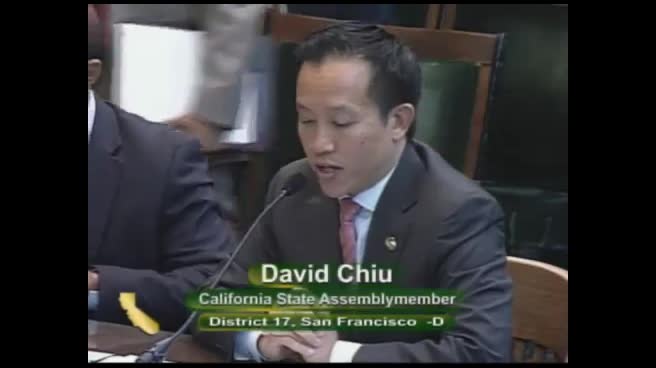 33MIN
Assembly Standing Committee on Judiciary
Bill Author

Bill Co-Author(s):