AB 2845: School safety: Safe Place to Learn Act.
- Session Year: 2015-2016
- House: Assembly
- Latest Version Date: 2016-09-25
Existing law establishes the system of public elementary and secondary schools in this state, and provides for the establishment of local educational agencies to operate these schools and provide instruction to pupils. Existing law states the policy of the State of California to afford all persons in public schools, regardless of their disability, gender, gender identity, gender expression, nationality, race or ethnicity, religion, sexual orientation, or any other specified characteristic, equal rights and opportunities in the educational institutions of the state. Existing law, the Safe Place to Learn Act, requires the State Department of Education, as part of its regular monitoring and review of a local educational agency, to assess whether the local educational agency has, among other things, adopted a policy that prohibits discrimination, harassment, intimidation, and bullying, as specified, and has publicized that policy to pupils, parents, employees, agents of the governing board, and the general public.
Existing law also requires the department to assess whether the local educational agency has provided to certificated schoolsite employees who serve pupils in any of grades 7 to 12, inclusive, information on existing schoolsite and community resources related to the support of lesbian, gay, bisexual, transgender, and questioning pupils, as specified.
This bill would express legislative findings and declarations relating to pupils who are subject to verbal, physical, and online harassment. The bill would add the support of pupils who face bias or bullying on the basis of religious affiliation, or perceived religious affiliation.
Existing law requires the Superintendent of Public Instruction to post, and annually update, on the departments Internet Web site and provide to each school district a list of statewide resources, including community-based organizations, that provide support to youth who have been subjected to school-based discrimination, harassment, intimidation, or bullying, and their families.
This bill would instead provide that that list include statewide resources, including community-based organizations, that provide support to youth, and their families, who have been subjected to school-based discrimination, harassment, intimidation, or bullying on the basis of religious affiliation, nationality, race, or ethnicity, or perceived religious affiliation, nationality, race, or ethnicity.
Existing law establishes the system of public elementary and secondary schools in this state, and provides for the establishment of local educational agencies to operate these schools and provide instruction to pupils. Existing law states the policy of the State of California to afford all persons in public schools, regardless of their disability, gender, gender identity, gender expression, nationality, race or ethnicity, religion, sexual orientation, or any other specified characteristic, equal rights and opportunities in the educational institutions of the state. Existing law, the Safe Place to Learn Act, requires the State Department of Education, as part of its regular monitoring and review of a local educational agency, to assess whether the local educational agency has, among other things, adopted a policy that prohibits discrimination, harassment, intimidation, and bullying, as specified, and has publicized that policy to pupils, parents, employees, agents of the governing board, and the general public.
Existing law also requires the department to assess whether the local educational agency has provided to certificated schoolsite employees who serve pupils in any of grades 7 to 12, inclusive, information on existing schoolsite and community resources related to the support of lesbian, gay, bisexual, transgender, and questioning pupils, as specified.
This bill would express legislative findings and declarations relating to pupils who are subject to verbal, physical, and online harassment. The bill would add the support of pupils who face bias or bullying on the basis of religious affiliation, or perceived religious affiliation.
Existing law requires the Superintendent of Public Instruction to post, and annually update, on the departments Internet Web site and provide to each school district a list of statewide resources, including community-based organizations, that provide support to youth who have been subjected to school-based discrimination, harassment, intimidation, or bullying, and their families.
This bill would instead provide that that list include statewide resources, including community-based organizations, that provide support to youth, and their families, who have been subjected to school-based discrimination, harassment, intimidation, or bullying on the basis of religious affiliation, nationality, race, or ethnicity, or perceived religious affiliation. affiliation, nationality, race, or ethnicity.
Existing law establishes the system of public elementary and secondary schools in this state, and provides for the establishment of local educational agencies to operate these schools and provide instruction to pupils. Existing law states the policy of the State of California to afford all persons in public schools, regardless of their disability, gender, gender identity, gender expression, nationality, race or ethnicity, religion, sexual orientation, or any other specified characteristic, equal rights and opportunities in the educational institutions of the state. Existing law, the Safe Place to Learn Act, requires the State Department of Education, as part of its regular monitoring and review of a local educational agency, to assess whether the local educational agency has, among other things, adopted a policy that prohibits discrimination, harassment, intimidation, and bullying, as specified, and has publicized that policy to pupils, parents, employees, agents of the governing board, and the general public.
Existing law also requires the department to assess whether the local educational agency has provided to certificated schoolsite employees who serve pupils in any of grades 7 to 12, inclusive, information on existing schoolsite and community resources related to the support of lesbian, gay, bisexual, transgender, and questioning pupils, as specified.
This bill would express legislative findings and declarations relating to pupils who are subject to verbal, physical, and online harassment. The bill would add the support of pupils who face bias or bullying, including Arab, Middle Eastern, Muslim, Sikh, and South Asian pupils. bullying on the basis of religious affiliation, or perceived religious affiliation.
Existing law requires the Superintendent of Public Instruction to post, and annually update, on the departments Internet Web site and provide to each school district a list of statewide resources, including community-based organizations, that provide support to youth who have been subjected to school-based discrimination, harassment, intimidation, or bullying, and their families.
This bill would instead provide that that list include statewide resources, including community-based organizations, that provide support to youth youth, and their families, who have been subjected to school-based discrimination, harassment, intimidation, or bullying, including based on affiliation, or perceived affiliation, with any religious group, including Muslim, and their families. bullying on the basis of religious affiliation, or perceived religious affiliation.
Existing law establishes the system of public elementary and secondary schools in this state, and provides for the establishment of local educational agencies to operate these schools and provide instruction to pupils. Existing law states the policy of the State of California to afford all persons in public schools, regardless of their disability, gender, gender identity, gender expression, nationality, race or ethnicity, religion, sexual orientation, or any other specified characteristic, equal rights and opportunities in the educational institutions of the state. Existing law, the Safe Place to Learn Act, requires the State Department of Education, as part of its regular monitoring and review of a local educational agency, to assess whether the local educational agency has, among other things, adopted a policy that prohibits discrimination, harassment, intimidation, and bullying, as specified, and has publicized that policy to pupils, parents, employees, agents of the governing board, and the general public.
Existing law also requires the State Department of Education department to assess whether the local educational agency has provided to certificated schoolsite employees who serve pupils in any of grades 7 to 12, inclusive, information on existing schoolsite and community resources related to the support of lesbian, gay, bisexual, transgender, and questioning pupils, as specified.
This bill would express legislative findings and declarations relating to pupils who are subject to verbal, physical, and online harassment. The bill would add the support of pupils who face bias or bullying, including Arab, Middle Eastern, Muslim, Sikh, and South Asian pupils or the support of other pupils who may face bias or bullying to the matters the State Department of Education is required to assess with respect to local educational agencies, as referenced above. pupils.
Existing law requires the Superintendent of Public Instruction to post, and annually update, on the departments Internet Web site and provide to each school district a list of statewide resources, including community-based organizations, that provide support to youth who have been subjected to school-based discrimination, harassment, intimidation, or bullying, and their families.
This bill would instead provide that that list include statewide resources, including community-based organizations, that provide support to youth who have been subjected to school-based discrimination, harassment, intimidation, or bullying, including based on affiliation, or perceived affiliation, with any religious group, including Muslim, and their families.
Existing law establishes the system of public elementary and secondary schools in this state, and provides for the establishment of local educational agencies to operate these schools and provide instruction to pupils. Existing law states the policy of the State of California to afford all persons in public schools, regardless of their disability, gender, gender identity, gender expression, nationality, race or ethnicity, religion, sexual orientation, or any other specified characteristic, equal rights and opportunities in the educational institutions of the state. Existing law, the Safe Place to Learn Act, requires the State Department of Education, as part of its regular monitoring and review of a local educational agency, to assess whether the local educational agency has, among other things, adopted a policy that prohibits discrimination, harassment, intimidation, and bullying, as specified, and has publicized that policy to pupils, parents, employees, agents of the governing board, and the general public.
Existing law also requires the State Department of Education to assess whether the local educational agency has provided to certificated schoolsite employees who serve pupils in any of grades 7 to 12, inclusive, information on existing schoolsite and community resources related to the support of lesbian, gay, bisexual, transgender, and questioning pupils, as specified.
This bill would express legislative findings and declarations relating to pupils who are subject to verbal, physical, and online harassment. The bill would add the support of Arab, Middle Eastern, Muslim, Sikh, and South Asian pupils or the support of other pupils who may face bias or bullying to the matters the State Department of Education is required to assess with respect to local educational agencies, as referenced above.
Existing law makes each school district and county office of education responsible for the overall development of comprehensive school safety plans for its schools operating kindergarten or any of grades 1 to 12, inclusive. The plans are required to include an assessment of the current status of school crime committed on each campus and at school-related functions, and identification of appropriate strategies and programs that will provide or maintain a high level of school safety and address the schools procedures for complying with existing laws related to school safety.
This bill would make nonsubstantive changes to the provisions identifying appropriate strategies and programs.
(a)The Legislature finds and declares all of the following:
(1)All pupils deserve and need safe and supportive school environments in which to learn.
(2)Pupils who are Muslim, Sikh, or of South Asian descent often face verbal, physical, or online harassment, all of which have significant effects on their academic achievement and mental health.
(3)Recent reports indicate that more than half of Muslim and Sikh pupils in California report that they have faced verbal threats or insults, cyberbullying, or physical assaults.
(4)The federal government has recognized the harm that is caused by such bullying, and has called upon Muslim parents to contact the United States Department of Justice or the United States Department of Education if their children are bullied at school. The White House has initiated the Asian American and Pacific Islander Bullying Prevention Task Force in response to concerns about the bullying of Muslim, Sikh, and Asian American pupils.
(5)Multiple studies demonstrate that pupils who face bullying suffer academically. Bullying is also linked to negative outcomes, including impacts on mental health, substance use, and suicide.
(6)Research demonstrates that Muslim, Sikh, and other pupils who face hate-based bias and bullying in school do not report these incidents to school staff, primarily because they believe that school staff are not trained to address these issues.
(7)Creating supportive learning environments improves pupil performance.
(8)The United States Department of Education provides numerous resources for schools to support pupils who are facing bullying due to their religion, race, or national origin. These resources were highlighted in an open letter dated December 31, 2015, and sent by the United States Secretary of Education to education administrators throughout the nation.
(b)The Legislature therefore encourages school districts, county offices of education, and charter schools to provide information on existing schoolsite and community resources to educate teachers, administrators, and other school staff on the support of Muslim, Sikh, and other pupils who may face anti-Muslim bias and bullying, as required by subdivision (d) of Section 234.1 of the Education Code.
SEC. 2.Section 234.1 of the Education Code is amended to read:234.1.The department, pursuant to subdivision (b) of Section 64001, shall monitor adherence to the requirements of Chapter 5.3 (commencing with Section 4900) of Division 1 of Title 5 of the California Code of Regulations and this chapter as part of its regular monitoring and review of local educational agencies, commonly known as the Categorical Program Monitoring process. The department shall assess whether local educational agencies have done all of the following:
(a)Adopted a policy that prohibits discrimination, harassment, intimidation, and bullying based on the actual or perceived characteristics set forth in Section 422.55 of the Penal Code and Section 220 of this code, and disability, gender, gender identity, gender expression, nationality, race or ethnicity, religion, sexual orientation, or association with a person or group with one or more of these actual or perceived characteristics. The policy shall include a statement that the policy applies to all acts related to school activity or school attendance occurring within a school under the jurisdiction of the superintendent of the school district.
(b)Adopted a process for receiving and investigating complaints of discrimination, harassment, intimidation, and bullying based on any of the actual or perceived characteristics set forth in Section 422.55 of the Penal Code and Section 220 of this code, and disability, gender, gender identity, gender expression, nationality, race or ethnicity, religion, sexual orientation, or association with a person or group with one or more of these actual or perceived characteristics. The complaint process shall include, but not be limited to, all of the following:
(1)A requirement that, if school personnel witness an act of discrimination, harassment, intimidation, or bullying, they shall take immediate steps to intervene when safe to do so.
(2)A timeline to investigate and resolve complaints of discrimination, harassment, intimidation, or bullying that shall be followed by all schools under the jurisdiction of the school district.
(3)An appeal process afforded to the complainant should he or she disagree with the resolution of a complaint filed pursuant to this section.
(4)All forms developed pursuant to this process shall be translated pursuant to Section 48985.
(c)Publicized antidiscrimination, anti-harassment, anti-intimidation, and antibullying policies adopted pursuant to subdivision (a), including information about the manner in which to file a complaint, to pupils, parents, employees, agents of the governing board, and the general public. The information shall be translated pursuant to Section 48985.
(d)(1)Provided, incident to the publicizing described in subdivision (c), to certificated schoolsite employees who serve pupils in any of grades 7 to 12, inclusive, who are employed by the local educational agency, information on existing schoolsite and community resources related to the support of lesbian, gay, bisexual, transgender, and questioning (LGBTQ) pupils, or related to the support of pupils who may face bias or bullying on the basis of religious affiliation, or perceived religious affiliation.
(2)As used in this subdivision, both of the following apply:
(A)Schoolsite resources may include, but are not limited to, peer support or affinity clubs and organizations, safe spaces for LGBTQ or other at-risk pupils, counseling services, staff who have received antibias or other training aimed at supporting these pupils or who serve as designated support to these pupils, health and other curriculum materials that are inclusive of, and relevant to, these pupils, online training developed pursuant to Section 32283.5, and other policies adopted pursuant to this article, including related complaint procedures.
(B)Community resources may include, but are not limited to, community-based organizations that provide support to LGBTQ or other at-risk pupils and their families, and physical and mental health providers with experience or training in treating or supporting these pupils.
(e)Posted the policy established pursuant to subdivision (a) in all schools and offices, including staff lounges and pupil government meeting rooms.
(f)Maintained documentation of complaints and their resolution for a minimum of one review cycle.
(g)Ensured that complainants are protected from retaliation and that the identity of a complainant alleging discrimination, harassment, intimidation, or bullying remains confidential, as appropriate.
(h)Identified a responsible local educational agency officer for ensuring school district or county office of education compliance with the requirements of Chapter 5.3 (commencing with Section 4900) of Division 1 of Title 5 of the California Code of Regulations and this chapter.
(i)Nothing in this section shall be construed to require school employees to engage with religious institutions in the course of identifying community support resources pursuant to this section.
SEC. 3.Section 234.5 of the Education Code is amended to read:234.5.(a)The Superintendent shall post, and annually update, on the departments Internet Web site and provide to each school district a list of statewide resources, including community-based organizations, that provide support to youth, and their families, who have been subjected to school-based discrimination, harassment, intimidation, or bullying, including school-based discrimination, harassment, intimidation, or bullying on the basis of religious affiliation, nationality, race, or ethnicity, or perceived religious affiliation, nationality, race, or ethnicity.
(b)The departments Internet Web site shall also include a list of statewide resources for youth who have been affected by gangs, gun violence, and psychological trauma caused by violence at home, at school, and in the community.
(a)The Legislature finds and declares all of the following:
(1)All pupils deserve and need safe and supportive school environments in which to learn.
(2)Pupils who are Muslim, Sikh, or of South Asian descent often face verbal, physical, or online harassment, all of which have significant effects on their academic achievement and mental health.
(3)Recent reports indicate that more than half of Muslim and Sikh pupils in California report that they have faced verbal threats or insults, cyberbullying, or physical assaults.
(4)The federal government has recognized the harm that is caused by such bullying, and has called upon Muslim parents to contact the United States Department of Justice or the United States Department of Education if their children are bullied at school. The White House has initiated the Asian American and Pacific Islander Bullying Prevention Task Force in response to concerns about the bullying of Muslim, Sikh, and Asian American pupils.
(5)Multiple studies demonstrate that pupils who face bullying suffer academically. Bullying is also linked to negative outcomes, including impacts on mental health, substance use, and suicide.
(6)Research demonstrates that Muslim, Sikh, and other pupils who face hate-based bias and bullying in school do not report these incidents to school staff, primarily because they believe that school staff are not trained to address these issues.
(7)Creating supportive learning environments improves pupil performance.
(8)The United States Department of Education provides numerous resources for schools to support pupils who are facing bullying due to their religion, race, or national origin. These resources were highlighted in an open letter dated December 31, 2015, and sent by the United States Secretary of Education to education administrators throughout the nation.
(b)The Legislature therefore encourages school districts, county offices of education, and charter schools to provide information on existing schoolsite and community resources to educate teachers, administrators, and other school staff on the support of Muslim, Sikh, and other pupils who may face anti-Muslim bias and bullying, as required by subdivision (d) of Section 234.1 of the Education Code.
SEC. 2.Section 234.1 of the Education Code is amended to read:234.1.The department, pursuant to subdivision (b) of Section 64001, shall monitor adherence to the requirements of Chapter 5.3 (commencing with Section 4900) of Division 1 of Title 5 of the California Code of Regulations and this chapter as part of its regular monitoring and review of local educational agencies, commonly known as the Categorical Program Monitoring process. The department shall assess whether local educational agencies have done all of the following:
(a)Adopted a policy that prohibits discrimination, harassment, intimidation, and bullying based on the actual or perceived characteristics set forth in Section 422.55 of the Penal Code and Section 220 of this code, and disability, gender, gender identity, gender expression, nationality, race or ethnicity, religion, sexual orientation, or association with a person or group with one or more of these actual or perceived characteristics. The policy shall include a statement that the policy applies to all acts related to school activity or school attendance occurring within a school under the jurisdiction of the superintendent of the school district.
(b)Adopted a process for receiving and investigating complaints of discrimination, harassment, intimidation, and bullying based on any of the actual or perceived characteristics set forth in Section 422.55 of the Penal Code and Section 220 of this code, and disability, gender, gender identity, gender expression, nationality, race or ethnicity, religion, sexual orientation, or association with a person or group with one or more of these actual or perceived characteristics. The complaint process shall include, but not be limited to, all of the following:
(1)A requirement that, if school personnel witness an act of discrimination, harassment, intimidation, or bullying, they shall take immediate steps to intervene when safe to do so.
(2)A timeline to investigate and resolve complaints of discrimination, harassment, intimidation, or bullying that shall be followed by all schools under the jurisdiction of the school district.
(3)An appeal process afforded to the complainant should he or she disagree with the resolution of a complaint filed pursuant to this section.
(4)All forms developed pursuant to this process shall be translated pursuant to Section 48985.
(c)Publicized antidiscrimination, anti-harassment, anti-intimidation, and antibullying policies adopted pursuant to subdivision (a), including information about the manner in which to file a complaint, to pupils, parents, employees, agents of the governing board, and the general public. The information shall be translated pursuant to Section 48985.
(d)(1)Provided, incident to the publicizing described in subdivision (c), to certificated schoolsite employees who serve pupils in any of grades 7 to 12, inclusive, who are employed by the local educational agency, information on existing schoolsite and community resources related to the support of lesbian, gay, bisexual, transgender, and questioning (LGBTQ) pupils, or related to the support of pupils who may face bias or bullying on the basis of religious affiliation, or perceived religious affiliation.
(2)As used in this subdivision, both of the following apply:
(A)Schoolsite resources may include, but are not limited to, peer support or affinity clubs and organizations, safe spaces for LGBTQ or other at-risk pupils, counseling services, staff who have received antibias or other training aimed at supporting these pupils or who serve as designated support to these pupils, health and other curriculum materials that are inclusive of, and relevant to, these pupils, online training developed pursuant to Section 32283.5, and other policies adopted pursuant to this article, including related complaint procedures.
(B)Community resources may include, but are not limited to, community-based organizations that provide support to LGBTQ or other at-risk pupils and their families, and physical and mental health providers with experience or training in treating or supporting these pupils.
(e)Posted the policy established pursuant to subdivision (a) in all schools and offices, including staff lounges and pupil government meeting rooms.
(f)Maintained documentation of complaints and their resolution for a minimum of one review cycle.
(g)Ensured that complainants are protected from retaliation and that the identity of a complainant alleging discrimination, harassment, intimidation, or bullying remains confidential, as appropriate.
(h)Identified a responsible local educational agency officer for ensuring school district or county office of education compliance with the requirements of Chapter 5.3 (commencing with Section 4900) of Division 1 of Title 5 of the California Code of Regulations and this chapter.
(i)Nothing in this section shall be construed to require school employees to engage with religious institutions in the course of identifying community support resources pursuant to this section.
SEC. 3.Section 234.5 of the Education Code is amended to read:234.5.(a)The Superintendent shall post, and annually update, on the departments Internet Web site and provide to each school district a list of statewide resources, including community-based organizations, that provide support to youth, and their families, who have been subjected to school-based discrimination, harassment, intimidation, or bullying, including school-based discrimination, harassment, intimidation, or bullying on the basis of religious affiliation, nationality, race, or ethnicity, or perceived religious affiliation. affiliation, nationality, race, or ethnicity.
(b)The departments Internet Web site shall also include a list of statewide resources for youth who have been affected by gangs, gun violence, and psychological trauma caused by violence at home, at school, and in the community.
(a)The Legislature finds and declares all of the following:
(1)All pupils deserve and need safe and supportive school environments in which to learn.
(2)Pupils who are Muslim, Sikh, or of South Asian descent, descent often face verbal, physical, or online harassment, all of which have significant effects on their academic achievement and mental health.
(3)Recent reports indicate that more than half of Muslim and Sikh pupils in California report that they have faced verbal threats or insults, cyberbullying, or physical assaults.
(4)The federal government has recognized the harm that is caused by such bullying, and has called upon Muslim parents to contact the United States Department of Justice or the United States Department of Education if their children are bullied at school. The White House has initiated the Asian American and Pacific Islander Bullying Prevention Task Force in response to concerns about the bullying of Muslim, Sikh, and Asian American pupils.
(5)Multiple studies demonstrate that pupils who face bullying suffer academically. Bullying is also linked to negative outcomes, including impacts on mental health, substance use, and suicide.
(6)Research demonstrates that Muslim, Sikh, and other pupils who face hate-based bias and bullying in school do not report these incidents to school staff, primarily because they believe that school staff are not trained to address these issues.
(7)Creating supportive learning environments improves pupil performance.
(8)The United States Department of Education provides numerous resources for schools to support pupils who are facing bullying due to their religion, race, or national origin. These resources were highlighted in an open letter dated December 31, 2015, and sent by the United States Secretary of Education to education administrators throughout the nation.
(b)The Legislature therefore encourages school districts, county offices of education, and charter schools to provide information on existing schoolsite and community resources to educate teachers, administrators, and other school staff on the support of Muslim, Sikh, and other pupils who may face anti-Muslim bias and bullying, as required by subdivision (d) of Section 234.1 of the Education Code.
SEC. 2.Section 234.1 of the Education Code is amended to read:234.1.The department, pursuant to subdivision (b) of Section 64001, shall monitor adherence to the requirements of Chapter 5.3 (commencing with Section 4900) of Division 1 of Title 5 of the California Code of Regulations and this chapter as part of its regular monitoring and review of local educational agencies, commonly known as the Categorical Program Monitoring process. The department shall assess whether local educational agencies have done all of the following:
(a)Adopted a policy that prohibits discrimination, harassment, intimidation, and bullying based on the actual or perceived characteristics set forth in Section 422.55 of the Penal Code and Section 220 of this code, and disability, gender, gender identity, gender expression, nationality, race or ethnicity, religion, sexual orientation, or association with a person or group with one or more of these actual or perceived characteristics. The policy shall include a statement that the policy applies to all acts related to school activity or school attendance occurring within a school under the jurisdiction of the superintendent of the school district.
(b)Adopted a process for receiving and investigating complaints of discrimination, harassment, intimidation, and bullying based on any of the actual or perceived characteristics set forth in Section 422.55 of the Penal Code and Section 220 of this code, and disability, gender, gender identity, gender expression, nationality, race or ethnicity, religion, sexual orientation, or association with a person or group with one or more of these actual or perceived characteristics. The complaint process shall include, but not be limited to, all of the following:
(1)A requirement that, if school personnel witness an act of discrimination, harassment, intimidation, or bullying, they shall take immediate steps to intervene when safe to do so.
(2)A timeline to investigate and resolve complaints of discrimination, harassment, intimidation, or bullying that shall be followed by all schools under the jurisdiction of the school district.
(3)An appeal process afforded to the complainant should he or she disagree with the resolution of a complaint filed pursuant to this section.
(4)All forms developed pursuant to this process shall be translated pursuant to Section 48985.
(c)Publicized antidiscrimination, antiharassment, anti-harassment, anti-intimidation, and antibullying policies adopted pursuant to subdivision (a), including information about the manner in which to file a complaint, to pupils, parents, employees, agents of the governing board, and the general public. The information shall be translated pursuant to Section 48985.
(d)(1)Provided, incident to the publicizing described in subdivision (c), to certificated schoolsite employees who serve pupils in any of grades 7 to 12, inclusive, who are employed by the local educational agency, information on existing schoolsite and community resources related to the support of lesbian, gay, bisexual, transgender, and questioning (LGBTQ) pupils, or related to the support of pupils who may face bias or bullying, including Arab, Middle Eastern, Muslim, Sikh, and South Asian pupils. bullying on the basis of religious affiliation, or perceived religious affiliation.
(2)As used in this subdivision, both of the following apply:
(A)Schoolsite resources may include, but are not limited to, peer support or affinity clubs and organizations, safe spaces for LGBTQ or other at-risk pupils, counseling services, staff who have received antibias or other training aimed at supporting these pupils or who serve as designated support to these pupils, health and other curriculum materials that are inclusive of, and relevant to, these pupils, online training developed pursuant to Section 32283.5, and other policies adopted pursuant to this article, including related complaint procedures.
(B)Community resources may include, but are not limited to, community-based organizations that provide support to LGBTQ or other at-risk pupils and their families, and physical and mental health providers with experience or training in treating or supporting these pupils.
(e)Posted the policy established pursuant to subdivision (a) in all schools and offices, including staff lounges and pupil government meeting rooms.
(f)Maintained documentation of complaints and their resolution for a minimum of one review cycle.
(g)Ensured that complainants are protected from retaliation and that the identity of a complainant alleging discrimination, harassment, intimidation, or bullying remains confidential, as appropriate.
(h)Identified a responsible local educational agency officer for ensuring school district or county office of education compliance with the requirements of Chapter 5.3 (commencing with Section 4900) of Division 1 of Title 5 of the California Code of Regulations and this chapter.
(i)Nothing in this section shall be construed to require school employees to engage with religious institutions in the course of identifying community support resources pursuant to this section.
SEC. 3.Section 234.5 of the Education Code is amended to read:234.5.(a)The Superintendent shall post, and annually update, on the departments Internet Web site and provide to each school district a list of statewide resources, including community-based organizations, that provide support to youth youth, and their families, who have been subjected to school-based discrimination, harassment, intimidation, or bullying, including based on affiliation, or perceived affiliation, with any religious group, including Muslim, and their families. bullying, including school-based discrimination, harassment, intimidation, or bullying on the basis of religious affiliation, or perceived religious affiliation.
(b)The departments Internet Web site shall also include a list of statewide resources for youth who have been affected by gangs, gun violence, and psychological trauma caused by violence at home, at school, and in the community.
(a)The Legislature finds and declares all of the following:
(1)All pupils deserve and need safe and supportive school environments in which to learn.
(2)Pupils who are Muslim, Sikh, or of South Asian descent, often face verbal, physical, or online harassment, all of which have significant effects on their academic achievement and mental health.
(3)Recent reports indicate that more than half of Muslim and Sikh pupils in California report that they have faced verbal threats or insults, cyberbullying, or physical assaults.
(4)The federal government has recognized the harm that is caused by such bullying, and has called upon Muslim parents to contact the United States Department of Justice or the United States Department of Education if their children are bullied at school. The White House has initiated the Asian American and Pacific Islander Bullying Prevention Task Force in response to concerns about the bullying of Muslim, Sikh, and Asian American pupils.
(5)Multiple studies demonstrate that pupils who face bullying suffer academically. Bullying is also linked to negative outcomes, including impacts on mental health, substance use, and suicide.
(6)Research demonstrates that Muslim, Sikh, and other pupils who face hate-based bias and bullying in school do not report these incidents to school staff, primarily because they believe that school staff are not trained to address these issues.
(7)Creating supportive learning environments improves pupil performance.
(8)The United States Department of Education provides numerous resources for schools to support pupils who are facing bullying due to their religion, race, or national origin. These resources were highlighted in an open letter dated December 31, 2015, and sent by the United States Secretary of Education to education administrators throughout the nation.
(b)The Legislature therefore encourages school districts, county offices of education, and charter schools to provide information on existing schoolsite and community resources to educate teachers, administrators, and other school staff on the support of Muslim, Sikh, and other pupils who may face anti-Muslim bias and bullying, as required by subdivision (d) of Section 234.1 of the Education Code.
SEC. 2.Section 234.1 of the Education Code is amended to read:234.1.The department, pursuant to subdivision (b) of Section 64001, shall monitor adherence to the requirements of Chapter 5.3 (commencing with Section 4900) of Division 1 of Title 5 of the California Code of Regulations and this chapter as part of its regular monitoring and review of local educational agencies, commonly known as the Categorical Program Monitoring process. The department shall assess whether local educational agencies have done all of the following:
(a)Adopted a policy that prohibits discrimination, harassment, intimidation, and bullying based on the actual or perceived characteristics set forth in Section 422.55 of the Penal Code and Section 220 of this code, and disability, gender, gender identity, gender expression, nationality, race or ethnicity, religion, sexual orientation, or association with a person or group with one or more of these actual or perceived characteristics. The policy shall include a statement that the policy applies to all acts related to school activity or school attendance occurring within a school under the jurisdiction of the superintendent of the school district.
(b)Adopted a process for receiving and investigating complaints of discrimination, harassment, intimidation, and bullying based on any of the actual or perceived characteristics set forth in Section 422.55 of the Penal Code and Section 220 of this code, and disability, gender, gender identity, gender expression, nationality, race or ethnicity, religion, sexual orientation, or association with a person or group with one or more of these actual or perceived characteristics. The complaint process shall include, but not be limited to, all of the following:
(1)A requirement that, if school personnel witness an act of discrimination, harassment, intimidation, or bullying, they shall take immediate steps to intervene when safe to do so.
(2)A timeline to investigate and resolve complaints of discrimination, harassment, intimidation, or bullying that shall be followed by all schools under the jurisdiction of the school district.
(3)An appeal process afforded to the complainant should he or she disagree with the resolution of a complaint filed pursuant to this section.
(4)All forms developed pursuant to this process shall be translated pursuant to Section 48985.
(c)Publicized antidiscrimination, antiharassment, anti-intimidation, and antibullying policies adopted pursuant to subdivision (a), including information about the manner in which to file a complaint, to pupils, parents, employees, agents of the governing board, and the general public. The information shall be translated pursuant to Section 48985.
(d)(1)Provided, incident to the publicizing described in subdivision (c), to certificated schoolsite employees who serve pupils in any of grades 7 to 12, inclusive, who are employed by the local educational agency, information on existing schoolsite and community resources related to the support of lesbian, gay, bisexual, transgender, and questioning (LGBTQ) pupils, or related to the support of pupils who may face bias or bullying, including Arab, Middle Eastern, Muslim, Sikh, and South Asian pupils or the support of other pupils who may face bias or bullying. pupils.
(2)As used in this subdivision, both of the following apply:
(A)Schoolsite resources may include, but are not limited to, peer support or affinity clubs and organizations, safe spaces for LGBTQ or other at-risk pupils, counseling services, staff who have received antibias or other training aimed at supporting these pupils or who serve as designated support to these pupils, health and other curriculum materials that are inclusive of, and relevant to, these pupils, online training developed pursuant to Section 32283.5, and other policies adopted pursuant to this article, including related complaint procedures.
(B)Community resources may include, but are not limited to, community-based organizations that provide support to LGBTQ or other at-risk pupils and their families, and physical and mental health providers with experience or training in treating or supporting these pupils.
(e)Posted the policy established pursuant to subdivision (a) in all schools and offices, including staff lounges and pupil government meeting rooms.
(f)Maintained documentation of complaints and their resolution for a minimum of one review cycle.
(g)Ensured that complainants are protected from retaliation and that the identity of a complainant alleging discrimination, harassment, intimidation, or bullying remains confidential, as appropriate.
(h)Identified a responsible local educational agency officer for ensuring school district or county office of education compliance with the requirements of Chapter 5.3 (commencing with Section 4900) of Division 1 of Title 5 of the California Code of Regulations and this chapter.
SEC. 3.Section 234.5 of the Education Code is amended to read:234.5.(a)The Superintendent shall post, and annually update, on the departments Internet Web site and provide to each school district a list of statewide resources, including community-based organizations, that provide support to youth who have been subjected to school-based discrimination, harassment, intimidation, or bullying, including based on affiliation, or perceived affiliation, with any religious group, including Muslim, and their families. The
(b)The departments Internet Web site shall also include a list of statewide resources for youth who have been affected by gangs, gun violence, and psychological trauma caused by violence at home, at school, and in the community.
(a)The Legislature finds and declares all of the following:
(1)All pupils deserve and need safe and supportive school environments in which to learn.
(2)Pupils who are Muslim, Sikh, or of South Asian descent, often face verbal, physical, or online harassment, all of which have significant effects on their academic achievement and mental health.
(3)Recent reports indicate that more than half of Muslim and Sikh pupils in California report that they have faced verbal threats or insults, cyberbullying, or physical assaults.
(4)The federal government has recognized the harm that is caused by such bullying, and has called upon Muslim parents to contact the United States Department of Justice or the United States Department of Education if their children are bullied at school. The White House has initiated the Asian American and Pacific Islander Bullying Prevention Task Force in response to concerns about the bullying of Muslim, Sikh, and Asian American pupils.
(5)Multiple studies demonstrate that pupils who face bullying suffer academically. Bullying is also linked to negative outcomes, including impacts on mental health, substance use, and suicide.
(6)Research demonstrates that Muslim, Sikh, and other pupils who face hate-based bias and bullying in school do not report these incidents to school staff, primarily because they believe that school staff are not trained to address these issues.
(7)Creating supportive learning environments improves pupil performance.
(8)The United States Department of Education provides numerous resources for schools to support pupils who are facing bullying due to their religion, race, or national origin. These resources were highlighted in an open letter dated December 31, 2015, and sent by the United States Secretary of Education to education administrators throughout the nation.
(b)The Legislature therefore encourages school districts, county offices of education, and charter schools to provide information on existing schoolsite and community resources to educate teachers, administrators, and other school staff on the support of Muslim, Sikh, and other pupils who may face anti-Muslim bias and bullying, as required by subdivision (d) of Section 234.1 of the Education Code.
SEC. 2.Section 234.1 of the Education Code is amended to read:234.1.The department, pursuant to subdivision (b) of Section 64001, shall monitor adherence to the requirements of Chapter 5.3 (commencing with Section 4900) of Division 1 of Title 5 of the California Code of Regulations and this chapter as part of its regular monitoring and review of local educational agencies, commonly known as the Categorical Program Monitoring process. The department shall assess whether local educational agencies have done all of the following:
(a)Adopted a policy that prohibits discrimination, harassment, intimidation, and bullying based on the actual or perceived characteristics set forth in Section 422.55 of the Penal Code and Section 220 of this code, and disability, gender, gender identity, gender expression, nationality, race or ethnicity, religion, sexual orientation, or association with a person or group with one or more of these actual or perceived characteristics. The policy shall include a statement that the policy applies to all acts related to school activity or school attendance occurring within a school under the jurisdiction of the superintendent of the school district.
(b)Adopted a process for receiving and investigating complaints of discrimination, harassment, intimidation, and bullying based on any of the actual or perceived characteristics set forth in Section 422.55 of the Penal Code and Section 220 of this code, and disability, gender, gender identity, gender expression, nationality, race or ethnicity, religion, sexual orientation, or association with a person or group with one or more of these actual or perceived characteristics. The complaint process shall include, but not be limited to, all of the following:
(1)A requirement that, if school personnel witness an act of discrimination, harassment, intimidation, or bullying, they shall take immediate steps to intervene when safe to do so.
(2)A timeline to investigate and resolve complaints of discrimination, harassment, intimidation, or bullying that shall be followed by all schools under the jurisdiction of the school district.
(3)An appeal process afforded to the complainant should he or she disagree with the resolution of a complaint filed pursuant to this section.
(4)All forms developed pursuant to this process shall be translated pursuant to Section 48985.
(c)Publicized antidiscrimination, antiharassment, anti-intimidation, and antibullying policies adopted pursuant to subdivision (a), including information about the manner in which to file a complaint, to pupils, parents, employees, agents of the governing board, and the general public. The information shall be translated pursuant to Section 48985.
(d)(1)Provided, incident to the publicizing described in subdivision (c), to certificated schoolsite employees who serve pupils in any of grades 7 to 12, inclusive, who are employed by the local educational agency, information on existing schoolsite and community resources related to the support of lesbian, gay, bisexual, transgender, and questioning (LGBTQ) pupils. Schoolsite pupils, or related to the support of Arab, Middle Eastern, Muslim, Sikh, and South Asian pupils or the support of other pupils who may face bias or bullying.
(2)As used in this subdivision, both of the following apply:
(A)Schoolsite resources may include, but are not limited to, peer support or affinity clubs and organizations, safe spaces for LGBTQ or other at-risk pupils, counseling services, staff who have received antibias or other training aimed at supporting these pupils or who serve as designated support to these pupils, health and other curriculum materials that are inclusive of, and relevant to, these pupils, online training developed pursuant to Section 32283.5, and other policies adopted pursuant to this article, including related complaint procedures. Community
(B)Community resources may include, but are not limited to, community-based organizations that provide support to LGBTQ or other at-risk pupils and their families, and physical and mental health providers with experience or training in treating or supporting these pupils.
(e)Posted the policy established pursuant to subdivision (a) in all schools and offices, including staff lounges and pupil government meeting rooms.
(f)Maintained documentation of complaints and their resolution for a minimum of one review cycle.
(g)Ensured that complainants are protected from retaliation and that the identity of a complainant alleging discrimination, harassment, intimidation, or bullying remains confidential, as appropriate.
(h)Identified a responsible local educational agency officer for ensuring school district or county office of education compliance with the requirements of Chapter 5.3 (commencing with Section 4900) of Division 1 of Title 5 of the California Code of Regulations and this chapter.
SECTION 1.Section 32282 of the Education Code is amended to read:32282.(a)The comprehensive school safety plan shall include, but not be limited to, both of the following:
(1)Assessing the current status of school crime committed on school campuses and at school-related functions.
(2)Identifying appropriate strategies and programs that will provide or maintain a high level of school safety and address the schools procedures for complying with existing laws related to school safety, which shall include the development of all of the following:
(A)Child abuse reporting procedures consistent with Article 2.5 (commencing with Section 11164) of Chapter 2 of Title 1 of Part 4 of the Penal Code.
(B)Disaster procedures, routine and emergency, including adaptations for pupils with disabilities in accordance with the federal Americans with Disabilities Act of 1990 (42 U.S.C. Sec. 12101 et seq.). The disaster procedures shall also include, but not be limited to, both of the following:
(i)Establishing an earthquake emergency procedure system in every public school building having an occupant capacity of 50 or more pupils or more than one classroom. A school district or county office of education may work with the Office of Emergency Services and the Alfred E. Alquist Seismic Safety Commission to develop and establish the earthquake emergency procedure system. The system shall include, but not be limited to, all of the following:
(I)A school building disaster plan, ready for implementation at any time, for maintaining the safety and care of pupils and staff.
(II)A drop procedure whereby each pupil and staff member takes cover under a table or desk, dropping to his or her knees, with the head protected by the arms, and the back to the windows. A drop procedure practice shall be held at least once a school quarter in elementary schools and at least once a semester in secondary schools.
(III)Protective measures to be taken before, during, and following an earthquake.
(IV)A program to ensure that pupils and both the certificated and classified staff are aware of, and properly trained in, the earthquake emergency procedure system.
(ii)Establishing a procedure to allow a public agency, including the American Red Cross, to use school buildings, grounds, and equipment for mass care and welfare shelters during disasters or other emergencies affecting the public health and welfare. The school district or county office of education shall cooperate with the public agency in furnishing and maintaining the services as the school district or county office of education may deem necessary to meet the needs of the community.
(C)Policies pursuant to subdivision (d) of Section 48915 for pupils who committed an act listed in subdivision (c) of Section 48915 and other school-designated serious acts that would lead to suspension, expulsion, or mandatory expulsion recommendations pursuant to Article 1 (commencing with Section 48900) of Chapter 6 of Part 27 of Division 4 of Title 2.
(D)Procedures to notify teachers of dangerous pupils pursuant to Section 49079.
(E)A discrimination and harassment policy consistent with the prohibition against discrimination contained in Chapter 2 (commencing with Section 200) of Part 1.
(F)The provisions of any schoolwide dress code, pursuant to Section 35183, that prohibits pupils from wearing gang-related apparel, if the school has adopted that type of a dress code. For those purposes, the comprehensive school safety plan shall define gang-related apparel. The definition shall be limited to apparel that, if worn or displayed on a school campus, reasonably could be determined to threaten the health and safety of the school environment. A schoolwide dress code established pursuant to this section and Section 35183 shall be enforced on the school campus and at any school-sponsored activity by the principal of the school or the person designated by the principal. For purposes of this paragraph, gang-related apparel shall not be considered a protected form of speech pursuant to Section 48950.
(G)Procedures for safe ingress and egress of pupils, parents, and school employees to and from school.
(H)A safe and orderly environment conducive to learning at the school.
(I)The rules and procedures on school discipline adopted pursuant to Sections 35291 and 35291.5.
(b)It is the intent of the Legislature that schools develop comprehensive school safety plans using existing resources, including the materials and services of the partnership, pursuant to this chapter. It is also the intent of the Legislature that schools use the handbook developed and distributed by the School/Law Enforcement Partnership Program entitled Safe Schools: A Planning Guide for Action in conjunction with developing their plan for school safety.
(c)Each schoolsite council or school safety planning committee, in developing and updating a comprehensive school safety plan, shall, where practical, consult, cooperate, and coordinate with other schoolsite councils or school safety planning committees.
(d)The comprehensive school safety plan may be evaluated and amended, as needed, by the school safety planning committee, but shall be evaluated at least once a year, to ensure that the comprehensive school safety plan is properly implemented. An updated file of all safety-related plans and materials shall be readily available for inspection by the public.
(e)As comprehensive school safety plans are reviewed and updated, the Legislature encourages all plans, to the extent that resources are available, to include policies and procedures aimed at the prevention of bullying.
(f)The comprehensive school safety plan, as written and updated by the schoolsite council or school safety planning committee, shall be submitted for approval pursuant to subdivision (a) of Section 32288.
(a)The comprehensive school safety plan shall include, but not be limited to, both of the following:
(1)Assessing the current status of school crime committed on school campuses and at school-related functions.
(2)Identifying appropriate strategies and programs that will provide or maintain a high level of school safety and address the schools procedures for complying with existing laws related to school safety, which shall include the development of all of the following:
(A)Child abuse reporting procedures consistent with Article 2.5 (commencing with Section 11164) of Chapter 2 of Title 1 of Part 4 of the Penal Code.
(B)Disaster procedures, routine and emergency, including adaptations for pupils with disabilities in accordance with the federal Americans with Disabilities Act of 1990 (42 U.S.C. Sec. 12101 et seq.). The disaster procedures shall also include, but not be limited to, both of the following:
(i)Establishing an earthquake emergency procedure system in every public school building having an occupant capacity of 50 or more pupils or more than one classroom. A school district or county office of education may work with the Office of Emergency Services and the Alfred E. Alquist Seismic Safety Commission to develop and establish the earthquake emergency procedure system. The system shall include, but not be limited to, all of the following:
(I)A school building disaster plan, ready for implementation at any time, for maintaining the safety and care of pupils and staff.
(II)A drop procedure whereby each pupil and staff member takes cover under a table or desk, dropping to his or her knees, with the head protected by the arms, and the back to the windows. A drop procedure practice shall be held at least once each a school quarter in elementary schools and at least once a semester in secondary schools.
(III)Protective measures to be taken before, during, and following an earthquake.
(IV)A program to ensure that pupils and both the certificated and classified staff are aware of, and properly trained in, the earthquake emergency procedure system.
(ii)Establishing a procedure to allow a public agency, including the American Red Cross, to use school buildings, grounds, and equipment for mass care and welfare shelters during disasters or other emergencies affecting the public health and welfare. The school district or county office of education shall cooperate with the public agency in furnishing and maintaining the services as the school district or county office of education may deem necessary to meet the needs of the community.
(C)Policies pursuant to subdivision (d) of Section 48915 for pupils who committed an act listed in subdivision (c) of Section 48915 and other school-designated serious acts which that would lead to suspension, expulsion, or mandatory expulsion recommendations pursuant to Article 1 (commencing with Section 48900) of Chapter 6 of Part 27 of Division 4 of Title 2.
(D)Procedures to notify teachers of dangerous pupils pursuant to Section 49079.
(E)A discrimination and harassment policy consistent with the prohibition against discrimination contained in Chapter 2 (commencing with Section 200) of Part 1.
(F)The provisions of any schoolwide dress code, pursuant to Section 35183, that prohibits pupils from wearing gang-related apparel, if the school has adopted that type of a dress code. For those purposes, the comprehensive school safety plan shall define gang-related apparel. The definition shall be limited to apparel that, if worn or displayed on a school campus, reasonably could be determined to threaten the health and safety of the school environment. A schoolwide dress code established pursuant to this section and Section 35183 shall be enforced on the school campus and at any school-sponsored activity by the principal of the school or the person designated by the principal. For purposes of this paragraph, gang-related apparel shall not be considered a protected form of speech pursuant to Section 48950.
(G)Procedures for safe ingress and egress of pupils, parents, and school employees to and from school.
(H)A safe and orderly environment conducive to learning at the school.
(I)The rules and procedures on school discipline adopted pursuant to Sections 35291 and 35291.5.
(b)It is the intent of the Legislature that schools develop comprehensive school safety plans using existing resources, including the materials and services of the partnership, pursuant to this chapter. It is also the intent of the Legislature that schools use the handbook developed and distributed by the School/Law Enforcement Partnership Program entitled Safe Schools: A Planning Guide for Action in conjunction with developing their plan for school safety.
(c)Each schoolsite council or school safety planning committee, in developing and updating a comprehensive school safety plan, shall, where practical, consult, cooperate, and coordinate with other schoolsite councils or school safety planning committees.
(d)The comprehensive school safety plan may be evaluated and amended, as needed, by the school safety planning committee, but shall be evaluated at least once a year, to ensure that the comprehensive school safety plan is properly implemented. An updated file of all safety-related plans and materials shall be readily available for inspection by the public.
(e)As comprehensive school safety plans are reviewed and updated, the Legislature encourages all plans, to the extent that resources are available, to include policies and procedures aimed at the prevention of bullying.
(f)The comprehensive school safety plan, as written and updated by the schoolsite council or school safety planning committee, shall be submitted for approval pursuant to subdivision (a) of Section 32288.
|
Date
|
Status
|
|---|---|
| Sep 1, 2016 | Enrolled and presented to the Governor at 4:30 p.m. |
| Aug 24, 2016 | Senate amendments concurred in. To Engrossing and Enrolling. (Ayes 79. Noes 0. Page 6203.). |
| Aug 24, 2016 | Senate amendments concurred in. To Engrossing and Enrolling. |
| Aug 19, 2016 | In Assembly. Concurrence in Senate amendments pending. May be considered on or after August 21 pursuant to Assembly Rule 77. |
| Aug 18, 2016 | Read third time. Passed. Ordered to the Assembly. (Ayes 34. Noes 3. Page 5126.). |
| Aug 18, 2016 | Read third time. Passed. Ordered to the Assembly. (Ayes 34. Noes 3.). |
| Aug 18, 2016 | Read third time. Passed. Ordered to the Assembly. |
| Aug 17, 2016 | Read second time. Ordered to third reading. |
| Aug 16, 2016 | Read third time and amended. Ordered to second reading. |
| Aug 15, 2016 | Read second time. Ordered to third reading. |
| Aug 11, 2016 | From committee: Do pass. (Ayes 6. Noes 1.) (August 11). |
| Aug 1, 2016 | In committee: Referred to APPR. suspense file. |
| Jun 15, 2016 | From committee: Do pass and re-refer to Com. on APPR. (Ayes 9. Noes 0.) (June 15). Re-referred to Com. on APPR. |
| Jun 9, 2016 | Referred to Com. on ED. |
| May 27, 2016 | Read third time. Passed. Ordered to the Senate. (Ayes 67. Noes 0. Page 4961.) |
| May 27, 2016 | In Senate. Read first time. To Com. on RLS. for assignment. |
| May 27, 2016 | Read third time. Passed. Ordered to the Senate. |
| May 19, 2016 | Read second time. Ordered to Consent Calendar. |
| May 18, 2016 | From committee: Do pass. To Consent Calendar. (Ayes 20. Noes 0.) (May 18). |
| Apr 27, 2016 | Re-referred to Com. on APPR. |
| Apr 26, 2016 | Read second time and amended. |
| Apr 25, 2016 | From committee: Amend, and do pass as amended and re-refer to Com. on APPR. (Ayes 7. Noes 0.) (April 20). |
| Apr 13, 2016 | Re-referred to Com. on ED. |
| Apr 12, 2016 | From committee chair, with author's amendments: Amend, and re-refer to Com. on ED. Read second time and amended. |
| Mar 28, 2016 | Re-referred to Com. on ED. |
| Mar 17, 2016 | From committee chair, with author's amendments: Amend, and re-refer to Com. on ED. Read second time and amended. |
| Mar 17, 2016 | Referred to Com. on ED. |
| Feb 22, 2016 | Read first time. |
| Feb 21, 2016 | From printer. May be heard in committee March 22. |
| Feb 19, 2016 | Introduced. To print. |
|
Date
|
Description
|
Location
|
Votes
|
|
|---|---|---|---|---|
| Aug 24, 2016 | AB 2845 WILLIAMS Concurrence in Senate Amendments | Assembly Floor |
Passed |
|
| Aug 18, 2016 | Assembly 3rd Reading AB2845 Williams By Pan | Senate Floor |
Passed |
|
| Aug 11, 2016 | Do pass | Senate Standing Committee on Appropriations |
Passed |
|
| Aug 1, 2016 | Placed on suspense file | Senate Standing Committee on Appropriations |
Passed |
|
| Jun 15, 2016 | Do pass, but first be re-referred to the Committee on [Appropriations] | Senate Standing Committee on Education |
Passed |
|
| May 27, 2016 | AB 2845 WILLIAMS Consent Calendar Second Day Regular Session | Assembly Floor |
Passed |
|
| May 18, 2016 | Do pass. To Consent Calendar. | Assembly Standing Committee on Appropriations |
Passed |
|
| Apr 20, 2016 | Do pass as amended and be re-referred to the Committee on [Appropriations] | Assembly Standing Committee on Education |
Passed |
This list shows positions taken on this bill by organizations on the date displayed, which is linked to the original source.
Positions by individuals are not included.
CONCURRENCE IN SENATE AMENDMENTS
CSA1 Bill Id:AB 2845
Author:(Williams)
As Amended Ver:August 16, 2016
Majority vote
ASSEMBLY: | 67-0 | (May 27, 2016) | SENATE: | 34-3 | (August 18, 2016) |
Original Committee Reference: ED.
SUMMARY: Requires the California Department of Education (CDE), as part of its existing compliance monitoring activities, to assess whether local educational agencies (LEAs) have provided information to staff serving students in grades 7 through 12 on resources related to bullying due to religious affiliation, and requires the CDE to post on its Web site a list of resources that support students who have been subject to school-based discrimination on the basis of actual or perceived religious affiliation, nationality, race, or ethnicity.
The Senate amendments require that Superintendent post on its Web site, and annually update, a list of statewide resources, including community-based organizations, that provide support to youth, and their families, who have been subjected to school-based discrimination, harassment, intimidation, or bullying, including school-based discrimination, harassment, intimidation, or bullying on the basis of nationality, race, or ethnicity, or perceived nationality, race, or ethnicity.
FISCAL EFFECT: According to the Senate Appropriations Committee, based on the August 1 2016, amended version:
- Costs to the CDE of approximately $20,000 General Fund in the first year to add additional resources to the department website on school-based discrimination, harassment, intimidation, or bullying on the basis of religious affiliation, or perceived religious affiliation.
- Ongoing costs of approximately $10,000 General Fund to incorporate LEA compliance review into the existing compliance monitoring process.
- Potential state costs for LEAs to provide required information to certificated staff. The CDE is required to monitor compliance of this activity which may be perceived to impose a reimbursable state mandate. If an LEA is required to comply, statewide costs could be in the low tens of thousands. See staff comments. (Proposition 98)
COMMENTS:
Need for the bill. The author states, "The negative tone in our national politics has enflamed a disturbing trend of scapegoating and fear mongering of American Muslims. Recently, a rash of hate crimes aimed at Muslims and Sikhs have occurred across the nation, including physical assaults and the defacement of religious sites in California. AB 2845 aims to address potential spikes in bullying and discrimination in our public education system as a result of increased Islamophobia…and will ensure that school employees will be provided schoolsite and community resources so that our students are provided the assistance and support they need when faced with school bullying and discrimination."
Surveys of California Muslim and Sikh students find high rates of bullying. A 2015 report published by the California chapter of the Council on American-Islamic Relations, titled Mislabeled: The Impact of School Bullying and Discrimination on California Muslim Students, reported data from surveys of 500 Muslim students in California. It found:
- 55% of students surveyed reported being subjected to some form of bullying based on their religious identity. According to the report, this is twice as high as the national percentage of students who report being bullied at school.
- 29% of the female students who wear a hijab, the Islamic headscarf, reported being offensively touched by another student, and 27% reported being discriminated against by their teacher.
- 19% of students reported cyberbullying based on religion.
- 20% of students reported that school staff either made offensive comments about the students' religion or allowed other students to make such remarks, and 20% of students who reported bullying were unhappy with the response from school administrators.
A 2014 publication by the Sikh Coalition, titled "Go Home Terrorist:" A Report on Bullying Against Sikh American School Children reported data from a survey and focus groups with several hundred Sikh students in Fresno. It also found high rates of bullying:
- 54% of Sikh youth have experienced bullying or harassment, 21% report being bullied or harassed at least once a week, and 13% report bullying almost daily.
- 67% of Sikh youth who wear turbans and maintain uncut hair in accordance with religious beliefs have experienced bullying and harassment.
- 63% of those bullied believed they were bullied on the basis of religion or ethnicity, and almost 27% believed it was because other students thought they looked like terrorists.
- 51% of Sikh youth believe school officials do not respond adequately to bullying incidents.
CDE bullying resource website. This bill requires the CDE to include information on bullying and discrimination based on religious affiliation on its website. Pursuant to current law, the CDE maintains a page of resources on bullying on its Web site, which provides links to numerous resources for program, policy, and curriculum on this topic. There are resources listed that are specific to bullying of students with disabilities, and bullying of LGBTQ (lesbian, gay, bisexual, transgender, queer) students. While some resources mention religious discrimination, there do not appear to be any resources listed which specifically address school-based bullying based on actual or perceived religious affiliation.
Analysis Prepared by: Tanya Lieberman / ED. / (916) 319-2087 FN: 0004518
SENATE COMMITTEE ON EDUCATION
Senator Carol Liu, Chair
2015 - 2016 Regular
Bill No: AB 2845
Author: | |||
Version: | April 26, 2016 Hearing Date: June 15, 2016 | ||
Urgency: | No | Fiscal: | Yes |
Consultant: | Lenin DelCastillo | ||
Subject: School safety: Safe Place to Learn Act
SUMMARY
This bill requires the California Department of Education (CDE), as part of its existing compliance monitoring activities, to assess whether local educational agencies (LEAs) have provided information to certificated staff serving students in any of grades 7-12 and community resources for students who may face bias or bullying. The bill also requires the Superintendent of Public Instruction (SPI) to post anti-bullying resources related to religious affiliation or perceived religious affiliation.
BACKGROUND
Existing law:
- Prohibits discrimination in public schools on the basis of disability, gender, gender expression, nationality, race or ethnicity, religion, sexual orientation, or any other characteristic that is contained in the definition of hate crimes.
(Education Code § 200, et seq.)
- Requires the CDE to monitor, through its Categorical Program Monitoring process, and assess whether school districts have:
- Adopted policies prohibiting discrimination, harassment, intimidation, and bullying based on the actual or perceived characteristics including disability, gender, gender identity, gender expression, nationality, race or ethnicity, religion, sexual orientation, or association with a person or group with one or more of those actual or perceived characteristics.
- Adopted a process for receiving and investigating complaints relating to discrimination, harassment, intimidation, and bullying, including all of the following:
- A requirement that school personnel who witness such acts take immediate steps to intervene when safe to do so.
- A timeline for the investigation and resolution of complaints, and an appeal process
- Publicized to students, parents, employees, the governing board of the district, and the general public, anti-discrimination, anti-harassment, anti-intimidation, and anti-bullying policies, including information about the manner in which to file a complaint.
- Provided information to certificated staff serving grades 7-12 on schoolsite and community resources for lesbian, gay, bisexual, transgender, and questioning (LGBTQ) students. (Education Code § 234.1)
ANALYSIS
This bill:
- Requires the California Department of Education (CDE), as part of its existing compliance monitoring activities, assess whether local educational agencies (LEAs) have provided information to certificated staff serving grades 7-12 on school site and community resources to students subject to bullying on the basis of religious affiliation or perceived religious affiliation.
- Requires that the Superintendent of Public Instruction (SPI) post on its Web site, annually update, and provide to each school district, a list of statewide resources, including community-based organizations, that provide support to youth who have been subjected to school-based discrimination, harassment, intimidation, or bullying based on religious affiliation or perceived religious affiliation.
STAFF COMMENTS
- Need for the bill. According to the author, “the negative tone in our national politics has enflamed a disturbing trend of scapegoating and fear mongering of American Muslims. Recently, a rash of hate crimes aimed at Muslims and Sikhs have occurred across the nation, including physical assaults and the defacement of religious sites in California. AB 2845 aims to address potential spikes in bullying and discrimination in our public education system as a result of increased Islamophobia.
According to the Council on American-Islamic Relations (CAIR), California Chapter, 55% of American Muslim students attending California public schools surveyed experience some form of bullying based on their religious identity. This is twice as high as the national statistic for students who report being bullied at school. CAIR-CA also finds that American Muslim youth continue to identify student-teacher relations as needing improvement in addressing such bullying. Similarly, the Sikh Coalition has reported that 50% of Sikh students have encountered school bullying. This number increases significantly for turbaned Sikh students, of which 67% have encountered bullying. In Fresno, 51% of the students surveyed reported that they felt school officials did not respond adequately to bullying incidents. AB 2845 will ensure that school employees will be provided schoolsite and community resources so that our students are provided the assistance and support they need when faced with school bullying and discrimination.”
- Utilizes existing processes. Existing law requires the California Department of Education (CDE) to monitor local educational agencies (LEAs) for adoption of processes for receiving and investigating complaints of discrimination, harassment, intimidation, and bullying, and also requires the CDE to annually post on its Web site and provide to each school district, a list of statewide resources that provide support to youth who have been subjected to these acts. Further, existing law requires LEAs to publicize anti-discrimination, anti-harassment, anti-intimidation, and anti-bullying policies. This bill requires the CDE, as part of its compliance monitoring activities, to assess whether LEAs have provided information to teachers serving grades 7-12 on schoolsite resources for students who have been subject to these acts, including Arab, Middle Easter, Muslim, Sikh, and South Asian students.
- CDE bullying resource Web site. This bill also requires the CDE to include information on bullying and discrimination based on religious affiliation on its Web site. Pursuant to existing law, the CDE already maintains a page of resources on bullying on its Web site, which provides links to numerous resources for program, policy, and curriculum on this topic. There are resources listed that are specific to bullying of students with disabilities, and bullying of lesbian, gay, bisexual, transgender, and questioning (LGBTQ) students. While some resources mention religious discrimination, there do not appear to be any resources listed which specifically address school-based bullying based on actual or perceived religious affiliation.
- Fiscal impact. According to the Assembly Appropriations Committee, this bill would result in General Fund (GF) administrative costs to the CDE of approximately $20,000 in the first year to add additional resources to the department Web site on school-based discrimination, harassment, intimidation, or bullying on the basis of religious affiliation, or perceived religious affiliation. There would also be ongoing costs of approximately $10,000 GF to incorporate local educational agency compliance review into the existing Compliance Program Monitoring process.
- Related legislation. AB 827 (O’Donnell, Chapter 562, Statutes of 2015) of this Session Requires the CDE, as part of its compliance monitoring, to assess whether LEAs have provided information to certificated staff serving grades 7-12 on schoolsite and community resources for LGBTQ students.
AB 9 (Ammiano, Chapter 723, Statutes of 2011) requires a school district to include specific information in its policies and procedures regarding discrimination, harassment, intimidation, and bullying, requires the policies to include complaint procedures and alternative discipline policies for pupils who engage in this behavior, and requires the CDE to post anti-bullying resources on its Web site.
SUPPORT
Afghan Coalition
Arc and United Cerebral Palsy California Collaboration
Asian Americans Advancing Justice – California
Asian Law Alliance
American Civil Liberties Union of California
California Immigrant Policy Center
Council on American-Islamic Relations, California Chapter
Islamic Center of San Diego
Islamic Networks Group
Islamic Society of North (San Diego) County
Muslim American Society Public Affairs and Civic Engagement
Muslim Community Center of Greater San Diego
National Association of Social Workers – California Chapter
San Jose Japanese American Citizens League
Santa Barbara Women’s Political Committee
South Bay Islamic Association
Services, Immigrant Rights, and Education Network
Somali Family Service of San Diego, Inc.
South Asian Bar Association of Northern California
OPPOSITION
None received.
-- END --
Office of Senate Floor Analyses (916) 651-1520 Fax: (916) 327-4478 | AB |
THIRD READING
Bill No: AB 2845
:
SENATE EDUCATION COMMITTEE: 9-0, 6/15/16
AYES: Liu, Block, Hancock, Huff, Leyva, Mendoza, Monning, Pan, Vidak
SENATE APPROPRIATIONS COMMITTEE: 6-1, 8/11/16
AYES: Lara, Bates, Beall, Hill, McGuire, Mendoza
NOES: Nielsen
ASSEMBLY FLOOR: 67-0, 5/27/16 (Consent) - See last page for vote
SOURCE: Asian Americans Advancing Justice – California
Council on American-Islamic Relations, California Chapter
DIGEST: This bill requires the California Department of Education (CDE), as part of its existing compliance monitoring activities, to assess whether local educational agencies (LEAs) have provided information to certificated staff serving students in any of grades 7-12 and community resources for students who may face bias or bullying on the basis of religious affiliation or perceived religious affiliation. This bill also requires the Superintendent of Public Instruction (SPI) to post anti-bullying resources related to religious affiliation, nationality, race, or perceived religious affiliation, nationality, race, or ethnicity.
Senate Floor Amendments of 8/16/16 add nationality, race, or ethnicity to the basis for which the SPI is required to post anti-bullying resources for on its Web site.
Existing law:
- Prohibits discrimination in public schools on the basis of disability, gender, gender expression, nationality, race or ethnicity, religion, sexual orientation, or any other characteristic that is contained in the definition of hate crimes. (Education Code § 200, et seq.)
- Requires the CDE to monitor, through its Categorical Program Monitoring process, and assess whether school districts have:
- Adopted policies prohibiting discrimination, harassment, intimidation, and bullying based on the actual or perceived characteristics including disability, gender, gender identity, gender expression, nationality, race or ethnicity, religion, sexual orientation, or association with a person or group with one or more of those actual or perceived characteristics.
- Adopted a process for receiving and investigating complaints relating to discrimination, harassment, intimidation, and bullying, including all of the following:
- A requirement that school personnel who witness such acts take immediate steps to intervene when safe to do so.
- A timeline for the investigation and resolution of complaints, and an appeal process.
- Publicized to students, parents, employees, the governing board of the district, and the general public, anti-discrimination, anti-harassment, anti-intimidation, and anti-bullying policies, including information about the manner in which to file a complaint.
- Provided information to certificated staff serving grades 7-12 on schoolsite and community resources for lesbian, gay, bisexual, transgender, and questioning (LGBTQ) students. (Education Code § 234.1)
This bill:
- Requires the CDE, as part of its existing compliance monitoring activities, assess whether LEAs have provided information to certificated staff serving grades 7-12 on school site and community resources to students subject to bullying on the basis of religious affiliation or perceived religious affiliation.
- Requires that the SPI to post on its Web site, annually update, and provide to each school district, a list of statewide resources, including community-based organizations, that provide support to youth who have been subjected to school-based discrimination, harassment, intimidation, or bullying based on religious affiliation, nationality, race, or ethnicity or perceived religious affiliation, nationality, race, or ethnicity.
Comments
Need for the bill. According to the author, “the negative tone in our national politics has enflamed a disturbing trend of scapegoating and fear mongering of American Muslims. Recently, a rash of hate crimes aimed at Muslims and Sikhs have occurred across the nation, including physical assaults and the defacement of religious sites in California. AB 2845 aims to address potential spikes in bullying and discrimination in our public education system as a result of increased Islamophobia.
According to the Council on American-Islamic Relations, California Chapter (CAIR-CA), 55% of American Muslim students attending California public schools surveyed experience some form of bullying based on their religious identity. This is twice as high as the national statistic for students who report being bullied at school. CAIR-CA also finds that American Muslim youth continue to identify student-teacher relations as needing improvement in addressing such bullying. Similarly, the Sikh Coalition has reported that 50% of Sikh students have encountered school bullying. This number increases significantly for turbaned Sikh students, of which 67% have encountered bullying. In Fresno, 51% of the students surveyed reported that they felt school officials did not respond adequately to bullying incidents. AB 2845 will ensure that school employees will be provided schoolsite and community resources so that our students are provided the assistance and support they need when faced with school bullying and discrimination.
Utilizes existing processes. Existing law requires the CDE to monitor LEAs for adoption of processes for receiving and investigating complaints of discrimination, harassment, intimidation, and bullying, and also requires the CDE to annually post on its Web site and provide to each school district, a list of statewide resources that provide support to youth who have been subjected to these acts. Further, existing law requires LEAs to publicize anti-discrimination, anti-harassment, anti-intimidation, and anti-bullying policies. This bill requires the CDE, as part of its compliance monitoring activities, to assess whether LEAs have provided information to teachers serving grades 7-12 on schoolsite resources for students who have been subject to these acts.
CDE bullying resource Web site. This bill also requires CDE to include information on bullying and discrimination based on religious affiliation on its Web site. Pursuant to existing law, the CDE already maintains a page of resources on bullying on its Web site, which provides links to numerous resources for program, policy, and curriculum on this topic. There are resources listed that are specific to bullying of students with disabilities, and bullying of LGBTQ students. While some resources mention religious discrimination, there do not appear to be any resources listed which specifically address school-based bullying based on actual or perceived religious affiliation.
FISCAL EFFECT: Appropriation: Fiscal Com.: Local:
According to the Senate Appropriations Committee:
- Costs to the CDE of approximately $20,000 General Fund in the first year to add additional resources to the department Web site on school-based discrimination, harassment, intimidation, or bullying on the basis of religious affiliation, or perceived religious affiliation.
- Ongoing costs of approximately $10,000 General Fund to incorporate LEA compliance review into the existing compliance monitoring process.
- Potential state costs for LEAs to provide required information to certificated staff. The CDE is required to monitor compliance of this activity which may be perceived to impose a reimbursable state mandate. If an LEA is required to comply, statewide costs could be in the low tens of thousands. (Proposition 98)
Asian Americans Advancing Justice – California (co-source)
Council on American-Islamic Relations, California Chapter (co-source)
Afghan Coalition
Arc and United Cerebral Palsy California Collaboration
Asian Law Alliance
American Civil Liberties Union of California
California Immigrant Policy Center
Islamic Center of San Diego
Islamic Networks Group
Islamic Society of North (San Diego) County
Muslim American Society Public Affairs and Civic Engagement
Muslim Community Center of Greater San Diego
National Association of Social Workers – California Chapter
San Jose Japanese American Citizens League
Santa Barbara Women’s Political Committee
South Bay Islamic Association
Services, Immigrant Rights, and Education Network
Somali Family Service of San Diego, Inc.
South Asian Bar Association of Northern California
OPPOSITION: (Verified 8/12/16)
None received
ASSEMBLY FLOOR: 67-0, 5/27/16
AYES: Achadjian, Alejo, Travis Allen, Arambula, Atkins, Baker, Bigelow, Bonilla, Bonta, Burke, Calderon, Campos, Chang, Chau, Chávez, Chu, Cooley, Cooper, Dababneh, Dahle, Daly, Eggman, Frazier, Beth Gaines, Gallagher, Cristina Garcia, Gatto, Gipson, Gomez, Gonzalez, Gordon, Gray, Harper, Roger Hernández, Holden, Irwin, Jones, Kim, Lackey, Levine, Linder, Lopez, Maienschein, Mathis, Mayes, McCarty, Medina, Mullin, Nazarian, Obernolte, Olsen, Patterson, Quirk, Ridley-Thomas, Rodriguez, Salas, Santiago, Steinorth, Mark Stone, Thurmond, Wagner, Waldron, Weber, Wilk, Williams, Wood, Rendon
NO VOTE RECORDED: Bloom, Brough, Brown, Chiu, Dodd, Eduardo Garcia, Grove, Hadley, Jones-Sawyer, Low, Melendez, O'Donnell, Ting
8/17/16 15:49:18
**** END ****
Office of Senate Floor Analyses (916) 651-1520 Fax: (916) 327-4478 | AB |
THIRD READING
Bill No: AB 2845
:
SENATE EDUCATION COMMITTEE: 9-0, 6/15/16
AYES: Liu, Block, Hancock, Huff, Leyva, Mendoza, Monning, Pan, Vidak
SENATE APPROPRIATIONS COMMITTEE: 6-1, 8/11/16
AYES: Lara, Bates, Beall, Hill, McGuire, Mendoza
NOES: Nielsen
ASSEMBLY FLOOR: 67-0, 5/27/16 (Consent) - See last page for vote
SOURCE: Asian Americans Advancing Justice – California
Council on American-Islamic Relations, California Chapter
DIGEST: This bill requires the California Department of Education (CDE), as part of its existing compliance monitoring activities, to assess whether local educational agencies (LEAs) have provided information to certificated staff serving students in any of grades 7-12 and community resources for students who may face bias or bullying, including Arab, Middle Eastern, Muslim, Sikh, and South Asian students. This bill also requires the Superintendent of Public Instruction (SPI) to post anti-bullying resources related to affiliation or perceived affiliation with any religious group, including Muslim, on its Web site.
Existing law:
- Prohibits discrimination in public schools on the basis of disability, gender, gender expression, nationality, race or ethnicity, religion, sexual orientation, or any other characteristic that is contained in the definition of hate crimes. (Education Code § 200, et seq.)
- Requires the CDE to monitor, through its Categorical Program Monitoring process, and assess whether school districts have:
- Adopted policies prohibiting discrimination, harassment, intimidation, and bullying based on the actual or perceived characteristics including disability, gender, gender identity, gender expression, nationality, race or ethnicity, religion, sexual orientation, or association with a person or group with one or more of those actual or perceived characteristics.
- Adopted a process for receiving and investigating complaints relating to discrimination, harassment, intimidation, and bullying, including all of the following:
- A requirement that school personnel who witness such acts take immediate steps to intervene when safe to do so.
- A timeline for the investigation and resolution of complaints, and an appeal process.
- Publicized to students, parents, employees, the governing board of the district, and the general public, anti-discrimination, anti-harassment, anti-intimidation, and anti-bullying policies, including information about the manner in which to file a complaint.
- Provided information to certificated staff serving grades 7-12 on schoolsite and community resources for lesbian, gay, bisexual, transgender, and questioning (LGBTQ) students. (Education Code § 234.1)
This bill:
- Requires the CDE, as part of its existing compliance monitoring activities, assess whether LEAs have provided information to certificated staff serving grades 7-12 on school site and community resources to students subject to bullying, discrimination, or harassment, including for Arab, Middle Eastern, Muslim, Sikh, and South Asian students.
- Requires that the SPI post on its Web site, annually update, and provide to each school district, a list of statewide resources, including community-based organizations, that provide support to youth who have been subjected to school-based discrimination, harassment, intimidation, or bullying based on affiliation, or perceived affiliation, with any religious group, including Muslim.
Comments
Need for the bill. According to the author, “the negative tone in our national politics has enflamed a disturbing trend of scapegoating and fear mongering of American Muslims. Recently, a rash of hate crimes aimed at Muslims and Sikhs have occurred across the nation, including physical assaults and the defacement of religious sites in California. AB 2845 aims to address potential spikes in bullying and discrimination in our public education system as a result of increased Islamophobia.”
According to the Council on American-Islamic Relations, California Chapter (CAIR-CA), 55% of American Muslim students attending California public schools surveyed experience some form of bullying based on their religious identity. This is twice as high as the national statistic for students who report being bullied at school. CAIR-CA also finds that American Muslim youth continue to identify student-teacher relations as needing improvement in addressing such bullying. Similarly, the Sikh Coalition has reported that 50% of Sikh students have encountered school bullying. This number increases significantly for turbaned Sikh students, of which 67% have encountered bullying. In Fresno, 51% of the students surveyed reported that they felt school officials did not respond adequately to bullying incidents. AB 2845 will ensure that school employees will be provided schoolsite and community resources so that our students are provided the assistance and support they need when faced with school bullying and discrimination.
Utilizes existing processes. Existing law requires the CDE to monitor LEAs for adoption of processes for receiving and investigating complaints of discrimination, harassment, intimidation, and bullying, and also requires the CDE to annually post on its Web site and provide to each school district, a list of statewide resources that provide support to youth who have been subjected to these acts. Further, existing law requires LEAs to publicize anti-discrimination, anti-harassment, anti-intimidation, and anti-bullying policies. This bill requires the CDE, as part of its compliance monitoring activities, to assess whether LEAs have provided information to teachers serving grades 7-12 on schoolsite resources for students who have been subject to these acts, including Arab, Middle Eastern, Muslim, Sikh, and South Asian students.
CDE bullying resource Web site. This bill also requires CDE to include information on bullying and discrimination based on religious affiliation on its Web site. Pursuant to existing law, the CDE already maintains a page of resources on bullying on its Web site, which provides links to numerous resources for program, policy, and curriculum on this topic. There are resources listed that are specific to bullying of students with disabilities, and bullying of LGBTQ students. While some resources mention religious discrimination, there do not appear to be any resources listed which specifically address school-based bullying based on actual or perceived religious affiliation.
FISCAL EFFECT: Appropriation: Fiscal Com.: Local:
According to the Senate Appropriations Committee:
- Costs to the CDE of approximately $20,000 General Fund in the first year to add additional resources to the department Web site on school-based discrimination, harassment, intimidation, or bullying on the basis of religious affiliation, or perceived religious affiliation.
- Ongoing costs of approximately $10,000 General Fund to incorporate LEA compliance review into the existing compliance monitoring process.
- Potential state costs for LEAs to provide required information to certificated staff. The CDE is required to monitor compliance of this activity which may be perceived to impose a reimbursable state mandate. If an LEA is required to comply, statewide costs could be in the low tens of thousands. (Proposition 98)
Asian Americans Advancing Justice – California (co-source)
Council on American-Islamic Relations, California Chapter (co-source)
Afghan Coalition
Arc and United Cerebral Palsy California Collaboration
Asian Law Alliance
American Civil Liberties Union of California
California Immigrant Policy Center
Islamic Center of San Diego
Islamic Networks Group
Islamic Society of North (San Diego) County
Muslim American Society Public Affairs and Civic Engagement
Muslim Community Center of Greater San Diego
National Association of Social Workers – California Chapter
San Jose Japanese American Citizens League
Santa Barbara Women’s Political Committee
South Bay Islamic Association
Services, Immigrant Rights, and Education Network
Somali Family Service of San Diego, Inc.
South Asian Bar Association of Northern California
OPPOSITION: (Verified 8/12/16)
None received
ASSEMBLY FLOOR: 67-0, 5/27/16
AYES: Achadjian, Alejo, Travis Allen, Arambula, Atkins, Baker, Bigelow, Bonilla, Bonta, Burke, Calderon, Campos, Chang, Chau, Chávez, Chu, Cooley, Cooper, Dababneh, Dahle, Daly, Eggman, Frazier, Beth Gaines, Gallagher, Cristina Garcia, Gatto, Gipson, Gomez, Gonzalez, Gordon, Gray, Harper, Roger Hernández, Holden, Irwin, Jones, Kim, Lackey, Levine, Linder, Lopez, Maienschein, Mathis, Mayes, McCarty, Medina, Mullin, Nazarian, Obernolte, Olsen, Patterson, Quirk, Ridley-Thomas, Rodriguez, Salas, Santiago, Steinorth, Mark Stone, Thurmond, Wagner, Waldron, Weber, Wilk, Williams, Wood, Rendon
NO VOTE RECORDED: Bloom, Brough, Brown, Chiu, Dodd, Eduardo Garcia, Grove, Hadley, Jones-Sawyer, Low, Melendez, O'Donnell, Ting
8/15/16 20:22:34
**** END ****
SENATE COMMITTEE ON APPROPRIATIONS
Senator Ricardo Lara, Chair
2015 - 2016 Regular Session
AB 2845 (Williams) - School safety: Safe Place to Learn Act
Version: April 26, 2016 | Policy Vote: ED. 9 - 0 |
Urgency: No | Mandate: No |
Hearing Date: August 1, 2016 | Consultant: Jillian Kissee |
This bill meets the criteria for referral to the Suspense File.
Bill Summary:
This bill requires the California Department of Education (CDE), as part of its existing compliance monitoring activities, to assess whether local educational agencies (LEAs) have provided information to certificated staff serving students in any of grades 7 through 12 on resources related to students who may be subject to bullying due to religious affiliation. This bill also requires the CDE to post on its website and provide to each school district, a list of resources that support those who have been subject to school-based discrimination due to religious affiliation.
Fiscal Impact:
- Costs to the CDE of approximately $20,000 General Fund in the first year to add additional resources to the department website on school-based discrimination, harassment, intimidation, or bullying on the basis of religious affiliation, or perceived religious affiliation.
- Ongoing costs of approximately $10,000 General Fund to incorporate LEA compliance review into the existing compliance monitoring process.
- Potential state costs for LEAs to provide required information to certificated staff. The CDE is required to monitor compliance of this activity which may be perceived to impose a reimbursable state mandate. If an LEA is required to comply, statewide costs could be in the low tens of thousands. See staff comments. (Proposition 98)
Background:
Existing law:
- Prohibits discrimination in public schools on the basis of disability, gender, gender expression, nationality, race or ethnicity, religion, sexual orientation, or any other characteristic that is contained in the definition of hate crimes. (Education Code § 200, et seq.)
- Requires the CDE to monitor, through its Categorical Program Monitoring process, and assess whether school districts have:
- Adopted policies prohibiting discrimination, harassment, intimidation, and bullying based on the actual or perceived characteristics including disability, gender, gender identity, gender expression, nationality, race or ethnicity, religion, sexual orientation, or association with a person or group with one or more of those actual or perceived characteristics.
- Adopted a process for receiving and investigating complaints relating to discrimination, harassment, intimidation, and bullying, including all of the following:
- A requirement that school personnel who witness such acts take immediate steps to intervene when safe to do so.
- A timeline for the investigation and resolution of complaints, and an appeal process.
- Publicized to students, parents, employees, the governing board of the district, and the general public, anti-discrimination, anti-harassment, anti-intimidation, and anti-bullying policies, including information about the manner in which to file a complaint.
- Provided information to certificated staff serving grades 7-12 on school site and community resources for lesbian, gay, bisexual, transgender, and questioning (LGBTQ) students. (Education Code § 234.1)
According to the author, “the negative tone in our national politics has enflamed a disturbing trend of scapegoating and fear mongering of American Muslims. Recently, a rash of hate crimes aimed at Muslims and Sikhs have occurred across the nation, including physical assaults and the defacement of religious sites in California. AB 2845 aims to address potential spikes in bullying and discrimination in our public education system as a result of increased Islamophobia.”
Proposed Law:
This bill requires CDE, as part of its existing compliance monitoring activities, to assess whether LEAs have provided information to certificated staff serving grades 7 through 12 on school and community resources related to the support of students subject to bullying on the basis of religious affiliation, or perceived religious affiliation.
This bill also requires the CDE to post on its website, annually update, and provide to each school district, a list of statewide resources, including community-based organizations, that support youth and their families who have been subjected to school-based bullying on the basis of religious affiliation, or perceived religious affiliation.
Finally, this bill encourages LEAs to provide information on existing school and community resources to educate teachers, administrators, and other school staff on the support of Muslim, Sikh, and other students who may face anti-Muslim bias and bullying, as required pursuant to provisions above.
Staff Comments:
This bill requires the CDE to expand its monitoring process to include assessing whether LEAs have provided specified information to certificated staff regarding bullying on the basis of religious affiliation. According to the CDE, if an LEA does not comply with activities for which they are required to monitor, the LEA would receive a finding and corrective action would be required. At the least, this bill presents a cost pressure for LEAs to comply with this additional activity within CDE’s compliance monitoring process.
However, an LEA may be compelled to submit a test claim to the Commission on State Mandates for reimbursement for this activity. It is unclear, though, whether the Commission would approve this claim since there does not appear to be clear language requiring the LEAs to implement such activities. Instead, the burden is placed on the CDE to monitor whether the activity has been implemented. However, in the findings and declarations of this bill, a provision characterizes the activity of providing applicable information to certificated staff as a requirement. To the extent the Commission deems this to be a reimbursable state mandate, costs to the state could be in the low tens of thousands.
-- END --
Date of Hearing: May 18, 2016
ASSEMBLY COMMITTEE ON APPROPRIATIONS
Lorena Gonzalez, Chair
ABPCA Bill Id:AB 2845
Author:(Williams) – As Amended Ver:April 26, 2016
Policy Committee: | Education | Vote: | 7 - 0 |
Urgency: No State Mandated Local Program: No Reimbursable: No
SUMMARY:
This bill expands the Safe Place to Learn Act to require the California Department of Education (CDE), as part of the existing Categorical Program Monitoring (CPM) process, to assess whether local educational agencies (LEAs) serving grades 7-12 have provided information and resources for students who may face bias or bullying based on religious affiliation, as specified. Specifically, this bill:
- Requires the Superintendent of Public Instruction (SPI) to post, and annually update on the department’s website, a list of statewide resources, including community based organizations, that provide support to youth and their families who have been subjected to school-based discrimination, harassment, intimidation, or bullying on the basis of religious affiliation, or perceived religious affiliation.
- Specifies that nothing in the bill requires school employees to engage with religious institutions in the course of identifying community support resources.
FISCAL EFFECT:
General Fund administrative costs to the CDE of approximately $20,000 in the first year to add additional resources to the department website on school-based discrimination, harassment, intimidation, or bullying on the basis of religious affiliation, or perceived religious affiliation. Ongoing costs of approximately $10,000 GF to incorporate LEA compliance review into the existing CPM process.
COMMENTS:
- Purpose. Under the Safe Place to Learn Act, all LEAs are required to work to reduce discrimination, harassment, violence, intimidation, and bullying. The Safe Place to Learn Act requires the CDE to monitor whether school districts have adopted policies prohibiting discrimination based on the actual or perceived characteristics including disability, gender, gender expression, nationality, race or ethnicity, religion, sexual orientation, or association with a person or group with one or more of those characteristics. The Safe Place to Learn Act also requires LEAs serving grades 7-12 to provide school employees with resources for LGBT students. This bill would add a requirement that school employees serving grades 7-12 are also provided resources to students who encounter discrimination, harassment, intimidation, and bullying based on religious affiliation, or perceived religious affiliation.
Analysis Prepared by: Misty Feusahrens / APPR. / (916) 319-2081
Date of Hearing: April 20, 2016
ASSEMBLY COMMITTEE ON EDUCATION
Patrick O'Donnell, Chair
ABPCA Bill Id:AB 2845 (
Author:Williams) – As Amended Ver:April 12, 2016
SUBJECT: School safety: Safe Place to Learn Act
SUMMARY: Requires the California Department of Education (CDE), as part of its compliance monitoring, to assess whether local educational agencies (LEAs) have provided information to certificated staff serving grades 7-12 on schoolsite and community resources for students who may face bias or bullying, including Arab, Middle Eastern, Muslim, Sikh, and South Asian students. Requires the Superintendent of Public Instruction (SPI) to post anti-bullying resources related to affiliation or perceived affiliation with any religious group, including Muslim, on its website. Specifically, this bill:
- Requires that the CDE, as part of its compliance monitoring activities, assess whether LEAs have provided information to certificated staff serving grades 7-12 on schoolsite and community resources students subject to bullying, discrimination, or harassment, including for Arab, Middle Eastern, Muslim, Sikh, and South Asian students. This is an expansion of an existing requirement that the CDE assess whether a corresponding requirement has been met on behalf of lesbian, gay, bisexual, transgender, and questioning (LGBTQ) students.
- Requires that the SPI post on its website, annually update, and provide to each school district, a list of statewide resources, including community-based organizations, that provide support to youth who have been subjected to school-based discrimination, harassment, intimidation, or bullying based on affiliation, or perceived affiliation, with any religious group, including Muslim. This adds specificity to an existing requirement that the CDE post anti-bullying resources on its website.
EXISTING LAW:
- Prohibits discrimination on the basis of religion (or perceived religious affiliation) in any educational program or activity by an educational institution receiving state funds (Education Code § 220, Penal Code § 422.55).
- Requires the CDE to monitor local educational agencies LEAs for adoption of processes for receiving and investigating complaints of discrimination, harassment, intimidation, and bullying, and establishes complaint procedures.
- Requires the CDE, as part of its compliance monitoring activities, to assess whether LEAs have provided information to certificated staff serving grades 7-12 on schoolsite and community resources for LGBTQ students.
- Requires the CDE to annually post on its website, and annually update, and provide to each school district, a list of statewide resources, including community-based organizations, that provide support to youth who have been subjected to school-based discrimination, harassment, intimidation, or bullying, and their families.
FISCAL EFFECT: Unknown
COMMENTS:
Need for the bill. The author states, “The negative tone in our national politics has enflamed a disturbing trend of scapegoating and fear mongering of American Muslims. Recently, a rash of hate crimes aimed at Muslims and Sikhs have occurred across the nation, including physical assaults and the defacement of religious sites in California. AB 2845 aims to address potential spikes in bullying and discrimination in our public education system as a result of increased Islamophobia.
According to the Council on American-Islamic Relations, California Chapter, 55% of American Muslim students attending California public schools surveyed experience some form of bullying based on their religious identity. This is twice as high as the national statistic for students who report being bullied at school. CAIR-CA also finds that American Muslim youth continue to identify student-teacher relations as needing improvement in addressing such bullying. Similarly, the Sikh Coalition has reported that 50% of Sikh students have encountered school bullying. This number increases significantly for turbaned Sikh students, of which 67% have encountered bullying. In Fresno, 51% of the students surveyed reported that they felt school officials did not respond adequately to bullying incidents. AB 2845 will ensure that school employees will be provided schoolsite and community resources so that our students are provided the assistance and support they need when faced with school bullying and discrimination.”
Surveys of California Muslim and Sikh students find high rates of bullying. A 2015 report published by the California chapter of the Council on American-Islamic Relations, titled Mislabeled: The Impact of School Bullying and Discrimination on California Muslim Students, reported data from surveys of 500 Muslim students in California. It found:
- 55% of students surveyed reported being subjected to some form of bullying based on their religious identity. According to the report, this is twice as high as the national percentage of students who report being bullied at school.
- 29% of the female students who wear a hijab, the Islamic headscarf, reported being offensively touched by another student, and 27% reported being discriminated against by their teacher.
- 19% of students reported cyberbullying based on religion.
- 20% of students reported that school staff either made offensive comments about the students’ religion or allowed other students to make such remarks, and 20% of students who reported bullying were unhappy with the response from school administrators.
A 2014 publication by the Sikh Coalition, titled “Go Home Terrorist:” A Report on Bullying Against Sikh American School Children reported data from a survey and focus groups with several hundred Sikh students in Fresno. It also found high rates of bullying:
- 54% of Sikh youth have experienced bullying or harassment, 21% report being bullied or harassed at least once a week, and 13% report bullying almost daily.
- 67% of Sikh youth who wear turbans and maintain uncut hair in accordance with religious beliefs have experienced bullying and harassment.
- 63% of those bullied believed they were bullied on the basis of religion or ethnicity, and almost 27% believed it was because other students thought they looked like terrorists.
- 51% of Sikh youth believe school officials do not respond adequately to bullying incidents.
CDE bullying resource website. This bill requires the CDE to include information on bullying and discrimination based on religious affiliation on its website. Pursuant to current law, the CDE maintains a page of resources on bullying on its website, which provides links to numerous resources for program, policy, and curriculum on this topic. There are resources listed that are specific to bullying of students with disabilities, and bullying of LGBTQ students. While some resources mention religious discrimination, there do not appear to be any resources listed which specifically address school-based bullying based on actual or perceived religious affiliation.
Does this bill require school personnel to engage with religious institutions? This bill requires the CDE to assess whether schools are providing information to students on community resources for the support students at-risk of bullying, including Arab, Middle Eastern, Muslim, Sikh, and South Asian students. By listing a religion, the bill could be read to require school personnel to engage with religious institutions (see recommended amendment below).
Recommended amendments. Staff recommends that the bill be amended as follows:
- Clarify that the requirement to provide resource information to school staff applies to resources for students who are subject to discrimination and bullying based on actual or perceived religious affiliation (rather than all students subject to bullying) and use this broad definition rather than specifying ethnic groups.
- Clarify that the bill does not require school personnel to engage with religious institutions in the course of identifying community support resources.
Related legislation. AB 827 (O’Donnell, Chapter 562, Statutes of 2015) of this Session Requires the CDE, as part of its compliance monitoring, to assess whether local educational agencies (LEAs) have provided information to certificated staff serving grades 7-12 on schoolsite and community resources for LGBTQ students.
AB 9 (Ammiano, Chapter 723, Statutes of 2011) requires a school district to include specific information in its policies and procedures regarding discrimination, harassment, intimidation, and bullying, requires the policies to include complaint procedures and alternative discipline policies for pupils who engage in this behavior, and requires the CDE to post anti-bullying resources on its website.
REGISTERED SUPPORT / OPPOSITION:
Support
Asian Americans Advancing Justice – California (Co-Sponsor)
Council on American-Islamic Relations, California Chapter (Co-Sponsor)
Sikh Coalition (Co-Sponsor)
Afghan Coalition
Asian Law Alliance
American Civil Liberties Union of California
California Immigrant Policy Center
Islamic Center of San Diego
Islamic Networks Group
Islamic Society of North (San Diego) County
Muslim American Society Public Affairs and Civic Engagement
Muslim Community Center of Greater San Diego
San Jose Japanese American Citizens League
South Bay Islamic Association
Services, Immigrant Rights, and Education Network
Somali Family Service of San Diego, Inc.
South Asian Bar Association of Northern California
Opposition
None received
Analysis Prepared by: Tanya Lieberman / ED. / (916) 319-2087
Discussed in Hearing
 2MIN
Assembly Floor
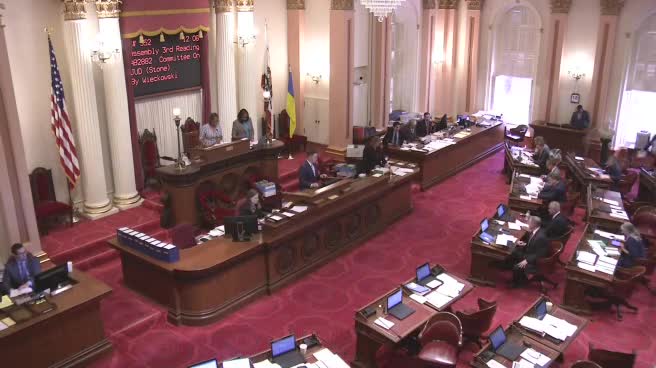 7MIN
Senate Floor
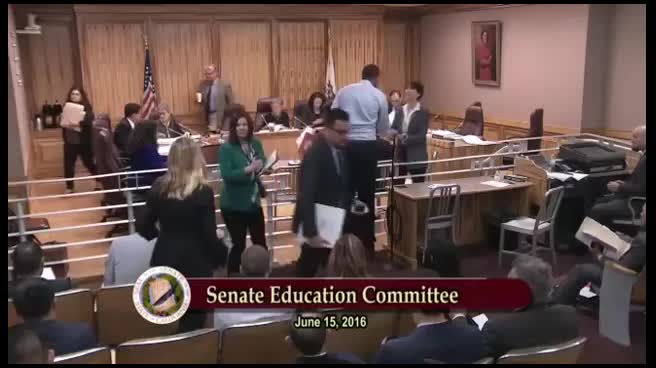 10MIN
Senate Standing Committee on Education
Bill Author

Bill Co-Author(s):
