AB 2869: Dependent children: military notification.
- Session Year: 2015-2016
- House: Assembly
- Latest Version Date: 2016-03-18
Existing law provides that a child may come within the jurisdiction of the juvenile court and become a dependent child of the court in certain cases, including when the child has suffered, or is at substantial risk of suffering, serious physical harm or illness as a result of the willful or negligent failure of the parent or guardian to provide the child with adequate food, clothing, shelter, or medical treatment. Existing law requires a social worker who has cause to believe that a child has been abused or neglected to immediately conduct an investigation to determine whether child welfare services should be offered to the family and whether proceedings in the juvenile court should be commenced.
This bill would require a social worker, when he or she is conducting that investigation, to ascertain whether the parent or guardian of the child, or that persons spouse, is a member of the Armed Forces, as specified. The bill would require the social worker to notify the applicable military Family Advocacy Program when there is an open investigation, relating to a military parent or guardian, or a military spouse of the parent or guardian, to determine if a child has been abused or neglected.
Because this bill would impose additional duties on social workers, the bill would impose a state-mandated local program.
The California Constitution requires the state to reimburse local agencies and school districts for certain costs mandated by the state. Statutory provisions establish procedures for making that reimbursement.
This bill would provide that no reimbursement is required by this act for a specified reason.
Existing law declares, among other things, that the state has a duty to care for and protect the children that the state places into foster care, and as a matter of public policy, the state assumes an obligation of the highest order to ensure the safety of children in foster care, and a judicial order establishing jurisdiction over a child placed into foster care supplants or limits parental or previous adult authority. Existing law also declares the intent of the Legislature to confirm the states duty to comply with all requirements of the federal Social Security Act that are relevant to the protection and welfare of children in foster care.
This bill would make technical, nonsubstantive changes to these provisions.
(a)A social worker who is conducting an investigation described in Section 328 shall make every effort as soon as practicable to ascertain whether the parent or guardian of the child, or that persons spouse, is a member of the Armed Forces.
(b)If the parent or guardian of a child who is the subject of an investigation described in Section 328, or that persons spouse, is a member of the Armed Forces, the social worker shall notify the Family Advocacy Program of the military installation at which the member is stationed that there is an open investigation, relating to that military parent or guardian, or that military spouse of the parent or guardian, to determine if the child is a person described in Section 300.
SEC. 2.To the extent that this act has an overall effect of increasing the costs already borne by a local agency for programs or levels of service mandated by the 2011 Realignment Legislation within the meaning of Section 36 of Article XIII of the California Constitution, it shall apply to local agencies only to the extent that the state provides annual funding for the cost increase. Any new program or higher level of service provided by a local agency pursuant to this act above the level for which funding has been provided shall not require a subvention of funds by the state nor otherwise be subject to Section 6 of Article XIII B of the California Constitution.
SECTION 1.Section 16000.1 of the Welfare and Institutions Code is amended to read:16000.1.(a)The Legislature finds and declares all of the following:
(1)The state has a duty to care for and protect the children that the state places into foster care, and as a matter of public policy, the state assumes an obligation of the highest order to ensure the safety of children in foster care.
(2)A judicial order establishing jurisdiction over a child placed into foster care supplants or limits parental or previous adult authority.
(3)This section is not intended to change the balance of liability between the state and the counties as it existed prior to the decision of the California Court of Appeal in County of Los Angeles v. Superior Court of Los Angeles: Real Party in Interest Terrell R. (2002) 102 Cal.App.4th 627, as established by the decision of the California Court of Appeal in Scott v. County of Los Angeles (1994) 27 Cal.App.4th 125. Furthermore, this section is not intended to increase or decrease the liability of the state as it existed prior to the Terrell R. case.
(b)(1)It is the intent of the Legislature that the decision of the California Court of Appeal in County of Los Angeles v. Superior Court of Los Angeles: Real Party in Interest Terrell R. (2002) 102 Cal.App.4th 627, shall not be held to change the standards of liability and immunity for injuries to children in protective custody that existed prior to that decision.
(2)It is the intent of the Legislature to confirm the states duty to comply with all requirements under Part B of Title IV of the Social Security Act (42 U.S.C. Sec. 621 et seq.) and Part E of Title IV of the Social Security Act (42 U.S.C. Sec. 670 et seq.) that are relevant to the protection and welfare of children in foster care.
(a)The Legislature finds and declares all of the following:
(1)The state has a duty to care for and protect the children that the state places into foster care, and as a matter of public policy, the state assumes an obligation of the highest order to ensure the safety of children in foster care.
(2)A judicial order establishing jurisdiction over a child placed into foster care supplants or limits parental or previous adult authority.
(3)Nothing in this section is This section is not intended to change the balance of liability between the state and the counties as it existed prior to the decision of the California Court of Appeal in County of Los Angeles v. Superior Court of Los Angeles: Real Party in Interest Terrell R. (2002) 102 Cal.App.4th 627, as established by the decision of the California Court of Appeal in Scott v. County of Los Angeles (1994) 27 Cal.App.4th 125. Furthermore, nothing in this section is this section is not intended to increase or decrease the liability of the state as it existed prior to the Terrell R. case.
(b)(1)It is the intent of the Legislature that nothing in the decision of the California Court of Appeal in County of Los Angeles v. Superior Court of Los Angeles: Real Party in Interest Terrell R. (2002) 102 Cal.App.4th 627, shall not be held to change the standards of liability and immunity for injuries to children in protective custody that existed prior to that decision.
(2)It is the intent of the Legislature to confirm the states duty to comply with all requirements under Part B of Title IV of the Social Security Act (42 U.S.C. Sec. 620 621 et seq.) and Part E of Title IV of the Social Security Act (42 U.S.C. Sec. 670 et seq.) that are relevant to the protection and welfare of children in foster care.
|
Date
|
Status
|
|---|---|
| Jun 9, 2016 | In committee: Hearing postponed by committee. |
| May 12, 2016 | Referred to Com. on HUMAN S. |
| May 5, 2016 | Read third time. Passed. Ordered to the Senate. (Ayes 79. Noes 0. Page 4688.) |
| May 5, 2016 | In Senate. Read first time. To Com. on RLS. for assignment. |
| May 5, 2016 | Read third time. Passed. Ordered to the Senate. |
| Apr 28, 2016 | Read second time. Ordered to Consent Calendar. |
| Apr 27, 2016 | From committee: Do pass. To Consent Calendar. (Ayes 19. Noes 0.) (April 27). |
| Apr 13, 2016 | From committee: Do pass and re-refer to Com. on APPR. with recommendation: To Consent Calendar. (Ayes 7. Noes 0.) (April 12). Re-referred to Com. on APPR. |
| Mar 28, 2016 | Re-referred to Com. on HUM. S. |
| Mar 18, 2016 | From committee chair, with author's amendments: Amend, and re-refer to Com. on HUM. S. Read second time and amended. |
| Mar 17, 2016 | Referred to Com. on HUM. S. |
| Feb 22, 2016 | Read first time. |
| Feb 21, 2016 | From printer. May be heard in committee March 22. |
| Feb 19, 2016 | Introduced. To print. |
|
Date
|
Description
|
Location
|
Votes
|
|
|---|---|---|---|---|
| May 5, 2016 | AB 2869 CHÁVEZ Consent Calendar Second Day Regular Session | Assembly Floor |
Passed |
|
| Apr 27, 2016 | Do pass. To Consent Calendar. | Assembly Standing Committee on Appropriations |
Passed |
|
| Apr 12, 2016 | Do pass and be re-referred to the Committee on [Appropriations] with recommendation: To Consent Calendar | Assembly Standing Committee on Human Services |
Passed |
This list shows positions taken on this bill by organizations on the date displayed, which is linked to the original source.
Positions by individuals are not included.
Date of Hearing: April 27, 2016
ASSEMBLY COMMITTEE ON APPROPRIATIONS
Lorena Gonzalez, Chair
ABPCA Bill Id:AB 2869
Author:(Chávez) – As Amended Ver:March 18, 2016
Policy Committee: | Human Services | Vote: | 7 - 0 |
|
|
Urgency: No State Mandated Local Program: Yes Reimbursable: No
SUMMARY: This bill requires notification of the Family Advocacy Program (FAP) in instances where a social worker is conducting a child welfare services investigation of a family in the Armed Forces, as specified. Specifically, this bill:
- Requires a social worker who is conducting a child welfare services investigation to make every effort to ascertain if a parent or guardian of the child, or that person’s spouse, is a member of the Armed Forces.
- Requires the social worker to notify the FAP of the military installation at which the specified family member is stationed that there is an open child welfare services investigation.
FISCAL EFFECT:
Ongoing state costs for social workers to ascertain if a parent or guardian of the child, or that person's spouse, is a member of the armed forces, and to notify the FAP of an open investigation. Assuming 15 minutes of social worker time, 4,800 military family investigations annually would cost approximately $87,000 (GF*).
*Pursuant to Proposition 30 (November 2012) any legislation enacted after September 30, 2012, that has an overall effect of increasing the costs already borne by a local agency for programs or levels of service mandated by realignment (including child welfare services and foster care) only apply to local agencies to the extent that the state provides annual funding for the cost increase.
COMMENTS:
- Purpose. According to the author, “We need to work together to protect our military children and ensure they have access to all the help and services they may need.”
Currently there is no process in place for the Department of Social Services (DSS) to identify and notify military family support services of the applicable branch when a military family or guardian is subject to an investigation by the county welfare department. While the Department of Defense has a statutory obligation to address child abuse and neglect within military families through FAP, there is no corresponding requirement for the DSS to notify the Department of Defense when an investigation of a military family is being conducted.
- Family Advocacy Program. The FAP was created by the Department of Defense in order to address and end issues relating to domestic violence in military households. FAP offers prevention programs to put a stop to domestic violence before it occurs, including classes and workshops, programs for new parents, counseling, and public awareness campaigns. When abuse does occur, FAP works to ensure the safety of victims and helps military families overcome the effects of violence and change destructive behavior patterns. FAP members are trained to respond to incidents of abuse and neglect, support victims, and offer prevention and treatment.
The Department of Defense has a statutory obligation to address child abuse and neglect within the FAP. Similarly, the Department of Defense is required by statute to inform DSS when they are conducting an investigation about child abuse or neglect within, and on, military property, such as base housing
- Military Children in California. In 2013, approximately 106,000 children of active-duty military members resided in California, representing about 1.2% of the under-18 population in the state. There were approximately 400,000 child abuse investigations in California in 2015, of which approximately 4,800 could potentially involve military families.
Analysis Prepared by: Jennifer Swenson / APPR. / (916) 319-2081
Date of Hearing: April 12, 2016
ASSEMBLY COMMITTEE ON HUMAN SERVICES
Susan Bonilla, Chair
ABPCA Bill Id:AB 2869 (
Author:Chávez) – As Amended Ver:March 18, 2016
SUBJECT: Dependent children: military notification
SUMMARY: Requires notification of the Family Advocacy Program in instances where a social worker is conducting a child welfare services investigation of a family in the Armed Forces, as specified.
Specifically, this bill:
- Requires a social worker who is conducting a child welfare services investigation to make every effort to ascertain if a parent or guardian of the child, or that person’s spouse, is a member of the Armed Forces.
- Requires the social worker to notify the Family Advocacy Program of the military installation at which the specified family member is stationed that there is an open child welfare services investigation.
EXISTING LAW:
- Designates that a child who meets certain criteria is within the jurisdiction of the juvenile court and may be adjudged as a dependent child of the court, as specified. (WIC 300).
- Requires a social worker to conduct an investigation if the social worker has cause to believe that a child meets certain criteria, including, but not limited to, if a child has suffered or is at substantial risk of suffering serious physical harm, emotional damage, or sexual abuse, as specified. (WIC 328)
- Requires a social worker to make a referral to child welfare services if they conduct an investigation and conclude that it is appropriate to offer child welfare services to the family. (WIC 328)
- Establishes the Family Advocacy Program to address prevention of and response to child abuse and neglect involving military families. (10 U.S.C. 1787)
- Requires Military Services to establish Memoranda of Understanding (MOUs) with state and local child welfare services to collaborate on the oversight of cases involving military families. (Department of Defense Directive 6400.1)
FISCAL EFFECT: Unknown.
COMMENTS:
Child Welfare Services: The purpose of California's Child Welfare Services (CWS) system is to provide for the protection and the health and safety of children. Within this purpose, the desired outcome is to reunite children with their biological parents, when appropriate, to help preserve and strengthen families. However, if reunification with the biological family is not appropriate, children are placed in the best environment possible, whether that is with a relative, through adoption, or with a guardian, such as a nonrelated extended family member, as specified. In the case of children who are at risk of abuse, neglect or abandonment, county juvenile courts hold legal jurisdiction and children are served by the CWS system through the appointment of a social worker. Through this system, there are multiple stages where the custody of the child or his or her placement are evaluated, reviewed and determined by the judicial system, in consultation with the child's social worker to help provide the best possible services to the child.
At the time a child is identified as needing child welfare services and is in the temporary custody of a social worker, the social worker is required to identify whether there is a relative or guardian to whom a child may be released, unless the social worker believes that the child would be at risk of abuse, neglect or abandonment if placed with that relative or guardian. State law also lays out the conditions under which a court may deem a child a dependent or ward of the court, including when the parent has been incarcerated or institutionalized and is unable to arrange for care for the child, such as placement with a known relative or nonrelative extended family member. If the child is deemed a dependent or ward of the court, the court may maintain the child in his or her home, remove the child from the home but with the goal of reunifying the child with his or her family, or identify another form of permanent placement. Unless the child is unable to be placed with the parent, the court is required to give preference to a relative of the child in order to preserve the child's association with his or her family. Associated with the placement, the assigned social worker shall develop a case plan for the child, which outlines the placement for the child, sets forth services necessary for the child, and outlines the provision of reunification services, if necessary and appropriate.
Family Advocacy Program: The Family Advocacy Program (FAP) was created by the Department of Defense in order to address and end issues relating to domestic violence in military households. FAP offers prevention programs to put a stop to domestic violence before it occurs, including classes and workshops, programs for new parents, counseling, and public awareness campaigns. When abuse does occur, FAP works to ensure the safety of victims and helps military families overcome the effects of violence and change destructive behavior patterns. FAP members are trained to respond to incidents of abuse and neglect, support victims, and offer prevention and treatment.
The Department of Defense has a statutory obligation to address child abuse and neglect within the FAP. Similarly, the Department of Defense is required by statute to inform the Department of Social Services when they are conducting an investigation about child abuse or neglect within and on military property, such as base housing
Other states: Currently, several other states including Washington and South Carolina address the state’s responsibility to address child abuse and neglect regarding all children, including those of military service members. The state of Washington requires case workers to ask clients if they are associated with the military, and if so, provides case workers the authority to share the information with appropriate military authorities.
South Carolina includes references to military families and states that “in the event the alleged abused or neglected child is a member of an active duty military family…the county department of social services shall notify the designated authorities at the military installation where the active military sponsor is assigned.” (South Carolina Children’s Code, Section 63-7-320). South Carolina also allows the department or law enforcement to collect information regarding the military affiliation of a person having custody or control of the child subject to an investigation.
Need for this bill: According to the author, “We need to work together to protect our military children and ensure they have access to all the help and services they may need.”
Currently there is no process in place for the Department of Social Services to identify and notify military family support services of the applicable branch when a military family or guardian is subject to an investigation by the county welfare department. While the Department of Defense has a statutory obligation to address child abuse and neglect within military families through FAP, there is no corresponding requirement for the Department of Social Services to notify the Department of Defense when an investigation of a military family is being conducted.
REGISTERED SUPPORT / OPPOSITION:
Support
None on file.
Opposition
None on file.
Analysis Prepared by: Kelsy Castillo / HUM. S. / (916) 319-2089
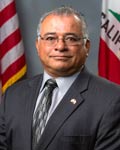
Bill Author
Bill Co-Author(s):