AB 30: School or athletic team names: California Racial Mascots Act.
- Session Year: 2015-2016
- House: Assembly
- Latest Version Date: 2015-10-11
Existing law provides that it is the policy of this state to afford all persons in public schools equal rights and opportunities in the educational institutions of the state, as specified, and further prohibits, and provides remedies for, acts that are contrary to that policy.
This bill would establish the California Racial Mascots Act, which would prohibit public schools from using the term Redskins as a school or athletic team name, mascot, or nickname beginning January 1, 2017, subject to specified exceptions. The bill would also provide that this prohibition may not be waived by the State Board of Education. To the extent that this prohibition would impose additional duties on public schools, the bill would impose a state-mandated local program.
The California Constitution requires the state to reimburse local agencies and school districts for certain costs mandated by the state. Statutory provisions establish procedures for making that reimbursement.
This bill would provide that, if the Commission on State Mandates determines that the bill contains costs mandated by the state, reimbursement for those costs shall be made pursuant to these statutory provisions.
Existing law provides that it is the policy of this state to afford all persons in public schools equal rights and opportunities in the educational institutions of the state, as specified, and further prohibits, and provides remedies for, acts that are contrary to that policy.
This bill would establish the California Racial Mascots Act, which would prohibit public schools from using the term Redskins as a school or athletic team name, mascot, or nickname beginning January 1, 2017, subject to specified exceptions. The bill would also provide that this prohibition may not be waived by the State Board of Education. To the extent that this prohibition would impose additional duties on schools, the bill would impose a state-mandated local program.
The California Constitution requires the state to reimburse local agencies and school districts for certain costs mandated by the state. Statutory provisions establish procedures for making that reimbursement.
This bill would provide that, if the Commission on State Mandates determines that the bill contains costs mandated by the state, reimbursement for those costs shall be made pursuant to these statutory provisions.
The Legislature finds and declares all of the following:
(a)The use of racially derogatory or discriminatory school or athletic team names, mascots, or nicknames in California public schools is antithetical to the California school mission of providing an equal education to all.
(b)Certain athletic team names, mascots, and nicknames that have been used and remain in use by other teams, including school teams, in other parts of the nation are discriminatory in singling out the Native American community for the derision to which mascots or nicknames are often subjected.
(c)Many individuals and organizations interested and experienced in human relations, including the United States Commission on Civil Rights, have concluded that the use of Native American images and names in school sports is a barrier to equality and understanding, and that all residents of the United States would benefit from the discontinuance of their use.
(d)No individual or school has a cognizable interest in retaining a racially derogatory or discriminatory school or athletic team name, mascot, or nickname.
221.3.(a)Beginning January 1, 2017, all public schools are prohibited from using the term Redskins for school or athletic team names, mascots, or nicknames.
(b)Notwithstanding this section, a public school may continue to use uniforms or other materials bearing the term Redskins as a school or athletic team name, mascot, or nickname that were purchased before January 1, 2017, if all of the following requirements are met:
(1)The school selects a new school or athletic team name, mascot, or nickname.
(2)(A)Except as provided in subparagraph (B), the school refrains from purchasing or acquiring, for the purpose of distribution or sale to pupils or school employees, any uniform that includes or bears the term Redskins.
(B)Notwithstanding subparagraph (A), prior to January 1, 2019, a school using uniforms that bear the term Redskins may purchase or acquire a number of uniforms equal to up to 20 percent of the total number of uniforms used by a team or band at that school during the 201617 school year for the purposes of replacing damaged or lost uniforms.
(3)The school refrains from purchasing or acquiring, for the purpose of distribution or sale to pupils or school employees, any yearbook, newspaper, program, or other similar material that includes or bears the prohibited school or athletic team name, mascot, or nickname in its logo or cover title.
(4)The school refrains from purchasing or constructing a marquee, sign, or other new or replacement fixture that includes or bears the prohibited school or athletic team name, mascot, or nickname. This paragraph applies to facilities that bear the prohibited school or athletic team name, mascot, or nickname, in which case the school shall remove the prohibited name no later than the next time the associated part of the facility is replaced in the normal course of maintenance.
(c)It is the intent of the Legislature that implementation of a new school or athletic team name, mascot, or nickname does not result in a requirement to immediately purchase or replace materials or fixtures until they would have needed to be purchased or replaced without the enactment of this article.
(d)This section is not subject to waiver by the state board pursuant to Section 33050, except as specified in this section.
SEC. 2.If the Commission on State Mandates determines that this act contains costs mandated by the state, reimbursement to local agencies and school districts for those costs shall be made pursuant to Part 7 (commencing with Section 17500) of Division 4 of Title 2 of the Government Code.
The Legislature finds and declares all of the following:
(a)The use of racially derogatory or discriminatory school or athletic team names, mascots, or nicknames in California public schools is antithetical to the California school mission of providing an equal education to all.
(b)Certain athletic team names, mascots, and nicknames that have been used and remain in use by other teams, including school teams, in other parts of the nation are discriminatory in singling out the Native American community for the derision to which mascots or nicknames are often subjected.
(c)Many individuals and organizations interested and experienced in human relations, including the United States Commission on Civil Rights, have concluded that the use of Native American images and names in school sports is a barrier to equality and understanding, and that all residents of the United States would benefit from the discontinuance of their use.
(d)No individual or school has a cognizable interest in retaining a racially derogatory or discriminatory school or athletic team name, mascot, or nickname.
221.3.(a)Beginning January 1, 2017, all public schools are prohibited from using the term Redskins for school or athletic team names, mascots, or nicknames.
(b)Notwithstanding this section, a public school may continue to use uniforms or other materials bearing the term Redskins as a school or athletic team name, mascot, or nickname that were purchased before January 1, 2017, if all of the following requirements are met:
(1)The school selects a new school or athletic team name, mascot, or nickname.
(2)(A)Except as provided in subparagraph (B), the school refrains from purchasing or acquiring, for the purpose of distribution or sale to pupils or school employees, any uniform that includes or bears the term Redskins.
(B)Notwithstanding subparagraph (A), prior to January 1, 2019, a school using uniforms that bear the term Redskins may purchase or acquire a number of uniforms equal to up to 20 percent of the total number of uniforms used by a team or band at that school during the 201617 school year for the purposes of replacing damaged or lost uniforms.
(3)The school refrains from purchasing or acquiring, for the purpose of distribution or sale to pupils or school employees, any yearbook, newspaper, program, or other similar material that includes or bears the prohibited school or athletic team name, mascot, or nickname in its logo or cover title.
(4)The school refrains from purchasing or constructing a marquee, sign, or other new or replacement fixture that includes or bears the prohibited school or athletic team name, mascot, or nickname. This paragraph applies to facilities that bear the prohibited school or athletic team name, mascot, or nickname, in which case the school shall remove the prohibited name no later than the next time the associated part of the facility is replaced in the normal course of maintenance.
(c)It is the intent of the Legislature that implementation of the a new school or athletic team name, mascot, or nickname does not result in a requirement to immediately purchase or replace materials or fixtures until they would have needed to be purchased or replaced without the enactment of this article.
(d)This section is not subject to waiver by the state board pursuant to Section 33050, except as specified in this section.
SEC. 2.If the Commission on State Mandates determines that this act contains costs mandated by the state, reimbursement to local agencies and school districts for those costs shall be made pursuant to Part 7 (commencing with Section 17500) of Division 4 of Title 2 of the Government Code.
The Legislature finds and declares all of the following:
(a)The use of racially derogatory or discriminatory school or athletic team names, mascots, or nicknames in California public schools is antithetical to the California school mission of providing an equal education to all.
(b)Certain athletic team names, mascots, and nicknames that have been used and remain in use by other teams, including school teams, in other parts of the nation are discriminatory in singling out the Native American community for the derision to which mascots or nicknames are often subjected.
(c)Many individuals and organizations interested and experienced in human relations, including the United States Commission on Civil Rights, have concluded that the use of Native American images and names in school sports is a barrier to equality and understanding, and that all residents of the United States would benefit from the discontinuance of their use.
(d)No individual or school has a cognizable interest in retaining a racially derogatory or discriminatory school or athletic team name, mascot, or nickname.
221.3.(a)Beginning January 1, 2017, all public schools are prohibited from using the term Redskins for school or athletic team names, mascots, or nicknames.
(b)Notwithstanding this section, a public school may continue to use uniforms or other materials bearing the term Redskins as a school or athletic team name, mascot, or nickname that were purchased before January 1, 2017, if all of the following requirements are met:
(1)The school selects a new school or athletic team name, mascot, or nickname.
(2)(A)Except as provided in subparagraph (B), the school refrains from purchasing or acquiring, for the purpose of distribution or sale to pupils or school employees, any uniform that includes or bears the term Redskins.
(B)Notwithstanding subparagraph (A), prior to January 1, 2019, a school using uniforms that bear the term Redskins may purchase or acquire a number of uniforms equal to up to 20 percent of the total number of uniforms used by a team or band at that school during the 201617 school year for the purposes of replacing damaged or lost uniforms.
(3)The school refrains from purchasing or acquiring, for the purpose of distribution or sale to pupils or school employees, any yearbook, newspaper, program, or other similar material that includes or bears the prohibited school or athletic team name, mascot, or nickname in its logo or cover title.
(4)The school refrains from purchasing or constructing a marquee, sign, or other new or replacement fixture that includes or bears the prohibited school or athletic team name, mascot, or nickname. This paragraph applies to facilities that bear the prohibited school or athletic team name, mascot, or nickname, in which case the school shall remove the prohibited name no later than the next time the associated part of the facility is replaced in the normal course of maintenance.
(c)It is the intent of the Legislature that implementation of the new school or athletic team name, mascot, or nickname does not result in a requirement to immediately purchase or replace materials or fixtures until they would have needed to be purchased or replaced without the enactment of this article.
(c)
(d)This section is not subject to waiver by the state board pursuant to Section 33050, except as specified in this section.
SEC. 2.If the Commission on State Mandates determines that this act contains costs mandated by the state, reimbursement to local agencies and school districts for those costs shall be made pursuant to Part 7 (commencing with Section 17500) of Division 4 of Title 2 of the Government Code.
The Legislature finds and declares all of the following:
(a)The use of racially derogatory or discriminatory school or athletic team names, mascots, or nicknames in California public schools is antithetical to the California school mission of providing an equal education to all.
(b)Certain athletic team names, mascots, and nicknames that have been used and remain in use by other teams, including school teams, in other parts of the nation are discriminatory in singling out the Native American community for the derision to which mascots or nicknames are often subjected.
(c)Many individuals and organizations interested and experienced in human relations, including the United States Commission on Civil Rights, have concluded that the use of Native American images and names in school sports is a barrier to equality and understanding, and that all residents of the United States would benefit from the discontinuance of their use.
(d)No individual or school has a cognizable interest in retaining a racially derogatory or discriminatory school or athletic team name, mascot, or nickname.
221.3.(a)Beginning January 1, 2017, all public schools are prohibited from using the term Redskins for school or athletic team names, mascots, or nicknames.
(b)This section does not apply to a school located within, or with enrollment boundaries that include a portion of, Indian country, as defined in Section 1151 of Title 18 of the United States Code, provided that the tribe having regulatory jurisdiction over the territory within that boundary has authorized the use of the school or athletic team name, mascot, or nickname through an appropriate enactment or resolution.
(c)
(b)Notwithstanding this section, a public school may continue to use uniforms or other materials bearing the term Redskins as a school or athletic team name, mascot, or nickname that were purchased before January 1, 2017, if all of the following requirements are met:
(1)The school selects a new school or athletic team name, mascot, or nickname.
(2)(A)Except as provided in subparagraph (B), the school refrains from purchasing or acquiring, for the purpose of distribution or sale to pupils or school employees, any uniform that includes or bears the term Redskins.
(B)Notwithstanding subparagraph (A), prior to January 1, 2019, a school using uniforms that bear the term Redskins may purchase or acquire a number of uniforms equal to up to 20 percent of the total number of uniforms used by a team or band at that school during the 201617 school year for the purposes of replacing damaged or lost uniforms.
(3)Refrains The school refrains from purchasing or acquiring, for the purpose of distribution or sale to pupils or school employees, any yearbook, newspaper, program, or other similar material that includes or bears the prohibited school or athletic team name, mascot, or nickname in its logo or cover title.
(4)Refrains The school refrains from purchasing or constructing a marquee, sign, or other new or replacement fixture that includes or bears the prohibited school or athletic team name, mascot, or nickname.
(d)
(c)This section is not subject to waiver by the state board pursuant to Section 33050, except as specified in this section.
SEC. 2.If the Commission on State Mandates determines that this act contains costs mandated by the state, reimbursement to local agencies and school districts for those costs shall be made pursuant to Part 7 (commencing with Section 17500) of Division 4 of Title 2 of the Government Code.
The Legislature finds and declares all of the following:
(a)The use of racially derogatory or discriminatory school or athletic team names, mascots, or nicknames in California public schools is antithetical to the California school mission of providing an equal education to all.
(b)Certain athletic team names, mascots, and nicknames that have been used and remain in use by other teams, including school teams, in other parts of the nation are discriminatory in singling out the Native American community for the derision to which mascots or nicknames are often subjected.
(c)Many individuals and organizations interested and experienced in human relations, including the United States Commission on Civil Rights, have concluded that the use of Native American images and names in school sports is a barrier to equality and understanding, and that all residents of the United States would benefit from the discontinuance of their use.
(d)No individual or school has a cognizable interest in retaining a racially derogatory or discriminatory school or athletic team name, mascot, or nickname.
221.3.(a)Beginning January 1, 2017, all public schools are prohibited from using the term Redskins for school or athletic team names, mascots, or nicknames.
(b)This section does not apply to a school located within, or with enrollment boundaries that include a portion of, Indian country, as defined in Section 1151 of Title 18 of the United States Code, provided that the tribe having regulatory jurisdiction over the territory within that boundary has authorized the use of the school or athletic team name, mascot, or nickname through an appropriate enactment or resolution.
(c)Notwithstanding this section, a public school may continue to use uniforms or other materials bearing the term Redskins as a school or athletic team name, mascot, or nickname that were purchased before January 1, 2017, if all of the following requirements are met:
(1)The school selects a new school or athletic team name, mascot, or nickname.
(2)(A)Except as provided in subparagraph (B), the school refrains from purchasing or acquiring, for the purpose of distribution or sale to pupils or school employees, any uniform that includes or bears the term Redskins.
(B)Notwithstanding subparagraph (A), prior to January 1, 2019, a school using uniforms that bear the term Redskins may purchase or acquire a number of uniforms equal to up to 20 percent of the total number of uniforms used by a team or band at that school during the 201617 school year for the purposes of replacing damaged or lost uniforms.
(3)Refrains from purchasing or acquiring, for the purpose of distribution or sale to pupils or school employees, any yearbook, newspaper, program, or other similar material that includes or bears the prohibited school or athletic team name, mascot, or nickname in its logo or cover title.
(4)Refrains from purchasing or constructing a marquee, sign, or other new or replacement fixture that includes or bears the prohibited school or athletic team name, mascot, or nickname.
(d)This section is not subject to waiver by the state board pursuant to Section 33050, except as specified in this section.
SEC. 2.If the Commission on State Mandates determines that this act contains costs mandated by the state, reimbursement to local agencies and school districts for those costs shall be made pursuant to Part 7 (commencing with Section 17500) of Division 4 of Title 2 of the Government Code.
|
Date
|
Status
|
|---|---|
| Oct 11, 2015 | Chaptered by Secretary of State - Chapter 767, Statutes of 2015. |
| Oct 11, 2015 | Approved by the Governor. |
| Sep 18, 2015 | Enrolled and presented to the Governor at 4 p.m. |
| Sep 10, 2015 | Senate amendments concurred in. To Engrossing and Enrolling. (Ayes 60. Noes 10. Page 3048.). |
| Sep 10, 2015 | Senate amendments concurred in. To Engrossing and Enrolling. (Ayes 60. Noes 10.). |
| Sep 10, 2015 | Senate amendments concurred in. To Engrossing and Enrolling. |
| Sep 9, 2015 | Assembly Rule 77 suspended. (Ayes 52. Noes 28. Page 2990.) |
| Sep 9, 2015 | Assembly Rule 77 suspended. (Ayes 52. Noes 28.) |
| Sep 9, 2015 | Assembly Rule 77 suspended. |
| Sep 8, 2015 | Read third time. Passed. Ordered to the Assembly. (Ayes 25. Noes 10. Page 2595.). |
| Sep 8, 2015 | In Assembly. Concurrence in Senate amendments pending. May be considered on or after September 10 pursuant to Assembly Rule 77. |
| Sep 8, 2015 | Read third time. Passed. Ordered to the Assembly. |
| Sep 4, 2015 | Read second time. Ordered to third reading. |
| Sep 3, 2015 | Read third time and amended. Ordered to second reading. |
| Sep 1, 2015 | Read second time and amended. Ordered to third reading. |
| Aug 31, 2015 | From committee: Amend, and do pass as amended. (Ayes 5. Noes 2.) (August 27). |
| Jun 29, 2015 | In committee: Referred to APPR. suspense file. |
| Jun 17, 2015 | From committee: Do pass and re-refer to Com. on APPR. (Ayes 6. Noes 1.) (June 17). Re-referred to Com. on APPR. |
| Jun 4, 2015 | In committee: Set, first hearing. Hearing canceled at the request of author. |
| May 14, 2015 | Referred to Com. on ED. |
| May 4, 2015 | In Senate. Read first time. To Com. on RLS. for assignment. |
| May 4, 2015 | Read third time. Passed. Ordered to the Senate. (Ayes 60. Noes 9. Page 1259.) |
| May 4, 2015 | Read third time. Passed. Ordered to the Senate. |
| Apr 30, 2015 | Read second time. Ordered to third reading. |
| Apr 29, 2015 | From committee: Do pass. (Ayes 12. Noes 3.) (April 29). |
| Apr 21, 2015 | From committee: Do pass and re-refer to Com. on APPR. (Ayes 6. Noes 0.) (April 21). Re-referred to Com. on APPR. |
| Apr 8, 2015 | Re-referred to Com. on A.,E.,S.,T., & I.M. |
| Apr 7, 2015 | Read second time and amended. |
| Apr 6, 2015 | From committee: Amend, and do pass as amended and re-refer to Com. on A.,E.,S.,T., & I.M. (Ayes 7. Noes 0.) (March 25). |
| Jan 16, 2015 | Referred to Coms. on ED. and A.,E.,S.,T., & I.M. |
| Dec 2, 2014 | From printer. May be heard in committee January 1. |
| Dec 1, 2014 | Read first time. To print. |
|
Date
|
Description
|
Location
|
Votes
|
|
|---|---|---|---|---|
| Sep 10, 2015 | AB 30 ALEJO Concurrence in Senate Amendments | Assembly Floor |
Passed |
|
| Sep 8, 2015 | Assembly 3rd Reading AB30 Alejo By Block | Senate Floor |
Passed |
|
| Aug 27, 2015 | Do pass as amended | Senate Standing Committee on Appropriations |
Passed |
|
| Jun 29, 2015 | Placed on suspense file | Senate Standing Committee on Appropriations |
Passed |
|
| Jun 17, 2015 | Do pass, but first be re-referred to the Committee on [Appropriations] | Senate Standing Committee on Education |
Passed |
|
| May 4, 2015 | AB 30 ALEJO Assembly Third Reading | Assembly Floor |
Passed |
|
| Apr 29, 2015 | Do pass. | Assembly Standing Committee on Appropriations |
Passed |
|
| Apr 21, 2015 | Do pass and be re-referred to the Committee on [Appropriations] | Assembly Standing Committee on Arts, Entertainment, Sports, Tourism, and Internet Media |
Passed |
|
| Mar 25, 2015 | Do pass as amended and be re-referred to the Committee on [Arts, Entertainment, Sports, Tourism, and Internet Media] | Assembly Standing Committee on Education |
Passed |
This list shows positions taken on this bill by organizations on the date displayed, which is linked to the original source.
Positions by individuals are not included.
AB 30
Page 4
CONCURRENCE IN SENATE AMENDMENTS
AB 30
(Alejo)
As Amended September 3, 2015
Majority vote
ASSEMBLY: |
60-9 |
(May 4, 2015) |
SENATE: |
25-10 |
(September 8, 2015) |
Original Committee Reference: ED.
SUMMARY: Establishes the California Racial Mascots Act and prohibits, beginning January 1, 2017, all public schools from using the term "Redskins" for school or athletic team names, mascots, or nicknames. Specifically, this bill:
Authorizes a public school to continue to use uniforms or other materials bearing the term "Redskins" as a school or athletic team name, mascot, or nickname that were purchased before January 1, 2017, if all of the following requirements are met:
The school selects a new school or athletic team name, mascot, or nickname;
The school refrains from purchasing or acquiring, for the purpose of distribution or sale to pupils or school employees, any uniform that includes or bears the term "Redskins", except that a school using uniforms that bear the term "Redskins" may, prior to January 1, 2019, purchase or acquire a number of uniforms equal up to 20% of the total number of uniforms used by a team or band at the school during the 2016-17 school year for the purpose of replacing damaged or lost uniforms;
The school refrains from purchasing or acquiring, for the purpose of distribution or sale to pupils or school employees, any yearbook, newspaper, program, or other similar material that includes or bears the prohibited school or athletic team name, mascot, or nickname in its logo or cover title; and,
The school refrains from purchasing or constructing a marquee, sign, or other new or replacement fixture that includes or bears the prohibited school or athletic team name, mascot, or nickname. This paragraph applies to facilities that bear the prohibited school or athletic team name, mascot, or nickname, in which case the school shall remove the prohibited name no later than the next time the associated part of the facility is replaced in the normal course of maintenance.
Expresses the intent of the Legislature that implementation of the new school or athletic team name, mascot, or nickname does not result in a requirement to immediately purchase or replace materials or fixtures until they would have needed to be purchased or replaced without the enactment of this article.
Specifies that the provisions of this bill may not be waived by the State Board of Education, except as specified by the bill.
Finds and declares that the use of racially derogatory or discriminatory school or athletic team names, mascots, or nicknames in California public schools is antithetical to the California school mission of providing an equal education to all, and that certain athletic team names, mascots, and nicknames are discriminatory in singling out the Native American community for the derision to which mascots or nicknames are often subjected.
The Senate amendments clarify that this bill's requirement that a school refrain from purchasing or constructing a marquee, sign or other new or replacement fixture that bears the prohibited school or athletic team name, mascot or nickname applies to facilities that bear the name, and specify that the school is to remove the name no later than the next time the associated part of the facility is replaced in the normal course of maintenance. Senate amendments also express the Legislature's intent to not require schools to immediately purchase or replace materials or fixtures until they would have needed to be purchased or replaced without the enactment of this bill.
FISCAL EFFECT: According to the Senate Appropriations Committee, unknown, but likely minor mandate costs for schools to select a new school or athletic team name, mascot, or nickname if the Commission on State Mandates (Commission) determines this bill to impose a reimbursable state mandate. It is unclear whether the Commission would determine implementation of the new school name a reimbursable mandate given the bill's expanded implementation phase-in and intent that implementation align with the school's normal course of operation. Therefore, costs attributed to implementing the new name would be absorbed locally.
COMMENTS: This bill prohibits, beginning January 1, 2017, all public schools from using the term "Redskins" for school or athletic team names, mascots, or nicknames. This bill authorizes a school to continue using uniforms or other materials that were purchased before January 1, 2017, as long as the school selects a new school or athletic team name, mascot or nickname, and refrains from purchasing new items (yearbook, newspaper, marquee, signs, etc.) that bear the name. This bill does allow an exception to replace damaged or lost uniforms, prior to January 1, 2019, but only in an amount equal to 20% of the total number of uniforms used by a team or a band at a school during the 2016-17 school year. Amendments adopted in the Senate clarify that schools are not required to replace facilities that bear the prohibited name, or purchase or replace materials or fixtures until they are scheduled to be repaired or replaced.
Under current law, the State Board of Education is authorized to waived Education Code provisions at the request of a school district or county board of education. This bill specifically prohibits the provisions of this bill from the waiver process.
What is the origin of "Redskins" and should its use be prohibited? One of the origins of the term is based in the 1700's when early settlers offered a bounty for the killings of Native American people. "Redskin" was used to describe the bloody scalp that was provided as proof of a killing. Chants such as "Kill the Redskins!" or "Scalp the Indians!" are commonly shouted by opponents of teams with Native American team names and mascots. These and negative mascot images may have a harmful effect on the self-esteem and self-confidence of Native American youth. In a July 2014 report titled "Missing the Point," Erik Stegman and Victoria Phillips report that suicide is the second leading cause of death for Native American youth between 15 and 24, at a rate that is 2.5 times higher than the national average.
In 2005, the American Psychological Association urged all schools, colleges, universities, athletic teams and organizations to retire all American Indian mascots, symbols, and images because such practice undermine the educational experiences of all people and can create a "hostile learning environment for American Indian students that affirm negative images/stereotypes that are promoted in mainstream society." In a statement, Dr. Lisa Thomas stated, "We know from the literature that oppression, covert and overt racism, and perceived racism can have serious negative consequences for the mental health of American Indian and Alaska native (AIAN) people. The discontinued use of American Indian mascots is a gesture to show that this kind of racism toward and the disrespect of, all people in our country and in the larger global context, will not be tolerated."
In 2001, the United States Commission on Civil Rights issued a statement calling for an end to the use of Native American images and team names by non-Native schools. It stated, "The Commission deeply respects the rights of all Americans to freedom of expression under the First Amendment… However, the Commission believes that the use of Native American images and nicknames in school is insensitive and should be avoided. Schools that continue to use Indian imagery and references claim that their use stimulates interest in Native American culture and honors Native Americans. These institutions have simply failed to listen to the Native groups, religious leaders, and civil rights organizations that oppose these symbols."
Partially in response to the 2001 United States Commission on Civil Rights recommendation, in 2005, the National Collegiate Athletic Association (NCAA) adopted a policy prohibiting colleges and universities playing in championship games from displaying hostile mascots, nicknames or images in terms of race, ethnicity or national origin. The NCAA does not prohibit colleges and universities from adopting Native American mascots or prohibit their display during regular season games, however. The California Interscholastic Federation does not have a policy on the use of Native American terms for team names or mascots.
Many Native Americans view "Redskins" as a racial slur, similar to the "N" word. In fact, there are individuals who refer to the term as the "R-word" rather than spelling or pronouncing the name. Several media outlets, including the San Francisco Chronicle, the Washington Post's editorial board, Seattle Times, and others have decided not to use the term unless necessary.
How many schools would this bill affect? There are currently four high schools in California that use "Redskins" as a team name and mascot. They include Gustine High School (Merced County), Calaveras High School (Calaveras County), Chowchilla Union High School (Madera County), and Tulare Union High School (Tulare County).
Colusa High School (Colusa County) changed its team name from "Redskins" to "Redhawks" about four years ago. The Los Angeles Unified School District (LAUSD) Board passed a resolution in 1997 finding that the "use of American Indian mascot names and images in schools evokes negative images that become deeply imbedded in the minds of students, depicting American Indians in inaccurate, stereotypic, and often violent manners." The resolution resolved that American Indian mascots and names such as Apaches, Mohicans, Warriors, and Braves would no longer be used. In 1998, a federal judge upheld the LAUSD resolution. According to the LAUSD, all American Indian names have been eliminated.
In 2013-14, there were 38,616 students identified as American Indian enrolled in California's public schools.
Arguments in Support. The author states, "The use of the R-word as a team mascot began in an era when racism and bigotry were deemed acceptable. Once used to describe Native Americans scalps sold for a bounty, current use of the R-word is widely recognized as a racial slur that promotes discrimination against Native Americans. The Native Congress of American Indians launched a campaign 40 years ago to go against derogatory stereotypes in media and sports. Throughout the country, hundreds of demeaning 'Indian' mascots have already been replaced. In 1972, Stanford switched from the Indians to the Cardinals. Other universities and hundreds of high schools have followed suit since then. This past summer, the movement gained momentum when the Yocha DeHe Tribe of Northern California aired a commercial denouncing the Washington mascot during the NBA Finals. The commercial has refocused attention on the issue and helped millions of Americans understand the racial overtones of the team's moniker. With growing support and awareness of the issue, it is time that we act to disallow the use of the R-word by our public schools."
Arguments in Opposition. The Gustine City Council states that the "community of Gustine and the leaders who are elected by the voting public to administer the institutions that serve the community are more than capable of considering the issue and making decisions that are in the best interests of the community." Members of the City Council further state that the community and the school district have shown respect for Native Americans and believe that the most appropriate way to address this issue is through the local process.
Analysis Prepared by: Sophia Kwong Kim / ED. / (916) 319-2087 FN: 0001908
AB 30
Page 7
|
Office of Senate Floor Analyses (916) 651-1520 Fax: (916) 327-4478 |
THIRD READING
Bill No: AB 30
Amended: 9/3/15 in Senate
SENATE EDUCATION COMMITTEE: 6-1, 6/17/15
AYES: Liu, Block, Hancock, Leyva, Monning, Pan
NOES: Vidak
NO VOTE RECORDED: Runner, Mendoza
SENATE APPROPRIATIONS COMMITTEE: 5-2, 8/27/15
AYES: Lara, Beall, Hill, Leyva, Mendoza
NOES: Bates, Nielsen
ASSEMBLY FLOOR: 60-9, 5/4/15 - See last page for vote
SUBJECT: School or athletic team names: California Racial Mascots Act
DIGEST: This bill establishes the California Racial Mascots Act and prohibits public schools from using the term “Redskins” for school or athletic team names, mascots or nicknames beginning January 1, 2017.
Senate Floor Amendments of 9/3/15 make a technical change and add coauthors.
Existing law:
Specifies that it is the policy of the State of California to afford all persons in public schools, regardless of their disability, gender, gender identity, gender expression, nationality, race or ethnicity, religion, sexual orientation, or any other characteristic that is contained in the definition of hate crimes, equal rights, and opportunities in the educational institutions of the state. No person shall be subjected to discrimination, as described, in any program or activity conducted by an educational institution that receives, or benefits from state financial assistance. (Education Code § 220)
Declares that California’s public schools have an affirmative obligation to combat racism, sexism, and other forms of bias, and a responsibility to provide equal education opportunity. (EC § 201)
States that a local school district governing board has general control of and responsibility for all aspects of the interscholastic athletic policies, programs, and activities in its district. Existing law also provides that no voluntary interscholastic athletic association, of which any public school is a member, shall discriminate against, or deny the benefits of any program to, any person on any basis prohibited by the state's policy to afford all persons in public schools equal rights and opportunities in the educational institutions of the state. (EC § 35179)
Requires the State Board of Education (SBE) to adopt policies directed toward creating a school environment in kindergarten through grade 12 that is free from discriminatory attitudes and practices and acts of hate violence. (EC § 233)
This bill:
Establishes the California Racial Mascots Act and beginning January 1, 2017, prohibits public schools from using the term “Redskins,” for school or athletic team names, mascots or nicknames.
Authorizes the continued use of uniforms or other materials bearing the term “Redskins,” as specified, purchased before January 1, 2017, if the school meets all of the following requirements:
Selects a new school or athletic team name, mascot, or nickname.
Refrains from purchasing or acquiring any uniform that includes or bears the term “Redskins,” for the purpose of distribution or sale to students or school employees except when replacing damaged or lost uniforms before January 1, 2019, a school may purchase or acquire up to 20% of the total number of uniforms used by a team or band during the 2016-17 school year, as specified.
Refrains from purchasing or acquiring any yearbook, newspaper, program, or other similar material that includes or bears the term “Redskins,” in its logo or cover title for the purpose of distribution or sale to students or school employees.
Refrains from purchasing or constructing a marquee, sign, or other new or replacement fixture that includes or bears the term “Redskins,” as specified.
Specifies Legislative intent that implementation of a new name does not require the immediate replacement of school fixtures or materials until they would have needed to be purchased without the enactment of this article.
Specifies that the provision of this bill may not be waived by the SBE, except as specified in the bill.
Makes a variety of legislative findings and declarations regarding the use of racially derogatory and discriminatory Native American images and names in public schools and its adverse effect on the state’s mission of providing an equal education to all.
Comments
Need for this bill. According to the author, the use of the derogatory term "Redskins" as a team name demeans Native Americans and is inconsistent with the requirement that public schools in California provide educational opportunity to all students regardless of race, ethnicity, or national origin.
This sentiment is shared by a number of national organizations including the American Psychological Association which passed a resolution calling for the immediate retirement of American Indian mascots, symbols by schools, colleges, universities, and athletic teams noting potential negative affects it may have on the mental health Native American youth. The United States Department of Education’s Office for Civil Rights has also weighed on the issue and concluded that, “the use for stereotypical images of Native Americans by education institutions has the potential to create a racially hostile education environment that may be intimidating to Indian students.”
This bill removes the term “Redskins,” from all public schools and declares the use of racially derogatory mascot names conflicting with the state’s mission of providing an equality education for all students.
National trend. Since the National Congress of American Indians commenced its campaign against the use of American Indian imagery as mascots in 1963, numerous universities and high schools dropped team names such as “savages,” “redmen,” and “chiefs” and replaced them with new mascots. In California, Stanford University in 1973 changed its mascot from Indians to Cardinal and two high schools, Mountain Empire in 1997 and Colusa in 2011 terminated the use of the name “Redskins.”
Several local school and state education boards across the country have also enacted policies to prohibit the use “Indian,” mascots and images in schools. Notably, the Los Angeles Unified School District took action prohibiting its schools from using Native American mascots. According to the National Congress of American Indians, California has the largest number of Native Americans in the country.
Impact to California high schools? According to the Superintendent of Public Instruction, only four California high schools use “Redskins,” as their official school mascot. These schools located in the central valley include Gustine High School, Calaveras High School, Chowchilla Union High School, and Tulare High School. This bill will result in these four schools phasing out the “Redskins,” mascot name by 2017.
Local control? Current law affords local school district governing board's general control over all aspects of their interscholastic athletic policies, programs, and activities. Arguably, decisions regarding athletic team names, nicknames or mascots fall within the local board's authority and local governing boards (as in the case of the Los Angeles Unified School District) can and do take steps to prohibit the use of Native American mascots and names as appropriate to their local communities. The author’s office asserts, however, that the decision to change is challenging due to the emotional and sensitive nature of a debate that tends to divide the local community.
Prior Legislation
ACR 164 (Goldberg, 2006), adopted by the Assembly and sent to the Senate, would have requested the California Interscholastic Federation to adopt policies that are consistent with the National Collegiate Athletic Association policies relative to the use of Native American mascots and any other hostile or abusive racial, ethnic, or national origin mascot.
AB 13 (Goldberg, 2005), nearly identical to this bill and AB 858, would have prohibited all public schools from using the term “Redskins” for school or athletic team names, mascots, or nicknames and was vetoed Governor Schwarzenegger, whose veto message read:
"I vetoed a nearly identical bill last year because it added another non-academic state administrative requirement, thereby diverting focus from increasing student academic achievement. Administrative decisions regarding athletic team names, nicknames or mascots should be retained at the local level."
AB 858 (Goldberg, 2004), nearly identical to this bill, would have prohibited all public schools from using the term “Redskins” for school or athletic team names, mascots, or nicknames. AB 858 was vetoed by Governor Schwarzenegger, whose veto message read:
"Existing statute already affords local school boards general control over all aspects of their interscholastic athletic policies, programs, and activities. Decisions regarding athletic team names, nicknames or mascots should be retained at the local level.
"At a time when we should all be working together to increase the academic achievement of all California's students, adding another non-academic state administrative requirement for schools to comply with takes more focus away from getting kids to learn at the highest levels."
AB 2115 (Goldberg, 2002) would have prohibited all public schools, community colleges, the California State University and the University of California, to the extent agreed upon by the Board of Regents, from using specified Native American names, including Redskins, Indians, Braves, Chiefs, Apaches, and Comanches, for school or athletic team names, mascots, or nicknames. AB 2115 failed passage on the Assembly Floor.
FISCAL EFFECT: Appropriation: No Fiscal Com.: Yes Local: Yes
According to the Senate Appropriations Committee, there are unknown, but likely minor mandate costs for schools to select a new school or athletic team name, mascot, or nickname if the Commission on State Mandates (Commission) determines this bill to impose a reimbursable state mandate. It is unclear whether the Commission would determine implementation of the new school name a reimbursable mandate given this bill’s expanded implementation phase-in and intent that implementation align with the school’s normal course of operation. Therefore, costs attributed to implementing the new name would be absorbed locally.
All Saints Church Pasadena
American Civil Liberties Union of California
American Indian Community Council
Anti-Defamation League
Buena Vista Rancheria Me-wuk Indians
California Civil Rights Coalition
California Communities United Institute
California Faculty Association
California Teachers Association
Capitol Area Indian Resources
Committee of 500 Years of Dignity and Resistance
Foothill Indian Education Alliance, Inc.
Jackson Rancheria Band of Miwuk Indians
Mexican American Legal Defense and Educational Fund
Northern California Indian Development Council, Inc.
Round Valley Indian Tribes
Southern California Indian Center, Inc.
Southern California Tribal Chairmen’s Association
Tom Torlakson, State Superintendent of Public Instruction
Tribal Council of the Agua Caliente Band of Cahuilla Indians
Yocha Dehe Wintun Nation
Several individuals
Chowchilla Union High School District
City of Chowchilla City Council
City of Tulare City Council
Tulare Joint Union High School
Several individuals
ASSEMBLY FLOOR: 60-9, 5/4/15
AYES: Achadjian, Alejo, Baker, Bloom, Bonilla, Bonta, Brown, Burke, Calderon, Chau, Chávez, Chiu, Chu, Cooley, Cooper, Dababneh, Daly, Dodd, Eggman, Frazier, Cristina Garcia, Eduardo Garcia, Gatto, Gipson, Gomez, Gonzalez, Gordon, Hadley, Roger Hernández, Holden, Irwin, Jones-Sawyer, Kim, Lackey, Levine, Linder, Lopez, Low, Maienschein, Mayes, McCarty, Medina, Mullin, Nazarian, O'Donnell, Perea, Quirk, Rendon, Ridley-Thomas, Rodriguez, Salas, Santiago, Steinorth, Mark Stone, Thurmond, Ting, Weber, Williams, Wood, Atkins
NOES: Brough, Gallagher, Gray, Harper, Jones, Mathis, Melendez, Olsen, Wilk
NO VOTE RECORDED: Travis Allen, Bigelow, Campos, Chang, Dahle, Beth Gaines, Grove, Obernolte, Patterson, Wagner, Waldron
Prepared by: Olgalilia Ramirez / ED. / (916) 651-4105
9/4/15 18:15:38
**** END ****
AB 30
Page 7
|
Office of Senate Floor Analyses (916) 651-1520 Fax: (916) 327-4478 |
THIRD READING
Bill No: AB 30
Amended: 9/1/15 in Senate
SENATE EDUCATION COMMITTEE: 6-1, 6/17/15
AYES: Liu, Block, Hancock, Leyva, Monning, Pan
NOES: Vidak
NO VOTE RECORDED: Runner, Mendoza
SENATE APPROPRIATIONS COMMITTEE: 5-2, 8/27/15
AYES: Lara, Beall, Hill, Leyva, Mendoza
NOES: Bates, Nielsen
ASSEMBLY FLOOR: 60-9, 5/4/15 - See last page for vote
SUBJECT: School or athletic team names: California Racial Mascots Act
DIGEST: This bill establishes the California Racial Mascots Act and prohibits public schools from using the term “Redskins” for school or athletic team names, mascots or nicknames beginning January 1, 2017.
Existing law:
Specifies that it is the policy of the State of California to afford all persons in public schools, regardless of their disability, gender, gender identity, gender expression, nationality, race or ethnicity, religion, sexual orientation, or any other characteristic that is contained in the definition of hate crimes, equal rights, and opportunities in the educational institutions of the state. No person shall be subjected to discrimination, as described, in any program or activity conducted by an educational institution that receives, or benefits from state financial assistance. (Education Code § 220)
Declares that California’s public schools have an affirmative obligation to combat racism, sexism, and other forms of bias, and a responsibility to provide equal education opportunity. (EC § 201)
States that a local school district governing board has general control of and responsibility for all aspects of the interscholastic athletic policies, programs, and activities in its district. Existing law also provides that no voluntary interscholastic athletic association, of which any public school is a member, shall discriminate against, or deny the benefits of any program to, any person on any basis prohibited by the state's policy to afford all persons in public schools equal rights and opportunities in the educational institutions of the state. (EC § 35179)
Requires the State Board of Education (SBE) to adopt policies directed toward creating a school environment in kindergarten through grade 12 that is free from discriminatory attitudes and practices and acts of hate violence. (EC § 233)
This bill:
Establishes the California Racial Mascots Act and beginning January 1, 2017, prohibits public schools from using the term “Redskins,” for school or athletic team names, mascots or nicknames.
Authorizes the continued use of uniforms or other materials bearing the term “Redskins,” as specified, purchased before January 1, 2017, if the school meets all of the following requirements:
Selects a new school or athletic team name, mascot, or nickname.
Refrains from purchasing or acquiring any uniform that includes or bears the term “Redskins,” for the purpose of distribution or sale to students or school employees except when replacing damaged or lost uniforms before January 1, 2019, a school may purchase or acquire up to 20% of the total number of uniforms used by a team or band during the 2016-17 school year, as specified.
Refrains from purchasing or acquiring any yearbook, newspaper, program, or other similar material that includes or bears the term “Redskins,” in its logo or cover title for the purpose of distribution or sale to students or school employees.
Refrains from purchasing or constructing a marquee, sign, or other new or replacement fixture that includes or bears the term “Redskins,” as specified.
Specifies Legislative intent that implementation of a new name does not require the immediate replacement of school fixtures or materials until they would have needed to be purchased without the enactment of this article.
Specifies that the provision of this bill may not be waived by the SBE, except as specified in the bill.
Makes a variety of legislative findings and declarations regarding the use of racially derogatory and discriminatory Native American images and names in public schools and its adverse effect on the state’s mission of providing an equal education to all.
Comments
Need for this bill. According to the author, the use of the derogatory term "Redskins" as a team name demeans Native Americans and is inconsistent with the requirement that public schools in California provide educational opportunity to all students regardless of race, ethnicity, or national origin.
This sentiment is shared by a number of national organizations including the American Psychological Association which passed a resolution calling for the immediate retirement of American Indian mascots, symbols by schools, colleges, universities, and athletic teams noting potential negative affects it may have on the mental health Native American youth. The United States Department of Education’s Office for Civil Rights has also weighed on the issue and concluded that, “the use for stereotypical images of Native Americans by education institutions has the potential to create a racially hostile education environment that may be intimidating to Indian students.”
This bill removes the term “Redskins,” from all public schools and declares the use of racially derogatory mascot names conflicting with the state’s mission of providing an equality education for all students.
National trend. Since the National Congress of American Indians commenced its campaign against the use of American Indian imagery as mascots in 1963, numerous universities and high schools dropped team names such as “savages,” “redmen,” and “chiefs” and replaced them with new mascots. In California, Stanford University in 1973 changed its mascot from Indians to Cardinal and two high schools, Mountain Empire in 1997 and Colusa in 2011 terminated the use of the name “Redskins.”
Several local school and state education boards across the country have also enacted policies to prohibit the use “Indian,” mascots and images in schools. Notably, the Los Angeles Unified School District took action prohibiting its schools from using Native American mascots. According to the National Congress of American Indians, California has the largest number of Native Americans in the country.
Impact to California high schools? According to the Superintendent of Public Instruction, only four California high schools use “Redskins,” as their official school mascot. These schools located in the central valley include Gustine High School, Calaveras High School, Chowchilla Union High School, and Tulare High School. This bill will result in these four schools phasing out the “Redskins,” mascot name by 2017.
Local control? Current law affords local school district governing board's general control over all aspects of their interscholastic athletic policies, programs, and activities. Arguably, decisions regarding athletic team names, nicknames or mascots fall within the local board's authority and local governing boards (as in the case of the Los Angeles Unified School District) can and do take steps to prohibit the use of Native American mascots and names as appropriate to their local communities. The author’s office asserts, however, that the decision to change is challenging due to the emotional and sensitive nature of a debate that tends to divide the local community.
Prior Legislation
ACR 164 (Goldberg, 2006) adopted by the Assembly and sent to the Senate, would have requested the California Interscholastic Federation to adopt policies that are consistent with the National Collegiate Athletic Association policies relative to the use of Native American mascots and any other hostile or abusive racial, ethnic, or national origin mascot.
AB 13 (Goldberg, 2005), nearly identical to this bill and AB 858, would have prohibited all public schools from using the term “Redskins” for school or athletic team names, mascots, or nicknames and was vetoed Governor Schwarzenegger, whose veto message read:
"I vetoed a nearly identical bill last year because it added another non-academic state administrative requirement, thereby diverting focus from increasing student academic achievement. Administrative decisions regarding athletic team names, nicknames or mascots should be retained at the local level."
AB 858 (Goldberg, 2004), nearly identical to this bill, would have prohibited all public schools from using the term “Redskins” for school or athletic team names, mascots, or nicknames. AB 858 was vetoed by Governor Schwarzenegger, whose veto message read:
"Existing statute already affords local school boards general control over all aspects of their interscholastic athletic policies, programs, and activities. Decisions regarding athletic team names, nicknames or mascots should be retained at the local level.
"At a time when we should all be working together to increase the academic achievement of all California's students, adding another non-academic state administrative requirement for schools to comply with takes more focus away from getting kids to learn at the highest levels."
AB 2115 (Goldberg, 2002) would have prohibited all public schools, community colleges, the California State University and the University of California, to the extent agreed upon by the Board of Regents, from using specified Native American names, including Redskins, Indians, Braves, Chiefs, Apaches, and Comanches, for school or athletic team names, mascots, or nicknames. AB 2115 failed passage on the Assembly Floor.
FISCAL EFFECT: Appropriation: No Fiscal Com.: Yes Local: Yes
According to the Senate Appropriations Committee, there are unknown, but likely minor mandate costs for schools to select a new school or athletic team name, mascot, or nickname if the Commission on State Mandates (Commission) determines this bill to impose a reimbursable state mandate. It is unclear whether the Commission would determine implementation of the new school name a reimbursable mandate given this bill’s expanded implementation phase-in and intent that implementation align with the school’s normal course of operation. Therefore, costs attributed to implementing the new name would be absorbed locally.
All Saints Church Pasadena
American Civil Liberties Union of California
American Indian Community Council
Anti-Defamation League
Buena Vista Rancheria Me-wuk Indians
California Civil Rights Coalition
California Communities United Institute
California Faculty Association
California Teachers Association
Capitol Area Indian Resources
Committee of 500 Years of Dignity and Resistance
Foothill Indian Education Alliance, Inc.
Jackson Rancheria Band of Miwuk Indians
Mexican American Legal Defense and Educational Fund
Northern California Indian Development Council, Inc.
Round Valley Indian Tribes
Southern California Indian Center, Inc.
Southern California Tribal Chairmen’s Association
Tom Torlakson, State Superintendent of Public Instruction
Tribal Council of the Agua Caliente Band of Cahuilla Indians
Yocha Dehe Wintun Nation
Several individuals
OPPOSITION: (Verified 8/28/15)
Chowchilla Union High School District
City of Chowchilla City Council
City of Tulare City Council
Tulare Joint Union High School
Several individuals
ASSEMBLY FLOOR: 60-9, 5/4/15
AYES: Achadjian, Alejo, Baker, Bloom, Bonilla, Bonta, Brown, Burke, Calderon, Chau, Chávez, Chiu, Chu, Cooley, Cooper, Dababneh, Daly, Dodd, Eggman, Frazier, Cristina Garcia, Eduardo Garcia, Gatto, Gipson, Gomez, Gonzalez, Gordon, Hadley, Roger Hernández, Holden, Irwin, Jones-Sawyer, Kim, Lackey, Levine, Linder, Lopez, Low, Maienschein, Mayes, McCarty, Medina, Mullin, Nazarian, O'Donnell, Perea, Quirk, Rendon, Ridley-Thomas, Rodriguez, Salas, Santiago, Steinorth, Mark Stone, Thurmond, Ting, Weber, Williams, Wood, Atkins
NOES: Brough, Gallagher, Gray, Harper, Jones, Mathis, Melendez, Olsen, Wilk
NO VOTE RECORDED: Travis Allen, Bigelow, Campos, Chang, Dahle, Beth Gaines, Grove, Obernolte, Patterson, Wagner, Waldron
Prepared by: Olgalilia Ramirez / ED. / (916) 651-4105
9/1/15 21:19:35
**** END ****
AB 30 (Alejo) Page 0 of 1
SENATE COMMITTEE ON APPROPRIATIONS
Senator Ricardo Lara, Chair
2015 - 2016 Regular Session
AB 30 (Alejo) - School or athletic team names: California Racial Mascots Act.
|
|
Version: April 7, 2015 |
Policy Vote: ED. 6 - 1 |
Urgency: No |
Mandate: Yes |
Hearing Date: August 27, 2015 |
Consultant: Jillian Kissee |
*********** ANALYSIS ADDENDUM – SUSPENSE FILE ***********
The following information is revised to reflect amendments
adopted by the committee on August 27, 2015
Bill Summary:
This bill prohibits public schools from using the term “Redskins” for school or athletic names, mascots, or nicknames beginning January 1, 2017, unless the schools satisfies certain phase-in requirements, as specified.
Fiscal Impact:
Unknown, but likely minor mandate costs for schools to select a new school or athletic team name, mascot, or nickname if the Commission on State Mandates (Commission) determines this bill to impose a reimbursable state mandate. It is unclear whether the Commission would determine implementation of the new school name a reimbursable mandate given the bill’s expanded implementation phase-in and intent that implementation align with the school’s normal course of operation. Therefore, costs attributed to implementing the new name would be absorbed locally.
Committee Amendments:
Expand the option to phase-in implementation to facilities bearing the prohibited name so that the name can be replaced as a part of the normal course of maintenance. Provide intent that implementation not result in a requirement to immediately purchase or replace materials and fixtures.
-- END --
AB 30 (Alejo) Page 3 of 3
SENATE COMMITTEE ON APPROPRIATIONS
Senator Ricardo Lara, Chair
2015 - 2016 Regular Session
AB 30 (Alejo) - School or athletic team names: California Racial Mascots Act.
|
|
Version: April 7, 2015 |
Policy Vote: ED. 6 - 1 |
Urgency: No |
Mandate: Yes |
Hearing Date: June 29, 2015 |
Consultant: Jillian Kissee |
This bill meets the criteria for referral to the Suspense File.
Bill Summary:
This bill prohibits public schools from using the term “Redskins” for school or athletic names, mascots, or nicknames beginning January 1, 2017, as specified.
Fiscal Impact:
Unknown, but
potentially significant mandate costs for schools to select and
implement a new school or athletic team name, mascot, or nickname.
The State Department of Education (SDE) estimates that this bill
would affect four public high schools in the state.
Background:
Existing
law:
Specifies that it is the policy of the State of California to afford all persons in public schools, regardless of their disability, gender, gender identity, gender expression, nationality, race or ethnicity, religion, sexual orientation, or any other characteristic that is contained in the definition of hate crimes, equal rights, and opportunities in the educational institutions of the state. No person shall be subjected to discrimination, as described, in any program or activity conducted by an educational institution that receives, or benefits from state financial assistance. (Education Code § 220)
Declares that California’s public schools have an affirmative obligation to combat racism, sexism, and other forms of bias, and a responsibility to provide equal education opportunity. (EC § 201)
States that a local school district governing board has general control of and responsibility for all aspects of the interscholastic athletic policies, programs, and activities in its district. Existing law also provides that no voluntary interscholastic athletic association, of which any public school is a member, shall discriminate against, or deny the benefits of any program to, any person on any basis prohibited by the state's policy to afford all persons in public schools equal rights and opportunities in the educational institutions of the state. (EC § 35179)
Requires the State Board of Education to adopt policies directed toward creating a school environment in kindergarten through grade 12 that is free from discriminatory attitudes and practices and acts of hate violence. (EC § 233)
Proposed Law:
This bill prohibits public schools from using the term “Redskins” for school or athletic names, mascots, or nicknames beginning January 1, 2017. This bill does not allow this prohibition to be waived by the State Board of Education for a school.
This bill provides that a public school may continue to use uniforms or other materials with the term “Redskins” that were purchased before January 1, 2017 if the following requirements are met:
The school selects a new school or athletic team name, mascot, or nickname.
The school does not purchase or acquire any uniform that has the term “Redskins” to distribute or sell. However, a school may purchase or acquire up to 20 percent of the total number of uniforms used by a team or band during the 2016-17 school year to replace damaged or lost uniforms, if a school uses uniforms including this term before January 1, 2019.
The school does not purchase or acquire, for purposes of distribution or sale, any yearbook, newspaper, program, or other similar material that includes the prohibited term in its logo or cover title.
The school does not purchase or construct a marquee, sign, or other new or replacement fixture that includes the prohibited term.
Related Legislation:
AB 13 (Goldberg, 2005) and AB 858 (Goldberg, 2004), nearly identical to this bill, would have prohibited all public schools from using the term Redskins for school or athletic team names, mascots, or nicknames. Both bills were vetoed Governor Schwarzenegger.
Staff Comments:
This bill prohibits all public schools from using the term “Redskins” for school or athletic team names, mascots, or nicknames beginning January 1, 2017. According to the SDE, four schools use this term as their official school mascot. This bill allows a public school to continue to use uniforms or other materials bearing the term “Redskins” that were purchased before January 1, 2017 if certain requirements are met. This provides schools a mechanism to transition to a new mascot.
This bill could be interpreted by the Commission on State Mandates to impose a higher level of service as the prohibition of the use of the term “Redskins” would trigger the necessity for schools to determine a new mascot or team name and update related materials. Without this bill, the four schools would not be required to take any action regarding their name or mascot. The first, immediate, mandated activity could be the process by which the schools select a new mascot, which would presumably be deliberative with its community.
Because the bill explicitly provides the authority to continue using materials that were purchased before January 1, 2017, so long as new uniforms, materials, or signage using the prohibitive term are not purchased in the future, the schools are provided some discretion as to how best to implement the transition to the new name. Ultimately, it will be left to the Commission to decide whether the costs of the activities that the schools are legally compelled to implement, though incorporating some of their own discretion, to become compliant with this new law will be reimbursable under state mandate law. If a mandate claim is approved, such one-time activities would include: replacing athletic and band uniforms and other equipment; replacing team or school logos; repainting gym floors and walls; replacement of school signs; and updating school stationery and websites. Actual costs would vary between the four schools depending on how widely the prohibited term is used.
-- END --
AB 30 (Alejo) Page 5 of 5
SENATE COMMITTEE ON EDUCATION
Senator Carol Liu, Chair
2015 - 2016 Regular
Bill No: AB 30
Author: |
Alejo |
||
Version: |
April 7, 2015 Hearing Date: June 17, 2015 |
||
Urgency: |
No |
Fiscal: |
Yes |
Consultant: |
Olgalilia Ramirez |
||
Subject: School or athletic team names: California Racial Mascots Act
SUMMARY
This bill establishes the California Racial Mascots Act and prohibits public schools from using the term Redskins for school or athletic team names, mascots or nicknames beginning January 1, 2017.
BACKGROUND
Existing law:
Specifies that it is the policy of the State of California to afford all persons in public schools, regardless of their disability, gender, gender identity, gender expression, nationality, race or ethnicity, religion, sexual orientation, or any other characteristic that is contained in the definition of hate crimes, equal rights, and opportunities in the educational institutions of the state. No person shall be subjected to discrimination, as described, in any program or activity conducted by an educational institution that receives, or benefits from state financial assistance.
(Education Code § 220)
Declares that California’s public schools have an affirmative obligation to combat racism, sexism, and other forms of bias, and a responsibility to provide equal education opportunity. (EC § 201)
States that a local school district governing board has general control of and responsibility for all aspects of the interscholastic athletic policies, programs, and activities in its district. Existing law also provides that no voluntary interscholastic athletic association, of which any public school is a member, shall discriminate against, or deny the benefits of any program to, any person on any basis prohibited by the state's policy to afford all persons in public schools equal rights and opportunities in the educational institutions of the state. (EC § 35179)
Requires the State Board of Education to adopt policies directed toward creating a school environment in kindergarten through grade 12 that is free from discriminatory attitudes and practices and acts of hate violence. (EC § 233)
ANALYSIS
This bill:
Establishes the California Racial Mascots Act and beginning January 1, 2017, prohibits public schools from using the term “Redskins,” for school or athletic team names, mascots or nicknames.
Authorizes the continued use of uniforms or other materials bearing the term “Redskins,” as specified, purchased before January 1, 2017, if the school meets all of the following requirements:
Selects a new school or athletic team name, mascot, or nickname.
Refrains from purchasing or acquiring any uniform that includes or bears the term “Redskins,” for the purpose of distribution or sale to students or school employees except when replacing damaged or lost uniforms before January 1, 2019, a school may purchase or acquire up to 20% of the total number of uniforms used by a team or band during the 2016-17 school year, as specified.
Refrains from purchasing or acquiring any yearbook, newspaper, program, or other similar material that includes or bears the term “Redskins,” in its logo or cover title for the purpose of distribution or sale to students or school employees.
Refrains from purchasing or constructing a marquee, sign, or other new or replacement fixture that includes or bears the term “Redskins.”
Specifies that the provision of this bill may not be waived by the State Board of Education, except as specified in the bill.
Makes a variety of Legislative findings and declarations regarding the derogatory and discriminatory nature of Native American athletic team names, mascots, and nicknames and the barrier that these create to equality and understanding.
STAFF
COMMENTS
Need for this bill. According to the author, the use of the derogatory term "Redskins" as a team name demeans Native Americans and is inconsistent with the requirement that public schools in California provide educational opportunity to all students regardless of race, ethnicity, or national origin.
This sentiment is shared by a number of national organizations including the American Psychological Association which passed a resolution calling for the immediate retirement of American Indian mascots, symbols by schools, colleges, universities, and athletic teams noting potential negative affects it may have on the mental health Native American youth. The United States Department of Education’s Office for Civil Rights has also weighed on the issue and concluded that, “the use for stereotypical images of Native Americans by education institutions has the potential to create a racially hostile education environment that may be intimidating to Indian students.”
This bill removes the term “Redskins,” from all public schools and declares the use of racially derogatory mascot names conflicting with the state’s mission of providing an equality education for all students.
National trend. Since the National Congress of American Indians commenced its campaign against the use of American Indian imagery as mascots in 1963, numerous universities and high schools dropped team names such as “savages,” “redmen,” and “chiefs” and replaced them with new mascots. In California, Stanford University in 1973 changed its mascot from Indians to Cardinal and two high schools, Mountain Empire in 1997 and Colusa in 2011 terminated the name “Redskins.”
Several local school and state education boards across the country have also enacted policies to prohibit the use “Indian,” mascots and images in schools. Notably, the Los Angeles Unified School District took action prohibiting its schools from using Native American mascots.
According to the National Congress of American Indians, California has the largest number of Native Americans in the country.
Affected California high schools. According to the Superintendent of Public Instruction, only four California high schools use “Redskins,” as their official school mascot. These schools located in the central valley include Gustine High School, Calaveras High School, Chowchilla Union High School, and Tulare High School.
This bill would result in these four schools phasing out the “Redskins,” mascot name
by 2017.
Local control? Current law affords local school district governing board's general control over all aspects of their interscholastic athletic policies, programs, and activities. Arguably, decisions regarding athletic team names, nicknames or mascots fall within the local board's authority and local governing boards (as in the case of the Los Angeles Unified School District) can and do take steps to prohibit the use of Native American mascots and names as appropriate to their local communities. The author’s office asserts, however, that the decision to change is challenging due to the emotional and sensitive nature of a debate that tends to divide the local community.
Prior Legislation.
ACR 164 (Goldberg, 2006) adopted by the Assembly and sent to the Senate, requested the California Interscholastic Federation to adopt policies that are consistent with the National Collegiate Athletic Association policies relative to the use of Native American mascots and any other hostile or abusive racial, ethnic, or national origin mascot.
AB 13 (Goldberg, 2005), nearly identical to this bill and AB 858, would have prohibited all public schools from using the term Redskins for school or athletic team names, mascots, or nicknames and was vetoed Governor Schwarzenegger, whose veto message read:
"I vetoed a nearly identical bill last year because it added another non-academic state administrative requirement, thereby diverting focus from increasing student academic achievement. Administrative decisions regarding athletic team names, nicknames or mascots should be retained at the local level."
AB 858 (Goldberg, 2004), nearly identical to this bill, would have prohibited all public schools from using the term Redskins for school or athletic team names, mascots, or nicknames. AB 858 was vetoed by Governor Schwarzenegger, whose veto message read:
"Existing statute already affords local school boards general control over all aspects of their interscholastic athletic policies, programs, and activities. Decisions regarding athletic team names, nicknames or mascots should be retained at the local level.
"At a time when we should all be working together to increase the academic achievement of all California's students, adding another non-academic state administrative requirement for schools to comply with takes more focus away from getting kids to learn at the highest levels."
AB 2115 (Goldberg, 2002) would have prohibited all public schools, community colleges, the California State University and the University of California, to the extent agreed upon by the Board of Regents, from using specified Native American names, including Redskins, Indians, Braves, Chiefs, Apaches, and Comanches, for school or athletic team names, mascots, or nicknames. AB 2115 failed passage on the Assembly Floor.
SUPPORT
American Civil Liberties Union (ACLU) of California
American Indian Community Council
Anti-Defamation League
Buena Vista Rancheria Me-wuk Indians
California Civil Rights Coalition
California Communities United Institute
California Faculty Association (CFA)
California Teachers Association
Capitol Area Indian Resources (CAIR)
Committee of 500 Years of Dignity and Resistance
Foothill Indian Education Alliance, Inc.
Jackson Rancheria Band of Miwuk Indians
Mexican American Legal Defense and Educational Fund
Northern California Indian Development Council, Inc.
Round Valley Indian Tribes
Southern California Indian Center, Inc.
Tom Torlakson, State Superintendent of Public Instruction
Tribal Council of the Agua Caliente Band of Cahuilla Indians
Yocha Dehe Wintun Nation
Numerous Individuals
OPPOSITION
City of Tulare City Council
Individuals
-- END --
AB 30
Page 3
ASSEMBLY THIRD READING
AB 30
(Alejo)
As Amended April 7, 2015
Majority vote
Committee |
Votes |
Ayes |
Noes |
Education |
7-0 |
O'Donnell, Chávez, Kim, McCarty, Santiago, Thurmond, Weber |
|
Arts |
6-0 |
Calderon, Chu, Hadley, Levine, Medina, Nazarian |
|
Appropriations |
12-3 |
Gomez, Bloom, Bonta, Calderon, Daly, Eggman, Eduardo Garcia, Holden, Quirk, Rendon, Weber, Wood |
Gallagher, Jones, Wagner |
SUMMARY: Establishes the California Racial Mascots Act and prohibits, beginning January 1, 2017, all public schools from using the term "Redskins" for school or athletic team names, mascots, or nicknames. Specifically, this bill:
Authorizes a public school to continue to use uniforms or other materials bearing the term "Redskins" as a school or athletic team name, mascot, or nickname that were purchased before January 1, 2017, if all of the following requirements are met:
The school selects a new school or athletic team name, mascot, or nickname;
The school refrains from purchasing or acquiring, for the purpose of distribution or sale to pupils or school employees, any uniform that includes or bears the term "Redskins", except that a school using uniforms that bear the term "Redskins" may, prior to January 1, 2019, purchase or acquire a number of uniforms equal up to 20% of the total number of uniforms used by a team or band at the school during the 2016-17 school year for the purpose of replacing damaged or lost uniforms;
The school refrains from purchasing or acquiring, for the purpose of distribution or sale to pupils or school employees, any yearbook, newspaper, program, or other similar material that includes or bears the prohibited school or athletic team name, mascot, or nickname in its logo or cover title; and,
The school refrains from purchasing or constructing a marquee, sign, or other new or replacement fixture that includes or bears the prohibited school or athletic team name, mascot, or nickname.
Specifies that the provisions of this bill may not be waived by the State Board of Education, except as specified by the bill.
Finds and declares that the use of racially derogatory or discriminatory school or athletic team names, mascots, or nicknames in California public schools is antithetical to the California school mission of providing an equal education to all, and that certain athletic team names, mascots, and nicknames are discriminatory in singling out the Native American community for the derision to which mascots or nicknames are often subjected.
FISCAL EFFECT: According to the Assembly Appropriations Committee, unknown General Fund (Proposition 98 of 1988) mandated costs, likely less than $50,000, for schools to phase out uniforms and replace signs and other items that bear the term "Redskin."
COMMENTS: This bill prohibits, beginning January 1, 2017, all public schools from using the term "Redskins" for school or athletic team names, mascots, or nicknames. The bill authorizes a school to continue using uniforms or other materials that were purchased before January 1, 2017, as long as the school selects a new school or athletic team name, mascot or nickname, and refrains from purchasing new items (yearbook, newspaper, marquee, signs, etc.) that bear the name. The bill does allow an exception to replace damaged or lost uniforms, prior to January 1, 2019, but only in an amount equal to 20% of the total number of uniforms used by a team or a band at a school during the 2016-17 school year.
Under current law, the Senate Board of Education is authorized to waived Education Code provisions at the request of a school district or county board of education. This bill specifically prohibits the provisions of this bill from the waiver process.
What is the origin of "Redskins" and should its use be prohibited? One of the origins of the term is based in the 1700's when early settlers offered a bounty for the killings of Native American people. "Redskin" was used to describe the bloody scalp that was provided as proof of a killing. Chants such as "Kill the Redskins!" or "Scalp the Indians!" are commonly shouted by opponents of teams with Native American team names and mascots. These and negative mascot images may have a harmful effect on the self-esteem and self-confidence of Native American youth. In a July 2014 report titled "Missing the Point," Erik Stegman and Victoria Phillips report that suicide is the second leading cause of death for Native American youth between 15 and 24, at a rate that is 2.5 times higher than the national average.
In 2005, the American Psychological Association urged all schools, colleges, universities, athletic teams and organizations to retire all American Indian mascots, symbols, and images because such practice undermine the educational experiences of all people and can create a "hostile learning environment for American Indian students that affirm negative images/stereotypes that are promoted in mainstream society." In a statement, Dr. Lisa Thomas stated, "We know from the literature that oppression, covert and overt racism, and perceived racism can have serious negative consequences for the mental health of American Indian and Alaska native (AIAN) people. The discontinued use of American Indian mascots is a gesture to show that this kind of racism toward and the disrespect of, all people in our country and in the larger global context, will not be tolerated."
In 2001, the United States Commission on Civil Rights issued a statement calling for an end to the use of Native American images and team names by non-Native schools. It stated, "The Commission deeply respects the rights of all Americans to freedom of expression under the First Amendment… However, the Commission believes that the use of Native American images and nicknames in school is insensitive and should be avoided. Schools that continue to use Indian imagery and references claim that their use stimulates interest in Native American culture and honors Native Americans. These institutions have simply failed to listen to the Native groups, religious leaders, and civil rights organizations that oppose these symbols."
Partially in response to the 2001 United States Commission on Civil Rights recommendation, in 2005, the National Collegiate Athletic Association (NCAA) adopted a policy prohibiting colleges and universities playing in championship games from displaying hostile mascots, nicknames or images in terms of race, ethnicity or national origin. The NCAA does not prohibit colleges and universities from adopting Native American mascots or prohibit their display during regular season games, however. The California Interscholastic Federation does not have a policy on the use of Native American terms for team names or mascots.
Many Native Americans view "Redskins" as a racial slur, similar to the "N" word. In fact, there are individuals who refer to the term as the "R-word" rather than spelling or pronouncing the name. Several media outlets, including the San Francisco Chronicle, the Washington Post's editorial board, Seattle Times, and others have decided not to use the term unless necessary.
How many schools would this bill affect? There are currently four high schools in California that use "Redskins" as a team name and mascot. They include Gustine High School (Merced County), Calaveras High School (Calaveras County), Chowchilla Union High School (Madera County), and Tulare Union High School (Tulare County).
Colusa High School (Colusa County) changed its team name from "Redskins" to "Redhawks" about four years ago. The Los Angeles Unified School District (LAUSD) Board passed a resolution in 1997 finding that the "use of American Indian mascot names and images in schools evokes negative images that become deeply imbedded in the minds of students, depicting American Indians in inaccurate, stereotypic, and often violent manners." The resolution resolved that American Indian mascots and names such as Apaches, Mohicans, Warriors, and Braves would no longer be used. In 1998, a federal judge upheld the LAUSD resolution. According to the LAUSD, all American Indian names have been eliminated.
In 2013-14, there were 38,616 students identified as American Indian enrolled in California's public schools.
Arguments in Support. The author states, "The use of the R-word as a team mascot began in an era when racism and bigotry were deemed acceptable. Once used to describe Native Americans scalps sold for a bounty, current use of the R-word is widely recognized as a racial slur that promotes discrimination against Native Americans. The Native Congress of American Indians launched a campaign 40 years ago to go against derogatory stereotypes in media and sports. Throughout the country, hundreds of demeaning 'Indian' mascots have already been replaced. In 1972, Stanford switched from the Indians to the Cardinals. Other universities and hundreds of high schools have followed suit since then. This past summer, the movement gained momentum when the Yocha DeHe Tribe of Northern California aired a commercial denouncing the Washington mascot during the NBA Finals. The commercial has refocused attention on the issue and helped millions of Americans understand the racial overtones of the team's moniker. With growing support and awareness of the issue, it is time that we act to disallow the use of the R-word by our public schools."
Arguments in Opposition. The Gustine City Council states that the "community of Gustine and the leaders who are elected by the voting public to administer the institutions that serve the community are more than capable of considering the issue and making decisions that are in the best interests of the community." Members of the City Council further state that the community and the school district have shown respect for Native Americans and believe that the most appropriate way to address this issue is through the local process.
Analysis Prepared by: Sophia Kwong Kim / ED. / (916) 319-2087 FN: 0000252
AB 30
Page 2
Date of Hearing: April 29, 2015
ASSEMBLY COMMITTEE ON APPROPRIATIONS
Jimmy Gomez, Chair
AB 30
(Alejo) – As Amended April 7, 2015
Policy Committee: |
Education |
Vote: |
7-0 |
|
|
|
|
|
Arts |
|
6-0 |
Urgency: No State Mandated Local Program: Yes Reimbursable: Yes
SUMMARY: This bill establishes the California Racial Mascots Act and prohibits, beginning January 1, 2017, all public schools from using the term "Redskins" for school or athletic team names, mascots, or nicknames. Specifically, this bill:
Authorizes a public school to continue to use uniforms or other materials bearing the term "Redskins" as a school or athletic team name, mascot, or nickname that were purchased before January 1, 2017, if the school: a) selects a new school or athletic team name, mascot, or nickname and b) refrains from purchasing or acquiring items that bear the name Redskin, including yearbooks, newspapers, mascot, programs and marquees or signs.
Allows the school that is using uniforms that bear the term "Redskin", prior to January 1, 2019, to purchase or acquire a number of uniforms equal up to 20% of the total number of uniforms used by a team or band at the school during the 2016-17 school year for the purpose of replacing damaged or lost uniforms.
Specifies that the provisions of this bill may not be waived by the State Board of Education (SBE).
FISCAL EFFECT:
Unknown General Fund (Proposition 98) mandated costs, likely less than $50,000, for schools to phase out uniforms and replace signs and other items that bear the term "Redskin".
There are currently four high schools in California that use "Redskins" as a team name and mascot. They include Gustine High School (Merced County), Calaveras High School (Calaveras County), Chowchilla Union High School (Madera County), and Tulare Union High School (Tulare County).
COMMENTS:
Purpose. According to the author, once used to describe Native Americans scalps sold for a bounty, current use of the "R-word" is widely recognized as a racial slur that promotes discrimination against Native Americans. Throughout the country, hundreds of demeaning "Indian" mascots have already been replaced. In 1972, Stanford switched from the Indians to the Cardinals. Other universities and hundreds of high schools have followed suit since then. This past summer, the movement gained momentum when the Yocha DeHe Tribe of Northern California aired a commercial denouncing the Washington mascot during the NBA Finals. The commercial has refocused attention on the issue and helped millions of Americans understand the racial overtones of the team's moniker.
Background. Colusa High School (Colusa County) changed its team name from "Redskins" to "Redhawks" about four years ago. The Los Angeles Unified School District (LAUSD) Board passed a resolution in 1997 finding that the "use of American Indian mascot names and images in schools evokes negative images that become deeply imbedded in the minds of students, depicting American Indians in inaccurate, stereotypic, and often violent manners." The resolution resolved that American Indian mascots and names such as Apaches, Mohicans, Warriors, and Braves would no longer be used. In 1998, a federal judge upheld the LAUSD resolution. According to the LAUSD, all American Indian names have been eliminated.
Prior legislation. AB 13 (Goldberg) of 2005 and AB 858 (Goldberg) of 2004 were substantially similar to this bill and both were vetoed by Governor Schwarzenegger. The Governor's veto message of AB 858 stated:
"Existing statute already affords local school boards general control over all aspects of their interscholastic athletic policies, programs, and activities. Decisions regarding athletic team's names, nicknames or mascots should be retained at the local level."
Opposition. The City of Gustine opposes this bill and states that the "community of Gustine and the leaders who are elected by the voting public to administer the institutions that serve the community are more than capable of considering the issue and making decisions that are in the best interests of the community." Members of the City Council further state that the community and the school district have shown respect for Native Americans and believe that the most appropriate way to address this issue is through the local process.
Analysis Prepared by: Misty Feusahrens / APPR. / (916) 319-2081
AB 30
Page 6
Date of Hearing: April 21, 2015
ASSEMBLY COMMITTEE ON ARTS, ENTERTAINMENT, SPORTS, TOURISM, AND INTERNET MEDIA
Ian Charles Calderon, Chair
AB 30
Alejo – As Amended April 7, 2015
SUBJECT: School or athletic team names: California Racial Mascots Act.
SUMMARY: Establishes the California Racial Mascots Act and prohibits, beginning January 1, 2017, all public schools from using the term "Redskins" for school or athletic team names, mascots, or nicknames Specifically, this bill:
Authorizes a public school to continue to use uniforms or other materials bearing the term "Redskins" as a school or athletic team name, mascot, or nickname that were purchased before January 1, 2017, if all of the following requirements are met:
The school selects a new school or athletic team name, mascot, or nickname;
The school refrains from purchasing or acquiring, for the purpose of distribution or sale to pupils or school employees, any uniform that includes or bears the term "Redskins", except that a school using uniforms that bear the term "Redskins" may, prior to January 1, 2019, purchase or acquire a number of uniforms equal up to 20% of the total number of uniforms used by a team or band at the school during the 2016-17 school year for the purpose of replacing damaged or lost uniforms;
The school refrains from purchasing or acquiring, for the purpose of distribution or sale to pupils or school employees, any yearbook, newspaper, program, or other similar material that includes or bears the prohibited school or athletic team name, mascot, or nickname in its logo or cover title; and,
The school refrains from purchasing or constructing a marquee, sign, or other new or replacement fixture that includes or bears the prohibited school or athletic team name, mascot, or nickname.
Specifies that the provisions of this bill may not be waived by the State Board of Education (SBE), except as specified by the bill.
Finds and declares that the use of racially derogatory or discriminatory school or athletic team names, mascots, or nicknames in California public schools is antithetical to the California school mission of providing an equal education to all, and that certain athletic team names, mascots, and nicknames are discriminatory in singling out the Native American community for the derision to which mascots or nicknames are often subjected.
EXISTING LAW:
Specifies that it is the policy of the State of California to afford all persons in public schools, regardless of their disability, gender, gender identity, gender expression, nationality, race or ethnicity, religion, sexual orientation, or any other characteristic that is contained in the definition of hate crimes, equal rights and opportunities in the educational institutions of the state. (Education Code (EC) Section 200)
Requires the SBE to adopt policies directed toward creating a school environment in kindergarten through grade 12 that is free from discriminatory attitudes and practices and acts of hate violence. (EC Section 233)
FISCAL EFFECT: Unknown
COMMENTS:
Author's statement of need for legislation. According to the author, “The use of the R-word as a team mascot began in an era when racism and bigotry were deemed acceptable. Once used to describe Native Americans scalps sold for a bounty, current use of the R-word is widely recognized as a racial slur that promotes discrimination against Native Americans. The Native Congress of American Indians launched a campaign 40 years ago to go against derogatory stereotypes in media and sports. Throughout the country, hundreds of demeaning "Indian" mascots have already been replaced. In 1972, Stanford switched from the Indians to the Cardinals. Other universities and hundreds of high schools have followed suit since then. This past summer, the movement gained momentum when the Yocha DeHe Tribe of Northern California aired a commercial denouncing the Washington mascot during the National Basketball Association (NBA) Finals. The commercial has refocused attention on the issue and helped millions of Americans understand the racial overtones of the team's moniker. With growing support and awareness of the issue, it is time that we act to disallow the use of the R-word by our public schools."
Supporters: Redskins is a racist term and should not be used as a school mascot. "When it comes to various aspects of imagery and representation of Native Americans in popular culture, there are many layers and issues. However, with respect to the broader arena of Indian mascots, it is clear that ideas and images connected to redskins are rooted in a history of racism towards Native Americans. Many Native people know and understand this, and Native American children should not be subjected to this form of institutional racism, nor should they accept it," said Brian A. Baker, Director of Native American Studies at California State University, Sacramento in support of AB 30. The Southern California Indian Center, Inc. confirm this sentiment in their support, sharing, "Living in a society with a history of racial prejudice requires even more sensitivity to the use of words and phrases derived from generations of hate, bigotry, and violence. Once used to describe Native American scalps sold for a bounty, the R-word is no different than racial epithets used against other racial groups. In recent years, the nation has increasingly focused on the offensiveness of the R-word because of its continued use by a professional football franchise. While that franchise is not located in California, our state should cease contributing what is viewed, more and more, as a national problem by ending the use of “Redskins” as a mascot in our public schools."
The American Civil Liberties Union supports for additional reasons, saying, "Public schools must strive to dispel, not perpetuate, racial stereotypes, if our students are to learn and be treated as equals. Moreover, schools’ display of Indian mascots frequently infringes on religious freedom by appropriating and denigrating sacred symbols for mass entertainment. Eagle feathers, face paint and sacred dances have religious significance for some tribes. Just as public schools may not constitutionally endorse religious symbols, they also may not denigrate them; yet schools do this when their official mascots, decorated with sacred feathers on Indian mascots, conduct 'War dances' at school athletic events."
Agua Caliente Band of Cahuilla Indians Tribal Council also urge support, pointing out that, "This country has progressed on so many social fronts over the last several decades, correcting oppressive, legally sanctioned behavior that treated many of our American citizens of color as less than equal partners in their pursuit to live the American Dream. 'Redskins' is a term that harkens back to those darker times. In our view, it is time for California public schools to drop the nickname that is widely viewed as a racial slur by Native Americans."
"There doesn’t have to be a racist intent to produce a raciest outcome," notes the Yocha Dehe Wintun Nation in their letter to the committee. "Implementation of AB 30 is important to ensure that all children attending school in the State of California are able to do so without fear of discrimination or derision. We recognize that change does not occur overnight and support the phased-in approach outlined in AB 30 which will ensure that the affected schools are not unduly impacted from a financial perspective."
Opposition: local control is the best way to address the issue. The City of Gustine opposes AB 30, based upon their support of the Gustine Unified School District and Gustine High School's "Redskin" mascot. They wrote the committee to say, "At no time in the 80 years that Gustine High School has proudly displayed the Redskins mascot has any disparaging or derogatory use of the Redskin moniker taken place. The respect that the community and the School District have for Native Americans is clear and well documented. We believe that allowing the local control process to play out is the most appropriate way to address this matter."
The evolution of the term "Redskins." The origin of the term "redskin" is a subject of some controversy. Sources including The Washington Post and Wikipedia refer to linguists such as Smithsonian linguistics scholar Ives Goddard, who believe the emergence of the term "redskins' is from the speech of Native Americans themselves and that the origin and use of the term in the late 18th and early 19th century was benign. This view is mirrored by University of Connecticut historian Nancy Shoemaker, who offers the following origin explanation, "By the time the original colonial designations of "Christian" and "Indian" were giving way to 'white,' 'red' and, with the increase in slave traffic, 'black.' 'Color didn't originate with Indian-white relations but with slavery." (Citation omitted).
A different view of the origin of the term is offered by Suzan Shown Harjo and other Native American activists who, for the past 13 years, have sought to cancel trademarks covering the name and logo of the Washington Redskins, based upon their belief that the origin of the term is based in the 1700's when early settlers offered a bounty for the killings of Native American people. "Redskin" was used to describe the bloody scalp that was provided as proof of a killing.
Regardless of the original meaning, the term has come to be associated by some with anti-Native American racism and is considered pejorative by many persons. As sports mascots, the term can encourage highly offensive speech by opposing teams. Chants such as "Kill the Redskins!" or "Scalp the Indians!" are commonly shouted by opponents of teams with Native American team names and mascots. These and negative mascot images may have a harmful effect on the self-esteem and self-confidence of Native American youth. (In a July 2014 report titled “Missing the Point,” Erik Stegman and Victoria Phillips report that suicide is the second leading cause of death for Native American youth between 15 and 24, at a rate that is 2.5 times higher than the national average.)
How many schools would be impacted by passage of AB 30? There are currently four high schools in California that use "Redskins" as a team name and mascot. They include Gustine High School (Merced County), Calaveras High School (Calaveras County), Chowchilla Union High School (Madera County), and Tulare Union High School (Tulare County).
Colusa High School (Colusa County) changed its team name from "Redskins" to "Redhawks" about four years ago. The Los Angeles Unified School District (LAUSD) Board passed a resolution in 1997 finding that the "use of American Indian mascot names and images in schools evokes negative images that become deeply imbedded in the minds of students, depicting American Indians in inaccurate, stereotypic, and often violent manners." The resolution resolved that American Indian mascots and names such as Apaches, Mohicans, Warriors, and Braves would no longer be used. In 1998, a federal judge upheld the LAUSD resolution. According to the LAUSD, all American Indian names have been eliminated.
Nationally, at the high school level, 28 teams in 18 states have dropped the "Redskins" name during the past 25 years as a result of a combination of state legal action, protests from Native American groups, or voluntarily. However, there remain 62 high schools in the United States that continue to use the redskins name. Three of these have a majority of Native American students: Red Mesa High School (Arizona), Wellpinit High School Wellpinit, Washington and Kingston High School Kingston, Oklahoma. (Capital News Service, The Other Redskins, retrieved March 30, 2015.)
National Collegiate Athletic Association (NCAA) Policy on "Hostile and Abusive" Mascots. In 2005, the NCAA Executive Committee established a policy prohibiting colleges or universities with hostile or abusive mascots, nicknames or imagery from hosting any NCAA championship competitions. Also in 2005, National Congress of American Indians passed a resolution in support of the NCAA ban on “Indian" mascots, nicknames, and imagery in postseason play, including the namesake exception policy. The NCAA’s policy took effect February 1, 2006.
Then-NCAA President Myles Brand stated in support of the policy, "The NCAA objects to institutions using racial/ethnic/national origin references in their intercollegiate athletics programs...As a national association, we believe that mascots, nicknames or images deemed hostile or abusive in terms of race, ethnicity or national origin should not be visible at the championship events that we control."
Upon announcing the policy, the NCAA’s Executive Committee also “strongly suggested that institutions follow the best practices of institutions that do not support the use of Native American mascots or imagery. Model institutions include the University of Iowa and University of Wisconsin, who have practices of not scheduling athletic competitions with schools who use Native American nicknames, imagery or mascots.”
The NCAA’s namesake exception allows universities to keep their Native American nicknames and imagery if it is based on a particular tribe and have the permission to do so by the respective tribe. In 2005 the NCAA approved a namesake exception process;
“…by which colleges and universities subject to restrictions on the use of Native American mascots, names and imagery at NCAA championships will be reviewed…One primary factor that will be considered is if documentation exists that a ‘namesake’ tribe has formally approved of the use of the mascot, name, and imagery by the institution.”
The Florida State University "Seminoles," the University of Utah "Utes," and the Central Michigan University "Chippewas" were taken off the list after the local namesake tribes expressed support for their respective mascots and logos. The University of North Dakota did not receive an exemption for its Fighting Sioux name after it was determined that there was insufficient namesake support from local tribes. The University dropped the name in 2012 after more than two-thirds of voters in North Dakota voted against a state referendum to keep the name. California has one namesake exemption campus, CSU San Diego Aztec. No professional sports body has adopted a similar policy.
Prior related legislation.
ACR 168 (Alejo) of 2014, urges the National Football League (NFL) to join with the Legislature and numerous organizations in calling for a name change for the Washington, D.C. NFL team, and calls upon the owners of NFL teams based in California to urge the owner of the Washington, D.C. NFL team and the NFL Commissioner to change the team mascot. Adopted.
ACR 164 (Goldberg) of 2006, requested the California Interscholastic Federation to adopt policies that are consistent with the National Collegiate Athletic Association policies relative to the use of Native American mascots and any other hostile or abusive racial, ethnic, or national origin mascot. Adopted.
AB 13 (Goldberg) of 2005, substantially similar to this bill. Vetoed.
AB 858 (Goldberg) of 2004, substantially similar to this bill. Vetoed.
AB 2115 (Goldberg) of 2002, would have prohibited all public schools, community colleges, the California State University and the University of California, to the extent agreed upon by the Board of Regents, from using specified Native American names, including Redskins, Indians, Braves, Chiefs, Apaches, and Comanches, for school or athletic team names, mascots, or nicknames. Failed passage on the Assembly Floor.
REGISTERED SUPPORT / OPPOSITION:
Support
Agua Caliente Band of Cahuilla Indians Tribal Council
American Civil Liberties Union of California
American Indian Community Council
Buena Vista Rancheria, Me-Wuk Indians
California Civil Rights Coalition
California Communities United Institute
California State University, Sacramento, Department of Ethnic Studies
California Teachers Association
Foothill Indian Education Alliance, Inc.
Mexican American Legal Defense and Educational Fund (MALDEF)
Northern California Indian Development Council
Round Valley Indian Tribes
Southern California Indian Center, Inc.
Wilton Rancheria
Yocha Dehe Wintun Nation
Several individuals
Opposition
City of Gustine
Analysis Prepared by: Dana Mitchell / A.,E.,S.,T., & I.M. / (916) 319-3450
AB 30
Page 5
Date of Hearing: March 25, 2015
ASSEMBLY COMMITTEE ON EDUCATION
Patrick O'Donnell, Chair
AB 30
(Alejo) – As Introduced December 1, 2014
[Note: This bill is doubled referred to the Assembly Arts, Entertainment, Sports, Tourism, and Internet Media Committee and will be heard by that Committee as it relates to issues under its jurisdiction.]
SUBJECT: School or athletic team names: California Racial Mascots Act
SUMMARY: Establishes the California Racial Mascots Act and prohibits, beginning January 1, 2017, all public schools from using the term "Redskins" for school or athletic team names, mascots, or nicknames. Specifically, this bill:
Specifies that this bill does not apply to a school located within, or with enrollment boundaries that include a portion of Indian country as defined in federal code, provided that the tribe having regulatory jurisdiction over the territory has authorized the use of the school or athletic team name, mascot, or nickname through an appropriate enactment or resolution.
Authorizes a public school to continue to use uniforms or other materials bearing the term "Redskins" as a school or athletic team name, mascot, or nickname that were purchased before January 1, 2017, if all of the following requirements are met:
The school selects a new school or athletic team name, mascot, or nickname;
The school refrains from purchasing or acquiring, for the purpose of distribution or sale to pupils or school employees, any uniform that includes or bears the term "Redskins", except that a school using uniforms that bear the term "Redskins" may, prior to January 1, 2019, purchase or acquire a number of uniforms equal up to 20% of the total number of uniforms used by a team or band at the school during the 2016-17 school year for the purpose of replacing damaged or lost uniforms;
The school refrains from purchasing or acquiring, for the purpose of distribution or sale to pupils or school employees, any yearbook, newspaper, program, or other similar material that includes or bears the prohibited school or athletic team name, mascot, or nickname in its logo or cover title; and,
The school refrains from purchasing or constructing a marquee, sign, or other new or replacement fixture that includes or bears the prohibited school or athletic team name, mascot, or nickname.
Specifies that the provisions of this bill may not be waived by the State Board of Education (SBE), except as specified by the bill.
Finds and declares that the use of racially derogatory or discriminatory school or athletic team names, mascots, or nicknames in California public schools is antithetical to the California school mission of providing an equal education to all, and that certain athletic team names, mascots, and nicknames are discriminatory in singling out the Native American community for the derision to which mascots or nicknames are often subjected.
EXISTING LAW:
Specifies that it is the policy of the State of California to afford all persons in public schools, regardless of their disability, gender, gender identity, gender expression, nationality, race or ethnicity, religion, sexual orientation, or any other characteristic that is contained in the definition of hate crimes, equal rights and opportunities in the educational institutions of the state. (Education Code (EC) Section 200)
Requires the SBE to adopt policies directed toward creating a school environment in kindergarten through grade 12 that is free from discriminatory attitudes and practices and acts of hate violence. (EC Section 233)
FISCAL EFFECT: Unknown
COMMENTS: What this bill does. This bill prohibits, beginning January 1, 2017, all public schools from using the term "Redskins" for school or athletic team names, mascots, or nicknames, unless a tribe authorizes such use for a school that is located within or has enrollment boundaries that includes the jurisdiction of an "Indian country", as defined by the federal government. The bill authorizes a school to continue using uniforms or other materials that were purchased before January 1, 2017 as long as the school selects a new school or athletic team name, mascot or nickname, and refrains from purchasing new items (yearbook, newspaper, marquee, signs, etc.) that bear the name. The bill does allow an exception to replace damaged or lost uniforms, prior to January 1, 2019, but only in an amount equal to 20% of the total number of uniforms used by a team or a band at a school during the 2016-17 school year.
Under current law, the SBE is authorized to waived Education Code provisions at the request of a school district or county board of education. This bill specifically prohibits the provisions of this bill from the waiver process.
What is the origin of "Redskins" and should its use be prohibited? One of the origins of the term is based in the 1700's when early settlers offered a bounty for the killings of Native American people. "Redskin" was used to describe the bloody scalp that was provided as proof of a killing. Chants such as "Kill the Redskins!" or "Scalp the Indians!" are commonly shouted by opponents of teams with Native American team names and mascots. These and negative mascot images may have a harmful effect on the self-esteem and self-confidence of Native American youth. In a July 2014 report titled “Missing the Point,” Erik Stegman and Victoria Phillips report that suicide is the second leading cause of death for Native American youth between 15 and 24, at a rate that is 2.5 times higher than the national average.
In 2005, the American Psychological Association urged all schools, colleges, universities, athletic teams and organizations to retire all American Indian mascots, symbols, and images because such practice undermine the educational experiences of all people and can create a "hostile learning environment for American Indian students that affirm negative images/stereotypes that are promoted in mainstream society." In a statement, Dr. Lisa Thomas stated, "We know from the literature that oppression, covert and overt racism, and perceived racism can have serious negative consequences for the mental health of American Indian and Alaska native (AIAN) people. The discontinued use of American Indian mascots is a gesture to show that this kind of racism toward and the disrespect of, all people in our country and in the larger global context, will not be tolerated."
In 2001, the U.S. Commission on Civil Rights issued a statement calling for an end to the use of Native American images and team names by non-Native schools. It stated, "The Commission deeply respects the rights of all Americans to freedom of expression under the First Amendment…However, the Commission believes that the use of Native American images and nicknames in school is insensitive and should be avoided. Schools that continue to use Indian imagery and references claim that their use stimulates interest in Native American culture and honors Native Americans. These institutions have simply failed to listen to the Native groups, religious leaders, and civil rights organizations that oppose these symbols.”
Partially in response to the 2001 U.S. Commission on Civil Rights recommendation, in 2005, the National Collegiate Athletic Association (NCAA) adopted a policy prohibiting colleges and universities playing in championship games from displaying hostile mascots, nicknames or images in terms of race, ethnicity or national origin. The NCAA does not prohibit colleges and universities from adopting Native American mascots or prohibit their display during regular season games, however. The California Interscholastic Federation does not have a policy on the use of Native American terms for team names or mascots.
Many Native Americans view "Redskins" as a racial slur, similar to the "N" word. In fact, there are individuals who refer to the term as the "R-word" rather than spelling or pronouncing the name. Several media outlets, including the San Francisco Chronicle, the Washington Post's editorial board, Seattle Times, and others have decided not to use the term unless necessary.
How many schools would this bill affect? There are currently four high schools in California that use "Redskins" as a team name and mascot. They include Gustine High School (Merced County), Calaveras High School (Calaveras County), Chowchilla Union High School (Madera County), and Tulare Union High School (Tulare County).
Colusa High School (Colusa County) changed its team name from "Redskins" to "Redhawks" about four years ago. The Los Angeles Unified School District (LAUSD) Board passed a resolution in 1997 finding that the "use of American Indian mascot names and images in schools evokes negative images that become deeply imbedded in the minds of students, depicting American Indians in inaccurate, stereotypic, and often violent manners." The resolution resolved that American Indian mascots and names such as Apaches, Mohicans, Warriors, and Braves would no longer be used. In 1998, a federal judge upheld the LAUSD resolution. According to the LAUSD, all American Indian names have been eliminated.
In 2013-14, there were 38,616 students identified as American Indian enrolled in California's public schools.
Genesis of the bill. Former Assemblymember Jackie Goldberg (D-Los Angeles) introduced several bills between 2002 and 2005 attempting to outlaw the use of Native American terms as team names and mascots. Her first bill, AB 2115 (2002), prohibited a number of Native American terms, including Redskins, Indians, Braves, Chiefs, Apaches, and Comanches. The bill failed passage on the Assembly Floor. Her final two bills were narrowed to prohibit only the term "Redskins". AB 30 is nearly identical to the last two bills introduced by Assemblymember Goldberg, AB 13 (2005) and AB 858 (2004), which were both vetoed by Governor Schwarzenegger. The veto message stated:
"Existing statute already affords local school boards general control over all aspects of their interscholastic athletic policies, programs, and activities. Decisions regarding athletic team names, nicknames or mascots should be retained at the local level.
"At a time when we should all be working together to increase the academic achievement of all California's students, adding another non-academic state administrative requirement for schools to comply with takes more focus away from getting kids to learn at the highest levels."
This issue resurfaced in the Legislature with the recent movement to urge the National Football League's (NFL) Washington "Redskins" to change its name. Last year, the author of this bill authored ACR 168 (Alejo), Resolution Chapter 179, Statutes of 2014, urging the NFL to join with the Legislature and numerous organizations in calling for a name change for the Washington, D.C. NFL team, and calls upon the owners of NFL teams based in California to urge the owner of the Washington, D.C. NFL team and the NFL Commissioner to change the team mascot.
Committee amendment. The bill authorizes the use of the term "Redskins" if authorized by a tribe with jurisdiction over the school boundaries. It is not clear whether any of the four high schools using "Redskins" are located in "Indian country." According to one of the sponsors of the bill, this provision was incorporated in the first Goldberg bill when the bill applied to a number of terms, and carried over to the two remaining bills. Since this bill applies to just one term, which the author and sponsors have determined to be the most offensive, staff recommends striking this provision.
Arguments in Support. The author states, “The use of the R-word as a team mascot began in an era when racism and bigotry were deemed acceptable. Once used to describe Native Americans scalps sold for a bounty, current use of the R-word is widely recognized as a racial slur that promotes discrimination against Native Americans. The Native Congress of American Indians launched a campaign 40 years ago to go against derogatory stereotypes in media and sports. Throughout the country, hundreds of demeaning "Indian" mascots have already been replaced. In 1972, Stanford switched from the Indians to the Cardinals. Other universities and hundreds of high schools have followed suit since then. This past summer, the movement gained momentum when the Yocha DeHe Tribe of Northern California aired a commercial denouncing the Washington mascot during the NBA Finals. The commercial has refocused attention on the issue and helped millions of Americans understand the racial overtones of the team's moniker. With growing support and awareness of the issue, it is time that we act to disallow the use of the R-word by our public schools."
Arguments in Opposition. The Gustine City Council states that the "community of Gustine and the leaders who are elected by the voting public to administer the institutions that serve the community are more than capable of considering the issue and making decisions that are in the best interests of the community." Members of the City Council further state that the community and the school district have shown respect for Native Americans and believe that the most appropriate way to address this issue is through the local process.
Prior legislation. ACR 164 (Goldberg), adopted by the Assembly and sent to the Senate in 2006, requested the California Interscholastic Federation to adopt policies that are consistent with the National Collegiate Athletic Association policies relative to the use of Native American mascots and any other hostile or abusive racial, ethnic, or national origin mascot.
AB 13 (Goldberg), nearly identical to this bill, vetoed by Governor Schwarzenegger in 2005.
AB 858 (Goldberg), nearly identical to this bill, vetoed by the Governor Schwarzenegger in 2004.
AB 2115 (Goldberg) of 2002 would have prohibited all public schools, community colleges, the California State University and the University of California, to the extent agreed upon by the Board of Regents, from using specified Native American names, including Redskins, Indians, Braves, Chiefs, Apaches, and Comanches, for school or athletic team names, mascots, or nicknames. The bill failed passage on the Assembly Floor.
REGISTERED SUPPORT / OPPOSITION:
Support
Mexican American Legal Defense and Educational Fund (co-sponsor)
Adam Dalton, Tribal Chairman, Jackson Rancheria Band of Miwuk Indians
Agua Caliente Band of Cahuilla Indians Tribal Council
California Communities United Institute
California Teachers Association
Capitol Area Indian Resources
Committee of 500 Years of Dignity and Resistance (Cleveland, Ohio)
Foothill Indian Education Alliance, Inc.
Southern California Indian Center, Inc.
Northern California Indian Development Council
Tribal Council of the Agua Caliente Band of Cahuilla Indians
Wilton Rancheria Tribal Council
Yocha Dehe Wintun Nation
Several individuals
Opposition
Gustine City Council
Analysis Prepared by: Sophia Kwong Kim / ED. / (916) 319-2087
Discussed in Hearing
 5MIN
Assembly Floor
 3MIN
Senate Floor
 8MIN
Senate Standing Committee on Appropriations
 56MIN
Senate Standing Committee on Education
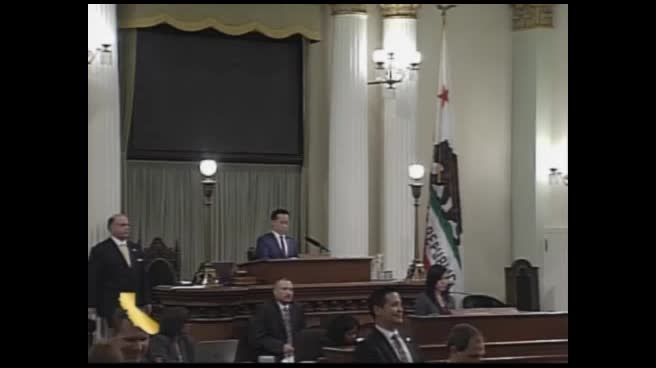 4MIN
Assembly Floor
 6MIN
Assembly Standing Committee on Appropriations
 18MIN
Assembly Standing Committee on Education
Bill Author