AB 309: Governor Edmund G. “Pat” Brown, Sr. Research Grant.
- Session Year: 2015-2016
- House: Assembly
- Latest Version Date: 2015-04-23
Existing law establishes various grant programs relating to education, including, but not limited to, the Education Technology Grant Act of 2002 and the Child Development Teacher and Supervisor Grant Program.
The California Global Warming Solutions Act of 2006 designates the State Air Resources Board as the state agency charged with monitoring and regulating sources of emissions of greenhouse gases. The state board is required to adopt a statewide greenhouse gas emissions limit equivalent to the statewide greenhouse gas emissions level in 1990 to be achieved by 2020. The act authorizes the state board to include the use of market-based compliance mechanisms in regulations to achieve this goal. Existing law requires all moneys, except for fines and penalties, collected by the state board from the auction or sale of allowances as part of a market-based compliance mechanism to be deposited in the Greenhouse Gas Reduction Fund and to be available upon appropriation.
Under existing law, the Department of Water Resources operates the State Water Project and exercises other functions relating to the states water resources.
This bill would require the state board, in collaboration with the Department of Water Resources, Resources to create and administer the Edmund G. Pat Brown, Sr., Research Grant to provide a one-year grant to support research that would examine ways to increase fresh water yield, improve energy efficiency, and reduce greenhouse gas emissions by combining desalination and power generation plants. expand Californias water portfolio. The bill would specify that only California State University campuses and University of California campuses are eligible for this grant. The bill would appropriate $145,000 from the Greenhouse Gas Reduction General Fund to the state board department for this purpose.
Existing law establishes various grant programs relating to education, including, but not limited to, the Education Technology Grant Act of 2002 and the Child Development Teacher and Supervisor Grant Program.
The California Global Warming Solutions Act of 2006 designates the State Air Resources Board as the state agency charged with monitoring and regulating sources of emissions of greenhouse gases. The state board is required to adopt a statewide greenhouse gas emissions limit equivalent to the statewide greenhouse gas emissions level in 1990 to be achieved by 2020. The act authorizes the state board to include the use of market-based compliance mechanisms in regulations to achieve this goal. Existing law requires all moneys, except for fines and penalties, collected by the state board from the auction or sale of allowances as part of a market-based compliance mechanism to be deposited in the Greenhouse Gas Reduction Fund and to be available upon appropriation.
This bill would require the state board, in collaboration with the Department of Water Resources, to create and administer a research grant program the Edmund G. Pat Brown, Sr., Research Grant to provide a one-year grants grant to support research that would examine ways to increase fresh water yield, improve energy efficiency, and reduce greenhouse gas emissions, as specified emissions by combining desalination and power generation plants. The bill would specify that only California State University campuses, campuses and University of California campuses, and private universities within the state campuses are eligible for these grants this grant. The bill would appropriate $145,000 from the Greenhouse Gas Reduction Fund to the state board for these purposes this purpose.
Existing law establishes various grant programs relating to education, including, but not limited to, the Education Technology Grant Act of 2002 and the Child Development Teacher and Supervisor Grant Program.
This bill would declare the intent of the Legislature to enact legislation that would establish a research grant program for postsecondary educational institutions.
The California Global Warming Solutions Act of 2006 designates the State Air Resources Board as the state agency charged with monitoring and regulating sources of emissions of greenhouse gases. The state board is required to adopt a statewide greenhouse gas emissions limit equivalent to the statewide greenhouse gas emissions level in 1990 to be achieved by 2020. The act authorizes the state board to include the use of market-based compliance mechanisms. Existing law requires all moneys, except for fines and penalties, collected by the state board from the auction or sale of allowances as part of a market-based compliance mechanism to be deposited in the Greenhouse Gas Reduction Fund and to be available upon appropriation.
This bill would require the state board, in collaboration with the Department of Water Resources, to create and administer a research grant program to provide one-year grants to support research that would examine ways to increase fresh water yield, improve energy efficiency, and reduce greenhouse gas emissions, as specified. The bill would specify that only California State University campuses, University of California campuses, and private universities within the state are eligible for these grants. The bill would appropriate $145,000 from the Greenhouse Gas Reduction Fund to the state board for these purposes.
Existing law establishes various grant programs relating to education, including, but not limited to, the Education Technology Grant Act of 2002 and the Child Development Teacher and Supervisor Grant Program.
This bill would declare the intent of the Legislature to enact legislation that would establish a research grant program for postsecondary educational institutions.
The Legislature finds and declares the following:
(a)The largest desalination plant project in the western hemisphere is in Carlsbad, California. The project has been approved by the California Coastal Commission, the State Lands Commission, and the areas regional water quality control board, and, when the plan becomes operational in 2016, has the ability to produce 50 million gallons of drinking water daily for the residents of San Diego County.
(b)In March 2015, Santa Barbara municipal officials announced that the city is working on bringing a 20-year old desalination plant back into operation. The city expects that the facility will produce enough water to make up approximately 30 percent of Santa Barbaras water demand once the plant is fully operational.
SEC. 2.SECTION 1.(a)The State Air Resources Board, in collaboration with the Department of Water Resources, Resources shall create and administer the Edmund G. Pat Brown, Sr., Research Grant to provide a one-year grant to support research that would examine ways to increase fresh water yield, improve energy efficiency, and reduce greenhouse gas emissions by combining desalination and power generation plants. expand Californias water portfolio. Only California State University campuses and University of California campuses shall be eligible for this grant.
(b)There is hereby appropriated one hundred forty-five thousand dollars ($145,000) from the Greenhouse Gas Reduction General Fund to the State Air Resources Board Department of Water Resources for the purpose of this section.
The Legislature finds and declares the following:
(a)The largest desalination plant project in the western hemisphere is in Carlsbad, California. The project has been approved by the California Coastal Commission, the State Lands Commission, and the areas regional water quality control board, and, when the plan becomes operational in 2016, has the ability to produce 50 million gallons of drinking water daily for the residents of San Diego County.
(b)In March 2015, Santa Barbara municipal officials announced that the city is working on bringing a 20-year old desalination plant back into operation. The city expects that the facility will produce enough water to make up approximately 30 percent of Santa Barbaras water demand once the plant is fully operational.
SEC. 2.(a)The State Air Resources Board, in collaboration with the Department of Water Resources, shall create and administer a research grant program the Edmund G. Pat Brown, Sr., Research Grant to provide a one-year grants grant to support research that would examine ways to increase fresh water yield, improve energy efficiency, and reduce greenhouse gas emissions by combining desalination and power generation plants. Only California State University campuses, campuses and University of California campuses, and private universities within the state campuses shall be eligible for these grants this grant.
(b)There is hereby appropriated one hundred forty-five thousand dollars ($145,000) from the Greenhouse Gas Reduction Fund to the State Air Resources Board for the purpose of this section.
The Legislature finds and declares the following:
(a)The largest desalination plant project in the western hemisphere is in Carlsbad, California. The project has been approved by the California Coastal Commission, the State Lands Commission, and the areas regional water quality control board, and, when the plan becomes operational in 2016, has the ability to produce 50 million gallons of drinking water daily for the residents of San Diego County.
(b)In March 2015, Santa Barbara municipal officials announced that the city is working on bringing a 20-year old desalination plant back into operation. The city expects that the facility will produce enough water to make up approximately 30 percent of Santa Barbaras water demand once the plant is fully operational.
SEC. 2.(a)The State Air Resources Board, in collaboration with the Department of Water Resources, shall create and administer a research grant program to provide one-year grants to support research that would examine ways to increase fresh water yield, improve energy efficiency, and reduce greenhouse gas emissions by combining desalination and power generation plants. Only California State University campuses, University of California campuses, and private universities within the state shall be eligible for these grants.
(b)There is hereby appropriated one hundred forty-five thousand dollars ($145,000) from the Greenhouse Gas Reduction Fund to the State Air Resources Board for the purpose of this section.
SECTION 1.It is the intent of the Legislature to enact legislation that would establish a research grant program for postsecondary educational institutions.
It is the intent of the Legislature to enact legislation that would establish a research grant program for postsecondary educational institutions.
|
Date
|
Status
|
|---|---|
| Feb 1, 2016 | From committee: Filed with the Chief Clerk pursuant to Joint Rule 56. |
| Jan 31, 2016 | Died pursuant to Article IV, Sec. 10(c) of the Constitution. |
| Jan 12, 2016 | In committee: Set, first hearing. Failed passage. |
| Jan 4, 2016 | From committee: Be re-referred to Com. on W., P., & W. Re-referred. (Ayes 8. Noes 0.) (December 9). Re-referred to Com. on W., P., & W. |
| May 7, 2015 | Re-referred to Com. on RLS. pursuant to Assembly Rule 96. |
| Apr 27, 2015 | Re-referred to Com. on NAT. RES. |
| Apr 23, 2015 | From committee chair, with author's amendments: Amend, and re-refer to Com. on NAT. RES. Read second time and amended. |
| Apr 23, 2015 | In committee: Set, first hearing. Hearing canceled at the request of author. |
| Apr 21, 2015 | Re-referred to Com. on NAT. RES. |
| Apr 20, 2015 | From committee chair, with author's amendments: Amend, and re-refer to Com. on NAT. RES. Read second time and amended. |
| Apr 6, 2015 | Re-referred to Com. on NAT. RES. |
| Mar 26, 2015 | From committee chair, with author's amendments: Amend, and re-refer to Com. on NAT. RES. Read second time and amended. |
| Mar 26, 2015 | Referred to Com. on NAT. RES. |
| Feb 13, 2015 | From printer. May be heard in committee March 15. |
| Feb 12, 2015 | Read first time. To print. |
|
Date
|
Description
|
Location
|
Votes
|
|
|---|---|---|---|---|
| Jan 12, 2016 | Do pass and be re-referred to the Committee on [Appropriations] | Assembly Standing Committee on Water, Parks, and Wildlife |
Failed |
|
| Dec 9, 2015 | Be re-referred to the Committee on [Water, Parks, and Wildlife] | Assembly Standing Committee on Rules |
Passed |
This list shows positions taken on this bill by organizations on the date displayed, which is linked to the original source.
Positions by individuals are not included.
Date of Hearing: January 12, 2016
ASSEMBLY COMMITTEE ON WATER, PARKS, AND WILDLIFE
Marc Levine, Chair
ABPCA Bill Id:AB 309 (
Author:Mathis) – As Amended Ver:April 23, 2015
SUBJECT: Governor Edmund G. “Pat” Brown, Sr. Research Grant.
SUMMARY: Appropriates $145,000 from the State General Fund (GF) to the Department of Water Resources (DWR) for an Edmund G. "Pat" Brown, Sr., Research Grant program that will provide one-year grants to University of California (UC) and California State University (CSU) campuses to research ways to expand California's water portfolio.
EXISTING LAW:
- Creates DWR and gives it the authority to manage and regulate water use.
- Creates the UC and CSU to provide educational opportunities, to expand our scientific knowledge and social understanding.
FISCAL EFFECT: Unknown; but appropriates $145,000 General Fund (GF) to DWR.
COMMENTS: This bill makes UCs and CSUs eligible for a new one-year grant program administered by DWR for up to $145,000 to research ways to expand water supplies.
- Purpose: The author states that this bill would support research that examines ways to increase fresh water yield, improve energy efficiency, and reduce greenhouse gas emissions from desalination and power generation facilities. The author states that Proposition 1 does not go far enough to address the challenges for both the short and long-term drought conditions in California. The author adds that California has many of the finest institutions of higher learning not only in the United States but globally and that these institutions are uniquely positioned to offer innovative solutions to increasing fresh water supply to an ever growing and thirsty state.
- Background: DWR was created in 1956 to protect, conserve, develop, and manage California's water. DWR works with other agencies and the public to develop short and long term strategies to conserve, manage, develop, and sustain California's watersheds, water resources, and management systems.
The UC and CSU have already undertaken the following efforts very similar to what this bill is attempting to accomplish.
- UC Davis has a Center for Watershed Sciences that studies critical water challenges with a focus on solutions that are environmentally and economically sustainable.
- UC Berkeley has a Water Center that focuses on implementing solutions and creating new technologies to address water shortages.
- The CSU has a Water Resources and Policies Initiatives (WRPI) consortium that has faculty and staff participants from all of the 23 CSU campuses. The WRPI is working toward developing greater partnerships between water industries and government, and pursuing the development and use of innovative water technologies to enhance economic growth.
- Supporting Arguments: No support has been received by the committee.
- Opposing Arguments: No opposition has been received by the committee.
- Prior and related legislation: AB 237 (Machado) of 1999 would have transferred $7.5 million from the GF to the State Water Resources Control Board for a grant program to help implement water recycling studies, investigations, and research and development by UCs, CSUs, public agencies and specified nonprofits. AB 237 was held by the Assembly Appropriations Committee.
- Suggested Amendments: This bill does not specify grant criteria or how a grant program would be administered. The committee may want to provide a competitive grant process based on a measurable deliverable from the educational institution or institutions such as a report to DWR, the Legislature, or both, by a date certain, with recommendations. For example, the recommendations could be for the most cost effective new strategy that would yield multiple benefits.
REGISTERED SUPPORT / OPPOSITION:
Support
None on file
Opposition
None on file
Analysis Prepared by: Ryan Ojakian / W., P., & W. / (916) 319-2096
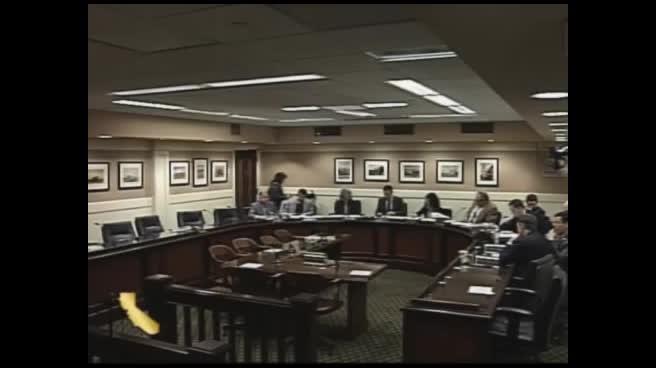
Discussed in Hearing
 9MIN
Assembly Standing Committee on Water, Parks, and Wildlife
Bill Author

Bill Co-Author(s):