AB 318: Lost money and goods: bicycles: restoration to owner.
- Session Year: 2015-2016
- House: Assembly
- Latest Version Date: 2015-06-11
Existing law requires a person who finds and takes possession of property that is lost to try and return it to the rightful owner. If the owner of the lost property cannot be determined and the item is worth $100 or more, the finder is required to turn the item over to the police or sheriff, as specified. Existing law provides 90 days for the owner to return and claim the property and to pay any reasonable fee for its bailment. Existing law requires, if the reported value of the property is $250 or more and the owner does not return and claim the property, the police or the sheriff to cause notice of the property to be published, as provided.
This bill, until December 31, 2020, would provide that if that lost property is found on a vehicle of public conveyance or on public transit property, that it instead be turned in to the public transit agency, and would provide 90 days for the owner to return and claim the property, as specified. The bill, until December 31, 2020, also would require the public transit agency to cause notice of the property to be published under the circumstances described above. The bill, until January 1, 2021, would require specified authorize a transit agency to utilize alternate unclaimed property procedures to be followed with respect to lost or unclaimed bicycles turned in to or held by a that public transit agency.
Because this bill would impose new requirements on local transportation agencies, it would impose a state-mandated local program.
The California Constitution requires the state to reimburse local agencies and school districts for certain costs mandated by the state. Statutory provisions establish procedures for making that reimbursement.
This bill would provide that, if the Commission on State Mandates determines that the bill contains costs mandated by the state, reimbursement for those costs shall be made pursuant to these statutory provisions.
Existing law requires a person who finds and takes possession of property that is lost to try and return it to the rightful owner. If the owner of the lost property cannot be determined and the item is worth $100 or more, the finder is required to turn the item over to the police or sheriff, as specified. Existing law provides 90 days for the owner to return and claim the property and to pay any reasonable fee for its bailment. Existing law requires, if the reported value of the property is $250 or more and the owner does not return and claim the property, the police or the sheriff to cause notice of the property to be published, as provided.
This bill, until December 31, 2020, would provide that if that lost property is found on a vehicle of public conveyance or on public transit property, that it instead be turned in to the public transit agency. The bill agency, and would provide 30 90 days for the owner to return and claim the property under specified rules and if the property is not claimed within 30 days, the public transit agency would be authorized to dispose of the property to a charitable organization. property, as specified. The bill, until December 31, 2020, also would require the public transit agency to cause notice of the property to be published under the circumstances described above. The bill, until January 1, 2021, would require specified procedures to be followed with respect to lost or unclaimed bicycles turned in to or held by a public transit agency.
Because this bill would impose new requirements on local transportation agencies, it would impose a state-mandated local program.
The California Constitution requires the state to reimburse local agencies and school districts for certain costs mandated by the state. Statutory provisions establish procedures for making that reimbursement.
This bill would provide that, if the Commission on State Mandates determines that the bill contains costs mandated by the state, reimbursement for those costs shall be made pursuant to these statutory provisions.
Existing law requires a person who finds and takes possession of property that is lost to try and return it to the rightful owner. If the owner of the lost property cannot be determined and the item is worth $100 or more, the finder is required to turn the item over to the police or sheriff, as specified. Existing law provides 90 days for the owner to return and claim the property and to pay any reasonable fee for its bailment.
This bill would provide that if that lost property is found on a vehicle of public conveyance or on public transit property, that it instead turned in to the public transit agency. The bill would provide 30 days for the owner to return and claim the property under specified rules and if the property is not claimed within 30 days, the public transit agency would be authorized to dispose of the property to a charitable organization.
Because this bill would impose new requirements on local transportation agencies, it would impose a state-mandated local program.
The California Constitution requires the state to reimburse local agencies and school districts for certain costs mandated by the state. Statutory provisions establish procedures for making that reimbursement.
This bill would provide that, if the Commission on State Mandates determines that the bill contains costs mandated by the state, reimbursement for those costs shall be made pursuant to these statutory provisions.
(a)If the owner is unknown or has not claimed the property, the person saving or finding the property shall, if the property is of the value of one hundred dollars ($100) or more, within a reasonable time turn the property over to the police department of the city or city and county, if found therein, or to the sheriffs department of the county if found outside of city limits, or to the public transit agency if found on a vehicle of public conveyance or on the public transit agency property, and shall make an affidavit, stating when and where he or she found or saved the property, particularly describing it. If the property was saved, the affidavit shall state:
(1)From what and how it was saved.
(2)Whether the owner of the property is known to the affiant.
(3)That the affiant has not secreted, withheld, or disposed of any part of the property.
(b)The police department or the sheriffs department shall notify the owner, if his or her identity is reasonably ascertainable, that it possesses the property and where it may be claimed. The police department or sheriffs department may require payment by the owner of a reasonable charge to defray costs of storage and care of the property.
(c)If the personal property is found or saved on a vehicle of public conveyance or on property belonging to a public transit agency, the public transit agency shall notify the owner, if his or her identity is reasonably ascertainable, that it possesses the property and where it may be claimed. The public transit agency may require payment by the owner of a reasonable charge to defray the costs of storage and care of the property.
(d)This section shall only remain in effect until December 31, 2020, and as of that date is repealed.
SEC. 2.Section 2080.1 is added to the Civil Code, to read:2080.1.(a)If the owner is unknown or has not claimed the property, the person saving or finding the property shall, if the property is of the value of one hundred dollars ($100) or more, within a reasonable time turn the property over to the police department of the city or city and county, if found therein, or to the sheriffs department of the county if found outside of city limits, and shall make an affidavit, stating when and where he or she found or saved the property, particularly describing it. If the property was saved, the affidavit shall state:
(1)From what and how it was saved.
(2)Whether the owner of the property is known to the affiant.
(3)That the affiant has not secreted, withheld, or disposed of any part of the property.
(b)The police department or the sheriffs department shall notify the owner, if his or her identity is reasonably ascertainable, that it possesses the property and where it may be claimed. The police department or sheriffs department may require payment by the owner of a reasonable charge to defray costs of storage and care of the property.
(c)This section shall become operative on January 1, 2021.
SEC. 3.Section 2080.2 of the Civil Code is amended to read:2080.2.(a)If the owner appears within 90 days, after receipt of the property by the police department or sheriffs department, proves his or her ownership of the property, and pays all reasonable charges, the police department or sheriffs department shall restore the property to him or her.
(b)If the owner appears within 90 days after receipt of the property by a public transit agency, proves his or her ownership of the property, and pays all reasonable charges, the public transit agency shall restore the property to him or her.
(c)This section shall only remain in effect until December 31, 2020, and as of that date is repealed.
SEC. 4.Section 2080.2 is added to the Civil Code, to read:2080.2.(a)If the owner appears within 90 days after receipt of the property by the police department or sheriffs department, proves his or her ownership of the property, and pays all reasonable charges, the police department or sheriffs department shall restore the property to him or her.
(b)This section shall become operative on January 1, 2021.
SEC. 5.Section 2080.3 of the Civil Code is amended to read:2080.3.(a)If the reported value of the property is two hundred fifty dollars ($250) or more and no owner appears and proves his or her ownership of the property within 90 days, the police department, sheriffs department, or public transit agency shall cause notice of the property to be published at least once in a newspaper of general circulation. If, after seven days following the first publication of the notice, no owner appears and proves his or her ownership of the property and the person who found or saved the property pays the cost of the publication, the title shall vest in the person who found or saved the property unless the property was found in the course of employment by an employee of any public agency, in which case the property shall be sold at public auction. Title to the property shall not vest in the person who found or saved the property or in the successful bidder at the public auction unless the cost of publication is first paid to the city, county, or city and county whose police or sheriffs department or public transit agency caused the notice to be published.
(b)If the reported value of the property is less than two hundred fifty dollars ($250) and no owner appears and proves his or her ownership of the property within 90 days, the title shall vest in the person who found or saved the property, unless the property was found in the course of employment by an employee of any public agency, in which case the property shall be sold at public auction.
(c)This section shall only remain in effect until December 31, 2020, and as of that date is repealed.
SEC. 6.Section 2080.3 is added to the Civil Code, to read:2080.3.(a)If the reported value of the property is two hundred fifty dollars ($250) or more and no owner appears and proves his or her ownership of the property within 90 days, the police department or sheriffs department shall cause notice of the property to be published at least once in a newspaper of general circulation. If, after seven days following the first publication of the notice, no owner appears and proves his or her ownership of the property and the person who found or saved the property pays the cost of the publication, the title shall vest in the person who found or saved the property unless the property was found in the course of employment by an employee of any public agency, in which case the property shall be sold at public auction. Title to the property shall not vest in the person who found or saved the property or in the successful bidder at the public auction unless the cost of publication is first paid to the city, county, or city and county whose police or sheriffs department caused the notice to be published.
(b)If the reported value of the property is less than two hundred fifty dollars ($250) and no owner appears and proves his or her ownership of the property within 90 days, the title shall vest in the person who found or saved the property, unless the property was found in the course of employment by an employee of any public agency, in which case the property shall be sold at public auction.
(c)This section shall become operative on January 1, 2021.
SEC. 7.Section 2080.9 is added to the Civil Code, to read:2080.9.Notwithstanding any other law, all of the following shall apply with As an alternative to the unclaimed property procedures in Sections 2080.1 to 2080.3, inclusive, a transit agency may elect to utilize all of the following procedures with respect to a lost or unclaimed bicycle turned in to or held by a that public transit agency:
(a)If the owner of a bicycle appears within 45 days after receipt of that bicycle by a public transit agency, proves his or her ownership of the bicycle, and pays all reasonable charges, the public transit agency shall restore the bicycle to him or her.
(b)(1)If the bicycle remains unclaimed after 45 days, the public transit agency may dispose of the unclaimed bicycle by sale at public auction to the highest bidder.
(2)The public transit agency shall give notice of the sale at least five days before the time fixed for the sale by publication in a newspaper of general circulation published in the county in which the bicycle was found.
(3)Any bicycles remaining unsold after being offered for sale at the public auction may be destroyed or otherwise disposed of by the public transit agency.
(c)(1)Notwithstanding subdivision (b), a public transit agency may donate bicycles unclaimed after 45 days to a charitable organization if both of the following conditions are met:
(A)The board of the public transit agency holds a public hearing to determine the charitable organization that will receive a donated bicycle.
(B)The public transit agency provides notice, at least five days before the time fixed for the donation, by publication in a newspaper of general circulation published in the county in which the public transit agency operates. The notice shall identify the time period during which the bicycles to be donated were found or saved by the public transit agency, the name of the charity receiving the donation, the date of the donation, and where unclaimed bicycles may be claimed prior to the date of the donation.
(2)The public transit agency shall not donate unclaimed bicycles more than two times per calendar year and the number of bicycles donated shall not exceed 25 percent of the total number of lost or unclaimed bicycles found or saved by the public transit agency during the prior six months.
(d)(1)Any public transit agency that donates unclaimed bicycles to a charitable organization pursuant to this section shall submit to the Assembly and Senate Committees on Judiciary, on or before January 1, 2020, a report that details, for each of the four preceding calendar years, the following information:
(A)The total number of bicycles received.
(B)The total number of bicycles claimed by an owner within 45 days.
(C)The average number of days of storage for each bicycle successfully claimed.
(D)The total number of bicycles donated to a charitable organization.
(E)The names of all charitable organizations that received donated bicycles and the number of bicycles donated to each of those organizations.
(F)The total number of bicycles offered at public auction or sale.
(G)The average selling price of each bicycle sold at public auction or sale.
(2)A report to be submitted pursuant to paragraph (1) shall be submitted in compliance with Section 9795 of the Government Code.
(e)This section shall remain in effect only until January 1, 2021, and as of that date is repealed.
SEC. 8.If the Commission on State Mandates determines that this act contains costs mandated by the state, reimbursement to local agencies and school districts for those costs shall be made pursuant to Part 7 (commencing with Section 17500) of Division 4 of Title 2 of the Government Code.
(a)If the owner is unknown or has not claimed the property, the person saving or finding the property shall, if the property is of the value of one hundred dollars ($100) or more, within a reasonable time turn the property over to the police department of the city or city and county, if found therein, or to the sheriffs department of the county if found outside of city limits, or to the public transit agency if found on a vehicle of public conveyance or on the public transit agency property, and shall make an affidavit, stating when and where he or she found or saved the property, particularly describing it. If the property was saved, the affidavit shall state:
(1)From what and how it was saved.
(2)Whether the owner of the property is known to the affiant.
(3)That the affiant has not secreted, withheld, or disposed of any part of the property.
(b)The police department or the sheriffs department shall notify the owner, if his or her identity is reasonably ascertainable, that it possesses the property and where it may be claimed. The police department or sheriffs department may require payment by the owner of a reasonable charge to defray costs of storage and care of the property.
(c)If the personal property is found or saved on a vehicle of public conveyance or on property belonging to a public transit agency, the public transit agency shall notify the owner, if his or her identity is reasonably ascertainable, that it possesses the property and where it may be claimed. The public transit agency may require payment by the owner of a reasonable charge to defray the costs of storage and care of the property.
(d)This section shall only remain in effect until December 31, 2020, and as of that date is repealed.
SEC. 2.Section 2080.2 of the Civil Code is amended to read:2080.2.(a)If the owner appears within 90 days, after receipt of the property by the police department or sheriffs department, proves his or her ownership of the property, and pays all reasonable charges, the police department or sheriffs department shall restore the property to him or her.
(b)If the owner appears within 30 days after the receipt of lost or unclaimed property that has been turned over to a public transit agency and proves his or her ownership of the property, and pays all reasonable charges, if any, the public transit agency shall restore the property to him or her. If the property remains unclaimed after 30 days, the public transit agency is authorized to dispose of the unclaimed property to a charitable organization.
SEC. 2.Section 2080.1 is added to the Civil Code, to read:2080.1.(a)If the owner is unknown or has not claimed the property, the person saving or finding the property shall, if the property is of the value of one hundred dollars ($100) or more, within a reasonable time turn the property over to the police department of the city or city and county, if found therein, or to the sheriffs department of the county if found outside of city limits, and shall make an affidavit, stating when and where he or she found or saved the property, particularly describing it. If the property was saved, the affidavit shall state:
(1)From what and how it was saved.
(2)Whether the owner of the property is known to the affiant.
(3)That the affiant has not secreted, withheld, or disposed of any part of the property.
(b)The police department or the sheriffs department shall notify the owner, if his or her identity is reasonably ascertainable, that it possesses the property and where it may be claimed. The police department or sheriffs department may require payment by the owner of a reasonable charge to defray costs of storage and care of the property.
(c)This section shall become operative on January 1, 2021.
SEC. 3.Section 2080.2 of the Civil Code is amended to read:2080.2.(a)If the owner appears within 90 days, after receipt of the property by the police department or sheriffs department, proves his his or her ownership of the property, and pays all reasonable charges, the police department or sheriffs department shall restore the property to him him or her.
(b)If the owner appears within 90 days after receipt of the property by a public transit agency, proves his or her ownership of the property, and pays all reasonable charges, the public transit agency shall restore the property to him or her.
(c)This section shall only remain in effect until December 31, 2020, and as of that date is repealed.
SEC. 4.Section 2080.2 is added to the Civil Code, to read:2080.2.(a)If the owner appears within 90 days after receipt of the property by the police department or sheriffs department, proves his or her ownership of the property, and pays all reasonable charges, the police department or sheriffs department shall restore the property to him or her.
(b)This section shall become operative on January 1, 2021.
SEC. 5.Section 2080.3 of the Civil Code is amended to read:2080.3.(a)If the reported value of the property is two hundred fifty dollars ($250) or more and no owner appears and proves his or her ownership of the property within 90 days, the police department or department, sheriffs department department, or public transit agency shall cause notice of the property to be published at least once in a newspaper of general circulation. If, after seven days following the first publication of the notice, no owner appears and proves his or her ownership of the property and the person who found or saved the property pays the cost of the publication, the title shall vest in the person who found or saved the property unless the property was found in the course of employment by an employee of any public agency, in which case the property shall be sold at public auction. Title to the property shall not vest in the person who found or saved the property or in the successful bidder at the public auction unless the cost of publication is first paid to the city, county, or city and county whose police or sheriffs department or public transit agency caused the notice to be published.
(b)If the reported value of the property is less than two hundred fifty dollars ($250) and no owner appears and proves his or her ownership of the property within 90 days, the title shall vest in the person who found or saved the property, unless the property was found in the course of employment by an employee of any public agency, in which case the property shall be sold at public auction.
(c)This section shall only remain in effect until December 31, 2020, and as of that date is repealed.
SEC. 6.Section 2080.3 is added to the Civil Code, to read:2080.3.(a)If the reported value of the property is two hundred fifty dollars ($250) or more and no owner appears and proves his or her ownership of the property within 90 days, the police department or sheriffs department shall cause notice of the property to be published at least once in a newspaper of general circulation. If, after seven days following the first publication of the notice, no owner appears and proves his or her ownership of the property and the person who found or saved the property pays the cost of the publication, the title shall vest in the person who found or saved the property unless the property was found in the course of employment by an employee of any public agency, in which case the property shall be sold at public auction. Title to the property shall not vest in the person who found or saved the property or in the successful bidder at the public auction unless the cost of publication is first paid to the city, county, or city and county whose police or sheriffs department caused the notice to be published.
(b)If the reported value of the property is less than two hundred fifty dollars ($250) and no owner appears and proves his or her ownership of the property within 90 days, the title shall vest in the person who found or saved the property, unless the property was found in the course of employment by an employee of any public agency, in which case the property shall be sold at public auction.
(c)This section shall become operative on January 1, 2021.
SEC. 7.Section 2080.9 is added to the Civil Code, to read:2080.9.Notwithstanding any other law, all of the following shall apply with respect to a lost or unclaimed bicycle turned in to or held by a public transit agency:
(a)If the owner of a bicycle appears within 45 days after receipt of that bicycle by a public transit agency, proves his or her ownership of the bicycle, and pays all reasonable charges, the public transit agency shall restore the bicycle to him or her.
(b)(1)If the bicycle remains unclaimed after 45 days, the public transit agency may dispose of the unclaimed bicycle by sale at public auction to the highest bidder.
(2)The public transit agency shall give notice of the sale at least five days before the time fixed for the sale by publication in a newspaper of general circulation published in the county in which the bicycle was found.
(3)Any bicycles remaining unsold after being offered for sale at the public auction may be destroyed or otherwise disposed of by the public transit agency.
(c)(1)Notwithstanding subdivision (b), a public transit agency may donate bicycles unclaimed after 45 days to a charitable organization if both of the following conditions are met:
(A)The board of the public transit agency holds a public hearing to determine the charitable organization that will receive a donated bicycle.
(B)The public transit agency provides notice, at least five days before the time fixed for the donation, by publication in a newspaper of general circulation published in the county in which the public transit agency operates. The notice shall identify the time period during which the bicycles to be donated were found or saved by the public transit agency, the name of the charity receiving the donation, the date of the donation, and where unclaimed bicycles may be claimed prior to the date of the donation.
(2)The public transit agency shall not donate unclaimed bicycles more than two times per calendar year and the number of bicycles donated shall not exceed 25 percent of the total number of lost or unclaimed bicycles found or saved by the public transit agency during the prior six months.
(d)(1)Any public transit agency that donates unclaimed bicycles to a charitable organization pursuant to this section shall submit to the Assembly and Senate Committees on Judiciary, on or before January 1, 2020, a report that details, for each of the four preceding calendar years, the following information:
(A)The total number of bicycles received.
(B)The total number of bicycles claimed by an owner within 45 days.
(C)The average number of days of storage for each bicycle successfully claimed.
(D)The total number of bicycles donated to a charitable organization.
(E)The names of all charitable organizations that received donated bicycles and the number of bicycles donated to each of those organizations.
(F)The total number of bicycles offered at public auction or sale.
(G)The average selling price of each bicycle sold at public auction or sale.
(2)A report to be submitted pursuant to paragraph (1) shall be submitted in compliance with Section 9795 of the Government Code.
(e)This section shall remain in effect only until January 1, 2021, and as of that date is repealed.
SEC. 3.SEC. 8.If the Commission on State Mandates determines that this act contains costs mandated by the state, reimbursement to local agencies and school districts for those costs shall be made pursuant to Part 7 (commencing with Section 17500) of Division 4 of Title 2 of the Government Code.
(a)If the owner is unknown or has not claimed the property, the person saving or finding the property shall, if the property is of the value of one hundred dollars ($100) or more, within a reasonable time turn the property over to the police department of the city or city and county, if found therein, or to the sheriffs department of the county if found outside of city limits, or to the public transit agency if found on a vehicle of public conveyance or on the public transit agency property, and shall make an affidavit, stating when and where he or she found or saved the property, particularly describing it. If the property was saved, the affidavit shall state:
(1)From what and how it was saved.
(2)Whether the owner of the property is known to the affiant.
(3)That the affiant has not secreted, withheld, or disposed of any part of the property.
(b)The police department or the sheriffs department, or the public transit agency department shall notify the owner, if his or her identity is reasonably ascertainable, that it possesses the property and where it may be claimed. The police department or sheriffs department or public transit agency may require payment by the owner of a reasonable charge to defray costs of storage and care of the property.
(c)If the personal property is found or saved on a vehicle of public conveyance or on property belonging to a public transit agency, the public transit agency shall notify the owner, if his or her identity is reasonably ascertainable, that it possesses the property and where it may be claimed. The public transit agency may require payment by the owner of a reasonable charge to defray the costs of storage and care of the property.
SEC. 2.Section 2080.2 of the Civil Code is amended to read:2080.2.(a)If the owner appears within 90 days, after receipt of the property by the police department or sheriffs department, proves his or her ownership of the property, and pays all reasonable charges, the police department or sheriffs department shall restore the property to him. him or her.
(b)If the owner appears within 30 days after the receipt of lost or unclaimed property that has been turned over to a public transit agency and proves his or her ownership of the property, and pays all reasonable charges, if any, the public transit agency shall restore the property to him or her. If the property remains unclaimed after 30 days, the public transit agency is authorized to dispose of the unclaimed property to a charitable organization.
SEC. 3.If the Commission on State Mandates determines that this act contains costs mandated by the state, reimbursement to local agencies and school districts for those costs shall be made pursuant to Part 7 (commencing with Section 17500) of Division 4 of Title 2 of the Government Code.
(a)If the owner is unknown or has not claimed the property, the person saving or finding the property shall, if the property is of the value of one hundred dollars ($100) or more, within a reasonable time turn the property over to the police department of the city or city and county, if found therein, or to the sheriffs department of the county if found outside of city limits, or to the public transit agency if found on a vehicle of public conveyance or on the public transit property, and shall make an affidavit, stating when and where he or she found or saved the property, particularly describing it. If the property was saved, the affidavit shall state:
(1)From what and how it was saved.
(2)Whether the owner of the property is known to the affiant.
(3)That the affiant has not secreted, withheld, or disposed of any part of the property.
(b)The police department or the sheriffs department, or the public transit agency shall notify the owner, if his or her identity is reasonably ascertainable, that it possesses the property and where it may be claimed. The police department or sheriffs department or public transit agency may require payment by the owner of a reasonable charge to defray costs of storage and care of the property.
SEC. 2.Section 2080.2 of the Civil Code is amended to read:2080.2.(a)If the owner appears within 90 days, after receipt of the property by the police department or sheriffs department, proves his ownership of the property, and pays all reasonable charges, the police department or sheriffs department shall restore the property to him.
(b)If the owner appears within 30 days after the receipt of lost or unclaimed property that has been turned over to a public transit agency and proves his or her ownership of the property, and pays all reasonable charges, if any, the public transit agency shall restore the property to him or her. If the property remains unclaimed after 30 days, the public transit agency is authorized to dispose of the unclaimed property to a charitable organization.
SEC. 3.If the Commission on State Mandates determines that this act contains costs mandated by the state, reimbursement to local agencies and school districts for those costs shall be made pursuant to Part 7 (commencing with Section 17500) of Division 4 of Title 2 of the Government Code.
|
Date
|
Status
|
|---|---|
| Jul 6, 2015 | In committee: Hearing postponed by committee. |
| Jun 17, 2015 | In committee: Set, second hearing. Hearing canceled at the request of author. |
| Jun 11, 2015 | From committee chair, with author's amendments: Amend, and re-refer to committee. Read second time, amended, and re-referred to Com. on JUD. |
| Jun 9, 2015 | In committee: Set, first hearing. Hearing canceled at the request of author. |
| May 21, 2015 | Referred to Com. on JUD. |
| May 11, 2015 | In Senate. Read first time. To Com. on RLS. for assignment. |
| May 11, 2015 | Read third time. Passed. Ordered to the Senate. (Ayes 74. Noes 2. Page 1378.) |
| May 11, 2015 | Read third time. Passed. Ordered to the Senate. |
| May 7, 2015 | Ordered to third reading. |
| May 7, 2015 | From Consent Calendar. |
| Apr 30, 2015 | Read second time. Ordered to Consent Calendar. |
| Apr 29, 2015 | From committee: Do pass. To Consent Calendar. (Ayes 17. Noes 0.) (April 29). |
| Apr 15, 2015 | Re-referred to Com. on APPR. |
| Apr 14, 2015 | Read second time and amended. |
| Apr 13, 2015 | From committee: Amend, and do pass as amended and re-refer to Com. on APPR. (Ayes 10. Noes 0.) (April 7). |
| Mar 18, 2015 | In committee: Set, first hearing. Hearing canceled at the request of author. |
| Mar 12, 2015 | Re-referred to Com. on JUD. |
| Mar 11, 2015 | From committee chair, with author's amendments: Amend, and re-refer to Com. on JUD. Read second time and amended. |
| Feb 23, 2015 | Referred to Com. on JUD. |
| Feb 17, 2015 | From printer. May be heard in committee March 19. |
| Feb 13, 2015 | Read first time. To print. |
|
Date
|
Description
|
Location
|
Votes
|
|
|---|---|---|---|---|
| May 11, 2015 | AB 318 CHAU Assembly Third Reading | Assembly Floor |
Passed |
|
| Apr 29, 2015 | Do pass. To Consent Calendar. | Assembly Standing Committee on Appropriations |
Passed |
|
| Apr 7, 2015 | Do pass as amended and be re-referred to the Committee on [Appropriations] | Assembly Standing Committee on Judiciary |
Passed |
This list shows positions taken on this bill by organizations on the date displayed, which is linked to the original source.
Positions by individuals are not included.
AB 318
Page 4
ASSEMBLY THIRD READING
AB 318
(Chau)
As Amended April 14, 2015
Majority vote
Committee |
Votes |
Ayes |
Noes |
Judiciary |
10-0 |
Mark Stone, Wagner, Alejo, Chau, Chiu, Gallagher, Cristina Garcia, Holden, Maienschein, O'Donnell |
|
Appropriations |
17-0 |
Gomez, Bigelow, Bloom, Bonta, Calderon, Chang, Daly, Eggman, Gallagher, Eduardo Garcia, Holden, Jones, Quirk, Rendon, Wagner, Weber, Wood |
|
SUMMARY: Establishes a pilot program, until January 1, 2021, under which a public transit agency (PTA) may donate to charity a certain proportion of lost or unclaimed bicycles that go unclaimed after 45 days. Specifically, this bill:
Requires lost property valued at $100 or more that is found on a vehicle of public conveyance or on public transit agency property to be turned into the public transit agency rather than the local police or sheriff's department. Further requires the public transit agency to notify the owner, if ascertainable, that it possesses the property and where it may be claimed, and authorizes a reasonable charge to the owner to defray the costs of storage and care of the property.
Establishes certain rules and procedures for PTAs to handle lost property, other than bicycles, that mirror longstanding existing rules for police and sheriff departments.
Establishes the parameters of a pilot program exclusively for the disposal of lost and unclaimed bicycles that were found by or turned into a PTA. Until January 1, 2021, the pilot program would:
Require the PTA to restore a lost or unclaimed bicycle to an owner who appears within 45 days, can prove ownership, and pays reasonable charges.
Authorize the PTA to donate bicycles unclaimed after 45 days to a qualified charitable organization, provided that a notice of the planned donation is published in a newspaper at least five days before the time fixed for the donation.
Require the notice to identify the period of time during which the bicycles were found, the name of the charity receiving the planned donation, and where the bicycles may be claimed prior to the donation.
Limit donation of unclaimed bicycles to two occasions per year, and the number of bicycles donated to no more than 25% of the total number of bicycles found or saved by the PTA during the prior six months.
Require the board of the PTA, after a public hearing, to determine the charitable organizations that are qualified to receive donations of unclaimed bicycles.
Establishes a five-year sunset date for the pilot program (until January 1, 2021) and requires participating PTA's to report specified information to the Senate and Assembly Judiciary Committees by the end of the fourth year of the program's operation (i.e. on or before January 1, 2020).
FISCAL EFFECT: According to the Assembly Appropriations Committee, given the reduction, under the pilot program, in the required holding period for bicycles and the opportunity to donate a portion of recovered bicycles to nonprofits rather than disposing through public auction, PTAs should realize operational savings that should more than offset the revenue reduction from fewer auction sales.
COMMENTS: Under existing law, public transit agencies (PTAs) are required to store and safeguard lost or misplaced personal property left behind on buses, railcars and in their facilities for at least 90 days to give the owner sufficient opportunity to reclaim the property. For most property that remains unclaimed after 90 days, current law requires the PTA to prepare the unclaimed property for sale at public auction and advertise notice of the property in a newspaper of general circulation. According to the sponsor of this bill, the Los Angeles County Metropolitan Transportation Authority (LA Metro):
In recent years, public transit agencies like LA Metro have reached critical mass with the amount of unclaimed property, particularly bicycles. The amount of space required to store the bikes for 90 days has become costly and unsustainable, not to mention the use of staff time to inventory all the items and then perform the public auction. Bikes are much larger items and therefore take up a great deal of storage space. This bill would remove burdening financial and spatial constraints on transit agencies' staff and facilities resources.
Pilot program for unclaimed bicycles held by public transit agencies. This bill establishes a five-year pilot program to authorize public transit agencies to employ new procedures for handling unclaimed bicycles lost or left behind on PTA vehicles and stations. Because PTAs have identified bicycles as the primary item driving their increased storage and auction-related costs, this bill is specifically focused on bicycles and seeks to alleviate the reportedly high costs associated with unclaimed bicycles left on public transit property. It is important to note that this bill does not seek to change current procedures or time periods that apply to property other than bicycles, nor does it affect any procedures that apply to property held by departments or agencies other than public transit agencies. This bill clarifies that the 90-day claim period and other procedures under current law shall continue to apply to all property held by police or sheriff's departments, as well as all property other than bicycles that is turned over to a PTA.
Period to claim bicycles shortened from 90 days to 45 days. Under the proposed pilot program, PTAs are required to store unclaimed bicycles for a minimum of 45 days to allow owners the chance to appear and recover their property. Proponents contend that the 45 day period still provides a sufficient opportunity for recovery, citing LA Metro-reported data indicating that the average customer retrieval rate for bicycles is about 20% (meaning up to 80% of bicycles are not claimed within 90 days) and that the average time of recovery ranges from just three to seven business days. In light of the increased storage costs associated with bicycles because of their size and data showing that few lost bicycles are claimed in the last 45 days of the current 90-day recovery period, there appears to be solid justification for allowing the shorter claim period of 45 days for lost bicycles over the course of the pilot program. The impact of the shorter recovery period will be evaluated at the end of the five-year trial period.
Pilot authority to donate a percentage of unclaimed bicycles to charity instead of fulfilling existing publication and public auction requirements. Under existing law, departments or agencies holding property valued at $250 or more that is unclaimed after 90 days must provide notice by publication in a newspaper for seven days to give the owner of the property a final opportunity to come forward and recover the property. (Property valued at less than $250 is not subject to the newspaper publication requirement.) If no one comes forward and proves ownership of the property after seven days of publication (or, for property under $250, after 90 days of being unclaimed), then title to the property vests in the person who found or saved the property, unless the property was found in the course of employment by an employee of a public agency. For property found by a public agency employee (including PTA employees, clearly), title never vests in the individual employee but instead the property is required to be sold at public auction.
The public auction requirement provides an important safeguard against potential mischief. It prevents an unscrupulous public employee from either gaining title to the property he or she individually "found" or from surreptitiously steering hundreds or thousands of dollars of unclaimed property to an outside individual or organization who might have close ties to the employee or agency. Combined with the newspaper publication requirement, the two serve a due process-related function by providing a last opportunity for recovery to a person who may have been unable to “prove ownership," as is required under existing law, in order to claim the property.
In response to concerns that this bill allowed PTAs to donate bicycles to charities without adequately ensuring due process or safeguarding against potential mischief in disposing of the lost property, the author developed amendments to the bill to do the following: 1) require publication of notice before any planned donation of unclaimed bicycles; 2) require a transparent, public process for determining which charities will receive donations of unclaimed bicycles; and 3) limit the donations to two occasions per year, and limit the number of bicycles that may be donated to charity without being subject to public auction.
First, to preserve an opportunity for the owner to claim a lost bicycle before it is donated to charity, this bill requires the PTA to publish notice of the planned donation in a general circulation newspaper at least five days before the donation is to occur. Specifically, the notice must identify the time period when the bicycles which are planned to be donated were found by the public transit agency, the name of the charity receiving the donation, and where unclaimed bicycles may be claimed prior to the date of donation. This information is intended to alert an owner that a bicycle he or she lost during a certain time period is about to be donated to a specific charity identified by name in the notice, and provide a final opportunity for the owner to appear and reclaim his or her lost bicycle before it is donated.
Second, to ensure that the charities chosen by the PTA to receive donated bicycles are selected through a fair and transparent process, this bill provides that the board of the public transit agency will only select the charitable organizations to receive donated bicycles after a public hearing on the matter. These safeguards will help prevent potential mischief in the disposal of unclaimed property worth thousands of dollars.
Finally, this bill adopts an incremental rather than wholesale change in policy, as is often appropriate when conducting a pilot program. To this end, the number of bicycles allowed to bypass the public auction process and be donated to charity (after public notice and a final opportunity to claim them) is capped at 25% of the total number of bicycles found or saved by the PTA in the prior six months. This bill also limits the number of auctions to a maximum of two per year.
Sunset date and reporting requirements. This bill establishes a five-year pilot program for implementing these new policies, meaning that the pilot authority to donate unclaimed goods to charity shall expire on January 1, 2021. In addition, at the end of the fourth year (on or before January 1, 2020), this bill requires certain information to be reported to the two Judiciary Committees to allow evaluation of the pilot project during the year leading up to the trigger of the 2021 sunset clause.
Analysis Prepared by: Anthony Lew / JUD. / (916) 319-2334 FN: 0000317
AB 318
Page 2
Date of Hearing: April 29, 2015
ASSEMBLY COMMITTEE ON APPROPRIATIONS
Jimmy Gomez, Chair
AB 318
(Chau) – As Amended April 14, 2015
Policy Committee: |
Judiciary |
Vote: |
10 - 0 |
|
|
|
|
|
|
|
|
Urgency: No State Mandated Local Program: Yes Reimbursable: Yes
SUMMARY:
This bill establishes procedures for public transit agencies (PTAs) to use for disposing of lost property. Specifically, this bill:
Requires lost property valued at $100 or more found on a vehicle of public conveyance or on public transit agency property to be turned into the PTA rather than the local police or sheriff's department, and requires the PTA to notify the owner, if ascertainable, that it possesses the property and where it may be claimed, and authorizes a reasonable charge to the owner to defray the costs of storage and care of the property.
Establishes rules and procedures for PTAs to handle lost property, other than bicycles, that mirror longstanding existing rules for police and sheriff departments.
Establishes, until January 1, 2021, a pilot program, as specified, exclusively for the disposal of lost and unclaimed bicycles that were found by or turned into a PTA. In part, the pilot reduces the period for owners to claim lost bicycles from 90 to 45 days and allows PTAs to donate unclaimed bicycles to a qualified charitable organization on two occasions per year. The bill limits the number of donated bicycles to 25% of the number found over the prior six months.
Requires PTAs that donate bicycles under the pilot program to report specified program results to the Legislature by January 1, 2020.
FISCAL EFFECT:
Given the reduction, under the pilot program, in the required holding period for bicycles and the opportunity to donate a portion of recovered bicycles to nonprofits rather than disposing through public auction, PTAs should realize operational savings that should more than offset the revenue reduction from fewer auction sales.
COMMENTS:
Background and Purpose. Under existing law, public transit agencies (PTAs) are required to store and safeguard lost or misplaced personal property left behind on buses, railcars and in their facilities for at least 90 days to give the owner sufficient opportunity to reclaim the property. For most property that remains unclaimed after 90 days, current law requires the PTA to prepare the unclaimed property for sale at public auction and advertise notice of the property in a newspaper of general circulation.
According to the sponsor, LA County Metropolitan Transportation Authority (LA Metro), in May 2014, it had to construct a temporary 7,500 square foot facility simply to store bicycles. The agency reports that, on average, it takes 500 to 600 bicycles into its possession every 90 days. It states: "Despite this large amount of lost property, more than 80% of bikes remain unclaimed and thereby sold at auction. The amount of space and staff time required to store, do inventory, and auction off the bikes alone has become costly and unsustainable." LA Metro reports that it receives only about $30,000 gross from auctioning unclaimed bicycles per year, while spending thousands more on storage, thus losing money because the labor costs alone for running the lost and found facility and conducting the auctions far exceed that amount of auction revenue.
This bill is intended to reduce the financial and storage burden described above. The bill is supported by the California Transit Association.
Analysis Prepared by: Chuck Nicol / APPR. / (916) 319-2081
AB 318
Page 7
Date of Hearing: April 7, 2015
ASSEMBLY COMMITTEE ON JUDICIARY
Mark Stone, Chair
AB 318
(Chau) – As Amended March 11, 2015
As Proposed to be Amended
SUBJECT: Lost money and goods: restoration to owner
KEY ISSUE: SHOULD the legislature establish a pilot program that would, until 2021, authorize public transit agencies to shorten the time they are required to store lost or unclaimed bicycles for safekeeping and, for the first time, allow donation of unclaimed bicycles to charitIES in lieu of holding a public auction or sale?
SYNOPSIS
Under existing law, public transit agencies (PTAs) are required to store and safeguard lost or misplaced personal property left behind on buses, railcars and in their facilities for at least 90 days to give the owner sufficient opportunity to reclaim the property. For most property that remains unclaimed after 90 days, current law requires the PTA to advertise notice of the property in a newspaper of general circulation and prepare the unclaimed property for sale at public auction. According to the Los Angeles County Metropolitan Transportation Authority (LA Metro), the sponsor of this bill, these requirements are costly and unsustainable because of the amount of lost property transit agencies must store and eventually auction, particularly bicycles because of their size and low rate of being claimed. As proposed to be amended, this bill seeks to establish a five-year pilot program to authorize PTAs to shorten the time they are required to store lost or unclaimed bicycles, from 90 days to 45 days, and to donate to charity bicycles that go unclaimed after 45 days without fulfilling publication or public auction requirements. In response to concerns that bypassing these requirements would fail to adequately ensure due process or safeguard against potential mischief in disposing of private property, the author proposes to amend the bill to: (1) require publication of notice before any planned donation of unclaimed bicycles; (2) require a transparent, public process for determining charities to receive donations of unclaimed bicycles; and (3) limit the donations to two occasions per year, and limit the number of bicycles that may be donated to charity to no more than 25% of the total number of unclaimed bicycles. This bill does not seek to change current procedures or time periods that apply to any other kind of property except for bicycles, nor any procedures that apply to property held by any department or agency other than public transit agencies. As proposed to be amended, the pilot program would be scheduled to sunset on January 1, 2021, and would require specified data to be reported to the Judiciary Committees in both houses on or before January 1, 2020, thus allowing the Legislature to evaluate the pilot project one year before the scheduled sunset date. This bill is supported by several public transit agencies, who share LA Metro's cost concerns associated with storing and handling lost and unclaimed property and who also believe that donating the property to charity will result in savings while benefitting the community at large. There is no known opposition to the bill.
SUMMARY: Establishes a pilot program, until January 1, 2021, under which a public transit agency (PTA) may donate to charity a certain proportion of lost or unclaimed bicycles that go unclaimed after 45 days. Specifically, this bill:
Requires lost property valued at $100 or more that is found on a vehicle of public conveyance or on public transit agency property to be turned into the public transit agency rather than the local police or sheriff's department. Further requires the public transit agency to notify the owner, if ascertainable, that it possesses the property and where it may be claimed, and authorizes a reasonable charge to the owner to defray the costs of storage and care of the property.
Establishes certain rules and procedures for PTAs to handle lost property, other than bicycles, that mirror longstanding existing rules for police and sheriff departments.
Establishes the parameters of a pilot program exclusively for the disposal of lost and unclaimed bicycles that were found by or turned into a PTA. Until January 1, 2021, the pilot program would:
Require the PTA to restore a lost or unclaimed bicycle to an owner who appears within 45 days, can prove ownership, and pays reasonable charges.
Authorizes the PTA to donate bicycles unclaimed after 45 days to a qualified charitable organization, provided that a notice of the planned donation is published in a newspaper at least five days before the time fixed for the donation.
Requires the notice to identify the period of time during which the bicycles were found, the name of the charity receiving the planned donation, and where the bicycles may be claimed prior to the donation.
Limits donation of unclaimed bicycles to two occasions per year, and the number of bicycles donated to no more than 25% of the total number of bicycles found or saved by the PTA during the prior six months.
Requires the board of the PTA, after a public hearing, to determine the charitable organizations that are qualified to receive donations of unclaimed bicycles.
Establishes a five year sunset date for the pilot program (until January 1, 2021) and requires participating PTA's to report specified information to the Senate and Assembly Judiciary Committees by the end of the fourth year of the program's operation (i.e. on or before January 1, 2020).
EXISTING LAW:
Requires any person or any public or private entity that finds and takes possession of any money, goods, or other personal property, to inform the owner, if known, within a reasonable time, and make restitution without compensation, except a reasonable charge for saving and taking care of the property. (Civil Code Section 2080. All further references are to this code unless otherwise stated.)
Provides that if the owner is unknown or has not claimed the property, the person saving or finding the property shall, if the property is of the value of one hundred dollars ($100) or more, within a reasonable time turn the property over to the police department of the city where it was found (or to the sheriff’s department of the county if found outside of city limits), and shall make an affidavit stating when and where he or she found or saved the property and describing it. (Section 2080.1(a).)
Requires the police or sheriff’s department to notify the owner, if his or her identity is reasonably ascertainable, that it possesses the property and where the property may be claimed. Authorizes the police or sheriff’s department to require payment by the owner of a reasonable charge to defray costs of storage and care of the property. (Section 2080.1(b).)
Provides that if the owner claims to property within 90 days after it is received by the police or sheriff’s department, proves ownership of the property, and pays all reasonable storage charges, the police or sheriff’s department shall return the property. (Section 2080.2.)
Provides that if the reported value of the property is $250 or more and the owner does not appear within 90 days claim it, the police or sheriff must publish a notice of the property at least once in a newspaper of general circulation. Further provides that if no owner appears to prove ownership after seven days of publication, title to the property vests in the finder or saver of the property, unless it was found by a public agency employee in the course of employment, in which case it must be sold at a public auction. (Section 2080.3(a).)
Provides that if the reported value of the property is less than $250, and the owner does not appear within 90 days and prove ownership, then title to the property vests in the finder or saver of the property, unless it was found by a public agency employee in the course of employment, in which case the property must be sold at a public auction. (Section 2080.3(b).)
Authorizes the police or sheriff’s department to sell lost property at a public auction upon proper notice, if the property is commonly the subject of sale, when the owner, with reasonable diligence, cannot be found, or, being found, the owner refuses upon demand to pay the lawful charges for storage when such charges amount to two-thirds of the property's value, or alternatively when the thing is in danger of perishing or of losing the greater part of its value. (Section 2080.5.)
Authorizes public agencies to elect to come under these provisions or to adopt their own reasonable regulations, as long as the regulations require the following: (a) the agency to hold lost property for at least three months; (b) any unclaimed property will be sold at public auction to the highest bidder; and (c) notice of the sale is published at least five days in advance of the auction in a newspaper of general circulation. Further provides that any property remaining unsold after being offered at such public auction may be destroyed or otherwise disposed of by the public agency. (Section 2080.6.)
FISCAL EFFECT: As currently in print this bill is keyed fiscal.
COMMENTS: Under existing law, public transit agencies (PTAs) are required to store and safeguard lost or misplaced personal property left behind on buses, railcars and in their facilities for at least 90 days to give the owner sufficient opportunity to reclaim the property. For most property that remains unclaimed after 90 days, current law requires the PTA to prepare the unclaimed property for sale at public auction and advertise notice of the property in a newspaper of general circulation. According to the sponsor of this bill, the Los Angeles County Metropolitan Transportation Authority (LA Metro):
In recent years, public transit agencies like LA Metro have reached critical mass with the amount of unclaimed property, particularly bicycles. The amount of space required to store the bikes for 90 days has become costly and unsustainable, not to mention the use of staff time to inventory all the items and then perform the public auction. Bikes are much larger items and therefore take up a great deal of storage space. This bill would remove burdening financial and spatial constraints on transit agencies' staff and facilities resources.
Proposed amendments establish a pilot program for unclaimed bicycles held by public transit agencies. As proposed to be amended, this bill establishes a five-year pilot program to authorize public transit agencies to employ different, untested procedures for handling unclaimed bicycles lost or left behind on PTA vehicles and stations. Because PTAs have identified bicycles as the primary item driving their increased storage and auction-related costs, the proposed amendments are specifically targeted towards addressing the burdens that apparently result from an epidemic of unclaimed bicycles left on public transit property. It is important to note that this bill does not seek to change current procedures or time periods that apply to property other than bicycles, nor does it affect any procedures that apply to property held by departments or agencies other than public transit agencies. Several proposed amendments to the bill seek to make clear that the 90-day claim period and other procedures under current law shall continue to apply to all property held by police or sheriff's departments, as well as all property other than bicycles that is turned over to a PTA.
Period to claim bicycles shortened from 90 days to 45 days. Under the proposed pilot program, PTAs are required to store unclaimed bicycles for a minimum of 45 days to allow owners the chance to appear and recover their property. Although the bill currently in print provides for an even shorter 30-day period, the author has agreed to a 45-day period instead - still half the length of the 90-day period currently required by existing law in response to concerns about due process. Proponents contend that the 45 day period still provides a sufficient opportunity for recovery, citing LA Metro-reported data indicating that the average customer retrieval rate for bicycles is about 20% (meaning up to 80% of bicycles are not claimed within 90 days) and that the average time of recovery ranges from just three to seven business days. In light of the increased storage costs associated with bicycles because of their size and data showing that few lost bicycles are claimed in the last 45 days of the current 90-day recovery period, there appears to be solid justification for allowing the shorter claim period of 45 days for lost bicycles over the course of the pilot program. The impact of the shorter recovery period will be evaluated at the end of the five year trial period.
Background of publication and public auction requirements for lost property. Under existing law, departments or agencies holding property valued at $250 or more that is unclaimed after 90 days must provide notice by publication in a newspaper for seven days to give the owner of the property a final opportunity to come forward and recover the property. (Property valued at less than $250 is not subject to the newspaper publication requirement.) If no one comes forward and proves ownership of the property after seven days of publication (or, for property under $250, after 90 days of being unclaimed), then title to the property vests in the person who found or saved the property, unless the property was found in the course of employment by an employee of a public agency. For property found by a public agency employee (including PTA employees, clearly), title never vests in the individual employee but instead the property is required to be sold at public auction.
The public auction requirement is fairly ubiquitous across the various lost property statutes that govern police and sheriff departments, universities, and state and local government agencies. Simply put, the public auction requirement provides an important safeguard against potential mischief. It prevents an unscrupulous public employee from either gaining title to the property he or she individually "found," or from surreptitiously steering hundreds or thousands of dollars of unclaimed property to an outside individual or organization who might have close ties to the employee or agency.
In addition, the newspaper publication and public auction requirements serve a due process-related function by providing a last opportunity for recovery to a person who may have been unable to “prove ownership," as is required under existing law, in order to claim the property. For example, many people do not register their bicycles with appropriate local authorities, and therefore an owner may have difficulty proving a particular lost bicycle belongs to him. At the public auction, however, this person could potentially buy his bicycle back, or get a good deal on a replacement model.
Pilot authority to donate a percentage of unclaimed bicycles to charity instead of fulfilling existing publication and public auction requirements. According to LA Metro, in May 2014, it had to construct a temporary 7,500 square foot facility simply to store bicycles. The agency reports that, on average, it takes 500 to 600 bicycles into its possession every 90 days. It states: "Despite this large amount of lost property, more than 80% of bikes remain unclaimed and thereby sold at auction. The amount of space and staff time required to store, do inventory, and auction off the bikes alone has become costly and unsustainable." LA Metro reports that it receives only about $30,000 gross from auctioning unclaimed bicycles per year, while spending thousands more on storage, thus losing money because the labor costs alone for running the lost and found facility and conducting the auctions far exceed that amount of revenue taken in. Accordingly, the bill as currently in print seeks to allow PTAs to completely bypass the newspaper publication and public auction requirements, and instead donate all unclaimed property to a charitable organization.
In response to the aforementioned concerns that bypassing these important requirements would fail to adequately ensure due process or safeguard against potential mischief in disposing of lost property, the author proposes to amend the bill to do the following: (1) require publication of notice before any planned donation of unclaimed bicycles; (2) require a transparent, public process for determining which charities will receive donations of unclaimed bicycles; and (3) limit the donations to two occasions per year, and limit the number of bicycles that may be donated to charity without being subject to public auction.
First, to preserve an opportunity for the owner to claim a lost bicycle before it is donated to charity, the author proposes an amendment that requires the PTA to publish notice of the planned donation in a general circulation newspaper at least five days before the donation is to occur. Specifically, the notice must identify the time period when the bicycles which are planned to be donated were found by the public transit agency, the name of the charity receiving the donation, and where unclaimed bicycles may be claimed prior to the date of donation. This information is intended to alert an owner that a bicycle he or she lost during a certain time period is about to be donated to a specific charity identified by name in the notice, and provide a final opportunity for the owner to appear and reclaim his or her lost bicycle before it is donated. The proposed amendment requiring publication of notice prior to a planned donation thus helps address potential due process concerns that arise with elimination of the public auction requirement.
Second, to ensure that the charities chosen by the PTA to receive donated bicycles are selected through a fair and transparent process, the author proposes an amendment to ensure that the board of the public transit agency will only select the charitable organizations to receive donated bicycles after a public hearing on the matter. These safeguards will help prevent potential mischief in the disposal of unclaimed property worth thousands of dollars.
Finally, the proposed amendments adopt an incremental rather than wholesale change in policy, as is often appropriate when conducting a pilot program. To this end, the number of bicycles allowed to bypass the public auction process and be donated to charity (after public notice and a final opportunity to claim them) is capped at 25% of the total number of bicycles found or saved by the PTA in the prior six months. The proposed amendments also limit the number of auctions to a maximum of two per year.
Sunset date and reporting requirements. As proposed to be amended, the bill establishes a five year pilot program for implementing these new policies, meaning that the pilot authority to donate unclaimed goods to charity shall expire on January 1, 2021. In addition, at the end of the fourth year (on or before January 1, 2020), the bill requires certain information to be reported to the two Judiciary Committees to allow evaluation of the pilot project during the year leading up to the trigger of the 2021 sunset clause.
ARGUMENTS IN SUPPORT: The California Transit Association urges support of this bill, stating:
Transit agencies are responsible for a large amount of lost property. In many cases, the property goes unclaimed, adding an administrative cost by requiring the transit agency to store the property for 90 days and then dispense with the property through public auction. In 2014, approximately 4,200 items were left behind on the Caltrain and SamTrans systems in the Bay Area. Of these items, 65 percent were returned to the owner. The remaining 1,500 items must be disposed of by the transit system either through public auction or by other means. In LA Metro’s case, an average of 2,400 bikes per year are lost with roughly 80 percent going unclaimed. Allowing a transit agency to donate any unclaimed items to a charitable organization would result in a significant cost savings while benefitting the community.
REGISTERED SUPPORT / OPPOSITION:
Support
Los Angeles County Metropolitan Transportation Authority (sponsor)
California Transit Association
Riverside Transit Agency
Opposition
None on file
Analysis Prepared by: Anthony Lew / JUD. / (916) 319-2334
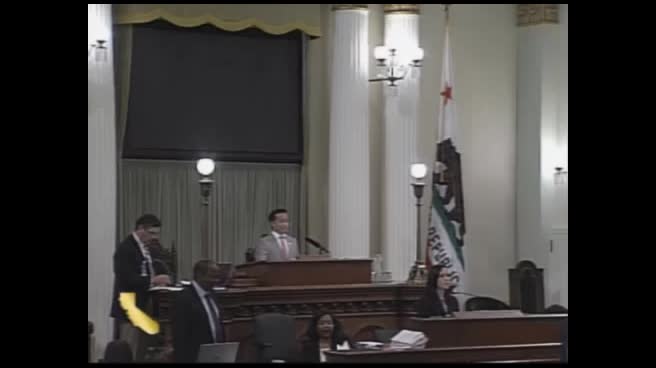
Bill Author

Bill Co-Author(s):
