AB 33: Electrical corporations: energy storage systems: long duration bulk energy storage resources.
- Session Year: 2015-2016
- House: Assembly
- Latest Version Date: 2016-09-26
Under existing law, the Public Utilities Commission has regulatory authority over public utilities, including electrical corporations, as defined. Existing law requires the commission to open a proceeding to determine appropriate targets, if any, for each load-serving entity, as defined, to procure viable and cost-effective energy storage systems to be achieved by December 31, 2020.
This bill would require the commission to evaluate and analyze the potential for all types of long duration bulk energy storage resources to help integrate renewable generation into the electrical grid, as specified.
Under existing law, the Public Utilities Commission has regulatory authority over public utilities, including electrical corporations, as defined. Existing law requires the commission to open a proceeding to determine appropriate targets, if any, for each load-serving entity, as defined, to procure viable and cost-effective energy storage systems to be achieved by December 31, 2015, and December 31, 2020. If determined to be appropriate, the commission is required to adopt the procurement targets by October 1, 2013, and to reevaluate the determinations not less than once every three years. Pursuant to these requirements the commission adopted Decision 13-10-040 (October 17, 2013), Decision Adopting Energy Storage Procurement Framework and Design Program.
If, beginning January 1, 2017, the commission increases the targets for a load-serving entity to procure viable and cost-effective energy storage systems, this bill would require the commission to authorize pumped hydroelectric storage facilities of any size that become operational on or after January 1, 2017, to be eligible to meet those increased targets to the extent that those facilities meet otherwise applicable requirements.
This bill would require the commission to evaluate and analyze the potential for all types of long duration bulk energy storage resources to help integrate renewable generation into the electrical grid, as specified.
Under existing law, the Public Utilities Commission has regulatory authority over public utilities, including electrical corporations, as defined. Existing law requires the commission to open a proceeding to determine appropriate targets, if any, for each load-serving entity, as defined, to procure viable and cost-effective energy storage systems to be achieved by December 31, 2015, and December 31, 2020. If determined to be appropriate, the commission is required to adopt the procurement targets by October 1, 2013, and to reevaluate the determinations not less than once every three years. Pursuant to these requirements the commission adopted Decision 13-10-040 (October 17, 2013), Decision Adopting Energy Storage Procurement Framework and Design Program.
If, beginning January 1, 2017, the commission increases the targets for a load-serving entity to procure viable and cost-effective energy storage systems, this bill would require the commission to authorize pumped hydroelectric storage facilities of any size that become operational on or after January 1, 2017, to be eligible to meet those requirements, without limit, increased targets to the extent that those facilities meet otherwise applicable requirements.
Under existing law, the Public Utilities Commission has regulatory authority over public utilities, including electrical corporations, as defined. Existing law requires the commission to open a proceeding to determine appropriate targets, if any, for each load-serving entity, as defined, to procure viable and cost-effective energy storage systems to be achieved by December 31, 2015, and December 31, 2020. If determined to be appropriate, the commission is required to adopt the procurement targets, targets by October 1, 2013, and to reevaluate the determinations not less than once every three years. Pursuant to these requirements the commission adopted Decision 13-10-040 (October 17, 2013), Decision Adopting Energy Storage Procurement Framework and Design Program.
If, beginning January 1, 2017, the commission increases the targets for a load-serving entity to procure viable and cost-effective energy storage systems, this bill would require the commission to authorize pumped hydroelectric storage facilities of any size that become operational on or after January 1, 2017, to be eligible to meet those requirements, without limit, to the extent that those facilities meet otherwise applicable requirements.
Under existing law, the Public Utilities Commission has regulatory authority over public utilities, including electrical corporations, as defined. The Public Utilities Act requires the commission to review and adopt an overall procurement plan for each electrical corporation to meet electricity demand for its customers in accordance with specified elements, incentive mechanisms, and objectives. The act requires the commission to review and accept, modify, or reject each electrical corporations procurement plan and requires that each approved procurement plan accomplish specified objectives. Existing law requires the commission to open a proceeding to determine appropriate targets, if any, for each load-serving entity, as defined, to procure viable and cost-effective energy storage systems to be achieved by December 31, 2015, and December 31, 2020. If determined to be appropriate, the commission is required to adopt the procurement targets, by October 1, 2013, and to reevaluate the determinations not less than once every three years. Pursuant to these requirements the commission adopted Decision 13-10-040 (October 17, 2013), Decision Adopting Energy Storage Procurement Framework and Design Program.
This bill would require the commission, as part of a new or existing proceeding, to determine what role large scale energy storage could play as part of the states overall strategy for procuring a diverse portfolio of resources and to consider specified factors in making that determination.
If, beginning January 1, 2017, the commission increases the targets for a load-serving entity to procure viable and cost-effective energy storage systems, this bill would require the commission to authorize pumped hydroelectric storage facilities of any size that become operational on or after January 1, 2017, to be eligible to meet those requirements, without limit, to the extent that those facilities meet otherwise applicable requirements.
Under existing law, the Public Utilities Commission has regulatory authority over public utilities, including electrical corporations, as defined. The Public Utilities Act requires the commission to review and adopt an overall procurement plan for each electrical corporation to meet electricity demand for its customers in accordance with specified elements, incentive mechanisms, and objectives. The act requires the commission to review and accept, modify, or reject each electrical corporations procurement plan and requires that each approved procurement plan accomplish specified objectives.
This bill would require the commission, as part of a new or existing proceeding, to determine what role large scale energy storage could play as part of the states overall strategy for procuring a diverse portfolio of resources and to consider specified factors in making that determination.
The California Global Warming Solutions Act of 2006 establishes the State Air Resources Board as the state agency responsible for monitoring and regulating sources emitting greenhouse gases. The act requires the state board to prepare and approve a scoping plan for achieving the maximum technologically feasible and cost-effective reductions in greenhouse gas emissions and to update the scoping plan at least once every 5 years.
This bill would establish the Energy Sector Emissions Reduction Advisory Council in state government and would require the council to recommend strategies for the electricity sector for incorporation into the scoping plan prepared by the state board, based on conclusions of specified analyses, including, among others, an analysis of the various strategies that could be implemented to reduce emissions of greenhouse gases from the electricity sector and integrate increasing amounts of renewable energy into the electricity grid. The bill would require the council to first convene by February 1, 2016, and to develop a schedule that ensures the recommendations and analyses are delivered to the state board early enough to be considered during development of the next scoping plan update. The bill would provide that the council shall cease to exist as of the end of the following December 31 after the council delivers its recommendations and analyses to the state board.
The California Global Warming Solutions Act of 2006 establishes the State Air Resources Board as the state agency responsible for monitoring and regulating sources emitting greenhouse gases. The act requires the state board to prepare and approve a scoping plan for achieving the maximum technologically feasible and cost-effective reductions in greenhouse gas emissions. The California Renewables Portfolio Standard Program requires the Public Utilities Commission to implement annual procurement targets for the procurement of eligible renewable energy resources for all retail sellers to achieve the targets and goals of the program. emissions and to update the scoping plan at least once every 5 years.
This bill would establish the Energy Integration Sector Emissions Reduction Advisory Council in state government and would require the council to develop recommendations recommend strategies for the electricity sector for inclusion in incorporation into the scoping plan prepared by the state board, based on conclusions of specified analyses, including, among others, an analysis of the various strategies necessary for the energy grid to integrate specified annual procurement targets as part of the California Renewables Portfolio Standard Program. that could be implemented to reduce emissions of greenhouse gases from the electricity sector and integrate increasing amounts of renewable energy into the electricity grid. The bill would require the council to first convene by February 1, 2016, and to develop a schedule that ensures the recommendations and analyses are delivered to the state board early enough to be considered during development of the next scoping plan update. The bill would provide that the council shall cease to exist as of the end of the following December 31 after the council delivers its recommendations and analyses to the state board.
The California Global Warming Solutions Act of 2006 establishes the State Air Resources Board as the state agency responsible for monitoring and regulating sources emitting greenhouse gases. The act requires the state board to adopt a statewide greenhouse gas emissions limit, as defined, to be achieved by 2020 equivalent to the statewide greenhouse gas emissions levels in 1990. The act requires the state board to prepare and approve a scoping plan for achieving the maximum technologically feasible and cost-effective reductions in greenhouse gas emissions. The California Renewables Portfolio Standard Program requires the Public Utilities Commission to implement annual procurement targets for the procurement of eligible renewable energy resources for all retail sellers to achieve the targets and goals of the program.
This bill would establish the Climate Change Energy Integration Advisory Council in state government and would assign require the council specified duties, including, among others, developing to develop recommendations for inclusion in the scoping plan prepared by the state board, including, among others, an analysis of the various strategies to achieve the statewide greenhouse gas emissions limit. The bill also would require the state board to establish consistent metrics to accurately quantify reductions in greenhouse gas emissions, quantify public health benefits, and measure the cost-effectiveness of the various strategies identified by the council. necessary for the energy grid to integrate specified annual procurement targets as part of the California Renewables Portfolio Standard Program.
The California Global Warming Solutions Act of 2006 establishes the State Air Resources Board as the state agency responsible for monitoring and regulating sources emitting greenhouse gases. The act requires the state board to adopt a statewide greenhouse gas emissions limit, as defined, to be achieved by 2020 equivalent to the statewide greenhouse gas emissions levels in 1990. The act requires the state board to prepare and approve a scoping plan for achieving the maximum technologically feasible and cost-effective reductions in greenhouse gas emissions. The act requires the scoping plan to be updated at least once every 5 years.
This bill, until January 1, 2020, would require, for purposes of advising the update of the next scoping plan, the state board to develop specified information by July 1, 2016. The bill would require the state board on or before January 1, 2017, to submit a report to the appropriate committees of the Legislature on the specified information. The bill would provide that the specified information is intended to assist in establishing state policy and does not change any statute, regulation, or regulatory decision.
This bill would establish the Climate Change Advisory Council in state government and would assign the council specified duties, including, among others, developing an analysis of various strategies to achieve the statewide greenhouse gas emissions limit. The bill also would require the state board to establish consistent metrics to accurately quantify reductions in greenhouse gas emissions, quantify public health benefits, and measure the cost-effectiveness of the various strategies identified by the council.
The California Global Warming Solutions Act of 2006 establishes the State Air Resources Board as the state agency responsible for monitoring and regulating sources emitting greenhouse gases. The act requires the state board to adopt a statewide greenhouse gas emissions limit, as defined, to be achieved by 2020 equivalent to the statewide greenhouse gas emissions levels in 1990. The act requires the state board to prepare and approve a scoping plan for achieving the maximum technologically feasible and cost-effective reductions in greenhouse gas emissions. The act requires the scoping plan to be updated at least once every 5 years.
This bill, until January 1, 2020, would require, for purposes of advising the update of the next scoping plan, the state board to develop specified information by July 1, 2016. The bill would require the state board on or before January 1, 2017, to submit a report to the appropriate committees of the Legislature on the specified information. The bill would provide that the specified information is intended to assist in establishing state policy and does not change any statute, regulation, or regulatory decision.
The Legislature finds and declares all of the following:
(a)According to the California Independent System Operator (ISO), the state is experiencing unprecedented changes in the generation, delivery, and consumption of electricity. Along with these changes come challenges for operating the states electrical grid and resources in the most efficient manner, particularly in terms of timing of generation in relation to the demand for electricity.
(b)As part of the long-term procurement planning process at the Public Utilities Commission, the ISO has identified a need for fast-ramping and flexible resources to balance the electrical grid and mitigate the effects of over-generation from renewable energy resources.
(c)The ISO has identified energy storage, with its unique ability to both utilize excess electricity generated by renewable energy resources and to quickly inject that electricity back onto the electrical grid to meet ramping and peak demand needs, as a part of the new strategy for efficiently operating the electrical grid in a manner that best protects the environment.
(d)Long duration bulk energy storage and pumped hydroelectric storage, in particular, when constructed in a sufficiently large scale, possesses the characteristics to meet our electrical grids need for rapid ramping capability and the capacity to utilize over-generation from renewable energy resources.
SEC. 2.The commission, in coordination with the Energy Commission, shall, as part of a new or existing proceeding, evaluate and analyze the potential for all types of long duration bulk energy storage resources to help integrate renewable generation into the electrical grid. As part of the evaluation, the commission shall assess the potential costs and benefits of all types of long duration bulk energy storage resources, including impacts to the transmission and distribution systems of location-specific long duration bulk energy storage resources.
The Legislature finds and declares all of the following:
(a)According to the California Independent System Operator (ISO), the state is experiencing unprecedented changes in the generation, delivery, and consumption of electricity. Along with these changes come challenges for operating the states electrical grid and resources in the most efficient manner, particularly in terms of timing of generation in relation to the demand for electricity.
(b)As part of the long-term procurement planning process at the Public Utilities Commission, the ISO has identified a need for fast-ramping and flexible resources to balance the electrical grid and mitigate the effects of over-generation from renewable energy resources.
(c)The ISO has identified energy storage, with its unique ability to both utilize excess electricity generated by renewable energy resources and to quickly inject that electricity back onto the electrical grid to meet ramping and peak demand needs, as a part of the new strategy for efficiently operating the electrical grid in a manner that best protects the environment.
(d)Pumped Long duration bulk energy storage and pumped hydroelectric storage, in particular, when constructed in a sufficiently large scale, possesses the characteristics to meet our electrical grids need for rapid ramping capability and the capacity to utilize over-generation from renewable energy resources.
(e)Even with the recognized need identified by the ISO, there remains a lack of incentive for the states electrical utilities to procure large pumped hydroelectric energy storage because that procurement does not meet any current utility mandate.
SEC. 2.Section 2836.8 is added to the Public Utilities Code, to read:2836.8.(a)Beginning January 1, 2017, if the commission increases the targets for a load-serving entity to procure viable and cost-effective energy storage systems, pumped hydroelectric storage facilities of any size that become operational on or after January 1, 2017, shall be eligible to the extent that those facilities meet otherwise applicable requirements.
(b)Subdivision (a) is declaratory of existing law and does not limit the commissions discretion in developing or adopting targets for a load-serving entity to procure viable and cost-effective energy storage systems.
SEC. 2.The commission, in coordination with the Energy Commission, shall, as part of a new or existing proceeding, evaluate and analyze the potential for all types of long duration bulk energy storage resources to help integrate renewable generation into the electrical grid. As part of the evaluation, the commission shall assess the potential costs and benefits of all types of long duration bulk energy storage resources, including impacts to the transmission and distribution systems of location-specific long duration bulk energy storage resources.
The Legislature finds and declares all of the following:
(a)According to the California Independent System Operator (ISO), the state is experiencing unprecedented changes in the generation, delivery, and consumption of electricity. Along with these changes come challenges for operating the states electrical grid and resources in the most efficient manner, particularly in terms of timing of generation in relation to the demand for electricity.
(b)As part of the long-term procurement planning process at the Public Utilities Commission, the ISO has identified a need for fast-ramping and flexible resources to balance the electrical grid and mitigate the effects of over-generation from renewable energy resources.
(c)The ISO has identified energy storage, with its unique ability to both utilize excess electricity generated by renewable energy resources and to quickly inject that electricity back onto the electrical grid to meet ramping and peak demand needs, as a part of the new strategy for efficiently operating the electrical grid in a manner that best protects the environment.
(d)Pumped hydroelectric storage, in particular, when constructed in a sufficiently large scale, possesses the characteristics to meet our electrical grids need for rapid ramping capability and the capacity to utilize over-generation from renewable energy resources.
(e)Even with the recognized need identified by the ISO, there remains a lack of incentive for the states electrical utilities to procure large pumped hydroelectric energy storage because that procurement does not meet any current utility mandate.
SEC. 2.Section 2836.8 is added to the Public Utilities Code, to read:2836.8.(a)Beginning January 1, 2017, if the commission increases the targets for a load-serving entity to procure viable and cost-effective energy storage systems, pumped hydroelectric storage facilities of any size that become operational on or after January 1, 2017, shall be eligible without limit to the extent that those facilities meet otherwise applicable requirements.
(b)Subdivision (a) is declaratory of existing law and does not limit the commissions discretion in developing or adopting targets for a load-serving entity to procure viable and cost-effective energy storage systems.
The Legislature finds and declares all of the following:
(a)According to the California Independent System Operator (ISO), the state is experiencing unprecedented changes in the generation, delivery, and consumption of electricity. Along with these changes come challenges for operating the states electrical grid and resources in the most efficient manner, particularly in terms of timing of generation in relation to the demand for electricity.
(b)As part of the long term long-term procurement planning process at the Public Utilities Commission, the ISO has identified a need for fast-ramping and flexible resources to balance the electrical grid and mitigate the effects of over-generation from renewable energy resources.
(c)The ISO has identified energy storage, with its unique ability to both utilize excess electricity generated by renewable energy resources and to quickly inject that electricity back onto the electrical grid to meet ramping and peak demand needs, as a part of the new strategy for efficiently operating the electrical grid in a manner that best protects the environment.
(d)Pumped hydroelectric storage, in particular, when constructed in a sufficiently large scale, possesses the characteristics to meet our electrical grids need for rapid ramping capability and the capacity to utilize over-generation from renewable energy resources.
(e)Even with the recognized need identified by the ISO, there remains a lack of incentive for the states electrical utilities to procure large pumped hydroelectric energy storage because that procurement does not meet any current utility mandate.
SEC. 2.Section 2836.8 is added to the Public Utilities Code, to read:2836.8.(a)Beginning January 1, 2017, if the commission increases the targets for a load-serving entity to procure viable and cost-effective energy storage systems, pumped hydroelectric storage facilities of any size that become operational on or after January 1, 2017, shall be eligible without limit to the extent that those facilities meet otherwise applicable requirements.
(b)Subdivision (a) is declaratory of existing law and does not limit the commissions discretion in developing or adopting targets for a load-serving entity to procure viable and cost-effective energy storage systems.
The Legislature finds and declares all of the following:
(a)According to the California Independent System Operator (ISO), the state is experiencing unprecedented changes in the generation, delivery, and consumption of electricity. Along with these changes come challenges for operating the states electrical grid and resources in the most efficient manner, particularly in terms of timing of generation in relation to the demand for electricity.
(b)As part of the long term procurement planning process at the Public Utilities Commission, the ISO has identified a need for fast-ramping and flexible resources to balance the electrical grid and mitigate the effects of over-generation from renewable energy resources.
(c)The ISO has identified energy storage, with its unique ability to both utilize excess electricity generated by renewable energy resources and to quickly inject that electricity back onto the electrical grid to meet ramping and peak demand needs, as a part of the new strategy for efficiently operating the electrical grid in a manner that best protects the environment.
(d)Pumped hydroelectric storage, in particular, when constructed in a sufficiently large scale, possesses the characteristics to meet our electrical grids need for rapid ramping capability and the capacity to utilize over-generation from renewable energy resources.
(e)Even with the recognized need identified by the ISO, there remains a lack of incentive for the states electrical utilities to procure large pumped hydroelectric energy storage because that procurement does not meet any current utility mandate.
SEC. 2.Section 2836.8 is added to the Public Utilities Code, to read:2836.8.Beginning January 1, 2017, if the commission increases the targets for a load-serving entity to procure viable and cost-effective energy storage systems, pumped hydroelectric storage facilities of any size that become operational on or after January 1, 2017, shall be eligible without limit to the extent that those facilities meet otherwise applicable requirements.
SECTION 1.Section 454.53 is added to the Public Utilities Code, to read:454.53.The commission shall, as part of a new or existing proceeding, determine what role, if any, large scale energy storage could play as part of the states overall strategy for procuring a diverse portfolio of resources and, in making that determination, shall consider factors including, but not limited to, cost-effectiveness, the projected value of renewable integration services, and indirect greenhouse gas emissions reductions over the anticipated life of the large scale energy storage resource.
The commission shall, as part of a new or existing proceeding, determine what role, if any, large scale energy storage could play as part of the states overall strategy for procuring a diverse portfolio of resources and, in making that determination, shall consider factors including, but not limited to, cost-effectiveness, the projected value of renewable integration services, and indirect greenhouse gas emissions reductions over the anticipated life of the large scale energy storage resource.
SECTION 1.(a)The Legislature finds and declares all of the following:
(1)Several state agencies, boards, commissions, and other entities possess expertise on how to reduce emissions of greenhouse gases from the electricity sector, in furtherance of the states mid- and long-term greenhouse gas reduction goals.
(2)These agencies and entities have completed and are performing analyses of the changes that will be needed in how electricity is generated, delivered, and consumed throughout the state, and the technologies and other strategies that can be used to help achieve those goals.
(3)The State Air Resources Board is charged by the California Global Warming Solutions Act of 2006 (Division 25.5 (commencing with Section 38500) of the Health and Safety Code) with developing and updating a scoping plan to achieve the states greenhouse gas emission reduction goals.
(4)In developing the next scoping plan update, the State Air Resources Board should consider the best information, modeling, and analysis produced by the relevant state agencies on available strategies that could be implemented to reduce greenhouse gas emissions from the states power supply, while ensuring the reliability of the electricity grid, and the technical feasibility and cost-effectiveness of those strategies.
(b)The purpose and intent of this act is to complement the relevant state agencies ongoing efforts and ensure that these agencies coordinate, through a public process and in furtherance of the states greenhouse gas emission reduction goals, to develop and deliver a complete and coherent set of recommendations to the State Air Resources Board before the next scoping plan update on technically feasible strategies that will achieve the required reductions in emissions of greenhouse gases from the electricity sector in a manner that is cost-effective and maintains reliability, including those strategies that will be needed to integrate increasing amounts of renewable energy into the electricity grid while minimizing over-generation.
SEC. 2.Section 38561.5 is added to the Health and Safety Code, to read:38561.5.(a)The Energy Sector Emissions Reduction Advisory Council is hereby established in state government, and it shall consist of all of the following members:
(1)The chair of the State Energy Resources Conservation and Development Commission, or his or her designee.
(2)The president of the Public Utilities Commission, or his or her designee.
(3)The president of the California Independent System Operator, or his or her designee.
(4)The chair of the State Water Resources Control Board, or his or her designee.
(5)The chair of the state board, or his or her designee.
(b)The council shall recommend strategies for the electricity sector, other than and in addition to any market-based mechanisms established pursuant to subdivision (c) of Section 38562 or Section 38570, for incorporation into the scoping plan developed pursuant to Section 38561, based on the conclusions of all of the following analyses that the council shall complete:
(1)An analysis of the various
strategies that could be implemented to reduce emissions of greenhouse gases from the electricity sector and integrate increasing amounts of renewable energy into the electricity grid, which evaluates and compares these strategies based upon their technical feasibility, cost-effectiveness, and the extent to which their implementation would minimize over-generation, maintain the reliability of the electricity grid, and reduce emissions of greenhouse gases. The analysis shall consider, at a minimum, all of the following strategies in light of the criteria indicated in this paragraph:
(A)Increasing the volume of renewable energy generation by the amounts required by state law or otherwise needed to achieve statewide greenhouse gas emissions limits.
(B)Deepening regional coordination in the Western Interconnection.
(C)Increasing energy storage, including pumped-hydroelectric storage.
(D)Retrofitting existing natural gas-fired electrical generation facilities to increase their operational flexibility.
(E)Using renewable energy generation facilities to provide operational flexibility.
(F)Deploying carbon capture and storage and other greenhouse gas emissions reduction technology at existing fossil fuel-fired electrical generation facilities.
(G)Increasing the role of demand response through all of the following:
(i)Transitioning to time-of-use or real-time pricing, or both, for all customer classes.
(ii)Increasing market integration of, and opportunities for, supply-side demand response.
(iii)Increasing customer access to real-time or near-real-time energy usage and wholesale price data, enhancing the sharing of these data with third parties, and enabling the market for programmable devices that use these data.
(H)Increasing energy efficiency.
(I)Ensuring that adequate generating capacity remains available to meet demand through measures such as multi-year capacity or reliability payments.
(2)An economic analysis using the best available economic models and data of the various strategies required to be analyzed pursuant to paragraph (1).
(3)An analysis of the benefits to the health, safety, and welfare of state residents, worker safety, the states environment and quality of life, and any other benefits associated with the various strategies required to be analyzed pursuant to paragraph (1).
(c)The council shall first convene no later than February 1, 2016, and, at that time, develop a schedule in consultation with the chair of the state board for delivery of the recommendations and analyses required by subdivision (b) that shall ensure the recommendations and analyses are delivered to the staff of the state board early enough to be considered during development of the next scoping plan update required by Section 38561. The councils preliminary recommendations and analyses shall be made available for public comment for no less than thirty days. After considering comments received, the council shall finalize and deliver the recommendations and analyses required by subdivision (b) to the state board, at which time the councils duties shall be completed, and the council shall cease to exist as of the end of the following December 31.
(d)The recommendations made and analyses completed pursuant to subdivision (b) are intended to assist in updating the scoping plan pursuant to Section 38561 and to inform the regulations and approaches of the represented agencies and do not change any statute, regulation, or regulatory decision.
(a)The Legislature finds and declares all of the following:
(1)Several state agencies, boards, commissions, and other entities possess expertise on how to reduce emissions of greenhouse gases from the electricity sector, in furtherance of the states mid- and long-term greenhouse gas reduction goals.
(2)These agencies and entities have completed and are performing analyses of the changes that will be needed in how electricity is generated, delivered, and consumed throughout the state, and the technologies and other strategies that can be used to help achieve those goals.
(3)The State Air Resources Board is charged by the California Global Warming Solutions Act of 2006 (Division 25.5 (commencing with Section 38500) of the Health and Safety Code) with developing and updating a scoping plan to achieve the states greenhouse gas emission reduction goals.
(4)In developing the next scoping plan update, the State Air Resources Board should consider the best information, modeling, and analysis produced by the relevant state agencies on available strategies that could be implemented to reduce greenhouse gas emissions from the states power supply, while ensuring the reliability of the electricity grid, and the technical feasibility and cost-effectiveness of those strategies.
(b)The purpose and intent of this act is to complement the relevant state agencies ongoing efforts and ensure that these agencies coordinate, through a public process and in furtherance of the states greenhouse gas emission reduction goals, to develop and deliver a complete and coherent set of recommendations to the State Air Resources Board before the next scoping plan update on technically feasible strategies that will achieve the required reductions in emissions of greenhouse gases from the electricity sector in a manner that is cost-effective and maintains reliability, including those strategies that will be needed to integrate increasing amounts of renewable energy into the electricity grid while minimizing over-generation.
SEC. 2.Section 38561.5 is added to the Health and Safety Code, to read:38561.5.(a)The Energy Sector Emissions Reduction Advisory Council is hereby established in state government, and it shall consist of all of the following members:
(1)The chair of the State Energy Resources Conservation and Development Commission, or his or her designee.
(2)The president of the Public Utilities Commission, or his or her designee.
(3)The president of the California Independent System Operator, or his or her designee.
(4)The chair of the State Water Resources Control Board, or his or her designee.
(5)The chair of the state board, or his or her designee.
(b)The council shall recommend strategies for the electricity sector, other than and in addition to any market-based mechanisms established pursuant to subdivision (c) of Section 38562 or Section 38570, for incorporation into the scoping plan developed pursuant to Section 38561, based on the conclusions of all of the following analyses that the council shall complete:
(1)An analysis of the various
strategies that could be implemented to reduce emissions of greenhouse gases from the electricity sector and integrate increasing amounts of renewable energy into the electricity grid, which evaluates and compares these strategies based upon their technical feasibility, cost-effectiveness, and the extent to which their implementation would minimize over-generation, maintain the reliability of the electricity grid, and reduce emissions of greenhouse gases. The analysis shall consider, at a minimum, all of the following strategies in light of the criteria indicated in this paragraph:
(A)Increasing the volume of renewable energy generation by the amounts required by state law or otherwise needed to achieve the goals established pursuant to Section 38550. statewide greenhouse gas emissions limits.
(B)Deepening regional coordination in the Western Interconnection.
(C)Increasing energy storage, including pumped-hydroelectric storage.
(D)Retrofitting existing natural gas-fired electrical generation facilities to increase their operational flexibility.
(E)Using renewable energy generation facilities to provide operational flexibility.
(F)Deploying carbon capture and storage and other greenhouse gas emissions reduction technology at existing fossil fuel-fired electrical generation facilities.
(G)Increasing the role of demand response through all of the following:
(i)Transitioning to time-of-use or real-time pricing, or both, for all customer classes.
(ii)Increasing market integration of, and opportunities for, supply-side demand response.
(iii)Increasing customer access to real-time or near-real-time energy usage and wholesale price data, enhancing the sharing of these data with third parties, and enabling the market for programmable devices that use these data.
(H)Increasing energy efficiency.
(I)Ensuring that adequate generating capacity remains available to meet demand through measures such as multi-year capacity or reliability payments.
(2)An economic analysis using the best available economic models and data of the various strategies required to be analyzed pursuant to paragraph (1).
(3)An analysis of the benefits to the health, safety, and welfare of state residents, worker safety, the states environment and quality of life, and any other benefits associated with the various strategies required to be analyzed pursuant to paragraph (1).
(c)The council shall first convene no later than February 1, 2016, and, at that time, develop a schedule in consultation with the chair of the state board for delivery of the recommendations and analyses required by subdivision (b) that shall ensure the recommendations and analyses are delivered to the staff of the state board early enough to be considered during development of the next scoping plan update required by Section 38561. The councils preliminary recommendations and analyses shall be made available for public comment for no less than thirty days. After considering comments received, the council shall finalize and deliver the recommendations and analyses required by subdivision (b) to the state board, at which time the councils duties shall be completed, and the council shall cease to exist as of the end of the following December 31.
(d)The recommendations made and analyses completed pursuant to subdivision (b) are intended to assist in updating the scoping plan pursuant to Section 38561 and to inform the regulations and approaches of the represented agencies and do not change any statute, regulation, or regulatory decision.
(a)The Legislature finds and declares all of the following:
(1)Several state agencies, boards, commissions, and other entities possess expertise on how to reduce emissions of greenhouse gases from the electricity sector, in furtherance of the states mid- and long-term greenhouse gas reduction goals.
(2)These agencies and entities have completed and are performing analyses of the changes that will be needed in how electricity is generated, delivered, and consumed throughout the state, and the technologies and other strategies that can be used to help achieve those goals.
(3)The State Air Resources Board is charged by the California Global Warming Solutions Act of 2006 (Division 25.5 (commencing with Section 38500) of the Health and Safety Code) with developing and updating a scoping plan to achieve the states greenhouse gas emission reduction goals.
(4)In developing the next scoping plan update, the State Air Resources Board should consider the best information, modeling, and analysis produced by the relevant state agencies on available strategies that could be implemented to reduce greenhouse gas emissions from the states power supply, while ensuring the reliability of the electricity grid, and the technical feasibility and cost-effectiveness of those strategies.
(b)The purpose and intent of this act is to complement the relevant state agencies ongoing efforts and ensure that these agencies coordinate, through a public process and in furtherance of the states greenhouse gas emission reduction goals, to develop and deliver a complete and coherent set of recommendations to the State Air Resources Board before the next scoping plan update on technically feasible strategies that will achieve the required reductions in emissions of greenhouse gases from the electricity sector in a manner that is cost-effective and maintains reliability, including those strategies that will be needed to integrate increasing amounts of renewable energy into the electricity grid while minimizing over-generation.
SECTION 1.SEC. 2.Section 38561.5 is added to the Health and Safety Code, to read:38561.5.(a)The Energy Integration Sector Emissions Reduction Advisory Council is hereby established in state government, and it shall consist of all of the following members:
(1)The chair of the State Energy Resources Conservation and Development Commission, or his or her designee.
(2)The president of the Public Utilities Commission, or his or her designee.
(3)The president of the California Independent System Operator, or his or her designee.
(4)The chair of the State Water Resources Control Board, or his or her designee.
(5)The chair of the state board, or his or her designee.
(b)The council, as recommendations for inclusion in council shall recommend strategies for the electricity sector, other than and in addition to any market-based mechanisms established pursuant to subdivision (c) of Section 38562 or Section 38570, for incorporation into the scoping plan developed pursuant to Section 38561, shall complete all of the following: 38561, based on the conclusions of all of the following analyses that the council shall complete:
(1)Develop an An analysis of the various
strategies necessary for the energy grid to integrate a 40-percent, a 50-percent, and a greater than 50-percent standard as part of the California Renewables Portfolio Standard Program (Article 16 (commencing with Section 399.11) of Chapter 2.3 of Part 1 of Division 1 of the Public Utilities Code) in order to that could be implemented to reduce emissions of greenhouse gases from the electricity sector and integrate increasing amounts of renewable energy into the electricity grid, which evaluates and compares these strategies based upon their technical feasibility, cost-effectiveness, and the extent to which their implementation would minimize and eliminate over-generation and the need for curtailment, including, but not limited to, all of the following: over-generation, maintain the reliability of the electricity grid, and reduce emissions of greenhouse gases. The analysis shall consider, at a minimum, all of the following strategies in light of the criteria indicated in this paragraph:
(A)Increasing the volume of renewable energy generation by the amounts required by state law or otherwise needed to achieve the goals established pursuant to Section 38550.
(A)
(B)Deepening regional coordination in the western interconnection. Western Interconnection.
(B)
(C)Increasing energy storage. storage, including pumped-hydroelectric storage.
(C)
(D)Retrofitting existing baseload natural gas-fired electrical generation facilities in order that they may perform as peaking electrical generation facilities. to increase their operational flexibility.
(D)
(E)Using renewable energy generation facilities as peaking electrical generation facilities. to provide operational flexibility.
(E)Allowing for very low-carbon
(F)Deploying carbon capture and storage and other greenhouse gas emissions reduction technology at existing fossil fuel peaking fuel-fired electrical generation facilities by deploying carbon capture and storage. facilities.
(F)Encouraging
(G)Increasing the role of demand response through both all of the following:
(i)Transitioning to time-of-use pricing or real-time pricing, or both, for residential buildings. all customer classes.
(ii)Increasing market integration of, and opportunities for, supply-side demand response.
(ii)
(iii)Increasing customer access to real-time or near-real-time energy usage data. and wholesale price data, enhancing the sharing of these data with third parties, and enabling the market for programmable devices that use these data.
(H)Increasing energy efficiency.
(I)Ensuring that adequate generating capacity remains available to meet demand through measures such as multi-year capacity or reliability payments.
(2)Develop an An economic assessment analysis using the best available economic models and data of the various strategies required to be analyzed pursuant to paragraph (1).
(3)Develop an An analysis of the benefits to the health, safety, and welfare of state residents, worker safety, the states environment and quality of life, and any other benefits associated with the various strategies required to be analyzed pursuant to paragraph (1).
(c)The council shall first convene no later than February 1, 2016, and, at that time, develop a schedule in consultation with the chair of the state board for delivery of the recommendations and analyses required by subdivision (b) that shall ensure the recommendations and analyses are delivered to the staff of the state board early enough to be considered during development of the next scoping plan update required by Section 38561. The councils preliminary recommendations and analyses shall be made available for public comment for no less than thirty days. After considering comments received, the council shall finalize and deliver the recommendations and analyses required by subdivision (b) to the state board, at which time the councils duties shall be completed, and the council shall cease to exist as of the end of the following December 31.
(c)
(d)The information developed recommendations made and analyses completed pursuant to subdivision (b) is are intended to assist in establishing state policy updating the scoping plan pursuant to Section 38561 and does to inform the regulations and approaches of the represented agencies and do not change any statute, regulation, or regulatory decision.
The Legislature finds and declares all of the following:
(a)Climate change is a global emissions problem.
(b)California is responsible for approximately 1 percent of the worlds global greenhouse gas emissions and, thus, needs to address the problem of climate change with a global perspective.
(c)Significant technological advances and major policy initiatives that can be deployed at scale in developed and developing countries will be necessary to transition away from fossil fuel as the primary fuel source to allow the developed and developing countries of the world to achieve low-carbon economic growth.
(d)It is in the best interest of the state to ensure that greenhouse gas emissions reduction goals are achievable by strategies that other states and countries could reasonably adopt.
(e)Demonstrating effective climate change policy can increase the likelihood that other states and countries will follow Californias lead, which is necessary for the state to have a significant effect on the global climate change problem.
SEC. 2.SECTION 1.Section 38561.5 is added to the Health and Safety Code, to read:38561.5.(a)The Climate Change Energy Integration Advisory Council is hereby established in state government, and it shall consist of all of the following: following members:
(1)The chair of the state board, or his or her designee.
(1)The chair of the State Energy Resources Conservation and Development Commission, or his or her designee.
(2)The president of the Public Utilities Commission, or his or her designee.
(3)The chair of the governing board president of the California Independent System Operator, or his or her designee.
(4)The chair of the State Water Resources Control Board, or his or her designee.
(5)The chair of the State Energy Resources Conservation and Development Commission, or his or her designee.
(5)The chair of the state board, or his or her designee.
(b)The council, as recommendations for inclusion in the scoping plan developed pursuant to Section 38561, shall complete all of the following:
(1)Develop an analysis of the various strategies to achieve the statewide greenhouse gas emissions limit, including, but not limited to, all of the following:
(A)Strategies strategies necessary for the energy grid to integrate a 40-percent, a 50-percent, and a greater than 50-percent standard as part of the California Renewables Portfolio Standard Program (Article 16 (commencing with Section 399.11) of Chapter 2.3 of Part 1 of Division 1 of the Public Utilities Code) in order to minimize and eliminate over-generation and the need for curtailment, including, but not limited to, all of the following:
(i)
(A)Deepening regional coordination in the western interconnection.
(ii)
(B)Increasing energy storage.
(iii)
(C)Retrofitting existing baseload electrical generation facilities in order that they may perform as peaking electrical generation facilities.
(iv)
(D)Using renewable energy generation facilities as peaking electrical generation facilities.
(v)
(E)Allowing for very low-carbon-fossil-fuel low-carbon fossil fuel peaking electrical generation facilities by deploying carbon capture and storage.
(vi)
(F)Encouraging demand response through both of the following:
(I)
(i)Transitioning to time-of-use pricing for residential buildings.
(II)
(ii)Increasing customer access to real-time or near-real-time energy usage data.
(B)Strategies to increase energy efficiency in both commercial and residential buildings, including, but not limited to, all of the following:
(i)Validating existing energy efficiency programs against actual energy usage data.
(ii)Optimizing heating and cooling systems.
(iii)Transitioning to the electrification of buildings.
(C)Strategies to advance the transportation sector, including, but not limited to, all of the following:
(i)Increasing the fuel economy of light-duty vehicles.
(ii)Examining strategies for reducing emissions from heavy-duty vehicles, such as through the use of natural gas, biogas, and biodiesel.
(iii)Increasing the market for low-carbon and very low-carbon fuels.
(iv)Building electric vehicle infrastructure and low-carbon and very low-carbon vehicle infrastructure.
(2)Develop an economic assessment using the best available economic models and data of the various greenhouse gas emissions reduction strategies required to achieve the statewide greenhouse gas emissions limit. to be analyzed pursuant to paragraph (1).
(3)Develop an analysis of the benefits to the health, safety, and welfare of state residents, worker safety, the states environment and quality of life, and any other benefits associated with the various greenhouse gas emissions reduction strategies to achieve the statewide greenhouse gas emissions limit. required to be analyzed pursuant to paragraph (1).
(c)The information developed pursuant to subdivision (b) is intended to assist in establishing state policy and does not change any statute, regulation, or regulatory decision.
SEC. 3.Section 38561.7 is added to the Health and Safety Code, to read:38561.7.The state board shall establish consistent metrics to accurately quantify reductions in greenhouse gas emissions, quantify public health benefits, and measure the cost-effectiveness of the various strategies identified by the Climate Change Advisory Council pursuant to Section 38561.5 in order to achieve the statewide greenhouse gas emissions limit.
The Legislature finds and declares all of the following:
(a)Climate change is a global emissions problem.
(b)California is responsible for approximately 1 percent of the worlds global greenhouse gas emissions and, thus, needs to address the problem of climate change with a global perspective.
(c)Significant technological advances and major policy initiatives that can be deployed at scale in developed and developing countries will be necessary to transition away from fossil fuel as the primary fuel source to allow the developed and developing countries of the world to achieve low-carbon economic growth.
(d)It is in the best interest of the state to ensure that greenhouse gas emissions reduction goals are achievable by strategies that other states and countries could reasonably adopt.
(e)Demonstrating effective climate change policy can increase the likelihood that other states and countries will follow Californias lead, which is necessary for the state to have a significant effect on the global climate change problem.
SEC. 2.Section 38561.5 is added to the Health and Safety Code, to read:38561.5.(a)The Climate Change Advisory Council is hereby established in state government, and it shall consist of all of the following:
(1)The chair of the state board, or his or her designee.
(2)The president of the Public Utilities Commission, or his or her designee.
(3)The chair of the governing board of the California Independent System Operator, or his or her designee.
(4)The chair of the State Water Resources Control Board, or his or her designee.
(5)The chair of the State Energy Resources Conservation and Development Commission, or his or her designee.
(b)The council, as recommendations for inclusion in the scoping plan developed pursuant to Section 38561, shall complete all of the following:
(1)Develop an analysis of various strategies to achieve the statewide greenhouse gas emissions limit, including, but not limited to, all of the following:
(A)Strategies necessary for the energy grid to integrate a 40-percent, a 50-percent, and a greater than 50-percent standard as part of the California Renewables Portfolio Standard Program (Article 16 (commencing with Section 399.11) of Chapter 2.3 of Part 1 of Division 1 of the Public Utilities Code) in order to minimize and eliminate over-generation and the need for curtailment, including, but not limited to, all of the following:
(i)Deepening regional coordination in the western interconnection.
(ii)Increasing energy storage.
(iii)Retrofitting existing baseload electrical generation facilities in order that they may perform as peaking electrical generation facilities.
(iv)Using renewable energy generation facilities as peaking electrical generation facilities.
(v)Allowing for very low-carbon-fossil-fuel peaking electrical generation facilities by deploying carbon capture and storage.
(vi)Encouraging demand response through both of the following:
(I)Transitioning to time-of-use pricing for residential buildings.
(II)Increasing customer access to real-time or near-real-time energy usage data.
(B)Strategies to increase energy efficiency in both commercial and residential buildings, including, but not limited to, all of the following:
(i)Validating existing energy efficiency programs against actual energy usage data.
(ii)Optimizing heating and cooling systems.
(iii)Transitioning to the electrification of buildings.
(C)Strategies to advance the transportation sector, including, but not limited to, all of the following:
(i)Increasing the fuel economy of light-duty vehicles.
(ii)Examining strategies for reducing emissions from heavy-duty vehicles, such as through the use of natural gas, biogas, and biodiesel.
(iii)Increasing the market for low-carbon and very low-carbon fuels.
(iv)Building electric vehicle infrastructure and low-carbon and very low-carbon vehicle infrastructure.
(2)Develop an economic assessment using the best available economic models and data of the various greenhouse gas emissions reduction strategies required to achieve the statewide greenhouse gas emissions limit.
(3)Develop an analysis of the benefits to the health, safety, and welfare of state residents, worker safety, the states environment and quality of life, and any other benefits associated with the various greenhouse gas emissions reduction strategies to achieve the statewide greenhouse gas emissions limit.
(c)The information developed pursuant to subdivision (b) is intended to assist in establishing state policy and does not change any statute, regulation, or regulatory decision.
SEC. 3.Section 38561.7 is added to the Health and Safety Code, to read:38561.7.The state board shall establish consistent metrics to accurately quantify reductions in greenhouse gas emissions, quantify public health benefits, and measure the cost-effectiveness of the various strategies identified by the Climate Change Advisory Council pursuant to Section 38561.5 in order to achieve the statewide greenhouse gas emissions limit.
SEC. 2.Section 38561.5 is added to the Health and Safety Code, to read:38561.5.(a)On or before July 1, 2016, for purposes of advising the update of the next scoping plan pursuant to subdivision (h) of Section 38561, the state board shall develop a proposal consistent with Sections 38550 and 38551 that includes all of the following:
(1)A proposed goal that further reduces greenhouse gas emissions by 2040.
(2)A proposed goal that further reduces greenhouse gas emissions beyond the 2040 goal by 2050.
(3)A proposed goal for 2030 that includes all of the following:
(A)An evaluation of the 2030 goal based on what policies and technologies can be scaled to the rest of the country and the world.
(B)An economic assessment using the best available economic models and data of the various greenhouse gas emissions-reduction strategies required to achieve the 2030 goal. The economic assessment shall include a marginal cost analysis.
(C)An analysis of the benefits to the health, safety, and welfare of state residents, worker safety, the states environment and quality of life, and any other benefits associated with the various greenhouse gas emissions reduction strategies to achieve the 2030 goal.
(D)The establishment of consistent metrics to accurately quantify reductions in greenhouse gas emissions, quantify public health benefits, and measure the cost-effectiveness of various policies and technologies.
(b)(1)On or before January 1, 2017, the state board shall submit to the appropriate committees of the Legislature the information developed pursuant to subdivision (a).
(2)A report to be submitted pursuant to this subdivision shall be submitted in compliance with Section 9795 of the Government Code.
(c)The information developed pursuant to subdivision (a) is intended to assist in establishing state policy and does not change any statute, regulation, or regulatory decision.
(d)This section shall remain in effect only until January 1, 2020, and as of that date is repealed, unless a later enacted statute, that is enacted before January 1, 2020, deletes or extends that date.
The Legislature finds and declares all of the following:
(a)Climate change is a global emissions problem.
(b)California is responsible for approximately 1 percent of the worlds global greenhouse gas emissions and, thus, needs to address the problem of climate change with a global perspective.
(c)Significant technological advances and major policy initiatives that can be deployed at scale in developed and developing countries will be necessary to transition away from fossil fuel as the primary fuel source to allow the developed and developing countries of the world to achieve low-carbon economic growth.
(d)It is in the best interest of the state to ensure that greenhouse gas reduction goals are achievable by strategies that other states and countries could reasonably adopt.
(e)Demonstrating effective climate change policy can increase the likelihood that other states and countries will follow Californias lead, which is necessary for the state to have a significant effect on the global climate change problem.
SEC. 2.Section 38561.5 is added to the Health and Safety Code, to read:38561.5.(a)On or before July 1, 2016, for purposes of advising the update of the next scoping plan pursuant to subdivision (h) of Section 38561, the state board shall develop a proposal consistent with Sections 38550 and 38551 that includes all of the following:
(1)A proposed goal that further reduces greenhouse gas emissions by 2040.
(2)A proposed goal that further reduces greenhouse gas emissions beyond the 2040 goal by 2050.
(3)A proposed goal for 2030 that includes all of the following:
(A)An evaluation of the 2030 goal based on what policies and technologies can be scaled to the rest of the country and the world.
(B)An economic assessment using the best available economic models and data of the various greenhouse gas emissions-reduction strategies required to achieve the 2030 goal. The economic assessment shall include a marginal cost analysis.
(C)An analysis of the benefits to the health, safety, and welfare of state residents, worker safety, the states environment and quality of life, and any other benefits associated with the various greenhouse gas emissions reduction strategies to achieve the 2030 goal.
(D)The establishment of consistent metrics to accurately quantify reductions in greenhouse gas emissions, quantify public health benefits, and measure the cost-effectiveness of various policies and technologies.
(b)(1)On or before January 1, 2017, the state board shall submit to the appropriate committees of the Legislature the information developed pursuant to subdivision (a).
(2)A report to be submitted pursuant to this subdivision shall be submitted in compliance with Section 9795 of the Government Code.
(c)The information developed pursuant to subdivision (a) is intended to assist in establishing state policy and does not change any statute, regulation, or regulatory decision.
(d)This section shall remain in effect only until January 1, 2020, and as of that date is repealed, unless a later enacted statute, that is enacted before January 1, 2020, deletes or extends that date.
|
Date
|
Status
|
|---|---|
| Sep 9, 2016 | Enrolled and presented to the Governor at 2:30 p.m. |
| Aug 31, 2016 | Senate amendments concurred in. To Engrossing and Enrolling. |
| Aug 30, 2016 | From committee: That the Senate amendments be concurred in. (Ayes 14. Noes 0.) (August 30). |
| Aug 24, 2016 | Re-referred to Com. on U. & C. pursuant to Assembly Rule 77.2. |
| Aug 24, 2016 | In Assembly. Concurrence in Senate amendments pending. May be considered on or after August 26 pursuant to Assembly Rule 77. |
| Aug 23, 2016 | Read third time. Passed. Ordered to the Assembly. (Ayes 39. Noes 0. Page 5296.). |
| Aug 23, 2016 | Read third time. Passed. Ordered to the Assembly. |
| Aug 22, 2016 | Read second time. Ordered to third reading. |
| Aug 19, 2016 | Read third time and amended. Ordered to second reading. |
| Aug 15, 2016 | Reconsideration granted. (Ayes 37. Noes 0. Page 4976.) |
| Aug 15, 2016 | Read third time. Passed. Ordered to the Assembly. (Ayes 37. Noes 0. Page 4966.). |
| Aug 15, 2016 | Reconsideration granted. (Ayes 37. Noes 0.) |
| Aug 15, 2016 | Read third time. Passed. Ordered to the Assembly. (Ayes 37. Noes 0.). |
| Aug 15, 2016 | Reconsideration granted. |
| Aug 15, 2016 | Motion to reconsider made by Senator Hueso. |
| Aug 15, 2016 | Read third time. Passed. Ordered to the Assembly. |
| Aug 2, 2016 | Read second time and amended. Ordered to third reading. |
| Aug 1, 2016 | From committee: Be placed on second reading file pursuant to Senate Rule 28.8 and be amended. |
| Jun 20, 2016 | Re-referred to Com. on APPR. |
| Jun 20, 2016 | Read second time and amended. Re-referred to Com. on E.Q. |
| Jun 20, 2016 | Withdrawn from committee. |
| Jun 16, 2016 | From committee: Amend, and do pass as amended and re-refer to Com. on E.Q. (Ayes 11. Noes 0.) (June 13). |
| Jun 6, 2016 | From committee chair, with author's amendments: Amend, and re-refer to committee. Read second time, amended, and re-referred to Com. on E., U., & C. |
| Jan 28, 2016 | Re-referred to Coms. on E., U., & C. and E.Q. |
| Sep 8, 2015 | Re-referred to Com. on RLS. pursuant to Senate Rule 29.10(c) . |
| Sep 8, 2015 | Re-referred to Com. on RLS. pursuant to Senate Rule 29.10 (c) . |
| Sep 8, 2015 | Read second time. Ordered to third reading. |
| Sep 4, 2015 | Read third time and amended. Ordered to second reading. |
| Aug 31, 2015 | Read second time. Ordered to third reading. |
| Aug 27, 2015 | From committee: Do pass. (Ayes 6. Noes 1.) (August 27). |
| Aug 24, 2015 | In committee: Referred to APPR. suspense file. |
| Aug 18, 2015 | Read second time and amended. Re-referred to Com. on APPR. |
| Aug 17, 2015 | From committee: Amend, and do pass as amended and re-refer to Com. on APPR. (Ayes 7. Noes 0.) (July 15). |
| Jul 7, 2015 | From committee: Do pass and re-refer to Com. on E.Q. (Ayes 11. Noes 0.) (July 7). Re-referred to Com. on E.Q. |
| Jun 23, 2015 | From committee chair, with author's amendments: Amend, and re-refer to committee. Read second time, amended, and re-referred to Com. on E., U., & C. |
| Jun 23, 2015 | In committee: Hearing postponed by committee. |
| Jun 18, 2015 | Referred to Coms. on E., U., & C. and E.Q. |
| Jun 3, 2015 | In Senate. Read first time. To Com. on RLS. for assignment. |
| Jun 3, 2015 | Read third time. Passed. Ordered to the Senate. (Ayes 71. Noes 5. Page 1858.) |
| Jun 3, 2015 | Read third time. Passed. Ordered to the Senate. |
| Jun 2, 2015 | Read second time. Ordered to third reading. |
| Jun 1, 2015 | Read second time and amended. Ordered returned to second reading. |
| May 28, 2015 | From committee: Amend, and do pass as amended. (Ayes 12. Noes 0.) (May 28). |
| May 6, 2015 | In committee: Set, first hearing. Referred to APPR. suspense file. |
| Apr 28, 2015 | From committee: Do pass and re-refer to Com. on APPR. (Ayes 9. Noes 0.) (April 27). Re-referred to Com. on APPR. |
| Apr 7, 2015 | Re-referred to Com. on NAT. RES. |
| Apr 6, 2015 | From committee chair, with author's amendments: Amend, and re-refer to Com. on NAT. RES. Read second time and amended. |
| Jan 22, 2015 | Referred to Com. on NAT. RES. |
| Dec 2, 2014 | From printer. May be heard in committee January 1. |
| Dec 1, 2014 | Read first time. To print. |
|
Date
|
Description
|
Location
|
Votes
|
|
|---|---|---|---|---|
| Aug 31, 2016 | AB 33 QUIRK Concurrence in Senate Amendments | Assembly Floor |
Passed |
|
| Aug 30, 2016 | With recommendation: That Senate amendments be concurred in. | Assembly Standing Committee on Utilities and Commerce |
Passed |
|
| Aug 23, 2016 | Assembly 3rd Reading AB33 Quirk By Hueso | Senate Floor |
Passed |
|
| Aug 15, 2016 | Assembly 3rd Reading AB33 Quirk By Hueso Reconsider | Senate Floor |
Passed |
|
| Aug 15, 2016 | Assembly 3rd Reading AB33 Quirk By Hueso | Senate Floor |
Passed |
|
| Jun 13, 2016 | Do pass as amended, but first amend, and re-refer to the Committee on [Environmental Quality] | Senate Standing Committee on Energy, Utilities and Communications |
Passed |
|
| Aug 27, 2015 | Do pass | Senate Standing Committee on Appropriations |
Passed |
|
| Aug 24, 2015 | Placed on suspense file | Senate Standing Committee on Appropriations |
Passed |
|
| Jul 15, 2015 | Do pass as amended, but first amend, and re-refer to the Committee on [Appropriations] | Senate Standing Committee on Environmental Quality |
Passed |
|
| Jul 7, 2015 | Do pass, but first be re-referred to the Committee on [Environmental Quality] | Senate Standing Committee on Energy, Utilities and Communications |
Passed |
|
| Jun 3, 2015 | AB 33 QUIRK Assembly Third Reading | Assembly Floor |
Passed |
|
| May 28, 2015 | Do pass as amended. | Assembly Standing Committee on Appropriations |
Passed |
|
| Apr 27, 2015 | Do pass and be re-referred to the Committee on [Appropriations] | Assembly Standing Committee on Natural Resources |
Passed |
This list shows positions taken on this bill by organizations on the date displayed, which is linked to the original source.
Positions by individuals are not included.
CONCURRENCE IN SENATE AMENDMENTS
CSA2 Bill Id:AB 33
Author:(Quirk)
As Amended Ver:August 19, 2016
Majority vote
ASSEMBLY: |
| (June 3, 2015) | SENATE: | 39-0 | (August 23, 2016) |
(vote not relevant)
COMMITTEE VOTE: | 14-0 | (August 30, 2016) | RECOMMENDATION: | concur |
(U. & C.)
Original Committee Reference: NAT. RES.
SUMMARY: Requires the California Public Utilities Commission (CPUC), in coordination with the California Energy Commission (CEC), to evaluate and analyze the potential for all types of long duration bulk energy storage resources.
The Senate amendments delete the previous content of the bill and replace it with the following:
- Require the CPUC, in coordination with the CEC, as part of a new or existing proceeding, to evaluate and analyze the potential for all types of long duration bulk energy storage resources to help integrate renewable generation into the electrical grid.
- Require, as part of the evaluation, the CPUC to assess the potential costs and benefits of all types of long duration bulk energy storage resources, including impacts to the transmission and distribution systems of location-specific long duration bulk energy storage resources.
EXISTING LAW:
- Defines "load-serving entity" as an electrical corporation, electric service provider, or community choice aggregator. (Public Utilities Code Section 380)
- Requires the CPUC, on or before March 1, 2012, to open a proceeding to determine appropriate targets, if any, for each load-serving entity to procure viable and cost-effective energy storage systems to be achieved by December 31, 2015, and December 31, 2020. Requires the governing board of each local publicly owned electric utility, on or before March 1, 2012, to initiate a process to determine appropriate targets, if any, for the utility to procure viable and cost-effective energy storage systems to be achieved by December 31, 2016, and December 31, 2020. As part of the proceeding, the CPUC or local publicly owned electric utility governing board may consider a variety of possible policies to encourage the cost-effective deployment of energy storage systems, including refinement of existing procurement methods to properly value energy storage systems. (Public Utilities Code Section 2836)
- Requires the CPUC and the CEC in furtherance of meeting the state's clean energy and pollution reduction objectives to, among others, where feasible, authorize procurement of resources to provide grid reliability services that minimize reliance on system power and fossil fuel resources and, where feasible, cost effective, and consistent with other state policy objectives, increase the use of large- and small-scale energy storage with a variety of technologies, targeted energy efficiency, demand response, including, but not limited to, automated demand response, eligible renewable energy resources, or other renewable and nonrenewable technologies with zero or lowest feasible emissions of greenhouse gases, criteria pollutants, and toxic air contaminants onsite to protect system reliability. (Public Utilities Code Section 400)
FISCAL EFFECT: According to the Senate Appropriations Committee, pursuant to Senate Rule 28.8, negligible state costs.
COMMENTS:
- Background: A distinctive characteristic of electric power is that the supply of electricity that can be generated throughout a day is relatively fixed over short periods of time, whereas, demand for electricity fluctuates throughout the day. Developing electricity storage devices and other technology, such as pump storage systems or battery storage, to store excess generation can help in addressing demand during peak load.
- AB 2514 (Skinner): In 2010, the Legislature passed AB 2514 (Skinner), Chapter 469, Statutes of 2010, which required the CPUC to determine appropriate targets, if any, for load serving entities to procure energy storage systems and required those load serving entities to meet any targets adopted by the CPUC by 2015 and 2020. AB 2514 also required publicly owned utilities to set their own targets for the procurement of energy storage and meet those targets by 2016 and 2021. In December 2010, the CPUC opened Rulemaking (R.) 10-12-007 to implement the provision of AB 2514. R.10-12-007 established an energy storage procurement target of 1,325 megawatts (MW) to be procured by the Pacific Gas and Electric Company, the Southern California Edison Company, and the San Diego Gas and Electric Company by 2020.
- Large-Scale Pumped Storage Projects: As part of R.10-12-007, the CPUC excluded large-scale pumped storage projects from the energy storage system procurement mechanisms established as directed by AB 2514. According to the CPUC, because the majority of pumped storage projects are 500 MW and over, a single project in a utility service territory could be used to reach the energy storage procurement targets. Hence, the CPUC felt that the sheer size of pumped storage projects would dwarf other smaller, emerging technologies and would inhibit the fulfillment of market transformation goals, contrary to the intent of AB 2514.
Opponents argued that large-scale pumped storage met the definition of eligible energy storage system under statute and because AB 2514 did not specify any size limitations, the CPUC was improperly favoring certain energy storage technologies over others. The CPUC argued that AB 2514 allows the CPUC to consider a variety of possible policies to encourage the cost-effective deployment of energy storage systems; hence, the CPUC must adopt policies and procedures that would provide opportunities for the cost-effective deployment of all types of energy storage technologies.
Although statute does not exclude large pumped facilities from being eligible to meet the energy storage procurement targets adopted by the CPUC, the concern is that utilities could simply rely on a few very large pumped hydroelectric storage facilities to reach its targets, which could harm smaller, still developing storage technologies. This is not to say that pump storage serves as a complete counter to other storage technologies such as batteries, for example, pumped storage may not be effective during local power outages resulting from infrastructure or network failures, whereas battery storage could provide customers with power until repairs are made to the system.
This bill requires the CPUC, in coordination with the CEC, to evaluate and analyze the potential for all types of long duration bulk energy storage resources, as specified.
Analysis Prepared by: Edmond Cheung / U. & C. / (916) 319-2083 FN: 0004996
Office of Senate Floor Analyses (916) 651-1520 Fax: (916) 327-4478 | AB |
THIRD READING
Bill No: AB 33
:
PRIOR VOTES NOT RELEVANT
SENATE ENERGY, U. & C. COMMITTEE: 11-0, 6/13/16
AYES: Hueso, Morrell, Cannella, Gaines, Hertzberg, Hill, Lara, Leyva, McGuire, Pavley, Wolk
SENATE APPROPRIATIONS COMMITTEE: Senate Rule 28.8
DIGEST: This bill obligates the CPUC, in consultation with the California Energy Commission (CEC), to evaluate and analyze the potential for all types of long-duration bulk energy storage resources to help integrate renewables into the electric grid.
Senate Floor Amendments of 8/19/16 delete the prior contents of this bill in its entirety and replace it with the provisions described above.
Existing law:
- Defines “load-serving entity” (LSE) as an electrical corporation (investor-owned utility, or IOU), energy service providers or community choice aggregators. (Public Utilities Code §380(k))
- Requires the CPUC to determine appropriate targets, if any, for LSEs to procure energy storage systems. Requires LSEs to meet any targets adopted by the CPUC by 2015 and 2020. Requires publicly owned utilities (POUs) to set their own targets for the procurement of energy storage and then meet those targets by 2016 and 2021. (Public Utilities Code §2835 et seq.)
- Directs the CEC and the CPUC, where feasible, to authorize procurement of resources to provide grid reliability services that minimize reliance on system power and fossil fuel resources and, where feasible, cost effective, and consistent with other state policy objectives, increase the use of large- and small-scale energy storage. (Public Utilities Code §400)
This bill:
- Obligates the CPUC, in coordination with the CEC, as part of a new or existing proceeding, to evaluate and analyze the potential for all types of long-duration bulk energy storage resources to help integrate renewable generation into the electrical grid.
- Requires that CPUC, as part of the evaluation, assess the potential costs and benefits of all types of long-duration bulk energy storage resources, including impacts to the transmission and distribution systems of location-specific long-duration bulk energy storage resources.
Background
Law requires procurement of energy storage systems. AB 2514 (Skinner, 2010) required the CPUC to determine appropriate targets, if any, for LSEs to procure energy storage systems by 2015 and 2020. The bill also directed POUs to set their own comparable energy storage system procurement targets.
In October of 2013, the CPUC determined energy storage system procurement targets applicable to the IOUs. The CPUC set interim and final targets for the state’s largest IOUs – Pacific Gas and Electric (PG&E), San Diego Gas and Electric (SDG&E) and Southern California Edison (SCE) – that, in 2020, require the three IOUs, together, to procure 1,325 megawatts of energy storage. [See CPUC Decision 13-10-040.] The CPUC decision, while acknowledging that large pumped hydroelectric facilities (one type of long-duration bulk storage) meet the statutory criteria provided AB 2514, explicitly excluded pumped hydroelectric storage facilities greater than 50 megawatts. The CPUC justified this exclusion as follows:
The sheer size of pumped storage projects would dwarf other smaller, emerging technologies; and as such, would inhibit the fulfillment of market transformation goals. The majority of pumped storage projects are 500 MW and over, which means a single project could be used to reach each target within a utility territory.
The CPUC, not unreasonably, concluded that an IOU could meet its storage obligation through procurement of a single, large pumped-storage project, thereby crowding out smaller, emerging storage technologies. Such an outcome, the CPUC concluded, would contradict the goal of energy storage market transformation.
Many purposes of energy storage procurement targets. The CPUC did not act unreasonably in concluding the energy storage goals of AB 2514 included market transformation: implicit in the imposition of procurement targets is the goal of altering market outcomes from what they would otherwise be. However, whatever its implicit goals, AB 2514 stated a number of explicit goals to be achieved by the energy storage procurement program. Those explicit statutory goals include:
- Integration of intermittent generation from eligible renewable energy resources into the reliable operation of the transmission and distribution grid.
- Allowing intermittent generation from eligible renewable energy resources to operate at or near full capacity.
- Reducing the need for new fossil-fuel powered peaking generation facilities by using stored electricity to meet peak demand.
- Reducing purchases of electricity generation sources with higher emissions of greenhouse gases.
- Eliminating or reducing transmission and distribution losses, including increased losses during periods of congestion on the grid.
- Reducing the demand for electricity during peak periods and achieve permanent load-shifting by using thermal storage to meet air-conditioning needs.
- Avoiding or delaying investments in transmission and distribution system upgrades.
- Using energy storage systems to provide the ancillary services otherwise provided by fossil-fueled generating facilities.
Long-duration bulk storage, such as large-scale pumped hydroelectric facilities, has the potential to meet these statutory goals. For this reason, the California Independent System Operator (CAISO) – always preoccupied with the management of intermittent renewable energy resources – recently urged the CPUC to consider (1) increasing current energy storage system procurement targets to allow for large storage resources while not undermining support for smaller and newer technologies, and (2) earmarking capacity within those procurement targets specifically for pumped storage. [Comments of the California Independent System Operator Corporation on track 2 issues, filed February 2, 2016.]
CPUC/CEC staff paper recommends investigations of the value of pumped storage. In November 2015, Chair Weisenmiller of the CEC and President Picker of the CPUC conducted a workshop to discuss bulk energy storage in California. The staff of the two agencies released a paper that summarized the presentations and public comments from the bulk energy storage workshop, as well as the written comments submitted after the workshop. The staff paper also recommended that the CEC, CPUC, and CAISO undertake investigations to better understand and quantify the value of pumped storage. This bill forces the hand of the agencies by obligating the CPUC, in coordination with the CEC, to evaluate and analyze the potential for bulk energy storage to help integrate renewable generation into the electric system, such an evaluation and analysis would be consistent with the recommendations of the CEC/CPUC staff paper.
Despite this consistency, the staff of the CPUC expressed concern with the requirements of this bill. While the CPUC as yet has no formal position on this bill, CPUC staff indicates they view this bill as of a kind with several other bills to which the CPUC is formally opposed. In the view of the CPUC, those bills – AB 33 included – try to inappropriately influence the CPUC resources planning process in favor of one technology or resource type or another.
Related/Prior Legislation
SB 886 (Pavley, 2015) requires the CPUC to adopt energy storage system procurement targets applicable to every LSE and the governing board of each local publicly owned electric utility to adopt comparable energy storage procurement targets; requires each LSE and locally owned public electric utility to plan for the procurement of energy storage systems before fossil-fuel-based generation; and requires each electrical corporation to propose measures to encourage customers to install energy storage systems. The bill passed the Senate 25-14 and was held in the Assembly Committee on Appropriations.
AB 1258 (Skinner, 2013) would have required the CEC to perform a technical analysis of the potential uses of existing hydro-electric and pumped storage facilities to provide additional operational flexibility to integrate eligible renewable energy sources into the grid. The bill was held in the Assembly Committee on Appropriations.
AB 2514 (Skinner, Chapter 469, Statutes of 2010) required CPUC to determine appropriate targets, if any, for LSEs to procure energy storage systems. The bill required LSEs to meet any targets adopted by the CPUC by 2015 and 2020. The bill required POUs to set their own targets for the procurement of energy storage and then meet those targets by 2016 and 2021.
FISCAL EFFECT: Appropriation: Fiscal Com.: Local:
Brookfield Renewable
Clean Power Campaign
EDF Renewable Energy
Eagle Crest Energy, Inc.
San Diego County Water Authority
OPPOSITION: (Verified 8/19/16)
None received
8/22/16 22:32:16
**** END ****
Office of Senate Floor Analyses (916) 651-1520 Fax: (916) 327-4478 | AB |
THIRD READING
Bill No: AB 33
:
PRIOR VOTES NOT RELEVANT
SENATE ENERGY, U. & C. COMMITTEE: 11-0, 6/13/16
AYES: Hueso, Morrell, Cannella, Gaines, Hertzberg, Hill, Lara, Leyva, McGuire, Pavley, Wolk
SENATE APPROPRIATIONS COMMITTEE: Senate Rule 28.8
DIGEST: This bill makes new pumped hydroelectric storage facilitates eligible for any increased energy storage system targets adopted by the California Public Utilities Commission (CPUC). This bill states that it is declaratory of existing law and does not limit the CPUC’s discretion in developing or adopting targets for a load-serving entity to procure viable and cost-effective energy storage systems.
Existing law:
- Defines “load-serving entity” (LSE) as an electrical corporation (investor-owned utility, or IOU), energy service providers or community choice aggregators. (Public Utilities Code §380(k))
- Requires the CPUC to determine appropriate targets, if any, for LSEs to procure energy storage systems. Requires LSEs to meet any targets adopted by the CPUC by 2015 and 2020. Requires publicly owned utilities (POUs) to set their own targets for the procurement of energy storage and then meet those targets by 2016 and 2021. (Public Utilities Code §2835 et seq.)
- Directs the California Energy Commission (CEC) and the CPUC, where feasible, to authorize procurement of resources to provide grid reliability services that minimize reliance on system power and fossil fuel resources and, where feasible, cost effective, and consistent with other state policy objectives, increase the use of large- and small-scale energy storage. (Public Utilities Code §400)
This bill declares pumped hydroelectric storage facilities eligible for any increases in energy storage procurement targets adopted by the CPUC on or after January 1, 2017. This bill states that it is declaratory of existing law and does not limit the CPUC’s discretion in developing or adopting targets for an LSE to procure viable and cost-effective energy storage systems.
Background
Law requires procurement of energy storage systems. AB 2514 (Skinner, 2010) required the CPUC to determine appropriate targets, if any, for LSEs to procure energy storage systems by 2015 and 2020. The bill also directed POUs to set their own comparable energy storage system procurement targets.
In October of 2013, the CPUC determined energy storage system procurement targets applicable to the IOUs. The CPUC set interim and final targets for the state’s largest IOUs – Pacific Gas and Electric (PG&E), San Diego Gas and Electric (SDG&E) and Southern California Edison (SCE) – that, in 2020, require the three IOUs, together, to procure 1,325 megawatts of energy storage. [See CPUC Decision 13-10-040.] The CPUC decision, while acknowledging that large pumped hydroelectric facilities meet the statutory criteria provided AB 2514, explicitly excluded pumped hydroelectric storage facilities greater than 50 megawatts. The CPUC justified this exclusion as follows:
The sheer size of pumped storage projects would dwarf other smaller, emerging technologies; and as such, would inhibit the fulfillment of market transformation goals. The majority of pumped storage projects are 500 MW and over, which means a single project could be used to reach each target within a utility territory.
The CPUC, not unreasonably, concluded that an IOU could meet its storage obligation through procurement of a single, large pumped-storage project, thereby crowding out smaller, emerging storage technologies. Such an outcome, the CPUC concluded, would contradict the goal of energy storage market transformation.
Many purposes of energy storage procurement targets. The CPUC did not act unreasonably in concluding the energy storage goals of AB 2514 included market transformation: implicit in the imposition of procurement targets is the goal of altering market outcomes from what they would otherwise be. However, whatever its implicit goals, AB 2514 stated a number of explicit goals to be achieved by the energy storage procurement program. Large-scale pumped hydroelectric facilities, like smaller energy storage systems using varying technologies, have the potential to meet these statutory goals.
There is no obvious, compelling reason why the energy storage procurement targets adopted by the CPUC must exclude pumped hydroelectric storage facilities. In any case, existing statute already makes large pumped-storage eligible for the CPUC’s storage targets. Therefore, this bill simply restates, with emphasis, existing law.
The most recent amendments to the bill changed the bill language as follows:
Beginning January 1, 2017, if the commission increases the targets for a load-serving entity to procure viable and cost-effective energy storage systems, pumped hydroelectric storage facilities of any size that become operational on or after January 1, 2017, shall be eligible without limit to the extent that those facilities meet otherwise applicable requirements.
It is unclear what effect inclusion of the words “without limit” had on the requirements of the bill, though some stakeholders expressed concern with the terms ambiguous meaning. Similarly, it is unclear what effect, if any, removal those words has on the requirements of the bill.
Related/Prior Legislation
SB 886 (Pavley, 2015) requires the CPUC to adopt energy storage system procurement targets applicable to every LSE and the governing board of each local publicly owned electric utility to adopt comparable energy storage procurement targets; requires each LSE and locally owned public electric utility to plan for the procurement of energy storage systems before fossil-fuel-based generation; and requires each electrical corporation to propose measures to encourage customers to install energy storage systems. The bill passed the Senate 25-14 and is under consideration in the Assembly Committee on Appropriations.
AB 1258 (Skinner, 2013) would have required the CEC to perform a technical analysis of the potential uses of existing hydro-electric and pumped storage facilities to provide additional operational flexibility to integrate eligible renewable energy sources into the grid. The bill was held in Assembly Committee on Appropriations.
AB 2514 (Skinner, Chapter 469, Statutes of 2010) required CPUC to determine appropriate targets, if any, for LSEs to procure energy storage systems. The bill required LSEs to meet any targets adopted by the CPUC by 2015 and 2020. The bill required POUs to set their own targets for the procurement of energy storage and then meet those targets by 2016 and 2021.
FISCAL EFFECT: Appropriation: Fiscal Com.: Local:
Brookfield Renewable
Clean Power Campaign
EDF Renewable Energy
Eagle Crest Energy, Inc.
San Diego County Water Authority
OPPOSITION: (Verified 7/27/16)
None received
ARGUMENTS IN SUPPORT: According to the author:
When CPUC implemented AB 2514 (Skinner, 2010) [D.13-10-040], the CPUC elected to place an arbitrary restriction on what types of energy storage would satisfy the procurement mandate. It determined that any pumped hydroelectric storage project over 50 megawatts in size would not qualify. Unfortunately, this means that large-scale pumped hydroelectric storage does not satisfy any of the numerous requirements placed on IOUs. Because it does not “check a box” for the utilities, there is very little for a utility to procure it. This is despite pumped storage being cost-effective and important in helping the state integrate additional renewable energy onto the grid.
AB 33 allows IOUs to purchase pumped hydroelectric storage of all sizes to meet in any future procurement mandate for energy storage. This is not a storage procurement mandate or an increase to an existing procurement mandate. AB 33 simply ensures that pumped hydroelectric storage is not unnecessarily excluded from future energy storage procurement mandates
8/3/16 18:43:08
**** END ****
SENATE COMMITTEE ON ENERGY, UTILITIES AND COMMUNICATIONS
Senator Ben Hueso, Chair
2015 - 2016 Regular
Bill No: Hearing Date: 6/13/2016
Author: | |||
Version: | As Amended | ||
Urgency: | Fiscal: | ||
Consultant: | |||
SUBJECT:
DIGEST: This bill makes new pumped hydroelectric storage facilitates eligible for any increased energy storage system targets adopted by the California Public Utilities Commission (CPUC).
ANALYSIS:
Existing law:
- Defines “load-serving entity” (LSE) as an electrical corporation (investor-owned utility, or IOU), energy service providers (ESP) or community choice aggregators (CCA). (Public Utilities Code §380(k))
- Requires the CPUC to determine appropriate targets, if any, for LSEs to procure energy storage systems. Requires LSEs to meet any targets adopted by the CPUC by 2015 and 2020. Requires publicly owned utilities (POUs) to set their own targets for the procurement of energy storage and then meet those targets by 2016 and 2021. (Public Utilities Code §2835 et seq.)
- Directs the California Energy Commission (CEC) and the CPUC, where feasible, to authorize procurement of resources to provide grid reliability services that minimize reliance on system power and fossil fuel resources and, where feasible, cost effective, and consistent with other state policy objectives, increase the use of large- and small-scale energy storage. (Public Utilities Code §400)
This bill declares pumped hydroelectric storage facilities eligible for any increases in energy storage procurement targets adopted by the CPUC on or after January 1, 2017.
Background
Law requires procurement of energy storage systems. AB 2514 (Skinner, 2010), required CPUC to determine appropriate targets, if any, for LSEs to procure energy storage systems by 2015 and 2020. The bill also directed POUs to set their own comparable energy storage system procurement targets.
In October of 2013, the CPUC determined energy storage system procurement targets applicable to the IOUs. The CPUC set interim and final targets for the state’s largest IOUs – Pacific Gas and Electric (PG&E), San Diego Gas and Electric (SDG&E) and Southern California Edison (SCE) – that, in 2020, require the three IOUs, together, to procure 1,325 megawatts of energy storage.[1] The CPUC decision, while acknowledging that large pumped hydroelectric facilities meet the statutory criteria provided AB 2514, explicitly excluded pumped hydroelectric storage facilities greater than 50 megawatts. The CPUC justified this exclusion as follows:
The sheer size of pumped storage projects would dwarf other smaller, emerging technologies; and as such, would inhibit the fulfillment of market transformation goals. The majority of pumped storage projects are 500 MW and over, which means a single project could be used to reach each target within a utility territory.
The CPUC, not unreasonably, concluded that an IOU could meet its storage obligation through procurement of a single, large pumped-storage project, thereby crowding out smaller, emerging storage technologies. Such an outcome, the CPUC concluded, would contradict the goal of energy storage market transformation.
The CPUC reports the IOUs have each progressed in meeting their energy storage procurement goals. However, none has yet met its final procurement goal in any category, other than SCE, which has already exceeded the procurement goal for customer-side storage. Of course, in keeping with the CPUC’s program rules, this procurement includes no large-scale pumped hydroelectric storage facilities.
Large pumped hydroelectric facilities in California. Use of hydroelectric facility to store energy is not new in California. According to the CPUC, there are seven pumped storage facilities that participate in the markets of the California Independent System Operator (CAISO), as shown below:
California Existing Pumped Storage Facilities | ||
Name | Capacity1) | Owner |
Castaic | 1250 | LADWP3)/DWR2) |
Helms | 1200 | Pacific Gas and Electric |
San Luis | 440 | DWR2) |
Hyatt | 387 | DWR2) |
Eastwood | 200 | Southern California Edison |
Thermalito | 84 | DWR2) |
Lake Hodges | 40 | San Diego Water Authority |
Diamond Valley | 40 | Metropolitan Water District |
O’Neil | 12 | United States Bureau of Reclamation |
TOTAL | 3,653 | |
1) In megawatts. 2) California Department of Water Resources. 3) Los Angeles Department of Water and Power. | ||
The CPUC also notes that procurement rules allow pumped storage to compete with other energy resources to meet a utility’s reliability needs and reports several additional proposed pumped storage projects:
California and Proposed Pumped Storage Facilities | |||
Name | Capacity1) | Developer/Owner | Location |
Eagle Mountain Project | 1300 | Eagle Crest | Riverside County |
Lake Elsinore Pumped Storage (LEAPS) | 600 | Nevada Hydro | Eastern Riverside County |
San Vincente Project | 500 | City of San Diego/San Diego County Water Authority | San Diego County |
Mulqueeney Ranch | 280 | Brookfield Renewable Energy Group | Altamont Pass |
TOTAL | 2,680 | ||
1) In megawatts. | |||
Many purposes of energy storage procurement targets. The CPUC did not act unreasonably in concluding the energy storage goals of AB 2514 included market transformation: implicit in the imposition of procurement targets is the goal of altering market outcomes from what they would otherwise be. However, whatever its implicit goals, AB 2514 stated a number of explicit goals to be achieved by the energy storage procurement program. Those explicit statutory goals include:
- Integration of intermittent generation from eligible renewable energy resources into the reliable operation of the transmission and distribution grid.
- Allowing intermittent generation from eligible renewable energy resources to operate at or near full capacity.
- Reducing the need for new fossil-fuel powered peaking generation facilities by using stored electricity to meet peak demand.
- Reducing purchases of electricity generation sources with higher emissions of greenhouse gases.
- Eliminating or reducing transmission and distribution losses, including increased losses during periods of congestion on the grid.
- Reducing the demand for electricity during peak periods and achieve permanent load-shifting by using thermal storage to meet air-conditioning needs.
- Avoiding or delaying investments in transmission and distribution system upgrades.
- Using energy storage systems to provide the ancillary services otherwise provided by fossil-fueled generating facilities.
Large-scale pumped hydroelectric facilities, like smaller energy storage systems using varying technologies, have the potential to meet these statutory goals. For this reason, the CAISO – always preoccupied with the management of intermittent renewable energy resources – recently urged the CPUC to consider (1) increasing current energy storage system procurement targets to allow for large storage resources while not undermining support for smaller and newer technologies, and (2) earmarking capacity within those procurement targets specifically for pumped storage.[2]
No reason to exclude large pumped hydro, but… There is no obvious, compelling reason why the energy storage procurement targets adopted by the CPUC must exclude pumped hydroelectric storage facilities. Such facilities have the potential to meet the program’s statutory goals, such as the integration of intermittent renewable energy resources. However, the CPUC was right to worry that utilities could meet their storage targets by reliance on a small number of very large pumped hydroelectric storage facilities. Such an outcome may harm smaller, still-developing storage technologies. Bill proponents contend smaller and distributed storage technologies already are well-provided for by state procurement targets and subsidies.
In any case, existing statute already makes large pumped-storage eligible for the CPUC’s storage targets. Therefore, this bill simply restates, with emphasis, existing law.
To make clear that existing law does not prevent the CPUC from making pumped hydroelectric storage facilities of any size eligible to meet future energy storage targets the CPUC may adopt, and to ensure the CPUC maintains discretion in adopting future energy storage targets in order to best achieve the state’s energy and environmental goals, this analysis recommends the author amend this bill, as follows:
Public Utilities Code §2836.8.
- Beginning January 1, 2017, if the commission increases the targets for a load-serving entity to procure viable and cost-effective energy storage systems, pumped hydroelectric storage facilities of any size that become operational on or after January 1, 2017, shall be eligible
without limitto the extent that those facilities meet otherwise applicable requirements. - Subdivision (a) is iterative of existing law and does not limit the commission’s discretion in developing or adopting targets for a load-serving entity to procure viable and cost-effective energy storage systems.
Double Referral. Should this bill be approved by the committee, it will be re-referred to the Senate Committee on Environmental Quality for its consideration.
Prior/Related Legislation
AB 2514 (Skinner, Chapter 469, Statutes of 2010) required CPUC to determine appropriate targets, if any, for LSEs to procure energy storage systems. The bill required LSEs to meet any targets adopted by the CPUC by 2015 and 2020. The bill required POUs to set their own targets for the procurement of energy storage and then meet those targets by 2016 and 2021.
SB 886 (Pavley, 2015) requires the CPUC to adopt energy storage system procurement targets applicable to every load-serving entity and the governing board of each local publicly owned electric utility to adopt comparable energy storage procurement targets; requires each load-serving entity and locally owned public electric utility to plan for the procurement of energy storage systems before fossil-fuel-based generation; and requires each electrical corporation to propose measures to encourage customers to install energy storage systems. The bill passed the Senate 25-14 and is pending referral in the Assembly.
AB 1258 (Skinner, 2013) would have required the CEC to perform a technical analysis of the potential uses of existing hydro-electric and pumped storage facilities to provide additional operational flexibility to integrate eligible renewable energy sources into the grid. The bill was held in Assembly Committee on Appropriations.
FISCAL EFFECT: Appropriation: Fiscal Com.: Local:
SUPPORT:
Association of California Water Agencies
Brookfield
Clean Power Campaign
EDF Renewable Energy
Eagle Crest Energy, Inc.
San Diego County Water Authority
OPPOSITION:
None received
ARGUMENTS IN SUPPORT: According to the author:
When CPUC implemented AB 2514 (Skinner, 2010) [D.13-10-040], the CPUC elected to place an arbitrary restriction on what types of energy storage would satisfy the procurement mandate. It determined that any pumped hydroelectric storage project over 50 megawatts (MW) in size would not qualify. Unfortunately, this means that large-scale pumped hydroelectric storage does not satisfy any of the numerous requirements placed on IOUs. Because it does not “check a box” for the utilities, there is very little for a utility to procure it. This is despite pumped storage being cost-effective and important in helping the state integrate additional renewable energy onto the grid.
AB 33 allows IOUs to purchase pumped hydroelectric storage of all sizes to meet in any future procurement mandate for energy storage. This is not a storage procurement mandate or an increase to an existing procurement mandate. AB 33 simply ensures that pumped hydroelectric storage is not unnecessarily excluded from future energy storage procurement mandates.
-- END --
AB 33
Page 5
|
Office of Senate Floor Analyses (916) 651-1520 Fax: (916) 327-4478 |
THIRD READING
Bill No: AB 33
Amended: 8/18/15 in Senate
SENATE ENERGY, U. & C. COMMITTEE: 11-0, 7/7/15
AYES: Hueso, Fuller, Cannella, Hertzberg, Hill, Lara, Leyva, McGuire, Morrell, Pavley, Wolk
SENATE ENVIRONMENTAL QUALITY COMMITTEE: 7-0, 7/15/15
AYES: Wieckowski, Gaines, Bates, Hill, Jackson, Leno, Pavley
SENATE APPROPRIATIONS COMMITTEE: 6-1, 8/27/15
AYES: Lara, Bates, Beall, Hill, Leyva, Mendoza
NOES: Nielsen
ASSEMBLY FLOOR: 71-5, 6/3/15 - See last page for vote
SUBJECT: California Global Warming Solutions Act of 2006: Energy Sector Emissions Reduction Advisory Council
DIGEST: This bill establishes the Energy Sector Emissions Reduction Advisory Council, an advisory body of state agencies to inform the Air Resources Board’s development of its next greenhouse gas emissions reduction scoping plan.
Existing law:
Requires the reduction of statewide emissions of greenhouse gases (GHGs) to 1990 levels by 2020. This is known as the Global Warming Solutions Act of 2006.
Directs the California Air Resources Board (ARB) to adopt, by January 1, 2009, a scoping plan for achieving the maximum technologically feasible and cost-effective reductions in GHG emissions by 2020, and to update the scoping plan at least once every five years.
Requires the ARB to consult with all state agencies with jurisdiction over sources of GHGs, including the California Public Utilities Commission (CPUC) and the California Energy Commission (CEC), on all elements of its plan that pertain to energy-related matters to ensure the GHG reduction activities are complementary, nonduplicative, and can be implemented in an efficient and cost-effective manner.
Requires ARB to convene an Environmental Justice Advisory Committee to advise it in developing the scoping plan and any other matter pertinent to the reduction of GHG emissions.
Requires the ARB to appoint an Economic and Technology Advancement Advisory Committee to advise it on activities that will facilitate investment in and implementation of technological research and development opportunities that will assist in the reduction of GHG emissions.
(Health and Safety Code §38500 et seq.)
This bill:
Establishes the Energy Integration Advisory Council comprised of the following state-agency members: (a) chair of the CEC; (b) president of the CPUC; (c) president of the California Independent System Operator; (d) chair of the State Water Resources Control Board; and, (e) chair of the ARB.
Directs the council to recommend to ARB, for inclusion in ARB’s next scoping plan, strategies for GHG emissions reductions from the electricity sector and integration of increasing amounts of renewable energy to the electricity grid as required by state law or needed to achieve statewide GHG emissions limits.
Directs the council to base its recommendations upon technical feasibility, cost-effectiveness and the extent to which implementation would maintain the reliability of the electricity grid and reduce emissions of GHGs.
Specifies energy-sector GHG reduction strategies the council is to consider, at a minimum, including storage, regional interconnection, retrofitting of existing natural-gas fired powerplants, increased flexibility, demand response, and other strategies, and requires separate analyses of the economic effects and health, safety and welfare benefits of those strategies.
Requires the council’s preliminary recommendations to be subject to public comment and revision by the council.
States that the council’s recommendations and analyses are intended to assist in updating the scoping plan and to inform the regulations and approaches of the represented agencies and do not change any statute, regulation, or regulatory decision.
Background
AB 32 Scoping Plan. The Global Warming Solutions Act of 2006 (aka “AB 32”) requires ARB to adopt a statewide GHG emissions limit equivalent to 1990 levels by 2020. AB 32 requires ARB, via a series of public workshops, to adopt a scoping plan to achieve the maximum technologically feasible and cost-effective reductions in GHG emissions. The Act further requires ARB, in developing the scoping plan, to consult with all state agencies with jurisdiction over sources of GHGs, including the CPUC and the CEC specifically, on all elements of its plan that pertain to energy-related matters. The Act directs ARB to adopt its first scoping plan as of January 1, 2009, and to update the scoping plan at least every five years thereafter. In keeping with statutory requirements, ARB has adopted two GHG emissions reduction scoping plans, the first in 2008 and an update in 2014.
2020 and beyond. AB 32 specifies a 2020 GHG emissions reduction goal. The Legislature, however, in passing AB 32, envisioned GHG reductions beyond 2020: the Act directs ARB to make recommendations to the Governor and the Legislature on how to continue GHG emissions reductions beyond 2020. Against that backdrop, both the Governor and members of the Legislature have proposed longer-term GHG emissions reductions. Governor Brown recently issued Executive Order B-30-15, which establishes a new GHG reduction target of 40 percent below 1990 levels by 2030 and ordered ARB to update its scoping plan to reflect the target. Similarly, Senator Pavley, the author of AB 32, has authored SB 32, which calls for a statewide GHG emissions limit equivalent to 40 percent below the 1990 level, to be achieved by 2030.
Belt and suspenders. The author intends this bill, which creates the Energy Sector Emissions Reductions Advisory Council, to ensure the ARB’s scoping plan update is informed by, and coordinated with, the state’s energy-related agencies. This bill requires the council to develop and deliver recommendations to ARB before the next scoping plan update on strategies to reduce GHG emissions from the electricity sector and integrate increasing volumes of renewable energy. This bill directs the council to do its work in public – subject to Bagley-Keene open meeting requirements, presumably – and according to specified criteria. AB 33 is very much in keeping with existing law, so much so that many of this bill’s specific requirements, and its general purpose, echo the requirements of current statute.
Related/Prior Legislation
SB 32 (Pavley, 2015) requires the ARB to approve statewide GHG emissions limits of 40 percent below the 1990 level of GHG emissions, to be achieved by 2030, and 80% below the 1990 level, to be achieved by 2050. The bill is pending consideration on the Assembly Floor.
AB 32 (Nuñez/Pavley, Chapter 488, Statutes of 2006) enacted the Global Warming Solutions Act of 2006, which created a statewide GHG emission limit that would reduce emissions to 1990 levels by 2020.
FISCAL EFFECT: Appropriation: No Fiscal Com.: Yes Local: No
According to the Senate Appropriations Committee:
One-time costs between $400,000 and $900,000 to the Energy Resources Programs Account for the CEC to conduct the required analyses.
One-time costs of approximately $61,000 to the Public Utilities Reimbursement Account for the CPUC to participate in the Energy Sector Emissions Reductions Advisory Council.
One-time costs of $50,000 from the Cost of Implementation Account for the ARB to comply with Bagley-Keene requirements.
California Energy Storage Alliance
California Manufacturers & Technology Association
Calpine Corporation
Environmental Defense Fund
Union of Concerned Scientists
OPPOSITION: (Verified 8/28/15)
Department of Finance
ARGUMENTS IN SUPPORT: Supporters contend it is critical, as California expands it GHG emissions reductions goals, that the state make well-informed decisions and that the Legislature consider the potential costs and benefits of varying levels of emissions in order to ensure that prices do not harm residential and industrial consumers.
ARGUMENTS IN OPPOSITION: The Department of Finance reports it opposes this bill because it is duplicative of existing law and, therefore, imposes unnecessary costs.
ASSEMBLY FLOOR: 71-5, 6/3/15
AYES: Achadjian, Alejo, Baker, Bloom, Bonilla, Bonta, Brown, Burke, Calderon, Campos, Chau, Chávez, Chiu, Chu, Cooley, Cooper, Dababneh, Dahle, Daly, Dodd, Eggman, Frazier, Cristina Garcia, Eduardo Garcia, Gatto, Gipson, Gomez, Gonzalez, Gordon, Gray, Grove, Hadley, Harper, Roger Hernández, Holden, Irwin, Jones-Sawyer, Lackey, Levine, Linder, Lopez, Low, Maienschein, Mayes, McCarty, Medina, Melendez, Mullin, Nazarian, Obernolte, O'Donnell, Olsen, Patterson, Perea, Quirk, Rendon, Ridley-Thomas, Rodriguez, Salas, Santiago, Steinorth, Mark Stone, Thurmond, Ting, Wagner, Waldron, Weber, Wilk, Williams, Wood, Atkins
NOES: Travis Allen, Brough, Beth Gaines, Gallagher, Kim
NO VOTE RECORDED: Bigelow, Chang, Jones, Mathis
Prepared by: Jay Dickenson / E., U., & C. / (916) 651-4107
8/31/15 8:33:51
**** END ****
AB 33 (Quirk) Page 3 of 3
SENATE COMMITTEE ON APPROPRIATIONS
Senator Ricardo Lara, Chair
2015 - 2016 Regular Session
AB 33 (Quirk) - California Global Warming Solutions Act of 2006: Energy Sector Emissions Reduction Advisory Council
|
|
Version: August 18, 2015 |
Policy Vote: E., U., & C. 11 - 0, E.Q. 7 - 0 |
Urgency: No |
Mandate: No |
Hearing Date: August 24, 2015 |
Consultant: Marie Liu |
This bill meets the criteria for referral to the Suspense File.
Bill Summary:
AB 33 would create the Energy Sector Emissions Reduction Advisory Council (council) which would be charged with making recommendations on reducing GHG emissions associated with electricity generation in order to inform the next scoping plan update by the Air Resources Board (ARB).
Fiscal Impact:
One-time costs between $400,000 and $900,000 to the Energy Resources Programs Account (General Fund) for the California Energy Commission (CEC) to conduct the required analyses.
One-time costs of approximately $61,000 to the Public Utilities Reimbursement Account (special) for the California Public Utilities Commission (CPUC) to participate in the council.
One-time costs of $50,000 from the Cost of Implementation Account (special) for the ARB to comply with Bagley-Keene requirements.
Background:
The California Global Warming Solutions Act of 2006 (referred to as AB 32, HSC §38500 et seq.) requires the ARB to determine the 1990 statewide greenhouse gas (GHG) emissions level, to approve a statewide GHG emissions limit equivalent to that level that will be achieved by 2020, and to adopt GHG emissions reductions measures by regulation. ARB is required to adopt, by January 1, 2009, a scoping plan for achieving the maximum technologically feasible and cost-effective reductions in GHG emissions by 2020 and to update the scoping plan at least once every five years. The first scoping plan was completed in 2008 and the first update was adopted on May 22, 2014.
In preparing and approving a scoping plan, the ARB must consult with the California Public Utilities Commission (CPUC), and the California Energy Commission (CEC) on all elements of its plan that pertain to energy-related matters.
Proposed Law:
This bill would create the Energy Sector Emissions Reduction Advisory Council (council) which will be responsible for recommending strategies to reduce GHG emissions associated with the electricity sector to be incorporated into the scoping plan. The council would consist of the chair of the California Energy Commission, president of the California CPUC, president of the CAISO, chair of the SWRCB, and chair of the ARB.
To determine its recommendation, this bill would require the council to consider the following strategies:
Increasing the volume of renewable energy generation
Deepening regional coordination
Increasing energy storage
Increasing operational flexibility of natural gas-fired electrical generation facilities
Using renewable energy generation to provide operational flexibility
Deploying GHG emission reduction technology at existing fossil fuel-fired facilities
Increasing the role of demand response
Increasing energy efficiency.
Ensuring adequate generating capacity is available through measures such as multi-year capacity or reliability payments.
The analysis of the strategies would be required to include an economic analysis and an analysis of the benefits to the health, safety, and welfare of the state residents, worker safety, and the environment.
The council must convene by February 1, 2016 and finalize its recommendations early enough to be considered in the next scoping update. Its recommendations must be available for public comment for at least 30 days before becoming public. The council would cease to exist as of December 31 after completing its recommendations.
Staff Comments:
The idea that the CEC and the CPUC should be consulted in the scoping plan update as it pertains to the electricity sector and the requirement to consider the technological feasibility and cost-effectiveness of potential GHG emission reduction measures are already in existing law. This bill, however, adds specificity to how the council members must satisfy its existing statutory requirements. In particular, this bill would require that certain analyses, such as the economic analysis, be conducted on the various listed strategies before the strategy is recommended for inclusion in the scoping plan, which is a departure from existing practice.
The CEC estimates that the required analyses will cost between $400,000 to $900,000 depending on which council member is responsible for conducting the analyses. These costs are elevated because of the very short timeframe in the bill. The next update is planned for the end of 2016 according to the ARB. This bill would require the council to submit its recommendations in time for it to be considered in the next update, which will likely be summer 2016. To avoid impacting the release date of the next scoping plan, the council would likely have no more than five months to complete the required analyses and release the draft for 30 days of public review. This short timeframe may result in the council members having to contract out much of the work at a higher cost.
The CPUC estimates that it would need half of a position to participate in council activities. Costs for the CAISO and the SWRCB are likely to be minor and absorbable.
The involved agencies al may have some costs associated with Bagley-Keene compliance. Since this work is to inform the Strategic Plan, presumably any workloads associated with ensuring meetings of the council are compliant with open meetings laws would be undertaken, and paid for, by the ARB. The ARB estimates that it may need up to one Executive Assistant classification position for one year for Bagley Keene compliance at a one-time cost of approximately $50,000.
-- END --
AB 33 (Quirk) Page 8 of 8
SENATE COMMITTEE ON ENVIRONMENTAL QUALITY
Senator Wieckowski, Chair
2015 - 2016 Regular
Bill No: AB 33
Author: |
Quirk |
||
Version: |
6/23/2015 |
Hearing Date: |
7/15/2015 |
Urgency: |
No |
Fiscal: |
Yes |
Consultant: |
Rebecca Newhouse |
||
SUBJECT: California Global Warming Solutions Act of 2006: Energy Sector Emissions Reduction Advisory Council.
ANALYSIS:
Existing law, under the California Global Warming Solutions Act of 2006 (Health and Safety Code 35800 et seq.), requires:
The California Air Resources Board (ARB) to adopt a statewide greenhouse gas (GHG) emissions limit equivalent to 1990 levels by 2020 and adopt regulations to achieve maximum technologically feasible and cost-effective GHG emission reductions.
Prepare and approve a scoping plan, on or before January 1, 2009 and once every five years thereafter, for achieving the maximum technologically feasible and cost-effective reductions in GHG emissions from sources of emissions by 2020 and requires ARB to consult with the Public Utilities Commission (PUC) and the State Energy Resources Conservation and Development Commission (CEC) on all elements of its plan that pertain to energy-related matters.
This bill:
Establishes the Energy Sector Emissions Reduction Advisory Council consisting of the following members or their designees:
Chair of the CEC.
The president of the PUC.
The president of the California Independent System Operator (CAISO).
The chair of the State Water Resources Control Board.
The Chair of ARB.
Requires the council to make recommendations of strategies for the electricity sector, other than, or in addition to, a market-based mechanism adopted by ARB, for incorporation in to the scoping plan based on the following:
An analysis of approaches to reduce GHG emissions from the electricity sector and integrate increasing amounts of renewable energy into the electricity grid, comparing the technical feasibility, cost-effectiveness and the extent to which they would minimize over-generation, maintain the reliability of the grid, and reduce GHGs, and requires the analysis to consider various strategies, including the following:
Increasing the volume of renewable energy generation by the amount required by state law or otherwise needed to achieve the 2020 GHG emissions limit set by AB 32.
Deepening regional coordination in the Western Interconnection.
Increasing energy storage, including pumped-hydroelectric storage.
Retrofitting existing natural gas-fired powerplants to increase operational flexibility and using renewable energy generation facilities to provide operational flexibility.
Deploying carbon capture and storage and other GHG emission reduction technology at existing fossil fuel-fired electrical generation facilities.
Increasing the role of demand response, as specified.
Increasing energy efficiency.
Ensuring adequate generating capacity remains available to meet demand through measures such as multi-year capacity or reliability payments.
An economic analysis using the best available economic models and data of the various strategies.
An analysis of the benefits to the health, safety, and welfare of state residents, worker safety, the state’s environment and quality of life, and any other benefits associated with the strategies.
Requires the council to convene no later than February 1, 2016, to develop a schedule with the chair of ARB for delivery of recommendations that ensure the recommendations are delivered early enough to be considered during the next scoping plan update, make preliminary recommendations available for public comment for at least 30 days; and consider public comments before finalizing and delivering recommendations and analyses to ARB.
Specifies that the council, after completion of its duties, ceases to exist as of the following December 31.
Specifies that the council’s recommendations are intended to assist in updating the scoping plan, and informing the regulations and approaches of the agencies on the council and do not change statute, regulation, or regulatory decision.
Background
The Global Warming Solutions Act of 2006. In 2006, the Global Warming Solutions Act of 2006, AB 32 (Núñez, Pavley, Chapter 488, Statutes of 2006) established a statewide GHG emissions limit by 2020. AB 32 defines greenhouse gasses (GHGs) as carbon dioxide (CO2), methane, nitrous oxide, hydrofluorocarbons, perfluorocarbons, and sulfur hexafluoride and requires ARB to determine the 1990 statewide GHG emissions level and approve a statewide GHG emissions limit that is equivalent to that level, to be achieved by 2020.
AB 32 also requires ARB, among other things, to inventory GHGs in California, outline a Scoping Plan for achieving the 2020 GHG emission limit, and implement regulations that achieve the maximum technologically feasible and cost-effective reduction of GHG emissions.
Statute requires ARB to consult with all state agencies with jurisdiction over sources of greenhouse gases, including PUC and CEC, on all elements of its plan that pertain to energy related matters to ensure the greenhouse gas emissions reduction activities to be adopted and implemented by ARB are complementary, nonduplicative, and can be implemented in an efficient and cost-effective manner. AB 32 specifies these energy-related matters may include, but are not limited to, electrical generation, load based-standards or requirements, the provision of reliable and affordable electrical service, petroleum refining, and statewide fuel supplies.
The statute also specifies that ARB may include market-based compliance mechanisms in the AB 32 regulations, after considering the potential for direct, indirect, and cumulative emission impacts from these mechanisms.
AB 32 Scoping Plan. Pursuant to AB 32, ARB approved the first Scoping Plan in 2008. The Scoping Plan outlined a suite of measures aimed at achieving 1990-level emissions, a reduction of 80 million metric tons of CO2 (MMT CO2e). Average emission data in the Scoping Plan reveal that transportation accounts for almost 40% of statewide GHG emissions, and electricity and commercial and residential energy sector account for over 30% of statewide GHG emissions. The industrial sector, including refineries, oil and gas production, cement plants, and food processors, was shown to contribute 20% of California’s total GHG emissions.
The 2008 Scoping Plan recommended that reducing GHG emissions from the wide variety of sources that make up the state’s emissions profile could best be accomplished through a cap-and-trade program along with a mix of other strategies including, among other measures, a low carbon fuel standard, light-duty vehicle GHG standards, expanding energy efficiency programs, and achieving a 33% renewable portfolio standard.
Cap and trade overview. Beginning on January 1, 2013, the cap-and-trade regulations set a firm, declining cap on total GHG emissions from sources that make up approximately 85% of all statewide GHG emissions. Sources included under the cap are termed “covered” entities. The cap is enforced by requiring each covered entity to surrender one “compliance instrument” for every metric ton of carbon dioxide equivalent that it emits at the end of a compliance period. Over time, the cap declines, resulting in GHG emissions reductions. Based on the first update to the Climate Change Scoping Plan, the cap-and-trade program will be responsible for approximately 30% of the required GHG emission reductions to meet the AB 32 goal of reducing GHG emissions to 1990 levels by 2020.
Compliance instruments include allowances and offsets, where allowances are generated by the state in an amount equal to the cap, and offsets result from emissions reductions achieved in an uncapped sector and are quantified and verified using an ARB-approved compliance offset protocol. The inclusion of offsets in the cap-and-trade program is intended to help reduce entities’ compliance costs.
For the first compliance period (2013-14), the capped sector includes the electricity and industrial sectors. Uncapped sectors throughout the course of the program include small businesses (with annual emissions under 25,000 metric tons CO2e), agriculture, and forestry.
In the second compliance period beginning in 2015, distributors of transportation fuels, natural gas, and other fuels also come under the cap. Once under the cap, an entity covered by the regulation must periodically submit to ARB allowances sufficient to match its GHG emissions during the period.
ARB is allocating most allowances for free in order to provide transition assistance and to minimize leakage for trade-exposed industries (leakage refers to increased GHG emissions outside California either from entities leaving the state and producing emissions elsewhere, or by reduction of economic activity within the state that is offset by increased production outside the state). The remaining allowances (apart from a small amount set aside in a price containment reserve) are auctioned off. Electric and natural gas utilities are provided free allocation of allowances for the benefit of ratepayers.
Offsets: Under the cap-and-trade regulation, offsets may be used to satisfy up to 8 percent of a covered entity’s compliance obligation. The inclusion of offsets in the cap-and-trade program is designed to help reduce entities’ compliance costs. To date, ARB has adopted protocols for the following project types:
Livestock manure management
Ozone depleting substances
Urban forestry
U.S. forestry
Coal mine methane
Linkage: The cap-and-trade regulations include general requirements for linking to other trading programs. Linkage refers to the use of compliance instruments from a GHG emissions trading system outside California to meet compliance obligations under California’s cap-and-trade regulation and the reciprocal approval of compliance instruments issued by California to meet compliance obligations in the external trading program. In April of 2013, the ARB approved the regulatory amendments to link with Quebec beginning on January 1, 2014.
Comments
Purpose of Bill. According to the author, “By Executive Order B-30-15, the Governor has established a new interim GHG emissions reduction target of 40% below 1990 levels by 2030. As climate change policy continues to usher in new ways to grow and evolve the energy sector, it is imperative that there be a formalized body to examine the various strategies that could be implemented to reduce GHG emissions from this sector.
“For example, in his 2015 Inaugural Address, the Governor called for an increase in the amount of energy generated by renewable sources from 33% by 2020 to 50% by 2030 as part of a comprehensive strategy for reaching the state’s GHG emissions reduction goals. As increasing amounts of renewable resources come on line, challenges emerge for using those resources efficiently. There are already certain times of the day where more renewable energy is being generated than there is demand to use it. Relying more on renewable resources to meet our energy needs will require new technologies and strategies and increased regional collaboration to reduce this potential risk of supply exceeding demand, known as “overgeneration.”
“While such challenges exist, they are not insurmountable given proper analysis and planning. To that effect, AB 33 would establish the Energy Sector Emissions Reduction Advisory Council (Council) consisting of the California Energy Commission (CEC), the California Public Utilities Commission (CPUC), the California Independent System Operator (CAISO), the State Water Resources Control Board (SWRCB) and the California Air Resources Board (CARB), and task the council with developing and delivering a complete set of recommendations to ARB before the next Scoping Plan update on various strategies that can be used to reduce GHG emissions from the electricity sector and integrate increasing volumes of renewable energy. The Council would be required to analyze these strategies in light of key criteria: (1) technical feasibility; (2) cost-effectiveness; and (3) the extent to which implementation would minimize over-generation and maintain reliability of the electricity grid.”
The author notes that while several agencies with complementary expertise are analyzing and coordinating with each on how best to reduce GHG emissions from the electricity sector and integrate increasing amounts of renewable energy, their analyses often employ different criteria and economic models or are aimed at different purposes. AB 33 is intended to address this issue for purposes of inclusion in the AB 32 updated Scoping Plan.
Council makeup. AB 33 establishes the energy sector emissions reduction advisory council and provides that the membership include the chair of the CEC, the president of the PUC, the president of CAISO, the chair of the State Water Resources Control Board (SWRCB) and the chair of the ARB. As this council is required to provide recommendations on strategies to integrate increasing amounts renewable technologies, it is not clear why the SWRCB chair, or his or her designee, is included on this panel, as their jurisdiction does not include renewable energy generation.
Amendment. AB 33 requires the Council’s analyses to consider “increasing the volume of renewable energy generation to the amounts required by state law or otherwise needed to achieve the goals established pursuant to Section 38550.” Section 38500 of the Health and Safety Code requires ARB to approve a statewide GHG emissions limit, equivalent to the 1990 level of GHG emissions, to be achieved by 2020.
Although the 2020 GHG emissions limit is currently the only statutory statewide GHG emissions limit or standard in California, the Governor’s recent executive order has set a GHG emissions limit 40% below the 1990 level, to be achieved by 2030. Additionally, legislation this session is actively seeking to codify that goal, as well as a statewide GHG emissions target for 2050. Also, presumably, the next update to the Scoping Plan to be released in 2019, will focus on time frames beyond 2020. For these reasons, an amendment is needed to ensure that any new, post-2020 GHG emissions limits be considered by the council’s analyses, as well.
An
amendment is needed to strike the reference to Section 38550, which
references the 2020 GHG emissions limit, and instead refer broadly to
statewide GHG emissions limits.
Related/Prior Legislation
SB 32 (Pavley) of 2015 requires ARB to approve statewide GHG emissions limits
of 40% below the 1990 GHG emissions level, to be achieved by 2030, and 80%
below the 1990 GHG emissions level, to be achieved by 2040. SB 32 is currently
in the Assembly Natural Resources Committee.
DOUBLE REFERRAL:
This
measure was heard in Senate Energy, Utilities and Communications
Committee on July 7, 2015, and passed out of committee with a vote of
11-0.
SOURCE:
Author
SUPPORT:
California Energy Storage Alliance
California Manufacturers and Technology Association
OPPOSITION:
None received
-- END --
AB 33 (Quirk) Page 5 of 5
SENATE COMMITTEE ON ENERGY, UTILITIES AND COMMUNICATIONS
Senator Ben Hueso, Chair
2015 - 2016 Regular
Bill No: AB 33 Hearing Date: 7/7/2015
Author: |
Quirk |
||
Version: |
6/23/2015 As Amended |
||
Urgency: |
No |
Fiscal: |
Yes |
Consultant: |
Jay Dickenson |
||
SUBJECT: California Global Warming Solutions Act of 2006: Energy Integration Advisory Council
DIGEST: This bill establishes the Energy Sector Emissions Reduction Advisory Council, an advisory body of state agencies to inform the Air Resources Board’s development of its next greenhouse gas emissions reduction scoping plan.
ANALYSIS:
Existing law:
Requires the reduction of statewide emissions of greenhouse gases (GHGs) to 1990 levels by 2020. This is known as the Global Warming Solutions Act of 2006.
Directs the California Air Resources Board (ARB) to adopt, by January 1, 2009, a scoping plan for achieving the maximum technologically feasible and cost-effective reductions in GHG emissions by 2020, and to update the scoping plan at least once every five years.
Requires the ARB to consult with all state agencies with jurisdiction over sources, including the California Public Utilities Commission (CPUC) and the California Energy Commission (CEC), on all elements of its plan that pertain to energy-related matters to ensure the GHG reduction activities are complementary, nonduplicative, and can be implemented in an efficient and cost-effective manner.
Requires ARB to convene an Environmental Justice Advisory Committee to advise it in developing the scoping plan and any other matter pertinent to the reduction of GHG emissions.
Requires the ARB to appoint an Economic and Technology Advancement Advisory Committee to advise it on activities that will facilitate investment in and implementation of technological research and development opportunities that will assist in the reduction of GHG emissions.
(Health and Safety Code §38500 et seq.)
This bill:
Establishes the Energy Integration Advisory Council comprised of the following state-agency members: (a) chair of the CEC; (b) president of the CPUC; (c) president of the California Independent System Operator; (d) chair of the State Water Resources Control Board; and (e), chair of the ARB.
Directs the council to recommend to ARB, for inclusion in ARB’s next scoping plan, strategies for GHG emissions reductions from the electricity sector and integration of increasing amounts of renewable energy to the electricity grid.
Directs the council to base its recommendations upon technical feasibility, cost-effectiveness and the extent to which implementation would maintain the reliability of the electricity grid and reduce emissions of GHGs.
Specifies energy-sector GHG reduction strategies the council is to consider, at a minimum, including storage, regional interconnection, retrofitting of existing natural-gas fired powerplants, increased flexibility, demand response, and other strategies, and requires separate analyses of the economic effects and health, safety and welfare benefits of those strategies.
Requires the council’s preliminary recommendations to be subject to public comment and revision by the council.
States that the council’s recommendations and analyses are intended to assist in updating the scoping plan and to inform the regulations and approaches of the represented agencies and do not change any statute, regulation, or regulatory decision.
Background
AB 32 Scoping Plan. The Global Warming Solutions Act of 2006 (aka “AB 32”) requires ARB to adopt a statewide GHG emissions limit equivalent to 1990 levels by 2020. AB 32 requires ARB, via a series of public workshops, to adopt a scoping plan to achieve the maximum technologically feasible and cost-effective reductions in GHG emissions. The act further requires ARB, in developing the scoping plan, to consult with all state agencies with jurisdiction over sources of GHGs, including the CPUC and the CEC specifically, on all elements of its plan that pertain to energy-related matters. The act directs ARB to adopt its first scoping plan as of January 1, 2009, and to update the scoping plan at least every five years thereafter. In keeping with statutory requirements, ARB has adopted two GHG emissions reduction scoping plans, the first in 2008 and an update in 2014.
2020 and beyond. AB 32 specifies a 2020 GHG emissions reduction goal. The Legislature, however, in passing AB 32, envisioned GHG reductions beyond 2020: the act directs ARB to make recommendations to the governor and the Legislature on how to continue GHG emissions reductions beyond 2020. Against that backdrop, both the governor and members of the Legislature have proposed longer-term GHG emissions reductions. Governor Brown recently issued Executive Order B-30-15, which establishes a new GHG reduction target of 40 percent below 1990 levels by 2030 and ordered ARB to update its scoping plan to reflect the target. Similarly, Senator Pavley, the author of AB 32, has authored SB 32, which calls for a statewide GHG emissions limit equivalent to 40 percent below the 1990 level, to be achieved by 2030.
Belt and suspenders. The author intends this bill, which creates the Energy Sector Emissions Reductions Advisory Council, to ensure the ARB’s scoping plan update is informed by, and coordinated with, the state’s energy-related agencies. The bill requires the council to develop and deliver recommendations to ARB before the next scoping plan update on strategies to reduce GHG emissions from the electricity sector and integrate increasing volumes of renewable energy. The bill directs the council to do its work in public – subject to Bagley-Keene open meeting requirements, presumably – and according to specified criteria.
AB 33 is very much in keeping with existing law, so much so that many of the bill’s specific requirements, and its general purpose, echo the requirements of current statute. AB 33, like existing law, requires ARB to work with and be informed by the state’s energy agencies as the board develops its scoping plan update. AB 33 requires the council to consider the technological feasibility and cost-effectiveness of potential GHG emissions reduction measures, as does existing law. AB 33 requires the work of the council to be subject to public review and comment. Similarly, existing law requires ARB to update its scoping plan via a public process, which includes public scrutiny and comment. Despite this considerable overlap, the author contends the Legislature needs to ensure, through statute, that the administration consult with its energy experts in developing ARB’s next scoping plan update to ensure it is based upon the best available economic modeling and analytical tools and the consensus of all of agencies involved.
Double Referral. Should this bill be approved by this committee, it will be re-referred to the Senate Committee on Environmental Quality for its consideration.
Prior/Related Legislation
SB 32 (Pavley, 2015) requires the ARB to approve statewide GHG emissions limits of 40 percent below the 1990 level of GHG emissions, to be achieved by 2030, and 80% below the 1990 level, to be achieved by 2050. The bill is pending consideration by the Assembly Committee on Natural Resources.
AB 32 (Nuñez/Pavley, Chapter 488, Statutes of 2006) enacted the Global Warming Solutions Act of 2006, which created a statewide GHG emission limit that would reduce emissions to 1990 levels by 2020.
FISCAL EFFECT: Appropriation: No Fiscal Com.: Yes Local: No
ASSEMBLY VOTES:
Assembly Floor (71-5)
Assembly Appropriations Committee (12-0)
Assembly Natural Resources Committee (9-0)
SUPPORT:
California Energy Storage Alliance
California Manufacturers & Technology Association
Calpine Corporation
Environmental Defense Fund
Union of Concerned Scientists, if amended
OPPOSITION:
None received
ARGUMENTS IN SUPPORT: Supporters contend it is critical, as California expands it GHG emissions reductions goals, that the state make well-informed decisions and that the Legislature consider the potential costs and benefits of varying levels of emissions in order to ensure that prices do not harm residential and industrial consumers.
-- END --
AB 33
Page 3
ASSEMBLY THIRD READING
AB 33
(Quirk)
As Amended June 1, 2015
Majority vote
Committee |
Votes |
Ayes |
Noes |
Natural Resources |
9-0 |
Williams, Dahle, Cristina Garcia, Hadley, Harper, McCarty, Rendon, Mark Stone, Wood |
|
Appropriations |
12-0 |
Gomez, Bonta, Calderon, Daly, Eggman, Eduardo Garcia, Gordon, Holden, Quirk, Rendon, Weber, Wood |
|
SUMMARY: Establishes the Energy Integration Advisory Council (Council) to make recommendations to the Air Resources Board (ARB) regarding various strategies necessary for the energy grid to integrate increased renewable energy strategies. Specifically, this bill:
Establishes the Council, consisting of the following appointees or their designees:
Chair of California Energy Commission (CEC).
President of Public Utilities Commission (PUC).
President of California Independent System Operator (CAISO).
Chair of State Water Resources Control Board (SWRCB).
Chair of ARB.
Requires the Council to complete recommendations for inclusion in the AB 32 Scoping Plan consisting of:
Analysis of various strategies to integrate a 40%, 50%, and greater than 50% Renewables Portfolio Standard in order to minimize and eliminate over-generation and the need for curtailment, including six specified elements.
Economic assessment of the various grid integration strategies using the best available models and data.
Analysis of other benefits of the various grid integration strategies.
Provides that the Council's analysis is intended to assist in establishing state policy and does not change any statute, regulation, or regulatory decision.
EXISTING LAW requires ARB, pursuant to California Global Warming Solutions Act of 2006 (AB 32 (Núñez), Chapter 488, Statutes of 2006), to:
Adopt a statewide greenhouse gas (GHG) emissions limit equivalent to 1990 levels by 2020 and adopt regulations to achieve maximum technologically feasible and cost-effective GHG emission reductions.
Prepare and approve a scoping plan, on or before January 1, 2009, and once every five years thereafter, for achieving the maximum technologically feasible and cost-effective reductions in GHG emissions from sources of emissions by 2020.
FISCAL EFFECT: According to the Assembly Appropriations Committee, increased combined annual costs (various special funds) for PUC, CAISO, SWRCB and CEC of up to $800,000 to perform the duties required by this bill.
COMMENTS: As part of AB 32's direction that ARB adopt a statewide GHG emissions limit equivalent to 1990 levels by 2020 and adopt regulations to achieve maximum technologically feasible and cost-effective GHG emission reductions, AB 32 requires ARB to prepare and approve a scoping plan at five-year intervals.
The first AB 32 scoping plan, adopted by ARB in 2008, described the specific measures ARB and others must take to reduce statewide GHG emissions to 1990 levels by 2020. Pursuant to AB 32, the reduction measures identified in the scoping plan had to be proposed, reviewed, and adopted as individual regulations by January 1, 2011, to become operative beginning on January 1, 2012. According to ARB, a total reduction of 80 million metric tons (MMT), or 16% compared to business as usual, is necessary to achieve the 2020 limit. Approximately 78% of the reductions will be achieved through identified direct regulations. ARB proposes to achieve the balance of reductions necessary to meet the 2020 limit (approximately 18 MMT) through a cap-and-trade program that covers an estimated 600 entities.
In May 2014, ARB adopted a scoping plan update. The scoping plan update discusses the objective of achieving an 80% reduction by 2050 and the need for a midterm target, but does not propose or adopt a specific target. According to ARB, the update defines ARB’s climate change priorities for the next five years and sets the groundwork to reach California's long-term climate goals.
In his January 5, 2015, Inaugural Address, Governor Brown announced the following "objectives for 2030 and beyond":
Toward that end, I propose three ambitious goals to be accomplished within the next 15 years:
Increase from one-third to 50 percent our electricity derived from renewable sources;
Reduce today’s petroleum use in cars and trucks by up to 50 percent;
Double the efficiency of existing buildings and make heating fuels cleaner.
We must also reduce the relentless release of methane, black carbon and other potent pollutants across industries. And we must manage farm and rangelands, forests and wetlands so they can store carbon. All of this is a very tall order. It means that we continue to transform our electrical grid, our transportation system and even our communities.
I envision a wide range of initiatives: more distributed power, expanded rooftop solar, micro-grids, an energy imbalance market, battery storage, the full integration of information technology and electrical distribution and millions of electric and low-carbon vehicles. How we achieve these goals and at what pace will take great thought and imagination mixed with pragmatic caution. It will require enormous innovation, research and investment. And we will need active collaboration at every stage with our scientists, engineers, entrepreneurs, businesses and officials at all levels.
Taking significant amounts of carbon out of our economy without harming its vibrancy is exactly the sort of challenge at which California excels. This is exciting, it is bold and it is absolutely necessary if we are to have any chance of stopping potentially catastrophic changes to our climate system.
Analysis Prepared by: Lawrence Lingbloom / NAT. RES. / (916) 319-2092 FN: 0000842
AB 33
Page 3
Date of Hearing: May 6, 2015
ASSEMBLY COMMITTEE ON APPROPRIATIONS
Jimmy Gomez, Chair
AB 33
(Quirk) – As Amended April 6, 2015
Policy Committee: |
Natural Resources |
Vote: |
9 - 0 |
|
|
|
|
|
|
|
|
Urgency: No State Mandated Local Program: No Reimbursable: No
SUMMARY:
This bill establishes the Climate Change Advisory Council (Council) to make recommendations to the Air Resources Board (ARB) regarding various greenhouse gas (GHG) emission reduction strategies, including grid integration, building efficiency, and advanced transportation. Specifically, this bill:
Establishes the Council, consisting of the following appointees or their designees:
Chair of ARB.
President of Public Utilities Commission (PUC).
Chair of California Independent System Operator (CAISO) governing board.
Chair of State Water Resources Control Board (SWRCB).
Chair of California Energy Commission (CEC).
Requires the Council to complete recommendations for inclusion in the AB 32 Scoping Plan consisting of:
Analyses of various strategies to achieve the statewide GHG limit, as specified.
Economic assessment of the various GHG strategies using the best available models and data.
Analysis of other benefits of the various strategies.
Provides that the Council's analysis is intended to assist in establishing state policy and does not change any statute, regulation, or regulatory decision.
Requires ARB to establish consistent metrics for GHG emission reductions, public health benefits, and cost-effectiveness of the various strategies identified by the Council.
FISCAL EFFECT:
Ongoing annual cost increases of approximately $700,000 (Cost of Implementation Fund) for the ARB to: 1) design metrics to quantify GHG reductions; 2) quantify public health benefits; and 3) measure the cost effectiveness of GHG reductions strategies.
Increased combined annual costs (various special funds) for PUC, CAISO, SWRCB and CEC of up to $800,000 to perform the duties required by the bill.
COMMENTS:
Purpose. According to the author, the implementation of (AB 32's) ambitious energy and environmental goals are the responsibility of a group of fragmented state agencies that lack a comprehensive plan to effectively move forward and synchronize our policies to ensure maximum efficiency. This bill will increase the coordination among ARB, CPUC, CEC, SWRCB, and CAISO by establishing the Climate Change Advisory Council and directing the Council to analyze various GHG emissions reduction strategies in the areas of (1) energy generation; (2) transportation; and (3) energy efficiency.
Background. The California Global Warming Solutions Act of 2006 (AB 32) requires ARB to adopt: a) statewide GHG emissions limit equivalent to 1990 levels by 2020; and b) regulations, including market-based compliance mechanisms, to achieve maximum technologically feasible and cost-effective GHG emission reductions. AB 32 requires ARB to prepare and approve a scoping plan at five-year intervals.
The first AB 32 scoping plan, adopted by ARB in 2008, described the specific measures ARB and others must take to reduce statewide GHG emissions to 1990 levels by 2020.
According to ARB, a total reduction of 80 million metric tons (MMT), or 16% compared to business as usual, is necessary to achieve the 2020 limit. Approximately 78% of the reductions will be achieved through identified direct regulations. ARB proposes to achieve the balance of reductions necessary to meet the 2020 limit (approximately 18 MMT) through a cap-and-trade program that covers an estimated 600 entities.
In May 2014, ARB adopted a scoping plan update. The scoping plan update discusses the objective of achieving an 80% reduction by 2050 and the need for a midterm target, but does not propose or adopt a specific target. According to ARB, the update defines ARB’s climate change priorities for the next five years and sets the groundwork to reach California's long-term climate goals.
Governor's Executive Order B-30-15. On April 29, 2015, the Governor issued an executive order to establish a new interim statewide greenhouse gas emission reduction target to reduce greenhouse gas emissions to 40 percent below 1990 levels by 2030 in order to ensure California meets its target of reducing greenhouse gas emissions to 80 percent below 1990 levels by 2050.
2019 Scoping Plan Update. The next scoping plan update will be in 2019. According to the author, the 2014 update to ARB’s Scoping Plan, did not provide a robust economic assessment of the strategies implemented to reduce emissions. This bill is intended to address this shortcoming by requiring the Council to conduct an economic assessment of the various GHG emissions reduction strategies using the best available economic models and data.
As many decisions are currently being considered regarding reducing GHG emissions beyond 2020, the author may wish to consider requiring the metrics and analyses provided in the bill at an earlier date.
Analysis Prepared by: Jennifer Galehouse / APPR. / (916) 319-2081
AB 33
Page 4
Date of Hearing: April 27, 2015
ASSEMBLY COMMITTEE ON NATURAL RESOURCES
Das Williams, Chair
AB 33
(Quirk) – As Amended April 6, 2015
SUBJECT: California Global Warming Solutions Act of 2006: Climate Change Advisory Council
SUMMARY: Establishes the Climate Change Advisory Council (Council) to make recommendations to the Air Resources Board (ARB) regarding various greenhouse gas (GHG) emission reduction strategies, including grid integration, building efficiency, and advanced transportation.
EXISTING LAW requires ARB, pursuant to California Global Warming Solutions Act of 2006 (AB 32), to:
Adopt a statewide GHG emissions limit equivalent to 1990 levels by 2020 and adopt regulations to achieve maximum technologically feasible and cost-effective GHG emission reductions.
Prepare and approve a scoping plan, on or before January 1, 2009 and once every five years thereafter, for achieving the maximum technologically feasible and cost-effective reductions in GHG emissions from sources of emissions by 2020.
THIS BILL:
Establishes the Council, consisting of the following appointees or their designees:
Chair of ARB.
President of Public Utilities Commission (PUC).
Chair of California Independent System Operator (CAISO) governing board.
Chair of State Water Resources Control Board (SWRCB).
Chair of California Energy Commission (CEC).
Requires the Council to complete recommendations for inclusion in the AB 32 Scoping Plan consisting of:
Analysis of various strategies to achieve the statewide GHG limit, including, but not limited to, the following specified strategies:
Grid integration – Integrate a 40%, 50%, and greater than 50% Renewables Portfolio Standard in order to minimize and eliminate over-generation and the need for curtailment, including six specified elements.
Building efficiency – Increase energy efficiency in commercial and residential buildings, including three specified elements.
Advanced transportation – Increasing fuel economy in light-duty vehicles, reducing emissions in heavy-duty vehicles, increasing the market for low and very-low carbon fuels, and building electric and low-carbon vehicle infrastructure.
Economic assessment of the various GHG strategies using the best available models and data.
Analysis of other benefits of the various strategies.
Provides that the Council's analysis is intended to assist in establishing state policy and does not change any statute, regulation, or regulatory decision.
Requires ARB to establish consistent metrics for GHG emission reductions, public health benefits, and cost-effectiveness of the various strategies identified by the Council.
Makes related findings and declarations.
FISCAL EFFECT: Unknown
COMMENTS:
Background. As part of AB 32's direction that ARB adopt a statewide GHG emissions limit equivalent to 1990 levels by 2020 and adopt regulations to achieve maximum technologically feasible and cost-effective GHG emission reductions, AB 32 requires ARB to prepare and approve a scoping plan at five-year intervals.
The first AB 32 scoping plan, adopted by ARB in 2008, described the specific measures ARB and others must take to reduce statewide GHG emissions to 1990 levels by 2020. Pursuant to AB 32, the reduction measures identified in the scoping plan had to be proposed, reviewed, and adopted as individual regulations by January 1, 2011, to become operative beginning on January 1, 2012. According to ARB, a total reduction of 80 million metric tons (MMT), or 16% compared to business as usual, is necessary to achieve the 2020 limit. Approximately 78% of the reductions will be achieved through identified direct regulations. ARB proposes to achieve the balance of reductions necessary to meet the 2020 limit (approximately 18 MMT) through a cap-and-trade program that covers an estimated 600 entities.
In May 2014, ARB adopted a scoping plan update. The scoping plan update discusses the objective of achieving an 80% reduction by 2050 and the need for a midterm target, but does not propose or adopt a specific target. According to ARB, the update defines ARB’s climate change priorities for the next five years and sets the groundwork to reach California's long-term climate goals.
Governor's goals. In his January 5, 2015 Inaugural Address, Governor Brown announced the following "objectives for 2030 and beyond":
Toward that end, I propose three ambitious goals to be accomplished within the next 15 years:
Increase from one-third to 50 percent our electricity derived from renewable sources;
Reduce today’s petroleum use in cars and trucks by up to 50 percent;
Double the efficiency of existing buildings and make heating fuels cleaner.
We
must also reduce the relentless release of methane, black carbon and
other potent pollutants across industries. And we must manage farm
and rangelands, forests and wetlands so they can store carbon. All
of this is a very tall order. It means that we continue to transform
our electrical grid, our transportation system and even our
communities.
I envision a wide range of initiatives: more
distributed power, expanded rooftop solar, micro-grids, an energy
imbalance market, battery storage, the full integration of
information technology and electrical distribution and millions of
electric and low-carbon vehicles. How we achieve these goals and at
what pace will take great thought and imagination mixed with
pragmatic caution. It will require enormous innovation, research and
investment. And we will need active collaboration at every stage
with our scientists, engineers, entrepreneurs, businesses and
officials at all levels.
Taking significant amounts of
carbon out of our economy without harming its vibrancy is exactly the
sort of challenge at which California excels. This is exciting, it
is bold and it is absolutely necessary if we are to have any chance
of stopping potentially catastrophic changes to our climate system.
Author's statement:
The implementation of (AB 32's) ambitious energy and environmental goals are the responsibility of a group of fragmented state agencies that lack a comprehensive plan to effectively move forward and synchronize our policies to ensure maximum efficiency. AB 33 would increase coordination between ARB, CPUC, CEC, SWRCB, and CAISO by establishing the Climate Change Advisory Council and directing the Council to analyze various GHG emissions reduction strategies in the areas of (1) energy generation; (2) transportation; and (3) energy efficiency.
(The AB 32 Scoping Plan) is instrumental in determining which strategies are working or need adjustment, which strategies should be jettisoned, and what new strategies should be pursued. Unfortunately, in the 2014 update to ARB’s Scoping Plan, ARB fell short in producing a robust economic assessment of the strategies implemented to reduce emissions thus far. AB 33 would address this by requiring the Council to conduct an economic assessment of the various GHG emissions reduction strategies using the best available economic models and data.
Questions for the author and committee to consider:
Are these five appointees the best suited for the analyses required by the bill? Do they, their designees, or agencies have the expertise to analyze advanced transportation or develop an economic assessment of the full range of GHG reduction strategies? Because the Council members are all appointees of the Governor, including the ARB Chair, will they be able to provide an independent perspective to ARB?
As a state entity, will the Council be subject to the Bagley-Keene Open Meetings Act and other procedural requirements?
Is the timeline of the next scoping plan update (2019) too long to wait to for these analyses?
REGISTERED SUPPORT / OPPOSITION:
Support
None on file
Opposition
None on file
Analysis Prepared by: Lawrence Lingbloom / NAT. RES. / (916) 319-2092
Discussed in Hearing
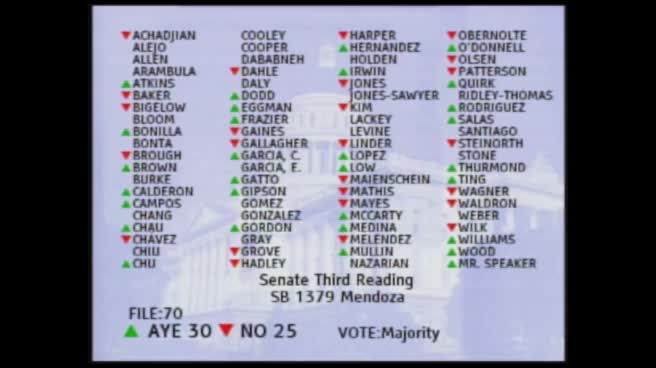 1MIN
Assembly Floor
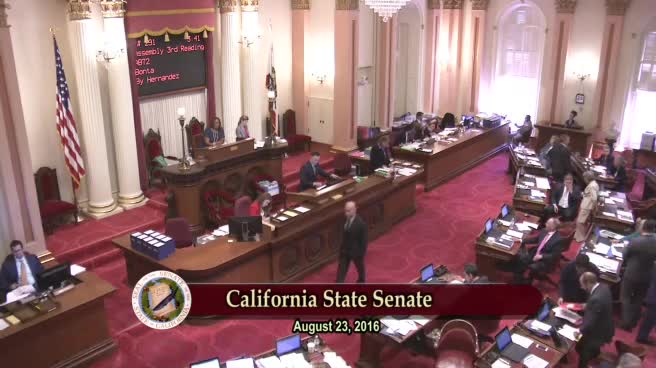 3MIN
Senate Floor
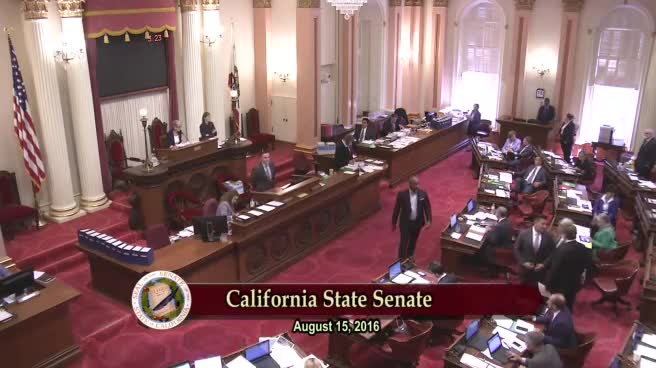 2MIN
Senate Floor
 12MIN
Senate Standing Committee on Energy, Utilities and Communications
 1MIN
Senate Standing Committee on Appropriations
 6MIN
Senate Standing Committee on Environmental Quality
 13MIN
Senate Standing Committee on Energy, Utilities and Communications
 12MIN
Assembly Floor
Bill Author