AB 340: Postsecondary education: campus climate: report.
- Session Year: 2015-2016
- House: Assembly
- Latest Version Date: 2015-09-10
Existing law establishes the segments of the public postsecondary education system in the state, including the University of California administered by the Regents of the University of California, the California State University administered by the Trustees of the California State University, and the California Community Colleges administered by the Board of Governors of the California Community Colleges.
This bill would require the board and the trustees, and encourage the regents, to each generate a report once every biennium of the legislative session, commencing with the 201718 Regular Session, that includes specified information related to the segments campus climate, as defined, post the report on its Internet Web site, and submit the report to specified state bodies. For the purposes of the boards report, the bill would require the board to request certain information from community college districts, and would provide that the boards report shall be based on data available from participating community college districts.
Existing law requests the Trustees of the California State University, the Regents of the University of California, and the governing board of each community college district to adopt and publish policies on harassment, intimidation, and bullying to be included within the rules and regulations governing student behavior, as provided.
This bill would require the Trustees of the California State University and the governing board of each community college, if they expend funds to support activities related to campus climate, as defined, to adopt and publish the above-described policies. By requiring community college districts to adopt and publish these policies, this bill would impose a state-mandated local program.
The California Constitution requires the state to reimburse local agencies and school districts for certain costs mandated by the state. Statutory provisions establish procedures for making that reimbursement.
This bill would provide that, if the Commission on State Mandates determines that the bill contains costs mandated by the state, reimbursement for those costs shall be made pursuant to these statutory provisions.
Existing law establishes the segments of the public postsecondary education system in the state, including the University of California administered by the Regents of the University of California, the California State University administered by the Trustees of the California State University, and the California Community Colleges administered by the Board of Governors of the California Community Colleges.
This bill would require the board and the trustees, and encourage the regents, to each generate a report once every biennium of the legislative session, commencing with the 201718 Regular Session, that includes specified information related to the segments campus climate, as defined, post the report on its Internet Web site, and submit the report to specified state bodies. For the purposes of the boards report, the bill would require the board to request certain information from community college districts, and would provide that the boards report shall be based on data available from participating community college districts.
Existing law establishes the segments of the public postsecondary education system in the state, including the University of California administered by the Regents of the University of California, the California State University administered by the Trustees of the California State University, and the California Community Colleges administered by the Board of Governors of the California Community Colleges.
This bill would require the board and the trustees, and encourage the regents, to each generate a report once every biennium of the legislative session, commencing with the 201718 Regular Session, that includes specified information related to the segments campus climate, as defined, post the report on its Internet Web site, and submit that the report to specified state bodies.
Existing law establishes the segments of the public postsecondary education system in the state, including the University of California administered by the Regents of the University of California, the California State University administered by the Trustees of the California State University, and the California Community Colleges administered by the Board of Governors of the California Community Colleges.
This bill would require the board and the trustees, and encourage the regents, to each generate a report once every biennium of the legislative session, commencing with the 201718 Regular Session, that includes specified information related to the segments campus climate, as defined, post the report on its Internet Web site, and submit that report to specified state bodies.
Existing law establishes the segments of the public postsecondary education system in the state, including the University of California administered by the Regents of the University of California, the California State University administered by the Trustees of the California State University, and the California Community Colleges administered by the Board of Governors of the California Community Colleges.
This bill would declare the intent of the Legislature to enact later legislation to require the board and the trustees, and encourage the regents, to each generate a report once every biennium of the legislative session, commencing with the 201718 Regular Session, on new developments that includes specified information related to the segments campus climate, as defined, post the report on its Internet Web site, and submit that report to specified state bodies.
Existing law establishes the segments of the public postsecondary education system in the state, including the University of California administered by the Regents of the University of California, the California State University administered by the Trustees of the California State University, and the California Community Colleges administered by the Board of Governors of the California Community Colleges.
This bill would declare the intent of the Legislature to enact later legislation to require the board and the trustees, and encourage the regents, to generate a report once every biennium of the legislative session, commencing with the 201718 Regular Session, on new developments related to campus climate, and submit that report to specified state bodies.
(a)The Board of Governors of the California Community Colleges and the Trustees of the California State University are required, and the Regents of the University of California are encouraged, to generate a report once every biennium of the legislative session, commencing with the 201718 Regular Session, that shall include, but not be limited to, all of the following as to the respective segment:
(1)New and recent administrative efforts intended to affect campus climate.
(2)Recent campus program developments that impact campus climate related to the following:
(A)Gender.
(B)Race.
(C)Ethnicity.
(D)National origin.
(E)Religion.
(F)Sexual orientation.
(G)Disability.
(H)Gender identity.
(3)Data, including, but not limited to, both of the following:
(A)Student demographic data.
(B)Crime data, including, but not limited to, the data required to be kept and disclosed in accordance with the Jeanne Clery Disclosure of Campus Security Policy and Campus Crime Statistics Act (20 U.S.C. Sec. 1092(f)) and other hate crime statistics.
(b)The Board of Governors of the California Community Colleges and the Trustees of the California State University are required, and the Regents of the University of California are encouraged, to each post the respective segments report on its Internet Web site.
(c)The Board of Governors of the California Community Colleges shall request, but not require, the information specified in paragraphs (1) and (2), and subparagraph (B) of paragraph (3), of subdivision (a), from community college districts. The report of the Board of Governors shall be based on data available from participating community college districts.
(d)The report to be generated pursuant to subdivision (a) shall be sent to the Governor, the Attorney General, and the appropriate policy committees of the Legislature.
(e)For purposes of this section, campus climate means a measure of an individuals experience within a learning environment, specifically focusing on the current attitudes, practices, policies, and behaviors of campus life that impact the success and retention of all members of a campus community.
SEC. 2.Section 66302 of the Education Code is amended to read:66302.(a)If the Trustees of the California State University and the governing board of each community college district expend funds to support activities related to campus climate, as that term is defined in subdivision (e) of Section 66073, the Trustees of the California State University and the governing board of each community college district shall adopt and publish policies on harassment, intimidation, and bullying to be included within the rules and regulations governing student behavior within their respective segments of public postsecondary education.
(b)The Regents of the University of California are requested to adopt and publish policies on harassment, intimidation, and bullying to be included within their rules and regulations governing student behavior.
(c)It is the intent of the Legislature that rules and regulations governing student conduct be published, at a minimum, on the Internet Web site of each public postsecondary educational campus and as part of any printed material covering those rules and regulations within the respective public postsecondary education systems.
SEC. 3.If the Commission on State Mandates determines that this act contains costs mandated by the state, reimbursement to local agencies and school districts for those costs shall be made pursuant to Part 7 (commencing with Section 17500) of Division 4 of Title 2 of the Government Code.
(a)The Board of Governors of the California Community Colleges and the Trustees of the California State University are required, and the Regents of the University of California are encouraged, to generate a report once every biennium of the legislative session, commencing with the 201718 Regular Session, that shall include, but not be limited to, all of the following as to the respective segment:
(1)New and recent administrative efforts intended to affect campus climate.
(2)Recent campus program developments that impact campus climate related to the following:
(A)Gender.
(B)Race.
(C)Ethnicity.
(D)National origin.
(E)Religion.
(F)Sexual orientation.
(G)Disability.
(H)Gender identity.
(3)Data, including, but not limited to, both of the following:
(A)Student demographic data.
(B)Crime data, including, but not limited to, the data required to be kept and disclosed in accordance with the Jeanne Clery Disclosure of Campus Security Policy and Campus Crime Statistics Act (20 U.S.C. Sec. 1092(f)) and other hate crime statistics.
(b)The Board of Governors of the California Community Colleges and the Trustees of the California State University are required, and the Regents of the University of California are encouraged, to each post the respective segments report on its Internet Web site.
(c)The Board of Governors of the California Community Colleges shall request, but not require, the information specified in paragraphs (1) and (2), and subparagraph (B) of paragraph (3), of subdivision (a), from community college districts. The report of the Board of Governors shall be based on data available from participating community college districts.
(d)The report to be generated pursuant to subdivision (a) shall be sent to the Governor, the Attorney General, and the appropriate policy committees of the Legislature.
(e)For purposes of this section, campus climate means a measure of an individuals experience within a learning environment, specifically focusing on the current attitudes, practices, policies, and behaviors of campus life that impact the success and retention of all members of a campus community.
SEC. 2.Section 66302 of the Education Code is amended to read:66302.The Trustees
(a)If the Trustees of the California State University, the Regents of the University of California, University and the governing board of each community college district are requested to expend funds to support activities related to campus climate, as that term is defined in subdivision (e) of Section 66073, the Trustees of the California State University and the governing board of each community college district shall adopt and publish policies on harassment, intimidation, and bullying to be included within the rules and regulations governing student behavior within their respective segments of public postsecondary education. It
(b)The Regents of the University of California are requested to adopt and publish policies on harassment, intimidation, and bullying to be included within their rules and regulations governing student behavior.
(c)It is the intent of the Legislature that rules and regulations governing student conduct be published, at a minimum, on the Internet Web site of each public postsecondary educational campus and as part of any printed material covering those rules and regulations within the respective public postsecondary education systems.
SEC. 3.If the Commission on State Mandates determines that this act contains costs mandated by the state, reimbursement to local agencies and school districts for those costs shall be made pursuant to Part 7 (commencing with Section 17500) of Division 4 of Title 2 of the Government Code.
(a)The Board of Governors of the California Community Colleges and the Trustees of the California State University are required, and the Regents of the University of California are encouraged, to generate a report once every biennium of the legislative session, commencing with the 201718 Regular Session, that shall include, but not be limited to, all of the following as to the respective segment:
(1)New and recent administrative efforts intended to affect campus climate.
(2)Recent campus program developments that impact campus climate related to the following:
(A)Gender.
(B)Race.
(C)Ethnicity.
(D)National origin.
(E)Religion.
(F)Sexual orientation.
(G)Disability.
(H)Gender identity.
(3)Data, including, but not limited to, both of the following:
(A)Student demographic data.
(B)Crime data, including, but not limited to, the data required to be kept and disclosed in accordance with the Jeanne Clery Disclosure of Campus Security Policy and Campus Crime Statistics Act (20 U.S.C. Sec. 1092(f)) and other hate crime statistics.
(b)The Board of Governors of the California Community Colleges and the Trustees of the California State University are required, and the Regents of the University of California are encouraged, to each post the respective segments report on its Internet Web site.
(c)The Board of Governors of the California Community Colleges shall request, but not require, the information specified in paragraphs (1) and (2), and subparagraph (B) of paragraph (3), of subdivision (a), from community college districts. The report of the Board of Governors shall be based on data available from participating community college districts.
(c)
(d)The report to be generated pursuant to subdivision (a) shall be sent to the Governor, the Attorney General, and the appropriate policy committees of the Legislature.
(d)
(e)For purposes of this section, campus climate means a measure of an individuals experience within a learning environment, specifically focusing on the current attitudes, practices, policies, and behaviors of campus life that impact the success and retention of all members of a campus community.
(a)The Board of Governors of the California Community Colleges and the Trustees of the California State University are required, and the Regents of the University of California are encouraged, to generate a report once every biennium of the legislative session, commencing with the 201718 Regular Session, that shall include, but not be limited to, all of the following as to the respective segment:
(1)The amount spent on campus climate efforts.
(2)
(1)New and recent administrative efforts intended to affect campus climate.
(3)Campus developments on all of the following as they may impact campus climate:
(2)Recent campus program developments that impact campus climate related to the following:
(A)Gender.
(B)Race.
(C)Ethnicity.
(D)National origin.
(E)Religion.
(F)Sexual orientation.
(G)Disability.
(H)Gender identity.
(4)
(3)Data, including, but not limited to, both of the following:
(A)Student demographic data.
(B)Crime data, including, but not limited to, the data required to be kept and disclosed in accordance with the Jeanne Clery Disclosure of Campus Security Policy and Campus Crime Statistics Act (20 U.S.C. Sec. 1092(f)) and other hate crime statistics.
(b)The Board of Governors of the California Community Colleges and the Trustees of the California State University are required, and the Regents of the University of California are encouraged, to each post the respective segments report on its Internet Web site.
(c)The report to be generated pursuant to subdivision (a) shall be sent to the Governor, the Attorney General, and the appropriate policy committees of the Legislature.
(d)For purposes of this section, campus climate means a measure of an individuals experience within a learning environment, specifically focusing on the current attitudes, practices, policies, and behaviors of campus life that impact the success and retention of all members of a campus community.
(a)Notwithstanding Section 10231.5 of the Government Code, the The Board of Governors of the California Community Colleges and the Trustees of the California State University are required, and the Regents of the University of California are encouraged, to generate a report once every biennium of the legislative session, commencing with the 201718 Regular Session, that shall include, but not be limited to, all of the following as to the respective segment:
(1)The amount spent on campus climate efforts.
(2)New and recent administrative efforts intended to affect campus climate.
(3)Campus developments on all of the following as they may impact campus climate:
(A)Gender.
(B)Race.
(C)Ethnicity.
(D)National origin.
(E)Religion.
(F)Sexual orientation.
(G)Disability.
(H)Gender identity.
(4)Data, including, but not limited to, both of the following:
(A)Student demographic data.
(B)Crime data, including, but not limited to, the data required to be kept and disclosed in accordance with the Jeanne Clery Disclosure of Campus Security Policy and Campus Crime Statistics Act (20 U.S.C. Sec. 1092(f)) and other hate crime statistics.
(b)The Board of Governors of the California Community Colleges and the Trustees of the California State University are required, and the Regents of the University of California are encouraged, to each post the respective segments report on its Internet Web site.
(c)The report to be generated pursuant to subdivision (a) shall be sent to the Governor, the Attorney General, and the appropriate policy committees of the Legislature.
(d)For purposes of this section, campus climate means a measure of an individuals experience within a learning environment, specifically focusing on the current attitudes, practices, policies, and behaviors of campus life that impact the success and retention of all members of a campus community.
(a)Notwithstanding Section 10231.5 of the Government Code, the Board of Governors of the California Community Colleges and the Trustees of the California State University are required, and the Regents of the University of California are encouraged, to generate a report once every biennium of the legislative session, commencing with the 201718 Regular Session, that shall include, but not be limited to, all of the following as to the respective segment:
(1)The amount spent on campus climate efforts.
(2)New and recent administrative efforts intended to affect campus climate.
(3)Campus developments on all of the following as they may impact campus climate:
(A)Gender.
(B)Race.
(C)Ethnicity.
(D)National origin.
(E)Religion.
(F)Sexual orientation.
(G)Disability.
(4)Data, including, but not limited to, both of the following:
(A)Student demographic data.
(B)Crime data, including, but not limited to, the data required to be kept and disclosed in accordance with the Jeanne Clery Disclosure of Campus Security Policy and Campus Crime Statistics Act (20 U.S.C. Sec. 1092(f)) and other hate crime statistics.
(b)The Board of Governors of the California Community Colleges and the Trustees of the California State University are required, and the Regents of the University of California are encouraged, to each post the respective segments report on its Internet Web site.
(c)The report to be generated pursuant to subdivision (a) shall be sent to the Governor, the Attorney General, and the appropriate policy committees of the Legislature.
(d)For purposes of this section, campus climate means a measure of an individuals experience within a learning environment, specifically focusing on the current attitudes, practices, policies, and behaviors of campus life that impact the success and retention of all members of a campus community.
SECTION 1.It is the intent of the Legislature to enact later legislation that would require the Board of Governors of the California Community Colleges and the Trustees of the California State University, and encourage the Regents of the University of California, to generate a report once every biennium of the legislative session, commencing with the 201718 Regular Session, on new developments related to campus climate, to define campus climate for purposes of that report, and to submit that report to the Governor, the Office of the Attorney General, and the appropriate policy committees of the Legislature.
It is the intent of the Legislature to enact later legislation that would require the Board of Governors of the California Community Colleges and the Trustees of the California State University, and encourage the Regents of the University of California, to generate a report once every biennium of the legislative session, commencing with the 201718 Regular Session, on new developments related to campus climate, to define campus climate for purposes of that report, and to submit that report to the Governor, the Office of the Attorney General, and the appropriate policy committees of the Legislature.
|
Date
|
Status
|
|---|---|
| Jan 15, 2016 | Consideration of Governor's veto stricken from file. |
| Oct 11, 2015 | Vetoed by Governor. |
| Sep 17, 2015 | Enrolled and presented to the Governor at 11:30 a.m. |
| Sep 8, 2015 | Senate amendments concurred in. To Engrossing and Enrolling. (Ayes 63. Noes 15. Page 2942.). |
| Sep 8, 2015 | Senate amendments concurred in. To Engrossing and Enrolling. (Ayes 63. Noes 15.). |
| Sep 8, 2015 | Senate amendments concurred in. To Engrossing and Enrolling. |
| Sep 3, 2015 | Read third time. Passed. Ordered to the Assembly. (Ayes 30. Noes 10. Page 2456.). |
| Sep 3, 2015 | In Assembly. Concurrence in Senate amendments pending. May be considered on or after September 5 pursuant to Assembly Rule 77. |
| Sep 3, 2015 | Read third time. Passed. Ordered to the Assembly. |
| Aug 31, 2015 | Read second time. Ordered to third reading. |
| Aug 27, 2015 | From committee: Do pass. (Ayes 5. Noes 2.) (August 27). |
| Aug 17, 2015 | In committee: Referred to APPR. suspense file. |
| Jul 15, 2015 | From committee: Do pass and re-refer to Com. on APPR. (Ayes 8. Noes 0.) (July 15). Re-referred to Com. on APPR. |
| Jul 9, 2015 | Re-referred to Com. on ED. |
| Jul 8, 2015 | From committee chair, with author's amendments: Amend, and re-refer to committee. Read second time, amended, and re-referred to Com. on RLS. |
| Jun 18, 2015 | Referred to Com. on RLS. |
| Jun 3, 2015 | In Senate. Read first time. To Com. on RLS. for assignment. |
| Jun 3, 2015 | Read third time. Passed. Ordered to the Senate. (Ayes 63. Noes 16. Page 1841.) |
| Jun 3, 2015 | Read third time. Passed. Ordered to the Senate. |
| Jun 2, 2015 | Read second time. Ordered to third reading. |
| Jun 1, 2015 | Read second time and amended. Ordered returned to second reading. |
| May 28, 2015 | From committee: Amend, and do pass as amended. (Ayes 12. Noes 5.) (May 28). |
| May 20, 2015 | In committee: Set, first hearing. Referred to APPR. suspense file. |
| May 20, 2015 | In committee: Set, first hearing. Referred to suspense file. |
| May 7, 2015 | Re-referred to Com. on APPR. |
| May 6, 2015 | From committee chair, with author's amendments: Amend, and re-refer to Com. on APPR. Read second time and amended. |
| Apr 29, 2015 | From committee: Do pass and re-refer to Com. on APPR. (Ayes 10. Noes 2.) (April 28). Re-referred to Com. on APPR. |
| Apr 14, 2015 | Re-referred to Com. on HIGHER ED. |
| Apr 13, 2015 | From committee chair, with author's amendments: Amend, and re-refer to Com. on HIGHER ED. Read second time and amended. |
| Apr 6, 2015 | Re-referred to Com. on HIGHER ED. |
| Mar 26, 2015 | From committee chair, with author's amendments: Amend, and re-refer to Com. on HIGHER ED. Read second time and amended. |
| Mar 26, 2015 | Referred to Com. on HIGHER ED. |
| Feb 17, 2015 | From printer. May be heard in committee March 19. |
| Feb 13, 2015 | Read first time. To print. |
|
Date
|
Description
|
Location
|
Votes
|
|
|---|---|---|---|---|
| Sep 8, 2015 | AB 340 WEBER Concurrence in Senate Amendments | Assembly Floor |
Passed |
|
| Sep 3, 2015 | Assembly 3rd Reading AB340 Weber By Block | Senate Floor |
Passed |
|
| Aug 27, 2015 | Do pass | Senate Standing Committee on Appropriations |
Passed |
|
| Aug 17, 2015 | Placed on suspense file | Senate Standing Committee on Appropriations |
Passed |
|
| Jul 15, 2015 | Do pass, but first be re-referred to the Committee on [Appropriations] | Senate Standing Committee on Education |
Passed |
|
| Jun 3, 2015 | AB 340 WEBER Assembly Third Reading | Assembly Floor |
Passed |
|
| May 28, 2015 | Do pass as amended. | Assembly Standing Committee on Appropriations |
Passed |
|
| Apr 28, 2015 | Do pass and be re-referred to the Committee on [Appropriations] | Assembly Standing Committee on Higher Education |
Passed |
This list shows positions taken on this bill by organizations on the date displayed, which is linked to the original source.
Positions by individuals are not included.
GOVERNOR'S VETO
AB 340
(Weber)
As Enrolled September 10, 2015
2/3 vote
ASSEMBLY: |
63-16 |
(June 3, 2015) |
SENATE: |
30-10 |
(September 3, 2015) |
ASSEMBLY: |
63-15 |
(September 8, 2015) |
|
|
|
Original Committee Reference: HIGHER ED.
SUMMARY: Requires the California Community Colleges (CCC) Board of Governors (BOG) and the California State University (CSU) Trustees, and encourages the University of California (UC) Regents, to each generate a report, as specified, pertaining campus climate.
The Senate amendments:
Specify that if the CSU Trustees and the governing board of each community college district expend funds to support activities related to campus climate, as defined, the Trustees and the governing board of each community college district shall adopt and publish policies on harassment, intimidation, and bullying to be included within the rules and regulations governing student behavior within their respective segments of public postsecondary education.
Specify that the UC Regents are requested to adopt and publish policies on harassment, intimidation, and bullying to be included within their rules and regulations governing student behavior.
Add Legislative intent that rules and regulations governing student conduct be published, at a minimum, on the Internet Web site of each public postsecondary educational campus and as part of any printed material covering those rules and regulations within the respective public postsecondary education systems.
Specify that if the Commission on State Mandates determines that this act contains costs mandated by the state, reimbursement to local agencies and school districts for those costs shall be made, as specified.
EXISTING LAW:
Declares it a goal of public higher education that educational equity be achieved through educational environments in which each person, regardless of race, gender, gender identity, gender expression, sexual orientation, age, disability or economic circumstances has a reasonable change to fully develop his or her potential (Education Code (EC) Section 66010.2).
Provides that it is the policy of the State of California to afford all persons, regardless of disability, gender, gender identity, gender expression, nationality, race or ethnicity, religion, sexual orientation, or any other basis that is contained in the prohibition of hate crimes set forth in Penal Code Section 422.6 (a), equal rights and opportunities in the postsecondary institutions of the state (EC Section 66251).
Provides that all students have the right to participate fully in the educational process, free from discrimination and harassment and that California's postsecondary educational institutions have an affirmative obligation to combat racism, sexism, and other forms of bias, and a responsibility to provide equal educational opportunity; and declares the Legislature’s intent that each postsecondary educational institution undertake educational activities to counter discriminatory incidents on school grounds and, within constitutional bounds, to minimize and eliminate a hostile environment on school grounds that impairs the access of students to equal educational opportunities (EC Section 66252).
Requests the UC Regents, CSU Trustees, and the governing board of each community college district to adopt and publish policies on harassment, intimidation, and bullying to be included within the rules and regulations governing student behavior within their respective segments of public postsecondary education (EC Section 66302).
The federal Jeanne Clery Disclosure of Campus Security Policy and Campus Crime Statistics Act (Clery Act) requires colleges and universities, as a condition of federal student aid program participation, to publish annual campus security reports, maintain crime logs, provide timely warnings of crimes that present a public safety risk, and maintain ongoing crime statistics.
FISCAL EFFECT: According to the Senate Appropriations Committee, the requirement to adopt policies on harassment, intimidation, and bullying could be determined to be a reimbursable state mandate for community college districts, with state costs of about $144,000; and could create pressure to increase the CCC mandate block grant to reflect these increased costs. The UC and CSU indicate that this bill is largely consistent with current practices and therefore would absorb any associated costs.
COMMENTS: Background. Incidents in recent years at the UC and CSU – targeting students of color, and the lesbian, gay, bi-sexual, and transgender (LGBT) community, investigations of racial and ethnic discrimination, and how sexual assaults and violence have been handled – have greatly highlighted and brought more attention to the need for the UC and CSU to address climate challenges.
State response. Out of concern regarding recent campus climate issues at various campuses of higher education, in the past few years there have been several oversight hearings convened by this committee to look at campus climate issues. Additionally, in the 2013-14 Regular Session, the Speaker of the Assembly created the Assembly Select Committee on Campus Climate; which convened several hearings in 2014 with the goal of continuing to strengthen overall campus climate for our postsecondary institutions of higher learning. This measure is a result of the Assembly Select Committee on Campus Climate Report of October 2014.
Segment responses. The UC seeks to create and nurture an atmosphere of respect and inclusion for all; in March 2014 the UC (after a two-year system wide survey), released its campus climate study. The study found many things, including, but not limited to the following: 1) 79% of all respondents were comfortable or very comfortable with the campus climate at UC, while 7% were uncomfortable or very uncomfortable; 2) more than half of all respondents thought that the overall campus climate was very respectful or respectful of various races/ethnicities at UC; and, 3) more work must be done to address issues faced by certain groups – underrepresented minority respondents were less comfortable with the overall climate and workplace climate than were white respondents and other people of color and transgender respondents were less comfortable with the overall climate at their campus than were men and women respondents.
To note: 1) many UC campuses have hired staff focused on campus climate issues; 2) many programs are offered to reduce the impact of unconscious bias in hiring and promotions, and to identify and remove institutional barriers to inclusion an career development; 3) resource and student service centers have been established at many campuses for certain populations (such as undocumented students, veteran students, and LGBT students); 4) anti-hate initiatives exist at many UC campuses that seek to educate students; and 5) many UC campuses have student-led and cultural activities.
The CSU is committed to maintaining an inclusive community that values diversity and fosters tolerance and mutual respect. It is CSU policy to provide equal opportunity for all persons regardless of race, religious creed, color, national origin, ancestry, physical disability, mental disability, medical condition, genetic information, marital status, sex, gender, gender identity, gender expression, age, sexual orientation, and veteran status.
The CSU has policies in place to help ensure that their students and faculty are protected; campuses must implement preventative education programs and make available victim resources, including comprehensive victim services. Information regarding these programs must be included in: 1) orientation programs for new students, faculty and staff; 2) training for students who serve as advisors in residence halls; and, 3) training for student athletes and coaches.
Additionally, on a campus by campus basis, the CSU has created an advisory body of non-CSU experts to advise and opine to the CSU how to strengthen and enforce existing polices, as well as advise if there is a need to create more policies that will allow the CSU to maintain its policy of protection for all.
Purpose of this measure. This measure is a result of the work of the Assembly Select Committee on Campus Climate. The author states, "In 2014, the select committee sought to examine public safety protocols and practices of California's higher education institutions while exploring solutions to encourage campus safety and promote healthier campus climates. The select committee's mission was to ensure that the state's college campuses are safe and welcoming environments for all students. As a result, the select committee held three hearings throughout California to examine policies and practices at campuses within a specific region. The fourth hearing was held at the State Capitol where recommendations were considered by the members of the select committee."
The author contends that, existing law does not specifically address campus climate and higher education. This measure would be the appropriate next step in creating some type of oversight of campus climate. The author states, "By requiring a report on recent developments on campus climate, the three segments of higher education would keep key policymakers informed about new and ongoing endeavors and developments in regards to campus climate. It would also offer a level of oversight to ensure that progress is being made at California's public higher education institutions as they work to meet the needs of a changing demographic."
The bill would require the California State University Trustees and the California Community Colleges Board of Governors to submit a report on campus climate every two years, and would request the University of California to do the same.
While I understand the desire to create a more vibrant, intellectually serious and inclusive campus environment at UC, CSU and the community colleges, each of their governing boards has already taken steps aimed at achieving these important goals. I believe the leaders of these institutions are committed to providing updates on current and future developments.
Codifying a biennial report, as provided in this bill, is not necessary.
Analysis Prepared by: Jeanice Warden / HIGHER ED. / (916) 319-3960 FN: 0002524
AB 340
Page 3
CONCURRENCE IN SENATE AMENDMENTS
AB 340
(Weber)
As Amended July 8, 2015
Majority vote
ASSEMBLY: |
63-16 |
(June 3, 2015) |
SENATE: |
30-10 |
(September 3, 2015) |
Original Committee Reference: HIGHER ED.
SUMMARY: Requires the California Community Colleges (CCC) Board of Governors (BOG) and the California State University (CSU) Trustees, and encourages the University of California (UC) Regents, to each generate a report, as specified, pertaining campus climate.
The Senate amendments:
Specify that if the CSU Trustees and the governing board of each community college district expend funds to support activities related to campus climate, as defined, the Trustees and the governing board of each community college district shall adopt and publish policies on harassment, intimidation, and bullying to be included within the rules and regulations governing student behavior within their respective segments of public postsecondary education.
Specify that the UC Regents are requested to adopt and publish policies on harassment, intimidation, and bullying to be included within their rules and regulations governing student behavior.
Add Legislative intent that rules and regulations governing student conduct be published, at a minimum, on the Internet Web site of each public postsecondary educational campus and as part of any printed material covering those rules and regulations within the respective public postsecondary education systems.
Specify that if the Commission on State Mandates determines that this act contains costs mandated by the state, reimbursement to local agencies and school districts for those costs shall be made, as specified.
EXISTING LAW:
Declares it a goal of public higher education that educational equity be achieved through educational environments in which each person, regardless of race, gender, gender identity, gender expression, sexual orientation, age, disability or economic circumstances has a reasonable change to fully develop his or her potential (Education Code (EC) Section 66010.2).
Provides that it is the policy of the State of California to afford all persons, regardless of disability, gender, gender identity, gender expression, nationality, race or ethnicity, religion, sexual orientation, or any other basis that is contained in the prohibition of hate crimes set forth in Penal Code Section 422.6(a), equal rights and opportunities in the postsecondary institutions of the state (EC Section 66251).
Provides that all students have the right to participate fully in the educational process, free from discrimination and harassment and that California's postsecondary educational institutions have an affirmative obligation to combat racism, sexism, and other forms of bias, and a responsibility to provide equal educational opportunity; and declares the Legislature's intent that each postsecondary educational institution undertake educational activities to counter discriminatory incidents on school grounds and, within constitutional bounds, to minimize and eliminate a hostile environment on school grounds that impairs the access of students to equal educational opportunities (EC Section 66252).
Requests the UC Regents, CSU Trustees, and the governing board of each community college district to adopt and publish policies on harassment, intimidation, and bullying to be included within the rules and regulations governing student behavior within their respective segments of public postsecondary education (EC Section 66302).
The federal Jeanne Clery Disclosure of Campus Security Policy and Campus Crime Statistics Act (Clery Act) requires colleges and universities, as a condition of federal student aid program participation, to publish annual campus security reports, maintain crime logs, provide timely warnings of crimes that present a public safety risk, and maintain ongoing crime statistics.
FISCAL EFFECT: According to the Senate Appropriations Committee, the requirement to adopt policies on harassment, intimidation, and bullying could be determined to be a reimbursable state mandate for community college districts, with state costs of about $144,000; and could create pressure to increase the CCC mandate block grant to reflect these increased costs. The UC and CSU indicate that this bill is largely consistent with current practices and therefore would absorb any associated costs.
COMMENTS: Background. Incidents in recent years at the UC and CSU – targeting students of color, and the lesbian, gay, bi-sexual, and transgender (LGBT) community, investigations of racial and ethnic discrimination, and how sexual assaults and violence have been handled – have greatly highlighted and brought more attention to the need for the UC and CSU to address climate challenges.
State response. Out of concern regarding recent campus climate issues at various campuses of higher education, in the past few years there have been several oversight hearings convened by this committee to look at campus climate issues. Additionally, in the 2013-14 Regular Session, the Speaker of the Assembly created the Assembly Select Committee on Campus Climate; which convened several hearings in 2014 with the goal of continuing to strengthen overall campus climate for our postsecondary institutions of higher learning. This measure is a result of the Assembly Select Committee on Campus Climate Report of October 2014.
Segment responses. The UC seeks to create and nurture an atmosphere of respect and inclusion for all; in March 2014 the UC (after a two-year system wide survey), released its campus climate study. The study found many things, including, but not limited to the following: 1) 79% of all respondents were comfortable or very comfortable with the campus climate at UC, while 7% were uncomfortable or very uncomfortable; 2) more than half of all respondents thought that the overall campus climate was very respectful or respectful of various races/ethnicities at UC; and, 3) more work must be done to address issues faced by certain groups – underrepresented minority respondents were less comfortable with the overall climate and workplace climate than were white respondents and other people of color and transgender respondents were less comfortable with the overall climate at their campus than were men and women respondents.
To note: 1) many UC campuses have hired staff focused on campus climate issues; 2) many programs are offered to reduce the impact of unconscious bias in hiring and promotions, and to identify and remove institutional barriers to inclusion an career development; 3) resource and student service centers have been established at many campuses for certain populations (such as undocumented students, veteran students, and LGBT students); 4) anti-hate initiatives exist at many UC campuses that seek to educate students; and 5) many UC campuses have student-led and cultural activities.
The CSU is committed to maintaining an inclusive community that values diversity and fosters tolerance and mutual respect. It is CSU policy to provide equal opportunity for all persons regardless of race, religious creed, color, national origin, ancestry, physical disability, mental disability, medical condition, genetic information, marital status, sex, gender, gender identity, gender expression, age, sexual orientation, and veteran status.
The CSU has policies in place to help ensure that their students and faculty are protected; campuses must implement preventative education programs and make available victim resources, including comprehensive victim services. Information regarding these programs must be included in: 1) orientation programs for new students, faculty and staff; 2) training for students who serve as advisors in residence halls; and, 3) training for student athletes and coaches.
Additionally, on a campus by campus basis, the CSU has created an advisory body of non-CSU experts to advise and opine to the CSU how to strengthen and enforce existing polices, as well as advise if there is a need to create more policies that will allow the CSU to maintain its policy of protection for all.
Purpose of this measure. This measure is a result of the work of the Assembly Select Committee on Campus Climate. The author states, "In 2014, the select committee sought to examine public safety protocols and practices of California's higher education institutions while exploring solutions to encourage campus safety and promote healthier campus climates. The select committee's mission was to ensure that the state's college campuses are safe and welcoming environments for all students. As a result, the select committee held three hearings throughout California to examine policies and practices at campuses within a specific region. The fourth hearing was held at the State Capitol where recommendations were considered by the members of the select committee."
The author contends that, existing law does not specifically address campus climate and higher education. This measure would be the appropriate next step in creating some type of oversight of campus climate. The author states, "By requiring a report on recent developments on campus climate, the three segments of higher education would keep key policymakers informed about new and ongoing endeavors and developments in regards to campus climate. It would also offer a level of oversight to ensure that progress is being made at California's public higher education institutions as they work to meet the needs of a changing demographic."
Analysis Prepared by: Jeanice Warden / HIGHER ED. / (916) 319-3960 FN: 0001948
AB 340
Page 5
|
Office of Senate Floor Analyses (916) 651-1520 Fax: (916) 327-4478 |
THIRD READING
Bill No: AB 340
Amended: 7/8/15 in Senate
SENATE EDUCATION COMMITTEE: 8-0, 7/15/15
AYES: Liu, Block, Hancock, Leyva, Mendoza, Monning, Pan, Vidak
NO VOTE RECORDED: Runner
SENATE APPROPRIATIONS COMMITTEE: 5-2, 8/27/15
AYES: Lara, Beall, Hill, Leyva, Mendoza
NOES: Bates, Nielsen
ASSEMBLY FLOOR: 63-16, 6/3/15 - See last page for vote
SUBJECT: Postsecondary education: campus climate: report
DIGEST: This bill requires the California Community Colleges
(CCC) Board of Governors (BOG) and the California State University
(CSU) Trustees, and encourages the University of California (UC)
Regents, to each generate a report, as specified, pertaining campus
climate.
Existing law:
Declares it a shared goal of public education and independent institutions of higher education to achieve educational equity not only through a diverse and representative student body and faculty, but also through educational environments in which each person, regardless of race, gender, gender identity, gender expression, sexual orientation, age, disability or economic circumstances has a reasonable change to fully develop his or her potential. (Education Code § 66010.2)
2) Provides that it is the policy of the State of California to afford all persons, regardless of disability, gender, gender identity, gender expression, nationality, race or ethnicity, religion, sexual orientation, or any other basis that is contained in the prohibition of hate crimes, as specified, equal rights and opportunities in the postsecondary institutions of the state. (EC § 66251)
3) Declares that, consistent with specified federal law provisions, all students have the right to participate fully in the educational process, free from discrimination and harassment and that California's postsecondary educational institutions have an affirmative obligation to combat racism, sexism, and other forms of bias, and a responsibility to provide equal educational opportunity. It also declares the Legislature’s intent that each postsecondary educational institution undertake educational activities to counter discriminatory incidents on school grounds and, within constitutional bounds, to minimize and eliminate a hostile environment on school grounds that impair the access of students to equal educational opportunities. (EC § 66252)
4) Requests the UC Regents, CSU Trustees, and the governing board of each community college district to adopt and publish policies on harassment, intimidation, and bullying to be included within the rules and regulations governing student behavior within their respective segments of public postsecondary education. (EC § 66302)
This bill:
Requires the CCC BOG and the CSU Trustees, and encourages the UC Regents, to generate a report once every biennium of the legislative session, beginning with the 2017-2018 Regular Session that include, but is not limited to, the following elements:
New and recent administrative efforts intended to affect campus climate.
Recent campus program developments related to gender, race, ethnicity, national origin, religion, sexual orientation, disability, and gender identity that impact campus climate.
Data, including, but not limited to, student demographic data, and crime data, including, but not limited to, the data required to be kept and disclosed under specified federal law and other hate crime statistics.
Requires the CCC BOG and the CSU Trustees, and encourages the UC Regents, to each post the respective segment’s report on its Internet Web site and send it to the Governor, the Attorney General, and the appropriate policy committees of the Legislature.
Defines "campus climate" to mean a measure of an individual's experience within a learning environment, specifically on the current attitudes, practices, policies, and behaviors of campus life that impact the success and retention of all members of a campus community.
Deletes the request that the CSU Trustees and each community college district governing board adopt and publish policies on harassment, intimidation, and bullying as part of their rules and regulations governing student behavior and instead, requires such action if the governing body expends funds to support activities related to campus climate, as defined.
Requests the UC Regent adopt and publish policies on harassment, intimidation, and bullying to be included within their rules and regulations governing student behavior.
Comments
Source of the bill. This bill is a result of the efforts of the Assembly Select Committee on Campus Climate. According to the author, “The select committee sought to examine public safety protocols and practices of California’s higher education institutions while exploring solutions to encourage campus safety and promote healthier campus climates. The select committee’s mission was to ensure that the state’s college campuses are safe and welcoming environments for all students.” The author contends that, existing law does not specifically address campus climate and that this bill is the appropriate next step in creating some type of oversight of campus climate. According to the author, the UC recently conducted a system-wide campus climate survey which revealed that every campus handles related situations differently. As California’s higher education systems continue to grow and become increasingly diverse, students need to feel safe on campus and knowledgeable about campus procedures, policies, and services.
Assembly Select Committee on Campus Climate. Created by former Speaker John Perez in 2014, the select committee was a result of a number of incidents such as a 2013 case involving an African-American student who experienced on-campus racial bullying at San Jose State. The committee held four hearings throughout the state and heard from system-wide representatives, university administrators, faculty, university staff, students, community organizations and policy experts. The committee issued a report with its recommendations in October 2014. Among other things, the committee recommended that the UC, CSU and CCC provide an annual report to the Legislature on recent challenges and developments in regards to campus climate. This bill implements these report recommendations with the intent that there be a certain level of oversight and that the Legislature be kept informed of any major changes at California colleges and universities.
FISCAL EFFECT: Appropriation: No Fiscal Com.: Yes Local: Yes
According to the Senate Appropriations Committee, the requirement to adopt policies on harassment, intimidation, and bullying could be determined to be a reimbursable state mandate for community college districts with state costs of about $144,000 and could create pressure to increase the CCC mandate block grant to reflect these increased costs. The UC and CSU indicate that this bill is largely consistent with current practices and therefore would absorb any associated costs.
Board of Governors of the California Community Colleges
California Conference of the NAACP
California Federation of Teachers
California State University
OPPOSITION: (Verified 8/27/15)
None received
ASSEMBLY FLOOR: 63-16, 6/3/15
AYES: Achadjian, Alejo, Travis Allen, Bloom, Bonilla, Bonta, Brown, Burke, Calderon, Campos, Chau, Chávez, Chiu, Chu, Cooley, Cooper, Dababneh, Daly, Dodd, Eggman, Frazier, Cristina Garcia, Eduardo Garcia, Gatto, Gipson, Gomez, Gonzalez, Gordon, Gray, Hadley, Roger Hernández, Holden, Irwin, Jones-Sawyer, Lackey, Levine, Linder, Lopez, Low, Maienschein, Mayes, McCarty, Medina, Mullin, Nazarian, O'Donnell, Olsen, Perea, Quirk, Rendon, Ridley-Thomas, Rodriguez, Salas, Santiago, Steinorth, Mark Stone, Thurmond, Ting, Weber, Wilk, Williams, Wood, Atkins
NOES: Baker, Bigelow, Brough, Dahle, Beth Gaines, Gallagher, Grove, Harper, Jones, Kim, Mathis, Melendez, Obernolte, Patterson, Wagner, Waldron
NO VOTE RECORDED: Chang
Prepared by: Kathleen Chavira / ED. / (916) 651-4105
8/31/15 8:55:01
**** END ****
AB 340 (Weber) Page 3 of 3
SENATE COMMITTEE ON APPROPRIATIONS
Senator Ricardo Lara, Chair
2015 - 2016 Regular Session
AB 340 (Weber) - Postsecondary education: campus climate: report.
|
|
Version: July 8, 2015 |
Policy Vote: ED. 8 - 0 |
Urgency: No |
Mandate: Yes |
Hearing Date: August 17, 2015 |
Consultant: Jillian Kissee |
This bill meets the criteria for referral to the Suspense File.
Bill Summary:
This bill requires, starting in 2017-18, the California Community Colleges Board of Governors (CCC BOG) and the California State University (CSU) Trustees, and encourages the University of California (UC) Regents, to generate a report every biennium that includes specified information relating to campus climate and post the report on each segment’s website. This bill also requires the CSU Trustees and community college district governing boards, and requests the UC Regents, to adopt and publish policies on harassment, intimidation, and bullying, as specified.
Fiscal Impact:
The requirement to adopt policies on harassment, intimidation, and bullying could potentially be determined to be a reimbursable state mandate for community college districts which could drive state costs of about $144,000. Additionally, it could create pressure to increase the CCC mandate block grant to reflect the increase costs of the new mandate. (Proposition 98)
The UC and CSU indicate that this bill is largely consistent with current practices and therefore would absorb any associated costs. Neither UC nor CSU is eligible to claim reimbursement of the costs they incur to comply with state mandates.
Background:
Existing law provides that it is the state’s policy to afford all persons, regardless of disability, gender, gender identity, gender expression, nationality, race or ethnicity, religion, sexual orientation, or any other basis that is contained in the prohibition of hate crimes, as specified, equal rights and opportunities in the postsecondary institutions of the state. (Education Code § 66251)
Existing law also declares that, consistent with specified federal law provisions, all students have the right to participate fully in the educational process, free from discrimination and harassment. In addition, it declares that the state’s postsecondary educational institutions have an affirmative obligation to combat racism, sexism, and other forms of bias, and a responsibility to provide equal educational opportunity. It also declares the Legislature’s intent that each postsecondary educational institution undertakes educational activities to counter discriminatory incidents on school grounds and, within constitutional bounds, to minimize and eliminate a hostile environment on school grounds that impair access to equal educational opportunities. (EC § 66252)
Existing law requests the UC Regents, CSU Trustees, and the governing board of each community college district to adopt and publish policies on harassment, intimidation, and bullying to be included within the rules and regulations governing student behavior within their respective segments of public postsecondary education. (EC § 66302)
This bill is reflective of the efforts of the Assembly Select Committee on Campus Climate. The committee issued a report with its recommendations in October 2014 which included that the UC, CSU, and CCC provide an annual report to the Legislature on recent challenges and developments related to campus climate.
Proposed Law:
This bill requires, starting in 2017-18, the CCC BOG and the CSU Trustees, and encourages the UC Regents, to generate a report every biennium that includes specified information relating to campus climate and post the report on each segment’s website. The segments are also required to submit the report to the Governor, Attorney General, and the Legislature. The bill specifies that the BOG must request, not require, information from community college districts and use information from participating districts for the report.
Information required for the report includes: new and recent administrative efforts intended to affect campus climate; recent campus program developments that impact campus climate related to gender, race, ethnicity, national origin, religion, sexual orientation, disability, gender identity, and data, including student demographics and crime data, as specified.
Finally this bill requires that if the CSU Trustees and the governing board of each community college district expend funds to support activities related to campus climate, they adopt and publish policies on harassment, intimidation, and bullying. This bill requests the UC Regents to adopt and publish such policies.
Staff Comments:
This bill requires each segment to generate a biennium report on campus climate. It specifically requires the BOG to only request information from community college districts, thereby relieving it from costs that would be incurred if information was required to be obtained from each district.
This bill also requires that if community college districts and the CSU expend funds on “campus climate” activities, they must adopt and publish policies on harassment, intimidation, and bullying. Campus climate is defined in the bill as a measure of an individual’s experience within a learning environment, specifically focusing on the current attitudes, practices, policies, and behaviors of campus life that impact the success and retention of all members of a campus community. This broad definition could capture a wide range of activities for which community college districts expend funds which would trigger the requirement to adopt and publish required policies.
If a community college district submits a claim for reimbursement, the Commission on State Mandates could determine activities related this requirement to be a reimbursable based on practical compulsion – that there is no reasonable alternative but to comply with adopting required policies or that the failure to comply with this activity will result in certain and severe penalties. For example, current law requires that as a condition of receiving state funds for student financial assistance, the state’s postsecondary institutions adopt and implement policies to ensure reports of a violent crime, sexual assault, or hate crime are forwarded to the appropriate law enforcement agency as soon as possible. At an estimated cost of $2,000 per district to develop required policies, reimbursable state mandated costs could be about $144,000 statewide.
-- END --
AB 340 (Weber) Page 3 of 3
SENATE COMMITTEE ON EDUCATION
Senator Carol Liu, Chair
2015 - 2016 Regular
Bill No: AB 340
Author: |
Weber |
||
Version: |
July 8, 2015 Hearing Date: July 15, 2015 |
||
Urgency: |
No |
Fiscal: |
Yes |
Consultant: |
Kathleen Chavira |
||
Subject: Postsecondary education: campus climate: report
SUMMARY
This bill requires the California Community Colleges (CCC) Board of Governors (BOG) and the California State University (CSU) Trustees, and encourages the University of California (UC) Regents, to each generate a report, as specified, pertaining campus climate.
BACKGROUND
Existing law:
Declares it a shared goal of public education and independent institutions of higher education to achieve educational equity not only through a diverse and representative student body and faculty, but also through educational environments in which each person, regardless of race, gender, gender identity, gender expression, sexual orientation, age, disability or economic circumstances has a reasonable change to fully develop his or her potential. (Education Code § 66010.2)
2) Provides that it is the policy of the State of California to afford all persons, regardless of disability, gender, gender identity, gender expression, nationality, race or ethnicity, religion, sexual orientation, or any other basis that is contained in the prohibition of hate crimes, as specified, equal rights and opportunities in the postsecondary institutions of the state. (EC § 66251)
3) Declares that, consistent with specified federal law provisions, all students have the right to participate fully in the educational process, free from discrimination and harassment and that California's postsecondary educational institutions have an affirmative obligation to combat racism, sexism, and other forms of bias, and a responsibility to provide equal educational opportunity. It also declares the Legislature’s intent that each postsecondary educational institution undertake educational activities to counter discriminatory incidents on school grounds and, within constitutional bounds, to minimize and eliminate a hostile environment on school grounds that impair the access of students to equal educational opportunities. (EC § 66252)
4) Requests the UC Regents, CSU Trustees, and the governing board of each community college district to adopt and publish policies on harassment, intimidation,
and bullying to be included within the rules and regulations governing student behavior within their respective segments of public postsecondary education.
(EC § 66302)
ANALYSIS
This bill:
Requires the California Community Colleges (CCC) Board of Governors (BOG) and the California State University (CSU) Trustees, and encourages the University of California (UC) Regents, to generate a report once every biennium of the legislative session, beginning with the 2017-2018 Regular Session that include, but is not limited to the following elements:
New and recent administrative efforts intended to affect campus climate.
Recent campus program developments related to gender, race, ethnicity, national origin, religion, sexual orientation, disability, and gender identity that impact campus climate.
Data, including, but not limited to, student demographic data, and crime data, including, but not limited to, the data required to be kept and disclosed under specified federal law and other hate crime statistics.
Requires the CCC BOG and the CSU Trustees, and encourages the UC Regents, to each post the respective segment’s report on its Internet Web site and send it to the Governor, the Attorney General, and the appropriate policy committees of the Legislature.
Defines "campus climate" to mean a measure of an individual's experience within a learning environment, specifically on the current attitudes, practices, policies, and behaviors of campus life that impact the success and retention of all members of a campus community.
Deletes the request that the CSU Trustees and each community college district governing board adopt and publish policies on harassment, intimidation, and bullying as part of their rules and regulations governing student behavior and instead, requires such action if the governing body expends funds to support activities related to campus climate, as defined.
Requests the UC Regent adopt and publish policies on harassment, intimidation, and bullying to be included within their rules and regulations governing student behavior.
STAFF
COMMENTS
Source of the bill. This bill is a result of the efforts of the Assembly Select Committee on Campus Climate. According to the author, "The select committee sought to examine public safety protocols and practices of California’s higher education institutions while exploring solutions to encourage campus safety and promote healthier campus climates. The select committee’s mission was to ensure that the state’s college campuses are safe and welcoming environments for all students. " The author contends that, existing law does not specifically address campus climate and that this measure would be the appropriate next step in creating some type of oversight of campus climate. According to the author the UC recently conducted a system-wide campus climate survey which revealed that every campus handles related situations differently. As California’s higher education systems continue to grow and become increasingly diverse, students need to feel safe on campus and knowledgeable about campus procedures, policies, and services.
Assembly Select Committee on Campus Climate. Created by former Speaker John Perez in 2014, the select committee was a result of a number of incidents such as a 2013 case involving an African-American student who experienced on-campus racial bullying at San Jose State. The committee held four hearings throughout the state and heard from system-wide representatives, university administrators, faculty, university staff, students, community organizations and policy experts. The committee issued a report with its recommendations in October 2014. Among other things, the committee recommended that the UC, CSU and CCC provide an annual report to the Legislature on recent challenges and developments in regards to campus climate. This bill implements these report recommendations with the intent that there be a certain level of oversight and that the Legislature be kept informed of any major changes at California colleges and universities.
SUPPORT
Board of Governors of the California Community Colleges
California Conference of the NAACP
California Federation of Teachers
California State University
OPPOSITION
None received.
-- END --
AB 340
Page 4
ASSEMBLY THIRD READING
AB 340
(Weber)
As Amended June 1, 2015
Majority vote
Committee |
Votes |
Ayes |
Noes |
Higher Education |
10-2 |
Medina, Bloom, Chávez, Irwin, Levine, Linder, Low, Santiago, Weber, Williams |
Baker, Harper |
Appropriations |
12-5 |
Gomez, Bonta, Calderon, Daly, Eggman, Eduardo Garcia, Gordon, Holden, Quirk, Rendon, Weber, Wood |
Bigelow, Chang, Gallagher, Jones, Wagner |
SUMMARY: Requires the California Community Colleges (CCC) Board of Governors (BOG) and the California State University (CSU) Trustees, and encourages the University of California (UC) Regents, to each generate a report, as specified, pertaining campus climate. Specifically, this bill:
Defines "campus climate" to mean a measure of an individual's experience within a learning environment, specifically on the current attitudes, practices, policies, and behaviors of campus life that impact the success and retention of all members of a campus community.
Requires the CCC BOG and the CSU Trustees, and encourages the UC Regents, to generate a report once every biennium of the legislative session, beginning with the 2017-2018 Regular Session.
Specifies that the report shall include, but not be limited to, all of the following as to the respective segment:
New and recent administrative efforts intended to affect campus climate;
Recent campus program developments that impact campus climate related to the following: i) gender, ii) race, iii) ethnicity, iv) national origin, v) religion, vi) sexual orientation, vii) disability, and viii) gender identity; and,
Data, including, but not limited to, both of the following: i) student demographic data, and ii) crime data, including, but not limited to, the data required to be kept and disclosed in accordance with the Jeanne Clery Disclosure of Campus Security Policy and Campus Crime Statistics Act (20 United States Code Section 1092(f)) and other hate crime statistics.
Requires the CCC BOG and the CSU Trustees, and encourages the UC Regents, to each post the respective segment’s report on its Internet Web site; and, to send said report to the Governor, the Attorney General, and the appropriate policy committees of the Legislature.
Specifies that the CCC BOG shall request, but not require, the information, as specified, from CCC districts (CCDs); and, that the CCC BOG report, as specified, shall be based on data available from participating CCDs.
EXISTING LAW:
Declares it a goal of public higher education that educational equity be achieved through educational environments in which each person, regardless of race, gender, gender identity, gender expression, sexual orientation, age, disability or economic circumstances has a reasonable change to fully develop his or her potential (Education Code(EC) Section 66010.2).
Provides that it is the policy of the State of California to afford all persons, regardless of disability, gender, gender identity, gender expression, nationality, race or ethnicity, religion, sexual orientation, or any other basis that is contained in the prohibition of hate crimes set forth in Penal Code Section 422.6 (a), equal rights and opportunities in the postsecondary institutions of the state (EC Section 66251).
Provides that all students have the right to participate fully in the educational process, free from discrimination and harassment and that California's postsecondary educational institutions have an affirmative obligation to combat racism, sexism, and other forms of bias, and a responsibility to provide equal educational opportunity; and declares the Legislature’s intent that each postsecondary educational institution undertake educational activities to counter discriminatory incidents on school grounds and, within constitutional bounds, to minimize and eliminate a hostile environment on school grounds that impairs the access of students to equal educational opportunities (EC Section 66252).
Requests the UC Regents, CSU Trustees, and the governing board of each community college district to adopt and publish policies on harassment, intimidation, and bullying to be included within the rules and regulations governing student behavior within their respective segments of public postsecondary education (EC Section 66302).
The federal Jeanne Clery Disclosure of Campus Security Policy and Campus Crime Statistics Act (Clery Act) requires colleges and universities, as a condition of federal student aid program participation, to publish annual campus security reports, maintain crime logs, provide timely warnings of crimes that present a public safety risk, and maintain ongoing crime statistics.
FISCAL EFFECT: According to the Assembly Appropriations Committee, the UC and CSU indicate that they can absorb any costs associated with this measure, as it is generally consistent with their existing efforts in this regard. The CCC Chancellor's Office, in part, due to the system's decentralized nature, does not currently collect much of the information required in the report and thus will incur costs to obtain, review, compile, and report information from districts that respond. Ongoing costs would be up to $50,000 every two years thereafter.
COMMENTS: Background. Incidents in recent years at the UC and CSU – targeting students of color, and the lesbian, gay, bi-sexual, and transgender (LGBT) community, investigations of racial and ethnic discrimination, and how sexual assaults and violence have been handled – have greatly highlighted and brought more attention to the need for the UC and CSU to address climate challenges.
State response. Out of concern regarding recent campus climate issues at various campuses of higher education, in the past few years there have been several oversight hearings convened by this committee to look at campus climate issues. Additionally, in the 2013-14 Regular Session, the Speaker of the Assembly created the Assembly Select Committee on Campus Climate; which convened several hearings in 2014 with the goal of continuing to strengthen overall campus climate for our postsecondary institutions of higher learning. This measure is a result of the Assembly Select Committee on Campus Climate Report of October 2014.
Segment responses. The UC seeks to create and nurture an atmosphere of respect and inclusion for all; in March 2014 the UC (after a two-year system wide survey), released its campus climate study. The study found many things, including, but not limited to the following: 1) 79% of all respondents were comfortable or very comfortable with the campus climate at UC, while 7% were uncomfortable or very uncomfortable; 2) more than half of all respondents thought that the overall campus climate was very respectful or respectful of various races/ethnicities at UC; and, 3) more work must be done to address issues faced by certain groups – underrepresented minority respondents were less comfortable with the overall climate and workplace climate than were white respondents and other people of color and transgender respondents were less comfortable with the overall climate at their campus than were men and women respondents.
To note: 1) many UC campuses have hired staff focused on campus climate issues; 2) many programs are offered to reduce the impact of unconscious bias in hiring and promotions, and to identify and remove institutional barriers to inclusion an career development; 3) resource and student service centers have been established at many campuses for certain populations (such as undocumented students, veteran students, and LGBT students); 4) anti-hate initiatives exist at many UC campuses that seek to educate students; and 5) many UC campuses have student-led and cultural activities.
The CSU is committed to maintaining an inclusive community that values diversity and fosters tolerance and mutual respect. It is CSU policy to provide equal opportunity for all persons regardless of race, religious creed, color, national origin, ancestry, physical disability, mental disability, medical condition, genetic information, marital status, sex, gender, gender identity, gender expression, age, sexual orientation, and veteran status.
The CSU has policies in place to help ensure that their students and faculty are protected; campuses must implement preventative education programs and make available victim resources, including comprehensive victim services. Information regarding these programs must be included in: 1) orientation programs for new students, faculty and staff; 2) training for students who serve as advisors in residence halls; and, 3) training for student athletes and coaches.
Additionally, on a campus by campus basis, the CSU has created an advisory body of non-CSU experts to advise and opine to the CSU how to strengthen and enforce existing polices, as well as advise if there is a need to create more policies that will allow the CSU to maintain its policy of protection for all.
Purpose of this measure. This measure is a result of the work of the Assembly Select Committee on Campus Climate. The author states, "In 2014, the select committee sought to examine public safety protocols and practices of California’s higher education institutions while exploring solutions to encourage campus safety and promote healthier campus climates. The select committee’s mission was to ensure that the state’s college campuses are safe and welcoming environments for all students. As a result, the select committee held three hearings throughout California to examine policies and practices at campuses within a specific region. The fourth hearing was held at the State Capitol where recommendations were considered by the members of the select committee."
The author contends that, existing law does not specifically address campus climate and higher education. This measure would be the appropriate next step in creating some type of oversight of campus climate. The author states, "By requiring a report on recent developments on campus climate, the three segments of higher education would keep key policymakers informed about new and ongoing endeavors and developments in regards to campus climate. It would also offer a level of oversight to ensure that progress is being made at California's public higher education institutions as they work to meet the needs of a changing demographic."
Analysis Prepared by: Jeanice Warden / HIGHER ED. / (916) 319-3960 FN: 0000754
AB 340
Page 2
Date of Hearing: May 20, 2015
ASSEMBLY COMMITTEE ON APPROPRIATIONS
Jimmy Gomez, Chair
AB 340
(Weber) – As Amended May 6, 2015
Policy Committee: |
Higher Education |
Vote: |
10 - 2 |
|
|
|
|
|
|
|
|
Urgency: No State Mandated Local Program: No Reimbursable: No
SUMMARY:
The bill requires the governing boards of the California Community Colleges (CCC) and the California State University (CSU), and encourages the University of California (UC) Regents, to report on the campus climate at their respective systems. Specifically, this bill:
Defines campus climate as a measure of an individual's experience within the learning environment, specifically focusing on the current attitudes, practices, policies, and behaviors of campus life that impact the success and retention of all members of a campus community.
Requires the reports to include: administrative efforts to effect campus climate; recent campus program developments impacting campus climate with respect to gender, race, ethnicity, national origin, religion, sexual orientation, disability, and gender identity; student demographic data; and crime data, as specified.
Requires the reports to be submitted once every biennium session of the Legislature, beginning in 2017-18, to the Governor, the Attorney General, and the Legislature, and to be posted on the segments' websites.
FISCAL EFFECT:
UC and CSU indicate that they can absorb any cost associated with this bill, as it is generally consistent with their existing efforts in this regard.
The CCC Chancellor's Office, in part due to the system's decentralized nature, does not currently collect much of the information required in the report and thus will incur costs to establish a reporting format and to solicit, obtain, review, compile and report information from 72 districts and 113 colleges. Initial costs for the first report will be $200,000 to $250,000, with ongoing costs of $100,000 to $150,000 every two years thereafter.
COMMENTS:
Background and Purpose. Out of concern regarding recent campus climate issues at various campuses of higher education, in the past few years there have been several oversight hearings convened by the Assembly Higher Education Committee to look at campus climate issues. In 2014, the Assembly Select Committee on Campus Climate convened several hearings examining how to strengthen overall campus climate at the state's postsecondary educational institutions of higher learning.
The author states, "By requiring a report on recent developments on campus climate, the three segments of higher education would keep key policymakers informed about new and ongoing endeavors and developments in regards to campus climate. It would also offer a level of oversight to ensure that progress is being made at California's public higher education institutions as they work to meet the needs of a changing demographic."
Analysis Prepared by: Chuck Nicol / APPR. / (916) 319-2081
AB 340
Page 4
Date of Hearing: April 28, 2015
ASSEMBLY COMMITTEE ON HIGHER EDUCATION
Jose Medina, Chair
AB 340
(Weber) – As Amended April 13, 2015
SUBJECT: Postsecondary education: campus climate: report
SUMMARY: Requires the California Community Colleges (CCC) Board of Governors (BOG) and the California State University (CSU) Trustees, and encourages the University of California (UC) Regents, to each generate a report, as specified, pertaining campus climate. Specifically, this bill:
Defines "campus climate" to mean a measure of an individual's experience within a learning environment, specifically on the current attitudes, practices, policies, and behaviors of campus life that impact the success and retention of all members of a campus community.
Requires the CCC BOG and the CSU Trustees, and encourages the UC Regents, to generate a report once every biennium of the legislative session, beginning with the 2017-2018 Regular Session.
Specifies that the report shall include, but not be limited to, all of the following as to the respective segment:
The amount spent on campus climate efforts;
New and recent administrative efforts intended to affect campus climate;
Campus developments on all of the following as they may impact campus climate: i) Gender, ii) Race, iii) Ethnicity, iv) National origin, v) Religion, vi) Sexual orientation, vii) Disability, and viii) Gender identity; and,
Data, including, but not limited to, both of the following: i) Student demographic data, and ii) Crime data, including, but not limited to, the data required to be kept and disclosed in accordance with the Jeanne Clery Disclosure of Campus Security Policy and Campus Crime Statistics Act (20 U.S.C. Sec. 1092(f)) and other hate crime statistics.
Requires the CCC BOG and the CSU Trustees, and encourages the UC Regents, to each post the respective segment’s report on its Internet Web site; and, to send said report to the Governor, the Attorney General, and the appropriate policy committees of the Legislature.
EXISTING LAW:
Declares it a goal of public higher education that educational equity be achieved through educational environments in which each person, regardless of race, gender, gender identity, gender expression, sexual orientation, age, disability or economic circumstances has a reasonable change to fully develop his or her potential (Education Code Section 66010.2).
Provides that it is the policy of the State of California to afford all persons, regardless of disability, gender, gender identity, gender expression, nationality, race or ethnicity, religion, sexual orientation, or any other basis that is contained in the prohibition of hate crimes set forth in subdivision (a) of Section 422.6 of the Penal Code, equal rights and opportunities in the postsecondary institutions of the state (Education Code Section 66251).
Provides that all students have the right to participate fully in the educational process, free from discrimination and harassment and that California's postsecondary educational institutions have an affirmative obligation to combat racism, sexism, and other forms of bias, and a responsibility to provide equal educational opportunity; and declares the Legislature’s intent that each postsecondary educational institution undertake educational activities to counter discriminatory incidents on school grounds and, within constitutional bounds, to minimize and eliminate a hostile environment on school grounds that impairs the access of students to equal educational opportunities (EC Section 66252).
Requests the UC Regents, CSU Trustees, and the governing board of each community college district to adopt and publish policies on harassment, intimidation, and bullying to be included within the rules and regulations governing student behavior within their respective segments of public postsecondary education (EC Section 66302).
The federal Jeanne Clery Disclosure of Campus Security Policy and Campus Crime Statistics Act (Clery Act) requires colleges and universities, as a condition of federal student aid program participation, to publish annual campus security reports, maintain crime logs, provide timely warnings of crimes that present a public safety risk, and maintain ongoing crime statistics.
FISCAL EFFECT: Unknown
COMMENTS: Background. Incidents in recent years at the UC and CSU – targeting students of color, and the Lesbian, Gay, Bi-sexual, and Transgender (LGBT) community, investigations of racial and ethnic discrimination, and how sexual assaults and violence have been handled – have greatly highlighted and brought more attention to the need for the UC and CSU to address climate challenges.
State response. Out of concern regarding recent campus climate issues at various campuses of higher education, in the past few years there have been several oversight hearings convened by this committee to look at campus climate issues. Additionally, in the 2013-14 Legislative Session, the Speaker of the Assembly created the Assembly Select Committee on Campus Climate; which convened several hearings in 2014 with the goal of continuing to strengthen overall campus climate for our postsecondary institutions of higher learning. This measure is a result of the Assembly Select Committee on Campus Climate Report of October 2014.
Segment responses. The UC seeks to create and nurture an atmosphere of respect and inclusion for all; in March 2014 the UC (after a two-year system wide survey), released its campus climate study. The study found many things, including, but not limited to the following: 1) 79% of all respondents were comfortable or very comfortable with the campus climate at UC, while 7% were uncomfortable or very uncomfortable; 2) more than half of all respondents thought that the overall campus climate was very respectful or respectful of various races/ethnicities at UC; and, 3) more work must be done to address issues faced by certain groups – underrepresented minority respondents were less comfortable with the overall climate and workplace climate than were white respondents and other people of color and transgender respondents were less comfortable with the overall climate at their campus than were men and women respondents.
To note: 1) many UC campuses have hired staff focused on campus climate issues; 2) many programs are offered to reduce the impact of unconscious bias in hiring and promotions, and to identify and remove institutional barriers to inclusion an career development; 3) resource and student service centers have been established at many campuses for certain populations (such as undocumented students, veteran students, and LGBT students); 4) anti-hate initiatives exist at many UC campuses that seek to educate students; and 5) many UC campuses have student-led and cultural activities.
The CSU is committed to maintaining an inclusive community that values diversity and fosters tolerance and mutual respect. It is CSU policy to provide equal opportunity for all persons regardless of race, religious creed, color, national origin, ancestry, physical disability, mental disability, medical condition, genetic information, marital status, sex, gender, gender identity, gender expression, age, sexual orientation, and veteran status.
The CSU has policies in place to help ensure that their students and faculty are protected; campuses must implement preventative education programs and make available victim resources, including comprehensive victim services. Information regarding these programs must be included in: 1) orientation programs for new students, faculty and staff; 2) training for students who serve as advisors in residence halls; and, 3) training for student athletes and coaches.
Additionally, on a campus by campus basis, the CSU has created an advisory body of non-CSU experts to advise and opine to the CSU how to strengthen and enforce existing polices, as well as advise if there is a need to create more policies that will allow the CSU to maintain its policy of protection for all.
Purpose of this measure. This measure is a result of the work of the Assembly Select Committee on Campus Climate. The author states, "In 2014, the select committee sought to examine public safety protocols and practices of California’s higher education institutions while exploring solutions to encourage campus safety and promote healthier campus climates. The select committee’s mission was to ensure that the state’s college campuses are safe and welcoming environments for all students. As a result, the select committee held three hearings throughout California to examine policies and practices at campuses within a specific region. The fourth hearing was held at the State Capitol where recommendations were considered by the members of the select committee."
The author contends that, existing law does not specifically address campus climate and higher education. This measure would be the appropriate next step in creating some type of oversight of campus climate. The author states, "By requiring a report on recent developments on campus climate, the three segments of higher education would keep key policymakers informed about new and ongoing endeavors and developments in regards to campus climate. It would also offer a level of oversight to ensure that progress is being made at California's public higher education institutions as they work to meet the needs of a changing demographic."
Policy consideration. As presently drafted, this measure requires the CCC BOG and the CSU Trustees, and requests the UC Regents, to include data in their respective campus climate reports as to the dollar amount that was spent on campus climate efforts. Committee staff understands that this requirement may be problematic for the segments to comply with because they currently do not collect or track budget data on campus climate in a way that would be meaningful to fulfill said reporting requirement. It is unclear whether or not some of the existing resources used for campus climate might have to be diverted in order to adequately track and monitor the amount spent for campus climate.
Moving forward, the author may wish to consider deleting the requirement to report on the amount spent on campus climate efforts.
REGISTERED SUPPORT / OPPOSITION:
Support
California Association of African-American Superintendents and Administrators
California Conference of the National Association for the Advancement of Colored People
One individual
Opposition
None on file.
Analysis Prepared by: Jeanice Warden / HIGHER ED. / (916) 319-3960
Discussed in Hearing
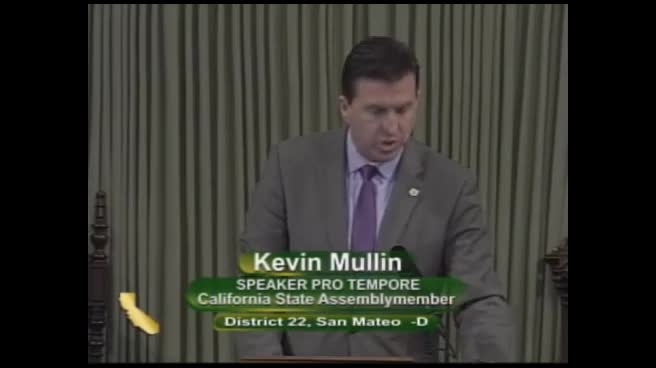 51SEC
Assembly Floor
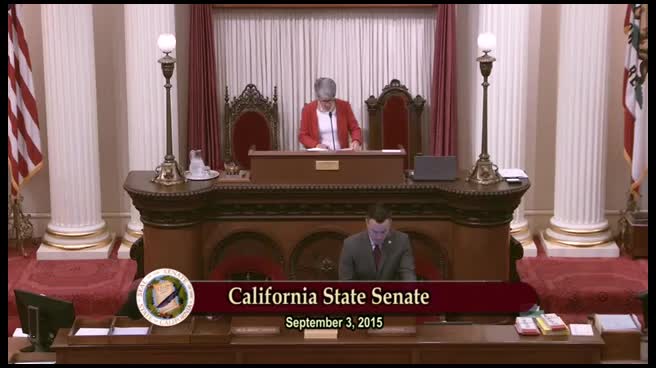 2MIN
Senate Floor
 46SEC
Senate Standing Committee on Appropriations
 6MIN
Senate Standing Committee on Education
 4MIN
Assembly Floor
 11MIN
Assembly Standing Committee on Higher Education
Bill Author



