AB 344: Medi-Cal.
- Session Year: 2015-2016
- House: Assembly
- Latest Version Date: 2015-02-13
Existing law provides for the Medi-Cal program, which is administered by the State Department of Health Care Services, under which qualified low-income individuals receive health care services. The Medi-Cal program is, in part, governed and funded by federal Medicaid Program provisions. Existing law, subject to federal approval, modifies the inpatient fee-for-service reimbursement methodology for nondesignated public hospitals, as defined, under a specified demonstration project for services on or after July 1, 2012.
This bill would prohibit a payment made to a nondesignated public hospital pursuant to these provisions from being subject to a peer grouping inpatient reimbursement limitation established by the department, unless otherwise required by federal law.
If a payment to a nondesignated public hospital is made pursuant to Section 14166.151, the reimbursement shall not be subject to a peer grouping inpatient reimbursement limitation established by the department, unless otherwise required by federal law.
|
Date
|
Status
|
|---|---|
| Feb 1, 2016 | From committee: Filed with the Chief Clerk pursuant to Joint Rule 56. |
| Jan 31, 2016 | Died pursuant to Article IV, Sec. 10(c) of the Constitution. |
| Apr 29, 2015 | In committee: Set, first hearing. Hearing canceled at the request of author. |
| Apr 22, 2015 | From committee: Do pass and re-refer to Com. on APPR. with recommendation: To Consent Calendar. (Ayes 18. Noes 0.) (April 21). Re-referred to Com. on APPR. |
| Apr 7, 2015 | In committee: Set, first hearing. Hearing canceled at the request of author. |
| Feb 23, 2015 | Referred to Com. on HEALTH. |
| Feb 17, 2015 | From printer. May be heard in committee March 19. |
| Feb 13, 2015 | Read first time. To print. |
|
Date
|
Description
|
Location
|
Votes
|
|
|---|---|---|---|---|
| Apr 21, 2015 | Do pass and be re-referred to the Committee on [Appropriations] with recommendation: To Consent Calendar | Assembly Standing Committee on Health |
Passed |
This list shows positions taken on this bill by organizations on the date displayed, which is linked to the original source.
Positions by individuals are not included.
AB 344
Page 1
Date of Hearing: April 29, 2015
ASSEMBLY COMMITTEE ON APPROPRIATIONS
Jimmy Gomez, Chair
AB 344
(Chávez) – As Introduced February 13, 2015
Policy Committee: |
Health |
Vote: |
18 - 0 |
|
|
|
|
|
|
|
|
Urgency: No State Mandated Local Program: No Reimbursable: No
SUMMARY:
This bill, as proposed to be amended, provides that if a payment is made to a non-designated public hospital (NDPH), as specified, the payment is not be subject to a peer group inpatient reimbursement limitation established by the Department of Health Care Services (DHCS), unless otherwise required under federal law.
FISCAL EFFECT:
Negligible state fiscal effect.
COMMENTS:
Purpose. According to the sponsor, the District Hospital Leadership Forum, this bill addresses a technical issue related to the Peer Grouping Inpatient Reimbursement Limitation (PIRL) that non-contract district/municipal hospitals (otherwise known as NDPHs) were subject to prior to January 1, 2014. The PIRL is a reimbursement limitation that in certain circumstances could restrict Medi-Cal payment to hospitals. The sponsor states that this bill seeks to prevent application of an existing statutory or regulatory rate limitation on a NDPH with the conversion to a new Medi-Cal inpatient reimbursement methodology called Diagnosis-Related Group (DRG).
Necessity of this bill? As the reimbursement methodology for NDPHs has recently changed, this bill does not appear necessary. The PIRL applied to the prior reimbursement methodology. DHCS does not plan to apply this to the new methodology. The PIRL is defined in regulations, not in statute, so a statutory clarification does not appear necessary when this could be clarified in regulation. The transition to DRG payments occurred July 1, 2014 and the PIRL does not appear to be an issue.
Amendments are technical and correct a code reference.
Analysis
Prepared by: Lisa Murawski / APPR. / (916) 319-2081
AB 344
Page 3
Date of Hearing: April 21, 2015
ASSEMBLY COMMITTEE ON HEALTH
Rob Bonta, Chair
AB 344
(Chávez) – As Introduced February 13, 2015
SUBJECT: Medi-Cal.
SUMMARY: Provides that if a payment is made to a non-designated public hospital (NDPH), as specified, the payment is not be subject to a peer group inpatient reimbursement limitation established by the Department of Health Care Services (DHCS), unless otherwise required under federal law.
EXISTING LAW:
Establishes the Medi-Cal program, administered by DHCS, under which qualified low-income individuals receive health care services. Includes inpatient hospital services as a covered benefit under the Medi-Cal program.
Provides for the payment of hospital services in the Medi-Cal program, including fee-for-service (FFS) or with Medi-Cal managed care (MCMC) health plans.
Requires DHCS to develop and implement a new Medi-Cal reimbursement methodology for private inpatient general acute care hospitals based upon diagnosis related groups (DRGs), subject to federal approval, that reflects the costs and staffing levels associated with quality of care for patients in all general acute care hospitals in state and out-of-state.
Requires the DRG payment methodology to be implemented on July 1, 2012, or on the date upon which the Director of the Department of Managed Health Care executes a declaration certifying that all necessary federal approvals have been obtained and the methodology is sufficient for formal implementation, whichever is later. Exempts county hospitals and University of California hospitals (designated public hospitals or DPHs) and NDPHs from the DRG payment methodology.
Provides that designated public hospitals (DPHs) are reimbursed based on their costs, and use their own funds [instead of state General Fund] as the state match to draw down federal Medicaid matching funds, pursuant to a Section 1115 waiver.
Upon approval of a waiver amendment, and state plan amendment, provides that NDPHs, which are defined as district hospitals, are to be reimbursed in the same fashion as DPHs.
FISCAL EFFECT: This bill has not been analyzed by a fiscal committee.
COMMENTS:
PURPOSE OF THIS BILL. According to the sponsor, the District Hospital Leadership Forum, this bill addresses a technical issue related to the Peer Grouping Inpatient Reimbursement Limitation (PIRL) that non-contract district/municipal hospitals (otherwise known as NDPHs) were subject to prior to January 1, 2014. The PIRL is, as it sounds a reimbursement limitation that in certain circumstances could restrict Medi-Cal payment to hospitals. The sponsor states that this bill seeks to prevent application of an existing statutory or regulatory rate limitation on a NDPH when DHCS converts its Medi-Cal inpatient reimbursement methodology to the AP-DRG. The purpose of the above regulation was to control costs for non-contract hospitals (about two-thirds of district/municipal hospitals were non-contract on January 1, 2014). The transition the DRG reimbursement methodology for these hospitals means that there no longer a need for this limitation, according to the sponsor and tis bill ensures this technical correction is in place.
BACKGROUND. SB 853 (Committee on Budget and Fiscal Review, Chapter 717, Statutes of 2010, added Section 14105.28 to the Welfare and Institutions Code which mandated the design and implementation of a new payment methodology for hospital inpatient services provided to Medi-Cal beneficiaries based upon DRGs. DRGs measures case mix for inpatient admissions. One question is how to define a more severe case. Six dimensions along which case mix could be measured include, severity of illness, risk of mortality, prognosis, treatment difficulty, need for intervention and resource intensity. The initial motivation for developing the DRGs was to create an effective framework for monitoring the quality of care and the utilization of services in a hospital setting. AP-DRGs are similar to DRGs, but also include a more detailed DRG breakdown for non-Medicare patients, particularly newborns and children.
The DRG reimbursement methodology replaced the previous payment method for all NDPHs with admissions on or after January 1, 2014. Under previous payment method, non-contract hospitals were reimbursed based on Medi-Cal allowable, audited costs. Hospitals were paid interim rates using a cost-to-charge ratio based on the most recently submitted cost report. A cost settlement process reconciled the difference between interim payments and the allowable costs of providing services and costs were limited by the PIRL.
The PIRL’s purpose was to slow down the rate of Medi-Cal inpatient acute care expenditures through two sets of limitations. Both limitations are based upon a hospital’s Medi-Cal cost per discharge. The first is to limit the growth of Medi-Cal expenditures by the hospital from one period to the next, while the other capped the hospital’s Medi-Cal cost per discharge at the 60th percentile of its peer group.
DHCS is using a three year transition period to implement DRGs that limits hospitals’ projected change from what they would have received under the current reimbursement methodology, with full implementation in year four. The purpose of the transition period is to allow time for hospitals to make adjustments to systems of care due to the fundamental change in the payment system.
SUPPORT. This bill, sponsored by the District Hospital Leadership Forum (DHLF) on behalf of district hospitals, seeks to prevent application of an existing statutory or regulatory rate limitation on a NDPH when DHCS converts its Medi-Cal inpatient reimbursement methodology to the AP-DRG which would make the PIRL regulation obsolete. However, to ensure there are not unintended consequences resulting in the application of the PIRL after the transition to certified public expenditures, this bill is necessary.
PREVIOUS LEGISLATION.
AB 1467 (Budget Committee), Chapter 23, Statutes of 2012, creates a transition plan for the staff California Medical Assistance Commission (CMAC) and redirects positions to DHCS on July 1, 2012. Changes the reimbursement methodology of NDPHs from the current CMAC negotiated per diem rates or cost-based reimbursement for inpatient Medi-Cal FFS. The additional funds would be made available to NDPHs to offset their uncompensated care costs and to support their efforts to enhance the quality of care and the health of the patients and families they serve.
AB 102 (Budget Committee), Chapter 29, Statutes of 2011, requires DHCS to implement the DRG payment methodology by July 1, 2012.
REGISTERED SUPPORT / OPPOSITION:
Support
District Hospital Leadership Forum
Opposition
None on file.
Analysis Prepared by: Roger Dunstan / HEALTH / (916) 319-2097
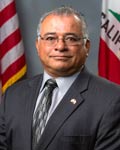
Bill Author
Bill Co-Author(s):