AB 349: Common interest developments: property use and maintenance.
- Session Year: 2015-2016
- House: Assembly
- Latest Version Date: 2015-09-04
The Davis-Stirling Common Interest Development Act governs the management and operation of common interest developments. Existing law provides that, unless otherwise provided in the common interest development declaration, the association is responsible for repairing, replacing, or maintaining the common area, other than exclusive use common area, and the owner of each separate interest is responsible for maintaining that separate interest and any exclusive use common area appurtenant to that interest. Existing law makes void and unenforceable any provision of the governing documents or architectural or landscaping guidelines or policies that prohibits use of low water-using plants, or prohibits or restricts compliance with water-efficient landscape ordinances or regulations on the use of water, as specified.
Existing law also prohibits an association, except an association that uses recycled water for landscape irrigation, from imposing a fine or assessment on separate interest owners for reducing or eliminating watering of vegetation or lawns during any period for which the Governor has declared a state of emergency or the local government has declared a local emergency due to drought.
This bill would make void and unenforceable any provision of the governing documents or architectural or landscaping guidelines or policies that prohibits use of artificial turf or any other synthetic surface that resembles grass.
This bill would also prohibit a requirement that an owner of a separate interest remove or reverse water-efficient landscaping measures, installed in response to a declaration of a state of emergency, upon the conclusion of the state of emergency.
This bill would declare that it is to take effect immediately as an urgency statute.
The Davis-Stirling Common Interest Development Act governs the management and operation of common interest developments. Existing law provides that, unless otherwise provided in the common interest development declaration, the association is responsible for repairing, replacing, or maintaining the common area, other than exclusive use common area, and the owner of each separate interest is responsible for maintaining that separate interest and any exclusive use common area appurtenant to that interest. Existing law makes void and unenforceable any provision of the governing documents or architectural or landscaping guidelines or policies that prohibits use of low water-using plants, or prohibits or restricts compliance with water-efficient landscape ordinances or regulations on the use of water, as specified.
Existing law also prohibits an association, except an association that uses recycled water for landscape irrigation, from imposing a fine or assessment on separate interest owners for reducing or eliminating watering of vegetation or lawns during any period for which the Governor has declared a state of emergency or the local government has declared a local emergency due to drought.
This bill would also make void and unenforceable any provision of the governing documents or architectural or landscaping guidelines or policies that prohibits use of artificial turf or any other synthetic surface that resembles grass.
This bill would declare that it is to take effect immediately as an urgency statute.
The Davis-Stirling Common Interest Development Act governs the management and operation of common interest developments. Existing law provides that, unless otherwise provided in the common interest development declaration, the association is responsible for repairing, replacing, or maintaining the common area, other than exclusive use common area, and the owner of each separate interest is responsible for maintaining that separate interest and any exclusive use common area appurtenant to that interest. Existing law makes void and unenforceable any provision of the governing documents or architectural or landscaping guidelines or policies that prohibits use of low water-using plants, or prohibits or restricts compliance with water-efficient landscape ordinances or regulations on the use of water, as specified.
Existing law also prohibits an association, except an association that uses recycled water for landscape irrigation, from imposing a fine or assessment on separate interest owners for reducing or eliminating watering of vegetation or lawns during any period for which the Governor has declared a state of emergency or the local government has declared a local emergency due to drought.
This bill would also make void and unenforceable any provision of the governing documents or architectural or landscaping guidelines or policies that prohibits use of low water-using landscapes that require not more than a specified amount of water. artificial turf or any other synthetic surface that resembles grass.
The Davis-Stirling Common Interest Development Act governs the management and operation of common interest developments. Existing law provides that, unless otherwise provided in the common interest development declaration, the association is responsible for repairing, replacing, or maintaining the common area, other than exclusive use common area, and the owner of each separate interest is responsible for maintaining that separate interest and any exclusive use common area appurtenant to that interest. Existing law makes void and unenforceable any provision of the governing documents or architectural or landscaping guidelines or policies that prohibits use of low water-using plants, or prohibits or restricts compliance with water-efficient landscape ordinances or regulations on the use of water, as specified.
Existing law also prohibits an association, except an association that uses recycled water for landscape irrigation, from imposing a fine or assessment on separate interest owners for reducing or eliminating watering of vegetation or lawns during any period for which the Governor has declared a state of emergency or the local government has declared a local emergency due to drought.
This bill would also make void and unenforceable any provision of the governing documents or architectural or landscaping guidelines or policies that prohibits use of low water-using landscapes that require not more than a specified amount of water.
The Legislature hereby finds and declares:
(a)With the lowest snowpack ever recorded, California finds itself in 2015 in the fourth year of a historic, prolonged, and potentially devastating drought.
(b)Governor Edmund G. Brown Jr. issued an Executive Order on April 1, 2015, which, for the first time in California history, directs the State Water Resources Control Board to implement mandatory water reductions across the state to reduce water usage by 25 percent.
(c)One component of the Governors Executive Order compels the replacement of 50 million square feet of lawns throughout the state with drought tolerant landscaping.
(d)Among a wide variety of drought tolerant landscaping are a variety of native plants and landscaping alternatives, including the installation of synthetic grass or artificial turf.
(e)According to the Department of Water Resources, landscape irrigation represents 43 percent of urban water use. The installation of artificial turf or synthetic grass, in lieu of conventional lawns and landscapes, can directly reduce outdoor water use to help meet the Governors mandated 25-percent statewide water use reduction.
(f)The vast majority of Californians may today elect to install artificial turf or synthetic grass in their single-family residential landscapes. Homeowners within common interest developments should also be afforded a similar opportunity within appropriate design, aesthetic, and drainage standards defined by their homeowners association.
SEC. 2.Section 4735 of the Civil Code is amended to read:4735.(a)Notwithstanding any other law, a provision of the governing documents or architectural or landscaping guidelines or policies shall be void and unenforceable if it does any of the following:
(1)Prohibits, or includes conditions that have the effect of prohibiting, the use of low water-using plants as a group or as a replacement of existing turf.
(2)Prohibits, or includes conditions that have the effect of prohibiting, the use of artificial turf or any other synthetic surface that resembles grass.
(3)Has the effect of prohibiting or restricting compliance with either of the following:
(A)A water-efficient landscape ordinance adopted or in effect pursuant to subdivision (c) of Section 65595 of the Government Code.
(B)Any regulation or restriction on the use of water adopted pursuant to Section 353 or 375 of the Water Code.
(b)This section shall not prohibit an association from applying landscaping rules established in the governing documents, to the extent the rules fully conform with subdivision (a).
(c)Notwithstanding any other provision of this part, an association, except an association that uses recycled water, as defined in Section 13050 of the Water Code, for landscaping irrigation, shall not impose a fine or assessment against an owner of a separate interest for reducing or eliminating the watering of vegetation or lawns during any period for which either of the following have occurred:
(1)The Governor has declared a state of emergency due to drought pursuant to subdivision (b) of Section 8558 of the Government Code.
(2)A local government has declared a local emergency due to drought pursuant to subdivision (c) of Section 8558 of the Government Code.
(d)An owner of a separate interest upon which water-efficient landscaping measures have been installed in response to a declaration of a state of emergency described in subdivision (c) shall not be required to reverse or remove the water-efficient landscaping measures upon the conclusion of the state of emergency.
SEC. 3.This act is an urgency statute necessary for the immediate preservation of the public peace, health, or safety within the meaning of Article IV of the Constitution and shall go into immediate effect. The facts constituting the necessity are:
There have been numerous stories across the state regarding discrimination against homeowners by a homeowners association when the homeowners attempt to replace their water-intensive lawns with artificial grass. California is in the fourth year of a drought with no end in sight. Governor Brown has ordered a 25 percent statewide reduction in urban water consumption and ordered that Californians take out 50 million square feet of lawns to conserve water. Because residential landscaping accounts for 35 percent of urban water usage statewide, allowing homeowners the freedom to use conservation-friendly landscaping will be one important ingredient in reaching our mandatory water reduction goals as soon as possible.
Throughout California, homeowners are subject to stricter water conservation regulations. While in the middle of a water shortage crisis, homeowner associations are not allowing homeowners to make voluntary sacrifices by installing artificial grass, and are fining them if they are out of compliance. This act ensures that all homeowners have the right to better conserve water by voluntarily replacing grass with artificial grass. Property owners who pursue water conservation by installing artificial grass should be encouraged, not sued or fined. Thus, this act is necessary for the immediate preservation of the public peace, health, and safety.
The Legislature hereby finds and declares:
(a)With the lowest snowpack ever recorded, California finds itself in 2015 in the fourth year of a historic, prolonged, and potentially devastating drought.
(b)Governor Edmund G. Brown Jr. issued an Executive Order on April 1, 2015, which, for the first time in California history, directs the State Water Resources Control Board to implement mandatory water reductions across the state to reduce water usage by 25 percent.
(c)One component of the Governors Executive Order compels the replacement of 50 million square feet of lawns throughout the state with drought tolerant landscaping.
(d)Among a wide variety of drought tolerant landscaping are a variety of native plants and landscaping alternatives, including the installation of synthetic grass or artificial turf.
(e)According to the Department of Water Resources, landscape irrigation represents 43 percent of urban water use. The installation of artificial turf or synthetic grass, in lieu of conventional lawns and landscapes, can directly reduce outdoor water use to help meet the Governors mandated 25-percent statewide water use reduction.
(f)The vast majority of Californians may today elect to install artificial turf or synthetic grass in their single-family residential landscapes. Homeowners within common interest developments should also be afforded a similar opportunity within appropriate design, aesthetic, and drainage standards defined by their homeowners association.
SEC. 2.Section 4735 of the Civil Code is amended to read:4735.(a)Notwithstanding any other law, a provision of the governing documents or architectural or landscaping guidelines or policies shall be void and unenforceable if it does any of the following:
(1)Prohibits, or includes conditions that have the effect of prohibiting, the use of low water-using plants as a group or as a replacement of existing turf.
(2)Prohibits, or includes conditions that have the effect of prohibiting, the use of artificial turf or any other synthetic surface that resembles grass.
(3)Has the effect of prohibiting or restricting compliance with either of the following:
(A)A water-efficient landscape ordinance adopted or in effect pursuant to subdivision (c) of Section 65595 of the Government Code.
(B)Any regulation or restriction on the use of water adopted pursuant to Section 353 or 375 of the Water Code.
(b)This section shall not prohibit an association from applying landscaping rules established in the governing documents, to the extent the rules fully conform with subdivision (a).
(c)Notwithstanding any other provision of this part, an association, except an association that uses recycled water, as defined in Section 13050 of the Water Code, for landscaping irrigation, shall not impose a fine or assessment against an owner of a separate interest for reducing or eliminating the watering of vegetation or lawns during any period for which either of the following have occurred:
(1)The Governor has declared a state of emergency due to drought pursuant to subdivision (b) of Section 8558 of the Government Code.
(2)A local government has declared a local emergency due to drought pursuant to subdivision (c) of Section 8558 of the Government Code.
(d)An owner of a separate interest upon which water-efficient landscaping measures have been installed in response to a declaration of a state of emergency described in subdivision (c) shall not be required to reverse or remove the water-efficient landscaping measures upon the conclusion of the state of emergency.
SEC. 3.This act is an urgency statute necessary for the immediate preservation of the public peace, health, or safety within the meaning of Article IV of the Constitution and shall go into immediate effect. The facts constituting the necessity are:
There have been numerous stories across the state regarding discrimination against homeowners by a homeowners association when the homeowners attempt to replace their water-intensive lawns with artificial grass. California is in the fourth year of a drought with no end in sight. Governor Brown has ordered a 25 percent statewide reduction in urban water consumption and ordered that Californians take out 50 million square feet of lawns to conserve water. Because residential landscaping accounts for 35 percent of urban water usage statewide, allowing homeowners the freedom to use conservation-friendly landscaping will be one important ingredient in reaching our mandatory water reduction goals as soon as possible.
Throughout California, homeowners are subject to stricter water conservation regulations. While in the middle of a water shortage crisis, homeowner associations are not allowing homeowners to make voluntary sacrifices and are still forcing them to maintain grass lawns, by installing artificial grass, and are fining them if they are out of compliance. This act ensures that all homeowners have the right to better conserve water by voluntarily replacing grass with artificial grass. Property owners who pursue water conservation by installing artificial grass should be encouraged, not sued or fined. Thus, this act is necessary for the immediate preservation of the public peace, health, and safety.
The Legislature hereby finds and declares:
(a)With the lowest snowpack ever recorded, California finds itself in 2015 in the fourth year of a historic, prolonged, and potentially devastating drought.
(b)Governor Jerry Brown Edmund G. Brown Jr. issued an Executive Order on April 1, 2015, which, for the first time in California history, directs the State Water Resources Control Board to implement mandatory water reductions across the state to reduce water usage by 25 percent.
(c)One component of the Governors Executive Order compels the replacement of 50 million square feet of lawns throughout the state with drought tolerant landscaping.
(d)Among a wide variety of drought tolerant landscaping are a variety of native plants and landscaping alternatives, including the installation of synthetic grass or artificial turf.
(e)According to the Department of Water Resources, landscape irrigation represents 43 percent of urban water use. The installation of artificial turf or synthetic grass, in lieu of conventional lawns and landscapes, can directly reduce outdoor water use to help meet the Governors mandated 25-percent statewide water use reduction.
(f)The vast majority of Californians may today elect to install artificial turf or synthetic grass in their single-family residential landscapes. Homeowners within common interest developments should also be afforded a similar opportunity within appropriate design, aesthetic, and drainage standards defined by their homeowners association.
SEC. 2.Section 4735 of the Civil Code is amended to read:4735.(a)Notwithstanding any other law, a provision of the governing documents or architectural or landscaping guidelines or policies shall be void and unenforceable if it does any of the following:
(1)Prohibits, or includes conditions that have the effect of prohibiting, the use of low water-using plants as a group or as a replacement of existing turf.
(2)Prohibits, or includes conditions that have the effect of prohibiting, the use of artificial turf or any other synthetic surface that resembles grass.
(3)Has the effect of prohibiting or restricting compliance with either of the following:
(A)A water-efficient landscape ordinance adopted or in effect pursuant to subdivision (c) of Section 65595 of the Government Code.
(B)Any regulation or restriction on the use of water adopted pursuant to Section 353 or 375 of the Water Code.
(b)This section shall not prohibit an association from applying landscaping rules established in the governing documents, to the extent the rules fully conform with subdivision (a).
(c)Notwithstanding any other provision of this part, an association, except an association that uses recycled water, as defined in Section 13050 of the Water Code, for landscaping irrigation, shall not impose a fine or assessment against an owner of a separate interest for reducing or eliminating the watering of vegetation or lawns during any period for which either of the following have occurred:
(1)The Governor has declared a state of emergency due to drought pursuant to subdivision (b) of Section 8558 of the Government Code.
(2)A local government has declared a local emergency due to drought pursuant to subdivision (c) of Section 8558 of the Government Code.
(d)An owner of a separate interest upon which water-efficient landscaping measures have been installed in response to a declaration of a state of emergency described in subdivision (c) shall not be required to reverse or remove the water-efficient landscaping measures upon the conclusion of the state of emergency.
SEC. 3.This act is an urgency statute necessary for the immediate preservation of the public peace, health, or safety within the meaning of Article IV of the Constitution and shall go into immediate effect. The facts constituting the necessity are:
There have been numerous stories across the state regarding discrimination against homeowners by a homeowners association when the homeowners attempt to replace their water-intensive lawns with artificial grass. California is in the fourth year of a drought with no end in sight. Governor Brown has ordered a 25 percent statewide reduction in urban water consumption and ordered that Californians take out 50 million square feet of lawns to conserve water. Because residential landscaping accounts for 35 percent of urban water usage statewide, allowing homeowners the freedom to use conservation-friendly landscaping will be one important ingredient in reaching our mandatory water reduction goals as soon as possible.
Throughout California, homeowners are subject to stricter water conservation regulations. While in the middle of a water shortage crisis, homeowner associations are not allowing homeowners to make voluntary sacrifices and are still forcing them to maintain grass lawns, and fining them if they are out of compliance. This act ensures that all homeowners have the right to better conserve water by voluntarily replacing grass with artificial grass. Property owners who pursue water conservation should be encouraged, not sued or fined. Thus, this act is necessary for the immediate preservation of the public peace, health, and safety.
The Legislature hereby finds and declares:
(a)With the lowest snowpack ever recorded, California finds itself in 2015 in the fourth year of a historic, prolonged, and potentially devastating drought.
(b)Governor Jerry Brown issued an Executive Order on April 1, 2015, which, for the first time in California history, directs the State Water Resources Control Board to implement mandatory water reductions across the state to reduce water usage by 25 percent.
(c)One component of the Governors Executive Order compels the replacement of 50 million square feet of lawns throughout the state with drought tolerant landscaping.
(d)Among a wide variety of drought tolerant landscaping are a variety of native plants and landscaping alternatives, including the installation of synthetic grass or artificial turf.
(e)According to the Department of Water Resources, landscape irrigation represents 43 percent of urban water use. The installation of artificial turf or synthetic grass, in lieu of conventional lawns and landscapes, can directly reduce outdoor water use to help meet the Governors mandated 25-percent statewide water use reduction.
(f)The vast majority of Californians may today elect to install artificial turf or synthetic grass in their single-family residential landscapes. Homeowners within common interest developments should also be afforded a similar opportunity within appropriate design, aesthetic, and drainage standards defined by their homeowners association.
SEC. 2.Section 4735 of the Civil Code is amended to read:4735.(a)Notwithstanding any other law, a provision of the governing documents or architectural or landscaping guidelines or policies shall be void and unenforceable if it does any of the following:
(1)Prohibits, or includes conditions that have the effect of prohibiting, the use of low water-using plants as a group or as a replacement of existing turf.
(2)Prohibits, or includes conditions that have the effect of prohibiting, the use of artificial turf or any other synthetic surface that resembles grass.
(3)Has the effect of prohibiting or restricting compliance with either of the following:
(A)A water-efficient landscape ordinance adopted or in effect pursuant to subdivision (c) of Section 65595 of the Government Code.
(B)Any regulation or restriction on the use of water adopted pursuant to Section 353 or 375 of the Water Code.
(b)This section shall not prohibit an association from applying landscaping rules established in the governing documents, to the extent the rules fully conform with subdivision (a).
(c)Notwithstanding any other provision of this part, an association, except an association that uses recycled water, as defined in Section 13050 of the Water Code, for landscaping irrigation, shall not impose a fine or assessment against an owner of a separate interest for reducing or eliminating the watering of vegetation or lawns during any period for which either of the following have occurred:
(1)The Governor has declared a state of emergency due to drought pursuant to subdivision (b) of Section 8558 of the Government Code.
(2)A local government has declared a local emergency due to drought pursuant to subdivision (c) of Section 8558 of the Government Code.
SEC. 3.This act is an urgency statute necessary for the immediate preservation of the public peace, health, or safety within the meaning of Article IV of the Constitution and shall go into immediate effect. The facts constituting the necessity are:
There have been numerous stories across the state regarding discrimination against homeowners by a homeowners association when the homeowners attempt to replace their water-intensive lawns with artificial grass. California is in the fourth year of a drought with no end in sight. Governor Brown has ordered a 25 percent statewide reduction in urban water consumption and ordered that Californians take out 50 million square feet of lawns to conserve water. Because residential landscaping accounts for 35 percent of urban water usage statewide, allowing homeowners the freedom to use conservation-friendly landscaping will be one important ingredient in reaching our mandatory water reduction goals as soon as possible.
Throughout California, homeowners are subject to stricter water conservation regulations. While in the middle of a water shortage crisis, homeowner associations are not allowing homeowners to make voluntary sacrifices and are still forcing them to maintain grass lawns, and fining them if they are out of compliance. This act ensures that all homeowners have the right to better conserve water by voluntarily replacing grass with artificial grass. Property owners who pursue water conservation should be encouraged, not sued or fined. Thus, this act is necessary for the immediate preservation of the public peace, health, and safety.
The Legislature hereby finds and declares:
(a)With the lowest snowpack ever recorded, California finds itself in 2015 in the fourth year of a historic, prolonged, and potentially devastating drought.
(b)Governor Jerry Brown issued an Executive Order on April 1, 2015, which, for the first time in California history, directs the State Water Resources Control Board to implement mandatory water reductions across the state to reduce water usage by 25 percent.
(c)One component of the Governors Executive Order compels the replacement of 50 million square feet of lawns throughout the state with drought tolerant landscaping.
(d)Among a wide variety of drought tolerant landscaping are a variety of native plants and landscaping alternatives, including the installation of synthetic grass or artificial turf.
(e)According to the Department of Water Resources, landscape irrigation represents 43 percent of urban water use. The installation of artificial turf or synthetic grass, in lieu of conventional lawns and landscapes, can directly reduce outdoor water use to help meet the Governors mandated 25-percent statewide water use reduction.
(f)The vast majority of Californians may today elect to install artificial turf or synthetic grass in their single-family residential landscapes. Homeowners within common interest developments should also be afforded a similar opportunity within appropriate design, aesthetic, and drainage standards defined by their homeowners association.
SECTION 1.SEC. 2.Section 4735 of the Civil Code is amended to read:4735.(a)Notwithstanding any other law, a provision of the governing documents or architectural or landscaping guidelines or policies shall be void and unenforceable if it does any of the following:
(1)Prohibits, or includes conditions that have the effect of prohibiting, the use of low water-using plants as a group or as a replacement of existing turf.
(2)Prohibits, or includes conditions that have the effect of prohibiting, the use of low water-using landscapes that require an amount of water that is not more than the amount of water required by low water-using plants. artificial turf or any other synthetic surface that resembles grass.
(3)Has the effect of prohibiting or restricting compliance with either of the following:
(A)A water-efficient landscape ordinance adopted or in effect pursuant to subdivision (c) of Section 65595 of the Government Code.
(B)Any regulation or restriction on the use of water adopted pursuant to Section 353 or 375 of the Water Code.
(b)This section shall not prohibit an association from applying landscaping rules established in the governing documents, to the extent the rules fully conform with subdivision (a).
(c)Notwithstanding any other provision of this part, an association, except an association that uses recycled water, as defined in Section 13050 of the Water Code, for landscaping irrigation, shall not impose a fine or assessment against an owner of a separate interest for reducing or eliminating the watering of vegetation or lawns during any period for which either of the following have occurred:
(1)The Governor has declared a state of emergency due to drought pursuant to subdivision (b) of Section 8558 of the Government Code.
(2)A local government has declared a local emergency due to drought pursuant to subdivision (c) of Section 8558 of the Government Code.
(a)Notwithstanding any other law, a provision of the governing documents or architectural or landscaping guidelines or policies shall be void and unenforceable if it does any of the following:
(1)Prohibits, or includes conditions that have the effect of prohibiting, the use of low water-using plants as a group or as a replacement of existing turf.
(2)Prohibits, or includes conditions that have the effect of prohibiting, the use of low water-using landscapes that require an amount of water that is not more than the amount of water required by low water-using plants.
(2)(3)Has the effect of prohibiting or restricting compliance with either of the following:
(A)A water-efficient landscape ordinance adopted or in effect pursuant to subdivision (c) of Section 65595 of the Government Code.
(B)Any regulation or restriction on the use of water adopted pursuant to Section 353 or 375 of the Water Code.
(b)This section shall not prohibit an association from applying landscaping rules established in the governing documents, to the extent the rules fully conform with subdivision (a).
(c)Notwithstanding any other provision of this part, an association, except an association that uses recycled water, as defined in Section 13050 of the Water Code, for landscaping irrigation, shall not impose a fine or assessment against an owner of a separate interest for reducing or eliminating the watering of vegetation or lawns during any period for which either of the following have occurred:
(1)The Governor has declared a state of emergency due to drought pursuant to subdivision (b) of Section 8558 of the Government Code.
(2)A local government has declared a local emergency due to drought pursuant to subdivision (c) of Section 8558 of the Government Code.
|
Date
|
Status
|
|---|---|
| Sep 4, 2015 | Chaptered by Secretary of State - Chapter 266, Statutes of 2015. |
| Sep 4, 2015 | Approved by the Governor. |
| Aug 27, 2015 | Enrolled and presented to the Governor at 3:30 p.m. |
| Aug 27, 2015 | Senate amendments concurred in. To Engrossing and Enrolling. (Ayes 74. Noes 3. Page 2606.). |
| Aug 27, 2015 | Senate amendments concurred in. To Engrossing and Enrolling. (Ayes 74. Noes 3.). |
| Aug 25, 2015 | In Assembly. Concurrence in Senate amendments pending. May be considered on or after August 27 pursuant to Assembly Rule 77. |
| Aug 24, 2015 | Read third time. Urgency clause adopted. Passed. Ordered to the Assembly. (Ayes 38. Noes 0. Page 2153.). |
| Aug 24, 2015 | Read third time. Urgency clause adopted. Passed. Ordered to the Assembly. |
| Aug 17, 2015 | Read second time and amended. Ordered to third reading. |
| Jul 16, 2015 | From committee: Amend, and do pass as amended. (Ayes 7. Noes 0.) (July 14). |
| Jun 24, 2015 | From committee: Do pass and re-refer to Com. on JUD. (Ayes 11. Noes 0.) (June 23). Re-referred to Com. on JUD. |
| Jun 17, 2015 | From committee chair, with author's amendments: Amend, and re-refer to committee. Read second time, amended, and re-referred to Com. on T. & H. |
| Jun 11, 2015 | Referred to Coms. on T. & H. and JUD. |
| May 28, 2015 | In Senate. Read first time. To Com. on RLS. for assignment. |
| May 28, 2015 | Read third time. Urgency clause adopted. Passed. Ordered to the Senate. (Ayes 73. Noes 3. Page 1622.). |
| May 28, 2015 | Read third time. Urgency clause adopted. Passed. Ordered to the Senate. (Ayes 73. Noes 3.). |
| May 22, 2015 | Read third time and amended. Ordered to third reading. (Page 1544.) |
| May 22, 2015 | Read third time and amended. Ordered to third reading. |
| May 14, 2015 | Read second time. Ordered to third reading. |
| May 13, 2015 | From committee: Do pass. (Ayes 7. Noes 0.) (May 13). |
| May 6, 2015 | Re-referred to Com. on H. & C.D. |
| May 5, 2015 | From committee chair, with author's amendments: Amend, and re-refer to Com. on H. & C.D. Read second time and amended. |
| Mar 2, 2015 | Referred to Com. on H. & C.D. |
| Feb 18, 2015 | From printer. May be heard in committee March 20. |
| Feb 17, 2015 | Read first time. To print. |
|
Date
|
Description
|
Location
|
Votes
|
|
|---|---|---|---|---|
| Aug 27, 2015 | AB 349 GONZALEZ Concurrence in Senate Amendments | Assembly Floor |
Passed |
|
| Aug 24, 2015 | Assembly 3rd Reading AB349 Gonzalez Urgency Clause | Senate Floor |
Passed |
|
| Jul 14, 2015 | Do pass as amended | Senate Standing Committee on Judiciary |
Passed |
|
| Jun 23, 2015 | Do pass, but first be re-referred to the Committee on [Judiciary] | Senate Standing Committee on Transportation and Housing |
Passed |
|
| May 28, 2015 | AB 349 GONZALEZ Third Reading Urgency | Assembly Floor |
Passed |
|
| May 13, 2015 | Do pass. | Assembly Standing Committee on Housing and Community Development |
Passed |
This list shows positions taken on this bill by organizations on the date displayed, which is linked to the original source.
Positions by individuals are not included.
AB 349
Page 2
CONCURRENCE IN SENATE AMENDMENTS
AB 349
(Gonzalez)
As Amended August 17, 2015
2/3 vote. Urgency
ASSEMBLY: |
73-3 |
(May 28, 2015) |
SENATE: |
38-0 |
(August 24, 2015) |
Original Committee Reference: H. & C.D.
SUMMARY: Makes the governing documents, architectural or landscaping guidelines, or policies of a common interest development (CID) void and unenforceable if they prohibit the use of artificial turf or any other synthetic surface that resembles grass. Prohibits a CID from requiring an owner of a separate interest to remove or reverse water-efficient landscaping measures, installed in response to a declaration of a state of emergency, upon the conclusion of the state of emergency. This bill includes an urgency clause.
The Senate amendments:
Prohibit a CID from requiring an owner of a separate interest to remove or reverse water-efficient landscaping measures, installed in response to a declaration of a state of emergency, upon the conclusion of the state of emergency.
Make technical, clarifying changes.
Add a coauthor.
FISCAL EFFECT: None
COMMENTS: There are over 50,220 CIDs in the state that comprise over 4.8 million housing units, or approximately one quarter of the state's housing stock. CIDs include condominiums, community apartment projects, housing cooperatives, and planned unit developments. They are characterized by a separate ownership of dwelling space coupled with an undivided interest in a common property, restricted by covenants and conditions that limit the use of common area and the separate ownership interests, and the management of common property and enforcement of restrictions by a homeowners association (HOA). CIDs are governed by the Davis Stirling Act (the Act) as well as the governing documents of the association, including bylaws, declaration, and operating rules. CIDs are run by volunteer boards of directors (boards) the members of which may have little or no experience managing real property or governing a nonprofit association and who must interpret the complex laws regulating CIDs. Boards must not only interpret the law, but enforce the restrictions and rules imposed by the governing documents and state law.
Under existing law the governing documents of a CID cannot prohibit a homeowner from installing low water-using plants as a group. In addition, CIDs cannot prevent a homeowner from installing landscaping that complies with a city's or county's water-efficient landscape ordinance or from complying with any restrictions on watering that a city or county adopts in response to severe water shortages.
This bill would prohibit an HOA from preventing a homeowner from installing artificial turf or synthetic grass. Existing law allows an HOA to apply landscaping rules that are included in the governing documents, as long as those rules do not have the effect of prohibiting the of use of low-water using plants or prevent a homeowner from complying with a local water-efficient landscaping ordinance. Under this bill, this provision would also apply to artificial turf or synthetic grass. As a result, an HOA could establish reasonable design and quality restrictions about the type of artificial turf a homeowner can use, including for example, the color and replacement requirements, as long as those restrictions did not effectively make it impossible for a homeowner to install artificial turf.
As amended in the Senate, this bill would also prohibit a CID from requiring an owner of a separate interest to remove or reverse water-efficient landscaping measures, installed in response to a declaration of a state of emergency, upon the conclusion of the state of emergency.
Purpose of this bill: According to the author, "This year was the lowest snowpack ever recorded, and California is in the fourth year of a historic, prolonged and potentially devastating drought. Governor Brown issued an Executive Order on April 1, 2015, which, for the first time ever in California history, directs the State Water Resources Control Board to implement mandatory water reductions across the state to reduce water usage by 25%. One component of the Governor's Executive Order compels the replacement of 50 million square feet of lawns throughout the state with drought-tolerant landscaping.
"Given the extent and breadth of this drought situation, all reasonable opportunities to improve water savings and efficiency should be available to all communities. Among a wide variety of drought-tolerant landscaping are a variety of native plants and landscaping alternatives, including the installation of synthetic grass or artificial turf. According to the Department of Water Resources, landscape irrigation represents 43% of urban water use, and the installation of artificial turf or synthetic grass, in lieu of conventional lawns and landscapes, can directly reduce outdoor water use to help meet the Governor's mandated 25 percent statewide water use reduction.
"Today, the vast majority of Californians may elect to install artificial turf or synthetic grass in their single-family residential landscapes, and homeowners within common interest developments should also be afforded a similar opportunity within appropriate design, aesthetic, and drainage standards defined by the homeowners' association."
Related legislation: SB 759 (Lieu) of 2011 would have made the governing documents of a CID void if they prohibited or included provisions that effectively prohibited the installation of artificial turf or any synthetic surface that resembles grass. This bill was vetoed by the Governor.
AB 1793 (Saldana) of 2010 would have made the governing documents of a CID void if they prohibited or included provisions that effectively prohibited the installation of artificial turf or any synthetic surface that resembles grass. This bill was vetoed by the Governor.
Analysis Prepared by: Rebecca Rabovsky / H. & C.D. / (916) 319-2085 FN: 0001526
AB 349
Page 5
|
Office of Senate Floor Analyses (916) 651-1520 Fax: (916) 327-4478 |
THIRD READING
Bill No: AB 349
Amended: 8/17/15 in Senate
SENATE TRANS. & HOUSING COMMITTEE: 11-0, 6/23/15
AYES: Beall, Cannella, Allen, Bates, Gaines, Galgiani, Leyva, McGuire, Mendoza, Roth, Wieckowski
SENATE JUDICIARY COMMITTEE: 7-0, 7/14/15
AYES: Jackson, Moorlach, Anderson, Hertzberg, Leno, Monning, Wieckowski
ASSEMBLY FLOOR: 73-3, 5/28/15 - See last page for vote
SUBJECT: Common interest developments: property use and maintenance
SOURCE: San Diego County Water Authority
DIGEST: This bill voids, or makes unenforceable, any provision of a common interest development (CID) governing document or architectural or landscaping guidelines or policies that prohibit the use of artificial turf or any other synthetic surface that resembles grass.
Existing law:
Finds and declares, as the policy of this state, that the management of urban water demands and the efficient use of water shall be actively pursued to protect both the people of the state and their water resources.
Requires local agencies to adopt water-efficient landscape ordinances, as specified.
Establishes rules and regulations governing the operation of CIDs and the respective rights and duties of homeowners associations (HOAs) and their members.
Permits the governing board of an HOA to adopt operating rules that apply generally to the management and operation of the CID or the conduct of the business and affairs of the HOA, provided that the rule is within the authority of the board to make, does not conflict with the HOA’s articles, bylaws, or governing law, and is reasonable.
Limits the authority of an HOA or the governing documents of a CID to regulate the use of a member’s separate interest.
Renders void and unenforceable any provision of the governing documents or architectural or landscaping guidelines or policies of an HOA that does any of the following:
Prohibits, or includes conditions that have the effect of prohibiting, the use of low-water-using plants as a group or as a replacement of existing turf; or
Has the effect of prohibiting or restricting compliance with a water-efficient landscape ordinance or regulation or restriction on the use of water.
Provides that an HOA may apply landscaping rules established in its governing documents that do not conflict with other law, as specified.
Prohibits an HOA from imposing a fine or assessment against an owner of a separate interest for reducing or eliminating the watering of vegetation or lawns during any period for which the Governor has declared a state of emergency due to drought or a local government
This bill:
Voids, or makes unenforceable, any provision of a CID governing document or architectural or landscaping guidelines or policies that prohibit the use of artificial turf or any other synthetic surface that resembles grass.
Prohibits a CID from requiring a homeowner to reverse or remove water-efficient landscaping measures upon the conclusion of a state of emergency due to drought, that were installed during that state of emergency.
Comments
Permitting artificial grass. This bill prohibits an HOA from preventing a homeowner from installing artificial turf or synthetic grass. Existing law allows an HOA to apply landscaping rules that are included in the governing documents, so long as those rules do not prohibit or have the effect of prohibiting the use of low-water-using plants or prevent a homeowner from complying with a local water-efficient landscaping ordinance. This bill extends those protections to artificial turf or grass. This means an HOA may establish reasonable restrictions about the type of artificial grass that a homeowner may use so long as those restrictions do not, in effect, prevent a homeowner from installing artificial grass.
If at first you don’t succeed. In 2011, Governor Brown vetoed SB 759 (Lieu), which contained identical language to this bill. The Governor’s veto message stated:
The decision about choosing synthetic turf instead of natural vegetation should be left to individual homeowners associations, not mandated by state law. For this reason, I am returning this bill.
Governor Schwarzenegger also vetoed AB 1793 (Saldana), also containing identical language to this bill, in 2010. The Governor’s veto message stated:
CIDs provide a system of self-governance through a community association, responsible for managing, maintaining, and repairing the common areas, and have the authority to enforce special rules. Decisions such as these regarding the use of artificial turf can be made by the homeowners and amended into their governing documents.
It is unclear whether the current water crisis in California will cause the Governor to evaluate the immediate bill in a different light.
Related Legislation
SB 759 (Lieu, 2011) — would have voided, or made unenforceable, any provision of a CID governing document or architectural or landscaping guidelines or policies that prohibit the use of artificial turf or any other synthetic surface that resembles grass. This bill was vetoed by Governor Brown.
AB 1793 (Saldana, 2010) — would have voided, or made unenforceable, any provision of a CID governing document or architectural or landscaping guidelines or policies that prohibit the use of artificial turf or any other synthetic surface that resembles grass. This bill was vetoed by Governor Schwarzenegger.
FISCAL EFFECT: Appropriation: No Fiscal Com.: No Local: No
Association of California Water Agencies
California Association of Realtors
California Landscape Contractors Association
California Municipal Utilities Association
Coastal Environmental Rights Foundation
Desert Water Agency
Lakeside Water District
Metropolitan Water District of Southern California
San Diego County Water Authority
Valley Center Municipal Water District
OPPOSITION: (Verified 8/18/15)
Educational Community for Homeowners
ARGUMENT IN SUPPORT: According to the author, this year was the lowest snowpack ever recorded, and California is in the fourth year of a historic, prolonged, and potentially devastating drought. Governor Brown issued an Executive Order on April 1, 2015, which, for the first time ever in California history, directs the State Water Resources Control Board to implement mandatory water reductions across the state to reduce water usage by 25%. Given the extent of this drought situation, Californians should explore every option they have to improve their water efficiency. According to the Department of Water Resources, landscape irrigation represents 43% of urban water use, and the installation of artificial turf or synthetic grass, in lieu of conventional lawns and landscapes, can directly reduce outdoor water use to help meet the Governor’s mandated 25% statewide water use reduction.
Today, Californians may elect to install artificial turf or synthetic grass in their single-family residential landscapes. Many homeowners within CIDs, however, have complained that their HOAs have stymied their freedom to conserve through synthetic turf installation by promulgating unreasonable restrictions, including exorbitant fines for homeowners who choose to replace their lawns.
ARGUMENT IN OPPOSITION: The Educational Community for Homeowners (ECHO) opposes this bill because decisions made regarding landscaping in CIDs is, and should continue to be, made by the community and their elected board of directors. ECHO therefore resists attempts by the state to legislate a “one-size-fits-all” approach to CID governance. ECHO also raises environmental and public health concerns related to the installation of artificial turf, including the “possible unknown health impacts that could be caused by synthetic turf,” and “concerns that the end of the life of synthetic turf will be in landfills.”
ASSEMBLY FLOOR: 73-3, 5/28/15
AYES: Achadjian, Alejo, Baker, Bigelow, Bonilla, Bonta, Brown, Burke, Calderon, Campos, Chang, Chau, Chávez, Chiu, Chu, Cooley, Cooper, Dababneh, Dahle, Daly, Dodd, Eggman, Frazier, Beth Gaines, Gallagher, Cristina Garcia, Eduardo Garcia, Gatto, Gipson, Gomez, Gonzalez, Gray, Hadley, Roger Hernández, Holden, Irwin, Jones, Jones-Sawyer, Kim, Lackey, Levine, Linder, Lopez, Low, Maienschein, Mathis, McCarty, Medina, Melendez, Mullin, Nazarian, Obernolte, O'Donnell, Olsen, Patterson, Perea, Quirk, Rendon, Ridley-Thomas, Rodriguez, Salas, Santiago, Steinorth, Mark Stone, Thurmond, Ting, Wagner, Waldron, Weber, Wilk, Williams, Wood, Atkins
NOES: Travis Allen, Brough, Harper
NO VOTE RECORDED: Bloom, Gordon, Grove, Mayes
Prepared by: Alison Dinmore / T. & H. / (916) 651-4121
8/19/15 20:47:46
**** END ****
AB 349 (Gonzalez)
Page 8 of 8
Senator Hannah-Beth Jackson, Chair
2015-2016 Regular Session
AB 349 (Gonzalez)
Version: June 17, 2015
Hearing Date: July 14, 2015
Fiscal: No
Urgency: Yes
TH
SUBJECT
Common Interest Developments: Property Use And Maintenance
DESCRIPTION
This bill would render void and unenforceable any provision of the governing documents or architectural or landscaping guidelines or policies of a homeowners association that prohibits the use of artificial turf or any other synthetic surface that resembles grass. This bill would also prohibit a homeowners association from requiring an owner of a separate interest to remove or reverse water-efficient landscaping measures, installed in response to a declaration of a state of emergency, upon the conclusion of the state of emergency.
BACKGROUND
California is currently in its fourth year of drought, with rain and snowfall -- the primary sources of water -- well below normal levels. The resulting water shortage, as well as California’s growing population and the effects of long-term climate change, have put pressure on the state’s water storage and delivery system, contributing to California’s current water crisis. On January 17, 2014, Governor Brown proclaimed a State of Emergency due to the ongoing drought, and directed state officials to take all necessary actions to prepare for drought conditions, including calling on all Californians to voluntarily reduce their water usage by 20 percent. On April 1, 2015, for the first time in state history, the Governor ordered mandatory water reductions in cities and towns across California to reduce overall water usage by 25 percent. (See Executive Order B-29-15.)
According to the State Water Resources Control Board (Board), outdoor watering of lawns and landscaping accounts for 50 to 70 percent of all urban water consumption in the state. In March of this year, the Board ordered every water agency in the state to restrict how often customers can water their landscaping, and to ban landscape irrigation on rainy days or within 48 hours of measurable rain. The Board’s order extended a number of other drought-related conservation rules adopted last year, including a statewide ban on hosing off driveways and decks and mandatory reporting by water agencies of their conservation progress. (Matt Weiser, California Restricts Yard Watering as Drought Persists, Sacramento Bee (Mar. 17, 2015) <http://www.sacbee.com/ news/state/california/water-and-drought/article15199547.html> [as of Jul. 4, 2015].)
This bill would further respond to the drought by rendering unenforceable any restrictions imposed by a homeowners association that prohibit, or have the effect of prohibiting, the use of artificial turf or other synthetic surfaces that resembles grass in the development. This bill would also prohibit a homeowners association from requiring the removal of water-efficient landscaping measures adopted in response to a declaration of a state of emergency.
CHANGES TO EXISTING LAW
Existing law finds and declares, as the policy of this state, that the management of urban water demands and the efficient use of water shall be actively pursued to protect both the people of the state and their water resources. (Wat. Code Sec. 10610.4.)
Existing law requires local agencies to adopt water efficient landscape ordinances, as specified. (Gov. Code Sec. 65595.)
Existing law, the Davis-Stirling Common Interest Development Act, establishes rules and regulations governing the operation of common interest developments (CIDs) and the respective rights and duties of homeowners associations (HOAs) and their members. (Civ. Code Sec. 4000 et seq.)
Existing law permits the governing board of an HOA to adopt operating rules that apply generally to the management and operation of the CID or the conduct of the business and affairs of the HOA, provided that the rule is within the authority of the board to make, does not conflict with the HOA’s articles, bylaws, or governing law, and is reasonable. (Civ. Code Secs. 4340, 4350.)
Existing law limits the authority of an HOA or the governing documents of a CID to regulate the use of a member’s separate interest. (Civ. Code Sec. 4700 et seq.)
Existing law renders void and unenforceable any provision of the governing documents or architectural or landscaping guidelines or policies of an HOA that does any of the following:
prohibits, or includes conditions that have the effect of prohibiting, the use of low water-using plants as a group or as a replacement of existing turf; or
has the effect of prohibiting or restricting compliance with a water-efficient landscape ordinance or regulation or restriction on the use of water. (Civ. Code Sec. 4735(a).)
Existing law provides that an HOA may apply landscaping rules established in its governing documents that do not conflict with other law, as specified. (Civ. Code Sec. 4735(b).)
Existing law prohibits an HOA from imposing a fine or assessment against an owner of a separate interest for reducing or eliminating the watering of vegetation or lawns during any period for which the Governor has declared a state of emergency due to drought or a local government has declared a local emergency due to drought. (Civ. Code Sec. 4735(c).)
This bill would render void and unenforceable any provision of the governing documents or architectural or landscaping guidelines or policies of an HOA that prohibits, or includes conditions that have the effect of prohibiting, the use of artificial turf or any other synthetic surface that resembles grass.
This bill would provide that the owner of a separate interest upon which water-efficient landscaping measures have been installed in response to a declaration of a state of emergency shall not be required by an HOA to reverse or remove the water-efficient landscaping measures upon the conclusion of the state of emergency.
This bill would make related findings and declarations.
COMMENT
Stated need for the bill
According to the author:
California is suffering from a prolonged and unprecedented drought. The Governor is mandating a 25 [percent] statewide reduction in water use. The State Water Resources Control Board has adopted emergency mandatory water use restriction regulations, which identify very specific per capita daily water use targets for every community in California, ranging up to a mandated 36 [percent] reduction for many communities in the state.
When AB 2104 was legislated in 2014 to clarify that a homeowners’ association’s governing documents cannot prohibit a homeowner from installing low water-using plants or complying with local water savings ordinances, California was also in a drought. Today, as our state attempts to advance the water use efficiency ethic and the tools available to reduce per capita water use, it’s appropriate to focus on outdoor irrigation, which can account for 50 [percent] or more of a home’s total water consumption.
AB 349 would make the governing documents of a common interest development void and unenforceable if they prohibit the use, or include conditions that effectively prohibit the use, of artificial turf or any other synthetic surface that resembles grass.
Alternative Water Conservation Measures
The Coastal Environmental Rights Foundation (CERF), writing in support, states:
CERF is pleased to support AB 349, which would allow homeowners governed by homeowner associations the flexibility to replace water-intensive lawns with synthetic turf, rather than restrict their options to outdated and irresponsible landscaping requirements. We find it unfortunate that so many HOAs continue to deny the dire and continuing drought conditions throughout California. The reluctance of these organizations to make appropriate policy changes, and to instead double down on enforcement of ludicrous cosmetic standards that would exacerbate our current crisis, must be met forcefully and head-on. This vision of California domestic life that so blatantly relies on the presence of unsustainable and non-native lawns, and is based on the myth of endless cheap water, is in fact more artificial than the water-wise lawn covering this legislation would promote.
While this bill would, indeed, provide an avenue for homeowners within common interest developments (CIDs) to replace water-intensive landscaping with water-efficient landscaping, staff notes that recent bills passed by the Legislature already provide CID homeowners with this option. AB 2104 (Gonzalez, Ch. 421, Stats. 2014), for example, rendered unenforceable any provision of a homeowner association’s (HOA’s) governing documents or architectural or landscaping guidelines or policies that had the effect of prohibiting the replacement of existing turf with low-water using plants. Somewhat relatedly, AB 2100 (Campos, Ch. 164, Stats. 2014) prohibited homeowner associations from imposing fines or assessments against homeowners for reducing or eliminating the watering of vegetation or lawns during any period for which the Governor or a local government has declared a state of emergency due to drought conditions. Together with existing law that restricts HOAs from prohibiting compliance with local water-efficient landscaping ordinances, these and similar bills already grant homeowners the power to remove water-intensive landscaping, and replace it with water efficient and drought tolerant landscaping. This bill would, therefore, augment a homeowner’s existing turf replacement options by also allowing the homeowner to install artificial turf and other synthetic surfaces.
Opposition’s Concerns
The Educational Community for Homeowners (ECHO), in opposition, raises several concerns with this bill. They state:
Among ECHO’s many concerns with AB 349 is the urgency language that states “While in the middle of a water shortage crisis, homeowner associations are not allowing homeowners to make voluntary sacrifices and are still forcing them to maintain grass lawns, and fining them if they are out of compliance.” This statement is inaccurate. Homeowner associations are allowing homeowners to make voluntary sacrifices and have no control over many of those sacrifices such as collecting shower water to reuse to water potted plants—to suggest that associations control a homeowner’s voluntary sacrifices is absurd. While there may have been some associations that have not allowed the installation of synthetic turf, this is not the rule in all associations and given recent legislation signed by Governor Brown requiring associations to allow the installation of low-water using plants, the statement that associations are not allowing homeowners to make voluntary sacrifices and forcing owners to maintain grass lawns is inaccurate and inflammatory. ECHO requests the language be amended out of the bill.
To address this concern, the author offers the following amendments that would rephrase this bill’s urgency justification to specifically address the issue of installing artificial grass in a common interest development.
Author’s Amendments:
On page 4, lines 29 and 30, strike “and are still forcing them to maintain grass lawns” and insert “by installing artificial grass”
On page 4, line 30, following “and” insert “are”
On page 4, line 33, following “conservation” insert “by installing artificial grass”
ECHO also raises environmental and public health concerns related to the installation of artificial turf, including the “possible unknown health impacts that could be caused by synthetic turf,” and “concerns that the end of the life of synthetic turf will be in landfills.” The Community Associations Institute’s California Legislative Action Committee, while not taking a formal position on the bill, also raises concerns about potential health hazards with the use of artificial turf in residential communities, as well as other implementation concerns, such as the possibility that this bill might amount to a “statutory endorsement of a private industry product.”
Given the likelihood that some homeowners associations may choose to prohibit the installation of artificial turf for health or environmental reasons, the Committee may want to consider the appropriateness of allowing individual homeowners to override such community-based determinations.
Local Control
In California, common interest developments (CIDs) are governed by the Davis-Stirling Common Interest Development Act. Owners of separate property in CIDs have an undivided interest in the common property of the development and are subject to the CID’s covenants, conditions, and restrictions. CIDs are also governed by a homeowners association, which is run by volunteer directors that may or may not have prior experience managing an association. The Court of Appeal, Fourth Appellate District, previously observed that:
[t]he homeowners associations function almost “as a second municipal government, regulating many aspects of [the homeowners’] daily lives.” “[U]pon analysis of the association’s functions, one clearly sees the association as a quasi-government entity paralleling in almost every case the powers, duties, and responsibilities of a municipal government. As a ‘mini-government,’ the association provides to its members, in almost every case, utility services, road maintenance, street and common area lighting, and refuse removal. In many cases, it also provides security services and various forms of communication within the community. There is, moreover, a clear analogy to the municipal police and public safety functions. . . .” In short, homeowners associations, via their enforcement of the CC&R’s, provide many beneficial and desirable services that permit a common interest development to flourish. (Villa Milano Homeowners Ass’n v. Il Davorge (2000) 84 Cal.App.4th 819, 836 [citations omitted].)
While the Legislature has acted in the past to limit the degree of local control homeowner associations (HOAs) can exercise, including as it pertains to landscaping restrictions, past efforts to prohibit HOAs from restricting the installation of artificial turf have been vetoed by the Governor over concerns about undermining local control. In 2010, the Legislature passed AB 1793 (Saldaña, 2010), a bill that would have rendered void and unenforceable any provision of the governing documents or architectural or landscaping guidelines or policies of a homeowner association that prohibited the use of artificial turf or any other synthetic surface that resembles grass. That bill was vetoed by Governor Schwarzenegger, whose veto message stated the following:
CIDs provide a system of self-governance through a community association, responsible for managing, maintaining, and repairing the common areas, and have the authority to enforce special rules. Decisions such as these regarding the use of artificial turf can be made by the homeowners and amended into their governing documents. For this reason I cannot sign this bill.
A year later, the Legislature passed SB 759 (Lieu, 2011), which was substantially similar to AB 1793 and this bill. Governor Brown vetoed that bill, stating similarly:
Under this bill, homeowners associations that govern Common Interest Developments would be forced to approve the installation of Astro Turf. The decision about choosing synthetic turf instead of natural vegetation should be left to individual homeowners associations, not mandated by state law. For this reason, I am returning this bill.
It is unclear whether the current water crisis in California will cause the Governor to evaluate the immediate bill in a different light.
Support: California Association of Realtors; California Landscape Contractors Association; California Municipal Utilities Association; Coachella Valley Water District; Coastal Environmental Rights Foundation; Metropolitan Water District of Southern California; San Diego Coastkeeper; Southern California Water Committee
Opposition: Educational Community for Homeowners
HISTORY
Source: San Diego County Water Authority
Related Pending Legislation:
SB 47 (Hill, 2015) would, among other things, require the Office of Environmental Health Hazard Assessment, in consultation with the Department of Resources Recycling and Recovery, the State Department of Public Health, and the Department of Toxic Substances Control, to prepare a study analyzing synthetic turf for potential adverse health impacts by July 1, 2017. This bill would require the study to include certain information, including a hazard analysis of exposure to the chemicals that may be found in synthetic turf, and would prohibit a public or private school or local government, until January 1, 2018, from installing a new field or playground surface made from synthetic turf unless specified conditions are met. This bill is pending in the Senate Appropriations Committee.
SB 584 (Nguyen, 2015) would exempt the resurfacing of a city or county park from the requirements of the California Environmental Quality Act, including changing a grass field to a baseball field or to an artificial turf field. This bill is pending in the Senate Environmental Quality Committee.
AB 1164 (Gatto, 2015) would prohibit a city, including a charter city, a county, or a city and county, from enacting any ordinance or regulation, or enforcing any existing ordinance or regulation, that prohibits the installation of synthetic grass or artificial turf on residential property. This bill is pending in the Senate Governance and Finance Committee.
Prior Legislation:
SB 759 (Lieu, 2011), which was substantially similar to this bill, would have rendered void and unenforceable any provision of the governing documents or architectural or landscaping guidelines or policies of a homeowners association that prohibited the use of artificial turf or any other synthetic surface that resembles grass. This bill was vetoed by Governor Brown.
AB 1793 (Saldaña, 2010) which was substantially similar to this bill, would have rendered void and unenforceable any provision of the governing documents or architectural or landscaping guidelines or policies of a homeowners association that prohibited the use of artificial turf or any other synthetic surface that resembles grass. This bill was vetoed by Governor Schwarzenegger.
Prior Vote:
Senate Transportation and Housing Committee (Ayes 11, Noes 0)
Assembly Floor (Ayes 73, Noes 3)
Assembly Housing and Community Development Committee (Ayes 7, Noes 0)
**************
AB 349 (Gonzalez) Page 4 of 4
SENATE COMMITTEE ON TRANSPORTATION AND HOUSING
Senator Jim Beall, Chair
2015 - 2016 Regular
Bill No: AB 349 Hearing Date: 6/23/2015
Author: |
Gonzalez |
||
Version: |
6/17/2015 |
||
Urgency: |
Yes |
Fiscal: |
No |
Consultant: |
Alison Dinmore |
||
SUBJECT: Common interest developments: property use and maintenance
DIGEST: This bill voids, or makes unenforceable, any provision of a common interest development (CID) governing document or architectural or landscaping guidelines or policies that prohibit the use of artificial turf or any other synthetic surface that resembles grass.
ANALYSIS:
A CID is a form of real estate in which each homeowner has an exclusive interest in a unit or lot and a shared or undivided interest in common-area property. Condominiums, planned unit developments, stock cooperatives, community apartments, and many resident-owned mobilehome parks all fall under the umbrella of common interest developments. CIDs are governed by a homeowners association (HOA). The Davis-Stirling Common Interest Development Act provides the legal framework under which CIDs are established and operate. In addition to the requirements of the act, each CID is governed according to the recorded declarations, bylaws, and operating rules of the association, collectively referred to as the governing documents.
The Davis-Stirling Act provides that the covenants and restrictions in the declaration are “enforceable equitable servitudes, unless unreasonable.” In Narhstedt v. Lakeside Village (1994), the United States Supreme Court interpreted this provision to mean that CID governing documents “should be enforced unless they are wholly arbitrary, violate a fundamentally public policy, or impose a burden on the use of affected land that far outweighs any benefit.”
Existing law:
Voids, or makes unenforceable, any provision of a CID governing document or architectural or landscaping guidelines or policies that:
Prohibit, or include conditions that have the effect of prohibiting, the use of low water-using plants as a group or as a replacement of existing turf;
Restrict compliance with a water-efficient landscape ordinance adopted by a local government; or
Prohibit compliance with any regulation or restriction on the use of water due to severe water shortage.
Permits an HOA to apply landscaping rules in the governing documents, so long as the rules conform with the provisions in 1), above.
This urgency bill:
Voids, or makes unenforceable, any provision of a CID governing document or architectural or landscaping guidelines or policies that prohibit the use of artificial turf or any other synthetic surface that resembles grass.
Prohibits a CID from requiring a homeowner to reverse or remove water-efficient landscaping measures upon the conclusion of a state of emergency due to drought, that were installed during that state of emergency.
COMMENTS:
Purpose of the bill. According to the author, this year was the lowest snowpack ever recorded, and California is in the fourth year of a historic, prolonged, and potentially devastating drought. Governor Brown issued an Executive Order on April 1, 2015, which, for the first time ever in California history, directs the State Water Resources Control Board to implement mandatory water reductions across the state to reduce water usage by 25%. Given the extent of this drought situation, Californians should explore every option they have to improve their water efficiency. According to the Department of Water Resources, landscape irrigation represents 43% of urban water use, and the installation of artificial turf or synthetic grass, in lieu of conventional lawns and landscapes, can directly reduce outdoor water use to help meet the Governor’s mandated 25% statewide water use reduction.
Today, Californians may elect to install artificial turf or synthetic grass in their single-family residential landscapes. Many homeowners within CIDs, however, have complained that their HOAs have stymied their freedom to conserve through synthetic turf installation by promulgating unreasonable restrictions, including exorbitant fines for homeowners who choose to replace their lawns.
Permitting artificial grass. This bill would prohibit an HOA from preventing a homeowner from installing artificial turf or synthetic grass. Existing law allows an HOA to apply landscaping rules that are included in the governing documents, so long as those rules do not prohibit or have the effect of prohibiting the use of low-water using plants or prevent a homeowner from complying with a local water-efficient landscaping ordinance. This bill would extend those protections to artificial turf or grass. This means an HOA may establish reasonable restrictions about the type of artificial grass that a homeowner may use so long as those restrictions do not, in effect, prevent a homeowner from installing artificial grass.
If at first you don’t succeed. In 2011, Governor Brown vetoed SB 759 (Lieu), which contained identical language as this bill. The Governor’s veto message stated:
The decision about choosing synthetic turf instead of natural vegetation should be left to individual homeowners associations, not mandated by state law. For this reason, I am returning this bill.
Governor Schwarzenegger also vetoed AB 1793 (Saldana), also containing identical language to this bill, in 2010. The Governor’s veto message stated:
CIDs provide a system of self-governance through a community association, responsible for managing, maintaining, and repairing the common areas, and have the authority to enforce special rules. Decisions such as these regarding the use of artificial turf can be made by the homeowners and amended into their governing documents.
Opposition. The Educational Community for Homeowners (ECHO) opposes this bill because decisions made regarding landscaping in CIDs is, and should continue to be, made by the community and their elected board of directors. ECHO therefore resists attempts by the state to legislate a “one-size-fits-all” approach to CID governance. Additionally, ECHO is concerned about possible unknown health impacts that could be caused by synthetic turf.
Double-referral. The Rules Committee has referred this bill to both this committee and the Judiciary Committee.
Assembly Votes:
Floor: 73-3
HC&D: 7-0
Related Legislation:
SB 759 (Lieu, Statutes of 2011) — would have voided, or made unenforceable, any provision of a CID governing document or architectural or landscaping guidelines or policies that prohibit the use of artificial turf or any other synthetic surface that resembles grass. This bill was vetoed by Governor Brown.
AB 1793 (Saldana, Statutes of 2010) — would have voided, or made unenforceable, any provision of a CID governing document or architectural or landscaping guidelines or policies that prohibit the use of artificial turf or any other synthetic surface that resembles grass. This bill was vetoed by Governor Schwarzenegger.
FISCAL EFFECT: Appropriation: No Fiscal Com.: No Local: No
POSITIONS: (Communicated to the committee before noon on Wednesday,
June 17, 2015.)
SUPPORT:
San Diego Water Authority (sponsor)
California Association of Realtors
California Municipal Communities Association
California Landscape Contractors Association (CLCA)
Coastal Environmental Rights Foundation
Metropolitan Water District of Southern California
San Diego Coastkeeper
OPPOSITION:
Educational Community for Homeowners
-- END --
AB 349
Page 2
ASSEMBLY THIRD READING
AB 349
(Gonzalez)
As Amended May 22, 2015
Majority vote
Committee |
Votes |
Ayes |
Noes |
Housing |
7-0 |
Chau, Steinorth, Burke, Chiu, Beth Gaines, Lopez, Mullin |
|
SUMMARY: Makes the governing documents, architectural or landscaping guidelines, or policies of a common interest development (CID) void and unenforceable if they prohibit the use of artificial turf or any other synthetic surface that resembles grass. This Bill includes an urgency clause.
FISCAL EFFECT: None
COMMENTS:
There are over 50,220 CIDs in the state that comprise over 4.8 million housing units, or approximately one quarter of the state's housing stock. CIDs include condominiums, community apartment projects, housing cooperatives, and planned unit developments. They are characterized by a separate ownership of dwelling space coupled with an undivided interest in a common property, restricted by covenants and conditions that limit the use of common area and the separate ownership interests, and the management of common property and enforcement of restrictions by a homeowners association (HOA). CIDs are governed by the Davis Stirling Act (the Act) as well as the governing documents of the association, including bylaws, declaration, and operating rules. CIDs are run by volunteer boards of directors (boards) the members of which may have little or no experience managing real property or governing a nonprofit association and who must interpret the complex laws regulating CIDs. Boards must not only interpret the law, but enforce the restrictions and rules imposed by the governing documents and state law.
Under existing law the governing documents of a CID cannot prohibit a homeowner from installing low water-using plants as a group. In addition, CIDs cannot prevent a homeowner from installing landscaping that complies with a city's or county's water-efficient landscape ordinance or from complying with any restrictions on watering that a city or county adopts in response to severe water shortages.
This bill would prohibit an HOA from preventing a homeowner from installing artificial turf or synthetic grass. Existing law allows an HOA to apply landscaping rules that are included in the governing documents, as long as those rules do not have the effect of prohibiting the of use of low-water using plants or prevent a homeowner from complying with a local water-efficient landscaping ordinance. Under this bill, this provision would also apply to artificial turf or synthetic grass. As a result, an HOA could establish reasonable design and quality restrictions about the type of artificial turf a homeowner can use, including for example, the color and replacement requirements, as long as those restrictions did not effectively make it impossible for a homeowner to install artificial turf.
Purpose of this bill: According to the author, "This year was the lowest snowpack ever recorded, and California is in the fourth year of a historic, prolonged and potentially devastating drought. Governor Brown issued an Executive Order on April 1, 2015, which, for the first time ever in California history, directs the State Water Resources Control Board to implement mandatory water reductions across the state to reduce water usage by 25%. One component of the Governor’s Executive Order compels the replacement of 50 million square feet of lawns throughout the state with drought-tolerant landscaping.
"Given the extent and breadth of this drought situation, all reasonable opportunities to improve water savings and efficiency should be available to all communities. Among a wide variety of drought-tolerant landscaping are a variety of native plants and landscaping alternatives, including the installation of synthetic grass or artificial turf. According to the Department of Water Resources, landscape irrigation represents 43% of urban water use, and the installation of artificial turf or synthetic grass, in lieu of conventional lawns and landscapes, can directly reduce outdoor water use to help meet the Governor’s mandated 25 percent statewide water use reduction.
"Today, the vast majority of Californians may elect to install artificial turf or synthetic grass in their single-family residential landscapes, and homeowners within common interest developments should also be afforded a similar opportunity within appropriate design, aesthetic, and drainage standards defined by the homeowners’ association."
Related legislation: SB 759 (Lieu) of 2011: Would have made the governing documents of a CID void if they prohibited or included provisions that effectively prohibited the installation of artificial turf or any synthetic surface that resembles grass. This bill was vetoed by the Governor. The veto message stated:
Under this bill, homeowners associations that govern Common Interest Developments would be forced to approve the installation of Astro Turf. The decision about choosing synthetic turf instead of natural vegetation should be left to individual homeowners associations, not mandated by state law. For this reason, I am returning this bill.
AB 1793 (Saldana) of 2010: Would have made the governing documents of a CID void if they prohibited or included provisions that effectively prohibited the installation of artificial turf or any synthetic surface that resembles grass. This bill was vetoed by the Governor. The veto message stated:
This bill would void a provision in the governing documents of a common interest development (CID) if it prohibits the use of artificial turf or any other synthetic surface that resembles grass in its landscaping rules and regulations.
CIDs provide a system of self-governance through a community association, responsible for managing, maintaining, and repairing the common areas, and have the authority to enforce special rules. Decisions such as these regarding the use of artificial turf can be made by the homeowners and amended into their governing documents.
Analysis Prepared by: Lisa Engel / H. & C.D. / (916) 319-2085 FN: 0000488
AB 349
Page 2
ASSEMBLY THIRD READING
AB 349
(Gonzalez)
As Amended May 5, 2015
Majority vote
Committee |
Votes |
Ayes |
Noes |
Housing |
7-0 |
Chau, Steinorth, Burke, Chiu, Beth Gaines, Lopez, Mullin |
|
SUMMARY: Makes the governing documents, architectural or landscaping guidelines, or policies of a common interest development (CID) void and unenforceable if they prohibit the use of artificial turf or any other synthetic surface that resembles grass.
FISCAL EFFECT: None
COMMENTS: There are over 50,220 CIDs in the state that comprise over 4.8 million housing units, or approximately one quarter of the state's housing stock. CIDs include condominiums, community apartment projects, housing cooperatives, and planned unit developments. They are characterized by a separate ownership of dwelling space coupled with an undivided interest in a common property, restricted by covenants and conditions that limit the use of common area and the separate ownership interests, and the management of common property and enforcement of restrictions by a homeowners association (HOA). CIDs are governed by the Davis-Stirling Act as well as the governing documents of the association, including bylaws, declaration, and operating rules. CIDs are run by volunteer boards of directors (boards) the members of which may have little or no experience managing real property or governing a nonprofit association and who must interpret the complex laws regulating CIDs. Boards must not only interpret the law, but enforce the restrictions and rules imposed by the governing documents and state law.
Under existing law the governing documents of a CID cannot prohibit a homeowner from installing low water-using plants as a group. In addition, CIDs cannot prevent a homeowner from installing landscaping that complies with a city's or county's water-efficient landscape ordinance or from complying with any restrictions on watering that a city or county adopts in response to severe water shortages.
This bill would prohibit an HOA from preventing a homeowner from installing artificial turf or synthetic grass. Existing law allows an HOA to apply landscaping rules that are included in the governing documents, as long as those rules do not have the effect of prohibiting the of use of low-water using plants or prevent a homeowner from complying with a local water-efficient landscaping ordinance. Under this bill, this provision would also apply to artificial turf or synthetic grass. As a result, an HOA could establish reasonable design and quality restrictions about the type of artificial turf a homeowner can use, including for example, the color and replacement requirements, as long as those restrictions did not effectively make it impossible for a homeowner to install artificial turf.
Purpose of this bill: According to the author, "this year was the lowest snowpack ever recorded, and California is in the fourth year of a historic, prolonged and potentially devastating drought. Governor Brown issued an Executive Order on April 1, 2015, which, for the first time ever in California history, directs the State Water Resources Control Board to implement mandatory water reductions across the state to reduce water usage by 25%. One component of the Governor's Executive Order compels the replacement of 50 million square feet of lawns throughout the state with drought-tolerant landscaping.
"Given the extent and breadth of this drought situation, all reasonable opportunities to improve water savings and efficiency should be available to all communities. Among a wide variety of drought-tolerant landscaping are a variety of native plants and landscaping alternatives, including the installation of synthetic grass or artificial turf. According to the Department of Water Resources, landscape irrigation represents 43% of urban water use, and the installation of artificial turf or synthetic grass, in lieu of conventional lawns and landscapes, can directly reduce outdoor water use to help meet the Governor's mandated 25% statewide water use reduction.
"Today, the vast majority of Californians may elect to install artificial turf or synthetic grass in their single-family residential landscapes, and homeowners within common interest developments should also be afforded a similar opportunity within appropriate design, aesthetic, and drainage standards defined by the homeowners’ association."
Related legislation: SB 759 (Lieu) of 2011, would have made the governing documents of a CID void if they prohibited or included provisions that effectively prohibited the installation of artificial turf or any synthetic surface that resembles grass. SB 759 was vetoed by the Governor. The veto message stated:
Under this bill, homeowners associations that govern Common Interest Developments would be forced to approve the installation of Astro Turf. The decision about choosing synthetic turf instead of natural vegetation should be left to individual homeowners associations, not mandated by state law. For this reason, I am returning this bill.
AB 1793 (Saldana) of 2010, would have made the governing documents of a CID void if they prohibited or included provisions that effectively prohibited the installation of artificial turf or any synthetic surface that resembles grass. AB 1793 was vetoed by the Governor. The veto message stated:
This bill would void a provision in the governing documents of a common interest development (CID) if it prohibits the use of artificial turf or any other synthetic surface that resembles grass in its landscaping rules and regulations.
CIDs provide a system of self-governance through a community association, responsible for managing, maintaining, and repairing the common areas, and have the authority to enforce special rules. Decisions such as these regarding the use of artificial turf can be made by the homeowners and amended into their governing documents.
For this reason I cannot sign this bill.
Analysis Prepared by: Lisa Engel / H. & C.D. / (916) 319-2085 FN: 0000435
AB 349
Page 3
Date of Hearing: May 13, 2015
ASSEMBLY COMMITTEE ON HOUSING AND COMMUNITY DEVELOPMENT
Ed Chau, Chair
AB 349 (
Gonzalez) – As Amended May 5, 2015
SUBJECT: Common interest developments: property use and maintenance.
SUMMARY: Makes the governing documents, architectural or landscaping guidelines, or policies of a common interest development (CID) void and unenforceable if they prohibit the use of artificial turf or any other synthetic surface that resembles grass.
EXISTING LAW:
Defines the governing documents to mean the declaration, any other documents such as the bylaws, operating rules of the homeowners association (HOA), articles of incorporation, or articles of association, which govern the operation of the CID or HOA. (Civil Code Section 4150)
Makes the governing documents of a CID void and unenforceable if they do any of the following:
Prohibit or include conditions that have the effect of prohibiting low water-using plants as a group;
Restrict compliance with a water-efficient landscape ordinance adopted by a local government; or
Prohibit compliance with any regulation or restriction on the use of water due to severe water shortage. (Civil Code Section 4735)
FISCAL EFFECT: None.
COMMENTS:
Background: There are over 50,220 CIDs in the state that comprise over 4.8 million housing units, or approximately one quarter of the state's housing stock. CIDs include condominiums, community apartment projects, housing cooperatives, and planned unit developments. They are characterized by a separate ownership of dwelling space coupled with an undivided interest in a common property, restricted by covenants and conditions that limit the use of common area and the separate ownership interests, and the management of common property and enforcement of restrictions by a HOA. CIDs are governed by the Davis Stirling Act (the Act) as well as the governing documents of the association, including bylaws, declaration, and operating rules. CIDs are run by volunteer boards of directors (boards) the members of which may have little or no experience managing real property or governing a nonprofit association and who must interpret the complex laws regulating CIDs. Boards must not only interpret the law, but enforce the restrictions and rules imposed by the governing documents and state law.
Under existing law the governing documents of a CID cannot prohibit a homeowner from installing low water-using plants as a group. In addition, CIDs cannot prevent a homeowner from installing landscaping that complies with a city's or county's water-efficient landscape ordinance or from complying with any restrictions on watering that a city or county adopts in response to severe water shortages.
AB 349 would prohibit an HOA from preventing a homeowner from installing artificial turf or synthetic grass. Existing law allows an HOA to apply landscaping rules that are included in the governing documents, as long as those rules do not have the effect of prohibiting the of use of low-water using plants or prevent a homeowner from complying with a local water-efficient landscaping ordinance. Under this bill, this provision would also apply to artificial turf or synthetic grass. As a result, an HOA could establish reasonable design and quality restrictions about the type of artificial turf a homeowner can use, including for example, the color and replacement requirements, as long as those restrictions did not effectively make it impossible for a homeowner to install artificial turf.
Purpose of the bill: According to the author, "this year was the lowest snowpack ever recorded, and California is in the fourth year of a historic, prolonged and potentially devastating drought. Governor Brown issued an Executive Order on April 1, 2015, which, for the first time ever in California history, directs the State Water Resources Control Board to implement mandatory water reductions across the state to reduce water usage by 25 percent. One component of the Governor’s Executive Order compels the replacement of 50 million square feet of lawns throughout the state with drought-tolerant landscaping.
Given the extent and breadth of this drought situation, all reasonable opportunities to improve water savings and efficiency should be available to all communities. Among a wide variety of drought-tolerant landscaping are a variety of native plants and landscaping alternatives, including the installation of synthetic grass or artificial turf. According to the Department of Water Resources, landscape irrigation represents 43% of urban water use, and the installation of artificial turf or synthetic grass, in lieu of conventional lawns and landscapes, can directly reduce outdoor water use to help meet the Governor’s mandated 25 percent statewide water use reduction.
Today, the vast majority of Californians may elect to install artificial turf or synthetic grass in their single-family residential landscapes, and homeowners within common interest developments should also be afforded a similar opportunity within appropriate design, aesthetic, and drainage standards defined by the homeowners’ association."
Related legislation: SB 759 (Lieu) (2011): Would have made the governing documents of a CID void if they prohibited or included provisions that effectively prohibited the installation of artificial turf or any synthetic surface that resembles grass. This bill was vetoed by the Governor. The veto message stated:
"I am returning Senate Bill 759 without my signature.
Under
this bill, homeowners associations that govern Common Interest
Developments would be forced to approve the installation of Astro
Turf. The decision about choosing synthetic turf instead of natural
vegetation should be left to individual homeowners associations, not
mandated by state law. For this reason, I am returning this bill."
AB 1793 (Saldana) (2010): Would have made the governing documents of a CID void if they prohibited or included provisions that effectively prohibited the installation of artificial turf or any synthetic surface that resembles grass. This bill was vetoed by the Governor. The veto message stated:
I am returning Assembly Bill 1793 without my signature.
This
bill would void a provision in the governing documents of a common
interest development (CID) if it prohibits the use of artificial turf
or any other synthetic surface that resembles grass in its
landscaping rules and regulations.
CIDs provide a system
of self-governance through a community association, responsible for
managing, maintaining, and repairing the common areas, and have the
authority to enforce special rules. Decisions such as these regarding
the use of artificial turf can be made by the homeowners and amended
into their governing documents.
For this reason I cannot
sign this bill.
Arguments in support: According to the sponsor, the San Diego Water Authority, "as we continue well into the fourth consecutive year of a prolonged drought situation in 2015 and possibly beyond, we believe that all reasonable opportunities to improve water savings efficiency should be available to communities. The use of synthetic turf is one method of reducing water consumption while still allowing property owners to incorporate expanses of green in their landscaping. We believe that AB 349 represents a responsible approach to balancing the advancement of water use efficiency in communities through the state while retaining important design and aesthetic oversight of the homeowners association."
Arguments in Opposition: The Educational Community for Homeowners (ECHO) opposes AB 349 because of the "unknown health impacts that could be caused by synthetic turf" and supports additional study of the use of artificial turf.
REGISTERED SUPPORT / OPPOSITION:
Support
San Diego County Water Authority (sponsor)
Association of Water Agencies
California Association of Realtors
California Municipal Utilities Association
Desert Water Agency
Lakeside Water District
Valley Water Municipal Water District
Opposition
Educational Community for Homeowners (ECHO)
Analysis Prepared by: Lisa Engel / H. & C.D. / (916) 319-2085
Discussed in Hearing
 45SEC
Assembly Floor
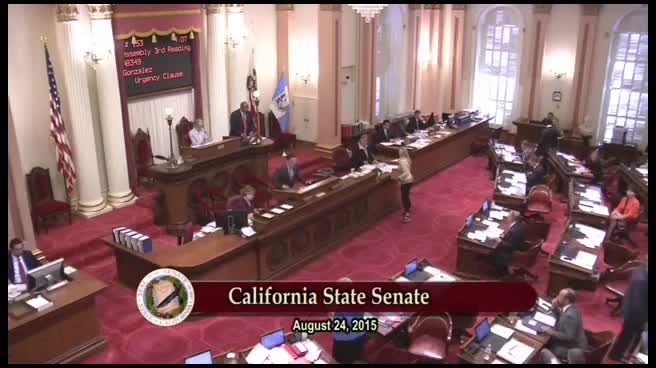 3MIN
Senate Floor
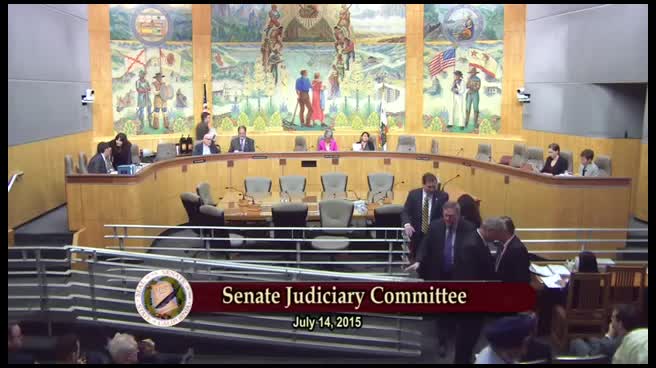 24MIN
Senate Standing Committee on Judiciary
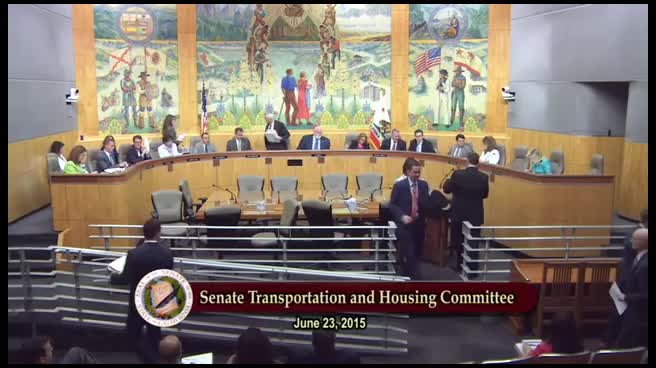 28MIN
Senate Standing Committee on Transportation and Housing
 53SEC
Assembly Floor
 34SEC
Assembly Floor
 17MIN
Assembly Standing Committee on Housing and Community Development
Bill Author



