AB 401: Low-Income Water Rate Assistance Program.
- Session Year: 2015-2016
- House: Assembly
- Latest Version Date: 2015-10-09
Under existing law, the Public Utilities Commission has regulatory authority over public utilities, including water corporations, as defined. Existing law authorizes the commission to fix the rates and charges for every public utility, and requires that those rates and charges be just and reasonable. Existing law requires the Public Utilities Commission to consider, and authorizes the commission to implement, programs to provide rate relief for low-income ratepayers of a water corporation.
Existing law establishes the State Water Resources Control Board and the 9 California regional water quality control boards as the principal state agencies with authority over matters relating to water quality. Existing law requires the state board to formulate and adopt state policy for water quality control.
This bill would require the state board, no later than January 1, 2018, in collaboration with the State Board of Equalization and relevant stakeholders, to develop a plan for the funding and implementation of the Low-Income Water Rate Assistance Program, which would include specified elements. The bill would permit the board to consider existing rate assistance programs authorized by the commission in developing the plan and would authorize the plan to include recommendations for other cost-effective methods of offering assistance to low-income water customers. The bill would require the state board, no later than February 1, 2018, to report to the Legislature on its findings regarding the feasibility, financial stability, and desired structure of the program, including any recommendations for legislative action that may need to be taken.
Under existing law, the Public Utilities Commission has regulatory authority over public utilities, including water corporations, as defined. Existing law authorizes the commission to fix the rates and charges for every public utility, and requires that those rates and charges be just and reasonable. Existing law requires the Public Utilities Commission to consider, and authorizes the commission to implement, programs to provide rate relief for low-income ratepayers of a water corporation.
Existing law establishes the State Water Resources Control Board and the 9 California regional water quality control boards as the principal state agencies with authority over matters relating to water quality. Existing law requires the state board to formulate and adopt state policy for water quality control.
This bill would require the state board, no later than January 1, 2017, 2018, in collaboration with the State Board of Equalization and relevant stakeholders, to develop a plan for the funding and implementation of the Low-Income Water Rate Assistance Program, which would include specified elements. The bill would permit the board to consider existing rate assistance programs authorized by the commission in developing the plan and would authorize the plan to include recommendations for other cost-effective methods of offering assistance to low-income water customers. The bill would require the state board, no later than February 1, 2017, 2018, to report to the Legislature on its findings regarding the feasibility, financial stability, and desired structure of the program, including any recommendations for legislative action that may need to be taken.
Under existing law, the Public Utilities Commission has regulatory authority over public utilities, including water corporations, as defined. Existing law authorizes the commission to fix the rates and charges for every public utility, and requires that those rates and charges be just and reasonable. Existing law requires the Public Utilities Commission to consider, and authorizes the commission to implement, programs to provide rate relief for low-income ratepayers of a water corporation.
Existing law establishes the Department of Community Services and Development in state government and vests with the department various powers and authority regarding the implementation and administration of programs to assist low-income individuals in the state.
Existing law establishes the State Water Resources Control Board and the 9 California regional water quality control boards as the principal state agencies with authority over matters relating to water quality. Existing law requires the state board to formulate and adopt state policy for water quality control.
This bill would require the department, state board, no later than January 1, 2017, in collaboration with the State Board of Equalization and relevant stakeholders, to develop a plan for the funding and implementation of the Low-Income Water Rate Assistance Program, which would include specified elements. The bill would permit the board to consider existing rate assistance programs authorized by the commission in developing the plan and would authorize the plan to include recommendations for other cost-effective methods of offering assistance to low-income water customers. The bill would require the department, state board, no later than February 1, 2017, to report to the Legislature on its findings regarding the feasibility, financial stability, and desired structure of the program, including any recommendations for legislative action that may need to be taken.
Under existing law, the Public Utilities Commission has regulatory authority over public utilities, including water corporations, as defined. Existing law authorizes the commission to fix the rates and charges for every public utility, and requires that those rates and charges be just and reasonable. Existing law requires the Public Utilities Commission to consider, and authorizes the commission to implement, programs to provide rate relief for low-income ratepayers of a water corporation.
Existing law establishes the Department of Community Services and Development in state government and vests with the department various powers and authority regarding the implementation and administration of programs to assist low-income individuals in the state.
This bill would require the department, no later than January 1, 2017, in collaboration with the State Board of Equalization and relevant stakeholders, to develop a plan for the funding and implementation of the Low-Income Water Rate Assistance Program, which would include specified elements. The bill would require the department, no later than January February 1, 2017, to report to the Legislature on its findings regarding the feasibility, financial stability, and desired structure of the program, including any recommendations for legislative action that may need to be taken.
Under existing law, the Public Utilities Commission has regulatory authority over public utilities, including water corporations, as defined. Existing law authorizes the commission to fix the rates and charges for every public utility, and requires that those rates and charges be just and reasonable. Existing law requires the Public Utilities Commission to consider, and authorizes the commission to implement, programs to provide rate relief for low-income ratepayers of a water corporation.
Existing law establishes the Department of Community Services and Development in state government and vests with the department various powers and authority regarding the implementation and administration of programs to assist low-income individuals in the state.
This bill would require the department, no later than January 1, 2017, in collaboration with the State Board of Equalization and relevant stakeholders, to develop a plan for the funding and implementation of the Low-Income Water Rate Assistance Program, which would include specified elements. The bill would require the department, no later than January 1, 2017, to report to the Legislature on its findings regarding the feasibility feasibility, financial stability, and desired structure of the program, including any recommendations for legislative action that may need to be taken.
Under existing law, the Public Utilities Commission has regulatory authority over public utilities, including water corporations, as defined. Existing law authorizes the commission to fix the rates and charges for every public utility, and requires that those rates and charges be just and reasonable. Existing law requires the Public Utilities Commission to consider, and authorizes the commission to implement, programs to provide rate relief for low-income ratepayers of a water corporation.
Existing law establishes the Department of Community Services and Development in state government and vests with the department various powers and authority regarding the implementation and administration of programs to assist low-income individuals in the state.
This bill would require the department, no later than January 1, 2017, in collaboration with the State Board of Equalization and relevant stakeholders, to develop a plan for the funding and implementation of the Low-Income Water Rate Assistance Program, which would include specified elements. The bill would require the department, no later than January 1, 2017, to report to the Legislature on its findings regarding the feasibility and desired structure of the program, including any recommendations for legislative action that may need to be taken.
(a)This section shall be known, and may be cited, as the Low-Income Water Rate Assistance Act.
(b)No later than January 1, 2018, the board, in collaboration with the State Board of Equalization and relevant stakeholders, shall develop a plan for the funding and implementation of the Low-Income Water Rate Assistance Program, which shall include all of the following elements:
(1)A description of the method for collecting moneys to support and implement the program, including a discussion of any constitutional restrictions on public water agency ratesetting.
(2)A description of the mechanism for providing funding assistance under the program through either direct credits to enrollees in the program or reimbursements to water service providers, including a method for verifying income eligibility of low-income ratepayers, clarification of the role of the Public Utilities Commission and water utilities in determining and verifying customer eligibility, and recommendations regarding the structure of the program, particularly whether it will be administered by the state or locally administered.
(3)A description of the method to be used to determine the amount of moneys that may need to be collected from water ratepayers to fund the program. The plan shall include a set of recommendations and best practices of cost-savings measures to ensure water utilities are demonstrating whether and how they are keeping rates low. This section does not authorize the imposition of a state charge to fund the program.
(c)In developing the plan required in subdivision (b), the board may consider the existing rate assistance programs authorized by the Public Utilities Commission for investor-owned water utilities pursuant to Section 739.8 of the Public Utilities Code.
(d)The plan may also include recommendations for other cost-effective methods of offering assistance to low-income water customers besides rate assistance, including billing alternatives, installation of water conservation devices, and leak repair. In considering other methods, the board may consider the Public Utilities Commissions Assessment of Water Utility Low-Income Assistance Programs.
(e)(1)No later than February 1, 2018, the board shall report to the Legislature on its findings regarding the feasibility, financial stability, and desired structure of the program, including any recommendations for legislative action that may need to be taken.
(2)The requirement for submitting a report imposed under this subdivision is inoperative on February 1, 2022, pursuant to Section 10231.5 of the Government Code.
(3)A report to be submitted pursuant to this subdivision shall be submitted in compliance with Section 9795 of the Government Code.
(f)For purposes of this section, the following terms have the following meanings:
(1)Board means the State Water Resources Control Board.
(2)Low-income means a household with income that is equal to or no greater than 200 percent of the federal poverty guideline level. For one-person households, program eligibility shall be based on two-person household guideline levels.
(3)Program means the Low-Income Water Rate Assistance Program.
(a)This section shall be known, and may be cited, as the Low-Income Water Rate Assistance Act.
(b)No later than January 1, 2017, 2018, the board, in collaboration with the State Board of Equalization and relevant stakeholders, shall develop a plan for the funding and implementation of the Low-Income Water Rate Assistance Program, which shall include all of the following elements:
(1)A description of the method for collecting moneys to support and implement the program, including a discussion of any constitutional restrictions on public water agency ratesetting.
(2)A description of the mechanism for providing funding assistance under the program through either direct credits to enrollees in the program or reimbursements to water service providers, including a method for verifying income eligibility of low-income ratepayers, clarification of the role of the Public Utilities Commission and water utilities in determining and verifying customer eligibility, and recommendations regarding the structure of the program, particularly whether it will be administered by the state or locally administered.
(3)A description of the method to be used to determine the amount of moneys that may need to be collected from water ratepayers to fund the program. The plan shall include a set of recommendations and best practices of cost-savings measures to ensure water utilities are demonstrating whether and how they are keeping rates low. This section does not authorize the imposition of a state charge to fund the program.
(c)In developing the plan required in subdivision (b), the board may consider the existing rate assistance programs authorized by the Public Utilities Commission for investor-owned water utilities pursuant to Section 739.8 of the Public Utilities Code.
(d)The plan may also include recommendations for other cost-effective methods of offering assistance to low-income water customers besides rate assistance, including billing alternatives, installation of water conservation devices, and leak repair. In considering other methods, the board may consider the Public Utilities Commissions Assessment of Water Utility Low-Income Assistance Programs.
(e)(1)No later than February 1, 2017, 2018, the board shall report to the Legislature on its findings regarding the feasibility, financial stability, and desired structure of the program, including any recommendations for legislative action that may need to be taken.
(2)The requirement for submitting a report imposed under this subdivision is inoperative on February 1, 2022, pursuant to Section 10231.5 of the Government Code.
(3)A report to be submitted pursuant to this subdivision shall be submitted in compliance with Section 9795 of the Government Code.
(f)For purposes of this section, the following terms have the following meanings:
(1)Board means the State Water Resources Control Board.
(2)Low-income means a household with income that is equal to or no greater than 200 percent of the federal poverty guideline level. For one-person households, program eligibility shall be based on two-person household guideline levels.
(3)Program means the Low-Income Water Rate Assistance Program.
(a)This section shall be known, and may be cited, as the Low-Income Water Rate Assistance Act.
(b)No later than January 1, 2017, the department, board, in collaboration with the board State Board of Equalization and relevant stakeholders, shall develop a plan for the funding and implementation of the Low-Income Water Rate Assistance Program, which shall include all of the following elements:
(1)A description of the method for collecting moneys to support and implement the program, including a discussion of any constitutional restrictions on public water agency ratesetting.
(2)A description of the mechanism for providing funding assistance under the program through either direct credits to enrollees in the program or reimbursements to water service providers, including a method for verifying income eligibility of low-income ratepayers, clarification of the role of the Public Utilities Commission and water utilities in determining and verifying customer eligibility, and recommendations regarding the structure of the program, particularly whether it will be administered by the state or locally administered.
(3)A description of the method to be used to determine the amount of moneys that may need to be collected from water ratepayers to fund the program. The plan shall include a set of recommendations and best practices of cost-savings measures to ensure water utilities are demonstrating whether and how they are keeping rates low. This section does not authorize the imposition of a state charge to fund the program.
(c)In developing the plan required in subdivision (b), the board may consider the existing rate assistance programs authorized by the Public Utilities Commission for investor-owned water utilities pursuant to Section 739.8 of the Public Utilities Code.
(d)The plan may also include recommendations for other cost-effective methods of offering assistance to low-income water customers besides rate assistance, including billing alternatives, installation of water conservation devices, and leak repair. In considering other methods, the board may consider the Public Utilities Commissions Assessment of Water Utility Low-Income Assistance Programs.
(c)
(e)No later than February 1, 2017, the department board shall report to the Legislature on its findings regarding the feasibility, financial stability, and desired structure of the program, including any recommendations for legislative action that may need to be taken.
(d)
(f)For purposes of this section, the following terms have the following meanings:
(1)Board means the State Board of Equalization. Water Resources Control Board.
(2)Department means the Department of Community Services and Development.
(3)
(2)Low-income means a household with income that is equal to or no greater than 200 percent of the federal poverty guideline level. For one-person households, program eligibility shall be based on two-person household guideline levels.
(4)
(3)Program means the Low-Income Water Rate Assistance Program.
(a)This section shall be known, and may be cited, as the Low-Income Water Rate Assistance Act.
(b)No later than January 1, 2017, the department, in collaboration with the board and relevant stakeholders, shall develop a plan for the funding and implementation of the Low-Income Water Rate Assistance Program, which shall include all of the following elements:
(1)A description of the method for collecting moneys to support and implement the program, including a discussion of any constitutional restrictions on public water agency ratesetting.
(2)A description of the mechanism for providing funding assistance under the program through either direct credits to enrollees in the program or reimbursements to water service providers, including a method for verifying income eligibility of low-income ratepayers. ratepayers, clarification of the role of the Public Utilities Commission and water utilities in determining and verifying customer eligibility, and recommendations regarding the structure of the program, particularly whether it will be administered by the state or locally administered.
(3)A description of the method to be used to determine the amount of moneys that may need to be collected from water ratepayers to fund the program. The plan shall include a set of recommendations and best practices of cost-savings measures to ensure water utilities are demonstrating whether and how they are keeping rates low. This section does not authorize the imposition of a state charge to fund the program.
(c)No later than January February 1, 2017, the department shall report to the Legislature on its findings regarding the feasibility, financial stability, and desired structure of the program, including any recommendations for legislative action that may need to be taken.
(d)For purposes of this section, the following terms have the following meanings:
(1)Board means the State Board of Equalization.
(2)Department means the Department of Community Services and Development.
(3)Low-income means a household with income that is equal to or no greater than 200 percent of the federal poverty guideline level. For one-person households, program eligibility shall be based on two-person household guideline levels.
(4)Program means the Low-Income Water Rate Assistance Program.
(a)This section shall be known, and may be cited, as the Low-Income Water Rate Assistance Act.
(b)No later than January 1, 2017, the department, in collaboration with the board and relevant stakeholders, shall develop a plan for the funding and implementation of the Low-Income Water Rate Assistance Program, which shall include all of the following elements:
(1)A description of the method for collecting moneys to support and implement the program. program, including a discussion of any constitutional restrictions on public water agency ratesetting.
(2)A description of the mechanism for providing funding assistance under the program through either direct credits to enrollees in the program or reimbursements to water service providers. providers, including a method for verifying income eligibility of low-income ratepayers.
(3)A description of the method to be used to determine the amount of moneys that may need to be collected from water ratepayers to fund the program. This section does not authorize the imposition of a state charge to fund the program.
(c)No later than January 1, 2017, the department shall report to the Legislature on its findings regarding the feasibility feasibility, financial stability, and desired structure of the program, including any recommendations for legislative action that may need to be taken.
(d)For purposes of this section, the following terms have the following meanings:
(1)Board means the State Board of Equalization.
(2)Department means the Department of Community Services and Development.
(3)Low-income means a household with income that is equal to or no greater than 200 percent of the federal poverty guideline level. For one-person households, program eligibility shall be based on two-person household guideline levels.
(4)Program means the Low-Income Water Rate Assistance Program.
(a)This section shall be known, and may be cited, as the Low-Income Water Rate Assistance Act.
(b)No later than January 1, 2017, the department, in collaboration with the board and relevant stakeholders, shall develop a plan for the funding and implementation of the Low-Income Water Rate Assistance Program, which shall include all of the following elements:
(1)A description of the method for collecting moneys to support and implement the program.
(2)A description of the mechanism for providing funding assistance under the program through either direct credits to enrollees in the program or reimbursements to water service providers.
(3)A description of the method to be used to determine the amount of moneys that may need to be collected from water ratepayers to fund the program. This section does not authorize the imposition of a state charge to fund the program.
(c)No later than January 1, 2017, the department shall report to the Legislature on its findings regarding the feasibility and desired structure of the program, including any recommendations for legislative action that may need to be taken.
(d)For purposes of this section, the following terms have the following meanings:
(1)Board means the State Board of Equalization.
(2)Department means the Department of Community Services and Development.
(3)Low-income means a household with income that is equal to or no greater than 200 percent of the federal poverty guideline level. For one-person households, program eligibility shall be based on two-person household guideline levels.
(4)Program means the Low-Income Water Rate Assistance Program.
|
Date
|
Status
|
|---|---|
| Oct 9, 2015 | Chaptered by Secretary of State - Chapter 662, Statutes of 2015. |
| Oct 9, 2015 | Approved by the Governor. |
| Sep 17, 2015 | Enrolled and presented to the Governor at 4 p.m. |
| Sep 9, 2015 | Senate amendments concurred in. To Engrossing and Enrolling. (Ayes 55. Noes 24. Page 2997.). |
| Sep 9, 2015 | Assembly Rule 77 suspended. (Ayes 52. Noes 28. Page 2990.) |
| Sep 9, 2015 | Senate amendments concurred in. To Engrossing and Enrolling. (Ayes 55. Noes 24.). |
| Sep 9, 2015 | Assembly Rule 77 suspended. (Ayes 52. Noes 28.) |
| Sep 9, 2015 | Senate amendments concurred in. To Engrossing and Enrolling. |
| Sep 9, 2015 | Assembly Rule 77 suspended. |
| Sep 8, 2015 | Read third time. Passed. Ordered to the Assembly. (Ayes 28. Noes 12. Page 2588.). |
| Sep 8, 2015 | In Assembly. Concurrence in Senate amendments pending. May be considered on or after September 10 pursuant to Assembly Rule 77. |
| Sep 8, 2015 | Read third time. Passed. Ordered to the Assembly. |
| Sep 3, 2015 | Read second time. Ordered to third reading. |
| Sep 2, 2015 | Read third time and amended. Ordered to second reading. |
| Sep 1, 2015 | Read second time and amended. Ordered to third reading. |
| Aug 31, 2015 | From committee: Amend, and do pass as amended. (Ayes 6. Noes 1.) (August 27). |
| Aug 17, 2015 | In committee: Referred to APPR. suspense file. |
| Jul 9, 2015 | Read second time and amended. Re-referred to Com. on APPR. |
| Jul 8, 2015 | From committee: Amend, and do pass as amended and re-refer to Com. on APPR. (Ayes 8. Noes 1.) (June 30). |
| Jun 11, 2015 | Referred to Com. on E., U., & C. |
| Jun 2, 2015 | Read third time. Passed. Ordered to the Senate. (Ayes 55. Noes 22. Page 1779.) |
| Jun 2, 2015 | In Senate. Read first time. To Com. on RLS. for assignment. |
| Jun 2, 2015 | Read third time. Passed. Ordered to the Senate. |
| Jun 1, 2015 | Read second time. Ordered to third reading. |
| May 28, 2015 | From committee: Do pass. (Ayes 12. Noes 5.) (May 28). |
| Apr 15, 2015 | In committee: Set, first hearing. Referred to suspense file. |
| Apr 9, 2015 | Re-referred to Com. on APPR. |
| Apr 8, 2015 | From committee chair, with author's amendments: Amend, and re-refer to Com. on APPR. Read second time and amended. |
| Mar 24, 2015 | From committee: Do pass and re-refer to Com. on APPR. (Ayes 9. Noes 3.) (March 23). Re-referred to Com. on APPR. |
| Mar 2, 2015 | Referred to Com. on U. & C. |
| Feb 20, 2015 | From printer. May be heard in committee March 22. |
| Feb 19, 2015 | Read first time. To print. |
|
Date
|
Description
|
Location
|
Votes
|
|
|---|---|---|---|---|
| Sep 9, 2015 | AB 401 DODD Concurrence in Senate Amendments | Assembly Floor |
Passed |
|
| Sep 8, 2015 | Assembly 3rd Reading AB401 Dodd By McGuire | Senate Floor |
Passed |
|
| Aug 27, 2015 | Do pass as amended | Senate Standing Committee on Appropriations |
Passed |
|
| Aug 17, 2015 | Placed on suspense file | Senate Standing Committee on Appropriations |
Passed |
|
| Jun 30, 2015 | Do pass as amended, but first amend, and re-refer to the Committee on [Appropriations] | Senate Standing Committee on Energy, Utilities and Communications |
Passed |
|
| Jun 2, 2015 | AB 401 DODD Assembly Third Reading | Assembly Floor |
Passed |
|
| May 28, 2015 | Do pass. | Assembly Standing Committee on Appropriations |
Passed |
|
| Mar 23, 2015 | Do pass and be re-referred to the Committee on [Appropriations] | Assembly Standing Committee on Utilities and Commerce |
Passed |
This list shows positions taken on this bill by organizations on the date displayed, which is linked to the original source.
Positions by individuals are not included.
AB 401
Page 3
CONCURRENCE IN SENATE AMENDMENTS
AB 401
(Dodd)
As Amended September 2, 2015
Majority vote
ASSEMBLY: |
55-22 |
(June 2, 2015) |
SENATE: |
28-12 |
(September 8, 2015) |
Original Committee Reference: U. & C.
SUMMARY: Requires the State Water Resources Control Board (SWRCB), in collaboration with the State Board of Equalization and stakeholders, to develop a plan for funding and implementing the Low-Income Water Rate Assistance Program, as specified.
The Senate amendments do the following:
Requires SWRCB instead of the Department of Community Services to develop the plan for funding and implementing the Low-Income Water Rate Assistance Program.
Allows SWRCB to consider existing rate assistance programs authorized by the California Public Utilities Commission (CPUC) for investor-owned water utilities and to include recommendations for other cost-effective methods of offering assistance to low-income water customers.
Moves the deadline required to develop a plan for the funding and implementation of the Low-Income Water Rate Assistance Program from January 1, 2017, to January 1, 2018.
Moves the deadline required to report to the Legislature from January 1, 2017, to February 1, 2018.
Requires a set of recommendations and best practices of cost-savings measures to ensure water utilities are demonstrating whether and how they are keeping rates low.
Clarifies the role of CPUC and the agencies in determining and verifying customer eligibility.
Ensures the report includes recommendations regarding the structure of the program, particularly whether it will be state run or locally run.
Sunsets the reporting requirement on February 1, 2022.
EXISTING LAW:
Establishes the California Alternate Rates for Energy Program to assist low-income electric and gas customers with annual household incomes that are no greater than 200% of the federal poverty guideline levels. (Public Utilities Code Section 739.1)
Requires the CPUC to consider and implement programs to provide water rate relief for low-income ratepayers. (Public Utilities Code Section 739.8)
Provides that a fee encompasses any levy, other than an ad valorem tax, a special tax, or an assessment, imposed by an agency upon a parcel or upon a person as an incident of property ownership, including a user fee or charge for a property-related service. (California Constitution, Article XIII D)
Requires the SWRCB to administer provisions relating to the regulation of drinking water to protect public health, including, but not limited to, conducting research, studies, and demonstration programs relating to the provision of a dependable, safe supply of drinking water, enforcing the Federal Safe Drinking Water Act, adoption of enforcement regulations, and conducting studies and investigations to assess the quality of water in domestic water supplies. (Water Code Section 174, et seq)
FISCAL EFFECT: According to the Senate Appropriations Committee, this bill would have one-time costs of approximately $331,000 to the General Fund over two years for the development of a feasibility plan, and cost pressures, possibly in the millions of dollars, to the General Fund or unknown special fund for the implementation of the feasibility plan.
COMMENTS:
Author’s Statement: "Water affordability is a central element to water access. When water costs make water unaffordable, it can pose a health and safety issue and a myriad of administrative and political problems. Households paying an amount for water that exceeds an affordability threshold are considered to be paying a cost that is unaffordable and a 'high burden.' A commitment to water affordability is rooted in both human rights and public welfare."
Background: The CPUC is charged with ensuring California's 115 investor-owned water utilities and 14 investor-owned wastewater utilities provide safe and reliable water to customers at reasonable rates. Water utilities regulated by the CPUC deliver water service to about 16% of the state's population. The remaining water customers in California are served by publicly-owned utilities (POU) which are self-regulated and not under CPUC jurisdiction. POUs must restrict water rates to the cost of service.
Lucerne, Lake County: In July 2012, Cal Water filed a request with the CPUC for a water rate increase of 77% over three years to ratepayers in Lucerne, one of Lake County's most disadvantaged communities. The average resident's water bill, according to local news accounts, would have doubled from $62.85 to $124.22 per month. Lucerne is an area with a median annual household income of approximately $25,000.
The United States Environmental Protection Agency and the California Department of Public Health use a "water affordability threshold" to factor in variable costs of living across California. Households with water bills exceeding this threshold are considered to be paying a cost that is unaffordable and a "high burden." In the case of Lucerne, it is estimated an affordable monthly bill would be $32.50 or less. In reality, the average bill is $85, which is about 2.5 times the affordable amount.
This bill requires SWRCB, in collaboration with the State Board of Equalization and stakeholders, to develop a plan for funding and implementing the Low-Income Water Rate Assistance Program, as specified, by January 1, 2018. In addition, the bill requires SWRCB to report its findings to the Legislature by February 1, 2018, as specified, and sunsets the reporting requirement on February 1, 2022.
Analysis Prepared by: Edmond Cheung / U. & C. / (916) 319-2083 FN: 0002234
AB 401
Page 6
|
Office of Senate Floor Analyses (916) 651-1520 Fax: (916) 327-4478 |
THIRD READING
Bill No: AB 401
Amended: 9/2/15 in Senate
SENATE ENERGY, U. & C. COMMITTEE: 8-1, 6/30/15
AYES: Hueso, Cannella, Hertzberg, Hill, Lara, Leyva, McGuire, Pavley
NOES: Morrell
NO VOTE RECORDED: Fuller, Wolk
SENATE APPROPRIATIONS COMMITTEE: 6-1, 8/27/15
AYES: Lara, Beall, Hill, Leyva, Mendoza, Nielsen
NOES: Bates
ASSEMBLY FLOOR: 55-22, 6/2/15 - See last page for vote
SUBJECT: Low-Income Water Rate Assistance Program
DIGEST: This bill requires the State Water Resources Control Board (SWRCB), in collaboration with the State Board of Equalization and stakeholders, to develop a plan for the funding and implementation of a new program to provide water rate relief for low-income ratepayers by January 1, 2018 and provide a corresponding report to the Legislature by February 1, 2018.
Senate Amendments of 9/2/15 changes the date by when the plan for the Low-Income Water Rate Assistance Program is required of the SWRCB from 2017 to 2018, as well as the corresponding report to the Legislature. Additional amendments insert language to make the report requirements of the bill inoperative beginning in 2022.
Existing law:
Establishes the California Public Utilities Commission (CPUC) to regulate privately owned public utilities in California. (Article XII of the California Constitution)
Requires the CPUC to establish the California Alternate Rates for Energy (CARE) program of assistance to low-income electric and gas customers with an annual household income not greater than 200 percent of the federal poverty guideline levels. (Public Utilities Code §739.1)
Provides that access to an adequate supply of healthful water is a basic necessity of human life, and shall be made available to all residents of California at an affordable cost. (Public Utilities Code §739.8)
Requires the CPUC to consider programs to provide rate relief for low-income ratepayers of water corporations. (Public Utilities Code §739.8)
Provides that a fee encompasses any levy other than an ad valorem tax, a special tax, or an assessment, imposed by an agency upon a parcel or upon a person as an incident of property ownership, including a user fee or charge for a property related service. (California Constitution Article XIII D)
Requires the SWRCB to administer provisions relating to the regulation of drinking water to protect public health, including, but not limited to, conducting research, studies, and demonstration programs relating to the provision of a dependable, safe supply of drinking water, enforcing the Federal Safe Drinking Water Act, adoption of enforcement regulations, and conducting studies and investigations to assess the quality of water in domestic water supplies. (Water Code §174 et seq)
This bill:
Requires the SWRCB, in collaboration with the State Board of Equalization and stakeholders, to develop a plan to fund and implement of a new program to provide water rate relief for low-income ratepayers by January 1, 2018.
Requires the SWRCB to report its findings to the Legislature by February 1, 2018, including the feasibility, financial stability, and desired structure of the program, and any recommendations for legislative action.
Makes the requirements for submitting a report inoperative on February 2022, pursuant to Section 10231.5 of the Government Code.
Background
CPUC’s regulation of water utilities. The CPUC has jurisdiction over 113 privately owned water utilities: nine Class A water utilities (10,000 or more connection points); five Class B water utilities (2,000 or more connection points); 25 Class C water utilities (500 or more connection points); and 74 Class D water utilities (less than 500 connection points). Combined, these utilities deliver water service to roughly 16 percent of the state’s population (about 6 million residents). The CPUC regulates all aspects of the privately owned utilities’ service provision, including assessing their rates to ensure they are reasonable, while providing a reasonable rate of return to continue to provide customers service and satisfy shareholders.
Publicly owned water utilities. The majority of California’s water customers are served by cities, water districts, and mutual water companies, which are governed by local boards who are not regulated by the CPUC. As established by Proposition 218 (1996), the majority of these utilities are subject to state constitutional and statutory requirements that ensure water rates are restricted to cost of service. As a result, these entities have limitations, not imposed on the IOUs, that hinder their ability to increase rates to fund low-income programs for their customers.
CPUC low-income assistance for water ratepayers. Of the privately-owned utilities, the CPUC has authorized the largest nine water utilities to offer low-income rate assistance programs similar in concept to those provided to electricity customers through CARE. However, each program is varied in terms of the amount of the assistance provided to low-income customers and the collection of the surcharge from non-participating ratepayers to cover the cost of the program. Combined, the nine largest utilities serve approximately 1.175 million customers.
In CPUC Decision D.11-05-020, the CPUC ordered large water and energy utilities to exchange information about their low-income customers to cross-promote the goal of increasing participation in both programs. Reports from the CPUC indicate the effort has yielded a substantial increase in participation in these programs.
The case of Lucerne. The challenge to adopt a low-income assistance program is daunting for smaller agencies who have limited base of ratepayers to share the increased costs for the program.
In July 2012, the privately-owned water company Cal Water filed a request with the CPUC for a water rate increase of 77 percent over three years to ratepayers in Lucerne located in Lake County and one of several Cal Water service territories. With a median annual household income of approximately $25,000, Lucerne’s household income is well below the state’s average of roughly $61,000. Cal Water’s proposed rate increases would have doubled the average resident’s water bill, from about $63 to $124 per month. Ultimately, the CPUC, Cal Water, Lake County and other parties entered into a settlement that would not drastically increase water rates in Lucerne. The settlement also provided adjustments to the Cal Water Low-Income Ratepayer Assistance Program. Additionally, Cal Water has recently received some assistance from the state, including a $136,000 grant for a pump extension to reach declining water levels. However, the community has continued concerns about the prospects for future rate increases because of its limited ratepayer base. Just this week the Lake County Board of Supervisors adopted a resolution to explore further solutions to increased water rates.
State Auditor Report Finds Opportunities for Cost-Savings at Water Districts. On April 30th of this year, the State Auditor released a report regarding the differences in water rates for four Apple Valley Area water districts, two privately owned and two publicly owned. The Auditor’s main findings included the challenges between investor ownership and public ownership, where investor-owned utilities have greater ability to increase rates (as noted above). The Auditor also raised concerns that in some instances the water utilities had not done a good job of demonstrating or instituting cost-saving measures. While the report was based on only the four water utilities, the need to demonstrate cost-saving measures to customers is one that can be applied to other utilities.
Prior/Related Legislation
AB 1434 (Yamada, 2014) A bill with the same provisions as this bill. Died in the Senate Committee on Appropriations.
FISCAL EFFECT: Appropriation: No Fiscal Com.: Yes Local: No
According to the Senate Appropriations Committee:
One-time costs of approximately $331,000 to the General Fund over two years for the development of feasibility plan.
Cost pressures, possibly in the millions of dollars, to the General Fund or unknown special fund for the implementation of the feasibility plan.
California Catholic Conference of Bishop, Inc.
California Environmental Justice Alliance
California Equity Leaders Network
California League of Conservation Voters
California Rural Legal Assistance Foundation
California Water Association
Clean Water Action
Community Water Center
Environmental Justice Coalition for Water
Environmental Working Group
Food and Water Watch
Friends of the River
Leadership Counsel for Justice and Accountability
League of Women Voters of California
Lutheran Office of Public Policy – California
Northern California Water Association
Office of Ratepayer Advocates
Planning and Conservation League
Policy Link
San Diego County Water Authority
Sonoma County Water Agency
Utility Workers Union of America
Wholly H2O
None received
The author states that “water district investments to maintain and upgrade water treatment and delivery systems in areas that have a small and/or declining ratepayer base leads those water districts to often substantially increase the rates they charge to customers. In some cases water rates have jumped as much as 300 percent since 2006. As the state's population of elderly citizens living on fixed incomes increases, and as these elderly citizens retire to smaller communities served by less capitalized water systems, water rate affordability will become an ever growing problem.”
ASSEMBLY FLOOR: 55-22, 6/2/15
AYES: Achadjian, Alejo, Bloom, Bonilla, Bonta, Brown, Burke, Calderon, Campos, Chau, Chiu, Chu, Cooley, Cooper, Dababneh, Daly, Dodd, Eggman, Frazier, Cristina Garcia, Eduardo Garcia, Gatto, Gipson, Gomez, Gonzalez, Gordon, Gray, Roger Hernández, Holden, Irwin, Jones-Sawyer, Lackey, Levine, Lopez, Low, McCarty, Medina, Mullin, Nazarian, O'Donnell, Perea, Quirk, Rendon, Ridley-Thomas, Rodriguez, Salas, Santiago, Mark Stone, Thurmond, Ting, Weber, Wilk, Williams, Wood, Atkins
NOES: Travis Allen, Baker, Bigelow, Chang, Beth Gaines, Gallagher, Grove, Hadley, Harper, Jones, Kim, Linder, Maienschein, Mathis, Mayes, Melendez, Obernolte, Olsen, Patterson, Steinorth, Wagner, Waldron
NO VOTE RECORDED: Brough, Chávez, Dahle
Prepared by: Nidia Bautista / E., U., & C. / (916) 651-4107
9/3/15 14:00:30
**** END ****
AB 401
Page 6
|
Office of Senate Floor Analyses (916) 651-1520 Fax: (916) 327-4478 |
THIRD READING
Bill No: AB 401
Amended: 9/2/15 in Senate
SENATE ENERGY, U. & C. COMMITTEE: 8-1, 6/30/15
AYES: Hueso, Cannella, Hertzberg, Hill, Lara, Leyva, McGuire, Pavley
NOES: Morrell
NO VOTE RECORDED: Fuller, Wolk
SENATE APPROPRIATIONS COMMITTEE: 6-1, 8/27/15
AYES: Lara, Beall, Hill, Leyva, Mendoza, Nielsen
NOES: Bates
ASSEMBLY FLOOR: 55-22, 6/2/15 - See last page for vote
SUBJECT: Low-Income Water Rate Assistance Program
DIGEST: This bill requires the State Water Resources Control Board (SWRCB), in collaboration with the State Board of Equalization and stakeholders, to develop a plan for the funding and implementation of a new program to provide water rate relief for low-income ratepayers by January 1, 2018 and provide a corresponding report to the Legislature by February 1, 2018.
Senate Floor Amendments of 9/2/15 changes the date by when the plan for the Low-Income Water Rate Assistance Program is required of the SWRCB from 2017 to 2018, as well as the corresponding report to the Legislature. Additional amendments insert language to make the report requirements of the bill inoperative beginning in 2022.
Existing law:
Establishes the California Public Utilities Commission (CPUC) to regulate privately owned public utilities in California. (Article XII of the California Constitution)
Requires the CPUC to establish the California Alternate Rates for Energy (CARE) program of assistance to low-income electric and gas customers with an annual household income not greater than 200 percent of the federal poverty guideline levels. (Public Utilities Code §739.1)
Provides that access to an adequate supply of healthful water is a basic necessity of human life, and shall be made available to all residents of California at an affordable cost. (Public Utilities Code §739.8)
Requires the CPUC to consider programs to provide rate relief for low-income ratepayers of water corporations. (Public Utilities Code §739.8)
Provides that a fee encompasses any levy other than an ad valorem tax, a special tax, or an assessment, imposed by an agency upon a parcel or upon a person as an incident of property ownership, including a user fee or charge for a property related service. (California Constitution Article XIII D)
Requires the SWRCB to administer provisions relating to the regulation of drinking water to protect public health, including, but not limited to, conducting research, studies, and demonstration programs relating to the provision of a dependable, safe supply of drinking water, enforcing the Federal Safe Drinking Water Act, adoption of enforcement regulations, and conducting studies and investigations to assess the quality of water in domestic water supplies. (Water Code §174 et seq)
This bill:
Requires the SWRCB, in collaboration with the State Board of Equalization and stakeholders, to develop a plan to fund and implement of a new program to provide water rate relief for low-income ratepayers by January 1, 2018.
Requires the SWRCB to report its findings to the Legislature by February 1, 2018, including the feasibility, financial stability, and desired structure of the program, and any recommendations for legislative action.
Makes the requirements for submitting a report inoperative on February 2022, pursuant to Section 10231.5 of the Government Code.
Background
CPUC’s regulation of water utilities. The CPUC has jurisdiction over 113 privately owned water utilities: nine Class A water utilities (10,000 or more connection points); five Class B water utilities (2,000 or more connection points); 25 Class C water utilities (500 or more connection points); and 74 Class D water utilities (less than 500 connection points). Combined, these utilities deliver water service to roughly 16 percent of the state’s population (about 6 million residents). The CPUC regulates all aspects of the privately owned utilities’ service provision, including assessing their rates to ensure they are reasonable, while providing a reasonable rate of return to continue to provide customers service and satisfy shareholders.
Publicly owned water utilities. The majority of California’s water customers are served by cities, water districts, and mutual water companies, which are governed by local boards who are not regulated by the CPUC. As established by Proposition 218 (1996), the majority of these utilities are subject to state constitutional and statutory requirements that ensure water rates are restricted to cost of service. As a result, these entities have limitations, not imposed on the IOUs, that hinder their ability to increase rates to fund low-income programs for their customers.
CPUC low-income assistance for water ratepayers. Of the privately-owned utilities, the CPUC has authorized the largest nine water utilities to offer low-income rate assistance programs similar in concept to those provided to electricity customers through CARE. However, each program is varied in terms of the amount of the assistance provided to low-income customers and the collection of the surcharge from non-participating ratepayers to cover the cost of the program. Combined, the nine largest utilities serve approximately 1.175 million customers.
In CPUC Decision D.11-05-020, the CPUC ordered large water and energy utilities to exchange information about their low-income customers to cross-promote the goal of increasing participation in both programs. Reports from the CPUC indicate the effort has yielded a substantial increase in participation in these programs.
The case of Lucerne. The challenge to adopt a low-income assistance program is daunting for smaller agencies who have limited base of ratepayers to share the increased costs for the program.
In July 2012, the privately-owned water company Cal Water filed a request with the CPUC for a water rate increase of 77 percent over three years to ratepayers in Lucerne located in Lake County and one of several Cal Water service territories. With a median annual household income of approximately $25,000, Lucerne’s household income is well below the state’s average of roughly $61,000. Cal Water’s proposed rate increases would have doubled the average resident’s water bill, from about $63 to $124 per month. Ultimately, the CPUC, Cal Water, Lake County and other parties entered into a settlement that would not drastically increase water rates in Lucerne. The settlement also provided adjustments to the Cal Water Low-Income Ratepayer Assistance Program. Additionally, Cal Water has recently received some assistance from the state, including a $136,000 grant for a pump extension to reach declining water levels. However, the community has continued concerns about the prospects for future rate increases because of its limited ratepayer base. Just this week the Lake County Board of Supervisors adopted a resolution to explore further solutions to increased water rates.
State Auditor Report Finds Opportunities for Cost-Savings at Water Districts. On April 30th of this year, the State Auditor released a report regarding the differences in water rates for four Apple Valley Area water districts, two privately owned and two publicly owned. The Auditor’s main findings included the challenges between investor ownership and public ownership, where investor-owned utilities have greater ability to increase rates (as noted above). The Auditor also raised concerns that in some instances the water utilities had not done a good job of demonstrating or instituting cost-saving measures. While the report was based on only the four water utilities, the need to demonstrate cost-saving measures to customers is one that can be applied to other utilities.
Prior/Related Legislation
AB 1434 (Yamada, 2014) A bill with the same provisions as this bill. Died in the Senate Committee on Appropriations.
FISCAL EFFECT: Appropriation: No Fiscal Com.: Yes Local: No
According to the Senate Appropriations Committee:
One-time costs of approximately $331,000 to the General Fund over two years for the development of feasibility plan.
Cost pressures, possibly in the millions of dollars, to the General Fund or unknown special fund for the implementation of the feasibility plan.
California Catholic Conference of Bishop, Inc.
California Environmental Justice Alliance
California Equity Leaders Network
California League of Conservation Voters
California Rural Legal Assistance Foundation
California Water Association
Clean Water Action
Community Water Center
Environmental Justice Coalition for Water
Environmental Working Group
Food and Water Watch
Friends of the River
Leadership Counsel for Justice and Accountability
League of Women Voters of California
Lutheran Office of Public Policy – California
Northern California Water Association
Office of Ratepayer Advocates
Planning and Conservation League
Policy Link
San Diego County Water Authority
Sonoma County Water Agency
Utility Workers Union of America
Wholly H2O
None received
The author states that “water district investments to maintain and upgrade water treatment and delivery systems in areas that have a small and/or declining ratepayer base leads those water districts to often substantially increase the rates they charge to customers. In some cases water rates have jumped as much as 300 percent since 2006. As the state's population of elderly citizens living on fixed incomes increases, and as these elderly citizens retire to smaller communities served by less capitalized water systems, water rate affordability will become an ever growing problem.”
ASSEMBLY FLOOR: 55-22, 6/2/15
AYES: Achadjian, Alejo, Bloom, Bonilla, Bonta, Brown, Burke, Calderon, Campos, Chau, Chiu, Chu, Cooley, Cooper, Dababneh, Daly, Dodd, Eggman, Frazier, Cristina Garcia, Eduardo Garcia, Gatto, Gipson, Gomez, Gonzalez, Gordon, Gray, Roger Hernández, Holden, Irwin, Jones-Sawyer, Lackey, Levine, Lopez, Low, McCarty, Medina, Mullin, Nazarian, O'Donnell, Perea, Quirk, Rendon, Ridley-Thomas, Rodriguez, Salas, Santiago, Mark Stone, Thurmond, Ting, Weber, Wilk, Williams, Wood, Atkins
NOES: Travis Allen, Baker, Bigelow, Chang, Beth Gaines, Gallagher, Grove, Hadley, Harper, Jones, Kim, Linder, Maienschein, Mathis, Mayes, Melendez, Obernolte, Olsen, Patterson, Steinorth, Wagner, Waldron
NO VOTE RECORDED: Brough, Chávez, Dahle
Prepared by: Nidia Bautista / E., U., & C. / (916) 651-4107
9/3/15 14:01:45
**** END ****
AB 401
Page 6
|
Office of Senate Floor Analyses (916) 651-1520 Fax: (916) 327-4478 |
THIRD READING
Bill No: AB 401
Amended: 9/1/15 in Senate
SENATE ENERGY, U. & C. COMMITTEE: 8-1, 6/30/15
AYES: Hueso, Cannella, Hertzberg, Hill, Lara, Leyva, McGuire, Pavley
NOES: Morrell
NO VOTE RECORDED: Fuller, Wolk
SENATE APPROPRIATIONS COMMITTEE: 6-1, 8/27/15
AYES: Lara, Beall, Hill, Leyva, Mendoza, Nielsen
NOES: Bates
ASSEMBLY FLOOR: 55-22, 6/2/15 - See last page for vote
SUBJECT: Low-Income Water Rate Assistance Program
DIGEST: This bill requires the State Water Resources Control Board (SWRCB), in collaboration with the State Board of Equalization and stakeholders, to develop a plan for the funding and implementation of a new program to provide water rate relief for low-income ratepayers by January 1, 2017.
Existing law:
Establishes the California Public Utilities Commission (CPUC) to regulate privately owned public utilities in California. (Article XII of the California Constitution)
Requires the CPUC to establish the California Alternate Rates for Energy (CARE) program of assistance to low-income electric and gas customers with an annual household income not greater than 200 percent of the federal poverty guideline levels. (Public Utilities Code §739.1)
Provides that access to an adequate supply of healthful water is a basic necessity of human life, and shall be made available to all residents of California at an affordable cost. (Public Utilities Code §739.8)
Requires the CPUC to consider programs to provide rate relief for low-income ratepayers of water corporations. (Public Utilities Code §739.8)
Provides that a fee encompasses any levy other than an ad valorem tax, a special tax, or an assessment, imposed by an agency upon a parcel or upon a person as an incident of property ownership, including a user fee or charge for a property related service. (California Constitution Article XIII D)
Requires the SWRCB to administer provisions relating to the regulation of drinking water to protect public health, including, but not limited to, conducting research, studies, and demonstration programs relating to the provision of a dependable, safe supply of drinking water, enforcing the Federal Safe Drinking Water Act, adoption of enforcement regulations, and conducting studies and investigations to assess the quality of water in domestic water supplies. (Water Code §174 et seq)
This bill:
Requires the SWRCB, in collaboration with the State Board of Equalization and stakeholders, to develop a plan to fund and implement of a new program to provide water rate relief for low-income ratepayers by January 1, 2017.
Requires the SWRCB to report its findings to the Legislature by January 1, 2017, including the feasibility, financial stability, and desired structure of the program, and any recommendations for legislative action.
Background
CPUC’s regulation of water utilities. The CPUC has jurisdiction over 113 privately owned water utilities: nine Class A water utilities (10,000 or more connection points); five Class B water utilities (2,000 or more connection points); 25 Class C water utilities (500 or more connection points); and 74 Class D water utilities (less than 500 connection points). Combined, these utilities deliver water service to roughly 16 percent of the state’s population (about 6 million residents). The CPUC regulates all aspects of the privately owned utilities’ service provision, including assessing their rates to ensure they are reasonable, while providing a reasonable rate of return to continue to provide customers service and satisfy shareholders.
Publicly owned water utilities. The majority of California’s water customers are served by cities, water districts, and mutual water companies, which are governed by local boards who are not regulated by the CPUC. As established by Proposition 218 (1996), the majority of these utilities are subject to state constitutional and statutory requirements that ensure water rates are restricted to cost of service. As a result, these entities have limitations, not imposed on the IOUs, that hinder their ability to increase rates to fund low-income programs for their customers.
CPUC low-income assistance for water ratepayers. Of the privately-owned utilities, the CPUC has authorized the largest nine water utilities to offer low-income rate assistance programs similar in concept to those provided to electricity customers through CARE. However, each program is varied in terms of the amount of the assistance provided to low-income customers and the collection of the surcharge from non-participating ratepayers to cover the cost of the program. Combined, the nine largest utilities serve approximately 1.175 million customers.
In CPUC Decision D.11-05-020, the CPUC ordered large water and energy utilities to exchange information about their low-income customers to cross-promote the goal of increasing participation in both programs. Reports from the CPUC indicate the effort has yielded a substantial increase in participation in these programs.
The case of Lucerne. The challenge to adopt a low-income assistance program is daunting for smaller agencies who have limited base of ratepayers to share the increased costs for the program.
In July 2012, the privately-owned water company Cal Water filed a request with the CPUC for a water rate increase of 77 percent over three years to ratepayers in Lucerne located in Lake County and one of several Cal Water service territories. With a median annual household income of approximately $25,000, Lucerne’s household income is well below the state’s average of roughly $61,000. Cal Water’s proposed rate increases would have doubled the average resident’s water bill, from about $63 to $124 per month. Ultimately, the CPUC, Cal Water, Lake County and other parties entered into a settlement that would not drastically increase water rates in Lucerne. The settlement also provided adjustments to the Cal Water Low-Income Ratepayer Assistance Program. Additionally, Cal Water has recently received some assistance from the state, including a $136,000 grant for a pump extension to reach declining water levels. However, the community has continued concerns about the prospects for future rate increases because of its limited ratepayer base. Just this week the Lake County Board of Supervisors adopted a resolution to explore further solutions to increased water rates.
State Auditor Report Finds Opportunities for Cost-Savings at Water Districts. On April 30th of this year, the State Auditor released a report regarding the differences in water rates for four Apple Valley Area water districts, two privately owned and two publicly owned. The Auditor’s main findings included the challenges between investor ownership and public ownership, where investor-owned utilities have greater ability to increase rates (as noted above). The Auditor also raised concerns that in some instances the water utilities had not done a good job of demonstrating or instituting cost-saving measures. While the report was based on only the four water utilities, the need to demonstrate cost-saving measures to customers is one that can be applied to other utilities.
Prior/Related Legislation
AB 1434 (Yamada, 2014) A bill with the same provisions as this bill. Died in the Senate Committee on Appropriations.
FISCAL EFFECT: Appropriation: No Fiscal Com.: Yes Local: No
According to the Senate Appropriations Committee:
One-time costs of approximately $331,000 to the General Fund over two years for the development of feasibility plan.
Cost pressures, possibly in the millions of dollars, to the General Fund or unknown special fund for the implementation of the feasibility plan.
California Catholic Conference of Bishop, Inc.
California Environmental Justice Alliance
California Equity Leaders Network
California League of Conservation Voters
California Rural Legal Assistance Foundation
California Water Association
Clean Water Action
Community Water Center
Environmental Justice Coalition for Water
Environmental Working Group
Food and Water Watch
Friends of the River
Leadership Counsel for Justice and Accountability
League of Women Voters of California
Lutheran Office of Public Policy – California
Northern California Water Association
Office of Ratepayer Advocates
Planning and Conservation League
Policy Link
San Diego County Water Authority
Sonoma County Water Agency
Utility Workers Union of America
Wholly H2O
None received
ARGUMENTS IN SUPPORT: The author states that “water district investments to maintain and upgrade water treatment and delivery systems in areas that have a small and/or declining ratepayer base leads those water districts to often substantially increase the rates they charge to customers. In some cases water rates have jumped as much as 300 percent since 2006. As the state's population of elderly citizens living on fixed incomes increases, and as these elderly citizens retire to smaller communities served by less capitalized water systems, water rate affordability will become an ever growing problem.”
ASSEMBLY FLOOR: 55-22, 6/2/15
AYES: Achadjian, Alejo, Bloom, Bonilla, Bonta, Brown, Burke, Calderon, Campos, Chau, Chiu, Chu, Cooley, Cooper, Dababneh, Daly, Dodd, Eggman, Frazier, Cristina Garcia, Eduardo Garcia, Gatto, Gipson, Gomez, Gonzalez, Gordon, Gray, Roger Hernández, Holden, Irwin, Jones-Sawyer, Lackey, Levine, Lopez, Low, McCarty, Medina, Mullin, Nazarian, O'Donnell, Perea, Quirk, Rendon, Ridley-Thomas, Rodriguez, Salas, Santiago, Mark Stone, Thurmond, Ting, Weber, Wilk, Williams, Wood, Atkins
NOES: Travis Allen, Baker, Bigelow, Chang, Beth Gaines, Gallagher, Grove, Hadley, Harper, Jones, Kim, Linder, Maienschein, Mathis, Mayes, Melendez, Obernolte, Olsen, Patterson, Steinorth, Wagner, Waldron
NO VOTE RECORDED: Brough, Chávez, Dahle
Prepared by: Nidia Bautista / E., U., & C. / (916) 651-4107
9/1/15 20:33:49
**** END ****
AB 401 (Dodd) Page 0 of 1
SENATE COMMITTEE ON APPROPRIATIONS
Senator Ricardo Lara, Chair
2015 - 2016 Regular Session
AB 401 (Dodd) - Low-Income Water Rate Assistance Program.
|
|
Version: July 9, 2015 |
Policy Vote: E., U., & C. 8 - 1 |
Urgency: No |
Mandate: No |
Hearing Date: August 27, 2015 |
Consultant: Marie Liu |
*********** ANALYSIS ADDENDUM – SUSPENSE FILE ***********
The following information is revised to reflect amendments
adopted by the committee on August 27, 2015
Bill Summary:
AB 401 would require the State Water Resources Control Board (SWRCB), in collaboration with the Board of Equalization (BOE), by January 1, 2017, to develop a plan for the funding and implementation of the Low-Income Water Rate Assistance Program.
Fiscal Impact:
One-time costs of approximately $331,000 to the General Fund over two years for the development of feasibility plan.
Cost pressures, possibly in the millions of dollars, to the General Fund or unknown special fund for the implementation of the feasibility plan.
Author Amendments:
Require the SWRCB to conduct lead the plan development instead of the Department of Community Services.
Committee Amendments:
Allow the SWRCB to consider existing rate assistance programs authorized by the California Public Utilities Commission for investor-owned water utilities and to include recommendations for other cost-effective methods of offering assistance to low-income water customers.
-- END --
AB 401 (Dodd) Page 2 of 2
SENATE COMMITTEE ON APPROPRIATIONS
Senator Ricardo Lara, Chair
2015 - 2016 Regular Session
AB 401 (Dodd) - Low-Income Water Rate Assistance Program.
|
|
Version: July 9, 2015 |
Policy Vote: E., U., & C. 8 - 1 |
Urgency: No |
Mandate: No |
Hearing Date: August 17, 2015 |
Consultant: Marie Liu |
This bill meets the criteria for referral to the Suspense File.
Bill Summary:
AB 401 would require the Department of Community Services and Development (CSD), in collaboration with the Board of Equalization (BOE), by January 1, 2017, to develop a plan for the funding and implementation of the Low-Income Water Rate Assistance Program.
Fiscal Impact:
One-time costs of approximately $331,000 to the General Fund over two years to CSD for the development of feasibility plan.
Cost pressures, possibly in the millions of dollars, to the General Fund or unknown special fund for the implementation of the feasibility plan.
Background:
Existing law requires the California Public Utilities Commission (CPUC) to establish the California Alternative Rates for Energy (CARE) program to discount rates for gas and electric customers that have incomes less than 200 percent of the federal poverty level. The CPUC is also required to consider a program of rate relief for low income customers of water corporations (PUC §739.8).
Proposed Law:
This bill would require CSD to develop a plan for the funding and implementation of the Low-Income Water Rate Assistance Program, which would provide support for households with income that is less than 200 percent of the federal poverty guideline level.
CSD would be required to collaborate with the BOE and relevant stakeholders.
CSD would be required to develop the plan by January 1, 2017 and report its findings regarding the feasibility and desired structure of the program to the Legislature by February 1, 2017.
Related Legislation:
AB 1434 (Yamada, 2014) was substantially similar to this bill and was held on the Senate Appropriation’s suspense file.
Staff Comments:
To develop the required plan, CSD would incur costs of $219,000 in FY 2015-16 and $112,000 in FY 2016-17 for increased staff workload and consulting costs.
The BOE is likely to have minor and absorbable costs to participate in the development of the plan assuming it will only be providing technical assistance to the effort. The BOE notes that it has expertise in tax collection and administration and does not have a knowledge base on low-income funding assistance.
This bill would also result in cost pressures for the implementation of the plan. The amount of the cost pressure or source of funding are unknown as it will depend on the design and structure of the recommended program. However, based on the size of the CARE program, the Low-income Water Rate Assistance Program could easily be in the millions of dollars. The cost pressures would also include costs to administer such a rate assistance program.
-- END --
AB 401 (Dodd) Page 5 of 5
SENATE COMMITTEE ON ENERGY, UTILITIES AND COMMUNICATIONS
Senator Ben Hueso, Chair
2015 - 2016 Regular
Bill No: AB 401 Hearing Date: 6/30/2015
Author: |
Dodd |
||
Version: |
4/8/2015 Amended |
||
Urgency: |
No |
Fiscal: |
Yes |
Consultant: |
Nidia Bautista |
||
SUBJECT: Low-Income Water Rate Assistance Program
DIGEST: This bill requires the Department of Community Services and Development, in collaboration with the State Board of Equalization and stakeholders, to develop a plan for the funding and implementation of a new program to provide water rate relief for low-income ratepayers by January 1, 2017.
ANALYSIS:
Existing law:
Establishes the California Public Utilities Commission (CPUC) to regulate privately owned public utilities in California. (Article XII of the California Constitution)
Requires the CPUC to establish the California Alternate Rates for Energy (CARE) program of assistance to low-income electric and gas customers with an annual household income not greater than 200 percent of the federal poverty guideline levels. (Public Utilities Code §739.1)
Provides that access to an adequate supply of healthful water is a basic necessity of human life, and shall be made available to all residents of California at an affordable cost. (Public Utilities Code §739.8)
Requires the CPUC to consider programs to provide rate relief for low-income ratepayers of water corporations. (Public Utilities Code §739.8)
Establishes the Department of Community Services and Development (Department) and charges it with improving the quality of life for low-income Californians. (Government Code §12085)
Provides that a fee encompasses any levy other than an ad valorem tax, a special tax, or an assessment, imposed by an agency upon a parcel or upon a person as an incident of property ownership, including a user fee or charge for a property related service. (California Constitution Article XIII D)
This bill:
Requires the Department, in collaboration with the State Board of Equalization and stakeholders, to develop a plan to fund and implement of a new program to provide water rate relief for low-income ratepayers by January 1, 2017.
Requires the Department to report its findings to the Legislature by January 1, 2017, including the feasibility, financial stability, and desired structure of the program, and any recommendations for legislative action.
Background
CPUC’s regulation of water utilities. The CPUC has jurisdiction over 113 privately owned water utilities: nine Class A water utilities (10,000 or more connection points); five Class B water utilities (2,000 or more connection points); 25 Class C water utilities (500 or more connection points); and 74 Class D water utilities (less than 500 connection points). Combined, these utilities deliver water service to roughly 16% of the state’s population (about 6 million residents). The CPUC regulates all aspects of the privately owned utilities’ service provision, including assessing their rates to ensure they are reasonable, while providing a reasonable rate of return to continue to provide customers service and satisfy shareholders.
Publicly owned water utilities. The majority of California’s water customers are served by cities, water districts, and mutual water companies, which are governed by local boards who are not regulated by the CPUC. As established by Proposition 218 (1996), the majority of these utilities are subject to state constitutional and statutory requirements that ensure water rates are restricted to cost of service. As a result, these entities have limitations, not imposed on the IOUs, that hinder their ability to increase rates to fund low-income programs for their customers.
CPUC low-income assistance for water ratepayers. Of the privately-owned utilities, the CPUC has authorized the largest nine water utilities to offer low-income rate assistance programs similar in concept to those provided to electricity customers through CARE. However, each program is varied in terms of the amount of the assistance provided to low-income customers and the collection of the surcharge from non-participating ratepayers to cover the cost of the program. Combined, the nine largest utilities serve approximately 1.175 million customers.
In CPUC Decision D.11-05-020, the CPUC ordered large water and energy utilities to exchange information about their low-income customers to cross-promote the goal of increasing participation in both programs. Reports from the CPUC indicate the effort has yielded a substantial increase in participation.
The case of Lucerne. The challenge to adopt a low-income assistance program is daunting for smaller agencies who have limited base of ratepayers to share the increased costs for the program.
In July 2012, the privately-owned water company Cal Water filed a request with the CPUC for a water rate increase of 77% over three years to ratepayers in Lucerne located in Lake County and one of several Cal Water service territories. With a median annual household income of approximately $25,000, Lucerne’s household income is well below the state’s average of roughly $61,000. Cal Water’s proposed rate increases would have doubled the average resident’s water bill, from about $63 to $124 per month. Ultimately, the CPUC, Cal Water, Lake County and other parties entered into a settlement that would not drastically increase water rates in Lucerne. The settlement also provided adjustments to the Cal Water Low-Income Ratepayer Assistance Program. Additionally, Cal Water has recently received some assistance from the state, including a $136,000 grant for a pump extension to reach declining water levels. However, the community has continued concerns about the prospects for future rate increases because of its limited ratepayer base. Just this week the Lake County Board of Supervisors adopted a resolution to explore further solutions to increased water rates.
State Auditor Report Finds Opportunities for Cost-Savings at Water Districts. On April 30th of this year, the State Auditor released a report regarding the differences in water rates for four Apple Valley Area water districts, two privately owned and two publicly owned. The Auditor’s main findings included the challenges between investor ownership and public ownership, where investor-owned utilities have greater ability to increase rates (as noted above). The Auditor also raised concerns that in some instances the water utilities had not done a good job of demonstrating or instituting cost-saving measures. While the report was based on only the four water utilities, the need to demonstrate cost-saving measures to customers is one that can be applied to other utilities.
The author and committee may wish to amend the bill to:
Move the deadline required to report to the Legislature by February 1, 2017.
Require participating water agencies to demonstrate how they are working to keep rates low, including implementing and quantifying any cost-saving efforts.
Require a set of best practices towards achieving cost-savings.
Clarifying the role of CPUC and the agencies in determining and verifying customer eligibility.
Ensure the report includes recommendations regarding the structure of the program, particularly whether it will be state-run or locally run.
Prior/Related Legislation
AB 1434 (Yamada, 2014) A bill with the same provisions as this bill. Died in the Senate Committee on Appropriations.
FISCAL EFFECT: Appropriation: No Fiscal Com.: Yes Local: No
SUPPORT:
California Catholic Conference, Inc.
California Equity Leaders Network
California League of Conservation Voters
California Rural Legal Assistance Foundation
California Water Association
Clean Water Action
Community Water Center
Environmental Justice Coalition for Water
Environmental Working Group
Food and Water Watch
Friends of the River
Leadership Counsel for Justice and Accountability
Lutheran Office of Public Policy – California
Northern California Water Association
Office of Ratepayer Advocates
Planning and Conservation League
PolicyLink
San Diego County Water Authority
Sonoma County Water Agency
Utility Workers Union of America
Wholly H2O
OPPOSITION:
None received
ARGUMENTS IN SUPPORT: The author states that “water district investments to maintain and upgrade water treatment and delivery systems in areas that have a small and/or declining ratepayer base leads those water districts to often substantially increase the rates they charge to customers. In some cases water rates have jumped as much as 300% since 2006. As the state's population of elderly citizens living on fixed incomes increases, and as these elderly citizens retire to smaller communities served by less capitalized water systems, water rate affordability will become an ever growing problem.”
-- END --
AB 401
Page 2
ASSEMBLY THIRD READING
AB 401
(Dodd)
As Amended April 8, 2015
Majority vote
Committee |
Votes |
Ayes |
Noes |
Utilities |
9-3 |
Rendon, Achadjian, Burke, Cristina Garcia, Eggman, Quirk, Santiago, Ting, Williams |
Patterson, Hadley, Obernolte |
Appropriations |
12-5 |
Gomez, Bonta, Calderon, Daly, Eggman, Eduardo Garcia, Gordon, Holden, Quirk, Rendon, Weber, Wood |
Bigelow, Chang, Gallagher, Jones, Wagner |
SUMMARY: This bill requires the Department of Community Services and Development (CSD), in collaboration with the Board of Equalization (BOE) and relevant stakeholders, to develop a plan to fund and implement a Low-Income Water Rate Assistance Program by January 1, 2017, for households with less than 200% of the federal poverty guideline level.
FISCAL EFFECT: According to the Assembly Appropriations Committee:
Potential general fund (GF) or special fund cost pressures, possibly in the millions of dollars, for the implementation of the plan.
Increased GF costs to CSD in the $350,000 range over a two-year period to conduct the feasibility study and develop the rate assistance program.
Minor, absorbable costs for the BOE to participate in the development of the plan.
COMMENTS:
Purpose. According to the author, water affordability is a central element to water access. When water costs make water unaffordable, it can pose a health and safety issue and a myriad of administrative and political problems. Households paying an amount for water that exceeds an affordability threshold are considered to be paying a cost that is unaffordable and a high burden.
Background. This bill, in part, is a result of the struggle between the Community of Lucerne (Lake County) and the investor-owned water utility (IOU) Cal Water. In July 2012, Cal Water filed a request with the California Public Utilities Commission (CPUC) for a water rate increase of 77% over three years to ratepayers in Lucerne, one of Lake County’s most disadvantaged communities. The average resident’s water bill, according to local news accounts, would have doubled from $62.85 to $124.22 per month. Lucerne is an area with a median annual household income of approximately $25,000, as opposed to the statewide median annual income of approximately $61,000.
A recent pending settlement between CPUC and Cal Water would not drastically increase water rates in Lucerne. However, over recent years, Lucerne has been subject to large rate increases. In 2005, Cal Water sought a 247% rate increase, receiving CPUC approval for a 120% rate increase. In 2009, Cal Water requested an increase of 54.9%, and received approval for an increase of 41.8%.
The United States Environmental Protection Agency and the California Department of Public Health use a "water affordability threshold" to factor in variable costs of living across California. For example, at a threshold of 1.5%, a household at the California median income of $61,000 would not be expected to pay over $915 per year for water ($76.25 per month). Households with water bills exceeding this threshold are considered to be paying a cost that is unaffordable and a "high burden." In the case of Lucerne, it is estimated an affordable monthly bill would be $32.50 or less. In reality, the average bill is $85, which is about 2.5 times the affordable amount.
Water Services Providers. The CPUC is charged with ensuring California’s 115 investor-owned water utilities and 14 investor-owned wastewater utilities provide safe and reliable water to customers at reasonable rates. Water utilities regulated by the CPUC deliver water service to about 16% of the state’s population.
The remaining water customers in California are served by publicly-owned utilities (POUs) (cities, water districts, and mutual water companies), which are self-regulated and not under CPUC jurisdiction. POUs must restrict water rates to the cost of service. It is unclear how POUs will be able to offer rate assistance without violating special tax and fee laws.
The Department of Community Services and Development. CSD partners with a network of private, non-profit, and local government community service providers dedicated to helping low-income families achieve and maintain self-sufficiency, meet their home energy needs, and reside in housing free from the dangers of lead hazards. As such, CSD is the appropriate state agency to perform this study.
Previous Legislation. Last year, a very similar measure, AB 1434 (Yamada), passed the Assembly Utilities and Commerce Committee but was held in the Senate Appropriations Committee.
Analysis Prepared by: Sue Kateley / U. & C. / (916) 319-2083 FN: 0000673
AB 401
Page 2
Date of Hearing: April 15, 2015
ASSEMBLY COMMITTEE ON APPROPRIATIONS
Jimmy Gomez, Chair
AB 401
(Dodd) – As Amended April 8, 2015
Policy Committee: |
Utilities and Commerce |
Vote: |
9 - 3 |
|
|
|
|
|
|
|
|
Urgency: No State Mandated Local Program: No Reimbursable:
SUMMARY:
This bill requires the Department of Community Services and Development (CSD), in collaboration with the Board of Equalization (BOE) and relevant stakeholders, to develop a plan to fund and implement a Low-Income Water Rate Assistance Program by January 1, 2017, for households with less than 200 percent of the federal poverty guideline level.
FISCAL EFFECT:
Potential GF or special fund cost pressures, possibly in the millions of dollars, for the implementation of the plan.
Increased GF costs to CSD in the $350,000 range over a two-year period to conduct the feasibility study and develop the rate assistance program.
Minor, absorbable costs for the BOE to participate in the development of the plan.
COMMENTS:
Purpose. According to the Author, water affordability is a central element to water access. When water costs make water unaffordable, it can pose a health and safety issue and a myriad of administrative and political problems. Households paying an amount for water that exceeds an affordability threshold are considered to be paying a cost that is unaffordable and a high burden.
Background. This bill, in part, is a result of the struggle between the community of Lucerne (Lake County) and the investor-owned water utility (IOU) Cal Water. In July 2012, Cal Water filed a request with the California Public Utilities Commission (PUC) for a water rate increase of 77% over three years to ratepayers in Lucerne, one of Lake County’s most disadvantaged communities. The average resident’s water bill, according to local news accounts, would have doubled from $62.85 to $124.22 per month. Lucerne is an area with a median annual household income of approximately $25,000 as opposed to the statewide median annual income of approximately $61,000.
A recent pending settlement between PUC and Cal Water would not drastically increase water rates in Lucerne. However, over recent years, Lucerne has been subject to large rate increases. In 2005, Cal Water sought a 247% rate increase, receiving PUC approval for a 120% rate increase. In 2009, Cal Water requested an increase of 54.9%, and received approval for an increase of 41.8%.
The US Environmental Protection Agency (EPA) and the California Department of Public Health use a "water affordability threshold" to factor in variable costs of living across California. For example, at a threshold of 1.5%, a household at the California median income of $61,000 would not be expected to pay over $915 per year for water ($76.25/month). Households with water bills exceeding this threshold are considered to be paying a cost that is unaffordable and a “high burden.” In the case of Lucerne, it is estimated an affordable monthly bill would be $32.50 or less. In reality, the average bill is $85 – about 2.5 times the affordable amount.
Water Services Providers. The PUC is charged with ensuring California’s 115 investor-owned water utilities and 14 investor-owned wastewater utilities provide safe and reliable water to customers at reasonable rates. Water utilities regulated by the PUC deliver water service to about 16% of the state’s population.
The remaining water customers in California are served by publicly-owned utilities (POU) (cities, water districts, and mutual water companies), which are self-regulated and not under PUC jurisdiction. POUs must restrict water rates to the cost of service. It is unclear how POUs will be able to offer rate assistance without violating special tax and fee laws.
The Department of Community Services and Development. CSD partners with a network of private, non-profit and local government community service providers dedicated to helping low-income families achieve and maintain self-sufficiency, meet their home energy needs and reside in housing free from the dangers of lead hazards. As such, CSD is the appropriate state agency to perform this study.
Previous Legislation. Last year, a very similar measure AB 1434 (Yamada), passed this Committee but was held in Senate Appropriations.
Analysis Prepared by: Jennifer Galehouse / APPR. / (916) 319-2081
AB 401
Page 4
Date of Hearing: March 23, 2015
ASSEMBLY COMMITTEE ON UTILITIES AND COMMERCE
Rendon, Chair
AB 401
(Dodd) – As Introduced February 19, 2015
SUBJECT:
Low-Income Water Rate Assistance Program
SUMMARY:
AB 401 would require the Department of Community Services and Development (CSD), in collaboration with the Board of Equalization (BOE), by January 1, 2017, to develop a plan for the funding and implementation of a program to provide funding assistance for water service to households with less than 200 percent of the federal poverty guideline level.
EXISTING LAW:
Establishes the Department of Community Services and Development and charges it with improving the quality of life for low-income Californians. (Government Code 12085)
Establishes the California Alternate Rates for Energy (CARE) Program to assist low-income electric and gas customers with annual household incomes that are no greater than 200 percent of the federal poverty guideline levels. (Public Utilities Code 739.1)
Allows the California Public Utilities Commission (PUC) to consider and implement programs to provide water rate relief for low-income ratepayers. (Public Utilities Code 739.8)
Allows any public agency providing public utility service to impose a fee, including a rate, charge, or surcharge, for any product, commodity, or service provided to a public agency, and that such a fee for public utility service, other than electricity or gas, shall not exceed the reasonable cost of providing the public utility service. (Government Code 54999.7)
Provides that special taxes shall not include any fee which does not exceed the reasonable cost of providing the service or regulatory activity for which the fee is charged. (Government Code 50076)
Provides that a fee encompasses any levy other than an ad valorem tax, a special tax, or an assessment, imposed by an agency upon a parcel or upon a person as an incident of property ownership, including a user fee or charge for a property related service. (California Constitution, Article XIIIC)
FISCAL EFFECT:
Unknown
COMMENTS:
Author's Comment. "Water affordability is a central element to water access. When water costs make water unaffordable, it can pose a health and safety issue and a myriad of administrative and political problems. Households paying an amount for water that exceeds an affordability threshold are considered to be paying a cost that is unaffordable and a “high burden.”
A commitment to water affordability is rooted in both human rights and public welfare. While recognition of the Human Right to Water goes back to the 1970s, the legal basis of this right was strengthened in 2012 when the California Legislature passed AB 685, which established a human right to water in California and directed “all relevant state agencies, including the department of water resources, the state water resources control board, and the State Department of Public Health, to consider this state policy when revising, adopting, or establishing policies, regulations, and grant criteria.”
Proposition 218. California voters approved Proposition 218 in November 1996, adding Articles XIIIC and D to the California Constitution. This resulted in the state of California considering water and wastewater services as property-related fees and as such, subject to state constitutional and statutory requirements. As such, publicly-owned water utilities (POUs) must restrict water rates to the cost of service which is a barrier to a using ratepayer funds to provide financial support or assistance to low income water utility customers.
Additional complications with creating state-wide low-income water rate program arise related to Propositions 13 and 26. Proposition 13, as established by voters in 1979, provides that "special taxes shall not include any fee which does not exceed the reasonable cost of providing the service or regulatory activity for which the fee is charged." In 2010, voters approved Proposition 26, which establishes that the "…local government bears the burden of proving by a preponderance of the evidence that a levy, charge, or other exaction is not a tax, that the amount is no more than necessary to cover the reasonable costs of the governmental activity, and that the manner in which those costs are allocated to a payor bear a fair or reasonable relationship to the payor’s burdens on, or benefits received from, the governmental activity."
The cost of service mandates related to Propositions 13, 26, and 218 would make it difficult for POUs to provide a program to support low-income customers.
Investor-owned versus publicly-owned water utilities. The PUC is charged with ensuring California’s 115 investor-owned water utilities (IOU) and 14 investor-owned wastewater utilities provide safe and reliable water to customers at reasonable rates. Water utilities regulated by the PUC deliver water service to about 16% (~6 million) of the state’s population.
In recent years, IOUs have requested rate increases ranging from 7-45% over three year spans. The PUC has granted increases of 10%-24%. Average water bills range from $42-$82, and with the increases, bills are rising or have risen to $46-$95 (a $4-$13 increase). These increases, especially if continued in the foreseeable future, may be unaffordable to low-income ratepayers without discounts or subsidies.
Of the IOUs, only the largest 9 large water utilities are authorized by the PUC to offer Low-Income Rate Assistance (LIRA) programs. The 9 large IOU water utilities together serve approximately 1.175 million customers. If a ratepayer meets low-income eligibility criteria, a discount is provided. These discounts are funded by non-participating ratepayers.
Current enrollment in LIRA programs is 255,982 or about 21.7 of residential customers. Discounts available to qualifying low-income customers vary widely, ranging from percentage-based to flat dollar discounts on the ratepayer’s bill. These varying discounts are provided and allowed for by the PUC due to unique circumstances in each area. Surcharges levied upon non-participating customers (i.e., those not eligible for rate relief programs) are not standardized.
Water rates: affordability versus income. The US Environmental Protection Agency (EPA) and the California Department of Public Health use a "water affordability threshold" to factor in variable costs of living across California. For example, at a threshold of 1.5%, a household at the California median income of $61,000 would not be expected to pay over $915 per year for water ($76.25/month). Households with water bills exceeding this threshold are considered to be paying a cost that is unaffordable and a “high burden”.
In Lucerne, one of Lake County’s most disadvantaged communities, the average resident’s water bill, according to local news accounts, would have doubled from $62.85 to $124.22 per month – this occurring in an area with a median household income of ~$25,000 (versus California’s median income of ~$61,000). In the case of Lucerne, it is estimated that an affordable monthly bill would be $32.50 or less. In reality, the average bill is $85 – about 2.5 times the affordable amount.
Related Legislation.
AB 1434 (Yamada, 2014) – held in Senate Appropriations
REGISTERED SUPPORT / OPPOSITION:
Support
Clean Water Action of California
Community Water Center, El Centro Comunitario por el Agua
Utility Workers Union of America
Opposition
None on file.
Analysis Prepared by:
Sue Kateley / U. & C. / (916) 319-2083
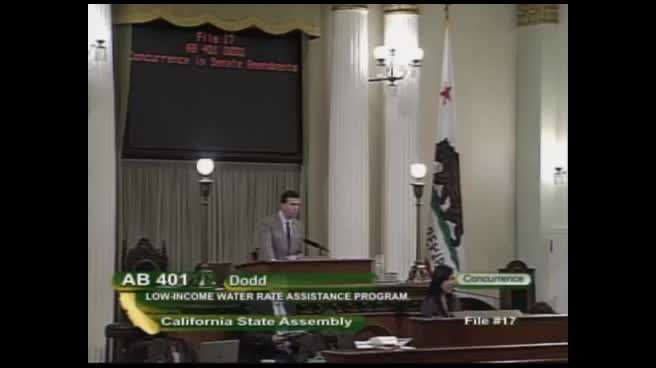
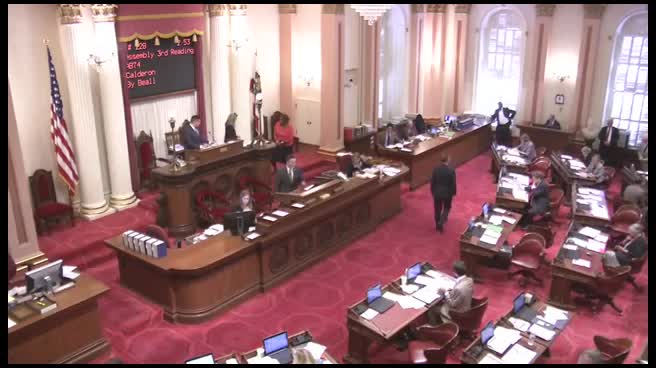
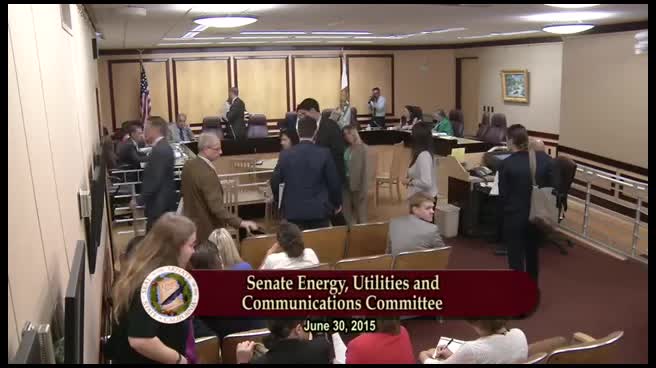
Bill Author

Bill Co-Author(s):
