AB 412: Special education: nonverbal pupils.
- Session Year: 2015-2016
- House: Assembly
- Latest Version Date: 2016-01-04
Existing law makes certain findings and declarations relating to the education of hard-of-hearing and deaf pupils.
This bill would revise those findings and declarations to include nonverbal pupils.
Existing law requires the adopted course of study for grades 1 to 6, inclusive, to include certain areas of study, including, among others, English, mathematics, social sciences, science, and physical education, as specified. Existing law requires that physical education have a total period of time of not less than 200 minutes each 10 schooldays, as provided.
This bill would authorize a complaint that a school district or county superintendent of schools has not complied with the physical education requirements of the adopted course of study for grades 1 to 6, inclusive, to be filed with the school district or county superintendent of schools pursuant to the local complaint procedures, if any, or the Uniform Complaint Procedures, as specified. The bill would authorize a complainant not satisfied with the school districts or county superintendent of schools decision to file an appeal with the Superintendent of Public Instruction. If a school district or county superintendent of schools finds merit in the complaint, or the Superintendent finds merit in the appeal, the bill would require the school district or county superintendent of schools to provide a remedy, as provided. To the extent this bill would impose additional duties on school districts or county education officials, the bill would impose a state-mandated local program. The bill would prohibit specified civil actions against a school district or county superintendent of schools relating to noncompliance with the physical education requirements unless the complainant first follows local complaint procedures, if any, or the Uniform Complaint Procedures, if no local complaint procedures exist.
The California Constitution requires the state to reimburse local agencies and school districts for certain costs mandated by the state. Statutory provisions establish procedures for making that reimbursement.
This bill would provide that, if the Commission on State Mandates determines that the bill contains costs mandated by the state, reimbursement for those costs shall be made pursuant to these statutory provisions.
Existing law requires the adopted course of study for grades 1 to 6, inclusive, to include certain areas of study, including, among others, English, mathematics, social sciences, science, and visual and performing arts, physical education, as specified. Existing law requires that physical education have a total period of time of not less than 200 minutes each 10 schooldays, as provided.
This bill would authorize a complaint that a school district or county superintendent of schools has not complied with the physical education requirements of the adopted course of study for grades 1 to 6, inclusive, to be filed with the school district or county superintendent of schools pursuant to the local complaint procedures, if any, or the Uniform Complaint Procedures, as specified. The bill would authorize a complainant not satisfied with the school districts or county superintendent of schools decision to file an appeal with the Superintendent of Public Instruction. If a school district or county office of education superintendent of schools finds merit in the complaint, or the Superintendent finds merit in the appeal, the bill would require the school district or county superintendent of schools to provide a remedy, as provided. To the extent this bill would impose additional duties on school districts or county education officials, the bill would impose a state-mandated local program. The bill would prohibit specified civil actions against a school district or county superintendent of schools relating to noncompliance with the physical education requirements unless the complainant first follows local complaint procedures, if any, or the Uniform Complaint Procedures, if no local complaint procedures exist.
The California Constitution requires the state to reimburse local agencies and school districts for certain costs mandated by the state. Statutory provisions establish procedures for making that reimbursement.
This bill would provide that, if the Commission on State Mandates determines that the bill contains costs mandated by the state, reimbursement for those costs shall be made pursuant to these statutory provisions.
Existing law requires the adopted course of study for grades 1 to 6, inclusive, to include certain areas of study, including, among others, English, mathematics, social sciences, science, and visual and performing arts, as specified.
This bill would make nonsubstantive changes to these provisions.
This bill would authorize a complaint that a school district or county superintendent of schools has not complied with the requirements of the adopted course of study for grades 1 to 6, inclusive, to be filed with the school district or county superintendent of schools pursuant to the Uniform Complaint Procedures, as specified. The bill would authorize a complainant not satisfied with the school districts or county superintendent of schools decision to file an appeal with the Superintendent of Public Instruction. If a school district or county office of education finds merit in the complaint, or the Superintendent finds merit in the appeal, the bill would require the school district or county superintendent of schools to provide a remedy, as provided. To the extent this bill would impose additional duties on school districts or county education officials, the bill would impose a state-mandated local program.
The California Constitution requires the state to reimburse local agencies and school districts for certain costs mandated by the state. Statutory provisions establish procedures for making that reimbursement.
This bill would provide that, if the Commission on State Mandates determines that the bill contains costs mandated by the state, reimbursement for those costs shall be made pursuant to these statutory provisions.
Existing law requires the adopted course of study for grades 1 to 6, inclusive, to include certain areas of study, including, among others, English, mathematics, social sciences, science, and visual and performing arts, as specified.
This bill would make nonsubstantive changes to these provisions.
(a)The Legislature finds and declares that:
(1)Pupils with low-incidence disabilities, as a group, make up less than 1 percent of the total statewide enrollment for kindergarten through grade 12.
(2)Pupils with low-incidence disabilities require highly specialized services, equipment, and materials.
(b)The Legislature further finds and declares that:
(1)Deafness involves the most basic of human needsthe ability to communicate with other human beings. Many hard-of-hearing and deaf hard-of-hearing, deaf, and nonverbal children use an appropriate communication mode, sign language, which may be their primary language, while others express and receive language orally and aurally, with or without visual signs or cues. Still others, typically young hard-of-hearing and deaf hard-of-hearing, deaf, and nonverbal children, lack any significant language skills. It is essential for the well-being and growth of hard-of-hearing and deaf hard-of-hearing, deaf, and nonverbal children that educational programs recognize the unique nature of deafness and ensure that all hard-of-hearing and deaf hard-of-hearing, deaf, and nonverbal children have appropriate, ongoing, and fully accessible educational opportunities.
(2)It is essential that hard-of-hearing and deaf hard-of-hearing, deaf, and nonverbal children, like all children, have an education in which their unique communication mode is respected, utilized, and developed to an appropriate level of proficiency.
(3)It is essential that hard-of-hearing and deaf hard-of-hearing, deaf, and nonverbal children have an education in which special education teachers, psychologists, speech therapists, assessors, administrators, and other special education personnel understand the unique nature of deafness and are specifically trained to work with hard-of-hearing and deaf hard-of-hearing, deaf, and nonverbal pupils. It is essential that hard-of-hearing and deaf hard-of-hearing, deaf, and nonverbal children have an education in which their special education teachers are proficient in the primary language mode of those children.
(4)It is essential that hard-of-hearing and deaf hard-of-hearing, deaf, and nonverbal children, like all children, have an education with a sufficient number of language mode peers with whom they can communicate directly and who are of the same, or approximately the same, age and ability level.
(5)It is essential that hard-of-hearing and deaf hard-of-hearing, deaf, and nonverbal children have an education in which their parents and, where appropriate, hard-of-hearing and deaf hard-of-hearing, deaf, and nonverbal people are involved in determining the extent, content, and purpose of programs.
(6)Hard-of-hearing and deaf hard-of-hearing, deaf, and nonverbal children would benefit from an education in which they are exposed to hard-of-hearing and deaf hard-of-hearing, deaf, and nonverbal role models.
(7)It is essential that hard-of-hearing and deaf hard-of-hearing, deaf, and nonverbal children, like all children, have programs in which they have direct and appropriate access to all components of the educational process, including, but not limited to, recess, lunch, and extracurricular social and athletic activities.
(8)It is essential that hard-of-hearing and deaf hard-of-hearing, deaf, and nonverbal children, like all children, have programs in which their unique vocational needs are provided for, including appropriate research, curricula, programs, staff, and outreach.
(9)Each hard-of-hearing and deaf hard-of-hearing, deaf, and nonverbal child should have a determination of the least restrictive educational environment that takes into consideration these legislative findings and declarations.
(10)Given their unique communication needs, hard-of-hearing and deaf hard-of-hearing, deaf, and nonverbal children would benefit from the development and implementation of regional programs for children with low-incidence disabilities.
SECTION 1.Section 51210 of the Education Code is amended to read:51210.(a)The adopted course of study for grades 1 to 6, inclusive, shall include instruction, beginning in grade 1 and continuing through grade 6, in the following areas of study:
(1)English, including knowledge of, and appreciation for literature and the language, as well as the skills of speaking, reading, listening, spelling, handwriting, and composition.
(2)Mathematics, including concepts, operational skills, and problem solving.
(3)Social sciences, drawing upon the disciplines of anthropology, economics, geography, history, political science, psychology, and sociology, designed to fit the maturity of the pupils. Instruction shall provide a foundation for understanding the history, resources, development, and government of California and the United States of America; the development of the American economic system, including the role of the entrepreneur and labor; the relations of persons to their human and natural environment; eastern and western cultures and civilizations; contemporary issues; and the wise use of natural resources.
(4)Science, including the biological and physical aspects, with emphasis on the processes of experimental inquiry and on the place of humans in ecological systems.
(5)Visual and performing arts, including instruction in the subjects of dance, music, theater, and visual arts, aimed at the development of aesthetic appreciation and the skills of creative expression.
(6)Health, including instruction in the principles and practices of individual, family, and community health.
(7)Physical education, with emphasis upon the physical activities for the pupils that may be conducive to health and vigor of body and mind, for a total period of time of not less than 200 minutes each 10 schooldays, exclusive of recesses and the lunch period.
(8)Other studies that may be prescribed by the governing board.
(b)(1)A complaint that a school district or county superintendent of schools has not complied with the physical education requirements of paragraph (7) of subdivision (a) may be filed with a school district or county superintendent of schools pursuant to the local complaint procedures, if any, or the Uniform Complaint Procedures set forth in Chapter 5.1 (commencing with Section 4600) of Division 1 of Title 5 of the California Code of Regulations.
(2)A complainant not satisfied with the decision of the school district or county superintendent of schools may appeal the decision to the Superintendent and shall receive a written appeal decision within 60 days of the Superintendents receipt of the appeal.
(3)If a school district or county superintendent of schools finds merit in a complaint filed pursuant to this subdivision, or if the Superintendent finds merit in an appeal made pursuant to paragraph (2), the school district or county superintendent of schools shall provide a remedy to all affected pupils, parents, and guardians.
(4)A private right of action or civil action shall not be brought against a school district or county superintendent of schools relating to noncompliance with the physical education requirements of paragraph (7) of subdivision (a) unless the complainant first follows the local complaint procedures, if any, or the Uniform Complaint Procedures, pursuant to Chapter 5.1 (commencing with Section 4600) of Division 1 of Title 5 of the California Code of Regulations, if no local complaint procedures exist.
SEC. 2.If the Commission on State Mandates determines that this act contains costs mandated by the state, reimbursement to local agencies and school districts for those costs shall be made pursuant to Part 7 (commencing with Section 17500) of Division 4 of Title 2 of the Government Code.
(a)The adopted course of study for grades 1 to 6, inclusive, shall include instruction, beginning in grade 1 and continuing through grade 6, in the following areas of study:
(1)English, including knowledge of, and appreciation for literature and the language, as well as the skills of speaking, reading, listening, spelling, handwriting, and composition.
(2)Mathematics, including concepts, operational skills, and problem solving.
(3)Social sciences, drawing upon the disciplines of anthropology, economics, geography, history, political science, psychology, and sociology, designed to fit the maturity of the pupils. Instruction shall provide a foundation for understanding the history, resources, development, and government of California and the United States of America; the development of the American economic system, including the role of the entrepreneur and labor; the relations of persons to their human and natural environment; eastern and western cultures and civilizations; contemporary issues; and the wise use of natural resources.
(4)Science, including the biological and physical aspects, with emphasis on the processes of experimental inquiry and on the place of humans in ecological systems.
(5)Visual and performing arts, including instruction in the subjects of dance, music, theater, and visual arts, aimed at the development of aesthetic appreciation and the skills of creative expression.
(6)Health, including instruction in the principles and practices of individual, family, and community health.
(7)Physical education, with emphasis upon the physical activities for the pupils that may be conducive to health and vigor of body and mind, for a total period of time of not less than 200 minutes each 10 schooldays, exclusive of recesses and the lunch period.
(8)Other studies that may be prescribed by the governing board.
(b)(1)A complaint that a school district or county superintendent of schools has not complied with the physical education requirements of this section paragraph (7) of subdivision (a) may be filed with a school district or county superintendent of schools pursuant to the local complaint procedures, if any, or the Uniform Complaint Procedures set forth in Chapter 5.1 (commencing with Section 4600) of Division 1 of Title 5 of the California Code of Regulations.
(2)A complainant not satisfied with the decision of the school district or county superintendent of schools may appeal the decision to the Superintendent and shall receive a written appeal decision within 60 days of the Superintendents receipt of the appeal.
(3)If a school district or county superintendent of schools finds merit in a complaint filed pursuant to this subdivision, or if the Superintendent finds merit in an appeal made pursuant to paragraph (2), the school district or county superintendent of schools shall provide a remedy to all affected pupils, parents, and guardians.
(4)A private right of action or civil action shall not be brought against a school district or county superintendent of schools relating to noncompliance with the physical education requirements of paragraph (7) of subdivision (a) unless the complainant first follows the local complaint procedures, if any, or the Uniform Complaint Procedures, pursuant to Chapter 5.1 (commencing with Section 4600) of Division 1 of Title 5 of the California Code of Regulations, if no local complaint procedures exist.
SEC. 2.If the Commission on State Mandates determines that this act contains costs mandated by the state, reimbursement to local agencies and school districts for those costs shall be made pursuant to Part 7 (commencing with Section 17500) of Division 4 of Title 2 of the Government Code.
(a)The adopted course of study for grades 1 to 6, inclusive, shall include instruction, beginning in grade 1 and continuing through grade 6, in the following areas of study:
(a)
(1)English, including knowledge of, and appreciation for literature and the language, as well as the skills of speaking, reading, listening, spelling, handwriting, and composition.
(b)
(2)Mathematics, including concepts, operational skills, and problem solving.
(c)
(3)Social sciences, drawing upon the disciplines of anthropology, economics, geography, history, political science, psychology, and sociology, designed to fit the maturity of the pupils. Instruction shall provide a foundation for understanding the history, resources, development, and government of California and the United States of America; the development of the American economic system, including the role of the entrepreneur and labor; the relations of persons to their human and natural environment; eastern and western cultures and civilizations; contemporary issues; and the wise use of natural resources.
(d)
(4)Science, including the biological and physical aspects, with emphasis on the processes of experimental inquiry and on the place of humans in ecological systems.
(e)
(5)Visual and performing arts, including instruction in the subjects of dance, music, theater, and visual arts, aimed at the development of aesthetic appreciation and the skills of creative expression.
(f)
(6)Health, including instruction in the principles and practices of individual, family, and community health.
(g)
(7)Physical education, with emphasis upon the physical activities for the pupils that may be conducive to health and vigor of body and mind, for a total period of time of not less than 200 minutes each 10 schooldays, exclusive of recesses and the lunch period.
(h)
(8)Other studies that may be prescribed by the governing board.
(b)(1)A complaint that a school district or county superintendent of schools has not complied with the requirements of this section may be filed with a school district or county superintendent of schools pursuant to the Uniform Complaint Procedures set forth in Chapter 5.1 (commencing with Section 4600) of Division 1 of Title 5 of the California Code of Regulations.
(2)A complainant not satisfied with the decision of the school district or county superintendent of schools may appeal the decision to the Superintendent and shall receive a written appeal decision within 60 days of the Superintendents receipt of the appeal.
(3)If a school district or county superintendent of schools finds merit in a complaint filed pursuant to this subdivision, or if the Superintendent finds merit in an appeal made pursuant to paragraph (2), the school district or county superintendent of schools shall provide a remedy to all affected pupils, parents, and guardians.
SEC. 2.If the Commission on State Mandates determines that this act contains costs mandated by the state, reimbursement to local agencies and school districts for those costs shall be made pursuant to Part 7 (commencing with Section 17500) of Division 4 of Title 2 of the Government Code.
The adopted course of study for grades 1 to 6, inclusive, shall include instruction, beginning in grade 1 and continuing through grade 6, in the following areas of study:
(a)English, including knowledge of, and appreciation for literature and the language, as well as the skills of speaking, reading, listening, spelling, handwriting, and composition.
(b)Mathematics, including concepts, operational skills, and problem solving.
(c)Social sciences, drawing upon the disciplines of anthropology, economics, geography, history, political science, psychology, and sociology, designed to fit the maturity of the pupils. Instruction shall provide a foundation for understanding the history, resources, development, and government of California and the United States of America; the development of the American economic system system, including the role of the entrepreneur and labor; the relations of persons to their human and natural environment; eastern and western cultures and civilizations; contemporary issues; and the wise use of natural resources.
(d)Science, including the biological and physical aspects, with emphasis on the processes of experimental inquiry and on the place of humans in ecological systems.
(e)Visual and performing arts, including instruction in the subjects of dance, music, theatre, theater, and visual arts, aimed at the development of aesthetic appreciation and the skills of creative expression.
(f)Health, including instruction in the principles and practices of individual, family, and community health.
(g)Physical education, with emphasis upon the physical activities for the pupils that may be conducive to health and vigor of body and mind, for a total period of time of not less than 200 minutes each 10 schooldays, exclusive of recesses and the lunch period.
(h)Other studies that may be prescribed by the governing board.
|
Date
|
Status
|
|---|---|
| Feb 1, 2016 | From committee: Filed with the Chief Clerk pursuant to Joint Rule 56. |
| Jan 31, 2016 | Died pursuant to Article IV, Sec. 10(c) of the Constitution. |
| Jan 4, 2016 | Re-referred to Com. on ED. |
| Jan 4, 2016 | From committee chair, with author's amendments: Amend, and re-refer to Com. on ED. Read second time and amended. |
| Apr 22, 2015 | In committee: Hearing postponed by committee. |
| Apr 14, 2015 | Re-referred to Com. on ED. |
| Apr 13, 2015 | From committee chair, with author's amendments: Amend, and re-refer to Com. on ED. Read second time and amended. |
| Apr 6, 2015 | Re-referred to Com. on ED. |
| Mar 26, 2015 | From committee chair, with author's amendments: Amend, and re-refer to Com. on ED. Read second time and amended. |
| Mar 26, 2015 | Referred to Com. on ED. |
| Feb 20, 2015 | From printer. May be heard in committee March 22. |
| Feb 19, 2015 | Read first time. To print. |
This list shows positions taken on this bill by organizations on the date displayed, which is linked to the original source.
Positions by individuals are not included.
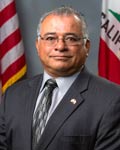
Bill Author
Bill Co-Author(s):