AB 413: California Disabled Veteran Business Enterprise Program.
- Session Year: 2015-2016
- House: Assembly
- Latest Version Date: 2015-10-06
The California Disabled Veteran Business Enterprise Program addresses the special needs of disabled veterans by assisting state procurement authorities in meeting or exceeding the disabled veteran enterprise participation goal of 3% for procurement contracts. Existing law, under the program, authorizes a child or spouse to continue to operate a disabled veteran business enterprise for 3 years after the death or the certification of a permanent medical disability of a disabled veteran who was the majority owner of that enterprise, but only for purposes of any contract entered into before his or her death or certification of disability.
This bill would delete the provision that only allows a child or spouse to operate the business for purposes of the contracts entered into before death or certification of disability. The bill would clarify the scope and purpose of the provision authorizing a child or spouse to continue to operate a disabled veteran business enterprise for 3 years after the death or the certification of a permanent medical disability of a disabled veteran who was the majority owner of that enterprise. The bill would also set forth a statement of legislative intent.
The California Disabled Veteran Business Enterprise Program addresses the special needs of disabled veterans by assisting state procurement authorities in meeting or exceeding the disabled veteran enterprise participation goal of 3% for procurement contracts. Existing law, under the program, authorizes a child or spouse to continue to operate a disabled veteran business enterprise for 3 years after the death or the certification of a permanent medical disability of a disabled veteran who was the majority owner of that enterprise, but only for purposes of any contract entered into before his or her death or certification of disability.
This bill would delete the provision that only allows a child or spouse to operate the business for purposes of the contracts entered into before death or certification of disability.
Existing law requires departments that issue bonds or enter into contracts on behalf of the state to appoint a Disabled Veteran Business Enterprise Program Advocate. Existing law requires this advocate to, among other things, assist certified disabled veteran business enterprises in participating in that agencys contracting process and serve as an advocate for the disabled veteran business enterprises that are utilized as the agencys contractors or subcontractors.
This bill would make technical, nonsubstantive changes to those provisions.
(a)It is the intent of the Legislature that the certification created by this act not conflict with the intended purpose of the California Disabled Veteran Business Enterprise Program, which is, as stated in subdivision (a) of Section 999 of the Military and Veterans Code, to address the special needs of disabled veterans seeking rehabilitation and training through entrepreneurship and to recognize the sacrifices of Californians disabled during military service.
(b)The Legislature finds and declares all of the following:
(1)Allowing a person who is not a disabled veteran, as defined in paragraph (6) of subdivision (b) of Section 999 of the Military and Veterans Code, to perform the role of a disabled veteran within the California Disabled Veteran Business Enterprise Program, would conflict with the intended purpose of the program by placing that person in competition with a disabled veteran for program benefits intended to meet the special needs of disabled veterans.
(2)The spouse or child of a disabled veteran may participate in the program without conflicting with the programs intended purpose, if their participation is limited to either fulfilling existing contracts or providing for the orderly and equitable disposition of a certified disabled veteran business enterprise following the death or permanent medical disability of the business majority owner.
(3)Three years is sufficient time for the orderly and equitable disposition of a certified disabled veteran business enterprise following the death or permanent medical disability of the majority owner.
(c)It is the intent of the Legislature that the certification created by this act shall not establish any business advantage other than to permit the spouse or child of the majority owner of a disabled veteran business enterprise to temporarily control and fully operate that business upon the death or permanent medical disability of the majority owner.
SEC. 2.Section 999 of the Military and Veterans Code is amended to read:999.(a)This article shall be known as, and may be cited as, the California Disabled Veteran Business Enterprise Program. The California Disabled Veteran Business Enterprise Program is established to address the special needs of disabled veterans seeking rehabilitation and training through entrepreneurship and to recognize the sacrifices of Californians disabled during military service. It is the intent of the Legislature that every state procurement authority honor Californias disabled veterans by taking all practical actions necessary to meet or exceed the disabled veteran business enterprise participation goal of a minimum of 3 percent of total contract value.
(b)As used in this article, the following definitions apply:
(1)Administering agency means the Treasurer, in the case of contracts for professional bond services, and the Department of General Services Office of Small Business and Disabled Veteran Business Enterprise Services, in the case of contracts governed by Section 999.2.
(2)Awarding department means a state agency, department, governmental entity, or other officer or entity empowered by law to issue bonds or enter into contracts on behalf of the state.
(3)Bonds means bonds, notes, warrants, certificates of participation, and other evidences of indebtedness issued by, or on behalf of, the state.
(4)Contract includes any agreement or joint agreement to provide professional bond services to the State of California or an awarding department. Contract also includes any agreement or joint development agreement to provide labor, services, materials, supplies, or equipment in the performance of a contract, franchise, concession, or lease granted, let, or awarded for, and on behalf of, the state.
(5)(A)Contractor means a person or persons, regardless of race, color, creed, national origin, ancestry, sex, marital status, disability, religious or political affiliation, age, or any sole proprietorship, firm, partnership, joint venture, corporation, or combination thereof that submits a bid and enters into a contract with a representative of a state agency, department, governmental entity, or other officer empowered by law to enter into contracts on behalf of the state. Contractor includes a provider of professional bond services who enters into a contract with an awarding department.
(B)Disabled veteran business enterprise contractor, subcontractor, or supplier means a person or entity that has been certified by the administering agency pursuant to this article and that performs a commercially useful function, as defined in clause (i), in providing services or goods that contribute to the fulfillment of the contract requirements:
(i)A person or an entity is deemed to perform a commercially useful function if a person or entity does all of the following:
(I)Is responsible for the execution of a distinct element of the work of the contract.
(II)Carries out the obligation by actually performing, managing, or supervising the work involved.
(III)Performs work that is normal for its business services and functions.
(IV)Is responsible, with respect to products, inventories, materials, and supplies required for the contract, for negotiating price, determining quality and quantity, ordering, installing, if applicable, and making payment.
(V)Is not further subcontracting a portion of the work that is greater than that expected to be subcontracted by normal industry practices.
(ii)A contractor, subcontractor, or supplier will not be considered to perform a commercially useful function if the contractors, subcontractors, or suppliers role is limited to that of an extra participant in a transaction, contract, or project through which funds are passed in order to obtain the appearance of a disabled veteran business enterprise participation.
(6)Disabled veteran means a veteran of the military, naval, or air service of the United States, including, but not limited to, the Philippine Commonwealth Army, the Regular Scouts, Old Scouts, and the Special Philippine Scouts, New Scouts, who has at least a 10-percent service-connected disability and who is domiciled in the state.
(7)(A)Disabled veteran business enterprise means a business certified by the administering agency as meeting all of the following requirements:
(i)It is a sole proprietorship at least 51 percent owned by one or more disabled veterans or, in the case of a publicly owned business, at least 51 percent of its stock is unconditionally owned by one or more disabled veterans; a subsidiary that is wholly owned by a parent corporation, but only if at least 51 percent of the voting stock of the parent corporation is unconditionally owned by one or more disabled veterans; or a joint venture in which at least 51 percent of the joint ventures management, control, and earnings are held by one or more disabled veterans.
(ii)The management and control of the daily business operations are by one or more disabled veterans. The disabled veterans who exercise management and control are not required to be the same disabled veterans as the owners of the business.
(iii)It is a sole proprietorship, corporation, or partnership with its home office located in the United States, which is not a branch or subsidiary of a foreign corporation, foreign firm, or other foreign-based business.
(B)Notwithstanding subparagraph (A), after the death or the certification of a permanent medical disability of a disabled veteran who is a majority owner of a business that qualified as a disabled veteran business enterprise prior to that death or certification of a permanent medical disability, that business shall be deemed to be a disabled veteran business enterprise for a period not to exceed three years after the date of that death or certification of a permanent medical disability, if the business is inherited or controlled by the spouse or child of the majority owner, or by both of those persons. A business is a disabled veteran business enterprise pursuant to this subparagraph under either of the following circumstances:
(i)For the duration of any contract entered into prior to the death or certification of permanent medical disability for the sole purpose of fulfilling the requirements of that contract.
(ii)After the date of the majority owners death or certification of permanent medical disability established by this subparagraph for the sole purpose of providing sufficient time to make orderly and equitable arrangements for the disposition of the business, except that the business shall not enter into any new contract as a disabled veteran business enterprise for purposes of the program if the contract would not be completed within the three-year period.
(8)Foreign corporation, foreign firm, or foreign-based business means a business entity that is incorporated or has its principal headquarters located outside the United States of America.
(9)Goal means a numerically expressed objective that awarding departments and contractors are required to make efforts to achieve.
(10)Management and control means effective and demonstrable management of the business entity.
(11)Professional bond services include services as financial advisers, bond counsel, underwriters in negotiated transactions, underwriters counsel, financial printers, feasibility consultants, and other professional services related to the issuance and sale of bonds.
(a)It is the intent of the Legislature that the certification created by this act not conflict with the intended purpose of the California Disabled Veteran Business Enterprise Program, which is, as stated in subdivision (a) of Section 999 of the Military and Veterans Code, to address the special needs of disabled veterans seeking rehabilitation and training through entrepreneurship and to recognize the sacrifices of Californians disabled during military service.
(b)The Legislature finds and declares all of the following:
(1)Allowing any a person who is not a disabled veteran, as defined in paragraph (6) of subdivision (b) of Section 999 of the Military and Veterans Code, to perform the role of a disabled veteran within the California Disabled Veteran Business Enterprise Program, would conflict with the intended purpose of the program by placing that person in competition with a disabled veteran for program benefits intended to meet the special needs of disabled veterans.
(2)Family members The spouse or child of a disabled veterans veteran may participate in the program without conflicting with the programs intended purpose, if their participation is limited to either fulfilling existing contracts or providing for the orderly and equitable disposition of a certified disabled veteran business enterprise following the death or permanent medical disability of the business majority owner.
(3)Three years is sufficient time for the orderly and equitable disposition of a certified disabled veteran business enterprise following the death or permanent medical disability of the majority owner.
(c)It is the intent of the Legislature that the certification created by this act shall not establish any business advantage other than to permit certain family members the spouse or child of the majority owner of a disabled veteran business enterprise to temporarily control and fully operate that business upon the death or permanent medical disability of the majority owner.
SEC. 2.Section 999 of the Military and Veterans Code is amended to read:999.(a)This article shall be known as, and may be cited as, the California Disabled Veteran Business Enterprise Program. The California Disabled Veteran Business Enterprise Program is established to address the special needs of disabled veterans seeking rehabilitation and training through entrepreneurship and to recognize the sacrifices of Californians disabled during military service. It is the intent of the Legislature that every state procurement authority honor Californias disabled veterans by taking all practical actions necessary to meet or exceed the disabled veteran business enterprise participation goal of a minimum of 3 percent of total contract value.
(b)As used in this article, the following definitions apply:
(1)Administering agency means the Treasurer, in the case of contracts for professional bond services, and the Department of General Services Office of Small Business and Disabled Veteran Business Enterprise Services, in the case of contracts governed by Section 999.2.
(2)Awarding department means a state agency, department, governmental entity, or other officer or entity empowered by law to issue bonds or enter into contracts on behalf of the state.
(3)Bonds means bonds, notes, warrants, certificates of participation, and other evidences of indebtedness issued by, or on behalf of, the state.
(4)Contract includes any agreement or joint agreement to provide professional bond services to the State of California or an awarding department. Contract also includes any agreement or joint development agreement to provide labor, services, materials, supplies, or equipment in the performance of a contract, franchise, concession, or lease granted, let, or awarded for, and on behalf of, the state.
(5)(A)Contractor means any a person or persons, regardless of race, color, creed, national origin, ancestry, sex, marital status, disability, religious or political affiliation, age, or any sole proprietorship, firm, partnership, joint venture, corporation, or combination thereof that submits a bid and enters into a contract with a representative of a state agency, department, governmental entity, or other officer empowered by law to enter into contracts on behalf of the state. Contractor includes any a provider of professional bond services who enters into a contract with an awarding department.
(B)Disabled veteran business enterprise contractor, subcontractor, or supplier means any a person or entity that has been certified by the administering agency pursuant to this article and that performs a commercially commercially useful function, function, as defined below, in clause (i), in providing services or goods that contribute to the fulfillment of the contract requirements:
(i)A person or an entity is deemed to perform a commercially useful function if a person or entity does all of the following:
(I)Is responsible for the execution of a distinct element of the work of the contract.
(II)Carries out the obligation by actually performing, managing, or supervising the work involved.
(III)Performs work that is normal for its business services and functions.
(IV)Is responsible, with respect to products, inventories, materials, and supplies required for the contract, for negotiating price, determining quality and quantity, ordering, installing, if applicable, and making payment.
(V)Is not further subcontracting a portion of the work that is greater than that expected to be subcontracted by normal industry practices.
(ii)A contractor, subcontractor, or supplier will not be considered to perform a commercially commercially useful function function if the contractors, subcontractors, or suppliers role is limited to that of an extra participant in a transaction, contract, or project through which funds are passed in order to obtain the appearance of a disabled veteran business enterprise participation.
(6)Disabled veteran means a veteran of the military, naval, or air service of the United States, including, but not limited to, the Philippine Commonwealth Army, the Regular Scouts, Old Scouts, and the Special Philippine Scouts, New Scouts, who has at least a 10-percent service-connected disability and who is domiciled in the state.
(7)(A)Disabled veteran business enterprise means a business certified by the administering agency as meeting all of the following requirements:
(i)It is a sole proprietorship at least 51 percent owned by one or more disabled veterans or, in the case of a publicly owned business, at least 51 percent of its stock is unconditionally owned by one or more disabled veterans; a subsidiary that is wholly owned by a parent corporation, but only if at least 51 percent of the voting stock of the parent corporation is unconditionally owned by one or more disabled veterans; or a joint venture in which at least 51 percent of the joint ventures management, control, and earnings are held by one or more disabled veterans.
(ii)The management and control of the daily business operations are by one or more disabled veterans. The disabled veterans who exercise management and control are not required to be the same disabled veterans as the owners of the business.
(iii)It is a sole proprietorship, corporation, or partnership with its home office located in the United States, which is not a branch or subsidiary of a foreign corporation, foreign firm, or other foreign-based business.
(B)Notwithstanding subparagraph (A), after the death or the certification of a permanent medical disability of a disabled veteran who is a majority owner of a business that qualified as a disabled veteran business enterprise prior to that death or certification of a permanent medical disability, that business shall be deemed to be a disabled veteran business enterprise for a period not to exceed three years after the date of that death or certification of a permanent medical disability, if the business is inherited or controlled by the spouse or child of that the majority owner, or by both of those persons. A business is a disabled veteran business enterprise pursuant to this subparagraph under either of the following circumstances:
(i)For the duration of any contract entered into prior to the death or certification of permanent medical disability for the sole purpose of fulfilling the requirements of that contract.
(ii)After the date of the majority owners death or certification of permanent medical disability established by this subparagraph for the sole purpose of providing sufficient time to make orderly and equitable arrangements for the disposition of the business, except that the business shall not enter into any new contract as a disabled veteran business enterprise for purposes of the program if the contract would not be completed within the three-year period.
(8)Foreign corporation, foreign firm, or foreign-based business means a business entity that is incorporated or has its principal headquarters located outside the United States of America.
(9)Goal means a numerically expressed objective that awarding departments and contractors are required to make efforts to achieve.
(10)Management and control means effective and demonstrable management of the business entity.
(11)Professional bond services include services as financial advisers, bond counsel, underwriters in negotiated transactions, underwriters counsel, financial printers, feasibility consultants, and other professional services related to the issuance and sale of bonds.
(a)It is the intent of the Legislature that the certification created by this act not conflict with the intended purpose of the California Disabled Veteran Business Enterprise Program, which is, as stated in subdivision (a) of Section 999 of the Military and Veterans Code, to address the special needs of disabled veterans seeking rehabilitation and training through entrepreneurship and to recognize the sacrifices of Californians disabled during military service.
(b)The Legislature finds and declares all of the following:
(1)Allowing any person who is not a disabled veteran, as defined in paragraph (6) of subdivision (b) of Section 999 of the Military and Veterans Code, to perform the role of a disabled veteran within the California Disabled Veteran Business Enterprise Program, would conflict with the intended purpose of the program by placing that person in competition with a disabled veteran for program benefits intended to meet the special needs of disabled veterans.
(2)Family members of disabled veterans may participate in the program without conflicting with the programs intended purpose, if their participation is limited to either fulfilling existing contracts or providing for the orderly and equitable disposition of a certified disabled veteran business enterprise following the death or permanent medical disability of the business majority owner.
(3)Three years is sufficient time for the orderly and equitable disposition of a certified disabled veteran business enterprise following the death or permanent medical disability of the majority owner.
(c)It is the intent of the Legislature that the certification created by this act shall not establish any business advantage other than to permit certain family members of the majority owner of a disabled veteran business enterprise to temporarily control and fully operate that business upon the death or permanent medical disability of the majority owner.
SECTION 1.SEC. 2.Section 999 of the Military and Veterans Code is amended to read:999.(a)This article shall be known as, and may be cited as, the California Disabled Veteran Business Enterprise Program. The California Disabled Veteran Business Enterprise Program is established to address the special needs of disabled veterans seeking rehabilitation and training through entrepreneurship and to recognize the sacrifices of Californians disabled during military service. It is the intent of the Legislature that every state procurement authority honor Californias disabled veterans by taking all practical actions necessary to meet or exceed the disabled veteran business enterprise participation goal of a minimum of 3 percent of total contract value.
(b)As used in this article, the following definitions apply:
(1)Administering agency means the Treasurer, in the case of contracts for professional bond services, and the Department of General Services Office of Small Business and Disabled Veteran Business Enterprise Services, in the case of contracts governed by Section 999.2.
(2)Awarding department means a state agency, department, governmental entity, or other officer or entity empowered by law to issue bonds or enter into contracts on behalf of the state.
(3)Bonds means bonds, notes, warrants, certificates of participation, and other evidences of indebtedness issued by, or on behalf of, the state.
(4)Contract includes any agreement or joint agreement to provide professional bond services to the State of California or an awarding department. Contract also includes any agreement or joint development agreement to provide labor, services, materials, supplies, or equipment in the performance of a contract, franchise, concession, or lease granted, let, or awarded for, and on behalf of, the state.
(5)(A)Contractor means any person or persons, regardless of race, color, creed, national origin, ancestry, sex, marital status, disability, religious or political affiliation, age, or any sole proprietorship, firm, partnership, joint venture, corporation, or combination thereof that submits a bid and enters into a contract with a representative of a state agency, department, governmental entity, or other officer empowered by law to enter into contracts on behalf of the state. Contractor includes any provider of professional bond services who enters into a contract with an awarding department.
(B)Disabled veteran business enterprise contractor, subcontractor, or supplier means any person or entity that has been certified by the administering agency pursuant to this article and that performs a commercially useful function, as defined below, in providing services or goods that contribute to the fulfillment of the contract requirements:
(i)A person or an entity is deemed to perform a commercially useful function if a person or entity does all of the following:
(I)Is responsible for the execution of a distinct element of the work of the contract.
(II)Carries out the obligation by actually performing, managing, or supervising the work involved.
(III)Performs work that is normal for its business services and functions.
(IV)Is responsible, with respect to products, inventories, materials, and supplies required for the contract, for negotiating price, determining quality and quantity, ordering, installing, if applicable, and making payment.
(V)Is not further subcontracting a portion of the work that is greater than that expected to be subcontracted by normal industry practices.
(ii)A contractor, subcontractor, or supplier will not be considered to perform a commercially useful function if the contractors, subcontractors, or suppliers role is limited to that of an extra participant in a transaction, contract, or project through which funds are passed in order to obtain the appearance of a disabled veteran business enterprise participation.
(6)Disabled veteran means a veteran of the military, naval, or air service of the United States, including, but not limited to, the Philippine Commonwealth Army, the Regular Scouts, Old Scouts, and the Special Philippine Scouts, New Scouts, who has at least a 10-percent service-connected disability and who is domiciled in the state.
(7)(A)Disabled veteran business enterprise means a business certified by the administering agency as meeting all of the following requirements:
(i)It is a sole proprietorship at least 51 percent owned by one or more disabled veterans or, in the case of a publicly owned business, at least 51 percent of its stock is unconditionally owned by one or more disabled veterans; a subsidiary that is wholly owned by a parent corporation, but only if at least 51 percent of the voting stock of the parent corporation is unconditionally owned by one or more disabled veterans; or a joint venture in which at least 51 percent of the joint ventures management, control, and earnings are held by one or more disabled veterans.
(ii)The management and control of the daily business operations are by one or more disabled veterans. The disabled veterans who exercise management and control are not required to be the same disabled veterans as the owners of the business.
(iii)It is a sole proprietorship, corporation, or partnership with its home office located in the United States, which is not a branch or subsidiary of a foreign corporation, foreign firm, or other foreign-based business.
(B)Notwithstanding subparagraph (A), after the death or the certification of a permanent medical disability of a disabled veteran who is a majority owner of a business that qualified as a disabled veteran business enterprise prior to that death or certification of a permanent medical disability, that business shall be deemed to be a disabled veteran business enterprise for a period not to exceed three years after the date of that death or certification of a permanent medical disability, if the business is inherited or controlled by the spouse or child of that majority owner, or by both of those persons. A business is a disabled veteran business enterprise pursuant to this subparagraph under either of the following circumstances:
(i)For the duration of any contract entered into prior to the death or certification of permanent medical disability for the sole purpose of fulfilling the requirements of that contract.
(ii)After the date of the majority owners death or certification of permanent medical disability established by this subparagraph for the sole purpose of providing sufficient time to make orderly and equitable arrangements for the disposition of the business, except that the business shall not enter into any new contract as a disabled veteran business enterprise for purposes of the program if the contract would not be completed within the three-year period.
(8)Foreign corporation, foreign firm, or foreign-based business means a business entity that is incorporated or has its principal headquarters located outside the United States of America.
(9)Goal means a numerically expressed objective that awarding departments and contractors are required to make efforts to achieve.
(10)Management and control means effective and demonstrable management of the business entity.
(11)Professional bond services include services as financial advisers, bond counsel, underwriters in negotiated transactions, underwriters counsel, financial printers, feasibility consultants, and other professional services related to the issuance and sale of bonds.
(a)This article shall be known as, and may be cited as, the California Disabled Veteran Business Enterprise Program. The California Disabled Veteran Business Enterprise Program is established to address the special needs of disabled veterans seeking rehabilitation and training through entrepreneurship and to recognize the sacrifices of Californians disabled during military service. It is the intent of the Legislature that every state procurement authority honor Californias disabled veterans by taking all practical actions necessary to meet or exceed the disabled veteran business enterprise participation goal of a minimum of 3 percent of total contract value.
(b)As used in this article, the following definitions apply:
(1)Administering agency means the Treasurer Treasurer, in the case of contracts for professional bond services, and the Department of General Services Office of Small Business and Disabled Veteran Business Enterprise Services, in the case of contracts governed by Section 999.2.
(2)Awarding department means a state agency, department, governmental entity, or other officer or entity empowered by law to issue bonds or enter into contracts on behalf of the state.
(3)Bonds means bonds, notes, warrants, certificates of participation, and other evidences of indebtedness issued by, or on behalf of, the state.
(4)Contract includes any agreement or joint agreement to provide professional bond services to the State of California or an awarding department. Contract also includes any agreement or joint development agreement to provide labor, services, materials, supplies, or equipment in the performance of a contract, franchise, concession, or lease granted, let, or awarded for, and on behalf of, the state.
(5)(A)Contractor means any person or persons, regardless of race, color, creed, national origin, ancestry, sex, marital status, disability, religious or political affiliation, age, or any sole proprietorship, firm, partnership, joint venture, corporation, or combination thereof that submits a bid and enters into a contract with a representative of a state agency, department, governmental entity, or other officer empowered by law to enter into contracts on behalf of the state. Contractor includes any provider of professional bond services who enters into a contract with an awarding department.
(B)Disabled veteran business enterprise contractor, subcontractor, or supplier means any person or entity that has been certified by the administering agency pursuant to this article and that performs a commercially useful function, as defined below, in providing services or goods that contribute to the fulfillment of the contract requirements:
(i)A person or an entity is deemed to perform a commercially useful function if a person or entity does all of the following:
(I)Is responsible for the execution of a distinct element of the work of the contract.
(II)Carries out the obligation by actually performing, managing, or supervising the work involved.
(III)Performs work that is normal for its business services and functions.
(IV)Is responsible, with respect to products, inventories, materials, and supplies required for the contract, for negotiating price, determining quality and quantity, ordering, installing, if applicable, and making payment.
(V)Is not further subcontracting a portion of the work that is greater than that expected to be subcontracted by normal industry practices.
(ii)A contractor, subcontractor, or supplier will not be considered to perform a commercially useful function if the contractors, subcontractors, or suppliers role is limited to that of an extra participant in a transaction, contract, or project through which funds are passed in order to obtain the appearance of a disabled veteran business enterprise participation.
(6)Disabled veteran means a veteran of the military, naval, or air service of the United States, including, but not limited to, the Philippine Commonwealth Army, the Regular Scouts, Old Scouts, and the Special Philippine Scouts, New Scouts, who has at least a 10-percent service-connected disability and who is domiciled in the state.
(7)(A)Disabled veteran business enterprise means a business certified by the administering agency as meeting all of the following requirements:
(i)It is a sole proprietorship at least 51 percent owned by one or more disabled veterans or, in the case of a publicly owned business, at least 51 percent of its stock is unconditionally owned by one or more disabled veterans; a subsidiary that is wholly owned by a parent corporation, but only if at least 51 percent of the voting stock of the parent corporation is unconditionally owned by one or more disabled veterans; or a joint venture in which at least 51 percent of the joint ventures management, control, and earnings are held by one or more disabled veterans.
(ii)The management and control of the daily business operations are by one or more disabled veterans. The disabled veterans who exercise management and control are not required to be the same disabled veterans as the owners of the business.
(iii)It is a sole proprietorship, corporation, or partnership with its home office located in the United States, which is not a branch or subsidiary of a foreign corporation, foreign firm, or other foreign-based business.
(B)Notwithstanding subparagraph (A), after the death or the certification of a permanent medical disability of a disabled veteran who is a majority owner of a business that qualified as a disabled veteran business enterprise prior to that death or certification of a permanent medical disability, that business shall be deemed to be a disabled veteran business enterprise for a period not to exceed three years after the date of that death or certification of a permanent medical disability, if the business is inherited or controlled by the spouse or child of that majority owner, or by both of those persons.
(8)Foreign corporation, foreign firm, or foreign-based business means a business entity that is incorporated or has its principal headquarters located outside the United States of America.
(9)Goal means a numerically expressed objective that awarding departments and contractors are required to make efforts to achieve.
(10)Management and control means effective and demonstrable management of the business entity.
(11)Professional bond services include services as financial advisers, bond counsel, underwriters in negotiated transactions, underwriters counsel, financial printers, feasibility consultants, and other professional services related to the issuance and sale of bonds.
(a)This article shall be known as, and may be cited as, the California Disabled Veteran Business Enterprise Program. The California Disabled Veteran Business Enterprise Program is established to address the special needs of disabled veterans seeking rehabilitation and training through entrepreneurship and to recognize the sacrifices of Californians disabled during military service. It is the intent of the Legislature that every state procurement authority honor Californias disabled veterans by taking all practical actions necessary to meet or exceed the disabled veteran business enterprise participation goal of a minimum of 3 percent of total contract value.
(b)As used in this article, the following definitions apply:
(1)Administering agency means the Treasurer in the case of contracts for professional bond services, and the Department of General Services Office of Small Business and Disabled Veteran Business Enterprise Services, in the case of contracts governed by Section 999.2.
(2)Awarding department means a state agency, department, governmental entity, or other officer or entity empowered by law to issue bonds or enter into contracts on behalf of the state.
(3)Bonds means bonds, notes, warrants, certificates of participation, and other evidences of indebtedness issued by, or on behalf of, the state.
(4)Contract includes any agreement or joint agreement to provide professional bond services to the State of California or an awarding department. Contract also includes any agreement or joint development agreement to provide labor, services, materials, supplies, or equipment in the performance of a contract, franchise, concession, or lease granted, let, or awarded for, and on behalf of, the state.
(5)(A)Contractor means any person or persons, regardless of race, color, creed, national origin, ancestry, sex, marital status, disability, religious or political affiliation, age, or any sole proprietorship, firm, partnership, joint venture, corporation, or combination thereof that submits a bid and enters into a contract with a representative of a state agency, department, governmental entity, or other officer empowered by law to enter into contracts on behalf of the state. Contractor includes any provider of professional bond services who enters into a contract with an awarding department.
(B)Disabled veteran business enterprise contractor, subcontractor, or supplier means any person or entity that has been certified by the administering agency pursuant to this article and that performs a commercially useful function, as defined below, in providing services or goods that contribute to the fulfillment of the contract requirements:
(i)A person or an entity is deemed to perform a commercially useful function if a person or entity does all of the following:
(I)Is responsible for the execution of a distinct element of the work of the contract.
(II)Carries out the obligation by actually performing, managing, or supervising the work involved.
(III)Performs work that is normal for its business services and functions.
(IV)Is responsible, with respect to products, inventories, materials, and supplies required for the contract, for negotiating price, determining quality and quantity, ordering, installing, if applicable, and making payment.
(V)Is not further subcontracting a portion of the work that is greater than that expected to be subcontracted by normal industry practices.
(ii)A contractor, subcontractor, or supplier will not be considered to perform a commercially useful function if the contractors, subcontractors, or suppliers role is limited to that of an extra participant in a transaction, contract, or project through which funds are passed in order to obtain the appearance of a disabled veteran business enterprise participation.
(6)Disabled veteran means a veteran of the military, naval, or air service of the United States, including, but not limited to, the Philippine Commonwealth Army, the Regular Scouts, Old Scouts, and the Special Philippine Scouts, New Scouts, who has at least a 10-percent service-connected disability and who is domiciled in the state.
(7)(A)Disabled veteran business enterprise means a business certified by the administering agency as meeting all of the following requirements:
(i)It is a sole proprietorship at least 51 percent owned by one or more disabled veterans or, in the case of a publicly owned business, at least 51 percent of its stock is unconditionally owned by one or more disabled veterans; a subsidiary that is wholly owned by a parent corporation, but only if at least 51 percent of the voting stock of the parent corporation is unconditionally owned by one or more disabled veterans; or a joint venture in which at least 51 percent of the joint ventures management, control, and earnings are held by one or more disabled veterans.
(ii)The management and control of the daily business operations are by one or more disabled veterans. The disabled veterans who exercise management and control are not required to be the same disabled veterans as the owners of the business.
(iii)It is a sole proprietorship, corporation, or partnership with its home office located in the United States, which is not a branch or subsidiary of a foreign corporation, foreign firm, or other foreign-based business.
(B)Notwithstanding subparagraph (A), after the death or the certification of a permanent medical disability of a disabled veteran who is a majority owner of a business that qualified as a disabled veteran business enterprise prior to that death or certification of a permanent medical disability, and solely for purposes of any contract entered into before that death or certification, that business shall be deemed to be a disabled veteran business enterprise for a period not to exceed three years after the date of that death or certification of a permanent medical disability, if the business is inherited or controlled by the spouse or child of that majority owner, or by both of those persons.
(8)Foreign corporation, foreign firm, or foreign-based business means a business entity that is incorporated or has its principal headquarters located outside the United States of America.
(9)Goal means a numerically expressed objective that awarding departments and contractors are required to make efforts to achieve.
(10)Management and control means effective and demonstrable management of the business entity.
(11)Professional bond services include services as financial advisers, bond counsel, underwriters in negotiated transactions, underwriters counsel, financial printers, feasibility consultants, and other professional services related to the issuance and sale of bonds.
SECTION 1.Section 999.12 of the Military and Veterans Code is amended to read:999.12.Each awarding department shall appoint an agency Disabled Veteran Business Enterprise Program Advocate. This person shall be the same individual appointed pursuant to Section 14846 of the Government Code. The agency Disabled Veteran Business Enterprise Program Advocate shall do all of the following:
(a)Assist certified disabled veteran business enterprises in participating in that agencys contracting process.
(b)Assist contract officers in seeking disabled veteran business enterprises to participate in the agencys contract and procurement activities by performing outreach efforts to recruit disabled veteran business enterprises to offer their services, as either a prime contractor or subcontractor, on any contract proposed by the awarding department that requires disabled veteran business enterprise participation, and by other feasible means.
(c) Meet regularly with the California Disabled Veteran Business Enterprise Program Advocate and contract and procurement staffs of their departments to disseminate information about the California Disabled Veteran Business Enterprise Program.
(d)Serve as an advocate for the disabled veteran business enterprises that are utilized as the agencys contractors or subcontractors.
(e)Report to the Office of Small Business and Disabled Veteran Business Enterprise Services regarding any violation of this article.
(f)Coordinate and meet, on a regular basis, with the California Disabled Veteran Business Enterprise Program Advocate at the Department of Veterans Affairs, in an effort to meet the statewide 3-percent goal pursuant to Section 999.2.
Each awarding department shall appoint an agency Disabled Veteran Business Enterprise Program Advocate. This person shall be the same individual appointed pursuant to Section 14846 of the Government Code. The agency Disabled Veteran Business Enterprise Program Advocate shall do all of the following:
(a)Assist certified disabled veteran business enterprises in participating in that agencys contracting process.
(b)Assist contract officers in seeking disabled veteran business enterprises to participate in the agencys contract and procurement activities by performing outreach efforts to recruit disabled veteran business enterprises to offer their services, as either a prime contractor or subcontractor, on any contract proposed by the awarding department that requires disabled veteran business enterprise participation, and by other feasible means.
(c) Meet regularly with the California Disabled Veteran Business Enterprise Program Advocate and contract and procurement staffs of their departments to disseminate information about the California Disabled Veteran Business Enterprise Program.
(d)Serve as an advocate for the disabled veteran business enterprises that are utilized as the agencys contractors or subcontractors.
(e)Report to the Office of Small Business and Disabled Veteran Business Enterprise Services regarding any violation of this article.
(f)Coordinate and meet, on a regular basis, with the California Disabled Veteran Business Enterprise Program Advocate at the Department of Veterans Affairs Affairs, in an effort to meet the statewide 3-percent goal provided for in pursuant to Section 999.2.
|
Date
|
Status
|
|---|---|
| Oct 6, 2015 | Chaptered by Secretary of State - Chapter 513, Statutes of 2015. |
| Oct 6, 2015 | Approved by the Governor. |
| Sep 14, 2015 | Enrolled and presented to the Governor at 4 p.m. |
| Sep 2, 2015 | Senate amendments concurred in. To Engrossing and Enrolling. (Ayes 78. Noes 0. Page 2812.). |
| Sep 2, 2015 | Assembly Rule 77 suspended. (Page 2795.) |
| Sep 2, 2015 | Senate amendments concurred in. To Engrossing and Enrolling. (Ayes 78. Noes 0.). |
| Sep 2, 2015 | Assembly Rule 77 suspended. |
| Sep 1, 2015 | Read third time. Passed. Ordered to the Assembly. (Ayes 39. Noes 0. Page 2345.). |
| Sep 1, 2015 | In Assembly. Concurrence in Senate amendments pending. May be considered on or after September 3 pursuant to Assembly Rule 77. |
| Sep 1, 2015 | Read third time. Passed. Ordered to the Assembly. |
| Aug 31, 2015 | Read second time. Ordered to third reading. |
| Aug 27, 2015 | From committee: Do pass. (Ayes 7. Noes 0.) (August 27). |
| Jul 13, 2015 | In committee: Referred to suspense file. |
| Jun 30, 2015 | Read second time and amended. Re-referred to Com. on APPR. |
| Jun 29, 2015 | From committee: Amend, and do pass as amended and re-refer to Com. on APPR. (Ayes 5. Noes 0.) (June 23). |
| Jun 16, 2015 | From committee chair, with author's amendments: Amend, and re-refer to committee. Read second time, amended, and re-referred to Com. on V.A. |
| May 28, 2015 | Referred to Com. on V.A. |
| May 14, 2015 | In Senate. Read first time. To Com. on RLS. for assignment. |
| May 14, 2015 | Read third time. Passed. Ordered to the Senate. (Ayes 78. Noes 0. Page 1452.) |
| May 14, 2015 | Read third time. Passed. Ordered to the Senate. |
| May 11, 2015 | Read second time. Ordered to Consent Calendar. |
| May 7, 2015 | Read second time and amended. Ordered returned to second reading. |
| May 6, 2015 | From committee: Amend, and do pass as amended. To Consent Calendar. (Ayes 17. Noes 0.) (May 6). |
| Apr 21, 2015 | From committee: Do pass and re-refer to Com. on APPR. (Ayes 9. Noes 0.) (April 21). Re-referred to Com. on APPR. |
| Mar 17, 2015 | Re-referred to Com. on J., E.D., & E. |
| Mar 16, 2015 | From committee chair, with author's amendments: Amend, and re-refer to Com. on J., E.D., & E. Read second time and amended. |
| Mar 12, 2015 | Referred to Com. on J., E.D., & E. |
| Feb 20, 2015 | From printer. May be heard in committee March 22. |
| Feb 19, 2015 | Read first time. To print. |
|
Date
|
Description
|
Location
|
Votes
|
|
|---|---|---|---|---|
| Sep 2, 2015 | AB 413 CHÁVEZ Concurrence in Senate Amendments | Assembly Floor |
Passed |
|
| Sep 1, 2015 | Assembly 3rd Reading AB413 Chávez By Nielsen | Senate Floor |
Passed |
|
| Aug 27, 2015 | Do pass | Senate Standing Committee on Appropriations |
Passed |
|
| Jul 13, 2015 | Placed on suspense file | Senate Standing Committee on Appropriations |
Passed |
|
| Jun 23, 2015 | Do pass as amended, but first amend, and re-refer to the Committee on [Appropriations] | Senate Standing Committee on Veterans Affairs |
Passed |
|
| May 14, 2015 | AB 413 CHÁVEZ Consent Calendar Second Day Regular Session | Assembly Floor |
Passed |
|
| May 6, 2015 | Do pass as amended. To Consent Calendar. | Assembly Standing Committee on Appropriations |
Passed |
|
| Apr 21, 2015 | Do pass and be re-referred to the Committee on [Appropriations] | Assembly Standing Committee on Jobs, Economic Development, and the Economy |
Passed |
This list shows positions taken on this bill by organizations on the date displayed, which is linked to the original source.
Positions by individuals are not included.
AB 413
Page 2
CONCURRENCE IN SENATE AMENDMENTS
AB 413
(Chávez)
As Amended June 30, 2015
Majority vote
ASSEMBLY: |
78-0 |
(May 14, 2015) |
SENATE: |
39-0 |
(September 1, 2015) |
Original Committee Reference: J., E.D., & E.
SUMMARY: Authorizes a spouse or child to enter into additional state contracts during the existing three-year designation extension following the death or permanent disability of an owner of a certified disabled veteran-owned business enterprise (DVBE). Existing law limits business activities to the completion of contracts entered into prior to death or permanent disability of the veteran owner.
The Senate amendments add legislative intent as to the purposes of the bill and clarify that all existing contracts at the time of the disabled veteran's death or permanent disability may be completed and that all new state contracts are also required to be completed within the three-year time period.
EXISTING LAW:
Establishes the California Disabled Veteran Business Enterprise Program for the purpose of addressing the special needs of disabled veterans seeking rehabilitation and training through entrepreneurship and to recognize the sacrifices California's disabled veterans made during their military service.
Designates the Department of General Services (DGS) as the administrator of the state Small Business Procurement and Contract Act (Small Business Procurement Act), including the oversight of the California Disabled Veteran Business Enterprise Program and the certification of the DVBEs.
FISCAL EFFECT: According to the Senate Appropriations Committee, the aggregate impact of this bill is unknown. Some of these factors would potentially increase state costs, while others would likely lead to a reduction in state costs. DGS would incur minor and absorbable costs related to rulemaking.
COMMENTS: California is home to 1.8 million veterans, representing 8% of the total United States veteran population. This bill proposes to extend new contracting authority for a previously certified DVBE, which is owned and operated by a spouse or child of a qualifying disabled veteran following their death or permanent disability. Current law only allows the business to complete existing contracts during the three-year DBVE designation extension period. This bill authorizes the family to bid on and complete additional state contracts during the same three-year period.
Background: California, Texas, and Florida have the highest number of veterans among the 50 states. Approximately 1.8 million veterans live in California, with an additional 30,000 being discharged into the state each year.
The veteran populations in Los Angeles, Orange, Riverside, Sacramento, San Bernardino, San Diego, and Ventura Counties are among the highest in the United States. Based on age, the United States Department of Veterans Affairs (VA) reports that California has a greater percentage of veterans under the age of 25 than the rest of the country, as well as the largest overall number of older veterans.
The federal Small Business Administration estimates that the most common industry sector in which veterans participate is the professional, science, and technology services sector, with 20.4% of all veteran-owned businesses being within the industry sector. California veterans also tend to be entrepreneurs at higher rates than the national average, 13.2% vs. 10.9%.
Approximately four million California veterans receive some level of VA disability compensation, with about 500,000 of those individuals certified as 100% disabled. Given the aging population of the veterans who served in Vietnam, and the significant nature of the medical challenges faced by the younger veteran population, the number of DVBEs potentially impacted by this bill is likely to increase in the coming decade.
Analysis Prepared by: Toni Symonds / J., E.D., & E. / (916) 319-2090 FN: 0001689
AB 413
Page 6
|
Office of Senate Floor Analyses (916) 651-1520 Fax: (916) 327-4478 |
THIRD READING
Bill No: AB 413
Amended: 6/30/15 in Senate
SENATE VETERANS AFFAIRS COMMITTEE: 5-0, 6/23/15
AYES: Nielsen, Hueso, Allen, Nguyen, Roth
SENATE APPROPRIATIONS COMMITTEE: 7-0, 8/27/15
AYES: Lara, Bates, Beall, Hill, Leyva, Mendoza, Nielsen
ASSEMBLY FLOOR: 78-0, 5/14/15 (Consent) - See last page for vote
SUBJECT: California Disabled Veteran Business Enterprise Program
SOURCE: Disabled Veteran Business Alliance
DIGEST: This bill amends the Disabled Veteran Business Enterprise (DVBE) program by authorizing that following the death or permanent disability of the disabled veteran majority owner of a certified DVBE, a surviving spouse or child may enter into additional state contracts during the three-year period following the death or disability, provided that the contracts can be completed within the three-year period.
Existing law:
Establishes the DVBE program for the purposes of addressing the special needs of disabled veterans seeking rehabilitation and training through entrepreneurship, and recognizing the sacrifices California's disabled veterans made during their military service.
Establishes an annual 3% DVBE procurement participation goal for each state agency, department, and officer that enters into a contract for materials, supplies, equipment, alteration, repair, or improvement.
Designates the Department of General Services (DGS) as the administering agency for the DVBE program, including managing the certification of individual DVBE firms.
Establishes criteria for certification eligibility, including ownership and operation by one or more disabled veterans, as defined.
Extends “certified DVBE” status to the spouse or child of a disabled veteran majority owner, upon the owner’s death or upon receipt of certification of the owner’s permanent medical disability, for up to three years for the sole purpose of completing any contracts entered into prior to the owner’s death or certification.
This bill:
Authorizes – following the death or permanent disability of the disabled veteran majority owner of a certified DVBE – a surviving spouse or child to enter into additional state contracts during the three year period following the death or disability, provided that the contracts can be completed within the three-year period.
Offers intent language and makes findings and declarations:
It is the intent of the Legislature that the certification created by this act not conflict with the intended purpose of the DVBE program, which is, as stated in subdivision (a) of Section 999 of the Military and Veterans Code (MVC), “to address the special needs of disabled veterans seeking rehabilitation and training through entrepreneurship and to recognize the sacrifices of Californians disabled during military service.”
Allowing any person who is not a “disabled veteran,” as defined in paragraph (6) of subdivision (b) of Section 999 of the MVC, to perform the role of a “disabled veteran” within the DVBE program, would conflict with the intended purpose of the program by placing that person in competition with a “disabled veteran” for program benefits intended to meet the special needs of disabled veterans.
The spouse or child of disabled veterans may participate in the program without conflicting with the program’s intended purpose, if their participation is limited to either fulfilling existing contracts or providing for the orderly and equitable disposition of a certified disabled veteran business enterprise following the death or permanent medical disability of the business’ majority owner.
Three years is sufficient time for the orderly and equitable disposition of a certified disabled veteran business enterprise following the death or permanent medical disability of the majority owner.
It is the intent of the Legislature that the certification created by this act shall not establish any business advantage other than to permit certain family members of the majority owner of a disabled veteran business enterprise to temporarily control and fully operate that business upon the death or permanent medical disability of the majority owner.
Background
California is home to nearly two million of the nation’s 22 million veterans. Many are disabled and would qualify to participate as DVBE entrepreneurs. The demographics of the state’s veteran population is changing rapidly due to the passing away of older generations and new growth generated by the ongoing downsizing our nation’s active duty armed forces. Many of the newer, younger veterans have disabilities from serving in the conflicts in Iraq and Afghanistan or other service-connected causes.
The program’s purpose and philosophical orientation are established in MVC Section 999(a):
The DVBE program is established to address the special needs of disabled veterans seeking rehabilitation and training through entrepreneurship and to recognize the sacrifices of Californians disabled during military service. It is the intent of the Legislature that every state procurement authority honor California’s disabled veterans by taking all practical actions necessary to meet or exceed the disabled veteran business enterprise participation goal of a minimum of 3 percent of total contract value.
Ownership and operation. Under existing law, a DVBE must meet certain standards in order to be certified by DGS, including the following requirements for ownership and operation:
Ownership:
Sole proprietorship: At least 51% owned by one or more disabled veterans;
Publicly owned business: At least 51% of its stock unconditionally owned by one or more disabled veterans;
Subsidiary that is wholly owned by a parent corporation: Only if at least 51% of the voting stock of the parent corporation is unconditionally owned by one or more disabled veterans; or
Joint venture: At least 51% of the joint venture’s management, control, and earnings are held by one or more disabled veterans.
Control and Operation:
The management and control of the daily business operations are by one or more disabled veterans. The disabled veterans who exercise management and control are not required to be the same disabled veterans as the owners of the business.
It has a home office located in the U.S., which is not a branch or subsidiary of a foreign corporation, foreign firm, or other foreign-based business.
Survivorship. Existing law provides that, if the disabled veteran majority owner dies or incurs a permanent medical disability, an inheriting spouse and/or child may retain the firm’s certification and continue to operate as a DVBE for three years, for the sole purpose of fulfilling the terms of any contract entered into prior to the disabled veteran’s death or permanent disability. However, the spouse/child certification may not be used to enter into any new contracts during the three-year period.
The above provision was added via AB 409 (Dickerson, Chapter 767, Statutes of 1999) due to concerns about the fate of the veteran’s spouse, who, in most cases, relies totally or primarily on the income generated the DVBE operation.
Related/Prior Legislation
AB 409 (Dickerson, Chapter 767, Statutes of 1999) requires (1) that certification of a DVBE be continued for up to three years after the death or certification of permanent medical disability of the disabled veteran owning the enterprise; and (2) that the California Department of Veterans Affairs appoint an advocate, who would be responsible for overseeing implementation of the bill and general DVBE participation goals in state contracting.
FISCAL EFFECT: Appropriation: No Fiscal Com.: Yes Local: No
According to the Senate Appropriations Committee:
The aggregate impact of this bill on state contracts is unknown, and would reflect various factors. Some of these factors would potentially increase state costs, while others would likely lead to a reduction in state costs.
DGS would incur minor and absorbable costs related to rulemaking.
Disabled Veteran Business Alliance (source)
American Legion - Department of California
AMVETS - Department of California
California Asian Pacific Chamber of Commerce
California Association of County Veterans Service Officers
California State Commanders Veteran Council
Military Officers Association of America - California Council of Chapters
Veterans of Foreign Wars - Department of California
Vietnam Veterans of American - California State Council
Numerous individual DVBEs
OPPOSITION: (Verified 8/27/15)
DVBE Investigations
Service Disabled Veteran Owned Small Businesses Network
Numerous individual DVBEs
ARGUMENTS IN SUPPORT: According to the author, this bill does not expand the program, but merely provides the surviving, eligible spouse/child with time and ability to generate enough cash flow for the spouse/child to transform the business model, sell the business, close the business down, or otherwise dispose of it.
ARGUMENTS IN OPPOSITION: Opponents say that this bill, by allowing the inheriting spouse/child to enter into new contracts during the three-year period, places them into direct competition with other DVBEs owned by fully eligible disabled veterans, which is inconsistent with the program purpose.
ASSEMBLY FLOOR: 78-0, 5/14/15
AYES: Achadjian, Alejo, Travis Allen, Baker, Bigelow, Bloom, Bonilla, Bonta, Brough, Brown, Burke, Calderon, Campos, Chang, Chau, Chávez, Chiu, Chu, Cooley, Cooper, Dababneh, Dahle, Daly, Dodd, Eggman, Frazier, Beth Gaines, Gallagher, Cristina Garcia, Eduardo Garcia, Gatto, Gipson, Gomez, Gonzalez, Gordon, Gray, Grove, Hadley, Harper, Roger Hernández, Holden, Irwin, Jones, Jones-Sawyer, Kim, Lackey, Levine, Lopez, Low, Maienschein, Mathis, Mayes, McCarty, Melendez, Mullin, Nazarian, Obernolte, O'Donnell, Olsen, Patterson, Perea, Quirk, Rendon, Ridley-Thomas, Rodriguez, Salas, Santiago, Steinorth, Mark Stone, Thurmond, Ting, Wagner, Waldron, Weber, Wilk, Williams, Wood, Atkins
NO VOTE RECORDED: Linder, Medina
Prepared by: Wade Cooper Teasdale / V.A. / (916) 651-1503
8/31/15 13:07:19
**** END ****
AB 413
Page 6
|
Office of Senate Floor Analyses (916) 651-1520 Fax: (916) 327-4478 |
THIRD READING
Bill No: AB 413
Amended: 6/30/15 in Senate
SENATE VETERANS AFFAIRS COMMITTEE: 5-0, 6/23/15
AYES: Nielsen, Hueso, Allen, Nguyen, Roth
SENATE APPROPRIATIONS COMMITTEE: 7-0, 8/27/15
AYES: Lara, Bates, Beall, Hill, Leyva, Mendoza, Nielsen
ASSEMBLY FLOOR: 78-0, 5/14/15 (Consent) - See last page for vote
SUBJECT: California Disabled Veteran Business Enterprise Program
DIGEST: This bill amends the Disabled Veteran Business Enterprise (DVBE) program by authorizing that following the death or permanent disability of the disabled veteran majority owner of a certified DVBE, a surviving spouse or child may enter into additional state contracts during the three-year period following the death or disability, provided that the contracts can be completed within the three-year period.
Existing law:
Establishes the DVBE program for the purposes of addressing the special needs of disabled veterans seeking rehabilitation and training through entrepreneurship, and recognizing the sacrifices California's disabled veterans made during their military service.
Establishes an annual 3% DVBE procurement participation goal for each state agency, department, and officer that enters into a contract for materials, supplies, equipment, alteration, repair, or improvement.
Designates the Department of General Services (DGS) as the administering agency for the DVBE program, including managing the certification of individual DVBE firms.
Establishes criteria for certification eligibility, including ownership and operation by one or more disabled veterans, as defined.
Extends “certified DVBE” status to the spouse or child of a disabled veteran majority owner, upon the owner’s death or upon receipt of certification of the owner’s permanent medical disability, for up to three years for the sole purpose of completing any contracts entered into prior to the owner’s death or certification.
This bill:
Authorizes – following the death or permanent disability of the disabled veteran majority owner of a certified DVBE – a surviving spouse or child to enter into additional state contracts during the three year period following the death or disability, provided that the contracts can be completed within the three-year period.
Offers intent language and makes findings and declarations:
It is the intent of the Legislature that the certification created by this act not conflict with the intended purpose of the DVBE program, which is, as stated in subdivision (a) of Section 999 of the Military and Veterans Code (MVC), “to address the special needs of disabled veterans seeking rehabilitation and training through entrepreneurship and to recognize the sacrifices of Californians disabled during military service.”
Allowing any person who is not a “disabled veteran,” as defined in paragraph (6) of subdivision (b) of Section 999 of the MVC, to perform the role of a “disabled veteran” within the DVBE program, would conflict with the intended purpose of the program by placing that person in competition with a “disabled veteran” for program benefits intended to meet the special needs of disabled veterans.
The spouse or child of disabled veterans may participate in the program without conflicting with the program’s intended purpose, if their participation is limited to either fulfilling existing contracts or providing for the orderly and equitable disposition of a certified disabled veteran business enterprise following the death or permanent medical disability of the business’ majority owner.
Three years is sufficient time for the orderly and equitable disposition of a certified disabled veteran business enterprise following the death or permanent medical disability of the majority owner.
It is the intent of the Legislature that the certification created by this act shall not establish any business advantage other than to permit certain family members of the majority owner of a disabled veteran business enterprise to temporarily control and fully operate that business upon the death or permanent medical disability of the majority owner.
Background
California is home to nearly two million of the nation’s 22 million veterans. Many are disabled and would qualify to participate as DVBE entrepreneurs. The demographics of the state’s veteran population is changing rapidly due to the passing away of older generations and new growth generated by the ongoing downsizing our nation’s active duty armed forces. Many of the newer, younger veterans have disabilities from serving in the conflicts in Iraq and Afghanistan or other service-connected causes.
The program’s purpose and philosophical orientation are established in MVC Section 999(a):
The DVBE program is established to address the special needs of disabled veterans seeking rehabilitation and training through entrepreneurship and to recognize the sacrifices of Californians disabled during military service. It is the intent of the Legislature that every state procurement authority honor California’s disabled veterans by taking all practical actions necessary to meet or exceed the disabled veteran business enterprise participation goal of a minimum of 3 percent of total contract value.
Ownership and operation. Under existing law, a DVBE must meet certain standards in order to be certified by DGS, including the following requirements for ownership and operation:
Ownership:
Sole proprietorship: At least 51% owned by one or more disabled veterans;
Publicly owned business: At least 51% of its stock unconditionally owned by one or more disabled veterans;
Subsidiary that is wholly owned by a parent corporation: Only if at least 51% of the voting stock of the parent corporation is unconditionally owned by one or more disabled veterans; or
Joint venture: At least 51% of the joint venture’s management, control, and earnings are held by one or more disabled veterans.
Control and Operation:
The management and control of the daily business operations are by one or more disabled veterans. The disabled veterans who exercise management and control are not required to be the same disabled veterans as the owners of the business.
It has a home office located in the U.S., which is not a branch or subsidiary of a foreign corporation, foreign firm, or other foreign-based business.
Survivorship. Existing law provides that, if the disabled veteran majority owner dies or incurs a permanent medical disability, an inheriting spouse and/or child may retain the firm’s certification and continue to operate as a DVBE for three years, for the sole purpose of fulfilling the terms of any contract entered into prior to the disabled veteran’s death or permanent disability. However, the spouse/child certification may not be used to enter into any new contracts during the three-year period.
The above provision was added via AB 409 (Dickerson, Chapter 767, Statutes of 1999) due to concerns about the fate of the veteran’s spouse, who, in most cases, relies totally or primarily on the income generated the DVBE operation.
Related/Prior Legislation
AB 409 (Dickerson, Chapter 767, Statutes of 1999) requires (1) that certification of a DVBE be continued for up to three years after the death or certification of permanent medical disability of the disabled veteran owning the enterprise; and (2) that the California Department of Veterans Affairs appoint an advocate, who would be responsible for overseeing implementation of the bill and general DVBE participation goals in state contracting.
FISCAL EFFECT: Appropriation: No Fiscal Com.: Yes Local: No
According to the Senate Appropriations Committee:
The aggregate impact of this bill on state contracts is unknown, and would reflect various factors. Some of these factors would potentially increase state costs, while others would likely lead to a reduction in state costs.
DGS would incur minor and absorbable costs related to rulemaking.
American Legion - Department of California
AMVETS - Department of California
California Asian Pacific Chamber of Commerce
California Association of County Veterans Service Officers
California State Commanders Veteran Council
Military Officers Association of America - California Council of Chapters
Veterans of Foreign Wars - Department of California
Vietnam Veterans of American - California State Council
Numerous individual DVBEs
OPPOSITION: (Verified 8/27/15)
DVBE Investigations
Service Disabled Veteran Owned Small Businesses Network
Numerous individual DVBEs
ARGUMENTS IN SUPPORT: According to the author, this bill does not expand the program, but merely provides the surviving, eligible spouse/child with time and ability to generate enough cash flow for the spouse/child to transform the business model, sell the business, close the business down, or otherwise dispose of it.
ARGUMENTS IN OPPOSITION: Opponents say that this bill, by allowing the inheriting spouse/child to enter into new contracts during the three-year period, places them into direct competition with other DVBEs owned by fully eligible disabled veterans, which is inconsistent with the program purpose.
ASSEMBLY FLOOR: 78-0, 5/14/15
AYES: Achadjian, Alejo, Travis Allen, Baker, Bigelow, Bloom, Bonilla, Bonta, Brough, Brown, Burke, Calderon, Campos, Chang, Chau, Chávez, Chiu, Chu, Cooley, Cooper, Dababneh, Dahle, Daly, Dodd, Eggman, Frazier, Beth Gaines, Gallagher, Cristina Garcia, Eduardo Garcia, Gatto, Gipson, Gomez, Gonzalez, Gordon, Gray, Grove, Hadley, Harper, Roger Hernández, Holden, Irwin, Jones, Jones-Sawyer, Kim, Lackey, Levine, Lopez, Low, Maienschein, Mathis, Mayes, McCarty, Melendez, Mullin, Nazarian, Obernolte, O'Donnell, Olsen, Patterson, Perea, Quirk, Rendon, Ridley-Thomas, Rodriguez, Salas, Santiago, Steinorth, Mark Stone, Thurmond, Ting, Wagner, Waldron, Weber, Wilk, Williams, Wood, Atkins
NO VOTE RECORDED: Linder, Medina
Prepared by: Wade Cooper Teasdale / V.A. / (916) 651-1503
8/30/15 19:42:11
**** END ****
AB 413
Page 5
Date of Hearing: April 21, 2015
ASSEMBLY COMMITTEE ON JOBS, ECONOMIC DEVELOPMENT, AND THE ECONOMY
Eduardo Garcia, Chair
AB 413
(Chávez) – As Amended March 16, 2015
SUBJECT: California Disabled Veteran Business Enterprise Program
SUMMARY: Authorizes a spouse or child to enter into additional state contracts during the three years currently permitted for the continued operation of a disabled veteran-owned business enterprise (DVBE) following the death or permanent disability of an owner of a certified DVBE. Existing law limits the business' activities to the completion of existing contracts.
EXISTING LAW:
Establishes the California Disabled Veteran Business Enterprise Program for the purpose of addressing the special needs of disabled veterans seeking rehabilitation and training through entrepreneurship, and to recognize the sacrifices California's disabled veterans made during their military service.
Designates the Department of General Services (DGS) as the administrator of the state Small Business Procurement and Contract Act (Small Business Procurement Act), including the oversight of the California Disabled Veteran Business Enterprise Program and the certification of the disabled veteran owned business enterprises (DVBEs).
Sets an annual 3% DVBE procurement participation goal for each state agency, department, and officer that enters into a contract for materials, supplies, equipment, alteration, repair, or improvement. This requirement can be waived on a specific contract with the approval of the department director or another designated person.
Extends DVBE status to the spouse of a DVBE who has died or received certification of a permanent medical disability for up to three years for the sole purpose of completing any contracts entered into prior to the death or certification.
Defines the following terms:
A DVBE contractor, subcontractor, or supplier is any person or entity that has been certified by the administering agency and that performs a commercially useful function, as defined.
A disabled veteran is a veteran of the military, naval, or air service of the U.S. who has a service-connected disability of at least 10% and who is domiciled in the state.
A DVBE is a business certified by the administering agency as meeting all of the following requirements:
The legal structure of the business is a:
Sole proprietorship with at least 51% owned by one or more disabled veterans;
Publicly owned business with at least 51% of its stock unconditionally owned by one or more disabled veterans;
Subsidiary that is wholly owned by a parent corporation, but only if at least 51% of the voting stock of the parent corporation is unconditionally owned by one or more disabled veterans; or
Joint venture in which at least 51% of the joint venture’s management, control, and earnings are held by one or more disabled veterans.
The management and control of the daily business operations are by one or more disabled veterans. The disabled veterans who exercise management and control are not required to be the same disabled veterans as the owners of the business.
It has a home office located in the U.S., which is not a branch or subsidiary of a foreign corporation, foreign firm, or other foreign-based business.
FISCAL EFFECT: Unknown
POLICY ISSUE FRAME:
California is home to 1.8 million veterans, representing 8% of the total U.S. veteran population. This bill proposes to extend new contracting authority for a previously certified DVBE, which is owned by a spouse or child of a qualifying disabled veteran following their death or permanent disability. Current law only allows the business to complete existing contracts during the three-year transition period. AB 413 authorizes the family to bid on and complete additional state contracts during the same three-year period.
The analysis includes background on the Small Business Procurement Act, the California Disabled Veteran Owned Business Enterprise Program, the federal veteran procurement participation program, and other spousal benefits for deceased veterans.
COMMENTS:
Author's Purpose: According to the author, "AB 413 would allow survivors to maintain the DVBE certification for three years following the death of a disabled veteran business owner. Doing so would provide the families time to continue the business after the death of a veteran without an immediate end to the business."
Small Business Procurement Act: The Small Business Procurement Act, administered through DGS, was implemented more than 30 years ago to establish a small business preference within the state's procurement process that would increase the number of contracts between the state and small businesses. A DBVE component was added in 1989. Today, approximately 90% of DVBEs have dual certification as a small business or a microbusiness.
The Small Business Procurement Act states that it is the policy of the State of California that the state aid the interests of small businesses in order to preserve free competitive enterprise and to ensure that a fair portion of the total purchases and contracts of the state be placed with these enterprises. The statute further states that DVBE participation is strongly encouraged to address the special needs of disabled veterans seeking rehabilitation and training through entrepreneurship, and to recognize the sacrifices of California's disabled military veterans. Statute sets an annual 3% DVBE participation goal, and a 2006 executive order sets a 25% goal for small businesses and microbusinesses.
There are 1,537 certified DVBEs in California during the 2013-14 fiscal year with 1,129 within the service sector, 530 in construction, 30 in manufacturing and 373 in a non-manufacturing sector. The majority size of certified DVBEs are very small with 1,289 out of 1,537 total DVBEs having a second certification as a microbusiness.
In 2013-14, mandated state entities achieved an overall DVBE participation rate of 3.67%, or $299 million of the $8.2 billion expended in state contracts. This is the third year in a row that the state has met its DVBE goal. DGS notes, however, that the overall DVBE percentage could be higher if the top five state contracting entities had all met their individual department goals. The chart below shows current numbers.
2013-14 State Contracting with DVBE Participation |
||
1 |
Department of Corrections and Rehabilitation |
3.60% |
2 |
Department of Transportation |
3.79% |
3 |
Department of Health Care Services |
0.45% |
4 |
Department of State Hospitals |
2.12% |
5 |
Department of Water Resources |
2.62% |
DGS Consolidated Report 11/25/2014 |
||
Federal Contracting: The federal government operates the Vets First Contracting Program, overseen by the Veterans Administration (VA), which includes a veteran-owned and a disabled veteran-owned component. Upon certification, a business is eligible to benefit from special contract set asides and subcontract with VA’s large prime contractors. The business is also eligible to participate in VA’s Veteran-Owned Small Business Mentor-Protégé Program. Given that the VA is one of the largest procurement organizations in the federal government with over $3 billion in contracts annually, there are significant procurement opportunities.
In instances where the owner of federal VA certified disabled business dies, which results in the business having less than 51% veteran ownership, the surviving spouse can retain the certification status until they remarry, relinquish ownership of the business, 10 years following the veteran's death, or until the business no longer meets the definition of a federal small business.
In comparison, AB 413 offers a more limited extension in certified contracting status than allowed under a similar federal program.
California's Veteran Population: California, Texas, and Florida have the highest number of veterans among the 50 states. Approximately 1.8 million veterans live in California, with an additional 30,000 being discharged into the state each year.
The veteran population in Los Angeles, Orange, Riverside, Sacramento, San Bernardino, San Diego, and Ventura Counties are among the highest in the U.S. Based on age, the VA reports that California has a greater percentage of veterans under the age of 25 than the rest of the country, as well as the largest overall number of older veterans.
The federal Small Business Administration estimates that the most common industry sector in which veterans participate is the professional, science, and technology services sector, with 20.4% of all veteran-owned businesses being within the industry sector. California veterans also tend to be entrepreneurs at higher rates than the national average, 13.2% vs. 10.9%.
Veteran Service-related Survivorship Benefits: Approximately 4 million California veterans receive some level of VA disability compensation, with about 500,000 of those individuals certified as 100% disabled. Given the aging population of the veterans who served in Viet Nam, and the significant nature of the medical challenges faced by the younger veteran population, the number of DVBEs who will die or whose injuries will become more impactful while still operating their business is likely to increase in the coming decade. The Disable Veteran Business Alliance, the sponsor AB 413, provided the list below of currently available veteran-related benefits that are transferable or directly provided to veterans and their families:
An eligible surviving spouse may continue a Service Disabled Veteran Owned Small Business certification for up to ten years according to Federal PL 109-461 SDVOSB Survivorship rights are contained in two different sections of federal regulation: 38 CFR Part 74, and 13 CFR Part 125.
Military members and Veterans can transfer 48 months of GI Bill educational benefits to their family members (spouse/children).
Tricare for Life (TFL) medical benefits available to family members of a retired service member, Medal of Honor recipient’s family member and survivor of a deceased sponsor.
Tricare Retiree Dental Program (TRDP) available to eligible family members and surviving family members of deceased sponsors and Medal of Honor recipients and their immediate family members and survivors.
The spouse and children of a deceased service member living in government quarters are entitled to either remain in government housing for up to a year or relocate to a private quarters and receive up to a year of Basic Housing Allowance as appropriate.
Scholarship assistance for dependent survivors of deceased members is provided by many schools.
Surviving spouses and certain mothers of deceased members who served during war time are entitled to an additional 10 points to their earned rating on the civil service examination for federal employment.
The Social Security Administration will pay to a surviving spouse or children $225 lump sum death payment and other monthly benefits to the surviving member.
Many states provide benefits for survivors of veterans such as educational assistance, land settlement preference, civil service preference, tax and license fee exemptions, loans, relief and rehabilitation, employment assistance and bonuses.
Dependent survivors of a deceased member have access to the Uniformed Services Identification and Privilege Card to continue to have access to facilities such as commissaries, exchanges and medical facilities.
The Survivor Benefit Plan allows retirement pay to continue to flow to spouse or children for the lifetime of the beneficiary.
The Dependency and Indemnity Compensation is a monthly benefit paid to eligible survivors of certain deceased veterans.
Death Gratuity (one time lump sum of $100K) and Death Pensions available to next of kin and eligible dependents.
The family members of veterans are eligible to collect burial and memorial benefits.
Survivor and Dependent Assistance (DEA) program is established by Chapter 35 of Title 38 US Code providing 45 months education and training opportunities to eligible dependents of veterans that were disabled due to a service related condition or who died while on active duty.
VA Home Loan Guarantee to surviving spouses of disabled veterans.
No fee passports are available to immediate family members for the purpose of visiting their loved ones grave or memorialization.
REGISTERED SUPPORT / OPPOSITION:
Support
Disabled Veteran Business Alliance (sponsor)
American Legion-Department of California
AMVETS-Department of California
California Association of County Veteran Service Officers
California State Commanders Veterans Council
Military Officers Association of America, California Council of Chapters
VFW-Department of California
Vietnam Veterans of America-California State Council
Opposition
None received
Analysis Prepared by: Toni Symonds / J., E.D., & E. / (916) 319-2090
AB 413 (Chávez) Page 3 of 3
SENATE COMMITTEE ON APPROPRIATIONS
Senator Ricardo Lara, Chair
2015 - 2016 Regular Session
AB 413 (Chávez) - California Disabled Veteran Business Enterprise Program.
|
|
Version: June 30, 2015 |
Policy Vote: V.A. 5 - 0 |
Urgency: No |
Mandate: No |
Hearing Date: July 13, 2015 |
Consultant: Robert Ingenito |
This bill may meet the criteria for referral to the Suspense File.
Bill Summary:
AB 413, upon the death or permanent disability of an owner of a certified disabled veteran-owned business enterprise (DVBE), would authorize a spouse or child to enter into additional state contracts during the three years currently permitted for the continued operation of a DVBE.
Fiscal Impact:
The aggregate impact of this bill on state contracts is unknown, and would reflect various factors. Some of these factors would potentially increase state costs, while others would likely lead to a reduction in state costs. (See Staff Comments).
The Department of General Services (DGS) would incur minor and absorbable costs related to rulemaking.
Background:
Established in 1989, the DVBE program sets a goal for most awarding state departments to expend a minimum of three percent of their overall contract dollars on DVBEs certified by DGS. Departments that award contracts may meet this goal by either (1) contracting directly with certified DVBE firms, or (2) requiring winning bidders to use them as subcontractors. To be eligible to become a certified DVBE, a business must be at least 51 percent owned by a disabled veteran, have its daily operations managed and controlled by a disabled veteran, and be located in the United States.
Current law provides that, if the disabled veteran majority owner dies or incurs a permanent medical disability, an inheriting spouse and/or child may retain the firm’s certification and continue to operate as a DVBE for three years, for the sole purpose of fulfilling the terms of any contract entered into prior to the disabled veteran’s death or permanent disability. However, the inheriting spouse/child may not enter into any new contracts during the three-year period.
State agencies frequently offer a DVBE incentive (in the form of a bid preference), to bidders that include specified levels of DVBE participation in their bids. The incentive can be up to five percent of the bid amount. Generally, the bid preference is offered on a sliding scale reflecting the level of DVBE participation in the bid.
For most agencies, offering the DVBE incentive is optional; it is one of several tools they can use to achieve their annual goal of three percent DVBE participation in their contracts. However, in instances where the agency has failed to achieve the goal in two of the last three fiscal years, DGS regulations require the agency to offer the DVBE incentive.
Proposed Law:
This bill would authorize, following the death or permanent disability of the disabled veteran majority owner of a certified DVBE, a surviving spouse or child to enter into additional state contracts during the three-year period following the death or disability, provided that the contracts can be completed within the three-year period.
Related Legislation:
AB 409 (Dickerson, Chapter 767, Statutes of 1999) requires (1) that certification of a DVBE be continued for up to three years after the death or certification of permanent medical disability of the disabled veteran owning the enterprise; and (2) that the Department of Veterans Affairs appoint an advocate, who would be responsible for overseeing implementation of this bill and general DVBE participation goals in state contracting.
Staff Comments:
The fiscal impact of this bill would be determined by several factors, including (1) the number of deaths of qualifying disabled veterans, and (2) the extent to which affected DVBEs under ownership control of a spouse or child elect to bid on new contracts during the three-year period. DGS assumes that the bill would likely result in an unknown, but larger number of firms capable of claiming DVBE status for the purpose of bidding for new contracts.
To the extent that there are more DVBEs available for purposes of contract awards, this may result in more bidders qualifying for the DVBE incentive and/or some bidders qualifying for greater DVBE incentives than would otherwise be the case. Consequently, the DVBE incentive could result in a higher bid displacing a lower bid, the result of which would be increased contract costs beyond what would have happened on the natural.
Conversely, non-DVBE bidders on competitively bid contracts are generally required to subcontract three percent of the contract dollar value to DVBEs, unless this requirement is waived in advance by the awarding state department. A non-DVBE bidder must indicate, in its bid, which DVBE(s) it will use, which element(s) of the work the DVBE(s) will perform, and what percentage of the contracted dollar value is being subcontracted to each one. Otherwise, the bid is found nonresponsive and is rejected. To the extent that there are more DVBEs available for purposes of serving as subcontractors, this may make it easier for non-DVBE bidders to find a DVBE capable of participating as a subcontractor, and thus may result in reduced costs due to greater competition for state contracts.
The extent to which one of these effects overwhelms the other would determine the bill’s impact on contract costs relative to current law.
DGS data indicate that in 2013-14, state departments spent over $8 billion dollars in contracts, $299 million of which went to DVBEs. DVBEs participated in 14,305 contracts.
-- END --
AB 413 (Chávez) Page 5 of 5
SENATE COMMITTEE ON VETERANS AFFAIRS
Senator Jim Nielsen, Chair
2015 - 2016 Regular
Bill No: AB 413 Hearing Date: 6/23/15
Author: |
Chávez |
||
Version: |
6/16/15 Amended |
||
Urgency: |
No |
Fiscal: |
Yes |
Consultant: |
Wade Cooper Teasdale |
||
Subject: California Disabled Veteran Business Enterprise Program.
DESCRIPTION
Summary:
With regard to the Disabled Veteran Business Enterprise (DVBE) program:
Following the death or permanent disability of the disabled veteran majority owner of a certified DVBE, this bill authorizes a surviving spouse or child to enter into additional state contracts during the three year period following the death or disability, provided that the contracts can be completed within the three-year period.
Existing law:
Establishes the DVBE program for the purposes of addressing the special needs of disabled veterans seeking rehabilitation and training through entrepreneurship, and to recognize the sacrifices California's disabled veterans made during their military service.
Establishes an annual 3% DVBE procurement participation goal for each state agency, department, and officer that enters into a contract for materials, supplies, equipment, alteration, repair, or improvement.
Designates the Department of General Services (DGS) as the administering agency for the DVBE program, including managing the certification of individual DVBE firms.
Establishes criteria for certification eligibility, including ownership and operation by one or more disabled veterans, as defined.
Extends “certified DVBE” status to the spouse or child of a disabled veteran majority owner, upon the owner’s death or upon receipt of certification of the owner’s permanent medical disability, for up to three years for the sole purpose of completing any contracts entered into prior to the owner’s death or certification.
This bill:
Authorizes – following the death or permanent disability of the disabled veteran majority owner of a certified DVBE – a surviving spouse or child to enter into additional state contracts during the three year period following the death or disability, provided that the contracts can be completed within the three-year period.
Offers intent language and makes findings and declarations:
It is the intent of the Legislature that the certification created by this act not conflict with the intended purpose of the California Disabled Veteran Business Enterprise Program, which is, as stated in subdivision (a) of Section 999 of the Military and Veterans Code, “to address the special needs of disabled veterans seeking rehabilitation and training through entrepreneurship and to recognize the sacrifices of Californians disabled during military service.”
Allowing any person who is not a “disabled veteran,” as defined in paragraph (6) of subdivision (b) of Section 999 of the Military and Veterans Code, to perform the role of a “disabled veteran” within the California Disabled Veteran Business Enterprise Program, would conflict with the intended purpose of the program by placing that person in competition with a “disabled veteran” for program benefits intended to meet the special needs of disabled veterans.
Family members of disabled veterans may participate in the program without conflicting with the program’s intended purpose, if their participation is limited to either fulfilling existing contracts or providing for the orderly and equitable disposition of a certified disabled veteran business enterprise following the death or permanent medical disability of the business’ majority owner.
Three years is sufficient time for the orderly and equitable disposition of a certified disabled veteran business enterprise following the death or permanent medical disability of the majority owner.
It is the intent of the Legislature that the certification created by this act shall not establish any business advantage other than to permit certain family members of the majority owner of a disabled veteran business enterprise to temporarily control and fully operate that business upon the death or permanent medical disability of the majority owner.
BACKGROUND
California is home to nearly two million of the nation’s 22 million veterans. Many are disabled and would qualify to participate as a DVBE entrepreneur. The demographics of the state’s veteran population is changing rapidly due to the passing away of older generations and new growth generated by the current, ongoing downsizing our nation’s active duty armed forces. Many of the newer, younger veterans will have disabilities from serving in the conflicts in Iraq and Afghanistan or other service-connected causes.
The program’s purpose and philosophical orientation are established in Military and Veterans Code Section 999(a):
The California Disabled Veteran Business Enterprise Program is established to address the special needs of disabled veterans seeking rehabilitation and training through entrepreneurship and to recognize the sacrifices of Californians disabled during military service. It is the intent of the Legislature that every state procurement authority honor California’s disabled veterans by taking all practical actions necessary to meet or exceed the disabled veteran business enterprise participation goal of a minimum of 3 percent of total contract value.
Ownership and Operation
Under existing law, a DVBE must meet certain standards in order to be certified by DGS, including the following requirements for ownership and operation:
Ownership:
Sole proprietorship: At least 51% owned by one or more disabled veterans;
Publicly owned business: At least 51% of its stock unconditionally owned by one or more disabled veterans;
Subsidiary that is wholly owned by a parent corporation: Only if at least 51% of the voting stock of the parent corporation is unconditionally owned by one or more disabled veterans; or
Joint venture: At least 51% of the joint venture’s management, control, and earnings are held by one or more disabled veterans.
Control and Operation
The management and control of the daily business operations are by one or more disabled veterans. The disabled veterans who exercise management and control are not required to be the same disabled veterans as the owners of the business.
It has a home office located in the U.S., which is not a branch or subsidiary of a foreign corporation, foreign firm, or other foreign-based business.
Survivorship
Existing law provides that, if the disabled veteran majority owner dies or incurs a permanent medical disability, an inheriting spouse and/or child may retain the firm’s certification and continue to operate as a DVBE for three years, for the sole purpose of fulfilling the terms of any contract entered into prior to the disabled veteran’s death or permanent disability. However, the spouse/child certification may not be used to enter into any new contracts during the three-year period.
The above provision was added via AB 409 (Dickerson, 1999) due to concerns about the fate of the veteran’s spouse, who, in most cases, relies totally or primarily on the income generated the DVBE operation.
COMMENT
Related Legislation
AB 409 (Dickerson, Chapter 767, Statutes of 1999 requires (1) that certification of a disabled veteran business enterprise (DVBE) be continued for up to three years after the death or certification of permanent medical disability of the disabled veteran owning the enterprise; and (2) that the Department of Veterans Affairs (CalVet) appoint an advocate, who would be responsible for overseeing implementation of this bill and general DVBE participation goals in state contracting.
Committee Comments
Opponents’ Concerns:
Opponents posit that this measure, by allowing the inheriting spouse/child to enter into new contracts during the three-year period, places them into direct competition with fully eligible DVBE owned by disabled veterans. First, this is not purely consistent with the intent of the program, as presented in statute. Second, multiple opponents have expressed concern that this is the proverbial “camel’s nose under the tent,” and could lead to the future legislative expansion of contracting rights for the spouse/child. These are not insignificant concerns and they were central when existing law on this matter was enacted in 1999 via AB 409. The bill analysis by Committee on Utilities and Commerce Committee stated:
This bill in an attempt to alleviate hardship to the family seeks to transfer DVBE status to the family members. This bill currently states that the business, for a period of up to three years, shall be deemed to be a DVBE. This bill does not specify that the status is solely for the purpose of completing existing contracts. Temporary DVBE status may enable the new owners to bid on new contracts within that three year period.
Accordingly, AB 409 was amended on April 27, 1999 to include the phase “and solely for the purpose of any contract entered into before that death or certification.” By removing that specific provision, AB 413 would allow new contracting in order to provide a livable revenue stream to the spouse/child during the three-year window in which the survivor/spouse is managing the disposition of the business, whether that disposition is closing it down, selling to another eligible disabled veterans, or selling to a non-disabled veteran.
Author Response to Opponents’ Concerns:
The author recently inserted the following amendments into the bill in an effort to mitigate some of the opponents’ concerns:
Specifying that the spouse or child may only enter into contracts that can be fulfilled within whatever is left of the three-year time period at the time the firm enters into the contract.
Adding intent language and making legislative findings and declarations that set forth the following principles:
The general intent for the program is violated if non-disabled veterans are allowed to compete against eligible disabled veterans.
Allowing a surviving spouse/child to fulfill pre-existing contracts or enter into limited contracts during a three-year final business disposition window does not violate the intent.
Three years is sufficient time to determine and effect the final disposition of the DVBE firm.
POSITIONS
Sponsor: Disabled Veteran Business Alliance (DVBA)
Support:
American Legion - Department of California
AMVETS - Department of California
California Asian Pacific Chamber of Commerce (CalAsian)
California Association of County Veterans Service Officers (CACVSO)
California State Commanders Veteran Council
Military Officers Association of America - California Council of Chapters
Veterans of Foreign Wars - Department of California
Vietnam Veterans of American - California State Council
10 letters/emails in support from individual DVBEs
Oppose:
Service Disabled Veteran Owned Small Businesses (SDVOSB) Network
26 letters/emails in opposition from individual DVBEs
-- END --
AB 413
Page 1
Date of Hearing: May 6, 2015
ASSEMBLY COMMITTEE ON APPROPRIATIONS
Jimmy Gomez, Chair
AB 413
(Chávez) – As Amended March 16, 2015
Policy Committee: |
Jobs, Economic Development, and the Economy |
Vote: |
9 - 0 |
|
|
|
|
|
|
|
|
Urgency: No State Mandated Local Program: No Reimbursable: No
SUMMARY:
This bill, following the death or permanent disability of an owner of a certified disabled veteran-owned business enterprise (DVBE), authorizes a spouse or child to enter into additional state contracts during the three years currently permitted for the continued operation of a DVBE. Existing law limits the business' activities to the completion of existing contracts.
FISCAL EFFECT:
Unknown, likely minor state impact. The Department of General Services (DGS) anticipates a small increase in the number of firms capable of claiming DVBE status for purposes of new contract awards. DGS also notes minor administrative costs related to rulemaking.
COMMENTS:
Background. The Disabled Veteran Business Enterprise Program (DVBE) was established in 1989 to acknowledge California disabled veterans for their sacrifice and service to the State. The program mandates DVBE participation in state contracting to promote competition and encourage greater economic opportunity for DVBE contractors. Agencies and departments are legislatively mandated to meet annual goals of 3% DVBE participation statewide and ensure a portion of the state's overall annual contract dollars are awarded to certified DVBE businesses.
Purpose. The DVBE program authorizes a child or spouse of a qualified veteran to continue to operate a DVBE for 3 years after the death or the certification of a permanent medical disability of a disabled veteran who was the majority owner of that DVBE, but only for purposes of any contract entered into before his or her death or certification of disability.
This bill deletes the provision requiring contracts to be entered into before death or certification of disability, thereby allowing for new contracts within the three year period. According to the author, this provides the families time to continue the business after the death or disability of a veteran without an immediate end to the business.
Analysis Prepared by: Misty Feusahrens / APPR. / (916) 319-2081
AB 413
Page 5
Date of Hearing: April 21, 2015
ASSEMBLY COMMITTEE ON JOBS, ECONOMIC DEVELOPMENT, AND THE ECONOMY
Eduardo Garcia, Chair
AB 413
(Chávez) – As Amended March 16, 2015
SUBJECT: California Disabled Veteran Business Enterprise Program
SUMMARY: Authorizes a spouse or child to enter into additional state contracts during the three years currently permitted for the continued operation of a disabled veteran-owned business enterprise (DVBE) following the death or permanent disability of an owner of a certified DVBE. Existing law limits the business' activities to the completion of existing contracts.
EXISTING LAW:
Establishes the California Disabled Veteran Business Enterprise Program for the purpose of addressing the special needs of disabled veterans seeking rehabilitation and training through entrepreneurship, and to recognize the sacrifices California's disabled veterans made during their military service.
Designates the Department of General Services (DGS) as the administrator of the state Small Business Procurement and Contract Act (Small Business Procurement Act), including the oversight of the California Disabled Veteran Business Enterprise Program and the certification of the disabled veteran owned business enterprises (DVBEs).
Sets an annual 3% DVBE procurement participation goal for each state agency, department, and officer that enters into a contract for materials, supplies, equipment, alteration, repair, or improvement. This requirement can be waived on a specific contract with the approval of the department director or another designated person.
Extends DVBE status to the spouse of a DVBE who has died or received certification of a permanent medical disability for up to three years for the sole purpose of completing any contracts entered into prior to the death or certification.
Defines the following terms:
A DVBE contractor, subcontractor, or supplier is any person or entity that has been certified by the administering agency and that performs a commercially useful function, as defined.
A disabled veteran is a veteran of the military, naval, or air service of the U.S. who has a service-connected disability of at least 10% and who is domiciled in the state.
A DVBE is a business certified by the administering agency as meeting all of the following requirements:
The legal structure of the business is a:
Sole proprietorship with at least 51% owned by one or more disabled veterans;
Publicly owned business with at least 51% of its stock unconditionally owned by one or more disabled veterans;
Subsidiary that is wholly owned by a parent corporation, but only if at least 51% of the voting stock of the parent corporation is unconditionally owned by one or more disabled veterans; or
Joint venture in which at least 51% of the joint venture’s management, control, and earnings are held by one or more disabled veterans.
The management and control of the daily business operations are by one or more disabled veterans. The disabled veterans who exercise management and control are not required to be the same disabled veterans as the owners of the business.
It has a home office located in the U.S., which is not a branch or subsidiary of a foreign corporation, foreign firm, or other foreign-based business.
FISCAL EFFECT: Unknown
POLICY ISSUE FRAME:
California is home to 1.8 million veterans, representing 8% of the total U.S. veteran population. This bill proposes to extend new contracting authority for a previously certified DVBE, which is owned by a spouse or child of a qualifying disabled veteran following their death or permanent disability. Current law only allows the business to complete existing contracts during the three-year transition period. AB 413 authorizes the family to bid on and complete additional state contracts during the same three-year period.
The analysis includes background on the Small Business Procurement Act, the California Disabled Veteran Owned Business Enterprise Program, the federal veteran procurement participation program, and other spousal benefits for deceased veterans.
COMMENTS:
Author's Purpose: According to the author, "AB 413 would allow survivors to maintain the DVBE certification for three years following the death of a disabled veteran business owner. Doing so would provide the families time to continue the business after the death of a veteran without an immediate end to the business."
Small Business Procurement Act: The Small Business Procurement Act, administered through DGS, was implemented more than 30 years ago to establish a small business preference within the state's procurement process that would increase the number of contracts between the state and small businesses. A DBVE component was added in 1989. Today, approximately 90% of DVBEs have dual certification as a small business or a microbusiness.
The Small Business Procurement Act states that it is the policy of the State of California that the state aid the interests of small businesses in order to preserve free competitive enterprise and to ensure that a fair portion of the total purchases and contracts of the state be placed with these enterprises. The statute further states that DVBE participation is strongly encouraged to address the special needs of disabled veterans seeking rehabilitation and training through entrepreneurship, and to recognize the sacrifices of California's disabled military veterans. Statute sets an annual 3% DVBE participation goal, and a 2006 executive order sets a 25% goal for small businesses and microbusinesses.
There are 1,537 certified DVBEs in California during the 2013-14 fiscal year with 1,129 within the service sector, 530 in construction, 30 in manufacturing and 373 in a non-manufacturing sector. The majority size of certified DVBEs are very small with 1,289 out of 1,537 total DVBEs having a second certification as a microbusiness.
In 2013-14, mandated state entities achieved an overall DVBE participation rate of 3.67%, or $299 million of the $8.2 billion expended in state contracts. This is the third year in a row that the state has met its DVBE goal. DGS notes, however, that the overall DVBE percentage could be higher if the top five state contracting entities had all met their individual department goals. The chart below shows current numbers.
2013-14 State Contracting with DVBE Participation |
||
1 |
Department of Corrections and Rehabilitation |
3.60% |
2 |
Department of Transportation |
3.79% |
3 |
Department of Health Care Services |
0.45% |
4 |
Department of State Hospitals |
2.12% |
5 |
Department of Water Resources |
2.62% |
DGS Consolidated Report 11/25/2014 |
||
Federal Contracting: The federal government operates the Vets First Contracting Program, overseen by the Veterans Administration (VA), which includes a veteran-owned and a disabled veteran-owned component. Upon certification, a business is eligible to benefit from special contract set asides and subcontract with VA’s large prime contractors. The business is also eligible to participate in VA’s Veteran-Owned Small Business Mentor-Protégé Program. Given that the VA is one of the largest procurement organizations in the federal government with over $3 billion in contracts annually, there are significant procurement opportunities.
In instances where the owner of federal VA certified disabled business dies, which results in the business having less than 51% veteran ownership, the surviving spouse can retain the certification status until they remarry, relinquish ownership of the business, 10 years following the veteran's death, or until the business no longer meets the definition of a federal small business.
In comparison, AB 413 offers a more limited extension in certified contracting status than allowed under a similar federal program.
California's Veteran Population: California, Texas, and Florida have the highest number of veterans among the 50 states. Approximately 1.8 million veterans live in California, with an additional 30,000 being discharged into the state each year.
The veteran population in Los Angeles, Orange, Riverside, Sacramento, San Bernardino, San Diego, and Ventura Counties are among the highest in the U.S. Based on age, the VA reports that California has a greater percentage of veterans under the age of 25 than the rest of the country, as well as the largest overall number of older veterans.
The federal Small Business Administration estimates that the most common industry sector in which veterans participate is the professional, science, and technology services sector, with 20.4% of all veteran-owned businesses being within the industry sector. California veterans also tend to be entrepreneurs at higher rates than the national average, 13.2% vs. 10.9%.
Veteran Service-related Survivorship Benefits: Approximately 4 million California veterans receive some level of VA disability compensation, with about 500,000 of those individuals certified as 100% disabled. Given the aging population of the veterans who served in Viet Nam, and the significant nature of the medical challenges faced by the younger veteran population, the number of DVBEs who will die or whose injuries will become more impactful while still operating their business is likely to increase in the coming decade. The Disable Veteran Business Alliance, the sponsor AB 413, provided the list below of currently available veteran-related benefits that are transferable or directly provided to veterans and their families:
An eligible surviving spouse may continue a Service Disabled Veteran Owned Small Business certification for up to ten years according to Federal PL 109-461 SDVOSB Survivorship rights are contained in two different sections of federal regulation: 38 CFR Part 74, and 13 CFR Part 125.
Military members and Veterans can transfer 48 months of GI Bill educational benefits to their family members (spouse/children).
Tricare for Life (TFL) medical benefits available to family members of a retired service member, Medal of Honor recipient’s family member and survivor of a deceased sponsor.
Tricare Retiree Dental Program (TRDP) available to eligible family members and surviving family members of deceased sponsors and Medal of Honor recipients and their immediate family members and survivors.
The spouse and children of a deceased service member living in government quarters are entitled to either remain in government housing for up to a year or relocate to a private quarters and receive up to a year of Basic Housing Allowance as appropriate.
Scholarship assistance for dependent survivors of deceased members is provided by many schools.
Surviving spouses and certain mothers of deceased members who served during war time are entitled to an additional 10 points to their earned rating on the civil service examination for federal employment.
The Social Security Administration will pay to a surviving spouse or children $225 lump sum death payment and other monthly benefits to the surviving member.
Many states provide benefits for survivors of veterans such as educational assistance, land settlement preference, civil service preference, tax and license fee exemptions, loans, relief and rehabilitation, employment assistance and bonuses.
Dependent survivors of a deceased member have access to the Uniformed Services Identification and Privilege Card to continue to have access to facilities such as commissaries, exchanges and medical facilities.
The Survivor Benefit Plan allows retirement pay to continue to flow to spouse or children for the lifetime of the beneficiary.
The Dependency and Indemnity Compensation is a monthly benefit paid to eligible survivors of certain deceased veterans.
Death Gratuity (one time lump sum of $100K) and Death Pensions available to next of kin and eligible dependents.
The family members of veterans are eligible to collect burial and memorial benefits.
Survivor and Dependent Assistance (DEA) program is established by Chapter 35 of Title 38 US Code providing 45 months education and training opportunities to eligible dependents of veterans that were disabled due to a service related condition or who died while on active duty.
VA Home Loan Guarantee to surviving spouses of disabled veterans.
No fee passports are available to immediate family members for the purpose of visiting their loved ones grave or memorialization.
REGISTERED SUPPORT / OPPOSITION:
Support
Disabled Veteran Business Alliance (sponsor)
American Legion-Department of California
AMVETS-Department of California
California Association of County Veteran Service Officers
California State Commanders Veterans Council
Military Officers Association of America, California Council of Chapters
VFW-Department of California
Vietnam Veterans of America-California State Council
Opposition
None received
Analysis Prepared by: Toni Symonds / J., E.D., & E. / (916) 319-2090
Discussed in Hearing
 1MIN
Assembly Floor
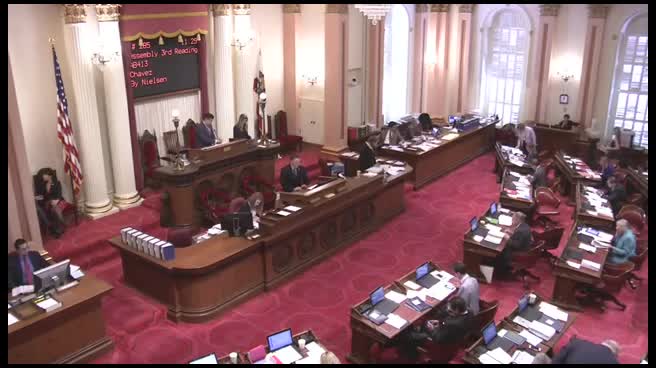 2MIN
Senate Floor
 3MIN
Senate Standing Committee on Appropriations
 48MIN
Senate Standing Committee on Veterans Affairs
Bill Author



