AB 1034: Labor Code Private Attorneys General Act of 2004: exemption: construction industry employees.
- Session Year: 2023-2024
- House: Assembly
- Latest Version Date: 2024-09-28
Current Status:
Passed
(2024-09-28: Chaptered by Secretary of State - Chapter 803, Statutes of 2024.)
Introduced
In Committee
First Chamber
In Committee
Second Chamber
Enacted
The Labor Code Private Attorneys General Act of 2004 (PAGA) authorizes an aggrieved employee, as defined, to bring a civil action on behalf of that employee, and other current or former employees against whom a violation of the same provision of the Labor Code was committed, to enforce a violation of any provision of the Labor Code that provides for a civil penalty to be assessed and collected by the Labor and Workforce Development Agency, as specified, pursuant to certain notice and cure provisions, as prescribed. PAGA exempts, until January 1, 2028, from its provisions an employee in the construction industry with respect to work performed under a valid collective bargaining agreement in effect any time before January 1, 2025, that expressly provides for the wages, hours of work, and working conditions of employees, premium wage rates for all overtime hours worked, and for the employee to receive a regular hourly pay rate of not less than 30% more than the state minimum wage rate, and does certain things, including prohibits all of the violations of the Labor Code that would be redressable pursuant to PAGA and provides for a grievance and binding arbitration procedure to redress those violations.
This bill would delete the January 1, 2025, date described above and would extend the sunset of the exemption described above until January 1, 2038.
Existing law states the intent of the Legislature to establish policies and procedures to address issues related to the downloading and storage of data recorded by a body-worn camera worn by a peace officer, and requires that those policies and procedures be based on best practices. Existing law requires law enforcement agencies, departments, or entities to consider certain best practices regarding the downloading and storage of body-worn camera data when establishing policies and procedures for the implementation and operation of a body-worn camera system, as specified.This bill would prohibit a law enforcement agency or law enforcement officer from installing, activating, or using any biometric surveillance system in connection with an officer camera or data collected by an officer camera. The bill would authorize a person to bring an action for equitable or declaratory relief against a law enforcement agency or officer who violates that prohibition.The bill would repeal these provisions on January 1, 2027.Existing law states the intent of the Legislature to establish policies and procedures to address issues related to the downloading and storage of data recorded by a body-worn camera worn by a peace officer, and requires that those policies and procedures be based on best practices. Existing law requires law enforcement agencies, departments, or entities to consider certain best practices regarding the downloading and storage of body-worn camera data when establishing policies and procedures for the implementation and operation of a body-worn camera system, as specified.
This bill would prohibit a law enforcement agency or law enforcement officer from installing, activating, or using any biometric surveillance system in connection with an officer camera or data collected by an officer camera. The bill would authorize a person to bring an action for equitable or declaratory relief against a law enforcement agency or officer who violates that prohibition.
The bill would repeal these provisions on January 1, 2034. 2027.
Existing law states the intent of the Legislature to establish policies and procedures to address issues related to the downloading and storage of data recorded by a body-worn camera worn by a peace officer, and requires that those policies and procedures be based on best practices. Existing law requires law enforcement agencies, departments, or entities to consider certain best practices regarding the downloading and storage of body-worn camera data when establishing policies and procedures for the implementation and operation of a body-worn camera system, as specified.
This bill would prohibit a law enforcement agency or law enforcement officer from installing, activating, or using any biometric surveillance system in connection with an officer camera or data collected by an officer camera. The bill would authorize a person to bring an action for equitable or declaratory relief against a law enforcement agency or officer who violates that prohibition.
The bill would repeal these provisions on January 1, 2034.
Existing law, the California Privacy Rights Act of 2020, approved by the voters as Proposition 24 at the November 3, 2020, statewide general election, establishes various rights that a consumer, as defined, has with respect to any personal information, including biometric information, as defined, that a business has collected from a consumer.This bill would state the intent of the Legislature to enact legislation protecting the rights of Californians against the use of biometric surveillance by law enforcement.Existing law, the California Privacy Rights Act of 2020, approved by the voters as Proposition 24 at the November 3, 2020, statewide general election, establishes various rights that a consumer, as defined, has with respect to any personal information, including biometric information, as defined, that a business has collected from a consumer.
This bill would state the intent of the Legislature to enact legislation protecting the rights of Californians against the use of biometric surveillance by law enforcement.
(a)This part shall not apply to an employee in the construction industry with respect to work performed under a valid collective bargaining agreement that expressly provides for the wages, hours of work, and working conditions of employees, premium wage rates for all overtime hours worked, and for the employee to receive a regular hourly pay rate of not less than 30 percent more than the state minimum wage rate, and the agreement does all of the following:
(1)Prohibits all of the violations of this code that would be redressable pursuant to this part and provides for a grievance and binding arbitration procedure to redress those violations.
(2)Expressly waives the requirements of this part in clear and unambiguous terms.
(3)Authorizes the arbitrator to award any and all remedies otherwise available under this code, provided that nothing in this section authorizes the award of penalties under this part that would be payable to the Labor and Workforce Development Agency.
(b)Except for a civil action under Section 2699, this section does not preclude an employee from pursuing any other civil action against an employer, including, but not limited to, an action for a violation of the California Fair Employment and Housing Act (Part 2.8 (commencing with Section 12900) of Division 3 of Title 2 of the Government Code), Title VII of the Civil Rights Act of 1964 (Public Law 88-352), or any other prohibition of discrimination or harassment.
(c)For purposes of this section, employee in the construction industry means an employee performing work associated with construction, including work involving alteration, demolition, building, excavation, renovation, remodeling, maintenance, improvement, repair work, and any other work as described by Chapter 9 (commencing with Section 7000) of Division 3 of the Business and Professions Code, and other similar or related occupations or trades.
(d)This section shall remain in effect only until January 1, 2038, and as of that date is repealed.
(a)This part shall not apply to an employee in the construction industry with respect to work performed under a valid collective bargaining agreement in effect any time before January 1, 2025, that expressly provides for the wages, hours of work, and working conditions of employees, premium wage rates for all overtime hours worked, and for the employee to receive a regular hourly pay rate of not less than 30 percent more than the state minimum wage rate, and the agreement does all of the following:
(1)Prohibits all of the violations of this code that would be redressable pursuant to this part, part and provides for a grievance and binding arbitration procedure to redress those violations.
(2)Expressly waives the requirements of this part in clear and unambiguous terms.
(3)Authorizes the arbitrator to award any and all remedies otherwise available under this code, provided that nothing in this section authorizes the award of penalties under this part that would be payable to the Labor and Workforce Development Agency.
(b)Except for a civil action under Section 2699, nothing in this section precludes does not preclude an employee from pursuing any other civil action against an employer, including, but not limited to, an action for a violation of the California Fair Employment and Housing Act (Part 2.8 (commencing with Section 12900) of Division 3 of Title 2 of the Government Code), Title VII of the Civil Rights Act of 1964 (Public Law 88-352), or any other prohibition of discrimination or harassment.
(c)The exception provided by this section shall expire on the date the collective bargaining agreement expires or on January 1, 2028, whichever is earlier. (d)(c)For purposes of this section, employee in the construction industry means an employee performing work associated with construction, including work involving alteration, demolition, building, excavation, renovation, remodeling, maintenance, improvement, repair work, and any other work as described by Chapter 9 (commencing with Section 7000) of Division 3 of the Business and Professions Code, and other similar or related occupations or trades.
(e)(d)This section shall remain in effect only until January 1, 2028, 2038, and as of that date is repealed.
SECTION 1.The Legislature finds and declares all of the following:(a)Police body cameras were intended to guard against police misconduct, not to be exploited for surveillance of Californians. Face surveillance would break this promise, transforming a tool for police accountability into a powerful surveillance system that will harm Californians and undermine civil rights.(b)These are the exact type of dangerous interactions that would increase if police use of facial recognition were to expand. Body cameras produce low-quality footage that is blurry, skewed, and in near-constant motion. To date, at least four Black men have been wrongly arrested and accused of crimes because of facial recognition errors and misuse.(c)The widespread use of facial recognition on police body cameras would be the equivalent of requiring every Californian to show their photo ID card to every police officer they pass. This new mass surveillance system would suppress civic engagement and inspire fear. People who are afraid of having their identities and locations recorded and potentially shared with out-of-state agencies will be discouraged from seeking reproductive health care, attending protests, or reporting public safety issues.(d)While this violates everyones rights, the danger is greatest for immigrants, over-policed Black and Brown communities, LGBTQIA people, and those coming to California for health care criminalized in their home states. Today there is strong and growing public consensus that face surveillance is simply too dangerous and corrosive to our rights to be used by law enforcement.(e)Prominent technology companies like Microsoft, Amazon, and IBM, have forbidden sales of their face surveillance systems to law enforcement. Axon, the most prominent body camera maker, also rejected the use of facial recognition for body cameras, citing the potential inaccuracy and abuse.(f)From January 1, 2020, to January 1, 2023, Section 832.19 of the Penal Code effectively protected privacy and freedom of speech and movement while preventing misidentification. Section 832.19 of the Penal Code was repealed pursuant to a sunset clause on January 1, 2023.(g)While in effect, Section 832.19 of the Penal Code protected Californians from dangerous police surveillance. It prevented the face surveillance of thousands of protesters advocating for police reform and racial justice. And it ended dangerous and ineffective mobile facial recognition programs, including a San Diego-area facial recognition program that failed to produce a single arrest or prosecution in a seven-year period.(h)These civil rights protections remain crucial for Californians. Just like when Section 832.19 of the Penal Code was enacted, the only appropriate standard for facial recognition on body cameras continues to be a prohibition on its use.SEC. 2.Section 832.19 is added to the Penal Code, immediately following Section 832.18, to read:832.19.(a)For the purposes of this section, the following terms have the following meanings:(1)Biometric data means a physiological, biological, or behavioral characteristic that can be used, singly or in combination with each other or with other information, to establish individual identity.(2)Biometric surveillance system means any computer software or application that performs facial recognition or other biometric surveillance.(3)Facial recognition or other biometric surveillance means either of the following, alone or in combination:(A)An automated or semiautomated process that captures or analyzes biometric data of an individual to identify or assist in identifying an individual.(B)An automated or semiautomated process that generates, or assists in generating, surveillance information about an individual based on biometric data.(4)Facial recognition or other biometric surveillance does not include the use of an automated or semiautomated process for the purpose of redacting a recording for release or disclosure outside the law enforcement agency to protect the privacy of a subject depicted in the recording, if the process does not generate or result in the retention of any biometric data or surveillance information.(5)Law enforcement agency means any police department, sheriffs department, district attorney, county probation department, transit agency police department, school district police department, highway patrol, the police department of any campus of the University of California, the California State University, or a community college, the Department of the California Highway Patrol, and the Department of Justice.(6)Law enforcement officer means an officer, deputy, employee, or agent of a law enforcement agency.(7)Officer camera means a body-worn camera or similar device that records or transmits images or sound and is attached to the body or clothing of, or carried by, a law enforcement officer.(8)Surveillance information means either of the following, alone or in combination:(A)Any information about a known or unknown individual, including, but not limited to, a persons name, date of birth, gender, or criminal background.(B)Any information derived from biometric data, including, but not limited to, assessments about an individuals sentiment, state of mind, or level of dangerousness.(9)Use means either of the following, alone or in combination:(A)The direct use of a biometric surveillance system by a law enforcement officer or law enforcement agency.(B)A request, agreement, or practice by a law enforcement officer or law enforcement agency that another law enforcement agency or other third party use a biometric surveillance system on behalf of the requesting officer or agency.(b)A law enforcement agency or law enforcement officer shall not install, activate, or use any biometric surveillance system in connection with an officer camera or data collected by an officer camera.(c)In addition to any other sanctions, penalties, or remedies provided by law, a person may bring an action for equitable or declaratory relief in a court of competent jurisdiction against a law enforcement agency or law enforcement officer that violates this section.(d)This section does not preclude a law enforcement agency or law enforcement officer from using a mobile fingerprint scanning device during a lawful detention to identify a person who does not have proof of identification if this use is lawful and does not generate or result in the retention of any biometric data or surveillance information.(e)This section shall remain in effect only until January 1, 2027, and as of that date is repealed.The Legislature finds and declares all of the following:
(a)Police body cameras were intended to guard against police misconduct, not to be exploited for surveillance of Californians. Face surveillance would break this promise, transforming a tool for police accountability into a powerful surveillance system that will harm Californians and undermine civil rights.
(b)These are the exact type of dangerous interactions that would increase if police use of facial recognition were to expand. Body cameras produce low-quality footage that is blurry, skewed, and in near-constant motion. To date, at least four Black men have been wrongly arrested and accused of crimes because of facial recognition errors and misuse.
(c)The widespread use of facial recognition on police body cameras would be the equivalent of requiring every Californian to show their photo ID card to every police officer they pass. This new mass surveillance system would suppress civic engagement and inspire fear. People who are afraid of having their identities and locations recorded and potentially shared with out-of-state agencies will be discouraged from seeking reproductive health care, attending protests, or reporting public safety issues.
(d)While this violates everyones rights, the danger is greatest for immigrants, over-policed Black and Brown communities, LGBTQIA people, and those coming to California for health care criminalized in their home states. Today there is strong and growing public consensus that face surveillance is simply too dangerous and corrosive to our rights to be used by law enforcement.
(e)Prominent technology companies like Microsoft, Amazon, and IBM, have forbidden sales of their face surveillance systems to law enforcement. Axon, the most prominent body camera maker, also rejected the use of facial recognition for body cameras, citing the potential inaccuracy and abuse.
(f)From January 1, 2020, to January 1, 2023, Section 832.19 of the Penal Code effectively protected privacy and freedom of speech and movement while preventing misidentification. Section 832.19 of the Penal Code was repealed pursuant to a sunset clause on January 1, 2023.
(g)While in effect, Section 832.19 of the Penal Code protected Californians from dangerous police surveillance. It prevented the face surveillance of thousands of protesters advocating for police reform and racial justice. And it ended dangerous and ineffective mobile facial recognition programs, including a San Diego-area facial recognition program that failed to produce a single arrest or prosecution in a seven-year period.
(h)These civil rights protections remain crucial for Californians. Just like when Section 832.19 of the Penal Code was enacted, the only appropriate standard for facial recognition on body cameras continues to be a prohibition on its use.
SEC. 2.Section 832.19 is added to the Penal Code, immediately following Section 832.18, to read:832.19.(a)For the purposes of this section, the following terms have the following meanings:
(1)Biometric data means a physiological, biological, or behavioral characteristic that can be used, singly or in combination with each other or with other information, to establish individual identity.
(2)Biometric surveillance system means any computer software or application that performs facial recognition or other biometric surveillance.
(3)Facial recognition or other biometric surveillance means either of the following, alone or in combination:
(A)An automated or semiautomated process that captures or analyzes biometric data of an individual to identify or assist in identifying an individual.
(B)An automated or semiautomated process that generates, or assists in generating, surveillance information about an individual based on biometric data.
(4)Facial recognition or other biometric surveillance does not include the use of an automated or semiautomated process for the purpose of redacting a recording for release or disclosure outside the law enforcement agency to protect the privacy of a subject depicted in the recording, if the process does not generate or result in the retention of any biometric data or surveillance information.
(5)Law enforcement agency means any police department, sheriffs department, district attorney, county probation department, transit agency police department, school district police department, highway patrol, the police department of any campus of the University of California, the California State University, or a community college, the Department of the California Highway Patrol, and the Department of Justice.
(6)Law enforcement officer means an officer, deputy, employee, or agent of a law enforcement agency.
(7)Officer camera means a body-worn camera or similar device that records or transmits images or sound and is attached to the body or clothing of, or carried by, a law enforcement officer.
(8)Surveillance information means either of the following, alone or in combination:
(A)Any information about a known or unknown individual, including, but not limited to, a persons name, date of birth, gender, or criminal background.
(B)Any information derived from biometric data, including, but not limited to, assessments about an individuals sentiment, state of mind, or level of dangerousness.
(9)Use means either of the following, alone or in combination:
(A)The direct use of a biometric surveillance system by a law enforcement officer or law enforcement agency.
(B)A request, agreement, or practice by a law enforcement officer or law enforcement agency that another law enforcement agency or other third party use a biometric surveillance system on behalf of the requesting officer or agency.
(b)A law enforcement agency or law enforcement officer shall not install, activate, or use any biometric surveillance system in connection with an officer camera or data collected by an officer camera.
(c)In addition to any other sanctions, penalties, or remedies provided by law, a person may bring an action for equitable or declaratory relief in a court of competent jurisdiction against a law enforcement agency or law enforcement officer that violates this section.
(d)This section does not preclude a law enforcement agency or law enforcement officer from using a mobile fingerprint scanning device during a lawful detention to identify a person who does not have proof of identification if this use is lawful and does not generate or result in the retention of any biometric data or surveillance information.
(e)This section shall remain in effect only until January 1, 2034, 2027, and as of that date is repealed.
The Legislature finds and declares all of the following:
(a)Police body cameras were intended to guard against police misconduct, not to be exploited for surveillance of Californians. Face surveillance would break this promise, transforming a tool for police accountability into a powerful surveillance system that will harm Californians and undermine civil rights.
(b)These are the exact type of dangerous interactions that would increase if police use of facial recognition were to expand. Body cameras produce low-quality footage that is blurry, skewed, and in near-constant motion. To date, at least four Black men have been wrongly arrested and accused of crimes because of facial recognition errors and misuse.
(c)The widespread use of facial recognition on police body cameras would be the equivalent of requiring every Californian to show their photo ID card to every police officer they pass. This new mass surveillance system would suppress civic engagement and inspire fear. People who are afraid of having their identities and locations recorded and potentially shared with out-of-state agencies will be discouraged from seeking reproductive health care, attending protests, or reporting public safety issues.
(d)While this violates everyones rights, the danger is greatest for immigrants, over-policed Black and Brown communities, LGBTQIA people, and those coming to California for health care criminalized in their home states. Today there is strong and growing public consensus that face surveillance is simply too dangerous and corrosive to our rights to be used by law enforcement.
(e)Prominent technology companies like Microsoft, Amazon, and IBM, have forbidden sales of their face surveillance systems to law enforcement. Axon, the most prominent body camera maker, also rejected the use of facial recognition for body cameras, citing the potential inaccuracy and abuse.
(f)From January 1, 2020, to January 1, 2023, Section 832.19 of the Penal Code effectively protected privacy and freedom of speech and movement while preventing misidentification. Section 832.19 of the Penal Code was repealed pursuant to a sunset clause on January 1, 2023.
(g)While in effect, Section 832.19 of the Penal Code protected Californians from dangerous police surveillance. It prevented the face surveillance of thousands of protesters advocating for police reform and racial justice. And it ended dangerous and ineffective mobile facial recognition programs, including a San Diego-area facial recognition program that failed to produce a single arrest or prosecution in a seven-year period.
(h)These civil rights protections remain crucial for Californians. Just like when Section 832.19 of the Penal Code was enacted, the only appropriate standard for facial recognition on body cameras continues to be a prohibition on its use.
SEC. 2.Section 832.19 is added to the Penal Code, immediately following Section 832.18, to read:832.19.(a)For the purposes of this section, the following terms have the following meanings:
(1)Biometric data means a physiological, biological, or behavioral characteristic that can be used, singly or in combination with each other or with other information, to establish individual identity.
(2)Biometric surveillance system means any computer software or application that performs facial recognition or other biometric surveillance.
(3)Facial recognition or other biometric surveillance means either of the following, alone or in combination:
(A)An automated or semiautomated process that captures or analyzes biometric data of an individual to identify or assist in identifying an individual.
(B)An automated or semiautomated process that generates, or assists in generating, surveillance information about an individual based on biometric data.
(4)Facial recognition or other biometric surveillance does not include the use of an automated or semiautomated process for the purpose of redacting a recording for release or disclosure outside the law enforcement agency to protect the privacy of a subject depicted in the recording, if the process does not generate or result in the retention of any biometric data or surveillance information.
(5)Law enforcement agency means any police department, sheriffs department, district attorney, county probation department, transit agency police department, school district police department, highway patrol, the police department of any campus of the University of California, the California State University, or a community college, the Department of the California Highway Patrol, and the Department of Justice.
(6)Law enforcement officer means an officer, deputy, employee, or agent of a law enforcement agency.
(7)Officer camera means a body-worn camera or similar device that records or transmits images or sound and is attached to the body or clothing of, or carried by, a law enforcement officer.
(8)Surveillance information means either of the following, alone or in combination:
(A)Any information about a known or unknown individual, including, but not limited to, a persons name, date of birth, gender, or criminal background.
(B)Any information derived from biometric data, including, but not limited to, assessments about an individuals sentiment, state of mind, or level of dangerousness.
(9)Use means either of the following, alone or in combination:
(A)The direct use of a biometric surveillance system by a law enforcement officer or law enforcement agency.
(B)A request, agreement, or practice by a law enforcement officer or law enforcement agency that another law enforcement agency or other third party use a biometric surveillance system on behalf of the requesting officer or agency.
(b)A law enforcement agency or law enforcement officer shall not install, activate, or use any biometric surveillance system in connection with an officer camera or data collected by an officer camera.
(c)In addition to any other sanctions, penalties, or remedies provided by law, a person may bring an action for equitable or declaratory relief in a court of competent jurisdiction against a law enforcement agency or law enforcement officer that violates this section.
(d)This section does not preclude a law enforcement agency or law enforcement officer from using a mobile fingerprint scanning device during a lawful detention to identify a person who does not have proof of identification if this use is lawful and does not generate or result in the retention of any biometric data or surveillance information.
(e)This section shall remain in effect only until January 1, 2034, and as of that date is repealed.
SECTION 1.It is the intent of the Legislature to enact legislation protecting the rights of Californians against the use of biometric surveillance by law enforcement. REVISIONS: HeadingLine 2.It is the intent of the Legislature to enact legislation protecting the rights of Californians against the use of biometric surveillance by law enforcement.
|
Date
|
Status
|
|---|---|
| Sep 28, 2024 | Chaptered by Secretary of State - Chapter 803, Statutes of 2024. |
| Sep 28, 2024 | Approved by the Governor. |
| Sep 12, 2024 | Enrolled and presented to the Governor at 4 p.m. |
| Aug 31, 2024 | Senate amendments concurred in. To Engrossing and Enrolling. (Ayes 77. Noes 0.). |
| Aug 30, 2024 | From committee: That the Senate amendments be concurred in. (Ayes 7. Noes 0.) (August 30). |
| Aug 30, 2024 | Joint Rule 62(a) suspended. |
| Aug 30, 2024 | Re-referred to Com. on L. & E. pursuant to Assembly Rule 77.2. |
| Aug 30, 2024 | In Assembly. Concurrence in Senate amendments pending. |
| Aug 30, 2024 | Read third time. Passed. Ordered to the Assembly. (Ayes 32. Noes 7.). |
| Aug 29, 2024 | Read second time. Ordered to third reading. |
| Aug 28, 2024 | From committee: Do pass. (Ayes 5. Noes 2.) (August 28). |
| Aug 27, 2024 | From committee: Do pass and re-refer to Com. on APPR. (Ayes 5. Noes 0.) (August 27). Re-referred to Com. on APPR. |
| Aug 26, 2024 | Joint Rules 61 and 62 suspended. (Ayes 30. Noes 8.) |
| Aug 22, 2024 | Re-referred to Com. on L., P.E. & R. |
| Aug 22, 2024 | Re-referred to Com. on RLS pursuant to Senate Rule 29.10(c). |
| Aug 22, 2024 | Read second time. Ordered to third reading. |
| Aug 21, 2024 | Read second time and amended. Ordered returned to second reading. |
| Aug 21, 2024 | Ordered to second reading. |
| Aug 21, 2024 | From inactive file. |
| Sep 11, 2023 | Ordered to inactive file at the request of Senator Glazer. |
| Jun 21, 2023 | Read second time. Ordered to third reading. |
| Jun 20, 2023 | From committee: Do pass. (Ayes 4. Noes 1.) (June 20). |
| May 24, 2023 | Referred to Com. on PUB S. |
| May 16, 2023 | In Senate. Read first time. To Com. on RLS. for assignment. |
| May 15, 2023 | Read third time. Passed. Ordered to the Senate. (Ayes 41. Noes 17. Page 1548.) |
| May 2, 2023 | Read second time. Ordered to third reading. |
| May 1, 2023 | Read second time and amended. Ordered returned to second reading. |
| Apr 27, 2023 | From committee: Amend, and do pass as amended. (Ayes 7. Noes 2.) (April 25). |
| Mar 28, 2023 | From committee: Do pass and re-refer to Com. on P. & C.P. (Ayes 6. Noes 2.) (March 28). Re-referred to Com. on P. & C.P. |
| Mar 28, 2023 | Coauthors revised. |
| Mar 6, 2023 | Re-referred to Com. on PUB. S. |
| Mar 2, 2023 | From committee chair, with author's amendments: Amend, and re-refer to Com. on PUB. S. Read second time and amended. |
| Mar 2, 2023 | Referred to Coms. on PUB. S. and P. & C.P. |
| Feb 16, 2023 | From printer. May be heard in committee March 18. |
| Feb 15, 2023 | Read first time. To print. |
|
Date
|
Description
|
Location
|
Votes
|
|
|---|---|---|---|---|
| Aug 31, 2024 | AB 1034 Grayson Concurrence in Senate Amendments | Assembly Floor |
Passed |
|
| Aug 30, 2024 | Assembly 3rd Reading AB1034 Grayson et al. By Cortese | Senate Floor |
Passed |
|
| Aug 30, 2024 | With recommendation: That Senate amendments be concurred in. | Assembly Standing Committee on Labor and Employment |
Passed |
|
| Aug 28, 2024 | Do pass | Senate Standing Committee on Appropriations |
Passed |
|
| Aug 27, 2024 | Do pass, but first be re-referred to the Committee on [Appropriations] | Senate Standing Committee on Labor, Public Employment and Retirement |
Passed |
|
| Jun 20, 2023 | Do pass | Senate Standing Committee on Public Safety |
Passed |
|
| May 15, 2023 | AB 1034 Wilson Assembly Third Reading | Assembly Floor |
Passed |
|
| Apr 25, 2023 | Do pass as amended. | Assembly Standing Committee on Privacy and Consumer Protection |
Passed |
|
| Mar 28, 2023 | Do pass and be re-referred to the Committee on [Privacy and Consumer Protection] | Assembly Standing Committee on Public Safety |
Passed |
This list shows positions taken on this bill by organizations on the date displayed, which is linked to the original source.
Positions by individuals are not included.
|
Organization
|
Position
|
Date
|
|---|---|---|
| Access Reproductive Justice | ** Support | |
| Aclu California Action | ** Support | |
| Air Conditioning Sheet Metal Association | ** Support | |
| Alliance for Boys and Men of Color | ** Support | |
| ARCADIA POLICE OFFICERS ASSOCIATION | ** Against | |
| Asian Americans Advancing Justice Asian Law Caucus | ** Support | |
| Asian Law Alliance | ** Support | |
| Associated General Contractors Of California | ** Support | |
| Burbank Police Officers Association | ** Against | |
| California Association of Black Lawyers | ** Support | |
| California Association Of Highway Patrolmen | ** Against | |
| California Assoc. of Sheet Metal & Air Conditioning Contractors National Assoc. | ** Support | |
| California Attorneys For Criminal Justice | ** Support | |
| California Coalition of School Safety Professionals | ** Against | |
| California Conference of Carpenters | ** Support | |
| California-Hawaii State Conference Of The Naacp | ** Support | |
| California Immigrant Policy Center | ** Support | |
| California Innocence Coalition: Northern California Innocence Project, California Innocence Project, Loyola Project for The Innocent | ** Support | |
| California Latinas for Reproductive Justice | ** Support | |
| California Legislative Conference Of Plumbing, Heating & Piping Industry | ** Support | |
| California-Nevada Conference Of Operating Engineers | ** Support | |
| California Police Chiefs Association | ** Against | |
| California Public Defenders Association | ** Support | |
| California Reserve Peace Officers Association | ** Against | |
| California State Council Of Laborers | ** Support | |
| California State Sheriffs Association | ** Against | |
| Cancel the Contract | ** Support | |
| Citizens for Choice | ** Support | |
| City of Chino | ** Against | |
| Claremont Peace Officers Association | ** Against | |
| Clergy and Laity United for Economic Justice | ** Support | |
| Clue | ** Support | |
| Communities United for Restorative Youth Justice | ** Support | |
| Construction Employers' Association | ** Support | |
| Corona Police Officers Association | ** Against | |
| Council on American Islamic Relations, California | ** Support | |
| Courage Campaign | ** Support | |
| Culver City Police Officer Association | ** Against | |
| Democrats of Rossmoor | ** Support | |
| Deputy Sheriffs Association of Monterey County | ** Against | |
| District Council Of Iron Workers Of The State Of California And Vicinity | ** Support | |
| Drug Policy Alliance | ** Support | |
| Electronic Frontier Foundation | ** Support | |
| Ella Baker Center For Human Rights | ** Support | |
| Fight For The Future | ** Support | |
| Finishing Contractors Association Of Southern California | ** Support | |
| FULLERTON POLICE OFFICERS ASSOCIATION | ** Against | |
| If/When/How | ** Support | |
| Initiate Justice | ** Support | |
| lawyering for reproductive justice | ** Support | |
| Lawyers Committee for Civil Rights of the San Francisco Bay Area | ** Support | |
| Legal Services for Prisoners with Children | ** Support | |
| Los Angeles County Division of the League of California Cities | ** Against | |
| Los Angeles County Professional Peace Officers Association | ** Against | |
| Los Angeles County SheriffS Department | ** Against | |
| Los Angeles Police Protective League | ** Against | |
| los angeles school police officers association | ** Against | |
| Media Alliance | ** Support | |
| Mediajustice | ** Support | |
| MPower Change | ** Support | |
| MURRIETA POLICE OFFICERS ASSOCIATION | ** Against | |
| Muslim Democrats and Friends | ** Support | |
| National Action Network | ** Support | |
| National Action Network Orange County | ** Support | |
| National Electrical Contractors Association | ** Support | |
| National Lawyers Guild San Francisco Bay Area Chapter | ** Support | |
| Newport Beach Police Association | ** Against | |
| Northern California Allied Trades | ** Support | |
| Northern California Floor Covering Association | ** Support | |
| Novato Police Officer Association | ** Against | |
| Oakland Privacy | ** Support | |
| Orange County Rapid Response Network | ** Support | |
| Palos Verdes Police Officers Association | ** Against | |
| Partnership for the Advancement of New Americans | ** Support | |
| Peace Officers Research Association Of California | ** Against | |
| People's Budget Orange County | ** Support | |
| PLACER COUNTY DEPUTY SHERIFFS ASSOCIATION | ** Against | |
| Policing Project At NYU Law School | ** Support | |
| PolicyLink | ** Support | |
| POMONA POLICE OFFICERS ASSOCIATION | ** Against | |
| Positive Women's Health Network- USA | ** Support | |
| Resilience Orange County | ** Support | |
| RIVERSIDE POLICE OFFICERS ASSOCIATION | ** Against | |
| Riverside Sheriffs Association | ** Against | |
| San Francisco Public Defender - Racial Justice Committee | ** Support | |
| san francisco public defender's office | ** Support | |
| San Jose Nikkei Resisters | ** Support | |
| Santa Ana Police Officers Association | ** Against | |
| Secure Justice | ** Support | |
| Security Industry Association | ** Against | |
| Silicon Valley De-Bug | ** Support | |
| Sister Warriors Freedom Coalition | ** Support | |
| Southern California Contractors Association | ** Support | |
| Southern California Glass Management Association | ** Support | |
| Starting Over Inc. | ** Support | |
| St. James Infirmary | ** Support | |
| Stop the Musick Coalition | ** Support | |
| Support Life Foundation | ** Support | |
| Tenth Amendment Center | ** Support | |
| Training In Early Abortion For Comprehensive Healthcare | ** Support | |
| Transforming Justice Orange County | ** Support | |
| Transgender, Gendervariant, Intersex Justice Project | ** Support | |
| United Contractors | ** Support | |
| Upland Police Officers Association | ** Against | |
| URGE: Unite for Reproductive & Gender Equity | ** Support | |
| Wall and Ceiling Alliance | ** Support | |
| Western Line Constructors Chapter, Inc., Neca, Inc. | ** Support | |
| Western Painting and Coating Contractors Association | ** Support | |
| Western Wall And Ceiling Contractors Association | ** Support |
CONCURRENCE IN SENATE AMENDMENTS
CSA1 Bill Id:AB 1034
Author:(Grayson and Cortese)
As Amended Ver:August 21, 2024
Majority vote
SUMMARY
Extends until January 1, 2038 the current exemption from the provisions of the Private Attorneys General Act (PAGA) for employees in the construction industry who are covered by a collective bargaining agreement that meets certain conditions, including providing for, among other things, a grievance and binding arbitration procedure to redress violations that would have been remedied under PAGA.
Senate Amendments
Delete the Assembly version of this bill and instead amend the existing PAGA exemption for employees in the construction industry in the following ways:
- Delete the requirement that the collective bargaining agreement be in effect any time before January 1, 2025 for the PAGA exemption to apply.
- Delete the requirement that the PAGA exemption expire on the date the collective bargaining agreement expires or on January 1, 2028, whichever is earlier, and instead require the exemption to remain in effect until January 1, 2038.
COMMENTS
Background on PAGA
PAGA was enacted pursuant to SB 796 (Dunn), Chapter 906, Statutes of 2003, and went into effect on January 1, 2004. Subsequent legislation further refined the statute, which allows private individuals to stand in the shoes of the state to bring representative actions on behalf of themselves and other "aggrieved employees" and recover penalties for labor code violations suffered. PAGA has served as a critical avenue for workers to obtain justice for alleged labor law violations, especially given the overburdened Division of Labor Standards Enforcement's limited capacity to enforce the law.
Recent PAGA Reform
Over the years PAGA has been perceived by the employer community to be a form of litigation abuse that rewards attorneys more than it supports employees. In 2022 business groups qualified a ballot initiative that would have repealed PAGA and replaced it with a new law that was viewed by labor advocates as being less beneficial to workers.
Business groups and organized labor negotiated a compromise in the form of two bills (AB 2288 and SB 92) containing PAGA reform language. In exchange, the proponents agreed to pull their ballot measure from consideration. The Legislature passed the bills on June 27, 2024 and the Governor signed them on July 1, 2024. The legislation took effect immediately.
Through AB 2288 (Kalra), Chapter 44, Statutes of 2024, and SB 92 (Umberg), Chapter 45, Statutes of 2024, labor and business groups and the legislature sought to strike a balance by reducing penalties for well-intentioned employers, while still preserving this avenue for justice for employees who suffer more egregious violations of wage and hour law. Among other things, the new PAGA statute does the following:
- Applies to claims made after June 19, 2024
- Establishes new cure processes and reduces penalties based on when employers complete the cure
- Allows employees to seek injunctive relief
- Requires the plaintiff employee to personally experience the violation that they attempt to pursue on behalf of other allegedly aggrieved employees
- Increases the employees' share of money recovered
Existing PAGA Exemption for Construction Industry Employees
Since the enactment of AB 1654 (Rubio), Chapter 529, Statutes of 2018, employees in the construction industry have been exempt from the provisions of PAGA provided their work is performed under a valid collective bargaining agreement that expressly provides for the wages, hours of work, and working conditions of employees, premium wage rates for all overtime hours worked, and for the employee to receive a regular hourly pay rate of not less than 30 percent more than the state minimum wage rate. The collective bargaining agreement must also do all of the following:
- Prohibit all of the violations of the Labor Code that would be redressable pursuant to PAGA, and provide for a grievance and binding arbitration procedure to redress those violations.
- Expressly waive the requirements of PAGA in clear and unambiguous terms.
- Authorize the arbitrator to award any and all remedies otherwise available under the Labor Code.
This bill would extend this exemption until January 1, 2038 provided the same conditions are met.
According to the Author
"This bill would extend the exemption sunset date for lawsuits originated under the Private Attorney Generals Act (PAGA) for contractors in the building and construction trades that are party to a valid collective bargaining agreement (CBA) meeting specified criteria and have negotiated with their local union to include the waiver in their CBA. The statute doesn't alter a local union's ability to decide to include or not include the PAGA wavier in their CBA. Including the waiver would continue to be a subject of bargaining at the local level by each union.
This bill carries forth this Congressional intent by using the well-established collective bargaining process to resolve disputes in lieu of the Private Attorneys General Act. In support of 2018's AB 1654 creating the exemption, the California Conference of Carpenters stated: 'We believe the remedy for PAGA lawsuit abuse, for those parties that maintain CBAs in the construction industry, lies within the procedures authorized by the National Labor Relations Act (NLRA) embodied in those agreements. CBA's are fair to workers and employers because they are mutually agreed upon with a relative "balance of power" between employees and employers and policed by unions to ensure that signatory employers are abiding not only with the terms of those CBA's but any and all applicable law. These mutually agreed upon grievance/ arbitration procedures provide an effective private forum to resolve contract and legal disputes without resorting to litigation.'"
Arguments in Support
The California State Council of Laborers, the California-Nevada Conference of Operating Engineers, and the California Conference of Carpenters, co-sponsors of this measure, state "In 2018, we supported AB 1654 (Rubio), which established the PAGA exemption on the premise that procedures authorized by the National Labor Relations Act (NLRA) embodied in CBAs provide an effective private forum to resolve contract and legal disputes without resorting to litigation. In fact, under Section 203(d) of the Labor Management Relations Act, resolution of labor disputes pursuant to collective bargaining agreements has been declared to be the desirable method for settlement of grievance disputes arising over the application or interpretation of an existing CBA. Pursuant to AB 1654, there are two PAGA exemption sunset dates, one expiring on 1/1/25 and the other expiring on 1/1/28. The first sunset date will not allow CBAs to benefit from the exemption if a CBA expires between those two dates, yet the policy rationale remains the same."
Arguments in Opposition
None on file that reflect the current version of the bill.
FISCAL COMMENTS
According to the Senate Appropriations Committee, This bill would have minimal administrative costs to the Department of Industrial Relations (DIR). However, by moving disputes from the courts to arbitration, it could additionally result in an unknown, potentially significant annual reduction in penalty revenue relative to existing law.
VOTES:
ASM PUBLIC SAFETY: 6-2-0
YES: Jones-Sawyer, Bonta, Bryan, Jackson, Santiago, Zbur
NO: Alanis, Lackey
ASM PRIVACY AND CONSUMER PROTECTION: 7-2-2
YES: Gabriel, Bauer-Kahan, Bennett, Lowenthal, Papan, Wicks, Wilson
NO: Joe Patterson, Vince Fong
ABS, ABST OR NV: Essayli, Irwin
ASSEMBLY FLOOR: 41-17-22
YES: Addis, Aguiar-Curry, Alvarez, Bauer-Kahan, Bennett, Berman, Bonta, Bryan, Juan Carrillo, Wendy Carrillo, Connolly, Mike Fong, Gabriel, Garcia, Grayson, Haney, Hart, Holden, Jackson, Jones-Sawyer, Kalra, Lee, Lowenthal, Maienschein, McCarty, McKinnor, Ortega, Papan, Pellerin, Reyes, Robert Rivas, Santiago, Schiavo, Ting, Ward, Weber, Wicks, Wilson, Wood, Zbur, Rendon
NO: Alanis, Chen, Megan Dahle, Davies, Dixon, Essayli, Vince Fong, Gallagher, Hoover, Lackey, Mathis, Jim Patterson, Joe Patterson, Petrie-Norris, Sanchez, Ta, Wallis
ABS, ABST OR NV: Arambula, Bains, Boerner, Calderon, Cervantes, Flora, Friedman, Gipson, Irwin, Low, Muratsuchi, Stephanie Nguyen, Pacheco, Quirk-Silva, Ramos, Luz Rivas, Rodriguez, Blanca Rubio, Soria, Valencia, Villapudua, Waldron
UPDATED
VERSION: August 21, 2024
CONSULTANT: Erin Hickey / L. & E. / (916) 319-2091 FN: 0004926
CONCURRENCE IN SENATE AMENDMENTS
CSA2 Bill Id:AB 1034
Author:(Grayson and Cortese)
As Amended Ver:August 21, 2024
Majority vote
SUMMARY
Original Committee of Reference: PUB. S.
Extends until January 1, 2038 the current exemption from the provisions of the Private Attorneys General Act (PAGA) for employees in the construction industry who are covered by a collective bargaining agreement that meets certain conditions, including providing for, among other things, a grievance and binding arbitration procedure to redress violations that would have been remedied under PAGA.
Senate Amendments
Current Committee Recommendation:
Delete the Assembly version of this bill and instead amend the existing PAGA exemption for employees in the construction industry in the following ways:
- Delete the requirement that the collective bargaining agreement be in effect any time before January 1, 2025 for the PAGA exemption to apply.
- Delete the requirement that the PAGA exemption expire on the date the collective bargaining agreement expires or on January 1, 2028, whichever is earlier, and instead require the exemption to remain in effect until January 1, 2038.
COMMENTS
Background on PAGA
PAGA was enacted pursuant to SB 796 (Dunn), Chapter 906, Statutes of 2003, and went into effect on January 1, 2004. Subsequent legislation further refined the statute, which allows private individuals to stand in the shoes of the state to bring representative actions on behalf of themselves and other "aggrieved employees" and recover penalties for labor code violations suffered. PAGA has served as a critical avenue for workers to obtain justice for alleged labor law violations, especially given the overburdened Division of Labor Standards Enforcement's limited capacity to enforce the law.
Recent PAGA Reform
Over the years PAGA has been perceived by the employer community to be a form of litigation abuse that rewards attorneys more than it supports employees. In 2022 business groups qualified a ballot initiative that would have repealed PAGA and replaced it with a new law that was viewed by labor advocates as being less beneficial to workers.
Business groups and organized labor negotiated a compromise in the form of two bills (AB 2288 and SB 92) containing PAGA reform language. In exchange, the proponents agreed to pull their ballot measure from consideration. The Legislature passed the bills on June 27, 2024 and the Governor signed them on July 1, 2024. The legislation took effect immediately.
Through AB 2288 (Kalra), Chapter 44, Statutes of 2024, and SB 92 (Umberg), Chapter 45, Statutes of 2024, labor and business groups and the legislature sought to strike a balance by reducing penalties for well-intentioned employers, while still preserving this avenue for justice for employees who suffer more egregious violations of wage and hour law. Among other things, the new PAGA statute does the following:
- Applies to claims made after June 19, 2024
- Establishes new cure processes and reduces penalties based on when employers complete the cure
- Allows employees to seek injunctive relief
- Requires the plaintiff employee to personally experience the violation that they attempt to pursue on behalf of other allegedly aggrieved employees
- Increases the employees' share of money recovered
Existing PAGA Exemption for Construction Industry Employees
Since the enactment of AB 1654 (Rubio), Chapter 529, Statutes of 2018, employees in the construction industry have been exempt from the provisions of PAGA provided their work is performed under a valid collective bargaining agreement that expressly provides for the wages, hours of work, and working conditions of employees, premium wage rates for all overtime hours worked, and for the employee to receive a regular hourly pay rate of not less than 30 percent more than the state minimum wage rate. The collective bargaining agreement must also do all of the following:
- Prohibit all of the violations of the Labor Code that would be redressable pursuant to PAGA, and provide for a grievance and binding arbitration procedure to redress those violations.
- Expressly waive the requirements of PAGA in clear and unambiguous terms.
- Authorize the arbitrator to award any and all remedies otherwise available under the Labor Code.
This bill would extend this exemption until January 1, 2038 provided the same conditions are met.
According to the Author
"This bill would extend the exemption sunset date for lawsuits originated under the Private Attorney Generals Act (PAGA) for contractors in the building and construction trades that are party to a valid collective bargaining agreement (CBA) meeting specified criteria and have negotiated with their local union to include the waiver in their CBA. The statute doesn't alter a local union's ability to decide to include or not include the PAGA wavier in their CBA. Including the waiver would continue to be a subject of bargaining at the local level by each union.
This bill carries forth this Congressional intent by using the well-established collective bargaining process to resolve disputes in lieu of the Private Attorneys General Act. In support of 2018's AB 1654 creating the exemption, the California Conference of Carpenters stated: 'We believe the remedy for PAGA lawsuit abuse, for those parties that maintain CBAs in the construction industry, lies within the procedures authorized by the National Labor Relations Act (NLRA) embodied in those agreements. CBA's are fair to workers and employers because they are mutually agreed upon with a relative "balance of power" between employees and employers and policed by unions to ensure that signatory employers are abiding not only with the terms of those CBA's but any and all applicable law. These mutually agreed upon grievance/ arbitration procedures provide an effective private forum to resolve contract and legal disputes without resorting to litigation.'"
Arguments in Support
The California State Council of Laborers, the California-Nevada Conference of Operating Engineers, and the California Conference of Carpenters, co-sponsors of this measure, state "In 2018, we supported AB 1654 (Rubio), which established the PAGA exemption on the premise that procedures authorized by the National Labor Relations Act (NLRA) embodied in CBAs provide an effective private forum to resolve contract and legal disputes without resorting to litigation. In fact, under Section 203(d) of the Labor Management Relations Act, resolution of labor disputes pursuant to collective bargaining agreements has been declared to be the desirable method for settlement of grievance disputes arising over the application or interpretation of an existing CBA. Pursuant to AB 1654, there are two PAGA exemption sunset dates, one expiring on 1/1/25 and the other expiring on 1/1/28. The first sunset date will not allow CBAs to benefit from the exemption if a CBA expires between those two dates, yet the policy rationale remains the same."
Arguments in Opposition
None on file that reflect the current version of the bill.
FISCAL COMMENTS
According to the Senate Appropriations Committee, This bill would have minimal administrative costs to the Department of Industrial Relations (DIR). However, by moving disputes from the courts to arbitration, it could additionally result in an unknown, potentially significant annual reduction in penalty revenue relative to existing law.
VOTES
ASM PUBLIC SAFETY: 6-2-0
YES: Jones-Sawyer, Bonta, Bryan, Jackson, Santiago, Zbur
NO: Alanis, Lackey
ASM PRIVACY AND CONSUMER PROTECTION: 7-2-2
YES: Gabriel, Bauer-Kahan, Bennett, Lowenthal, Papan, Wicks, Wilson
NO: Joe Patterson, Vince Fong
ABS, ABST OR NV: Essayli, Irwin
ASSEMBLY FLOOR: 41-17-22
YES: Addis, Aguiar-Curry, Alvarez, Bauer-Kahan, Bennett, Berman, Bonta, Bryan, Juan Carrillo, Wendy Carrillo, Connolly, Mike Fong, Gabriel, Garcia, Grayson, Haney, Hart, Holden, Jackson, Jones-Sawyer, Kalra, Lee, Lowenthal, Maienschein, McCarty, McKinnor, Ortega, Papan, Pellerin, Reyes, Robert Rivas, Santiago, Schiavo, Ting, Ward, Weber, Wicks, Wilson, Wood, Zbur, Rendon
NO: Alanis, Chen, Megan Dahle, Davies, Dixon, Essayli, Vince Fong, Gallagher, Hoover, Lackey, Mathis, Jim Patterson, Joe Patterson, Petrie-Norris, Sanchez, Ta, Wallis
ABS, ABST OR NV: Arambula, Bains, Boerner, Calderon, Cervantes, Flora, Friedman, Gipson, Irwin, Low, Muratsuchi, Stephanie Nguyen, Pacheco, Quirk-Silva, Ramos, Luz Rivas, Rodriguez, Blanca Rubio, Soria, Valencia, Villapudua, Waldron
ASM LABOR AND EMPLOYMENT: 7-0-0
YES: Flora, Alanis, Wendy Carrillo, Lee, Reyes, Ward, Zbur
SENATE FLOOR: 32-7-1
YES: Allen, Archuleta, Ashby, Atkins, Becker, Blakespear, Bradford, Caballero, Cortese, Dodd, Durazo, Eggman, Glazer, Gonzalez, Hurtado, Laird, Limón, McGuire, Menjivar, Min, Newman, Padilla, Portantino, Roth, Rubio, Skinner, Smallwood-Cuevas, Stern, Umberg, Wahab, Wiener, Wilk
NO: Alvarado-Gil, Dahle, Grove, Jones, Nguyen, Ochoa Bogh, Seyarto
ABS, ABST OR NV: Niello
UPDATED
VERSION: August 21, 2024
CONSULTANT: Erin Hickey / L. & E. / (916) 319-2091 FN: 0005057
SENATE RULES COMMITTEE Office of Senate Floor Analyses (916) 651-1520 Fax: (916) 327-4478 | AB 1034 |
THIRD READING
Bill No: AB 1034
Author: Grayson (D) and Cortese (D)
Amended: 8/21/24 in Senate
Vote: 21
SENATE LABOR, PUB. EMP. & RET. COMMITTEE: 5-0, 8/27/24
AYES: Smallwood-Cuevas, Wilk, Cortese, Durazo, Laird
SENATE APPROPRIATIONS COMMITTEE: 5-2, 8/28/24
AYES: Caballero, Ashby, Becker, Bradford, Wahab
NOES: Jones, Seyarto
SUBJECT: Labor Code Private Attorneys General Act of 2004: exemption: construction industry employees
SOURCE: Associated General Contractors of California
CA Assoc. of Sheet Metal & Air Conditioning Contractors National
California Conference of Carpenters
California-Nevada Conference of Operating Engineers
California State Council of Laborers
Construction Employers' Association
National Electrical Contractors Association
Southern California Contractors Association
United Contractors
DIGEST:
This bill extends the sunset date on provisions exempting specified construction industry employers and employees from the Private Attorneys General Act (PAGA).
ANALYSIS:
Existing law:
- Establishes a comprehensive set of protections for employees, including a time-sure minimum wage, meal and rest periods, overtime, prevailing wages on public works projects, and a broad series of occupational health and safety protective orders.
(Labor Code §§201, 226.7, 246, 511, 512, 1182.12, 1771, & 6300) - Establishes the Department of Industrial Relations (DIR) in the Labor and Workforce Development Agency (LWDA) and vests it with various powers and duties to foster, promote, and develop the welfare of the wage earners of California, to improve their working conditions, and to advance their opportunities for profitable employment. (Labor Code §50.5)
- Establishes within the DIR, various entities including the Division of Labor Standards Enforcement (DLSE) under the direction of the Labor Commissioner (LC), and empowers the LC with ensuring a just day’s pay in every workplace through robust enforcement of labor laws. (Labor Code §79-107)
- Establishes the Private Attorneys General Act (PAGA) of 2004, which permits aggrieved employees to pursue civil actions to recover civil penalties on behalf of themselves or other current or former employees against whom a violation of the same provision was committed for specified Labor Code violations. (Labor Code §2698-2699.8)
- PAGA specifies that, notwithstanding any other provision of law, any provision of the Labor Code that provides for a civil penalty to be assessed and collected by the Labor and Workforce Development Agency (LWDA) or any of its departments, divisions, commissions, boards, agencies, or employees, for a violation of the Labor Code, may, as an alternative, be recovered through a civil action pursuant to specified procedures. (Labor Code §2699(a))
- Exempts from PAGA provisions, an employee in the construction industry with respect to work performed under a valid collective bargaining agreement (CBA) in effect any time before January 1, 2025, that expressly provides for the wages, hours of work, and working conditions of employees, premium wage rates for all overtime hours worked, and for the employee to receive a regular hourly pay rate of not less than 30 percent more than the state minimum wage rate, and the agreement does all of the following:
- Prohibits all of the violations of the Labor Code that would be redressable pursuant to PAGA, and provides for a grievance and binding arbitration procedure to redress those violations.
- Expressly waives the requirements of PAGA in clear and unambiguous terms.
- Authorizes the arbitrator to award any and all remedies otherwise available under PAGA. (Labor Code §2699.6)
- Sunsets the above-mentioned exemption on the date the collective bargaining agreement expires or on January 1, 2028, whichever is earlier and repeals all provisions on January 1, 2028.
This bill:
- Extends the sunset on the provisions under PAGA that exempt construction industry employers and employees working under a CBA that meet specified criteria by:
- Deleting the January 1, 2025 date before which contracts would have to be in effect for the exemption to apply;
- Deleting the provisions specifying that the exemption ends on the date the CBA expires or on January 1, 2028, whichever is earlier; and
- Extending the sunset date on all exemption provisions from January 1, 2028 to January 1, 2038 and as of that date are repealed.
Background
Wage theft is a problem that has plagued California and the country for a long time. According to the Economic Policy Institute, workers in California are cheated out of an estimated $2 billion in stolen wages every year.[1] A worker experiencing wage theft can file a wage claim with DIR’s Division of Labor Standards Enforcement, led by the Labor Commissioner and referred to as the Labor Commissioner’s Office. The DLSE is tasked with ensuring a just day’s pay in every workplace through robust enforcement of labor laws. The LC is authorized to investigate employee complaints and to provide for a hearing in any action to recover wages, and penalties owed.
Private Attorneys General Act of 2004: Enacted in 2004 in response to a growing underground economy and the state’s lack of staffing resources to adequately enforce Labor Code violations, PAGA authorizes an aggrieved employee to recover civil penalties normally assessed and collected by the Labor and Workforce Development Agency (LWDA) through a private right of action. PAGA authorizes individual workers to step into the role of the state’s labor enforcement entity and bring a lawsuit against their employer on behalf of themselves or current or former employees for violations of the Labor Code.
AB 1654 (Rubio, Chapter 529, Statutes of 2018): AB 1654 enacted the original PAGA exemption for the construction industry that is being extended with this bill. The sponsors of the measure at the time, the California Conference of Carpenters, argued that, “CBA’s are fair to workers and employers because they are mutually agreed upon with a relative “balance of power” between employees and employers and policed by unions to ensure that signatory employers are abiding not only with the terms of those CBA’s but any and all applicable law. These mutually agreed upon grievance/arbitration procedures provide an effective private forum to resolve contract and legal disputes without resorting to litigation.”
Recent PAGA Reforms: On July 1, 2024, Governor Newsom signed into law two bills with negotiated PAGA reforms aimed at making improvements to the system for both workers and businesses. The reforms, part of a compromise reached between labor and business groups, were signed into law after proponents of a PAGA ballot initiative to repeal PAGA withdrew their measure.
Comments
According to the author:
“This bill would extend the exemption sunset date for lawsuits originated under the Private Attorney Generals Act (PAGA) for contractors in the building and construction trades that are party to a valid collective bargaining agreement (CBA) meeting specified criteria and have negotiated with their local union to include the waiver in their CBA. The statute doesn’t alter a local union’s ability to decide to include or not include the PAGA wavier in their CBA. Including the waiver would continue to be a subject of bargaining at the local level by each union. There are two PAGA exemption sunset dates under existing law with one expiring 1/1/25 and the other expiring on 1/1/28. The first sunset date will not allow CBA’s to benefit from the exemption if a CBA expires between those two dates, yet the policy rationale remains the same. This bill eliminates the confusion of the first sunset date and simply extend the 2028 date out ten years to 2038.”
Related/Prior Legislation
AB 2288 (Kalra, Chapter 44, Statutes of 2024) codified negotiated reforms to the California Labor Code’s Private Attorneys General Act of 2004 (PAGA) to further the purpose and intent of PAGA to protect workers from labor code violations.
SB 92 (Umberg, Chapter 45, Statutes of 2024) codified additional negotiated reforms to PAGA including the creation of a formal right to cure process for small and mid-sized companies.
AB 1654 (Rubio, Chapter 529, Statutes of 2018) enacted the original PAGA exemption for the construction industry that is being extend with this bill.
FISCAL EFFECT: Appropriation: No Fiscal Com.: Yes Local: No
According to the Senate Appropriations Committee: This bill would have minimal administrative costs to the Department of Industrial Relations (DIR). However, by moving disputes from the courts to arbitration, it could additionally result in an unknown, potentially significant annual reduction in penalty revenue relative to existing law.
SUPPORT: (Verified 8/26/24)
Associated General Contractors of California (Co-Source)
California Assoc. of Sheet Metal & Air Conditioning Contractors National Assoc. (Co-Source)
California Conference of Carpenters (Co-Source)
California-Nevada Conference of Operating Engineers (Co-Source)
California State Council of Laborers (Co-Source)
Construction Employers' Association (Co-Source)
National Electrical Contractors Association (Co-Source)
Southern California Contractors Association (Co-Source)
United Contractors (Co-Source)
Air Conditioning Sheet Metal Association
California Legislative Conference of Plumbing, Heating & Piping Industry
District Council of Iron Workers of The State of California and Vicinity
Finishing Contractors Association of Southern California
Northern California Allied Trades
Northern California Floor Covering Association
Southern California Glass Management Association
Wall and Ceiling Alliance
Western Line Constructors Chapter, Inc., NECA, INC.
Western Painting and Coating Contractors Association
Western Wall and Ceiling Contractors Association
OPPOSITION: (Verified 8/26/24)
None received.
ARGUMENTS IN SUPPORT: According to the sponsors of the measure, various labor and construction employer organizations listed above:
“Without this exception, contractor’s signatory to a CBA face double jeopardy as they are unfairly subjected to the procedures and penalties outlined in both their CBA and PAGA when dealing with an aggrieved employee. These overlapping penalties diminish the value of the CBA and place union contractors at a specific disadvantage in the marketplace.
The PAGA CBA waiver authority has proven beneficial for both labor and management, as industry CBAs provide mutually agreed upon and more efficient processes for resolving worker grievances. Safeguarding the efficiency achieved through collective bargaining is essential for growth within the signatory construction industry.”
Prepared by: Alma Perez-Schwab / L., P.E. & R. / (916) 651-1556
8/29/24 20:53:07
**** END ****
Economic Policy Institute, “Employers steal billions from workers’ paychecks each year.” May 10, 2017. https://www.courts.ca.gov/opinions/links/S241812-LINK1.PDF#page=11 ↑
SENATE COMMITTEE ON APPROPRIATIONS
Senator Anna Caballero, Chair
2023 - 2024 Regular Session
AB 1034 (Grayson) - Labor Code Private Attorneys General Act of 2004: exemption: construction industry employees
Version: August 21, 2024 | Policy Vote: L., P.E. & R. 5 - 0 |
Urgency: No | Mandate: No |
Hearing Date: August 28, 2024 | Consultant: Robert Ingenito |
Bill Summary:
AB 1034 would extend the sunset date on provisions exempting specified construction industry employers and employees from the Private Attorneys General Act (PAGA).
Fiscal Impact:
This bill would have minimal administrative costs to the Department of Industrial Relations (DIR). However, by moving disputes from the courts to arbitration, it could additionally result in an unknown, potentially significant annual reduction in penalty revenue relative to existing law.
Background:
Under current law, employers must comply with specific requirements with respect to areas such as employee wages, hours, breaks, and working conditions. For example, the Labor Code specifies the state minimum hourly wage, when employees must receive overtime pay, when meal and rest breaks must be provided, what information must be included on pay stubs, and what steps employers must take to provide a safe and healthy workplace.
Common violations of the Labor Code include not paying overtime, failing to pay the minimum wage, delayed payment, and unreimbursed business expenses. Although employers are responsible for providing unpaid wages to employees when the employer has violated a wage law, some Labor Code violations also include additional penalties that employers must pay. For example, there is a $250 penalty for each pay period the state’s minimum wage is not met. These penalties are assessed by state agencies, typically paid to the State, and are designed to improve compliance with labor law by making violations costly for employers.
One option for employees seeking unpaid wages is to file a wage claim with the Labor Commissioner’s Office, which enforces state laws related to pay, hours, meal and rest breaks, employee classification, and payroll recordkeeping. When an employee files a claim with the Labor Commissioner’s Office, its staff holds an informal conference with the employee and employer to resolve the dispute. If it cannot be resolved informally, a formal administrative hearing is held and a final determination is made. Either party may appeal the final determination to the courts. For non-wage technical violations, such as incomplete pay stubs, employees cannot submit wage claims and therefore must directly file a lawsuit against their employer in court. They can also file a lawsuit against their employer for wage-related violations as an alternative to filing a claim with the Labor Commissioner.
Prior to 2004, employees could seek unpaid wages from their employer by filing a lawsuit in court to recover the wages, as is the case today. However, they could not seek the additional penalties in these cases because only state agencies were authorized to assess penalties. This changed in 2004 when the State enacted PAGA, which allows employees to sue their employers to collect a share of penalties associated with the violations. The intent of PAGA is to improve enforcement of the State’s labor laws by offering an alternative to state-led enforcement that could be used, for example, when the Labor Commissioner lacks the resources to enforce fully all alleged Labor Code violations.
Unlike penalties collected by the Labor Commissioner, penalties paid under PAGA are distributed 75 percent to the State (to be expended for labor law enforcement) and 25 percent to the affected employees.
AB 1654 (Rubio, 2018) enacted the original PAGA exemption for the construction industry that would be extended by this bill. Specifically, AB 1654 exempts from PAGA provisions an employee in the construction industry with respect to work performed under a valid collective bargaining agreement (CBA) in effect any time before January 1, 2025, that expressly provides for the wages, hours of work, and working conditions of employees, premium wage rates for all overtime hours worked, and for the employee to receive a regular hourly pay rate of not less than 30 percent more than the state minimum wage rate, and the agreement does all of the following: (1) prohibits all of the violations of the Labor Code that would be redressable pursuant to PAGA, and provides for a grievance and binding arbitration procedure to redress those violations, (2) expressly waives the requirements of PAGA in clear and unambiguous terms, and (3) authorizes the arbitrator to award any and all remedies otherwise available under PAGA. Current law (1) sunsets the exemption on the date the CBA expires or on January 1, 2028, whichever is earlier, and (2) repeals all provisions on January 1, 2028.
Proposed Law:
This bill would extend the sunset on the provisions under PAGA that exempt construction industry employers and employees working under a CBA that meet specified criteria by (1) deleting the January 1, 2025 date before which contracts would have to be in effect for the exemption to apply, (2) deleting the provisions specifying that the exemption ends on the date the CBA expires or on January 1, 2028, whichever is earlier, and (3) extending the sunset date on all exemption provisions from January 1, 2028 to January 1, 2038.
Related Legislation:
- AB 2288 (Kalra, Chapter 44, Statutes of 2024) codified negotiated reforms to the California Labor Code’s Private Attorneys General Act of 2004 (PAGA), as specified.
- SB 92 (Umberg, Chapter 45, Statutes of 2024) codified additional negotiated reforms to PAGA including the creation of a formal right to cure process for small and mid-sized companies.
- AB 1654 (Rubio, Chapter 529, Statutes of 2018) enacted the original PAGA exemption for the construction industry that would be extended by this bill.
-- END --
SENATE COMMITTEE ON LABOR, PUBLIC EMPLOYMENT AND RETIREMENT
Senator Lola Smallwood-Cuevas, Chair
2023 - 2024 Regular
Bill No: AB 1034 Hearing Date: August 27, 2024
Author: | Grayson | ||
Version: | August 21, 2024 | ||
Urgency: | No | Fiscal: | Yes |
Consultant: | Alma Perez-Schwab | ||
SUBJECT: Labor Code Private Attorneys General Act of 2004: exemption: construction industry employees
KEY ISSUE
This bill extends the sunset date on provisions exempting specified construction industry employers and employees from the Private Attorneys General Act (PAGA).
ANALYSIS
Existing law:
- Establishes a comprehensive set of protections for employees, including a time-sure minimum wage, meal and rest periods, overtime, prevailing wages on public works projects, and a broad series of occupational health and safety protective orders.
(Labor Code §§201, 226.7, 246, 511, 512, 1182.12, 1771, & 6300) - Establishes the Department of Industrial Relations (DIR) in the Labor and Workforce Development Agency (LWDA) and vests it with various powers and duties to foster, promote, and develop the welfare of the wage earners of California, to improve their working conditions, and to advance their opportunities for profitable employment. (Labor Code §50.5)
- Establishes within the DIR, various entities including the Division of Labor Standards Enforcement (DLSE) under the direction of the Labor Commissioner (LC), and empowers the LC with ensuring a just day’s pay in every workplace through robust enforcement of labor laws. (Labor Code §79-107)
- Establishes the Private Attorneys General Act (PAGA) of 2004, which permits aggrieved employees to pursue civil actions to recover civil penalties on behalf of themselves or other current or former employees against whom a violation of the same provision was committed for specified Labor Code violations. (Labor Code §2698-2699.8)
- PAGA specifies that, notwithstanding any other provision of law, any provision of the Labor Code that provides for a civil penalty to be assessed and collected by the Labor and Workforce Development Agency (LWDA) or any of its departments, divisions, commissions, boards, agencies, or employees, for a violation of the Labor Code, may, as an alternative, be recovered through a civil action pursuant to specified procedures. (Labor Code §2699(a))
- Exempts from PAGA provisions, an employee in the construction industry with respect to work performed under a valid collective bargaining agreement (CBA) in effect any time before January 1, 2025, that expressly provides for the wages, hours of work, and working conditions of employees, premium wage rates for all overtime hours worked, and for the employee to receive a regular hourly pay rate of not less than 30 percent more than the state minimum wage rate, and the agreement does all of the following:
- Prohibits all of the violations of the Labor Code that would be redressable pursuant to PAGA, and provides for a grievance and binding arbitration procedure to redress those violations.
- Expressly waives the requirements of PAGA in clear and unambiguous terms.
- Authorizes the arbitrator to award any and all remedies otherwise available under PAGA.
(Labor Code §2699.6)
- Sunsets the above-mentioned exemption on the date the collective bargaining agreement expires or on January 1, 2028, whichever is earlier and repeals all provisions on January 1, 2028.
This bill:
- Extends the sunset on the provisions under PAGA that exempt construction industry employers and employees working under a CBA that meet specified criteria by:
- Deleting the January 1, 2025 date before which contracts would have to be in effect for the exemption to apply;
- Deleting the provisions specifying that the exemption ends on the date the CBA expires or on January 1, 2028, whichever is earlier; and
- Extending the sunset date on all exemption provisions from January 1, 2028 to January 1, 2038 and as of that date are repealed.
COMMENTS
1. Background:
Wage theft is a problem that has plagued California and the country for a long time. According to the Economic Policy Institute, workers in California are cheated out of an estimated $2 billion in stolen wages every year.[1] A worker experiencing wage theft can file a wage claim with DIR’s Division of Labor Standards Enforcement, led by the Labor Commissioner and referred to as the Labor Commissioner’s Office. The DLSE is tasked with ensuring a just day’s pay in every workplace through robust enforcement of labor laws. The LC is authorized to investigate employee complaints and to provide for a hearing in any action to recover wages, and penalties owed.
Private Attorneys General Act of 2004:
Enacted in 2004 in response to a growing underground economy and the state’s lack of staffing resources to adequately enforce Labor Code violations, PAGA authorizes an aggrieved employee to recover civil penalties normally assessed and collected by the Labor and Workforce Development Agency (LWDA) through a private right of action. PAGA authorizes individual workers to step into the role of the state’s labor enforcement entity and bring a lawsuit against their employer on behalf of themselves or current or former employees for violations of the Labor Code.
AB 1654 (Rubio, Chapter 529, Statutes of 2018)
AB 1654 enacted the original PAGA exemption for the construction industry that is being extended with this bill. The sponsors of the measure at the time, the California Conference of Carpenters, argued that, “CBA’s are fair to workers and employers because they are mutually agreed upon with a relative “balance of power” between employees and employers and policed by unions to ensure that signatory employers are abiding not only with the terms of those CBA’s but any and all applicable law. These mutually agreed upon grievance/arbitration procedures provide an effective private forum to resolve contract and legal disputes without resorting to litigation.”
Recent PAGA Reforms: On July 1, 2024, Governor Newsom signed into law two bills with negotiated PAGA reforms aimed at making improvements to the system for both workers and businesses. The reforms, part of a compromise reached between labor and business groups, were signed into law after proponents of a PAGA ballot initiative to repeal PAGA withdrew their measure.
2. Need for this bill?
According to the author:
“This bill would extend the exemption sunset date for lawsuits originated under the Private Attorney Generals Act (PAGA) for contractors in the building and construction trades that are party to a valid collective bargaining agreement (CBA) meeting specified criteria and have negotiated with their local union to include the waiver in their CBA. The statute doesn’t alter a local union’s ability to decide to include or not include the PAGA wavier in their CBA. Including the waiver would continue to be a subject of bargaining at the local level by each union.
There are two PAGA exemption sunset dates under existing law with one expiring 1/1/25 and the other expiring on 1/1/28. The first sunset date will not allow CBA’s to benefit from the exemption if a CBA expires between those two dates, yet the policy rationale remains the same. This bill eliminates the confusion of the first sunset date and simply extend the 2028 date out ten years to 2038.”
3. Proponent Arguments:
According to the sponsors of the measure, various labor and construction employer organizations listed below:
“Without this exception, contractor’s signatory to a CBA face double jeopardy as they are unfairly subjected to the procedures and penalties outlined in both their CBA and PAGA when dealing with an aggrieved employee. These overlapping penalties diminish the value of the CBA and place union contractors at a specific disadvantage in the marketplace.
The PAGA CBA waiver authority has proven beneficial for both labor and management, as industry CBAs provide mutually agreed upon and more efficient processes for resolving worker grievances. Safeguarding the efficiency achieved through collective bargaining is essential for growth within the signatory construction industry.”
4. Opponent Arguments:
None received.
5. Prior/Related Legislation:
AB 2288 (Kalra, Chapter 44, Statutes of 2024) codified negotiated reforms to the California Labor Code’s Private Attorneys General Act of 2004 (PAGA) to further the purpose and intent of PAGA to protect workers from labor code violations.
SB 92 (Umberg, Chapter 45, Statutes of 2024) codified additional negotiated reforms to PAGA including the creation of a formal right to cure process for small and mid-sized companies.
AB 1654 (Rubio, Chapter 529, Statutes of 2018) enacted the original PAGA exemption for the construction industry that is being extend with this bill.
SUPPORT
Associated General Contractors of California (Co-Sponsor)
California Assoc. of Sheet Metal & Air Conditioning Contractors National Assoc. (Co-Sponsor)
California Conference of Carpenters (Co-Sponsor)
California-Nevada Conference of Operating Engineers (Co-Sponsor)
California State Council of Laborers (Co-Sponsor)
Construction Employers' Association (Co-Sponsor)
National Electrical Contractors Association (Co-Sponsor)
Southern California Contractors Association (Co-Sponsor)
United Contractors (Co-Sponsor)
Air Conditioning Sheet Metal Association
California Legislative Conference of Plumbing, Heating & Piping Industry
District Council of Iron Workers of The State of California and Vicinity
Finishing Contractors Association of Southern California
Northern California Allied Trades
Northern California Floor Covering Association
Southern California Glass Management Association
Wall and Ceiling Alliance
Western Line Constructors Chapter, Inc., NECA, INC.
Western Painting and Coating Contractors Association
Western Wall and Ceiling Contractors Association
OPPOSITION
None received.
-- END --
Economic Policy Institute, “Employers steal billions from workers’ paychecks each year.” May 10, 2017. https://www.courts.ca.gov/opinions/links/S241812-LINK1.PDF#page=11 ↑
SENATE RULES COMMITTEE Office of Senate Floor Analyses (916) 651-1520 Fax: (916) 327-4478 | AB 1034 |
THIRD READING
Bill No: AB 1034
Author: Wilson (D), et al.
Amended: 5/1/23 in Assembly
Vote: 21
SENATE PUBLIC SAFETY COMMITTEE: 4-1, 6/20/23
AYES: Wahab, Bradford, Skinner, Wiener
NOES: Ochoa Bogh
ASSEMBLY FLOOR: 41-17, 5/15/23 - See last page for vote
SUBJECT: Law enforcement: facial recognition and other biometric surveillance
SOURCE: ACLU California Action
DIGEST:
This bill prohibits, until January 1, 2027, a law enforcement officer or agency from using any biometric surveillance system in connection with a law enforcement agency’s body-worn camera or data collected from an officer camera.
ANALYSIS:
Existing law:
- Provides that all people have inalienable rights, including the right to pursue and obtain privacy. (Cal. Const., art. I, § 1.)
- Provides that no person in the State of California shall, on the basis of sex, race, color, religion, ancestry, national origin, ethnic group identification, age, mental disability, physical disability, medical condition, genetic information, marital status, or sexual orientation, be unlawfully denied full and equal access to the benefits of, or be unlawfully subjected to discrimination under, any program or activity that is conducted, operated, or administered by the state or by any state agency, is funded directly by the state, or receives any financial assistance from the state. (Gov. Code §§ 11135 et. seq.)
- Declares that it is the intent of the Legislature to establish policies and procedures to address issues related to the downloading and storing data recorded by a body-worn camera worn by a peace officer; these policies and procedures shall be based on best practices. (Pen. Code, § 832.18, subd. (a).)
- Encourages agencies to consider best practices in establishing when data should be downloaded to ensure the data is entered into the system in a timely manner, the cameras are properly maintained and ready for the next use, and for purposes of tagging and categorizing the data. (Pen. Code, § 832.18, subd. (b).)
- Encourages agencies to consider best practices in establishing specific measures to prevent data tampering, deleting, and copying, including prohibiting the unauthorized use, duplication, or distribution of body-worn camera data. (Pen. Code, § 832.18, subd. (b)(3).)
- Encourages agencies to consider best practices in establishing the length of time that recorded data is to be stored. States that nonevidentiary data including video and audio recorded by a body-worn camera should be retained for a minimum of 60 days, after which it may be erased, destroyed, or recycled. Provides that an agency may keep data for more than 60 days to have it available in case of a civilian complaint and to preserve transparency. (Pen. Code, § 832.18, subd. (b)(5)(A).)
- Provides that evidentiary data including video and audio recorded by a body-worn camera should be retained for a minimum of two years under any of the following circumstances:
- The recording is of an incident involving the use of force by a peace officer or an officer-involved shooting;
- The recording is of an incident that leads to the detention or arrest of an individual; or,
- The recording is relevant to a formal or informal complaint against a law enforcement officer or a law enforcement agency. (Pen. Code, § 832.18, subd. (b)(5)(B).)
- Provides that the recording should be retained for additional time as required by law for other evidence that may be relevant to a criminal prosecution. (Pen. Code, § 832.18, subd. (b)(5)(C).)
- Instructs law enforcement agencies to work with legal counsel to determine a retention schedule to ensure that storage policies and practices are in compliance with all relevant laws and adequately preserve evidentiary chains of custody. (Pen. Code, § 832.18, subd. (b)(5)(D).)
- Encourages agencies to adopt a policy that records or logs of access and deletion of data from body-worn cameras should be retained permanently. (Pen. Code, § 832.18, subd. (b)(5)(E).)
- Encourages agencies to include in a policy information about where the body-worn camera data will be stored, including, for example, an in-house server that is managed internally, or an online cloud database which is managed by a third-party vendor. (Pen. Code, § 832.18, subd. (b)(6).)
- Instructs a law enforcement agency using a third-party vendor to manage the data storage system, to consider the following factors to protect the security and integrity of the data: using an experienced and reputable third-party vendor; entering into contracts that govern the vendor relationship and protect the agency’s data; using a system that has a built-in audit trail to prevent data tampering and unauthorized access; using a system that has a reliable method for automatically backing up data for storage; consulting with internal legal counsel to ensure the method of data storage meets legal requirements for chain-of-custody concerns; and using a system that includes technical assistance capabilities. (Pen. Code, § 832.18, subd. (b)(7).)
- Encourages agencies to include in a policy a requirement that all recorded data from body-worn cameras are property of their respective law enforcement agency and shall not be accessed or released for any unauthorized purpose. Encourages a policy that explicitly prohibits agency personnel from accessing recorded data for personal use and from uploading recorded data onto public and social media Internet websites, and include sanctions for violations of this prohibition. (Pen. Code, § 832.18, subd. (b)(8).)
This bill:
- Sets forth various legislative findings and declarations.
- Establishes the following definitions:
- “Biometric data” means a physiological, biological, or behavioral characteristic that can be used, singly or in combination with each other or with other information, to establish individual identity.
- “Biometric surveillance system” means any computer software or application that performs facial recognition or other biometric surveillance.
- “Facial recognition or other biometric surveillance” means either of the following, alone or in combination:
- An automated or semiautomated process that captures or analyzes biometric data of an individual to identify or assist in identifying an individual.
- An automated or semiautomated process that generates, or assists in generating, surveillance information about an individual based on biometric data.
- “Facial recognition or other biometric surveillance” does not include the use of an automated or semiautomated process for the purpose of redacting a recording for release or disclosure outside the law enforcement agency to protect the privacy of a subject depicted in the recording, if the process does not generate or result in the retention of any biometric data or surveillance information.
- “Law enforcement agency” means any police department, sheriff’s department, district attorney, county probation department, transit agency police department, school district police department, highway patrol, the police department of any campus of the University of California, the California State University, or a community college, the Department of the California Highway Patrol, and the Department of Justice.
- “Law enforcement officer” means an officer, deputy, employee, or agent of a law enforcement agency.
- “Officer camera” means a body-worn camera or similar device that records or transmits images or sound and is attached to the body or clothing of, or carried by, a law enforcement officer.
- “Surveillance information” means either of the following, alone or in combination:
- Any information about a known or unknown individual, including, but not limited to, a person’s name, date of birth, gender, or criminal background.
- Any information derived from biometric data, including, but not limited to, assessments about an individual’s sentiment, state of mind, or level of dangerousness.
- “Use” means either of the following, alone or in combination:
- The direct use of a biometric surveillance system by a law enforcement agency or officer.
- A request, agreement, or practice by a law enforcement agency or officer that another law enforcement agency or other third party use a biometric surveillance system on behalf of the requesting officer or agency.
- Provides that a law enforcement agency or law enforcement officer shall not install, activate, or use any biometric surveillance system in connection with an officer camera or data collected by an officer camera.
- Provides that in addition to any other sanctions, penalties, or remedies provided by law, a person may bring an action for equitable or declaratory relief against a law enforcement officer or agency that violates the bill’s provisions.
- Specifies that its provisions do not preclude a law enforcement agency or law enforcement officer from using a mobile fingerprint scanning device during a lawful detention to identify a person who does not have proof of identification if this use is lawful and does not generate or result in the retention of any biometric data or surveillance information.
- Includes a sunset date of January 1, 2027.
Comments
According to the author, “For three years, a now-expired law prohibiting body camera face surveillance successfully helped prevent the misidentification and wrongful imprisonment of Californians, safeguarded our freedom of speech, impeded creation of dangerous biometric databases, and protected our privacy. AB 1034 would restore those protections under California law by prohibiting a law enforcement agency or officer from installing, activating, or using any biometric surveillance system in connection with an officer camera or data collected by an officer for 3 years.”
In 2019, the Legislature passed AB 1215 (Ting, Chapter 579, Statutes of 2019), which banned the use of facial recognition technology and other biometric surveillance systems in connection with cameras worn or carried by law enforcement, including body-worn cameras (BWC), for the purpose of identifying individuals using biometric data. The ban covered both the direct use of biometric surveillance by a law enforcement officer or agency, as well as a request or agreement by an officer or agency that another officer or agency, or a third party, use a biometric surveillance system on behalf of the requesting party. The ban also included narrow exceptions for processes that redact a recording prior to disclosure in order to protect the privacy of a subject, and the use of a mobile fingerprint-scanning device to identify someone without proof of identification during a lawful detention, as long as neither of these functions result in the retention of biometric data or surveillance information. AB 1215 included a sunset date of January 1, 2023.
SB 1038 (Bradford, 2021-2022) would have extended the ban on biometric surveillance and facial recognition systems in connection with cameras worn or carried by officers indefinitely. However, SB 1038 failed on the Senate Floor, and ultimately died on the Senate inactive file. At the time that SB 1038 passed through the Senate Public Safety Committee, committee staff had not identified nor received any evidence demonstrating that the ban on facial recognition technology used in connection with officer-worn cameras had significantly hampered law enforcement efforts in the two years since it had become operative.
Like AB 1215 and SB 1038, this bill, at its core, involves a question of whether the privacy risks, technical flaws, and racial and gender biases outweigh the purported investigatory benefits of facial recognition technology. According to the author, “adding face recognition technology to body cameras would transform a tool for accountability into a powerful mass surveillance system that would erode Californians’ civil rights and exacerbate racial profiling. […] There are no acceptable standards under which law enforcement can use face surveillance without worsening racial disparities in policing, repressing freedom of speech, undermining the right to protest, and violating our privacy. The only responsible standard for face recognition on body cameras and other police equipment is a prohibition.” Accordingly, this bill reinstates the ban on facial recognition technology originally established by AB 1215, and prohibits a law enforcement officer or agency from installing, activating or using a biometric surveillance system solely in connection with a law enforcement agency’s body-worn camera or any other camera. While an earlier version of this bill extended the ban for 10 years, until 2034, recent amendments have shortened that sunset timeline and repeal the ban as of January 1, 2027.
FISCAL EFFECT: Appropriation: No Fiscal Com.: No Local: No
SUPPORT: (Verified 6/20/23)
ACLU California Action (source)
Access Reproductive Justice
Alliance for Boys and Men of Color
Asian Americans Advancing Justice – Asian Law Caucus
Asian Law Alliance
California Association of Black Lawyers
California Attorneys for Criminal Justice
California Immigrant Policy Center
California Latinas for Reproductive Justice
California Public Defenders Association
California-Hawaii State Conference of the NAACP
Cancel The Contract
Citizens For Choice
Clergy and Laity United for Economic Justice
Communities United for Restorative Youth Justice
Council on American Islamic Relations, California
Courage Campaign
Democrats of Rossmoor
Electronic Frontier Foundation
Ella Baker Center for Human Rights
If/When/How
Initiate Justice
Lawyering for Reproductive Justice
Lawyers Committee for Civil Rights of the San Francisco Bay Area
Legal Services for Prisoners with Children
Media Alliance
MPower Change
Muslim Democrats and Friends
National Action Network Orange County
National Lawyers Guild San Francisco Bay Area Chapter
Oakland Privacy
Orange County Rapid Response Network
Partnership for the Advancement of New Americans
People's Budget Orange County
Policing Project at NYU Law School
Policylink
Positive Women's Health Network- USA
Resilience Orange County
San Francisco Public Defender - Racial Justice Committee
San Francisco Public Defender's Office
San Jose Nikkei Resisters
Secure Justice
Sister Warriors Freedom Coalition
St. James Infirmary
Starting Over Inc.
Stop the Musick Coalition
Support Life Foundation
Tenth Amendment Center
Training in Early Abortion for Comprehensive Healthcare
Transforming Justice Orange County
Transgender, Gendervariant, Intersex Justice Project
URGE: Unite for Reproductive & Gender Equity
OPPOSITION: (Verified 6/20/23)
Arcadia Police Officers Association
Burbank Police Officers Association
California Association of Highway Patrolmen
California Reserve Peace Officers Association
California State Sheriffs’ Association
City of Chino
Claremont Peace Officers Association
Corona Police Officers Association
Culver City Police Officers Association
Deputy Sheriffs Association of Monterey County
Fullerton Police Officers Association
Los Angeles County Division of the League of California Cities
Los Angeles County Professional Peace Officers Association
Los Angeles County Sheriff’s Department
Murrieta Police Officers Association
Newport Beach Police Association
Novato Police Officer Association
Palos Verdes Police Officers Association
Peace Officers Research Association of California
Placer County Deputy Sheriffs Association
Pomona Police Officers Association
Riverside Police Officers Association
Riverside Sheriffs Association
Santa Ana Police Officers Association
Security Industry Association
Upland Police Officers Association
ASSEMBLY FLOOR: 41-17, 5/15/23
AYES: Addis, Aguiar-Curry, Alvarez, Bauer-Kahan, Bennett, Berman, Bonta, Bryan, Juan Carrillo, Wendy Carrillo, Connolly, Mike Fong, Gabriel, Garcia, Grayson, Haney, Hart, Holden, Jackson, Jones-Sawyer, Kalra, Lee, Lowenthal, Maienschein, McCarty, McKinnor, Ortega, Papan, Pellerin, Reyes, Robert Rivas, Santiago, Schiavo, Ting, Ward, Weber, Wicks, Wilson, Wood, Zbur, Rendon
NOES: Alanis, Chen, Megan Dahle, Davies, Dixon, Essayli, Vince Fong, Gallagher, Hoover, Lackey, Mathis, Jim Patterson, Joe Patterson, Petrie-Norris, Sanchez, Ta, Wallis
NO VOTE RECORDED: Arambula, Bains, Boerner, Calderon, Cervantes, Flora, Friedman, Gipson, Irwin, Low, Muratsuchi, Stephanie Nguyen, Pacheco, Quirk-Silva, Ramos, Luz Rivas, Rodriguez, Blanca Rubio, Soria, Valencia, Villapudua, Waldron
Prepared by: Alex Barnett / PUB. S. /
6/21/23 14:29:22
**** END ****
SENATE COMMITTEE ON PUBLIC SAFETY
Senator Aisha Wahab, Chair
2023 - 2024 Regular
Bill No: AB 1034 Hearing Date: June 20, 2023
Author: | Wilson | ||
Version: | May 1, 2023 | ||
Urgency: | No | Fiscal: | No |
Consultant: | AB | ||
Subject: Law enforcement: facial recognition and other biometric surveillance
HISTORY
Source: ACLU California Action
Prior Legislation: SB 1038 (Bradford, 2022), died on Senate Inactive File
AB 1281 (Chau, Ch. 268, Stats. of 2020)
AB 2261 (Chau, 2020), held in Assembly Appropriations Committee
AB 1215 (Ting, Ch. 579, Stats. of 2019)
SB 1186 (Hill, 2018), held in the Assembly Appropriations Committee
SB 21 (Hill, 2017), held in Assembly Appropriations Committee
AB 69 (Rodriguez, Ch. 461, Stats. of 2015)
Support: Access Reproductive Justice; Asian Americans Advancing Justice – Asian Law Caucus; Asian Law Alliance; California Association of Black Lawyers; California Attorneys for Criminal Justice; California Immigrant Policy Center; California Latinas for Reproductive Justice; California Public Defenders Association; California-Hawaii State Conference of the NAACP; Cancel the Contract; Citizens for Choice; Clergy and Laity United for Economic Justice; Communities United for Restorative Youth Justice; Council on American Islamic Relations, California; Courage Campaign; Democrats of Rossmoor; Electronic Frontier Foundation; Ella Baker Center for Human Rights; If/when/how: Lawyering for Reproductive Justice; Initiate Justice; Lawyers Committee for Civil Rights of The San Francisco Bay Area; MPower Change; Media Alliance; Muslim Democrats and Friends; National Action Network Orange County; National Lawyers Guild San Francisco Bay Area Chapter; Oakland Privacy; Orange County Rapid Response Network; Partnership for the Advancement of New Americans; People's Budget Orange County; Policing Project At Nyu Law School; Policylink; Positive Women's Health Network- USA; Resilience Orange County; San Francisco Public Defender - Racial Justice Committee; San Francisco Public Defender's Office; San Jose Nikkei Resisters; Secure Justice; St. James Infirmary; Starting Over INC.; Stop the Musick Coalition; Support Life Foundation; Tenth Amendment Center; Training in Early Abortion for Comprehensive Healthcare (TEACH); Transforming Justice Orange County; Transgender, Gendervariant, Intersex Justice Project; Urge: Unite for Reproductive & Gender Equity
Opposition: Arcadia Police Officers Association; Burbank Police Officers Association; California Association of Highway Patrolmen; California Reserve Peace Officers Association; California State Sheriffs’ Association; City of Chino; Claremont Peace Officers Association; Corona Police Officers Association; Culver City Police Officers Association; Deputy Sheriffs Association of Monterey County; Fullerton Police Officers Association; Los Angeles County Division of the League of California Cities; Los Angeles County Professional Peace Officers Association; Los Angeles County Sheriff’s Department; Murrieta Police Officers Association; Newport Beach Police Association; Novato Police Officer Association; Palos Verdes Police Officers Association; Peace Officers Research Association of California; Placer County Deputy Sheriffs Association; Pomona Police Officers Association; Riverside Police Officers Association; Riverside Sheriffs Association; Santa Ana Police Officers Association; Security Industry Association; Upland Police Officers Association
Assembly Floor Vote: 41 - 17
PURPOSE
The purpose of this bill is to prohibit, until January 1, 2027, a law enforcement officer or agency from using any biometric surveillance system in connection with a law enforcement agency’s body-worn camera or data collected from an officer camera.
Existing law, pursuant to the California Constitution, provides that all people have inalienable rights, including the right to pursue and obtain privacy. (Cal. Const., art. I, § 1.)
Existing law provides that no person in the State of California shall, on the basis of sex, race, color, religion, ancestry, national origin, ethnic group identification, age, mental disability, physical disability, medical condition, genetic information, marital status, or sexual orientation, be unlawfully denied full and equal access to the benefits of, or be unlawfully subjected to discrimination under, any program or activity that is conducted, operated, or administered by the state or by any state agency, is funded directly by the state, or receives any financial assistance from the state. (Gov. Code §§ 11135 et. seq.)
Existing law declares that it is the intent of the Legislature to establish policies and procedures to address issues related to the downloading and storing data recorded by a body-worn camera worn by a peace officer; these policies and procedures shall be based on best practices. (Pen. Code, § 832.18, subd. (a).)
Existing law encourages agencies to consider best practices in establishing when data should be downloaded to ensure the data is entered into the system in a timely manner, the cameras are properly maintained and ready for the next use, and for purposes of tagging and categorizing the data. (Pen. Code, § 832.18, subd. (b).)
Existing law encourages agencies to consider best practices in establishing specific measures to prevent data tampering, deleting, and copying, including prohibiting the unauthorized use, duplication, or distribution of body-worn camera data. (Pen. Code, § 832.18, subd. (b)(3).)
Existing law encourages agencies to consider best practices in establishing the length of time that recorded data is to be stored. States that nonevidentiary data including video and audio recorded by a body-worn camera should be retained for a minimum of 60 days, after which it may be erased, destroyed, or recycled. Provides that an agency may keep data for more than 60 days to have it available in case of a civilian complaint and to preserve transparency. (Pen. Code, § 832.18, subd. (b)(5)(A).)
Existing law provides that evidentiary data including video and audio recorded by a body-worn camera should be retained for a minimum of two years under any of the following circumstances:
- The recording is of an incident involving the use of force by a peace officer or an officer-involved shooting;
- The recording is of an incident that leads to the detention or arrest of an individual; or,
- The recording is relevant to a formal or informal complaint against a law enforcement officer or a law enforcement agency. (Pen. Code, § 832.18, subd. (b)(5)(B).)
Existing law provides that the recording should be retained for additional time as required by law for other evidence that may be relevant to a criminal prosecution. (Pen. Code, § 832.18, subd. (b)(5)(C).)
Existing law instructs law enforcement agencies to work with legal counsel to determine a retention schedule to ensure that storage policies and practices are in compliance with all relevant laws and adequately preserve evidentiary chains of custody. (Pen. Code, § 832.18, subd. (b)(5)(D).)
Existing law encourages agencies to adopt a policy that records or logs of access and deletion of data from body-worn cameras should be retained permanently. (Pen. Code, § 832.18, subd. (b)(5)(E).)
Existing law encourages agencies to include in a policy information about where the body-worn camera data will be stored, including, for example, an in-house server that is managed internally, or an online cloud database which is managed by a third-party vendor. (Pen. Code, § 832.18, subd. (b)(6).)
Existing law instructs a law enforcement agency using a third-party vendor to manage the data storage system, to consider the following factors to protect the security and integrity of the data: Using an experienced and reputable third-party vendor; entering into contracts that govern the vendor relationship and protect the agency’s data; using a system that has a built-in audit trail to prevent data tampering and unauthorized access; using a system that has a reliable method for automatically backing up data for storage; consulting with internal legal counsel to ensure the method of data storage meets legal requirements for chain-of-custody concerns; and using a system that includes technical assistance capabilities. (Pen. Code, § 832.18, subd. (b)(7).)
Existing law encourages agencies to include in a policy a requirement that all recorded data from body-worn cameras are property of their respective law enforcement agency and shall not be accessed or released for any unauthorized purpose. Encourages a policy that explicitly prohibits agency personnel from accessing recorded data for personal use and from uploading recorded data onto public and social media Internet websites, and include sanctions for violations of this prohibition. (Pen. Code, § 832.18, subd. (b)(8).)
Existing law requires that a public agency that operates or intends to operate an Automatic License Plate Recognition (ALPR) system to provide an opportunity for public comment at a public meeting of the agency's governing body before implementing the program. (Civil Code, § 1798.90.55, subd. (a).)
Existing law prohibits a public agency from selling, sharing, or transferring ALPR information, except to another public agency, and only as otherwise permitted by law. (Civil Code, § 1798.90.55, subd. (b).)
Existing law prohibits a local agency from acquiring cellular communications interception technology unless approved by its legislative body at a regularly scheduled public meeting, as specified. (Gov. Code, § 53166, subd. (c)(1).)
This bill sets forth several legislative findings and declarations, including the following:
- Police body cameras were intended to guard against police misconduct, not to be exploited for surveillance of Californians. Face surveillance would break this promise, transforming a tool for police accountability into a powerful surveillance system that will harm Californians and undermine civil rights.
- These are the exact type of dangerous interactions that would increase if police use of facial recognition were to expand. Body cameras produce low-quality footage that is blurry, skewed, and in near-constant motion. To date, at least four Black men have been wrongly arrested and accused of crimes because of facial recognition errors and misuse.
- The widespread use of facial recognition on police body cameras would be the equivalent of requiring every Californian to show their photo ID card to every police officer they pass. This new mass surveillance system would suppress civic engagement and inspire fear. People who are afraid of having their identities and locations recorded and potentially shared with out-of-state agencies will be discouraged from seeking reproductive health care, attending protests, or reporting public safety issues.
- While this violates everyone’s rights, the danger is greatest for immigrants, over-policed Black and Brown communities, LGBTQIA people, and those coming to California for health care criminalized in their home states. Today there is strong and growing public consensus that face surveillance is simply too dangerous and corrosive to our rights to be used by law enforcement.
- Prominent technology companies like Microsoft, Amazon, and IBM, have forbidden sales of their face surveillance systems to law enforcement. Axon, the most prominent body camera maker, also rejected the use of facial recognition for body cameras, citing the potential inaccuracy and abuse.
- From January 1, 2020, to January 1, 2023, Section 832.19 of the Penal Code effectively protected privacy and freedom of speech and movement while preventing misidentification. Section 832.19 of the Penal Code was repealed pursuant to a sunset clause on January 1, 2023.
- While in effect, Section 832.19 of the Penal Code protected Californians from dangerous police surveillance. It prevented the face surveillance of thousands of protesters advocating for police reform and racial justice. And it ended dangerous and ineffective mobile facial recognition programs, including a San Diego-area facial recognition program that failed to produce a single arrest or prosecution in a seven-year period.
- These civil rights protections remain crucial for Californians. Just like when Section 832.19 of the Penal Code was enacted, the only appropriate standard for facial recognition on body cameras continues to be a prohibition on its use.
This bill establishes the following definitions for terms used therein:
- “Biometric data” means a physiological, biological, or behavioral characteristic that can be used, singly or in combination with each other or with other information, to establish individual identity.
- “Biometric surveillance system” means any computer software or application that performs facial recognition or other biometric surveillance.
- “Facial recognition or other biometric surveillance” means either of the following, alone or in combination:
- An automated or semiautomated process that captures or analyzes biometric data of an individual to identify or assist in identifying an individual.
- An automated or semiautomated process that generates, or assists in generating, surveillance information about an individual based on biometric data.
- “Facial recognition or other biometric surveillance” does not include the use of an automated or semiautomated process for the purpose of redacting a recording for release or disclosure outside the law enforcement agency to protect the privacy of a subject depicted in the recording, if the process does not generate or result in the retention of any biometric data or surveillance information.
- “Law enforcement agency” means any police department, sheriff’s department, district attorney, county probation department, transit agency police department, school district police department, highway patrol, the police department of any campus of the University of California, the California State University, or a community college, the Department of the California Highway Patrol, and the Department of Justice.
- “Law enforcement officer” means an officer, deputy, employee, or agent of a law enforcement agency.
- “Officer camera” means a body-worn camera or similar device that records or transmits images or sound and is attached to the body or clothing of, or carried by, a law enforcement officer.
- “Surveillance information” means either of the following, alone or in combination:
- Any information about a known or unknown individual, including, but not limited to, a person’s name, date of birth, gender, or criminal background.
- Any information derived from biometric data, including, but not limited to, assessments about an individual’s sentiment, state of mind, or level of dangerousness.
- “Use” means either of the following, alone or in combination:
- The direct use of a biometric surveillance system by a law enforcement agency or officer.
- A request, agreement, or practice by a law enforcement agency or officer that another law enforcement agency or other third party use a biometric surveillance system on behalf of the requesting officer or agency.
This bill provides that a law enforcement agency or law enforcement officer shall not install, activate, or use any biometric surveillance system in connection with an officer camera or data collected by an officer camera.
This bill provides that in addition to any other sanctions, penalties, or remedies provided by law, a person may bring an action for equitable or declaratory relief against a law enforcement officer or agency that violates the bill’s provisions.
This bill specifies that its provisions do not preclude a law enforcement agency or law enforcement officer from using a mobile fingerprint scanning device during a lawful detention to identify a person who does not have proof of identification if this use is lawful and does not generate or result in the retention of any biometric data or surveillance information.
This bill includes a sunset date of January 1, 2027.
COMMENTS
- Need for This Bill
According to the Author:
For three years, a now-expired law prohibiting body camera face surveillance successfully helped prevent the misidentification and wrongful imprisonment of Californians, safeguarded our freedom of speech, impeded creation of dangerous biometric databases, and protected our privacy. AB 1034 would restore those protections under California law by prohibiting a law enforcement agency or officer from installing, activating, or using any biometric surveillance system in connection with an officer camera or data collected by an officer for 3 years.
- Facial Recognition Technology
Facial recognition technology is capable of identifying an individual by comparing a digital image of the person’s face to a database of known faces, typically by measuring distinct facial features and characteristics. Early versions of the technology were pioneered in the 1960s and 1970s, but true facial recognition technology as we understand it today did not come about until the early 1990s. In 1993, the United States military developed the Facial Recognition Technology (FERET) program, which aimed to create a database of faces and recognition algorithms to assist in intelligence gathering, security and law enforcement.[1] Since that time, advances in computer technology and machine learning have led to faster and more accurate recognition software, including real-time face detection in video footage and emotional recognition.
Today, facial recognition technology is used in a variety of applications. It is often a prominent feature in social media platforms, such as Facebook, Snapchat and TikTok. For instance, DeepFace, a “deep learning” facial recognition system created by Facebook, helps the platform identify photos of users so they can review or share the content.[2] Snapchat employs similar technology to allow users to share content augmented by “filters,” which can add features or alter an image of the user’s face. Facial recognition technology has also seen increasing use as a method of ID verification, such as with Apple’s Face ID and Google’s Android “Ice Cream Sandwich” systems.
As facial recognition technology has become more widespread, so have concerns about its shortcomings and potential for misuse. Many critics highlight that the use of facial recognition systems result in serious privacy violations, and that mechanisms to protect against the unwanted sale or dissemination of personal biometric data are insufficient.[3] Others suggest that the technology is still too inaccurate and unreliable to be used in such a broad array of applications. For instance, studies suggest that while facial recognition systems have had increasing success identifying cis-gendered individuals, these systems get it wrong more than one-third of the time if the face belongs to a transgender person.[4] However, even among cis-gendered individuals, research shows that facial recognition systems can be significantly less accurate when identifying women than when identifying men.[5] Additionally, a growing body of research demonstrates that facial recognition systems are significantly less accurate in identifying individuals with dark complexions, particularly women.[6]
- Law Enforcement Uses of Facial Recognition Technology
Despite growing concerns, law enforcement agencies at the federal, state and local level continue to use facial recognition programs. A recent Government Accountability Office report revealed that 20 federal agencies employ such programs, 10 of which intend to expand them over the coming years.[7] Another recent study found that one in four law enforcement agencies across the country can access some form face recognition, and that half of American adults – more than 117 million people – are in a law enforcement face recognition network.[8] Very few of these agencies have a formal facial recognition policy, but one such agency, the New York Police Department, defines the scope of its policy as follows: “Facial recognition technology enhances the ability to investigate criminal activity and increases public safety. The facial recognition process does not by itself establish probable cause to arrest or obtain a search warrant, but it may generate investigative leads through a combination of automated biometric comparisons and human analysis.”[9]
The inaccuracy, biases and potential privacy intrusions inherent in many facial recognition systems used by law enforcement have led to criticism from civil rights advocates, especially in California. In March 2020, the ACLU, on behalf of a group of California residents, filed a class action lawsuit against Clearview AI, claiming that the company illegally collected biometric data from social media and other websites, and applied facial recognition software to the databases for sale to law enforcement and other companies.[10] An investigation by Buzzfeed in 2021 found that 140 state and local law enforcement agencies in California had used or tried Clearview AI’s system.[11] The controversy surrounding law enforcement use of facial recognition has led many California cities to ban the technology, including San Francisco, Oakland, Berkeley, Santa Cruz and Alameda.
In September 2021, the Los Angeles Times reported that the Los Angeles Police Department had used facial recognition software nearly 30,000 times since 2009, despite years of “vague and contradictory information” from the department “about how and whether it uses the technology.” According to the Times, “The LAPD has consistently denied having records related to facial recognition, and at times denied using the technology at all.” Responding to the report, the LAPD claimed that the denials were just mistakes, and that it was no secret that the department used such technology. Although the department could not determine how many leads from the system developed into arrests, it asserted that “the technology helped identify suspects in gang crimes where witnesses were too fearful to come forward and in crimes where no witnesses existed.”[12]
Conversely, proponents of facial recognition technology see it as a useful tool in the law enforcement arsenal that has the ability, among other things, to help officials identify criminals. It was reportedly utilized to identify the man charged in the deadly shooting at The Capital Gazette’s newsroom in Annapolis, Maryland in 2018.[13] Advocates of the technology in the law enforcement context also tout its ability to find missing people, act as a deterrent, and improve security in sensitive places, such as schools, banks and airports. California’s Security Industry Association, which has an oppose unless amended position on this bill, writes:
Crimes in progress are periodically recorded on body worn cameras, which could include relevant facial images of victims, suspects, or witnesses. Use of facial recognition software for comparison of such images has already been key to solving specific crimes and has the potential to help solve others. […] Assertions that images recorded using such systems would never be suitable for facial recognition are incorrect. Most body-worn camera systems today record in high definition (HD). The suitability of a particular image for comparison using facial recognition software depends on several factors that vary situationally and is not dependent solely on the type of camera. This includes variant lighting, compression, and importantly, the pixel size of the facial image and certain areas within it.
- Recent Legislation and Effect of This Bill
In 2019, the Legislature passed Assembly Bill 1215 (Ting), Chapter 579, Statutes of 2019, which banned the use of facial recognition technology and other biometric surveillance systems in connection with cameras worn or carried by law enforcement, including body-worn cameras (BWC), for the purpose of identifying individuals using biometric data. The ban covered both the direct use of biometric surveillance by a law enforcement officer or agency, as well as a request or agreement by an officer or agency that another officer or agency, or a third party, use a biometric surveillance system on behalf of the requesting party. The ban also included narrow exceptions for processes that redact a recording prior to disclosure in order to protect the privacy of a subject, and the use of a mobile fingerprint-scanning device to identify someone without proof of identification during a lawful detention, as long as neither of these functions result in the retention of biometric data or surveillance information. AB 1215 included a sunset date of January 1, 2023.
SB 1038 (Bradford), of the 2021-2022 Legislature, would have extended the ban on biometric surveillance and facial recognition systems in connection with cameras worn or carried by officers indefinitely. However, SB 1038 failed on the Senate Floor, and ultimately died on the Senate inactive file. At the time that SB 1038 passed through this committee, committee staff had not identified nor received any evidence demonstrating that the ban on facial recognition technology used in connection with officer-worn cameras had significantly hampered law enforcement efforts in the two years since it had become operative.
Like AB 1215 and SB 1038, this bill, at its core, involves a question of whether the privacy risks, technical flaws, and racial and gender biases outweigh the purported investigatory benefits of facial recognition technology. According to the Author, “adding face recognition technology to body cameras would transform a tool for accountability into a powerful mass surveillance system that would erode Californians’ civil rights and exacerbate racial profiling. […] There are no acceptable standards under which law enforcement can use face surveillance without worsening racial disparities in policing, repressing freedom of speech, undermining the right to protest, and violating our privacy. The only responsible standard for face recognition on body cameras and other police equipment is a prohibition.” Accordingly, this bill reinstates the ban on facial recognition technology originally established by AB 1215, and prohibits a law enforcement officer or agency from installing, activating or using a biometric surveillance system solely in connection with a law enforcement agency’s body-worn camera or any other camera. While an earlier version of the bill extended the ban for 10 years, until 2034, recent amendments have shortened that sunset timeline and repeal the ban as of January 1, 2027.
- Argument in Support
According to the California-Hawaii State Conference of the NAACP:
Biometric surveillance, such as facial recognition, would transform a tool for police accountability into a vehicle for one of the most potent and dangerous surveillance systems ever built. The result would be pervasive monitoring of Californians without their knowledge or consent, registering and reporting who we are and where we go, simply for the "crime” of being in public. Facial Recognition Technology has a history of mistaking innocent people for crimes. Citizens' livelihoods should not be placed in the hands of technology, especially when that technology is in the hands of a system that has historically oppressed Black, Brown, and other communities of color. It should not be deployed because there is so much room for error.
The CA/HI NAACP’s principal objective is to ensure the political, educational, social, and economic equality of minority citizens in California and eliminate race prejudice.
By reviving a California civil rights law that prohibits a law enforcement agency or law enforcement officer from installing, activating, or using any biometric surveillance system in connection with an officer camera or data collected by an officer camera for ten years, AB 1034 stands to protect Californians. For these reasons, CA/HI NAACP proudly supports AB 1034 (Wilson).
- Argument in Opposition
According to the Los Angeles County Division of the League of California Cities:
Facial recognition technology is one of many tools utilized in identifying an individual by comparing a digital image of the person’s face to a database of known faces, typically by measuring distinct facial features and characteristics. This technology does not by itself result in ultimate identification, but it may generate investigative leads necessary for combatting crime within our communities. Technology assists our law enforcement partners in doing their jobs more efficiently and ultimately improves public safety.
Cal Cities supports accountability on the part of law enforcement agencies concerning police technology and policies, as well as related oversight by local governing bodies. However, we do not support policies that restrict law enforcement agencies from utilizing technologies that would otherwise enhance their ability to prevent criminal activity in the communities they serve.
-- END –
“Facial Recognition Technology (FERET).” The National Institute of Standards and Technology, United States Department of Commerce. https://www.nist.gov/programs-projects/face-recognition-technology-feret ↑
Facebook has recently indicated that it would reduce its use of this technology, but its parent company, Meta, may continue to use it in other applications. See “Facebook is backing away from facial recognition. Meta isn’t.” 3 November 2021. https://www.vox.com/recode/22761598/facebook-facial-recognition-meta ↑
Schwartz, Adam. “Resisting the Menace of Face Recognition.” Electronic Frontier Foundation. 26 October 2021. https://www.eff.org/deeplinks/2021/10/resisting-menace-face-recognition ↑
“Facial Recognition Software Has a Gender Problem.” National Science Foundation. 1 November 2019. https://www.nsf.gov/discoveries/disc_summ.jsp?cntn_id=299486 ↑
Buolamwini, Joy, et al. “Gender Shades: Intersectional Accuracy Disparities in Commercial Gender Classification.” PMLR 81:77-91, 2018. http://proceedings.mlr.press/v81/buolamwini18a/buolamwini18a.pdf ↑
Najibi, Alex. “Racial Discrimination in Face Recognition Technology.” Harvard University Graduate School of Arts and Sciences Blog. 24 October 2020. https://sitn.hms.harvard.edu/flash/2020/racial-discrimination-in-face-recognition-technology/ ↑
“Facial Recognition Technology: Federal Law Enforcement Agencies Should Better Assess Privacy and Other Risks.” United States Government Accountability Office. 3 June 2021. https://www.gao.gov/products/gao-21-518 ↑
Garvie, Clare, et al. “The Perpetual Line-Up: Unregulated Police Face Recognition in America.” The Georgetown Law Center on Privacy and Technology. 18 October 2016. https://www.perpetuallineup.org/ ↑
“Facial Recognition Technology Patrol Guide.” City of New York Police Department. Issued 12 March 2020. https://www1.nyc.gov/assets/nypd/downloads/pdf/nypd-facial-recognition-patrol-guide.pdf ↑
“Clearview AI class-action may further test CCPA’s private right of action.” JD Supra. 12 March, 2020. https://www.jdsupra.com/legalnews/clearview-ai-class-action-may-further-14597/ ↑
“Your Local Police Department Might Have Used This Facial Recognition Tool To Surveil You. Find Out Here.” Buzzfeed News. 6 April 2021. https://www.buzzfeednews.com/article/ryanmac/facial-recognition-local-police-clearview-ai-table ↑
“Despite past denials, LAPD has used facial recognition software 30,000 times in last decade, records show.” Los Angeles Times. 21 September 2020. https://www.latimes.com/california/story/2020-09-21/lapd-controversial-facial-recognition-software ↑
Natasha Singer, Amazon’s Facial Recognition Wrongly Identifies 28 Lawmakers, A.C.L.U. Says, New York Times, July 26, 2018, Available at: https://www.nytimes.com/2018/07/26/technology/amazon-aclu-facial-recognition-congress.html?login=facebook. ↑
ASSEMBLY THIRD READING
ATR Bill Id:AB 1034
Author:(Wilson)
As Amended Ver:May 1, 2023
Majority vote
SUMMARY
Prohibits a law enforcement officer or agency from using facial recognition technology in connection with a law enforcement agency's body-worn camera or data collected from an officer camera.
Major Provisions
- Prohibits a law enforcement agency or law enforcement officer from installing, activating, or using any biometric surveillance system in connection with an officer camera or data collected by an officer camera.
- Provides that, in addition to any other sanctions, penalties, or remedies provided by law, a person may bring an action for equitable or declaratory relief in a court of competent jurisdiction against a law enforcement agency or law enforcement officer that violates the law, as specified.
- Provides that the ban on the use of a biometric surveillance system, as defined, in connection with an officer camera does not preclude a law enforcement agency or law enforcement officer from using a mobile fingerprint scanning device during a lawful detention to identify a person who does not have proof of identification if this use is lawful and does not generate or result in the retention of any biometric data or surveillance information.
- Defines "biometric data" as a physiological, biological, or behavioral characteristic that can be used, singly or in combination with each other or with other information, to establish individual identity.
- Defines "biometric surveillance system" as any computer software or application that performs facial recognition or other biometric surveillance.
- Defines "facial recognition or other biometric surveillance" as either of the following, alone or in combination:
- An automated or semi-automated process that captures or analyzes biometric data of an individual to identify or assist in identifying an individual; or
- An automated or semi-automated process that generates, or assists in generating, surveillance information about an individual based on biometric data.
- Provides that "facial recognition or other biometric surveillance" does not include the use of automated or semiautomated process for the purpose of redacting a recording for release or disclosure outside the law enforcement agency to protect the privacy of a subject depicted in the recording, if the process does not generate or result in the retention of any biometric data or surveillance information.
- Defines "law enforcement agency" as any police department, sheriff's department, district attorney, county probation department, transit agency police department, school district police department, the police department of any campus of the University of California, the California State University, or a community college, the Department of the California Highway Patrol, and the Department of Justice.
- Defines "law enforcement officer" as an officer, deputy, employee, or agent of a law enforcement agency.
- Defines "officer camera" as a body-worn camera or similar device that records or transmits images or sound and is attached to the body or clothing of, or carried by, a law enforcement officer.
- Defines "surveillance information" as either of the following, alone or in combination:
- Any information about a known or unknown individual including, but not limited to, a person's name, date of birth, gender, or criminal background; or
- Any information derived from biometric data, including, but not limited to, assessments about an individual' sentiment, state of mind, or level of dangerousness.
- Defines "use" as either of the following, alone or in combination:
- The direct use of a biometric surveillance system by a law enforcement officer or law enforcement agency; or
- A request, agreement, or practice by a law enforcement officer or law enforcement agency that another law enforcement agency or other third party use a biometric surveillance system on behalf of the requesting officer or agency.
- Provides a sunset date of January 1, 2027.
- Includes legislative findings and declarations.
COMMENTS
According to the Author
"Police body cameras were promised as a guard against police misconduct. Biometric surveillance, such as facial recognition, would break this promise, transforming a tool for police accountability into a vehicle for mass surveillance.
"The deployment of face recognition on body cameras would make face recognition ubiquitous throughout the state, inevitably resulting in additional unnecessary encounters between police and Californians as a result of both accurate and false matches, which would lead to people being wrongfully arrested, injured, and even killed by police.
"Face recognition systems are incompatible with body camera systems. The nature of body camera footage – captured by shaky cameras with wide angle lenses that warp people's faces – raises the possibility of false matches and dangerous mistakes. Outside the body camera context, face recognition software has been found to be notoriously inaccurate with Black and Asian faces. As things stand, there are already five known cases of Black men being wrongly arrested as the result of facial recognition misuse and errors by law enforcement.
"But police use of facial recognition is dangerous, regardless of its accuracy. The widespread use of face recognition on police body cameras would be tantamount to requiring every Californian to show their photo ID card to every police officer they pass. Fear of mass police surveillance also could have a chilling effect on protests. Officer-based biometric surveillance across the state would discourage people from seeking medically necessary reproductive healthcare or gender-affirming care in California.
"Given the rise of legislative attacks on abortion access and trans people across the country, California should be taking steps to increase health and safety, not greenlighting surveillance systems that capture and track identities and movements. We know once these systems are built, they are abused to target marginalized people here in the state, or by out-of-state governments who do not share California values.
"For three years, a now-expired state law prohibiting body camera face surveillance successfully helped prevent the misidentification and wrongful imprisonment of Californians, safeguarded our freedom of speech, impeded creation of dangerous biometric databases, and protected our privacy. This bill would restore those protections under California law."
Arguments in Support
According to Asian Americans Advancing Justice, "Our support for AB 1034 is deeply rooted in the events that led to our founding in 1972, and our long-standing opposition to racist police targeting of Asian Americans and the dehumanization engendered by these experiences. Indeed, our earliest major case, Chann v. Scott, challenged the San Francisco Police Department's policy of targeting Chinese youth with routine and dragnet police sweeps throughout the Chinatown neighborhood. The primary goal of these sweeps was to collect photographic and biometric dossiers on the city's Chinese and Asian youth, using what was at the time considered state-of-the-art technology. Then, as now, police used such data collection as a tool to surveil and harass a group of people whom they considered threats based primarily on their race, ethnic identity or national origin, without regard to the harms this caused to targeted communities who were simply trying to go about their everyday lives.
"Allowing police to incorporate facial recognition technology (FRT) into officer body cameras, or applying FRT to the footage such cameras collect, would open a technological Pandora's Box that cannot easily be slammed shut. And it would have harmful and disproportionate impacts on communities of color that already bear the brunt of many unwarranted police interactions and police violence.
"First, current FRT software has a damning track record of disproportionately misidentifying – and thereby wrongfully incriminating – people of color in particular (as well as women and youths). In fact, the American Civil Liberties Union (ACLU) of California, along with an independent expert from UC Berkeley who later verified the results, tested the FRT software marketed to law enforcement agencies in California, by using it to analyze photos of all 120 members of the State Legislature in 2019. One out of five lawmakers – 26 in total and more than half of whom are lawmakers of color – were mistakenly matched with people in a database made up of 25,000 public arrest photos. Even more alarmingly, Axon, a prominent body camera manufacturer, and Microsoft respectively refused to add facial recognition to its body camera systems or allow a California law enforcement agency to use its facial recognition software with officer body cameras, both groups attributing their decision to notable ethics concerns. These observed error rates are significantly higher among people of color as compared to people of European descent.
"These findings were documented in the December 2019 study, Face Recognition Vendor Test (FRVT) Part 3: Demographic Effects, conducted by the National Institute of Standards and Technology under the U.S. Department of Commerce, with their findings regarding false positives specifically revealing the following: "With domestic law enforcement images, the highest false positives are in American Indians, with elevated rates in African American and Asian populations."
"Traditionally marginalized communities, including Black and AMEMSA communities, are particularly vulnerable to generalized surveillance given the prevailing bias that such communities are susceptible to and have a propensity for violent and criminal behavior. Many of California's Black and AMEMSA and other marginalized communities have had troubling histories of being subject to generalized surveillance, including more recently communities at the heart of the Supreme Court's recent decision in FBI v. Fazaga, where federal authorities planted an informant posing as a Muslim convert to spy on Muslim communities and mosques across Orange County. Recent law enforcement targeting of Chinese American scientists and researchers, under programs like the U.S. Department of Justice's "China Initiative," poses similar risks to East Asian communities. Given this history of racist law enforcement surveillance of AAPI and AMEMSA communities, law enforcement adoption of FRT risks imposing a serious chilling effect on First Amendment activities as well as community activities related to health and safety.
"It is high time that we center the well-being of vulnerable communities who are already disproportionately harmed by over-policing and surveillance, racial profiling, and violent or fatal police encounters, as well as U.S. Immigration and Customs Enforcement (ICE) involvement, detention, and deportation. ALC believes that Californians are safer – and their civil rights protected – when the law bars all uses of FRT in our state. AB 1034 would provide this protection to Californians, and especially those Californians in most need of protection, including the low-income and immigrant communities that we serve. For these reasons, we proudly support AB 1034."
Arguments in Opposition
According to the League of California Cities: "Facial recognition technology is one of many tools utilized in identifying an individual by comparing a digital image of the person's face to a database of known faces, typically by measuring distinct facial features and characteristics. This technology does not by itself result in ultimate identification, but it may generate investigative leads necessary for combatting crime within our communities. Technology assists our law enforcement partners in doing their jobs more efficiently and ultimately improves public safety.
"Cal Cities supports accountability on the part of law enforcement agencies concerning police technology and policies, as well as related oversight by local governing bodies. However, we do not support policies that restrict law enforcement agencies from utilizing technologies that would otherwise enhance their ability to prevent criminal activity in the communities they serve."
FISCAL COMMENTS
Unknown. This bill is keyed non-fiscal by the Legislative Counsel.
VOTES
ASM PUBLIC SAFETY: 6-2-0
YES: Jones-Sawyer, Bonta, Bryan, Jackson, Santiago, Zbur
NO: Alanis, Lackey
ASM PRIVACY AND CONSUMER PROTECTION: 7-2-2
YES: Gabriel, Bauer-Kahan, Bennett, Lowenthal, Papan, Wicks, Wilson
NO: Joe Patterson, Vince Fong
ABS, ABST OR NV: Essayli, Irwin
UPDATED
VERSION: May 1, 2023
CONSULTANT: Andrew Ironside / PUB. S. / (916) 319-3744 FN: 0000282
Date of Hearing: April 25, 2023
ASSEMBLY COMMITTEE ON PRIVACY AND CONSUMER PROTECTION
Jesse Gabriel, Chair
ABPCA Bill Id:AB 1034 (
Author:Wilson) – As Amended Ver:March 2, 2023
As Proposed to be Amended
SUBJECT: Law enforcement: facial recognition and other biometric surveillance
SYNOPSIS
Since the killing of George Floyd sparked outrage around the country, policy makers, including this Legislature, have been searching for ways to reduce police violence, particularly against unarmed Black people. Since the start of 2020, police officers have killed a reported 3,710 people across the United States, 567 of whom were Black. In 2022 alone a Black person was killed somewhere in the country by a police officer almost every day.
One of the key tools in that effort was increasing the use of body-worn cameras by police officers. The intention, in encouraging the use of those cameras, was as a tool to increase police accountability in the wake of the growing numbers of police killings. Instead of serving that purpose, it appears that we may be on the cusp of having them turned into a tool of police surveillance through the use of facial recognition technology (FRT)—meaning the use of automated devices to identify or verify a person from a digital image by determining whether two images of faces represent the same person—on everyone officers encounter during their shifts.
The intent of this bill is to continue a moratorium on allowing law enforcement to use facial recognition technology on images obtained through the use of body worn or other personal officer cameras. The previous ban expired on January 1, 2023.
FRT technology remains far from perfect. Recent studies continue to highlight that many FRT systems are less effective at identifying people of color, women, older people, and children. These race, gender, and age biases arise because FRT is often “trained” using non-diverse faces. As a result, police relying on the technology to identify people have wrongfully arrested Black men based on mistaken FRT identifications.
This bill, however, concerns only prohibiting its use on body-worn and other personal use police cameras. Given all of the evidence condemning the use of FRT systems across the board, this is a very narrow prohibition. Recent research supports the need for this prohibition. In a 2020 Purdue University dissertation study, the researcher concluded:
Results of the study showed that matching results are poor in a biometric system where the test body-worn camera was the sensor, with error rates as high as 100% when the body-worn camera wearer was in motion. The general conclusion of this study is that a body-worn camera is not a suitable sensor for a biometric facial recognition system at this time, though advances in camera technology and biometric systems may close the gap in the future.
Notably, this conclusion is tied to two aspects of body cameras that are not likely to change: the footage is the result of officers moving, and the footage is filmed with a wide angle, which skews faces.
In an effort to acknowledge that improvements in technology often happen very quickly, the Committee amendments shorten the 10 year moratorium to three years, thus allowing the Legislature to revisit the issue in two years.
The question before this Committee is whether or not this bill furthers the Committee’s policy priorities. First and foremost, protecting Californian’s constitutional right to privacy. Along with that, the Committee is working to ensuring that all Californians, and those coming from out of state, are protected from punitive and discriminatory draconian laws attacking the LGBTQ+ community and criminalizing people seeking abortion and gender affirming care. Another priority of the Committee is ensuring that our laws protect our immigrant neighbors from federal policies that make them vulnerable to being separated from their families, imprisoned, and ultimately returned to countries that many were often forced to flee from for their own safety. The answer to the question above is “yes.” Returning the moratorium on the use of FRT on these cameras provides the only guarantee that tools designed to increase police transparency are not turned into tools of mass surveillance that put people at risk.
This bill is supported by over 50 civil rights and social justice organizations and is opposed by over 20 law enforcement organizations. It passed the Public Safety Committee on a 6-2 vote.
SUMMARY: Prohibits law enforcement agencies from use of Facial Recognition Technology on an officer camera, as defined, or data collected by an officer camera. Sunsets the provisions of this bill on January 1, 2027. Specifically, this bill:
- Provides the following definitions:
- “Biometric data” means a physiological, biological, or behavioral characteristic that can be used, singly or in combination with each other or with other information, to establish individual identity.
- “Biometric surveillance system” means any computer software or application that performs facial recognition or other biometric surveillance.
- “Facial recognition or other biometric surveillance” means either of the following, alone or in combination:
- An automated or semiautomated process that captures or analyzes biometric data of an individual to identify or assist in identifying an individual.
- An automated or semiautomated process that generates, or assists in generating, surveillance information about an individual based on biometric data.
- “Facial recognition or other biometric surveillance” does not include the use of an automated or semiautomated process for the purpose of redacting a recording for release or disclosure outside the law enforcement agency to protect the privacy of a subject depicted in the recording, if the process does not generate or result in the retention of any biometric data or surveillance information.
- “Law enforcement agency” means any police department, sheriff’s department, district attorney, county probation department, transit agency police department, school district police department, highway patrol, the police department of any campus of the University of California, the California State University, or a community college, the Department of the California Highway Patrol, and the Department of Justice.
- “Law enforcement officer” means an officer, deputy, employee, or agent of a law enforcement agency.
- “Officer camera” means a body-worn camera or similar device that records or transmits images or sound and is attached to the body or clothing of, or carried by, a law enforcement officer.
- “Surveillance information” means either of the following, alone or in combination:
- Any information about a known or unknown individual, including, but not limited to, a person’s name, date of birth, gender, or criminal background.
- Any information derived from biometric data, including, but not limited to, assessments about an individual’s sentiment, state of mind, or level of dangerousness.
- “Use” means either of the following, alone or in combination:
- The direct use of a biometric surveillance system by a law enforcement agency or officer.
- A request, agreement, or practice by a law enforcement agency or officer that another law enforcement agency or other third party use a biometric surveillance system on behalf of the requesting officer or agency.
- Prohibits any law enforcement agency or officer from installing, activating, or using any biometric system in connection with an officer camera or data collected by an officer camera.
- Allows a person to bring an action for equitable or declaratory relief in court against a law enforcement agency or officer who violates this section.
- Clarifies that this section does not preclude a law enforcement agency or officer from using a mobile fingerprint scanning device during a lawful detention to identify a person who does not have proof of identification if this use is lawful and does not generate or result in the retention of any biometric data or surveillance information.
- Sunsets these provisions on January 1, 2027.
- States legislative findings and declarations, among them:
- Police body cameras were intended to guard against police misconduct, not to be exploited for surveillance of Californians. Face surveillance would break this promise, transforming a tool for police accountability into a powerful surveillance system that will harm Californians and undermine civil rights.
- These are the exact type of dangerous interactions that would increase if police use of facial recognition were to expand. Body cameras produce low-quality footage that is blurry, skewed, and in near-constant motion. To date, at least four Black men have been wrongly arrested and accused of crimes because of facial recognition errors and misuse.
- The widespread use of facial recognition on police body cameras would be the equivalent of requiring every Californian to show their photo ID card to every police officer they pass. This new mass surveillance system would suppress civic engagement and inspire fear. People who are afraid of having their identities and locations recorded and potentially shared with out-of-state agencies will be discouraged from seeking reproductive health care, attending protests, or reporting public safety issues.
- While this violates everyone’s rights, the danger is greatest for immigrants, over-policed Black and Brown communities, LGBTQIA people, and those coming to California for health care criminalized in their home states. Today there is strong and growing public consensus that face surveillance is simply too dangerous and corrosive to our rights to be used by law enforcement.
- Prominent technology companies like Microsoft, Amazon, and IBM, have forbidden sales of their face surveillance systems to law enforcement. Axon, the most prominent body camera maker, also rejected the use of facial recognition for body cameras, citing the potential inaccuracy and abuse.
EXISTING LAW:
- Provides, pursuant to the California Constitution, that all people have inalienable rights, including the right to pursue and obtain privacy. (Cal. Const., art. I, § 1.)
- Provides, pursuant to the Unruh Civil Rights Act, that all persons within the jurisdiction of this state are free and equal, and no matter what their sex, race, color, religion, ancestry, national origin, disability, medical condition, genetic information, marital status, sexual orientation, citizenship, primary language, or immigration status are entitled to the full and equal accommodations, advantages, facilities, privileges, or services in all business establishments of every kind whatsoever. (Civ. Code § 51.)
- Provides that no person in the State of California shall, on the basis of sex, race, color, religion, ancestry, national origin, ethnic group identification, age, mental disability, physical disability, medical condition, genetic information, marital status, or sexual orientation, be unlawfully denied full and equal access to the benefits of, or be unlawfully subjected to discrimination under, any program or activity that is conducted, operated, or administered by the state or by any state agency, is funded directly by the state, or receives any financial assistance from the state. (Gov. Code §§ 11135 et. seq.)
- Declares that it is the intent of the Legislature to establish policies and procedures to address issues related to the downloading and storing data recorded by a body-worn camera worn by a peace officer; these policies and procedures shall be based on best practices. (Pen. Code § 832.18(a).)
- Encourages agencies to consider best practices in establishing policies related the use, storage and retention of footage from body-worn cameras. (Pen. Code § 832.18.)
- Requires that a public agency that operates or intends to operate an Automatic License Plate Recognition (ALPR) system to provide an opportunity for public comment at a public meeting of the agency's governing body before implementing the program. (Civ. Code § 1798.90.55(a).)
- Prohibits a public agency from selling, sharing, or transferring ALPR information, except to another public agency, and only as otherwise permitted by law. (Civil Code, § 1798.90.55(b).)
- Prohibits a local agency from acquiring cellular communications interception technology unless approved by its legislative body at a regularly scheduled public meeting, as specified. (Gov. Code, § 53166(c)(1).)
- Establishes the California Values Act, which prohibits state law enforcement from using state resources to assist in the enforcement of federal immigration law, except as specified. (Gov. Code § 7282 et seq.)
- Establishes California as a sanctuary state and prohibits any law enforcement agency from cooperating with federal immigration enforcement authorities. (Gov. Code § 7284, et seq.)
- Prohibits use of California state funds for travel to any state that is subject to a ban on state-funded and state-sponsored travel because that state enacted a law that voids or repeals, or has the effect of voiding or repealing, existing state or local protections against discrimination on the basis of sexual orientation, gender identity, or gender expression, or has enacted a law that authorizes or requires discrimination against same-sex couples or their families on the basis of sexual orientation, gender identity, or gender expression. (Gov. Code § 11139.8.)
- Establishes the Reproductive Privacy Act, which provides that the Legislature finds and declares that every individual possesses a fundamental right of privacy with respect to personal reproductive decisions, which entails the right to make and effectuate decisions about all matters relating to pregnancy, including prenatal care, childbirth, postpartum care, contraception, sterilization, abortion care, miscarriage management, and infertility care. Accordingly, it is the public policy of the State of California that:
- Every individual has the fundamental right to choose or refuse birth control.
- Every individual has the fundamental right to choose to bear a child or to choose to obtain an abortion, with specified limited exceptions.
- The state shall not deny or interfere with a person’s fundamental right to choose to bear a child or to choose to obtain an abortion, except as specifically permitted. (Health & Saf. Code § 123462.)
- Provides that the state may not deny or interfere with a person’s right to choose or obtain an abortion prior to viability of the fetus or when the abortion is necessary to protect the life or health of the person. (Health & Saf. Code § 123466(a).)
- States that a person shall not be compelled in a state, county, city, or other local criminal, administrative, legislative, or other proceeding to identify or provide information that would identify or that is related to an individual who has sought or obtained an abortion if the information is being requested based on either another state’s laws that interfere with a person’s rights under subdivision (a) or a foreign penal civil action. (Health & Saf. Code § 123466(b).)
FISCAL EFFECT: As currently in print this bill is keyed non-fiscal.
COMMENTS:
1) Purpose. Since the killing of George Floyd sparked outrage around the country, policy makers, including this Legislature, have been searching for ways to reduce police violence, particularly against unarmed black people. Since the start of 2020, police officers have killed a reported 3,710 people across the United States, of whom 567 were Black. In 2022 alone a Black person was killed somewhere in the country by a police officer almost every day. (Mapping Police Violence database (last updated Feb. 15, 2023) available at https://mappingpoliceviolence.org/.)
One of the key tools in that effort was increasing the use of body-worn cameras by police officers. The intention, in encouraging the use of those cameras, was as a tool to increase police accountability in the wake of the growing numbers of police killings. Instead of serving that purpose, it appears that we may be on the cusp of having them turned into a tool of police surveillance through the use of facial recognition technology (FRT) on everyone officers encounter during their shifts.
The intent of this bill is to continue a moratorium on allowing law enforcement to use facial recognition technology on images obtained through the use of body worn or other personal officer cameras. The previous ban expired on January 1, 2023.
2) Facial recognition technology (FRT) refers to the use of automated devices to identify or verify a person from a digital image by determining whether two images of faces represent the same person. FRT consists of two component processes: face detection, or locating a face within a photo, and face identification, or the matching of facial information to an image or images in a specified database that link to identifying information. FRT relies on the use of biometrics, the statistical analysis of measurements of biological data, in order to compare these images, reducing complex images to numerical values that represent key facial measurements that distinguish individuals.
3) Authors statement. According to the author:
Police body cameras were promised as a guard against police misconduct. Biometric surveillance, such as facial recognition, would break this promise, transforming a tool for police accountability into a vehicle for mass surveillance.
The deployment of face recognition on body cameras would make face recognition ubiquitous throughout the state, inevitably resulting in additional unnecessary encounters between police and Californians as a result of both accurate and false matches, which would lead to people being wrongfully arrested, injured, and even killed by police.
Face recognition systems are incompatible with body camera systems. The nature of body camera footage–captured by shaky cameras with wide angle lenses that warp people’s faces–raises the possibility of false matches and dangerous mistakes. Outside the body camera context, face recognition software has been found to be notoriously inaccurate with Black and Asian faces. As things stand, there are already five known cases of Black men being wrongly arrested as the result of facial recognition misuse and errors by law enforcement.
But police use of facial recognition is dangerous, regardless of its accuracy. The widespread use of face recognition on police body cameras would be tantamount to requiring every Californian to show their photo ID card to every police officer they pass. Fear of mass police surveillance also could have a chilling effect on protests. Officer-based biometric surveillance across the state would discourage people from seeking medically necessary reproductive healthcare or gender-affirming care in California.
Given the rise of legislative attacks on abortion access and trans people across the country, California should be taking steps to increase health and safety, not greenlighting surveillance systems that capture and track identities and movements. We know once these systems are built, they are abused to target marginalized people here in the state, or by out-of-state governments who do not share California values.
For three years, a now-expired state law prohibiting body camera face surveillance successfully helped prevent the misidentification and wrongful imprisonment of Californians, safeguarded our freedom of speech, impeded creation of dangerous biometric databases, and protected our privacy. This bill would restore those protections under California law.
4) Research demonstrates significant problems with FRT and its ability to accurately identify people. FRT technology remains far from perfect. Recent studies continue to highlight that many FRT systems are less effective at identifying people of color, women, older people, and children. These race, gender, and age biases arise because FRT is often “trained” using non-diverse faces. As a result, police relying on the technology to identify people have wrongfully arrested Black men based on mistaken FRT identifications, known as “false positives.”
Numerous studies reveal these FRT performance inconsistencies in identifying non-white males and people with darker complexions, generally. The National Institute of Standards and Technology (NIST) conducted the most prominent of these global studies. Their 2019 analysis of 189 facial recognition software programs found that people of color were up to 100 times more likely to be wrongfully identified than white men. (Johnson, et al, Facial recognition systems in policing and racial disparities in arrests, Government Information Quarterly 39 (2022) 101753, Elsevier, available at https://www.sciencedirect.com/science/article/abs/pii/S0740624X22000892.)
Clare Garvie, an expert in law enforcement use of FRT, notes that these NIST tests are performed in a controlled environment using clear images. They are not performed in the real world, where police routinely conduct searches using real world images—which are frequently blurry, distant, and even doctored—producing bad results that are even more likely to be mismatched by FRT. (Garvie, Garbage In, Garbage Out: Face Recognition on Flawed Data. Georgetown Law Center on Privacy and Technology (May 16, 2019), available at https://www.law.georgetown.edu/privacy-technology-center/publications/garbage-in-garbage-out-face-recognition-on-flawed-data/.)
Not only does FRT have a racial bias problem, research shows that it also has a gender problem. One study, conducted by Colorado University at Boulder, found that with a brief glance, facial recognition software can categorize gender with remarkable accuracy. But if that face belongs to a transgender person, such systems were wrong more than one third of the time. In addition, earlier studies suggest they tend to be most accurate when assessing the gender of white men but misidentify women of color as much as one-third of the time.
According to the study’s lead author, Morgan Klaus Scheuerman,”We found that facial analysis services performed consistently worse on transgender individuals, and were universally unable to classify non-binary genders. While there are many different types of people out there, these systems have an extremely limited view of what gender looks like.”
The Colorado study suggests that FRT systems identify gender based on outdated stereotypes. When Scheuerman, a male with long hair, submitted his picture, half categorized him as female. “These systems run the risk of reinforcing stereotypes of what you should look like if you want to be recognized as a man or a woman,” said Scheuerman. “That impacts everyone.” (Facial recognition software has a gender problem, National Science Foundation (Nov. 1, 2019) available at https://new.nsf.gov/news/facial-recognition-software-has-gender-problem.)
FRT systems in general remain flawed and biased, even in the most ideal of testing environments. This bill, however, concerns only prohibiting its use on body-worn and other personal use police cameras and research suggests that using FRT on these images is even more concerning. In a 2020 Purdue University dissertation study, the researcher concluded:
Results of the study showed that matching results are poor in a biometric system where the test body-worn camera was the sensor, with error rates as high as 100% when the body-worn camera wearer was in motion. The general conclusion of this study is that a body-worn camera is not a suitable sensor for a biometric facial recognition system at this time, though advances in camera technology and biometric systems may close the gap in the future. (Bryan, Effects of Movement on Biometric Facial Recognition in Body-Worn Cameras, Purdue University, Department of Technology Leadership and Innovation (May 2020).)
Notably, this conclusion is tied to two aspects of body cameras that are not likely to change: the footage is the result of officers moving, and the footage is filmed with a wide angle, which skews faces.
5) Law Enforcement Uses of Facial Recognition Systems. Despite growing concerns, law enforcement agencies at the federal, state and local level continue to use facial recognition programs. A recent Government Accountability Office report revealed that 20 federal agencies employ such programs, 10 of which intend to expand them over the coming years. (Facial Recognition Technology: Federal Law Enforcement Agencies Should Better Assess Privacy and Other Risks, United States Government Accountability Office. (June 3, 2021) available at https://www.gao.gov/products/gao-21-518.) One study found that one in four law enforcement agencies across the country can access some form of FRT, and that half of American adults—more than 117 million people—are in a law enforcement face recognition network. (Garvie et al., The Perpetual Line-Up: Unregulated Police Face Recognition in America, Georgetown Law Center on Privacy and Technology (Oct. 18, 2016) available at https://www.perpetuallineup.org/.) Very few of these agencies have a formal facial recognition policy, but one such agency, the New York Police Department, defines the scope of its policy as follows: “Facial recognition technology enhances the ability to investigate criminal activity and increases public safety. The facial recognition process does not by itself establish probable cause to arrest or obtain a search warrant, but it may generate investigative leads through a combination of automated biometric comparisons and human analysis.” (Facial Recognition Technology Patrol Guide, City of New York Police Department (Mar. 12, 2020), available at https://www1.nyc.gov/assets/nypd/downloads/pdf/nypd-facial-recognition-patrol-guide.pdf.)
Proponents of facial recognition technology see it as a useful tool in helping identify criminals. It was reportedly utilized to identify the man charged in the deadly shooting at The Capital Gazette’s newsroom in Annapolis, Maryland in 2018. (Singer, Amazon’s Facial Recognition Wrongly Identifies 28 Lawmakers, A.C.L.U. Says, New York Times (Jul. 26, 2018), available at https://www.nytimes.com/2018/07/26/technology/amazon-aclu-facial-recognition-congress.html?login=facebook.)
The inaccuracy, biases and potential privacy intrusions inherent in many facial recognition systems used by law enforcement have led to criticism from civil rights advocates, especially in California. In March 2020, the ACLU, on behalf of a group of California residents, filed a class action lawsuit against Clearview AI, claiming that the company illegally collected biometric data from social media and other websites, and applied facial recognition software to the databases for sale to law enforcement and other companies. (Clearview AI class-action may further test CCPA’s private right of action, JD Supra (Mar. 12, 2020), available at https://www.jdsupra.com/legalnews/clearview-ai-class-action-may-further-14597/.) An investigation by Buzzfeed in 2021 found that 140 state and local law enforcement agencies in California had used or tried Clearview AI’s system. (Your Local Police Department Might Have Used This Facial Recognition Tool To Surveil You. Find Out Here. Buzzfeed News (Apr. 6, 2021), available at https://www.buzzfeednews.com/article/ryanmac/facial-recognition-local-police-clearview-ai-table.)
The controversy surrounding law enforcement use of facial recognition has led many California cities to ban the technology, including San Francisco, Oakland, Berkeley, Santa Cruz, and Alameda. Despite the ban in San Francisco, officers there may have skirted the city’s ban by outsourcing an FRT search to another law enforcement agency. (Cassidy, Facial recognition tech used to build SFPD gun case, despite city ban, San Francisco Chronicle (Sep.. 24, 2020), available at https://www.sfchronicle.com/bayarea/article/Facial-recognition-tech-used-to-build-SFPD-gun-15595796.php.)
In September 2021, the Los Angeles Times reported that the Los Angeles Police Department had used facial recognition software nearly 30,000 times since 2009, despite years of “vague and contradictory information” from the department “about how and whether it uses the technology.” According to the Times, “The LAPD has consistently denied having records related to facial recognition, and at times denied using the technology at all.” Responding to the report, the LAPD claimed that the denials were just mistakes, and that it was no secret that the department used such technology. Although the department could not determine how many leads from the system developed into arrests, it asserted that “the technology helped identify suspects in gang crimes where witnesses were too fearful to come forward and in crimes where no witnesses existed.” (Despite past denials, LAPD has used facial recognition software 30,000 times in last decade, records show, Los Angeles Times (Sep. 21, 2020), available at https://www.latimes.com/california/story/2020-09-21/lapd-controversial-facial-recognition-software.)
As noted in the NYPD policy and in the guidelines provided by the developers of the technology, FRT is not supposed to be used as the sole basis for arresting someone. On the contrary, the results it produces instead are intended to assist in an investigation and require taking additional investigative steps According to a recent New York Times investigation:
Law enforcement officers generally say they do not need to mention the use of facial recognition technology because it is only a lead in a case and not the sole reason for someone’s arrest, protecting it from exposure as if it were a confidential informant. But according to Clare Garvie, an expert on the police use of facial recognition, there are four other publicly known cases [beyond the case discussed in the article] of wrongful arrests that appear to have involved little investigation beyond a face match, all involving Black men. She has come across a handful of other examples across the country, she said, in her work with the National Association of Criminal Defense Lawyers. (Hill and Mac ‘Thousands of Dollars for Something I Didn’t Do’ New York Times (Mar 30, 2023) available at https://www.nytimes.com/2023/03/31/technology/facial-recognition-false-arrests.html.)
In another New York Times article related to the first known false arrest of a Black man based only on the use of faulty FRT, the facial recognition results explicitly instructed, in all bolded capital letters, “THIS DOCUMENT IS NOT A POSITIVE IDENTIFICATION. IT IS AN INVESTIGATIVE LEAD ONLY AND IS NOT PROBABLE CAUSE TO ARREST. FURTHER INVESTIGATION IS NEEDED TO DEVELOP PROBABLE CAUSE TO ARREST.” (Hill, Wrongfully Accused by an Algorithm, New York Times (Aug. 3, 2020) available at https://www.nytimes.com/2020/06/24/technology/facial-recognition-arrest.html). That man, Robert Williams, was arrested and held in jail, apparently solely on the bases of the FRT results, for a burglary at a store he had not been in since 2014 and that he had an alibi for. (For a detailed account of his experience, please see ARGUMENTS IN OPPOSITION in this Committee’s analysis of AB 642)
6) Committee amendments. Given how quickly technology evolves, the Committee amendments sunset this bill after three years, rather in ten, to insure that the Legislature has an opportunity to review any advancements in the technology to determine whether or not there might be some value in allowing its use.
7) Joint Hearing of the Privacy and Consumer Protection Committee and the Select Committee on Emerging Technologies and Innovation 2020 hearing on facial recognition technology. This Committee held a joint hearing in March of 2020, to explore the implications of the use of FRT in California. While that hearing explored the broader uses of FRT and was not exclusively focused on its use by law enforcement, there were several key findings related to the erosion of privacy that are important to remember when considering the merits of reinstating the lapsed ban on the use of FRT on personal police cameras:
While the United States Constitution does not explicitly guarantee a right to privacy, the Supreme Court has consistently ruled that the Constitution includes an implicit right to privacy granted by the First, Third, Fourth, and Fifth Amendments. Emphasizing the fundamental importance of a right to privacy, the California Constitution made this right explicit and inalienable under Article 1, Section 1, which states, "All people are by nature free and independent and have inalienable rights. Among these are enjoying and defending life and liberty, acquiring, possessing, and protecting property, and pursuing and obtaining safety, happiness, and privacy." In addition, Sections 24 and 28 of the same Article reassert this right to privacy as it applies specifically to defendants and victims of criminal conduct, respectively, by preventing its universal suspension due to suspicion of criminal behavior.
Because FRT is capable of passively identifying virtually any individual in a recording or real-time feed, and without that individual's knowledge, the expanding adoption of FRT in both the public and private sectors has come under scrutiny for its implications for individual privacy. FRT poses particularly serious threats to privacy because it is, at present, minimally regulated. In response to concerns relating to the lack of regulation of FRT, the California Legislature passed AB 1215 (Ting, Chap. 579, Stats. 2019), which placed a three-year moratorium on the use of any biometric surveillance system, including FRT, in connection with police-worn body cameras. Apart from this measure, however, the use of FRT is generally unregulated, and it is unclear how existing privacy protections apply to the use of FRT.
While law enforcement collection of biometric information (e.g., mouth swabs, fingerprinting, etc.) typically constitutes a "search" subject to certain protections under the Fourth Amendment, FRT, which can collect biometric information passively, does not require the physical seizure of that biometric information, and is thus categorically unique. Federal district courts in California have held that an individual's reasonable expectation of privacy extends to records of their movements revealed by cell-site location information, and that a warrant must be approved for obtaining this information, indicating that a physical search is not necessary for the Fourth Amendment to apply. However, no state or federal court has yet ruled on the application of Fourth Amendment protections to the use of FRT.
Other applications of FRT include tracking the behavior of an individual over time by identifying and compiling when an individual is in front of a given recording device/feed, or identifying individuals in public without their knowledge. These capacities raise concerns that adoption of FRT could spell the end of public anonymity. One can imagine the privacy and security threats in a world in which each person wears glasses with FRT that can identify any individual they encounter; a malicious person inadvertently bumped while passing another on the street could immediately identify their name, address, and any other publically available information to harass or harm that person. Already, a New York Times exposé revealed that a company specializing in FRT, Clearview AI, has aggregated over three billion images scraped from publically accessible media, including Facebook, YouTube, and Venmo, to create a database of online identities matched with images of those individuals that can be used for facial recognition. Clearview AI has allegedly provided this service to over 600 law enforcement agencies, allowing identification of virtually any individual in an image so long as that individual maintains an online presence.
One can also imagine highly invasive public uses of this technology by a regime that places surveillance cameras in all public areas to constantly aggregate information on the behavior of individuals, and sort that information by identity. In effect, application in this manner would create a database of where each person was, what their actions were, and who they were with any time they enter a public space. In conjunction with private technology in the home, e.g. one’s smartphone, the same FRT could expand this database to include the behavior of that individual in private. This use of FRT for surveillance is already becoming commonplace in China, in which a vast network of over 300 million public-facing closed circuit surveillance cameras, coupled with advanced FRT, has been used to monitor its population for criminal conduct or dissident behavior. China's government aims to couple the video data collected by these surveillance cameras with other personal data collected on citizens, including criminal and medical records, travel bookings, online purchases, and social media comments, to create a comprehensive government profile of each citizen. Such invasive use of this technology highlights the potential for FRT to be used in manners that disregard personal privacy and suppress the exercise of expressed fundamental rights championed by the United States as a whole and California in particular.
(Shaping the Future of Facial Recognition Technology in California: Identifying Its Promises and Challenges, Assembly Committee on Privacy and Consumer Protection (Mar. 10, 2020) available at https://privacycp.assembly.ca.gov/sites/privacycp.assembly.ca.gov/files/FRT_Hearing_Background_3_10_20.pdf.)
8) Analysis. The question before this Committee is whether or not this bill furthers the Committee’s policy priorities. First and foremost, protecting Californians’ constitutional right to privacy. Along with that, the Committee is working to ensure that all Californians, and those coming from out of state, are protected from punitive and discriminatory draconian laws attacking the LGBTQ+ community and criminalizing people seeking abortion and gender affirming care. Another priority of the Committee is ensuring that the State’s laws protect our immigrant neighbors from federal policies that make them vulnerable to being separated from their families, imprisoned, and ultimately returned to countries that many were often forced to flee from for their own safety. The answer to this question is “yes.” Returning the moratorium on the use of FRT on these cameras and the data they generate provides the only guarantee that tools designed to increase police accountability are not turned in to tools of mass surveillance.
1. Allowing law enforcement to use FRT is contrary to the policy direction of the Legislature in recent years and likely violates the state’s laws prohibiting discrimination on the basis of race and gender. As noted previously in recent years, it has been a priority of the Legislature to end the racial violence and injustice that appears to be endemic in the criminal legal system as a whole, and specifically, in policing. By analyzing the results of FRT systems, experts continue to determine that there is a significant risk of a Black man being misidentified by FRT. Given the continued bias in the system, it is likely that allowing the use of FRT on any photographs, much less on images from a body-worn camera, will likely exacerbate biased policing, potentially with tragic outcomes. Therefore, the Committee finds that continuing the moratorium as the technology evolves is consistent with policymaking in this area.
2. Allowing law enforcement to use FRT puts vulnerable Californians and visitors to California at risk. There are a suite of bills in the Legislature this year, several of them being heard in this Committee today, to insure that proper protections are in place for people traveling from out of state seeking sanctuary in California for abortion and gender affirming care, protection from federal immigration authorities, or fleeing the large number of states that have introduced or passed anti-LBGTQ+ laws. This bill, while not prohibiting the use of all FRT, is in keeping with those efforts.
3. Prohibiting v. regulating the use of FRT. This year, the Legislature is asked once again to determine whether the investigatory benefits of facial recognition technology outweigh the risk to the communities served by law enforcement. This bill would prohibit a law enforcement officer or agency from installing, activating, or using a biometric surveillance system solely in connection with a law enforcement agency’s body-worn camera or any other camera.
In contrast, AB 642 (Ting) would set minimum standards for the use of facial recognition technology by law enforcement, including requiring a law enforcement agency to have written policy governing FRT use, allowing for FRT use to identify both individuals who are suspects in a crime and those that are not, and providing that an FRT-generated match of an individual may not be the sole basis for probable cause for an arrest, search, or affidavit for a warrant. AB 642 does not include any limitation on the source of the input image to be identified against the database of persons. Police could use traffic cameras, CCTV, and images from body-worn cameras or dashboard cameras. In addition, AB 642 would allow any new facial recognition technology to be adopted by law enforcement, including technology that will run facial recognition on body-worn cameras in real time and immediately send the results to the officer wearing the camera in real time. AB 642 would permit more input images from more sources than this bill would ban—the two bills could be reconciled.
However, the larger question before the Legislature this year remains, has the technology reached a stage where it can be used in a restricted manner to assist in law enforcement investigations? Based on the current research discussed previously, it appears not.
In addition, the Legislature might want to consider if it is appropriate to continue allowing law enforcement to use surveillance technology of this type at all. Given what appears to be the widespread misuse and disregard for the laws that have been in place for almost a decade limiting the use of Automated License Plate Reader (ALPR) technology, even if the Legislature were to regulate the use of FRT, as proposed in AB 642 (Ting), it is no guarantee that the privacy rights of Californians and those seeking refuge in California will be protected. (Please see this Committee’s analysis of AB 1463 for a detailed discussion of the use of ALPR.)
9) Facial Recognition Technology Legislation in California. In 2019, the Legislature passed AB 1215 (Ting, Chap. 579, Stats. 2019), which banned the use of facial recognition technology and other biometric surveillance systems in connection with cameras worn or carried by law enforcement, including body-worn cameras (BWC), for the purpose of identifying individuals using biometric data. This ban covered both the direct use of biometric surveillance by a law enforcement officer or agency, as well as a request or agreement by an officer or agency that another officer or agency, or a third party, use a biometric surveillance system on behalf of the requesting party. The ban also included narrow exceptions for processes that redact a recording prior to disclosure in order to protect the privacy of a subject, and the use of a mobile fingerprint-scanning device to identify someone without proof of identification during a lawful detention, as long as neither of these functions result in the retention of biometric data or surveillance information. AB 1215 included a sunset date of January 1, 2023.
SB 1038 (Bradford), of the 2021-2022 Legislature, would have extended the ban on biometric surveillance and facial recognition systems in connection with cameras worn or carried by officers indefinitely. At its core, the question involved balancing the purported investigatory benefits of facial recognition technology against its demonstrated privacy risks, technical flaws and racial and gender biases. Senate Public Safety Committee staff did not identify or receive any evidence demonstrating that the ban on facial recognition technology used in connection with body worn cameras had significantly hampered law enforcement efforts in the two years since it became operative. (Sen. Comm. on Public Saf., com. on Sen. Bill No. 1038 (2021-2022 Reg. Sess.).) SB 1038 failed passage in the Senate.
10) Related legislation (in addition to bills in #9). AB 642 (Ting), would authorize law enforcement to use facial recognition technology to identify a witness to a crime or a suspect in alleged criminal behavior where reasonable suspicion exists that a crime has been or is being committed and the person whose image is being analyzed is the person who has committed or is committing the crime. AB 642 will be heard today in this Committee.
AB 1281 (Chau, Chap. 268, Stats. 2020) requires a business in California that uses facial recognition technology to disclose that usage in a physical sign that is clear and conspicuous at the entrance of every location that uses facial recognition technology.
SB 21 (Hill, 2017) would have required local law enforcement agencies to have a policy, approved by the local governing body, in place before using surveillance technology. SB 21 was held in the Assembly Appropriations Committee.
AB 69 (Rodriguez, Chap. 461, Stats. 2015) required law enforcement agencies to follow specified best practices when establishing policies and procedures for downloading and storing data from body-worn cameras.
SB 34 (Hill, Chap. 532, Stats. 2015) imposed a variety of security, privacy and public hearing requirements on the use of automated license plate recognition systems, as well as a private right of action and provisions for remedies.
ARGUMENTS IN SUPPORT. A large coalition of over 50 civil rights and social justice organizations write in support of this bill as it is currently in print:
Police body cameras were intended to guard against police misconduct, not to be exploited for surveillance of Californians. The only responsible standard for facial recognition on body cameras is a prohibition.
Body cameras that automatically scan the faces of Californians will facilitate more profiling, stops, and placement of Black and Brown people into face surveillance databases, further feeding a cycle of racially biased policing and incarceration. To date, at least four Black men have been wrongly arrested and accused of crimes because of facial recognition errors and misuse. Body cameras produce low-quality footage that is blurry, skewed, and in near-constant motion. According to research by the National Institute of Standards and Technology (NIST), facial recognition was up to 100 more times likely to misidentify Asian and Black people. Facial recognition-enabled body cameras will result in more false identifications and arrests.
Face scanning body cameras would also suppress civic engagement and inspire fear. The widespread use of face recognition on police body cameras would be the equivalent of requiring every person to show their photo ID to every police officer they pass. People who do not want their identities and locations recorded and potentially shared with out-of-state agencies will be discouraged from seeking reproductive healthcare, attending protests, or reporting public safety issues.
From 2020 to 2023, a California law prohibited law enforcement from using biometric surveillance systems in connection with an officer camera, thereby protecting people going about their daily lives, upholding the constitutional guarantees of freedom of speech and movement, and preventing misidentification.
ARGUMENTS IN OPPOSITION. Over 20 law enforcement organizations have written in opposition to the bill as it is currently in print, expressing similar sentiments to the ones expressed by the Peace Officers Research Association of California in their letter:
We regret to inform you of our opposition to AB 1034 regarding law enforcement: facial recognition and other biometric surveillance.
Would prohibit a law enforcement agency or law enforcement officer from installing, activating, or using any biometric surveillance system in connection with an officer camera or data collected by an officer camera. The bill would authorize a person to bring an action for equitable or declaratory relief against a law enforcement agency or officer who violates that prohibition. The bill would repeal these provisions on January 1, 2034.
PORAC opposes prohibiting law enforcement from installing, activating, or using any biometric surveillance system.
REGISTERED SUPPORT / OPPOSITION:
Support
Access Reproductive Justice
ACLU California Action
Asian Americans Advancing Justice - Asian Law Caucus
California Immigrant Policy Center
California Innocence Coalition: Northern California Innocence Project, California Innocence Project, Loyola Project for The Innocent
California Latinas for Reproductive Justice
California Public Defenders Association (CPDA)
Cancel the Contract
Citizens for Choice
Clue (clergy and Laity United for Economic Justice)
Communities United for Restorative Youth Justice (CURYJ)
Council on American-Islamic Relations, California
Courage Campaign
Drug Policy Alliance
Electronic Frontier Foundation
Ella Baker Center for Human Rights
Fight for The Future
If/When/How: Lawyering for Reproductive Justice
Initiate Justice
Initiate Justice Action
Lawyers Committee for Civil Rights of The San Francisco Bay Area
Legal Services for Prisoners With Children
Media Alliance
MediaJustice
MPower Change
Muslim Democrats and Friends
National Action Network
Oakland Privacy
Orange County Rapid Response Network
Partnership for The Advancement of New Americans
People's Budget Orange County
Policing Project At NYU Law School
Policy Link
Resilience Orange County
San Francisco Public Defender - Racial Justice Committee
San Francisco Public Defender's Office
San Jose Nikkei Resisters
Secure Justice
Silicon Valley De-bug
Sister Warriors Freedom Coalition
St. James Infirmary
Stop the Musick Coalition
Support Life Foundation
Tenth Amendment Center
Training in Early Abortion for Comprehensive Healthcare (TEACH)
Transforming Justice Orange County
Transgender, Gendervariant, Intersex Justice Project
URGE: Unite for Reproductive & Gender Equity
Opposition
Arcadia Police Officers' Association
Burbank Police Officers' Association
California Coalition of School Safety Professionals
California Police Chiefs Association
California State Sheriffs' Association
Claremont Police Officers Association
Corona Police Officers Association
Culver City Police Officers' Association
Deputy Sheriffs' Association of Monterey County
Fullerton Police Officers' Association
League of California Cities
Los Angeles County Professional Peace Officers Association
Los Angeles County Sheriff's Department
Los Angeles Police Protective League
Los Angeles School Police Officers Association
Murrieta Police Officers' Association
Newport Beach Police Association
Palos Verdes Police Officers Association
Peace Officers Research Association of California (PORAC)
Placer County Deputy Sheriffs' Association
Pomona Police Officers' Association
Riverside Police Officers Association
Riverside Sheriffs' Association
Santa Ana Police Officers Association
Upland Police Officers Association
Analysis Prepared by: Julie Salley / P. & C.P. / (916) 319-2200
Date of Hearing: March 28, 2023
Counsel: Andrew Ironside
ASSEMBLY COMMITTEE ON
Reginald Byron Jones-Sawyer, Sr., Chair
ABPCA Bill Id:
Author:() – As Ver:
SUMMARY:
Prohibits a law enforcement officer or agency from using facial recognition technology in connection with a law enforcement agency’s body-worn camera or data collected from an officer camera. Specifically, this bill:
- Prohibits a law enforcement agency or law enforcement officer from installing, activating, or using any biometric surveillance system in connection with an officer camera or data collected by an officer camera.
- Provides that, in addition to any other sanctions, penalties, or remedies provided by law, a person may bring an action for equitable or declaratory relief in a court of competent jurisdiction against a law enforcement agency or law enforcement officer that violates the law, as specified.
- Provides that the ban on the use of a biometric surveillance system, as defined, in connection with an officer camera does not preclude a law enforcement agency or law enforcement officer from using a mobile fingerprint scanning device during a lawful detention to identify a person who does not have proof of identification if this use is lawful and does not generate or result in the retention of any biometric data or surveillance information.
- Defines “biometric data” as a physiological, biological, or behavioral characteristic that can be used, singly or in combination with each other or with other information, to establish individual identity.
- Defines “biometric surveillance system” as any computer software or application that performs facial recognition or other biometric surveillance.
- Defines “facial recognition or other biometric surveillance” as either of the following, alone or in combination:
- An automated or semi-automated process that captures or analyzes biometric data of an individual to identify or assist in identifying an individual; or,
- An automated or semi-automated process that generates, or assists in generating, surveillance information about an individual based on biometric data.
- An automated or semi-automated process that captures or analyzes biometric data of an individual to identify or assist in identifying an individual; or,
- Provides that “facial recognition or other biometric surveillance” does not include the use of automated or semiautomated process for the purpose of redacting a recording for release or disclosure outside the law enforcement agency to protect the privacy of a subject depicted in the recording, if the process does not generate or result in the retention of any biometric data or surveillance information.
- Defines “law enforcement agency” as any police department, sheriff’s department, district attorney, county probation department, transit agency police department, school district police department, the police department of any campus of the University of California, the California State University, or a community college, the Department of the California Highway Patrol, and the Department of Justice.
- Defines “law enforcement officer” as an officer, deputy, employee, or agent of a law enforcement agency.
- Defines “officer camera” as a body-worn camera or similar device that records or transmits images or sound and is attached to the body or clothing of, or carried by, a law enforcement officer.
- Defines “surveillance information” as either of the following, alone or in combination:
- Any information about a known or unknown individual including, but not limited to, a person’s name, date of birth, gender, or criminal background; or
- Any information derived from biometric data, including, but not limited to, assessments about an individual’ sentiment, state of mind, or level of dangerousness.
- Any information about a known or unknown individual including, but not limited to, a person’s name, date of birth, gender, or criminal background; or
- Defines “use” as either of the following, alone or in combination:
- The direct use of a biometric surveillance system by a law enforcement officer or law enforcement agency; or
- A request, agreement, or practice by a law enforcement officer or law enforcement agency that another law enforcement agency or other third party use a biometric surveillance system on behalf of the requesting officer or agency.
- The direct use of a biometric surveillance system by a law enforcement officer or law enforcement agency; or
- Provides a sunset date of January 1, 2034.
- Includes legislative findings and declarations.
EXISTING LAW:
- Provides that all people are by nature free and independent and have inalienable rights, including privacy. (Cal. Const., Art. I, § 1.)
- Declares that it is the intent of the Legislature to establish policies and procedures to address issues related to the downloading and storing data recorded by a body-worn camera worn by a peace officer; these policies and procedures shall be based on best practices. (Pen. Code, § 832.18, subd. (a).)
- Encourages agencies to consider best practices in establishing when data should be downloaded to ensure the data is entered into the system in a timely manner, the cameras are properly maintained and ready for the next use, and for purposes of tagging and categorizing the data. (Pen. Code, § 832.18, subd. (b).)
- Encourages agencies to consider best practices in establishing specific measures to prevent data tampering, deleting, and copying, including prohibiting the unauthorized use, duplication, or distribution of body-worn camera data. (Pen. Code, § 832.18, subd. (b)(3).)
- Encourages agencies to consider best practices in establishing the length of time that recorded data is to be stored. States that nonevidentiary data including video and audio recorded by a body-worn camera should be retained for a minimum of 60 days, after which it may be erased, destroyed, or recycled. Provides that an agency may keep data for more than 60 days to have it available in case of a civilian complaint and to preserve transparency. (Pen. Code, § 832.18, subd. (b)(5)(A).)
- States that evidentiary data including video and audio recorded by a body-worn camera should be retained for a minimum of two years under any of the following circumstances:
- The recording is of an incident involving the use of force by a peace officer or an officer-involved shooting;
- The recording is of an incident that leads to the detention or arrest of an individual; or,
- The recording is relevant to a formal or informal complaint against a law enforcement officer or a law enforcement agency. (Pen. Code, § 832.18, subd. (b)(5)(B).)
- States that the recording should be retained for additional time as required by law for other evidence that may be relevant to a criminal prosecution. (Pen. Code, § 832.18, subd. (b)(5)(C).)
- Instructs law enforcement agencies to work with legal counsel to determine a retention schedule to ensure that storage policies and practices are in compliance with all relevant laws and adequately preserve evidentiary chains of custody. (Pen. Code, § 832.18, subd. (b)(5)(D).)
- Encourages agencies to adopt a policy that records or logs of access and deletion of data from body-worn cameras should be retained permanently. (Pen. Code, § 832.18, subd. (b)(5)(E).)
- Encourages agencies to include in a policy information about where the body-worn camera data will be stored, including, for example, an in-house server that is managed internally, or an online cloud database which is managed by a third-party vendor. (Pen. Code, § 832.18, subd. (b)(6).)
- Instructs a law enforcement agency using a third-party vendor to manage the data storage system, to consider the following factors to protect the security and integrity of the data: Using an experienced and reputable third-party vendor; entering into contracts that govern the vendor relationship and protect the agency’s data; using a system that has a built-in audit trail to prevent data tampering and unauthorized access; using a system that has a reliable method for automatically backing up data for storage; consulting with internal legal counsel to ensure the method of data storage meets legal requirements for chain-of-custody concerns; and using a system that includes technical assistance capabilities. (Pen. Code, § 832.18, subd. (b)(7).)
- Encourages agencies to include in a policy a requirement that all recorded data from body-worn cameras are property of their respective law enforcement agency and shall not be accessed or released for any unauthorized purpose. Encourages a policy that explicitly prohibits agency personnel from accessing recorded data for personal use and from uploading recorded data onto public and social media Internet websites, and include sanctions for violations of this prohibition. (Pen. Code, § 832.18, subd. (b)(8).)
- Requires that a public agency that operates or intends to operate an Automatic License Plate Recognition (ALPR) system to provide an opportunity for public comment at a public meeting of the agency's governing body before implementing the program. (Civil Code, § 1798.90.55, subd. (a).)
- Prohibits a public agency from selling, sharing, or transferring ALPR information, except to another public agency, and only as otherwise permitted by law. (Civil Code, § 1798.90.55, subd. (b).)
- Prohibits a local agency from acquiring cellular communications interception technology unless approved by its legislative body at a regularly scheduled public meeting, as specified. (Gov. Code, § 53166, subd. (c)(1).)
FISCAL EFFECT:
Unknown
COMMENTS:
- Author's Statement: According to the author, "Police body cameras were promised as a guard against police misconduct. Biometric surveillance, such as facial recognition, would break this promise, transforming a tool for police accountability into a vehicle for mass surveillance.
“The deployment of face recognition on body cameras would make face recognition ubiquitous throughout the state, inevitably resulting in additional unnecessary encounters between police and Californians as a result of both accurate and false matches, which would lead to people being wrongfully arrested, injured, and even killed by police.
“Face recognition systems are incompatible with body camera systems. The nature of body camera footage – captured by shaky cameras with wide angle lenses that warp people’s faces – raises the possibility of false matches and dangerous mistakes. Outside the body camera context, face recognition software has been found to be notoriously inaccurate with Black and Asian faces. As things stand, there are already five known cases of Black men being wrongly arrested as the result of facial recognition misuse and errors by law enforcement.
“But police use of facial recognition is dangerous, regardless of its accuracy. The widespread use of face recognition on police body cameras would be tantamount to requiring every Californian to show their photo ID card to every police officer they pass. Fear of mass police surveillance also could have a chilling effect on protests. Officer-based biometric surveillance across the state would discourage people from seeking medically necessary reproductive healthcare or gender-affirming care in California.
“Given the rise of legislative attacks on abortion access and trans people across the country, California should be taking steps to increase health and safety, not greenlighting surveillance systems that capture and track identities and movements. We know once these systems are built, they are abused to target marginalized people here in the state, or by out-of-state governments who do not share California values.
“For three years, a now-expired state law prohibiting body camera face surveillance successfully helped prevent the misidentification and wrongful imprisonment of Californians, safeguarded our freedom of speech, impeded creation of dangerous biometric databases, and protected our privacy. This bill would restore those protections under California law.” - Facial Recognition Technology: Facial recognition technology is capable of identifying an individual by comparing a digital image of the person’s face to a database of known faces, typically by measuring distinct facial features and characteristics. Early versions of the technology were pioneered in the 1960s and 1970s, but true facial recognition technology as we understand it today did not come about until the early 1990s. In 1993, the United States military developed the Facial Recognition Technology (FERET) program, which aimed to create a database of faces and recognition algorithms to assist in intelligence gathering, security and law enforcement. (“Facial Recognition Technology (FERET).”) The National Institute of Standards and Technology, United States Department of Commerce. https://www.nist.gov/programs-projects/face-recognition-technology-feret).) Since that time, advances in computer technology and machine learning have led to faster and more accurate recognition software, including real-time face detection in video footage and emotional recognition.
Today, facial recognition technology is used in a variety of applications. It is often a prominent feature in social media platforms, such as Facebook, Snapchat and TikTok. For instance, DeepFace, a “deep learning” facial recognition system created by Facebook, helps the platform identify photos of users so they can review or share the content. (See “Facebook is backing away from facial recognition. Meta isn’t.” (Nov. 3, 2021) https://www.vox.com/recode/22761598/facebook-facial-recognition-meta.) Snapchat employs similar technology to allow users to share content augmented by “filters,” which can add features or alter an image of the user’s face. Facial recognition technology has also seen increasing use as a method of ID verification, such as with Apple’s Face ID and Google’s Android “Ice Cream Sandwich” systems.
As facial recognition technology has become more widespread, so have concerns about its shortcomings and potential for misuse. Many critics highlight that the use of facial recognition systems result in serious privacy violations, and that mechanisms to protect against the unwanted sale or dissemination of personal biometric data are insufficient. (Schwartz, Resisting the Menace of Face Recognition, Electronic Frontier Foundation (Oct. 26, 2021) https://www.eff.org/deeplinks/2021/10/resisting-menace-face-recognition.) Others suggest that the technology is still too inaccurate and unreliable to be used in such a broad array of applications. For instance, studies suggest that while facial recognition systems have had increasing success identifying cis-gendered individuals, these systems get it wrong more than one-third of the time if the face belongs to a transgender person. (Facial Recognition Software Has a Gender Problem, National Science Foundation (Nov. 1, 2019) https://www.nsf.gov/discoveries/disc_summ.jsp?cntn_id=299486.) However, even among cis-gendered individuals, research shows that facial recognition systems can be significantly less accurate when identifying women than when identifying men. (Buolamwini et al., Gender Shades: Intersectional Accuracy Disparities in Commercial Gender Classification PMLR 81:77-91, 2018 http://proceedings.mlr.press/v81/buolamwini18a/buolamwini18a.pdf.) Additionally, a growing body of research demonstrates that facial recognition systems are significantly less accurate in identifying individuals with dark complexions, particularly women (Najibi, Racial Discrimination in Face Recognition Technology, Harvard University Graduate School of Arts and Sciences Blog (Oct. 24, 2020) https://sitn.hms.harvard.edu/flash/2020/racial-discrimination-in-face-recognition-technology/.) - Law Enforcement Uses of Facial Recognition Systems: Despite growing concerns, law enforcement agencies at the federal, state and local level continue to use facial recognition programs. A recent Government Accountability Office report revealed that 20 federal agencies employ such programs, 10 of which intend to expand them over the coming years. (Facial Recognition Technology: Federal Law Enforcement Agencies Should Better Assess Privacy and Other Risks, United States Government Accountability Office. (June 3, 2021) https://www.gao.gov/products/gao-21-518.) One study found that one in four law enforcement agencies across the country can access some form of FRT, and that half of American adults – more than 117 million people – are in a law enforcement face recognition network. (Garvie et al., The Perpetual Line-Up: Unregulated Police Face Recognition in America, Georgetown Law Center on Privacy and Technology (Oct. 18, 2016) https://www.perpetuallineup.org/.) Very few of these agencies have a formal facial recognition policy, but one such agency, the New York Police Department, defines the scope of its policy as follows: “Facial recognition technology enhances the ability to investigate criminal activity and increases public safety. The facial recognition process does not by itself establish probable cause to arrest or obtain a search warrant, but it may generate investigative leads through a combination of automated biometric comparisons and human analysis.” (Facial Recognition Technology Patrol Guide, City of New York Police Department (Mar. 12, 2020) https://www1.nyc.gov/assets/nypd/downloads/pdf/nypd-facial-recognition-patrol-guide.pdf.) Proponents of facial recognition technology see it as a useful tool in helping identify criminals. It was reportedly utilized to identify the man charged in the deadly shooting at The Capital Gazette’s newsroom in Annapolis, Maryland in 2018. (Singer, Amazon’s Facial Recognition Wrongly Identifies 28 Lawmakers, A.C.L.U. Says, New York Times, (July 26, 2018) https://www.nytimes.com/2018/07/26/technology/amazon-aclu-facial-recognition-congress.html?login=facebook.)
The inaccuracy, biases and potential privacy intrusions inherent in many facial recognition systems used by law enforcement have led to criticism from civil rights advocates, especially in California. In March 2020, the ACLU, on behalf of a group of California residents, filed a class action lawsuit against Clearview AI, claiming that the company illegally collected biometric data from social media and other websites, and applied facial recognition software to the databases for sale to law enforcement and other companies. (Clearview AI class-action may further test CCPA’s private right of action, JD Supra (Mar. 12, 2020) https://www.jdsupra.com/legalnews/clearview-ai-class-action-may-further-14597/.) An investigation by Buzzfeed in 2021 found that 140 state and local law enforcement agencies in California had used or tried Clearview AI’s system. (Your Local Police Department Might Have Used This Facial Recognition Tool To Surveil You. Find Out Here. Buzzfeed News, (Apr. 6, 2021) https://www.buzzfeednews.com/article/ryanmac/facial-recognition-local-police-clearview-ai-table.)
The controversy surrounding law enforcement use of facial recognition has led many California cities to ban the technology, including San Francisco, Oakland, Berkeley, Santa Cruz and Alameda. Despite the ban in San Francisco, officers there may have skirted the city’s ban by outsourcing an FRT search to another law enforcement agency. (Cassidy, Facial recognition tech used to build SFPD gun case, despite city ban, San Francisco Chronicle (Sept. 24, 2020) < https://www.sfchronicle.com/bayarea/article/Facial-recognition-tech-used-to-build-SFPD-gun-15595796.php> [last visited Mar. 23, 2023].)
In September 2021, the Los Angeles Times reported that the Los Angeles Police Department had used facial recognition software nearly 30,000 times since 2009, despite years of “vague and contradictory information” from the department “about how and whether it uses the technology.” According to the Times, “The LAPD has consistently denied having records related to facial recognition, and at times denied using the technology at all.” Responding to the report, the LAPD claimed that the denials were just mistakes, and that it was no secret that the department used such technology. Although the department could not determine how many leads from the system developed into arrests, it asserted that “the technology helped identify suspects in gang crimes where witnesses were too fearful to come forward and in crimes where no witnesses existed.” (Despite past denials, LAPD has used facial recognition software 30,000 times in last decade, records show, Los Angeles Times, (Sept. 21, 2020) https://www.latimes.com/california/story/2020-09-21/lapd-controversial-facial-recognition-software.) - Facial Recognition Technology Legislation in California: In 2019, the Legislature passed Assembly Bill 1215 (Ting), Chapter 579, Statutes of 2019, which banned the use of facial recognition technology and other biometric surveillance systems in connection with cameras worn or carried by law enforcement, including body-worn cameras (BWC), for the purpose of identifying individuals using biometric data. This ban covered both the direct use of biometric surveillance by a law enforcement officer or agency, as well as a request or agreement by an officer or agency that another officer or agency, or a third party, use a biometric surveillance system on behalf of the requesting party. The ban also included narrow exceptions for processes that redact a recording prior to disclosure in order to protect the privacy of a subject, and the use of a mobile fingerprint-scanning device to identify someone without proof of identification during a lawful detention, as long as neither of these functions result in the retention of biometric data or surveillance information. AB 1215 included a sunset date of January 1, 2023.
SB 1038 (Bradford), of the 2021-2022 Legislature, would have extended the ban on biometric surveillance and facial recognition systems in connection with cameras worn or carried by officers indefinitely. At its core, the question involved balancing the purported investigatory benefits of facial recognition technology against its demonstrated privacy risks, technical flaws and racial and gender biases. Committee staff did not identify or receive any evidence demonstrating that the ban on facial recognition technology used in connection with BWC had significantly hampered law enforcement efforts in the two years since it became operative. (Sen. Com. on Public Saf., com. on Sen. Bill No. 1038 (2021-2022 Reg. Sess.).) SB 1038 failed passage in the Senate.
This year, the Legislature is asked once again to determine whether the investigatory benefits of facial recognition technology outweigh the risk to the communities served by law enforcement. This bill would prohibit a law enforcement officer or agency from installing, activating, or using a biometric surveillance system solely in connection with a law enforcement agency’s body-worn camera or any other camera.
In contrast, AB 642 (Ting) would set minimum standards for use of facial recognition technology by law enforcement, including requiring a law enforcement agency to have written policy governing FRT use, allowing for FRT use to identify both individuals who are suspects in a crime and those that are not, and providing that an FRT-generated match of an individual may not be the sole basis for probable cause for an arrest, search, or affidavit for a warrant. AB 642 does not include any limitation on the source of the input image to be identified against the database of persons. Police could use traffic cameras, CCTV, and images from BWCs or dashcams. AB 642 would permit more input images from more sources than this bill would ban—the two bills are reconcilable. - Argument in Support: According to Asian Americans Advancing Justice, “Our support for AB 1034 is deeply rooted in the events that led to our founding in 1972, and our long-standing opposition to racist police targeting of Asian Americans and the dehumanization engendered by these experiences. Indeed, our earliest major case, Chann v. Scott, challenged the San Francisco Police Department’s policy of targeting Chinese youth with routine and dragnet police sweeps throughout the Chinatown neighborhood. The primary goal of these sweeps was to collect photographic and biometric dossiers on the city’s Chinese and Asian youth, using what was at the time considered state-of-the-art technology. Then, as now, police used such data collection as a tool to surveil and harass a group of people whom they considered threats based primarily on their race, ethnic identity or national origin, without regard to the harms this caused to targeted communities who were simply trying to go about their everyday lives.
“Allowing police to incorporate facial recognition technology (FRT) into officer body cameras, or applying FRT to the footage such cameras collect, would open a technological Pandora’s Box that cannot easily be slammed shut. And it would have harmful and disproportionate impacts on communities of color that already bear the brunt of many unwarranted police interactions and police violence.
“First, current FRT software has a damning track record of disproportionately misidentifying – and thereby wrongfully incriminating – people of color in particular (as well as women and youths). In fact, the American Civil Liberties Union (ACLU) of California, along with an independent expert from UC Berkeley who later verified the results, tested the FRT software marketed to law enforcement agencies in California, by using it to analyze photos of all 120 members of the State Legislature in 2019. One out of five lawmakers – 26 in total and more than half of whom are lawmakers of color – were mistakenly matched with people in a database made up of 25,000 public arrest photos. Even more alarmingly, Axon, a prominent body camera manufacturer, and Microsoft respectively refused to add facial recognition to its body camera systems or allow a California law enforcement agency to use its facial recognition software with officer body cameras, both groups attributing their decision to notable ethics concerns. These observed error rates are significantly higher among people of color as compared to people of European descent.
“These findings were documented in the December 2019 study, Face Recognition Vendor Test (FRVT) Part 3: Demographic Effects, conducted by the National Institute of Standards and Technology under the U.S. Department of Commerce, with their findings regarding false positives specifically revealing the following: “With domestic law enforcement images, the highest false positives are in American Indians, with elevated rates in African American and Asian populations.”
“Traditionally marginalized communities, including Black and AMEMSA communities, are particularly vulnerable to generalized surveillance given the prevailing bias that such communities are susceptible to and have a propensity for violent and criminal behavior. Many of California’s Black and AMEMSA and other marginalized communities have had troubling histories of being subject to generalized surveillance, including more recently communities at the heart of the Supreme Court’s recent decision in FBI v. Fazaga, where federal authorities planted an informant posing as a Muslim convert to spy on Muslim communities and mosques across Orange County. Recent law enforcement targeting of Chinese American scientists and researchers, under programs like the U.S. Department of Justice’s “China Initiative,” poses similar risks to East Asian communities. Given this history of racist law enforcement surveillance of AAPI and AMEMSA communities, law enforcement adoption of FRT risks imposing a serious chilling effect on First Amendment activities as well as community activities related to health and safety.
“It is high time that we center the well-being of vulnerable communities who are already disproportionately harmed by over-policing and surveillance, racial profiling, and violent or fatal police encounters, as well as U.S. Immigration and Customs Enforcement (ICE) involvement, detention, and deportation. ALC believes that Californians are safer – and their civil rights protected – when the law bars all uses of FRT in our state. AB 1034 would provide this protection to Californians, and especially those Californians in most need of protection, including the low-income and immigrant communities that we serve. For these reasons, we proudly support AB 1034.” - Argument in Opposition: According to the League of California Cities: “Facial recognition technology is one of many tools utilized in identifying an individual by comparing a digital image of the person’s face to a database of known faces, typically by measuring distinct facial features and characteristics. This technology does not by itself result in ultimate identification, but it may generate investigative leads necessary for combatting crime within our communities. Technology assists our law enforcement partners in doing their jobs more efficiently and ultimately improves public safety.
“Cal Cities supports accountability on the part of law enforcement agencies concerning police technology and policies, as well as related oversight by local governing bodies. However, we do not support policies that restrict law enforcement agencies from utilizing technologies that would otherwise enhance their ability to prevent criminal activity in the communities they serve.” - Related Legislation:
- AB 642 (Ting), would authorize law enforcement to use facial recognition technology to identify a witness to a crime or a suspect in alleged criminal behavior where reasonable suspicion exists that a crime has been or is being committed and the person whose image is being analyzed is the person who has committed or is committing the crime. AB 642 will be heard today in this committee.
- AB 79 (Weber), would prohibit a peace officer from using deadly force against or intending to injure, intimidate, or disorient a person by utilizing any unmanned, remotely piloted, powered ground of flying equipment except under specified circumstances. AB 79 is pending hearing in this committee.
- AB 793 (Bonta), would provide that a government entity may not seek, from any court, a compulsory process to enforce a reverse-location demand or a reverse-keyword demand, as defined. AB 793 is pending hearing in this committee.
- AB 742 (Jackson), would prohibit the use of canines by peace officers for arrest and apprehension, or in any circumstances to bite a person, but permits their use of canines for search and rescue, explosives detection, and narcotics detection. AB 742 is pending hearing in the Assembly Appropriations Committee.
- AB 642 (Ting), would authorize law enforcement to use facial recognition technology to identify a witness to a crime or a suspect in alleged criminal behavior where reasonable suspicion exists that a crime has been or is being committed and the person whose image is being analyzed is the person who has committed or is committing the crime. AB 642 will be heard today in this committee.
- Prior Legislation:
- SB 1038 (Bradford), would have deleted the January 1, 2023, sunset date on provisions of law that prohibit a law enforcement officer from installing, activating or using a biometric surveillance system in connection with a body-worn camera or data collected by a body-worn camera. SB 1038 died on the inactive file in the Senate.
- AB 1281 (Chau), Chapter 268, Statutes of 2020, requires a business in California that uses facial recognition technology to disclose that usage in a physical sign that is clear and conspicuous at the entrance of every location that uses facial recognition technology.
- AB 1215 (Ting), Chapter 579, Statutes of 2019, prohibited a law enforcement officer or agency from installing, activating, or using a biometric surveillance system in connection with a law enforcement agency’s body-worn camera or any other camera, but contained a sunset date of January 1, 2023.
- SB 21 (Hill), of the 2017-2018 Legislative Session, would have required local law enforcement agencies to have a policy, approved by the local governing body, in place before using surveillance technology. SB 21 was held in the Assembly Appropriations Committee.
- AB 69 (Rodriguez) Chapter 461, Statutes of 2015, requires law enforcement agencies to follow specified best practices when establishing policies and procedures for downloading and storing data from body-worn cameras.
- SB 34 (Hill) Chapter 532, Statutes of 2015, imposed a variety of security, privacy and public hearing requirements on the use of automated license plate recognition systems, as well as a private right of action and provisions for remedies.
- SB 1038 (Bradford), would have deleted the January 1, 2023, sunset date on provisions of law that prohibit a law enforcement officer from installing, activating or using a biometric surveillance system in connection with a body-worn camera or data collected by a body-worn camera. SB 1038 died on the inactive file in the Senate.
REGISTERED SUPPORT / OPPOSITION:
Support
Access Reproductive Justice
ACLU California Action
Asian Americans Advancing Justice - Asian Law Caucus
California Latinas for Reproductive Justice
California Public Defenders Association (CPDA)
Citizens for Choice
Communities United for Restorative Youth Justice (CURYJ)
Courage Campaign
Electronic Frontier Foundation
Ella Baker Center for Human Rights
If/when/how: Lawyering for Reproductive Justice
Initiate Justice
Lawyers Committee for Civil Rights of The San Francisco Bay Area
Media Alliance
Mediajustice
National Action Network
Oakland Privacy
Orange County Rapid Response Network
People's Budget Orange County
Policylink
Resilience Orange County
San Francisco Public Defender - Racial Justice Committee
San Francisco Public Defender's Office
Secure Justice
St. James Infirmary
Stop the Musick Coalition
Tenth Amendment Center
Training in Early Abortion for Comprehensive Healthcare
Transforming Justice Orange County
Transgender, Gendervariant, Intersex Justice Project
Urge: Unite for Reproductive & Gender Equity
Opposition
Arcadia Police Officers' Association
Burbank Police Officers' Association
California Coalition of School Safety Professionals
Claremont Police Officers Association
Corona Police Officers Association
Culver City Police Officers' Association
Deputy Sheriffs' Association of Monterey County
Fullerton Police Officers' Association
Los Angeles County Sheriff's Department
Los Angeles School Police Officers Association
Murrieta Police Officers' Association
Newport Beach Police Association
Palos Verdes Police Officers Association
Placer County Deputy Sheriffs' Association
Pomona Police Officers' Association
Riverside Police Officers Association
Riverside Sheriffs' Association
Santa Ana Police Officers Association
Upland Police Officers Association
Analysis Prepared by:
Discussed in Hearing
 1MIN
Assembly Floor
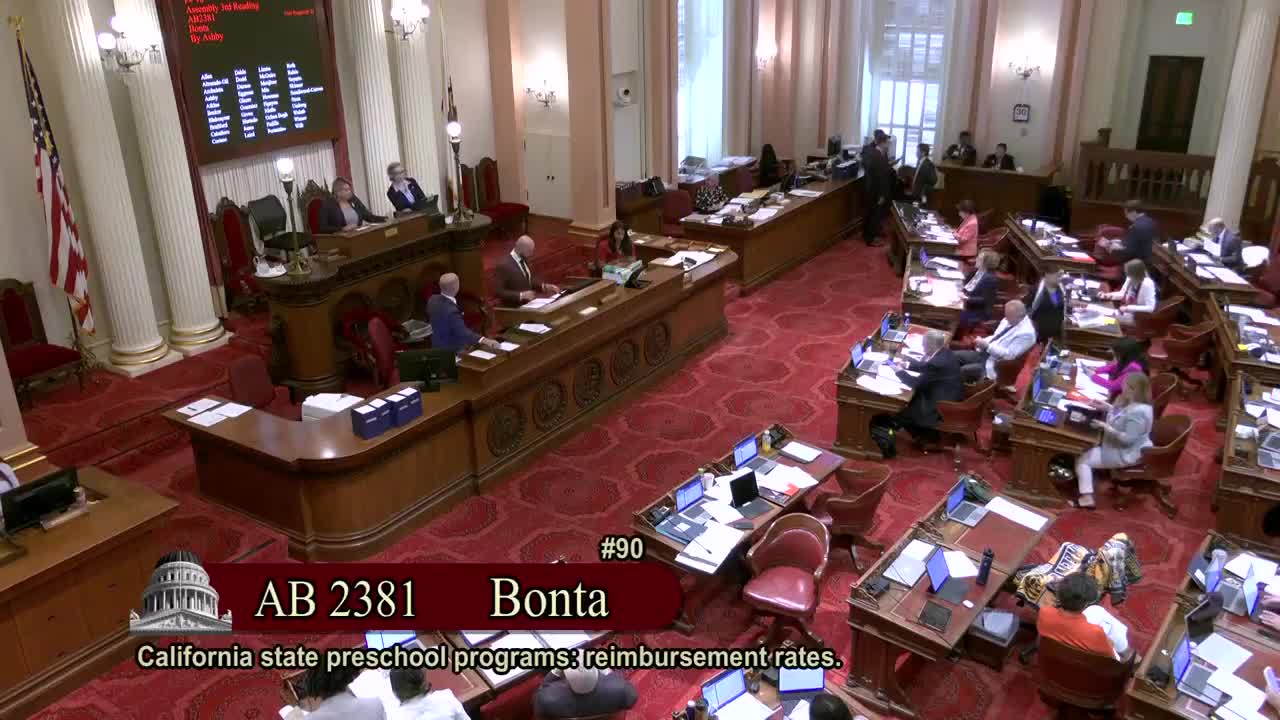 3MIN
Senate Floor
 6MIN
Assembly Standing Committee on Labor and Employment
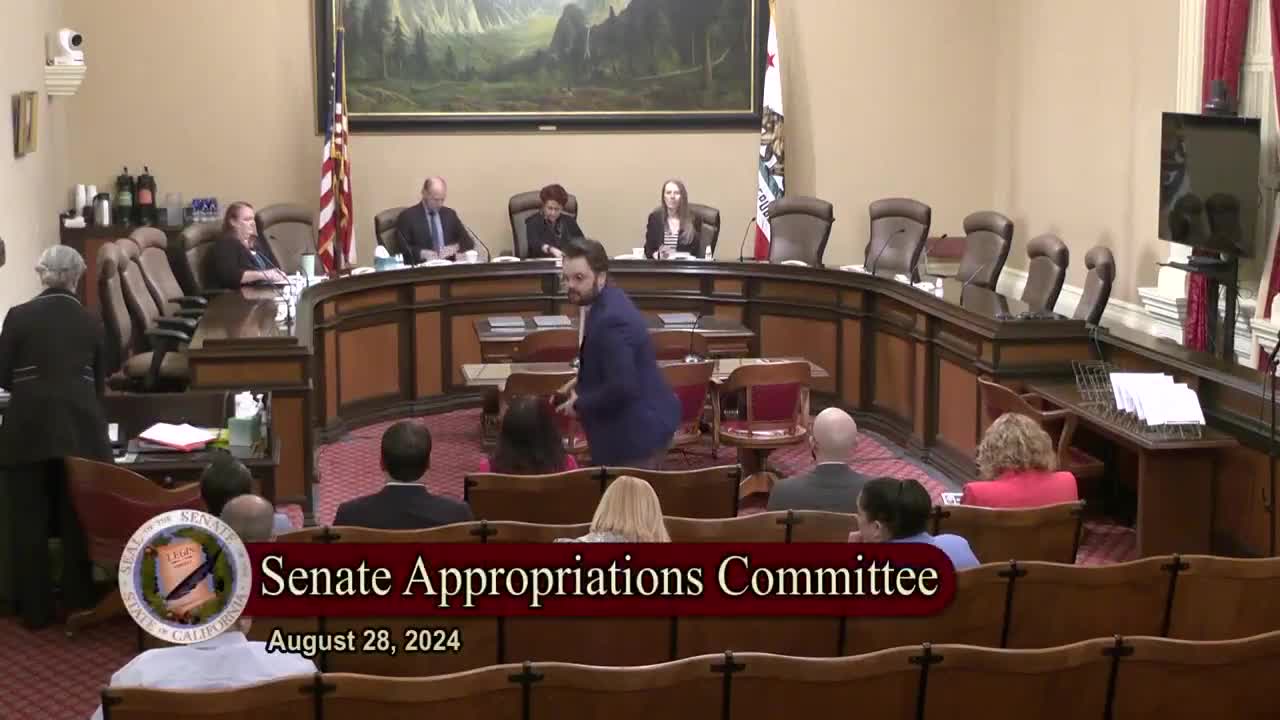 3MIN
Senate Standing Committee on Appropriations
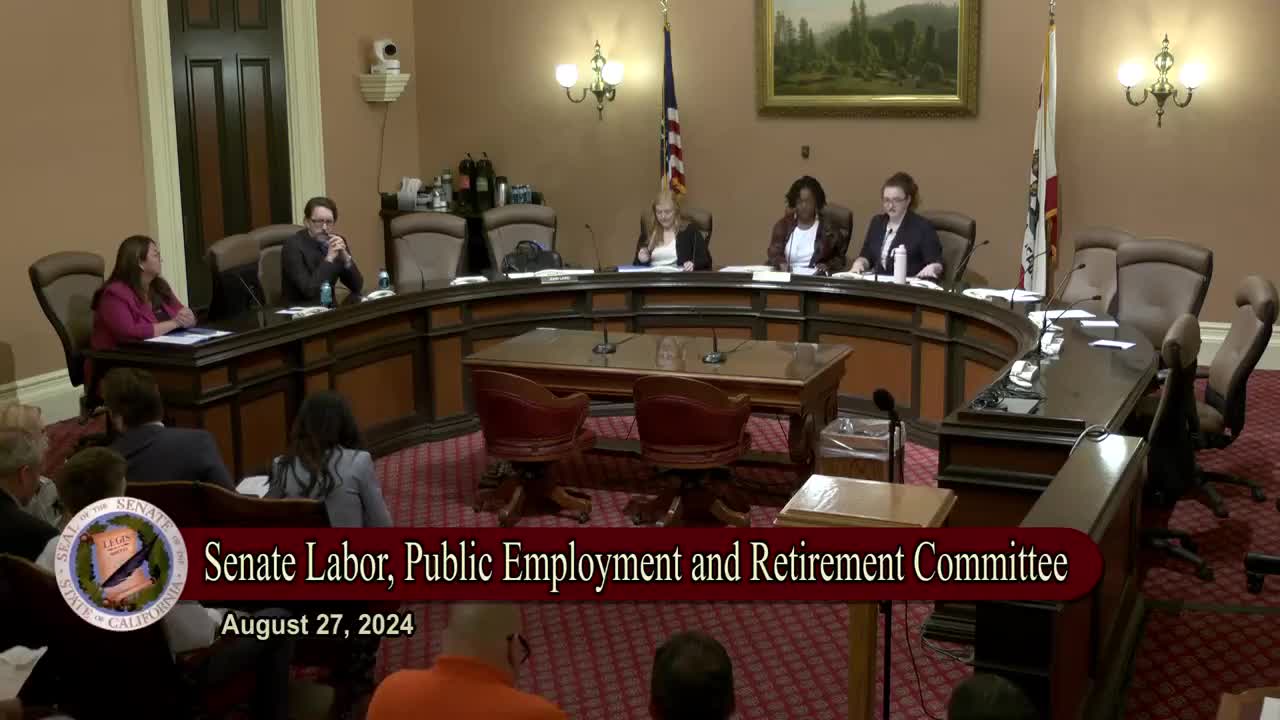 10MIN
Senate Standing Committee on Labor, Public Employment and Retirement
 11MIN
Senate Standing Committee on Public Safety
 2MIN
Assembly Floor
 14MIN
Assembly Standing Committee on Privacy and Consumer Protection



Bill Co-Author(s):
