AB 1079: Discrimination: Public engagement.
- Session Year: 2023-2024
- House: Assembly
- Latest Version Date: 2023-09-12
Current Status:
Failed
(2024-01-29: Consideration of Governor's veto stricken from file.)
Introduced
In Committee
First Chamber
In Committee
Second Chamber
Enacted
Existing law establishes the State Department of Public Health and prescribes its duties and organization. Existing law defines a hate crime as a criminal act committed, in whole or in part, because of actual or perceived characteristics of the victim, including, disability, gender, nationality, race or ethnicity, religion, and sexual orientation.
This bill, upon appropriation by the Legislature and commencing on or before the later of either July 1, 2025, or one year after the date of the appropriation, would require the department to establish the Hate Crimes Intervention Program within the Injury and Violence Prevention Branch to implement evidence-based community interventions in conjunction with community leaders and organizations in communities that have been most impacted by hate crimes confirmed by the Department of Justice.
Existing law, the California Fair Employment and Housing Act, establishes the Civil Rights Department within the Business, Consumer Services, and Housing Agency and sets forth its powers and duties relating to enforcement of civil rights laws and assistance to communities in resolving disputes, disagreements, or difficulties relating to discriminatory practices.
This bill, upon appropriation by the Legislature and commencing on or before the later of either July 1, 2025, or one year after the date of the appropriation, would require the department to create and distribute statewide and regional radio, social media, and television campaigns for the purposes of discouraging discrimination. The bill would require the department to convene a working group to develop a plan to implement the campaigns above. The bill would exempt the working group from the Bagley-Keene Open Meeting Act.
Existing law establishes the State Department of Public Health and prescribes its duties and organization. Existing law defines a hate crime as a criminal act committed, in whole or in part, because of actual or perceived characteristics of the victim, including, disability, gender, nationality, race or ethnicity, religion, and sexual orientation.
This bill, upon appropriation by the Legislature and commencing on or before the later of either July 1, 2025, or one year after the date of the appropriation, would require the department to establish the Hate Crimes Intervention Program within the Injury and Violence Prevention Branch to implement research-based evidence-based community interventions in conjunction with community leaders and organizations in communities that have been most impacted by hate crimes confirmed by the Department of Justice.
Existing law, the California Fair Employment and Housing Act, establishes the Civil Rights Department within the Business, Consumer Services, and Housing Agency and sets forth its powers and duties relating to enforcement of civil rights laws and assistance to communities in resolving disputes, disagreements, or difficulties relating to discriminatory practices.
This bill, upon appropriation by the Legislature and commencing on or before the later of either July 1, 2025, or one year after the date of the appropriation, would require the department to create and distribute statewide and regional radio, social media, and television campaigns for the purposes of discouraging discrimination. The bill would require the department to convene a working group to develop a plan to implement the campaigns above. The bill would exempt the working group from the Bagley-Keene Open Meeting Act.
Existing law establishes the State Department of Public Health and prescribes its duties and organization. Existing law defines a hate crime as a criminal act committed, in whole or in part, because of actual or perceived characteristics of the victim, including, disability, gender, nationality, race or ethnicity, religion, and sexual orientation.
This bill, upon appropriation by the Legislature and commencing on or before the later of either July 1, 2025, or one year after the date of the appropriation, would require the department to establish the Hate Crimes Intervention Program within the Injury and Violence Prevention Branch to implement research-based community interventions in conjunction with community leaders and organizations in communities that have been most impacted by hate crimes confirmed by the Department of Justice.
Existing law, the California Fair Employment and Housing Act, establishes the Civil Rights Department within the Business, Consumer Services, and Housing Agency and sets forth its powers and duties relating to enforcement of civil rights laws and assistance to communities in resolving disputes, disagreements, or difficulties relating to discriminatory practices.
This bill, upon appropriation by the Legislature and commencing on or before the later of either July 1, 2025, or one year after the date of the appropriation, would require the department to create and distribute statewide and regional radio, social media, and television campaigns for the purposes of discouraging discrimination. The bill would require the department to convene a working group to develop a plan to implement the campaigns above. The bill would exempt the working group from the Bagley-Keene Open Meeting Act.
Existing law establishes the State Department of Public Health and prescribes its duties and organization. Existing law defines a hate crime as a criminal act committed, in whole or in part, because of actual or perceived characteristics of the victim, including, disability, gender, nationality, race or ethnicity, religion, and sexual orientation.
This bill, no later than July 1, 2025, would require the department to establish a Hate Crimes Intervention Unit upon appropriation by the Legislature and commencing on or before the later of either July 1, 2025, or one year after the date of the appropriation, would require the department to establish the Hate Crimes Intervention Program within the Injury and Violence Prevention Branch to implement research-based community interventions in conjunction with community leaders and organizations in communities where a hate crime has been confirmed by the Department of Justice. The bill would direct the department to determine the cost of the unit and to submit a budget change proposal no later than September 15, 2024, for inclusion in the Governors 202526 fiscal year budget proposal. that have been most impacted by hate crimes confirmed by the Department of Justice.
Existing law, the California Fair Employment and Housing Act, establishes the Civil Rights Department within the Business, Consumer Services, and Housing Agency and sets forth its powers and duties relating to enforcement of civil rights laws and assistance to communities in resolving disputes, disagreements, or difficulties relating to discriminatory practices.
This bill, no later than July 1, 2025, would establish the California Ad Council within the Civil Rights Department upon appropriation by the Legislature and commencing on or before the later of either July 1, 2025, or one year after the date of the appropriation, would require the department to create and distribute statewide and regional radio, social media, and television campaigns for the purposes of discouraging discrimination. The bill would direct the department to determine the cost of the council and to submit a budget change proposal no later than September 15, 2024, for inclusion in the Governors 202526 fiscal year budget proposal. The bill would require the department to convene a working group to develop a plan to implement the campaigns above. The bill would exempt the working group from the Bagley-Keene Open Meeting Act.
Existing law establishes the State Department of Public Health and prescribes its duties and organization. Existing law defines a hate crime as a criminal act committed, in whole or in part, because of actual or perceived characteristics of the victim, including, disability, gender, nationality, race or ethnicity, religion, and sexual orientation.
This bill, no later than July 1, 2025, would require the department to establish a Hate Crimes Intervention Unit to implement research-based community interventions in conjunction with community leaders and organizations in communities where a hate crime has been confirmed by the Department of Justice. The bill would direct the department to determine the cost of the unit and to submit a budget change proposal no later than September 15, 2024, for inclusion in the Governors 202526 fiscal year budget proposal.
Existing law, the California Fair Employment and Housing Act, establishes the Civil Rights Department within the Business, Consumer Services, and Housing Agency and sets forth its powers and duties relating to enforcement of civil rights laws and assistance to communities in resolving disputes, disagreements, or difficulties relating to discriminatory practices.
This bill, no later than July 1, 2025, would establish the California Ad Council within the Civil Rights Department to create and distribute statewide and regional radio, social media, and television campaigns for the purposes of discouraging discrimination. The bill would direct the department to determine the cost of the unit council and to submit a budget change proposal no later than September 15, 2024, for inclusion in the Governors 202526 fiscal year budget proposal.
Existing law establishes the State Department of Public Health and prescribes its duties and organization. Existing law defines a hate crime as a criminal act committed, in whole or in part, because of actual or perceived characteristics of the victim, including, disability, gender, nationality, race or ethnicity, religion, and sexual orientation.
This bill, no later than July 1, 2025, would require the department to establish a Hate Crimes Intervention Unit to implement research-based community interventions in conjunction with community leaders and organizations in communities where a hate crime has been confirmed by the Department of Justice. The bill would direct the department to determine the cost of the unit and to submit a budget change proposal no later than September 15, 2024, for inclusion in the Governors 202526 fiscal year budget proposal.
Existing law, the California Fair Employment and Housing Act, establishes the Civil Rights Department within the Business, Consumer Services, and Housing Agency and sets forth its powers and duties relating to enforcement of civil rights laws and assistance to communities in resolving disputes, disagreements, or difficulties relating to discriminatory practices.
This bill, no later than July 1, 2025, would establish the California Ad Council within the Civil Rights Department to create and distribute statewide and regional radio, social media, and television campaigns for the purposes of discouraging discrimination. The bill would direct the department to determine the cost of the unit and to submit a budget change proposal no later than September 15, 2024, for inclusion in the Governors 202526 fiscal year budget proposal.
(a)Commencing on or before the later of either July 1, 2025, or one year after the date of the appropriation described in subdivision (d), the department shall create and implement statewide and regional radio, social media, and television campaigns to discourage discrimination based upon, but not limited to, disability, gender, nationality, race or ethnicity, religion, or sexual orientation.
(b)(1)The department shall convene a working group to develop a plan to implement this section, the members of which shall be appointed as follows:
(A)Nine members appointed by the director of the department with expertise in the field of marketing and messaging, specifically on topics germane to this section, who shall reflect the geographic and demographic diversity of the state.
(B)One member of the Assembly, appointed by the Speaker of the Assembly.
(C)One member of the Senate, appointed by the President pro Tempore of the Senate.
(2)A person appointed to the working group shall serve on a volunteer basis.
(3)The working group described in this subdivision is not subject to the Bagley-Keene Open Meeting Act (Article 9 (commencing with Section 11120) of Chapter 1 of Part 1).
(c)The percentage of advertisements focused on combating hate violence against a specific community with a common protected characteristic that are created and distributed shall be based on the rate of hate crimes committed against each community with a common protected characteristic as determined by the most recent Hate Crime in California report released by the Attorney General or other reliable and more accurate data on hate violence.
(d)This section shall not become operative until funding and positions are appropriated by the Legislature in the Budget Act or any other measure for the purposes of this section. The department shall send notice of the appropriation to the Secretary of State, the Business, Consumer Services, and Housing Agency, and the Legislative Counsel Bureau.
SEC. 2.Chapter 5 (commencing with Section 131360) is added to Part 1 of Division 112 of the Health and Safety Code, to read:5.Antidiscrimination Intervention Act131360.Upon appropriation by the Legislature for the purposes of this section and commencing on or before the later of either July 1, 2025, or one year after the date of the appropriation, the State Department of Public Health shall establish the Hate Crimes Intervention Program within the Injury and Violence Prevention Branch. The program shall have responsibility for implementing evidence-based community interventions in conjunction with community leaders and organizations in communities that have been most impacted by hate crimes confirmed by the Department of Justice.
(a)Commencing on or before the later of either July 1, 2025, or one year after the date of the appropriation described in subdivision (d), the department shall create and implement statewide and regional radio, social media, and television campaigns to discourage discrimination based upon, but not limited to, disability, gender, nationality, race or ethnicity, religion, or sexual orientation.
(b)(1)The department shall convene a working group to develop a plan to implement this section, the members of which shall be appointed as follows:
(A)Nine members appointed by the director of the department with expertise in the field of marketing and messaging, specifically on topics germane to this section, who shall reflect the geographic and demographic diversity of the state.
(B)One member of the Assembly, appointed by the Speaker of the Assembly.
(C)One member of the Senate, appointed by the President pro Tempore of the Senate.
(2)A person appointed to the working group shall serve on a volunteer basis.
(3)The working group described in this subdivision is not subject to the Bagley-Keene Open Meeting Act (Article 9 (commencing with Section 11120) of Chapter 1 of Part 1).
(c)The percentage of advertisements focused on combating hate violence against a specific community with a common protected characteristic that are created and distributed shall be based on the rate of hate crimes committed against each community with a common protected characteristic as determined by the most recent Hate Crime in California report released by the Attorney General or other reliable and more accurate data on hate violence.
(d)This section shall not become operative until funding and positions are appropriated by the Legislature in the Budget Act or any other measure for the purposes of this section. The department shall send notice of the appropriation to the Secretary of State, the Business, Consumer Services, and Housing Agency, and the Legislative Counsel Bureau.
SEC. 2.Chapter 5 (commencing with Section 131360) is added to Part 1 of Division 112 of the Health and Safety Code, to read:5.Antidiscrimination Intervention Act131360.Upon appropriation by the Legislature for the purposes of this section and commencing on or before the later of either July 1, 2025, or one year after the date of the appropriation, the State Department of Public Health shall establish the Hate Crimes Intervention Program within the Injury and Violence Prevention Branch. The program shall have responsibility for implementing research-based evidence-based community interventions in conjunction with community leaders and organizations in communities that have been most impacted by hate crimes confirmed by the Department of Justice.
(a)Upon appropriation by the Legislature for the purposes of this section and commencing Commencing on or before the later of either July 1, 2025, or one year after the date of the appropriation, appropriation described in subdivision (d), the department shall create and implement statewide and regional radio, social media, and television campaigns to discourage discrimination based upon, but not limited to, disability, gender, nationality, race or ethnicity, religion, or sexual orientation.
(b)(1)The department shall convene a working group to develop a plan to implement this section, the members of which shall be appointed as follows:
(A)Nine members appointed by the director of the department with expertise in the field of marketing and messaging, specifically on topics germane to this section, who shall reflect the geographic and demographic diversity of the state.
(B)One member of the Assembly, appointed by the Speaker of the Assembly.
(C)One member of the Senate, appointed by the President pro Tempore of the Senate.
(2)A person appointed to the working group shall serve on a volunteer basis.
(3)The working group described in this subdivision is not subject to the Bagley-Keene Open Meeting Act (Article 9 (commencing with Section 11120) of Chapter 1 of Part 1).
(c)The percentage of advertisements focused on combating hate violence against a specific community with a common protected characteristic that are created, distributed, and created and distributed shall be based on the rate of hate crimes committed against each community with a common protected characteristic as determined by the most recent Hate Crime in California report released by the Attorney General or other reliable and more accurate data on hate violence.
(d)This section shall not become operative until funding and positions are appropriated by the Legislature in the Budget Act or any other measure for the purposes of this section. The department shall send notice of the appropriation to the Secretary of State and Consumer Services State, the Business, Consumer Services, and Housing Agency, and the Legislative Counsel Bureau.
SEC. 2.Chapter 5 (commencing with Section 131360) is added to Part 1 of Division 112 of the Health and Safety Code, to read:5.Antidiscrimination Intervention Act131360.Upon appropriation by the Legislature for the purposes of this section and commencing on or before the later of either July 1, 2025, or one year after the date of the appropriation, the State Department of Public Health shall establish the Hate Crimes Intervention Program within the Injury and Violence Prevention Branch. The program shall have responsibility for implementing research-based community interventions in conjunction with community leaders and organizations in communities that have been most impacted by hate crimes confirmed by the Department of Justice.
(a)Upon appropriation by the Legislature for the purposes of this section and commencing on or before the later of either July 1, 2025, or one year after the date of the appropriation, the department shall create and implement statewide and regional radio, social media, and television campaigns to discourage discrimination based upon, but not limited to, disability, gender, nationality, race or ethnicity, religion, or sexual orientation.
(b)(1)The department shall convene a working group to develop a plan to implement this section, the members of which shall be appointed as follows:
(A)Nine members appointed by the director of the department with expertise in the field of marketing and messaging, specifically on topics germane to this section, who shall reflect the geographic and demographic diversity of the state.
(B)One member of the Assembly, appointed by the Speaker of the Assembly.
(C)One member of the Senate, appointed by the President pro Tempore of the Senate.
(2)A person appointed to the working group shall serve on a volunteer basis.
(3)The working group described in this subdivision is not subject to the Bagley-Keene Open Meeting Act (Article 9 (commencing with Section 11120) of Chapter 1 of Part 1).
(c)The percentage of advertisements focused on combating hate violence against a specific community with a common protected characteristic that are created, distributed, and created and distributed shall be based on the rate of hate crimes committed against each community with a common protected characteristic as determined by the most recent Hate Crime in California report released by the Attorney General or other reliable and more accurate data on hate violence.
(d)This section shall not become operative until funding and positions are appropriated by the Legislature in the Budget Act or any other measure for the purposes of this section. The department shall send notice of the appropriation to the Secretary of State and Consumer Services and the Legislative Counsel Bureau.
SECTION 1.SEC. 2.Chapter 5 (commencing with Section 131360) is added to Part 1 of Division 112 of the Health and Safety Code, to read:5.Antidiscrimination Intervention Act131360.(a)No later than July 1, 2025, the State Department of Public Health shall establish a Hate Crimes Intervention Unit. This unit 131360.Upon appropriation by the Legislature for the purposes of this section and commencing on or before the later of either July 1, 2025, or one year after the date of the appropriation, the State Department of Public Health shall establish the Hate Crimes Intervention Program within the Injury and Violence Prevention Branch. The program shall have responsibility for implementing research-based community interventions in conjunction with community leaders and organizations in communities where a hate crime has been confirmed by the Department of Justice. that have been most impacted by hate crimes confirmed by the Department of Justice.
(b)The State Department of Public Health shall determine the cost to implement the unit and shall, no later than September 15, 2024, submit a budget change proposal to the Department of Finance for inclusion in the Governors Budget for the 202526 fiscal year.SEC. 2.Section 12931.5 is added to the Government Code, to read:12931.5.(a)No later than July 1, 2025, the department shall establish the California Ad Council for the purposes of creating and implementing statewide and regional radio, social media, and television campaigns to discourage discrimination based upon, but not limited to, disability, gender, nationality, race or ethnicity, religion, or sexual orientation.(b)The council shall be composed of 11 members.(1)The members of the council shall be appointed as follows:(A)Nine members with expertise in the field of marketing and messaging, specifically on topics germane to this council, who shall reflect the geographic and demographic diversity of the state. Members shall be appointed as follows:(i)Three members appointed by the Governor.(ii)Three members appointed by the Speaker of the Assembly.(iii)Three members appointed by the President pro Tempore of the Senate.(B)One member of the Assembly, appointed by the Speaker of the Assembly, who shall serve on the council as an ex officio member without vote and shall participate in the activities of the council to the extent that their participation is not inconsistent with their legislative duties.(C)One member of the Senate, appointed by the President pro Tempore of the Senate, who shall serve on the council as an ex officio member without vote and shall participate in the activities of the council to the extent that their participation is not inconsistent with their legislative duties.(2)A member appointed pursuant to subparagraph (A) of paragraph (1) shall not be a member of the Legislature.(3)A member appointed pursuant to subparagraph (A) of paragraph (1) shall receive a per diem of one hundred dollars ($100) for each public meeting of the council that they attend and shall be entitled to expenses actually and necessarily incurred in the performance of their duties. An ex officio member appointed pursuant to subparagraph (B) or (C) of paragraph (1) is not entitled to a per diem or reimbursement.(c)The percentage of ads focused on combating hate violence against a specific community with a common protected characteristic that are created, distributed, and created and distributed shall be based on the rate of hate crimes committed against each community with a common protected characteristic as determined by the most recent Hate Crime in California report released by the Attorney General or other reliable and more accurate data on hate violence.(d)The department shall determine the cost to implement the council and shall, no later than September 15, 2024, submit a budget change proposal to the Department of Finance for inclusion in the Governors Budget for the 202526 fiscal year.(a)No later than July 1, 2025, the State Department of Public Health shall establish a Hate Crimes Intervention Unit. This unit shall have responsibility for implementing research-based community interventions in conjunction with community leaders and organizations in communities where a hate crime has been confirmed by the Department of Justice.
(b)The State Department of Public Health shall determine the cost to implement the unit and shall, no later than September 15, 2024, submit a budget change proposal to the Department of Finance for inclusion in the Governors Budget for the 202526 fiscal year.
SEC. 2.Section 12931.5 is added to the Government Code, to read:12931.5.(a)No later than July 1, 2025, the department shall establish the California Ad Council for the purposes of creating and implementing statewide and regional radio, social media, and television campaigns to discourage discrimination based upon, but not limited to, disability, gender, nationality, race or ethnicity, religion, or sexual orientation.
(b)The council shall be composed of 11 members, as follows: members.
(1)The members of the council shall be appointed as follows:
(1)(A)(A)Nine members who expertise specializing with expertise in the field of marketing and messaging, specifically on topics germane to this council, and who shall reflect the geographic and demographic diversity of the state. Members shall be appointed as follows:
(i)Three members appointed by the Governor.
(ii)Three members appointed by the Speaker of the Assembly.
(iii)Three members appointed by the President pro Tempore of the Senate.
(B)The members appointed pursuant to this paragraph shall receive reimbursement for per diem and expenses while engaged in commission activities.(C)The members appointed pursuant to this paragraph shall not be members of the Legislature.(2)(B)One member of the Assembly, appointed by the Speaker of the Assembly, who shall serve on the commission council as an ex officio member without vote and shall participate in the activities of the commission council to the extent that their participation is not inconsistent with their legislative duties.
(3)(C)One member of the Senate, appointed by the President pro Tempore of the Senate, who shall serve on the commission council as an ex officio member without vote and shall participate in the activities of the commission council to the extent that their participation is not inconsistent with their legislative duties.
(2)A member appointed pursuant to subparagraph (A) of paragraph (1) shall not be a member of the Legislature.
(3)A member appointed pursuant to subparagraph (A) of paragraph (1) shall receive a per diem of one hundred dollars ($100) for each public meeting of the council that they attend and shall be entitled to expenses actually and necessarily incurred in the performance of their duties. An ex officio member appointed pursuant to subparagraph (B) or (C) of paragraph (1) is not entitled to a per diem or reimbursement.
(c)The percentage of ads focused on combating hate crimes violence against a specific protected group community with a common protected characteristic that are created, distributed, and created and distributed shall be based on the rate of hate crimes committed against each protected group community with a common protected characteristic as determined by the most recent Hate Crime in California report released by the Attorney General. General or other reliable and more accurate data on hate violence.
(d)The department shall determine the cost to implement the California Ad Council council and shall, no later than September 15, 2024, submit a budget change proposal to the Department of Finance for inclusion in the Governors Budget for the 202526 fiscal year.
(a)No later than July 1, 2025, the State Department of Public Health shall establish a Hate Crimes Intervention Unit. This unit shall have responsibility for implementing research-based community interventions in conjunction with community leaders and organizations in communities where a hate crime has been confirmed by the Department of Justice.
(b)The State Department of Public Health shall determine the cost to implement the unit and shall, no later than September 15, 2024, submit a budget change proposal to the Department of Finance for inclusion in the Governors Budget for the 202526 fiscal year.
SEC. 2.Section 12931.5 is added to the Government Code, to read:12931.5.(a)No later than July 1, 2025, the department shall establish the California Ad Council for the purposes of creating and implementing statewide and regional radio, social media, and television campaigns to discourage discrimination based upon, but not limited to, disability, gender, nationality, race or ethnicity, religion, or sexual orientation.
(b)The council shall be composed of 11 members, as follows:
(1)(A)Nine members who expertise specializing in the field of marketing and messaging, specifically on topics germane to this council, and shall reflect the geographic and demographic diversity of the state. Members shall be appointed as follows:
(i)Three members appointed by the Governor.
(ii)Three members appointed by the Speaker of the Assembly.
(iii)Three members appointed by the President pro Tempore of the Senate.
(B)The members appointed pursuant to this paragraph shall receive reimbursement for per diem and expenses while engaged in commission activities.
(C)The members appointed pursuant to this paragraph shall not be members of the Legislature.
(2)One member of the Assembly, appointed by the Speaker of the Assembly, who shall serve on the commission as an ex officio member without vote and shall participate in the activities of the commission to the extent that their participation is not inconsistent with their legislative duties.
(3)One member of the Senate, appointed by the President pro Tempore of the Senate, who shall serve on the commission as an ex officio member without vote and shall participate in the activities of the commission to the extent that their participation is not inconsistent with their legislative duties.
(c)The percentage of ads focused on combating hate crimes against a specific protected group that are created, distributed, and created and distributed shall be based on the rate of hate crimes committed against each protected group as determined by the most recent Hate Crime in California report released by the Attorney General.
(d)The department shall determine the cost to implement the California Ad Council and shall, no later than September 15, 2024, submit a budget change proposal to the Department of Finance for inclusion in the Governors Budget for the 202526 fiscal year.
|
Date
|
Status
|
|---|---|
| Jan 29, 2024 | Consideration of Governor's veto stricken from file. |
| Jan 3, 2024 | Consideration of Governor's veto pending. |
| Oct 8, 2023 | Vetoed by Governor. |
| Sep 15, 2023 | Enrolled and presented to the Governor at 4 p.m. |
| Sep 11, 2023 | Senate amendments concurred in. To Engrossing and Enrolling. (Ayes 76. Noes 0. Page 3179.). |
| Sep 7, 2023 | Assembly Rule 77 suspended. (Page 3011.) |
| Sep 6, 2023 | In Assembly. Concurrence in Senate amendments pending. May be considered on or after September 8 pursuant to Assembly Rule 77. |
| Sep 6, 2023 | Read third time. Passed. Ordered to the Assembly. (Ayes 35. Noes 0. Page 2433.). |
| Sep 5, 2023 | Read second time. Ordered to third reading. |
| Sep 1, 2023 | Read second time and amended. Ordered returned to second reading. |
| Sep 1, 2023 | From committee: Amend, and do pass as amended. (Ayes 6. Noes 0.) (September 1). |
| Aug 14, 2023 | In committee: Referred to APPR suspense file. |
| Jul 6, 2023 | From committee: Do pass and re-refer to Com. on APPR. (Ayes 10. Noes 0.) (July 6). Re-referred to Com. on APPR. |
| Jun 26, 2023 | Read second time and amended. Re-referred to Com. on JUD. |
| Jun 22, 2023 | From committee: Amend, and do pass as amended and re-refer to Com. on JUD. (Ayes 10. Noes 0.) (June 21). |
| Jun 7, 2023 | From committee chair, with author's amendments: Amend, and re-refer to committee. Read second time, amended, and re-referred to Com. on HEALTH. |
| Jun 7, 2023 | Referred to Coms. on HEALTH and JUD. |
| May 31, 2023 | In Senate. Read first time. To Com. on RLS. for assignment. |
| May 30, 2023 | Read third time. Passed. Ordered to the Senate. (Ayes 75. Noes 0. Page 1893.) |
| May 18, 2023 | Read second time. Ordered to third reading. |
| May 18, 2023 | From committee: Do pass. (Ayes 14. Noes 0.) (May 18). |
| May 18, 2023 | Joint Rule 62(a), file notice suspended. (Page 1580.) |
| May 17, 2023 | In committee: Set, first hearing. Referred to APPR. suspense file. |
| May 10, 2023 | In committee: Hearing postponed by committee. |
| May 3, 2023 | In committee: Hearing postponed by committee. |
| Apr 26, 2023 | In committee: Hearing postponed by committee. |
| Apr 11, 2023 | From committee: Do pass and re-refer to Com. on APPR. (Ayes 9. Noes 1.) (April 11). Re-referred to Com. on APPR. |
| Apr 3, 2023 | Re-referred to Com. on JUD. |
| Mar 30, 2023 | Read second time and amended. |
| Mar 29, 2023 | From committee: Amend, and do pass as amended and re-refer to Com. on JUD. (Ayes 13. Noes 0.) (March 28). |
| Mar 2, 2023 | Referred to Coms. on HEALTH and JUD. |
| Feb 16, 2023 | From printer. May be heard in committee March 18. |
| Feb 15, 2023 | Read first time. To print. |
|
Date
|
Description
|
Location
|
Votes
|
|
|---|---|---|---|---|
| Sep 11, 2023 | AB 1079 Jackson Concurrence in Senate Amendments | Assembly Floor |
Passed |
|
| Sep 6, 2023 | Assembly 3rd Reading AB1079 Jackson et al. By Min | Senate Floor |
Passed |
|
| Sep 1, 2023 | Do pass as amended | Senate Standing Committee on Appropriations |
Passed |
|
| Aug 14, 2023 | Placed on suspense file | Senate Standing Committee on Appropriations |
Passed |
|
| Jul 6, 2023 | Do pass, but first be re-referred to the Committee on [Appropriations] | Senate Standing Committee on Judiciary |
Passed |
|
| Jun 21, 2023 | Do pass as amended, but first amend, and re-refer to the Committee on [Judiciary] | Senate Standing Committee on Health |
Passed |
|
| May 30, 2023 | AB 1079 Jackson Assembly Third Reading | Assembly Floor |
Passed |
|
| May 18, 2023 | Do pass. | Assembly Standing Committee on Appropriations |
Passed |
|
| Apr 11, 2023 | Do pass and be re-referred to the Committee on [Appropriations] | Assembly Standing Committee on Judiciary |
Passed |
|
| Mar 28, 2023 | Do pass as amended and be re-referred to the Committee on [Judiciary] | Assembly Standing Committee on Health |
Passed |
This list shows positions taken on this bill by organizations on the date displayed, which is linked to the original source.
Positions by individuals are not included.
|
Organization
|
Position
|
Date
|
|---|---|---|
| Anti-Defamation League California | ** Support | |
| California Faculty Association | ** Support | |
| California Pan - Ethnic Health Network | ** Support | |
| Department Of Finance | ** Against | |
| ETTA | ** Support | |
| Hadassah | ** Support | |
| Holocaust Museum LA | ** Support | |
| JCRC Bay Area | ** Support | |
| Jewish Center for Justice | ** Support | |
| jewish community relations council of sacramento | ** Support | |
| Jewish Community Relations Council of Silicon Valley | ** Support | |
| Jewish Democratic Club of Silicon Valley | ** Support | |
| Jewish Democratic Club of Solano County | ** Support | |
| Jewish Family and Children's Services of San Francisco, the Peninsula, Marin, and | ** Support | |
| Jewish Family & Children's Service of Long Beach and Orange County | ** Support | |
| Jewish Family & Community Services East Bay | ** Support | |
| Jewish Family Services of Silicon Valley | ** Support | |
| Jewish Family Services San Diego | ** Support | |
| Jewish Federation of Greater Los Angeles | ** Support | |
| Jewish Federation of Greater Santa Barbara | ** Support | |
| Jewish Federation of The Greater San Gabriel and Pomona Valleys | ** Support | |
| Jewish Federation Of The Sacramento Region | ** Support | |
| Jewish Long Beach | ** Support | |
| Jewish Public Affairs Committee | ** Support | |
| JVS SoCal | ** Support | |
| National Association Of Social Workers, California Chapter | ** Support | |
| Progressive Zionists of California | ** Support | |
| Sonoma Counties | ** Support | |
| The Arc and United Cerebral Palsy California Collaboration | ** Support |
GOVERNOR'S VETO
GV Bill Id:AB 1079
Author:(Jackson)
As Enrolled Ver:September 12, 2023
2/3 vote
SUMMARY
Requires the California Department of Public Health (DPH), no later than July 1, 2025, to establish a Hate Crimes Intervention Unit (Unit) to implement research-based community interventions in conjunction with community leaders and organizations in communities where a hate crime has been confirmed by the Department of Justice (DOJ). Requires the Civil Rights Department (CRD) (formerly the Department of Fair Employment and Housing, no later than July 1, 2025, to establish the California Ad Council (Ad Council) to create and implement a statewide media campaigns to discourage discrimination, as specified.
Senate Amendments
1) Make the provisions of this bill contingent upon an appropriation by the Legislature;
2) Require the implementation of the social media campaign to occur on or before the later of either July 1, 2025, or one year after the date of the appropriation; and,
3) Require DPH to convene a working group to develop a plan to implement the provisions of this bill, and specify that the working group is not subject to the Bagley-Keene Open Meeting Act
Governor’s Veto Message
This bill requires DPH, subject to appropriation, to establish the Hate Crimes Intervention Program within the Injury and Violence Prevention Branch to implement community interventions in conjunction with community leaders and organizations in communities that have been most impacted by hate crimes. Additionally, the bill requires CDR to create and implement statewide and regional campaigns to discourage discrimination based upon, but not limited to, disability, gender, nationality, race or ethnicity, religion, or sexual orientation. These are costs not accounted for in the annual budget.
I share the author's objective to reduce hate crime and discrimination in California, which is why we have funded a comprehensive strategy to fight hate violence and discrimination in the budget. Specifically, the State has invested $150 million for a multi-year grant program to support community services for victims and survivors of hate acts across impacted communities as informed by public data. The State, additionally, established the Commission on the State of Hate to assess data on hate crimes in California, provide resources for victims, and make policy recommendations to better protect civil rights, and announced the launch of CA vs. Hate, a new statewide hotline to report hate acts in California and connect victims with services, among other efforts.
In partnership with the Legislature, we enacted a budget that closed a shortfall of more than $30 billion through balanced solutions that avoided deep program cuts and protected education, health care, climate, public safety, and social service programs that are relied on by millions of Californians. This year, however, the Legislature sent me bills outside of this budget process that, if all enacted, would add nearly $19 billion of unaccounted costs in the budget, of which $11 billion would be ongoing.
With our state facing continuing economic risk and revenue uncertainty, it is important to remain disciplined when considering bills with significant fiscal implications, such as this measure.
COMMENTS
2021 Hate Crime in California. The DOJ has collected and reported statewide data on hate crimes since 1995. Under California law, a hate crime is a criminal act committed in whole or in part because of a victim's actual or perceived disability, gender, nationality, race or ethnicity, religion, sexual orientation, or association with someone with one or more of these actual or perceived characteristics. Hate crimes are distinct from hate incidents, which are actions or behaviors motivated by hate that may be protected by the First Amendment right to freedom of expression. Examples of hate incidents include name-calling, insults, and distributing hate material in public places. If a hate incident starts to threaten a person or property, it may become a hate crime. Historically, hate crime data has generally been underreported and the DOJ recognizes that the data presented in its reports may not adequately reflect the actual number of hate crime events that have occurred in the state. However, it is important to note that the total number of hate crime events reported in 2021 is the sixth highest ever recorded and the highest since hate crime events skyrocketed in 2001 in the aftermath of the terrorist attacks of September 11, 2001. Some of the key findings from the 2021 Hate Crime in California Report include:
- Overall, reported hate crime events increased 32.6% from 1,330 in 2020 to 1,763 in 2021;
- Anti-Black bias events were the most prevalent, increasing 12.5% from 456 in 2020 to 513 in 2021;
- Hate crime events motivated by a sexual orientation bias increased 47.8% from 205 in 2020 to 303 in 2021;
- Anti-Asian bias events increased 177.5% from 89 in 2020 to 247 in 2021;
- Anti-Hispanic or Latino bias events increased 29.6% from 152 in 2020 to 197 in 2021;
- Among hate crime events involving a religious bias, anti-Jewish bias events were the most prevalent and increased 32.2% from 115 in 2020 to 152 in in 2021; and,
- From 2020 to 2021, the number of cases filed for prosecution by district attorneys and elected city attorneys involving hate crime charges increased by 30.1%.
Hate Crime as a Public Health Threat. In 2017, the American College of Physicians (ACP) adopted an official policy recognizing hate crimes as a public health issue. ACP declared that hate crimes directed against individuals based on their race, ethnic origin, ancestry, gender, gender identity, nationality, primary language, socioeconomic status, sexual orientation, cultural background, age, disability, or religion are a public health issue.
In 2020, Health Affairs published an article entitled: "Discrimination: A Social Determinant of Health Inequities." This article pointed out that discrimination impacts individuals' health by denying them access to resources, dignity, and a high quality of life. Discrimination impacts health primarily through three major pathways: psychosocial stress, access to health and social resources, and violence and bodily harm.
Experiences of everyday discrimination were associated with depression, anxiety symptomology, general psychological distress, and diagnosed psychiatric mental illness. The role of discrimination in cardiovascular disease has been extensively studied, particularly in regard to unexplained hypertension-related disparities among Black people, women, and in particular Black women, in the United States. Discrimination due to race, gender, gender identity, and sexual orientation determine access to health care and the social determinants of health, including contact with the criminal justice system. While loss of jobs, financial stress, and loss of a loved one to death or incarceration are all stressors any individual may face, they are experienced earlier and at higher rate for populations experiencing discrimination. Reduced access to health and social resources also affects the families of individuals being discriminated against.
According to the Author
Hate crimes against marginalized people and groups have reached horrifying, historic highs. The same can be said for the proliferation of white supremacist propaganda, and the growth of hate-driven, white supremacist groups, and organizations. Cleaning up in the aftermath of hate crimes is not enough. California must go on the offensive against hate and bigotry, and chart the course to become America's first genuinely Antiracist State. The author also points out that the communities that fall victim to hate crimes are disproportionately communities of color, especially the Black community, the Asian and Pacific Islander community, the LGBTQ+ community, and other marginalized groups.
Arguments in Support
Supporters such as the California Pan-Ethnic Health Network and the National Association of Social Workers, California Chapter, state that this bill will be a step forward to ensure that communities of color feel safe and have the support from local community based organizations to fight discrimination and racism.
Arguments in Opposition
The Department of Finance is opposed to this bill because it creates ongoing General Fund cost pressures that should be considered alongside other priorities through the annual budget process. Additionally, parts of the measure may be duplicative of existing programs, including the Department of Social Services’ Stop the Hate Program and the CRD's CA vs. Hate initiative.
FISCAL COMMENTS
According to the Senate Appropriations Committee, DPH estimates annual General Fund costs of $4,331,978 beginning in 2025-26. This includes costs for staffing resources ($931,978), a training and technical assistance contractor ($500,000), and local assistance funds ($2.9 million) to support counties that implement local hate crime prevention activities.
The CRD estimates General Fund costs of $39,500 in 2024-25 and $39,000 in 2025-26 and ongoing thereafter for staffing resources. In addition, CRD anticipates General Fund costs between $2.5 million and $25 million in 2024-25 and ongoing thereafter for the public education campaigns. The type, size, frequency, and other details of the public education campaigns would depend on the appropriation. The CRD indicates this range is based on experience and costs of running other statewide public education campaigns in recent years.
VOTES
ASM HEALTH: 13-0-2
YES: Wood, Waldron, Aguiar-Curry, Arambula, Boerner Horvath, Flora, Vince Fong, Maienschein, McCarty, Rodriguez, Santiago, Villapudua, Weber
ABS, ABST OR NV: Wendy Carrillo, Joe Patterson
ASM JUDICIARY: 9-1-1
YES: Maienschein, Connolly, Dixon, Haney, Kalra, Pacheco, Papan, Reyes, Robert Rivas
NO: Essayli
ABS, ABST OR NV: Sanchez
ASM APPROPRIATIONS: 14-0-2
YES: Holden, Megan Dahle, Bryan, Calderon, Wendy Carrillo, Dixon, Mike Fong, Hart, Lowenthal, Mathis, Papan, Pellerin, Weber, Ortega
ABS, ABST OR NV: Robert Rivas, Sanchez
ASSEMBLY FLOOR: 75-0-5
YES: Addis, Aguiar-Curry, Alanis, Alvarez, Arambula, Bains, Bauer-Kahan, Bennett, Berman, Boerner, Bonta, Bryan, Calderon, Juan Carrillo, Wendy Carrillo, Cervantes, Chen, Connolly, Megan Dahle, Davies, Dixon, Flora, Mike Fong, Vince Fong, Friedman, Gabriel, Garcia, Gipson, Grayson, Haney, Hart, Holden, Hoover, Irwin, Jackson, Jones-Sawyer, Kalra, Lackey, Lee, Low, Lowenthal, Maienschein, Mathis, McCarty, McKinnor, Muratsuchi, Stephanie Nguyen, Ortega, Pacheco, Papan, Pellerin, Petrie-Norris, Quirk-Silva, Ramos, Reyes, Luz Rivas, Robert Rivas, Rodriguez, Blanca Rubio, Santiago, Schiavo, Soria, Ta, Ting, Valencia, Villapudua, Waldron, Wallis, Ward, Weber, Wicks, Wilson, Wood, Zbur, Rendon
ABS, ABST OR NV: Essayli, Gallagher, Jim Patterson, Joe Patterson, Sanchez
SENATE FLOOR: 35-0-5
YES: Allen, Alvarado-Gil, Archuleta, Ashby, Atkins, Becker, Blakespear, Bradford, Caballero, Cortese, Dodd, Durazo, Eggman, Glazer, Gonzalez, Hurtado, Jones, Laird, Limón, McGuire, Menjivar, Min, Newman, Nguyen, Padilla, Portantino, Roth, Rubio, Skinner, Smallwood‑Cuevas, Stern, Umberg, Wahab, Wiener, Wilk
ABS, ABST OR NV: Dahle, Grove, Niello, Ochoa Bogh, Seyarto
ASSEMBLY FLOOR: 76-0-4
YES: Addis, Aguiar-Curry, Alanis, Alvarez, Arambula, Bains, Bauer-Kahan, Bennett, Berman, Boerner, Bonta, Bryan, Calderon, Juan Carrillo, Wendy Carrillo, Cervantes, Chen, Connolly, Megan Dahle, Davies, Dixon, Mike Fong, Vince Fong, Friedman, Gabriel, Gallagher, Garcia, Gipson, Grayson, Haney, Hart, Holden, Hoover, Irwin, Jackson, Jones-Sawyer, Kalra, Lackey, Lee, Low, Lowenthal, Maienschein, Mathis, McCarty, McKinnor, Muratsuchi, Stephanie Nguyen, Ortega, Pacheco, Papan, Jim Patterson, Pellerin, Petrie-Norris, Quirk-Silva, Ramos, Rendon, Reyes, Luz Rivas, Rodriguez, Blanca Rubio, Santiago, Schiavo, Soria, Ta, Ting, Valencia, Villapudua, Waldron, Wallis, Ward, Weber, Wicks, Wilson, Wood, Zbur, Robert Rivas
ABS, ABST OR NV: Essayli, Flora, Joe Patterson, Sanchez
UPDATED
VERSION: September 12, 2023
CONSULTANT: Lara Flynn / HEALTH / (916) 319-2097 FN: 0002535
CONCURRENCE IN SENATE AMENDMENTS
CSA1 Bill Id:AB 1079
Author:(Jackson)
As Amended Ver:September 1, 2023
Majority vote
SUMMARY
Requires the California Department of Public Health (DPH), no later than July 1, 2025, to establish a Hate Crimes Intervention Unit (Unit) to implement research-based community interventions in conjunction with community leaders and organizations in communities where a hate crime has been confirmed by the Department of Justice (DOJ). Requires the Civil Rights Department (CRD) (formerly the Department of Fair Employment and Housing, no later than July 1, 2025, to establish the California Ad Council (Ad Council) to create and implement a statewide media campaigns to discourage discrimination, as specified.
Senate Amendments
- Make the provisions of this bill contingent upon an appropriation by the Legislature;
- Require the implementation of the social media campaign to occur on or before the later of either July 1, 2025, or one year after the date of the appropriation; and,
- Require DPH to convene a working group to develop a plan to implement the provisions of this bill, and specify that the working group is not subject to the Bagley-Keene Open Meeting Act.
COMMENTS
2021 Hate Crime in California. The DOJ has collected and reported statewide data on hate crimes since 1995. Under California law, a hate crime is a criminal act committed in whole or in part because of a victim's actual or perceived disability, gender, nationality, race or ethnicity, religion, sexual orientation, or association with someone with one or more of these actual or perceived characteristics. Hate crimes are distinct from hate incidents, which are actions or behaviors motivated by hate that may be protected by the First Amendment right to freedom of expression. Examples of hate incidents include name-calling, insults, and distributing hate material in public places. If a hate incident starts to threaten a person or property, it may become a hate crime. Historically, hate crime data has generally been underreported and the DOJ recognizes that the data presented in its reports may not adequately reflect the actual number of hate crime events that have occurred in the state. However, it is important to note that the total number of hate crime events reported in 2021 is the sixth highest ever recorded and the highest since hate crime events skyrocketed in 2001 in the aftermath of the terrorist attacks of September 11, 2001. Some of the key findings from the 2021 Hate Crime in California Report include:
- Overall, reported hate crime events increased 32.6% from 1,330 in 2020 to 1,763 in 2021;
- Anti-Black bias events were the most prevalent, increasing 12.5% from 456 in 2020 to 513 in 2021;
- Hate crime events motivated by a sexual orientation bias increased 47.8% from 205 in 2020 to 303 in 2021;
- Anti-Asian bias events increased 177.5% from 89 in 2020 to 247 in 2021;
- Anti-Hispanic or Latino bias events increased 29.6% from 152 in 2020 to 197 in 2021;
- Among hate crime events involving a religious bias, anti-Jewish bias events were the most prevalent and increased 32.2% from 115 in 2020 to 152 in in 2021; and,
- From 2020 to 2021, the number of cases filed for prosecution by district attorneys and elected city attorneys involving hate crime charges increased by 30.1%.
Hate Crime as a Public Health Threat. In 2017, the American College of Physicians (ACP) adopted an official policy recognizing hate crimes as a public health issue. ACP declared that hate crimes directed against individuals based on their race, ethnic origin, ancestry, gender, gender identity, nationality, primary language, socioeconomic status, sexual orientation, cultural background, age, disability, or religion are a public health issue.
In 2020, Health Affairs published an article entitled: "Discrimination: A Social Determinant of Health Inequities." This article pointed out that discrimination impacts individuals' health by denying them access to resources, dignity, and a high quality of life. Discrimination impacts health primarily through three major pathways: psychosocial stress, access to health and social resources, and violence and bodily harm.
Experiences of everyday discrimination were associated with depression, anxiety symptomology, general psychological distress, and diagnosed psychiatric mental illness. The role of discrimination in cardiovascular disease has been extensively studied, particularly in regard to unexplained hypertension-related disparities among Black people, women, and in particular Black women, in the United States. Discrimination due to race, gender, gender identity, and sexual orientation determine access to health care and the social determinants of health, including contact with the criminal justice system. While loss of jobs, financial stress, and loss of a loved one to death or incarceration are all stressors any individual may face, they are experienced earlier and at higher rate for populations experiencing discrimination. Reduced access to health and social resources also affects the families of individuals being discriminated against.
According to the Author
Hate crimes against marginalized people and groups have reached horrifying, historic highs. The same can be said for the proliferation of white supremacist propaganda, and the growth of hate-driven, white supremacist groups, and organizations. Cleaning up in the aftermath of hate crimes is not enough. California must go on the offensive against hate and bigotry, and chart the course to become America's first genuinely Antiracist State. The author also points out that the communities that fall victim to hate crimes are disproportionately communities of color, especially the Black community, the Asian and Pacific Islander community, the LGBTQ+ community, and other marginalized groups.
Arguments in Support
Supporters such as the California Pan-Ethnic Health Network and the National Association of Social Workers, California Chapter, state that this bill will be a step forward to ensure that communities of color feel safe and have the support from local community based organizations to fight discrimination and racism.
Arguments in Opposition
The Department of Finance is opposed to this bill because it creates ongoing General Fund cost pressures that should be considered alongside other priorities through the annual budget process. Additionally, parts of the measure may be duplicative of existing programs, including the Department of Social Services’ Stop the Hate Program and the CRD's CA vs. Hate initiative.
FISCAL COMMENTS
According to the Senate Appropriations Committee, DPH estimates annual General Fund costs of $4,331,978 beginning in 2025-26. This includes costs for staffing resources ($931,978), a training and technical assistance contractor ($500,000), and local assistance funds ($2,900,000) to support counties that implement local hate crime prevention activities.
The CRD estimates General Fund costs of $39,500 in 2024-25 and $39,000 in 2025-26 and ongoing thereafter for staffing resources. In addition, CRD anticipates General Fund costs between $2.5 million and $25 million in 2024-25 and ongoing thereafter for the public education campaigns. The type, size, frequency, and other details of the public education campaigns would depend on the appropriation. The CRD indicates this range is based on experience and costs of running other statewide public education campaigns in recent years
VOTES:
ASM HEALTH: 13-0-2
YES: Wood, Waldron, Aguiar-Curry, Arambula, Boerner Horvath, Flora, Vince Fong, Maienschein, McCarty, Rodriguez, Santiago, Villapudua, Weber
ABS, ABST OR NV: Wendy Carrillo, Joe Patterson
ASM JUDICIARY: 9-1-1
YES: Maienschein, Connolly, Dixon, Haney, Kalra, Pacheco, Papan, Reyes, Robert Rivas
NO: Essayli
ABS, ABST OR NV: Sanchez
ASM APPROPRIATIONS: 14-0-2
YES: Holden, Megan Dahle, Bryan, Calderon, Wendy Carrillo, Dixon, Mike Fong, Hart, Lowenthal, Mathis, Papan, Pellerin, Weber, Ortega
ABS, ABST OR NV: Robert Rivas, Sanchez
ASSEMBLY FLOOR: 75-0-5
YES: Addis, Aguiar-Curry, Alanis, Alvarez, Arambula, Bains, Bauer-Kahan, Bennett, Berman, Boerner, Bonta, Bryan, Calderon, Juan Carrillo, Wendy Carrillo, Cervantes, Chen, Connolly, Megan Dahle, Davies, Dixon, Flora, Mike Fong, Vince Fong, Friedman, Gabriel, Garcia, Gipson, Grayson, Haney, Hart, Holden, Hoover, Irwin, Jackson, Jones-Sawyer, Kalra, Lackey, Lee, Low, Lowenthal, Maienschein, Mathis, McCarty, McKinnor, Muratsuchi, Stephanie Nguyen, Ortega, Pacheco, Papan, Pellerin, Petrie-Norris, Quirk-Silva, Ramos, Reyes, Luz Rivas, Robert Rivas, Rodriguez, Blanca Rubio, Santiago, Schiavo, Soria, Ta, Ting, Valencia, Villapudua, Waldron, Wallis, Ward, Weber, Wicks, Wilson, Wood, Zbur, Rendon
ABS, ABST OR NV: Essayli, Gallagher, Jim Patterson, Joe Patterson, Sanchez
SENATE FLOOR: 35-0-5
YES: Allen, Alvarado-Gil, Archuleta, Ashby, Atkins, Becker, Blakespear, Bradford, Caballero, Cortese, Dodd, Durazo, Eggman, Glazer, Gonzalez, Hurtado, Jones, Laird, Limón, McGuire, Menjivar, Min, Newman, Nguyen, Padilla, Portantino, Roth, Rubio, Skinner, Smallwood‑Cuevas, Stern, Umberg, Wahab, Wiener, Wilk
ABS, ABST OR NV: Dahle, Grove, Niello, Ochoa Bogh, Seyarto
UPDATED
VERSION: September 1, 2023
CONSULTANT: Lara Flynn / HEALTH / (916) 319-2097 FN: 0001751
SENATE RULES COMMITTEE Office of Senate Floor Analyses (916) 651-1520 Fax: (916) 327-4478 | AB 1079 |
THIRD READING
Bill No: AB 1079
Author: Jackson (D), et al.
Amended: 9/1/23 in Senate
Vote: 21
SENATE HEALTH COMMITTEE: 10-0, 6/21/23
AYES: Eggman, Glazer, Gonzalez, Hurtado, Limón, Menjivar, Roth, Rubio, Wahab, Wiener
NO VOTE RECORDED: Nguyen, Grove
SENATE JUDICIARY COMMITTEE: 10-0, 7/6/23
AYES: Umberg, Wilk, Allen, Ashby, Caballero, Durazo, Laird, Min, Stern, Wiener
NO VOTE RECORDED: Niello
SENATE APPROPRIATIONS COMMITTEE: 6-0, 9/1/23
AYES: Portantino, Jones, Ashby, Bradford, Wahab, Wiener
NO VOTE RECORDED: Seyarto
ASSEMBLY FLOOR: 75-0, 5/30/23 - See last page for vote
SUBJECT: Discrimination: Public engagement
SOURCE: Anti-Defamation League California
DIGEST:
This bill requires the California Public Health Department to establish the Hate Crimes Intervention Program within the Injury and Violence Prevention Branch to implement research-based community interventions in conjunction with community leaders and organizations in communities that have been most impacted by hate crimes as confirmed by the Department of Justice. Requires the Civil Rights Department to create and implement statewide and regional campaigns to discourage discrimination based upon, but not limited to, disability, gender, nationality, race or ethnicity, religion, or sexual orientation.
ANALYSIS:
Existing law:
- Establishes the California Public Health Department (CDPH,) directed by a state Public Health Officer, to be vested with all the duties, powers, purposes, functions, responsibilities, and jurisdiction as they relate to public health and licensing of health facilities, as specified. [HSC §131050]
- Establishes the Civil Rights Department (CRD) (previously known as the Department of Fair Employment and Housing) to enforce laws against discrimination in employment, housing, or public accommodations, and to protect persons from any conduct, violence, or intimidation that interferes with rights protected under the Fair Employment and Housing Act, Unruh Civil Rights Act, Disabled Persons Act, and Ralph Civil Rights Act. [GOV §12900 et seq.]
- Enumerates various functions, duties and powers of CRD, including issuing publications and research results that further its goal of minimizing or eliminating forms of discrimination based on enumerated and protected characteristics. [GOV §12930]
- Defines a hate crime as a criminal act committed, in whole or in part, because of one or more of the following actual or perceived characteristics of the victim: disability; gender; nationality; race or ethnicity; religion; sexual orientation; or association with a person or group with one or more of these actual or perceived characteristics. [PEN §422.55]
- Requires local law enforcement agencies to report hate crimes to the California Department of Justice (DOJ) and requires the DOJ to annually update the OpenJustice internet criminal justice data portal with such information and release an analysis of hate crime data to the Legislature. [PEN §13023]
- Establishes the Commission on the State of Hate to provide resources and assistance to the DOJ, the state Attorney General, the Office of Emergency Services, and federal, state, and local law enforcement agencies relating to hate-related crimes. Authorizes the Commission, in collaboration with other subject-matter experts, to engage in fact finding, data collection, and the publication of annual reports on the state of hate-related crimes. Requires the Commission to advise the Legislature, the Governor, and state agencies on policy recommendations and to undertake educational efforts to foster mutual respect and understanding among California’s diverse population. [GOV §8010]
This bill:
- Requires CDPH to establish the Hate Crimes Intervention Program (HCIP) within the Injury and Violence Prevention Branch. Gives HCIP the responsibility for implementing evidence-based community interventions in conjunction with community leaders and organizations in communities that have been most impacted by hate crimes confirmed by the DOJ. Conditions this requirement on the appropriation by the Legislature, and sets its implementation on or before the later of either July 1, 2025, or one year after the date of the appropriation.
- Requires CRD to create and implement statewide and regional radio, social media, and television campaigns to discourage discrimination based upon, but not limited to, disability, gender, nationality, race or ethnicity, religion, or sexual orientation. Requires the percentage of advertisements focused on combating hate violence against a specific community with a common protected characteristic that are created and distributed to be based on the rate of hate crimes committed against each community with a common protected characteristic as determined by the most recent Hate Crime in California report released by the Attorney General or other reliable and more accurate data on hate violence. Requires CRD to convene a working group to implement these requirements with specified appointees.
- Conditions the requirements on CRD on the appropriation by the Legislature for the purposes of this section and sets its implementation on or before the later of either July 1, 2025, or one year after the date of the appropriation. Requires CRD to send notice of the appropriation to the Secretary of State, the Business, Consumer Services and Housing Agency, and the Legislative Counsel Bureau.
Comments
- Author’s statement. According to the author, hate violence against marginalized people and groups has reached horrifying, historic highs. The same can be said for the proliferation of white supremacist propaganda, and the growth of hate-driven, white supremacist groups, and organizations. Cleaning up in the aftermath of hate crimes is not enough. California must go on the offensive against hate and bigotry, and chart the course to become America’s first genuinely Antiracist State. This bill seeks to create a Hate Crimes Intervention Program within the Injury and Violence Prevention Branch of CDPH, tasked with implementing research-based community interventions in conjunction with community leaders and organizations in communities where hate crimes are highly concentrated.
- Hate crimes in California. Currently the DOJ is required to release an analysis to the Legislature every year (by July 1) of hate crimes in California. Key findings from the 2021 Hate Crime in California Report, released last June, include:
- Overall, reported hate crime events increased 32.6% from 1,330 in 2020 to 1,763 in 2021;
- Anti-Black bias events were the most prevalent, increasing 12.5% from 456 in 2020 to 513 in 2021;
- Hate crime events motivated by a sexual orientation bias increased 47.8% from 205 in 2020 to 303 in 2021;
- Anti-Asian bias events increased 177.5% from 89 in 2020 to 247 in 2021;
- Anti-Hispanic or Latino bias events increased 29.6% from 152 in 2020 to 197 in 2021;
- Among hate crime events involving a religious bias, anti-Jewish bias events were the most prevalent and increased 32.2% from 115 in 2020 to 152 in in 2021; and,
- From 2020 to 2021, the number of cases filed for prosecution by district attorneys and elected city attorneys involving hate crime charges increased by 30.1%.
- The role of public health in violence prevention. According to CDPH, the Injury and Violence Prevention Branch is the focal point for the CDPH's injury prevention efforts, both epidemiological investigations and implementation of prevention programs to reduce intentional and unintentional injuries. Prevention efforts include epidemiological surveillance, planning and consensus building, interventions, policy development, professional education and training, and public information. The branch runs several programs, including the Suicide Prevention Program, the Sexual Violence/Rape Prevention and Education Program, and a Domestic Violence Prevention Program. This branch also houses the Violence Prevention Initiative, which has the stated goal of reducing violence and creating safer and healthier communities for all Californians. According to the Violence Prevention Initiative, public health promotes and protects the health of people and the communities where they live, learn, work, and play, and preventing violence is an important component of any effort to achieve health equity and create healthy communities. Public health recognizes that violence is preventable and takes a primary prevention approach, working “upstream” to address underlying causes to prevent violence from happening in the first place. According to the Violence Prevention Initiative, the public health approach to violence prevention focuses on the following four-step process:
- Define and monitor the problem – analyze data such as the number of violence-related injuries and deaths;
- Identify risk and protective factors – these can increase or decrease the likelihood of a person becoming a victim or perpetrator of violence;
- Develop and test prevention strategies – use data and findings from evaluation and research as an evidence-based approach to program planning; and
- Assure widespread dissemination of effective practices – share best practices through networking, training, and technical assistance.
This bill would require CDPH to implement the Hate Crimes Intervention Program within the Violence Prevention Branch. It can be assumed that such a program would follow a similar public health approach with the specific requirement that the program community leaders and organizations in communities that have been most impacted by hate crimes be included in identifying researched-based community interventions.
- Policy Comment. The author may want to consider how the work of the Commission on the State of Hate could coordinate with the work the HCIP and whether the recommendations or data that the Commission is required to include in their annual reports would inform the outreach campaigns conducted by CRD.
FISCAL EFFECT: Appropriation: No Fiscal Com.: Yes Local: No
According to the Senate Appropriations Committee:
- CDPH estimates annual General Fund costs of $4,331,978 beginning in 2025-26. This includes costs for staffing resources ($931,978), a training and technical assistance contractor ($500,000), and local assistance funds ($2,900,000) to support counties that implement local hate crime prevention activities.
- CRD estimates General Fund costs of $39,500 in 2024-25 and $39,000 in 2025-26 and ongoing thereafter for staffing resources. In addition, CRD anticipates General Fund costs between $2.5 million and $25 million in 2024-25 and ongoing thereafter for the public education campaigns. The type, size, frequency, and other details of the public education campaigns would depend on the appropriation. CRD indicates this range is based on experience and costs of running other statewide public education campaigns in recent years.
SUPPORT: (Verified 8/22/23)
Anti-Defamation League California (source)
California Faculty Association
California Pan - Ethnic Health Network
ETTA
Hadassah
Holocaust Museum LA
JCRC Bay Area
Jewish Center for Justice
Jewish Community Relations Council of Sacramento
Jewish Community Relations Council of Silicon Valley
Jewish Democratic Club of Silicon Valley
Jewish Democratic Club of Solano County
Jewish Family & Children's Service of Long Beach and Orange County
Jewish Family & Community Services East Bay
Jewish Family and Children's Services of San Francisco, the Peninsula, Marin, and
Sonoma Counties
Jewish Family Service San Diego
Jewish Family Services of Silicon Valley
Jewish Federation of Greater Los Angeles
Jewish Federation of Greater Santa Barbara
Jewish Federation of the Greater San Gabriel and Pomona Valleys
Jewish Federation of the Sacramento Region
Jewish Long Beach
Jewish Public Affairs Committee
JVS SoCal
National Association of Social Workers, California Chapter
Progressive Zionists of California
The Arc and United Cerebral Palsy California Collaboration
OPPOSITION: (Verified 8/22/23)
Department of Finance
ARGUMENTS IN SUPPORT: Sponsor, the Anti-Defamation League California, writes in support of this bill stating that in 2021, California saw a surge in hate crimes, reaching numbers unseen since the aftermath of the terrorist attacks of September 11. In addition to the increase in hate crimes statistics reported by the DOJ, they also point out that incidents of white supremacist propaganda distribution reached all-time highs in the United States in 2022. Nationwide, there were 6,751 incidents in 2022, 38% higher than in 2021. California had the sixth most incidents of white supremacist propaganda distribution in the country, with 296 incidents, nearly doubling the 155 incidents observed in 2021. California was second in the country in white supremacist events, and third in incidents of white supremacist propaganda distribution on college, university, and K12 school campuses. They state that this bill is the first of many steps needed to counter this rise in hate and bigotry. Supporters, the California Pan-Ethnic Health Network, write that communities of color remain disproportionately impacted by high rates of hate crimes and they often don’t have the proper support to outpace the harm caused by these crimes. This bill will be a step forward to ensure that communities of color feel safe.
ARGUMENTS IN OPPOSITION: The Department of Finance (DOF) is opposed to this bill because it creates ongoing General Fund cost pressures that should be considered alongside other priorities through the annual budget process. Additionally, parts of the measure may be duplicative of existing programs, including the Department of Social Services’ Stop the Hate Program and the CRD’s CA vs. Hate initiative, a multilingual statewide hotline and website that provides a safe, anonymous reporting option for victims and witnesses of hate acts. The 2023 Budget Act also included $80 million General Fund in 2023-24, available over three years, for the Department of Social Services to provide grants to nonprofits and community-based organizations to provide direct prevention and intervention services to victims of hate incidents and their families.
ASSEMBLY FLOOR: 75-0, 5/30/23
AYES: Addis, Aguiar-Curry, Alanis, Alvarez, Arambula, Bains, Bauer-Kahan, Bennett, Berman, Boerner, Bonta, Bryan, Calderon, Juan Carrillo, Wendy Carrillo, Cervantes, Chen, Connolly, Megan Dahle, Davies, Dixon, Flora, Mike Fong, Vince Fong, Friedman, Gabriel, Garcia, Gipson, Grayson, Haney, Hart, Holden, Hoover, Irwin, Jackson, Jones-Sawyer, Kalra, Lackey, Lee, Low, Lowenthal, Maienschein, Mathis, McCarty, McKinnor, Muratsuchi, Stephanie Nguyen, Ortega, Pacheco, Papan, Pellerin, Petrie-Norris, Quirk-Silva, Ramos, Reyes, Luz Rivas, Robert Rivas, Rodriguez, Blanca Rubio, Santiago, Schiavo, Soria, Ta, Ting, Valencia, Villapudua, Waldron, Wallis, Ward, Weber, Wicks, Wilson, Wood, Zbur, Rendon
NO VOTE RECORDED: Essayli, Gallagher, Jim Patterson, Joe Patterson, Sanchez
Prepared by: Jen Flory / HEALTH / (916) 651-4111, Jen Flory / HEALTH / (916) 651-4111
9/2/23 12:11:02
**** END ****
SENATE COMMITTEE ON APPROPRIATIONS
Senator Anthony Portantino, Chair
2023 - 2024 Regular Session
AB 1079 (Jackson) - Discrimination: Public engagement
Version: June 26, 2023 | Policy Vote: HEALTH 10 - 0, JUD. 10 - 0 |
Urgency: No | Mandate: No |
Hearing Date: September 1, 2023 | Consultant: Agnes Lee |
Bill Summary:
AB 1079 would require the California Department of Public Health (CDPH) to establish the Hate Crimes Intervention Program and require the Civil Rights Department (CRD) to create and implement statewide and regional campaigns to discourage discrimination, as specified.
*********** ANALYSIS ADDENDUM – SUSPENSE FILE ***********
The following information is revised to reflect amendments
adopted by the committee on September 1, 2023
Fiscal Impact:
- The CDPH estimates annual General Fund costs of $4,331,978 beginning in 2025-26. This includes costs for staffing resources ($931,978), a training and technical assistance contractor ($500,000), and local assistance funds ($2,900,000) to support counties that implement local hate crime prevention activities.
- The CRD estimates General Fund costs of $39,500 in 2024-25 and $39,000 in 2025-26 and ongoing thereafter for staffing resources. In addition, CRD anticipates General Fund costs between $2.5 million and $25 million in 2024-25 and ongoing thereafter for the public education campaigns. The type, size, frequency, and other details of the public education campaigns would depend on the appropriation. The CRD indicates this range is based on experience and costs of running other statewide public education campaigns in recent years.
Author Amendments:
Author amendments add co-authors and clarify that the CDPH program implement evidence-based, rather than research-based, community interventions.
-- END --
SENATE COMMITTEE ON APPROPRIATIONS
Senator Anthony Portantino, Chair
2023 - 2024 Regular Session
AB 1079 (Jackson) - Discrimination: Public engagement
Version: June 26, 2023 | Policy Vote: HEALTH 10 - 0, JUD. 10 - 0 |
Urgency: No | Mandate: No |
Hearing Date: August 14, 2023 | Consultant: Agnes Lee |
Bill Summary:
AB 1079 would require the California Department of Public Health (CDPH) to establish the Hate Crimes Intervention Program and require the Civil Rights Department (CRD) to create and implement statewide and regional campaigns to discourage discrimination, as specified.
Fiscal Impact:
- The CDPH estimates annual General Fund costs of $4,331,978 beginning in 2025-26. This includes costs for staffing resources ($931,978), a training and technical assistance contractor ($500,000), and local assistance funds ($2,900,000) to support counties that implement local hate crime prevention activities.
- The CRD estimates General Fund costs of $39,500 in 2024-25 and $39,000 in 2025-26 and ongoing thereafter for staffing resources. In addition, CRD anticipates General Fund costs between $2.5 million and $25 million in 2024-25 and ongoing thereafter for the public education campaigns. The type, size, frequency, and other details of the public education campaigns would depend on the appropriation. The CRD indicates this range is based on experience and costs of running other statewide public education campaigns in recent years.
Background:
Under the CDPH, the Injury and Violence Prevention Branch is the focal point for the department’s injury prevention efforts, both epidemiological investigations and implementation of prevention programs to reduce intentional and unintentional injuries. This branch houses the Violence Prevention Initiative, which has the stated goal of reducing violence and creating safer and healthier communities for all Californians. According to the Violence Prevention Initiative, public health promotes and protects the health of people and the communities where they live, learn, work, and play, and preventing violence is an important component of any effort to achieve health equity and create healthy communities.
The CRD enforces laws against discrimination in employment, housing, or public accommodations, and to protect persons from any conduct, violence, or intimidation that interferes with rights protected under the Fair Employment and Housing Act, Unruh Civil Rights Act, Disabled Persons Act, and Ralph Civil Rights Act. Current law enumerates various functions, duties and powers of CRD, including issuing publications and research results that further its goal of minimizing or eliminating forms of discrimination based on enumerated and protected characteristics.
Proposed Law:
Specific provisions of the bill would:
- Require, upon appropriation, the CRD to create and implement statewide and regional radio, social media, and television campaigns to discourage discrimination based upon, but not limited to, disability, gender, nationality, race or ethnicity, religion, or sexual orientation.
- Require CDPH, upon appropriation, to establish the Hate Crimes Intervention Program within the Injury and Violence Prevention Branch to implement research-based community interventions in conjunction with community leaders and organizations in communities that have been most impacted by hate crimes confirmed by the Department of Justice.
-- END --
Senator Thomas Umberg, Chair
2023-2024 Regular Session
Bill No: AB 1079 (Author:Jackson)
Version: June 26, 2023
Hearing Date: July 6, 2023
Fiscal: Yes
Urgency: No
Consultant: ID
SUBJECT
Discrimination: Public engagement
DIGEST
This bill establishes the Hate Crimes Intervention Program within a division of the California Public Health Department (Department) in order to implement evidence-based community interventions to hate crime, and requires the Department to create statewide and regional campaigns on radio, media, social media, and television combating hate crimes.
EXECUTIVE SUMMARY
Hate crime is a major issue for many California communities. While the state has taken steps to address the issue, no program has yet addressed the issue through the lens of public health and media campaigns to prevent hate crime. Recognizing that hate crime poses a serious public health issue, this bill creates a Hate Crimes Intervention Program within the California Public Health Department (Department) to implement evidence-based community interventions to hate crime, and creates a media campaign under the Department for focusing on and preventing hate crimes. The media campaigns will be implemented by a working group comprised of a member of each house of the Legislature and nine experts in the field, and will focus on hate crime directed towards specific communities based on the rate of hate crimes committed against each community, as determined by California Department of Justice data or other reliable data.
AB 1079 is sponsored by the Anti-Defamation League, and is supported by the California Faculty Association, the National Association of Social Workers – California Chapter. This bill passed out of the Senate Health Committee on a vote of 10 to 0.
PROPOSED CHANGES TO THE LAW
Existing law:
- Establishes the Department of Public Health (DPH), and vests it with duties, powers, purposes, functions, responsibilities, and jurisdiction as they relate to public health and licensing of health facilities, as specified. Gives the Director of DPH broad authority to detect, monitor, and prevent the spread of communicable disease in the state. (Health & Saf. Code §§ 131050 and 120130 et seq.)
- Establishes the Commission on the State of Hate under the Civil Rights Department (CRD) to provide resources and assistance to the Department of Justice, the state Attorney General, the Office of Emergency Services, and federal, state, and local law enforcement agencies relating to hate-related crimes. Authorizes the Commission, in collaboration with other subject-matter experts, to engage in fact finding, data collection, and the publication of annual reports on the state of hate-related crimes. Requires the Commission to advise the Legislature, the Governor, and state agencies on policy recommendations and to undertake educational efforts to foster mutual respect and understanding among California’s diverse population, and to hold at least four public forums on hate crimes. (Gov. Code § 8010.)
- Requires local law enforcement agencies to report hate crimes to the California Department of Justice. (Pen. Code § 13023.)
- Defines a hate crime as a criminal act committed, in whole or in part, because of one or more of the following actual or perceived characteristics of the victim: disability; gender; nationality; race or ethnicity; religion; sexual orientation; or association with a person or group with one or more of these actual or perceived characteristics. (Pen. Code § 422.55.)
- Mandates that the Department of Justice (DOJ) submit an annual Hate Crime in California report to the Legislature and on the DOJ website. (Pen. Code § 13023.)
This bill:
- Requires DPH, no later than July 1, 2025 or one year after the date of appropriation, to establish a Hate Crimes Intervention Program under the Injury and Violence Prevention Branch of DPH. The program will be responsible for implementing evidence-based community interventions in conjunction with community leaders and organizations in communities where a hate crime has been confirmed by the Department of Justice (DOJ).
- Requires the CRD, no later than July 1, 2025 or one year after appropriation by the Legislature, to create and distribute statewide and regional radio, social media, and television campaigns for the purposes of discouraging discrimination based upon, but not limited to, disability, gender, nationality, race or ethnicity, religion, or sexual orientation.
- Specifies that the campaigns will be implemented through a working group and shall have eleven members, two of whom are from each house of the Legislature, and nine of whom shall be appointed by the director of DPH with expertise in the field of marketing and messaging, specifically on topics germane to the program.
- Provides that the percentage of ads focused on combating hate violence against a specific community with common characteristics shall be created and distributed based on the rate of hate crimes committed against each protected group, as determined by the most recent Hate Crime in California report released by the Attorney General or by other reliable data.
COMMENTS
- Author’s Statement
According to the author:
Hate Violence against marginalized people and groups has reached horrifying, historic highs. The same can be said for the proliferation of white supremacist propaganda, and the growth of hate-driven, white supremacist groups, and organizations. Cleaning up in the aftermath of hate crimes is not enough. California must go on the offensive against hate and bigotry, and chart the course to become America’s first genuinely Antiracist State.
- Hate crime has been on the rise
Hate crime is a major problem for California, and the state has seen significant increases in hate crimes in recent years. Hate crime is a crime that is committed by a perpetrator entirely or partly because of the victim’s actual or perceived personal characteristics like disability, gender, nationality, race or ethnicity, religion, sexual orientation, or association with a person or group with one or more of such characteristics. (Cal. Pen. Code § 422.55.) In recent years, there have been numerous reports of sharp increases in such crimes against racial and ethnic minorities, against transgender individuals and other members of the LGBTQ community, and against members of the Islamic and Jewish faiths. The COVID-19 pandemic fueled a dramatic surge in racially-motivated attacks on Asian-Americans, with some reports suggesting hate crime toward Asian Americans increased 339 percent between 2020 and 2021.[1] Hate crimes and murders of transgender individuals have also increased considerably in recent years.[2] Such increases have corresponded with increases in white supremacist extremist groups and events.[3]
A 2021 report by Attorney General Rob Bonta provides even more insight into this dire reality. The report found a nearly 90 percent increase in hate crimes in California over the last ten years, and an increase of 32.6 percent from 2020 to 2021 at 1,763 total recorded incidents.[4] The report found that the sharpest increases were for anti-Asian bias, which saw a 177.5 percent increase, and anti-LGBTQ bias, which saw a 47.8 percent increase. Anti-Latino bias hate crime incidents increased by 29.6 percent. The most prevalent hate crime incidents in total were against African-Americans, at 513. Of the criminal offenses committed during such hate crimes, the report found that 72.2 percent were violent crimes, while the remaining offenses were property crimes like vandalism and arson.
While the findings of this report are significant, they likely do not capture the entire story. That is because the Attorney General’s report is based on data from law enforcement agencies related to crimes actually investigated by law enforcement. Many crimes and hateful, criminal acts likely occurred that were not reported to police.
Hate crime has serious consequences. It often involves violence or the threat of violence, resulting in injury, physical harm, and sometimes death of those targeted for their identity. Those targeted suffer directly from such physical harm, and often will suffer emotional and psychological harm from the trauma that the attack caused. Even when someone has not been subject to a hate crime directly themselves, the presence and specter of hate crimes can harm all members of the targeted community. For example, in the sharp rise in hate crimes directed toward Asian-Americans during COVID-19, many Asian-Americans and their communities began to change their daily routines to try to avoid any possible racially-based harassment or harm.[5] LGBTQ Californians often avoid being out in public, or showing public displays of affection toward their same-sex partners, for fear of aggression or hostility from nearby strangers. The American Psychological Association notes that experiences of discrimination and hate crimes can lead to increased rates of depression, anxiety, post-traumatic stress disorder, as well as to increased rates of physical ailments like diabetes, hypertension and obesity.[6] Young adults who are frequently faced with discrimination are around 25 percent more likely to be diagnosed with a mental health disorder, and twice as likely to develop severe psychological distress.
- Current strategies to combat hate crime
Currently, there are a number of ways that the state tries to deal with hate crimes. Under section 13023 of the penal code, law enforcement agencies are required to collect data on hate crimes and provide that data to the Attorney General, who then must report this data online and to the Legislature annually. The Federal Bureau of Investigation also tracks and reports on hate crimes nationally.
In addition, Attorney General Rob Bonta announced in 2021 a plan to create a Racial Justice Bureau and a virtual convening against hate crime. The Bureau will be based in the Department of Justice, and aims to tackle hate crime through outreach with community organizations and law enforcement on hate crime prevention, information sharing, and reporting. The Attorney General also developed a Hate Crime Rapid Response Protocol that acts as a supplemental resource to local, state, and federal law enforcement’s investigation and prosecution of hate crimes through resources for skilled law enforcement, lawyers for civil rights issues, and victim services professionals. The California Department of Social Services likewise runs a grant program called Stop the Hate to fund nonprofits to provide support and services to victims and survivors of hate incidents and hate crimes. (Gov. Code § 8260.) The California Civil Rights Department (CRD) runs the California vs. Hate Resource Line and Network, which is similarly aimed at hate crime reporting and services for victims of hate crimes. In 2021, AB 1126 (Bloom, Ch. 712, Stats. 2021) created the Commission on the State of Hate, which establishes a commission with a similar structure to the working group established by this bill to specifically provide resources and assistance with other state agencies and local law enforcement and the public on the state of hate crimes and trends, to engage in fact-finding and data collection on hate crimes, and to advise the Legislature, Governor, and state agencies on policy recommendations to prevent hate. The Commission has yet to release its first report.
- AB 1079 aims to prevent hate crime through media campaigns and a “Hate Crimes Intervention Program”
Despite these programs, hate crime continues to exist and be a grave ill on California communities. AB 1079 aims to prevent hate crimes before they occur through two new programs: a Hate Crimes Intervention Program within the Department of Public Health (DPH), and statewide and regional radio, social media, and television campaigns to discourage discrimination against individuals or groups. These programs will be related to but substantially different from current programs because they are aimed at preventing hate crimes from occurring through media campaigns against hate, and approach hate crimes from the lens of public health.
To implement the media campaign, AB 1079 directs the DPH to convene a working group to develop a plan for the campaign. The working group would be comprised of one member from the Assembly and Senate and nine appointees with expertise in the field of marketing and messaging. The working group’s members must reflect the geographic and demographic diversity of the state. AB 1079 also mandates that the percentage of advertising campaigns created by the working group be based on the rate of hate crimes committed against each community respectively. This would mean the advertisements would be tailored to address hate towards specific groups proportionally to that community’s share of the overall hate crimes committed against all groups. It should be noted that these percentages will be based on the data on hate crimes reported by the Attorney General; because of potential disparities in hate crimes reporting related to cultural practices of individuals, their likeliness to report hate crimes, and policies of law enforcement or community policing, actual levels of specific types of hate crimes toward particular groups may vary some from the data reported by the Attorney General. AB 1079 also clarifies that the media campaigns created by the bill will not be operative until the Legislature appropriates funds in the Budget Act for the program. The campaigns will begin on or before either July 1, 2025, or one year after the date of an appropriation of funds for the campaigns by the Legislature.
In addition to the creation of the media campaigns outlined above, AB 1079 directs the DPH to establish a Hate Crimes Intervention Program to implement research-based community interventions. These interventions shall be implemented in conjunction with community leaders and organizations in communities that have been most impacted by hate crimes. AB 1079 does not define “research-based community interventions,” but in doing so will afford DPH and the Intervention Program flexibility to define those terms and the programs it implements with the input of affected communities and experts.
- AB 1079 will combat hate where hate has flourished
While the exact causes of hate crime and the bias and prejudicial beliefs that underlie it may be difficult to identify with exactitude, research has suggested that social media has fueled hate crimes and attacks against marginalized communities.[7] Social media and the “echo chamber” often created on social media for certain ideologies has helped embolden hate, radicalize sympathetic individuals, and reinforce hateful ideologies. Thus, AB 1079 aims to combat the spread of hate and hate crime where it flourishes: in social media and other forms of media. Unlike the other strategies currently pursued by the state, AB 1079 will seek to prevent hate crime by countering narratives spread through media that promote and encourage hate. Furthermore, it gives the working group and the Intervention Program it creates the flexibility to design and implement programs to be as effective as possible, according to experts and the communities most affected.
- Concerns regarding the data used to design AB 1079’s media campaigns
The Arc & United Cerebral Palsy California Collaboration has voiced concerns with AB 1079’s design parameters for the media campaigns created by the bill. While the Collaboration applauds and supports AB 1079’s intent, it asserts that the use of the California Department of Justice’s annual hate crimes data would overlook anti-disability hate crimes. It asserts that this is because the hate crimes report is based on reports from law enforcement agencies, and law enforcement agencies almost never recognize anti-disability hate crimes as hate crimes, and victims may not report the crime. The Collaboration asserts that another data source would be more appropriate: the United States Bureau of Justice Statistics’ National Crime Victimization Survey Data. That data, according to the Collaboration, estimates that 11 percent of all hate crimes are anti-disability hate crimes, though the Collaboration does recognize that this data set is also still flawed.
While the Collaboration may be raising valid points both regarding the flaws in the California Department of Justice data on hate crimes and the underreporting of anti-disability hate crimes, the author asserts that AB 1079 will nonetheless still address the Collaboration’s concerns. That is because AB 1079 states that the percentage allocated based on the rate of hate crimes committed against each community will be based on the Department of Justice report “or other reliable and more accurate data on hate violence.” Thus, the working group that will design and implement the media campaign will be free to utilize the data cited by the Arc & United Cerebral Palsy California Collaboration, instead of or in addition to the California Department of Justice data. Considering that the working group will include nine experts on marketing and hate crimes, that will be representative of the geographic and demographic diversity of the state, there may be additional opportunities for input in the process of implementing the media campaign for experts on crimes committed against individuals with disabilities, thereby ensuring such crimes are addressed and included in the media campaign.
SUPPORT
Anti-Defamation League (sponsor)
California Faculty Association
National Association of Social Workers – California Chapter
The Arc & United Cerebral Palsy California Collaboration (Support if amended)
OPPOSITION
None known
RELATED LEGISLATION
Pending Legislation:
SCR 15 (Res. Ch. 8, Stats. 2023) makes numerous resolutions and findings relating to hate crime, denounces hate crimes, and resolves that January 28 is proclaimed Stand Against Hate Action Day.
AB 449 (Ting, 2023) requires local law enforcement agencies to adopt a hate crimes policy, and specifies that such policies must include the supplemental hate crime report and a schedule of hate crime or related trainings the agency conducts. AB 449 is pending before the Senate Appropriations Committee.
AB 644 (Jones-Sawyer, 2023) requires the Chancellor of the California Community Colleges, the Chancellor of the California State University, and the President of the University of California to develop and regularly review and update questions on campus safety related to hate crimes to be incorporated into an online survey for campus safety, and requires the California Community Colleges, California State University, and the University of California to provide reports on the survey to the Legislature. AB 644 was held in the Assembly Higher Education Committee.
AB 1064 (Low, 2023) revises the definition of “hate crime” as a criminal act that is motivated in whole or in part by a bias against one or more of the protected characteristics and gives examples as to what may be evidence of such bias. AB 1064 was held on suspense in the Assembly Appropriations Committee.
AB 1185 (Gabriel, 2023) authorizes grants, under the California State Nonprofit Security Grant Program, to be awarded to a nonprofit organization or state or local governmental entity to support other nonprofits organizations that are at a high risk for violent attacks and hate crimes, as defined. AB 1185 is pending in the Senate Governmental Organization Committee.
AB 1691 (Ortega, 2023) subject to appropriation by the Legislature, creates a grant program within the Department of Justice to provide grants to community-based organizations for the implementation of restorative justice programs focused on hate violence. AB 1691 was held in the Assembly Committee on Public Safety.
Prior Legislation:
AB 1126 (Bloom, Ch. 712, Stats. 2021) established the Commission on the State of Hate to provide resources to various state agencies and the public to inform them on the state of hate and advising the Legislature, the Governor, and state agencies on policy recommendations to promote inter-social education designed to foster mutual respect and understanding among California’s diverse population. The bill required the commission to host and coordinate a minimum of 4 in-person or virtual community forums, open to the public, on the state of hate per year.
AB 1336 (Nguyen, 2021) would have required the Board of State and Community Corrections to establish a hate crimes task force to give grants to regional task forces made up of local law enforcement agencies to publish statistics on hate crimes. AB 1336 was held on suspense in the Assembly Appropriations Committee.
PRIOR VOTES:
Senate Health Committee (Ayes 10, Noes 0)
Assembly Floor (Ayes 75, Noes 0)
Assembly Appropriations Committee (Ayes 14, Noes 0)
Assembly Judiciary Committee (Ayes 9, Noes 1)
Assembly Health Committee (Ayes 13, Noes 0)
**************
Kimmy Yam, “Anti-Asian hate crimes increased 339 percent nationwide last year, report says,” NBC News (Jan. 31, 2022 3:02 pm), available at https://www.nbcnews.com/news/asian-america/anti-asian-hate-crimes-increased-339-percent-nationwide-last-year-repo-rcna14282. ↑
Human Rights Campaign, An Epidemic of Violence 2021 (2022), available at https://reports.hrc.org/an-epidemic-of-violence-fatal-violence-against-transgender-and-gender-non-confirming-people-in-the-united-states-in-2021?_ga=2.108286530.1970043238.1687242940-1404589019.1687242940. ↑
Center on Extremism, “White Supremacist Propaganda Soars to All-Time High in 2022,” Anti-Defamation League (Mar. 8, 2023), available at https://www.adl.org/resources/report/white-supremacist-propaganda-soars-all-time-high-2022. ↑
California Attorney General, 2021: Hate Crime in California, Cal. Dept. of Justice (Jun. 28, 2022) ↑
Khadijah Edwards, “About a third of Asian Americans say they have changed their daily routine due to concerns over threats, attacks,” Pew Research Center (May 9, 2022), available at https://www.pewresearch.org/short-reads/2022/05/09/about-a-third-of-asian-americans-say-they-have-changed-their-daily-routine-due-to-concerns-over-threats-attacks/. ↑
Amy Novotney, “Hate crimes are on the rice in the U.S. What are the psychological effects?” American Psychological Association (May 18, 2023), available at https://www.apa.org/topics/gun-violence-crime/hate-crimes. ↑
Rachel Hatzipanagos, “How online hate turns into real-life violence,” The Washington Post (Nov. 30, 2018 2:31 am), available at https://www.washingtonpost.com/nation/2018/11/30/how-online-hate-speech-is-fueling-real-life-violence/; Karsten Muller & Carlo Schwarz, Fanning the Flames of Hate: Social Media and Hate Crime, J. of the European Economic Assoc. 19(5) (Oct. 2020), available at https://www.researchgate.net/publication/346110180_Fanning_the_Flames_of_Hate_Social_Media_and_Hate_Crime. ↑
SENATE COMMITTEE ON HEALTH
Senator Dr. Susan Talamantes Eggman, Chair
BILL NO: AB 1079
AUTHOR: | Jackson | ||
VERSION: | June 7, 2023 | ||
HEARING DATE: | June 21, 2023 | ||
CONSULTANT: | Jen Flory | ||
SUBJECT: Discrimination: Public engagement
SUMMARY:
Requires the California Public Health Department to establish the Hate Crimes Intervention Program within the Injury and Violence Prevention Branch to implement research-based community interventions in conjunction with community leaders and organizations in communities that have been most impacted by hate crimes as confirmed by the Department of Justice. Requires the Civil Rights Department to create and implement statewide and regional campaigns to discourage discrimination based upon, but not limited to, disability, gender, nationality, race or ethnicity, religion, or sexual orientation.
Existing law:
- Establishes the California Public Health Department (CDPH,) directed by a state Public Health Officer, to be vested with all the duties, powers, purposes, functions, responsibilities, and jurisdiction as they relate to public health and licensing of health facilities, as specified. [HSC §131050]
- Establishes the Civil Rights Department (CRD) (previously known as the Department of Fair Employment and Housing) to enforce laws against discrimination in employment, housing, or public accommodations, and to protect persons from any conduct, violence, or intimidation that interferes with rights protected under the Fair Employment and Housing Act, Unruh Civil Rights Act, Disabled Persons Act, and Ralph Civil Rights Act. [GOV §12900 et seq.]
- Enumerates various functions, duties and powers of CRD, including issuing publications and research results that further its goal of minimizing or eliminating forms of discrimination based on enumerated and protected characteristics. [GOV §12930]
- Defines a hate crime as a criminal act committed, in whole or in part, because of one or more of the following actual or perceived characteristics of the victim: disability; gender; nationality; race or ethnicity; religion; sexual orientation; or association with a person or group with one or more of these actual or perceived characteristics. [PEN §422.55]
- Requires local law enforcement agencies to report hate crimes to the California Department of Justice (DOJ) and requires the DOJ to annually update the OpenJustice internet criminal justice data portal with such information and release an analysis of hate crime data to the Legislature. [PEN §13023]
- Establishes the Commission on the State of Hate to provide resources and assistance to the DOJ, the state Attorney General, the Office of Emergency Services, and federal, state, and local law enforcement agencies relating to hate-related crimes. Authorizes the Commission, in collaboration with other subject-matter experts, to engage in fact finding, data collection, and the publication of annual reports on the state of hate-related crimes. Requires the Commission to advise the Legislature, the Governor, and state agencies on policy recommendations and to undertake educational efforts to foster mutual respect and understanding among California’s diverse population. [GOV §8010]
This bill:
- Requires CDPH to establish the Hate Crimes Intervention Program (HCIP) within the Injury and Violence Prevention Branch. Gives HCIP the responsibility for implementing research-based community interventions in conjunction with community leaders and organizations in communities that have been most impacted by hate crimes confirmed by the DOJ. Conditions this requirement on the appropriation by the Legislature, and sets its implementation on or before the later of either July 1, 2025, or one year after the date of the appropriation.
- Requires CRD to create and implement statewide and regional radio, social media, and television campaigns to discourage discrimination based upon, but not limited to, disability, gender, nationality, race or ethnicity, religion, or sexual orientation. Requires the percentage of advertisements focused on combating hate violence against a specific community with a common protected characteristic that are created and distributed to be based on the rate of hate crimes committed against each community with a common protected characteristic as determined by the most recent Hate Crime in California report released by the Attorney General or other reliable and more accurate data on hate violence. Requires CRD to convene a working group to implement these requirements with specified appointees.
- Conditions the requirements on CRD on the appropriation by the Legislature for the purposes of this section and sets its implementation on or before the later of either July 1, 2025, or one year after the date of the appropriation. Requires CRD to send notice of the appropriation to the Secretary of State, the Business, Consumer Services and Housing Agency, and the Legislative Counsel Bureau.
FISCAL EFFECT:
According to the Assembly Appropriations Committee:
CRD estimates it will need $2.5 million to $25 million in FY 2024-25 and ongoing, depending on the type, size, and other details of the public education campaigns the Legislature decides to fund (General Fund). For example, a public education campaign that runs on television would be much more expensive than one that is not on television.
CDPH estimates ongoing costs of approximately $4.5 million (General Fund) to cover the creation of the HCIU, which will include five full-time positions to support required activities, $500,000 for a training and technical assistance contractor to support local projects, and $3 million in local assistance funds to support counties in implementing activities in communities with the highest rates of hate crimes. The unit will provide programmatic and administrative technical assistance to support the implementation of research-based, community prevention strategies; prepare and process contract documents, including work plans, budgets, and amendments; process invoices and monitor reimbursements; compile data and assist in preparation of program progress reports; and provide data support and conduct research and evaluation on an ongoing basis.
PRIOR VOTES:
Assembly Floor: | 75 - 0 |
Assembly Appropriations Committee: | 14 - 0 |
Assembly Judiciary Committee: | 9 - 1 |
Assembly Health Committee: | 13 - 0 |
COMMENTS:
- Author’s statement. According to the author, hate violence against marginalized people and groups has reached horrifying, historic highs. The same can be said for the proliferation of white supremacist propaganda, and the growth of hate-driven, white supremacist groups, and organizations. Cleaning up in the aftermath of hate crimes is not enough. California must go on the offensive against hate and bigotry, and chart the course to become America’s first genuinely Antiracist State. This bill seeks to create a Hate Crimes Intervention Program within the Injury and Violence Prevention Branch of CDPH, tasked with implementing research-based community interventions in conjunction with community leaders and organizations in communities where hate crimes are highly concentrated.
- Hate crimes in California. Currently the DOJ is required to release an analysis to the Legislature every year (by July 1) of hate crimes in California. Key findings from the 2021 Hate Crime in California Report, released last June, include:
- Overall, reported hate crime events increased 32.6% from 1,330 in 2020 to 1,763 in 2021;
- Anti-Black bias events were the most prevalent, increasing 12.5% from 456 in 2020 to 513 in 2021;
- Hate crime events motivated by a sexual orientation bias increased 47.8% from 205 in 2020 to 303 in 2021;
- Anti-Asian bias events increased 177.5% from 89 in 2020 to 247 in 2021;
- Anti-Hispanic or Latino bias events increased 29.6% from 152 in 2020 to 197 in 2021;
- Among hate crime events involving a religious bias, anti-Jewish bias events were the most prevalent and increased 32.2% from 115 in 2020 to 152 in in 2021; and,
- From 2020 to 2021, the number of cases filed for prosecution by district attorneys and elected city attorneys involving hate crime charges increased by 30.1%.
- The role of public health in violence prevention. According to CDPH, the Injury and Violence Prevention Branch is the focal point for the CDPH's injury prevention efforts, both epidemiological investigations and implementation of prevention programs to reduce intentional and unintentional injuries. Prevention efforts include epidemiological surveillance, planning and consensus building, interventions, policy development, professional education and training, and public information. The branch runs several programs, including the Suicide Prevention Program, the Sexual Violence/Rape Prevention and Education Program, and a Domestic Violence Prevention Program. This branch also houses the Violence Prevention Initiative, which has the stated goal of reducing violence and creating safer and healthier communities for all Californians. According to the Violence Prevention Initiative, public health promotes and protects the health of people and the communities where they live, learn, work, and play, and preventing violence is an important component of any effort to achieve health equity and create healthy communities. Public health recognizes that violence is preventable and takes a primary prevention approach, working “upstream” to address underlying causes to prevent violence from happening in the first place. According to the Violence Prevention Initiative, the public health approach to violence prevention focuses on the following four-step process:
- Define and monitor the problem – analyze data such as the number of violence-related injuries and deaths;
- Identify risk and protective factors – these can increase or decrease the likelihood of a person becoming a victim or perpetrator of violence;
- Develop and test prevention strategies – use data and findings from evaluation and research as an evidence-based approach to program planning; and
- Assure widespread dissemination of effective practices – share best practices through networking, training, and technical assistance.
This bill would require CDPH to implement the Hate Crimes Intervention Program within the Violence Prevention Branch. It can be assumed that such a program would follow a similar public health approach with the specific requirement that the program community leaders and organizations in communities that have been most impacted by hate crimes be included in identifying researched-based community interventions.
- Double referral. This bill is double referred. Should it pass out of this committee, it will be referred to the Senate Judiciary Committee.
- Related legislation. AB 449 (Ting) would require any state or local law enforcement agencies to adopt a hate crime policy by July 1, 2024, and to report to that policy to DOJ. AB 449 is pending in the Senate Public Safety Committee.
AB 1064 (Low) would revise the definition of “hate crime” as a criminal act that is motivated in whole or in part by a bias against one or more of the protected characteristics and gives examples as to what may be evidence of such bias. AB 1064 was held on suspense in the Assembly Appropriations Committee.
AB 1185 (Gabriel) would authorize grants, under the California State Nonprofit Security Grant Program, to be awarded to a nonprofit organization or state or local governmental entity to support other nonprofits organizations that are at a high risk for violent attacks and hate crimes, as defined. AB 1185 is pending in the Senate Governmental Organization Committee.
- Prior legislation. AB 1126 (Bloom, Chapter 712, Statutes of 2021), establishes the Commission on the State of Hate to provide policy recommendations and public resources to respond to and reduce hate crimes.
AB 1336 (Nguyen of 2021) would have required the Board of State and Community Corrections to establish a hate crimes task force that would give grants to regional task forces made up or local law enforcement agencies and publish statistics on hate crimes. AB 1336 was held on suspense in the Assembly Appropriations Committee.
- Support. Sponsor, the Anti-Defamation League California, writes in support of this bill stating that in 2021, California saw a surge in hate crimes, reaching numbers unseen since the aftermath of the terrorist attacks of September 11. In addition to the increase in hate crimes statistics reported by the DOJ, they also point out that incidents of white supremacist propaganda distribution reached all-time highs in the United States in 2022. Nationwide, there were 6,751 incidents in 2022, 38% higher than in 2021. California had the sixth most incidents of white supremacist propaganda distribution in the country, with 296 incidents, nearly doubling the 155 incidents observed in 2021. California was second in the country in white supremacist events, and third in incidents of white supremacist propaganda distribution on college, university, and K12 school campuses. They state that this bill is the first of many steps needed to counter this rise in hate and bigotry. Supporters, the California Pan-Ethnic Health Network, write that communities of color remain disproportionately impacted by high rates of hate crimes and they often don’t have the proper support to outpace the harm caused by these crimes. This bill will be a step forward to ensure that communities of color feel safe.
- Support if amended. The Arc and United Cerebral Palsy California write that although they wholeheartedly support the intent of the bill, because the bill is reliant on data that underrepresents anti-disability hate crimes it will exclude California’s nine million people with disabilities from the benefits of the proposed campaign to discourage violence. They point to report from the U.S. Bureau of Justice Statistics that estimates 40,000 anti-disability hate crimes annually and compare this to the FBI’s annual report, which counts only 153 anti-disability hate crimes, less than 0.4% of the Bureau’s estimate. They propose the following amendment:
The percentage of advertisements focused on combating hate violence against a
specific community with a common protected characteristic that are created,
distributed, and created and distributed shall be based on the rate of hate crimes
committed against each community with a common protected characteristic as
determined by the most recent Hate Crime in California report released by the
Attorney General, U.S. Bureau of Justice Statistics reports, or other reliable and
more accurate data on hate violence that would avoid the unintended effect of
excluding ads benefiting the disability community or any other proportionally
under-reported community.
- Policy Comment. The author may want to consider how the work of the Commission on the State of Hate could coordinate with the work the HCIP and whether the recommendations or data that the Commission is required to include in their annual reports would inform the outreach campaigns conducted by CRD.
- Amendments. Section one of the bill has a drafting error in section (c) that repeats the words “created” and “distributed” that should be deleted. It also has language conditioning the section upon appropriation by the Legislature in both (a) and (d) that are phrased differently and may cause confusion if one is not deleted. The language in (d) also has a reference to “Consumer Services” that should be “Business, Consumer Services and Housing Agency.”
SUPPORT AND OPPOSITION:
Support: Anti-Defamation League California (sponsor)
California Faculty Association
California Pan-Ethnic Health Network
National Association of Social Workers – California Chapter
Oppose: None received.
-- END --
ASSEMBLY THIRD READING
ATR Bill Id:AB 1079
Author:(Jackson)
As Amended Ver:March 30, 2023
Majority vote
SUMMARY
Requires the California Department of Public Health (DPH), no later than July 1, 2025, to establish a Hate Crimes Intervention Unit (Unit) to implement research-based community interventions in conjunction with community leaders and organizations in communities where a hate crime has been confirmed by the Department of Justice (DOJ). Requires the Civil Rights Department (CRD) (formerly the Department of Fair Employment and Housing, no later than July 1, 2025, to establish the California Ad Council (Ad Council) to create and implement a statewide media campaigns to discourage discrimination, as specified.
Major Provisions
COMMENTS
2021 Hate Crime in California. The DOJ has collected and reported statewide data on hate crimes since 1995. Under California law, a hate crime is a criminal act committed in whole or in part because of a victim's actual or perceived disability, gender, nationality, race or ethnicity, religion, sexual orientation, or association with someone with one or more of these actual or perceived characteristics. Hate crimes are distinct from hate incidents, which are actions or behaviors motivated by hate that may be protected by the First Amendment right to freedom of expression. Examples of hate incidents include name-calling, insults, and distributing hate material in public places. If a hate incident starts to threaten a person or property, it may become a hate crime. Historically, hate crime data has generally been underreported and the DOJ recognizes that the data presented in its reports may not adequately reflect the actual number of hate crime events that have occurred in the state. However, it is important to note that the total number of hate crime events reported in 2021 is the sixth highest ever recorded and the highest since hate crime events skyrocketed in 2001 in the aftermath of the terrorist attacks of September 11, 2001. Some of the key findings from the 2021 Hate Crime in California Report include:
- Overall, reported hate crime events increased 32.6% from 1,330 in 2020 to 1,763 in 2021;
- Anti-Black bias events were the most prevalent, increasing 12.5% from 456 in 2020 to 513 in 2021;
- Hate crime events motivated by a sexual orientation bias increased 47.8% from 205 in 2020 to 303 in 2021;
- Anti-Asian bias events increased 177.5% from 89 in 2020 to 247 in 2021;
- Anti-Hispanic or Latino bias events increased 29.6% from 152 in 2020 to 197 in 2021;
- Among hate crime events involving a religious bias, anti-Jewish bias events were the most prevalent and increased 32.2% from 115 in 2020 to 152 in in 2021; and,
- From 2020 to 2021, the number of cases filed for prosecution by district attorneys and elected city attorneys involving hate crime charges increased by 30.1%.
Hate Crime as a Public Health Threat. In 2017, the American College of Physicians (ACP) adopted an official policy recognizing hate crimes as a public health issue. ACP declared that hate crimes directed against individuals based on their race, ethnic origin, ancestry, gender, gender identity, nationality, primary language, socioeconomic status, sexual orientation, cultural background, age, disability, or religion are a public health issue.
In 2020, Health Affairs published an article entitled: "Discrimination: A Social Determinant of Health Inequities." This article pointed out that discrimination impacts individuals' health by denying them access to resources, dignity, and a high quality of life. Discrimination impacts health primarily through three major pathways: psychosocial stress, access to health and social resources, and violence and bodily harm.
Experiences of everyday discrimination were associated with depression, anxiety symptomology, general psychological distress, and diagnosed psychiatric mental illness. The role of discrimination in cardiovascular disease has been extensively studied, particularly in regard to unexplained hypertension-related disparities among Black people, women, and in particular Black women, in the United States. Discrimination due to race, gender, gender identity, and sexual orientation determine access to health care and the social determinants of health, including contact with the criminal justice system. While loss of jobs, financial stress, and loss of a loved one to death or incarceration are all stressors any individual may face, they are experienced earlier and at higher rate for populations experiencing discrimination. Reduced access to health and social resources also affects the families of individuals being discriminated against.
According to the Author
Hate crimes against marginalized people and groups have reached horrifying, historic highs. The same can be said for the proliferation of white supremacist propaganda, and the growth of hate-driven, white supremacist groups, and organizations. Cleaning up in the aftermath of hate crimes is not enough. California must go on the offensive against hate and bigotry, and chart the course to become America's first genuinely Antiracist State. The author also points out that the communities that fall victim to hate crimes are disproportionately communities of color, especially the Black community, the Asian and Pacific Islander community, the LGBTQ+ community, and other marginalized groups.
Arguments in Support
Supporters such as the California Pan-Ethnic Health Network and the National Association of Social Workers, California Chapter, state that this bill will be a step forward to ensure that communities of color feel safe and have the support from local community based organizations to fight discrimination and racism.
Arguments in Opposition
There is no known opposition to this bill.
FISCAL COMMENTS
According to the Assembly Appropriations Committee:
- CRD reports costs of $261,000 in fiscal year (FY) 2024-25 and $259,000 in FY 2025-26 and ongoing to staff and operate the Ad Council (General Fund). CRD indicates the estimate is based on experience running the Civil Rights Council and the Commission on the State of Hate.
In addition, CRD estimates it will need $2.5 million to $25 million in FY 2024-25 and ongoing, depending on the type, size, and other details of the public education campaigns the Legislature decides to fund (General Fund). For example, a public education campaign that runs on television would be much more expensive than one that is not on television.
- DPH estimates ongoing costs of approximately $4.5 million (General Fund) to cover the creation of the Unit, which will include five full-time positions to support required activities, $500,000 for a training and technical assistance contractor to support local projects, and $3 million in local assistance funds to support counties in implementing activities in communities with the highest rates of hate crimes. The unit will provide programmatic and administrative technical assistance to support the implementation of research-based, community prevention strategies; prepare and process contract documents, including work plans, budgets, and amendments; process invoices and monitor reimbursements; compile data and assist in preparation of program progress reports; and provide data support and conduct research and evaluation on an ongoing basis.
VOTES
ASM HEALTH: 13-0-2
YES: Wood, Waldron, Aguiar-Curry, Arambula, Boerner Horvath, Flora, Vince Fong, Maienschein, McCarty, Rodriguez, Santiago, Villapudua, Weber
ABS, ABST OR NV: Wendy Carrillo, Joe Patterson
ASM JUDICIARY: 9-1-1
YES: Maienschein, Connolly, Dixon, Haney, Kalra, Pacheco, Papan, Reyes, Robert Rivas
NO: Essayli
ABS, ABST OR NV: Sanchez
ASM APPROPRIATIONS: 14-0-2
YES: Holden, Megan Dahle, Bryan, Calderon, Wendy Carrillo, Dixon, Mike Fong, Hart, Lowenthal, Mathis, Papan, Pellerin, Weber, Ortega
ABS, ABST OR NV: Robert Rivas, Sanchez
UPDATED
VERSION: March 30, 2023
CONSULTANT: Rosielyn Pulmano / HEALTH / (916) 319-2097 FN: 0000776
Date of Hearing: May 17, 2023
ASSEMBLY COMMITTEE ON APPROPRIATIONS
Chris Holden, Chair
ABPCA Bill Id:AB 1079
Author:(Jackson) – As Amended Ver:March 30, 2023
Policy Committee: | Health | Vote: | 13 - 0 |
Judiciary | 9 - 1 | ||
|
|
Urgency: No State Mandated Local Program: No Reimbursable: No
SUMMARY:
This bill requires the California Department of Public Health (CDPH) to establish a Hate Crimes Intervention Unit (HCIU), which will be responsible for developing and implementing research-based community interventions in communities where a hate crime has been confirmed by the Department of Justice. This bill also requires the California Civil Rights Department (CRD) to establish the California Ad Council (Council) to create and implement a statewide media campaign to discourage discrimination based on protected characteristics. The bill requires CDPH and CRD to determine the costs of implementing the programs and to submit a budget proposal to the Department of Finance for the 2025-26 fiscal year.
FISCAL EFFECT:
- CRD reports costs of $261,000 in fiscal year (FY) 2024-25 and $259,000 in FY 2025-26 and ongoing to staff and operate the Council (General Fund). CRD indicates the estimate is based on experience running the Civil Rights Council and the Commission on the State of Hate.
In addition, CRD estimates it will need $2.5 million to $25 million in FY 2024-25 and ongoing, depending on the type, size, and other details of the public education campaigns the Legislature decides to fund (General Fund). For example, a public education campaign that runs on television would be much more expensive than one that is not on television. - CDPH estimates ongoing costs of approximately $4.5 million (General Fund) to cover the creation of the HCIU, which will include five full-time positions to support required activities, $500,000 for a training and technical assistance contractor to support local projects, and $3 million in local assistance funds to support counties in implementing activities in communities with the highest rates of hate crimes. The unit will provide programmatic and administrative technical assistance to support the implementation of research-based, community prevention strategies; prepare and process contract documents, including work plans, budgets, and amendments; process invoices and monitor reimbursements; compile data and assist in preparation of program progress reports; and provide data support and conduct research and evaluation on an ongoing basis.
COMMENTS:
- Purpose. According to the author:
Hate Crimes against marginalized people and groups have reached horrifying, historic highs. The same can be said for the proliferation of white supremacist propaganda, and the growth of hate-driven, white supremacist groups, and organizations. Cleaning up in the aftermath of hate crimes is not enough. California must go on the offensive against hate and bigotry, and chart the course to become America’s first genuinely Antiracist State.
- Hate Crime. According to the Assembly Judiciary Committee analysis of this bill, existing law defines a “hate crime” as a criminal act motivated in whole or in part by animus toward the victim’s race, gender identity, religion, sexual orientation, or other “protected” characteristic. According to the California Attorney General, reports of hate crimes in California have increased over 90% over the last decade, with an especially notable spike between 2020 and 2021. Moreover, since at least 2017, health professionals and associations have suggested that hate crimes, and discrimination against groups sharing protected characteristics more generally, constitute a public health danger, not only due to direct physical violence but also due to the stress and anxiety caused to the targeted group.
- Recent Public Education Campaigns by CRD. In 2021, CRD conducted a statewide, multi-lingual public education campaign focused on people’s rights to employment and housing, free of discrimination. The campaign included radio spots, as well as posters in retail stores and laundromats and on the sides of food trucks, social media, and videos, among other campaign initiatives. CRD is also slated to launch a statewide, multi-lingual public education and outreach campaign to promote its new anti-hate initiative, the CA vs. Hate Resource Line and Network. With this multi-year, multi-media campaign, CRD anticipates achieving more than 500 million impressions. CRD is working on this campaign with a contractor and with community-based organizations. In the latter part of 2023, CRD plans to launch a statewide, multi-lingual public education and outreach campaign to teach Californians about their civil rights and to reintroduce CRD to Californians following the department’s name change.
- Policy and Implementation. As the Assembly Health Committee and Judiciary Committee analyses pointed out, it is unclear why this bill creates a new entity for this campaign, given the CRD has experience implementing various campaigns against discrimination or hate crimes. In addition, the author may wish to consider recommendations from the Commission on the State of Hate, which was established by AB 1126 (Bloom), Chapter 712, Statutes of 2021, when they become available.
Analysis Prepared by: Allegra Kim / APPR. / (916) 319-2081
Date of Hearing: April 11, 2023
ASSEMBLY COMMITTEE ON JUDICIARY
Brian Maienschein, Chair
ABPCA Bill Id:AB 1079
Author:(Jackson) – As Amended Ver:March 30, 2023
SUBJECT: Discrimination: Public engagement
KEY ISSUES:
- Should the California Department of Public Health establish, not lateR than July 1, 2025, a Hate Crimes Intervention Unit to implement research-based community interventions?
- Should the California Civil Rights Department establish the California Ad Council for the purpose of creating and implementing media campaigns to discourage discrimination based on protected characteristics?
SYNOPSIS
Existing law defines a “hate crime” as a criminal act motivated in whole or in part by animus toward the victim’s race, gender identity, religion, sexual orientation, or other “protected” characteristic. According to the California Attorney General, reports of hate crimes in California have increased over 90% over the last decade, with an especially notable spike between 2020 and 2021. Moreover, since at least 2017, health professionals and associations have suggested that hate crimes, and discrimination against groups sharing protected characteristics more generally, constitute a public health danger, not only due to direct physical violence but also due to the stress and anxiety caused to the targeted group.
This bill seeks to address this problem in two ways. First, it requires the California Department of Public Health to establish a Hate Crimes Intervention Unit to develop and implement research-based community interventions to combat hate crimes no later than July 1, 2025. Second, it requires the California Civil Rights Department to establish an Ad Council to create and implement a media campaign to discourage discrimination based on protected characteristics, also by July 1, 2025. The bill requires the respective agencies to determine the costs of implementing such programs and to submit a budget proposal to the Department of Finance no later than September 15, 2024.
The bill is supported by the California Pan-Ethnic Network and the California Chapter of the National Association of Social Workers. The bill recently passed out of the Assembly Health Committee on a 13-0 vote, with two votes not recorded. As noted in the analysis, if the bill moves out of this Committee, the author may wish to consider whether the Department of Public Health is the best public entity to establish a Hate Crimes Prevention Unit and whether the Civil Rights Department already has the capacity to conduct a media campaign without creating a new Ad Council.
SUMMARY: Requires the California Department of Public Health (DPH) to create a Hate Crimes Intervention Unit and requires the California Civil Rights Department (CRD) to create and implement a media campaign to discourage discrimination. Specifically, this bill:
- Requires DPH, no later than July 1, 2025, to establish a Hate Crimes Intervention Unit, which will be responsible for implementing research-based community interventions in conjunction with community leaders and organizations in communities where a hate crime has been confirmed by the Department of Justice (DOJ). Further requires DPH to determine the cost to implement the Unit and, no later than September 15, 2024, submit a budget change proposal to the Department of Finance (DOF) for inclusion in the Governor’s Budget for the 2025–26 fiscal year.
- Requires the CRD, no later than July 1, 2025, to establish the California Ad Council to create and implement statewide and regional radio, social media, and television campaigns to discourage discrimination based upon, but not limited to, disability, gender, nationality, race or ethnicity, religion, or sexual orientation. Specifies that the Ad Council shall have eleven members and sets forth the manner of their appointment. Further requires CRD to determine the cost to implement the Ad Council and, no later than September 15, 2024, to submit a budget change proposal to DOF for inclusion in the Governor’s Budget for the 2025–26 fiscal year.
- Provides that the percentage of ads focused on combating hate violence against a specific community with common characteristics shall be created and distributed based on the rate of hate crimes committed against each protected group as determined by the most recent Hate Crime in California report released by the Attorney General or by other reliable or more accurate data.
EXISTING LAW:
- Establishes DPH, directed by a state Public Health Officer (PHO), and vests it with duties, powers, purposes, functions, responsibilities, and jurisdiction as they relate to public health and licensing of health facilities, as specified. Gives the PHO broad authority to detect, monitor, and prevent the spread of communicable disease in the state. (Health & Safety Code Sections 131050 and 120130 et seq.)
- Establishes the Office of Health Equity (OHE) within DPH to perform various duties, including by conducting policy analysis and developing policies designed to increase positive health outcomes for vulnerable communities and to decrease health disparities between different communities. Specifies that OHE may consult with community-based organizations and local government agencies in performing these duties. (Health & Safety Code Section 131019.5.)
- Establishes the CRD (previously known as DFEH) to enforce laws against discrimination in employment, housing, or public accommodations, and to protect persons from any conduct, violence, or intimidation that interferes with rights protected under the Fair Employment and Housing Act, Unruh Civil Rights Act, Disabled Persons Act, and Ralph Civil Rights Act. (Government Code Section 12900 et seq.)
- Enumerates various functions, duties and powers of CRD, including issuing publications and research results that further its goal of minimizing or eliminating forms of discrimination based on enumerated and protected characteristics. (Government Code Section 12930.)
- Establishes the Commission on the State of Hate to provide resources and assistance to the Department of Justice, the state Attorney General, the Office of Emergency Services, and federal, state, and local law enforcement agencies relating to hate-related crimes. Authorizes the Commission, in collaboration with other subject-matter experts, to engage in fact finding, data collection, and the publication of annual reports on the state of hate-related crimes. Requires the Commission to advise the Legislature, the Governor, and state agencies on policy recommendations and to undertake educational efforts to foster mutual respect and understanding among California’s diverse population. (Government Code Section 8010.)
- Requires local law enforcement agencies to report hate crimes to the California Department of Justice. (Penal Code Section 13023.)
- Defines a hate crime as a criminal act committed, in whole or in part, because of one or more of the following actual or perceived characteristics of the victim: disability; gender; nationality; race or ethnicity; religion; sexual orientation; or association with a person or group with one or more of these actual or perceived characteristics. (Penal Code Section 422.55.)
FISCAL EFFECT: As currently in print this bill is keyed fiscal.
COMMENTS: According to the author, hate crimes against marginalized people and groups “have reached horrifying, historic highs. The same can be said for the proliferation of white supremacist propaganda, and the growth of hate-driven, white supremacist groups, and organizations. Cleaning up in the aftermath of hate crimes is not enough. California must go on the offensive against hate and bigotry, and chart the course to become America’s first genuinely Antiracist State.”
Indeed, the author’s concerns about hate crime seem well-placed, as the California Attorney General reports a nearly 90% increase in reports of hate crimes in the last ten years. As the Attorney General’s 2021 report acknowledges, it is not entirely clear if the magnitude of the increase reflects an increasing willingness to report hate crimes or an actual increase in the incidence of hate crimes. Accurate data on hate crimes is also made difficult by the fact that many hate crimes go unreported and local law enforcement agencies differ in the degree to which they train their officers to identify hate crimes. (California Attorney General, “Executive Summary,” Hate Crime in California, 2021.) Whatever the exact incidence of hate crime, the remarkable rise in the number of reports is itself troubling and warrants investigation.
This bill attempts to achieve the author’s goal of combatting hate crime and discrimination in two ways. First, the bill would require the California Department of Public Health (DPH) to establish a Hate Crimes Intervention Unit. In any community where a hate crime has been confirmed by the Department of Justice (DOJ), the new unit would work with local community leaders and organizations to implement “research-based community interventions.” Second, the bill requires the Civil Rights Division (CRD), formerly the Department of Fair Employment and Housing (DFEH), to establish a California Ad Council that would create a statewide media campaign to discourage discrimination. The bill requires that the Hate Crimes Intervention Unit and the California Ad Council be established no later than July 1, 2025. The bill also requires DPH and CRD to determine the costs of the respective new entities and submit a budget proposal to the Department of Finance no later than September 15, 2024.
Hate crime as a public health issue. In 2017, the American College of Physicians (ACP) approved a formal statement “recognizing hate crimes as a public health issue.” The ACP statement expressed its support for “the development and implementation of anti- discrimination and hate crime laws” and “the collection and publication of statistics on hate crime.” In particular, ACP called for more research on “the impact of hate crimes on public health, understanding and preventing hate crimes, and interventions that address the needs of hate crime survivors and their communities.” At about the same time as the ACP statement appeared, an article in the medical journal Lancet argued that it is “critical to identify structural racism [as] a key determinant of population health.” However, while the article recognized hate crime as a public health issue, it also noted that the causes and solutions to such problems were complex and not reducible to specifically public health solutions. Health professionals, the article suggested, must do more than tally statistics on hate crime and health inequities; they must also work with other groups to combat the ideologies and actions that perpetuate inequality. (Bailey et.al. “Structural racism and health inequities: evidence and interventions” Lancet 2017, volume 389, pp.1453-1463.)
Is the Department of Public Health the best agency to establish a Hate Crimes Prevention Unit? While hate crimes certainly impact public health – as the ACP and other health professionals maintain – it is not clear that the problem has a public health solution or if it is one best addressed by an agency like DPH. To be sure, hate crimes create serious and obvious public health problems when they directly cause death and bodily injury, and also more subtly create unhealthy levels of stress and anxiety in targeted communities. However, while hate crimes may have public health consequences, it is not clear that the causes of hate crimes are public-health related. Addressing hate crimes may not require public health expertise so much as it requires the expertise of local community leaders and organizations working in conjunction with local law enforcement. Although the bill does not define “research-based community interventions,” the term is fairly widely-used and usually refers to collaborative, multi-pronged approaches to improve the lives of people living in a given community. As applied to hate crime prevention, the U.S. Office of Justice Programs (within the U.S. Department of Justice) provides grants to fund community-based approaches to hate crime. According to its website, this program furthers the mission of the U.S. Department of Justice by developing “community-informed model policies, practices, and trainings for law enforcement and prosecution entities regarding how hate crimes are reported, investigated, and prosecuted.”
If the bill moves out of this Committee, the author may wish to consider whether a Hate Crimes Prevention Unit should be located somewhere other than the Department of Public Health, such as the California DOJ, which may have greater expertise on crime and crime prevention.
Combatting discrimination through a statewide media campaign. In addition to establishing the Hate Crimes Prevention Unit, this bill would establish a new California Ad Council within the Civil Rights Department (formerly the Department of Fair Employment and Housing). The CDR, like the former DFEH, is responsible for enforcing civil rights and anti-discrimination law under the Fair Employment and Housing Act as well as enforcing the state’s major civil rights statutes, most notably the Unruh Civil Rights Act and the Ralph Civil Rights Act. The bill directs the new Ad Council to create and implement statewide and regional radio, social media, and television campaigns to discourage discrimination based upon, but not limited to, disability, gender, nationality, race or ethnicity, religion, or sexual orientation. The bill also specifies that the percentage of ads focused on combating hate crimes should be designed and distributed so as to reflect the rate of hate crimes committed against each protected group, as determined by the most recent Hate Crime in California report released by the Attorney General. The bill provides for the appointment of an eleven-member Ad Council and requires that members have expertise in marketing and messaging and that they reflect the geographic and demographic diversity of the state.
Is a new Ad Council necessary? As noted in the Assembly Health Committee’s analysis of this bill, CRD recently conducted a statewide, multi-lingual public education campaign, called “Keep California Fair,” which focused on people’s right to employment and housing free of discrimination. The campaign included radio spots, posters, social media, and videos, among other campaign initiatives. In April 2023, CRD will launch a similar statewide, multi-lingual public education and outreach campaign to promote its new anti-hate initiative, the CA vs. Hate Resource Line and Network. It has also launched a campaign to educate the public about the name change from the Department of Fair Employment and Housing to the Civil Rights Department, and how the new name better reflects its enforcement responsibilities. In other words, it appears that the CRD already has the ability to engage in media campaigns, and already has a director of education and outreach who, presumably, has similar responsibilities. In addition, AB 1126 (Chap. 712, Stats. 2021) recently established the Commission on the State of Hate to provide policy recommendations and public resources to respond to and reduce hate crimes. The law requires the Commission to hold a minimum of four virtual community forums each year, and authorizes the Commission to seek sources of funding from other than the General Fund. It is not clear how the work of the Ad Council proposed by this bill will interact with the existing media campaigns already conducted by CRD and the public outreach work of the Commission on the State of Hate.
If the bill moves out of this Committee, the author may wish to consider ways in which both the Hate Crimes Intervention Unit and the Ad Council will interact with these existing agencies and programs so as to promote the most efficient use of resources and avoid duplication.
ARGUMENTS IN SUPPORT: The California Pan-Ethnic Health Network (CPEHN) supports AB 1079 because the proposed California Hate Crimes Unit will help to implement “research-based community interventions in conjunction with community leaders and organizations.” CPEHN also supports the provision of the bill establishing a California Ad Council to create and carry out statewide media campaigns to discourage discrimination against individuals or groups. AB 1079, CPEHN concludes, “will be a step forward to ensure that communities of color feel safe and have the support from local community-based organizations to fight discrimination and racism.”
The California Chapter of the National Association of Social Workers (NASW-CA) writes that “AB 1079 is a crucial step toward promoting justice and equality for all Californians. Hate crimes have a devastating impact on communities and individuals, and it is imperative that we take action to address this issue. The creation of a Hate Crimes Intervention Unit and the California Ad Council will provide a much-needed response to hate crimes, promoting diversity and inclusivity throughout the state.”
REGISTERED SUPPORT / OPPOSITION:
Support
California Pan-Ethnic Network
National Association of Social Workers, California Chapter
Opposition
None on file
Analysis Prepared by: Tom Clark / JUD. / (916) 319-2334
Date of Hearing: March 28, 2023
ASSEMBLY COMMITTEE ON HEALTH
Jim Wood, Chair
ABPCA Bill Id:AB 1079
Author:(Jackson) – As Introduced Ver:February 15, 2023
SUBJECT: Discrimination: Public engagement.
SUMMARY: Requires the California Department of Public Health (DPH), no later than July 1, 2025, to establish a Hate Crimes Intervention Unit (Unit) to implement research-based community interventions in conjunction with community leaders and organizations in communities where a hate crime has been confirmed by the Department of Justice (DOJ). Requires the Civil Rights Department (CRD) (formerly the Department of Fair Employment and Housing (DFEH) to establish the California Ad Council (Ad Council) to create and implement a statewide media campaigns to discourage discrimination, as specified. Specifically, this bill:
- Requires DPH, no later than July 1, 2025, to establish the Unit, responsible for implementing research-based community interventions in conjunction with community leaders and organizations in communities where a hate crime has been confirmed by the DOJ.
- Requires DPH to determine the cost to implement the Unit and no later than September 15, 2024, submit a budget change proposal to the Department of Finance (DOF) for inclusion in the Governor’s Budget for the 2025–26 fiscal year.
- Requires the CRD, no later than July 1, 2025, to establish the Ad Council to create and implement statewide and regional radio, social media, and television campaigns to discourage discrimination based upon, but not limited to, disability, gender, nationality, race or ethnicity, religion, or sexual orientation.
- Requires the Ad Council to have 11 members, as follows: nine members with expertise specializing in the field of marketing and messaging, specifically on topics germane to the Ad Council, and to reflect the geographic and demographic diversity of the state. Requires these nine members to be appointed as follows:
- Three members appointed by the Governor;
- Three members appointed by the Speaker of the Assembly; and,
- Three members appointed by the President pro Tempore of the Senate.
- Requires the members of the Ad Council to receive reimbursement for per diem and for expenses while engaged in Ad Council activities. Prohibits the nine members in 4) above from being members of the Legislature.
- Specifies the following additional members:
- One member of the Assembly, appointed by the Speaker of the Assembly, to serve on the Ad Council as an ex officio member without vote and to participate in the activities of the Ad Council to the extent that their participation is not inconsistent with their legislative duties;
- One member of the Senate, appointed by the President pro Tempore of the Senate, to serve on the Ad Council as an ex officio member without vote and to participate in the activities of the Ad Council to the extent that their participation is not inconsistent with their legislative duties.
- Requires the percentage of ads focused on combating hate crimes against a specific protected group that are created, distributed, and created and distributed to be based on the rate of hate crimes committed against each protected group as determined by the most recent Hate Crime in California report released by the Attorney General (AG).
- Requires CRD to determine the cost to implement the Ad Council and to, no later than September 15, 2024, submit a budget change proposal to DOF for inclusion in the Governor’s Budget for the 2025–26 fiscal year.
EXISTING LAW:
- Establishes DPH, directed by a state Public Health Officer (PHO), to be vested with all the duties, powers, purposes, functions, responsibilities, and jurisdiction as they relate to public health and licensing of health facilities, as specified. Gives the PHO broad authority to detect, monitor, and prevent the spread of communicable disease in the state. [Health & Safety Code (HSC) §131050 and §120130, et seq.]
- Establishes the Office of Health Equity (OHE) within DPH to accomplish various functions, including: achieving the highest level of health and mental health for all people, with special attention focused on those who have experienced socioeconomic disadvantage and historical injustice, including, but not limited to, vulnerable communities and culturally, linguistically, and geographically isolated communities; and, improve the health status of all populations and places, with a priority on eliminating health and mental health disparities and inequities. [HSC § 131019.5]
- Specifies various the duties of OHE, including: a) conducting policy analysis and developing strategic policies and plans regarding specific issues affecting vulnerable communities and vulnerable places to increase positive health and mental health outcomes for vulnerable communities and decrease health and mental health disparities and inequities; b) establishing a comprehensive, cross-sectoral strategic plan to eliminate health and mental health disparities and inequities; c) consulting with community-based organizations and local governmental agencies to ensure that community perspectives and input are included in policies and any strategic plans, recommendations, and implementation activities; and, d) assisting in coordinating projects funded by the state that pertain to increasing the health and mental health status of vulnerable communities. [Id.]
- Establishes the CRD (previously known as DFEH) to protect the people of California from unlawful discrimination in employment, housing and public accommodations (businesses) and from hate violence and human trafficking in accordance with the Fair Employment and Housing Act, Unruh Civil Rights Act, Disabled Persons Act, and Ralph Civil Rights Act. [Government Code (GOV) §12900 et.seq.]
- Enumerates various functions, duties and powers of CRD, including issuing publications, results of investigations and research as in its judgement will tend to promote goodwill and minimize o eliminate discrimination in employment and discrimination in housing because of race, religious creed, color, sex, gender, gender identify, gender expression, marital status, national origin, ancestry, familial status, disability, veteran or military status, genetic information, or sexual orientation. [GOV §12930]
- Establishes in state government the Commission on the State of Hate, with the following goals:
- Provide resources and assistance to the DOJ, the office of the AG, the Office of Emergency Services, federal, state, and local law enforcement agencies, and the public on the state of hate in order to keep these entities and the public informed of emerging trends in hate-related crime;
- Engage in fact finding, data collection, and the production of annual reports on the state of hate and hate-related crimes;
- Collaborate with other subject-matter experts in the fields of hate, public safety, and other related fields to gain a deeper understanding to monitor and assess trends relative to the state of hate or hate-related crime;
- Advise the Legislature, the Governor, and state agencies on policy recommendations to do all of the following:
- Promote intersocial education designed to foster mutual respect and understanding among California’s diverse population;
- Suggest and prescribe recommended training for state officials and staff to recognize and address dangerous acts of hate and intolerance; and,
- Advise on related matters periodically. [GOV §8010]
FISCAL EFFECT: Unknown. This bill has not yet been analyzed by a fiscal committee.
COMMENTS:
- PURPOSE OF THIS BILL. According to the author, hate crimes against marginalized people and groups have reached horrifying, historic highs. The same can be said for the proliferation of white supremacist propaganda, and the growth of hate-driven, white supremacist groups, and organizations. Cleaning up in the aftermath of hate crimes is not enough. California must go on the offensive against hate and bigotry, and chart the course to become America’s first genuinely Antiracist State. The author also points out that the communities that fall victim to hate crimes are disproportionately communities of color, especially the Black community, the Asian and Pacific Islander community, the LGBTQ+ community, and other marginalized groups.
- BACKGROUND.
- 2021 Hate Crime in California. The DOJ has collected and reported statewide data on hate crimes since 1995. Under California law, a hate crime is a criminal act committed in whole or in part because of a victim’s actual or perceived disability, gender, nationality, race or ethnicity, religion, sexual orientation, or association with someone with one or more of these actual or perceived characteristics. Hate crimes are distinct from hate incidents, which are actions or behaviors motivated by hate that may be protected by the First Amendment right to freedom of expression. Examples of hate incidents include name-calling, insults, and distributing hate material in public places. If a hate incident starts to threaten a person or property, it may become a hate crime. Historically, hate crime data has generally been underreported and the DOJ recognizes that the data presented in its reports may not adequately reflect the actual number of hate crime events that have occurred in the state. However, it is important to note that the total number of hate crime events reported in 2021 is the sixth highest ever recorded and the highest since hate crime events skyrocketed in 2001 in the aftermath of the terrorist attacks of September 11, 2001. Some of the key findings from the 2021 Hate Crime in California Report include:
- Overall, reported hate crime events increased 32.6% from 1,330 in 2020 to 1,763 in 2021;
- Anti-Black bias events were the most prevalent, increasing 12.5% from 456 in 2020 to 513 in 2021;
- Hate crime events motivated by a sexual orientation bias increased 47.8% from 205 in 2020 to 303 in 2021;
- Anti-Asian bias events increased 177.5% from 89 in 2020 to 247 in 2021;
- Anti-Hispanic or Latino bias events increased 29.6% from 152 in 2020 to 197 in 2021;
- Among hate crime events involving a religious bias, anti-Jewish bias events were the most prevalent and increased 32.2% from 115 in 2020 to 152 in in 2021; and,
- From 2020 to 2021, the number of cases filed for prosecution by district attorneys and elected city attorneys involving hate crime charges increased by 30.1%.
- Hate Crime as a Public Health Threat. In 2017, the American College of Physicians (ACP) adopted an official policy recognizing hate crimes as a public health issue. ACP declared that hate crimes directed against individuals based on their race, ethnic origin, ancestry, gender, gender identity, nationality, primary language, socioeconomic status, sexual orientation, cultural background, age, disability, or religion are a public health issue.
In 2020, Health Affairs published an article entitled: “Discrimination: A Social Determinant of Health Inequities.” This article pointed out that discrimination impacts individuals’ health by denying them access to resources, dignity, and a high quality of life. Discrimination impacts health primarily through three major pathways: psychosocial stress, access to health and social resources, and violence and bodily harm.
Experiences of everyday discrimination were associated with depression, anxiety symptomology, general psychological distress, and diagnosed psychiatric mental illness. The role of discrimination in cardiovascular disease has been extensively studied, particularly in regard to unexplained hypertension-related disparities among Black people, women, and in particular Black women, in the United States. Discrimination due to race, gender, gender identity, and sexual orientation determine access to health care and the social determinants of health, including contact with the criminal justice system. While loss of jobs, financial stress, and loss of a loved one to death or incarceration are all stressors any individual may face, they are experienced earlier and at higher rate for populations experiencing discrimination. Reduced access to health and social resources also affects the families of individuals being discriminated against. - Community Interventions. On its website, the US Department of Justice states that strong law enforcement-community partnerships are critical to preventing hate crimes. Some useful ways to begin or strengthen a partnership include: i) Networking with others in the community and ask who they recommend including in the partnership; ii) Researching and understanding how involved your local law enforcement agency is with community policing and identify a liaison officer or deputy at local law enforcement agencies who might serve as a community policing point of contact; iii) Reaching out to the chief of police or sheriff, as well as any other key personnel you would like to participate in the partnership; and, iv) Focusing on solutions rather than problems when meeting with your local chief of police or sheriff.
- Recent Public Education Campaigns of CRD. In 2021, CRD conducted a statewide, multi-lingual public education campaign, Keep California Fair, which focused on people’s right to employment and housing free of discrimination, included radio spots, posters in retail stores and laundromats and on the sides of food trucks, social media, and videos, among other campaign initiatives. In April 2023, CRD will launch a statewide, multi-lingual public education and outreach campaign to promote its new anti-hate initiative, the CA vs. Hate Resource Line and Network. With this multi-year, multi-media campaign, CRD anticipates achieving more than 500 million impressions. CRD is working on this campaign with a contractor, and with community-based organizations. In the latter part of 2023, CRD anticipates launching a statewide, multi-lingual public education and outreach campaign to teach Californians about their civil rights and to reintroduce CRD to Californians following the department’s name change.
- 2021 Hate Crime in California. The DOJ has collected and reported statewide data on hate crimes since 1995. Under California law, a hate crime is a criminal act committed in whole or in part because of a victim’s actual or perceived disability, gender, nationality, race or ethnicity, religion, sexual orientation, or association with someone with one or more of these actual or perceived characteristics. Hate crimes are distinct from hate incidents, which are actions or behaviors motivated by hate that may be protected by the First Amendment right to freedom of expression. Examples of hate incidents include name-calling, insults, and distributing hate material in public places. If a hate incident starts to threaten a person or property, it may become a hate crime. Historically, hate crime data has generally been underreported and the DOJ recognizes that the data presented in its reports may not adequately reflect the actual number of hate crime events that have occurred in the state. However, it is important to note that the total number of hate crime events reported in 2021 is the sixth highest ever recorded and the highest since hate crime events skyrocketed in 2001 in the aftermath of the terrorist attacks of September 11, 2001. Some of the key findings from the 2021 Hate Crime in California Report include:
- DOUBLE-REFERRAL. This bill is double referred; upon passage in this Committee, this bill will be referred to the Assembly Judiciary Committee.
- PREVIOUS LEGISLATION. AB 1126 (Bloom), Chapter 712, Statutes of 2021, establishes the Commission on the State of Hate to provide policy recommendations and public resources to respond to and reduce hate crimes.
- SUGGESTED AMENDMENTS.
- Per Diem. The per diem provision in this bill is too open-ended. The Committee recommends adopting the most common per diem provisions for boards and commissions and clarify that ex-officio members are not entitled to per diem or reimbursement for expenses, as follows:
A member appointed (pursuant to 4) above in the Summary of this bill) shall receive a per diem of $100 for each public meeting of the Ad Council that they attend and shall be entitled to expenses actually and necessarily incurred in the performance of their duties as members. Ex officio members are not entitled to a per diem or reimbursement. - Use of other Reliable data. As the AG mentions in the 2021 Hate Crimes report, historically, hate crime data has generally been underreported and the DOJ recognizes that the data presented in its reports may not adequately reflect the actual number of hate crime events that have occurred in the state. To better capture the rate of hates crimes committed against protected groups, the Committee suggests that the Ad Council also look at other reliable and more accurate data on hate violence.
- On page 3, line 22, delete “crimes” and replace with violence because not all incidents of hate rise to the level of crimes.
- On page 3, line 9, line 13, line 15, line 18, and line 20, delete “commission” and replace with “council.”
- The author also wishes to amend this bill to clarify the qualifications of Ad Council members and to delete reference to “protected group” and replace with “community with common protected characteristics.
- Per Diem. The per diem provision in this bill is too open-ended. The Committee recommends adopting the most common per diem provisions for boards and commissions and clarify that ex-officio members are not entitled to per diem or reimbursement for expenses, as follows:
- POLICY COMMENTS.
- Public Media Campaign. This bill would require CRD to establish an Ad Council to create and distribute statewide and regional radio, social media, and television campaigns to discourage discrimination. It is unclear why it is necessary to create a new entity for this campaign especially since the CRD has experience implementing various campaigns against discrimination or hate crimes.
- Collaborate with OHE. As this bill moves forward, the author may wish to consider amending this bill to require the Unit to collaborate with OHE on implementing research-based community interventions.
- Public Media Campaign. This bill would require CRD to establish an Ad Council to create and distribute statewide and regional radio, social media, and television campaigns to discourage discrimination. It is unclear why it is necessary to create a new entity for this campaign especially since the CRD has experience implementing various campaigns against discrimination or hate crimes.
REGISTERED SUPPORT / OPPOSITION:
Support
None on file.
Opposition
None on file.
Analysis Prepared by: Rosielyn Pulmano / HEALTH / (916) 319-2097
Discussed in Hearing
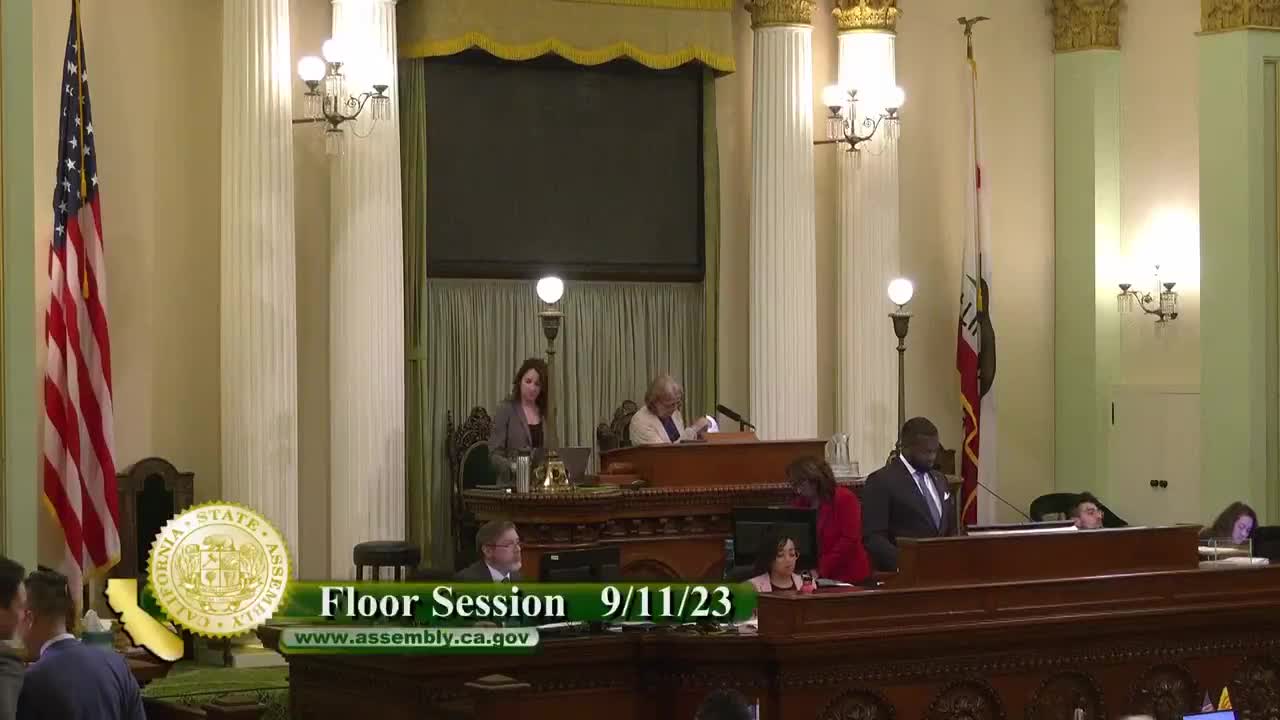 1MIN
Assembly Floor
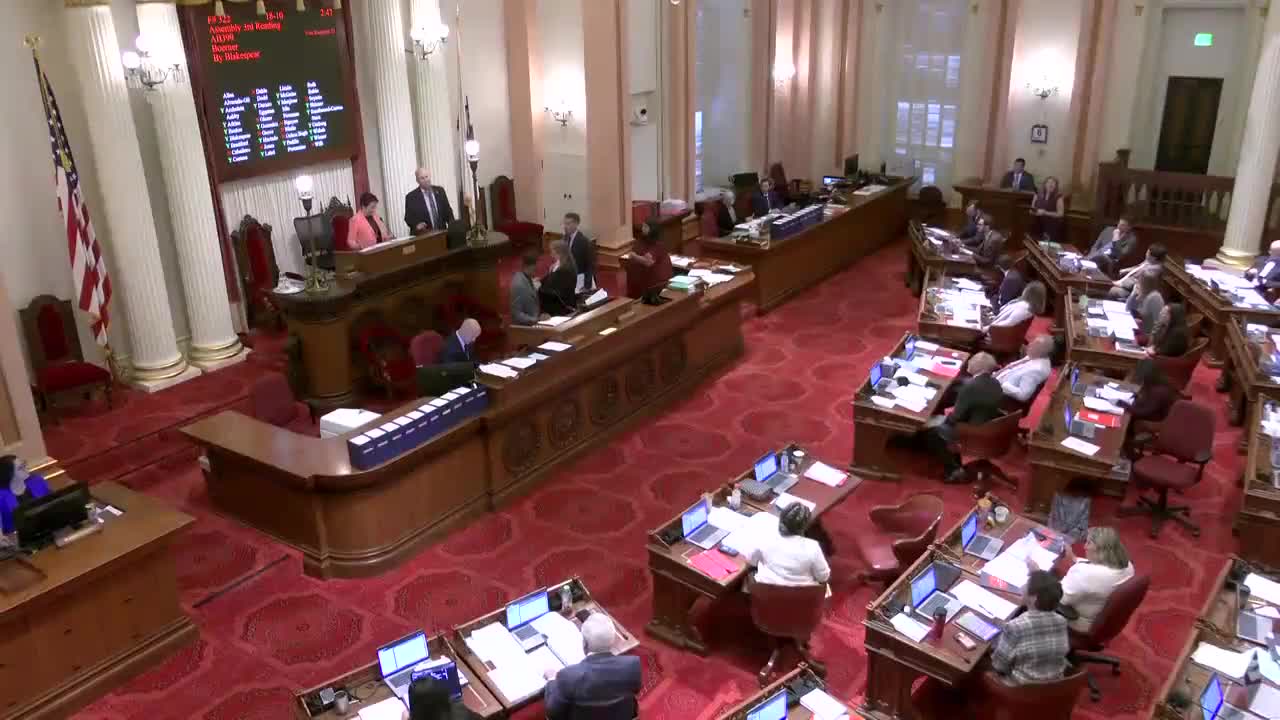 3MIN
Senate Floor
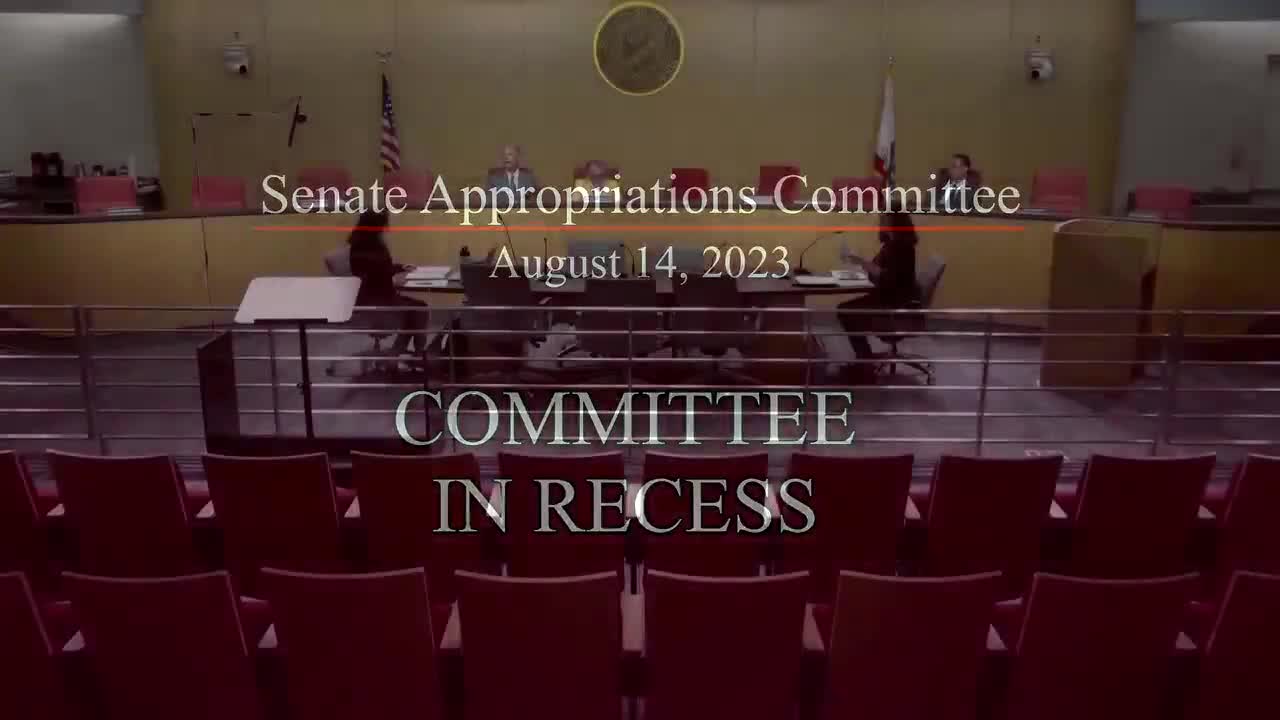 1MIN
Senate Standing Committee on Appropriations
 10MIN
Senate Standing Committee on Judiciary
 11MIN
Senate Standing Committee on Health
 1MIN
Assembly Floor
 5MIN
Assembly Standing Committee on Judiciary
 6MIN
Assembly Standing Committee on Health
Bill Author