AB 1114: Planning and zoning: housing development projects: postentitlement phase permits.
- Session Year: 2023-2024
- House: Assembly
- Latest Version Date: 2023-10-11
Current Status:
Passed
(2023-10-11: Chaptered by Secretary of State - Chapter 753, Statutes of 2023.)
Introduced
In Committee
First Chamber
In Committee
Second Chamber
Enacted
Existing law relating to housing development approval requires a local agency to compile a list of information needed to approve or deny a postentitlement phase permit, to post an example of a complete, approved application and an example of a complete set of postentitlement phase permits for at least 5 types of housing development projects in the jurisdiction, as specified, and to make those items available to all applicants for these permits no later than January 1, 2024. Existing law defines postentitlement phase permit to include all nondiscretionary permits and reviews filed after the entitlement process has been completed that are required or issued by the local agency to begin construction of a development that is intended to be at least 2/3 residential, excluding discretionary and ministerial planning permits, entitlements, and certain other permits and reviews. These permits include, but are not limited to, building permits and all interdepartmental review required for the issuance of a building permit, permits for minor or standard off-site improvements, permits for demolition, and permits for minor or standard excavation and grading. Existing law defines other terms for its purposes.
This bill would modify the definition of postentitlement phase permit to also include all building permits and other permits issued under the California Building Standards Code or any applicable local building code for the construction, demolition, or alteration of buildings, whether discretionary or nondiscretionary.
Existing law establishes time limits for completing reviews regarding whether an application for a postentitlement phase permit is complete and compliant, and whether to approve or deny an application, as specified, and makes any failure to meet these time limits a disapproval of the housing development project and a violation of the Housing Accountability Act.
Existing law requires a local agency, beginning on specified dates determined by population size, to provide an option for postentitlement phase permits to be applied for, completed, and retrieved by the applicant on its internet website, and accept applications for postentitlement phase permits and any related documentation by electronic mail until that process has been established.
This bill would instead require a local agency to return an approved permit application on each postentitlement phase permit requested for a housing development project, if the local agency determines that the complete application is compliant with the permit standards. The bill would prohibit a local agency from subjecting the postentitlement phase permit to any appeals or additional hearing requirements once the local agency determines that the postentitlement permit is compliant with applicable permit standards, as specified.
By imposing additional duties on local officials, the bill would impose a state-mandated local program.
The California Constitution requires the state to reimburse local agencies and school districts for certain costs mandated by the state. Statutory provisions establish procedures for making that reimbursement.
This bill would provide that no reimbursement is required by this act for a specified reason.
Existing law relating to housing development approval requires a local agency to compile a list of information needed to approve or deny a postentitlement phase permit, to post an example of a complete, approved application and an example of a complete set of postentitlement phase permits for at least 5 types of housing development projects in the jurisdiction, as specified, and to make those items available to all applicants for these permits no later than January 1, 2024. Existing law defines postentitlement phase permit to include all nondiscretionary permits and reviews filed after the entitlement process has been completed that are required or issued by the local agency to begin construction of a development that is intended to be at least 2/3 residential, excluding discretionary and ministerial planning permits, entitlements, and certain other permits and reviews. These permits include, but are not limited to, building permits and all interdepartmental review required for the issuance of a building permit, permits for minor or standard off-site improvements, permits for demolition, and permits for minor or standard excavation and grading. Existing law defines other terms for its purposes.
This bill would modify the definition of postentitlement phase permit to also include all building permits and other permits issued under the California Building Standards Code or any applicable local building code for the construction, demolition, or alteration of buildings, whether discretionary or nondiscretionary.
Existing law establishes time limits for completing reviews regarding whether an application for a postentitlement phase permit is complete and compliant, and whether to approve or deny an application, as specified, and makes any failure to meet these time limits a disapproval of the housing development project and a violation of the Housing Accountability Act.
Existing law requires a local agency, beginning on specified dates determined by population size, to provide an option for postentitlement phase permits to be applied for, completed, and retrieved by the applicant on its internet website, and accept applications for postentitlement phase permits and any related documentation by electronic mail until that process has been established.
This bill would modify the definition of postentitlement phase permits to eliminate the nondiscretionary aspect of permits not otherwise excluded, thereby applying the definition to those permits without regard to whether they are nondiscretionary. The bill would require issuance of a postentitlement phase permit, defined as modified in this bill, for a housing development project to be a ministerial duty of the local agency with jurisdiction over the project.This bill would instead require a local agency to return an approved permit application on each postentitlement phase permit requested for a housing development project, if the local agency determines that the complete application is compliant with the permit standards. The bill would prohibit a local agency from subjecting the postentitlement phase permit to any appeals or additional hearing requirements once the local agency determines that the postentitlement permit is compliant with applicable permit standards, as specified.
By imposing additional duties on local officials, the bill would impose a state-mandated local program.
This bill would include findings that changes proposed by this bill address a matter of statewide concern rather than a municipal affair and, therefore, apply to all cities, counties, and cities and counties, including charter cities, counties, and cities and counties.
The California Constitution requires the state to reimburse local agencies and school districts for certain costs mandated by the state. Statutory provisions establish procedures for making that reimbursement.
This bill would provide that no reimbursement is required by this act for a specified reason.
Existing law relating to housing development approval requires a local agency to compile a list of information needed to approve or deny a postentitlement phase permit, to post an example of a complete, approved application and an example of a complete set of postentitlement phase permits for at least 5 types of housing development projects in the jurisdiction, as specified, and to make those items available to all applicants for these permits no later than January 1, 2024. Existing law defines postentitlement phase permit to include all nondiscretionary permits and reviews filed after the entitlement process has been completed that are required or issued by the local agency to begin construction of a development that is intended to be at least 2/3 residential, excluding discretionary and ministerial planning permits, entitlements, and certain other permits and reviews. These permits include, but are not limited to, building permits and all interdepartmental review required for the issuance of a building permit, permits for minor or standard off-site improvements, permits for demolition, and permits for minor or standard excavation and grading. Existing law defines other terms for its purposes.
Existing law establishes time limits for completing reviews regarding whether an application for a postentitlement phase permit is complete and compliant, and whether to approve or deny an application, as specified, and makes any failure to meet these time limits a disapproval of the housing development project and a violation of the Housing Accountability Act.
Existing law requires a local agency, beginning on specified dates determined by population size, to provide an option for postentitlement phase permits to be applied for, completed, and retrieved by the applicant on its internet website, and accept applications for postentitlement phase permits and any related documentation by electronic mail until that process has been established.
This bill would modify the definition of postentitlement phase permits to eliminate the nondiscretionary aspect of permits not otherwise excluded, thereby applying the definition to those permits without regard to whether they are nondiscretionary. The bill would require issuance of a postentitlement phase permit, defined as modified in this bill, for a housing development project to be a ministerial duty of the local agency with jurisdiction over the project.
By imposing additional duties on local officials, the bill would impose a state-mandated local program.
This bill would include findings that changes proposed by this bill address a matter of statewide concern rather than a municipal affair and, therefore, apply to all cities, counties, and cities and counties, including charter cities, counties, and cities and counties.
The California Constitution requires the state to reimburse local agencies and school districts for certain costs mandated by the state. Statutory provisions establish procedures for making that reimbursement.
This bill would provide that no reimbursement is required by this act for a specified reason.
The Legislature finds and declares that this measure is not intended to limit any other law regarding issuance of building permits.
SEC. 2.Section 65913.3 of the Government Code is amended to read:65913.3.(a)(1)A local agency shall compile one or more lists that shall specify in detail the information that will be required from any applicant for a postentitlement phase permit. The local agency may revise the lists of information required from an applicant. Any revised list shall not apply to any permit pending review.
(2)A local agency shall post an example of a complete, approved application and an example of a complete set of postentitlement phase permits for at least five types of housing development projects in the jurisdiction, including, but not limited to, accessory dwelling unit, duplex, multifamily, mixed use, and townhome.
(3)A local agency shall make the items required by paragraphs (1) and (2) available on the agencys internet website no later than January 1, 2024.
(b)(1)(A)A local agency shall determine whether an application for a postentitlement phase permit is complete and provide written notice of this determination to the applicant not later than 15 business days after the local agency received the application.
(B)If the local agency determines an application is incomplete, the local agency shall provide the applicant with a list of incomplete items and a description of how the application can be made complete. The list shall be limited to incomplete items that are included on the lists required by paragraph (1) of subdivision (a). The list and description shall be provided with the written notice required by subparagraph (A).
(2)(A)After receiving a notice that the application was incomplete, an applicant may cure and address the items that are deemed to be incomplete by the local agency.
(B)In the review of an application submitted pursuant to subparagraph (A), the local agency shall not require the application to include an item that was not included in the list required by subparagraph (B) of paragraph (1).
(C)If an applicant submits an application pursuant to subparagraph (A), the local agency shall determine whether the additional application has remedied all incomplete items listed in the determination issued pursuant to subparagraph (B) of paragraph (1). This additional application is subject to the timelines and requirements specified in subparagraph (A) of paragraph (1).
(3)If a local agency does not make a timely determination as required by paragraph (1) or (2) and the application or resubmitted application states that it is for a postentitlement phase permit, the application or resubmitted application shall be deemed to be complete for the purposes of this chapter.
(c)(1)(A)For housing development projects with 25 units or fewer, a local agency shall complete the review and do either of the following:
(i)If the local agency determines that the complete application is not compliant with the permit standards, return in writing a full set of comments to the applicant with a comprehensive request for revisions.
(ii)If the local agency determines that the complete application is compliant with the permit standards, return the approved permit application on each postentitlement phase permit requested.
(B)The local agency shall immediately transmit that determination to the applicant by electronic mail and, if applicable, by posting the response on its internet website in the manner prescribed in subdivision (b) of Section 65913.3.5 not later than 30 business days after the local agency determines that an application for a postentitlement phase permit is complete pursuant to subdivision (b).
(2)(A)For housing development projects with 26 units or more, a local agency shall complete the review and do either of the following:
(i)If the local agency determines that the complete application is not compliant with the permit standards, return in writing a full set of comments to the applicant with a comprehensive request for revisions.
(ii)If the local agency determines that the complete application is compliant with the permit standards, return the approved permit application on each postentitlement phase permit requested.
(B)The local agency shall immediately transmit that determination to the applicant by electronic mail and, if applicable, by posting the response on its internet website in the manner prescribed in subdivision (b) of Section 65913.3.5 not later than 60 business days after the local agency determines that an application for a postentitlement phase permit is complete pursuant to subdivision (b).
(3)Once a local agency determines that a postentitlement permit is compliant with applicable permit standards pursuant to paragraph (1) or (2) the local agency shall not subject the postentitlement phase permit to any appeals or additional hearing requirements.
(4)(A)The time limits in this subdivision shall not apply if the local agency makes written findings within the time limits specified in paragraph (1) or (2) based on substantial evidence in the record that the proposed postentitlement phase permit might have a specific, adverse impact on public health or safety and that additional time is necessary to process the application.
(B)For the purposes of this paragraph, specific, adverse impact means a significant, quantifiable, direct, and unavoidable impact, based on objective, identified, and written public health or safety standards, policies, or conditions as they existed on the date the application was deemed complete.
(5)If the local agency requires review of the application by an outside entity, the time limits in this subdivision shall be tolled until the outside entity completes the review and returns the application to the local agency, at which point the local agency shall complete the review within the time remaining under the time limit, provided that the local agency notifies the applicant within three business days by electronic mail and, if applicable, by posting the notification on its internet website in the manner prescribed in subdivision (b) of Section 65913.3.5 of the tolling and resumption of the time limit.
(d)(1)If a local agency finds that a complete application is noncompliant, the local agency shall provide the applicant with a list of items that are noncompliant and a description of how the application can be remedied by the applicant within the time limits specified in subdivision (c).
(2)The local agency shall provide the list and description authorized by paragraph (1) when it transmits its determination to the applicant as required by subdivision (c).
(3)If a local agency denies a postentitlement phase permit application based on a determination that the application is noncompliant, the applicant may attempt to remedy the application.
(4)If an applicant submits an application pursuant to paragraph (3), the additional application is subject to the timelines of a new application as specified in subdivision (c).
(e)(1)If a postentitlement phase permit is determined to be incomplete under subdivision (b) or denied or determined to be noncompliant under subdivision (c) or (d), the local agency shall provide a process for the applicant to appeal that decision in writing to the governing body of the agency or, if there is no governing body, to the director of the agency, as provided by that agency. A city or county shall provide that the right of appeal is to the governing body or, at their option, the planning commission, or both.
(2)(A)With respect to a postentitlement phase permit concerning housing development projects with 25 units or fewer, a local agency on the appeal shall provide a final written determination by not later than 60 business days after receipt of the applicants written appeal. The fact that an appeal is permitted to both the planning commission and to the governing body does not extend the 60-business-day period.
(B)With respect to a postentitlement phase permit concerning housing development projects with 26 units or more, a local agency on the appeal shall provide a final written determination by not later than 90 business days after receipt of the applicants written appeal. The fact that an appeal is permitted to both the planning commission and to the governing body does not extend the 90-business-day period.
(f)If a local agency fails to meet the time limits in this section, it shall be in violation of Section 65589.5.
(g)This section does not place limitations on the amount of feedback that a local agency may provide or revisions that a local agency may request of an applicant.
(h)For residential or residential mixed-use developments that are subject to the requirements set forth in Section 65913.4, the provisions of paragraph (2) of subdivision (h) of Section 65913.4 shall apply. Permits for these developments that are subject to paragraph (2) of subdivision (h) of Section 65913.4 shall not be in conflict with the requirements of this section. The local agency shall comply with both sets of standards.
(i)This section does not preclude an applicant and a local agency from mutually agreeing to an extension of any time limit provided by this section. However, a local agency shall not require an agreement as a condition of accepting the application for, or processing of, a postentitlement phase permit, unless the agreement is obtained for the purpose of permitting concurrent processing of related approvals or an environmental review on the same housing development project.
(j)For purposes of this section, the following definitions apply:
(1)Housing development project has the same meaning as in paragraph (3) of subdivision (b) of Section 65905.5.
(2)Local agency means any county, city, or city and county.
(3)(A)Postentitlement phase permit includes both of the following:
(i)All nondiscretionary permits and reviews that are required or issued by the local agency after the entitlement process has been completed to begin construction of a development that is intended to be at least two-thirds residential, excluding discretionary and ministerial planning permits, entitlements, and other permits and reviews that are covered under Chapter 4.5 (commencing with Section 65920). A postentitlement phase permit includes, but is not limited to, all of the following:
(I)Building permits, and all interdepartmental review required for the issuance of a building permit.
(II)Permits for minor or standard off-site improvements.
(III)Permits for demolition.
(IV)Permits for minor or standard excavation and grading.
(ii)All building permits and other permits issued under the California Building Standards Code (Title 24 of the California Code of Regulations) or any applicable local building code for the construction, demolition, or alteration of buildings, whether discretionary or nondiscretionary.
(B)A local agency may identify by ordinance a threshold for determining whether a permit constitutes a minor or standard permit for the purposes of this paragraph, which shall be supported by written findings adopted by the jurisdiction.
(C)A postentitlement phase permit does not include a permit required and issued by the California Coastal Commission, a special district, a utility that is not owned and operated by a local agency, or any other entity that is not a city, county, or city and county.
SEC. 3.No reimbursement is required by this act pursuant to Section 6 of Article XIIIB of the California Constitution because a local agency or school district has the authority to levy service charges, fees, or assessments sufficient to pay for the program or level of service mandated by this act, within the meaning of Section 17556 of the Government Code.
The Legislature finds and declares that this measure is not intended to limit any other law regarding issuance of building permits.
SEC. 2.Section 65913.3 of the Government Code is amended to read:65913.3.(a)(1)A local agency shall compile one or more lists that shall specify in detail the information that will be required from any applicant for a postentitlement phase permit. The local agency may revise the lists of information required from an applicant. Any revised list shall not apply to any permit pending review.
(2)A local agency shall post an example of a complete, approved application and an example of a complete set of postentitlement phase permits for at least five types of housing development projects in the jurisdiction, including, but not limited to, accessory dwelling unit, duplex, multifamily, mixed use, and townhome.
(3)A local agency shall make the items required by paragraphs (1) and (2) available on the agencys internet website no later than January 1, 2024.
(b)(1)(A)A local agency shall determine whether an application for a postentitlement phase permit is complete and provide written notice of this determination to the applicant not later than 15 business days after the local agency received the application.
(B)If the local agency determines an application is incomplete, the local agency shall provide the applicant with a list of incomplete items and a description of how the application can be made complete. The list shall be limited to incomplete items that are included on the lists required by paragraph (1) of subdivision (a). The list and description shall be provided with the written notice required by subparagraph (A).
(2)(A)After receiving a notice that the application was incomplete, an applicant may cure and address the items that are deemed to be incomplete by the local agency.
(B)In the review of an application submitted pursuant to subparagraph (A), the local agency shall not require the application to include an item that was not included in the list required by subparagraph (B) of paragraph (1).
(C)If an applicant submits an application pursuant to subparagraph (A), the local agency shall determine whether the additional application has remedied all incomplete items listed in the determination issued pursuant to subparagraph (B) of paragraph (1). This additional application is subject to the timelines and requirements specified in subparagraph (A) of paragraph (1).
(3)If a local agency does not make a timely determination as required by paragraph (1) or (2) and the application or resubmitted application states that it is for a postentitlement phase permit, the application or resubmitted application shall be deemed to be complete for the purposes of this chapter.
(c)(1)(A)For housing development projects with 25 units or fewer, a local agency shall complete the review and either do either of the following:
(i)If the local agency determines that the complete application is not compliant with the permit standards, return in writing a full set of comments to the applicant with a comprehensive request for revisions or, if revisions.
(ii)If the local agency determines that the complete application is compliant with the permit standards, return the approved permit application on each postentitlement phase permit requested, and requested.
(B)The local agency shall immediately transmit that determination to the applicant by electronic mail and, if applicable, by posting the response on its internet website in the manner prescribed in subdivision (b) of Section 65913.3.5 not later than 30 business days after the local agency determines that an application for a postentitlement phase permit is complete pursuant to subdivision (b).
(2)(A)For housing development projects with 26 units or more, a local agency shall complete the review and either do either of the following:
(i)If the local agency determines that the complete application is not compliant with the permit standards, return in writing a full set of comments to the applicant with a comprehensive request for revisions or, if revisions.
(ii)If the local agency determines that the complete application is compliant with the permit standards, return the approved permit application on each postentitlement phase permit requested, and requested.
(B)The local agency shall immediately transmit that determination to the applicant by electronic mail and, if applicable, by posting the response on its internet website in the manner prescribed in subdivision (b) of Section 65913.3.5 not later than 60 business days after the local agency determines that an application for a postentitlement phase permit is complete pursuant to subdivision (b).
(3)Once a local agency determines that a postentitlement permit is compliant with applicable permit standards pursuant to paragraph (1) or (2) the local agency shall not subject the postentitlement phase permit to any appeals or additional hearing requirements.
(4)(A)The time limits in this subdivision shall not apply if the local agency makes written findings within the time limits specified in paragraph (1) or (2) based on substantial evidence in the record that the proposed postentitlement phase permit might have a specific, adverse impact on public health or safety and that additional time is necessary to process the application.
(B)For the purposes of this paragraph, specific, adverse impact means a significant, quantifiable, direct, and unavoidable impact, based on objective, identified, and written public health or safety standards, policies, or conditions as they existed on the date the application was deemed complete.
(5)If the local agency requires review of the application by an outside entity, the time limits in this subdivision shall be tolled until the outside entity completes the review and returns the application to the local agency, at which point the local agency shall complete the review within the time remaining under the time limit, provided that the local agency notifies the applicant within three business days by electronic mail and, if applicable, by posting the notification on its internet website in the manner prescribed in subdivision (b) of Section 65913.3.5 of the tolling and resumption of the time limit.
(d)(1)If a local agency finds that a complete application is noncompliant, the local agency shall provide the applicant with a list of items that are noncompliant and a description of how the application can be remedied by the applicant within the time limits specified in subdivision (c).
(2)The local agency shall provide the list and description authorized by paragraph (1) when it transmits its determination to the applicant as required by subdivision (c).
(3)If a local agency denies a postentitlement phase permit application based on a determination that the application is noncompliant, the applicant may attempt to remedy the application.
(4)If an applicant submits an application pursuant to paragraph (3), the additional application is subject to the timelines of a new application as specified in subdivision (c).
(e)(1)If a postentitlement phase permit is determined to be incomplete under subdivision (b) or denied or determined to be noncompliant under subdivision (c) or (d), the local agency shall provide a process for the applicant to appeal that decision in writing to the governing body of the agency or, if there is no governing body, to the director of the agency, as provided by that agency. A city or county shall provide that the right of appeal is to the governing body or, at their option, the planning commission, or both.
(2)(A)With respect to a postentitlement phase permit concerning housing development projects with 25 units or fewer, a local agency on the appeal shall provide a final written determination by not later than 60 business days after receipt of the applicants written appeal. The fact that an appeal is permitted to both the planning commission and to the governing body does not extend the 60-business-day period.
(B)With respect to a postentitlement phase permit concerning housing development projects with 26 units or more, a local agency on the appeal shall provide a final written determination by not later than 90 business days after receipt of the applicants written appeal. The fact that an appeal is permitted to both the planning commission and to the governing body does not extend the 90-business-day period.
(f)If a local agency fails to meet the time limits in this section, it shall be in violation of Section 65589.5.
(g)This section does not place limitations on the amount of feedback that a local agency may provide or revisions that a local agency may request of an applicant.
(h)For residential or residential mixed-use developments that are subject to the requirements set forth in Section 65913.4, the provisions of paragraph (2) of subdivision (h) of Section 65913.4 shall apply. Permits for these developments that are subject to paragraph (2) of subdivision (h) of Section 65913.4 shall not be in conflict with the requirements of this section. The local agency shall comply with both sets of standards.
(i)This section does not preclude an applicant and a local agency from mutually agreeing to an extension of any time limit provided by this section. However, a local agency shall not require an agreement as a condition of accepting the application for, or processing of, a postentitlement phase permit, unless the agreement is obtained for the purpose of permitting concurrent processing of related approvals or an environmental review on the same housing development project.
(j)For purposes of this section, the following definitions apply:
(1)Housing development project has the same meaning as in paragraph (3) of subdivision (b) of Section 65905.5.
(2)Local agency means any county, city, or city and county.
(3)(A)Postentitlement phase permit includes both of the following:
(i)All nondiscretionary permits and reviews that are required or issued by the local agency after the entitlement process has been completed to begin construction of a development that is intended to be at least two-thirds residential, excluding discretionary and ministerial planning permits, entitlements, and other permits and reviews that are covered under Chapter 4.5 (commencing with Section 65920). A postentitlement phase permit includes, but is not limited to, all of the following:
(I)Building permits, and all interdepartmental review required for the issuance of a building permit.
(II)Permits for minor or standard off-site improvements.
(III)Permits for demolition.
(IV)Permits for minor or standard excavation and grading.
(ii)All building permits and other permits issued under the California Building Standards Code (Title 24 of the California Code of Regulations) or any applicable local building code for the construction, demolition, or alteration of buildings, whether discretionary or nondiscretionary.
(B)A local agency may identify by ordinance a threshold for determining whether a permit constitutes a minor or standard permit for the purposes of this paragraph, which shall be supported by written findings adopted by the jurisdiction.
(C)A postentitlement phase permit does not include a permit required and issued by the California Coastal Commission, a special district, a utility that is not owned and operated by a local agency, or any other entity that is not a city, county, or city and county.
SEC. 3.No reimbursement is required by this act pursuant to Section 6 of Article XIIIB of the California Constitution because a local agency or school district has the authority to levy service charges, fees, or assessments sufficient to pay for the program or level of service mandated by this act, within the meaning of Section 17556 of the Government Code.
The Legislature finds and declares that this measure is not intended to limit any other law regarding issuance of building permits.
SEC. 2.Section 65913.3 of the Government Code is amended to read:65913.3.(a)(1)A local agency shall compile one or more lists that shall specify in detail the information that will be required from any applicant for a postentitlement phase permit. The local agency may revise the lists of information required from an applicant. Any revised list shall not apply to any permit pending review.
(2)A local agency shall post an example of a complete, approved application and an example of a complete set of postentitlement phase permits for at least five types of housing development projects in the jurisdiction, including, but not limited to, accessory dwelling unit, duplex, multifamily, mixed use, and townhome.
(3)A local agency shall make the items required by paragraphs (1) and (2) available on the agencys internet website no later than January 1, 2024.
(b)(1)(A)A local agency shall determine whether an application for a postentitlement phase permit is complete and provide written notice of this determination to the applicant not later than 15 business days after the local agency received the application.
(B)If the local agency determines an application is incomplete, the local agency shall provide the applicant with a list of incomplete items and a description of how the application can be made complete. The list shall be limited to incomplete items that are included on the lists required by paragraph (1) of subdivision (a). The list and description shall be provided with the written notice required by subparagraph (A).
(2)(A)After receiving a notice that the application was incomplete, an applicant may cure and address the items that are deemed to be incomplete by the local agency.
(B)In the review of an application submitted pursuant to subparagraph (A), the local agency shall not require the application to include an item that was not included in the list required by subparagraph (B) of paragraph (1).
(C)If an applicant submits an application pursuant to subparagraph (A), the local agency shall determine whether the additional application has remedied all incomplete items listed in the determination issued pursuant to subparagraph (B) of paragraph (1). This additional application is subject to the timelines and requirements specified in subparagraph (A) of paragraph (1).
(3)If a local agency does not make a timely determination as required by paragraph (1) or (2) and the application or resubmitted application states that it is for a postentitlement phase permit, the application or resubmitted application shall be deemed to be complete for the purposes of this chapter.
(c)(1)For housing development projects with 25 units or fewer, a local agency shall complete the review and either return in writing a full set of comments to the applicant with a comprehensive request for revisions or or, if the local agency determines that the complete application is compliant with the permit standards, return the approved permit application on each postentitlement phase permit requested, and immediately transmit that determination to the applicant by electronic mail and, if applicable, by posting the response on its internet website in the manner prescribed in subdivision (b) of Section 65913.3.5 not later than 30 business days after the local agency determines that an application for a postentitlement phase permit is complete pursuant to subdivision (b).
(2)For housing development projects with 26 units or more, a local agency shall complete the review and either return in writing a full set of comments to the applicant with a comprehensive request for revisions or or, if the local agency determines that the complete application is compliant with the permit standards, return the approved permit application on each postentitlement phase permit requested, and immediately transmit that determination to the applicant by electronic mail and, if applicable, by posting the response on its internet website in the manner prescribed in subdivision (b) of Section 65913.3.5 not later than 60 business days after the local agency determines that an application for a postentitlement phase permit is complete pursuant to subdivision (b).
(3)Once a local agency determines that a postentitlement permit is compliant with applicable permit standards pursuant to paragraph (1) or (2) the local agency shall not subject the postentitlement phase permit to any appeals or additional hearing requirements.
(3)(4)(A)The time limits in this subdivision shall not apply if the local agency makes written findings within the time limits specified in paragraph (1) or (2) based on substantial evidence in the record that the proposed postentitlement phase permit might have a specific, adverse impact on public health or safety and that additional time is necessary to process the application.
(B)For the purposes of this paragraph, specific, adverse impact means a significant, quantifiable, direct, and unavoidable impact, based on objective, identified, and written public health or safety standards, policies, or conditions as they existed on the date the application was deemed complete.
(4)(5)If the local agency requires review of the application by an outside entity, the time limits in this subdivision shall be tolled until the outside entity completes the review and returns the application to the local agency, at which point the local agency shall complete the review within the time remaining under the time limit, provided that the local agency notifies the applicant within three business days by electronic mail and, if applicable, by posting the notification on its internet website in the manner prescribed in subdivision (b) of Section 65913.3.5 of the tolling and resumption of the time limit.
(d)(1)If a local agency finds that a complete application is noncompliant, the local agency shall provide the applicant with a list of items that are noncompliant and a description of how the application can be remedied by the applicant within the time limits specified in subdivision (c).
(2)The local agency shall provide the list and description authorized by paragraph (1) when it transmits its determination to the applicant as required by subdivision (c).
(3)If a local agency denies a postentitlement phase permit application based on a determination that the application is noncompliant, the applicant may attempt to remedy the application.
(4)If an applicant submits an application pursuant to paragraph (3), the additional application is subject to the timelines of a new application as specified in subdivision (c).
(e)(1)If a postentitlement phase permit is determined to be incomplete under subdivision (b) or denied or determined to be noncompliant under subdivision (c) or (d), the local agency shall provide a process for the applicant to appeal that decision in writing to the governing body of the agency or, if there is no governing body, to the director of the agency, as provided by that agency. A city or county shall provide that the right of appeal is to the governing body or, at their option, the planning commission, or both.
(2)(A)With respect to a postentitlement phase permit concerning housing development projects with 25 units or fewer, a local agency on the appeal shall provide a final written determination by not later than 60 business days after receipt of the applicants written appeal. The fact that an appeal is permitted to both the planning commission and to the governing body does not extend the 60-business-day period.
(B)With respect to a postentitlement phase permit concerning housing development projects with 26 units or more, a local agency on the appeal shall provide a final written determination by not later than 90 business days after receipt of the applicants written appeal. The fact that an appeal is permitted to both the planning commission and to the governing body does not extend the 90-business-day period.
(f)If a local agency fails to meet the time limits in this section, it shall be in violation of Section 65589.5.
(g)This section does not place limitations on the amount of feedback that a local agency may provide or revisions that a local agency may request of an applicant.
(h)For residential or residential mixed-use developments that are subject to the requirements set forth in Section 65913.4, the provisions of paragraph (2) of subdivision (h) of Section 65913.4 shall apply. Permits for these developments that are subject to paragraph (2) of subdivision (h) of Section 65913.4 shall not be in conflict with the requirements of this section. The local agency shall comply with both sets of standards.
(i)This section does not preclude an applicant and a local agency from mutually agreeing to an extension of any time limit provided by this section. However, a local agency shall not require an agreement as a condition of accepting the application for, or processing of, a postentitlement phase permit, unless the agreement is obtained for the purpose of permitting concurrent processing of related approvals or an environmental review on the same housing development project.
(j)For purposes of this section, the following definitions apply:
(1)Housing development project has the same meaning as in paragraph (3) of subdivision (b) of Section 65905.5.
(2)Local agency means any county, city, or city and county.
(3)(A)Postentitlement phase permit includes all both of the following:
(i)All nondiscretionary permits and reviews filed after the entitlement process has been completed that are required or issued by the local agency after the entitlement process has been completed to begin construction of a development that is intended to be at least two-thirds residential, excluding discretionary and ministerial planning permits, entitlements, and other permits and reviews that are covered under Chapter 4.5 (commencing with Section 65920). A postentitlement phase permit includes, but is not limited to, all of the following:
(i)(I)Building permits, and all interdepartmental review required for the issuance of a building permit.
(ii)(II)Permits for minor or standard off-site improvements.
(iii)(III)Permits for demolition.
(iv)(IV)Permits for minor or standard excavation and grading.
(ii)All building permits and other permits issued under the California Building Standards Code (Title 24 of the California Code of Regulations) or any applicable local building code for the construction, demolition, or alteration of buildings, whether discretionary or nondiscretionary.
(B)A local agency may identify by ordinance a threshold for determining whether a permit constitutes a minor or standard permit for the purposes of this paragraph, which shall be supported by written findings adopted by the jurisdiction.
(C)A postentitlement phase permit does not include a permit required and issued by the California Coastal Commission, a special district, a utility that is not owned and operated by a local agency, or any other entity that is not a city, county, or city and county.
SEC. 3.Section 65913.3.7 is added to the Government Code, to read:65913.3.7.Issuance of a postentitlement phase permit for a housing development project shall be a ministerial duty of the local agency with jurisdiction over the project. As used in this section, housing development project, local agency, and postentitlement phase permit have the same meanings as defined in Section 65913.3.SEC. 4.The Legislature finds and declares that access to affordable housing is a matter of statewide concern and is not a municipal affair as that term is used in Section 5 of Article XI of the California Constitution. Therefore, Section 3 of this act adding Section 65913.3.7 to the Government Code applies to all cities, counties, and cities and counties, including charter cities, counties, and cities and counties.SEC. 5.SEC. 3.No reimbursement is required by this act pursuant to Section 6 of Article XIIIB of the California Constitution because a local agency or school district has the authority to levy service charges, fees, or assessments sufficient to pay for the program or level of service mandated by this act, within the meaning of Section 17556 of the Government Code.
The Legislature finds and declares that this measure is not intended to limit any other law regarding issuance of building permits.
SEC. 2.Section 65913.3 of the Government Code is amended to read:65913.3.(a)(1)A local agency shall compile one or more lists that shall specify in detail the information that will be required from any applicant for a postentitlement phase permit. The local agency may revise the lists of information required from an applicant. Any revised list shall not apply to any permit pending review.
(2)A local agency shall post an example of a complete, approved application and an example of a complete set of postentitlement phase permits for at least five types of housing development projects in the jurisdiction, including, but not limited to, accessory dwelling unit, duplex, multifamily, mixed use, and townhome.
(3)A local agency shall make the items required by paragraphs (1) and (2) available on the agencys internet website no later than January 1, 2024.
(b)(1)(A)A local agency shall determine whether an application for a postentitlement phase permit is complete and provide written notice of this determination to the applicant not later than 15 business days after the local agency received the application.
(B)If the local agency determines an application is incomplete, the local agency shall provide the applicant with a list of incomplete items and a description of how the application can be made complete. The list shall be limited to incomplete items that are included on the lists required by paragraph (1) of subdivision (a). The list and description shall be provided with the written notice required by subparagraph (A).
(2)(A)After receiving a notice that the application was incomplete, an applicant may cure and address the items that are deemed to be incomplete by the local agency.
(B)In the review of an application submitted pursuant to subparagraph (A), the local agency shall not require the application to include an item that was not included in the list required by subparagraph (B) of paragraph (1).
(C)If an applicant submits an application pursuant to subparagraph (A), the local agency shall determine whether the additional application has remedied all incomplete items listed in the determination issued pursuant to subparagraph (B) of paragraph (1). This additional application is subject to the timelines and requirements specified in subparagraph (A) of paragraph (1).
(3)If a local agency does not make a timely determination as required by paragraph (1) or (2) and the application or resubmitted application states that it is for a postentitlement phase permit, the application or resubmitted application shall be deemed to be complete for the purposes of this chapter.
(c)(1)For housing development projects with 25 units or fewer, a local agency shall complete the review and either return in writing a full set of comments to the applicant with a comprehensive request for revisions or return the approved permit application on each postentitlement phase permit requested, and immediately transmit that determination to the applicant by electronic mail and, if applicable, by posting the response on its internet website in the manner prescribed in subdivision (b) of Section 65913.3.5 not later than 30 business days after the local agency determines that an application for a postentitlement phase permit is complete pursuant to subdivision (b).
(2)For housing development projects with 26 units or more, a local agency shall complete the review and either return in writing a full set of comments to the applicant with a comprehensive request for revisions or return the approved permit application on each postentitlement phase permit requested, and immediately transmit that determination to the applicant by electronic mail and, if applicable, by posting the response on its internet website in the manner prescribed in subdivision (b) of Section 65913.3.5 not later than 60 business days after the local agency determines that an application for a postentitlement phase permit is complete pursuant to subdivision (b).
(3)(A)The time limits in this subdivision shall not apply if the local agency makes written findings within the time limits specified in paragraph (1) or (2) based on substantial evidence in the record that the proposed postentitlement phase permit might have a specific, adverse impact on public health or safety and that additional time is necessary to process the application.
(B)For the purposes of this paragraph, specific, adverse impact means a significant, quantifiable, direct, and unavoidable impact, based on objective, identified, and written public health or safety standards, policies, or conditions as they existed on the date the application was deemed complete.
(4)If the local agency requires review of the application by an outside entity, the time limits in this subdivision shall be tolled until the outside entity completes the review and returns the application to the local agency, at which point the local agency shall complete the review within the time remaining under the time limit, provided that the local agency notifies the applicant within three business days by electronic mail and, if applicable, by posting the notification on its internet website in the manner prescribed in subdivision (b) of Section 65913.3.5 of the tolling and resumption of the time limit.
(d)(1)If a local agency finds that a complete application is noncompliant, the local agency shall provide the applicant with a list of items that are noncompliant and a description of how the application can be remedied by the applicant within the time limits specified in subdivision (c).
(2)The local agency shall provide the list and description authorized by paragraph (1) when it transmits its determination to the applicant as required by subdivision (c).
(3)If a local agency denies a postentitlement phase permit application based on a determination that the application is noncompliant, the applicant may attempt to remedy the application.
(4)If an applicant submits an application pursuant to paragraph (3), the additional application is subject to the timelines of a new application as specified in subdivision (c).
(e)(1)If a postentitlement phase permit is determined to be incomplete under subdivision (b) or denied or determined to be noncompliant under subdivision (c) or (d), the local agency shall provide a process for the applicant to appeal that decision in writing to the governing body of the agency or, if there is no governing body, to the director of the agency, as provided by that agency. A city or county shall provide that the right of appeal is to the governing body or, at their option, the planning commission, or both.
(2)(A)With respect to a postentitlement phase permit concerning housing development projects with 25 units or fewer, a local agency on the appeal shall provide a final written determination by not later than 60 business days after receipt of the applicants written appeal. The fact that an appeal is permitted to both the planning commission and to the governing body does not extend the 60-business-day period.
(B)With respect to a postentitlement phase permit concerning housing development projects with 26 units or more, a local agency on the appeal shall provide a final written determination by not later than 90 business days after receipt of the applicants written appeal. The fact that an appeal is permitted to both the planning commission and to the governing body does not extend the 90-business-day period.
(f)If a local agency fails to meet the time limits in this section, it shall be in violation of Section 65589.5.
(g)This section does not place limitations on the amount of feedback that a local agency may provide or revisions that a local agency may request of an applicant.
(h)For residential or residential mixed-use developments that are subject to the requirements set forth in Section 65913.4, the provisions of paragraph (2) of subdivision (h) of Section 65913.4 shall apply. Permits for these developments that are subject to paragraph (2) of subdivision (h) of Section 65913.4 shall not be in conflict with the requirements of this section. The local agency shall comply with both sets of standards.
(i)This section does not preclude an applicant and a local agency from mutually agreeing to an extension of any time limit provided by this section. However, a local agency shall not require an agreement as a condition of accepting the application for, or processing of, a postentitlement phase permit, unless the agreement is obtained for the purpose of permitting concurrent processing of related approvals or an environmental review on the same housing development project.
(j)For purposes of this section, the following definitions apply:
(1)Housing development project has the same meaning as in paragraph (3) of subdivision (b) of Section 65905.5.
(2)Local agency means any county, city, or city and county.
(3)(A)Postentitlement phase permit includes all nondiscretionary permits and reviews filed after the entitlement process has been completed that are required or issued by the local agency to begin construction of a development that is intended to be at least two-thirds residential, excluding discretionary and ministerial planning permits, entitlements, and other permits and reviews that are covered under Chapter 4.5 (commencing with Section 65920). A postentitlement phase permit includes, but is not limited to, all of the following:
(i)Building permits, and all inter-departmental interdepartmental review required for the issuance of a building permit.
(ii)Permits for minor or standard off-site improvements.
(iii)Permits for demolition.
(iv)Permits for minor or standard excavation and grading.
(B)A local agency may identify by ordinance a threshold for determining whether a permit constitutes a minor or standard permit for the purposes of this paragraph, which shall be supported by written findings adopted by the jurisdiction.
(C)A postentitlement phase permit does not include a permit required and issued by the California Coastal Commission, a special district, a utility that is not owned and operated by a local agency, or any other entity that is not a city, county, or city and county.
SEC. 3.Section 65913.3.7 is added to the Government Code, to read:65913.3.7.Issuance of a postentitlement phase permit for a housing development project shall be a ministerial duty of the local agency with jurisdiction over the project. As used in this section, housing development project, local agency, and postentitlement phase permit have the same meanings as defined in Section 65913.3.
SEC. 4.The Legislature finds and declares that access to affordable housing is a matter of statewide concern and is not a municipal affair as that term is used in Section 5 of Article XI of the California Constitution. Therefore, Section 3 of this act adding Section 65913.3.7 to the Government Code applies to all cities, counties, and cities and counties, including charter cities, counties, and cities and counties.
SEC. 5.No reimbursement is required by this act pursuant to Section 6 of Article XIIIB of the California Constitution because a local agency or school district has the authority to levy service charges, fees, or assessments sufficient to pay for the program or level of service mandated by this act, within the meaning of Section 17556 of the Government Code.
|
Date
|
Status
|
|---|---|
| Oct 11, 2023 | Chaptered by Secretary of State - Chapter 753, Statutes of 2023. |
| Oct 11, 2023 | Approved by the Governor. |
| Sep 12, 2023 | Enrolled and presented to the Governor at 2 p.m. |
| Sep 5, 2023 | In Assembly. Ordered to Engrossing and Enrolling. |
| Sep 5, 2023 | Read third time. Passed. Ordered to the Assembly. (Ayes 39. Noes 0. Page 2360.). |
| Aug 17, 2023 | Ordered to third reading. |
| Aug 17, 2023 | From Consent Calendar. |
| Aug 15, 2023 | Read second time. Ordered to Consent Calendar. |
| Aug 14, 2023 | From committee: Be ordered to second reading file pursuant to Senate Rule 28.8 and ordered to Consent Calendar. |
| Jul 11, 2023 | From committee: Do pass and re-refer to Com. on APPR with recommendation: To Consent Calendar. (Ayes 11. Noes 0.) (July 10). Re-referred to Com. on APPR. |
| Jun 21, 2023 | From committee: Do pass and re-refer to Com. on HOUSING. (Ayes 8. Noes 0.) (June 21). Re-referred to Com. on HOUSING. |
| Jun 2, 2023 | In committee: Hearing postponed by committee. |
| May 17, 2023 | Referred to Coms. on GOV. & F. and HOUSING. |
| May 4, 2023 | In Senate. Read first time. To Com. on RLS. for assignment. |
| May 4, 2023 | Read third time. Passed. Ordered to the Senate. (Ayes 75. Noes 0. Page 1462.) |
| Apr 27, 2023 | Read second time. Ordered to Consent Calendar. |
| Apr 26, 2023 | From committee: Do pass. To Consent Calendar. (Ayes 16. Noes 0.) (April 26). |
| Apr 17, 2023 | Re-referred to Com. on APPR. |
| Apr 13, 2023 | Read second time and amended. |
| Apr 12, 2023 | From committee: Amend, and do pass as amended and re-refer to Com. on APPR. (Ayes 8. Noes 0.) (April 12). |
| Mar 28, 2023 | Re-referred to Com. on H. & C.D. |
| Mar 27, 2023 | Read second time and amended. |
| Mar 23, 2023 | From committee: Amend, and do pass as amended and re-refer to Com. on H. & C.D. (Ayes 8. Noes 0.) (March 22). |
| Mar 2, 2023 | Referred to Coms. on L. GOV. and H. & C.D. |
| Feb 16, 2023 | From printer. May be heard in committee March 18. |
| Feb 15, 2023 | Read first time. To print. |
|
Date
|
Description
|
Location
|
Votes
|
|
|---|---|---|---|---|
| Sep 5, 2023 | Assembly 3rd Reading AB1114 Haney By Wiener | Senate Floor |
Passed |
|
| Jul 10, 2023 | Do pass, but first be re-referred to the Committee on [Appropriations] with the recommendation: To Consent Calendar | Senate Standing Committee on Housing |
Passed |
|
| Jun 21, 2023 | Do pass, but first be re-referred to the Committee on [Housing] | Senate Standing Committee on Governance and Finance |
Passed |
|
| May 4, 2023 | AB 1114 Haney Consent Calendar Second Day Regular Session | Assembly Floor |
Passed |
|
| Apr 26, 2023 | Do pass. To Consent Calendar. | Assembly Standing Committee on Appropriations |
Passed |
|
| Apr 12, 2023 | Do pass as amended and be re-referred to the Committee on [Appropriations] | Assembly Standing Committee on Housing and Community Development |
Passed |
|
| Mar 22, 2023 | Do pass as amended and be re-referred to the Committee on [Housing and Community Development] | Assembly Standing Committee on Local Government |
Passed |
This list shows positions taken on this bill by organizations on the date displayed, which is linked to the original source.
Positions by individuals are not included.
|
Organization
|
Position
|
Date
|
|---|---|---|
| Bay Area Council | ** Support | |
| California Apartment Association | ** Support | |
| California Building Industry Association | ** Support | |
| California Housing Partnership | ** Support | |
| Housing Action Coalition | ** Support | |
| London Breed - Mayor of City & County of San Francisco | ** Support | |
| Silicon Valley Leadership Group | ** Support | |
| State Building and Construction Trades Council of California | ** Against |
SENATE RULES COMMITTEE Office of Senate Floor Analyses (916) 651-1520 Fax: (916) 327-4478 | AB 1114 |
THIRD READING
Bill No: AB 1114
Author: Haney (D)
Amended: 4/13/23 in Assembly
Vote: 21
SENATE GOVERNANCE & FIN. COMMITTEE: 8-0, 6/21/23
AYES: Caballero, Seyarto, Blakespear, Dahle, Durazo, Glazer, Skinner, Wiener
SENATE HOUSING COMMITTEE: 11-0, 7/10/23
AYES: Wiener, Ochoa Bogh, Blakespear, Caballero, Cortese, McGuire, Padilla, Seyarto, Skinner, Umberg, Wahab
SENATE APPROPRIATIONS COMMITTEE: Senate Rule 28.8
ASSEMBLY FLOOR: 75-0, 5/4/23 (Consent) - See last page for vote
SUBJECT: Planning and zoning: housing development projects: postentitlement phase permits
SOURCE: Housing Action Coalition
Mayor of City & County of San Francisco London Breed
DIGEST:
This bill expands the post-entitlement permits subject to timelines for review and approval to include all building permits as specified, whether discretionary or nondiscretionary.
ANALYSIS:
Existing law:
- Allows a city or a county to “make and enforce within its limits, all local, police, sanitary and other ordinances and regulations not in conflict with general laws.” It is from this fundamental power (commonly called the police power) that cities and counties derive their authority to regulate behavior to preserve the health, safety, and welfare of the public, including land use authority.
- Requires, pursuant to Planning and Zoning Law, every city and county to adopt a general plan that sets out planned uses for all of the area covered by the plan, and requires the general plan to include seven (sometimes eight) mandatory elements, including a land use element.
- Requires major land use decisions by cities and counties, such as development permitting and subdivisions of land, to be consistent with their adopted general plans.
- Establishes the Permit Streamlining Act (PSA), which, among other things, establishes time limits within which state and local government agencies must either approve or disapprove permits to entitle a development.
- Requires cities and counties to review and approve “post-entitlement permits” that are necessary to construct a housing development project within certain timeframes (AB 2234, R. Rivas, 2022). Specifically, a local agency has:
- 15 business days from receiving an application for a post-entitlement permit to determine whether the application is complete and notify the applicant of its determination. If the application is not complete, the city or county must provide the applicant with a list of incomplete items and a description of how the application can be made complete;
- 30 business days after determining an application is complete to approve or deny the application for a project containing 25 units or fewer and 60 business days for projects containing 26 or more units. If the local agency finds the application noncompliant, it must also provide the applicant with a list of items that are noncompliant and a description of how the application can be remedied.
- Defines post-entitlement permit to mean:
- All nondiscretionary permits and reviews filed after the entitlement process has been completed that are required or issued by the local agency to begin construction of a development that is intended to be at least two-thirds residential, excluding discretionary and ministerial planning permits, entitlements, and other permits and reviews as specified. A postentitlement phase permit includes, but is not limited to, all of the following:
- Building permits, and all inter-departmental review required for the issuance of a building permit.
- Permits for minor or standard off-site improvements.
- Permits for demolition.
- Permits for minor or standard excavation and grading.
- All nondiscretionary permits and reviews filed after the entitlement process has been completed that are required or issued by the local agency to begin construction of a development that is intended to be at least two-thirds residential, excluding discretionary and ministerial planning permits, entitlements, and other permits and reviews as specified. A postentitlement phase permit includes, but is not limited to, all of the following:
- Requires cities and counties to establish a process for appealing determinations on post-entitlement projects.
- Deems a failure to meet the timelines above a violation of the Housing Accountability Act, and deems an application complete if a city or county fails to make a determination of completeness within the required timeframe.
This bill:
- Expands the post-entitlement permits subject to the expedited review process and timelines to include all building permits and other permits cities and counties issue under the California Building Standards Code, or any applicable local building code for the construction, demolition, or alteration of buildings, whether discretionary or nondiscretionary.
- Prohibits a city or county from subjecting the post-entitlement phase permit to any appeals or additional hearing requirements once a local agency determines a post-entitlement permit is compliant with applicable permit standards.
- Clarifies that if the local agency determines the complete application is compliant with the permit standards, it only needs to return the approved permit application, not also provide written comments.
Background
The Permit Streamlining Act (PSA) requires public agencies to act fairly and promptly on applications for development proposals, including housing developments. Under the PSA, public agencies have 30 days to determine whether applications for development projects are complete and to request additional information; failure the public agency to act results in an application being “deemed complete.” The PSA applies to the discretionary approval phase of a development review process. This is the phase where the local agency, in its discretion, decides whether to approve the concept outlined in the development proposal. Since the local agency is exercising discretion, the approval decision is subject to CEQA.
A development proposal a local agency approves and entitles must still obtain approval for a range of non-discretionary permits to ensure it complies with state and local building codes, and other measures that protect public health, safety and the environment. These post-entitlement permits can cover demolition, paving, site remediation, and other activities necessary for the physical construction of the proposed project and are only applied for and issued after the project has been “entitled”—meaning the project has received the necessary planning approvals.
AB 2234 (R. Rivas, Chapter 651, Statutes of 2022) established procedures and timelines for cities and counties to process applications for post-entitlement permits, as described above. While the PSA requires specific timeframes for the entitlement phase of development approval, and AB 2234 requires specific timeframes for nondiscretionary postentitlement phase permits, discretionary postentitlement permits are not subject to these requirements. For example, San Francisco issues several postentitlement phase permits on a discretionary basis. The San Francisco Planning Code (SF Planning Code) subjects permits issued under the California Building Standards Code for the construction, demolition, or alteration of buildings (as well as other permits that are typically non-discretionary) to additional discretionary review procedures. The Housing Action Coalition wants to subject discretionary permits under the California Building Standards Code to AB 2234’s review process.
Comments
Purpose of the bill. According to the author, “In San Francisco it can take almost two years to issue a post-entitlement building permit, partly because it’s the only city in California where one person can appeal a building permit after a project has already been approved by the Board of Supervisors or Planning Commission. Because of this unique process, San Francisco is struggling to build housing and is falling behind the rest of the State on its affordable housing goals. AB 1114 will address the post approval appeals problem and help build more housing in San Francisco by clarifying that building permits for projects that have already received approval from the local agency are not subject to additional appeals.”
Related/Prior Legislation
AB 281 (Grayson, 2023) requires special districts to comply with specified timeframes, similar to those for cities and counties, when reviewing and approving post-entitlement phase permit applications from housing developers.
FISCAL EFFECT: Appropriation: No Fiscal Com.: Yes Local: Yes
SUPPORT: (Verified 8/16/23)
Housing Action Coalition (co-source)
Mayor of City & County of San Francisco London Breed (co-source)
Bay Area Council
California Apartment Association
California Building Industry Association
California Housing Partnership
Silicon Valley Leadership Group
OPPOSITION: (Verified 8/16/23)
None received
ASSEMBLY FLOOR: 75-0, 5/4/23
AYES: Addis, Aguiar-Curry, Alanis, Alvarez, Arambula, Bains, Bauer-Kahan, Bennett, Berman, Boerner, Bonta, Bryan, Calderon, Juan Carrillo, Wendy Carrillo, Cervantes, Chen, Connolly, Megan Dahle, Davies, Dixon, Essayli, Mike Fong, Vince Fong, Friedman, Gabriel, Gallagher, Garcia, Gipson, Grayson, Haney, Hart, Holden, Hoover, Irwin, Jackson, Jones-Sawyer, Kalra, Lackey, Lee, Low, Lowenthal, Maienschein, Mathis, McCarty, Stephanie Nguyen, Ortega, Pacheco, Papan, Jim Patterson, Joe Patterson, Pellerin, Petrie-Norris, Quirk-Silva, Ramos, Reyes, Luz Rivas, Robert Rivas, Rodriguez, Blanca Rubio, Sanchez, Santiago, Schiavo, Soria, Ta, Ting, Valencia, Villapudua, Waldron, Ward, Weber, Wilson, Wood, Zbur, Rendon
NO VOTE RECORDED: Flora, McKinnor, Muratsuchi, Wallis, Wicks
Prepared by: Anton Favorini-Csorba / GOV. & F. / (916) 651-4119
8/17/23 11:06:45
**** END ****
SENATE COMMITTEE ON HOUSING
Senator Scott Wiener, Chair
2023 - 2024 Regular
Bill No: AB 1114 Hearing Date: 7/10/2023
Author: | Haney | ||
Version: | 4/13/2023 | ||
Urgency: | No | Fiscal: | Yes |
Consultant: | Alison Hughes | ||
SUBJECT: Planning and zoning: housing development projects: postentitlement phase permits
DIGEST: This bill expands the postentitlement permits subject to expedited review process and timelines to include all building permits and other permits issued under the California Building Standards Code, or any applicable local building code for the construction, demolition, or alteration of buildings, whether discretionary or nondiscretionary.
ANALYSIS:
Existing law:
- Requires major land use decisions by cities and counties, such as development permitting and subdivisions of land, to be consistent with their adopted general plans.
- Establishes the Permit Streamlining Act (PSA), which, among other things, establishes time limits within which state and local government agencies must either approve or disapprove permits to entitle a development.
- Defines “postentitlement phase permit” as follows:
- Includes all nondiscretionary permits required by the local agency after the entitlement process to begin construction of a development that is intended to be at least two-thirds residential, excluding specified planning permits, entitlements, and other permits. These permits include, but are not limited to, all of the following:
- Building permits, and all inter-departmental review required for the issuance of a building permit;
- Permits for minor or standard off-site improvements;
- Permits for demolition; and
- Permits for minor or standard excavation and grading.
- Excludes discretionary or ministerial planning permits, among others.
- Excludes a permit required and issued by the California Coastal Commission, a special district, or a utility that is not owned and operated by a local agency, or any other entity that is not a city or county.
- Includes all nondiscretionary permits required by the local agency after the entitlement process to begin construction of a development that is intended to be at least two-thirds residential, excluding specified planning permits, entitlements, and other permits. These permits include, but are not limited to, all of the following:
- Requires a local agency, defined to include a city or county, to compile one or more lists of information that will be required from any applicant for a postentitlement phase permit, as specified.
- Specifies a process for approving postentitlement permits, as specified.
This bill:
- Expands the postentitlement permits subject to the expedited review process and timelines to include all building permits and other permits cities and counties issue under the California Building Standards Code, or any applicable local building code for the construction, demolition, or alteration of buildings, whether discretionary or nondiscretionary.
- Prohibits a city or county from subjecting the postentitlement phase permit to any appeals or additional hearing requirements once a local agency determines a postentitlement permit is compliant with applicable permit standards.
- Makes other technical clarifying changes.
COMMENTS:
- Author’s statement. “In San Francisco it can take almost two years to issue a post-entitlement building permit, partly because it’s the only city in California where one person can appeal a building permit after a project has already been approved by the Board of Supervisors or Planning Commission. Because of this unique process, San Francisco is struggling to build housing and is falling behind the rest of the State on its affordable housing goals. AB 1114 will address the post approval appeals problem and help build more housing in San Francisco by clarifying that building permits for projects that have already received approval from the local agency are not subject to additional appeals.”
- Zoning and land use approvals, generally. Cities and counties enact zoning ordinances to implement their general plans. Zoning determines the type of housing that can be built. In addition, before building new housing, housing developers must obtain one or more permits from local planning departments and must also obtain approval from local planning commissions, city councils, or county board of supervisors. A zoning ordinance may be subject to the California Environmental Quality Act (CEQA) if it will have a significant impact upon the environment. The adoption of accessory dwelling unit (ADU) ordinances, however, are explicitly exempt from CEQA. There are also several statutory exemptions that provide limited environmental review for projects that are consistent with a previously adopted general plan, community plan, specific plan, or zoning ordinance. Some housing projects can be permitted by city or county planning staff ministerially or without further approval from elected officials. Projects reviewed ministerially, or by-right, require only an administrative review designed to ensure they are consistent with existing general plan and zoning rules, as well as meet standards for building quality, health, and safety. Most large housing projects are not allowed ministerial review. Instead, these projects are vetted through both public hearings and administrative review. Most housing projects that require discretionary review and approval are subject to review under the CEQA, while projects permitted ministerially generally are not.
The scale of the proposed development, as well as the existing environmental setting determine the degree of local review that occurs. For larger developments, the local entitlement process commonly requires multiple discretionary decisions regarding the subdivision of land, environmental review per CEQA, design review, and project review by the local agency’s legislative body (city council or county board of supervisors) or by a planning commission, the legislative body has delegated to.
- The Permit Streamlining Act (PSA). The PSA requires public agencies to act fairly and promptly on applications for development proposals, including housing developments. Public agencies must develop lists of the information that applicants must provide in order for a development application, including an application for housing, to be complete and explain the criteria they will use to review permit applications. Public agencies have 30 days to determine whether applications for development projects are complete and request additional information; failure to act results in an application being “deemed complete.” If an application is incomplete, the PSA requires local agencies to exhaustively list all information needed to make a development application complete and prohibits local agencies from asking for additional information that was not initially required.
Once a complete application for a development has been submitted, the PSA requires local officials to act within a specific time-period after completing any environmental review documents required under CEQA, ranging between 60 and 180 days. If the local government fails to approve or disapprove the application in the applicable time-period, the application is deemed approved.
- Nondiscretionary Postentitlement Permits. The PSA establishes timelines for agencies to determine whether a permit for an entitlement is complete and timelines for approving or denying a development proposal that is deemed complete. Once a development proposal is approved by the local agency, the developer is still required to submit a range of nondiscretionary permits to the local agency for approval in order to actually complete the work to construct the building. These permits can include building permits and other permits for: demolition, grading, excavation, electrical, plumbing, or mechanical work; encroachment in the public right-of-way; roofing; water and sewer connections or septic systems; fire sprinklers; and home occupations.
The PSA applies to the discretionary approval phase of a development review process, this is the phase where the local agency, in its discretion, decides whether or not it approves of the concept outlined in the development proposal. Because the local agency is exercising discretion, these approval decisions are subject to CEQA. Once the development proposal is approved by the local agency, the next phase of review involves the ministerial review of objective permits associated with the development proposal that ensure the proposal is compliant with state and local building codes and other measures that protect public health, safety and the environment. The timelines established in the PSA do not apply to these nondiscretionary permits.
- Timelines for postentitlement permits. AB 2234 (Rivas, Chapter 651, Statutes of 2022) required cities and counties to process non-discretionary permits in an expedited manner. First, the city or county must determine whether an application is complete, and notify the applicant within 15 days after receiving the application. If the local agency determines an application is incomplete, the local agency must provide the applicant with a list of incomplete items and a description of how the application can be made complete. After receiving a notice the application was incomplete, an applicant may cure and address the items that are deemed to be incomplete by the local agency. Upon receipt of a corrected application, the local agency must notify the applicant within 15 business days whether the additional application has remedied all incomplete items. If a local agency does not meet the timelines required for determining whether an application is complete, and the application or resubmitted application states it is for a postentitlement phase permit, AB 2234 deems complete the application or resubmitted application.
Cities and counties must then complete review of the application within 30 days for projects with 25 units or less, and 60 days for projects 26 units or more, unless the city or county makes a finding the permit might have a specific, adverse impact on public health or safety, within the applicable time limit. Cities and counties must also establish an appeals process. If an applicant appeals, the local agency must make a final determination within specified timelines.
- Discretionary postentitlement permits. While the PSA requires specific timeframes for the entitlement phase of development approval, and AB 2234 requires specific timeframes for nondiscretionary postentitlement phase permits, discretionary postentitlement permits are not subject to these requirements. For example, San Francisco issues several postentitlement phase permits on a discretionary basis. The San Francisco Planning Code (SF Planning Code) subjects permits issued under the California Building Standards Code for the construction, demolition, or alteration of buildings (as well as other permits that are typically non-discretionary) to additional discretionary review procedures.
This bill would expand the postentitlement permits subject to the expedited review process and timelines to include all building permits and other permits cities and counties issue under the California Building Standards Code, or any applicable local building code for the construction, demolition, or alteration of buildings, whether discretionary or nondiscretionary. Once a local agency determines a postentitlement permit is compliant with applicable permit standards, this bill would prohibit a city or county from subjecting the postentitlement phase permit to any appeals or additional hearing requirements.
- Here, there, and everywhere. This bill was heard in the Senate Governance and Finance Committee on June 21 and received a vote of 8-0.
Related Legislation:
AB 2234 (Rivas, Chapter 651, Statutes of 2022) — required cities and counties to process non-discretionary permits in an expedited manner, as specified.
FISCAL EFFECT: Appropriation: No Fiscal Com.: Yes Local: Yes
POSITIONS: (Communicated to the committee before noon on Wednesday,
July 5, 2023.)
SUPPORT:
Bay Area Council (Co-Sponsor)
Housing Action Coalition (Co-Sponsor)
Silicon Valley Leadership Group (Co-Sponsor)
California Apartment Association
California Building Industry Association (CBIA)
California Housing Partnership
OPPOSITION:
None received.
-- END --
SENATE COMMITTEE ON GOVERNANCE AND FINANCE
Senator Anna M. Caballero, Chair
2023 - 2024 Regular
Bill No: | AB 1114 | Hearing Date: | 6/21/23 |
Author: | Haney | Tax Levy: | No |
Version: | 4/13/23 | Fiscal: | Yes |
Consultant: | Peterson | ||
Planning and zoning: housing development projects: postentitlement phase permits
Expands the postentitlement permits subject to expedited review process and timelines to include all building permits and other permits issued under the California Building Standards Code, or any applicable local building code for the construction, demolition, or alteration of buildings, whether discretionary or nondiscretionary.
Background
Planning and Zoning Law. The California Constitution allows cities and counties to “make and enforce within its limits, all local, police, sanitary and other ordinances and regulations not in conflict with general laws.” It is from this fundamental ‘police power’ that cities and counties derive their authority to regulate behavior to preserve the health, safety, and welfare of the public, including land use authority. Cities and counties enforce this land use authority through zoning regulations, as well as through an “entitlement process” for obtaining both discretionary and ministerial approvals.
The scale of the proposed development, as well as the environmental setting, determine the degree of local review that occurs. For example, the local entitlement process for larger developments often requires multiple discretionary decisions regarding the subdivision of land, environmental review per the California Environmental Quality Act (CEQA), design review, and project review by the local agency’s legislative body (city council or county board) or by a planning commission that the legislative body has delegated this authority to.
The Permit Streamlining Act (PSA). The PSA requires public agencies to act fairly and promptly on applications for development proposals, including housing developments. Under the PSA, public agencies have 30 days to determine whether applications for development projects are complete and request additional information; failure to act results in an application being “deemed complete.” The PSA applies to the discretionary approval phase of a development review process. This is the phase where the local agency, in its discretion, decides whether to approve the concept outlined in the development proposal. Since the local agency is exercising discretion, the approval decision is subject to CEQA.
Non-discretionary postentitlement permits. A development proposal a local agency approves and entitles is still required to obtain approval for a range of non-discretionary permits to ensure the proposal complies with state and local building codes and other measures that protect public health, safety and the environment. These postentitlement permits can cover demolition, paving, site remediation, and other activities necessary for the construction of the proposed project and are only issued after the project has undergone discretionary review and been approved. This stage of the review process is often ministerial, as these particular postentitlement permits are typically objective in nature.
Generally, once a local agency invests the time and effort to approve and entitle a development proposal, there is an incentive for the agency to process the postentitlement permits in a timely manner. AB 2234 (Rivas, 2022) requires cities and counties to process non-discretionary permits in an expedited manner. First, the city or county must determine whether an application is complete, and notify the applicant, within 15 days after receiving the application. If the local agency determines an application is incomplete, the local agency must provide the applicant with a list of incomplete items and a description of how the application can be made complete, but the local agency cannot request new information that was not on the original list of needed information. After receiving a notice the application was incomplete, an applicant may cure and address the items the local agency deemed to be incomplete. Upon receipt of a corrected application, the local agency must notify the applicant within 15 business days whether the additional application has remedied all incomplete items. If a local agency does not meet the timelines required for determining whether an application is complete, and the application or resubmitted application states it is for a postentitlement phase permit, AB 2234 deems complete the application or resubmitted application.
Cities and counties must then complete review of the application within 30 days for projects with 25 units or less, and 60 days for projects 26 units or more, unless the city or county finds the permit might have a specific, adverse impact on public health or safety, within the applicable time limit. If a city or county finds a complete application is noncompliant, it must provide the applicant with a list of items that are noncompliant and a description of how the application can be remedied by the applicant within the applicable time limit, as provided, and must allow the applicant to correct the application. Cities and counties must establish an appeals process. If an applicant appeals, the local agency must make a final determination within:
- 60 business days of the appeal for a project of 25 units or fewer; or
- 90 business days of the appeal for a project of 26 units or more.
AB 2234 also requires cities and counties to compile one or more lists of information that will be required from any applicant for a postentitlement permit. Cities and counties can revise these lists, but revised lists cannot apply to pending permit reviews. The city or county must post an example of a complete set of postentitlement permits for at least five types of housing projects. Cities and counties must post these lists and examples by January 1, 2024.
Discretionary postentitlement permits. While the PSA requires specific timeframes for the entitlement phase of development approval, and AB 2234 requires specific timeframes for nondiscretionary postentitlement phase permits, discretionary postentitlement permits are not subject to these requirements. For example, San Francisco issues several postentitlement phase permits on a discretionary basis. The San Francisco Planning Code (SF Planning Code) subjects permits issued under the California Building Standards Code for the construction, demolition, or alteration of buildings (as well as other permits that are typically non-discretionary) to additional discretionary review procedures.
The Housing Action Coalition wants to subject discretionary permits under the California Building Standards Code to AB 2234’s review process.
Proposed Law
Assembly Bill 1114 expands the postentitlement permits subject to the expedited review process and timelines to include all building permits and other permits cities and counties issue under the California Building Standards Code, or any applicable local building code for the construction, demolition, or alteration of buildings, whether discretionary or nondiscretionary.
Once a local agency determines a postentitlement permit is compliant with applicable permit standards, AB 1114 prohibits a city or county from subjecting the postentitlement phase permit to any appeals or additional hearing requirements.
AB 1114 clarifies, if the local agency determines the complete application is compliant with the permit standards, it only needs to return the approved permit application, not also provide written comments.
The measure makes findings to further its intent.
State Revenue Impact
No estimate.
Comments
1. Purpose of the bill. According to the author, “In San Francisco it can take almost two years to issue a post-entitlement building permit, partly because it’s the only city in California where one person can appeal a building permit after a project has already been approved by the Board of Supervisors or Planning Commission. Because of this unique process, San Francisco is struggling to build housing and is falling behind the rest of the State on its affordable housing goals. AB 1114 will address the post approval appeals problem and help build more housing in San Francisco by clarifying that building permits for projects that have already received approval from the local agency are not subject to additional appeals.”
2. Safety first. Local governments can adopt their own internal timelines and approval processes for permits not subject to AB 2234’s timelines, modify them as they see fit, and budget for the staff time needed to complete reviews according to their goals. AB 1114 requires cities and counties to process discretionary permits within 30 or 60 days depending on the size of the development, without accounting for other factors, besides development size, that could impact the complexity of the permit approval. Additionally, subjecting discretionary permits to shorter timelines could reduce time neighborhood organizations and the public have to weigh in on permit approvals. However, the AB 2234 expedited review process provides the ability for a local official to ignore the timelines if they find complying with the timelines might have a specific, adverse impact on health or safety. Furthermore, cities and counties contract with third-party firms to review permit applications when they need to increase their capacity to review applications, and can recover those costs through fees.
3. Help me help you. Many of the same groups that want to see faster permit processing are also concerned about the fees that local agencies charge to process their applications. AB 1114 expands the types of permits subject to AB 2234’s review timeframes. Complicated building permits may take many staff hours to review, meaning local governments may have to increase staffing to meet the timelines in the bill, as well as the fees necessary to support them. These mandates could require significant expenditures by local governments, necessitating a jump in fees particularly in smaller jurisdictions that may not see many permit applications over which they can spread the incremental cost to implement the bill. In addition, cities and counties that find themselves unable to raise fees as high as necessary to fully fund the increased workload for their building and public works departments may be forced to make up the shortfall with general funds. Does AB 1114 provide cities and counties with enough time to review permits without having to raise permit fees?
4. Related legislation. AB 281 (Grayson, 2023) requires special districts to comply with specified timeframes, similar to those for cities and counties, when reviewing and approving postentitlement phase permit applications from housing developers. The bill is also scheduled for the Committee’s June 21st hearing.
5. Mandate. The California Constitution requires the state to reimburse local governments for the costs of new or expanded state mandated local programs. Because AB 1114 adds to the duties of special districts, Legislative Counsel states that the bill imposes a new state mandate. The measure states that if the Commission on State Mandates determines that the bill imposes a reimbursable mandate, then reimbursement must be made pursuant to existing statutory provisions.
6. Coming and going. The Senate Rules Committee ordered a double referral of AB 1114: first, to this Committee to consider its local government implications, and second to the Housing Committee.
Assembly Actions
Assembly Local Government Committee: 8-0
Assembly Housing and Community Development Committee: 8-0
Assembly Appropriations Committee: 16-0
Assembly Floor: 75-0
Support and Opposition
(6/16/23)
Support: Housing Action Coalition (Sponsor)
London Breed- Mayor of City & County of San Francisco
Bay Area Council
California Apartment Association
California Building Industry Association (CBIA)
California Housing Partnership
Silicon Valley Leadership Group
Opposition: None received.
-- END --
Date of Hearing: April 26, 2023
ASSEMBLY COMMITTEE ON APPROPRIATIONS
Chris Holden, Chair
ABPCA Bill Id:AB 1114
Author:(Haney) – As Amended Ver:April 13, 2023
Policy Committee: | Local Government | Vote: | 8 - 0 |
Housing and Community Development | 8 - 0 | ||
|
|
Urgency: No State Mandated Local Program: Yes Reimbursable: No
SUMMARY:
This bill expands the scope of post-entitlement phase permits subject to mandated processing timelines to include discretionary permits.
Specifically, this bill:
- Defines a post-entitlement phase permit to also include all building permits and other permits issued under the California Building Standards Code or any applicable local building code for the construction, demolition, or alteration of buildings, whether discretionary or nondiscretionary.
- Prohibits, once a local agency determines that a post-entitlement phase permit is compliant with applicable permit standards, the local agency from subjecting the post-entitlement phase permit to any appeals or additional hearing requirements.
- Clarifies a local government need only return the approved permit application for a post-entitlement phase permit if the local agency determines the complete application is compliant with the permit standards.
FISCAL EFFECT:
- Minor and absorbable costs to the Department of Housing and Community Development.
- Potential cost savings to the City and County of San Francisco from the likely reduction in the number of building permit appeals and corresponding process delays, as a result of this bill.
COMMENTS:
- Purpose. The author of this bill seeks to accelerate San Francisco’s building permit approval process by applying the existing-law ministerial approval process to all post-entitlement building permits, including discretionary permits. According to the author:
In San Francisco it can take almost two years to issue a post-entitlement building permit, partly because it’s the only city in California where one person can appeal a building permit after a project has already been approved by the Board of Supervisors or Planning Commission. Because of this unique process, San Francisco is struggling to build housing and is falling behind the rest of the State on its affordable housing goals. [This bill] will address the post approval appeals problem and help build more housing in San Francisco by clarifying that building permits for projects that have already received approval from the local agency are not subject to additional appeals.
- Background. The entitlement process is used by cities and counties to grant permission for a proposed housing development to be built. Existing state laws, including the Permit Streamlining Act, the Housing Accountability Act, and the Housing Crisis Act of 2019, establish parameters on the entitlement process designed to ensure public agencies act fairly and promptly on applications for housing development proposals. Once a housing project has been entitled by a local government, it enters the “post-entitlement phase.” During this phase, a project must receive additional permits designed to ensure the proposal is compliant with state and local building codes and other measures that protect public health, safety and the environment. Post-entitlement phase permits include, for example, demolition permits and grading permits, as well as all building permits for the new construction.
The current process to secure a post-entitlement building permit is a ministerial action, which means there is no opportunity to appeal the permit once the project has been approved by the local government. Pursuant to its city charter, every permit issued in San Francisco is discretionary, which means that appeals and lawsuits can be filed on the issuance of all building permits for new housing, even if it has already been approved by the Planning Commission or Board of Supervisors.
Existing law, AB 2234 (Robert Rivas), Chapter 651, Statutes of 2022, established parameters for a local agency’s review of non-discretionary post-entitlement phase permits, including requiring a local agency to determine whether an application for a post-entitlement building permit is complete within 15 days of the agency receiving the application. Post-entitlement building permits must be approved by local agencies within 30 days for small housing development projects and 60 days for large housing development projects. Because San Francisco has only discretionary permits, these timelines do not apply. According to data compiled by HCD, the average length of time for an entitled project in San Francisco to get permitted is 524 days.
This bill requires the parameters established in AB 2234 to apply to all post-entitlement phase permits, including discretionary permits.
- Related Legislation. AB 281 (Grayson) requires special districts to respond, within AB 2234 timeframes, to housing development project applications for post-entitlement phase permit approval or requests for service. AB 281 is pending in this committee.
Analysis Prepared by: Jennifer Swenson / APPR. / (916) 319-2081
Date of Hearing: April 12, 2023
ASSEMBLY COMMITTEE ON HOUSING AND COMMUNITY DEVELOPMENT
Buffy Wicks, Chair
ABPCA Bill Id:AB 1114 (
Author:Haney) – As Amended Ver:March 27, 2023
SUBJECT: Planning and zoning: housing development projects: postentitlement phase permits
SUMMARY: Expands the scope of post-entitlement phase permits subject to mandated processing timelines to include discretionary permits. Specifically, this bill:
- Specifies that a post-entitlement phase permit includes all building permits and other permits issued under the California Building Standards Code (Title 24 of the California Code of Regulations) or any applicable local building code for the construction, demolition, or alteration of buildings, whether discretionary or nondiscretionary.
- Specifies that once a local agency determines that a post-entitlement phase permit is compliant with applicable permit standards, the local agency cannot subject the post-entitlement phase permit to any appeals or additional hearing requirements.
- Clarifies that a local government only need return the approved permit application for a post-entitlement phase permit if the local agency determines that the complete application is compliant with the permit standards.
- Provides that no reimbursement is required by this act because a local agency or school district has the authority to levy service charges, fees, or assessments sufficient to pay for the program or level of service mandated by this act.
EXISTING LAW: Establishes standards and requirements for the local agencies to review non-discretionary post-entitlement phase permits, including:
- Defining the post-entitlement phase to includes all nondiscretionary permits and reviews filed after the entitlement process has been completed that are required or issued by the local agency to begin construction of a housing development. Such permits include demolition permits, grading permits, and building permits;
- Requires local governments to specify in detail the information that will be required from any applicant for a post-entitlement phase permit, and to post that information on their website;
- Specifies the process for the local government to determine whether a post-entitlement phase application is complete, including specified timelines for review;
- Specifies the process for local governments to complete review of a post-entitlement phase permit, including specified timelines to comment and approve the permit; and
- Specifies a process for an applicant to appeal a decision of a local government to not approve a post-entitlement phase permit. (Government Code Section 65913.3)
FISCAL EFFECT: Unknown.
COMMENTS:
Author’s Statement: According to the author, “In San Francisco it can take almost two years to issue a post-entitlement building permit, partly because it’s the only city in California where one person can appeal a building permit after a project has already been approved by the Board of Supervisors or Planning Commission. Because of this unique process, San Francisco is struggling to build housing and is falling behind the rest of the State on its affordable housing goals. AB 1114 will address the post approval appeals problem and help build more housing in San Francisco by clarifying that building permits for projects that have already received approval from the local agency are not subject to additional appeals.”
Planning for and Entitling Housing: Planning for and entitling new housing is mainly a local responsibility. The California Constitution allows cities and counties to “make and enforce within its limits, all local, police, sanitary and other ordinances and regulations not in conflict with general laws.” It is from this fundamental power (commonly called the police power) that cities and counties derive their authority to regulate behavior to preserve the health, safety, and welfare of the public – including land use authority. Cities and counties enforce this land use authority through zoning regulations, such as the allowed density and height for a project, parking requirements, and setbacks. Cities and counties also enforce this land use authority through their control of the entitlement process, which is the process by which the city or county grants permission for a proposed housing development to be built.
Existing state laws, including the Permit Streamlining Act, the Housing Accountability Act, and the Housing Crisis Act of 2019, establish parameters on the entitlement process. These parameters are designed to ensure that public agencies act fairly and promptly on applications for housing development proposals. These laws require public agencies to compile lists of information that applicants must provide, and explain the criteria they will use to review permit applications. Once a developer has submitted a complete application for development, these laws require that the project be subject only to the ordinances, policies, and standards adopted and in effect at the time of the application, and require local officials to act within a specific time-period after completing any environmental review documents required under the California Environmental Quality Act.
Approving Post-Entitlement Permits and Service: Once a housing project has been entitled by a local government, it enters the “post-entitlement phase.” During this phase, a project must receive additional permits designed to ensure the health and safety of the future residents of the project and surrounding neighbors. Post-entitlement phase permits include permits to prepare the site for new development, including demolition permits and grading permits. Post-entitlement phase permits also include all the building permits for the new construction. Some of these permits need to be approved by special districts. In addition to receiving approval of permits, housing projects may also need to receive approval for services provided by special districts, such as power and water.
Until recently, there were no state laws that set parameters for how cities and counties were compelled to act during the post-entitlement phase. This changed with the passage of AB 2234 (Robert Rivas), Chapter 651, Statutes of 2022. AB 2234 established important new parameters for approving non-discretionary post-entitlement permits, including:
- Requiring local governments to specify in detail the information that will be required from any applicant for a post-entitlement phase permit, and to post that information on their website;
- Specifying the process for the local government to determine whether a post-entitlement phase application is complete, including specified timelines for review;
- Specifying the process for local governments to complete review of a post-entitlement phase permit, including specified timelines to comment and approve the permit; and
- Specifying a process for an applicant to appeal a decision of a local government to not approve a post-entitlement phase permit.
Permitting Delays in San Francisco: In San Francisco, the average length of time it takes get a development proposal entitled is 450 days, and the average length of time for an entitled project to get permitted is 524 days. Both of these figures are the longest in any jurisdiction in the state that had at least 10 projects.[1] The length of both the entitlement process and the building permit process are two of the reasons that the Department of Housing and Community Development is currently conducting a “Housing Policy and Practice Review” of San Francisco, aimed at identifying and removing barriers to housing in San Francisco.[2]
Among the reasons that these processes take so long is that, pursuant to the City Charter, every permit issued in San Francisco is discretionary. That means that every permit is subject to the possibility of appeal by a member of the public. This includes post-entitlement permits, such as building permits, which elsewhere in the state are considered ministerial and not subject to being appealed by the public.
As discussed above, AB 2234 established parameters for how local agencies review post-entitlement phase permits, including timeframes for review. However, AB 2234 only applies to non-discretionary permits. That means it does not apply to San Francisco. Nor would it apply to any city that chose to make its post-entitlement permits discretionary.
This bill would apply the parameters of AB 2234 to both discretionary and non-discretionary post-entitlement phase permits. It also specifies that once a local agency determines that a post-entitlement phase permit is compliant with applicable permit standards, the local agency cannot subject the post-entitlement phase permit to any appeals or additional hearing requirements. These changes will substantially decrease the permitting time for projects in San Francisco and potentially other cities with discretionary post-entitlement phase permits.
Arguments in Support: Supporters of the bill argue that it is necessary to help expedite the production of housing in cities, such as San Francisco, that have discretionary building permits. According to San Francisco Mayor London Breed, “This bill would accelerate San Francisco’s building permit approval process and allow projects that are already entitled to proceed to construction without delay. This bill would ensure that unnecessary building permit appeals do not obstruct the construction of new housing.”
Arguments in Opposition: None on file.
Committee Amendments: Subdivision (c) of the section that implements AB 2234 (GC 65913.3) spells out the process that local agencies must undertake when reviewing post-entitlement permits. This subdivision is broken out into two paragraphs, the first dealing with projects 25 units or fewer, and the second dealing with 26 units or more. Each of these paragraphs contain multiple steps and different pathways depending on the completeness of the application. This bill adds additional language and complexity to this subdivision. The committee may wish to consider amending the bill to include technical amendments that increase legibility of the law by breaking up each of these paragraphs into clauses and subclauses.
Related Legislation:
AB 281 (Grayson)(2022): Requires special districts to respond, within a specified timeframe, to inquiries from housing development projects for approval or service. AB 281 is pending in this Committee.
AB 2234 (Robert Rivas), Chapter 651, Statutes of 2022: Required local agencies to post information related to post-entitlement phase permits for housing development projects, process those permits in a specified time period depending on the size of the housing development, and establish a digital permitting system if the local agency meets a specific population threshold.
Double Referred: This bill was also referred to the Assembly Committee on Local Government, where it passed on a vote of 8-0.
REGISTERED SUPPORT / OPPOSITION:
Support
Bay Area Council (Sponsor)
Housing Action Coalition (Sponsor)
California Apartment Association
California Building Industry Association
Mayor of City & County of San Francisco London Breed
Opposition
None on file.
Analysis Prepared by: Steve Wertheim / H. & C.D. / (916) 319-2085
Per the Department of Housing and Community Development’s APR Dashboard, accessed April 1, 2023. See page 3: https://www.hcd.ca.gov/planning-and-community-development/housing-open-data-tools/housing-element-implementation-and-apr-dashboard. ↑
https://www.hcd.ca.gov/about-hcd/newsroom/state-announces-new-review-san-francisco-housing-policies-and-practices#:~:text=SACRAMENTO%20—%20The%20Department%20of%20Housing%20and%20Community,to%20approval%20and%20construction%20of%20new%20housing%20there. ↑
Date of Hearing: March 22, 2023
ASSEMBLY COMMITTEE ON LOCAL GOVERNMENT
Cecilia Aguiar-Curry, Chair
ABPCA Bill Id:AB 1114 (
Author:Haney) – As Introduced Ver:February 15, 2023
SUBJECT: Planning and zoning: housing development projects: postentitlement phase permits.
SUMMARY: Expands the scope of postentitlement phase permits subject to mandated processing timelines and other requirements to include discretionary permits, and makes issuance of postentitlement phase permits ministerial. Specifically, this bill:
- Extends the standards local agencies must comply with when processing non-discretionary postentitlement phase permits to also include discretionary postentitlement phase permits.
- Declares that the issuance of postentitlement phase permits for housing development projects is a ministerial duty of local agencies.
- Finds and declares that the bill is not intended to limit any other law regarding issuance of building permits.
- Finds and declares that access to affordable housing is a matter of statewide concern and is not a municipal affair as that term is used in Section 5 of Article XI of the California Constitution, and therefore this bill applies to all cities, including charter cities.
- Provides that no reimbursement is required by this bill, pursuant to Section 6 of Article XIII B of the California Constitution, because a local agency or school district has the authority to levy service charges, fees, or assessments sufficient to pay for the program or level of service mandated by this bill.
EXISTING LAW:
- Establishes the Permit Streamlining Act (PSA), which, among other things, establishes time limits within which state and local government agencies must either approve or disapprove permits to entitle a development (Government Code § 65920 - 65964.5).
- Establishes standards and requirements for local agencies to review non-discretionary postentitlement phase permits, including time limits within which local agencies must either approve or disapprove postentitlement permits (Government Code § 65913.3).
FISCAL EFFECT: This bill is keyed fiscal, and contains a state-mandated local program.
COMMENTS:
- Author’s Statement. According to the author, “In San Francisco it can take almost two years to issue a postentitlement building permit, partly because it’s the only city in California where one person can appeal a building permit after a project has already been approved by the Board of Supervisors or Planning Commission. Because of this unique process, San Francisco is struggling to build housing and is falling behind the rest of the State on its affordable housing goals. AB 1114 will address the post approval appeals problem and help build more housing in San Francisco by making all postentitlement building permits a ministerial action.”
- Planning for and Approval of Housing. Planning for and approving new housing is mainly a local responsibility. The California Constitution allows cities and counties to “make and enforce within its limits, all local, police, sanitary and other ordinances and regulations not in conflict with general laws.” It is from this fundamental power (commonly called the police power) that cities and counties derive their authority to regulate behavior to preserve the health, safety, and welfare of the public – including land use authority. Cities and counties enforce this land use authority through zoning regulations, as well as through an “entitlement process” for obtaining discretionary as well as ministerial approvals.
The scale of the proposed development, as well as the existing environmental setting determine the degree of local review that occurs. For larger developments, the local entitlement process commonly requires multiple discretionary decisions regarding the subdivision of land, environmental review per the California Environmental Quality Act (CEQA), design review, and project review by the local agency’s legislative body (city council or county board) or by a planning commission delegated by the legislative body.
Navigating through the various stages of local approval requires developers to invest time and resources early in the development process. This creates a certain degree of risk for developers who must bear any costs associated with navigating the local approval process long before they can realize the profits typically associated with a completed development.
- The Permit Streamlining Act. The PSA requires public agencies to act fairly and promptly on applications for development proposals, including housing developments. Under the PSA, public agencies have 30 days to determine whether applications for development projects are complete and request additional information; failure to act results in an application being “deemed complete.” The PSA applies to the discretionary approval phase of a development review process; this is the phase where the agency, in its discretion, decides whether it approves of the concept outlined in the development proposal.
- Non-discretionary Postentitlement Permits. A development proposal that is approved and entitled by a local agency is still required to obtain approval for a range of non-discretionary permits. This includes building permits and other permits related to the physical construction of the development proposal. The timelines established in the PSA do not apply to these non-discretionary permits.
Essentially, the PSA applies to the discretionary approval phase of a development review process. This is the phase where the local agency, in its discretion, decides whether or not it approves of the concept outlined in the development proposal. Because the local agency is exercising discretion, these approval decisions are subject to CEQA. A development proposal that is approved and entitled by a local agency must also obtain approval of objective permits associated with the development proposal. This ensures the proposal is compliant with state and local building codes and other measures that protect public health, safety and the environment. This stage of the review process is often ministerial, as these postentitlement permits are typically objective in nature. Generally, once a local agency invests the time and effort to approve and entitle a development proposal, there is an incentive for the agency to process the postentitlement permits in a timely fashion. In order to expedite this stage of the development approval process, AB 2234 (Robert Rivas), Chapter 651, Statutes of 2022, required local agencies to process non-discretionary permits within 30 days for small housing development projects and 60 days for large housing development projects.
- State Review of San Francisco’s Housing Policies. The challenges and delays associated with developing housing in the City and County of San Francisco (San Francisco) are the subject of an ongoing state investigation. In August of 2022, the California Department of Housing and Community Development (HCD) announced that the department’s Housing Accountability Unit would conduct a nine-month Housing Policy and Practice Review of San Francisco, aimed at identifying and removing barriers to housing in San Francisco. This is the first such investigation initiated by HCD. At the time of the announcement, the director of HCD noted, “We are deeply concerned about processes and political decision-making in San Francisco that delay and impede the creation of housing and want to understand why this is the case.” The day prior to the announcement, HCD provided a letter to San Francisco outlining the steps the jurisdiction must take to achieve a compliant housing element for the state’s 6th housing element cycle. In the letter the department noted, “HCD has received several public comments and has active enforcement cases and complaints related to the local permit process that have indicated a complex, untimely, and cumbersome process with little certainty to applicants. There are also indications of potential violations of various state laws, including the Permit Streamlining Act, Housing Accountability Act, Housing Crisis Act, and State Density Bonus Law.”
This February the Governor announced the certification of San Francisco’s Housing Element for the 6th cycle, a blueprint for the development of more than 82,000 homes over the next eight years. While the state certified San Francisco’s 6th cycle housing element, the Governor’s office noted that, “The Administration will continue to pursue HCD’s San Francisco Housing Policy and Practice Review, conducted through the Housing Accountability Unit, which is undertaking a comprehensive analysis of the patterns that created years of costly building delays in San Francisco.” In addition to a heightened degree of state oversight, the delays in San Francisco’s permitting process continue to garner media attention.
- Permitting Delays in San Francisco. The San Francisco Chronicle published an article in December 2022 highlighting HCD data revealing that the timeline for obtaining development approvals in San Francisco increased dramatically over the last 10 years, “Citywide, the median approval time for permits has increased 83% since 2012.” According to data compiled by HCD the average length of time it takes get a development proposal entitled in San Francisco (450 days) and the average length of time it takes to get an entitled proposal permitted (524 days) is the longest in the state among jurisdictions that approved more than 10 projects. These figures are disproportionate to the statewide average, but they do not disaggregate important aspects of the timeline.[1]
San Francisco’s reported approval timeframes denote the total length of time for the entire approval process. It does not distinguish between the days that a development proposal is awaiting action from the applicant and the time the proposal is waiting for action from San Francisco. It is possible in some cases that San Francisco acted expeditiously in performing its review, while the applicant required an extended period to respond. As an example, a simplified permit review process could look like this:
- January 1, applicant with an entitled project submits a building permit to San Francisco for review. [Clock starts].
- January 31, San Francisco returns a full set of comments on the building permit to the applicant [+ 30 days].
- May 1, applicant submits a revised building permit that addresses comments on the application. [+ 90 days].
- May 31, San Francisco determines that the revised building permit is compliant and files appropriate notices relative to the compliant permit [+ 30 days].
- June 30, notice period for the compliant building permit expires without appeal or request for hearing. [+30 days]
In this scenario, looking only at the time from submission to approval, it is possible to state, “it took 180 days for the applicant to obtain a building permit from San Francisco.” The previous statement is true, but disaggregating the time the application was waiting for action from the applicant (90 days), rather than San Francisco (90 days) paints a more accurate picture.
While it is important to consider the applicant’s role in the process, the time it takes to entitle a project and the time to permit an entitled project in San Francisco is an undeniable outlier. As a point of comparison, the City of Los Angeles takes an average of 165 days to entitle projects and 85 days to permit an entitled project. It takes an average of 250 days to get a project entitled and permitted in Los Angeles and 974 days in San Francisco.
This bill would subject San Francisco’s review periods (first and third bullets) to the time limits established in AB 2234. This bill would also eliminate the final 30 day notice period and its potential for triggering a hearing (fourth bullet) in the permit approval process noted above. That process can be as short as 30 days if there are no appeals. However, if there is an appeal or request for a hearing, the final permit approval may be delayed indefinitely.
- Discretionary Postentilement Review in San Francisco. As noted above, local agencies are required to abide by specific review timeframes during the entitlement phase of development approval (the PSA). Similarly, AB 2234 requires local agencies to comply with specific review timeframes for postentitlement phase permits. The timelines established in AB 2234 apply specifically to “non-discretionary” postentitlement permits. However, jurisdictions can exempt themselves from aspects of AB 2234 by making postentitlement phase permits “discretionary.” San Francisco, a notable outlier for its lengthy permit approval timelines, is exempt from aspects of AB 2234 because it issues several postentitlement phase permits on a discretionary basis.
The San Francisco Planning Code (SF Planning Code) establishes a specific set of permit review procedures that can substantially delay the issuance of permits for projects that the planning department already certified as compliant with San Francisco’s development standards. Specifically, the SF Planning Code subjects permits issued under the California Building Standards Code for the construction, demolition, or alteration of buildings (as well as other permits that are typically non-discretionary) to additional discretionary review procedures. The SF Planning Code requires that the San Francisco Planning Department, upon determination that an application complies with applicable development standards, post a notice on the project site for 30 days and provide a notice to specified groups and individuals including “neighborhood organizations” that indicated an interest in the property or the area. The SF Planning Code requires San Francisco’s planning commission to exercise discretionary review and to hold a hearing on a compliant building permit if a hearing request is received during the notice period. San Francisco’s planning commission, in exercising its discretion, may reject a compliant permit, such as a building permit.
Effectively, in San Francisco, the building permit for a project that the San Francisco Board of Supervisors approved and entitled, and that the planning department certified as compliant, is subject to an additional notice period and may be subject to discretionary review and hearing by the planning commission at the request of an individual or neighborhood organization opposed to the project. San Francisco’s planning commission can deny the project or impose additional conditions on the project as a part of its discretionary review of the building permit. In practice, this relegates the entitlement approvals issued by the San Francisco Board of Supervisors to a “tentative” status, as a secondary entity retains discretion to deny issuance of postentitlement phase permits for an entitled project that is compliant with the requirements of that postentitlement phase permit. This aspect of San Francisco’s permitting process also exempts it from many of the requirements of AB 2234.
- Bill Summary. This bill extends the requirements of AB 2234 to specified discretionary postentitlement phase permits. This bill also establishes that the issuance of postentitlement phase permits is a ministerial duty of local agencies.
This bill is sponsored by the Bay Area Council, the Housing Action Coalition, and the Silicon Valley Leadership Group
- Policy Consideration. The Committee may wish to consider the following:
Entitlement Approvals and Postentitlement Approvals. As drafted, this bill creates a new section of code (proposed Section 65913.3.7) that states that the issuance of postentitlement phase permits is a ministerial duty of a local agency. Section 65913.3, as created by AB 2234, carefully spells out the manner in which local agencies must review and approve compliant postentitlement phase permits. The proposed language in 65913.3.7 could be read as superseding the requirements of 65913.3 and requiring a local agency to approve postentitlement phase permits regardless of whether they are compliant with the permit requirements. While this would address the author’s intent of precluding local agencies from subjecting compliant postentitlement phase permits to redundant hearings and potential denials, it could have the unintended consequence of requiring ministerial approval of noncompliant permits. The Committee May wish to consider amending the bill to remove ministerial language and more directly address the issues created by San Francisco’s unique permit approval process.
- Committee Amendments. In order to address the issue discussed above, the Committee may wish to consider the following amendments:
- Make the following changes to Section 2 of the bill:
- Amend Section 65913.3 (c) to read:
- Make the following changes to Section 2 of the bill:
“(c) (1) For housing development projects with 25 units or fewer, a local agency shall complete the review and either return in writing a full set of comments to the applicant with a comprehensive request for revisions or, if the local agency determines that the complete application is compliant with the permit standards, return the approved permit application on each postentitlement phase permit requested, and immediately transmit that determination to the applicant by electronic mail and, if applicable, by posting the response on its internet website in the manner prescribed in subdivision (b) of Section 65913.3.5 not later than 30 business days after the local agency determines that an application for a postentitlement phase permit is complete pursuant to subdivision (b).
(2) For housing development projects with 26 units or more, a local agency shall complete the review and either return in writing a full set of comments to the applicant with a comprehensive request for revisions or, if the local agency determines that the complete application is compliant with the permit standards, return the approved permit application on each postentitlement phase permit requested, and immediately transmit that determination to the applicant by electronic mail and, if applicable, by posting the response on its internet website in the manner prescribed in subdivision (b) of Section 65913.3.5 not later than 60 business days after the local agency determines that an application for a postentitlement phase permit is complete pursuant to subdivision (b).
(3) Once a local agency determines that a postentitlement permit is compliant with applicable permit standards pursuant to paragraph (1) or (2) the local agency shall not subject the postentitlement phase permit to any appeals or additional hearing requirements.
(3) (4)(A) The time limits in this subdivision shall not apply if the local agency makes written findings within the time limits specified in paragraph (1) or (2) based on substantial evidence in the record that the proposed postentitlement phase permit might have a specific, adverse impact on public health or safety and that additional time is necessary to process the application.
(B) For the purposes of this paragraph, “specific, adverse impact” means a significant, quantifiable, direct, and unavoidable impact, based on objective, identified, and written public health or safety standards, policies, or conditions as they existed on the date the application was deemed complete.
(4) (5) If the local agency requires review of the application by an outside entity, the time limits in this subdivision shall be tolled until the outside entity completes the review and returns the application to the local agency, at which point the local agency shall complete the review within the time remaining under the time limit, provided that the local agency notifies the applicant within three business days by electronic mail and, if applicable, by posting the notification on its internet website in the manner prescribed in subdivision (b) of Section 65913.3.5 of the tolling and resumption of the time limit.
- Amend Section 65913.3 (j)(3)(A) to read:
“(3) (A) “Postentitlement phase permit” includes the following:
(i) all nondiscretionary All nondiscretionary permits and reviews filed after the entitlement process has been completed that are required or issued by the local agency after the entitlement process has been completed to begin construction of a development that is intended to be at least two-thirds residential, excluding discretionary and ministerial planning permits, entitlements, and other permits and reviews that are covered under Chapter 4.5 (commencing with Section 65920). A postentitlement phase permit includes, but is not limited to, all of the following
(i) (A) Building permits, and all inter-departmental interdepartmental review required for the issuance of a building permit.
(ii) (B) Permits for minor or standard off-site improvements.
(iii) (C)Permits for demolition.
(iv) (D)Permits for minor or standard excavation and grading.
(ii) All building permits and other permits issued under the California Building Standards Code, or under any applicable local building code, for the construction, demolition, or alteration of buildings, whether discretionary or nondiscretionary…”
- Remove Section 3 of the bill.
- Arguments in Support. The Housing Action Coalition writes in support, “In most jurisdictions, the issuance of a post-entitlement building permit is a ministerial action, which means there is no opportunity to appeal the permit once the project has been approved by the local government. San Francisco is one of the only jurisdictions in which post-entitlement building permits are discretionary; appeals can be filed on the issuance of all building permits for new housing, and these permits are not covered by AB 2234. As a result, it takes an average of 627 days for a post-entitlement building permit to be issued in San Francisco.”
- Arguments in Opposition. The State Building and Construction Trades Council of California is opposed unless amended and writes, “AB 1114 would exempt major development activities with significant public health and environmental impacts from environmental review required by the California Environmental Quality Act (“CEQA”). CEQA applies to discretionary project approvals. CEQA requires an agency to analyze the whole project, which includes any discretionary permits or other entitlements, including those required later in the postentitlement review process. CEQA efficiently requires review be completed one time and in one environmental review document during the pre-entitlement phase. By making postentitlement discretionary permits ministerial, AB 1114 would eliminate the activities authorized by those permits from the environmental review process required by CEQA.”
- Related Legislation. AB 281 (Grayson), requires special districts to respond to inquiries relative to housing development projects within a specified timeframe. AB 281 is pending in this Committee.
- Previous Legislation. AB 2234 (Robert Rivas), Chapter 651, Statutes of 2022, required local agencies to post information related to postentitlement phase permits for housing development projects, process those permits in a specified time period depending on the size of the housing development, and establish a digital permitting system if the local agency meets a specific population threshold.
- Double-Referral. This bill is double-referred to the Assembly Committee on Housing and Community Development.
REGISTERED SUPPORT / OPPOSITION:
Support
Bay Area Council [SPONSOR]
Housing Action Coalition [SPONSOR]
Silicon Valley Leadership Group [SPONSOR]
California Apartment Association
Oppose Unless Amended
State Building and Construction Trades Council of California
Opposition
None on file
Analysis Prepared by: Hank Brady / L. GOV. / (916) 319-3958
Dustin Gardiner and Susie Neilson; 627 days, just for the permit: This data shows the staggering timeline to build homes in S.F., The San Francisco Chronicle, 14 December 2022. ↑
Discussed in Hearing
 1MIN
Senate Floor
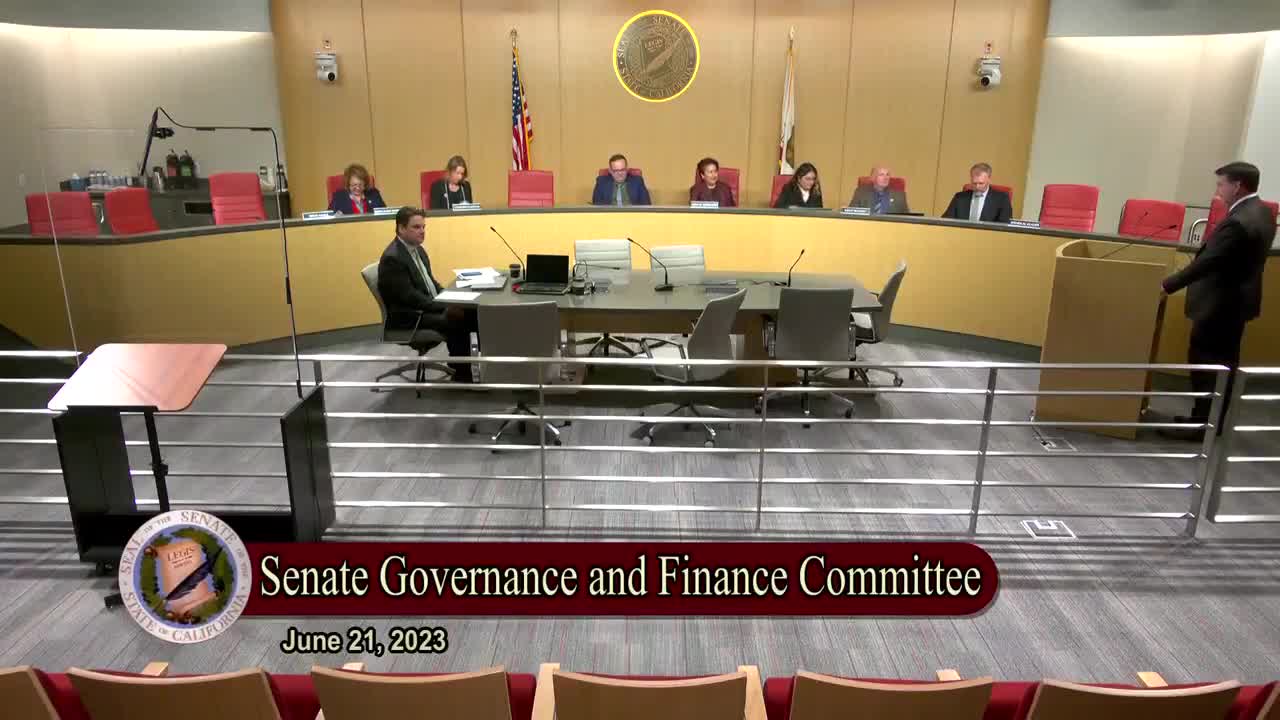 5MIN
Senate Standing Committee on Governance and Finance
 5MIN
Assembly Standing Committee on Housing and Community Development
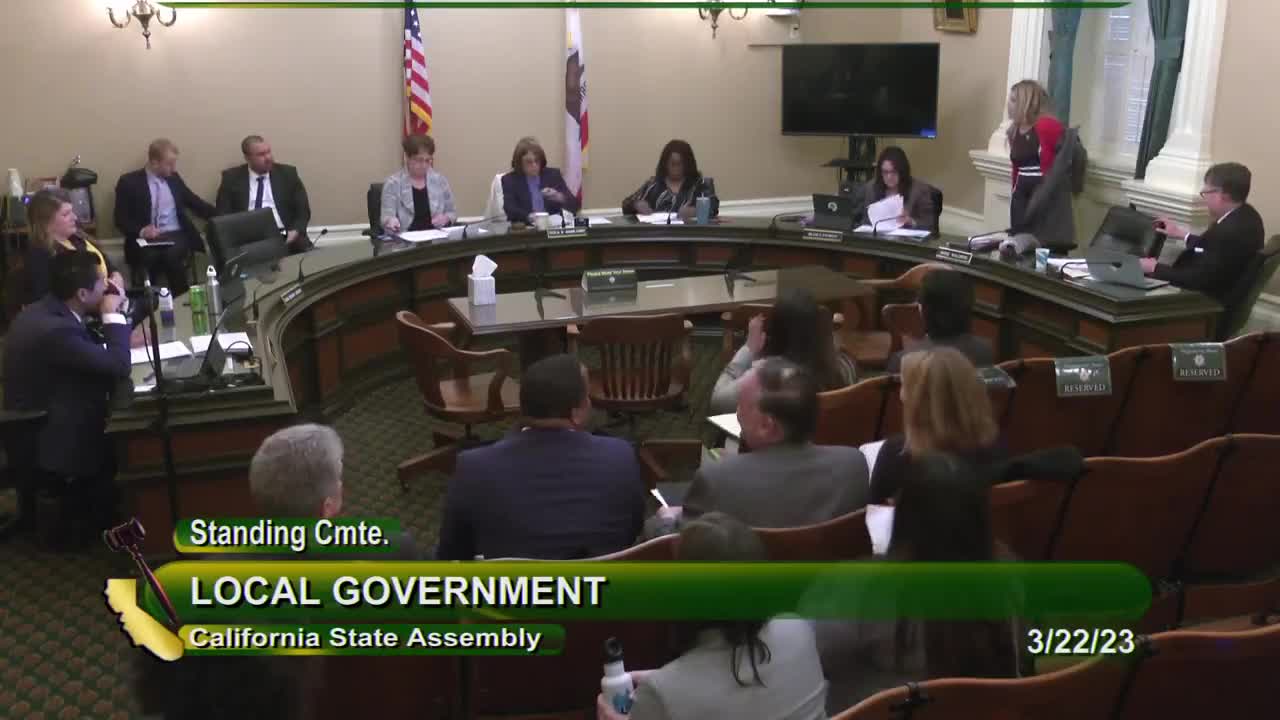 11MIN
Assembly Standing Committee on Local Government
Bill Author

Bill Co-Author(s):