AB 1137: Excluded employees.
- Session Year: 2023-2024
- House: Assembly
- Latest Version Date: 2024-09-28
Current Status:
Passed
(2024-09-28: Chaptered by Secretary of State - Chapter 804, Statutes of 2024.)
Introduced
In Committee
First Chamber
In Committee
Second Chamber
Enacted
Existing law requires the Department of Human Resources to establish and adjust salary ranges for each class of position in the state civil service, subject to any merit limits contained in the California Constitution. Existing law provides that, after completion of the first year in a position, an employee shall receive a merit salary adjustment during each year when they meet the standards of efficiency, as prescribed by the department.
Existing law, the Ralph C. Dills Act, governs collective bargaining between the state and recognized state public employee organizations. The act defines state employee for purposes of the act and excludes certain employees from that definition, including managerial employees, supervisory employees, and confidential employees.
This bill would require an employee who is excluded from the definition of state employee to be informed in writing of a merit salary adjustment denial 10 working days before the proposed effective date of the adjustment.
Existing law entitles all state employees to be given time off with pay for specified holidays and entitles a state employee who is required to work on those holidays to receive straight-time pay and 8 hours of holiday credit.
This bill would require an employee who is excluded from the definition of state employee and who is required to work on certain holidays to receive specified compensation and holiday credit if the employee is eligible for overtime payments under the federal Fair Labor Standards Act, or, if the employee is ineligible for overtime payments, to receive specified holiday credit and informal time off.
Existing law requires the Department of Human Resources to establish and adjust salary ranges for each class of position in the state civil service, subject to any merit limits contained in the California Constitution. Existing law provides that, after completion of the first year in a position, an employee shall receive a merit salary adjustment during each year when they meet the standards of efficiency, as prescribed by the department.
Existing law, the Ralph C. Dills Act, governs collective bargaining between the state and recognized state public employee organizations. The act defines state employee for purposes of the act and excludes certain employees from that definition, including managerial employees, supervisory employees, and confidential employees.
This bill would require an employee who is excluded from the definition of state employee to be informed in writing of a merit salary adjustment denial 10 working days before the proposed effective date of the adjustment.
Existing law entitles all state employees to be given time off with pay for specified holidays and entitles a state employee who is required to work on those holidays to receive straight-time pay and 8 hours of holiday credit.
This bill would specify that a state employee who is required to work on the holidays specified above is entitled to receive straight-time pay and up to 8 hours of holiday credit. The bill would require an employee who is excluded from the definition of state employee and who is required to work on certain holidays to receive specified compensation and holiday credit if the employee is eligible for overtime payments under the federal Fair Labor Standards Act, or, if the employee is ineligible for overtime payments, to receive specified holiday credit and informal time off.
Existing law requires the Department of Human Resources to establish and adjust salary ranges for each class of position in the state civil service, subject to any merit limits contained in the California Constitution. Existing law provides that, after completion of the first year in a position, an employee shall receive a merit salary adjustment during each year when they meet the standards of efficiency, as prescribed by the department.
Existing law, the Ralph C. Dills Act, governs collective bargaining between the state and recognized state public employee organizations. The act defines state employee for purposes of the act and excludes certain employees from that definition, including managerial employees, supervisory employees, and confidential employees.
This bill would require an employee who is excluded from the definition of state employee to be informed in writing of a merit salary adjustment denial 10 working days before the proposed effective date of the adjustment.
Existing law entitles all state employees to be given time off with pay for specified holidays and entitles a state employee who is required to work on those holidays to receive straight-time pay and 8 hours of holiday credit.
This bill would require an employee who is excluded from the definition of state employee and who is required to work on certain holidays to receive specified compensation and holiday credit if the employee is eligible for overtime payments under the federal Fair Labor Standards Act, or, if the employee is ineligible for overtime payments, to receive specified holiday credit and informal time off.
(a)After completion of the first year in a position, each employee shall receive a merit salary adjustment equivalent to one of the intermediate steps during each year when they meet the standards of efficiency as the department by rule shall prescribe.
(b)An employee who is excluded from the definition of state employee in subdivision (c) of Section 3513 shall be informed in writing of a merit salary adjustment denial 10 working days before the proposed effective date of the adjustment.
(c)If the provisions of this section are in conflict with the provisions of a memorandum of understanding reached pursuant to Section 3517.5, the memorandum of understanding shall be controlling without further legislative action, except that if the provisions of a memorandum of understanding require the expenditure of funds, the provisions shall not become effective unless approved by the Legislature in the annual Budget Act.
SEC. 2.Section 19853 of the Government Code is amended to read:19853.(a)All state employees shall be entitled to the following holidays: January 1, the third Monday in January, the third Monday in February, March 31, the last Monday in May, July 4, the first Monday in September, November 11, Thanksgiving Day, the day after Thanksgiving, December 25, the day chosen by an employee pursuant to Section 19854, and every day appointed by the Governor of this state for a public fast, thanksgiving, or holiday.
(b)If a day listed in this subdivision falls on a Sunday, the following Monday shall be deemed to be the holiday in lieu of the day observed. If November 11 falls upon a Saturday, the preceding Friday shall be deemed to be the holiday in lieu of the day observed.
(c)(1)Any state employee who may be required to work on any of the holidays included in this section, and who does work on any of these holidays, shall be entitled to receive straight-time pay and eight hours of holiday credit.
(2)Notwithstanding paragraph (1), an employee who is excluded from the definition of state employee in subdivision (c) of Section 3513 and who is required to work on January 1, the last Monday in May, July 4, the first Monday in September, Thanksgiving Day, or December 25 shall be subject to the following:
(A)Excluded employees who are eligible for overtime payments under the federal Fair Labor Standards Act shall be paid one and one-half times their salary rate for all hours worked on the holiday and up to eight hours of holiday credit. This pay shall count toward any premium overtime compensation earned during the same workweek. Part-time employees shall receive prorated amounts subject to department rules.
(B)Excluded employees who are ineligible for overtime payments under the federal Fair Labor Standards Act shall receive up to eight hours of holiday credit and four hours of informal time off. Part-time employees shall receive prorated amounts of holiday credit and informal time off, subject to department rules.
(d)For the purpose of computing the number of hours worked, time when an employee is excused from work because of holidays, sick leave, vacation, annual leave, compensating time off, or any other leave shall not be considered as time worked by the employee for the purpose of computing cash compensation for overtime or compensating time off for overtime.
(e)Any state employee, as defined in subdivision (c) of Section 3513, may elect to receive eight hours of holiday credit for the date corresponding with the new moon following the winter solstice, or the third new moon following the winter solstice should an intercalary month intervene, known as Lunar New Year, April 24, known as Genocide Remembrance Day, June 19, known as Juneteenth, or the fourth Friday in September, known as Native American Day, in lieu of receiving eight hours of personal holiday credit in accordance with Section 19854.
(f)Persons employed on less than a full-time basis shall receive holidays in accordance with the Department of Human Resources rules.
(g)If subdivision (a), (c), or (d) is in conflict with the provisions of a memorandum of understanding executed or amended pursuant to Section 3517.5 on or after February 1, 2009, or the date that the act adding this section takes effect, whichever is later, the memorandum of understanding shall be controlling without further legislative action, except that if those provisions of the memorandum of understanding require the expenditure of funds, the provisions shall not become effective unless approved by the Legislature in the annual Budget Act.
(a)After completion of the first year in a position, each employee shall receive a merit salary adjustment equivalent to one of the intermediate steps during each year when they meet the standards of efficiency as the department by rule shall prescribe.
(b)An employee who is excluded from the definition of state employee in subdivision (c) of Section 3513 shall be informed in writing of a merit salary adjustment denial 10 working days before the proposed effective date of the adjustment.
(c)If the provisions of this section are in conflict with the provisions of a memorandum of understanding reached pursuant to Section 3517.5, the memorandum of understanding shall be controlling without further legislative action, except that if the provisions of a memorandum of understanding require the expenditure of funds, the provisions shall not become effective unless approved by the Legislature in the annual Budget Act.
SEC. 2.Section 19853 of the Government Code is amended to read:19853.(a)All state employees shall be entitled to the following holidays: January 1, the third Monday in January, the third Monday in February, March 31, the last Monday in May, July 4, the first Monday in September, November 11, Thanksgiving Day, the day after Thanksgiving, December 25, the day chosen by an employee pursuant to Section 19854, and every day appointed by the Governor of this state for a public fast, thanksgiving, or holiday.
(b)If a day listed in this subdivision falls on a Sunday, the following Monday shall be deemed to be the holiday in lieu of the day observed. If November 11 falls upon a Saturday, the preceding Friday shall be deemed to be the holiday in lieu of the day observed.
(c)(1)Any state employee who may be required to work on any of the holidays included in this section, and who does work on any of these holidays, shall be entitled to receive straight-time pay and up to eight hours of holiday credit.
(2)Notwithstanding paragraph (1), an employee who is excluded from the definition of state employee in subdivision (c) of Section 3513 and who is required to work on January 1, the last Monday in May, July 4, the first Monday in September, Thanksgiving Day, or December 25 shall be subject to the following:
(A)Excluded employees who are eligible for overtime payments under the federal Fair Labor Standards Act shall be paid one and one-half times their salary rate for all hours worked on the holiday and up to eight hours of holiday credit. This pay shall count toward any premium overtime compensation earned during the same workweek. Part-time employees shall receive prorated amounts subject to department rules.
(B)Excluded employees who are ineligible for overtime payments under the federal Fair Labor Standards Act shall receive up to eight hours of holiday credit and four hours of informal time off. Part-time employees shall receive prorated amounts of holiday credit and informal time off, subject to department rules.
(d)For the purpose of computing the number of hours worked, time when an employee is excused from work because of holidays, sick leave, vacation, annual leave, compensating time off, or any other leave shall not be considered as time worked by the employee for the purpose of computing cash compensation for overtime or compensating time off for overtime.
(e)Any state employee, as defined in subdivision (c) of Section 3513, may elect to receive eight hours of holiday credit for the date corresponding with the new moon following the winter solstice, or the third new moon following the winter solstice should an intercalary month intervene, known as Lunar New Year, April 24, known as Genocide Remembrance Day, June 19, known as Juneteenth, or the fourth Friday in September, known as Native American Day, in lieu of receiving eight hours of personal holiday credit in accordance with Section 19854.
(f)Persons employed on less than a full-time basis shall receive holidays in accordance with the Department of Human Resources rules.
(g)If subdivision (a), (c), or (d) is in conflict with the provisions of a memorandum of understanding executed or amended pursuant to Section 3517.5 on or after February 1, 2009, or the date that the act adding this section takes effect, whichever is later, the memorandum of understanding shall be controlling without further legislative action, except that if those provisions of the memorandum of understanding require the expenditure of funds, the provisions shall not become effective unless approved by the Legislature in the annual Budget Act.
(a)After completion of the first year in a position, each employee shall receive a merit salary adjustment equivalent to one of the intermediate steps during each year when he or she meets they meet the standards of efficiency as the department by rule shall prescribe.
(b)An employee who is excluded from the definition of state employee in subdivision (c) of Section 3513 shall be informed in writing of a merit salary adjustment denial 10 working days before the proposed effective date of the adjustment.
(b)(c)If the provisions of this section are in conflict with the provisions of a memorandum of understanding reached pursuant to Section 3517.5, the memorandum of understanding shall be controlling without further legislative action, except that if the provisions of a memorandum of understanding require the expenditure of funds, the provisions shall not become effective unless approved by the Legislature in the annual Budget Act.
SEC. 2.Section 19853 of the Government Code is amended to read:19853.(a)All state employees shall be entitled to the following holidays: January 1, the third Monday in January, the third Monday in February, March 31, the last Monday in May, July 4, the first Monday in September, November 11, Thanksgiving Day, the day after Thanksgiving, December 25, the day chosen by an employee pursuant to Section 19854, and every day appointed by the Governor of this state for a public fast, thanksgiving, or holiday.
(b)If a day listed in this subdivision falls on a Sunday, the following Monday shall be deemed to be the holiday in lieu of the day observed. If November 11 falls upon a Saturday, the preceding Friday shall be deemed to be the holiday in lieu of the day observed.
(c)(1)Any state employee who may be required to work on any of the holidays included in this section, and who does work on any of these holidays, shall be entitled to receive straight-time pay and eight hours of holiday credit.
(2)Notwithstanding paragraph (1), an employee who is excluded from the definition of state employee in subdivision (c) of Section 3513 and who is required to work on January 1, the last Monday in May, July 4, the first Monday in September, Thanksgiving Day, or December 25 shall be subject to the following:
(A)Excluded employees who are eligible for overtime payments under the federal Fair Labor Standards Act shall be paid one and one-half times their salary rate for all hours worked on the holiday and eight hours of holiday credit. This pay shall count toward any premium overtime compensation earned during the same workweek. Part-time employees shall receive prorated amounts subject to department rules.
(B)Excluded employees who are ineligible for overtime payments under the federal Fair Labor Standards Act shall receive eight hours of holiday credit and four hours of informal time off. Part-time employees shall receive prorated amounts of holiday credit and informal time off, subject to department rules.
(d)For the purpose of computing the number of hours worked, time when an employee is excused from work because of holidays, sick leave, vacation, annual leave, compensating time off, or any other leave shall not be considered as time worked by the employee for the purpose of computing cash compensation for overtime or compensating time off for overtime.
(e)Any state employee, as defined in subdivision (c) of Section 3513, may elect to receive eight hours of holiday credit for the date corresponding with the new moon following the winter solstice, or the third new moon following the winter solstice should an intercalary month intervene, known as Lunar New Year, April 24, known as Genocide Remembrance Day, June 19, known as Juneteenth, or the fourth Friday in September, known as Native American Day, in lieu of receiving eight hours of personal holiday credit in accordance with Section 19854.
(f)Persons employed on less than a full-time basis shall receive holidays in accordance with the Department of Human Resources rules.
(g)If subdivision (a), (c), or (d) is in conflict with the provisions of a memorandum of understanding executed or amended pursuant to Section 3517.5 on or after February 1, 2009, or the date that the act adding this section takes effect, whichever is later, the memorandum of understanding shall be controlling without further legislative action, except that if those provisions of the memorandum of understanding require the expenditure of funds, the provisions shall not become effective unless approved by the Legislature in the annual Budget Act.
|
Date
|
Status
|
|---|---|
| Sep 28, 2024 | Chaptered by Secretary of State - Chapter 804, Statutes of 2024. |
| Sep 28, 2024 | Approved by the Governor. |
| Sep 5, 2024 | Enrolled and presented to the Governor at 4 p.m. |
| Aug 27, 2024 | Senate amendments concurred in. To Engrossing and Enrolling. (Ayes 66. Noes 7.). |
| Aug 20, 2024 | In Assembly. Concurrence in Senate amendments pending. May be considered on or after August 22 pursuant to Assembly Rule 77. |
| Aug 20, 2024 | Read third time. Passed. Ordered to the Assembly. (Ayes 32. Noes 7. Page 5242.). |
| Aug 19, 2024 | Read second time. Ordered to third reading. |
| Aug 15, 2024 | From committee: Do pass. (Ayes 5. Noes 2.) (August 15). |
| Aug 5, 2024 | In committee: Referred to APPR suspense file. |
| Jul 3, 2024 | From committee: Amend, and do pass as amended and re-refer to Com. on APPR. (Ayes 5. Noes 0.) (July 3). |
| Jul 3, 2024 | Read second time and amended. Re-referred to Com. on APPR. |
| Jun 13, 2024 | In committee: Hearing postponed by committee. |
| Jun 11, 2024 | From committee chair, with author's amendments: Amend, and re-refer to committee. Read second time, amended, and re-referred to Com. on L., P.E. & R. |
| Jul 12, 2023 | In committee: Set, first hearing. Hearing canceled at the request of author. |
| Jun 14, 2023 | Referred to Com. on L., P.E. & R. |
| May 31, 2023 | In Senate. Read first time. To Com. on RLS. for assignment. |
| May 30, 2023 | Read third time. Passed. Ordered to the Senate. (Ayes 67. Noes 8. Page 1900.) |
| May 18, 2023 | Read second time. Ordered to third reading. |
| May 18, 2023 | From committee: Do pass. (Ayes 11. Noes 3.) (May 18). |
| Apr 19, 2023 | In committee: Set, first hearing. Referred to APPR. suspense file. |
| Mar 22, 2023 | From committee: Do pass and re-refer to Com. on APPR. (Ayes 6. Noes 0.) (March 22). Re-referred to Com. on APPR. |
| Mar 2, 2023 | Referred to Com. on P.E. & R. |
| Feb 16, 2023 | From printer. May be heard in committee March 18. |
| Feb 15, 2023 | Read first time. To print. |
|
Date
|
Description
|
Location
|
Votes
|
|
|---|---|---|---|---|
| Aug 27, 2024 | AB 1137 Jones-Sawyer Concurrence in Senate Amendments | Assembly Floor |
Passed |
|
| Aug 20, 2024 | Assembly 3rd Reading AB1137 Jones-Sawyer By Laird | Senate Floor |
Passed |
|
| Aug 15, 2024 | Do pass | Senate Standing Committee on Appropriations |
Passed |
|
| Aug 5, 2024 | Placed on suspense file | Senate Standing Committee on Appropriations |
Passed |
|
| Jul 3, 2024 | Do pass as amended, but first amend, and re-refer to the Committee on [Appropriations] | Senate Standing Committee on Labor, Public Employment and Retirement |
Passed |
|
| May 30, 2023 | AB 1137 Jones-Sawyer Assembly Third Reading | Assembly Floor |
Passed |
|
| May 18, 2023 | Do pass. | Assembly Standing Committee on Appropriations |
Passed |
|
| Mar 22, 2023 | Do pass and be re-referred to the Committee on [Appropriations] | Assembly Standing Committee on Public Employment and Retirement |
Passed |
This list shows positions taken on this bill by organizations on the date displayed, which is linked to the original source.
Positions by individuals are not included.
|
Organization
|
Position
|
Date
|
|---|---|---|
| Association Of California State Supervisors | ** Support | |
| California Association Of Professional Scientists | ** Support | |
| California Attorneys Administrative Law Judges and Hearing Officers in State Employment | ** Support | |
| Professional Engineers In California Government | ** Support |
CONCURRENCE IN SENATE AMENDMENTS
CSA1 Bill Id:AB 1137
Author:(Jones-Sawyer)
As Amended Ver:July 3, 2024
Majority vote
SUMMARY
Requires, as applied to state excluded employees, written notice regarding a denial of a merit salary adjustment ten working days before the proposed effective date of the adjustment, and the state to pay overtime pay and provide holiday credit to such employees when mandated to work on certain holidays.
Senate Amendments
Make a technical and clarifying change.
COMMENTS
Brief History of the Bill of Rights for State Excluded Employees (BRSEE)
The first of California's public sector bargaining laws was enacted in 1961. Known as the "George Brown Act" or "Brown Act," this Act originally covered all public employers and recognized employees' right to participate and be represented by employee organizations. It also granted those organizations the right to meet and confer with the employer on matters affecting employment relations prior to action being taken on such matters.
The breadth of that act was reduced over time as subsequent statutes nearly removed all employees from coverage, and was finally repealed in 1990 with the enactment of the BRSEE. Upon enacting the BRSEE, the Legislature also repealed provisions of the original Dills Act that covered supervisors, and ultimately, the entirety of the Brown Act.
Meeting and Conferring Under the BRSEE, and Select Similarities and Differences between the Dills Act and the BRSEE Relating to Employer-Employee Relations
Similar to the Dills Act, under the BRSEE, upon the request to meet and confer, the state employer must consider as fully as it deems necessary, the presentations made by supervisory employee organizations on behalf of their members prior to arriving at a determination; and, the scope of representation for supervisory employees during this process includes all matters relating to employment conditions and employer-employee relations in this regard, including wages, hours, and other terms and conditions of employment.
However and generally, unlike the Dills Act, the BRSEE does not provide for expansive recognition of employee organizations, except that the California Department of Human Resources (CalHR) may adopt regulations to verify that an excluded employee organization does, in fact, represent excluded employees and the official status of such an organization; does not provide for selection of an exclusive representative, unit determinations, or MOUs; however, it does confer limited meet and confer rights to supervisory employees and their representatives. Thus, the state employer must provide reasonable advanced notice and an opportunity to meet and confer with employee representatives to discuss the means of achieving objectives; however, the final determination of policy or course of action is the sole responsibility of the state employer.
In addition, unlike the Dills Act (and the several other statewide public sector collective bargaining frameworks), the BRSEE does not provide for unfair practices, nor contain mechanisms for resolving disputes that occur under its terms. Further, the CalHR – while, among other things, is responsible for collectively bargaining with each of the state's 21 collective bargaining units under the Dills Act, is authorized under the BRSEE to adopt rules and regulations for the administration of excluded employer-employee relations under the BRSEE. Thus, unlike tentative agreements or agreements (i.e., MOUs) reached between a Dills Act bargaining unit and the CalHR, which the Legislature must approve, similar requirements do not exist relating to the BRSEE.
Practical Aspects of BRSEE Relations and this Bill
The provisions of this bill are a subject of collective bargaining and therefore, one may reasonably presume upon initial consideration, that its subject should be confined to that process to achieve its objectives. However, understanding key differences between the Dills Act and the BRSEE, including the limitations of the BRSEE in comparison to the Dills Act, this bill serves to foster harmonious relations between the state and BRSEE-covered employees. As such, this bill seeks to achieve parity for BRSEE-covered employees with respect to MSAs, holidays and compensation that is afforded to Dills Act-covered employees.
Please see the policy committee analysis for a full discussion of this bill.
According to the Author
"While rank-and-file employees receive notification that they were denied a Merit Salary Adjustment (MSA) 10 working days prior to the effective date of the MSA, there is no statutory or regulatory timeline for an excluded employee to be notified that they were denied an MSA. This has led to uncertainty for excluded employees and their departments resulting in time-consuming disputes and grievances. When rank-and-file employees work on premium holidays they receive one and a half times pay, but when excluded employees work on premium holidays they receive the same pay as usual. This is unfair and inequitable."
Arguments in Support
Among other things, the Association of California State Supervisors states that, "[this bill] will ensure fairness and equity in state employment by providing state supervisors and managers with two important employment benefits that are currently provided to rank and file employees through the collective bargaining process," and "[p]roviding these same benefits to supervisors and managers will ensure that there are incentives in place for individuals to promote and hire into the job classifications who take on the responsibility and challenges of managing and directing state programs."
Arguments in Opposition
None.
FISCAL COMMENTS
According to the Senate Appropriations Committee, this bill would result in the following:
- The California Department of Human Resources (CalHR) indicates that this bill would result in increased annual personnel costs of $1.1 million, $470,000 of which would come from the General Fund. These amounts reflect state agencies' costs to provide (1) overtime pay and holiday credit to some excluded employees who must work during certain holidays, and (2) holiday credit to other excluded employees who must work during certain holidays. Costs would depend on the salary of an excluded employee and the number of days a state agency requires an excluded employee to work that would require overtime pay or holiday credit.
- State agencies would incur minor annual costs to inform an excluded employee of a merit salary adjustment denial 10 working days before the proposed effective date of the adjustment (General Fund and special funds).
VOTES:
ASM PUBLIC EMPLOYMENT AND RETIREMENT: 6-0-1
YES: McKinnor, Addis, Alanis, Haney, Stephanie Nguyen, Schiavo
ABS, ABST OR NV: Lackey
ASM APPROPRIATIONS: 11-3-2
YES: Holden, Bryan, Calderon, Wendy Carrillo, Mike Fong, Hart, Lowenthal, Papan, Pellerin, Weber, Ortega
NO: Megan Dahle, Dixon, Mathis
ABS, ABST OR NV: Robert Rivas, Sanchez
ASSEMBLY FLOOR: 67-8-5
YES: Addis, Aguiar-Curry, Alanis, Alvarez, Arambula, Bains, Bauer-Kahan, Bennett, Berman, Boerner, Bonta, Bryan, Calderon, Juan Carrillo, Wendy Carrillo, Cervantes, Connolly, Davies, Mike Fong, Friedman, Gabriel, Garcia, Gipson, Grayson, Haney, Hart, Holden, Hoover, Irwin, Jackson, Jones-Sawyer, Kalra, Lee, Low, Lowenthal, Maienschein, McCarty, McKinnor, Muratsuchi, Stephanie Nguyen, Ortega, Pacheco, Papan, Pellerin, Petrie-Norris, Quirk-Silva, Ramos, Reyes, Luz Rivas, Robert Rivas, Rodriguez, Blanca Rubio, Santiago, Schiavo, Soria, Ting, Valencia, Villapudua, Waldron, Wallis, Ward, Weber, Wicks, Wilson, Wood, Zbur, Rendon
NO: Megan Dahle, Dixon, Flora, Vince Fong, Gallagher, Mathis, Joe Patterson, Ta
ABS, ABST OR NV: Chen, Essayli, Lackey, Jim Patterson, Sanchez
SENATE FLOOR: 32-7-1
YES: Allen, Archuleta, Ashby, Atkins, Becker, Blakespear, Bradford, Caballero, Cortese, Dodd, Durazo, Eggman, Glazer, Gonzalez, Hurtado, Laird, Limón, McGuire, Menjivar, Min, Newman, Padilla, Portantino, Roth, Rubio, Skinner, Smallwood-Cuevas, Stern, Umberg, Wahab, Wiener, Wilk
NO: Alvarado-Gil, Dahle, Grove, Jones, Niello, Ochoa Bogh, Seyarto
ABS, ABST OR NV: Nguyen
UPDATED
VERSION: July 3, 2024
CONSULTANT: Michael Bolden / P. E. & R. / (916) 319-3957 FN: 0004276
SENATE RULES COMMITTEE Office of Senate Floor Analyses (916) 651-1520 Fax: (916) 327-4478 | AB 1137 |
THIRD READING
Bill No: AB 1137
Author: Jones-Sawyer (D)
Amended: 7/3/24 in Senate
Vote: 21
SENATE LABOR, PUB. EMP. & RET. COMMITTEE: 5-0, 7/3/24
AYES: Smallwood-Cuevas, Wilk, Cortese, Durazo, Laird
SENATE APPROPRIATIONS COMMITTEE: 5-2, 8/15/24
AYES: Caballero, Ashby, Becker, Bradford, Wahab
NOES: Jones, Seyarto
ASSEMBLY FLOOR: 67-8, 5/30/23 - See last page for vote
SUBJECT: Excluded employees
SOURCE: Association of California State Supervisors
DIGEST:
This bill requires a state agency to notify an excluded employee, in writing, of a denial of a merit salary adjustment 10 working days before the proposed effective date of the adjustment. This bill also requires the state to pay an excluded employee, mandated to work on specified holidays, overtime pay and holiday credit, as specified.
ANALYSIS:
Existing law:
- For purposes of state personnel administration, defines “employee” or “state employee,” except where otherwise indicated, to mean employees subject to the Ralph C. Dills Act (Chapter 10.3 (commencing with Section 3512), Division 4, Title 1), supervisory employees as defined in subdivision (g) of Section 3513, managerial employees as defined in subdivision (e) of Section 3513, confidential employees as defined in subdivision (f) of Section 3513, employees of the Legislative Counsel Bureau, employees of the Bureau of State Audits, employees of the office of the Inspector General, employees of the Public Employment Relations Board, conciliators employed by the California State Mediation and Conciliation Service, employees of the Department of Human Resources, professional employees of the Department of Finance engaged in technical or analytical state budget preparation other than audit staff, intermittent athletic inspectors who are employees of the State Athletic Commission, professional employees in the Personnel/Payroll Services Division of the Controller’s office, and all employees of the executive branch of government who are not elected to office. (Government Code (GC) § 19815 (d))
- Provides that after completion of the first year in a position, each employee shall receive a merit salary adjustment equivalent to one of the intermediate steps during each year upon meeting the standards of efficiency as prescribed by the California Department of Human Resources (CalHR). However, if this provision is in conflict with a memorandum of understanding (MOU), the MOU shall control. (GC § 19832)
- Establishes the Ralph C. Dills Act (Dills Act) which sets forth a framework that governs labor relations between the State of California and state employees, except for specified managerial, confidential and supervisory employees. (GC § 3512-3524)
- Defines “state employee” under the Dills Act to mean any civil service employee of the state, and the teaching staff of schools under the jurisdiction of the State Department of Education or the Superintendent of Public Instruction but excludes managerial employees, confidential employees, supervisory employees, employees of the Department of Human Resources, professional employees of the Department of Finance engaged in technical or analytical state budget preparation other than the auditing staff, professional employees in the Personnel/Payroll Services Division of the Controller’s office engaged in technical or analytical duties in support of the state’s personnel and payroll systems other than the training staff, employees of the Legislative Counsel Bureau, employees of the Bureau of State Audits, employees of the office of the Inspector General, employees of the board, conciliators employed by the California State Mediation and Conciliation Service, employees of the Office of the State Chief Information Officer except as otherwise provided in Section 11546.5, and intermittent athletic inspectors who are employees of the State Athletic Commission. (GC § 3513 (c))
- Establishes the Bill of Rights for State Excluded Employees to inform state supervisory, managerial, confidential, and employees otherwise excepted from coverage under the Dills Act, of their rights and terms and conditions of employment, as specified, and serves to promote harmonious personnel relations among those representing state management in the conduct of state affairs. (GC § 3526)
- Provides the following definitions for purposes of the Bill of Rights for State Excluded Employees:
- Defines “employee” as a civil service employee of the State of California, including state agencies, boards, and commissions designated by law to employ civil service employees, except the University of California, Hastings College of the Law, and the California State University.
- Excepts from the definition of “state employee,” managerial employees, confidential employees, supervisory employees, and other employees, as defined.
- Defines “excluded employee organization” as one that includes excluded employees of the state and that has as one of its primary purposes representing its members in employer-employee relations, including supervisory employee organizations.
- Defines “state employer” or “employer,” for purposes of meeting and conferring on matters relating to supervisory employer-employee relations, as the Governor or his or her designated representatives. (GC § 3527)
- Authorizes supervisory employees to form, join, and participate in the activities of supervisory employee organizations of their own choosing for purposes of representation on all matters of supervisory employer-employee relations, as specified, or to refrain from so doing. They also have the right to represent themselves individually in their employment relations with the public employer. (GC § 3531)
- Provides excluded employee organizations with the right to represent their excluded members in their employment relations, including grievances, with the State of California. (GC § 3530)
- Specifies that the scope of representation for supervisory employees includes all matters relating to employment conditions and supervisory employer-employee relations including wages, hours, and other terms and conditions of employment. (GC § 3532)
- Authorizes CalHR to adopt reasonable rules and regulations for the administration of employer-employee relations, including excluded employer-employee relations. (GC § 3535)
- Prohibits, as specified, an employer from employing an employee for a workweek longer than forty hours unless such employee receives compensation at a rate not less than one and one-half times the employee’s regular rate. (Fair Labor Standards Act (FLSA), 29 USC 207 (a))
- Exempts from FLSA’s maximum hour (i.e., overtime) requirements any employee employed in a bona fide executive, administrative, or professional capacity, as specified. (29 USC 213 (a)(1))
- Authorizes covered employees of a public agency, i.e., State, political subdivision of a State, or an interstate governmental agency, to receive in lieu of overtime compensation, compensatory time off at a rate not less than one and one-half hours for each hour, as specified. (FLSA, 29 USC 203 (o))
- Provides that all state employees shall be entitled to the following holidays: January 1, the third Monday in January, the third Monday in February, March 31, the last Monday in May, July 4, the first Monday in September, November 11, Thanksgiving Day, the day after Thanksgiving, December 25, the day chosen by an employee pursuant to Section 19854, and every day appointed by the Governor of this state for a public fast, thanksgiving, or holiday. (GC § 19853 (a))
- Provides that any state employee (but not excluded employees) mandated to work on any of the specified holidays, and who does work on any of these holidays, shall be entitled to receive straight-time pay and eight hours of holiday credit. (GC § 19853 (c))
This bill:
- Requires a state agency employer to notify an excluded employee in writing of a merit salary adjustment denial 10 working days before the proposed effective date of the adjustment.
- Provides that an excluded employee required to work on January 1, the last Monday in May, July 4, the first Monday in September, Thanksgiving Day, or December 25 shall receive the following:
- If the employee is eligible for overtime payments under FLSA, one-half times their salary rate for all hours worked on the holiday and up to eight hours of holiday credit. This pay shall count toward any premium overtime compensation earned during the same workweek. Part-time employees shall receive prorated amounts subject to department rules.
- If the employee is ineligible for overtime payments under FLSA, up to eight hours of holiday credit and four hours of informal time off. Part-time employees shall receive prorated amounts of holiday credit and informal time off, subject to department rules.
Background
The state’s employee labor relations statute, the Dills Act, does not cover excluded employees (managers, supervisors, confidential, etc.) and thus, bargaining agreements with represented employees do not cover excluded employees. Instead, CalHR determines, pursuant to its statutory authority, the pay and benefits provided to excluded employees. This bill would ensure that excluded employees get appropriate notice of merit pay denials and appropriate holiday credit when mandated to work specified holidays.
Related/Prior Legislation
SB 716 (Alvarado-Gil, 2023) would have given state excluded employees, such as managers and supervisors, the option of requesting binding arbitration as a method for resolving disputes with their state employers after first exhausting the current grievance resolution procedures. The Governor vetoed the bill.
AB 1714 (Cooper, 2022) was substantially identical to SB 716 (Alvarado-Gil, 2023). The Governor vetoed the bill.
SB 1406 (Durazo, 2022) was virtually identical to SB 716 (Alvarado-Gil, 2023) and AB 1714 (Cooper, 2022), except that SB 1406 did not have a sunset date in its provisions. The Governor vetoed SB 1406.
Comments
Need for this bill?According to the author, “While rank-and-file employees receive notification that they were denied a Merit Salary Adjustment (MSA) 10 working days prior to the effective date of the MSA, there is no statutory or regulatory timeline for an excluded employee to be notified that they were denied an MSA. This has led to uncertainty for excluded employees and their departments resulting in time-consuming disputes and grievances.When rank-and-file employees work on premium holidays they receive one and a half times pay, but when excluded employees work on premium holidays they receive the same pay as usual. This is unfair and inequitable.”
FISCAL EFFECT: Appropriation: No Fiscal Com.: Yes Local: No
According to the Senate Appropriations Committee:
- The California Department of Human Resources (CalHR) indicates that this bill would result in increased annual personnel costs of $1.1 million, $470,000 of which would come from the General Fund. These amounts reflect state agencies’ costs to provide (1) overtime pay and holiday credit to some excluded employees who must work during certain holidays, and (2) holiday credit to other excluded employees who must work during certain holidays. Costs would depend on the salary of an excluded employee and the number of days a state agency requires an excluded employee to work that would require overtime pay or holiday credit.
- State agencies would incur minor annual costs to inform an excluded employee of a merit salary adjustment denial 10 working days before the proposed effective date of the adjustment (General Fund and special funds).
SUPPORT: (Verified 8/15/24)
Association of California State Supervisors (source)
California Association of Professional Scientists
California Attorneys, Administrative Law Judges, and Hearing Officers in State Employment
Professional Engineers in California Government
OPPOSITION: (Verified 8/15/24)
None received.
ARGUMENTS IN SUPPORT:
According to the Association of California State Supervisors (ACSS):
“AB 1137 will ensure fairness and equity in state employment by providing state supervisors and managers with two important employment benefits that are currently provided to rank and file employees through the collective bargaining process.”
“Specifically, AB 1137 would provide state supervisors and managers (also known as excluded employees) with: (1) official notification of the denial of a Merit Salary Adjustment (MSA) and (2) additional compensation for working on premium holidays. These benefits are currently provided to rank and file state employees as a result of collective bargaining – but not to state supervisors and managers. Providing these same benefits to supervisors and managers will ensure that there are incentives in place for individuals to promote and hire into the job classifications who take on the responsibility and challenges of managing and directing state programs.”
ASSEMBLY FLOOR: 67-8, 5/30/23
AYES: Addis, Aguiar-Curry, Alanis, Alvarez, Arambula, Bains, Bauer-Kahan, Bennett, Berman, Boerner, Bonta, Bryan, Calderon, Juan Carrillo, Wendy Carrillo, Cervantes, Connolly, Davies, Mike Fong, Friedman, Gabriel, Garcia, Gipson, Grayson, Haney, Hart, Holden, Hoover, Irwin, Jackson, Jones-Sawyer, Kalra, Lee, Low, Lowenthal, Maienschein, McCarty, McKinnor, Muratsuchi, Stephanie Nguyen, Ortega, Pacheco, Papan, Pellerin, Petrie-Norris, Quirk-Silva, Ramos, Reyes, Luz Rivas, Robert Rivas, Rodriguez, Blanca Rubio, Santiago, Schiavo, Soria, Ting, Valencia, Villapudua, Waldron, Wallis, Ward, Weber, Wicks, Wilson, Wood, Zbur, Rendon
NOES: Megan Dahle, Dixon, Flora, Vince Fong, Gallagher, Mathis, Joe Patterson, Ta
NO VOTE RECORDED: Chen, Essayli, Lackey, Jim Patterson, Sanchez
Prepared by: Glenn Miles / L., P.E. & R. / (916) 651-1556
8/16/24 13:26:14
**** END ****
SENATE COMMITTEE ON
Senator Anna Caballero, Chair
2023 - 2024 Regular Session
AB 1137 (Jones-Sawyer) - Excluded employees
Version: | Policy Vote: |
Urgency: | Mandate: |
Hearing Date: | Consultant: |
Bill Summary:
AB 1137 would require (1) a state agency to notify an excluded employee, in writing, of a denial of a merit salary adjustment ten working days before the proposed effective date of the adjustment, and (2) the State to pay an excluded employee, mandated to work on specified holidays, overtime pay and holiday credit, as specified.
Fiscal Impact:
- The California Department of Human Resources (CalHR) indicates that this bill would result in increased annual personnel costs of $1.1 million, $470,000 of which would come from the General Fund. These amounts reflect state agencies’ costs to provide (1) overtime pay and holiday credit to some excluded employees who must work during certain holidays, and (2) holiday credit to other excluded employees who must work during certain holidays. Costs would depend on the salary of an excluded employee and the number of days a state agency requires an excluded employee to work that would require overtime pay or holiday credit.
- State agencies would incur minor annual costs to inform an excluded employee of a merit salary adjustment denial 10 working days before the proposed effective date of the adjustment (General Fund and special funds).
Background:
The State’s employee labor relations statute, the Dills Act, does not cover excluded employees (managers, supervisors, confidential, etc.); consequently, bargaining agreements with represented employees do not cover excluded employees. Instead, CalHR determines, pursuant to its statutory authority, the pay and benefits provided to excluded employees.
Proposed Law:
This bill would do the following:
- Require a state agency employer to notify an excluded employee in writing of a merit salary adjustment denial 10 working days before the proposed effective date of the adjustment.
- Provide that an excluded employee required to work on January 1, the last Monday in May, July 4, the first Monday in September, Thanksgiving Day, or December 25 shall receive the following:
- If the employee is eligible for overtime payments under FLSA, one-half times their salary rate for all hours worked on the holiday and up to eight hours of holiday credit. This pay shall count toward any premium overtime compensation earned during the same workweek. Part-time employees shall receive prorated amounts subject to department rules.
- If the employee is ineligible for overtime payments under FLSA, up to eight hours of holiday credit and four hours of informal time off. Part-time employees shall receive prorated amounts of holiday credit and informal time off, subject to department rules.
Related Legislation:
- SB 716 (Alvarado-Gil) would have given state excluded employees, such as managers and supervisors, the option of requesting binding arbitration as a method for resolving disputes with their state employers after first exhausting the current grievance resolution procedures. The Governor vetoed the bill.
- AB 1714 (Cooper, 2022) was substantially identical to SB 716 and was vetoed by the Governor.
- SB 1406 (Durazo, 2022) was virtually identical to SB 716 (Alvarado-Gil, 2023) and AB 1714 (Cooper, 2022), except that SB 1406 did not have a sunset date in its provisions. The bill was vetoed by the Governor.
Staff Comments:
The costs attributed to the bill reflect compensation at one and one-half times (1.5x) the salary rate for all hours worked on the premium holiday.
-- END --
SENATE COMMITTEE ON LABOR, PUBLIC EMPLOYMENT AND RETIREMENT
Senator Lola Smallwood-Cuevas, Chair
2023 - 2024 Regular
Bill No: AB 1137 Hearing Date: July 3, 2024
Author: | Jones-Sawyer | ||
Version: | June 11, 2024 | ||
Urgency: | No | Fiscal: | Yes |
Consultant: | Glenn Miles | ||
SUBJECT: Excluded employees
KEY ISSUE
This bill would require a state agency to notify an excluded employee, in writing, of a denial of a merit salary adjustment 10 working days before the proposed effective date of the adjustment. The bill would also require the state to pay an excluded employee, mandated to work on specified holidays, overtime pay and holiday credit, as specified.
ANALYSIS
Existing law:
- For purposes of state personnel administration, defines “employee” or “state employee,” except where otherwise indicated, to mean employees subject to the Ralph C. Dills Act (Chapter 10.3 (commencing with Section 3512), Division 4, Title 1), supervisory employees as defined in subdivision (g) of Section 3513, managerial employees as defined in subdivision (e) of Section 3513, confidential employees as defined in subdivision (f) of Section 3513, employees of the Legislative Counsel Bureau, employees of the Bureau of State Audits, employees of the office of the Inspector General, employees of the Public Employment Relations Board, conciliators employed by the California State Mediation and Conciliation Service, employees of the Department of Human Resources, professional employees of the Department of Finance engaged in technical or analytical state budget preparation other than audit staff, intermittent athletic inspectors who are employees of the State Athletic Commission, professional employees in the Personnel/Payroll Services Division of the Controller’s office, and all employees of the executive branch of government who are not elected to office. (Government Code (GC) § 19815 (d))
- Provides that after completion of the first year in a position, each employee shall receive a merit salary adjustment equivalent to one of the intermediate steps during each year upon meeting the standards of efficiency as prescribed by the California Department of Human Resources (CalHR). However, if this provision is in conflict with a memorandum of understanding (MOU), the MOU shall control. (GC § 19832)
- Establishes the Ralph C. Dills Act (Dills Act) which sets forth a framework that governs labor relations between the State of California and state employees, except for specified managerial, confidential and supervisory employees. (GC § 3512-3524)
- Defines “state employee” under the Dills Act to mean any civil service employee of the state, and the teaching staff of schools under the jurisdiction of the State Department of Education or the Superintendent of Public Instruction but excludes managerial employees, confidential employees, supervisory employees, employees of the Department of Human Resources, professional employees of the Department of Finance engaged in technical or analytical state budget preparation other than the auditing staff, professional employees in the Personnel/Payroll Services Division of the Controller’s office engaged in technical or analytical duties in support of the state’s personnel and payroll systems other than the training staff, employees of the Legislative Counsel Bureau, employees of the Bureau of State Audits, employees of the office of the Inspector General, employees of the board, conciliators employed by the California State Mediation and Conciliation Service, employees of the Office of the State Chief Information Officer except as otherwise provided in Section 11546.5, and intermittent athletic inspectors who are employees of the State Athletic Commission. (GC § 3513 (c))
- Establishes the Bill of Rights for State Excluded Employees to inform state supervisory, managerial, confidential, and employees otherwise excepted from coverage under the Dills Act, of their rights and terms and conditions of employment, as specified, and serves to promote harmonious personnel relations among those representing state management in the conduct of state affairs. (GC § 3526)
- Provides the following definitions for purposes of the Bill of Rights for State Excluded Employees:
- Defines “employee” as a civil service employee of the State of California, including state agencies, boards, and commissions designated by law to employ civil service employees, except the University of California, Hastings College of the Law, and the California State University.
- Excepts from the definition of “state employee,” managerial employees, confidential employees, supervisory employees, and other employees, as defined.
- Defines “excluded employee organization” as one that includes excluded employees of the state and that has as one of its primary purposes representing its members in employer-employee relations, including supervisory employee organizations.
- Defines “state employer” or “employer,” for purposes of meeting and conferring on matters relating to supervisory employer-employee relations, as the Governor or his or her designated representatives. (GC § 3527)
- Authorizes supervisory employees to form, join, and participate in the activities of supervisory employee organizations of their own choosing for purposes of representation on all matters of supervisory employer-employee relations, as specified, or to refrain from so doing. They also have the right to represent themselves individually in their employment relations with the public employer. (GC § 3531)
- Provides excluded employee organizations with the right to represent their excluded members in their employment relations, including grievances, with the State of California. (GC § 3530)
- Specifies that the scope of representation for supervisory employees includes all matters relating to employment conditions and supervisory employer-employee relations including wages, hours, and other terms and conditions of employment. (GC § 3532)
- Authorizes CalHR to adopt reasonable rules and regulations for the administration of employer-employee relations, including excluded employer-employee relations. (GC § 3535)
- Prohibits, as specified, an employer from employing an employee for a workweek longer than forty hours unless such employee receives compensation at a rate not less than one and one-half times the employee’s regular rate. (Fair Labor Standards Act (FLSA), 29 USC 207 (a))
- Exempts from FLSA’s maximum hour (i.e., overtime) requirements any employee employed in a bona fide executive, administrative, or professional capacity, as specified. (29 USC 213 (a)(1))
- Authorizes covered employees of a public agency, i.e., State, political subdivision of a State, or an interstate governmental agency, to receive in lieu of overtime compensation, compensatory time off at a rate not less than one and one-half hours for each hour, as specified. (FLSA, 29 USC 203 (o))
- Provides that all state employees shall be entitled to the following holidays: January 1, the third Monday in January, the third Monday in February, March 31, the last Monday in May, July 4, the first Monday in September, November 11, Thanksgiving Day, the day after Thanksgiving, December 25, the day chosen by an employee pursuant to Section 19854, and every day appointed by the Governor of this state for a public fast, thanksgiving, or holiday. (GC § 19853 (a))
- Provides that any state employee (but not excluded employees) mandated to work on any of the specified holidays, and who does work on any of these holidays, shall be entitled to receive straight-time pay and eight hours of holiday credit. (GC § 19853 (c))
This bill:
Requires a state agency employer to notify an excluded employee in writing of a merit salary adjustment denial 10 working days before the proposed effective date of the adjustment.
Provides that an excluded employee required to work on January 1, the last Monday in May, July 4, the first Monday in September, Thanksgiving Day, or December 25 shall receive the following:
- If the employee is eligible for overtime payments under FLSA, one-half times their salary rate for all hours worked on the holiday and up to eight hours of holiday credit. This pay shall count toward any premium overtime compensation earned during the same workweek. Part-time employees shall receive prorated amounts subject to department rules.
- If the employee is ineligible for overtime payments under FLSA, up to eight hours of holiday credit and four hours of informal time off. Part-time employees shall receive prorated amounts of holiday credit and informal time off, subject to department rules.
COMMENTS
1. Background:
The state’s employee labor relations statute, the Dills Act, does not cover excluded employees (managers, supervisors, confidential, etc.) and thus, bargaining agreements with represented employees do not cover excluded employees. Instead, CalHR determines, pursuant to its statutory authority, the pay and benefits provided to excluded employees. This bill would ensure that excluded employees get appropriate notice of merit pay denials and appropriate holiday credit when mandated to work specified holidays.
2. Committee Amendments:
This bill inadvertently amends existing law for represented state employees that potentially reduces a benefit current statute already requires. Current law provides represented employees straight-time pay and eight hours (not up to eight) hours of holiday credit when mandated to work specified holidays. The committee recommends the following amendments to return the provision to current law:
Government Code § 19853…
(c) (1) Any state employee who may be required to work on any of the holidays included in this section, and who does work on any of these holidays, shall be entitled to receive straight-time pay and up to eight hours of holiday credit.
3. Need for this bill?
According to the author:
“While rank-and-file employees receive notification that they were denied a Merit Salary Adjustment (MSA) 10 working days prior to the effective date of the MSA, there is no statutory or regulatory timeline for an excluded employee to be notified that they were denied an MSA. This has led to uncertainty for excluded employees and their departments resulting in time-consuming disputes and grievances.”
“When rank-and-file employees work on premium holidays they receive one and a half times pay, but when excluded employees work on premium holidays they receive the same pay as usual. This is unfair and inequitable.”
4. Proponent Arguments:
According to the Association of California State Supervisors (ACSS):
“AB 1137 will ensure fairness and equity in state employment by providing state supervisors and managers with two important employment benefits that are currently provided to rank and file employees through the collective bargaining process.”
“Specifically, AB 1137 would provide state supervisors and managers (also known as excluded employees) with: (1) official notification of the denial of a Merit Salary Adjustment (MSA) and (2) additional compensation for working on premium holidays. These benefits are currently provided to rank and file state employees as a result of collective bargaining – but not to state supervisors and managers. Providing these same benefits to supervisors and managers will ensure that there are incentives in place for individuals to promote and hire into the job classifications who take on the responsibility and challenges of managing and directing state programs.”
5. Opponent Arguments:
None received.
6. Prior Legislation:
SB 716 (Alvarado-Gil, 2023) would have given state excluded employees, such as managers and supervisors, the option of requesting binding arbitration as a method for resolving disputes with their state employers after first exhausting the current grievance resolution procedures. The Governor vetoed the bill.
AB 1714 (Cooper, 2022) was substantially identical to SB 716 (Alvarado-Gil, 2023). The Governor vetoed the bill.
SB 1406 (Durazo, 2022) was virtually identical to SB 716 (Alvarado-Gil, 2023) and AB 1714 (Cooper, 2022), except that SB 1406 did not have a sunset date in its provisions. The Governor vetoed SB 1406.
SUPPORT
Association of California State Supervisors (Sponsor)
California Association of Professional Scientists
California Attorneys, Administrative Law Judges, and Hearing Officers in State Employment
Professional Engineers in California Government
OPPOSITION
None received.
-- END --
ASSEMBLY THIRD READING
ATR Bill Id:AB 1137
Author:(Jones-Sawyer)
As Introduced Ver:February 15, 2023
Majority vote
SUMMARY
Requires, as applied to state excluded employees, written notice regarding merit salary adjustments (MSAs), specified compensation and holiday credit if the employee is eligible for overtime under the federal Fair Labor Standards Act (FLSA), or if ineligible, specified holiday credit and informal time off.
Major Provisions
- Require a state excluded employee to be informed in writing of a MSA denial 10 working days before the proposed effective date of the adjustment.
- Require a state excluded employee who is required to work on January 1, the last Monday in May, July 4, the first Monday in September, Thanksgiving Day, or December 25, to be subject to:
- As applied to these employees who are eligible for overtime payments under the FLSA, pay of one and one-half times their salary rate for all hours worked on the holiday, and eight hours of holiday credit, which must count toward any premium overtime compensation earned during the same workweek, and part-time employees must receive prorated amounts subject to department rules; and,
- As applied to these employees who are ineligible for overtime payments under the FLSA, eight hours of holiday credit and four hours of informal time off, in which part-time employees must receive prorated amounts of holiday credit and informal time off, subject to department rules.
COMMENTS
- Brief History and Information Regarding the Bill of Rights for State Excluded Employees
The first of California's public sector bargaining laws was enacted in 1961. Known as the "George Brown Act" or "Brown Act," this Act originally covered all public employers and recognized employees' right to participate and be represented by employee organizations. It also granted those organizations the right to meet and confer with the employer on matters affecting employment relations prior to action being taken on such matters.
The breadth of that act was reduced over time as subsequent statutes nearly removed all employees from coverage, and was repealed in 1990 with the enactment of the Bill of Rights for State Excluded Employees (BRSEE). Upon enacting the BRSEE, the Legislature also repealed provisions of the original Dills Act that covered supervisors, and ultimately, the entirety of the Brown Act.
The purpose of the BRSEE is to inform state supervisory, managerial, confidential, and employees otherwise excepted from coverage under the Dills Act, of their rights and terms and conditions of employment, and serves to promote harmonious personnel relations among those representing state management in the conduct of state affairs. In addition, the BRSEE states legislative findings and declarations that the rights and protections provided to excluded employees pursuant to the BRSEE constitute a matter of important concern, and that the efficient and effective administration of state programs depends upon the maintenance of high morale and the objective consideration of issues raised between excluded employees and their employer.
Among other things, the BRSEE defines "excluded employees" as all managerial, confidential, and supervisory employees, as each are also respectively defined, and all civil service employees of the California Department of Human Resources (CalHR), certain professional employees of the Department of Finance, certain employees of the State Controller's office, employees of the Legislative Counsel Bureau; Bureau of State Audits; the Public Employment Relations Board; State Chief Information Officer, except as otherwise provided, certain employees of the State Athletic Commission, and conciliators employed by the California State Mediation and Conciliation Service.
- Meeting and Conferring Under the BRSEE, and Select Similarities and Differences Between the Dills Act and the BRSEE Relating to State Employer-Employee Relations
Similar to the Ralph C. Dills Act as applied to state civil service employees, under the BRSEE, upon the request to meet and confer, the state employer must consider as fully as it deems necessary, the presentations made by supervisory employee organizations on behalf of their members prior to arriving at a determination; and, the scope of representation for supervisory employees during this process includes all matters relating to employment conditions and employer-employee relations in this regard, including wages, hours, and other terms and conditions of employment.
However and generally, unlike the Dills Act, the BRSEE does not provide for expansive recognition of employee organizations, except that the CalHR may adopt regulations to verify that an excluded employee organization does, in fact, represent excluded employees and the official status of such an organizations, and does not provide for selection of an exclusive representative, unit determinations, or MOUs. However, it does confer limited meet and confer rights to supervisory employees and their representatives. Thus, the state employer must provide reasonable advanced notice and an opportunity to meet and confer with employee representatives to discuss the means of achieving objectives; however, the final determination of policy or course of action is the sole responsibility of the state employer.
In addition, unlike the Dills Act (and the several other statewide public sector collective bargaining frameworks), the BRSEE does not provide for unfair practices, nor contain mechanisms for resolving disputes that occur under its terms. Further, the CalHR, while among other things, is responsible for collectively bargaining with each of the state's 21 collective bargaining units under the Dills Act, is authorized under the BRSEE to adopt rules and regulations for the administration of excluded employer-employee relations under the BRSEE. Thus, unlike tentative agreements or agreements (i.e., MOUs) reached between a Dills Act bargaining unit and the CalHR, which the Legislature must approve, similar requirements do not exist relating to the BRSEE.
This bill seeks to achieve parity for BRSEE-covered employees with respect to MSAs, holidays and compensation afforded to Dills Act-covered employees.
- Equity Solutions and Maximizing Benefits for Underserved and Marginalized Communities
Pursuant to House Resolution (HR) 39 (Gipson, 2021), to continue the Assembly's commitment to investing in equity solutions and maximizing benefits for underserved and marginalized communities, legislative analyses of the Assembly must discuss the equity impact that a bill will, or may, have on such communities, if any.
This bill does not present a particular focus towards addressing equity in relation to maximizing benefits for underserved or marginalized communities as articulated in HR 39. However, under a broader context, this bill seeks to achieve a semblance of parity among the various state employees, as previously stated.
- Please see the policy committee analysis for a full discussion of this bill.
According to the Author
"As a labor champion, I believe that all employees, regardless of classification, deserve equitable benefits. As supporters of labor protections and benefits, it is imperative that we as a state rectify all unequal compensation of state supervisors and rank-and-file employees. [This bill] brings parity to state employee compensation and ensures that state supervisors receive the equitable benefits they deserve."
Arguments in Support
The Association of California State Supervisors (ACSS) states in part that, "ACSS is
California's largest and most experienced organization dedicated exclusively to advancing the employment and professional interests of California's state-employed supervisors, managers and confidential employees working in every state department and agency. ACSS is dedicated to rectifying salary compaction – the unfortunate circumstance in which supervisors and managers actually make less than their subordinates – throughout state government."
The California Association of Professional Scientists state in part that, "[t]hese benefits are currently provided to rank and file state employees as a result of collective bargaining – but not to state supervisors and managers. Providing these same benefits to supervisors and managers will ensure that there are incentives in place for individuals to promote and hire into the job classifications who take on the responsibility and challenges of managing and directing state programs."
The Professional Engineers in California Government (PECG) state in part that, "[This bill] is a reasonable measure that seeks to require state employed managers and supervisors receive appropriate holiday pay. PECG also agrees excluded employees should be notified in writing of a merit salary adjustment denial."
Arguments in Opposition
None.
FISCAL COMMENTS
According to the Assembly Appropriations Committee, this bill would result in the following:
- Significant ongoing costs to various state agencies (General Fund and special funds) to provide overtime pay and holiday credit to some excluded employees who must work during certain holidays and to provide holiday credit to other excluded employees who must work during certain holidays. Costs would depend on the salary of an excluded employee and the number of days a state agency requires an excluded employee to work that would require overtime pay or holiday credit. For example, if an excluded employee eligible for overtime pay works Thanksgiving and December 25, assuming a salary rate of $50 per hour, additional costs to a state agency would be $1,200, plus sixteen hours of holiday credit.
- Minor ongoing costs to various state agencies (General Fund and special funds) to inform an excluded employee of a merit salary adjustment denial 10 working days before the proposed effective date of the adjustment.
VOTES
ASM PUBLIC EMPLOYMENT AND RETIREMENT: 6-0-1
YES: McKinnor, Addis, Alanis, Haney, Stephanie Nguyen, Schiavo
ABS, ABST OR NV: Lackey
ASM APPROPRIATIONS: 11-3-2
YES: Holden, Bryan, Calderon, Wendy Carrillo, Mike Fong, Hart, Lowenthal, Papan, Pellerin, Weber, Ortega
NO: Megan Dahle, Dixon, Mathis
ABS, ABST OR NV: Robert Rivas, Sanchez
UPDATED
VERSION: February 15, 2023
CONSULTANT: Michael Bolden / P. E. & R. / (916) 319-3957 FN: 0000517
Date of Hearing: April 19, 2023
ASSEMBLY COMMITTEE ON APPROPRIATIONS
Chris Holden, Chair
ABPCA Bill Id:AB 1137
Author:(Jones-Sawyer) – As Introduced Ver:February 15, 2023
Policy Committee: | Public Employment and Retirement | Vote: | 6 - 0 |
|
| ||
|
|
Urgency: No State Mandated Local Program: No Reimbursable: No
SUMMARY:
This bill makes changes to merit salary adjustments and holiday work pay for a public employee excluded from the statutory definition of “state employee.”
Specifically, this bill requires a public employer to inform, in writing, an excluded employee of a merit salary adjustment denial 10 working days before the proposed effective date of the adjustment. The bill also requires a public employer to pay the excluded employee if the employer requires the employee work on January 1, the last Monday in May, July fourth, the first Monday in September, Thanksgiving Day, or December 25. Employees who are eligible for overtime payments under the federal Fair Labor Standards Act (FLSA) are to be paid one and one-half times their salary rate for all hours worked during the holiday, plus eight hours of holiday credit, with some stipulations. Employees who are not eligible for overtime payments under FLSA are to receive eight hours of holiday credit and four hours of informal time off, with some stipulations.
FISCAL EFFECT:
- Significant ongoing costs to various state agencies (General Fund and special funds) to provide overtime pay and holiday credit to some excluded employees who must work during certain holidays and to provide holiday credit to other excluded employees who must work during certain holidays. Costs would depend on the salary of an excluded employee and the number of days a state agency requires an excluded employee to work that would require overtime pay or holiday credit. For example, if an excluded employee eligible for overtime pay works Thanksgiving and December 25, assuming a salary rate of $50 per hour, additional costs to a state agency would be $1,200, plus sixteen hours of holiday credit.
- Minor ongoing costs to various state agencies (General Fund and special funds) to inform an excluded employee of a merit salary adjustment denial 10 working days before the proposed effective date of the adjustment.
COMMENTS:
- Purpose. According to the sponsor of this bill, Association of California State Supervisors, “AB 1137 will ensure fairness and equity in state employment by providing state supervisors and managers with two important employment benefits that are currently provided to rank and file employees through the collective bargaining process.”
- Background. Current law defines “state employee” as any civil service employee of the state and the teaching staff of schools under the jurisdiction of the California Department of Education or the Superintendent of Public Instruction.
Current law states the following are excluded from the definition of state employee:
Managerial employees, confidential employees, supervisory employees, employees of the Department of Human Resources, professional employees of the Department of Finance engaged in technical or analytical state budget preparation other than the auditing staff, professional employees in the Personnel/Payroll Services Division of the Controller’s office engaged in technical or analytical duties in support of the state’s personnel and payroll systems other than the training staff, employees of the Legislative Counsel Bureau, employees of the Bureau of State Audits, employees of the office of the Inspector General, employees of the board, conciliators employed by the California State Mediation and Conciliation Service, employees of the Office of the State Chief Information Officer except as otherwise provided in Section 11546.5, and intermittent athletic inspectors who are employees of the State Athletic Commission.
This bill would apply to all of the employees listed as excluded from the definition of state employee.
Analysis Prepared by: Natasha Collins / APPR. / (916) 319-2081
Date of Hearing: March 22, 2023
ASSEMBLY COMMITTEE ON PUBLIC EMPLOYMENT AND RETIREMENT
Tina S. McKinnor, Chair
ABPCA Bill Id:AB 1137 (
Author:Jones-Sawyer) – As Introduced Ver:February 15, 2023
SUBJECT: Excluded employees
SUMMARY: Requires, as applied to state excluded employees, written notice regarding merit salary adjustments (MSAs), specified compensation and holiday credit if the employee is eligible for overtime under the federal Fair Labor Standards Act (FLSA), or if ineligible, specified holiday credit and informal time off. Specifically, this bill:
- Requires a state excluded employee to be informed in writing of a MSA denial 10 working days before the proposed effective date of the adjustment.
- Requires a state excluded employee who is required to work on January 1, the last Monday in May, July 4, the first Monday in September, Thanksgiving Day, or December 25, to be subject to:
- As applied to these employees who are eligible for overtime payments under the FLSA, pay of one and one-half times their salary rate for all hours worked on the holiday, and eight hours of holiday credit, which must count toward any premium overtime compensation earned during the same workweek, and part-time employees must receive prorated amounts subject to department rules; and,
- As applied to these employees who are ineligible for overtime payments under the FLSA, eight hours of holiday credit and four hours of informal time off, in which part-time employees must receive prorated amounts of holiday credit and informal time off, subject to department rules.
EXISTING LAW:
- Governs collective bargaining in the private sector under the federal National Labor Relations Act (NLRA) but leaves to the states the regulation of collective bargaining in their respective public sectors. While the NLRA and the decisions of its National Labor Relations Board (NLRB) often provide persuasive precedent in interpreting state collective bargaining law, public employees generally have no collective bargaining rights absent specific statutory authority establishing those rights.[1]
- Provides several statutory frameworks under California law to provide public employees collective bargaining rights, govern public employer-employee relations, and limit labor strife and economic disruption in the public sector through a reasonable method of resolving disputes regarding wages, hours and other terms and conditions of employment between public employers and recognized public employee organizations or their exclusive representatives. These include the Ralph C. Dills Act, commonly referred to as the “Dills Act,” which provides collective bargaining for state employees of the executive branch and establishes a process for determining wages, hours, and terms and conditions of employment for represented employees.[2]
- Excludes from coverage under the Dills Act, managerial, confidential, supervisory, and certain other employees from coverage under the Act.[3] These employees are commonly referred to as “excluded employees,” or “state excluded employees.”
- Establishes the Bill of Rights for State Excluded Employees (BRSEE) to inform state supervisory, managerial, confidential, and employees otherwise excepted from coverage under the Dills Act, of their rights and terms and conditions of employment, as specified, and serves to promote harmonious personnel relations among those representing state management in the conduct of state affairs.[4]
- States legislative findings and declarations that the rights and protections provided to excluded employees pursuant to the BRSEE constitute a matter of important concern, and that the efficient and effective administration of state programs depends upon the maintenance of high morale and the objective consideration of issues raised between excluded employees and their employer.[5]
- Defines, pursuant to the BRSEE, “excluded employees” as all managerial, confidential, and supervisory employees, as respectively defined, and all civil service employees of the CalHR, professional employees of the Department of Finance (as specified), certain employees of the State Controller’s office, employees of the Legislative Counsel Bureau; Bureau of State Audits; the PERB; State Chief Information Officer (except as provided); certain employees of the State Athletic Commission, and conciliators employed by the California State Mediation and Conciliation Service.[6]
- Authorizes supervisory employees to form, join and participate in the activities of supervisory employee organizations of their own choosing for purposes of representation on all matters of supervisory employer-employee relations, as specified, or to refrain from so doing. These employees also have the right to represent themselves individually in their employment relations with the public employer.[7]
- Provides excluded employee organizations with the right to represent their excluded members in their employment relations (including grievances) with the State of California, but prohibits excluded employees from holding any office in an employee organization which also represents nonexcluded employees.[8]
- Requires, upon request, the state to meet and confer with verified supervisory organizations representing supervisory employees on matters within the scope of representation, and establishes the initial process for meeting and conferring.[9]
- Specifies that the scope of representation for supervisory employees includes all matters relating to employment conditions and supervisory employer-employee relations including wages, hours, and other terms and conditions of employment.[10]
- Authorizes the CalHR to adopt reasonable rules and regulations for the administration of employer-employee relations, including excluded employer-employee relations.[11]
- Requires the Governor and the recognized state employee organizations to meet and confer in good faith regarding wages, hours, and other terms and conditions of employment and, if they reach an agreement, to jointly prepare a written memorandum of understanding (MOU), which the Governor must present, when appropriate, to the Legislature for determination.[12]
- Relating to the FLSA:
- Generally, an employer who requires or permits an employee to work overtime is required to pay the employee premium pay for such overtime work. Unless specifically exempted, employees covered by the FLSA must receive overtime pay for hours worked in excess of 40 in a workweek at a rate not less than time and one-half their regular rates of pay. The FLSA does not require overtime pay for work on Saturdays, Sundays, holidays, or regular days of rest, as such.[13]
- State and local government employers consist of those entities that are defined by the FLSA as a public agency; meaning, such agencies include the government of a state or political subdivision thereof, but does not extend to private companies that are engaged in work activities normally performed by public employees.[14]
- Entitles state employees to the following historically recognized holidays: January 1, the third Monday in January, the third Monday in February, March 31, the last Monday in May, July 4, the first Monday in September, November 11, Thanksgiving Day and the day after, December 25, a personal holiday chosen by the employee, and every day appointed by the Governor for a public fast, thanksgiving, or holiday.[15] If any of these holidays fall on a Sunday, the following Monday is observed, and if November 11 falls on a Saturday, the preceding Friday is observed.[16]
- Establishes, pursuant to the Dills Act, that if the statutory holidays are in conflict with the provisions of a MOU, the MOU must be controlling without further legislative action, unless the provisions of the MOU require the expenditure of funds and then, must not become effective unless approved by the Legislature in the annual Budget Act.[17]
- Authorizes the appointing power of any officer or employee who is not a member of the state civil service to promulgate regulations governing vacations for these officers, among other provisions.[18]
FISCAL EFFECT: Unknown. This bill is flagged as fiscal by Legislative Counsel.
COMMENTS: Information provided by the author states that, “[w]hile rank-and-file employees receive notification that they were denied a Merit Salary Adjustment (MSA) 10 working days prior to the effective date of the MSA, there is no statutory or regulatory timeline for an excluded employee to be notified that they were denied an MSA. This has led to uncertainty for excluded employees and their departments resulting in time-consuming disputes and grievances.
“This bill is needed because excluded employees do not have collective bargaining rights and cannot negotiate benefits like rank and file employees do. This bill will require that excluded employees receive notification they were denied a Merit Salary Adjustment 10 working days prior to its effective date. This bill would also require that excluded employees who are eligible for overtime pay receive one and one half times pay for hours worked on premium holidays. Excluded employees who aren’t eligible for overtime pay will receive their regular compensation plus the equivalent of half the hours worked for time worked on premium holidays.”
In furtherance of this bill, the author states that, “[a]s a labor champion, I believe that all employees, regardless of classification, deserve equitable benefits. As supporters of labor protections and benefits, it is imperative that we as a state rectify all unequal compensation of state supervisors and rank-and-file employees. [This bill] brings parity to state employee compensation and ensures that state supervisors receive the equitable benefits they deserve.”
- Brief History of the BRSEE
The first of California’s public sector bargaining laws was enacted in 1961. Known as the “George Brown Act” or “Brown Act,” this Act originally covered all public employers and recognized employees’ right to participate and be represented by employee organizations. It also granted those organizations the right to meet and confer with the employer on matters affecting employment relations prior to action being taken on such matters.
The breadth of that act was reduced over time as subsequent statutes nearly removed all employees from coverage, and was repealed in 1990 with the enactment of the BRSEE. Upon enacting the BRSEE, the Legislature also repealed provisions of the original Dills Act that covered supervisors,[19] and ultimately, the entirety of the Brown Act.[20]
- Meeting and Conferring Under the BRSEE, and Select Similarities and Differences Between the Dills Act and the BRSEE Relating to Employer-Employee Relations
Similar to the Dills Act, under the BRSEE, upon the request to meet and confer, the state employer must consider as fully as it deems necessary, the presentations made by supervisory employee organizations on behalf of their members prior to arriving at a determination;[21] and, the scope of representation for supervisory employees during this process includes all matters relating to employment conditions and employer-employee relations in this regard, including wages, hours, and other terms and conditions of employment.[22]
However and generally, unlike the Dills Act, the BRSEE does not provide for expansive recognition of employee organizations, except that the California Department of Human Resources (CalHR) may adopt regulations to verify that an excluded employee organization does, in fact, represent excluded employees and the official status of such an organization; does not provide for selection of an exclusive representative, unit determinations, or MOUs; however, it does confer limited meet and confer rights to supervisory employees and their representatives. Thus, the state employer must provide reasonable advanced notice and an opportunity to meet and confer with employee representatives to discuss the means of achieving objectives; however, the final determination of policy or course of action is the sole responsibility of the state employer.[23]
In addition, unlike the Dills Act (and the several other statewide public sector collective bargaining frameworks), the BRSEE does not provide for unfair practices, nor contain mechanisms for resolving disputes that occur under its terms. Further, the CalHR – while, among other things, is responsible for collectively bargaining with each of the state’s 21 collective bargaining units under the Dills Act, is authorized under the BRSEE to adopt rules and regulations for the administration of excluded employer-employee relations under the BRSEE.[24] Thus, unlike tentative agreements or agreements (i.e., MOUs) reached between a Dills Act bargaining unit and the CalHR, which the Legislature must approve, similar requirements do not exist relating to the BRSEE.
- Practical Aspects of BRSEE Relations and this Bill
The provisions of this bill are a subject of collective bargaining and therefore, one may reasonably presume upon initial consideration, that its subject should be confined to that process to achieve its objectives. However, understanding key differences between the Dills Act and the BRSEE, including the limitations of the BRSEE in comparison to the Dills Act, this bill serves to foster harmonious relations between the state and BRSEE-covered employees.
This bill seeks to achieve parity for BRSEE-covered employees with respect to MSAs, holidays and compensation that is afforded to Dills Act-covered employees.
- Conflict Notice to the Author
The author is informed that the Office of Legislative Counsel has issued a conflict notice in which two other bills amend, add, repeal, or amend and renumber the same section, article, chapter, division, title, or heading. As such, the enactment of these measures in their present form could give rise to a serious legal problem that may be avoided by appropriate amendments.
As such, it is suggested that the author appropriately amend this bill or work with the authors of Assembly 13 (Essayli) and Senate Bill 461 (Wahab) to resolve this matter.
- Equity Solutions and Maximizing Benefits for Underserved and Marginalized Communities
Pursuant to House Resolution (HR) 39 (Gipson, 2021), to continue the Assembly’s commitment to investing in equity solutions and maximizing benefits for underserved and marginalized communities, legislative analyses of the Assembly must discuss the equity impact that a bill will, or may, have on such communities, if any.
This bill does not present a particular focus towards addressing equity in relation to maximizing benefits for underserved or marginalized communities as articulated in HR 39. However, under a broader context, this bill seeks to achieve a semblance of parity among the various state employees, as previously stated.
- Comments by Supporters
The Association of California State Supervisors (ACSS) states in part that, “ACSS is California’s largest and most experienced organization dedicated exclusively to advancing the employment and professional interests of California’s state-employed supervisors, managers and confidential employees working in every state department and agency. ACSS is dedicated to rectifying salary compaction – the unfortunate circumstance in which supervisors and managers actually make less than their subordinates – throughout state government.”
The California Association of Professional Scientists state in part that, “[t]hese benefits are currently provided to rank and file state employees as a result of collective bargaining – but not to state supervisors and managers. Providing these same benefits to supervisors and managers will ensure that there are incentives in place for individuals to promote and hire into the job classifications who take on the responsibility and challenges of managing and directing state programs.”
The Professional Engineers in California Government (PECG) state in part that, “[This bill] is a reasonable measure that seeks to require state employed managers and supervisors receive appropriate holiday pay. PECG also agrees excluded employees should be notified in writing of a merit salary adjustment denial.”
REGISTERED SUPPORT / OPPOSITION:
Support
Association of California State Supervisors (Sponsor)
California Association of Professional Scientists
Professional Engineers in California Government
Opposition
None on file.
Analysis Prepared by: Michael Bolden / P. E. & R. / (916) 319-3957
Sections 151 et seq., Title 29, United States Code. ↑
Sections 3512 et seq. of the Gov. Code. ↑
Section 351 (c) of the Gov. Code. ↑
Section 3525 et seq. of the Gov. Code. ↑
Id. ↑
Id. ↑
Section 3531 of the Gov. Code. ↑
Section 3530 of the Gov. Code. ↑
Section 3533, ibid. ↑
Section 3532, ibid. ↑
Section 3536, ibid. ↑
Sections 3517 et seq. of the Gov. Code. ↑
Title 29, Chap. 8, U.S. Code ↑
Section 203, Title 29, U.S. Code. ↑
Section 19853 (a) of the Gov. Code. ↑
Section 19853 (b), ibid. ↑
Section 19853 (g), ibid. ↑
Section 1957 of the Gov. Code. ↑
Former Sections 3522 through 3522.9, inclusive, of the Gov. Code. ↑
Former Sections 3525 through 3536, inclusive of the Gov. Code. ↑
Ibid. ↑
Sections 3531 through 3534, inclusive, of the Gov. Code. ↑
Section 3533 of the Gov. Code. ↑
Sections 3535 through 3537, inclusive, of the Gov. Code. ↑
Discussed in Hearing
 48SEC
Assembly Floor
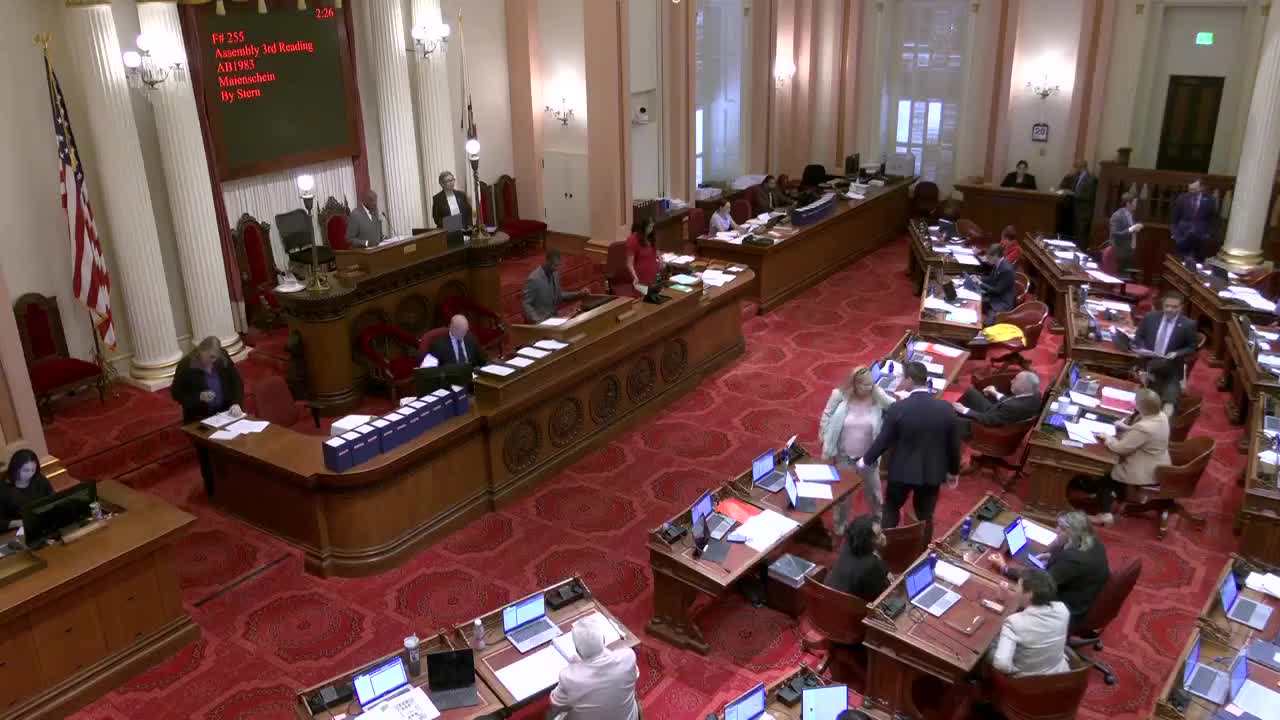 2MIN
Senate Floor
 1MIN
Senate Standing Committee on Appropriations
 5MIN
Senate Standing Committee on Labor, Public Employment and Retirement
 1MIN
Assembly Floor
 3MIN
Assembly Standing Committee on Public Employment and Retirement
Bill Author

Bill Co-Author(s):